

SLOW GROWTH BOOSTS CASE FOR FEB RATE CUT
By Andrea E. San Juan
THE weakening growth momentum alongside subdued inflation has strengthened the case for the Bangko Sentral ng Pilipinas (BSP) to deliver a rate cut in February even after the Federal Reserve has hit the brakes on rate cuts, according to commercial bank economists.
“Against this backdrop of subdued inflation and weakening growth momentum, the case for a February rate cut by the BSP has strengthened,” Jun Neri, Bank of the Philippine Islands (BPI) lead economist, said in a statement on Friday. Neri pointed out that even as the Federal Reserve is “widely expected” to stay on hold until Jerome Powell’s term ends in May, local growth considerations may prompt the BSP to move ahead of the Fed at the February 19 policy meeting.
For his part, Standard Chartered Bank economist and [foreign exchange] FX analyst Jonathan Koh said at a briefing on Friday that the BSP could deliver two more rate cuts this year after the Philippine economy’s growth pace


“I’m looking for a 25-basis-point cut in February. The risk to my call is actually one more rate cut to bring the policy rate to a terminal rate of 4 percent.”—Jonathan Koh, Standard Chartered
turned out to be weaker than expected in 2025.
“I’m looking for a 25-basispoint cut in February. And the risk to my call is actually one more rate cut to bring the policy rate to a terminal rate of 4 percent,” Koh said.
As to the timing of the second rate cut, he said the BSP could deliv-
Biz groups cite trust, reform issues in missed growth target
By Bless Aubrey Ogerio
WEAK investor confidence and unresolved governance issues are weighing on growth just as momentum was expected to pick up, trade industries and business groups warned.
The Philippine Statistics Authority (PSA) on Thursday showed that the gross domestic product (GDP) averaged 3 percent in the fourth quarter of 2025, down sharply from the 5.3 percent recorded in the same period a year earlier. Full-year growth, meanwhile, slowed to 4.4 percent, falling short of the 5.7 percent posted in 2024. The outcome undershot the Asian Development Bank’s 5-percent growth forecast and the World Bank’s 5.1-percent estimate for the year.
PCCI: Not surprised FOR the Philippine Chamber of Commerce and Industry (PCCI), the slowdown was not entirely unexpected.
“The 3-percent growth rate in the 4Q25 was an after-effect of the corruption scandal. It was expected because government has reduced or even stopped public spending,” PCCI President Perry Ferrer said.
Ferrer said the immediate task is recovery, but one anchored on safeguards to prevent similar disruptions.
Among his proposals is exploring the use of blockchain technology in the 2026 national budget to ensure public funds are fully traceable. He said such systems could help guarantee that “every peso spent is accounted for.”
However, experts previously

cautioned lawmakers during a joint House hearing last year that blockchain-based tracking of government spending could introduce new risks, citing technical complexity and potential vulnerabilities.
FPI: Structural weakness, too BEYOND governance issues, industry leaders flagged structural weaknesses in the economy. Federation of Philippine Industries (FPI) Chairperson Elizabeth Lee warned that growth driven largely by services leaves the country exposed.
“Without a strong industrial backbone, the economy risks overdependence on services, which cannot fully absorb employment demand or provide the production base for global competitiveness,” Lee said. She pointed to slower infrastructure rollout, high energy costs and supply chain disruptions as persistent constraints on industrial growth, compounded by external
er another quarter-point cut at the next scheduled policy meeting of the Monetary Board (MB) after its February 19 rate-setting meeting.
“The risk there is because I think the governor has alluded before that if [gross domestic product] GDP growth for this year falls below 5 percent, then there’s a risk that they could do more than what the market is pricing in,” added Koh.
The economists’ pronouncements on the odds of the BSP delivering further rate cuts came a day after the Philippine Statistics Authority (PSA) announced that the Philippine economy grew 3 percent in the last three months of 2025, bringing fullyear growth to 4.4 percent last year, well below the government’s target band of 5.5 to 6.5 percent.
At the December 2025 policy meeting of the BSP, the Monetary Board reduced the BSP’s Target Re -
verse Repurchase (RRP) Rate by 25 basis points to 4.50 percent.
BSP Governor Eli M. Remolona Jr. signaled during this meeting that depending on the data, the easing cycle may have ended already, even pointing out that “this may be the last cut.”
“But depending on what else we see, we can still consider another cut,” the BSP governor said in December.
At the 2026 Annual Reception for the Banking Community held in Manila last week, Remolona told reporters that while a rate cut remains uncertain, a weaker-thanexpected fourth-quarter GDP print “would help us decide to cut.”
He pointed out, however, that the GDP data is not the sole determinant of another interest rate cut, adding: “Our mandate is inflation.
MUTYA CHRISTINA VANHEFFLIN IS 4TH RUNNER-UP AT 53RD MISS INTERCONTINENTAL
By C. Mendez Legaspi
MUTYA ng Pilipinas 2025 Christina Labareño Vanhefflin finished her Miss Intercontinental campaign as the fourth runner-up. Held on January 29 (extending to the wee hours of January 30 Manila time) at the V Hotel Sahl Hasheesh in Hurghada, Egypt, the “United Nations of glamour and beauty” crowned Russia’s Varvara Yakovenko as its 53rd queen.

See “Vanhefflin,”
’NOT




THE END OF THE WORLD’: Govt to ramp up spending amid anemic 2025 growth of 4.4%
By Reine Juvierre S. Alberto
THE government is ramping up spending and remains confident of attaining its revenue targets this 2026, as it seeks to attract more investments after the economy posted disappointing growth of 4.4 percent last year.
On the sidelines of the Philippine Life Insurance Association, Inc. (PLIA) induction on Friday, Finance Secretary Frederick D. Go told reporters that revenue targets of the Bureau of Internal Revenue (BIR) and the Bureau of Customs (BOC) are attainable.
“We continue to do what we do,” Go said. “I think their targets are achievable. I’m hopeful we will achieve those targets,” he said, when asked

Asean pins hopes on tourism partnerships with East Asia
By Carmel Pedroza
CEBU CITY—Philippine
Tourism Secretary Christina Garcia Frasco has underscored the economic weight and strategic importance of Asean’s tourism partnership with China, Japan, and the Republic of Korea, describing it as “one of the most economically significant and deeply integrated tourism partnerships in the world.”
In her speech at the opening of the 25th Meeting of Asean, China, Japan, and Republic of Korea Tourism Ministers, Frasco said the partnership—built on decades of travel, people-to-people connections, and sustained market demand—continues to support enterprises, anchor livelihoods, and reinforce confidence across tourism value chains in the region.
She noted that the strengthening of travel across Asean and its dialogue partners signals not only recovery, but renewed trust, improving certainty, and a shared responsibility to ensure tourism growth remains resilient and aligned with long-term economic interests.
The ministerial meeting brought together Asean tourism leaders and their counterparts from China, Japan, and the Republic of Korea in this city on Fri


day, January 30, 2026.
Representing Japan, Parliamentary Vice Minister of Land, Infrastructure and Transport Manabu Nagai expressed his “sincere respect” to the Philippines as chair country, the Asean Secretariat, and all those involved in making the meeting possible.
Speaking on behalf of the Government of Japan, Nagai conveyed his deepest gratitude and emphasized Japan’s commitment
to advancing regional tourism cooperation.
Nagai said the meeting marked the first Asean tourism ministers’ meeting since Timor-Leste officially joined Asean, expressing confidence that its accession would further strengthen Asean’s collective efforts toward prosperity. He also noted that the Asean Plus Three is scheduled to adopt a new tourism cooperation action plan during the meeting, which
will outline the future direction of tourism collaboration and serve as a guide for jointly addressing challenges across the region.
“I hope that cooperation through this plan will lead to more effective results,” Nagai said, adding that as co-chair, he looks forward to smooth discussions, active inputs from participating countries, and a fruitful outcome for the meeting.
In her address, Frasco emphasized that tourism engagement with China, Japan, and the Republic of Korea remains central to the vitality of Asean tourism, supporting employment, sustaining enterprises across the tourism value chain, and contributing meaningfully to economic activity throughout the region.
She stressed that stability, predictability, and confidence in travel are critical to sustaining investments in tourism infrastructure, services, and human capital.
From the Philippine perspective, Frasco cited concrete examples of cooperation with each dialogue partner.
She noted the Republic of Korea’s sustained air connectivity and strong people-to-people ties, Japan’s long-standing cooperation in capacity building,
THE Philippines’ Christina Vanhefflin, wearing Chico Estiva couture, placed fifth at Miss Intercontinental 2025 MUTYA NG PILIPINAS (INSET) Russia’s Varvara Yakovenko is Miss Intercontinental 2025 @AHMEDARAFA
JAPANESE Parliamentary Vice Minister of Land, Infrastructure and Transport Manabu Nagai and Tourism Secretary Christina Garcia Frasco at the opening of the 25th Meeting of ASEAN, China, Japan, and Republic of Korea Tourism Ministers, January 30, 2026. PHOTOS COURTESY OF DOT
Asean…
standards, and quality in tourism development—reinforced by the legacy and momentum of Expo 2025 Osaka, Kansai—and China’s recent efforts to facilitate travel and restore confidence.
Frasco also recalled President Ferdinand R. Marcos Jr.’s statement at the 27th Asean Plus Three Summit in Vientiane, Lao PDR, where he reaffirmed the Philippines’ strong support for the Asean Plus Three Working Plan 2023–2027, particularly in advancing shared priorities such as sustainable tourism.
She said this broader regional context gives added significance to the Asean Tourism Sectoral Plan 2026–2030 and the action plan being discussed, which aim to set a shared direction for a tourism sector that is resilient to shocks, competitive globally, credible to travelers, enterprises, and investors, and attentive to the communities and cultures that sustain it.
Before ending her speech, Frasco noted that expectations are rising across the region, with travelers becoming more discerning and communities more attentive to tourism’s impacts.
She encouraged dialogue that is open, grounded, and forwardlooking, focused on strengthening tourism cooperation across Asean and with its dialogue partners in ways that are practical, trusted, and enduring.
“May our exchanges today reflect the maturity of our partnership and our collective commitment to a tourism sector that remains open, resilient, and economically strong,” Frasco said.
Trust…
shocks such as typhoons and global trade uncertainty.
Revitalizing industry, Lee said, is critical to building resilience and spreading growth beyond major urban centers.
MBC: Reforms incomplete THE Makati Business Club (MBC) echoed similar concerns, noting that while key sectors of the economy have been liberalized and fiscal incentives expanded over the past decade, reforms remain incomplete.
“These economic reforms need to be complemented by reforms in transparency, governance, and ease of doing business,” MBC Executive Director Rafael Ongpin said.
The group cited the passage of measures such as the Freedom of Information bill and amendments to bank secrecy laws as necessary steps, alongside deeper digitalization at the local government and agency levels to improve ease of doing business.
From the corporate side, SM Investments Corp. Chief Financial Officer Robert Dan Roces said the missed growth targets point to a broader confidence problem rather than a lack of spending.
“Government spending was strong and exports surged, but couldn’t offset the investment spiral that’s now in its fourth consecutive quarter of decline,” Roces said.
He warned that unless structural reforms are pursued, the slump in capital expenditures could drag on the economy’s medium-term potential.
RCBC Chief Economist Michael Ricafort shared the view, saying stronger anti-corruption measures would be key to reversing the investment slowdown.
“These measures would lead to more investments, both foreign and local, create more jobs and economic activity, and support further gains in the financial markets,” Ricafort said.
China, PHL resume political dialogue amid word war over South China Sea
By Malou Talosig-Bartolome
CEBU—China and the Philippines have resumed political dialogue after more than a year-long hiatus, even as tensions flared in Manila over a public exchange between the Chinese Embassy and Philippine officials.
Director-General Hou Yanqi of China’s Ministry of Foreign Affairs Department of Boundary and Ocean Affairs met with DFA Undersecretary for Policy Leo M. Herrera-Lim and Assistant Secretary Marshall Louis M. Alferez in Cebu.
Both sides described the talks as “candid and in-depth,” covering maritime affairs, bilateral relations, and broader regional issues. They underscored the importance of sustained diplomatic dialogue and agreed to continue consultations through established channels.
Rate cut…
Continued from A1
Inflation is the number-one factor.”
Further, Remolona said the Monetary Board considers the United States Federal Reserve’s decision as one data point among many.
A Reuters report noted that, “The Federal Reserve held inter-

The resumption of talks comes against the backdrop of a word war between the Chinese Embassy and Philippine Coast Guard spokesperson Commodore Jay Tarriela, whose remarks on maritime incidents drew sharp rebukes from Beijing. The exchange spilled into Congress, where legislators weighed in on the rhetoric, reflecting the sensitivity of South China Sea disputes in domestic politics.

est rates steady on Wednesday amid what US central bank chief Jerome Powell described as a solid economy and diminished risks to both inflation and employment, an outlook that could signal a lengthy wait before any further reductions in borrowing costs.”
The Bangko Sentral ng Pilipinas (BSP) has cut rates eight times since August 2024, for a total 200 basis points, reducing the policy rate from 6.50 percent to 4.5 percent.
Inflation forecast for January MEANWHILE , Koh also pointed to inflation being “very benign” this year, well within the BSP’s 2 to 4 percent target range. It is seen to be one of the factors for the Philippine central bank to deliver more rate cuts.
The Standard Chartered Bank economist sees inflation rate to settle at around 1.6 percent for January 2026.
Meanwhile, BPI said headline inflation likely remained steady at 1.8 percent year-on-year in January, implying a month-onmonth increase, “as food and energy pressures offset easing util -
GDP…
to P3.579 trillion and P1.003 trillion, respectively (See: https://businessmirror.com.ph/2026/01/23/2026-revenue-targets-cut-on-slower-growth/).
GDP growth settled at 3 percent in the fourth quarter of 2025, slower than the 5.3 percent in the same period a year earlier (See: https://businessmirror.com. ph/2026/01/30/3-q4-growth-pullsdown-full-year-to-4-4/).
The weaker fourth-quarter outturn pulled full-year growth down to 4.4 percent, from 5.7 percent in 2024—the economy’s slowest annual expansion since the 9.5-percent contraction in 2020, and, excluding the pandemic period, the weakest growth performance since 2011, when GDP expanded by 3.9 percent.
Go said economic growth is expected to pick up gradually over the course of the year, as gains will not materialize immediately. “We’re not going to get there in the first quarter. If we do everything right, it’s going to happen progressively.”
Economic managers trimmed the GDP growth target to 5 to 6 percent this year due to lingering global uncertainties in trade and investment, mixed with residual domestic headwinds.
Exports a bright spot
STILL , Go said exports remain a bright spot for the economy, citing strong external demand as a key driver of growth. “Exports are actually the bright spot when you
Vanhefflin…
Varvara is the fourth Russian to be declared “the most beautiful woman of all continents.” She follows Elena Ivanova in 1991, Ekaterina Plekhova in 2013, and Valentina Rasulova in 2015.
The ravishing Varvara’s court include first runner-up Lorena Suarez of Cuba, second runner-up Vanessa Wenk of Thailand, third runner-up Faidha Kassim of Tanzania, fifth runner-up Kika Neves of Ecuador, and sixth runner-up Brilliant Maroko of Kenya.
Despite the heated atmosphere, the Cebu meeting signaled a deliberate effort by both governments to keep communication channels open. Officials emphasized that continued cooperation across all sectors remains vital to advancing mutual interests and regional stability. Hou also served as the Senior Officials’ Meeting (SOM) leader during the Implementation of the Declaration on the Conduct of Parties in the South China Sea (SOM-DOC), underscoring China’s central role in the regional discussions.
ity and vegetable costs.”
Neri explained the monthly uptick was mainly driven by higher fish and rice prices, alongside elevated global oil prices and LPG rate hikes.
“Rice inflation has risen mo-m [month on month] for three consecutive months, with sharper gains since December, reflecting weaker local production in 4Q due to weather-related disruptions and high fertilizer costs. Meanwhile, global crude prices rebounded, with WTI revisiting the $60/bbl level amid heightened geopolitical risks, filtering through to local pump prices and LPG adjustments,” the BPI lead economist underscored.
He also noted that these upward pressures were partly offset by lower Meralco rates and cheaper vegetable prices, helping cap the overall inflation print.
Looking ahead, Neri explained that while inflation is expected to “trend higher through 2026 as favorable base effects from last year’s rice price declines fade, the headline figures are still expected to remain within the target of the Central Bank.”
look at GDP growth.”
According to the Philippine Statistics Authority, exports grew by 23 percent year-on-year in December 2025, while full-year growth stood at 15 percent.
At the PLIA event, Go said last year’s economic growth is “not a disaster,” as the global GDP growth is 2.9 percent while the Asean average is 3.8 percent.
“We’re growing at 4.4 [percent], so it’s not the end of the world. But having said that, again, all the fundamentals that allow the economy to grow at 5.5 percent are intact,” Go said.
“None of the macroeconomic fundamentals have changed, so we should get back on track this year,” the Finance chief added.
Go said inflation is controlled at 1.7 percent, while remittances from business process outsourcing and overseas Filipinos continue to grow.
Moreover, to support economic activity, the DOF is coordinating closely with the Department of Budget and Management (DBM) and major spending agencies to accelerate the release of funds and circulate them in the economy, Go said.
“The DOF has cleared the amount of money that we’re making available to the government for its expenditures,” Go said.
The Finance chief said the government is committed now “more than ever” to fiscal discipline and smart spending to reduce the country’s fiscal deficit.
This year, the government’s expenditures amount to P6.630 trillion, while its deficit is projected to reach P1.646 trillion.
Christina was the first to be called in the Top 23, having won the important “Power of Beauty” award, previously won by her predecessor Alyssa Redondo in 2024. Cory Quirino, the eternally stylish mother hen of Mutya ng Pilipinas, expressed her pride at Christina’s triumph: “It has been a memorable night. Happy for the back-to-back Power of Beauty award and the recognition. Thank you for your faith in Mutya.” The organization also posted a congratulatory note on Facebook for the beautiful Filipina-British runway model from Tacloban City:
“Congratulations to our very own Mutya Queen, Christina Labareño Vanhefflin, for being crowned Miss Intercontinental 2025 4th Runner-Up and for winning the Power of Beauty Award!
“Your dedication, grace, and brilliance have truly shone on the international stage, making the Philippines proud once again. From your inspiring advocacy to your unforgettable presence, you’ve shown the world the power of poise, confidence, and heart. Here’s to more milestones and victories ahead!” The Filipina flag bearers THE Philippines doesn’t have a complete attendance at participating at Miss Intercontinental, but our flag bearers have fared well in past editions. So far, we have produced two winners: the Fil-British Karen Juanita Gallman from Bohol in 2018 and Cinderella Faye Obeñita from Cagayan de Oro, Misamis Oriental in 2021. Both queens are from the Binibining Pilipinas Charities Inc. system.
The exceptional streak in recent years was started by Koreen Medina at Miss Intercontinental 2013, when she placed third runner-up. In 2014, Kris Tiffany Janson was 2nd Runner-Up and Miss Photogenic. In 2015, Christi Lynn McGarry was 1st Runner-Up, and was also Top 15 in 2010. In 2016, Jennifer Ruth Hammond was in the Top 15). In 2017, Katarina Sonja Rodriguez was 1st Runner-Up). In 2019, Emma Mary Tiglao placed in the Top 20. In 2022, Gabrielle Basiano was in the Top 20. In 2023, Iona Gibbs was in the Top 22. In 2024, Alyssa Redondo was second runner-up. The Filipinas were Continental Queens of Asia and Oceania in 2010, 2013, 2014, 2017, 2018, and 2021. Going back to two decades ago, Kirby Baskin was Top 12 in 2006; Jamie Burgos was Top 12 in 2004; Faith Amigo was in the Top 10 and Miss Congeniality in 1996; Maria Sovietskaya Bacud was 1st runnerup in 1995. In 1983, Marilou Adina placed in the Top 12. Marilou Lee was said to be the very first Filipina representative, and she placed Top 19 in 1977, the Philippine debut at the pageant which started in 1971.
The Final Question
ALYSSA REDONDO, Christina’s predecessor and one of the judges asked the final question: What values do you believe are essential for success in today’s global society?
Christina’s reply:
“I believe one value is to be strong no matter what. You know, I stand here because I am strong.
“I am full of courage. I was diagnosed with a mental disorder. I was diagnosed with major depressive disorder.
“That was a difficult time for me. But you know, I am here right now because I am full of courage. And I want everyone to believe in that.
“To believe in yourself that you can do it no matter challenges what you face in life. Thank you.”
DIRECTOR-GENERAL Hou Yanqi of China’s Ministry of Foreign Affairs Department of Boundary and Ocean Affairs shakes hands with DFA Undersecretary for Policy Leo M. Herrera-Lim. PHOTO COURTESY OF DFA
www.businessmirror.com.ph
Asean eyes high-value tourists under its unified tourism plan
By Ma. Stella F. Arnaldo Special to the BusinessMirror
CEBU CITY—THE Association of Southeast Asian Nations (Asean) aims to further push its #ADestinationForEveryDream tagline and strengthen the branding of the region as a unified tourism destination. Building the Asean brand and generating more positive sentiment is among the key performance indicators in achieving the aims of the Asean Tourism Sectoral Plan (ATSP) by 2030.
Tourism ministers rolled out the details of their ATSP 2026 to 2030 during the Asean Tourism Conference on Thursday hosted by the Asian Development Bank, as they sought to chart a shared path toward a more sustainable, inclusive, and resilient region.
The region aims to focus on attracting “high-value, experiential tourists with strong potential for regional, multidestination holidays.” As such, the region will be promoting its key tourism products marine and beach tourism, cultural and heritage tourism, nature and ecotourism, wellness and medical tourism, cruising, and business tourism.
Strategic markets targeted by the region are primarily English speakers coming from Australia, India, the United Kingdom, and the United States, “with targeted outreach in emerging markets.” The region also intends to collaborate with Asean Centers in Japan, mainland China, and South Korea that “leverages local expertise for language and cultural adaptation, targeted audience engagement, and on-the-ground promotions. The private sector and Dialogue Partners will play key roles in co-marketing initiatives and expanding market access.”
Other Dialogue Partners of Asean include Canada, the European Union, New Zealand, and Russia.
Raising awareness through social media
There were 127 million international arrivals in Asean, with the tourism sector accounting for 9.4 percent or US$374 billion of the region’s gross domestic product. The sector also holds 13.5 percent of the regional jobs.
According to the ATSP, by 2030, the region is supposed to have “increased awareness” through regular marketing campaigns and social media engagements, leading to higher arrivals in Asean. The region also aims to “strengthen digital marketing” through improved “click-through” rates on paid campaigns and growing video views and influencer partnerships.
By the last year of the plan, the region is expected to have recorded “increased website visits and direct online bookings, growth in average tourist spend per visit, and higher conversion rates from inquiries to bookings.”
Speaking on the Philippines’ commitments to attaining the targets of the ATSP 2026-2030, Tourism Secretary Christina Garcia Frasco told conference participants that, government efforts have been to fortify the resilience of our destinations,” especially since the country regularly experiences floods and supertyphoons.
With 16.4 million workers employed in the tourism sector, “We have sought to empower our tourism workers, first by providing continuous skills enhancement and development through our Filipino Brand of Service Excellence …. thus far we have trained over 444,000 Filipinos since 2022, as well as over 144,000 tourism-specific skills in destinations across the country, such as tour guiding, dive boat operations, as well as culinary skills and tourism retail skills.”
Visa-free travel
SHE noted that with partner agencies like the Department of Social Welfare and Development, the Department of Tourism is addressing tourism workers’ needs in times of calamities in the form of “emergency cash assistance and family food packs.”
One of the greatest challenges the Philippines faces, Frasco added, is its huge dependence on air travel. “And therefore, we are advocating that there should be accessible and seamless travel. We have been proponents of visa liberalization,” she said. The Department of Foreign Affairs has recently announced visa-free travel for India, China, and Taiwan. A digital nomad visa has also been offered to digital workers visiting the Philippines.
The Asean tourism ministers are currently working on a possible Asean visa for international travelers. (See, “ATF eyes unified visa, strategic plan rollout,” in the BusinessMirror , Jan. 29, 2026.)
See “Asean,” A4
DBy Manuel T. Cayon
possession” of the electricity lines and facilities operated by the former electric franchise holder of the resort island of Samal off the Davao Gulf, to allow the Aboitiz distribution utility to render electricity supply services to the island. In its statement on
Davao
Aboitiz-
Amid slow growth, Marcos prods agencies on infra, digitalization
By Samuel P. Medenilla
ON the heels of the report on the considerable slowdown of the economy in 2025, President Ferdinand Marcos Jr. indicated he wants to “move forward” with the swift completion of government infrastructure and digitalization projects.
The chief executive met with members of his economic team on Friday to come up with strategies to “uplift the economy” after the gross domestic product fell way below the government’s 5.5 percent to 6.5 percent growth target for 2025.
“In the meeting, they discussed strategies to boost the country’s economy, including
digitalization to accelerate [government] work,” Palace Press Officer Claire Castro said in Filipino in a press briefing.
“The President ordered the acceleration of the construction of infrastructure projects, especially school classrooms,” she added.
Government agencies will be required to submit to the President a progress report on
the initiatives every two weeks.
Castro said Marcos has ordered the creation of a new vetting mechanism to regularly monitor and verify the accuracy of progress reports.
“The President wants not just to move forward, but also to improve the reporting of each agency that has projects—that is what the President wants...The President doesn’t want a false report,” she said
Cabinet members who will be proven to include false information in their reports will face sanctions.
“So definitely if it is intentional, there is a penalty attached to it—they can be removed from their position. If it is due to negligence, the same thing will happen. Because as a public servant, there is no room for us to be negligent,” Castro said.
The chief executive gave the directives after it was revealed at a Senate hearing that the Department of Public Works and Highways (DPWH), under
its previous secretary Manuel M. Bonoan, gave inaccurate grid coordinates for “ghost” or non-existent flood control projects.
Bonoan, however, said he did not mislead the Marcos with said report, adding that he explained to the President the technical reason on the grid coordinates’ discrepancies.
Citing “command responsibility,” the former DPWH chief resigned last year after it was revealed that several DPWH officials and personnel were involved in flood control project anomalies.
The crackdown on the public works irregularities as well as natural calamities were among the reasons cited by government economic managers for the country’s disappointing economic growth last year.
The Marcos administration hopes the governance reforms will help boost business confidence in the country, which will translate to more investments in the country.
Work on farm-to-market road projects to start in April–DA
By Ada Pelonia
HE farm-to-market
Troad (FMR) projects for this year are slated to begin construction by April, according to the Department of Agriculture (DA).
Agriculture Secretary Francisco Tiu Laurel Jr. said the construction of FMR projects in 2026 can only start in April because its quarterly budget is yet to be finalized.
He said the DA is also in talks with contractors’ associations for the final costing and will coordinate with local government units (LGUs) willing to join in the program’s implementation.
He added that the agency will also vet the LGUs that signified intent to participate,
By Reine Juvierre S. Alberto
STATE-RUN Development
Bank of the Philippines
(DBP) has expressed intent to finance the planned redevelopment of Baguio City’s 110-year-old public market.
“DBP is keen to support the redevelopment of the Baguio City public market and is prepared to finance the project,” DBP
President and Chief Executive Officer Michael O. de Jesus said in a statement on Friday.
This comes after Baguio City officials said the private entity supposed to redevelop the public market will no longer push through, pulling out its bid
Wednesday, the Davao Light confirmed that the Regional Trial Court, Branch 34, Panabo City, “has issued the Writ of Possession in its favor.”
The writ was connected to the expropriation proceedings it filed involving the power distribution system serving
ensuring they are capable of implementing the program.
“Technically, we need a little more time since [the implementation of FMRs] was suddenly given to us,” Tiu Laurel told reporters on Friday.
“For shovel-ready sites that have been earmarked in the budget, we aim to finish the construction in a maximum of one year,” he added.
The agency said it is finalizing the implementing guidelines set to be completed by mid-February, which will then be submitted to the Department of Budget and Management (DBM).
The rules will underscore the respective responsibilities of partners identified in the DA’s 2026 General Appropriations Act (GAA), which stipulates that it
after mounting objections from stakeholders.
The market redevelopment is part of the city’s push to strengthen the economic value of its public assets to boost the local economy.
“As a development bank, we actively pursue local government initiatives that spur economic growth, modernize public infrastructure, and provide meaningful support to MSMEs,” de Jesus said.
The state-owned bank can finance the construction of a multistory complex to replace the existing structure, which has undergone multiple reconstructions since its
may tap the participation of LGUs, Department of Public Works and Highways (DPWH), and PublicPrivate Partnerships (PPPs).
The P33-billion budget earmarked for FMRs under its 2026 GAA could build 1,600 projects, covering more than 2,300 kilometers of roads.
The per-kilometer funding stands at P14 million.
The DA now assumes the development and implementation of FMR projects following the controversial infrastructure projects by the DPWH.
With this, the agency said it wants to tighten oversight on agricultural infrastructure.
As such, the DA launched the FMR Watch, a public transparency and monitoring portal developed and managed by the Bureau of Agricultural and Fisheries Engineering (BAFE).
The platform allows the public to track projects from proposal to completion by integrating official records with budget data, construction milestones, geotagged photos, and citizen feedback. In the website, the FMR Watch has tracked 4,810 projects between 2021 and 2025. These have a combined investment of P76.52 billion, covering nearly 2,400 kilometers of roads nationwide. Of these, 3,135 projects have been completed.
“These roads are not just asphalt and concrete,” Tiu Laurel said. “They lower production costs, raise farm incomes, reduce food prices, and support longterm rural development.”
formation in 1913, de Jesus said.
The project could be carried out through DBP’s Assistance for Economic and Social Development (ASENSO) Program for local government units, which provides funding support to LGUs at all levels for projects and activities aimed at accelerating the socioeconomic and infrastructure development of their respective areas.
“DBP is one with the Baguio City leadership in implementing projects that would redound to the benefit of its citizens, even as we look for more avenues of cooperation and collaboration with other LGU partners for their own socio-development
the Island Garden City of Samal (IGACOS) as part of the implementation of Republic Act 12144, which granted Davao Light the authority to expand its franchise in Davao del Norte and Davao de Oro.
“The issuance of the Writ enables the utility company to
programs,” de Jesus said. As of end-November 2025, DBP has approved more than P165 billion in credit assistance to various LGUs in the country, which pursued projects in the areas of education, public health, access and mobility, disastermitigation and public security, among others.
DBP is the ninth largest bank in the country in terms of assets and provides credit support to four strategic sectors of the economy, including infrastructure and logistics; micro, small and medium enterprises; the environment; and social services and community development.
assume responsibility for the distribution system, ensuring the continued, safe, and reliable delivery of electricity to consumers,” it said.
However, Davao Light assured the former franchise holder, the Northern Davao Electric Cooperative (Nordeco) and the other stakeholders in the electricity supply issue that it will “undertake this process in accordance with established legal, regulatory, and operational procedures.” Davao Light told
Saturday, January 31, 2026
Food security emergency status of rice stays, says DA
By Ada Pelonia
THE Department of Agriculture (DA) will maintain the food security emergency on rice nearly a year after declaration, pending the proposed bill that seeks to restore regulatory powers of the National Food Authority (NFA).
Agriculture Secretary Francisco Tiu Laurel Jr. maintained that the food security emergency on rice will remain in effect nearly a year after its declaration.
“While the RICE Act is not yet in place, I think it should remain in effect,” Tiu Laurel told reporters on Friday. “We need to properly manage our rice supply in relation to supply and demand,” he added. The proposed RICE Act seeks to restore the regulatory powers of the grains agency after the Rice Tariffication Law (RTL) reduced its mandate to
managing the country’s buffer stocks.
Under the bill, the NFA can register, license, and supervise rice industry participants again.
The grains agency can also inspect warehouses and storage facilities; seize hoarded rice and grains; provide strategic buffer stock management; and regulate rice importation and exportation.
The DA pins its hopes on the promise that the RICE Act would ensure stable rice supply and pricing, while safeguarding farmers and consumers.
On February 3, 2025, the agency officially declared a food security emergency on rice due to the “extraordinary spike” in the price of the country’s food staple.
Such a declaration allowed the DA to release rice stocks held by the NFA to temper retail prices while also relieving the grains agency of its bulging
inventory.
The amended RTL authorizes the DA Secretary to declare a food security emergency in response to extraordinary price increases.
This provision allows the DA chief to direct the NFA, which is legally restricted from selling rice directly to the public, to release buffer stocks to government agencies, local government units (LGUs), and Kadiwa sites.
The DA earlier noted that the food security emergency will remain in effect until the situation improves, while the government has committed to regularly reviewing the situation to determine when it can be lifted.
The prevailing retail price of well-milled rice stood at P44 per kilo, while that of regular milled rice at P42 per kilo, based on the latest government report.
Palace readies list of new Secretaries for CA review
By Samuel P. Medenilla
MALACAÑANG gave assurances on Friday that there will be no more major revamp in the Cabinet as it prepares to submit an updated list of new secretaries for confirmation to the Commission on Appointments (CA).
In a press briefing, Palace Press Officer Claire Castro made the assurance after senators flagged the multiple Cabinet appointees, who are in “acting capacity.”
“We asked the President earlier—there will be no more revamp, and the names [of the Cabinet members in acting capacity] will be
submitted to the Commission on Appointments as soon as possible,” she said in Filipino.
A Cabinet appointee is given an “acting capacity” if he or she was given the designation, while Congress is in session and an “ad interim” status if it was done when Congress is in recess. Several senators raised concern on how at least eight Cabinet members were allowed to continue to serve in acting capacity for several months without going through the CA. They noted that “acting” Cabinet members have limited power and accountability.
According to the lawmakers, the current Cabinet members who are in acting capacity are Executive Secretary Ralph
G. Recto, Finance Secretary Fredderick D. Go, Justice Secretary Frederick A. Vida, Budget Secretary Rolando U. Toledo, Environment Secretary Raphael PM. Lotilla, Transportation Secretary Giovanni Z. Lopez, and Presidential Communications Office Secretary Dave M. Gomez. When asked if Marcos will reappoint the Cabinet members pending their CA confirmation, Castro reiterated that the Palace will prioritize submitting their names to the Commission for consideration.
In the case of Lotilla, Castro said the Presidential Management Staff is still confirming if the former Energy Secretary has been by-passed
by the CA for the third time and can no longer be reappointed. However, his appointment that the CA had reviewed was for Energy Secretary, and not his new designation as Environment Secretary.
Marcos initiated the first major changes in his Cabinet in early 2025 to “recalibrate” the performance of his administration and “cleanse” his Cabinet from its underperforming and corrupt officials.
He initiated another revamp in the second half of last year after he initiated a crackdown on anomalous flood control projects.
Castro said Marcos continues to review the performance of his Cabinet to ensure the efficient operation of his administration.
SBy Reine Juvierre S. Alberto
operations amounted to P95.15 billion, also lower by 2.44 percent than the P97.53 billion recorded in 2024.
Electronic and online gaming activities, including eGames, eBingo and bingo grantees, added P53.33 billion to Pagcor’s revenue mix.
Other revenue streams, such as interest earnings, income, and service fees, contributed an additional P10.88 billion.
The shift to digital and online gaming platforms indicates the need for regulators to keep pace with how players engage with online gaming products, Tengco said. Tengco said Pagcor has responded to the challenge by strengthening its regulatory framework for online gaming to ensure player protection and responsible gaming practices.
“As digital gaming continues to grow, Pagcor has implemented significant regulatory upgrades to protect players, promote transparency, and ensure that online gaming operates within a secure and well-regulated environment,” Tengco said.
Revenues from eBingo, eGames and Bingo grantees rose by 9.30 percent to P53.33 billion, which helped offset part of the decline in land-based gaming.
Pagcor contributions
PAGCOR was able to remit P66.95 billion as its contributions to nation-building, although slightly down by 1.84 percent from the previous year’s P68.21 billion. The government’s 50-percent share, worth P45.19 billion, was transferred to the National Treasury, as well as the P60-million annual contribution to the Dangerous Drugs Board.
Pagcor also allocated P4.76 billion in franchise taxes and P907 million in corporate income taxes to the Bureau of Internal Revenue.
The Philippine Sports Commission was likewise appropriated P2.26 billion, while P95.08 million was allocated as cash incentives for athletes and coaches who won in international competitions. About P12.77 billion was also earmarked to fund sociocivic programs, including those under the Office of the President.
Other mandated beneficiaries of Pagcor’s 2025 revenues included cities hosting Casino Filipino branches (P678.10 million), the Board of Claims under the Department of Justice (P123.98 million) and the Renewable Energy Trust Fund (P169.89 million).
Asean. . .
Continued from A3
The Philippines also supports the improvement of regional transport within the Asean nation, knowing that “we can support each other as far as some tourism flows, if we can focus on routes development.” She noted that last year, 12 new international flights were launched between Cebu and Vietnam, and between Cebu and Malaysia. Frasco, likewise, underscored the importance of digitalization, and the DOT has worked with private tourism stakeholders to introduce partnerships for digital marketing like with Klook, Visa, and Mastercard. “[This ensures] continuous promotion and accessibility for tourism, while providing opportunities for our tourism stakeholders to improve in terms of finance and digitalization in their businesses,” she said.
Asean records 144-M visitors in ’25, backs data-driven, sustainable tourism push
By Ma. Stella F. Arnaldo Special to the BusinessMirror
CEBU CITY—The Association of Southeast Asian Nations (Asean) recorded an estimated 144 million international visitor arrivals in 2025, reflecting continued recovery and growth in regional tourism.
Speaking on behalf of her counterparts, Tourism Secretary Christina Garcia Frasco who chairs this year’s Asean Tourism Forum, said on Thursday that the figure marked a “sustained upward trend supported by measures to enhance connectivity, diversify tourism offerings, and strengthen marketing and promotional efforts.” The statement was issued following the 29th Meeting of Asean Tourism Ministers from January 28 to 30, 2026. The Ministers, however, cancelled an initially scheduled press conference in favor of just reading their statement. Asean organizers intimated that “the Ministers don’t want to answer media questions due to some representatives’ non-proficiency in English.”
Ministers also formally endorsed the Asean Tourism Sectoral Plan (ATSP) 2026–2030 and the Asean Tourism Marketing Strategy (ATMS) 2026–2030, which will “guide collective actions, strengthen branding and narrativebuilding, and enhance Asean’s regional visibility in the years ahead.” (See,“Asean targets high-value tourists under unified tourism plan,” in the BusinessMirror, Jan. 30, 2026.) The plans emphasize sustainable, inclusive, resilient, and quality tourism development aligned with the Asean Leaders’ Declaration on Quality Tourism adopted in 2025.

A key focus of the new marketing strategy is data-driven and digitally enabled regional marketing, with ministers encouraging deeper collaboration with the private sector, global online platforms, and subregional mechanisms to boost Asean’s brand visibility through co-branded and cofunded campaigns.
“The Meeting also highlighted the growing potential of cruise tourism as an important market segment, and encouraged continued cooperation enhance port connectivity, streamline travel facilitation, improve service and safety standards, strengthen sustainability practices in cruise destinations, and promote multi-destination cruise itineraries” across the region.
The meeting noted significant progress under the previous ATSP 2016–2025, including wider adoption
Davao Light. . .
Continued from A3
BusinessMirror that the writ includes the authority to tap the existing electricity lines, power stations and other facilities of Nordeco which Davao Light was reluctant to use pending the talks and offer of negotiation with Nordeco.
Last year, Davao Light said it waited for Nordeco’s response
of Asean tourism standards, the rollout of the Mutual Recognition Arrangement on Tourism Professionals (MRA-TP), and stronger joint promotion of Asean as a unified destination. Ministers agreed these gains provide a solid foundation for the next phase of regional cooperation.
Tourism ministers also supported stronger investments in tourism infrastructure, particularly in secondary and tertiary destinations, to ensure more balanced and inclusive growth.
“To this end, the Meeting welcomed the initiative by the Philippines to develop an Asean Sustainable and Resilient Tourism Outlook as a Priority Economic Deliverable in 2026 under its Asean chairmanship.
The meeting further agreed to consider institutionalizing the Asean Tourism Ministers’ Retreat as a regular platform for addressing sector-wide
to its offer to a Joint Transition Committee to thresh out ways on how Davao Light may acquire the use of its existing facilities, including the power lines in Davao del Norte and Davao de Oro, which was now given to Davao Light as its extended franchise.
Last year, the Supreme Court confirmed the validity of RA 121444.
Davao Light said it hoped that the Panabo City court ruling
challenges and coordinating timely policy responses, following positive outcomes from the inaugural retreat held in Melaka, Malaysia, in 2025.
The Ministers expressed appreciation for continued support from Asean’s Dialogue Partners and international organizations, underscoring the importance of cooperation in areas such as digital innovation, connectivity, sustainable tourism, workforce development, and crisis preparedness.
The Meeting noted that during the Asean Tourism Standards Awards Ceremony held on January 30, 2026, 46 establishments in the region were honored the 10th Asean Green Hotel Award; 32 entities were recognized at the 5th Asean Clean Tourist City Award; 41 establishments were honored at the 5th Asean MICE Venue Award (Category: Meeting Room); 36 establishments
would persuade Nordeco to fnally sit down to constitute the transition committee.
Nordeco has continued to shun media inquiries as in the past. In recent post on its website, it signalled that it may engage Davao Light in a legal contest over the right to the franchise.
This month, two party-list groups jointly filed a resolution in the House of Representatives seeking the renewal of the
The 30th Meeting of Asean Tourism Ministers will be held in Singapore in January 2027, according to the joint statement.
franchise of Nordeco. The DCM reported that House Bill 7006 was filed by Partylist Rep. Sergio Dagooc of the Association of Philippine Electric Cooperatives, or APEC, and Partylist Rep. Presley de Jesus of the Philippine Rural Electric Cooperatives Association Inc. or PHILRECA.
On Facebook, it appealed to Davao del Norte and Davao de Oro clients “not to transfer yet” to Davao Light.
By Melanie Lidman | The Associated Press
T
EL AVIV, Israel—In the last months of World War II, Lola Kantorowicz tried her best to hide her pregnancy. She succeeded because most of the prisoners at the Bergen-Belsen concentration camp had bellies that were distended and bloated from extended starvation.
As she went into labor in March 1945, the Russians were advancing through Germany, and Bergen-Belsen was in chaos. Her daughter, Ilana, was born on March 19, 30 days before the camp was liberated by the British.
Now 81, Ilana Kantorowicz Shalem is among the youngest Holocaust survivors. She survived only because she was born when the Nazi leadership was in disarray as the war was ending. Otherwise, she most certainly would have been killed.
More than eight decades after the end of the Holocaust, Shalem is sharing her story—and her mother’s story— for the first time, realizing how few Holocaust survivors are left.
International Holocaust Remembrance Day is observed across the world on January 27, the anniversary of the liberation of Auschwitz-Birkenau, the most notorious of the death camps where some 1.1 million people, most of them Jews, were killed. The UN General Assembly adopted a resolution in 2005 establishing the day as an annual commemoration.
About 6 million European Jews and millions of other people, including Poles, Roma, people with disabilities and LGBTQ+ people, were killed by the Nazis and their collaborators.
Some 1.5 million were children. Commemorations this year are taking place amid a rise of antisemitism that gained traction during the two-year-long war between Israel and Hamas in Gaza.
Love in dark places
SHALEM’S mother and father met as teenagers in the Tomaszow Ghetto in Poland. Lola Rosenblum was from the town, while Hersz (Zvi) Abraham Kantorowicz was moved to the ghetto from Lodz, Poland.
After spending several years in the ghetto under hard labor conditions, including losing family members, they were shuffled through several labor camps, where they were able to continue meeting clandestinely for several months.
“My mother said there was actually a lot of love in those places,” Shalem recalled of the labor camps. “They
TimeOur
BusinessMirror
used to walk along the river. There was romance.”
Her mother’s friends used to help set up secret meetings between the two, who had married in an informal ceremony back in the ghetto.
In 1944, the couple was separated. Hersz Kantorowicz would eventually perish in a death march just days before the war ended. Lola spent time in Auschwitz and the Hindenburg labor camp. She completed a death march to Bergen-Belsen in Germany while pregnant.
“If they discovered she was pregnant, they would have killed her,” Shalem said. “She hid her pregnancy from everyone, including her friends, because she didn’t want the extra attention or anyone to give her their food.”
Yad Vashem archivist Sima Velkovich, who has researched Shalem’s story, called it “unimaginable” that a baby was born in such conditions.
“In March, the conditions were really awful, there were mountains of corpses,” Velkovich said. “There were thousands, dozens of thousands of people who were ill, almost without food at that time.”
To this day, Shalem doesn’t have an explanation for how her mother not only survived the conditions of the camp but gave birth to a healthy baby. Mother and daughter spent a month in the Bergen-Belsen camp before it was liberated by the British, and then two years in a nearby camp for displaced persons. They then moved to Israel, where her father’s parents had moved before the war. Shalem’s mother held out hope for years that her father had survived. She never married again, nor had additional children.
The child of everyone IN the immediate months after the war, baby Ilana was constantly fussed over, one of the only children in the refugee camp. “Actually, I was everyone’s child, because for them, it was some kind of sign of life,” Shalem said. “Many, many women took care of me there, because they were very excited to be with a little baby.” Photos from that time show a beaming baby Ilana surrounded by a cadre of adults. Her mother’s friends spoke of her as “a new seed,” and a ray of hope during a dark time, Shalem said.
She’s not aware of any other children born in the Bergen-Belsen concentration camp who survived. Yad Vashem, Israel’s Holocaust Museum and research center, has documented over 2,000 babies born at the Bergen-
Belsen refugee camp after its liberation, between 1945 and 1950. The museum at Bergen-Belsen was able to locate documentation of Ilana’s birth, including the hour she was born, which is now kept at Yad Vashem.
A subject few spoke about SHALEM, who studied social work, started asking her mother questions while she was in university in the 1960s, when it was still taboo in Israeli society to dig into the experiences of survivors.
“Now we know, in order to absorb trauma, we need to talk about it,” Shalem said. “These people didn’t want to talk about it.”
She noted how, in the wake of the October 7, 2023, Hamas-led attack on southern Israel, many survivors of that attack immediately began to speak about what happened to them.
But the aftermath of the Holocaust, especially in Israel, was different. Many survivors were trying to forget what had happened. Ilana’s mother often faced disbelief when she shared her story of giving birth in a concentration camp, so she mostly stopped telling it. Sometimes her mother would talk about what she endured with other survivor friends, but rarely with strangers, Shalem said.
Less than 200,000 Holocaust survivors left SHALEM has never publicly shared the story of her mother, who died in 1991 at the age of 71. Last year, she completed a genealogy course at Yad Vashem and began to understand how few Holocaust survivors are left to share their stories.
According to the New York-based Conference on Jewish Material Claims Against Germany, also referred to as the Claims Conference, there are approximately 196,600 living Holocaust survivors, half of whom live in Israel. Nearly 25,000 Holocaust survivors died last year. The median age of Holocaust survivors is 87, meaning most were very young children during the Holocaust. Shalem is among the youngest.
Shalem, who has two daughters, remembers sharing her own pregnancies with her mother, and marveling at what she had endured.
“It’s a situation that was very unusual, it probably required special strength to be able to believe,” Shalem said.
“She said that one of the things was that if she had known my father was killed, she wouldn’t have tried so hard. She wanted him to know me.”
Editor: Angel R. Calso • Saturday, January 31, 2026
NGO empowers PWDs, breaks daunting barriers through adaptive sports
By Gladys Serafica
DARAGA, Albay—Newsted Jason Lauron steadied his breath on the boat’s edge, preparing to leap into the deep. A little over a year after cancer claimed his left leg, the 27-year-old father was about to make his first scuba dive.
Lauron was a participant in No Barrier 4: A Discovery Dive for Persons with Disabilities, an event advocating for ocean cleanup and inclusion, organized by the Philippine Accessible Disability Services Inc. (PADS).
Navigating the sea was never part of Lauron’s post-amputation plan.
“When Sir JP invited me to try scuba diving, I hesitated at first because I became afraid of swimming in the sea after my amputation. My family was also hesitant and worried that I might drown,” Lauron said in Filipino.
Sir JP is PADS founder John Paul Maunes, who encouraged him to take the plunge.
The experience, Lauron said, was life-changing.
“It is very important and a great help for PWDs like me to be given these kinds of opportunities,” he said. “It helps restore our confidence.”
Lauron’s story is at the heart of PADS’s mission. Founded by Maunes in 2005 to honor a deaf best friend, the organization’s focus sharpened in 2016 when Maunes joined the United States’ Global Sports Mentoring Program. That experience cemented PADS’s vision: Building a disability-inclusive society through adaptive sports, diplomacy and community rehabilitation.
The results are tangible IN 2022, the PADS Dragon Boat Team, the country’s first cross-dis-
When too much Bible quoting becomes a turn-off

THE Bible is a perennial bestseller, purportedly the top selling book of all time. It can be many things to many people because of its extraordinarily rich and diverse content which includes poetry, stories, wisdom collections, letters, law codes, apocalyptic visions and more.
For thousands of years, it has been regarded as a foundational text in the world’s moral education and an inexhaustible source of inner enrichment, spiritual enlightenment and inspiration.
To writers like me, the Bible represents great literature, a supreme achievement in the written language of humankind. No wonder it also serves as a model of elegant writing. That being said, however, I have observed that it has suddenly become the most quoted book specially on social media. This should be a welcome development except that it is the source of unsolicited, cherry-picked religious and spiritual quotes and memes by people
who claim to be Christians.
My wife and I are at the receiving end of a virtual avalanche of biblical quotes from well-meaning and sometimes misguided friends and relatives, especially seniors who have reached the come-to-Jesus phase of their lives.
There is an old adage that familiarity breeds contempt, but in this case, too much frequency can cause vexation and breed indifference. As we say in our native lingo, “nakaka-umay na.” Even medicines that are initially effective can cause one to develop allergy towards them when given in excessive doses.
Instead of awakening one’s faith, too much bible quoting is wearying and actually becomes a turn off for people who prefer their faith practice to be quiet and personal.
I have a special beef with individuals who like to show off their high-level bible literacy with an air of superior self-righteousness. “Nagbasa lang nang konting chapters sa Bible, naging pas-
tor na,” is what I heard from a cynical friend when our popular boxing champ was reported to have been attending bible reading sessions and later began dispensing excerpts from the holy book at every opportunity during his shortlived political career.
If you are a serious Bible reader, please don’t fall into the temptation of lifting and selecting passages from the Bible just to confirm or convey your biases.
What I find especially obnoxious is the proclivity of many Christians to “weaponize” the Scripture against people they resent by extracting lines from the Bible without full understanding and without taking it into context.
I can cite at least two husbands I know—a Catholic charismatic senior citizen and a middle aged born-again Christian fundamentalist – who have separately brandished the following meme in a tone of intimidation on their respective social media accounts: “Wives, submit to your own husbands, as to the Lord” with attribution to St. Paul’s Letter to Ephesians in bold letters to give it that indisputably authoritative stamp. Not once but several times. Is it an intentional debasement of a wife’s role in marriage? It reeks of an unstated domestic issue stemming from personal insecurity.
Yet most Christian males conveniently overlook or choose to ignore a line taken from the same Paulinian letter: “Husbands, love your wives, as Christ loved the church and gave him -
self up for her.” Or similar message from Peter 3:7, “Likewise, husbands, live with your wives in an understanding way, showing honor to the woman as the weaker vessel, since they are heirs with you of the grace of life, so that your prayers may not be hindered.”
The point here is that it’s so easy to pluck passages from the Bible to stamp one’s prejudices and biases with an air of

divine authority. Anyone—even those who have not really read and understood it—can use and misuse the Bible with selfish and devious intent.
Then there is the dishonest employment of the Holy Scripture for “unholy” reasons.
An example is a young fellow who once boarded a bus I was in. He then stood in front of the passengers and suddenly began reading from the Bible he was carrying, raising his voice over the din. Meanwhile his partner, a young woman, distributed white empty envelopes. After around 3 minutes of reading, the bus evangelist stopped,
of three raised alongside family members with disabilities, the work is personal.
A childhood illness led doctors to tell him he would never play sports again, a prognosis overturned by the encouragement of his best friend.
“We need to embrace disability as part of human diversity. Disability is never a problem. It is the society that is not ready to provide access. We can resolve these issues through sports,” Maunes said.
His advocacy has earned national recognition, including awards for his

ability adaptive team, won a world championship in Florida.
In late 2025, four PADS youth athletes traveled to the US for an adaptive sports exchange program.
Christine Mae Garces, who has an orthopedic knee disability, was among them.
“Being part of the US 2025 sports exchange program changed my perspective,” Garces said.
“I’ve been to new places, which made me realize that even when you go through a sudden downfall, there are still a lot more reasons why you should keep going.”
For Maunes, a 41-year-old father
as his partner gathered the envelopes back, including mine in which I had slipped P20.
Later I learned that they were part of a money-making enterprise that has been traced to a well-known community pastor who recently is suspected of being involved in questionable practices and activities including human trafficking and sex abuse.
In another instance, I never thought I would see the day when the Bible would be employed to sell products. Yet the unthinkable is happening. You’ve probably come across a series of tarpaulin billboards with Biblical quotes lined up along Metro Manila’s main roads.
On closer look I realized the billboards are actually selling a brand of multivitamins. It’s something to make one scratch his head. Perhaps religion and business can mix after all.
Then just yesterday I was watching a documentary about a pastor who was arrested for murder. As he was being brought to jail, the camera zoomed in on his bare arm on which were tatooed “John 1: 25 ” or something.
Even while preaching the gospel, he was actively engaged in the pawnshop business of all things and he killed a business associate over money.
This is why I have learned to keep glib bible quoters with wary suspicion. Indeed, never trust anyone who loves to drop biblical quotations in conversations and on social media. In his play “Merchant of Venice,” William Shakespeare warns us: “The devil can cite Scripture for his purpose.” People with bad intentions can use holy or
social enterprise, Dubby’s Ultimate Burgers, which employs deaf crew members.
Yet, for Maunes, the true reward is witnessing transformation.
“I wanted to make sports a reality for the PWDs,” he said. “Our message is clear: Anything is possible in sports and everyone is entitled to access quality and excellence service they deserve regardless of their disabilities in life. Sports is a great equalizer.” As Lauron surfaced from his dive, his fear was replaced by a newfound belief—proof that with the right support, barriers sink and potential rises. PNA
good-sounding words out of context to deceive, manipulate, or justify their own harmful agendas, highlighting the importance of discerning true character and actions, not just words. Excessive, all-consuming religious zeal is unbiblical. It disturbs the balance of truth, love, and wisdom that Scripture commands. It’s also not good for mental health. Yes, the Bible is a much-valued source of sacred revelation. But sadly, because of the virtual and indiscriminate spoon feeding of Biblical quotes to friends on social media as well as through product billboards, T-shirts, keychains, caps and other merchandise, the generic biblical













Palawan Group uses BrickTech strategy to boost insurance product

THE Palawan Group of Companies is relying on its BrickTech strategy, which merges physical stores with digital innovation, to bring Palawan ProtekTODO Critical Illness Insurance to more Filipinos nationwide. The Palawan Group of Companies has over 3,500 branches across the Philippines. There are also millions of PalawanPay users.
“We see a real gap in coverage for serious illnesses like heart attack, stroke, and cancer. Many Filipinos only think about the financial impact when a medical emergency already happens, leaving them vulnerable to sudden and overwhelming costs,” said Karlo M. Castro, president and CEO of the Palawan Group of Companies.
Palawan ProtekTODO Critical Illness Insurance offers a practical way for Filipinos to provide themselves and their families with financial protection.
One, ProtekTODO Critical Illness Insurance provides coverage against three of the most common and financially devastating illnesses among Filipinos: heart attack, stroke, and cancer. Data from the World Health Organization and the Philippine Statistics Authority identified these three as among the top causes of deaths in the Philippines.
Two, policyholders get a 100-percent lump-sum cash benefit upon diagnosis, whether the illness is detected at an early or advanced stage. Coverage is available for Filipinos aged 18 to 60, with one year of protection per policy.
Three, the Basic Plan, for as low as P550 per year, provides P50,000 coverage, while the Plus Plan offers P100,000 coverage starts at P1,100 annually. One person can get multiple policies with total benefits capped at P500,000.
Four, Palawan ProtekTODO Critical Illness

Insurance is available at any Palawan Pawnshop–Palawan Express Pera Padala branch, the PalawanPay app, and the official Palawan ProtekTODO stores on Lazada and Shopee.
“Many traditional insurance products feel intimidating due to complicated terms, high premiums, and lengthy processes,” said Bernard V. Kaibigan, chief marketing officer of Palawan Group.
“ProtekTODO was created to remove these barriers by being easy to understand and accessible, while providing real-life financial support beyond medical coverage, helping with daily expenses, income loss, and recovery costs, so Filipino families can face life’s uncertainties with confidence and peace of mind.”
Without disclosing any figures, Karlo M. Castro said the Palawan Group’s insurance segment posts a high double-digit expansion annually.
“We’re seeing momentum not just over the counter, but also through PalawanPay and online channels,” he said.
Bernard V. Kaibigan said the Palawan Group’s insurance product has so far reached more than seven million Filipinos with each one holding a
policy, which means that about one-tenth of the adult population in the Philippines is now Palawan clients.
The Palawan Group rolled out Palawan ProtekTODO Critical Illness in partnership with Oona Insurance Corp., which acts as its underwriter.
“We partnered with Oona because of a shared commitment to reliability, accessibility, and putting customers first. Together, we deliver protection that is affordable, easy to understand, and trustworthy, while staying true to the Palawan Group’s promise of mura, mabilis at walang kuskos-balungos’ [affordable, fast, and hassle-free]. ProtekTODO integrates insurance into everyday financial planning, whether through our branches, the PalawanPay app, or e-commerce platforms,” said Lisa Castro-Sabado, chief business development officer of the Palawan Group.
She said most of Oona’s products are digital, so integration into the Palawan Group’s system was not a challenge.
PalawanPay, the Palawan Group’s e-wallet app, offers insurance in all its services, so sending money, buying jewelry, or renewing payments are covered if the customer wants it.
Blizzard celebrates 35 years in gaming with game showcase
BY PATRICK VILLANUEVA
OVER the next few weeks, your childhood will be revived as Blizzard announced multiple showcases ahead of Blizzcon 2026 for their biggest titles in gaming: World of Warcraft State of Azeroth, Overwatch, Hearthstone, and Diablo’s 30th anniversary. In their announcement, it rallied that these would be developer-led showcases, with plenty of announcements, teases, sneak peaks, and surprises across these franchises. They aim to celebrate the artists,

On January 29, 9 am Pacific Standard Time (PST), January 30, 1 am Philippine time, World of Warcraft (WOW) will be the first to take place. WOW is a beloved Massive Multiplayer Online Role-Playing Game (MMORPG), initially released in 2004. It has since then had 10 expansions, with the State of Azeroth expected to become 11th. WOW still has 7.1M+ active players according to activeplayer.io. Next would be the free-to-play multiplayer first person shooter Overwatch on February 4, 10 am PST, February 5, 2 am PHT. Overwatch is one of its kind, with plenty of heroes to use, each having unique skills. The game has popularized the genre
of FPS that focuses not only on shooting, but also different utilities and abilities you can strategize with. Hearthstone will have its spotlight on February 9, 9:30 am PST, February 10, 1:30 am PHT. Hearthstone is a digital card video game that is connected to the lore of World of Warcraft. It is a strict turn-based game, with no opportunities to interrupt your opponent. As such, this was a massive hit for players who like to strategize with their cards.
And lastly, Diablo’s 30th spotlight will be initially released on February 11, 2 pm PST, February 12, 6 am PHT. Diablo is an action role-playing dungeon crawler series,
famous for its hack-and-slash gameplay. Its dark ambiance, along with its immersive feel, make it a gamer’s classic in their library of games.
Blizzard ensured that this would be a step forward not only for these franchises but also for the company itself. “These aren’t updates in isolation. They’re part of where Blizzard is heading—together with the players who’ve been here all along,” its caption read. As such, gamers who had these games growing up should look forward to the announcement. Each spotlight will be streamed via the game’s official YouTube and Twitch streams.
Streamlining real estate for brokers, owners and tenants with iRealtee
TRADITIONALLY, real estate brokers and property owners manage administrative tasks, including tracking unit availability, managing tenant profiles, administering lease agreements, collecting monthly rent, and handling maintenance issues through tedious work with spreadsheets and the like. However, the modern world requires not only speed but also precision. Not only that, cost and maintenance are also a concern, with people willing to pay more if it ensures that an app could handle it perfectly without missing
As such, iRealtee.com is the new partner of real estate brokers because its latest Rental Management System centralizes the tasks that would be deemed strenuous to manage.
Systematically managing multi-unit portfolios, such as onboarding, rental agreements, payments and maintenance would be uncomplicated for property owners and brokerages because all of these would be connected to one digital environment.
Moreso, property details like occupancy status, rental rate, media and documents would be fully organized, thereby having less room for errors that would otherwise result in loss. It also updates availability in real time. Handling money can be tricky, especially if you handle more than one property. As such, the Rental Management System supports automated billing, invoicing, and rent collection workflows to ensure that the owner and their tenants are on the same page.
BY RIZAL RAOUL REYES
AS the Philippines races toward a digital-first future, a new alliance between global networking titan Cisco and homegrown digital solutions provider Entropy is set to serve as the nation’s technological engine. According to a press statement, Entropy will leverage Cisco Secure AI Factory with NVIDIA to develop and scale new AI solutions for telcos, internet service providers (ISPs) and enterprises. Part of Cisco’s Country Digital Acceleration Program, the collaboration will provide organizations with robust, secure, AI-ready infrastructure to turn ideas into scalable solutions and help the Philippines advance its national digital and AI ambitions.
As AI adoption accelerates in the Philippines, the need for secure, scalable and high-performance AI infrastructure has never been greater. Half of the Philippine organizations surveyed expect their AI workloads to increase by over 50 percent in the next three to five years, yet only half are building AI capacity with the necessary power infrastructure to support it, according to Cisco’s AI Readiness Index 2025.
“AI has the potential to transform the way Filipinos live and work, but it starts with the right foundation,” said Zaza Soriano-Nicart, managing director of Cisco Philippines. “By working together with Entropy, we are not just bringing world-class AI infrastructure to the Philippines but also empowering local industries to harness emerging technologies securely, reliably, and at scale. This is a critical step forward in building an inclusive, AI-ready nation.”
The partnership, announced as part of Cisco’s UGNAYAN 2030 Country Digital Acceleration program, aims to equip local telecommunications, ISPs, and enterprises with the robust infrastructure required to transition from AI pilot projects to nationwide production.
The collaboration arrives at a critical juncture. According to the Cisco AI Readiness Index 2025, while 90 percent of Philippine organizations plan to deploy advanced AI agents, only 12 percent are truly “Pacesetters”—firms with the strategy and infrastructure ready to maximize their investments. Many local businesses face what experts call “AI Infrastructure Debt,” where outdated systems and underfunded data center capacity threaten to slow down innovation.
“By working together with Entropy, we are not just bringing world-class AI infrastructure to the Philippines but also empowering local industries to harness emerging technologies securely,” said Soriano-Nicart.
For Entropy, a homegrown company specializing in data-driven solutions, the goal is to make AI practical and accessible for Filipinos in everyday life. “Our mission is to translate AI innovation into tangible benefits for Filipinos, whether it’s expanding connectivity in rural areas or ensuring reliable communication during emergencies and natural disasters,” said Sam Consorte, managing director of Entropy. “Partnering with Cisco gives us the worldclass tools and secure platforms needed to deliver these solutions quickly and confidently, creating real impact in communities across the country.”
Beyond financials, property managers may also log requests, assign tasks, and track resolutions in the platform so issues and workflow during repair and upkeep on the duration of the tenancy may be monitored.
Lastly, tenants can also access the Rental Management System through their own portal. Here, the app supports automated billing, invoicing, and rent collection workflows, providing transparency and better coordination on both ends. “Property rental management involves many moving parts that benefit greatly from structured digital workflows,” said Colin Marcelino, founder and CEO of iRealtee.com.
More information can be found at www.irealtee. com. PATRICK VILLANUEVA
www.businessmirror.com.ph • businessmirror.lifestyle@gmail.com
BusinessMirror
Lenovo ThinkPad X9-15
Gen 1 Aura Edition: Tradition, reimagined for the AI workday

FOR decades, the ThinkPad has occupied a unique position in the laptop world. It was never the flashiest machine in the room, never the one chasing trends or aesthetic validation. Instead, it became something far more valuable—a tool trusted to work when work actually mattered.
Born under IBM in the early 1990s, the ThinkPad earned its reputation not through marketing bravado but through consistency. It survived airport lounges, boardroom marathons, overnight deadlines, and long-haul flights. Its unmistakable silhouette and famously durable construction turned it into a staple across corporations, newsrooms, engineering firms, and government offices worldwide.
When Lenovo acquired the ThinkPad brand in 2005, concerns about losing that identity were inevitable. Yet over time, Lenovo preserved what mattered most while quietly modernizing everything around it—refining materials, improving thermals, upgrading displays, and adapting the platform to the realities of modern work. Today, professional life looks very different. Work no longer happens in one place, on one schedule, or within one device ecosystem. Laptops now function as mobile command centers—expected to perform reliably across meetings, travel, collaboration calls, and long solitary work sessions.
The Lenovo ThinkPad X9-15 Gen 1 Aura Edition arrives as a reflection of that shift. It remains unmistakably a ThinkPad, but it also signals how Lenovo sees the future of professional computing— one shaped by on-device intelligence, efficiency and situational awareness rather than raw horsepower alone.
WHAT IS AN AURA EDITION?
THE “Aura Edition” represents a new class of professional laptops built around intelligent behavior rather than static performance profiles.
Developed in close collaboration with Intel, Aura Edition devices combine Intel Core Ultra Series 2 processors with a dedicated neural processing unit capable of delivering up to 48 trillion operations per second. This allows AI workloads to run locally on the device instead of relying heavily on cloud services— improving responsiveness, preserving privacy, and enabling real-time system adjustments.
Rather than positioning AI as a front-facing tool, Lenovo integrates it quietly into daily workflows through a set of intelligent modes. These include Attention Mode for reducing digital distractions, Power Mode for dynamically balancing performance and battery life, Wellness Mode for posture and eye comfort awareness, Shield Mode for privacy protection in public spaces, and Collaboration Mode for optimizing video calls.
Together, these features form the Aura experience—not something users constantly interact with, but something that adapts in the background as work conditions change.
This approach fits naturally into the ThinkPad lineage. Instead of introducing disruptive behavior, Aura Edition extends the brand’s long-standing promise: the laptop should support the user, not demand attention.
WHO THE THINKPAD X9-15 IS MEANT FOR BUSINESS laptops operate under a different set of expectations.
While consumer devices often compete on specifications or design flair, professional machines are judged by reliability, predictability and endurance. For business users, downtime is not an
inconvenience—it carries real consequences.
The ThinkPad X9-15 Gen 1 Aura Edition positions itself squarely within that reality.


Its premium pricing immediately signals that this is not a casual purchase. It is not designed for occasional computing or entertainment-first use. Instead, its value lies in how its components come together as a stable, dependable work platform—one built to perform consistently across long workdays and frequent travel.


without crossing into bulky workstation


The 15.3-inch form factor plays a key role here. It provides significantly more workspace than compact ultraportables without crossing into bulky workstation territory. Professionals working with documents, dashboards, timelines, and parallel workflows benefit immediately from the added screen real estate.




meetings, offices, and travel environments while

Despite its size, portability remains central to the design. Starting at 1.4 kilograms, the X9-15 stays light enough to move easily between meetings, offices, and travel environments while offering the comfort that smaller screens often sacrifice.


sustainability standards, carrying ENERGY STAR 9.0, EPEAT Gold, and TCO Certified 10.0 credentials.
FINAL WORD: With a price tag that starts at P101,371.65, its clear that this isn’t a laptop for everyone but a rather specific type of power user. The Lenovo ThinkPad X9-15 Gen 1 Aura Edition is not designed to impress at first glance. Its strengths emerge gradually—through consistency, reliability, and the confidence that comes from using a machine built for real work.
standards, the platform prioritizes stability, matter
Validated under Intel Evo and Intel vPro Enterprise standards, the platform prioritizes stability, manageability, and long-term reliability—attributes that matter deeply in professional environments even if they rarely appear on spec sheets.



In practical terms, the ThinkPad X9-15 Aura Edition is built for consultants, executives, managers, analysts, writers, and creative professionals whose laptops function as their primary workstation. It is designed for people who value consistency over novelty, and dependability over spectacle.
A THINKPAD, REINTERPRETED
DESPITE its modern appearance, the X9-15 does not abandon the principles that define the ThinkPad line.
The familiar restraint remains—purposeful design, strong ergonomics, and a focus on long-term comfort. What has changed is the expression of that philosophy.
The traditional matte black exterior gives way to an aluminum chassis for both the top and bottom covers. The result is a cleaner, more contemporary look suited for modern workplaces while maintaining rigidity and durability. This construction also contributes to improved thermal performance, allowing the laptop to remain slim without compromising structural integrity.
Lenovo reinforces this with MIL-STD-810H testing, exposing the device to environmental stresses involving vibration, temperature shifts, and pressure—conditions that mirror the unpredictability of constant mobility.
One notable change is the removal of the iconic red TrackPoint. For longtime ThinkPad users, this marks a symbolic departure. Yet it also reflects how professional workflows have evolved, with larger touchpads and gesture-driven navigation now dominating daily use.
DISPLAY: BUILT FOR LONG WORKDAYS
THE centerpiece of the ThinkPad X9-15 is its 15.3-inch
2.8K OLED display with a 16:10 aspect ratio.
The additional vertical space immediately benefits productivity, allowing documents and applications to breathe without constant scrolling. OLED technology delivers deep blacks, strong contrast, and vibrant yet controlled colors. Support for Dolby Vision and DisplayHDR True Black 600 ensures visual consistency, while 100 percent DCI-P3 color coverage and X-Rite factory calibration make the panel suitable for visual work alongside office tasks.
A 120Hz variable refresh rate adds smoothness to scrolling and navigation, enhancing comfort during extended sessions. TÜV Rheinland five-star Eye Comfort certification and Eyesafe technology help reduce eye strain, supported by anti-reflection and anti-smudge coatings for varied lighting conditions.
PERFORMANCE
DESIGNED
AROUND EFFICIENCY
POWERING the X9-15 is Intel’s Core Ultra Series 2 platform, available in Core Ultra 5 and Core Ultra 7 variants.
Rather than chasing peak wattage figures, this generation emphasizes efficiency, sustained performance, and intelligent task allocation. Integrated Intel AI Boost hardware enables local AI processing, supporting features such as noise cancellation, camera enhancements, and adaptive system behavior without heavy cloud dependence.
Graphics are handled by integrated Intel Arc Xe2 GPUs, providing sufficient headroom for creative tasks such as photo editing, light video work, and AIassisted applications.
Memory configurations include 16GB or 32GB of LPDDR5x-8533 memory, paired with PCIe NVMe SSD storage of up to 2TB—ensuring fast responsiveness even under multitasking-heavy workloads.
CONNECTIVITY, INPUT, AND COMMUNICATION
DESPITE its slim profile, the ThinkPad X9-15 maintains practical connectivity. Dual Thunderbolt 4 ports support high-speed data transfer, power delivery, and external displays. An Always On USB-A port accommodates legacy peripherals, while HDMI 2.1 supports external monitors up to 4K at 60Hz. Wireless connectivity is future-ready through WiFi 7 and Bluetooth 5.4, ensuring stable performance across modern networks.


By combining the discipline of the ThinkPad lineage with intelligent, ondevice AI support, Lenovo delivers a laptop suited for the realities of modern professional life. It is built for long days, shifting work environments, and users who expect their tools to remain dependable long after the novelty fades.
In that sense, the ThinkPad X9-15 Aura Edition delivers exactly what the name has long promised: it works, it lasts, and it stays ready whenever work calls.

TOUGH TIMES CALL FOR THE OPPO A6 PRO’S TOUGH TECH
WHEN urgent demands collide with unforeseen circumstances, you need a phone built to keep up with everything—from weather changes, accidental bumps, and battery anxiety. The OPPO A6 Pro has you covered, designed to handle spills and drops, and comes with a high battery capacity to keep your hustle moving even in tough times. The OPPO A6 Pro boasts an IP69-rated sealing that locks out dust and stands up to high-pressure, high-temperature water jets, so ports and seams stay intact even after accidental liquid spills or sudden downpours. Adding to this is its military-grade shock resistance, built with a reinforced frame, toughened glass, and targeted impact cushions


The ThinkPad also makes typing feel less than a chore. The six-row spill-resistant keyboard delivers refined tactile feedback for extended writing sessions, complemented by a dedicated Copilot key for quick AI access. A large glass trackpad supports precise gesture navigation.

Audio is handled by a quad-speaker system tuned





Audio is handled by a quad-speaker system tuned with Dolby Atmos, while a dual-microphone array enhances voice clarity during calls. An 8MP UHD camera with IR support enables Windows Hello login, reinforced by an electronic privacy shutter and presence detection via Time-of-Flight sensing.
login, reinforced by an electronic privacy shutter and

BATTERY AND SUSTAINABILITY
AN 80Wh battery powers the system, with Lenovo rating usage at up to 21.18 hours depending on configuration and workload. Charging is handled through a compact 65W USB-C GaN adapter, reducing travel bulk without sacrificing speed. The device also aligns with modern












charging unnecessary
no time. consumers.
DFA renews pact with Pinoy youth with launch of Asean School Tour
IN line with the Philippines’ 2026 Asean chairship, the Department of Foreign Affairs officially launched the Asean School Tour at the Holy Angel University (HAU).
The Asean School Tour aims to deepen awareness and understanding of the association among Filipino youth, highlighting its relevance in their daily lives, its impact on students and young Filipinos, as well as the significance of the Philippines’ chairship in 2026.
The initiative forms part of the DFA’s broader public diplomacy efforts to bring foreign policy closer to the people, particularly the youth sector.
Speaking before HAU students in Angeles City on January 20, Secretary of Foreign Affairs Ma. Theresa P. Lazaro said that “as we host over 600 ASEAN and related meetings in 2026, we will continue to keep…top-of-mind our commitment to empowering you—our young university students—to prepare you for your future
roles as leaders of our community.”
Lazaro discussed Asean’s role in promoting regional cooperation, peace, and development, as well as the benefits for Filipinos as citizens of an Asean member state. She also engaged with students in an interactive question-and-answer session, providing them with the opportunity to directly raise questions and share their perspectives on regional and international issues.
Nearly 900 students and faculty from HAU, Bataan Peninsula State University, Bulacan State University, City College of Angeles, Pampanga Agricultural State University, and Wesleyan University of the Philippines participated in the inaugural event. It fostered dialogue and encouraged youth participation in Asean-related dis

SECRETARY of Foreign Affairs Ma. Theresa P. Lazaro
DFA-OPD/JOHANNES ADRIAN D. DE GUIA
cussions. Through this platform, the DFA seeks to inspire greater interest among young Filipinos in regional affairs and to underscore the vital role of the youth in shaping the country’s engagement with Asean.
The school tour will continue in other parts of the country as part of the country’s Asean chairship in 2026, reinforcing the DFA’s commitment to promoting inclusive and participatory governance.
Mapúa school awaits Davao City building official nod for retrofitting
By Manuel T. Cayon
DAVAO CITY—Mapúa Malayan
Colleges Mindanao (MMCM) is standing by for the approval of its retrofitting plan to start the renovation and retrofitting of two buildings that were tagged “Code Red,” or deemed structurally dangerous, after the strong doublet earthquakes in October last year.
The school’s Registrar’s Office said to its community on Monday that “as of January 16, the Structural Condition Assessment Report of the MMCM Administration and Academic Buildings, together with the proposed Structural Repair and Strengthening Methodology, was completed and submitted to the Office of the City Building Official [OCBO].”
Currently, “the institution—with its third-party consultant [AC Pama Engineering Consultancy]—is completing the structural analysis that will be derived from the submitted reports, and is committed to submitting it before February 15 to the OCBO.”
THE “Project Carevan” of Globe Coop recently brought its Back-to-School Program to Kapt. H Francisco School in Taguig City, which supported 100 students with essential learning tools, technology upgrades, and digital safety education.
The initiative was part of the Globe CoopCAREavan: an employee-driven outreach program where Globe’s regional teams roll out localized initiatives across the country to support vulnerable groups. These include special children, teen mothers, fisherfolk, out-of-school youth, students, and indigenous communities like the Mangyan and the Aeta communities.
Each student received a school bag filled with supplies and a lunch bag, helping them start the school year prepared and energized. Beyond physical resources, Globe Coop upgraded the school’s computer lab, providing students with enhanced access to online learning materials, enabling a more digitally inclusive environment, and supporting blended learning initiatives that combine traditional and online education.
A key component of the program was the Digital Thumbprint Program (DTP) series of workshops, designed to raise awareness about cyberbullying, responsible online behavior, and digital safety. Through interactive sessions, students learned practical strategies to protect themselves online and to communicate respectfully in digital spaces.
MMCM said that once it receives the necessary permit and approval from OCBO, the repairs, renovations, and retrofitting of the buildings are expected to be completed by May 31.
“The institution is leasing third-party venues for temporary learning spaces such as the RG Birrey Building at Domsat Road for temporary classrooms, lab rooms, and learning spaces for on-site student engagement, to address the unavailability of the MMCM campus, and we are currently coordinating additional learning spaces for use,” the school said.
Further, it advised the MMCM community to “be aware that the necessary discounts to miscellaneous fees have been applied for the [second term, and will be applied for the third term of school year] 2025–2026.”
The same discounts have been applied for high school. In case that the students are fully paid for the year, they may request a refund from the Treasury Office, or apply the overpayment to the next school term or year.
The school also conducted a compre -
hensive review of the laboratory fees charged this term due to the online learning setup, and will provide updates once the review has concluded. Adjustments will be considered once finalized.
“We thank you for your patience, and we sincerely apologize for the inconvenience and anxiety that this has caused everyone. Rest assured, the institution is committed to taking the necessary steps toward ensuring that the campus you all return to is not only repaired, but strengthened and improved,” it said.
The school was among the building structures that were coded red by the OCBO, which was assisted by the city chapter of the Philippine Institute of Civil Engineers when they assessed the city’s buildings after the two earthquakes on October 10 last year. A magnitude 7.4 temblor struck in the morning. The second strong quake with a magnitude of 6.8 struck in the evening, with their epicenters at the nearby offshore of Manay town in Davao Oriental.
MMCM has since shifted to online instruction after the OCBO assessment.

“Education today goes beyond books and classrooms. By equipping students with both the tools and the knowledge to use them responsibly, we help them thrive academically and digitally,” said Business Head Bam de Guzman. “This program is a reflection of Globe’s commitment to holistic student development, ensuring that learners have the support they need to succeed in the real and digital worlds.”
Principal Joventino P. Bajar added:
“Globe Coop’s support has truly made a difference for our students. The school supplies, upgraded computer lab, and digital
LONDON—PHINMA Corporation Pres -
ident-COO and PHINMA Education
President-CEO Dr. Chito B. Salazar has been inducted into the Education Leaders Forum Fellowship 2026 for his dedicated services to education.
The prestigious lifetime achievement award was conferred to Dr. Salazar on January 20 in a special ceremony at The Honourable Society of Lincoln’s Inn in London, attended by leading figures in global education.
“It is my great honor to induct Dr. Chito B. Salazar into the Education Leaders Forum Fellowship 2026 for his tremendous achievements in furthering education,” the forum’s executive chair Vikas Pota said. “Chito’s work has impacted over 170,000 underserved youth in the Philippines and Indonesia. Through his leadership, his passion, and his dedication to education, so many lives have been changed.”
Pota added that “his example is an inspiration to us all. Education needs leaders like Chito if we are to meet our commitments to the next generation and to the young minds of the future.”
Dr. Salazar is the sole Filipino inductee into the 2026 Fellowship. Over several decades, he has worked across the private sector, civil society, and policy reform, making him a central force in advancing a more equitable, competitive, and future-ready education system in the Philippines through his leadership at PHINMA Education and Philippine Business for Education or PBEd, as well as his being a

Editor: Mike Policarpio
safety workshops give them the confidence and resources they need to excel not only in their studies, but also in navigating today’s digital environment safely.”
Globe Coop’s Back-to-School Program at Kapt. H Francisco School underscores the importance of combining tangible school resources with digital literacy and cyber safety education. By providing a holistic approach to learning, Globe Coop is fostering a generation of students who are academically equipped, digitally aware, and empowered to thrive in an increasingly interconnected world.
member of the Advisory Council for the Second Congressional Commission on Education or EDCOM II.
At PHINMA Education, Dr. Salazar pioneered a “bare-bones, no-frills, brass-knuckles” model of higher education that reduces costs without compromising learning. Designed for students who have high aspirations for a degree but with limited financial capacities—many of whom are the first in their families to go to college—the model equips them with skills and support to not only graduate, but succeed as professionals and top licensure exams.
Following a turnaround business model, Dr. Salazar led its acquisitions in key education cities, improving both operational efficiency and academic quality to provide local communities with an accessible quality option. Today, PHINMA Education is the largest private higher education network of 13 colleges and universities in 17 campuses across Southeast Asia, currently serving 178,000 students. Since 2004, the network has produced over 88,000 graduates, 42,000 licensed professionals, and 200 topnotchers.
“We are grateful to the Education Leaders Forum for this recognition, and for giving us a space to meet partners who share our belief that education can change lives for the better,” Dr. Chito B. Salazar said. “We continue to grow and look for opportunities where we are most needed; constantly looking to our ‘north star:’ the millions of underserved, low-income learners who need access to quality education to improve their lives. Our mission is ultimately to create more options and pathways to their success.”
The awarding ceremony took place at the culmination of the Annual CEO Retreat of the Education Leaders Forum, which convenes global education leaders to discuss ways leadership can transform learning.
PHINMA Education Philippines Country Head Happy Tan joined Dr. Salazar at the retreat and ceremony.
The Education Leaders Forum Fellowship honors the lifetime achievement of pioneers in education. Past inductees include Dr. Paul LeBlanc who was the former president of Southern New Hampshire University; Nasreen M. Kasuri who was the founder and chairperson of the Beaconhouse Group in Pakistan; Dr. Pramath Raj Sinha who was the founder and Board of Trustees chair at Ashoka University in India; and Anant Agarwal who is the chief academic officer of 2U and founder of EDX in the US.

COMPUTER manufacturer Acer Inc., through its Philippine subsidiary, recently formed a strategic partnership with the De La Salle-College of Saint Benilde (DLS-CSB) geared toward more accessible learning opportunities for deaf students.
Acer Philippines Managing Director Sue Ong-Lim reiterated the pivotal role of Acer Academy in the company’s commitment to strengthen its collaboration with DLS-CSB through immersion programs and support for persons with disabilities (PWDs). The program has more than 400 members nationwide.
“Education is…one of our priority segments not just locally, but worldwide,” Ong-Lim noted.
“We always believe in the power of education.”
DLS-CSB’s Vice Chancellor for Academics Angelo Marco Lacson expressed his appreciation to the tech giant, which donated laptops when the institution shifted to online classes at the height of the COVID-19 outbreak.
“At Benilde, we do a lot of things for our students, but we know that we can’t do it alone. We are very grateful for the help of our partners,” Lacson stated. “During the pandemic, we’ve already had this relationship with Acer. They were one of those that responded to our call for learning continuity.”
The mutual pursuit was formalized through the signing of a memorandum of understanding (MOU) at the Vatel Manila Restaurant. It aims to foster internship programs, cooperative research, and project development. This
will equip learners with real-world experience while contributing to the company’s initiatives in the information technology (IT) sector. The joint effort between DLS-CSB and Acer also seeks to explore collaborative workshops and seminars, micro-credentialing of industry-relevant courses offered by the college, and immersion and exposure trips for students and faculty.
Aside from Ong-Lim and Lacson, the event was graced by Acer Academy Business Partner Lead Clare Mari Acuesta, Acer Philippines Head of Product Management for Commercial Business Cristian Caoagas, Benilde Center for External Linkages Director Sherlo Reyes, and Benilde School of Deaf Education and Applied Studies Dean Dr. Marian Patricia Bea Francisco. Dr. Francisco highlighted the collaboration’s ability to empower students into becoming productive members of the society through access to digital resources. She ensured it will be translated into impactful action toward sustainable development via technology.
“Signing the MOU marks an important milestone in our shared commitment [of] expanding access to technology and creating key opportunities through innovative IT initiatives,” Francisco shared. “Through this partnership, we are opening pathways not just for SDEAS or for our deaf students, but for the Benildean community as a whole. It will strengthen digital capacity, promote skills development, and support inclusion.”
DR. CHITO B. SALAZAR (center) at the conferment ceremony during the Education Leaders Forum Annual CEO Retreat and Fellowship Dinner
REPRESENTATIVES
Benilde and Acer Philippines
Tourism Editor: Edwin P. Sallan



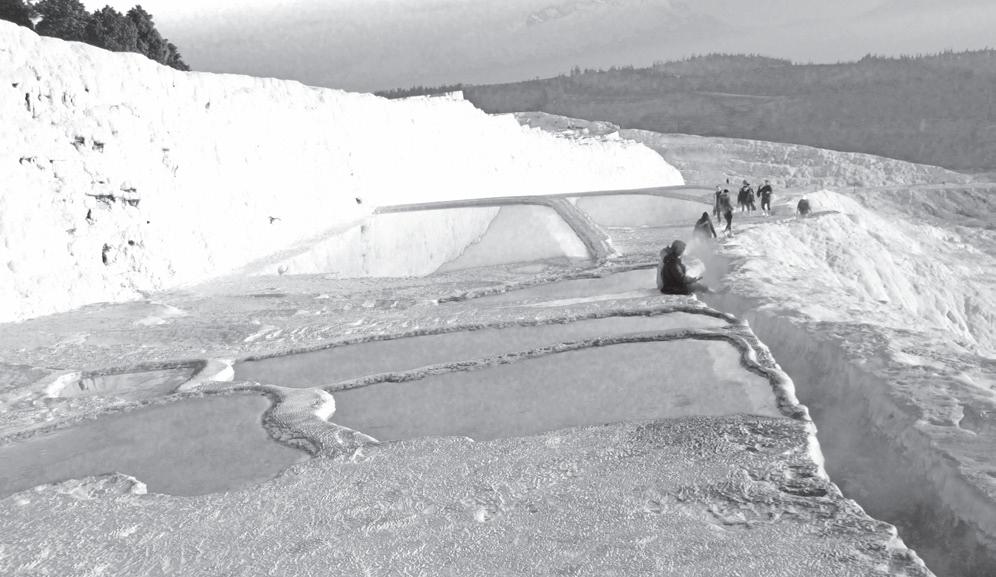




CONVERGENCE OF HISTORY AND NATURE
Relive the past at Türkiye’s Bergama and Pamukkale
Story & photos by Joshua Berida
ÜRKIYE has a rich cultural and histori -
Tcal heritage that makes it a prime destination for history buffs. The ancient ruins from Greek, Byzantine, and Ottoman times create a unique experience every time you visit small towns or big cities. You’ll see vestiges of these civilizations amid skyscrapers, trams, buses, luxury cars, and commercial centers. Two places where you can relive the past are in Pamukkale and Bergama. Relics of the Past
IZMIR is a region that has plenty of historic and cultural sites, one such place you might want to include in your itinerary is Bergama. The latter looks like any other modern town or city with buildings, cars, restaurants, and shops. However, it has a rich cultural and historical heritage where it used to be a Roman
and Greek city. The most prominent and famous relic of Bergama’s Greek past is the UNESCO World Heritage Site of Pergamon. The Attalid Dynasty established Pergamon as their capital in the 3rd century BC. Perched on a hill, it provides you with stunning bird’s eye views. You’ll see ancient ruins such as the Temple of Trajan and the Pergamon Altar as you explore the area. The theater is one of the steepest in the world. It can accommodate thousands of people and is a spectacular sight. When the Romans took over, they left their own influence in Bergama. They had a healing center called Asclepion Sanctuary built. The ancient inhabitants of the city used the healing waters of the sanctuary to soothe aches and illnesses. The center is now in ruins but you can imagine the number of patients coming and going for different kinds of treatments. It also has a smaller theater that Emperor
Hadrian built that’s still worth a look. I took my time exploring the ancient and centuries old complex, soaking in the echoes of history. Another historic attraction you can include in your itinerary is the Red Basilica. The latter is in a ruinous state but still emits an aura of importance. It dates to the 2nd century AD. Experts claim that the temple must’ve been dedicated to worship Egyptian gods
On the surface, Bergama looks and feels like a nondescript city. However, beneath its ordinary exterior is a storied past involving multiple civilizations from the Greeks to the Romans. Bergama is one of the many historic cities and towns scattered all over the country.
A Confluence of Nature and History
TURKIYE is a well-known destination because of the several centuries old ruins and monuments you can visit. However, it also has stunning landscapes that will leave you in awe. One
such place that piqued my interest was Pamukkale. I took the overnight bus to Denizli and caught another ride to Pamukkale. One of the most famous attractions in the country is the travertine pools of Pamukkale.
As soon as I arrived at the foot of the multilayered pools, I had to stop and stare just to marvel at its natural beauty. The travertine pools and Hierapolis are both UNESCO World Heritage Sites. The paper-white terraces are a sight to behold. I climbed up the layers to get different vantage points of this natural wonder. Depending on the season you visit, the pools can overflow with water or only a few of them will be.
At the top of the pools is the ancient city of Hierapolis. The Attalid Dynasty founded Hierapolis’ thermal spas. Doctors of ancient times recommended a dip in one of the pools of the ancient treatment center. The complex also showcases the engineering and architec -
tural ingenuity of its former inhabitants. They maximized the natural landscape and integrated canals to distribute thermal water. The area is full of ruins of temples and centuries old monuments. It’s like exploring an open-air museum. Much like Bergama, the Romans took over Hierapolis in 133 BC. They added onto the Greek structures and left their own mark which visitors can still get a glimpse of today. The Christianization of the Roman Empire led to the construction of Christian monuments and churches. The tapestry of influences and stunning views I saw during my visit made me linger a bit longer. I would recommend Pamukkale because of the convergence of history and nature you’ll experience. Bergama and Pamukkale are historic destinations that showcase the rich heritage of Turkiye. You’ll not only see and experience the country’s many influences, but will also see beautiful travertine pools if you ever visit.
NCCA sets sights on National Arts Month with Santo Niño exhibit

VISITING Intramuros, I’m reminded once again that its walls hide a vast classroom. Every visit brings new insights. Early this week, I returned to cover the opening of the National Commission for Culture and the Arts (NCCA) Gallery’s January exhibition, Enero: Buwan ng Balaang Bata: Devotion to the Holy Child in the Philippines. And once again, I left with fascinating new discoveries. Balaang Bata Exhibit
THE exhibit gathers antique images of the Santo Niño from collectors Claude Tayag, Francis Ong, Jayson Maceo, Jun Fulgencio, Anthony Agustin, and Oliver Obusan. Together, these pieces offer visitors both devotional depth and compelling backstories. In his welcome message, NCCA Chair and Executive Director Eric B. Zerrudo described the exhibition as a way of “beginning on the right foot” for 2026. “We hope to establish the right network at this time,” he said, emphasizing collaboration among collectors, institutions, and communities in preserving shared cultural memory.
“At the end of the day, why do we collect? We collect to be able to share it back to the community,” said collector Francis Ong. “We’re helping build the narrative, the story, because this is the history of our people.”
“ “Galing ’yan sa mga bahay-bahay,” said collector Claude Tayag, referring to the works he contributed to the exhibition. “Most of them are made by ordinary farmers or fishermen.” The exhibition also features Tayag’s personal collection of Santo Niño paintings, which he painted himself.
January is a month of devotion across the Philippines, marked by festivals such as the Sinulog in Cebu, Dinagyang in Iloilo, and Ati-Atihan in Kalibo. The exhibit reflects this widespread reverence, showing not only the many forms of the Holy Child but also the regional nuances of devotion and artistry.
From conversations with Tayag and Ong, patterns emerge. Each island has distinct materials and styles. Sculptures from Siquijor, for example, are notable for their expressive faces. The Santo Niño of Bohol is typically carved from hardwood and painted crimson. Panay’s versions, by contrast, are more flamboyant, often made of lightwood and featuring medallions, a telltale marker of origin.
Ong showed us a small Santo Niño, just 13 inches tall (converted to 33 centimeters). According to him, Cebuano scholar Tito Clodoveo Nacorda, explains that the size symbolizes Christ’s life: 33 centimeters for 33 years. “Isn’t it beautiful?” Ong said. “The symbol, the scale, they tell the story of Christ’s life.”
Tayag shared how his personal collection began. In 1978, at 22, he came across a collection of Santo Niño images being sold at Harrison Plaza. Inspired, he set aside 50 pesos a week, gradually cultivating a lifelong passion. As for his watercolor paintings, Tayag says the process flows naturally: once inspiration strikes, a painting takes only an hour or two to complete.
The exhibition, in this sense, is more than a collection of Santo Niños , it’s a conversation starter that can retell stories across eras, region, and devotion, capturing the many faces of a beloved figure and the communities that cherish him.
Gearing up for the National Arts Month AS February nears, the National Commission for Culture and the Arts (NCCA) ushers in National Arts Month 2026 under the theme “Ani ng Sining: Katotohanan at Giting.” The theme highlights the arts’ power to speak truth, inspire courage, and foster peace and development. Anchored in the Philippine Development Plan for Culture and the Arts and aligned with the Sustainable Development Goals, the celebration showcases how artistic expression mirrors Filipino realities and aspirations. Across Luzon, Visayas, and Mindanao, NCCA-led programs will spotlight seven disciplines: Architecture, Cinema, Dance, Dramatic Arts, Literature, Music, and Visual Arts, inviting inclusive participation nationwide.
National Arts Month 2026 opens on February 1 at Luneta Park in Manila, where the National Commission for Culture and the Arts will stage a symbolic, performance-driven launch centered on this year’s theme.



At the heart of the program is the lampara, this year’s central emblem, representing light, truth, and resolve. Through a ceremonial passing of the lamp, the opening traces the journey of Philippine art from its roots and institutions to the public, and onward to the next generation. Rituals, regional traditions, music, dance, contemporary performance, fashion, and spoken word converge to reflect indigenous heritage alongside modern creative expression. Participating groups include the UST Salinggawi Dance Troupe, UST Singers, Guiguiteno Dance Troupe, Echague tribal performers, the Philippine Ballet Theater, and LGBT community artist Monica Amanda Gana. A Parada ng mga Sining will bring the seven art forms to life through costume and procession. In Luzon, National Arts Month moves to Los Baños, Laguna, from February 18 to 20, in partnership with ARTIST, Inc., focusing on Dramatic Arts and Architecture and Allied Arts. Workshops and discussions at the ART Center will open the program, followed by a collaborative theater production at the University of the Philippines Los Baños’ D.L.


Umali Hall. The regional leg emphasizes community engagement, drawing together artists, students, professionals, and the academe. A weaving performance underscores the interconnectedness of architecture and its allied disciplines in shaping everyday spaces and communal life. The Visayas celebration unfolds in Palo, Leyte, under the subtheme “Pag-uswag han Tawo ngan Kalibungan” (Climate Justice), highlighting the link between human development and environmental sustainability. Activities began earlier, on January 12, with a Climate Justice Symposium attended by around 150 participants from various sectors. The discussions and workshops helped shape programs leading to the official regional celebration on February 18. In Mindanao, National Arts Month spans two cities. In Butuan City, activities run across multiple dates in February under the theme “Lawig Mindanaw: Kalinaw ug Kahigayunan” (Peace and Access). Featured events include Bagani Hong Lawod, a theater production by Balangay Repertory Theater, and POSITIVITY 6, an exhibition exploring belonging and
equality through Butuanon and Caraganon artists’ perspectives. Dance, music, and film showcases further anchor the program. In Davao City, celebrations from February 20 to 21 focus on peace and access, culminating in a multimedia performance shaped by local choreographers, visual artists, filmmakers, and Special Program for the Arts students. Throughout the month, the NCCA will also host ART FriDates, weekly performances and workshops every Friday at the Blackbox Theater, Likhang Pilipino Complex, CITEM, World Trade Center, in Pasay, featuring artists from six local and provincial government units: Angono, Rizal on February 6, Province of Bulacan on February 13, Biñan, Laguna on February
Philippine Arts CATRIONA GRAY, the 2018 Miss Universe and the current Arts Ambassador of the National Commission for Culture and the Arts, spoke with conviction shaped by seven years of taking on the role. In a three-and-ahalf-minute address, she reflected on the challenges of
Photos by Marky Ramone Go
THE ruins of Pergamon’s theater and overlooking views of the city.
THE travertine pools of Pamukkale.
THE travertine pools are spectacular natural wonders. HIERAPOLIS provides a glimpse of the past.
HIERAPOLIS is like an open-air museum. NCCA Chairman and Executive Director Dr.
B. Zerrudo, Collectors Francis Ong and Claude Tayag officially unveils the Balaang Bata exhibition
WATERCOLOR paintings of the Sto Niño
RELIVE the past in Pergamon. THE Red Basilica
BERGAMA has an interesting mix of influences from the Greeks to the Romans.
Editor: Angel R. Calso
Trump’s wide ambitions for Board of Peace spark new support for the United Nations
By Edith M. Lederer & Farnoush Amiri The Associated Press
UNITED NATIONS—President
Donald Trump’s latest attempt to sidestep the United Nations through his new Board of Peace appears to have inadvertently backfired after major world powers rejected US aspirations for it to have a larger international mandate beyond the Gaza ceasefire and recommitted their support for the over 80-year-old global institution.
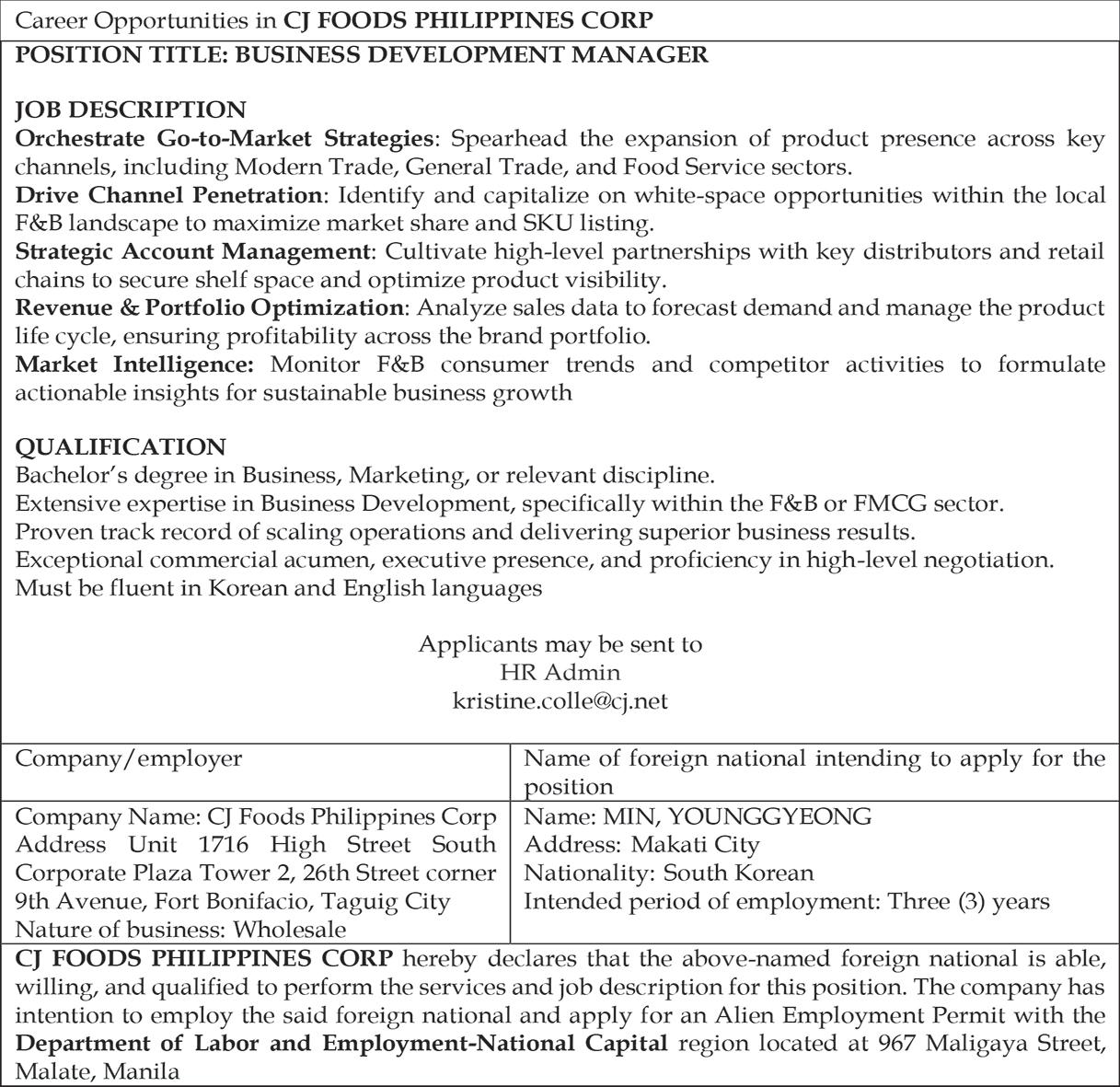


The board to be chaired by Trump was originally envisioned as a small group of world leaders overseeing his plan for Gaza’s future. But the Republican president’s ambitions have expanded to envisioning the board as a mediator of worldwide conflicts, a not very subtle attempt to eclipse the Security Council, which is charged with ensuring international peace and security.
The board’s charter also caused some dismay by stating Trump will lead it until he resigns, with veto power over its actions and membership.
His secretary of state, Marco Rubio, tried to ease concerns by saying the board’s focus right now is only on the next phases of the Gaza ceasefire plan.
“This is not a replacement for
the U.N., but the U.N. has served very little purpose in the case of Gaza other than the food assistance,” Rubio said at a congressional hearing Wednesday.
But Trump’s promotion of a broadened mandate and his floating of an idea that the Board of Peace “might” replace the U.N. have put off major players and been dismissed by U.N. officials.
“In my opinion, the basic responsibility for international peace and security lies with U.N., lies with the Security Council,” Secretary General Antonio Guterres said Thursday. “Only the Security Council can adopt decisions binding on all, and no other body or other coalition can legally be required to have all member states to comply with decisions on peace and security.”
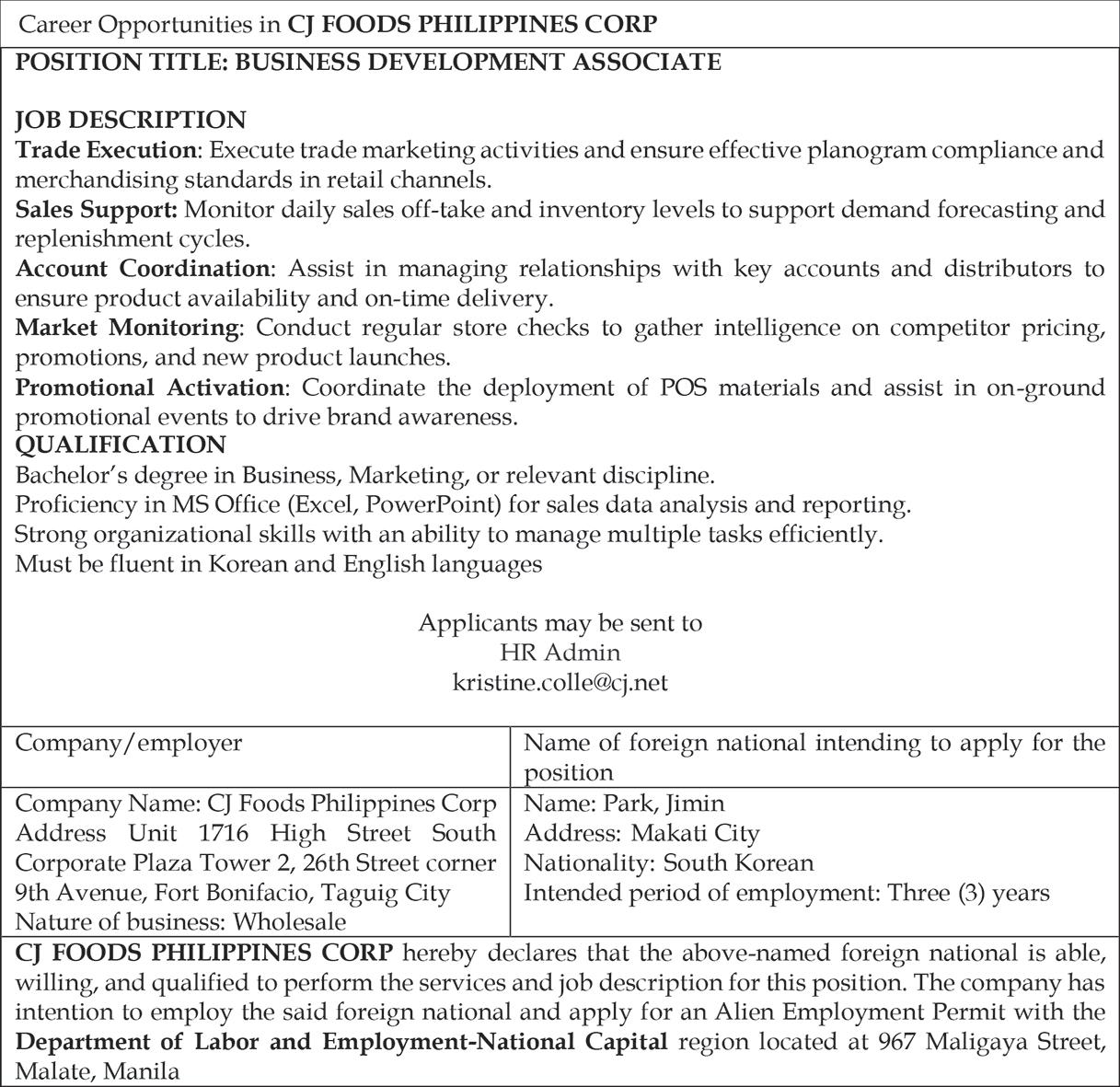


In Security Council statements, public speeches and behind closed doors, US allies and adversaries have dismissed Trump’s latest plan to overturn the post-World War II international order with what he describes as a “bold new approach to resolving global conflict.”
“The US rollout of the much broader Board of Peace charter turned the whole exercise into a liability,” according to the International Crisis Group’s Richard Gowan, a U.N. watcher and program director. “Countries that wanted to sign on to help Gaza saw the board turning into a Trump fan club. That was not appealing.”
“If Trump had kept the focus of the board solely on Gaza, more states, including some more Europeans, would have signed up,” he said.
Key Security Council members haven’t signed on THE four other veto-wielding members of the Security Council—China, France, Russia and the United Kingdom—have refused or have not indicated whether they would join Trump’s board, as have economic powers such as Japan and Germany. Letters sent this month inviting various world leaders to be “founding members” of the Board of Peace coincided with Trump’s vow to take over Greenland, a semiautonomous territory of NATO ally Denmark, and punish some European countries that resisted. That was met with stark rebuttal from Canada, Denmark and others, who said Trump’s demand


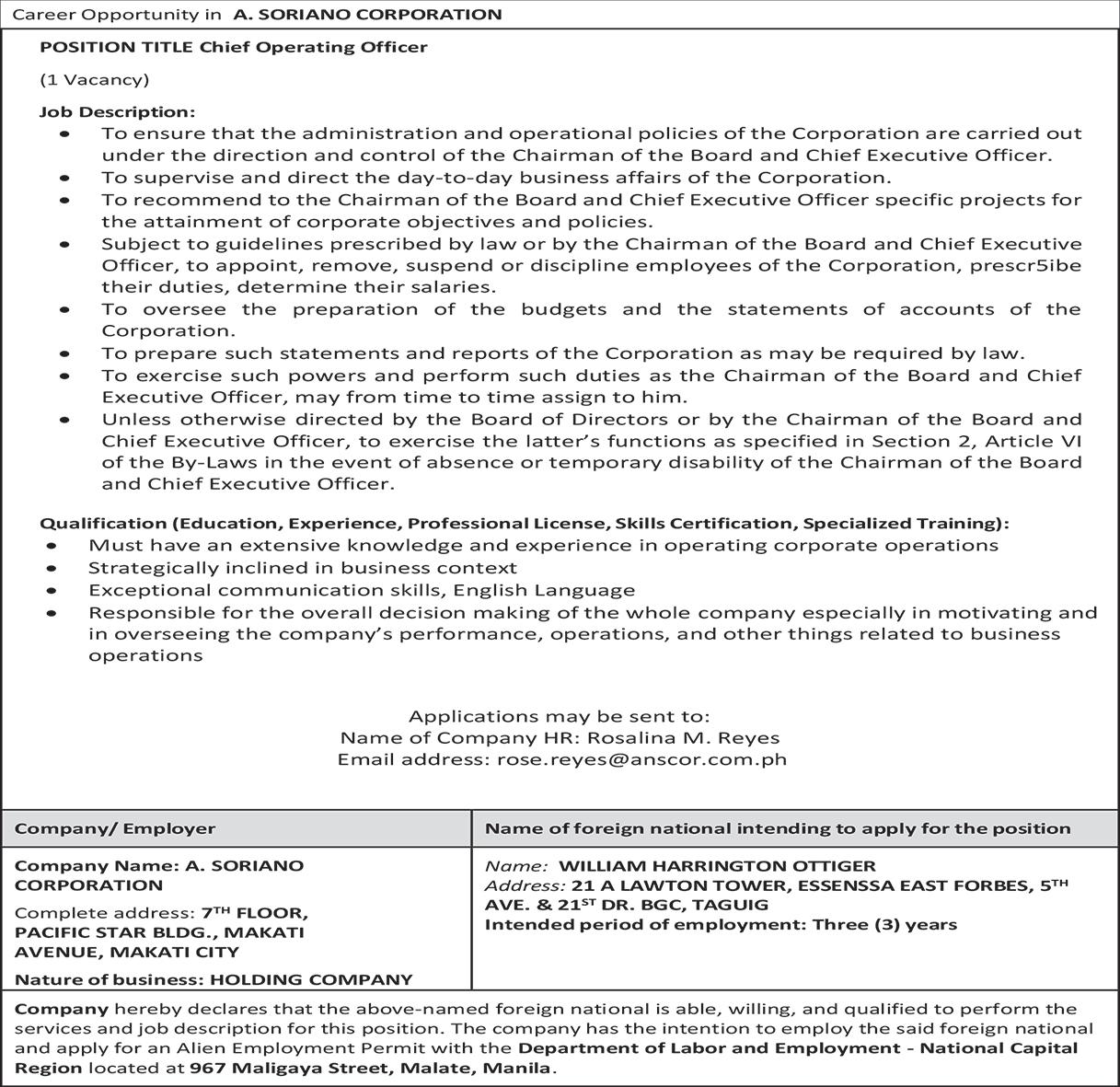

Sheinbaum reiterates sovereignty in Trump call after Olympic snowboarder detained
MEXICO CITY—Mexican President Claudia Sheinbaum reiterated that operations on Mexican soil are always carried out by Mexican forces, in her latest attempt to assuage concerns of US encroachment on Mexican sovereignty.
The comments made at her daily press conference Thursday come after questions surrounding the case of a former Olympic snowboarder accused of drug trafficking, who was recently sent to the US to face charges.
Sheinbaum and US Ambassador Ronald Johnson have insisted that Canadian Ryan Wedding, who was in hiding in Mexico, turned himself in at the US embassy last week, something his lawyer denies.
That account was contradicted by FBI Director Kash Patel, who said the fugitive accused of moving drugs into the US was captured in a “high-risk” joint operation carried out “hand-inhand” and “on the ground” with Mexican forces.
On Thursday, Sheinbaum spoke with Trump by phone, part of the two leaders’ continuing dialogue on trade and security, but they did not speak of Wedding’s arrest, she said.
Sheinbaum acknowledged earlier this week that she did not know the details of the arrest and did not want to argue with Patel.
But she addressed the ongoing concerns of US intervention in Mexico.
“We will never accept joint operations by the United States…operations on our territory are carried out by Mexican forces…we always tell President Trump that,” she insisted Thursday after the call.
Instead, Sheinbaum said the leaders spoke about drug trafficking, the border and trade, coming as the Mexican president has sought to defuse mounting threats by Trump of taking military action against cartels.
The controversy surrounding Wedding’s arrest has resurfaced anxieties around how US agencies operate on Mexican territory, especially in the wake of the US military operation in Venezuela earlier this month, which deposed former President Nicolás Maduro. Since, Trump has repeatedly underscored his desire to fight cartels on land, an escalation from the boat attacks carried out in the Caribbean and the Pacific.
Sheinbaum has repeatedly said she would not allow unilateral US military intervention in the country over concerns for Mexican sovereignty but has promoted bilateral cooperation between the two neighbors.
The Mexican president said that in this latest conversation Trump did not press for any operations in Mexico, but that they did discuss Mexico’s most recent transfer of dozens of imprisoned cartel members to the US, which observers have described as an offering by Sheinbaum’s government.
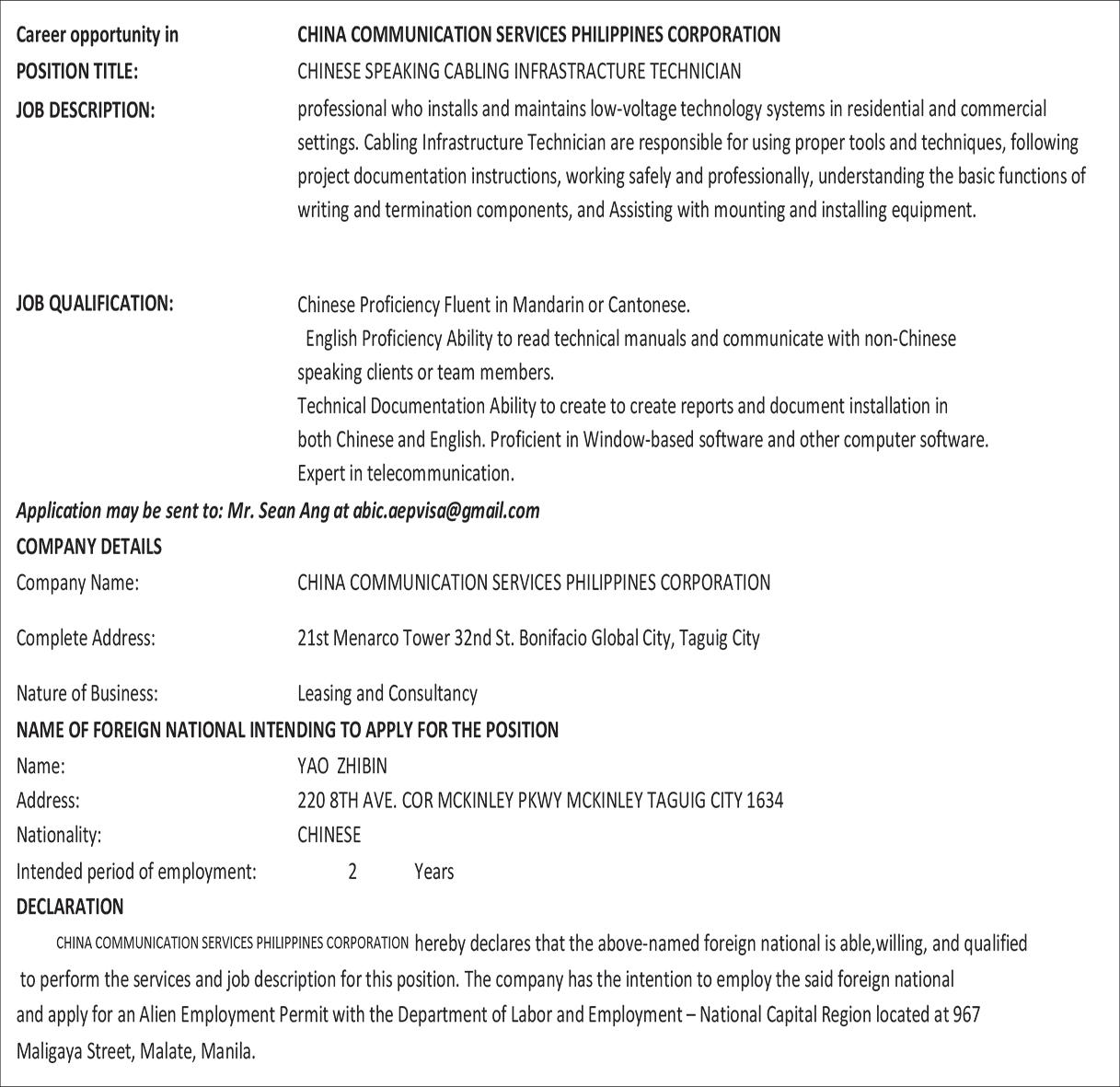
Starmer visits Shanghai as he looks to boost UK business opportunities
By Ken Moritsugu The Associated Press
BEIJING—British Prime Minister
Keir Starmer arrived in the Chinese financial center of Shanghai on Friday in his bid to boost business opportunities for U.K. firms in the world’s second-largest economy, just hours after US President Donald Trump signaled a possible opposition to any deal between Beijing and London.
Starmer has brought more than 50 business leaders on his trip to China, the first by a British prime minister in eight years.
He started his trip in Beijing, where he met Chinese leaders including Xi Jinping. The two pledged to pursue a long-term and stable strategic partnership, in what was seen as a sign of improving ties after several

years of friction between the two countries.
In Washington, Trump suggested he may oppose to any deal, and then pivoted to Canada, with which he has had a series of sharp exchanges since Canadian Prime Minister Mark Carney visited China earlier this month.
“Well, it’s very dangerous for them to do that” he said, when
asked about Starmer’s visit and any U.K. trade talks with Beijing. “And it’s even more dangerous, I think, for Canada to get into business with China. Canada is not doing well. They’re doing very poorly.”
“You can’t look at China as the answer,” he said.
Starmer and Carney are among a series of foreign leaders visiting Beijing as their nations seek to improve ties with China. Many have seen their countries’ economies buffeted by Trump’s tariffs and are looking to expand other export markets.
to this report.
Hong Kong company’s concession to operate Panama Canal ports ruled unconstitutional
By Alma Solís The Associated Press
PANAMA CITY—Panama’s Supreme Court ruled late Thursday that the concession held by a subsidiary of Hong Kong’s CK Hutchison Holdings to operate ports at either end of the Panama Canal is unconstitutional, an outcome that advances a US aim to block any influence by China over the strategic waterway.
The court’s ruling followed an audit by Panama’s comptroller, which alleged irregularities in the 25-year extension of the concession granted in 2021.
The Trump administration made blocking China’s influence over the Panama Canal one of its priorities in the hemisphere.
Panama was US Secretary of State Marco Rubio’s first overseas stop as the United States’ top diplomat.
Despite the insistence by Panama’s government and the canal authority that China has no influence over its operations, Rubio made clear that the US viewed the operation of the ports as a national security issue for the US. President Donald Trump had gone so far as to say Panama should return the canal to US control.
The court’s brief statement gave no guidance on what would happen to the ports now.
CK Hutchison’s subsidiary, Panama Ports Company, said it has not been notified yet about the decision but insisted its concession was the result of transparent international bidding.
It said in its statement that the ruling “lacks legal basis and jeopardizes not only PPC and its contract, but also the well-being and stability of thousands of Panamanian families who depend directly and indirectly on port activity, but also the rule of law and legal certainty in the country.”
It said that it reserves all rights to proceed legally in Panama or elsewhere, but gave no more details.
In Beijing, China’s foreign ministry spokesperson, Guo Jiakun, told reporters that China would take all necessary measures to safeguard the legitimate rights and interests of “the Chinese company,” without elaborating on the potential steps.
Political analyst Edwin Cabrera said once the parties are notified, the issue of what to do with the ports goes to Panama’s executive branch, specifically the Panama Maritime Authority.
“I have the impression from conversations that I have had with some people that the operation (of the ports) will not stop,” Cabrera said.
CK Hutchison Holdings announced a deal last year to sell its majority stake in the Panamanian ports and others around the world to an international consortium that included BlackRock Inc. But the deal appeared to stall over objections by the Chinese government.
The company said last July that it was considering seeking a Chinese investor to join as a significant member of the



See “Panama Canal,” A13
FROM left, Zheng Zeguang, Chinese ambassador to Britain, Ren Hongbin, Chairman of the China Council for the Promotion of International Trade (CCPIT), Britain’s Prime Minister Keir Starmer, and Ge Haijiao, Chairman and Executive Director of the Bank of China Limited (BOC) pose for
The Associated Press writer Darlene Superville in Washington contributed
UNITED STATES President Donald Trump looks on as Mexican President Claudia Sheinbaum speaks on stage at the draw for the 2026 soccer World Cup at the Kennedy Center in Washington, Dec. 5, 2025. MANDEL NGAN/POOL VIA AP
Through the eyes of Iranian protesters, glimpses of disorder, disarray and death
By Kareem Chehayeb & Sarah El Deeb
The Associated Press
BEIRUT—This time felt different.
The 25-year-old Iranian fashion designer hoped that mass protests nearly four years ago—the ones that erupted after a young woman was arrested and died in custody for not wearing the hijab properly—would improve civil rights in the Islamic Republic.
Not much changed, though. Being on those streets, she felt, may have been for nothing. But it didn’t deter her.
In early January, she protested again. The sea of people across Tehran’s busy streets lifted her spirits. This time, the spark was inflation and the plummeting value of the Iranian rial—though chants soon targeted the country’s theocratic leaders.
The crowd was larger, more diverse, she said. Protests in Iran erupt every few years. But this momentum felt unprecedented, she said.
The response by security forces would be, too.
Activists estimate that over 6,000 people, mostly protesters, were killed in the bloodiest crackdown on dissent since the Islamic Republic was created in 1979. They worry the number will increase as information trickles out.
The Associated Press spoke with six Iranians, each on condition of anonymity through secure channels as security forces continued to crack down on dissenters after the protests. They said they demonstrated and witnessed state violence against protesters. Four of them took risks to circumvent an internet shutdown to share what they saw, while two spoke from abroad.
They described a rare sense of hope among protesters, a consensus that the current status quo was no longer sustainable. The younger, more defiant generation was there, they said, but so were older residents, people from
Continued from A10
well-to-do families, even some children. All said they expected the state to respond aggressively but were horrified by the extent of the brutal crackdown.
“When we went out, I couldn’t say I wasn’t stressed, but there was no way I could stay at home,” the designer said. “I felt that if I stayed home—if anyone stayed home—out of fear, nothing would move forward.”
No group of interviews—no matter how illuminating—can reflect the experiences of an entire population or even a segment of it. They’re not representative of the large country of over 85 million people and its diverse ethnic and religious makeup. But these Iranians offer a rare glimpse of life in the Islamic Republic at a pivotal moment in its history. Iran was battered by Israeli and US jets during a 12-day war in June and has been under the grip of Western-led sanctions, compounding economic problems. People say the government has not responded to their concerns of economic mismanagement and interference in their personal lives. They want rights, they say. Dignity.
Supreme Leader Ayatollah Ali Khamenei has said several thousand have been killed—a rare admission that indicates the scale of the movement and the government’s response. Officials and state media repeatedly refer to demonstrators as “terrorists,” showing images of buildings and state property they say protesters have burned or damaged. Iran’s
threatened to upend an alliance that has been among the West’s most unshakeable.
Shortly after, Trump pulled a dramatic reversal on Greenland, saying he had agreed
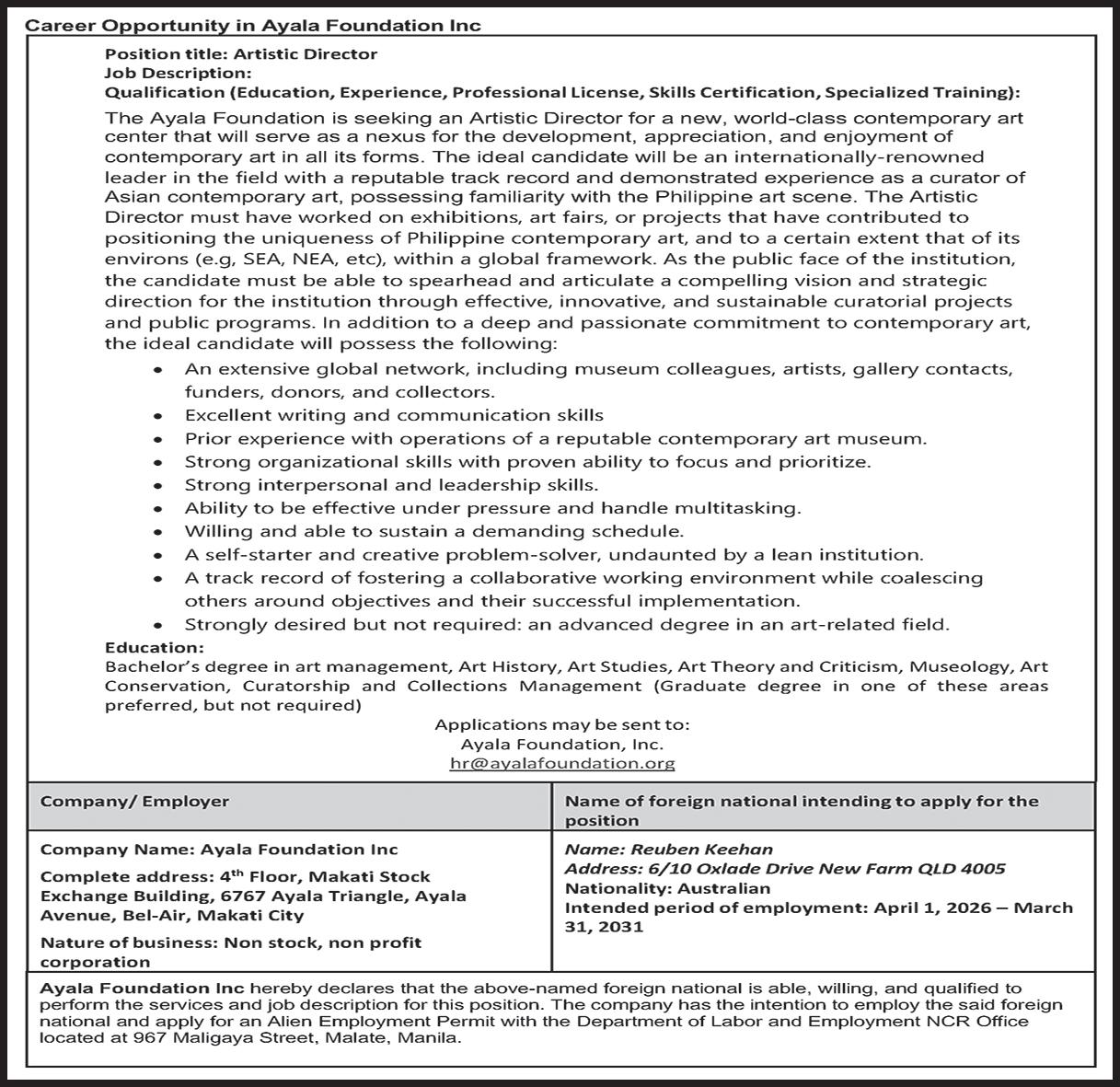

mission to the United Nations did not respond to questions from AP about these witnesses’ recollections. Iran’s U.N. ambassador, Amir Saeid Iravani, has previously said security forces “firmly and responsibly” confronted protesters, whom he called “violent separatists.”
The fashion designer: ‘Everyone was afraid’ DURING the peak of the protests, the fashion designer said, people poured into the streets of Tehran. She described the events of Jan. 8, a turning point in the mood and crackdown on demonstrations.
“When I was outside in the evening, the city was still and empty,” the fashion designer said. Then came a call to protest from Reza Pahlavi, the exiled crown prince. By 8 p.m., she said, she was in a sea of thousands—a crowd larger and more diverse than she’d ever seen.
“Everyone was afraid,” she said, but “they kept saying, ‘No, don’t leave. This time, we can’t leave it. We must not leave until they are over.” She and two friends who protested with her spoke to the AP using a Starlink satellite dish because of the Internet blackout, devices now being seized by authorities there.
They marched up Shariati Street, a commercial road that connects some of northern Tehran’s most bustling neighborhoods to one of the country’s busiest bazaars. But shops were closed. The three said they sprayed graffiti and yelled anti-government chants at the top of their lungs.
elderly people joining Iran’s regular dissenting voices in chants of defiance and anger. Some chants called for the death of Khamenei— a cry that can bring the death penalty.
Then came the security forces.
Anti-riot police and members of the paramilitary Revolutionary Guard’s all-volunteer Basij force arrived, the three friends said, blocking the road and lobbing tear gas and firing pellet guns into the crowd. Protesters panicked and scrambled as the stench of tear gas swept across the crowd.
The group told AP that many pushed forward, throwing rocks at the security forces. Some younger people, veterans of previous protests, donned scarves or masks to protect themselves and hide their identities, expecting a violent pushback.
The protesters built momentum. Some security forces that had arrived on motorcycles appeared to have retreated. But, the fashion designer said, the forces returned, charging at protesters. She knew she and her friends had to run.
They dashed into alleys and side streets, away from the chaos. Residents cheering on protesters had thrown rags and antiseptics from their windows as security forces fired pellets at the crowd.
pierced in the hand and leg.
Fortunately, she said, her mask softened the blow of the paintball that hit the side of her face.
The doctor: ‘This had never happened before at this scale’
When protests reached her part of the country, the doctor said, she wasn’t surprised. But the extent was a different story.
“This had never happened before at this scale,” said the doctor in Mashhad, Iran’s second-largest city and home to an important Shiite shrine. She spoke to AP while visiting family abroad.
Days before a hospital night shift, the physician said, she had attended protests in the northeastern city, hearing gunfire from a distance and feeling tear gas burn her eyes. She saw graffiti on walls and buildings afire, even mosques believed to be used by government forces as rally points.
Once she clocked in at the hospital, Iranian security forces had escalated their response.
“I was not afraid for myself,” the doctor said. “I was afraid for others.”
She didn’t work in the emergency room but tried to see what was going on as ambulances and protesters delivered bodies. Colleagues told her 150 bodies were brought in that night. As she tried to move in closer, she managed a glimpse at some of them, she said: a boy and a young woman lying on stretchers, bearing gunshot wounds.
Security agents in the hospital, both in uniform and plainclothes, took over the command of the hospital emergency room, the doctor said. Doctors protested, she said of the colleagues’ account, but they were told to stop speaking or asking questions.
“They were standing over their (ER workers) heads with a gun, telling them not to touch (the wounded),” the doctor recalled of the experience relayed by one colleague. It was “as if they wanted those injured people to die on their own.”
misguided members of the public trying to sabotage the country. Authorities held a counterdemonstration showing people loyal to the country’s theocratic leadership.
Crackdowns continued. Momentum ebbed. Iran remains cut off from the world. For some, rage and grief over the violence have grown.
“What I fear is that these events will be treated as something ordinary by the world, that people will simply move on and no one will pay attention,” the doctor said. “The fact that the voices of so many of those who were killed never reaches anyone is truly the most painful thing for me.”
She described observing a family arrive at the hospital to retrieve the body of a relative— a young woman. Agents refused to hand over her body, the doctor said, unless the family gave them her national identification and let them identify her as a Basij volunteer and government supporter. An argument started, and her family was arrested, the doctor said, and the woman’s body was taken to the cemetery with the others.
The family said, “Our daughter was killed by your forces,” the doctor recalled. “I can’t get the picture of that day out of mind, even for an hour.”
As January comes to an end, tensions on the streets have cooled, the three Iranians in Tehran told AP. Some daily life peeks through. But everywhere they go, they said, they remain watchful—in case something sets it all off again. They can’t connect with Iranians outside their circles because of the Internet blackout, but in their area, they said they see large deployments of security forces in public places.
“I don’t know how the other places are,” one of the three said. “But on every square in Tehran, there are agents in plain clothing—and even riot police.”
Momentum ebbed, and Iran
remains isolated
“No matter how many times I explain, I truly can’t really convey the extent of the horrible situation,” she said. “No one would believe that a government of a country can so easily kill its own people.” IN
They described teenagers and
with the NATO secretary-general on a “framework of a future deal” on Arctic security.
Amid the diplomatic chaos, British Prime Minister Keir Starmer, who at the time had not responded to Trump’s Board of Peace invitation, met with Guterres in London and reiterated “the UK’s enduring support for the UN and the international rules-based system,” according to a statement.
Starmer emphasized the U.N.’s “pivotal role in tackling global problems which shape lives in the UK and all over the world.” The United Kingdom later declined to join the board.
France, Spain and Slovenia declined Trump’s offer by mentioning its overlapping and potentially conflicting agenda with the U.N.
French President Emmanuel Macron
Soon, tear gas canisters fell into the alley. The fashion designer remembered lessons from other protests: “I thought I’d kick it back,” she said, to protect the wounded. But as she did, she said, security forces were firing paintballs and pellets. She described being
said last week that the board goes beyond “the framework of Gaza and raises serious questions, in particular with respect to the principles and structure of the United Nations, which cannot be called into question.”
Spain would not join because the board excluded the Palestinian Authority and because the body was “outside the framework of the United Nations,” Prime Minister Pedro Sánchez said.
Some countries are urging a stronger UN AMERICA’S adversaries also have shunned the board.
“No single country should dictate terms based on its power, and a winner-takes-all

The doctor said she hopes the world won’t turn away from Iran.
KHAMENEI told the nation that the protesters were either collaborators working for American or Israeli intelligence agencies or
approach is unacceptable,” China’s U.N. ambassador, Fu Cong, said at a Security Council meeting Monday. He called for the United Nations to be strengthened, not weakened, and said the Security Council’s status and role “are irreplaceable.”
In a clear reference to the Board of Peace, Fu said, “We shall not cherry-pick our commitments to the organization, nor shall we bypass the U.N. and create alternative mechanisms.”
So far, about 26 of some 60 invited countries have joined the board, and about nine European countries have declined. India did not attend Trump’s signing ceremony at the World Economic Forum meeting in Davos, Switzerland, last week but is reportedly still deciding what to do. Trump revoked Canadian
Prime Minister Mark Carney’s invitation.
“It’s hardly surprising that very few governments want to join Trump’s wannabeU.N., which so far looks more like a pay-toplay club of human rights abusers and war crimes suspects than a serious international organization,” said Louis Charbonneau, U.N. director for Human Rights Watch. “Instead of handing Trump $1 billion checks to join his Board of Peace, governments should work on strengthening the U.N.” Eight Muslim nations that agreed to join the board issued a joint statement that supported its mission in Gaza and advancement of Palestinian statehood. Turkey, Saudi Arabia, Egypt, Jordan, Indonesia, Pakistan, Qatar and the United

Largest gold miner in Liberia repeatedly spill dangerous chemicals, records show
By Ed Davey & Alon Aviram The Associated Press
JIKANDOR, Liberia—For generations, families in Jikandor village fished and drank from the river that runs through Liberia ‘s dense rain forest. Now toxic pollution is making them leave.
They blame the largest gold miner in Liberia, Bea Mountain Mining Corporation. When dead fish float to the surface, they said, they know to tell authorities. But for years there has been little response.
“If we don’t move, we will die,” village chief Mustapha Pabai said. Over several years, cyanide, arsenic and copper repeatedly leaked from Bea Mountain’s substandard facilities at levels that Liberia’s Environmental Protection Agency described as above legal limits. That’s according to EPA reports that were taken down from its site but later retrieved, as well as interviews with government officials, experts and former company employees.
They provide the most comprehensive accounting yet of the spills.
The EPA documents also show that Bea Mountain failed to alert regulators promptly after a spill in 2022 and previously blocked government inspectors as they tried to access the company’s laboratory and view results of testing.
The incidents point to failures in corporate responsibility that “can only be described as sustained negligence,” said Mandy Olsgard, a Canadian toxicologist who reviewed the EPA reports obtained in an investigation by The Associated Press and The Gecko Project.
The reports also expose the Liberian government’s failures to hold the company to account. The government holds a
5% stake in the mining operations. Under Liberian law, the state can suspend or terminate licenses if a miner doesn’t fulfill its obligations. But weak enforcement is common, with the World Bank citing limited government capacity.
In response to the investigation, the country’s recently dismissed minister of mines, Wilmot Paye, said he was “appalled by the harm being done to our country” and that the government was reviewing all concession agreements. The outspoken minister was dismissed in October.
The gold that Bea Mountain mines is sold to Swiss refiner MKS PAMP, which is in the supply chains of some of the world’s largest companies including Nvidia and Apple. The investigation could not confirm what companies ultimately used the gold.
MKS PAMP said it had commissioned an independent assessment of the New Liberty mine, the largest of five mines that Bea Mountain operates in Liberia, in early 2025, and said it found no basis to cut ties but identified areas for improvement related to health and safety. A followup visit is planned for 2026.
MKS PAMP declined to share the assessment’s findings, citing confidentiality. It said it would end the relationship if Bea Mountain doesn’t improve.
Between July 2021 and December 2022, the most recent period for which figures could be obtained, Bea Mountain exported
more than $576 million worth of gold from Liberia. It contributed $37.8 million to government coffers during that time.
Bea Mountain is controlled by Murathan Günal through Avesoro Resources. Murathan is the son of Turkish billionaire Mehmet Nazif Günal, whose business interests include the Mapa Group. Avesoro Resources and Mapa Group did not respond to requests for comment.
Years of warnings
EXTRACTING gold from ore often involves cyanide, a chemical that at high levels can cause severe neurological damage and can be fatal if ingested, inhaled or absorbed through the skin. Cyanide must be treated before it enters and when it leaves a tailings dam, a storage site for mining waste.
Other toxic substances, including arsenic, often found in gold mining also pose serious health risks if not properly controlled.
The Günals took over Bea Mountain in 2016, acquiring it from Aureus Mining, a UK-listed gold producer, after years of warnings.
In 2012, Canadian consultancy Golder Associates found a risk of contamination of local rivers from the New Liberty mine’s tailings dam and warned that seepage would breach Liberia’s drinking water standards. Two years later, the Digby Wells consultancy flagged cyanide and arsenic as key risks and suggested measures to prevent contamination.
In 2015, a year before production began, a third consultancy, SRK, warned that arsenic could exceed World Health Organization standards for drinking water if not properly managed.
Before production began, the International Finance Corporation, an arm of the World Bank, paid $19.2 million for an equity stake in Bea Mountain’s parent company to develop the New Liberty mine. But the US representative on the IFC board abstained, warning in a 2014 letter that the project lacked basic safeguards and
raising concerns about the tailings dam and gaps in the environmental assessment.
It was not clear whether the IFC still holds a stake, and it didn’t respond to questions. Bea Mountain had pledged to follow strict water management rules and adopt the Cyanide Management Code, a global standard recommending pollution limits and requiring independent audits.
First month, first spill
THE first spill documented by the EPA came in the first month of full production. In March 2016, just before the Günals’ purchase of Bea Mountain, cyanide and arsenic leaked from the New Liberty mine. Dead fish floated downstream. Residents reported skin rashes.
The company paused operations but publicly downplayed the spill, saying “there has been no adverse impact on any human settlement.”
It was the first of four EPA-confirmed cases at the mine in which Bea Mountain exceeded government pollution limits.
In June 2020, EPA inspectors found Bea Mountain operating an unapproved wastewater system, and detected water contaminated with high levels of copper and iron. When inspectors tried to look at the company’s water testing data, Bea Mountain refused.
“Physical access to the laboratory was also not approved,” the EPA said in one report.
That month, Bea Mountain withdrew from the Cyanide Management Code without ever undergoing an audit, said Eric Schwamberger, a senior official at the International Cyanide Management Institute that oversees the code. He called such withdrawals uncommon.
In May 2022, dead fish drifted down Marvoe Creek, which flows past Jikandor village and into the Mafa River that runs to the Atlantic. The EPA reported that a spill from Bea Mountain’s tailings dam had suffocated the fish “due to exposure to higher than permissible
limits” of cyanide.
The company knew about the pollution but failed to notify the community and the EPA “until downstream communities first started observing dead fish species,” the EPA report said. Companies are required to report such spills within 72 hours.
More than 10 miles (16 kilometers) downstream in Wangekor village, residents said they hauled in dead fish before any warning reached them. They believed the bounty was “a gift from God,” said Philip Zodua, a representative of communities along the river.
Six residents of villages downstream of the Bea Mountain mine asserted that they and their families fell ill after eating fish from the river in June 2022.
One villager, Korto Tokpa, said she saw children collecting dead and dying fish. “They all were sick, vomiting, throwing up and going to the toilet the whole night” after consuming them, she said.
However, no tests were carried out on the villagers. Independent environmental scientists and toxicology experts said there is insufficient evidence to identify pollution as the cause of the reported illnesses.
“Without proper testing and transparent data, the true risks cannot be understood, and communities are left carrying all the uncertainty,” said Olsgard, the toxicologist. “It is the company’s responsibility to fill these gaps urgently.”
When EPA inspectors arrived at the mine to test the water days after the spill, they found arsenic and cyanide levels well above legal limits.
Schwamberger said the cyanide concentrations reported by the EPA, from water flowing out of the tailings dam, were more than 10 times the concentration “that would typically be considered to be lethal to fish.”
In February 2023, another spill occurred. The EPA documented “a huge quantity of raw copper sulfate” leaking into the environment. Six of nine water samples
breached legal limits for cyanide and copper.
An EPA official involved in the May 2022 investigation, speaking on condition of anonymity because they were not authorized to discuss the matter, said the mine’s tailings dam had been originally built too small, a design flaw that later caused it to overflow.
A $25,000 fine
WHILE EPA inspectors repeatedly recommended fines after the spills, only one penalty was issued by the regulator, a $99,999 fine in 2018 that was later reduced to $25,000. It was not clear why.
In a written response to questions from the AP and The Gecko Project, the EPA acknowledged three “pollution incidents” between 2016 and 2023 in which laboratory tests found “higher than permissible levels” of cyanide. It also confirmed fish deaths were caused by cyanide, copper sulfate and arsenic leaking from the mine’s tailings dam. It was not clear why the EPA did not acknowledge the fourth spill.
The EPA said the spills it documented occurred before the agency’s current leadership took office in 2024. It said it had ordered Bea Mountain to hire an EPA-certified consultant and reinforce the tailings dam, and that the measures were implemented. It did not say when that occurred.
“No entity is above the law,” the agency said.
Following an EPA recommendation, a legally binding agreement was reached in May 2025 for Bea Mountain to relocate and compensate Jikandor village, the community closest to the mine. Bea Mountain is now exploring new gold reserves elsewhere in Liberia.
This story was reported in collaboration with The Gecko Project, a nonprofit newsroom reporting on environmental issues. The reporting was supported by the Pulitzer Center. AP is solely responsible for all content. Aviram reported from London.
Senate leaders scramble to save bipartisan deal and avert government shutdown at midnight
By Mary Clare Jalonick The Associated Press
WASHINGTON—Senate leaders were scrambling to save a bipartisan spending deal and avert a partial government shutdown at midnight Friday as Democrats have demanded new restrictions on federal immigration raids across the country.
Democrats struck a rare deal with President Donald Trump Thursday to separate funding for the Homeland Security Department from a broad government spending bill and fund it for two weeks while Congress debates curbs on the US Immigration and Customs Enforcement agency. The deal came as irate Democrats had vowed to vote against the entire spending bill and trigger a shutdown in the wake of the deaths of two protesters at the hands of federal agents in Minneapolis.
“Republicans and Democrats have come together to get the vast majority of the government funded until September” while extending current funding for Homeland
Security, Trump said in a social media post Thursday evening. He encouraged members of both parties to cast a “much needed Bipartisan ‘YES’ vote.”
Trump had said earlier in the day that “we don’t want a shutdown.”
Still, passage of the agreement was delayed late Thursday as Senate leaders were still working to win enough support for the package.
Leaving the Capitol just before midnight Thursday after hours of negotiations, Senate Majority Leader John Thune said there were “snags on both sides” as he and Democratic leader Chuck Schumer tried to work through any objections that could delay passage past the Friday deadline.
“Hopefully people will be of the spirit to try and get this done tomorrow,” Thune said as the Senate was scheduled to reconvene on Friday.
Sen. Lindsey Graham, R-S.C., said late Thursday that he was one of the senators objecting. He said ICE agents were being treated unfairly and he opposed House
language repealing a new law that gives senators the ability to sue the government for millions of dollars if their personal or office data is accessed without their knowledge.
Rare bipartisan talks
THE unusual bipartisan talks between Trump and Schumer, his frequent adversary, came after the fatal shooting of 37-year-old Alex Pretti in Minnesota over the weekend and calls by senators in both parties for a full investigation. Schumer called it “a moment of truth.”
“What ICE is doing, outside the law, is state-sanctioned thuggery and it must stop,” Schumer said Thursday. “Congress has the authority—and the moral obligation— to act.”
The standoff has threatened to plunge the country into another shutdown, just two months after Democrats blocked a spending bill over expiring federal health care subsidies. That dispute closed the government for 43 days as Republicans refused to negotiate.
That shutdown ended when a small group of moderate Democrats broke away to strike a deal with Republicans, but Democrats are more unified this time after the fatal shootings of Pretti and Renee Good by federal agents.
Republicans were more willing to make a deal, as well, as several of them said they were open to new restrictions after the two fatal shootings.
Democrats lay out demands
DEMOCRATS have laid out several demands, asking the White House to “end roving patrols” in cities and coordinate with local law enforcement on immigration arrests, including requiring tighter rules for warrants. They also want an enforceable code of conduct so agents are held accountable when they violate rules. Schumer said agents should be required to have “masks off, body cameras on” and carry proper identification, as is common practice in most law enforcement agencies.
Earlier on Thursday, Tom Homan, the
president’s border czar, stated during a press conference in Minneapolis that federal immigration officials are developing a plan to reduce the number of agents in Minnesota, but this would depend on cooperation from state authorities.
Still far apart on policy
IF the deal moves forward, negotiations down the road on a final agreement on the Homeland Security bill are likely to be difficult.Democrats want Trump’s aggressive immigration crackdown to end.
“If the Trump administration resists reforms, we shut down the agency,” said Connecticut Sen. Richard Blumenthal.
But Republicans are unlikely to agree to all of the Democrats’ demands.
North Carolina Sen. Thom Tillis said he is opposed to requiring immigration enforcement officers to show their faces, even as he blamed Homeland Security Secretary Kristi Noem for decisions that he said are “tarnishing” the agency’s reputation.
“You know, there’s a lot of vicious people out there, and they’ll take a picture of your face, and the next thing you know, your children or your wife or your husband are being threatened at home,” Tillis said. Graham said some of the Democratic proposals “make sense,” such as better training and body cameras. Still, he said he was putting his Senate colleagues “on notice” that if Democrats try to make changes to the funding bill, he would insist on new language preventing local governments from resisting the Trump administration’s immigration policies. “I think the best legislative solution for our country would be to adopt some of these reforms to ICE and Border Patrol,” Graham posted on X. But he said that the bill should also end so-called “sanctuary city” policies.
The Associated Press writers Lisa Mascaro, Kevin Freking, Stephen Groves, Joey Cappelletti, Seung Min Kim, Michelle L. Price and Darlene Superville contributed to this report.
vu at TCC for champ Shin
By Aldrin Quinto
CITY of Santa Rosa, Laguna—Micah Shin
overcame hip pain and some back-nine blunders and his closing 76 was just enough to edge out Miguel Tabuena by one and win back
The Country Club Invitational on Friday.
The 29-year-old Shin finished at two-over 290 to end an eight-year title drought, averting disaster with crucial pars on the final two holes where Tabuena narrowly missed birdie chances.
The title was Shin’s first since winning the same Don Pocholo Razon Memorial Cup in 2018, coincidentally, also in a tight finish against Tabuena.
“Felt like déjà vu,” said Shin, who now trains his sights on the Asian Tour’s Philippine Golf Championship next week at Wack Wack Golf and Country Club.
Tabuena, four strokes off at the start of the day, carded a 73 for a 289 total.
After impressive rounds of 71-71-72 at the challenging TCC course, the same site of his last title triumph in 2018, Shin finally tripped as old back issues flared up. He suffered three birdies in a six-hole stretch on the homeward nine, including the
par-five No. 14, which he had birdied for three straight days.
It has been two years since his hip surgery but the pain returns now and then, Shin said, and some discomfort during the Pro-Am threatened to end his week prematurely in the International Container Terminal Services Inc.-backed tournament.
The Korean-American soldiered on and felt fine until late Thursday, when he needed medication to keep going, and a day later he is back as champion of the P6.5 tournament.
“I felt the pain during Pro-Am, and I felt like not playing but I still did,” Shin said. “Today was pretty bad but I just took painkillers and held on.”
With the Philippine Golf Tour’s top players watching from across the lake, Shin pitched from the front collar and made the five-foot putt to save par and seal the victory worth P2.2 million.
Birdies on Nos. 8 and 14, both par-5s, got Tabuena within a shot, but the International Series Philippines winner just could not convert on the late birdie chances. Still, it was a strong finish for the 2017 TCC Invitational champion, a big boost ahead of his campaign in LIV Golf.
Tabuena, who had earlier rounds of 72-73-73, is set to leave for Riyadh for the opening leg of the league after being tapped
as a reserve player on the Saudibacked tour this season.
“It was fine. I gave myself the best chance,” said Tabuena, who bagged P1.05 million.
“Micah had a great up-and-down on the last hole, and I couldn’t do anything about that.”
“Three-over in four days here is not a bad score. My game is trending in the right direction and hopefully I get to play in Saudi next week.”
Two-time champion Guido van der Valk of the Netherlands placed third with a finalround 73 for a 294 total.
Korea’s Jung Jaehyun also had a 73 for a 295 aggregate and a share of fourth spot with Clyde Mondilla, who had a closing 75.
Keanu Jahns, winner of three PGT legs last season, wound up in sixth spot at 297 after a 74, followed by Carl Corpus at 299.
Reigning PGT Order of Merit winner Angelo Que closed with a 78 for a 305 total, while two shots further back was Sean Ramos with a 77.
Tony Lascuna, five time PGT Order of Merit champion, took the 10th spot with a 74 for a 309.


Fteams launch their respective campaigns as the Premier Volleyball League All-Filipino Conference kicks off on Saturday at the FilOil Playtime Centre in San Juan. The spotlight at 4 p.m. shines on Galeries Tower which tests its revamped lineup against a proven and intact Cignal squad. The other opening-day match at 6:30 p.m. pits Choco Mucho against Akari.
The Highrisers enter the conference with an almost entirely new look with 14 fresh faces and a new coach, Clarence Esteban, who’s tasked with steer the team to redemption after going winless in the 2025 Reinforced Conference. Esteban brings a mix of youthful energy and seasoned leadership to ignite a turnaround and prove that Galeries Tower coiuld finally challenge the league’s established contenders.
Standing in their way are the Super Spikers, the third-ranked team the Highrisers stunned in the qualifying round of the 2024-25 All-Filipino Conference, en route to a quarterfinals stint.
Despite the overhaul, Esteban will lean on veteran Aiza Pontillas, alongside holdovers Julia Coronel of Alas Pilipinas and last year’s second overall rookie pick Jean Asis.
Completing the Highrisers roster are Erika Raagas, Jules Samonte, Gayle Pascual, BLove Barbon, Cams Victoria, Shola Alvarez, Lycha Ebon, Julia Angeles, Dolly Verzosa, Erika Deloria, Sharya Ancheta, Venice Puzon and Maji Mangulabnan.
“We had a very short preparation because of the build and a new system,” Esteban said. “Aiza [Pontillas] brings in her veteran leadership that would be great for the team.” Cignal, meanwhile, opted for continuity and only had one addition to preserve chemistry and familiarity among its core.
With Vanie Gandler, Erika Santos, Ishie Lalongisip, Jackie Acuña, Rose Aquino and Gel Cayuna, the Super Spikers are banking on cohesion, depth and a strong desire to redeem themselves against the Highrisers.
The main event between Akari and Choco Mucho is expected to be another hard-fought encounter between two squads with contrasting motivations.
The Chargers parade a largely intact roster led by Ivy Lacsina, Ced Domingo, Fifi Sharma, Eli Soyud, Justine Jazareno and Mars Alba and although they lost players Ezra Madrigal, Victoria and Raagas, they bolstered their depth with role players Cza Carandang, Jyne Sorreno, Judith Abil and Rhose Dapol.

20 years old and with
way



Eala has a lot of tennis years ahead of her–PSC’s Gregorio
ABy Josef Ramos
LEX EALA couldn’t go beyond the quarterfinals of the Women’s Tennis Association (WTA) 125 Philippine Women’s Open after absorbing a straight-set loss to Colombia’s Camila Osorio on Friday night at the Rizal Memorial Tennis Center.

But, according to Philippine Sports Commission (PSC) chairman Partick Gregorio, that’s nothing to despair about the young tennis sensation.
“Imagine, Alex is just 20 right now and she keeps on winning abroad and putting our country on the global tennis map,” Gregorio told the BusinessMirror on the sides of the semifinals on Friday. “If Aryana Sabalenka won her first major title at the age of 25, imagine Alex two to three years from now.”

Sabalenka is the world’s top-ranked woman player from Belarus who won the Australian Open at 25 in 2023 and is looking at a third straight title in Melbourne against world No. 3 Elena Rybalkina of Russia on Saturday. Sabalenka also won the US Open two years in a row 2024-2025.
Gregorio said that Ealahas
a lot of tennis ahead of her and have validated her world-caliber skills not only by ranking No. 49 in the WTA, but also her main draw stints in grand slams the latest of which was at last month’s Australian Open.
“She will do good in years to come with the way she’s playing,” Gregorio said. “Alex will reach her dreams and we, here at the PSC, will do everything to help her and the sport…just what we’re doing right now.”
Eala flew to the United Arab Emirates for another international tournament—the WTA500 Mubadala Abu Dhabi Open that starts Saturday at the Zayed Sports City International Tennis Center.
The Abu Dhabi Open features defending champion and world No. 10 Belinda Bencic, Filipino-Canadian Leylah Fernandez and Eala’s foes on the tour Maya Joint, Barbora Krejcikova and Clara Tauson.
Eala couldn’t get her rhythm against Osorio, 24 and who ranked a high No. 33 in 2022 and currently No. 88, and lost, 4-6, 4-6.
She immensely thanked a very supportive Filipino fans and acknowledged the rise of players from Southeast Asia, primarily Indonesia’s Janice Tjen who made the main draw in Melbourne, and Thailand’s Lanlana Tararudee and Mananchaya Sawangkaew.
“I’m so proud to be in [that kind] of girls who are really lifting the sport in our region,” Eala told Thursday night’s press conference. “I think the level is really there as you can see.”
Not be outdone was his brother Eldrew Yulo, who netted bronze medals in floor exercise and horizontal bar at the Third FIG Artistic Gymnastics World Junior Championships.
The younger Yulo’s bronze medals capped the country’s successful hosting of the meet held in the Philippine for the first time through the initiatives of GAP and in partnership with the PSC and other leading government agencies. And before 2025 ended, Filipino gymnasts also made their presence felt in the 33rd SEA Games in Bangkok where they took home three gold medals courtesy of Aleah Finnegan (vault), Jasmine Ramilo (individual all-around) and John Ivan Cruz (vault), with two silvers, and seven bronzes.
AIA Philippines seals partnership with PFF
By John Eiron R. Francisco
AIA Philippines sealed on Friday a partnership with the Philippine Football Federation (PFF) making the insurer the life insurance coverage provider to members of the national football teams.
“We hope that it allows them one less thing to worry about so that they can focus on their health, their training, the sport that they love, and really achieve their peak performance so that they can just focus on what they do best,” Melissa Henson, Chief Marketing Officer of AIA Philippines, told BusinessMirror during a press conference in Makati City.
Henson said the coverage extends to 80 individuals, including both players
and coaches, with each member receiving P1 million in life insurance coverage.
She added that AIA Philippines’ support for football is rooted in the sport’s broader social impact, noting that football promotes physical fitness, teamwork, and community building, particularly among the youth. PFF President John Gutierrez said the partnership comes at a crucial time for Philippine football, as the national teams continue to build on recent successes. He noted that the men and women futsal teams all reached the semifinals in the 33rd Southeast Asian Games in Thailand last month, an unprecedented achievement for the country. Gutierrez also highlighted the historic run of the women’s national team, which clinched the championship in Thailand, after defeating eight-time champion and four-time defending
titleholder Vietnam,