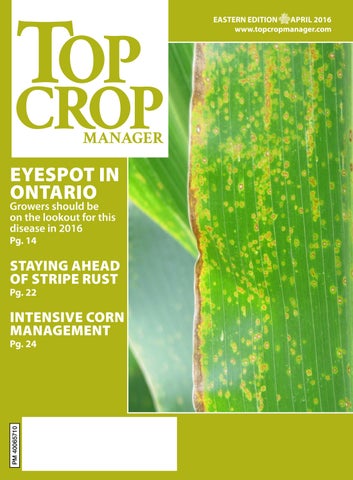
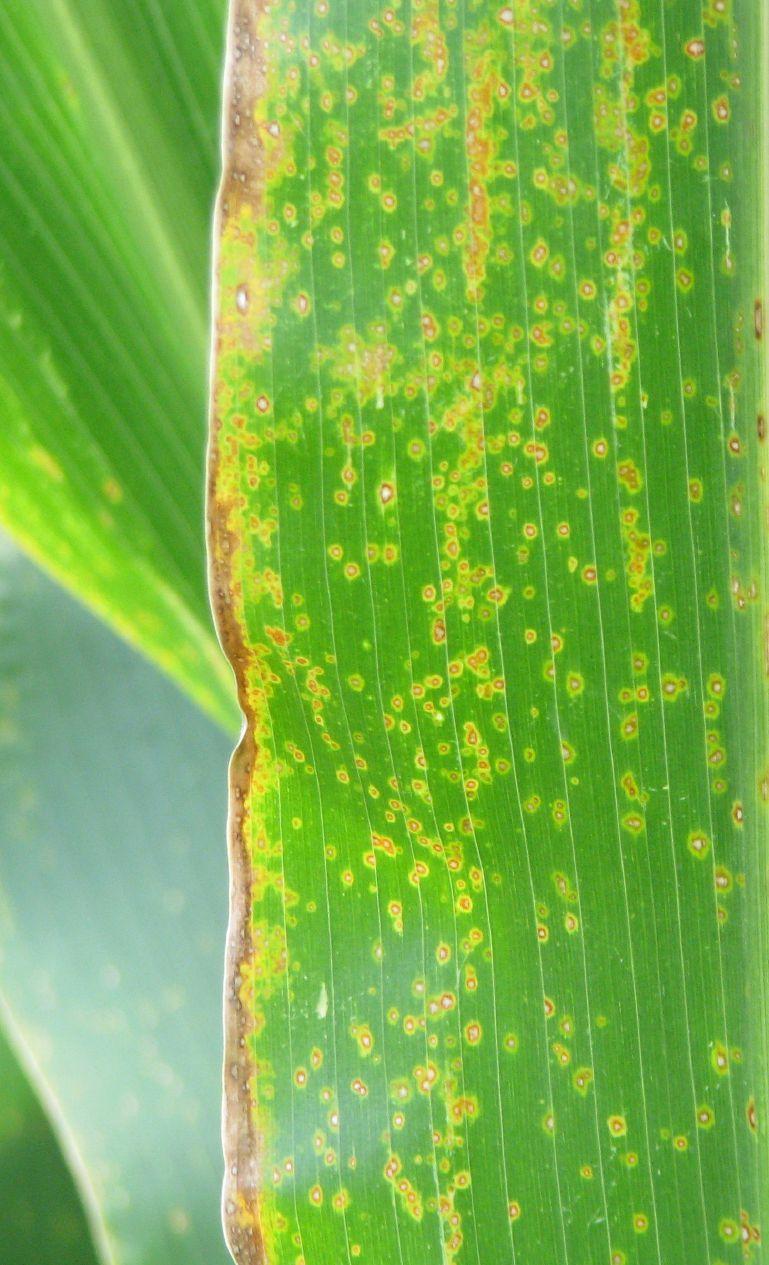
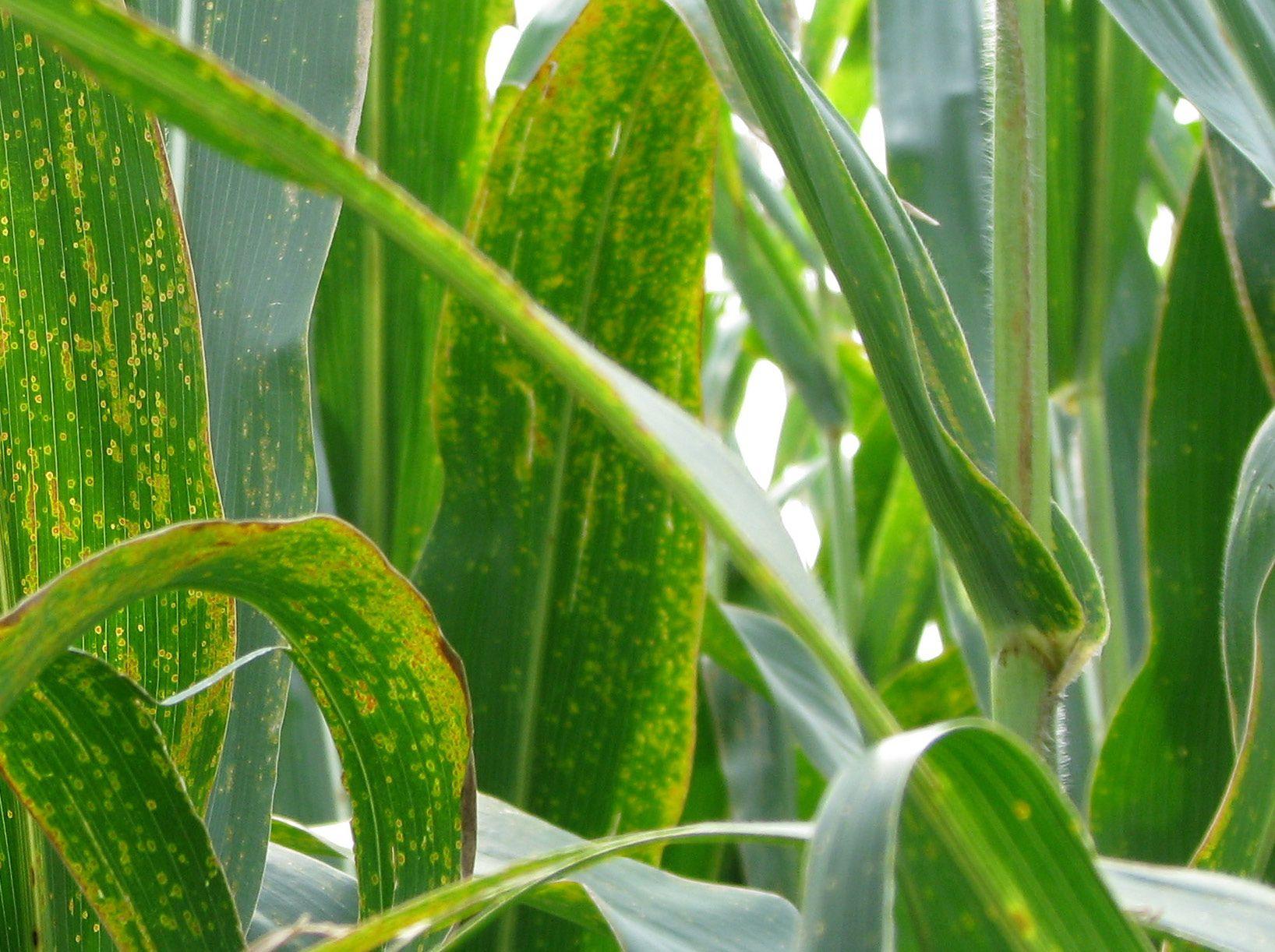
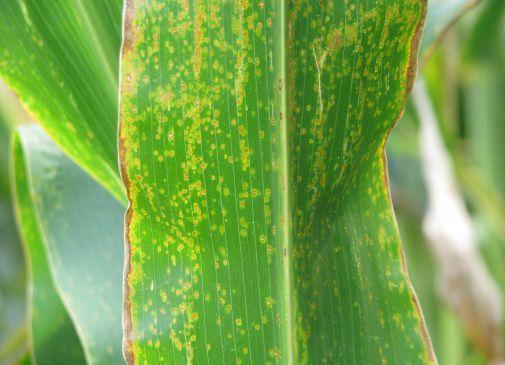
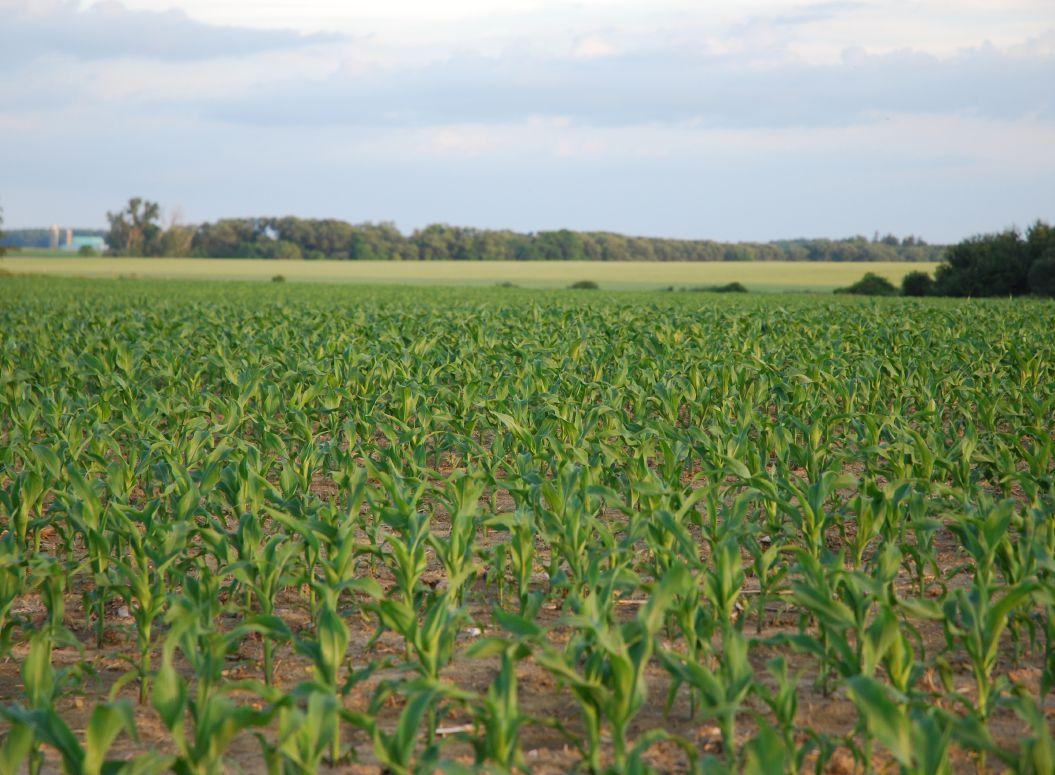
Growers should be on the lookout for this disease in 2016 pg. 14
s taying ah E ad of strip E rust pg. 22
i nt E nsiv E corn manag E m E nt pg. 24
Tricor® 75DF herbicide is an enhanced formulation of metribuzin - the advanced broadleaf weed control that North American growers have trusted for years. A key addition to your pre-emergent weed control program in soybeans, Tricor DF is also effective in lentils and peas. Tricor DF is proven effective on a wide range of weeds, including ragweed, pigweed, chickweed, nightshade, and other broadleaf weeds. And when used as a tank mix partner, it enhances your weed control spectrum even further. So, when you need to prevent weeds from scoring on your crop, trust Tricor DF. Contact your local distributor, UPI sales representative or visit www.upi-usa.com to learn more.
TOP CROP
5 | Controlling oat crown rust new rust-resistant varieties for southern ontario.
By Carolyn King 16 | Glowing recommendations a better way to determine sidedress n rates for corn By Carolyn King
8 | Canola IpM By Carolyn King
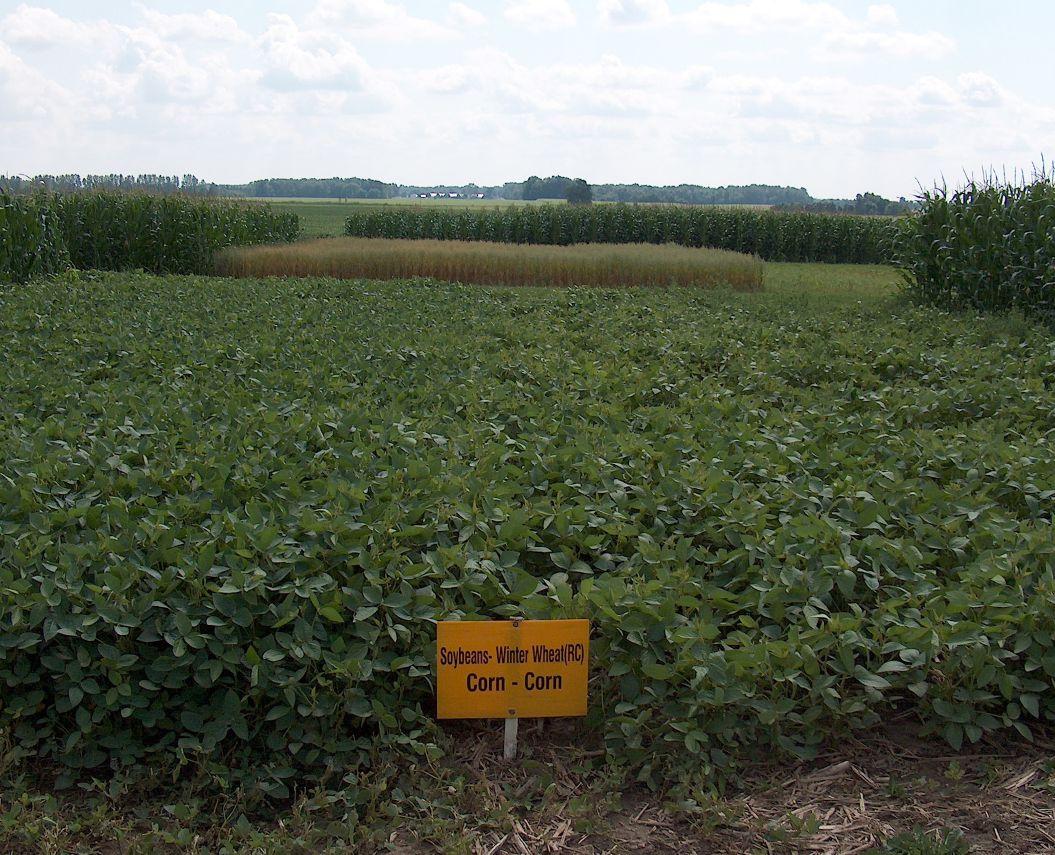
12 | Complex crop rotations By Trudy Kelly Forsythe
ON THE WEB
26 | Breeding higher yielding dry beans a new discovery is promising for bean breeding.
By Julienne Isaacs
Staying ahead of stripe rust
Julienne Isaacs
| Intensive corn management
Trudy Kelly Forsythe
| Be consistently inconsistent
Stefanie Croley, editor
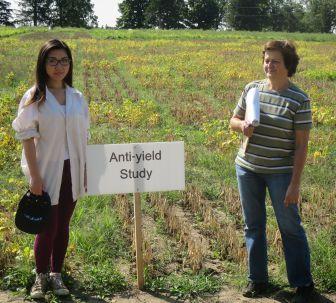
Photo courtesy of K. Peter Pauls.
Photo
BE coNSiSTENTly
iNcoNSiSTENT
During the production of this issue, I travelled to Saskatoon to host the 2016 Herbicide resistance Summit, a conference designed by Top Crop Manager to facilitate a more unified understanding of herbicide resistance issues across Canada and around the world.
The summit gathered some of the world’s experts on herbicide resistance, including Michael Walsh, an associate professor and the director of weeds research at the University of Sydney in australia, neil Harker and Hugh Beckie from agriculture and agri-Food Canada, peter Sikkema from the University of guelph’s ridgetown Campus and Linda Hall and Breanne Tidemann of the University of alberta.
as discussed during the summit, everyone engaged in agriculture has a role in managing herbicide resistance, but that role is definitely not consistent – it must evolve based on current trends and issues.
Consistency – or, perhaps more accurately, inconsistency – was a buzzword at the summit. Ian Heap, the director of the International Survey of Herbicide-resistant Weeds in Corvallis, ore., kicked off the morning with a global overview of herbicide resistance. Heap reminded the crowd that herbicide resistance is a naturally occurring evolutionary response to selection pressure by a mortality agent – in this case, a herbicide. as the day continued, Heap and the other speakers shared field trial results, new technologies, ideas for different solutions and general knowledge about herbicide resistance.
Heap made one statement that stuck with me through the duration of the summit (and garnered a lot of activity on Twitter): consistency will result in resistance. Weeds can’t evolve if we keep changing control methods. Jason norsworthy, a professor in the department of crop, soil and environmental sciences at the University of arkansas, echoed Heap’s thoughts on consistency. norsworthy’s presentation on glyphosate-resistant weeds touched on the importance of diversity, as he told the audience, “If it works, do something different next year.”
This statement prompted a chuckle from the crowd, but its accuracy can’t be denied. With weeds constantly evolving, methods for control continue to change, so a consistent approach isn’t the answer. What worked for you in 2015 may not apply in 2016. researchers are continually working on finding methods to combat resistance, but there’s no silver bullet.
If you couldn’t make it to Saskatoon, stay tuned to www.weedsummit.ca for post-event coverage, including photos and videos from the day. Undoubtedly, attendees of the Herbicide resistance Summit left armed with ideas and information to ponder as we approach the 2016 growing season, and the advice of the experts should remain top of mind year-round. as you’ll see among the pages of each issue of Top Crop Manager, new methods for weed, disease and pest control are always in development, and our mandate is to bring you information about current methods, new trends and what’s to come in the future. We’re wrapping up our publishing season with our annual leaf disease issue, covering topics like stripe rust on wheat, crown rust in oats, eyespot in corn and more. We wish you a prosperous season. See you in the fall.
March, Mid-March, April, June, September, October, November and December – 1 Year - $45.95 Cdn. plus tax
Top Crop Manager East – 7 issues February, March, April, September, October, November and December – 1 Year - $45.95 Cdn. plus tax
Potatoes in Canada – 2 issues Spring and Summer – 1 Year $16.50 Cdn. plus tax
All of the above - $80.00 Cdn. plus tax
Occasionally, Top Crop Manager will mail information on behalf of industryrelated groups whose products and services we believe may be of interest to you. If you prefer not to receive this information, please contact our circulation department in any of the four ways listed above.
All advertising is subject to the publisher’s approval. Such approval does not imply any endorsement of the products or services advertised. Publisher reserves the right to refuse advertising that does not meet the standards of the publication.
topcropmanager.com
STEfANiE crolEy | EdiTor
Pests and DISEASES
Breeding program releases 11 rust-resistant varieties for southern Ontario.
by Carolyn King
c oNT rolli Ng oAT crow N ru ST “C
rown rust is probably the most important disease of oats in Canada, from Quebec through to Saskatchewan,” says a lbert Tenuta, a plant pathologist with the ontario Ministry of a griculture, Food and rural a ffairs. oat crown rust can be especially troublesome in southern ontario. Fortunately, tools are available to help ontario growers manage the disease, including the latest rust-resistant varieties released by the federal oat breeding program in o ttawa.
“The disease is pretty easy to identify: it produces orange pustules on both sides of the leaves. Many growers call the pustules ‘little volcanoes,’ ” Tenuta explains. Those little volcanoes release thousands of spores, spreading the disease to other plants and other fields.
He notes, “Ideal conditions for oat crown rust are mild to warm daytime temperatures, so sunny days at about 20 C to 25 C, and moderate nighttime temperatures around 15 C to 20 C, along with good dews and adequate moisture.”
oat crown rust damages the oat leaves, causing up to 40 per cent yield losses. Tenuta says, “The higher up on the plant where
the damage occurs, particularly when the disease starts getting into the flag leaf, the greater the potential yield impact. The disease can also reduce grain quality, causing shrivelled grain. as well, rust infections can impact the plant’s tolerance to other stresses.”
The pathogen that causes oat crown rust is Puccinia coronate f. sp. Avenae. The name crown rust comes from one of its spore types, called a teliospore, which has little prongs on the top of the spore, forming a crown-like structure. The pathogen has a complicated life cycle involving both asexual and sexual reproductive cycles and several different types of spores.
“according to our plant pathologist, Dr. allen Xue, the crown rust population in ontario is more diverse than that in Western Canada because we have two sources of the disease in ontario,” explains Weikai Yan, oat breeder with agriculture and agri-Food Canada (aaFC) in ottawa.
one source of the disease is wind-blown spores that come from the southern United States, bringing the disease to oat crops in
Photo courtesy of Wei K ai y an, aafc
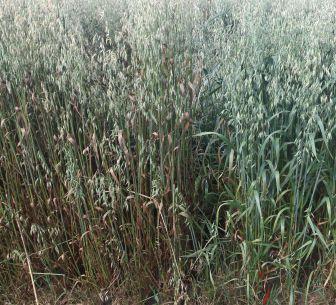
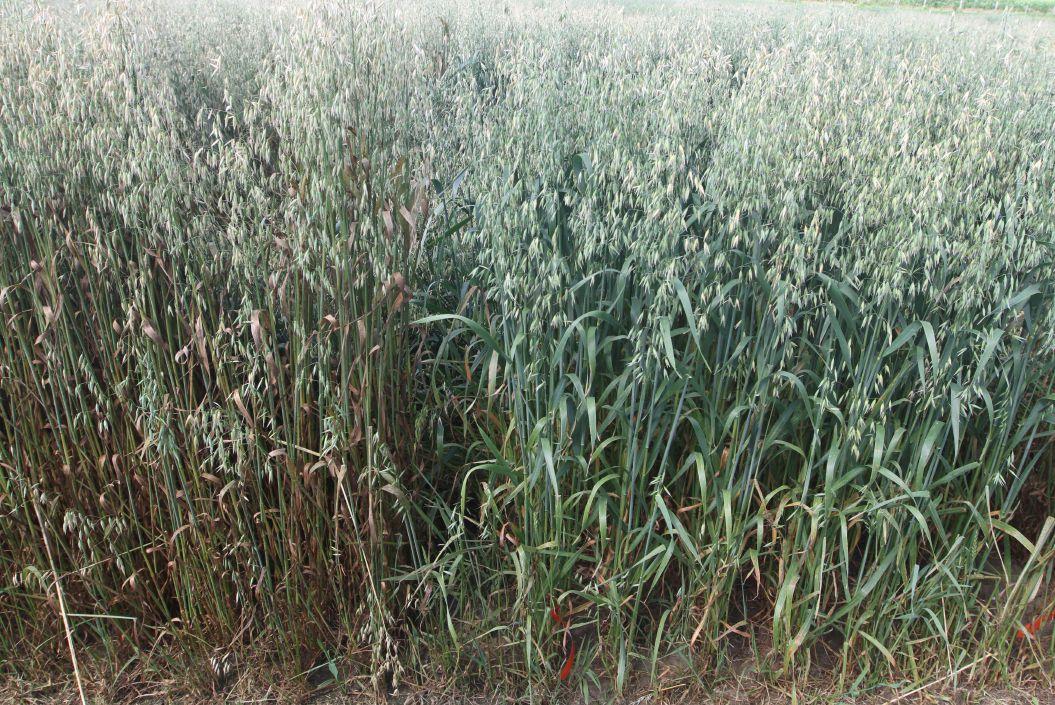
TOP: A crown rust-susceptible oat cultivar (left) and a rustresistant one (right) grown in an oat trial in Winchester, Ont.
both Western and eastern Canada in the spring. This spore type is reproduced asexually – the spores are clones. So one generation is usually genetically the same as the next, although mutations can occasionally occur so new races sometimes develop.
ontario also has a local source of spores: rust infections on a shrub or small tree called common buckthorn or european buckthorn (Rhamnus cathartica), which is widespread in southern ontario. Tenuta explains, “Like other rust pathogens, crown rust infects not only a host crop, which is oat in this case, but it also has part of its life cycle on an alternate host, buckthorn. The alternate host plays an important role in terms of sexual reproduction, and
shields. Different races of the pathogen have different virulence genes. So you need to have the right type of shields to protect the plants from the attack of the races in your area,” Yan explains. oat breeders have to continually develop new rust-resistant varieties that are able to fight off the latest crown rust races.
Yan’s oat breeding program is responsible for breeding cultivars for eastern Canada. “In eastern Canada, the crown rust pressure is mainly in southern ontario, anywhere south of the ottawa Valley. There is some rust pressure in the Montreal area as well, but generally rust is not a problem in northern ontario, most regions of Quebec and the Maritimes,” he says.
“Since 2009, we have released 11 varieties that are resistant to crown rust. Some of these varieties have as many as 15 crown rust resistance genes.”
that’s where a lot of the variation in crown rust races comes from. So areas with more buckthorn are often where we’ll see more races and the greatest crown rust risk for producers.”
Managing oat crown rust
one of the main ways to control the disease is to use rust-resistant oat varieties. “There are many different resistant genes available, and their effectiveness in the province and in north america changes, especially because buckthorn allows for genetic recombination, allowing new crown rust races to develop quickly,” Tenuta says.
“What we typically see [as the pathogen evolves], is that an oat variety with a very effective resistance gene will gradually show more crown rust over time. That is an indication that new pathogen races are developing that can overcome the resistance gene.”
He suggests trying two or three different oat varieties on your farm to get an idea of the effectiveness of their resistance in your fields. “There can be regional differences [in an oat variety’s performance] due to differences in things like buckthorn numbers, pathogen races and weather conditions.” The website gocereals.ca provides information on oat variety performance, including crown rust resistance, in the different regions of ontario. another practice to help manage the disease is to remove buckthorn plants near oat fields. That will decrease the risk of crop infection and the risk of development of new races.
If your oat variety doesn’t have good crown rust resistance, then applying a foliar fungicide is important, especially to protect the flag leaf. “We have very good, effective fungicides available for crown rust,” Tenuta says. “on an annual basis, the very worst scenarios I see with crown rust are where the resistance gene is no longer effective and where a fungicide was either not applied or the application was too late to give good control.”
He also advises diligent scouting. “oat producers need to be out in their fields every year evaluating the performance of their management tools for crown rust – their varieties and their fungicides. If you see things changing, that is an early warning that maybe the effectiveness of the resistance gene in the variety is no longer going to be adequate for your fields.”
Ongoing breeding for rust resistance
“The crown rust pathogen has virulence genes, which are like swords, and the plants have resistance genes, which are like
“So, for our oat breeding program, we divide eastern Canada into the rust region and the non-rust region. For southern ontario, crown rust is always the single most important issue. every year, the first trait we select for is crown rust resistance. If a line doesn’t have crown rust resistance, we do not keep it.”
Yan screens his breeding lines in field plots at aaFC’s ottawa research and Development Centre, so he selects lines with resistance to the current crown rust races in the region. He also collaborates with Xue, who does growth chamber tests to determine which specific resistance genes are present in each of Yan’s promising lines. as well, the promising lines are tested at the University of Saskatchewan in Saskatoon and at aaFC’s Morden research and Development Centre in Manitoba to make sure the lines have a wide spectrum of resistance to the pathogen, including western Canadian crown rust races.
Xue also conducts an annual survey in farmers’ fields across Canada’s oat crown rust regions and tests the samples for virulence against a wide range of resistance genes. as a result, Yan and other oat breeders have up-to-date information on changes in Canada’s crown rust races.
Yan’s breeding program is putting as many different crown rust resistance genes as possible into each new variety for southern ontario. That gives the varieties more durable resistance and the ability to protect themselves from many different virulence genes.
“Since 2009, we have released 11 varieties that are resistant to crown rust. So far, we have not found any rust on some of these varieties, for example, almonte and Kolosse. These varieties are likely to carry resistance genes pc61, pc96, and pc91. pc94 has also been incorporated in some of our newer varieties to be released in the next few years,” Yan says.
Yan says the program’s 11 rust-resistant varieties include: “optimum released in 2009, Bullet released in 2010, roskens in 2011, almonte in 2013, oaklin in 2013, richmond in 2013, pontiac in 2014, nicolas in 2014, Kolosse in 2015, noranda in 2015 and Blake in 2015.”
“Most of these varieties were selected from crosses made by the oat breeder who was here at ottawa before me: Dr. art Mcelroy. My contribution is to select from these populations the rust-resistant varieties that are high yielding and good quality, and to release them.”
Yan adds, “Those 11 varieties are pretty high yielding. For instance, Bullet is now the most popular oat variety in southern ontario; its yield is 16 to 20 per cent higher than the means of the yield trials. nicolas has a 20 per cent higher yield in Quebec than the control cultivars. Bullet is already having a very good impact on oat production and we think nicolas will have a really good impact in Quebec and northern ontario. So we’re pretty happy with this.”
COMBINE BEATS RED.
Strip away the paint, ignore the logos and take a look inside any rotary combine. You’ll find the single rotor technology we introduced over 35 years ago. But unless it has more bells and whistles with fewer belts and chains, it’s not a Case IH Axial-Flow ® combine. You’ll get more quality grain in the tank while reducing your maintenance. And our SCR-only engine design provides more power while using less fuel. Which is why the Axial-Flow rotor is at the heart of our harvesting expertise. Learn more at caseih.com/heartbeat.
Pests and DISEASES
cANol A ip M
Quebec research evaluates integrated pest management options.
by Carolyn King
Although knowledge about managing canola insect pests on the prairies can be helpful to growers in eastern Canada, there may be important differences between the east and the West. That’s why geneviéve Labrie, an entomologist with the Centre de recherche sur les grains Inc. (CÉroM), has been conducting research on canola insect pests in Quebec since 2009, including a current project on integrated pest management (IpM) strategies for three important pests.
In the east, canola fields are smaller and are scattered around the landscape, rather than the large expanses of canola production seen in the West. Canola pest populations could be lower in eastern Canada. In addition, differences in insect pest species, species of their natural enemies, weather conditions and other factors could mean pest pressures and crop yield impacts differ from those in the West. So pest management strategies might differ, too.
Labrie’s current IpM project involves flea beetles, cabbage seedpod weevils and pollen beetles. It is being conducted under the eastern Canada oilseeds Development alliance (eCoDa), with funding through agriculture and agri-Food Canada (aaFC) and industry partners.
The project is taking place mainly in Quebec, including sites at three research centres: CÉroM, which is near Montreal; aaFC’s normandin research Farm; and Laval University’s research Farm at Saint-augustin-de-Desmaures. Her collaborators are Denis pageau with aaFC-normandin and anne Vanasse with Laval. The project also has between four and 11 sites at canola producers’ farms around Quebec City and in the Saguenay–Lac Saint-Jean region, one of the province’s main canola-growing areas. as well, Christine noronha, an entomologist with aaFC in prince edward Island, is conducting some insecticide trials for the project.
The project started in 2013 and will be completed in 2018, but it is already making valuable progress.
Weevil control – for free
Through this research, Labrie has made an exciting discovery: the cabbage seedpod weevil is being transformed from a major pest into a non-issue by a parasitic wasp spreading across Quebec canola fields.
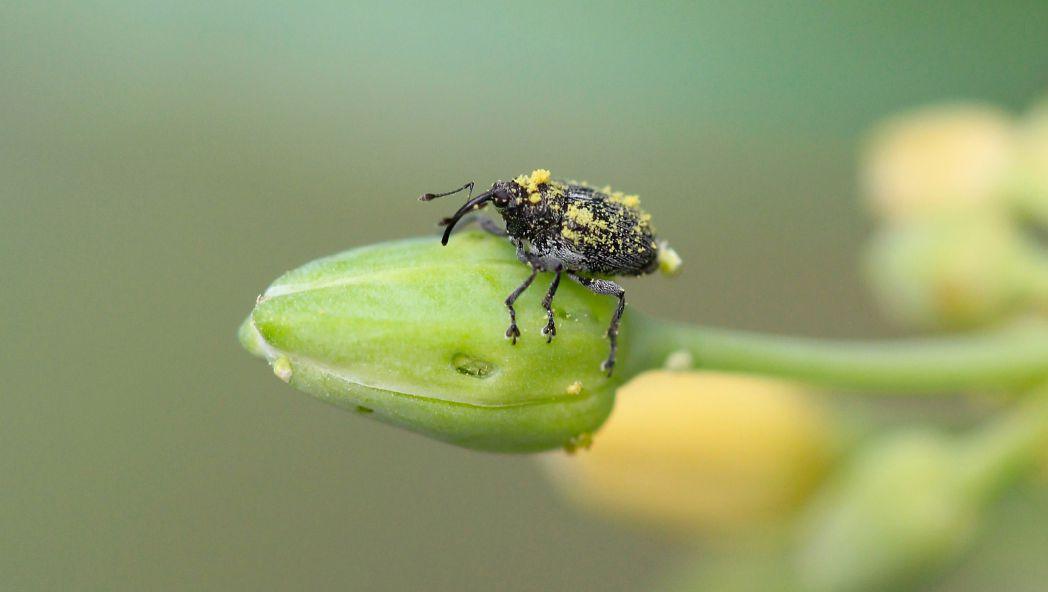
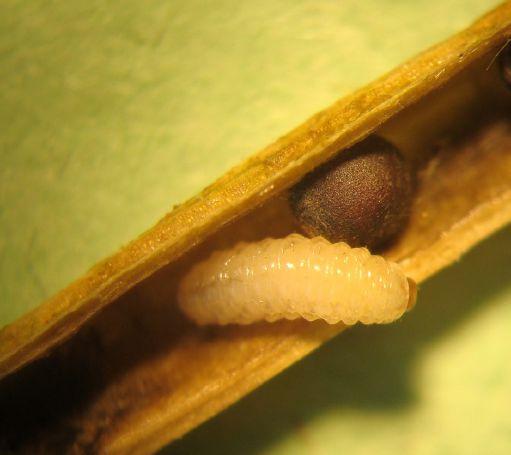
The cabbage seedpod weevil (Ceutorhynchus obstrictus) feeds on canola throughout most of its life cycle. after overwintering, the adult feeds on canola’s flower buds. The female weevil usually lays one egg per canola pod. The larva feeds inside the pod. When the larva reaches maturity, it falls to the ground and pupates in the soil. a week or two later, the adult emerges and feeds on canola pods. The most serious crop damage is due to larval feeding.
This weevil was first reported in Canada in 1931, when it was found in British Columbia. Since then, it has been spreading across Canada and the United States. The weevil was first found in Quebec in 2000 and in ontario in 2001.
“Quebec canola growers had a lot of problems with the cabbage seedpod weevil between 2000 and 2010,” Labrie says. “But in my research, we’ve discovered that we have a parasitoid now.”
The parasitoid is a tiny wasp, Trichomalus perfectus. This wasp lays a single egg into a larva of the weevil. The wasp larva feeds on the weevil larva, eventually killing the weevil. Labrie notes, “This parasitoid is the best natural enemy of the cabbage seedpod weevil in europe.”
Labrie discovered the parasitoid in 2009 when she began her work on the cabbage seedpod weevil. peter Mason, an entomologist with aaFC in ottawa who was doing a lot of research on the weevil during the 2000s, also first found the wasp in that same year. So it likely arrived in the region in the late 2000s, probably from europe.
The wasp has been rapidly spreading in Quebec since 2009. “now in my eCoDa research project, we have found the parasitoid at almost 70 per cent of our sites all around Quebec, and the cabbage seedpod weevil is almost completely controlled by the wasp,” Labrie says. These days, very few Quebec canola growers need to apply insecticides to control the weevil.
Mason has observed the parasitoid in the ottawa area, so it’s known to be in Quebec and ontario, but so far it hasn’t been found in other parts of Canada. However, if the wasp continues to spread, it could help canola growers in other regions.
Labrie’s eCoDa research on managing the weevil is taking place only in fields where the parasitoids are not yet present. The focus of this research is to determine the economic thresholds for applying insecticides to control the weevil, taking into account that a higher threshold will be needed because of the potential for very effective natural control if the parasitoid migrates into these fields.
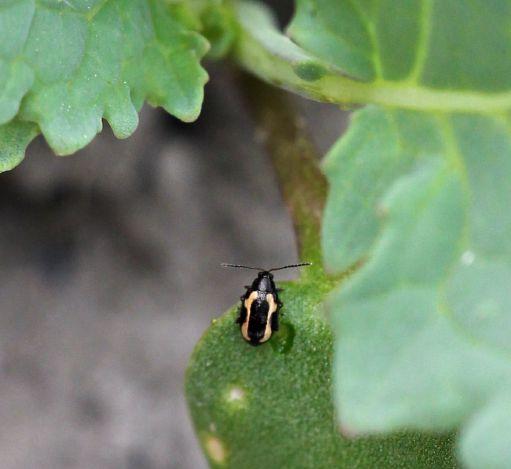
TOP: The greatest flea beetle damage occurs when the timing of the crop’s emergence is synchronized with the emergence of the beetles from hibernation.
Flea beetles: it’s all about timing In her flea beetle studies, Labrie is working on ways to use canola planting dates to fight these beetles, which are a big concern for many Quebec canola growers.
“In the Saguenay–Lac Saint-Jean area, flea beetles often will consume a complete field when canola is at the cotyledon stage, so at the emergence of canola,” Labrie notes. “To control flea beetles, producers in that area use seed treatments, and many of the producers also use two or three foliar insecticide applications. So there is not a lot of economic gain for the producer, and it is a lot of pesticide in the environment.”
Two flea beetle species are important canola pests: the crucifer flea beetle (Phyllotreta cruciferae) and the striped flea beetle (Phyllotreta striolata). The adults of both species overwinter and become active in the spring. They feed on canola seedlings and lay their eggs near the roots of canola plants. The larvae feed on the roots and then pupate. The adults emerge in the summer, feed on canola crops and then go into hibernation in the fall.
Through her field studies, Labrie has discovered that the flea beetle populations have shifted almost entirely to striped flea beetles, possibly because the striped species is less susceptible to insecticide seed treatments than the crucifer flea beetle, as shown by studies in Western Canada.
She has found that the worst flea beetle damage occurs when the timing of the crop’s emergence is synchronized with the emergence of the beetles from hibernation. “When the first canola field emerges in an area, any flea beetles that are emerging from hibernation at the same time will go directly to that field and consume everything, even if the canola has been treated with an insecticide seed treatment.”
Labrie is conducting seeding date trials to figure out when to seed the crop so that it will emerge either before or after the beetles come out of hibernation, to avoid that destructive synchronization.
She is also experimenting with trap crops as another way to reduce insecticide inputs and decrease crop damage. The idea is to seed canola in a small area, timing the seeding so the plants will emerge just as the beetles come out of hibernation. That way, the beetles will be attracted to the trap crop, allowing the grower to control the pest by spraying that small area. The grower’s main canola crop is seeded slightly later than the trap crop, avoiding the worst of the flea beetle attacks.
In 2014, the trap crops worked very well. In 2015, spring weather conditions prevented the co-operating producers from getting onto their fields to seed at the right times. She’ll conduct the trap crop trials again in 2016.
TOP and INSET: Cabbage seedpot weevil caused a lot of problems for Quebec canola growers between 2000 and 2010.
also in 2016, Labrie will be working with an aaFC colleague to develop a model for identifying the optimum planting dates to reduce flea beetle damage in Quebec’s canola-growing areas. The model will make use of four years of data from Labrie’s research on canola planting dates and emergence dates and flea beetle arrival dates, as well as climatic data and knowledge of how temperature and moisture conditions affect the timing of canola emergence and beetle emergence.
Pollen beetles: new and scary
although the pollen beetle (Brassicogethes viridescens) isn’t yet a yield-limiting pest in Quebec canola crops, it has the potential to cause very serious problems. So Labrie’s project will help growers to be ready to deal with this threat.
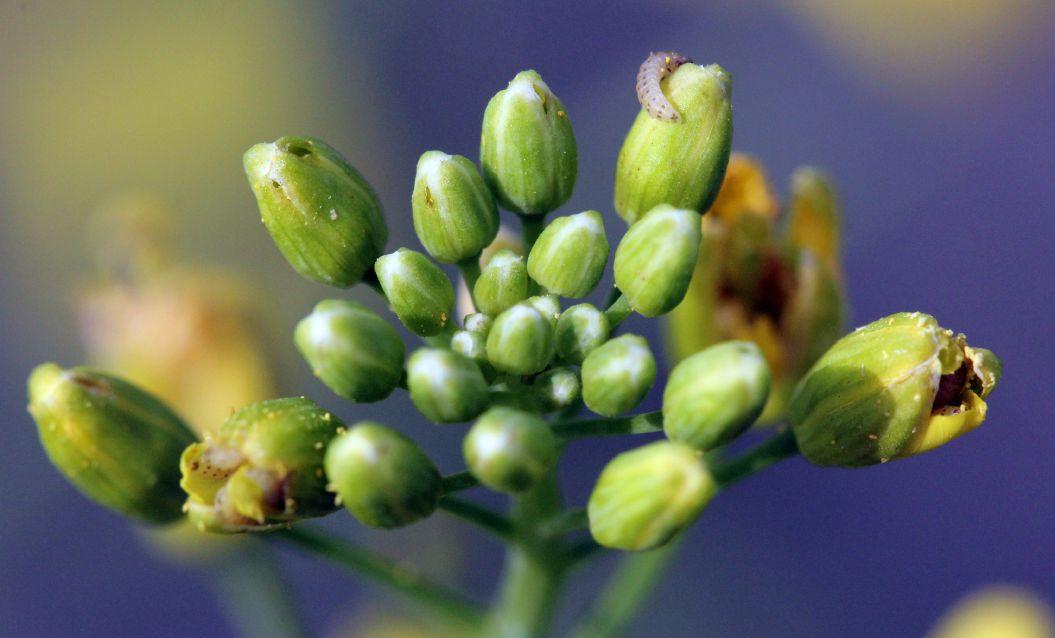
adult pollen beetles feed on canola pollen and buds. The females lay their eggs in the flower buds, and the larvae feed inside the bud, destroying the plant’s ability to produce seeds. according to Labrie, this beetle is common in europe where it can cause 70 or even 80 per cent yield losses in canola.
In Canada, the pollen beetle was first recorded in nova Scotia in 1947. Since then, the beetle has been reported elsewhere in the Maritimes and Quebec. In Quebec, it was first discovered in 2001, but only in the past two or three years have high populations been found. The beetle has spread to Saguenay–Lac Saint-Jean, but is not yet in abitibi–Temiscamingue, the other major canola production area in Quebec. Modelling by aaFC researchers shows that, if the beetle spreads to the canola-growing regions in ontario and Western Canada, it would readily survive there.
Currently in Quebec, the pollen beetle is most common in the Bas-Saint-Laurent area, which is the province’s third most important canola-growing area. The beetle first appeared in that area in about 2011 and its numbers have been rapidly increasing since then. “Between 2012 and 2015, we observed a 58 per cent increase in population in that area,” Labrie says.
“Fortunately, in Quebec at present, the pollen beetle’s life cycle is not synchronized with the sensitive stage of canola [which is during stem elongation as the buds appear].” Instead, the beetles tend to arrive in canola fields between 10 and 30 per cent flowering. at that crop stage, a lot of pollen beetles would be needed to cause significant yield losses.
However, Labrie suspects that, as Canadian winters continue to warm, the pollen beetle will emerge from hibernation earlier in the spring, so its life cycle could become better synchronized with the sensitive stage of canola.
Labrie notes that no insecticides are currently registered for use on pollen beetles in Canadian canola crops. Her project is testing different active ingredients to see which ones are most effective. She adds, “It is a species that can become insecticide-resistant very rapidly; in europe, the pollen beetle is resistant to a lot of insecticide products. So insecticide rotations will be important.”
The project is also determining economic thresholds for insecticide applications to control the pollen beetle. The results so far indicate that about three to nine pollen beetles per plant would be needed at the sensitive crop stage to cause yield losses. Currently, pollen beetle numbers are not that high at the crop’s sensitive stage. “But if its population is increasing and it is synchronizing its life cycle with canola, then the pollen beetle could be a really serious problem,” she cautions.
To provide canola growers and agronomists with the latest information from all her canola pest studies, Labrie makes presentations at conferences every year. This information – including economic thresholds, timing of crop damage and alternatives to insecticides – will help growers in making decisions about managing canola insect pests.
Photo courtesy of
TOP: The larvae of the pollen beetle feed inside the canola bud, destroying the plant’s ability to produce seeds.
A NEW WORLD DEMANDS NEW HOLLAND.
c oM pl E x crop roTAT ioNS
Rotation complexity affects crop yield and yield stability in different weather conditions.
by Trudy Kelly Forsythe
Data collected during long-term research trials at a griculture and a gri-Food Canada’s elora and r idgetown research facilities continues to provide researchers with invaluable information about the complexities of crop rotations and their impact on crops.
The long-term trials, conducted between 1982 and 2012, focused on increasing the efficiency of production and reducing the environmental impact of corn and soybean production in ontario. They revealed that long-term corn-soybean rotations, the most widely used rotations in the province, are vulnerable to moisture extremes and are associated with reduced soil organic matter leading to poor soil quality and the lowest average yields.
a new four-year study at the University of guelph, initiated in June 2014, is building on those results to look deeper into the effect weather has on crop system resilience over time. Using yield and weather data obtained from the long-term rotation and tillage trial in elora, the researchers tested whether crop rotation diversity is associated with greater yield stability when abnormal weather conditions occur.
“The use of more diversified rotations has been advocated as a
solution to sustainably increase the long-term resilience and productivity of ontario field cropping systems,” says Bill Deen, the research lead and an associate professor with the department of plant agriculture at the university.
Using parametric and non-parametric approaches, Deen, along with Dave Hooker from the ridgetown campus and amelie gaudin from the University of California, Davis, is examining how rotation complexity in tillage and no-tillage systems alters the amount of soil water available to plants, the ability of the corn and soybean to use the water resources and the effect imposed drought stress has on yields.
preliminary results indicate that crop diversity increases corn and soybean yields over time, lowers the risk of crop failure and mitigates yield loss due to hot and dry conditions. They also show that yield benefits of crop diversity are less pronounced in wet and cool weather and that rotation diversity decreases soybean yield variability in abnormal years with hot-dry or cool-wet conditions.
“our preliminary conclusions reveal that diverse crop rotations do indeed add diversity to a system and that by adding some
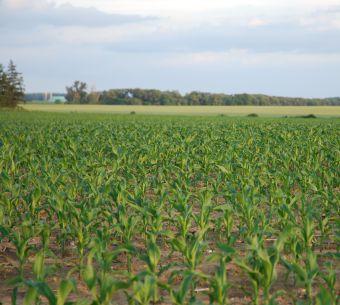
TOP: A four-year study is examining whether crop rotation diversity is associated with greater yield stability when abnormal weather conditions occur.
Photo courtesy of Bill d een.
diversity, such as wheat to a corn-soybean rotation, we can reduce drought effects induced by climate change, poor soil quality and high yield potential,” Deen says. He explains the research will help identify management practices instrumental to adapting ontario’s most abundant cropping system to changes in climate. “It will also improve productivity and water use efficiencies under an increasingly challenging environment.”
The study is attempting to further understand how including winter wheat in a corn-soybean rotation, with or without red clover, impacts water availability in tilled and no-till systems. This understanding will lead to better predictions of the future value of rotation diversification.
The researchers also believe that the value of rotation diversity is currently underestimated and that its value could increase in the future. Under a changing climate where higher frequency of excess moisture or drought is predicted, water availability could be a larger constraint on the system in the future. Independent of climate change, as average corn yield increases, demand for water by the plant will increase and the role of rotation diversity in enhancing water supply could also increase.
Finally, residue removal from simple rotations could accentuate drought responses in simple rotations and increase the value of rotation diversity. Increasing understanding of rotation diversity should lead producers to reassess the use of simple corn-soybean rotations. This can increase average per acre corn and soybean yields, stabilize corn and soybean yields when weather extremes occur and increase soil carbon and quality.
In addition to improvements in average yields and stabilization of yield, previous studies using these long-term trials have demonstrated that rotation diversity increases soil carbon and quality and also results in increased nutrient and energy use efficiency of corn and soybean production. While not yet measured, it is probable that rotation diversity will also reduce offsite movement of nutrients from corn and soybean fields by improving water and soil retention in the system.
Many producers believe that a corn-soybean rotation is still more profitable than rotations that include wheat with or without
red clover. Deen and Hooker’s research provides evidence that suggests the contrary is true.
“adding wheat into a corn-soybean rotation increased corn yield two to six per cent and soybean yield nine to 14 per cent,” Deen says. “There is also a substantial reduction in a producer’s nitrogen requirements.”
although the magnitude of rotation benefits varied with crops, weather patterns and tillage, yield stability significantly increased when corn and soybean were integrated into more diverse rotations. Introducing small grains into short corn-soybean rotation was enough to provide substantial benefits on long-term soybean yields and their stability while the effects on corn were mostly associated with the temporal niche provided by small grains for under-seeded red clover or alfalfa.
Crop diversification strategies also increased the probability of harnessing favourable growing conditions while decreasing the risk of crop failure. In hot and dry years, diversification of cornsoybean rotations and reduced tillage increased yield by seven per cent and 22 per cent for corn and soybean respectively.
“Simple rotations have a lower probability of high yields, a higher probability of low yields and are particularly susceptible to low yields under hot dry conditions,” Deen says.
This research supports the practice of using more diversified rotations as a solution to sustainably increase the long-term resilience and productivity of corn-soybean cropping systems.
Moving forward
Deen says over the next two years, the researchers hope to look at the effect moisture has over the span of a year by imposing three different moisture regimes – ambient, moisture replete and drought. In this way, they will exclude rainfall and irrigate so they can compare their results to ambient conditions within one year.
“We are applying these moisture treatments to continuous corn, corn-soybean, corn-soybean-wheat (red clover) and corn-alfalfa rotations,” Deen says. “From these treatments, we will measure soil properties, soil moisture, plant response using various measurements and, obviously, yield.
“This will conclusively demonstrate the effect of rotation under different moisture regimes.”
Ey ESpoT i N oNTA rio
Growers should be on the lookout for this foliar corn disease in 2016.
by Julienne Isaacs
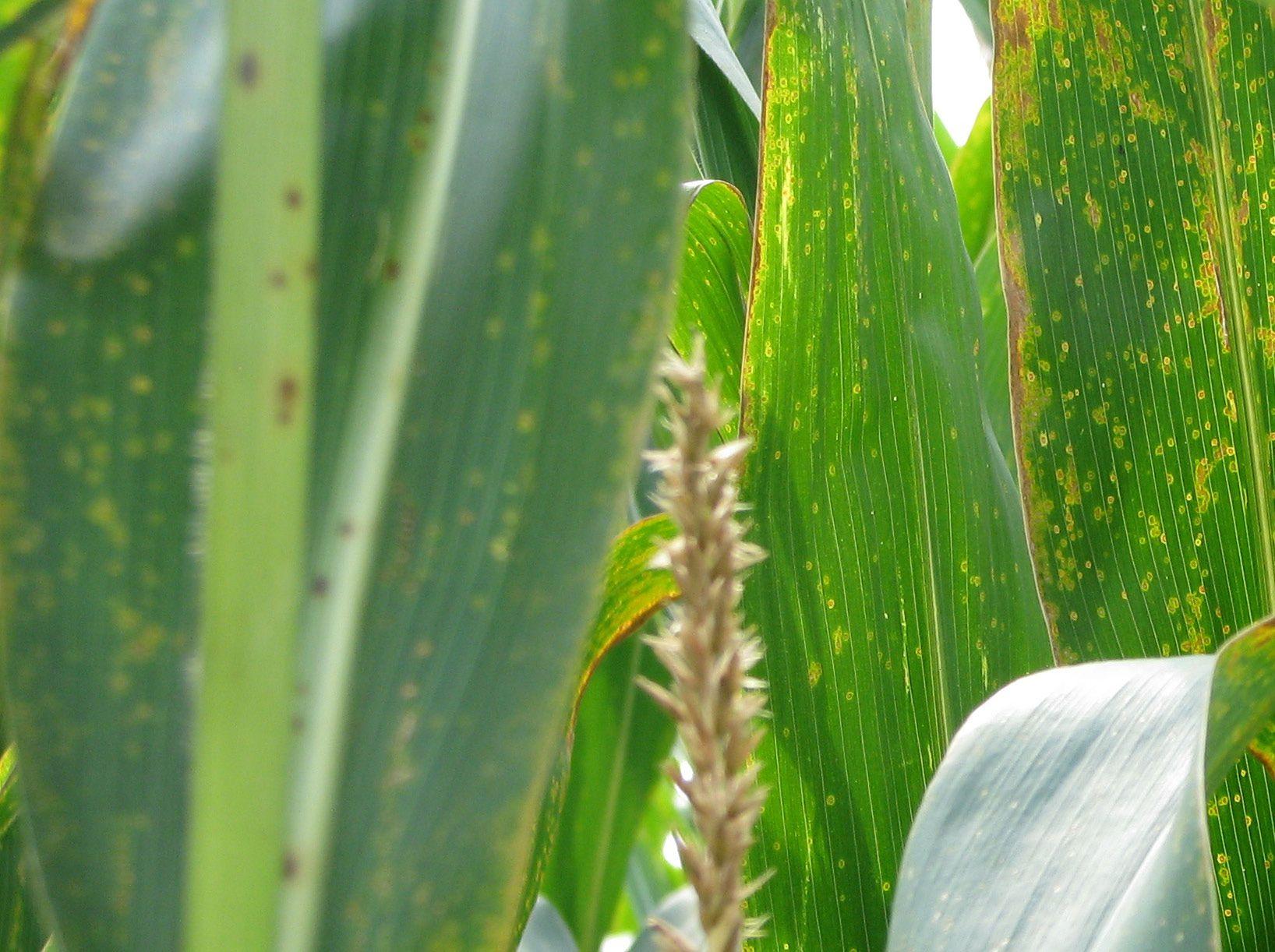
It might not be ontario’s flashiest foliar disease on corn, or even the most economically devastating – both those awards go to northern corn leaf blight – but eyespot was on the rise in 2015, and may be a cause for concern for ontario growers in 2016.
according to albert Tenuta, field crop pathologist for the ontario Ministry of agriculture, Food and rural affairs (oMaFra), eyespot is “one of those diseases that looks worse than it actually is – the impact on the corn is minimal.”
But it’s certainly not negligible. Common in the northern regions of the corn belt, eyespot becomes a problem in fields with residue from previous crops, or in continuous corn cropping. Caused by the fungus Aureobasidium zeae, infection generally occurs in the spring under cool, wet conditions; if it spreads to the upper leaves of the plant, it can cause reduced yields.
Tenuta is a member of agriculture and agri-Food Canada (aaFC) and oMaFra’s annual corn disease survey team. each year, on average, 200 corn plots across ontario and occasionally Quebec are tested for major corn disease severity.
according to survey team member Krishan Jindal, a pathologist
with aaFC’s ottawa research and Development Centre, the survey is a valuable tool for studying the distribution of northern corn leaf blight and other foliar diseases, and identifying the pathogenic races moving through the province.
In 2015, eyespot showed a surprising surge in ontario cornfields, along with northern corn leaf blight. “Both diseases were found in almost all fields visited in southern and western ontario, with 40 per cent of the affected fields having incidence levels of greater than or equal to 30 per cent and one-fourth of the fields having a severity of greater than or equal to five (greater than 20 per cent of the leaf area affected),” reads the report.
But Tenuta says eyespot doesn’t come as a shock to ontario growers.
“We’ve always had eyespot. We’re just seeing more of it,” Tenuta says. “Many of these diseases are residue-borne, so as we leave more residue we’ll see more disease.”
What does this mean for growers? according to Tenuta, eyespot
ABOVE: Ontario corn growers should be on the lookout for eyespot this season, warns Albert Tenuta.
sometimes means a four to six bushels per acre yield loss, but in conjunction with other diseases, it can cause problematic stress on the plant.
“Where eyespot could be an issue would be on seed corn, where you have a relatively susceptible seed corn inbred,” he says. If the variety is susceptible to other foliar leaf diseases as well, these plants can’t tolerate as much stress, so the impact will be more substantial.
Variety, variety, variety
Management for eyespot comes down to variety.
“It doesn’t matter what disease we’re talking about – the first step is always effective resistant variety selection,” Tenuta says. “The most important decision a grower can make is which particular variety or hybrid they’ll select.”
If a field has a history of eyespot, growers should choose goodyielding varieties with decent resistance.
“The next thing is scouting to determine the amount of disease there: is it a threat? Is it down low in the canopy, or high up? If you’ve got eyespot, you have good conditions for other leaf diseases,” he says.
If disease reaches threshold levels, fungicide application is necessary.
When it comes to tillage, growers may have tough decisions to make when it comes to eyespot and other foliar leaf diseases, Tenuta says. Because eyespot relies on residues as a food source, removal of residues means the fungus can’t spread enough to trouble the next crop. “If they can’t feed, they can’t grow and they can’t infect,” he says.
But growers need to assess whether periodic tillage is right for their operations on a case-by-case basis. “It’s an effective tool, but you have to consider some of the other benefits of conservation tillage in terms of soil erosion. and just because we work the ground doesn’t mean the risk is eliminated – you might be reducing your in-field inoculum, but in many cases we have enough spores moving in from other fields,” he says.
as for the future? More eyespot resistant varieties may be on the way soon. Lana reid, a research scientist at aaFC’s ottawa research and Development Centre, and her team are working on developing a number of inbreds with resistance to a variety of common foliar diseases, including Co450, a corn inbred line that is highly resistant to eyespot. It was made available to breeders in 2013.
“This survey, I would say, is of great value – it gives direction to the research and to breeding projects,” Jindal says.
Photos courtesy of Krishan Jindal.
INSET: Tenuta says eyespot leaves a minimal impact on corn, but the disease itself is still a threat.
GlowinG r E coMMEN dAT ioNS
Developing a light-emitting microbe for a better way to determine sidedress N rates for corn.
by Carolyn King
Aspecial bacterium that glows when nitrogen is present shows great promise as a low-cost, rapid and accurate biosensor for assessing nitrogen levels.
“The idea is to help crop growers decide whether or not they should sidedress with nitrogen and, if so, by how much,” says Manish r aizada, an associate professor of plant agriculture at the University of g uelph.
For corn crops, splitting nitrogen fertilizer into two applications – with one at planting and the other as a sidedress – is less risky than the more common approach of a single application at planting.
“When seedlings are really small, they don’t have much nitrogen demand. o n top of that, in the spring, nitrogen is also coming from decomposing soil organic matter as the temperature warms. The estimates are that, on average, only about 50 per cent of the nitrogen [fertilizer applied at planting time] is taken up by the corn plants. a s a result, a lot of the nitrogen is lost [through leaching and gaseous emissions],” r aizada
explains. Those losses represent a waste of money for the grower and may contribute to groundwater pollution and greenhouse gas emissions.
Sidedressing time is usually about the six-leaf stage (V6). Compared to planting time, V6 timing has a lower risk of nitrogen loss because it’s closer to the time of the corn crop’s maximum nitrogen uptake, which occurs between about V9 and just before tasseling. r aizada recognizes that applying the second dose later than V6 could be beneficial, but such applications would require highboy equipment, which only some growers have.
pre-sidedress soil nitrogen tests can be used to help figure out sidedress nitrogen rates, but soil testing has a couple of disadvantages. o ne is that it can be expensive. r aizada notes, “You need to do a lot of soil sampling both spatially and at different
TOP: A biosensor called GlnLux can detect differences in nitrogen levels that could help corn growers make decisions on sidedressing nitrogen at the six-leaf stage.
Photo courtesy of t ravis Goron, u niversity of Guel P h.
We
a ll sha re t he sa me
ta ble. Pul l up a c hai r.
“ We take pride in knowing we would feel safe consuming any of the crops we sell. If we would not use it ourselves , it does not go to market.”
– Katelyn Duncan, Saskatchewan
“ The natural environment is critical to farmers – we depend on soil and water for the production of food. But we also live on our farms, so it’s essential that we act as responsible stewards.”
–
Doug Chorney, Manitoba
“ The welfare of my animals is one of my highest priorities. If I don’t give my cows a high quality of life, they won’t grow up to be great cows.”
– Andrew Campbell, Ontario
Safe food; animal welfare; sustainability; people care deeply about these things when they make food choices. And all of us in the agriculture industry care deeply about them too. But sometimes the general public doesn’t see it that way. Why? Because, for the most part, we’re not telling them our story and, too often, someone outside the industry is.
The journey from farm to table is a conversation we need to make sure we’re a part of. So let’s talk about it, together.
Visit AgMoreThanEver.ca to discover how you can help improve and create realistic perceptions of Canadian ag.
times in the season [because nitrogen levels vary due to factors like soil texture and weather conditions]. a soil test costs about $10 per sample here, and in developing countries it often costs about $20 per sample, which is prohibitively expensive for farmers in those countries.”
In addition, a soil test doesn’t tell you how much nitrogen is actually available to the plant in the short term, which is important for determining nitrogen fertilizer needs. He explains, “a lot of the nitrogen in the soil is not immediately available to plants [because it is tied up in living organisms, decaying organic matter or bound to soil particles]. What we really need to know is how much nitrogen a plant is able to take up.”
In contrast, the biosensor test developed at r aizada’s lab costs only about $1 per sample, and it tells you how much nitrogen the plant is actually taking up.
How it works
“This is a very simple biosensor. It is based on the concept of an auxotroph. an auxotroph is a cell strain that has a mutation in the genome that prevents it from growing unless you add a missing nutrient. In this case, we’re using a harmless E. coli strain that has a mutation in a gene that makes the amino acid glutamine. So the cell cannot live without added glutamine,” r aizada says. “ now, we have inserted a gene into this microbe so that it gives off some light when it’s alive.”
So, when the bacterial cells have a little bit of glutamine in their environment, they can stay alive, divide and grow. every time a cell multiplies, its light output doubles. a s the amount of
Optimizing GlnLux
Michael Tessaro, a masters student in r aizada’s lab, built and tested the biosensor. His lab tests showed that g lnLux is as sensitive and accurate as high-performance chemical tests for glutamine, plus g lnLux is cheaper, faster and easier to use than those chemical methods.
More recently, Travis g oron, one of r aizada’s p hD students, has been optimizing the g lnLux sampling and testing procedures, and testing whether the g lnLux technology will work under greenhouse and field conditions.
g oron has developed a fairly simple set of procedures. Using a leaf puncher, which is similar to a hole puncher for paper, you punch a vein at the tip of a young, growing leaf. o nly a single little leaf punch is needed per plant because the biosensor test is extraordinarily sensitive. e ach leaf punch is collected in its own tube. You put the tube in a well in a sample tray; r aizada’s lab usually uses trays with 96 wells.
next, you grind each leaf punch; the researchers have developed a mechanical method of grinding hundreds of samples at a time. Then you dilute each sample 1000 times, producing an extract that contains free glutamine. You add the g lnLux cells to each sample and let the samples sit for about three hours, allowing the glutamine to cause the dormant g lnLux cells to come alive, grow, divide and glow.
Then, you put the samples into a machine. In two minutes, that machine reads the amount of light being emitted from each sample, allowing the researchers to determine the glutamine levels in 96 plants. The capital cost of the machine is about $15,000 to $20,000. It has the potential to read 400 samples at a time.
A lot of the nitrogen in the soil is not immediately available to plants [because it is tied up in living organisms, decaying organic matter or bound to soil particles].
glutamine increases, the cell population increases and the light output increases. That light output can be quickly and easily measured with a machine.
The researchers have named the biosensor “g lnLux” – “g ln” for glutamine, and “lux”, which is the Latin word for light and a unit of measure for light emissions.
Why glutamine? “When the plant takes up nitrogen in its roots, it almost immediately converts that into different amino acids, and glutamine is one of the most important amino acids,” r aizada explains.
“Then that glutamine is transported from the root to leaves. g lutamine is used as a primary building block for plant tissues – to build other amino acids, and also chlorophyll, D na and anything else that requires nitrogen. But glutamine is also the primary transport form of nitrogen in corn.”
a s the main transport form, glutamine is coursing through the plant’s vascular tissues, such as leaf veins. By taking a sample from a leaf vein, for example, you can measure the current level of free glutamine, rather than the glutamine that has been bound up in various forms in the plant over the previous weeks.
In his proof-of-concept trials, g oron first tested about 3000 leaf punches from corn plants grown in clay rock in a greenhouse, comparing the effects of different amounts of added nitrogen.
Unlike soil, the clay rock has no background levels of nitrogen, so this approach provided a very accurate way to evaluate the effects of added nitrogen on g lnLux light output.
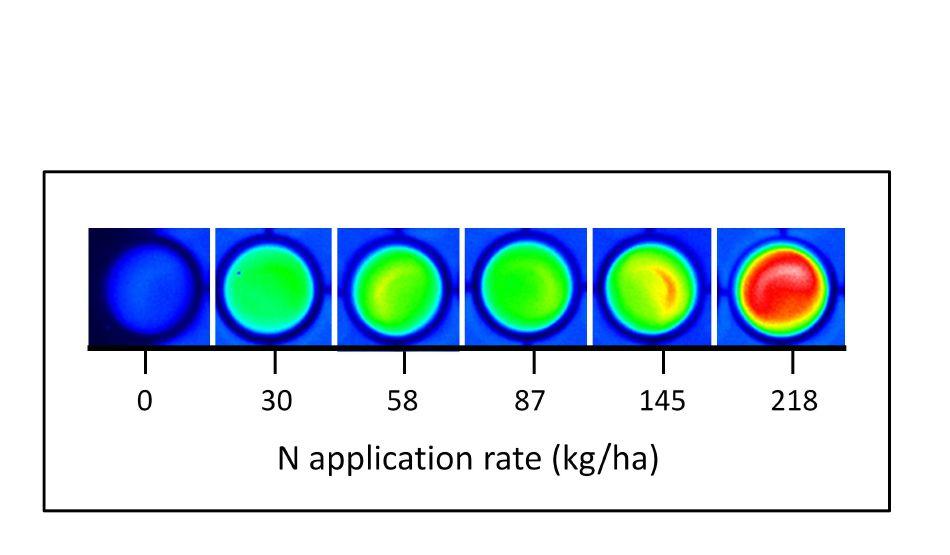
For the greenhouse samples, the light output was directly proportional to the amount of added nitrogen.
g oron tested thousands of leaf punches from corn grown at two o ntario field sites in 2014 and 2015. These tests were done in collaboration with Bill Deen, an associate professor in plant agriculture at the University of g uelph, and g reg Stewart, who was the corn specialist with the o ntario Ministry of a griculture, Food and rural affairs ( o M a F ra ).
Deen and Stewart allowed goron to take leaf punches at V3, V6, V9 and V12 from the corn plants in their nitrogen rate trials.
For comparison, Deen and Stewart tested other ways of determining in-crop nitrogen requirements on their plots, including pre-sidedress soil tests and commercial plant-based approaches such as g reenSeeker, g reenIndex and S pa D.
a s well, g oron tested leaf punches from finger millet. “Finger millet is an important african and South a sian crop grown by subsistence farmers. o ur lab was growing finger millet for
other studies, so we decided to test it,” r aizada says.
Like the greenhouse findings, the light output was strongly correlated with the nitrogen fertilizer rate for the field samples. Those strong correlations started at V6 and continued for V9 and V12.
The V6 correlations were much stronger for g lnLux than for the other plant-based approaches. “The other plant-based methods are based on how much chlorophyll the plant is producing because nitrogen is a building block for chlorophyll. But early in the growing season, chlorophyll is not limited; only when nitrogen gets really limited is the plant not making chlorophyll. a lso chlorophyll accumulates, so the amount of chlorophyll in a leaf doesn’t necessarily tell you if the plant is experiencing a nitrogen deficiency in a particular month,” r aizada explains.
“In contrast, the free levels of glutamine are very dynamic. In fact, we think if a plant is limited for nitrogen even on a particular day, you might see it in our leaf punches. In any case, our test is more dynamic, it has much better resolution and, most importantly, it works in the early season. Some of the plantbased tests work really well in the late season, which is too late in terms of sidedress recommendations.”
perhaps the most exciting finding from g oron is that the early-season g lnLux reading predicts the final grain yield. r aizada says, “Ultimately, that is what a grower wants to know: early in the season, if I add this much nitrogen, here is what my yield is going to be. across two seasons of corn and finger millet – two very different cereal crops – the correlation between the early-season g lnLux reading and grain yield is highly significant. That result is so amazing that we have submitted and have a provisional U.S. patent on just that aspect of the work.”
A mail-in kit – and more next, the researchers are hoping to develop a practical, low-cost mail-in kit for growers.
“We estimate the cost of the test, including labour, is $1 per
ABOVE: An example of a GlnLux test on V6 leaf samples from corn plants grown with increasing amounts of nitrogen fertilizer; the light output increases as the fertilizer rate increases.
sample. So, rather than do 100 soil samples at $1000, a grower could do 1000 leaf punch samples for $1000, or 100 samples for $100,” r aizada says.
The idea would be that, for about $100, a grower would receive a kit including leaf punch tubes, sampling instructions, a way to record the sample locations for each tube, an overnight courier envelope for sending the samples to a diagnostic lab and a password for accessing the sample results and nitrogen rate recommendations on the diagnostic lab’s website.
The current challenge is to make the sample handling procedures more convenient for growers. Then g oron will work with Deen to develop an algorithm, or perhaps several algorithms, to convert the g lnLux readings into nitrogen rate recommendations, taking into account factors like soil texture, fertilizer costs, corn prices, precipitation amounts, and so on.
also, like any other new technology, the kit will need to go through a beta testing phase to make sure the sampling, handling and testing procedures and the algorithms are robust. r aizada has already begun discussions with grower associations in Canada and the United States regarding the possibility of collecting leaf punch samples from many locations for this phase.
It’s hard to say how long it will take to finalize the mail-in kit, but r aizada notes, “What I can say today is, at the very least, we have a great tool for researchers.” He sees many immediate applications for g lnLux in which researchers could use this cheap, rapid technology, rather than doing more costly analyses, like soil and plant tissue testing, or waiting for crop yield results.
For example, a crop breeder who wants to screen breeding lines for nitrogen use efficiency would have a low-cost option. o ther possible users include fertilizer companies wanting to evaluate the effects of their new fertilizer technologies, or microbial companies wanting to assess how their plant-growthpromoting microbial products affect nitrogen levels in various plant tissues at various crop stages.
“g lnLux is already opening up interesting possibilities,” r aizada says.
Funding for the glnLux research is from oMaFra, the grain Farmers of ontario and, most recently, the natural Sciences and engineering research Council of Canada.
Photo courtesy of t ravis Goron, u niversity of Guel P h.
M A ki Ng BETTE r ShorT-dAy Sil Ag E
One Newfoundlander seeks to improve homegrown feed.
by amy petherick
In newfoundland and Labrador it’s a real struggle to grow corn and shipping in silage for livestock is a huge cost for local farmers. Mumtaz Cheema, an associate professor at the grenfell Campus of Memorial University in Corner Brook, n.L., wants to help change all of that.
one of the first things Cheema recalls noticing when he first came to newfoundland in 2013 was the high cost of milk, compared to the rest of Canada. When he had the chance to meet a director of the Dairy Farmers of newfoundland and Labrador, he soon learned about the difficulties cattle producers faced in growing their own feed in a very low heat unit climate. Seeing an opportunity to make a real difference for the province’s farming community, he immediately set out to research ways to evaluate regional corn silage hybrids.
“There was very little information available,” Cheema recalls. “agriculture research in the province is still at infancy.”
The very first challenge he faced was simply generating a list of 2,000 to 2,200 heat unit hybrids that would be capable of maturing before the end of the growing season. There weren’t more than 10 options in total. after consulting with Vanessa Kavanagh, alternative feeds coordinator with the province’s Forestry and agrifoods agency and collaborator in this project, that list was whittled down even further.
“Because everything comes through the ferry, some were not available,” Cheema explained. “I chose these five because I could actually get the seed for these five.”
DKC-2317 and DKC 26-28 by DeKalb, Fusion and Yukon by elite, and a4177g3 by pride were seeded on June 4, 2015, at a rate of roughly 36,000 seeds per acre. Cheema says they had to grow the plot under plastic, so they used a Samco three-in-one plastic laying machine vacuum planter and a perforated clear polymer mulch that eventually degrades in season. all corn hybrids were roundup ready, so weed control in the plot was comparable to farm practices. Before harvesting on oct. 16, 2015, however, a number of assessments were conducted. Cheema says that farmers on the west coast of the island additionally have to contend with low soil fertility, so he also needed to closely assess nutrient use in the trial.
“I wanted to do this experiment at two sites, one with low phosphorus and one with high phosphorus, but I couldn’t because most farmers simply blanket apply nutrients and I couldn’t find a single point that is phosphorus deficient,” he explained. “So we applied manure in keeping with farmers’ practices.”
Cheema says applying inorganic 0-45-0 fertilizer, a low-phosphorus manure collected from one nearby dairy farm, a high-phosphorus manure collected from another local dairy farm, and no manure as a control on each hybrid, over four replications, generated a significant
amount of data for his team to analyze over the winter. especially since they collected root zone soil samples from every replicate two weeks after emergence, at the six-leaf stage, at silking, and at black layer stage. He also had his research team install tubes, which allowed him to monitor in-situ underground growth using a root scanner at intervals throughout the growing season.
“We were trying to see how the manure affects root morphology, plant biomass, p uptake in plants and so we collected soil samples to analyze the phenolics, enzymes or microbial colonies that impact phosphorus availability,” he explains. “We installed the acrylic tubes to measure the root traits if there is any correlation between biomass and root morphology.”
analyzing all of this data, along with leaf area and leaf chlorophyll and greenhouse gas emission measurements, will take many months still. Cheema is waiting on feed quality analysis results because local lab services are limited. He’s essentially had to work at establishing a qualified facility of his own instead of submitting samples last year, as many mainland researchers would do. However, he believes collecting this abundance of data will pay off in the end as the trial harvest data has already produced unexpected results.
When assessing biomass last year, surprisingly, one of the shorter day hybrids significantly out yielded the higher crop heat unit (CHU) competitors. at just 2,150 CHU, Yukon produced 20.84 tonnes per hectare (t/ha) upon harvest. The other 2,150 CHU hybrid, DKC 26-28, followed close behind it with 20.27 t/ha. Meanwhile the 2,175 CHU hybrid, a4177g3, performed the poorest of all at 15.7 t/ha. With both the longest and shortest day hybrids falling in the middle of the pack, Cheema believes it’s quite clear that there’s a lot more to selecting a high-performing hybrid in this climate than assessing day length.
“Heat units are only one factor,” he says. “Sometimes the genetic potential of hybrids allows them to perform better.”
Cheema believes that close analysis of the root morphology of these plants may reveal a correlation between the root growth of each hybrid and final yields. Though there’s still a great deal of work to accomplish, when he’s done, it’s very possible his findings may have even greater implications than simply benefiting the corn silage producers of newfoundland and Labrador alone.
Photo courtesy of Mu M taz
Silage corn seeding at Pynn’s Brook Research Station.
STAyi Ng A h EA d of ST ripE ru ST
The disease, recently discovered in Quebec, can devastate cereal fields.
by Julienne Isaacs
In 2013, Sylvie r ioux found stripe rust on a few spring wheat lines and cultivars at Laval University’s Saint-augustin-deDesmaures research station. r ioux, a pathologist at the Centre de recherche sur les grains in Quebec, wasn’t too concerned.
But when she found it again in 2014, this time on winter wheat, she took the discovery more seriously. “When I observed stripe rust again in the spring of 2014 on winter wheat, I suspected that the fungus may overwinter on winter wheat or other perennial wild grasses in regions where the snow cover is deep enough to assure its survival,” she says.
So far, stripe rust (known as yellow rust in Quebec) has only been found in wheat grown at research stations. “all my observations about stripe rust were done in such trials,” rioux says. “The growers or their agronomists have not reported stripe rust yet, but it does not mean there was no stripe rust in the commercial fields.”
The discovery of stripe rust in Quebec is significant: the disease, which is caused by the fungus Puccinia striiformis, strikes early in the season and can devastate cereal fields via defoliation and shriveled kernels. Until 2013, it had not been discovered further east than ontario.
rioux and Benjamin Mimee, an agriculture and agri-Food Canada (aaFC) researcher, sent Dna samples from the infected plants to Sarah Hambleton, a specialist in systematics of rust and smut fungi at aaFC’s ottawa research and Development Centre.
“We do a lot of Dna barcoding here, so it fell into my workflow,” Hambleton says. “We sequenced the fungal ITS barcode gene using the field-collected Dna, and we could recognize from our results that there were two species in the sample.”
Hambleton processed the samples using real-time polymerase chain reaction (pCr) assays to verify that one of the species was, in fact, P. striiformis. The other was leaf rust (Puccinia triticina), which also infects wheat.
She says a molecular identification of stripe rust – along with morphological identification in the field – can be important at an early stage.
“If the disease is well-developed and producing spores, there are morphological ways to identify it and people can find it in the field. But if you’re at a point where you’re concerned and need to confirm what species you have, you could differentiate at an early stage using genetic markers,” she says.
“It’s another line of evidence: in this case, we identified the species morphologically and molecularly, and that’s standard now for first records. people hope to see both lines of evidence.”
Stripe rust on leaves in Quebec, taken during a winter wheat performance trial.
Photo courtesy
Management
Stripe rust has been increasing in ontario over the past several years, and ontario growers are familiar with its management, according to albert Tenuta, field crop pathologist for the ontario Ministry of agriculture, Food and rural affairs (oMaFra).
Tenuta says management of the disease is the same everywhere, regardless of region, and Quebec growers should employ a few basic strategies. The first line of defense against stripe rust is the use of resistant varieties. Stripe rust is only found in ontario when susceptible varieties are planted.
Though related diseases such as stem rust and leaf rust are often difficult to differentiate, stripe rust can be quickly identified by yellow, blister-like lesions arranged in stripes on leaves. as opposed to stem or leaf rusts, Tenuta says stripe rust strikes early in the season, and under cool conditions. “From a disease perspective it usually comes in early, and it can be managed pretty early with resistant varieties and fungicides,” he says.
“Being an obligate parasite, needing a living host, it needs a green bridge – that’s where the risk comes in earlier in the season. If it does show up early, you have a susceptible variety, and the weather stays cool and moist or there is high relative humidity, then a fungicide application may be necessary at that point,” he says. “But in most cases, Mother nature will take care of it when the warm temperatures come.”
Late-season applications of fungicide for Fusarium will take care of rusts and other diseases lower down in the canopy.
These days, diseases can’t move far without pathologists monitoring their progress, Tenuta says.
“pathologists have a good idea of what’s going on with stripe
and leaf rust on an almost weekly basis, so we can usually anticipate if we’re going to see a stripe rust issue if we’re seeing stripe rust in the U.S.,” he says.
From 2007 to 2010, Hambleton, Tenuta and rioux were part of a team of pathologists involved in a spore-trapping project that monitored asian soybean rust in several provinces using TaqMan assays. The idea was to capture and screen air and rain samples to get a general sense of disease distribution.
That monitoring project was used as a diagnostic service, but Hambleton says there is potential to test samples against assays in real-time. “The vision is that we can do this sort of monitoring for rusts on wheat and other crops across Canada,” she says. “But it’s early days. The complete range of assays needed is in the development stages.”
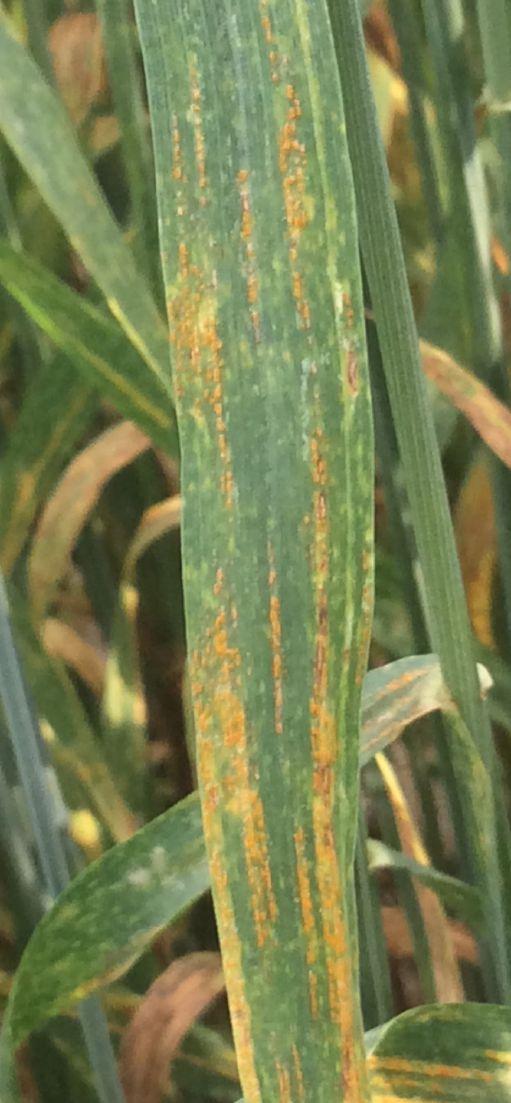
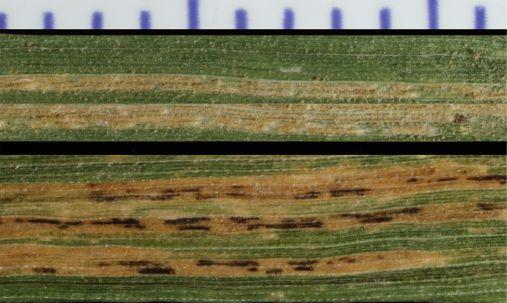
Ruler scale bar: 1 unit = 1 mm. Dried leaves showing uredinia (top, lighter in colour) and telia (bottom, darker in colour) as typical stripe symptoms.
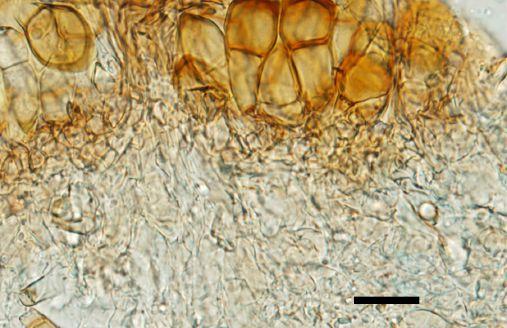
A cross-section through a leaf and a darker coloured telia, showing teliospores developing below the leaf epidermis (scale bar = 20 micrometers).
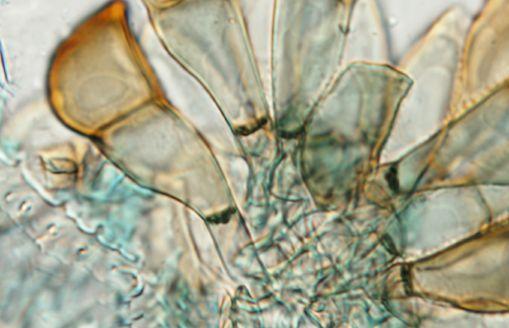
A microscope slide preparation showing teliospore morphology (scale bar = 20 micrometers).
iNTENSiv E cor N MANAg EMENT
Ontario Corn Committee trials focus on hybrid-specific management practices in corn.
by Trudy Kelly Forsythe
Last year saw a change in focus for the ontario Corn Committee’s (oCC) corn hybrid performance trials. Traditionally conducted each year to compare hybrids for yield potential in various regions in ontario, the initiative now involves standard performance testing as well as testing the response of leading hybrids to an intensively managed, or high input, system. The goal is to develop hybrid-specific management in corn.
“growers are asking for hybrid-specific management information,” says David Hooker, a field crop agronomist at the University of guelph. “Since the oCC’s primary objective is to test hybrid performance for growers, it made sense that the oCC would lead research efforts to test hybrids in a high-input system with co-operation and sponsorship of seed companies.”
researchers have been exploring genotype-environmentmanagement interactions for several years in corn, soybean and wheat. Several years ago they discovered a synergy between nitrogen rate and fungicide applications in wheat, where the yield response to increased nitrogen rate and the addition of a fungicide was greater than the additive effect of the two inputs independently.
“The response to both nitrogen and fungicide response depends on the wheat variety,” Hooker says. “For example, if a wheat variety is susceptible to leaf disease and if the environment is favourable for disease development, there is a good chance it would be responsive to both fungicide and nitrogen.”
researchers have been investigating similar synergies in corn and have noticed that the response to nitrogen, increased population and fungicide at tasseling stage (VT) – the three inputs with the most impact on yields – can depend on the hybrid.
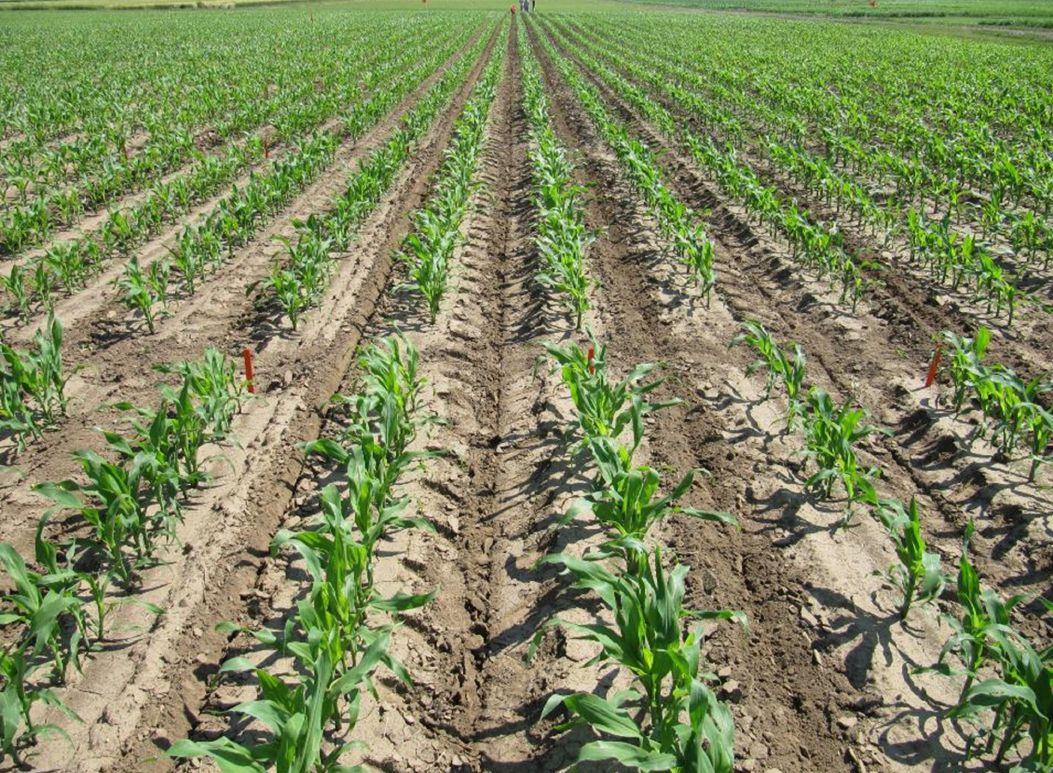
To conduct their experiments, researchers installed intensive trials on eight field locations representing four crop heat units (CHU) maturity zones. This means the same set of hybrids were installed on two locations per heat unit zone, Hooker explains. “The hybrids selected for each zone were selected by the sponsoring seed companies with assistance from the oCC.”
The researchers compared hybrid performance at each location
ABOVE: Researchers from the Ontario Corn Committee are testing corn hybrids in a high-input system.
using standard agronomic practice (32,000 plants per acre with a nitrogen rate according to the ontario nitrogen Calculator and no VT fungicide), to the combination of higher plant populations (37,000 plants per acre), a higher nitrogen rate (approximately 50 pounds per acre) and with the application of a fungicide at VT.
“overall, hybrids responded economically to the intensive management package at seven of eight field locations,” Hooker says. “The average yield response across hybrids varied between nine and 34 bushels per acre, depending on location.
“approximately 16 bushels per acre were needed to break even economically,” he adds. “However, the top hybrid responders varied between 22 and 54 bushels per acre, depending on the location. Some hybrids did not respond to the intensive management package; it had zero yield response.”
another finding was an increase in harvest moisture up to 2.5 per cent with the application of the intensive package on some hybrids. There was also a tremendous hybrid-specific response to leaf disease severity, especially at field locations with favourable environments for disease development.
“Hybrid-specific responses to leaf disease were expected,” Hooker says. “Hybrids tended to respond more to the intensive package, mostly due to fungicide, if they were more susceptible to leaf disease infection.”
High grain yields were associated with stay green traits late in the season. This may be attributed to a combination of genetic factors responsible for the stay green trait, disease control by fungicide, and nitrogen uptake and use within the plant.
“Yield response to the intensive management package did not depend on the CHU rating of the hybrid,” Hooker says. “early
The response to nitrogen, increased population and fungicide at tasseling stage – the three inputs with the most impact on yields – can depend on the hybrid.
maturing hybrids tended to have lower stay green ratings during the late grain fill phase and lower yields, which is not new.”
Since some hybrids responded differently at one location versus another, the researchers concluded that more than two locations are required to measure hybrid stability in yield with or without intensive inputs.
“The results must be repeatable,” Hooker says. “The best hybrid decisions are made from multi-year data.”
Information on hybrid-specific responses to intensive management will help improve hybrid selection decisions and the understanding of hybrid interactions with crop inputs by environment.
“Hybrids that yield much higher with more management or inputs may be considered as racehorse hybrids,” Hooker says. He adds it is likely that no more than 10 per cent of hybrids available are true racehorses. “These hybrids would have different economic responses to management inputs than non-racehorse hybrids.”
at the same time, some hybrids may be identified as top yielders without additional inputs. In this case, it would be highly useful for growers to identify hybrids that would not require additional inputs – and costs – to achieve top yields.
“Top yields of these hybrids would be produced from a strong genetic package, with less reliance on nitrogen fertilizer, fungicides to control disease and lower optimal plant populations,” Hooker says.
Moving forward, the oCC will assist seed companies with hybrid selection and installation of more trials in 2016.
Response to the intensive management package varied: some hybrids yielded between 22 and 54 bushels per acre; some hybrids had zero yield response.
Br EE di Ng high E r yi E ldi Ng dry BEANS
The discovery of yield/anti-yield gene alleles is promising for bean breeding.
by Julienne Isaacs
Is there a single gene allele (or gene form) responsible for high yields in dry beans? Ten years ago, this might have been an impossible question to answer; today, the answer isn’t far off. In fact, researchers at the University of guelph recently discovered a gene in canola that influences yield, and preliminary studies show the same gene exists in dry bean (Phaseolus vulgaris).
“Most breeders would say you can’t find a yield gene, because so many things contribute to yield in the end,” says Karl peter pauls, a professor in the University of guelph’s department of plant agriculture. “Yield is not generally considered to be simply an inherited trait, but rather a lot of things correspond ultimately to give you a higher yielding plant.”
However, it is possible to discover quantitative trait loci (QTL) – or sections of Dna that correlate with a particular set of characteristics – and an underlying set of genes contributes to those QTLs, pauls says. In other words, many things contribute to high yields, and one of those factors is undeniably genetics. In this case, the gene under investigation for its effects on yield is called BnMicemUp.
pauls is heading a joint ontario Ministry of agriculture, Food and rural affairs (oMaFra) and University of guelph three-year study examining yield/anti-yield gene alleles in dry bean, with the goal of streamlining breeding projects focused on introducing varieties with improved resource use efficiencies.
He says BnMicemUp was discovered almost by accident, when John Chan, a phD student, discovered the gene in embryonic cells for canola. “Since it wasn’t identified, we had no idea what its gene function might be,” pauls says.
another phD student, Fariba Shahmir, took the gene and implanted it in a model plant, Arabidopsis – a close relative of canola – using transgenic tools to “upregulate” or over-express the gene in some materials, and “turn it down,” or under-express it, in other materials.
“So we had Arabidopsis plants where the gene was turned down and plants where it was upregulated,” pauls explains. “once you had that spread between it being over- and under-expressed, some of the effects on vegetative growth and seed production became obvious.
“If you turned the gene down you increased seed yield, and if you turned it up you inhibited seed production.”
Because the gene had an observable impact on Arabidopsis seed numbers, and this can be translated into a rough estimate of yield, pauls’ team decided to look for the gene in dry beans – a crop they’d been working on for years. “We thought, well, let’s take a look,” he says.
Using the recently released genome sequence for dry beans, the team was able to quickly zero in on BnMicemUp because they knew what they were looking for.
How it works
BnMicemUp is part of a class of genes that occurs in many plant species; according to pauls, it appears to mimic a gene type that is involved in plant stress response.
“This is how I try to explain the ‘anti-yield’ gene. I think it’s related to a brake on a car – when the conditions are not good for vegetative growth, the plant doesn’t invest in vegetative growth in its response to stress,” he says. “It’s not actively growing; it’s protecting whatever physiological processes it needs for survival. and some plants turn on the brakes early – say, in a period of drought – and are not willing to take a risk.”
In the first phase of pauls’ study, a masters student, Yanzhou Qi, measured the activity of the gene in a range of materials that vary significantly in terms of yield potential – a small set of 20 dry bean varieties – and found what they expected: a negative but not statistically significant correlation between gene expression and yield.
In 2015, pauls’ research associate, Yarmilla reinprecht, bean breeding technician Tom Smith, and annie Cheng, a summer student in pauls’ program, conducted a field trial with an expanded set of 100 varieties. now, reinprecht and erika Cintora, an exchange student from Mexico, are analyzing gene activity within samples from the large field trial, looking for correlations between gene activity and yields.
The work can also be applied to soybeans, pauls says, as dry beans and soybeans are closely related.
“We can find the locations of that gene in the genomes, and it corresponds with yield QTLs both in beans and soybeans. and then we can begin to look at polymorphisms between different forms of this gene so that in the end we have markers for an allele from a high-yielding versus an allele from a low-yielding bean,” he says.
The next step is to get markers in the gene, which can be used to screen germplasm for positive alleles for a high-yield trait. “If we can prescreen germplasm that we use for making crosses for the genes that we think contribute to the traits we’re interested in, then we are a step ahead in breeding superior varieties,” pauls says.
“Conventional breeding adds about one per cent per year in terms of yield potential to bean varieties. What we hope is that we’ll be able to do an even better job in terms of breeding varieties with higher yield potential.”
Yield isn’t the only desirable ingredient in new bean varieties: pauls’ team is also working on common bacterial blight and anthracnose disease resistance, cooking qualities, folate content and nitrogen fixation. It might be 10 years before Canadian bean growers can benefit directly from the yield/anti-yield gene research, but new high yielding and disease resistant varieties, like oaC Inferno and Mist, developed by the guelph bean breeding program, are already making an impact.
Always making the grade at the elevator is awesome. Always making the grade at the elevator is awesome.
PROSARO
Trust the proven effectiveness of Prosaro ® fungicide to make the grade… Grade 2, that is! Canada’s #1 cereal fungicide has the broadest spectrum of leaf disease and fusarium head blight activity for improved yield and quality. Combined with its curative and protective properties, Prosaro makes a visit to the elevator about as automatic as it gets. Learn more at cropscience.bayer.ca/Prosaro
cropscience.bayer.ca or 1 888-283-6847 or contact your
More than the best products. Great rewards. Ask your retail about our program.