

DASHCAMS AND DRIVING HABITS
Gas lawn mowers
Tackle any lawn with STIHL's reliable and sturdy line of gas lawn mowers, designed for both homeowners and professionals.

Foldable yet sturdy with easy access to grass bag
Hydrostatic Gearbox
Provides a wider range of ground speeds to reduce operator fatigue and increase productivity
Seven cutting height options from 1"-3.35" Mono Comfort Handle
Blade Brake Clutch
Allows engine to continue running during intermittent stops
Single Action Central Cutting Height Adjuster
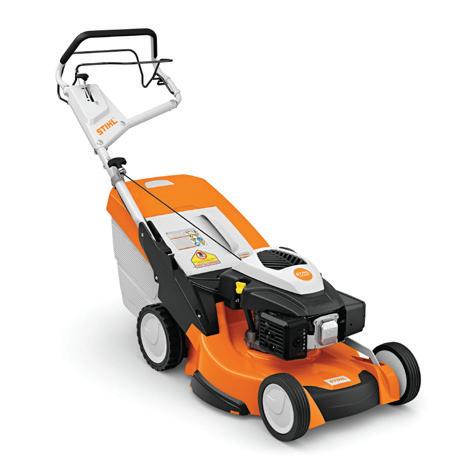
The RM 655 V self-propelled lawn mower gives homeowners the performance they expect from STIHL and the cut they desire with a 21" aluminum mowing deck, Vario drive, and a mono-comfort ergonomic handlebar.


With features like Vario drive and a blade brake clutch, the RM 655 VS self-propelled lawn mower allows professionals to mow lawns even more efficiently.
With hydrostatic drive and a blade brake clutch, the RM 655 YS self-propelled lawn mower allows for the flexibility to mow at varying speeds to achieve a manicured lawn.



By Mike Jiggens
The human element of mowing sports turf
The November/December issue of Turf & Rec featured a story which highlighted the attributes of autonomous mowers used in sports field maintenance. Several other stories have been previously published on the topic, and more and more municipalities are adopting the technology as robotic and autonomous equipment appear to be the way of the future.
An email message recently received by a longtime reader of this publication, however, outlined what he perceives as several shortcomings associated with autonomous mowing. What he noted I hadn’t previously considered but, upon further reflection, some valid concerns were made.
He said that without a human operator on the mower, signs of weed infestation taking hold on a field are apt to be missed. While physically driving a mower up and down a field, an operator can spot imperfections taking root on a field and report it to his supervisor for necessary action to be taken.
One of the advantages of autonomous mowing is that it frees up an individual to undertake other tasks while the robot
does its job. Common sense would suggest one of those tasks would be to walk the field and take note of any abnormalities.
Aside from detecting signs of weed infestations, our reader pointed out several other things that might get missed without a human operator’s eyes. These include holes dug up by burrowing animals, divots created from field sports play, and twigs and other items that have been left on a field.
Autonomous mowing is here to stay, and its attributes are catching on
He added that autonomous mowers have yet to be equipped with roller packages that allow for striping patterns. Sports turf managers of premier fields take pride in the striping patterns they create for an eye-popping effect, and that’s something that might currently be lacking in autonomous mowing.
Technology has been evolving so rapidly in recent years, however, that striping capabilities are apt to become a standard feature in autonomous mowers in the not-too-distant future.
As far as monitoring fields
for imperfections is concerned, this is a task that can’t be ignored. It’s not only important for the health of the field, but for the safety and well-being of its users. Even if a municipality opts to incorporate autonomous mowers in its fleet of maintenance equipment, it’s still imperative to regularly walk sports fields and promptly address any irregularities.
Despite what may be perceived as the cons of autonomous mowers, their pros are many. They can work at night and in the rain when operator-assisted mowing isn’t practical. They can be put to work daily, and their quiet operation won’t violate local noise bylaws when functioning during non-traditional hours of the day.
Perhaps they’re not quite the be-all and end-all – yet – but they also address such other important issues as labour shortages.
Modern technology is making a difference in today’s world. There are still some growing pains yet to be ironed out, but the path has been set. In only the past half-dozen years, autonomous mowing has evolved exponentially. What lies ahead is apt to be astounding.
In the meantime, autonomous mowing is here to stay, and its attributes are catching on. It may not be for everyone, but its pros certainly outweigh its cons.
turfandrec.com
Reader Service
Print and digital subscription inquiries or changes, please contact Angelita Potal, Customer Service Tel: 416-510-5113 apotal@annexbusinessmedia.com
Mail: 111 Gordon Baker Rd., Suite 400 Toronto, ON M2H 3R1
Editor Mike Jiggens mjiggens@annexbusinessmedia.com
Advertising Manager Rebecca Lewis 519-400-0322 rlewis@annexbusinessmedia.com
Account Coordinator Emily Guimarães 416-510-5118 eguimaraes@annexbusinessmedia.com
Audience Development Manager Anita Madden 416-510-5183 amadden@annexbusinessmedia.com
Group Publisher Anne Beswick 416-410-5248 abeswick@annexbusinessmedia.com
CEO Scott Jamieson sjamieson@annexbusinessmedia.com
Printed in Canada ISSN 1186-0170
PUBLICATION MAIL AGREEMENT #40065710
SUBSCRIPTION RATES
Published 7 times a year – Jan/Feb, March, Apr/May, June/July, Aug/Sept, October, Nov/Dec
Canada – 1 year $37.13 CAD; 2 year $47.74 CAD (plus applicable taxes; single-copy$7.00 CAD USA – 1 year $50.92 CAD HST 86717 2652 RT0001
Occasionally, Turf and Recreation will mail information on behalf of industry related groups whose products and services we believe may be of interest to you. If you prefer not to receive this information, please contact our circulation department in any of the four ways listed above.
Annex Privacy Office privacy@annexbusinessmedia.com Tel: 800.668.2374
No part of the editorial content of this publication may be reprinted without the publisher’s written permission © 2026 Annex Business Media. All rights reserved. Opinions expressed in this magazine are not necessarily those of the editor or the publisher. No liability is assumed for errors or omissions.
All advertising is subject to the publisher’s approval. Such approval does not imply any endorsement of the products or services advertised. Publisher reserves the right to refuse advertising that does not meet the standards of the publication.


Cut your mowing costs by 80 %
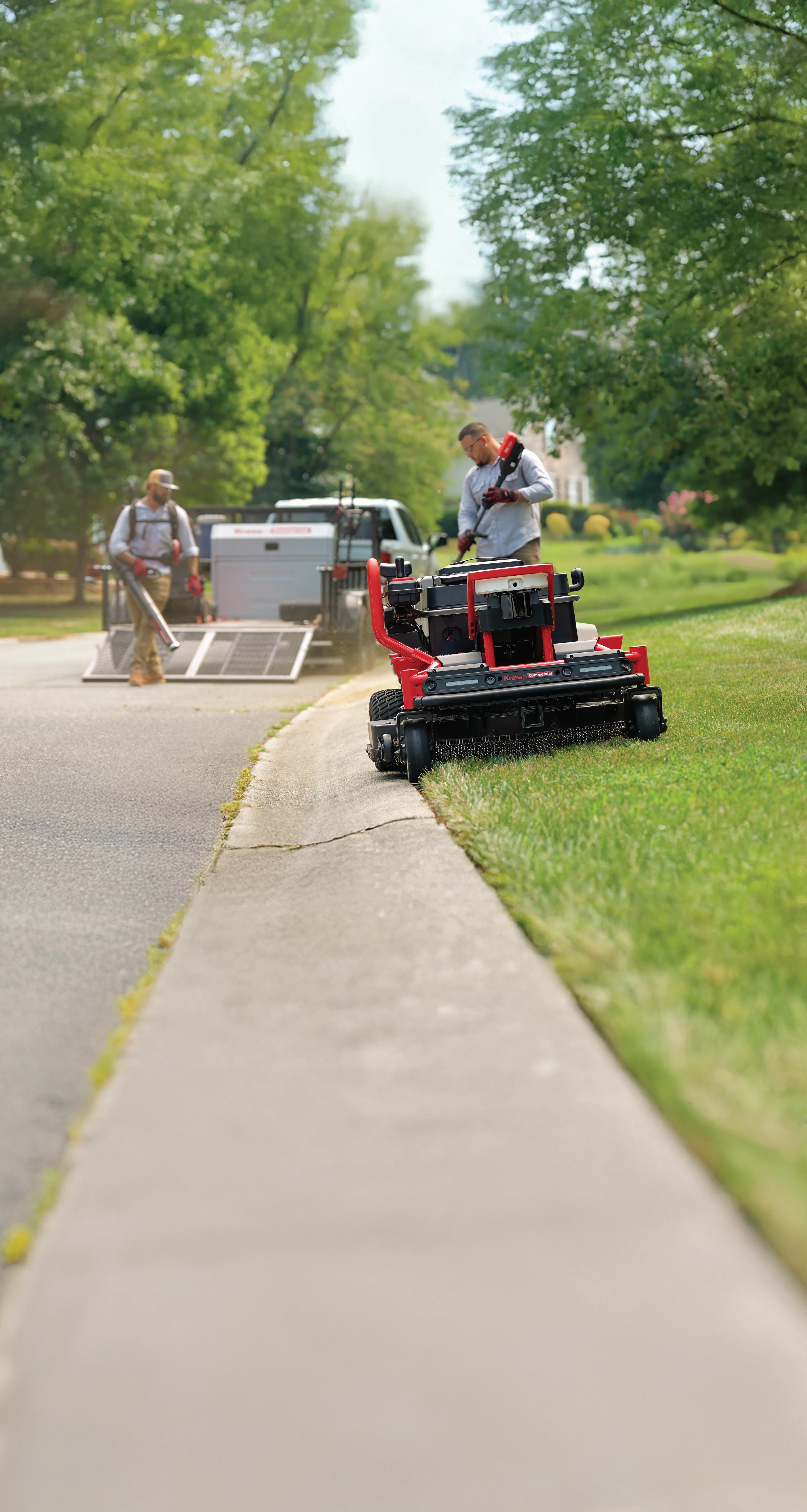
Introducing Kress Voyager – the 40” fully autonomous robotic mower that works alongside your crews. While they focus on edging, blowing, and other detailed tasks, Voyager mows with centimeter-accurate precision and uncompromising power.
Voyager is the new benchmark for efficient, safe, productive landscaping - and your unfair advantage. Partner with Kress - your

Scan this code to find your local Kress dealer
No-show snow contractor leaves GTA customers riled
Snow customers in the Greater Toronto Area are incensed after paying in advance for snow removal work but not receiving the service.
A Woodbridge contractor accepted payment from several customers but failed to show to clear sidewalks and driveways after recent snow events. One disgruntled customer said the company showed during a snowfall in December yet has not returned since.
Decaying crumb rubber can unleash harmful toxins: study
Researchers at Boston’s Northeastern University have found that decaying crumb rubber, used to cushion artificial turf playing surfaces, can generate hundreds of chemicals – some of which pose a danger to humans.
TechnologyNetworksreports crumb rubber breaks down over time from sunlight, rain and other natural conditions. Among the chemicals produced that are potentially harmful to humans are those suspected of causing breast cancer and another that stimulates the effects of amphetamine. A research lead said that whether crumb rubber is recycled or reused, once it’s in the ground it remains active.
Court strikes down part of local bylaw regarding home yards
A victory has been scored in Mississauga for those who wish to turn their front lawns into naturalized yards. The Ontario Superior Court has struck down part of a local bylaw that forces homeowners to maintain their lawns at no more than 20 centimetres in height. The ruling ended a years-long battle between a local resident and the city. The homeowner was supported by the Canadian Constitution Foundation.

Stihl
marks milestone 100th anniversary in 2026
Stihl is celebrating its 100th anniversary this year. Founded in Stuttgart, Germany in 1926, the company has evolved over the past century into becoming a leader in battery- and gasoline-powered equipment for the forestry and landscaping professions as well as for consumers.
“Any company that reaches the grand old age of 100 hasn’t got there by relying on tradition alone,” says Dr. Nikolas Stihl, chairman of the supervisory board and advisory board of Stihl. “It can only stay successful for a century if it knows its roots, while also recognizing when it’s time to start a new chapter. With that in mind, our anniversary is not just a time to look back, but also a moment to recognize the strength that comes from our combination of heritage, engineering expertise, and the courage to innovate.”
From the outset the company has manufactured products designed “to make working with and in nature easier” for forestry workers, as founder Andreas Stihl (1896–1973) once put it.
The proportion of battery-powered products at Stihl is steadily increasing, now comprising one in four products sold. Battery-powered
tools are particularly popular in Western Europe: In countries such as Germany and Switzerland, sales of Stihl battery-powered products already exceed 60 per cent. The company recently inaugurated its eighth production site. The plant in Oradea, Romania, focuses entirely on the production of battery-powered tools for the European market. However, gasoline-powered products remain an integral part of Stihl’s products.
With its new synthetic, biogenic fuel, Stihl MotoMix 100, the company is also demonstrating how the CO2 emissions from its combustion engine products can be further reduced.
Stihl locations around the world will be celebrating the milestone anniversary with their employees in 2026. On Oct. 30 and 31, 2026, the Stihl Timbersports Series World Championships will take place in Stuttgart, the birthplace of Stihl. Athletes will compete against each other in a variety of disciplines and test their skills in challenging contests.
On its special anniversary website, Stihl has compiled a collection of stories from its first 100 years, as well as offering glimpses of the company’s present and future.
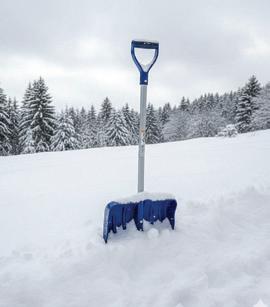
GTA snow customers have been “snowed” by no-show contractor.
PHOTO: STIHL, GEMINI AI
Dr. Nikolas Stihl
New Canadian service hub opens for Milwaukee Tool company
Milwaukee Tool, a global manufacturer of professional cordless power tools, accessories and hand tools, is the newest major tenant in the Keswick Business Park in Georgina, Ont. The company will use a space of 54,000 square feet to operate a major service hub, strengthening Georgina’s position as a growing hub for logistics, manufacturing, and service operations in northern York Region.
“Milwaukee Tool’s expansion into Georgina is significant for our community,” Mayor Margaret Quirk said. “This decision reflects confidence in Georgina as a preferred location for investment and its thriving economy.”
Milwaukee Tool chose the Keswick Business Park following an extensive site review process. Key advantages included a one-hour drive to the GTA’s urban core via Highway 404, only 35 minutes to Highway 401 and 60 minutes to Toronto Pearson International Airport. The location also offers access to more than 4.5 million people within 60 kilometres, including one of Canada’s most skilled and educated workforces. The combination of connectivity, workforce availability, and long-term development potential aligns with Milwaukee Tool’s service and operational growth strategy in Canada.
“Canada is a key growth market for us and this investment represents our ongoing commitment to expanding our operational footprint and strengthening our service infrastructure nationwide,” John Myers, president, Milwaukee Tool Canada, said.
The 200-acre Keswick Business Park offers Milwaukee Tool the capacity for buildings exceeding one million square feet, modern industrial infrastructure, and extensive trailer and employee parking – making it an ideal location for long-term expansion.
The Milwaukee Tool Service Hub is expected to be fully operational by the fourth quarter of 2026 and will employ more than 60 people. It will create a more efficient, centralized operation.
The company is also preparing to launch its first-ever Canadian distribution centre in 2026.
CNLA promotes climate action through plants at Brazil function
The Canadian Nursery Landscape Association (CNLA) represented Canada’s green industry at the 30th Conference of the Parties (COP30) in Belém, Brazil, following its participation at the C40 World Mayors Summit in Rio de Janeiro earlier in November.
These international gatherings bring together city leaders, scientists, and policymakers from around the world to accelerate climate action through collaboration and innovation.
At COP30, CNLA is advocating for ornamental horticulture and living green infrastructure as practical, science-based, nature-based solutions. Plants and managed landscapes store carbon, reduce heat, improve air and water quality, and enhance both ecological and human health while supporting biodiversity and community resilience.
“Plants are the most accessible form of climate technology we have,” says Alan White, CNLA vice-president and chair of the Climate Adaptation Committee. “They capture carbon, manage stormwater, cool our cities, and strengthen mental and physical well-being. As I often say, plants are

the lungs of our cities. And Canada’s horticulture sector is ready to help governments integrate nature into every level of climate planning.”
With $14.4 billion contributed to Canada’s GDP and more than 220,000 jobs supported, the horticulture sector demonstrates that green infrastructure is climate infrastructure. Investments in green spaces yield up to $15 in environmental, social, and health returns for every dollar spent.
At COP30, CNLA amplified Canada’s leadership in sustainable landscape practices and reaffirming that the path to a resilient, nature-positive future starts with plants.
CNLA is a national federation of nine provincial associations.
Encore gets Canadian power equipment launch
The Canadian launch of Encore outdoor power equipment has been announced by Worldlawn Power Equipment. Encore commercial-grade mowers and outdoor power equipment are now available to Canadian landscape professionals and commercial owners.
“We’re excited to bring Encore to Canada,” Ed Zynomirski, Canadian sales manager for Worldlawn Power Equipment, said. “This brand is built for professionals who demand quality and value. If you’re looking for a new opportunity, we’d love to talk about how Encore can fit into your lineup.”
Encore’s expansion into Canada marks a significant milestone for the brand, offering a full lineup of walk-behind mowers, riders, and zero-turn models designed to meet the demands of commercial landscaping. Worldlawn Power Equipment is based in Beatrice, NE.
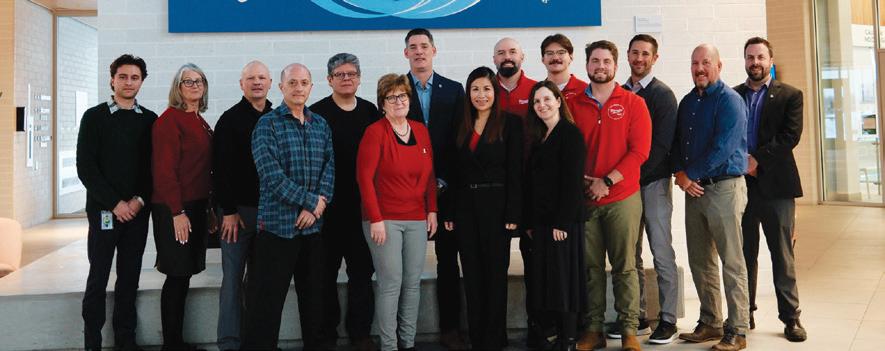
Mayor Margaret Quirk, Coun. Neeson, Coun. Fellini, members of the Economic Development Advisory Committee welcome Milwaukee Tool representatives to Georgina, recognizing the company’s investment and planned Service Hub at Keswick Business Park.
CNLA vice-president and Climate Adaptation Committee chair Alan White (centre) with Canadian delegates outside the COP30 venue in Belém, Brazil.

New tech boosts safer road habits
Dashboard cameras help landscaping companies safeguard against staged collisions, theft.
By Mike Jiggens
Landscape contractors and lawn care professionals are getting savvier about how technological advances can not only enhance their bottom line but can help to keep their labour forces safer and more productive.
Transitioning to battery-powered and autonomous equipment has helped companies save on fuel costs, address labour shortages and allow work to be done during hours often outlawed due to noise restrictions.
Technological breakthroughs don’t stop with the means to perform on-site work. Travel between job sites and to and from company depots can be impacted by modern technology, helping businesses to better track their crews’ driving habits, optimize travel routes, minimize fuel consumption and defend against fraudulent insurance claims.
Many landscaping and lawn care businesses have installed dashboard cameras (dashcams) in their company vehicles in recent years to safeguard themselves against staged collisions and exaggerated minor accident claims. While on the road, video footage is recorded from front-mounted and often rear-mounted cameras that can provide irrefutable evidence to determine if an accident was staged or if a minor accident is blown out of proportion. Without such video evidence, many landscaping and lawn care companies would incur higher insurance premiums they might not be able to afford.
At a job site, company trucks are often parked along the street, leaving them vulnerable to being clipped by another vehicle or to the theft of inside items. Many dashcams feature a parking mode which detects movement nearby and begins recording
footage of a break-in attempt or the impact of another vehicle. In either situation, the recording will provide the evidence that insurance companies and the authorities will need to see.
“Road safety is very important, and I believe a dashcam can help,” George Chen, CEO and founder of Vantrue says. A manufacturer of dashboard cameras, Vantrue has been in business since 2015.
Peace of mind
Chen says dashcams give drivers peace of mind, providing them with greater assurance while they’re behind the wheel because they realize video footage is being recorded.
Today’s dashcams produce up to 4K-quality video, enabling a clear picture of another vehicle’s licence plate, even after dark or when it’s raining.
A mounted dashcam records what’s happening on the road in front of a vehicle and can also record rear and in-cabin footage.
CORGWIN TM with Seed GRANULATED ORGANIC COMPOST
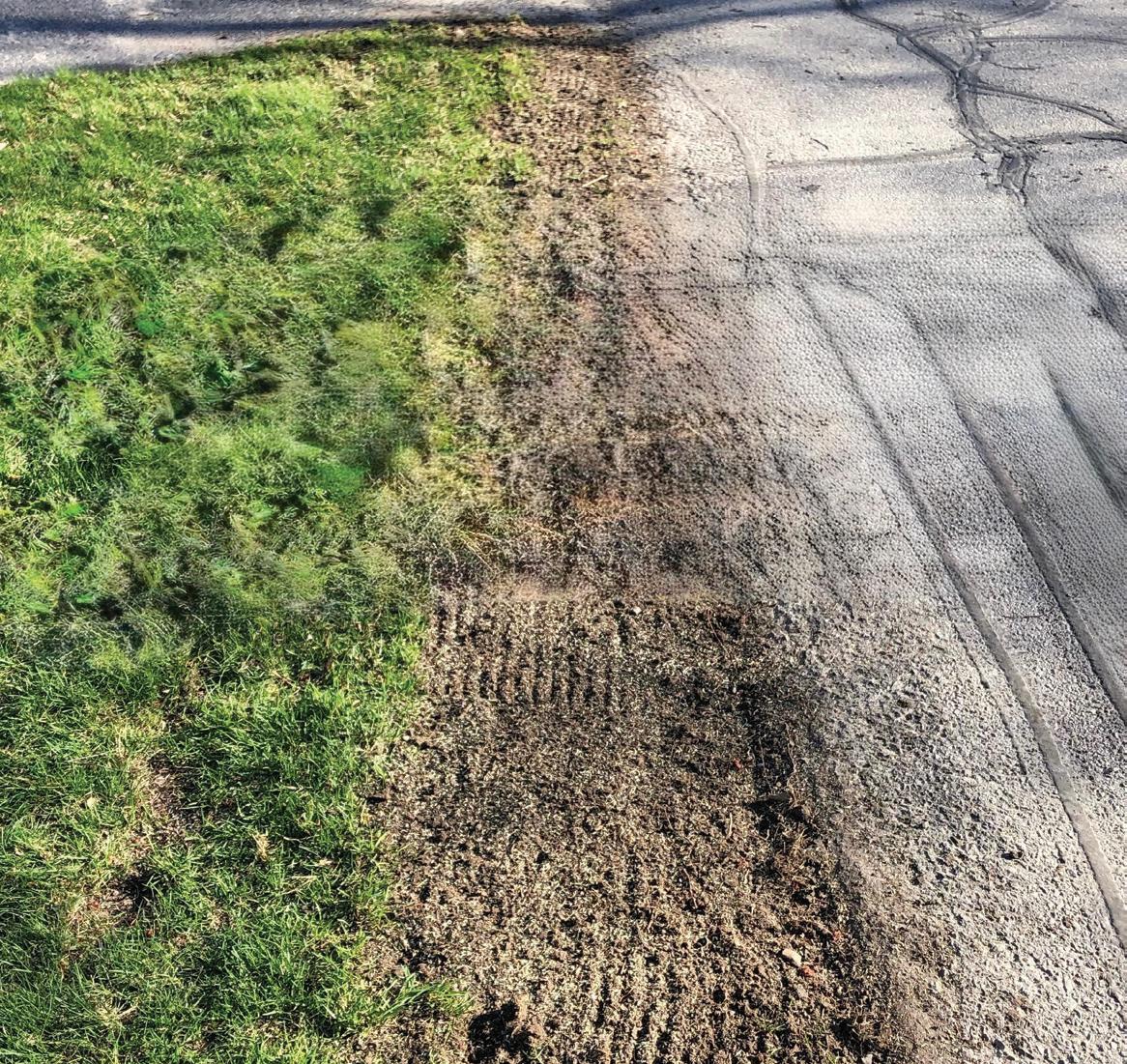
Great for overseeding; rebuilding turf’s natural character traits, creating a denser lawn, consequently combating weed growth. Also suitable for lawn repair; dog urine & salt damaged areas.
Suggested application rate: 4.5kg (10 lbs)/ 1,000ft2
Available in both 5kg & 18kg

4-1-0
now containing
CORGWIN (Canadian Organic Water Insoluble Nitrogen)
• Derived from Canadian dried citric acid biomass; (citric fruit waste)
• 6-2-0 , 2% Fe analysis
• Contains proprietary biostimulant; NUTRIFENSE; plant extracts which enhance plant resilience, especially in the face of heat, wear & drought stress;
• CFIA registered for use in Canada
OPTIMUM SEED MIXTURE
75% Certified Perrenial Ryegrass, selected for:
• Spreading Ability, High Heat, Drought, Cold & Salt Tolerance Rating;
25% Certified Kentucky Bluegrass, selected for;
• Fast Germination/ Establishment Excellent Tillering & High Wear Tolerance 80% 20%
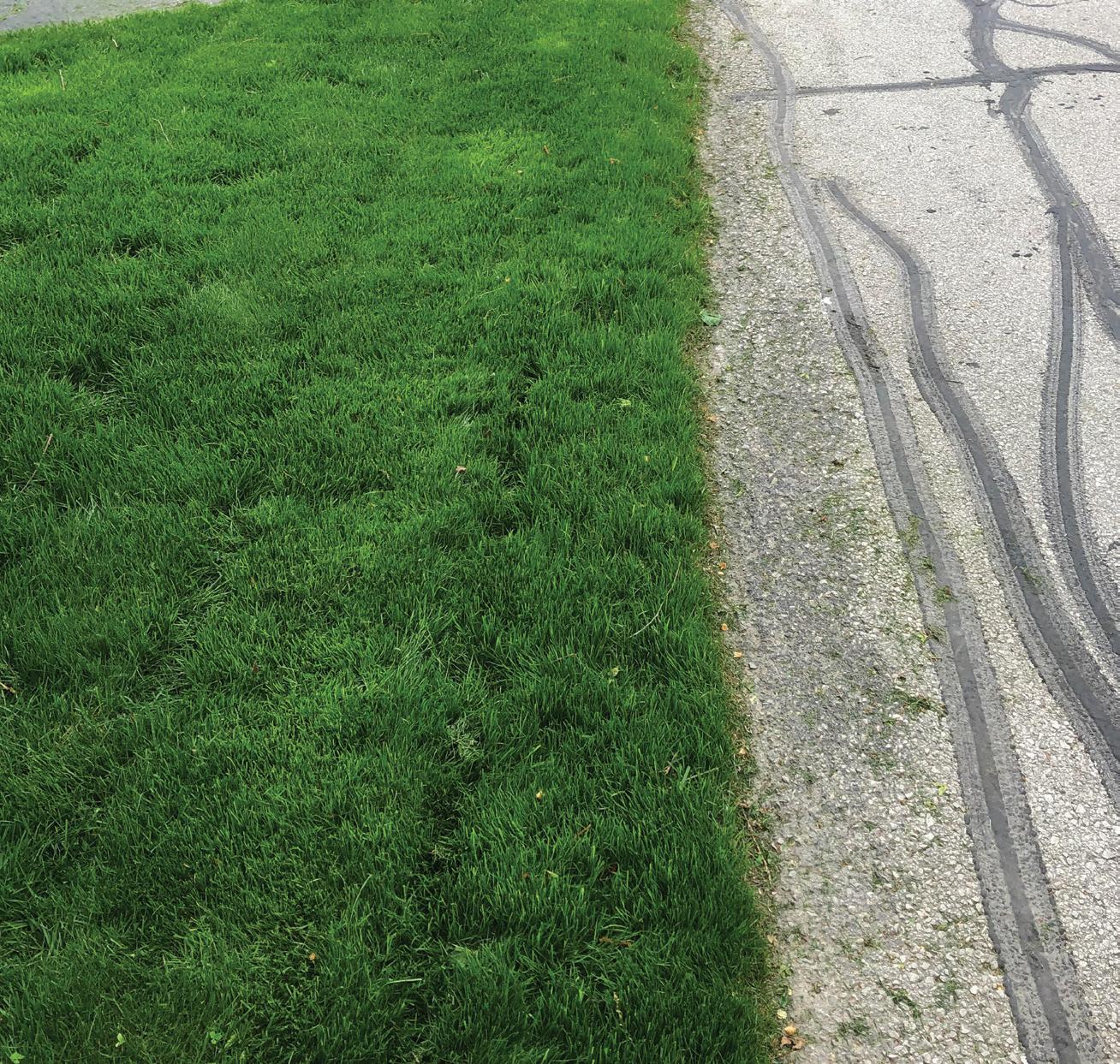
Pitt Meadows, BC Calgary, AB Burlington, ON St-Bruno, QC

Dashcams can either be hard-wired into a vehicle or plugged into its electrical outlet, often referred to as a cigarette lighter socket. The advantage of hard wiring is that it enables the dashcam’s parking mode for roundthe-clock protection. A lower powered voltage can be set up to prevent the vehicle’s battery from draining.
Chen says about 40 per cent of Vantrue’s customers have their systems hard wired to allow for parking mode operation.
A new feature introduced this year on dashcams designed specifically for commercial, high-demand, and professional drivers is thermal imaging which can depict large animals darting across the road or pedestrians walking along the shoulder before the driver is aware of their presence.
“It can see things in the foggy weather by the temperature of the body,” Chen said, noting the feature is also helpful when driving after dark or in heavy rain. Heat signatures are identified to provide early alerts to the driver, allowing him to exercise caution.
In addition to producing a video record of a vehicle’s movements, other dashcam features promote better driving habits among operators. Some systems with AI can detect dangerous driving habits such as speeding, hard braking, lane drifting and distracted driving, including cell phone use while in motion. Dashcams equipped with an interior cab camera will capture other driving faults, including vehicle operation with an unfastened seat belt, allowing company managers to review the footage and better train their employees so that they adhere to a safer driving culture.
The Allstate Insurance Company of Canada reports the three most common types of road collisions are rear-end accidents, lane-changing incidents and single-vehicle crashes. Most of these accidents occur in January, with December and February, respectively, reporting the next highest incidents.
“Rear-end crashes can stem from following too closely, busy urban traffic, sudden slowdowns, poor weather conditions, and more,” George Ljubicic, agency manager at Allstate Canada, says. “With the colder months ahead, drivers should be aware of the risks of slippery roads and maintain more space around their vehicle to safely brake.”

Dashcams offer high-quality video that can pick up licence plate information in sharp detail.
Mitigating poor driving habits
Turf care company vehicles often travel along highways or busy arteries, and drivers can be lulled into maintaining higher speeds once entering residential areas or they may tail too closely behind another motorist. Dashcams can help mitigate such poor driving habits. Drivers of company vehicles who are motivated by the various features that dashcams provide will lessen their chances of being involved in accidents, allowing companies to extend the lifespan of their fleets, reduce downtime and bolster the efficiency of their businesses.
Inefficiencies in route plotting can be identified through GPS tracking data which can lead to reduced fuel consumption and time spent idling. Enhanced productivity comes from better route planning, and GPS tracking allows managers to keep better tabs on where their company’s vehicles are located.
Dashcams are available with various features and at different price points for commercial operations. Some are equipped with dual camera capabilities, depicting what is taking place in front of the vehicle and inside the cab. Other dashcams feature a rear-view camera for a more rounded picture of the vehicle’s surroundings.
‘Road safety is very important, and I believe a dashcam can help’
Video quality can vary from one dashcam to another with resolutions ranging from 1080p to 4K. The original marketed cameras were 720p quality but have since evolved. The higher resolution can better capture licence plate numbers and other details.
Cloud connectivity allows video footage to be uploaded automatically and be readily accessible.
Real-time alerts can prompt drivers to adjust to any unsafe driving behaviours they have adopted.

A turf student ’ s unique posting
Guelph student Nolan Guertin’s unique internship at U.S.A.’s first organic golf course. By Nolan Guertin
Encompassing roughly 230 acres in Edgartown on the island of Martha’s Vineyard in the State of Massachusetts, Vineyard Golf Club (VGC) is the United States’ first and pre-eminent organic golf course. In 1999, the Martha’s Vineyard Commission (MVC), effectively the island’s government, approved the construction of VGC under numerous conditions and environmental constraints due to the island’s aquifer being the sole source of drinking water.
One of those conditions stated, “that the golf course shall be a strictly organic course, defined as ‘derived from plant materials or biological organisms or mined from natural deposits.’” The conditions also allow for limited use of certain synthetic products when no effective organic alternative exists. These products must be classified as reduced risk by the U.S. Environmental Protection Agency, show minimal environmental persistence, pose low toxicity to non-target species, and are approved by the MVC’S environmental oversight group prior to application.
VGC is a private 18-hole golf club whose membership is comprised of some of the most affluent families in North America and generations of local islanders. During peak season, VGC employs roughly 35 people, including full-time staff, part-time islanders, local high school students, and more than a dozen international workers on H-2B and J-1 visas. With this many staff, communica-
tion is key. Daily morning meetings, radio contact throughout the day, and an open-door leadership structure keep operations moving smoothly. Despite the club’s size and prestige, the culture is remarkably welcoming.
Originally designed in 2002 by Donald Steel as a links-style course, VGC features a plethora of pot bunkers, minimal rough, and dense native areas. In 2012, the membership and superintendent Jeff Carlson engaged Gil Hanse to lead a course renovation. Between 2013 and 2015, Hanse and Jim Wagner reshaped and rerouted the course, transforming it into what is now considered one of Hanse’s original designs. The current layout captures the natural, untamed motif of some of the earliest golf courses, featuring 400,000 square feet (9.18 acres) of bunkers and small but effective greens with dramatic undulation.
In the summer of 2025, I had the opportunity to intern at this incredible property as part of the University of Guelph’s diploma in Turfgrass management program. It was a season of long days, longer hand-watering sessions, intense heatwaves, and some of the most rewarding hands-on learning of my life.
Managing turf without the safety net of conventional pesticides demands precision, discipline, and teamwork. This experience completely reframed my understanding of plant health and integrated pest management. Instead of relying on quick fixes,
An aeriel view of the Vineyard Golf Club on the island of Martha’s Vineyard in Massachusetts.
everything at VGC revolves around preventing problems before they appear.
That philosophy translated into practices such as solely hand-watering greens, maintaining higher-than-typical thatch levels, rolling fairways, approaches, and greens for dew removal, and spoon-feeding nutrients on all surfaces. The guiding principle was simple: “Grow the plant out of disease.” State-of-the-art John Deere GPS sprayers, a fleet of moisture meters, and multiple weather stations informed the club’s agronomic decision-making.
Every chemical application was diligently planned around weather windows and plant needs. With very limited synthetic options available, timing and precision become increasingly important as the first line of defence. While they embrace traditional methods, VGC is shaping up to pioneer the future of the industry, with plans to bring in a research manager and begin a formal research program that will benefit the industry as a whole.
Among all the responsibilities I was given during my internship at VGC, none was as constant or as crucial as moisture management. Where most conventional fungicides and many synthetic chemistries are unavailable, managing soil moisture becomes the foundation of plant health. As previously stated, this is a major defence against stress, disease, and decline. The course sits on sandy, inconsistent soil, and its exposed costal location subjects it to relentless winds. As a result, the greens can shift from healthy to stressed in a matter of hours, making the hose an essential tool.
The margin for error was low. Too little moisture increased plant stress and pathogen susceptibility, while excess moisture softened surfaces, promoted algae, and negatively impacted playability. Using moisture meters, surface temperature readings, and visual scouting, we meticulously monitored every green. Each day taught me more about recognizing signs of stress, understanding how bentgrass responds to stressors, and recognizing minute changes.
This responsibility was educational in a way few turf tasks can match. I learned how wetting agents interact with sandbased profiles, how organic programs rely on moisture precision to maintain plant vigor, and how rolling, topdressing, and fertility programs all intertwine with moisture strategy. By the end of the season, moisture management had become second nature – a skill set refined through observation and repetition. It taught me to trust both data and intuition, and it remains one of the most valuable agronomic lessons I gained from my time at the Vineyard Golf Club.
While day-to-day maintenance and moisture management comprised the bulk of my ongoing responsibilities last summer, several larger projects defined my summer. In my first week, I jumped straight into the ongoing aeration and topdressing of playing surfaces. Operating a tractor-mounted TyCrop spreader for the first time to topdress fairways, being part

of a team undertaking a large-scale aeration with ambitious pace and learning how to operate and calibrate equipment are just a few of the experiences that highlight my internship experience.
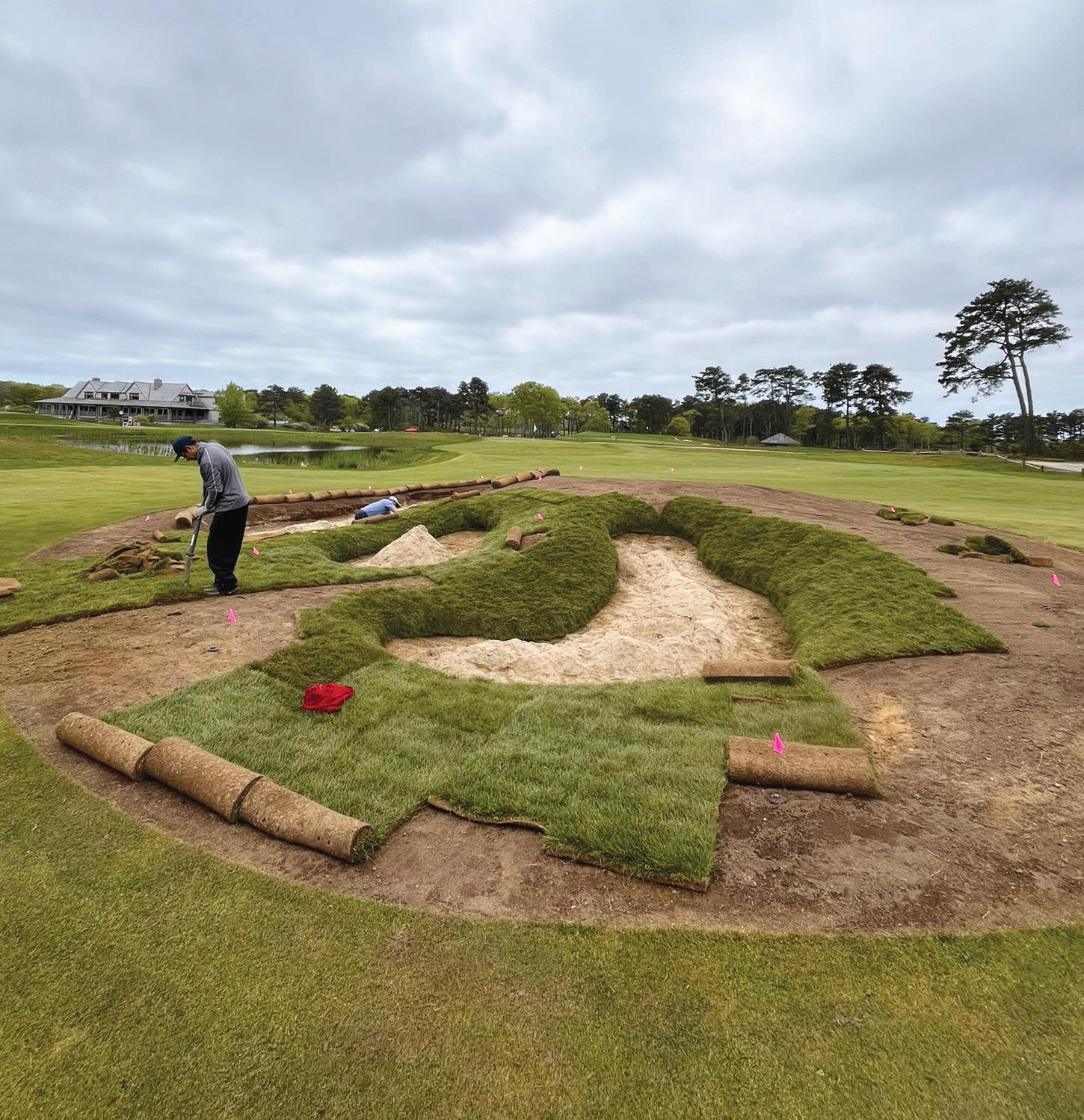
VGC’s classic look is driven by its roughly nine acres of bunkers including pot bunkers, waste bunkers, and sprawling blowout-style hazards. Interns were tasked with depth checks, edging, raking, and really all aspects of bunker maintenance. This was my first experience working with
Resodding pot bunkers at the Vineyard Golf Club in Edgartown, Mass.
Nolan Guertin.




The role of AI as landscaping tool for design
Artificial intelligence lets landscapers stay current and competitive.
By Mike Jiggens
The role of the landscape contractor is no longer limited to simply designing landscapes that can adapt in a world challenged by climate change and other environmental factors. Contractors must also run their businesses in a manner that will adapt to a changing world.
So argues Heather Jerrard, owner of London, Ont.-based My Landscape Artist, who advocated for the adoption of artificial intelligence (AI) at January’s Landscape Congress in Toronto.
“As designers, we rely heavily on visualization,” she said, adding it enables better client alignment.
“Better alignment means happier clients. There are fewer misunderstandings and fewer revisions.”
Using tools such as AI streamlines processes, reduces friction and builds resilience, Jerrard said. She noted AI does the “heavy lifting,” but the thinking is hers.
She was adamant in believing human beings won’t be replaced by AI,
saying she prides herself in being genuine and transparent.
“Over the last six months, my own perspective on AI has changed a great deal.”
Jerrard said her adoption of AI in her work doesn’t make her less human but produces a better version of herself, equating AI to having an assistant with 2,000 arms that can easily juggle four balls so that she can focus on juggling two.
AI helps to explore ideas faster, she said, yet it doesn’t replace the designer nor signs the drawings.
“If you are presenting an AI-generated drawing, make sure you’re selling it as a conceptual visualization and not a design.”
It isn’t creativity but acceleration, meaning the designer is the author with more options to be explored quickly and efficiently during the early design process, ensuring a better final design.
Jerrard argues that technology is protecting craftmanship rather than replacing it.
“Power tools didn’t end carpentry and AI won’t replace us.”
Technology should do the repetitive work, allowing landscape designers to do the thinking, designing and problem solving – “all the things that got us into this profession in the first place.”
AI is the next big thing, she said, believing that adopting it allows
landscapers to stay current and competitive, adding those who learn how to use AI and implement it in their businesses will replace those who choose not to embrace the technology.
“If AI can improve the quality and efficacy of a sales tool, wouldn’t you try it?”
One of the AI tools she has recently explored are sunglasses that record the video and audio of an initial conversation with a client. The video and audio are given to AI which produces a transcript of the meeting, including small details which are apt to be missed if only manual notetaking is done. An AI agent creates a detailed proposal for what needs to be included in a design as well as the next steps or information missed from the client interview.
It also prompts a reminder to email the client to ask for a survey. The overview of the client meeting is waiting in a desktop folder by the time the designer returns to his or her studio.
The process is a time saver, “and that’s where the money lies – in time saved.”
Challenge of climate change
Landscape contractors and designers continue to be challenged by climate change and other environmental factors. They are seeing certain plants fail that had previously
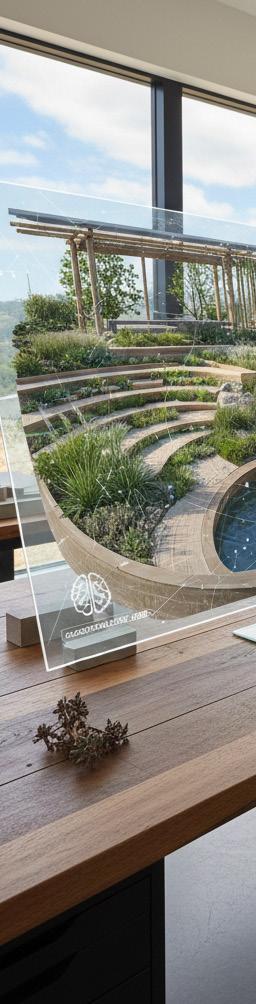
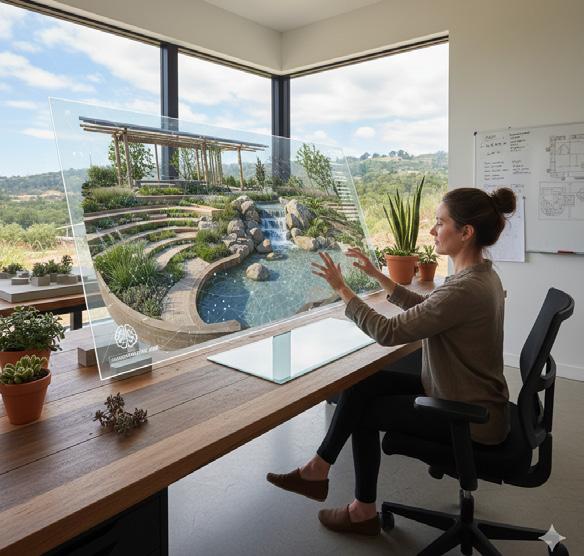
Using AI in landscape design enables better client alignment, and AI-generated designs should be presented as a conceptual visualizatio,n London designer Heather Jerrard says.

thrived. It has led to clients asking more informed questions.
“Designing beautiful landscapes is not enough anymore,” Jerrard said. “We must work with the land, not against it. We’re creating places that contribute ecologically rather than spaces that just consume energy and water.”
She said the right plants are no longer being put in the right places because the right place has changed. She likened the reasoning to someone buying a puppy at a pet store, only to see it die before returning to the store and asking for a refund. It’s the same with plants.
The world is rapidly changing with climate, technology and society shifting simultaneously, she said.
“Climate change isn’t theoretical any-

more. It’s operational. What we do as land stewards matters.”
Projects now take into consideration such things as the weather, plant performance, staffing and supply chains.
Landscapers are designers of ecosystems, Jerrard said. They work with time, soil, weather, animals and people.
“The landscapes that we shape throughout our careers are going to last long after we’re gone. The work we do matters.”
Jerrard cited four actionable things landscapers can encourage their clients to do to promote ecology.
• Create a “bug snug.” By foraging objects such as fallen branches and other natural material found on the property, an obelisk can be crafted for “creepy crawler” habitat.
‘Power tools didn’t end carpentry and AI won’t replace us’
• Wait for 10 consecutive days, during which the temperature is at least 10 degrees Celsius, both day and night, before doing spring cleanup. Waiting for days to sufficiently warm up gives hibernating insects a chance to “wake up.”
• Leave areas of exposed soil. Leaving certain areas intentionally exposed without mulch cover provides ground-burrowing bees with a habitat.
• Leave some areas intentionally wild. Everything doesn’t need to be manicured. An area of the landscape can be designated for ecological beings.
Jerrard said a landscape professional’s future is part artist, part steward, part technologist and part educator.
“Our systems need to be clear, our processes need to be streamlined, and we need to be fluent in technology and informed about environmental changes.”
She encouraged her audience to design and nurture gardens that will bring joy, create lasting memories and gently lighten the way of the world through thoughtful decision and genuine connection.
Topdressing and low mow heights
Coarse
or very
coarse sand
particles sit up on top and get in the way of a mower
By Mike Jiggens
As the height of golf greens has become shorter over the years, its impact on the effectiveness of topdressing is being increasingly scrutinized.
Dr. James Murphy, director of the Center for Turfgrass Science at Rutgers University in New Jersey, says sand particles classified as coarse or very coarse don’t move well into the canopy in today’s era of lower mowing heights and when growth regulators are used to further tighten up turf.
“It becomes very difficult to introduce these particles into the canopy when you’re topdressing, and it limits your ability to do topdressing during the growing season when the grass is producing thatch,” he told those attending the 35th annual Ontario Seed Company/Nutrite professional turfgrass seminar last December in Waterloo.
The particle size of topdressing sand is meant to mimic the sand profile on which grass is grown, he said, adding “a construction style of sand is probably not something that’s going to work real well as a topdressing sand.”
Murphy said that sand should ideally be gradually introduced into the profile while organic matter is accumulating from the growth of grass, and he wondered aloud if topdressing sand can successfully be modified without causing any unintended con-

sequences.
Most golf superintendents don’t want to use a sand that includes a fine gravel component, yet coarse or very coarse sand particles present a problem when they don’t work their way into the canopy.
“Those are the particles that sit up on top, get in the way of the mower and get in the way of playing the game.”
Murphy said that in the New Jersey area, topdressing sand particles one millimetre in size or smaller have been used successfully for several years. The question now, he added, is whether reducing the particle size to about half a millimetre would make it too fine a material for use on putting greens. Research trials in recent years have stud-
ied the impact of particle sizes in addition to application rates and cultivation.
“Can cultivation influence what we see happening relative to the different sand sizes and different topdressing rates?”
Effects of topdressing sand
The objective of the research was to explore the effects of topdressing sand lacking coarse particle sizes. Initially, the trial looked at core cultivation or hollow tine aeration in which cores were pulled and holes backfilled with a medium coarse sand that met construction guidelines yet didn’t include very coarse sand.
“The idea is if you’re topdressing with sands that are finer than what you should
The particle size of topdressing sand is meant to mimic the sand profile on which grass is grown.
be using or what is thought to be too fine, and you punch a hole and backfill with a coarse material, does that offset the problems that that finer sand topdressing that you’re using in the summer might actually create?”
Three different sands were studied in the trial – a medium coarse sand that lacked very coarse particles; a medium fine sand that lacked both coarse and very coarse particles (about three-quarters was medium sand with the remainder either fine or very fine); and fine medium sand of which more than half of it was comprised of fine or very fine sand.
Extremely fine sand is easy to apply but can cause issues, Murphy said, pondering if it can be fixed through cultivation.
In May and October, trial plots were cultivated with the holes backfilled with a medium coarse sand at a rate of about 600

pounds per 1,000 square feet. Non-cored plots were topdressed heavily to simulate the heavy topdressing done to the cored plots.
The goal was to see what degree of sand pickup was present in mower clippings.
“As you would expect, the finer sands you pick up as much sand with the mowing, and with a really coarse sand you pick up quite a bit.”
Murphy said the end effect is that sand makes a significant impact on how well the surface retains water, thereby affecting infiltration. During the trial, an inch of water was put down while the time it took for the water to fully infiltrate and leave the surface was measured.
Sand size and core cultivation are key factors that have a strong effect on the data, he said, adding interpretation of the data for sand size effects on water infiltration de-
pends on whether cultivation is being done.
Murphy said the infiltration rate noticeably slows down when extremely fine sand is used. Fine medium sand does a good job at maintaining adequate infiltration rates based on a standard of six inches per hour.
Cultivation helps, he said.
“It takes the fine medium sand and really speeds it up. Fine medium sand under cultivation is no longer going back to six inches an hour. It’s getting quite a bit lower than six inches an hour.”
Murphy said he believes cultivation helps if a finer sand is preferred during the summer months, but caution should be exercised with extremely fine sand. It can be corrected early on, but it gets more difficult for cultivation to fix a problem as time elapses.
“It just gets worse and worse as time goes on.”
Efficiency That Pays Off
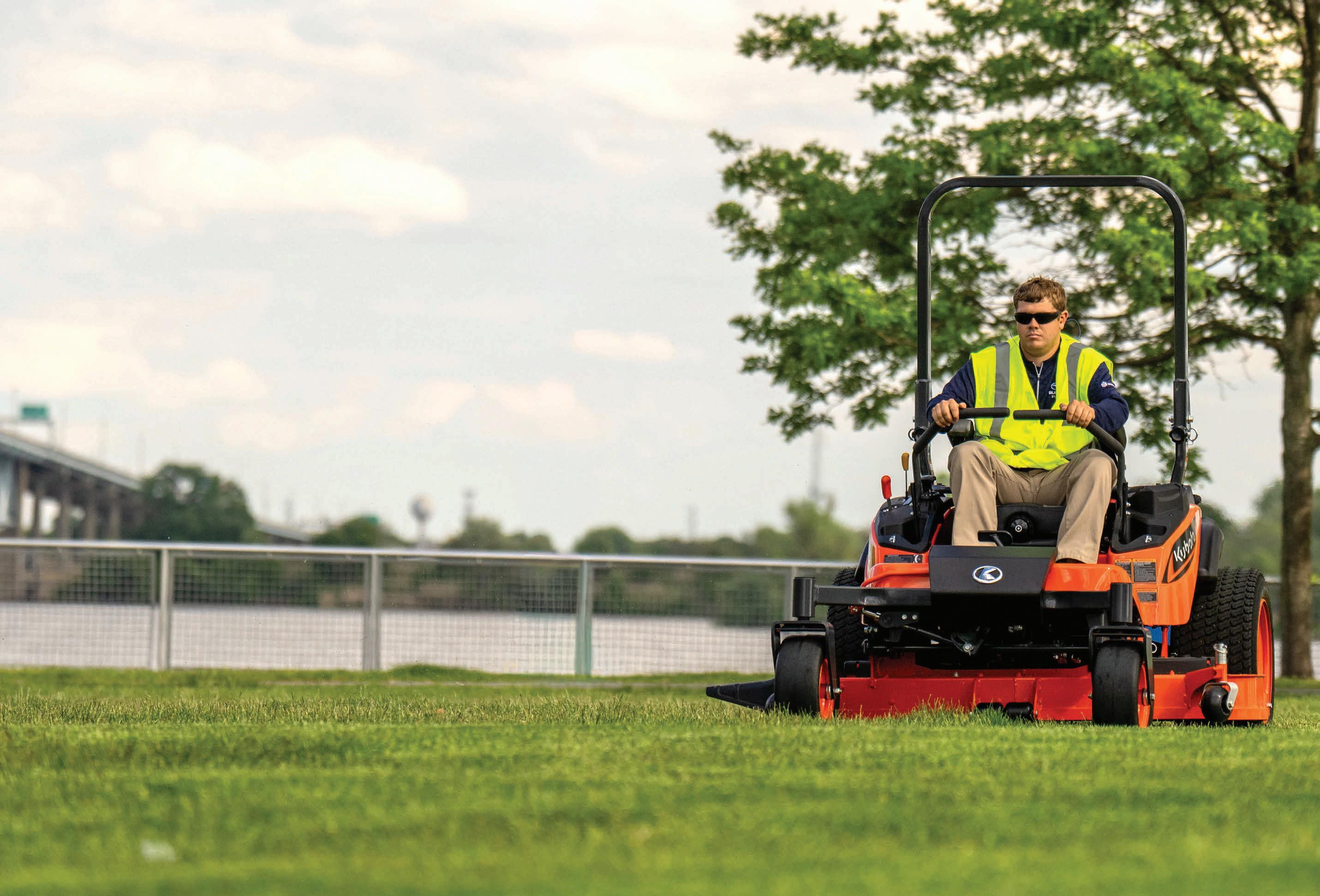
Productivity is more than speed. It’s efficiency you can feel on every job. The Kubota ZD1200 Series pairs Kubota diesel power with a shaft driven ACS deck designed to move air, cut clean, and discharge efficiently, helping reduce power draw so you can stay productive across the route. The same oscillating front axle technology you know from tractors is incorporated in the ZD giving you built-in stability, along with operator-focused comfort, keeping the machine (and the crew) working like the schedule demands.
Making profit from precision
Compact
technology is evolving into an essential tool in landscaping.
By Sabrina Cataldo
When it comes to moving dirt, there are a few things that are certain: you only want to move it once; the faster you achieve final grade, the less fuel, machine wear and stress you’ll have; and it’s getting harder to find productive operators who can make the equipment work every day.
Positioning technology is revolutionizing the landscaping industry. It’s not new, though; over the last 25 years, it has helped medium- and large-sized construction companies boost efficiency and productivity as they look to improve in an increasingly competitive marketplace. As the technology and market have evolved, smaller operations are realizing they don’t need a big budget to get the same big results. If you’re not using compact technology, you could be leaving money on the table.
COMPACT TECHNOLOGY 101
Compact technology is a combination of hardware and software that determines a machine’s current position and compares it with the desired design surface. Using positioning sensors and being programmed with a desired grade or slope, the technology allows machine operators to instantly and accurately understand (within the size of a golf ball or better) where their cutting
edge is relative to a design grade.
The operator uses an intuitive display to understand what has been done and quantify what is remaining at all times. This increases an operator’s ability to plan ahead, gaining efficiencies while reducing downtime. How often have you wondered how many more trucks of import materiel you really need to get the job finished? Or had an accurate measure of what you’ve removed? All of this is possible at the touch of a button. Used in earthmoving equipment since the late 1990s, the technology allows you to make decisions based on data, rather than relying solely on the skill and experience of the operator. As a result, machine control effectively increases operators’ productivity and accuracy.
It’s not just for big jobs, either; today’s technology is ideal for small- and mediumsized operations, including fine grading, custom landscapes, berms, swales and utility contracts. It allows you to perform a broad set of tasks for the execution phase, perfect for general earthmoving and excavation. There are solutions available for compact equipment – mini-excavators and compact track or skid steer loaders. This market represents the next frontier in adopting this technology in their operations, and this adoption is trending.
DO MORE WITH LESS
While it can be a challenge to implement new technology, particularly in smaller operations, there are a few industry trends
that are inspiring contractors to seek out new solutions.
Job complexity and tolerances have increased dramatically. In the last decade, the increase in CAD designs for complex landscaping projects and even pools have driven smaller contractors to look for ways to keep up and stay ahead. Gone are the days of a design on the back of a napkin. With that comes new expectations of accuracy and repeatability
Whether you’re importing topsoil to finish off a lawn, excavating contaminated soil, waiting for layout for a surveyor that will “get to you as soon as he can” or finishing a project ahead of schedule, less cost is more margin. To stay competitive in the face of inflation, you need to get more out of your equipment, employees and vendors. Technology checks those boxes.
Dan Hendriks, vice-president of sales, positioning technology at Brandt, says the software is easy to adopt on almost any job.
“Imagine a 3D laser that will give you the grades you need and also tell you where you are on the job,” he says

ONE OPERATOR, THREE JOBS
Digital plans are the industry norm for larger projects, but many small- to mediumsize landscapers rely on third-party surveyors and engineers to provide design and layout. With compact technology, landscapers can easily do that themselves.
“It’s a three-in-one solution that allows landscapers to measure, design and build,” Hendriks says. “You can create or update a project plan, stake out or measure key points and seamlessly move into the machine to begin construction in 3D as well as a validation tool for grade checking and as-builts. It saves landscapers time and resources and makes them less reliant on third parties, increasing their project portfolio and, ultimately, profits. The contractor with limited resources now can confidently self-perform much of the work. They can own the entire process.” Projects designed with paper plans as a
guide don’t always make it to the job prior to work start. Given the job site is also the office for many contractors, much of the planning is performed in the field. The tools they use for locating grade and position are typically rotating lasers and tape measures. This technology allows them to create plans digitally on the fly and easily get customer feedback and approval. Being able to work digitally increases the ability of the landscaper to develop new ideas and make modifications quickly, reducing delays in work or decision making.
The digital representations also allow landscapers to visualize the end result, providing a consistent advantage for better planning and resource management of people, material, equipment and time.
EASY TO LEARN AND USE
When you’ve done work manually for years or even decades, learning new technology
can feel intimidating. Compact technology is intuitive and easy to learn and use, even if you or your crew isn’t tech savvy.
“Operators can simply take the mobile tablet and positioning sensor from the machine and use them to record existing conditions and, directly on the tablet, create a digital plan of the proposed project,” Hendriks says. “The digital plan can be used within the machine to accurately locate and construct the project features with limited need for outside assistance to locate critical items or getting out of the machine to check work that is completed. Right from the machine, the operator can see what has been completed and what is remaining.”
Displays and other components are designed to be shared across numerous machines in owned or rental fleet environments and moved from the grade checking/ layout rover pole to the machine and back. Compact technology systems are also available with GPS or 3D laser capabilities. The receivers and tablet can be easily moved from the machine and used to record existing conditions and create a digital plan of the proposed job.
SAVE TIME AND MONEY
Employing a compact technology system in your business doesn’t have to be costly. In fact, it can quickly deliver a return on investment.
“In utility trenching, we’ve seen up to 51 per cent cost savings per trench in labour and material, including about five hours of time saved per job,” Hendriks says. “It pays for itself with productivity gains, leading to availability for additional projects.”
GET A COMPETITIVE EDGE
Compact technology is an accessible, practical solution that levels the playing field for companies of all sizes. Whether you’re looking to reduce costs, improve accuracy, win more contracts or simply work smarter instead of harder, investing in compact technology is a strategic decision that delivers measurable results.
Sabrina Cataldo is a freelance writer and editor, based in Regina.
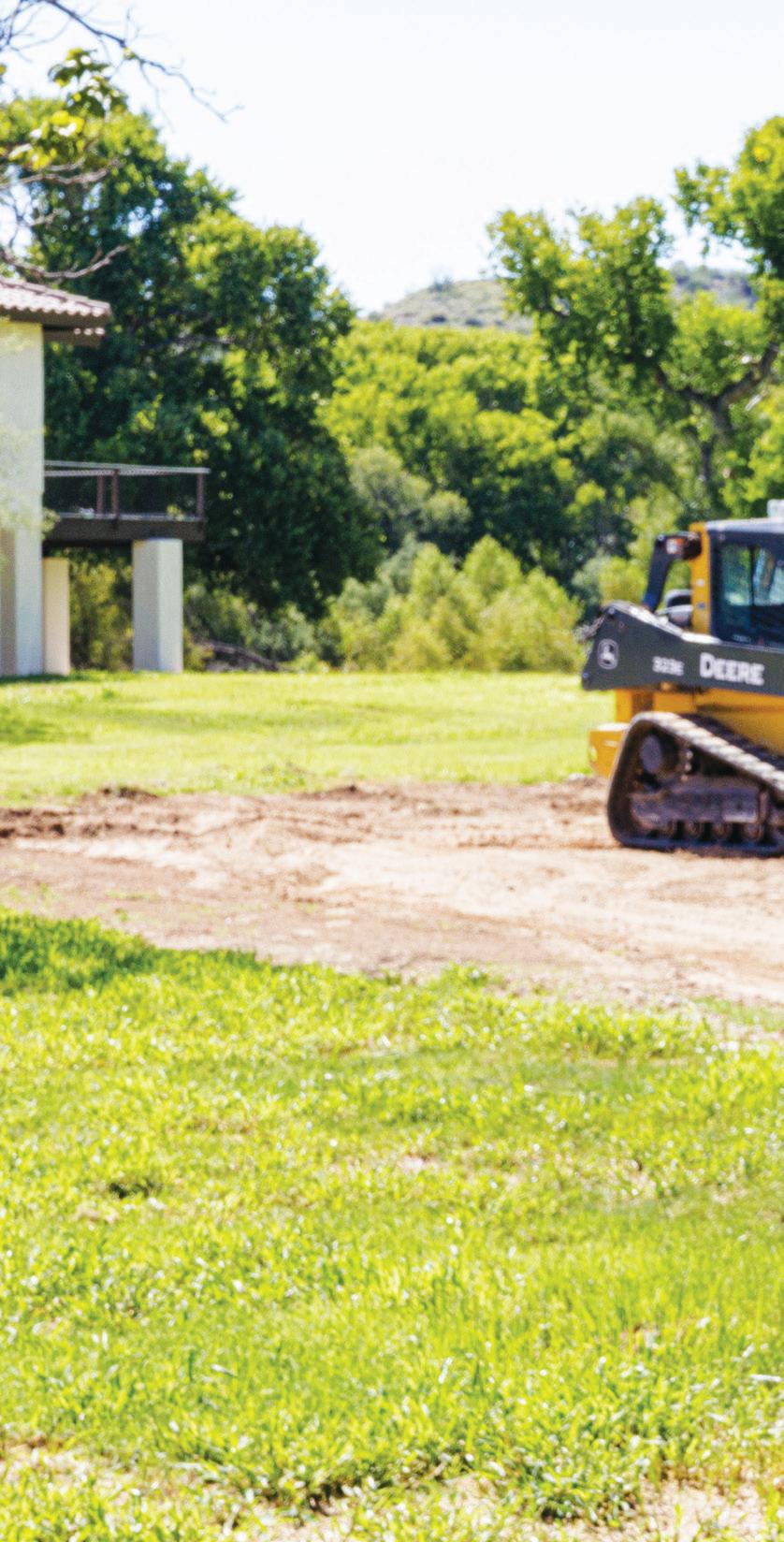
Compact technology is a combination of hardware and software that determines a machine’s current position and compares it with the desired design surface.
ROS: prevention, causes, damage
Reactive oxygen species is an unavoidable consequence of oxidative metabolism
By Jeff Haag
Most turfgrass managers know that research has shown that free radicals, if not quickly converted to water and ground-state oxygen by antioxidants, can bleach chlorophyll, and can damage lipids, proteins, and DNA inside cells of the turfgrass plant.
So exactly what are free radicals? Typically, stable molecules contain pairs of electrons. When a chemical reaction breaks the bonds that hold the paired electrons together, free radicals are produced. Free radicals contain an odd number of electrons, which make them unstable, short-lived, and highly reactive. As they combine with other atoms that contain unpaired electrons, new radicals are created, and a chain reaction begins.
This chain reaction or accumulation of reactive oxygen species in plants is generally ascribed to several possible sources, which can be attributed to environmental causes such as drought, heat, ultraviolet light, airborne photooxidants, or chemicals such as herbicides. Accumulation of reactive oxygen species is central to plant response to several pathogens. The free radicals (reactive oxygen species) are singlet, hydroxyl, superoxide, and hydrogen peroxide.
The formation of reactive oxygen species (ROS) is an unavoidable consequence of oxidative metabolism, which takes place to a greater or lesser extent in every cell type. Typically, these effects are balanced by cellular reductant pools, which are themselves regenerated by the same processes. Small changes in the environment can quickly cause a change in this delicate redox balance, resulting in a ROS burst.
The benefits from applied antioxidants observed in multiple photosynthetic parameters are due to increased protection of photosynthetic enzymes from ROS-mediated damage. Multiple mechanisms have been proposed for such protection of photosynthetic enzymes, the simplest being that photosynthetic enzymes are directly protected by the capacity of the applied antioxidant to inactivate ROS.

An unavoidable consequence of aerobic metabolism is production of reactive oxygen species (ROS). ROS include free radicals such as superoxide anion (O2•−), hydroxyl radical (•OH), as well as nonradical molecules like hydrogen peroxide (H2O2), singlet oxygen (1O2), and so forth. Stepwise reduction of molecular oxygen (O2) by high-energy exposure or electron-transfer reactions leads to production of the highly reactive ROS. In turf, ROS are always formed by the inevitable leakage of electrons onto O2 from the electron transport activities of chloroplasts, mitochondria, and plasma membranes or as a byproduct of various metabolic pathways localized in different cellular compartments. Environmental stresses such as drought, salinity, chilling, metal toxicity, and UV-B radiation as well as pathogens attack lead to enhanced generation of ROS in turf due to disruption of cellular homeostasis.
All ROS are extremely harmful to organisms at high concentrations. When the level of ROS exceeds the defence mechanisms, a cell is said to be in a state of “oxidative stress.” The enhanced production of ROS during environmental stresses can pose a threat to cells by causing peroxidation of lipids, oxidation of proteins, damage to nucleic acids, enzyme inhibition, activation of programmed cell death (PCD) pathway and ultimately leading to death of the cells.
Jeff Haag is a turf specialist at Xavier University in Cincinnati.
DNA damage
ROS are a major source of DNA damage. ROS can cause oxidative damages to nuclear, mitochondrial, and chloroplastic DNA. DNA is cell’s genetic material and any damage to the DNA can result in changes in the encoded proteins, which may lead to malfunctions or complete inactivation of the encoded proteins. Oxidative attack on DNA results in deoxyribose oxidation, strand breakage, removal of nucleotides, variety of modifications in the organic bases of the nucleotides, and DNA-protein crosslinks.
Protein damage
The attack of ROS on proteins may cause modification of proteins in a variety of ways – some are direct and others indirect. Direct modification involves modulation of a protein’s activity through nitrosylation, carbonylation, disulphide bond formation, and glutathionylation. Proteins can be modified indirectly by conjugation with breakdown products of fatty acid peroxidation. Because of excessive ROS production, site-specific amino acid modification, fragmentation of the peptide chain, aggregation of cross-linked reaction products, altered electric charge and increased susceptibility of proteins to proteolysis occur.
Lipid damage
When ROS level reaches above threshold, enhanced lipid peroxidation takes place in both cellular and organellar membranes, which, in turn, affect normal cellular functioning. Lipid peroxidation aggravates the oxidative stress through production of lipid-derived radicals that themselves can react with and damage proteins and DNA. The level of lipid peroxidation has been widely used as an indicator of ROS mediated damage to cell membranes under stressful conditions.
Prevention
Carotenoids (B-Carotene). In terms of its antioxidant properties, carotenoids can protect Photosystem I and Photosystem II in one of four ways: by reacting with lipid peroxidation products to terminate chain reactions; by scavenging singlet oxygen and dissipating the energy as heat; by reacting with triplet or excited chlorophyll molecules to prevent formation of singlet oxygen; or by dissipation of excess excitation energy through the xanthophyll cycle.
Xanthophylls function as accessory pigments for harvesting light at wavelengths that chlorophyll cannot, and transfer the light energy to chlorophyll, but they also absorb excess light energy and

dissipate it to avoid damage in what is termed the xanthophyll cycle.
a-tocopherol (Vitamin E). This is considered a major antioxidant in chloroplasts in at least two different, but related roles: it protects Photosystem II from photoinhibition, and thylakoid membranes from photooxidative damage. The antioxidant properties of Vitamin E are the result of its ability to quench both singlet oxygen and peroxides, although Vitamin E is a less efficient scavenger of singlet oxygen than B-Carotene, it may function in the thylakoid membrane to break carbon radical reactions by trapping peroxyl radicals.
Vitamin E also can donate two electrons, which results in opening of the chromanol ring to form the corresponding tocoquinone derivative. These combined molecular characteristics allow Vitamin E to protect polyunsaturated fatty acids from lipid per-
SEEDS & SCIENCE BY DESIGN

oxidation by scavenging lipid peroxyl radicals that propagate lipid peroxidation chain reactions in membranes.
Ascorbic Acid (Vitamin C). It is generally believed that maintaining a high ratio of ascorbic acid is essential for the scavenging of free radicals and is needed in high concentrations in the chloroplasts to be effective in defending the turfgrass against oxidative stress. Although ascorbic acid can directly scavenge the free radicals superoxide and singlet oxygen, probably the main benefit that ascorbic acid plays in the prevention of free radicals is that it is an excellent scavenger of the hydroxyl radical. The hydroxyl radical is dangerous to turfgrass because it can inhibit carbon dioxide assimilation by inhibiting several Calvin cycle enzymes.
Vitamin B6. Apart from its function as a cofactor, Vitamin B6 is also thought to act as a protective agent against reactive oxygen species (free radicals), such as singlet oxygen. Vitamin B6 is also the master vitamin in processing amino acids and plays a very important role in developing proteins specifically designed to help chloroplasts, thylakoid membranes, Photosystem I, and Photosystem II to function properly.
Mannitol. The antioxidant mannitol can protect, and quench, two damaging free radicals: singlet oxygen, and hydroxyl. Singlet oxygen is damaging because it can react with proteins, pigments, and lipids, and is thought to be the most important species of light-induced loss of Photosystem II activity, as well as the degradation of the D1protein, which we will discuss later. It has further been demonstrated that when mannitol is present in the chloroplasts, it can protect turfgrass against oxidative damage by the hydroxyl radicals.
Amino Acids. As we know, amino acids are the building block of proteins. Under optimal conditions proteins can perform the normal physiological function to synthesize amino acids, but intensively manicured turfgrass such as sports turf and golf course turf are rarely operating under normal conditions due to low mowing heights and traffic stress placed upon them.
The topical application of amino acids plays an extremely important part in developing the proteins specifically designed to help chloroplasts, thylakoid membranes, Photosystem I, and Photosystem II to function properly. These proteins are known as D1, D2, CP43, CP47, and cytochrome b559. Of special importance is the D1 protein because it exhibits the highest turnover rate of all the thylakoid proteins and is also highly vulnerable to the free radical singlet oxygen.
Humic acids
Humic acids are another compound that has shown to contain antioxidant properties that promote the scavenging of free radicals. The added benefits are that they also increase the availability of micronutrients, phosphate, and potassium to the plant, and enhance the chlorophyll content of turfgrass. Humic acid also has been shown to stimulate root initiation due to the auxinlike activity they contain, which is most likely due to their ability to inhibit indoleacetic acid (IAA) oxidase breakdown.
Seaweed extracts
One of the major components of commercial liquid seaweed extracts are the long chain polysaccharides, or carbohydrates. These sugars promote plant growth and are elicitors of plant defences against fungal pathogens. Brown seaweeds, such as Ascophyllum nodosum, are also rich in phenolic compounds, which are secondary metabolites synthesized when a plant is under stress and protect cells and cellular components by scavenging ROS.
Seaweed extracts also help the plant to withstand stress through its phytohormone content; auxins, cytokinins, betaines, gibberellins, abscisic acid and brassinosteroids. Seaweed has little nutritional value, although, they typically contain trace amounts of nutrients, and the real benefits of seaweed formulations lie in their antioxidant properties, elicitors of plant defences, and in helping the plant to uptake nutrients from the rootzone and moving them around the plant to where required.
Thermal Smart imaging comes to dashcams
Commercial drivers, including landscapers and lawn care professionals, looking to enhance their level of safety on the road have been offered a new upgrade in dashboard camera technology.
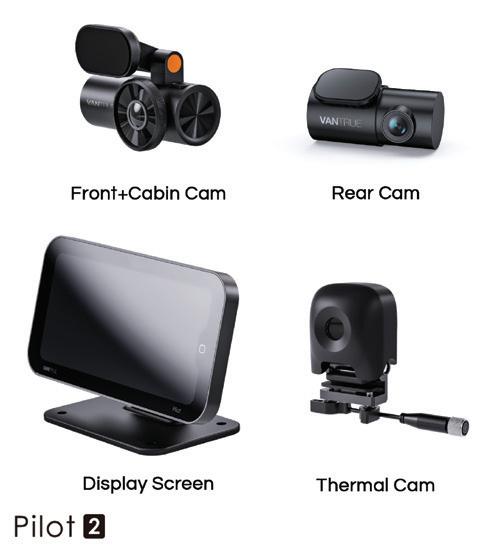
Vantrue’s new Pilot 2 includes Thermal Smart imaging, giving drivers “superhuman vision” by detecting heat signatures from pedestrians, wild animals, vehicles, and unexpected roadside obstacles, even in total darkness, heavy rain, fog, or rural
low-light conditions where traditional optical sensors fail.
Introduced in January at CES 2026 in Las Vegas, the Pilot 2 dashcam features a dual front lens system that pairs a 2K optical camera with a dedicated thermal lens. As Vantrue’s first dashcam with an integrated Thermal Smart
module, it works in tandem with proprietary detection algorithms to deliver reliable, low-visibility performance, reducing stress and enhancing safety when visibility is at its worst.
By identifying heat signatures and providing early alerts, the Pilot 2 helps drivers respond proactively before hazards become emergencies – improving nighttime and all-weather safety.
Its four-camera system –1440P front optical, thermal front lens, 1080P interior, and 1440P rear – captures four synchronized perspectives (1440P + 1080P + 1440P + Thermal Lens), providing
layered visibility across daytime, nighttime, and low-visibility environments.
The ultra-bright 6.25-inch touchscreen enhances usability with clear real-time views and built-in CarPlay and Android Auto support, bringing smart-cockpit features to vehicles of any age. It beefs up the professional appeal for commercial operators, long-haul drivers and fleet professionals.
Other features include storage support for up to one terabyte, Wi-Fi 6 high-speed transfer for faster downloads, and all-lens Sony Starvis 2 sensors for superior low-light optics.
25_015597_Turf_and_Rec_JAN_FEB_CA Mod: December 23, 2025 8:42 AM Print: 01/08/26 page 1 v2.5

ORDER BY 6 PM FOR SAME DAY SHIPPING
Jump starting vehicle batteries made easy
Landscape contractors and private snow removal contractors are dependent on their vehicles to get them from one location to another or for completing the tasks for which they’re hired.
The batteries in their trucks must always start up at the turn of a key, but sometimes a battery might be finicky in extremely cold temperatures or might be reaching the end of its lifespan and will fail to start.
Milwaukee Tool has introduced the M18 HotShot jump starter which will get trucks back on the road and working again in minutes, avoiding lengthy downtime and lost productivity. It eliminates the frustrations of traditional jump starters, delivers all-weather performance and has longer life. No maintenance or pre-charging are required.
The technology utilizes internal capacitors that allows the HotShot
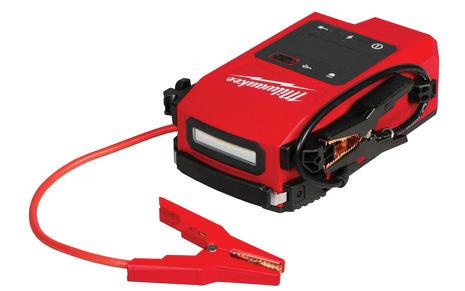
to be ready to jump in less than 70 seconds with any M18 battery optimized for M18 Redlithium XC5.0 and above. The HotShot can operate in temperatures ranging from minus 4 degrees Fahrenheit to 122 degrees. It features spark-proof protection, reverse polarity protection and overheat protection, and is capable of jump starting up to 8.1L gas and 3.0L diesel engines. It delivers up to 2,000 peak amps and up to 70 jump starts on a single M18 XC5.0 battery.
The HotShot’s capacitors are rated for up to 500,000 cycles. The custom clamp design allows for effortless access to battery terminals, ensuring a solid connection while a digital display with voltage readout provides real-time vehicle battery voltage feedback.

Simply attach the M18 battery to the HotShot, power the unit on, attach the clamps to the battery terminals, initiate the charge to the capacitor, wait for it to reach 100 per cent (taking less than 70 seconds), and press the start sequence button. Within a 30-second window, the vehicle can be started.
Other features of the HotShot include a powerful light of three intensities that can illuminate a vehicle’s battery after dark or can alert other motorists with an SOS setting.
AI meets turf care
Ecorobotix, a manufacturer of AI-powered precision spraying equipment, has introduced the ALBA Ultra-High Precision (UHP) Sprayer, designed specifically for professional turf and grassland weed management. ALBA is making its official debut at the BIGGA Turf Management Exhibition (BTME) 2026 and then again at the GCSAA Conference
and Trade Show.
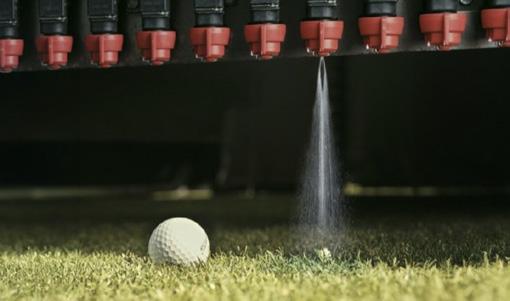
The ALBA UHP Sprayer leverages the company’s Plant-by-Plant Care philosophy, treating only what’s needed, exactly where it’s needed. Powered by Ecorobotix’s Plant-by-Plant AI (Artificial Intelligence), the ALBA can identify and spray individual weeds or unwanted grasses with a three-by-three-centimetre (1.2-by-1.2-inch) footprint, allowing users to “spray the size of a golf ball.” Designed first for golf courses, the ALBA also brings precision to sod farms, sports turf, tennis courts, and municipal grass fields. With its double spray bar and 2.25-metre (7.2-foot)) working width, the UHP Sprayer can operate day or night, detecting targets in real time and applying treatments only where necessary, preserving turf’s health, uniformity, and appearance..
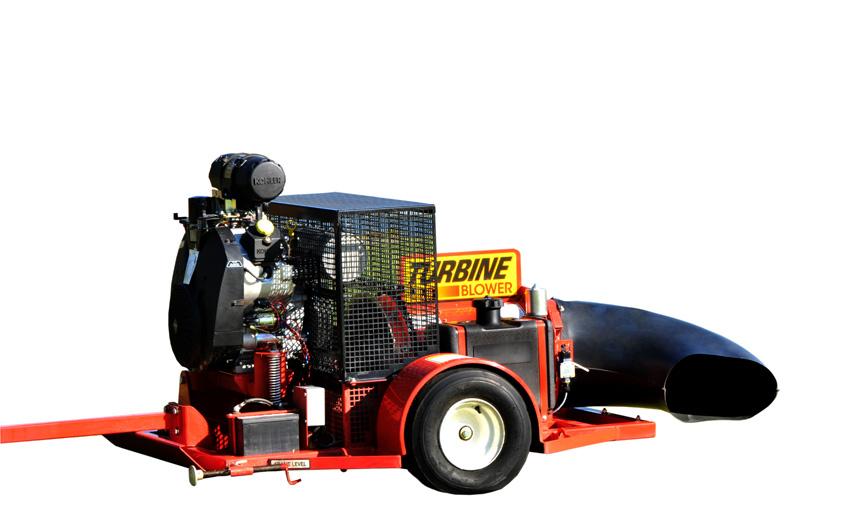
Equipment Spotlight
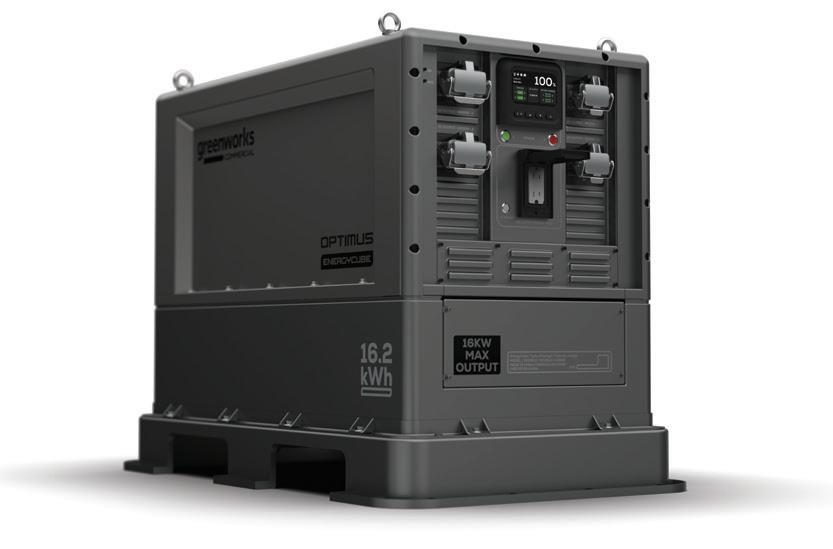
THE ULTIMATE Mobile Charging Solution for Professional Landscapers
With the OPTIMUS 16.2kWh EnergyCube™, you can charge OPTIMUS Zero Turn mowers alongside handheld batteries throughout the day, then recharge them overnight to hit the ground running in the morning. Each EnergyCube™ includes two caddies for handheld battery charging. No more trips to the gas station or time spent transferring batteries to a charger; simply leave your equipment connected to the EnergyCube™ overnight to ensure your entire fleet is fully charged and ready for action. Enhance your productivity and extend your operational time on the go IN AN ENCLOSED greenworkscommercial.ca
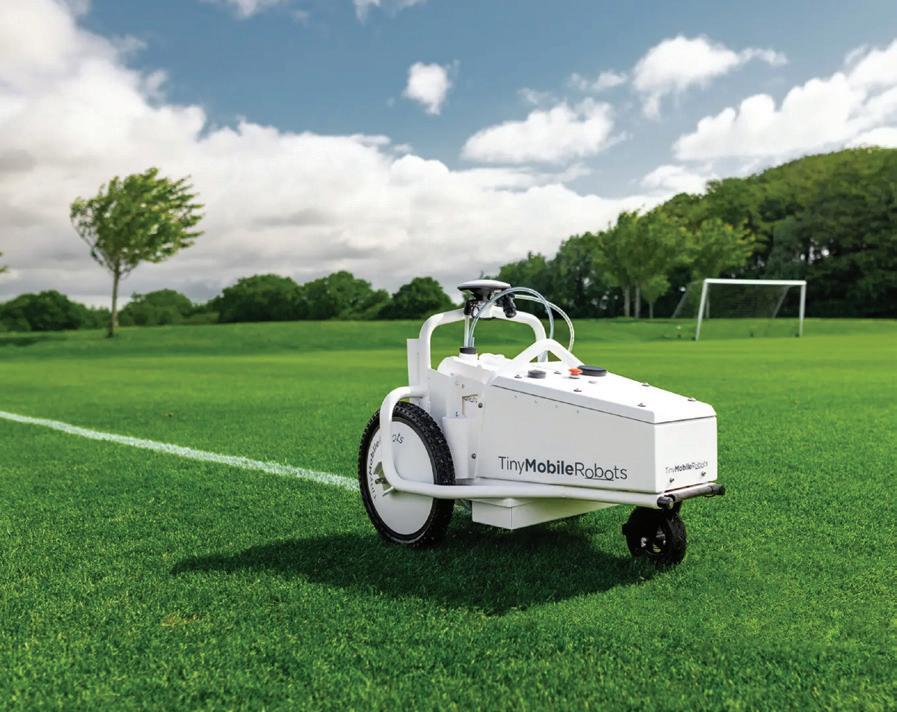
Achieve Professional Grade Fields with TinyMobileRobots Pro X
The Pro X by TinyMobileRobots is an autonomous, GPS-guided field marking robot designed to streamline complex field painting. Ideal for sports and event facilities, it turns a multi-field setup into a one-person job, with customizable templates and quick setup times. Built for accuracy and efficiency, the Pro X saves time and labor costs, ensuring perfectly marked fields with ease. tinymobilerobots.com
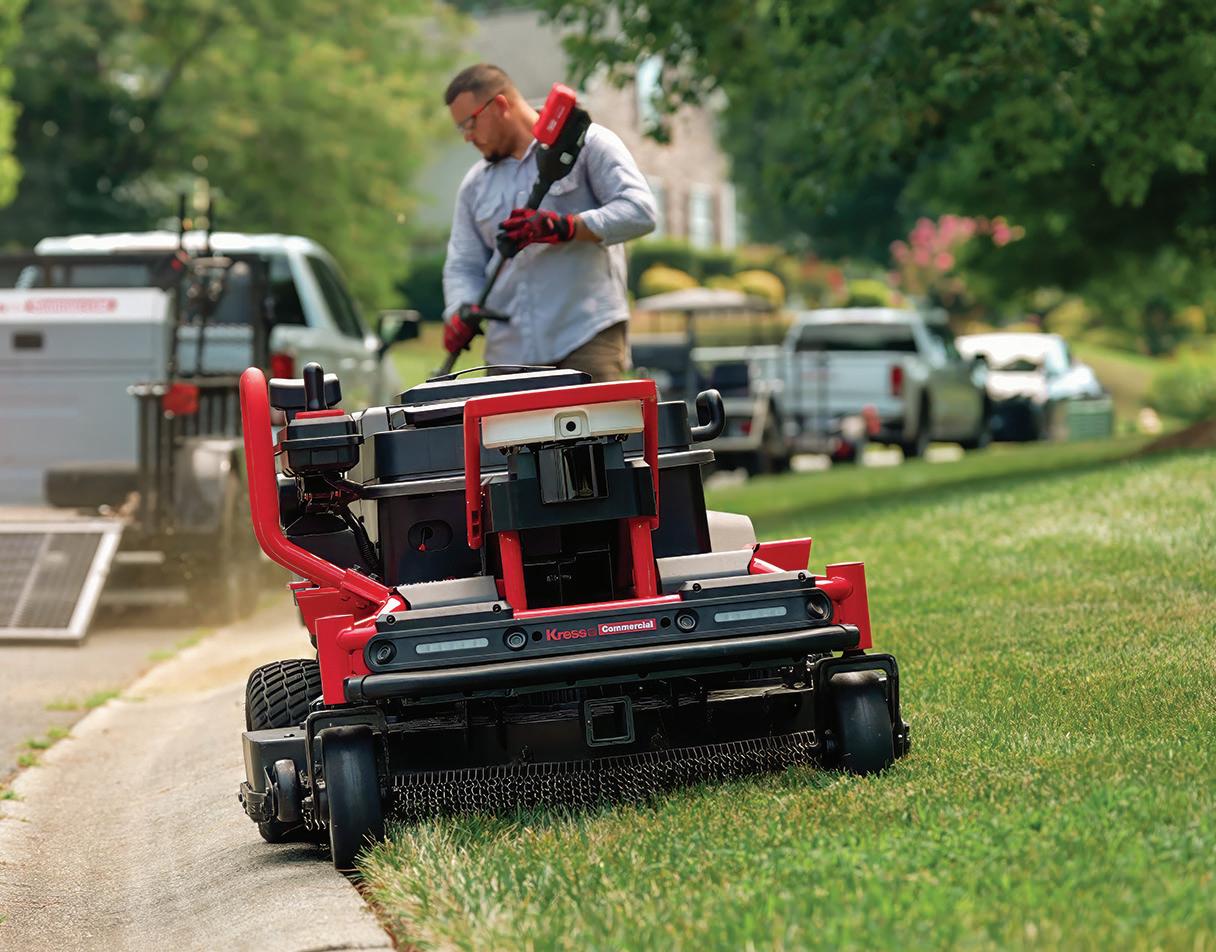
Meet Voyager, your new crew member
Kress Voyager is a 40” fully autonomous robotic mower that works alongside your crews to cover more ground. Voyager delivers constant power without compromise, minimal maintenance, and saves 80-85% of mowing operational costs. Centimeter-accurate navigation comes via the Kress RTKn network – no on-site beacon or antenna required. Incorporating all the safety features of an autonomous car, Voyager is the new benchmark for efficient, safe, productive landscaping. Manned mowing ends now with Kress Voyager. See Voyager in action at kress.com
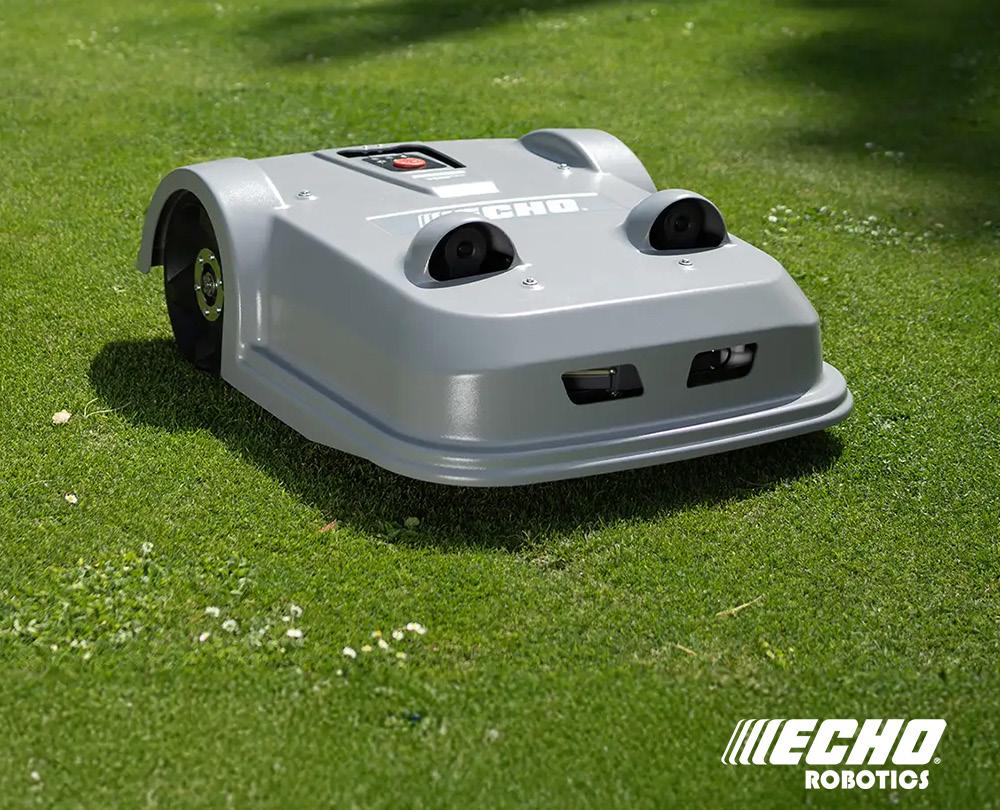
Echo Power – TM-850: Autonomous Mowing for Up to 7 Acres
Professional-grade robotic mower with GPS-RTK precision, covering up to 7 acres. The TM-850 features a 16.5-inch cutting width, dual floating heads, low energy use, sonar safety, and wireless app control—ideal for sports fields, parks, and large properties with efficient, autonomous mulching. https://www.echorobotics.com/en/tm-850s-professional-robotic-lawnmower.html

Health & Safety
By CCOHS
The Canadian Centre for Occupational Health and Safety (CCOHS) promotes the total well being of workers in Canada by providing information, training, education, systems and solutions that support health and safety programs and injury and illness prevention. www.ccohs.ca
Offer mental health first aid to one in need
When a colleague who is usually dependable starts missing shifts, seems distracted, or pulls away from co-workers, it can be easy to chalk it up to a busy season of life or a family matter. But these behaviour changes may also signal a mental health concern that requires attention. For managers and supervisors, knowing how to respond and offer support early can protect workers, reduce risk, and strengthen overall workplace safety.
Mental health matters
Mental health concerns affect every type of workplace. In fact, in a survey conducted by the Mental Health Commission of Canada, more than half of the workers said they faced mental health challenges that affected their work, but only one in three workers disclosed this to their employer. Long hours, seasonal pressure, weather exposure, and public-facing work can increase stress and fatigue. When mental health issues go unnoticed or unsupported, they can lead to higher incident risk, absenteeism, turnover, and disability claims.
Like physical first aid, mental health is not about diagnosis or treatment but rather providing support to someone experiencing a mental health issue or crisis until appropriate professional help is available or the situation is resolved. Mental health first aid responders are instructed on how to listen and communicate without judgment. This support can help connect workers to the help they need.
Recognize early signs of distress
Mental health challenges often are not spoken about, but you may notice changes in behaviour or physical well-being. A worker may have more unplanned absences, struggle to focus, or withdraw from others. They may appear unusually tired, irritable, or run down. These signs do not confirm a
mental health issue is present, but they can signal that a person may need help. Recognizing these changes is an important responsibility.
Create a safe space to talk
Before starting a conversation, leaders should think about how to approach the situation with care. The goal is to express concern for the worker’s well-being, not to criticize their performance. Non-judgmental language helps keep the conversation supportive. Statements such as, “I’ve noticed you don’t seem like yourself lately, and I wanted to check in,” can open the door without placing blame.
The setting matters. Conversations about mental health should take place in a private, quiet location, free from interruptions. Start with an open question to allow the worker to share at their own pace. Some workers may be ready to talk right away, while others may not. Both responses should be respected.
Trust is essential for mental health first aid to work. Explain upfront that the conversation will remain confidential, unless there is a concern about the worker’s safety or the safety of others. If additional guidance from human resources, health and safety staff, or union representatives may be needed, seek the worker’s consent whenever possible before involving others.
Listening is just as important as speaking. Asking open-ended questions and giving the worker time to respond shows respect. As a supervisor, your role isn’t to solve the problem, but to understand what the worker is experiencing, offer appropriate workplace supports, and provide information on available community resources.
Stressors and accommodations
Workplace conditions can play a significant role in mental health. During the conversation, ask whether aspects of the job are adding stress. Unmanageable workloads, long shifts, or difficulty disconnecting after

work are common challenges. Understanding these pressures makes it easier to identify changes that could help. Temporary workplace accommodations may support a worker’s ability to work safely. Adjustments such as modified duties, flexible scheduling, or access to a quieter space (if applicable) can reduce strain while the worker addresses their mental health needs. Any accommodations should be discussed collaboratively, documented clearly, and reviewed regularly. Mental health first aid also includes helping workers access appropriate support and prepares participants to recognize when someone may be experiencing a crisis, such as a panic attack or acute stress reaction, and how to respond safely until professional help is available.
Identify the right people to train
Mental health first aid training is valuable for more than just supervisors. Anyone who regularly works with others can benefit from learning how to recognize signs of distress and respond appropriately. Consider offering this training to crew leads, managers, health and safety representatives, and workers. Becoming certified in mental health first aid builds confidence, improves recognition of mental health issues, and equips participants with practical skills to help others and themselves. When more people in a workplace understand mental health first aid, support does not depend on a single individual.
It’s important to be able to recognize the signs of mental health struggles.
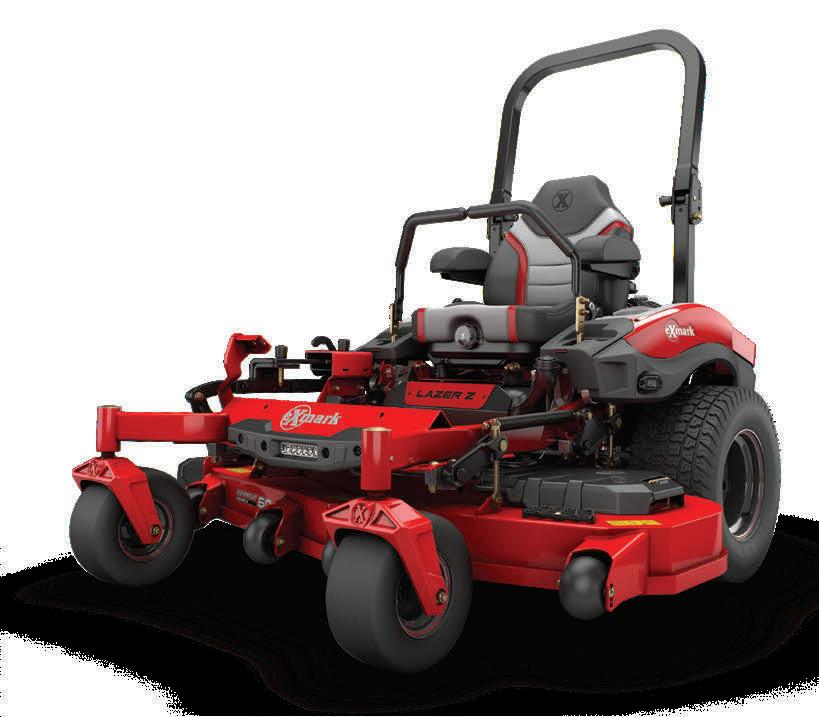
The Work You Do Is The Reason For The Work We Do.

Over 40 years of unique Exmark innovations share one thing in common. Each solved a problem you faced every day. No wonder Exmark is the most trusted brand by landscape professionals.
REDEFINING AUTONOMY.

With ECHO Robotic’s new WiseNav software update, your GPS-RTK robot mower automatically adapts to every part of the course. Cutting height and mowing patterns adjust seamlessly to your criteria — delivering faster coverage, professional-quality results, and less manual adjustment. From fairways to semi-roughs and step-cuts, the robot follows every curve with precision, and even parks and open green spaces benefit from the same consistent, attractive results.
Exclusively available for GPS-RTK robot models.

PATTERN MOWING & PICKING
With centimeter accuracy
FULLY AUTONOMOUS Charges, Cuts & Dispenses golf balls on its own
STEP-CUT MOWING
AUTOMATIC HEIGHT CONTROL
Tailored to each area
LABOUR OPTIMISED TO THE MAX
Available 24/7. Saving time, cutting costs, and freeing your team for other tasks
SUSTAINABILITY AND RELIABILITY


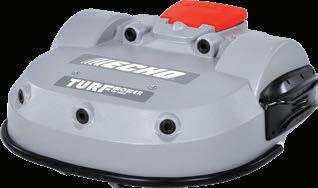

For semi-roughs, roughs, and aprons
Zero emissions with zero noise pollution
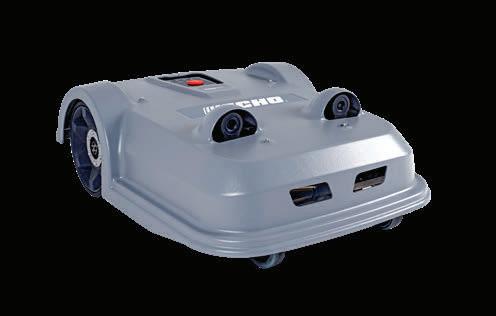
DPB-7700T

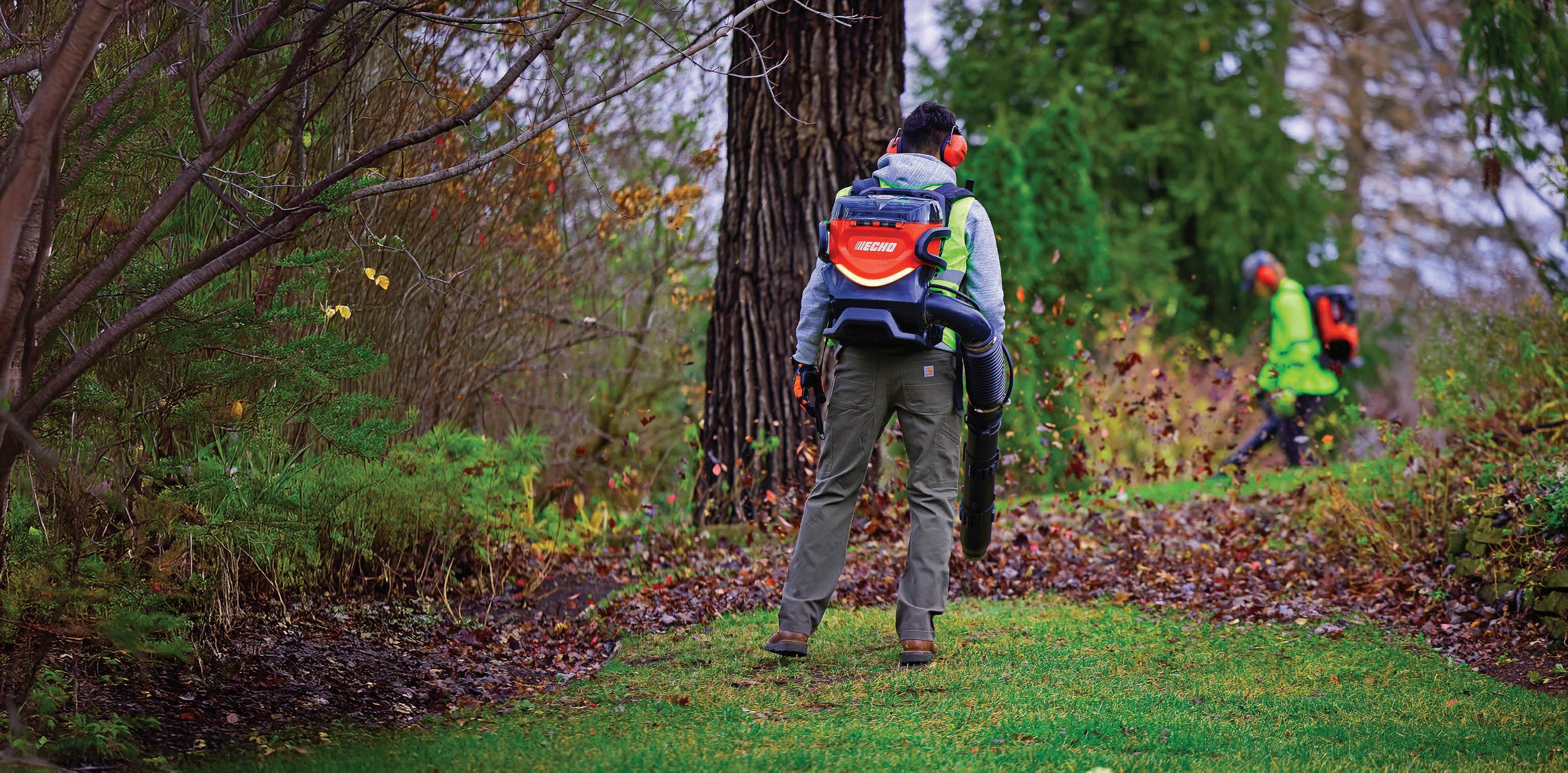
The ECHO X Series is a collection of best-in-class tools, engineered for professionals to conquer the toughest jobs e ortlessly. This powerful lineup of battery-powered equipment maximizes productivity and e ciency, ensuring peak performance on every task. Backed by a two-year commercial warranty, you can trust in our superior quality and reliability.

TRUSTED OUTDOOR POWER.