RUBBER FILLER DEVELOPMENT OPPORTUNITIES FOR ADDITIONAL REVENUE AND PRODUCTION RED LEAF UNFURLS
Bégin, VP of manufacturing, Kruger Products
Patrice
Performance that shows up in quality and in your bottom line.
Our strength chemistry expertise helps tissue manufacturers deliver strong sheets with soft handfeel, minimize dust for smoother converting and more uptime, and optimize fiber mix and cost.
With a portfolio of solutions for permanent wet strength, temporary wet strength, and dry strength, we optimize your process for the results that matter.
www.kemira.com
PULP PAPER &
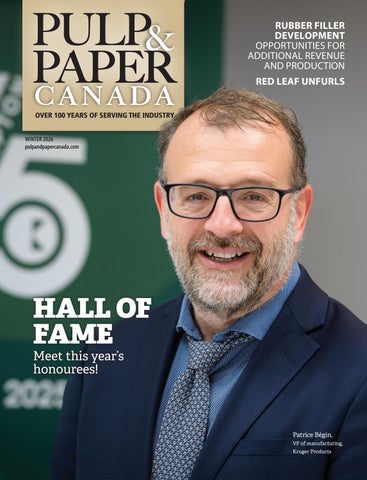
It’s time once again to honour exemplary individuals for their hard work, dedication and contributions to Canada’s pulp and paper sector.
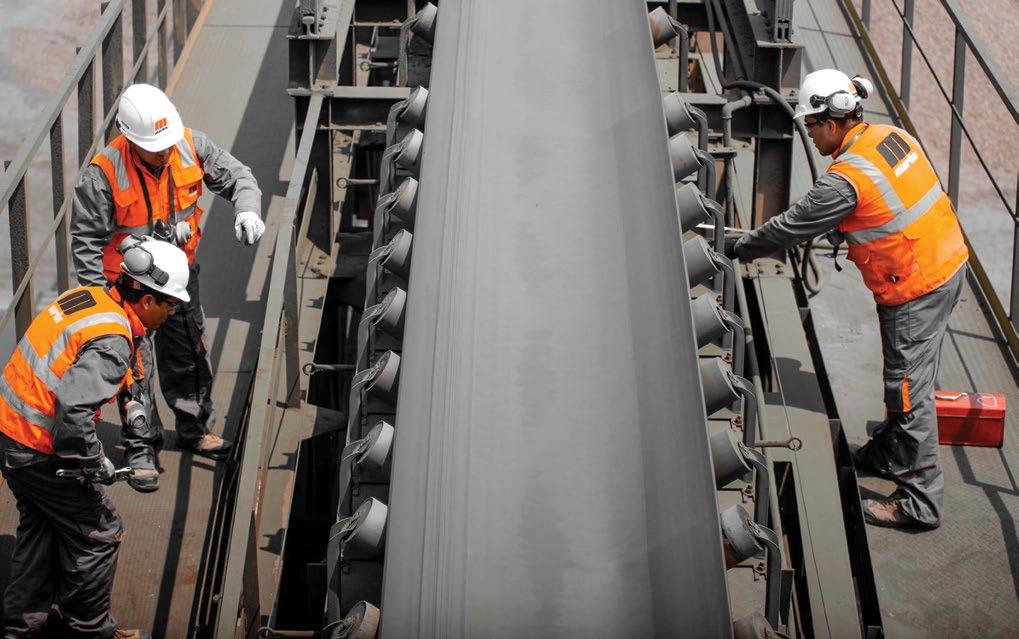
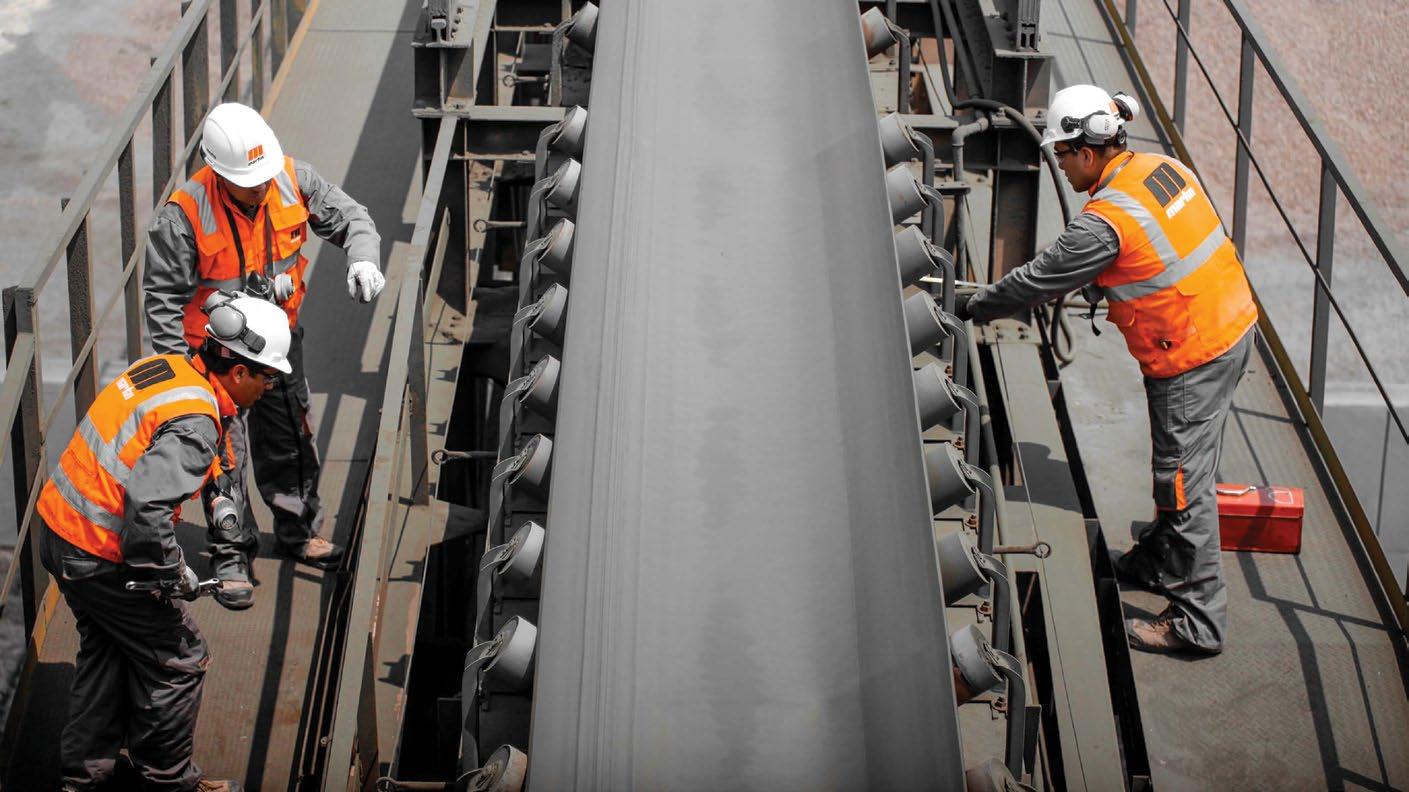
Conveyors are as complex as they are crucial. Training should include a mix of in-classroom and hands-on learning, followed by a pilot program.
If black liquor could be valorized by generating high-value renewable products, it would yield additional revenues and increase pulp production.
Red Leaf Pulp, which plans to make pulp from straw, has yet to break ground on its mill just outside Regina, but already has many significant developments to share with the industry.
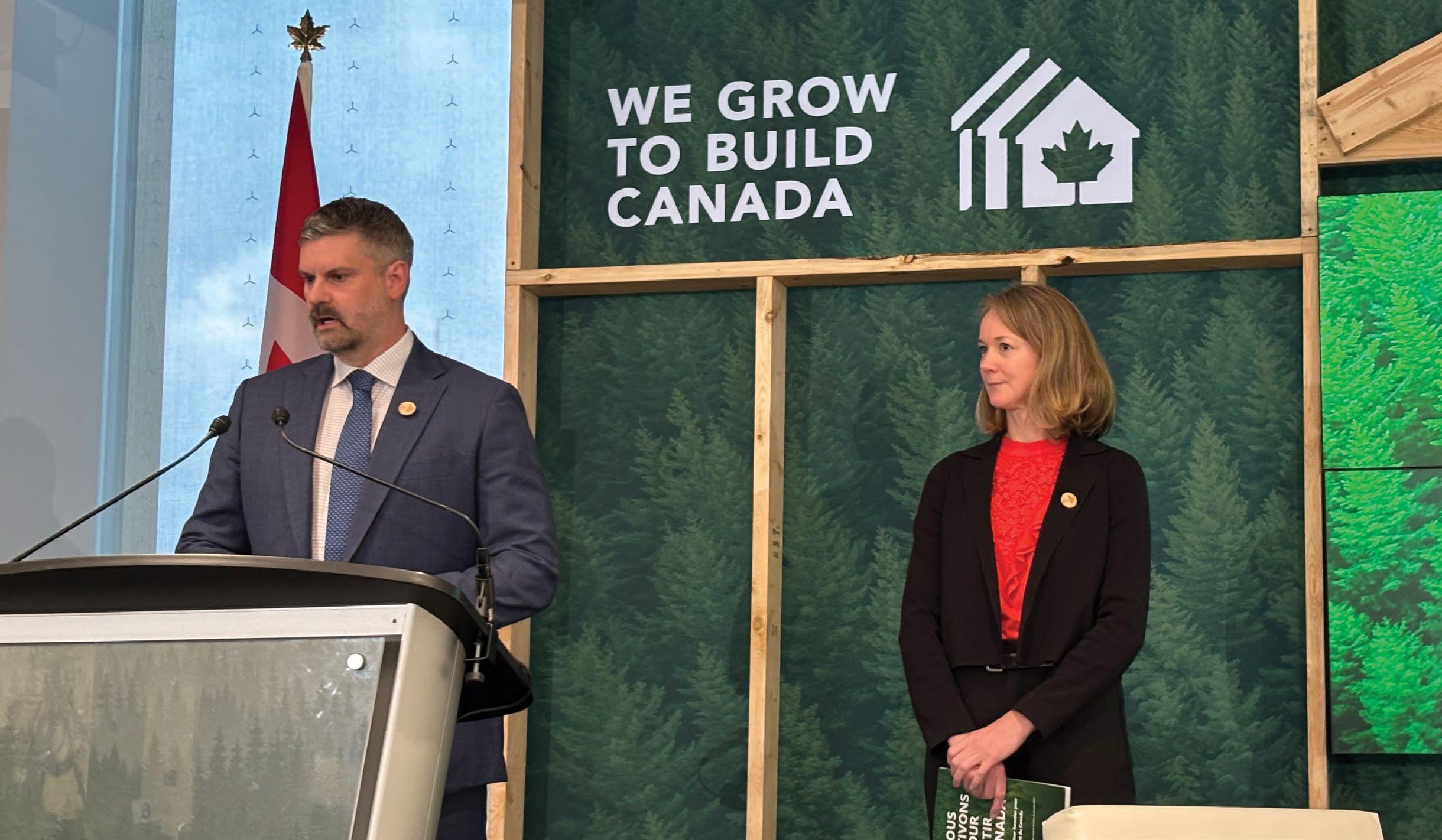
Last fall, wood product leaders met with political representatives for FPAC’s National Policy Conference in Ottawa. The theme was ‘We grow to build Canada.’
Paper’s public popularity
Hello!I’m the new editor of Pulp & Paper Canada. I joined late last year, succeeding Andrew Snook, who continues to edit sister publications Canadian Biomass and Canadian Forest Industries (and you’ll continue to see some of his writing here, including this issue).
While my business-to-business (B2B) media career has focused in recent years on covering buildings and infrastructure for such readers as consulting engineers, electrical contractors and facility energy managers, I also had a close association with the paper industry from 2002 through 2018. That’s when I was the editor of a magazine for and about the sign industry, where most output today is digitally printed onto premium paper and plastic substrates.
Peter
Saunders Editor
During that time, I encountered Two Sides North America (TSNA), a non-profit organization whose members include pulp and paper companies. As you may well know, TSNA actively showcases the sector’s leadership in sustainable forest management, innovation in reducing environmental footprints and the unique qualities of paper. With the recent discontinuation of the Paper + Packaging Board’s consumer sustainability program, this mandate has become even more important. TSNA aims to fill the void and take the lead in promoting positive, research-based, environmentally focused messaging for the sector. Its renewed ‘Love Paper’ campaign (including February’s Love Paper Week) and other initiatives will continue championing sustainability and the important role of paper and packaging materials in consumers’ everyday lives. With the transition, the Paper + Packaging Board and its ‘How Life Unfolds’ campaign websites now redirect to TSNA.
The transition also comes as research commissioned by TSNA shows Canadian consumers increasingly favour paperbased packaging for its recyclability, compostability and reduced environmental impact compared to other materials. Last January, the ‘Two Sides Trend Tracker’ survey by independent firm Taluna asked them to select between paper/cardboard, plastic, glass and metal in various categories, based on physical, visual and environmental attributes. Their responses ranked paper/ cardboard the top choice in nine categories, glass in four and metal in one.
The study found 57% of consumers prefer paper packaging because “it is better for the environment” and 52% prefer products ordered online to be delivered in paper packaging. The results also showed a preference for tissue products to be made from recycled paper, with 63% of consumers saying it is better to do so and 38% actively looking for such products.
READER SERVICE
Print and digital subscription inquires or changes, please contact
Angelita Potal, Customer Service Administrator
Tel: (416) 510-5113 Fax: (416) 510-6875
Email: apotal@annexbusinessmedia.com
Mail: 111 Gordon Baker Rd., Suite 400, Toronto, ON M2H 3R1
Editor
PETER SAUNDERS
416-510-5119
psaunders@annexbusinessmedia.com
Brand Sales Manager
SONYA HESSON
416-510-5224
shesson@annexbusinessmedia.com
EDITORIAL/SALES OFFICES
CEO
SCOTT JAMIESON
519-429-5180
sjamieson@annexbusinessmedia.com
Group Publisher
ANNE BESWICK
416-510-5248
abeswick@annexbusinessmedia.com
111 Gordon Baker Rd., Suite 400, Toronto, ON M2H 3R1
Occasionally, Pulp and Paper Canada will mail information on behalf of industry related groups whose products and services we believe may be of interest to you. If you prefer not to receive this information, please contact our circulation department in any of the four ways listed above.
Sustaining member, Pulp and Paper Technical Association of Canada; Member, Alliance for Audited Media.
“The Trend Tracker reveals encouraging progress in public understanding,” said TSNA in its summary. “As environmental awareness grows, the industry must continue to share clear, fact-based messages to reinforce the environmental strengths of paper.”
PPC
OPTIMIZING RESULTS AND ROI FROM CONVEYOR SAFETY TRAINING
Commitment needs to start at the top.
By R. Todd Swinderman
The hours spent training production and maintenance teams can lead to variable results. They might just tick the boxes without providing a return on investment (ROI)—or they can enhance safety, foster teambuilding and develop a deep understanding of equipment that boosts efficiency and uptime.
Training should be robust and encourage problem-solving using modern methods and standards. Companies that prioritize safety experience fewer safety incidents, less regulatory oversight and higher productivity and profits.
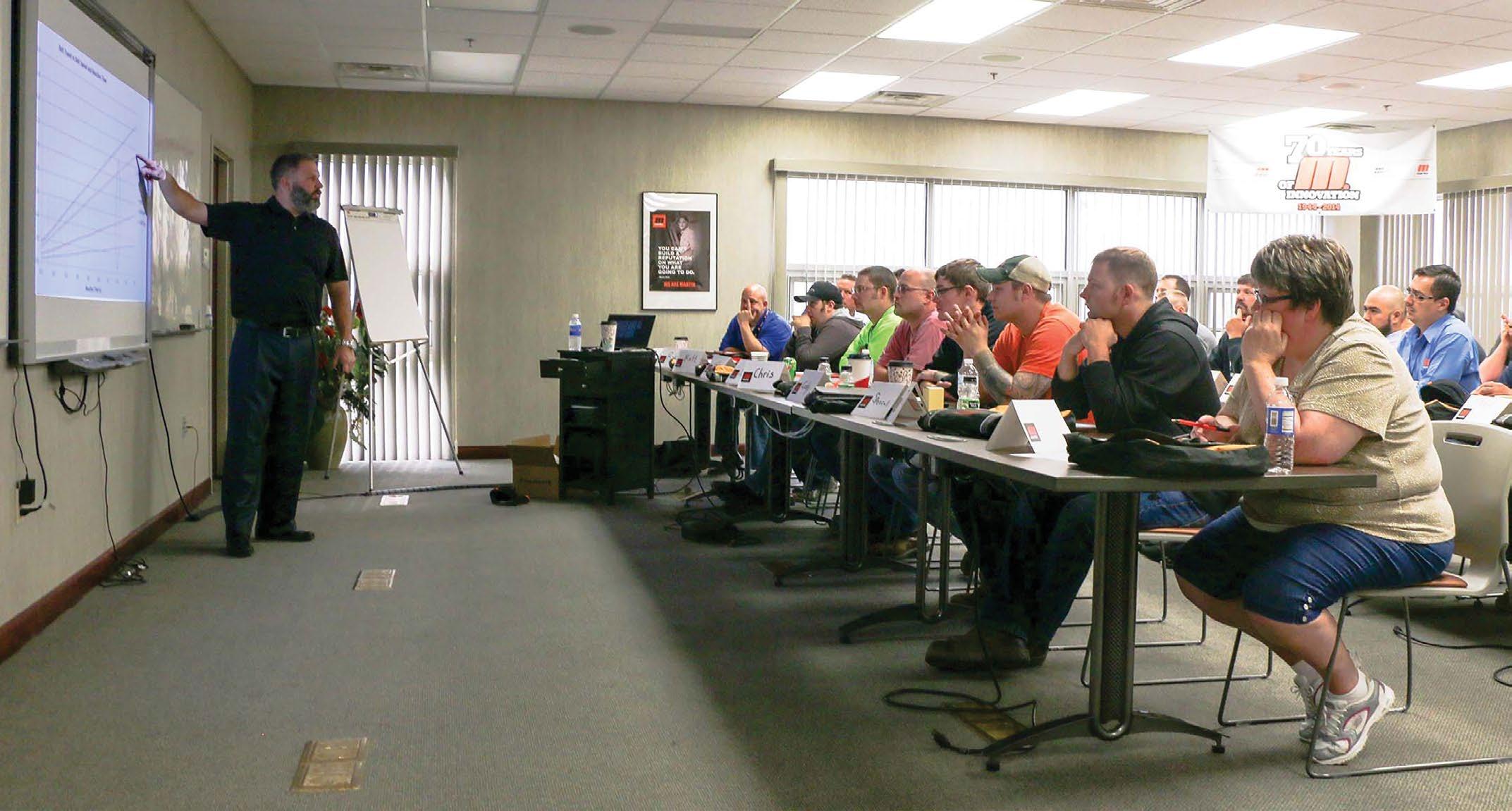
When it comes to conveyor belts, while a one-day training session can serve as a refresher, it is recommended for staff to complete a comprehensive course lasting at least two days. Conveyors are as complex as they are crucial to operations. Training should include a mix of in-classroom and hands-on learning, followed by a pilot program to encourage teambuilding and to gauge the results.
The problem
A commitment to safety starts at the top with corporate culture. With a “production-at-all-costs” approach, safety concerns will always be present. Bad habits and injuries often result from the following three issues:
• Lack of funding.
• An understaffed maintenance department.
• A “run-til-broke” mentality.
Good safety habits require training and the patience for extra steps. Cutting cor-
ners and labelling it “efficiency” can lead to serious injuries, low morale, downtime, and lost production.
Basic training
Everyone who operates, cleans or maintains conveyors should be trained on the hazards of bulk material handling. Basic information will help staff identify problems and resolve them safely. Appropriate safety training emphasizes a basic understanding of conveyor design and opera-
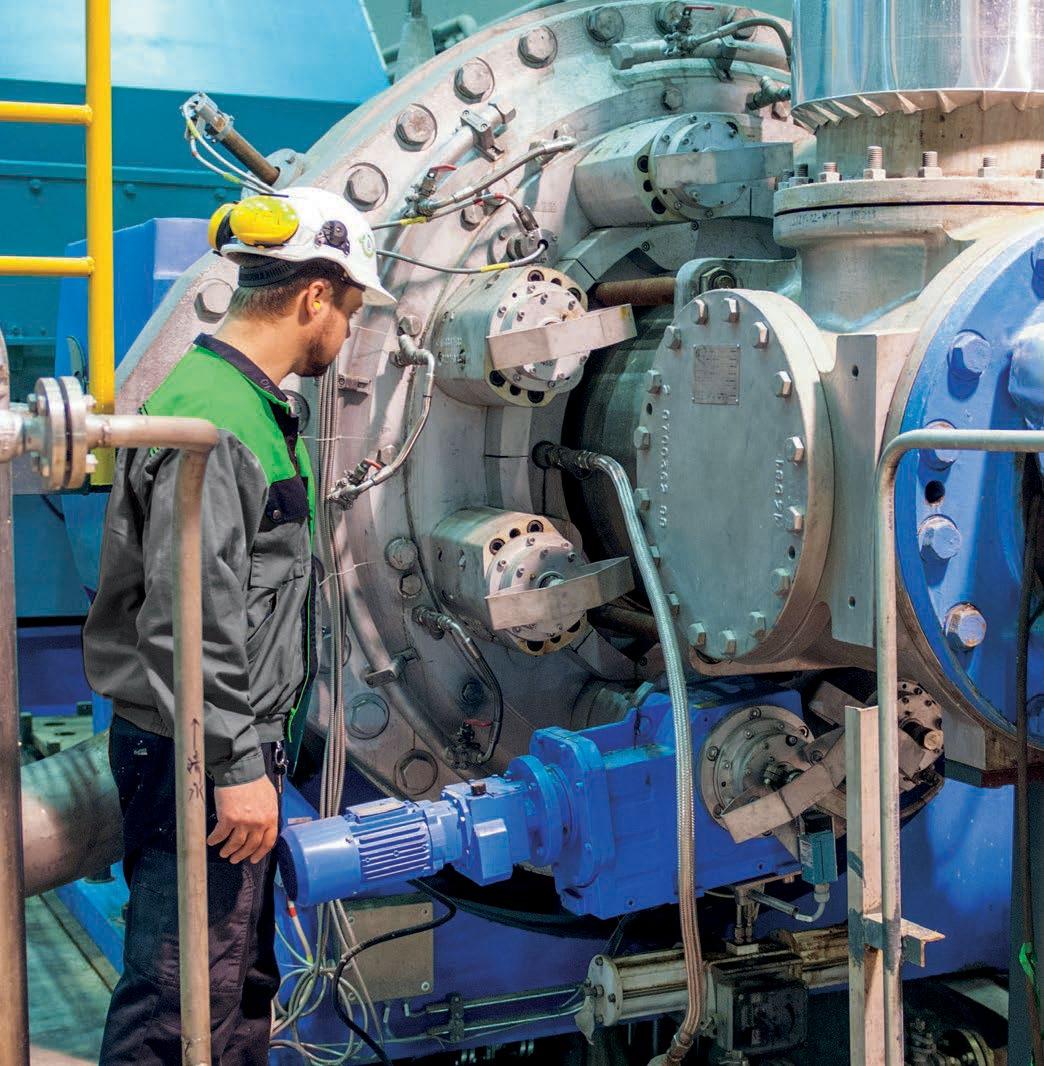
Conveyors are as complex as they are crucial to operations.
tion, as well as the lockout-tagout (LOTO) procedures required for working on and around the system.
That said, conveyor maintenance can be dangerous even when LOTO and other safety measures are in place.
Advanced training
Over time, production demands cause conveyor belts’ speed and capacity to reach beyond their original design specifications. Systems are then incrementally modified to minimize problems associated with the demands.
Advanced conveyor design training for engineers and mechanics is critical for the diagnosis of issues and the development of updated solutions. No two conveyors are identical, but adhering to standard design methods allows a technician to make adjustments that another can recognize and understand.
Companies that prioritize safety experience fewer incidents, less regulatory oversight and higher productivity and profits.
Photos courtesy Martin Engineering.
Day one
A walk through any ‘problem belts’ before training begins can help the instructor focus on (a) site-specific problems and (b) the expectations of the company’s managers.
The first day continues in the classroom with students reviewing and discussing typical problems, challenges and best practices for safely addressing them. The class then identifies a few problem conveyors and splits into small teams, so each team can examine the same problem and brainstorm solutions.
Day two
On the second day, the class reviews and discusses root causes, solutions and procedures. Once the teams reach an agreement, they each prepare a short presentation using the knowledge they gained. The presentations may also include an estimate of the cost of the proposed solutions. Managers are then invited to listen to the team presentations, ask questions and renew their commitment to safety and communication. It is critical at this step that those managers attending the presentations have the authority to act on the proposals and are willing to commit to a pilot program, to demonstrate how theoretical results can be translated into reality.
Maintenance can be dangerous even when safety measures are in place.
Pilot program
Next, one or more conveyors showcased in the presentations are selected for the pilot program. In most cases, the results of this program will be immediately noticeable.
A lapse in maintenance will affect the pilot results, so it is a good idea to extend the test period to the next scheduled shutdown, with periodic inspections and adjustments to be made by the original equipment manufacturer (OEM). A third-party inspection will help ensure the integrity of the pilot results.
Conclusion
It is incumbent upon managers to take safety and maintenance training as seriously as the staff does, listening to employee concerns and fixing any problems correctly the first time.
As research has shown, companies that prioritize safety, training and updating their equipment will enjoy fewer safety incidents, less regulatory oversight, higher productivity and greater long-term profits. PPC
R. Todd Swinderman is retired, but continues to serve Martin Engineering as an independent consultant. He joined the company’s conveyor products division in 1979 and rose to general manager (GM), vice-president (VP), chief technology officer (CTO), president and CEO. He has presented at conferences around the world, served as president of the Conveyor Equipment Manufacturers’ Association (CEMA) and edited its sixth and seventh editions of Belt Conveyors for Bulk Materials: A Guide to Design and Application Engineering Practice. He remains active on several CEMA committees, including one dedicated to bulk safety, and is a member of the ASME B20 committee on conveyor safety. The online Martin Foundations Learning Center offers a non-commercial training curriculum for apprentice technicians and experienced engineers alike, at no charge, and is accessible by computer, tablet or smartphone, with a mix of text, videos, webinars, online events and live experts to answer questions. For more information, visit www.martineng.com and contact info@martin-eng.com.
Training should combine in-classroom and hands-on instruction.
HALL OF FAME
Meet this year’s winners!
Edited By Peter Saunders
It’s time once again for Pulp & Paper Canada to celebrate and honour three exemplary individuals whose contributions over the course of their careers have had a significant effect on the industry’s direction. Indeed, they have helped steer Canada’s pulp and paper sector through rocky waters through their hard work and dedication. Without further ado, here are this year’s winners, in alphabetical order by surname!
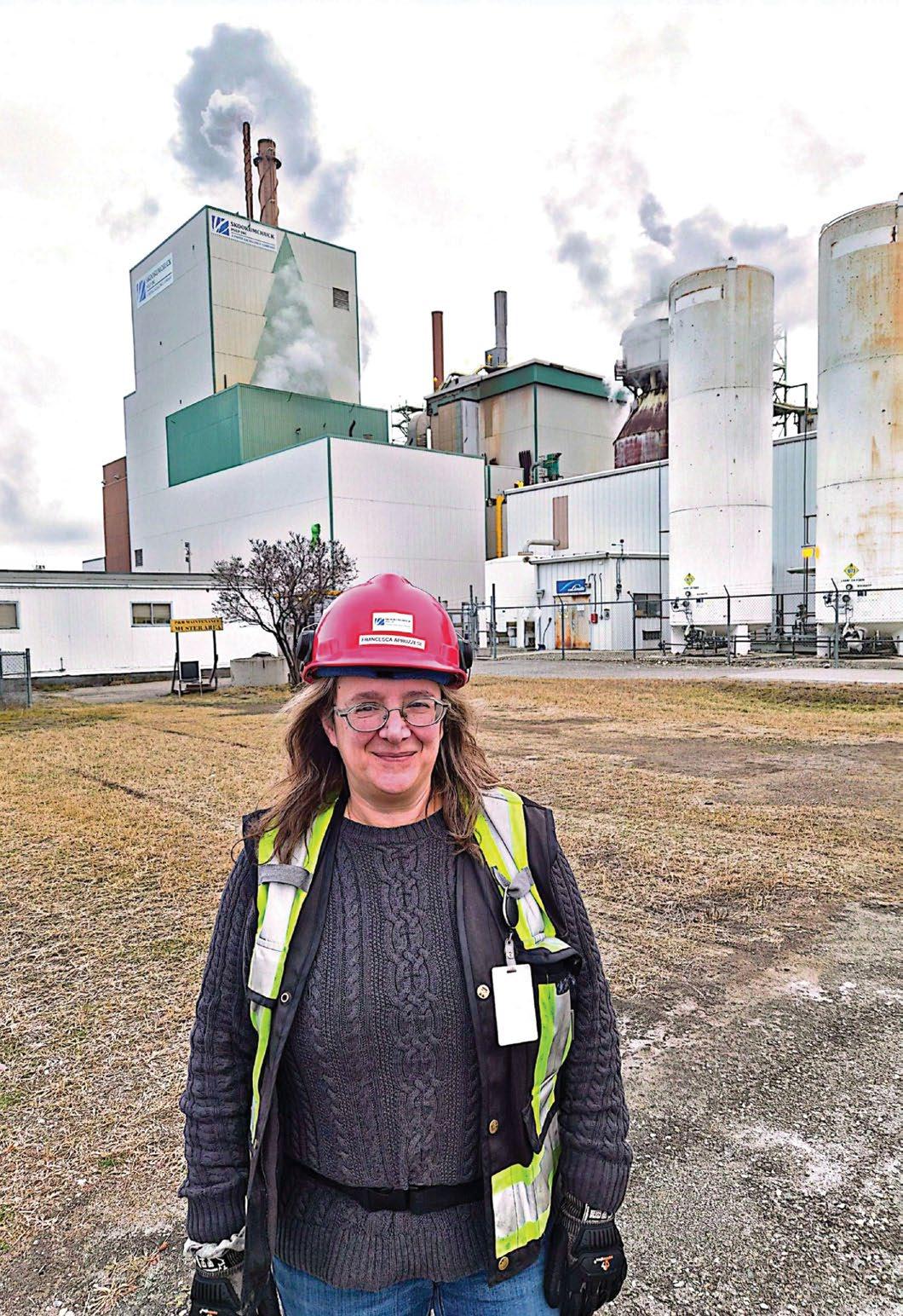
Francesca Apruzzese
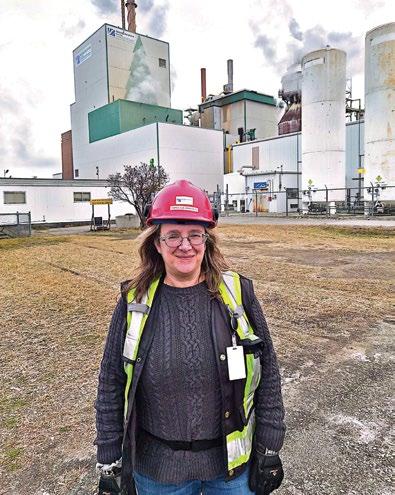
Technical and environmental manager, Domtar Skookumchuck
Francesca Apruzzese, P.Eng., has had a storied career in Canada’s pulp industry, including roles with Hinton Pulp (when it was part of West Fraser Mills), Paper Excellence Group, Canfor Pulp and, currently, Domtar Skookumchuck.
She was nominated for our Hall of Fame while still a technical director at Canfor, by her then-colleagues Mario Mendez Moreno and Alyssa Zerpa, who described her deep commitment to technical excellence, operational safety and sustainable innovation. Francesca began her career as a process modelling analyst, applying her expertise in near-infrared spectroscopy (NIRS) to optimize operations at a pulp mill in Quebec. This foundational experience laid the groundwork for a career that has blended advanced
technical knowledge with a strategic approach to process improvement.
A truly multidisciplinary professional, Francesca earned her PhD in chemical engineering from the University of Toronto (U of T) and, more recently, her certification in occupational health and industrial hygiene from the Johns Hopkins Bloomberg School of Public Health. She is also a member of Engineers and Geoscientists of British Columbia (EGBC).
Francesca joined Canfor in 2008 as a process engineer at the Intercontinental (Intercon) Pulp Mill in Prince George, B.C. She focused on enhancing process efficiency in the mill’s fibre line until 2013, then honed her expertise and expanded her leadership experience with Hinton Pulp and with Paper Excellence as a technical, environmental and engineering manager.
During her time at Paper Excellence’s Howe Sound mill, from 2019 to 2021, Francesca addressed odour issues from environmental, health and safety perspectives. She partnered with the University of British Columbia’s (UBC’s) school of occupational and environmental hygiene to
Photos courtesy Canfor Pulp.
study workers’ exposure to total reduced sulfur (TRS). This project benefited students with industrial experience within their field of study, while also providing the mill with a further understanding of the effects of pulping gas emissions.
Francesca returned to Canfor in 2021 as a customer service manager, bringing a wealth of experience to support company’s pulp section and bridging her technical expertise with a focus on client satisfaction.
Finally, she joined Domtar’s Skookumchuck Mill last year in B.C.’s Kootenay Region, where she has focused on environmental management systems (EMSs) and sustainability objectives, supporting operations and developing her new team.
Throughout her career, Francesca has contributed to safety, operations, engineering, environmental and quality management, ensuring mills meet high standards for safety, quality and sustainability. She has worked tirelessly to foster a culture of vigilance and responsibility across operations.
In addition to her technical contributions, Francesca has actively mentored emerging engineers, sharing her knowledge and organizing workshops. At one point, she spearheaded a collaborative effort between Canfor and FPInnovations to deliver a comprehensive training course in Prince George, which drew more than 50 participants from four western Canadian kraft pulp mills. The program covered fibre supply and morphology, kraft pulping and bleaching, chemical recovery, pulp testing, pulp machine operation
and decarbonization.
Francesca’s kindness, humility and integrity have inspired trust and respect, making her a leader who not only drives progress, but also fosters collaboration and well-being.
“The opportunities you’ve made possible for us have been amazing,” said one colleague. “I am extremely grateful for your help in my personal and professional development. You inspire me to be a better individual.”
“She is a spectacular person and a talented engineer,” another noted. “Her devotion to her employees is immense. Leaders like her are why companies succeed.”
Francesca’s contributions have extended to active involvement in industry organizations, including the Pulp and Paper Technical Association of Canada (PAPTAC), the PACWEST technical conference and National Council for Air and Stream Improvement (NCASI). She served on PAPTAC’s bleaching steering committee and participated as session chair for PACWEST conferences. At the 2024 conference, she gave presentations on process safety management around recovery boilers and managing exposure to kraft pulp mill total reduced sulfur (TRS) gases.
A prime example of Francesca’s innovative nature was her leadership in developing a comprehensive fibre mass balance for Canfor’s Intercon and Northwood mills. By leveraging drone technology and advanced chip testing methods, she helped the mills work towards determining each site’s chip utilization. These efforts not only helped to quantify fibre usage, but also provided improved tracking of fibre losses and the effectiveness of
Francesca’s kindness, humility and integrity have inspired trust and respect.
related initiatives. Her efforts to incorporate fire-affected wood into mill operations demonstrated her resourcefulness in tackling complex challenges.
Francesca’s innovative spirit has also extended to regulatory compliance. She played a pivotal role in helping mills transition to new asbestos abatement regulations that came into effect in B.C. in 2024, ensuring safety and compliance.
Beyond specific projects, Francesca has fostered innovation within her teams by encouraging collaboration, knowledge sharing and continuous improvement. She actively seeks out new technologies and partnerships in various sectors of the industry, e.g. collaborating with Canadian universities to develop projects in the field of industrial hygiene. Her efforts to challenge norms, adopt new technologies and find sustainable solutions have
all advanced industry knowledge and provided valuable learning opportunities.
“Francesca has an unbelievable wealth of knowledge and experience,” says a colleague, “but most importantly, she is an incredibly kind, caring and genuine person. She is extremely dedicated to ensuring the well-being of others, which is what makes her an amazing leader and mentor. Even with everything she has achieved, Fran is incredibly humble and constantly working on improving herself and supporting others.”
“Fran’s dedication to her work is clearly shown through her passion and genuine care for those around her,” echoes another professional who worked with her in the past. “She consistently put others before herself. I always knew I could count on Fran. This compassion, coupled with a high level of technical ability, made
her an excellent manager to do right by. Her selflessness and commitment leave a meaningful and lasting impact on everyone who works with her.”
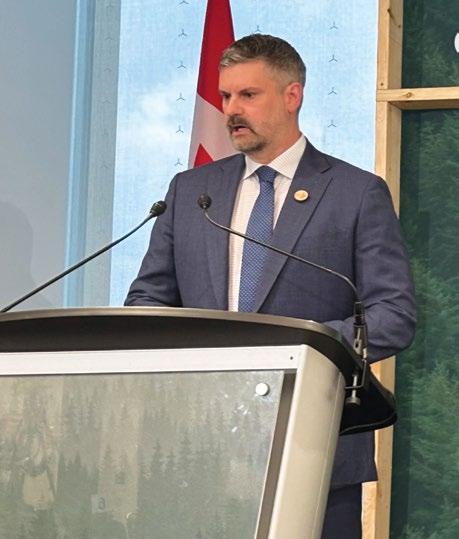
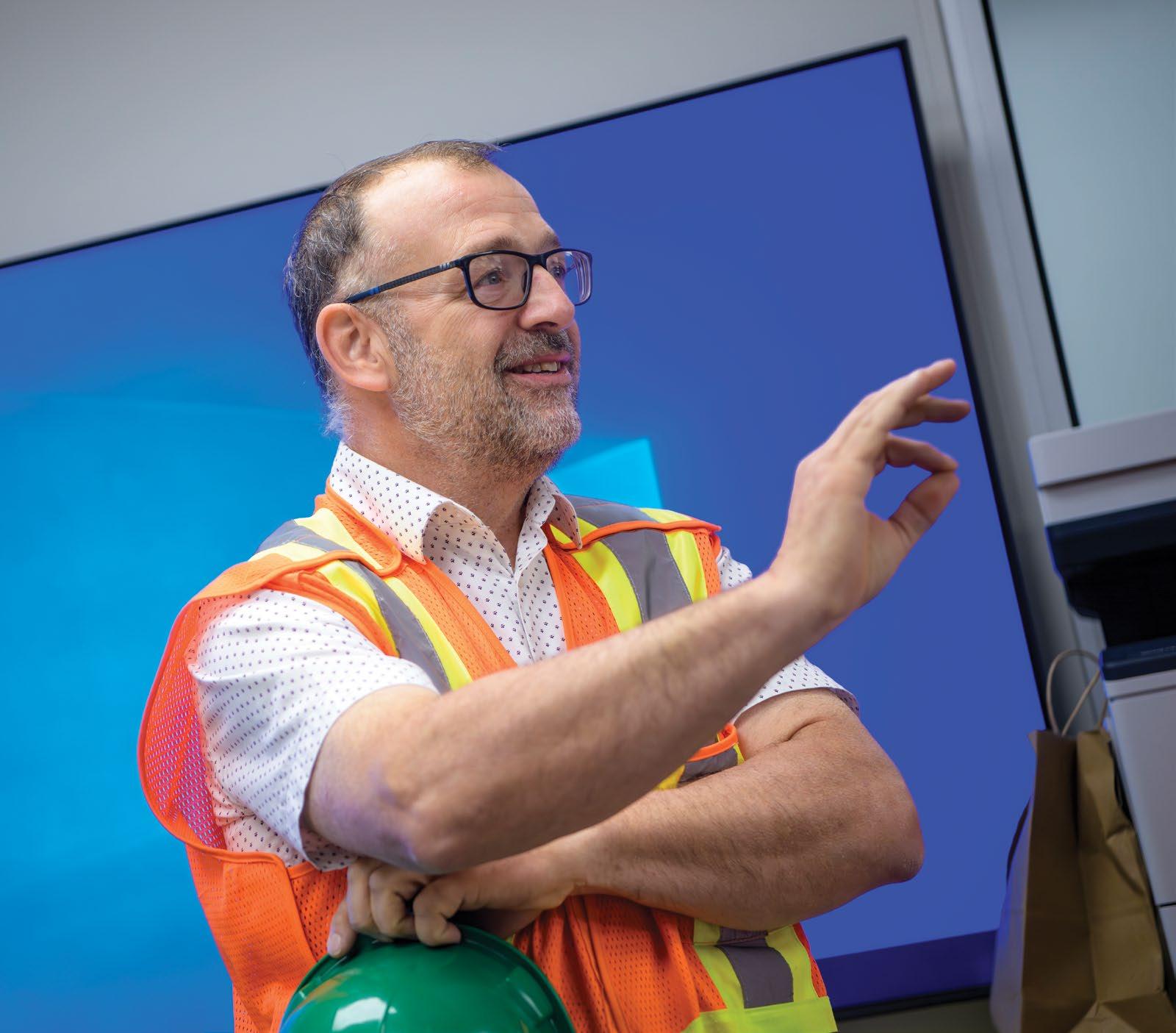
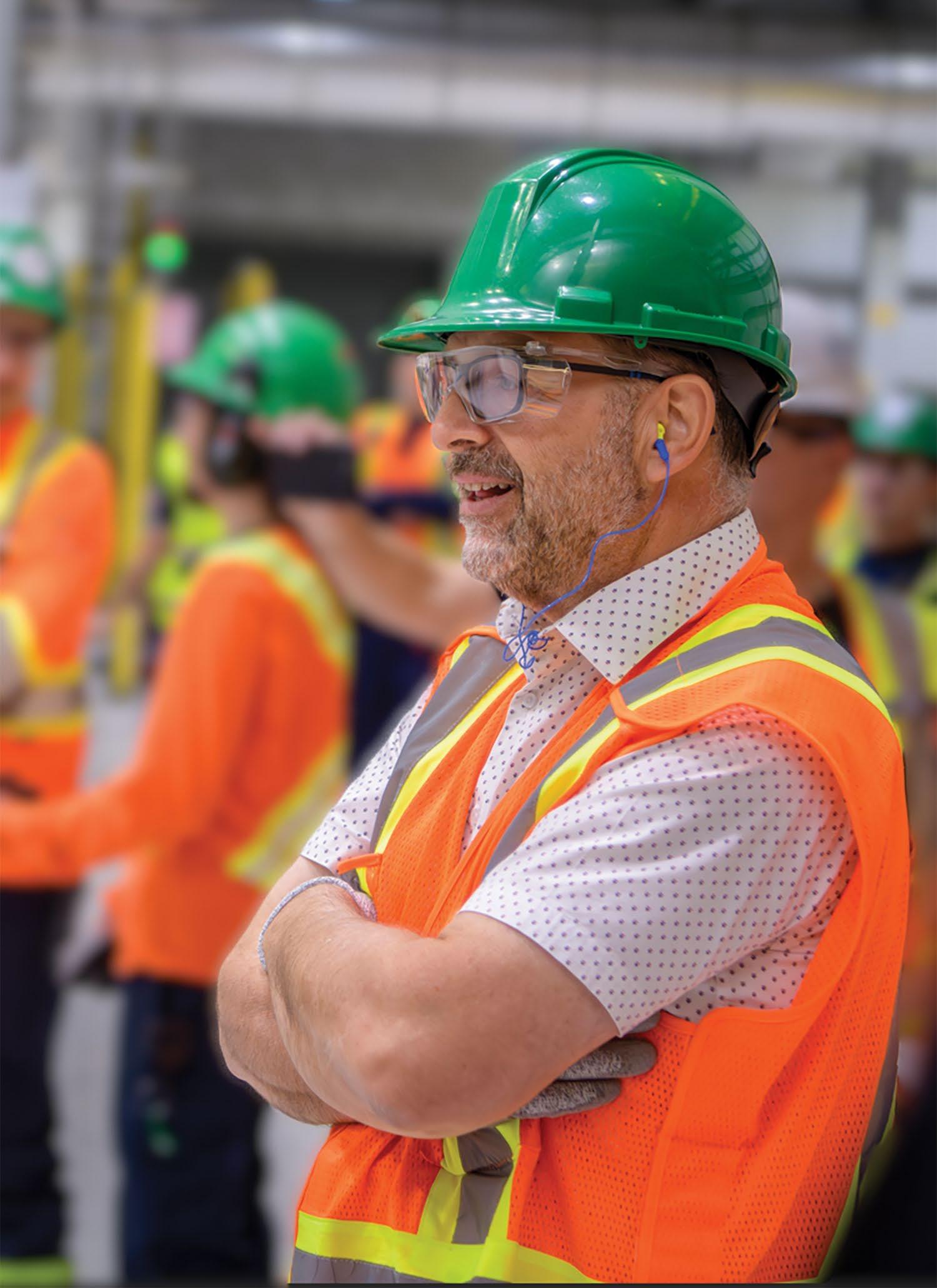
Patrice Bégin
Vice-president (VP) of manufacturing, Kruger Products
Patrice Bégin was nominated for the very qualities celebrated by Pulp and Paper Canada’s Hall of Fame: visionary leadership, operational innovation, mentorship, community involvement and a legacy of positive change. He is honoured not only for his professional achievements during his career at Kruger Products, but also for his commitment to people and the industry as a whole.
Patrice has dedicated more than 33 years to advancing the pulp and paper industry. He joined Kruger in 1992 after earning a bachelor’s degree in chemical engineering at the Université de Sherbrooke (where he would return to earn his MBA from 2014 to 2018).
After starting his career at Kruger as a process engineer in Gatineau, he progressed through various papermaking, converting, maintenance, operations and management roles across the company’s various facilities. He reached his current position as VP of manufacturing in 2022.
In this role, Patrice oversees strategic operations in Quebec’s Eastern Townships region and in the U.S. Looking ahead, he is taking further steps to lead a recently announced through-air dry (TAD) tissue machine expansion project in the U.S., where the company’s next plant is scheduled to start production in 2028.
Patrice is highly regarded by his peers, who have described
him as entrepreneurial, methodical and collaborative, fostering a spirit of togetherness that has helped advance ambitious goals. He is known for inspiring and motivating teams to act on new ideas and to be the masters of their own development. He takes pride in supporting those around him and enables their success by providing access to resources and the path forward as a servant leader.
Given his career to date, Patrice brings a wide range of skills to his role as a leader who carries enterprise-level responsibilities across manufacturing operations, safety, capital projects and continuous improvement. He is experienced in managing manufacturing operations, improving processes, handling large-scale projects, implementing modern plant control systems, overseeing maintenance planning and ensuring high standards of quality.
Throughout his career, Patrice has demonstrated he is a skilled professional with a deep
understanding of the technical aspects of the pulp and paper industry, but is most rewarded when he inspires teams and champions their strengths to drive business forward.
Patrice’s leadership has been particularly instrumental in propelling the tissue paper sector through his work at Kruger’s Sherbrooke facility. Here, he has been recognized for challenging conventional manufacturing approaches and championing innovation. He has actively pursued cuttingedge technologies to boost operational excellence and established a culture where diverse employees unite around shared goals.
As a driving force behind the Sherbrooke site’s development and strategic expansion, he oversaw the introduction of Canada’s largest and most advanced TAD tissue machine. His vision guided the facility’s crucial expansion, adding a doublewide light dry crepe (LDC) tissue machine and new converting lines, effectively
doubling annual production capacity to over 130,000 metric tonnes.
From 2018 to 2023, Patrice was the facility’s general manager (GM). He championed the adoption of artificial intelligence (AI) and digital twin technologies, working in partnership with Scale AI, academic experts and government entities to transform Kruger’s manufacturing processes with real-time analytics. The $25-million initiative introduced a digital twin for the Sherbrooke supply chain, which today continues to use AI to leverage real-time date to predict maintenance needs, optimize logistics, improve production planning and reduce environmental impacts, including waste and greenhouse gas (GHG) emissions. These innovations have greatly improved the facility’s operational efficiency, sustainability and competitiveness.
Under Patrice’s leadership, the Sherbrooke plant earned prestigious recognitions,
Photos courtesy Kruger Products.
Congratulations to Patrice Bégin, Vice President, Manufacturing, on his well-deserved induction into the Pulp & Paper Canada Hall of Fame!
This honour recognizes his visionary leadership, commitment to innovation, and steadfast dedication. Over his distinguished 33-year career with Kruger Products, Patrice has inspired teams to achieve ambitious goals, nurtured a spirit of collaboration, and championed the development and the growth of those around him. His focus on mentorship, operational excellence and community involvement has made a lasting impact on our colleagues and the industry.
Patrice, Kruger Products is proud of your accomplishments, and we are grateful to have you on our team.
including Mercuriades Awards for economic and regional development and for innovative manufacturing.
That said, Patrice’s impact has extended beyond technology and production improvements. His projects generated nearly $1 billion in investment in the Eastern Townships, creating close to 400 permanent jobs and solidifying Kruger’s position as a leader in advanced manufacturing of premium tissue products.
His commitment to the community is equally notable. Patrice represented Kruger as a prestige-level regional partner for the 2024 Jeux du Québec – Sherbrooke, highlighting the company’s regional roots and values of excellence, teamwork and commitment. As he fostered employee engagement, Sherbrooke staff demonstrated meaningful local involvement by volunteering for gamesrelated activities.
Patrice is also a board director for Sherbrooke’s chamber of commerce. In this context, he advocates for regional economic growth and for knowledgesharing between local businesses.
Central to Patrice’s success is his focus on teamwork and open communication. Early in his career, he initiated regular town halls to promote open dialogue and collaborative problem-solving. This approach built trust, encouraged innovation and empowered employees, establishing a corporate culture where listening and follow-through are prioritized.
Further, Patrice has replaced traditional hierarchies with role rotation, fostering operational flexibility, mutual learning and a strong sense of belonging across teams. His strategies are rooted in core pillars of col-
Patrice’s strategies are rooted in collaboration, where hierarchy is set aside and team members learn each other’s roles.
laborative teamwork, where hierarchy is indeed set aside and team members learn each other’s roles.
He also ensured robust operational backup by implementing identical, standardized equipment across production lines, which has also simplified training and accelerated skill development for staff.
By integrating prescriptive and predictive AI tools, Patrice has transformed Kruger’s previously reactive maintenance and manual planning processes into proactive, data-driven operations. He has empowered managers to make real-time adjustments, boosting efficiency and agility throughout the supply chain.
This vision extends beyond the Sherbrooke facility, which is designed to serve as a digital innovation prototype for future implementations across the company’s locations. This reflects Patrice’s disruptive and future-oriented outlook.
In summary, Patrice’s commitment to continually questioning and improving existing
models has fostered a culture of innovation, enhancing Kruger’s performance, sustainability and competitiveness in the tissue paper sector. His blueprint for change has emphasized governance, measurement and responsible external engagement, aligning with an overall industry shift toward smarter, safer and more reliable manufacturing.
By asking evidence-based questions, validating progress through key performance indicators (KPIs) and nurturing community relations, Patrice continues to exemplify a style of leadership that drives meaningful, lasting, sector-wide advancement.
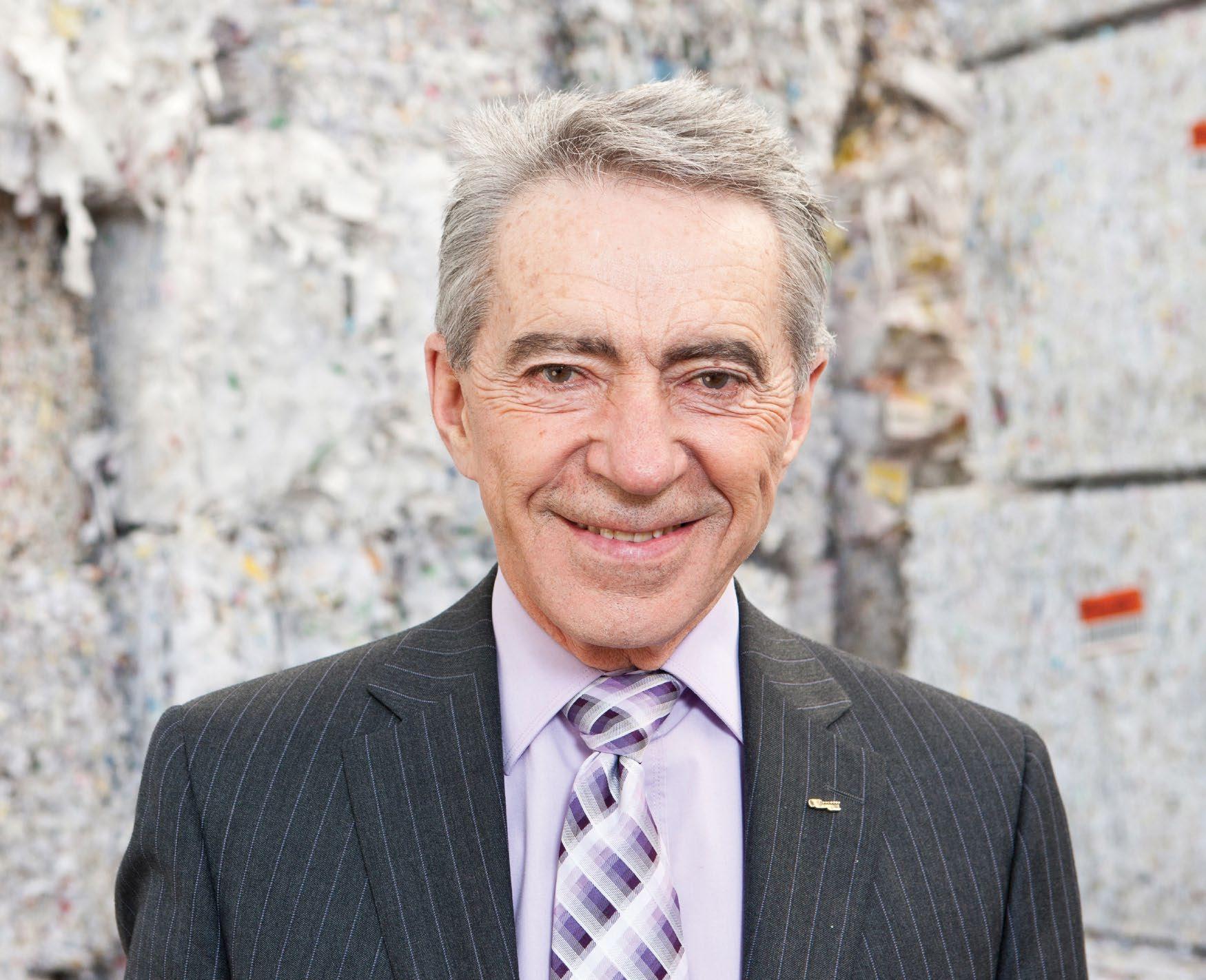
Laurent Lemaire
Co-founder and former president/CEO, Cascades
Last but certainly not least, Laurent Lemaire was nominated for Pulp & Paper Canada’s Hall of Fame by Hugues Simon who, as president and CEO of Cascades, is leading the very company that Lemaire and his brothers founded, built and, over the years, transformed.
“His vision, values and leadership shaped our organization and the industry significantly,” says Simon. “His influence continues to guide our strategic direction and inspire our commitment to sustainability and innovation.”
Born in Drummondville, Laurent was the third of five children in his family. At age eight, he became immersed in the world of recycling through his parents’ business, Drummond Pulp & Fibre.
In 1962, with a master’s degree in commerce from the Université de Sherbrooke, Laurent joined his father and his brother Bernard (who, incidentally, was named to our
Hall of Fame two years ago) as the head of the business. In 1964, they co-founded Cascades in Kingsey Falls. Of the three, Laurent was the most financially astute and served as a moderator, known for his candor, honesty and efficiency. He was with the company for 52 years, until 2016.
Laurent stands out as a visionary leader whose strategic insight and integrity helped transform Cascades into a global force in the pulp and paper industry. From the outset, he
and Bernard built Cascades on recycling and resource efficiency, pioneering the ‘circular economy’ long before these practices became industry norms. They proved sustainability and profitability can coexist in the pulp and paper sector—and helped inspire an industry-wide shift toward greener practices.
Laurent quickly established himself as a stabilizing force within Cascades’ leadership team. He would serve as president and CEO from 1992 to
Laurent was with Cascades for 52 years, until 2016.
2003, which marked a period of unprecedented growth and innovation.
Under Laurent’s leadership, Cascades underwent a major restructuring that optimized operations, strengthened its business model and positioned it for long-term success, including international expansion. His strategic acquisitions and integration of recycled materials into production processes set new benchmarks for efficiency and environmental responsibility. These initiatives further established Cascades as a leader in the circular economy.
During his 11 years at the helm, Laurent quadrupled the size of the organization and achieved record-breaking results, including a milestone net profit of $169 million in 2002.
Photos courtesy Cascades.
Laurent’s approach to executive leadership combined operational excellence with a deep respect for environmental stewardship. His commitment to ethical leadership and ability to balance a bold vision with pragmatic execution earned numerous accolades. In 1999, for example, he was awarded the title of master entrepreneur at the Grand Prix de l’entrepreneuriat du Québec.
In 2003, he received the Prix de l’excellence Pâtes et Papiers from the Conseil de l’Industrie forestière du Québec (CIFQ). This prize is awarded annually to a Quebec individual who has contributed in large measure throughout their career to the development and expansion of the pulp and paper industry.
Laurent also received two honorary doctorates: one in administration from the Université de Sherbrooke in 1996 and another in management sciences from the Université du Québec à Montréal in 2015. And in 2013, he was invested as an officer of the Order of Canada, in recognition of his impact on Canadian industry and society.
Laurent’s contributions have extended far beyond corporate success, reflecting a lifelong commitment to the pulp and paper sector and the communities it serves. Throughout his career, he championed values of respect, excellence and environmental responsibility, which helped ensure Cascades remained a leader these areas.
After Alain Lemaire assumed the presidency of Cascades in 2003, Laurent continued to play an important role on the board of directors—first as chair, then as executive vice-chair, a position he held from 2011 May 2014. Fostering a corporate culture
of mentorship and collaboration, he supported employee development and encouraged innovation at every level, creating opportunities for growth within the organization.
His leadership extended into community engagement. He actively contributed to such causes as the Fondation du Centre jeunesse de Montréal and the Fondation québécoise en environnement. In 2002, Sports-Québec honoured him at its annual gala with the Jacques-Beauchamp Award for his support of amateur sports. That same year, he won the
Jubilee Medal for community involvement.
Laurent’s dedication to improving lives through education, sports and environmental initiatives underscored his belief that business success must go hand-in-hand with social responsibility. By promoting sustainable practices and investing in people, he strengthened not only Cascades as a company, but also the broader pulp and paper sector, leaving a legacy of progress and purpose.
An openness to new ideas and technologies drove contin-
uous improvement across the organization. Laurent encouraged teams to innovate, question conventional methods and embrace change. As a result, creativity thrived.
It was Laurent’s ability to combine financial discipline with bold, forward-thinking strategies that enabled Cascades to grow significantly while maintaining its commitment to sustainability. His legacy is one of transformative innovation that reshaped the pulp and paper industry and continues to inspire progress today. PPC
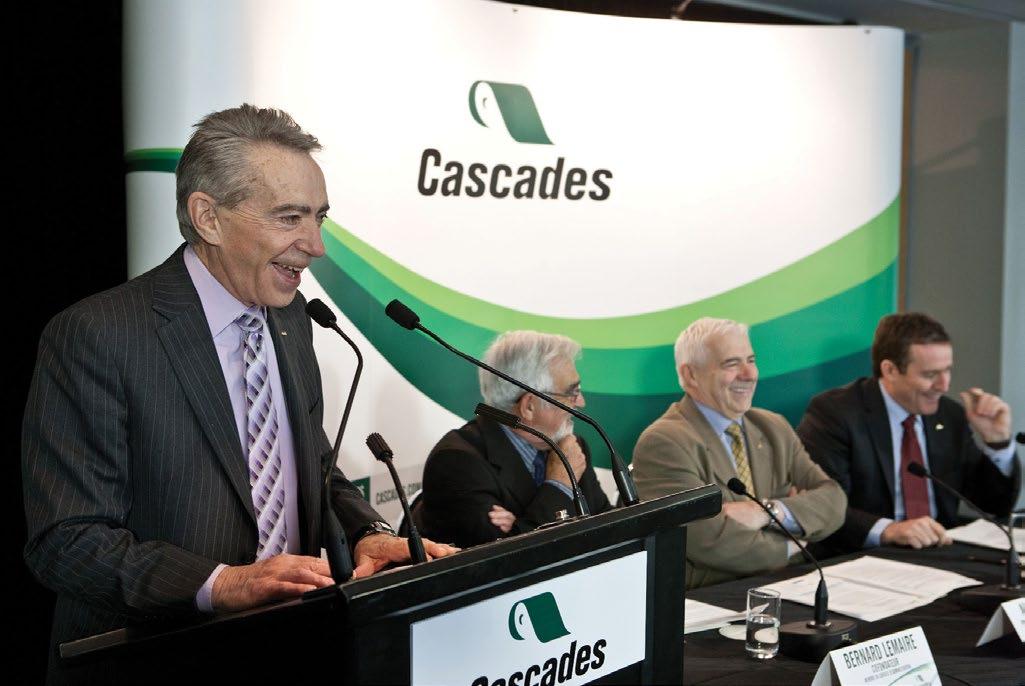
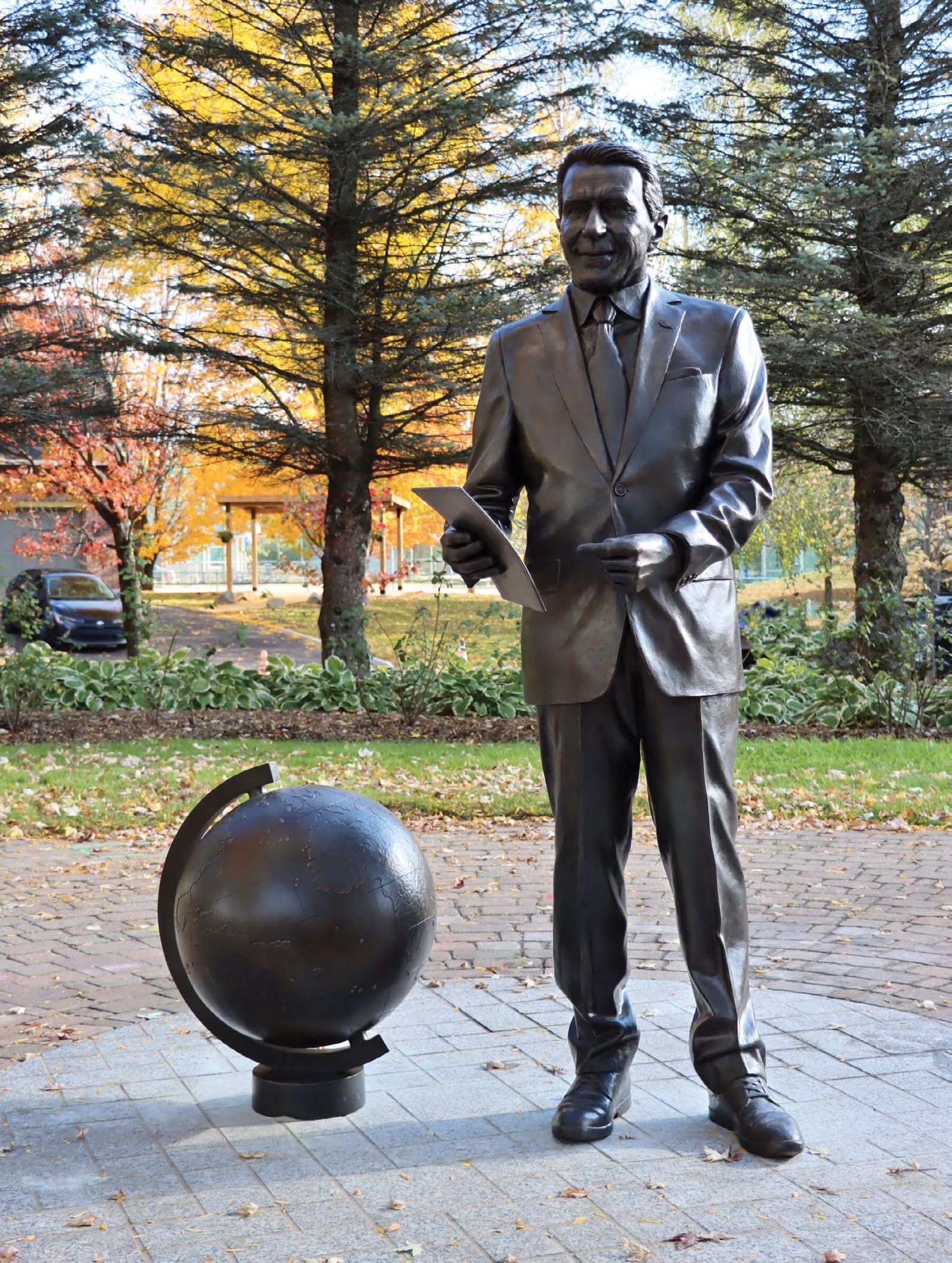
Cascades unveiled a bronze statue of Laurent last October.
induction into the Pulp and Paper Hall of Fame—an honor that celebrates your exceptional contribution!
RUBBER FILLER FROM BLACK LIQUOR THROUGH HYDROTHERMAL CARBONIZATION
Mills could enjoy additional revenue and increase production.
By Xiaojie (Frank) Zhang and Chuanwei Miao
Black liquor is a byproduct in the kraft pulping process that needs to be processed in the chemical recovery process. Currently, around 50% of Canadian kraft pulp and paper mills are recovery limited, which means pulp production is restricted by the capacity of black liquor recovery. If black liquor could be valorized by generating high-value renewable products, it would have two positive impacts on the profitability of the mills: additional revenues and increased pulp production.
One of the pathways to produce high value-added products from black liquor is to convert the organic solid content of the black liquor, majorly lignin, into carbon material for application as fillers in rubbers to replace the conventional filler, carbon black.
Carbon black is used in rubber manufacturing as a key additive with multiple functions, mainly reinforcement and improved abrasion resistance. Since industrial carbon blacks are almost pure carbon and nearly solely produced from fossil fuel, they carry a heavy carbon footprint for any products containing them.
Rubber manufacturers (mainly tire manufacturers) have been urged for years to find a replacement to reduce the carbon footprint of their products. Michelin, for example, has a target of using 40% renewable or recycled materials in its tires by 2030 and 100% by 2050. 1 However, it is difficult to direct -
ly apply lignin into rubber, due to its hydrophilicity, lack of melt processability and poor dispersibility. 2
One of the approaches to solve this problem is through hydrothermal treatments to lignin. Suncoal Industries conducted research on converting black liquor-derived lignin via hydrothermal carbonization process as a potential functional filler for a solution styrene butadiene and butadiene rubber blend3; and Origin Material applied biomass feedstock into its process to obtain hydrothermal carbon, which will be further used to develop sustainable pigments and fillers for automotive applications. 4
Hydrothermal carbonization (HTC) is a thermochemical process that can physically and chemically transform slurry feedstocks in high-temperature (200 to 500 C) and high-pressure (2 to 40 MPa) liquid using water as the most common
‘solvent.’ One major advantage of this method is the feedstocks do not need to be dried prior to the conversion, so they can process black liquor diverted from the chemical recovery process directly, without the need for intermediate steps. By eliminating the steps for black liquor treatment, such as purification and drying, this process can save costs significantly. During the HTC process, the materials dissolved in black liquor undergo chemical conversion and their properties change from hydrophilic to hydrophobic, leading to precipitation from the liquid at the end of the reaction. This characteristic change makes the solid production rubber filler possess some properties similar to carbon black, which can be easily dispersed in non-polar polymers.
The objective of this study was to develop an innovative process to convert black liquor into a rubber filler (RF) that
could be used in the rubber industry to replace carbon black. HTC treatments were carried out using black liquor or the lignin derived from black liquor as the feedstock. The effects of the starting materials, the reaction temperatures on the solid products and the chemical and physical properties of the solid products were evaluated using FT-IR, elemental analysis and particle size measurement. Finally, the reinforcing performance of such solid products in rubbers were assessed by blending them in a generic rubber formula, followed by tensile testing.
Conversion of RF from black liquor
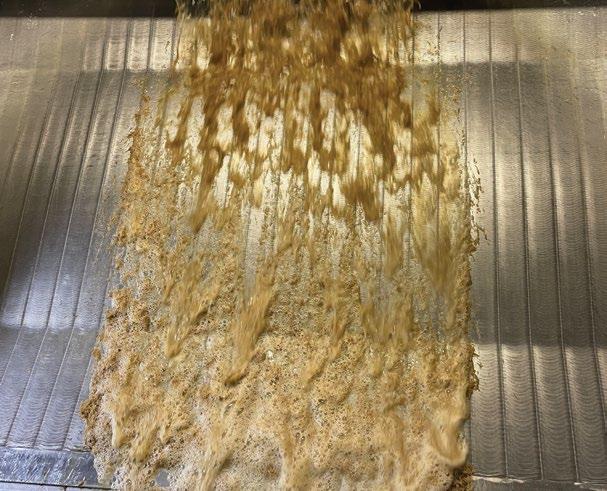
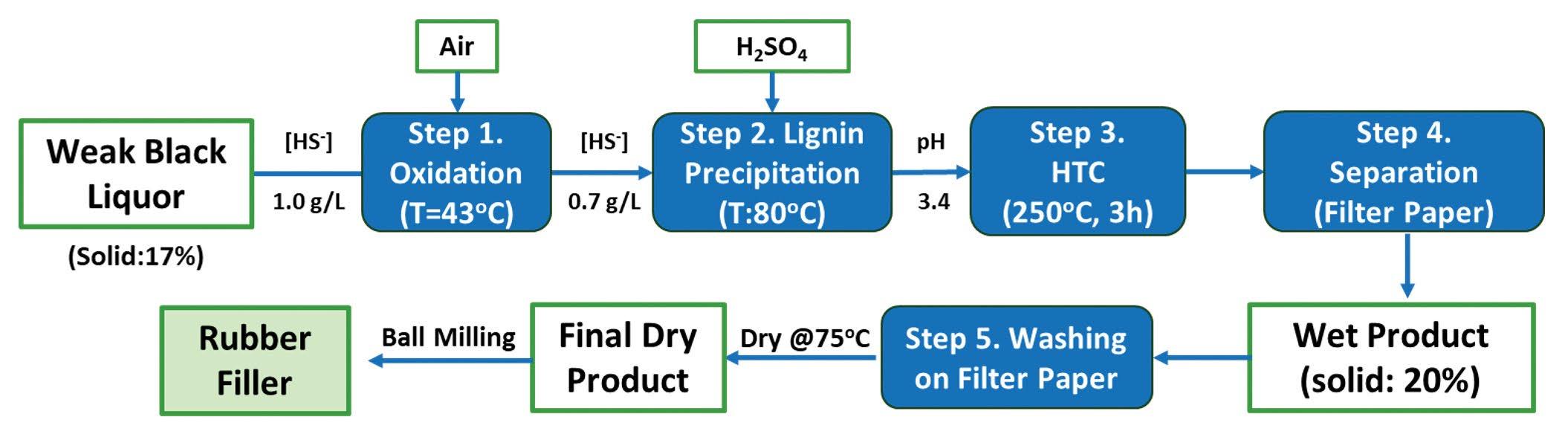
All experiments were conducted using an experimental setup developed at FPInnovations to convert black liquor into rubber fillers via an HTC process, shown in the flow chart in Figure 1. Softwood weak black liquor (WBL) with a solid content of ~17% was collected from a kraft pulp and paper mill and used as feedstock. Around 1.5 kg of WBL was oxidized using compressed air to reduce the [HS-] from 1.0 g/L to
0.7 g/L. Then, sulfuric acid was added to reduce the pH value of the slurry from 13 to 3.4, where lignin was precipitated.
This slurry was introduced into an autoclave and heated to 250 C for three hours. After carbonizing, separating and drying, a solid product was obtained and named WBL-250.
Rubber manufacturers seek to reduce their carbon footprint.
A lignin sample was also treated through such a process. The products were compared to that from the black liquor for rubber reinforcement. The lignin sample was produced from the same type of black liquor using LignoForce technology developed at FPInnovations.5
While using lignin as the feedstock, it was mixed in water at the same solid content (17 %) as the black liquor and
treated with the HTC process directly at Step 3, as shown in Figure 1. In each batch, around 300 g of the lignin sample were treated. Two treatment temperatures, 230 C and 250 C, were used, leading to yields of 35% and 31%; they were named Lignin-230 and Lignin-250, respectively.
To monitor the carbon content change of the samples through the HTC process, all samples were analyzed using elemental analysis; the results are listed in Table 1. As a comparison, the results of raw lignin and a commercial carbon black are also given in the table.
The carbon content in the lignin samples increased after the HTC treatment. A higher treatment temperature is in favour of the transition. The WBL sample possesses lower oxygen content compared to those converted from lignin, which can probably be ascribed to the difference of compositions in the starting materials.
The products from the HTC process after drying were loose aggregates. Rubber fillers, however, require large surface areas to interact with elastomers.
To reduce the particle size, all sam -
Figure 1. Flow chart of the conversion process from weak black liquor to rubber fillers via HTC treatment.
Table 1: Elemental analysis results of RF products. *: analysis results of Lignin were provided by FPI LignoForce team.
ples were processed using a ball mill before blending with rubber ingredients. Around 25 g of each RF sample were crushed using a blender and then milled using a ceramic jar (1 L) filled with 3 lb of milling medium (0.25 x 0.25-in. cylindrical alumina, U.S. Stoneware) for four hours.
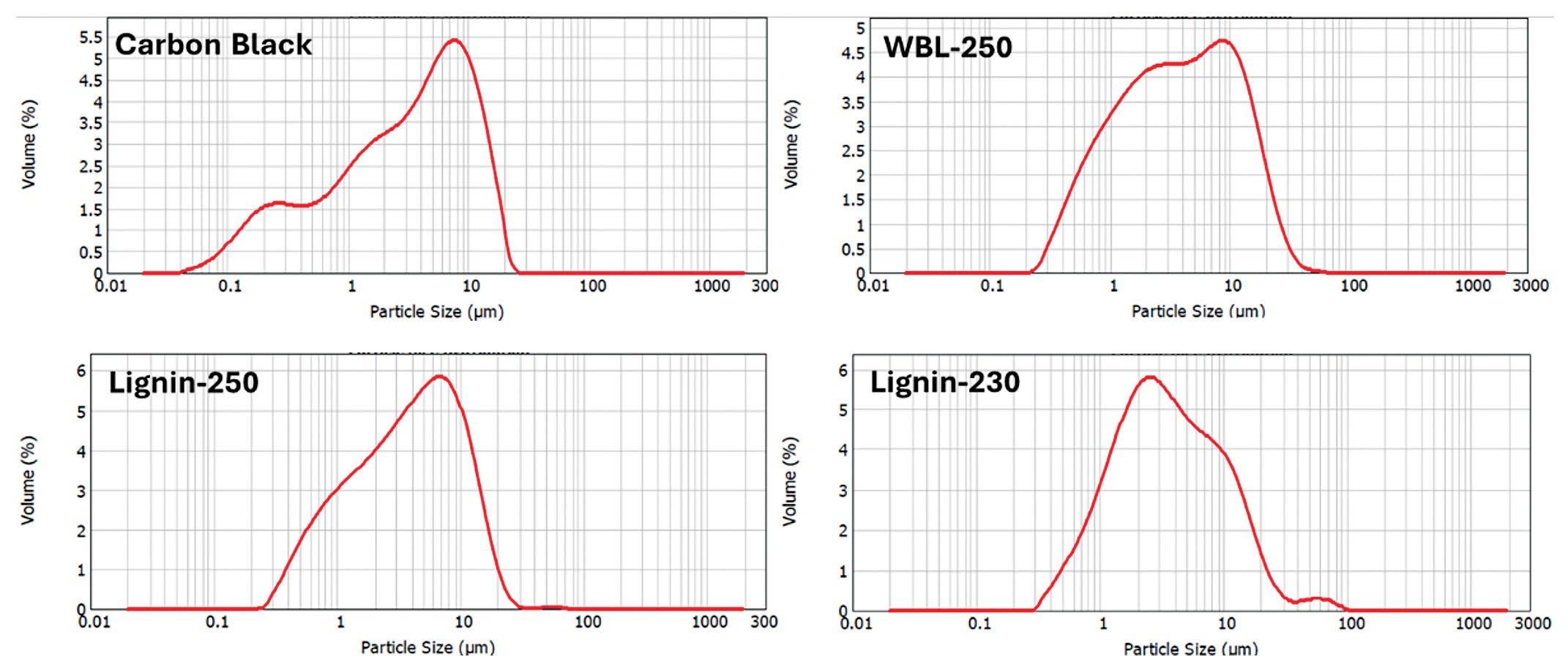
The final products were fine powders, collected by separating them from the milling medium using a sieve. Particle size measurements (see Figure 2) reveal all ball-milled RF samples had particle size distributed mainly between 1 submicron and 20 µm. The commercial carbon black showed similar values at the higher end, but a smaller size at the lower end. This difference can also be clearly seen from the results in Table 2, especially the value of d(0.1).
Blending of RF in rubber and tensile test
The reinforcing performance of the RFs obtained through the HTC process was evaluated by mixing them in a rubber recipe and conducting tensile tests. The rubber recipe was adopted from a generic formula based on styrene-butadiene rubber (SBR).
Table 3 shows the composition and function of each ingredient. The load of each ingredient is expressed as ‘per hundred units of rubber’ (PHR). In such a system, all ingredients are calculated relative to the rubber weight, which is defined as 100. The relative weight percentage of each ingredient was calculated based on the recipe.
There were two control samples, C1 and C2. C1 is a reference loaded fully with carbon black and C2 is a control
sample where the carbon black loading was reduced to 85% of that in C1. For the rubber samples loaded with RF samples, 15% of the carbon black (i.e. 7.5 PHR) was replaced with the RF samples. All other ingredients remained the same while the fillers were adjusted.
The rubber blending and vulcanization were carried out using a Haake internal mixer equipped with a pair of Banbury rollers. The mixed blends were vulcanized using a hot press to produce rubber sheets. The reinforcing performance of the RF samples was evaluated by conducting tensile tests on the cured rubber following ASTM D412. The vulcanized rubber sheets were cut into dumbbell-shaped specimens using a type-D die cutter. The specimens were tested on Instron (Model 5566) at a speed of 500 mm/min. For each rubber sample, at least five specimens were tested.
Figure 2: Volumetric particle size distribution of RF samples after ball milling and comparison with a commercial carbon black (N660).
Table 2: Particle size results of carbon black and ball-milled RF samples.
Ingredient Function
Table 3: Rubber recipes used for blending tests.
*PHR: parts per hundred units of rubber
**The processing agents include N-(1,3-dimethylbutyl)-N’-phenyl-p-phenylenediamine (6PPD), steric acid (SAD), and zinc oxide (ZnO)
***The crosslinking agents include sulfur and N-Cyclohexyl-2-benzothiazole sulfenamide (CBS)
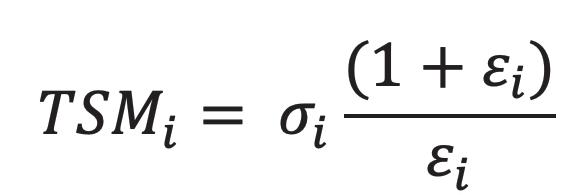
The raw stress-strain data were converted to secant modulus using the following equation:
In this equation, TSMi, σ i and ε i are the True Secant Modulus (TSM), tensile stress, and tensile strain, respectively, at point i. The TSMs at 100% strain and 300% strain were extracted and compared. The average values and standard deviations from the duplicates were calculated.
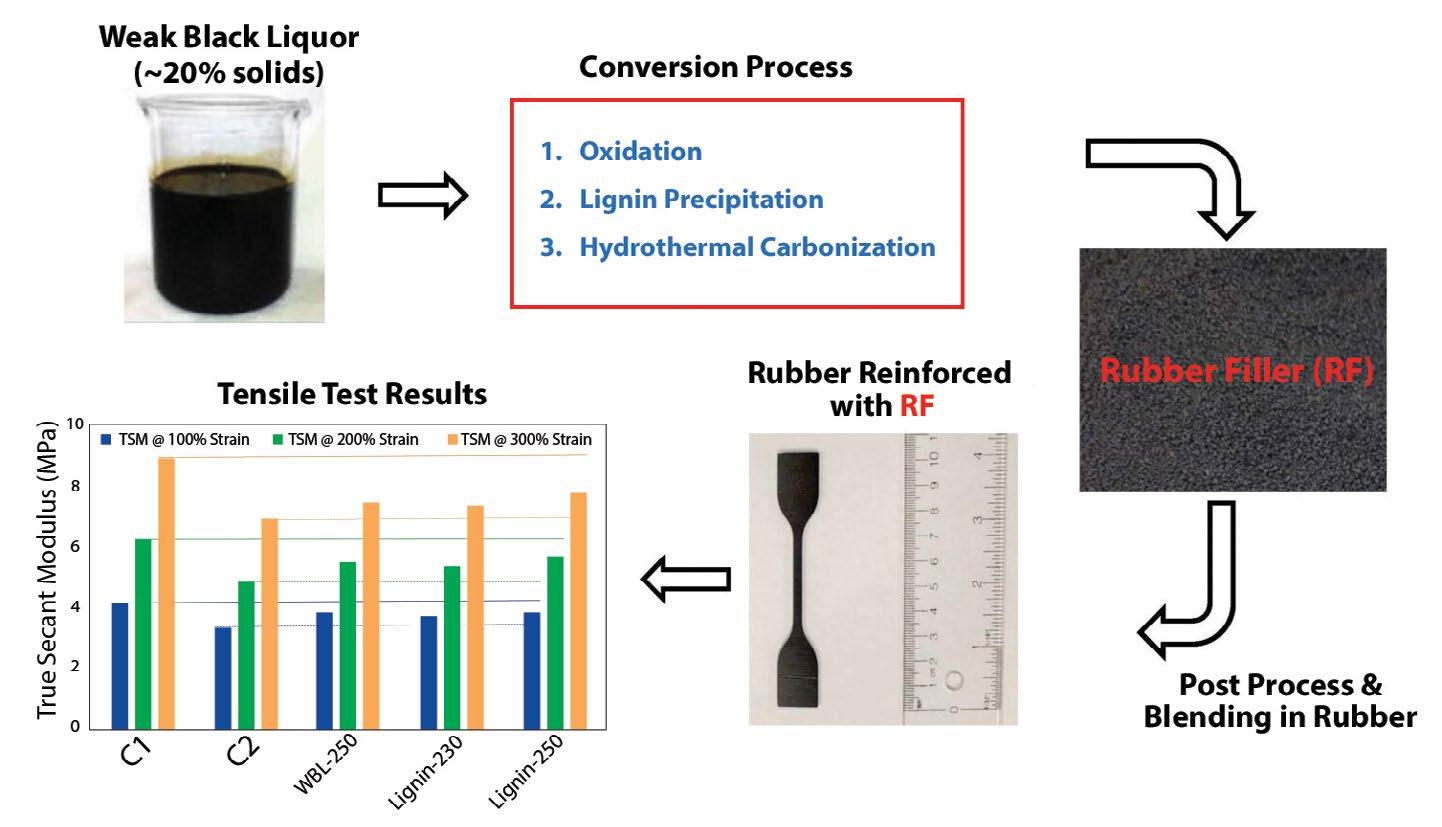
The representative tensile curves of all rubber samples are given in Figure 3. By comparing the two controls, C1 and C2, we can see reduction of carbon black load by 15% leads to lower TSM over the entire tensile strain range. Replacing this part of carbon black with the RF, however, partially restored
SAFETY NEVER SLEEPS
Safety orientation and verification program for the forest products industry
orientation available in English & French
Figure 3: Tensile results of rubber samples filled with the three RF samples and comparison with the two controls, including (a) full range representative tensile curves, (b) partial range (0 – 400% strain), tensile curves and (c) comparison of TSM values at 100%, 200% and 300% stains, respectively.
the mechanical properties of the rubber, which is especially obvious at the lower strain range shown in Figure 3(b).
Of the three RF samples,Lignin-250 performed the best by restoring more than 60% of the rubber strength when the tensile strain was below 200%. This is probably related to the higher carbon content (see Table 1) derived from the higher HTC treatment temperature, as well as the smaller particle size compared to the other two RF samples (see Table 2).
Since the strain level of rubbers will be in a lower range in practical applications in most scenarios, it is of interest to compare the TSM values at 100%, 200% and 300% strain, respectively, which are plotted in Figure 3(c). The solid and dashed horizontal lines represent the TSM values of the rubber samples with fully loaded and 85% loaded carbon black, respectively.
The HTC process eliminates the need for purification and drying.
The reinforcing effect of the RF samples can be clearly observed in the figure because all TSM values of the rubber samples are above those of 85% loaded carbon black (dashed horizontal lines) at all three strain levels. When comparing the TSM performance of Lignin-230 and Lignin-250, the reinforcing effect of Lignin-250 is more effective, suggesting the HTC processing parameters can influence the performance of the RF in the rubber.
Although the RF samples did not completely restore the reduction of TSM caused by the decrease of carbon black content, it should be noted that the RF derived from black liquor or lignin did not contain a high carbon element as carbon black does. Thus, the actual carbon content in the rubbers was lower than C1.
Second, the rubber formula employed in the work was a generic one designed for carbon black. The performance of rubbers filled with RF can be improved by tuning the rubber compositions based on the filler properties, which is a common process in rubber industry.
Last, as shown between Lignin-230 and Lignin-250, the RF properties can be adjusted by controlling the HTC process parameters, leading to different performance in rubber reinforcement. This can
be used as a tool to produce RF products with different grades.
Conclusion
In this research, RF was converted from the byproducts of kraft pulping process via HTC. The obtained RF could partially replace carbon black, a popularly used filler, for rubber reinforcement. The results demonstrate HTC processing parameters have impacts on the performance of the solid product.
It is especially interesting how such products can be directly produced from black liquor in addition to lignin, which can significantly save production cost. Compared to carbon black, this type of RF is converted from renewable resources, which can significantly reduce the carbon footprint of rubber products, such as tires.
The rubber recipe was adopted from a generic formula based on SBR.
References
1Michelin. Recycled or Renewable Materials. 2025. https://business.michelinman.com/mining-quarries/michelinbetter-mining/sustainability
nin as a Sustainable Biobased Filler for Rubber Compounds. ACS Appl. Polym. Mater. 2023, 5 (4), 2501–2512. https:// doi.org/10.1021/acsapm.2c02170
4 Origin - Company Overview, 2023. https://investors.originmaterials.com/ static-files/113d66df-dc9b-4cf6839f-22155983cd0d (accessed 202507-08)
5Kouisni, L.; Holt-Hindle, P.; Maki, K.; Paleologou, M. The Lignoforce System: A New Process for the Production of High-Quality Lignin from Black Liquor. Journal of Science & Technology for Forest Products and Processes 2012, 2 (4), 6.
For future work, the HTC process can be further optimized to produce RF with properties tailored based on the rubber applications, such as increasing carbon content and/or specific surface area of RF.
2 Shorey, R.; Gupta, A.; Mekonnen, T. H. Hydrophobic Modification of Lignin for Rubber Composites. Industrial Crops and Products 2021, 174, 114189. https://doi.org/10.1016/j.indcrop.2021.114189
PPC
3Sekar, P.; Noordermeer, J. W. M.; Anyszka, R.; Gojzewski, H.; Podschun, J.; Blume, A. Hydrothermally Treated Lig -
Xiaojie (Frank) Zhang is a senior research scientist for FPInnovations in Vancouver and Chuanwei Miao is a product development specialist for CelluForce in Montreal. For more information, contact Zhang at xiaojie.zhang@fpinnovations.ca.
High-pressure cleaning systems for optimized cleaning, improved efficiency, and increased production.
RED LEAF UNFURLS
Canada’s pulp industry is set to change for the better when Red Leaf finally breaks ground later this year.
By Treena Hein
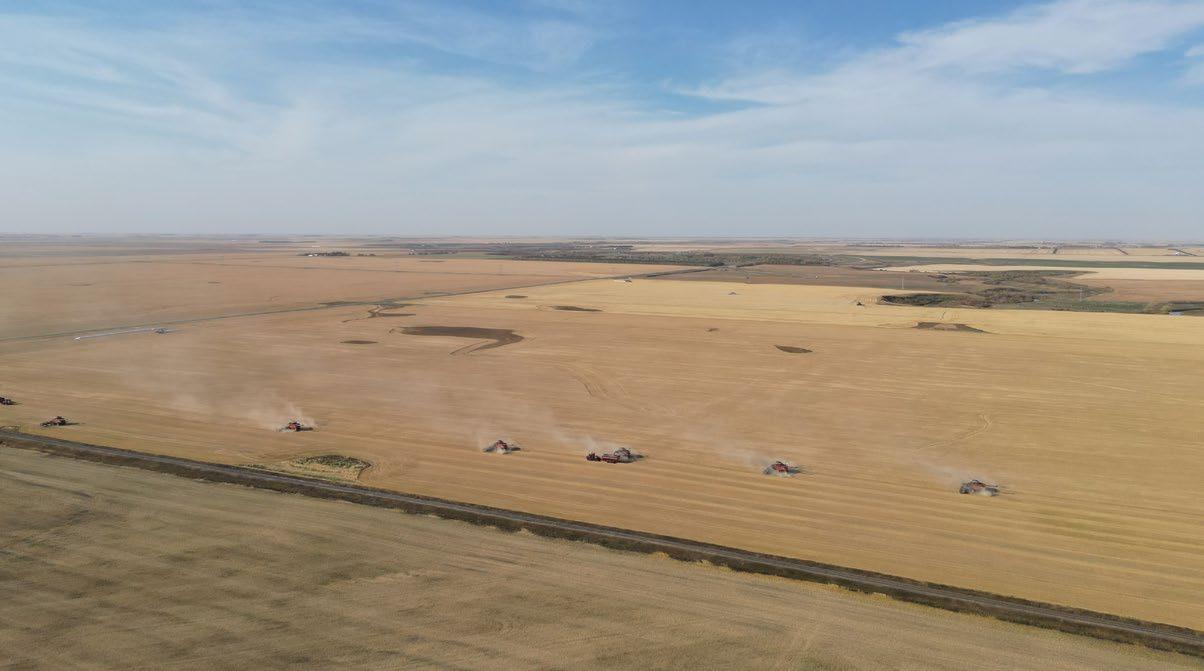
Back in 2021, Pulp & Paper Canada readers were introduced to Red Leaf Pulp, an innovative new firm with plans not just to make more Canadian pulp, but to make it solely from local straw. The plan was to begin construction of a large mill just outside Regina by 2023. It was a good news story of huge importance: Canada’s
pulp mix would be diversified, farmers would obtain a new revenue stream and the facility would provide both construction jobs and long-term mill operation jobs.
Now, as we start 2026, we present an update—and it is a big one. Although Red Leaf Pulp has yet to break ground, there is a mountain of unprecedented and truly industrychanging developments to share.
The past and present First, a recap of its beginnings. Red Leaf Pulp was co-founded in 2019 by Darby Kreitz, the founder of Allnorth Consultants (and now CEO of Red Leaf). Allnorth is a large engineering firm with offices across Canada, leveraging deep experience in the design and commission of both new non-wood and wood-based pulp mills in North America and Europe.
Kreitz was analyzing the
decreasing supply of wood for British Columbia’s pulp mills and began thinking about new sources of fibre. He is from Saskatchewan, so his thoughts therefore naturally turned to the vast amount of crop residues generated each year by Prairie farmers. The idea of a straw pulp mill was born.
Yet, in a move that caused the delay of the first Red Leaf pulp mill, but will provide additional revenue streams
Photos courtesy Treena Hein and Red Leaf Pulp.
and could lead the global pulp industry in innovation, Red Leaf Pulp has gone beyond the simple idea of pulp production, explains Will Walls, the company’s vice-president (VP) of strategy and development.
“You would really consider what we’re going to build to be as much a biorefinery as a pulp mill,” he says. “About
Future-proof technology for optimal pulp quality Gap Monitoring System
Inconsistent pulp quality, high energy consumption, and unexpected downtime are common challenges for mills, but what if they could be mitigated? What if there was a plug-and-play gap monitoring system (GMS) that could precisely measure and control disc gaps, improve product stability, and reduce energy usage?
two-thirds of our revenue will come from pulp, but at least one-third will come from production of very high-quality lignin. Our mill will also be self-sufficient for electricity, due to our biomass/straw power generation plant, and we will sell the extra 10 MW to SaskPower for the grid.”
Red Leaf already has its land
If you’re looking for future-proof technology to pave the way for a more sustainable tomorrow, we have a GMS for you. Learn more at valmet.com
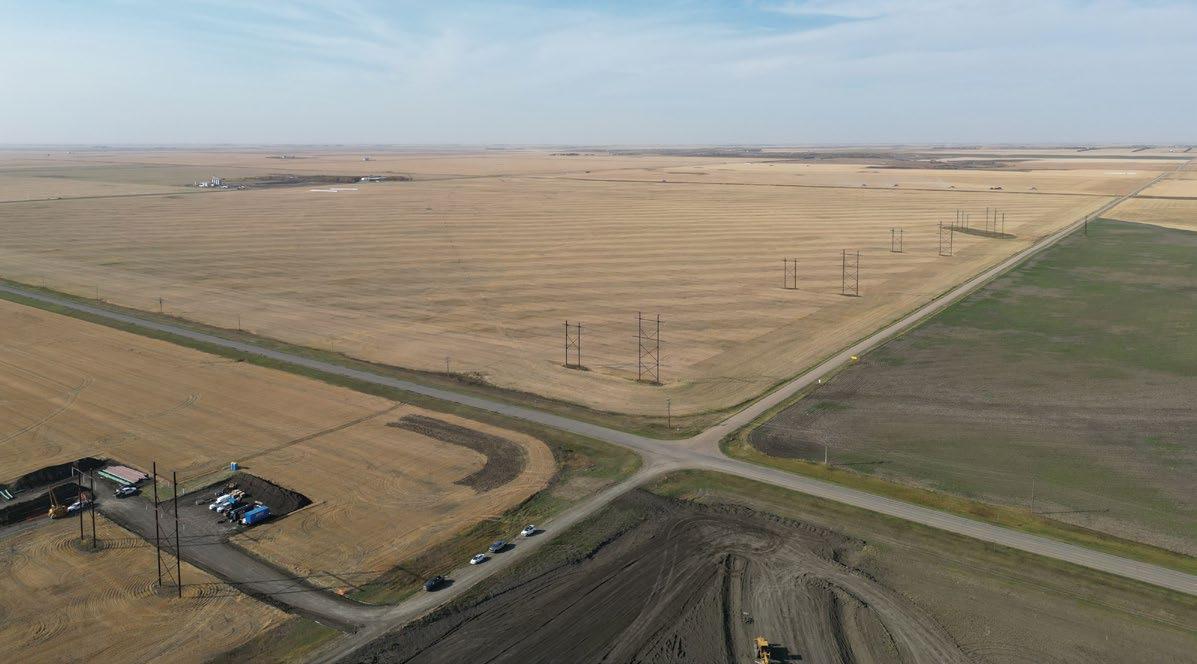
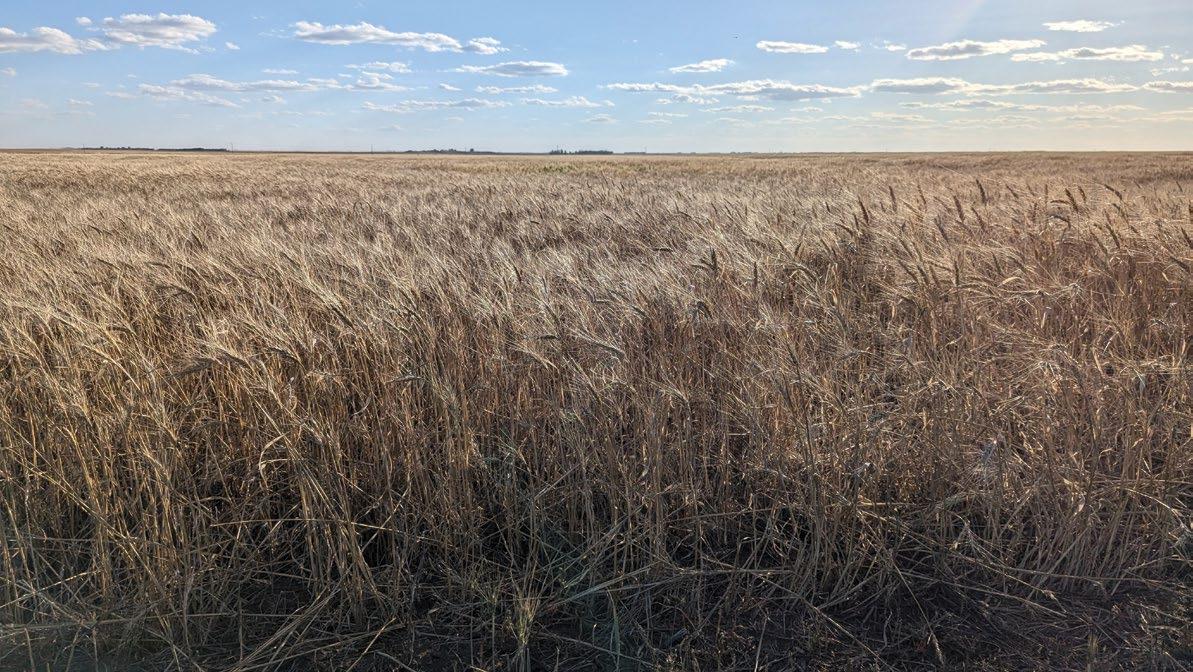
Red Leaf’s site in Regina is strategically located to source straw from crop residues.
Red Leaf Pulp by the numbers
More than 30% of front-end engineering and design (FEED) work is now complete, providing a high level of definition for capital costs, equipment specifications and operational planning.
The facility will process ~400,000 tonnes of cereal straw (wheat, oats, barley) annually.
Annual production will include 220,000 tonnes of pulp and 32,000 tonnes of lignin.
Once operational, the mill will employ more than 130 full-time employees and generate approximately $1.7 billion in economic benefits over its first decade.
and the environmental impact assessment is complete, showing the facility will not be a net emitter of carbon. The company’s plan is to break ground by the end of 2026 and begin operations in 2028.
Further, Red Leaf Pulp has identified six other sites in the Canadian Prairies for similar installations, along with four sites in the U.S., all of which are set to be built by 2040.
Why the delay?
The short answer as to why Red Leaf moved the start of its plant’s construction from 2023 to 2026 was to de-risk the enterprise to secure invest-
ment.
“Our approach has been consistent with major industrial development norms: thorough engineering, staged reviews, structured risk management and a disciplined commercial strategy,” says Walls. “Global demand for pulp continues to increase while fibre supply from forests tightens. Canada needs new, reliable, long-term fibre sources to meet market demand. Red Leaf Pulp is focused on that reality.”
By way of example in terms of specific market demand, moulded packaging manufacturer Dart become a partner in
the project in mid-2023.
“Dart still uses polystyrene (PS) and has to make the move to renewable materials,” Walls explains. “They conducted research and found they can make packaging with 100% wheat straw pulp. They have made an investment in our company and will take 20% of our output. That investment was mainly used to build our demonstration plant in Edmonton.”
Besides Dart’s contribution, Kreitz has invested in development costs, while federal and provincial incentive programs have provided $8 million towards the total of $42
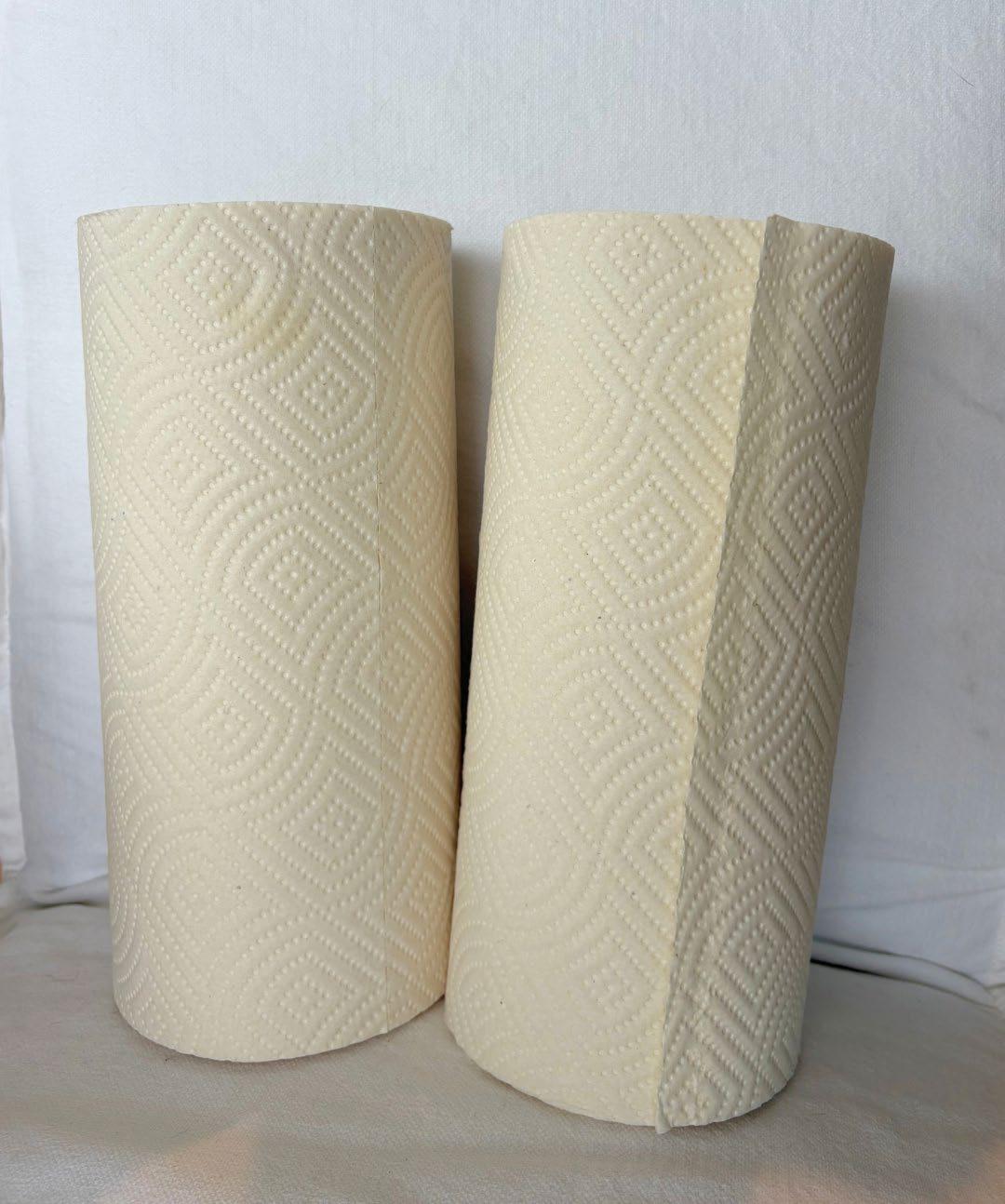
These paper towels were produced at a pilot plant.
With more than 30% of front-end engineering and design (FEED) work now complete, Red Leaf has defined its capital costs and equipment specifications.
million spent since the project’s inception. In total, it will cost $850 million to build the plant. With financing and the purchasing of straw inventory, the project will reach a cost of $1.1 billion.
“Of what remains, we are going to hold to the traditional framework of half debt, with preliminary commitments from lenders, and the rest of the money from equity partners,” says Walls. “We have
U.S. equity firms in discussions to invest in or underwrite a series of securities for that portion of the required project capital. We also have soft letter-of-intent agreements with Chinese firms to take 110% of our capacity. We are viewed as a first in North America, so there isn’t immedi-
ate buy-in here. We know that eventually every tonne of our pulp will sell in North America; but until North American customers take it, we will be shipping to Asia.”
In terms of other revenue streams for the project, interest is strong because of the highquality lignin production that
Beyond Red Leaf: Other agricultural pulp activities in North America
• In 2020, New York-based Mohawk Fine Papers unveiled ‘Mohawk Renewal,’ a portfolio of products made from wood pulp combined with either hemp, straw or cotton clippings from the garment industry. In 2021, this portfolio achieved regulatory recognition from the U.S. Food & Drug Administration (FDA) for use in packaging with direct food contact. Mohawk Renewal has since shifted to two product lines, one using hemp fibre and the other using miscanthus fibre.
• In Tennessee, Genera uses two perennial grasses— switchgrass and miscanthus—to produce non-wood fibre at its mill, which has an adjoining moulded fibre packaging manufacturing facility. At this site, the company also produces other ‘bioproducts,’ including a ‘lignin-rich syrup.’
• Several years ago, Columbia Pulp was set to become the first full-scale straw pulp mill in North America, located in the dense wheat farming region of Dayton, Wash. However, it was placed into receivership in 2022 and its equipment was auctioned off in 2024.
• Scientific research into non-wood pulp continues. For example, a team from India published a paper on their investigation of corn husks in January 2025.
has been added to the scope.
“We have worked with a couple of innovative Canadian companies that convert lignin into high-purity graphite, which is used in batteries and other applications,” says Walls. “Graphite is mined in Ontario, Quebec and Saskatchewan, but with our lignin, you are halfway to producing synthetic graphite of very high quality. In fact, with our lignin, it is possible to reach the ‘five nines purity’ level (99.999%) for graphite, which is required for nuclear applications. This purity is otherwise only available from China at $30,000 a tonne. Canada will be able to pro-
very happy to sell it to us, as flax straw is of little use to them. In terms of the straw for pulp, we will use only 15 to 20% of a given farm’s straw, which means farmers are under no pressure. We only need 15% of the straw that’s within 150 km of Regina.”
Red Leaf’s pulp process is designed to eliminate the bleaching stage entirely and produce a natural goldentone pulp that is in demand for many products.
“We’ve done a lot of work to produce a pulp than can run exactly like hardwood or softwood pulp,” Wallis says. “No customer will have to slow their machines to use it.
The pulp process is designed to eliminate the bleaching stage entirely.
duce it at half that cost. We are very excited about this aspect. It makes Red Leaf Pulp a ‘cleantech’ investment, potentially entering the critical minerals supply chain, rather than just a low-cost pulp mill.”
Pulp quality
Speaking of pulp, wheat straw surprised everyone on the project. It makes a pulp almost as good as northern bleached softwood kraft (NBSK) and better than eucalyptus.
“We can also use barley and oat straw, but we cannot use flax straw,” Walls explains. “However, we can use all types of straw for our biomass plant and flax straw has a very high BTU value. Farmers will be
In the big picture, those who could switch to eucalyptus have already done so. Using Red Leaf’s pulp will enable customers to reduce NBSK 10% further in several lowcomplexity applications. We are not a total replacement for softwood. We are not a competitor with Mercer, Canfor and other well-respected Canadian softwood fibre producers. Their customers will continue to pay a higher premium for their pulp, but we will replace softwood for some products. It has taken 60 to 70 years to get eucalyptus to get into the market and we will be much faster. We’ve gained so much traction with this project and we move forward a little more every day.”
Photos courtesy Mohawk Fine Papers.
Mohawk Renewal’s hemp fibre paper.
Mohawk Renewal’s miscanthus fibre paper.
FPAC NATIONAL POLICY CONFERENCE: RECLAIMING CANADA’S COMPETITIVENESS
The event’s theme was ‘We grow to build Canada.’
By Andrew Snook
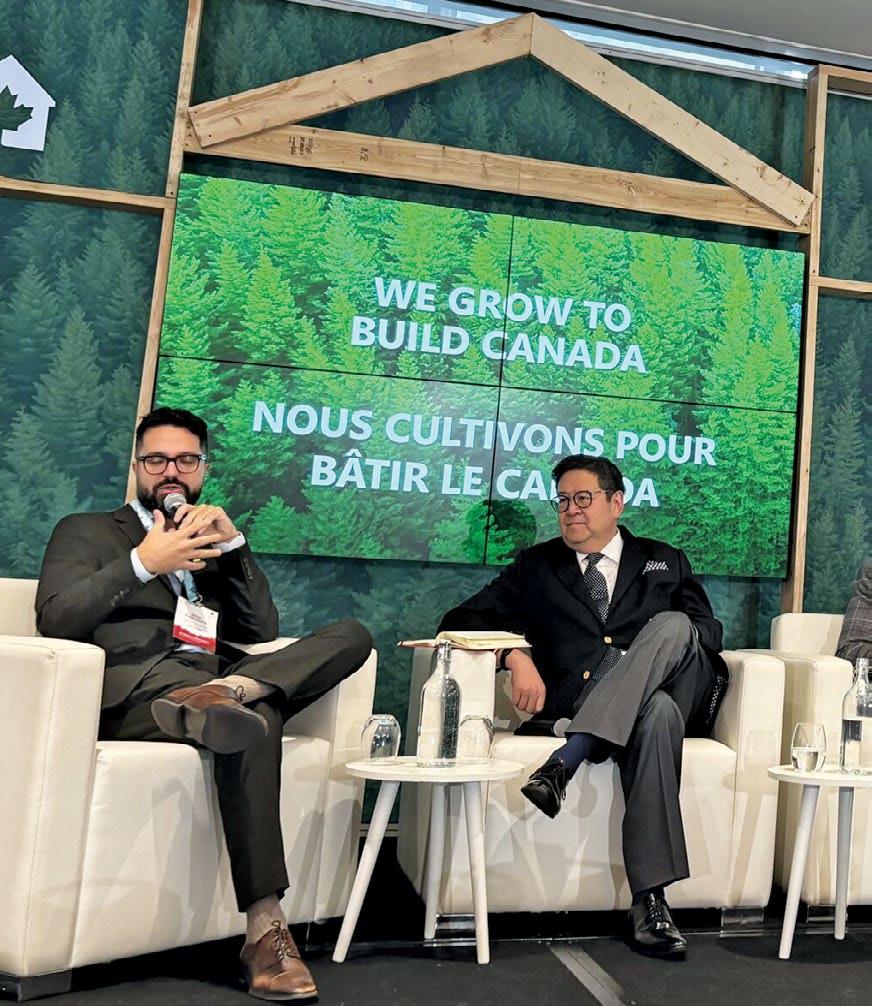
Leaders from the wood products sector converged with political representatives from across the country for the Forest Products Association of Canada’s (FPAC’s) National Policy Conference on Oct. 22, 2025, at the National Arts Centre in Ottawa.
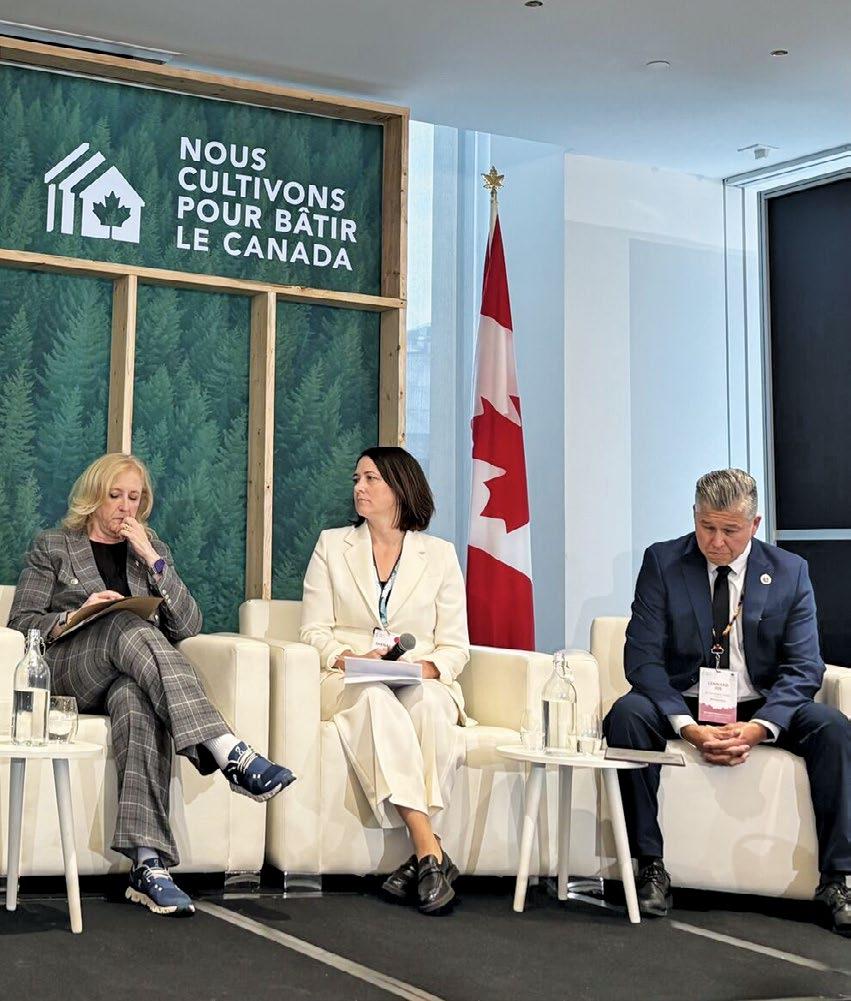
‘We grow to build Canada’ was the annual theme for the event, which featured a panel session on reclaiming Canada’s competitiveness. Moderated by Moe Kabbara, president of The Transition Accelerator, the discussion included: Lennard Joe, CEO of the BC First Nations Forestry Council; Shenandoah Johns, chief environment and sustainability officer at West Fraser; Gary Mar, president and CEO of the
Canada West Foundation; and Lisa Raitt, co-chair of the Coalition for a Better Future and vice-chair of global investment banking at CIBC.
Johns told the crowd that faster, thoughtful regulatory framework is necessary for the competitiveness—and the survival—of the forest products sector in Canada.
“The U.S. Inflation Reduction Act (2022) was implemented with speed,” she said. “In Canada, incentive tax credits were introduced in 2022 and we’re still waiting for biomass. So, the opposite of speed. You see two extremes there.”
Johns added there is a need for federal and provincial governments to eliminate duplication between their regulations, which generates inefficiencies within the
sector, and to create more certainty.
“Carbon taxes are a good example,” she said. “Investors can get their heads around certainty. In Finland, they have five times the mass-timber market that we do in Canada, with 12 times less forested area, and they have a carbon tax.”
To regain Canadian competitiveness, Joe said the forest products sector needs to have everybody in the room with an understanding of the depth of the various relationships between all parties involved.
“Being First Nations from B.C., looking at not just the structure of governance, but really a structure of discipline,” he said. “What are you coming into the room with and what is your responsibility? Within our organizations, everyone talks about continuous growth and continuous improve-
FPAC president and CEO Derek Nighbor (left) kicked off the conference.
Photos by Andrew Snook.
ment, but what does that really mean on a national and global stage? Get everybody into the room, find out what your job is and your responsibility, work collaboratively, make the decisions and actually create some action.”
Raitt, a former long-time MP for the Conservative Party of Canada (CPC) who was appointed minister for natural resources, labour and transportation throughout various stages of her political career, acknowledged Canada’s proximity to the U.S. has been an economic opportunity. However, while there has always been competitiveness between the two countries, Canada’s forest products sector has never faced a threat like the one today from its neighbour to the south.
“It’s about something more significant in terms of wanting to actually take away the market share of Canada and, as a result, we have to look at things differently,” she said, adding the country needs to stand united to weather the current economic storm. “That is going to have to be the secret sauce, making sure we move forward from a competitive lens. We just can’t continue in this role with the U.S. where they call the tune and we dance to it.”
Mar noted the longstanding CanadaU.S. relationship goes far beyond Prime Minister Mark Carney and U.S. President Donald Trump, from provincial and state governments working together to the two nations’ tightly integrated supply chains, but added market diversification is needed.
“We have to double-down on our efforts with our biggest market,” he said, “which will always be the U.S.—the geography is the biggest factor in what we do—while at the same time, we need to be able to expand marketplaces.”
Trade infrastructure
Mar added one of the key areas Canada needs to focus on to diversify its markets is improving its trade infrastructure, noting two-thirds of Canada’s gross domestic product (GDP) comes from exports, 75% of which go to the U.S.
“If we don’t expand our capacity, then there’s a problem,” he said, “because if you can’t move it, you can’t sell it. And if you can’t sell it, you’re not growing your economy. I would look at where it wants
to go, how to get it there and where are the bottlenecks.”
Mar noted Canada’s major ports in Vancouver, Montreal and Prince Rupert, B.C., are all ranked by the World Bank Group in the lowest 15% in terms of efficiency in the world—and the Vancouver and Montreal ports also have some of the lowest rankings from the World Economic Forum (WEF).
One piece of good news Mar shared was how the four western provinces and the three territories had all signed a memorandum of understanding (MOU) related to trying to build a port corridor from Prince Rupert to Churchill, Man. He noted the projects being reviewed by the federal government’s newly formed Major Projects Office also include improving trade corridors across the country.
“Now it’s harder to quantify what the value of the return on investment (ROI) of a trade corridor is,” he said, “but I think it’s critically important to be able to move what you’ve got to where it needs to go. So, I think the federal government is moving in the right direction. But it’s got to move at the speed of government; it cannot move at the speed of bureaucracy.”
Johns mentioned she would like to see the Major Projects Office make rail infrastructure a priority.
“Given the vastness of this country and the rural communities we work in, 50% to 60% of our products move by rail,” she said. “If the rail cars don’t show up or there are labour disruptions, it really can be very crippling to our industry, where we don’t have lots of storage. You can see mills having to take outages or curtailment within a week.”
For expanding the mass-timber market, Mar said Canada needs to look at current regulations with respect to municipal building codes, government procurement and the challenges of attracting capital to that part of the wood products sector.
“Governments need to work with industry to figure out how to do all those things at the same time,” he said. “It’s not good enough to have one party working towards it without all parties working towards it.”
First Nations at the table
The panel discussed another key to Canada improving its competitiveness in the for-
est products sector: ensuring First Nations economic participation and reconciliation are part of these process.
In British Columbia, where there are 204 recognized First Nations and 32 distinct languages, leaders formed the First Nations Leadership Council with the political executives of the BC Assembly of First Nations. Joe cited this type of structure as the start of having everyone coming into the room and understanding what they are responsible for.
“In B.C., we’ve gotten a strong enough First Nations base that has come forward and said, ‘Here’s how we govern ourselves, here’s how we have the responsibility for the land and here’s what we can bring into the room,’” he said. “The success of anything is the ability to attract investors. When you attract an investor, they’re going to put in the work themselves, but you have to prove that.”
B.C. was one of the first provinces to accept into law the Declaration on the Rights of Indigenous Peoples Act (DRIPA), which mandates the province bring provincial laws into alignment with the United Nations Declaration on the Rights of Indigenous Peoples (UNDRIP) and develop and implement an action plan in consultation and co-operation with Indigenous peoples to meet the objectives of the UNDRIP.
“When you have a law, it becomes responsibility,” said Joe. “We now have the responsibility of now getting into the room,
The panel session on reclaiming Canada’s competitiveness featured (left to right) moderator Moe Kabbara and panelists Gary Mar, Lisa Raitt, Shenandoah Johns and Lennard Joe.
having a seat and saying, ‘Here’s how we’re going to move forward.’”
So, for working with the forest products sector, the First Nations Leadership Council created the BC First Nations Forestry Council, which allows First Nations to sit with the provincial government and work on the transformation of policies and regulations.
“That’s what we got to do with Canada,” Joe said. “We can make that happen.
Everyone comes into the room with a different level of understanding and responsibility. And it takes many times being in that room through the iterative approach of coming back around to make things work.”
Wildfire regulations
Forestry companies are well-equipped to be part of forest fire mitigation strategies across Canada. However, the panel discussed how regulations and investments need to improve to allow companies to better manage the forests.
“I think there’s a very compelling economic and climate change argument,” said Johns, “and right now, I think our regulation does not permit that. Here’s an example. You’ve got regulation that protects migratory birds, fish and caribou, all good things, right? But in terms of activating into the land base to reduce the fire risk and the fuel loading on the ground, it can take one or two fire seasons to pass before we’re able to do that. So, those are very pragmatic issues getting in the way of balancing those things.”
Courage to make changes
Raitt said the building blocks of competitiveness are reducing expenses and expanding markets, which politicians can help industry achieve.
“Under decreasing expenses comes regulatory reform and the courage of politicians to follow through on that reform,” she said, “and they have to be reminded regulations are just risk management. If regulations don’t make sense for the mission we now have, which could be very different from the one we’ve had for the last 100 years, then we have to amend our risk appetite, quite frankly, and that takes a lot of courage from politicians.”
Raitt argued that FPAC, forest products companies and communities across the country bound together by the forestry sector have to raise their voices to make sure politicians hear their concerns.
“We are at a point where a non-decision is a decision,” she said. PPC
Andrew Snook is former editor of Pulp & Paper Canada and current editor of Canadian Forest Industries (CFI) and Canadian Biomass.
GIVING BACK
The latest outreach initiatives from the pulp and paper industry.
The Canadian forest products sector is passionate and devoted—not just to the industry itself, but to local communities and society at large. Here we share the initiatives of pulp and paper companies working to make positive social, environmental and economics impacts across the country.
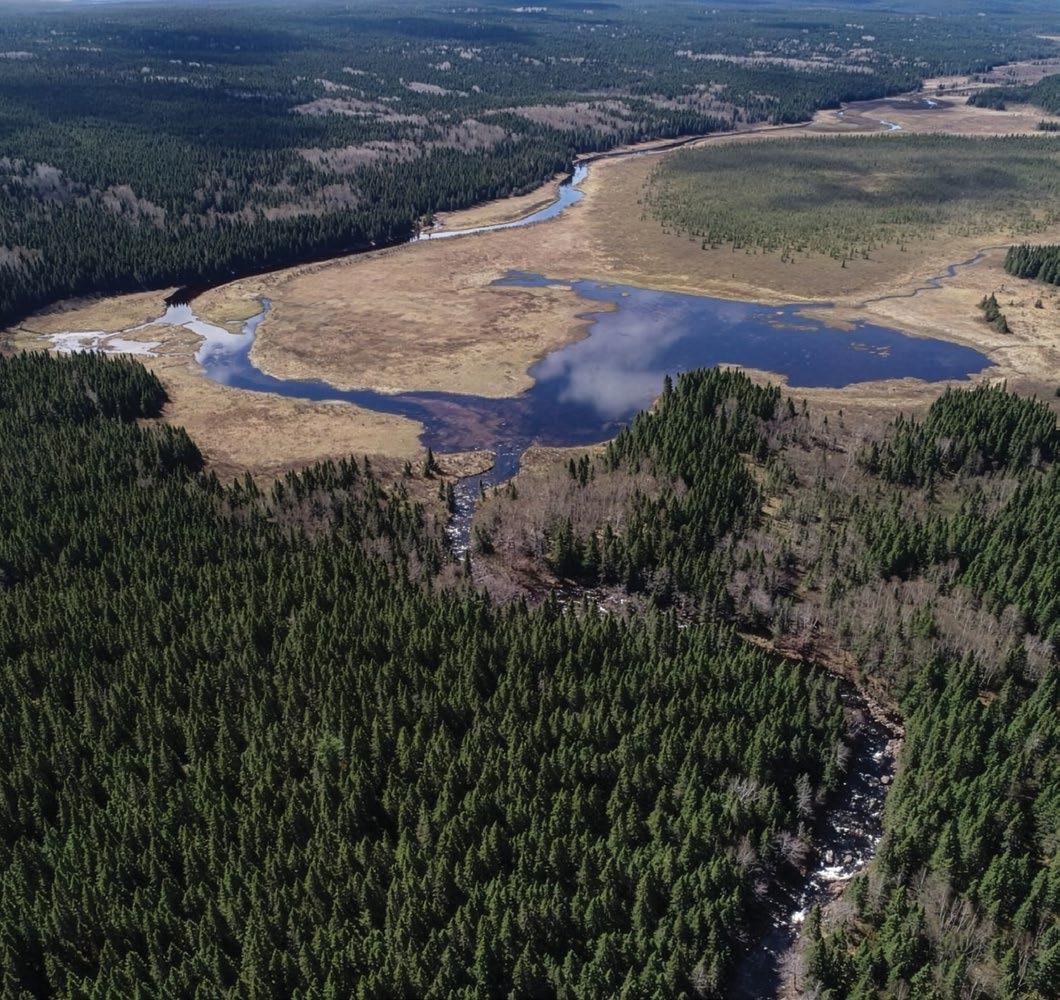
Last October, Domtar agreed to donate land along Newfoundland’s Southwest Gander River and Gander Lake, near the communities of Glenwood and Appleton, to the Nature Conservancy of Canada (NCC). It represents the largest land donation the charity has received during its 54 years working in Atlantic Canada.
The announcement came as NCC launched its largest private conservation securement, with a campaign to protect more than 4,400 acres of boreal forest, freshwater shoreline and wetlands in central Newfoundland. Domtar’s donation allows NCC to conserve four large parcels of forested lands and waters to enables better wildlife movement through connected conservation lands, including those yet to be designated in the future.
“Boreal forests cover 60% of Canada’s land mass and absorb vast amounts of greenhouse gas (GHG) emissions,” says Piers Evans, NCC’s program director in Newfoundland and Labrador. “We are grateful to Domtar for the generous land donation.”
Domtar previously transferred stewardship of 358,300 acres of boreal forest in Ontario to NCC in 2022, as part of the largest private land conservation agreement in Canadian history. That property is being preserved and managed for research and long-term conservation.
How has your business given back? Let us help you share your successes! Email the editor at psaunders@annexbusinessmedia.com. We’d love to hear from you!
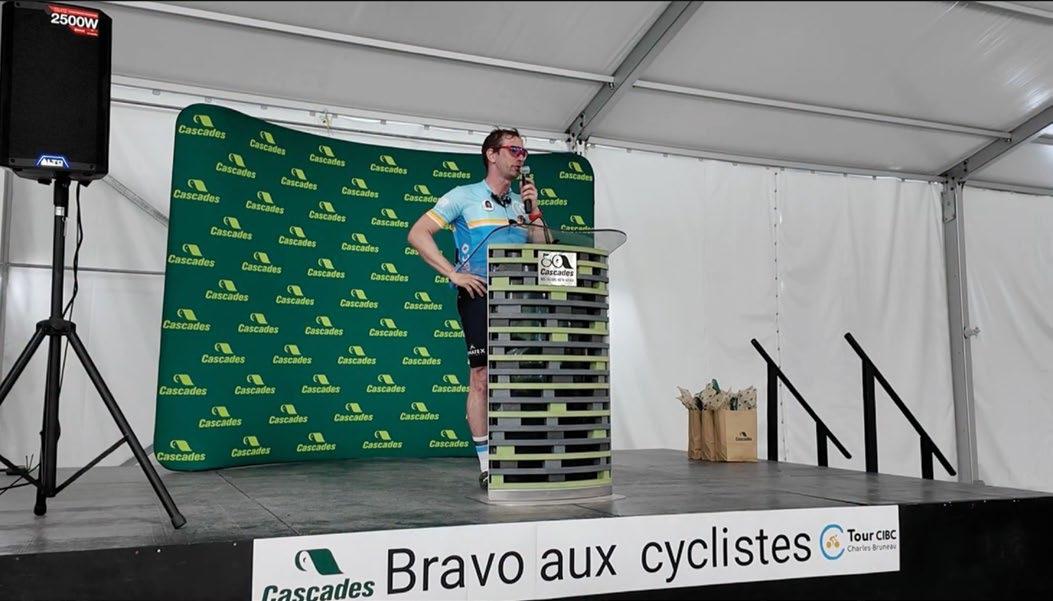
Every year, employees of Cascades take part in the Tour CIBC Charles-Bruneau, which raises funds to help give children with cancer a better chance of recovery. Several routes crisscross Quebec. In July 2025, Cascaders cycled along a route through Kingsey Falls, where the company manufactures uncoated paperboard from recycled fibres for the packaging industry.
Photos courtesy Cascades
Photo courtesy Piers Evans/NCC
Pressure measurement for your process?
Leave it to us!
Everything is possible. With VEGA.
Our technologies offer everything you need for process, hydrostatic, and differential pressure for the paper industry. Around the world, VEGA pressure solutions stand for proven reliability and trend-setting innovation. Our pressure measurement solutions go beyond just efficient, optimised processes – they provide you with peace of mind, knowing that you’ve chosen the best technology available.