Criminal prosecutions appear to be rising for health and safety crimes. Norm Keith takes an in-depth look.
12 | Safety Leadership
Keeping your team safe: Leadership tips for working with subcontractors
DEPARTMENTS
04 | From the Editor
05 | In the News
18 | CCOHS Corner
Using plain language to create inclusive workplaces
20 | Quarterly Check-in
The CSA Group tackles climate change
22 | Time Out
A mile-high mess, and a penny for your thoughts
TODD HUMBER
By Todd Humber, Senior Editor
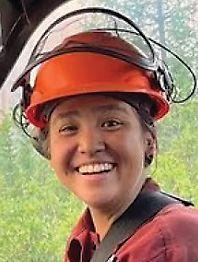
Bravery and loss: Facing safety challenges in the wildfires
The tragic loss of lives among Canadian wildfires in recent weeks has sent a wave of sorrow across the country
British Columbia Premier David Eby said it best: “This wildfire season has been profoundly awful” and the fatalities have “shaken people.” The headlines on OHSCanada.com came fast and frequent as these brave firefighters fought the massive wildfires devastating parts of the nation. The ages of the these heroes exacerbates the issue — they are so young.
On July 13, 19-year-old Devyn Gale died while fighting a fire near Revelstoke, B.C., after being struck by a falling tree.
On July 15, 25-year-old Adam Yeadon died fighting a blaze near Fort Liard in the Northwest Territories.
On July 19, 41-year-old Ryan Gould was killed when the helicopter he was using to fight a fire crashed near Haig Lake in Alberta.
And, just as we were going to press with this issue, 25-yearold Zak Muise was killed in northeastern B.C. when his heavy-duty ATV rolled over a steep drop on a gravel road.
There are some jobs that are harder than others to keep
EDITORIAL ADVISORY BOARD
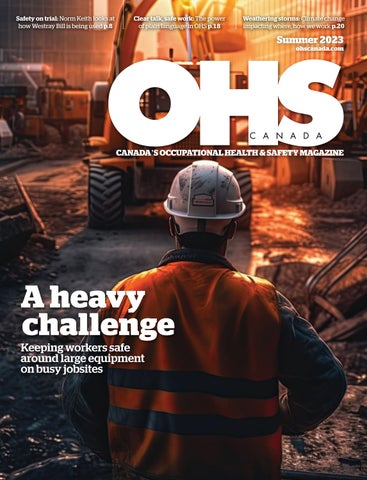
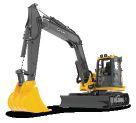
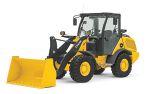
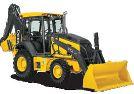
workers safe. I was reminded of this while talking with Sig Kemmler for this issue’s cover story on keeping workers safe around heavy equipment.
Kemmler bristled at the idea of telling workers not to be complacent or telling them to “be safe.” Trips, slips and falls are the number one source of injuries in logging, he said. Not falling isn’t an option — these workers will slip and fall regularly and, likely, multiple times a day.
The goal, instead, is to ensure the falls don’t lead to serious injury and to learn from mistakes made. I urge you to read the article and pay particular attention to the “condition of upset” that he runs through.
Wildfire fighting and logging present dynamic and everchanging conditions. These are not sterile environments where safety can be easily tamed. But that doesn’t mean they get a green light to resign themselves to their fates.
First, we must honour the fallen by remembering that their deaths are not statistics. In OHS Canada, we name them. We tell their story when possible and we remember their sacrifice. Their deaths will always serve as a call to action, and not just for physic-
Paula Campkin: chief safety officer, Energy Safety Canada
Marty Dol: president and founder, HASCO Health & Safety Canada
Uyen Vu: Institute of Work & Health
Natalie Oree: prevention consultant, SAFE Work Manitoba
Norm Keith: partner, KPMG Law LLP
al safety but also the mental toll these jobs take than can is fertile ground for dangerous distraction.
Second, we should take Kemmler’s advice: Complacency is not a failure. Rather, it is a very human response to familiarity and repetition. We can never eliminate it, but by ensuring open dialogue and rewarding proactive safety behaviours we can fight to keep it at bay. Also, if somebody is distracted, encourage them to take five minutes to recompose themselves.
Third, we have to keep innovating and investing in technology. The better our equipment gets to fight fires, the safer these workers will be — and, with climate change, these battles are going to get tougher and more frequent.
Lastly, we have to remember we’re all responsible for the safety of these men and women. The burden falls not just on their shoulders, or that of their supervisors. It’s a collective fight involving employers, regulators and workers.
The legacy of Devyn, Adam, Ryan and Zak — and all workers who have perished and been injured — demands nothing less than our best efforts to constantly improve safety.
Richard Quenneville: senior director of corporate services, T. Harris Environmental Management
Maureen Shaw: lecturer and presenter
Dylan Short: managing director, The Redlands Group
Summer 2023 Vol. 39, No. 3 ohscanada.com
READER SERVICE
Print and digital subscription inquiries or changes, please contact Angelita Potal
Tel: 416-510-5113 Fax: 416-510-6875
email: apotal@annexbusinessmedia.com
Mail: 111 Gordon Baker Rd., Suite 400, Toronto, ON M2H 3R1
SENIOR PUBLISHER Paul Burton 416-997-0377 pburton@annexbusinessmedia.com
COO/ GROUP PUBLISHER Scott Jamieson sjamieson@annexbusinessmedia.com
Printed in Canada
ISSN 0827-4576 (Print) ISSN 1923-4279 (Digital) PUBLICATION MAIL AGREEMENT #40065710
SUBSCRIPTION RATES
Published four times per year WINTER, SPRING, SUMMER, FALL Canada $100/yr plus tax USA $130/yr (100 USD) Foreign $214/yr ($164.50 USD)
Occasionally, OHS Canada will mail information on behalf of industry related groups whose products and services we believe may be of interest to you. If you prefer not to receive this information, please contact our circulation department in any of the four ways listed above.
Annex Business Media Privacy Office privacy@annexbusinessmedia.com Tel: 800-668-2374
All advertising is subject to the publisher’s approval. Such approval does not imply any endorsement of the products or services advertised. Publisher reserves the right to refuse advertising that does not meet the standards of the publication.
In the News
National Steel Car fined $175K after worker killed
National Steel Car has been fined $140,000, plus a victim fine surcharge, after one of its workers was killed on the job at its facility in Hamilton.
On April 23, 2021, two workers were tasked with painting a railcar inside a large industrial sized paint booth. The first worker assisted by preparing the paint while the second did the spray painting. The preparation work involved covering both sides of the railcar wheels with burlap to protect the wheels from paint splatter.
To reach the wheels, the second worker had to enter a lift and position it close to the railcar. To reach the back of the wheels, the worker had to lean forward with their body partly outside of the lift. After observing the second worker enter the lift, the first worker left the area temporarily.
When they returned, they noticed that their colleague was slouched over the top railing of the personnel lift, with the lift in a position above the wheels of the rail car and moving upward.
A Ministry of Labour investigation determined the personnel lift did not have a functional safety release mechanism.
Adams named CEO for Nova Scotia’s WCB
Karen Adams has been named CEO of WCB Nova Scotia, effective Aug. 14, 2023. Adams was recognized in 2017 as one of Canada’s Top 100 Most Powerful Women by the Women’s Executive Network, and was voted by her peers as “CEO of the Year.” She has held leadership positions in organizations around the world, including president and CEO of Fundserv Inc. She has also served as president and CEO of the Alberta Pensions Services Corporation, and held a number of senior executive positions internationally with HSBC.
$140K
Amount of fine issued by an Ontario court, before the 25 per cent victim surcharge, against National Steel Car.
Align Energy Services fined $250K after worker killed in Saskatchewan
A Saskatchewan company has been fined $250,000 after a worker was killed on the job.
On Aug. 15, 2021, the employee was working for Align Energy Services in Oakdale, Sask. The worker was fatally injured when impacted by a flex pipe reel, according to a press release from the province.
The company pleaded guilty to contravening clause 14-5(1)(b) of the regulations (being an employer fail to ensure that a sling used
to hoist a load and the slings fittings and attachments are suitable for, and capable of, supporting the load being hoisted, resulting in the death of a worker).
Four additional charges were withdrawn.
On July 11, in Kindersley Provincial Court, Align Energy Services was fined $178,571.43 with a $71,428.57 surcharge for violating The Occupational Health and Safety Regulations, 2020.
Powerline incidents, including fatality and two serious injuries, prompts safety awareness campaign from ESA
There have been three recent powerline-related incidents in Ontario that resulted in either a near fatality or the loss of life, according to the Electrical Safety Authority (ESA).
These incidents, reported to the ESA in July, occurred across Western and Northern Ontario and are an example of the breadth of ways in which people can come in contact with powerlines. One incident, fortunately non-fatal, involved an attempt by an individual to move a downed powerline they had mistakenly identified as non-electric.
The other two incidents involved construction sites. At one, a log boom made contact with an overhead powerline, and in the other an individual’s tool came within three metres of the powerline, tragically, resulting in a fatality.
According to ESA data, August is the most lethal month for powerline contacts with the highest number of fatal incidents among both the general public and on job sites. Since 2012-2021 there have been 19 fatalities and 1,393 overhead powerline contacts in Ontario. These recent incidents underscore this concerning trend, and further demonstrate the serious risks.
“The consequences of making contact with a powerline can be instantly fatal or physically devastating,” said Patience Cathcart, director of data science and public safety officer, ESA. “It is crucial to know where powerlines are when you’re working, whether that’s at a job site or doing work around your house, and we urge Ontarians to take precaution to ensure their well-being when working in the vicinity of powerlines.”
ESA has launched a multi-pronged campaign to raise awareness among at-risk workers, it said.
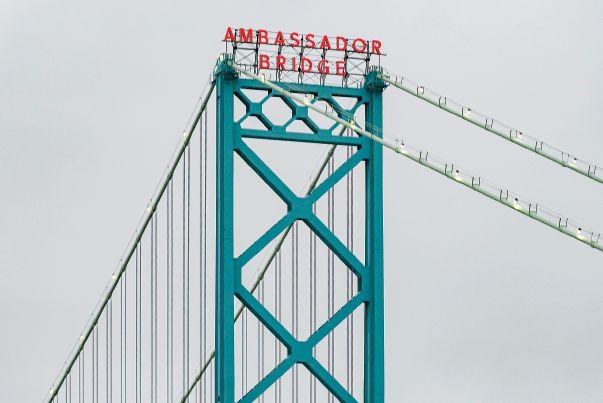
Worker survives fall off Windsor’s Ambassador Bridge
45.7
Height, in metres, that a worker fell from the Ambassador Bridge, the international crossing that connects Windsor, Ont., and Detroit.
A worker has survived after falling 150 feet (45.7 metres) into the Detroit River in July. The man, identified as Spencer Baker, plunged off the Ambassador Bridge — the international crossing that connects Detroit and Windsor, Ont. Baker was a contractor working for AC Metal, based in Oldcastle, Ont., just outside of Windsor. But because the fall happened on the U.S. side of the bridge, authorities in Michigan will have jurisdiction over the investigation, according to a report from CBC News.
“The force of the impact had
ripped most of his clothes off of him,” Sam Buchanan, captain of the J.W. Westcott, told Fox 2 Detroit. “His work boots were still on him and his pants were around his ankles and he had his T-shirt on.”
Buchanan said the man was ferried to shore where Detroit paramedics took over.
“We were relieved that he could talk to us, but he was pretty out of it,” Buchanan said. “He kept asking us what happened to him and we told him that he fell off the bridge.”
Quebec needs to do more to protect traffic signallers: Union
(CP) — After a hit-and-run that killed one traffic signaller and injured in Montreal in July, a union representing traffic controllers says the province needs to do more to protect them. A 39-year-old signaller died as a result of his injuries, police confirmed. The other worker, also 39, suffered minor injuries. The driver who allegedly caused the July 12 collision, a 68-year-old man, surrendered to authorities and was later released.
Martin L’Abbee of United Steelworkers, the union that represents around 1,000 traffic signallers in the province, says the incident marks Quebec’s 19th traffic controller death in the last three decades, including signallers and workers installing signage.
Ottawa accepts call for tighter fishing boat inspections in aftermath of N.S. sinking
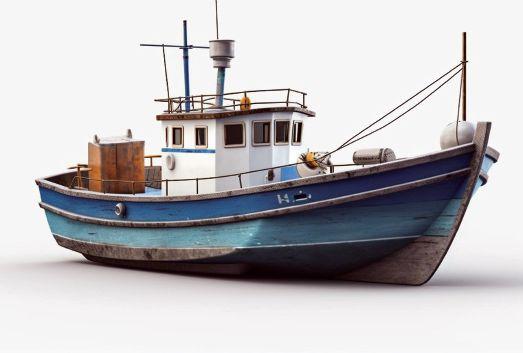
Transport Canada says it will tighten inspections of fishing vessels in the aftermath of a 2020 sinking that resulted in six deaths off Nova Scotia’s southwestern coast.
A March 22 report by the Transportation Safety Board of Canada concluded that the dragger Chief William Saulis capsized because 2,700 kilograms of unshelled scallops blocked the drainage system as high seas crashed into the boat.
It recommended that Transport Canada inspectors verify whether required, written safety procedures are available to crew, such as methods to store catch in a way that doesn’t block drainage. A department spokeswoman confirmed that Ottawa will implement this recommendation, though details haven’t been released. Safety expert Marc-Andre Poisson, a former head of marine investigations at the board, says the federal government’s decision to have inspectors verify safety procedures is a step forward.
But he say Ottawa must mandate that boats are tested for stability, which would give crews precise information and training on how to load a vessel so that it remains stable in rough seas.
Memorial for fallen B.C. wildfire fighter held in Revelstoke
Family, friends and fellow firefighters paid tribute to a 19-year-old woman killed while battling wildfires in British Columbia. Devyn Gale died on July 13 after being struck by a falling tree near Revelstoke, B.C.
Gale’s brother and sister, Nolan and Kayln, who are also firefighters, gave emotional speeches about their sister at a public memorial in Revelstoke, calling her compassionate, wise and nurturing.
Casey Robinson of the B.C. Wildfire Service, who interviewed and trained Gale, said he was impressed by her “smarts, her energy and her ability to work hard.”
He says Gale was an “excellent firefighter” and encouraged all those in the same field to continue her legacy of “being welcoming, conscientious and open hearted to anyone who joins” their crews.
The service followed a memorial procession that included Gale’s BC Wildfire Service colleagues, a Colour Party, Honour Guard and representatives from various first-responder agencies. Community members lined city streets in Revelstoke to watch the march.
Gale is one of four Canadian firefighters who have died battling the hundreds of blazes that are burning across the country.
Adam Yeadon, 25, died while fighting a wildfire near his home in Fort Liard, N.W.T. A 41-year-old helicopter pilot from Whitecourt, Alta., died after his aircraft crashed during firefighting operations in that province’s northwest. A 25-year-old man from Ontario was killed near Fort St. John, B.C. when his heavy-duty ATV rolled over a steep drop on a gravel road.
The board noted in its March 22 report that the Chief William Saulis should have undergone a stability assessment because its owners had modified the boat by adding a plate to the stern and covers to drainage holes.
23_004902_CN_OH_n_S_SMR_CN Mod: July 6, 2023 10:22 AM Print: 07/07/23 11:29:49 AM page 1 v7
Legal View
By Norm Keith
Criminal prosecutions appear to be rising for health and safety crimes
The enduring legal legacy of the Westray Mine disaster in Nova Scotia is the Bill C-45 amendment to the Criminal Code that established the new crime of occupational health and safety (OHS) criminal negligence for individuals and organizations.
Often referred to as the Westray Bill, it introduced a legal duty and accountability for corporate and individual persons to take “reasonable steps to prevent bodily harm” in the Criminal Code. Recent charges in Ontario, and elsewhere in Canada, have seen an increase in the use of the Westray Bill as an enforcement mechanism.
Background
On May 9, 1992, twenty-six miners died at the Westray Mine in Pictou County, Nova Scotia, when an explosion and fire ripped through the underground coal mine. A failed criminal prosecution of two mine managers and the corporate mine owner, together with the withdrawal of 52 health and safety charges by the Nova Scotia regulator, were not the only legal consequences from that tragedy. There was a highly publicized public inquiry that made a number of recommendations including amendments to the Criminal Code.
However, the Westray Bill took a long time to be passed into law. On March 31, 2004, almost twelve years after the mining disaster, the Westray Bill became law.
Now a corporate employer may be found guilty of OHS criminal negligence if one or more of its representatives (i.e., employees) are criminally
“There is a high social awareness and outrage when a worker is injured at work.”
negligent, its senior officer failed to take reasonable safety measures, and there are a significant causal connection between the conduct and the death or bodily harm of an individual and the corporate failures. In other words, an employer may now be charged and convicted for OHS criminal negligence causing injury or death from a workplace accident if it violates the legal duty in the Criminal Code.
That legal duty reads as follows: “Everyone who undertakes, or has the authority, to direct how another person does work or performs a task is under a legal duty to take reasonable steps to prevent bodily harm to that person, or any other person, arising from the work or task.”
The offence is further complicated for an organization by the legal test for whether a corporate defendant is party to a negligence-based offence.
In the Criminal Code that provision is section 22.1. Section 22.1 has
two elements that must be proven by the prosecutor, both of which must be proven beyond a reasonable doubt to convict a corporation of a negligence-based offence.
First, a representative (and two or more representatives will be treated as a single representative for the purposes of this section) of the corporation must be party to the offence.
Second, a senior officer must have failed to prevent the representative from being party to the offence and in failing to do so, the senior officer must have departed markedly from a standard of conduct that is reasonable in the circumstances to prevent the representative from being party to the offence.
Senior officer is defined in s. 2 of the Code as a representative, meaning any director, partner, employee, member, agent, or contractor of a corporation, who either creates corporate policy or is responsible for managing its implementation. The
Norm Keith is partner, employment and labour law, at KPMG Law LLP in Toronto.
GET FULLY CERTIFIED TODAY!
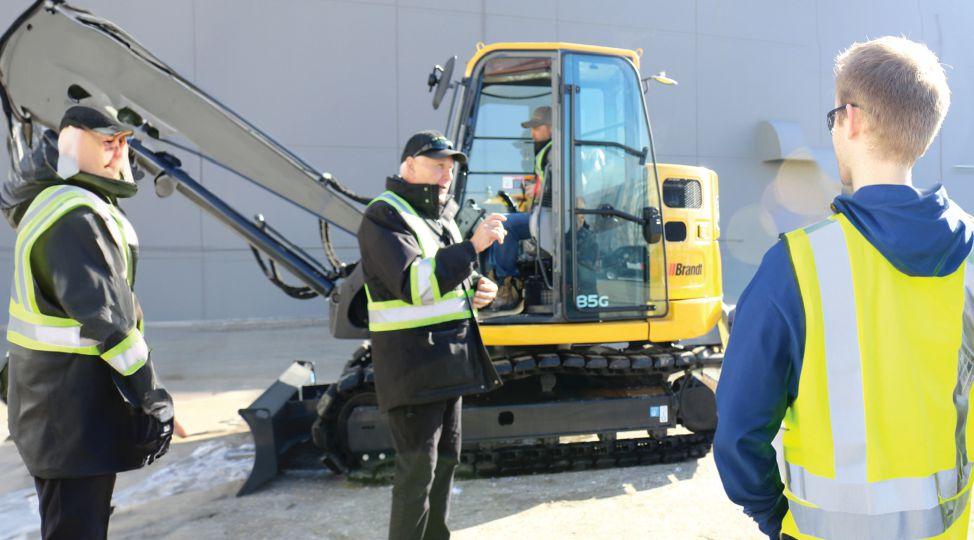
Enhance your safety, productivity, efficiency, and confidence on the job with Brandt Operator Safety Training.
FORKLIFT
Learn how to load handle, drive & maintain a range of forklift types.
SKID STEER
Get certified in a day with our all-inclusive skid steer course.
TELEHANDLER
Understand all aspects of telehandler operation, from startup to shutdown procedures.
MOTOR GRADER
Industry-leading training on motor grader handling, safety & operations.
MEWP
Gain skills in maneuvering and operating an Mobile Elevated Work Platform safely onsite.
EXCAVATOR
Take our full-day excavator course & get certified.
FALL PROTECTION
Master fall protection systems and skills that meet regulation requirements
FRONT END LOADER
Industry-leading training on wheel loader handling, safety & operations.
CRANE & RIGGING
Gain an understanding of how to inspect & safely operate overhead & truck-mounted cranes.
BACKHOE
This course provides students a basic understanding of backhoe operation, maintenance, and load handling.
Legal View
By Norm Keith
Westray Bill expanded corporate liability by eliminating the prosecution’s duty to prove that a person is a directing mind of the corporation responsible for creating policy.
To prove an accused corporation is guilty of OHS criminal negligence under s. 219 of the Code, the prosecution must prove beyond a reasonable doubt i) the identity of representative who was criminally negligent, ii) that the accused had a legal duty to take reasonable steps to prevent bodily harm, and iii) the accused showed a “wanton or reckless disregard for the lives or safety of others.”
Through the enactment of s. 217.1, the new legal duty to take reasonable steps to prevent harm to workers and any other person that is applicable to persons directing work. It also imposes a duty on those who either undertake or have authority to direct work. Directors, managers, and supervisors, as well as lower-level employees, including foremen and lead-hands could all have to duty to take reasonable steps to prevent harm to others.
The prosecution also must prove beyond a reasonable doubt that there is a marked and substantial departure for a finding of criminal negligence. The requisite mental element in criminal negligence is the minimal intent of awareness of advertence to, or wilful blindness to the threat to the lives or safety of others.
In addition to proving acts, or a failure to perform duties arising to the level of material and substantial departure, the prosecution must prove, pursuant to ss. 220 and 221 of the Code, that there was a significant causal connection between the conduct and the death or bodily harm.
Infrequent use of law
Some of the reasons the Westray Bill has been used infrequently may include the following. First, there has been limited training and awareness by police of the legislation and its importance. Since Canada has a hybrid policing model of a national police force, the RCMP, provincial police forces like the OPP, and local municipal police forces, it is difficult to enforce coordination and consistency in training on
new laws. Second, there has been a growing role of OHS regulators in taking on a policing enforcement function in OHS regulatory enforcement.
Many provinces, including Alberta, Ontario, and Nova Scotia have increased the number of OHS inspectors and prosecutors (Ontario currently has 29 prosecutors).
Third, there continues to be no clear standard on what amounts to “reasonable steps to prevent bodily harm” in section 217.1 of the Criminal Code. In other words, police and Crown prosecutors have no standard or benchmark by which assess the acts or omissions of workplace parties when a serious incident has occurred.
In several Westray Bill cases I have been involved with, for example, the Crown prosecutors have pointed to provincial OHS regulations as the applicable standard. The problem with this approach is that either there is a parallel OHS prosecution — in which case the waters have been muddied on which prosecution takes precedence; or, if there is not a parallel OHS prosecution the regulator with greater experience than the police have decided there is not prima facie violation of the standard.
Police investigations
We are now seeing police often conduct a parallel investigation and a Crown prosecutor lay criminal charges, especially in workplace fatalities. This trend appears to have three main explanations.
First, they have received more training and have had more experience with the purpose and nature of the amendments to the Criminal Code. This has occurred not because the Westray Bill has established a legal duty regarding workplace safety alone, but because it deals with the legal test for the prosecution, sentencing and probationary orders for organizations, including corporate employers, for all criminal offences. Therefore, when a corporation is investigated for fraud, money laundering, or tax fraud, those other provisions of the Westray Bill apply. Therefore, with more exposure through training and experience, the s. 217.1 legal duty has also been brought to the attention of law enforcement officials.
Therefore, when a serious or fatal workplace injury occurs, the police now know they need to look at the cause and circumstances more closely to rule out OHS criminal negligence.
Second, there is increased pressure from several sources to act when a worker is seriously injured or killed to seek criminal charges. This started in the early years after the passage of the bill with public advertisements by union leaders to charge companies and senior executives when a worker was fatally injured.
Then various mainstream media started assigning reporters to closely cover these events. And the proliferation of cellphone cameras turned everyone into a videographer of workplace tragedies. Family and friends of loved ones who were injured at work also found a stronger and louder voice to call for police investigations and criminal charges.
Third, the social intolerance of workplace injuries and fatalities has grown over the last decade. Partially due to the first and second factors, in the writer’s opinion, employers who do not take “reasonable steps to prevent bodily harm” to their workers are more open to serious criticism and demands for OHS criminal negligence charges than ever before.
There is a low social awareness of the high commitment that many companies and executives have to their workers safety, but there is a high social awareness and outrage when a worker is injured at work.
The follow-up question from the thesis of this article is: “What can we do to reduce corporate and criminal legal risk of being investigated and charged with OHS criminal negligence?” I’ll tackle that in my next column. In the meantime, give some thought to these three questions: What value does your organizations place on the health and safety of its employees? When is the last time senior officers and directors received meaningful OHS training? Has your organization ever actively ‘stress tested’ is OHS management system through scenario planning and analysis?
Think about those questions and stay tuned for my next article.
Safety Leadership
By Lisa McGuire
Keeping your team safe: Leadership tips for working with subcontractors
Most business leaders recognize their duty to protect workers within the four walls of their operating facilities. Even in recent years, with more employers adapting policies to address remote work, production staff in the manufacturing sector remained onsite.
But what if your team provides services and support onsite elsewhere — at a facility you don’t own? What if you employ temporary workers and contract employees? Where do the obligations of contractor and subcontractor begin and end in protecting contract workers’ health and safety?
While subcontractors are separate entities, there is a fiduciary responsibility and onus on all businesses to ensure every worker is protected from hazards and risks. And, as business leaders, we are responsible to know what risks we are introducing into our facilities when we hire a contractor or subcontractor and to control those risks effectively.
Ultimately, we are responsible for the health and safety of our workers and the contractors and subcontractors who come to work in our facilities—as well as their impact on our risk profile and culture.
Health and safety considerations in contractor procurement
A sustainable culture of health and safety doesn’t begin and end at our business location’s front door. In procuring contractors, in addition to knowing what services they provide, we need to understand who they are and how they approach workplace health and safety.
By considering it upfront in our contractor selection, we can take steps to protect the safety culture in our own operations. Our due diligence includes requiring that proposals including information on the contractor’s health and
safety programs — and references confirming that they follow their safe work procedures onsite.
As we identify potential contractors and subcontractors, we also need to determine whether their approach aligns with ours. What is their safety performance record? How do they balance the health and safety of their workers with the demands of clients? Have they achieved a safety certification such as COR or the Occupational Safety Standard of Excellence to demonstrate they have a third party audited process to systematically manage OHS risks?
D ue diligence in answering questions like these provides checks and balances in the selection of contractors whose values align with ours.
Oversight and follow-through
Whether we work with a subcontractor on a short-term basis or long term, we are entering a partnership. Oversight and follow-through are critical factors in managing this important relationship. By valuing health and safety in the selection and ongoing management of contract workers, we see to the protection and wellness of everyone. This is an expectation and our duty as employers when endorsing contractor agreements.
In our management processes, we also need to evaluate and plan for effective
orientation, training, and oversight of contractors and subcontractors on-site.
And in a longer-term contract arrangement, contractors have a significant impact on our teams and culture. That is an influence we need to recognize and manage.
How do we ensure that all workers will have the required safety training? Will required training be upfront or ongoing? Have we assigned an employee to orient, train, manage, and provide oversight to the contractor worker? Could there be benefit in a long-term contractor participating in our joint health and safety committee?
With the support of health and safety professionals both at our own companies and at our subcontractors, we can identify the best way to engage each other to minimize risk and strengthen our culture.
Continual Improvement and review
No matter how we work with a contractor or subcontractor, it’s important to identify and agree to an ongoing process of review and refinement—including an assessment of the contractor’s health and safety policies, any incidents involving contract staff, and the influence of the contract workers on employee perceptions of health and safety.
Continual improvement is key to ongoing, successful health and safety programs. As we develop and refine our own health and safety programs, we need to look for ways to bring our contractors along. Keep them informed about changes in policies, procedures, physical changes, in the facility, staffing changes, and anything that could impact their safety.
Through integration of health and safety into contractor procurement, oversight, and continual improvement, we protect our people and safety culture. Collaboration on health and safety makes our contractor partnerships more effective—and becomes another driver of sustainable business performance.
Lisa McGuire is the CEO of the Manufacturing Safety Alliance in Chilliwack, B.C.
See for yourself through a free Total Cost of Ownership Analysis. Together, we’ll find ways to
BUILD STRONG PARTNERSHIPS WITH
Heavy logging, light risks
Keeping
workers safe
around heavy equipment means treating them like humans
By Todd Humber
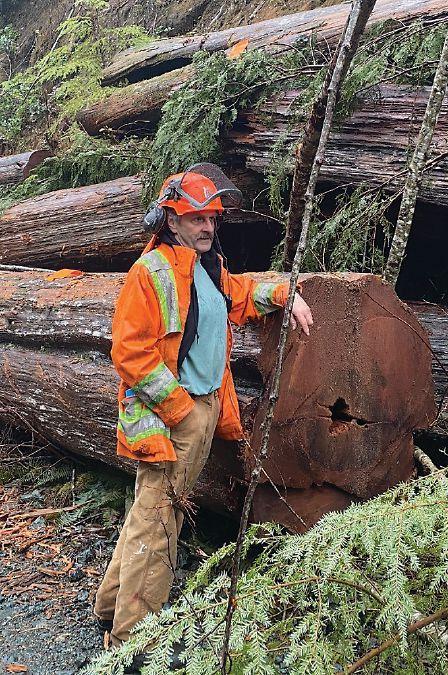
Amid the cacophony of whirring engines and clanging metal, as heavy equipment moves back and forth, there is no one-sizes-fits all solution to keeping workers safe, according to Sig Kemmler.
“Everything is so intermeshed and intermingled. But one of the most important things, for sure, is communication,” said Kimmler, managing partner and ground-based logging manager for Integrated Operations, a forestry company based out of Campbell River and Duncan on Vancouver Island.
In forestry, for example, WorkSafeBC wants to see an environment with no “phase congestion.” The BC Forest Safety Council defines it as “a situation where different logging phases — such as planning, falling, road construction, production or blasting, etc. — become bunched up or congested, with an increased risk of negatively affecting the productivity and safety of each phase, putting workers at higher risk of an upset or incident.”
Kemmler said that, if you can manage the communication and ac-
tivity between the phases, that goes a long way in keeping people out of the way. Every worker he puts in the field is equipped with a two-way radio, said Kemmler.
“ There’s never a reason not to communicate with the people beside you, in the helicopter or in the logging machine,” he said. “There’s never an excuse not to find out what he’s doing if you’re not sure. We’re soft like jellybeans. We don’t do well with logs hitting us.”
Simple behaviours, high risks
Kemmler gave the example of a
“We’re soft like jellybeans. We don’t do well with logs hitting us.”
Sig Kemmler
worker who needs to stop and sharpen their chainsaw.
“Sounds pretty simple, right? But where are you doing it? Are you bending down behind a machine? Are you turning your back on a helicopter that is coming in for landing?
Sometimes, it’s the super simple things where guys can get into trouble, where they’re not being conscious of what’s happening around them.”
Years ago, an old-timer told him a nautical phrase that stuck: “Not a lot happens at zero knots.” It’s something worth keeping in mind — if you’re going to do something like sharpening your saw, or an activity not associated with a piece of machinery, get yourself out of its way before you do that task, he said.
You will get complacent
When Kemmler hears someone say, “don’t be complacent,” his eyes roll.
“You will get complacent. You’re a human being, the last time I checked, and not a machine,” he said. “And you had a fight with your wife last night… and that’s going to bug you from time to time.”
If you know your mind isn’t on the task, remove yourself from the situation — even if it’s for 10 minutes.
“Sit down and have a coffee, or have a smoke or whatever,” he said. And then you can say to the team, “watch out for each other because every one of you is going to get complacent at times and, if you’ve got your buddy watching out for you, fantastic.”
He’s also not a fan of simply telling workers to be safe. “That’s such a stupid thing to say, because just think
“What do you do? Tell a logger, when he goes to work in the morning, don’t fall?”
about it. We tell somebody to be safe — what does that mean?”
Many injuries in the bush are related to trips and falls, he said.
“What do you do? Tell a logger, when he goes to work that morning, don’t fall? You will probably trip and fall four times today or even 10 times today because of the work you do,” he said.
Instead, the message is what are you going to do to make sure that fall doesn’t cause an injury? And if somebody does take a tumble, the buddy system can come into play as most of his teams work in pairs.
“If you trip or fall or something like that, take five and get yourself refocused and let your buddy know that you fell,” he said.
Black box culture
Kemmler pointed to the airline industry and what’s known as “black box thinking” as an example of what to do. Decades ago, airlines realized that safety was paramount for the survival of their industry.
They established robust safety protocols, overseen by government organizations like the Federal Aviation Administration (FAA) in the United States, he said. The International Air Transport Associations, which represents 300 airlines comprising 83% of global air traffic, said there were 39 total accidents in 2022, including five fatal accidents. That means, on average, a person would need to take a flight every day for 25,214 years to experience a 100 per cent fatal accident.
He contrasted the safety record of airlines to the health-care industry. Hospitals, particularly ones in the United States, have a culture of concealing mistakes, he said. A Johns Hopkins study from 2016 found that about 9.5 per cent of all deaths, or about 250,000 people annually, stemmed from medical error.
“They have a culture, pretty much, that it’s
super bad to screw up—and you better hide,” said Kemmler. “That doesn’t work. Safety culture has to be a culture in which you can’t shoot the messenger. You can’t shoot the guy who screwed up. You just can’t.”
The ‘condition of upset’
S afety professionals need to quit pretending that they’re perfect and stop saying “silly” things like “be safe” and “don’t get complacent.”
“It’s like telling someone don’t ever get mad, really. Rather, let’s give people the tools and methodologies to be responsible for the human condition — which is to get pissed off and be upset,” he said.
For example, in the safety protocols at Integrated Operations they have something called “condition of upset.”
“Say you’ve got a pencil in your hand, and you’re walking down the road and the pencil falls out of your hand. That was an unintentional act of the pencil falling out of your hand. That’s a condition of upset. Nobody’s upset — there’s just the condition,” he said.
The moment that happens, and the worker recognizes the condition, they need to stop and think about their next step, he said.
“Don’t just get pissed off, bend over and pick up the pencil and be hit by a car or whatever,” he said.
On e of his employees once dropped a wedge on a super-steep hillside. “And you know what he does? Without just letting the wedge go, he dives for (it) and then goes crashing down the hill and scratches up his face,” he said. “Well, what’s the impact of the wedge falling down the hill? Zero. You would have had to walk 20 steps to get it.”
Humans tend to reach without thinking — grabbing the pencil or leaping for the wedge — and “we’ve got to recognize it ourselves and stop and deal with it.”
Learning from mistakes
Kemmler said safety professionals can learn from the airline industry and how they deal with accidents — investigate them so workers don’t just say “shit happens.”
He talked about a worker on one of his projects who was on a steep log, coming up a hill, and he slipped and fell hard. He asked the worker to write up the close call. The worker took the paper and was complaining in the kitchen to a colleague about how stupid it was — having to fill out the form — because he was just a little banged up.
Kemmler took it as a learning opportunity and went into the kitchen to speak with him.
“If you take a look at any incident there’s always a point in time in which if you would have altered your action in that second, in that point of time, the outcome would have altered,” he said. “And he says to me, ‘I wouldn’t have done a damn thing different.’”
A colleague in the kitchen spoke up about a time he fell in a similar manner and suggested a couple of things to do differently in the future. It led to a conversation around what could be improved to lessen the risk.
“ We came up with two or three different actions over that close call,” he said. “But it started off as an argument over ‘Who cares, I just fell.’ And then nobody writes anything, and then you don’t have access to the incident.”
H is company’s safety doctrine has a statement. It notes that, for every serious accident or fatality, there are 600 close calls statistically.
“ That’s 600 opportunities to learn and change something before that fatality or accident happens,” said Kemmler.
“And so that’s why we are investigating our close calls. It’s not to put the blame on somebody.”
There’s one bottom line for Kemmler when it comes to the issue: “Can you imagine going to work knowing you’re going to get punished if you get hurt? You know, besides the pain of getting hurt?”
Oseremen Mary Adaniken CRST
John James Akkanen CRST
Shandi Diane Beleznay CRST
Justin Louis Charles Biro CRST
Ashley Charette CRST
Colette Colford CRST
Rikki Cornell CRST
Scott Crew CRST
Brandon Dahr CRST
Michael Paul Dale CRST
Michael Howard Darling CRST
Sara De Iuliis CRST
Miranda Jacqueline Dawn Deline CRST
Rachel Sarah Dubinsky CRST
Lyka Angela Tangonan Garcia CRST
Miranda Goldberg CRST
Cameron Hart CRST
Allan Sagun Ibasco CRST
Gregor Jezik CRST
Mustapha Abdulsalam CRSP
Oluwafemi Matthew Adebayo CRSP
Jamal Cyprian Alexander CRSP
Roba Alshaer CRSP
Williams Amadi CRSP
Naveed Ahmed Arain CRSP
Michael Steven Arndt CRSP
Justin Stuart Batke CRSP
Nusiba Omar Bengezi CRSP
Kabir Bhagaria CRSP
Nicole Christine Boeder CRSP
Perry Eddison Bowen CRSP
Sherissa Rhea Cartier CRSP
Arun Kumar Chaturvedi CRSP
Hanchen Chen CRSP
Chinweike Samuel Chike CRSP
Vicki Choy CRSP
Ada Chung CRSP
Amanda Collee CRSP
Steevie Dhesi CRSP
Kelvin Asifamabia Dick CRSP
Neil Dockree CRSP
Richard Doherty CRSP
Kristina Dorosario CRSP
Gillian M Elias CRSP
Gwendellyn Julian Espedido Ho CRSP
Anushaluxmy Eswarapatham CRSP
Kevin Keith CRST
Daniel Kolotyluk CRST
Casey Steven Kupsch CRST
Jun Jie Liew CRST
Matthew MacIsaac CRST
Daniel Jon Lawrence Martin CRST
Anthony McDonald CRST
Sascha Ute Mills CRST
Tulika Mishra CRST
Samantha Montalto CRST
Dharti Hiren Nakrani CRST
Nahla Mahmoud Sayed Negm CRST
Leah Norris CRST
Brandon Paul Olds CRST
Rea Louise O’Leary CRST
Angus Edward Ostler CRST
Martina Parel CRST
Cara Parenteau CRST
Alexa Playford CRST
Saqib Farooq CRSP
Caitlin Fettback CRSP
Linda Fieldsend CRSP
Robert Alexander Gale CRSP
Kyle David Geertsen CRSP
Michael Ovwakporaye Golah-Ebue CRSP
Ryan Grant CRSP
Diqing Han CRSP
Rabindranath Heeralal CRSP
William Heller CRSP
Bronson Hidber CRSP
Victoria Hui CRSP
Brett James Humphrey CRSP
Adeboye Ige CRSP
Viktor Ignatiev CRSP
Emma Louise Irvin CRSP
Shalini James Vempenickal CRSP
Debasish Kakoty CRSP
Danielle Klaver CRSP
Danielle Lynn Kowal CRSP
Atul Kumar CRSP
Rana Labban CRSP
Brian Lai CRSP
Matthew Lavery CRSP
Bashir Lawal CRSP
Emilie Lebel CRSP
Manivannan Ramasamy CRST
Christopher David Rarog CRST
Ryan Rother CRST
Patrick Roy-Gayos CRST
Brianna Salfi CRST
Abriana Schellenberg CRST
Sarah-Ann Margaret Spohr CRST
Braden Stafford CRST
Jean-Francis T Duchaine CRST
Alan Van Minh Tran CRST
Justin Turcotte CRST
Danny Vecchiarelli CRST
Julianne Nicole Weaver CRST
Peter Apollo Wowchuk CRST
Michelle Alexandra Woytowich CRST
Brian Patrick Wray CRST
Jie Yu CRST
Shane Robert Meecham Lee CRSP
Changouk Lee CRSP
Daniel Leung CRSP
Craig Lovell CRSP
Yasir Mahmood CRSP
Sana Mahmood CRSP
Emal Maiwand CRSP
Sabrina Marback CRSP
Ana Marques CRSP
Tyler Martin CRSP
Stacey Lee Meston CRSP
Aram Mohammed Tahir CRSP
Meaghan Morrissey CRSP
Zainab Nelson CRSP
Gerald Bradley Neufeld CRSP
Heather Lynn Noseworthy CRSP
Jodi Nypuik CRSP
Olushola Adekunle Oladeinde CRSP
Ajibola Osunmakinwa CRSP
Choi Ling Pang CRSP
Ashleen Patrick CRSP
Stephen James Powers CRSP
Pradeesh Prabhakaran CRSP
Lisa Holly Quirk CRSP
Sandra Marie Rachuk CRSP
Lisa Marie Rantucci CRSP
Baisha Ren CRSP
Christopher Reynolds CRSP
Maryna Daria Rolland CRSP
Jeffrey Sabine CRSP
Jatinder Singh Sandhu CRSP
Ashis Sarker CRSP
Mark J Sherwood CRSP
Marc-Daniel Siméon CRSP
Manroop Singh CRSP
Braden Hendrik Smit CRSP
Hae Young Song CRSP
Taiwo Subuloluwa CRSP
Steven Donald Sweeney CRSP
Shayne Taylor CRSP
Phillip E Thompson CRSP
Lesley Anne Thornton CRSP
Tolga Tugrul CRSP
Adrian Sousa Varao CRSP
Paulina Vargas CRSP
Kieu Anh Vuong CRSP
Alana Elise Wetering CRSP
Steve A Wilson CRSP
Allison Marie Wilson CRSP
The Canadian Centre for
Spell it out: Using plain language to create inclusive workplaces
What’s the ROI on that? Have you booked your PTO? Make sure you read the SDS on that chemical.
Organizations and industries have historically used acronyms and expressions to make communication more efficient, as well as to foster camaraderie over a shared language.
But as workplaces become more diverse and demographics change, acronyms, expressions, and other complex language practices can put up unnecessary language barriers. Workers who are new to the workforce, new to the country, or not yet accustomed to their workplace often have difficulty understanding them.
Communicating simply and clearly is a part of plain language principles — a set of guidelines that helps everyone in the workplace understand the information being communicated.
Remove the barriers
There are several barriers that can affect people’s ability to understand, from language challenges to disabilities.
Writing plainly helps remove these barriers because plain language makes communication more accessible. Readers are more likely to understand and comply with the information presented and act on it with fewer mistakes.
All workers (new, young, ex-
perienced or new to the country) have the right to know how to perform their work safely. It is important that people understand what they are reading, especially safety documents at work, including safe work procedures, training material, safety signage and posters, and other documentation.
W hen a reader does not understand the information, they are not able to make informed decisions. This gap creates communication barriers and contributes to frustration, errors, and misunderstanding. Adopting plain language principles allows information to be easily understood and acted on. It is written for all literacy levels.
P lain language benefits everyone, including those with disabilities or people who have trouble reading or seeing. It also helps people for whom the lan-
guage spoken in the workplace is not their first language. Writing plainly can also help people who are working on an active job site and may not have time to read a long document.
Use plain language
Unclear communication is a serious hazard. It’s important that workplaces use plain language principles to communicate information, especially when it has the potential to affect health and safety.
Workers need to be able to clearly understand safety protocols and know how to report hazards that could cause injury to themselves or their coworkers. High injury rates, low hazard reporting, and safety procedures not being followed can all be indicators of a communication problem.
In any workplace communi-
cation, consider who the audience is, and what action they need to take. What does the reader or listener need to understand? When the audience and purpose have been determined, begin to form an outline.
A helpful tool when creating a plain language outline is to apply the inverted triangle writing method. Present the most important information first. Be concise, describe only one concept at a time, and present information logically.
For example, list the steps or actions that must be taken, in the correct order. Sentences and paragraphs should not be too long, so divide them up if necessary. Organize information into steps or lists.
It’s good practice to use an active voice. For example, use “sweep up broken glass im -
The Canadian Centre for Occupational Health and Safety (CCOHS) promotes the total well-being — physical, psychosocial, and mental health — of workers in Canada by providing information, advice, education, and management systems and solutions that support the prevention of injury and illness. Visit www.ccohs.ca for more safety tips.
mediately” rather than “glass that is broken should be swept up immediately.”
Choose short, familiar words rather than complex or abstract ones and keep the tone positive and conversational. To help explain more complex ideas and concepts, consider using examples or simple scenarios. Repeat what the reader or listener should do in that situation.
Avoid acronyms
Before including acronyms or jargon in workplace communications, consider whether they’re necessary.
The first few weeks of a new job can be stressful for workers who are in a probationary period. Adding on an extensive glossary of terms for them to learn can create additional stress that could lead to the worker feeling pressured to pretend they understand.
Though it may not be possible to eliminate jargon and acronyms completely, you can make sure all new workers have thorough training on any unfamiliar terms or acronyms they need to know to do their job safely.
Individuals who develop or provide health and safety training should make sure that readability levels and language choices of both the materials and instruction suit the learners. Let them know that it’s okay to ask questions about terms they don’t understand. Consider pairing new workers with a more experienced partner.
Include workers
Being well versed in industry language or jargon can be a point of pride for some workers, because just like any other lan-
guage, it takes time and expertise to master. But consider how this makes new workers feel. Being part of an exclusive club can feel good for those inside it, but it doesn’t feel great for those who are excluded.
Employers can facilitate a psychologically safer workplace and an easier transition for new workers by minimizing the use of acronyms and jargon, starting from the top of the organization. When leaders avoid using them in policies, internal communications or presentations, it can lead to a ripple effect with managers, supervisors and other workers.
Get in the habit of using plain language throughout your internal communications such as emails, notices, and posters. If it is assumed that workers aren’t familiar with jargon, its use will diminish over time.
More diversity of thought
A workplace that prioritizes accessible language is one in which workers feel comfortable to offer ideas and improved ways of doing things. In most cases, acronyms and jargon are unnecessary. So why not try eliminating them altogether?
C ommunicating in plain language isn’t something that comes naturally to everyone, particularly in workplaces where complex language has been a part of day-to-day communication for some time.
Consider everyone in your audience, especially those who are newer or who face communication challenges. Don’t hesitate to recruit a member of that audience to review any written communication, new policy or presentation for opportunities to simplify.
Quarterly Check-In
CSA Group
CSA Group is a global organization dedicated to safety, social good and sustainability. It is a leader in standards development and in testing, inspection and certification around the world, including Canada, the U.S.A., Europe and Asia. CSA Group’s mandate is to hold the future to a higher standard.
Q&A: Canada’s climate is changing and impacting where and how we work
CSA Group’s Candace Sellar offers her take on how safety professionals can respond
Canada’s climate is changing. Higher temperatures, shifting rainfall patterns and extreme weather events are some of the changes already happening. Changes will persist, and in some cases intensify.
Organizations across almost all sectors with employees and subcontractors working both indoors and outdoors, must assess their working environments. CSA Group’s Candace Sellar shares more about extreme weather conditions as a hazard and some of the guidelines and tools available.
How is the climate affecting workplaces?
Canada’s climate has always been one of extremes; however, with a changing climate we are seeing this pattern emphasized with more extreme heat and cold alerts, poorer air quality, bigger precipitation events, and higher, more damaging winds.
It is crucially important that organizations assess and consider their specific work environments and how climate change might create new hazards and amplify risk to health, safety, and security.
Employers must address this exercise from multiple angles, first and foremost prioritizing worker and public safety, while also considering other aspects like how to best mitigate the potential impacts to equipment, property, and other assets.
What are some immediate actions OHS professionals can take ?
Organizations should consider a climate change lens when identifying hazards and assessing risks. Identifying and leveraging tools, like guidelines and standards, can help streamline this process. For example, CSA Z1010-18, Management of work in extreme conditions, is designed to be used within an OHS management system in conjunction with the other OHS management standards in the CSA Z45001 / CSA Z1000 series. It aims to address the application of OHS management systems to plans for work performed under heightened-risk conditions presented by extreme environmental temperatures, severe weather, low or high atmospheric pressure, and poor air quality.
Does CSA Z1010 address psychological health and safety factors?
CSA Z1010-18, Management of work in extreme conditions, encourages organizations to consider the effects of extreme
conditions on workers from both the physiological and the psychological perspectives. It recognizes that the work environment can greatly impact psychological factors, such as a worker’s motivation and focus, and extreme conditions can amplify the risk of injury and occupational illness.
What are some best practices?
Reviewing and implementing a management system standard is an involved process and can take time. Start by assessing what your organization can realistically tackle
There is support available. For example, in Ontario the Workplace Safety and Insurance Board has the Health and Safety Excellence Program, which can help organizations regardless of their size or complexity.
CSA Group also offers a variety of support tools, many of which are free and downloadable. The support tools provide practical and useful resources for OHS professionals including short, self-paced learnings, editable templates, fact sheets
and infographics focused on topics like building a health and safety policy, identifying hazards and control, and developing an OHS training program. Significant improvement to health and safety can be achieved, but it is important to remember that it is all about continuous progress and taking things one step at a time.
Is CSA Group assessing its other standards and tools with the changing climate in mind?
Yes, absolutely. Technical Committees across CSA Group’s Worker and Public Safety Program, not only the OHS Management System Standards, are discussing climate change and considerations for changes to standards. Extreme conditions can impact many of the standards we maintain, including, but not limited to equipment standards for mobile cranes, tower cranes, concrete pumps and placing booms, and vehicle mounted aerial devices. For more information, visit: https://community.csagroup. org/community/ohs
PHOTO: ROMOLO TAVANI /
A collection of weird and wild workplace health and safety headlines from Canada and across the world.
Show us your what?
Regina Tourism found itself with some unwanted attention after a disastrous rebrand that played up the sexually suggestive word that rhymes with the name of the city. It posted an array of slogans on its social media sites, including “We are the city that rhymes with fun” and “Show us your Regina.” The backlash was swift — and made global headlines. “You know it’s bad when it is in a New York paper and is ahead of anything on Trump,” said one employee with Prairies Economic Development Canada. A review found the slogans were written by a junior employee who published the sexualized slogans online before senior management could vet them.
Gorilla glued to screen time
The Toronto Zoo is imploring its guests to stop showing Nassir, a gorilla, videos on their phones. People have been holding their phones up to the glass, and he’s loving the videos. “He was just so enthralled with gadgets and phones and videos,” Maria Franke, the zoo’s director of wildlife conversation and welfare told the Toronto Star.. The zoo posted a sign noting that “some content can be upsetting and affect their relationships and behaviour within their family.” In 2022, a gorilla in Chicago became so engrossed in smartphones that he began ignoring his peers. Given that we share 98 per cent of our DNA with apes, it’s probably not surprising..
194F
When life gives you heat, bake cookies
The U.S. National Weather Service in Midland, Texas, decided to try an experiment when the thermometer hit 105F (40.5C). It placed a try of unbaked cookies on the dashboard of a car and left it in the sun. It posted a photo of a thermometer showing surface temps as high as 194F (90C). After more than four hours of baking, employees said they were cooked. “Even though ours weren’t golden brown, we can confirm they are done and delicious.”
Mile-high mess
A passenger on an Air France flight from Paris to Toronto in June made a rather… icky… discovery under his seat. Habib Battah said he’s seen a few things in his life, but the “horrific blood-soaked carpet on my… plane yesterday was another level!” Battah said he smelled an odour of manure and noticed a large stain on the floor in front of his seat. He was given cleaning supplies and, after wiping the floor, the cloth was “blood red.” The airline said a passenger on a previous flight suffered a hemorrhage. An investigation by the Public Health Agency of Canada determined there was nothing in the mess that could spread communicable diseases. Air France said it has launched an internal investigation.
A penny for your thoughts
The owner of an auto repair shop in Georgia landed himself in legal trouble for his spiteful payment ofwages to a former worker. The worker filed a complaint with the U.S. Labour Department over unpaid wage of $915. In response, the employer dumped 91,500 oil-covered pennies on the man’s driveway. It included a pay stub signed with an expletive. A federal judge ruled he has to fork over four million more pennies — as he owed nearly $40,000 in total to nine workers. The owner’s attorney said: “Unfortunately, emotionally charged decisions can come back and bite you in the rear end.”