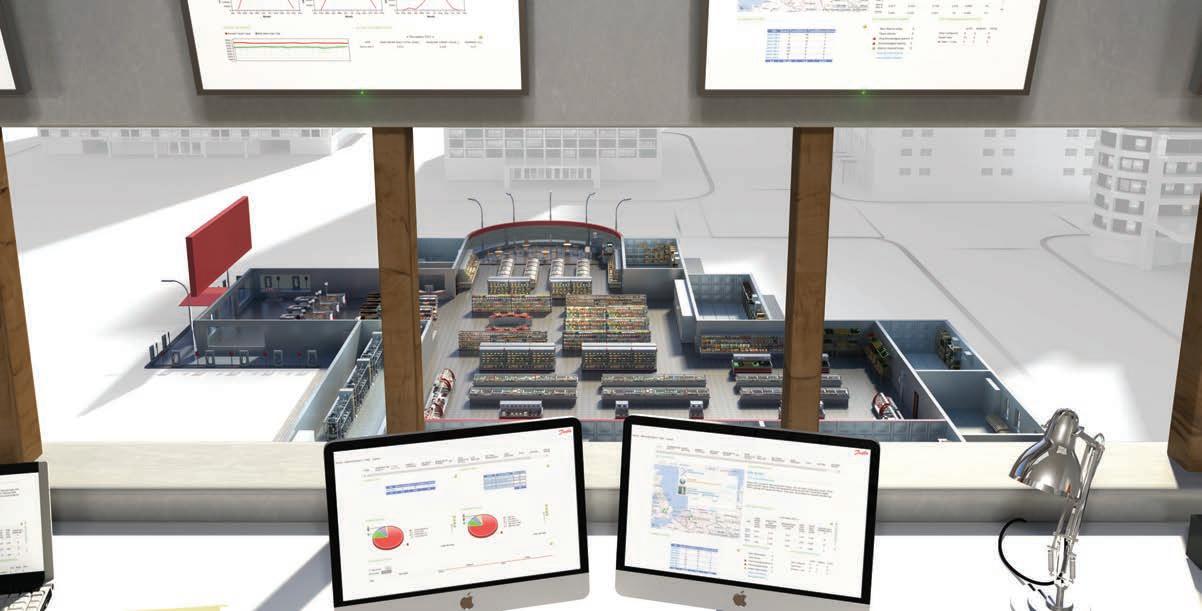
USE PREDICTIVE ANALYTICS TO ACTIVATE MAINTENANCE PLANS
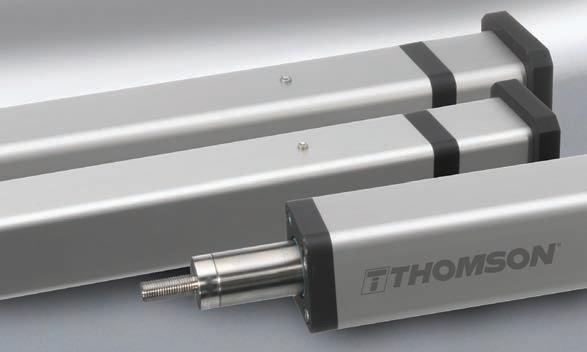
REPLACE PNEUMATIC ACTUATORS WITH ELECTRIC ROD-STYLE ACTUATORS
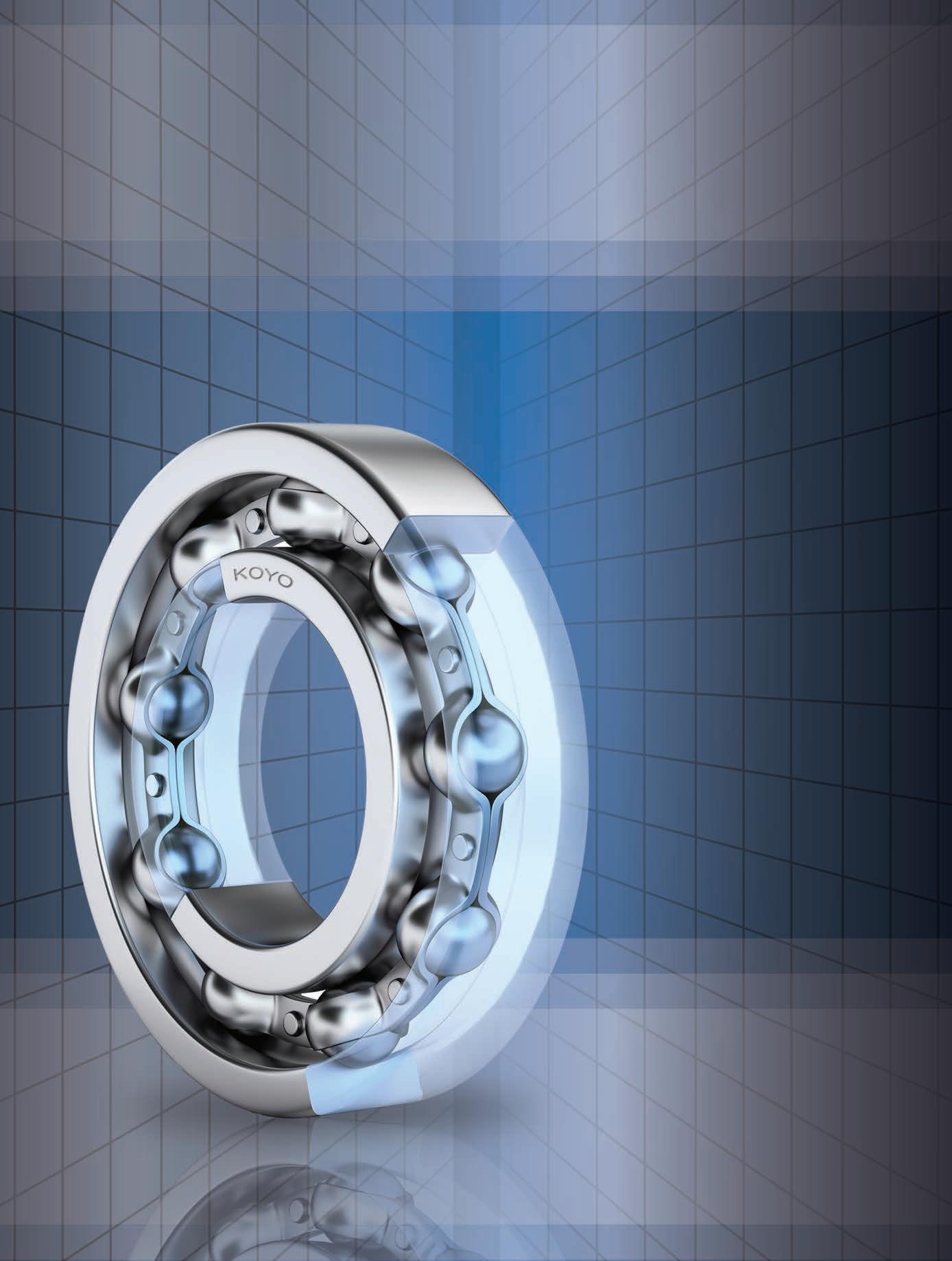
PREVENT ELECTRICAL DAMAGE IN VARIABLE FREQUENCY DRIVES
FIND THE RIGHT SHOP FOR YOUR CRITICAL MOTOR REPAIRS
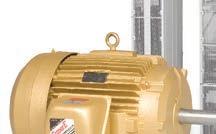
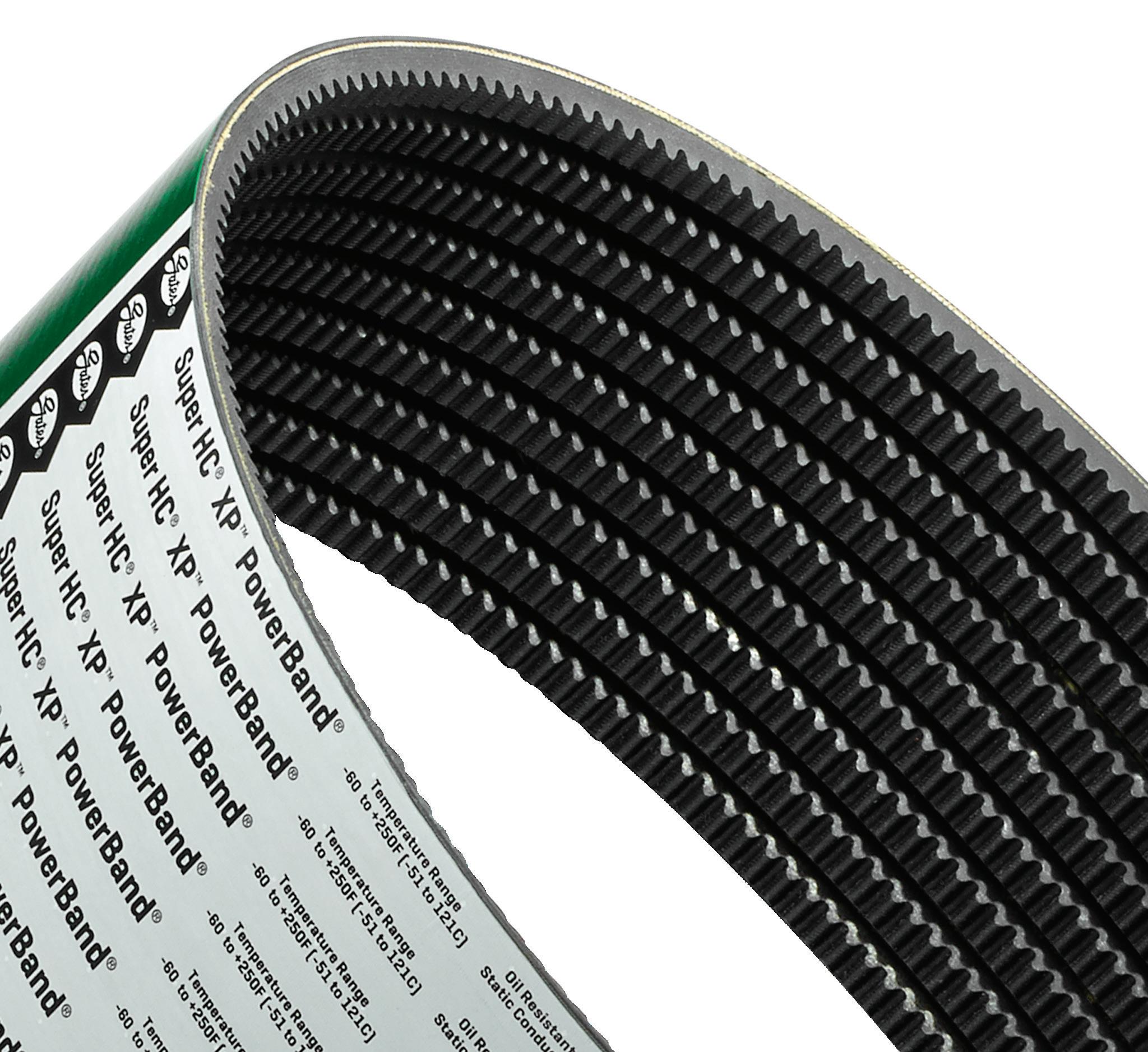
A TECHNICAL GUIDE TO PREVENTING ELECTRIC MOTOR FAILURE
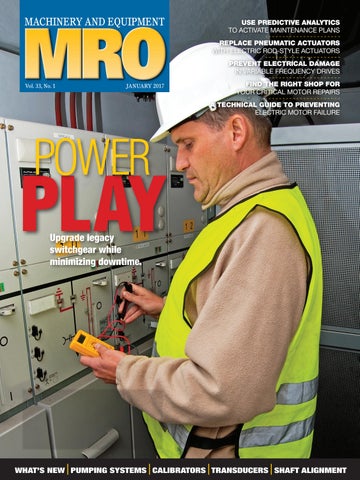
PLAY POWER
Upgrade legacy switchgear while minimizing downtime.
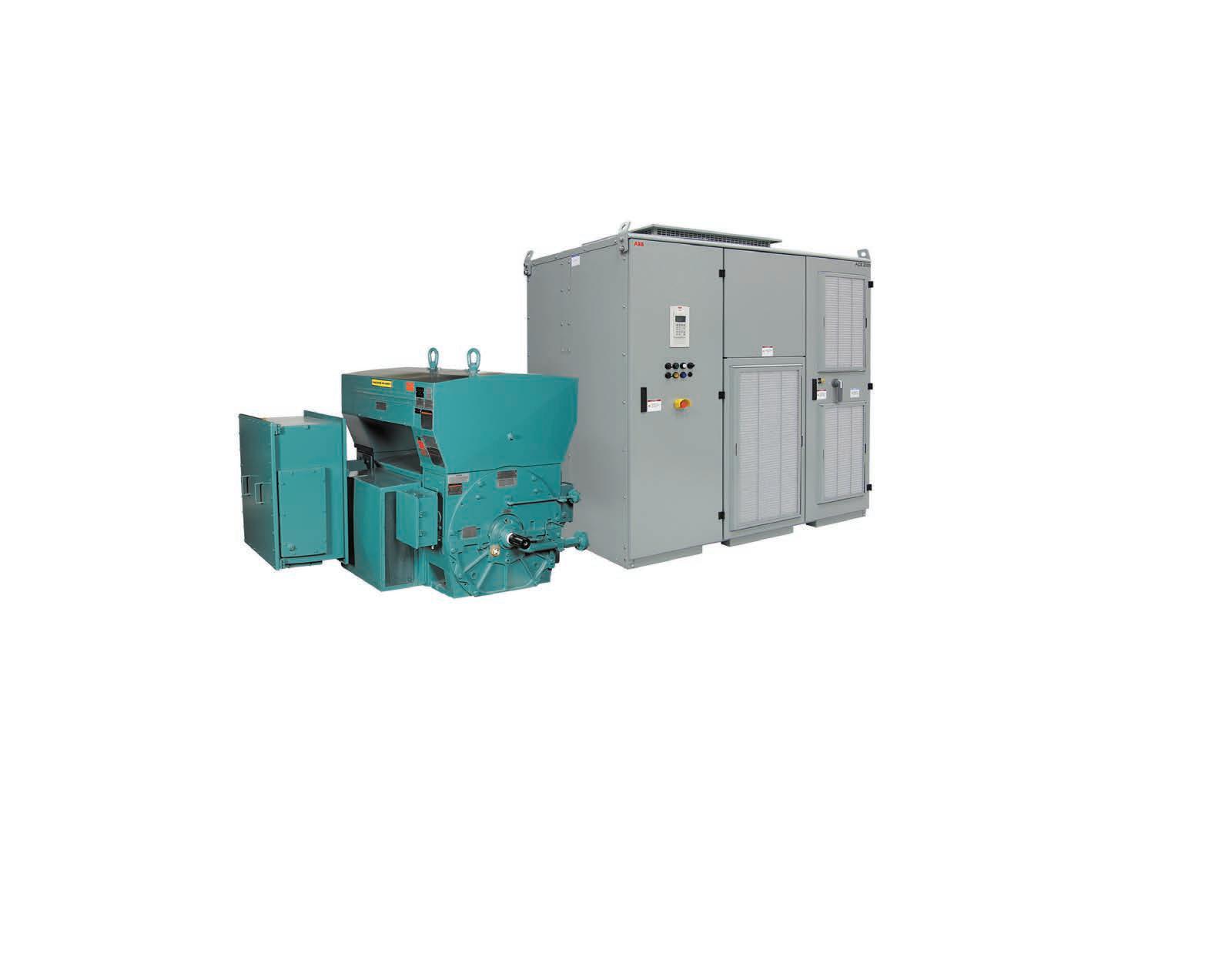
With more than 200 years of combined experience, ABB and Baldor have developed, designed and manufactured millions of motors and variable speed drives, installed in most applications across many industries. Using our products together provides customers a unique opportunity to gain the latest technology, process control and optimal energy savings in one package. Together we offer:
•Reliable performance
•Improved efficiency
•Local sales and support
•Life cycle management services
From low voltage to medium voltage, ABB drives and Baldor•Reliance® motors are designed for a variety of challenging operations and industry requirements. Let us know how we can provide a package that meets your needs.
MACHINERY AND EQUIPMENT
MONTH
2017
Volume 33, No. 1
Established 1985 www.mromagazine.com www.twitter.com/mromagazine
Tim Dimopoulos, Vice-President tdimopoulos@annexbizmedia.com
Ted Markle, COO, tmarkle@annexweb.com
Mike Fredericks, President & CEO
Machinery & Equipment
MRO is published by Annex Business Media, 80 Valleybrook Dr., Toronto, ON Canada M3B 2S9; Tel. 416-442-5600, Fax 416-510-5140. Toll-free: 1-800-268-7742 in Canada, 1-800-387-0273 in the USA.
Printed in Canada
ISSN 0831-8603 (print); ISSN 1923-3698 (digital) PUBLICATION MAIL AGREEMENT #40065710
CIRCULATION
email: blao@annexbizmedia.com
Tel: 416.442.5600 ext 3552
Fax: 416.510.5170
Mail: 80 Valleybrook Drive, Toronto, ON M3B 2S9
Subscription rates.
Canada: 1 year $61.50, 2 years $97.95. United States: 1 year $105. Elsewhere: 1 year $120 Single copies $10 (Canada), $16.50 (U.S.), $21.50 (other). Add applicable taxes to all rates.
On occasion, our subscription list is made available to organizations whose products or services may be of interest to our readers. If you would prefer not to receive such information, please contact our circulation department in any of the four ways listed above.
If 2016 marked the year in which the manufacturing industry was promised bottom-line gains through Industry 4.0 and the Industrial Internet of Things (IIoT), then the 2017 horizon should be marked by exciting advancements in artificial intelligence (AI) and machine intelligence.
In fact, worldwide adoption of AI-related systems is expected to reach $47 billion in 2020, according to market intelligence provider International Data Corporation (IDC). Nearly half of all cognitive/AI spending will go to software, and, on a geographic basis, North America (United States and Canada) are the biggest spenders – with 2016 revenues approaching $6.2 billion.
With these impressive figures in mind, an essential part of foretelling the future of the MRO industry is the pivotal role sensor-based technology plays in driving reliable IIoT forecasts.
While companies have embedded sensor-based technology in their devices for decades, few have fully harnessed its potential. In the past, the role of sensors in typical manufacturing applications was to avoid downtime by signalling distress and giving technicians time to address a problem before the machine stopped working.
These days, advancements in sensor technology facilitate the interoperability of equipment across the entire value chain by linking computers, people and machines. Operations can embed intelligence into almost anything from electricity grids, self-driving vehicles to jet engines.
Count on the aviation industry for a leadership example. Lufthansa Technik, the provider of maintenance, repair, overhaul and modification services for civil aircraft, has launched Condition Analytics, an intelligent platform that predicts precisely when components should be replaced and recommends measures to be taken to avoid failures before they actually happen. Blending digital analytics with its engineering expertise, the system is touted as “true predictive maintenance.” Operators are expected to benefit from reduced fuel consumption, optimized use of expendable parts and enhanced safety when it's available this spring.
Combined with data analytics and cloud-based service delivery, the opportunity for industrial plants to expand the way machinery can be monitored becomes boundless. It enables plants to implement innovative and effective maintenance strategies that help coax them further along the maintenance maturity continuum. Moving from preventive maintenance to predictive maintenance and ultimately towards a prescriptive approach can present opportunities for significant savings; according to the ARC Advisory Group, users have reported 50 per cent savings in maintenance labour and MRO materials.
The collaboration between Danfoss and Bentley Systems (see “Deep Machine Learning,” page 22) is an example where using operational intelligence from connected devices – such as compressors, humidity sensors, heat exchangers, condensing units and energy meters – facilitates the installation of predictive programs that can improve sustainability. In this case, collected data becomes the backbone of a fact-based decision-making tool that delivers significant energy savings derived directly from the equipment.
A discussion around using advanced or smart tools is understandably beyond the immediate capabilities for some plants. But the business impacts are unfortunate when maintenance and operations personnel tend to focus on cost reductions for wrench time and MRO materials. The broader perspective is that we take a page from the playbook of mature organizations and learn to use appropriate tools in ways that deliver higher business impact.
Rehana
Begg Editor
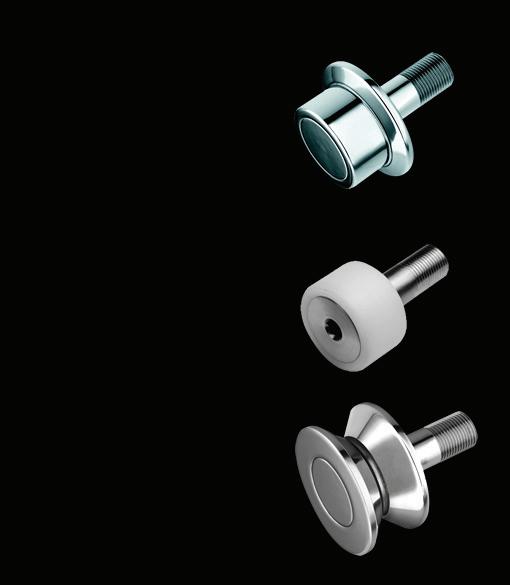
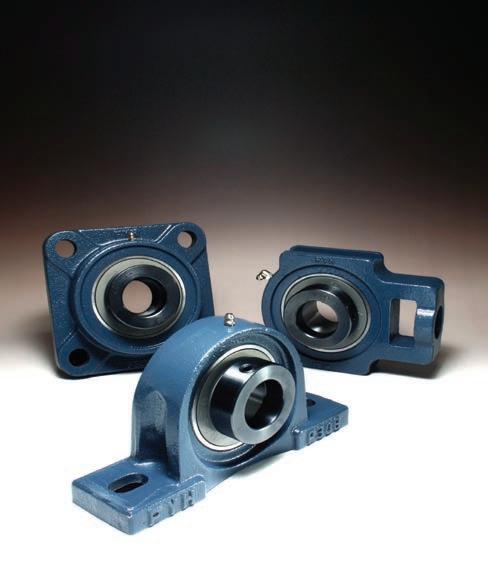
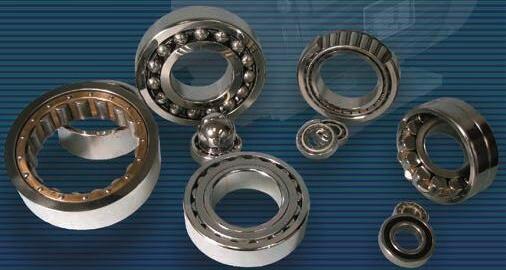
SKF EXPANDS PRODUCT RANGE
SKF Canada Limited integrates Kaydon & Cooper
Sales and technical support responsibility for Kaydon and Cooper bearing brands are assumed by SKF Canada Limited. You can now turn to SKF for an even wider product range, supported by a larger geographical presence.
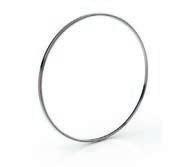
Kaydon - Thin section bearing Reali-Slim bearings produce larger ratios of diameter to radial section, which lead to space and weight savings of up to 85 percent.
goo.gl/73Adyk
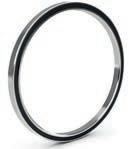
Kaydon - Ultra Slim Bearing
At just 2.5 mm wide, Ultra-Slim ball bearings are available in bore sizes ranging from 35mm to 170mm. They are made of stainless steel for corrosion resistance. goo.gl/Gs4Q3Y
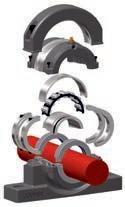
Cooper - Split bearing Cooper split bearings combine two crucial elements of running cost-effective machinery: flexibility and reliability.
Cooper - Split bearings Cooper split bearings combines two crucial elements of running cost-effective machinery:
goo.gl/RoXjya
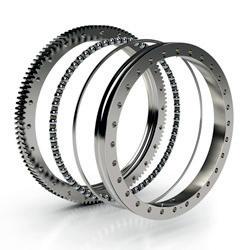
Kaydon - Slewing ring bearing Kaydon slewing ring bearing solutions are ideal for heavyduty applications requiring significant load-carrying capacity and where precise positioning is critical. goo.gl/rj9QMy
COVER STORY – Power Play
Roll-in replacement circuit breakers and retrofit kits are great options for upgrading legacy switchgear, while minimizing costs and downtime.
Trend Analysis / 14
Use Dissolved Gas Analysis to identify fault and improve the health of the transformer.
Deep Machine Learning / 22
Use data analytics to detect leaks and monitor refrigerant and compressor performance.
Keep Going / 18
A few good reasons to use electromechanical actuators over pneumatics.
Troubleshooting Electric Motors / 30 Comprehensive procedures and guidelines for electric motor technicians.
Test & Rewind / 36
A few simple measures can prevent costly motor breakdowns. Plus, repair shop criteria.
Departments
Editor’s Notebook / 3
Industry Newswatch / 6
Business Briefs / 9
Maintenance 101 / 26
What’s Up Doug? / 28
Spare Parts/ 46
Mr. O, the Practical Problem Solver / 46
Product News
What’s New in Pumping Systems / 40
Comprehensive ban on asbestos set for 2018
The Government of Canada will move forward with a whole-of-government approach to fulfill its commitment to ban asbestos and asbestos-containing products by 2018.
Asbestos is regulated by several federal and provincial laws and is also the subject of international conventions.
The Government of Canada strictly conforms to the legislative requirements for health and safety and asbestos management programs are in place in its buildings.
Current federal controls focus on mining, high-risk consumer products and federal workplace exposure. The Government of Canada has completed an examination and will now implement a whole-of-government approach to further strengthen management and controls through a series of science-based actions, including a ban on asbestos and asbestos-containing products. This approach maps out an aggressive timeline to fulfill the government’s commitment to ban asbestos by 2018, and it builds on the actions taken to date to ban asbestos from Public Services and Procurement Canada’s new construction and renovation projects.
Health Canada will collaborate with Environment and Climate Change Canada in developing a regulation under the Canadian Environmental Protection Act, 1999.
Health Canada will also continue to raise awareness about the health impacts of asbestos to help reduce the incidence of diseases such as lung cancer.
The comprehensive ban on asbestos will include:
• creating new regulations that ban the manufacture, use, import and export of asbestos under the Canadian Environmental Protection Act, 1999, the legislative framework that protects people from the risks associated with hazardous substances such as asbestos;
• establishing new federal workplace health and safety rules that will drastically limit the risk of people coming into contact with asbestos on the job;
• expanding the current online list of asbestos-containing buildings owned or
Raising awareness of the health impacts of asbestos may reduce incidence of lung cancer.
leased by the Government of Canada;
• working in collaboration with our provincial and territorial partners to change the national, provincial and territorial building codes to prohibit the use of asbestos in new construction and renovation projects across Canada;
• updating our international position regarding the listing of asbestos as a hazardous material based on Canada’s domestic ban before next year’s meeting of parties to the Rotterdam Convention, an international treaty involving more than 150 countries that support listing asbestos as a hazard; and
• raising awareness of the health impacts of asbestos to help reduce the incidence of lung cancer and other asbestos-related diseases.
Source: Innovation, Science and Economic Development Canada
NEW PROGRAM TO ENHANCE REGULATION OF ENGINEERING PROFESSION
Professional Engineers Ontario (PEO) will launch a new program on March 31, to gather information on the practices of each of its 80,000 licence holders and gauge their professional knowledge activities.
Under PEO’s Practice Evaluation and Knowledge (PEAK) program, practising licence holders will be asked to complete both a practice evaluation questionnaire and an online ethics module prior to their licence renewal date. Based on the results of the practice evaluation questionnaire, practising licence holders will be provided with a recommended number of hours for continuing professional knowledge per year to maintain a level of knowledge commensurate with safeguarding the public interest. They are then asked to report their continuing knowledge activities to PEO prior to their subsequent licence renewal date.
Those who self-identify as non-practising licence holders will only be asked to declare they are not practising professional engineering and complete an online ethics module prior to the date of their licence renewal.
“The PEAK program is designed to provide us with real data about the nature of engineering practice in Ontario that will enable PEO to focus its regulatory efforts on gaps in practice standards and enforcement of rights to practice,” says PEO President George Comrie, MEng, P.Eng., CMC, FEC. “The data would also go a long way towards enhancing public and government confidence in PEO as a regulator.”
While participating in the PEAK program is not mandatory to renew or maintain a licence, the completion status for each element of the program will be publically noted for each licence holder on PEO’s online directory of practitioners.
As part of the program, practising licence holders will be able to design their own continuing professional knowledge plan by choosing opportunities that align with their specific area of practice – anything from university/college courses, reading technical journals to attending technical seminars.
The online module is intended to serve as a refresher on professionalism and ethics.
For a complete overview of the PEAK program, visit www.peopeak.ca.
The Government of Canada plans a wholesale ban on asbestos products by 2018.
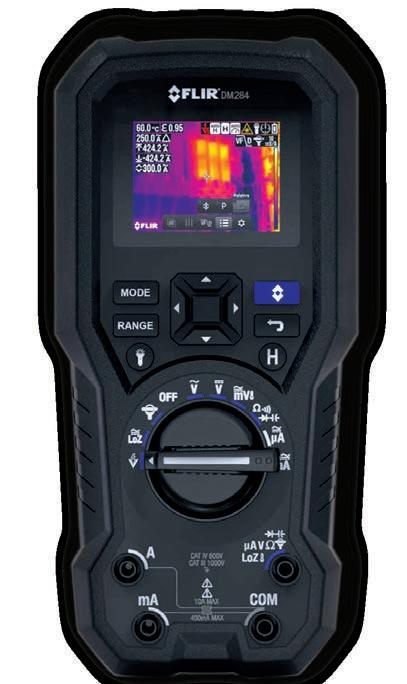
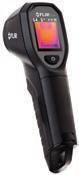
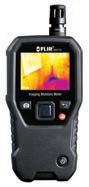
THIS AIN’T YOUR GRANDADDY’S MULTIMETER
Introducing the DM284, an all-in-one True RMS digital multimeter and thermal imager that show you exactly where an electrical problem is to speed up troubleshooting.
Infrared Guided Measurement (IGM™) is the future of instrument and tool technology. Plain and simple. And for the hardworking professionals in the building and electrical industries, it’s the perfect addition to the toolbox. By helping you identify and verify problems invisible to the naked eye, you’ll save time, money, and maybe even lives.
Request a demo from participating distributors at FLIR.ca/DM284
· THERMAL IMAGING AT YOUR FINGERTIPS
· CONVENIENT, ALL-IN-ONE TOOL
· PINPOINT PROBLEMS QUICKLY
STAYING SAFE ON THE JOB
The Ontario Ministry of Labour is helping to enhance the wellbeing of workers across the province by supporting projects that will help employees stay healthy and safe at work.
The province will provide support to organizations creating innovative solutions to health and safety issues through its annual Occupational Health, Safety and Prevention Innovation Program (OHSPIP). This year, the focus is on improving workplace mental health, addressing mobile equipment hazards and preventing occupational disease and secondary injury, such as reducing the impact of workplace injuries, preventing recurrences and protecting workers from longer-term work-related disabilities.
OHSPIP awards are one-time, non-renewable grants providing a maximum of $200,000 per proposal. The deadline to apply is on April 25, 2017.
Apply at www.labour.gov.on.ca/english/hs/prevention/innovation_program.php
CALL FOR ABSTRACTS FOR MAINTRAIN CONFERENCE
The Plant Engineering & Maintenance Association of Canada (PEMAC) has posted a call for abstracts for its annual national conference, MainTrain 2017, which will be held in Saskatoon from September 25 to 28, 2017.
PEMAC is currently searching for the
PTDA REVISES DISTRIBUTOR MEMBERSHIP CRITERIA
The Power Transmission Distributors Association (PTDA) has revised its distributor membership criteria to be more inclusive and ensure the association is fully representative of distributors in the power transmission/motion control industry.
The distributor membership approved the changes to allow distributor companies to join that may not have met the previous criteria because of their business model, the customers they serve or the products they distribute.
Changes to the criteria include:
· A distributor company must stock and distribute products from one or more of the following product categories: adjustable/ variable speed drives, bearings, belt and chain drives, clutches and brakes, motor/ motion control products, conveyors and material handling components, shaft couplings
best workshops, experience-based presentations, case studies, hands-on technical insights and poster sessions that provide participants with the strategies and tools they need to create effective and efficient asset management, maintenance and reliability solutions. The deadline for submissions is Monday, March 20. Multiple submissions are permitted.
For more information, visit www.pemac.org/conference.
SKF DESTROYS 15 TONS OF FAKE BEARINGS
SKF has recently completed legal proceedings against a dealer of counterfeit bearings in Greece. Initiated in 2009, a total of 15 tons of counterfeit SKF bearings were seized as part of a raid at a dealer’s warehouse in the area of Piraeus, with whom SKF had no business relationship during these years. The bearings have now officially been declared counterfeit by the Greek courts system, resulting in their destruction.
The raid in 2009 resulted in the seizure of 17,000 pieces of counterfeit rolling bearings, with a total weight of 15 tons and a market value of over EUR 1,000,000 These have now been destroyed at a metal recycling facility in Greece, by crushing them in a scrap press, to ensure they will not resurface on the market.
A wide range of companies from the marine and other industrial sectors
and u-joints, hydraulics and pneumatics, gearing, linear motion, industrial specialty chemicals, motors and pumps. This replaces the previous language, which stated “from some of the product categories.”
· A distributor company must be an authorized stocking distributor for at least one PTDA manufacturer member, versus the previous language which stated “two PTDA manufacturer members.”
In addition, air compressors have been added to the Pumps category and generators added to the Motors category.
These changes are effective immediately.
To review the complete criteria, download the Distributor Membership application at ptda.org/Join.
were affected by the counterfeit SKF bearings sold by this non-authorized dealer in the Piraeus area. Instead of getting the premium quality product they thought they were purchasing, the customers ended up with products of unpredictable quality and performance.
SKF actively supports law enforcement globally to stop the trade of counterfeit SKF products. This trade is illegal and may lead to substantial fines or imprisonment.
“Counterfeit industrial products like bearings are not bought intentionally by customers, so the best way to fight counterfeit is to raise awareness. Customers who accidentally purchase counterfeit products are being cheated financially and risk damage to their machinery and expensive downtime”, says, Tina Åström, Director, SKF Group Brand Protection.
The financial damage resulting from the counterfeit products is difficult to quantify. Lost sales and significant loss of image are definitely some of the consequences.
To distinguish a counterfeit bearing from an authentic SKF bearing often requires expertise. Customers that suspect they might have been sold counterfeit products should use the SKF Authenticate app for smartphones to take and send photos of suspect products directly to SKF for verification. The app can be downloaded for free from Apple App Store or Google Play. They can also email pictures of the suspected bearings to genuine@skf.com
SKF, along with other bearing manufacturers affected by counterfeiting are working to fight against this problem and have launched a counterfeit awareness campaign through an umbrella organization, World Bearing Association (WBA). The campaign aims to make customers aware of the risks and problems with counterfeits.
More information can be found at www.stopfakebearings.com. MRO
Industry Newswatch is edited by Rehana Begg. Visit www.mromagazine.com for the latest news and longer versions of items here.
Business Briefs
News and views
about companies, people, product lines and more.
• Montreal – Tapflo Canada, a manufacturer of air-operated diaphragm pumps, centrifugal pumps and industrial process equipment introduced a new dealer and service partner for Ontario, Simmtech Process Engineering Ltd., a manufacturer of food processing equipment, controls and instrumentation.
• Gothenburg – SKF is investing SEK 70 million in developing roller-manufacturing capabilities in Dalian, China. The investment will improve utilization of the Group’s global manufacturing capacity and strengthen SKF’s service capabilities in China. The investment in Dalian has already commenced and manufacturing of rollers will be ramped up during 2017.
• McLean, Va. – The Association for Man ufacturing Technology reports that No vember 2016 U.S. cutting tool consump tion totalled $168.69 million according to the U.S. Cutting Tool Institute (USCTI) and AMT – Association For Manufac turing Technology. This total, as report ed by companies participating in the Cutting Tool Market Report collaboration, was down 0.2% from Oc tober’s $168.99 million and up 9.3% when compared with the total of $154.28 mil lion reported for November 2015. With a year-to-date total of $1.867 billion, 2016 is down 5.7% when compared with 2015.
• Dorval, Que – German-based Siemens AG, through its subsidiary Siemens Canada, plans to invest $110.6 million in research and development activities at its plant in Dorval, Que., to design and make improvements to aero-derivative gas turbines. These turbines are used for the production of electricity, and serve as a backup source in the event that the existing network is unable to meet the demand. Siemens also plans to invest $22 million to launch a platform of expertise related to Industry 4.0 and implement a training system integrated into the workplace. The Québec Government will grant a loan of $20 million to support these investment projects.
(TSC), to its product portfolio. Customers will now have access to a range of Uniforce plunger pumps designed for high-pressure applications, available exclusively through Wajax in Canada.
• Toronto – Danfoss, a leading manufacturer of high-efficiency electronic and mechanical components and controls for air-conditioning, heating, refrigeration, industrial and water systems, has appointed Ian Levergood as the sales manager of its Electric Heating business in North America.
• Hannover – “Integrated Industry – Cre -
BAD MOVE. GOOD MOVE.
this could create an even greater opportunity for Canada,” said Julie Ades, senior economist, Global Commerce Centre.
• Montreal – Wajax, a leading Canadian provider of industrial products and services, has added Uniforce pumps, a TSC Manufacturing and Supply, LLC brand
• Rolling Meadows, Ill. – Komatsu America Corp., a global heavy equipment manufacturer, announced Rod Schrader, CEO of Komatsu America Corp., has been elected to the Board of Directors of the Association of Equipment Manufacturers (AEM), the North American-based international trade group for the off-road equipment manufacturing industry.
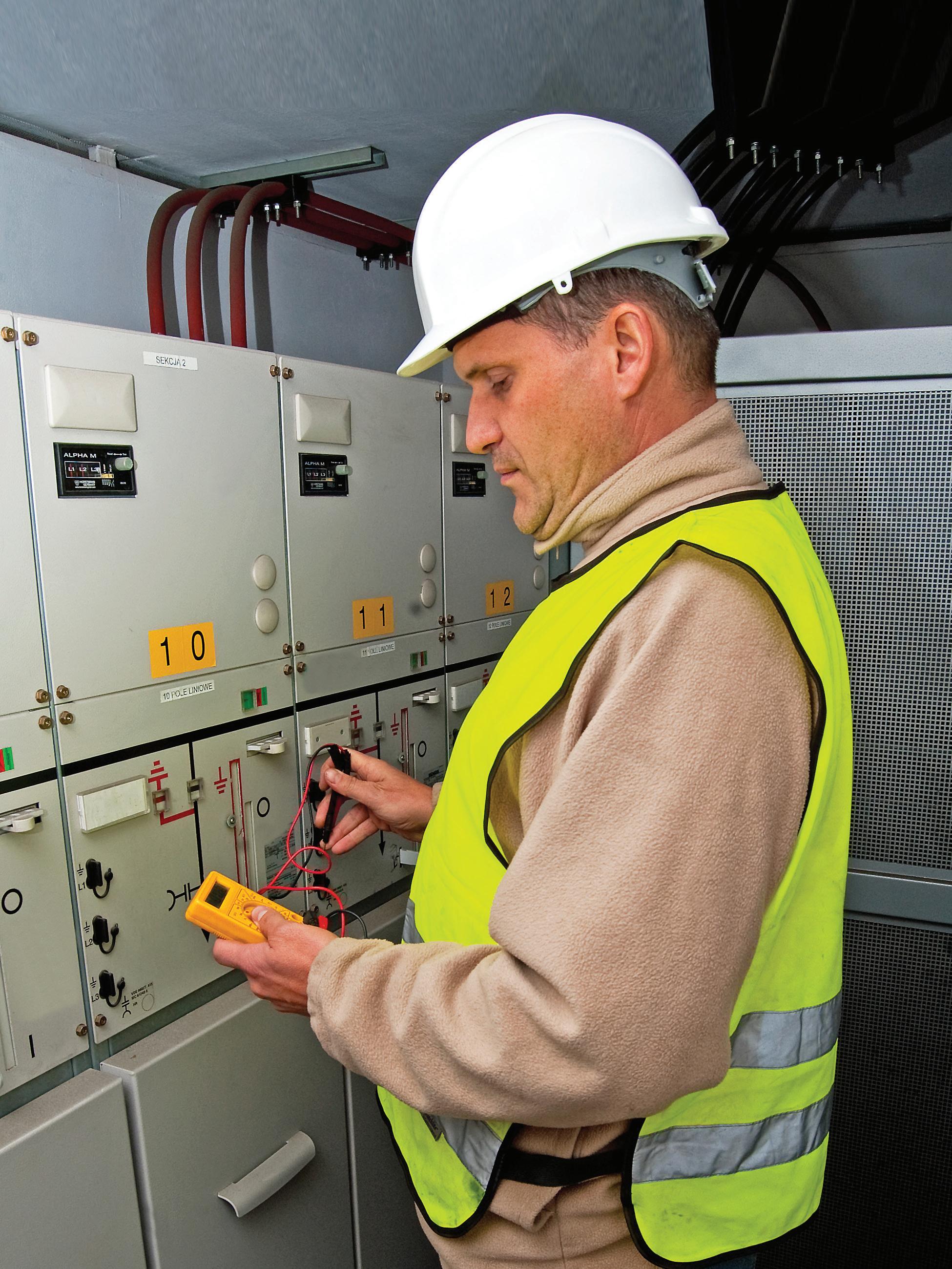
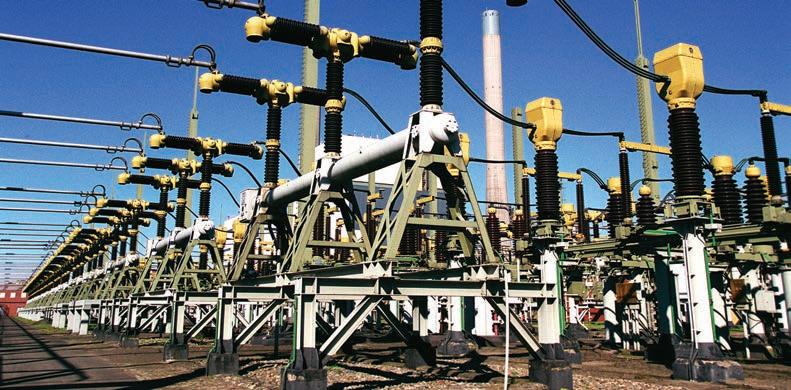
POWER PLAY
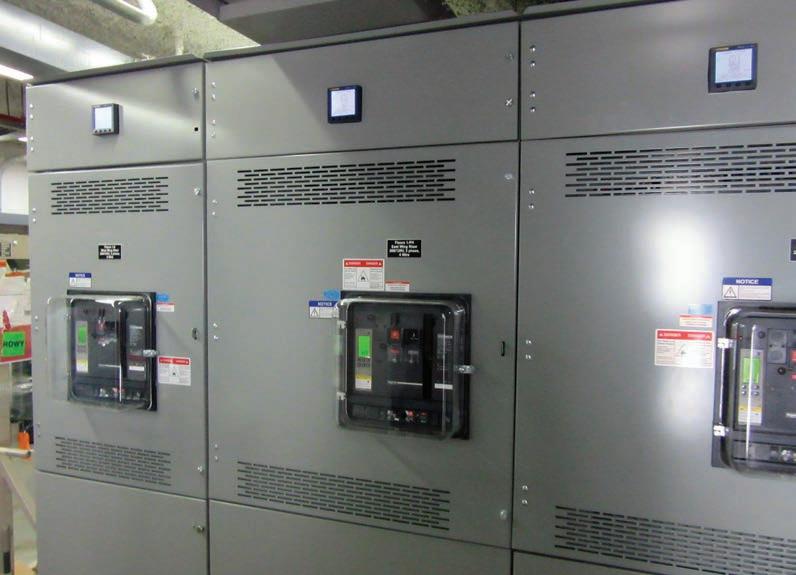
Roll-in replacement circuit breakers and retrofit kits provide refurbishment options that minimize downtime.
BY PHILIP CHOW
Aging electrical power distribution systems often contain legacy switchgear that have reached end-of-life conditions. Preventative maintenance shutdowns can prove difficult and cause concern about not being able to reclose circuit breakers and restore power when the shutdown is complete. With continued operation, legacy switchgear face the risk of unexpected equipment failure, the inability to readily source replacement parts (or circuit breakers) and the potential downtime associated with a prolonged power outage. Facility managers face the difficult task of upgrading end-of-life equipment that provide power to their site. Since extended downtime can result in unacceptable lost production costs, the typical approach to replacing electrical equipment involves constructing a new service space, installing replacement equipment in the new service space and having short-duration, isolated shutdowns when existing services are transferred to the new infrastructure.
This approach can result in a capital-intensive project, which may require additional time for permitting and construction. Budgetary and schedule constraints may necessitate a more expedient means to improve switchgear reliability. Roll-in replacement circuit breakers and circuit breaker retrofit kits provide facility managers with options for upgrading legacy switchgear, while minimizing costs and downtime.
Roll-in replacement circuit breakers
Roll-in replacement circuit breakers are available for both medium-voltage (5kV-15kV) and low-voltage (208V-600V) systems and consist of a new circuit breaker that can be directly inserted into an existing switchgear cell. Retrofit products are available from a number of switchgear manufacturers and can be used with legacy equipment, from different eras and varying original equipment manufacturers. For medium-voltage applications, upgrades typically involve replacing the cell’s outer door (in front of the vacuum circuit breaker), replacing the protective relay for the circuit and may involve replacing instrument transformers (current transformers and/or potential transformers) and associated wiring. Low-voltage applications can involve more in-depth modifications to a switchgear cell, with the installation of a replacement cradle for the new air-
circuit breaker and bus modifications to facilitate the cradle installation. Depending on the scope of the upgrades, a shutdown to facilitate a roll-in replacement type upgrade can be expected to involve a 12-hour shutdown, which may be further extended if modifications to bus work are required.
Two recent examples that highlight the use of roll-in replacement circuit breakers are: a project that completely upgraded a medium-voltage emergency power generation and distribution system, and a retrofit project that completely replaced 208V service entrance switchgear, using circuit breaker retrofit kits.
Project 1 – Upgrading an emergency power generation system
The first project was a capital-intensive upgrade that involved replacing existing standby diesel generators, and 4,160V automatic transfer and distribution switchgear in its entirety. Upstream 4160V distribution switchgear provided a utility power source to the new automatic transfer switchgear. Given space constraints and project funding limitations, the 23-section lineup of 4,160V utility power switchgear, which was of the same vintage as the emergency power switchgear that was being replaced, could not be upgraded in its entirety. In order to facilitate comprehensive renewal of the emergency power system,
two roll-in replacement circuit breakers were utilized to upgrade the sections that provided the utility power feeds to the system.
Project 2 – Replacing 208V service entrance switchgear
The second project involved replacing a three-section, 208V service entrance switchgear, which had reached end-oflife conditions and could not be properly maintained, due to issues with reclosing the existing Fusematic switches. Given
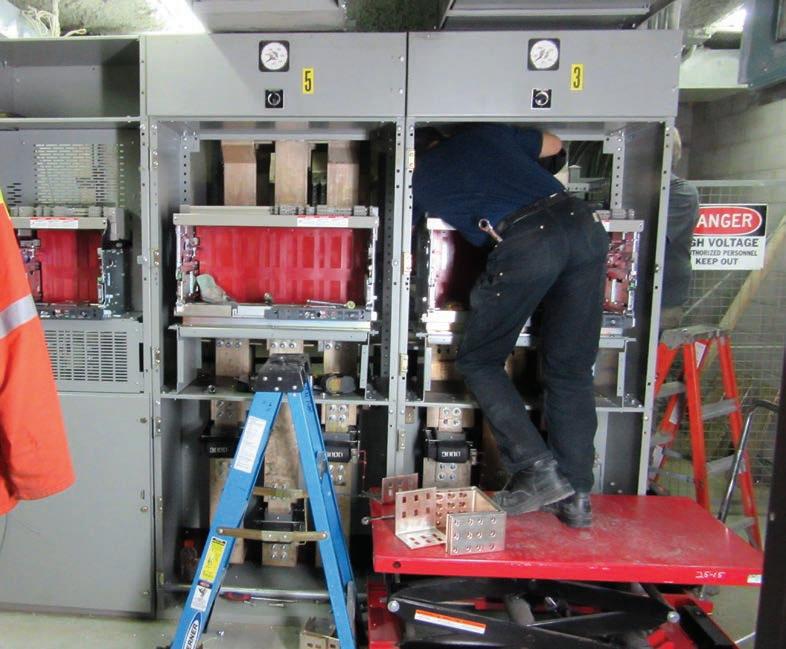
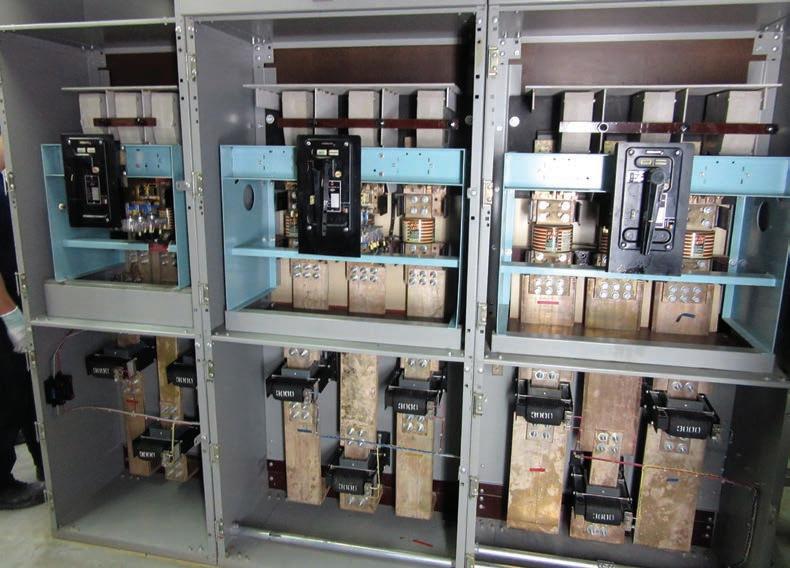
Project 2: Refurbishment of the 208V switchgear is in progress. Bus modifications have been machined and cradles for the replacement air circuit breakers have been installed.
Project 1: An existing 4160V switchgear section was upgraded with a roll-in replacement vacuum circuit breaker.
space limitations in the facility and complexities that would be involved with re-routing the incoming 208V Toronto Hydro service to a new location, air circuit breaker retrofit kits were utilized to modernize the existing switchgear lineup in its entirety. All intrusive work was completed over the course of a 20-hour shutdown on Boxing Day, when the facility was undergoing a planned operational shutdown. Schneider Electric’s service group performed the retrofit project and three crews worked in tandem on each section of switchgear for the duration of the shutdown. A mobile workshop
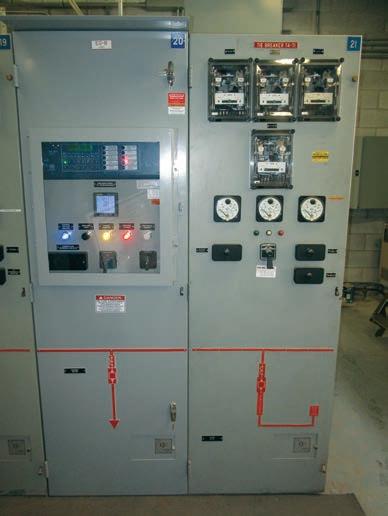
Project 2: Existing
was parked onsite to support the retrofit project and to machine custom modifications for the copper busbars. After work within the switchgear was completed, the refurbished switchgear was commissioned and re-energized at the end of the shutdown.
Utilizing roll-in replacement circuit breakers for a switchgear retrofit project can provide opportunities for system improvements and several design factors should be considered. Maximizing physical renewal of internal switchgear components should be a priority, with attention given to instrument trans-
formers, control wiring and bus insulators. The switchgear enclosure should be reviewed for potential improvements, including replacing outer doors, adding driphoods, gasketting, other sprinklerproofing provisions and updating the mimic bus on the front of the lineup. Protective relays should be upgraded, by replacing older-style electromechanical relays with microprocessor-based protective relays. A short-circuit protection and co-ordination study for the facility should be performed to ensure adequate protection and circuit breaker co-ordination exist within the system. Additional protective relay settings should be reviewed for special equipment and loads (such as transformer and motor protection). Operational improvements can also be easily achieved, including adding infrared inspection windows to improve ease of access for thermal scanning, adding power quality metering to record data on electrical system characteristics, especially where future load growth is a consideration, and ensuring a portable lifting crane and racking handles are provided for future circuit breaker removal and preventative maintenance.
Reclaim uptime
Upgrading electrical switchgear with roll-in replacement circuit breakers and retrofit kits is an expedient and cost-effective means of refurbishing equipment that have reached end-of-life status. Facility managers have the option to extend equipment life, while planning and budgeting for their next capital-intensive upgrade project. A refurbishment project can further improve system reliability, maintainability and operability, by including features that address limitations with an existing installation. Undertaking a refurbishment project should begin with detailed site reviews, and preparation of engineered drawings and specifications for the upgrade. Having a detailed engineered design in place will ensure that the selected vendor provides products in accordance with the specified requirements, site work accounts for the operational constraints of the facility and a successful outcome is achieved. MRO
Philip Chow, P.Eng., P.E. is a senior project manager and electrical engineer at H.H. Angus & Associates Ltd. Consulting Engineers. He specializes in electrical solutions for critical applications and can be reached at Philip.Chow@hhangus.com .
Project 2: Masterpact air circuit breaker retrofit kits replaced the dated Fusematic switches of the existing 208V switchgear.
208V Federal Pioneer Fusematic Switchgear, dating back to the early 1970s, undergoes onsite refurbishment.
is driving limitless innovation
Today’s growing cities demand both efficiency and reliability in the pursuit of a sustainable future, and Danfoss has been providing innovative solutions to Canada for 65 years. In water and wastewater facilities — a municipality’s largest energy consumer, Danfoss variable frequency drives not only improve energy use, they minimize water loss. For industries like marine, mining, and food and beverage manufacturing, Danfoss technologies provide reliable, intelligent process controls that are making industrial solutions smarter and more efficient.
Discover how we’re Engineering Tomorrow at danfoss.ca
60h
savings in global energy consumption from today’s installed drives by 2025
Trend Analysis
Interpreting transformer oil dissolved gas analysis (DGA) results. BY USMAN MUSTAFA SYED
Transformers are an integral part of any electrical transmission and distribution system. Most common types of power and distribution transformers are the oilfilled type, whereby mineral-insulated oil is used for cooling and providing internal insulation. While periodic transformer assessments are essential to ensure reliable operations, assessments that fail to consider the transformer’s oil are not reflective of the actual health of the transformer.
Different tests can be used to assess the transformer oil condition, including Water Content Analysis, Dielectric Strength Test, Acidity or Neutralization Number (NN) assessment, Measure of Interfacial Tension (IFT), Dissipation Factor, Polychlorinated By-phenyl (PCB) Content Analysis, Furan Analysis and
Table
Thermal Faults
Electrical Faults
Dissolved
Gas Analysis (DGA).
Mineral transformer oil is a mixture of many different hydrocarbon molecules. Different loading and fault conditions lead to the decomposition process of oil and cellulosic insulation under thermal or electrical faults. This decomposition basically involves breaking of carbonhydrogen and carbon-carbon bonds, which results in the formation of hydrogen and some hydrocarbon gases dissolved in the oil. The presence of the dissolved gases in the oil weakens the transformer insulation and deteriorates the oil’s cooling properties.
Dissolved Gas Analysis
Dissolved Gas Analysis (DGA) is a diagnostic tool used to analyze these dissolved gases in the oil and identify associated fault conditions.
Low Intensity (~150 0C / ~302 0F)
Medium Intensity (>150 0C / >302 0F)
High Intensity (500 0C / 932 0F)
Decomposition of Cellulose
Low Intensity Discharges
High Intensity Discharges (700~1800 0C / 1292~3272 0F)
Hydrogen (H2) Methane (CH4)
Ethylene (C2H4) Ethane (C2H6)
Hydrogen (H2) Ethylene (C2H4) Traces of Acetylene (C2H2)
Carbon Mono Oxide (CO)
Carbon Di Oxide (CO2)
Hydrogen (H2) Methane (CH4) Traces of Acetylene (C2H2)
Acetylene (C2H2)
Different fault types within the transformer give rise to different types of gases.
DGA is aimed at identifying and analyzing these gases to assess transformer health. However, interpretation of DGA requires deep understanding of the transformer operations, chemical properties of the oil and international standard guidelines. “IEEE Guide for the Interpretation of Gases Generated in Oil-Immersed Transformers (IEEE Std C57.104)” is a widely used document for this purpose.
All key gases, except for CO2, have combustible properties. The concentration sum (ppm values) of the combustible key gases is called Total Dissolved Combustible Gases (TDCG). This can be expressed as:
The following four-level condition criterion based on concentration values (ppm) for individual gases and TDCG is used to classify risks to transformers.
Condition 1:
TDCG below this level indicates the transformer is operating satisfactorily. Any individual combustible gas exceeding specified levels should prompt additional investigation.
Condition 2:
TDCG within this range indicates greater than normal combustible gas level.
1: Transformer Fault types & Key Gases
Any individual combustible gas exceeding specified levels should prompt additional investigation.
Condition
3:
TDCG within this range indicates a high level of decomposition. Any individual combustible gas exceeding specified levels should prompt additional investigation.
Condition 4:
TDCG within this range indicates excessive decomposition. Continued operation could result in failure of the transformer. Proceed immediately with precautions.
Additional investigation outlined for Conditions 1, 2 and 3 involves using the following quantitative methods based on some key gas ratios, namely, the Do-
ernenburg Ratio Method and Rogers Ratio Method (See table 3). Both of these methods should be used in conjunction with each other to get
ANNOUNCEMENT
Global Bear Inc. is pleased to announce the addition of our latest products:
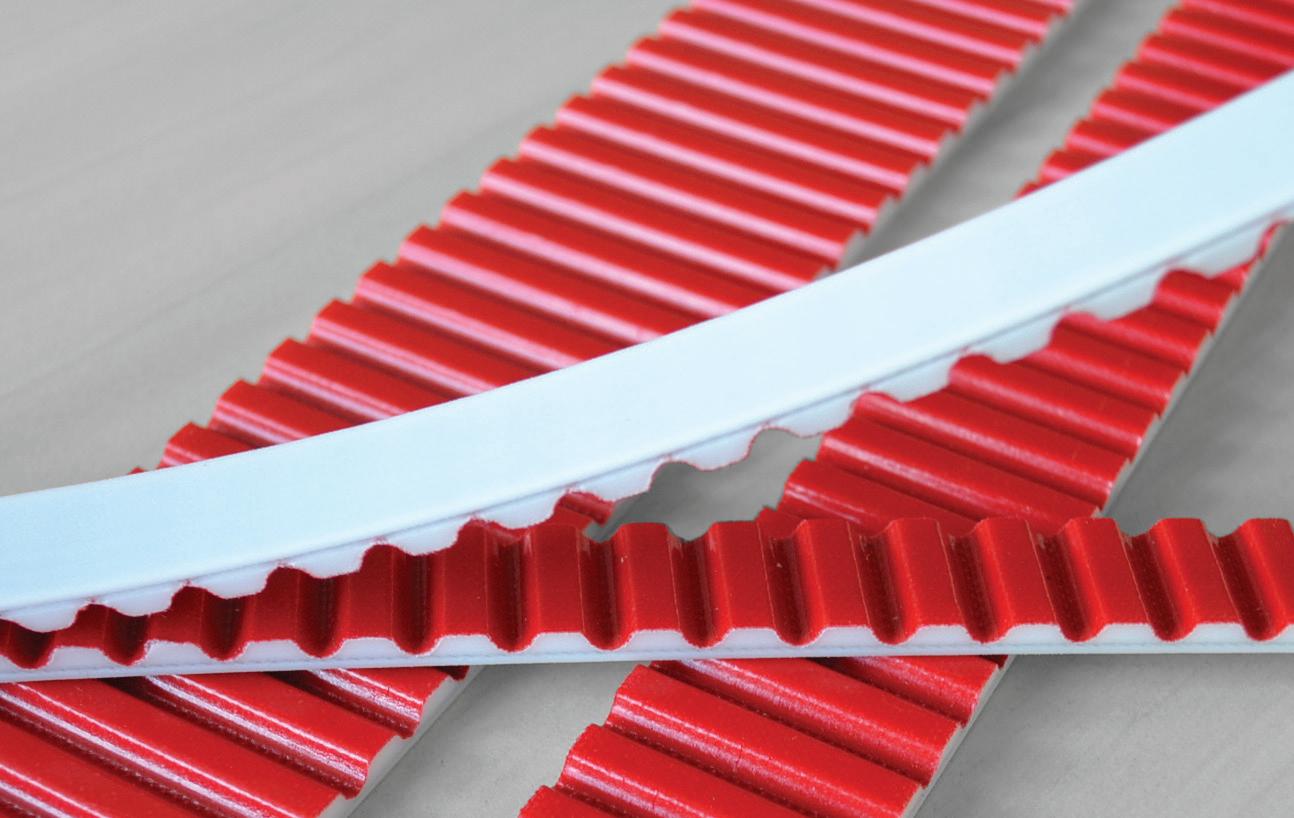
V-BELTS – TIMING BELTS – METRIC TIMING PULLEYS
Our extensive stock of belts and pulleys are competitively priced. We have also invested in cutting machines which will allow us to cut “non-standard” as well as standard dimensioned belts.
Aluminum Metric Timing Pulleys (T5-T10-AT5AT10) with stock bores available from stock.
It will be our pleasure to respond to your requests.
Global Bear Inc., striving to service the needs of industry, through distribution. www.globalbear.ca
Table 3: Key Gas Ratios & their applicability
Table 2: Limiting Values of Individual Gases along with TDCG for different conditions as per IEEE Std C57.104
Table 4: The limit values for Doernenburg Key Gas Ratios for each fault type are as follows:
an in-depth analysis of the transformer. The gas ratios are useful in identifying the fault types because gases are generated at varying rates with variations in temperature and energy levels associated with different fault types.
Doernenburg Ratio Method suggests the existence of following faults:
•Low-intensity partial discharge
• High-intensity partial discharge (arcing)
• Thermal Faults
The Rogers Ratio method identifies the following types of faults:
• Low-intensity partial discharge
• High-intensity partial discharge (arcing)
• Low-temperature thermal faults
• High-temperature thermal faults
Key Gas Method
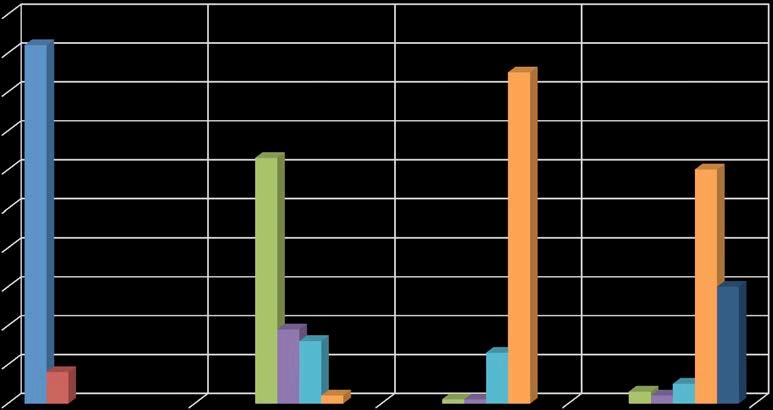
In addition to the above quantitative methods, a qualitative technique, known as Key Gas Method, can also be used to identify fault types based on relative proportion of gases. The basic premise behind this method is that different temperature levels give rise to different gases. The relative proportion of these key gases with respect to other gases can indicate probable fault type. The graph (bottom left) illustrates the relative proportion of key gases (as %) that can be used for this method.
For large power transformers, it is recommended to collect multiple samples from different sampling points, for example, top and bottom of the main tank, and On-Load Tap Changer sections. Sampling should be carried out in dedicated vacuum syringes and tests conducted by trained professionals in laboratory environment.
It is important to note that DGA is a trend analysis and any abnormal spot readings should be verified through resampling. Once an abnormal concentration level for any gas is confirmed, the associated fault condition should be addressed. This approach not only provides advance warning about the internal state of the transformer but also saves outage duration. DGA should be an integral part of any maintenance program for transformers. MRO
Usman Mustafa Syed is an Electrical Engineer with 12 years of experience in Maintenance & Reliability Management within energy, and oil and gas sectors. He is currently based in Kuala Lumpur, Malaysia and can be reached at umsyed@engineer.com.
Table 5: The limit values for Rogers Key Gas Ratios are as follows for each fault type:
KEEP GOING
Technology and design advances drive trend towards electromechanical actuation.
BY NIKLAS SJÖSTRÖM
Over recent years, there has been an increase in demand from end users to increase the use of electric rod style actuators and reduce the use of pneumatic actuation in factory automation equipment. Numerous factors are driving the conversion but most significant is the increasing need to achieve the following objectives:
• Improved machine performance and functionality due to electromechanical actuators being capable of higher precision.
• Smaller footprint, because electromechanical actuators require only about a quarter of the space to deliver the same thrust.
• Greater energy utilization, because electromechanical actuators operate with a far greater energy efficiency and do not need air compressors running 24/7 to maintain pressure.
• Reduced maintenance and total cost of ownership, because electromechanical actuators use fewer components, do not require compressors and do not have air leak issues.
Once the decision to replace pneumatic actuators with electromechanical actuators has been made, the next step is to select the right electromechanical actuator from among the many brands. While fundamental thrust specifications may be similar, there are significant differences in the areas of lifecycle performance, maintainability and environmental resistance.
Lifecycle performance
Generally speaking, the larger the diameter of the ball screw,
the greater the thrust potential, but achieving this requires proper mating of the thrust bearing and all fixation points, including extension tube, the inner ball nut system, bearing housing and wiper housing. Otherwise, any increase in thrust would come at the expense of system life. A component that is too weak to handle its load will wear out much faster or even become damaged. Given two actuators, each fitted with a 16 mm ball screw and providing 750 Newtons of thrust, for example, one may have travel life of 2,000 kilometres, while another could provide 8,000 kilometres of travel. The difference is in how well the ball screw is mated to the other components and them to each other.
Moreover, due to larger ball screw diameters correlating also with cost and footprint, properly mating the ball screw and other components can reduce both. To meet an application requirement of 3,200 Newtons of force, one vendor might utilize a ball screw with 20 mm diameter, while another vendor with properly mated components, might achieve the same thrust with a screw of only 12 mm diameter, thus being able to downsize without sacrificing performance.
Proper mating of ball screws and other components has the greatest impact on the life of the actuator, and this, together with the carrier design, has the greatest impact on precision and load capacity. One of the carrier’s main functions is to reduce free play in radial and lateral directions. Factors impacting this are the diameter of the carrier body, the contact surface area and the use of support legs.
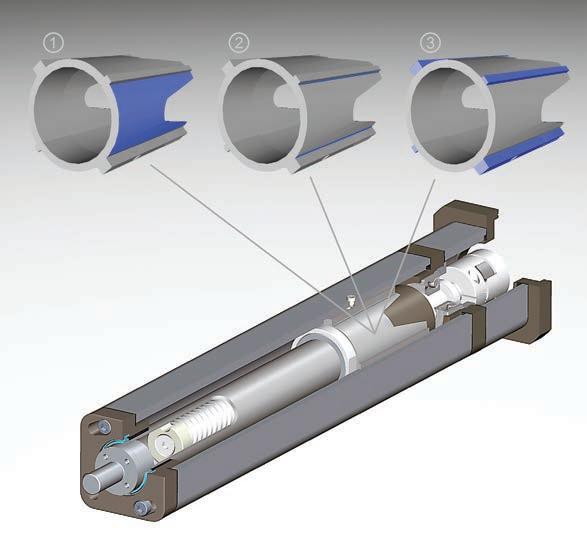
A larger carrier body (Figure 1) can support larger external radial loads, by maximizing surface contact area in a side load
situation. The ability to side load electric actuators would raise performance, precision and compactness to a level that is not attainable with pneumatic or hydraulic actuation.
Likewise, increased contact area in a pure thrust situation reduces play, providing support for lateral loads on the extension tube (See Figure 2 on page 20).
While maximizing surface areas impacts radial and lateral load capacity; it does not necessarily impact stability. This is often addressed by interlocking elevated legs into grooved channels. These support legs also help reduce vibration, which can add noise and contribute to wear. Most designs use one or two such ridges, which remove some play but can generate clicking sounds as the system begins to wear over time. Using four legs instead of two, however, reduces wear and noise, providing more effective and more durable anti-rotational protection. The additional legs will also help ensure cling-free return motion, further reducing the amount of play in the system due to wear.
Additionally, curving these carrier legs outwards creates radial preload, which reduces play in the thrust tube and centres the carrier body and ball nut, eliminating the need to shim the carrier to the extrusion and compensating for wear over the life of the device. Keeping everything in alignment also reduces the frequency with which the system must be calibrated to achieve consistent idle torque.
While close tolerances are critical for wear and noise reduction, if there is no air gap at all, pressure can build when the actuator is running at high speed. This can cause overheating, contributing to lubrication problems and other durability is-
sues. Thomson addressed this by making two of the male key features on the carrier legs lower than the remaining two. This provided just enough of a gap to prevent pressure buildup. As seen in Figure 1, two of the male key features on the carrier legs that is orthogonally situated are lower than the remaining two. This is what prevents the pressure buildup.
Maintainability
Ease of maintenance certainly affects lifecycle performance and contributes to immediate productivity benefits. Electromechanical actuators differ in their lubrication and motor handling. Most systems retract to expose parts for lubrication only partially, maybe 60 or 70 per cent. Technicians remove the caps, locate the parts that need lubrication, add grease and may need to repeat the process. A better approach, however, is to extend or retract the tube completely, revealing all components for maximum coverage. These few steps allow implementation of automated lubrication systems. In addition, using a lubrication nipple that eliminates the need to remove the cap simplifies maintainability.
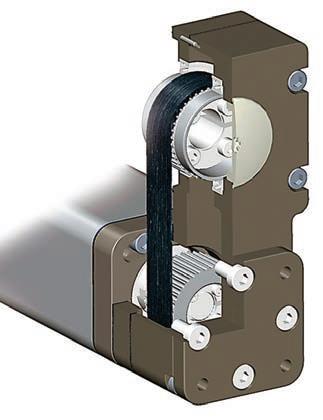
Another key factor is installation time that is consumed in mating up the motor with the mechanical actuator. Traditionally mounting the motor in a parallel configuration can take 20 - 25 minutes. Once the motor is being mounted, a technician must use a variety of tools to adjust it for proper belt tension and aligning. This requires at least 12 steps. But if the actuator design comes with a pre-assembled parallel solution, the belt can be pre-tensioned during assembly, eliminating the need for the multistep tension adjustments, and enabling the motor to be bolted down and usable in only three steps. For inline mounting, the benefits of a pre-assembled solution are similar, although not as dramatic, reducing the number of steps from 7 to 3.
Additionally, the use of a straddle-mount bearing strategy eliminates the risk of misalignment. Besides, it protects the motor shaft from impact by radial loads, which also reduces noise and further extends system life.
Environmental resistance
A very important point in which electromechanical actuators differ from each other is their ability to resist against harsh or
Fig. 1 shows the contact areas in thrust and side load conditions
Fig. 2: Actuator design with a pre-assembled parallel solution.
environmental conditions and withstand frequent high-pressure wash downs. This is basically a matter of the exterior profile design, material choice and sealing strategy.
Compared with grooved surfaces, an exterior profile with a smooth surface is cleaner, because it avoids accumulation of dust and fluids in grooves. This makes it more appropriate for harsh environments when frequent wash down is required. There could be one downside of a sleek exterior, though. If used in applications that require a sensor attachment, an additional plastic add-on might be necessary to attach the sensor.
Environmental resistance also depends on the material composition of the extension tube. Most systems use chrome steel, but stainless steel is a much better choice for harsh environments.
A key indicator of resistance to solids and liquids in the environment is the Ingress Protection (IP) Code of the National Electrical Manufacturer Association (NEMA) (Table 1). Achieving an IP rating of 65, for example, means that the system is completely dustproof and protected against low-pressure water jets from any direction, as might be found in a food and beverage industry washdown operation. Only a few electric actuators available today meet this rating, but in corrosive environments it is critical. An IP rating of 54 provides some degree of dust protection and protection against splashed water, making it acceptable for some washdown applications but not if pressure is involved. An IP rating of 40, which is quite common among linear actuators, implies that there is no dust or liquid protection.
A higher IP rating is mainly related to a higher sealing strategy. In this case, every compartment is sealed, including motor mounts. All gaskets should also be sealed and extend all the way to the motor, instead of stopping at the mounting plate.
Gearing up for the next generation of motion control
As the market drives demand for high productivity solutions, shorter changeover times, increasing reliability and greater energy savings, reduced maintenance and operating costs, more and more designers and end users are migrating to electromechanical actuation over pneumatic options. For machinery that require sophisticated motion control, electromechanical actuators are pretty much the only alternative. But even in simpler linear motion applications, motion control designers and users are considering electric actuation based on less and easy maintenance, higher energy savings and cleaner operation.
Even greater benefits can be obtained with careful comparison among different brands of electric actuators. Always interpret “load carrying capability” in the context of claimed system life and space requirements. There are very real trade-offs in these areas. Carrier design impacts precision, lateral and rotary load-bearing capabilities, so pay close attention to the overall design used to secure the carrier in the channel, as well as to the shape and size of any guidance mechanisms used.
Fig. 3: Thomson PC Series electric actuators are designed to deliver superior performance while saving you time and money with easy product sizing and selection, quick and reliable installation, and reduced maintenance.
0 No protection No protection
1 Protected against solid objects over 50mm in diameter e.g. hands, large tools.
2 Protected against solid objects over 12.5mm e.g. fingers, large tools and similar objects.
3 Protected against solid objects over 2.5mm in diameter e.g. thick wire, small tools.
Protected against vertically falling drops of water or condensation.
Protected against falling drops of water, if the case is disposed up to 15 degrees from vertical.
Protected against sprays of water from any direction, even if the case is disposed up to 60 degrees from vertical.
4 Protected against solid objects over 1.0mm in diameter e.g. wires. Protected against splash water from any direction.
5 Limited protection against dust ingress. (no harmful deposit)
6 Totally protected against dust ingress.
7 N/A
8 N/A
9k N/A
Protected against low pressure water jets from any direction. Limited ingress permitted.
Protected against high pressure water jets from any direction. Limited ingress permitted.
Protected against short periods of immersion in water.
Protected against long, durable periods of immersion in water.
Protected against close-range high pressure, high temperature spray down
Improved mechanisms and parts such as support legs and leg designs, which are curved for better gripping, will have a large positive impact to accuracy and wear. Considering the appropriate exterior profile, material choice and sealing strategy are important key factors for environmental resistance. Smoother profiles, stainless steel materials and higher IP ratings tend to offer the greatest protection. MRO
Niklas Sjöström is the product line manager, Systems Group, at Thomson Industries, Inc. Visit www.thomsonlinear.com/pcseries for further information and to learn more about the benefits of converting from pneumatic to electric actuation, including a free energy savings calculator.
Table 1 NEMA IP Codes rating protection against solids and liquids
GO Without Compromise
Defend Against V-Belt Failure
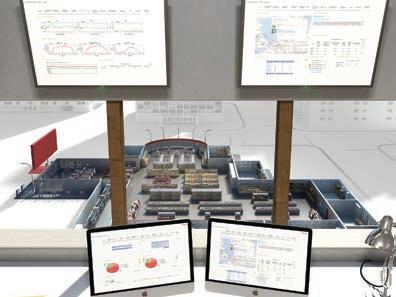
An asset lifecycle management tool, such as Danfoss Enterprize Services, can be configured to provide line of sight to the entire operation.
DEEP MACHINE LEARNING
Addressing the evolving challenges of climate change, the high demand for sustainability and food safety through big data applications.
BY REHANA BEGG
What if food loss could be predicted in supermarkets and food safety could be guaranteed across the food chain? What if a supermarket could deliver more energy than it could actually use? What if supermarkets had zero emissions? And, what if grocery stores had self-adaptive learning and food chains had self-learning capabilities and solutions?
These are just a handful of questions that Danfoss, a leading developer of integrated control solutions, refrigeration monitoring equipment, compressors and controllers, hopes to resolve in its food service division.
From day-to-day operations to big-picture food safety optimization, supermarkets have ongoing challenges. Rising energy costs, the expense attributed to asset failure and unplanned downtime are compelling reasons why plans need to be put in place to keep assets perform-
ing around the clock, while at the same time reducing the energy bill. Add to this the fact that grocery store margins are, on average, a meagre two per cent, and it becomes glaringly obvious why operations are looking for novel ways to eke out value.
Operations in context
With more than 50,000 food retail installations worldwide, Danfoss made it a mission to address these concerns by developing an integrated Smart Store solu-
tion that would not only help customers view their operations at a presentation level, create reports on alarms and performance, but would also reduce energy costs and help drive return on investment for 4,000 sites around the globe.
“The Smart Store solution integrates control over the refrigeration, the HVAC, the lighting and other applications in general, which ensures safety, brings down energy bills and connects and optimizes the supermarket from cold case to [electronic] file,” said Richard Ruth,
Bentley Systems’ Alan Kiraly, SVP, Asset Performance and Meg Davis, senior marketing manager, explain how Bentley’s analytical solutions help transform data into actionable information.
Customers can achieve energy savings of about 50 per cent and lower energy bills by one-third, said Richard Ruth of Danfoss.
product manager – Services, Danfoss, who accepted the award for “Innovation in Asset Performance” at the 2016 Be Inspired Awards hosted by Bentley Systems on November 2, 2016.
As part of the Smart Store concept, Danfoss uses a cloud-based service delivery platform, known as Danfoss Enterprise Services, for food-retail applications. It collects a range of data points from connected devices – including compressors, humidity sensors, heat exchangers, condensing units, energy meters, and weather readings – and then uses that information to provide insights into HVACR operations, energy management programs and food safe -
ty. The ultimate goal is to facilitate the installation of preventive programs as a way to improve sustainability.
To support its service modules, Danfoss turned to Bentley Systems’ AssetWise cloud-based software solution, which captures data from sensors on assets and then displays the data across dashboards. “AssetWise platform is an immersive platform of applications that allow us to have line of sight, which was the original intent of ISO 55000 standard on asset management,” said David Armstrong, Asset Performance Management Principal Consultant and Service Director for Bentley North America.
In simple terms, AssetWise can be likened to an asset lifecycle information management (ALIM) tool which the predictive analytic world needs to have in place in order to make sense of random information, said Armstrong. “So the ALIM piece is the wrapper around all the other applications… It can be used for document or record management, gives you absolute critical control to make sure you have line of sight to the asset. You know what you’re looking at and why you’re looking at it.”
The solution is therefore able to allow
users to monitor refrigerant levels to ensure timely recharge and protect against food loss, monitor compressor performance and leak detection to benchmark compressor runtimes across stores and improve efficiencies and to remedy leaks, and to support alarm management (a callout service for critical issues).
The partnership between Danfoss and Bentley Systems is mutually beneficial, said Alan Kiraly, SVP Asset Performance, Bentley Systems. “Danfoss is not only getting insights into what clients might do, but are using it in day-to-day operations. They’ve just got terabytes and terabytes of data and we’re working with them on what machine learning can do in order to understand better how we can scale up.”
Compliance and safety
Using colour-coded boxes to indicate whether an asset is operating above or below its normal level, the AssetWise platform allows customers to “spot, in real-time, differences in behaviour in the asset’s temperature,” said Ruth. These reports can display historical data to prove that measures are taken, as well as help to predict events and show where ac-
The World of Bearings and Power Transmission...
tions can be taken ahead of time to ensure food safety.
Regulatory food compliance can be addressed with Hazard Analysis and Critical Control Points (HACCP) and TQI (Temperature Quality Indexing) reports, which document the temperatures in cold cases and cold rooms and ensure compliance with national and international standards.
Load shedding
Supermarkets are one of the biggest contributors to energy consumption, said Ruth. If a utility company in the supermarket’s or plant’s vicinity offers a demand-response incentive program, then the system can be programmed to
Smart Savings
reduce electricity during peak periods. “On extremely hot days, for example, lighting inside the supermarket can be adjusted and then restored to the way it was once the demand-response time is over,” said Ruth. In turn, the supermarket gets credits on its energy bill for participating in the load-shedding program.
“That is another big opportunity in helping with sustainability,” said Ruth.
Sustainable information systems
The collected data can be used to identify the best and worst performers among stores, but is also the backbone for a fact-based decision-making tool. Executive reports provide a consolidated view for making continuous improvement
Danfoss says that its Smart Store Solution allows customers to monitor, manage and operate their systems for maximum energy efficiency.
These savings are achieved in tandem with Bentley Systems’ AssetWise cloud-based solution, which provides the operational intelligence needed to ensure food safety, minimize food loss, reduce energy use, anticipate equipment failure, enable load shedding and identify maintenance needs. Customers at more than 5,000 locations are able to remotely monitor and control operations.
recommendations, said Ruth.
“We have over 8,000 grocery stores that are using this service and they see the value of the analytics that we can bring to the table. We handle three-million alarms that come in from supermarkets annually. We collect over a million data points each week. On average, our savings is six to 12 per cent, depending on the store size. And that can be a huge contribution to their bottom line.” MRO
Rehana Begg, editor of Machinery and Equipment MRO magazine, was a juror in the Innovation in Asset Performance category at Bentley Systems 2016 Be Inspired Awards, held at The Year in Infrastructure 2016 Conference in London. Reach her at rbegg@annexweb.com.
Richard Ruth, product manager – Services, Danfoss, said that significant savings can be achieved by combining Bentley’s AssetWise capabilities and the Danfoss Smart Store solution. Notable savings include:
• 50 per cent energy savings.
• Optimized control of cold cases and freezers without compromising food safety can save up to 33 per cent on the energy bill.
• 24/7 temperature monitoring.
• 60 per cent CO2 reduction when replacing HFCs with natural refrigerants.
The ERP Challenge
Planning Your New CMMS or ERP Implementation
BY PETER PHILLIPS
Throughout this series we’ve been on an implementation of a multiple-site ERP. As we worked through the stages of the data gathering, design decision and groundwork with the manufacturing plants, I came to the realization that the initial rollout was not planned as well as it could have been. Therefore, this article focuses on the key ingredients to a successful implementation of an ERP, CMMS or any other maintenance system.
As the year begins, many companies may have included in their budget the purchase of maintenance software whether it is a focused CMMS or an ERP that has a maintenance module. The cost of this software can range from $10,000 to hundreds of thousands of dollars. These programs can streamline current processes, such as effective maintenance plans, resource purchasing and planning. A well-planned implementation can mean the difference between a start-up that goes smoothly and having everything work as intended and the opposite, where the software has many problems performing its functions and the aftercare is extensive, frustrating and costly.
Let’s examine what a successful implementation looks like.
A complete implementation package needs to be developed before any work starts. The rollout package needs to cover
– Part 5
every step of the implementation in detail. Following are some of the ingredients for a successfully planned implementation.
The master data, data that rarely changes, must have structure. Master data, such as equipment, parts and preventative maintenance procedures, need to have nomenclatures. Developing these naming conventions for every piece of master data takes time, however, it absolutely needs to be done. Names and descriptions need to be structured in such a way that they are quickly understood and easy to reproduce. Users of the program need to be able to use the nomenclatures to easily and consistently add new data to the program after it goes live. Strong, well-developed nomenclatures make the software easy to navigate and create data integrity in the new system.
Procedures and templates for gathering the master data need to be ready to send to the plants. The procedures and templates need to be tested to ensure they work properly. Changing the format of these data-gathering tools create confusion and frustration for the people at the plants gathering the data. Every data collection scenario must be anticipated so full and correct instructions are prepared for the plants.
A strong central implementation team is essential. Failure to have a central implementation team will create mistakes in procedures, templates and instruc-
tions. This central implementation team should consist of an expert in the new software and be able to guide the software implementation. Old, legacy software that the plants are currently using will have data to be cleansed and put into lists and templates ready for upload into the new system. One member of the central team needs to be fluent in the legacy software and must have extensive maintenance experience.
Checks & balances
The central implementation team needs to check every upload of data into the new software. This is normally done in the training or sandbox environment. They must look for missing data and determine what is wrong. Many implementation teams leave this validation to be discovered by the plant teams. The central team members are the integrators, if a thousand pieces of data were submitted by the pants, then it is the job of central team to validate those thousand pieces of data and make sure they are successfully loaded into the software.
Plant team
The plant team must be picked early in the implementation. Team members will need to be released from some of their duties in order to work on data gathering and co-ordinate implementation activities at the plant level. They will be
the interface between the central team and the plant data collection team. The people on the team should consist of:
• An experienced maintenance person/ craftsman with knowledge of plant equipment and processes;
• A maintenance planner with knowledge of plant preventative maintenance planning and procedures;
• A stores person with knowledge of the plant organization of parts, min/max levels, vendors and purchasing procedures; and
• A data assistant capable of formatting the data into templates.
Failure to have these positions filled within the plant team will cause inaccurate data, delays and rework as people are rushed to meet the data completion deadlines.
Field team
Depending on the number of plants doing concurrent implementations, there needs to be a field representative. This person needs to know the plant equipment and processes and a broad understanding of the new software. The field person floats from plant to plant assisting where necessary, answering ques-
tions and verifying the data templates are being completed properly. They advise the plant central team of resource issues, deadline concerns, data quality and integrity issues occurring at the plants.
Document storage
In years past, implementation teams created binders that included procedures, instructions, and data nomenclatures. The issue with this document storage method is that when changes need to be made to the documents, updates need to be made to all binders in the field. This process is cumbersome. In the modem world, this implementation information is held electronically in a central location where they can be updated and accessed by everyone. The implementation schedules and deadlines, procedures and instructions, templates and list need to be in a central location. Data completed by the plants can be loaded onto the central site ready for review and uploaded into the new software.
Training material
Training manuals need to be developed by an experienced trainer who knows
how to design training for different adult learning styles. They will need to assemble training materials into complete packages that any experienced trainer can take off the shelf and, with an hour of review, deliver the training to participants. Many companies simply take some screenshots of the new software, add some text and staple the sheets together. Manuals should be detailed in such a way that the participants can use the manual as a reference guide when they return to their workplace. Training manuals need to look professional and be bound or placed in three-ring binders.
While I have not discussed every detail of the implementation plan, I think you now have a better understanding of how important it is to plan every step of the journey. Although we have focused on maintenance implementation, the same structure can be used in all the other modules you are implementing in the new ERP. MRO
Peter Phillips of Trailwalk Holdings, a Nova Scotia-based maintenance consulting and training company, can be reached at 902-7983601 or by email at peter@trailwalk.ca.
PREVENT ELECTRICAL DAMAGE IN VARIABLE FREQUENCY DRIVE MOTORS
BY DOUGLAS J. MARTIN
When I first joined the industry in 1987, bearing damage from current leakage was rarely seen. I can still remember who the first person was that showed me the first case of current leakage – and that was about 1996, despite hearing about it since I joined bearing industry.
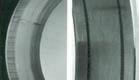
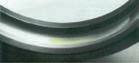
Low-voltage current has damaged the bearing.
Variable Frequency Drive (VFD) motors have been adapted to replace a motor and gearbox, or a motor and belt drive. The problem is that a VFD motor induces a voltage between the rotating assembly and the static housing of the electric motor. This difference creates a low-voltage current across the rolling element bearings. Over time, this low voltage current causes damage to the bearing that causes the current to pass through it.
The bearing industry has come up with two solutions to the problem of a current passing across a bearing. One is to coat a ring surface with a ceramic coating and the other is to use a ceramic rolling element (hybrid bearing).
What is the difference?
The coating used on either the bearing bore or the bearing outer diameter surface is an aluminum-oxide ceramic coating with a thickness of about 110 um, whereas a hybrid bearing uses rolling elements of silicon nitride. In both cases, the bearings retain the standard ISO dimensions of standard bearings so they are able to drop into the application.
How does it affect performance?
The coated bearings utilize the same rings and rolling elements as standard bearings, so there is no difference in performance – other than the prevention of low-voltage current passing through the bearing. A ceramic-coated bearing may run warmer as the heat transfer characteristics are different
and the heat dissipation is not the same. While I have not experienced this, it is possible. Bearing manufacturers have been using the ceramic coatings for over 30 years.
Since the surface properties of ceramic on steel are better in terms of rolling contact, a hybrid bearing should provide greater service life especially in cases of marginal lubrication. Ceramic rolling elements are 60 per cent lighter compared to steel. This results in lower centrifugal forces and lower load on the raceway at high speeds.
Do these bearings “fix” the problem?
No. A hybrid bearing or insulated bearing does not prevent the voltage from being created. They simply prevent the current from passing through the bearing. If the bearings are hybrids/ insulated, then the current will look for the next component to pass through. In a few cases I have seen the bearings in the driven component – such as a gearbox or pump – suffer from current damage that was passed on from the VFD motor.
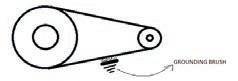
In fact, one cannot really fix the problem; one needs to mitigate the damage to the components by either making an electrical connection between the shaft and housing or by providing an insulating barrier to stop the current flow through critical components.
What is the best solution?
Hybrid bearings. They provide a greater resistance to current flow and they provide greater bearing performance. The drawback is the availability. Not all ball bearing sizes are made with ceramic balls, however, there are many sizes currently available. In terms of hybrid cylindrical roller bearings, the production of ceramic cylindrical rollers is still in the early stages of mass production and is less available than deep-groove ball bearings. MRO
Douglas Martin is a heavy-duty machinery engineer based in Vancouver. He specializes in the design of rotating equipment, failure analysis and lubrication. Reach him by email at mro.whats.up.doug@gmail.com.
25 –28 | Delta Bessborough |
The Plant Engineering & Maintenance Association of Canada invites you to its national conference - MainTrain
PEMAC’s MainTrain conference is a source of professional development for maintenance, reliability and asset management professionals in every industry, in both public and private sector businesses, that invest capital in equipment & facilities.
• Learn from leading experts, practitioners and professionals from across Canada and around the world
• Over 40 workshops, sessions and tours to select from over a four day conference
Save the date for MainTrain 2017 to Connect, Learn and Contribute as you gather the insights and tools to develop effective strategies and solutions for your asset management, maintenance and reliability programs.
Visit www.MainTrain.ca for more information, email events@pemac.org or call 1-877-523-7255.
CALL FOR ABSTRACTS NOW OPEN – Submit your ideas for workshops, sessions and poster sessions for your chance to present at MainTrain 2017! Deadline for abstracts is March 20, 2017 . Visit www.MainTrain.ca for details.
TROUBLESHOOTING ELECTRIC MOTORS
BY L. TEX LEUGNER
Electric motors are essential to operational success. Unfortunately, more than 60 per cent of motor failures are service related and could be prevented. Failures caused by excessive operating temperatures, stator winding deterioration, vibration, misalignment, improper bearings lubrication, overloads and contamination are commonplace.
Typical electric motor nameplate information
The first thing the electric motor troubleshooter must consider is the motor nameplate information: does the electric motor nameplate information support the motor’s application, or is the motor not designed for that particular application?
For example, the motor nameplate information in Table 1 notes the “service factor” that indicates how much “over the nameplate rating” any given electric motor can be driven without overheating.
Motors manufactured in North America will conform to standards set by the National Electrical Manufacturers Association (NEMA). In other parts of the world, the standards of the International Electromechanical Commission (IEC) are most often used. (See Table 1)
Electric motor operating temperatures
Excessive operating temperatures cause up to 40 per cent of electric motor failures and the stator windings are particularly temperature sensitive. In fact, every 10⁰C rise in temperature above the specified insulation rating of the motor can reduce its life by up to 50 per cent. The specified insulation rating is the sum of the ambient temperature (usually 40⁰C as noted on the nameplate data), plus the maximum allowable operating temperature rise for the specific motor insulation class.
For example, the class F insulation rating is 155⁰C (operating temperature rise of 105-115⁰C plus 40⁰C ambient or 155⁰C). This insulation rating of class F is very common. However, classes A or B insulation ratings are lower, so care must be taken never
Manufacturer’s Name and Address
Catalog Number
Motor Model Number
Horsepower
Amps or FLA
Motors often have a higher HP than is required. A motor that is too large will not give maximum efficiency and will have a poor power factor.
The current required at full load. (Full load amps.)
Volts 120, 208, 240, 277, 488, and 575 volts are common. There are other voltages available.
Phase
HZ
Power Factor
Single Phase or Three Phase and would state DC for Direct Current Motors.
Frequency in Cycles per Second. Usually 60 HZ in North and South America and 50 HZ in the rest of the world.
Choose the motor with the highest power factor rating.
RPM Revolutions per Minute of the shaft at Full Load.
Duty It will be Continuous, Intermittent, or Special Duty. Sometimes specified as 15, 30, or 60 Minute Duty.
Type The Classification varies from manufacturer to manufacturer.
Code Indicates the Locked Rotor KVA per Horsepower.
Enclosure Open, Totally Enclosed, Drip-Proof, Splash-Proof, Weather Protected and Explosion-Proof are the usual options.
Service Factor
NEMA Electrical Design
Frame Number
A measure of continuous overload capacity. Can be up to 15%.
The design letter represents the Torque Characteristics. B, C, and D are most common.
The frame number will indicate a given set of external dimensions, a given horsepower and a given speed. Be sure to specify volts, amps, etc.
Max Ambient Usually +40⁰C (104⁰F).
Insulation Class Normally will be specified as class A, B, F, or H.
Table 1: DATA USUALLY INCLUDED ON THE NAMEPLATE
to operate an electric motor beyond its insulation rating temperature. (See table 2)
Table 2
To put this in perspective, a motor operating at 180⁰C will have an estimated life of:
• 300 hours with Class A insulation
• 1,800 hours with Class B insulation
• 8,500 hours with Class F insulation
• tens of thousands of hours with Class H insulation
Note that the words “thermally protected” on any motor nameplate, indicates that a thermal protection device is an integral part of the motor and will protect it from overheating. Thermally protected motors are an exception to the allowable temperatures specified in Table 2.
Winding temperatures for thermally protected motors are found in table 3 below.
Table 3: Winding temperatures in thermally protected electric motors.
a) The ground insulation or “megger” test that is used to apply DC voltage, usually 500 or 1,000 volts, to measure the resistance of the insulation. Generally, lower than 50 megohmmeter readings may indicate a reduced insulation condition that should be immediately investigated for its cause.
b) The surge test measures the turn insulation in form wound or random wound stator windings by applying a highvoltage surge between the turns. (Note that the surge test duplicates the action of an external-voltage surge and is a destructive go/no-go test.) This test method is described in detail in IEEE 522.
c) The partial discharge test is described in IEEE 1434 to monitor or locate small electrical sparks called partial discharges (PD) that can occur in stator windings at 4 kV or higher. PD is negligible in well-made stator windings that are in good condition. However, if the system was poorly manufactured or the winding has deteriorated due to overheating or contamination, then PD (partial discharge) will occur. The key measurement of a PD test is the peak PD magnitude comparing which phase has the highest PD magnitude and therefore indicates the winding with the greatest deterioration.
d) Current signature analysis analyzes the current on a single power cable feeding the motor to monitor its frequency. Specific frequencies in that current indicate the presence of defective rotor windings during the motor’s normal operation. This analysis can locate the following problems in electric motors; cracked rotor bars or bars with large internal voids created during manufacture, broken bar-to-short circuit ring connections and cracked short-circuit rings. (The detection of broken or cracked rotor bars can also be detected using electric motor bearing vibration analysis, suggesting that the use of regularly scheduled condition monitoring using more than one predictive maintenance technology is always a good idea.)
Harmonics and associated electrical system problems
Higher-than-normal operating temperatures are always the sign of a problem. Electrical problems include loose, worn or corroded connections, unbalanced loads, harmonics, poor contacts, stator winding deterioration, shorted windings, incorrect line voltage and phase imbalance.
Maintenance-related causes of high temperatures include blocked ventilation or restricted cooling fans, excessive amounts of dirt or dust covering the motor housing and over-greasing of bearings, causing higher-than-normal bearing temperatures.
Electrically-induced motor failures
Electric motors do not just fail or burn out without a cause. The failures noted earlier can be prevented by routine testing, thus improving the almost unlimited reliability of motors. Almost all motor electrical failures are the result of some form of insulation or rotor component deterioration.
A common cause of winding insulation damage is an accumulation of dirt and dust that can abrade insulation and prevent proper cooling. Unwanted and excessive moisture reduces the dielectric strength of insulation that can result in short circuits. Oil and grease accumulations inside the motor will increase operating temperatures and cause damage to the winding insulation.
The condition of winding insulation can be determined using the following condition monitoring electrical tests:
The fundamental frequency (usually 60 Hz) is the predominant intended frequency of a power system. Harmonics are identified by their harmonic number. For instance, in a system with a 60 Hz fundamental frequency, 120 Hz is the second harmonic, 180 Hz the third harmonic, 300 Hz the fifth, and so on.
Harmonic distortions of the fundamental frequency are today caused by non-linear loads such as the switched mode power supply used in variable speed drives and personal computers and can create problems in electrical equipment and systems that can be difficult to diagnose.
Problems created by harmonics may include the following:
• Excessive neutral (ground) current in three-phase, fourwire systems.
• Overheating of transformers, motors and other electrical devices.
• Voltage and current waveform distortion resulting in misoperation or total failure of solid-state electronic equipment.
• Shaft currents in electric motors causing bearing failures if the bearings are not insulated.
• Loss of data on computer systems.
• Failure of UPS systems to transfer properly.
• Excessively noisy transformers.
• Unexplained blowing of fuses in power factor correction capacitors.
• Unusual audible noise in electrical switchgear.
If these problems are present in any electrical system, there is a simple way to determine if a harmonics distortion problem
exists. This method requires the troubleshooter to measure the load current with an average reading ammeter, then with a true RMS reading ammeter and compare the difference. If harmonics are present, the average reading instrument will read lower than the RMS instrument.
Electric motor bearing failures
Temperature-related problems can also seriously affect bearing life in electric motors regardless of whether they are grease- or oil-lubricated. In addition to excessive temperatures, contamination, belt misalignment or adjustment, rotor imbalance, coupling misalignment, moisture, electrical discharge (through the bearing) and incorrect oil viscosity (whether in the grease or the oil itself) can all affect bearing life and motor reliability.
The following examples describe common bearing failures and their causes:
Figure 1: Corrosion or black acid etching can occur when a motor is shut down for lengthy periods and moisture is present.
Figure2: Mineral oil used in typical grease products will begin to oxidize at 71⁰C (160⁰F). It is very important that greased bearings not be over-lubricated as the internal churning resistance of the grease can increase the temperature resulting in the oxidation process.
Figure 3: Small currents can cause many small pits – sometimes clustered in axial lines, called “fluting.”
Figure 4: On the left, fluting was caused by the passage of electric current in the outer ring of a spherical roller bearing. On the right, the outer ring of a self-aligning ball bearing damaged by electric current.
Figure 5: Deep groove ball bearing with electric current damage in the highlighted zigzag pattern. Burns of this configuration can occur when the momentary passage of high amperage current is accompanied by axial vibration.
Electrostatic charge generation and mitigation
All belt-drive systems, including electric motors, generate electrostatic charges resulting from the triboelectric effect (frictional release) as rubber belts rotate on their sheaves. With non-conductive belts, these static charges grow as the drives operate until the electrostatic energy is sufficient for this charge to dissipate. This energy will discharge to the closest grounding point, often the bearing that supports the belt sheave, resulting in the passage of electrical current through the bearing (See figures 3, 4 and 5).
Electrostatic charge dissipation can be accomplished through the use of conductive drive belts with a resistance of six megohms or less and be of the “static-conducting” type. With conductive belts, electrostatic charge will dissipate into the sheaves before reaching the bearings.
Another method of eliminating electrostatic charges in drive belts is with the use of grounding brushes, particularly on conveyors using rubber belts.
Figure 6: Belt drive with a grounding brush installed. Variable speed drive systems can create other problems that will cause bearing failures. These systems often dissipate tran-
sient shaft mounted bearing-to-frame voltages as high as 8 - 15 volts down the motor shaft causing serious bearing damage. These potential problems can be eliminated or at least mitigated with the use of bearing grease with insulating properties and the installation of grounding bushings. In potentially explosive operating conditions, ceramic bearings are the best solution.
Electric motor information sheet
To ensure electric motor reliability, it is recommended that good records be kept of all critical motors. This file should include tracking information, including normal operating temperatures, coupling type, bearing part numbers and seal types with their corresponding part numbers. These and other pieces of information are critically important if changes in the motors operation occur. These changes in operation indicate that “something is different,” suggesting that a problem is developing and action must be taken before the motor fails.
Lubrication for electric motors
The lubrication of electric motors, whether by grease or oil, depends upon several factors: is the motor horizontally or vertically mounted, what type is the bearing, what is it’s RPM, temperature conditions, will shock loads occur, are dirt, dust and water contamination concerns and are the bearings sealed or unsealed? The following guidelines should be applied:
• When journal bearings with an oil ring are used, ISO viscosities 22, 32 or 46 should be considered depending upon the temperature. (The lower the temperature, the lower the oil viscosity required).
• For rolling element bearings requiring oil, use ISO 32 viscosity at speeds of 3,600 RPM or low temperatures. Use ISO 46 or 68 viscosities when the ambient temperature is 20⁰C (68⁰F). Unless otherwise specified by the motor manufacturer, the oils recommended here are all R&O, anti-wear mineral-based lubricants or synthetic hydrocarbon oils such as PAO (polyalphaolefin).
• Where the electric motor bearings call for grease lubrication, the most common greases recommended are NLGI (National Lubricating Grease Institute) consistency grades 2 or 3 with either lithium complex or polyurea thickener. Where a high level of electrical insulation is required, silicone synthetic fluid greases are often recommended. Grease lubrication is not recommended for spherical roller thrust bearings, so the motor manufacturer’s recommendations should always be followed. It is also recommended never to mix greases, as incompatibility of grease thickener types can dramatically affect the consistency of grease.
• There are many types of grease available today and certain electric motor applications require specific protection depending upon high temperatures, water resistance or other considerations. For example, calcium-thickened grease has very good water resistance but has an operating temperature of only 93⁰C (200⁰F), whereas lithium-complex grease has excellent water resistance and a maximum operating temperature of about 177⁰C (350⁰F).
• Temperature considerations are important and a guideline that should be followed states: “The service life of grease lubricated bearings is reduced by half (50 per cent) for every 15⁰C (27⁰F) increase in the bearing operating temperature above 70⁰C (160⁰F).” For example, if the calculated relubrica-
tion interval for a given bearing is 1,000 hours at 70⁰C, this interval should be cut in half to 500 hours if the operating temperature reaches 85⁰C.
Procedure for greasing electric motors
1. With the motor running, determine the temperature at the bearing/grease fitting area. (The operating temperature of all critical bearings should be known and recorded in maintenance files).
2. Remove relief plug and clean the hole of hardened grease.
3. Clean the fitting and attach the clean grease gun.
4. Pumping with full strokes apply the necessary amount of grease. (Use of the formula: G = .005 D (bearing OD, mm) X B (bearing width, mm) to provide the correct number of grams of grease).
5. Remove the grease gun, reinstall the plastic grease gun cap and again clean the fitting.
6. The motor temperature may have increased by as much as 10 – 15 degrees; permit the temperature to return to normal (it should return to the temperature determined before greasing the bearing). Allow the excess grease to be dispelled and replace the relief plug.
EXAMPLES OF BEARING RELUBRICATION INTERVALS AND GREASE QUANTITY
servation.
2. Temperature differences of 4⁰C - 15⁰C indicate that an investigation should be made as soon as possible.
3. Temperature differences of 16⁰C and above indicate a major problem and repairs should be undertaken immediately.
b) Acoustic (ultrasonic) monitoring: using a handheld ultrasonic device, a troubleshooter can determine the general condition of electric motor bearings, depending upon the decibel noise level. The following levels above the established baseline condition indicates that certain actions must be taken to correct a motor bearing problem:
1. An 8-decibel increase above the baseline indicates that the bearing requires lubrication. (Greasing should reduce the decibel level if the bearing is operating correctly).
2. A decibel level of 12 - 16 indicates some bearing damage has occurred.
3. A decibel level that remains above 35 indicates a severely damaged motor bearing.
c) Oil analysis: electric motor bearings lubricated with oil should be monitored periodically with an oil analysis. This analysis should consist of the following minimum tests: wear metals analyses, viscosity, acid number and ISO particle analysis (to determine large particle contamination).
d) Vibration analysis: monitoring electric motor conditions, such as mechanical looseness, coupling misalignment and unbalance, should be carried out on a regularly scheduled basis. For example, some coupling misalignment for certain bearings used in electric motors may be considered acceptable, but the accompanying seals can rarely accept more than 0.5 degrees of misalignment. If electric motor drive systems are to remain completely reliable, these operating conditions must be considered.
e) Electrical equipment vibration frequencies: electrical fault frequencies may be caused by mechanical problems, but since motors use electromotive forces that differ from purely mechanical forces, a motor will generate vibration frequencies that are functions of electrical loads, air gap variations, electromagnetic force variations and other conditions. As a result, rotating electrical machines produce a multitude of vibration frequencies that are generated by the electromagnetic forces inherent in such machinery. MRO
Table 4: Assumes room temperature and ambient conditions
NOTE: More bearings fail from over lubrication, causing high temperature and oxidation problems, than for any other reason. The standard tube of grease used in a grease gun contains 400 grams of grease. It is obvious from looking at the chart above that most bearings require very little grease at the relubrication interval and that, in many cases, the intervals may be extended.
Recommended best practices: Condition monitoring and troubleshooting
The following condition monitoring should be carried out on all critical electric motors on a regular basis:
a) Temperature monitoring: using a contact thermometer or infrared scanner, regularly monitor the temperature of electric motor housings and bearing casings. If thermography is used to monitor temperature, the following standards for action are recommended:
1. Temperature differences 1⁰C - 3⁰C between normal operating condition and that which is monitored by thermography indicates a possible deficiency and should be kept under ob-
RESILIENTLY MOUNTED MACHINES
NOTE: For machines with rigid mounting, multiply the limiting values by 0.8.
Table 5: The chart above provides general vibration limits.
L. (Tex) Leugner, the author of Practical Handbook of Machinery Lubrication, is a 15-year veteran of the Royal Canadian Electrical Mechanical Engineers where he served as a Technical Specialist. He was the founder and operations manager of Maintenance Technology International Inc. for 30 years. Leugner holds an STLE lubricant specialist certification and is a millwright and heavy duty mechanic. He can be reached at texleug@shaw.ca.
TEST & REWIND
Regular inspections, maintenance and finding the right shop to repair critical motors will reduce costly, unplanned shutdowns.
BY TOM VENETIS
An unplanned shutdown on a production line due to a faulty or failed motor is something to be avoided at all costs. Shutdowns are costly, both in regards to lost profits and to a company’s reputation amongst its customers who are now left waiting for their goods.
That is why knowing what causes motors to fail, how to prevent failure and what goes into maintaining and repairing a motor is so important.
Inspect and maintain
All motors, no matter how robust and rugged, will over time need to be inspected, maintained and repaired. So, let’s review a few simple measures that can help prevent a costly breakdown of a motor in an industrial operation.
The first is to develop a preventive maintenance plan. That might involve scheduling regular inspections and maintenance routines for motors. Depending on how critical a motor is for the operation in a company, those inspections and maintenance routines can be very frequent, sometimes monthly or weekly. Remember, if a motor is critical for an operation, such as moving key conveyors or assembly systems, then frequent inspections are critical. Heavy-duty motors involved in operations that put motors under high amounts of strain might need to be inspected daily.
Next, assign a regular team to inspect and maintain the motors. These will likely be persons who work with the motors all the time and can spot problems quickly because they are familiar with the motors.
Tom May, shop manager with TradeMark Industrial Inc., Cambridge, Ont., a contractor that offers electric motor testing and rewinding services for both AC and DC industrial motors, says most motor issues today come from daily wear and tear. “Common mechanical issues are those around bearings, pulleys and sprockets on a shaft coming loose. The environment where that motor is operating plays a role in its operating life. You will see that in punch-press and stamping applications, oil-laden mists entering the motor and allowing carbon from the brushes to get into places where it should not be getting into. That is going to cause problems such as grounding of the armature and winding failures.
Keep in mind that lubrication needs to be checked regularly. If motors have
oil reserves, these need to be checked to make sure they are topped off. What is important to keep in mind is not to over lubricate as any excess lubricant can inadvertently get into windings and damage insulation.
Inspect bearings
Bearings and bearing assemblies need to be inspected as well. This is critical, because the most common cause of failure in a motor are worn bearings. Some bearing wear is simple wear and tear over time. To use a vehicle analogy, think about the bearing on a vehicle’s wheel assembly. Over time and many tensof-thousands of kilometres of driving, those bearings need to be replaced. The same goes for the bearings in industrial motors. Problems with motor bearings can come from improper lubrication, a misalignment of the motor with the load, mistakenly replacing the bearing and assembly with one that is not rated for the motor, putting an excessive load on the motor and the motor operating in harsh environments.
“Technology has allowed us today to become much more predictive when it comes to maintenance,” May adds. “Through vibration analysis we can trend the failure of a bearing. We can see deterioration in the quality of the bearing and that will tell us if the bearing is driving towards a failure. Simply, vibration analysis is the primary method of keeping an eye on the health of your motor.”
Along with vibration analysis, a heat analysis can also be done to check the surface temperature of bearings and the bearing assembly. If the bearings and assembly are showing excessive heat, then that is likely indicative of a problem.
Jeff Collins, vice-president of Renown Electric Motors and Repair Inc., Concord, Ont., says that 50 per cent of motor failures are bearing related, “and that from such simple things as misalignments, grease levels or not maintaining proper temperatures. These are most of the root causes of bearing failure.”
However, Collins points out that another major cause of bearing failure, one that he has seen more often, comes from the use of Variable Frequency Drives.
VFDs were developed to provide greater control for electric induction motors used in industrial and commercial applications. The advantages are greater torque and motor speed control, improved energy savings as the motors can be operated at more precise speeds
while maintaining torque, and allows for computer-assisted operation of the motor, which then allows the motor to be used more efficiently in production environments to increase productivity.
What is crucial to understand about VFDs is that when a VFD is operating a motor, the power to the motor from the VFD is never as smooth as a sign wave seen on an oscilloscope, but is instead a series of pulses, switching rapidly between zero, positive and negative. If looked at on a scope, the pulses will look like a series of square waves. This is an indication that the voltage can arc through bearings to create an electrical discharge machining or EDM. Think of an EDM as a kind of lightning storm happening around the bearings. This causes pitting to happen on the bearings as that EDM produces quick melting and cooling of the surfaces of the bearings.
“The current that comes off the drive then goes through the bearing in the motor and causes the bearing damage,” says Collins. “People will see that damage as a kind of frosting or fluting in a bearing. And that [fluting] erodes the bearing very quickly, sometimes as soon
HIGH PERFORMANCE COMES STANDARD.
NSKHPS™ High Performance Standard Series Bearings
NSKHPS Series Bearings deliver a high performance standard for load capacities, limiting speeds and operating life across an expanded range of sizes. These bearings provide dramatically improved reliability and maintenance cost-efficiency across a vast array of industrial applications. Maximize operating life and minimize downtime - NSKHPS Series Bearings are designed to outperform and outlast in the toughest conditions.
as in a month or two. So, where bearings were once lasting a long time and where you were maintaining your grease levels, maintaining proper alignment and good temperatures, you are now experiencing this bearing failure.”
Repair shop criteria
When a motor does fail, and needs to be sent to a shop, Collins says that it is important that one chooses the right shop for that work. You need to make sure that the shop is equipped to handle your kinds of motors and has the equipment needed for the work. “If motors are critical to your business, it is recommended that you go and meet the people at the shop who will do the work and review their equipment prior to doing business with them.”
Most motor maintenance and repair shops now follow a set of comprehensive procedures to test and repair a motor.
Trade-Mark Industrial’s May outlines some of what would happen to an AC motor that comes into his facility. First there is a visual inspection and preliminary tests done to check the motor’s windings, such as a No-Load test. Other tests would include ground and phase tests to test the integrity of the insulation and the insulation between the phases, as well as surge tests to see if the insulation has been compromised in any significant way.
Renown Electric’s Collins says that other tests on motors include testing for shaft integrity, phase balance and running the motor to test if the motor is attaining the appropriate speed and drawing the correct amount of current. Another is examining the grease to see if it has blackened. Blackened grease can be suggestive of an electrical issue with the motor. Other tests might include a thermal imaging of the motor to see if there are unusual hotspots inside the motor, as well as winding tests. If rewinding is needed, it is important to use the correct wiring that is rated for the motor.
Most shops have adopted advanced tracking mechanisms, assigning motors that come in
for inspection and work unique tracking numbers and using that tracking number to electronically track each inspection, repair and replaced part. This creates a detailed history of the work done on the motor and helps in tracing problems that may appear in the future.
Consider the options
“Once you have identified a problem, then it is a matter of options,” says May. “Options can include repair of the problem, rewinding the motor or replacing the motor. Sometimes the labour cost of unwinding the motors and the labour
costs of rewinding the motor can exceed the cost of the motor. It also means that a replacement can be a viable option. The other thing to look at is to see if the motor is a standard motor or is it a special motor, something built specifically for an industrial machine that it is to be powering. An OEM motor can be more expensive than a standard motor, so you might need to look at what the cost is of a replacement as compared to the cost involved in repairing the motor.” MRO
Tom Venetis is a Toronto-based freelance writer. Reach him at venetis@rogers.com
PRUFTECHNIK is a leading single-source solution provider for machine laser alignment, condition monitoring and nondestructive testing. PRUFTECHNIK’s technical innovations optimize the availability of your rotating equipment — and stop small amounts weighing heavily on your bottom line.
What’s New in Pumping Systems...
Hard-wearing for handling solids
The HS is a hard wearing and versatile submersible solids handling pump featuring steep curves, advanced double mechanical seal design, high Chrome wet end parts, H-Class windings. These pumps are capable of handling solids up to 60 per cent and capacities up to 3000 USGPM. http://hevvypumps.com
Water and wasterwater
KSB Pumps has introduced a new generation of its Amarex KRT family of heavy-duty submersible pumps for water and wastewater applications. The new pumps are available with power ratings of up to 850 kW, the highest standard motor power in the industry. Standard models feature outputs of up to 10,080 cubic metres per hour and heads as high as 120 metres. KSB’s engineers have optimized the design of the Amarex KRT pumps to maximize hydraulic efficiency under the operating conditions typically encountered by large wastewater treatment pumps. Reliability and long service life have also received careful attention. The motor chamber is protected from water ingress by features such as bi-directional mechanical seals and a large oil-filled chamber separating the motor from the impeller. Resin-sealed cable entries eliminate the possibility of water seepage between strands of the power cables.
www. ksbcanada.com
Higher flow rates
KSB has extended the range of its Multitec family of pumps with new high-capacity models that deliver flow rates of up to 850 cubic metres per hour and delivered heads as high as 390 m. The new models have outlet diameters of 200 mm. KSB’s rugged and versatile Multitec pumps are multi-stage and multi-purpose work horses for applications where pressure requirements are above the level typically delivered by single-stage pumps. The family includes members with sizes that range from DN 32 to DN 200. Thanks to their modular ring-section design, these pumps can be built with anywhere from two to eight stages (up to five stages for the new DN 200 models). This means that pumps can be ordered with performance characteristics that are closely tailored to the requirements of the application where they will be used. www. ksbcanada.com
Smartphone app helps analyze pump performance
KSB has an exciting new app for smart phones and tablets that can estimate the operating efficiency of your pump, indicating if there is any room for improvement. The KSB Sonolyzer app uses the device’s built-in microphone to listen to the sound made by the motor fan during operation. The user enters some basic information from the pump’s nameplate (pump type, rated head, rated capacity, motor power and normal operating speed), then makes a 20-second recording of the pump in operation. By analyzing this recording, the app can determine the pump’s precise rotational speed and determine whether the pump is running inside or outside of its optimal operating range. Armed with this information, the pump’s owner can consider whether it would be beneficial to make changes to the pump or operating environment that would improve energy efficiency and reduce maintenance costs.
www. ksbcanada.com
Hydraulically driven pump for volatile applications
The SKF Lincoln HTL 201 EEX hydraulically driven pump is for use in volatile applications, such as underground mining. Featuring a steel pump body and lubricant reservoir, this unit is a cost-effective alternative to expensive electrically driven pumps that must include a cabinet for protection. Designed to minimize friction and wear, the HTL 201 EEX is operated via the hydraulic system of a superior machine or carrier system and supplies lubricant as long as that machine or carrier device is active. Its refillable reservoir holds 1.5 litres (52.9 fl.oz) of NLGI grade-2 grease. www.skf.com
Piston pump unit for oil and fluid grease
SKF has introduced its pneumatically driven PPS30 piston pump unit for small- to medium-sized machines and equipment requiring oil and fluid grease. This pump unit is constructed from lightweight, highperformance plastics, is simple to install and provides a flexible connection system for convenient mounting. In addition to its relatively low investment cost, the PPS30 piston pump unit can reduce operating costs over the unit’s lifecycle through minimal compressed air consumption.
www.skf.com
Drive with increased power density and compact frame size
The second generation of the Sinamics G120 from Siemens is a modular drive with a higher power density and space-saving frame size. The higher power density is attributable to the new PM240-2 power module. The re-engineered drive range is now available in three voltage versions for connection to 200 V, 400 V and 690 V lines. The second generation devices are even more resistant to line fluctuations, thanks also to an integrated DC link inductor. The IP21 degree of protection makes the drives drip-proof, allowing them to be mounted outside a control cabinet, even in a damp environment. Siemens offers seven frame sizes with powers ranging from 0.37 kW (kilowatts) to 250 kW depending on requirements.
www.siemens.com
Shaft alignment system
The Easy-Laser XT440 Shaft Alignment system from Benchmark PDM is the first of Generation XT’s cross-platform technology. You decide whether you want the rugged, userfriendly, glove-enabled touch-screen display unit or to use your own tablet/ phone (iOS or Android device) with the free downloadable app. Perform precision shaft alignments, check for soft foot, compensate for thermal growth. www.benchmarkpdm.com
Sprockets utilizes wear indicator technology
Tsubaki SMART TOOTH offers users the ability to identify and schedule drive system maintenance before critical component failure occurs. Strategic placement of the Wear Indicator pins on one or more sprocket teeth provides visual indication that a sprocket is still within the allowable wear tolerance, or that it needs to be replaced. When factoring in cost of critical drive system components, implementation of Tsubaki Wear Indicator technology makes sense for applications that are driven by capital equipment, or where non-scheduled downtime is simply not acceptable.
www.tsubaki.ca
Wire rope lubricator
Developed as a service tool, the new Lincoln wire rope lubricator is attached periodically to equipment on a monthly, quarterly or other cycle to lubricate steel wire ropes. The Lincoln wire rope lubricator eliminates manual lubrication and, in turn, yields less downtime and longer service life. This reliable tool forces lubricant into the wire rope core to reduce friction and heat generation, which increases service life. The life cycle of a steel wire rope that has been periodically lubricated is approximately six to eight times longer than a wire rope that has not been lubricated.
www.skf.com
Cam Clutch
Tsubaki Cam Clutch Products are designed to transmit torque in one direction of rotation and overrun (freewheel) in the opposite direction of rotation. All Tsubaki cam clutch products utilize the same principles of operation. Tsubaki offers various series of products to address the many types of applications where cam clutch products are most often used. The three most common types of applications are back-stopping, overrunning and indexing. www.tsubaki.ca
Handheld field communication
The MFC5150 HART Communicator is the latest addition to Meriam’s product line of handheld calibrators and field communicators. Available in ATEX (intrinsically safe) and Non-ATEX models, the MFC5150 directly reads device descriptions without any translations or subscriptions, enabling communication to take place with any registered or unregistered HART device. This ensures your transmitter will connect, regardless of brand or model. The MFC5150 is built on the SDC-625 infrastructure and runs Windows CE. With a 1GHz processor and an 4GBMicro SD card, this HART communicator is ideal for all of your data storage needs.
www.alphacontrols.com
12-volt, Lithiumion grease gun
SKF has introduced the Lincoln 12-volt, lithiumion PowerLuber. Developed for quick, effortless application of lubricant, this grease gun is suitable for general maintenance and industrial applications. The 12-volt PowerLuber features a lithium-ion battery for maximum power and efficiency and delivers grease at up to 8,000 psi (551 bar). Its three-point base keeps the tool upright for user convenience and helps prevent dirt and debris from entering the motor. www.skf.com
Multifunction calibrator
The PIE Model 830 is more than a multifunction calibrator. It is also a loop detective that is able to diagnose common problems that other test equipment cannot find. If you have a flooded junction box or unknown ground faults, PIE’s Loop Diagnostic technology will detect it. Or use the LoopScope to see at a glance all the parameters –milliamps, voltage and resistance – in the loop. Set up the PIE Model 830 as an isolated universal transmitter and turn on the Loop Diagnostics. The display will tell you the exact sensor input, the current output and if there is any uncontrolled current in the loop due to a ground fault, corrosion bridge or moisture.
Setra’s Model ASL is the highest accuracy transducer for measuring low-differential pressure in the AccuSense product line. Its ±0.07% FS accuracy is calibrated using the “End Point Method” which improves linearity when compared to competitive transducers, which use the “Best Fit Straight Line Method” of calibration. The ASL’s calibration is tamperproof by utilizing a SecureCal calibration key, which eliminates inadvertent adjustments, while allowing authorized users to adjust the sensor’s calibration coefficients for a true sensor calibration. The Model ASL uses a resonant variable capacitance sensor. This sensor is linearized and thermally compensated through a computerized curve fitting algorithm that optimizes the sensor’s linearity for maximum accuracy in demanding applications.
www.alphacontrols.com
Gearmotors in convenient sizes
Falk Ultramite Gearmotors available from Rexnord ranges from a compact size that’s the perfect fit for the .19 kW/.25 hp through 37 kW/100 hp power range. Choose a standard plug-in high-efficiency National Electrical Manufacturing Association (NEMA)/International Electrotechnical Commission (IEC) motor from stock for an easy bolt-up mounting to the gear drive. Add positive torque transfer without corrosion or fretting, energy efficiency over worm gear drives and quick availability, no matter where you’re located.
www.rexnord.com
Tapered roller bearing
Ideal for original equipment manufacturers developing multimegawatt wind turbine designs, the Timken UltraWind tapered roller bearing optimizes drive train simplicity, reliability and performance.
www.timken.com
Connectors with choice of cables
Harting has expanded the choice of cables customers can use in its Han 3 A size connectors. The Han 3 A now can be assembled with cable diameters as large as M25 instead of the previous limit of M20. This increase allows the connectors to be configured with any contact insert in the series, including those with higher rated current and bigger cross sections – such as the Han Q series. The hoods also meet the requirements of protection classes IP 65/67. The new Han 3 A hood components feature a narrow external geometry overall, terminating in the cable holding area. In the plastic version, the hood is available with a bigger M25 connection, which makes additional types of mounting feasible, for example on control cabinets.
www.HARTING.com
High-performance hydraulic Fluid
Lubriplate Synxtreme FRH1-46 is a high performance hydraulic fluid designed for industrial and food processing applications requiring fire resistance and anti-wear properties over wide temperature ranges. This product complies with CFR 21, section 178.3570. Formulated to provide effective corrosion protection and anti-wear performance in hydraulic systems. Rated as anti-wear, which means the potential for greater reliability, less downtime and lower maintenance costs. High flash and fire points provide safety in applications calling for fire resistant fluids, thus providing operating confidence and potentially reduced insurance costs. Readily biodegradable according to OECD 301F. www.lubriplate.com
HVAC drive solution
Universal shaft alignment solution
The revolutionary Rotalign touch is a cloud-based shaft alignment system that combines precision measurement with mobile connectivity. The latest free firmware release 1.2 has added shaft application capabilities such as the cardan shaft, vertical machine alignment with vertiSWEEP, Softfoot diagnostics and Move Simulator. Cardan shaft alignment with specially designed brackets and patented measuring method, allows cardan shafts to be aligned without removing the shaft which significantly reduces the alignment time, effort and cost.
www.pruftechnik.com
Reversible drill range
Chicago Pneumatic launched its first reversible drill range for industrial markets. The next generation CP1114R drills have exceptional durability and can run for 800 hours before maintenance. The drills feature high-quality Jacobs industrial chucks for accurate drilling. The motor is designed well in line with the chuck and drill bit so the tool is precise and gives low level run out (lower than 0.10 mm), the value of which is measured at only 25mm from the chuck, allowing perfectly aligned drilling and tapping.
www.cp.com
Pneumatic weigh hopper with fill/ pass valve
The Danfoss VLT HVAC Drive is designed to bring optimized process control to all heating, ventilation and air conditioning (HVAC) applications. The modular VLT HVAC Drive integrates seamlessly with HVAC systems at the lowest cost of ownership in the market. The VLT HVAC Drive is suited for a range of needs, from simple follower operation to intelligent standalone control. From “drive only” to complete package solutions, the VLT HVAC Drive is economical, flexible and user-friendly. www.danfoss.us
A new weigh hopper with Fill/Pass Valve for dilute-phase pneumatic conveying systems has been introduced by Flexicon. Suspended from three small-scale load cells, the gainin-weight hopper delivers higher accuracy than loss-ofweight systems requiring higher-capacity load cells. Single or multiple hoppers can be positioned along a common vacuum or positive pressure pneumatic conveying line for discharging of dry bulk solids into single or multiple process equipment, storage vessels or downstream use points by weight. Downstream of the last fill/pass valve, the conveying line can be routed to the original material source point or into a dust collection device.
www.flexicon.com
Asset management plan
Reading Dharmen Dhaliah’s book, Physical Asset Management: An Organizational Challenge, can alleviate some of the drudgery associated with figuring out what needs to be done and who needs to be involved in an asset management plan. The book explores how organizations realize value when they look for synergies among functional areas that affect the whole lifecycle of their equipment.
The first-time author advocates for a higherlevel, strategic approach to managing physical assets. “When you ask many in the industry, they’ll say that they practise asset management, but when you dig deeper, you’ll realize there are many gaps. For example, how many of us care about the assets that we don’t use anymore? As an organization, do we dispose of it correctly?”
real-life challenges and to reinforce his insider’s dissection of why organizations lack at making good decisions.
He points out that condition-based asset management strategies are common and are a good way to get a start on the asset, but it’s not enough to build a business case to make good decisions. “You need that historical maintenance and failure data to develop lifecycle costs, understand performance standards and to implement asset design when you start to put new equipment in place. These all come from the bottom-up support, where you will find the maintenance data in the CMMS or work management systems…”
Mr. 0, The Practical Problem Solver
Check your part numbers before installation
Dhaliah argues that asset management is a strategic approach but that organizations tend to practise it piecemeal and often with either a bottom-up or topdown approach. “What we’ve been doing so far is address pieces of the puzzle, by applying good practices at the tactical level. We need a higher-level approach, a strategic approach, to bring everything together to make sure we are covering all aspects of the asset lifecycle.”
Dhaliah, who is also an asset manager with the City of Toronto and a member of the Technical Committee 251 for the ISO 55000 standards, draws from firsthand knowledge and industry observations to construct case studies that replicate
A host of credentials as a registered professional mechanical engineer, Certified Asset Management Assessor and Certified Maintenance and Reliability Professional allow Dahliah to pay it forward. Not only does Dhaliah teach online courses in maintenance management and asset management, but he also relies on his network to provide a veritable list of sources that help maintenance professionals uncover gaps in their processes and expose fault lines that hinder harmonization as they grapple with mapping out holistic asset lifecycle management systems.
Physical Asset Management: An Organizational Challenge, by Dharmen Dhaliah is available from the FriesenPress Bookstore and Amazon, as well Dhalia’s website: www.dharmendhaliah.com.
THE APPRENTICE
A $250, one-gallon-per-minute gear pump cost a company three days of downtime and more than $100,000 in lost production cost. The original issue was water in the oil, which destroyed the original pump. The water was removed from the oil and three more pumps were installed. However, they weren’t the same part number as the original. When changing any hydraulic component, make sure the part numbers match as one letter or number can make a difference in whether or not it is the same as the original on the machine.
This issue’s tip came from Al Smiley, president, hydraulic consultant, reliability and fluid power specialist, GPM Hydraulic Consulting, a hydraulic and pneumatic training, consulting and reliability company located east of Atlanta, Georgia. Reach him at al@gpmhydraulic.com.
Among more than 400 apprenticeship-training programs and resources available across Canada, we know of at least two that address the skilled labour gap. While employers can have access to tax credits through the Apprenticeship Job Creation Tax Credit, apprentices can take advantage Canada Apprentice Loan, which offers up to $4,000 in interest-free loans that can be used to pay for tuition, tools, equipment and living expenses. Apply online at https://www.pca-cal.ca/en/Home
Source: Employment and Social Development Canada
The revolution is here.
Take on the most demanding applications with CONTI® SYNCHROCHAIN CARBON heavy-duty timing belts. Our technology combines light but durable polyurethane teeth with high tensile carbon reinforcement to deliver up to 15% more horsepower. Contact Continental for a complimentary drive analysis. We o er complete drive solutions, including belts, metal, and a team ready to help you get the most from your drives.
The problem: electrical current passing through bearings in electric motors can cause raceway damage that leads to premature bearing failure and, ultimately, expensive machine downtime.
The Schaeffler solution: rolling bearings featuring our proprietary Insutect™ ceramic coating or state-of-the-art ceramic balls. Both are designed to stop electrical current in its tracks.
Other Schaeffler innovations include raceway surface finishes for ball bearings that are so quiet, they have to be (not) heard to be believed.
Our rigorously tested, high-grade Arcanol electric motor grease facilitates optimal bearing operation and extra-long life, while Schaeffler X-life™ cylindrical roller bearings are specifically designed to handle today’s increasingly high loads.
For rolling bearing solutions used in electric motors and machinery, Schaeffler sets the standard.