When in drought Can the livestock business bounce back? Fire it
November/December 2021
WASTE WATER TREATMENT
WASTE WATER TREATMENT
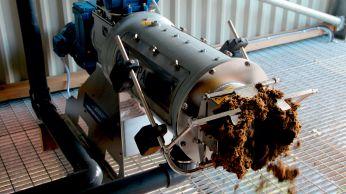
FAN PRESS SCREW
SEPARATOR
•
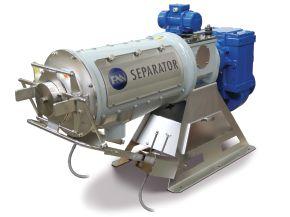
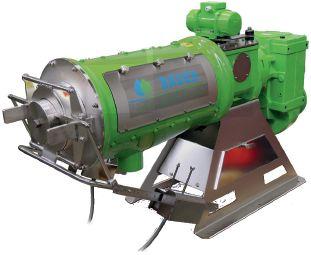
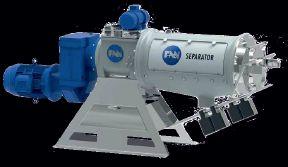
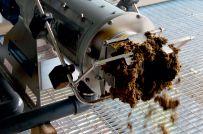
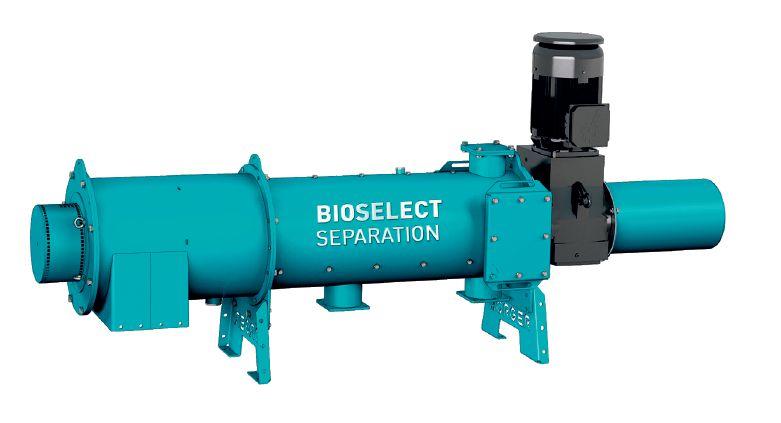
Fan produces bedding material with a dry matter content of up to 38% in solids.
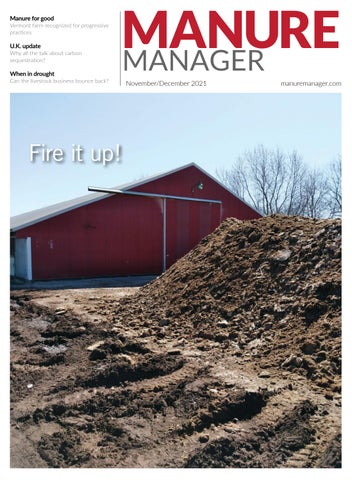
Where there’s heat... ... there’s opportunity. New research from Cornell University uses fire and heat to turn solid manure into fertilizer.
BY JIM TIMLICK
BY CHRIS MCCULLOUGH
Q&A: Nextgeneration sustainability Vermont’s Goodrich Farm has been hailed for its progressive practices. BY
REBECCA HANNAM
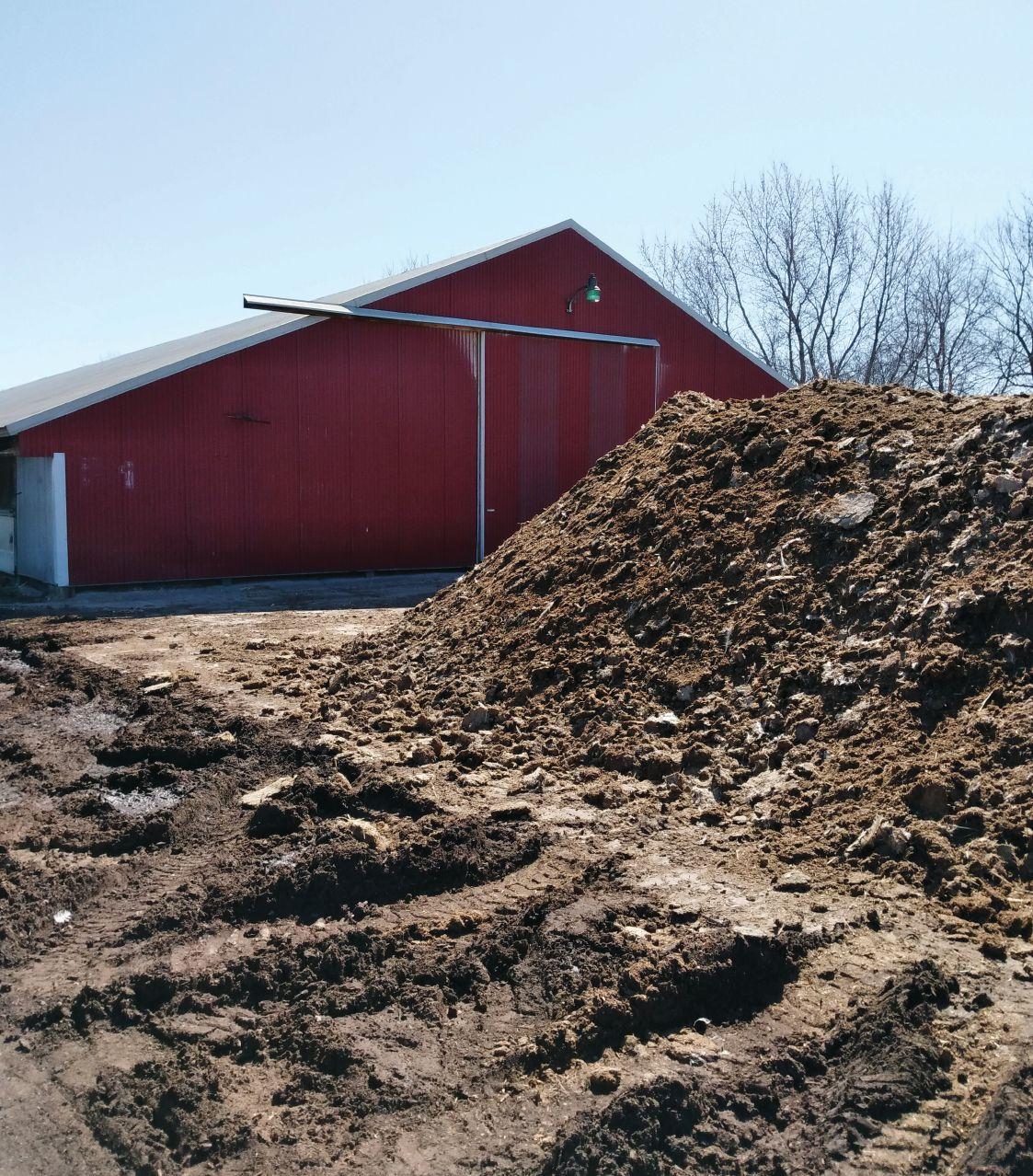
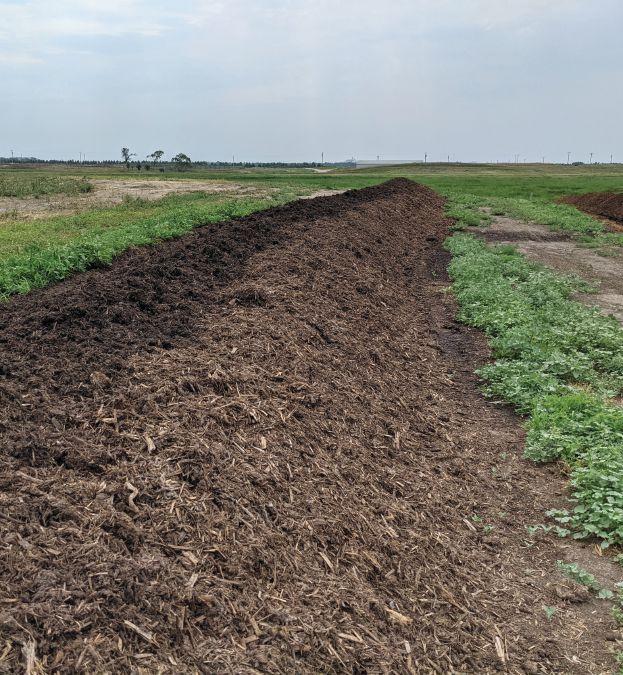
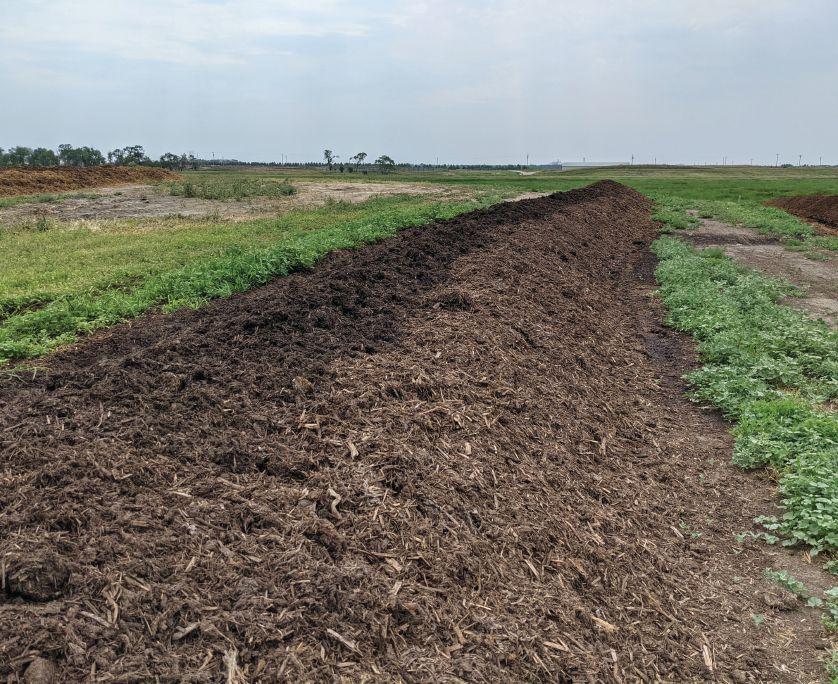
Solid manure in Minnesota.
Photo courtesy of Melissa Wilson.
FROM
A solid understanding
I’ve just rounded the corner on a full year as editor of Manure Manager. Before this job, I had never even been on a farm. Now, I’m fully immersed in manure (is it a sign of comfort with a new subject when you can confidently make jokes about it?) and livestock farming. As my understanding of the industry has evolved, I’ve developed a deeper appreciation for how it affects our daily lives and the broader economy – which I think is true for many “ag outsiders” who suddenly find themselves inside.
It’s interesting learning about an industry that is evolving so rapidly –like trying to jump onto a train while it’s already in motion.
Farmers are dealing with new challenges every day. Sometimes they’re economic issues, such as labor shortages, price fluctuations and supply chain disruptions. Other times, they’re regulatory or environmental challenges – which can lead to devastating losses (like the fallout from this summer’s droughts; see page 12). There are also physical and
open to creating solutions without pointing fingers. Similarly, in one of our panels, East Prince Agri-Environmental Association executive director Andrea McKenna says one of her main missions in ag is to help the public understand just how much farmers are doing, rather than rely on their preconceived notions. And Loft32 co-founder and CEO Crystal Mackay highlighted the ways she handles dissenters and activist groups who have misconceptions about farmers – by finding common ground and picking her battles.
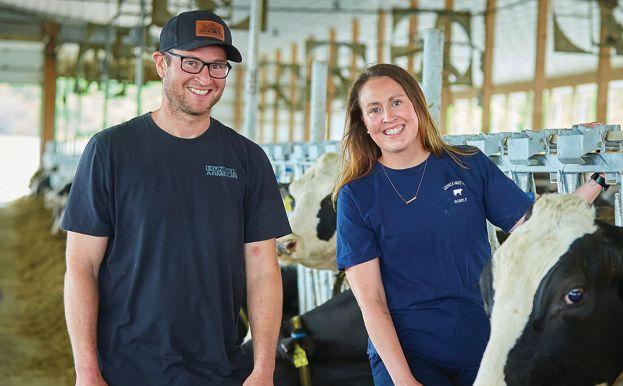
One great example of farmers who are working with others to create solutions is brother-sister team Chase and Danielle Goodrich (page 20). The siblings have been awarded for their progressive on-farm practices, including agreeing to be a host farm for a new digester – making their business more circular.
If you take a peek behind the curtain, there’s also creative solutions coming out of the labs. A team at Cornell University has been hard at work harnessing the power of solids
“We have the technology, or at least a good number the pieces.”
mental health challenges. As such, conversations have been elevated as we rise to meet those challenges.
In our recent 2021 IWCA Summit, Claudia Wagner-Riddle of the University of Guelph remarked in an on-demand session that 10 years ago, it was difficult to discuss climate change with the ag community – it was still contentious, and many farmers felt singled out or accused of not doing enough to help. Now, says Wagner-Riddle, that conversation has elevated – all parties are now more
through heat and fire (page 8), turning it into fertilizer.
Speaking of fertilizer, Chryseis Modderman and Melissa Wilson are back with more knowledge in their Manure Minute column (page 26) to discuss how producers can cope with rising fertilizer prices by using manure effectively.
Solid manure is a great metaphor for the agriculture industry. When the heat gets turned up, it proves its mettle. Under pressure, great things happen. •
@ManureManager
@ManureManager
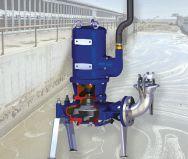
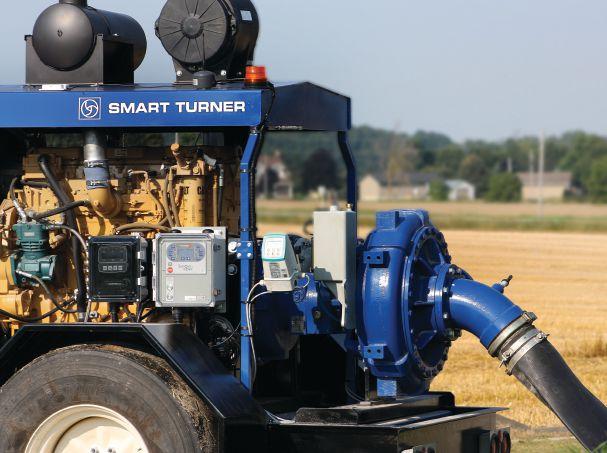
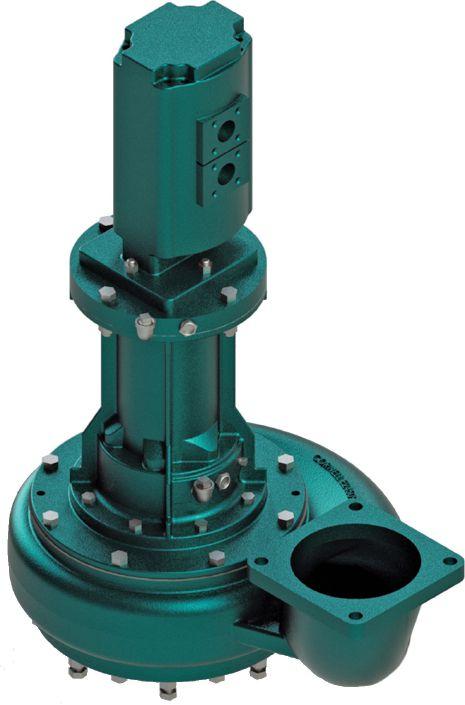
The new HD pumps are built to pump manure, built to run smoother to save fuel, run at a lower rpm with larger and wider impellors to reduce engine wear and plugging issues.
Proudly made in Canada since 1871.
Ag coalition urges U.S. leaders to support REAP
In an October letter to house speaker Nancy Pelosi and senate majority leader Chuck Schumer, a diverse group of ag workers, environmental groups, business representatives and energy groups asked leaders to fully support the Rural Energy for America Program (REAP) in the Build Back Better Act. They say REAP would allow rural Americans to participate in and benefit from the rural energy economy. REAP has existed since 2002 and provides
grants and loan guarantees to farmers, ranchers and small businesses to set up renewable energy and energy efficiency projects. The letter included a recommended investment of $2.55 billion over 10 years. As of Nov. 3, continued investment for REAP is included in the Build Back Better framework, however it has yet to be voted on. In total, the framework contains a $555 billion package of credits, grants and other policies.
BIBEAU REMAINS CANADIAN AG MINISTER
Following Canada’s recent federal election, a number of high-profile cabinet ministers changed jobs, with some new faces ushered in. One notable exception was Marie-Claude Bibeau, Agriculture and Agri-Food Minster. Bibeau has served in the position since 2019, having formerly held cabinet positions overseeing international development and Francophone affairs. She’s been an elected MP sine 2015 in the Quebec riding
of Compton-Stanstead. She held onto her seat with 36.66 per cent of the vote according to preliminary results, relatively even with her previous showings.
The Canadian Federation of Agriculture has already offered its congratulations to Bibeau on her re-appointment.
“We look forward to continuing our productive relationship with Minister Bibeau. We have worked closely with the Minister throughout her tenure
BY THE NUMBERS – SOLID MANURE
and the COVID-19 pandemic, and are now looking forward to collaborating to ensure that Canadian agriculture can serve as a powerful economic engine for Canada’s recovery and an impactful ally in the fight against climate change,” said Mary Robinson, CFA president, in a statement.
“During the recent election, CFA has made the priorities of Canadian farmers very clear: leverage agriculture’s environmental benefits,
provide increased funding for the Next Policy Framework and invest in critical infrastructure requirements, among others.”
“Another key priority that must be quickly addressed is the devastating drought situation in the Prairie provinces. CFA’s Hay West initiative is seeking funding, in line with competing nations’ emergency funding, to cover the freight costs of shipping hay to farmers who are in dire need today.”
380 MILLION AMOUNT OF MANURE, IN TONS, PRODUCED BY CANADIAN COWS EVERY YEAR
20% Average amount of solid manure that is dry matter
35% Increase in plant growth when biochar is enriched with nitrogen, as observed at Cornell University
35% Estimated nitrogen loss in manure pack storage systems Estimated nitrogen loss in poultry litter
13
Nitrogen content, in pounds per ton, in standard solid beef manure (NDSU, 2019)
700-1,200 Range, in degrees fahrenheit, at which manure should be heated without oxygen to produce biochar fertilizer
A true end-to-end solution for greenhouse gases.
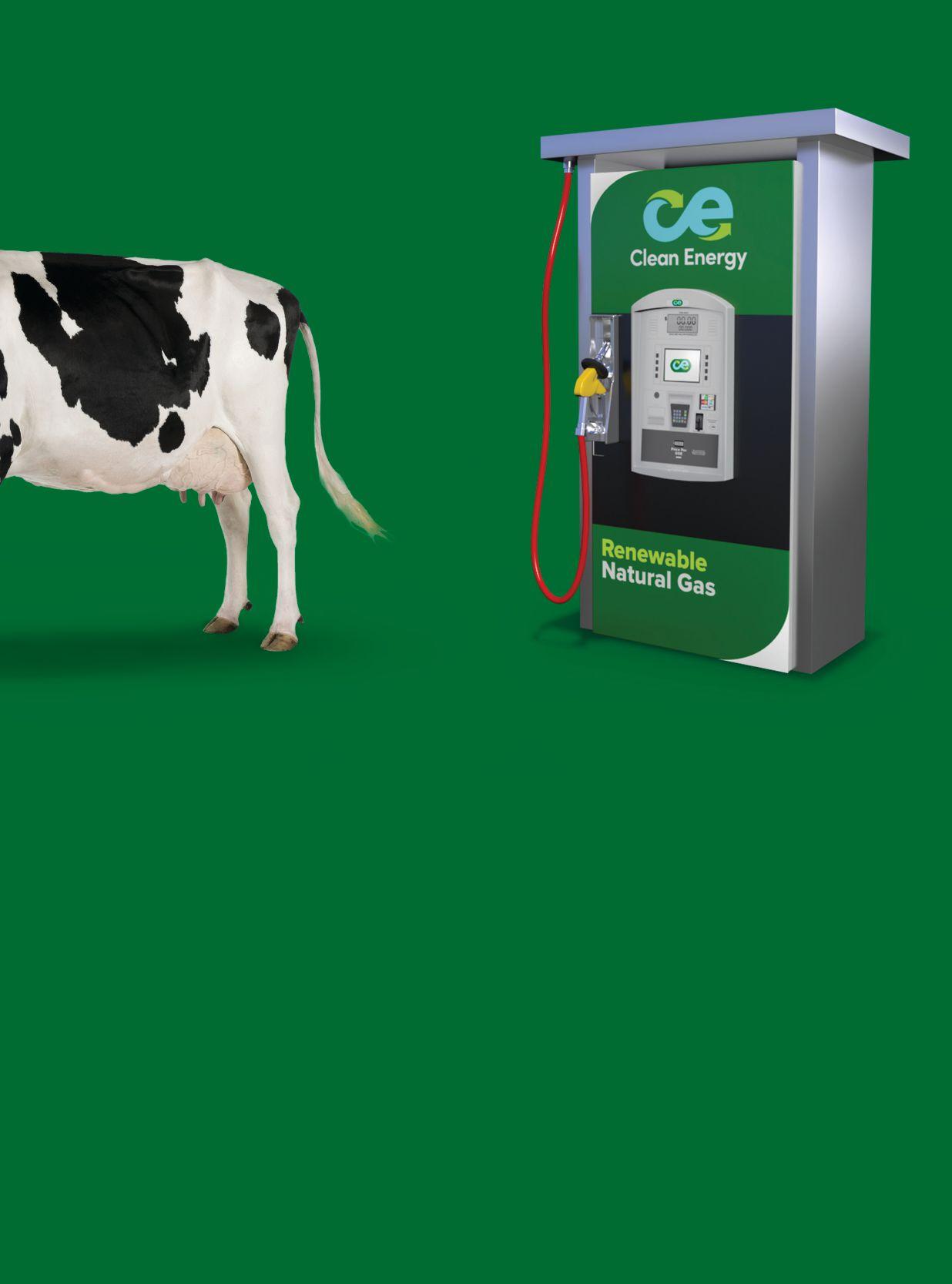
Turning agricultural waste into renewable natural gas (RNG) is a win-win for farms: it generates an additional source of income and also mitigates the methane emissions from livestock manure. Clean Energy is a one-stop shop for the development, operation, financing, marketing, and distribution of RNG. With 550+ fueling stations nationwide, including 127 in California, we provide the shortest path from farm to fleet.
TURNING UP THE TEMP ON SOLIDS
Pyrolyzed manure solids could someday become the dream fertilizer of gardeners and crop growers.
BY RONDA PAYNE
Biochar made from dairy manure may be headed to new markets thanks to an off-gassing infusion of nitrogen from ammonia in the remaining liquids. A 2021 study from Cornell University has found that pyrolyzed (high-heat decomposed) manure solids can be infused with nutrient-rich gases to create a portable, beneficial fertilizer with minimal waste.
Johannes Lehmann, professor of soil fertility management and soil biochemistry at Cornell, worked as a co-author of the study from Soil and Crop Sciences, School of Integrative Plant Science, College of Agriculture and Life Sciences with the university.
ABOVE
“We’ve talked about pyrolyzing manure for a couple of decades, but there’s still a lot of liquids,” he says. “We are taking out the nitrogen from that liquid and we are absorbing it into the biochar solid, so that we have a dry, nitrogen-rich material.”
A GAS INFUSION
The first author of the study, Leilah Krounbi, set out to conduct a simple test after analyzing information on ammonia interactions in manure in New Zealand.
She put pyrolyzed dairy manure solids into tubes and gave them an infusion of off-gases from the bottled remaining manure liquids.
Solid manure, seen here in a Minnesota field, can provide benefit as a fertilizer – but not everything is in place yet.
PHOTO COURTESY OF MELISSA WILSON.
Within only a few minutes, a lightweight, nitrogen-rich fertilizer was created with no pathogens or residues from hormones, medications or antibiotics.
“We drive the ammonia out from the liquid portion of the dairy manure and we are absorbing the nitrogen into the biochar,” Lehmann explains. “Much of it comes out naturally and the rest, we have to increase the pH [to] take it out. The [gas] that comes off the manure is just guided over the biochar.”
He explains that while the experiment was successful, there isn’t yet a way to create this type of product at a commercial level. Krounbi’s experiment shows the potential, but large-scale industrial applications need to be researched.
“Full integration, sort of plug-and-play that recovers both nitrogen and phosphorus and the pyrolyzed manure, that doesn’t exist yet,” says Lehmann.
The resulting liquid, after the off-gassing process, is low in nitrogen and higher in phosphorus, but he says there are already technologies in place that allow for its safe management.
PRESSING AND HEATING STARTS THE PROCESS
In order to create this lightweight amendment, most of the liquid needs to be pressed out of the dairy manure, which is then thermochemically converted into a dry solid.
“If you have combined feces with urine, which, in most barns you have… you would need to screw press them,” he explains. “Then you have the solid material that still has some moisture in it and you have a liquid.”
After pressing, the solids have about 50 per cent moisture content. This is then pyrolyzed into dry matter. Pyrolyzation heats the pressed manure solids at temperatures of between 700 and 1,200 degrees Fahrenheit without oxygen. This results in a biochar; a lightweight, compact soil amendment.
At this stage, there is already value in the material. It can be stored and transported easily and is made up of a lot of carbon.
Perhaps best of all, from a gardener’s perspective, the resulting product is odorfree with no methane emissions.
“Charcoal has a lot of carbon in it. And that’s what we’re doing,” he notes. “We’re not charring wood which can also be used as a fuel. Pyrolyzed manure doesn’t burn very well. It’s not very useful as a fuel, but it can be used as a soil amendment.”
Of course, backyard gardeners wouldn’t be the only beneficiaries. Farmers of a wide range of crops and from a wide range of cimates need fertilizer to improve yields and increase plant vigor.
For dairy farmers and the farmers alike, the ability so access a local source of nutrient-rich fertilizer would make operations more efficient and affordable
Many of the nutrients remain within the pyrolyzed manure and are actually in higher concentrations, which is primarily due to the elimination of oxygen, hydrogen and moisture
However, one essential growing nutrient stays with the liquids: nitrogen.
By allowing the gaseous nitrogen to absorb into the biochar, it creates a win-
win situation in terms of manure use.
“For phosphorus and all the other nutrients, the concentrations are higher,” he says. “Not only are the concentrations higher, but also the plant availability is better.”
A soil manufacturer local to Cornell sells potting media with the biochar dairy manure in it, proving that there is indeed a market for a lightweight, nutrient-rich amendment beyond on-farm applications for field or forage crops.
“He would love to sell biochar from local dairy manure rather than import Canadian peat or import coconut coir from Malaysia,” says Lehmann.
“It’s a much more sustainable production system with him using local manure.”
ABOVE
Study co-author Margaret Ball with some of the plants grown using help from the fertilizer.
PHOTO COURTESY OF JOHANNES LEHMANN.
FANNING THE FLAMES
It may seem unreasonable to find efficient ways to heat manure to such high temperatures, but Lehmann says it’s actually quite common.
“We do it all the time. We all have furnaces in our basements that have much higher temperatures,” he says. “We are all familiar with fires and we certainly operate engines that have much higher temperatures. It’s not a very high temperature compared to combustion. Burning things is a much higher temperature compared to charring.”
Fuel is required to get the process started, but like the charcoal BBQ of years gone by, once the charcoal is lit, the heat is maintained. Similarly, the pressed manure is able to maintain the temperatures efficiently without a constant inflow of fuel.
That said, pyrolyzing manure does require specialized equipment, but it’s certainly not uncommon.
Lehmann describes the equipment to conduct this thermochemical process as something akin to the conveyor-style ovens seen at restaurants – like a Quiznos – where the pressed manure goes in one end, travels along the conveyor through a flameless tunnel and falls out the other end as biochar.
“Most systems for these types of applications are what we call continuous,” he says. “The conveyor guides it through the heat zone and the char drops out on the other end. When it’s being charred in the middle you have to give it a little bit of energy so that it starts charring. Then it runs by itself if the moisture is below 60 or 70 per cent.”
A pyrolyzer is generally custom built to a farm based on the number of cows, layout, manure type, feed type, current manure handling practices and other factors. He says it’s not like a refrigerator when you buy it, plug it in and it’s ready to go, although there are some off-theshelf options.
“Every operation is different. Some companies offer tailor-made equipment that would come to your farm,” he says. “There are also companies that are offering more or less off-the-shelf equipment. They would offer equipment that are made to suit a certain farm size and you’d buy it like a fridge, only you can’t plug it in without figuring out how you put the manure into that fridge – into that pyrolizer. You need to figure out how you get the manure out from under the cows into the machine and then, when it
drops from the other end of the machine, you need to get it onto a truck, so you still need to integrate it into the farm’s management.”
“It’s a much more sustainable production system using local manure.”
WHY ALL THE TRANSPORTATION TALK?
Transportation is – and always has been – a key issue with animal waste. Wet manure is valued for its nutrient profile, but the cost of transportation sets the inherent value.
Now, with fuel prices ever-increasing and dairy manure requiring specific conveyance, it can quickly turn a valuable resource into a disposal issue.
“If you’re transporting it more than about 15 miles, then the nutrient value in that truckload is lower than the transportation costs,” Lehmann says.
“In other words, you can not transport manure very far before it costs more. You could have just used fertilizer and that would have been cheaper.”
In an ideal world, all manure could be evenly distributed across the farms from which it comes. But the economic reality is that few dairy farmers have the luxury of forage and crop fields that take up the entirety of their manure.
A future where garden centres are able to make use of a nitrogen-infused pyrolyzed manure as an amendment could potentially give farmers a market where the animal waste is appreciated – and in demand.
Right now, says Lehmann, excess manure is creating an economic challenge for some farms.
“There [is] a significant, relevant number of farmers that are leasing or keeping land just for the disposal of their dairy manure. They need a certain acreage just as a disposal mechanism,” notes Lehmann.
“However, if you’re making a product out of it, then that is valuable enough to be shipped like a fertilizer. [And] we know that fertilizers are shipped all over the world… so it is possible.” •
A LONG WAY TOGETHER
WHEREVER YOU ARE,
BKT
IS WITH YOU
BKT provides you tires that are reliable and safe, sturdy and durable, capable of combining traction and reduced soil compaction, comfort and high performance. BKT: always with you, to get the most out of your agricultural equipment.
WHEN IN DROUGHT
Scott Anderson has been involved in the cattle auction business for more than 30 years. But of those three decades, Anderson, the co-owner of Winnipeg Livestock Sales, can’t remember a more tumultuous summer sales season than the one that just passed.
After a hot, dry summer, some Manitoba livestock producers are considering throwing in the towel. Will the fallout persist into the future, or can lessons be learned from a difficult year?
BY JIM TIMLICK
Record heat, dangerously low precipitation levels and a resulting drought combined to force many beef producers in affected areas to sell off their livestock because they didn’t have the hay or grass needed to feed them. The situation was so bad in some parts of the province that the Canadian Drought Monitor deemed it a twice-in-a-century event and gave it its most severe drought ranking on the federal agency’s rating scale. Similar drought conditions were seen in the midwestern United States and beyond – according to the National Oceanic and Atmospheric
ABOVE
Administration, on Aug. 31, 47 per cent of the continental U.S. was experiencing drought conditions, an increase from the beginning of August.
While the drought has passed for many of these areas, the ripple effect of the droughts is still being felt.
Although summer is typically a slow time for Anderson’s auction business, that wasn’t the case this year. Far from it, in fact, he says.
“We would typically get between 50 to 200 cattle through the summer months. This summer, we were suddenly getting 1,500 or 1,600, which is typical of October when we’re in the fall run and everybody’s emptying their pastures out,” he says.
“It was due strictly to people not having enough grass. They were having to bring cattle home and feed the cows rather than letting them graze…because there was no pasture
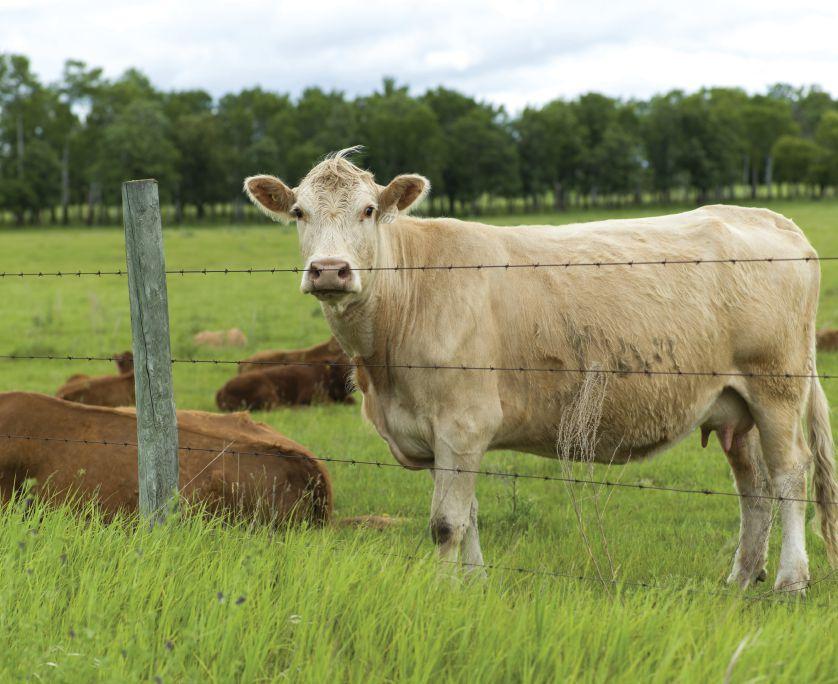
It was an eventful summer for Manitoba’s cattle auctioneers and livestock sales, with farmers finding it hard to feed their whole herd.
PHOTO:
for them. It was a bit of a mass exodus in the middle of the summer. A lot of guys were saying, ‘If I have to spend three times as much money on feed as normal, forget it, I’ll just sell the cows.’”
Anderson acknowledged he and his business partners had mixed feelings about the uptick in business this summer. Although it was good for their bottom line, they are concerned it could prompt some beef producers to get out of the game altogether.
“A lot of guys said (increased feed costs) are going to put [them] in a losing position so [they’re] punching out,” he syas.
It’s a sentiment shared by many cattle producers throughout the province, according to Tyler Fulton. Fulton runs a family-owned cattle farm in Birtle, MB and is the current president of Manitoba Beef Producers, which represents 6,300 producers across the province. He calls the situation in Manitoba this summer a “watershed moment” for the beef industry and fears some producers could retire or look for other work if circumstances don’t improve.
“I’m pretty confident it’s already happening,” he says. “Some farmers who
were already getting ready for retirement have had enough and some younger guys could not weather the economic storm because they didn’t have the cash flow to be able to support their herds and they’ve taken off-farm jobs that they otherwise wouldn’t have done.”
The situation further west in neighboring Saskatchewan isn’t much different. It experienced another extremely dry summer for the fourth year in a row. The resulting shortage of feed crops forced many beef farmers to adjust herd sizes and could force some producers to get out of the business.
“It’s definitely a concern,” says Ryder Lee, CEO of the Saskatchewan Cattlemen’s Association. “You’ve got to have enough supply to keep your feeders going and your slaughter plants going. There’s a great growth in demand for protein in terms of demand and the willingness to pay for it. The trick is making sure the benefits from that flow all the way back to your primary cattle producers.”
Fulton says one of the concerns about producers leaving the beef industry is the implications it could have on the rest of the value chain. Fewer producers could mean less business for small-town
retailers who provide service and support to cow calf operations. It could also mean some farmers may have to take land that is being used for cattle operations and convert it into crop land that may not be environmentally sustainable, he adds.
A SIGN OF THINGS TO COME?
While everyone in the agricultural sector is hoping this summer’s hot, dry conditions were just a blip, the fact is it could be a sign of things to come. If so, cattle producers are going to have to factor that into management plans for their operations moving forward.
Fulton says government grants and assistance programs like AgriRecovery and the Canadian Federation of Agriculture’s Hay West initiative provided some much-needed help but aren’t a long-term solution to the unique challenges the beef industry is facing. What he’d like to see is the federal government work together with producers to develop a proactive program that would be ready to be quickly taken “off the shelf” to address similar situations in the future.
Lee says producers welcome government support, but cautioned that any such aid has to be managed correctly by
Now with NO Grease Covering Arm Assembly
the recipients.
“The thing you want to avoid is a pendulum swing that goes farther than it needs to go,” he says. “We need to match up our livestock numbers with what we’ve got to feed them numbers, but we don’t want to go any farther [than that], because that will impact our ability to supply our processing and retail and food service.”
REEXAMINING STANDARD PRACTICES
One of the few positives that could come out of this past summer is that it could encourage some cattle producers to examine new or innovative farming techniques. It could also prompt them to reexamine existing farm practices that they didn’t give much thought to before, including how they graze their land.
Lee says one of the issues a growing number of producers in his province are looking at is adjusting the intensity of grazing on their fields. Changing to shorter, more intense periods of grazing time for their cattle could allow hay and some forage crops to perform better.
Some growers are also starting to take a closer look at incorporating new or different feed crops into their operations that are not only more heat and drought tolerant, but also promote soil health, a development Fulton believes is particularly promising.
“When the industry is forced to consider all these different feedstuffs that they never considered before, it could trigger another round of innovation. It could lead to some better ideas and really change the trajectory of the industry,” he says.
EMERGING TECHNOLOGY
Alex Melnitchouck, chief technology officer, digital ag at Olds College in Alberta, says there is no silver bullet that will eliminate the feed challenges many cattle producers are facing. However, he says there are emerging technologies that could potentially make it easier for them to deal with those challenges.
One of the more promising such tools, he says, is climatology analysis, the study of the atmosphere and weather patterns over time. Although it’s still in its infancy, Melnitchouck explains climatology and long-term weather trend analysis could make planning much easier for farmers and allow them to be more proactive when it comes to making critical decisions about their operation, including what crops to plant and when, as well
as to manage agronomic and financial operations.
Another option is the use of variable-rate technology. Although there is a significant upfront cost, Melnitchouck suggests it can improve fertilizer efficiency by as much as 20 per cent and increase yields for most forage crops by up to 10 per cent.
FUTURE LOOKS BRIGHT
As dire as the situation in the Prairies was this summer, there was reason for optimism as autumn approached. Late
August rains in Manitoba and other parts of the west injected new life into many pastures. Many cereal crops that had been written off were salvaged and provided another source of feed for herds, which at least bought producers some time. Just as importantly, demand and prices for beef remained bullish.
“There’s no doubt that the future looks bright for being in the protein business and high-quality, grain-fed Canadian beef holds a great spot in that,” says Lee. “We just need some cooperation from the weather to continue pumping it out.” •
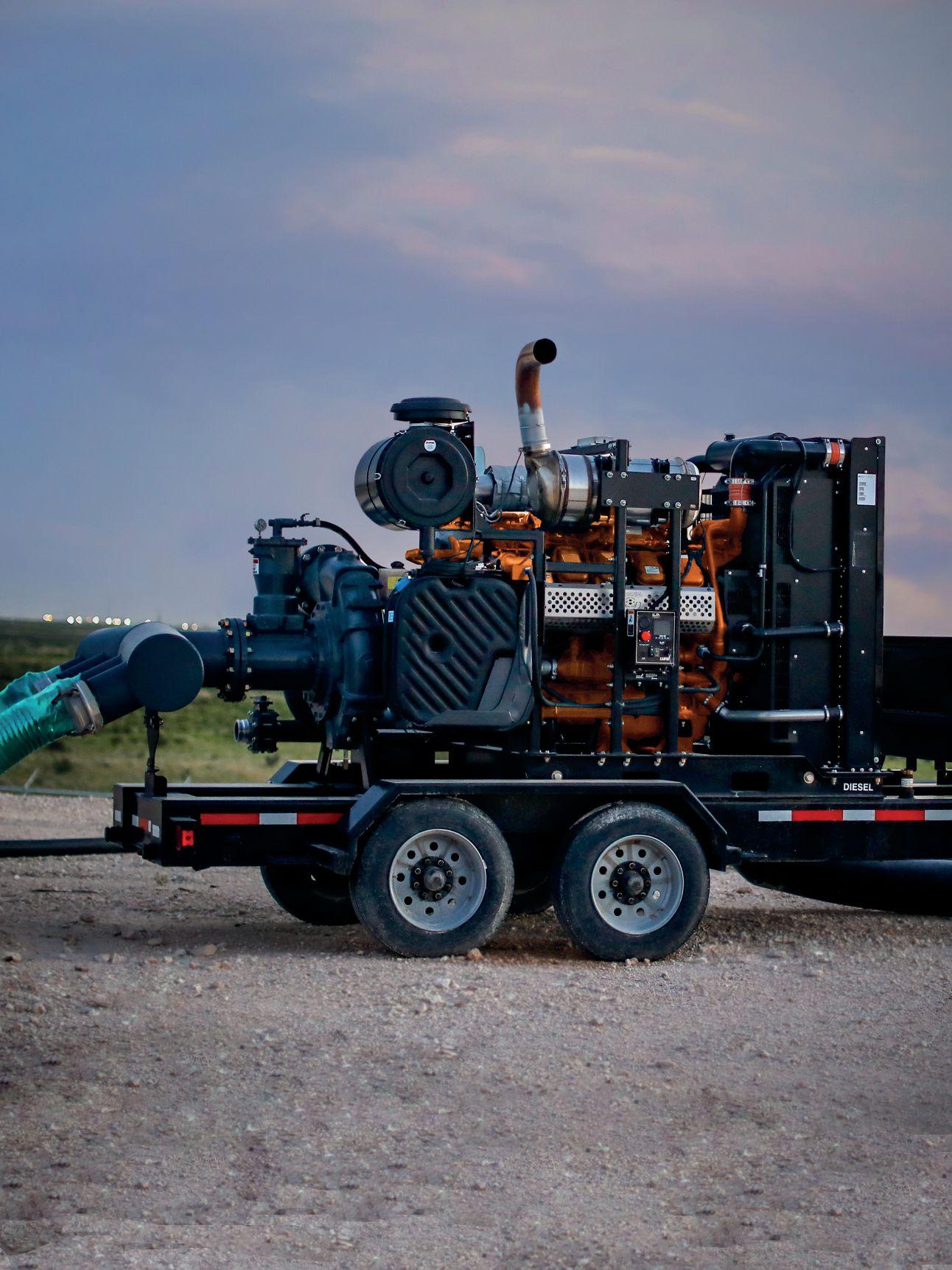
When the going gets tough, turn to the toughest pump on the planet. Since 1960, the unrivaled Vaughan Chopper Pump has been on the cutting edge. This original chopper pump was built first and made to last.
Choose the unmatched reliability of Vaughan. Ask about our free trial program and on-site demos.
• Barn Flush Pit
• Separator Feed
• Lagoons
• Digester Mixing
• Scraped Manure
• and More!
U.K. UPDATE
All about carbon sequestration
“Carbon” and “sequestration” are rapidly becoming the industry’s big buzzwords. How does this apply to the average livestock farmer – and what are some of the ways farmers have gotten creative with their carbon offsetting?
BY CHRIS MCCULLOUGH
Agriculture is often referred to by a number of buzzwords. The latest terms seem to be hanging around longer than normal: “carbon sequestration.”
There is now a huge drive for countries to become net-zero for carbon by a set range of timely targets.
For example, in 2019 the U.K. government became the first major economy to pass a net zero emissions law. This led to an ambitious target that requires the UK to bring all greenhouse gas emissions to net zero by 2050, and that means farmers need to add their weight to achieve that goal.
While carbon dioxide (CO2) is essential for a healthy planet, too much of this greenhouse gas can cause havoc with the environment and lead to global warming. Carbon dioxide production stems from a number of sources in agriculture, industry, deforestation, burning fossil fuels and natural occurrences like volcano eruptions. As intensive farming and industrial activity ramps up, so too can the production of carbon dioxide.
When carbon and other heat-trapping emissions are released into the air, they act like a blanket, holding heat in the atmosphere therefore warming up the planet as a consequence.
Net-zero means that any carbon emissions created are balanced, or cancelled out, by taking the same amount out of the atmosphere. This means that countries could reach net-zero when the amount of carbon emissions produced is no more than the amount that is taken out of the atmosphere.
That takes us to the globally fashionable term of “carbon sequestration.” It can be defined as the process of capturing and storing atmospheric carbon dioxide which reduces the content of the gas in the atmosphere, and at the same time helping mitigate the effects on the climate. Many experts and organisations have called for an increase of carbon sequestration practices across the world, as well as a reduction of the amount of CO2 being released into the atmosphere in the first place.
SELLING CARBON CREDITS
There is now a drive on for farmers to increase their carbon sequestration efforts while at the same time securing some extra income by selling carbon credits to big companies seeking to offset their emissions production, or carbon footprint as it is more widely known as.
ABOVE Livestock could quickly become part of the solution.
Farmers are only too aware that the climate is changing all too rapidly as droughts and floods, with exceptionally high or cold temperatures, wreak havoc with their farming calendars when it comes to producing food.
So what exactly can farmers do? Well, there are many ways carbon can be removed from the atmosphere, the most obvious of which is to plant trees that then absorb CO2 and release oxygen.
If managed correctly, fields used for agricultural production can act as a carbon sink through sequestering greenhouse gasses such as carbon dioxide.
This means the carbon can be trapped in the soil and it stays there. However, some farm management practices such as ploughing or tilling can release the carbon back into the atmosphere again.
The buyers of carbon credits will pay a set amount for each carbon unit, or tonne of sequestered carbon, and prices can fluctuate depending on the demand.
Microsoft hit the headlines earlier this year when it purchased USD $500,000 worth of carbon credits from a large beef farmer in Australia. Wilmot Cattle Co successfully sold more than 40,000 tonnes of sequestered soil carbon to the tech giant, following the farm’s dedicated grazing management programme.
The farm has practiced time-controlled rotational grazing, increased stocking density and decreased paddock size for the last ten years which has led to greater ground cover, biomass
PHOTO: MAJECZKA/ADOBE STOCK.
and water-holding capacity on more than 4,000 hectares.
This management plan has boosted productivity and resulted in soil organic carbon concentration increasing from 2.5 to 4.5 per cent, moving closer to the farm’s goal of six per cent by 2023.
FIRST CARBON CREDIT FARMER
Back in 2014, Angus McIntosh, who practices regenerative farming in South Africa, was the first farmer in the world to sell carbon credits after increasing the carbon content in the soil of the pastures
where his cattle, sheep and pigs graze and forage. Regenerative ag builds up the soil, resulting in healthier plants, which in turn feeds the animals from the pastures producing grass fed protein for human consumption.
Angus keeps up to 200 pigs on his farm and does not have fixed housing for them. The pigs are kept on the rougher land that is destined for reseeding and are moved to fresh ground at least once a week. He bases his system on the high density grazing methodology (“mob-grazing”) using the manure and urine that is
deposited onto the soil to eliminate the need to apply artificial NPK fertilisers.
The pastures were established with a variety of perennial summer and winter legumes, herbs and grasses. Once an area has been grazed, the animals are moved giving the pasture and soil time to regenerate and fully recover. Six weeks passes before the pastures are grazed again.
The ultra-high stock densities result in large depositions of manure and urine, along with extensive trampling of the field. This trampling spreads the manure over the field, disrupts the soil surface and tramples vegetative organic matter into the soil surface. Together these factors promote increased soil carbon levels, beneficial microbial activity and grass root health. Angus said: “Letting a group of foraging pigs loose [on] marginal land is an excellent method of regenerating the soil back into production and is a more environmentally friendly practice.”
DIRECT REBATES
Why OEM Screens?
BAUER NORTH AMERICA IS NOW OFFERING FACTORY DIRECT REBATES ON ALL BAUER/FAN SEPARATOR SCREENS. THESE ARE ORIGINAL OEM SCREENS. NO AFTER MARKET PRODUCTS. FROM 1ST TO DECEMBER 30TH, 2021. BAUER/FAN IS OFFERING A 10% REBATE ON SEPARATOR SCREENS. PLACE YOUR ORDER WITH YOUR LOCAL AUTHORIZED BAUER/FAN DEALER. EMAIL - REBATE@BAUER-AT.COM FOR A FORM. SEND IN THE FORM AND COPY OF INVOICE AND RECEIVE YOUR REBATE. CONTACT YOUR DEALER FOR FULL DETAILS.
He said the areas that the pigs have grazed had a 24 per cent higher carbon content compared to areas just metres away where they had not been scavenging. In fact, 7,101 tonnes of CO2 has been sequestered on the farm since 2017 such is the success of Angus’s type of regenerative farming.
REDUCING EMISSIONS
Efforts are currently underway on farms and in agricultural industries across the world to reduce the amount of CO2 released in the atmosphere.
One of the largest animal feed manufacturers in Northern Ireland has already successfully reduced carbon emissions by 34 per cent after switching energy supply. Based in Omagh, Fane Valley’s Bankmore Mill converted its large fuel supply to natural gas, and has since reported a substantial reduction in carbon emissions and improved energy efficiency. The purpose-built mill commenced production in 2010. It manufactures more than 250,000 tonnes of animal feed annually, supplying customers in Northern Ireland and the border region in the Republic of Ireland.
Ronan McCanny, Fane Valley Feeds operations director, said: “Fane Valley Feeds is part of the Fane Valley Co-operative Society which has a number of businesses now connected to natural gas.
“Converting the fuel supply to our boilers from oil to natural gas has lowered our carbon emissions by 34 per cent and improved our energy efficiency,” he added.
& FANthe Green Bedding® experts.
Mondays at 2:00pm ET until March 21, 2022 CCA-CEU
Q&A: What does nextgeneration sustainability look like?
In July, the Innovation Center for U.S. Dairy has awarded Goodrich Farm with the 2021 Outstanding Dairy Farm Sustainability Award, saying the farm was “invested in the future.”
BY REBECCA HANNAM
BELOW
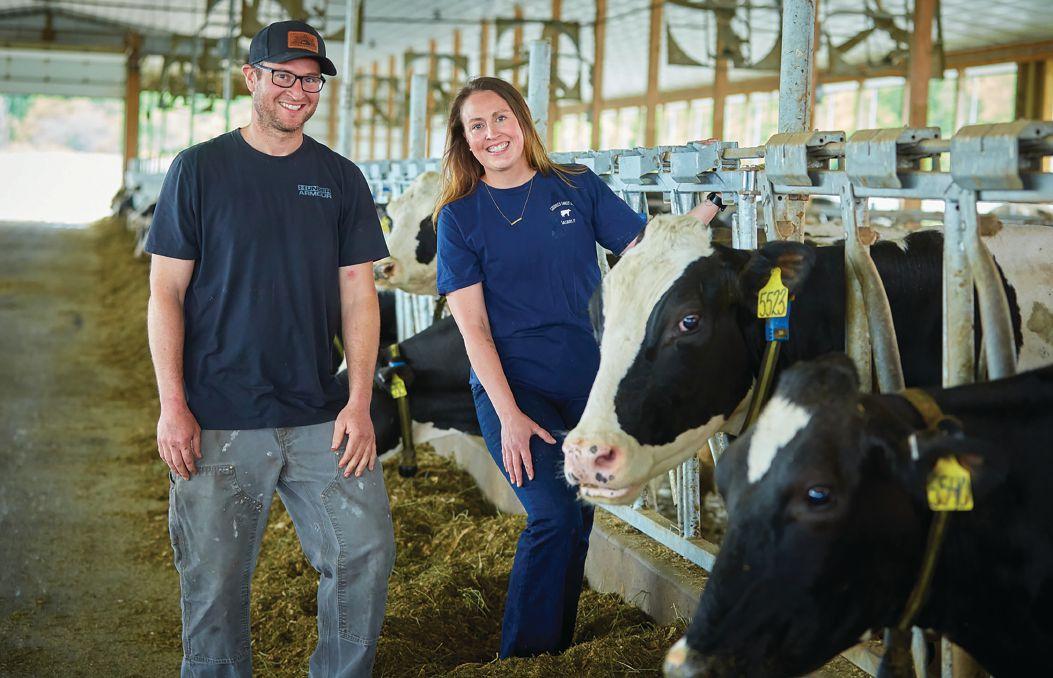
Chase Goodrich and Danielle Goodrich Gingras are continuing their family’s traditions.
Sustainability isn’t new for the family behind Goodrich Farm, but they do have a new way of reducing their environmental footprint. In addition to cows and crops, the Salisbury, Vermont farm started producing renewable natural gas last July.
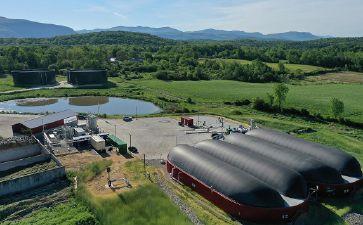
Currently the largest anaerobic facility in the northeast U.S., Goodrich Farm is home to two 925,430-gallon digesters and hydrolyzer and phosphorus management systems. It’s made possible by a partnership between the farm, Vanguard Renewables, Middlebury College and Vermont Gas Systems (VGS).
Goodrich Farm was recently recognized with a 2021 Outstanding Dairy Farm Sustainability Award from the Innovation Center for U.S. Dairy. Third-generation farmer Danielle Goodrich Gingras is proud of her family’s innovations and shares their story here.
Manure Manager: Tell me about your family farm. How long have you been farming? Who’s involved in the operation?
Danielle Goodrich Gingras: My grandparents started our farm in 1956 with 10 cows. My dad, Ernie, got involved two years later and farmed together with my grandfather for many years. In 2009, my brother Chase graduated with a bachelor’s degree from Salve Regina University and I completed a two-year dairy management program at Vermont Technical College. We both returned to the farm and started to take over
some management roles. My dad, Chase and his wife, and my husband and I are involved today.
We are currently milking 900 cows and farming 1700 acres of hay and 750 acres of corn. It’s a big undertaking, but it is an honour to work with my brother and dad. We love what we do.
MM: How long did you spend looking into digesters and planning yours? What made this project become a reality?
DGG: Over a decade ago one of my college professors was approached with
the idea to heat Middlebury College with methane. He thought of us and knew we would be a good fit – Chase and I were young and innovative and located only seven miles from the college.
He connected us with a developer and we started the conversation and permitting process. Unfortunately, this developer hit a dead end so the project stalled until we were put in touch with another company.
Middlebury College connected us with [John Hanselman, founder and CEO] and the team at Vanguard Renewables. We
started by meeting and discussing what we wanted to do. Each partner shared their goals and we found out that everyone’s vision aligned.
From there, it took years of planning, obtaining permits and construction to finally make our dream of putting natural gas in the pipeline a reality. The permitting process took a long time and the COVID-19 pandemic caused many construction delays.
MM: How much manure does your farm produce for the digester? What is the outcome in terms of energy?
DGG: We put in 100 tons of dairy manure every day. There is also a daily capacity of 180 tons of food and beverage waste that Vanguard Renewables contracts from various sources.
The digester produces 180,000 Mcf of natural gas annually. It’s the equivalent of heating approximately 4000 homes and taking 2000 cars off the road for a year.
“Before you make a commitment, make sure that the partners trust and respect each other.”
There is a natural gas pipeline from the facility to Middlebury College. The gas goes into the gas grid and the college gets the credits, but any residents located along the route can pipe themselves in if they want to.
What does it mean to be a host
Being a host farm means that Vanguard Renewables develops, owns and professionally operates the Farm Powered Anaerobic Digestion facility.
The key for us is that the farm is not responsible for any of the development or operating costs. We lease the land that the digester is on and receive a monthly payment from Vanguard Renewables in return.
Middlebury College and VGS are committed to the viability of the project but these contracts are the responsibility of Vanguard Renewables as well.
As farmers, our only responsibility is to supply manure and provide the land that the buildings are on.
ABOVE
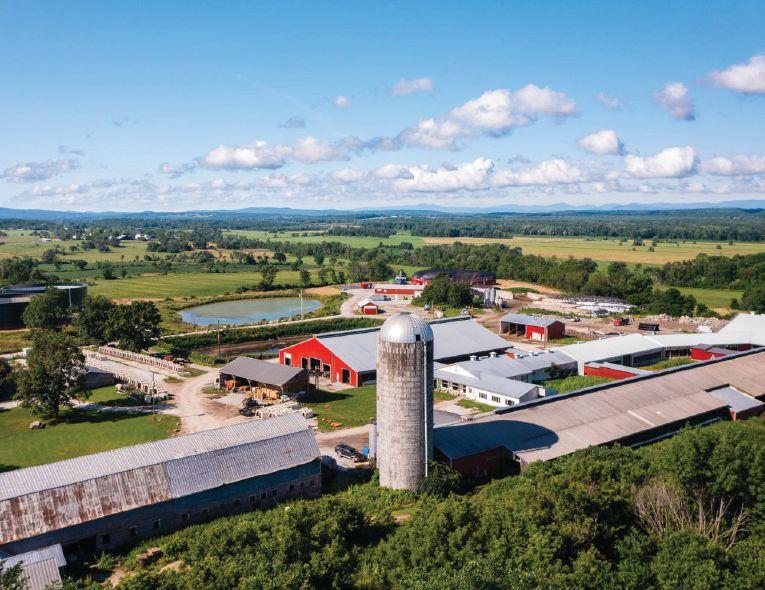
An overhead view of Goodrich Farms, which formerly stored its manure in on-site manure ponds.
MM: Thinking about the digester facility overall, how does your farm benefit?
DGG: The lease payment for land use diversifies our farming income.
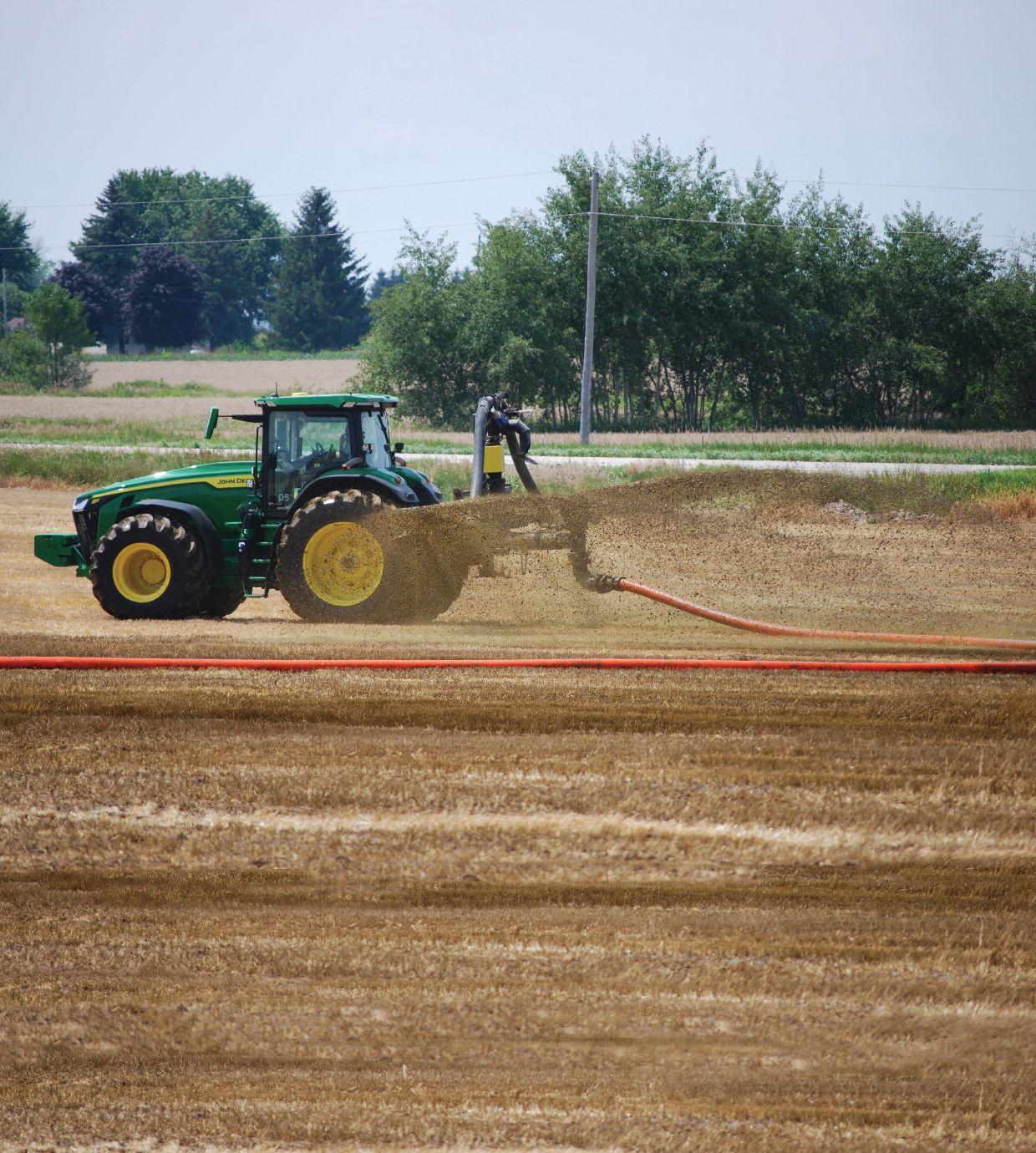
In addition, a major cost-benefit to the farm is the use of the digestate. The digester produces about 80,000 tons of low-carbon, low-odor digestate per year and we spread that onto our fields. Starting next year, we are hoping to eliminate the majority of our commercial fertilizer use and replace it with digestate as much as possible. We estimate that this is going to lower fertilizer expenses by $200,000 every year.
The facility also has a phosphorus removal system which allows us to precisely take the phosphorus out of the manure. By doing this, we’re able to apply nutrients to the fields more purposefully and really do a better job of caring for our watersheds. The environmental impact is really important to us, especially because we’re located in a high risk area near Otter Creek, which feeds into Lake Champlain.
We also use all of the separated solids for animal bedding in the barns. This alone saves the farm about $50,000 in annual expenses.
MM: Prior to the digester, how did you manage your manure?
DGG: Before the digester, we had manure in ponds on-site. We worked with a trucking company to spread and inject manure
onto our fields. We also had an on-site solid separator so we were able to use the manure solids for animal bedding. Now, all of the manure goes into the digester.
MM: What would you say to a farmer who is on the fence about digesters?
DGG: Building a digester on your own is a big risk so be aware that there are companies like Vanguard Renewables out there. Even if you can do it on your own, I think it’s a good idea to get into ownership with a partner. It starts by talking to potential partners and having in-depth conversations to make sure your goals align.
It can be a lengthy process, so you have to be patient. Before you make a long term commitment, It’s also important to make sure that the partners trust and respect each other, and that there’s a good line of communication between them.
MM: What other ways are you working to improve sustainability and protect the environment?
DGG: We have always worked with a consulting company for large farm operations. They come in and do soil testing so that we can spread manure based on the results.
We also use no-till and cover crop practices as much as we can to reduce phosphorus run-off and better the environment. Improving our environmental impact is very important to us. •
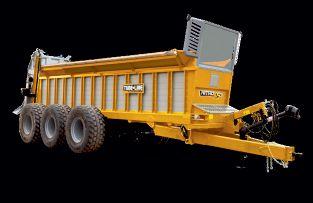
The strength and reliability of Nitro Spreaders set the standard for nutrient management.
The hydraulically driven variable speed apron chains feed fastmoving beaters that ‘bite’ the load and throw it into the field with remarkable consistency.
The addition of a variable rate control system, further reduces overhead, increases yields, and verifies field application rates.
When you’re ready to spread, we’re ready for duty.
AEF puts ISOBUS-compatible product database in app form
The Agricultural Industry Electronics Foundation (AEF) has rolled out the new updated AEF ISOBUS Database app to give ag equipment dealers, manufacturers and end users a one-stop option to access its database of all ISOBUS compatible products. Users can drill down by product, brand or ISOBUS functionality to confirm compatibility. The app is free to access.
“With so many different manufacturers creating a wide scope of agricultural products around the world, when you start using different brands together, they are not always technologically compatible,” said Andrew Olliver, vice-chairman, AEF in a statement. “When products all share the same ‘nerve system,’ more commonly known as the ‘ISOBUS,’ they communicate seamlessly. The AEF ISOBUS DB app identifies which products on the market are compatible and ISOBUS-certified.”
Currently, there are approximately 80 companies listing their certified ISOBUS products in the database, although the AEF says the number is continuously growing.
Enbridge, Vanguard Renewables partner on RNG project
Energy giant Enbridge has struck a partnership with Vanguard Renewables. The partnership takes place, in Enbridge’s own words, “where poop becomes power.”
The two companies have partnered to design and build eight RNG projects, all across the U.S. Organic waste from food waste and livestock manure will be transformed into carbon-neutral RNG.
Vanguard, which has worked for years in RNG, will build and operate digesters used to convert both food and farm waste. For its part, Enbridge will invest in the upgrading equipment that will turn RNG into pipeline-quality natural gas.Enbridge will also help transport and sell that natural gas to large multinational companies. This will allow companies that are part of Vanguard’s Farm Powered Strategic Alliance (which includes companies such as Starbucks, Unilever and the Dairy Farmers of America) to reduce their carbon footprint by providing their food and farm waste to Vanguard.
Enbridge’s investment is valued at more than $75 million. The company has committed to achieving net-zero greenhouse gas emissions by 2050.
John Hanselman, founder and CEO of Vanguard Renewables, said in a statement that this is a big step forward for the company. “This partnership and our deep relationships with leading food industry manufacturers and retailers through the Farm Powered Strategic Alliance, will enable the seamless transmission of the RNG from our farm network to these ESG-conscious participants keen to use RNG to decarbonize their thermal energy needs.”
Case IH, New Holland make senior moves
Scott Harris, current VP of North America for agricultural and farm equipment manufacturer Case IH, will become the company’s global president, replacing Brad Crews. Harris has been with the company for 15 years, first with CNH Industrial Capital as leader and as Northeast region sales manager for both agricultural and construction equipment. He has worked various roles across the company since then; as global president, he will lead the overall strategy for the brand with a strict focus on customer-centric brand building, marketing and communications.
For his part, Crews is taking on new duties as president, North America for CNH Industrial. Kurt Coffey, current global brand marketing manager and marketing communications lead for North America is also shifting to a new role; he will lead the brand as Case IH VP of North America, effective immediately.
Another CNH brand, New Holland Agriculture, has made a major senior move. Sally Johnson, who has been with the company for 16 years, will take the helm as VP for New Holland Agriculture North America. Since 2006, she has held roles across CNH Industrial with increasing responsibility; most recently, she held the position as director of sales, where she led strategy and retail execution for the brand’s teams in both the U.S. and Canada. As VP, she will further expand New Holland’s presence in North America and leading the brand into the future.
CHRYSEIS MODDERMAN | University of Minnesota Extension
MELISSA WILSON | University of Minnesota Extension
With fertilizer prices rising, is manure an option?
The short answer: yes – as long as it works with your operation.
As fertilizer prices continue to rise, more people are considering how to integrate livestock manure into their soil fertility plans. While dealing with manure can be a bit more complicated than fertilizer, it’s a valuable source of nutrients and also provides food for soil microorganisms; a win-win situation when it comes to overall soil health. Here are some tips to consider to make sure you get the best bang for your buck from manure.
NO LIVESTOCK? NO PROBLEM
If you don’t usually apply manure, you likely don’t have a large livestock operation; but don’t let that stop you from reaping the benefits of manure. Talk to a neighbor who raises livestock about buying some of their manure and paying them to apply it on your fields.
“transferred manure.” In most cases, the operator will give you certain records about the manure being applied that you will need to keep for up to six years after application. More details on transferred manure can be found with your local manure rules and permitting agency.
MANURE NUTRIENT AVAILABILITY IS NOT ALWAYS LIKE FERTILIZER
Not all nutrients are created equal when it comes to manure. Some are bound to organic particles and will release slowly over the first and even the second growing seasons after application. Other nutrients are plant-available right away and behave similarly to commercial fertilizers after application. More specifically, nitrogen (N) availability of manure varies by livestock species and how the manure is applied. Your state or province should have resources that estimate N availability.
For the other nutrients, we expect that 80 per cent of the total phosphorus (P) and 90 per cent of the total potassium (K) measured in the manure via a laboratory test will be available to the crop the following growing season.
SPREAD IT OUT
“Not all nutrients are created equal when it comes to manure.”
There are several mutual benefits from this sort of partnership. The obvious one being that you get the nutrient and soil health benefits of manure, while possibly saving a chunk of change on fertilizer; and the livestock owner earns extra money from a (by)product they needed to apply anyway. In addition, large livestock operations sometimes struggle to find enough land suitable for manure application in the fall to make their on-farm manure storage last through winter. If your fields are close to their barn, it may help cut their transportation costs. Plus, if your partnership continues in the future, they may be able to write you into their manure management plan (check out your local manure planning rules for more information).
Using a neighbor’s manure is far from a novel concept and there are many farmers that already do this every year. Unfortunately, these agreements aren’t standardized, so prices and experiences may vary. Just keep in mind that if another farmer applies manure to your field, it is now considered
Since manure is a complete nutrient source, you can choose several different application rates based on your goals for the field. Typically, the N-based application rate (to supply full N needs of the following crop) is the highest you can apply in a field. This usually results in more P and K than is needed for that crop. If you are trying to get the best bang for your buck, consider applying the manure at a lower, P-based rate, and then supplement the rest of the N needs for the crop with commercial fertilizer. That way the nutrients are balanced for crop needs, and you can spread manure on more fields. Remember that manure also has carbon, which can help improve the organic matter content of your soils. Spreading the wealth to as many fields as possible can be beneficial in the long run. •
NEW
ProManure E2191
Tilting Blade Scraper
Equipment built to last - You can count on its performance, durability and reliability.
DURABLE AND RELIABLE COMPONENTS, READY TO HANDLE ANY BEDDING YOU CAN THROW AT IT!
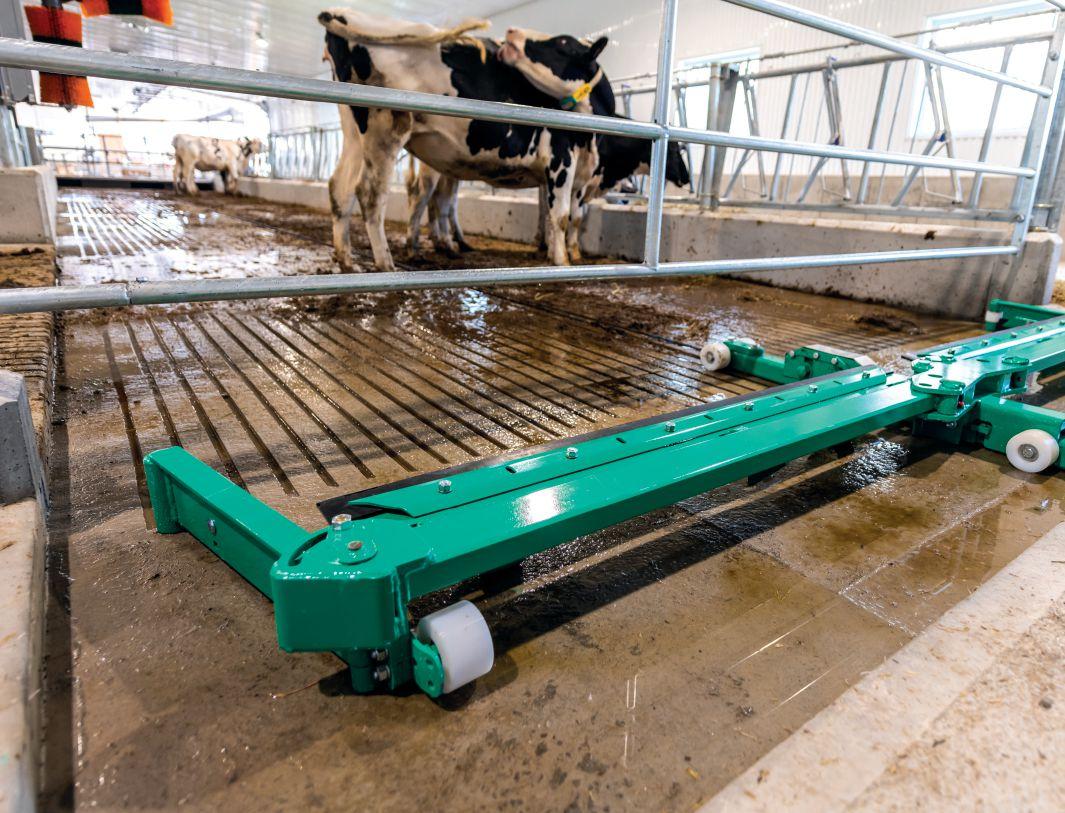
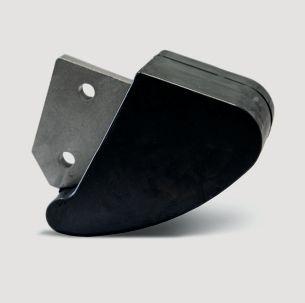
The tilting rubber shoe offered by GEA is an excellent choice for tilting alley scrapers. It increases wear resistance, especially in manure containing sand bedding.
GEA has always made its mark by developing efficient and long-lasting free stall manure cleaner systems. Whatever your barn configuration is, we have the solution to satisfy your expectations.
Requirements
•
•
• A strong drive to support your
Benefits
• Discount structures and terms on a readily available supply of parts and equipment.
• Technical & customer support from Hydro Engineering utilizing decades of experience in the agricultural market.
• An opportunity to strengthen current customer relationships while building new ones.