A multi-pronged solution? Enhancing the economics of biochar | 20
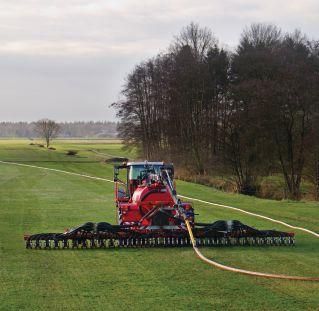
Liquid gold Minimizing volatilization in liquid manure | 24
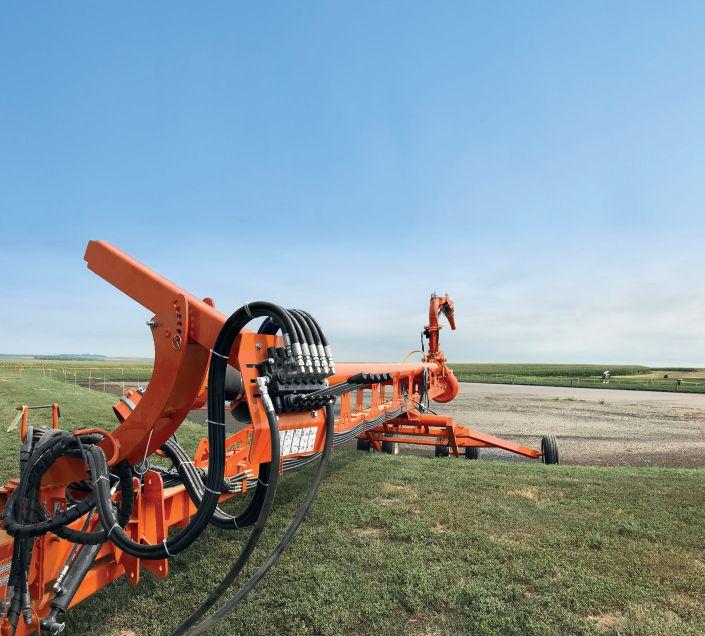
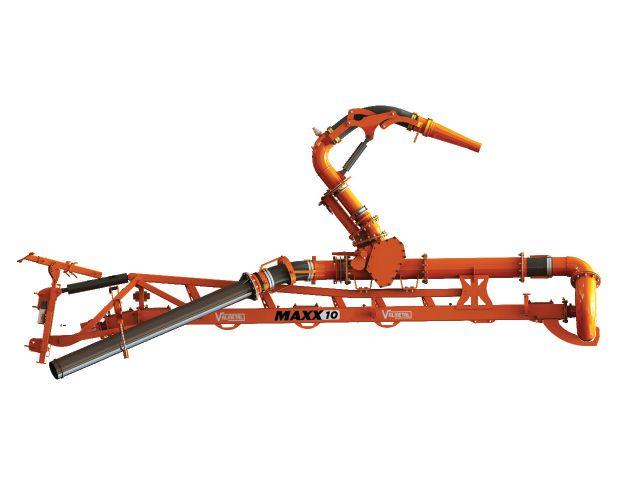
LOW COST OF OWNERSHIP
due to minimal moving parts, zero gate valves, and only 8 hydraulic cylinders.
UN-MATCHED DRIVE SYSTEM for an unassisted climb out of most steep banks.
line-up?
Have you gotten a whiff of our NEW agitation
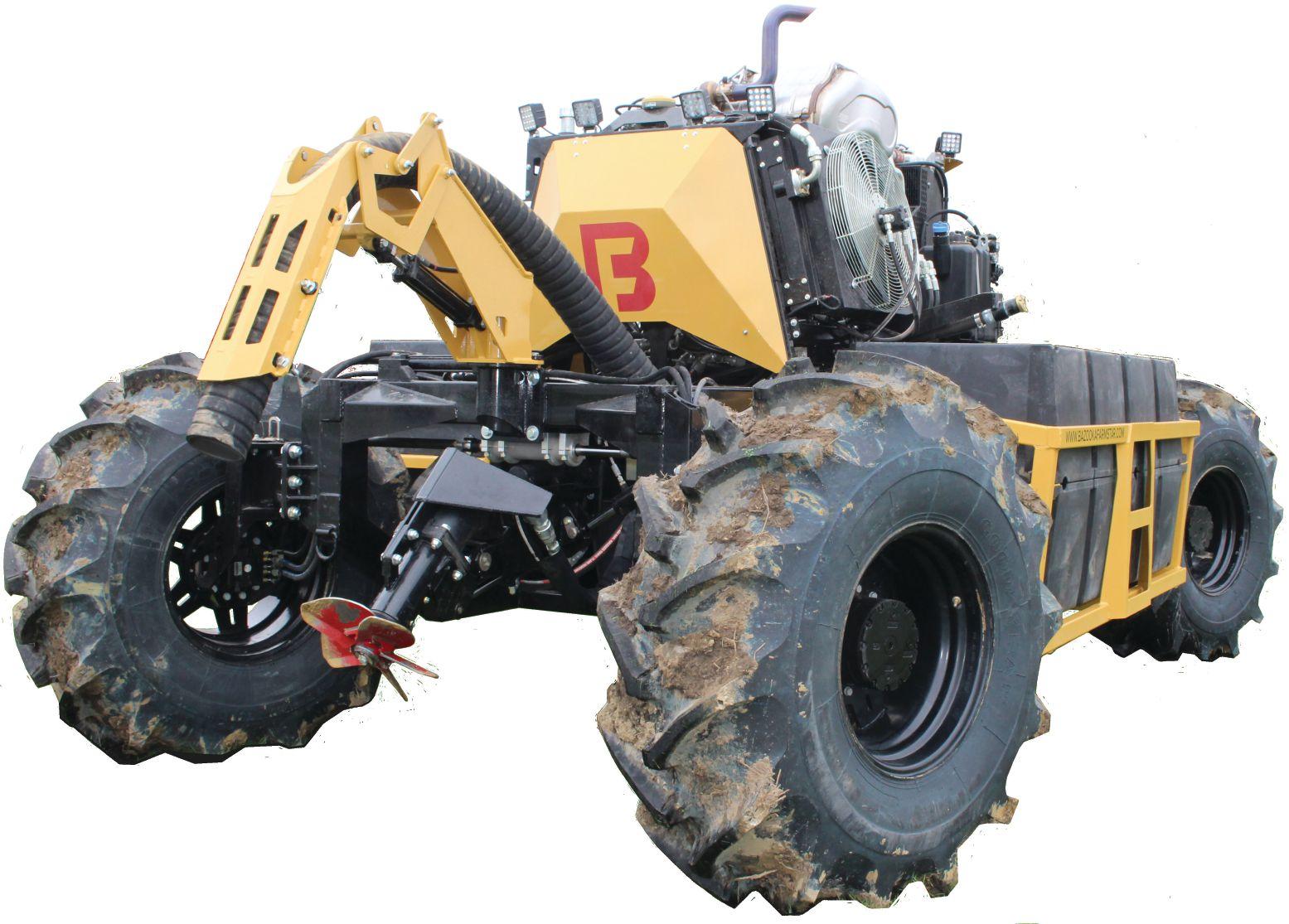
Bazooka Farmstar now manufactures a full line of high-quality agitation equipment from boats to boom trailers to traditional PTO solutions. No matter which product you choose, you can expect a solution that is to-the-point, easy to operate, and makes your operation more efficient and profitable.
AGITATION TRAILER
Renegade is a compact trailer-bound agitation unit equipped with a 173 HP engine, hydrostat-driven 15” Bazooka Farmstar submersible pump, and a 29’ triple-section boom.
• Fill tanks and transfer liquid manure faster.
• Reduce downtime during transport and set up.
• Never leave the tractor cab with unlimited remote fobs.
• Reach 14’ pumping depths with 3,500+ GPM capability. Coming in June: Built-in loadstand option. #Gamechanger
PIT PUMPS
Riptide is our series of PTO-driven agitation pumps with a narrow profile for easy access into manure pits.
• Move 4,000+ GPM with an 18” Bazooka Farmstar submersible pump.
• Thoroughly agitate with dual nozzles.
• Also, coming in June: Trailer Riptide.
CONTROL FIT FOR A (MANURE) KING
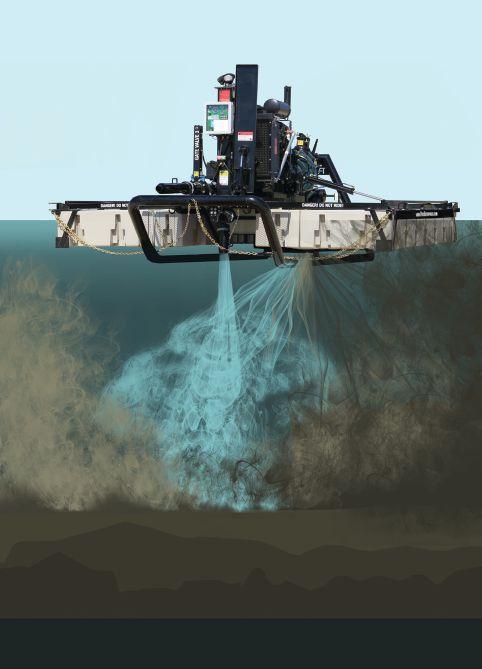
The propeller-based design provides extreme agility, maneuverability, and a high level of control. Never at the expense of agitation.
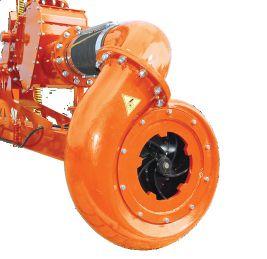
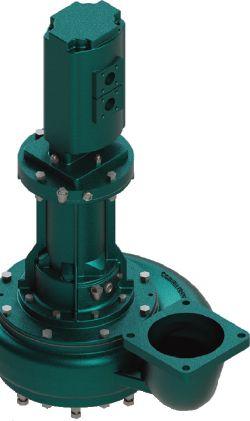
The new HD pumps are built to pump manure, built to run smoother to save fuel, run at a lower rpm with larger and wider impellors to reduce engine wear and plugging issues.
Proudly made in Canada since 1871.
Staying liquid
Liquid manure remains an in-demand product, but new innovations – and new opportunities –remain on the horizon.
Safety and mental health
How the conversation changes when staffs are smaller and hours are longer.
BY BREE RODY
Greener pastures
Can dairy farms, manufacturers and application businesses attract and maintain key talent?
BY JIM TIMLICK
Liquid gold
Your liquid manure could net you big returns – but your storage, agitation and other factors will be the difference-makers.
BY JACK KAZMIERSKI
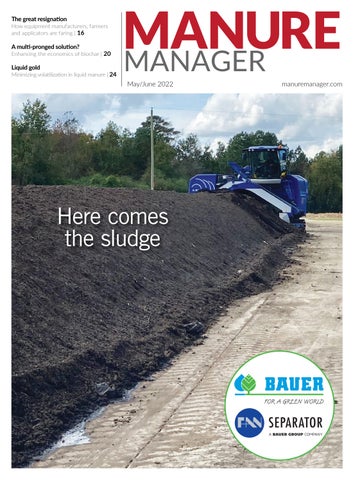
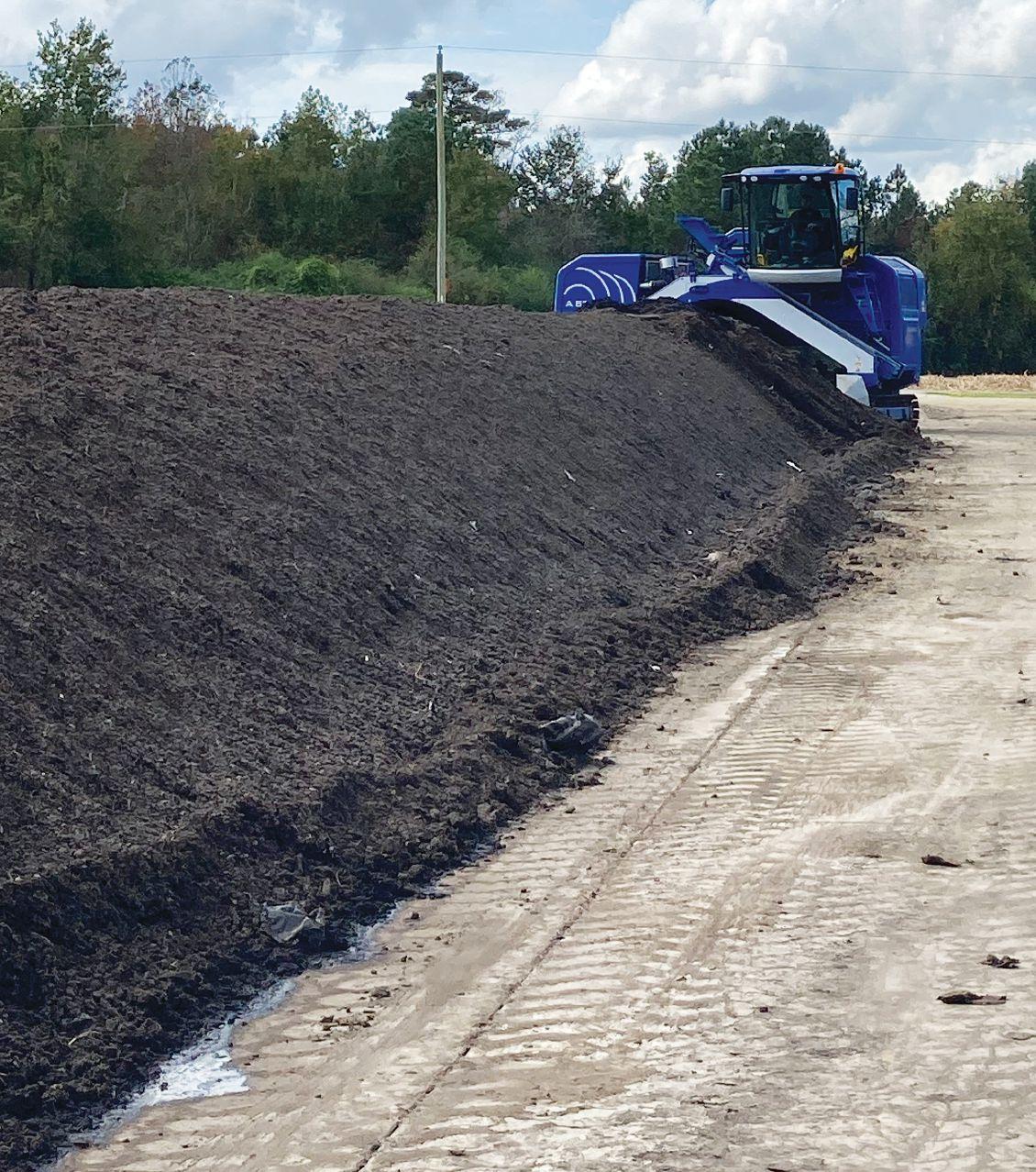
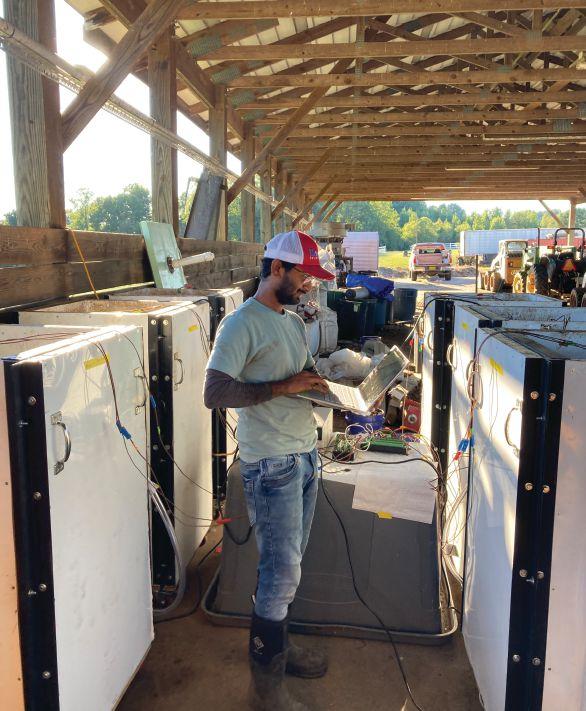
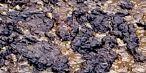
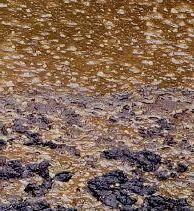
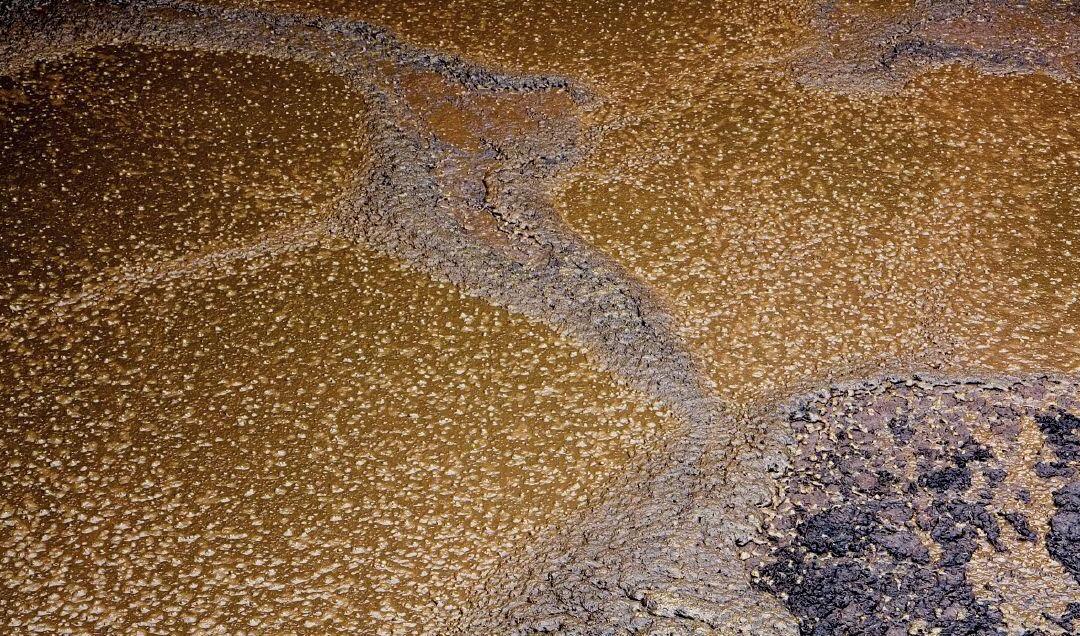
Drying sludge could provide big opportunities. See Page 10. Photo by Mahmoud Sharara
FROM THE EDITOR
BREE RODY | @ManureManager
In manure, there are no taboos
Money. Religion. Politics. You’ve probably heard that these are the things you should never discuss in mixed company. In 1947, the legendary Jimmy Stewart and Henry Fonda even got in a fistfight over their opposing political beliefs, but maintained a close friendship for years after that by never discussing politics again.
Most communities have historically kept certain subjects off-limits in order to keep everyone getting along (even if things never come to fisticuffs like with Stewart and Fonda). In farming, for years that might have meant not bringing up topics like greenhouse gas emissions or climate events. But the recent 2022 Waste to Worth conference, presented by the Livestock and Poultry Environmental Learning Community (LPELC) proved that the manure community is different these days. Speakers discussed all the roles that the industry can play in mitigating climate change –and the audience was receptive. Of particular
In her keynote, Lara Fowler, senior lecturer with Penn State Law, discussed conflict resolution from a practical and theoretical standpoint. Her stories of how stakeholders came together to help protect livestock, the environment and the local economy following the 2007 Chehalis Basin flood supported her core thesis: while we may be divided in our positions, we are often united by the outcomes which we wish to see.
Ultimately, determining how to get to those mutually held goals involves starting with the uncomfortable conversations. We need to talk about the environment –our air, our water, our soil.
The most important conversations often start from taboo places. For example, mental health has never been an easy thing to discuss, but with many farms short-staffed in recent years, the physical dangers caused by mental stress are more evident than ever (see page 8 for more on mental health, fatigue and safety). Speaking of staffing, money is another topic most people
We are often united by the outcomes which we
importance during the week was the issue of water quality in Lake Erie, which faces complex problems including invasive species, excessive algal growth and more. With shores in New York State, Pennsylvania, Ohio, Michigan and my own backyard of southwestern Ontario, and feeling the impact of industries such as agriculture, processing, commercial fishing and more, many of the keys to improving Lake Erie’s water all come down to one concept: common ground.
would shy away from, but with manufacturers, farms and application businesses feeling the effects of the “Great Resignation” (page 16), it’s an issue that can’t be ignored.
It’s easy to see why the manure industry is willing to go to those taboo places – after all, manure has long been called a “waste” product when those who manage it know it’s anything but (for more on ensuring the most value for your liquids, see page 24). So let’s keep the conversations going.•
Wisconsin dives into state of applicator industry
The UW-Madison Division of Extension nutrient management team’s custom manure applicator subteam has released its State of the Industry report for 2021 in the field of for-hire manure applicators.
According to the report, milk production continues to have a positive correlation with manure production. Currently, Wisconsin cows produce twice as much manure and milk as they did in 1970, with 1.2 million cows in the state producing 12 billion gallons of manure and wastewater annually.
There are 194 registered manure application firms across the state, and their range of capacity varies from 250,000 gallons of manure per year to upwards of 500 million gallons per year. Firms entering and exiting the industry have been inconsistent; for example, 2016 saw net zero new firms, with eight establishing business and eight exiting, while some years have had higher net-new (2017 saw 17 entries and nine exits) and other years, like 2020, saw a net negative with nine new
firms at 14 exits. Last year saw a major boost with 23 new firms and only five exits. So far, in the first three months of 2022, three firms have exited the state’s industry.
For liquid application, use of straight trucks and tractor tankers have been flat for the last 15 years, while use of semi-trucks has risen steadily. Solid spreaders have also risen significantly, up to 134 last year from 13 in 2007.
In terms of equipment purchases, there have been steady rises for boats, GPS for mapping and hose systems with low-disturbance injectors. There have been gradual changes over time in dragline trends; while six-inch hoses were once the preeminent hose size with 156.75 miles of hose in the state in 2014, that has decreased to 69.6 miles as eight- and 10-inch hoses have risen to 212.25 and 65.25 miles, respectively. Total miles of hose have decreased due to what the report states is greater efficiency from smaller hoses.
FORT HILL FARMS OWNERS CELEBRATED
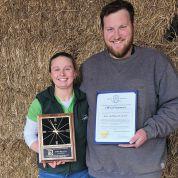
Connecticut-based, fourth-generation farmer Kies LaVack and husband Jared LaVack are the recipient of the state’s 2022 Outstanding Young Farmer Award from the Connecticut Agriculture
Information Council. Kies LaVack, who took on the ownership and management of Fort Hill Farms in 2018, manages a herd of 500 cows, 250 of whom are milking cows. Jared works as the farm’s crops manager and
head mechanic. The farm is a member of Agri-Mark Cooperative as well as a six-way cooperative partnership for selling milk through The Farmer’s Cow.
The farm is also the site of an anaerobic digester that converts
Extreme weather impacted productivity growth of U.S. dairy sector: report
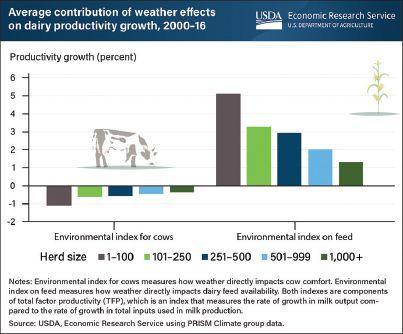
New research from the USDA’s Economic Research Service calculates how often during a calendar year temperatures are within the optimal range for a dairy cow’s maximum productivity, which is estimated at 41 to 77F, and the optimal range for feed crop development (50 to 86F). The number of days that do not fall within those ranges were used to predict the effects of extreme temperature on the dairy sector.
The research findings indicate that between the years of 2000 and 2016, all herd-size classes in several states experienced reduced growth in terms of total factor productivity because of these extreme temperatures. However, extreme weather in most states did not cause a decline in productivity by limiting feed availability.
not only cow manure but also food waste from local businesses into energy, which subsequently serves as a “microgrid” powering the farm operation. Fort Hill is currently preparing to install a robotic milking barn.
HBS creates new Bobcat reporting system
Dealership management solutions specialist HBS Systems has unveiled a new reporting system for Bobcat equipment dealers.
Through the NetView ECO equipment dealership management solution, dealers will now be able to look at service efficiencies, recovery rates, inventory turn, sales mix, gross profits, absorption rates, ROI, time utilization, financial utilization and rework analysis. The aim of the reports, which were created through collaboration with Bobcat’s dealer operations excellence team, is to increase efficiency and maximize profitability for dealers
“Bobcat selecting HBS Systems as one of the first dealer management system partners to develop these reports is a tremendous honor for our team. It demonstrates their belief that we could quickly develop reporting to benefit their dealers and strengthen our partnership,” said Chad Stone, president, and CEO of HBS Systems, in a statement.
In addition to the new reports, dealers can also view items such as Bobcat part details, available substitution parts, customizable reports for performance tracking and more.
Weltec commissions new biogas plant in Japan
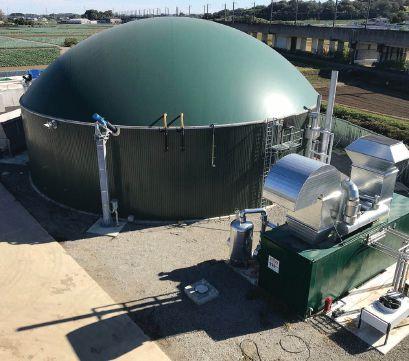
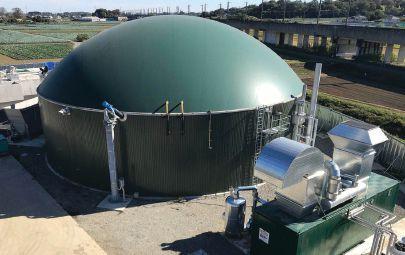
German manufacturer Weltec Biopower has officially opened its new biogas plant in Japan’s Saitama Prefecture. The facility is equipped with a 450 kW cogeneration power plant and is Weltec’s fourth project in Japan.
Renewable energy currently represents one fifth of Japan’s generated power. This plant digests approximately 12,000 tonnes of organic waste per day. The substrate mix consists of organic waste and cow manure (largely liquid) from a nearby farm.
Case IH makes upgrades to Maxxum and Puma series
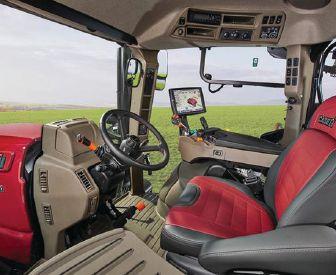
Case IH has made upgrades to the model year 2022 Maxxum and Puma 150/165 tractors, many of which focus on operator comfort and convenience.
Updates include a low-mount wiper, new steps, new monitor bars and rearview mears, enhanced safety lighting and more.
J.E. Cadle, Case IH mid-range tractor marketing manager, said in a statement that these new updates will “further ensure that operators are able to work comfortably and productively regardless of field conditions.” The upgrades build on 2021 improvements such as a redesigned hood for the Puma series and improved lighting.
The complete list of 2022 upgrades includes:
• Low-mount front wiper
• In-cab cool box
• New aluminum steps
• New monitor bar with USB outlets
• New rearview mirror for better field of view
• New battery cutoff switch located outside the door
• LED beacon lights
• Elastic hood closing rope
• New advanced loader joystick with reverser
Curry Supply relocates manufacturing headquarters
Curry Supply Company has relocated its main manufacturing facility to the DeGol Industrial Center in Hollidaysburg, PA from its former location in Martinsburg, PA. Additionally, several administrative departments including sales, marketing, finance, IT and HR have relocated in whole or in part to a new corporate office facility located in nearby Altoona, PA. The building will have shared office space for Curry Supply sister companies including Curry Rail Services and Curry Fluid Power.
The company says its projected business growth has been one of the driving factors behind its expansion and relocations. Jason Ritchey, president and owner of the company said in a statement, “For us, 2021 was a huge success… Not only have we surpassed our own expectations, but also exceeded the capacity of our Martinsburg facility.”
BKT unveils Ridemax FL 690
Tire manufacturer BKT has introduced its new model, the Ridemax FL 690. The tire’s tread design is in a block pattern for optimal durability.
Rixemad FL 690 is a radial flotation and transport tire that works on both trucks and trailers. The steel-belted tire is designed to withstand very heavy loads, thus increasing farmers’ productivity. A reinforced bead contributes to a longer life cycle.
It also features low-rolling resistance, with contributes to better fuel economy.
According to the company, it is suitable for 75 percent of on-the-road applications, and is equipped to handle high speeds.
BKT says the tire was introduced in response to a growing demand for high loads in modern agriculture.
HOW THE SAFETY conversation has changed
Mental health, exhaustion and short staffing are all considerations in modern ag work.
BY BREE RODY
Road spills and auto accidents. Drowning. Gases.
In many ways, the biggest threats to personal physical safety in the manure industry remain the same. And much of the best advice and practices remain the same: stay vigilant, have a buddy when possible and be aware of your risks.
However, many of these challenges are exacerbated by the unique circumstances of 2022. The mass voluntary exodus of employees known as the “Great Resignation” has been ongoing for both farm and applicator businesses for some years but accelerated with the pandemic. The stress of short staffing has created extra stressors around fatigue, lack of focus, lack of supervision and strains on mental health. While some tasks might have the recommendation of a “buddy system” for safety, some workers may find that this is no longer an option. And with some workers potentially having to work longer hours, that could mean fatigue becomes a bigger factor.
While there are new, renewed or more complex challenges, many safety risks in manure come down to familiar principles –and there are still an array of ways to prevent accidents.
These interviews were featured in The Spread, Manure Manager’s podcast.
THE BIGGEST IMMEDIATE THREATS
A December 2020 dissertation by Mahmoud Nour submitted to Purdue University examined farm-related injuries pertaining to manure storage and handling. In his dissertation, Nour detailed results of a pilot summary of U.S. incidents in 2017. A total of 28 incidents involving 39 individuals were documented that year. Of these 39 individuals, 21 cases (54 percent) were fatal. Out of the 28 incidents, eight involved multiple fatalities and/or injuries. Two victims were reported in six incidents, three victims in one and four in one other.
deaths. In the 21 asphyxiation deaths, handling equipment was the most frequently identified agent (eight cases) followed by transportation equipment (five cases).
Dan Andersen, assistant professor with Iowa State University in the department of agricultural and biosystems engineering, says with this in mind, it’s important to ensure ventilation is in top shape.
“Oftentimes when I go around the state to farms, some of those fans that have been off for some time to save a little bit on propane don’t always turn on correctly.” Having everything in place is key, says Andersen, because there often is no turning back once you start a task. “When you agitate, you’re going to release hydrogen sulfide.”
MENTAL HEALTH AND EXHAUSTION
There’s no denying it: agriculture work is tiring. It always has been. But the last few years have been on a whole new level.
Josie Rudolphi, an assistant professor and extension specialist with the University of Illinois-Urbana Champagne in the department of agricultural and biological engineering, has focused much of her career on child agricultural injury prevention, young adult agriculture work and mental health in agriculture. She says while all jobs are stressful, Agriculture has “a lot of unique stressors.”
Injuries in manure skewed younger than other aspects of the ag industry; the average age of victims in the study was 36, which is much lower than the approximate average age of accident victims in the grain industry, which is 53. Nour noted limitations in the study and that the type of toxic gas or level of oxygen that fatality victims were exposed to was rarely confirmed, but past research helped him determine that high concentrations of hydrogen sulfide were significant contributors to those
“Working for extension, I don’t have to worry about when my next paycheck comes in, I don’t have to worry about storing my commodity, my work does not rely on the weather. These are all things that our agricultural producers are facing, and it seems that these stressors are sort of stacking.” She says the COVID-19 pandemic has added to those stress factors. “We did a survey of farmers in the Midwest [and] we heard a lot about supply chain shortages, workforce shortages… and it’s not over. We’re still dealing with that. So we continue to see farmers who continue to be stressed, and that’s when you worry about the mental health.”
And, says Rudolphi, working with mental health issues, especially undiagnosed or untreated ones, can have physical consequences. “When we think about some of our common symptoms of depression and anxiety, we might think of being really distracted,” says Rudolphi. “And when you’re distracted it’s really easy to make a mistake that could lead to an injury.”
PHOTO:
There’s also a gender correlation – agricultural field work skews largely male, as do workplace accidents. A 2022 study from Statista shows that in general, workplace injuries in the U.S. skew male – in 2020, men represented 4,377 occupational injury deaths across all sectors in the U.S., making up 91.8 percent of workplace deaths. For agriculture and manure in particular, it’s even more predominant. In Nour’s pilot summary of 2017 incidents, all of the 39 individuals involved were male. This also correlates with trends around men and mental health. A 2019 article in the American Journal of Men’s Health found that, for a number of reasons, men are less likely to seek treatment for mental health concerns than women. When controlling for prevalence rates, women in the U.S. are 1.6 times more likely to receive any form of mental health treatment, compared to men, across a 12-month period, according to the study.
Rudolphi says it can be common for workers to not be able to easily identify when they are suffering from mental illness. But that’s why, she says, the North Central Farm and Ranch Stress Assistance Center at the University of Illinois is partnering with the 12 states in the north central region and three public health and non-profit services to increase awareness and services such as telephone mental health. The center is also offering training programs to help communities recognize signs of mental illness in “The pastor, the banker, the feed sale worker, the equipment dealer all understand what stress looks like, what mental health conditions look like, and what a mental health crisis looks like. So these people can recognize changes in their farmer clients, often people they’ve known for decades, and they can be that first person to intervene until we can get somebody to professional care.”
She says farmers and their workers should never underestimate the help that a good night’s sleep provides. “We know it’s not always easy, but we always encourage getting adequate sleep. We also encourage naps when we can. If that’s something that helps you perform better, we don’t like to shame people for taking naps.”
ADDRESSING STAFFING ISSUES
One longstanding tradition around farms is to pull in help from family, especially when outside help is too hard to come by – or too expensive.
a sump and then goes into the storage. If you’re going to go down into that sump… ventilate that space, but you still need a buddy.” He says agitation and application can be performed without a buddy, but physical resources such as monitors as well as the mental demand for knowing one’s limit come in handy. If those jobs can be done with more than one person, Andersen recommends switching out and working in shifts. “We do work long hours… some seasons are known to be very intense.”
He adds that the development of new technology such as automated shutdowns and throttling have also helped cut down on the number of jobs that have to be done up-close by workers, such as checking hoses for leaks after shutdowns.
NEW INVESTMENTS
While simply investing in more workers might not be an option, Andersen says there is equipment one can invest in that will provide people with more personal protection.
When up-close and personal with hydrogen sulfide, proper fitting masks are key, but Andersen warns that workers need to remember that the consumer PPE such as surgical masks and N-95 masks that have become popular since the onset of the pandemic are not at all adequate for manure gases. “Those masks are built for particulates, not the gases that we tend to worry about with manure. [With hydrogen sulfide] there’s only
ABOVE
Andersen says he’s not against family, even young children, helping out on the farm. But, he says, the tasks need to be appropriate. “We still have the same number of gallons to be applied and, unfortunately, fewer people to get it done with,” he says. “If we’re doing that, make sure you position them in roles they are qualified for.” Best practice recommendations include not allowing children to be passengers on farm machinery; securing areas such as dugouts, lagoons, pits and livestock pens; and keeping children away from chemicals such as pesticides.
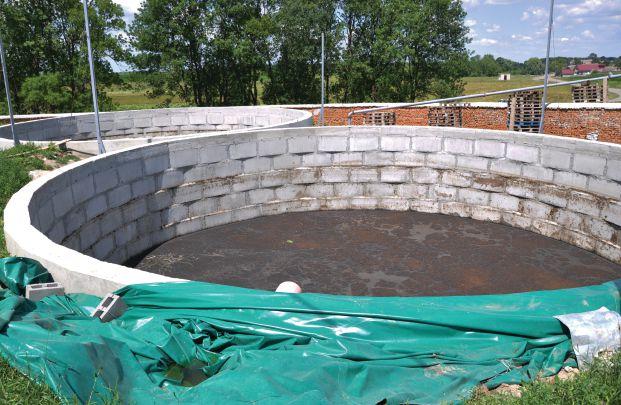
Manure storage environments, even of the open-air variety, are common settings for accidents on the farm, involving both asphyxiation and drowning.
one respirator that’ll get you there, and that’s full [SCBA] – selfcontained breathing apparatus. There are respirators that have cartridges for escape-only, because hydrogen sulfide has to stick to the respirator, because it can only hold so much.”
In Nour’s study, most of the cases were work-related, but 10 were classified as non-work related including the death of a threeyear-old child who drowned after falling into an open pit, and one of a five-year-old child who was killed in a vehicular accident.
As for short staffing, Andersen also says there are still many jobs that can be done with a single worker, but the most non-negotiable scenario is “anytime you’re doing something in the manure pit and close to the surface, or if you have a system where manure goes into
Generally, he says, those self-contained breathing apparatuses are only needed for in-pit maintenance. But for walking around the farm, he says, the best way to be proactive is with a monitor – even outdoors. This is especially handy with more workers being on their own. “Generally, when I go to a farm, I’ll take with me a hydrogen sulfide monitor.” He says these monitors, which generally cost $100 to $200, are an essential item that are relatively affordable and simple to operate. “It beeps for me if hydrogen sulfide hits 10 or 25 parts per million… and that works really well for safety. Most of the time if we take a step or two in another direction we tend to get better air.” •
SLUDGE, LAGOONS and you
Schedule management to avoid nasty (and expensive) surprise sludge buildup
BY JULIENNE ISAACS
BELOW
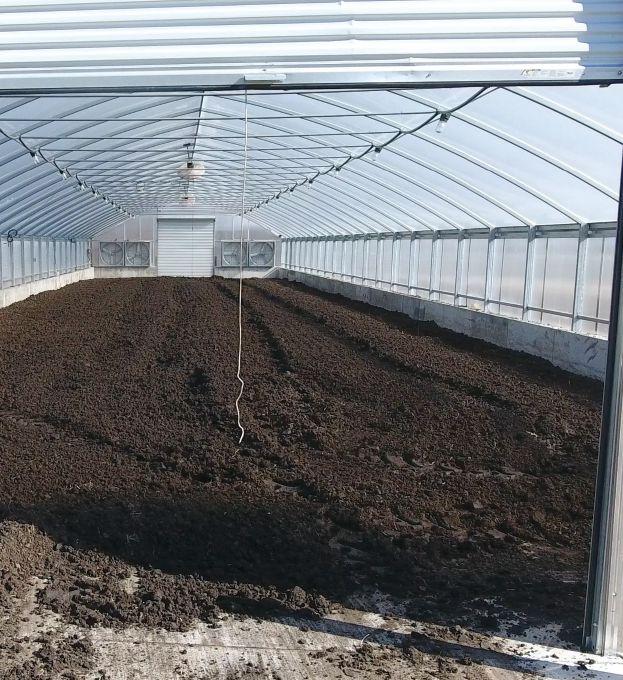
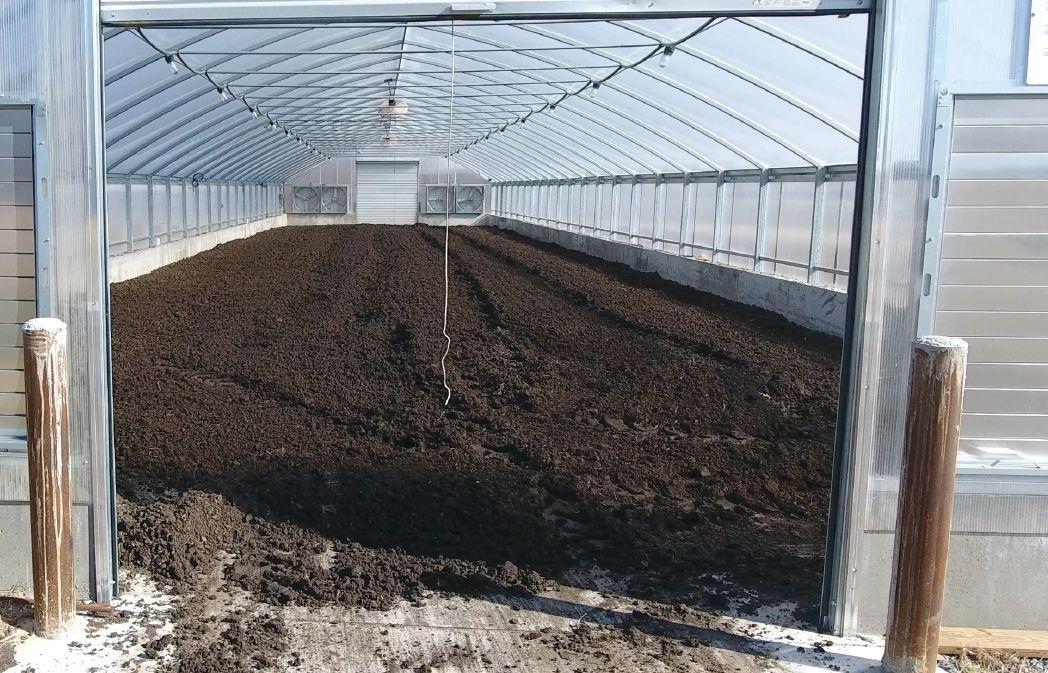
Ambient air-drying in a greenhouse-like setting is a common drying solution for sludge.
“Out of sight, out of mind?”
These aren’t words to live by when it comes to sludge, according to Mahmoud Sharara, an assistant professor and extension specialist in biological and agricultural engineering at North Carolina State University, and expert on the effects of sludge on manure storage systems.
Instead, producers who wish to avoid stinky and expensive surprises with sludge buildup in anaerobic swine lagoons or digesters should take a hands-on approach to sludge management.
But first, a definition: the word “sludge,” says Sharara, “is typically used to refer to the residue or the material that remains after manure or organic materials are broken down by bacteria or microorganisms.”
This includes sand, soil, dead bacterial cells, digested residue and other material that can’t be further degraded in the lagoon.
Sludge naturally accumulates and, no matter how it’s stored, eventually has to be dealt with, but depending on the size and depth of the lagoon, this can take years–or even decades. This means that for some farm operators, dealing with sludge isn’t part of regular farm management.
“Under regular, normal operations, sludge buildup could take one to two decades,” says Sharara. “Now, there are certain situations where decisions on the farm increase the rate of buildup–for example, on a dairy farm that relies on an inefficient sand separation system, sand
increases accumulation of the sludge in the lagoon.”
Another example might be when a farm manager disposes of spoiled feed by dumping it in the lagoon – “that could increase the level dramatically,” he says.
But as sludge starts to accumulate to a problematic level, treatment options become more limited, which speeds accumulation even more. How does this work?
LEFT
A major challenge with sludge is getting it to a place where spreading it is an option.
“As we irrigate more aggressively, we are reducing the treatment activity.”
Sharara says it helps to picture the three “zones” of the storage lagoon. The top level is the temporary liquid storage zone, from which irrigation pumps draw. Below this is the permanent liquid treatment zone, and below that is the sludge accumulation zone.
“As we irrigate more aggressively and frequently, we are reducing the treatment activity of the lagoon, which increases the accumulation of solids,” Sharara explains. “So increases of sludge results in more increases of sludge.”
Sludge will build up faster in older sludge lagoons that are not deep enough or were not designed with a sludge accumulation zone.
Sharara says that in some parts
of the southeastern United States, including North Carolina, because of the water table level, sludge lagoons are only 10 to 12 feet deep at the maximum, and farm managers have to deal with sludge more regularly than those located in regions that allow 20-foot-deep lagoons.
It’s not just lagoon design that dictates the timeline, though: regional regulatory requirements do too. In North Carolina, producers are required to measure sludge depth annually. “Through this process, operators become aware of it as a management constraint and ideally start to plan for it,” he says.
SIGNS OF BUILDUP
The most obvious sign of a sludge problem is when islands start to form in a treatment lagoon.
But on most farms with open treatment lagoons, the first sign of sludge buildup is more likely to be a noticeable odor, perhaps followed by complaints from the neighbors. As the bottom of the structure starts to creep closer and closer to the surface, the distance at which the microbial activity is happening also gets higher, explains Sharara. “Before, the gasses traveled up through a distance of liquid or slurry where the material breaks down, but when there isn’t that distance or that zone above the treatment, intermediate gasses leave the surface of the structure, which contributes to odor,” he says.
Producers with lagoons rely on irrigation systems to keep the levels under control. The second sign of a sludge problem is issues with the flow of irrigation from the lagoon. As sludge levels rise, the flow from the pump can become disrupted or plugged – or producers might notice unusual spray patterns when spreading, because the liquid is no longer the right consistency for the system.
Sharara’s lab has been “pleasantly surprised” with the results of incorporating sludge at various inclusion rates.
Those are all examples of how producers might get surprised by an issue with sludge. There are alternatives. They can also get an idea of sludge accumulation via sampling lagoon effluent, says Sharara. Samples will start to contain higher levels of phosphorus, zinc and copper. These are enriched in lagoon solids, and found at lower levels in the liquids.
“That’s one of the benefits of keeping records and keeping track of trends. If you’re noticing an increase, that could be a signal that the sludge is coming closer to the surface,” he says.
In states like North Carolina, testing is a regulatory requirement; you’re also required to measure the distance between the sludge and the surface of the lagoon. There are certain thresholds where if this distance has decreased, the farm operator is required to develop a plan for removing the sludge.
Sharara recommends regular testing for everyone. “Having a hands-on approach to managing a lagoon is critical to ensuring it operates as it was designed,” he says.
TREATMENT OPTIONS
Treatment options depend on where the farm is located, says Sharara.
“In certain areas it’s not a problem as much as it is part of doing the business, just as how often you apply becomes part of the system. But in specific regions, where it’s not part of the management plan, it becomes an issue,” he says.
The difficulty and expense of dealing with sludge heavily depends on the amount of acreage nearby for which spreading is an option.
On many farms, the solution is to use an agitation pump in the lagoon that’s connected to a tanker, he says; as the lagoon is agitated, the sludge at the bottom is broken up, and the ensuing slurry can be pumped into the tanker for application on nearby fields. This method is commonly referred to as “pump and haul.”
The catch is that it’s an option only in areas where operators are traveling just a few miles to the acres for application; otherwise, it’s too costly.
Sharara says the biggest challenge around sludge management is getting the solids out of the lagoon, and onto acres where the nutrients are needed, at the lowest cost to the producer. Moving water is a major logistical challenge.
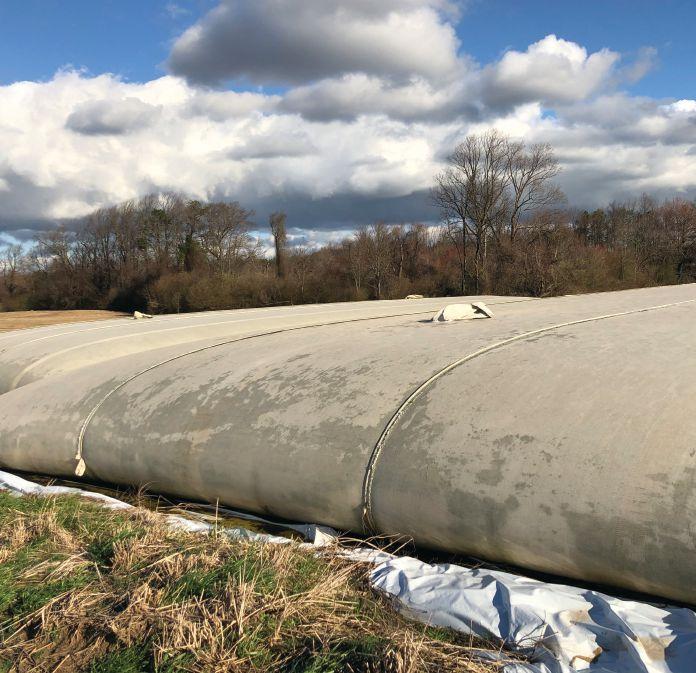
When acres become scarce, as in some parts of North Carolina, or when there’s a high concentration of animal operations and competition for acres, producers might choose to use a solid liquid separation system or filtration bag. How it works: within a few hundred feet of the lagoon, a polymer dosing station treats the dredged sludge in a lined temporary basin; once treated, the solids are filtered and applied to farther acres while the liquids are pumped back into the lagoon. Dewatered sludge costs less to move to farther acres, but dewatering sludge is costly, says Sharara.
Sharara’s lab has been looking into less expensive options, including thermal drying, to remove as much water as possible so solids can be moved further from their source.
Currently, there are no commercially-available farm-scale drying options in North Carolina, but Sharara believes that may change once there’s enough research to support the practice.
“We don’t rely on drying [much] in animal agriculture, but here in North Carolina, it has a higher opportunity of adoption,” he says.
One such method is ambient air drying, in which sludge is dried in greenhouse-style structures that rely on ambient or mechanical air movement via fans. In North Carolina, there’s too much rainfall to allow spread sludge to dry naturally unprotected from the weather. The greenhouse structure prevents rainfall accumulation while the fans keep air moving.
Sharara’s data shows these systems can dry sludge from 80 to 90 percent moisture to around 10 percent moisture in a matter of days. Producers can adapt unused farm structures, such as poultry houses or tobacco greenhouses, for this purpose.
Another approach Sharara’s lab is studying is adding sludge to compost products.
“Compost has a wider application base compared to manure, especially as it can go to horticulture or vegetable production, and it allows us to balance out the challenging aspect of sludge, which is the higher mineral content,” he says.
Sharara’s lab tried two sludge inclusion rates, adding either 10 percent or 20 percent sludge to a mixture also containing poultry litter, bermuda grasses and yard and tree trimmings.
Sharara says he and his collaborators were “pleasantly surprised” by the results, especially as the higher inclusion rate proved beneficial. “We could increase the sludge–there was no negative impact. It created higher emergence and higher compost stability indicators. And plant vigour and height were much better for the higher inclusion rates for sludge,” he says.
The promising results are one indicator that sludge management may soon become an easier proposition. But Sharara is not suggesting that farm operators wait until the data rolls in to get a handle on sludge.
“With sludge, waiting increases the challenge. A lot of times growers wait until something is completely mature and widely adopted, but producers may have an immediate need, so seeking out assistance to create a compost system on-site, or a drying system, might be helpful to avoid a problem, or to avoid a complaint from neighbors,” he says. •
can also be added to compost products, which could balance out some of the more challenging aspects of sludge.
A LONG WAY TOGETHER
WHEREVER YOU ARE, BKT IS WITH YOU
BKT provides you tires that are reliable and safe, sturdy and durable, capable of combining traction and reduced soil compaction, comfort and high performance.
BKT: always with you, to get the most out of your agricultural equipment.
RIGHT
Sludge
THIS LITTLE ENGINE CAN
Moving manure quietly and safely is made possible with a combination of equipment and technology
Keeping pace with the rapidly changing agricultural industry, manure application techniques have changed to match the needs of highly efficient animal production operations. The change from solid manure tractor tankers to flexible aboveground or underground pipeline systems has radically altered the way producers manage manure.
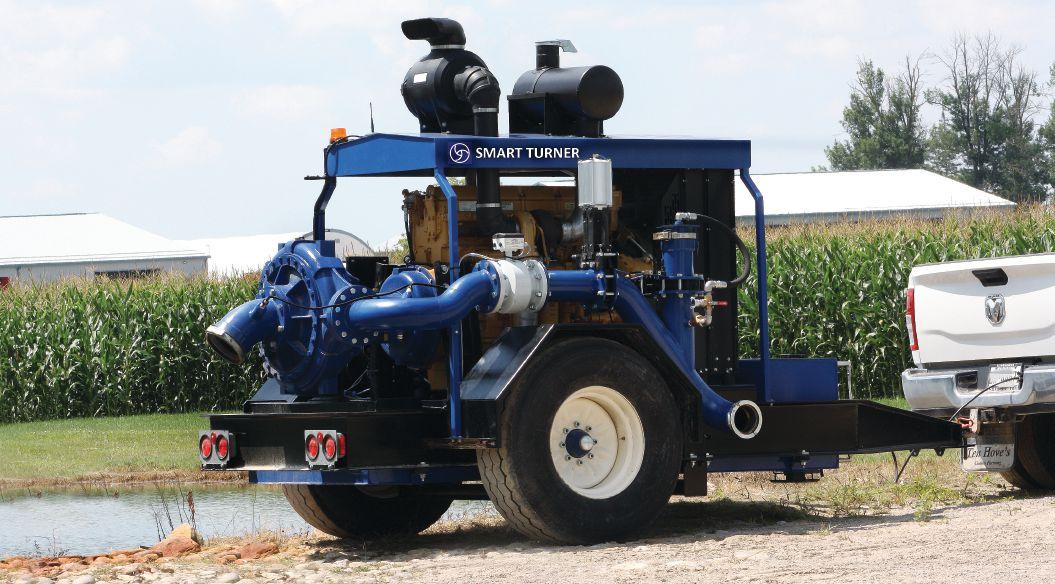
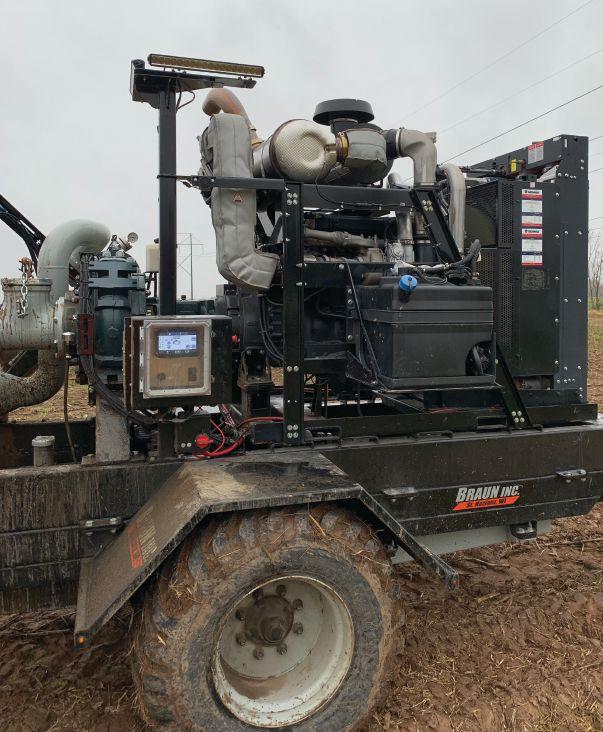
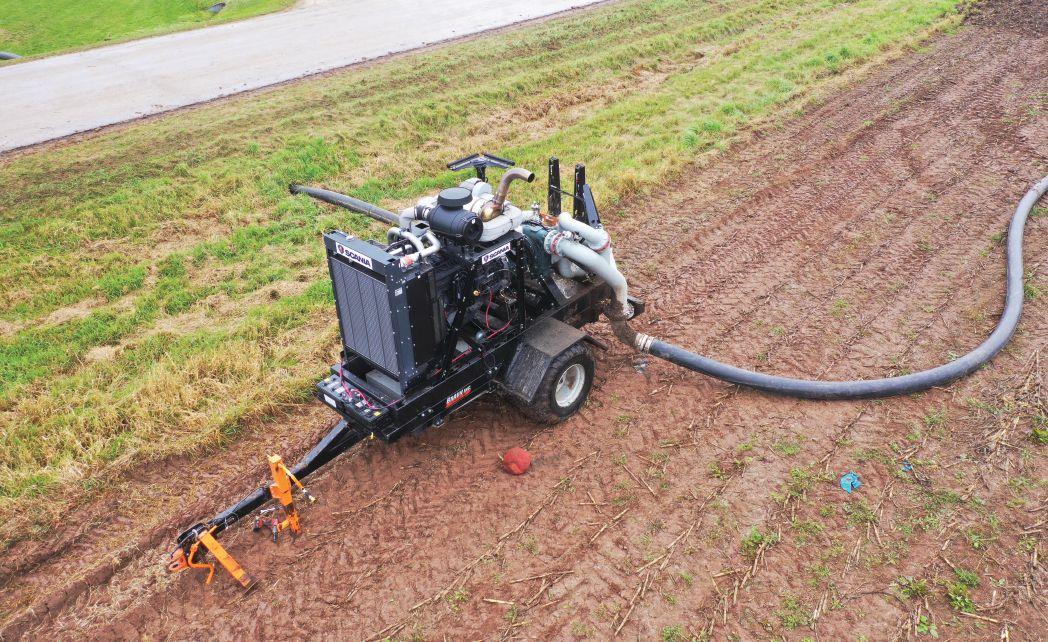
For many years, moving manure has required a pump and an engine. But a meeting between two specialists created a great power solution. Isaac Lemmenes of R. Braun Inc., and Mike Karpe of Hamilton Power Solutions team created a quieter, energy-saving take on the traditional standard.
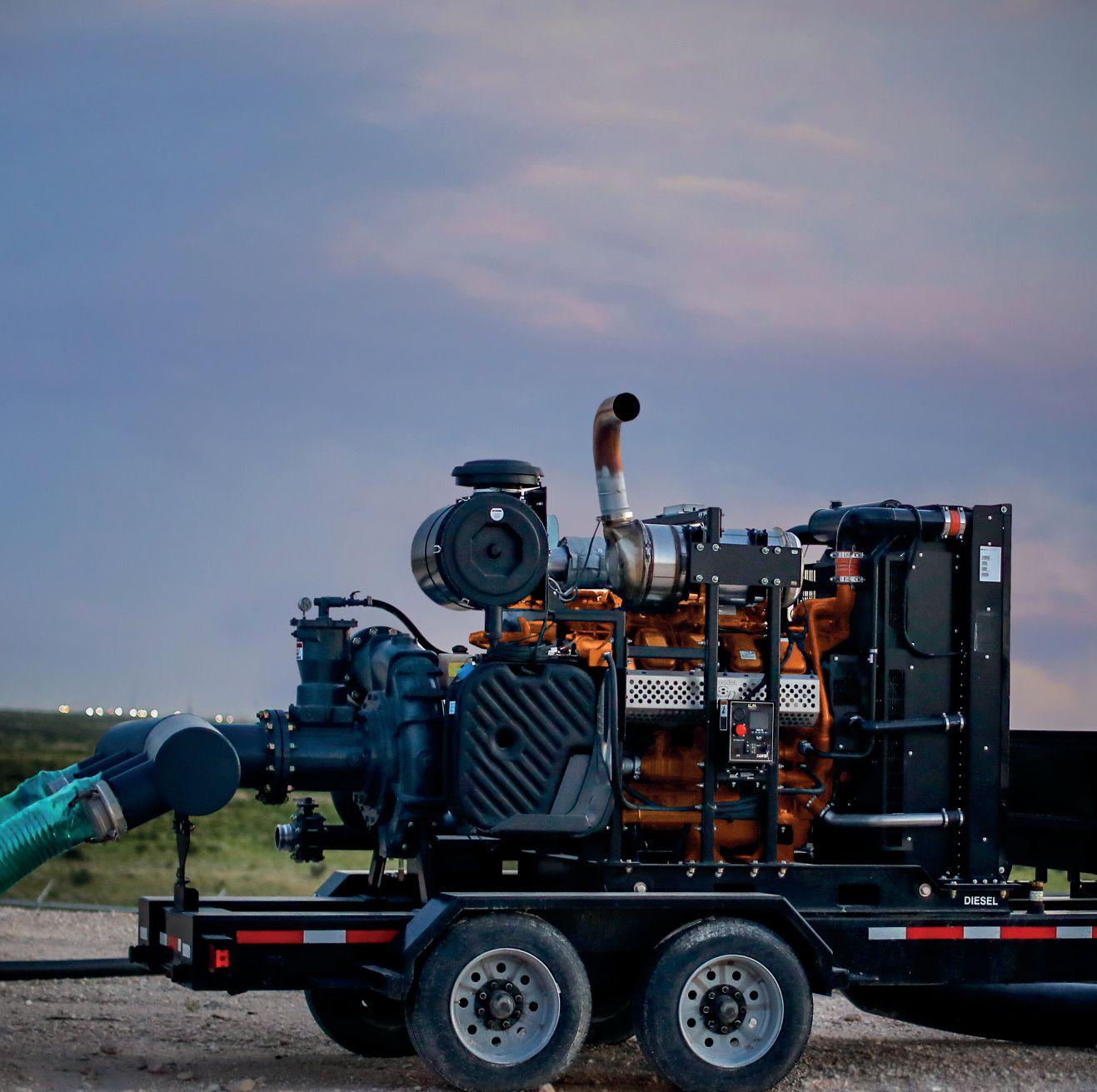
“We are promoting a more efficient engine package,” says Mike Karpe of Hamilton Power Solutions. In partnership with R. Braun Inc., Hamilton is providing a Scania engine to run R. Braun Inc.’s pump system.
“Scania is the preferred engine in Europe and is having accelerated growth in the United States, continues Karpe. “People are gravitating to Scania because of the fuel
efficiency, powerful performance, and proven reliability. Combined with R. Braun’s advanced telematic system and pump, the whole system is environmentally friendly and offers superior performance.”
After meeting with the Hamilton team and Karpe, Lemmenes adapted an R Braun Inc trailer pumping system to work with Hamilton’s skid-mounted Scania engine package and took the combination to the field.
Lemmenes says he was impressed and could see how the system could fit nicely into the company’s commitments to being good stewards of the land and promoting environmental efficiency.
“We put about 300 hours on this combination of equipment in the fall of 2021 and we were able to do the same amount of application with this unit as we have done with larger engines and pumps in the past,” Lemmenes explains. “We worked with the Scania team to size the pump/motor combination for the exact application needed, resulting in an extremely efficient pump unit.”
Lemmenes says adding the Scania engine to the manure application equipment manufactured by R. Braun Inc. turned up some unexpected
bonuses. “It’s a lighter design, which makes it easier to move around and it’s much more nimble and user-friendly giving our crews flexibility. When coordinated with our trucking crew, this combination handled 3,200-plus gal/ minute with ease.”
Describing R. Braun Inc. as a company of “innovators,” Lemmenes believes adding the Scania engine to its
products will change the course of manure application. “We are always trying to improve equipment and be good stewards,” he says.
Karpe notes the engine offers benefits beyond the farm gate, as it is a quiet unit that allows for conversation between farmer and operator within a few feet of the action. This is also a benefit if the operation is occurring near residential areas.
“The Scania engine is so much quieter than other units,” says Lemmenes. He says he was able to speak with his crew within 10 feet of the engine and they were able to talk easily without shouting.
Reduced annoyance aside, both Karpe and Lemmenes extol the efficiencies of their newly formed combination.
“The reliability of the Scania engine has been tested and proven through many years and many hours of use because the engine platform has remained the same,” adds Karpe. “We didn’t need to reduce its emissions levels because it has been at the top of the emissions standards in Europe for years.”
While Karpe acknowledges that most engines come plug-and-play to the OEM packages, the Scania engine integrated seamlessly with R. Braun Inc.’s advanced telematic control system. The team had the combination running efficiently in “no time.”
The capability of the Scania engine to provide peak torque even at low RPM’s makes it easy for operators to adjust the size of pump needed depending on the requirements of the application. With the Scania engine and the R. Braun Inc. web-based control system, the team was able to
better manage its time in the field. In addition, Karpe says, both teams believed there was “an almost 30 percent reduction in fuel use with this combination.”
The North American market has been slow to embrace Scania engines. Karpe says the hesitancy could be attributed to concerns about getting service support. “The central warehouse in Indiana can get parts delivered in 24 hours and stocks 98 percent of replacement parts at all times,” he explains. “There are just so many reasons to choose a Scania engine and we can reassure farmers the support will be there when it’s needed.”
Lemmenes says their experience with the combination was positive overall. “The
Scania power unit coupled to a Cornell 6819 MPC pump proved to be a great match,” he explains.
He was impressed enough by the combination that Lemmenes plans to use it again in the coming season while collecting more data on fuel efficiency, capacity capability and how far the combination can be pushed. “The motor did exactly what we needed it to do, but I think we could do more with it,” he says.
There isn’t much that can be improved when it comes to manure dispersion, but the combination of the Scania engine with R. Braun Inc.’s technology was noticeable. In fact, one of Lemmenes’s dairy customers placed an order for multiple units for the 2022 season for their own
operation after seeing the combination in action. “We had successes with this package and that was attractive to our customer,” he concludes.
Another season of manure management is approaching, and both Lemmenes and Karpe believe they have found a time-saving, environmentally friendly, economically attractive adjustment to the same-old-same-old style of animal waste disposal. They may not be revolutionizing how manure is distributed, but they have hit on a combination that fits nicely into an industry that is looking for energy efficiency and opportunities to showcase their commitment to environmental stewardship. •
GREENER PASTURES
Some manufacturers and farms are struggling to replace workers. How is the effect trickling down?
BY JIM TIMLICK
It’s no secret that many farms and companies that do business in the ag sector have been struggling to deal with a shortage of skilled labor for some time now. Those struggles have become even more pronounced during the pandemic as the competition for workers has intensified, with employers promising prospective employees everything from increased salaries, work-from-home arrangements and even bonuses just for applying.
Some have dubbed it the ‘Great Resignation’ as workers migrate elsewhere in search of greener pastures. In the U.S., it’s estimated that more than 47 million Americans voluntarily quit their jobs as part of this mass migration in 2021. While it hasn’t occurred to the same extent in Canada, some experts north of the border are warning that the underlying factors that led to it happening in the U.S. are also at play north of the 49th parallel.
This phenomenon has impacted virtually every component of the North American economy, but there are unique pains within the agricultural sector. And it doesn’t appear as if the situation is going to get much better any time soon. A recent report from the U.S. Bureau of Labor Statistics that indicated employment of agricultural workers is expected to increase by just one percent from 2019 to 2029.
MANUFACTURING
When provincial agriculture and agri-food ministers from across Canada met with their federal counterparts in Guelph, ON last November one of the primary topics of conversation was the need for support to address challenges in the agricultural manufacturing workforce.
has been the rising demand for Canadian-made agricultural equipment, both domestically and internationally. Ultimately, there is a price to pay for having a good reputation: some manufacturers are having difficulty hiring enough people to keep up with that demand.
“Canadian-made ag equipment is renowned for being the best in the world and that is reflected in the demand for it right now. Plus, commodity prices are high right now, and farmers feel it’s time to be reinvesting in their equipment. Demand is high for the equipment and we need the people to make it,” she adds.
Another challenge ag equipment manufacturers face is the competition for skilled workers from other industries, Boyd explains. For example, the skyrocketing demand for housing in provinces like Ontario has prompted an increasing number of workers to consider what opportunities might be available in that industry.
ABOVE
Donna Boyd is president of the Agricultural Manufacturers of Canada (AMC), an industry-led coalition that represents about 250 member companies across the country. Boyd says AMC members are facing an unprecedented labor shortage in their industry.
“We, like so many other industries, have been hit with the issue of not having enough skilled trades in manufacturing,” she says. “I can say without question that many of our members have got a hundred jobs that are open on the board that need to be filled right now. It’s really unprecedented. I wouldn’t say it’s a crisis situation, but it certainly could become a crisis situation if we’re unable to attract more talent.”
Boyd says the labor shortage in the ag manufacturing sector is the result of several factors. One of the primary causes
“We’ve seen demand from other sectors and other industries kind of pulling talent away or at least turning their heads in that direction,” she says.
Compounding the problem is the fact that many ag equipment manufacturers are based in rural locations, some of which simply don’t have the basic infrastructure such as schools, homes and hospitals, needed to lure workers away from more urban settings. More than 40 percent of AMC members are based in rural communities with populations of 10,000 people or fewer.
Boyd says her organization has been working closely with municipal and provincial governments to develop solutions to problem which will not only benefit AMC members, but also the communities in which they are based.
“It couldn’t be more imperative that we get people out there and that we afford them all the quality of life that they are looking for,” she says.
Although the pandemic hasn’t necessarily been the primary cause of the human capital crunch ag equipment manufacturers are dealing with, it has certainly exacerbated the situation, according to Boyd.
Supply chain disruptions during the pandemic and the resulting price increases for materials, and have left those companies with no choice but to pass on those additional costs to customers.
The manure industry is facing shortages in multiple areas.
“We’ve seen container prices go up over 400 percent, from [CAD] $4,000 maybe 18 months ago to over $20,000 now. That has negatively impacted pricing and those price increases have to be passed on one way or another,” says Boyd.
Boyd doesn’t see the current labor shortage in the ag manufacturing sector changing any time soon, especially with the current level of demand for products expected to continue well into 2023.
One of the things she would like to see happen is industry, academia and governments to work together to address both the current and future workforce needs of the AMC and its member companies.
DAIRY
workers,” says Novak. “Americans don’t want these jobs. Unless you’re a farmer and you grew up on a farm, it’s too much work, it’s dirty, it’s smelly… [and] it’s outdoors in bad weather. Milking cows is just not going to draw people from outside the industry.”
“It certainly could become a crisis situation if we’re unable to attract more talent.”
Farming is an $81 billion per year industry in Pennsylvania, and dairy is a big part of that with more than 5,000 dairies scattered throughout the state.
While it too is struggling with a severe labor shortage, the problem dates back to well before the start of the pandemic.
In fact, the deputy director of the Professional Dairy Managers of Pennsylvania (PDMP) says the local dairy industry has been dealing with a labor shortage for nearly four decades now. Caroline Novak says it’s particularly a problem for largerscale dairy farms that can’t rely solely on family members for their labor needs.
“We’re at a critical point in terms of the lack of skilled
Such demanding work makes it tough for dairy to compete with other industries like pharma and genetics to attract younger skilled workers, she says. Further complicating the situation is the fact that most dairy operations are not located in markets where the majority of the labor force is located.
One of the complications the pandemic has created for Pennsylvania’s dairy industry is it’s made hauling milk from the farm to processors more challenging. A shortage of drivers has forced some dairy operators and private haulers to join forces to find ways of filling the void. The good news, Novak says, is that it has yet to cause any breakdowns in the supply chain like at the height of COVID when plants had to shut down and producers had to dump their milk.
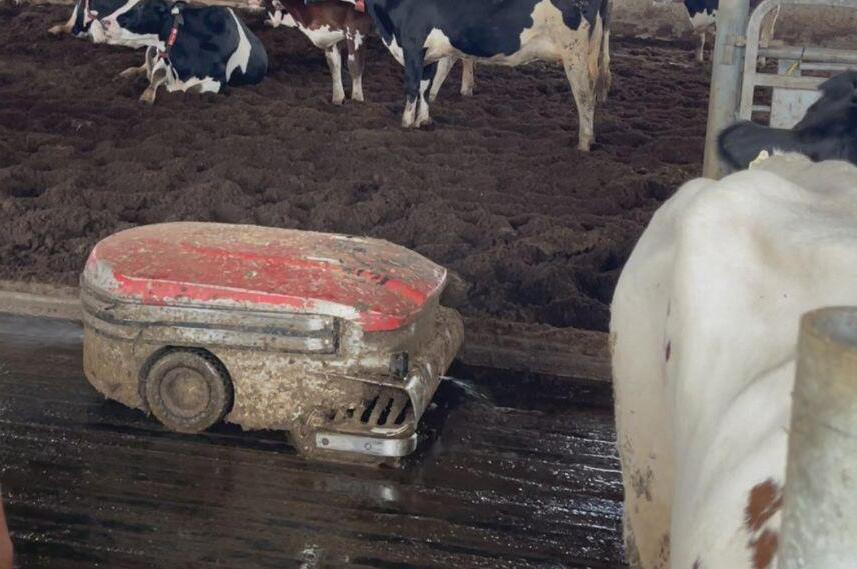
The labor shortage is forcing some dairy producers to find creative solutions to the problem. A growing number are turning to advanced technology such as robotic milking machines. While that kind of tech has been a boon, Novak says it’s not really addressed the labor shortage, but simply changed the type of worker dairies require.
CONTINUED ON PAGE 26
When the going gets tough, turn to the toughest pumps in the field. Since 1960, our no-clog Chopper Pumps have been proudly made in the USA by our family-owned and operated company. This proven original was built first and made to last. Choose the unmatched reliability of Vaughan. Ask about our free trial program and on-site demos.
• Barn Flush Pit
• Separator Feed • Lagoons
• Digester Mixing
• Scraped Manure • and More!
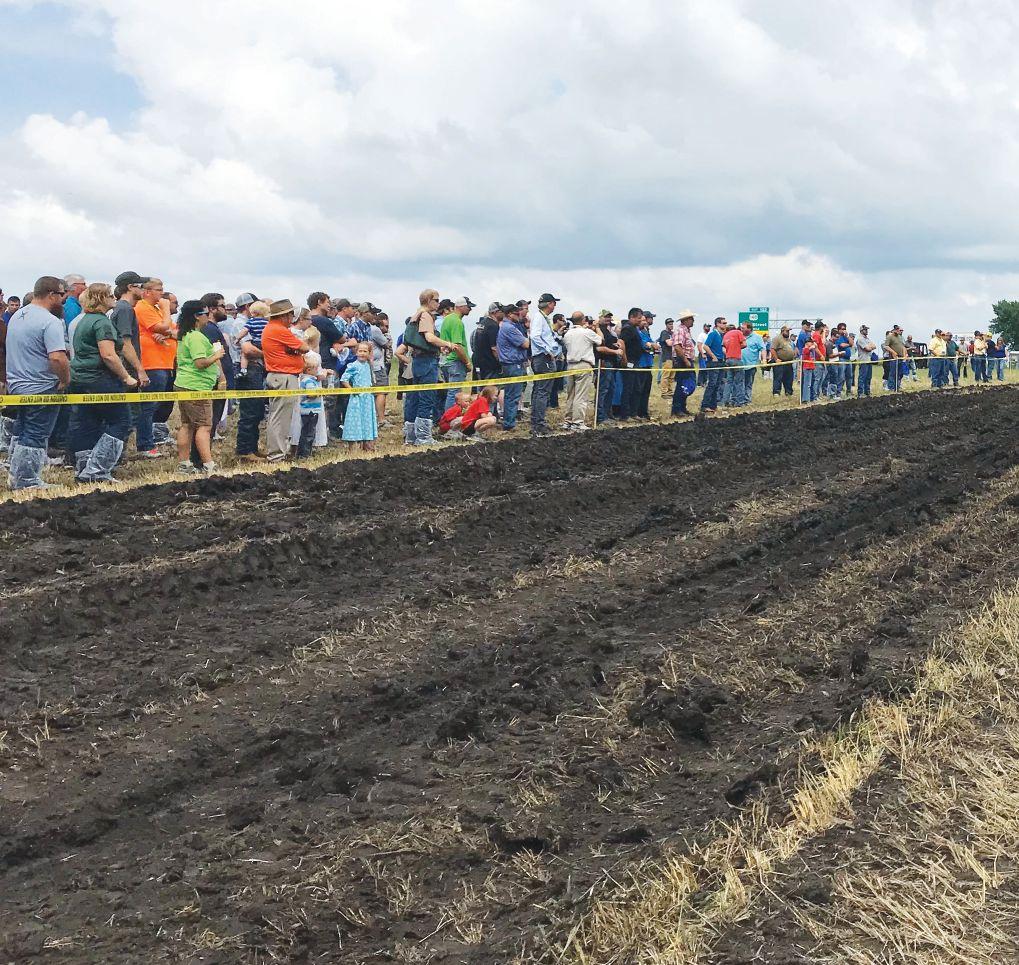
The North American Manure Expo is back and live in Chambersburg, Pennsylvania from July 13-14, 2022. Join us to advance your knowledge of manure nutrient utilization and discover the latest technology in manure handling, treatment and application.
TOUR DAY
July 13, 2022
Morning tours include:
A. Robotic dairy farm and brand-new poultry layer barn tour
A rare opportunity to view a never-before populated layer barn!
B. Stream tour
Registration & payment is required for the tours. Space is limited; reserve your spot today!
Tradeshow, agitation tour/demo and industry sessions in the afternoon.
EXPO & FIELD DEMO DAY
July 14, 2022
Connect with exhibitors, view new technology and equipment and network with peers.
Grounds open at 8:00am
Hear from industry experts on topics such as manure and soil health, manure and winter crops, broadcasting vs. injecting manure, treatment upgrades, variable rate manure application and drag hose corn side-dressing.
View solid and liquid demonstrations and a spillresponse demonstration.
View first-hand a robotic feeder and manure vacuum!
Uncovering even more benefits from biochar
The byproduct can potentially capture key nutrients from swine manure.
BY J.P. ANTONACCI
Reducing nutrient runoff is a pressing challenge for manure operators who want to keep nitrogen and phosphorus on their fields and out of nearby waterways. To address this problem, researchers at Iowa State University are using treated biochar to absorb nutrients from liquid manure and repackage them as slow-release fertilizer pellets.
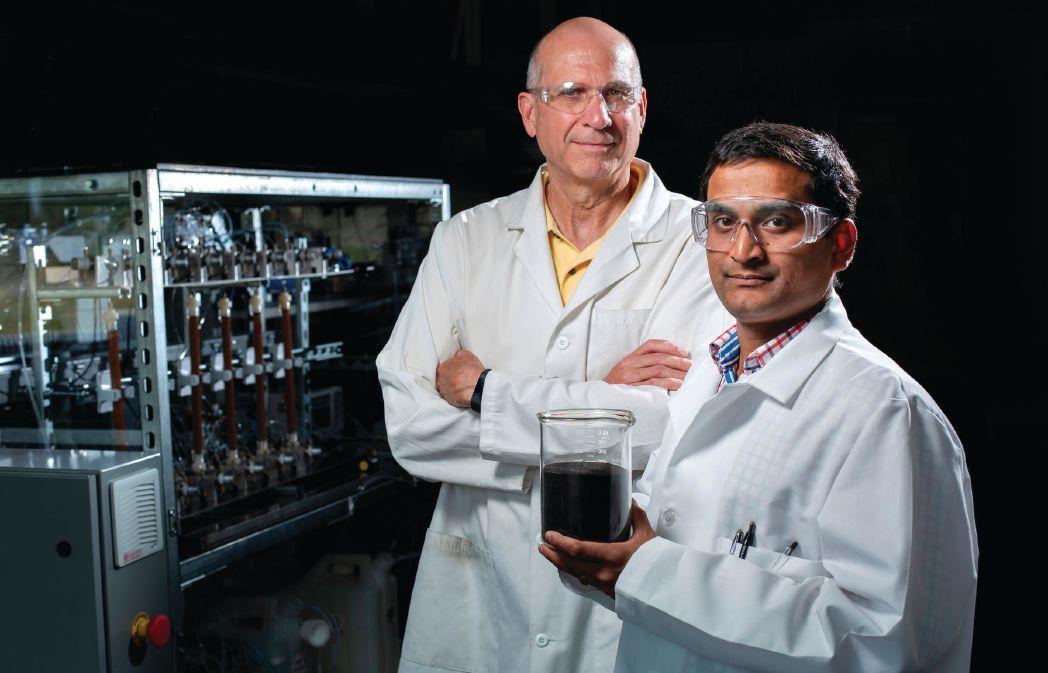
“Our concept starts from there – can we capture nitrogen and phosphorus and transfer these in a solid form so farmers can easily apply it?” says Santanu Bakshi, an environmental research scientist and biochar expert at the ISU Bioeconomy Institute.
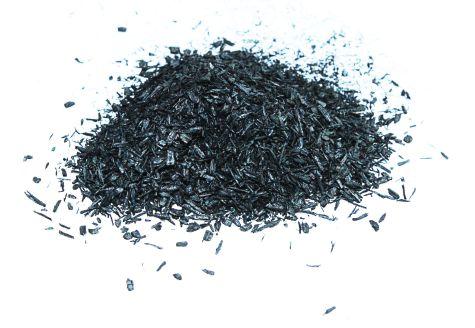
Researchers have long understood that the use of biochar – obtained from burning biomass in a process called pyrolysis – replenishes soil carbon. That has the added benefit of increasing crop yields while decreasing needed fertilizer volume, along with reducing greenhouse gas emissions by sequestering carbon dioxide in the ground.
The ISU team discovered that pretreating
ABOVE
biomass consisting of corn stover, wood chips and crop residue with very small amounts of iron sulfate – an inexpensive, nontoxic byproduct of steel production – made the resultant biochar able to trap phosphorus from swine manure.
“And not only trap it,” says Bakshi. “When we tried to release the phosphorus from the system, we noticed that this is a very slow process.”
The team had hit upon a potentially novel use for biochar as a slow-release crop fertilizer.
“We’ve been looking at biochar as a byproduct [of pyrolysis] for many years, but we didn’t get a lot of interest from the U.S. Department of Energy,” says Robert C. Brown, director of Iowa State’s Bioeconomy Institute and principal investigator of the biochar research project.
Pyrolysis is traditionally an oxygen-free process. Brown’s innovation was to add a tiny amount of air to encourage combustion of the biomass and generate heat in the reactor, which speeds up the
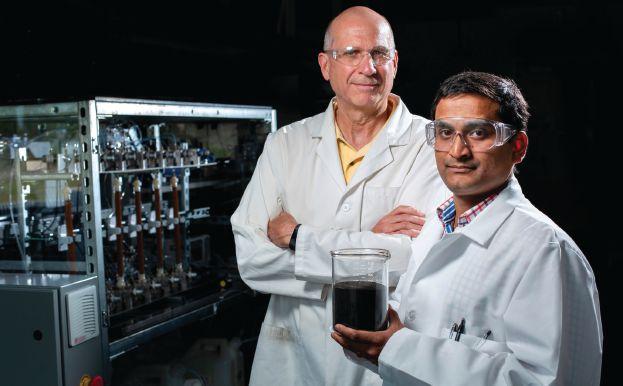
Iowa State University’s Robert C. Brown and Santanu Bakshi display a beaker of biochar, which they say could help protect farmlands from extreme weather events.
PHOTO
conversion of biomass to bio-oil and biochar while also producing sugars.
Brown says there was already governmental and corporate interest in bio-oil as a diesel substitute and a greener component of asphalt. Using iron-rich biochar to extract nutrients from raw manure adds even more value to the pyrolysis process, since where once biochar was almost an afterthought to the bio-oils, the carbon-rich powder now has added value in its own right.
The team is working to eliminate the “competition” posed by other nutrients in swine manure and isolate phosphorus in a biochar-based bioreactor system. Adding zeolite – a common, inexpensive, claylike mineral – to the manure in a separate process traps the nitrogen. Finally, the nutrient-rich biochar and zeolite would be processed into solid, slow-release fertilizer pellets.
THINKING GREEN
Iowa State’s research into biochar could have many benefits for farmers and the environment alike.
Better nutrient management improves water quality by reducing runoff and the need to ship and store large quantities of manure. That lowers gaseous emissions from manure pits and air pollution from transport vehicles.
pellets are easier for farmers to apply. They would be plowed into the topsoil, allowing for a slow, uniform release of the nutrients they contain. Better still for farmers, switching from liquid manure to pellets will save money and improve nutrient efficiency, as they can use less fertilizer without seeing any reduction in their crop yields.
“You are reducing the amount of nitrogen and phosphorus and you are getting the same yield, or even more,” says Bakshi, adding that over the long term, restoring carbon levels makes for healthier and more productive soil.
Getting buy-in across the industry might take time, but Bakshi says farmers are getting wise to the potential
produce “exceptionally fertile soil.”
Turning maple bark, pine chips and other organic residue into a carbon-rich soil additive has helped regenerate soil and boost productivity in warmer climates, and Lévesque’s research is focused on applying that same technique in higher latitudes. She used biochar while growing sweet peppers and greenhouse tomatoes in soils typical of northern farms. The results were impressive, with biochar increasing the size and volume of the vegetables and adding beneficial bacteria to the soil, while also cutting fertilizer use by up to half the recommended application and reducing nutrient runoff.
ABOVE
It can appear counter-intuitive, says Brown, that a process involving heat is a net gain for the environment, but the charcoal produced through pyrolysis sequesters the carbon dioxide in the biomass and keeps it from entering the atmosphere had the organic material been open-air burned or left to decompose.
Biomass contains about 30 percent carbon, while in biochar, carbon is concentrated to between 55 and 70 percent, Bakshi says. “So you are adding carbon to the soil, which is another way to say that you are removing carbon dioxide from the atmosphere,” he says.
Farmers are not financially compensated for having greener operations, and Brown notes there are currently no regulations in the United States preventing farmers from “draining nitrate and phosphate into the rivers and lakes.”
“But [farmers] have an economic incentive to keep those nutrients on the field as a productive unit,” he said. “If they can be retained as a slow-release fertilizer, that’s very attractive to them.”
Along with being more environmentally friendly than raw manure, the fertilizer
Biochar has been used in rainforests for thousands of years, but its use in modern agriculture is ever-expanding.
benefits of biochar.
“Farmers are showing interest. They have started thinking (about how) to reduce tons and tons of inorganic fertilizer,” he says. “We’re improving water quality, we’re reducing greenhouse gases, we are reducing transportation problems of voluminous manure, and we are improving the economics (of manure).”
BIOCHAR, EH?
Biochar is also getting attention north of the border. In a March 2022 report for Agriculture and Agri-Food Canada, soil scientist Vicky Lévesque says adding carbon compounds to soil “can have a positive effect on Canadian soil health and productivity and help to reduce greenhouse gas emissions.”
Biochar, Lévesque pointed out, is not a new concept. People living in the Amazonian rainforest thousands of years ago added carbon – in the form of charcoal from cooking fires mixed with manure, animal bones and broken pottery – to
“All of that is good news for farmers and the environment,” the report read. “Significantly, the use of biochar could also provide an opportunity to help agriculture lands better recover from extreme weather events linked to climate change, and support food security.”
WORKING OUT THE DETAILS
Brown hopes having a practical use for biochar in agriculture will make farmers more enthusiastic about pyrolysis as a whole, thus expanding the use of the green technology. “We now can improve the economic prospects of pyrolysis by using it as a way to actually remove carbon from the atmosphere and sequester it for potentially thousands of years,” he says.
Logistical questions remain. While Brown says it would not be practical for each farm to house its own pyrolysis system since there is no economy of scale, neither does he think it makes much sense to ship biomass over long distances to centralized biorefineries. He advocates for a solution where farmers or subcontractors would only have to move biomass “a very short distance” to regional hubs where “small, modular reactors” have been assembled onsite.
“We think the answer is not an onfarm system, not one gigantic centralized system, but a system that’s just right,” says Brown. “Instead of trying to pull biomass from hundreds of miles, let’s look at something that’s more on the scale of a county. That notion is it doesn’t sit on a single farm. It’s actually more like a cooperative enterprise, like you see in some of the grain elevators.”
Farmers could be paid in cash for the biomass they provide or receive biochar for their later use on the farm, he mused.
Down the road, Bakshi envisions an
automated bioreactor system that would move manure through biochar and zeolite chambers where nutrients are separated, captured and processed. “I’m very confident that we will be successful,” he says. “If it works on a small scale, we can obviously increase the scale.”
THE BOTTOM LINE
Another challenge researchers must confront is the cost of biochar, which at present is highly prized by home gardeners. “You can sell it on eBay for $1,000 a ton, and that’s because consumers get a little bucket of it to put in all their pots or their plants in the house,” says Brown. But at that price, he added, “it’s not going to work scaling it to conventional agriculture.”
Brown suspects farmers could be swayed by biochar’s ability to build soil carbon and reduce nutrient runoff if it sold in the $100-per-ton range. “It may be significantly less than that,” he says. “We still need to have a business model that is not based solely on selling biochar.”
In tandem with the university’s work on biochar, Iowa State has ongoing research focused on finding markets for the other main pyrolysis byproducts –bio-oils and sugars – to make the entire process more economically feasible.
Lévesque also identified cost as a potential limitation for biochar’s wider agricultural use. “The current high cost for farmers to purchase biochar might make it more suited for high-cost value crops, such as orchards and vineyards,” she says.
However, Agriculture and Agri-Food Canada predicts Canada is poised to expand well beyond the 50 or so biochar producers currently active in the country, and it is hoped the added volume could lower costs. “It might take some time before we see the profound effect that biochar could have for Canadian farmers and the environment, but the future is burning bright,” the AAFC report said.
SCALING UP
Armed with a $1 million USDA grant, the next step for Brown’s team is to dramatically scale up biochar production and take the research out of the laboratory and into a small-scale industrial biochar system during a three-year pyrolysis “demonstration project.”
autothermal pyrolyzer near Des Moines that can process 50 tons of biomass per day, producing roughly 10 tons of biochar.
For comparison, Iowa State’s pyrolysis pilot plant can process about half a ton of biomass daily.
“[Stine] has the resources to do this kind of experimental work at 50-tonsper-day scale,” says Brown. “And he’s not interested in the bio-oil. He’s interested in the biochar.”
The more complex field environment
researchers demonstrate how a commercialized pyrolysis system can work at the volume needed by industry, Brown is confident buy-in will come from farmers who recognize the potential value of biochar to their operations.
“That also is key, to show we have the capacity to produce the biochar that would be used,” says Brown. “The pre-treatment is straightforward, the post-treatments are straightforward. It’s a matter of being able to say somebody can afford to build one of
The project has an influential backer. Iowa businessman Harry Stine, founder and owner of Stine Seed Co., is financing the construction of an industrial
SOLID RESULTS from liquid manure
Liquid manure can pull in big returns – if volatility is reduced and best practices are observed.
BY JACK KAZMIERSKI
If you’re in the business of selling or applying liquid manure, it’s likely been a busy few months – and it could get even busier.
One of the many cascading effects of the war in Ukraine is the upward pressure international sanctions have had on fertilizer prices, which were already breaking records prior to Russia’s invasion. Many farmers have already made the switch to manure and other converts might soon be on the way – which makes it more important than ever for those selling and handling manure to follow best practices in order to keep that value high and help growers maximize yields while keeping costs low.
Storage, agitation, weather and timing all play key roles in getting the most from your manure this year.
APPLICATORS: MANAGE YOUR TIME
Robb Meinen, senior extension associate with Penn State’s department of animal science, says the best time to apply liquid manure is when fields are dry, and when you can get on the field and operate without impacting the soil. “If you have adverse weather,” he says, “you have [an] increased risk of loss of nutrients because the weather or the soil [already wet or snow-covered or saturated], increases the risk of runoff.”
Wet soil, he adds, is more likely to become compacted if driven on, which further exacerbates the risk of runoff. That’s why he recommends keeping an eye on the weather forecast in order to plan ahead for a window of opportunity when both weather and soil conditions will be optimum for liquid manure application.
their nitrogen source,” he explains. “That ammonium can very quickly convert to nitrate, which can be lost. So if we apply that liquid manure in the fall, then there’s a very good chance that most of that ammonium-N is lost before the next growing season. Whereas if we apply it in the spring, then the chance of loss is much lower.”
MANURE INJECTION
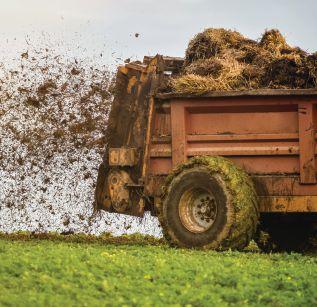
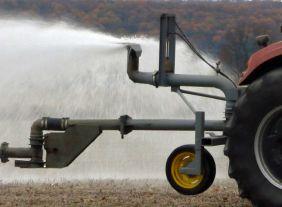
Even with ideal weather and soil conditions, liquid manure is best applied with injection. Granted, manure injection can be more time-consuming (unless you have a drag line), and isn’t always practical or cost-effective, but it does help with the loss of nutrients.
ABOVE
Even in ideal conditions, liquid manure is best applied with injection.
“The ideal weather would be a day when the soil conditions allow us to get on the field without compaction,” says Meinen, “and the predicted weather does not show us that we have an increased risk of loss.”
With summer ever-nearing and the remnants of snowmelt now gone, that might mean getting out on the field cast. According to John Lauzon, associate professor of soil management and soil fertility, University of Guelph, says the best time to apply liquid manure is in the spring.
“Liquid manures are primarily ammonium-N in terms of
“Our goal, when we apply manure, should be to think of it as nutrient placement,” explains Meinen. “If we surface-apply manure, we expect there to be volatilization of ammonia immediately. That immediate volatilization is a loss of nitrogen, which goes into the air. Ways to hedge against that include manure injection, which places the manure beneath the soil surface, avoids that exposure to air, and conserves nitrogen so that it does not volatilize.”
Another way to minimize volatilization, Meinen adds, is to apply the manure when it’s cold. “If we’re below 50F (10C), we expect there to be less volatilization of ammonia because the molecules are moving slowly,” he explains.
BEST PRACTICES: AGITATION
The longer liquid manure sits in storage, the more it naturally stratifies, which is why agitation is essential in order to create a more homogenous mixture with a more uniform distribution of all the nutrients. The question then becomes: how much does one need to agitate?
“Every manure storage system is going to be a little bit different,” explains Meinen. “So it takes some skill, and this is where science is overtaken a little bit by art, because the person that has the equipment knows what their equipment is capable of doing. And then they also have to use their experience to do the job correctly.”
Meinen argues that over-agitation isn’t a concern, except for the fact that doing so wastes time and energy.
You would over-agitate if you suspended all the solids and then you used more power and time and fuel to agitate when you didn’t need to,” he says.
BEST PRACTICES: STORAGE
If you’re hoping to make good money off of your cows’ manure, storage will be key to getting value. But the ideal storage system for liquid manure will be different, depending on where you are in North America. “We know that in any given region we will see manure storage systems that are typical for that region,” explains Meinen. “And there’s a reason why they are typical for their area: because they work well with the weather, and the cropping systems that are in that area.”
When installing a new liquid manure storage system, Meinen advises a design that will prevent exposing workers or animals to deadly gasses.
“There are a lot of systems that store manure under the floor of a barn, right underneath the animals, and they work perfectly well because we can properly ventilate the system,” he adds. “So ventilation is key.”
LIQUID MANURE VALUATION
Meinen says well-balanced nitrogen and phosphorus ratios are key to providing a valuable product. “In a typical scenario, if we apply manure at a nitrogen-based rate, perfectly matching the nitrogen we put into the field with what the crop needs, we will always over-apply phosphorus. But if we can conserve nitrogen during the application – by injecting the manure or applying it during colder days – we can make that ratio work in our favor.”
A key strategy for limiting nitrogen loss through volatilization is to limit the amount of time it stays in storage before it’s applied to the field.
“Another way to get more value is to apply the manure close to the time when the crop needs it,” adds Meinen, who points out that while you will lose some nitrogen in storage, that loss is sped up once the manure is applied to the field. “So if you apply the manure three months ahead of the crop uptake, chances are you’re going to lose more nitrogen than if you had held on to that manure for three months, and then applied it [closer to when it was needed].”
DO THE MATH
Lauzon stresses the importance of limiting nutrient loss through best practices on the part of both the applicator and the grower. Ultimately as an applicator, Lauzon says, getting the job right the first time is critical, because the ideal is to reduce the need for the grower to eventually need to purchase more fertilizer and make up for the deficit.
“Growers will want to minimize loss in order to maximize the amount of nutrients that are left for the plant to use,”
he explains. “If the value of your manure goes up, it means that when you have loss, the cost of that loss goes up too. So you’ll want to do some math: If I’ve lost X number of dollars per acre, in terms of manure value, how much would it have cost to change my manure management, to prevent that loss?
“And if the cost of changing that management is less than the value of the dollars lost in nutrients, then it becomes easy to justify for the grower on an economic basis.” •
WASTE WATER TREATMENT
TURNING
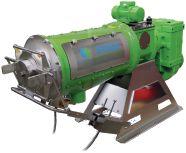
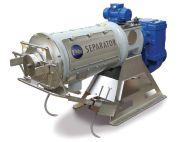
Fan produces bedding material with a dry matter content of up to 38% in solids. FAN
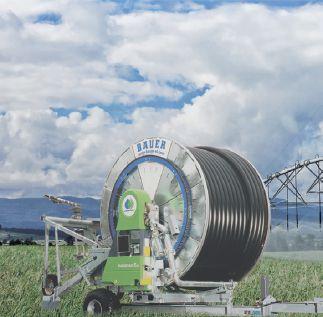
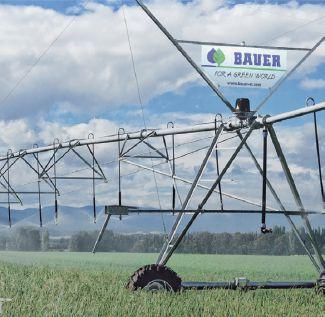
Call the FAN/BAUER boys: East: Jim Dewitt, 1-630-750-3482, j.dewitt@bauer-at.com
RAINSTAR TRAVELERS
Novak says the biggest impediment the dairy industry faces when it comes to addressing its labor needs is the fact that it doesn’t have access to the same talent pool that other farms do. Because dairy farms in the U.S. are considered year-round operations, they are not permitted to bring in temporary foreign workers.
“What would really help is if we had access to foreign workers,” says Novak. “We have continued to try to work with Congress to try and get something passed that would give animal agriculture, and especially year-round agriculture, access to that workforce and it dies every time. It’s been very frustrating.”
APPLICATORS AND HANDLERS
Replacing them has been a real challenge the last two years.”
Adding to the problem is the fact that workers who remain now face additional pressure to help fill that labor void, says Gloor.
“Some walk away. People just get tired of the long, long hours. They’re not interested in spending every waking moment at work,” he adds.
“Some walk away. They’re not interested in spending every waking moment at work.”
Steve Gloor is a past president of the Ontario Professional AgriContractors Association (OPACA), which represents about 60 farming contractors across the province, and has been involved in the manure application business for more than 20 years.
While manure applicators have been dealing with a labor shortage for some time, Gloor says the situation has become even more problematic since the start of the pandemic.
“It was amplified when COVID hit because some of the seasonal, older employees [who] you had to run tractors or drive trucks…a lot of them said, ‘With everything going on I’m just going to stay home. The family says I should stay safe.’
Although the number of manure application businesses in the province has remained relatively static, Gloor acknowledges that the labor shortage has seen a growing number of business owners say enough is enough.
“In our membership, we’ve had members who have gotten completely out of the manure application business,” he says. “The reason they got out was they had the equipment, they just couldn’t keep employees around and that’s what was holding them back. There’s enough work out there…they just couldn’t keep enough help around to get the work done.”
Gloor doesn’t think there’s a magic fix to the labor shortage facing his industry. Still, one thing he’d like to see is more effort made to educate people from non-farm backgrounds about the career opportunities available in the agricultural sector.
“I think agriculture is one of the careers that gets overlooked a lot because people who work in agriculture generally come from agriculture: you were raised on a farm and stayed on the farm. Promoting agriculture and the fact there are a lot of jobs out here is key.” •
8” and 10” discharge sizes
Hydraulically-driven
Operated in lagoon or pit
Fits in tight spaces
Semi-open style impeller
Cutter plate rips up straw and other stringy material
Pump resists plugging
MANURE MINUTE
CHRYSEID MODDERMAN
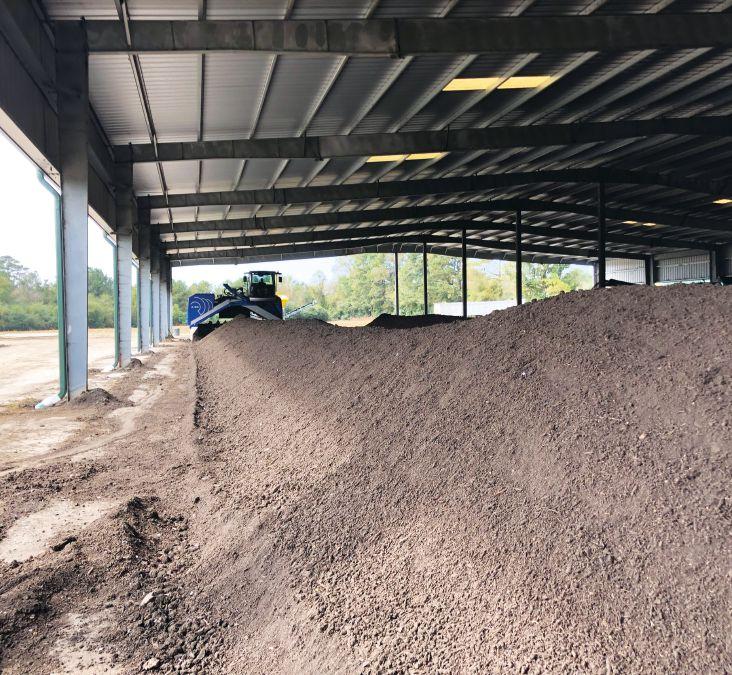
Troubleshooting your compost pile
Proper composting is almost an art, and it takes the right combination of many components to work efficiently. In general, you want a particle size of one-eighth to two inches; internal temperature of 110 to 150F; moisture content of 50 to 60 percent; oxygen content of 10 to 15 percent; and carbon to nitrogen ratio (C:N) 25:1 to 30:1. When these components are unbalanced, it can hinder the whole composting process. However, when a compost pile doesn’t break down correctly, it’s not always immediately apparent which factor is lacking or in overabundance. Below are some common compost problems, their symptoms, and how to remedy them.
ROTTEN EGG SMELL
If your compost is giving off a sulfurous or rotten egg smell, it might be an indicator that the pile is oxygen-deficient. Composting is an aerobic process, meaning it requires adequate oxygen for decomposition. The lack of oxygen might be from excessive moisture or compaction due to small particle size.
atmosphere at high rates as ammonia (hence the smell). To increase the C:N, carbon sources such as straw, corn stalks, or wood chips can be added to the pile.
PILE DOESN’T HEAT UP
One of the most common problems in compost is that the pile does not reach high enough temperatures for good decomposition. There are a variety of reasons this might be happening.
The pile might be too small. A very small pile will not have the mass to maintain high internal heat. This one is a simple fix: just make the pile bigger. The absolute minimum size for manure composting is three feet by three feet by three feet. Another common reason a pile isn’t heating properly is that it is too dry. If you do the squeeze test (as described above) and the compost does not hold its form and crumbles apart, it is too dry. To fix this, simply add water with a hose or bucket while turning and mixing.
Lack of nitrogen might also be the problem. To remedy this, add nitrogen sources such as grass clippings, soybean straw, or hay. Lack of oxygen can also cause heating problems. The same rectifying methods of increasing oxygen through turning and adding larger particles apply here, as they do above for “rotten egg smell.”
If the pile resemles soil... the compost is probably done.
To test for excessive moisture, pick up a handful of compost and squeeze it. If water drips from your hand, the compost is too wet. If wetness is the problem, turn and mix the pile to aid drying and consider covering it with a tarp or roof. If particle size appears to be the problem, turn and mix the pile. This “fluffing” of the pile will help create air pockets and reduce compaction. If the problem persists, add bulky particles, such as wood chips, that are about two inches in diameter.
AMMONIA SMELL
A quick whiff of strong ammonia smell is quite distinct. And if it’s coming from your compost pile, it’s likely due to excess nitrogen. Keeping carbon and nitrogen balanced is a necessary tightrope to walk; and if the compost C:N drops below 20:1, the pile may become rancid and sludge-like. Nitrogen is also lost to the
The pile might also resist heating if the weather is cold. During the winter or a cold snap, turn and mix the pile less frequently. Also make sure the pile is large enough to retain heat; at least five feet by five feet by five feet. Or, finally, perhaps the composting process is complete. If the pile resembles soil, has an earthy (not manure) smell, and is crumbly, the compost is probably done and does not need to heat up any more.
Overall, knowing what might be causing a heating issue or foul smell can put you on the right track to identifying and fixing the root problem. Of course, each problem may not exist alone, and the compost can have multiple problems simultaneously. In those cases, you’ve got to put on your detective hat and analyze the combination of symptoms to find the problems and their solutions. •
We have a new family member!
This year, GEA ProManure welcomed a NEW addition to the 10-inch lagoon pump family, the Lagoon Agi-Pompe
The 10-inch lagoon Agi-Pompe features a field-proven heavy-duty propeller capable of displacing tens of thousands of gallons of manure every minute. No matter the quantity or consistency of manure you have to deal with, GEA ProManure has a five-star pump made for you!