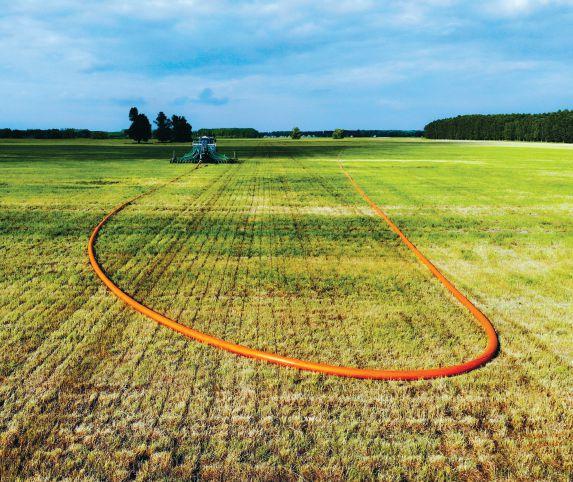
A soils-first approach to manure management On Alexandre Family Farm, every decision comes back to the soil.
BY JULIENNE ISAACS
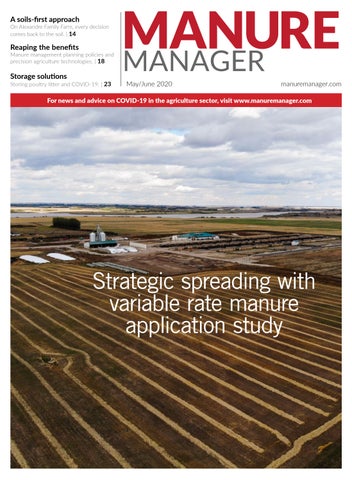
Strategic spreading
Research into variable rate manure application looks to understand effects on environmental systems.
Reaping the benefits
Manure
ROBERT MEINEN
Storage solutions
Tips for storing poultry litter amidst coronavirus restrictions. BY
CHRIS MCCULLOUGH
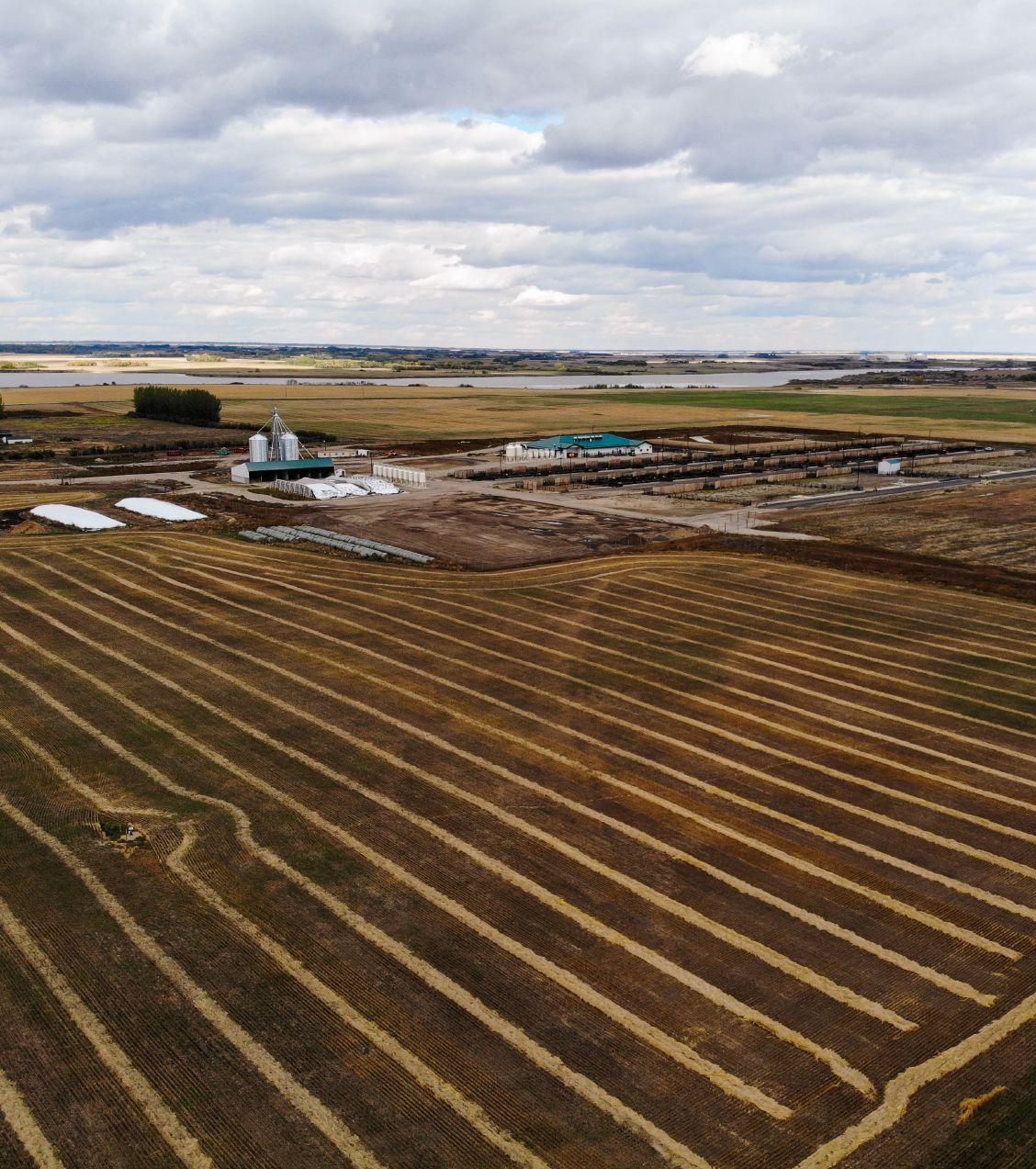
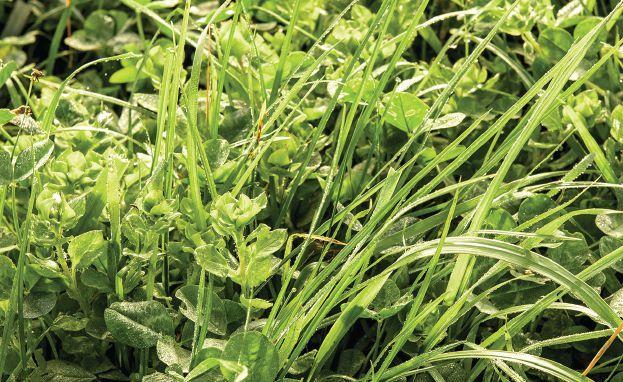
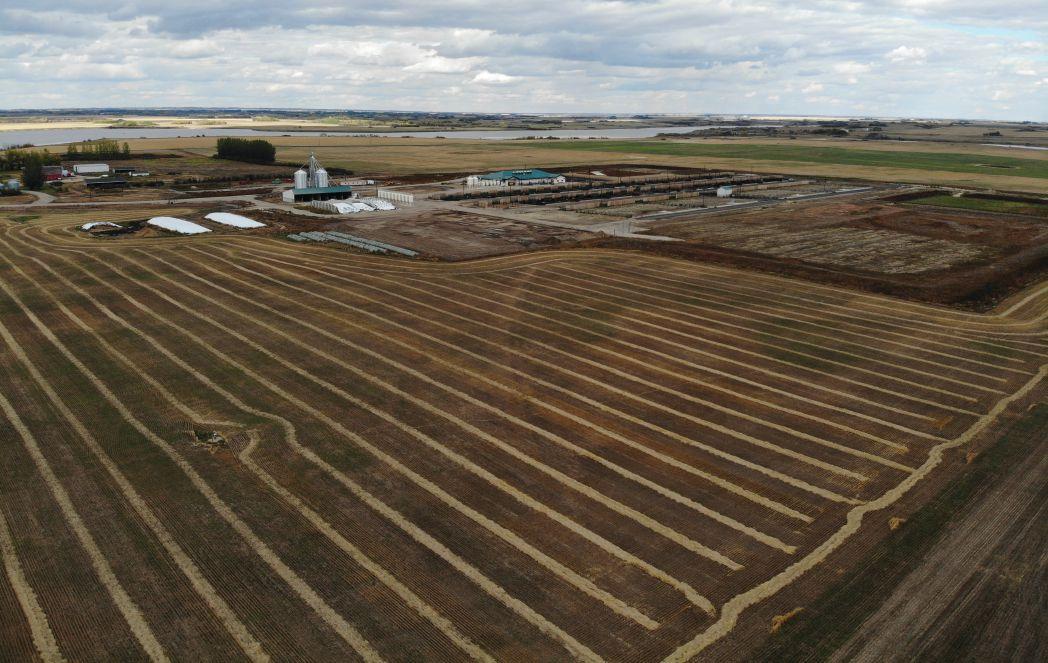
Barley field at the LFCE’s Beef Cattle Research and Teaching Unit. Photo by Darrell Rinas.
Finding the silver lining in a crisis
If you had told me in late February that the majority of North Americans would be spending the spring in isolation, occasionally leaving the house to search the empty store shelves for toilet paper, I likely would have looked at you as if you had two heads.
Although the last few months’ events have seemed surreal, they have been a very difficult reality – much more so than the way I jokingly described them above. Unfortunately for many, a search for toilet paper has been a drop in the bucket of problems caused by the COVID-19 crisis. Beyond the obvious health-related concerns and loss of life, the impacts of this pandemic on agriculture have been felt both north and south of the border. The livestock industry has suffered the devastating effects of the closure of more than a dozen meat-processing facilities across North America due to the pandemic, leaving beef, pork and poultry producers looking for other slaughterhouse options, in addition
to improve, and with cautious optimism, we are looking forward.
Looking for silver linings, I’ve noticed two. First, there seems to be a renewed appreciation for producers and agriculture amongst the general public. The “panic buying” that saw many grocery store shelves empty of meat and eggs this spring brought to light just how valuable producers are. When I entered my local grocery store this spring after the pandemic was declared, I felt grateful that I could still order beef and pork from my butcher (who also happens to be my brother), and fresh eggs from a friend’s farm nearby, to feed my family. And, as we enter the summer months, as a producer or a custom manure applicator, you’re well set up to physically distance yourself from others so there won’t be too many added barriers to safe working as the season progresses.
We’re slowly approaching a new normal, but there is still lots of uncertainty and many unanswered questions. As an industry, the rest
The pandemic’s impacts are felt north and south of the border.
to the steady decline in commodity pricing. I could go on, but so many questions about how to move forward are still unanswered, and no one knows what the next weeks or months could look like. To quote almost everyone who has mentioned this pandemic in conversation: these truly are unprecedented times.
As I write this in early May, the sun is starting to shine – literally and figuratively. The statistics are starting
of the year may look different than we had hoped or planned for, but we know that tough times don’t last. The agriculture community is nothing if not resilient.
We wish you clear skies, ideal conditions and better days ahead.
Tel: (416) 442-5600 ext 3555 Fax: (416) 510-6875 (main) (416) 442-2191 Mail: 111 Gordon Baker Rd., Suite 400, Toronto, ON M2H 3R1
Occasionally, Manure Manager will mail information on behalf of industry-related groups whose products and services we believe may be of interest to you. If you prefer not to receive this information, please contact our circulation department in any of the four ways listed above. Annex Privacy Officer privacy@annexbusinessmedia.com Tel: 800-668-2374
All advertising is subject to the publisher’s approval. Such approval does not imply any endorsement of the products or services advertisted. Publisher reserves the right to refuse advertising that does not meet the standards of the publication.
women who are making a difference to Canada’s agriculture industry have been chosen and will be highlighted through podcast interviews on AgAnnex Talks starting June 15. Stay updated by visiting AgWomen.ca or subscribing to the podcast at AgAnnex.com
North American Manure Expo postponed until 2021
Due to the continued uncertainty surrounding COVID-19 and the precautions in place to manage this pandemic, the organizing committee for the 2020 North American Manure Expo has made the decision to cancel the 2020 event, originally scheduled to be held on Aug. 25 and 26, 2020 in Listowel, ON, Canada.
“While we are disappointed about having to cancel the 2020 North American Manure Expo due to the ramifications of COVID-19, the Board and organizing committee have made this decision with best interest of the industry, sponsors and attendees in mind,” says Mary
Keena, Livestock Environmental Management Specialist for North Dakota State University Extension and president of the North American Manure Expo Board.
The North American Manure Expo will return to Listowel, ON, on August 25 and 26, 2021. The Expo will be hosted in Chambersburg, PA, on July 13 and 14, 2022.
“We are excited to reconnect with everyone in 2021 in Listowel,” Keena says.
Stay tuned to ManureExpo.ca for more information regarding the 2021 North American Manure Expo.
Waste management company Brightmark Energy drops “Energy” from name
Brightmark Energy, a San Francisco-based energy and waste management company, has dropped the word “Energy” from its name and will be known simply as “Brightmark.”
The new name reflects the company’s
mission to build a world without waste, as well as the outputs Brightmark produces other than energy, including clean water, wax, and the materials used to produce new plastics. Advanced plastics recycling, or
plastics renewal, and renewable natural gas (RNG) via anaerobic digestion will remain at the core of Brightmark’s waste solutions.
Brightmark has partnerships with 20 dairies in six states for manure-to-RNG
BY THE NUMBERS - IMPACTS OF COVID-19
SINCE LATE MARCH:
lean hog futures plunged ILLINOIS: a pig that would usually sell for $140 now sells for $100 or less. LIVE CATTLE PRICES HAVE DROPPED 15% North American meat demand plummeted 30% due to restaurant and school closures.
SMITHFIELD FOODS:
Responsible for approximately 5% of U.S. pork production ROUGHLY 18 million servings per day.
More than 800 employees infected with COVID-19 at one facility.
CARGILL CANADA:
projects using anaerobic digestion. Once all of these projects are operational, they will generate enough renewable natural gas each year to drive 5,100 18-wheeler trucks from San Francisco to New York City.
JBS USA: THE CLOSED PLANT IN GREELEY, CO, WAS RESPONSIBLE FOR 5% OF THE DAILY U.S. BEEF SLAUGHTER.
Responsible for roughly 40% of the beef processing capacity in Canada; more than 360 employees at one facility tested positive for COVID-19, with at least one deceased.
*At the time of printing.
COVID-19 outbreaks close meat processing facilities
After a series of COVID-19 outbreaks at meat processing plants, more than a dozen facilities across North America have closed temporarily, including plants run by Smithfield Foods, Olymel, Cargill, JBS USA, Tyson Foods and Maple Leaf Foods.
The facilities were designated an essential service but were unable to
provide adequate protective equipment and enact sufficiently robust social distancing measures due to the nature of the work. At the plants that remain open, absenteeism is an increasing issue, as workers seek to remain safe and reduce their risk of infection.
This has caused concern on both the producer and
NPPC announces dates for 2021 World Pork Expo
The National Pork Producers Council (NPPC) board of directors has decided to cancel the 2020 World Pork Expo in June due to COVID-19 human health concerns. World Pork Expo 2021 is scheduled for June 9-11 at the Iowa State Fairgrounds.
“While deeply disappointed to cancel this year’s Expo, NPPC’s board of directors unanimously agreed it was prudent to make this decision now,”
NPPC President Howard “A.V.” Roth, a pork producer from Wauzeka, WI.
“By eliminating COVID-19-related uncertainty surrounding the event, we allow producers and others across the industry to focus on the essential role we play in the nation’s food supply system at this critical time.”
World Pork Expo is the world’s largest porkspecific trade show, where more than 20,000 industry professionals gather for three days to showcase innovations, introduce new products and participate in training and educational programs.
consumer sides of the food supply chain. While the loss of sales to restaurants has resulted in a 30 per cent drop in overall meat demand, consumer demand for meat products is higher, but for different cuts of meat. With the reduced capacity for processing at the plants that remain open, the ability to change to meet consumer
needs is slower.
Producers of beef, pork and poultry are finding it more difficult to locate slaughter facilities, forcing them to house the animals for longer or ship them further for processing. This results in increased costs, which adds to the financial pinch caused by the surplus of livestock driving prices down.
NEW RESEARCH ON CATTLE N2O EMISSIONS
Research conducted in Ireland has found that emissions from livestock manure patches are lower than previously thought.
Teagasc, the Republic of Ireland agency responsible for research and development in the agri-food sector, recently ran a study focused on measuring nitrous oxide (N2O) from animal urine and dung patches during spring, summer and autumn on three types of pasture soils: well-drained; moderately-drained; and poorly drained.
Conducted by Teagasc researcher Dominika Krol, the project established that the average emission factors of N2O were “substantially lower” than the default emission factors of the Intergovernmental Panel on Climate Change (IPCC) – which estimated the “excreta-derived N2O” figure at two percent.
This, Krol says, means that two percent of nitrogen in the dung and urine patches was believed to be lost as N2O – a greenhouse gas
(GHG). This latest project, however, has found those emission factors to be at a lower rate – 0.31 percent for cattle dung and 1.18 percent for cattle urine.
Krol said that the losses to the atmosphere were driven by factors including rainfall, temperature and soil moisture. The highest emissions were emitted in autumn, from the “imperfectly-drained soil.”
Krol also noted that the original GHG inventory showed that up to 41 percent of N2O produced from Irish agriculture comes from urine and dung deposited by grazing animals. However, based on the new research, this fraction is reduced to approximately 23 percent.
Krol said that, going forward, changes in animal diet can be further investigated in a bid to reduce nitrogen in urine or move it towards dung. Grazing times can also be adjusted to extend grazing on well-drained soils but restrict grazing on poorlydrained soils when wet, she added.
Clover Hill Dairy in Wisconsin the site of a newly completed RNG project
A new renewable natural gas (RNG) project at Clover Hill Dairy in Campbellsport, WI, is now operational. The project is the first of four to be completed in a partnership between Nacelle Industries and U.S. Gain.
Nacelle, a developer of gas clean-up equipment designed for the RNG sector, has been contracted to develop and maintain the gas upgrading projects for U.S. Gain, an RNG developer and provider for transportation and thermal energy markets.
U.S. Gain has partnered with multiple farming operations in the Midwest U.S. to meet the growing demand for RNG. “Many of the large farms already have digesters and we work with them to offtake and distribute the RNG produced,” said Bryan Nudelbacher, director of RNG Business Development for U.S. Gain. “But the Clover Hill project goes one step beyond that. Now, we’re also actively leading the development of gas processing facilities and coordinating transportation of pipeline-grade gas to injection sites, drawing on skillsets from industry experts as appropriate.”
The Bonlender family of Clover Hill Dairy have had a methane digester since 2007 and for the past 13 years, it has produced higher-quality manure, electricity and a renewable bedding source for their animals. The upgraded anaerobic digester brings with it several improvements for the farm.
“By replacing our generators with the RNG system, our farm will see many added environmental benefits, such as less noise pollution, cleaner air and less odor,” says Joe Bonlender, the fourth-generation owner of Clover Hill Dairy. “Our business will also see an added income stream. This is a great opportunity for our farm and our greater community.”
BEST STORAGE FOR MAXIMUM NUTRIENT VALUE
CONSISTENT NUTRIENT VALUE - AGITATION MAKES THE DIFFERENCE
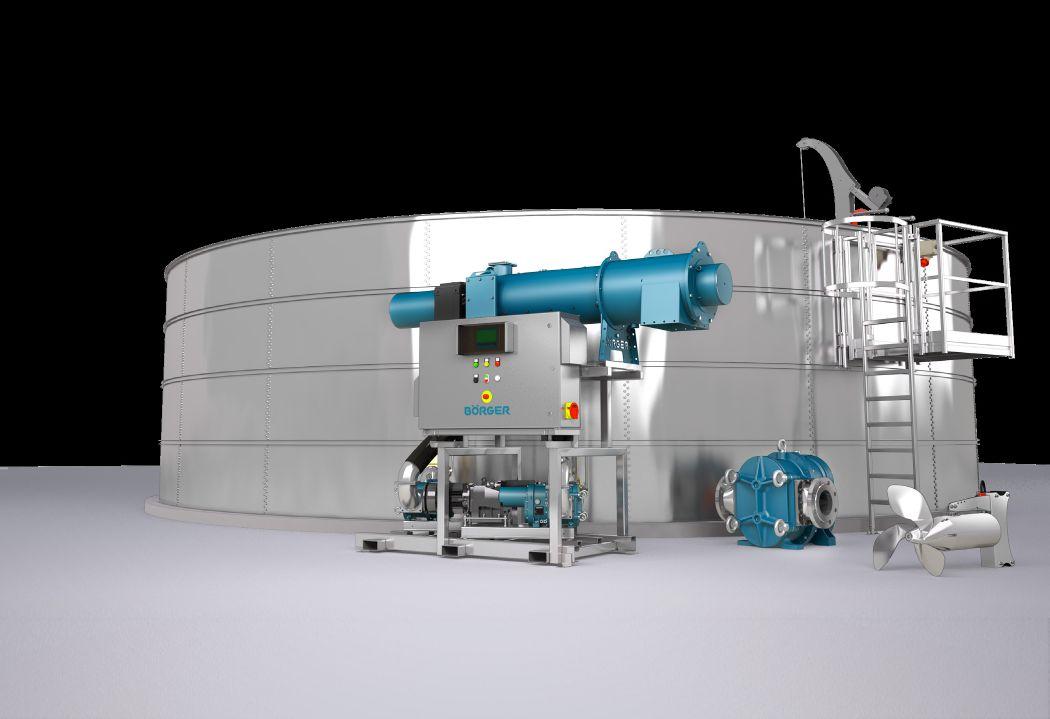
Center agitation system evenly blends nutrients
Better utilization of “waste” translates into less purchased fertilizer
ENVIRONMENTALLY SOUND
Designed and constructed using bolted glass-fused-to-steel panels for secure storage and high corrosion resistance
Aboveground - minimizes the danger of run-o , leaching and groundwater contamination
Environment-friendly odor control - releases odors above ground level into higher air currents
Xebec Receives $27 Million in Orders for U.S Dairy Projects
Xebec Adsorption Inc., a global provider of clean energy solutions, has announced that $27 million in orders were received from U.S dairy farmers for a total of six turnkey biogas upgrading plants and small-scale containerized Biostream systems to produce renewable natural gas (RNG).
Xebec’s economical biogas upgrading solutions continue to gain traction in the U.S dairy market as farmers look towards solutions that are reliable and have the lowest lifecycle costs. This is assisted by Xebec’s ability to provide local service and support through its service centers, while also providing systems that consume significantly less energy in converting biogas to RNG, allowing for better project profitability.
Xebec expects to deliver the projects throughout 2020 and early 2021.
Dairypower Equipment expands into North America
Dairypower Equipment, an Irish designer and manufacturer of manure aeration and handling equipment, has opened a new sales and warehousing location in Ontario to serve the North American market. The company, headquartered in Cork, Ireland, has been serving the Irish, UK, European, Asian and Australian markets since 1973 with manure handling equipment.
Dairypower Equipment will bring several products to North America, including the Smart Manure Aeration System, Pro-Clean Ratchet Scraper System, and Eco-Clean Rope/Cable Scraper System. The Smart Manure Aeration System is designed to keep manure in a liquid, pumpable state year-round while reducing methane, carbon dioxide and other greenhouse gas emissions.
“With Smart Aeration we’re creating an aerobic environment that reduces odors and dangerous gas emissions while increasing manure nitrogen levels by up to 70 percent,” says Adam Steward, Dairypower’s North American business development manager. “This creates a safer environment for humans and animals and requires very minimal energy consumption.”
Dairypower Equipment will develop a dealer network across North America to better serve dairy and hog farmers locally.
Mandals is a Norwegian company dedicated to design and manufacture of the best Lay-flat hoses on the market. Since 1775 our products have operated in high demand industries that require precision in their multiple applications, so they can offer positive results and profitability in this fast-growing industry.
Our World Class Lay-Flat Hoses offer a combination of extreme abrasion with a unique adhesion method, which guarantees a long lasting product in optimal conditions for maximum performance in any agricultural application, thus reducing the possibility of downtime for our customers.
Quick deployment and retrieval, combined with excellent flow rates and long life time, reduce operating cost.
We offer hoses especially designed for use with umbilical drag hose systems. This ensures environmentally friendly and safe manure distribution, and also prevents hard-packing of the soil.
STRATEGIC SPREADING
Research into variable rate manure application looks to understand effects on environmental systems.
BY ALEX BARNARD
A research project at the University of Saskatchewan is examining the economic and environmental benefits of strategic manure application.
“What we’re doing is, in a nutshell, looking at the impact of precision manure management strategies on soils, crops, water and air,” says Jeff Schoenau, professor of soil science at the University of Saskatchewan and Saskatchewan Ministry of Agriculture soil nutrient management chair.
The project began in 2018 and will run until 2022, and involves a multidisciplinary team of researchers from agriculture, engineering, hydrology and toxicology.
Earlier this year, the University of Saskatchewan’s Livestock and Forage Centre
of Excellence (LFCE) received a $3.2-million investment towards management and operations as part of $7 million in funding to the university from the Saskatchewan Agriculture Development Fund (ADF), a joint federal-provincial government funding program to advance cattle, swine, and poultry research. The precision manure management study that Schoenau is involved in was one of the projects to receive funding.
ABOVE Silage barley field at the LFCE’s Beef Cattle Research and Teaching Unit.
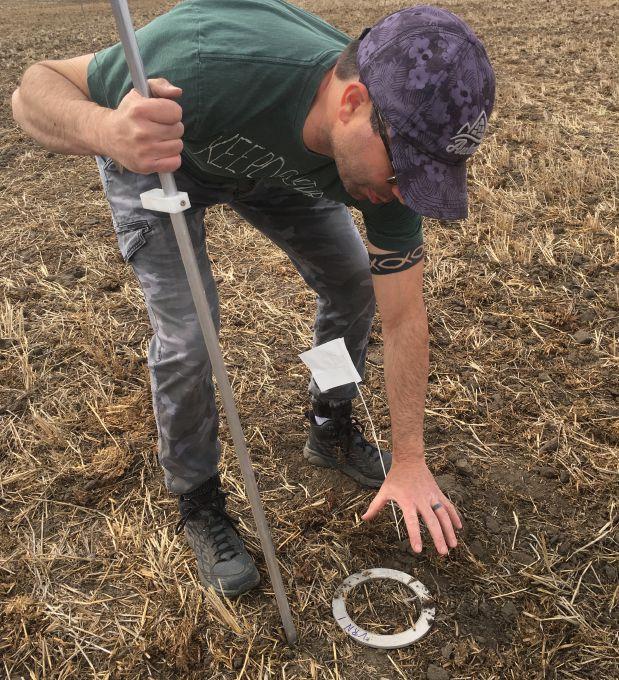
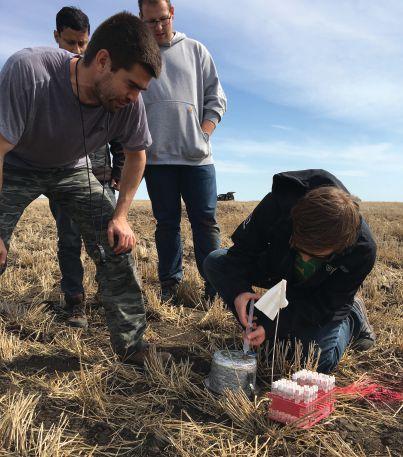
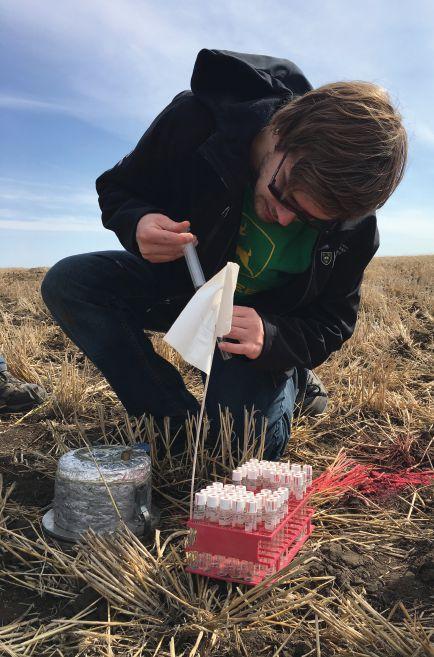
RIGHT Technician Mark Cooke and students Ranjan Kar and Colin Minielly watch as Stephen Froese draws a gas sample.
PHOTO
PHOTO
The LFCE was developed as a way of modelling every aspect of livestock production on the Canadian Prairies. It includes land for crops, science and field laboratories, and a 1,500head cattle feedlot. The Centre’s grand opening took place in October 2018, bringing to life an idea that was years in the making.
“The planning phase was years ahead of that so that, when they placed the Livestock and Forage Center of Excellence in this position, on this land, they had solid background information prior to the feedlot being constructed,” says Kris Ringwall, director of the LFCE.
“So, in reality, that start date goes way back to when Terry was starting to think about the sampling that they could do to look at the groundwater, and the movement of various components within land and soil.”
“Terry” refers to Terry Fonstad, associate professor in the College of Engineering at the University of Saskatchewan. Fonstad was one of the leads in the development of the LFCE, according to Ringwall. His research, also funded through the ADF, covers another facet of the manure management study that Schoenau is working on; while Schoenau’s focus is the soil component, Fonstad’s area of expertise is waste management and utilization and groundwater protection.
The two projects work together to create a more complete picture of what happens in the environmental system of the field when manure is applied and the ongoing effects, one of the key benefits of the LFCE’s whole-farm production research model.
“As people, we’re so quick to draw conclusions. And particularly, working with manure, it’s like, what are the benefits here?” Ringwall says. “It’s easy to say there are no benefits, but we all know that everything cycles – well, we don’t all know, that’s the problem. It’s a process of cycling nutrients that drives the world.”
The LFCE is also being used for complementary research being conducted by Agriculture and AgriFood Canada (AAFC). Later this year, Schoenau is set to be involved with a research project led by Haben Asgedom Tedla, systems agro-ecologist with AAFC Saskatoon, looking at runoff mitigation strategy options, like biochar and gypsum amendments.
TESTING VARIABLE RATE APPLICATION
Schoenau’s research takes place on the lands surrounding the Beef Cattle Teaching and Research Unit (BCTRU) feedlot, located a few kilometers southeast of Saskatoon, near Clavet. He and his team conducted baseline background assessments in 2018 and made their first application of manure in the spring of 2019. The initial application was of fresh manure, as the manure is supplied by the cattle at the BCTRU feedlot, which had been in place for less than a year. The next manure application will be in 2021, and the team plans to apply composted manure.
“So, we have replicate watersheds of a traditional constant-rate manure application, and we have replicate watersheds of a variable-rate cattle manure application. The variable rate is made using a prescription map that was created according to long-term NDVI satellite productivity imaging,” Schoenau says.
“In our variable rate, we increased the rate of manure application on the low-productivity knolls and up-
ABOVE
Stephen Froese draws a sample from the gas chamber.
PHOTO COURTESY OF THE UNIVERSITY OF SASKATCHEWAN LFCE.
slopes and decreased or eliminated the application of manure in the high productivity foot slopes and, that being right out of the watershed basin centers, using the high watermark as our setback. So basically, keeping the manure out of the sloughs.”
PRELIMINARY RESULTS
As 2019 is the project’s first year of data collection following a manure application, any results are preliminary and cannot be taken as indicative of a pattern. However, Schoenau says the initial results are positive.
“We’ve seen more uniform production of the silage barley that we grew in 2019 across the landscape with the precision management with the variable rate application,” Schoenau says. “And furthermore, we found there really was no yield penalty from reducing or eliminating the manure application in those lower elevation foot slopes and depressions. From the soil standpoint, when we measured after harvest of the silage barley in the fall, we saw reduced residual phosphorus in the depressions in the variable rate.”
Schoenau says 2019 was a dry year at the research site, and the data show that greater amounts of nitrate applied at higher levels in the variable rate application were left unused. “So, this leads us to think, down the road, in dry conditions we may want to cut back our rate on those areas in the field.”
As people, we’re so quick to draw conclusions. And particularly, working with manure, it’s like, what are the benefits here?
The team is hoping to get into the field to collect snowmelt runoff water to test for nutrient levels now that the first manure application has overwintered. With samples collected post-harvest in 2019, the team has run simulations on runoff and found reduced
concentrations of soluble phosphorus in water from the soils with the variable rate application.
Schoenau and his team measured greenhouse gas fluxes throughout the 2019 season, and compared them to commercial fertilizer levels.
“Where we had commercial fertilizer plus manure we had higher fluxes of carbon dioxide and nitrous oxide, as you would expect, because there’s some additional carbon and nitrogen in the manure,” Schoenau says. “But the precision manure application with the variable rate did have lower carbon dioxide and nitrous oxide emissions than the traditional constant rate.”
“I think we’re seeing some promising results coming out of this precision manure application approach in terms of both agronomics and also environmental protection,” Schoenau says.
“They’re funded for another couple years, but in reality, I don’t know that we would ever quit it,” Ringwall says. “We want to follow it through as long as we can and [understand] its impact on the land.” •
ABOVE
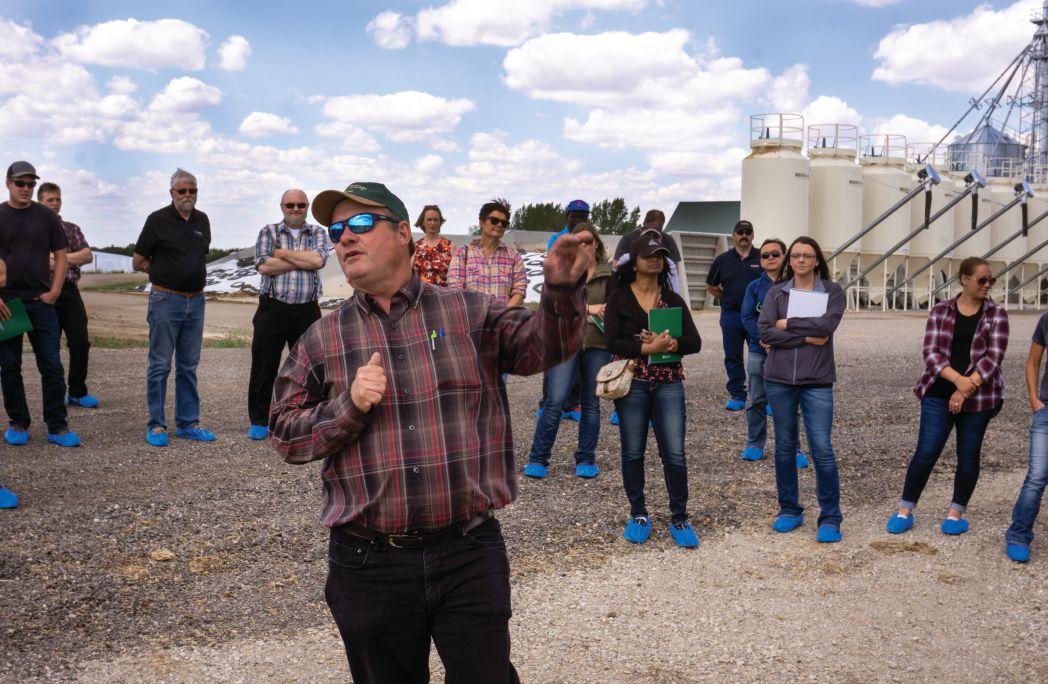
Jeff Schoenau speaking at the LFCE’s first annual summer field day for producers.
PHOTO COURTESY OF GORD WALDNER.
BKT Tires releases three new additions to Flotation series
BKT’s Flotation range of tires is characterized by flotation capacity for reduced impact on the ground to preserve crops and soil. The latest three models in the Flotation range are:
V-FLEXA: a radial tire designed for agricultural trailers, characterized by Very High Flexion technology, which makes it possible to transport heavy loads with tire pressure that is 30 percent lower than a standard tire of the same size. The tread includes steel belts that increase casing resistance. It is currently available in the VF 600/55 R 26.5 size.
FL 633 PERFORMA: specifically designed for trucks for farm use, but can also be used for tractors. Its resistant structure, load capacity and durability mean this tire can be used for numerous activities in the field and also drive on highways at up to 62 mph (100 km/h). Available in the 600/50 R 22.5 size.
RIDEMAX FL 699, 24 R 20.5 size: designed for road use with trailers and tankers. The reinforced hitch provides stability at high speeds. This radial All Steel tire is made for road use most of the time, but also performs in the field.
Case IH adds new Vestrum series tractor to livestock line-up
Case IH is adding a premium tractor in a compact design to its livestock portfolio with the new Vestrum series tractor. Delivering the comfort and power of a highhorsepower tractor, the Vestrum series combines maneuverability with premium cab comfort in a compact design.
The Vestrum tractor has a 4-cylinder engine with a Wastegate turbocharger. The lineup consists of two models –Vestrum 100 and Vestrum 130 – with 28.5-gallon-per-minute maximum hydraulic pump flowrate. With a 100 or 130 high performance one-micron filter cartridge (hp1) rating and a lift capacity of 6,700 pounds, the Vestrum tractor has enough power for a variety of applications, such as planting and baling.
The short wheelbase, 55-degree steering angle and smaller chassis make tight spaces easy to maneuver. The size, power and maneuverability enable the Vestrum tractor to take on a variety of applications from dairy and beef operations to hay, forage and loader work, as well as winter snow removal and specialty crops.
EFFICIENT SOLIDS LIQUID SEPARATION
ORGANIC FEED SYSTEMS BIOSELECT
+ Solid Liquid Separation
+ With Structure
+ Without Chemicals POWERFEED
+ Feeding and Transfer of Organic Waste
+ Closed Loop System
+ Process Control
+ Energy Efficient
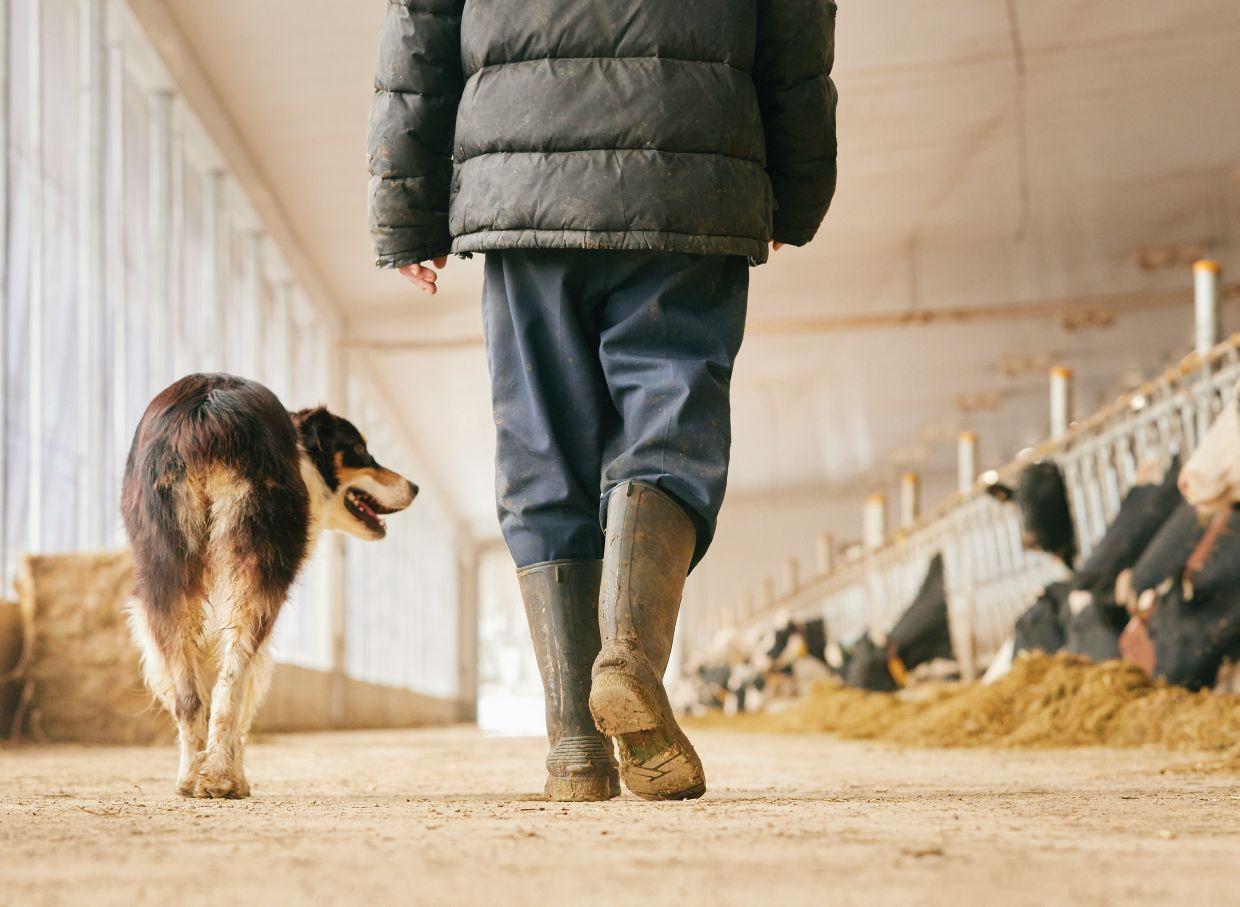
A soils-first approach to manure management
On Alexandre Family Farm, every decision comes back to the soil.
BY JULIENNE ISAACS
Earlier this year, Blake Alexandre gave a talk at the American Farm Bureau Federation convention entitled, “Honor soil like you would your grandchild.”
It’s perhaps not the first topic you’d expect from a fourth-generation dairy farmer, but a soilsfirst approach informs everything at Alexandre Family Farm.
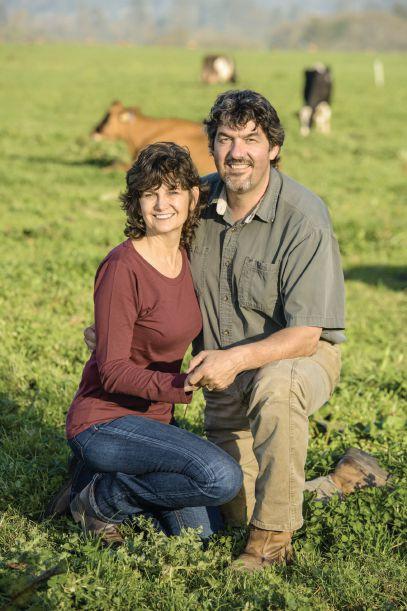
Blake and Stephanie Alexandre, along with their five adult children – Joseph, Christian, Vanessa, Dalton and Savanna – run four dairies in Humboldt County and Del Norte County, California. They also produce pork and pastured organic eggs.
The Alexandres breed their own stock of A2A2 protein cows, and in 2017 they launched their own milk brand: about 10 percent of their milk is branded under the Alexandre Family Farm label and sold on the West Coast.
The farm has evolved with the times, but conservation and stewardship have been guiding
principles for the Alexandres since the beginning. The family transitioned the farm to organics in 1999 – the ninth California dairy to do so.
In going organic, the family – especially Blake – learned a lot about soil biology, Stephanie says.
“That’s been an ongoing learning curve, and coupled with the management of our fields, grazing systems and literally paying attention to what’s going on below the soil as well as what’s above the soil, that’s been a big part of what we do,” she says.
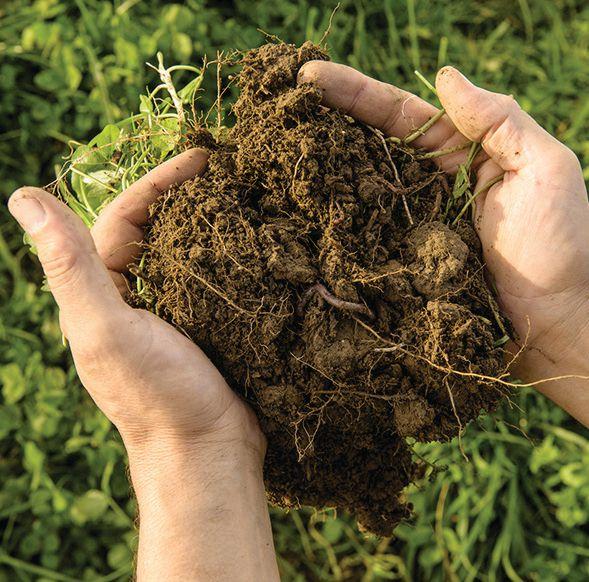
Composting is key to a soils-first approach. Last year, the Alexandres added a record 18,000 tons of compost to their fields, Blake says. About 98 percent of the compost they produce at each of the four dairies is added back to the farm.
“We’ve been into composting for 20 years and do a lot of composting on all four of our dairies, but primarily here on the main farm in Crescent City,” he says. “Our goal is to spread our compost and liquid and nutrient water as soon as we can.”
COMPOSTING
Alexandre Family Farm was one of the first recipients of funding from California’s Alternative Manure Management Program (AMMP), launched in 2017 to support the implementation of non-digester dairy manure management strategies to reduce methane emissions. With the help of the grant, the Alexandres built a new compost-bedded pack barn to house young stock.
“It’s a compost barn, meaning that
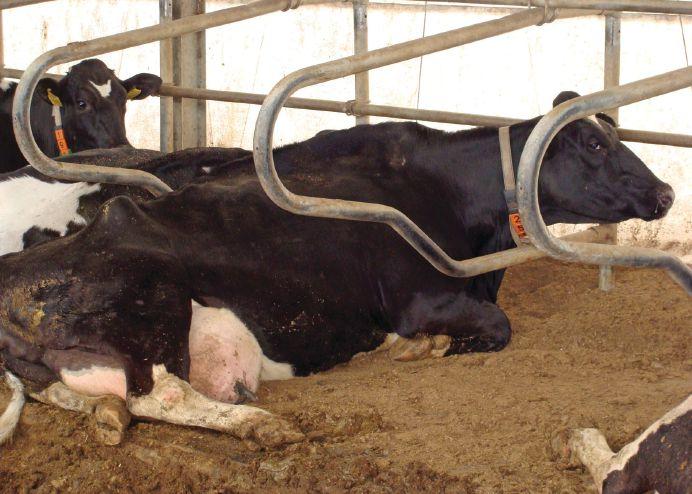
the bedding pack gets agitated and tilled regularly so that it composts in place, if you will,” Blake explains. “That’s for our young calves after they’ve been weaned and moved into group housing, and maybe the next six months of their lives based on weather and season.”
The Alexandres get sawdust and shavings from a nearby mill, and buy at least 200 truckloads a year of fish waste and crab and shrimp shells to supplement the compost.
“We never say no to any healthy,
TURNING LIQUID GOLD INTO ENRICHED BEDDING
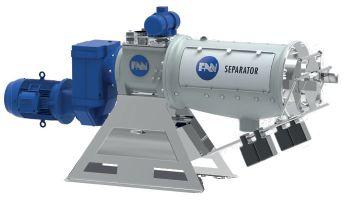
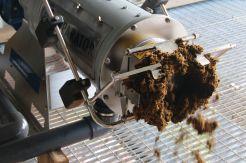
FAN PRODUCES BEDDING MATERIAL WITH A DRY MATTER CONTENT OF UP TO 38% IN SOLIDS
WATER TREATMENT TURNING WASTE WATER INTO HIGH QUALITY BEDDING!
BENEFITS
• Dry Matter content up to 38% in solids when separating cattle slurry
• Economical production of high-quality bedding from the manure solids already on the farm. No need to buy additional bedding
• High dry matter content even at high throughput rates
• Low energy consumption
• Press screw and screen basket made of stainless steel
• Long life of the auger due to hard metal coating
MAGNUM
CSPH
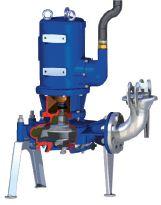
Submersible motor pump gear unit design
• Including automatic weight control
• Including control panel
• New robust cage and XC wearing screen
• Housing made of cast iron
• Permanent cleaning of the screen by the auger
• Easy to maintain
• Gearbox with NEMA flange allows convenient and costeffective sourcing of US motors up to 15 HP
MSXH
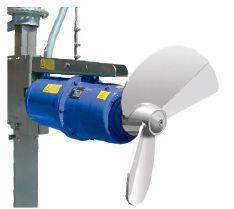
Submersible motor mixer
BAUER North America, Michigan City, Indiana 46360, PO Box 8943 +800 922 8375, bnasales@bauer-at.com, www.bauer-at.com/en
ABOVE
Healthy soil is the foundation for the Alexandre’s success.
environmental waste products we can get,” he says.
At the main dairy, which houses 1,800 milking cows, alleyways are flushed with water so the manure goes over a static screen separator; the solids become the basis for the compost system. The farm also composts its dead animals, a practice the Alexandres are frank about and insist should be a talking point in the industry.
“It’s a don’t-ask, don’t-tell policy in California,” Stephanie says. “We don’t have a rendering facility and we can’t haul or bury them, and there are crazy limitations. At some point it has to be legal to recycle those nutrients – plant them back on the farm.”
The farm abides by organic best practices for composting dead animals, she says, documenting time and temperature.
Compost is stored in piles that are turned periodically and moved back to the land as soon as possible.
RETENTION PONDS
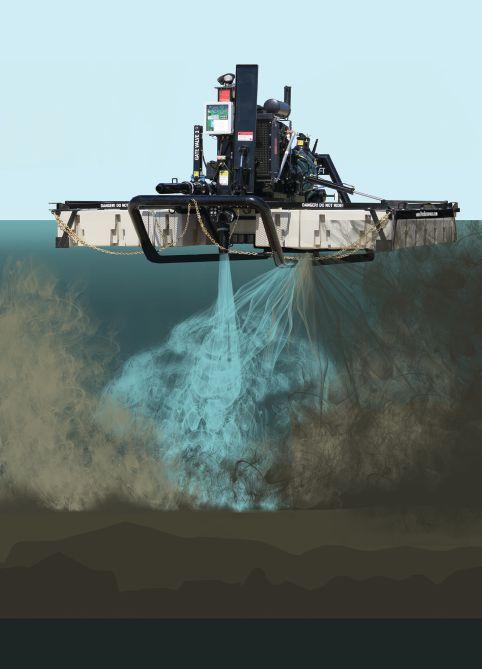
The farm also maintains manure retention ponds, which are aerated with circulators that encourage aerobic bacteria.
Truckloads of whey from a nearby cheese manufacturer are added to help digest solids and encourage microbial activity; this has the added benefit of making the manure water more “user friendly” and easier to pump, Blake says.
An additional win: with the whey moved from the cheese manufacturing facility and thus the city sewer system to
the Alexandre’s farm, the city was able to increase city sewage capacity, Stephanie says.
But the biggest benefits of all are for the land itself.
“When that water gets pumped out to the fields it’s positive for the living biology of the field. It’s a net contribution and a positive effect immediately and over the long term,” Blake says. “We’ve been highly aware of that in terms of our nutrient water management as well as our grazing principles so that we’re building organic matter in our soil.”
Both Alexandres are quick to point out that their goals are driven by economic as well as conservation incentives. One of the dairy farms was built on land formerly used by a flower production system that left the soil with low organic matter content. By adding nutrient water and green manure on that farm, the Alexandres have brought that number up to eight percent organic matter, Blake says.
The improved soil biology “pays dividends year after year,” he says. “It literally adds life to the soil, and there are a lot of long-term benefits.” Nutrient-rich pastures result in nutrient-dense food products, but the goal is a regenerative system that is good for everyone.
No farm is perfect and, looking to the future, Alexandre Family Farm wants to move to a system that avoids adding water to the manure, thereby reducing volume while still keeping it aerated and healthy, Blake says.
Over the last couple of decades, the Alexandres have seen different species thriving in the land around their farm, and they’re proud to point them out during tours: eagles, Coho salmon, geese, frogs and elk. The boost can’t be attributed solely to the farm’s improved
stewardship practices, but that’s certainly part of the story.
“I grew up on a dairy farm in southern California in a region where I think every water quality agency learned from the mistakes that were made. There were a lot of cows in a small area,” Stephanie says.
“But I also grew up with a mother who was aware of how important it was to do things right on our farm. That kind of mindset of doing a better job for our customer still operates for us today.” •
Efficiency Through Automation
BELOW Stephanie and Blake Alexandre.
Reaping the benefits
Nutrient and manure management planning policies should accommodate advancing precision agriculture technologies.
BY ROBERT MEINEN
The benefits of in-field, on-the-go manure analysis shouldn’t be overlooked. Real-time manure nutrient measurement can be used to adjust manure application rates based on expected crop production yields. This up-andcoming technology, along with other everevolving precision agriculture tools, can have a positive influence on agronomic, economic, and environmental goals.
A CASE FOR MODERN TECHNOLOGY
Modern technology is continually advancing. Manure handling equipment and software can allow immediate in-field nutrient assessment as manure is being applied. When coupled with contemporary computer-driven variablerate application equipment, in-field analysis may become the gold standard of matching manure nutrient content to in-field crop nutrient uptake. These systems use integrated geographic information systems (GIS) to pair spatial variations of harvest yield history with variations in manure
ABOVE
nutrient content. Manure application rates are automatically adjusted to most efficiently match expected crop uptake needs in real-time. On the farm, this technology can provide agronomic and economic efficiencies and many environmental benefits.
But while technology has advanced, industry uptake is lagging behind. Current policies can act as a barrier to adoption of these kinds of precision agriculture technologies because manure analysis and corresponding manure application rates must be determined prior to application, using data from previous seasons. Agencies charged with protecting the environment against agricultural nutrient losses need to encourage change through legislation, regulation, and policy adaptation. This will allow integration of these systems into nutrient and manure management planning and practices.
There are ways to verify equipment and system calibration. Reasonable on-farm testing, record-keeping, and review can be used in
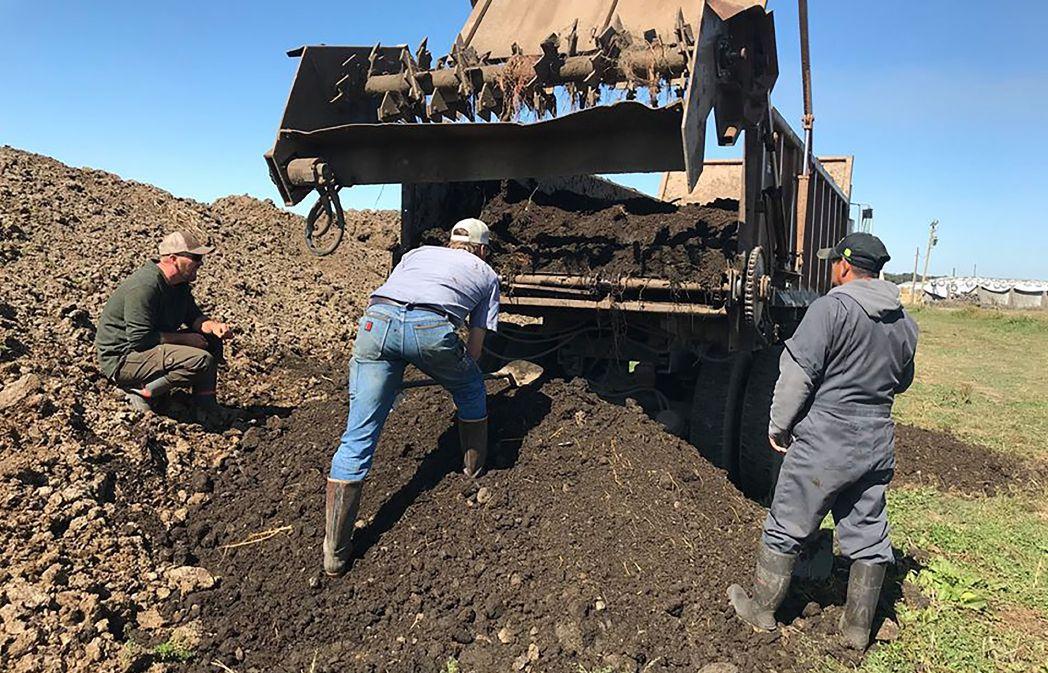
Agitation will help to suspend and remove solids from a manure storage. While the manure nutrient content delivered to the field is expected to be more homogenized after agitation, load-to-load variation will surely occur.
PHOTO COURTESY OF ROBERT MEINEN.
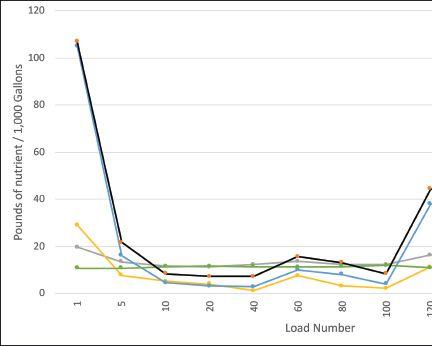
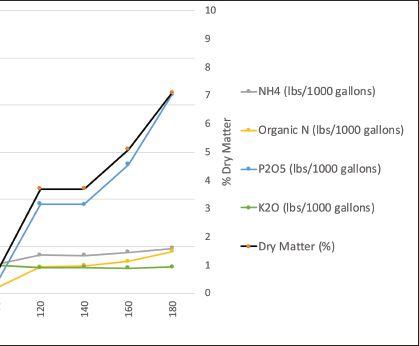
FIGURE 1 Nutrient content (pounds per 1,000 gallons) and dry matter content (%) of manure sampled from an outdoor manure storage basin at a sow farm as manure spreaders were loaded for transport to land application locations. Total N is not shown to eliminate clutter from the graph. (Meinen, 2011).
concurrence with laboratory analysis to prove that nutrient misuse does not occur. Maximum nutrient or volume application rate parameters can be added to the computerized and mechanical components of these systems to prevent over-application. These integrated systems can automatically produce accurate records that reflect field activities.
MANURE SAMPLING INACCURACY IS CURRENTLY ACCEPTABLE
Current manure sampling protocols come with inherent challenges. Manure analysis is a critical component of two goals of nutrient management planning. First, analysis identifies nitrogen (N), phosphorus (P), and potassium (K) contents in manure that are used in conjunction with projected crop yield and soil analysis data to ensure efficient agronomic nutrient utilization. This information is then used to determine manure application rates meant to optimize nutrient utilization to assist farm-level agronomic and economic objectives.
Secondly, when meeting the goal above, analysis aids in protection of the environment from the inadvertent release of nitrogen and phosphorus when manure is applied to farm lands. Planning based on manure analysis also encourages efficient use of supplemental commercial fertilizers.
Current manure sampling recommendations come with inherent inaccuracy, which is commonly seen as
acceptable. Collecting the proper number of samples can lead to measurements that are within plus/minus 10 percent accuracy of average content for solid manure. However, attaining such accuracy may require significant investment in time and money (Miller et al., 2019) and may not be practical at the farm level.
For liquid manures, Dou et al. (2001) noted that if thorough agitation occurred, five samples could be composited to accurately represent average manure storage content for N and P, but the recommendation increases to at least 40 samples in the absence of agitation. Davis et al. (2002) found that for solid manure, 24, 27, and 21 samples were needed to achieve this goal for total N, P, and K, respectively, but more than 100 samples were needed for ammonium and nitrate. This level of sampling intensity rarely – if ever – occurs in the field.
To meet nutrient and manure planning requirements, manure samples are usually collected well ahead of time; often, this sampling occurs 12 months before the application season for which the rate is determined. It is common to use historic samples or averages of samples from previous years to determine application rates, but this can introduce error into a planning process where final nutrient application preciseness is needed to meet program goals. Even if the sensing accuracy of this up-and-coming field technology was plus/minus 20 percent, it would still be more accurate than many current practices. When coupled with variable rate application based on historic crop yield and localized soil productivity, the benefits become greater.
Computer programming that integrates with application tools is available to assist in manure application rates based on both N and
P. Furthermore, this technology can determine both total and ammonia N content, meaning N-based application rates can be refined in real-time based on application method and N availability factors.
ADDITIONAL BENEFITS
OF IN-FIELD, REAL-TIME MANURE APPLICATION RATE
DETERMINATION
When coupled with harvest yield data, this technology can allow variable rate
manure nutrient placement based on expected yield of the upcoming crop. In this manner, manure application moves from a pre-planned per acre calculation to a real-time per square meter calculation based on the actual manure nutrient content of the material being applied. Whether the results of implementing this technology mean that the total volume of applied manure across the acreage of a given field is equal to, more, or less than current planning application rates, careful and precise placement of manure nutrients
MAKE YOUR DAIRY EXTRAORDINARY
FEATURES AND BENEFITS:
• Oil bath bearings - self cooled and lubricated, needs no water flush
• Disintegrator tool - for hoof blocks and other solids
• Heavy duty seal and bearing systemlonger life in severe service
• Ductile iron casing and bearing housingheavy castings for long life
• Heat treated cast steel wear parts - for longer life in abrasive grit service
• Most parts readily available from stock for expedited delivery
APPLICATIONS INCLUDE:
• Digester Feed
• Digester Mixing
• Small Pit Recirculation
• Tanker Loading
• Flush Water
• Feeding Heat Exchangers
• Manure Transfer
• Separator Feed Learn
should lead to improved crop uptake efficiencies. This lowers the risk of loss to the environment.
In low-yielding areas of a field, lower manure application rates mean manure nutrients are not supplied in excess of expected crop uptake on a meso-level. Low-yielding areas in any given field, such as soil-compacted headlands, are often those near an environmentally sensitive field edge. Conservative application rates in these areas may directly reduce environmental risk of nutrient transport.
MANURE VARIATION WITHIN A STORAGE
Figure 1 shows nutrient and dry matter concentrations from an unagitated liquid manure storage at a Pennsylvania sow farm. This unpublished data (Meinen, 2011) demonstrates that higher levels of dry matter contained higher levels of P in this storage. During this unloading process, manure was pumped from the very bottom of the storage where the initial loads were very thick (loads one to five) before the liquid portions could
easily flow over remaining solids and into the pipe. The slight increase of dry matter at load 60 was due to settling during overnight inactivity. After the very liquid portion was removed, the stratified thicker slurry manure moved to the pipe beginning around load 120. Investigation of the data at this storage estimated that 39 percent of total P was found in just 12 percent of the manure volume in the initial (loads 1-5) and final (loads 161-180) loads of manure, while just 13 percent of P was found
In-field, real-time manure sampling highlights the need for adaptable nutrient and manure management policies that respond to precision agricultural technologies.
in 58 percent of the manure volume of the loads with lowest dry matter content (loads five to 100). Collection of samples during load 20 and load 160, for example, would generate application rates that were very different.
It is apparent in this scenario that real-time field analysis would lead to efficiency gains, as compared to traditional sampling methods that assign a single P value to represent the entire manure volume (more than 1,000,000 gallons).
FINAL THOUGHTS
In-field, real-time manure sampling highlights the need for adaptable nutrient and manure management policies that respond to precision agricultural technologies. As time moves forward, these technologies will continue to make strides in accuracy. Policies should flexibly allow for such technological advancements to avoid adoption barriers and promote the use of beneficial advanced integrated technologies. Working together, this will progress agronomic, economic, and environmental goals. •
Robert Meinen is a senior extension associate with the Penn State Department of Animal Science.
STORAGE SOLUTIONS
Tips for storing poultry litter amidst coronavirus restrictions.
BY CHRIS MCCULLOUGH
In some areas of the U.K., poultry farmers are facing problems disposing of their manure during the coronavirus pandemic. Broiler farmers, in particular, may face restrictions and cannot dispose of the manure in the normal manner, leading to environmental concerns and uncertainty about next steps.
Northern Ireland’s College of Agriculture Food and Rural Enterprise (CAFRE) has offered help to producers in Ireland and the United Kingdom with some action to be taken. Producers in North America should check with their local state or provincial guidelines for proper poultry storage and handling tips if restrictions are in place due to COVID-19.
Sinead Mathers is one of the pigs and poultry agri-environment advisers at CAFRE and has issued guidelines for how to store broiler litter if houses have been cleared out and litter disposal cannot take place as normal due to coronavirus restrictions.
“Litter can temporarily be stored in the farmyard. Prior to land application or before being moved to another premises, poultry litter should be stored in a midden or enclosure which has adequate effluent collection facilities and covered with an impermeable membrane,” Mathers says.
state or provincial environmental agency.
“It must be covered with an impermeable membrane within 24 hours of placement in the field. If stored in a field, the poultry litter must not be stored for longer than 120 days or in the same location in consecutive years, in quantities greater than would be applied to that field.
“Poultry litter must be stored in a compact heap. This must not be within 40 meters [131 feet] of any waterway; 100 meters [328 feet] of lakes; 50 meters [164 feet] of a borehole, spring or well; 250 meters [820 feet] of a borehole used for a public water supply or 50 meters [164 feet] of exposed cavernous or karstified limestone feature,” she says.
“Litter can also be stored in a field, but farmers must notify the environmental authorities of any poultry litter placed in a field heap,” she advises, noting producers should consult with the Northern Ireland Environment Agency in Northern Ireland, or their local
Mathers says farmers are keen to spread the litter directly onto fields but she advises against this. “Poultry litter should not be spread on agricultural land that is to be grazed, or from which silage or hay is to be harvested, in the same year, due to the risk from botulism,” she says. “If litter must be spread, it should be deep-ploughed into arable ground in line with crop requirements. If this is not an option and litter must be utilised by spreading on pasture, the litter must be checked for carcasses and ruminants should not have access to the treated fields for at least several months.”
However, she adds, there is no guarantee that the treated fields would then be safe for ruminants.
“Spreading litter on a windy day may also pose a risk of contaminating adjacent fields,” Mathers cautions. •
POULTRY LITTER MANAGEMENT PRACTICES
• Poultry litter should be composted before it is spread in fields or around standing crops or trees. Fresh litter should not be applied if the field or pasture will be grazed by livestock.
• Poultry litter that has been properly composted for a period of 30 days (specific environmental conditions may affect this timeline) can be spread on pastures, as the heat generated during composting kills harmful bacteria, parasites and weed seeds.
should be tilled into the soil about six to eight inches to avoid nitrogen loss, leaching, or run-off.
• Poultry litter should be spread on fields two to four weeks before planting. After the litter is spread, it
• When working with standing crops, consider side-dressing during late spring or early summer. The compost should be spread about an inch from the plant’s stem.
• If litter is kept in temporary storage or stockpiled, it should be located on a concrete or impermeable base to prevent leaching into soil or groundwater, kept far from and preferably downslope of wells or other sources of drinking water;
• Keep the litter dry. Wet litter can cause nitrogen to be
released in the form of ammonia.
• Stockpiles should be covered with plastic sheeting weighed down with cinder blocks or other heavy objects.
• Always check with local municipal or state/provincial regulations and ordinances regarding use and storage of poultry litter prior to application.
•
•
•
Set in stone
Meeting the challenge of manure’s fixed nutrient content
I’m sure all of us at some point in childhood were told, “You get what you get, and you don’t make a fit.” Oddly enough, these words also ring true for manure! Unlike commercial fertilizers that can be mixed and manipulated to give you the desired nutrient content, manure nutrient ratios are fixed. It is what it is and you get what you get. The fixed nutrient ratios of manure don’t always line up with the ratios that crops need, which means you’ll almost inevitably overor under-apply some nutrients. Overapplication of a nutrient can lead to pollution, while underapplication can lead to nutrient deficiencies or the need to pay for additional commercial fertilizer. What can you do to meet this tricky challenge of manure?
NITROGEN-BASED VS. PHOSPHORUSBASED APPLICATION RATES
I often hear “The agronomist told me to spread my turkey litter and then put on more nitrogen with commercial fertilizer. Why can’t I just put all my nitrogen on with manure?” In general, manure tends to over-apply phosphorus, especially poultry litter. For example, turkey manure applied to corn, based on the nitrogen requirements of the crop (i.e. nitrogen-based rate), applies five times as much phosphorus as is needed by the crop. If turkey litter is added each year to this same field at that nitrogen-
phosphorus needs? Well, that depends on your soil and manure tests. Compare the crop nutrient needs to the nutrients you already have available in the soil and what you plan to add with manure. If you have high-phosphorus soils and adding manure will add excess phosphorus, you might consider applying at a phosphorus-based rate to avoid further phosphorus buildup. If your soil test phosphorus is low, you might consider using a nitrogen-based rate so long as it won’t build up soil phosphorus levels to a high level.
AVOIDING SOIL PHOSPHORUS BUILDUP
In conjunction with the previous section, I often hear, “What’s wrong with overapplying phosphorus? It sticks in the soil. Can’t I just bank it for future years?” While it is true that phosphorus is far less mobile in the soil than nitrogen, it can still be lost through runoff and erosion. Phosphorus leaching can also be a concern in soils with very, very high phosphorus levels.
Should you apply based on nitrogen needs or phosphorus needs?
based rate, soil phosphorus will build up to very high levels quickly.
In contrast, when application is based on the crop’s phosphorus needs (i.e. phosphorusbased rate), the application rate will generally be lower than a nitrogen-based rate and not cause phosphorus buildup. And in most cases, this will underapply nitrogen, so more needs to be added through commercial fertilizer. In the situation above, the agronomist recommended applying at a phosphorus-based rate to avoid soil phosphorus buildup. Since that underapplied nitrogen, he recommended adding commercial fertilizer nitrogen to avoid nutrient deficiency. Should you apply based on nitrogen needs or
There are two main methods to avoid phosphorus buildup. The first is to apply at a phosphorus-based rate (as described above). The other method is to apply manure at the nitrogen-based rate, and then not apply any manure to that field until the excess phosphorus has been used up. For example, my family applies turkey manure at a nitrogen-based rate once every three years. The first year’s application supplies all the necessary nutrients for the crop (including nitrogen), but it overapplies phosphorus. It takes two subsequent years for that excess phosphorus to be drawn down by the following crops. In those two years, no manure is applied, and nitrogen or other nutrient needs are supplied by commercial fertilizer. Of course, this method only works well for those that have enough land to support it. Keeping a field manure-free for years may not be feasible for those with large amounts of manure, or few acres.
Overall, manure’s fixed nutrient content is challenging. But with a little forethought and planning, you can balance those tricky nutrients to make an accurate application without being nutrient deficient. •
ProManure, the manure management solution
For Professionals with a little dirt on their boots