Give your building a performance and aesthetic advantage. The Solarban® family of solar control, low-e coatings delivers myriad choices for solar control and aesthetics. There’s a Solarban® glass for every project. Learn more at vitroglazings.com/solarban
From cladding to glass to entire systems that generate electricity, energy efficiency needs are driving new levels of interest in building-integrated photovoltaic technology.
Top 10 Under 40 Panel
16 Building concern
Opioid use is killing workers in the construction industry faster than any other group.
ASSOCIATIONS
7 Canada’s Glass Associations
10 Fenestration and Glazing Industry Alliance
DEPARTMENTS
20 Innovations
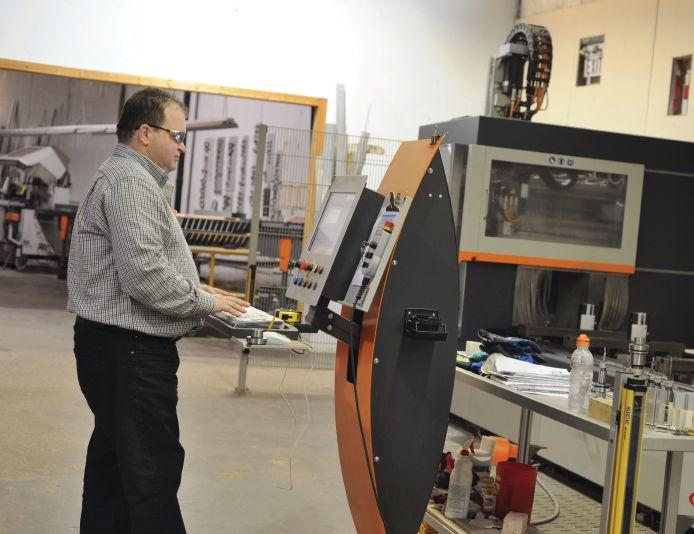
Industrial automation experts share their predictions on top manufacturing technology trends for the year.
24 Glass showcase
Gaskets, curtain walls and stainless-steel spacers...here are the glazing products that caught our eye.
COLUMNISTS
11 The Engineer By David Heska
26 That’s Rich By Rich Porayko
The August issue of Glass Canada magazine featured Canada’s Top 10 Under 40 young professionals in the architectural glass industry. Four of those winners – Corey and Blake Sanders of SpandrelTech, Ameet Balilty of High Performance Glazing and Vincent Couturier of Unicel – joined Glass Talk to help us get to know them even better.
Hot merger action
EDITORIAL
Associations are joining forces looking for the magic formula for success.
Those of you paying close attention to our page seven Canada’s Associations page (all of you, amirite?) will notice that the Fenestration Association of BC was teasing a big development for most of this year...and teasing it, and teasing it, and...well, you get the picture. Finally, the other shoe has dropped with FenBC announcing it has become a regional chapter of the Fenestration and Glazing Industry Alliance, the partner association of this magazine.
My initial take is that this is probably a welcome development for B.C. glass and fenestration companies. Fenestration B.C. was created in 2012 out of a merger of the Glazing Contractors Association of BC and the Window and Door Manufacturers Association of BC. Fenestration B.C. did a lot of great things and I think, on balance, fulfilled its mandate to represent both sides of the industry.
NEXT ISSUE
• Regulations and trade
GLASS CANADA
October 2022
Volume 34 • Number 5
Annex Business Media
P.O. Box 530, Simcoe, Ontario N3Y 4N5
READER SERVICE
Print and digital subscription inquiries or changes, please contact Angelita Potal, Customer Service Rep.
Tel: 416.510.5113
Fax: 416.510.6875
Email: apotal@annexbusinessmedia.com
Mail: 111 Gordon Baker Rd., Suite 400, Toronto, ON M2H 3R1
EDITOR | Patrick FLANNERY pflannery@annexbusinessmedia.com 226.931.0545
ASSOCIATE EDITOR | Daniel REALE-CHIN dreale-chin@annexbusinessmedia.com 289.259.1408
To the extent it did, a lot of credit goes to Zana Gordon. She was the driving force behind not only both B.C. associations but also the late Canadian Glass Association. Every association needs that person who is deeply invested in it and whose passion drags everyone else along. And when it comes time for them to step away, as with Margaret Webb and the Insulating Glass Manufacturers Alliance, the board needs to look around and see where a new motivating force might come from. As Webb, Gordon and others like them have discovered, little will happen in a volunteer asociation if the full-time staff doesn’t do most of it themselves.
So resources are key. But no one wants to pay high dues. Which the association needs if it is going to deliver the value members want. And around and around we go.
Both Webb’s and Gordon’s associations have arrived at the same solution to this conundrum: join a larger association that has more resources because the cost is spread out among a larger membership. The IGMA merged with the American Architectural Manufacturers Association to form the FGIA. And now FenBC has as well. The access to resources for members is obviously immediately improved.
The concern with joining larger associations is that the priorities of the smaller association will be sidelined when they are not shared by the larger collective. In the case of this merger, there is reason for hope. The AAMA has successfully integrated both residential and commercial members for many years. And, following its marriage with the IGMA, it has done a great job at keeping Canada and Canadian members as equal partners in the coalition. As a bonus for FenBC members, the FGIA’s Canadian director, Amy Roberts, hails from Pitt Meadows, B.C. Safe to assume she’ll have a good handle on the concerns of B.C. glass companies.
But did you think we’d really avoid all controversy in this industry? Think again. Our very own Rich Porayko has a website and LinkedIn page that invites feedback to explore creating a new organization: the B.C. Glass Association. Things are very much in the exploratory stage at this point. No doubt we’ll be hearing more in the months to come in our That’s Rich back page space.•
@GlassCanadaMag
AUDIENCE DEVELOPMENT MANAGER | Shawn ARUL sarul@annexbusinessmedia.com 416.510.5181
MEDIA DESIGNER | Curtis MARTIN
COO | Scott JAMIESON sjamieson@annexbusinessmedia.com
SUBSCRIPTION RATES
Canada - 1 Year $37.00 (plus tax)
U.S.A. - 1 Year $85.00 (in CDN dollars)
Publication Mail Agreement #40065710 Printed in Canada ISSN 0843-7041
Occasionally, Glass Canada will mail information on behalf of industry-related groups whose products and services we believe may be of interest to you. If you prefer not to receive this information, please contact our circulation department in any of the four ways listed above.
ish Columbia became a part of the Fenestration and Glazing Industry Alliance, effective Sept. 1. The newly formed FGIA FenBC region is the alliance’s first Canadian region. The region will operate similar to the pre-existing FGIA U.S. regions – FGIA Southeast region and FGIA western region –and will focus on regulatory and government initiatives, product installation, commercial contractor interests and related needs in British Columbia. The association also announced a region-specific one-day in-person meeting and a one-day virtual event for the new region, which will be included in their programming each year.
“By expanding FGIA regional offerings to include FenBC, FGIA strengthens its Canadian presence with a strong and wellrespected provincial organization. Members from both organizations will realize greater opportunities for networking and building business relationships,” said Dan Parrish, chairman of the FGIA board and engineering manager with Pella Corporation. “The joining of these two industry associations will expand our diversity of expertise, which will benefit the entire membership, and
signals a greater international cooperation of members that will promote further unity of our industry standards.”
In February 2021, the FGIA and FenBC signed an official agreement for collaboration. The collaboration enhanced the reach and visibility of both organizations while ensuring efficiencies in monitoring, which will continue with the FGIA FenBC region.
“Providing for continuity of FenBC’s operations with a focus on both residential and commercial markets, members now have the backing of a large North American organization whose member base aligns well with our current membership, while expanding our network,” said Dave Goldsmith, chairman of the FenBC board and senior code and compliance engineer with Ply Gem Canada. “FenBC members will have a voice in a leading North American industry alliance at a time of supply chain uncertainty and instability. It will also allow for greater collaboration relative to events, education, advocacy and technical standards and will avoid the duplication of effort between separate industry associations, while maintaining a FenBC board of directors as an FGIA region board of directors.”
COMING EVENTS
2022
Oct. 6 - 7
Intersections: Resilient Futures Online aia.org
Oct. 18 - 20
GlassBuild Las Vegas, Nev. glassbuildamerica.com
Nov. 30 - Dec. 2
Glasstech Mexico Mexico City, Mexico glasstechmexico.com
2023
Jan. 19 - 20
Glass Expo Rocky Mountain Denver, Colo. glassexporockymountain. com
Feb. 19 - 22
FGIA Annual Conference Ameila Island, Fla. fgiaonline.org
April 19
Top Glass Mississauga, Ont. topglasscanada.com
April 17 - 22
BAU Munchen, Germany bau-muenchen.com
June 12 - 15
FGIA Summer Conference Vancouver, BC fgiaonline.com
Oct. 31 - Nov. 2
GlassBuild Atlanta, GA glassbuildamerica.com
CANADA’S GLASS ASSOCIATIONS
AVFQ
The AVFQ takes the representation and defence of its members to heart. Following its last annual general meeting, the AVFQ board of directors elected Frederic Grondin as its new president. Grondin is the sales director at Robover and became the 34th president of the AVFQ, which this year celebrates its 60th anniversary. Lisa Bergeron of Jeld-Wen, who has served and chaired the association for the past four years, remains active on the board of directors as ex-official chair.
Adopted last June, the AVFQ’s 2022 to 2025 strategic plan is already under way.
We remind you that technical bulletins on the AVFQ’s Curtain Wall Guide are available on the guidemurrideau.com website. The bulletins are useful for workers, designers and site supervisors.
The AVFQ continues to offer the FIT window-installer training which presents the best practices with regards to the CSAA440.4:19 standard. The training is available in English and French and it provides the knowledge to take the Installer Certification Program exam.
Eager to get together and fraternize, the members of the AVFQ participated in large numbers at the Omnium AVFQ golf tournament on Aug. 25, which was sold out. Likewise, the numerous sponsoring partners were able to impress the participants throughout the day.
The AVFQ is organizing a new trade mission. Following the great success of the trade mission held in July in Germany, AVFQ members are invited to the GlassBuild America exhibition to be held in Las Vegas in October. A very large number of people have already confirmed their attendance.
AGMCA
From time to time the AGMCA uses this space to shine the spotlight on its member glazing contractors. This month we recognize Burlington Glass and Mirror.
Burlington Glass and Mirror is a shining example proving a completely family-owned and operated business can truly be successful. BGM was founded in 1981 by Bill Parkin and his father, Albert. They had one installer in a 2,500-squarefoot shop on Harvester Road in Burlington, Ont. In the early days, they specialized in shop replacement of broken storm windows and sashless sliders, shelving, table tops, picture framing, mirror walls and tempered glass shower enclosures.
In 1983, after graduating college and gaining a few years of experience in the glass industry, Bill’s son Greg joined BGM as shop manager and coordinator. By 1985 they expanded to 5,000 square feet at the same address.
Not long after Albert retired in 1987, Bill’s son, Stephen, with 12 years’ experience as a union glazier, joined the company to manage contract installations. In 1992, when the need for an office manager became evident, Bill turned to his wife, Margaret, and, in 2000, Greg’s wife, Brenda, joined the family business as administration manager. A few years later, Bill’s daughter, Sarah, joined the company as project manager. In 2007, Greg became president and general manager and Bill retired a year later. As the next generation came of age, Bill’s grandsons, Ben, Josh and Luke, joined the Burlington Glass team.
Burlington Glass has a long track record of customer
satisfaction, fairness and honesty, and has established a reputation within the industry as being a glazing contractor who can always be relied on. To this day, Bill credits their long-term success to the dedication of their employees and family members, as well as the established close relationships with several quality general contractors.
At present, Greg, Sarah and Brenda share management duties, supervising 16 employees in total. BGM is in the same location, 41 years later. Business has evolved over the years and BGM now also specializes in glass mall fronts and curtainwall in office buildings.
Well wishers can reach Bill at whbillparkin@gmail.com or Greg at greg@burlingtonglass.ca. Visit agmca.ca for membership information.
FENBC
The Fenestration Association of British Columbia became a Canadian region of the Fenestration and Glazing Industry Alliance in September. As a result of the merger, FenBC will no longer appear on the association page, but information about the organization can be found in the regular FenBC column. Zana Gordon, the FenBC executive director, also recently retired from the industry.
“This transition will allow FenBC to substitute an even stronger administrative and technical team for a sole-person executive director position that would have been very difficult to fill and will allow FenBC’s vision as an industry association to thrive far into the future,” said Dave Goldsmith, chairman of the FenBC board.
OGMA
The OGMA is happy to announce that we will once again be recognizing great glass and metal work in Ontario with our Awards of Excellence. There are two, one for excellence in execution and one for excellence in design.
Any OGMA member and/or Ontario Architect Association architect is eligible to win an award for a project completed in Ontario by submitting photos and a write-up about it. Check out ogma.ca for a full list of criteria. Nominations will open in January, with the awards being presented to a rapt crowd at Top Glass on April 19. Winners receive a handsome plaque, effusive praise and have their submissions featured for all time on our website. To nominate yourself or another worthy party, email Steve Gusterson at s.gusterson@alumicor.com to get the ball rolling. Next year will mark the first time the awards have been presented since their cancellation in 2020. We are in the final stages of designing and launching a new website at ogma.ca. By the end of the year, it should be easier than ever to find all the critical information you want about Ontario’s glass and metal industry.
Speaking of remarkable technological innovations, the OGMA is now able to accept credit cards as payment for dues, event registrations and the like. Put away that chequebook…your association has officially entered the 20th century. Our usual winter education seminar has been cancelled due to ongoing COVID concerns. We’re hopeful that this popular gathering can be reconvened in the spring.
Frederic Grondin becomes president of AVFQ
The Quebec glass association, AVFQ, has welcomed a new president, Frederic Grondin. Grondin has been the sales director at Robover for the last 16 years and brings years of experience in the industry to his new role. Grondin studied industrial management in college and worked at Laflamme Windows and Doors in production planning, customer service and finally as a sales representative. He helped launch Val-Alain Door and Windows, a business specialized in manufacturing screen mesh and components.
“From my career in the industry since the age of 20, I know how important it is for members of the industry to have a reference. They want a source that can provide information and knowledge to either small and medium-sized businesses, as they often lack the resources to be able to keep abreast of what is happening in the industry and what
GlassBuild America moves in 2024 and 2025
The National Glass Association announced new locations for GlassBuild America in 2024 and 2025. In 2024, GlassBuild will be held Sept. 30 through Oct. 2 in Dallas, Texas, at the Kay Bailey Hutchison Convention Center. In 2025, GlassBuild will be held Nov. 4 through Nov. 6 in Orlando, Fla., at the Orange County Convention Center. GlassBuild typically rotates between Las Vegas and Atlanta. The show was originally set to take place in Las Vegas in 2024, however, the Las Vegas Convention Center will be under partial renovation in 2024 and not optimal for GlassBuild that year. Dallas can accommodate GlassBuild’s size and scope and has excellent facilities along with numerous hotel options. The NGA says that Dallas will be more cost-effective for the association, for exhibitors and for attendees. GlassBuild was scheduled to head to Atlanta in 2025 but several factors led NGA to look at Orlando, including frequent requests from attendees and exhibitors; a modern convention center that can hold GlassBuild comfortably; and experience hosting other large construction-industry trade shows. The NGA secured a space in the Orange County Convention Center and hotels within walking distance for GlassBuild.
“NGA is very excited to share this announcement that GlassBuild America is moving to new cities in 2024 and 2025,” said Molly Green, events director for the NGA in a memo to GlassBuild exhibitors. “We hope to return to Las Vegas in 2026 and Atlanta in 2027.”
Robover
joins ODL
ODL announced the acquisition of Robover in August. Robover is an insulated glass manufacturer in Quebec that has been a leader in delivering insulated glass solutions to the Canadian market for over 20 years.
“This partnership continues to enhance our insulated glass offerings in North America. The addition of Robover to ODL and our family of brands helps position us for exciting new business growth opportunities, while also enhancing our product offering,
may affect them in the market,” Grondin said. “The AVFQ has become a must in terms of technical information, and training on the various standards and procedures. We must continue to consolidate everything and take it even further. As president, I want to continue all the work already done in this direction and I would like to bring all our members together in a common objective, which is the sharing of knowledge so that our industry can continue to progress.”
Grondin was elected as president of AVFQ’s board of directors for a two-year term.
“I have big shoes to fill looking at my predecessors, but I want to remain who I am and my main goal is to get members to be more and more involved in their association and be proud of it,” added Grondin.
A new glass association is on the horizon
The BC Glass Association, a new grassroots organization, is being developed in British Columbia. The association aims to serve the B.C. glass industry with the goal to strengthen and promote the interests of the B.C. glass industry with representation to the public, government agencies and related industry groups, according to the company’s website.
“There is definitely interest in the association, and 100 percent of the respondents have indicated they aren’t aware of any other associations active in B.C.,” commented Rich Poryako, a columnist for Glass Canada Poryako is actively involved in developing the organization.
The association is in the early stages of its growth and has been soliciting opinions on its reach and duties. Officials from the organization have been seeking consultation from companies active in the British Columbia glass industry since August. They invite all those active in the industry to take the survey on their website and provide feedback if a new provincial association made up of local representation would benefit the trade. The organization is also considering hosting an association golf tournament in 2023. To give your feedback, visit bcglass. org.
capabilities, and serviceability to our valued customers.” Dave Klein, president and COO of ODL.
“Today is a very exciting day for the Robover team, as we have taken the bold step to protect our company’s future growth by partnering with ODL, a leading glass supplier in North America. This partnership positions our organization so we can enhance our product lines, improve our processes and expand our reach right here in Canada and beyond,” said Anne Tardif of Robover.
All Robover employees and locations are being retained by ODL.
Brion to direct U.S. architectural development
VitroArchitectural Glass announced that Heather Brion has been appointed director of U.S. architectural development. She most recently held the position of director of architectural development for the western region. Brion joined Vitro Glass three years ago with more than 20 years of sales and development experience. In her new role, she will lead Vitro’s team of national architectural managers as they provide sales and service support to architects, specification writers, glazing contractors, facade consultants and Vitro Certified fabricators for the commercial construction market in the United States. Brion joined Vitro Glass in June 2019 as a commercial account and architectural development
manager. Prior to that, she was a territory sales and architectural design manager for Guardian Industries in Denver. She holds a bachelor of arts in communication studies from the University of Kansas. Joe Sennese is now Vitro’s manager of product sales and business development. With a bachelor’s degree in marketing from Oral Roberts University, Sennese has 25 years’ experience in the construction products industry, 16 of those with Vitro. Formerly director of architectural development for the eastern region, Sennese will now work to develop Vitro’s sales development efforts, reporting to Glenn Davis, newly appointed vice-president of international sales and sales development.
B.C. drives national decrease in building permits
The total value of building permits in Canada declined 1.5 percent in June to $11.9 billion, according to Statistics Canada. The decrease was mainly due to the non-residential sector, which dropped 10.4 percent to $3.7 billion, after posting its second-highest monthly value. On a constant dollar basis, the total value of building permits decreased 3.4 percent to $7.2 billion. The total value of non-residential sector permits fell 10.4 percent to $3.7 billion, with decreases in British Columbia’s commercial and institutional sectors driving the drop. Commercial permit values decreased 2.7 percent, with declines in eight provinces. In contrast, Ontario saw an increase of 37.5 percent, driven by a permit for a large office building in the city of Toronto. Construction intentions in the institutional component fell 32.2 percent, following strong growth in May resulting from a large hospital permit in British Columbia. The value of industrial permits rose 0.6 percent. Notably, it shot up 206 percent in Saskatchewan, largely due to the construction of a new power plant in Moose Jaw. In the second quarter of 2022, the total value of building permits increased 2.8 percent from the previous quarter to $35.9 billion with gains in both the residential and non-residential sectors. The non-residential sector decreased 5.1 percent, following a strong first quarter. The institutional component, which decreased by 21.9 percent, dragged down the sector, following the issuance of two large hospital permits in the last quarter. Commercial permits declined 0.6 percent, while industrial permits posted gains of 11.4 percent.
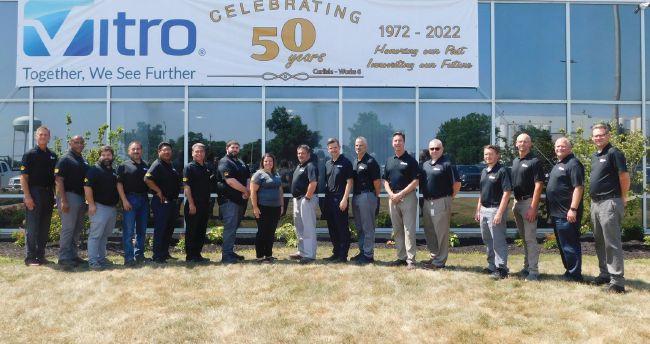
Vitro celebrates 50-year anniversary
Vitro
Architectural Glass planted two trees on July 15 at its manufacturing plant located at 400 Park Drive in Carlisle, Pa. The trees were planted to commemorate 50 years of continuous operation of the plant’s two production lines, which were commissioned in 1972. The plant manufactures flat glass, including Starphire Ultra-Clear low-iron glass and both Solarban solar control and Sungate passive low-E glasses, which are used in residential and commercial construction markets.
“The planting of two trees on our site is a small yet symbolic tribute to the two production lines at Carlisle that are responsible for producing glass that helps keep buildings and homes energy efficient,” said Darrell Jewell, plant manager at Vitro’s Carlisle plant.
By planting the two trees in front of the Vitro Carlisle plant, Vitro
Architectural Glass highlighted the purpose of the company, which is to honour the past and innovate the future by practicing sustainable industry standards and continuously improving operations through better research and development, according to a press
release from the company. The tree planting ceremony was open to Vitro employees, contractors and the plant’s retired workers. The company has various other celebrations planned throughout the summer to honour its 50-year milestone.
by AMY ROBERTS
Roberts is FGIA director of Canadian and technical glass operations.
The cheque better be in the mail
Prompt payment and mandatory adjudication legislation is in various stages of being enacted across Canada. Such legislation sets out the rights and responsibilities of all parties to a construction project through the establishment of minimum standards for payment, dispute resolution and communication.
At the federal level, the Federal Prompt Payment for Construction Work Act, which applies to federal construction projects, was passed on June 21, 2019. However, it is not yet in effect. Meanwhile, most provinces are developing their own approaches to the problem, although all anticipate an eventual national adjudication model.
Ontario is the first jurisdiction with a prompt payment and adjudication regime layered on top of existing construction lien requirements with its Construction Act, that took effect on Oct. 1, 2019. It requires the owner either to pay within 28 calendar days or to log a dispute within 14 calendar days. In turn, the contractor must either pay its subcontractors or send notices of dispute within seven calendar days of receipt.
The Builders’ Lien and Prompt Payment Act was approved in Nova Scotia on April 12, 2019, but is yet to take effect. Although it includes concepts from Ontario’s new prompt payment regime, it takes a narrower approach to adjudication.
In Saskatchewan, The Builders’ Lien (Prompt Payment) Amendment Act, 2019 and The Builders’ Lien Amendment Regulations, 2020SR92/2020 came into force on March 1, 2022.
Most provinces are in the process of developing their own approaches to the problem, although all anticipate a national ajudication model.
These describe a prompt payment and adjudication regime that largely parallels Ontario’s. Alberta’s Builders’ Lien Amendment Act, 2020 takes effect on August 29, 2022. Unlike Ontario-style prompt payment requirements, monthly billings are mandated through proper invoices issued at least every 31 days.
Similar measures are in process in several other provinces, which are currently involved in varying degrees of study or legislation development.
In July 2020, the British Columbia Law Institute presented 86 recommendations to simplify the province’s Builders Lien Act. However, the report does not address prompt payment or adjudication. The government has established an industry working group tasked to provide expertise and guidance to shape legislation with the goal to see this tabled in the fall 2022 session.
Manitoba is introducing new legislation that will specify a timely payment structure based on the progress of the work and achievement of certain project milestones. On March 16, 2022, Bill 28, The Prompt Payment for Construction Act, received its first reading in the legislature.
In New Brunswick, prompt payment and adjudication legislation will take shape in two phases. The first, the Construction Remedies Act and the General Regulation, took effect on Nov. 1, 2021, modernizing existing lien legislation. The second phase will discuss stakeholder concerns.
Quebec continues to lay the foundation for a prompt payment and adjudication regime. Since implementing a pilot program in 2018, Quebec has gathered data on monthly invoicing, payment timing and disputes. As more provinces bring prompt payment and adjudication legislation into force, expect Quebec to take further steps to implement wider legislative reforms to construction legislation.
Such prompt payment requirements will increase efficiency and productivity; drive investment, employment, training, innovation and purchase of equipment; and increase competition – all resulting in lower construction project costs.
By staying informed – and engaging legal experts with proven experience and know-how –industry participants can ensure that their existing projects are not disrupted and new projects are structured to mitigate the risk of unforeseen delays and cost overruns. •
Amy
by DAVID HESKA
David Heska, P.Eng. is a director with WSP’s building sciences team in southwestern Ontario. david.heska@wsp.com.
Smarter and wiser
It was Dr. Seuss who first said, “The more that you read, the more things you will know. The more that you learn, the more places you’ll go”.
Continuous learning has been a mantra I’ve heard from many companies in our industry. No one wants to be seen as falling behind. We all want to be in-the-know and innovating. But staying smarter and getting wiser is our continuing challenge.
Some people are visual learners while others are auditory learners. Others are hands-on, kinesthetic learners while others primarily learn by reading and writing. I’m not here to say one is better than the other, since each has its benefits, but I will make a prediction. Many of the colleagues you and I work with will more easily remember something that we physically show them on the shop floor or on the construction site. Photos are good, but in-person is better.
Maybe it’s because I’ve been reading How to Win Friends and Influence People by Dale Carnegie that this topic has stayed top of mind for me over the past few weeks. Carnegie writes that each of us should be a good listener and ask questions instead of giving direct orders. Sounds like common sense, but it’s harder to implement than it seems. Most of us struggle to listen before we speak. How many times have you answered a coworker’s question rather than encouraging them to solve the problem themselves by asking a clarifying question in return? You will almost always learn more yourself by teaching than by being taught.
How many times have you encouraged a co-worker to solve a problem themselves by asking a clarifying question?
THE ENGINEER
We should start by thinking about our personal best way to learn. Mentors or career coaches help some people. Are you an auditory learner or a visual learner? In my organization we’re asked to consider three types of training: on-the-job learning, learning through coaching and formal learning. For each of these categories, in the past, I’ve written down specific project types I want to work on; the names of various colleagues I want to learn from; and upcoming industry conferences I want to attend. By taking a multi-pronged approach to topics, I think I’ve been able to gain a more well-rounded perspective on some important things I need to know.
We live in a day and age when information has never been more readily available. Smartphones give us access to an endless amount of information. The answers to all of our questions and the ability to search for anything we’d like to know are at our fingertips. I recently had a conversation with my great-uncle where he mentioned that he doesn’t have the internet at his house. Imagine that! No internet. No smartphone. The simple life. Fortunately, for us who do have the internet, the Fenestration and Glazing Industry Alliance has excellent, free online resources available on their Vimeo channel. Their archive has videos on everything from training on codes and standards to workshops for IG fabricators. I encourage you to check out the training videos available on topics like gas filling of IGUs, the impact of cavity reduction on triple-glazed IGUs and preventing IG failures. It’s certainly not that the information isn’t out there, it’s more about making the time to invest in our own knowledge.
In my column for the August issue of the magazine, I wrote about the subject of regathering. The return of in-person conferences, roadshows and industry events can give you and your employees a found opportunity to be inspired.
Employees are the backbone of every organization and a company can only accomplish what its people know and can do. I hope your organization encourages employees to take time out from their daily tasks to further their knowledge. As the children are now back at school, perhaps its time that we also spruce up some of our own skills. It was American Founding Father, Benjamin Franklin, who said, “Tell me and I forget, teach me and I may remember, involve me and I learn.” Get involved. Get wisdom. •
Power glass
glass
A look at BIPV development in Canada
by TREENA HEIN
Canada has pledged to make all new buildings net-zero ready by 2030. Certainly these buildings will be much more energy-efficient and save significant amounts of carbon emissions. But the “zero” in net-zero assumes a building is producing some form of energy to run its internal systems, and solar energy is an excellent option to achieve this.
Enter building-integrated photovoltaics. The energy efficiency needs of future buildings are driving new levels of interest in this technology.
“The BIPV market is definitely growing,” says Haris Mohsin, marketing manager for Torontobased Mitrex, which claims to have the world’s largest BIPV manufacturing facility. “When it comes to solar energy, people just think of those regular solar panels or PV glass with solar cells. Our challenge is only to educate people. When people get to know about it, they mostly get amazed, and then it’s a no-brainer.”
BIPV can be used in any construction materials exposed to the sun from shingles, windows, cladding and skylights, to pergolas and balcony railings. Various backing options allow for the panels to be incorporated on any structure. A building’s location, cardinal direction, orientation of the facade (if a facade is involved) and time of year all affect the amount of electricity that can be generated. BIPV use is now involved in LEED certification.
Like Mohsin, Leah Morise, marketing manager at Elemex Architectural Facade Systems, also says the BIPV market is booming and that education is important at this point.
“The pipeline is building, as is the interest in the marketplace, and we expect our traction and success rate will continue to increase sharply in the years to come,” she says. At the same time, she notes that “it’s very much an emerging market that requires a considerable amount of education and training across the multiple channels that exist within the process of completing a project.”
Morise says architects require information with regards to design, the flexibility of the facade and how to seamlessly integrate BIPV facade systems with conventional facade materials such as glass, ACM/plate, stone and sintered ceramic. “In addition to this,” she explains, “building owners and general contractors need to fully understand costs and ROI, but installers can install these panels in the same fashion as most pre-fabricated panels, which makes BIPV install a relatively smooth transition.”
The cost of BIPV compared to standard products is project-dependent, says Morise, and varies depending on colour, customizations in size and finish, panel layout, size of panel and location.
Mohsin notes that not only is the cost of the Mitrex BIPV construction materials (i.e. facades, glass, siding and roof) almost on par with their regular counterparts, “in fact, after a few years, the building actually produces free energy. And in some high-rise and bigger projects, more than enough energy that building owners can share that energy with the grid.”
According to Mohsin, governments around the world are also throwing support into incentives and otherwise encouraging the use of BIPV and other renewable energy building technologies.
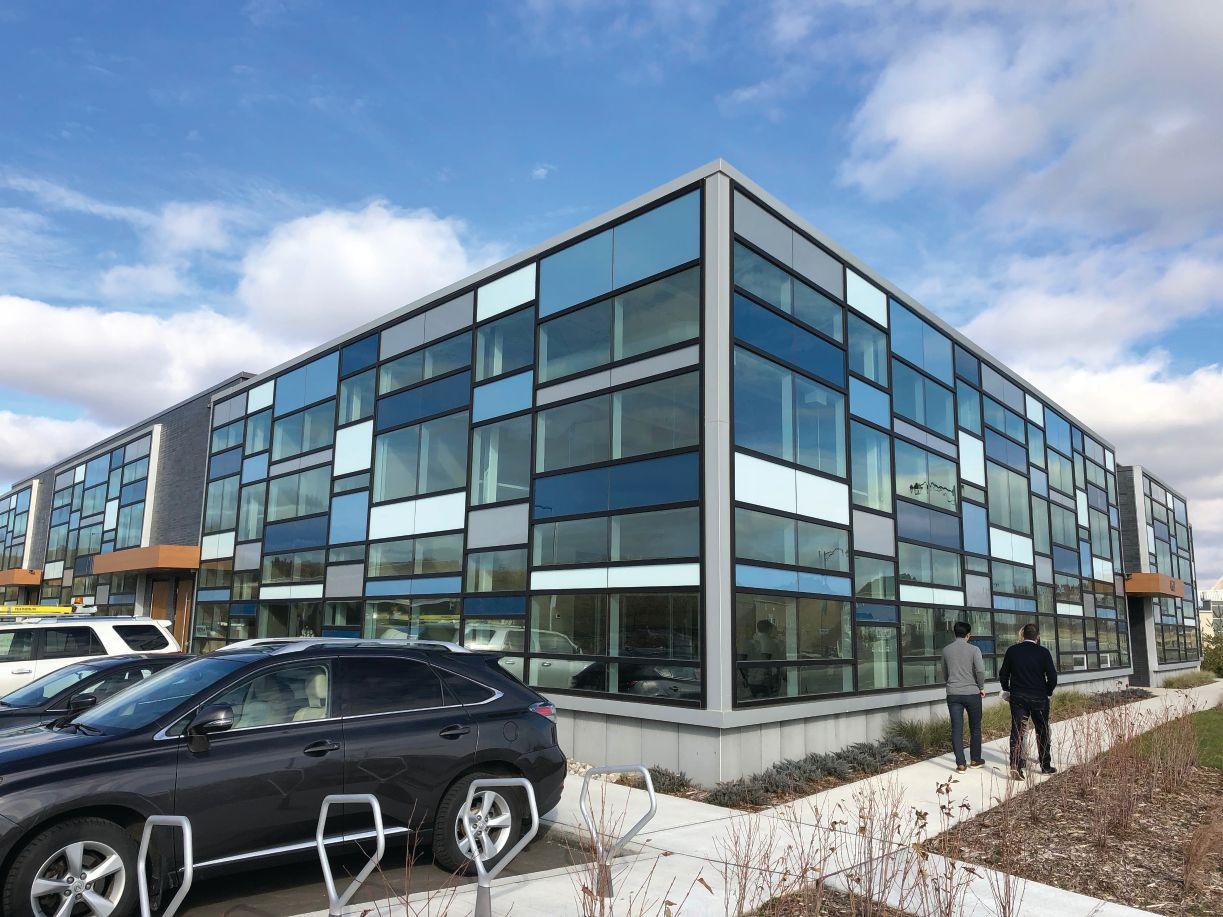
LEFT: Elemex has installed its Solstex solar facade system at multiple projects over the years. In 202, the system was installed at EllisDon’s office in London, Ont, which was re-clad with over 1,200 square feet of Solstex and generates approximately 17,500 kilowatt-hours over electricity annually.
With Canada’s new pledge to make all new buildings net-zero ready by 2030, builders and companies are looking for ways to enhance energy efficiency and reduce the carbon emissions from new builds. BIPV facades offer tangible solutions to the energy-efficiency needs of future buildings with solar-power generation built right into the structure’s facade.
Adoption factors
Morise agrees that sustainability requirements promoted at the provincial and federal levels – along with a desire from building owners to promote sustainability in their designs – will be a factor in speeding adoption. Mohsin points out that netzero buildings will be required in new construction by 2026 in Washington, D.C. These codes will cover all commercial, condominium and apartment buildings, as well as single-family homes over three stories.
In that vein, Morise notes that for high-rise and multi-unit residential buildings that do not have a large footprint, BIPV systems are particularly well-suited in terms of productive electricity generation because there is more square footage on the walls than the roof.
She says overall that “what will likely continue to increase the number of BIPV projects in the market is the ever-growing knowledge that BIPV is an option for most facade applications, along with the continuation of successful installations and our ability to bring the designer’s concept to life.”
Technological advancements in colour, available shapes, panel customizations and screen-printing capability already offer design professionals a considerable amount of freedom and flexibility when designing with BIPV.
Indeed, the only hurdle in adoption of BIPV, says Mohsin, is that building owners don’t want to compromise on the esthetics.
Mitrex tech and projects
A Mitrex solar facade has many layers: a customizable outer facing layer (transparent is also available) of tempered glass with an anti-reflective and anti-soiling coating, the solar cell, cell backsheet, foam layer, aluminum honeycomb, galvanized backsheet and frame. The average output is around 16 watts and the weight is around 2.2 pounds per square foot.
The company offers other products, including solar glass and solar roof. In March, Mitrex launched Solar Brick, a solarintegrated facade cladding that produces up to 330 watts per panel while, as the name suggests, recreating a traditional masonry brick look. It can be used for new construction or retrofits through re-cladding or over-cladding. The ROI of an average Mitrex BIPV system could be as little as three years for a high-rise, the company says.
One recent project of note started in January, when Mitrex began installing Ontario’s largest BIPV wall at its head office in Etobicoke, Ont.. It is over 7,000 square feett and will produce 90,000 kilowatt hours of power annually. Three different colours of Mitrex solar facade variants are being used with a combination of stone cladding.
In April, Mitrex (with partners EllisDon, Dillon Consulting, DSRA Architects, Markland Construction and BMR Structural Engineering) began retrofitting the student residence at St.
Mary’s University in Halifax with an integrated solar facade, making it the tallest and largest BIPV micro-grid application in North America. It will supply electricity to the residence and also to the grid as desired.
The south facade will have over 6,000 square feet of solar cladding, accented by vertical, semi-opaque solar glass integrated into the windows. The design of the cladding panels will be a combination of school colours with a subtle reveal of the solar technology to add a modern look. Elemex tech and projects
The Solstex Solar Facade System generates up to 17.6 watts per square foot, and ROI could be achieved in 10 years. It weighs an average of 4.5-pounds per square-foot.
The system has a pressure-equalized rainscreen that reduces the pressure difference across the cladding through the use of compartmentalization and back venting. Ingress of incidental water is reduced and residual moisture is returned to the exterior at the drainage plane. Elemex has added 10 new colours that allow architects to expand their design options.
In 2020, EllisDon’s office in London, Ont., was re-clad with Solstex. Over 1,200 square-feet were installed, which generate approximately 17,500 kilowatt hours annually.
Other BIPV offerings
Technology for transparent PV-coated windows is being developed by Next Energy of California. Their solar heat gain coefficient has been compared to that of conventional windows, and was found to have the potential to reduce the solar heat
gain from a similar window to under .20.
Onyx Solar of Italy also makes BIPV with layers of heattreated safety glass which can provide the same thermal and sound insulation as conventional architectural glass, and can replace conventional glass on building facades, curtain walls, atriums, canopies and terrace floors, among other applications.
Heliene, based in Sault Ste. Marie, Ont., makes solar PV modules containing light-polarizing polyurethane backsheets and bifacial PV cells for greenhouses. The bifacial PV cells convert to electricity both sunlight from above and some types of UV light reflected by the backsheets. The backsheet also enhances transmission of red and blue wavelengths which have positive effects on the growth of the greenhouse plants.
Kuby Renewable Energy based in Kamloops, B.C., and Edmonton, Alta., also offers BIPV. Projects include a five-storey residence at Red Deer College that’s covered with solar glass cladding on three sides and the glass skylights of the atrium at the Edmonton Convention Centre.
Looking forward
Like any technology, BIPV will improve in the years to come. “One can only expect that efficiencies will eventually increase,” says Morise.
Looking ahead at what may emerge in the marketplace, she adds that “we may see the need for varying attachment types that will allow for angled panels and more complex design expectations.” •
A BUILDING CONCERN
Opioid deaths are on the rise in Canada’s construction
by ANDREW SNOOK
Canada’s opioid overdoses are on the rise and it’s an issue that is trending upward within the country’s construction sector. One region where massive spikes in opioid-related deaths in the sector are taking place is within the country’s most populated province.
According to the recently released report, “Lives Lost to Opioid Toxicity among Ontarians Who Worked in the Construction Industry,” the numbers have been climbing fast. The report, created on behalf of The Ontario Drug Policy Network, The Office of the Chief Coroner for Ontario/Ontario Forensic Pathology Service and Public Health Ontario, stated that Ontario reported 2,460 opioid toxicity deaths in 2020, a staggering 60-percent increase from 2019. It also states that Ontario’s construction sector is significantly over-represented in the number of opioid toxicity deaths since the beginning of the COVID-19 coronavirus pandemic in March 2020.
While the industry represented approximately 3.6 percent of the province’s population and 7.2 percent of people employed in Ontario in 2021, 33 percent of those who were employed at the time of their deaths due to opioid toxicity worked in the construction sector.
The report points to the rigors of the type of work being performed as a contributing factor:
The physical demands of construction work may explain why construction workers are prone to injuries and chronic pain, which may contribute to opioid use. In addition, the mental challenges associated with long hours and precarious, competitive and stressful work environments may also contribute to opioid use among people working in the construction industry. The precarious or occasional nature of some construction work may also make the construction industry a more accessible field of employment for people who use substances, compared to other sectors. Furthermore, the high proportion of men, particularly in younger age groups, may explain the clustering of opioid-related harm in the construction industry, as
construction industry.
these are demographic groups that tend to be most affected by opioid toxicity death.
“Construction workers and anyone working jobs with very high physical demands, that’s where you’re going to see more injuries,” says Jan Chappel, senior technical specialist, occupational health and safety at the Canadian Centre for Occupational Health and Safety.
When breaking down the age distributions of construction workers in the sector that died of opioid toxicity in Ontario between 2018 to 2020, the report states that 60.1 percent were between the ages of 25 to 44, while 31.4 percent fell between the ages of 45 to 64, 6.6. percent were 25 years of age of younger, and 1.9 percent were 65 years of age or older.
During that same time period, 98.4 percent of the people employed in the sector that died of opioid toxicity were male.
When it came to the origin of the opioids directly contributing to opioid toxicity deaths in construction worked between 2018 to 2020, 79.2 percent were non-pharmaceutical opioids (overwhelming fentanyl and fentanyl analogues). Solely pharmaceutical opioids contributed to 9.0 percent of opioid toxicity deaths of construction workers, while a combination of pharmaceutical and non-pharmaceutical opioids accounted for 11.7 percent of opioid toxicity deaths of construction workers.
The rising opioid issues in Ontario’s construction sector are
A 2017 report suggests that 100,000 productive years of life were lost due to premature opioid toxicity deaths.
on a similar trend to British Columbia, where it was reported that 20 percent of opioid toxicity deaths that took place in 2021 were employees within the construction sector.
In 2021, B.C. experienced 2,265 illicit drug toxicity deaths (up from 1,747 in 2020 and 984 in 2019). From 2019 to 2022, the drugs involved in illicit drug toxicity deaths were:
• Illicit fentanyl and analogues: 85.6%
• Cocaine: 45.0%
• Methamphetamine/amphetamine: 41.9%
• Other opioids: 22.8%
• Ethyl alchohol: 26.0%
• Benzodiazepines 13.9%
• Other stimulants: 2.9%
Source: Government of British Columbia Coroners Services report, “Illicit Drug Toxicity Deaths in BC: January 1, 2012 - May 31, 2022.”
While the number of opioid toxicity deaths in B.C. have spiked since the beginning off the pandemic, the construction industry was over-represented well before COVID-19 came to Canada.
According to Government of British Columbia Coroners Services report, “Illicit Drug Overdose Deaths in BC: Findings of Coroners’ Investigations,” published on Sept. 27, 2018, 55
PHOTO CREDIT:
MEHANIQ41/ADOBE STOCK
percent of those who died of an overdose in B.C. between 2016 and 2017 (and were employed at their time of death) were working in the trades and transport industries. This is another massive over-representation of those employed in the trades and transport industries, considering it was reported that those
industries made up 15 percent of people employed in the B.C. 2016 Census.
Across Canada
In addition to all of the tragic deaths that opioid use is responsible for across Canada, it is responsible for billions of dollars in losses. The Ontario-based re-
•
•
•
•
•
•
LEFT: In Ontario, opioid-related deaths rose by 60 percent in 2020 from 2019.
port stated that in 2017, it was estimated that across all sectors there was $4.2 billion in lost productivity due to opioid use in Canada. This number was reached due to “100,000 productive years of life lost due to premature opioid toxicity deaths.” One can certainly argue that those losses have only skyrocketed since that time.
According to the government of Canada report, “Opioid- and Stimulantrelated Harms in Canada (June 2022), a total of 29,052 people have died from apparent opioid toxicity deaths between January 2016 and December 2021. Of those deaths, 88 percent took place in Ontario, B.C. or Alberta.
The report notes that elevated rates have been observed in other areas of the country, including Yukon and Saskatchewan. Fentanyl was involved in 86 percent of Canada’s accidental opioid toxicity deaths in 2021 (81 percent of those were non-pharmaceutical).
Glass has manufactured
for showers, railings, entrance systems, interior partitions and architectural glass applications since 2007. • Tempered up to 96 x 144 • Custom Laminated up to 86 x 144
Bent Tempered Laminated to 66 x 96
The physical demands, mental challenges and the occasional nature of construction work may contribute to opioid use.
Managing employee behaviour
For employers who suspect an employee may have a “drug problem,” Chappel suggests focusing on assessing the employee’s behaviours on the job and drop the word “problem.”
“Employers should be assessing if that individual can do their tasks safely at that time, on that day, at that moment,” she says. “We hesitate to use the word ‘problem’ when you’re talking about addiction. You really can’t diagnose that unless you’re a medical professional or a counsellor, so what we encourage employers to do is focus on what they’re seeing, and if that behaviour is a safety concern.”
Chappel encourages employers to evaluate their employees as they go about their day-to-day tasks.
“Does the person have the ability to perform that job or that task safely? Can they drive the machine? Can they operate the machine? Can they use a sharp object? Are they having trouble making decisions and judgments that affect safety? And then, use that assessment to ask if that person is able to conduct that job safely,” Chappel says.
Chappel encourages employers to
develop programs and policies so that every instance of impairment is addressed similarly and in a clear manner.
“Employers may offer employeeassistance programs, if they can,” Chappel says, adding that there are many other organizations that have resources available for employers and employees.
One free downloadable toolkit available is “Substance Use and the Workplace: Supporting Employers and Employees in the Trades,” which is available on the website for the Canadian Centre on Substance Use and Addiction.
The toolkit was designed for supervisors, managers, human resources professionals, unions, associations and related organizations, while also containing ready-to-use resources for employees. It includes resources for employers and workers to help prevent substance use harms; educate about substances and their effects; address employee substance use; find services and supports, and access related information about key reports and organizations.
For any questions related to the toolkit, the CCSA can be contacted at workplace@ccsa.ca. •
Environmental Product Declarations (EPDs) help architects and planners to select the most sustainable products for their projects.
is the first step on our journey to carbon neutrality by 2050.
PHOTO CREDIT:
STOCK
Trends in automation
Industrial
automation experts share their predictions on top manufacturing technology trends for the year.
One growing sector in manufacturing is robotics as a service. Innovations in technology and the demand for automation has lead to many robotics vendors offering and adopting RaaS as a business model, allowing manufacturers more options for automation.
In recent times, supply chain risks, labour market inefficiencies and heightened geopolitical tensions and the tightened global operating environment have accelerated the transition towards smart manufacturing and adoption of industry 4.0 technologies. Our sister publication, Manufacturing Automation, asked three industrial automation experts what they are seeing in automation trends generally, and where things might go in the future.
Eric C. Cosman, OIT Concepts
1. The value of open automation
In response to a push towards open process automation systems by several major asset owners, the Open Process Automation Forum (OPAF) has identified standards to accelerate the creation of open, interoperable, and secure automation architecture that addresses both technical and commercial challenges of current systems. Much of this architecture has now been defined and facilities have been established for testing the performance and
operation of individual components and standards.
With the increasing acceptance of the general concepts associated with open automation systems, the emphasis must now shift to the demonstration of these concepts using practical examples and case studies. Attributes such as interoperability, performance and security can also be claimed by proprietary systems. So, it is critical to show that an open systems approach delivers these capabilities with more value to the asset owner.
2. Operations cybersecurity across sectors
Although there is still much to be done in securing automation systems, the standards and practices in this area have been improving for many years. Much of the initial effort was focused on specific industries. However, it is now evident that the fundamental concepts and practices are not sector-specific. As a result, there is now more interest in – and acceptance of – the idea of cross-sector standards that
address the common elements of a cybersecurity program while bringing together the disciplines of information and automation security. The International Electrotechnical Commission (IEC) recently positioned IEC 62443 as a “horizontal standard,” encouraging their various committees to use these standards as a basis for their response.
This trend must continue as it moves the dialogue from the common or general requirements applicable in all situations to a more focused examination of the detailed practices required in specific industries. Individual sectors should develop profiles and recommended practices that interpret the fundamentals of effective cybersecurity using concepts, models and terminology that are most meaningful in their context.
3. Digitalization of engineering standards and practices
Traditionally, engineering standards and practices have taken the form of documents and related tools that define specific normative requirements with explanatory information and supporting rationale. This is an aging paradigm that does not meet the needs of current potential users and stakeholders. With the increased volume and complexity of information in these standards, it is essential to find better ways to deliver this information in a form that can be more easily applied.
Virtually all standards development organizations are now pursuing strategies for the delivery of “electronic standards.” While the definition of this term is somewhat imprecise and may be inconsistent across organizations, the fundamental goals are basically the same. Requirements must be available in a form that allows for quantitative comparison of alternatives and the development of conformance specifications. There must also be tools and facilities for navigating the information and responding to various types of queries.
It is still not clear what form standards may take in the future, but it is apparent that simple narrative documents will no longer be sufficient.
4. Workforce development, expertise retention and leverage
Workforce development and the retention of key knowledge and skills have long
been a significant challenge for automation and other engineering disciplines. This situation is expected to continue as older professionals retire and leave the workforce. Recent developments such as the global pandemic will likely only exacerbate this situation.
Consistent with the adage “Necessity is the mother of invention,” we can expect that socio-economic influences will drive additional innovation in this area. New approaches are required for the retention of key technical and expertiserelated information and transferring that knowledge and expertise to developing professionals. At the same time, it will be essential to find ways to apply this knowledge more broadly and effectively across a wide range of applications. Automation cybersecurity is but one example of this need. In that case, simply linearly applying common practices on a case-by-case basis is highly unlikely to meet the demand in an acceptable time frame.
5. Practical applications of digital twins
Digital twins have been a subject of intense interest in recent years. They have been described as augmenting artificial intelligence, machine learning, and software analytics to create functional digital simulation models that reproduce physical assets and systems in a virtual space where designers can model the behavior of various processes.
Just as with other “new things,” the time has come for this concept to demonstrate value from useful and practical applications. Examples include providing a clearer line of sight towards predictive maintenance, modelling the lifespan of a piece of equipment or system and providing manufacturers with the ability to model entire supply chains. While these and similar concepts sound compelling in the abstract, there must be proven cases where their application delivers significant benefit with an acceptable level of effort and cost. Without such examples, such concepts remain somewhat theoretical.
John Laughlin, NGen 1. Manufacturing sector needs
The Canadian manufacturing sector is currently facing several areas of technological, supply chain and product disruption. A key example of this is the automotive industry’s transition from an internal
combustion engine product mix to an electric vehicle product mix. With only ten suppliers accounting for 49 percent of powertrain revenues, the need to shift to more flexible manufacturing is essential not only for the ability to pivot and meet customer needs. It is crucial in order to become more cost competitive.
EV powertrains are approximately 20 percent more expensive than internal combustion engine powertrains. This increase in cost means that vehicle manufacturers will push some of these additional costs back down onto the supply base. To retain jobs within the industry, it is critical to make the necessary investments in automation to meet the new product mix, lower volumes and higher cost pressures.
The shifting powertrain mix may also lead to vehicle manufacturers producing powertrain components themselves. The type of assembly for an EV powertrain may also reduce the number of robots involved in the assembly, albeit replaced with a larger, more complex robotic assembly.
2. The age of business integration
Many businesses that we work with at NGen have adopted industrial automation. However, a large proportion do not realise their business objectives. Some of the challenges that we see are around companies investing in single automation applications and not fully identifying the challenges they are trying to address. NGen was established to help solve fundamental issues that have plagued manufacturers in Canada. For example, at NGen’s inception, 80 percent of manufacturing companies had invested in advanced technologies, but 45 percent did not meet their business objectives. Even before COVID-19, 30 percent of Canadian manufacturers were at risk of going out of business due to a lack of adoption of advanced technologies.
We work with manufacturers to overcome some of these challenges by building collaborative projects between technology companies and manufacturers, identifying the challenges, and then putting in place the right selection of technologies to address those challenges.
The actual realisation of the benefits comes when the integration is across the entire workflow and built into business practices. This requires transparency
across all workflows and across all departments. This will ultimately result in optimizing business practices and providing more targeted and measurable KPIs. In 2022, we also expect a growing opportunity to embrace digital twins. It will enable companies to integrate the equipment and business practices to allow processes to respond to each other.
3. Technology adoption
Automation and robotics are some of the critical building blocks for advanced manufacturing. Historically, Canada has had a slower adoption rate of automation technologies outside of the automotive sector compared to other countries. Payback, ROI and the business case for automation can be hard to generalise. For specific high-volume applications, automation is essential – there is simply no other way to meet demand. However, the cost of integration, and relative lack of flexibility, remain significant barriers to adoption. In the NGen project portfolio,
rapid turnaround, customer engagement in product design, enhanced quality control, greater precision, highly variable and low volume manufacturing and after-sales implementation and maintenance services. This works to overcome the challenges of variable demand and supply, volatile prices and labour shortages.
5. Labour market inefficiencies drive uptake of industrial automation
Canada has experienced a labour market transition, due in large part to an aging and changing workforce. Canada is not alone in this challenge – other countries such as Japan have experienced significant downturns in the labour market. One common solution to this challenge is to replace missing labour with new technologies that can drive productivity. The issue is not that there is a lack of jobs. But in an inefficient labour market, workers do not necessarily have the skills that match the industry job requirements. This challenge hits manufacturers
Canada has experienced a labour market transition, due in large part to an aging and changing workforce.
we see some positive signs with new automation technologies in development that integrate more functionality, advances in machine vision and machine learning that offer more straightforward, lower-cost integration and system flexibility.
4. The continued rise of advanced technologies
In Canada, we are witnessing step changes in the advanced technologies being developed, which will serve to drive further adoption. At the same time, we also see new advanced manufacturing facilities being stood up around the country. 5G enables vast amounts of sensor data to be collected in real-time and be analyzed. This next generation of data analytics coupled with machine learning and advanced simulation offers opportunities to have more data-driven manufacturing, enabling more flexible manufacturing and lower costs. The integration of software, additive manufacturing, robotics and automation technologies allows some companies to disrupt their competitors by combining
and goods-producing sectors the hardest as they rely on more highly skilled and technical labour. As of 2026, 20 percent of Canadian workers will be eligible for retirement. With a large contingent of the workforce exiting the labour market in the coming years, manufacturers will have to turn to new tools and technologies – especially automation and robotics – to boost productivity, remain competitive and grow their business.
Jeff Burnstein, A3
1. Labour shortages drive adoption of automation
It’s no secret to the manufacturing industry that it’s difficult to find and retain employees, especially ones to fill the “dull, dirty and dangerous” jobs. Unfortunately, the pandemic has made the labour shortage even worse for manufacturing companies and contributed to a sharp increase in job openings throughout most industries in North America. In fact, according to Deloitte Canada, nearly a third of Canadian businesses are grappling with labour shortages.
To stay productive and competitive, many companies are turning to automation and robotics to fill jobs in manufacturing and logistics as well as automotive, agriculture, construction, electronics, food processing, life sciences, metalworking, warehousing and more. While the automotive industry was the earliest adopter of automation and still remains the largest user, the latest statistics on orders (Q3 2021) show that nearly two-thirds of sales came from non-automotive industries, further demonstrating the trend of robotics growing into areas outside of automotive OEM and tier suppliers.
2. Smarter and easier-to-use robots Robots are becoming smarter, driven by advances in artificial intelligence that allow the robots to teach themselves how to perform previously difficult or impossible tasks in real (or close to real) time. Solutions leveraging advancements in AI in many shapes and forms are already working across myriad industries, helping robotic systems adapt to their work environments, rather than designing every aspect of the environment and processes to suit the limitations of the machines. These advances will enhance both productivity and safety, and lead to more applications involving true collaboration between humans and robots.
With more and more connected systems featuring advanced sensor technology, AI can identify patterns in the data that are associated with breakdowns and other mechanical issues. This data will drive predictive applications, where AI can detect patterns that indicate a robot needs maintenance soon. It can automatically alert engineers to take necessary steps towards repairing a machine before it breaks down, saving companies costly downtime. AI-powered analysis of this data could also help businesses optimize their processes to improve quality and reduce waste.
In addition to advances in AI, robots are also becoming increasingly collaborative, flexible, more dexterous and overall easier to use, with many requiring no coding. As a result, deployment of new robots can often be achieved in hours or days. Many robotics vendors also have developed a wide-range of packaged solutions meaning a company can get everything it needs to automate a specific task with little
or no extra engineering required.
The collaborative and flexible nature of smaller robotic arms is also offered by autonomous mobile robots that move independently within facilities without needing to disrupt infrastructures from the start or as needs change. The AMR market is growing very quickly driven by the explosion of e-commerce.
3. The increased importance of robotics-as-a-service business model
While robots are becoming smarter and easier to use, the perceived – and in most cases, real – costs of automation have remained a deterrent to many. Over the last few years, many robot vendors have introduced robots-as-a-service offerings, which let manufacturers and other companies finance their automation without large initial capital investments. While most of these vendors “rent” their own robots for a specified amount of time, some companies have created business models around multiple vendor partners, allowing manufacturers to deploy bestof-breed industrial, collaborative or autonomous mobile robots – or a combination of these systems. They often charge by the hour (some as low as eight dollars an hour) and only when the robotic system is functioning.
A growing number of RaaS companies are also taking on the entire deployment and service process, reducing or even completely eliminate the complexity and time associated with automation along with the financial burden. The RaaS companies can handle vendor selection and project management after initial consultations with the manufacturer on what they would like to automate. Since manufacturers only pay when the system is working, the RaaS companies also ensure the robotic systems are maintained and proactively address any issues to maximize uptime.
4. Robot mobility is gaining in importance
Autonomous mobile robots are playing an increasingly prominent role in warehouses and factories, but industries such as construction, security and delivery are also benefitting as they look to move materials or disinfect schools, hospitals and airports. The increased flexibility and diverse applications, as well as their unique ability to safely navigate in an uncontrolled
environment, make them a highly attractive option for performing many of the highly repetitive, yet necessary, tasks.
Mobile robots also became increasingly important during the pandemic, as e-commerce expanded and required rapid fulfillment. Automation became all the more necessary. AMRs not only keep the supply chain moving along as much as possible in manufacturing facilities, but also play an increasing role in retail environments for tasks like shelf scanning and floor cleaning.
The interest in AMRs for myriad industries was never more evident than at A3’s Autonomous Mobile Robot and Logistics Conference in Memphis this October, where companies such as FedEx (the platinum sponsor) and AMR vendors shared advances in AMR technology and new developments in logistics automation that helped potential users understand and deploy these technologies to increase efficiencies and stay competitive. The next AMR and Logistics Conference will be in Boston next October.
5. We’ve only just begun Despite increased adoption, we’re still in the early innings. While non-automotive sectors are now surpassing automotive sectors in robot use, there are hundreds of thousands of small- and medium-size companies around the world who still haven’t automated in a wider range of industries than ever before. As more companies hear about and experience the benefits of automation, including how it is helping companies fill jobs they are struggling to fill, the number of robots and other forms of automation will see significant growth.
We’re also seeing innovative new startups enter the robotics market, many receiving significant funding, who are developing new applications and improving existing ones. From my perspective, having spent four decades witnessing the development of the robotics industry, this is the most exciting time ever! Anyone interested in seeing what’s going on should visit Automate 2023 in Detroit (May 22 to 25) to see the latest developments from more than 600 leading automation companies. •
GLASSSHOWCASE
BEST IN GLASS
Fire-safe windows
stifirestop.com
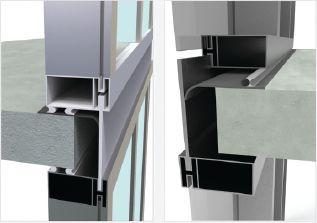
The SpecSeal window wall gasket from Specified Technologies is a rubber gasket embedded with glass fiber mesh. It’s designed using intumescent rubber, making it great for firestopping at the edge of slab in window-wall construction. The gasket has a glass fiber mesh embedded within the rubber matrix and is faced on both sides with polyethylene film to stand up to normal jobsite rigors and the typical exposure to the elements. The window wall gasket can be secured to the edge of slab or directly to the window-wall unit sill to drape into the gap between the floor and the slab cover. The gasket expands quickly when exposed to temperatures higher than 177 C and forms a dense, insulative char for fire protection. The gasket is tested to ASTM E2307 for window wall assemblies and it’s designed for window wall and hybrid window wall construction. It can also be used with common exterior grade sealants. The gasket can be installed to top-of-floor or directly to panel framing.
Ultra-thermal unit walls
kawneer.com
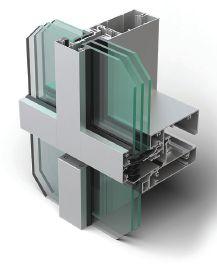
Kawneer’s 2500 UT unit-wall system is a sleek glass unitized curtain wall with ultra-thermal performance. It’s designed with a continuous polyamide thermal break vertically and horizontally, providing ultra-thermal performance levels in a cost effective unitized curtain wall system. The one-piece polyamide thermal break eliminates pressure plates and fasteners, reducing the amount of metal used and time required to assemble the system. The framing system is cost-effective and reduces the time to fabricate, assemble, glaze and install. The 2500 also comes with a variety of flexible options –from four-sided captured exterior covers to structural silicone glazed or structural glazing tape configurations. The options allow architects and contractors to meet tough project timelines, while delivering enhanced thermal performance and lower overall operating costs for building owners. The sturdy design makes it ideal for commercial applications, mid- to high-rise projects and more. Its unitized construction accelerates installation while minimizing disruption to the surrounding area or existing tenants, making it an exceptional choice for new or retrofit applications, particularly in urban areas.
Faster system processing
vitroglazings.com
The Intercept LiteLock from Vitro Architectural Glass is a new extruder tip and sealant bead application system with enhanced efficiency, performance and quality improvements. Vitro teamed up with GED to create this new system. It facilitates 30 to 50 percent faster processing speeds on GED’s Intercept oven and roll press while creating a wider manufacturing process window. The Intercept LiteLock nozzle tip applies sealant in a unique bead geometry, which gives a robust adhesion to the spacer metal substrate at near-finished bond line width. The system has been tested on standard double glazed insulated glass units and triple glazed IGUs across multiple over and roll press speeds and temperature to give effective processing recommendations and robust glass and spacer adhesion. The Intercept spacer system is constructed in a U-channel design with tin-plated steel or stainless steel rather than traditional box shaped metal or foam.
Innovative triple pane technology
pdsig.com
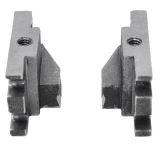
PDS IG Equipment’s new T17 spacer is a flexible, thin, stainless-steel unit. The spacer gives insulating-glass fabricators a simple and cost-effective alternative to producing traditional triple-pane insulating glass units. The T17 offers the performance of a traditional triple pane unit with only a single spacer. It’s designed with thin centre-lite glass and only two edge seals, versus the traditional four-edge seal triple pane design. The T17 decreases gas and moisture movement across the primary sealant, giving glaziers a more durable, thinner, and costeffective alternative to triple panes. PDS combines the T17 spacer technology with its fully automated IG fabrication system for highly efficient triple pane production. The unique, fully automated spacer application technology requires no added labour compared to traditional dual pane operation. The PDS IG system also includes online vacuum argon filling (with optional krypton) and IG secondary sealing capability.
Fast-cure sealant
Dowsil 121 structural glazing sealant is a fast-curing, twopart, neutral-cure, RTV silicone sealant for use in structural and weatherseal applications. It is approved for structural and weatherseal applications with strong mechanical properties. It is odorless and features a non-corrosive cure. Dowsil 121 is designed for excellent stability through wide temperature range: -50 to 150 C. It includes stable viscosity for the base and catalyst with no heating required. The cured product exhibits excellent weathering characteristics and a high resistance to ultraviolet radiation, ozone, heat and humidity. Rated for primerless adhesion to alodine and anodized aluminum. Delivers adhesion to Dowsil structural sealants for reglazing applications. Adhesion and structural strength is achieved in 24 to 48 hours. Dowsil 121 meets ASTM C719 Class 25 (G,A,O) and ASTM C1184 structural sealant specification. Structural glazing applications reviewed by the Dow technical staff may qualify for a project-specific adhesive warranty. Certain sealing materials used in the anodizing process may increase the potential need for primer to gain adhesion within a 24-hour period. Dowsil Primer-C OS is recommended for fast and consistent adhesion, especially to Kynar, polyester powder coat and other high-performance substrates approved for architectural structural glazing applications. Dowsil 121 is suitable for repair and/or replacement of structurally glazed glass and other substrates where a fast cure is required, such as on-site structural glazing, including storefront systems, and attachment of panel stiffeners. Also useful for in-shop structural glazing where the use of a two-part pump is not viable and assembly, installation or repair of structurally glazed glass and other substrates.
A precise curve
sedak.com
Sedak recently extended its production capacity in the field of curved glass. The company’s new 18-metre bending furnace allows you to create large-format functional glazing. The furnace is designed for series production of cylindrically curved, fully tempered glass and thermally toughened glass in large formats of up to 3.6-by-18 meters. The bending and tempering takes place in a single production process. Sedak’s new technology ensures a fast and precise adjustment in bending radius, so that glass for projects with multiple geometries can quickly be produced. Depending on the width, glass can be curved to a minimum radius of 1,000 millimeters. Sedak offers the complete spectrum of curved glass in almost any form. The glass panes are produced in a suitable process depending on the glass geometry. Sedak also offers lamination bending for glass of up to 20 meters and the gravity bending process for almost any architectural free-form. The curved glass is further processed to safety glass and insulation glass and, just as for flat glass, this can be put through the complete Sedak processing spectrum from gold printing to bullet-resistant glass.
RESOURCEDIRECTORY
by RICH PORAYKO
Rich Porayko is a professional writer and founding partner of Construction Creative, a marketing and communications company. richp@ constructioncreativecom
#QuietQuitting
There is a new trend appearing in TikTok videos in which young professionals post about doing the bare minimum at work. According to Saundra Latham, the editor at LinkedIn, “Gen Z and younger millennials are the least engaged with their jobs of any generation and are more likely to view work as a means to an end rather than a source of purpose.” Supporters of quitting quietly say they are simply reprioritizing work-life balance by rejecting the idea of the hustle mentality. They are avoiding leaning in by doing exactly what is in their job description, leaving on time and not checking their email outside of office hours.
Now there is just a hashtag that younger people are using publicly for all to see. Which is why experts caution that any workers doing the bare minimum could be vulnerable to layoffs.
I reinvigorated my passion for international travel with a family trip to the U.K. this summer. I worked on planes, trains and in automobiles, but I struggled to find balance. It was too much time off.
The eternal struggle for work/life balance reminds me of the masterpiece novel, The Alchemist by Brazilian author Paulo Coelho. The tale follows a young Andalusian shepherd named Santiago on his journey of personal legend to the pyramids of Egypt in search of treasure.
During Santiago’s travels, he meets old King Melchizedek, also known as the King of Salem, who shares the story of a boy seeking the secret of happiness. In the king’s tale, the young lad meets the wisest person in the world who invites him to take a stroll around his palace for two hours carrying a teaspoon of precious oil. “As you wander around, carry this spoon with you without allowing the oil to spill,” said the guru.
This summer I worked on places, trains and in automobiles, but I struggled to find balance. It was too much time off.
THAT’S RICH
The young man explored the palace, always keeping his eyes fixed on the spoon. At the end of two hours, he returned to the presence of the Wiseman. “Did you see the Persian tapestries hanging in my dining room? Did you see the garden that the master of gardeners took 10 years to create? Did you look at the exquisite parchments in my library?” asked the scholar.
Embarrassed, the young man confessed that he had seen nothing. His only concern was not to spill the drops of oil that the wiseman had entrusted to him.
The elder sends the youth back to see the wonders of his world, telling him, “You cannot trust a man if you do not know his house.” Relieved, this time the boy pays attention to all the works of art that hung from the walls and ceiling. The young man sees the sage’s gardens, the mountains, beautiful flowers and the delicious food. Returning to the wiseman, he reported in detail all that he had observed. “But where are the two drops of oil that I entrusted to you?” asked the wisest of wisemen.
Looking down at the spoon, the young man realized that he had spilled the oil. “The secret of happiness is to see all of the wonders of the world and to never forget the drops of oil on the spoon,” shared the wiseman.
As a shepherd who likes to travel should never forget about their sheep, a business consultant who dreams of the journey should never forget their clients.
The palace represents all of the finest things that life has to offer while the drops of oil symbolizes the hard work and learning we need in order to regard life as fulfilling so we can realize our “personal legend.” One can never achieve their personal legend doing the bare minimum. Work too hard and you will miss out on life. Don’t work hard enough and life will pass you by.
In the Compound Effect, Darren Hardy writes, “The reality is even one small change can have a significant impact. An unexpected and unintended ripple effect.” Small changes to your daily habits, if made consistently, will lead to exponential results over time.
Never stop learning, growing and developing. Never stop hustling. If you can’t be bothered to give your career the same focus that you give the rest of your life, then you may be calling it in in more ways than you think. •
STAND OUT FROM THE COMPETITION. BECOME A FENESTRATIONMASTER® .
FGIA provides a unified measure of success for professionals across the glass, glazing and fenestration industries through education and professional development.
FenestrationMasters® 2.0 offers redesigned coursework with a more interactive platform and an easy-to-use interface, updated content and code requirements reflecting current standards.
Why become a FenestrationMaster?
•
Broaden your knowledge—Learn about a wide range of industry topics.
Stay current—Keep up-to-date on industry standards and best practices.
Make it official—Certification validates your industry expertise.
Train staff—Better represent your company.
Access from anywhere—Online courses and proctored exams provide a fully digital experience.
Elevate your expertise. To become certified, sign up at FGIAonline.org/FenestrationMasters.
Schulich School of Business, York University
Toronto, ON
Architect: Baird Sampson Neuert Architects
Glazing Contractor: Stou ville Glass Inc.
A Breath of Fresh Air
Passive ventilation, ease of installation
Every challenge has a solution when every detail matters. When ambitious projects like this require technical expertise for highly integrated systems, you need a partner you can trust and solutions that perform.
Products
2020 Zero Sightline Vents
6500 Series Curtain Wall
Reliance® Cassette Curtain Wall
Scan to learn how we solved it together: Or visit us at OBE.com