AERIAL MANEUVERS
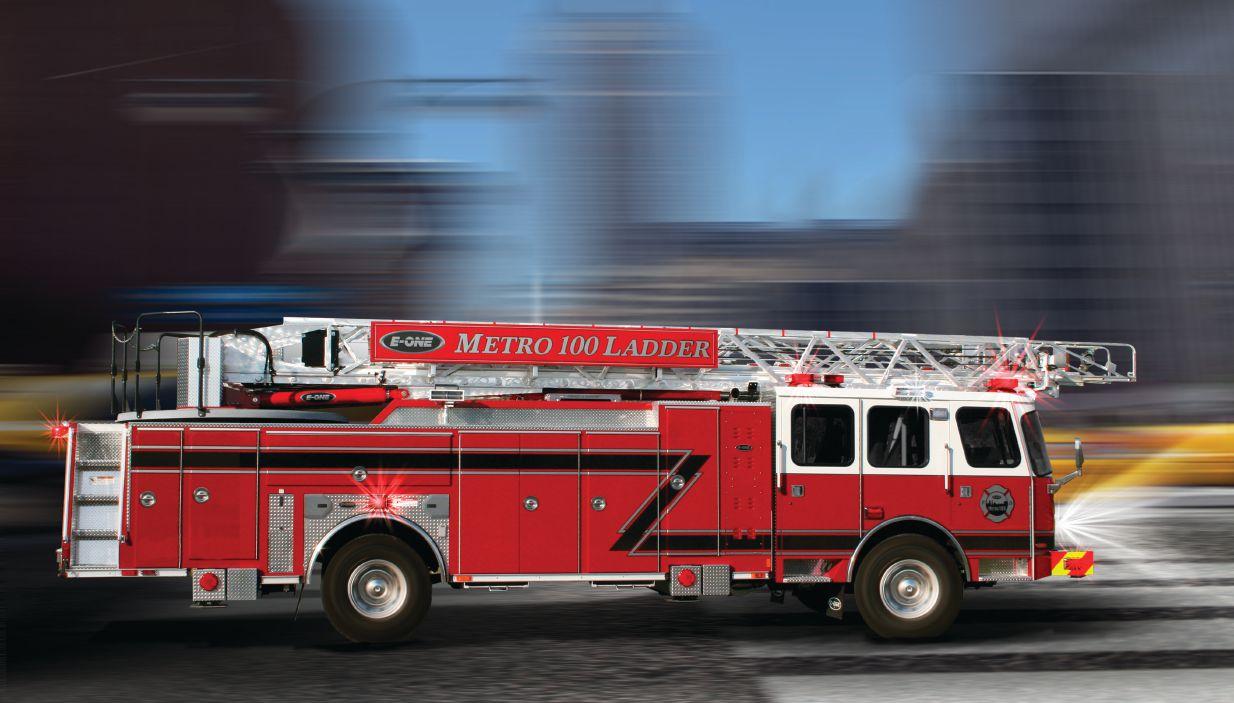
Metro 100 Ladder. Turning corners and turning heads.
Offered exclusively by E-ONE, the all-new Metro 100 is a single axle aluminum ladder with a 100’ vertical reach on a short 220” wheelbase. The 11’ jack spread allows you to easily set up in tight spaces. And, when paired with the Cyclone II aerial cab, the Metro 100 offers an impressively low 10’7” overall travel height. Designed with both the urban and suburban departments in mind, the Metro 100 is a highly maneuverable ladder that’s long on features and short on height.
Industry-leading aerial. Innovative design.


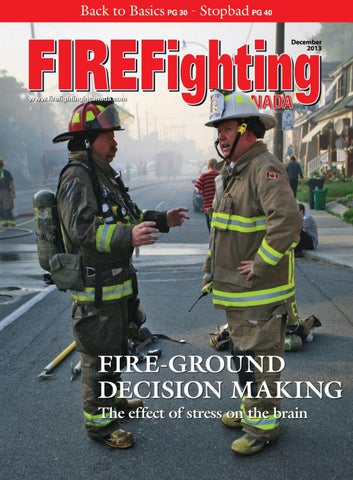
FIRE-GROUND DECISION MAKING
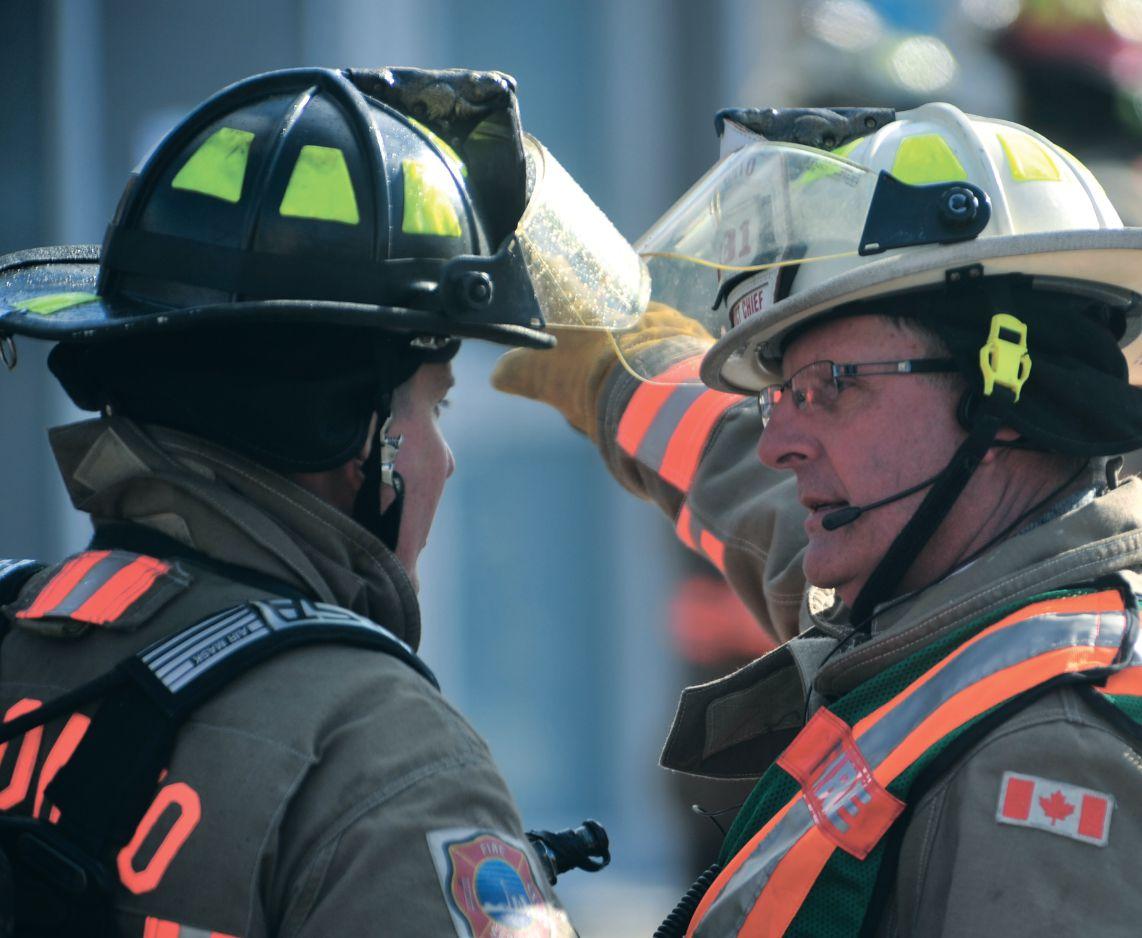
When the brain is under stress –as it usually is on the fire ground – decision making is altered. Rich Gasaway explains how the brain responds to stressful environments and how this impacts decision-making skills on scene.
22 METER MYTH
In light of media reports that have questioned the safety of smart meters, researchers at the University of the Fraser Valley in British Columbia looked at the data for a potential link between residential fires and smart meters. As Surrey Fire Chief Len Garis explains, fires associated with smart meters are likely the result of faulty installation rather than the meters themselves.
34
A MODEL OF MUTUAL AID
A stubborn, deliberately set fire at a strip mall in Sooke, B.C., in July prompted calls to several mutual-aid departments. As Sooke Fire Chief Steven Sorensen explains, good communication, a proper initial size-up and constant accountability ensured that no one was injured and that the fire was controlled.
By La UR a K I ng Editor lking@annexweb.com
I comment
Progress unimpeded by tradition
’m not big on year-end pieces, but when I was flipping back through my 2013 calendar looking for the date of a particular conference, it struck me that although we all talk about lack of change in the Canadian fire service, we’re wrong.
We’ve all heard, and probably uttered (or written) that dreadful cliché about tradition unimpeded by progress – which I think should be abolished, or, at the very least, edited. How about Two-hundred years of progress unimpeded by tradition?
As I was writing this in early November, Cynthia Ross Tustin and Sheila Kirkwood had just been named chiefs in Essa, Ont., and Whistler, B.C., respectively – both the first female career chiefs in their provinces. That’s change.
In the last 12 months, there has been a notable shift to fire prevention and education – the first line of defence – from suppression. That’s change.
• In Alberta, fire chiefs are working together to form special response teams to better handle large-scale incidents, and the province is supporting the initiative.
• In Nova Scotia, the Provincial Fire Safety Advisory Council and the Fire Advisory Committee have been resurrected; this will ensure a link between the fire service and the provincial government. In addition, an insurance levy introduced in 2012 is funding free traffic safety programs for Nova Scotia’s fire departments starting next year.
In health and safety, departments are adopting guidelines on hydrogen cyanide to better protect firefighters. Firefighters are buckling up – consistently – and wearing BA during overhaul. That’s change.
ON THE COvER
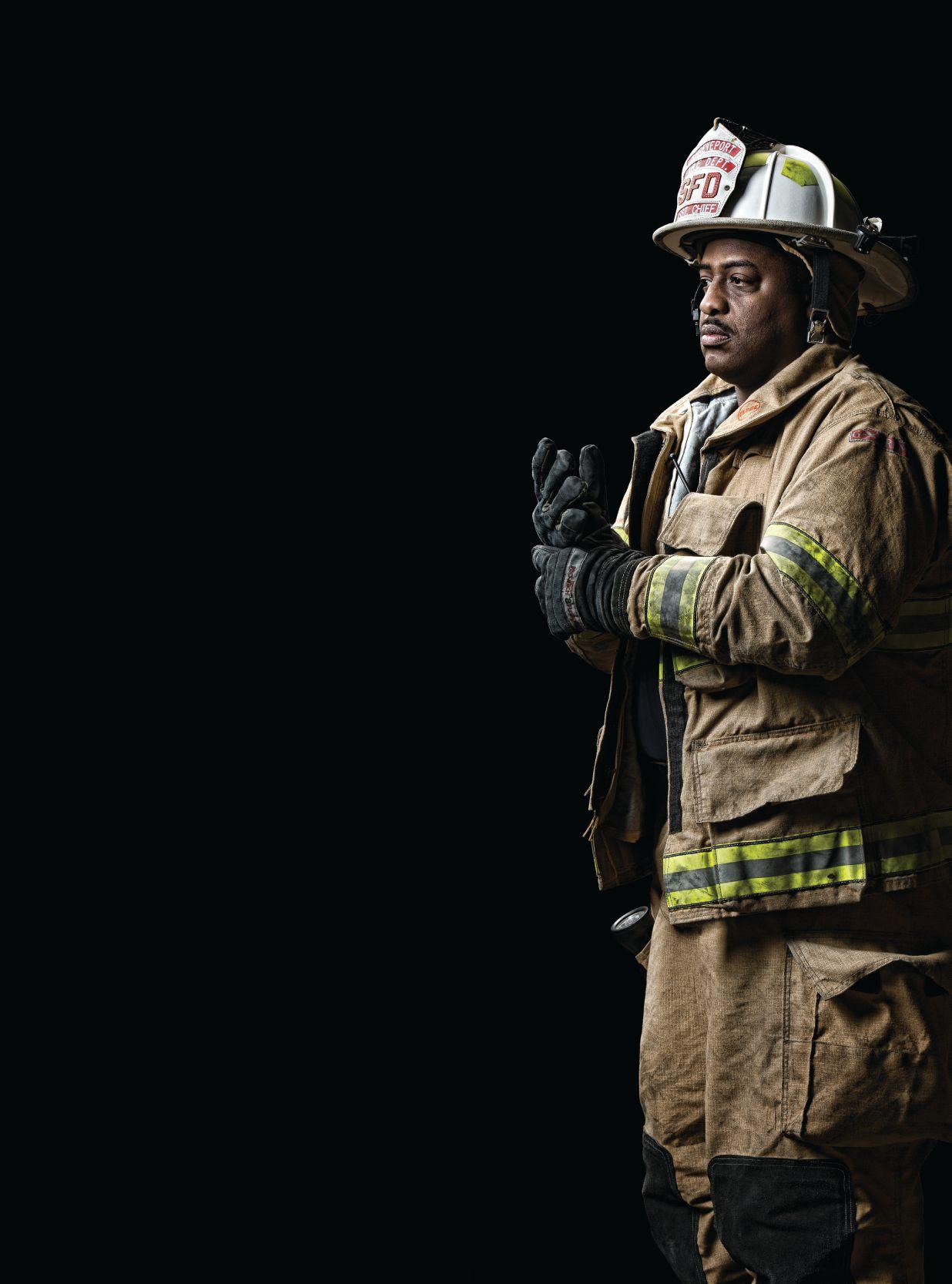
Understanding that the right brain – the intuitive brain –takes control during fire-ground stress can help incident commanders on scene. See story on page 10.
• Firefighters in British Columbia have distributed thousands of smoke alarms in high-risk neighbourhoods and partnered with agencies such as food banks to spread fire-safety messages. The result? Residential fire rates are down.
• In Ontario, the Office of the Fire Marshal has released its risk-assessment program so that fire chiefs can better explain (and prove) to their councils what resources they need to meet service levels.
• In Newfoundland, smoke alarms are required in all bedrooms – not just outside the sleeping areas.
• In Yukon, a new fire-prevention/publiceducation program saved a life.
I’ve also noticed better working relationships between fire and government. In many cases, that’s change.
In labour relations, the City of Vaughan, Ont., and its fire department freely negotiated the 24-hour shift – no arbitration. Given the mindset in Ontario about the 24-hour shift, that’s change.
There are myriad other examples – Google fire service + change and you’ll get a link to B.C.’s fire-service liaison group, training courses on managing change, a whole bunch of Fire Fighting in Canada stories and columns on change, and dozens of other hits.
It’s fine to be proud of and embrace fireservice customs; it’s not OK to be stubborn and stuck in the past.
Two hundred years of progress unimpeded by tradition. That’s change.
ESTABLISHED 1957 December 2013 VOL. 57 NO. 8
EDItoR LAURA KInG lking@annexweb.com 289-259-8077
aSSIStant EDItoR OLIVIA D’ORAZIO odorazio@annexweb.com 905-713-4338
EDItoR EmERItUS DOn GLEnDInnInG
aDVERtISIng managER CATHERInE COnnOLLY cconnolly@annexweb.com 888-599-2228 ext. 253
SaLES aSSIStant BARB COMER bcomer@annexweb.com 519-429-5176 888-599-2228 ext. 235
mEDIa DESIgnER GERRY WIEBE gwiebe@annexweb.com
gRoUP PUBLISHER MARTIn MCAnULTY fire@annexweb.com
PRESIDEnt MIKE FREDERICKS mfredericks@annexweb.com
PUBLICATIOn MAIL AGREEMEnT #40065710
RETURn UnDELIVERABLE CAnADIAn ADDRESSES TO CIRCULATIOn DEPT.
P.O. Box 530, SIMCOE, On n3Y 4n5
e-mail: subscribe@firefightingincanada.com Printed in Canada ISSn 0015–2595
CIRCULatIon
e-mail: subscribe@firefightingincanada.com
Tel: 866-790-6070 ext. 206
Fax: 877-624-1940
Mail: P.O. Box 530 Simcoe, On n3Y 4n5
SUBSCRIPtIon RatES
Canada – 1 Year - $24.00
(with GST $25.20, with HST/QST $27.12) (GST - #867172652RT0001)
USA – 1 Year $40.00 USD
We acknowledge the financial support of the Government of Canada through the Canada Periodical Fund of the Department of Canadian Heritage.
Occasionally, Fire Fighting in Canada will mail information on behalf of industry-related groups whose products and services we believe may be of interest to you. If you prefer not to receive this information, please contact our circulation department in any of the four ways listed above.
no part of the editorial content of this publication may be reprinted without the publisher’s written permission ©2013 Annex Publishing and Printing Inc. All rights reserved. Opinions expressed in this magazine are not necessarily those of the editor or the publisher. no liability is assumed for errors or omissions.
All advertising is subject to the publisher’s approval. Such approval does not imply any endorsement of the products or services advertised. Publisher reserves the right to refuse advertising that does not meet the standards of the publication. www.firefightingincanada.com
Photo by John Riddell
When seconds count, count on Ram.
Reporting for duty is the powerful new 2014 Ram 1500 Special Service* Vehicle. Built specifically for Firefighters, EMS and First Responders, it offers a 5.7 L HEMI V8 engine that delivers 395 HP and 407 lb-ft of torque. Yet it’s also Canada’s most fuel-efficient full-size pickup.¤ With its Electronic Control System including All-Speed Traction Control, Hill Start Assist and Ready Alert Braking, Canada’s longest lasting» line of pickups is the perfect partner for any situation.

statIontostatIon
across canada: Regional news briefs
Drager brings live fire training to Canadian departments
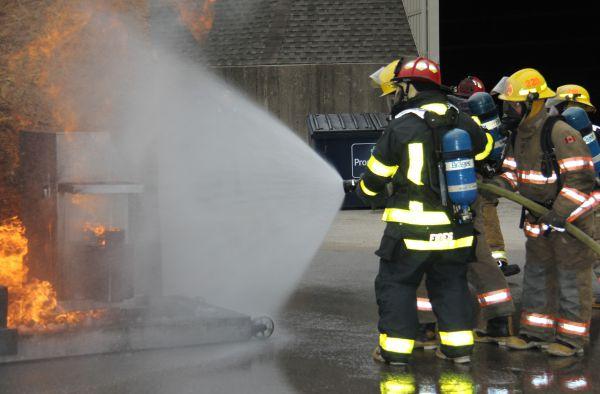
Firefighters from the Wellesley Fire Department in Ontario, as well as surrounding departments, train on a barbecue prop during the Live Fire Training Tour (LiFTT). Drager provided all of the equipment for the training, including the props and SCBA.
The Township of Wellesley Fire Department in Ontario hosted its second Live Fire Training Tour (LiFTT) in the fall. The event was sponsored by Drager Safety Canada, which hosted similar events this year in Saskatchewan and Nova Scotia.
Held in St. Clements,
Ont., the training weekend provided a hands-on training opportunity for 70 firefighters using Drager-manufactured equipment and tools.
“[The program] targets volunteer fire departments, especially those that don’t have access to live fire training,” Drager product
the brass pole
promotions & appointments
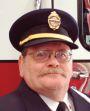
DaVE DoWIE was promoted to platoon chief for the Whitehorse Fire Department in June. Dowie joined the fire service in 1994 as fire chief of the Mt. Lorne Volunteer Fire Department in the Yukon. In 2000, Dowie joined the Whitehorse department as a
volunteer and transitioned to a career firefighter in 2005; he was promoted to captain in 2011.
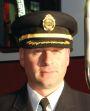
KEVIn LySLo was promoted to deputy chief for the Whitehorse Fire Department in May. Lyslo joined the department as a volunteer firefighter in 1994 and was hired as a career member in 1998. He was promoted to captain in 2008 and to platoon chief in 2011.
specialist Joe Drouin said in an interview.
“It’s an opportunity for us to give something back to the fire community.”
The event also provided 28 trainers with the chance to hone their skills. Drager’s senior instructor, Rich Graeber – a veteran firefighter and trainer based in Bayfield, Colo., who has instructed in several provinces in the last year – oversees the program.
“[Graeber] brings an excellent knowledge base,” says Wellesley Fire Chief Andrew Lillico, “and he really helped the trainers.”
In addition to support staff, Drager also provided all of the tools and training equipment, entirely free of charge. Drager brought a flashover training system for the rescue drills, a propane-fuelled livefire simulator for car fire evolutions, and a confinedspace prop for search and rescue drills, as well as SCBA, thermal-imaging cameras and gas monitors.
At Lillico’s request, Drager
SHEILa KIRKWooD was appointed fire chief for Whistler Fire Rescue Service in British Columbia in november. Kirkwood joined the Whistler department as a volunteer in 1986. In 1989, she was hired as a career firefighter, becoming the first female full-time firefighter in the province. She was also the first woman to become assistant chief in British Columbia, a title she has held for the last 15 years.
also built a prop to simulate barbecue fires.
“The prop allows firefighters to experience a barbecue fire with a tank [and] we built an exposure wall to show firefighters how the fire would progress if the barbecue was against the house,” Lillico says. “[Drager] built that prop specifically for us to use for this training.”
The program, however, was not limited to Wellesley staff. Lillico says one of the great opportunities the weekend provided was meeting and working with members from neighbouring departments.
“It’s a great opportunity for us not only to provide training for our own staff but to open [the training] up in a broader context,” he says.
“It allows us to work with a variety of firefighters with different life experiences and knowledge. It not only builds a stronger [membership] within my own department but gives us exposure to other departments.”
– Olivia D’Orazio
CyntHIa RoSS tUStIn is the new fire chief for the Essa Fire Department in Ontario. Ross Tustin has more than 27 years of experience in the fire service. She volunteered with the Hillsburgh and District Fire Department and was hired as deputy chief of fire prevention and training for the Barrie Fire & Emergency Services in 2000. In 2006, she was appointed deputy chief for the Bradford West Gwillimbury Fire & Emergency Services. Ross Tustin most
Salmon Arm celebrates 100th anniversary
On Sept. 7, the Salmon Arm Fire Department in British Columbia celebrated its 100th anniversary in conjunction with the city’s annual fair.
The day’s festivities included a breakfast hosted by the fire department and a parade consisting of more than 30 apparatus, including the 1899 horse-drawn steamer from the Victoria Fire Department Historical Society.
The department was formed by several concerned citizens. Since those 14 original members got together, the department has grown to four career firefighters and 68 paid on-call members, who work out of four fire halls that cover 217.6 square kilometres.
“[The department] has changed pretty dramatically,” says Fire Chief Brad Shirley.
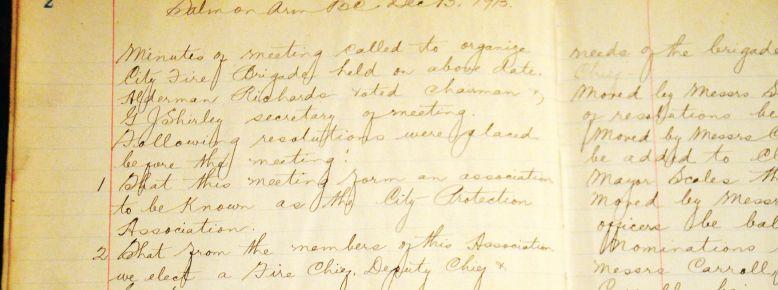
In addition to a parade and muster on Sept. 7, the Salmon Arm Fire Department in British Columbia celebrated its 100th anniversary by reading the minutes from the department’s first meeting.
“It’s pretty interesting, though, going through the minute book of meetings that we have.”
While the department couldn’t afford a fire truck in those early days, the members purchased a few hose reels, which are on display in the
town’s heritage centre.
In addition to the parade and muster, Salmon Arm also held a wine and cheese event for its members on Dec.13, which marks the department’s centennial to the day. Association members met on the evening of Dec. 13 and read some of the
minutes from that first meeting, which were recorded by Chief Shirley’s grandfather who was the secretary at the time. The department also unveiled the newly restored fire bell, which was purchased for the city in 1914.
– Olivia D’Orazio
New Collingwood station improves response times
Local dignitaries uncoupled a fire hose on Sept. 14 to mark the grand opening of the new 21,000-square-foot fire station in Collingwood, Ont.
The new building, funded partially by grants from Infrastructure Canada and the now-disbanded Joint Emergency Preparedness Program, boasts 9,000 square feet of truck bays and an
equal amount living space.
“We have a community room, which is 2.5 storeys high,” said Fire Chief Trent Elyea. “It’s got our heritage in it, our old pole out of our original fire hall. It’s got massive pictures of fire scenes.”
The Collingwood Fire Department formerly shared a building with the local Ontario Provincial Police
detachment. The decision to build the new $5-million station was made after a study showed that the OPP required more space. Collingwood’s firefighters were happy to relocate.
“We were right dead centre in town, which was great 30 years ago, but . . . it was getting a little difficult to get out,” said Elyea. “Now we
are on a main artery that runs parallel to the town. It’s a good spot because it gives us access to all the main roads.” With a more comfortable space and a location that promises efficient response times, the new fire station will benefit both firefighters and the citizens of Collingwood.
– Cynthia Bigrigg
recently worked as a program specialist for the Ontario Office of the Fire Marshal.
retirements
RanDy ISFELD retired from the Williams Lake Fire Department in British Columbia on Aug. 31. Isfeld joined the department as a volunteer in 1976. In 1988, he was hired as the fire prevention training officer. A year later, he was appointed assistant fire chief, and in 1995,
he was named deputy chief. He was promoted to fire chief in 2008.
DoUg oUttRIm, instructor at the Ontario Fire College, retired in november. Outtrim joined the Dundas Fire Department in Ontario as training and fire prevention officer in 1976. In 2000, he was hired as fire chief for the South Bruce Peninsula Fire Department. A year later, he joined the Ontario Fire College.
last alarm

JanEt tay L o R died Sept. 15 after a brave battle with cancer.
Taylor was a volunteer firefighter with the Pouch Cove Volunteer Fire Department in n ewfoundland and was the former chief of the Sable River Volunteer Fire Department in n ova Scotia. Janet had been an active
member of the Fire Services Association of n ova Scotia and the Maritime Fire Chiefs Association.
J o H n HE a SLIP died June 22 at the age of 82. Heaslip was the fire chief for the Dunnville Fire Department in Ontario for many years. He was a past president for both the Firefighters Association of Ontario and the n iagara District Firefighters Association.
STATIONtoSTATION
br I gade news: From stations across Canada
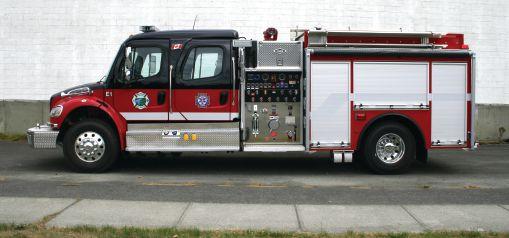
Malahat Fire Rescue in British Columbia, under Fire Chief Rob Patterson, took delivery in August of a Hub Fire Engines & Equipment-built pumper. Built on an M2 Freightliner chassis, and powered by an Allison 3000 EVS transmission and a Cummins ISC 350-hp engine, the truck is equipped with a Hale Q-Flo 1,050-igpm pump, a FoamPro 2001 foam system, 1,000-imperial-gallon co-poly water tank, a Whelen LED light package and FRC push-up lights.
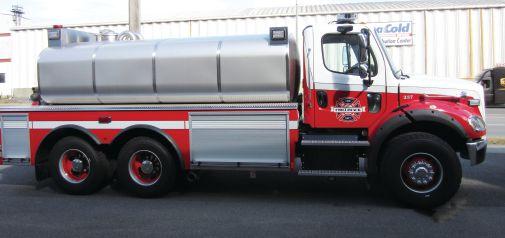
The Chilliwack Fire Department in British Columbia, under Fire Chief Rick Ryall, took delivery in September of a Hub Fire Engines & Equipment-built tanker. Built on a Freightliner M2-112 chassis, and powered by an Allison 4000 EVS transmission and a Detroit DD13 450-hp engine, the truck is equipped with a Hale 625-igpm pump, a 2,800-imperial-gallon stainless steel water tank and a Whelen LED light package.
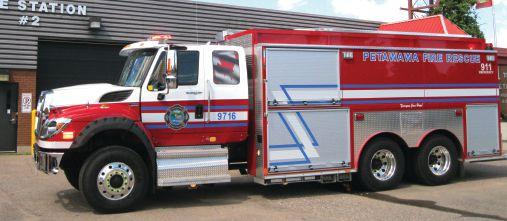
The Petawawa Fire Department in Ontario, under Fire Chief Steve Knott, took delivery in May of a Carl Thibault Emergency Vehiclesbuilt tanker. Built on an International 2013 chassis, and powered by an Allison 4500 EVS transmission and a MaxxForce 410-hp diesel engine, the truck is equipped with a 2,500-imperial-gallon ultrapoly water tank, a Rabbit P-555 portable pump and three remotely operated dump chutes.
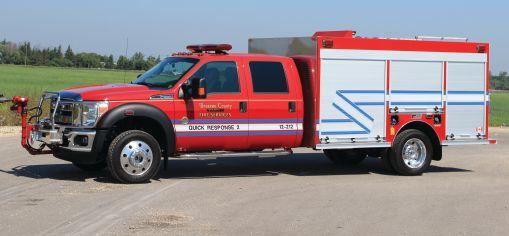
Brazeau County Fire Rescue in Drayton Valley, Alta., under Fire Chief Murray Galavan, took delivery in August of a Fort Garry Fire Trucks-built rapid attack vehicle. Built on a Ford F-550 chassis, and powered by a 6.7-litre 4V diesel engine and a six-speed automatic transmission, the truck is equipped with a Waterax 87-igpm pump, a 250-imperial-gallon poly water tank, a 12K Warn winch, an Akron Firefox bumper turret and a Federal Signal light package.
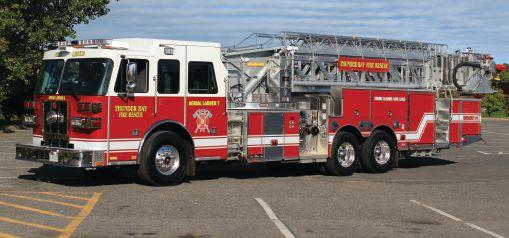
Thunder Bay Fire Rescue in Ontario, under Fire Chief John Hay, took delivery in August from Fort Garry Fire Trucks of a Sutphenbuilt aerial platform. Built on a Sutphen chassis, and powered by an Allison 4000 EVS transmission and a Cummins ISX 500-hp engine, the truck is equipped with a Waterous CSU 1,500-igpm pump, a 250-imperial-gallon stainless steel water tank, a Whelen LED light package and an Onan 10-kilowatt hydraulic generator.
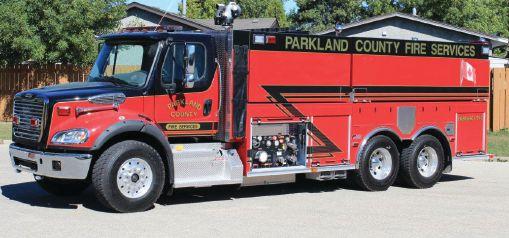
Parkland County Fire Services in Alberta, under Fire Chief Jim Phelan, took delivery in October of a Fort Garry Fire trucks-built tanker. Built on a Freightliner M2-112 chassis, and powered by an Allison 4000 EVS transmission and a Detroit DD13 410-hp engine, the truck is equipped with a Hale 1,250-igpm pump, a 3,000-imperial-gallon poly water tank, a FoamPro 2001 foam system, FRC scene lights and Zico hydraulic porta-tank lifts.
tHE CHILLIWaCK FIRE DEPaRtmEnt
maLaHat FIRE RESCUE
BRazEaU CoUnty FIRE RESCUE
tHUnDER Bay FIRE RESCUE
CoUnty FIRE SERVICES
(High Elevation)

fire-ground decision making
Understanding how stress affects brain function at incidents
By RichaRd Gasaway
In the May issue of Fire Fighting in Canada I wrote about situational awareness. Now, we’ll look at the importance of decision making as it relates to situational awareness. After all, the decisions we make, based on our situational awareness, drive successful (or unsuccessful) outcomes.
The traditional and longstanding belief is that a good decision is best made by following a rational, analytical and non-emotional process. Thankfully, such a process has long been defined and taught. These are the steps for good decision making:
1. Define the problem.
2. Identify decision-making criteria.
3. Allocate weights and measures to the various criteria.
4. Develop some alternatives to consider.
5. Evaluate the various alternatives.
6. Select the best or highest ranked alternative.
7. Evaluate the decision’s effectiveness. This is a very solid decision-making model – if you want to buy a house or make a strategic decision in your business. However, before you copy this list, laminate it, and put it in the pocket of your turnout coat, there’s something you should know: this model doesn’t work well at emergency scenes.
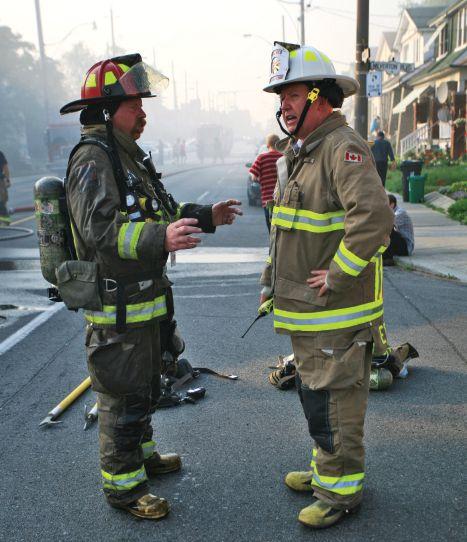
The decision-making process on the fire ground must account for stress. Focus on the most relevant information and try to detect unusual situations that may affect the outcome of your actions.
To understand why, let’s take a brief look at brain anatomy and function. The human brain has two halves, which are formally known as hemispheres.
Your left hemisphere is your rational brain. If you’re great at math, enjoy using spreadsheets and tend to plan out every detail to the highest degree, then you are a predominately leftbrained person.
Your right hemisphere is your creative brain. If you’re great with art, music and making vacation plans on the fly, and your living space is far less than orderly (OK – it’s downright messy!), then you are predominately a right-brained person. Both hemispheres are used in the process of making good and bad decisions. In fact, it would not be possible to turn off the influence of either side of your brain. However, stress can influence brain behaviour,
and impact the way you think, decide and act. More specifically, stress related to threats that endanger your survival affect the decisions you make. This is precisely the environment in which first responders operate. It is important to understand your stressed brain doesn’t function the same way as your non-stressed brain. This means you will think, and act, differently when you are under incident-scene stress than you will in a relaxed environment.
Your brain recognizes when you experience threat-related stress and sends out alert messages. Your body then reacts to that message by releasing chemicals that prepare you biologically, emotionally, psychologically and physically to deal with the threat.
The way you deal with threats, including how you make decisions, is engrained in your DNA. Since the early existence of our species, the brain has been learning (and remembering) how to make decisions in high-stress, high-consequence environments. Through millions of years of evolution, our species has learned how to make good decisions and survive. Those same hereditary instincts for how to make splitsecond decisions are within you.
When you experience stress, your rational left brain becomes less active and your intuitive right brain picks up the slack. In fact, in a high-stress, high-consequence decision-making environment, your right brain dominates. And this is where the previously mentioned decision-making model falls apart. That model is based on rational, analytical, non-emotional facts that drive the decision. Those are all left-brain functions.
Under stress, the right brain dominates and the decision making becomes more creative, intuitive and, much to the chagrin of some who would prefer otherwise, emotional. Yes, high-stress, high-consequence decisions are highly influenced by emotions. In fact, very strong arguments (backed by research) support the idea that all decisions, regardless of stress and consequence, are influenced heavily by emotions.
If the traditional, rational, analytical decision-making process does not work well under stress, then how are decisions made? They are made using a dynamic, intuitive process that taps into the power of the right brain. The body of research that supports intuitive decision making by firefighters was started more than 25 years ago when a researcher named Gary Klein was working on a project to help the United States military improve decision making on battlefields. Klein’s work uncovered a new
P hoto s by John Riddell
model for decision making in high-stress, high-consequence, dynamically changing environments. He called it the recognitionprimed decision-making process. I have taken the liberty of adapting Klein’s finding to help first responders understand how to improve incident-scene decision making. Here are the steps of the dynamic decision making process:
1. Conduct a rapid size-up.
2. Focus on the most relevant information.
3. Recognize typical ways in which you would deal with the situation.
4. Run through the options in your mind.
5. Form expectations about the outcomes.
6. Detect unusual problems and seek explanations for odd things.
7. Make a plan and put the decision into action.
Let’s look at each of the steps of the dynamic decision-making process to see how firefighters can use them to help improve decision making at incident scenes.
CONDUCT A RApID SIzE-Up
In a dynamic environment where things are changing fast, the size-up needs to be quick. When I discuss this with firefighters, some believe the incident scene size-up must be quick because the situation requires rapid action to prevent further damage or loss of life. While this may be true in many instances, it is not the reason the decisionmaking process demands a rapid size-up. A quick size-up is necessary because the speed at which things are changing can cause the decision maker to become overwhelmed with information.
Remember this: under stress the rational brain isn’t functioning well, and it is the rational brain that processes information. This means that high volumes of information, and complex and detailed information, are not your friends under stress. In fact, they can be detrimental to decision making. When the brain cannot figure out what is going on, it can lock up and you may not be able to make a decision at all. This is sometimes referred to as analysis paralysis. It happens when the brain is trying so hard to process and analyze volumes of information that it becomes paralyzed.
A rapid size-up ensures that the decision maker is taking only a snapshot of information. This helps to prevent the brain from becoming overloaded. In a dynamically changing environment, the longer you wait, the more information there is to comprehend. This is not to say the sizeup should be cut short or left incomplete. A 360-degree size-up from which you gather critical information to form situational awareness is imperative to making a good decision.
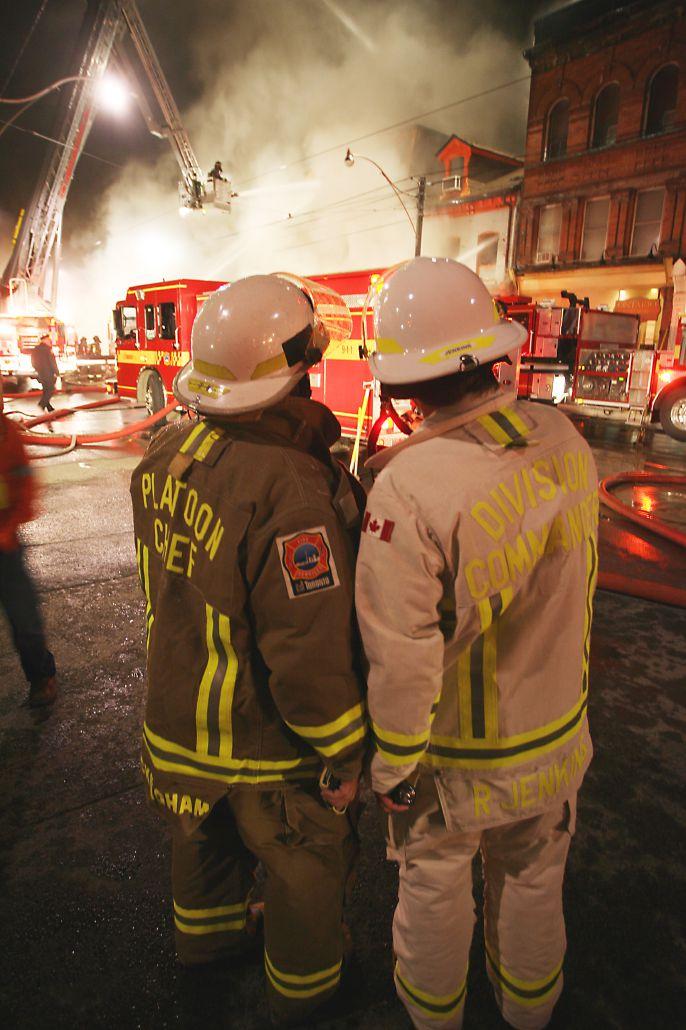
Stress can influence brain behaviour, and impact the way you think, decide and act. More specifically, stress related to threats that endanger your survival affects the decisions you make.
FOCUS ON THE MOST RELEvANT INFORMATION
In a dynamically changing, complex environment, such as a structure fire, there may be dozens, if not hundreds, of pieces of information coming at you. Your brain cannot process all that information. The capacity of your short-term or working memory is about seven pieces of unrelated information – not dozens or hundreds. If you try to remember more, you will forget. But what will you forget?
People who do not understand how the brain functions under stress believe the least important information will
be forgotten and the most important information will be retained. This is not the case. Under stress, the brain is not very good at prioritizing important from unimportant information. Further, when a lot of information is flooding into your brain, you have little conscious control over what you will remember or forget.
It is entirely possible that the most important things you need to remember are forgotten and the least important things are remembered. This is just the opposite of what you would want to happen. What is most likely to stick in
For more information, call your local Globe dealer or Safedesign.
British c olum B ia and a l B erta Guillevin
Coquitlam, British Columbia 800-667-3362
Calgary, Alberta 800-661-9227
Campbell River, British Columbia 250-287-2186
Edmonton, Alberta 800-222-6473
Fort St. John, British Columbia 250-785-3375
Kamloops, British Columbia 250-374-0044
Prince George, British Columbia 250-960-4300
Trail, British Columbia 250-364-2526
Que B ec
H.Q. Distribution
LaSalle, Quebec 800-905-0821
Boivin & Gauvin
Saint-Laurent, Quebec 418-872-6552
a tlantic Provinces K&D Pratt Ltd.
St. John’s, Newfoundland 800-563-9595
Dartmouth, Nova Scotia 800-567-1955
m anito B a and s askatchewan Trak Ventures
204-724-2281
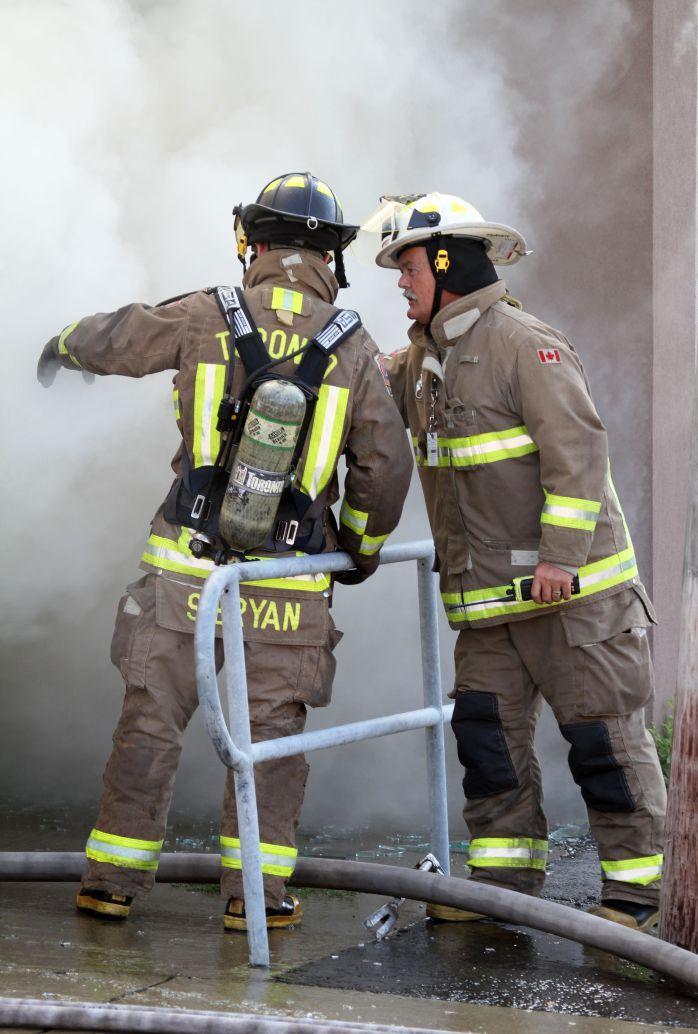
Beginning the fire decision-making process with the end in mind allows you to visualize the benchmarks that indicate success. Then, as you work through the fire, you will be able to recognize whether you are moving in the direction of success or in the direction of failure.
your short-term memory is information that is familiar to you based on past training and experience, and information that triggers some emotional response or has some emotional connection with your past experiences.
877-253-9122
www.safedesign.com
If those things are among the most important, you will remember them. If they’re not very important, you will still remember them. The best thing you can do to manage the limitations of your shortterm memory is write down the important things on paper. That way, if your brain gets overloaded and starts shedding important information, you have captured the most pertinent facts in writing.
RECOGNIzE TYpICAL wAYS TO DEAL wITH THE SITUATION
As you gain experience, you learn what to expect at emergency scenes. As you prepare for and respond to an emergency, you are gathering and processing information shared with you by the dispatcher. As you form mental images in your mind about the call to which you are responding, you think back to past training and your experiences at similar calls. This helps you prepare, in advance of your arrival, and to form some expectations of what you will see.
This process allows you to quickly assess and compare the current event to past experiences and it can help you to



quickly process the information and make a decision. Experts can complete this process very efficiently. Novices, however, struggle with this because they do not have enough training or experience to know what they should expect to see. This is the point at which training and experience can really pay off in incident-scene decision making.
RUN THROUGH THE OpTIONS IN YOUR MIND
In this step of the decision-making process, you think about what may be your best course of action. Then, prior to implementing it, you run a mental simulation of the action. You are imagining what will happen if you take that action.
If, during the mental simulation, you find flaws in your plan, scrap it. Come up with a new plan and run another mental simulation of the new plan. You will do this as many times as you need to in order to come up with a plan that has a good and safe outcome. Sometimes, this will be the first plan that you consider. Other times, you may have to run two or three simulations until you come up with one that you are confident will work.
FORM ExpECTATIONS ABOUT OUTCOMES
In this step of the dynamic decision-making process, you think about what the successful outcome will be. In a fire scenario, this might mean you’ll see white smoke replacing black smoke and the flames will be extinguished. While this step seems so elementary, do not underestimate its importance.
If things are not going well at the fire, the white smoke will not replace the black smoke and the flames will not disappear. Beginning the fire decision-making process with the end in mind allows you to visualize the benchmarks that indicate success. As you work through the fire, you will be able to harken back to this visualization of the

successful outcome and recognize, with clarity, whether you are moving in the direction of success or in the direction of failure.
When thinking in the mindset of end results, always be sure to put this expectation on a timeline. Setting a timeline allows you to manage the role your people play in this expectation. For example, when you send firefighters into a structure fire, you cannot leave them in there for an infinite period of time. A building on fire is weakening under the heat of the fire. Gravity is pushing down on the building, trying to make it fall down. Eventually, if the fire is not extinguished, gravity will win and the building will fall down. When you set time expectations, you have to think about how long you can leave your firefighters in that dangerous, weakening building before you pull them out.
DETECT pROBLEMS, SEEK ExpLANATIONS
In this step of the decision-making process, you take time to identify and comprehend unexpected or unusual things. Regardless of how much training or experience you have, any call can present unusual or unexpected things. When this happens, the decision-making process slows down because it is more difficult and time-consuming to understand unusual things.
When faced with first-time experiences, do not rush the decision and do not dismiss the unusual as coincidental. Rather, try to understand why the unusual things are happening. Look for weak signals, which are small signs that indicate that unusual things are happening. These signals are precursors to unexpected outcomes. They can be easy to overlook, especially in the presence of strong signals – big signs that indicate usual and typical things are happening.
MAKE A pLAN AND pUT IT INTO ACTION
This is the final step of the dynamic decision-making process. Here, you lock on to your plan of action and get to work. Up to this point, the entire process was mental. This is the step at which the physical implementation of the decision occurs. Following the process helps to form an action plan that is based on gathering and understanding what is happening while making accurate predications about future events.
There is no coincidence to the goal of dynamic decision making and the definition of situational awareness I offered in the May issue:
Situational awareness is a first responder’s ability to capture cues and clues (think of gathering up jigsaw puzzle pieces) from what is happening around him, then being able to put those clues and cues together to mean something (think of assembling some of the puzzled pieces to start forming a picture), and being able to predict future events as a result of what has been captured and the meaning given to it (think of looking a partially completed jigsaw puzzle and making predictions about what the completed picture will look like).
If you are going to make good decisions in high-stress, highconsequence, time-compressed, dynamically changing environments, consider including this process in your training and then practise it at emergency scenes. You will find that this process helps you to make better decisions and, when coupled with strong situational awareness, will help you see the bad things coming in time to change the outcome.
Dr. Richard B. Gasaway joined the fire service in 1979 and has worked for six emergency services agencies; he was a career fire chief for 20 years. Gasaway’s doctoral research is focused on the neuroscience of decision making under stress and the barriers that impact situational awareness. Gasaway has written four books on the topic: Situational Awareness Volumes 1 & 2, Situational Awareness for Emergency Response, and Fireground Command Decision Making. He has also created three DVD series to improve first-responder safety. Contact Gasaway at rich@richgasaway.com and follow him on Twitter at @SAMatters
By t om D E So RC y Fire Chief, Hope, B.C.
aGoing with the flow despite the drought
s one generation gives way to the next, so does the makeup of our fire departments. My Volunteer Vision colleague, Vince MacKenzie, spoke about this at our Fire Chiefs Association of B.C. conference in Penticton in June; in particular, he talked about the emergence of the millennials or the Y generation. People born in 1995 are eligible to become volunteer firefighters. Feel old? It doesn’t matter what generation our volunteer firefighters belong to, I believe that all firefighters are unique, kind of like snowflakes.
New firefighters fall into your department much like snow falls on the hills; they land softly at first, not knowing exactly where to go, just landing where they may. Sure, they’re unique at first, but when joined with other newbies, they start to lose that uniqueness and assimilate into the group.
Soon the recruits warm to their surroundings, and with time, and like the snow that begins to melt as the seasons change, what once was ice turns into water, cascades into a flowing stream, and eventually becomes a much larger body of fresh, clear water heading toward an ocean. The fresh water begins to mix with the old salt of the sea, and although it takes a while to blend completely, the two eventually become one.
OK, maybe I’m reaching a little with my snowwater-ocean-old-salt metaphor. But it makes sense, especially when you think back to when we could always count on big snowfalls and there was no shortage of volunteers, no matter their ages.
Today I see the volunteer fire service experiencing a bit of a drought. Across this nation, the volunteer fire service is largely relying upon that anticipated snowfall, but for many, there are fewer snowflakes each year. And that means the old salt –the veterans – have to sustain much more than we used to.
Why are we experiencing this?
and attention – a sense of expectation, if you will – now exists. It’s that demand for service today, from an increasingly taxed public, that has added to our strains. Think about this as an example: How have cellphones impacted our business? Locally, many of our calls here in Hope, B.C., come from highway travellers – motorists who see smoke in the distance from their vehicle, as they travel a mile a minute down the highway – we call them drive-by 911s. In the time it takes them to see the smoke, dial three numbers, connect to dispatch, figure out where they are and where they saw the smoke, they are up to 10 kilometres from their original location.
Don’t get me wrong, cellphone communication is the greatest thing in our world, but we weren’t going to those calls 25 years ago. We also didn’t have monitored alarms back in the day. Sure, monitored alarms are a great addition to public safety, but the creation of this service has added an industry that advertises our services to their customers.
As with the former snowflakes, our members remain unique in that they will do anything to help anyone. Firefighters just can’t seem to say no to anyone, and they will go out of their way to assist when and where they’re needed. We are doing more with less but you’ll
i ’ve said this in the past: in a way, we’re victims of our own success. . . ‘‘ ’’
I’ve said this in the past: in a way, we’re victims of our own success. Feed a stray cat just once and it keeps coming back for more. When fire departments responded only to actual fires, the volunteer fire department was more of a social gathering place than a response agency. People have changed. The world has changed. Our social gatherings have changed, and a much greater demand for service
Tom DeSorcy became the first paid firefighter in his hometown of Hope, B.C., when he became fire chief in 2000. Originally a radio broadcaster, Tom’s voice could be heard in the early 1990s across Canada as one of the hosts of Country Coast to Coast. DeSorcy is married with two children and enjoys curling and golf. He is also very active with the Fire Chiefs’ Association of B.C as communications director and conference committee chair. E-mail Tom at TDeSorcy@hope.ca and follow him on Twitter at @HopeFireDept
hear few complaints. Add to this the fact that competition for volunteers is tougher. Being a volunteer in other organizations – service clubs or fundraising organizations – is a little less onerous in terms of the required training and time commitment; you show up, ask what you can do and you are in. The volunteer fire service back then was really no exception, but, again, in this day and age we have had to change.
I’ve said it before: if you wanted to volunteer with your kids in minor hockey but learned you would have to take a 12-month training session on the game of hockey to do it, you probably wouldn’t. When the snow was plentiful and the big pool was smooth and calm, it was easy to melt into it. Today we don’t get as much snow, and what we do get tends to evaporate before it has a chance to join that larger body. The pressure is certainly upon us and it will only get worse. Is there an answer? All we can do is go with the flow, assuming of course there is one.

meter mYth study eliminates link between smart systems and residential fires
By Len GaRis
much has been reported across Canada and around the world about the fire safety of smart meters, but how much has been based on evidence? A new study by a Canadian university brings a long overdue scientific approach to this issue.
In September, the University of the Fraser Valley released Revisiting the Safety of Smart Meter Installations in British Columbia, which examined several years of provincial fire data in search of a link between smart meters and an increase in residential fires. Ultimately, the study concluded that smart meters are not the major fire risk they have been purported to be in the media.
Widely in use across Canada and internationally, smart meters are part of a comprehensive wireless system that provides utilities with detailed information about the status of the electricity grid, including automatic failure alerts and tamper indicators.
Utility providers across Canada have begun to install smart meters over the past few years. The most advanced programs are in Ontario (with more than 4.5 million smart meters in homes and small businesses) and British Columbia (with an estimated 1.8 million smart meters in homes). By July, 40 per cent of homes in the United States had smart meters (totalling 46 million meters); it is predicted that 250 million smart meters will be in use worldwide by 2015.
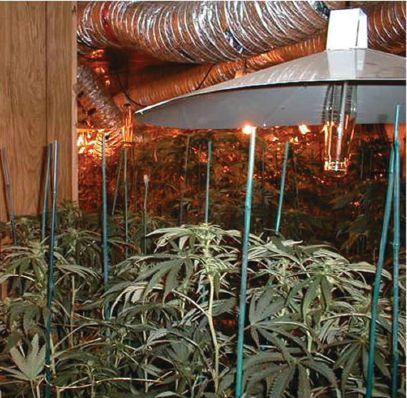
Smart meters are said to reduce electricity theft, save energy, improve efficiency and help to quickly identify and address safety issues such as overloaded service and electrical bypasses that are commonly associated with marijuana grow operations. In fact, there is an expectation that smart meters may actually cause a decline in electricityrelated fires in general, including those in marijuana grow operations.
However, the mass rollout of millions of new smart meters has also prompted concerns about fire safety, based on media reports across North America about fires following meter installations.
One of the most widely reported Canadian incidents was a June 2012
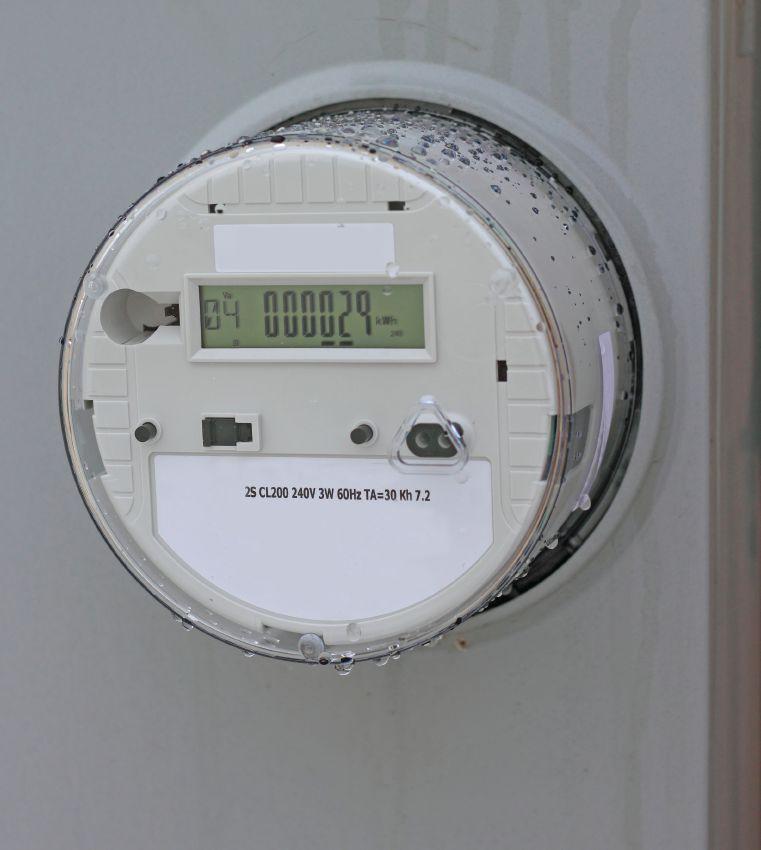
abo V e : Media reports have drawn a loose comparison between the installation of smart meters and residential fires. However, a study by the University of the Fraser Valley found no link between these electricity monitors and house fires.
r I ght: Marijuana grow operations use many grow lamps and draw high amounts of electricity. The excessive flow of electrical current, combined with tampered equipment, creates a fire hazard.
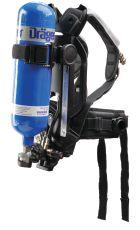
Options that fit your budget today and tomorrow.
Whatever your needs, Dräger has an SCBA in its portfolio that truly satisfies them. With the expansion of our Sentinel product line — which now includes lightweight, fully integrated, cost-effective options — our SCBA portfolio now allows you to mix and match harness solutions with PASS systems in a way that perfectly suits your department. It’s German engineering at its best. If you’ve been stuck with solutions that offer too much or not enough, Dräger is ready to outfit you with equipment that’s just right.
Whatever your needs, Dräger has an SCBA in its portfolio that truly satisfies them. With the expansion of our Sentinel product line—which now includes lightweight, fully integrated, cost-effective options—our SCBA portfolio now allows you to mix and match harness solutions with PASS systems in a way that perfectly suits your department. It’s German engineering at its best. If you’ve been stuck with solutions that offer too much or not enough, Dräger is ready to outfit you with equipment that’s just right. for more information visit www.draeger.com/scba
for more information visit www.draeger.com/pssseries
If a live line from a broken meter base accidentally touches the metal box, for example, it creates a short, which can cause a fire.
residential fire in Mission, B.C., that was initially reported to have been started by an electrical fault in a newly installed smart meter (the subsequent investigation eliminated the meter as the cause of the fire).
In Ontario, reports of smart meters causing several fires prompted a review by the Office of the Fire Marshal and Emergency Management (OFMEM). The OFMEM is aware of nine fires between May 2011 and March 2013 in which the ignition source was related to the smart meter installation (not the meter itself), and 10 incidents involving smart meters that failed due to an internal fault. Almost all the incidents occurred shortly after the smart meters were installed. The numbers represent a very small portion of structure fires in Ontario in which the source of ignition was electrical distribution equipment: 680 in 2011 and 614 in 2012.
“The number of smart meter-related incidents is quite low compared to the 4.5 million smart meters that have been installed in residences and small businesses across Ontario
This tampered meter base bypassed the meter by directly tapping into the wires from BC Hydro.
since the start of the program in 2007,” the OFMEM noted. “While not a significant number of events, the OFMEM will continue to monitor fire incidences involving electrical meters.”
It is important to point out that a variety of smart-meter technologies are in use across the country, and therefore broad-brush statements about the safety of meters should be avoided.
UFv STUDY
The intent of Revisiting the Safety of Smart Meter Installations in British Columbia was to test the theory that smart meters are a major fire hazard by reviewing actual fire data in British Columbia before and after the meters were rolled out. The frequency of residential fires from marijuana grow operations was also considered, given that smart-meter technology is said to reduce some of the safety risks associated with grow operations, which require large amounts of energy.
The study analyzed data from 5,747 British Columbia residential structure fires, including 1,988 in 2010 and 2011 (before

Table 1: The study determined that electricity-related fires make up less than one per cent of residential fires.
More Power... More Torque ... Better Fuel Efficiency
More Power... More Torque ... Better Fuel Efficiency
75% Less Emissions
75% Less Emissions
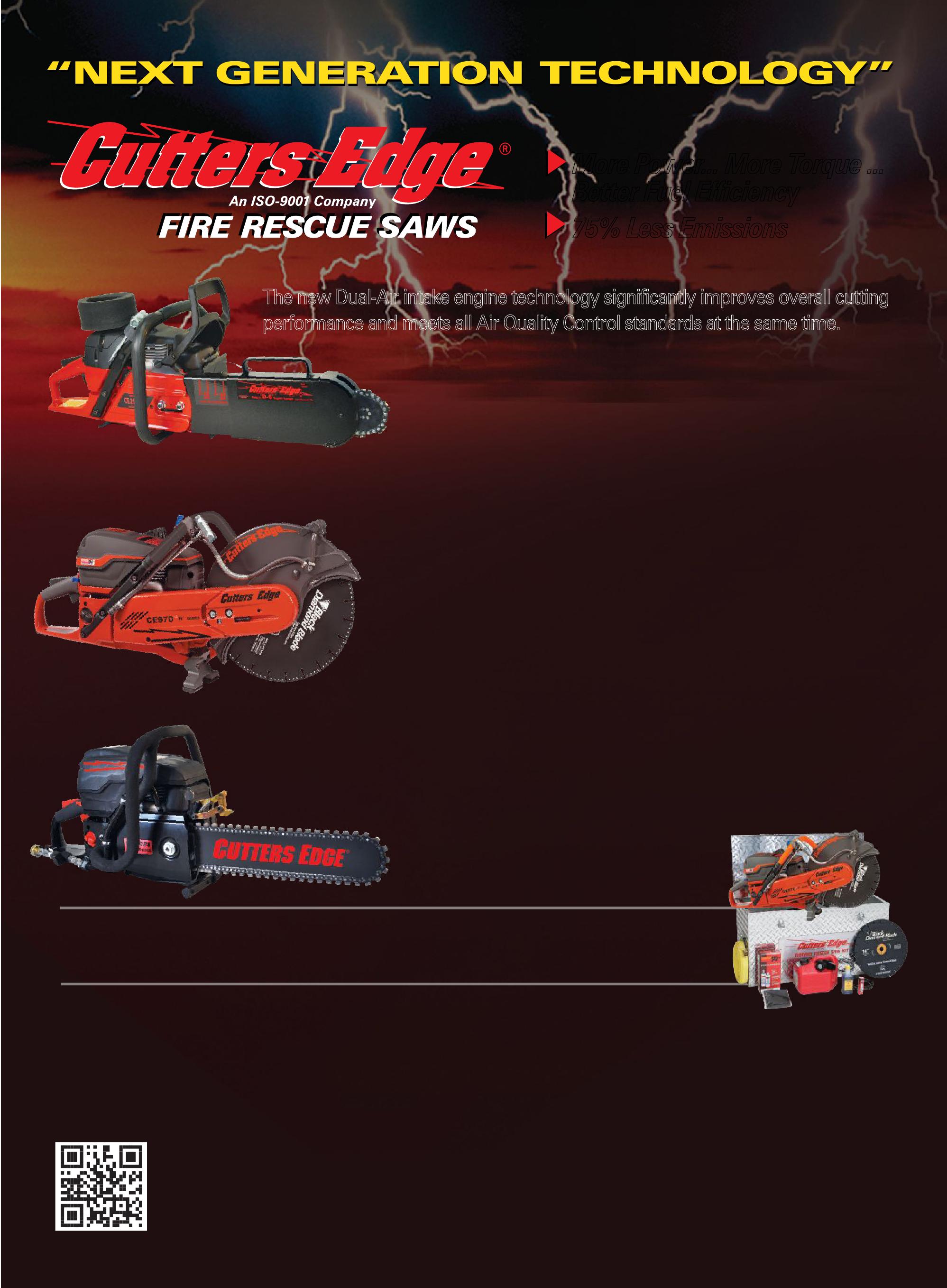
The new Dual-Air intake engine technology significantly improves overall cutting performance and meets all Air Quality Control standards at the same time.
MULTI-CUT® Fire Rescue Saw
New 2100 Series includes two engine sizes: 70.7cc and 87.9cc. Each engine is designed for use with Cutters Edge Carbide
Tipped BULLET Chain® to cut the widest range of materials found at fireground and rescue scenes.
MULTI-CUT® H Series Rotary Rescue Saw
New H Series is engineered and powered to work harder and operate longer in the most extreme fire and rescue conditions anywhere. The new technology engine is available in three sizes: 74cc, 94cc and 119cc. The Cutters Edge Black Star and Black Diamond Blades offer long cutting life and high speed cutting of virtually all materials.
New BULLET BLADE TM is now available - see video on website.
CE94 Concrete Cutting Rescue Chainsaw
A new technology 94cc engine and a new style Diamond chain cuts reinforced concrete up to 16-inches thick. Features a lighter weight power head and full-wrap handle for high performance concrete cutting in any position.
All Cutters Edge NEXT GENERATION TECHNOLOGY Fire Rescue Saws are available in fully-equipped Field Kits designed for Rescue Cutting anywhere.
Contact Your Local Cutters Edge DealerSee New Engine Technology Video Now
WESTERN CANADA
WFR Wholesale Fire & Rescue Ltd. Calgary AB - Ph 403-279-0400
1-800-561-0400
Web: www.wfrfire.com
QUEBEC
Areo-Fire
5205 J-Armand Bombardier
Longueuil QC, J3Z 1G4
1-800-469-1963
E-Mail: info@areo-feu.com
NEW BRUNSWICK
Micmac Fire & Safety Source 518 St. Mary's Street, Unit 1 Fredericton, NB E3A 8H5
1-800-561-1995 or (506) 453-1995
E-Mail: r.henderson@mmfss.ca
NEWFOUNDLAND
Medical West Supplies 13 Rowsell St., Corner Brook, NF
709-632-7852
E-Mail: jkenny@nf.sympatico.ca
ONTARIO
M&L Supply Ingleside, ON 1-866-445-3473
Email: markp@mnlsupply.com Web: www.mnlsupply.com
NOVA SCOTIA
Cumings Fire & Safety Equipment Ltd. Bridgewater, NS Ph 902-543-9839 1-800-440-3442
E-Mail: kylej@cumings.ca
Web: www.cumings.ca
KOCHEK® LDH Water Systems
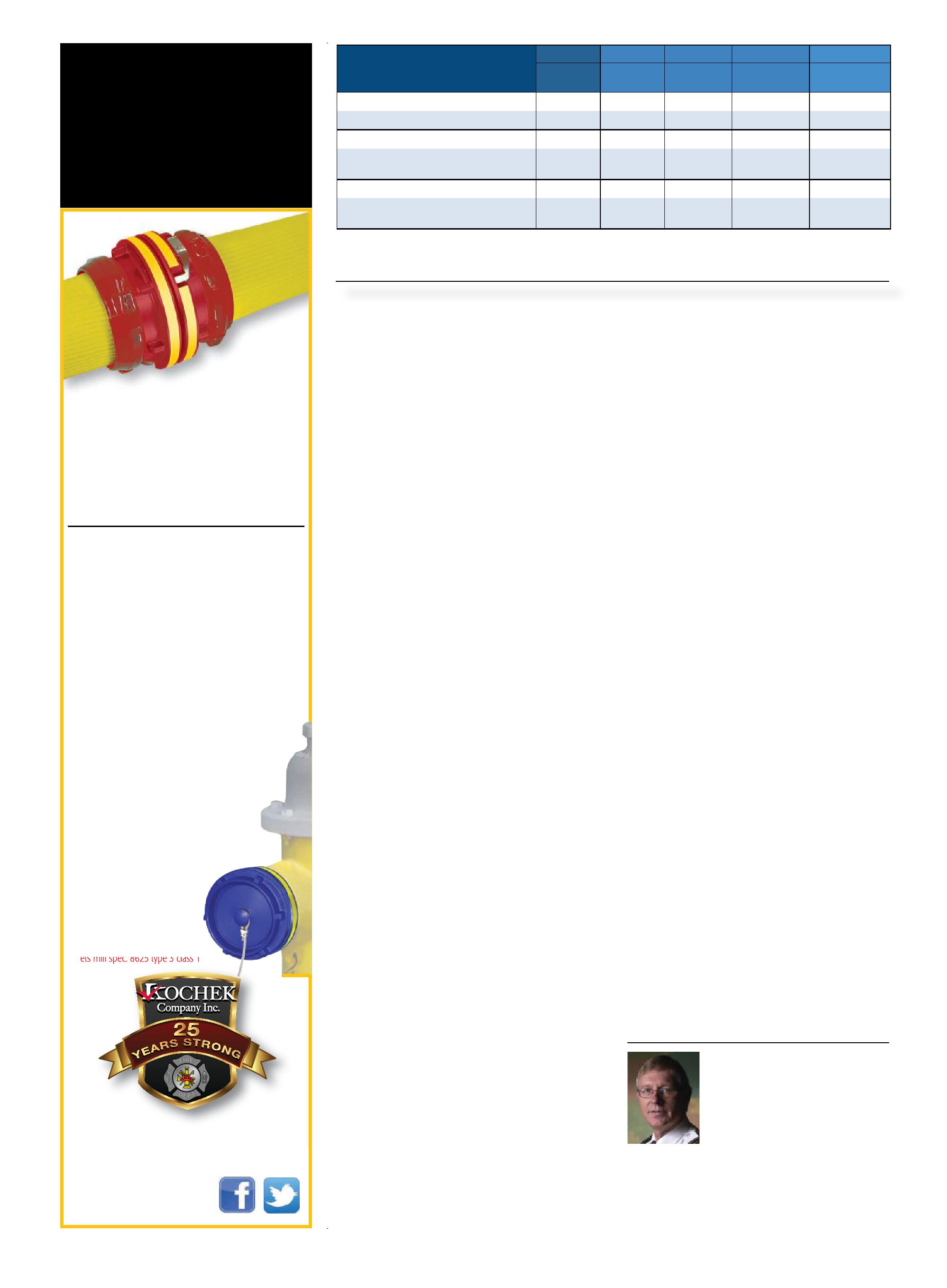
Storz Couplings
• Forged Storz Couplings 4”, 5” and 6”
• Durable QUANTUM® hard coat and MICRALOX® micro-crystalline anodizing
• Sure grip 3-piece collar for tight secure fit
• Stainless steel locking trigger
• High visibility recessed reflective tape available
Storz Hydrant Converters
• Forged 6061-T6 Aluminum
• High Visibility Reflective Tape (colors)
• Recessed groove protects reflective tape
• Laser engraving on the cap front with your choice of coatings...
MICRALOX Micro-Crystalline
A patented process, will extend the life of your aluminum parts up to 10 Times compared to conventional aluminum anodic coatings; more effectively resists salt, and chemical corrosionand attack.
Meets mill spec. 8625 type 3 class 2
QUANTUM HardcoatColor
• High quality durable hardcoat
• Vibrant anodized color
• Great for color coding
Meets mill spec. 8625 type 3 class 2
NATURAL Hardcoat
• High quality durable hardcoat
• Most often specified by design andmanufacturing engineers
Meets mill spec. 8625 type 3 class 1
Table 2: The study also found a 5.9 per cent decrease in fires caused by smoking materials over the three-year period, but an eight per cent increase in fires caused by cooking equipment.
metering began), and 3,749 in 2012 and 2013 (after metering was implemented). Data was provided by the province’s Office of the Fire Commissioner. It should be noted that meters were not in place in all British Columbia homes during the postmeter period.
wHAT THE DATA SHOwED
Pre-meter and post-meter fire data was compared to determine the frequency of structure fires related to electricity. Residential structure fires made up approximately one-third of all fires reported during the study period, but overall, electricity-related fires make up less than one per cent of overall residential fires in British Columbia (see Table 1 on page 26).
Ultimately, the available data suggests there is no cause to be alarmed about the fire safety of smart meters:
• Since July 2010, there has been a 12.3 per cent decline in residential fires with an electrical source, and a 15.3 per cent decline in fires ignited by electrical distribution equipment.
• Electrical distribution equipment –causing the types of fires most closely related with the smart-meter bases –generally caused a very small percentage of the overall residential structure fires in both the pre-meter and the postmeter fires. The number of these fires has fluctuated but similar numbers/ percentages were seen both before and after the rollout.
• There were no post-meter cases of fires related to the electrical panel board/ switchboard on an exterior wall, although there was one case before the meters were installed.
In terms of fires related to illegal operations (e.g., marijuana growing), the study showed these types of fires actually declined after July 2010 – perhaps an indication that smart meters are having an effect on reducing the safety hazards related to these illegal activities. After July 2010:
• 50 per cent fewer fires were caused by an act or omission associated with illegal operations
• 62.5 per cent fewer fires were caused
by electrical bypasses (typically associated with the theft of electricity to grow marijuana), and
• 60 per cent fewer fires were caused by the illegal use of grow lamps.
These fires, too, make up a very small percentage of British Columbia’s residential fires.
pUTTING DATA INTO CONTExT
By comparison, cooking and smoking combined make up about half of residential fires in British Columbia. From July 2010 to June 2013, there was a 5.9 per cent decrease in fires caused by smoking materials but an eight per cent increase in fires caused by cooking equipment – over a time period when the total number of residential fires dropped by 9.9 per cent (see Table 2 above).
The study’s data sample included all fires reported for the entire province during the study period, and so represents the best estimates available at this time.
The results strongly suggest that smart meters are not a major fire risk, given that electrical sources cause less than one per cent of residential fires in British Columbia, and that the number of electricity-related fires declined after the smart-meter rollout in the province. Further, the reduction in marijuana grow operation fires – particularly those related to electrical bypasses and high-wattage grow lamps – indicates smart meters may be having a positive effect in that area.
At the same time, the study alerts us that cooking and smoking – which make up half of residential fires – are by far a larger concern in terms of fire risk. Clearly, we need to focus our attention and efforts to reduce the significant number of preventable fires related to cooking and smoking.
Len Garis is fire chief for the City of Surrey, B.C., president of the B.C. Fire Chiefs Association, and an adjunct professor in the School of Criminology and Criminal Justice at the University of the Fraser Valley and a member of the Institute of Canadian Urban Research Studies, Simon Fraser University. Contact him at lwgaris@surrey.ca
We are committed to the safety of those who endure smoke, flames, heat and falling debris to save others. Again and again and again.
Lieutenant Pat Shaw Pittsburgh Bureau of Fire, Truck 17
BaCKtoBaSICS
Using the rotary saw – part 2
BY MARK vAN DER FEYST
In the November issue, we discussed the rotary saw and its effectiveness on the fire ground. Now, we will review the saw’s practical applications.
The first consideration is safety. As mentioned in November, the rotary saw turns three times faster than a vent saw, making the small engine work faster and creating more noise. However, most of the noise comes from the contact between the saw blade and the material being cut. Depending on the way you hold the saw, the noise can be enough to cause temporary hearing loss. It is a good idea to wear hearing protection when using the saw.
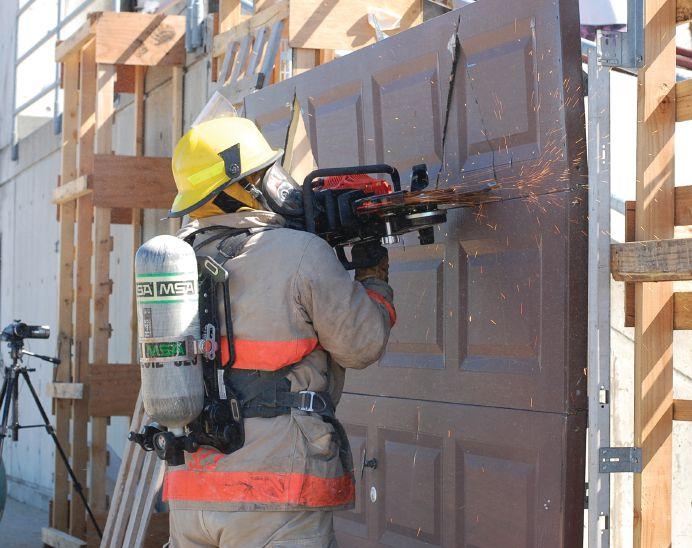
You should also consider the sparks that are created when cutting metal-like material with the saw. As seen in photo 1, a good flow of sparks is an indication that the blade is cutting properly. However, this action also sends sparks and other debris flying toward the saw operator. Users should be sure to wear proper PPE to prevent minor burns from the sparks. Also, be sure that the blade shroud is positioned properly to deflect the sparks away from the operator’s face.
Another safety concern is the rotating blade. With the blade spinning on its vertical axis, centrifugal force is created. This makes the operator feel as if the saw wants to move away from him. The saw produces centrifugal force when it is not being held straight up. Hold the saw upright at all times.
Even when the blade is held straight, it can be a cutting hazard to other firefighters while it is spinning. When the cutting operation has been completed, the saw blade will not stop automatically as it does on a vent saw or on a saw that has an electric brake. The blade will continue to spin freely until it stops by force or until it loses enough momentum and stops on its own. The operator will need to bury the blade into some type of material next to the cutting area to stop the blade.
Anyone using a rotary saw should maintain a circle of safety; ensure that there is enough space around the saw and the operator so that no other rescuers directly interfere with or are affected by the cutting operation.
Using a rotary saw for lengthy cutting operations can cause a firefighter to become fatigued. When working in pairs, it is a good idea to take turns performing the cutting operation.
Finally, firefighters should consider the different ways to hold the rotary saw. Grab handles are
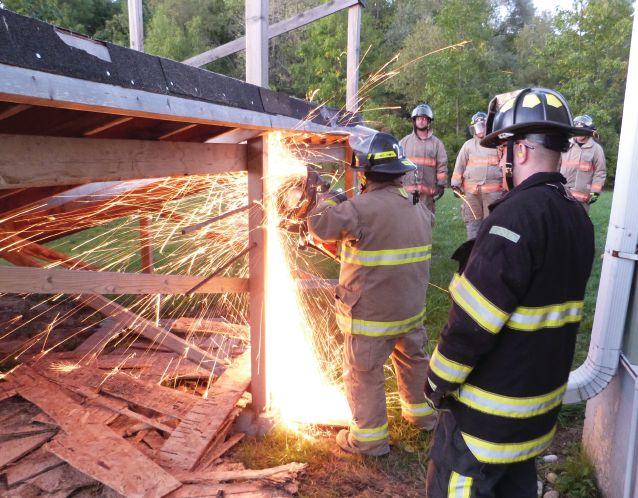
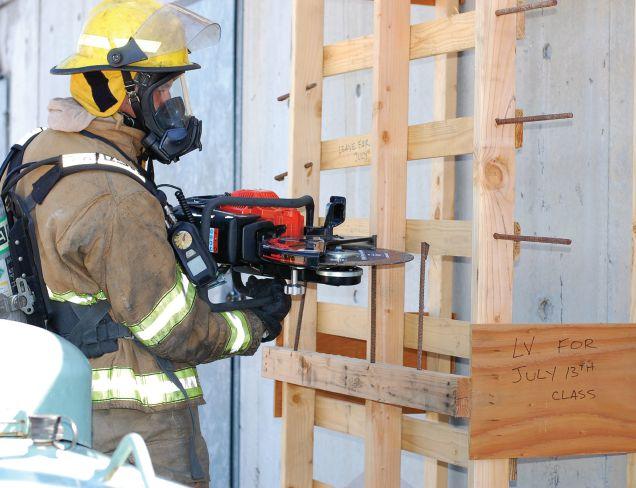
Photo 2: When using the saw to perform a cut at mid-height, make use of your whole upper body by resting the saw on your forearm, as if you are cradling a baby.
Photo 1: A good flow of sparks is an indicator that the blade is cutting properly. However, these sparks can also present a safety hazard, so the proper protection must be worn at all times.
positioned all around the saw. When using the saw to perform a cut at midheight, it is best to rest the saw on your forearm as if you are cradling a baby (see photo 2). This allows you to use your whole upper body to hold the saw and to gain better control over it.
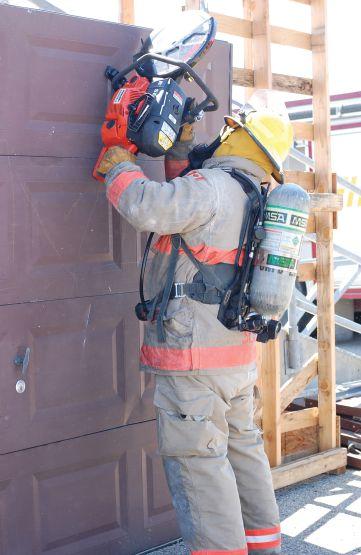
To make a cut above your head, as in photo 3, use the provided grab bar to hold the saw in position while cutting. This will be fatiguing for the firefighter, so be sure to trade off to another firefighter when fatigue sets in.
When cutting at head or shoulder height, as shown in photo 4, the firefighter should rest the saw on his shoulder if possible or lock one arm underneath the saw to hold it in position. Be aware, however, that this technique will expose the firefighter to the extreme noise produced by the saw.
No matter how you hold the rotary saw, familiarity with those positions and methods will be an asset. If your fire department has a rotary saw, train with it to become familiar with the physical challenges it creates, the best ways to hold it and the necessary safety considerations.

Mark van der Feyst is a 14-year veteran of the fire service. He works for the City of Woodstock Fire Department in Ontario. Mark instructs in Canada, the United States and India, and is a local-level suppression instructor for the Pennsylvania State Fire Academy and an instructor for the Justice Institute of B.C. E-mail Mark at Mark@FireStarTraining.com

Photo by
Photo 3: Be sure to have a partner to whom you can pass the cutting operation when you become fatigued.
Photo 4: When cutting at head or shoulder height, the firefighter is often exposed to the extreme noise produced by the saw. As a precaution, always wear the appropriate PPE.
By LES K a RPLUK an D
Ly LE QU an
LEaDERSHIPforum
Airing our errors so you learn from our mistakes
mistakes: we all make them. Mistakes are part of life and learning from them contributes to our growth.
In his book T he Psychology of Winning , first published in 1979, Denis Waitley writes, “Mistakes are painful when they happen, but years later a collection of mistakes is what is called experience.” We, too, have made mistakes and learned from them. Mistakes are steps in our leadership growth and shame on us if we don’t learn from them.
Becoming invisible: As the fire chief, it’s very easy to get locked into the daily grind. Staff demands, emergencies, community issues, public inquiries and the official duties of the job can easily create the impression that the fire chief is not a visible member of the department. We have learned that being visible means taking the time to interact with staff; furthermore, this interaction adds to credibility. Take-away lesson: Interact daily.
On-duty time: Being a fire chief is not a Monday-to-Friday, nine-to-five type of occupation. For a fire chief, the on-duty rotation is very simple: 24/7. Yes, we fully understand that the delegation of duties is necessary in order for one to escape burnout, but theory and reality can be two very different things. Without making excuses, some duties are simply better left to the fire chief. We have often found ourselves staying late or getting to the office early in order to tackle work priorities. The trick is to balance work and life. Admittedly, we have, at times, made the mistake of focusing solely on work and, as you can imagine, the life-work balance has been thrown out of equilibrium. When this happens, something will suffer. Take-away lesson: Balance life and work.
hold back with one another. They are unafraid to air their dirty laundry. They admit their mistakes, their weaknesses, and their concerns without fear of reprisal.” This book is a very good read because it demonstrates how teams cannot function without being a supportive and trusting entity. Many of us have thought at times that if our staff members were unwilling to work with us, then we could go it alone. Wrong. Without a supportive team to help you when the going gets rough, you are in for a terrible fall and no one will be there to catch you. Take-away lesson: In numbers comes greatness; it’s all about building teams and supporting them.
The 18th-century political activist and author Thomas Paine once wrote, “What we obtain too cheap, we esteem too lightly; it is dearness only that gives everything its value.” In other words, if everything comes too easily to us, we will not hold those things in high esteem. Learning from our mistakes may be painful, but it is the memory of that pain that makes us step back and think about what we have done and whether or not we can improve on it.
Wouldn’t it be nice if we could learn from others’ mistakes?
. . .the true leader [is] someone who understands that he or she will make mistakes. i t’s what you do about those mistakes that counts. ‘‘ ’’
Lead by example: This continues to be a favourite chant for leadership experts and motivational speakers. The mistake we want to identify here is that we are leading by example when we have poor habits, too; for example, displaying our impatience with a staff member, losing our cool or generally not demonstrating a positive attitude. Leading by example should not be a paradox. Take-away lesson: Be a positive force in the world.
It’s all about the team: In The Five Dysfunctions of a Team: A Leadership Fable , Patrick Lencioni wrote, “Great teams do not
Les Karpluk is the fire chief of the Prince Albert Fire Department in Saskatchewan. Lyle Quan is the fire chief of Waterloo Fire Rescue in Ontario. Both are graduates of the Lakeland College Bachelor of Business in Emergency Services program and Dalhousie University’s Fire Service Leadership and Administration program. Contact Les at l.karpluk@sasktel.net and Lyle at lyle.quan@waterloo.ca. Follow Les on twitter at @GenesisLes and Lyle at @LyleQuan
However, we often think that we can do it better, until we make that same mistake. Only then do we realize that we aren’t always smarter than the last guy and that we could have learned something from the mistakes made by those who came before us. Never underestimate the value of listening to what others have to share about the bumps and bruises they suffered while climbing the ladder of success.
So, our life lesson for today is to learn from the mistakes that you will undoubtedly make. Since you care about the organization, you will try to make it better and, while on that journey, you are bound to make mistakes. We want to leave you with this final quote by motivational speaker Zig Ziglar: “It’s not how far you fall, but how high you bounce that counts.” To us, this sums up the true leader: someone who understands that he or she will make mistakes. It’s what you do about those mistakes that counts.

a model of mutual aid
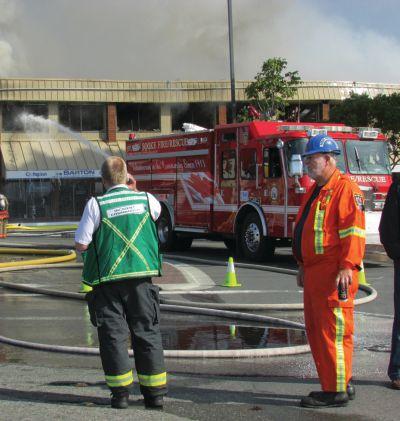
stubborn, deliberately set fire at sooke strip mall prompts calls to neighbouring departments and accountability challenges on scene
By steve soRensen
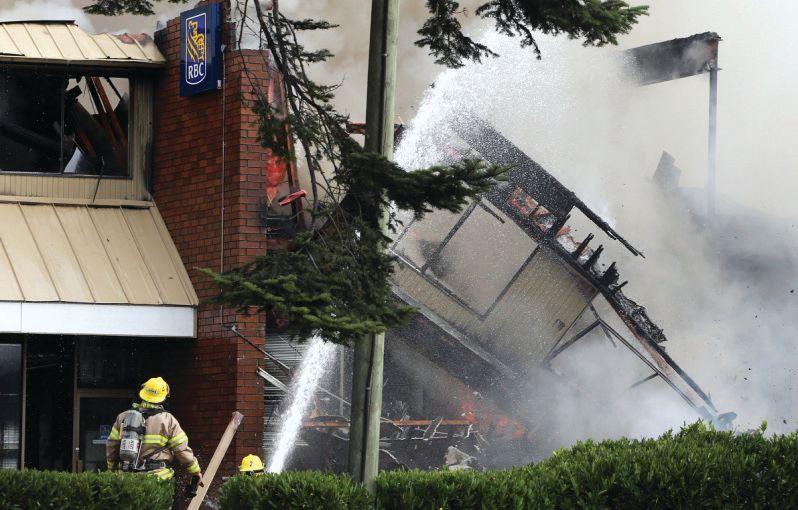
top : Despite several collapses in the two-storey building during the fire, good communication ensured that no firefighters were injured.
r I ght: Incident commander Steve Sorensen examines the progress of suppression efforts. Following the extensive investigation, it was determined that the July 31 fire had been deliberately set, and caused $5.5 million in damages.
It was the last day in July of a perfect summer, and the Greater Victoria area was about to break a record for the first month ever recorded with no precipitation. The hot, dry weather brought the usual assortment of emergency calls for the Sooke Fire Rescue Service, including many bark mulch fires as a result of carelessly discarded cigarettes. So when the pagers went off at 5:27 a.m. for smoke coming from the ground at Evergreen Mall, the duty officer expected just another routine call.
While en route, however, expectations rapidly changed. Dispatch came back on the air just three minutes later to report a second 911 call reporting smoke inside the
Royal Bank, visible from inside the afterhours ATM room.
The bank was located on the east end of the ground floor of a two-storey, woodframed commercial strip mall that had been built in 1976; it was the first of six buildings that currently sit on this site. The building measured 50 metres (164 feet) long and 18 metres (60 feet) wide. Built on a concrete slab, the exterior and interior walls were wood-framed with a stucco finish. The first floor contained open-chord wood trusses with a suspended ceiling below and twocentimetre (three-quarter-inch) plywood with a five-centimetre (two-inch) concrete topping. The roof was constructed using the same type of wood trusses, a drywall
BETTER, QUICKER, STRONGER
B2X SERIES
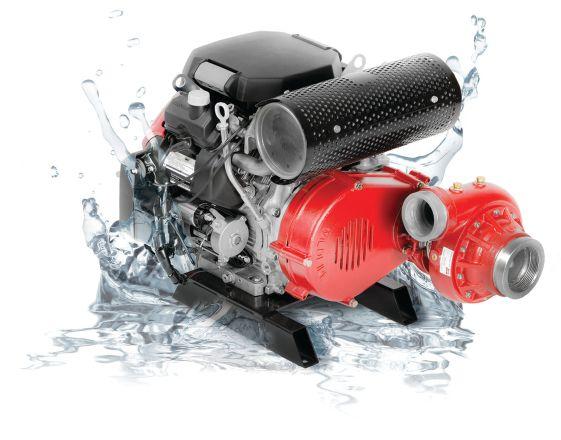
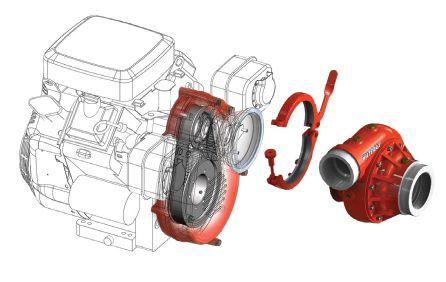
WATERAX , maker of high pressure, portable, centrifugal pumps is proud to introduce the new B2X Series, a full line of versatile mid-range portable pumps that produces an unmatched 215 US GPM (814 L/Min) @ 100 PSI (7 BAR), making it a weapon of choice for dual attack lines for municipal and wildland urban interface operations.
WATERAX ’s innovative pump end quick release clamp provides ease of maintenance without having to disassemble the complete unit, thus significantly reducing equipment downtime.
In addition, the B2X Series features a low maintenance drive belt system that provides efficient and dependable performance.
The WATERAX B2X comes in portable & vehicle mounted configurations and is powered by 4-stroke Briggs and Stratton Vanguard (18HP & 23HP) or Honda (21HP) engine.
us heLp protect you
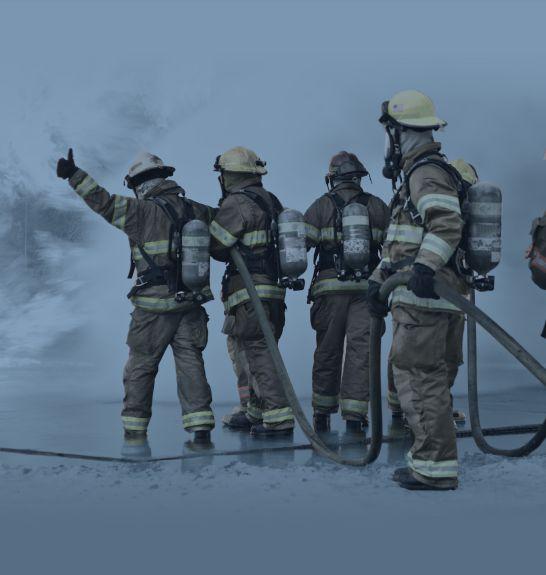
For your cleaning, decontamination, inspection, testing, repair and record keeping of your firefighter’s protective clothing... we have you covered!
• 24/7 access to Firetrack®, the online data base that provides you with complete details of your C&M Program with FSM. We do the work for you!
• ETL Verified
• ISO 9001 Registered
• Fast turnaround
• Complete Bunker Gear Rental Program – Toronto Location
(toronto) 1-888-731-7377

canada (calgary) 1-403-279-5095
ceiling and a tar-and-gravel roof finish over plywood decking. The ground floor contained six storefronts including the bank, all with front entrances to the adjacent parking lot. The second storey was accessible by a centre staircase. A hallway ran the length of the second floor, with offices to the front and rear of the building and a fire exit stairwell at each end of this corridor. At the time of the fire, there were three businesses on the main floor, with the Royal Bank occupying two suites. The other two main-floor occupancies were an insurance broker and the local newspaper office. The second floor contained a large computer software firm in the front and a dance studio at the rear. The remaining suites were vacant at the time of the fire.
With the second 911 report on the fire, a general alarm was sounded for Sooke firefighters. The duty officer arrived on scene at 5:36 a.m., reporting light smoke coming from both floors, and
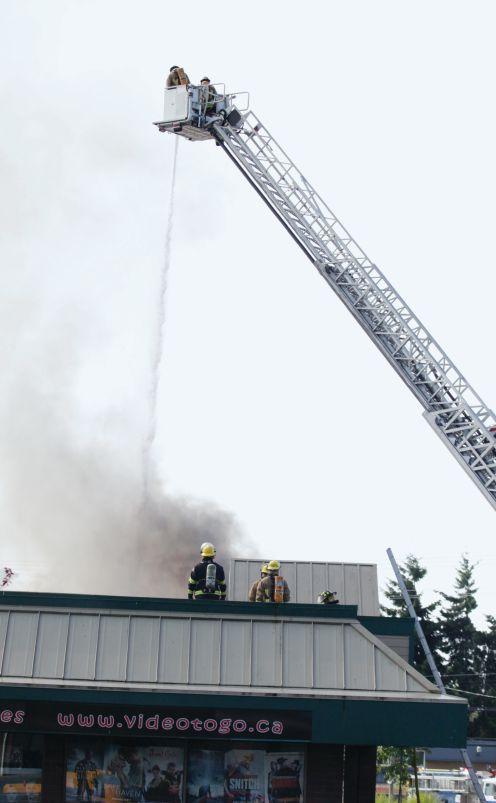
Sooke Fire Rescue requested the use of the Langford Fire Department’s tower ladder to help battle a massive blaze at a strip mall.
Photo
a mutual-aid request was made for the Otter Point Volunteer Fire Department. Upon the completion of a 360-degree size-up, and knowing of the limited volunteer response, the duty officer made a second mutual-aid request for the Metchosin Fire Department (also volunteer) at 5:39 a.m. Command was transferred to Car 1 (the fire chief) upon his arrival at 5:40 a.m. Just two minutes later, Ladder 1, the first Sooke apparatus to arrive, pulled into the east driveway and immediately began pulling a one-and-three-quarter-inch pre-connect. As Ladder 1 crews made entry to the bank, Engine 1 arrived on scene using the west entrance of the mall, picking up a hydrant in the parking lot and establishing a water supply, a staging area, and took on the role of RIT. Engine 2 was next on scene at 5:49 a.m. and laid in another four-inch supply line to feed Ladder 1 from another hydrant adjacent to the parking lot of the east exposure.
Entry crews had a difficult time accessing the interior of the bank due to security bars and had to force entry. The fire appeared to be concentrated at the rear (Charlie) side of the bank. As crews entered the building, they reported heavy smoke with fire in the walls and ceiling of a storage room. Members of the Otter Point department arrived on scene at 5:58 a.m. with an engine company and assumed RIT duties; Engine 1 crews were sent to the second floor to check for extension above the bank. The Metchosin Fire Department arrived a few minutes later and reported in. By this time, interior crews had notified command that they had knocked down the main body of fire in the bank and were conducting overhaul and required ventilation to be set up. In the meantime, Attack 2 on the second floor reported extremely heavy smoke above the bank and began to remove windows to improve visibility. At this point, Attack 1 in the Royal Bank had a low air alarm sounding on an SCBA and exited the building. The crew from Otter Point then took over duties of Attack 1 to finish overhauling the fire area. As the crew entered the bank, a large section of the suspended ceiling collapsed in front of them. Meanwhile, Attack 2 reported heat building up in the Charlie/Delta section of the second floor.
With the situation deteriorating, another mutual-aid request was made to East Sooke Fire Department at 6:16 a.m. Metchosin then offered to send a second engine and the Shirley Volunteer Fire Department offered to respond with an engine from its department. These offers were accepted.
With the ceiling collapse, Attack 1 moved out of the bank and re-entered the suite from another entry point, an exterior door further along the building’s frontage. Heavy smoke was now visible from soffits along the entire length of the second floor. As additional units arrived, crews began to perform salvage work in the main floor occupancies not yet involved in fire. With the fire now spreading in the bank’s rear wall, firefighters worked to access the main body of fire by cutting through the exterior wall to gain entry to the bank’s storage room. Once opened, heavy fire was reported in the wall and ceiling space. With the situation still deteriorating and personnel rapidly being used up, another mutual-aid request was made to the Langford Fire Department for an engine company to respond. At 6:52 a.m., Assistant Chief Matt Barney of Sooke Fire reported a possible wall collapse within the bank and the floor beginning to sag. While no firefighters were working in this area due to the previous ceiling collapse, an accountability check was completed with all firefighters reporting in. Crews on the second floor also had been previously cleared from this general area.
Trying to get ahead of the fire, a roof team was sent to cut a ventilation hole at the mid-point of the building to determine if the fire was spreading laterally through the roof trusses and to assist in ventilation. With additional engine companies on scene and the fire spreading rapidly, the water supply was at capacity. A decision was made to connect to two more fire hydrants. However, as these were located on the opposite side of Highway 14, which runs through the centre of town, this involved a complete shutdown of

Vancouver

l essons learned
• Photographs taken of the scene and perimeter of the fire building by fire department staff during the initial size-up aided dramatically in determining the fire origin area.
• anticipating fire progression and staffing needs is critical throughout the incident’s progression. Call for mutual aid before the incident overwhelms available resources.
• Ensure accountability is maintained throughout the incident. assign additional staff to assist in tracking firefighter locations.
• Ensure that rapid intervention teams are trained and ready to respond. this is not the spot in which to put the department’s newest firefighters.
• If additional radio channels are available, these should be used so as not to overload a single channel.
the road. RCMP officers and Ministry of Transportation workers set up detours.
With the additional water supply secured, there were now four teams of firefighters in the building trying to gain an upper hand on the fire, with another crew on the roof. Salvage operations were well underway and two rapid intervention teams were setting up extra equipment. With the increasing number of personnel arriving – now nearing 50 firefighters on scene –accountability became a major challenge for the command staff. At 6:52 a.m., a serious collapse of the second floor into the bank occurred in the area that had already been declared off limits. The remaining interior crews were reporting deteriorating conditions. Heavy smoke began pushing out the length of the building. Firefighters still hoped to stop the spread of fire to the west end of the building. At 7:09 a.m., the roof crew reported heavy smoke issuing from their ventilation hole and interior crews reported smoke and heat levels rising on the second floor. At 7:12 a.m., another collapse occurred in the Royal Bank section of the building. With conditions continuing to deteriorate and the fire spreading, all crews were ordered out of the building. The ladder was set up for a defensive attack from above while crews prepared large lines and master stream devices on the Alpha and Charlie sides. Another mutual-aid call was placed to the Langford Fire Department for its tower ladder to respond. As the fire took hold, crews mounted an all-out
assault to keep the fire from spreading to the adjoining liquor store and other mall buildings, as well as to the adjacent Home Hardware store on the Charlie exposure.
With the arrival of the Langford tower ladder, more than 5,000 gallons-per-minute of water was being used to keep the fire in check. It was then that command was informed that, at the rate the water was being applied, there was only about another hour of water left in the reservoir. It was later determined that homes in higher elevations were already noting a drop in their water pressure. An excavator was brought in to assist in reaching areas not accessible to firefighters. With all this effort, the fire began to subside and the scene was gradually brought under control. Attention switched to dealing with pockets of hidden fire and helping merchants in other stores within the mall to deal with smoke and ash that had been drawn into their shops through HVAC systems. Just before 11 a.m., the fire loss was declared stopped and some mutual-aid units began to pack up and head for home. By 12 p.m., two of the hydrants were shut down and the highway was reopened to traffic.
Later that day, Langford Fire sent another engine to assist Sooke firefighters with overhaul and cleanup. The majority of crews cleared the scene by 6 p.m. and returned to the station to begin a major cleanup of apparatus, gear and equipment. The last firefighter was out the door at 9:30 p.m. – 16 hours after the incident began.
With the fire out, the lengthy investigation process began. Given that multiple insurance companies were involved in this fire, two investigators were sent to help Sooke Fire Rescue determine the cause and origin. As the fire was deemed suspicious from the start, the RCMP had a major presence, including a canine unit during the actual fire, followed by detectives and forensic identification members after the fire was out. Thanks to a good initial sizeup of the fire scene at the beginning of the incident and photographic evidence, the area of origin was quickly established as being at the rear exterior of the Royal Bank.
Based on evidence gathered, the investigation team decided to attempt to recreate the fire a few days later. It was concluded that a plastic wheeled garbage tote containing recycled paper was the origin of the fire and that the fire had been deliberately set. There was sufficient heat generated to preheat the wall surface, along with molten plastic from the bin flowing up against the building to ignite the plywood sheathing and building paper. From there, the fire travelled up the stud cavity, behind the insulation, and into the ceiling space and the open wooden trusses. With no fire stop, there was nothing to slow down the fire spread as it continued up the wall to the attic trusses as well as across the length of the floor. Total losses were about $5.5 million. The property owners have vowed to rebuild.
Community support throughout this ordeal was tremendous with many restaurants and shops providing food and drink to all the responders. The Royal Bank and mall merchants, just two weeks later, organized a thank-you barbecue for all the emergency personnel and provided a $6,000 donation to the fire department for the purchase of individual SCBA masks for the firefighters. Three weeks after the fire, Sooke Fire Rescue Service celebrated its 100th anniversary with a parade and fire-truck muster. Hundreds of residents attended the event to show their support. Another of the mall merchants affected by the fire provided a chicken and ribs barbecue to all the personnel who helped to save his store from the fire. It was a very proud day to be a firefighter in Sooke.
Steven Sorensen joined the Sooke Fire Rescue Service as a volunteer firefighter in 1983. In 1997, he was appointed full-time training officer, and in 2000 was promoted to deputy chief, taking over the fire-prevention division. Sorensen became fire chief and emergency co-ordinator in 2010. Contact him at ssorensen@sooke.ca

By g o RD S CHREI n ER Fire Chief, Comox, B.C.
wGet there safely, 100 per cent of the time
e deliver our many important services in a very urgent work environment. When our customers call us, they want us there right now . They do not make appointments for their emergencies. We know that providing quick service can have a positive impact. However, this quickness should not, in any way, compromise the safety of our firefighters or citizens. Our firefighters must understand how they can increase the speed of delivery without compromising safety.
Under no circumstances should a firefighter drive aggressively or offensively to improve the speed of a response. Aggressive driving leads to much higher risk and does not significantly improve response time.
A typical response, along with some time-saving tips, is broken down below. Note: Volunteer firefighters begin at No. 1, while career firefighters begin at No. 3.
1. Preparation at home or work:
Be sure that you are ready to respond to an incident at a moment’s notice. Having the items listed below at the ready can assist in saving time. When these things are not done, an individual’s, and collectively a team’s, response time is greatly increased.
• Have the appropriate clothing ready.
• Place your vehicle keys in the same spot all of the time.
• Keep your pager close at hand so you hear the call.
• Back your vehicle into your driveway.
• Prepare your vehicle in cold weather (for example, have a heated and covered windshield).
Firefighters can easily save one to two minutes just by getting out of their houses or workplaces more quickly.
2. Responding to the fire station in your vehicle:
on the way to a call. In fact, you could greatly impact the department’s ability to deliver important services to its customers as you will not arrive at the station and the department may have to respond to assist you. Knowing the best driving route to the station at certain times of the day is one way to get there more quickly. Speeding to the station is not only illegal but also very dangerous. Firefighters found to be speeding or driving aggressively are subject to discipline.
3. Dressing in your PPE at the fire station: You can save time by ensuring you have put your PPE away properly after a call and that you have all of your PPE ready to use. You can save additional time by ensuring that you can quickly don your PPE.
4. Responding in the fire apparatus: Again, safe and defensive driving is the only way to go – 100 per cent of the time. Know where you are going and plan your route to save time. For drivers and officers, a quick check of the map can make a big difference. Do not drive aggressively to save time. It has been proven that little time is actually saved by speeding or driving aggressively, while the
o ur firefighters must understand how they can increase the speed of delivery without compromising safety. ‘‘ ’’
Safe and defensive driving is the only way to drive. You are no good to your department if you are involved in an accident
Gord Schreiner joined the fire service in 1975 and is a full-time fire chief in Comox, B.C., where he also manages the Comox Fire Training Centre. He is a structural protection specialist with the Office of the Fire Commissioner and worked at the 2010 Winter Olympics as a venue commander. Chief Schreiner also serves as the educational chair for the Fire Chiefs’ Association of British Columbia. In 2010, he was named the Canadian Association of Fire Chiefs’ career fire chief of the year and was also presented the Award of Excellence from the Justice Institute of B.C. He has a diploma in fire service leadership and has travelled both nationally and internationally delivering fire service training. Contact him at firehall@comox.ca and follow him on Twitter at @comoxfire
risk of a collision is greatly increased. Firefighters can easily save one to two minutes just by knowing where they are going and planning the best route to get there.
5. Doing all the things correctly once you arrive at the scene: This is where significant time can be saved. If you are able to quickly and properly perform the important fire-ground tasks required, you will be much more efficient. This is where your training will really kick in. How quickly can you don your SCBA, pull a pre-connect or throw up a ladder to rescue a young child? All these skills need to be practised, and practised again. One stumble here can really cost a lot of time and maybe even a life. Firefighters can easily save one to two minutes by ensuring they are well trained. When you add all this up, you will find that you can save between four and eight minutes without speeding or driving aggressively. It really is a no-brainer!

tRaInER’Scorner
The ABCs of fire extinguishers
BY ED BROUwER
before we get to the heart of this column, why not test your fire extinguisher knowledge?
1. An extinguisher with an A rating is designed for use on:
a. A fire involving energized electrical equipment
b. A fire involving flammable liquids
c. A fire involving combustible metals
d. None of the above
2. An extinguisher with a D rating is designed for use on:
a. A fire involving flammable liquids
b. A fire involving combustible metals
c. A fire involving energized electrical equipment
d. A fire involving ordinary combustible materials
3. A fire involving flammable liquids is:
a. Class A
b. Class D
c. Class B
d. None of the above
4. A fire involving ordinary combustible materials is:
a. Class A
b. Class B
c. Class C
d. Class D
5. An extinguisher with a C rating is designed for use on:
a. A fire involving flammable liquids
b. A fire involving combustible metals
c. A fire involving energized electrical equipment
d. A fire involving ordinary combustible materials
6. An extinguisher with an ABC rating is designed for use on:
a. Class A
b. Class C
c. Class B
d. All of the above
The letters on the label of a fire extinguisher indicate the classes of fire that the extinguisher can put out. This extinguisher, for example, is suitable for ordinary combustibles such as wood, cloth, paper and rubber; flammable or combustible liquids; gases; grease and oil; and any fire that involves live electrical equipment.
7. An extinguisher with a K rating is designed for use on:
a. A fire involving ordinary combustibles
b. A fire involving energized electrical equipment
c. A fire involving vegetable oils and fats
d. A fire involving combustible metals
8. Which of the following is true regarding a flammable gas fire?
a. Always extinguish the fire if a portable extinguisher is available
b. Never extinguish the fire regardless of whether a portable extinguisher is available
c. Extinguish the fire only if a spare extinguisher is available
d. Extinguish the fire only if you are capable of promptly turning off the supply of gas
Carbon dioxide fire extinguishers are filled with non-flammable carbon dioxide gas under extreme pressure. They work by taking away the fire’s oxygen supply, and are frequently found in laboratories, mechanical rooms, kitchens, and flammable liquid storage areas.
9. Which of the following extinguisher types does not have a gauge?
a. A Halon extinguisher
b. A carbon dioxide extinguisher
c. A multipurpose dry chemical extinguisher
d. None (all the extinguishers listed have gauges)
10. Where should you position yourself?
a. Outside the room to avoid being trapped by the fire
b. Next to a window so you can jump if your efforts to extinguish the fire are unsuccessful
c. Six to eight feet from the fire, between the fire and your escape route
d. As close to the fire as possible to ensure maximum efficiency of the extinguisher
Answers:
1. d, 2. b, 3. c, 4. a, 5. c, 6. d, 7. c, 8. d, 9. a, 10. c
It may be that one of the most overlooked tools of our trade is the fire extinguisher. Just about every piece of fire apparatus in Canada has an ABC fire extinguisher on board. In the proper hands, this little tool carries a big punch. I would recommend a yearly review of types of extinguishers including a hands-on practice with each firefighter demonstrating proper and safe use of a fire extinguisher. It may prove a little embarrassing if your firefighters do not know how to use a fire extinguisher.
Basically a fire extinguisher is a portable device, carried or on wheels, and operated by hand, containing an extinguishing agent that can be expelled under pressure for the purpose of suppressing or extinguishing fire. Extinguishers are used to put out small, early stage fires. Extinguishers are not designed to fight large or spreading fires.
There are various types of fire extinguishers, each rated for different fire hazards. The different types of extinguishers are distinguished by their designated ratings, which indicate the type of fire hazard on which they are designed to be used. Extinguishers
contain various extinguishing agents, such as carbon dioxide, water-based agents, dry chemicals, wet chemicals, dry powder and clean agent gas.
Fire extinguisher ratings are provided on the label of the fire extinguisher. The numbers assigned by Underwriters Laboratories indicate the relative effectiveness against each type of fire, regardless of the weight of the extinguisher or the chemical it uses. The higher the number, the greater the effectiveness. The letters indicate the classes of fire that the extinguisher can put out.
The number given on a Class A extinguisher represents the volume, in cubic metres, of combustible materials that an experienced individual may be able to extinguish. This rating ranges from 1A to 40A.
The number on Class B extinguishers represents the area in square metres – with no appreciable depth (appreciable depth is defined as a depth of liquid greater than six millimetres) – that may be extinguished by an experienced individual. This rating ranges between 1B and 320B.
The classification of the hazard (low, medium or high) will determine the numeral rating and the number of extinguishers required per floor area. A 2A:10-B:C fire
extinguisher is recommended for a home, garage, car, boat or RV.
Class A – Ordinary combustibles such as wood, cloth, paper and rubber. The symbol for this class is a green triangle.
Class B – Flammable or combustible liquids, flammable gases, grease, oil and similar material. The Class B symbol is a red square.
Class C – A Class C fire is any fire that involves live electrical equipment. Once the electricity has been shut off, the fire becomes the class of whatever material is burning. The symbol for this class is a blue circle.
Class D – Certain combustible metals such as sodium, magnesium and potassium. You should not have to worry too much about this type of fire in your home. The symbol for this class is a yellow star.
Class K – Used on fires that involve vegetable oils, animal oils, or fats in cooking appliances. These extinguishers are generally found in commercial kitchens.
Here’s an easy way to remember these types of fires:
• Class A leaves an ash
• Class B boils
• Class C has current
• Class D has dense material
• Class K for kitchen
Carbon dioxide extinguishers are filled with non-flammable carbon dioxide gas under extreme pressure. They work by taking away the oxygen element of the fire triangle; this can prove dangerous for the operator. Carbon dioxide extinguishers may be ineffective at extinguishing Class A fires because they may not be able to displace enough oxygen to successfully put the fire out. These types of extinguishers are frequently found in laboratories, mechanical rooms, kitchens, and flammable liquid storage areas. As of 2010, there are no refills for fixed Halon fireextinguishing systems, except for critical uses. Alternative agents are available on the market and include inert gases, carbon dioxide, water mist systems, and clean agents. These agents are similar to Halon agents in that they are non-conductive
Water: Regular water extinguishers are the oldest type; the advantage of these extinguishers is that they do not leave any residue nor will they deprive the user of oxygen. There is an electrocution hazard if used on or around electrical devices.
Wet chemical: This type of fire extinguisher normally contains compounds such as potassium acetate and is intended to form a protective layer over burning liquids, depriving the fire of oxygen while lowering the liquid’s flash point. These are particularly useful on aircrafts and in kitchens, where fires should be smothered. Also, wet chemical extinguishers are highly effective for controlling grease fires. As with the water types of fire extinguishers, contact with live electrical devices can cause electrocution and should be avoided.
may reignite. Additionally, inhalation of the powder may cause respiratory distress. This extinguisher should be used only in a wellventilated area.
The aforementioned extinguisher types are the more common types. The following are examples of single-purpose extinguishers:
Non-magnetic carbon dioxide extinguisher: For use in and around MRI rooms and suitable for use on energized electrical equipment.
Non-magnetic dry chemical extinguisher: For use outside and around MRI rooms and suitable for use on most common fires.
Hands-on training: A simple metal trash can or metal pail will serve nicely as a burn pan. We used a 45-gallon metal drum cut down to form a 20-centimetre-high pan. For fuel, we used one part gas to four parts diesel. We put in enough fuel to have it be 2.5 centimetres deep; we do not recommend filling the pan. If you have to add fuel, use diesel only and, even then, use extreme caution.
Once that is set up, get all firefighters to don their PPE, select the appropriate extinguisher, and safely extinguish the fire.
We live in an age of passwords, but here we use the word pass to help make sure you use a fire extinguisher properly. The acronym PASS stands for pull, aim, squeeze and sweep.
• Pull the pin that prevents the handle from being accidently squeezed.
• Aim the spray nozzle at the fire. Aim at the base of the fire, not directly into the flame.
Part-Time Paid ❑ Full-Time Paid
Foam: Foam extinguishers are widely used in industries that deal with combustible and flammable mixtures of fuel. The foam is intended to smother the fire and provide an airtight seal over the burning fuel. Additionally, foam extinguishers generally prevent flashback (the fire starting again) and can be used around electrical equipment. Because there are many chemicals within the foam, these extinguishers are rarely used around areas that store food.
AR-AFFF foam extinguishers contain an alcohol-resistant (AR) type of aqueous film forming foam (AFFF) that is specifically formulated for optimum use in a hand portable fire extinguisher.
Dry powder: Dry powder fire extinguishers are excellent at fighting all forms of fire and can be used in almost all environments. However, they do little to cool the heated material and there is a chance that the fire

• Squeeze the handle to spray the contents. If you release the handle, the discharge will stop.
• Sweep the nozzle from side to side while carefully moving toward the fire. Sweep back and forth from the base of the fire. Cautions: Never turn your back on the fire, even if you think it’s out. Watch the fire area; if the fire re-ignites, repeat the process. Extinguishing agents must be used with care. They can damage equipment and materials and they can burn your skin or make breathing difficult. Using the wrong type of extinguisher for the wrong class of fire could be extremely dangerous and make the fire emergency worse. It is particularly dangerous to use water or a type A extinguisher on a grease or electrical fire.
Our department is considering providing fire extinguisher training for our community, by offering three 30-minute sessions on a Saturday morning. Each session would involve a hands-on experience.
Ed Brouwer is the chief instructor for Canwest Fire in Osoyoos, B.C., and Greenwood Fire and Rescue. The 21-year veteran of the fire service is also a fire warden with the B.C. Ministry of Forests, a Wildland Urban Interface fire suppression instructor/evaluator and a fire-service chaplain. Contact Ed at ebrouwer@canwestfire.org

•
•
•
•
•
•
•
•
•
•
•
•
needs.
• Develop presentations, reports and proposals that will illustrate the benefits of the goods and services the company is offering.
• Follow-up with clients and provide ongoing after sales support.
• Stay updated with respect to industry product knowledge.
• Submit data and management reports on time.




Skills:
•
•
•
•





By PE t ER SELLS
Winnipeg’s fall guy was out of his depth
In September, Reid Douglas was dismissed after two years as the chief of the Winnipeg Fire Paramedic Service. Three weeks later, city council accepted the resignation of Douglas’s boss, chief administrative officer Phil Sheegl. One week after that, a confidential report to Winnipeg city council by Ernst & Young on the new fire-paramedic stations construction project was made public.
Coincidence? It seems not. The report reads like a treatise on mismanagement. Here’s some background: in 2008, the previous CAO initiated a plan to replace two suburban fire/paramedic stations and build one new downtown station. Subsequently, a third suburban station was included in the plan. The chain of events is complex, but if you are interested, the review and recommendations can be found on the City of Winnipeg website.
The budget for the project was approved at $15.3 million and came in $3 million over that. That overrun should not be surprising to anyone who has been involved with multi-year municipal capital projects. What is surprising is the following series of revelations:
• With the total budget in excess of the $10-million limit that requires council approval, Shindico Realty (the contractor) was awarded four separate contracts, of $5.9 million, $3.2 million, $3.2 million and $3 million. This tactic of splitting a purchase is an amateur’s attempt to circumvent the rules, and is sure to be caught by auditors.
• The project involved a land swap with Shindico, in which three parcels of city-owned land, including two surplus fire stations, were traded for land owned by Shindico, on which a new station was to be built. This was a very complex set of transactions, with copious pages of legalese and financial considerations. Not only was the project entrusted to a fire chief who, by his own admission, did not have the requisite background or experience to manage the city’s interests in such a deal, but the chief was instructed directly by the CAO in an e-mail to “Get it done,” according to the report.
Douglas was given an impossible set of tasks by a boss who seemed to prefer to stay clear of any involvement. When all of the transgressions of rules and violations of policy came to light, both were held accountable, although it seems clear that Douglas was a fall guy in a completely no-win situation.
The Ernst & Young report makes a number of valid and insightful recommendations, such as this one: “Project management of real estate construction projects and the lead in all real estate transactions should reside with Planning Property and Development Department.” That makes perfect sense; assign such work to the people with the education, skills and experience to manage multimilliondollar projects. Chief Douglas was in over his head. Kristine Friesen, the project manager chosen by Douglas from within the WFPS ranks, is a paramedic with no apparent relevant background other than, according to the Winnipeg Free Press, having participated on a station design committee as a rep for the Manitoba Government Employees Union Local 911, which represents Winnipeg’s medics. Neither Douglas nor Friesen was competent by any measure for the tasks at hand.
The Ernst & Young recommendation mentioned above should be taken a step or two further, to address the root problem in a more
d ouglas was given an impossible set of tasks by a boss who seemed to prefer to stay clear of any involvement. ‘‘ ’’
• The chief had expressed concern, both to Shindico and the CAO, that station construction work had begun on the Shindico-owned land before the ownership transfer was complete. According to a CBC News story from Oct. 23, Douglas had told Shindico that the company could end up with a very expensive convenience store that looked like a fire station if the deal did not go through. Douglas’s concern was also apparently ignored by Sheegl, who the Winnipeg Free Press said in an Oct. 19 story, claimed to have only a “50,000-foot view” of the project when council started asking questions in 2012.
Retired District Chief Peter Sells writes, speaks and consults on fire service management and professional. Peter is president of NivoNuvo Consulting, Inc, specializing in fire-service management. Contact him at peter.nivonuvo@gmail.com and follow him on Twitter at @ NivoNuvo
comprehensive manner. Tasks requiring specific technical competency, such as managing a real estate project, or managing a communications centre, or fire apparatus specification and purchase, should be assigned only to staff who possess such technical competency. Also, management development or succession-planning programs for executive-level positions should include all competencies for any tasks that could be reasonably expected to come across the incumbent’s desk; this would include knowing the limits of one’s capacity and authority, and knowing how to bring in appropriate resources.
We certainly wouldn’t fight a fire the way Winnipeg handled these station projects. We certainly wouldn’t put people into positions of command unless they were fully competent, trained and qualified. Commanders certainly wouldn’t assign tasks that their firefighters were neither trained nor equipped to execute safely. If it’s not acceptable at the pointy end of the stick, then how can it be acceptable at the top of the organization?
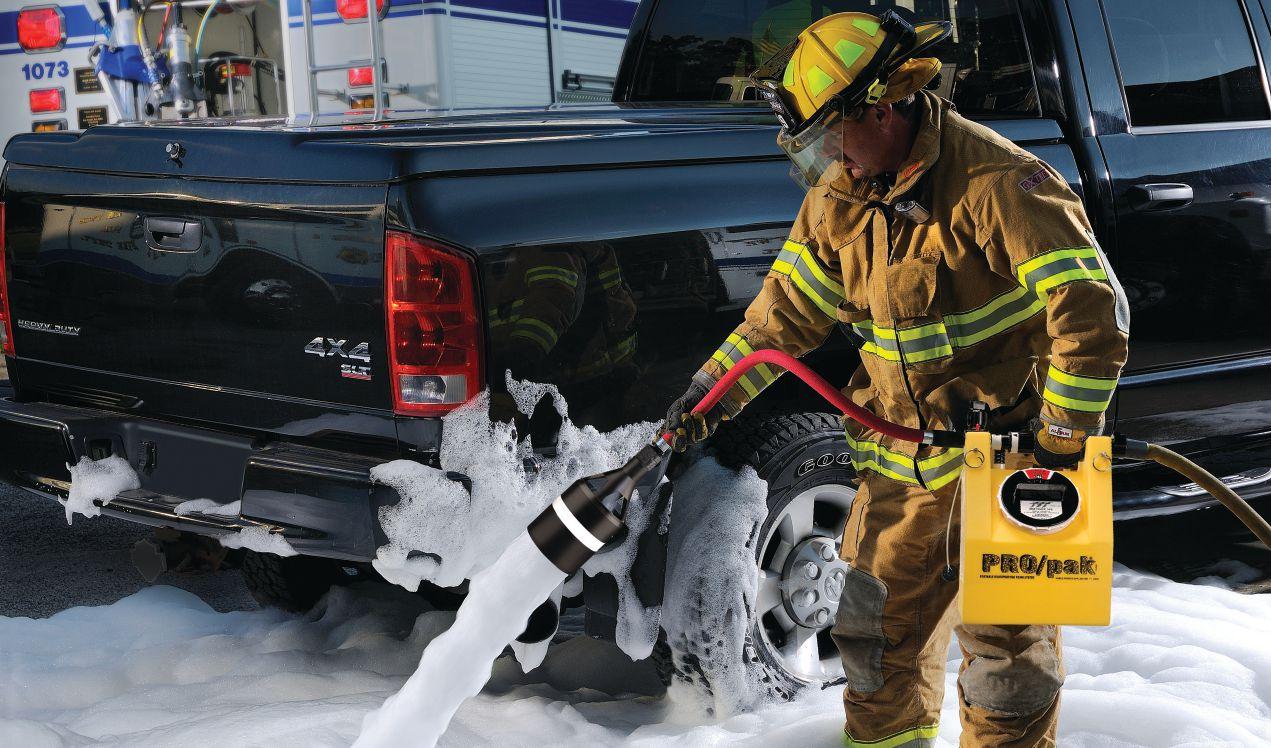
A Protective Foam Blanket
in Less than 60 Seconds…
TFT’s compact PRO/pak foam injection and application system is the ideal choice for rapid vapor suppression with any Class A, AFFF or Alcohol Resistant foam concentrate.
Offering nozzle choices for low or medium expansion finished foam, the PRO/pak operates at low inlet pressures, is easily flushed, and provides injection ratios from
To learn more about how you can improve and simplify your foam operations, contact your local TFT dealer today.
WORRY-FREE ALARMS

Two in one alarm provides 10 years of protection from
Sealed battery and portable, Peak level memory—notifies of a CO event in the last 14