U of Guelph prof to chair NASA, CSA space agriculture contest. Pg. 8
CAD REPORT
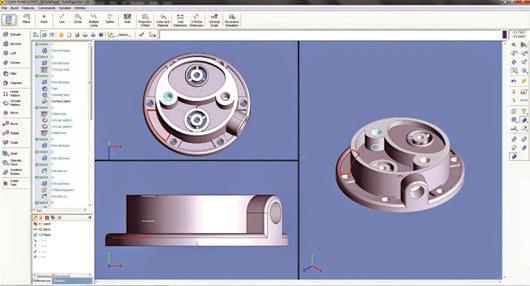
Software firm’s struggles an object lesson in challenging CAD business. Pg. 12
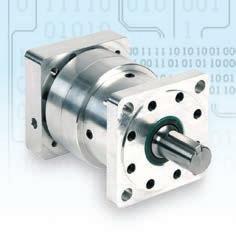
POWER TRANSMISSION
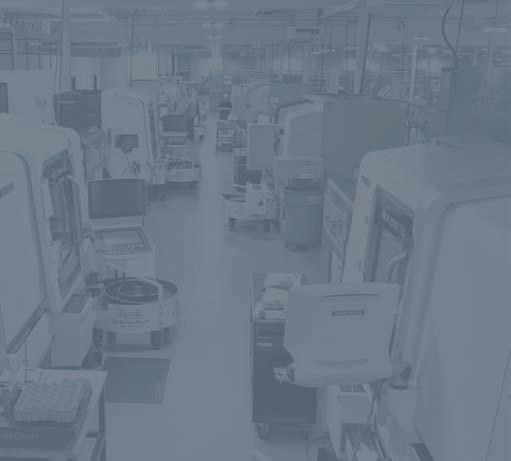
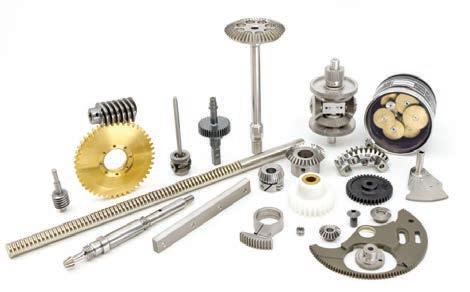
Choice of supplier effects price, delivery and options of customized parts. Pg. 15
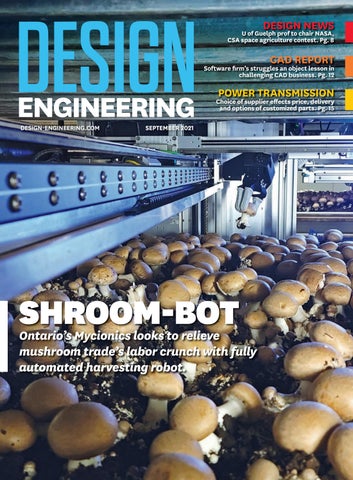
SHROOM-BOT
Magswitch end of arm tools
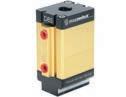
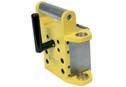
Magswitch Automation Technology features the latest and greatest in Automation and Robotic End of Arm tools that are engineered to increase productivity and speed. From the brand new electrically actuated tools to innovative smart technology, Magswitch Automation products are being applied in Assembly, Body-In-White, Bin Picking, Fixturing, Pressure Vessel Fabrication, Ergo-Lift Assist, Pick and Place, Stamping, I Beam Handling, De-stacking and more.
The importance of indoor air quality.
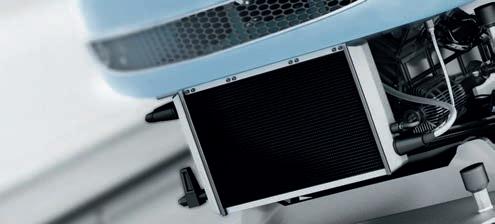
We are spending more time indoors, at home and at work. Unfortunately, our homes and offices trap harmful pollutants and allergens like CO2, tobacco smoke, pet dander, pollen, volatile organic compounds (VOCs,) dust, dust mites, mold spores, viruses, bacteria, and other harmful contaminants.
Software firm’s struggles an object lesson in the challenges of making it in the CAD business.
20 CMTS Pre-Show Guide
Canada’s most influential industrial trade show returns to Ontario for in person event on October 4th in Toronto.
26 ‘Shroom-Bot
Ontario’s Mycionics looks to relieve mushroom trade’s labor crunch with fully automated harvesting robot.
U of Guelph prof to chair NASA, CSA space agriculture contest and other engineering news.
17 Idea Generator
The latest in industrial technologies including sensors, electrical and industrial networking.
22 Motion Control News
German, Canadian researchers collaborate on AI for picking robots and other motion control news.
Robotics on subscription
Once limited to enterprise software, the subscription, or as-a-service, model has become increasing attractive to other industries that have traditionally sold equipment outright. The approach has spread to everything from automotive ride sharing to in-home fitness to even healthcare in some regions of the U.S.
One sector exploring the subscription model aggressively is automation, particularly the robotics market. According to ABI Research, robotics-as-a-service (RaaS) providers are expected to rake in an estimated $34 billion in annual revenues by 2026, and the RaaS install base to grow to 1.3 million units by then.
It’s not surprising the model has rapidly gained ground. For robot manufacturers, it means a steady source of revenue.What’s more, renting industrial equipment isn’t likely to fall prey to the aaS model’s main weakness, subscription churn. After all, canceling Netflix takes minutes but changing out major pieces of manufacturing hardware incurs significant engineering, integration and downtime expense.
For manufacturers, RaaS lowers the barrier to entry, reducing risk by o -loading robotics’ high upfront capital costs, as well as on-going maintenance. Plus, RaaS means manufacturers can scale up (or down) quickly and won’t lament continually paying o yesterday’s technology when periodic upgrades are factored in.
Since large manufacturer’s still prefer to own their equipment, new entrants to the robotics sector are targeting small to mid-sized companies. One of the most recent to gain traction, Rapid Robotics, says its multi-purpose robots are intended for the 98% of manufacturers for whom ownership is too costly.
Instead of developing hardware internally, Rapid buys bare-bones robotic arms from other suppliers and pairs them with its own AI-enabled operating software and vision system. According to the company, the combination makes for quickly deployable, pre-programed units that can trained to perform simple, repetitive tasks (e.g. pick-and-place, ultrasonic welding, parts inspection) within days. It also keeps per robot costs low: US$2,100 per month or US$25,000 per year.
And investors agree with the approach. In April, the San Fransisco-based startup landed US$12 million in series A funding followed by US$36.7 million Series B round in August. In total, Rapid has raised US $192.5 million in less than two years.
Given the supply chain vulnerabilities the pandemic exposed, the expectation is that manufacturers will bring more production closer to home. But to compensate for the higher labor costs that will entail, making robotics as simple and convenient as Netflix or Uber may be the next enduring trend in automation equipment.
MIKE MCLEOD
Editor mmcleod@design-engineering.com
Editorial Board
DR. ALAIN AUBERTIN
Vice President, Business Development and International Affairs, Canada Consortium for Aerospace Research and Innovation in Canada (CARIC)
DR. MARY WELLS, P.ENG
Dean of the College of Engineering and Physical Sciences, University of Guelph; Chair of the Ontario Network for Women in Engineering
AJAY BAJAJ, P.ENG
President, Rotator Products Limited; Past President and Board Member, Power Transmission Distributors Association (PTDA)
JOHN LAMB
Regional Sales Manager, Wainbee Limited
DR. ISHWAR PURI, P.ENG
Dean of the Faculty of Engineering; Professor of Mechanical Engineering, McMaster University
SEPTEMBER 2021 Volume 66, No.4 design-engineering.com
READER SERVICE
Print and digital subsciption inquiries or changes, please contact
Beata Olechnowicz, Audience Development Manager
Tel: (416) 510-5182
Fax: 416-510-6875
Email: bolechnowicz@annexbusinessmedia.com
Mail: 111 Gordon Baker Rd., Suite 400, Toronto ON M2H 3R1
SENIOR PUBLISHER Paul Burton (416) 510-6756 • pburton@annexbusinessmedia.com
EDITOR Michael McLeod (416) 442-5600 ext. 3231 mmcleod@design-engineering.com
COO Scott Jamieson sjamieson@annexbusinessmedia.com
Design Engineering, established in 1955, is published by Annex Business Media, 6 times per year except for occasional combined, expanded or premium issues, which count as two subscription issues.
Printed in Canada
Publications Mail Agreement #40065710 ISSN: 0011-9342 (Print), 1929-6452 (Online)
Subscriber Services: Canada: $57.50 for 1 year; $92.50 for 2 years; $10 for single copy.
Outside Canada: USA - $140.50; Overseas - $151.00; $10.00 for single copy.
All prices in CAD funds. Add applicable taxes to Canadian rates.
From time to time we make our subscription list available to select companies and organizations whose product or service may interest you. If you prefer not to receive this information, please contact our circulation department in any of the four ways listed above.
Annex Business Media Privacy Officer: privacy@annexbusinessmedia.com Tel: 800-668-2374
No part of the editorial content of this publication may be reprinted without the publisher’s written permission.
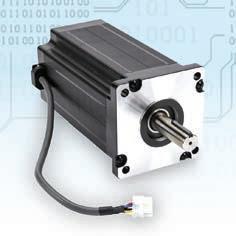
New NEMA 42 frame stepper motors nearly triple the max torque available from our existing line of single and dual shaft stepper motors:
• NEMA sizes 14, 17, 22, 34, and 42
• Holding torques from 8 to 4532 oz-in
• 2-phase bipolar, 4-lead
• 1.8° per step, 200 steps per revolution
• Motors have a connectorized pigtail for easy installation and replacement
• Extension cables available in 6’, 10’ and 20’ lengths
SureGear® Strain Wave Gearboxes
Starting at $1,011.00 (HPGA063-50A1)
Strain wave technology allows higher gear ratios and efficiency in an inline form-factor and smaller size with many advantages over planetary and helical designs:
• Lifetime zero backlash!
• Lifetime lubrication
• Low noise and heat generation
• Single stage reduction from 50:1 to 200:1
• NEMA 17, 23, and 34 frame sizes to fit stepper motors
• Metric sizes fit all SureServo2 motors up to 1kW
NEW! STEPPER SYSTEM SELECTOR
Use our new Stepper System Selector to size a stepper motor for your application, then walk through all the options for that motor; including encoders, drives, power supplies, cables, and more.
www.automationdirect.com/ selectors/steppers
SureStep® Linear Actuators
Starting at: $96.00 (STP-LE17-2A06ANN)
These NEMA 17 or NEMA 23 frame stepper motors have a stainlesssteel lead screw extension of the rotor (and a screw nut), which translate motor torque into linear thrust.
• Styles with bearing journal and snap-ring groove (at screw end)
• Styles with rear motor shaft and mounting holes for encoder mounting
• Long life, no-maintenance screw nuts
• Extension cables available in 6, 10, and 20ft lengths
Orders over $49 get FAST FREE SHIPPING
Our shipping policies make it easier than ever to order direct from the U.S.!
Fast free standard shipping* is available for most orders over $49 U.S., and that includes the brokerage fees (when using an AutomationDirect nominated broker). Using our choice of carrier, we can reach most Canadian destinations within 2 to 3 days.
*Free shipping does not apply to items requiring LTL transport, but those shipments can take advantage of our negotiated super-low at rates (based on weight) that include brokerage fees.
See Web site for details and restrictions at: www.automationdirect.com/canada
To see all products and prices, visit www.automationdirect.com
ENGINEERING
U OF GUELPH PROF TO CHAIR NASA, CSA SPACE AGRICULTURE CONTEST
Early in 2021, NASA and the CSA announced that the two space agencies would partner on an X-prize style competition to spur innovative ways to grow food in space to facilitate NASA’s planned Moon base and manned voyages to Mars.
Scheduled to name the winners in 2024, the competition will award up to CAD $100,000 to four semi-finalists and a grand prize of CAD $380,000 to all finalists who make it through to phase 3. At the end of July, the contest entered the judging phase and a number of University of Guelph faculty have been named to the judges panel.
Most recently, Dr. Tom Graham, a professor in the School of Environmental Sciences (SES), was named co-chair of the recently assembled national jury, joining Canadian astronaut Chris Hadfield as cochair. Other U of G members of the 11-member jury include Dr. Lawrence Goodridge, Department of Food Science, and Dr. Cara Wehkamp, U of G’s special adviser to the president on Indigenous initiatives and an SES doctoral grad.
“For us to go past low-Earth orbit, we need the capacity to produce food and grow crops,” said Graham, adding plants will also provide other essential life support functions during space expeditions, from regeneration of breathable air to maintaining mental health.
Graham said he anticipates longer term projects will include ideas for automation, such as artificial intelligence and machine learning for growing crops, as well as genetics and crop breeding concepts for space.
In addition to serving as
co-chair for the national panel, Graham belongs to the international jury panel that will assist NASA in evaluating submissions from around the world. He has spent 25 years in space-related research and outreach, including a three-year post-doctoral stint at NASA. Currently, he is collaborating with SES professor Dr. Mike Dixon on a CSA-supported project intended to grow plants on the moon by 2024-25. Graham also heads an expert team to advise the CSA on future food production initiatives.
U of G researchers use the University’s Controlled Environment Systems Research Facility (CESRF) to study plants grown under varying light, pressure and temperature, including extreme conditions posed in space or harsh environments on Earth.
www.ces.uoguelph.ca
UBC-LED PICS PROJECT LOOKS TO CREATE HIGH ENERGY DENSITY, SOLID STATE EV BATTERIES
According to researchers with the Pacific Institute for Climate Solutions (PICS), adding the element tellurium (Te) – an industrial by-product of copper and lead-zinc smelting
– to the chemical make up of lithium-sulfur batteries could open the door to solid state EV batteries with double the energy capacity of lithium ion.
To investigate the feasibility of this battery design, PICS has established a threeyear, CAD$180,000 project (Boosted Li-S Batteries for Zero-Emission Vehicles), led by institute partner, the University of British Columbia.
According to the project’s principal investigator – UBC Okanagan assistant professor, Jian Liu – tellurium’s high electrical conductivity and volumetric properties could enable greater energy storage and faster charging and discharging. In addition, a solid state tellurium-based battery could be safer since it wouldn’t incorporate a flammable liquid electrolyte like conventional lithium-ion batteries.
While limitations exist, including tellurium’s tendency
Radish plants growing inside the International Space Station’s Advanced Plant Habitat to help botanists learn about managing food production in space and evaluate nutrition and taste in microgravity.
Photo caption: NASA
Photo credit: The Pacific Institute for Climate Solutions
PhD candidate Yue Zhang (left) and principal investigator Jian Liu (right) examining a telluriumbased battery made at UBC.
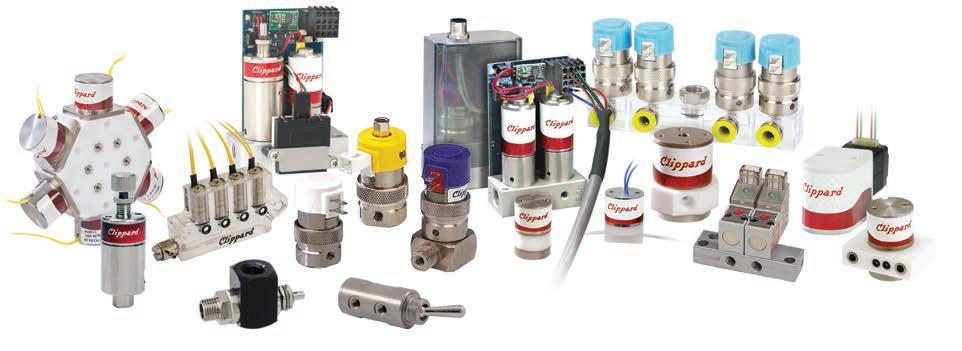
Precision Control Solutions
Designing efficient systems involves much more than simply understanding a few basic principles. There is a true art to balancing the specific requirements of an application in order to achieve the desired goals in the best possible way. Help us understand the unique needs of your application and together, we’ll develop something that surpasses what any of us could have done alone.
Contact your distributor to learn more, or clippard.com to request a free catalog and capabilities brochure.
to expand and contract, Liu believes that problem can be overcome by creating a stable compound within the battery.
“People have been looking into sulfur batteries for many years, but it is challenging to commercialize because sulfur doesn’t transport electrons at all,” he says. “We are looking for a way to balance electronic conductivity with energy density as a way to make lithium-sulfur batteries viable.”
PICS’ EV battery project is supported by the Government of British Columbia, GLABAT Solid-State Battery Inc., Fenix Advanced Materials, Nature Sciences and Engineering Research Council of Canada, National Research Council, Canada Foundation for Innovation, BC Knowledge Development Fund and Mitacs Accelerate Program.
PICS is a research collaboration, hosted and led by the University of Victoria, that also includes the University of British Columbia, Simon Fraser University and the University of Northern British Columbia. It is funded by the Government of British Columbia’s CleanBC Go Electric program through the Ministry of Energy, Mines and Low Carbon Innovation. https://pics.uvic.ca
GENERAL FUSION TO BUILD DEMO FUSION PLANT IN UK
General Fusion announced it will build and operate a Fusion Demonstration Plant (FDP) at the UK Atomic Energy Authority’s (UKAEA) Culham Campus.
Since 2002, the Vancouver-based company has pursued the development of its proprietary Magnetized
Target Fusion (MTF) technology with the goal of commercializing fusion energy.
Under the terms of the agreement, General Fusion will enter into a longterm lease with UKAEA following construction of the facility. The Fusion Demonstration Plant’s intent is to verify that the Canadian company’s MTF technology can create fusion conditions in a practical and cost-e ective manner at power plant relevant scales.
In addition, the facility will allow the company to refine the economics of fusion energy production, leading to the subsequent design of a commercial fusion pilot plant. Construction is anticipated to begin in 2022, with operations beginning approximately three years later.
“Coming to Culham gives us the opportunity to benefit from UKAEA’s expertise,” said General Fusion CEO, Christofer Mowry. “By locating at this campus, General Fusion expands our market presence beyond North America into Europe, broadening our global network of government, institutional, and industrial partners. This is incredibly exciting news for not only General Fusion, but also the global e ort to develop practical fusion energy.”
The Culham Campus, the home of the UK’s national fusion research program, is owned and managed by UKAEA.
https://ccfe.ukaea.uk https://generalfusion.com
NGEN FUNDING BOOSTS CANADIAN AUTOMOTIVE TECHNOLOGY PROJECTS
Next Generation Manufacturing Canada (NGen) announced it will
rendering of General Fusion’s proposed Fusion Demonstration Plant at the UK Atomic Energy Authority’s Culham Campus.
invested $11 million in collaborative funding to three projects in the Canadian automotive sector.
The first is the Canadian High Purity Alumina (HPA) consortium, established by Mississauga-based Polar Sapphire Limited; and Quebec’s Nature Alu Inc. and Dynamic Concept. The HPA consortium intends to create Canada’s first high-grade HPA facility for the production of high-purity alumina (aluminum oxide) suitable for electronics applications, particularly
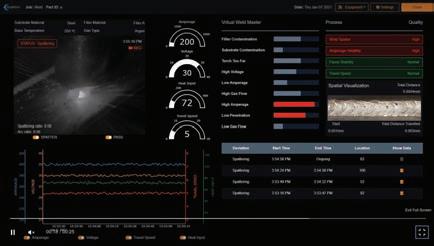
Autometrics Manufacturing Technologies and Macron Metalfab’s Inspection 4.0 software monitors welding quality in real-time using advanced machine learning.
lithium-ion battery separators used in electric vehicles.
In addition, B.C.-based Autometrics Manufacturing Technologies Inc. and Macron Metalfab Inc. of Delta, BC will receive funding to pilot an automated inspection system for robotic welding operations. The team’s Inspection 4.0 real-time quality management system employs machine-learning software to provide automated monitoring and detection. The pilot project seeks to validate and address challenges during deployment of the technology at an industrial scale.
Finally, Magna International and Toronto-based Maple Advanced Robotics will receive funding to advance their Autonomous Adaptable Robot System (AARS) that integrates 3D vision technology, software and robotics to allow operators to modify the robot path and
COMPACT. SILENT. PRECISE. MBSA.
Motorized Ball Screw Actuator
workspace.
“As one of Canada’s largest manufacturing sectors, the automotive industry is an important area of focus for NGen,” said NGen CEO Jayson Myers. “Canada has the innovative capabilities and technical knowledge to develop transformative, flexible and clean technologies, but often companies need support to deploy their innovations and scale-up production – that’s where NGen can make a di erence.”
To date, the industry-led notfor-profit says it has approved 105 projects with 242 industry partners, investing $181.2 million of supercluster funding and leveraging $437.5 million in total project investment. www.ngen.ca
Visit design-engineering.com for the latest new products, news and industry events.
Compact, high-accuracy positioning through seamless mechatronic integration.
For life-critical medical, imaging and laboratory applications, NSK integrates a high-resolution motor with our precision-machined ball screw to create the MBSA Motorized Ball Screw Actuator. The result: smooth, near-silent, extremely reliable and ultra-accurate motion, improving efficiency and throughput while lowering costs.
Enabling Automation in Motion & Control.
WWW.NSKAUTOMATION.COM
The Mystery of SolidFace
Software firm’s struggles an object lesson in the challenges of making it in the 3D CAD business.
BY RALPH GRABOWSKI
We’re all too familiar with big-spending CAD vendors like Autodesk, Dassault Systemes and Siemens and their millions of users. We might even have some familiarity with smaller CAD vendors, who are content to serve tens of thousands of customers.
But there’s a class of CAD vendor that never made it big – or at all. For instance, 2012 to 2014 was a shining era that saw the birth of a brand-new style of design software: Collaborative cloud-based CAD. Companies had names like sunglass.io, TinkerCAD, To3D and Onshape. All of them were taking advantage of the power granted by then-new WebGL and JavaScript APIs that made interactive 3D CAD graphics possible in Web browsers. None did well on their own.
One company you may not have heard of is SolidFace. I was alerted to this MCAD vendor when a reader told me about the company’s odd condition for using their free 30-day demo: Before downloading, you need to provide a credit card number.
Searching around, I discovered that a number of people had been caught o guard by the company’s arguably sly sales strategy. In a number of online forums, including Reddit, SourceForge, TrustPilot, and the U.S. Better Business Bureau, users complained that their credit cards had been charged for the free demo, sometimes multiple times, for amounts ranging from $65 to $89. Said one complainant, “I requested a refund and they said it would take 1-3 months for it to be processed due to the COVID situation.”
What isn’t immediately apparent is that downloading the software represents acceptance by the user of the software’s terms and conditions, a link to which is alluded to during the download process. Within those
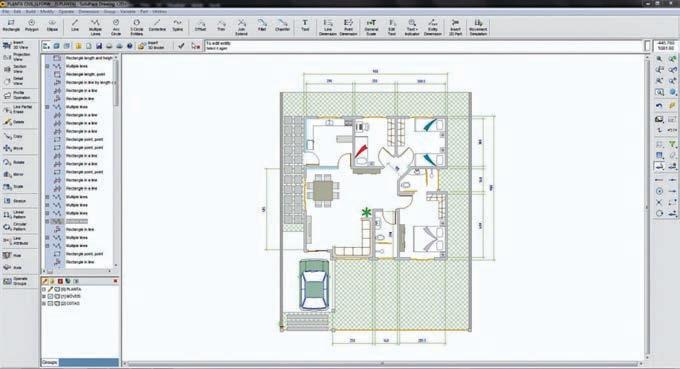
Solid Face is based on UniCAD and offers many of the 2D drafting functions expected in CAD.
terms is a paragraph revealing that using the software past the 30-day demo period incurs a monthly charge. Typically, demo software like this simply de-activates after 30 days or significantly cripples the available functions.
Curious, I dug a bit deeper. The history of SolidFace begins in 1994 with the launch of a Brazilian 2D CAD program named UniCAD. Over its life, it gained 4,000 customers, primarily in Latin America. According to tech startup community site, F6S, Solid Face founder Oscar Leite spent more than 20 years at UniCAD before exiting the company in 2008 with $2.8 million. He described himself as a back-end programmer and UI/UX designer, getting his university training in Germany
In 2013, Leite formed SolidFace with Rafael Lima, according to Leite’s LinkedIn profile. Lima, then 28, had spent his first years post-university dabbling in Bitcoin mining. “During the dark days of BTC as a younger, savvy tech teenager, I was looking for something di erent to do with my computers and found BTC in the corners of the web or dark-web,”
Leite wrote on LinkedIn.
Leite and Lima’s idea was to release a collaborative 3D parametric CAD program. The co-founders combined Lima’s knowledge of crypto-currency mining with Leite’s CAD experience. The free-of-charge program would make money for its owners by Bitcoin-mining using designers’ computers in the background, with the permission of users. According to Austin Business Journal, the company could make 4 cents per minute per user with this technique.
At the time, Leite described the new software as “Google Docs for 3D models,” even though SolidFace would run on the desktop, save files to the desktop (for intellectual property protection), and use the cloud only to store files and collaborate. Today, this is quite common among CAD programs.
According to its Tumblr account, the company spent $2.5 million to develop SolidFace and released the first beta test version in the middle of 2012. By 2014, the company was working to attract dealers and looking to advertise in publications.
Potential dealers were told,
“SolidFace’s growth is in the mid-range CAD market. SolidFace is fully compatible with Solidworks, Solid-Edge, AutoCad and others through SIEMENS-Parasolid core. The core also allows us to use full 3D modeling power.”
The compatibility referenced here was through Parasolid’s X_T/X_B formats and AutoCAD’s DWG/DXF formats. Although their marketing claimed 100% compatibility with Solidworks, NX, and so on, it’s not possible with a neutral file format.
One international dealer, that SolidFace approached, told me, “I tried SolidFace once. For me it wasn’t worth the extra learning curve compared to Rhino and BricsCAD, and also [there was] no
money in it as far as I could see.”
There didn’t seem to be much money in it for SolidFace either. “Bootstrapping both of our CAD companies, UniCAD and SolidFace, has proven to be a significant challenge. During this period we’ve invested over $1.5 million in research and development...,” the company stated as part of a 2015 Kickstarter campaign for a service called Solid Share.
Solid Share was to be a 3D printing, scanning and modeling service that used SolidFace as the CAD engine. Users could design with the CAD program for free, and presumably Solid Share would charge a fee for the services users accessed. The campaign failed after it raised just US$1,823 toward its goal
of US$385,000.
That same year, the company also took a stab at marketing SolidFace through Steam, the online computer game retail portal. For the first and only time, pricing was on a non-rental basis; the student version went for US$199, while commercial versions ranged from
US$500 to $1,000. This sales channel eventually fell through when the company decided their software would not be updated to version 2016 on Steam.
By 2017, SolidFace had sold just 600 licenses. Of these, 100 were paid for by Bitcoin mining, making the company $1,400 a month, according to the Austin
Solid Face’s 3D modeling runs on the Parasolid kernel and features a visual history tree.
Business Journal. They offered a non-mining version at $29.99/month. That same year, the company looked to raise US$500,000 as a seed round. According to CrunchBase, it landed US$50,000 from four venture capital funds, lead by growth accelerator firm Turn8.
In either 2018 or 2019,
Leite and Lima formed a third venture, Solid Network, for distributing software. “We partner with software companies to distribute their software for free in our marketplace using their user’s hardware (GPU) to monetize it while the device is online,” the company reported on its Solid Networks Linked-In
company page. However, the solidnetwork.com domain, set up in early 2020, currently resolves to an empty “placeholder” site.
Today, the SolidFace Web site reports the following software pricing. Its 2D version, SolidFace PTV, runs $89 per quarter with a “30 days free and cancel anytime” o er. SolidFace 3D Pro costs US$129 per month but hasn’t been released yet; it is “coming soon.”
While the company’s software doesn’t seem to have been successful in the marketplace, the training it provides is quite good. There are lots of 2D and 3D tutorial videos on Youtube and the user manual (which I reviewed) is well written. However, I wasn’t able to access a version of
the SolidFace software, and so I cannot attest to its abilities.
The story of SolidFace is a remarkable one, as two founders, flush with cash and full of ideas, launched a CAD program, and then pivoted repeatedly in their attempts to succeed.
But as the founders of sunglass.io, TinkerCAD, To3D, and Onshape discovered, MCAD program running on new WebGL technology is not necessarily a winner. |DE https://solidface.com
Ralph Grabowski writes on the CAD industry on his WorldCAD Access blog (www.worldcadaccess.com) and weekly upFront.eZine newsletter. He has authored numerous articles and books on CAD, Visio and other design software applications.
Solid Face at one time offered basic 3D solid modeling at a low price but now is no longer available.
HOW TO MAKE CUSTOMIZED PARTS AFFORDABLE
Choice of supplier can greatly effect price, delivery and options of customized motion control parts.
Customization may not always be top of mind when machine designers are selecting motion control suppliers. The hope is usually that they will find exactly what they need in the catalog and avoid what they believe to be the higher costs, delays and risks associated with custom solutions.
But, given that more than 25 percent of motion system projects end up requiring at least some degree of customization, it could be beneficial to prepare for that eventuality from the outset. Here are the most important factors to consider before closing on any motion control purchase:
• Commitment: For some vendors, customization is part of their business model, while for others, it is something to be avoided. If a vendor website has detailed lists of characteristics that can be customized, you are probably in good hands. However, if there is little or no mention of customization, you should find out why.
• Experience: How often have they had to modify a product? Can they give examples? How did the need for customization impact cost and delivery?
• Capability and scale: Do they have any special equipment for customization? What is the minimum number of potential products for which they would consider customization? Are they set up to handle smaller batch runs or will they customize only for large product runs?
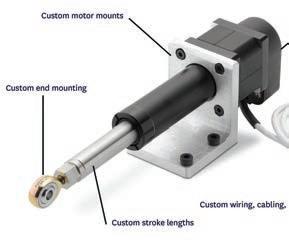
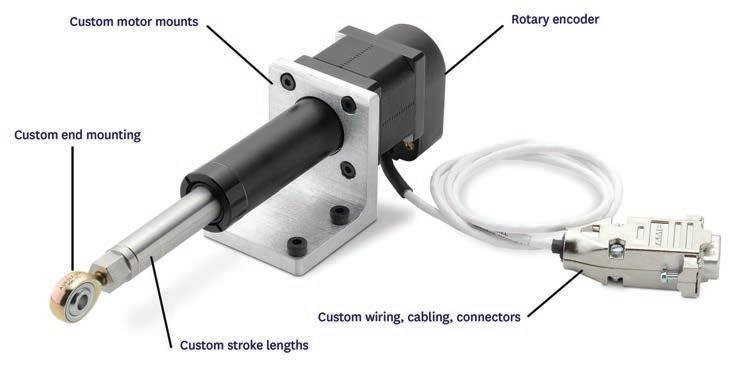
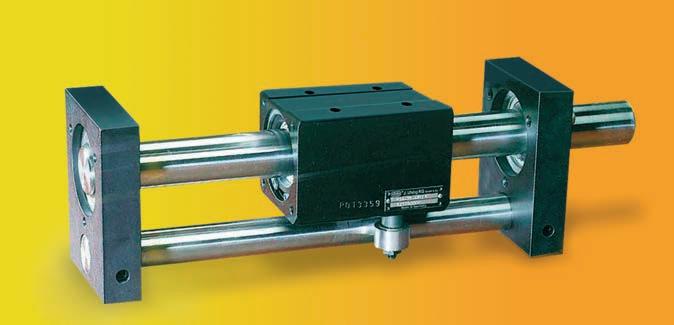
The modifications called out for this motorized lead screw actuator illustrate potential examples of how the overall design process can be simplified, and designers can save time and costs in specifying additional parts.
• Supply chain flexibility: Are they vertically integrated so that they build most of their sub-components from raw material, or will they be waiting for your parts to arrive on the next container boat?
• Process: How long does it typically take to get a quote for a nonstandard product? Will there be a dedicated engineer? Can you build the prototype online? Can the vendor produce the product directly from a CAD model?
• Engineering problem-solving: After all else is considered, perhaps the most important factor is the creativity of the vendor’s engineering team in terms of helping you reach an optimal solution.Will they take the time to understand your needs?
While it’s common for machine builders to think of customization as an all-or-none situation, many needs can be met with a relatively simple modification of standard products. And, depending on the vendor’s experience, it can often
be delivered in days rather than weeks or months.
Usually, the need for customization emerges after the project begins. For example, a company that itself specializes in customizing semi trailers required several modifications to adapt actuators for use in ramps, stairs and movable floor assemblies. Fitting ramp lift actuators inside the trailer wall required rotating the motor 90 degrees.
The ability to mount actuators within custom ramp frames while still connecting to the standard mounting points required extending the actuator tube by four inches. Simplifying future maintenance involved retrofitting the wiring connections with an easily detachable harness.
Even if the business relationship begins with a customization need, it can sometimes be met inexpensively by mixing and matching standard components. For example, a supplier of CNC tubing and pipe bending systems sought help in designing a new machine to meet market demand for a scaled-down system.
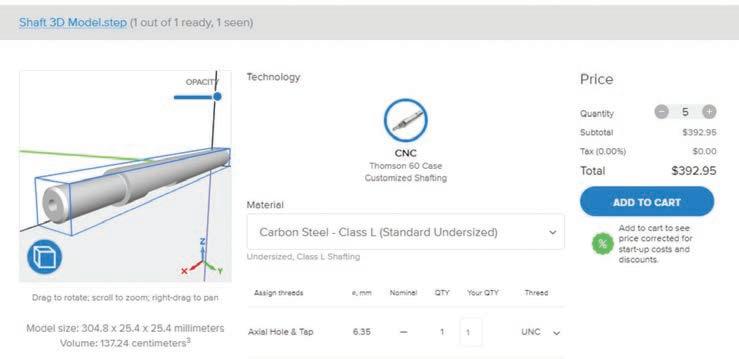
Online resources such as the Instant 3D Quote Tool from Thomson Industries (pictured) allow designers to upload a CAD file, make real-time changes, choose a material and receive a quote and lead time immediately
Their high-end system used two linear slides bolted together in a cross configuration to control motion on an XZ axis, using stepper motors to drive a 2-foot ball screw on each axis. The long length of the screw required
support bearings on both ends and a special coupling to the stepper.
The first thing the linear motion component manufacturer did to reduce the cost was shorten the shaft to an 11-inch lead screw with a
6-inch drive, which eliminated the need for support at both ends. Specifying a stepper motor with an integrated motorized lead screw (MLS) reduced the need for external support further because the MLS motor
bearings could support the load themselves. And because the lead screw and MLS rotor are combined into one part, there was no longer a need for external coupling of the screw and the rotor.
These days machine designers are having to do more, faster and with fewer people. Consequently, the more uncertainty they can drive out of the process, the greater their chance of sustained success. Acknowledging that some aspect of your project will likely require customization, partnering with a vendor with deep customization capability can save you money and headaches down the road. |DE www.thomsonlinear.com
This article was contributed by Thomson Industries.
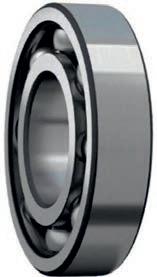
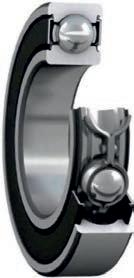
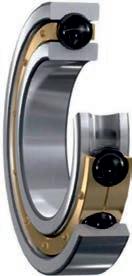
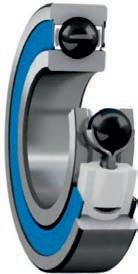
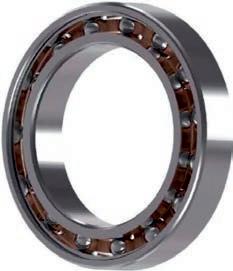
SKF deep groove ball bearings are an engineering feat in bearing design, tribology, metallurgy, lubrication and manufacturing. The result is a standard of excellence in bearing performance and precision manufacturing – unmatched in the marketplace.
https://skf.li/v5qnzj
Contact SKF today to help meet your requirements and goals!
NETWORKING
MANAGED SWITCH
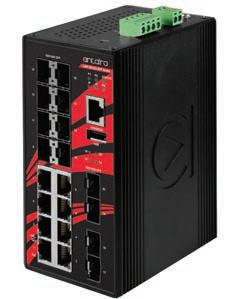
Antaira Technologies has redesigned its LNX-2012GN-SFP and introduced the LMP-2012GSFP and LMX-2012G-SFP Series managed switches. The LMP version provides eight PoE ports (30 Watts) and 12 fiber optic interfaces (1 meter to 100 KM). The LMX version offers the same specs and supports 12~48VDC power input, but doesn’t offer PoE.
The redesigned LNX features SNMP Traps, Syslog and port mirroring. Additional features not included in the predecessor like the ERPS (both LMP and LMX-2012G-SFP Series) and PoE functionality (LMP-2012G-SFP Series only) give this improved high-port count managed Ethernet switches more versatility for applications. www.antaira.com
INDUSTRIAL ROUTER
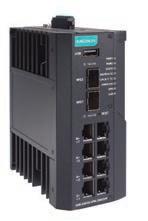
Moxa introduced its EDR-G9010 series, an all-in-one firewall/ NAT/VPN/switch/router line with 10 gigabit Ethernet ports (8-port TX GbE and 2-port SFP GbE). The series also includes Turbo Ring and VRRP redundancy mechanisms and a wide -40 to 75°C operating temperature range. Among its security features, the EDR-G9010 series features an
IPsec VPN and deep packet inspection for, Modbus and DNP3 traffic (available in Q3, 2021). The routers are also certified for IEC 61850-3/IEEE 1613, NEMA TS2, ATEX Zone 2, and Class I Division 2. The series is also compatible with Moxa’s MXview network management software, which displays network performance and security parameters, as well perform configuration back-up. www.moxa.com
SENSORS
USB CAMERAS
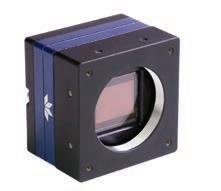
Teledyne released its Lt Series USB3 high resolution cameras, which includes six models with resolutions of 16.9 MP, 19.7 MP, and 31 MP in color and monochrome. Equipped with Sony
Pregius 3.45µm pixel sensors, the camera line performs in a variety of imaging applications where higher resolution is key, including aerial imaging, Intelligent Traffic Systems (ITS), robotic inspection solutions and life sciences. The USB3 Vision compliant cameras also offer multiple data rates, Windows and Linux SDKs and a Region of Interest (ROI) option. www.teledyneimaging.com
DIFFERENTIAL PRESSURE TRANSMITTERS
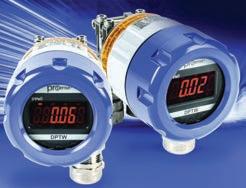
AutomationDirect released its ProSense DPTW series of differential pressure transmitters that are up to eight times smaller than a conventional style DP transmitter, the company says. The DPTW series can also be used to measure hydrostatic liquid level in
pressurized or open tanks and flow measurement using primary differential pressure flow elements such as an annular pitot tube, orifice plate, or venturi tube. Seven models are available with various measuring ranges of up to 400 inches of water column, each offering 4-20mA outputs, 12-32VDC operating voltage and 1/4-inch female NPT process connection. www.automationdirect.com
ULTRASONIC FLOWMETER
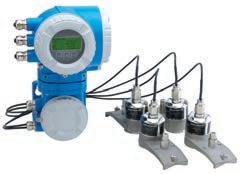
Endress+Hauser’s unveiled its Proline Prosonic Flow P 500 measuring system which
features FlowDC functionality. The FlowDC function detects and automatically compensates for effects of disturbances on the measuring signal via calculation. This makes it possible, for example, to maintain a consistent, specified accuracy even with a significant reduction in inlet runs – e.g. from 15 DN pipe diameters down to 2 DN.
The stainless steel, SIL-compliant flowmeters are IP68 (Type 6P) rated for operations in harsh ambient conditions or safety-related applications and at process temperatures between –40 to +170 °C. It acquires diagnostic data using
Heartbeat Technology and transmitted via HART or Modbus RS485, as well as via WLAN or via the freely configurable inputs and outputs. www.ca.endress.com
ELECTRICAL
ENCLOSURES
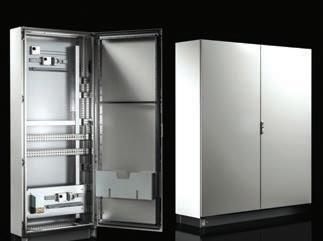
Rittal introduced its VX SE free-standing
enclosure system for applications where the company’s AX enclosures are too small, and its TS 8 baying enclosures are too large. The line’s sizes range from a 300mm deep version for space-limited applications to 1,800mm width. Available in carbon steel and stainless steel, the enclosure’s body is produced from a single piece for maximum stability and torsional rigidity. With no gaps between side panels, roof, and frame, the
Rolling Ring
enclosure line also sports a IP 66/NEMA 4 or 4X protection rating. www.rittal.com
SIGNAL CONDITIONER
• For applications in positioning & reciprocating motion
• Zero play –even during reversal
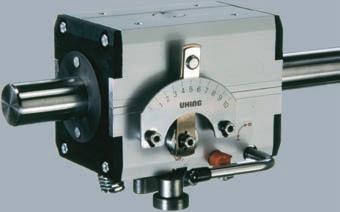
Uhing® Rolling Ring linear drives run on a smooth, threadless shaft that won't clog or jam. If the system is overloaded, the shaft simply slips instead of churning and grinding. The drive bearings are in constant contact with the shaft, even during reversal, thereby preventing backlash.
Example applications: metrology machines, material handling systems, spooling equipment, packaging & converting equipment.
Many different sizes meet varying requirements for axial thrust & linear speed.
For more information call 1-800-252-2645
Email: amacoil@amacoil.com www.amacoil.com
Some models feature mechanical control over speed and travel direction. No programming or electronic controls are needed.
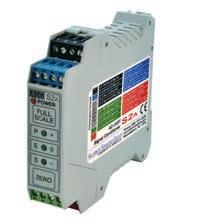
Alliance Sensors Group released its S2A, an LVDT signal conditioner designed for power generation applications. The signal conditioner has been engineered to work with a wide range of LVDTs, RVDTs and inductive half-bridge sensors, including 3-wire GE LVRTs and GE gas turbine buck-boost style LVDTs. The module also has cyber security tamper prevention and notification features. Other features include push button calibration, hot swap capability and self-diagnostics to detect eleven fault conditions. The S2A can also be setup remotely using a computer via its iRS-485 port. http://alliancesensors.com
TERMINAL BLOCKS
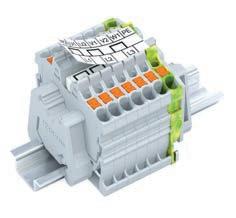
WAGO’s unveiled its TOPJOB S Mini terminal block series, which is 60% smaller than the company’s standard terminal blocks. The Mini features the same push-in CAGE CLAMP connection technology as the TOPJOB S series Nominal but has a cross-section of 1 (1.5) mm2. It’s rated current is 13.5 (17.5) A and its rated voltage is 500V. The blocks are available with open tool slot or orange push buttons that can be actuated with any standard tool. The TOPJOB S Mini terminal blocks are able to be mounted on a miniature rail, snap-in mounting foot for chassis mount or direct mount with fixing flange. www.wago.com
SIGNAL CONDITIONER
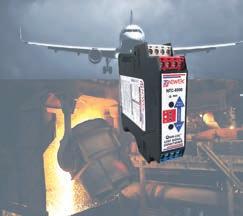
NewTek Sensor Solutions introduced its NTC-6000-DS Quick-Cal LVDT signal conditioner. By measuring the difference of the output over the sum (S1-S2)/(S1+S2), the conditioner compensates for changes in resistance in copper windings due to temperature fluctuations. Users can select between a ratiometric Diff/Sum measurement or differential (standard) measurement. Compatible with most AC-LVDT, the unit features self-diagnostics for sensor
failures, disconnects or short circuits, as well as cybersecurity locks out and tamper detect. Digital protocols include Modbus, CAN Bus and RS-485. The NTC-6000-DS LVDT Signal Conditioner is compatible with standard and constant sum AC LVDTS and RVDTs. The signal conditioners are RoHS compliant and CE-certified. www.newteksensors.com
MILITARY-GRADE CONNECTOR
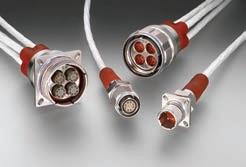
TE Connectivity announced that its CeeLok FAS-X connector product line meets the MIL-DTL-32546 standard as approved by the Naval Air Systems Command (NAVAIR). Designed with standard 38999 shells and AS39029 contacts, the connector is currently the only MIL-DTL-32546 approved solution for high-speed networking for both military and
Don’t Compromise! Use MAIN!
•Quick – Thousands of flanges to SAE J518, ISO 6162, ISO 6164, JIS flanges stocked. Specials generally produced in less than a week.
aerospace applications. The line offers a size 11 shell (versus a size 19 shell for RJ45 in M38999), as well as a range of inserts for size 25 shells. The connectors offer up to 10 Gb/s data delivery and an “X” pin configuration to optimize signal integrity. The connectors are offered in both aluminum and composite shells with a variety of finishes. www.te.com
SWITCH-RATED CONNECTOR
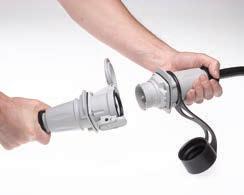
Molex has added a 60A-rated version to its Woodhead ArcArrest product line of switch-rated connectors. The
60A product is a UL 2682 power connector that combines a plug, receptacle and switch in one device. Rated Type 4X and IP69K, ArcArrest 60A provides line-of-sight motor disconnect as required by the National Electrical Code (NEC) and
Occupational Safety and Health Administration (OSHA) provisions. It also provides visual proof that power has been removed when plug and receptacle are separated and protection from arcing energy. www.molex.com
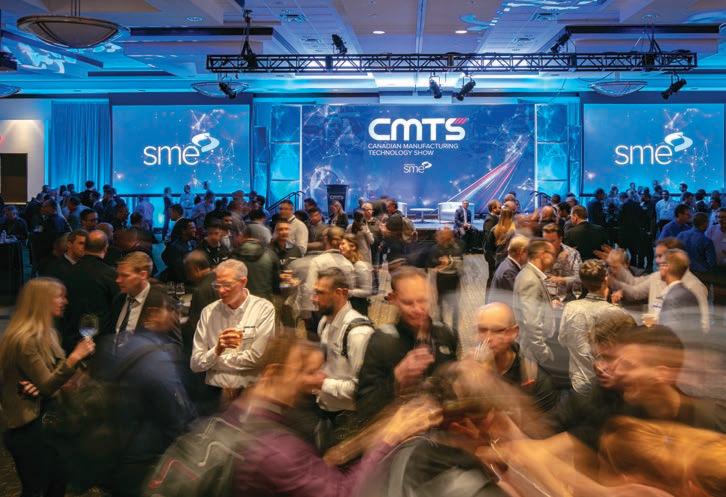
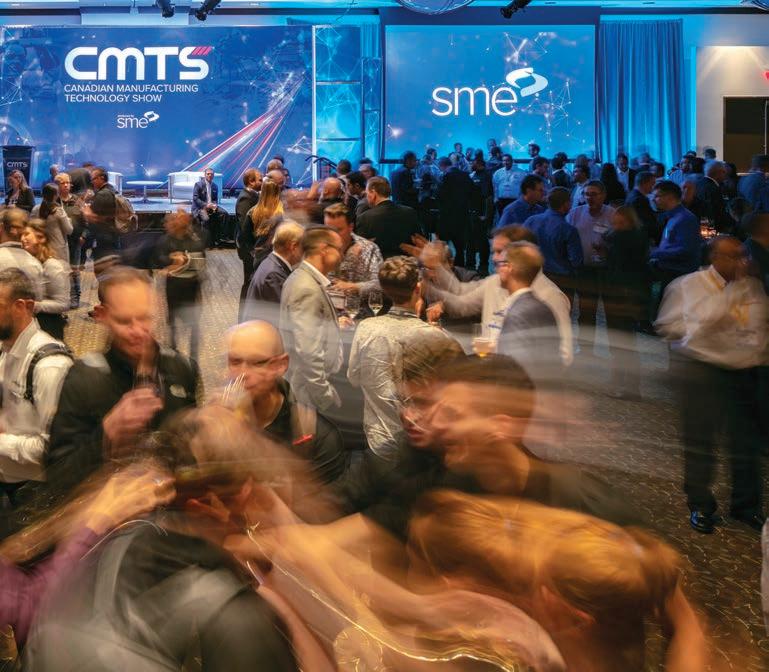
CMTS 2021 PRE-SHOW GUIDE
Canada’s most influential industrial trade show returns to Ontario for inperson event on October 4th at the The
International Centre in Toronto.
For more than 40 years, CMTS has been produced in partnership with industry OEMs and leading suppliers who know the challenges Canadian manufacturers face as well as the types of enabling technology needed to advance the industry.
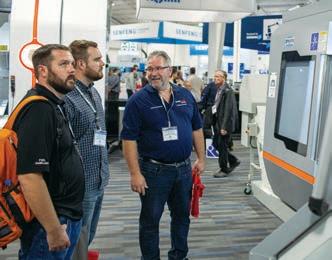
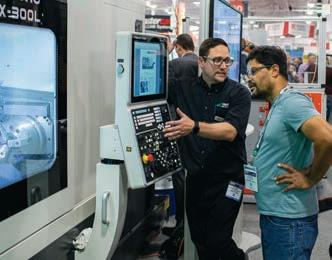
More than 150 technology and service providers will be at CMTS this year. Attendees will have the chance to meet with experts who can address their specific challenges. They’ll also be able to participate in one-onone consultations, comparing products and negotiate custom solutions for their company’s needs, all under one roof.
As Canada’s most influential manufacturing event, CMTS also attracts thinkers, doers and decision makers. Attendees will have the opportunity to network with the industry’s sharpest professionals in the field to exchange ideas. This year’s show features keynote speakers, panelists and technical presentations where industry leaders will share proven strategies and tactics. www.cmts.ca
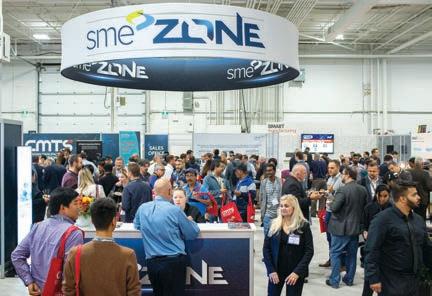
CMTS 2021 Resources SME Zone
The SME Zone is the nerve center of everything happening at CMTS. While there, attendees will learn how SME can help grow their business and advance
their career. SME can help attendees keep up with advancing technology, maintain their innovative edge, develop their workforce, connect with the manufacturing industry, expand their network, and much more.
Smart Theatre
This CMTS venue attraction will o er small group discussions in which attendees can ask questions about specific manufacturing challenges and get “the scoop” from industry experts in key technology areas. The Smart Theatre will feature advanced manufacturing technologies including automation, advanced materials, additive manufacturing, the industrial internet of things (IIoT), 3D scanning and more. Insightful technical presentations combined with resources from leading technology providers will bring attendees up to speed on developments in this quickly changing field.
CMTS Live! Virtual Experience
CMTS connects manufacturing industry stakeholders together with solutions, ideas and knowledge, meaningful networking opportunities, and business tools. As a first this year, CMTS will host both its in-person event and offer a VIRTUAL iteration for those unable to attend in-person. No matter how attendees take in the show, CMTS aims to fulfill its legacy of providing the manufacturing community with the resources they need in engaging, easy-to-consume platforms.
SME Mobile App
Another first for CMTS, the SME Mobile App helps attendees plan their CMTS experience by building a personalized agenda. With the smart phone app, users can favorite key exhibits they plan visit and connect with fellow exhibitors and attendees before they arrive. While at CMTS, the app helps attendees navigate the show floor, engage during education sessions, and contactlessly exchange information with other show-goers as they network.
CMTS 2021 Speaker Schedule
The CMTS keynote speakers and industry panelists are global thought leaders from the highest levels of the manufacturing and technology. You’ll leave these presentations with key takeaways to apply in the development of business strategies and operational plans.
Monday, October 4
9:00 – 10:00 am
Opening Keynote
Geopolitical Risks and How to Manage Them
Presenter: Courtney Rickert McCaffrey, Insights Leader – EY Geostrategic Business Group at Ernst & Young LLP
In this presentation, Courtney McCa rey will explore the key political risks manufacturers face and how they can manage them in today’s volatile global environment.
12:30 pm – 1:30 pm
Industry Panel
Building a Resilient Supply Chain: Enabling Speed and Agility to Protect your Customer and your Bottom Line
Moderator: Kimberly Hagerty (AWS)
Panelists:
• Michelle Bockman (3D Control Systems)
• Stewart Kramer (NGen)
• Alejandro Guerrero (infor)
In this industry roundtable, panelists will outline what a resilient supply chain looks like (key capabilities / characteristics), how to identify risk across a global value network and what is being done to protect customers from a wide variety of supply chain disruptions.
Tuesday, October 5
9:00 am – 10:00 am
Morning Keynote
The State of the Economy
Presenter: The Honourable Mélanie Joly, Minister, FedDev Ontario
12:30 pm – 1:30 pm
Afternoon Keynote
A New Economy:
Strategic Opportunities for Canada’s
Advanced Manufacturing Sector
Presenter: Jayson Myers, CEO, Next Generation Manufacturing Canada (NGen)
Wednesday, October 6
9:00 am – 10:00 am
Morning Keynote
Presenter: Flavio Volpe, President Automotive Parts Manufacturers’ Association (APMA)
12:30 pm – 1:30 pm
Industry Panel
Taking Care of Your Employees, Business and Assembly Lines
Moderator: Damien Johnston, Vice-President of Mid Market Sales Ontario at TELUS
This session will explore how employers can experience greater peace of mind knowing their employees have access to on-demand physical and mental health support services, the importance of investing in a robust risk management strategy, and exploring how IoT can streamline processes and tasks, taking daily e ciencies to impressive heights.
Thursday, October 7
9:00 am – 10:00 am
Morning Keynote
Presenter: TBD
12:30 pm – 1:30 pm
Industry Panel
Welder Education for Today’s Workforce
As automation and innovative technology becomes more prevalent in the welding workforce, it impacts how organizations and businesses adapt to technologies, training, recruitment, retention, and overall productivity.This panel session will outline some current challenges as well as hearing from leaders in the welding industry today. |DE
MOTION CONTROL NEWS
German, Canadian researchers collaborate on AI for picking robots and other motion control news Pg. 23
SHROOM-BOT
Ontario’s Mycionics looks to relieve mushroom trade’s labor crunch with fully automated harvesting robot. Pg. 26
MOTION CONTROL PRODUCT SPOTLIGHT
The latest in motion control products including edge devices, motors and controllers Pg. 28
2021 MOTION CONTROL GUIDE
GERMAN, CANADIAN RESEARCHERS COLLABORATE ON AI FOR PICKING ROBOTS
Festo announced it is partnering with researchers at the Karlsruhe Institute of Technology (KIT) and the University of Waterloo to make picking robots smarter using a distributed AI method called federated learning.
Also known as collaborative learning, the technique allows multiple robots, programmed for di erent tasks, to build a collective machine learning model but without sharing data. In this way, robot training data from multiple stations, plants and/or companies can be harnessed, but without requiring that participants expose company data.
“We are investigating how the most versatile training data possible from multiple locations can be used to develop more robust and e cient solutions using artificial intelligence algorithms than with data from just one robot,” says Jonathan Auberle from the Institute of Material Handling and Logistics (IFL) at KIT.
Called FLAIROP (Federated Learning for Robot Picking), the project will employ four autonomous picking stations, to inform the robot training algorithm: Two at the KIT Institute for Material Handling and Logistics (IFL) and two the Festo headquarters in Esslingen am Neckar, Germany.
Meanwhile, the Canadian project partners – Waterloo, ON-based start-up DarwinAI and the University of Waterloo – will focus on object recognition through deep learning, explainable AI and optimization. The German partners, including KIT researchers, will contribute expertise in robotics, autonomous grasping through deep learning and data security.
“The University of Waterloo is ecstatic to be working with Karlsruhe Institute of Technology
The FLAIROP research project trains robots with different tasks in separate locations, collects and optimizes the handling data and then distributes the improved version back to the local stations. The robots should then be able to grasp articles from other stations that they have not yet learned about.
and a global industrial automation leader like Festo to bring the next generation of trustworthy artificial intelligence to manufacturing,” says Dr. Alexander Wong, co-director of the vision and image processing research group at University of Waterloo, and chief scientist at DarwinAI. “By harnessing DarwinAI’s Explainable AI (XAI) and Federated Learning, we can enable AI solutions to help support factory workers in their daily production tasks to maximize e ciency, productivity and safety.
CYBERATTACKS STRIKE MORE THAN 40% OF MANUFACTURERS
According to U.S.-based cybersecurity firm Onclave Networks, more than 40% of manufacturing firms su ered a cyberattack last year. In addition, the company says ransomware attacks have increased 158% increase in North America (62% globally) since 2019.
As a result, the firm recommends manufacturers adopt the Zero Trust Architecture and security guidelines supported by the U.S. National Security Agency (NSA), the Biden Administration executive order 14028 and National Institute of Standards Technology (NIST) SP 800-207 Cybersecurity Framework.
The goal of a Zero Trust framework deployed in an enterprise is to verify trust in people, devices, systems and networks before engaging/
interacting with them – and continuously verify that trust to ensure nothing is compromised. It changes the old saying of ‘trust, but verify’ to ‘never trust, and always verify’ and that any request for network access must be continuously authorized.
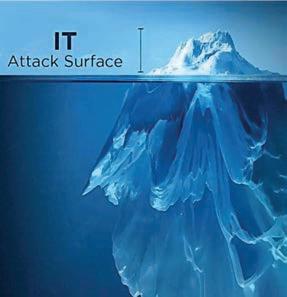
“Most of the IT security methods that manufacturers have relied on for years are not designed to identify or protect operational technology,” said Onclave Networks CEO, Don Stroberg.
“Manufacturers need to be aware,” Stroberg added, “that layering IT solutions on top of one another is not adequate protection for these IoT, IIoT and ICS systems and devices.” onclavenetworks.com
FANUC ROLLS OUT 750,000TH ROBOT
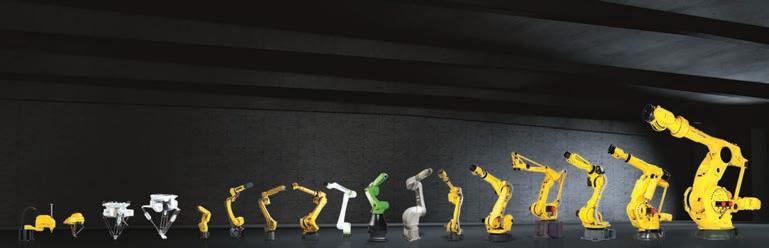
FANUC announced the production of its 750,000th industrial robot. Currently, FANUC says it is capable of producing 11,000 robots per month in automated factories that use its own robots to make robots, controllers and machine tools. The company’s customer base covers a range of industries including automotive, aerospace, food and
beverage, consumer goods, medical and pharmaceutical and warehousing.
“Now more than ever manufacturers are embracing automation and robotics to solve production challenges,” said FANUC America president and CEO, Mike Cicco.
“I’m proud to say that FANUC is in a position to meet the growing demands for easy-to-use automation solutions that help our customers increase e ciencies, improve their competitive position, and realize a quick ROI. We look forward to helping as many companies as possible achieve their goals.” www.fanucamerica.com
ROCKWELL ACQUIRES PLEX SYSTEMS
Rockwell Automation announced it will acquire Plex Systems, the cloud-native smart manufacturing platform for $2.22 billion in cash. According to the company, Plex o ers the only single-instance, multitenant SaaS manufacturing platform operating at scale, The service currently has more than 700 customers and manages more than 8 billion transactions per day.
“Rockwell believes in the power of data and technology to transform manufacturing and industrial operations,” said Brian Shepherd, senior vice president, Software
and Control for Rockwell Automation. “Together with the advanced asset maintenance and management capabilities provided by our recent Fiix acquisition, Rockwell will have a strong portfolio of cloud-native solutions for our customers’ production systems upon completion of the Plex acquisition.”
Plex and more than 500 its employees will join Rockwell’s Software and Control segment which provides hardware and software for the design, operation and maintenance of production automation and management systems. The acquisition is expected to close in Rockwell’s fourth quarter. www.rockwellautomation.com
JOHN DEERE ACQUIRES BEAR FLAG ROBOTICS
Deere & Company announced it will acquire Bear Flag Robotics for US$250 million. Founded in 2017, the Silicon Valley-based startup develops autonomous driving technology compatible with existing agricultural machines.
According to John Deere, the deal accelerates the development and delivery of automation and autonomy on the farm and supports the company’s long-term strategy to create smarter machines.
bearflagrobotics.com
Photo credit: FANUC America
SHROOM-BOT
Ontario’s Mycionics looks to relieve mushroom trade’s labor crunch with fully automated harvesting robot.
BY MIKE MCLEOD
Despite being one of the more pedestrian vegetables, the mushroom is at the center of a growing crisis in the global agricultural market. On the one hand, they are an increasingly popular. Market analysis firm, Grand View Research pegged the global mushrooms market at US$46 billion in 2020.
And the industry is expected to expand steadily, at a compound annual growth rate of 9.5%, as health-conscious consumers turn to non-meat protein alternatives.
On the other hand, the industry has been in the grips of a protracted and acute labor shortage, which has only been exacerbated by the COVID pandemic.
“The problem around the world is that it’s hard to get people to do this job,” says Michael Curry, CEO of Mycionics, a Putnam, ON-based robotics firm that recently emerged from stealth mode to unveil its fully automated mushroom harvesting
system. “It’s repetitive, it’s hard on the back and it’s in high humidity rooms.”
“In Canada, there is about a 20 percent labor gap and there is a 40 percent turnover per year,” he adds. “And it takes six months to train someone properly so they don’t damage the mushrooms caps.”
Established in 2014 by mushroom farmer, Murry Good, Mycionics – its name a portmanteau of mycology (the study of fungi) and bionics – began as a research project when Good approached the engineering department at Western University in near-by London, Ontario. Seven years later, the company says it has fashioned an industry-first, endto-end automation solution that will be a break-through for this billion dollar industry.
“Today, we have a team of 17 engineers in our lab, which is actually based on a mushroom farm,” Curry says. “We’ve been working on an autonomous
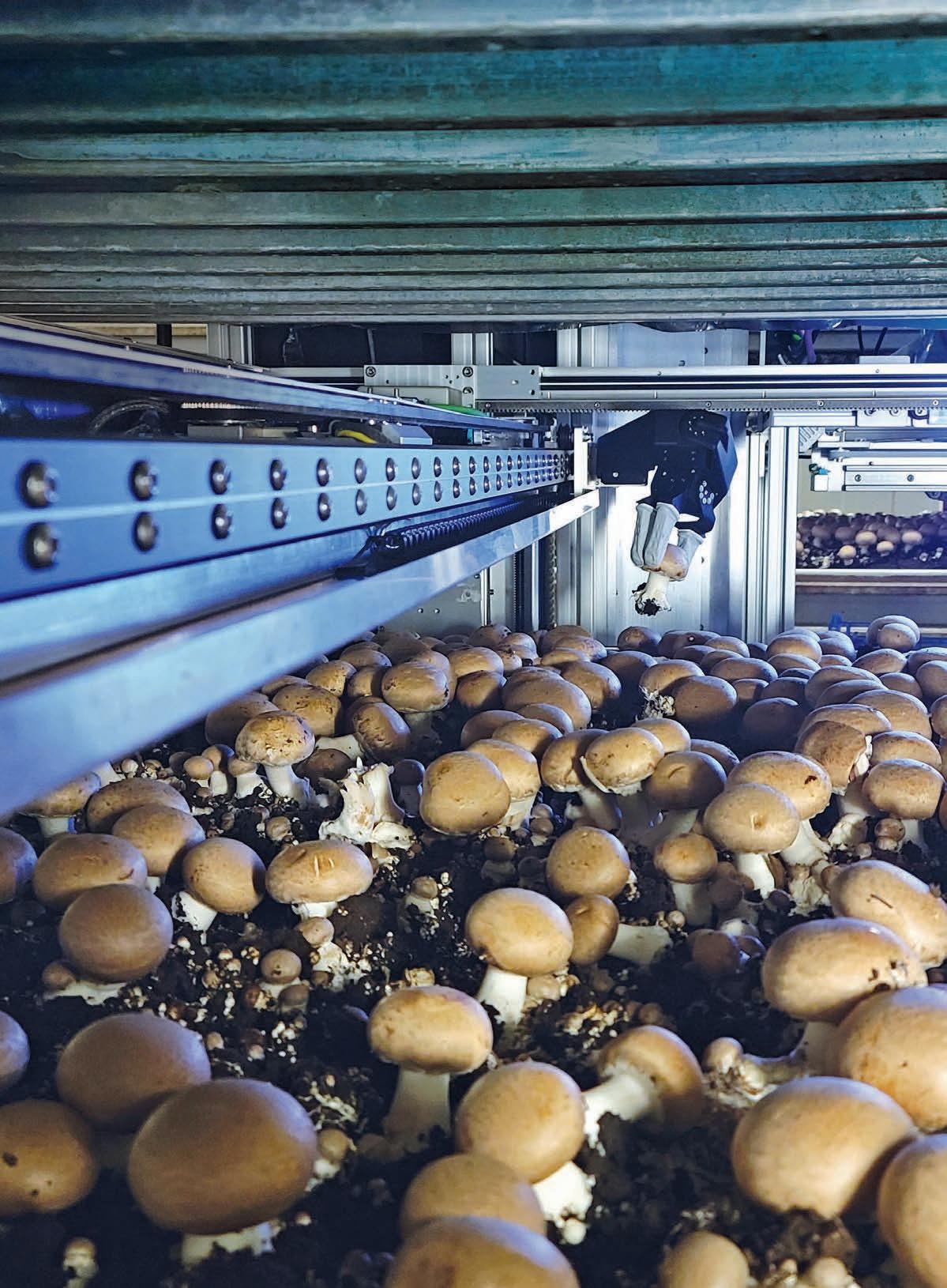
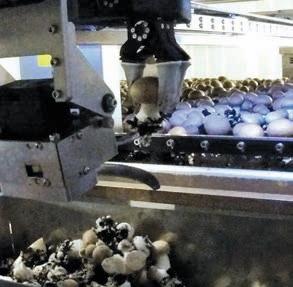
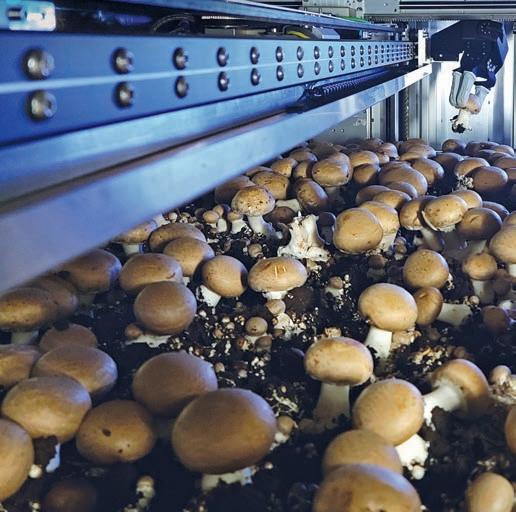
Amid thousands of mushrooms, Mycionics’ robotic harvester can spot and pick individual mushrooms without damaging them.
robotic solution that can basically fill the roll of the humans who aren’t interested in the back-breaking, repetitive agricultural work involved.”
At first blush, a solution might seem straight forward, but the realities of fungi harvesting are surprisingly complex. For one, the species of whitish button mushroom that makes up 60 percent of the total world market, A. bisporus bisporus, grows exceedingly quickly.
Cultivated in composted and pasteurized wheat hay and manure, A. bisporus spore will fully form a web-like lattice called mycelium within two to three weeks. The compost is then topped with a 2-inch casing layer of peat moss, which sparks the formation of pinsized fruiting bodies.
Triggered by moist air and low CO2, the fruiting bodies will grow at approximately 4 percent per hour, once they break through the casing layer, and will double in size over 24 hours.While that’s great for crop yield, it does mean that the mushroom’s button stage, which makes up 80 percent of the A. bisporus market, can pass by quickly if they aren’t harvested in time.
Left to mature and expose their gills, button-sized A. bisporus will “over-grow” to become second grade mushrooms, known in the trade as “utilities”. Consequently, workers need to repeatedly scan the large, tightly
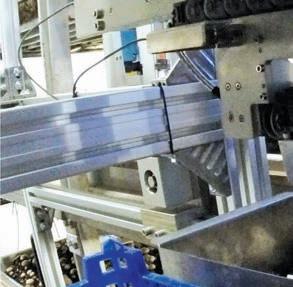
Once picked, the Mycionics system’s three-fingered gripper delivers mushrooms to the packer unit which cuts the stem and places them in a weighing basking.
packed trays of variously sized mushrooms to pick only those that are large enough but haven’t yet enter the reproductive stage.
Adding to the complexity are the tight quarters inside the atmospherically controlled grow houses and the relative fragility of the crop itself, Curry says.
“Mushroom farms are typically designed with two aluminum racks per room, that are 100 feet long and stacked six to seven layers high like bunk beds,” he explains.
In addition, mushroom don’t grow uniformly like wheat but instead sprout in waves called flushes or breaks. A complete mushroom crop cycle will typically have three flushes, each lasting three to five days. Since grocery retailers want mushrooms of a specific size – 45 to 55mm so as to neatly fit eight per pack – harvesters are engaged in near constant monitoring and picking activity.
Finally, properly picking a mushroom requires workers to quickly but gently twist the mushroom free from the casing layer, cut the stem to remove the roots and place them into weighing trays without bruising them.
Stacking up these complications explains why automation has largely been absent in the industry, says Mycionics CTO, Stefan Glibetic, who has been with the project since before earning a masters in engineering at Western University.
“In the industry, we were met with a lot of skepticism, and told that it couldn’t be done,” he says. “But we were very determined. We felt we could take a fresh look and apply more modern technology to a problem that’s been long-standing and unsolvable.”
Mycionics robotic system is composed of three separate machines – the lifter, the harvester and the packer – which work in concert. Attached to one end of an industry standard aluminum rack, the lifter transports the harvester unit between shelves as needed. Once delivered, the harvester moves along the 100foot shelves on rollers, using its 3D vision system to scan the mushroom bed beneath it in sections.
“The harvester scans the mushroom bed to determine the size, shape and location of the mushrooms,” Glibetic explains. “With input from the farmer as to the desired size, the harvester machine then builds a plan of how to find the mature mushrooms and harvest them. Based on conditions in the room, such as estimated growth rate, the plan also allows the machine to optimize what and when to pick and minimize time spent in areas that aren’t ready yet.”
With the digital map built, the harvester then switches into picking mode, operating similar to a gantry robot. To position its custom designed, three-fingered gripper over a target mushroom, the harvester rolls forward and back while a motorized linear slide, perpendicular to the harvester’s travel, moves the gripper side to side. The gripper then gently grasps and picks the mushroom via a carefully choreographed sequence that changes with each mushroom.
“Determining the right way to pick a mushroom was a big portion of our system,” Glibetic says. “Every parameter that we measure and take into account is on a per mushroom basis
including all the mushrooms around it. This allows the system to harvest mushrooms rapidly without damaging the mushroom being picked or any of the ones around it.”
Once picked, the mushroom is then delivered to the packer, which rolls along the outside of the growing rack in step with the harvester. It’s job is to trim the stem and deposit the mushroom in a weighing tray.
“Our system is capable of scanning 150,000 mushrooms per hour, or 2,500 per minute, and the data we collect with our system is helping in various ways,” Glibetic says. “We have future plans to help the industry as a whole, such as detecting various problems that were simply too di cult to detect before due to the overwhelming amount of data human growers are currently presented with.”
150K
The number of mushrooms Mycionics’ system can scan per hour.
Currently, Curry says the system is poised for its final real world test. Over the next 10 month, the company plans to build eight machines installed at two Ontario mushroom farms, four at one and four at the other.
“We now feel we have a system that is working well enough to actually perform on these farms,” he says. “We will be putting together a business case comparing our system to human picking and whether we will be able to achieve the yield increases we believe we can get by harvesting around the clock.”
Curry says Mycionics will roll out its machines first in Ontario, which makes up more than half the Canadian market, and then widen its availability to high labor-cost areas like Europe.
“Our plan is to sell a picking service where we are partnering with farms long term,” he says. “We’ll deploy the machine and get paid for what we pick, provided it meets quality standards. We don’t want to sell the system because we know the technology is only going to get better.” |DE https://mycionics.com
AUTOMATION
ULTRA-COMPACT INDUSTRIAL PC
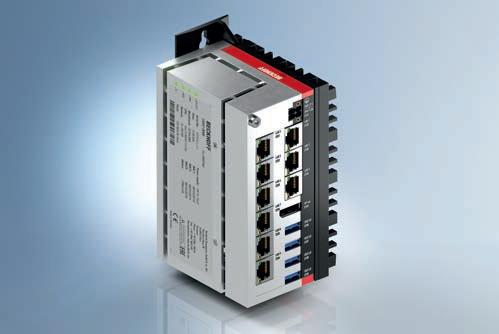
Beckhoff introduced its C6027 ultra-compact Industrial PC. The fanless device features the Intel Core i U series processors (with up to four cores), 4GB of DDR4 RAM (expandable to 8GB) and a 40GB M.2 SSD with 3D flash memory. In addition, it includes a DisplayPort connector, four USB 3.0 ports and an on-board Ethernet controller with three 100/1000Base-T ports. The IPC line adds a circuit board level that allows for additional interfaces or function extensions including the option for six Ethernet ports (RJ45) and an integrated 1-second UPS. With an operating temperature range of 0 to 50°C, the IPC is also Microsoft Azure certified and AWS qualified for use in cloud-based platforms. www.beckhoff.com
UR COBOT
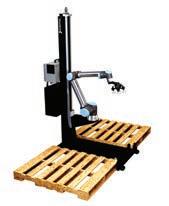
Universal Robots has unveiled an enhanced version of its popular UR10e with an increased payload of 12.5kg (27.55lbs), but held to the same price point, the company says. As a result, the company says the UR10e can now be used in palletizing applications with cartons weighing up to 10kg and a 2.5kg gripper. As
with the previous version, the updated UR10e continues to provide plug-and-play compatibility with products from Universal Robots’ UR+ ecosystem of hardware and software peripherals. UR says its global distributors are accepting pre-orders, with shipments to following in the second half of June.
www.universal-robots.com
HMI TABLET HOLDER
INTELLIGENT TRACK SYSTEM
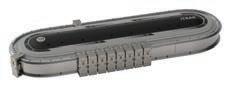
Rockwell Automation unveiled its iTRAK 5730, a small-frame addition to the company’s iTRAK intelligent conveyor track line. Using magnetic propulsion, individually controlled carts can quickly start and stop with high precision. The 5730 version of the system has the smallest
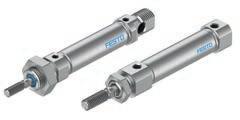
and corrosion resistant piston rod and housing but also features a sintered bronze bearing at the bearing cap and polymer bearing in rear clevis. www.festo.com
LM GUIDE ACTUATOR
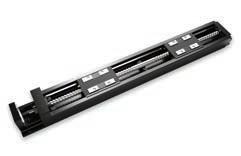
THK launched its Type KR-RL LM guide actuator, which features a driving element that uses right/ left threads and enables symmetrical movements with a single motor. The actuator integrates an LM guide and a ball screw. The Type KR-RL is designed to handle loads in all directions (radial, reverse-radial, and horizontal), making it possible to install in any mounting orientation. The unit is designed for a range of applications, including
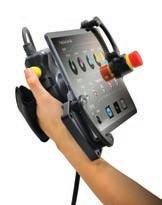
IDEC Corporation released its HT3P Safety Commander, a hand-held device that makes handling an HMI tablet more secure in an industrial setting while allowing the integration of safety features like hardwired emergency stop (e-stop). A tablet mounted into the Safety Commander provides an ergonomic hand grip and strap – for both right- and left-handed users – with the ability to rotate the tablet to portrait or landscape orientation. The device also includes one hardwired e-stop button with LED indicator and a hardwired 3-position enable switch. Other features include a USB Type-C port for tablet charging, a 5-meter cable and IP54 protection. https://us.IDEC.com
footprint with a 50mm minimum pitch between carts. The iTRAK 5730 also offers integrated safety, featuring safe torque off, Safe Stop 1, a SIL 3, PLe safety rating and the ability to create safety zones. The system also offers simulation capabilities with which users can design various configurations digitally and calculate their throughput. www.rockwellautomation.com
ACTUATORS
PNEUMATIC CYLINDER
Festo introduced its DSNU-S round cylinder that is up to 40 percent slimmer, 3.5cm shorter and 50 percent lighter than its ISO counterpart DSNU of the same bore and stroke length. The slim cylinder features PUR seals and corrosion resistant piston rod and housing. Depending on the size (8-25 with a maximum stroke length of 200mm), the DSNU-S is available with fixed end cushioning (P) or Festo’s
proprietary self-adjusting cushioning (PPS). The larger DSNU ISO round cylinder also provides the same PUR seals
gripping, measuring, and positioning for robot hands, screw tightening machines, cutting equipment, and dispensers. It is available in nine sizes ranging from 15mm to 65mm with long or short block types. www.thk.com
DIRECT-DRIVE ACTUATOR
Vancouver-based Genesis Robotics & Motion Technologies launched its LiveDrive LDD 1800 Series, a high torque density, direct drive actuator for robotics and automation machinery. As a direct drive actuator, loads can be directly coupled to the output of the actuator without additional transmission components (ie. belts or gears). Available in a range of configurations and performance options, the actuator’s standard models include four sizes, various
voltage levels and support integration with third-party servo drives. Less than half the length of a typical servo-gearhead drivetrain, LiveDrive actuators meet the Collaborative Robot Technical Specification ISO/TS 15066 and feature a washdown-ready IP67 enclosure. www.genesis-robotics.com
CONTROLLERS
CONTROL UNIT
Siemens Industry has released its Sinamics CU250S2 control unit for use with its Sinamics G120 variable speed drives. The unit provides vector control with different encoder interfaces for feedback. The unit can be combined with existing power modules to support all G120 drive applications, with or without encoder evaluation. Additionally, STO (Safe Torque Off), SBC (Safe Brake Control) and SS1 (Safe Stop 1) features are integrated. With the purchase of an optional software license, extended safety functions can be obtained, along with software for a single positioning function (Epos). Communication interfaces include Profibus DP, Profinet (Ethernet I/P), RS485 (USS protocol, Modbus RTU) and CANopen. Other features include an integrated USB port, plus an integrated slot for an SD card. www.usa.siemens.com
MOTION CONTROLLER
ETEL unveiled its UltimET Advanced, a multi-axis motion controller designed for high-level machine processes in the electronics and automation industries. The UltimET Advanced is a standalone “box format” motion controller with an embedded real-time operating system that allows it to both compile and execute a end-user’s code. This is accomplished
through its quad-core processor which dedicates one of its cores to end-user processes and computations. Along with computation speed, the architecture allows for integration of analog and digital external sensor data into the control loop. Other features include a free development environment (so that the end-users’ code is not IP dependent) and extended interfacing capabilities such as PCIe and TCP/IP. www.heidenhain.us
MOTORS
SERVO SYSTEMS
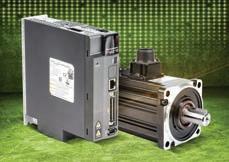
AutomationDirect announced the availability of the SureServo2 servo system, built from a motor, drive, I/O breakout module and cable set components. Designed for high-powered systems (up to 15kW), the
servo system offers input power options from 110VAC or 220VAC in single or three phase. The unit’s built-in motion controller now includes routines for registration, electronic camming, rotary shear and flying shear. Optional cards are available for EtherNet/IP and Modbus TCP network connectivity. The setup software includes four tuning modes with the ability to auto-tune systems with up to 50:1 inertia mismatch and a built-in oscilloscope for super-exacting insight into system operation for development, troubleshooting and diagnostics.
www.automationdirect.com
SERVO MOTOR/ DRIVE
Maxon introduced its IDX compact integrated servo gearmotor + drive, which combines a brushless EC-i motor and an EPOS4 positioning controller. Housed in an IP65-rated enclosure, the IDX boasts high continuous torques and high-power density, the company says, and features configurable digital and analog inputs and outputs. The IDX motor suited for systems with an operating voltage from 12 to 48 VDC. As such, they are designed for use in industrial, robotics, AGV (Automated Guided Vehicles) and logistics applications. https://idx.maxongroup.com
SERVO MOTORS
Teknic announced that all its servo motor lines are now all capable of operating in cold weather at -40°C (and as high as to 70°C), including ClearPath servo systems and the company’s Hudson brushless servo motors. The company’s lines also include brand-name bearings, Class H high-temperature winding (180ºC), fault-tolerant encoder design and fully sintered rare-earth magnets. They also include adaptive compensation for high inertial loads, velocity accuracy of 0.001%, vibration damping algorithms and an effective auto-tune, the company says. www.teknic.com
On May 13th, Annex Business Media’s Manufacturing Group teamed up to host Women in Manufacturing, a one-day virtual summit that brought together industry experts and thought leaders to promote gender equity, diversity and inclusion in Canadian manufacturing. Visit womenincanadianmanufacturing.com to view on-demand content.
THANK YOU TO OUR SPONSORS
PLATINUM SPONSOR
SPONSORS
480 MHz ARM processor
Support the most versatile applications: safety technology compatible with EJ system motion control explosion protection EtherCAT
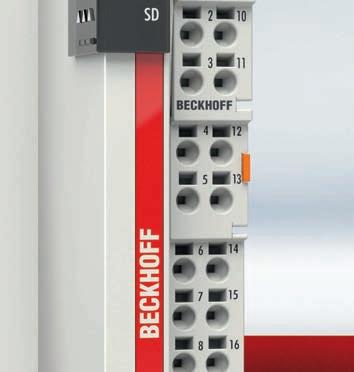
The CX7000 Embedded PC delivers the efficiency and performance of TwinCAT 3 software in an ultra-compact controller format. This further enhances the scalability of PC-based control technology from Beckhoff ranging from DIN rail mounted mini-PLCs to many-core Industrial PCs. Equipped with a 480 MHz processor and 12 configurable multi-functional I/Os, the CX7000 offers an attractive price-performance ratio and exceptional flexibility. The CX7000 supports simple system expansions using the Beckhoff I/O terminal system.
ARM Cortex™-M7 processor (32-bit, 480 MHz)
Compact dimensions: just 49 x 100 x 72 mm
Multi-functional I/Os allow variable use:
8 digital inputs, 24 V DC, type 3
4 digital outputs, 24 V DC, 0.5 A, 1-wire technology