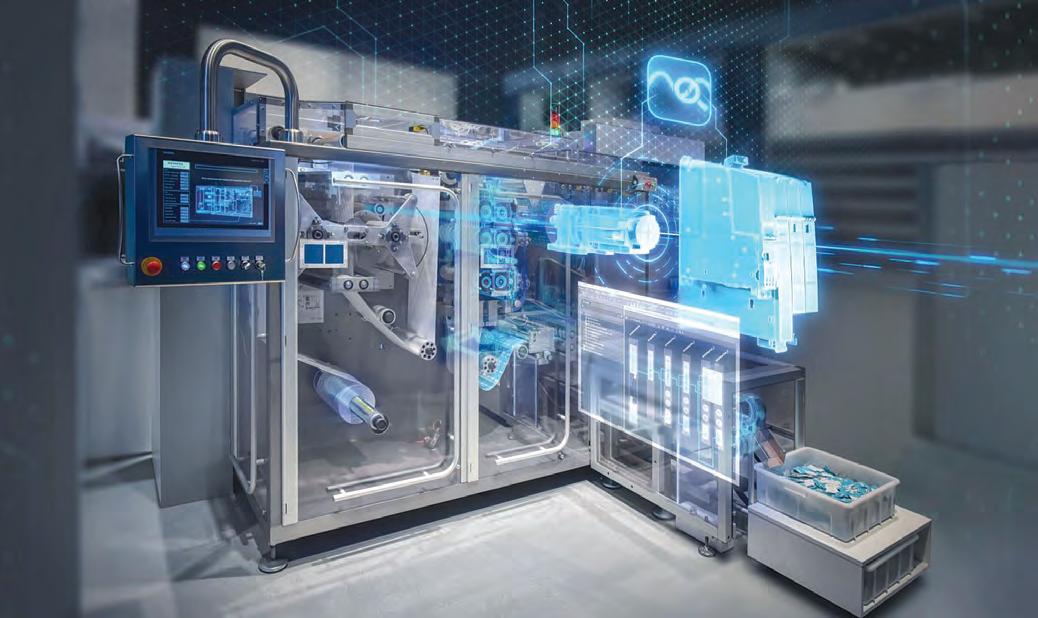
Toronto-Based RoboEatz brings automation into the kitchen p.16
MOTION CONTROL
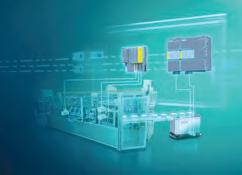
How modular drive technology reduces cost, speeds time-to-market p.24
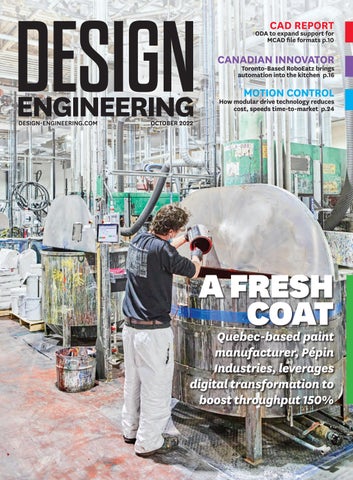
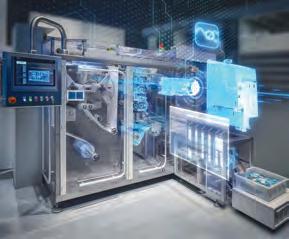
Quebec-based paint manufacturer, Pépin Industries, leverages digital transformation to boost throughput 150%
Precision Control Solutions
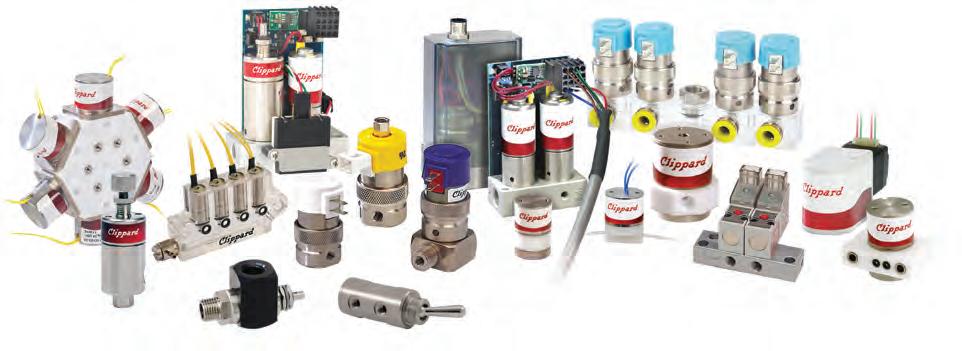
Designing efficient systems involves much more than simply understanding a few basic principles. There is a true art to balancing the specific requirements of an application in order to achieve the desired goals in the best possible way. Help us understand the unique needs of your application and together, we’ll develop something that surpasses what any of us could have done alone.
Contact your distributor to learn more, or clippard.com to request a free catalog and capabilities brochure.
INSIDE
16 Robot Chef
Toronto-Based RoboEatz brings automation into the kitchen.
18 A Fresh Coat
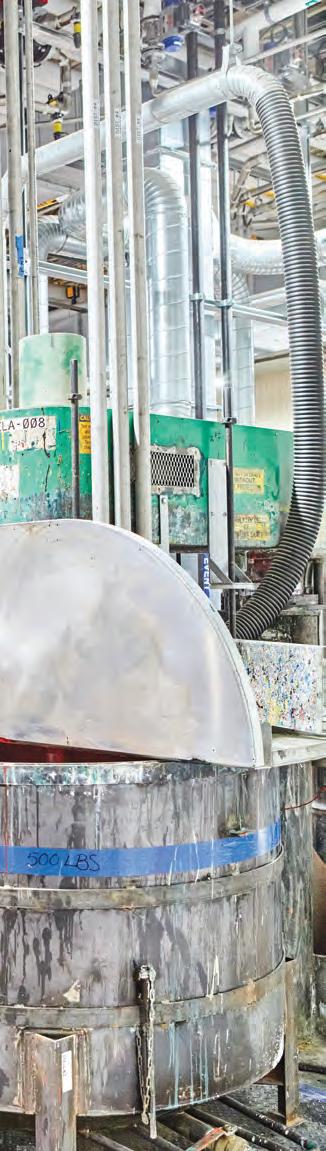
Quebec-based paint manufacturer leverages digital transformation to boost throughput 150%
22 Network Security
How to mitigate three common industrial network vulnerabilities
24 Decentralizing the Drive
How modular drive technology simplifies setup, reduces cost and speeds time-to-market
6 Design News
De Havilland selects Alberta for new manufacturing facility and other engineering news
10 CAD Report
ODA to expand support for MCAD file formats
15 Shop Talk
NGen CEO lays out program to attract manufacturing’s future workforce
26 Idea Generator
The latest in industrial products including automation, motion control and fluid power products
Reversing the Trend
In October, Canadian Manufacturers and Exporters (CME) announced that Canada’s manufacturing industry is “grappling with some of the hardest challenges it has ever faced.” As the association has been saying for nearly a year, the two most pressing of those challenges are supply chain disruption and a skills/ labor shortage.
The supply chain disruption, while painful, could be relatively short-lived, resolving by 2024 according to a recent survey of U.S. supply chain executives. The other challenge, however, could well take much longer to solve.
After all, manufacturing hasn’t been the most attractive labor sector in Canada for a decade. According to Statistics Canada, the manufacturing labor market hit the peak of its last boom cycle between 2000-2003 but then plunged by half a million jobs from 2004 to 2008, and hasn’t experience another boom cycle since. Those displaced – especially men without a university degree – moved into other “blue-collar” jobs like construction.
Given the stagnant employment of the past decade plus the general sense that the U.S. and Canada will become increasingly post-industrial, it’s hard to imagine a parent or high school guidance counselor recommending manufacturing over other more promising job options.
The last two to three years, however, have seen signs of a potential upswing for manufacturing, potentially due, in part, to reshoring of some production and car makers deciding to push all in on electric vehicles and re-investing in Canadian assembly plants. Whatever the factors, the CME says Canadian manufacturing has seen a hefty rebound coming out of the pandemic, with total manufacturing sales hitting a record high of $718.4 billion in 2021.
While promising, the CME says labor shortages threaten to blunt that recovery. A recent survey of its members found that more than 85 percent of Canadian manufacturers struggle to fill vacancies and have lost work because of it. In addition, those surveyed said Canada’s youth are unprepared and uninterested in manufacturing. As a fix, the CME has called on government to increase immigration and provide money for employer-led training.
While no one could have foreseen and prepared for the upsurge in labor demand, it’s unrealistic to expect government programs to undo 16 years of decline, in short order. The trick will be getting young people to want these jobs. That will require the sector to invest in itself and re-build the impression of manufacturing as a long-term career again, and not a hire today/laid off tomorrow job.
MIKE MCLEOD Editor mmcleod@design-engineering.com
Editorial Board
DR. ALAIN AUBERTIN
President & CEO, Canada Consortium for Aerospace Research and Innovation in Canada (CARIC)
DR. MARY WELLS, P.ENG
Dean, Faculty of Engineering / Professor, Mechanical and Mechatronics Engineering; University of Waterloo
AJAY BAJAJ, P.ENG
President and CEO, Rotator Products Limited; Past President and Board Member, Power Transmission Distributors Association (PTDA)
DR. ISHWAR PURI, P.ENG
Vice President of Research; Engineering Professor, University of Southern California
OCTOBER 2022 Volume 68, No.5 design-engineering.com
READER SERVICE
Print and digital subsciption inquiries or changes, please contact Angelita Potal Tel: (416) 510-5113
Fax: (416) 510-6875
Email: apotal@annexbusinessmedia.com
Mail: 111 Gordon Baker Rd., Suite 400, Toronto ON M2H 3R1
SENIOR PUBLISHER Paul Burton (416) 510-6756 • pburton@annexbusinessmedia.com
AUDIENCE DEVELOPMENT MANAGER Beata Olechnowicz (416) 510-5182 • bolechnowicz@annexbusinessmedia.com
COO Scott Jamieson sjamieson@annexbusinessmedia.com
Design Engineering, established in 1955, is published by Annex Business Media, 6 times per year except for occasional combined, expanded or premium issues, which count as two subscription issues.
Printed in Canada
Publications Mail Agreement #40065710 ISSN: 0011-9342 (Print), 1929-6452 (Online)
Subscriber Services: Canada: $57.50 for 1 year; $92.50 for 2 years; $10 for single copy. Outside Canada: USA - $140.50; Overseas - $151.00; $10.00 for single copy.
All prices in CAD funds. Add applicable taxes to Canadian rates.
From time to time we make our subscription list available to select companies and organizations whose product or service may interest you. If you prefer not to receive this information, please contact our circulation department in any of the four ways listed above.
Annex Business Media Privacy Officer: privacy@annexbusinessmedia.com Tel: 800-668-2374
No part of the editorial content of this publication may be reprinted without the publisher’s written permission.
Circuit protection including MCCBs, circuit breakers, and transfer switches (Circuit breakers starting at $15.00)
Wiring solutions including cut-to-length cable, hookup wire, wire duct, conduit, terminal blocks, and cable entry systems (Wire duct starting at $7.50)
Drives, soft starters, and motor control devices (Micro AC drives starting at $119.00)
Enclosure lighting and thermal management (Thermoelecric coolers starting at $718.00)
Industrial power supplies, transformers, and converters (DC power supplies starting at $20.00)
PLCs, field I/O systems, motion controllers, servo and stepper systems (PLCs starting at $85.00)
Industrial Ethernet switches, gateways, and VPN routers (Ethernet switches starting at $83.00)
Safety products including safety controllers, safety relay modules, intrinsically safe isolators, etc. (Safety relays starting at $121.00)
Modular and pre-fabricated enclosures (Modular enclosure kits starting at $875.00)
Plus motors, HMIs, pneumatics, a huge assortment of sensors and pilot devices, and so much more. All at great prices and with award-winning customer service and support.
Don’t overspend elsewhere. With our everyday low prices you can build your panel for a lot less! Research, price, buy at: www.automationdirect.com
shipping policies
Fast free standard shipping* is available for most orders over $49 U.S., and that includes the brokerage fees (when using an AutomationDirect nominated broker). Using our choice of carrier, we can reach most Canadian destinations within 2 to 3 days.
*Free shipping does not apply to items requiring LTL transport, but those shipments can take advantage of our negotiated super-low at rates (based on weight) that include brokerage fees.
See Web site for details and restrictions at: www.automationdirect.com/canada
AEROSPACE
DE HAVILLAND SELECTS ALBERTA FOR NEW MANUFACTURING FACILITY
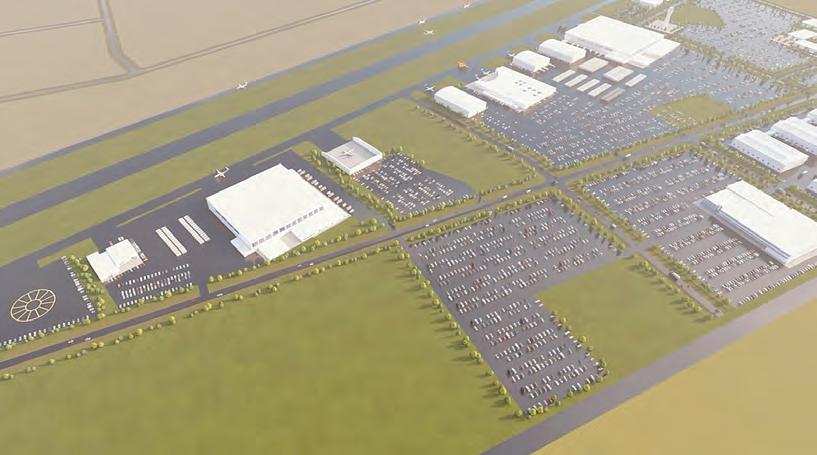
De Havilland Canada announced it will build a new aircraft facility in Wheatland County, Alberta, approximately 30 minutes east of Calgary. In addition to aircraft assembly, the 1500-acre location (De Havilland Field) will consist of a runway, parts manufacturing and distribution centres, as well as a maintenance, repair and overhaul centre, the company says. The site will also host general office buildings, a training center and a De Havilland aircraft museum.
Conser vatively, the company expects construction to begin in early 2024 and take approximately ten to fifteen years to complete the entire campus. However, the first buildings could be operational by 2025, the company says. It also anticipates there will be up to 1,500 jobs located at De Havilland Field with potentially more based on the growth of the company.
When complete, De Havilland Canada says the site will ser ve final assembly for its latest DHC-515 firefighter aircraft, as well as the DHC-6 Twin Otter, and the Dash 8-400 aircraft.
“De Havilland Field will be the home of assembly and production of reliable and rugged Canadian aircraft that serve missions around the world,” said De Havilland Canada President and CEO, Brian Chafe. “This is the start of a new chapter for both De Havilland Canada and Canadian aerospace. We are excited
about beginning the process with Wheatland County to provide new aviation opportunities for Canada and Alberta.”
https://dehavillandfield.com
ABB TO EXPAND OPERATIONS IN CANADA
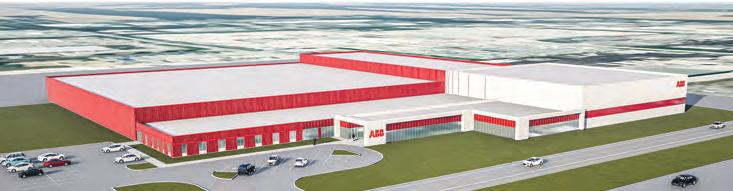
ABB announced it is investing US$13 million in its Installation Products Division Iberville manuf acturing facility in SaintJean-sur-Richelieu, Quebec. The company says the move will increase production capacity and establish an R&D facility at its global center of excellence for cable tray manufacturing.
ABB’s Installation Products Division – formerly Thomas & Betts – designs, manufactures and markets products used for connection, protection and distribution of electrical power in industrial, construction and utility applications.
A rendering of ABB’s expanded Iberville, QC manufacturing facility.
According to the company, the facility will gain more than 32,500 square feet of building improvements, as well as integration of new automated equipment, ABB robotics technology and an advanced design lab. As a result, ABB expects to boost total production capacity
of the 102,000 square-foot facility by more than 30 percent.
The Iberville facility is ABB’s second multimillion-dollar investment in a Canadian site in the last 12 months. It previously announced a US$12 million investment in its facility in Montreal. The two expansions, the company says, are part of a five-year strategy to integrate new digital processes and automation to increase efficiency and sustainability across its operations. www.abb.com
ROBOTICS
MAGNA, CARTKEN STRIKE DEAL ON AUTONOMOUS DELIVERY ROBOTS
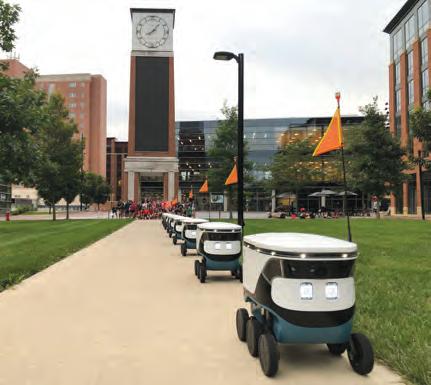
San Francisco-based autonomous robotics company, Cartken, announced a deal with Magna to manufacture Cartken’s autonomous delivery robot fleet designed for last mile delivery.
According to the companies, manufacturing of Cartken’s Model C robot has begun in a Magna facility in Michigan, with production expected to ramp up over the next few months.
As the collaboration expands, the companies say they plan to include additional delivery models based on the same platform for different use-applications and robot-as-a-service b usiness models. Based on Cartken’s forecast, thousands of autonomous delivery robots are expected to be produced during the term of the agreement.
An artistic rendering of the future De Havilland Field facility to be located near Calgary.
Image credit: De Havilland Canada
Photo
“We continue to identify opportunities in the new mobility ecosystem where we use our capabilities to unlock new growth areas and new business models. This collaboration with Cartken is great example of that approach,” said Matteo Del Sorbo, Executive Vice President, Magna International and Global Lead for Magna New Mobility. “Our ability to design, engineer and manufacture complete vehicles makes Magna an ideal partner for companies looking to solve last mile delivery challenges with sustainable, autonomous and cost-effective solutions.”
Cartken’s fully autonomous delivery robots can operate outdoors and indoors, and are equipped with a remote monitoring and teleoperation system that allows for instantaneous human override if necessary. The autonomous delivery robots are fitted with multiple cameras and respond to situations in real-time, the company says, using a combination of machine learning and simultaneous localization and mapping (SLAM)based navigation algor ithms.
Currently, Cartken’s autonomous delivery robot fleet is in commercial operation and has been deployed for various autonomous delivery use cases in malls, hotels, universities, retail, back-of-house and warehouses world-wide, the company says. www.cartken.com
Heart Aerospace’s ES-30 electrichybrid aircraft
AIR CANADA TO ACQUIRE 30 HYBRID ELECTRIC AIRCRAFT
Air Canada announced it will purchase 30 of Heart Aerospace’s ES-30 electric-hybrid aircraft. Expected to enter service in 2028, the turbo-prop aircraft will serve regional and commuter routes, Air Canada says, while generating zero emissions when flying on battery power. In addition to the hybrid fleet, Air Canada says it has also acquired a US$5 million equity stake in Sweden’s Hear t Aerospace.
CANADIAN ENGINEER INDUCTED INTO LIVING LEGENDS OF AVIATION
Cartken’s Model C delivery robot
“The introduction into our fleet of the ES-30 electric regional aircraft from Heart Aerospace will be a step forward to our goal of net zero emissions by 2050,” said Air Canada President and CEO, Michael Rousseau.
Powered by lithium-ion batteries, the ES-30 has a carrying capacity of 30 passengers seated three-across. The batteries are supplemented by reserve-hybrid generators that can use sustainable aviation fuel. Fully loaded, the aircraft is projected to have an all-electric, zero-emission range of 200km. The aircraft’s range can be extended to 400km with power supplemented by the generators, and up to 800km if the load is restricted to 25 passengers. Charging time for the aircraft is expected to be 30-to50 minutes.
www.heartaerospace.com www.aircanada.com
Rob Dewar, senior VP of Customer Satisfaction, Services, and A220 Product Policy at Airbus Canada.
Canadian engineer, Rob Dewar, senior VP, Customer Satisfaction, Services, and A220 Product Policy at Airbus Canada, has been inducted as a “Living Legend of Aviation” to commemorate his accomplishments in the aerospace industry. The highest honor bestowed by the international organization, the award is known as the Oscars and Hall of Fame of aviation. Chief among those accomplishments was Dewar’s leadership skills in the definition, development, certification and marketing of the A220 (aka Bombardier CSeries) family of aircraft. To date, Airbus says more than 60 million passengers
AEROSPACE
Photo credit: Air Canada
have flown on the Canadian-born aircraft, which is designed and assembled at Airbus Canada’s operations in Mirabel, Quebec.
Known as the “Father of the A220,” Dewar has spent 30 years in the industry, notably 25 years with Bombardier, and has held several key positions in engineering and product development programs and earned numerous awards along the way. These include the Air Transport World (ATW) Aviation Achievement Award for excellence in the airline industr y and the naming of the first JetBlue A220 aircraft “Rob Dewar” in recognition for his development of the A220.
“I am touched and humbled by this award, which I share with my team and family, who have inspired me throughout my career,” Dewar said. “It is because of the talented and exceptional people around me that the A220 is today the success it deserves to be. Aviation is a genuine passion of mine, and for decades I have done my best each and every day to influence the industry positively.”
Dewar graduated from McGill University in Montreal with an eng ineering degree specializing in aerospace structures and combustion. Through his work with numerous schools and institutions, he actively supports and assists the next generation of aviation professionals. livinglegendsofaviation.org
AUTOMOTIVE
CANADA STRIKES EV BATTERY MATERIAL DEALS WITH VW, MERCEDES
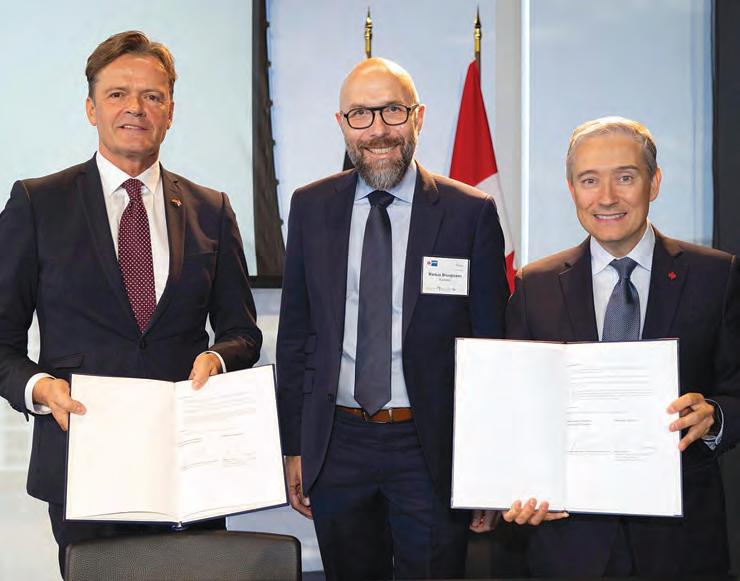
In August, the Canadian government announced the signing of two memoranda of understanding with German automakers, Volkswagen and Mercedes-Benz to secure sustainable sources of raw electric vehicle battery materials.
“Canada is quickly becoming the green supplier of choice for
From left: Mercedes-Benz chief technology officer, Markus Schaefer; Rock Lithium CEO, Markus Bruegmann and federal Innovation, Science and Industry Minister FrançoisPhilippe Champagne
major auto companies, including leading European manufacturers, as we transition to a cleaner, greener future,” said François-Philippe Champagne, Minister of Innovation, Science and Industry. “By partnering with Volkswagen and Mercedes, Canada is strengthening its leadership role as a world-class automotive innovation ecosystem for clean transpor tation solutions.”
The Volkswagen agreement focuses on deepening cooperation on sustainable battery manuf acturing, cathode active material production and mineral supply. The agreement also establishes setting up a Canadian office for PowerCo, VW’s new battery company.
The Mercedes-Benz agreement focuses on establishing sources of sustainable minerals needed to manufacturing electric vehicle batteries. According to the company, its goal is to go all-electric by the end of the decade. With that mass electrification, demand will increase for specific and responsibly sourced raw materials, in particular cobalt
and lithium, as well as nickel, graphite, manganese and copper.
Toward that end, Mercedes-Benz signed a strategic par tnership with Canada-Germany firm, Rock Tech Lithium Inc. As part of the partnership, Rock Tech would potentially supply Mercedes with up to 10,000 tonnes of lithium hydroxide annually, starting in 2026. Rock Tech owns the Georgia Lake Project, an open-pit and underground lithium mine, 50km nor th east of Nipigon, Ontario.
The automaker says its is only sourcing lithium from mining sites that meet the Initiative for Responsible Mining Assurances (IRMA) standard. Provided Rock Tech meets the standard, its lithium would be refined in Guben, Germany where Rock Tech Lithium is currently building Europe’s first lithium hydroxide converter. www.rocktechlithium.com
Photo credit: Rock Tech Lithium Inc.
Get Your PROTOTYPE
Off the Ground
SOONER
MISUMI components can cover up to 90% of your bill of materials with material certification available upon request.
Choose the material, surface treatment, dimensions and alterations of a component, and see instant pricing and lead time. Configured components have a unique globally-recognized part number, allowing easy re-ordering anywhere in the world.
Learn more about MISUMI’s offerings for Medical Industry.
Configurable Brackets
Linear Shafts & Bushings
Timing Pulleys & Belts
Linear Guides, Actuators & Lead Screws Couplers
The Engines that Power CAD Software
Open Design Alliance expanding in new directions to support wide range of MCAD file formats.
BY RALPH GRABOWSKI
There are software companies who toil in the background, content to remain l argely anonymous, but without whom our CAD/CAM/CAE industry would collapse. They can afford to fly under the radar because they don’t need to market to the wider design audience – just to CAD vendors. These are the firms that quietly write programming toolkits, translators, kernels and even complete programs.
Prog ramming toolkits (aka SDKs, software development kits), for example, make it possible to read, display, edit and write CAD objects. The most popular ones are for objects defined by Autodesk’s near-universal DWG format, along with Adobe’s 2D/3D PDF and neutral for mats like IFC and JT.
Translators let CAD programs read and write files from competitors and from standardized formats. If a CAD program cannot directly read object
data from a DWG file, for example, then the next best thing is to translate it into something the CAD program can read. Examples include proprietary file formats used by Solidworks and Creo, as well as formats defined by standards organizations, such as STEP and IGES.
At a deeper level, kernels do the
grunt work of defining 2D and 3D geometry, surface and solid models, and how objects interact. Whether you fillet two lines or Boolean-ize two solids, it’s the kernel performing calculations to come up with a correct result. Ker nel vendors also provide advanced technology like collision detection and parametric constraints.
Complete programs let you sell a CAD program as “your own,” with your company’s logo. These are sometimes known as OEMs (original equipment manufacturers), including common ones such as IntelliCAD, AutoCAD OEM and ARES. Other vendors provide OEM rendering and analysis programs that run inside the CAD program or link to it externally.
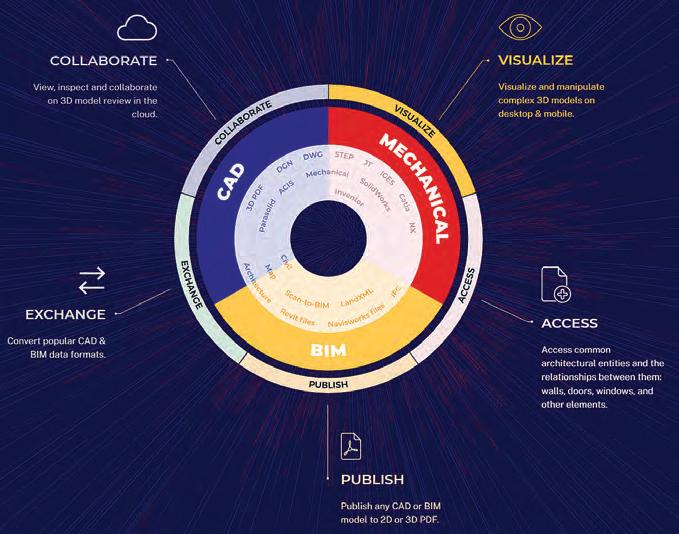
One such vendor, the Open Design Alliance (ODA), is an oddity, in that it doesn’t exist to make a profit. It was formed as a non-profit entity in 1998 to promote the use of DWG in nonAutodesk programs. And it has been wildly successful, now with 1,200 member companies. In recent years, it has branched out to provide APIs that access data in PRC/PDF, MicroStation DGN, IFC (industry foundation class) and Revit, STEP, LandXML, Navisworks, Scan-to-BIM, and so on.
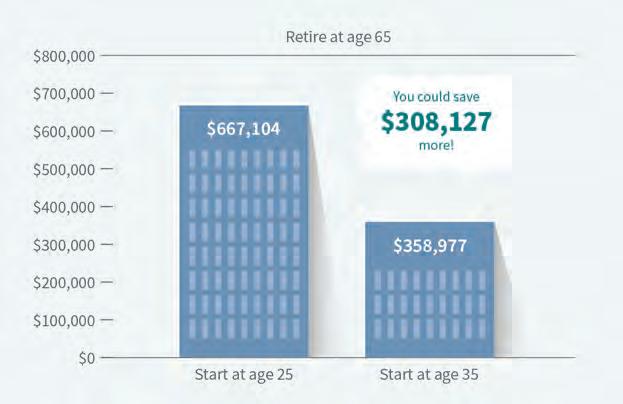
Start early and save more with a group RRSP
The earlier you start saving with the Engineers Canada-sponsored Financial Security Program’s registered retirement savings plan (RRSP), the more you’ll save. Ok, we know that’s not exactly rocket (or geo) science – but do you know how much more you can save? It really adds up!
See the difference an extra 10 years can make
Assumptions:
The Engineers Canada-sponsored Financial Security Program is exclusive to engineers and geoscientists, as well as their families, across Canada.
To inform its members on its progress and plans for the future, the organization hosts the annual ODA Summit in September.With COVID, the online version of the conference has become a fire hose of information, cramming what used to be a full day into 1.5 hours. What I hear there is what your CAD package might do next year, which makes for interesting listening.
ODA for Mechanical CAD
With ODA’s origin in DWG, this meant it first targeted general CAD software. A decade ago, it branched into architectural software by writing APIs for accessing files made by Architectural Desktop, Revit, and the IFC standard.
The major news from this year’s September conference was the announcement that the ODA is going whole-hog into MCAD. ODA President, Neil Peterson, revealed that the organization plans to eventually support all major 3D proprietary formats, like Catia, NX, Solidworks
and Inventor. It already supports 2D AutoCAD Mechanical, 3D Mechanical Desktop, IGES, JT and STEP files.
The work will hopefully begin in January, the ODA said. These initiatives take years of programming, usually in the order of first reading files, and then displaying them. ODA has no plans to write proprietary MCAD formats. Also, not all objects will be supported right away, as we see with Revit where more objects are supported each year, never mind keeping up with Autodesk’s changes to the RVT and RFA formats.
But what about Autodesk legacy, such as AutoCAD Architectural and Mechanical? Autodesk may have abandoned them long ago, but drawings haven’t; “millions” still exist and need to be updated from time to time.
One of the unspoken embarrassments of the CAD world is that drawings need to be readable sometimes decades later; yearly software updates are the enemy of permanence. Companies like Boeing treat the problem very
seriously; they expect their B-52 bomber, for instance, to have a hundred-year lifespan. Same for builders of ships, processing plants and nuclear reactors.
As a result, the ODA offers 100-year legacy support for any CAD vendor, and already is the official maintainer of the DGN format on behalf of Bentley Systems. On the list are DWG, Revit, PRC/PDF, and DGN. As well, it works closely with BuildingSmart on developing future releases of IFCs and with PDES on the STEP format. STEP makes sense, because it is the IFC of mechanical drawings, an international standard becoming more capable as it handles more and more aspects of CAD and CAM.
The ODA can make the promise of 100-year-support, because the organization can’t be acquired and shut down by a hostile firm; only its members can dissolve it, and that is not in their self-interest. “Actually, the goal is to keep the organization going for 100-200 years,” Peterson told me.
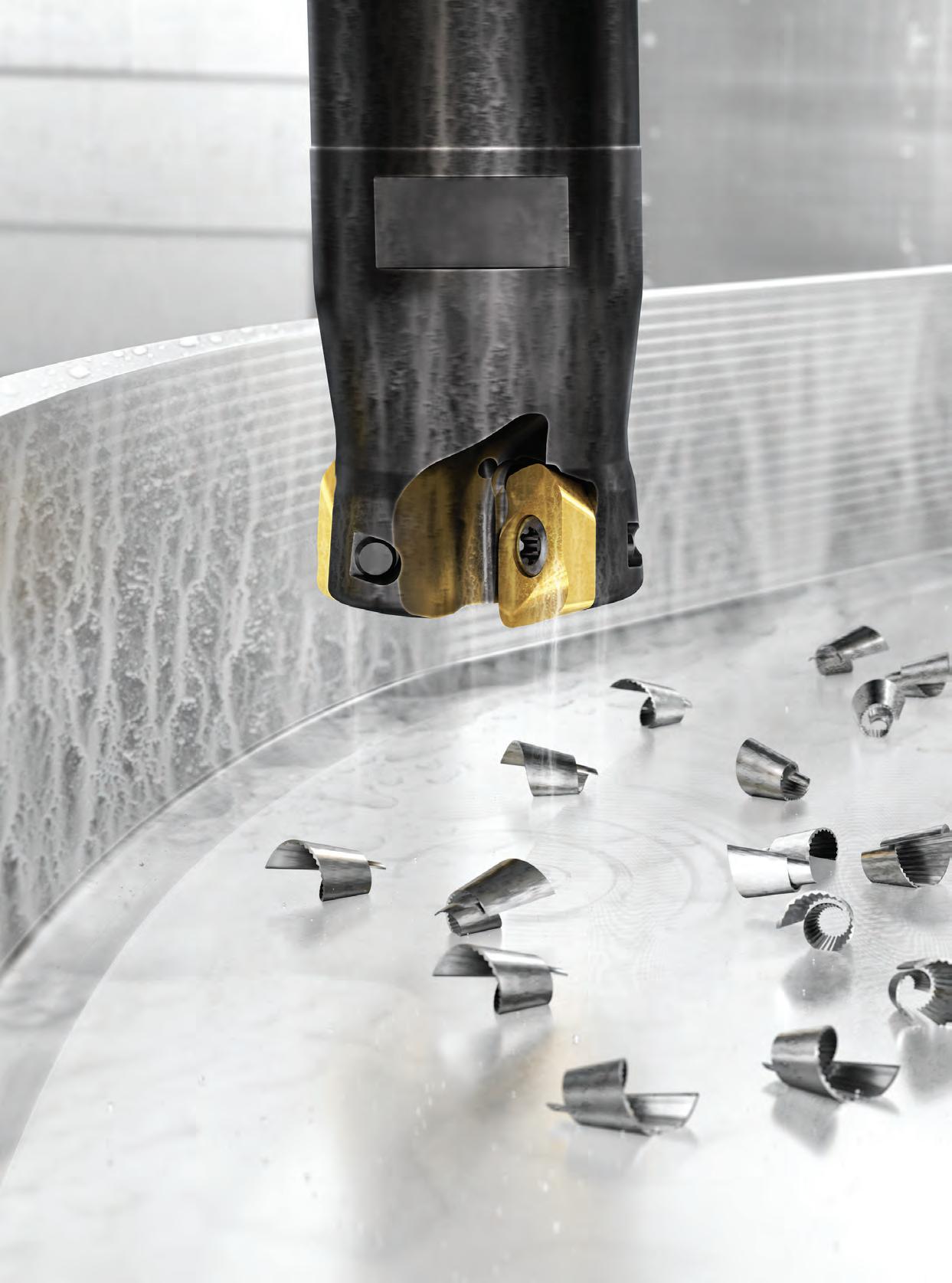
Best-in-class high-feed pocketing
Time to level up your high-feed milling operations with best-in-class CoroMill® MH20. This is a versatile tool with a large application area, but is primarily designed for pocketing applications in ISO S, M and P materials.
Thanks to its light-cutting action, in combination with a robust shank design, CoroMill® MH20 ensures secure and vibra-tion-free machining, even with long overhangs.
CoroMill® MH20
New To the DWG API
Also new this year: The DWG API will gain a constraints engine. It is currently in beta but will be available to member companies by the end of this year, the ODA says.
Model documentation (which is semi-automatically generating 2D drawing views linked to 3D models) is not new to the API, but what is new is saving drawing views in a format compatible with AutoCAD. This means that AutoCAD can read what, for example, a BricsCAD or IntelliCAD generates. To do this, the ODA had to implement some Inventor functions, because that’s what AutoCAD does.
This year’s conference also revealed new functions for Parasolid models, where the ODA’s b-rep module now creates boundary representations from Revit, PRC/PDF and ACIS data embedded in DWG files. And, Parasolid models can be included in DGN files.
How the ODA Works
The ODA funds programming in two ways. Most of it comes from annual fees, which start at $2,400 for for-profit entities and gives member companies access to most of the APIs, ones considered core to the ODA, like DWG, DGN and PDF.
Then there are other file formats that the ODA doesn’t feel the entire membership would benefit from, and so it allows side projects. The SIG (special interest group) program lets a group of companies cooperatively fund and work together on a project.This is how Revit and Navisworks translation got started, and is how the latest SIG, Scan to BIM, got launched. In these cases, if you want access to Revit APIs, you become a member of the SIG, which is an extra $5,000 a year. The new proprietary mechanical format initiative is also being done through an SIG.
I don’t think existing translation firms that handle MCAD formats are quaking in their shoes from the ODA announcement. They have decades experience
delving into the mysteries of Catia and other formats, and it will take the ODA a year or more to ship an initial API, with years of updates to follow. That, and the ODA price is not low, ranging from $13,600 to $24,400 annually, depending on the access a SIG member desires, albeit with no royalty payments.
As much as open software advocates would prefer the industry to follow their wishes for freedom from corporate lockin, “open standards are not displacing proprietary standards; rather they are complimenting each other,” says Peterson. So, users want tools that work with both approaches, which is why the ODA is working towards producing universal viewers and data access for “any engineering format.” | DE www.opendesign.org
Ralph Grabowski writes on the CAD industry on his WorldCAD Access blog (www. worldcadaccess.com) and has authored numerous articles and books on CAD and other design software applications.
Next Gen Workforce
NGen CEO, Jayson Myers, lays out organization’s efforts to attract manufacturing’s future workforce in DEX tradeshow keynote.
In September, at the Design Engineering Expo (DEX) in Hamilton, keynote speaker Jayson Myers addressed a pressing issue for Canada’s industrial sector: How to attract the next generation of manufacturing employees.
Myers is president of Next Generation Manufacturing Canada (NGen), the industry-led, not-for-profit overseeing Canada’s Advanced Manufacturing Supercluster. In addition to the $69.8 million the organization has invested in innovation project funding over its history, NGen also dedicates resources to challenge programs, such as its past COVID Rapid Response and current AI for Manufacturing challenges, as well its NGen Skills Hub for workforce development. Originally geared toward existing professionals, the hub has recently added a program to attract students toward a career in manufacturing.
And the need is considerable, Myers emphasized in his keynote. While skill shortages have been a chronic problem across many industries, Myers said manufacturing is also facing a significant labor shortage, especially following the pandemic.
To quantify the problem, he laid out some sobering statistics. For example, 25 percent of Canada’s manufacturing workforce will retire by 2030; however, people under 30 account for only 5% of the industry’s workers in Canada. As a result, he said manuf acturers will need to boost productivity by more than 2% per year (double the rate of the last 30 years) to maintain current production levels.
NGen
To help address these shortages, NGen launched a multimedia campaign in 2021 called Careers of the Future. The campaign, via its CareersoftheFuture.ca website, focuses on outreach to schools to educate teachers, students and their parents about advanced manufacturing. Intended as an online resource, the site illustrates the growing and hightech nature of today’s advanced manufacturing careers.
“We have done a lot of work to showcase what advanced manufacturing is about; that it isn’t the repetitive, dirty and dangerous assembly jobs that people think of, and, in fact, that smokestack stereotype is 30 to 40 years out of date in most cases,” Myers said.
“At the same time, the promise of using high tech isn’t sufficient to attract young people,” he added. “They already use technology and the industries that manufacturing competes with for talent all use dig ital tools. So the
challenge is showing what makes manufacturing stand out.”
To accomplish that, Myers said NGen’s campaign focuses on demonstrating the industry’s ability to impact world’s biggest challenges, such as climate change, food and water security, health and safety. Beyond the website, Myers said NGen has also explored the online spaces the campaign’s target audience regularly visit, including Tik Tok and social platforms associated with computer gaming.
To date, the site has attracted 35 million views across Canada and 365,000 engaged site visits. Of those, 51% were male and 49% female. More encouraging, Myers said, is that 60% of students and parents surveyed about the program say they now have a positive view of advanced manufacturing and 87% of students say they can see themselves working in the sector. | DE www.CareersoftheFuture.ca
Jayson Myers, CEO of
Photo: NGen
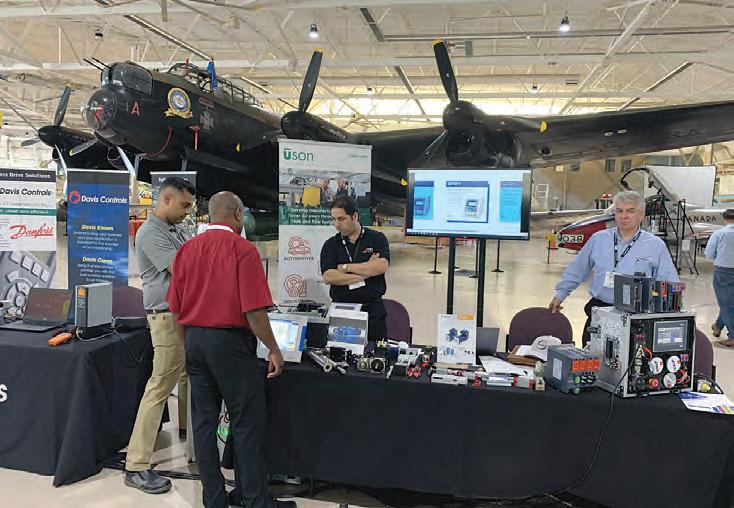
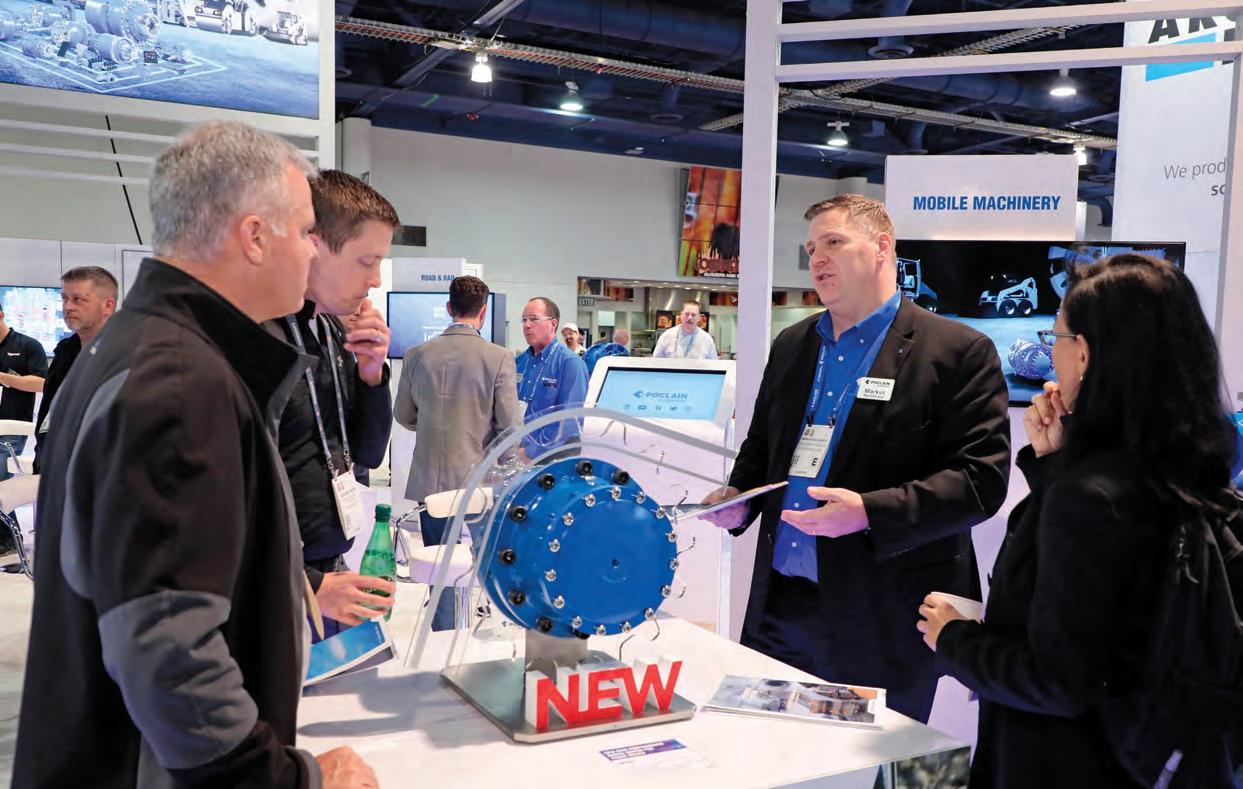
Exhibitors setting up for the Sept 2022 DEX/MRO Expo in Hamilton, ON.
ROBOT CHEF
Toronto-Based RoboEatz
brings automation into the kitchen.
BY THOMAS RENNER
Automation is forcing every business to re-invent the way it operates. While automation has been evolving in the restaurant industry, most previous applications have tended to focus on service and ingredient preparation.
One Canadian start-up, however, is changing the game. Toronto-based startup, RoboEatz, has designed the Autonomous Robotic Kitchen (ARK), a solution in which a robot sorts solid and liquid ingredients and then cook multiple hot and cold meals.
The company’s founders, Konstantins Korchomkins and Janis Poruks, started developing ARK in 2019. Poruks had nearly a decade of technical expertise in r unning Woki Toki, a fast-food chain in Latvia. Korchomkins ran a company providing engineering ser vices to the aerospace industry.
Today, the RoboEatz team includes mechanical and automation engineers, CAD specialists, chefs, food technologists, and entrepreneurs with operational exper tise in scaling multiple businesses globally. Perhaps most importantly, RoboEatz has a vision. “It is difficult to find personnel who want to work in cater ing,” Poruks said. “And the quality of the food prepared is often inconsistent. This is not acceptable in the catering industry. We also wanted to make sure that fresh produce was used as a matter of principle.”
How it works
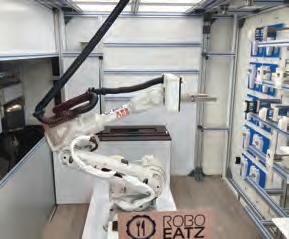
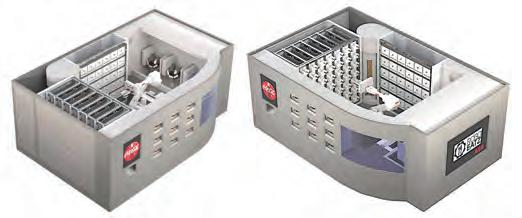
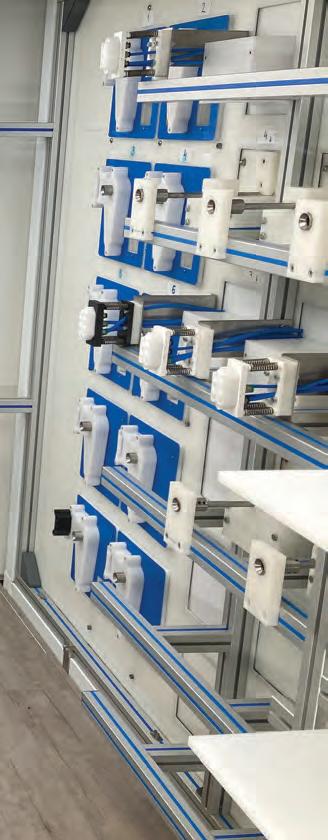
The heart of the ARK is a “kitchen cell” which features an industrial robot in the middle. Mounted on two of the inner walls are 50 containers for solid ingredients and 30 for liquid ing redients. A third wall includes utensils, cooking pots and mixers.
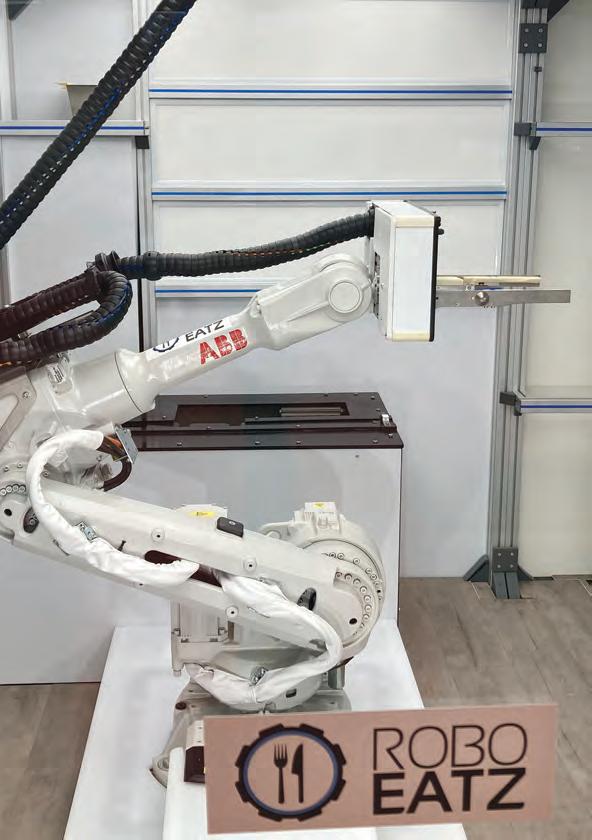
heart of the ARK is a “kitchen cell” which features an industrial robot at its center.
When the robot cooks, it grips one of the containers and tips the right amount of ingredients by weight into the working device. The unit repeats the step as often as needed, adding each ingredient without physically touching any of them. The gripper handles only the containers. The prepared ingredients are combined, cooked and garnished as necessary.
The cell can prepare up to 70 meals while automatically cleaning itself and refilling the contents of ing redient containers. While the system is automated, Korchomkins said users have full control of the prepared dish. Salads, soups, pasta, vegetarian, and meat dishes can all be prepared in the ARK.
“When it comes to recipes, the restaurateur has free rein,’’ Korchomkins said. “We provide the user interface where he drags and drops recipe elements and preparation data such as cooking time and temperature.”
Workforce issues
RoboEatz targets one other sore spot for the restaurant industry. In July, CNBC reported that the restaurant industry is down 750,000 jobs – roughly 6.1 percent of its workforce from pre-pandemic levels.
The shortage started during the pandemic, but the industry has not fully recovered. It is not uncommon for restaurants to have extended wait times unrelated to space availability.
The
Photo credit: igus
The autonomous robotic kitchen (ARK), from Toronto-based RoboEatz, autonomously prepares, cooks and serves made-to-order hot and cold food dishes. Photo credit: RoboEatz
Rather, the delay is due to the lack of personnel.
“We’re not sure where all the workforce went, but a lot of them have disappeared, from managers to chefs to hourlies,’’ Dave Nicholas, a founding member of Alexandria Restaurant Partners, told CNBC.
RoboEatz sees scalability as one of the keys to its future. “If we sell 1,000 or 10,000 robots a year, as we hope to do, we can cover those orders easily with igus production parts,’’ Poruks said.
After the construction of several prototypes, two years of testing, and continuous improvement, the first “robot kitchen” has already been put into operation. More are sure to follow.
“It’s quite clear that the system must be profitable for the restaurateur,’’ Poruks said. “We expect a payback period of two to three years.”
Korchomkins said interest in the catering industry is already high. “We are convinced that this is the future of gastronomy,’’ he said. “As a contributor of many parts, igus is a part of it.”
Bringing in low-cost automation
Poruks produced individual parts for the first prototype with 3D printing materials. For series production, he selected a component from a modular construction kit. igus, the Germany-based manufacturer of motion plastics, provided a range of products from its low-cost automation department to assist with the project.
The robot cell experiences frequent movement and requires significant bearing support. “We are taking advantage of numerous igus product areas,’’ Korchomkins said. “Plain bearings, linear technology, swivel joints, and energy chains are all incorporated into the application.”
An RBR energy supply system with a rotation angle of 360° in the robot’s first axis delivers energy and signals to the robot. igubal fixed flange bearings and rod ends, which require no lubrication or maintenance, allow for the pivoting movement of a wok and ingredient boxes, making them self-aligning.
For bearings, iglide MCM clip bearings serve as shaft guides in metal sheet connections. Linear movements of the individual axes on the containers are implemented with drylin linear technology. The company’s drylin SLW linear modules ensure that the gripper functions safely. A reverse lead screw opens and closes the gripper arm.
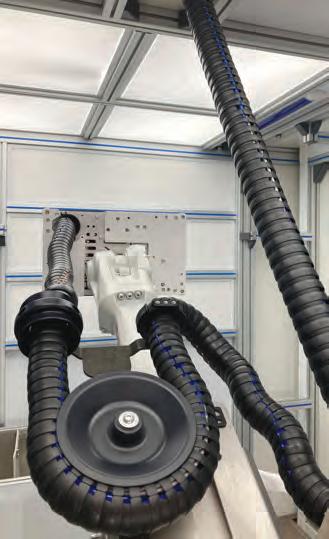
The final piece to the
food-production puzzle is a triflex multi-axis cable carrier that can move in three dimensions and has a retraction system mounted in the robot arm. The triflex cable carrier is a frequent component of automated solutions, as it offers superior service life, reliability, and easy assembly.
Other applications that use the triflex component include welding, material handling, machine tool manufacturing, and even medical robots.
Emerging trend
The application with RoboEatz is one of many in which igus is helping businesses find robotic solutions. Companies are increasingly finding that automation can help their business grow while reducing labor costs.
“Every industry, including agriculture, construction, retail, and hospital is now looking at how they can take advantage of robotics to make their companies more successful,’’ said Alex Shikany, vice president of membership and business intelligence of the Association for Advancing Automation.
The rise of automation is reflected in industry statistics. A report in May from the Association for Advancing Automation said North Amer ican companies purchased the most robots ever in a single quarter in the first three months of 2022.
The first quarter of 2022 marked the seventh time in the last nine quarters where non-automotive customers ordered more robots than automotive customers. Unit sales to automotive OEMs were up 15 percent. Unit sales to metals (up 40 percent), semiconductors and electronics (23 percent), and food and consumer
Lubrication-free linear technology is used in such components as the RoboEatz robot cell gripper.
Photo credit: igus
goods (21 percent) were among those that outpaced sales to automotive.
“As robots continually become easier to use and more affordable, we expect to see adoption continue to rise in every industry and at companies of all sizes,’’ said Jeff Burnstein, president of A3. “There are hundreds of thousands of companies in North America who have yet to install even one robot.”
“Businesses today are under constant pressure to lower costs while improving operational efficiency,‘’ said Alexander Mühlens, head of low-cost automation at igus. “Labor shortages, reducing costs, improving workflows and reducing workplace accidents are among the reasons why organizations are seeking automated solutions.” | DE www.roboeatz.com www.igus.com
Thomas Renner writes on engineering, construction, architecture and other trade industry topics for publications throughout North America.
A Fresh Coat
Quebec-based paint manufacturer, Pépin Industries, leverages digital transformation to boost throughput 150%.
BY JAMES FIGY
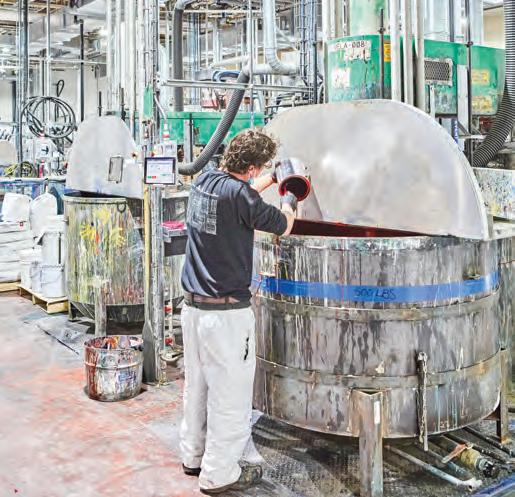
Since 1958, Pépin Industries Ltd. has provided solvent-based industrial paints with incredibly shor t turnaround times. By industry standards, its batch sizes may be considered small – typically several hundred gallons – but this approach allows customers to order what they need, when they need it. In the past, however, lingering manual processes limited order tra ceability, efficiency of plant staff and, as a result, the company’s ability to scale.
When Pépin Industries was moving to a new facility in Cowansville, Quebec, the f amily-owned company turned to system integrator, Centris Technologies, to digitally transform its operations with innovative automation and IIoT solutions.
“Centris was a great help in the success of our automation project – and still is as we implement a new ERP system,” says Francis Pépin, Director of Operations at Pépin Industries. “They helped with many aspects of the process that had stumped us and other engineering firms. Through their experience with other paint companies, they understood our needs and presented the right solutions very quickly.”
Chipping away at profitability
Pépin Industries wanted the technology update to increase accuracy and transparency, as well as throughput. Issues in these areas had persisted prior to the implementation, says Pépin Industries’ Production and Lab Director, Hélène Daigle.
Since the automation upgrades, operators at Pépin Industries spend less time hunting down materials, each process step is monitored and order accuracy has improved dramatically.
“In the past, our highly manual process made it difficult to track everything that went on during production,” she explains. “The operators had work orders, but it was hard to tell how closely they followed the steps and ingredient quantities during the mixing process.” This led to rework of paint that didn’t
pass quality inspection or throwing out a batch due to poor coloring, incorrect ingredient mixtures, contamination, etc.
The lack of digital records made it tough to determine what happened and correct the issue going forward.This is where Centris stepped in. The Centris engineering team uses its IT and
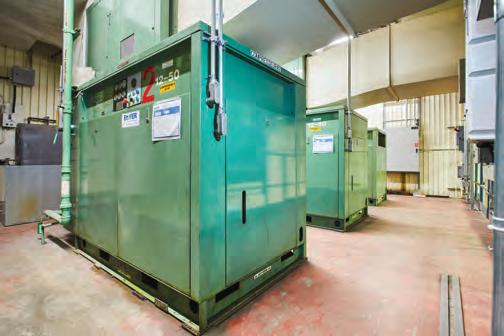
EtherCAT networks a wide variety of devices, including these compressors, while gateways allow for simple integration of components over EtherNet/IP and BACnet.
automation technology expertise to implement Industrie 4.0 and IIoT concepts, including increased traceability, machine monitoring, predictive maintenance and more.
Applying a fresh coat
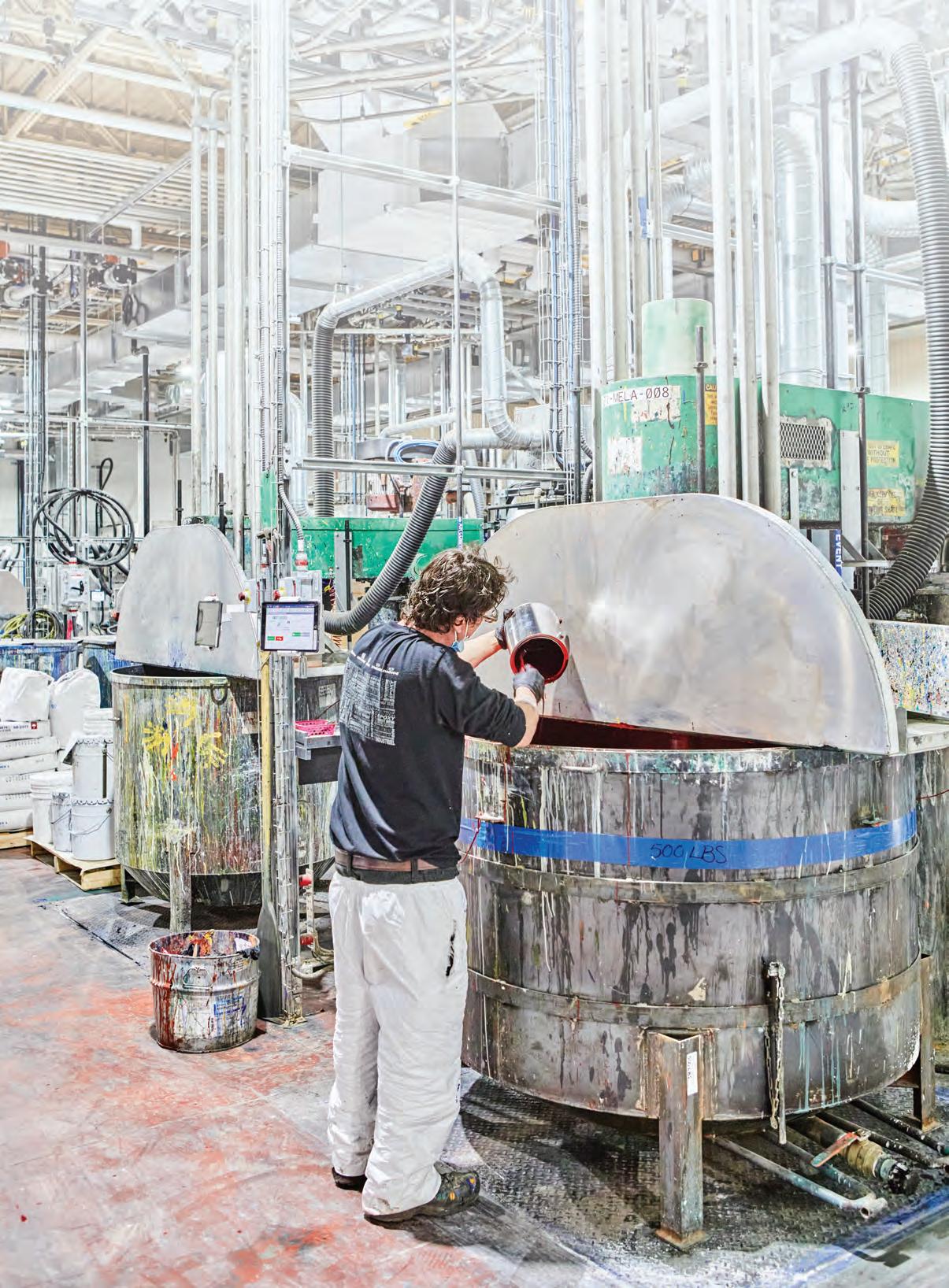
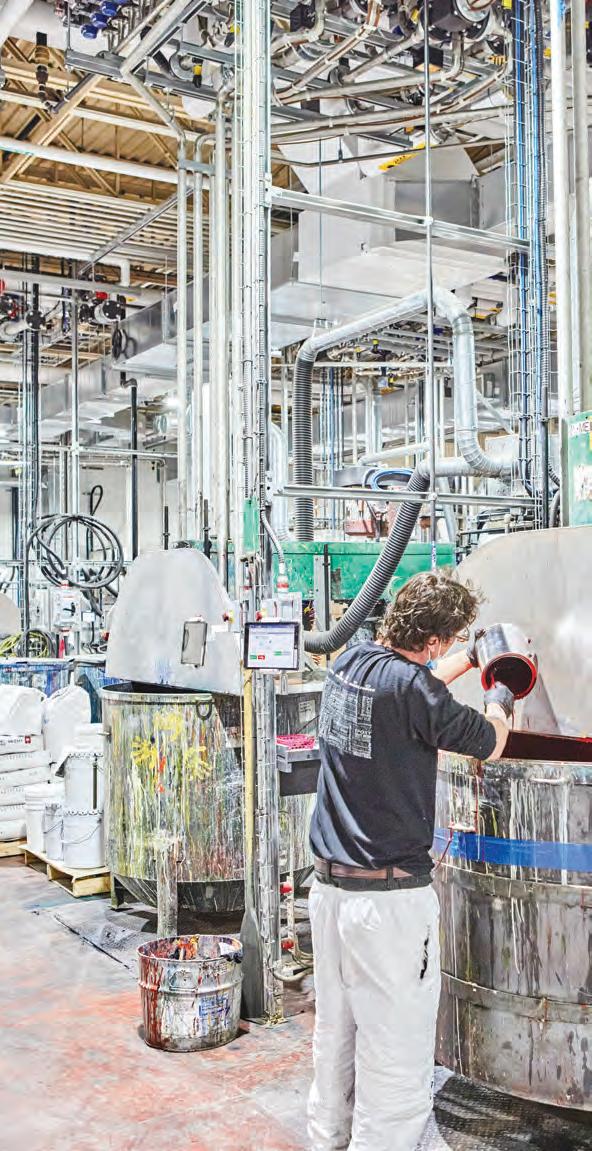
Pépin Industries’ new production facility features six bulk tanks for the most common paint ingredients and additional totes for a variety of others, including additives, resins, sands, etc.
The automated system designed by Centris transfers materials from the tanks and totes to the correct mixing station, and it replenishes tanks from incoming shipments. The system controls temperature and pressure while monitoring ingredient levels and other factors. As such, it ensures there is enough of each ingredient and that they remain viscous enough during transfer.
In the past, operators had to push around large vats and measure out ingredients by hand before mixing, but now they initiate and manage the processes at each mixer. Tablets – either handheld or mounted on the workstation – offer simple control, insights and alarms when needed, while Beckhoff’s C6030 IPC serves as the central controller
“Beckhoff Industrial PCs are very powerful and offer fast cycle times,” says Marc-André Duguay, Industrial Software Developer at Centris. “It’s easy
ELX ser ies EtherCAT terminals from Beckhoff deliver invaluable intrinsic safety at the paint plant. The ELX system allows for a wide range of intrinsically safe terminals to reside in the same segment with standard I/O.
The ELX approach also eliminated the costs and labor requirements for additional explosion-proof enclosures, barriers and the bus couplers needed to link to remote segments when compared to the traditional approach to intrinsic safety.
to access data, and the programming and troubleshooting are simple in TwinCAT software, especially with structured text.”
The openness and secure connectivity of Beckhoff PC-based control enables communication with the Centris-developed SCADA via OPC UA. It also simplified integration of the pl ant’s local network via TCP/IP, which facilitates communication between the controller and the tablets on the plant floor.
The continuing ERP upgrade will also benefit from the technologies’ OTIT convergence. As such, it boosts collaboration between Centris’ automation e ngineers and industrial software experts, empowering the digital transformation at Pépin Industries.
Networking the plant together
The EtherCAT industrial Ethernet system provides field-level communication.
“EtherCAT is also very easy to configure: We just connect the I/Os, click ’Scan’ and it finds all of the nodes,” Duguay adds. Centris leveraged numerous IP20-rated EL series EtherCAT I/O terminals and TwinSAFE integrated safety terminals from Beckhoff. Remote segments connected via EK1100 EtherCAT coupler s communicate to pneumatic valves, large compressors, variable-frequency drives for mixing paints and other devices.
EtherCAT supports up to 65,535 nodes on a single network, processing on the fly and free selection of topology, including line, star, tree and others. Ring topology, in particular, provides the necessar y cabling redundancy for the Centris system, according to Duguay.
In addition, the open Ethernet fieldbus simplifies multi-vendor architectures. Beckhoff provides gateways and bus couplers to more than 30 prominent communication protocols for this pur pose. The Beckhoff CU2016 16-port Ethernet switch, for example, easily incorporated scales for measuring raw materials over EtherNet/IP.
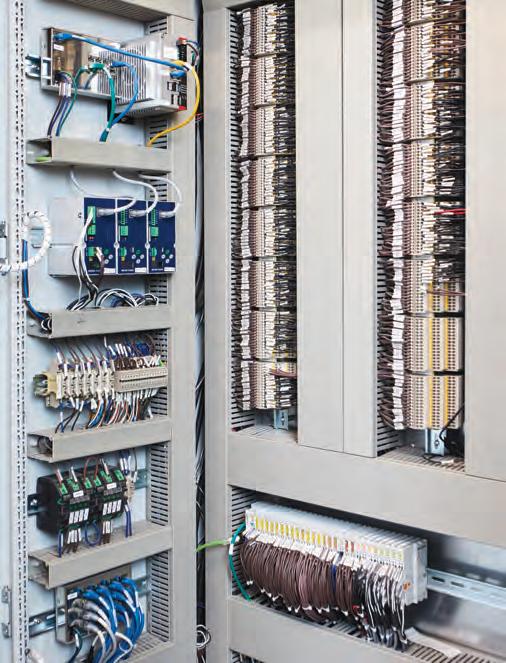
Beckhoff’s C6030 IPC and a range of EtherCAT solutions power the automated paint production system implemented by Centris Technologies.
TwinCAT can also enable communication to other protocols, such as the gas detection and ventilation system on BACnet that plugs into the C6030 with a standard RJ45 connector. The simple integration of building automation technology into a standard industr ial automation system allows the customer to see all ventilation information in the SCADA, Duguay
explains. “If chemical fumes reach certain levels, it’s very dangerous,” she says. “The plant has alarms to protect operators, but this [SCADA] provides additional critical information.”
Impressive results
The digital transformation at Pépin Industries increased throughput by more than 150%. “With the new
Rolling Ring
Zero backlash. Jam-proof design.
system, we increased production from eight batches per day to 12 batches per day – some days, as many as 15 – and our average batch size increased from 180 gallons to 300 gallons,” Francis Pépin reports. “Our output is much greater due to the technology updates from Centris, and we have the potential to grow much more.”
The industr ial paint producer also achieved greater transparency while optimizing production scheduling and its ability to analyze and improve processes based on actionable data insights. Increases in accuracy have greatly reduced post-production adjustments and material waste.
• For applications in positioning & reciprocating motion
• Zero play –even during reversal
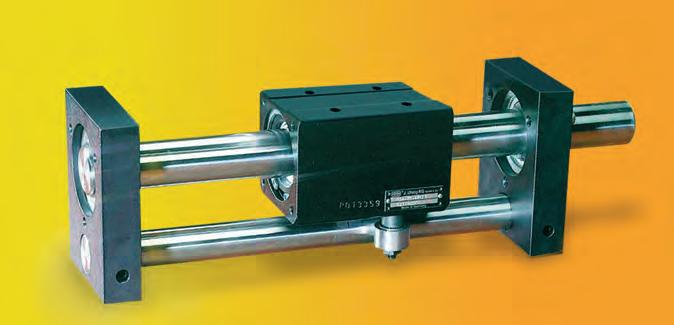
Uhing® Rolling Ring linear drives run on a smooth, threadless shaft that won't clog or jam. If the system is overloaded, the shaft simply slips instead of churning and grinding. The drive bearings are in constant contact with the shaft, even during reversal, thereby preventing backlash.
Example applications: metrology machines, material handling systems, spooling equipment, packaging & converting equipment.
Many different sizes meet varying requirements for axial thrust & linear speed.
For more information call 1-800-252-2645
Email: amacoil@amacoil.com www.amacoil.com
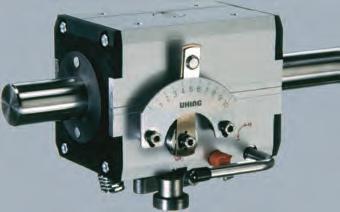
Some models feature mechanical control over speed and travel direction. No programming or electronic controls are needed.
“Having better control of the production process allowed us to decrease our number of batches put in rework from two to three per month to just one per quarter,” Daigle says. “Our workers spend less time looking for raw material in the warehouse as most ingredients for a batch are either pre-weighted or come from the automated system.”
For Centris, the use of PC-based automation and EtherCAT technologies continues to enhance the team’s capabilities and efficiency in a wide variety of projects. Commissioning times have accelerated since the company’s transition to Beckhoff, even in complex systems.
“Having Beckhoff as our main control platform partner is reassuring, since they remain on the leading edge of automation and continue to enhance their technology offerings,” says Centris Technologies founder, Michel Kakos. “Beyond the technology benefits, it’s always a pleasure to work with the local team.”
This extends through the design process to support and application engineering assistance. Duguay sees the reliable support from Yan Letourneau, Application Specialist at Beckhoff Canada, and others as exemplary. “We receive excellent technical advice from Yan, and on projects in the U.S., the support from Beckhoff USA is the same high quality.”
Like a perfectly produced batch of paint, the collaboration between Centris and Beckhoff has combined all the right ingredients for an ideal mix. | DE www.centristech.com www.pepincoatings.com www.beckhoff.com
CO-LOCATED WITH CONEXPO-CON/AGG (two shows, one price)
The International Fluid Power Exposition (IFPE) is the place where engineers meet to:
Spark new ideas with in-depth technical conversations with other engineers.
Discover solutions current suppliers can offer to your unique challenges.
Find new partners among suppliers pushing the envelope on what fluid power can do.
CONNECT WITH TOP MANUFACTURERS
Including Bosch Rexroth , Danfoss Power Solutions , Parker Hannifin , Poclain , IFM Efector , Hawe Hydraulik , Husco , and 375+ more!
Join your peers from these OEMs:
∙ Caterpillar Inc
∙ Volvo Construction Equipment
∙ Liebherr
∙ CASE Construction Equipment
∙ Komatsu
∙ John Deere Construction
∙ Doosan Bobcat
∙ KOBELCO Construction Machinery USA
∙ LBX Company
“ There’s no other show in the world I think that brings the OEM machine manufacturers and the suppliers as close together as this show. It’s a good place to meet and learn about what’s going on. In the Americas, in the Western Hemisphere, this is the show for fluid power.”
KEN
ROSENBECKER SALES MANAGER NORTH AMERICA | WIPRO INFRASTRUCTURE ENGINEERING
Network Security
How to mitigate three common industrial network vulnerabilities.
BY FELIPE SABINO COSTA
Since industrial networks are primarily built and expanded to address growing business demands, it may be easy for administrators to overlook common system vulnerabilities. For example, when adding a device to a network, do you know which Ethernet switches have unlocked ports or do you simply connect new devices without a second thought?
In today’s world, ignoring common vulnerabilities could put your entire network at risk. The following scenarios summarize common system vulnerabilities that may be exploited during the three main stages of a cyberattack: exploration, utilization and attack.
Stage 1 Vulnerabilities:
Exploration and Infiltration
Recall the last time you logged onto your network. How complex was your password? Weak passwords may be easier for busy administrators to remember, but they are also easier for malicious actors to crack. Making it easy attackers to guess login credentials is like putting the keys to your house in an obvious location.
Attackers also commonly exploit open ports on networks. For instance, Ethernet switches act as gates through which information is sent and received on networks. By scanning your network, hackers can identify open ports and infiltrate your network just like a burglar entering through an unlocked door.
How to Mitigate
One of the simplest ways to enhance network security is to ensure users create sufficiently complex passwords. For additional security, you should also consider a login failure lockout mechanism that limits the number of unsuccessful login attempts, which may indicate a brute-force attack. To protect your network from port scanning, you can create a whitelist of ports that are accessible through your firewall and also disable WAN pinging.
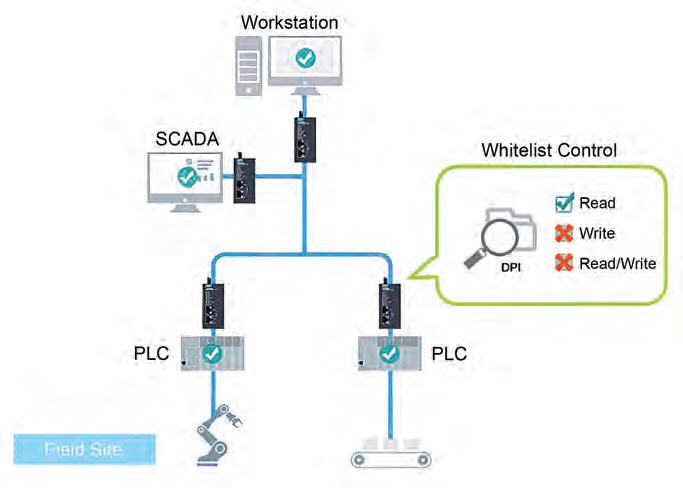
Deploying whitelist control powered by deep packet inspection can prevent hackers from injecting unauthorized commands.
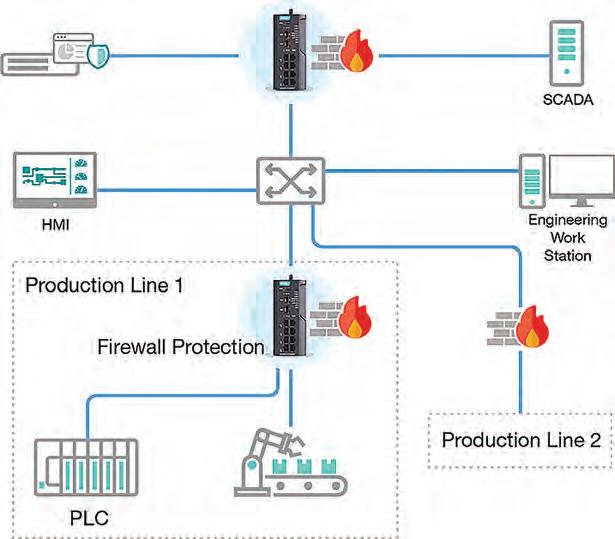
Network segmentation builds boundaries to protect production lines without impacting each other when cybersecurity incidents occur.
Stage 2 Vulnerabilities: Utilization and Network Control
During the second stage of a cyberattack, the malicious actor has already infiltrated the network and is using resources on the network. Even though they aren’t actively wreaking havoc on the network, they are secretly gathering information and laying the groundwork for a more harmful attack.
For example, a hacker may be using various scanning tools to learn about your network topology so they can find their next target and access or control more devices. The attacker can even use command injection to bypass authentication requirements or grant themselves higher levels of user privileges to execute prohibited commands and commandeer network devices.
How to Mitigate
To limit the attacker’s ability to move throughout your network and commandeer your devices, we recommend network segmentation and traffic control. For example, you should par tition your network into smaller
segments and control the communications that pass through these segments. In addition, deploying whitelist control to prevent command injection can also limit the severity of a security breach.
Stage 3 Vulnerabilities: Services and Data Disruption
Stealing or destroying critical business data from networks will be costly and harmful to any organization. However, these malicious actions are far from the worst case scenario. During the last stage of a cyberattack, the hacker is no longer studying networks but actively causing damage.
In stage 3, the hacker could make a machine or network resource unavailable by temporarily or indefinitely disr upting services on a host. This is typically called a Denial of Service (DoS) attack, which involves overloading a targeted machine with pings.
Fur thermore, a hacker could unleash malware, including ransomware to deny you access to your network resources until a ransom is paid.
How to Mitigate
Although damage has already been done by stage 3, overall harm can still be mitigated the overall harm by ensuring sufficient DoS protection and deploying intrusion prevention systems (IPS) for ransomware and other malware. You should also maintain reliable system backups and blacklist unauthorized protocols to minimize data loss.
With cyberattacks targeting more and more industrial networks, it is crucial to identify and mitigate system vulnerabilities before these weaknesses are exploited by those who intend to do harm. There are two directions you can take to enhance network security.
One is to ensure that your industrial networks have a foundation–secure network infrastructure, which allows authorized traffic to flow to the correct places. Alternatively, you can identify critical assets and give them layered protection, such as industrial IPS or whitelisting control. | DE www.moxa.com
Felipe Sabino Costa is a LATAM Industrial Cybersecurity (IACS) Expert at Moxa
Decentralizing the Drive
How modular drive technology simplifies setup, reduces cost and speeds time-to-market.
There are two types of drive configurations on the market today, namely centralized and decentralized. A centralized dr ive is characterized by mounting the drives and power distribution hardware within an enclosure and r unning cable lead lengths from the enclosure to the line or field devices being controlled.
In the decentralized approach, the drive is placed out on the machine or assembly line. The main benefit is that heat is removed from the electrical enclosure, resulting in considerable cost savings in machine or line build time.
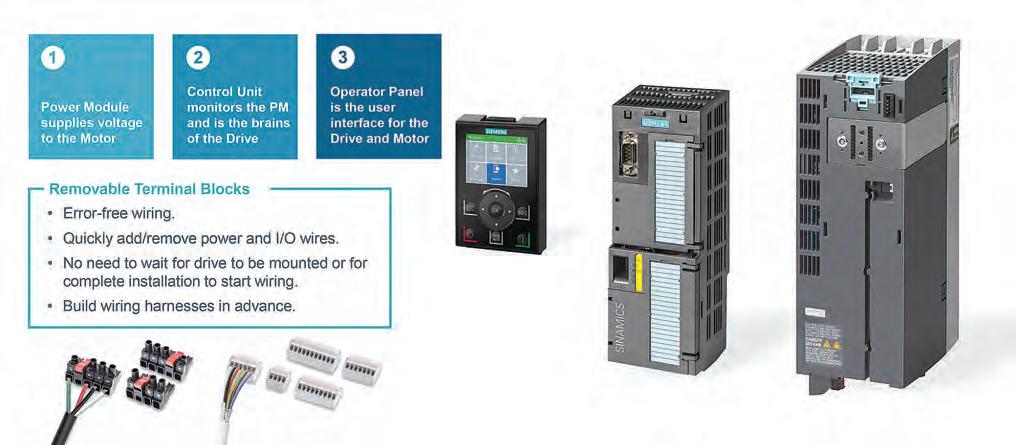
A basic modular drive consists of a power module, control unit and an operator panel. The power module supplies voltage to the motor, while the control unit monitors the power module and is the brains of the drive. The operator panel is the user interface for the drive and motor control. OEMs can prewire the drives before
panel builders mount the equipment, reducing time-to-market.
The power module also saves space as a result of having the same frame size, with or without an integrated filter. Integrated energy recovery enables excess energy to be regenerated to the line supply, which eliminates the need for breaking resistors. Sideby-side mounting saves space in the control cabinet and reduces costs without de-rating.
Regenerative power modules on the drive can help take the excess energy and apply it back to the grid or even redirect it into the plant to power other equipment. While regen power has been a viable concept for decades, today it can be applied to a much lower power range of motors.
In addition, using the concept with variable speed drives means the applications broaden considerably, from simple on/off pumps or motors to many types of process equipment
that fluctuate greatly in their power demands.
The operator panel on today’s advanced modular drives features simple setup and configuration using wizards with integrated plain text help functions. In addition, the panel includes quick access to all parameters and displays fault codes without scrolling. The fault will provide a user with a description and reason for the fault, as well as a remedy appearing in the Smart Access Module (SAM) as a Wi-Fi hotspot and a web interface built into the module. This SAM is also ideal for configuring drives within a mobile device or laptop.
For those who still want a centralized drive design, they can benefit from the use of push-through design (i.e. hanging the drive’s heat sync outside the enclosure). As a result, the AC unit can be sized for the control unit heat watt loss or circulating fans can replace AC units. The advantages include a lower
Photos: Siemens
energy bill up to 50%, a smaller shop floor footprint and a lower cost for AC unit maintenance. As a general rule, every 10°C increase in temperature reduces product life by half.
All popular drives from major manufacturers today use common parameters, though some are more beneficial, owing to their integration of this feature with other design and electrical characteristics. This makes it easier to program and remember settings and locations for the operators and maintenance personnel.
In addition, common parameters make users less reliant on user manuals. Once applied to one drive, the same procedure applies to most others in the system. Drives such as the SINAMICS line from Siemens also include predictive maintenance capability, which gives users alert warnings before ser vice is needed. Furthermore, the most advanced drives have safety features built-in such as safe brake control, safe torque off and safe stop 1. These features are available in hardwire versions and on a network basis.
Dr ive investment can also be a gateway to digitalization, in that installation and running of today’s machines can be simulated virtually. These “digital twin” technologies approximate “real world” conditions by f actoring in all component functions as well as machine kinematics into the calculations. The savings occur at both ends of the design/build scenario, as a result. Faster time-to-market combines with faster commissioning, startup and reduced time to first quality product.
Contemporary decentralized drive systems combine a power module, control unit and IO panel working in unison.
Motor Controls
There are three different types of motor controls in popular use today, of which the across-the-line type is very reliable and has the lowest initial investment cost. Essentially, the full voltage and current are applied at the time of engagement (up to 600%) and the motor runs at nameplate speed. In the middle price range, soft start provides the ability to control current, acceleration and deceleration. As with across-the-line, the motor will run at nameplate speed.
Variable frequency drives (VFDs) are the most expensive in their initial investment but offer many advantages. These include the ability to control speed at any set point, to control current and torque throughout the entire speed range and to realize energy savings through regenerative braking.
VFDs are an attractive option due to the fact they reduce mechanical and electrical stress on systems, control process variables, reduce in-rush current, enable energy reduction and provide connectivity, with full data analytics.
Conventional full voltage starting can cause mechanical shock since it can’t control the acceleration and deceleration rates of a machine, nor the speed of the machine. Furthermore, full voltage starting can’t control the in-rush current that the motor draws when it starts and typically allows 600% of the rated motor current during start-up. As a result, the in-rush can cause voltage dips and other power disturbances.
Variable frequency drives connect easily to offsite programming portals and can offer Ethernet and Profinet connectivity for running additions to
a brownfield installation, as another example. Drives are also being integrated into virtual systems and cloud databases. These are perhaps hidden but very real cost saving potentials for a machine builder or end user. Careful consideration should be given to such factors, when developing a new machine or retrofit plan.
Depending on the application, a variable torque or a constant torque inverter is used. The torque needed to perform a function increases as the speed increases in variable torque. Constant torque, as the name implies, means that torque remains the same as power increases. Variable torque is applied to pumps and fans, while constant torque applies to everything else. In centrifugal applications, like pumps and fans, a reduction in speed results in a proportional reduction in flow.The affinity laws and incremental power reduction rules apply here, whether in an air or fluid flow system.
OEMs must be able to build machines as cost effectively as possible to win order s today. They must be able to articulate the value of the machine design over the competition and they must build a machine that holds up to the customers’ demands with provable energy savings and other performance benchmarks that lower the TCO. The drives can play a significant role in this process. Being cognizant of the options and available features on the market today benefits OEMs and their customers in trackable ways. | DE www.siemens.com
This article was provided by Siemens.
AUTOMATION
ETHERCAT BOX MODULES
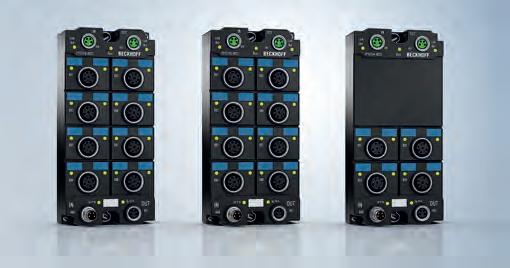
Beckhoff has added its EPX module series to its range of EtherCAT Box modules. With IP67 protection, the compact option enables Ex i signal acquisition from zones 0/20, 1/21 and Div. 1 with explosion protection requirements. The EPX series comprises three modules with four or eight input channels. It’s designed for direct connection of up to eight intrinsically safe NAMUR field devices and records their signals pursuant to IEC 60947-5-6. The EPX3158 supplies a maximum of eight measuring transducers located in the field and transmits their analog 4...20 mA measuring signals, electrically isolated, to the automation device. The EPX3184, which connects up to four intrinsically safe HART-capable field devices, signals any communication errors. HART connectivity enables two-way communication via the analog 4...20 mA wiring and can also be used for the FDT/DTM concept. www.beckhoff.com
INDUSTRIAL COMPUTER
Moxa announced its MC-3201 series, a marine-grade industrial computer line with higher processing power and scalability. Compliant with marine standards IEC-609451 and IACS E102, the line combine a fanless metal
housing with the 11th Gen Intel Core Celeron processor. Measuring 8.66 x 3.15 x 6.7 inches and purpose-built for shipboard use, the series features resistance to extreme temperatures, high humidity, dust, shock and vibration (IECEx Zone 2). The series is equipped with two DisplayPort outputs, two USB 3.1 ports, four Gigabit Ethernet ports, and two 3-in-1 RS-232/422/485 serial ports. Two DDR4 memory slots provide expanded memory requirements up to 32GB. It features a built-in TPM 2.0 module with the option to add Wi-Fi, 5G, LTE, GPS and M.2 SATA SSD expansion modules. www.moxa.com
IIOT GATEWAYS
Robustel has released a series of EDGE computing gateways that includes three product lines: the EG5100 and ARMv7-powered LG5100 and the ARMv8 EG5120. The EG5100 is an industrial router with 4G/ LTE connectivity, while the EG5120 router features 5G connectivity (3GPP Release 16)
and 2.3 TOPS NPU to support AI applications. The LG5100 is an industrial LoRaWAN EDGE gateway with global 4G/LTE backhaul. All models run the company’s latest operating system, RobustOS Pro, based on Linux Debian11 (Bullseye) with support for Docker based applications. In addition, all models feature two RS232/ RS485 ports, two DI and two DO ports, dual SIM card slots, support for C, C++, Java, Python and full Modbus TCP and RTU support. www.robustel.com
RFID MODULES
AutomationDirect has added Contrinex’s RFID Read/Write modules that use radio frequencies to read and write data to/from electronic tags. Available in 18mm or 30mm diameters and a 44mm by 44mm cube style, the units communicate at transmission ranges of up to 78mm using the IO-Link protocol.
RFID tags are available in 9mm, 16mm, 20mm, 30mm and 50mm sizes with user memory from 316 to 2,000 bytes using either EEPROM or FRAM memory. A high-temperature tag model is also available and all products are IP67 and IP68/69K rated. www.automationdirect.com
MOTORS AND DRIVES
SERVO-DRIVE SYSTEM
Siemens released its SIMATIC MICRO-DRIVE line, designed for 24-48V EC motors. Composed of UL- and CE-
marked components, the line consists of the PDC (Profidrive Control) servo drive in conjunction with a range of motors and connecting cables. Communication takes place over PROFINET using PROFIsafe and PROFIdrive profiles. In addition to Siemens motors, the line integrates with those from Dunkermotoren, ebm-pabst, Harting and KnorrTec as well as other third-party products. The MICRO-DRIVE PDC is available in standard (hardwired Safe Torque Off (STO)) and fail-safe versions. STO, SS1, SLT, SLS, and SSM Safety Integrated functions are available with the MICRO-DRIVE PDC100F variant. usa.siemens.com
SLOTTED FLAT MOTOR
Portescap released its 20ECF brushless slotted flat motor, characterized by a flat architecture and a compact package size. The motor features a 19mm rotor diameter and an open architectural design. At fifteen grams, the 20ECF provides a mass savings of thirty percent while its design optimization helps it achieve a fifty-percent improved motor regulation factor compared to other motion solutions, the company says. The motor is designed for surgical and service robotics, lab automation, premium tattoo machines, electric grippers, LiDar and pumps. www.portescap.com
SLIP RINGS
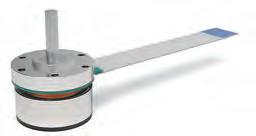
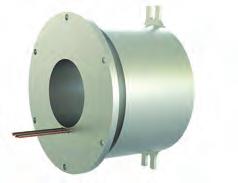
The Orbex Group has introduced a line of washdown-ready slip rings with an IP65 protection rating. The line feature stainless steel or aluminum housings and mounting options with through-hole diameters ranging from 25 to 100 millimeters, or capsule style when a through-hole is not required. Each slip ring in the series offers four power circuits rated 10A each, six signal circuits rated 2A. The line also supports standard
industrial network protocols, including Ethernet/IP, EtherCAT and Profibus. www.orbexgroup.com
AC SERVO MOTORS
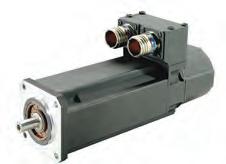
Kollmorgen introduced its EKM series of brushless AC servo motors. The series is Mil-Spec 810E rated and IP67 sealed for duty in harsh environmental conditions. In addition, they come standard with a stainless-steel shaft and chemical agent-resistant paint. The series features a 0.43 to 53 Nm continuous stall torque (3.8 to 467 lbin) and speeds up to
SHIPPING SUPPLY SPECIALISTS
8000 RPM. Equipped with 480 VAC high voltage insulation, the motors provide rugged resolver feedback for extreme environments and have an operating temperature range of -51°C to 54°C. They’ve also been shock and vibration tested per MILSTD810E, Methods 516.4 & 514.4, Procedure 1. www.electromate.com
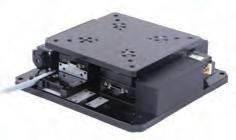
XYR ALIGNMENT STAGE
Optimal Engineering Systems, Inc. (OES) introduced its XYR-300-400 Alignment Stage, which offers +/- 3 micron accuracy, +/- 15mm of travel in the X and Y axes and +/- 5 degrees of rotation (theta). It also features linear resolutions of the X and Y axis of 1 micron resolution with a 10 micro-steps per step motor driver
and static parallelism of less than 0.05mm. Two-phase stepper motors are standard; however, servo motors with quadrature optical encoders are also available as an option. The 8mm diameter and 2mm per-turn precision ball screws and preloaded V-groove and crossed roller bearings add to its precision and stiffness. The stage’s table is 300 x 300mm and has threaded holes, plus a 110 x 110mm opening for optics, cables, etc. The base plate is 400 x 400mm and the height of the alignment stage is just 98mm.
www.oesincorp.com
PCB CONNECTORS
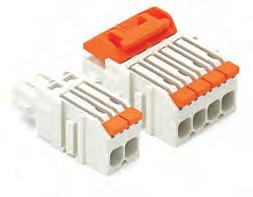
WAGO introduced its 2734 Series Multi Connection System Mini (MCS MINI) which includes lever operation and a versatile locking system. The connectors are designed for applications with small cross-sections from 26 to 14 AWG and a pin spacing of 3.5mm. One of the added benefits is that extra board space is not required, the company says, giving the system the edge for device connections, such as drive controls. www.wago.com
FLUID POWER
ISOLATION VALVES
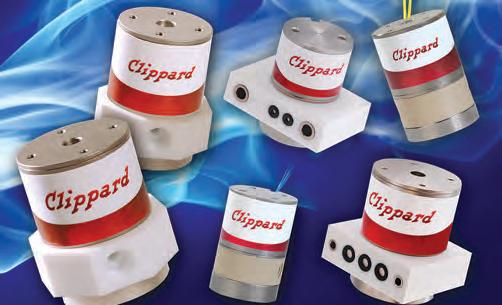
Clippard released its NIV Series Media Isolation Valve, a solenoid-operated device that uses a flexible diaphragm to isolate the actuation mechanism from the fluid path. All wetted areas of the valve are composed of either PEEK or PTFE, making this series suited
for use with corrosive media. The series features a one-piece valve stem that functions as a sealing membrane while also supporting and centralizing the poppet in the seating area. This multi-functional poppet/ diaphragm/stem results in a simplified design with fewer parts (only two for the 2-Way and three for the 3-Way), longer life and zero dead volume, the
company says. The series comes in four orifice sizes available as 2-Way Normally-Closed, 2-Way Normally-Open or 3-Way Selector/Diverter. www.clippard.com
HYDRAULICS HOSE
Danfoss Power Solutions launched its EC881 Dynamax hose. According to the company, the two-wire braided hose outperforms standard EN 857 type 2SC hose specifications with a 35% higher pressure rating, 26% higher operating temperature, eight times more abrasion resistance, 67% greater
flexibility (1/3 SAE bend radius), and five times more impulse life (1 million qualified impulse cycles). It is available in -4
through -24 sizes (0.25-inch to 1.5-inch inner diameter). The hose is designed for a variety of applications, including compact construction equipment, agricultural equipment, forestry equipment, mining, oil and gas, refuse trucks, aerial lifts and railway. www.danfoss.com
SERVO CARTRIDGE VALVES
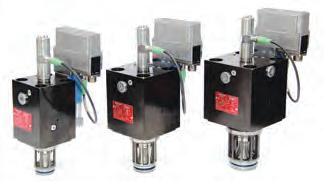
Moog released its X700 Series Servo Cartridge Vales designed for electrohydraulic flow control systems, especially those requiring quick dynamic responses and high flows. The valves provide a maximum main stage operating pressure of 420 bar (6,000 psi). Three sizes according to ISO 7368 are available: Size 32 (X702), size 40 (X703) and size 50 (X704). All valves are equipped with integrated electronics and closed-loop position control for the main stage cartridge poppet. A Moog D636 Direct Drive Valve is used for the pilot stage. Due to the main stage design, a sleeve alignment in the manifold is not required, the company says. For applications with particular safety requirements, fail-safe options are available. www.moog.com
POWER TRANSMISSION
GUIDE ROLLERS
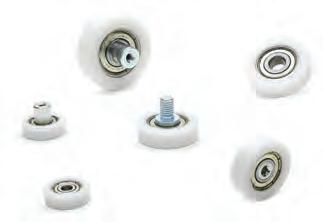
JW Winco has added the GN 753.1 to its line of guide rollers. Available in six sizes – from 0.866 to 1.969 inches (22 to 50mm) outer diameter – the guide roller’s design features a deep groove ball bearing of
hardened roller bearing steel. The bearing also incorporates permanent lubrication and a typical 2Z seal to protect against dust and dirt. The rollers can fasten using a typical socket cap, shoulder screws or through a permanently riveted bearing pin, designed either with male or female thread. The smallest roller option can accept dynamic radial loads of up to 400 newtons, while the largest roller rates for loads as high as 1,500 newtons. All rollers are designed for lifetime performance of 656,167ft (200,000 meters) and speeds of 1.3 feet per second (0.4 meters per second). www.jwwinco.ca
SENSORS
ETHERNET/IP ENCODER
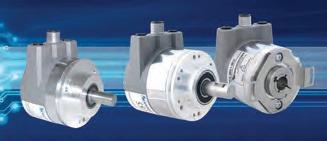
Wachendorff announced it has expanded its range of Ethernet-based encoders with the WDGA58F, a compact encoder with the EtherNet/IP protocol. Certified by the ODVA, the model features a single and
multi-turn resolution (single-turn 16 bit, multi-turn 43 bit) that can be individually configured via an integrated web server. It’s sensor has an installation depth of just 46.5mm. The encoder operates in environments with temperatures ranging from -40 °C up to +85°C, shock of 1,000m/s² or vibration of 50m/s² at 10-2000 Hz. In addition, devices with hollow end-shafts eliminate the need for additional couplings while those with shafts withstand bearing loads up to 400N. www.wachendorff-automation.com
OPTICAL MODULES
Teledyne e2v released its 2-Megapixel Optimom, the first in a range of MIPI CSI-2 optical modules for vision-based embed-
ded systems. Optimom 2M features a native MIPI CSI-2 protocol and standard FPC connector to link with embedded processing boards. Integration uses a dedicated development kit, which includes an adapter board and Linux drivers with NVIDIA Jetson or NXP i.MX solutions. The modules feature a 25mm square outline and two color options (Monochrome or RGB) and three lens options (a multi-focus lens, a fix-focus lens or without lens). The lens is supplied already installed and focused. All models are equipped with the company’s low-noise, global shutter image sensor. The multi-focus version combines a broad working distance and wide aperture.
www.teledyne.com
CABLE SENSOR
Igus introduced its i.Sense EC.B, a smart condition monitoring system for breakage detection on e-chain cable carriers over 35 meters. In case of a break, the i.Sense EC.B system triggers a message and the evaluation module sends a signal to the system’s control unit. The measuring range extension from 80 to 999 millimeters eliminates the need for a second sensor. Additionally, two sensors can also be connected to the new i.Sense modul II evaluation module for counter-rotating systems, as an example.
When connected to the digital I/O ports of the control unit, the system can trigger an immediate stop signal. The new draw-wire sensor is compatible with all EC.B systems and i.Sense modules. The sensor can also be integrated into other IIoT concepts. www.igus.com