14 Despite milestone, Onshape struggles to live up to Solidworks 2.0 mythos
18 AM brokerage concept looks to disrupt service bureau model
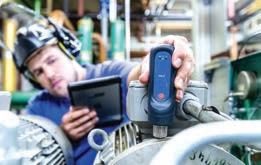
23 Dynamic test equipment monitors key components at nuclear power station
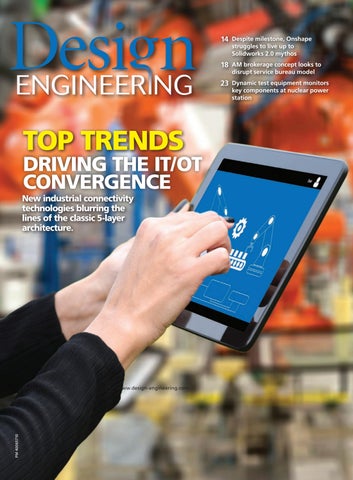
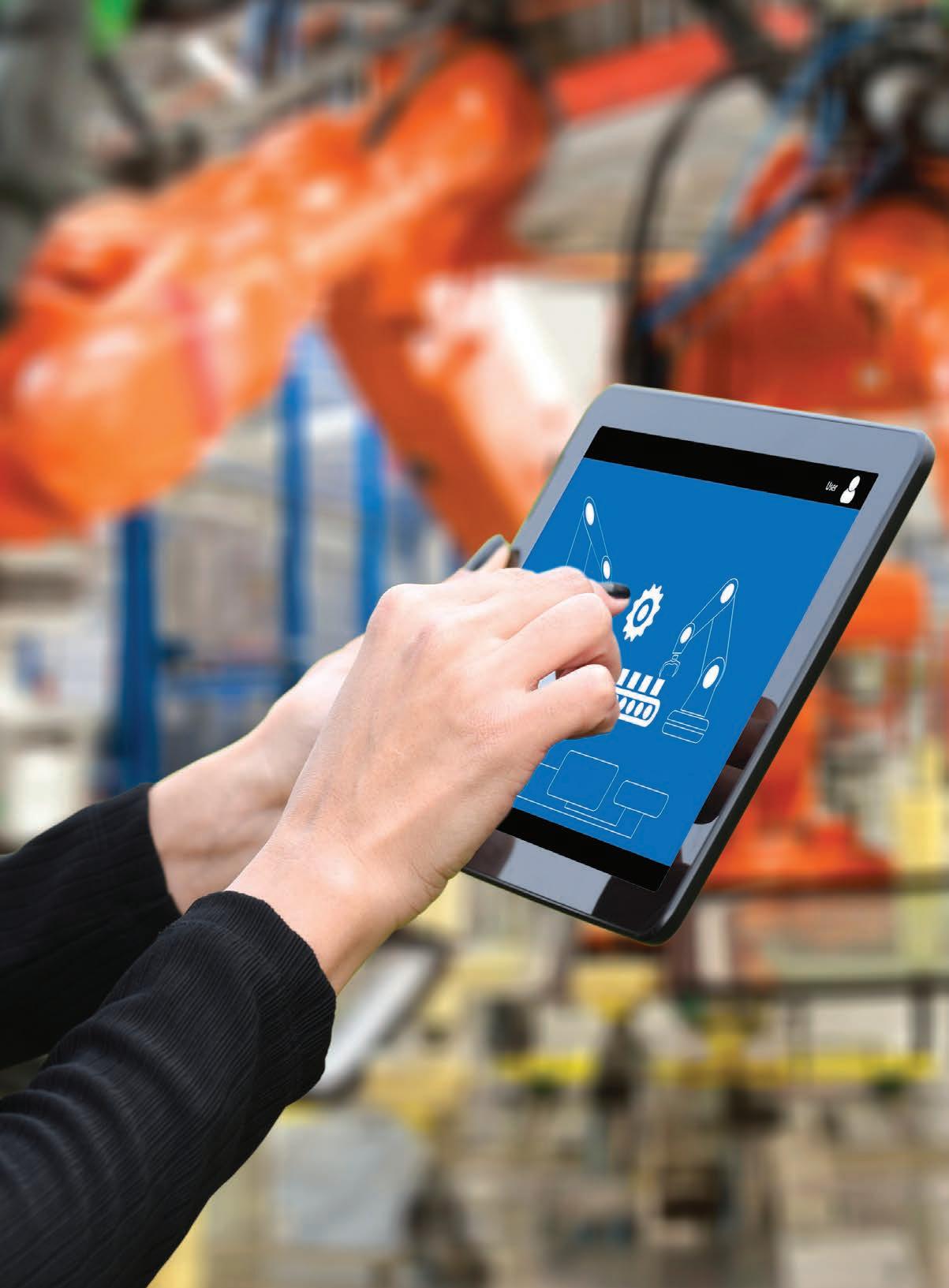
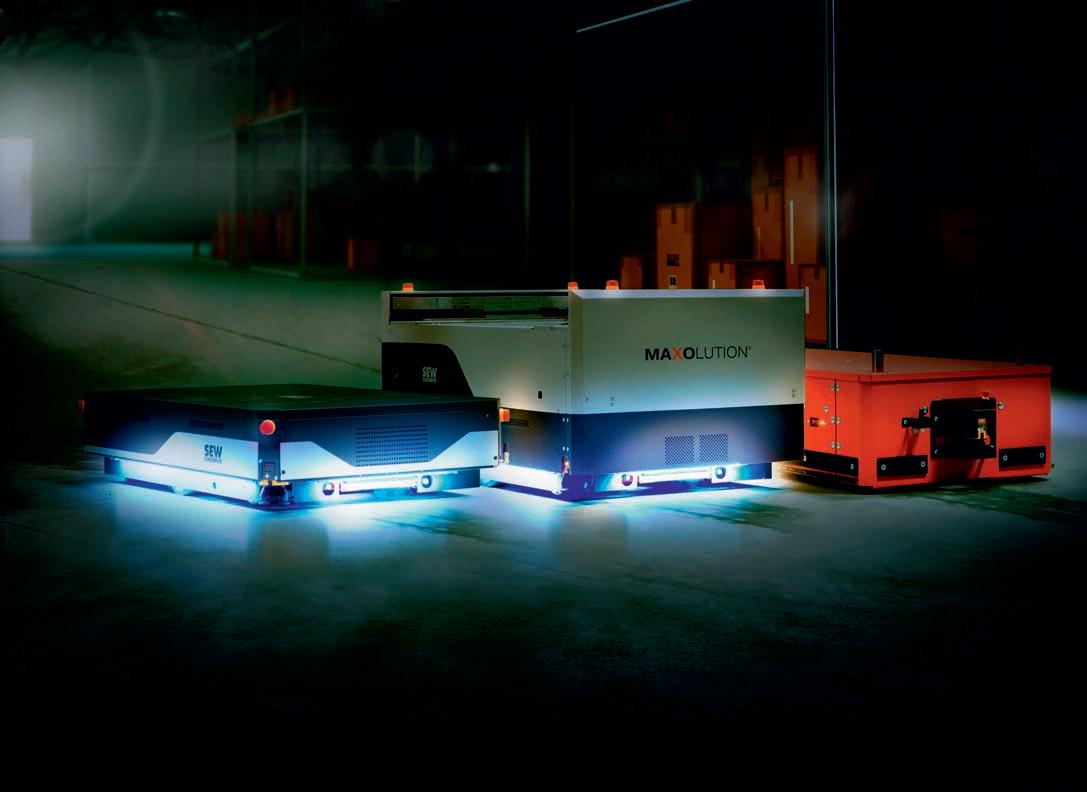
New industrial connectivity technologies blurring the lines of the classic 5-layer architecture.
INTRODUCING AIROS TM
Beyond actuation, Bimba now offers a complete family of high quality air preparation equipment that meets the needs of every pneumatic circuit.
Features / Options
Tamperproof Padlock
Gauge Types
Lubricator Options
Filter Options
Filter Drain Options
Regulator Adjuster Type
Distribution Block
Pressure Drop Indicator
Combination Units
Customization
MG Series
» Available on Shuto Valves
» Flush smaller square gauge
» Extruded large round gauge
» Oil fog
» General purpose
» Coalescing filter
» Automatic
» Semi-Auto
» Manual
» Knob
» Standard
» Not available
» Filter/Regulator - Lubricator
» Limited Customization
NEW MG Series Soft Start Safety Valves PG Series
Industry 4.0 / IIOT Compatible Monitor flow and performance!!!optimize
NEW! PG Series
» Available on Regulators and Shuto Valves
» Flush Large Round Gauge
» Oil fog
» Micro fog
» General purpose
» Coalescing filter
» Oil vapor removal filter
» Automatic
» Manual
» Knob
» T-handle
» Standard
» Pressure sensing block
» Available on Filters
» Shuto - Filter/Regulator - Lubricator
» Filter/Regulator - Lubricator
» Highly Customizable
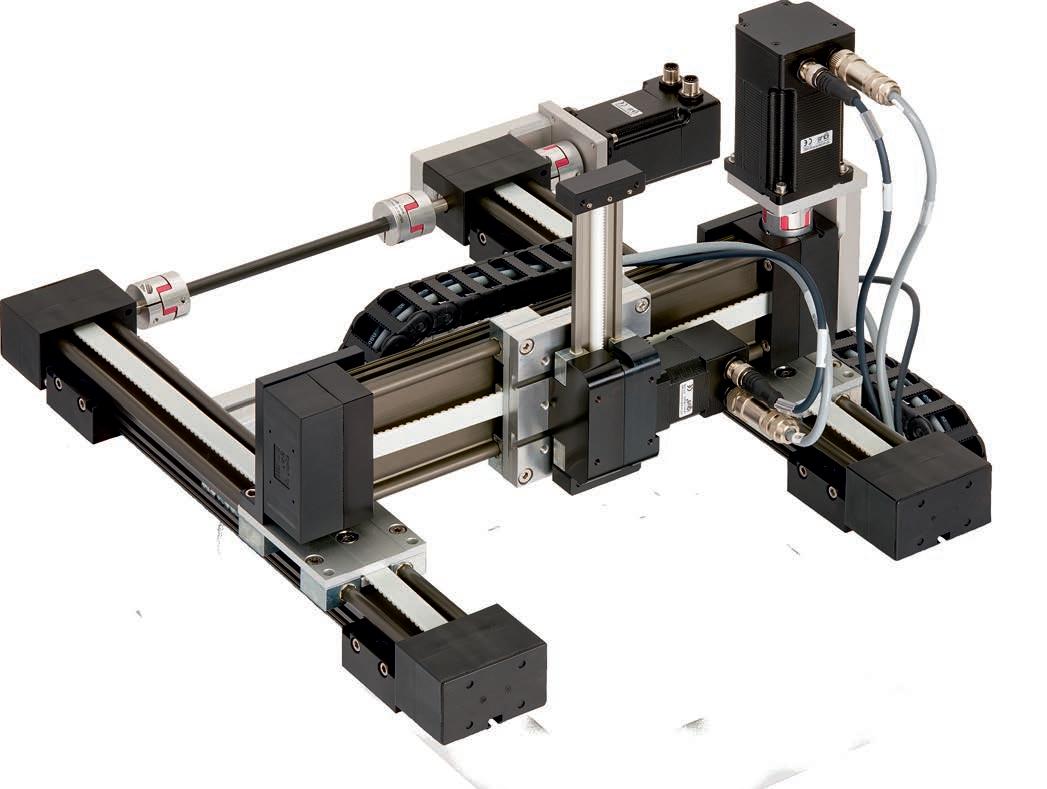
Automate now with low-cost, maintenance-free drylin® gantries
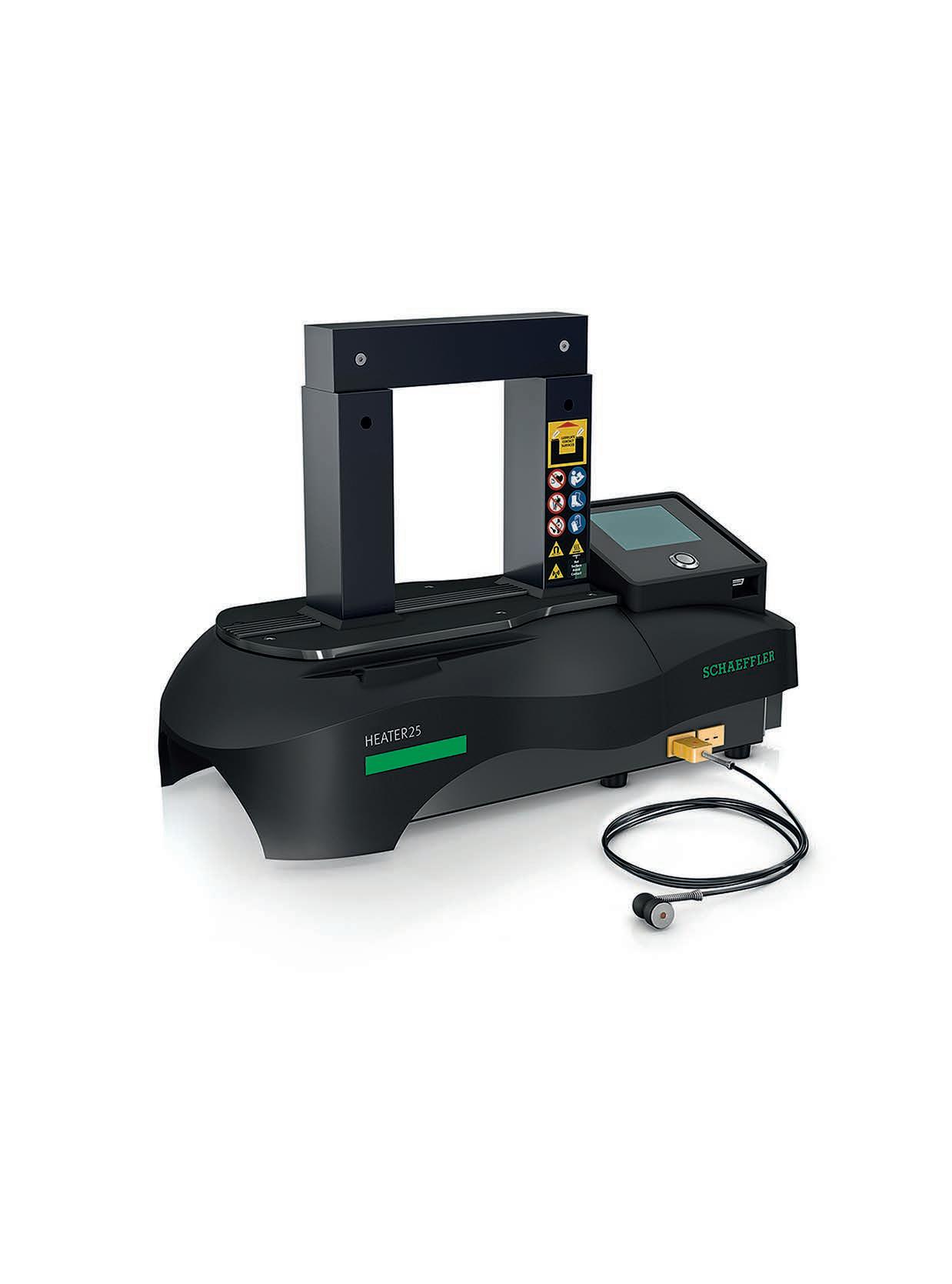
New Induction Heaters Featuring Schaeffler-Exclusive Delta-T Technology
Schaeffler’s HEATER series of powerful induction heaters are the perfect solution for mounting components with a cylindrical bore as efficiently and as safely as possible. Our latest innovation: Schaeffler’s proprietary Delta-T induction heating technology – featuring two temperature sensors that monitor inner & outer ring temperature and adjust the heat cycle to ensure all components heat quickly, evenly...and safely. www.schaeffler.ca
Dr. Alain Aubertin Vice President, Business Development and International Affairs, Canada Consortium for Aerospace Research and Innovation in Canada (CARIC)
Ajay Bajaj, P.Eng President, Rotator Products Limited; Past President and Board Member, Power Transmission Distributors Association (PTDA)
John Lamb Regional Sales Manager, Wainbee Limited; Chairman, Canadian Fluid Power Association (CFPA)
Dr. Ishwar Puri, P.Eng Dean of the Faculty of Engineering; Professor of Mechanical Engineering, McMaster University
Dr. Mary Wells, P.Eng Dean of the College of Engineering and Physical Sciences, University of Guelph; Chair of the Ontario Network for Women in Engineering
SUBSCRIBER SERVICES
8 Design News
INKAS unveils the world’s first bulletproof Bentley SUV and other design news
14 CAD Report
Web-based CAD program, Onshape, passes milestone but struggles to live up to Solidworks 2.0 mythos
26 Idea Generator
The latest in industrial products including automation, fluid power and motion control
Columns Features
18 Canadian Innovator
Design Fusion’s AM brokerage to disrupt the service bureau model while helping justify ROI for an in-house 3D printer
20 Five Trends driving the IT/OT convergence
New industrial connectivity technologies blurring the lines between layers of the classic 5-layer architecture
23 Dynamic Monitoring
EDF Energy uses dynamic motor test equipment to monitor the condition of key components at nuclear power station
An Arranged Marriage Editorial Viewpoint
As this issue’s cover story, by IoT Analytics senior analyst Matthew Wopata, points out, the adoption of and enthusiasm for IIoT is beginning to accelerate rapidly. Increasingly, established automation companies and a host of relative new comers are scrambling to get in on the digitization, collection and analysis of manufacturing data, in one form or another.
The article is a concise overview of the trends currently driving IIoT, but the one aspect not addressed are the security issues inherent in the melding of Information Technology (IT) and Operational Technology (OT). As the article states, by 2020, roughly 50 percent of devices will be connected to on-premise or remote data collection. What’s more, the article describes the trend to plug edge devices directly into those data repositories, bypassing the upper layers (e.g. MES, SCADA) of the traditional automation stack.
While both are necessary steps toward a fruitful IIoT implementation, they also inevitably open new vectors of attack – so much more digital surface area for digital hijackers to get their fingers on. And as IT draws ever closer to meshing with OT, it’s clear the later may not be ready for the union.
Fact is, OT grew up in a cloistered environment, free from the jagged and infectious world IT matured in. During its development, OT focused solely on speed and reliability while, over the years, IT learned the hard way to become inherently suspicious, demanding that trust be earned, even if it meant sacrificing performance.
Recent vulnerabilities found in the control software that runs much of the automation world’s hardware demonstrates this lack of acquired immunity and street smarts. In late July 2019, enterprise IoT security firm, Armis, discovered 11 zero-day vulnerabilities (dubbed Urgent/11) in Wind River’s VxWare – the real-time operating system (RTOS) at the heart of more than two billion devices worldwide, including the majority of PLCs, SCADA systems and other ICS hardware.
Specifically, the firm discovered that the popular RTOS’s TCP/IP stack (implemented by a licensed piece of software called IPnet) allowed attackers to skirt VxWare’s network address translation and firewalls and potentially gain control of the affected device. Worse still, Armis most recently discovered these same vulnerabilities present in RTOSes beyond VxWare, including OSE, Integrity, Microsoft’s ThreadX, ITRON, ZebOS and the Nucleus RTOS by Mentor.
As one would expect, Wind River issued a patch for its RTOS shortly after it became aware of the vulnerability. However, fixing such bugs isn’t a matter of a 10-minute download, install and system restart typical of the desktop computer world. Critical industrial systems have to be taken off-line and control devices patched in a customized fashion, potentially lessening the likelihood the vulnerabilities will be addressed.
It should be stated that, according to Wind River, the vulnerabilities aren’t present in the latest version of VxWare and no known exploits of Urgent/11 have been discovered. Further, the IIoT industry takes security seriously, as standardization bodies, institutions and companies work on ways to harden industrial equipment against intrusion.
Still, the Urgent/11 discovery, and others like it, exposes the fact that OT and IIoT in general have yet to be stress tested to the extent IT has. As a result, the arranged marriage of IT and OT may well be a rocky one, at least at first.
Mike McLeod
www.design-engineering.com
Publisher Alan Macpherson (416) 510-6756 amacpherson@design-engineering.com
Editor Michael McLeod (416) 442-5600 ext. 3231 mmcleod@design-engineering.com
Account Manager
Ron Salmon (416) (905) 713-4362 rsalmon@design-engineering.com
Vice President/Executive Publisher Tim Dimopoulos tdimopoulos@annexbusinessmedia.com
COO Scott Jamieson sjamieson@annexbusinessmedia.com
Design Engineering, established in 1955, is published by Annex Business Media, 6 times per year except for occasional combined, expanded or premium issues, which count as two subscription issues. Printed in Canada
Publications Mail Agreement #40065710 ISSN: 0011-9342 (Print), 1929-6452 (Online)
Subscriber Services: Canada: $57.50 for 1 year; $92.50 for 2 years; $10 for single copy.
Outside Canada: USA - $108 USD; Overseas - $116 USD $22 for single copy. Directory/buyer’s guide: Canada $28; Outside Canada $46. Add applicable taxes to Canadian rates.
Circulation
email: blao@annexbusinessmedia.com
Tel: 416-442-5600 ext. 3552 Fax: 416-510-6875 or 416-442-2191
Mail: 111 Gordon Baker Rd., Suite 400, Toronto ON M2H 3R1 From time to time we make our subscription list available to select companies and organizations whose product or service may interest you. If you prefer not to receive this information, please contact our circulation department in any of the four ways listed above.
I enjoy hearing from you so please contact me at MMcLeod@design-engineering.com and your letter could be published in an upcoming issue.
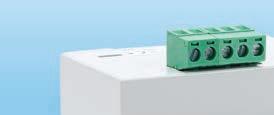
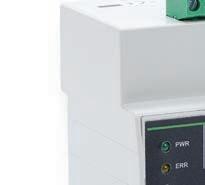
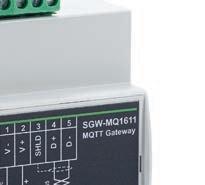
STRIDE MQTT Gateway
The MQTT protocol is highly efficient with minimal overhead and performs well in unreliable networks, making it a primary protocol for the Industrial IoT.
• Wired or Wi-Fi models available
• Ideal for IIoT/cloud-based data collection systems
• Compatible with various MQTT brokers including AWS, Mosquitto and more
The STRIDE MQTT gateway converts Modbus RTU/TCP signals to MQTT so installations using Modbus can easily communicate with today’s MQTT/IIoT capable networks.
• Provides bidirectional communication between Modbus-capable field equipment and Cloud software platforms
• Converts Modbus RTU on RS485 or Modbus TCP over Ethernet to MQTT with SSL / TLS client certificate authentication
DesignNews
INKAS unveils the world’s first bulletproof Bentley SUV
Automotive security firm INKAS has rolled out possibly the most bad-ass SUV ever: The world’s first armored Bentley Bentayga. Established in 2000, the Toronto-based company is internationally known for its work retrofitting production cars to turn them into full-featured armored vehicles for banks, law enforcement agencies, corporate clients and individuals.
One of its highest-end vehicles to date, INKAS’ modified Bentley combines the style and comforts of a luxury SUV with the battleground preparedness of a tank, the company says. For example, the luxury vehicle now meets CEN 1063 BR6 ballistic standards meaning it can withstand fire from assault rifles as well as the simultaneous detonation of two DM51 grenades placed beneath the vehicle’s floor.
Despite its burliness, INKAS CEO David Khazanski says the vehicle doesn’t drive like an over-weight rhino. It retains the automaker’s standard four-level air-suspension as well as a 48-volt active anti-roll bar. To move all that armor, the SUV also features a 6.0-liter twin-turbo W12 engine that outputs 600 horsepower and 664 lb. ft. of torque with an eight-speed automatic transmission.
On the inside, the Armored Bentayga retains the luxury car maker’s classic look and feel, the company says, including a handcrafted cabin with bespoke wood veneer, aluminum vents and chrome bezels on the switchgear and panels. The vehicle also features an eight-inch infotainment center console, adaptive cruise control and front and rear parking sensors.
And for those who want to go the full James Bond, the vehicle can be optionally equipped with tail pipe protection, a smoke screen system, an engine bay fire suppression system and electrified door handles.
https://inkasarmored.com
Hatch Ltd acquires Upside Engineering
Canadian consulting engineering firm, Hatch Ltd., announced it will acquire Upside Engineering Ltd., combining the largest oil and gas process teams in Canada with a local engineering firm that specializes in the midstream hydrocarbon business.
“Together, we will take on and solve the toughest oil and gas challenges, from consultancy and feasibility through to
operations to serve the entire value chain in Alberta, Western Canada, and beyond,” said Hatch’s Chairman and CEO John Bianchini. “We look forward to bringing positive change to Alberta’s oil and gas industry by leveraging Hatch’s unique blend of technology and process excellence in upstream and downstream oil and gas, combined with Upside Engineering’s proven track
record of delivering midstream projects.”
Hatch and Upside Engineering are both privately-held, Canadian-founded firms, having respectively served Western Canada’s oil and gas sector from Calgary for over 30 years. Both firms are also ranked among Canada’s Best Managed Companies.
http://www.hatch.ca
http://upsideeng.com
This Bentley Bentayga, modified by Toronto-based vehicle security firm INKAS, can withstand assault rifle fire and two DM51 grenades.
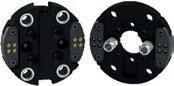
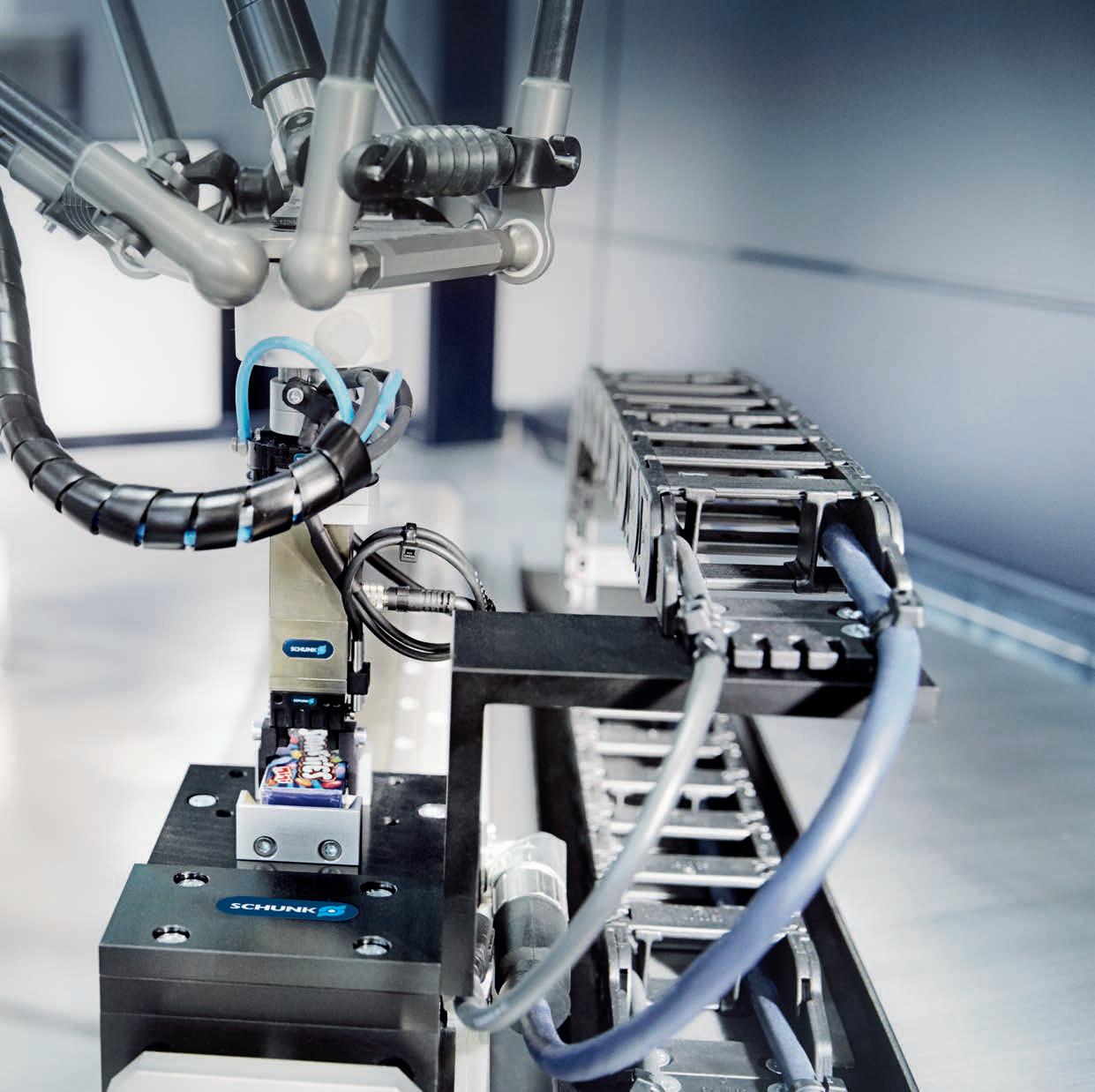
90%
faster gripper change
SWS-001 Quick-change System
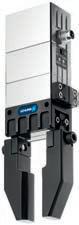
Up to 210 N gripping force
Electric EGP Gripper for small Components
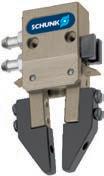
Up to 15° opening angle per gripper finger
Pneumatic SWG Gripper for small Components
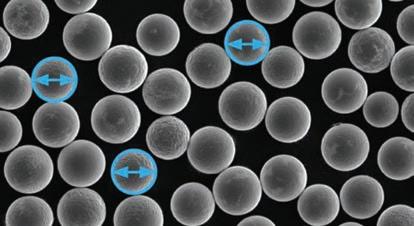
Researchers find Equispheres aluminum powder suitable for binder jet process
Canadian material science company, Equispheres, revealed that testing, done in partnership with McGill University, found the company’s aluminum alloy powders are suitable for sintering with binder jet technology.
While roughly 100 times faster than traditional laser-based processes, binder jet printers were previously unable to sinter aluminum alloys. According to the company, its powder will enable binder
jet printing to work with some of the most in-demand production materials (i.e. aluminum alloys).
Specifically, McGill researchers found Equispheres’ standard AlSi10Mg aluminum alloy powder capable of compaction-free, sub-solidus sintering densification greater than 95% with excellent microstructure.
“We are excited about the industry response to our unique aluminum sintering results,” said Equispheres’ CEO, Kevin Nicholds. “Although binder jet printer technology offers the speed and cost reductions necessary to enable additive manufacturing to meet the requirements of automotive mass production, the inability to print with aluminum alloys has been a major limitation to the technology – until now.”
Equispheres says it is presently work-
ing to develop specialized binder agents required for aluminum and for specific automotive applications and is optimistic the powder will prove to be a new high standard for many critical parts as the process is refined and testing continues. www.equispheres.com
McRock launches
$100M IIoT VC fund
Toronto-based
investment firm, McRock Capital, announced it has held an initial closing on its second Industrial Internet of Things (IIoT) venture capital fund, McRock Fund II LP, which has reached over 80% of its targeted $100 million.
According to McRock, the fund will invest in high-growth companies across Canada, the US and Europe that are combining AI-driven data analytics with the growing data from field devices, machines and equipment in industrial and urban environments. Fund investors include Cisco Investments and Shell, as well as BDC Capital, Export Development Canada, Alberta Enterprise Corporation (AEC) and HarbourVest.
Since the firm’s launch, it has invested in eight IIoT-related companies including Markham’s Invixium, Kitchener-based Miovision, mnubo in Montreal, Moncton’s RtTech Software and, most recently, Kitchener-based Praemo. www.mcrockcapital.com
Whitney Rockley and Scott MacDonald, co-founders of McRock Capital.
Study finds engineering degrees among the most valuable
According to a recent study by personal finance website, Bankrate. com, it pays to be an engineer in today’s economy; more precisely, an engineering degree provides the best bang for your tuition dollar in terms of typical salary and job stability. In the website’s listing of the Most Valuable College Majors, which ranks 162 university degrees,
Rolling Ring
the Bankrate study found that 7 of the top 10 most valuable are in engineering.
Pulling from 2017 U.S. Census Bureau data, the study placed Naval Architecture & Marine Engineering at #1, with a median income of US$90,000 and an unemployment rate of 1.6 percent.
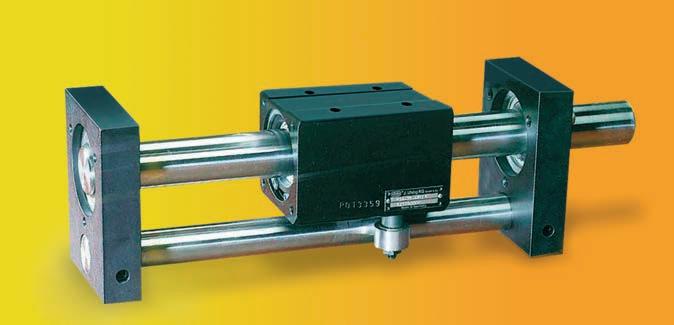
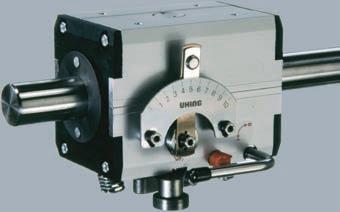
Zero backlash. Jam-proof design.
• For applications in positioning & reciprocating motion
• Zero play –even during reversal
Uhing® Rolling Ring linear drives run on a smooth, threadless shaft that won't clog or jam. If the system is overloaded, the shaft simply slips instead of churning and grinding. The drive bearings are in constant contact with the shaft, even during reversal, thereby preventing backlash.
Example applications: metrology machines, material handling systems, spooling equipment, packaging & converting equipment.
Many different sizes meet varying requirements for axial thrust & linear speed.
For more information call 1-800-252-2645
Email: amacoil@amacoil.com www.amacoil.com
Some models feature mechanical control over speed and travel direction. No programming or electronic controls are needed.
That degree was followed by #2 Nuclear Engineering ($98,100 / 1.8%); #5 Electrical Engineering ($99,000 / 2.7%); #6 Architectural Engineering ($74,000 / 1.5%); #7 Aerospace Engineering ($90,000 / 2.3%) and #8 Computer Engineering ($92,000 / 2.8%).
The only fields to beat most engineering degrees were #2 Pharmacy Pharmaceutical Sciences & Administration ($100,000 / 2.2%) and #4 Genetics ($85,000 / 1.2%).
Rounding out the top 10 are #8 Electrical Engineering Technology ($76,000 / 1.8%) and #10 M aterials Science ($90,000 / 2.0%). A Mechanical Engineering degree, according to the Bankrate listing, came in at #16 with a $88,000 median salary and a 3.0% unemployment rate.
At the bottom of the list, anything to do with language or the arts fared poorly: #160 Composition & Rhetoric (US$37,800 / 4.4%); #161 Visual And Performing Arts ($32,000 / 4.1%) and lastly #162 Drama & Theater Arts ($35,500 / 5.2).
To be fair, the study doesn’t factor in students’ success rate or the costs incurred attaining the various degrees. According to the U.S. Federal Reserve, 54 percent of college/university students rack up some debt by the time they graduate, averaging about US$20,000 to $24,999 in 2018. The study also concedes that even the least valuable of degrees is better than none in the long term.
www.bankrate.com
MARCH 10-14, 2020
LAS VEGAS, NV, USA
SHOW OWNERS: CO-LOCATED WITH: INTERNATIONAL FLUID POWER EXPO
(UPDATES OLD) ONSHAPE TURNS 100
By Ralph Grabowski
Whenit came out in 1995, Solidworks was a gamble. It was the first serious CAD program to run only on Windows, an operating system considered a mysterious thing by other CAD vendors then.
By the time Microsoft released WinWeb-based CAD program passes milestone but struggles to live up to Solidworks 2.0 mythos.
At the time, Windows seemed unsuitable. It made CAD slow, forced a complete rewrite of the UI and wasn’t compatible with many of the peripherals CAD users required of the time. In any case, developers were satisfied with their finely-tuned CAD systems running on the non-graphical and much faster DOS and Unix operating systems.
dows 98, CAD on Windows had become a sure thing and so had Solidworks. So sure that Autodesk mimicked Solidworks with Inventor for Windows, while PTC and UGS ported over their Unix-based MCAD systems. Solidworks today is such a success that it earns more in revenue than entire mid-size CAD firms like Bentley Systems.
And so, when it came time to write an
MCAD system for the newest operating system – the cloud – a person might want to employ some of the same people who catapulted Solidworks to success. Investors plowed millions into Onshape and its founders, counting on a repeat of their prior success. Onshape still promotes its We-Are-Solidworks-2.0 mythos, but the parallel is over.
Alas, past performance is no guarantee of future returns. Four years after Solidworks launched with $1 million in self-funding, Dassault Systemes acquired it for $320 million. In contrast, it has been four years since Onshape launched with $168 million in funding but has no suitor in sight. In my opinion, the company may want to be acquired: Investors want their money back, some founders are at retirement age and the company has only “thousands” of customers – a small number.
Companies are acquired for their technology (Onshape’s primary value), for their customer base (of which Onshape has little), or to be shut down (to reduce competition). Smaller CAD vendors cannot afford the price tag which, by my guess, hovers around $500 million. PTC, Hexagon and Siemens PLM are possibilities as none has cloud-based CAD and are wealthy enough to make frequent acquisitions.
Other firms, like Autodesk and Dassault, wouldn’t be interested, as they already have vast, interconnected cloudbased CAD systems. One far-off idea is an ITC/ODA-like consortium, as the ODA already distributes some Onshape tech-
nology to its members with Onshape’s blessing.
Maybe potential investors poured over the books but walked away unimpressed. Onshape’s bedrock technology is its data management system, which is important but not sexy, and no longer unique. Nevermind, the company soldiers on.
Onshape at 100
Onshape celebrated its 100th release during the summer, touting its high-speed update schedule, averaging out at 14 per year. The fast-paced schedule makes Onshape a “living, breathing, and always-evolving product development platform.” It needs a fast development cycle to catch up with its deskbound competitors with their 20- to 30-year headstart.
One benefit/drawback to cloud-based CAD is that updates are automatic, whether you want them or not. As the code is updated on the server, software running in the browser accesses the new code, and so users are always running the latest version. On the benefit side, automatic
updates means document sharing and technical support are not hindered, because all users run the same version.
For corporate users, changes to CAD programs mid-project are undesirable, and so some CAD vendors, such as Siemens with NX, allow corporations to pause automatic updates. Onshape has not implemented update pausing, calling the practice “madness.” The company told me that running Onshape in offline mode or on private cloud is not something it provides, nor is it looking at doing so in the inter-
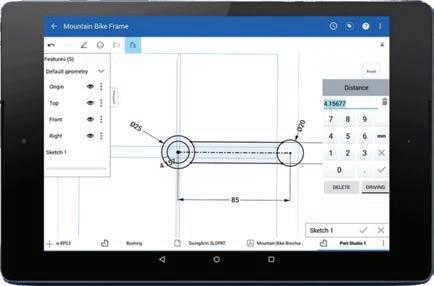
Figure 1: Onshape running on an Android tablet
CADReport
mediate feature. If version locking is important to you, don’t use Onshape – is their advice.
One way to make a CAD program attractive is to entice outside developers to write add-on software that adds functions missing in the core program. Onshape offers about 50 add-ons through
its app store. Most of the apps are connectors (to desktop software) or else CAM and FEA programs.
Onshape supports SSO, REST API and FeatureScript. SSO (single sign-on) means that logging into Onshape logs you into all of the third-party add-ons. The REST (representational state transfer) application
programming interface lets you write software to connect with Onshape. FeatureScript is Onshape’s own programming language, with which it itself is written.
The company continues to develop separate mobile versions that run on Android and iOS devices (See figure 1). These mobile version are more akin to the Web version than any other CAD app. That’s because both run the same FeatureScript code from Onshape servers, in most cases.
There are differences between the Web and mobile versions due to innate capabilities. Mobile devices are better at sharing and notifications, for instance. On the other hand, some new features are implemented as quickly as possible for mobile, like release management, because they make a lot of sense there.
Onshape recently floated the idea of setting up local user groups. In addition to the assistance users give each other remotely through forums, Onshape is working on establishing a chain of Onshape User Groups where people help each other face-to-face. The local chapters are sup-
ported by Onshape, but are completely run by members.
What’s New in Onshape
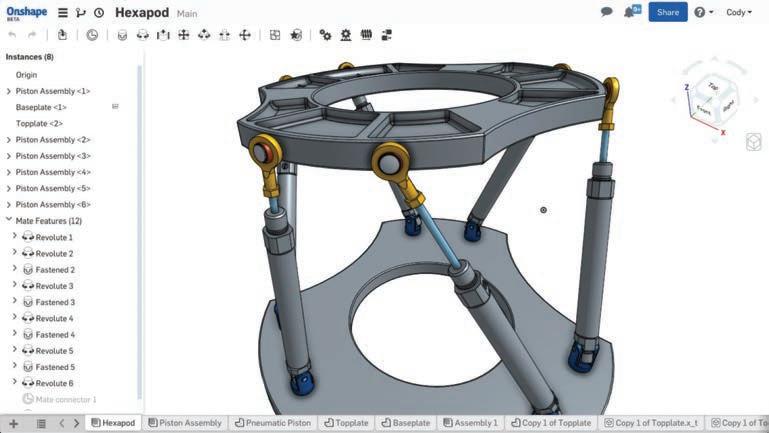
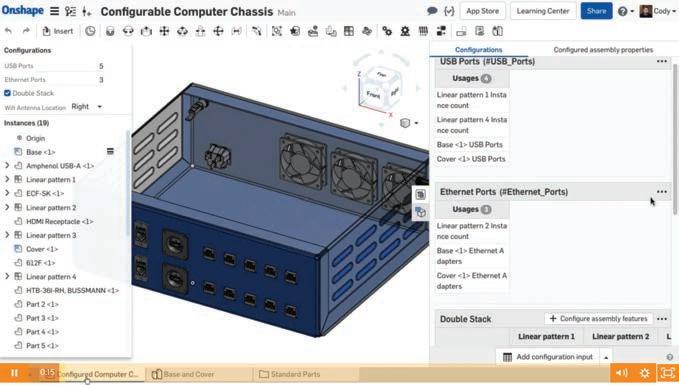
When we look at the many updates since the start of the year, however, there is only one big one. Assembly configurations expand on part configurations introduced last year (See figure 2). Configurations allow you to establish a single model and then generate certain variations from it, such as a 4-, 8- or 12-port network router.
To set up assembly configurations, you define all the ways the assembly could be produced, and then specify parts to be included, excluded or adjusted through sets of lists, check boxes, and/or variables. You combine these, such as the router with eight ports, with ports stacked on one another or positioned side-by-side.
All other new features of recent months are tweaks that improve existing functions here and there. For example, Onshape now wraps sketches or surfaces around cylinders. Pasting data into configuration tables adds needed rows automatically. Subassembly error reporting is improved. When deleting a tab that affects the data in other tabs, you are now warned. Onshape uses browser-like tabs to segregate elements of models, such as the assembly, each part, sheet metal and drawings.
Other new functions are ones that have been present in traditional CAD for years or decades, such as attaching GD&T to hole callouts, emailing links to drawings, moving the boundaries of surfaces, and automatically updating drawings when associated assemblies are changed.
While the idea behind running software in Web browsers is to make it “universal” – it turns out that Web-based CAD targets a limited market of customers who don’t mind the somewhat slower response time (due to latency) or don’t need the IP protection of running the software in-house, and prefer frequent updates and paying subscription fees. DE www.onshape.com
Ralph Grabowski writes on the business of CAD on his WorldCAD Access blog (www.worldcadaccess.com) and weekly upFront.eZine newsletter. He has authored many articles and books on AutoCAD, BricsCAD, Visio and other design software.
3D PRINTING IN A GIG ECONOMY
Design
Fusion’s additive manufacturing brokerage to disrupt the service bureau model while helping justify the ROI for an in-house 3D printer.
by Treena Hein
Untilrecently, small manufacturers who needed some parts 3D-printed had a couple of options: Either sink a sizable amount of cash into an industrial printer that may see limited use or employ a bureau service. Depending on how busy the bureau is, the time it takes to get finished parts back may be unpredictable or may incur variable “rush order” costs.
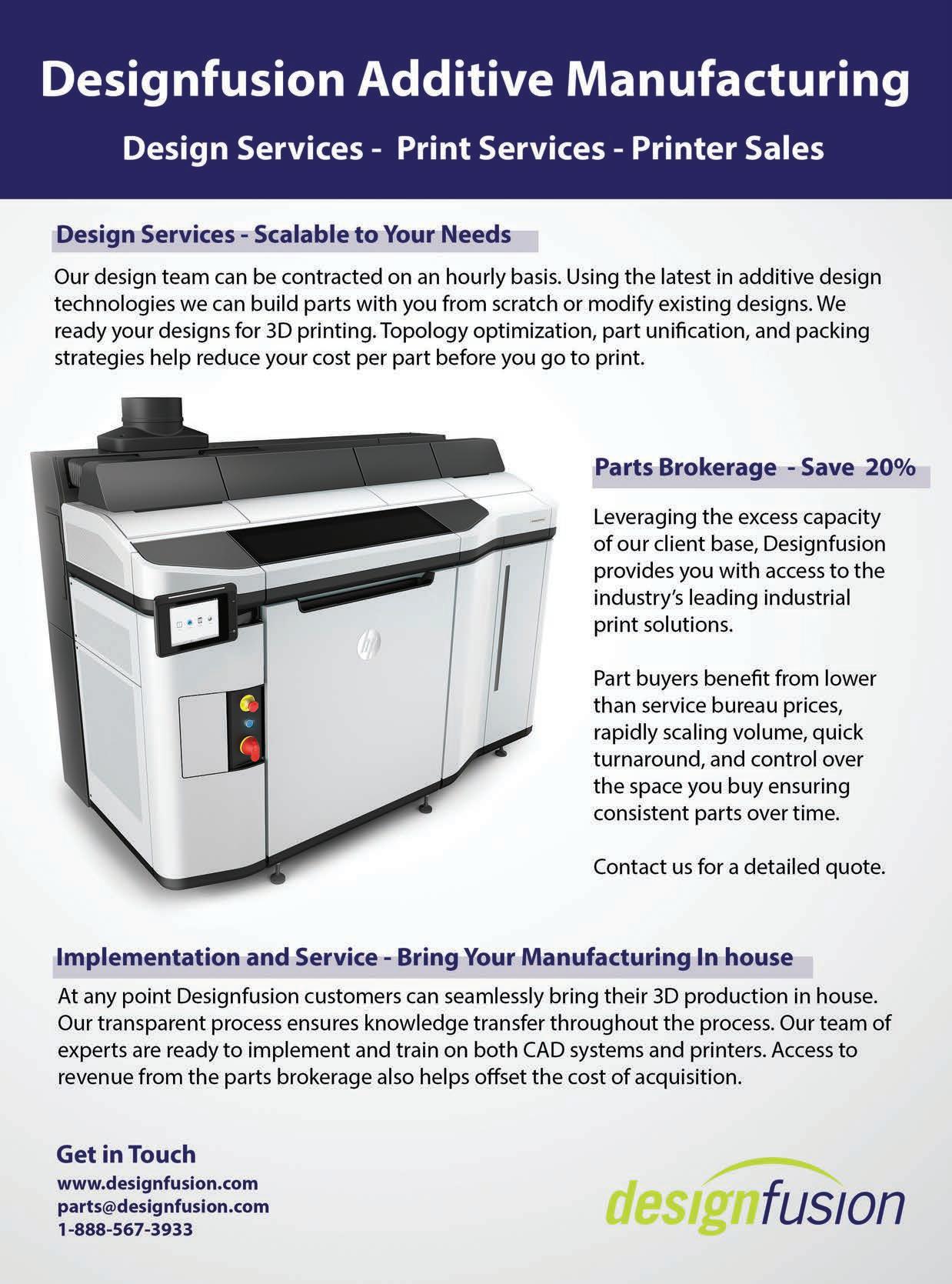
Now however, manufacturers have a third option. For those who would like to take the leap into additive manufacturing but aren’t quite at the volume that justifies the purchase of an industrial 3D printer, Ontario-based additive manufacturing consultant and HP printer dealer, Designfusion, has created a “3D printing brokerage”.
On one level, the brokerage works similar to a service bureau. Parts buyers send their order to Designfusion, which analyzes and processes the 3D geometry but then dispatches the part to the most appropriate manufacturer within the printer brokerage’s “stable.” At present, this stable encompasses five printers across Canada, spread from BC to Quebec. These manufacturers own and use an HP printer in their own business but are interested in putting their printer to use when they don’t need it.
This leads to the second aim of this ground-breaking brokerage. As anyone in manufacturing knows by now, highend industrial 3D printers can cost upwards of $500,000, and buying one must therefore make financial sense. Because the option to join the brokerage stable now exists, manufacturers who couldn’t quite justify the purchase of an HP 3D printer can help off-set the cost by joining the brokerage and gaining extra income from outside print jobs.
“For every company we talk to that’s serious about additive manufacturing and has the volume that makes buying a printer a smart investment, we talk to 15 who are also serious about it but don’t quite have the volume,” explains Trevor Johnstone, Designfusion’s director of additive manufacturing. “Rather than these companies having to wait until they’ve achieved that volume increase, only about 15 or 20 per cent, we can offer them a solution.”
Disrupting the Model
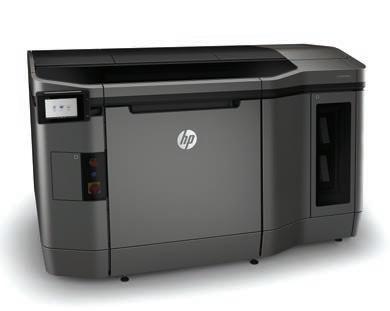
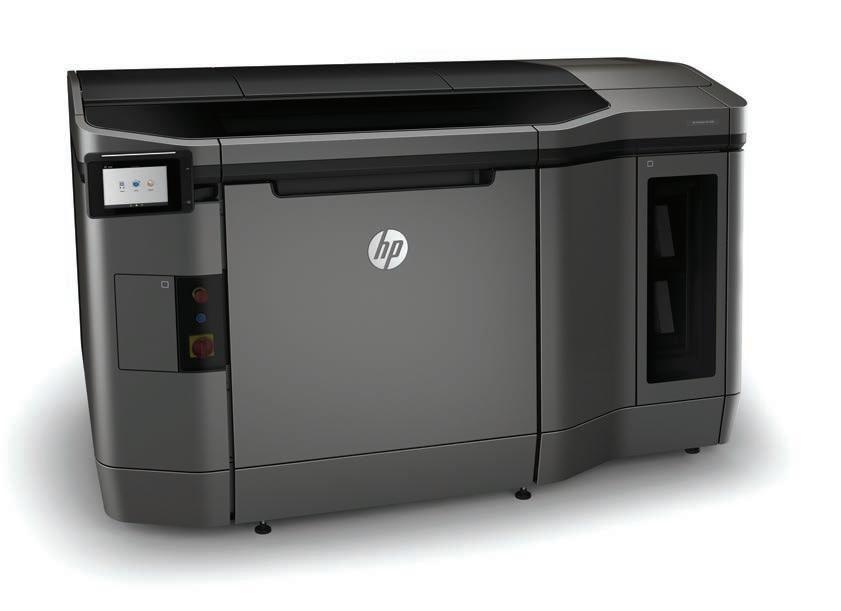
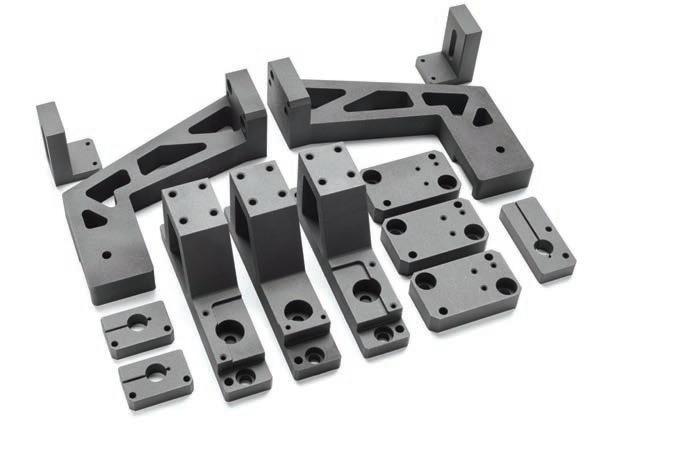
Parts printed on the HP Multi-Jet Fusion line can be produced in six different build material.
According to Johnstone, the idea for the brokerage didn’t come about in a blinding flash, but rather evolved from a melding of several developments.
“From cold calls on the sales side, and also from our consulting clients, we were hearing ‘we can’t afford a printer,’ and ‘we need this and this printed,’” he explains. “We also had customers who weren’t using their printers to full capacity. We started asking these customers if they wanted to do some outside printing jobs, and if so, we gave out the contact information and both parties took it from there.”
“But there would often be some friction points because everyone is so busy and has so much to handle,” Johnstone adds. “So one day, some of us were all talking about the situation at a meeting, and someone said, ‘You know, we could be the ones to handle it so it all goes smoothly, sort of like a printing broker.’”
In Johnstone’s view, this brokerage will ramp up the adoption of 3D printing significantly. And, not only will it help Designfusion sell more HP 3D printers (it’s been selling them for about two years), but it will increase the need for the firm’s additive manufacturing consulting services, digitizing clients’ physical parts, optimizing designs and so on.
That vision is shared by Marc Cohen, President of LEO Lab, a Concord, Ontario-based firm that extensively uses 3D printing to create custom orthotics and one of Designfusion’s 3D printing stable partners. Cohen believes that as company leaders realize what 3D printing technology is capable of and how they can ben-
efit from it, then it’s just “a matter of proving out the economics to them, demonstrating that operationally and financially, it makes sense. So there is a lot of education to do.”
Two years ago, LEO Lab purchased an HP MJF 4200 from Designfusion (it was actually the first of HP’s Multi Jet Fusion models to operate in Canada). Because Cohen and his team have always had a focus on innovation, they also created a sister company called IDEATE3D. Similar to a private incubator, the company helps inventors bring their ideas to fruition and to market. IDEATE3D’s clients could use LEO Lab’s printer as required, and the printer could also be available to others.
The teams at LEO Lab and Designfusion had always had a good relationship, notes Cohen. About a year ago, the more they talked, “the more it became clear our interests were pretty closely aligned,” he says. “There are many individuals or organizations that could benefit from an HP MJF but can’t afford it. These are the type of customers IDEATE3D looks for, and Designfusion meets with them all the time. We realized that collaborating would serve Designfusion’s objectives and the objective of IDEATE3D to develop its ‘3D Print Service and Partnership’ business.”
For his part, Johnstone notes that LEO Lab is a perfect example of a new type of entrepreneurial company, that not only looks to bring its specialization to the marketplace but also access a wider market by leveraging new technologies.
Looking Ahead
With the benefits that the printing brokerage model offers parts buyers over what they currently face, Johnstone predicts busy days ahead.
“They don’t have to worry about price, quality or who to buy from – we take care of all that,” he says. “They buy from us. We take the order and match it to the best printer in our stable and see that the order is filled and paid for, at a great price and with the fastest turnaround and highest quality on the market. For those in our printer stable, we look after all the business stuff, all the marketing and sales. They get the digital file, and all they have to do is print and ship the order.”
Currently, Johnstone says most brokerage customers want auto parts printed, with the next-largest demand coming from those who make medical devices and consumer electronics. At present, the service is limited to most Canadian provinces but, in time, Designfusion intends to offer the brokerage service across all of North America. It may also evolve to include other 3D printer technologies beyond HP’s machines.
“A year from now, we see it as inevitable that our brokerage model will outpace the existing 3D print service bureau model in available capacity, price and speed,” says Johnstone. “We want to be Canada’s largest buyer of 3D-printed parts. If our service bureau competitors reduce their price to compete with us, that’s fine. Our main goal is adoption of additive manufacturing and that will come with reduced printing prices and with providing help with design and other aspects that stand in the way of adoption.”
Companies will transition to digital manufacturing when it makes sense financially for them, he adds, and cheaper printing and gaining income from the use of excess printing capacity are significant factors.
“We are already in a shared economy,” notes Johnstone, “and from our perspective, a 3D printing brokerage is an idea whose time has come.” DE www.designfusion.com
Treena Hein is an Ottawa-based freelance technology writer.
5
TRENDS driving the IT/OT CONVERGENCE
New industrial connectivity technologies blurring the lines between layers of the classic 5-layer architecture.
by Matthew Wopata, Senior Analyst, IoT Analytics
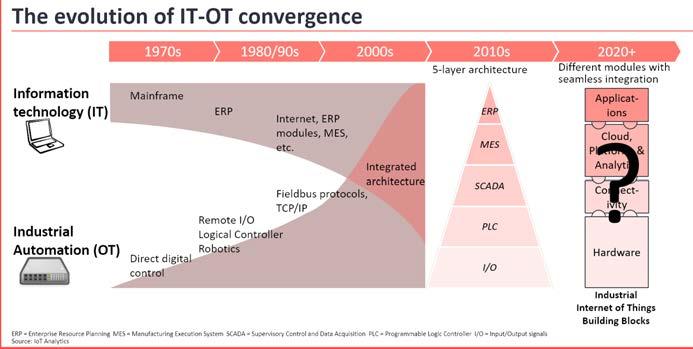
ITand OT both started on individual paths in the 70s and slowly converged in the 90s and 2000s to form today’s widely accepted 5-layer architecture. Over the past few decades, hundreds of successful companies such as Wonderware (SCADA/MES), Modicon (PLC) and Keyence (I/O) began providing products and services for each of the different layers in the 5-layer stack.
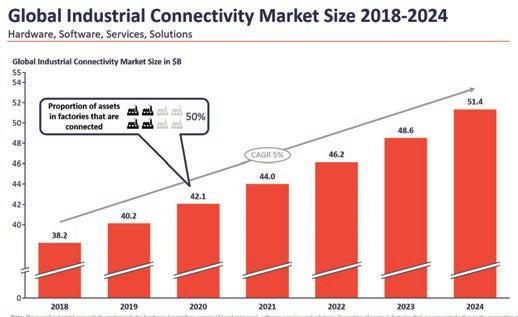
1. Roughly 50% of industrial assets in factories will be connected by 2020
As we head into 2020, the clear lines between the 5-layers are becoming more blurred than ever before. Early adopters of new industrial connectivity technologies and protocols are creating new data collection architectures that challenge the 5-layer architecture status quo and promise to usher in a new area of more scalable, cost-effective and purpose-built industrial connectivity solutions.
IoT Analytics’ latest Industrial Connectivity Market Report 2019-2024 looks at the different industrial connectivity architectures, components and protocols that are being deployed to create industrial data collection solutions. Here are 5 key industrial connectivity trends that emerged from the research:
An increasing number of industrial asset operators and manufacturers are adding industrial connectivity to their assets. IoT Analytics’ latest report finds that by 2020, ~50% of industrial assets in factories will be connected to some form of on-premise or remote data collection system. The proportion of connected assets is projected to continue to rise and will be a key growth driver of the 5% CAGR that the $38.2B industrial connectivity market is projected to have between now and 2024.
Industrial connectivity hardware (such as gateways, PLCs, and remote I/O modules) is by far the largest industrial connectivity segment; however, the faster-growing software and services segments will take an increasing share of the spend by 2024 as more processing moves away from gateways and PLCs
and into industrial PCs and datacenters. The solutions segment of the market will also grow faster than the overall market, as an increasing number of factories opt for end-to-end data collection solutions that bypass the traditional automation pyramid and send data directly to the cloud.
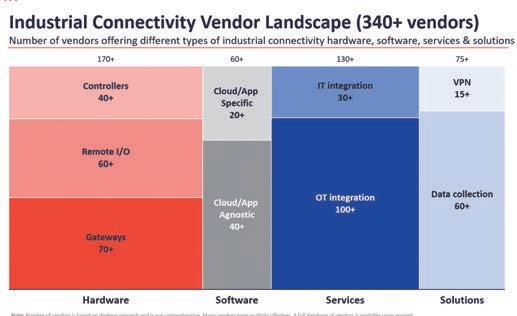
2. 340+ industrial connectivity vendors are fighting for market share
There are now more than 340 companies in the Industrial Connectivity market. The hardware and services segments contain the largest number vendors (170+ and 130+, respectively), and they are home to the two largest sub-segments: Gateways (70+ vendors) and OT integration (100+ vendors). These large sub-segments are particularly fragmented despite ongoing consolidation; in 2019, at least four companies in these segments were acquired, including Comtrol Corp. (by Pepperl+Fuchs), Maestro Wireless (by Lantronix), Trimax (by Tesco Controls) and JR Automation (by Hitachi).
3. New edge-to-cloud architectures
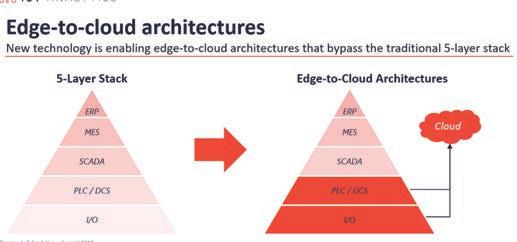
As the top of the traditional 5-layer automation pyramid consolidates and moves to the cloud, new industrial connectivity architectures are being used to achieve direct edge-to-cloud connectivity.
The traditional method of communication through centralized SCADA and MES systems usually depends on OPC servers to translate Industrial Ethernet and fieldbus protocols into
OPC compatible protocols. Technological advancements in connectivity, computing hardware and software enable new architectures that bypass the traditional automation stack and provide direct edge-to-cloud connectivity.
Connectivity: Companies like Oleumtech and WellAware are using novel connectivity protocols, in this case LPWAN networks (SigFox and RPMA, respectively), to connect their industrial sensors directly to the cloud.
Computing Hardware: Industrial PC manufacturers like HPE or PLC/RTU manufacturers like Advantech are taking advantage of low-cost edge computing by developing products that can run software applications which enable edge-to-cloud industrial connectivity.
For example, HPE’s Edgeline industrial PC has been optimized to run a variety of industrial connectivity software applications, including HPE’s Edgeline OT Link, Kepware’s
IIoT:Trends
industrial connectivity software, and Softing’s dataFEED OPC Suite. Similarly, Advantech’s ADAM-3600 RTU natively supports connectivity to the Azure cloud.
Software: Industrial connectivity software vendors are now offering software specifically designed to run on edge devices as small as a Raspberry Pi. To streamline the connectivity process and reduce integration costs, edge connectivity software vendors have created partner programs that pre-certify industrial connectivity hardware from 3rd party vendors. Examples of hardware pre-certification programs include Inductive Automation’s Ignition Edge Onboard program; Microsoft’s Azure Certified for IoT program; and Telit’s deviceWISE Ready Partner program.
4. Software enables small firms to challenge incumbents
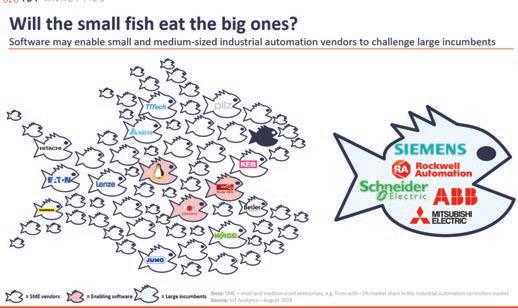
More powerful edge processing, the increasing popularity of Linux and new virtualization technologies are helping drive two key trends that are enabling smaller and medium-sized industrial automation vendors (SMEs) to better compete with the larger incumbents:
De-coupling of hardware and software: Traditional industrial connectivity included embedded software that was written specifically for that hardware. Moving forward, industrial connectivity hardware will be Linux-based and able to run a variety of 3rd party industrial connectivity software applications. Factories and machine builders alike are adopting these de-coupled, Linux-based solutions in part because they help avoid hardware vendor lock-in and enable more scalable and futureproof architectures.
Consolidation of the hardware stack: Industrial connectivity functions such as protocol conversion, cloud connectivity and even process control can now be performed on a single piece of Linux-based hardware using software from 3rd parties. Combining all of this functionality within a single device (such as an industrial PC or data center) can dramatically reduce hardware costs for end users who have traditionally purchased separate pieces of equipment to perform each function.
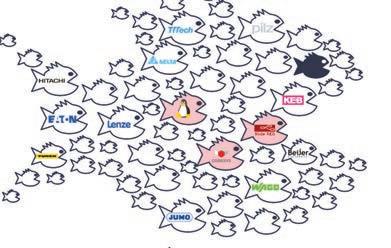
Small and medium-sized industrial automation hardware vendors (such as those in the picture above) have been leading the way in offering Linux-based industrial connectivity hardware
that takes advantage of the above-mentioned trends. Many of the large incumbents are faced with an innovator’s dilemma and are dis-incentivized to take advantage of these trends because doing so could lower their existing customers’ switching costs and potentially cannibalize highly profitable existing businesses.
Two hardware-agnostic software applications that are enabling these trends are CODESYS and Node-RED. CODESYS is an IEC 61131-3 compliant software-based PLC that runs on Linux and is embedded in a wide range of Linux-based industrial connectivity hardware offerings, including remote I/O (such as the Beijer Electronics BREN577), PLCs / RTUs (such as the KEB C6 Smart), HMIs (such as the Turck TX500) and gateways (such as the TTTech Nerve).
By writing PLC programs in a hardware-agnostic software platform like CODESYS, factories and machine builders are able to more seamlessly execute control logic on different types of industrial hardware. This flexibility has a number of advantages, including better negotiating power with hardware vendors, avoidance of expensive PLC conversion projects (e.g. PLC-5 migrations) and the ability to more seamlessly scale up computing power as requirements evolve.
Another Linux-based software offering is Node-RED, which is the most popular open-source software tool for enabling (among other things) protocol conversion and edge-to-cloud connectivity. Industrial connectivity hardware vendors that support Node-RED in their offerings include Advantech and at least 12 others.
5. New industrial connectivity protocols
IO-Link, OPC UA and MQTT are emerging as the fastest growing I/O, OT and IT protocols, respectively, as vendors and end users alike look to capture richer industrial datasets more efficiently. A key barrier preventing more widespread adoption of the OPC UA and MQTT protocols is the lack of widely adopted data structure standards.
Efforts are being made to establish standard data structures (such as OPC UA companion specifications), but in practice most installations resolve to using custom data structures corresponding to custom PLC tag structures. Despite these remaining challenges, many industrial connectivity vendors have introduced products that natively support these protocols, such as: IO-Link remote I/O modules; PLCs with native OPC UA servers; IoT and SCADA platforms with native support for MQTT; and Gateway vendors with native support for MQTT.
The 5 trends discussed in this article are explored in much further depth in the Industrial Connectivity Market Report 2019-2024. The report takes a deeper look at the industrial connectivity market, including architectures, protocols, hardware, software, services, solutions, key players, case studies and trends. DE https://iot-analytics.com
Matthew Wopata is a senior analyst at IoT Analytics, the firm’s expert for Industrial IoT and lead author of Industrial Connectivity Market Report 2019-2024.
Dynamic Monitoring
EDF Energy uses dynamic motor test equipment to monitor the condition of key components at nuclear power station.
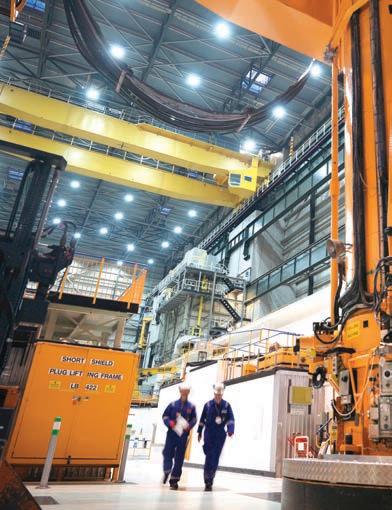
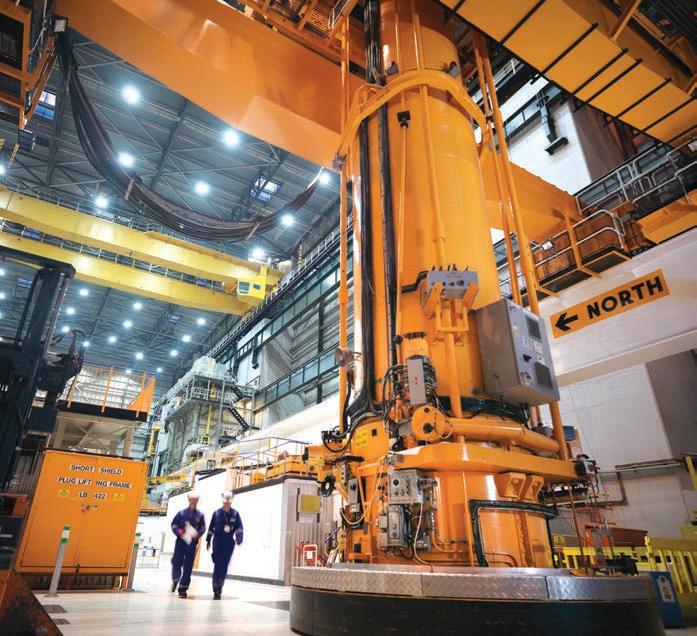
Opened in 1983, Hartlepool power station in County Durham is one of seven UK nuclear power stations built using two Advanced Gas Cooled Reactors (AGR). Owned and run by EDF Energy, the 1,185MW plant is scheduled to continue operating until 2024.
Hartlepool currently provides around 2 percent of the UK’s peak power demand, so its safe and reliable operation is critical not just to the bottom line of its owner, but also to the stability of the country’s energy supply. The plant’s staff are always looking for ways to improve its operations, with a focus on three key perfor-
mance indicators: Safety, output and maintaining availability.
One recent innovation in that continuous improvement effort has been the introduction of dynamic motor analysis technology from SKF that allows EDF to assess the operating condition of essential, but inaccessible equipment.
The company initially developed its new condition monitoring technique to improve the reliability of a specific piece of equipment in the plant’s refueling system. A single machine is used to refuel and exchange control rods on both reactors as well as transfer the items between various maintenance facilities.
In the AGR, fuel assemblies – comprising fuel and a carrier plug unit – are transported by the fueling machine and raised/lowered at the reactor. Spent fuel assemblies are removed from the reactor
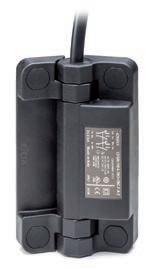
Hinges with safety switch
Maximize operator safety for machine doors or guards
n Operator protection
Built-in shut-off switch automatically breaks off power
n Meets safety standards
Compliance with IEC EN 60947-5-1 annex K
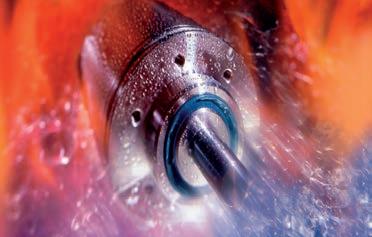
n Built for harsh environments
Rated as IP67 for tough duty and to withstand severe water jet exposure
n Designed to last Lifespan of > 1 million cycles
Request Catalog 077AM
IIoT: Application
by the same machine and transported through a series of cooling and disassembly operations.
A key part of the fueling machine oper ation is a special plug that seals the reactor when the spent fuel is removed, protecting operators and the envi ronment from radia tion. That plug is moved by a 4-meter-long lead screw assembly. When the lead screw eventually wears out, replacement is a costly and time consuming operation, requiring two six-person maintenance teams working on a 24-hour rotation for 14 days.
Regular maintenance and lubrication extends the life of the lead screw, but since even that requires eight hours of effort with the machine shut down, the power station’s engineers wanted a way to optimize maintenance intervals, balancing overall availability with service life. Conventional condition monitoring equipment could not be installed on the lead screw, due to its inaccessible position behind the plant’s radiation shielding.
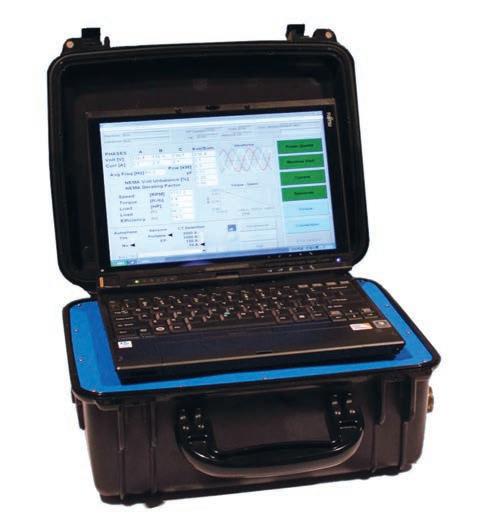
The drive motor that operates the lead screw is accessible during machine operation, however, so the team looked for a way to use the performance and behavior of the motor to infer information about the condition of the mechanism. Their answer came from the SKF Dynamic Motor Analyzer - EXP4000. The EXP4000 is normally used to assess the condition of electric motors by analyzing the motor and current while in operation, but the system can also estimate the torque delivered by a motor from voltage, current and speed data.
For their application, the Hartlepool team permanently installed an SKF Dynamic Motor Link - EP1000 within the motor control cabinet. This module allows for the quick and safe connection of the EXP4000 to measure the voltage
SKF’s EXP4000 Dynamic Motor Analyzer gathers performance motor itself, the power quality supplied and the load placed on
and current signals via a low voltage plug mounted on the control panel door.
The team established a baseline torque profile by measuring the performance of a recently overhauled lead screw while the machine was in operation. Those measurements are repeated periodically and compared with the baseline figures to identify any significant increase in torque that might indicate a need to lubricate the screw. With that early warning, the plant’s operations team can schedule the appropriate maintenance at a time that fits in with the overall fueling program.
“Since the installation of the SKF equipment, the condition-based maintenance approach has helped us operate the fueling machine with considerably improved reliability,” says Grant Milwain, Fuel Route System Engineer at EDF Hartlepool. “That means less downtime and unplanned maintenance and ensures we achieve our planned refuelling schedules.”
The success of the project has encouraged Hartlepool’s sister station, Heysham 1 in Lancashire, to adopt the same approach on its own fueling machine. At Hartlepool, meanwhile, engineers are extending dynamic motor condition monitoring using the SKF EXP4000 to a variety of other equipment, including boiler feed and cooling water pumps. DE www.edfenergy.com
This article was supplied by SKF.
Automation
Tablet PC
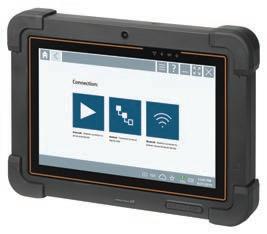
Endress+Hauser introduced its Field Xpert SMT77, a rugged tablet PC designed for Class 1 Div 1 hazardous areas. It supports HART, PROFIBUS DP/PA, Foundation Fieldbus, Modbus, CDI and Endress+Hauser service interfaces. Its device library has more than 2,700 pre-installed device and communication drivers and can connect to field instrumentation devices directly via a USB or Bluetooth wireless modem, or via a gateway, remote I/O or multiplexer to a bus system. The tablet comes with Windows 10 Pro and features a 10.1 inch LCD Multitouch HD display, 2x bonded Gorilla Glass, a 5MP auto focus camera, a 2MP front facing camera and up to 128GB storage. Communication ports and supported networks include USB, Ethernet, HDMI, Wi-Fi and Bluetooth—with 4G LTE and GPS available as an option. The battery runtime is five hours. www.us.endress.com
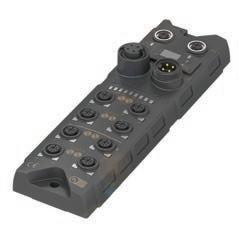
IO-Link Master Block
Balluff released its BNI00CY EtherNet/IP IO-Link master block, which insulates against noise produced by electromagnetic interference (EMI). This IO-Link master block reduces inductive noise
using coil choke filters, reduces conductive noise with its fiberglass-reinforced, polyphenylene sulfide (PPS) housing and reduces capacitive noise by raising the printed circuit board away from the backplane. The non-conductive PPS housing is also inherently non-stick. The block’s built-in display allows configuring of network parameters, and its embedded web server allows for remotely configuring the block and connected IO-Link devices. It offers four Class A IO-Link ports and four Class B IO-Link ports as well as up to 9A of output power with 2A per channel. www.balluff.com
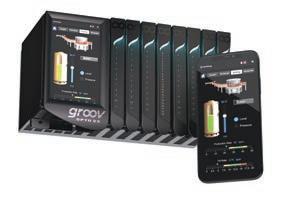
Programmable Controller
Opto 22 released firmware update 1.4.1 for its groov EPIC Edge Programmable Industrial Controller. The system now offers VPN client technology to connect to an OpenVPN-based VPN server. Users can also choose between Inductive Automation’s Ignition Edge or the full Ignition platform, which allows groov EPIC to serve as a hardened OPC-UA server to legacy PLCs. The update introduces diagnostic and troubleshooting tools, as well as the embedded groov Manage application to pinpoint networking
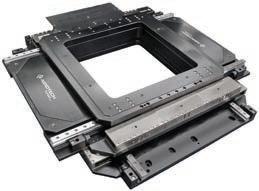
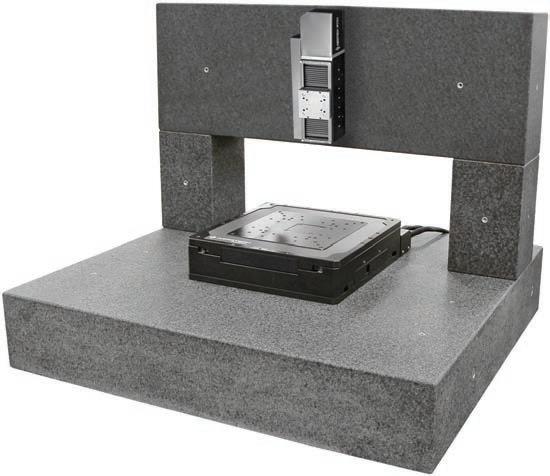
PRECISION AUTOMATION FOR SURFACE MEASUREMENT
Expert motion solutions for surface measurement that include:
• Advanced 2D calibration
• Excellent geometric characteristics
• Low CTE encoder substrate
• Integral cable management for clean, professional appearance
• High-accuracy Z-stage with linear encoder for sensor positioning
MPS75SLE
PlanarDL PlanarDLA
problems. Other enhancements include network interfaces having control over gateway and DNS/DHCP configurations and support for Opto 22’s serial communication module (GRV-CSERI-4). www.opto22.com
Wireless Gateway
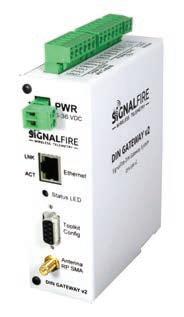
SignalFire Wireless Telemetry unveiled its DIN Gateway V2, a 900 mHz wireless gateway with an integrated I/O capability. The unit features two digital inputs, two digital outputs, three analog inputs and an optional gateway output module with eight analog and two digital outputs.
Designed for Class 1 Division 2 Groups C and D locations, the gateway supports wireless configuration up to 240 remote nodes at 3+ mile typical range and interfaces via RS-232
Modbus RTU or Modbus-TCP (Ethernet). It also features an integrated high-gain 5dB omnidirectional antenna and a 500mW radio operating at 902-928 MHz license-free ISM band. www.signal-fire.com
Fluid Power
Proportional Pressure Controls
ENABLING AUTOMATION
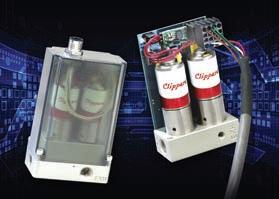
Clippard unveiled its line of Cordis micro-controllers that utilize the company’s EVP and DVP lines of proportional valves. The result is a linear pressure control within a closed-loop system that offers resolution of ≤5mV and accuracy ±0.25% of full scale. The series is also virtually silent and features proportional fill and bleed control and real-time adjustable PID control. The digital pressure controllers also integrate 0-10VDC, 4-20mA signal or 3.3VDC serial communication, as well as a 0-10VDC feedback pressure monitor. The line allows for customizable pressure ranges. www.clippard.com
Pinch Valves
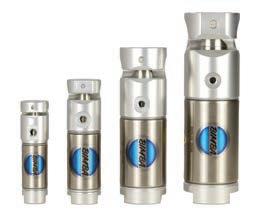
Bimba launched its BPVA pneumatic pinch valve, designed as an alternative to traditional wetted valves. With a life expectancy of 3 million cycles, the valve is offered in anodized aluminum or a completely stainless-steel, corrosion-resistant option for wash down and sanitary environ ments. Additional options include mounting brackets, various seal materials and magnetic position sensing. The valve comes in 1/8-, 1/4-, 3/8- and 1/2-inch tube slot sizes in normally closed or normally open configurations. www.bimba.co
Those are the goals for any automated system. Keep production moving for reliable output. Control quality and costs. In that effort, there’s no more committed partner than NSK.
We’ve had our people on the ground and in the plant, for decades – delivering linear motion and integrated automation solutions for handling high loads with speed and repeatable precision. To get the results you need: Longer life. Enhanced productivity. Superior quality. And consistently lower operating costs.
With NSK, you stay in motion. You stay in control.
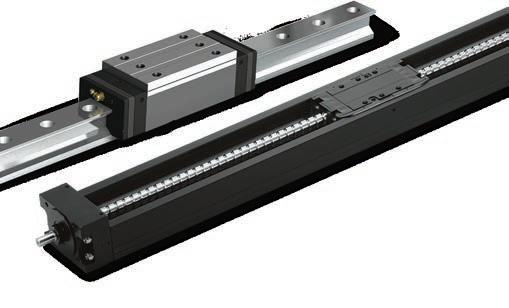
High precision, high load linear guides and Monocarrier™ actuators
IdeaGenerator
Pneumatic Cylinders
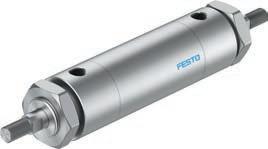
Festo launched its DPRA series, a family of US-made, inch-round body pneumatic cylinders that function as a direct replacement option for the non-repairable round body inch cylinder type used widely in North America. The cylinders feature a 304 stainless steel housing and a piston rod made of 303 stainless steel rather than the carbon steel. They also feature low-friction U-cup seals, premium lubrication and full ports and cross slots, plus an oil impregnated and sintered bronze rod bush ing. They are available in five variants, with seven bore sizes (soon to be 12), eight possible configuration options as well as sensor and mounting accessories. www.festo.com
Motion Control
Position Controllers
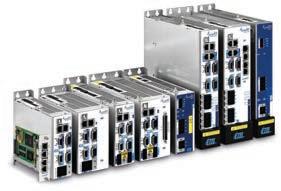
without developing new software. With these capabilities added to AccurET (compatible with AccurET48, AccurET300, AccurET400, and AccurET600), it is able to provide advantages from its many features to high-end automation where complicated movements with high-performance trajectories are needed. www.heidenhain.us
Integrated Motors
HEIDENHAIN has introduced a version of its ETEL-brand AccurET controls with EtherCAT compatibility. Using the standardized CoE (CANopen over EtherCAT) protocol, any computer or PLC can be used as a “master. Here one central computer controls all of the factory machinery by supporting a high number of nodes and a large variety of devices. It also does not require any product specific development which allows it to integrate extra drives
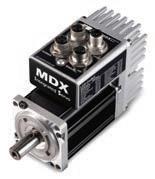
Applied Motion Products introduced its MDX Integrated Servo Motors series that combines a high-torque, low-inertia servo motor with on-board drive and controller. Connectors for power, communications and I/O also are positioned near the back and side of the motor. The series’ onboard controllers share the same command interfaces as external motor controllers including CANopen, RS-485, Modbus and Ethernet connections as well as discrete I/O interfaces like pulse and direction. The motors are available in a 60mm frame size, with either a 200 and 400W continuous output power rating. Optimized for 48VDC, they can be operated at 24VDC or up to 60VDC to match available supply voltages. Two environmental ratings are available: IP65 rated motors feature M12 connectors while IP20 rated motors feature pluggable connectors. www.applied-motion.com
Motion Controller
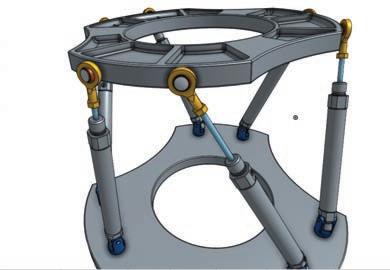
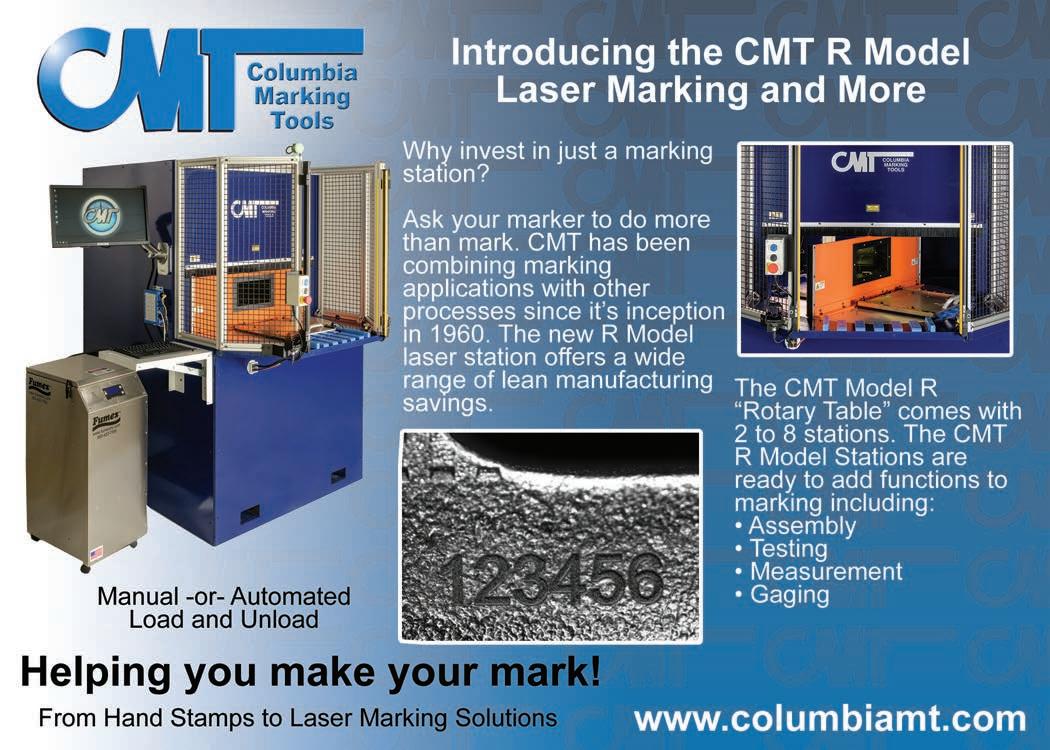
Siemens has expanded its Simatic S7-1500 Advanced Controller portfolio for challenging automation applications to include two technology CPUs that combine standard, safety and motion control functionalities in a single device. The 1515SP PC2 T CPU and fail-safe 1515SP PC2 TF CPU are suited to tasks such as gearing and camming, or the control of kinematics with up to four axes. The motion of selected kinematics in space is monitored with the “Simatic Safe Kinematics” software library for the fail-safe S7-1500 1517TF-3PN/DP technology CPU in combination with Sinamics S120 (FW5.1 ). The speed of selected points, for example the tool center point, and freely configurable zones, such as the working and protection areas, are also monitored. www.siemens.com
Hygienic Bearing
KML Bearing USA introduced its Stainless-Steel Stand-Out Mounted Bearing that incorporates the company’s Poly-Guard IP69K Sealing System. Developed for high-moisture food applications, the bearing eliminates edge seams and crevices at the bearing mounting location. A stand-out mounting configuration eliminates the need for the fabrication and welding of clearance spacers. To
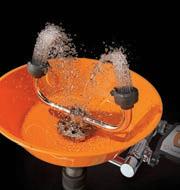
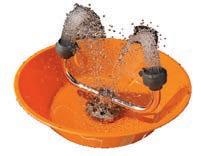
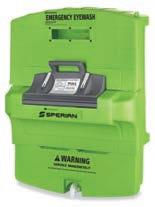
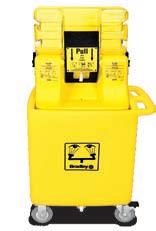
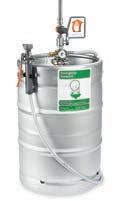
EMERGENCY SHOWER
meet IP69K requirements, KML developed the PolyGuard IP69K Sealing System to protect the bearings from the ingress of dust, water and bacteria especially during high-pressure, high-temperature food equipment washdowns. Fully-enclosed ends and throughshafts coupled with a variety of back seals and V-rings protect against surface corrosion and chemical damage while the hermetically-sealed bearing are enclosed to eliminate harborage issues.
www.kmlbearingusa.com
Sensors
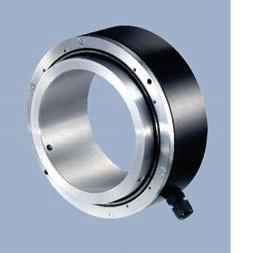
Hollow-Shaft Encoder
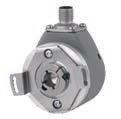
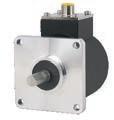
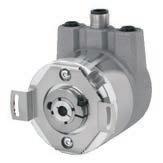
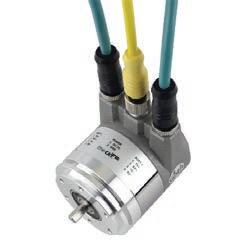
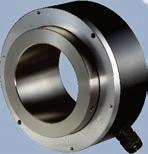
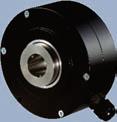
POSITAL released its multi-turn Hollow Shaft kit encoders that integrate a rotation counter that records each revolution the instrument experiences, powered by the company’s Wiegand energy harvesting system. The device weighs 110g, has an 80mm outer diameter, is 17.8mm deep and features a central opening of 30 or 50mm. The device’s capacitive measurement technique enables a ring-
IdeaGenerator
shaped form factor, while preserving a precision of 18-bit electronic resolution and an accuracy of ± 0.02 degrees. The encoder’s Wiegand energy harvesting system features four diametrical-oriented magnets placed evenly around the rotor. With each 360-degree rotation of the rotor, the Wiegand assembly generates a current pulse that energizes the counting electronics. The multiturn counter has a 43-bit memory for a measurement range of almost nine trillion revolutions. www.posital.com
3D Scanner
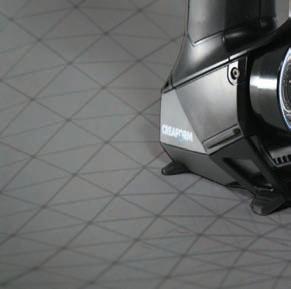
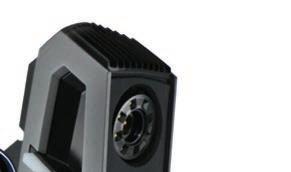
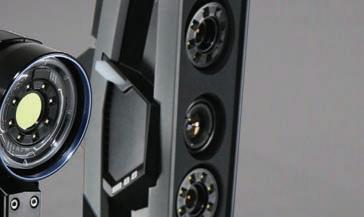
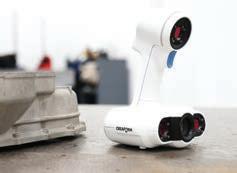
Creaform added its ACADEMIA 50 3D scanner to its ACADEMIA educational solution suite. The professional-grade, portable 3D scanner is the ideal solution for teachers looking to show students the benefit of handheld 3D scanners. Easy to set up and use, the scanner uses structured white light technology to scan objects made of any material, surface type or color. Technical specifications include accuracy of up to 0.250mm (0.010in) and a measurement resolution of up to 0.250mm (0.010in). The scanner also includes 50 free seats of scan-to-CAD and inspection software, a five-year ACADEMIA Customer Care Plan and self-training documentation. www.creaform3d.com
Virtual Sensor
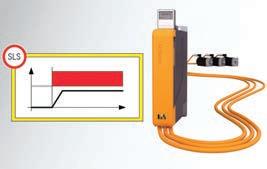
B&R has developed the Safe Speed Observer, a virtual sensor for its ACOPOS P3 servo drive. The unit determines speed in accordance with SIL 2 / PL d / CAT 3 requirements, reducing the cost of implementing the Safely Limited Speed safety function by eliminating the need for a safe encoder. From the electrical variables of a permanent magnet synchronous motor, the Safe Speed Observer calculates two redundant models of the motor – achieving a high safety level for the calculated speed. The virtual sensor can be used for both linear and rotary synchronous motors. The Safe Speed Observer is configured in the company’s Automation Studio engineering environment via the respective encoder interface. The user can implement the safety functions available for the safe axis from the safety library.
www.br-automation.com
Laser Lens
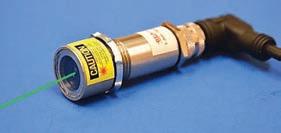
BEA Lasers introduced its E²L Extreme Environment Lens for use with its MIL Series Lasers. The unit incorporates a quartz glass lens into the end ferrule, providing resistance to harsh or extreme environmental conditions. The MIL Series laser diode modules utilize a 3/8-inch laser housing, fitted with a M12 connector, a 2-meter long PVC jacketed cable and an integrated power supply. An optional sensor-style bracket, or multi-adjustable “LB” bracket, completes the laser system. The MIL Series laser diode modules are offered with standard 520nm (green) or standard 635nm (red), with 1mW or 5mW output power. Dot, line or cross-hair patterns are offered as standard.
www.bealasers.com
Vibration Monitor
SKF unveiled its Enlight ProCollect, a portable vibration monitoring system that incorporates the company’s QuickCollect hand-held sensor and the SKF ProCollect mobile app. Running on a standard iOS or Android device, ProCollect collects, interprets and communicates operational and machine condition data and links to the SKF Enlight Centre web-based monitoring platform. The system enables pre-programmed inspection routes that guide operators through data collection. It can also help operators diagnose and fix common problems on the shop floor. The visualization capabilities of the Enlight Centre platform, meanwhile, allow companies to generate dashboards that provide an overview of plant performance.
www.skf.com
Many-core power, DIN rail form factor
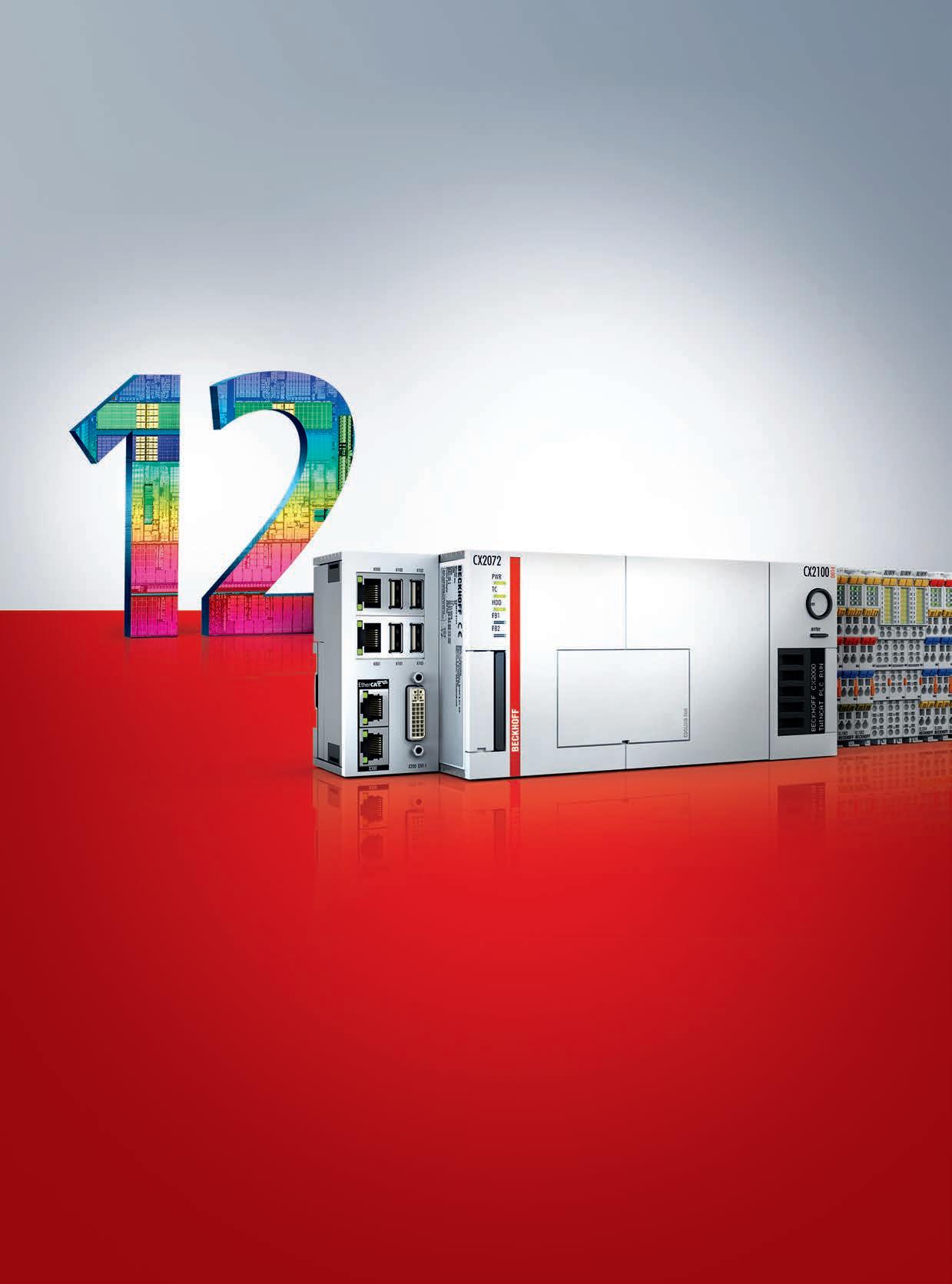
Powerful Embedded PC series offers up to 12 CPU cores with advanced Intel® Xeon® D processors
www.beckhoff.us/Many-Core-CX
The Embedded PCs from the CX2000 series set new performance standards for DIN rail mounted controllers. With 4, 8 or up to 12 cores, task cycle times of 100 μs per core and an extended operating temperature range of -25 °C to +50 °C, these compact Embedded PCs offer a significant performance boost. The result: minimal hardware footprint and the highest controller performance available on DIN rail – ideal for high-performance automation and motion control applications.
CPU variants
CX2042: Intel® Xeon® D-1527 2.2 GHz, 4 cores
CX2062: Intel® Xeon® D-1548 2.0 GHz, 8 cores
CX2072: Intel® Xeon® D-1567 2.1 GHz, 12 cores
Main memory: 8 GB DDR4 RAM up to max. 32 GB DDR4 RAM
Graphic card: separate GPU, 2 GB GDDR5
Interfaces: 2 x Gbit Ethernet, 4 x USB 3.0, 1 x DVI-I, 1 x multi-option
I/O: modularly extendable with Beckhoff Bus Terminals and EtherCAT Terminals