Designing efficient systems involves much more than simply understanding a few basic principles. There is a true art to balancing the specific requirements of an application in order to achieve the desired goals in the best possible way. Help us understand the unique needs of your application and together, we’ll develop something that surpasses what any of us could have done alone.
Contact your distributor to learn more, or clippard.com to request a free catalog and capabilities brochure.
INSIDE
15 Small Package, Big Energy
Mohawk leverages 3D printing to boost durability, slash cost of SOFC fuel cell components
18 Bionic Algae
Automated bioreactor moving algae-based bioproducts a step closer to economic viability
20 Adopting PdM
How predictive maintenance overcomes the drawbacks of traditional preventive maintenance
Columns
6 Design News
CIB invests $970M in Canada’s first small modular reactor and other engineering news
The latest industrial technology including machine vision, motors and power transmission
The Recycling Myth
As a material for product and packaging design, plastic, in its many forms, has almost too many upsides: high strength-to-weight ratio, near limitless design flexibility and its cheaper to buy in bulk and manufacture. Plus, it’s water-proof, doesn’t conduct electricity and clever designers can integrate fastening mechanisms into the plastic part itself, eliminating the need for adhesive or screws. Etc, etc.
The big downside is that the amount of it in the waste stream is accelerating at an alarming rate. A 2022 OECD report predicts that global plastic waste is set to almost triple by 2060, despite an expectation that recycling rates will rise to 17% by then.To put that in perspective, a 2019 U.S. Department of Energy estimate put the amount of waste plastic at 44 million metric tons for that year alone and that’s just for the U.S. Environment Canada says we threw away more than 4 million tonnes of plastic in 2018, of which only 8% was successfully recycled.
The hope is that recycling efforts will increasingly divert waste plastic from landfills, incinerators and the general environment. However, a 2022 Greenpeace survey of the 370 U.S. material recovery facilities finds that only a narrow band of plastic types can be recycled economically, despite what the recycling logo (the triangular chasing arrows symbol with the number at its center) might suggest.
Specifically, that’s plastics stamped with a #1 (Polyethylene terephthalate/PET) or #2 (High Density Polyethylene/HDPE) recycling symbol. The other kinds of plastic (#3 through #7), the survey found, are difficult to recycle and therefore the end product is much more expensive than new or “virgin” plastic, making them a hard sell in the market. The result is that #3-#7 items are most often bundled by recyclers and shipped off to landfills or incinerators.
Of course there are bio-plastics and compost-able plastics (not the same thing), but these have their own problems. These plastics don’t break down on their own but instead require a specific set of conditions found in an industrial facility. In addition, like the word “organic”, there are no standards for what constitutes a bio- or compostable plastic.
To address these issues, Canada is working on rules to standardize what qualifies as a “green” plastic and would ban use of the recycling logo on plastic products unless 80 percent of recycling facilities accept and have end markets for them. While these new rules may clarify things, it looks like we can’t recycle our way out. Impacting the bigger problem will ultimately reside with product and packaging designers and their efforts to build with truly biodegradable/recyclable alternatives.
MIKE MCLEOD Editor mmcleod@design-engineering.com
Editorial Board
DR. ALAIN AUBERTIN
President & CEO, Canada Consortium for Aerospace Research and Innovation in Canada (CARIC)
DR. MARY WELLS, P.ENG
Dean, Faculty of Engineering / Professor, Mechanical and Mechatronics Engineering; University of Waterloo
AJAY BAJAJ, P.ENG
President and CEO, Rotator Products Limited; Past President and Board Member, Power Transmission Distributors Association (PTDA)
DR. ISHWAR PURI, P.ENG
Vice President of Research; Engineering Professor, University of Southern California
NOVEMBER/DECEMBER 2022
Volume 68, No.6 design-engineering.com
READER SERVICE
Print and digital subsciption inquiries or changes, please contact Angelita Potal Tel: (416) 510-5113
Fax: (416) 510-6875
Email: apotal@annexbusinessmedia.com
Mail: 111 Gordon Baker Rd., Suite 400, Toronto ON M2H 3R1
SENIOR PUBLISHER Paul Burton (416) 510-6756 • pburton@annexbusinessmedia.com
AUDIENCE DEVELOPMENT MANAGER Beata Olechnowicz (416) 510-5182 • bolechnowicz@annexbusinessmedia.com
COO Scott Jamieson sjamieson@annexbusinessmedia.com
Design Engineering, established in 1955, is published by Annex Business Media, 6 times per year except for occasional combined, expanded or premium issues, which count as two subscription issues.
Printed in Canada
Publications Mail Agreement #40065710
ISSN: 0011-9342 (Print), 1929-6452 (Online)
Subscriber Services: Canada: $57.50 for 1 year; $92.50 for 2 years; $10 for single copy.
Outside Canada: USA - $140.50; Overseas - $151.00; $10.00 for single copy.
All prices in CAD funds. Add applicable taxes to Canadian rates.
From time to time we make our subscription list available to select companies and organizations whose product or service may interest you. If you prefer not to receive this information, please contact our circulation department in any of the four ways listed above.
Annex Business Media Privacy Officer: privacy@annexbusinessmedia.com Tel: 800-668-2374
No part of the editorial content of this publication may be reprinted without the publisher’s written permission.
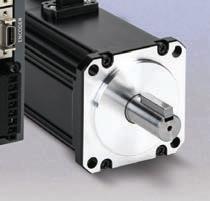
These LS Electric systems offer popular features at a fantastic price
NEW! LS Electric® Servo Systems
Starting at $610.00 (100W system with cables and I/O breakout)
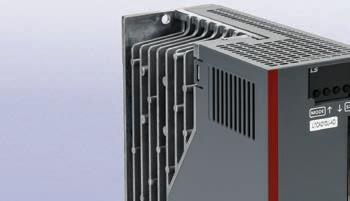
LS Electric servo systems provide the most requested features — setup wizards, auto tuning, built-in indexers and more — in an extremely cost-effective package:
• 17 standard servo systems from 100W to 7.5kW
• 230 VAC & 460 VAC three-phase input power (230 VAC single-phase up to 2.2kW)
• Low and medium inertia models
• 19-bit absolute encoders available on certain models
• Control via high-speed pulse train, analog speed or torque signal, or internal indexing
• Use with AutomationDirect CLICK, Do-more BRX, or Productivity Series PLCs; or any other host controller
• FREE setup software with Auto-Tuning (AND built-in o-scope functionality)
• Fully digital with up to 1kHz velocity loop response
• 30-day money-back guarantee
• Two-year warranty
Online LS Electric Servo System Selector Tool
Use our LS Electric Servo System Selector Tool to size your system, and to specify all the required and optional accessories for YOUR application. Get ALL the parts you need on the first order!
www.automationdirect.com/selectors/ls-ser vo
Need more torque?
LS Electric® MSS Series Inline Planetary Gearboxes
Starting at $264.00 (96200004)
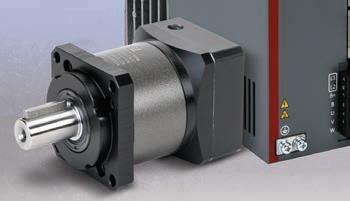
Perfectly matched LS Electric gearboxes offer easy mounting to the servo motor. Use these gearboxes to increase the available torque or to solve inertia mismatch problems.
• 5:1, 10:1 and 20:1* gearbox models exactly matched to each motor size
• Increase the available output torque by 5x, 10x or 20x*
• Full motor output torque allowed for all pairings
• Reflected inertia of the load is reduced by the square of the reduction ratio!
• Mounting hardware included *15:1 max ratio for 7.5kW system
Orders over $49 get FAST FREE SHIPPING
Our shipping policies make it easier than ever to order direct from the U.S.!
Fast free standard shipping* is available for most orders over $49 U.S., and that includes the brokerage fees (when using an AutomationDirect nominated broker). Using our choice of carrier, we can reach most Canadian destinations within 2 to 3 days.
*Free shipping does not apply to items requiring LTL transport, but those shipments can take advantage of our negotiated super-low at rates (based on weight) that include brokerage fees.
See Web site for details and restrictions at: www.automationdirect.com/canada
ENGINEERING
CIB COMMITS $970 MILLION TOWARD CANADA’S FIRST SMALL MODULAR REACTOR
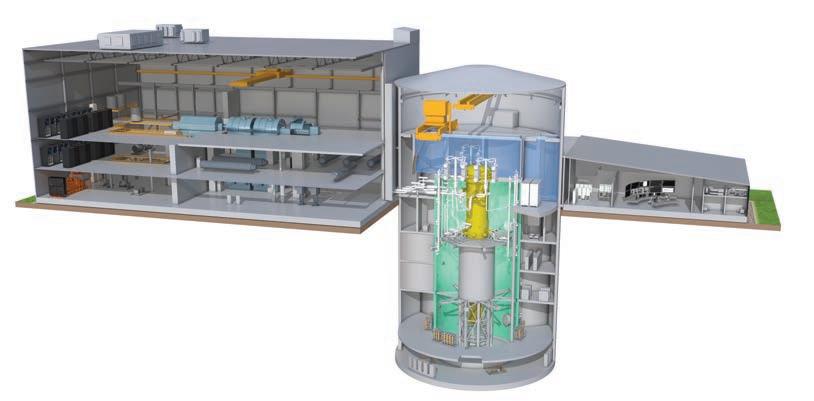
The Canada Infrastructure Bank (CIB) announced it will invest $970 million toward Canada’s first small modular reactor (SMR), currently in development by Ontario Power Generation (OPG).
SMRs are nuclear reactors which are approximately 300 megawatts or less, have a smaller footprint and a shorter construction schedule. OPG’s 300-megawatt SMR is being constructed at OPG’s existing 3,500-megawatt Darlington Nuclear Generating Station in Clarington, Ontario.
“We know nuclear energy, including from SMRs, is an essential part of the electricity mix to help meet our climate change goals,” said OPG President and CEO, Ken Hartwick,. “This low-interest financing helps us advance the Darlington New Nuclear Project, paving the way for development and deployment of the next generation of nuclear power in Canada.”
The CIB-financed Phase 1 work covers all preparation required prior to nuclear construction, including project design, site preparation, procurement of long lead-time equipment, utility connections, implementation of a digital strategy and related project management costs.
The Darlington SMR will be one of the first ever developed and is expected to spearhead similar projects in Saskatchewan, New Brunswick and Alberta. OPG says the project will also suppor t Canadian efforts to become a global SMR technology hub in a market estimated to be $150 billion per year by 2040. www.cib-bic.ca www.opg.com
GE Hitachi’s BWRX-300 small modular reactor design will power Ontario Power Generation’s 300-megawatt project located at its existing Darlington Nuclear Generating Station.
PBO ESTIMATES 9 PERCENT COST SPIKE IN CANADIAN SURFACE COMBATANT PROGRAM
The Parliamentary Budget Officer (PBO) announced that estimates of the cost the Canadian Surface Combatant (CSC) program has risen substantially in the past year. The 15 ships are intended to replace Royal Canadian Navy’s retired Iroquois-class destroyers and Halifax-class frigates.
Budget Officer, Yves Giroux, in a press statement. “The total estimated cost of the development, acquisition, operations and sustainment and disposal of the CSC fleet is $306.0 billion over a 65-year period.”
An artist’s rendering of the Canadian Surface Combatant.
In particular, the PBO says the cost of the program’s development and acquisition phases jumped to $84.5 billion, a 9 percent increase over the $77.3 billion estimated in its 2021 report, due to inflation and delays.
“This new evaluation takes into account revised production schedules and amended inflation projections,” said Parliamentary
Construction on the first vessel is slated to begin in 2024-25. The PBO estimates CSC’s operations and sustainment phase will cost $219.8 billion and begin in 2031-32, when the Royal Canadian Navy takes delivery of the first ship. These costs are projected to end in 2078-79 once the 15th ship reaches the end of its useful life. www.pbo-dpb.ca
CANADA, RIO TINTO INVEST TO DECARBONIZE TITANIUM MINE
Rio Tinto and the Government of Canada announced a joint
investment of up to C$737 million, over the next eight years, to decarbonize its Rio Tinto Fer et Titane (RTFT) operations in Sorel-Tracy, Québec.
The initiative’s target is to reduce greenhouse gas emissions from RTFT’s titanium dioxide, steel and metal powders business by up to 70%. The company says it will also seek to diversify RTFT’s product portfolio to include minerals critical to electric vehicles, 3D printing and aerospace.
Specifically, the investment will fund the company’s BlueSmelting project, an ilmenite smelting technology designed to reduce greenhouse gas emissions in the production of titanium dioxide feedstock, as well as steel and metal powders. The company is currently constructing a demonstration plant to test and validate the in-house developed technology.When completed in early 2023, the facility will process up to 40,000 tonnes of ilmenite ore per year, the company says.
As North American’s first producer of scandium, an element used in solid oxide fuel cells and aluminum alloys, Rio Tinto says it plans to quadruple its production capacity to reach up to 12 tonnes of scandium oxide per year. New modules will be added to the existing RTFT plant, which currently extracts scandium oxide from the waste streams of titanium dioxide production. The C$30-35 million project is expected to start producing scandium oxide in 2024. http://riotinto.com
ATLANTIC XL ACQUIRES SLM 3D METAL PRINTER
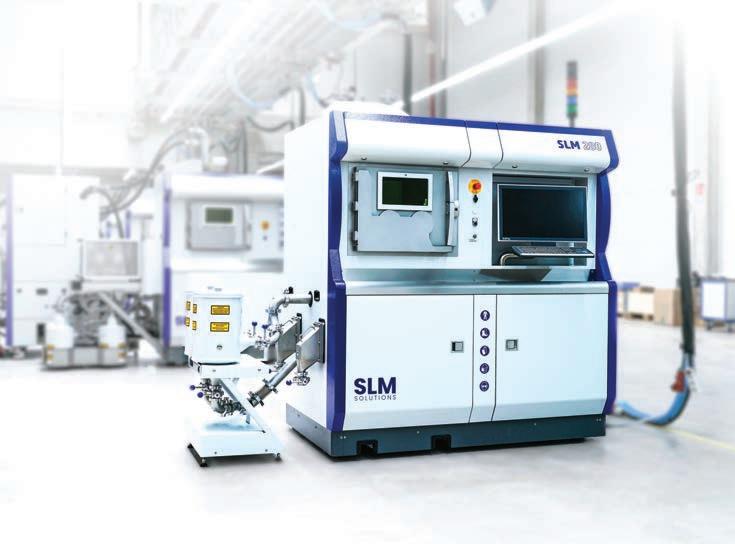
Engineering services firm, Atlantic XL, announced the purchase of an SLM 280 machine from SLM Solutions, making it the first to operate a commercially available metal 3D printer in Newfoundland and Labrador.
A subsidiar y of UK-based XL Global Group, the St. John’s, N.L.-based company specializes in engineering and technical systems and services to the broader energy sector, including safety systems, process control, data management, telecommunications for off-shore instillations.
The Rio Tinto Fer et Titane (RTFT) operation in Sorel-Tracy, Québec has been processing ore for more than 70 years and is a leading producer of titanium dioxide feedstock, as well as iron and steel.
Innovate today for
a new tomorrow
Realize your vision with Festo’s approach to smart automation for life sciences. Partner with Festo today.
Industry Leadership
Superior Quality Products
Global Training & Support
www.festo.ca
Photo credit: Rio Tinto
According to Atlantic XL, expanding its AM capabilities will allow it to reduce supply chain lead times, solve part obsolescence, reduce physical parts storage and its carbon footprint.
“We decided on the SLM 280 because of the open architecture system,” Marty Gaulin, Director of Additive Manufacturing at Atlantic XL. “It gives us the freedom to adapt everything we need. The excellent collaboration with our team and the technically acceptable equipment suppor ted our decision.” www.xlg.co.uk www.slm-solutions.com
MAGNA’S HYBRID TRANSMISSION SYSTEM STARTS PRODUCTION
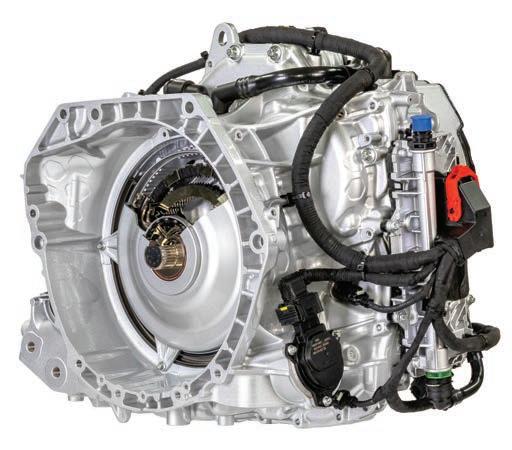
Magna announced that the first vehicles equipped with the company’s 48-Volt hybrid transmission – the Jeep Renegade, Compass e-Hybrid, Fiat 500 X and Tipo – have hit the market. All the vehicles are made by Stellantis, with which Magna has signed a multi-program agreement for the hybrid transmission.
A ccording to company, its hybrid transmission achieves stringent CO2 targets and offers improved driving dynamics due to electric torque vectoring
Magna’s 48 Volt hybrid transmission is featured in Stellantis’ Jeep Renegade, Compass e-Hybrid, Fiat 500 X and Tipo.
Photo credit: Magna International
and traction support. The 48V 7-speed dual-clutch transmission provides a maximum torque of 320 Nm and features torquesplit technology to optimize the efficiencies of the combustion engine (ICE) and the e-motor. It also features independent, on-demand cooling for the clutch and e-motor with a single oil circuit for cooling and lubrication and the e-motor can provide power to the vehicle even when the ICE is switched off.
Magna is producing the 48V hybrid transmission at its division in Kechnec, Slovakia. The company says further 48V hybrid transmissions are expected to be adopted in additional future Stellantis models. www.magna.com
SOLIDXPERTS EXPANDS INTO ONTARIO
Quebec-based Solidworks VAR, SolidXperts Inc., announced the company has received official authorization to sell and support Dassault Systèmes’ portfolio of design software in the Ontario region. Founded in 1998 in the Montreal area, SolidXperts has focused on Solidworks for the last 25 years, expanding to four
branches across Quebec, New England and now, Ontario. It’s new location is 500 Hood Rd., Suite 100 in Markham, Ontario.
The expansion, the company says, was the collective result of both the acquisition of CATIA reseller, AscendBridge, in 2019 and extended negotiations with Dassault to allow SolidXperts to expand its territory beyond Quebec and the north eastern U.S.
In addition to sales and support of Solidworks and the cloud-based 3DEXPERIENCE platform, SolidXperts says the Ontario office will also offer design consulting, staffing and training, as well as sales of 3D printers – including Markedforged, 3D Builder and Raise3D – and Artec 3D scanners.
SolidXperts, and its sister company, Montreal-based Mecanica Solutions, the longest-running reseller of Dassault Systèmes softw are (CATIA, ENOVIA, DELMIA) in North America, are subsidiaries of SolidXperience Group. www.solidxperts.com
Visit design-engineering.com for the latest new products, news and industry events.
Photo credit: SLM Solutions
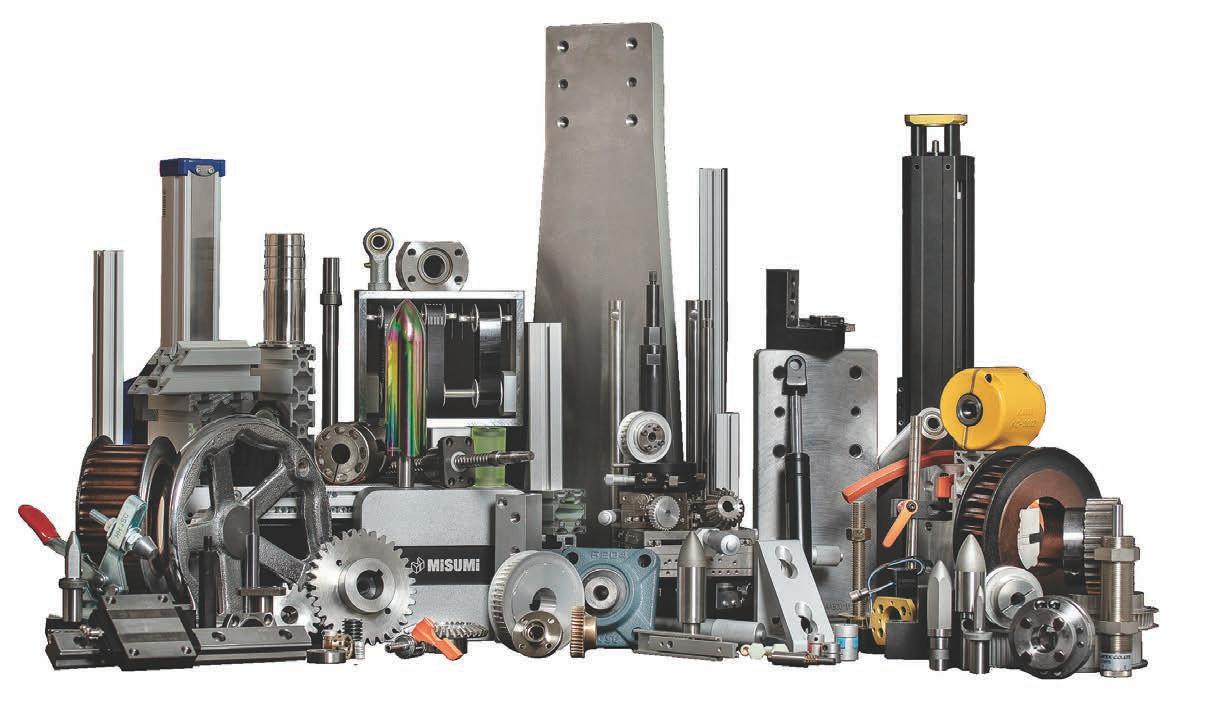
MISUMI
MANUFACTURER & DISTRIBUTOR
MISUMI OFFERS CONFIGURABLE COMPONENT SOLUTIONS:
A COST-EFFECTIVE, RELIABLE, AND FAST ALTERNATIVE TO OFF THE SHELF AND CUSTOM OPTIONS.
CUSTOM
Design a custom part to meet design specifications when speed and cost isn’t a factor.
• High Quality
• Fully Custom
• Uncompromised Design
OFF
THE SHELF
Choose stock components when you need a part fast at the lowest cost.
• Lowest Cost
• Fast
• Convenient
CONFIGURABLE
Configure the materials, dimensions, features and finishes you need online FAST!
Siemens has been loud and proud in declaring that CAD has no place on the cloud. Unlike its MCAD competitors – Autodesk, Dassault Systemes, PTC – Siemens keeps its Solid Edge and NX software firmly on the desktop, because that’s what makes sense to users.
Nevertheless, some kind of cloud connection is necessary today, even if it’s just Dropbox for sending files. And so, since 2007, Europe’s largest industrial
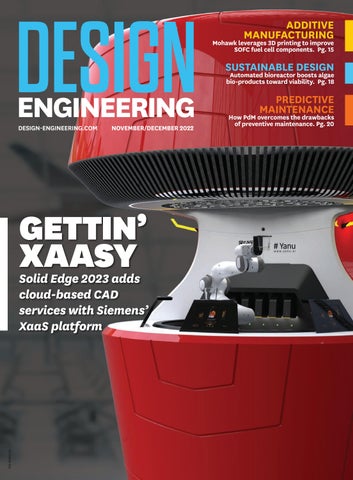
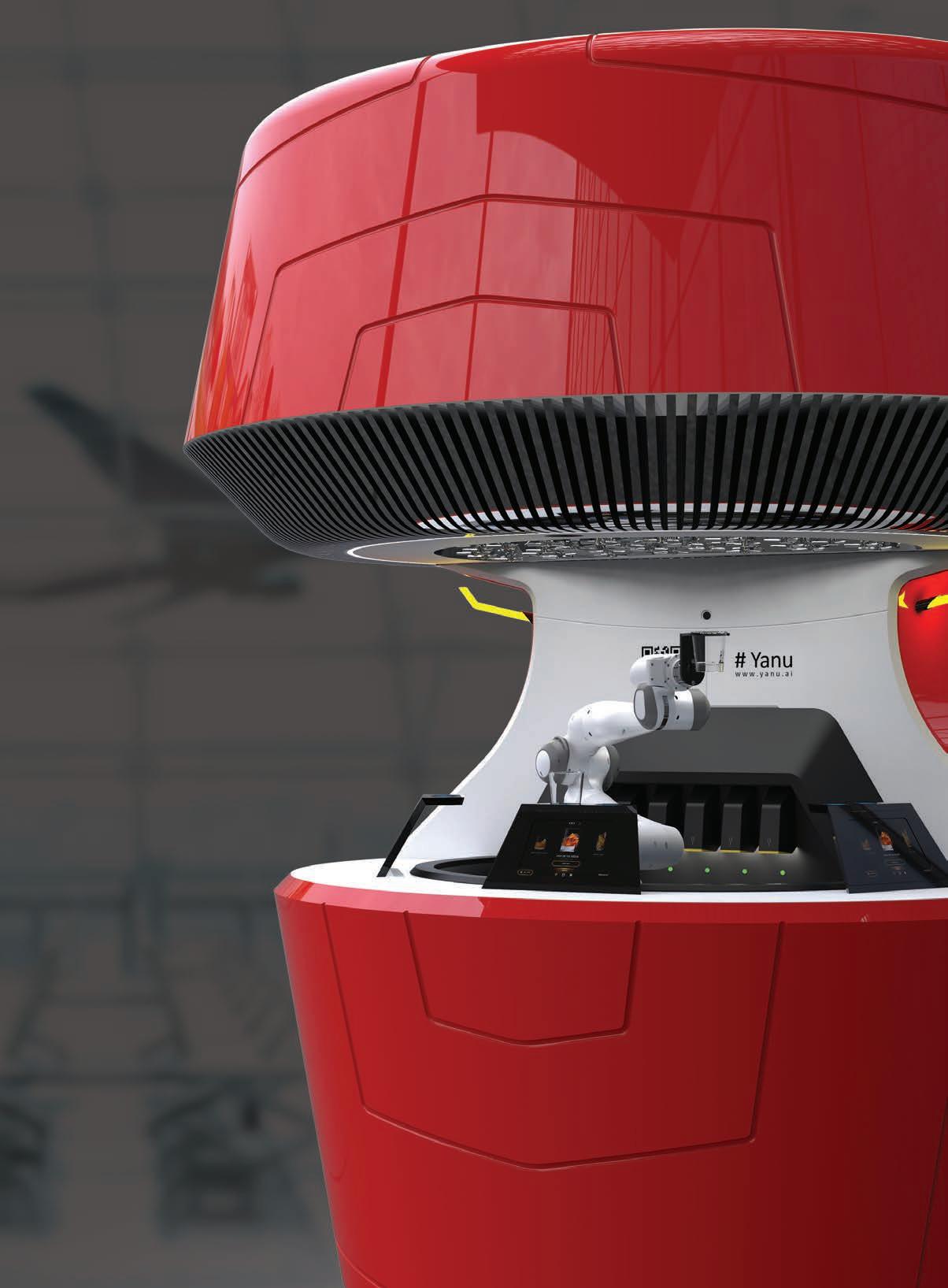
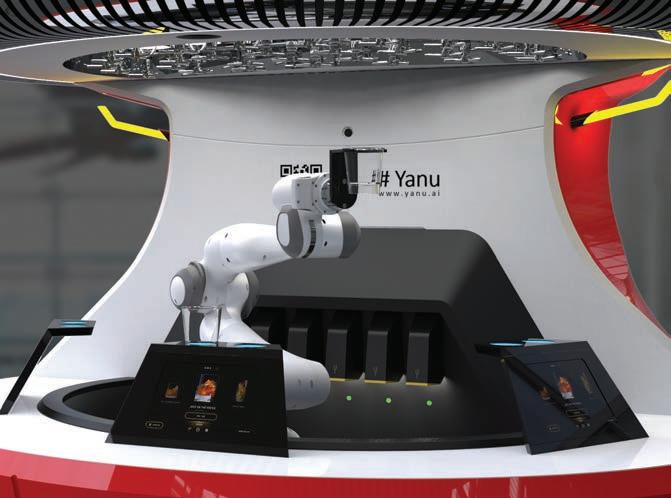
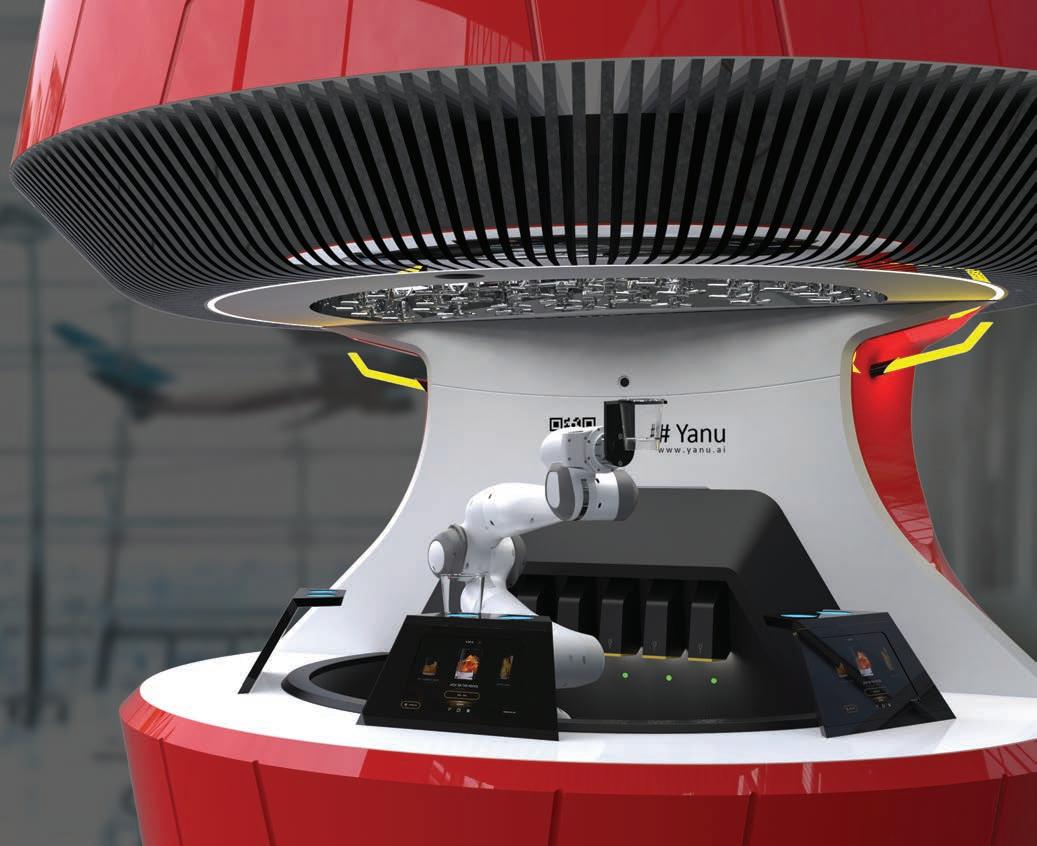
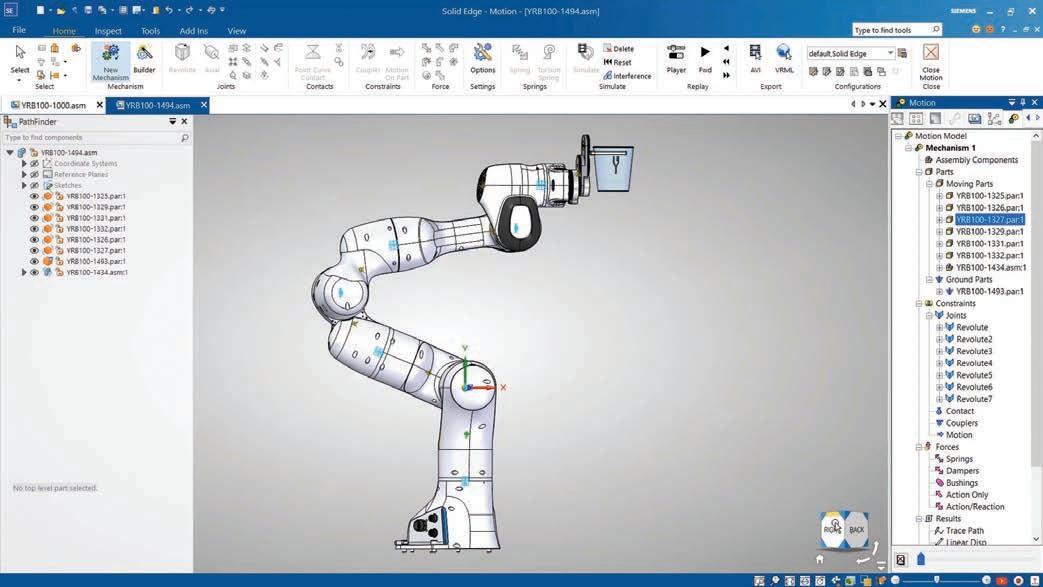
Siemens launched Solid Edge 2023 in October, demonstrating its capabilities by highlighting how Yaru Robotics used the CAD software to design its AI-based bartender robot.
manufacturer has spent ten billion dollars acquiring software, with most of the more recent acquisitions being software that runs on remote servers (cloud).
And it is necessary. You can’t have collaboration without a network connection and a central facility for verifying participants and distributing comments and files. But firms cannot provide customers with ongoing network access without also capturing ongoing payments from them. Software firms employ the term
“SaaS,” Software as a Service, to describe what we regular folk call annual subscriptions.
The most significant SaaS acquisition by Siemens was Mendix, which Siemens got running on MindSphere to create Xcelerator. Mendix is a low-code programming environment, which has become the API (application programming interface) for customers, external firms and Siemens. MindSphere is the operating system on which Siemens r uns its cloud operations. And
Photo credit: Siemens
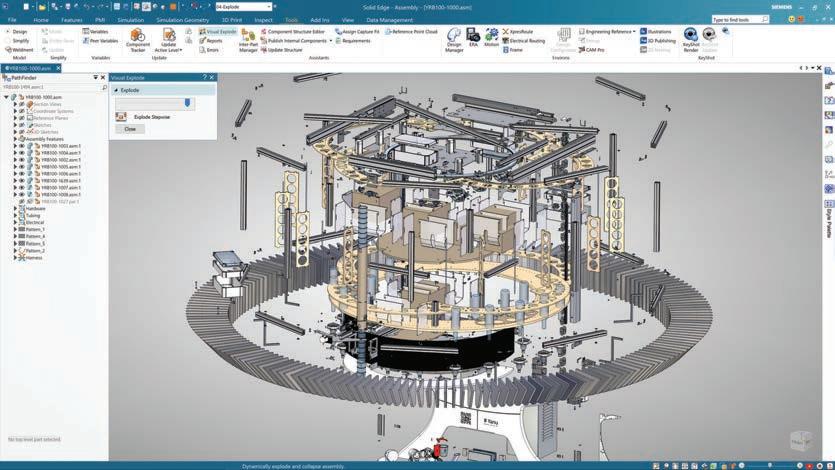
The Stepwise option in SE 2023’s Visual Explode command explodes subassemblies first, then all entities, such as in this exploded view of the Yanu robot’s internal assembly.
Xcelerator is the TeamCenter for the new era.
TeamCenter PLM software has been very successful for Siemens, because the company makes no attempt to lock customers into it, as some other CAD vendors have done.This platform-agnostic approach makes sense for Siemens because, although it owns NX and Solid Edge, it also uses other CAD programs across its divisions. Being multi-CAD internally makes it easy to be multi-CAD externally.
The company has
preserved TeamCenter’s openness with Xcelerator; it works with Solid Edge and NX, and can be made to work with everything else.
Then Siemens came up with its own twist on SaaS: XaaS, Xcelerator as a Service, which is being deployed for all its software, including as
an extension to Solid Edge 2023.
Solid Edge in the Cloud XaaS-ifying Solid Edge
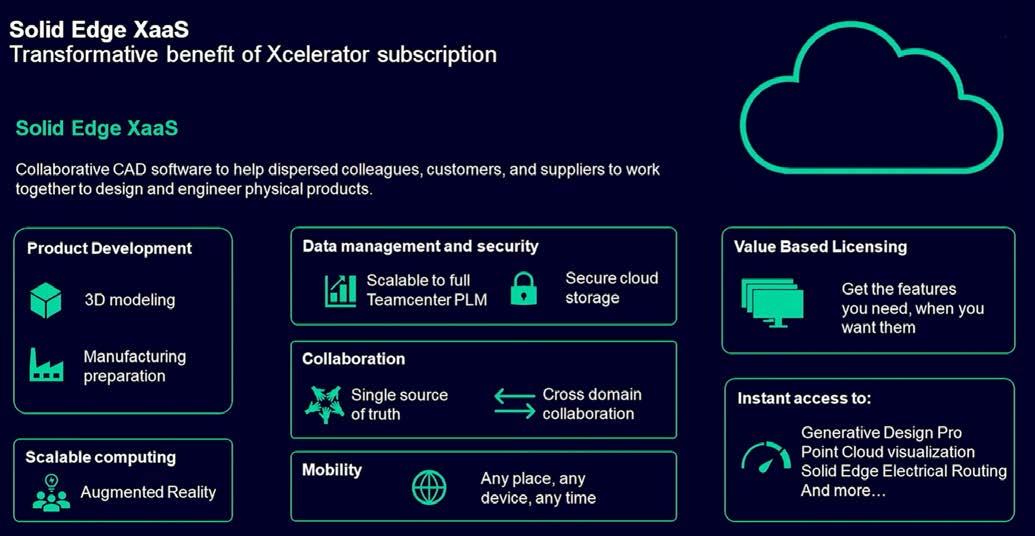
means extending its capabilities to those shown by the figure below. (The desktop part of Solid Edge does the product development tasks in the upper left corner.)
As Dan Staples, vice president of mainstream engineering R&D at Siemens, put it during the Solid Edge 2023 launch event in October, in perhaps a subtle dig at cloud-obsessed competitors, “It’s not about the cloud itself, but what you gain from it, and collaboration is the key.”
Solid Edge will continue to get new functions on the desktop, with additional capabilities added through the cloud and shared with NX, with Xcelerator as the universal platform. Something like 2,000 apps are available from Siemens and third-party developers, starting with a subscription to Xcelerator Share that includes 500GB of online storage per user.
The bad news is that it will cost you extra. The fees were not announced, but they involve you paying for tokens, and then each program costs a certain number of tokens. I assume the more cloud-compute power needed, the larger the number of tokens – as is the case with other
CAD vendors employing tokens. Siemens allows tokens at a site license to be pooled, so that some users can use more of them when others need fewer.
Siemens spins this as “Value-Based Licensing,” where you choose add-ons as you need them, instead of buying them. Titles available today include Generative Design Pro, point cloud visualization, electrical routing, PCB collaboration, advanced PMI, simulation and XpresRoute. Other MCAD packages include some of these kinds of extras at no extra cost.
Siemens targets Solid Edge to small and medium-size businesses with the 3D-capable editions star t at $75/month, plus Xcelerator to add functions through the cloud, which Siemens sees as providing digital transformation to “advanced” SMBs.
“Honestly, those that don’t [consider digital transformation] risk being left behind,” says Siemens in a mildly threatening manner – as do as other MCAD vendors looking for ways to sell more services.
But here’s the flaw in Xcelerator: The typical customer using Solid Edge – the one- and
Solid Edge 2023’s new connection to Siemen’s Xcelerator as a Service (XaaS) lets the desktop CAD software tap into cloudbased services on an asneeded basis.
two-license machine shops – aren’t interested in digital transformation, digital threads, digital twins or any other software outside of CAD and CAM. Dassault found this out the hard way, after Solidworks users, by and large, rejected its X-series of digital transformation add-ons. I consider Xcelerator, however, suitable for NX shops.
Solid Edge 2023 on the Desktop
As to desktop Solid Edge 2023, Siemens has added a number of enhancements, not least of which is its new user interface, even a new icon, done in Siemens’ corporate color, viridian green. Some commentators suggest the UI change gives Solid Edge, NX and the Xcelerator platform “a unified look” across applications. To me, it looks like they borrowed the UI of Microsoft Office.
Another big change is that some direct editing functions –formerly available only through Synchronous Technology (ST) – have been copied to Ordered Mode, known as “history mode” by other CAD vendors, such as using the Steering Wheel to move, rotate and offset. This
Photo credit: Siemens
As the next level in CNC control, the TNC7 offers professional machinists completely new possibilities at every stage, from initial design to the finished workpiece. Graphical programming developed from scratch, individual customization of the user interface, perfect visualization of machined parts and the work envelope, and numerous smart functions all make your workday immensely easier.
The TNC7 assists you throughout the entire production process. It will advance your operations and add reliability to your processes. So take your manufacturing to a new level. It’s the future of machining.
doesn’t particularly surprise me, as ST is powerful but so difficult to understand that hands-up surveys at user events show very few employ ST.
Among the new modeling functions in SE 2023, there are Automatic Regions that combine trimming and projecting of sketches. You can now switch between extruding and cutting modes by tapping the spacebar. Swept Cutout fully or partially cuts through one or more parts along a path. The Visual Explode command’s Stepwise option first explodes sub-assemblies in sequence, and then all entities as you continue to drag a slider. And faces can have any of a thousand material looks, like plastic and metal, during editing mode.
SE 2023 now includes MBD (model-based design) and PMI (product manufacturing information), which avoids the need to use 2D drawings for production. The two documentation techniques define mater ials, 3D measurements, and tolerances directly on 3D models, which compatible manufacturing machinery can read. Siemens VP Staples calls this
“moving intelligence out of the [2D] drawing and directly into the [3D] model.” It has been a slow, multi-year implementation challenge, but now most MCAD programs do it.
Solid Edge can now automatically dimension the entire model after first specifying the first, second and third datum planes. As well, SE 2023 arranges existing dimensions so that they take up as little space as possible. Oftused call-outs and other notes can now be stored for reuse.
You can optimize parts, assemblies, imported STL files and converted mesh models with generative design studies using the Simcenter Nastran solver inside Solid Edge. This minimizes the amount of material need while adhering to design constraints.
Solids and surfaces from Solidworks models can now be inserted into Solid Edge assemblies as inter nal components, as well as JT, STEP and Parasolid files. Solid Edge stores them in its files, so there is no need to keep them linked to external source files.
Native Solid Edge files can be transferred to NX and Motion for further analyses, including
SE 2023 allows users to transfer Solid Edge-defined motion kinematics to NX MCD and Process Simulate for simulation studies, such as the robotic arm in Yanu’s robotic bartender.
deeper information like joints, links, gravity and mass properties. This is done by establishing a link to the original Solid Edge file, and updates are transferred to NX with an update source command. Moving data to other programs like Process Simulate requires translation to JT and PLMXML formats.
Solid Edge CAM Pro adds multi-axis roughing for 5-axis machining, a rotary machining add-on for 4-axis machining and wire EDM (electrical discharge machining).
Despite all the hype these days over VR/AR in certain quarters, augmented reality received the scantest of mentions.
Solid Edge 2023 is shipping now. It requires Windows 10 Professional or later running on computers with at least 16GB RAM. The best news is that Siemens continues to sell permanent licenses of Solid Edge. |DE https://siemens.com
Ralph Grabowski writes on the CAD industry on his WorldCAD Access blog (www. worldcadaccess.com) and has authored numerous articles and books on CAD and other design software.
Photo
SMALL PACKAGE, BIG ENERGY
Mohawk Innovative leverages 3D printing to boost durability, slash cost of SOFC fuel cell components.
Keeping the electricity grid up and running through summer heat waves and winter deep freezes while also managing air pollution, is an ongoing balancing act. Although alternative-energy solutions such as solar- and wind-power are rising up the supply curve, meeting today’s energy needs still requires traditional fuel sources.
Of course hydrocarbons release pollutants when burned, but what if you never ignited them? A promising approach, now emerging from the research stage into commercialization, is solid-oxide fuel cell (SOFC) technology. According to its website, the U.S. Department of Energy (DOE) has invested $750 million in SOFCs since 1995, as part of the ongoing effort to decarbonize energy production.
The DOE describes an SOFC as an electrochemical device that produces electricity directly from the oxidation of a hydrocarbon fuel (usually natural gas), while eliminating the actual combustion step. Basically, an SOFC acts like an infinite-life battery that is constantly being recharged – without burning the gas that recharges it.
“Solid oxide fuel cells are
very attractive because they produce a lot of energy in very small packages,” says Jose Luis Cordova, Ph.D., VP of Engineering at Mohawk Innovative Technology Inc. (MITI). The 28-year-old, Albany, New Yorkbased company specializes in “CleanTech” – the design of high-efficiency, environmentally low-impact, oil-free turbomachinery including renewable energy turbogenerator s, oil-free turbocompressors/blowers, and electric motors.
“SOFCs are compact and can be built at a factory, then transported to the specific site where they’re needed to support distributed-energy production,” he adds. “SOFCs are also very efficient. Unlike a regular battery, they don’t lose power over time because, as long as you supply the reagents, you can continue the electrochemical reactions pretty much indefinitely.”
Sounds ideal, and more than 40,000 units of 100-kilowatt fuel cells were shipped worldwide in 2019. But there have been bumps in the road. Many SOFC components are expensive to manufacture and, due to exposure to the very gases that make their operation so efficient, they wear out frustratingly quickly.
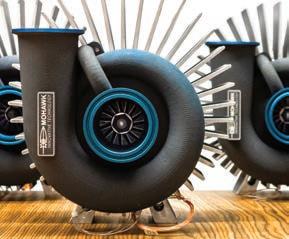
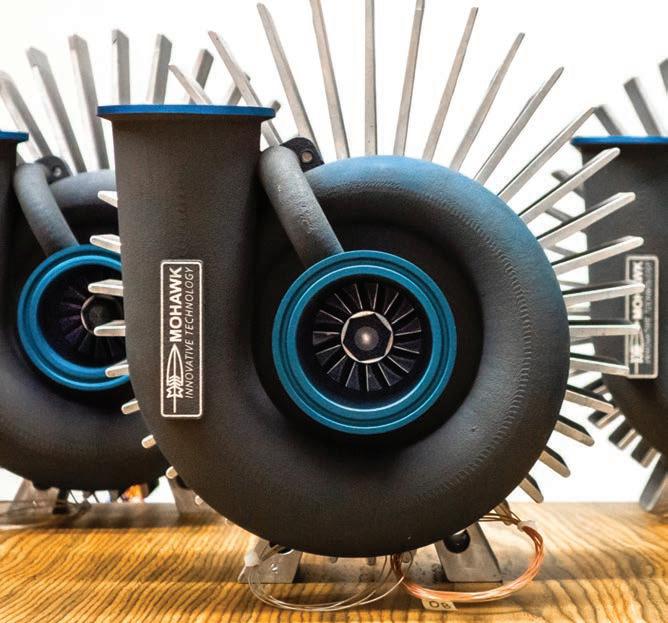
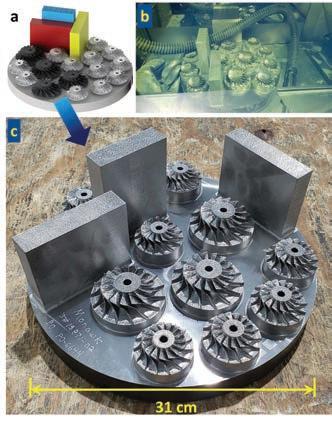
Mohawk Innovative Technology’s anode offgas recycle blower (AORB) recycles unconsumed hydrocarbon fuel to the front of solid-oxide fuel cell (SOFC) for reuse.
Facing issues
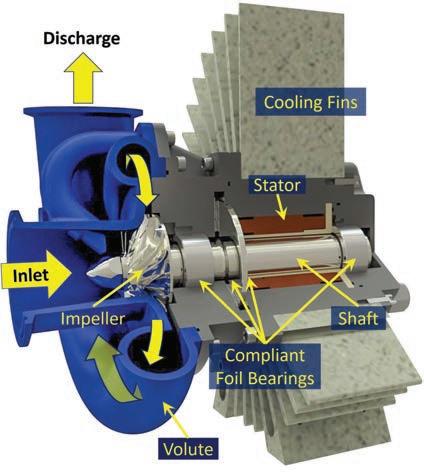
To help overcome these challenges, Mohawk has designed some of those critical parts for longer lives and greater efficiency. One example is the anode offgas recycle blower (AORB), an essential component of the “balance of plant” machinery that supports the SOFC’s fuel stack.
During operation, each fuel cell only uses about 70% of the gas it’s fed; some 30% passes right through the system along with water (a product of the electrochemical reaction).
“That’s where the AORB comes in,” says Cordova. “It’s essentially a low-pressure compressor or fan that recycles the exhaust and retur ns it to the front of the fuel cell.”
“SOFC balance-of-plant designers were thinking that this blower would be an off-the-shelf unit,” says Cordova, adding that a typical 250 kW SOFC plant would employ two of them. “But due to the process gases in the system, traditional blowers tend to corrode and degrade; the hydrogen in the mixture attacks the alloys the blowers are made of and also damages the magnets and electrical components of the motors that power the blowers. Most blowers also contain lubricants, like oil, that degrade
as well. So you end up with very low-reliability blowers – representing a significant portion of the balance-of-plant cost – and your SOFC plant needs an overhaul every two- to four-thousand hours.”
This statistic falls short of the DOE’s goal of an operating lifetime of 40,000 hours for a typical SOFC – as well as an installation-cost reduction from $12,000/kWe (kilowatt of electrical energy) to $900/kWe.
“ So we realized that Mohawk’s proprietary, oil-free, compliant foil bear ing (CFB) technology, specialized coatings and decades of turbomachinery expertise were a good fit for this challenge,” says Cordova.
Turing to AM
While rigorous testing in a demonstrator SOFC power plant showed that Mohawk AORB compressor prototypes demonstrated no significant degradation in parts and elimination of perfor mance or reliability issues, the cost of an AORB remained prohibitively high. In large part, this was due to its high-speed centrifugal impeller, which operates continuously under extreme mechanical and thermal stress.
For longest life, this part must be made from expensive, high-strength, nickel-base, corrosion-resistant superalloy materials like Inconel 718 or Haynes 282 that are difficult to machine or cast. In addition, achieving optimal aerodynamic efficiency in an impeller requires complex three-dimensional geometries that are a challenge to manufacture. And because of the incipient nature of the current SOFC market, impellers are produced in relatively small batches, and economies of scale are difficult to realize.
A nice price surprise
To bring that cost down, additive manufacturing provided a compelling answer. Cordova says, the company did its own research
into AM system makers and decided on laser-powder-bed fusion (LPBF) provider,Velo3D. By switching to AM, he says the cost of manufacturing impeller wheels declined from $15,000 to $19,000 apiece to $500 to $600, when 3D printed in small batches of around eight units.
“As well as cutting manufacturing costs, LPBF is the one technology that could provide us with the design flexibility we were looking for,” he says. “AM is indifferent to the number of impeller blades, their angles or spacing – all of which have a direct impact on aerodynamic efficiency. We now have the geometric precision needed to achieve both higher-performance rotating turbomachinery designs and reduce associated manufacturing costs.”
For 3D printing impellers on a Velo3D Sapphire system, the choice was made to use Inconel 718 – one of the nickel-based alloys with a strong temperature tolerance that withstand the stress of rotation best. Although Velo3D had already certified Inconel 718 for their machines, Mohawk did additional material studies to add to the body of knowledge about the 3D-printed version of the superalloy.
“Our tests demonstrated that LPBF 3D-printed Inconel 718
In addition to the company’s foil bearings, its AORB blowers also incorporate a custom designed impeller, 3D printed in corrosionresistant Inconel 718.
had mechanical properties, like yield stress and creep tolerance, that were higher than those of cast material,” says Mohawk mechanical engineer, Hannah Lea. “This was more than adequate for high-stress centrifugal blower and compressor applications within the operational temperature range.”
As their impeller work progressed, Mohawk’s engineers collaborated with Velo3D experts on design iterations, modifications and printing strategies.
“It was really interesting because we didn’t have to make any major design changes to the original impeller we were working with. With Velo3D’s Sapphire system we could just print what we wanted,” says Cordova. “We did do some process adjustments and tweaking in terms of support-structure considerations and surface-finish modifications.”
As the impeller project progressed, AM provided much f aster turnaround times than casting or milling would have allowed, since parts could be printed, evaluated, iterated and printed again quickly. In subsequent 3D printing runs, multiple examples of old and new impeller designs could be simultaneously made on the same build plate to compare results.
Sacrificial shrouds
The relatively small size of the impellers (60 millimeters in diameter) necessitated the team’s development of a “sacrificial shroud” – a temporary printed enclosure that held the blades true during manufacturing.
“What was really interesting about this approach is that shrouded impellers are, for most current additive technologies, basically untouchable because of all the traditional support structures they require,” says Velo3D’s Karesh. “We used a, not suppor t-free, but reduced-support approach. Mohawk was saying, ‘we don’t need the shroud in
the end, but the shroud makes our part better, so we’ll attach this thing that’s typically extremely hard to print – and just cut it off after.’ Using Velo3d’s technology, they were able to build that disposable shroud onto their impeller, get the airfoil and flow-path shapes they wanted, and then it was a very simple machining operation to remove the shroud.”
Surface finish was another focus. Says Mohawk engineer Rochelle Wooding, “The surface was a bit rough in our early iterations. What was interesting about the sacrificial shroud was that it gave us a flow path through the blades that we could use to correct for roughness using extrusion honing; it took some further iteration to determine how much material to add to the blades to achieve the required blade thickness that we wanted. The final surface finish we achieved is comparable to that of a cast part, and suits our purposes aerodynamically.”What’s more, all design dimensions enabling
proper impeller operation were within tolerances.
Next steps are retrofitting AORBs with the new impellers and testing them in field conditions. “We expect that successful execution of these two tasks will fully demonstrate that 3D-printed Inconel parts delivered by LPBF technology are a viable and reliable alternative for manufacturing turbomachinery components,” says Cordova. Work is already underway using AM for other blower parts like housings and volutes.
Cordova is particularly proud of the professional credentials and work ethic of the two young engineers who’ve been engaged in these recent in-house projects.
“Through these DOE-funded projects, we’ve been able to develop a library of common parts, Wooding says. “Based on the original idea, we now have at least three completely different platforms that can serve different power capabilities to support progress
According to Mohawk, switching from 5-axis machining to 3D printing reduced impeller production cost from $19,000 apiece to $600.
for the clean energy of the future.” |DE mohawkinnovative.com velo3d.com
ENABLING AUTOMATION IN MOTION & CONTROL
Smooth, high speed accuracy from turnkey integrated mechatronics.
Today’s smart factory relies on innovative, optimized, integrated motion solutions that enable enhanced automation and accuracy in machine function. NSK mechatronic systems are preassembled and pretested, seamlessly integrating precision components with control technologies to reduce complexity, development time and costs. The result: long life, ultra-accurate motion and control that improves machine function, energy efficiency, space utilization, and time to market.
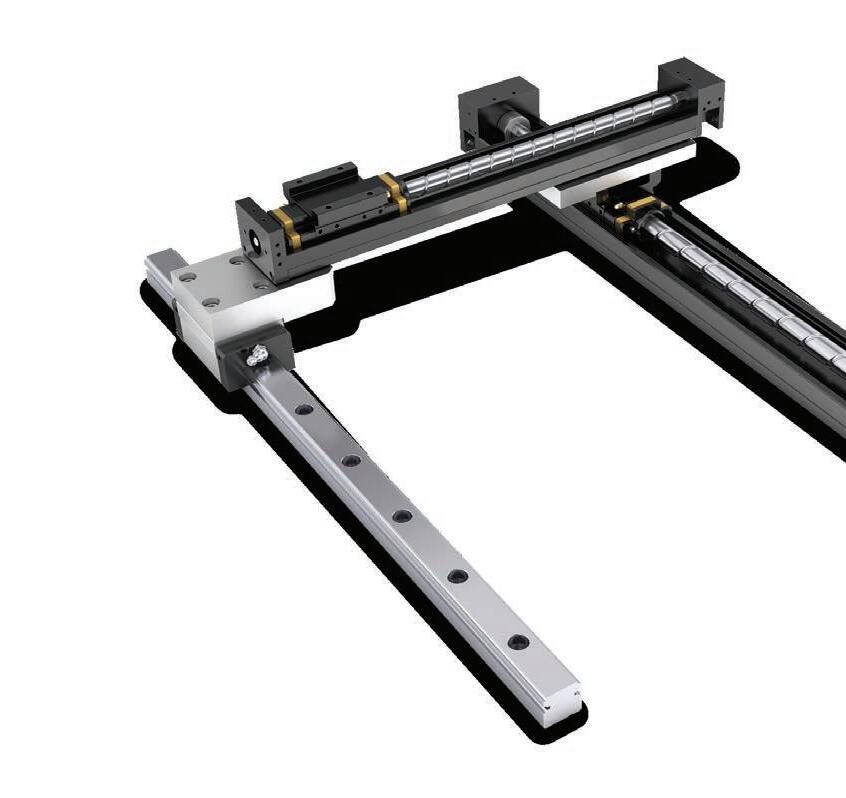
NSK Monocarrier™ Integrated Actuator and Linear Guide System
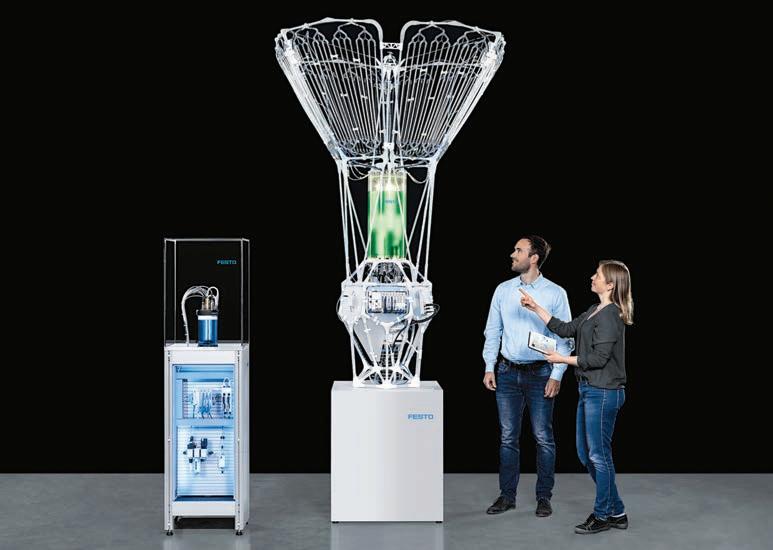
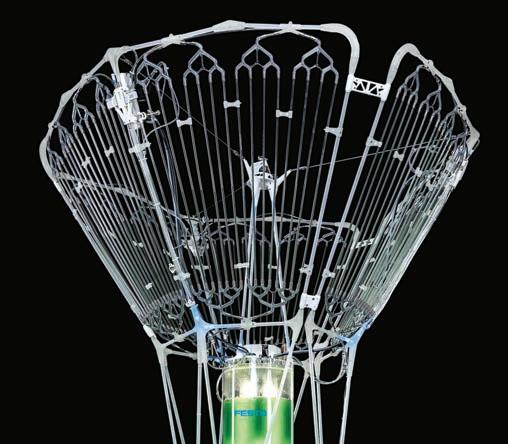
Festo’s automated PhotoBionicCell can bind 100 kg/m2 kilograms of CO2 per square metre and yield 70 tonnes of biomass per year.
BIONIC ALGAE
Festo automated bioreactor moves algae-based bio-products a step closer to economic viability.
BY DAVID GERSOVITZ
Most people think of algae as green pond scum if they think of it at all. For others, it’s potential climate gold, a source mater ial to replace many fossil fuel-based products.
That comes with a big “if”. Algae must become cost-competitive with oil and gas. So far, that goal has eluded researchers, but perhaps not for much longer. Highly automated bio-refineries, like a scaled up version of the demonstrator Festo has built, may close or eliminate the gap.
Algae’s potential as a climate change mitigant and component of a sustainable economy is compelling;
whereas a square metre of forest can absorb 1-2 kilograms of CO2 annually, and add about 12 tonnes of biomass, Festo’s automated PhotoBionicCell, unveiled at this year’s Hannover Fair, can bind 100 kilograms of CO2 per square metre and yield 70 tonnes of biomass per year. And, since it functions as a closed loop, it also requires dramatically less water to create that biomass.
The PhotoBionicCell’s output capability is a tenfold improvement over growing algae in open basins or foil bioreactors. Automation is the principal reason for that gain, enabling continuous, consistent production
products could be produced using green energy, creating a circular economy that keeps nature in balance. In contrast, some 40% of global oil production is currently used to make plastics. About a litre of oil is required to make a typical bottle of shampoo, and about 3 kg of CO2 is released to the atmosphere in the process. Photosynthesis releases oxygen.
But, for such algae-based products to become commercially feasible, “two things have to happen,” Knubben told Festo’s 19th annual International Press Conference (IPC) in July. “On one hand, we have to increase the efficiency of these (algae) growing principles. And oil prices have to increase. Then it will be really effective to produce biofuels from algae economically.”
around the clock, 365 days a year.
Further optimization of the biology and massive upscaling of the bioreactor concept – employing ar tificial photosynthesis technology under development – could achieve CO2 absor ption rates like 2,000 kg/m2, says Dr. Elias Knubben, Festo’s Vice President Cor porate Research and Innovation. But the real attraction is what can be done with that biomass.
Certain species of algae can be processed into a fuel or feedstock for products like bioplastics, foods, cosmetics, pharmaceuticals, dyes, additives and much more. These recyclable
Using industr ial automation to amplify the photosynthetic growth process is one step towards that goal, and Knubben expressed confidence that cost-competitive industrial scale production is years, not decades away. There is still much being done in labs around the world to improve the metabolic process right down to the cellular level. The bioreactor automation can be improved as well.
“We need to understand these processes to optimize the growing conditions,” says Knubben. “It started with the automation of the bioreactor, but it will continue with the development of new software concepts, improving the controls strategies, to be able to move from a laboratory setup to really industrial production.”
With sail-shaped surface collectors, Festo’s
Photo credit: Festo
Festo’s PhotoBionicCell binds 100 kilograms of CO2 per square metre and yield 70
tonnes of biomass per year.
PhotoBionicCell looks a bit outer worldly. Algae liquid is pumped upwards into the surface collectors, where it is distributed evenly through transparent acrylic tubing for optimized light absorption and heat exchange before flowing back into the cultivator. The algae’s chloroplast cells photosynthesize light to convert sunlight, CO2 and water into oxygen and chemical energy sources for biofuels and bioproducts. Employing different algae and nutrients in the process can produce biomass with different fatty acids, pigments and surfactants.
Festo researchers focused on cultivating Synechocystis, a blue-green algae that produces color pigments, Omega 3 fatty acids and polyhydroxbutyrate (PHB). The PHB can be processed into a filament for 3D printing by adding other substances. In fact, the grooved mounting pins for the PhotoBionicCell were 3D-printed from this bioplastic.
For more than two decades, Festo has been investing in bionics research and innovation, building robotic fauna like birds, fish, spiders and rays, even a kangaroo, that seek to replicate highly efficient movements and group interaction in nature. Some of that acquired knowhow has worked its way into new products like adaptive grippers and advanced controls technology. However, the PhotoBionicCell marks a departure, endeavoring to improve upon nature rather
than mimic it.
This 3.0-metre high bioreactor contains a range of the company’s components – a CPX-E automation system, CPE electric terminal, two VEMD proportional flow control valves, six VYKB media-separated solenoid valves, three CMMT-ST motor controllers, a CPX-AP-I bus interface and three CPX-AP-I digital input-output modules.
It also uses the latest automated control and analytical sensor technology to create optimal and consistent growing conditions for 24/7 operation. A holistic gassing concept ensures the carbon dioxide extracted from the ambient air is evenly distributed. If that CO2 isn’t sufficient, more is supplied automatically from a gas cartridge at the base. An innovative ceramic element with minute pores
introduces the gas in the form of tiny bubbles. At night, or if there is insufficient daytime sunlight, special UV lamps are used.
To precisely measure the biomass volume, Festo opted for a quantum-technology sensor from Stuttgart star t-up Q.ANT.The sensor provides precise, real-time information about the organisms’ growth. Based on the sensor’s output, the algae are fed continuously using Festo microfluidics. The sensor is able to optically detect individual cells so the amount of biomass can be measured. It also can investigate cell vitality, so the processes can be adjusted in a timely manner. Most system analysis is automated; all data is displayed in real time.
Special software was created for dashboards that can display multiple
processes or multiple bioreactors on a single display. Ar tificial Intelligence is used to evaluate data so the bioreactor can be optimized either to propagate the algae cultures or to maintain predefined growth parameters with minimal energy input. It can also be used for predictive maintenance of components.
Scientists are working on developing artificial photosynthesis suitable for growing algae in industrial-scale bioreactors. A promising approach involves so-called droplets – artificial chloroplasts. These have a diameter of around 90 micrometers and are synthetically produced; they contain components of plant organisms, enzymes and biocatalysts. As miniature reaction vessels, they can bind and convert CO2 using light energy far more efficiently than natural photosynthesis.
S till, when industrial grade bio-refineries become economically feasible, others will build them. “I probably should not say never, but we at Festo will likely never build complete bioreactors, but we intend to continue our development with strategic partners to really scale up in the end,” Festo CEO Dr. Oliver Jung told the IPC’s opening session. For industrial scale bio-refineries, he said, Festo would like to supply many of the components, from micro-dispensing equipment from its Life Sciences por tfolio to valves and valve terminals from its pneumatic automation portfolio to large-diameter valves from its process automation portfolio. |DE www.festo.com
This article was supplied by Festo
Algae liquid is pumped into the PhotoBionicCell’s surface collectors, where it is distributed evenly through transparent acrylic tubing for optimized light absorption and heat exchange before flowing back into the cultivator.
ADOPTING PDM
How predictive maintenance leverages sensing and analytics technologies to overcome the drawbacks of traditional preventive maintenance.
BY DAN ANDERSON
Whether legacy or new, industrial equipment requires proper maintenance to maximize its lifespan. Aging equipment is one of the top causes of unplanned downtime, so manufacturers experiencing high maintenance costs can benefit from a new strategy.
Traditional preventive maintenance methods take place at scheduled intervals and require skilled workers to complete time-consuming manual processes. Problems ar ising between inspection dates may go unnoticed, prompting companies to replace equipment prematurely to avoid failure.
The manufacturing industry first started out with what is now termed “reactive maintenance”: a “strategy” in which machines would be run until they failed, and
subsequently repaired or replaced. Given the serious disruptions that often resulted from machine failure, equipment manufacturers began to recommend that their machines be inspected and serviced on regular, time-based intervals. This is now known as “preventive maintenance.”
However, even preventive maintenance has some downsides. Since it’s not a continuous process (i.e. maintenance checks occur at specified intervals), it can be time-consuming and expensive to check all equipment. There is also a significant possibility that signs of impending failure could be missed. To stay abreast of any unrecognized signs of deterioration, manufacturers often opt for replacing equipment before it becomes truly necessary.
Benefits of predictive maintenance
The primary objective of PdM is to prevent unplanned downtime, a critical cause of production delay and profit loss. It means that the equipment essential for manufacturing your product is unable to produce its intended output at a time when your labor resources are onsite and expecting the machines to be up and running.
This reduces your company’s overall manufacturing efficiency and profitability. In many cases, if equipment fails during a manufacturing process, that “work-in-process” product must often be scrapped due to not meeting quality requirements.
This, for obvious reasons, increases the equipment’s total cost of ownership.
To determine the exact time equipment needs to be repaired or replaced, yet another strategy is needed –one that involves continuous monitoring. Thanks to technological advancements, such round-the-clock monitoring is possible, and it doesn’t require a person to do any manual checkups.
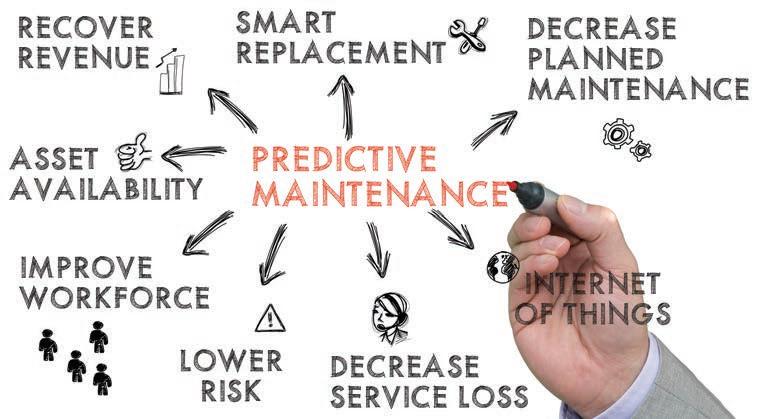
Dubbed “predictive maintenance,” or “PdM” for short, this proactive strategy uses real-time data to identify component failures early, reduce unplanned downtime and avoid costly repairs. Advances in sensing, analytics and communications technologies are making PdM increasingly practical and affordable for small, medium and large companies.
Predictive maintenance aims to automate the data measurement and analysis process on equipment. Typically, this is a manual process where skilled labor resources must go from machine to machine to take equipment readings over time.
These readings form a trend, which must then be analyzed to determine equipment health, and a failure point is interpolated or estimated. Currently, this is a very manual process where you are paying skilled labor — which is in limited supply — to perform this task. A PdM strategy automates this process into a “go/no-go” output which notifies the user when equipment needs service.
Taking the above points into account in an environment with stressed supply chains, oftentimes equipment or replacement parts that were previously stocked or readily available are no longer available with the lead times planned
for. Having the ability to predict future failure gives additional lead time for ordering replacements, further reducing the chance of unplanned downtime.
What’s Needed
In every case, a PdM solution will involve some type of sensor and analyzer/ m onitor unit. Naturally, this will be specific to what type of equipment you are looking to implement a PdM strategy on. In addition, the user will need to deter mine if they are looking to implement PdM on a single equipment type (i.e., ISR on servo motors) or across an entire manufacturing floor and potentially outsourcing that monitoring to a third party. The latter requires an integrated software solution that accepts multiple data input types.
Many solutions today offer a variety of communication output types, oftentimes connecting to a PLC or remote location that would consolidate that monitoring. This means that you would also need your networking infrastructure within the manufacturing facility to accommodate Ether net communication.
The types of issues that PdM solutions can successfully monitor is limited to what is offered by supplier s in the industry. Currently, the industry offers solutions for multiple failure modes in three-phase motor motoring (vibration/temperature, current abnormality, ISR), power supply condition monitoring, insulation resistance condition monitoring, thermal or infrared condition monitor ing for environments where heat is critical, and heater condition through resistance
trend monitoring. The industry is producing new solutions every year for different equipment types as the trend progresses, with valves being a likely focus.
Typically, the primary output of most solutions is to notify the user when service is needed. In certain applications, the output will offer specific information as to where the potential failure is going to occur. A good example of this would be thermal/infrared condition monitoring, where an infrared sensor looks at an area of interest (like a control panel) to detect elevated temperatures in a particular area within that control panel.
This lets the customer pinpoint which control panel component is in the beginning stages of failure and replace it before failure occurs. When monitoring multiple pieces of the same equipment, like servo motors, PdM can also to determine which servo motor is f ailing the ISR test, allowing the user to determine its location.
Getting started
When implementing PdM for the first time, an initial consideration is to determine whether you want to implement an ad-hoc solution (equipment by equipment) or whether you would prefer a comprehensive PdM solution of all manuf acturing equipment. There are two pieces of the puzzle to consider: hardware and software.
The hardw are component will be the sensors and analyzer s/monitors that receive raw data from the piece of equipment and convert it into a go/ no-go output. The software component is typically a
data aggregator that combines inputs from multiple h ardware sources onto a customer-specific graphical overlay. Some of these software solutions accept raw sensor inputs and perfor m condition analysis in the cloud, returning the “go/ no-go” output after analysis has been completed.
Customers should determine whether they are looking to implement PdM over time, in which case they would be spreading out the costs and implementation, or if they are more interested in tackling it as a larger project all at once. It basically comes down to the resources they can dedicate towards the project and their desired implementation timeline.
Predictive maintenance
minimizes the likelihood of unplanned equipment failure during manufacturing hours by automating the data measurement and analysis process on equipment. Instead of relying on skilled labor resources that go from machine to machine, manufacturers using PdM benefit from round-the-clock remote monitoring that identifies trends and signs of impending failure automatically.
By predicting future failure, PdM solutions provide additional lead time for replacement parts (or entire machines) to be ordered before failure occurs. |DE automation.omron.com
Dan Anderson is Product Manager-Components for Omron Automation.
AUTOMATION
AI-BASED AUTOMATION SOFTWARE
Festo announced the launch of the Festo Automation Experience (Festo AX), a machine learning and artificial intelligence (AI) software platform designed to ensure maximum uptime and automate quality assurance and energy monitoring.
As a monitoring and maintenance management tool, machine and process data is sent directly to Festo AX where it is processed by algorithms for real-time analytics. When that data deviates from the “healthy state,” the system notifies operating personnel – via computer, tablet, and/or smart phone – as to which components are involved and recommends corrective action, in clear and easily understood language.
The company says Festo AX can reduce waste by more than 50%, product rejection costs by more than 45%, unplanned downtime by 20+%, while improving machine availability more than 25%. As evidence, the company points to a predictive quality application for silicon wafers production for which Festo AX lowered waste per machine per year by $100,000. Similarly, in a premium-segment auto plant producing 1,000 cars per day,
the company says Festo AX is credited with decreasing unplanned downtime by 25%.
Compatible with Festo and third-party components, the subscription-based software can reside directly on the monitored system, on servers or in the cloud, the company says, and can connect to Festo’s own Smartenance maintenance manager or another maintenance management or spare parts management system. www.festo.com
MACHINE CONTROLLER
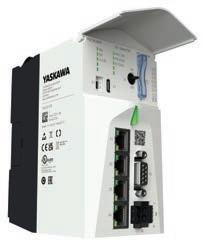
Yaskawa America announced the introduction of its i³ Control (“iCube” Control) to the North American market. The machine control platform includes five elements, starting with the i³
MC machine controller for motion, logic, kinematics and safety functions. Designed for synchronous motion tasks, the controller feature a 3-core ARM processor (1.26 GHz) and supports a number of communication protocols including
OPC UA, EtherNet/IP, Modbus TCP, Profinet I-Device, IO-Link and EtherCAT. On the software side, the iCube includes i³ Engineer, a development environment for motion, logic and safety programming, and i³ Data, a control module for real-time data acquisition, processing and communication. In addition, i³ Kinematics allows integrated control and safety for robotics including delta, SCARA, 6-axis, gantry and custom mechanisms. The system is configured through the i³ Web management platform.
www.yaskawa.com
CAN-TO-FIBER CONVERTERS
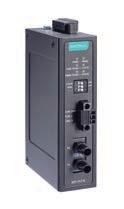
Moxa has launched its ICF-11711 Series of CAN-to-fiber converters. When used in pairs to connect two CAN 2.0 or two CAN-FD devices or networks, the converters are capable of extending transmission distance by 2km (1.25 miles) on multi-mode fiber or up to 40km (24.85 miles) on single-mode fiber, regardless of the CAN baudrate. The converters will transmit at data rates up to 1 Mbps in CAN interfaces and up to 5 Mbps in CAN-FD interfaces. These DIN-rail mounted converters measure 1.19 x 2.76 x 4.52 inches, and come with 2kV isolation and 2kV surge protection for CAN port. Protected in a IP30-rated metal housing, the converters feature an operating range of -40 to 75°C. www.moxa.com
CONTROL SYSTEM GATEWAYS
HMS Networks has expanded
its second-generation Anybus Communicator gateways to include thirteen versions for data connectivity between EtherCAT, EtherNet/IP, Modbus TCP, PROFIBUS, and PROFINET. Featuring the Anybus NP40 industrial network processor, the gateways enable data transfer up to 10 times faster than their predecessors, the company says. In addition, users can transfer up to 1,500
bytes to and from connected PLCs. Verified against the CE and UL industry standards, the gateways feature an onboard physical security switch that prevents unauthorized configuration changes and secure boot functionality. They also feature forward-facing ports and DIN-rail mounting. Users can configure the gateways using drag-and-drop functionality in the web-based GUI, which is accessible via a dedicated Ethernet port on the gateways. Users can also monitor network traffic and diagnose issues via the GUI. www.anybus.com
WI-FI 6 ACCESS POINTS
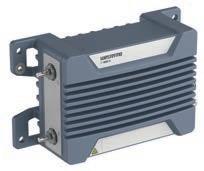
Westermo has added two Wi-Fi 6 access points to its Ibex range of WLAN solutions. The Ibex-1310 and Ibex-1510 are concurrent dual band (2.4 GHz and 5 GHz) access points. The Ibex-1310 is approved for
use on industrial vehicles, while the Ibex-1510 has been tested and certified to meet rail standards EN 50155 and EN 45545-2. The devices feature a GORE-TEX membrane to prevent internal condensation, and an IP66 rating overall, including the quick connect QMA connectors available on the Ibex-1510. A high level of isolation between all interfaces enables direct connectivity to vehicle auxiliary power and protects against overvoltage and surges. The two devices are powered by Westermo’s SW6 operating system, which provides the latest cybersecurity features and updates, the company says. www.westermo.com
MACHINE VISION
IMAGE SENSORS
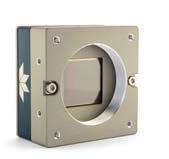
Teledyne DALSA released its Genie Nano-10GigE M/C8200, and M/C6200, based on Teledyne e2v’s 67M and 37M monochrome and color sensors. The series delivers full resolution image transfer at up to 15 fps. Both the models offer PTP synchronization and commonality of sizes with other Genie Nano cameras. Measuring 59mm x 59mm, the sensors can transition from 1, 2.5, 5GigE to 10GigE Vision without the need for software changes. The models also offer the trigger-to-Image Reliability (T2IR) framework and is GenICam, GigE Vision 2.0 compliant. The cameras support up to 16 Regions of Interest (ROI). www.teledynedalsa.com
MACHINE VISION
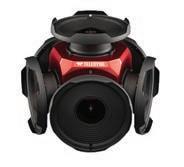
Teledyne FLIR released its Ladybug6, a high-resolution camera designed to capture 360-degree spherical images from moving platforms in all-weather conditions. The camera produces 72 Megapixel images with pixel values that are spatially accurate within +/- 2mm at 10-meter distance, with frame rates of up to 29.9 FPS at 4K resolution (15 FPS at 72 MP). The Ladybug6 captures, compresses and transmits 8-bit
or 12-bit pixel data in a range of lighting conditions with excellent color response, low noise and a high dynamic range, the company says. It features IP67-rated connectors and has an operating temperature range from -30° C to 50° C. It supports Global Navigation Satellite Systems and trigger control by hardware or software
with APIs for complete camera control. www.teledyneflir.com
DEPTH CAMERA
Basler has added The 850nm version to its blaze line of Time-of-Flight (ToF) 2D/3D cameras. Along with its IP67 housing and near-infrared operation at 850nm, the
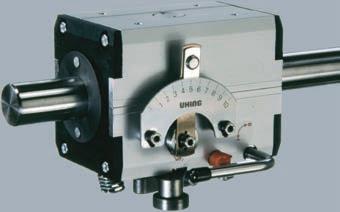
Rolling Ring
Zero backlash. Jam-proof design.
• For applications in positioning & reciprocating motion
• Zero play –even during reversal
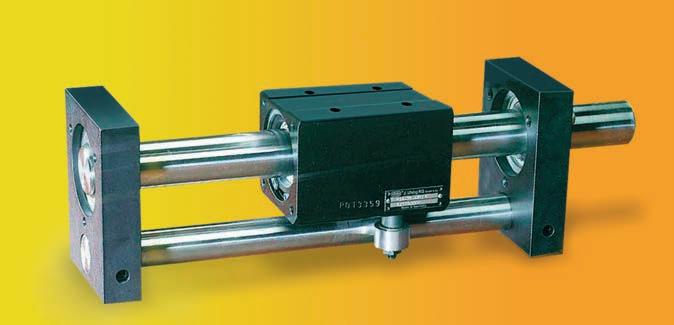
Uhing® Rolling Ring linear drives run on a smooth, threadless shaft that won't clog or jam. If the system is overloaded, the shaft simply slips instead of churning and grinding. The drive bearings are in constant contact with the shaft, even during reversal, thereby preventing backlash.
Example applications: metrology machines, material handling systems, spooling equipment, packaging & converting equipment.
Many different sizes meet varying requirements for axial thrust & linear speed.
For more information call 1-800-252-2645
Email: amacoil@amacoil.com www.amacoil.com
Some models feature mechanical control over speed and travel direction. No programming or electronic controls are needed.
CO-LOCATED WITH CONEXPO-CON/AGG (two shows, one price)
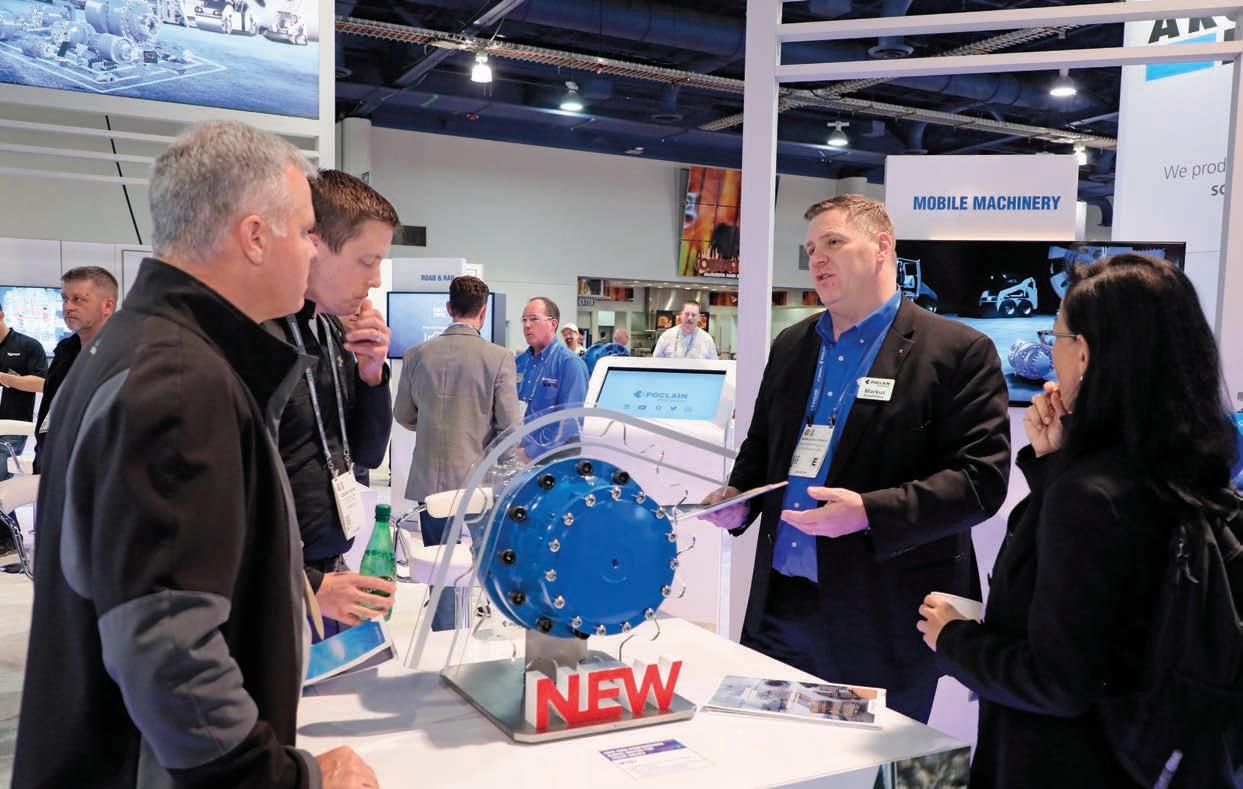
The International Fluid Power Exposition (IFPE) is the place where engineers meet to:
Spark new ideas with in-depth technical conversations with other engineers.
Discover solutions current suppliers can offer to your unique challenges.
Find new partners among suppliers pushing the envelope on what fluid power can do.
CONNECT WITH TOP MANUFACTURERS
Including Bosch Rexroth , Danfoss Power Solutions , Parker Hannifin , Poclain , IFM Efector , Hawe Hydraulik , Husco , and 375+ more!
Join your peers from these OEMs:
∙ Caterpillar Inc
∙ Volvo Construction Equipment
∙ Liebherr
∙ CASE Construction Equipment
∙ Komatsu
∙ John Deere Construction
∙ Doosan Bobcat
∙ KOBELCO Construction Machinery USA
∙ LBX Company
“ There’s no other show in the world I think that brings the OEM machine manufacturers and the suppliers as close together as this show. It’s a good place to meet and learn about what’s going on. In the Americas, in the Western Hemisphere, this is the show for fluid power.”
KEN ROSENBECKER
SALES MANAGER NORTH AMERICA | WIPRO INFRASTRUCTURE ENGINEERING
camera model features a 67° x 51° field of view and a working distance ranging from 0.3 to 10 meters. The 850nm model incorporates the Sony IMX556-DepthSense sensor that captures 2D and 3D data simultaneously. It also features an integrated light source (VCSEL diodes) and lens. It includes the blaze ToF series feature package, including Dual Exposure HDR and Hardware Trigger for synchronized images in VGA resolution. All blaze camera models feature bandwidth control and latency reduction, allowing for GigE load management and real-time capability.
www.baslerweb.com
MOTORS AND DRIVES
MOTOR AND CONTROLLER
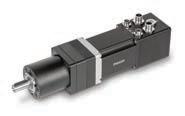
Maxon released its IDX integrated servo gearmotor + drive that combines a brushless EC-i motor and an EPOS4 positioning controller. The unit can also be paired with a Maxon planetary gearhead when required. With an industrial housing providing IP65 protection, the IDX also features configurable digital and analog inputs and outputs, and software for commissioning and integration into master systems. The IDX integrated servo motors are suitable for use across the entire speed range (from standstill to maximum speed) and have an extremely high overload capability, the company says. Together with its internal positioning controller and integrated single turn absolute encoder, absolute positioning is standard. The motors are suited for systems with an operating voltage from 12 to 48 VDC. www.maxongroup.com
SOLENOID DRIVERS
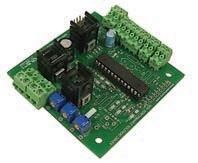
Optimal Engineering Systems, Inc. (OES) has released four solenoid drivers that are configured via TTL serial communications. Measuring 76.2mm by 76.2mm (3.00 in. by 3.00 in.), the microcomputer-based drivers are designed for use with solenoids, relays, actuators and electromagnets. Requiring a single supply from +9 VDC to +50 VDC, the serially controlled TTL
level (Transistor-Transistor-Logic) drivers feature programmable pick times, hold voltages and separate PWM frequencies per channel. The output current can be as high as 20A per channel. Microcomputers, PCs, IPCs and PLCs using programs, such as C/ C++, Python, Visual Basic, and LabView, can be used to send simple text messages for configuration. The RS-232 to TTL module, USB to TTL module, and Ethernet and LAN to TTL module, allow other formats of communications to TTL signals. www.oewincorp.com
VFDS
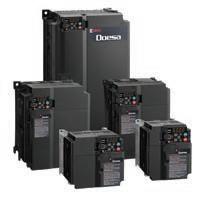
IDEC Corporation released its VF1A Doesa variable frequency drives (VFDs) line. The VFD features nickel- and tin-plated bus bars and conformal coatings for corrosion protection. Electrical input is nominally rated as threephase low voltage AC 400V (with an allowable input voltage range of 380-480V AC). The VFDs come in 14 models with a capacity range of up to 139A. The line
includes safe torque off (STO) capability, logic programming with 55 functions, different calculations and sequences, and fast processing intervals. The VFD includes seven digital inputs, two analog inputs, three digital outputs, and two analog outputs. It also includes a standard option port and RS-485 terminals and removable terminal cards for standard, 5V and 12V/15V operation.
www.IDEC.com
TUBULAR SOLENOID
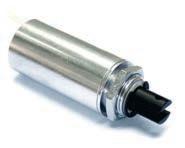
Magnetic Sensor Systems (MSS) has released their S-20-100X model of Pull Type Tubular Solenoids. The series features 18 different solenoids to select from based on the voltage, duty cycle, force and
stroke requirement of the user. MSS Solenoids coils typically utilize Class “F” 23 to 40 AWG windings with Class “A” insulation.
The series features a 1.000 in. diameter x 2.000 in. long housing and a 3/4 -16 UNF-2A thread for mounting. The non-captive plunger or actuator has a diameter of 0.437 in. with a clevis end for load attachment. It also features a brass guide and PTFE coating on the plunger. The tubular solenoids can be operated at 1/10, 1/4, 1/2 and continuous duty cycles (voltage dependent).
magneticsensorsystems.com
Langley
Victoria
: Take flight with flying motion technology!
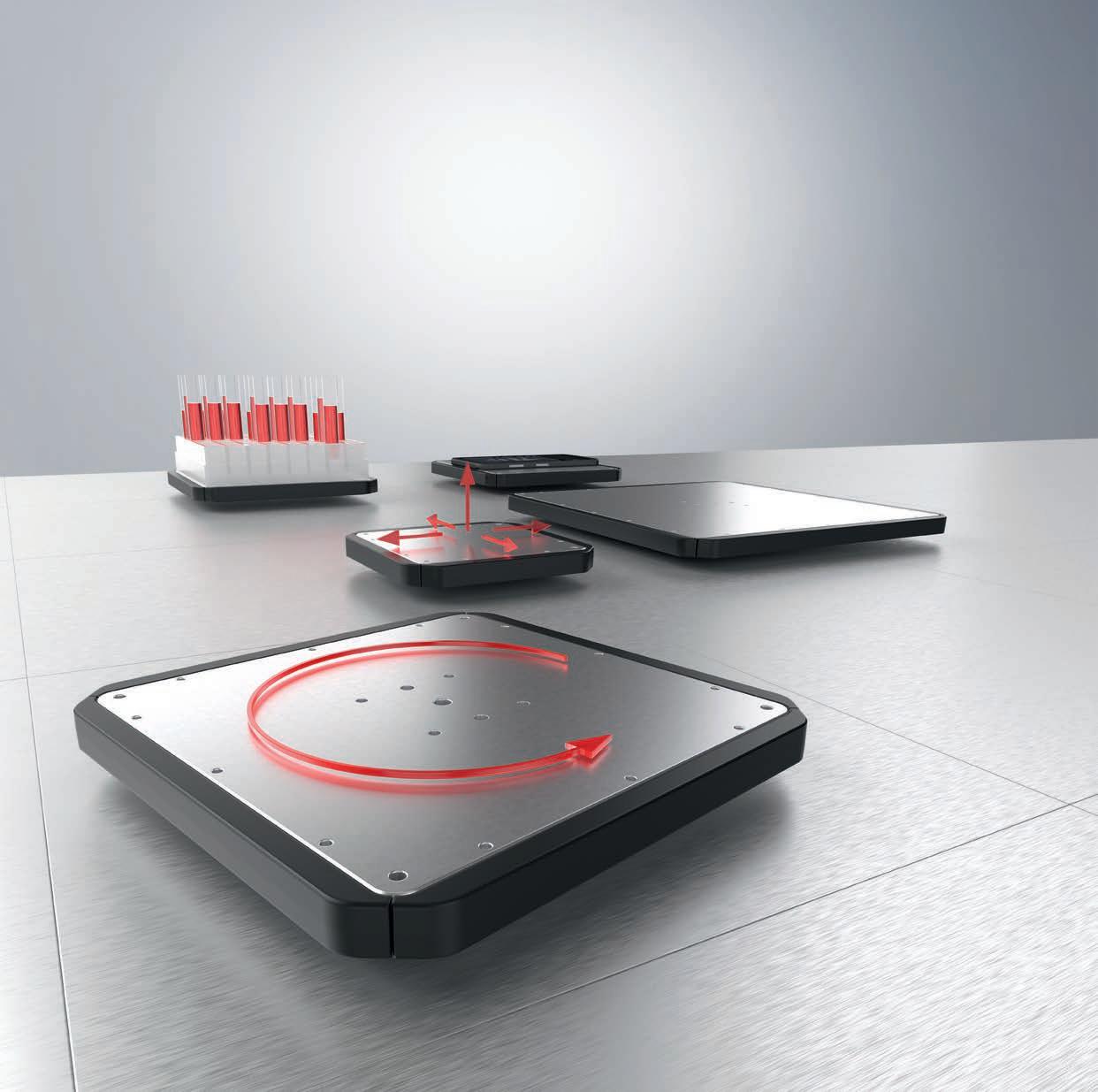
Flying 2D product transport with up to 6 degrees of freedom
XPlanar enables new dimensions of freedom in product and material handling: Levitating planar movers fly over flexibly arranged planar tiles accommodating nearly any track layout and path planning.
Individual 2D transport at up to 2 m/s
Processing with up to 6 degrees of freedom
Transport and processing in one system
Wear-free, hygienic and easy to clean
Free arrangement of planar tiles enabling totally customized machine and process layouts
Multi-mover control enables parallel and individual product handling
Fully integrated into the powerful and standardized PC-based Beckhoff control system