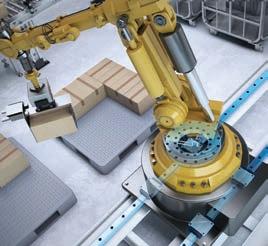
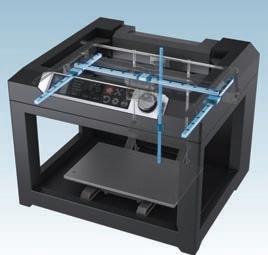
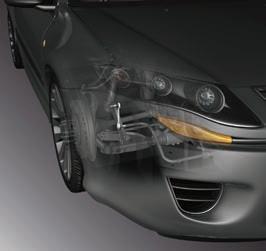
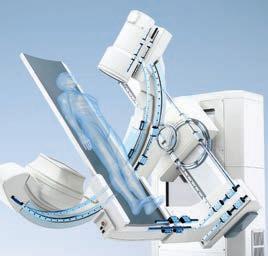
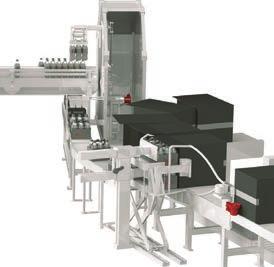
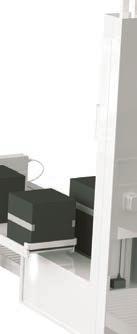
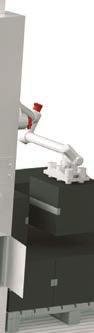
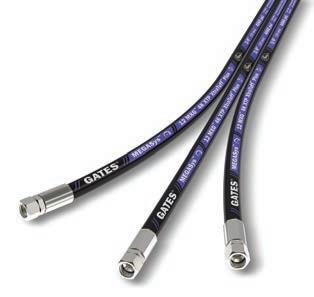
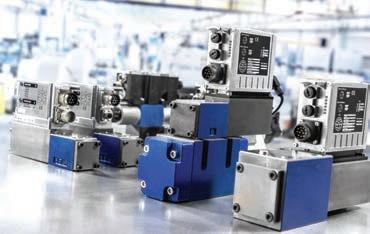
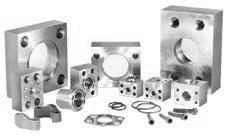
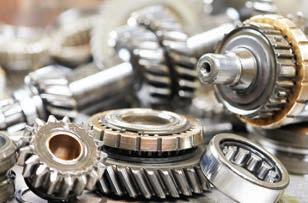
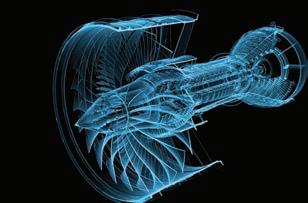
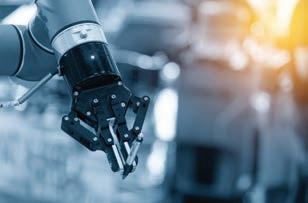
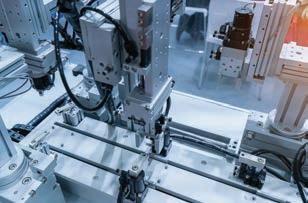
Whether you’re designing control systems or programming PLCs, you need to know the core products are going to perform like stars. Festo’s Stars of Automation offers you a one-stop solution, with over 4,000 durable, costeffective and high-quality components that enhance every factory system. For great value, look to the stars. Choose Festo.
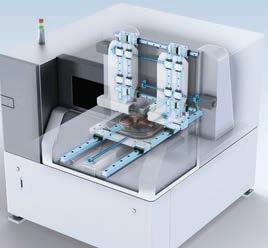
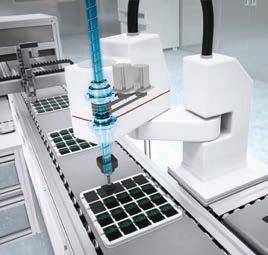
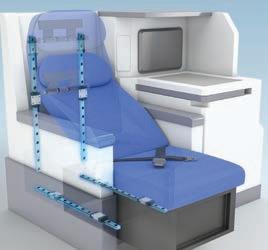
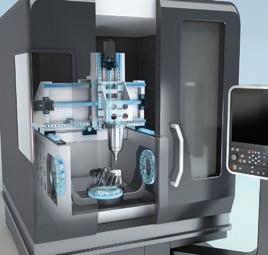
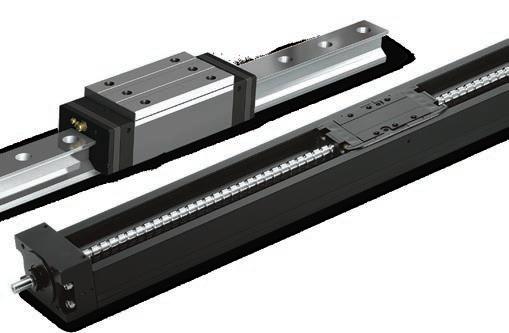
The developer of the original world-class linear motion systems, THK continues to redefine industry standards and to meet an ever-growing range of needs. From aerospace and machine tool to packaging and medical, THK products play a vital role in the advancement of technology and capability.
To learn more, call us at 1-800-763-5459 or visit www.thk.com.
PACK EXPO EAST MARCH 03-05, 2020 BOOTH #604 MONTREAL MANUFACTURING TECHNOLOGY SHOW (MMTS) MAY 11-13, 2020 BOOTH #817
Dr. Alain Aubertin
Vice President, Business Development and International Affairs, Canada Consortium for Aerospace Research and Innovation in Canada (CARIC)
Ajay Bajaj, P.Eng President, Rotator Products Limited; Past President and Board Member, Power Transmission Distributors Association (PTDA)
John Lamb Regional Sales Manager, Wainbee Limited; Chairman, Canadian Fluid Power Association (CFPA)
Dr. Ishwar Puri, P.Eng Dean of the Faculty of Engineering; Professor of Mechanical Engineering, McMaster University
Dr. Mary Wells, P.Eng
Dean of the College of Engineering and Physical Sciences, University of Guelph; Chair of the Ontario Network for Women in Engineering
SUBSCRIBER SERVICES
8 Design News
Teaching autonomous cars to drive in Canada and other engineering news
14 CAD Report
CAD giant ventures into new markets as Solidworks users resist moving to the cloud
22 Idea Generator
The latest in industrial products including motion control, power transmission and sensors
Columns Features
17 Power Transmission
Autonomous surface vehicles play an increasingly essential role in analyzing what’s occurring in the world’s oceans
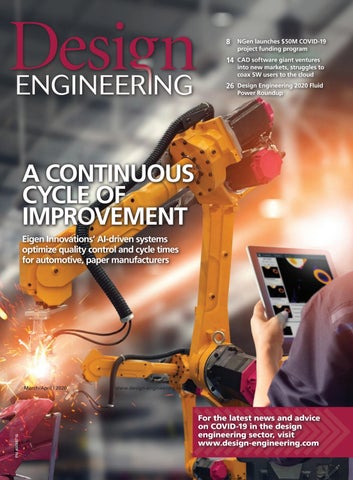
19 A Continuous Cycle of Improvement Eigen Innovations’ AI-driven systems optimize quality control and cycle times for automotive, paper manufacturers
28 Fluid Power News
CONEXPO-CON/IFPE unflagged by COVID-19 and other fluid power news
30 A Twisted Pair
Lightweight Single Pair Ethernet cable promises to supercharge Industry 4.0
32 Five Surprising Facts about Hydraulics
The capabilities of modern hydraulics that younger automators may not know
33 Fluid Power Product Showcase
The latest in fluid power technologies including actuators, valves and sensors
14
Flattening the Curve Editorial Viewpoint
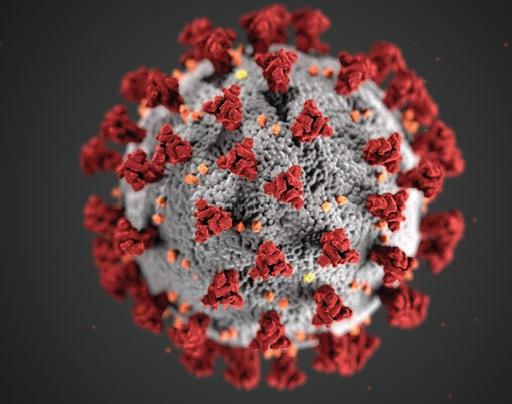
As March ends, the first quarter of 2020 has seen the number of the infected with COVID-19 steadily rise globally while measures to stem its spread have pushed the stock market downward. Meanwhile, hospitals across the globe are scrambling to prepare for the peak of the outbreak, whenever that might occur.
In Canada, comparatively quick action to go into lockdown, and more importantly, Canadians’ willingness to comply with the social distancing measures, has seemingly, at this point, helped prevent the country from following the trajectory of hotspots like Italy, Spain and parts of the U.S.
According to pandemic modelers, working from best guesses based on imperfect data, Canada was on the same trajectory as Italy up to March 22. However, by March 30, the Public Health Agency of Canada (PHAC) reported approximately 7,500 confirmed cases in Canada, half that of the worst-case-scenario (roughly 15,000 cases) predicters said could have happened by March 31, if Canada hadn’t acted as soon as it did.
Even so, models developed by data analysts at York University’s Schulich School of Business estimate approximately 2,500 new cases will emerge over a five-day period; they caution it’s too early to say how far along the pandemic’s course Canada is. At this point, it’s impossible to predict how things will play out or when the proverbial flattening of the curve will happen. Ultimately, how Canada fairs may come down to the supply, or lack thereof, of key medical equipment including, protective face masks and the mechanical ventilators the most serious patients require.
More predictable, however, is the speed at which Canada’s R&D, engineering and manufacturing communities have risen to the challenges posed by the pandemic. Numerous initiatives to design and produce personal protective equipment (PPE) and life-saving medical devices quickly emerged in March, but there are two initiatives that potentially hold the most promise.
The first is a simplified ventilator design created by Princeton University physics professor, Cristiano Galbiati. Requiring fewer parts than most mechanical ventilators, his Mechanical Ventilator Milano (MVM) uses columns of fluid and simple vent trap valves to control the pressure of oxygen-rich air.
In Canada, Nobel laureate and Queen’s University physics professor, Art McDonald, is spearheading the initiative to test and produce the MVM and mobilized the engineering expertise at the TRIUMF particle accelerator in Vancouver, Chalk River Laboratories’ nuclear research facility and the dark matter laboratory, SNOLAB, near Sudbury, ON. In addition, McDonald is working with medical experts at McGill University in Quebec to test the design so it can move to mass production as quickly as possible.
A similar mission is underway by the Automotive Part Manufacturers’ Association (APMA) to design and mass produce ASTM level 2 or 3 masks for medical workers. APMA member, Woodbridge Foam has leveraged its fabrics expertise to create a mask design that is currently being optimized and tested by engineering faculty at McMaster’s University. APMA president Flavio Volpe said once the design is certified, he hopes APMA association members will be able to produce the millions of masks Canada may need in the coming months.
Mike McLeod
www.design-engineering.com
Senior Publisher
Paul Burton (416) 510-6756 pburton@annexbusinessmedia.com
Editor Michael McLeod (416) 442-5600 ext. 3231 mmcleod@design-engineering.com
Account Manager
Ron Salmon (416) (905) 713-4362 rsalmon@design-engineering.com
COO Scott Jamieson sjamieson@annexbusinessmedia.com
Design Engineering, established in 1955, is published by Annex Business Media, 6 times per year except for occasional combined, expanded or premium issues, which count as two subscription issues.
Printed in Canada
Publications Mail Agreement #40065710 ISSN: 0011-9342 (Print), 1929-6452 (Online)
Subscriber Services: Canada: $57.50 for 1 year; $92.50 for 2 years; $10 for single copy.
Outside Canada: USA - $140.50; Overseas - $151.00 $10.00 for single copy. Directory/buyer’s guide: Canada $28; Outside Canada $46. All prices in CAD funds. Add applicable taxes to Canadian rates.
Circulation
email: bolechnowicz@annexbusinessmedia.com
Tel: (416) 510-5182
Fax: 416-510-6875 or 416-442-2191
Mail: 111 Gordon Baker Rd., Suite 400, Toronto ON M2H 3R1 From time to time we make our subscription list available to select companies and organizations whose product or service may interest you. If you prefer not to receive this information, please contact our circulation department in any of the four ways listed above.
I enjoy hearing from you so please contact me at MMcLeod@design-engineering.com and your letter could be published in an upcoming issue.
Low-cost Linear Motion
Actuator assemblies, sliding components and accessories
SureMotion® Linear Slides and Actuators
Get reliable linear motion at low prices with the award-winning customer service and support you expect from AutomationDirect! Our line of linear motion products is designed to provide smooth, precise and durable linear actuation. With supreme versatility and low maintenance, these affordable, motor-ready actuators can meet both your linear motion and budget requirements.
Value Line Linear Actuator
Low-cost, versatile linear slide actuator with hard-coated aluminum guide shafts. Unit can be mounted horizontally, vertically, or inverted without loss of load capacity.
• Max load capacity: 110 lb
• Max speed: 15 in/sec
• Travel: 6, 12, 18, 24 inches
• Ready for NEMA 17 motor
Compact Linear Actuator
Self-contained linear slide actuator designed for light loads in harsh or wet conditions in a very small package.
• Compact design
• Stainless steel lead screw
• Max load capacity: 125 lb
• Max speed: 20 in/sec
• Travel: 6, 12, 24, 36 inches
• Ready for NEMA 17 motor
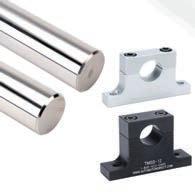
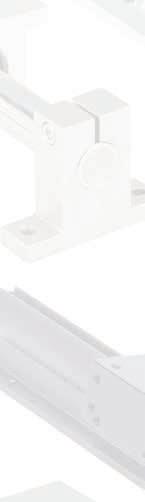
Shafts and Shaft Supports
Create strong, secure shaft assemblies with high-quality shafts and shaft supports.
• Aluminum, steel & stainless steel shafting
• Linear or rotary shafts (with and w/o grooves)
• Standard height and low-profile shaft supports
• Removable top maintains alignment while servicing
Continuously-supported round rail slide with ball screw actuation provides a very robust precision linear motion.
• High-accuracy ball screw
• Continuously-supported guide rails
• Max load capacity: 920 lb
• Max speed: 6 in/sec
• Travel: 12, 24 inches
• Ready for NEMA 23 motor
Linear Slide Components
Passive sliding elements can be combined with actuators to build a huge variety of machine mechanisms.
• Linear ball bearings
• High-quality clear anodized aluminum blocks
• Carbon-steel shafts
Extensive Video Series on Linear Motion: http://go2adc.com/lm
DesignNews
Teaching autonomous cars to drive in Canada
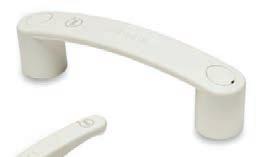
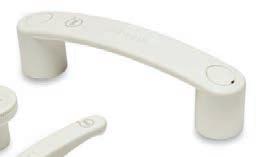
IOperating
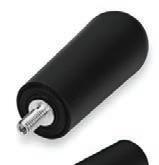
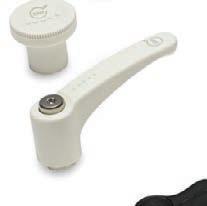
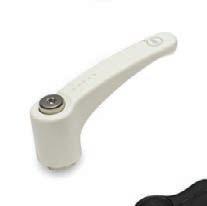
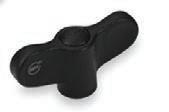
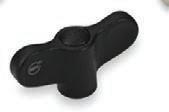
elements for antimicrobial use
Special additive prevents spread of microbes, bacteria and fungi on the product surface
n For medical, hospital and public applications
A controlled release of silver ions maintains antimicrobial characteristics over time, even after several washing cycles.
n Meet sterilization needs
The high temperature resistance of the additive used allows for use in sterilization cycles (to 130°C).
n Meet test standards
Material samples tested to ISO 22196: 2011 (Measurement of antibacterial activity on plastics and other non-porous surfaces) which derives from the JIS Z 2801 standard.
Request Catalog 077AM
elesa.com
Toll-Free 800-374-7686
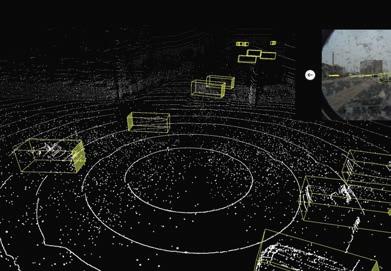
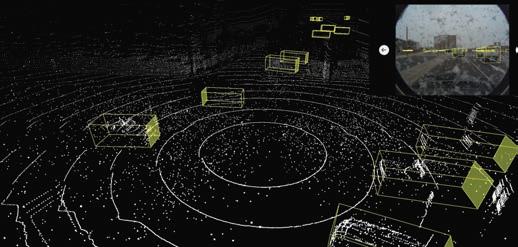
Composed from 56,000 camera images and 7,000 LiDAR sweeps, the open-source Canadian Adverse Driving Conditions Dataset (CADCD) helps teach self-driving automotive AI systems how to drive in snowy conditions.
( PHOTO CREDIT: UNIVERSITY OF WATERLOO)
f you’ve ever wondered how the machine learning algorithms within autonomous vehicles learn how to drive, its largely by observation. Before they’re allowed on the road, such AI systems have logged countless hours in simulated driving environments constructed from training datasets (i.e. gigabytes of digital video and sensor data collected by sensor laden cars). Using that data, developers construct the virtual environment in which AI systems learn how to identify buildings, other vehicles, pedestrians, road signs, where the boundaries of the road are, etc.
Obviously, these training data sets are invaluable to researchers and autonomous vehicle developers, but they have, until now, largely been collected and constructed under sunny day driving conditions. While that may be great for self-driving cars in southern California, it does leave places like Canada, with its snowy winters, at a disadvantage.
According to the researchers at the University of Waterloo and the University of Toronto, self-driving systems taught to drive using such “blue sky” datasets often misidentify, or are oblivious to, pedestrians and other vehicles when tasked with navigating snowy roads or other less than ideal conditions.
To remedy that, the U of T and UWaterloo researchers have released the Canadian Adverse Driving Conditions (CADC) dataset, a pool of high quality sensor data designed to capture the realities of driving on the snowy roads and less than ideal visibility typical of a Canadian winter.
Built over the past two winters, in and around Southern Ontario, the CADC dataset was collected using UWaterloo’s Autonomoose, a Lincoln MKZ hybrid equipped with GPS, a lidar scanner and eight onboard cameras, that allow it to capture 10 images per second.
Over the past two winters, the teams drove the Autonomoose around southwestern Ontario collecting more than 1,000 kilometers of data, approximately 33 kilometers of which is in snowy conditions. Data in hand, the teams worked with California-based AI firm, Scale AI, to catalog and tag approximately 178,000 passing vehicles and 83,000 pedestrians captured in the CADC data.
According to the research teams, the resulting validated and formatted data is now available to any autonomous vehicle researchers who want to use it, through a freeto-use, open source model, although commercial users are required to license the software. In addition, the teams have posted documentation and support tools on GitHub, along with a scientific article on arXiv.
“We’re hoping that both industry and academia go nuts with it,” says Steven Waslander, University of Toronto Institute for Aerospace Studies professor and founder of the Toronto Robotics and Artificial Intelligence Laboratory (TRAILab). “We want the world to be working on driving everywhere, and bad weather is a condition that is going to happen. We don’t want Canada to be 10 or 15 years behind simply because conditions can be a bit tougher up here.”
http://cadcd.uwaterloo.ca www.utias.utoronto.ca
• Resolution ≤5 mV
• Accuracy ±0.25% of full scale
• Real-time adjustable PID control
• Integrated 0 to 10 VDC, 4-20 mA signal, or 3.3 VDC serial communication
• 0 to 10 VDC feedback pressure monitor
• Virtually silent
• No integral bleed required
• Multiple pressure ranges from vacuum to 150 psig
• 2.7 to 65 l/min flow control
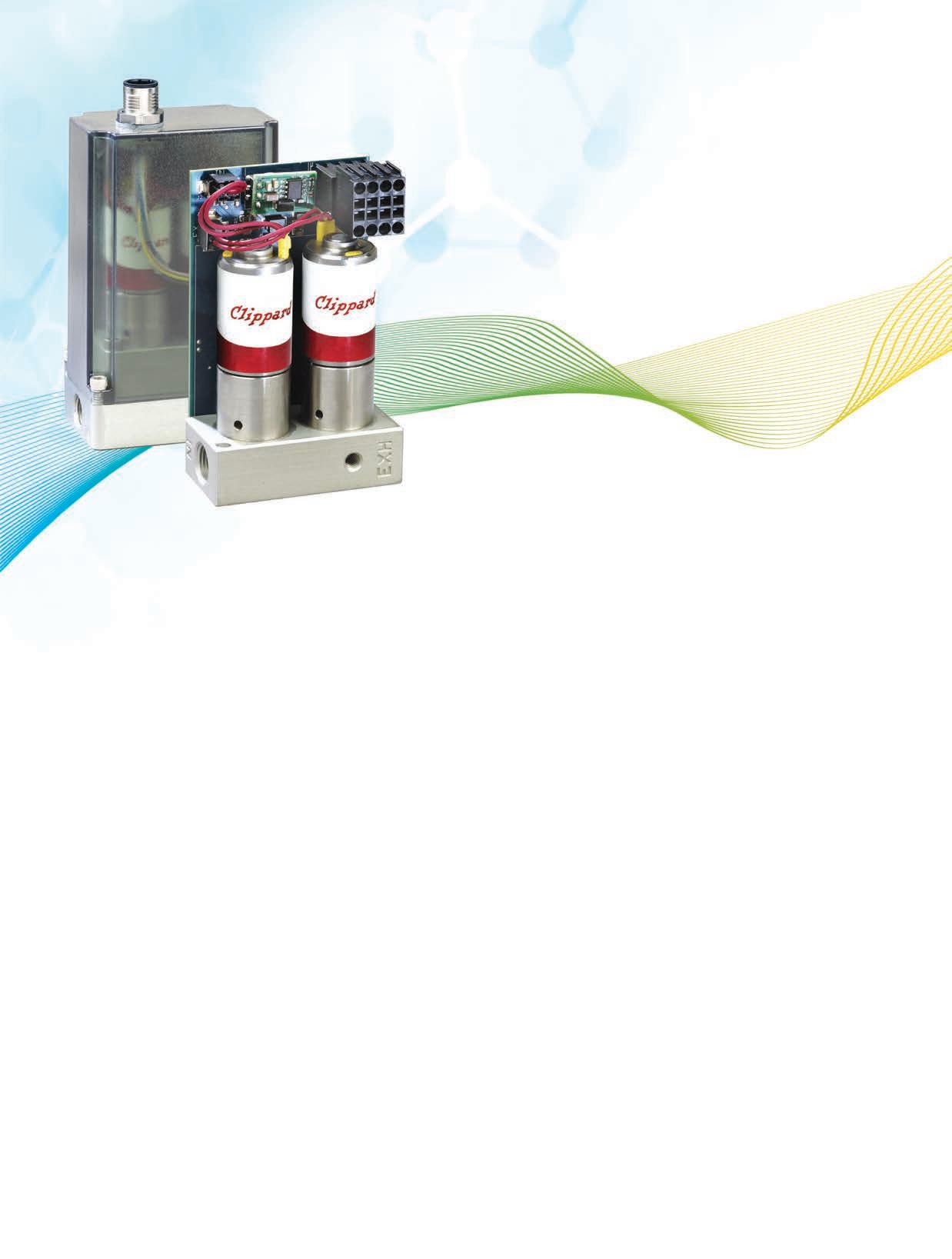
Take Control with Cordis
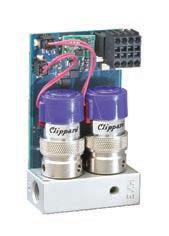
The future of proportional control has arrived— and it’s digital. The Clippard Cordis is a revolutionary microcontroller primed for escape velocity from a proportional control market that has grown stagnant.
With unparalleled performance and flexibility not possible with current analog proportional controllers, the Cordis makes everything from calibration, to sensor variety, to future development opportunities more accessible and less complicated.
Precise, Linear Digital Pressure Control
Contact wainbee.com today to learn more about how the Cordis can provide precise, real-time control for your application, or visit clippard.com to request more information.
NGen launches $50M project funding program to combat COVID-19
On March 25th, Next Generation Manufacturing Canada (NGen), announced it would invest $50 million
to support companies planning to produce technologies, equipment and medical products to aid in the fight against COVID-19.
As the organization overseeing Canada’s Advanced Manufacturing Supercluster, NGen said its program will fund projects that involve the rapid production of products in short supply. Those products include virus screening test kits, gloves, gowns, masks and other personal protective equipment, as well as hospital equipment like ventilators and peripherals,
and cleaning and sterilization chemicals and equipment.
NGen said projects with an immediate impact (from April to the end of June 2020) will receive top priority will be reimbursed for eligible costs up to 100%, depending on the level of knowledge and information sharing. Projects with impact beyond the June 30 may also be considered for funding at 50%. In total, each project isn’t expected to exceed $5 million.
Companies looking for support must be incorporated in Canada and a member of the Advanced Manufacturing Supercluster. www.ngen.ca/covid-19-response
Wind River Labs website goes live
Wind River, best known for the VxWorks RTOS, has launched Wind River Labs, a developer-focused site that offers software projects, proofsof-concept, open source integrations and experimental software.
Featured Wind River Labs projects include TensorFlow for Wind River Linux; OpenCV for VxWorks; Microsoft Azure IoT SDK for VxWorks; AWS IoT Device SDK for VxWorks; Google Cloud IoT Core SDK for VxWorks; Google Test support for VxWorks; OpenAMP for VxWorks Remote Compute.
The site also includes a freely available VxWorks RTOS software developer kit (SDK) that includes an open source board support package for Raspberry Pi and UP Squared hardware. Developers can also download the latest version of VxWorks, along with projects such as ROS (Robot Operating System) 2, and start prototyping and designing applications on the company’s operating systems. www.labs.windriver.com
CDC/ ALISSA ECKERT, MS; DAN HIGGINS, MAMS
• 6 printed issues in 2017 (18,200 subscribers)
• 4 DEX Table-top shows in 2017
COMPLETE COVERAGE
• Fluid Power Buyers’ Guide Supplement (March)
• 6 printed issues in 2020 (16,300 subscribers)
• Motion Control Buyers’ Guide Supplement (September)
• Bi-Weekly Génie de Conception e-newsletter (10,000 subscribers)
• Monthly Automation enewsletter
• New Product e-blasts
• White Paper e-blasts
• Monthly Génie de Conception e-newsletter (10,100 subscribers)
• Single Sponsor e-directs
• New Product e-blasts
• Website advertising
• White Paper e-blasts
• Webinars
• Single Sponsor e-directs
• Website advertising
• Webinars
ENABLING AUTOMATION
Those are the goals for any automated system. Keep production moving for reliable output. Control quality and costs. In that effort, there’s no more committed partner than NSK.
We’ve had our people on the ground and in the plant, for decades – delivering linear motion and integrated automation solutions for handling high loads with speed and repeatable precision. To get the results you need: Longer life. Enhanced productivity. Superior quality. And consistently lower operating costs.
With NSK, you stay in motion. You stay in control.
12 DesignNews
U of T to develop AI-powered microrobots to capture brain cells
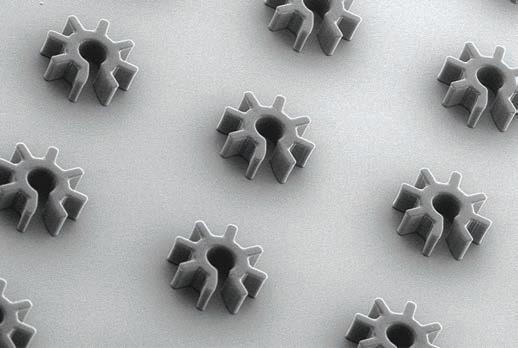
TheUniversity of Toronto announced that two researchers in its Donnelly Centre for Cellular and Biomolecular Research will receive more than $1 million from the Canada-UK Artificial Intelligence Initiative to develop microscopic robots that can differentiate and capture stem cells from brain tissue.
Developed in partnership with Mike Shaw, a machine learning expert at University College London, the microrobots can capture and move cells in a lab dish, U of T researchers Aaron Wheeler and Cindi Morshead say. The next step will entail training AI and image-recognition algorithms to distinguish stem cells based on microscopy images of brain tissue. Those systems would then be able to direct the cog-like robots to capture the relevant cells.
The hope is that such a system could reliably and autonomously harvest homogeneous batches of brain stem cells, which can transform into specialized brain cells, and allow for development of new treatments for brain injury, like stroke. According stem cell scientist Morshead, her team’s work has already shown that brain stem cells can be directed to repair stroke injury in mice.
The U of T researchers say the funding and collaboration will allow them to move their existing technology forward.
“In the long term, we would like to have one platform that can start with a slab of tissue and go to collecting the cells of interest,” said Wheeler. “We will end up with a tool that’s useful for lots of folks in the life sciences who are trying to streamline and reproducibly collect interesting cells for further analysis.”
Wheeler and Morshead are one of 10 international teams sharing the approximately $5 million and £5 million provided by the Canada-UK Artificial Intelligence Initiative over the next three years. The initiative seeks to harness AI for societal benefit by bringing together experts from diverse disciplines. www.utoronto.ca
High precision, high load linear guides and Monocarrier™ actuators
These optoelectronic microrobots, designed by U of T researchers Shuailong Zhang and Aaron Wheeler, can load, transport and deliver cellular material PHOTO COURTESY OF SHUAILONG ZHANG
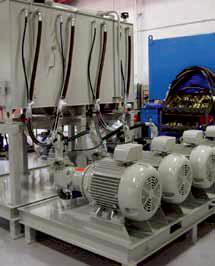
Berendsen Fluid Power Systems Design and Fabrication
Delivering Results, Reliability and Rock Solid Dependability!
Technical and Design Assistance
• Custom HPU Solutions
• Manifold Design and Manufacturing
• ISO 9001:2015 Certified
• 26,000 sq ft Dedicated Facility
• Dedicated Design Personnel
• Factory Trained Certified Technicians
• Testing Capabilities to 300 HP
• Certified Welders
Quality Assurance
Pre-Engineered Units
We offer a wide selection of quick-delivery, ready-to-use, pre-engineered hydraulic power units covering a multitude of pressures, flows and applications.
• Application and design experience in: Materials handling Steel Mills Forestry Mining Agriculture Energy Entertainment
Berendsen Fluid Power adheres to a strict commitment to use only high-quality, performance-tested parts and components.
THE EVOLUTION OF DASSAULT
CAD giant ventures into new markets as Solidworks users resist moving to the cloud.
By Ralph Grabowski
Whenit comes to high-end MCAD, Dassault Systèmes (DS) is the go-to company. Its software designs most of the automobiles we drive and aircraft in which we fly. As a result, it now has revenues that exceed CAD$5 billion a year.
For DS the thinking seems to be, growth has been good, so more growth must be better. To that end, Dassault has gone on an acquisitions binge over the last decade, buying up software adjacent to its main CATIA design package, such as geology. Then, to get out of the CAD rut, the company initially targeted consumer goods, even developing software for determining where to place products on store shelves.
During this time, folks from Dassault spoke passionately about their plans for AEC, based on the success of architects like Frank Gehry and his iconic and awe-inspiring buildings designed in CATIA. (Actually, Gehry never used CAD; only his assistants did.)
Those DS people ended up speaking
for, perhaps, too long. While Dassault was being passionate, BIM overwhelmed regular 3D design, and Dassault had no BIM software with which to enter the market. Instead, the company emphasizes using its 3DEXPERIENCE software for the mechanical side of architecture, such as simulation and generative design.
The Medicine Market
These days, the company is courting an even bigger market desperately in need of digitalization: The medical industry.
Last fall, Dassault completed its largest acquisition ever, spending US$5.8 billion on Medidata Solutions. Dassault already had a small footprint in this area with its BIOVIA software for modeling materials and chemicals.
It’s easy to see why Dassault likes Medidata. The company earned nearly a billion Euros last year, and its software runs on its Rave Clinical Cloud system to store and distribute medical data – just like 3DEX-
PERIENCE. Dassault is convinced this new sector “will become Dassault Systèmes’ second largest core business, after transportation and mobility.”
Francis Bernard, a co-founder of Dassault and its former CEO, isn’t so sure about the acquisition, however. “With the medical domain, it is not a differentiation, it is a new business,” Bernard said of the company he former led in an interview with Isicad.net in March. “Competition will come from players other than those in the PLM business.”
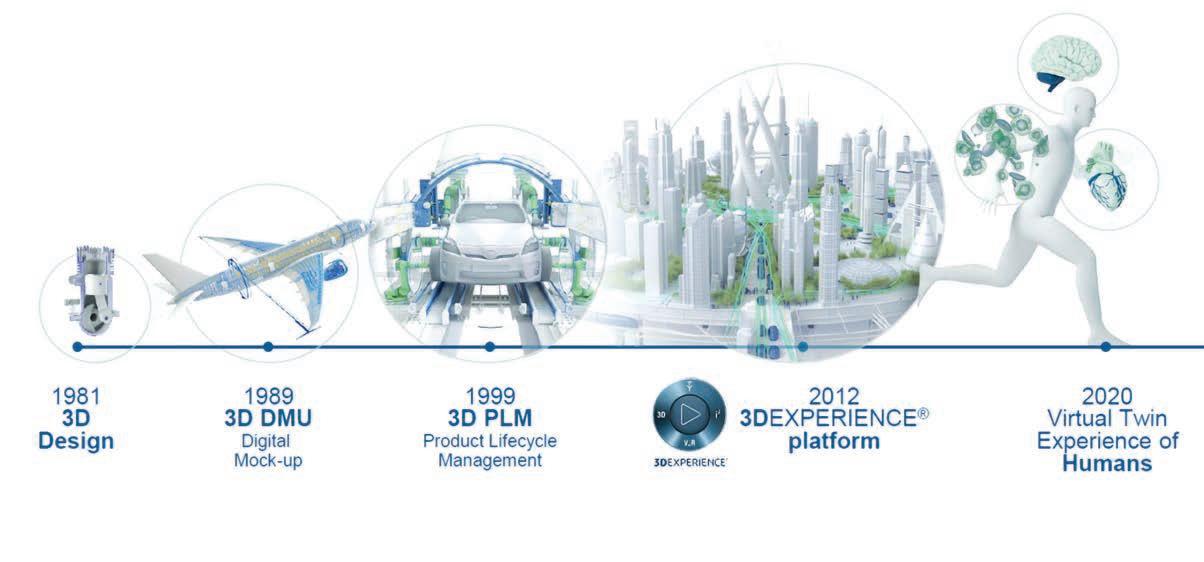
Obviously, people aren’t things but for DS, there does seem to be some carryover of a PLM-mindset. Dassault is already describing its medical platform as a “virtual twin experience of humans,” mimicking the digital twin strategy of CAD. (See figure 1.)
3DEXPERIENCE World 2021
The event formerly known as Solidworks World this year marked the tenth anniver-
Figure 1: The life stages of Dassault Systèmes’ corporate evolution.
sary of Dassault’s ongoing struggle to turn Solidworks into a cloud-based product, one that began with “Solidworks 6”. Users’ collective yawn toward the company’s xDesign-series of CAD apps, added to Dassault’s own missteps, have resulted in a series of failures.
The culture clash between Dassault head office near Paris and Solidworks users in middle-America doesn’t help. Paris doesn’t understand why desktop users wouldn’t leap at the chance to move to the cloud. To them, it’s inexplicable someone wouldn’t want the benefits of sharing with other employees, clients and manufacturers and other 3DEXPERIENCE modules.
Yet, somehow, Solidworks users remain unconvinced. In fact, at last year’s Solidworks World, Dassault executives literally asked the stolid crowd to please applaud for one or another new 3DEXPERIENCE-related feature. From middle America’s point of view, why would a great-working, independent desktop CAD system need a drastic change that would cost more, work differently and depend on a rock-solid Internet connection?
To understand how great-working
Solidworks is, know this: It’s the world’s most popular 3D MCAD system, boasting nearly a million commercial users and a couple more million education users.
During his Q4 2019 earnings conference call with investors and analysts, CEO Charles reported that the company sells 80,000 licenses a year – double Autodesk Inventor – that provided Dassault with 19.9% of its Q4 revenues.
And yet, for 2020, Dassault Systèmes twisted the knife a bit deeper by renaming the beloved Solidworks World as 3DEXPERIENCE World. I don’t know what kind of discussions went on in the background, and maybe none did, but the Americans managed to wrap their own “Solidworks Live” nomenclature around 3DEXPERIENCE World to make the new name look like it was the subsidiary.
As more unhappy news for users, CEO Charles warned during the event that, “we are going to progressively introduce the idea that subscription will be mandatory.”
Every couple of years, Dassault changes the 3DEXPERIENCE-based software it offers and even changes the names, all in the hope this will entice Solidworks users to try 3DEXPERIENCE.
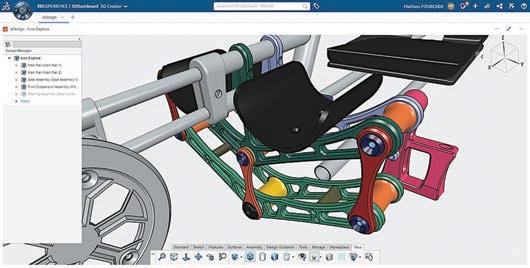
This year, there are now three programs available: Drafter for 2D drawings; 3D Creator for creating and reviewing regular 3D models (includes xDesign); and 3D Sculptor for making organic shapes from 3D meshes (includes xShape). (See figure 2)
Figure 2: User interface of 3DEXPERIENCE software offered to Solidworks users.
CADReport
During Solidworks Live, attendees got to preview a few of the new features coming in Solidworks 2021. The list seems sparse as compared to last year. This could be due to the programmers not having progressed as far, or it could be the result of a new AutoCAD-ization strategy toward Solidworks, in which the new feature set is greatly reduced.
What’s new in Solidworks 2021
When you use silhouette de-featuring in Solidworks 2021 to remove unneeded details, you can now save the silhouette as a configuration within the current model, so it doesn’t need to be stored in a
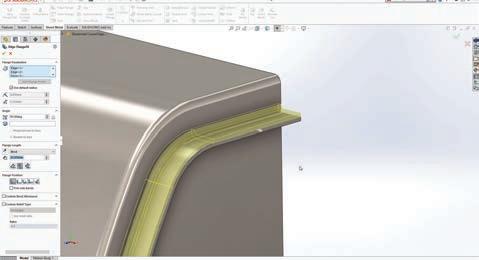
separate file. In addition, the Sheetmetal command lets you place edge flanges on curved tangent edges. (See figure 3.)
The Color Picker lets you sample color from documents in other programs, and then apply the color to the model in Solidworks. This seemingly minor function is surprisingly useful, as I have found using color pickers in other programs.
You’ll also be able to edit legacy dimensions in drawings, as well as create, edit and dimension drafting views, like details and breaks. We’ve seen this level of detailing functions in other CAD programs, so it’s good to see them beefed up in Solidworks. Along with new ways to annotate drawings, you will be able to place hole callouts on holes made by the Hole Wizard and by extruded cuts.
Some tweaks are being made to simulation, such as
getting more accurate results from bonded non-planer contacts that have variations in the meshing. Blended curvature-based meshes are faster and just as accurate. The new release of Solidworks is expected to ship in the fall.
Solidworks is the AutoCAD of the mechanical design world. Both programs are decades old, yet keep on doing what their users need them to do. That Dassault feels compelled to mess with a successful formula remains a puzzle to me, given that ten years of cajoling hasn’t worked.
As a result, it appears Dassault has copied Autodesk’s strategy: Reduce new feature count while mandating subscriptions. Dassault’s CEO thinks even pirates will be converted by subscriptions; Autodesk’s CEO used to think the same.
Solidworks users can take comfort, however. Last month, Dassault’s CEO declared that the 25-year-old CAD program will be around for another 20 years. It seems Dassault has switched its strategy from trying to kill Solidworks to milking it as a cash cow. DE www.solidworks.com
Figure 3: Solidworks 2021 now allows for placing a flange along a curved edge.
SEA EXPLORATION TAKES A NEW TACK
Autonomous surface vehicles play an increasingly essential role in analyzing what’s occurring in the world’s oceans.
By Don Nester
Formany scientists, the next exploration frontier is discovering and retrieving information that can be found in oceans throughout the world. Autonomous vehicles are paying a significant part in the process, and a recent experiment in the Bering Sea just off the border of Canada provided some interesting results.
“From research, it is clear that autonomous vehicles play an important role in the future of ocean observing,” said Noah Lawrence-Slavas, an engineer with the National Oceanic and Atmospheric Administration (NOAA).
Cost, limited data and reliance on manpower are the most important reasons why many scientists are now incorporating autonomous surface vehicles and subsurface vehicles (AUV) to retrieve data.
Lawrence-Slavas and a team from the NOAA used two autonomous vehicles to compare data collected from a noise-reduced research vessel.
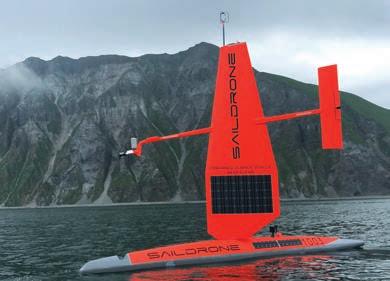
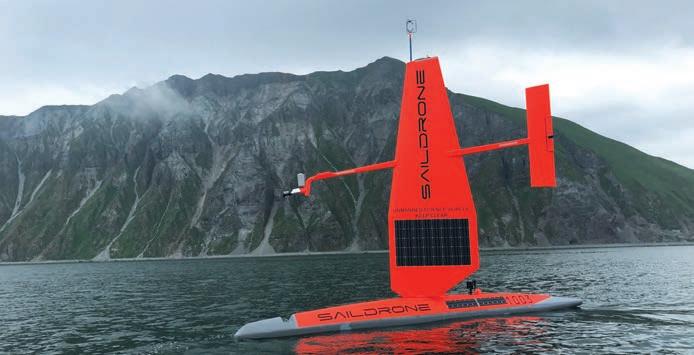
In the project for the NOAA, two wind and solar-powered autonomous surface vehicles, designed and manufactured by California-based Saildrones, were deployed in the Bering Sea – a waterway close to Canada’s western border – for 103 days. They were equipped with echosounders, a type of sonar used to determine the depth of water by transmitting sound waves. The goal was to look deep into the water underneath the autonomous vehicles and measure everything that reflects the sound waves.
The echosounders, made by Simrad, included two components manufactured by igus: chainflex data cables and an energy chain that acts as a bend limiter to increase cable flexure life.
Changing Methods
Ocean observation is taking an autono-
mous turn. In addition to the costs of chartering a ship – which can range up to $35,00 per day – ships can also only collect data along the vessel’s path.
“Ships are very expensive to build, crew and operate,” Lawrence-Slavas said. “The NOAA fleet is shrinking while demand is increasing. In 2017, the NOAA fleet was meeting less than 50 percent of the demand for days at sea. The discrepancy has become greater as we continue to lose capability due to attrition from aging ships.”
Buoys and satellite observations have also been used to collect ocean data, but also have limitations. Lawrence-Slavas said buoys provide excellent time-series information to look at long-term trends.
“But they do a poor job of resolving spatial changes in the ocean, particularly in highly variable coastal regions where you can see significant changes in the ocean over short distances,” he said. Buoys also require ships, which increases costs and contributes to limited ship resources.
While satellite observations are expanding, they cannot see below the molecule thick skin of the ocean. They
also don’t have the resolution needed to resolve many important fine scale processes and lack the accuracy needed for many measurements.
With those limitations and costs involved, ASVs and AUVs are becoming increasingly critical in ocean observation. They reduce ship time requirements and increase the spatial coverage of buoy measurements.
“They are not a 1:1 replacement for ships or buoys, but are more of an augmentation to these traditional technologies in order to expand our understanding of the ocean and to make more cost-efficient measurements,” Lawrence-Slavas said.
Reliable data cables
Data cables from igus played a critical role in gathering information from the experiment with the Saildrone. The cables are used in heavy-duty applications in indoor and outdoor environments. When supported, they have gliding travel distances up to 40 meters and are typically used in high-bay warehouses, machining units and machine tools, semiconductor inser-
Designed and manufactured by California-based Saildrones, these wind and solar-powered autonomous surface vehicles, equipped with echosounder sonar, perform bathymetric surveys in the Bering Sea.
18 PowerTransmission
tion, outdoor cranes and low-temperature applications. They were also equipped with a thermoplastic elastomer cable jacket that withstands the effects of saltwater.
“The power and data cable attaching to echosounder electronics needed to not degrade over the more than five million bend cycles the cable would see in a typical one-year-long deployment,” Lawrence-Slavas said.
Waves cause a lot of movement of the Saildrone, which can impact the data collection essential to the experiment. The energy chains have a high tensile strength and are completely enclosed. They are frequently used in applications that move within two or three axes. To get high-quality data, the echosounder’s transducer (which generates and then receives the acoustic pulses) must be, on average, pointing straight down.
“We needed to remove the Saildrone’s heel from the echosounder’s transducer so we built a hinged mount,” Lawrence-Slavas said. “The two-foot-long energy chains and chainflex cables allowed us to reliably transmit power and receive data through the moving mount.”
Tracking Walleye Pollock
Scientists tracked the movement of walleye pollock, a key species in the Alaska groundfish complex. The species is considered the world’s second most important fish species in terms of total catch. Other fish species, ranging from humpback whales to sea lions to seals, eat walleye pollock to sustain themselves. Since it is a milder taste, pollock is also frequently used in the fast food industry and for the raw material for breaded and battered fish products that are found on supermarket shelves.
Data from the chainflex cables found that where pollock were shallowly distributed, from 30-100 meters, there was depth-dependent avoidance reactions to the ship. But at depths of more than 90 meters, the behavior was not as evident. Comparisons where the USVs and the ship crossed paths were similar, but the Saildrones observed higher densities of shallow fish.
“This study demonstrates that it is now practical to make routine long-term measurements of acoustic backscatter over a wide area with an ASV equipped with an echosounder equivalent to those used in fisheries surveys,” the NOAA team wrote in the ICES Journal of Marine Science.
While the data regarding the movement of fish is valuable, engineers also proved the effectiveness of autonomous vehicles in retrieving data that lies hidden under the ocean surface. When equipped with the right equipment to withstand the ocean environment, autonomous vehicles open the door for a whole new world of ocean discovery.
“The reality of self-driving cars are on the horizon, and we have autonomous surface vehicles, like the Saildrone, that are doing amazing things,” Lawrence-Slavas said. “These vehicles are crossing oceans by themselves, operating in the worst ocean environments. They have the potential to revolutionize both how and what we are able to learn about the ocean.” DE www.saildrone.com www.igus.ca
Don Nester is the chainflex cables product manager for igus North America.
A Continuous Cycle of Improvement
Eigen Innovations’ AI-driven systems optimize quality control and cycle times for automotive, paper manufacturers.
By Treena Hein
Since the advent of manufacturing automation, machine operators and plant managers have dreamed of pinpointing the optimal settings that consistently produced quality end products at the fastest rate.
Although better ways of examining end product quality have come along over the years, it’s been a long and frustrating shot in the dark, for the most part.
That’s partly due to the increasing complexity of manufacturing processes. Additional factors affecting product end quality have come into play; subtle differences in raw materials, more sophisticated levels of automation and even ambient plant temperature can all throw
quality off optimum. But it’s mostly because there’s been no way to collectively analyze all the factors that affect quality and then tie them meaningfully back to machine settings.
According to Scott Everett, CEO of Eigen Innovations, those days of shooting in the dark are over. His New Brunswick-based automation firm specializes in designing AI-driven quality control systems for two key sectors: Paper manufacturing and injection molding for Tier 1 automotive parts manufacturers.
Eigen also serves customers in plastics joining and welding, die casting, sheet metal production and adhesive dispensing.
While all very different sectors, each of those customers’ manufacturing processes can be optimized through a combination of high-resolution imaging, thermographic data and AI algorithms to reduce waste, increase cycle speeds and magnify efficiencies.
“We adapt our platform, working closely with each customer, so that it is configured to enable continuous improvement,” Everett explains. “The first step is to identify all the data that affects end quality. We then put Eigen hardware in place for continuous realtime data collection and ongoing analysis of the manufacturing process, which always uncovers brand new insights.
CanadianInnovator
“Our AI provides machine operators with setting recommendations to achieve process optimization, and also detects quality issues in real-time, allowing for immediate fixes,” he adds. “Over time, the AI begins to predict outcomes before they happen.”
The
road to here
Started in 2012 as a spinoff from the University of New Brunswick’s (UNB)
Intelligent Controls and Advanced Manufacturing Lab, Eigen Innovations was founded by Dr. Rickey Dubay (still a UNB professor) and CEO Scott Everett, who was Dubay’s graduate student.
Today, its customers include four of the top 10 Tier 1 automotive parts suppliers and one of the world’s largest producers of specialty paper products. The firm has about 25 employees and has secured more than $8 million in
Rolling Ring
Zero backlash. Jam-proof design.
funding from angel investors and provincial agencies. The company has also won several awards, including the Cisco Innovation Grand Challenge, Dell ‘Connect What Matters’ and a Kira18.
However, when Everett and Dubay started presenting their solution to manufacturers eight years ago, artificial intelligence was a hard sell.
“AI is becoming common now, but no one had heard of it in 2012,” Everett remembers. “We had to explain how all this data, generated from end product quality analysis, generated by a given machine, could be analyzed by our software to create machine setting recommendations so that target quality levels are reached all of the time. To many early customers, it seemed fantastical.”
• For applications in positioning & reciprocating motion
• Zero play –even during reversal Distributed by Amacoil, Inc.
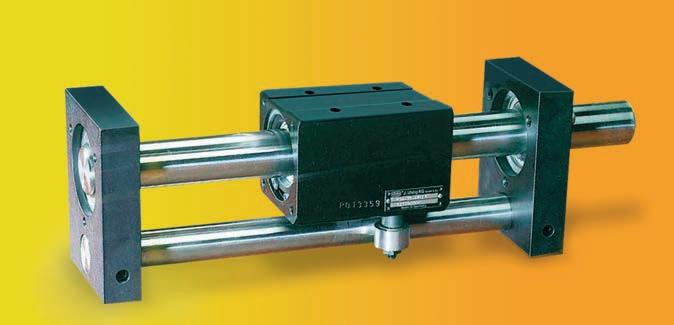
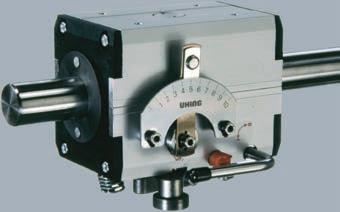
Uhing® Rolling Ring linear drives run on a smooth, threadless shaft that won't clog or jam. If the system is overloaded, the shaft simply slips instead of churning and grinding. The drive bearings are in constant contact with the shaft, even during reversal, thereby preventing backlash.
Example applications: metrology machines, material handling systems, spooling equipment, packaging & converting equipment.
Many different sizes meet varying requirements for axial thrust & linear speed.
For more information call 1-800-252-2645
Email: amacoil@amacoil.com www.amacoil.com
Some models feature mechanical control over speed and travel direction. No programming or electronic controls are needed.
Of course, achieving those results depends on capturing good raw data. First, AI need to discern the ins and outs of a particular manufacturing process. Only then can it then analyze the captured data and turn it into information operators can act upon.
Early on, Everett says getting good raw data to the AI was the primary challenge. The team first had to find the right camera combination to capture ultra-resolution images as products came off the line.
As it turned out, this real-time analysis was key to the process. Typically, the quality of injection-molded parts is analyzed hours after parts come off the machine, when the material has already set. In die casting and sheet metal manufacture as well, defects are typically only visible later. Eigen’s high-res imaging, however, makes it possible to analyze quality differences right away.
“What makes it complex too is that each setting usually affects the others,” Everette explains. “For example, injection molding operators can change the rates at which the plastic is heated and squeezed. That means our algorithms need to be able to tease out what mix of settings is best – taking into account different batches of materials, the moisture content of raw material, the ambient plant temperature – to try to hit the ideal speeds at various parts of the process.”
Detecting quality issues is also hard in many manufacturing situations, Everett explains, because a finished part often
goes through multiple steps before it’s integrated into a final product. Quality problems sometimes only emerge when these parts are being installed. And because parts don’t usually have a barcode or any other way to trace them, it’s difficult to know what manufacturing parameters were out of whack.
While Everett reports that parts traceability is evolving, he says that, “when our system is in place, there are no more quality issues to detect later on because we’ve identified them at the machine level and fixed them at that point.”
He adds that once quality issues have been tackled, manufacturers can then increase cycle time as much as it can be increased without crossing the line to where quality drops.
Looking forward
Today, Eigen’s challenges are more like opportunities to take advantage of technological advancements, allowing their customers, in turn, to realize bigger benefits and faster ROI.
“AI computing power continues to
increase and imaging also, as more computing power allows for faster and better analysis of the high-res video,” Everett explains. “The ‘edge computing landscape’ has also evolved so that very deep AI platforms can be run at any plant.
“We continually improve the AI’s programming so that it refines its definition of target quality and what process parameters produce that quality,” he adds. “Again, that allows us to push cycle time and make the cost return shorter.”
Everett says costs for customers are also kept to a minimum through Eigen’s standardized solutions. “Each plant is different but we’ve focused on the deep
SHIPPING SUPPLY SPECIALISTS
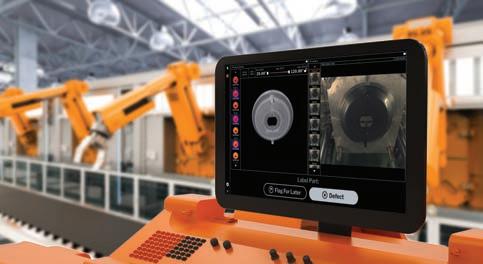
Eigen’s HMI provides operators with machine vision images and data relating to each part being manufactured. Connected to Eigen’s online platform, the HMI relays alarms or alerts when Eigen’s algorithms detect defects or quality issues.
vertical applications that are very scalable across the industry,” he says, “and that helps drive adoption.”
In 2020, it’s now common for companies to ‘orient themselves to data,’ he says, hiring leaders who understand the power of leveraging real-time feedback.
“It’s a big shift and we’ve had to figure out how to implement our system so that it scales with it’s a core technology,” he says. “But the use of high-resolution imagery is growing across many sectors and the number of true AI applications is going up. It’s creating a critical mass.” DE https://eigen.io
22 IdeaGenerator
Automation
Mobile Robot
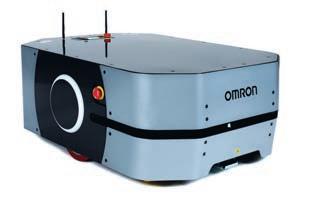
Omron has released its LD-250, the company’s strongest mobile robot capable of transporting payloads of up to 250kg. Its structure is optimized for items like transmission blocks, automotive seats and voluminous packaging materials that are bulky as well
as heavy. Omron’s Fleet Manager enables the control of multiple mobile robots with different payloads through a single system. The system can manage traffic, battery charging requirements and vehicle navigation for a fleet of up to 100 robots. LD mobile robots can avoid people and obstacles while automatically calculating the best routes to transport material. The LD-250 is also customizable with special conveyor tops, courier systems and adaptive material handling mechanics. It’s also compatible with the High Accuracy Positioning System (HAPS), side lasers and the Acuity vision localization technology.
https://automation.omron.com
EtherCAT Box
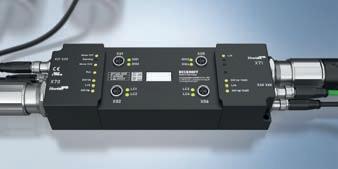
Beckhoff Automation released its EP7402 EtherCAT Box to enhance control and cabling efficiency for motor-driven roller (MDR) conveyor systems. The controller is a two-channel motor output stage for BLDC motors and features zero-pressure accumulation (ZPA) logic in its firmware, programming in the TwinCAT 3 and EtherCAT communication. Measuring 174mm x 60mm x 36.5mm, IP67-rated controller mounts in standard C-channel or L-brackets and features One Cable Automation (OCA) via two B23
ENP hybrid connectors. It also has multiple M8 sockets to support two MDRs per device and digital I/O for peripheral sensors, vision systems or junctions to EtherCAT Box modules.
www.beckhoff.com
10 Gigabit Ethernet Switch
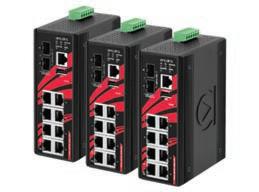
Antaira Technologies introduced its LMP1002G-10G-SFP, LMP-1002G-10G-SFP-24, and LMX-1002G-10G-SFP industrial-grade 10 Gigabit managed Ethernet switches. The LMX-1002G-10G-SFP will run at 1000mbps speeds when faster SFPs are placed at both ends of the fiber. The link can be upgraded to 10Gbps speeds. For applications that require PoE, the LMP-1002G-10G-SFP provides up to 30W per port and two SFP+ slots with speeds of 1000Mbps or 10Gbps, depending on the SFP used. DIN-Rail or wall mount are supported. The 10 gigabit Antaira switches are fully managed with Light Layer 3 capabilities. The management software allows for redundancy which can be built into the network using Spanning Tree, Ethernet ring technologies or other available redundant features. www.antaira.com
Power Transmission
Machine Brake
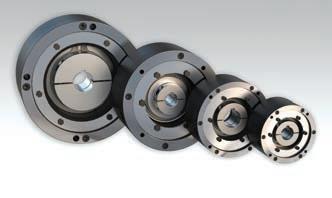
Nexen Group, Inc. released its Zero-Backlash Spring Engaged (ZSE) brake family capable of zero-backlash up to 100% of its rated holding torque. The pneumatically-released ZSE comes in four different sizes (450, 600, 800, 1000) with bores in three standard sizes. The brake line also offers an optional
internal sensors to provide feedback and data. The ZSE line handles speeds up to 5000 RPM with a holding torque up to 300 Nm. Customizable to a range of shaft diameters, the brake integrates a zero-backlash clamp collar.
www.nexengroup.com
Plastic Bearing
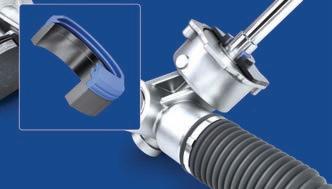
Freudenberg Sealing Technologies has introduced a machine component that combines a plastic rotating bearing with a seal in a single unit. The rigidity of the unit’s integrated plastic bearing is higher so that its deflection is reduced by nearly 50 percent when lateral
forces are exerted, while the seal has 35 percent less friction. The weight of the overall solution is reduced by as much as 80 percent through integration. The component operates in a temperature range of -40 to +125°C under mechanical stress and extreme cases, such as direct exposure to high water pressure.
www.fst.com
Linear Rail
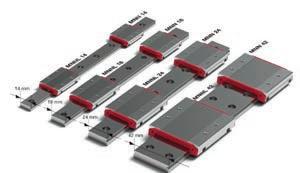
Schneeberger now offers its MINIRAIL profiled miniature guideways designed for medical equipment, additive manufacturing and other high acceleration and/or extreme load and space-limited applications. Available in eight rail widths and four carriage lengths, the line includes two accuracy and preload classes. With heavy-duty ball recirculation units embedded in the carriages, the MINIRAIL has acceleration values of up to 300 m/s2 and speeds of 5 m/s. They can also accommodate extremely high centrifu-
gal forces and are constructed of corrosion-resistant, hardened steel. www.schneeberger.com
Motion Control
PLC Modules
AutomationDirect has added higher amperage relay output modules and an 8-point input simulator module for the company’s CLICK series stackable micro brick PLCs. The CLICK C0-04TRS-10 is a 4-point, 10A per
point, isolated relay output module with 4 Form A (SPST) relays and 4 isolated commons. Operating voltage range is 6-24VDC / 6-240VAC. The C0-08TR-3 is an 8-point, 3A per point, relay output module with 8 Form A (SPST) relays and 4 isolated commons. Operating voltage range is 6-27 VDC / 6-240 VAC. The C0-08SIM input simulator module provides 8 toggle switches to simulate input devices, 8 logic side green status LED indicators and an LED power indicator. www.automationdirect.com
Digital Servo Drive
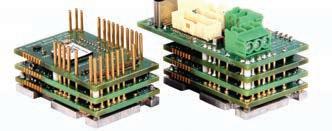
ADVANCED Motion Controls has added three FM series models to its FlexPro servo drive family. Featuring stacked circuit boards minimize footprint, all of the micro-sized (8 x 25.4 x 26mm) drives are equipped with an additional interface board that integrates via Phoenix and Molex connectors. The FM0605-EM and FM060-10-EM are connected to the power supply and motor using screw terminals while the FM060-25-EM features pre-soldered connection leads. Features include incremental encoder and BISS
IdeaGenerator
C-mode feedback; torque, velocity, and position operating modes; and configuration and full loop tuning. All accept 10-55VDC input but supply varying output: 5A continuous, 10A peak (FM060-10-EM); 10A continuous, 20A peak (FM060-10-EM); 25A continuous, 50A peak (FM060-25-EM). www.electromate.com
Industrial Microdrive
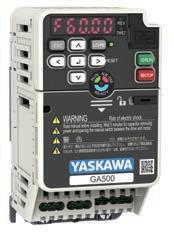
Yaskawa America, Inc. unveiled its GA500
Industrial Microdrive rated up to 40 hp and can be applied to 240VAC single-phase, 240VAC three-phase or 480VAC threephase incoming power. RoHS2 compliant and TUV safety rated, the drive is [UL] rated to accept
DC as its primary power source. The GA500 can operate a variety of motors, which include induction, permanent magnet (SPM and IPM), and synchronous reluctance (SynRM). The GA500 offers a variety of industrial protocols, including EtherNet/IP, PROFINET, Modbus TCP/IP, and EtherCAT. DeviceNet, PROFIBUS and Modbus RTU (embedded) are also available. The drive can be programmed without main power applied using Yaskawa’s mobile app, DriveWizard Mobile.
www.yaskawa.com
Yaw-Pitch Stage
We understand how you strive for constant product quality and optimized costs.
CONSISTENT + CONFIDENT
traceability ensured with calibration services
Do you want to learn more?
www.eh.digital/calibration-de_ca
You are poised to meet your safety and quality requirements while optimizing resources and securing process repeatability.
Improve your plant availability, and ensure quality with optimized calibration
• Traceable on-site and laboratory calibration of various parameters
• We are a leading manufacturer of process instrumentation – uniquely qualified to calibrate
• Our global, harmonized calibration standards provide consistent service quality
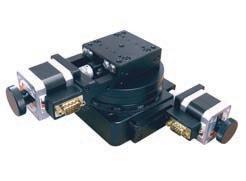
Optimal Engineering Systems, Inc. (OES) has introduced three high accuracy Yaw-Pitch stages: the YP110-10-01 (stepper motor driven), YP110-10-02 (brushless servo motor driven) and YP110-10-03 (DC servo motor driven). The line has cross roller guides and a range of travel of +/- 10 degrees. The maximum speed is 14 degrees per second with the stepper motor-driven version and 90 degrees per second with the servo motor driven versions. The 65mm x 65mm table has a precise pattern of threaded holes for fixtures or tooling and has an accuracy of 0.05 degrees and repeatability of +/- 0.01 degrees. The yaw stage is capable of rotation of large angles and features a 180:1 ratio gear. The positional accuracy is 0.05 degrees and repeatability is +/- 0.01 degrees.
www.oesincorp.com
Sensors
Mobile Angle Sensors
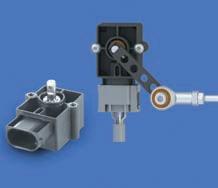
Novotechnik, U.S. introduced its RSA3200 Series of Hall effect angle sensors that feature auto-diagnostics, fully redundant versions and ultra-EMC tolerance. The sensors’ measurement angle is factory programmable for a range between 60° to 360°. Output versions are CANopen, SAE J1939 as well as analog: 0.25 to 4.75, 0.5 to 4.5V and 4 to 20mA. Resolution is 12- or 14-bit and repeatability is typically ≤ ±0.36° for
CANopen output and ≤ ±0.1° for all other outputs. The sensor features a IP67/ IP69K rated housing and a stainless steel D-shaft. The series conforms to ISO 11452 and ECE standards for EMC immunity including pulses and interference fields. Operating temperature range of the RSA3200 series is -40 to +125°C, withstands shock and vibration up to 50g and 20g respectively. Life is >30 million movements and MTTF is ≥ 300 years. www.novotechnik.com
IP69K-Rated Sensors
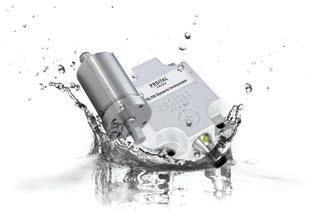
POSITAL has expanded its product line to include more rotary encoders and inclinometers with a IP69K protection rating. To qualify for this rating, a device must be able to withstand water spray at pressures up to
10,000 kPa/1450 psi and temperatures up to 176°F/ 80°C) for at least two minutes. The sensors also come in a wider range of mechanical options and communications interfaces. In the case of encoders, this includes more shaft diameters and more flange types – hub and square. For both encoders and inclinometers, the range of available interfaces now includes analog, CANopen, J1939, SSI, Modbus and IO-Link. Incremental encoders are also available with HTL/TTL serial interfaces. www.posital.com
Magnetic Encoder
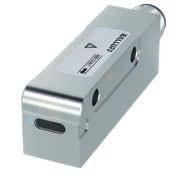
Balluff released its SGA series of BML absolute magnetic encoders that feature a DriveCliq interface that integrates with Siemens controller environments. The controller automatically detects the sensor and its basic settings. Since the system works magnetically, it is insensitive to temperature change, dirt or wear. The compact mea suring system features a read distance of 1.3mm, continuous plausibility
checking and automatic condition monitoring, as well as status LEDs and diagnostic functions. The linear measuring system is accurate to ± 12µm and a resolution of 1µm and is suitable for measuring lengths up to 48 meters.
www.balluff.com
Position/Displacement Sensor
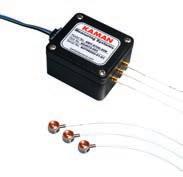
Kaman Precision Products announced its SMT 9700 position/displacement system. The sensor technology provides nanometer to sub-nanometer resolution. Available with 13 standard sensor options, the SMT 9700 system also enables users to customize sensor type and configuration, cable length, calibration range and offset, as well as performance attributes, linearity, bandwidth and temperature. The sensor is available in 1, 2 and 3 channel configurations. With the 3-channel option, all channels can work off the same frequency and be tuned together.
http://kamansensors.com
Canadian Fluid Power Association YOUR success today OUR INDUSTRY’S success tomorrow
2020 AGM—June 10-13, New Brunswick
Join senior management teams from fluid power companies across the country at the 2020 CFPA AGM, taking place in St. Andrews by the Sea from June 10-13. We will be staying at the Algonquin, one of Canada’s most luxurious and legendary resorts. Rich in history, the resort has been meticulously restored to its original splendor.
The CFPA AGM revolves around the exceptional collection of keynotes from leaders in the fluid power and economic industries. Each Pillar of the Canadian Fluid Power Association is represented by an industry professional with insightful words on leadership, economics, industrial regulations, marketing and education, to name a few.
Market insight is a hot topic at the AGM, and as a leader in your industry, you want to know about microeconomic trends that affect your fluid power industry, as well as the macroeconomic conditions affecting Canada, North America and the rest of the world. We will have more than one keynote speaker addressing market insight relevant to our specific industry and beyond. Here’s a taste of a couple of our fantastic keynotes for the 2020 AGM:
• Max Wandera, director of Eaton’s Cybersecurity Center of Excellence, will talk about why it’s so important for companies to be thinking about cybersecurity. As more connected devices are introduced into critical infrastructure applications, a standard threshold of safeguards will be required to operate effectively. It will be up to the industry to drive what that standard should be.
• Robert Hawke, Comedian: Our opening keynote: Laugh It Off: Harnessing Humour at Work, will teach your team how to use humour to reduce their level of stress, improve their mental health and increase their productivity. Using the core values of improvisation and over 20 years of experience as a comedian, Robert Hawke will show your team how to use laughter as their secret weapon at work. Rob is a cancer survivor who learned these techniques to overcome depression and anger and will inspire you to overcome all of life’s challenges as well!
Visit our website for a complete list of AGM speakers and activities.
Networking is a key benefit of association membership and this is the perfect opportunity to form new relationships with senior leaders in the fluid power industry. With the right mix of business topics and networking you will leave the AGM better informed, connected, and engaged in a host of new ideas.
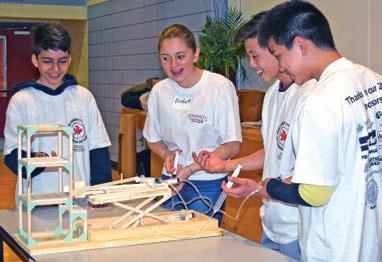
The CFPA National Fluid Power Challenge
In order to help members with the never-ending problem of finding new talent, CFPA created the National Fluid Power Challenge. This both educates students about the industry and allows them the opportunity to have some “hands on” experience in real world applications. Students can participate in any part of Canada and in either English or French. They build a hydraulically-actuated device, document their design process and submit a video of their device in action and their design portfolio to a national panel of judges for evaluation. Winners are declared for both overall performance and for best design portfolio. We hope this will encourage students, and their parents, to keep fluid power careers in mind and continue with the STEM curriculum.
Not a Member? Join Today!
IFPE unflagged by COVID-19, organizations say
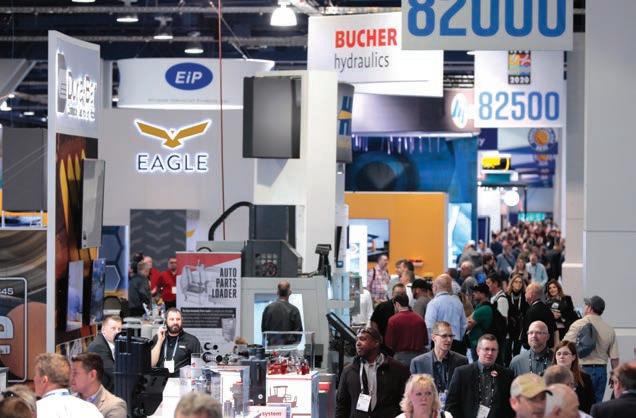
According to organizers of the CONEXPO-CON/AGG & IFPE held in March, the show was a success, despite closing down a day early due to concerns over the spread of COVID-19. Held every three years, the expo hosts exhibitors of the latest construction industry and fluid power equipment, services and technologies. This year’s show covered 2.7 million-plus net square feet of exhibits and featured more than 2300 exhibitors from the U.S. and global manufacturers.
Overall, registration totaled 130,000, organizers said, with cancellations from international attendees totaled less than 1 percent. In addition, U.S. buyer attendance increased 8 percent from the 2017 show, while total buyer attendance improved by almost 5 percent and overall contractor and producer attendance grew by 14 percent.
“The crowd was much better than expected under the circumstances and most importantly, the right buyers were on
the show floor,” said IFPE Show Chairperson David Price, Global Marketing Manager of HydraForce Inc. “We were very pleased with the strong showing from the 300-plus exhibitors at IFPE 2020, and we are looking forward to the 2023 show.”
With growing concerns about COVID-19, show management said they worked closely with the Las Vegas Convention and Visitors Authority and the Southern Nevada Health District to help reduce the spread of germs and enable show participation to stay healthy onsite at the show.
www.conexpoconagg.com
2019 a mixed bag for fluid power, NFPA data shows
According to data published by the National Fluid Power Association (NFPA), 2019 had its ups and downs. Domestically, the industry experienced an off year across all segments, mobile hydraulic, industrial hydraulic and pneumatic.
Shipments of fluid power products for January 2020 decreased 11.5%, the association said, when compared to January 2019 but increased 16.4% when compared to the previous month (Dec 2019). The NFPA’s data is collected from more than 80 manufacturers of fluid power products
through NFPA’s Confidential Shipment Statistics (CSS) program.
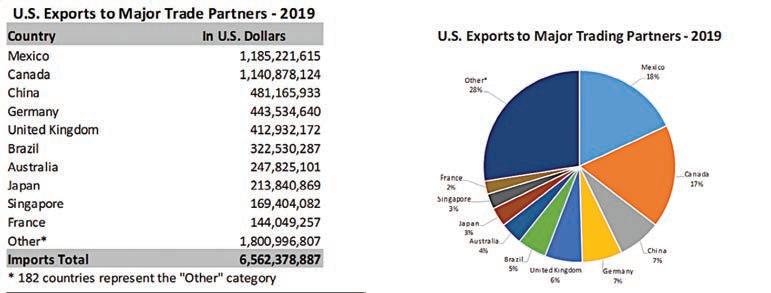
At the same time, the fluid power industry had a record setting year in terms of exports, the NFPA said, despite a declining domestic fluid power market and the uncertainty caused by unstable trade policies and tariffs throughout the year. In total, U.S. fluid power products exports reached a record high of nearly 6.6 billion dollars in 2019, edging out 2018’s total by .2 percent.
Despite the top two trade partners, Canada and Mexico, changing positions, the list shows very little change. The top five partners represent more than half of the industry’s exports at 56% while the top ten trading partners represent 73%. The remaining 27% of exports is divided among 182 other countries.
www.nfpa.com
Hydraulics startup scores Quebec grant Danfoss to acquire Eaton’s hydraulics business
The Canada Economic Development for Quebec Regions (CED) announced financial support for Sainte-Anne-desMonts-based start-up, GenHydrau. Launched by engineer Gilles Cloutier and his partner Danny Collin, the company specializes in the design, machining and assembly of hydraulic manifolds and other hydraulic systems.
In support of its launch, GenHydrau will receive a repayable contribution of CAD$105,000 from CED to acquire production equipment, including a CNC machining centre to manufacture hydraulic manifolds in large quantities and with a short turnaround. The funds have been granted under CED’s Regional Economic Growth through Innovation program.
“To compete in the hydraulics sector, we must turn towards new technologies and innovation to manufacture quality products,” said Cloutier. “To achieve this, we must equip ourselves adequately. I am pleased and proud to be able to count on a partner such as Canada Economic Development to support us in our launch.”
genhydrau.com
QUICK RELEASE COUPLINGS
Poppet Check Valves
Manually retracted to connect, or disconnect.
With rubber poppet seal for improved sealing when disconnected. Push/Pull Sleeve
Can be moved in either direction to connect, or disconnect. Single Acting Sleeve
Engineering excellence, customer focus and highest quality products continue to attract new clients from numerous industries. RYCO continues to provide quick release coupling solutions to meet customer demand. RYCO carries pneumatic, hydraulic and specialty couplings in a diversified offering of ball lock, poppet, flat face and screw to connect types.
Danfoss announced it will acquire Eaton’s hydraulics business for US3.3 billion, as part of a strategy to strengthen its core businesses.
“Today, we take a significant and transformational step in creating a global leader in mobile and industrial hydraulics,” said Kim Fausing, Danfoss President and CEO.
“We believe Eaton’s Hydraulics business will benefit greatly from being part of a company that has hydraulics at its core,” said Craig Arnold, Eaton Chairman and CEO.
According to Danfoss, Eaton Hydraulics will be transferred into the existing Danfoss business segment, Danfoss Power Solutions, adding approximately 11,000 employees and 2019 sales of US2.2 billion, which will double its hydraulics business. The transaction is subject to customary closing conditions and regulatory approvals and is expected to close by the end of the year. www.eaton.com www.danfoss.com
A
TWISTED PAIR
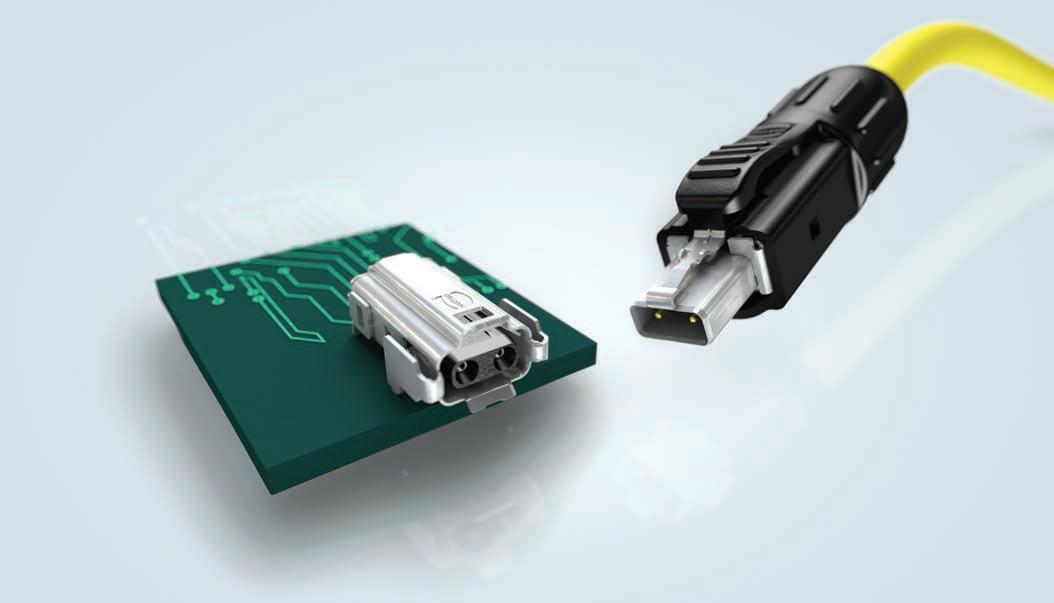
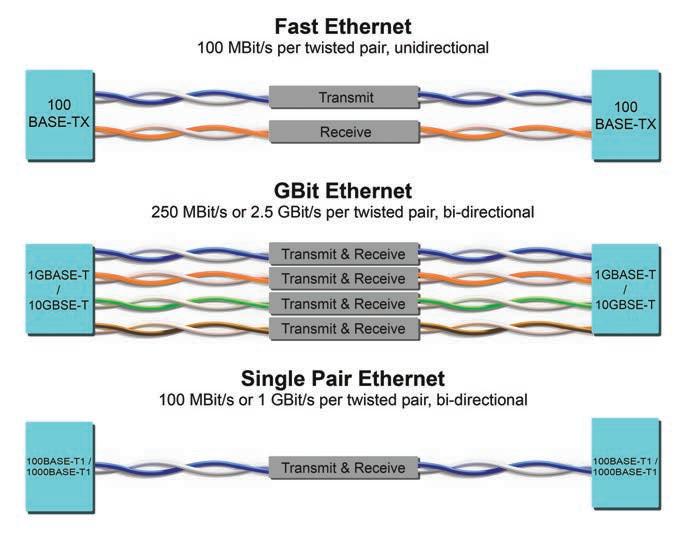
Single Pair Ethernet (SPE) is about to take off as a transformative technology for unlocking the full potential of the digital revolution in industry. Rather than the two or four pairs of twisted copper wires in conventional Ethernet, SPE uses just one pair to deliver high speed data –100Mbit/s (100BASE-T1) and 1Gbit/s (1000BASE-T1) – over distances up to 15 or 40 meters respectively or 10Mbit/s (10BASE-T1) up to 1,000 metres. That single twisted pair also can deliver data and power (up to 50W) simultaneously. With such capabilities, a myriad of benefits await.
Foremost, SPE offers the fastest, simplest and cheapest solution to connect every small device on the shop floor to the cloud via Ethernet. The digital manufacturing environment will require hundreds, even thousands of these smart sensors, actuators, vision systems, switches and
Single Pair Ethernet cable promises to supercharge Industry 4.0
By Jon DeSouza
controls to collect data vital to functions like process monitoring and optimization, flexible manufacturing, real-time energy management, predictive maintenance and enhanced worker safety.
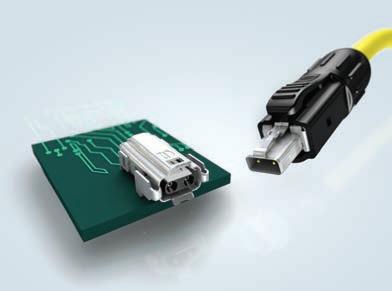
With only a single pair of wires, Single Pair Ethernet cabling is thinner and takes up much less space than cabling for conventional Ethernet or bus system. Connectors and sockets are similarly smaller. For example, the socket width for Harting’s T1 Industrial (IP20) – the basis for the new global SPE interface standard – is 9.4mm (0.37in.), and the interface itself is 3.1mm x 6.1mm, ideal for connecting even the smallest IIoT devices.
With less copper, SPE cabling is also lighter and cheaper. In transportation modes, widespread usage of SPE cabling translates into less energy used in propulsion. In articulated robots, thinner cables provide more flexibility with regards to
bending radius and the promise of a longer service life; the thinner the cable, the more it can withstand bending and torsion cycles.
On a network level, Single Pair Ethernet can end the inefficient interpolation of different transmission technologies within a plant. With its lower cost, greater speed, standardized content and plug & play capability, it has the potential to replace all fieldbus systems. Manufacturers of automation products wouldn’t have to develop variants for multiple fieldbus protocols, just Ethernet.
In late-January, Harting’s T1 Industrial interface was formally recognized by the IEC as the IEC 63171-6 standard for an SPE connector for industrial and outdoor environments (M3I3C3E3). MICE stands for Mechanical, Ingress, Climate and Electromagnetic – M3I3C3E3 is the classification for a worst case industrial envi-
ronment. This mating face is fully bracketed by global standards, including transmission and cabling. A separate IEC standard for a connector from CommScope for building environments [M1I1C1E1] has also been adopted.
This IEC connector standard has been incorporated into ISO/IEC cabling standards and endorsed by other international bodies such as TIA 42. Power transmission – Power over Data Line (PoDL) – has been standardized by IEEE 802.3bu-2016. PoDL establishes 10 power classes from 0.5W to 50W.
For the most part, Single Pair Ethernet won’t replace conventional two and four pair Ethernet, which continues to produce even faster speeds – well into the Terabit range – and other performance enhancements. Rather, SPE’s true calling is to serve where its comparatively modest speeds, smaller size, lighter weight and lower price point make it the practical choice for meeting new IIoT connectivity needs.
That, in turn, will cement the astounding growth of Ethernet in industry. As recently as 2014, fieldbus accounted for 71% of all new nodes installed globally, with 29% for Industrial Ethernet. By 2019, that had largely reversed, with 59% of new nodes being Ethernet and 31% fieldbus. (Wireless installations remain flat with a 4-6% annual share of new nodes.)
Though Harting has been playing a lead role in promoting SPE for the industrial space, Single Pair Ethernet is generic rather than proprietary technology and promises to offer plenty of competitive options in all product categories. It has the enthusiastic support of all major stakeholders in the industrial space: Cabling and patch cord companies, connector manufacturers, chipset makers and software developers, etc. Many are participating in partner groups, that include some of their competitors, to promote SPE development and implementation.
In conjunction with six other companies, Harting launched the Single Pair Ethernet – Industrial Partner Network. Other members include TE Connectivity, Hirose, Leoni, Murrelektronik, Würth Elektronik, Softing IT Networks, Igus, Dehn, Helukabel, Molex, Amphenol, Lütze, Escha, Perinet, EKF and Zheijang.
Others are taking different approaches
to the same end, but further development by serious players is expected to occur entirely within the framework of globally recognized standards.
So, when and how does SPE reach the wider marketplace? With standards covering transmission, cabling and connectors now in place, device manufacturers are proceeding with the initial stages of developing components to which it can connect.
Harting introduced T1 Industrial with an IP20 model. IP65/67 versions in M8 and M12 formats which use snap-in technologies are planned for this year. M8 and M12 connectors using screw-in and pushpull locking will follow.
The innovation R&D groups at major suppliers are considering how to add it to their product portfolio. They need connectors to test designs, then build prototypes they can use to demonstrate their SPE products to end users. That’s the major market for T1 Industrial connectors today.
When will Single Pair Ethernet see widespread usage in industrial automation? Perhaps 2-3 years, says Joachim Finke, head of global product management, network interface connectors, at Harting.
“Today, you need chipsets that are special to Single Pair Ethernet to proceed with development,” says Finke. “There are prototypes of those chipsets, but as far as we know, the first serious produc-
tion chipsets will be launched at the end of 2020. And then companies will be able to be more concrete with their R&D developments. It will still take a little bit of time, but I think in 2-3 years at the latest, we’ll see products based on Single Pair Ethernet.”
Early adopters include automotive, which promoted SPE to replace heavier, bulkier CAN bus harnesses. Agriculture – smart farming – industrial automation, and building automation are among other early adoption candidates. Large end users will begin testing it in parts of their operations. However, it will take a bit longer for a wide enough range of components to emerge for SPE to enter into general use in industry.
When it does, it will present system designers with possibilities for reorganizing data flows in an IIoT environment, including how devices and processes are controlled. The traditional automation pyramid, with its PLC-dominant control level and SCADA/DCS-defined operations level, may not be a pyramid at all in future iterations of IIoT architecture. There are no preconceived notions of what that future should look like. How you imagine it is entirely up to you. DE www.harting.com
Jon DeSouza is President and CEO of Harting Americas
32 FluidPower:Hydraulics
HYDRAULICS Five Surprising Facts About
The capabilities of modern hydraulics that younger automators may not realize.
It’s often the case that younger designers and engineers have hardly any experience of hydraulics as part of their training. They’re primarily concerned with software and think along digital lines. They are only really interested in the movements and the resulting data.
Hydraulics come into their own whenever large forces and robustness are required, however many young designers are not very familiar with this technology. Here are some facts showing why the use of modern, connected hydraulics is easier and more cost-effective than many realize.
Ready-to-Install
These days, designers no longer have to have in-depth knowledge of fluid mechanics and fluid technology or deal with a plethora of individual components. They are increasingly using “plug and produce” modules such as servo-hydraulic axes with their own decentralized fluid circuit and a variable-speed pump drive.
These ready-to-install modules simply need to be supplied with a current and connected to the control communication. Here’s why it makes sense: There is no drive technology that is more efficient, compact and robust than hydraulics at forces in excess of 400kN.
Tried-and-Tested
Smart, connected hydraulics are commissioned with the same engineering tools as electric drives and control systems. Functions previously carried out hydro-mechanically have long been handled by drive software instead.
What’s more, software assistants guide technicians logically through the commissioning process and even suggest suitable parameters. What’s important are the necessary forces; the rest is the same.
Energy efficient
Until around a decade ago, power consumption was not a major consideration in mechanical engineering and plant construction. Hydraulic power units were constantly driven and provided maximum power at all times even when they were not needed. The preconception that hydraulics are more energy-intensive than other technologies therefore stems from that era.
However, things have changed. Variable-speed pump drives generate the flow in line with demand and reduce speeds accordingly under partial load conditions. Compared to constantly driven pumps, they reduce power consumption by up to 80 percent – to a level consistent with that of electric drives of the same size.
IIoT Connected
Smart, connected hydraulics are extremely capable of communicating. As such, they depict the various stages with fine scaling: Analog valves are very cost-effectively made digitally visible with IO-Link and exchange data with the control system. Smart valves with their own control electronics and field bus connection are just as convenient as electric drives. They are commissioned, operated and diagnosed via software. Plug
and produce modules with their own control system also directly provide an OPC UA client/server for communication with higher-level IT systems. As such, connected hydraulics are already part of IIoT in production.
Easy to Maintain and Diagnose
What is the difference between electric current and hydraulic oil? One can only be measured whereas the other can be measured, sensed and seen. This is an advantage when you need to find out about operating states and deduce possible wear and expected life cycle on that basis.
With a few pieces of sensor data – such as pressure differential, oil temperature, optically measured contamination or pressure increase over time – software can very accurately assess the condition of the system. Rexroth directly includes this kind of evaluation logic with the latest generation of hydraulic power units.
As one of the world’s leading suppliers of drive and control technologies, Bosch Rexroth ensures efficient, powerful and safe movement in machines and systems of any size. The company bundles global application experience in the market segments of mobile applications, machinery applications and engineering, and factory automation. DE www.boschrexroth.com
Variable speed pump drives can reduce energy consumption of their machines by up to 80 percent, while also reducing noise levels. IMAGE SOURCE: BOSCH REXROTH AG
Rodless Linear Drive
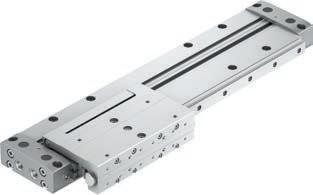
Festo introduced its DLGF rodless linear drive that features the company’s proprietary self-adjusting end-cushioning (PPS) standard. Available in both non-guided and recirculating ball bearing-guided versions, the DLGF comes with multiple pneumatic connection options at different locations: Left or right side, both ends or from below. With the guided KF version, there are two different slide interfaces: One on the top for mounting pneumatic slides, and one on the side for mount ing up to three ADN pneumatic compact cylinders. Two DLGF drives of the same size can be coupled together, although they can have different stroke lengths. www.festo.com
Air Preparation
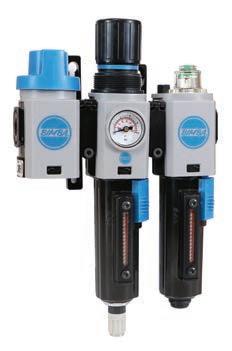
Bimba announced it has added a Premium series (PG) to its AIROS family of air preparation products, including compressed air filters, regulators, lubricators and accessories. In addition to new microfog lubricator and vapor removal filter options, the PG series features enhanced safety features; all bowls utilize dual locks to ensure the bowl is in the correct position every time. Filter in the series employ a single complete element assembly that can be removed for replacement. The PG series is also compatible with Bimba’s Herion line of safety valves with soft start functionality. www.bimba.com
Proportional Valve
Clippard released its Eclipse stepper-controlled proportional valve that features a patent pending ceramic sliding seal and allows for custom flow profiles. Designed for industrial automation applications
requiring ultra-fine resolution and repeatability, the valve is liquid and air capable with flow resolution to 0.19 ml/min water and 0.007 l/min air max at 30 psig. It has zero dead volume and is leak free (< 0.05 sccm) with linearity at <4% of full-scale and repeatability at <0.5% of full travel.
www.clippard.com
Swing Piston Pump
KNF launched its NPK 06 swing piston micro gas pump that measures 1.85 inches (47mm) wide, but produces free flow up to 8 L/min and pressure up to 80psig (5.5 barg). The latest addition to the company’s NPK swing piston pump series offers a 63% increase in flow-to-size ratio compared to the existing NPK 03 model. The full line offers 3 - 78 L/min flow with up to 80 psig (5.5 barg) pressure. NPK 06 is available with 2- or 4-wire brushless DC motors. Standard offerings include PTFE, FPM and PPS wetted components. The company can optimize pump solutions to meet customer requirements.
www.knfusa.com
Data Logger
Parker Hannifin introduced its SensoControl ServiceJunior with data logger that mea sures, displays and stores pressure data in a single device. Featuring a metal housing and a 4.5-inch digit display, the ServiceJunior provides a sampling rate of 10ms. The device’s MIN/MAX function can automatically store min/max pressures, then recall them at the push of a button. The optional data logger with realtime clock records both current measured values and min/max values. Automatic data compression of start/stop functions elimi nates the need for calculations and configuration. Measurements of up to 24 hours can be started at the
FluidPowerShowcase
push of a button and data can be transmitting, via a built-in USB interface, in standard CSV format. www.parker.com
Hydraulic Hose
Gates unveiled its high-pressure MegaSys MXG 4K hydraulic hose that’s qualified to one million impulse cycles at high temperatures (121ºC/250ºF). According to the company, the MXG 4K is 40% more flexible and 30% lighter weight than conventional spiral hoses. The hose line is also, on average, 8% more compact, the company says, and exceeds industry standards for bend radius and impulse life. MXG 4K is com- pliant with and exceeds ISO 18752 280DC and SAE 100R19 requirements, exceeds performance criteria of SAE 100R12, EN 856 R12, and ISO 3862 R12; size 16 and also exceeds EN 856 4SP ratings. The optional Gates XtraTuff Plus cover offers 25 times more abrasion resistant than Gates’ standard cover and also provides enhanced ozone resistance, passing an 800-hour ozone test. www.gates.com
Valve Controller
Bosch Rexroth’s IAC Multi-Ethernet control valve, with integrated axis controller, allows for the regulation of intelligent hydraulic drives in real time, regardless of the overall machine control system. In addition, the control valve software automatically takes into account the specific characteristics of the fluid technology used in the system.
Through Safety on Board, the control valve meets decentralized safety requirements up to category 4/PL e according to ISO 13849. The control electronics enable the standard-compliant switching of a channel from P to A. With the removal of the analog 24V signal to the enable input, the output stage and the valve magnet are separated internally from the adjacent supply voltage. The enabling acknowledgment only occurs after reaching the safe valve control slide position.