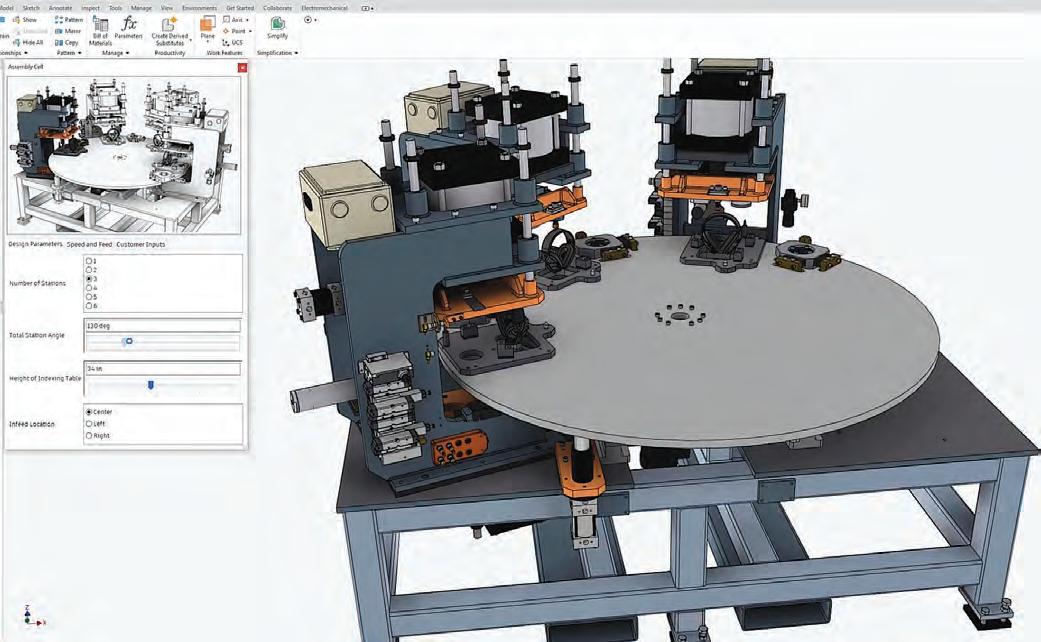
Autodesk stresses cloud-based Forge technology at AU 2021, Pg. 10
DESIGN TRENDS
Climate, AI and supply chain snags among trends to influence product design, Pg. 17
MOTION CONTROL
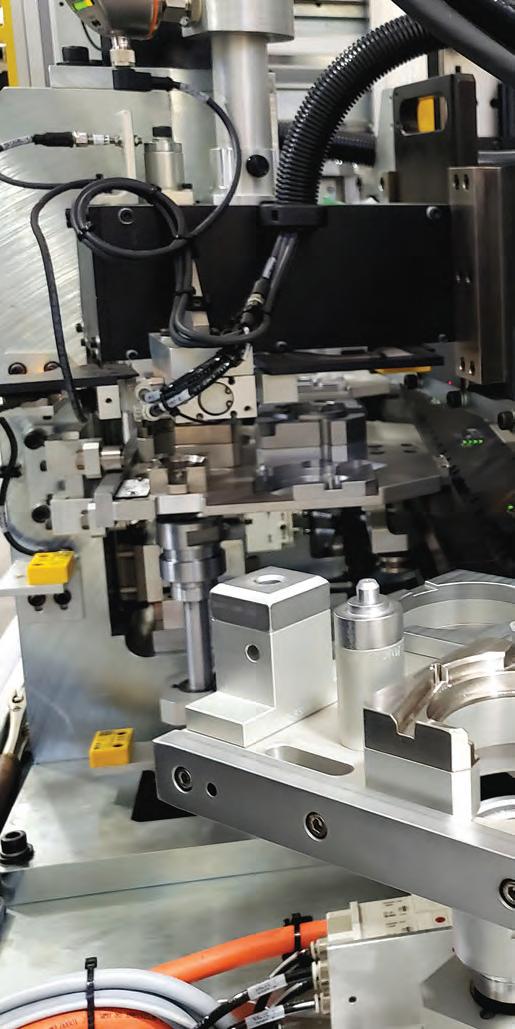
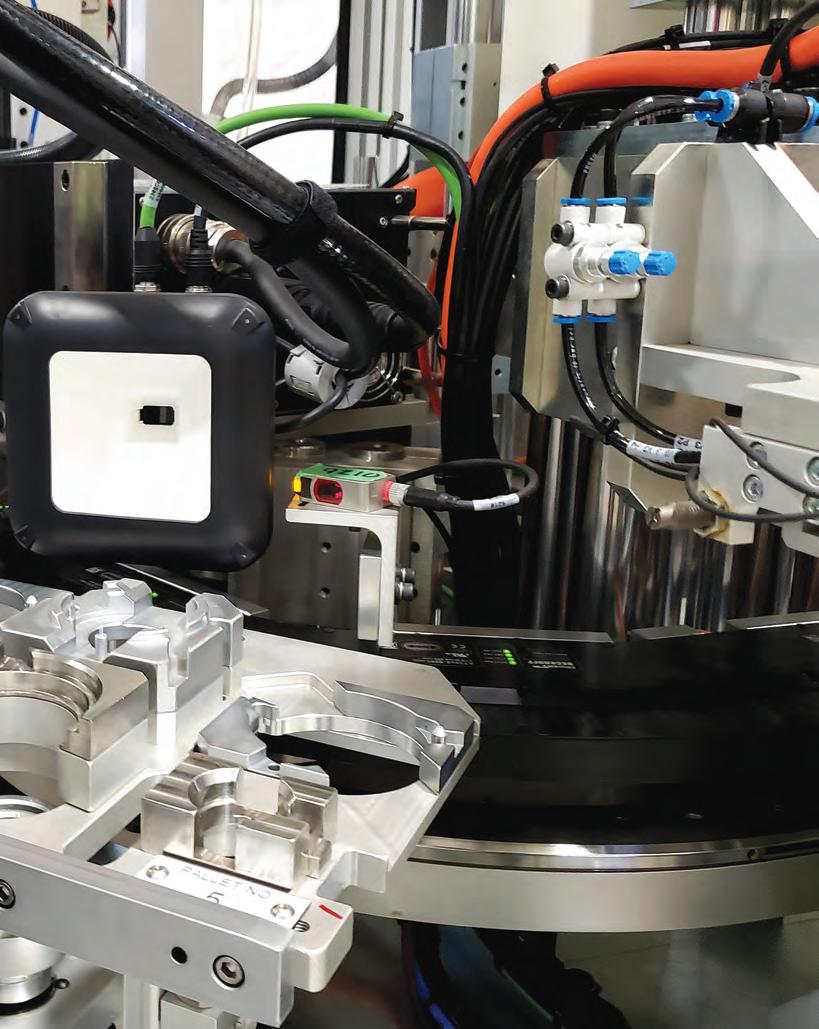
Eclipse evolves assembly machine to make multiple auto parts, Pg 22
Get Your PROTOTYPE
Off the Ground
SOONER
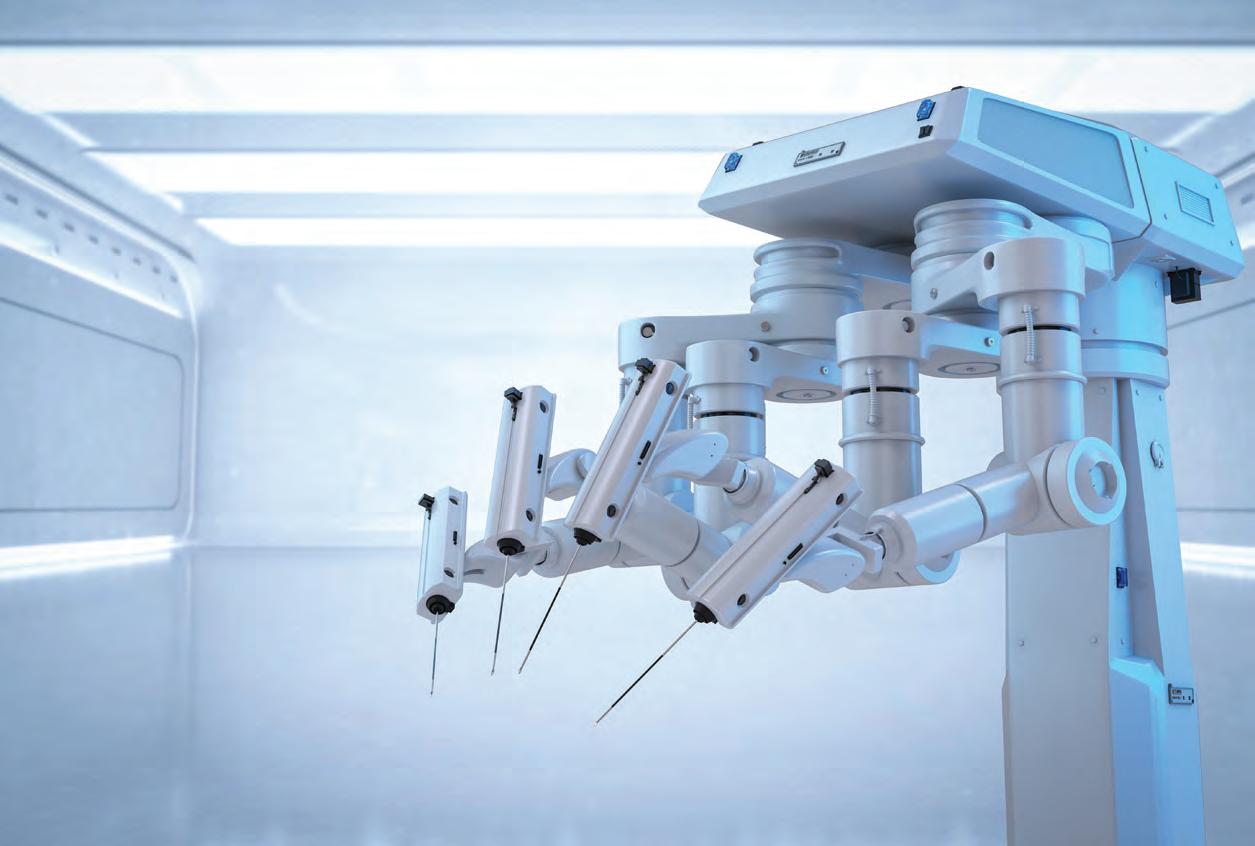
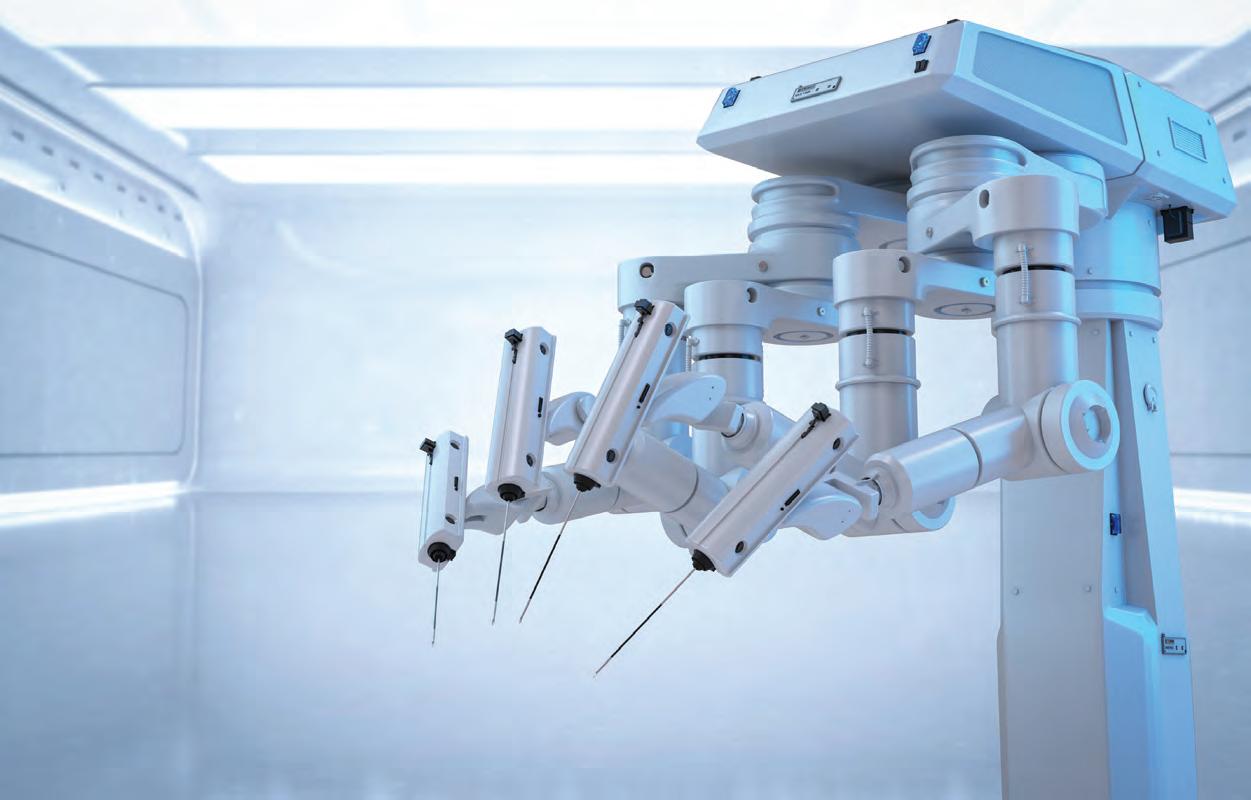
MISUMI components can cover up to 90% of your bill of materials with material certification available upon request.
Choose the material, surface treatment, dimensions and alterations of a component, and see instant pricing and lead time. Configured components have a unique globally-recognized part number, allowing easy re-ordering anywhere in the world.
Learn more about MISUMI’s offerings for Medical Industry.
Configurable Brackets
Linear Shafts & Bushings
Timing Pulleys & Belts
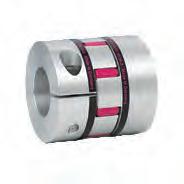
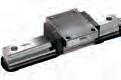
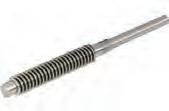
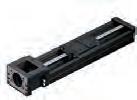
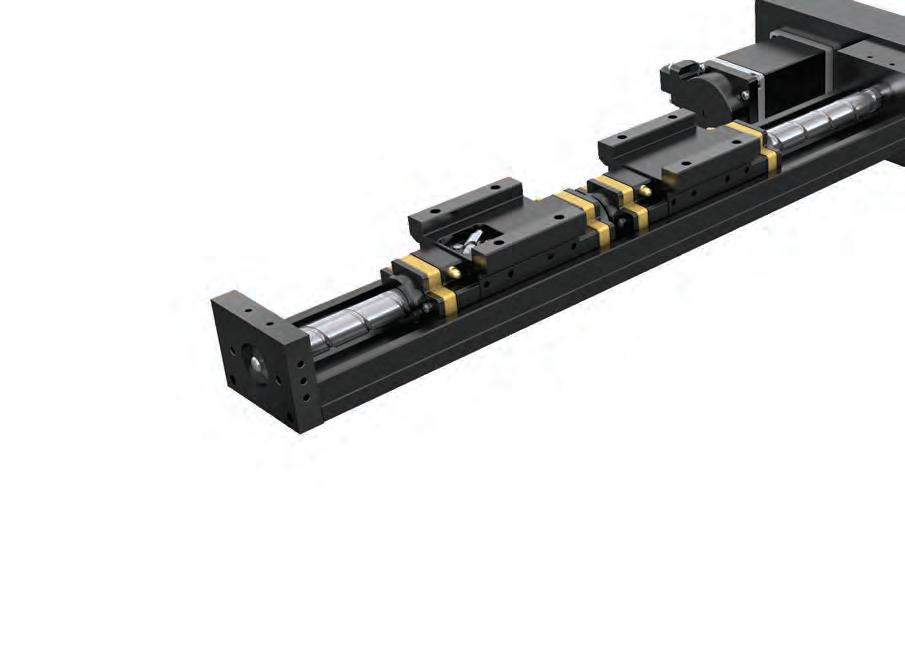
Linear Guides, Actuators & Lead Screws Couplers
INSIDE
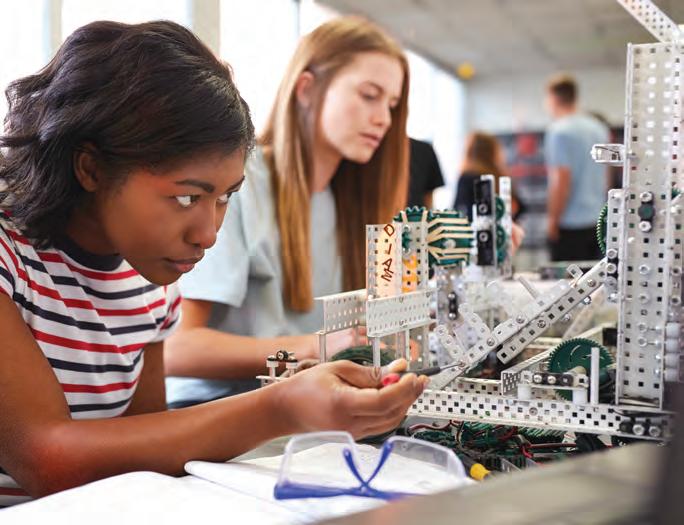
15 Blunting COVID’s impact on STEM field
UWaterloo program helps balance the playing field for high schoolers impacted by COVID isolation
17 Product Design Predictions for 2022
Climate change, AI and supply chain disruption among trends to influence product design
20 Engineering Labor and Salary Guide 2022
Randstad report reveals salary and labor trends for the engineering profession in Canada
22 Field Proven
Eclipse Automation adapts assembly machine to make multiple auto parts in one process
AU 2021 stresses importance of Forge APIs as Autodesk continues efforts to implement them
26 Idea Generator
The latest in motor, motion control and sensor technology
Cooking with Fusion
Sometimes, it seems like the future you heard was coming, at some point, tumbles into the present at a rapid pace. A few years ago, the idea of electrified vehicles dominating the auto sector seemed eventual but not exactly imminent. Now, every move the world’s car makers announce has to do with a new factory, battery facility or a multimillion-dollar investment in something EV related. Similarly, world-crippling pandemics and an expansive “Snow Crash”-style metaverse, like the one the company formerly known as Facebook is planning, were the stuff of sci-fi novels. Now, not so much.
The latest example comes on the fusion energy front.Various players have been wrestling with this seemingly too-good-to-be-true (safe, zero emission, zero waste, etc.) power source for decades. Now, in the span of a few weeks, two of the leading players announced major breakthroughs toward its realization.
In early January, Canada’s own General Fusion revealed that a critical component of its unique Magnetized Target Fusion (MTF) technology has been validated by a prototype built in the company’s Vancouver laboratory.
MTF depends on uniformly collapsing a vortex of liquid metal within milliseconds, to heat and compress plasma fuel to 100 million degrees Celsius. To do that, the system’s spherical reactor chamber is surrounded by actuators – “hammers” essentially that simultaneously send shock waves into the swirling liquid from all directions. By confirming the viability of this technique, General Fusion says the prototype marks a key step for MTF as the company begins construction of its Fusion Demonstration Plant (FDP) plant in the UK later this year.
Even more tantalizing, Lawrence Livermore National Laboratory (LLNL) announced in late January that its system, which focuses 192 lasers on small gold capsule, has achieved a self-sustaining reaction. Granted, it only lasted for a fraction of a second, but this successful test suggests the LLNL team is close to reaching true fusion ignition, the point at which the system no longer needs an external power source and, like the sun, outputs more energy than needed to sustain the reaction.
There’s still a long way to go, most likely a decade or more, before fusion becomes commercially viable. But, for the first time, it doesn’t seem merely like works-on-paper wimsy. Instead, given the longevity of these efforts and progress made so far, fusion power may be the next transformative technology in our relatively near future. |DE
MIKE MCLEOD
Editor mmcleod@design-engineering.com
Editorial Board
DR. ALAIN AUBERTIN
President & CEO, Canada Consortium for Aerospace Research and Innovation in Canada (CARIC)
DR. MARY WELLS, P.ENG
Dean, Faculty of Engineering / Professor, Mechanical and Mechatronics Engineering; University of Waterloo
AJAY BAJAJ, P.ENG
President and CEO, Rotator Products Limited; Past President and Board Member, Power Transmission Distributors Association (PTDA)
DR. ISHWAR PURI, P.ENG
Vice President of Research; Engineering
Professor, University of Southern California
JANUARY/FEBRUARY 2022
Volume 67, No.1
design-engineering.com
READER SERVICE
Print and digital subsciption inquiries or changes, please contact
Beata Olechnowicz, Audience Development Manager
Tel: (416) 510-5182
Fax: 416-510-6875
Email: bolechnowicz@annexbusinessmedia.com
Mail: 111 Gordon Baker Rd., Suite 400, Toronto ON M2H 3R1
SENIOR PUBLISHER Paul Burton (416) 510-6756 • pburton@annexbusinessmedia.com
EDITOR Michael McLeod (416) 442-5600 ext. 3231 mmcleod@design-engineering.com
COO Scott Jamieson sjamieson@annexbusinessmedia.com
Design Engineering, established in 1955, is published by Annex Business Media, 6 times per year except for occasional combined, expanded or premium issues, which count as two subscription issues.
Printed in Canada
Publications Mail Agreement #40065710 ISSN: 0011-9342 (Print), 1929-6452 (Online)
Subscriber Services: Canada: $57.50 for 1 year; $92.50 for 2 years; $10 for single copy.
Outside Canada: USA - $140.50; Overseas - $151.00; $10.00 for single copy.
All prices in CAD funds. Add applicable taxes to Canadian rates.
From time to time we make our subscription list available to select companies and organizations whose product or service may interest you. If you prefer not to receive this information, please contact our circulation department in any of the four ways listed above.
Annex Business Media Privacy Officer: privacy@annexbusinessmedia.com Tel: 800-668-2374
No part of the editorial content of this publication may be reprinted without the publisher’s written permission.
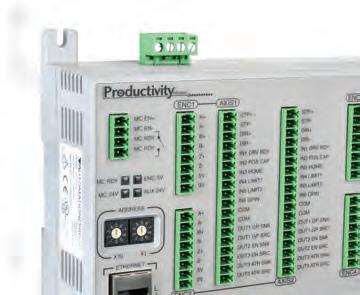
The PS-AMC motion controllers are designed to work seamlessly with select Productivity PLCs and provide accurate, coordinated, plug-and-play motion control. Up to 16 independent axes of motion control, or up to four groups of coordinated motion with four axes each, is possible with these new controllers.
• Available in 1, 2, 3, or 4 axes models
• Maximum switching frequency of 1MHz
• Up to 24 general-purpose high-speed inputs
• Up to 12 general-purpose high-speed outputs
• Easy configuration of standard motion profiles (flying cut-off, rotary table, etc.) with the FREE Productivity Suite software and built-in motion instructions
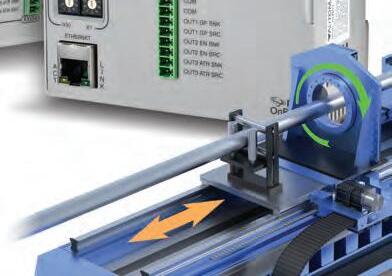
The primary function of a ying cut-o system is to synchronize the speed of a servo-driven carriage, on which a cutting mechanism is mounted, with the speed of a continuously fed material to make a perpendicular cut without stopping the feed. The ying cut-o shown above employs four axes of motion, a rotating pipe cutter1, a continuouspipe infeed system2, carriage positioning drive3, and outbound conveyor4. With the PS-AMC4, all four of these axes can be easily controlled and synchronized within the same controller, and it's only $465.00!
Our shipping policies make it easier than ever to order direct from the U.S.!
Fast free standard shipping* is available for most orders over $49 U.S., and that includes the brokerage fees (when using an AutomationDirect nominated broker). Using our choice of carrier, we can reach most Canadian destinations within 2 to 3 days.
*Free shipping does not apply to items requiring LTL transport, but those shipments can take advantage of our negotiated super-low at rates (based on weight) that include brokerage fees.
See Web site for details and restrictions at: www.automationdirect.com/canada
A multidisciplinary team at the University of British Columbia announced that it has received $24 million from Canada’s New Frontiers in Research Fund 2020 Transformation stream to determine the efficacy of using gel-like biomaterials to heal traumatic spinal cord injury (SCI).
Often leaving patients significantly impaired or paralyzed, SCIs don’t readily heal on their own. Following a severe injury, the edges of damaged neural tissue form a scar that restricts nerve growth. In addition, the edges of the legion are often separated by a fluid filled gap that can be centimeters-long. Having to span that gap makes healing all the more difficult since neural tissue has a limited ability to regrow.
According to the UBC researchers, current methods for repair ing the damage typically involve invasive surgery to physically bridge that gap but produce limited results or can cause additional trauma.
In contrast, the method proposed by the UBC-led group, called Mend the Gap, looks to employ a machine-vision-guided surgical robot to inject a gel-like biomaterial into the damaged spinal cord to fill and mold to the cavity.
In addition to medications to counter the growth-inhibiting scar tissue, the bio-gel will also contain tiny magnetic rods that can be aligned across the gap, post-injection. The aligned rods will then act as scaffolding to encourage nerve regrowth in the correct direction across the cavity between lesion edges.
According co-principal investigator, Dr. Wolfram Tetzlaff, a professor of surgery and zoology
at UBC and director of ICORD, the project’s goal is to increase motor function and improve quality of life for those with SCI.
In addition to Dr. Tetzlaff, the 32-member project includes researchers, engineers and surgeons from Canada, the United States, Europe and Australia. In Canada, the network includes UBC, ICORD, the University of Alberta, Western University, McGill University and University of Toronto.
https://mendthegap.ubc.ca
AUTOMOTIVE
MAGNA ACQUIRES OPTIMUS RIDE EV TECH, PERSONNEL
Magna announced it has acquired the IP and assets of Optimus Ride, as well as 120 engineers employed by the Boston-based developer of autonomous EV shuttles. The Ontario auto parts maker says the
acquisition of the MIT spin-off tech firm will bolster Magna’s advanced driver assistance systems (ADAS) capabilities.
“As advancements in autonomy continue, we saw an opportunity to bring in additional exper tise to support current programs as well as future customer needs. We are happy to welcome the Optimus Ride employees to the Magna family,” said Magna Electronics President, John O’Hara.
According to Magna, the engineering team will remain in the U.S., establishing a Boston-based engineering center and presence for Magna. www.magna.com www.optimusride.com
AUTOMATION
ATS ACQUIRES HSG ENGINEERING
ATS Automation Tooling Systems Inc. (ATS), announced the acquisition of Italian-based industrial automation system integrator, HSG Engineering S.r.l. for an undisclosed amount.
Founded in 2003 and headquartered in Pistoia, Italy, HSG focuses primarily on the pharmaceutical sector with a presence in other sector s including food, paper and industrial handling.
According to ATS, the system integrator and its 50 employees will join ATS’ Process Automation Solutions (PA) business but continue to be led by its founder and CEO, Tiziano Rossi.
Photo
“At PA, we are closing the gap between IT and operational technology in production,” said Process Automation Solutions president, Dr. Christian Debus. “Integration is in our DNA. With our combined expertise in automation, digitalization, data analytics and AI, we are the partner of choice for global industrial companies looking to make the best use of their data to drive operational performance.” www.hsgengineering.com www.atsautomation.com
MINING
ELECTRA INKS DEAL TO PRODUCE EV BATTERYGRADE COBALT
Electra Battery Materials Corporation (formerly First Cobalt) announced it has signed a fiveyear cobalt tolling contract with Glencore, one of the largest
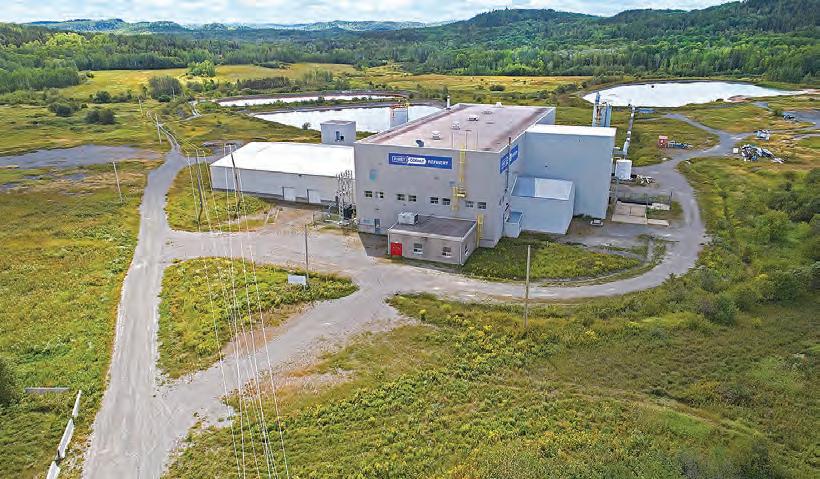
Electra Battery Materials hopes to turn its northern Ontario facility into the first batterygrade cobalt refinery in North America.
natural resource companies. Electra says the intent is to produce a low-carbon, battery-grade cobalt product for the electric vehicle market. The parties will market the Canadian-made cobalt sulfate as a premium product that is sustainably mined and refined with renewable hydroelectric power.
The compan y previously concluded a five-year cobalt hydroxide feed purchase agreement with Glencore, which has been amended to reflect the terms of the current deal. First production of battery grade cobalt sulfate is anticipated in Q4 2022, with an annual production target of 5,000 tonnes of cobalt, subsequently
Photo credit: Electra Battery Materials Corp.
increasing to nameplate capacity of 6,500 per year.
The Glencore deal is part of Electra’s efforts to build North America’s only fully integrated, localized and environmentally sustainable battery materials park. When complete, the park will host cobalt and nickel sulfate production plants, a large-scale lithium-ion battery recycling facility, and battery precursor materials production. Electra also owns the advanced exploration-stage Iron Creek cobalt-copper project in Idaho. https://electrabmc.com/ www.glencore.com
TRANSPORTATION
DE HAVILLAND, ZEROAVIA TO DEVELOP HYDROGENELECTRIC ENGINE FOR DASH 8
De Havilland Canada announced it has signed a Memorandum of Understanding (MOU) with ZeroAvia to integrate the California-based company’s hydrogen-electric engines with new and in-ser vice De Havilland aircraft models. As part of the deal, De Havilland Canada will have the option to purchase 50 ZeroAvia hydrogen-electric engines.
The companies say they intend to work together on a service bulletin for the Dash 8-400 type certificate offering ZeroAvia’s 2MW+ powertrain hydrogen-electric engine as a line-fit option for new aircraft, as well as developing an OEM-approved retrofit program for in-ser vice aircraft.
As part of the program, ZeroAvia will develop a flight demonstrator using a Dash 8-400 aircraft to aid certification and showcase the operational and commercial potential of the engine.
The intention is to identify a suitable existing route utilizing the aircraft and aim for entry into service within the next five
years. ZeroAvia and De Havilland Canada intend to jointly market aircraft powered by the hydrogen-electric engines to operators with power-by-the-hour (PBH) support.
Based in the UK and USA, ZeroAvia says it has secured experimental certificates for two prototype aircraft from the CAA and FAA, passed flight test milestones and is on track for initial commercial operations of its technology in 2024.
https://dehavilland.com www.zeroavia.com
Lion Electric’s LionC school bus carries up to 72 passengers and boasts a 150 to 250 km range and a single-speed electric powertrain.
LION ELECTRIC RECEIVES ORDER FOR 200 ALL ELECTRIC BUSES
The Lion Electric Company, a Montreal-based manufacturer of all-electric medium and heavy-duty urban vehicles, announced it has received an order for 200 all-electric LionC school buses from Langs Bus Lines. The Ontario company currently operates more than 600 school buses and minibuses throughout Southern Ontario.
The purchase order is conditional upon grant approval of non-repayable contributions to Langs Bus Lines under Infrastructure Canada’s Zero-Emission Transit Fund (ZETF).
Under the ZETF program, the Government of Canada aims to invest $2.75 billion over five years to support public transit and school bus operators in the transition to electrification.
“Langs Bus Lines has been operating a LionC school bus since 2019, thanks to the Electric School Bus Pilot Program of the Ontario Climate Change Action Plan,” said Kevin Langs, Vice-President of Langs Buses.
“As we clearly saw the benefits of all-electric vehicles, we are pleased to purchase 200 LionC electric school buses to transport thousands of students throughout Southern Ontario.”
If finalized, order delivery would begin gradually in 2022 through 2026, Lion Electric says.
https://thelionelectric.com www.langsbus.com
Photo credit: De Havilland Canada
Photo
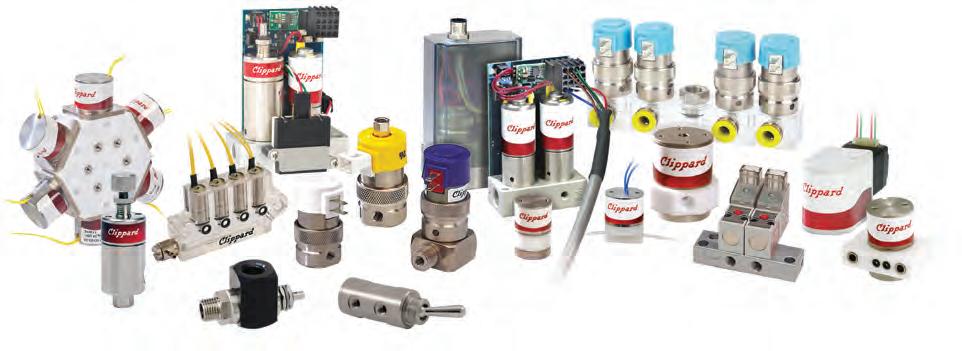
Precision Control Solutions
Designing efficient systems involves much more than simply understanding a few basic principles. There is a true art to balancing the specific requirements of an application in order to achieve the desired goals in the best possible way. Help us understand the unique needs of your application and together, we’ll develop something that surpasses what any of us could have done alone.
Contact your distributor to learn more, or clippard.com to request a free catalog and capabilities brochure.
The Liminality of Forge
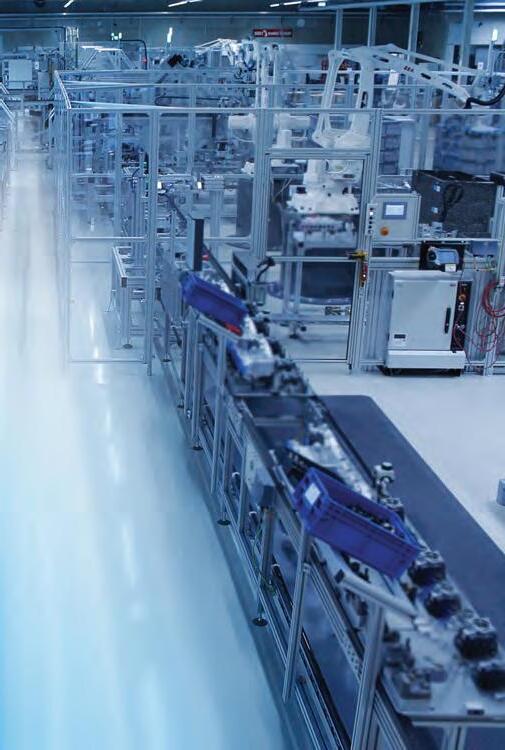
Autodesk stresses the importance of Forge technology at AU 2021 as the company struggles to implement its cloud-based APIs.
BY RALPH GRABOWSKI
At Autodesk University (AU) 2021, the emphasis for Autodesk executives was on digital transformation: It’s inevitable, it’s urgent and it’s happening now. “Digital collaboration is now a necessity, cloud workflows are the norm and time-saving is a must,” said vice president of cross-industry strategy Mimi Hoang during her keynote address.
Never mind that Autodesk has been talking up collaboration ever since Carol Bartz was CEO in the mid-1990s; that the cloud is the norm for everyday people; and that every CAD vendor promises to save designers time.
All for Forge, and Forge for All
To understanding Autodesk strategy going forward, its Forge technology is
key. Originally, Forge referred to Autodesk’s since-abandoned 3D printing API (application programming interface). Since AU 2015, however, Forge has refer red to Autodesk’s platform of web service APIs. According to the company, these web services are akin to Lego blocks that developers can combine to create design workflows and/or embed components of Autodesk online products into their own applications
Autodesk has always had a variety of ways of letting users add functions to software and to access drawing data. Most Autodesk programs have one or more APIs – such as AutoLISP and ObjectARx in AutoCAD. Even so, these didn’t allow programs to easily communicate among one another. The Forge Platform is Autodesk’s massive
effort to reverse the Babel of APIs by establishing a single API for all programs, through the cloud.
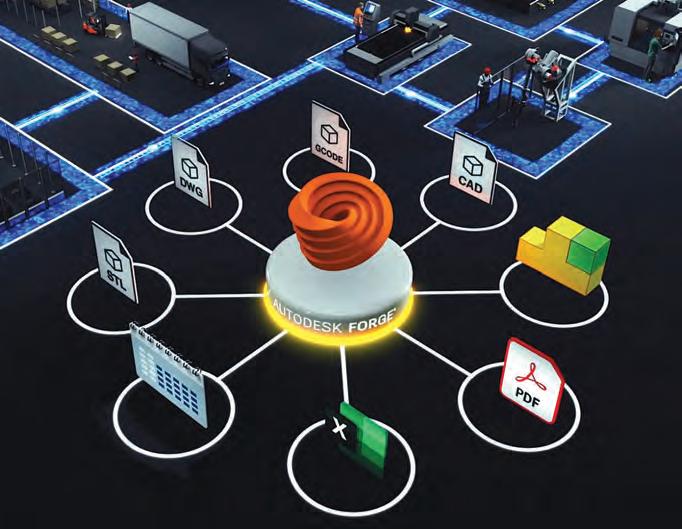
Autodesk sees Forge as useful for writing add-on software that visualizes data, automates design processes and connect teams with workflows. One example is Forge’s Model Derivative API. With it, files uploaded to Autodesk’s A360 servers can be translated to 60 other data formats, including generic ones like STL and STEP.
As a application example, an architectural firm could work with Forge APIs to create a workflow in which a building design would be uploaded to A360 to share it with clients securely. Clients would then view the design in 3D and 2D, and drill down to specific properties of the building’s parts; meanwhile, graphs would show
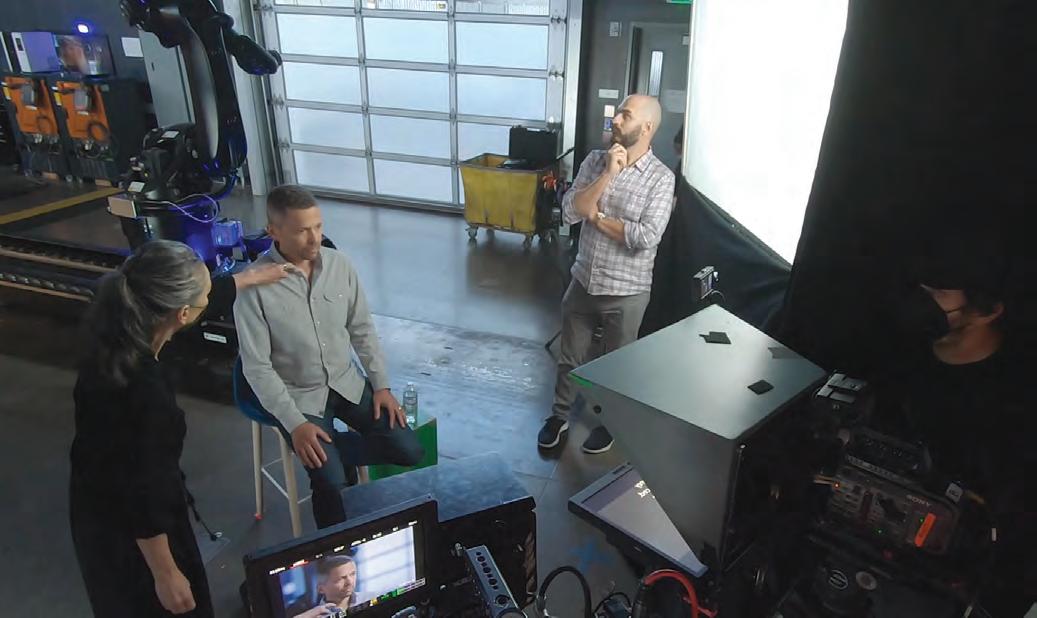
Autodesk executives, including VP of Design and Manufacturing Stephen Hooper, recorded presentations for AU 2021’s virtual event.
Photos: Autodesk
statistics like square footage and/or types of components per floor.
For Autodesk, it dreams of a day when all its programs are rewritten in Forge. The file formats its various applications create (and the incompatibility problems that result) would disappear and all their applications would be able to intercommunicate data freely and incrementally.
Forge is so important that executives at AU called it “the Autodesk platform.” Moving data between Autodesk’s myriad of data-incompatible programs is, however, a long-haul project. Initial efforts began around 2008 in getting Inventor and AutoCAD to talk to each other. Subsequently, Autodesk released the “universal” Navisworks viewer, but it didn’t quite make the grade.
And so around 2018, Autodesk turned to Forge to solve its translation problem. It turns out, however, that the Forge-ian dream is not yet fully
Forge is so important that executives at Autodesk University called it “the Autodesk platform.”
realized. Autodesk is still in a liminal stage of its implementation.
“We’re investing heavily in connections across Autodesk products, improving interoperability,” said VP of the AutoCAD family of products, Rob Maguire, speaking in the present-continuous tense. “We’re excited about the potential this has... With Forge, we’re making strides towards fluent workflow capabilities.”
While Forge is crucial; it’s not yet pervasive. Until it is, Autodesk Docs (formerly BIM 360 Docs) will have to act as the placeholder. As a web-based application, Docs lets users view, markup and manage files in many formats, and is integ rated (so far) into AutoCAD and Revit.
What’s New in AutoCAD
As Autodesk scrambles to interconnect AutoCAD with its other incompatible software, its competitors are already there. Graebert (ARES), Hexagon (BricsCAD), and Nanosoft (nanoCAD) took the easier route by unifying general, mechanical and architectural designs within a single program and storing models in DWG files, albeit with proprietary extensions. As a result, those applications don’t suffer from a data compatibility problem.
At AU 2021, the brief AutoCAD-specific keynote described some features added to last year’s release, such as Trace (for marking up drawings collaboratively) and Count, another way to count entities in drawings.
For the future, Autodesk promises AutoCAD will get automated drafting workflows, such as Connected Paper, which recognizes markups that were hand sketched or added to PDF files, and then converts them to AutoCAD geometry. In addition, AutoCAD Automation will suggest combining repetitive command sequences into a single macro and My Insights will let users see how they employ AutoCAD, and then suggest alternative commands that might be more efficient.
What separated AutoCAD from its competitors in the 1980s was that it allowed users to customize the CAD program on their own. Other systems at the time, like Intergraph and Computervision, charged customers big bucks for customization. For today’s users of the next generation, web-based version of AutoCAD, that level of customization won’t be possible for the foreseeable future. Autodesk says that users will “perhaps someday” be allowed to embed their in-house applications in the browser version of AutoCAD.
What’s New in Fusion 360 and Inventor
The start of the mechanical keynote at AU treated us to a liturgy of gloom: “The cost of doing nothing is too high,” said VP of Design and Manufacturing Industry Strategy, Srinath Jonnalagadda. “Continued reliance on home-grown data management systems perpetuates the ongoing struggles in the supply chain... Not dealing with complexity can lead to lost profits and opportunities.”
The solution is, of course, to employ Autodesk to “empower innovators everywhere.” But even so, Jonnalagadda noted that the complete solution – a single cloud platform that unifies all tools from concept to manufacturing – lies in the future: “And that is what we’re working towards with Autodesk Forge Platform.”
There is, happily, one significant exception. Fusion 360 currently shows off what Forge is capable of. This partly-cloud-based 3D mechanical CAD prog ram handles sketches, direct modeling, sheet metal, PCB designs, generative design, and so on.
Fusion 360 isn’t, however, like PTC Onshape or Graebert Kudo, where users log-in from a browser on any hardware. Instead, Fusion 360 requires an 1.9GB download and then it runs only on Windows or MacOS.That there is a free version for anyone’s personal use, which suggests it’s not selling well.
New in Fusion 360 is the ability to add parametrics to imported meshes and convert them to solids. Sub-division modeling is now also parametric. Other new features include variable patterns (non-uniform arrays), library-based electrical schematic designs inside mechanical models, electromagnetic simulation from ANSYS, and plastic simulation from MoldFlow. What I found particularly interesting is a new form of generative design that changes models following the results of simulations.
A unified cloud-native PDM/ PLM system was missing from Forge 360, so last year it acquired Canada’s Upchain cloud-based PDM/ P LM software to combine design,
Fusion 360 generatively modifying a model following heat and electrical analysis.
Autodesk sees its Forge APIs as the center for all its applications’ design data.
manufacturing, data and process management in Fusion 360.
Autodesk really wants customers to stop using desktop Inventor, and switch to Fusion 360 for all their design and manufacturing work. Here is one reason: Autodesk runs parts of Fusion 360 on cloud servers, through which it collects data fed to it as we use the program.
Autodesk has lots of plans for our data. It is thinking of using AI to generate design concepts, to detect repetitive design work and to report underused production machines.
This sort of data mining isn’t as easy with desktop-only CAD. But, as other CAD vendors have found, desktop
MCAD is what customer prefer, and so Inventor managed to get a mention during the AU keynote speech. It can now use multiple CPU cores to open, edit and update models faster. Also new this year is selective import from Revit files, so that machines models are associated with building models.
“This is an approach we’ll be developing across the rest of our entire portfolio in the coming months,” explained VP of Design and Manuf acturing, Stephen Hooper, “bringing Fusion, Inventor, AutoCAD, and even Revit data to the Forge Platform.”
While Autodesk pins its future on Forge, the company’s progress in Forge-ifying its software appears
While Autodesk pins its future on Forge, the company’s progress in Forge-ifying its software appears remarkably slow.
remarkably slow. Each year we hear how it’s going to be great, making me wonder in which year of AU the company finally announces that its programs are islands or isthmuses no longer.
Autodesk is nevertheless emphasizing how Fusion 360 puts data at its center, and at the center of customer-corporations involved in manufacturing. As the Forge API connects the prog ram with third-party software, Autodesk aspires to make Fusion 360 the umbrella for all industry.
So far, the brightest point is Fusion 360, and it does well proving what Forge can do. I expect that the long-promised cloud version of AutoCAD is being rewritten in Forge. Or, maybe just maybe, they’ll shift to a new underlaying paradigm and start over. |DE www.autodesk.com
Ralph Grabowski writes on the CAD industry on his WorldCAD Access blog (www.worldcadaccess. com) and weekly upFront.eZine newsletter. He has authored numerous articles and books on CAD, Visio and other design software applications.
Although Autodesk hopes customers will switch to Fusion 360, the company continues to update Inventor for desktop users.
Photos: Autodesk
Mitigating the pandemic’s effects on our future STEM workforce
UWaterloo’s Hive Mind tutoring program helps level the playing field for high schoolers impacted by lock-down isolation.
BY DR. MARY WELLS
The COVID-19 pandemic and ensuing full and partial lockdowns that swept across Canada and the world have had unprecedented effects on education. Many Canadian high schools shifted to a quadmestered system and alternated in-person and remote learning. This meant students had to learn difficult concepts in math and science at an accelerated pace in semi-isolation without supports from their peers and teachers.
How well can someone learn in this environment and how confident will they be of their skills in math, physics and chemistry at the end of this process?
These are important considerations given high school completion of subjects such as calculus and vectors, Grade 12 physics and Grade 12 chemistry are necessary to be considered for admission into many of our university programs in science, technology, engineering and math (STEM).
Students have not experienced this crisis equally
Students living in poverty with limited access to technology and private spaces for lear ning; rural and remote students with inadequate Internet connectivity; and the stress and anxiety experienced by racialized and black students whose families were more likely to be infected with COVID-19 are only a few examples.
Female students have also been disproportionately affected. In many households, female students are expected to shoulder a greater burden related to caregiving and domestic tasks – a workload compounded by the pandemic – which impacts the time they can devote to their studies. This
is especially worrying as we consider the current significant underrepresentation of women in the STEM fields, especially in eng ineering and physics.
Attracting more women to the fields of engineering and physics is essential to maximize innovation, creativity and competitiveness in Canada. Historically, the critical point where the largest number of potential female engineers and physicists are lost occurs in high school, specifically in the physics classroom.
Of all female students who have completed the required Grade 10 academic science in Ontario, only about 15 per cent enroll in Grade 12 physics compared to 30 per cent of their male peers. This corresponds to a female participation rate of only 34 per cent in the physics classroom – a trend seen over the past decade. A key consideration has to be the unequal
effect the pandemic is having on high school women and how this will affect our future engineering and STEM workforce, including its diversity.
How can we help level the playing field considering these inequities and ensure all students, especially women, have an opportunity to become future university students in STEM?
One solution is to offer free tutoring in math and science to high school students to help them succeed with remote learning during the COVID-19 pandemic. This is exactly what the University of Waterloo’s faculty of engineering has done through a new initiative called Hive Mind. This program is aimed at Grade 10, 11 and 12 students across Ontario who are struggling in advanced functions, calculus, chemistry and physics – all key subjects required to pursue postsecondary engineering programs.
Hive Mind was launched in February 2021 and there is an obvious need. The response has been overwhelmingly positive with more than 120 students reg istered and 350 one-onone sessions completed – and growing. While available to all high-school students, Hive Mind is being run as part of Waterloo’s Women in Engineering (WiE) program, considering the under representation of women in engineering and the disproportionate negative impact the pandemic is
having on female high school students leaving them with less time to focus on their studies.
Another key equity consideration is that many of the more than 300 schools contacted about Hive Mind are in rural areas where there are generally fewer extra learning resources offered than in larger cities.
These are anxious times. Despite optimism with soaring vaccination rates and a potential retur n to normalcy in learning, the lockdowns may return as
new variants emerge. Canada needs more engineering-ready students, who represent the diverse communities engineers serve, and particularly, more women in sciences and engineering, to keep the disciplines robust, flourishing and innovative.
Proactively putting supports in place can make sure this will happen. Our response to the pandemic and supports for our students – whether swift and supportive or slow and cynical – will have a broad and lasting impact on our future. Let us shape smart policy to encourage and retain a diverse group of talented young scientists and engineers in our future STEM workforce.|DE https://uwaterloo.ca/engineering
Mary Wells is dean of the faculty of engineering at the University of Waterloo. This article originally appeared in University Affairs Magazine (www.universityaffairs.ca).
A pioneering integration of NSK’s expertise with ball screws, linear guides and support bearings, the MCE Electrified Monocarrier™ motorized actuator is a compact and cost-effective solution for high-accuracy positioning in precision-critical applications. To help accelerate your automation development, MCE Monocarriers are preassembled, pretested, and ready to install.
Enabling Automation in Motion & Control.
MCE Electrified Monocarrier™
Product Design Predictions for 2022
Climate change, AI and supply chain disruption among trends to heavily influence product design in the years ahead. BY KEVIN BAILEY, P.ENG.
If there’s one thing we’ve learned from 2020 and 2021, it’s that two years of unpredictability has changed how we live, work and purchase goods and services. Changes in climate, fears of inflation, global supply chain effects on availability, and a shift in the types and purchasing methods of goods and services consumers want were all contributing factors.
The question is whether these factors will effect how new products are designed, developed and delivered to businesses and consumers. Here are the predictions I see taking shape in 2022.
Climate Change
Climate change and the push for sustainability will have minimal immediate effect on the product design process. Where we will see dramatic changes is in how products are packaged and shipped.
In product design, more emphasis will be placed on shipping ‘smallest size,’ given the increased cost and lead time of moving goods around and choosing materials that are sustainable and products that can be broken down back to their basic elements. More and more, design teams will eliminate the use of components and materials that can’t be recycled or disposed of in a safe and sustainable way.
Smart Devices
Similar to what we saw in 2021, we’ll see technologies evolving to meet consumer demand, which will in turn result in continued shifts in the product design ecosystem throughout 2022.
The world of tech is always evolving, advancements in digital technologies, available next gen components, miniaturization, integration of AI into products and new sensor choices br ing
a grab bag of new opportunities and risks to the product design world.
Advancements in digital and data technologies will continue to feed consumer appetite for smart devices. The ongoing increase in integrated functions and the shrinking size of silicon chips – combined with advanced circuit design techniques and improved efficiencies in battery life and power –will have the compounding effect of enhancing ease-of-use of smart devices.
The increase in digitization will continue to accelerate smarter product features at a lower cost. This will offer product design teams the opportunity to leverage these more capable software and hardware features to meet the personalization, data collection, alerting, communications and awareness needs of users in an increasingly mobile world.
In turn, product design teams will leverage faster processing, more
in-product AI and more open-source code to speed up development and gain a deeper analysis during new component selection that includes examining predictable supply
Lower energy requirements in smart devices will also open the door for photovoltaic renewable energy technologies. As an example, onboard and charge station solar cells will begin to play a bigger role in extending the time between charges, reducing the battery life issues seen in first generation IoT products. This will lead to a broader base of on-product power consuming applications with increased data processing for smart and connected devices yet to be invented.
The Evolution of IoT
With this explosion of IoT devices will come increased network traffic, which will place heavier loads on cloud services. Intelligent edge devices will help alleviate this load and provide for a faster consumer experience and greater power efficiencies.
For example, microprocessors with TinyML support and sensors with built-in machine learning will become more prevalent. Additionally, in 2022, AI and machine learning capabilities embedded into device power management will support greener, smarter energy consumption.
IoT product design is also evolving wireless device interfaces to use audio and visual control convenience, as devices become more transparently integrated into people’s homes and
lifestyles. Larger product companies that invest heavily in cloud applications and services have been successful in selling a user experience. They have successfully utilized these end point devices (e.g. Amazon Alexa, Google home, TV media boxes, etc) to give consumers a novel way to verbally access and receive data, play games and generally pass the time.
As a result, these devices have become part of a family dynamic, enablers of a whole ecosystem of products that play into convenience, our isolation constraints and communal social behaviors. Rather than referring to interactive end user devices, I see the term IoT evolving to mean many background data entry points to the cloud.
Remote Product Development
The pandemic has shifted working teams to engage effectively with their remotely located colleagues.This is propelling the use, and availability, of cloud enabled engineering tools, on private and cloud managed secure servers, to facilitate productive and effective team collaboration environments.
I see an increase in the number of sophisticated tool vendors emerging in the market. This will enable companies to leverage automation and sophisticated technologies, like AI, to assist in the product design and development process.
In many cases, remote working environments are benefiting the design process; quiet deep-thinking time is required and not easy to get in an open
office environment. As we shift to a global remote workforce, the challenge will be designing and debugging new products, since that often requires multiple skill team members to collaborate, in-person, to resolve issues like product size, ergonomics and feature refinement.
While engaging with objects remotely – using touch sensitive gloves and 3D headset virtual environments – is evolving, it will still be some time before VR can equal or replace the value of in-person interaction with tangible components, material finishes and colors and touchable prototypes.
Therefore, with remote teams, it’s critical to leverage whiteboard tools, such as Miro and Draw.io. These easyto-use, cloud-based collaborative tools help teams explore designs and make decisions as they visualize, sift and sort options together on display screens rather than conference rooms, with pen and paper.
Supply Chain Disruption
We will continue to see supply chain wobbles in 2022 and beyond. That fact will require different thinking during new product planning so as to lower the risk of potentially scarce parts. Instead, part choice will need to be based on supply predictability, rather than opting for the highest functionality or lowest product cost.
In essence, the pandemic created a dam in the flow of goods and introduced unpredictable delivery concerns, mostly for electronics parts. The demand for certain chips is so hot companies must decide who gets what; often, large strategic contracts win out over the smaller design/manufacturing companies. And the hardware world isn’t forgiving; missing one part means not shipping the product.
The current shortage of critical electrical components is therefore a wakeup call – a time to rethink supplier location. The upset in the balanced flow of parts and goods is having significant consequences on our design process and the choices we make with clients.
In response, corporate design teams will continue to look at alternative supply locations. In some cases, it will be more feasible to go back to producing their own critical parts locally with
Photo: Jae Young Ju/iStock/Getty Images Plus/Getty Images.
more vertical integration. An example of this would be Apple. They moved away from Intel as their chip supplier to produce their own micros, specifically designed for their products, to control supply and cost, as well as grow IP internally.
Short of that, design teams will need to pick components based firstly on predictable supply and/or selecting easily replaceable parts in case supply becomes an issue 12 months before a product launches. That may mean choosing less capable parts at a higher cost, but it will be a better option than no product being delivered at all.
The manufacturing issues caused by the pandemic are affecting many manufacturer selection decisions. Cost of goods, shipping and import tax dynamics will continue to contribute to the decision-making process as companies decide whether to manufacture a product in Canada, Mexico, China or elsewhere. More US companies will select Mexico and local options due to the
25% duty on import imposed recently on China produced goods. |DE www.design1st.com
Kevin Bailey is founder & CEO of Design 1st, an Ottawa-based hardware product design firm that helps start-ups and established companies through the maze of hardware
product development. After earning a degree in Mechanical Engineering from the University of Waterloo, Kevin cut his teeth with National Research Council, General Motors, Shell, Bell Northern Research Labs and Nortel Networks where he worked on the first global smartphone development and initial production in 1995.
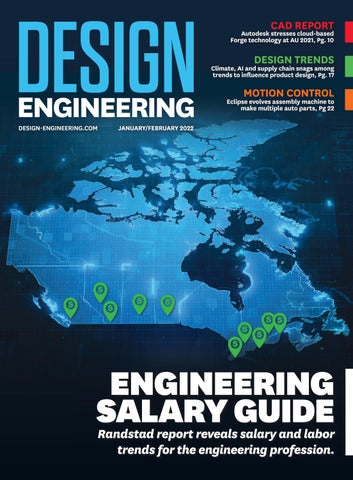
ENGINEERING LABOR TRENDS 2022
Randstad
report reveals salary and labor trends for the engineering profession in Canada.
According to Randstad’s annual report on salaries and labor trends, engineering employment in Canada will move contrary to the majority of the overall labor market. While nearly every job sector is still in the grip of the “great resignation,” the human resource consulting firm predicts Canada will have a surplus of engineers in coming years.
The report points to research that foresees a labor pool that outpaces the growth of new engineering positions. For example, the research finds that, between 2018 and 2028, the mechanical engineering
Top Engineering and Related Jobs
labor pool will grow by 13,200 while the number of positions will expand by only 11,300. The civil engineering discipline will see similar imbalances, the research finds.
However, it’s unclear if these number take into account that nearly half of working Canadian engineers are 50 years old and older and will be retiring in large numbers over the next 10 to 15 years.
For firms that hire engineers, this projection puts them in the driver seat, Randstad’s report argues. However, certain trends may make recruiting top candidates difficult. Among
The most in demand engineering job titles shifted considerably from last year. With continued the escalation of building projects across Canada, civil engineer rose to the top of the list this year, followed by construction worker for first time. The other top titles focused on the manufacturing side, lead by mechanical and industrial engineer. While not engineers, the roles of electrical engineering technician and quality assurance technician are also in high demand, Randstad finds.
these are advancements in technology and regularly shifting regulatory frameworks.
The most troubling trend Randstad’s report highlights, however, is that a growing number of engineering graduates aren’t seeking or are delaying becoming certified as licensed engineers (P.Eng., ing,).
According to the report, those with engineering training may see the process as limiting, since each province has its own procedures, tests, rules, etc, which could make relocating more difficult.
For the first time on Randstad’s list of highly valued engineering skills, project management took the top spot this year. Those with talent at managing budgets, assessing risk and supervising are in high demand, the company says. Not surprisingly, mastery of various engineering design applications – be it venerable 2D AutoCAD, 3D modeler Solidworks or Autodesk Revit – is a must have for any engineering designer. And, as in past years, knowledge of quality assurance and regulation compliance is highly valued, as is experience with diagnostic and metrology equipment.
Bilingual french
Randstad’s
Alternatively, the report says engineering grads may be pursuing career options outside engineering. This is echoed by a 2015 study by Ontario Society of Professional Engineers that found only a third of Ontario engineering degree holders actively working as licensed engineers.
Another factor is that more positions may not require an engineering designation, making licensing less necessary. As a result, employers may have to lower their credential expectations when hiring younger engineers.
Top Certifications
The certifications that carry the most weight with engineering employers is unchanged from last year. Randstad’s report points out that, COVID or no, buildings and infrastructure remain essential projects, hence the continued demand for structural engineers. Below the top spot are the Professional Engineer designation followed by the pre-req for full engineer status, Engineer in Training (EIT), and the trade-oriented cert, Certified Engineering Technologist.
Structural engineer (SE)
2. Professional engineer (PE)
3. Engineer in training (EIT)
4. Certified engineer technologist (CET)
5. Computer aided design and drafting (CADD)
and related professions, visit www.randstad.ca/salary-guides.
Mechanical Engineering Salary Guide 2022
1 Greater Vancouver
Entry: $73.3 - $96.0
Mid: $82 .7 – $110.4
Senior: $94.2 - $125.2
2 Calgary Metro Area
Entry: $78.7 - $103.3
Mid: $88.9 - $118.9
Senior: $101.4 - $134.7
3 Edmonton Metro Area
Entry: $75.6 - $99.0
Mid: $85.3 - $113.8
Senior: $97.2 - $128.9
The following salary data is adapted from Randstad Engineering’s 2022 Professionals Salary Guide, based on data generated by the Economic Research Institute (ERI) with validation by Randstad experts. All salaries are for manufacturing mechanical engineers only. Amounts are expressed in thousands of dollars and represent annual base salaries (before benefits). Salary ranges quoted below correspond to the 25th and 75th percentiles for Entry (1–3 years), Mid (4–7 years) and Senior (8–12 years) levels. Randstad’s complete 2022 Salary Guide includes numerous other engineering disciplines and related job titles, as well as data for 50+ municipal regions across Canada. For Randstad’s full report, including data for all engineering
4 Saskatoon
FIELD PROVEN
Eclipse Automation adapts assembly machine to make multiple automotive parts in one high-throughput process.
Saving a penny per part or a millisecond in cycle times might not matter to some manufacturers. But Eclipse Automation knows that even small gains can offer huge competitive advantages. To help customers not just succeed in but truly disrupt their industries, the Cambridge, Ontario-based custom automation company constantly researches leading-edge solutions.
“We test all kinds of new technologies, including artificial intelligence, remote training, virtual reality for maintenance systems and any components that add precision and flexibility,” says Jeff Werner, General M anager for Eclipse. “One technology that has proven particularly important to us is linear transpor t systems.”
Founded in 2001 to serve the custom automation market, Eclipse has grown exponentially in the past decade.The Canadian company quickly gained respect for taking on and delivering challenging applications with difficult timeframes. In addition to its state-of-the-art manufacturing campus in Cambridge, Ontario, the company has global offices in
the U.S., Germany, Switzerland, Hungary and Malaysia.
“We serve many different market segments in addition to automotive and transportation, such as life sciences, consumer products and even nuclear energy,” Werner says. “Eclipse has developed a solid reputation with many Fortune 50 companies around the world for delivering flexible systems with high quality, reliability and traceability.”
Proven in the field
Recently, the company updated one of it’s in-production systems that assembles automotive transmission pumps. Initially, the customer – a tier-one automotive supplier – had requested a system to replace several legacy machines that manufactured just one product type. At that time, the legacy machines couldn’t achieve the throughput and quality standards necessary for this high-volume product.
“The previous machines used rotary dial tables and similar components,” says Matthew Kelly, Software Design Supervisor at Eclipse. “Each station only did one process, and if any station went down, it impacted the entire line.”
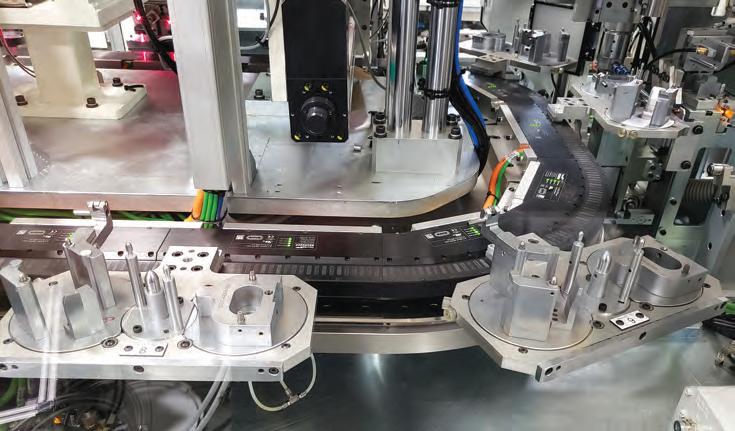
With the flexible XTS for material handling, Eclipse was able to produce a very highly condensed assembly system for its automotiveindustry customer.
Founded in 2001 to serve the custom automation market, Eclipse has grown exponentially in the past decade.
In addition to increasing functional capabilities, the customer also wanted the new system to take up significantly less floor space.
“Floor space is always at a premium, but this customer’s assembly and process equipment is extremely consolidated,” Werner says. “When we proposed the system, they said, ‘We like the concept, but make it 25% smaller’. We didn’t know if that was possible.”
To solve these challenges, Eclipse worked closely with the local Beckhoff Canada team. In place of legacy conveyors, Eclipse leveraged the company’s eXtended Transport System (XTS) smart conveyor system.
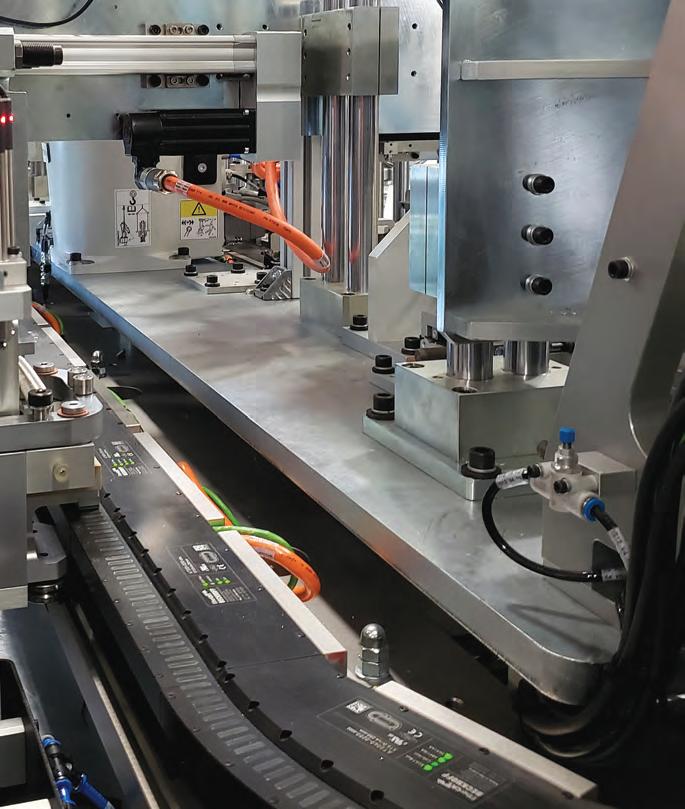
Combining the benefits of rotary and linear motion, XTS uses electromagnetic forces to propel movers along a track at high speeds with accelerations up to 100 m/s2. Robust encoder flags in the movers allow them to operate with high precision, both individually or in groups. And because each mover appears as an individual motion axis, it offers better traceability for each pump, at each step in the process.
Using XTS, Eclipse built its initial system in four separate cells with more than 50 stations for pressing, soldering, screwdriving, flatness checks with LVDTs, dispensing, plasma treatment, leak testing , inspection, etc. Many stations require precise synchronization to robotics.
In the first three machine cells, operators place the pumps on pallets attached to XTS movers. In the first cell, the XTS track is 12 meters long with 18 movers; 6 meters with 12 movers in the second and 10 meters with 18 movers in the third. The pallets’ carefully calculated pitch enables micron-level positioning.
When all assembly processes are complete, the operator moves the pump to the next cell. At the end of the third cell, a small conveyor moves a completed pump to the fourth cell where a robot lifts it in front of two GigE cameras for a final vision inspection, then places it on a conveyor for outfeed.
“XTS transitions products from station to station very quickly and accurately, and if there’s an issue with a part at any point in the process, we can bypass other stations and simply remove it,” Kelly explains, adding that XTS also minimized the machine’s footprint. “We grouped multiple processes into a single station, which helped us further decrease footprint. With all the processes and tooling, it was the most condensed automation system I’ve ever seen.”
The system’s pallets, which attach to XTS movers, can be swapped out to assemble a different part without having to purge the system.
Next-gen challenge
With the Eclipse team’s innovative design and implementation, the first assembly machine exceeded expectations and is still in use today. In December 2019, however, the automotive supplier requested a second machine with a new challenge: It would need to make a second pump on the same system. The pumps are different sizes and for different vehicle makes.
This posed a challenge for the previously designed pallets, not to mention that some assembly steps would need to happen in different orders for the two pumps. And, to maintain throughput, the system couldn’t afford the downtime
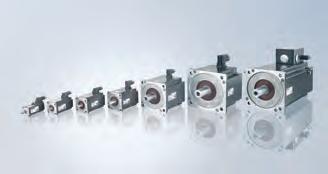
Several Beckhoff AM8000 series Servomotors work in conjunction with the XTS to complete various assembly processes.
to purge all of one pump type and then perform a lengthy changeover.
Once again, XTS played a crucial role. Working with the local Beckhoff
“This design request seemed terrifying when we first conceptualized it...”
team, Eclipse updated the system so it could handle two totally different pumps at the same time by relying on the fast cycle times of EtherCAT and the flexibility of XTS.
The adaptive mechatronics allow the customer to produce parts with different pitches without time-consuming changeovers or separate tooling at each station. And because the XTS movers are not linked as in traditional designs, they can freely move the pallets around the track to specific process steps as needed, even if the order is different between the two pumps.
“The system allows operators to quickly release and replace the pallet with a second type,” Eclipse GM Werner says. “This new pallet indexes forward and its specific position is measured to determine an offset. We apply those offsets to each individual pallet and make sure that components and parts line up exactly for the processes. So the operator can easily load part type A, wait one cycle, and then load part type B with negligible downtime.”
“Frankly, this design request seemed terrifying when we first conceptualized it because of the high accuracy requirements,” he adds. “When we presented the bold idea of suddenly taking a pallet off and putting on a different one, there was silence in the room.”
In addition to the three XTS systems, the assembly line also relies on other EtherCAT and PC-based automation technologies. Each of the first three cells features a C6930 control cabinet Industrial PC (IPC) to control the cell’s XTS track and peripheral devices. The IPCs enable TwinSAFE for functional safety across the entire line and communicate via EtherNet/ IP to a secondary machine controller that controls other portions of the line. However, EtherCAT provided the system’s main communication and I/O.
To make this advanced functionality possible, TwinCAT 3 automation software was critical. The universal engineering and runtime platform from Beckhoff allowed Eclipse engineers to program G code that enables the XTS and Beckhoff AM8000 servomotors to perform coordinated motion for high precision dispensing. In addition, Eclipse took advantage of the capability
The assembly system includes three XTS tracks, ranging from 6 meters with 12 movers to 12 meters long with 18 movers.
to program with the object-oriented extensions of IEC 61131-3, predefined and custom function blocks, and computer science standards found in Microsoft Visual Studio.
“We can use Ladder functionality if needed, but most of our programming is text-based,” Kelly explains. “For pallet control, pallet offset tables and similar requirements, Beckhoff offers many advantages compared to other options, and we save a significant amount of engineering time.”
Instant results
With the innovative design by Eclipse, the updated transmission pump assembly system met the specified cycle time of 20.2 seconds per par t with the micron-level accuracy required. Since commissioning finished in early 2021, the system has produced roughly 1,000 parts per shift, running part A and part B in separate batches. The easy release and attachment of pallets, along with the instant automatic indexing of XTS, almost eliminated changeover times, pushing them down from more than an hour to just one minute.
“The customer was absolutely overwhelmed by the ability to perform that changeover considering the system’s extreme compactness and complexity of process,” Werner says. “It was a marvel of both controls and mechanical engineering to ensure easy release of these pallets without removing a single bolt.” Pallets simply move to a storage buffer, and if one is damaged, the operator can easily replace it.
Leveraging application experience with advanced linear transport technologies like XTS is just one way that Eclipse has kept innovation in its DNA. The company has tackled unprecedented high-speed and micro-assembly applications, including several COVID-19 test kit applications that also use XTS and PC-based control. Werner sees this as important for providing highly efficient, cost-saving solutions to customers as well as attracting new engineering talent to work at Eclipse.
“Most students are not learning traditional PLC programming. Instead, they leave university with a far better understanding of PC-based control
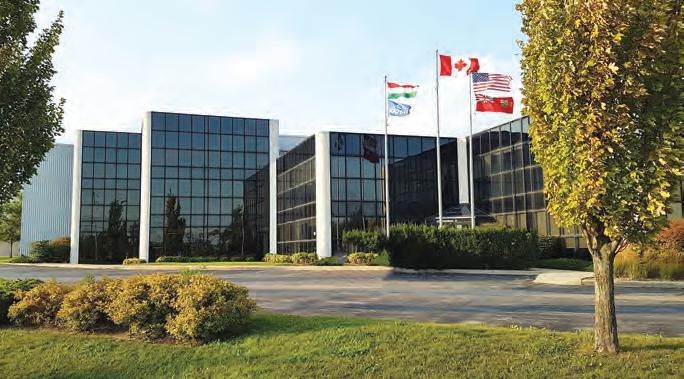
Founded in 2001 to serve the custom automation market, Eclipse maintains its state-of-the-art headquarters in Cambridge, Ontario, with additional locations in the U.S., Germany, Switzerland, Hungary and Malaysia.
systems than ever before, and that grows every year,” he says. “Fortunately, Beckhoff has proven to be a reliable par tner for this as well as all areas of automation technology. When we have challenging applications, we’ll
be ready to provide highly competitive solutions together.” |DE www.eclipseautomation.com www.beckhoff.com
This article was provided by Beckhoff Canada.
AUTOMATION
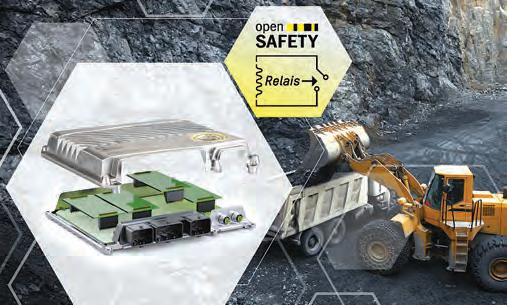
SAFETY RELAY MODULE
B&R has expanded its X90 control system with a safety relay module that allows external safety components such as drives or laser scanners to be connected to the X90 controller via a floating-ground emergency stop circuit. With the module, a safety level of PLe/SIL3 can be achieved. Designed for autonomous agricultural and construction vehicles, the module doesn’t require a control cabinet or complex wiring. www.br-automation.com
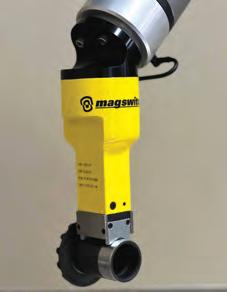
MAGNETIC GRIPPER
Festo distributes the Magswitch Electric Series (E-Series) of intelligent magnetic grippers. Not electromagnet or electropermanent magnet-based, the gripper contains proprietary switching technology that’s capable of two to three times the holding
forces of similarly sized magnetic grippers. Pole shoes that shape the magnetic field are offered in standard and custom configurations to ensure the correct grip for the application. The units can identify and grip individual blanks down to .6 mm in thickness. The E-Series feature an actuation time of 250 milliseconds. Since it’s switching technology reduces magnetism to zero in the off state, ferrous particles fall off the gripper. They operate on 24 VDC with serial communication protocols and there are options for control via any Ethernet protocol. www.festo.ca
WIRELESS ROUTER
Antaira Technologies introduced it ARS-7235-5E-AC dual-band 802.11a/b/g/n/ac access point. With five 1-gigabit Ethernet ports, the WLAN router supports a net data rate of up to 867Mbp with 2x2 MIMO. It also features DIN-rail or wall mounting options, secure WPA3 encryption and a
voltage input of 9V. The ARS-7235-5E-AC-T is engineered to handle harsh environments with an operating temperature of -35°C to 70°C, an IP30 metal housing and industrial-grade resistance to shock, vibration, power surges and EMI. www.antaira.com
MOTION CONTROL
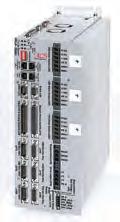
MOTION CONTROLLER
ACS Motion Control has released its SPiiPlusCMxa, the latest product in the company’s SPiiPlus series of EtherCAT-based master motion controllers. Suitable for applications with micron to nanometer resolutions and demanding velocity control requirements, this device includes up to three integrated motor drives that leverage servo control algorithms to maximize motion system performance. It is also configurable to control up to 64 axes.
The CMxa integrates universal motor and encoder technology, enabling system designers to control any type of motor or stage. Its fixed servo sampling and update rate provides the synchronized, real-time control required for multi-axis machine designs. www.acsmotioncontrol.com
MOTION CONTROLLERS
OES (Optimal Engineering Systems) introduced its MCC
Series of stepper and servo motor controllers designed to control up to four axes of motion. The series integrates a motion control card and operator interface and doesn’t require a PC, PLC, host controller or programming. The controllers feature a 4-Line LCD, 32-button keypad, STEP and DIRECTION outputs for each axis. Operating modes include Set Acceleration, Set Velocity, Set Position, Absolute Move, Relative Move, Find Home, Reset Position Counter, Go to Position Zero, Joystick Operation and Stop All Motors. www.oesincorp.com
ELECTRICAL CABLE MONITOR
Igus introduced its i.Sense CF.D sensors that check the electrical condition of chainflex bus and data cables in e-chain systems without contact or intervention in the existing harnessing. The smart system consists of two sensor units clipped onto the cable before and after the chainflex cable to be monitored. During operation, the sensors continuously check the cables’ transmission properties. In combination with the company’s i.Cee: plus II evaluation module, the system allows for efficient predictive maintenance, igus says.
Connected to a CF.D sensor by USB, the predictive i.Cee maintenance module detects incipient deterioration of transmission properties signals and adjusts the component service life calculation accordingly. www.igus.com
POWER SUPPLY
WAGO launched its ECO 2 line of power supplies that provide an efficiency rating up to 90%. Measuring 25mm and 38mm respectively, the line features the company’s Push-In CAGE CLAMP technology, equipped with orange integrated levers. The line has an MTBF of more than one million hours and are approved for worldwide location use according to UL 61010. It also features LED indications, DC O.K. contacts, adjustable output voltage and convenient marking options. www.wago.com
CONTROL CABLE
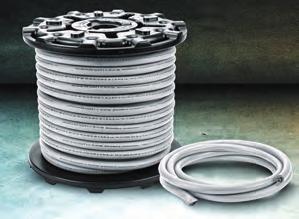
LUTZE introduced its SILFLEX 24VDC flexible control cable that’s resistant to sunlight, oil and moisture penetration. With a UL Type MTW Machine Tool Wire rating, the cable meets the NFPA 79, Electrical Standard for Industrial Machinery with additional ratings and approvals, including Class 1 Division 2 Hazardous Locations and Direct Burial. It’s UL Type TC-ER Tray Cable Exposed Run rating allows this cable to be installed between a cable tray and the utilization equipment or device without the need for metal conduit and/or armor. www.automationdirect.com
CONNECTOR
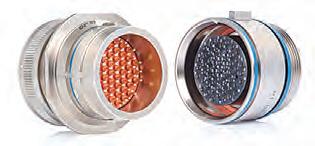
TE Connectivity launched its DBAS 9 connector, specifically designed for harsh military and space applications.
This push pull connector combines the DBAS 7 connector with standard D38999 inserts. Resistant to extreme shock, vibration and temperatures up to 200°C, the scoop-proof connector features a push-pull locking system, a leading clip to prevent unmating, and a range of backshells and accessories. If requested, DBAS-9 connectors can also be manufac-
tured according to European Space Agency (ESA) procedures to improve traceability and quality assurance. http://te.com
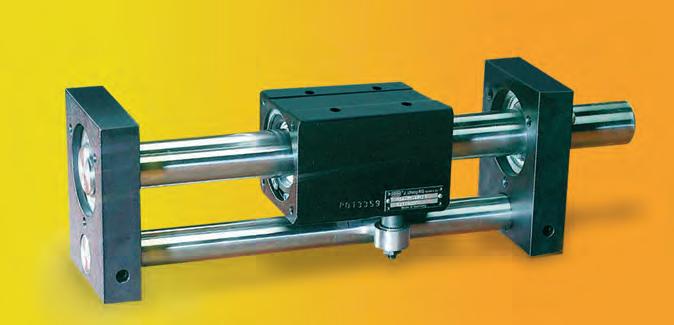
Rolling Ring
Zero backlash. Jam-proof design.
• For applications in positioning & reciprocating motion
• Zero play –even during reversal
Uhing® Rolling Ring linear drives run on a smooth, threadless shaft that won't clog or jam. If the system is overloaded, the shaft simply slips instead of churning and grinding. The drive bearings are in constant contact with the shaft, even during reversal, thereby preventing backlash.
Example applications: metrology machines, material handling systems, spooling equipment, packaging & converting equipment.
Many different sizes meet varying requirements for axial thrust & linear speed.
For more information call 1-800-252-2645
Email: amacoil@amacoil.com www.amacoil.com
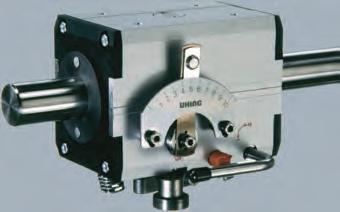
Some models feature mechanical control over speed and travel direction. No programming or electronic controls are needed.
MOTORS
AC MOTOR
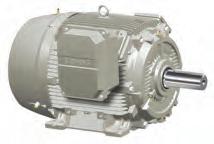
Siemens released its SIMOTICS
SD200 severe-duty motor in frame size 440. The line offers 75-800 hp output and features a 444-5013 cast-iron frame for operation in 460V and 575V ranges. They meet or exceed NEMA Premium MG1 Table 12-12 efficiencies. The line also features an offset rotor bar to improve efficiency, with larger bars and end rings to reduce resistance. Each die-cast aluminum rotor assembly is dynamically balanced and
includes a C1045 carbon steel shaft. C5-grade steel laminations and copper magnet wire are standard. For insulation, the Class-H non-hygroscopic system with NEMA Class B temperature rise meets or exceeds NEMA MG1 2014 Part 31. All windings are tested for Corona Inception Voltage (CIV). http://usa.siemens.com
MOTOR BRAKES
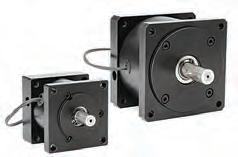
Teknic launched its Spring Applied, Power-Off Motor Brakes, available in NEMA 23 (3/8-inch shaft diameter) and 34 frame (½-inch shaft diameter) sizes. The motor
brakes will prevent axes from moving or stop axes already in motion. They have NEMA-standard input/output mounting flanges, with a front mount compatible with Teknic’s integrated servos (ClearPath), standalone brushless servo motors (Hudson), and stepper motors with or without encoders. They feature zero backlash and low inertia and a current draw of less than 500 milliamps. They have a maximum input speed of 6000 RPM, with an maximum engage time of 10ms (after 24VDC is removed) and a 20ms disengage time. www.teknic.com
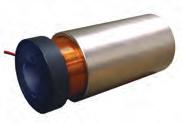
VOICE COIL MOTOR
Moticont has introduced an open aperture linear motor featuring a 2.250 in. (57.2mm) stroke. The HVCM-051-038-
019-01 DC Voice Coil Servo
Motor has a continuous force rating of 4.2 lbs (18.8N) and a peak force of 13.4 lbs (59.5N) at a 10% duty cycle. Capable of high acceleration, deceleration, high speed and zero cogging, this linear actuator has zero backlash when connected directly to a load. The motor has a body diameter of 2.000 in. (50.8 mm) and the housing is 3.500 in. (88.9 mm) long and is 5.14 in. (130.6 mm) long at mid-stroke. The 0.75 in. (19.1mm) open aperture and smooth motion are suited to focusing optics or laser beams, illumination and passage of cables and vacuum lines. www.moticont.com
AC MOTORS
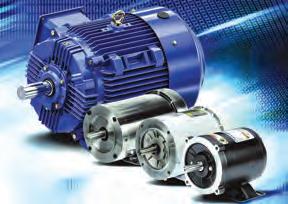
AutomationDirect has added a host of motors from Regal Rexnord to its existing portfolio, including two series of Marathon motors and Leeson specialty motors. The Marathon Globetrotter motors are 3-phase general-purpose motors that can be controlled by an inverter and are rated up to 200hp. Enclosure options include open-drip-proof, rolled steel TEFC, as well as cast-iron rated for hazardous locations. The Marathon SYMAX 3-phase permanent magnet AC (PMAC) motor line are VFD controlled and are offered in sizes from 1/2 up to 10hp. For washdown/harsh-duty applications, Leeson Washguard SST stainless steel motors and the Leeson Washguard White Duck series feature a chemical-resistant white epoxy finish. Both are offered in 1- or 3-phase configurations with available horsepower ratings from ¼ to 10 hp. www.automationdirect.com
LINEAR MOTION
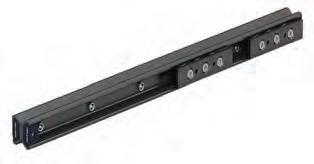
Telerace cold-drawn steel rails families now feature induction hardened and ground raceways along with double-row ball bearings. The enhanced rail versions carry a “Plus” designation and offer distinct features. The TLQ version’s adjustable sliders allows a stroke length/load capacity ratio of ±20 percent. The TLR version handles misalignment errors of up to ±2.7 degrees and compensates for dimensional difference between the structure and a drawer with a tolerance of up to 0.5 millimeter. www.rollon.com
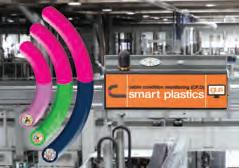
E-CHAIN
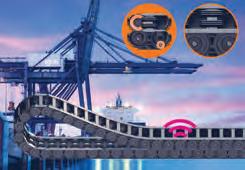
igus released its P4HD rol e-chain, designed for a generation of ship-to-shore cranes. The heavy-duty e-chain is made of abrasion-resistant materials and includes roller links as well as a triple stop-dog system to minimize wear and further reduce energy demand. All parts can be replaced if maintenance is required, and smart plastic sensors to monitor service life can be integrated into the pin/ bore connection. From a defined wear limit, the sensor
sends a signal to the igus i.Cee:plus module. It is integrated into a side part of the chain. When the crane has reached the end of its service life, igus takes the chain back and recycles it according to type. In return, the customer receives one voucher per kilogram.
www.igus.com
T-SLOTTED RAILS
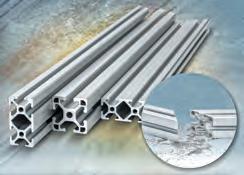
AutomationDirect has added SureFrame cut-to-length extruded aluminum rails. The T-slotted rails are available in
the most popular profiles and dimensions, including 1 x 1in, 1 x 2in, 2 x 2in, 1.5 x 1.5in, 1.5 x 3in, 3 x 3in, 30 x 30mm, 40 x 40mm, 40 x 80mm, 80 x 80mm, 45 x 45mm, 45 x 90mm, and 90 x 90mm. Compatible with many other brands, SureFrame rails can be cut to specified lengths in increments of 0.001 inches with no cutting fees. www.automationdirect.com
SENSORS
LINEAR POSITION SENSOR
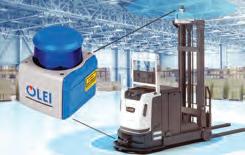
features 360 degree full-angle scanning, up to 50m. Compatible with reflector navigation and natural navigation, it is capable of up to 0.06 degree angular resolution and ±0.001 degree angular accuracy, ensuring precise positioning of 60k/s point cloud density with azimuth, distance, and reflectivity data. Certified to FCC, EMC, CE, RoHS and REACH specifications, the LiDAR also features a IP66 protection level. www.morpheustek.com
PANEL METER
Serving a World of Industries!
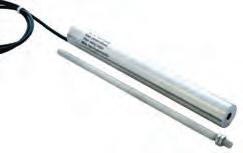
Alliance Sensors Group has adding the LZ-33 Series of LVIT linear position sensors. These contactless devices are offered in nominal full scale ranges from 6 to 36 inches (150 to 900mm) with an stroke-to-length ratio so that its overall length is ~1.5 inches (38mm) longer than the linear range of the unit. The sensor has a 1.315 inch (33.4mm) outside diameter aluminum or optional stainless steel body with a 1m long radial exit cable for I/O connections. Its 0.670 inch (17mm) diameter through-bore provides clearance for its 0.645 inch (16.4 mm) diameter moving rod, which is made of the same material as its housing. http://alliancesensors.com
MINI-LIDAR
GreatStar OLEI launched the world’s first industrial-quality 50m LiDAR available for navigation and obstacle avoidance that doesn’t require external reflectors. Typical 50m+ LiDAR products are limited by the need for external reflectors. The unit
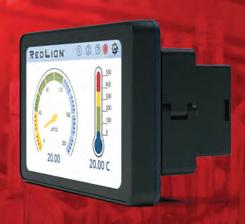
Red Lion launched its PM-50 smart panel meter, designed to extract data from legacy equipment. The meter features built-in Wi-Fi which delivers data to a smartphone or tablet using the Red Lion app. Wired connectivity is also available via Ethernet and Modbus. The PM-50’s display changes colors based on needs so workers can react accordingly, including a red panel indicating that immediate attention is required. Additional screens with the smart panel meter provide more data within one meter, enabling the machine operator to be better connected to the machine and each job’s requirements. www.redlion.net
PROGRESS BEGINS HERE
A series of one day tabletop shows highlighting the latest design and manufacturing technologies for the OEM market across Canada
March 29
April 20
May 31
An effective forum for face-to-face interactions where engineers, product developers, machine builders and systems integrators can discuss, network, solicit advice and ‘kick the tires’ on the latest technologies and applications that drive your business.
DEX Expo Abbotsford Tradex Center
DEX Expo Winnipeg Victoria Inn Hotel & Convention Centre
DEX Expo Moncton Moncton Coliseum Complex
June 22
DEX Expo Barrie Liberty North
September 20
DEX Expo Hamilton Canadian Warplane Museum
To discuss exhibit options please contact:
PBurton@annexbusinessmedia.com
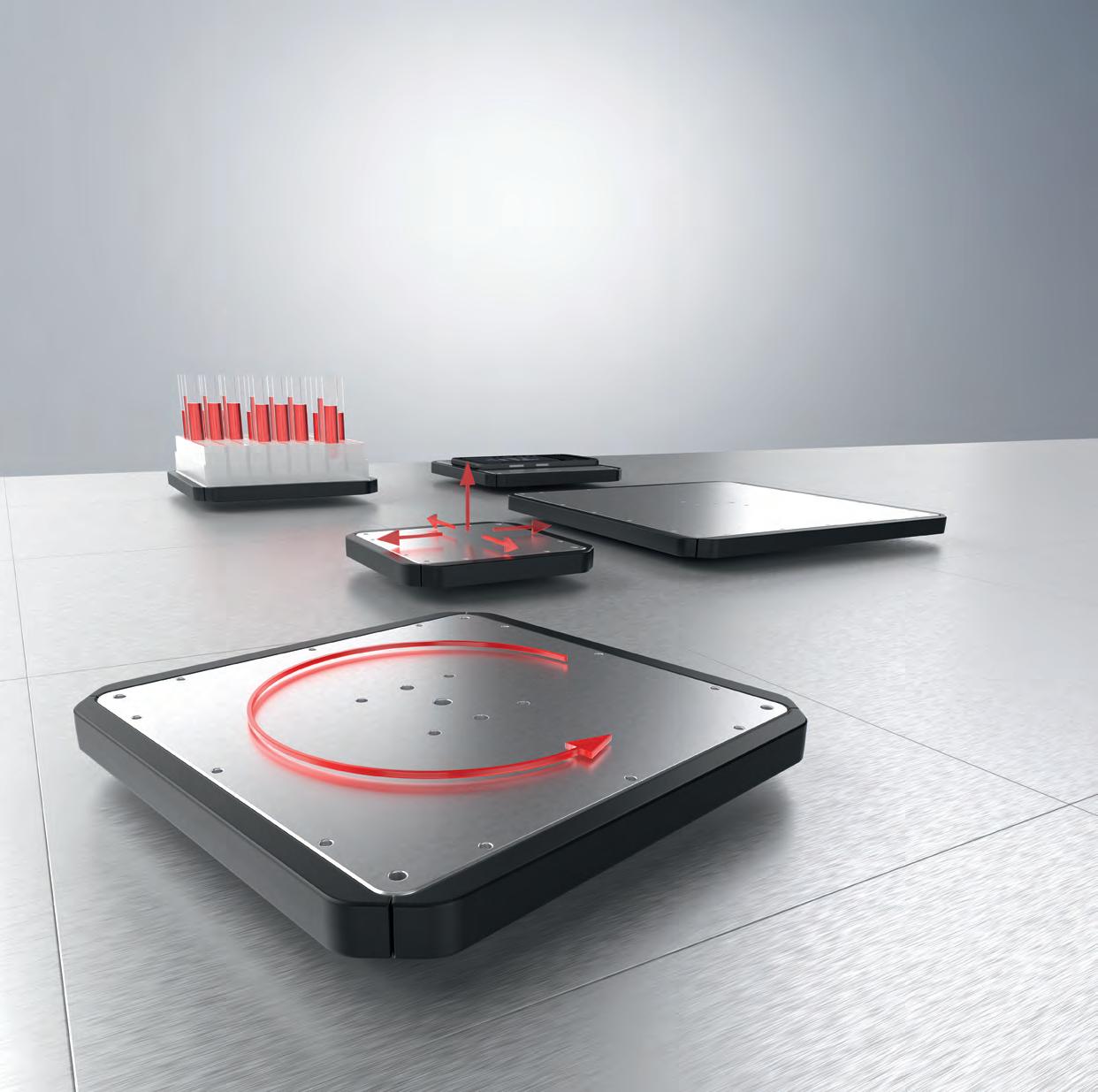
: Take flight with flying motion technology!
Flying 2D product transport with up to 6 degrees of freedom
XPlanar enables new dimensions of freedom in product and material handling: Levitating planar movers fly over flexibly arranged planar tiles accommodating nearly any track layout and path planning.
Individual 2D transport at up to 2 m/s
Processing with up to 6 degrees of freedom
Transport and processing in one system
Wear-free, hygienic and easy to clean
Free arrangement of planar tiles enabling totally customized machine and process layouts
Multi-mover control enables parallel and individual product handling
Fully integrated into the powerful and standardized PC-based Beckhoff control system