14 Autodesk firing on all cylinders as software reaches milestones
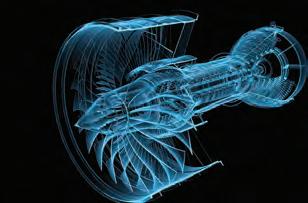
18 Sherbrooke U team accelerates aircraft electrification project with 3D scanner
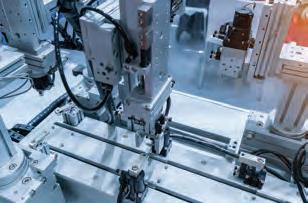
24 PC-based control reduces costs, cycle times for automation firm
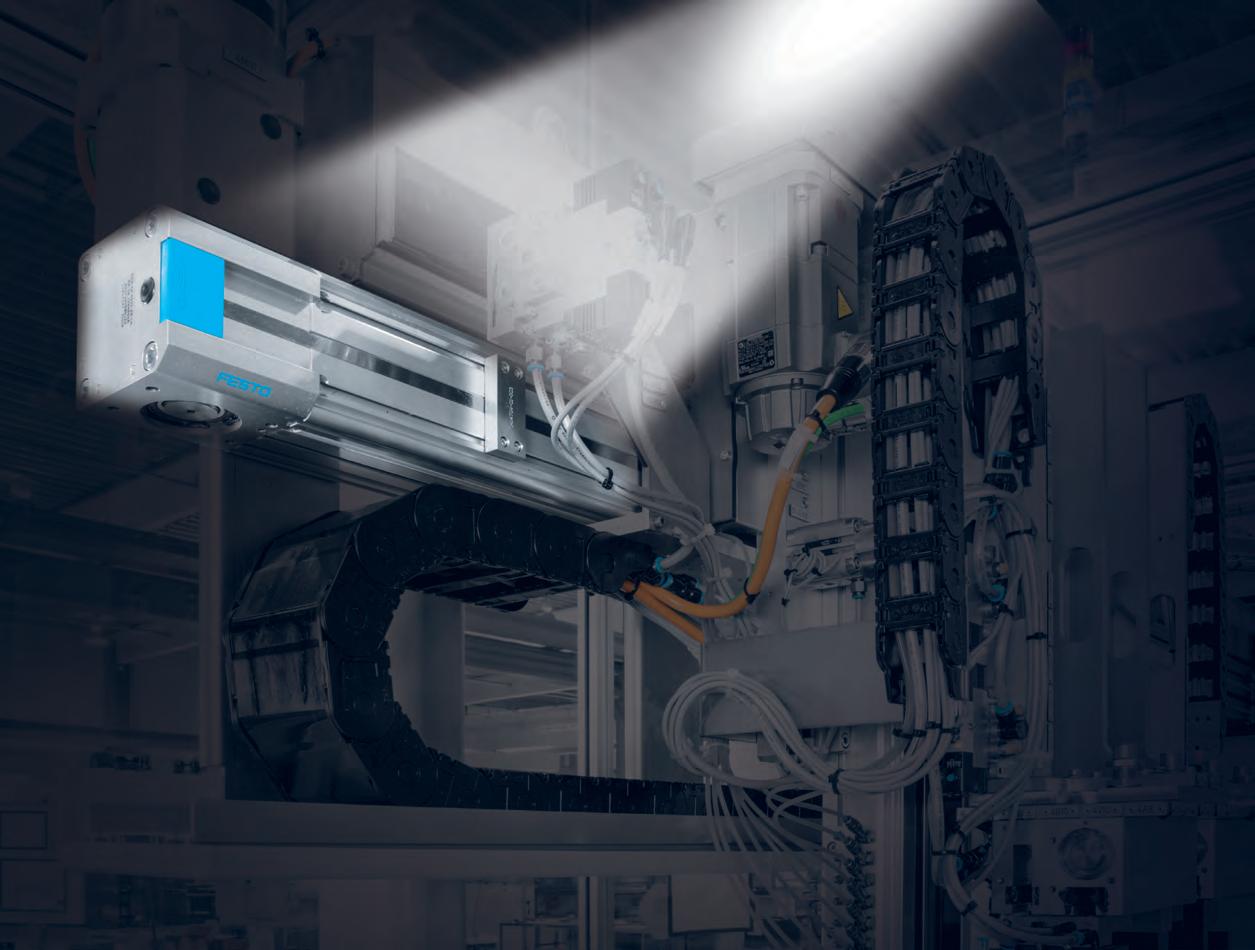
Whether you’re designing control systems or programming PLCs, you need to know the core products are going to perform like stars. Festo’s Stars of Automation offers you a one-stop solution, with over 4,000 durable, costeffective and high-quality components that enhance every factory system. For great value, look to the stars. Choose Festo.
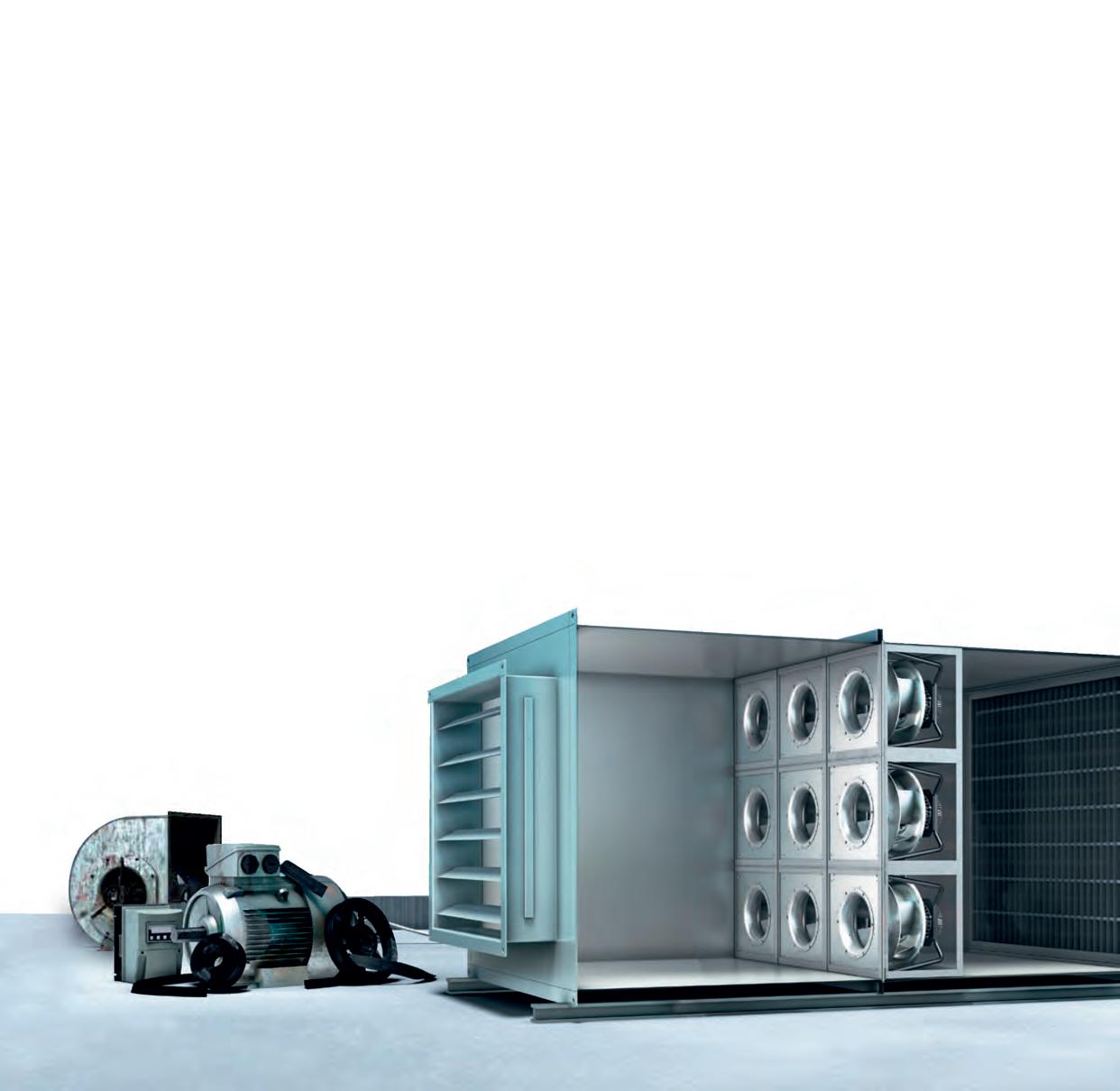
Teamwork: RadiPac with FanGrid
RadiPac with FanGrid – at work in your town.
– High efficiency reduces energy costs and optimizes PUE
– Modular design & ease of control allows almost unlimited scalability – 0-10V control input and status relay outputs as standard
– Control & monitoring via Modbus RTU communication
– Operational reliability due to redundancy (N+x)
For more information, please visit radipac.ebmpapst.us
Contact us directly: sales@us.ebmpapst.com
The past - Inefficient fans with belt drive and external control electronics.
The future - Highly efficient FanGrid with GreenTech EC fans.
Dr. Alain Aubertin Vice President, Business Development and International Affairs, Canada Consortium for Aerospace Research and Innovation in Canada (CARIC)
Ajay Bajaj, P.Eng President, Rotator Products Limited; Past President and Board Member, Power Transmission Distributors Association (PTDA)
John Lamb Regional Sales Manager, Wainbee Limited
Dr. Ishwar Puri, P.Eng Dean of the Faculty of Engineering; Professor of Mechanical Engineering, McMaster University
Dr. Mary Wells, P.Eng Dean of the College of Engineering and Physical Sciences, University of Guelph; Chair of the Ontario Network for Women in Engineering
SUBSCRIBER SERVICES
8 Design News
World’s first commercial electric airplane takes off in B.C. and other engineering news
14 CAD Report
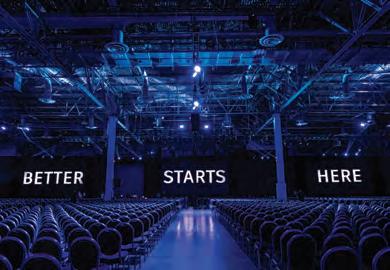
Autodesk firing on all cylinders as its primary design software reaches maturity milestones
24 Motion Control
PC-based control reduces technology costs and cycle times for Ontario automation firm
30 Idea Generator
The latest in industrial products including motion control, power transmission and sensors
Columns Features
18 Canadian Innovator
Sherbrooke University team accelerates aircraft electrification project with 3D scanner
20 Engineering Jobs in Canada 2020
Randstad Canada labour market analysis reveals engineering career trends across Canada
21 Mechanical Engineering Salary Guide 2020
Annual wage benchmark shows which Canadian cities pay top dollar for mechanical engineering talent
Killer App? Editorial Viewpoint
When personal computers first became widely available in the late 1970s, it was generally understood that those bulky beige boxes held great potential, but their utility wasn’t immediately obvious, not to mention uncomfortably expensive, especially for smaller companies. The IBM 5110 PC, for example, released circa 1978, went for US$9,875. Adjusted for inflation, that’s approximately US$38,105 today.
It wasn’t until the release of VisiCalc in 1979 that the PC’s true transformative power, from a business point of view, became apparent. For $100, companies could not only perform common accounting tasks almost instantly but also visualize business metrics on a grand scale, running all manner of projections and “what if” scenarios that would have been prohibitively difficult previously.
In some regards, that bit of digital history mirrors where the industrial sector is today with Industry 4.0, especially for Canadian small to medium sized manufacturers. According to the 2020 Advanced Manufacturing Report, a survey of Canadian manufacturers recently published by Plant Magazine in partnership with BDO Canada, 87 percent of respondents recognize that emerging technologies allow companies to compete globally and 79 percent see the Industrial Internet of Things as a business growth opportunity.
Despite that enthusiasm, however, only 24 percent said they are currently applying Industry 4.0, while 24 percent said they aren’t familiar with the technology’s capabilities and 15% stated Industry 4.0 is not applicable to their operations. Only 36 percent said they are actively planning or evaluating the technology.
Among the barriers holding them back, resistance to change topped the list as 51 percent of the survey’s 251 respondents admitted, most of whom are owners or senior executives of operations with fewer than 50 employees. In addition, 48 percent said a lack of employees with skill in the technology is a major barrier while 46% said it’s a lack of funding (i.e. too expensive).
Added to this are the risks implementing Industry 4.0 technologies pose. For example, 63 percent of respondents feel investing/implementing the technology increases the likelihood of cyber attack and nearly half say they can’t afford the massive investment and downtime that replacing legacy equipment would require. Conversely, 65 percent of respondents said falling behind the competition is the greatest risk of not implementing the technology.
As to the upsides of implementing IIoT, the survey’s respondents cited improving efficiency and productivity (33%); providing more visibility into production processes (23%); improving maintenance functions (22%); tracking materials and shop floor assets (20%); and pooling business data from shop floor to top floor (20%).
A glance at these numbers suggests there is more fear than desire driving what comparatively little IIoT adoption there is in the Canadian market. While there are some generally touted advantages, including proactive maintenance, Industry 4.0 doesn’t yet have a VisiCalc level killer app that’s technically straight forward and financially compelling enough to implement Industry 4.0. It will inevitably get there, but until then, Canadian manufacturers are prudent to take a measured approach until the numbers add up.
Mike McLeod
www.design-engineering.com
Senior Publisher
Paul Burton (416) 510-6756 pburton@annexbusinessmedia.com
Editor Michael McLeod (416) 442-5600 ext. 3231 mmcleod@design-engineering.com
Account Manager
Ron Salmon (416) (905) 713-4362 rsalmon@design-engineering.com
Vice President/Executive Publisher Tim Dimopoulos tdimopoulos@annexbusinessmedia.com
COO Scott Jamieson sjamieson@annexbusinessmedia.com
Design Engineering, established in 1955, is published by Annex Business Media, 6 times per year except for occasional combined, expanded or premium issues, which count as two subscription issues. Printed in Canada
Publications Mail Agreement #40065710 ISSN: 0011-9342 (Print), 1929-6452 (Online)
Subscriber Services: Canada: $57.50 for 1 year; $92.50 for 2 years; $10 for single copy.
Outside Canada: USA - $140.50; Overseas - $151.00 $10.00 for single copy. Directory/buyer’s guide: Canada $28; Outside Canada $46. All prices in CAD funds. Add applicable taxes to Canadian rates.
Mail: 111 Gordon Baker Rd., Suite 400, Toronto ON M2H 3R1 From time to time we make our subscription list available to select companies and organizations whose product or service may interest you. If you prefer not to receive this information, please contact our circulation department in any of the four ways listed above.
I enjoy hearing from you so please contact me at MMcLeod@design-engineering.com and your letter could be published in an upcoming issue.
• Cloud-based Data Logging - Unlimited cloud data storage for up to 7 years with active subscription
• Data Top Up - Increase monthly data traffic by 5, 15 or 50GB
• Service Level Agreement - Guarantees 99.6% availability, 4-hour max consecutive downtime per router
• Premium Branding - allows StrideLinx platform to be rebranded with custom company domain and contact/support information
• Cloud Notify/Alarming - provides customized “alarm” email and push notifications when control limits are exceeded on HMI / PLC devices connected to the StrideLinx VPN router
Whether the job is down the street or across the country, with the StrideLinx cloud-based remote access solution you’re always on site. Simply install and connect the StrideLinx VPN router to your machine/system, set up an account and begin using the 5GB of FREE monthly bandwidth to securely monitor, program and/or troubleshoot your remote systems from anywhere, any time.
Optional subscriptions are available to maximize your remote access capabilities:
Orders over $49 get FAST FREE SHIPPING
Our shipping policies make it easier than ever to order direct from the U.S.!
Fast free standard shipping* is available for most orders over $49 U.S., and that includes the brokerage fees (when using an AutomationDirect nominated broker). Using our choice of carrier, we can reach most Canadian destinations within 2 to 3 days. Order by 6pm ET and in-stock orders ship the same day!
*2-day free shipping does not apply to drop-ships, or orders requiring LTL transport, but those shipments can take advantage of our negotiated super-low at rates (based on weight) that include brokerage fees.
See Web site for details and restrictions at: www.automationdirect.com/canada
To see all products and prices, visit www.automationdirect.com
StrideLinx Remote Access
DesignNews
World’s first commercial electric airplane takes off in B.C.
B.C.-based
seaplane airline, Harbour Air, and electric motor maker, magniX, successfully flew the world’s first all-electric commercial aircraft in December of 2019. The ePlane, a six-passenger DHC-2 de Havilland Beaver powered by a 750-horsepower magni500 propulsion system, took off from the Fraser River at Harbour Air Seaplanes terminal in Richmond.
“Today, we made history,” said Greg McDougall, CEO and founder of Harbour Air Seaplanes. “I am incredibly proud of Harbour Air’s leadership role in re-defining safety and innovation in the aviation and seaplane industry. Canada has long held an iconic role in the history of aviation, and to be part of this incredible world-first milestone is something we can all be really proud of.”
Earlier this year, Harbour Air announced its partnership with magniX and the company’s intention to build the world’s first completely electric commercial seaplane fleet. The magni500, which was unveiled at the Paris Air Show in June, 2019, is a high-power-density electric propulsion system that provides its full 2075 ft. lbs. of continuous torque at low RPM and a top speed of 3000 RPM.
Harbour Air and magniX say the next step will be to complete the certification and approval process for the propulsion
system and the retrofitting of aircraft. Once the certification is complete, the rest of Harbour Air’s fleet will be converted to magniX’s all-electric propulsion technology.
Founded in 1982, Harbour Air is North America’s largest seaplane airline, with more than 40 aircraft and up to 300 daily scheduled flights.
www.harbourair.com www.magnix.aero
APMA unveils all Canadian zero-emissions car initiative at CES 2020
AtCES 2020, Canada’s Automotive Parts Manufacturers Association (APMA) announced plans for its next demonstration car, a zero-emissions vehicle build exclusively from Canadian parts and technologies, called Project Arrow. According to the industry association, the fully-built, one-off vehicle will be completed by 2022 in an effort to showcase the Canadian industry’s cutting edge automotive expertise.
“People hear bad news but what’s missing in the narrative is that we have the most advanced supplier technology in the world,” Volpe said, as reported by the Automotive News Can-
ada. “We are as leading-edge as the Germans and the Japanese, Americans and Koreans and we think as creatively as the Chinese.”
The APMA says Project Arrow will offer Canadian universities and colleges the opportunity to submit concept ideas for the car to a design contest scheduled for summer 2020. In the fall of this year, suppliers will bid on the project, and a virtual concept is scheduled to debut next year. As yet, the APMA says no price limit has been placed on the demonstration car’s development.
Project Arrow would be the latest of the association’s car projects. The APMA’s Connected Vehicle Program, completed in 2014, produced a feature-packed Lexus RX350 crossover, with contributions from 13 Canadian automotive companies, including Magna International, Leggatt and Platt, B.R.A.K.E.R.S Early Warning Systems Inc. and Weather Telematics.
At this year’s CES, the APMA displayed a luxury electric Karma Revero GT demonstration car (pictured left), featuring digital security technology developed by ISARA Corporation.
The Waterloo-based company incorporated its hybrid cryptography technology to demonstrate how cars can be hardened against the security threat posed by quantum computers’ superior hacking capabilities.
https://apma.ca
Harbour Air’s converted de Havilland Beaver “ePlane”, powered by a 750-hp magniX electric engine, taking off from the Fraser River.
PHOTO CREDIT: HARBOUR AIR
This luxury electric Karma Revero GT demonstration car, displayed at the APMA booth at CES 2020, features Waterloo-based ISARA Corporation’s Quantum-Safe cryptography technology.
APMA
• Resolution ≤5 mV
• Accuracy ±0.25% of full scale
• Real-time adjustable PID control
• Integrated 0 to 10 VDC, 4-20 mA signal, or 3.3 VDC serial communication
• 0 to 10 VDC feedback pressure monitor
• Virtually silent
• No integral bleed required
• Multiple pressure ranges from vacuum to 150 psig
• 2.7 to 65 l/min flow control
Take Control with Cordis
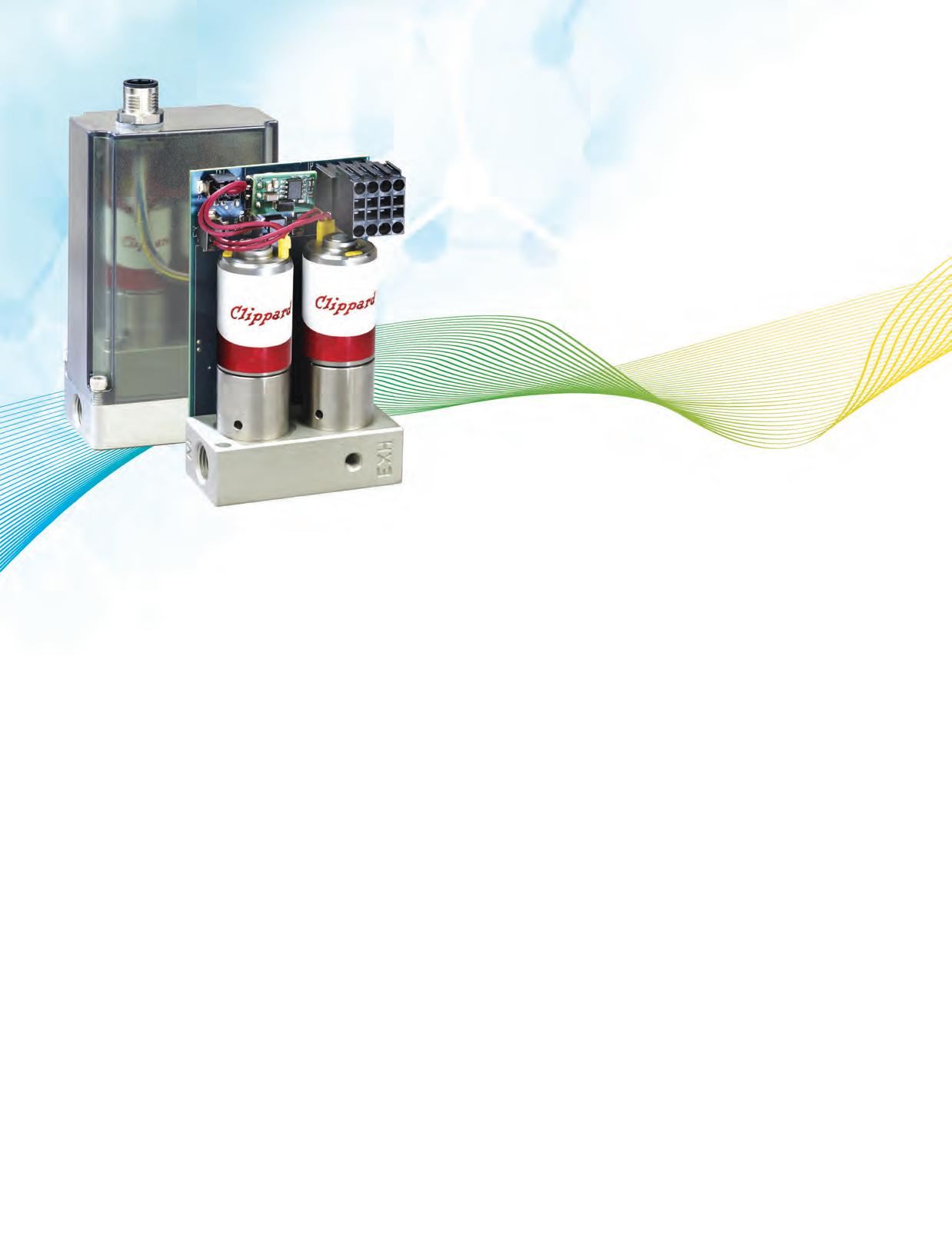
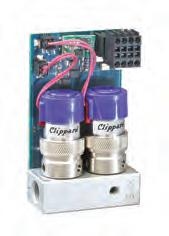
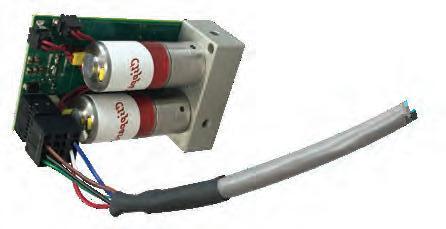
The future of proportional control has arrived— and it’s digital. The Clippard Cordis is a revolutionary microcontroller primed for escape velocity from a proportional control market that has grown stagnant.
With unparalleled performance and flexibility not possible with current analog proportional controllers, the Cordis makes everything from calibration, to sensor variety, to future development opportunities more accessible and less complicated.
Precise, Linear Digital Pressure Control
Contact wainbee.com today to learn more about how the Cordis can provide precise, real-time control for your application, or visit clippard.com to request more information.
U of T-developed sponge removes oil droplets from wastewater
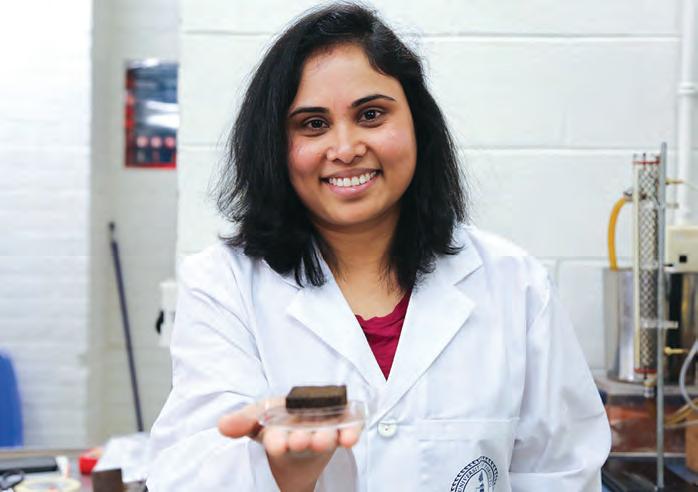
Researchers at the University of Toronto
announced the development of a micro-cellular foam sponge that can remove oil droplets from wastewater in as little as 10 minutes and with 90+ efficiency. Spearheaded by U of T grad student, Pavani Cherukupally, the oil-loving sponge can also be re-used after wringing it out and cleaning it with a solvent.
“Oil extraction operations such as hydraulic fracturing, or fracking, produce nearly 100 billion barrels of oil-contaminated wastewater each year,” says Chul Park, a professor in the U of T’s department of mechanical and industrial engineering. “Because the oil is in the form of tiny droplets rather than a large oil slick, we can’t use the same strategies we would use to clean up a surface spill.”
Drawing on Dr. Park’s expertise in microcellular foams, Cherukupally modified a common polyurethane foam such that it could remove 95 percent of the oil in test samples. While effective, that foam took too long to make sense in a commercial operation and was also highly dependent on the wastewater’s pH being relatively neutral.
“The optimal pH for our system was 5.6, but real-life wastewater can range in pH from around four to 10,” says Cherukupally. “As we got toward the top of that scale, we saw removal drop off significantly, down to maybe six or seven per cent.”
To improve performance, Cherukupally tweaked the surface charge, hydrophobicity and multiscale roughness of the polyurethane. She also partnered with Geoffrey Ozin’s chemistry research team at U of T to coat the foam with nanocrystalline silicon, to create a surface-engineered sponge with a specifically tuned critical surface energy.
“The critical surface energy concept comes from the world of biofouling research – trying to prevent microorganisms from attaching to surfaces such as the hulls of ships,” said Cherukupally. “Normally, you want to keep critical surface energy in a certain range to pre-
and other researchers.
PHOTO CREDIT BY KEVIN SOOBRIAN
vent attachment, but in our case we are manipulating it to promote attachment of oil droplets.”
As a result, the current prototype removes more than 92 per cent of the oil in 10 minutes and is effective over a wider pH range. The team was also able to re-use the sponge prototype 10 times without degrading its performance.
The researchers say next steps will include working with Natural Resources Canada to scale the technology and adapting it for salt water to clean up marine oil spills. In addition, the team is working with Fisheries and Oceans Canada to focus more specifically on marine spills in low-temperature environments.
www.utoronto.ca
Danfoss to acquire Eaton’s hydraulics business
Danfoss announced it will acquire Eaton’s Hydraulics business for a cash purchase price of US$3.3 billion. The company says the acquisition is in line with a strategy
to strengthen its core businesses.
“Today, we take a significant and transformational step in creating a global leader in mobile and industrial hydraulics,” said Kim Fausing, Danfoss President and CEO. “It is a once-in-a-lifetime opportunity to combine our largely complementary portfolios and geographic footprints.”
“We believe Eaton’s Hydraulics business will benefit greatly from being part of a company that has hydraulics at its core,” said Craig Arnold, Eaton Chairman and CEO. “When complete, this deal will bring together two talented teams with deep hydraulics knowledge and expertise.”
Eaton Hydraulics will be transferred into the Danfoss Power Solutions segment, adding approximately 11,000 employees and 2019 sales of US$2.2 billion. Danfoss currently has approximately 28,000 employees and 2019 sales of US7.0 billion. The transaction is expected to close by the end of the year.
www.eaton.com www.danfoss.com
University of Toronto PhD student, Pavani Cherukupally, shows off a sponge, designed to clean oil from industrial wastewater, that she spearheaded the development of in conjunction with University of Toronto chemists
ball drop
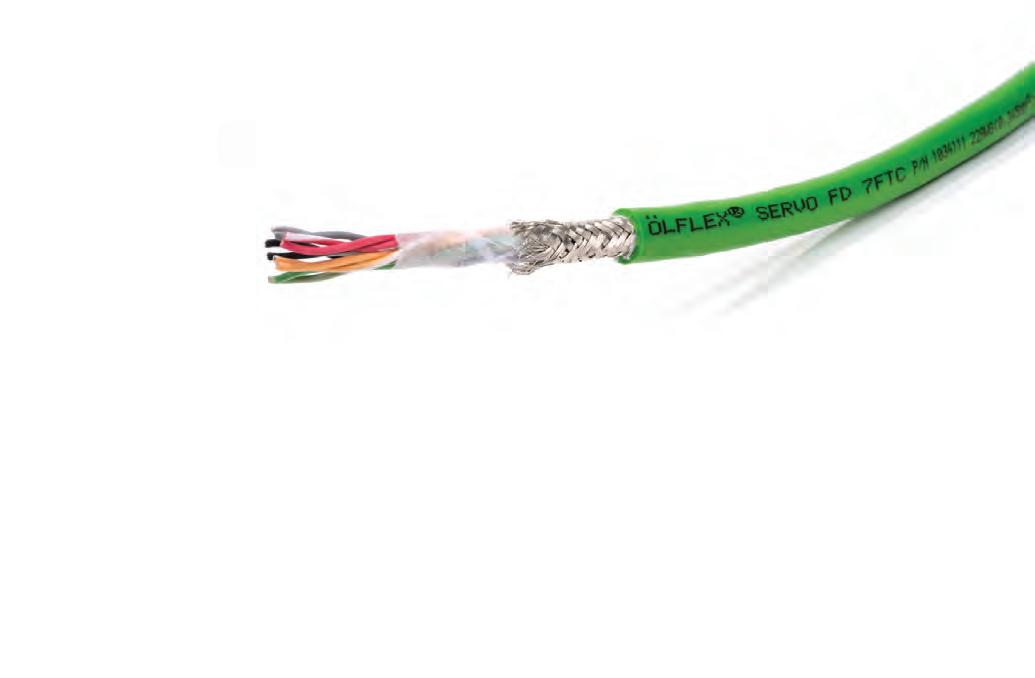
Count-down to the New Year and count on LAPP’s new ÖLFLEX® SERVO FD 7FTC. The single-cable solution for servo applications that goes from cable tray to cable track, saving conduit costs. Servo motors often operate in harsh conditions — robust oil, mechanical and flame resistant encoder-feedback cables like ÖLFLEX® SERVO FD 7FTC are vital. This continuous flex cable is rated CF-02 by LAPP’s UL-Verified Continuous Flex Test Method, and XLPE (Plus) insulation provides low capacitance for long cable runs. Count on LAPP cables to keep your factory up and running ... the ball does.
Non-stick coating repels drug-resistant superbugs
Researchers at McMaster University have developed a self-cleaning surface that can repel all forms of bacteria, preventing the transfer of antibiotic-resistant superbugs and other dangerous bacteria.
The new plastic surface – a treated form of conventional transparent wrap – can be shrink-wrapped onto door handles, railings, IV stands and other surfaces that can be magnets for bacteria such as MRSA and C. difficile. The treated material is also suited for food packaging, where it could stop the accidental transfer of bacteria such as E. coli, Salmonella and listeria from raw chicken, meat and other foods.
The research was led by engineers Leyla Soleymani and Tohid Didar, who collaborated with colleagues from McMaster’s Institute for Infectious Disease Research and the McMaster-based Canadian Centre for Electron Microscopy.
Inspired by the water-repellent lotus leaf, the hydrophobic surface works through a combination of nano-scale surface engineering and chemistry. The surface is textured with microscopic wrinkles that repel liquids and is treated chemically to further enhance its repel-
lent properties, resulting in a barrier that is flexible, durable and inexpensive to reproduce, the researchers say.
“We can see this technology being used in all kinds of institutional and domestic settings,” Didar says. “As the world confronts the crisis of anti-microbial resistance, we hope it will become an important part of the anti-bacterial toolbox.”
The researchers tested the material using two of the most troubling forms of antibiotic-resistant bacteria: MRSA and Pseudomonas, with the collaboration of Eric Brown of McMaster’s Institute for Infectious Disease Research.
According to a paper recently published in the journal ACS Nano, the plastic wrap reduced biofilm formation of MRSA and Gram-negative Pseudomonas by 87 and 84%, respectively.
The research team is currently looking for a partner to develop commercial applications for the wrap.
www.mcmaster.ca
Linamar to diversify into medical robotics market
Linamarannounced it has entered into an exclusive manufacturing agreement with Synaptive Medical Inc. to manufacture the Toronto-based medical technology firm’s Modus V and Evry products. In addition, the autoparts maker announced a US$5 million equity investment in Synaptive. According to Linamar, the move falls in line with the company’s innovation and diversification strategy by participating as both a shareholder and manufacturer in the medical device and biotech market.
“I am very pleased to announce this manufacturing agreement and investment with Synaptive,” said Linda Hasenfratz, Linamar’s CEO. “This strategic partnership is a great first step for us into the opportunistic medical and biotech market, given the growing and aging population and the ongoing demand for new, innovative and cost-effective solu-
tions to our growing medical needs. Synaptive is truly a global innovation leader in the medical marketplace and we are excited to embark on this partnership with them.”
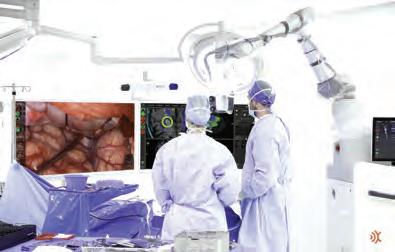
The products include Synative’s robotically controlled Modus V digital microscope, which features a robotic arm that automatically maneuvers a digital microscope to desired viewing angles. The company says the Modus V also offers enhanced optics that provide a larger field of view, a higher depth of field and more natural color reproduction so surgeons have a clear view of critical anatomical structures.
Evry is a head-only magnetic resonance imaging (MRI) system developed to reduce installation and operation costs, while also allowing the units to be installed in previously inaccessible areas such as the ICU, emergency room or
Toronto-based Synaptive Medical’s Modus V digital microscope.
PHOTO CREDIT: SYNAPTIVE MEDICAL
operating room.
The company said it plans to incubate the manufacturing of Synaptive’s products at the Linamar Innovation Hub in Guelph. www.linamar.com www.synaptivemedical.com
A wrap developed by researchers at McMaster University repels everything that comes into contact with it, including viruses and bacteria.
CREDIT: GEORGIA KIRKOS, MCMASTER UNIVERSITY
MARCH 10-14, 2020
LAS VEGAS, NV, USA
CADReport
AUTODESK IN 2020
CAD giant firing on all cylinders as its primary design software reaches maturity milestones.
By Ralph Grabowski
Life is good for Autodesk. This year, the 38-year-old software firm will finally pull out of its US$2-2.5-billion-a-year doldrums and is guiding analysts to expect $3.25 billion in FY2020, up a remarkable 30% over previous years. Its share price is at an all-time high and is nearing $200. Its software collection boasts 140 products as it branches into non-traditional areas, such as 3D printing software for medical implants (Within Medical).
Then, this past August, the company shook up its most loyal customers by announcing that time limits would be imposed for authorizing older software. The rollout of the new policy proved confusing, as sometimes the company specified “software older than three releases” and other times “versions 2011 and later
can be activated until March 2021.”
The accompanying web pages offered extensive FAQs that did not lessen the confusion. It turns out, the restriction is less ominous than initially portrayed. It kicks in only when you want to reinstall old software, such as on a new computer. Still, it was one more brick in the wall Autodesk is building against perpetual licenses.
And then there is the problem of its primary software trio: Inventor, Revit and AutoCAD. All are aging programs that sell well but need replacements that amount to more than just a clutter of Webbased apps.
Also dogging Autodesk is its failure to become a CAD vendor of record for the biggest CAD customers in the world.
Aircraft and automobile design and manufacturing continue to be dominated by Dassault Systemes and Siemens, while Autodesk can only dream of landing a Boeing design program.
The one industry that Autodesk truly does dominate (i.e. computer games and special effects) is a relatively small slice of their business. Games are three times bigger than movies, and movies are going nearly 100% digital, yet the Media & Entertainment division represents just 7% of Autodesk’s revenues.
Here’s why: It’s not uncommon for a special effects firm to win a fixed-price contract for a big movie, like Gravity, but then go out of business due cost overruns once the contract is ended. These firms typically use Autodesk software.
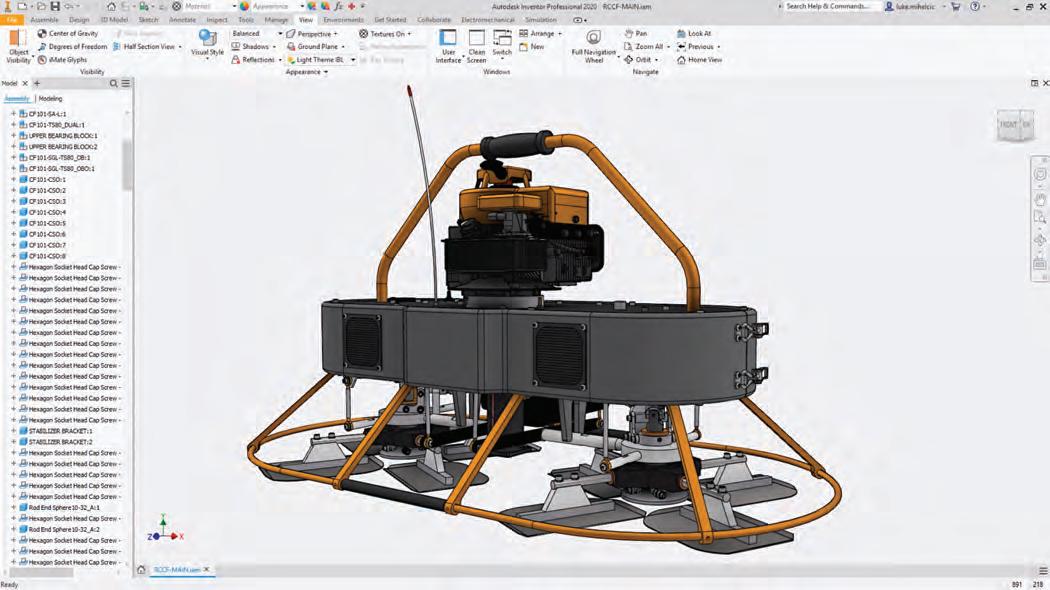
The latest version of Autodesk’s desktop 3D modeller, Inventor 2020, celebrates its 20th anniversary this year with customer-suggested features including solid sweep, complex surface unwrap and flattening, read-only mode and a refreshed light theme user interface design.
CADReport
Inventor Turns 20
Celebrating its 20th anniversary this year, Inventor continues to chug along, selling 40,000 copies a year, about half that of Solidworks. Like its arch-rival, Inventor is in a no-man’s land between being beloved by its user base but beset by an owner who’d rather users switch to a modern MCAD program like Fusion. Nevertheless, a few years ago, Autodesk pledged to keep updating Inventor for another five to ten years.
At last fall’s Autodesk University, Inventor was little talked about, mirroring the treatment Solidworks receives from Dassault executives at 3DEXPERIENCE (formerly Solidworks) World.
The surprise announcement during the company’s annual user event in Las Vegas was that browser-based Fusion 360 will work with ANSYS Mechanical FEA desktop software for structural analysis, despite Autodesk having spent lots acquiring its own stable of analysis software (e.g. Nastran). Then again, ANSYS is pretty much the go-to firm for analysis these days.
Also revealed during AU2019 was that Fusion 360 will finally connect to Delcam’s desktop PowerMill machining software, six years after Autodesk acquired Delcam. As well, costing software from aPriori now works with Fusion. It seems Autodesk is shoring up Fusion now that PTC owns arch-competitor Onshape.
Generative design (a.k.a. material optimization) is still the in-thing, as no newer MCAD technology has come along to supplant it, marketing-wise. Fellow CAD journalist, Roopinder Tara, points out that generative design fails in many areas outside of its core task of material optimization. Its results tend to fail with buckling loads and cannot be manufactured with traditional CNC machines.
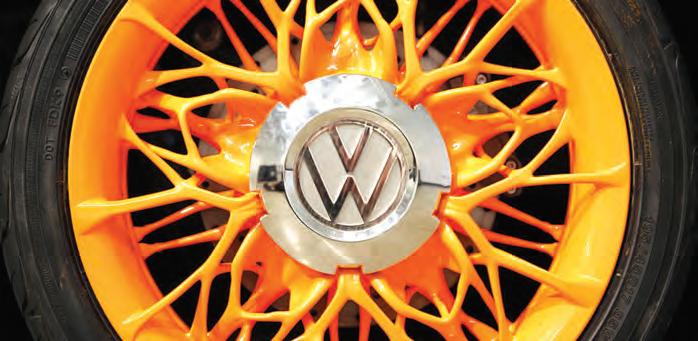
Even so, for a second year running, Autodesk showed off a VW microbus with a few of its parts redesigned with generative design. Autodesk had made it especially difficult for customers to access its version of generative design and so at AU2019, it announced that users could get a couple of months of access for free.
Revit at 20
Revit this year will celebrate the 20th anniversary of its launch as a venture-funded company, backed by some of
the same people who funded Solidworks and later Onshape. After being acquired by Autodesk, it became essential software for architects – primarily in USA and Britain.
The idea behind parametrically modeled buildings with integrated information (BIM) is exciting. “Look! If I specify a new ceiling height, every floor in the entire skyscraper updates automatically.” That was revolutionary.
BIM began to lose its luster, however, as the amount of detail and data stored in a single model of an entire building began to overwhelm the hardware. As a result, it’s not well suited to collaborative design among remote offices. To cope, Autodesk introduced LODs (varying levels of detail) and while third-parties developed enhancements to optimize the shuttling of models between multiple offices.
Autodesk had promised a modern Web-based replacement code-named “Quantum,” but it appears to have been reduced in scope. That’s no surprise, given that Revit was designed to be irreplaceable
due to its incomplete API that operates only inside the program and undocumented file formats.
Even so, outsiders are opening those formats up by banding together under the auspices of the Open Design Alliance to document the APIs and RVT/RFA file formats. As a result, competitors’ software can already read and display Revit models, while creating and writing models is promised for later this year. No one expects a Revit clone to materialize, but third parties are already peeling off functions that Revit does poorly, such as drawing documentation.
For its part, Autodesk props up Revit with 31 Web-based BIM 360 apps that manage projects, costs and so on. I consider BIM 360 a stopgap measure. One reason I mention Revit is that, last year, Autodesk concentrated all its acquisitions efforts (Assemble, BuildingConnected and PlanGrid) on construction, a market many times bigger than design. Being a much larger market means Autodesk also faces much larger competitors, most of
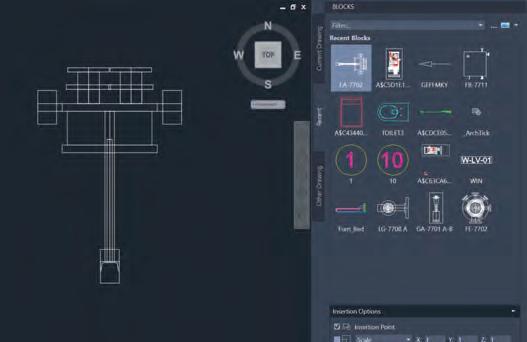
Released last year, the latest update to AutoCAD 2020 includes an update for the Blocks palette that features faster display of thumbnails and better usability.
At AU2019, Autodesk displayed a VW-developed bus prototype featuring a steering wheel, side mirror supports and these rims created with Autodesk’s generative design software and 3D printing.
whom are long-established. The near-billion it spent on acquisitions don’t guarantee it a win.
AutoCAD at 38
The CAD program whose name is synonymous with our industry is one of the oldest computer programs still in popular use today. It is a survivor, fending off attacks for 25 years from more than 30 AutoCAD work-alike programs, some of them free.
It’s popular with users, but not Autodesk executives. Despite costing CAD$2,100 (plus tax) a year, the company has scaled back development of AutoCAD. The annual feature list numbers barely a dozen and includes enhancements to existing functions, primarily. The problem is that significant enhancements to AutoCAD would step on the toes of Autodesk’s more expensive vertical software.
Before subscriptions, software companies had to show users that upgrading was worthwhile. Now, in the rental economy, software companies need not lift a finger too high, as they have already pocketed the cash. And so, AutoCAD users receive enhancements like yet another palette for inserting blocks and improvements to comparing two similar looking drawings.
Mildly embarrassing for Autodesk is that its most popular program, AutoCAD LT, is also one of its weakest. It’s a stripped down version that does neither 3D nor programming; instead, its popularity stems from doing what most drafters do: 2D drawing, 2D editing and 2D printing.
Like Inventor and Revit, desktop-bound AutoCAD is a problem for Autodesk executives, who want to be serving up server-based software. A former CEO once stated that all of Autodesk’s software would be available only through the cloud by 2018. That didn’t happen, isn’t seen (by me) to ever happen, and that CEO is no longer with the firm.
There is a cloud version of AutoCAD. Since 2010, it has undergone three technology transitions and three name changes, but the most recent one lacks a surprising number of functions and DWG compatibility as compared with direct competitors, such as Graebert Kudo.
Depending on what you count as a CAD software firm, Autodesk is either in third or fifth place. It faces hard competi-
tion in all four of its sectors – mechanical, architectural, general CAD and entertainment. It suffered years of losses during the long switchover from permanent to subscription licensing.
Its current CEO has surmounted most of these challenges, but one remains. It is having a hard time nullifying its desktop software in favor of Web-based apps. But then this problem bedevils all CAD software companies
who try to solve it and, in my opinion, it’s a problem that’s unsolvable. DE www.autodesk.com
Ralph Grabowski writes on the business of CAD on his WorldCAD Access blog (www.worldcadaccess.com) and weekly upFront.eZine newsletter. He has authored many articles and books on AutoCAD, BricsCAD, Visio and other design software.
Rolling Ring
Zero backlash. Jam-proof design.
• For applications in positioning & reciprocating motion
• Zero play –even during reversal
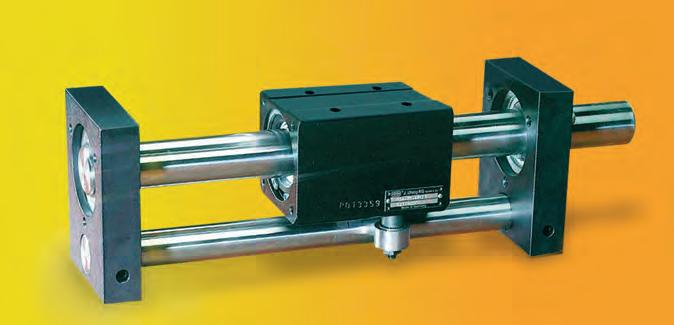
Uhing® Rolling Ring linear drives run on a smooth, threadless shaft that won't clog or jam. If the system is overloaded, the shaft simply slips instead of churning and grinding. The drive bearings are in constant contact with the shaft, even during reversal, thereby preventing backlash.
Example applications: metrology machines, material handling systems, spooling equipment, packaging & converting equipment. Many different sizes meet varying requirements for axial thrust & linear speed.
For more information call 1-800-252-2645
Email: amacoil@amacoil.com www.amacoil.com
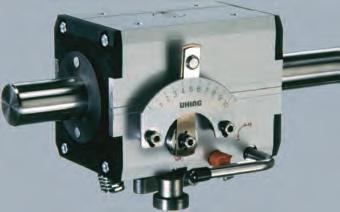
Some models feature mechanical control over speed and travel direction. No programming or electronic controls are needed.
ELECTRIFYING THE SKIES
Sherbrooke University team accelerates aircraft electrification project with Creaform 3D scanner.
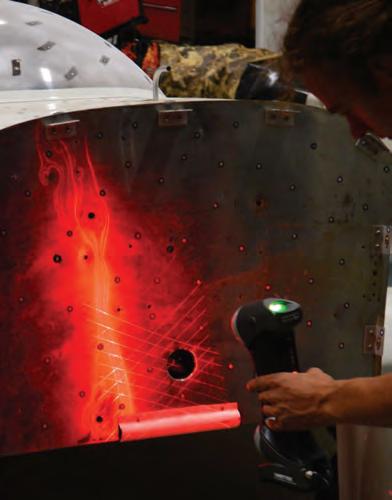
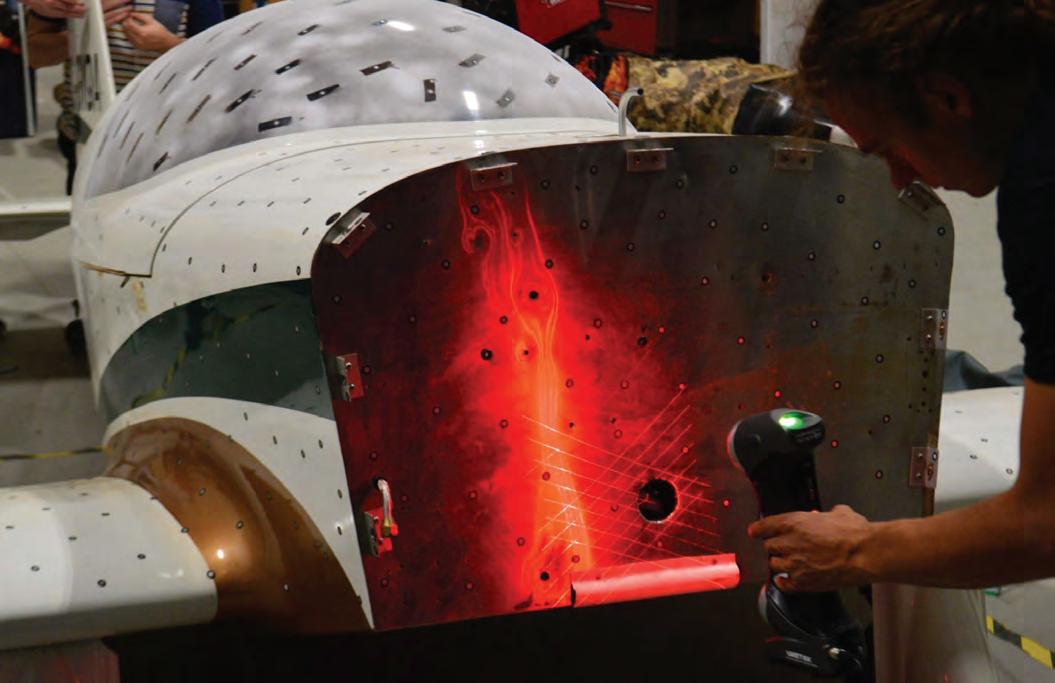
Sherbrooke University’s Project HERA team members are using a Creaform 3D scanner to create detailed models of a KR-2 kit plane in order to retrofit the aircraft with electric propulsion.
Electric vehicles have attracted a lot of ink and airtime over the past few years as a compelling alternative to traditional fuel-powered cars and trucks. What’s not as well known is that aerospace R&D teams and university research groups are also racing to develop electric aircraft to mitigate the costs of aircraft fuel as well as the negative impact of fuel-based aircraft on the environment. According to the International Air Transport Association, fuel represents nearly 50% of an aircraft’s total cost of ownership. This fact alone makes a compelling argument for electrification and aircraft manufacturers are banking on it.
A team at the Université de Sherbrooke is helping pave the way for electric aircraft. Twenty-one students in the university’s mechanical engineering department, as well as local college students, are doing their part to transform the aerospace industry. Their project, HERA (Hybrid Extended Range Aircraft) is a two-year, end-of-studies project that consists of the electrification of a two-seater Rand Robinson KR-2 kit airplane.
“The goal of our project is to prove the viability of using electricity for aircraft propulsion and develop a fully functional, high-performance prototype of an electric KR-2—the very first electric homebuilt aircraft in Canada,” explained François Lachance, one of the project’s leaders. “The project’s second mission is to share the know-how and skills we have developed over the course of the past months with other aerospace schools and companies so that they can benefit from our findings and develop their very own electric or hybrid versions.”
HERA is the outcome of a joint collaboration between the development team and major sponsors, which include Bombardier, Pratt & Whitney Canada, Siemens, Unither Bioélectronique, Optis Ingénierie, Creaform, L3 Harris, National Research Council Canada and MayaHTT. “It is a great opportunity for industry stakeholders to work side by side with promising engineering students to create the future of powerful electric aircraft,” Lachanced added.
Currently, the team’s main goal, from a technical perspective, is to prove that its prototype can fly. The aircraft was initially unveiled for the first time at Université de Sherbrooke’s end-of-the-year engineering event and one of Canada’s largest exhibitions showcasing engineering projects in early December 2019. The first ground tests were conducted to test the aircraft’s maneuverability and power in January. At the same time, the aircraft will also be inspected by Transport Canada.
“The aircraft will feature an electric motor and very powerful batteries,” Lachance indicated. “One of the major challenges has been to design and assemble a lithium-ion battery in a safe way. This meant that we had to conduct several tests to mitigate thermal runaway as well as determine the electric and mechanical performance levels of the motor.”
Another challenge the team faced was seamlessly integrating all of the aircraft’s systems together. “Because our airplane is a first in North America, airworthiness norms and standards have not yet been developed or certified for this type of elec-
trical propulsion. The safety of the batteries and pilot are paramount,” Lachance noted.
Retrofitting the KR-2 with an electric power plant, in place of the aircraft’s standard gas engine, required that they modify certain parts of the stock kit plane. However, detailed measurements of its components weren’t readily available, said Lachance.
“Because the airplane was built by individuals, we did not have any 3D models,” he said. “What’s more, the initial prototype was not necessarily perfectly symmetrical and some components’ actual sizes differed from those in our assembly plans.”
Added to these challenges was the less than optimal build environment itself as the HERA team’s work was completed in a room dedicated to housing electric vehicles—as opposed to an enclosed lab environment.
“We had the confidence that the accuracy and repeatability of our measurement results were not compromised due to the location of our work,” he added.
Lachance attributes the fact that their results were not compromised to the self-positioning and dynamic referencing features of a HandySCAN 3D from Creaform. As a main sponsor of the project, Creaform offered the HERA team use of the scanner so that team members could carry out various dimensional inspections as well as reverse engineer the entire aircraft.
PRECISION, QUALITY AND VERSATILITY FOR THE
DESIGN ENGINEER
Backings,
Using Creaform’s 3D measurement technologies, the team was able to accurately create digital models of the internal and external structure of the aircraft—all within one weekend and with the assistance of three team members. “The quality of the digital model was very crucial to help us design the aircraft’s different systems,” Lachance said.
Lachance also mentioned that the HandySCAN 3D accelerated the entire measurement and inspection processes, which would have been cumbersome and taken up too much time and increased the likelihood of errors had they been carried out manually.
Even more impressive is the fact that it would have taken them up to 300 hours to carry out the measurement and digitalization process using traditional methods. With the HandySCAN 3D, it took them only 80 hours. In addition to saving time, the 3D models generated enabled them to conduct finite element analyses (FEAs) on the aircraft’s structure.
The Université de Sherbrooke’s HERA project is an example of Creaform’s ACADEMIA educational package which helps engineering faculties around the world to benefit from the advantages of 3D measurement solutions to assist them in pushing the technology envelope further. DE http://projethera.espaceweb.usherbrooke.ca www.creaform3d.com
This article was contributed by Creaform
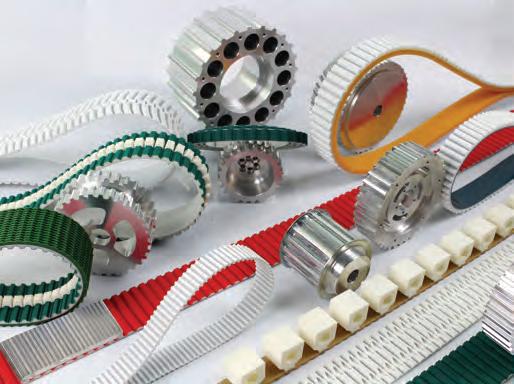
Polyurethane Timing Belts
ENGINEERING JOBS IN CANADA 2020
Randstad Engineering’s annual jobs report reveals shifting labour trends in Canada.
According to Randstad Engineering’s latest report on engineering labour and salary trends, the field maintains its sense of optimism. As in previous years, all engineering disciplines remain in high demand, with civil engineering, mechanical engineering and electrical engineering forecast to see the most growth.
At the same time, all disciplines continue to experience labour shortages, largely due to the fact that the market is heavy weighted to boomer era engineers. According to the report, nearly half of all Canadian engineers (47%) are 55 years old or older, leaving a large skill shortage in their wake as they retire. As a result, the report predicts a strong employeedriven market in the coming decade.
This year’s list of the most in-demand job titles shifted from last year, with industrial engineer and manufacturing engineer cracking the list of top jobs for 2020. Last year’s top job, electrical engineer, slipped to ninth place while mechanical, process and civil engineer fell out of the spotlight completely.
In the meantime, the Canadian median annual salary for engineers remained the same as last year at $75,200, with the bottom 10% of engineers making $45,900 or less. The significant change, though, came at the high end of the scale with the most experienced engineers taking home $130,000+, up from $103,000 in 2019. The skills shortages in this sector may explain the growth of high earners in this sector, as employers are willing to pay more experience and industry specific skills.
As in past years, the most in demand engineering skills are software-related, such as computer aided design and computer aided engineering. Unsurprisingly, tried and true 2D drafting software, AutoCAD, retained its popular standing, along with Solidworks and Autodesk Revit. Beyond software, companies also covet quality assurance and instrumentation. New to the list is bilingualism in French and English.
The 2020 list of the most valued engineering certifications remained nearly unchanged from last year, with Structural Engineer taking the top spot. Rounding out the top three are the industry-standard P.Eng designation and EIT, the first step toward professional engineer status.
Mechanical Engineering Salary Guide 2020
The following salary data is adapted from Randstad Engineering’s 2020 Professionals Salary Guide. All salaries are expressed in thousands of dollars and represent annual base salaries (before benefits) for mechanical engineers only. Salary ranges correspond to the 25th and 75th percentiles for entry (1–3 years), mid (4–7 years) and senior (8–12 years) levels.
- $97.6
- $112.3
- $97.6
$84.0 - $112.3
$95.8 - $121.
- $69.7
$59.2 - $78.7
- $97.8
- $112.6
$96.0 - $127.9
for the Coming Decade Key Engineering Trends
Engineers Canada’s take on the field’s future points to a cycle of disruption and evolution.
Ryan Melsom, Engineers Canada
With the calendar now showing a nice, round number, many are reflecting on what the coming years may hold for engineering. A review of recent articles and blog posts on the future of engineering suggests a mixture of trepidation and optimism as to how the next ten years might look.
The consensus among many is that traditional engineering fields such as chemical, electronic, and civil engineering will stay in demand, but the nature of the work and education they require will change. Engineers in these disciplines will need to become more interdisciplinary and increasingly flexible in order to leverage and adapt to constantly emerging technologies, particularly those around artificial intelligence and data science.
Stanford engineering professor and former dean, James Plummer, notes that there will be fewer jobs for people in a world with more automation – some estimates put jobs lost to automation at 40 per cent by 2030. This means that “lifelong education” and “just-in-time knowledge” will increasingly become the paradigm for staying relevant. In short, Plummer notes, “educational systems will have to focus on producing tech professionals who do what computers can’t do.”
This “augmented intelligence” model, which collaboratively leverages the strengths of human thinking and computational power, has already begun to play a major role in fields ranging from marketing to medicine.
Of course, emergent engineering fields have expanded in recent years and will
continue to fill gaps as the technology landscape rapidly changes alongside the problems engineering needs to most urgently address. UC Riverside notes that disciplines responding to climate change, such as water/environmental engineering, are outpacing the growth rate of many other engineering areas as demand increases for green energy systems including windmills, hydropower deployments and solar infrastructures.
They also predict that software-related fields such as data science and computational engineering will address “an emerging need to combine classical elements of mechanical and electrical engineering with principles from relatively new fields such as computer programming and data analytics.” Carsten Bock, Senior Partner at global consultancy firm
Roland Berger, echoes this sentiment, arguing that the need to work across disciplines will only grow as the integration of mechanics, electrics, electronics and software accelerates.
Alongside the shifts occurring in engineering fields will be the increasingly complex interplay between international markets and regulatory environments. Bock argues that differing product demands in different markets and regulatory environments will pose major challenges to companies’ resources, and this will leave them facing tough decisions.
In his words, “Either they have to accept the costly development of a [product] variant designed to meet the legal requirements in the country concerned, or they must pull out of that market completely.” Bock suggests that companies designing products will require business models that can address the gap between “high-end solutions” – that is expensive, tailor-made solutions – “and standard products.”
Making the situation more complex, a recent Forbes article highlights five key technological trends that will further disrupt engineering in 2020 and beyond: Digital twins, artificial intelligence, generative design, robotics and 3D printing. While any one of these, in-and-of itself, amounts to a sea change. Taken as a whole, they will allow for a transformed engineering landscape characterized by faster, cheaper prototyping, more efficient product design, reduced product risk and new ways for engineers to work with and leverage technology.
will likely be the increasing existence of numerous side-by-side technologies (think Blu-Ray vs. HD DVD, or gasoline vs. electric cars), where one may eventually win out, but all still require considerable investment and ongoing support.
One bit of good news throughout these trends is that, for end-users of engineering products, this transforming landscape may end up looking very positive. Wayne Barger, Health Practice Director for integrated design firm SmithGroup, notes, for example, that “visualization tools will become more realistic and immersive, leading to a future where collaboration between the owner, contractor and designers will be far more integrated.”
The consensus among many is that traditional engineering fields... will stay in demand, but the nature of the work and education they require will change.
This presents just one possibility for how engineers and engineering firms may leverage the burgeoning field of virtual reality (and its cousin, augmented reality), which UC Riverside estimates will grow from a $1B industry in 2015 to a $33.9B by 2022.
Even given the useful insights such prognostications provide, however, there is one notable gap in the majority of takes on what’s to come for engineering: Discussion of diversity and inclusivity. This is perhaps surprising, given that bringing a wider range of perspectives into play seems like a sensible way to navigate some of the complexities facing the field.
Generative design, for example, involves an engineer giving design parameters to an algorithm, and then selecting from “hundreds or even thousands of [design] options” produced by the algorithm. Coupled with the practice of “digital twinning” – the ability to create perfect digital models of real-world objects and thereby reduce prototyping costs – the rate at which advances can be made will be hugely accelerated from anything that’s ever been previously possible. One key effect of this
It’s also surprising, perhaps, given that so much work is currently being done to increase diversity in STEM fields. While the silence is in many ways frustrating, there may be an opportunity in it: The educators, firms and individual engineers who are able to leverage diversity and inclusivity work being done now will be better positioned to adapt to a future whose only given is a rapid pace of change. DE https://engineerscanada.ca
This piece was originally published in Engineering Matters, the newsletter of Engineers Canada (www.engineerscanada.ca/news).
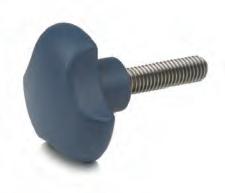
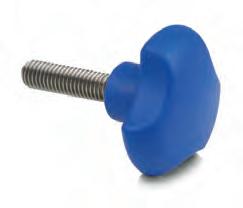
Safety for food & drug production
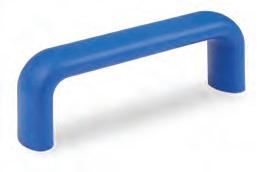
Maximize safety and avoid production risks with visually detectable and metal detectable operating elements
n VD – Visually Detectable Standard components in RAL 5005 “signal blue” for easy visual detection in case of accidental contamination
n MD – Metal Detectable Standard technopolymer components, uniquely colored, contain an additive for metal detection
n Compliant production FDA compliant raw material (FDA CFR.21 and EU 10/2011)
Request Catalog 077AM
elesa.com
Toll-Free 800-374-7686
Feeling the MotionControl
HEAT
PC-based control reduces technology costs and cycle times for Ontario automation firm.
Forits customers across North Amer-
ica and Europe, Waterloo-based specialty machine manufacturer, RAMP, leverages its extensive experience in numerous industries with particular strengths in energy recovery and automotive projects. Their projects range from the design of new manufacturing systems to modernizing existing plants, always by combining custom-tailored solutions with standard components to deliver maximum efficiency.
“We cross-functionally examine all requirements and break them down into individual conceptual designs,” explains Jeff Kerr, manager of mechanical design at RAMP. “This way, we ensure that all mechanical and control components are fully compatible, resulting in the best possible solutions for customers.”
Recently, RAMP developed a machine for Vancouver-based Core Energy Recovery Solutions. Installed in 2018, the system manufactures heat exchangers or energy recovery ventilators (ERVs) that increase the energy efficiency of ventilation systems in residential and commercial buildings. The heat exchange is achieved by conducting cold and warm airflows past each other through internal channels.
The machine takes base materials, including a patented polymer membrane and corrugated aluminum foil, and laminates them in layers of various heights and pitches based on the customer’s unique recipe. The second half of the machine takes the laminated materials through a high-precision vacuum conveyor that was designed and built by RAMP.
This custom sheet layer then has sep-
arating materials placed on it using a unique pick-and-place process with standard pick positions but recipe-driven place positions varying from 250mm to 1 meter. Finally, the layers are stacked across multiple dimensions and heights according to the last customer specifications and discharged via a conveyor belt.
Open Control
For the Core project, RAMP relied on PC-based control technology from Beckhoff to implement the scalable drive technology, efficient controls and integrated I/O system. The programming of PLC and motion control components with TwinCAT 3 in various IEC 61131-3 languages extends the company’s standards-based approach to software engineering.
TwinCAT also helps RAMP leverage open, vendor-neutral technologies like the OPC UA standard for secure connectivity to higher level databases such as Amazon Web Services and SAP.
For Core Energy Recovery Solutions, RAMP needed an Industrial PC to handle its recipe and data acquisition solutions in addition to the automation software.
“Since we needed an IPC that could run our applications with a one millisecond update rate to have maximum control over the process, we picked the high-power, cabinet-mounted C6930 IPC from Beckhoff,” says Steve Slothouber, project control lead, RAMP.
The IPC also featured sufficient performance reserves to accommodate the rising requirements from repeatedly adding I/O
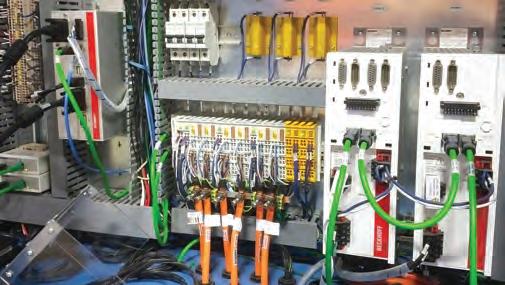
RAMP selected Beckhoff’s C6930 control cabinet IPC (left) with an Intel Core i5 processor as its control platform, as well as EL7211 drive technology (center) and AX5000 series servo drives (right)
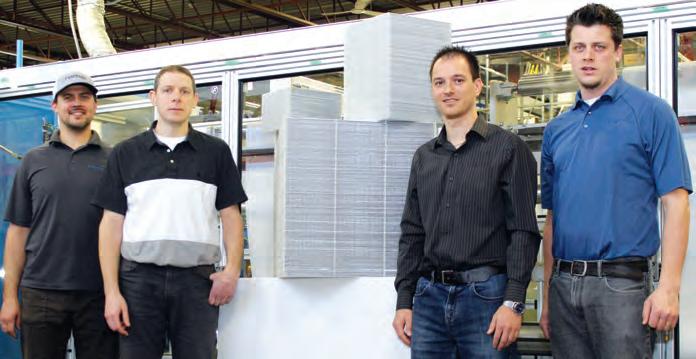
Members of the RAMP, Inc. engineering team (from left): Martin Pinnau, mechanical technician; Stephen Gugeler, manager of control systems; Jeff Kerr, manager of mechanical design; and Stephen Slothouber, controls program lead.
ENGINEERS HAVE SPOKEN.
*Survey conducted by us in June 2019 with participants of the Engineers Canada-sponsored Financial Security Program. 79.7%
FEEL WELL-PREPARED FOR THE FUTURE BECAUSE OF OUR FINANCIAL SECURITY PROGRAM.*
MotionControl
components during the one-year development phase. RAMP connects the C6930 to CP2916 multi-touch control panels from Beckhoff to display dashboards that provide an overview of current production and overall equipment efficiency data.
Flexibility Requirements
RAMP uses analog and digital I/O components from Beckhoff to cover all data acquisition and machine safety requirements. EtherCAT terminals permit a free mix of safe and non-safe I/O in the same segment. High-density EtherCAT termi-
nals offer as many as 16 I/O channels in a 12mm-wide housing.
“The EtherCAT I/O system provided the high-speed networking and fast scan times we needed while ensuring flexible network topologies,” says Matt Buchwald, electrical design lead at RAMP. “The Core application required high-end control technology that can react to production changes and adjust output controls in under 10 milliseconds.”
The application also had to integrate with various third-party field devices such as EtherNet/IP components for web han-
dling equipment, vision system hardware, automatic power tensioning controls and dispensing units. RAMP also used many EtherCAT Box modules with IP 67 protection throughout the system.
“This allows us to place our field inputs and outputs closer to the application and reduce overall cable length and cable track requirements,” explains Buchwald. “Integrating all safety systems on the same EtherCAT network via TwinSAFE I/O further reduces the overall cabling costs and installation time.”
Highly Scalable
For ultra-compact drive technology, RAMP applied Beckhoff EL7211 servomotor terminals. “The 24mm-wide EL7211 terminals further reduce our cabinet space,” explains control systems manager Stephen Gugeler. “We can use one low-cost 48-volt power supply for the EL7211 drives, significantly reducing space and cost requirements for servo drives.” In addition, the application features inexpensive AS1020 series stepper motors driven by EP7041 stepper motor modules (50VDC, 5A) with built-in incremental encoders for resonance-critical applications.
For higher power and load requirements, the RAMP machine also incorporates AX5000 series servo drives for high-end position control, electronic gearing, velocity control and superimposed position control. The drives are connected to AM8000 servomotors with One Cable Technology (OCT) to handle conveyance, pick and place, web lamination, tension control and height adjustments.
Since RAMP first transitioned to PC-based control and EtherCAT technology, the company has had ample time to compare metrics with older-generation PLC- and PAC-based systems.
“Specifically, we improved PLC cycle times by 30% and reduced control system costs by approximately 30% when compared with equipment from previous vendors,” says Stephen Gugeler, RAMP’s manager of control solutions. “Leading-edge control and networking technology with competitive pricing from Beckhoff helps RAMP increase production throughput and exceed customer requirements every time.” DE www.rampgrp.com www.beckhoff.com
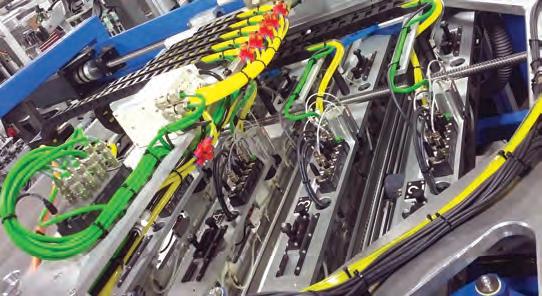
By connecting field devices via EtherCAT Box I/O modules (center), RAMP minimizes wiring distances and reduces cable track requirements.
IdeaGenerator
Automation
Industrial PC
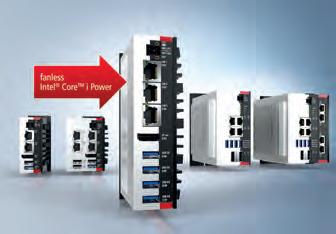
Beckhoff Automation has added the C6025 to its family of C60xx series industrial PCs. Measuring 82 x 127 x 40mm, the Microsoft “Azure Certified” IPCs that feature Intel’s Core U-series processors. Housed in an aluminum and zinc die-cast enclosure, the C6025 also features up to four CPU cores, 4GB DDR4 RAM and a 40GB M.2 SSD with 3D flash memory. Available ports include a DisplayPort video connector, four USB 3.0 ports and an on-board Ethernet controller with three 100/1000Base-T ports. The unit’s operating temperature ranges from 0 to 50°C. With this new addition, the Beckhoff portfolio of IPCs now spans five CPU performance classes – from ARM through to Intel Xeon. www.beckhoff.ca
Industrial Controller
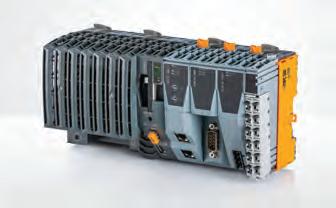
B&R introduced its X20CP3687X controller that combines the performance of an industrial PC with the compact design of the company’s X20 controller series. Featuring additional RAM and integrated onboard flash memory, the controller can handle complex control algorithms and robotics applications, the company says. The controller also features an Ethernet
interface using the OPC UA over TSN communication standard. The controller comes standard with connections for USB and POWERLINK. Additional interfaces can be added via interface modules.
www.br-automation.com
Gantry Motion System
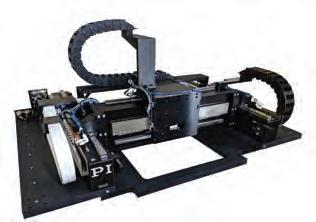
PI released its A-351, a XY / XYZ gantry motion system designed for pick-and-place, alignment, inspection and custom 3D printer applications. Driven by ironless linear motors, the system features precision mechanical linear bearings, absolute linear encoders (1nm resolution) and an ACSbased motion controller with EtherCat connectivity. For applications requiring a motorized vertical axis, several Z-stage options are available, with either screwdriven platforms or linear motors and
pneumatic counterbalance. Other customizations, such as mounting platforms for vision systems, dispensers etc, are also
available. Standard XY travel ranges from 300x300 to 500x1000mm with velocity up to 2 meters/second on the cross axis. E-chain and water cooling options are available for high acceleration / high duty cycle applications
www.pi-usa.us
Vision Systems
Camera System
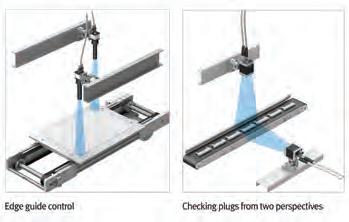
Festo released its SBRD smart camera system, comprised of three elements: 5 megapixels USB cameras (monochrome or colour); a space-optimized controller with two camera interfaces; and the Camera Configuration Studio (CCS) image processing software. The fanless remote head controller is designed for multi-camera tasks and has a dual core processor and PROFINET communications. The two camera interfaces allow inspections to be carried out from several different perspectives with large fields of view. With the CCS software, users can configure inspection programs and define, log and adjust all processes from image recording to the input and output parameters – and simulate them in advance on the PC. The software processes images using image analysis and image lists rather than individual images. www.festo.com
SURFACE MEASURE PROBES SYSTEMS
Non-contact Measurement
The Surface Measure Probe Family is a high-speed, non-contact measurement system which turns your CMM into a multi-sensor device. Used for high-speed scans, free-form inspections and reverse engineering/ surface generation.
Request a demo today 905-821-1261 info@mitutoyo.ca
IdeaGenerator
Vision Controller
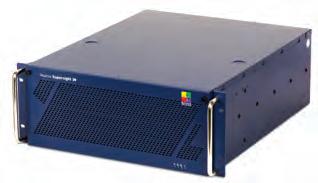
Matrox Imaging launched its Supersight Uno, an expandable mid-range industrial PC (IPC) in the established Matrox Supersight series of vision controllers. Featuring seven PCIe slots, Matrox Supersight Uno supports full I/O capabilities plus direct interfacing with GigE Vision and USB3 Vision cameras and standard interfaces such as Camera Link, CoaXPress, DisplayPort, HDMI and SDI. The system also features quick-release, hot-swappable drive bays with RAID support. With a steel, 4U rackmount chassis, the Matrox Supersight Uno supports both horizontal and vertical mounting. The IPC comes pre-installed with Microsoft Windows 10 IoT Enterprise 2019 and Matrox Imaging Library (MIL) software. www.matrox.com
Motion Control
Linear Actuators
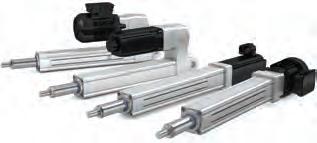
Ewellix, formerly SKF Motion Technologies, announced the company has redesigned its CASM-100 and LEMC actuators with built-in wireless sensors that can detect force and temperature. With the newly designed Ewellix actuators, production line
upgrades are now possible without major modification of existing machine layouts. The CASM-100 and LEMC actuators feature integrated force sensors within the body of the actuator to provide a precise measurement of the torque being delivered from the motor through the internal ball or rollerscrew, even when the actuator is stationary. In addition, the sensor acts as a temperature monitoring device that activates an alarm if the actuator is at risk of overheating. The actuators deliver forces up to 82kN and speeds of 1m per second. www.ewellix.com
Ethernet Couplers / PLCs
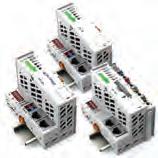
WAGO announced that its latest line of Ethernet/IP couplers (750-363) and PLCs (750-823/750-893) have passed the ODVA EtherNet/IP conformance tests. ODVA’s conformance testing provides assurance that products built to the Common Industrial Protocol (CIP) Network specifications comply with those specifications. CIP Networks follow the Open Systems Interconnection (OSI) model, which defines a framework for implementing network protocols in seven layers: Physical, data link, network, transport, session, presentation and application. EtherNet/IP utilizes the CIP for its upper layers. The industrial Ethernet protocol is considered IIoT ready.
www.wago.com
I/O Modules
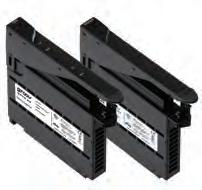
Opto 22 has released two I/O modules for bringing field bus networks into groov
EPIC. The GRVCCANI-2 (serial communication, 2 channels, CAN 2.0B, channel-to-channel isolation) enables existing CAN networks to be brought into IIoT applications using groov EPIC’s IT/OT connectivity tools. Up to 8 CAN buses per processor at network speeds up to 1 Mbps are supported. The GRV-ITM-12 (analog input, 12 channels, thermocouple or millivolt) provides a temperature sensing option with two isolated zones and 6 channels per zone. Each channel is software configurable to one of seven millivolt ranges or eight thermocouple types. www.opto22.com
Cable Assemblies
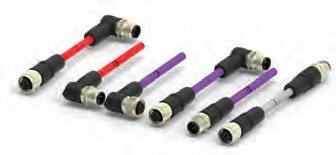
TE Connectivity (TE) introduced its A and B-coded M8/M12 cable assemblies that comply with Profibus, DeviceNet and CC-link protocols. They have 360-degree shielding against EMI for protection of signal and data transmission and are rated
IP67 for resistance to dust and water. The assemblies are overmolded in either PVC or halogen-free polyurethane (PUR) cables and come with various standard cable length options from 0.5 to 15.0 meters. www.te.com
Motors & Drives
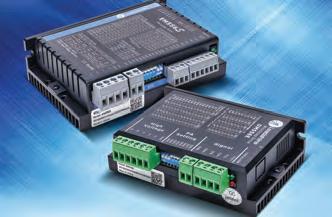
Digital Stepper Drives AutomationDirect announced the availability of Leadshine Technology’s 2-phase digital micro-stepping drives with micro-stepping motor movement and anti-resonance. The drives accept a range of input voltages (12110 VDC, 18-80 VAC) and provide over-voltage and overcurrent protection, motor auto-configuration on power up and Softstart at power on. Motor output current ranges from 0.3 to 7.2A. The drives support NEMA 11, 14, 17, 23, 24, 34 and 42 frame
size step motors with pulse input frequency up to 200kHz. All drives support step and direction control, some models support CW/ CCW as well. Dipswitches are used for built-in self-test, microstep resolution selection, current level selection and optional idle current reduction. www.automationdirect.com
Step Motors
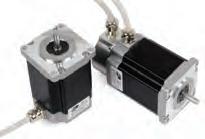
Applied Motion Products offers an extended line of stepper motors with IP65 ratings that are dustproof and resistant to water pressure impact. Utilizing advanced seal protection technology, the IP65-rated step motors feature sealed laminations, an oil shaft seal, internal corrosion-resistant film coating, gaskets for mechanical joints and an integral 10 ft. shielded cable that offers protection against the ingress of dust and resistance to low-pressure water jets. The step motors are available in NEMA sizes 23, 24 and 34. A double-shaft version is available with an optional IP65-rated encoder for applications requiring feedback. In addition to communication options, including EtherNet/IP and Modbus, the stepper drives offer stored program execution using the Q programming language. www.applied-motion.com
IdeaGenerator
Power Transmission
Load Sensing Bearings
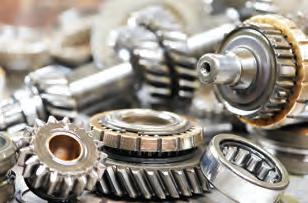
SKF released the first commercial load sensing bearing based on its proprietary fibre optic sensing technology. Designed for pump and compressor applications, the line provides access to a variety of bearing data, including axial vs. radial loads, polar plots of the bearing´s internal strain field, strain spectra, load directions, speed of rotation and temperature. Interchangeable with conventional bearings, SKF’s sensing bearings are safe to use in hazardous environments as signal data is transferred via optical fibres rather than as electrical signals, making the system also immune to electromagnetic fields. It also enables remote monitoring where wireless technology cannot be used as the optical fibres can transmit signals over very long distances. www.skf.com
Limit Switches
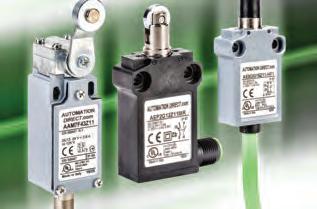
ator types including metal plunger, side rotary lever, adjustable lever, rod actuator and 360-degree spring actuator. The switches have standard U.S. 25mm mounting hole spacing. Housings are double-insulated and epoxy resin-filled, providing IEC IP67 protection. Contacts are Snap-action (Z11) with 1 N.O. and 1 N.C. contact on all units. Connection types are 5-pin M12 quick disconnects or 3-meter pre-wired pigtail cable. Operating temperature range is -13 to 158°F. The UL- and CE-approved switches are available with a 1-meter halogen-free cable designed for low toxicity and low smoke emissions.
AutomationDirect introduced its AEP series of reinforced thermoplastic compact limit switches that include a variety of actu -
www.automationdirect.com
Sensor
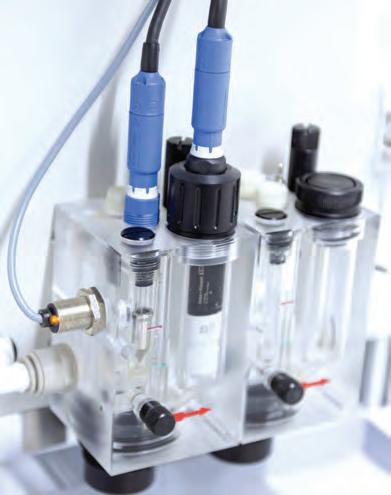
Free Chlorine Sensor
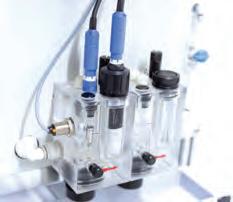
Endress+Hauser released its Memosens CCS51D sensor for free chlorine which incorporates a convex membrane made of dense, dirt-repellent material. Ultrasonic welding of the membrane to the sensor cap prevents dilution of the electrolyte and thus a drift of the measuring signal. The free chlorine sensor is equipped with the Memosens technology that allows for direct commissioning of new sensors without further calibration. During on-going operation, plant operators can pre-calibrate sensors in the lab and swap them into the process with plug & play. Memosens free chlorine sensors can be installed on a Flowfit CCA250 flow assembly together with Memosens pH sensors for pH compensation.
www.ca.endress.com
Multi-Turn Absolute Kit Encoders
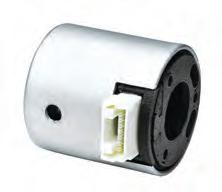
POSITAL unveiled a fully functional prototype of their new miniature multi-turn kit encoder for integrated motor feedback. With a diameter of only 22mm and a height of 23mm (0.87/0.9 inch), the device is the world’s smallest multi-turn kit. Featuring a self-powered rotation counter, the encoders cover a multi-turn measurement range and provide digital output. Compared to optical kits, they are more rugged and more resistant to contamination by oil, dust or moisture, the company says. They offer 17-bit electronic resolution and a multi-turn measurement range of up to 32 bits. The encoder line supports vendor-neutral SSI and BiSS C interfaces and features integrated self-calibration and an integrated temperature sensor for diagnostics. www.electromate.com
PROGRESS BEGINS HERE
Maximum performance, minimum footprint
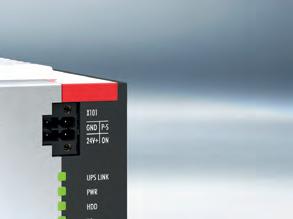
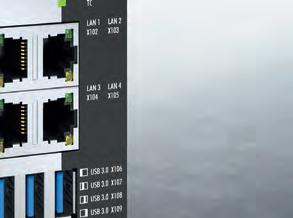
With the extremely powerful C6030 ultra-compact Industrial PC, Beckhoff covers the range of highly complex, performance-oriented applications with space-saving automation hardware. Whether extensive axis controls, complex HMI applications, extremely short cycle times or large-volume data handling: the computing power of the C6030 can take on almost any automation and visualization task.
processor: up to Intel® Core™ i7 with four 3.6 GHz cores
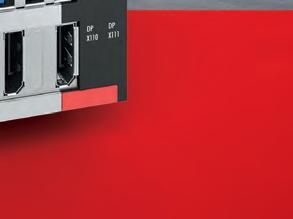
interfaces: 4 Ethernet, 4 USB, 2 DisplayPort main memory: up to 32 GB DDR4 RAM