ANA - May - June 2022

Page 1


A PIVOTAL TIME

The future of the farmed salmon industry in British Columbia hangs in the balance as the federal government decides its fate P. 12

WORKFORCE IN FOCUS Recruitment landscape

Qualified candidates looking for new roles have even more power in an industry already struggling to find the right talent. P. 16

BREEDING

Mahi-mahi

Fast-growing, ‘bulletproof’ larvae make the species ideal for aquaculture. R&D continues. P 22

ALTERNATIVE FEEDS Insects rising

Climate emergencies and the war in soyproducer Ukraine have added to the urgency to find alternative raw materials for feed. P. 24

EVENTS

Industry professionals reconnect Aquaculture professionals embrace in-person industry events as pandemic restrictions relax. P. 34

ANA_YSI_JANFEB21_BAS.indd

SHARE HER STORY

Reader Service

Print and digital subscription inquiries or changes, please contact Urszula Grzyb,

Audience Development Manager

Tel: (416) 510-5180

Fax: (416) 510-6875

Email: ugrzyb@annexbusinessmedia.com

Mail: 111 Gordon Baker Rd., Suite 400, Toronto, ON M2H 3R1

Editor Liza Mayer

lmayer@annexbusinessmedia.com

778-828-6867

Regular Contributors Ruby Gonzalez, John Nickum, Matt Jones, Lynn Fantom

Associate Publisher / Advertising Manager Jeremy Thain jthain@annexbusinessmedia.com +1-250-474-3982

Account Manager Morgen Balch mbalch@annexbusinessmedia.com

Media Designer Svetlana Avrutin savrutin@annexbusinessmedia.com

Group Publisher Todd Humber thumber@annexbusinessmedia.com

COO Scott Jamieson sjamieson@annexbusinessmedia.com

PUBLISHED BY ANNEX BUSINESS MEDIA 105 Donly Drive South, Simcoe, ON N3Y 4N5

Aquaculture North America is published six times a year by Annex Business Media. The authority for statements and claims made in Aquaculture North America is the responsibility of the contributors. Reference to named products or technologies does not imply endorsement by the publisher.

Subscription rates (six issues) Canada: $37.00+Tax

Within North America: $48.00 CAD

Outside North America: $62.00 CAD

To subscribe visit our website at www.aquaculturenorthamerica.com

PRINTED IN CANADA ISSN 1922-4117 Publications Mail Agreement #PM40065710

RETURN UNDELIVERABLE CANADIAN ADDRESSES TO 111 Gordon Baker Rd., Suite 400, Toronto, ON M2H 3R1 UNITED STATES MAILING ADDRESS Aquaculture North America, 815 1st Ave, #93, Seattle, WA, 98104

Annex Privacy Officer Privacy@annexbusinessmedia.com

Tel: 800-668-2374

The contents of Aquaculture North America are copyright ©2022 by Annex Business Media and may not be reproduced in whole or part without written consent. Annex Business Media disclaims any warranty as to the accuracy, completeness or currency of the contents of this publication and disclaims all liability in respect of the results of any action taken or not taken in reliance upon information in this publication.

Next Ad Deadline

The advertising deadline for the July/August issue is May 31th. Don’t miss the opportunity to be part of this exciting aquaculture publication. For more information, or to reserve space in the next issue, call our Advertising Department at +1.250.474.3982 jthain@annexbusinessmedia.com

Next Editorial Deadline

The editorial deadline for the July/August issue is May 31th. Contact Maryam Farag at mfarag@annexbusinessmedia.com for details. Material should be submitted electronically with prior arrangement with the editor.

Transitions

Dark clouds have been hanging over British Columbia’s farmed salmon industry since the fall of 2019, when Prime Minister Justin Trudeau promised during his re-election campaign to move the province’s open-net pens to other forms of production systems by 2025.

How the federal government will carry out the oft-mentioned “transition” of the industry was still anybody’s guess by the time this issue went to press.

However, advocates of aquaculture know one thing for sure: there is no magic bullet that would move BC’s entire production volume to closed containment in the near term. Moving the industry to inland or closed-containment farming technologies as some activists hope – but wiping out thousands of families’ livelihoods in the process because these systems are largely unproven –also won’t miraculously restore wild salmon populations, suggests Dr Brad Hicks in his guess column on page 14.

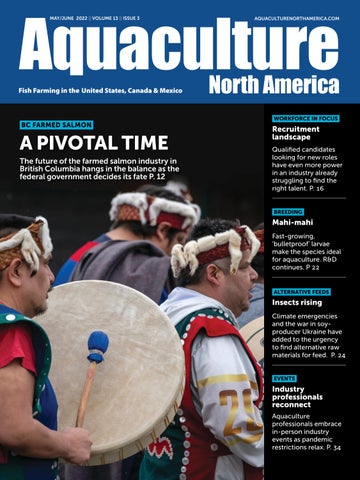
With the industry’s departure from the oceans, a number of First Nations communities, such as the Gwa’sala-‘Nakwaxda’xw Nation featured on our cover, would lose a key contributor to their economic survival.

Indigenous people already account for two out of five homeless residents in the province – a disproportionately high ratio considering they make up only one in 20 of BC’s population, according to Vancouver Sun columnist Douglas Todd. We share the thoughts of First Nations – both pro and anti-farmed salmon –starting on page 10.

My career is in itself in transition. This will be my last issue as editor of Aquaculture North America as I will be taking up an exciting opportunity at another aquaculture publication. To Peter Chettleburgh, thank you for entrusting me with this prized magazine you created. After more than six years at the helm of this print publication, I move forward with a profound understanding of how essential Aquaculture is in meeting the world’s food security and nutrition needs. It is rewarding to be a part of an industry that has the lowest carbon footprint among protein producers, just as it is to meet the brilliant and passionate people who continue to improve it.

Like all of you, I will be keenly watching how our industry further evolves. See you at conferences!

Impact of climate crisis on fish farmers worse than pandemic’s

As distressing as the pandemic is, economic losses from the climate crisis are worse, according to a survey of seafood farmers around the world.

Almost all (92 percent) of 585 seafood farmers surveyed reported being impacted by the COVID-19 pandemic, but at the same time 83 percent said their businesses were hit harder by human-induced environmental stressors. These include low oxygen (hypoxia) in estuaries and coastal waters, pollution, harmful algae, eutrophication and salinity changes – all known to be induced by human activity.

Fish farmers from China, Turkey, Brazil, Spain, Egypt, Ireland, Portugal, Italy, and Tunisia comprised about 70 percent of the respondents.

The researchers also sought to find out the “resilience power” of various aquaculture farming systems, their recovery and adaptability to shocks.

They found that extensive aquaculture, whether sea-based or land-based (ponds), saw the highest economic losses compared to other farmers practicing other forms of aquaculture. Farmers that use sea-based intensive aquaculture with integrated multitrophic aquaculture (IMTA) component showed more resilience to multiple stressors by providing different market options under the COVID-19 pandemic.

“It seems that socio-ecological systems were more able to cope with COVID-19 than with climate-related shocks,” says researcher Maria Christina Mangano. “It was something that did not surprise us, but it needs further investigation. There are more questions to explore with regards the climate-related vulnerability of farming systems.”

She says policies that look into climate-change-stressors and pandemic-related concerns collectively will maximize the long-term resilience of the aquaculture sector.

Findings of a new study have strengthened the case for farming seaweed as a supplementary crop to help fish farmers mitigate emissions from their farms while providing them with another source of income

PHOTO: ROBERT JONES

Just add seaweed

Findings of a new scientific study have strengthened the case for farming seaweed as a supplementary crop for fish farmers to help them mitigate emissions from their farms while providing another source of income.

A joint study between the University of Adelaide and The Nature Conservancy (TNC) titled “Climate-Friendly Seafood: The Potential for Emissions Reduction and Carbon Capture in Marine Aquaculture,” assessed how GHG emissions associated with fed-finfish, macroalgae and bivalve mariculture could be mitigated. It reveals that when done right, aquaculture could be influential in actively reducing the drivers of climate change.

The study said that the addition of extractive species, such as seaweed, to existing finfish or bivalve operations – a farming system called integrated multi-trophic aquaculture (IMTA) – can also help to mitigate environmental degradation and the release of GHGs, helping to make individual mariculture operations emission-neutral.

The study acknowledged, however, that the biggest opportunity to lower a farm’s GHG emissions lies in making changes in the feed and methods of post-harvest transport because these are the biggest sources of emissions from farming operations.

Meanwhile, the researchers said there’s “a key gap in existing knowledge” about the interactions between mariculture operations and the surrounding marine environments. They said that life-cycle assessments that measure mariculture’s impact do not measure, for instance, the loss of seagrass caused by the mariculture operation.

“Nutrient inputs from finfish farming can degrade seagrass habitats; it’s conservatively estimated to add an extra 4.1 - 16.3 percent to the total annual global emissions of aquaculture,” they said.

Economic losses from the climate crisis are worse than the impact of the pandemic, say fish farmers PHOTO: © VICTOR LAZAREV / ADOBE STOCK

NEWS AND NOTES

Why Russia-Ukraine conflict may not have much impact on US caviar market

Disruptions in the seafood trade due to the Ukraine crisis has spread to the caviar market, with many distributors in the US distancing themselves from Russia – the source of what many consider as the best quality caviar.

Olma Caviar, a large operation in Brooklyn, affirmed on its website its support for Ukraine:

“We at Olma are deeply concerned with the situation in Ukraine and our friends and family there. We strongly condemn Russian aggression. Our customers may rest assured that we don’t import any products from Russia. You may help Ukraine by donating to the International Rescue Committee.”

Chuck Ladouceur, manager of seafood at Bianchini’s, an upscale market in San Carlos, CA, had a different slant:

“We usually carry Russian caviar on the holiday and we have had a couple of customers asking about us not stocking it. Although I agree with the people in the Ukraine and their defense against Russian invasion; if a customer wants Russian caviar I will get it for them.”

The Caviar Company president and cofounder, Petra Bergstein Higby, said part of the reason she and her sister started their company in 2015 was to introduce consumers to the amazing variety of caviar beyond Russian caviar.

“When we were getting started, we were excited about our local favorite – California white sturgeon, and did get feedback from people saying that ‘everyone knows only good caviar comes from Russia.’”

What a lot of people don’t know is that US purveyors of the luxury food haven’t been selling Russian products for years. Nothing in the US is coming from the Caspian Sea. It’s all farmed in places like Israel, Uruguay, China, France, Poland and many other countries.

“There is no such thing as Russian caviar: more than 80 percent of caviar eaten here comes from China – very cheap!” adds IJ Won, owner of Marshallberg Farm in Smyrna, North Carolina. He says US caviar farmers like him “have a heck of trouble because of the cheap Chinese caviar dumped here.”

Higby says the reason why it’s still referred to as “Russian Osetra” is because its lineage is from the Caspian. “There are so many other varieties of caviar from other species of sturgeon that are really spectacular – that’s why we do what we do and sell the varieties we sell.”

Sterling Caviar’s Alan Morris doesn’t think his company will be directly affected by any import sanctions.

“All the caviar we sell is grown and harvested by Sterling Caviar here in California. Most other purveyors and farmers, who supplement their supplies from outside sources, may have to make some adjustments.”

Sterling is licensed to export its caviar to most countries, but sanctions imposed by Russia in 2014 mean that when it receives inquiries from potential customers in Russia, they must turn them away.

The recent US-Russian Seafood Reciprocity Act would ban seafood imports from Russia to the USA. Morris said the Act mirrors the ban on US-produced seafood to Russia that’s been in place since 2014.

Morris says it’s difficult and early to say if the Russian-Ukraine conflict has affected sales. The company has seen increased demand over the last several years from customers who want to buy caviar grown and produced in the US, as well as caviar that they know is coming as directly as possible from the farm.

This includes not just the domestic market, but other countries who want to buy US products because of food safety controls and transparency of the source. He expects these factors will be a much greater influence on sales than consumer sentiment about the situation in Ukraine.

Retail

sales save the day for

Unprecedented retail demand for value-added salmon products gave Mowi its highest revenue ever

Mowi, the world’s largest farmed salmon producer, saw in 2021 its highest revenue ever at $4.6 billion (€4.2 billion) due to unprecedented retail demand for its value-added products, more than making up for the decline in demand from the foodservice segment.

About half of the increase in the retail segment stems from the acquisition of new customers as a result of foodservice lockdowns, and the other half comes from increased purchasing frequency, the Norway-headquartered producer said.

The company noted that the foodservice segment is now in recovery phase and the further of lifting of pandemic-related restrictions is expected to enhance the segment’s performance.

It expects global supply to be low this year and demand to outpace supply. “This would, under normal circumstances, be supportive of strong salmon prices,” said the company.

Mowi
PHOTO: LIZA MAYER

Canada re-affirms commitment to move BC away from open-net pen salmon farming

“I want to work with the aquaculture industry itself to find a way forward to a sustainable place where British Columbia is a magnet for capital,” says Minister BY LIZA MAYER

It’s the kind of pronouncement that will send shivers down the spine of the international salmon farming community and the more than 4,700 industry workers in British Columbia that put food on the table for their families.

Canada’s Minister of Fisheries and Oceans (DFO) on March 11 re-affirmed her commitment to move open net-pen salmon farming

in British Columbia to closed containment farming systems.

The decision will be made “when it needs to be made” about the 79 licenses expiring on June 30, Minister Joyce Murray said at a media briefing in Vancouver.

“In the meantime, we are developing a plan; we are consulting with industry and other stakeholders. My goal ultimately is to

DESIGN | EQUIPMENT | SOLUTIONS

have a very strong sustainable finfish aquaculture industry here on the coast of British Columbia. I’m confident that there are technologies that can be more protective of our wild Pacific salmon, and that is an imperative for me. And for us as British Columbians that we do everything that is in our power to manage, to protect wild Pacific salmon.”

Murray acknowledged that her own scientists at DFO have found that farmed Atlantic salmon pose only “minimal risk” to wild Pacific salmon. However, she underscored the importance of addressing “any manageable risks” because of the “potential effect on wild Pacific salmon,” she said.

“We know that over the last number of years that wild Pacific salmon stocks have been declining from a variety of impacts and some of which are not in our control and some are in our control. And so, we have a commitment to transition away from open net pen salmon aquaculture. And I will be moving forward on that commitment, as is in my Mandate Letter.”

Murray says she is cognizant that there are Indigenous communities that rely on the farmed salmon industry across Canada. This is why, she said, it is a high priority for her and the Canadian government to work “in direct partnership with Indigenous communities to make decisions, to outline programs to involve Indigenous people in the judgment of the resource and allocation of the resource.”

Sun sets over a Mowi farm in British Columbia PHOTO: KAITLIN GUITARD

“This is a very central relationship which I take very seriously,” she said. “And the reason we are putting together a responsible plan is that we want to take the human element, of course, into consideration. Indigenous communities are involved with salmon open netpen aquaculture. Sure, we’ve been in constant consultation with them. I am looking forward to having a transition that ultimately creates more opportunity for indigenous peoples and Indigenous communities and makes British Columbia a beacon of responsible sustainable salmon aquaculture development.”

This writer pointed out that today’s farmed salmon industry is very different from the industry of years ago, and that the farmers in Campbell River, BC want her to visit to see for herself the investments in innovations that the industry has put in through the years.

“I’m very interested in visiting Campbell River and seeing the industry’s developments in technologies that reduce the contact between the open net pen farm leases and the wild Pacific salmon, but the reality is that I will be overseeing a transition away from open net pen technology for finfish, such as salmon aquaculture. I am going to find ways to understand and act on the developments in new technologies that can be

Canada’s aquaculture industry regulator, Minister Joyce Murray, says she’s “confident that there are technologies emerging that we can build on” in transitioning sector to other farming systems

protective of our wild salmon. That’s the job. I am very interested in developing a sustainable and responsible salmon aquaculture industry in British Columbia, and I’m confident that there are technologies emerging that we can build on.”

Murray met the media to announce the results of DFO’s community engagement activities aimed at getting input for Canada’s Blue Economy Strategy. The 58-page “What We Heard” document released today identified priorities to make Canada’s ocean economy

“more sustainable and more productive” while at the same time making coastal communities more prosperous.

Among the key findings from the engagement activities were that current regulations do not allow industry players to operate with predictability and certainty, and that the lack of certainty in the sector has prevented recent investments in innovation and inhibited stability for its workforce.

“We’re forming up ideas about how to move forward,” says Murray. “I am very mindful of the importance of the jobs and the community, the supply chain, the economics of this industry. And I want to work with the aquaculture industry itself to find a way forward to a sustainable place where British Columbia is a magnet for capital and for innovation to develop a sustainable finfish aquaculture industry.”

The final Blue Economy Strategy will be released “in due course.” Murray thanked her predecessor, Bernadette Jordan, “for doing such a comprehensive job,” with regards to the Strategy. It was under Jordan’s tenure that DFO was given the mandate, in December 2019, to develop a Blue Economy Strategy in order to create jobs and opportunity for coastal communities while advancing conservation objectives.

BC First Nations call for five-year renewal of salmon farming licenses

Indigenous leaders assert their voices are ignored by federal government

Moving to land-based farming is not geographically nor financially possible for many of the First Nations communities relying on salmon farming for their livelihoods

Acoalition of First Nations leaders from British Columbia is asking Canada to re-issue for a minimum of five years the salmon farming licences expiring this June to give them time to properly engage with their communities, government and other stakeholders on the 2025 transition plans.

In report released on March 21, the group says salmon farming creates 276 full-time jobs for their community members and injects $50 million per year into coastal Indigenous economies.

The Indigenous leaders united under the newly formed Coalition of First Nations For Finfish Stewardship to call on Department of Fisheries and Oceans (DFO) Min. Joyce Murray not to ignore them in her decision-making. They assert that Murray is listening to everyone except the Nations that will suffer the most if licences aren’t renewed.

The group said that “offering anything less than re-issuing licences flies in the face of the federal government’s commitment to reconciliation and the rights of Indigenous peoples, as well as their recent promise to

support the participation of First Nations in the management of ocean resources.”

Our coalition is united over a shared concern that our rights to make economic decisions for our territories are being ignored. We are opposed to the federal government disregarding science and bowing to unfounded activist claims on salmon farming that, if heeded, will severely damage our communities, and deny our rights and title,” the group said.

“True reconciliation in action,” they added, “would see individual Nations decide how the sector fits into their waters and communities as the original participants in the coastal, Blue Economy.”

“We want to have direct input regarding what’s happening in our backyard, not to be dictated by what the government wants, but what the First Nations want,” says Richard Harry, a member of the Homalco First Nation and owner of R. Harry Fishing Ltd, which has a servicing agreement with Grieg Seafood BC in Nootka Sound, BC.

Ellis Ross, Member of the Legislative Assembly for Skeena in northern BC, was also in attendance at the Campbell River event held by First Nations on March 21. “We shouldn’t let politics destroy an economy, like what we’re seeing up here in North Island. We shouldn’t let politics override First Nation’s interests and their pathway to self-determination,” he said.

First Nations communities have found an ally in BC Premier John Horgan who sent a letter dated March 10 to Prime Minister Justin Trudeau urging his government to work with Indigenous communities in coming up with a transition plan.

David Kiemele, managing director of Cermaq Canada, represented the BC farmed salmon industry in supporting coastal First Nations to reclaim their rights to self-determination. “It is the path forward and it is the transition. Our industry has an important role to play in Canada’s economy and an even more important role in supporting small coastal communities,” he said.

S4000 nursery trays
S1000 oyster trays

Transition to land-based Transitioning BC’s farmed salmon industry from net-pens to other forms of production will cause the end of salmon farming for the 17 Nations that make their living out of salmon farming, they said, because “moving to land-based farming in their territories is not geographically nor financially possible” for many of them.

“This process should be led by First Nation governance, economic development, and environmental stewardship resulting in a tangible expression of reconciliation.

“We expect these transition plans to respect each Nation’s asserted governance model and the true spirit of reconciliation; to represent our autonomous yet connected voices; to respect our rights and title; and to deliver positive outcomes for our communities, for our territories’ unique ecosystems, and for all of coastal British Columbia.”

The group is correcting the Canadian public’s perception that all First Nations are actively opposed to salmon farming. While it is true that there are First Nations who have decided to shut down farms in their traditional territories in BC’s Broughton Archipelago in December 2018, there are those that have decided for themselves that they want to partake in the farmed salmon sector, said Dallas Smith of the Tlowitsis Nation, the spokesperson for the coalition.

“We respected those Nations’ wishes to work on a transition plan to get the industry out of their territory, but there are other nations who are part of this who are simply looking to have that chance to have that dialogue before the Ministers of Fisheries decides arbitrarily what’s best for our communities or not. This is our chance for our voice to be heard. We’ve come together as a coalition of First Nations to show not only is the socio-economic impact that happens if this decision is made prematurely, but we’ve also brought into discussion where the discussion regarding transition goes,” said Smith.

This First Nation opposes the extension of salmon farming licenses

Calls out Coalition of First Nations For Finfish Stewardship for misrepresentation

The Indigenous community behind Kuterra, the British Columbia-based pioneer of growing Atlantic salmon in land-based RAS farms, has called out the Coalition of First Nations For Finfish Stewardship for misrepresenting them in the campaign calling for the renewal of the 79 farmed salmon licenses expiring in June.

The Namgis First Nation says it has, for decades, been against net-pen salmon farming in their territories as do two other First Nations communities – the Mamalilikulla and Kwikwastu’inuxw Haxwa’mis First Nations.

Collectively known as the Broughton First Nations, the three communities and the BC provincial government decided to not renew the leases of 17 salmon farms owned by Mowi Canada West and Cermaq in their territories in the Broughton Archipelago in December 2018.

They said they are “deeply offended” by Coalition of First Nations For Finfish Stewardship for including a 2018 Letter of Understanding (LOU) between themselves and the BC provincial government “as evidence of support” of the campaign to have the 79 farmed salmon licenses renewed.

“Including that LOU and the related agreements with industry licensees without any contact with our leadership is deeply disappointing, especially given the Coalition’s stated ambition of respecting First Nations’ decision-making authority,” said NAmgis First Nation Chief, Don Svanvik, in an undated statement.

“The Broughton First Nations never consented to the operation of net-pen feedlots in their territories,” he said.

File photo shows Kuterra operations owned by the Namgis First Nation. The Indigenous community says it opposes the extension of net-pen farming licenses that are expiring this June PHOTO: KUTERRA

BC FIRST NATION: We will manage fish farming and fisheries on our land ‘with or without

the Canadian government’

Two Indigenous peoples in British Columbia on 25 March re-asserted their authority over their territories “with or without the Canadian Government,” including how fish farming and fisheries will be managed.

The Gwa’sala and the ‘Nakwaxda’xw peoples – now known collectively as the Gwa’sala-‘Nakwaxda’xw Nation since being forced to relocate and combine as a single tribe in 1964 – plan to administer their own fisheries and aquaculture licensing regime “after a failure of the Canadian government to conserve their fish stocks through permitting of overfishing and adequately mitigate impacts from resource development.”

“Implementing local First Nations management practice is the

“Rural communities and their people need stable, family-supporting jobs to stay and support British Columbia and Canada.”

only pathway to recovering fish stocks and supporting their local community economy at the same time,” they said at this morning’s cultural boat-blessing ceremony that celebrates their joint success in the marine economy.

on a regular basis,” says Ethan Shaw, the Nation’s Salmon Farm Monitor.

The First Nation’s marine business has been working for the salmon farms along the BC Coast for the past nine years, hauling feed, transporting crews, and delivering specialty equipment and services. The company, called K’awa’tsi, now provides about $9 million in direct annual revenue and 23 jobs, with 16 of those filled by Indigenous people.

The Indigenous community is also building a co-governance body with their neighbouring Nations as part of a “North Island Aquaculture Zone,” which “will study the impacts of the farms and ensure that our fish, shellfish, seaweed and all other life remain healthy so that we have food for our community

“Rural communities and their people need stable, family-supporting jobs to stay and support British Columbia and Canada in supplying healthy seafood to a growing world population,” says Hereditary Chief Paddy Walkus of the Gwa’sala-‘Nakwaxda’xw Nation.

“We have witnessed the decline of our wild fish in Smith Inlet where there are no farms. We need to take a stand and do right by our ancestors – and that means doing what it takes for our community by developing an economic base for self-government and self-determination.”

“The Gwa’sala-‘Nakwaxda’x people are committed to creating and sharing a prosperous future for ourselves and for our local communities. This is what reconciliation looks like. It’s happening in communities like Port Hardy. It makes the future look hopeful.”

Kwakwaka’wakw singers and some of the cultural leaders of the Gwa’sala-‘Nakwaxda’xw Nation celebrate their success in the marine economy at a boat-blessing ceremony in March PHOTO: BRIAN KINGZETT

Small businesses join clamor for Canada to rethink decision

Small and medium-size enterprises around Canada who provide equipment and services to aquaculture producers have added their voice to support industry efforts to communicate with government.

They comprise the membership of the newly launched Canadian Aquaculture Suppliers Association, which is national in scope and will be headquartered in British Columbia.

First on the agenda upon the organization’s incorporation in February was to join the industry’s plea for the federal government to renew 79 salmon farming licences in BC that are set to expire this June. This echoes the message that the long-established British Columbia Salmon Farmers Association is sending to the government.

“We have members right now, who, if the licenses are not renewed, could lose their businesses,” said Ben James, the president of the new organization.

“They have some of these people who have been working for decades in the industry and their livelihoods could literally be gone by this summer and their people will be thrown out of work. For a lot of these communities, especially in rural remote communities, there’s not that many economic opportunities. We’re dealing also with First Nations. There’s a lot of First Nations who are part of the industry and

those who I’ve spoken to are fearful that their community are going to be losing jobs.”

James, a British-born, Ottawa-bred communications practitioner, moved to British Columbia in 2005 where he honed his skills in communications and community engagement during his time with the provincial government in Victoria and public service in Surrey, BC.

“I live in Surrey where 80 people in my community lost jobs in March after Mowi closed its processing facility. That’s 80 families who no longer have a breadwinner at the table. That’s a big impact, and I think a lot of people in British Columbia don’t quite know that. Many aren’t fully aware of how the aquaculture industry benefits their local community. A lot of them just think it’s something that happens on Vancouver Island and the North Coast of Vancouver Island.”

Another thing that Canadians may not realize is whatever decision is made in British Columbia could affect other seafood farming areas around the country, he says.

“When investors see what is happening in British Columbia, they’d think it could happen in Newfoundland, where investment in aquaculture is growing quite substantially. I don’t think the federal government would want investors to think that Canada is close to investment, but in some investors eyes that might happen if the decision to not renew licenses continues.”

JOIN US IN ST. JOHN’S

Ben James, president of the Canadian Aquaculture Suppliers Association

A Faustian Pact

‘How did we get to this dreadful state of affairs?,’ asks guest columnist Brad Hicks

The social and economic wellbeing of rural communities is based on jobs. Jobs are the foundation for prosperity and family unity and the provision of services. Without jobs, rural communities lose people and the tax base and then disintegrate into poverty and eventually into oblivion.

In rural coastal communities, jobs are primarily resource-based. For many years there have been declines in several of the resource sectors. On Vancouver Island in British Columbia, forestry, fishing and mining have all seen significant declines in the past 30 years. The two growth sectors on the island that have prospered are aquaculture and tourism. Tourism relies on disposable income and is subject to significant downturns during recessions and pandemics, resulting in periodic instability. Tourism on Vancouver Island is also very seasonal; thus, only a few are employed during the winter months. Aquaculture is a very stable, year-round food-producing business that’s supported by core family expenditures on food. Coastal communities need a stable, year-round source of income to prosper. Aquaculture fits the bill.

The Minister of Fisheries and Oceans Canada continues to belittle the aquaculture

Moving net-pen farming to land-based is not geographically nor financially possible for many

First

Nations

PHOTO: BCSFA

industry in British Columbia. The agency continues to drive an agenda that will result in massive job losses on the north and west coasts of Vancouver Island as well as in other regions of BC that supply services to the aquaculture industry. Northern and western Vancouver Island have seen job losses before in the forestry, mining and fishing industries but nothing close to the potential losses of over 5,000 jobs if the province’s farmed salmon industry is transitioned to other forms of fish farming methods. Seventeen of BC First Nations that currently work with the salmon farming in the province have said in March that “moving to land-based farming in their territories is not geographically nor financially possible” for many of them.

It is well documented in social science literature that repercussions are very severe when job losses of this magnitude occur in rural communities. The level of current job

Innovation Beyond Measure

Results Beyond Expectation

destruction the Minister is contemplating will result in the breakup of families, the displacement of the younger generation from the community, a significant loss in the tax base and therefore a decline in community services, a decrease in personal equity and increasing despair which will increase substance-abuse and suicides.

As a proud citizen of Canada, it is very difficult for me to understand how a federal Minister of the Crown at the direction of the Prime Minister’s Office (PMO), would wantonly and purposefully gore the rural communities of Vancouver Island with such a horrific policy decision. How can a Minister of the Crown be so callous? How did we get to this dreadful state of affairs?

Over the years, a false dichotomy has emerged based on the mendacious premise that farmed salmon is a threat to wild salmon. The Department of Fisheries’ own extensive scientific investigations could not support the notation that farmed salmon is a credible threat to wild salmon. So how could the Minister arrive at the conclusion that wiping out thousands of families’ livelihoods on Vancouver Island and that impoverishing whole communities would result in a miracle of wild salmon restoration?

The answer is politics. I have asked several astute observers and practitioners of politics in this country why the PMO is behaving in such a nasty and uncaring way towards its own citizens. The answer from all is the same: POWER. The Liberal Party of Canada has no elected members from any rural ridings in BC. So, by using the rural northern Vancouver Island communities as cannon fodder, the Liberal Party can keep its 15 urban ridings in BC by appeasing the urban communities with false promises of restored nature and stay in power.

As sick as this notion may seem, this appears to be what’s happening. To remain in power, the PMO is willing to sacrifice the citizens and their children and future generations of Northern Vancouver Islanders to a life of poverty and isolation. And the Minister of Fisheries and Oceans is an all-too-willing accomplice. It would be prudent for the Minister and the PMO to remember that Faustian deal-making always ends poorly.

If only the Minister and the PMO could muster an ounce of empathy. But power has no room for empathy, only lust for the spoils of victory. I weep for thee, Canada.

Dr Brad Hicks has been working in the fish farming industry for over 40 years, has raised six species on a commercial basis and helped pioneer sablefish aquaculture. He was COO for various successful fish farming operations throughout Canada, the US and Chile, and VP of fish feed operations in Canada. He holds degrees in fish and wildlife biology BSc, veterinary pathology MSc and veterinary medicine DVM.

iFarm able to sort out fish needing follow-up wellness check

Cermaq’s groundbreaking iFarm technology has a new feature that sorts the fish swimming in a net pen and pinpoints which individual needs follow-up wellness check.

The sorting machine developed by tech firm Biosort will be able to sort and separate individual fish based on specific characteristics, using machine learning and artificial intelligence. The goal of sorting is to be able to take out fish that need adapted follow-up, and in that way ensure better health for the fish in the net pen.

“To my knowledge, no one has previously sorted swimming fish in a net pen before, so this is a big step towards individual-based handling of fish,” says Geir Stang Hauge, BioSort managing director.

Cermaq says that seeing the difference between fish is crucial for improving fish health and welfare in the net pens and will be a big step forward for increased survival in salmon farming.

‘We have shown that it is possible to sort out swimming fish,’ says BioSort exec PHOTO: ©

OYSTER GRADING TECHNOLOGY

Activists ask Biden to revoke Trump-era order that streamlines aquaculture regs

More 175 fishing groups, food advocacy groups, environmental organizations and businesses in the United States are calling on President Joe Biden to revoke Trump’s Executive Order that would remove outdated and burdensome aquaculture regulations.

In an open letter to Biden on 6 April, the signatories say E.O. 13921 fast-tracks the development of “industrial aquaculture” in federal waters without Congressional oversight.

Advocacy groups want small-scale aquaculture systems promoted instead of what they call fish factories PHOTO: © BARI / ADOBE STOCK

They worry this would “allow excess feed, fish waste, and antibiotics and other chemicals to flow into the surrounding ocean.”

The open letter calls for new measures to conserve ocean resources and invest in sustainable fishing methods and small-scale aquaculture systems, such as recirculating farms and low-input bivalve or seaweed mariculture “that stand to benefit local communities.”

The aquaculture industry lauded Trump’s EO, which was announced May 2020, as it will promote the competitiveness of American seafood. Industry players say the EO acknowledges aquaculture’s contribution to the US economy and its role in enhancing the quality of American lives.

WORKFORCE IN FOCUS

Headhunter breaks down the realities of a candidate-led market

There’s power differential that exists between jobseekers and employers but that power got entrenched more firmly in the candidate’s corner during the pandemic, says a leading recruiter for the aquaculture industry.

The pandemic appears to have made the longstanding labor shortage worse, so employers are willing to be flexible to a certain extent to increase their chances of landing skilled employees.

Qualified candidates looking for new roles are demanding higher compensation and, depending on the role, they want flexibility with where to work and how long to work, says Cristian L. Popa Aved, CEO and co-founder of AquacultureTalent.

“There are very good candidates who have a good resume and they are asking for more money than the companies are willing to pay. However, there are always companies that have a higher budget so they can afford (to pay) a little bit more.”

But the pandemic also brought in “hungry candidates” – those who are willing to “go out there and they see the opportunity to grab some roles where there is a lot of traveling, which some people are not willing to do these days,” he says.

Fisheries & Aquaculture Sciences Program

Qualified candidates looking for new roles are demanding higher compensation and, depending on the role, they want flexibility with where to work and how long to work

The Norway-headquartered company helps find talent for the industry in Europe and North America. Roles it helps fill range from executive level to production workers, such as technicians, fish farmers, hatchery managers and biologists.

Across industries, the pandemic forced a rethink of personal values – a reckoning that resulted to some people going back to their home countries to be with family, noted Popa Aved.

“There has been a lot of relocation in the past two years. People were not sure what was going on especially in the early days of the pandemic. We saw this a lot in the executive level and also in the management level where people have relocated back to their home country or home state where they have their family. But there were also some who have temporarily lost their jobs because of some companies couldn’t operate 100 percent.”

Against this backdrop, employers had to be flexible and consider applicants from related industries such as agriculture and foodservice, as well as less qualified but promising candidates.

“However, it’s very difficult when you’re dealing with a senior role, where experience is very vital. So for those senior roles, there are no corners to cut. You have to get people with industry experience,” he says.

“The industry has always been about quality,” he adds. “Companies would prefer to bring in three or four very, very qualified people who can run or manage small teams of people who come from related industries. That’s why I say the quality (of the workforce) will increase because they will try to bring in top people who will manage less-qualified candidates.”

If there’s one precondition where employers and candidates both agree on from the outset, it’s the wish for a long-term employment. “Companies are looking for long-term employees and we get the same desire from the candidates. They’re looking for a company where they can put their skills and knowledge at work 100 percent.”

However, Popa Aved acknowledged that these employees could be lured by a competitor who offers higher compensation.

A salary survey conducted by AquacultureTalent among over 4,000 aquaculture and fisheries professionals across Europe, North America and the rest of the world (South America and Oceana) found that about 78 percent of those surveyed are willing to move to another job if offered a higher salary.

Meanwhile, labor shortage locally has also forced employers to bring in overseas workers – a process that hasn’t been easy especially when countries’ borders were closed in the early stages of the pandemic.

“The last two hirings that we’ve done in the US were a very complicated process because we had to import candidates from Australia and Mexico for our clients. Then there’s visa issues. It could take anywhere between three to six months for processing a visa, depending on what country they are coming from.

“But overall, companies are becoming more open to hiring employees from overseas, especially where it’s easier to obtain a visa, like Mexico or Canada,” he says.

While job interviews conducted online are becoming more common, these impersonal meetings can’t replace face-to-face ones and it’s something that recruiters like Popa Aved and his team have had to struggle with.

“Everybody wanted to meet in person. We’ve had to go to thirdparty countries where the candidates and the employers would meet. We hired for a US client a Norwegian candidate, but with the restrictions in place there was just no way to come to the US so they met in Mexico. We also had one client in Canada and they met with the candidate in Spain.”

The world’s gradual reopening is a “very, very positive development,” he says. “Now, it’s a little bit easier because traveling is possible if you’re vaccinated or you do a COVID test.”

Sound advice

To attract and retain talent, constant communication as well as clarity about the role being filled is paramount, suggests Popa Aved.

While recruiters may succeed in finding talent for employers in the industry, it is but a band-aid solution. The industry needs to look closer at the reasons it is not attracting enough workers, he suggests.

“Aquaculture has a PR problem,’ says co-founder and CEO of AquacultureTalent, Cristian Popa Aved

“Aquaculture has a PR problem when it comes to the talent market. It’s not the easiest industry, of course, but at the same time, I don’t believe that everyone out there knows how exciting and what possibilities are in this industry.”

He advises employers to invest in “employer branding,” where industry outsiders will learn about the company culture – “how it is to work in the company, how people thrive over there, what successes they’ve had with their own people.”

“We have come up with analytics on recruitment processes where we have involved employer branding, and we haven’t just seen that there has been a great impact for that specific role but also for future roles that the company has,” he says.

The negative perception of some people about aquaculture also hurts the industry. “From Canada to Scotland to Norway, there is a lot of negativity out there. But at the same time, while aquaculture may not be as pink as everybody thinks, it offers a solution when it comes to supplying food for the global market.”

He is certainly optimistic about the industry. “Fish farming is a solution that works if done in a proper manner. And from our perspective, the more qualified people coming to the industry better the industry will be,” he concludes.

SPONSORED CONTENT

BTC program is unique to the West Coast

Bellingham Technical College’s (BTC) Fisheries & Aquaculture Sciences program is the only two-year program on the West Coast that provides hands-on training with algae and shellfish culturing, with a focus on hatchery technology. The program also operates two salmon and trout hatchery facilities and annually rears millions of salmonids for tribal, commercial, and recreational harvest. Students are trained in a variety of culturing methods, including flow-through technology, recirculating aquaculture systems, and aquaponics. Outside these training facilities, the program also supports a robust field training curriculum to prepare students for careers in fisheries biology, water quality monitoring, habitat restoration, shellfish farming, and natural resource management.

Finfish, shellfish, and algae are essential to provide aquatic protein and nutrients to feed the world’s growing population. Whether cultured or sustainably harvested from nature, trained technicians and biologists are needed to support the rapidly growing Blue Economy.

BTC’s Fisheries & Aquaculture Sciences program is dedicated to educating students about the immense value of these aquatic resources. Its multifaceted curriculum, which is housed in an award-winning facility with specialized classrooms and wet labs, gives students a strong foundation for their future careers and a deep understanding of aquatic species and their habitats. Experts teach the scientific theory and technical skills required to help propagate and conserve these aquatic resources through sustainable cultivation and wildlife management.

The BTC Fisheries & Aquaculture Sciences program offers two Associate degrees (transfer track or direct employment) and numerous short certificates for students either exploring their interest in blue careers or established industry members desiring advanced technical training. Multiple courses are offered online to support distant learning and provide flexibility for a diverse body of students.

For more information about this one-of-a-kind program, contact BTC at 360.752.8345 or admissions@btc.edu.

Aquaponics could spur youth to take up aquaculture

It takes greater commitment and passion to grow aquatic fish in fish farms than to raise them in backyard aquaponics systems, yet educators at the Lake Superior State University (LSSU) believe that building interest in aquaponics maybe “the best path forward to building an educated workforce in aquaculture”.

The Michigan-based state university currently offers Associate of Applied Science Degree in Aquaponics Entrepreneurship, a diploma that blends aquaponics studies with engineering/automation and business – three areas they believe are critical to the adoption and growth of aquaponics business. The integration of aquaponics in LSSU’s curriculum is 10 years in the making and was meant to address the seeming lack of interest in aquaculture among the youth.

“Aquaculture does not seem to attract large numbers of youth. Where we do see a lot of interest is in aquaponics” said Dr Barbara Evans, professor at LSSU, in her presentation at the recently concluded Aquaculture 2022 conference in San Diego, CA.

THE ATLANTIC VETERINARY COLLEGE

According to Evans, studies indicate that young people in general are not interested in all types of farming, but in areas such as the Midwest in the United States where aquaculture is less common, a mindset for the industry needs to be developed as well.

Since aquaponics blends traditional aquaculture with hydroponics, LSSU proposes building an educational model around aquaponics to inspire the youth to learn about aquaculture.

This means moving aquaponics from the backyard on to campus and elevating the study from a hobby or interest to that of an integrated science requiring an understanding of STEM at the university level.

LSSU’s diploma in Aquaponics Entrepreneurship is well thoughtoff. For instance, the aquaponics component of the course helps students understand how to keep plants and aquatic organisms alive, which entails studying basic biology, water quality, nutrition, as well as the options for different system designs.

The engineering component, on the other hand, addresses system automation with independent study on aquaponics systems, pumps, power tools, etc.

The business component includes accounting and marketing skills, as well as an independent study/internship in entrepreneurship which are essential to a successful aquaponics business.

LSSU provides student access to hands-on learning in the aquaponics hoop house, which incorporates study on solar energy alternatives using the two full aquaponics systems in the basement of the campus’ science building.

The LSSU finds it challenging to introduce new curricula to potential students without demonstrating a market need. This explains the difficulty in drawing interest to the course in places where people have little awareness of the aquaculture industry.

The school had to determine the level of exposure to aquaculture in different high schools, mapped their locations and looked for extension services and successful aquaculture businesses within the vicinity.

They also incentivized interest from high school students through a competition called the Aquaculture Challenge with fundings from the Michigan Sea Grant program.

Under the program, schools or after-school organizations create their own small-scale aquaponics system and monitor the system parameters such as air and water temperature, luminosity, and soil moisture, among others.

The program also involves creating business plans and culinary demonstrations using ingredients harvested from the aquaponics systems.

Interestingly, the competition revealed that students quickly surpassed their teachers’ knowledge of aquaculture, so the program developed and hosted workshops for the teachers to better prepare them to mentor their students.

The LSSU believes aquaponics has the potential to dramatically increase access to local food, even in northern climates, but its biggest growth barriers remains the lack of an educated workforce. STEM education, they believe, will provide the basic skills and knowledge needed to enter the aquaculture industry.

Paycheck a priority for industry workers looking to move jobs

Salary is the most important priority for industry workers when they look for a new job, according to a new survey.

Respondents who work directly in aquaculture, fish farming, fisheries farm, hatcheries, RAS facilities, fish feed and industry-related service sector accounted for almost half of the 4,000 seafood professionals polled in early 2022. The rest work in processing and fisheries.

Work environment ranks second among priorities of job seekers in the aquaculture and fisheries sector, said industry recruiter AquacultureTalent. The company conducted the survey among its client database –permanent full-time employees in the seafood industry in Europe, North and South America and Oceania.

‘‘Salary, work environment and company culture are a big part when it comes to candidates’ new career path or when looking for a new job,’ said the Norway-based recruitment specialist.

However, it acknowledged that work environment and company culture are hard concepts to bring forward when interviewing new recruits.

SPONSORED CONTENT

That’s why it recommends showing off the company culture not just “in the moment” during interviews but as part of regular outreach activities.

When the aquaculture and fisheries professionals were asked whether they are currently satisfied with their salary and their job, a little more than 40 percent were satisfied with both. Seventeen percent of the respondents – the largest group – currently receive a salary of $80,000 to $89,999 per year. The second largest group – about 15 percent of the respondents – earn $130,000 to $159,999 per year.

But salary and benefit package is also a top reason aquaculture and fisheries professionals would quit their current job, the survey found. Life-work balance would be a second reason they would quit, followed by lack of future opportunities. Forty-six percent of them plan to move job in the next 12 to 24 months.

How about if offered a “dream job” but lower salary than they currently have? Forty-one percent said they will take it.

The salary survey has many interesting insights into the aquaculture workforce but the overall results appear to support the now famous movie quote: ‘Show me the money’

Charting her own path in aquaculture

When Dr. Bernita Giffin graduated from the Atlantic Veterinary College (AVC) in 2009, she could have never guessed her journey in veterinary medicine would take her to Paris, France.

“I always thought I would work directly with the Canadian aquaculture industry. I started along that path with the Centre for Aquatic Animal Sciences at AVC, but then I had an opportunity with the Canadian Food Inspection Agency (CFIA),” explains Giffin. “Once at CFIA, I wanted to diversify my career path through international work and am now on secondment to the World Organisation for Animal Health (OIE).”

For the last 10 years, Giffin has worked as a veterinary program specialist for aquatic animal imports in the International Programs Directorate with the CFIA. In that role, she worked on the new Canadian National Aquatic Animal Health Program (NAAHP), which she saw as an opportunity to protect all Canadian aquatic animal populations – both wild and farmed - from the introduction of new diseases.

As part of the NAAHP, Giffin was responsible for establishing the Canadian import requirements for aquatic animals and their products to prevent the introduction of aquatic animal diseases and negotiating those requirements with exporting countries.

To find

“I was responsible for negotiations with all countries in the world except the United States,” says Giffin. “As part of the negotiations, I had to assess each country’s aquatic animal health program and controls to determine how those trade partners were able to meet Canadian import requirements.”

In 2020, Giffin joined the OIE as a scientific coordinator for aquatic and animal health in the Standards Department, and secretariat for the Aquatic Animal Health Standards Commission. In her position, Giffin supports the Commission in the development of the Aquatic Animal Health Standards which are used by countries around the world to improve aquatic health and welfare, and to prevent the spread of aquatic animal disease.

Ultimately, says Giffin, the standards can support all countries in furthering their national aquatic animal health programs, which benefit aquatic health and support safe trade.

“Increasing aquatic animal health and welfare supports the global growth in aquatic animal production,” explains Giffin. “Aquatic animal health supports aquaculture production, which contributes significantly to human nutrition, poverty alleviation, and sustainable development.”

Dr. Bernita Giffin poses for a photo in 2009 as part of the Centre for Aquatic Animal Sciences at AVC.
PHOTO: © MINERVA STUDIO / ADOBE STOCK

Building resilience into your business model

Atlantic Sea Farms CEO Briana Warner shares her expertise in economic development for coastal Maine

The key to building a strong and resilient economy is finding solutions before the big problems occur.

This is Briana Warner’s mission for Atlantic Sea Farms.

While lobster fishing is creating a mono-cultural economy in coastal Maine, Atlantic Sea Farms offers opportunities for lobster fishermen to expand their off-season business into growing sustainable kelp.

“Kelp is grown in the lobsters off-season, it uses the same boats, the same social license, the same equipment. And what that means is that people can make pretty small capital investments and they make a profit after six months,” she said in the Women in North American Aquaculture (WINAA) podcast.

Warner has built a partnership model in which the company provides local lobster fishermen with free kelp seeds that they could grow during the winter season. After a few months, Atlantic Sea Farms buys back everything that they grow and the company will process and sell the products to several markets.

It provides lobster fishermen a new revenue stream that isn’t reliant on a volatile fisheries market.

“You know, these guys and gals are really looking at the ocean and seeing some significant changes, but they also right now, are in the middle of a pretty significant lobster boom,” said Warner. “But in economic development, the ultimate goal is to never have the big problem happen but instead, be able to find solutions to the problems before they occur.”

Before Warner earned her top seat in Maine’s aquaculture industry, her expertise was in economic development. She began her career as a foreign service officer for the US State Department. She travelled the world providing economic and developmental support to countries like Libya and Guinea.

In 2013, she left her job in international affairs to start a pie bakery called Maine Pie Line. The small business provided first jobs to Maine’s refugees community and, when it was bought by a large corporation in 2014, Warner decided to go back to her roots.

She became economic development director at the Island Institute in 2014, where she began work in creating sustainable economies for Maine’s islands and coast. It was through this role that Warner discovered the potential of the aquaculture industry.

“When people talk about diversification, or when there has been a natural resource industry that has gone by the wayside, people always want to think of the people who used to work in the industry as widgets… And aquaculture is a great diversification tactic,” she said.

Warner became CEO of Atlantic Sea Farms in 2018. Since then, she has grown the company from working with 10 lobster fishermen to 27 partner-farmers along the coast of Maine, from Portland to Eastport. This year, the company will bring in more than one million pounds of kelp.

PHOTOS: ATLANTIC SEA FARMS

USDA funds R&D for oyster hatchery on wheels

Oyster farmers in the US east coast may soon be able to buy seed oyster “on the go” – thanks to funding granted by the US Department of Agriculture (USDA) to a Virginia-based independent shellfish hatchery that’s developing a mobile oyster hatchery prototype.

Oyster Seed Holdings (OSH) received a Phase 2 Small Business Innovation Research (SBIR) award from the USDA last year, ensuring the continuous research and development of the mobile oyster hatchery project designed to expand the availability of oyster seeds to the region’s $100-million shellfish aquaculture industry.

“I’ve been working on this concept since 2014,” said Mike Congrove, president and owner of OSH. “Originally, I was looking to spread the risk of my own hatchery production. Then we realized that the mobile hatchery could have a much broader application and help the industry through bottlenecks in seed production.”

The OSH mobile hatchery project is a scaleddown hatchery that fits into a transportable 53-foot tractor trailer or container. Because the

SPONSORED CONTENT

The scaled-down hatchery fits into a transportable 53-foot tractor trailer or container PHOTO: OYSTER SEED

hatchery is mobile, it can flexibly response to changing site conditions thereby addressing the water and environmental issues common to today’s hatcheries installed in fixed locations.

“In the earliest stages of an oyster’s life, it is microscopic and at the mercy of local environmental and water quality conditions that can change quickly, threatening commercial production of seed,” explained Congrove.

Growth and Innovation at Fleming College

Fleming College continues to expand its hub of aquaculture education and training with a new program, applied research opportunities, and new equipment.

This fall, Fleming will launch a new Ontario college certificate program, Aquaculture Foundations. Students can take the program from anywhere, with two semesters of study online. The program culminates with a 90-hour work placement that students can complete with an employer of their choice, or they can opt to do their placement at Fleming’s fish hatchery at its Frost Campus in Lindsay, Ont.

The program includes an Introduction to Indigenous Environmental Studies course. As well, Indigenous practices and approaches to aquaculture are embedded across the curriculum.

The new program is a perfect fit with Fleming’s existing Aquaculture Co-op program, an Ontario graduate certificate.

“With the addition of the new program, we can now offer flexible training opportunities to students seeking entry-level careers in aquaculture,” says Jon Carter, Fleming’s Aquaculture Co-op Program Coordinator.

Fleming also recently opened its Centre for Innovation in Aquaculture Production (CIAP),

Through the SBIR funding, OSH has renovated the original prototype mobile hatchery it had built and fabricated two others. The three trailers, deployed at the OSH office in Virginia, in Georgia and along the Gulf of Florida, stand alongside existing hatcheries to allow comparisons of seed production. Each mobile hatchery unit is designed to deliver 15 million 1-mm seed for each spawning run, which lasts approximately 4 weeks.

OSH can leverage these mobile hatchery prototypes to test the suitability of potential new hatchery locations. Recently, it has developed an innovative high-density setting system that miniaturizes the setting process to allow them to simulate entire life (oyster seed) lifecycle in a very small footprint, but still with reasonably large production output.

“We are still in the proof of concept and optimization phase where we want to verify that this model works and optimize systems to ensure we have a reliable and robust platform,” he added.

Once the proof of concept is completed and proven successful, OSH will explore various scenarios where mobile oyster hatchery concept can be applied.

a state-of-the-art facility for industry-focused applied research.

In addition to collaborating on research projects with industry, the CIAP has established partnerships with other academic institutions, government, and Indigenous groups/agencies. Students benefit from opportunities to engage in applied research projects as well as the experience of working closely with the research team and industry partners.

To assist with these new initiatives and invest in its future, Fleming has recently acquired a new programmable logic controller (PLC) and sensors

that monitor temperature, flow and dissolved oxygen. New 4500-litre tanks, and a digital fish counter have also been added. The hatchery has further plans to purchase automated oxygen valves, and a fish pump.

“These additions will ensure that our students are ready for the ever-increasing technology that the aquaculture industry is pursuing,” says Carter.

MAHI-MAHI: Fast-growing, ‘bulletproof’ larvae make it a good bet for aquaculture

R&D underway to make culturing the species economically viable

In many ways, mahi-mahi ( Coryphaena hippurus) seems an ideal species for aquaculture – it is tasty, it spawns rapidly and grows extremely fast. Mahi-mahi reaches a pound in weight within three months, a size that could take years for many other species to reach. The problem, however, is that with rapid growth comes rapid sexual maturation. This presents significant challenges.

A partnership between researchers at the University of Miami Rosenstiel School of Marine and Atmospheric Sciences (RSMAS) and Hawaii-based Ocean Era (formerly known as Kampachi Farms) aims to address this issue.

“We have made very solid progress with the technology,” says Dr Daniel Benetti, professor

and director of aquaculture at RSMAS. “We have the technology to produce mahi-mahi, but economic viability still eludes us. The reason for that is certain biological characteristics of the fish that make it difficult.”

The problem with males

The fish’s rapid growth rate has driven many researchers to study mahi-mahi culture over four decades. In that time, Benetti notes, significant progress has been made in solving a variety of environmental and nutritional issues. But the aggression and cannibalism of the mature male mahis remain a significant challenge.

“You cannot have two males in a tank because you’re only going to have only one left. Not only do the males go after each other, they destabilize the entire system,” he says. “If you’re going to raise these fish to market size, we can get to that. But we need to develop an all-female population and that’s what we’re targeting right now.”

Neil Anthony Sims, founder and CEO of Ocean Era, says that while the pursuit of monosex or sterile populations seems like a challenge, similar efforts to take males out of production are regularly undertaken in terrestrial agriculture.

“In sheep and cattle, you will castrate all the males,” says Sims. “This is something we’ve done in terrestrial agriculture for the very same reason. Males will always fight – roosters will fight, rams will fight, bulls will fight. And it makes them very difficult to domesticate. So, we’re trying to do with mahi-mahi what humans did with terrestrial stock 10,000 years ago.”

The current research sees the team at RSMAS capturing brood stock, getting spawns and shipping them across the country to be raised in Ocean Era’s hatchery. More experimental efforts will be underway at RSMAS’s hatchery by the time this issue sees print. Benetti says that if it is indeed possible to produce monosex mahi-mahi populations, he expects the team will be able to do it within the next two years.

An easy-to-raise species

With these challenges, why pursue the species? Frank Baensch, a Hawaii-based marine biologist and owner of Reef Culture

PHOTO: MABEL MENDOZA, CENIACUA AND CEINER
To date, the mahi-mahi in the market is wild catch. US researchers are still trying to address bottlenecks in culturing the species
PHOTO: © FOTOLUMINATE LLC / ADOBE STOCK
Dr. Daniel Benetti

Technologies, says the benefits of farming mahi-mahi are very enticing.

In the first 45-50 days before the aggression issues start, mahi-mahi is the easiest pelagic fish to grow, he noted.

“Mahis are docile and they do really well in different types of conditions. You can have highly turbid tanks or clear tanks. You can raise them on rotifers and Artemia. They do best on an all-copepod diet, pretty much 100-percent survival. Their larvae is pretty much bulletproof compared most marine fish.”

The economic potential for mahi-mahi as an aquaculture species has not been studied. To date, the mahi-mahi in the market is wild catch.

“But if you looked at the size of the salmon market back in 1976, you would have said ‘well, there’s not much of a market,’” says Sims. “I think mahi-mahi has phenomenal market potential because it is efficient.”

Rethinking fish size

Benetti says mahi-mahi’s fast growth means one could harvest mahi-mahi weighing 1- to 1.5 lbs in three months. But for such platesized fish to commercially succeed, the North American aquaculture industry’s definition of a “perfect- sized” fish to harvest needs to

change (see “The Plate-Sized Revolution,” ANA May/June 2016, P. 11).

In Benetti’s view, growing fish to plate-size and selling the entire fish would be much more effective and efficient than producing larger fish and selling it as fillets. He is disappointed that there’s still been no movement towards plate-sized fish.

“It looks like producers are being held hostage by the market,” says Benetti. “Nobody

seems to be trying to develop a market for small fish.”

Benetti has been told repeatedly that “the American consumer has no desire for plate-sized fish,” even by his own research partner, Sims. Sims says that while he gives Benetti his every blessing and endorsement to make plate-sized fish work, he sees more potential for larger mahi-mahi.

“There is already such a huge market for mahi-mahi across the United States desperate for more fresh fish,” says Sims. “I would like to be doing that with fish of a size that they’re already used to, rather than trying to talk them into trying this plate-sized mahi-mahi. Western culture likes a fillet. When you’re thinking about the broadest possible market appeal, fillet is far more attractive.”

Benetti is undeterred. He noted America has large immigrant populations from Latin American and Asian countries, where plate-size fish are much more common. He remains focused on ensuring that mahi-mahi aquaculture is commercially viable, one way or another. “If we can produce monosex populations, we will resolve the remaining bottleneck for the commercial viability of mahi-mahi,” he says.

Western Canada’s aquaculture certificate program

The University of British Columbia (UBC) in Vancouver houses Western Canada’s only graduate-level aquaculture program. In one semester (four-months), students are ready to enter the aquaculture industry, with a foundational understanding of current trends and emerging technologies.

UBC’s Graduate Certificate in Aquaculture program is now accepting applications for fall 2022. The program will be offered in a hybrid model (both online and in-person), with industry site visits.

Taught by professionals in fish health, seafood processing, production systems and ecological sustainability, this certificate program is perfect for students who want to gain career-ready skills.

“The global rapid increase in aquaculture production has been driven by increasing demand for seafood, the stagnation of wild fisheries, and

the efficiencies of aquaculture compared to the farming of other animals” says Justin Henry, a 25-year aquaculture veteran who will be teaching the Aquaculture Production Systems course. “Along with this growth, is a greater need for well-trained professionals who can eventually lead the field in terms of technology, sustainability and innovation.”

British Columbia has more aquaculture production than any other province in Canada, with farmed salmon as B.C.’s largest agricultural export. UBC’s location gives its aquaculture students access to the local industry. To enhance student learning, visits (virtual or in-person) to commercial aquaculture production facilities that raise salmon and other finfish are part of the curriculum, as are tours to health and research institutes, feed manufacturing plant, and seafood processing facilities.

The Graduate Certificate in Aquaculture program includes seven courses:

Aquaculture Production Systems

Fish Nutrition, Feeds and Feeding

Fish Health

Finfish Genetics and Reproduction in Aquaculture

Ecological Sustainability of Aquaculture

Business Concepts in Aquaculture

Seafood Processing

“We aim to help expand the pool of welltrained professionals by producing graduates whose learning is grounded in science and who are passionate about sustainability and healthy food production,” said Henry.

More details about UBC’s Graduate Certificate in Aquaculture can be found at aqua.landfood.ubc.ca or requested by emailing lfs.aquaculture@ubc.ca.

Plate-sized mahi-mahi being cooked for dinner in an Asian seafood restaurant. Serving whole fish is an idea still alien to most North Americans PHOTO: © HURRICANEHANK / ADOBE STOCK

INSECTS RISING

Climate emergencies and the war in soyproducer Ukraine have added to the urgency to find alternative raw materials for feed

Flush with funding from a recent €50M ($55M) round of venture capital, CEO Kees Aarts of the insect producer Protix is issuing a “shout-out” for new partners in the US and Canada, as the Dutch company pursues international expansion to meet rapidly rising demand for its novel aquafeed ingredient.

This comes at a time when an increasing number of insect protein startups are boosting production of this alternative to forage fish and soy that will help aquaculture become both bigger and greener. Along with Protix, companies like Canada’s Enterra, Frenchbased Ynsect and InnovaFeed, and Entocycle in the UK are building giant high-tech facilities, with acquisitions and cross-border partnerships also part of the landscape.

On the other end of the spectrum, startups are multiplying. As of February, the estimate of insect producers worldwide stood at 310, according to BugBurger, a Swedish publication that covers insects as food.

“And it’s an industry that didn’t exist 12 years ago,” Aarts points out.

But in the background, climate emergencies and the war in Ukraine are heightening the urgency of finding alternative proteins. With Ukraine ranked eighth just behind Canada in global soybean production, this core commodity has been destabilized. Similarly, small pelagic fish are at risk, as marine heatwaves diminish their abundance, size, and quality. More storms could also limit fishing, say researchers in a March article in PLOS Climate.

So, while insect producers are scaling, some industry watchers ask: Will it be fast enough? How can roadblocks be removed?

“Aquaculture producers and the feed mills need a lot of convincing to introduce new raw materials. They are very conservative. Change happens really slowly,” says Birgir Smarason, a research expert in sustainability and aquaculture in Iceland who is serving as project manager for NextGen Proteins, a four-year European Union project dedicated to accelerating production of proteins from microalgae, single cells, and insects.

By feeding insect meal to animals, each 10,000-ton-production unit saves 25,000 tons of CO2 emissions per year, says InnovaFeed

The case for insect proteins

For the past 20 years, scientists have investigated the nutritional value of insect meals for fish, with promising results. One drawback, however, is that work has tended to focus on juvenile stages. But dose response trials NextGen Proteins completed in November –with “very good performance for both 7- and 14-percent inclusion levels of insects,” says Smarason – have already progressed to largescale tests where salmon will be grown from an estimated two to four kilograms. Mowi, a participant in the project, is conducting these ocean trials in Scotland.

With commitments to sustainability like this, Mowi is among the leaders who see the case for insect protein as compelling. Farming insects – whether black soldier flies, mealworms, or crickets – is more scalable than forage fish capture and more climate-friendly than soy production, which has a high carbon footprint related to land-use change. Insect farming facilities have low carbon emissions and low energy use, with little to no reliance on land or freshwater.

But the key appeal of insect protein, says Laura Krishfield of Boston-based Lux Research, is its circularity: low-value agricultural by-products and food waste are naturally converted to high-value ingredients to nourish the fish that people eat. And eliminating rotting food in landfills cuts emission of methane, which is more than 25 times as potent as carbon dioxide at trapping heat in the atmosphere.

Another benefit: Some insect producers are locating their commercial-scale farms close to the sources on which they rear insects – breweries or corn processing plants, for example. This shortens the supply chain. InnovaFeed, which already has two plants

Larvae of black soldier fly (Hermetia illucens) for animal feed ingredient.
PHOTO: © TOMASZ / ADOBE STOCK
Fish feed comprising black soldier fly protein from Cargill and InnovaFeed. A landmark deal between the two nutrition giants in 2019 signals the viability of insects as protein source for fish feed
PHOTO: CARGILL

A Sustainable Protein Concentrate To Help Meet Growing Demand

The world’s population is expected to grow to 9.7 billion people by 2050 according to the UN. In parallel to population growth, there is a shift in human consumption that incorporates higher levels of protein that is animal sourced. While the livestock sectors are increasing production to meet future demand, aquaculture is the fastest growing food production sector growing at an annual rate of 4-6% per a 2018 FAO report to help meet the future demand for protein in growing population. In recent years aquaculture production has even overtaken wild catch fish for human consumption.

Traditionally wild caught marine ingredients have been a major component of the aquaculture diet that require high levels of protein and energy. As the aquaculture industry has grown rapidly over the past 3 decades, the fishmeal supply has remained stagnant, and not able to sustainably keep pace with the growth of the aquaculture industry at the historically high inclusion levels. Because of this, there is a growing need for high quality proteins to replace fishmeal and replicate diets to meet the nutrient requirements for salmon, marine species, shrimp and other carnivorous species that they would typically eat in the wild. This is all happening with a limited natural resource base and competing interests for agriculturally based raw materials for use across the animal food sector. While new protein alternatives need to have a balanced nutrient profile that is both highly palatable and digestible, there are many other factors to consider. There are various new alternatives or ideas coming to the market, but they need to have meaningful volumes and production that is scalable, cost effective in diets, and sustainable for long term use. In addition to finding protein ingredients that actually work and are cost effective, there is increasing pressure from consumers wanting to know what raw materials the fish or shrimp are fed and if the ingredients are sustainably sourced. At Cargill Branded Feed we have assets and technology at our disposal to create new solutions to meet the growing demand for high quality proteins to serve the aquaculture industry. Empyreal 75 is a corn protein concentrate commonly utilized in salmon, marine species and other carnivorous diets, especially in salmon and trout diets across the Americas. Empyreal 75 is used in diets that require high levels of protein and energy and have limited flexibility in the diet. Empyreal 75 provides essential nutrients in a highly digestible and palatable format. Due to the protein concentration, this product gives the feedmill manufacturer the freedom to design new diets that they could not otherwise create. By doing so, the feedmill is able to provide high performing diets to the farmer, which ultimately leads to animals eating less and gaining weight faster. By reducing the amount of marine ingredients used in the diet, it also supports sustainability initiatives by reducing the FIFO ratio from a renewable raw material source.

Another of our brands in the aquaculture space is Motiv, which is a fermented corn protein targeted for use in shrimp diets. While this bioactive protein has an excellent nutrient profile with a balanced amino acid profile, its biggest benefit is creating a healthier gut for shrimp in a an industry that struggles with disease and survivability. Inclusion of Motiv creates a better environment to grow beneficial bacteria in the gut, while reducing pathogens such as vibrio. By doing so, it enables shrimp to better utilize nutrients from the whole the diet, not just from our ingredient. This allows for a healthier animal that is in better position to combat stress and disease. These functional benefits improve performance, survivability, enhance red color, and better profits for the farmer. Motiv can displace fishmeal in the diet to support sustainability initiatives such as the FIFO ratio. While Motiv is a macro-ingredient, it also provides additive-type benefits that can eliminate some costly microingredients while simplifying the diet for the feedmill manufacturer.

The Cargill Branded Feed team is focused on creating unique, innovative macro-ingredients to simplify the customer’s diet, improve performance, and promote digestive health. An area that often gets overlooked is having a reliable supply and consistent quality. As a sole supplier of unique ingredients to the aquaculture industry we understand the value of having a reliable supply and consistent quality to ensure a repeatable experience for the customer. Today large global and regional clients rely on us to serve their businesses every single day. Cargill Branded Feed has created two speciesspecific products as alternative protein solutions to meet the demand for the growing aquaculture industry. Cargill Branded Feed has two manufacturing facilities in the US dedicated to the manufacture of unique protein ingredients for the aquaculture industry, with a footprint to expand both in the US and globally to meet our customer’s needs.

Cargill Branded Feed creates proprietary, functional feed ingredients for production agriculture focusing on digestive health, improved energy and performance with brands in aquaculture, cattle and dairy. www.brandedfeed.com

ALTERNATIVE FEEDS

Kees Aarts, founder and CEO of Dutch company Protix says convincing governments about the safety and ecological and economic impact of insect-derived proteins were among the initial hurdles he faced

in France, is co-locating a third in ADM’s massive Illinois complex, where black soldier flies will be reared on corn processing waste. And, to close the loop, the company has a deal to sell the insect protein back to ADM’s pet foods division.

As this partnership suggests, environmental impact – the effect on global warming, energy use, and land use – is multi-faceted. Some assessments also factor in what resources are tapped to feed insects and how they are

converted. One analysis by Dutch researchers in 2019 found “residual” waste or manure most favorable, followed by co-products or former foodstuffs, then products like sorghum or cowpeas that can be consumed by humans. “Our results show that the environmental impact indeed largely depends on the type of resources used,” they concluded.

The study also found that fishmeal scored better than insects in all areas but one. “But the reality is that changing from fishmeal to soy was never a story about sustainability. It was a story about supply,” says Brett Glencross, the technical director of IFFO, the marine ingredients organization.

Regulatory roadblocks

Using manure as a rearing resource raises the issue of regulations. Currently, the EU prohibits it, along with catering waste. “The diversification of the inputs authorized as insect substrates is seen as a catalyst in upscaling insect farming,” says The International Platform of Insects for Food and Feed (IPIFF).

But regulations are changing. Just last August, the EU approved use of insect protein in poultry and pig feed. (Aquafeed

authorization came in 2017.) Change like this brings new markets and accelerates the economic rationale to scale up.

When Kees Aarts founded Protix in 2009, he says he had five legal barriers. “But to

PHOTOS:

build an industry, if you have to spend some five to six years plowing through bureaucracy, getting governments convinced that there is an ecological and economic impact and that products are safe, then that’s OK.”

In fact, in 2013, he wrote an industry roadmap “Food Safety First – First Time Right” that set forth, step-by-step, “releases of markets and feedstocks for circular nutrition based on insects.” That blueprint has been adopted by associations worldwide.

Optimized production

Central to Aarts’ vision was an operation optimized through automation and digitization. Protix now holds over 20 patents across breeding, rearing, and processing – which occur in one facility. “It’s like having the seed company, the farmer, the miller, and the packaging company all under one roof,” says Elselina Battenberg, head of communications.

And the efficiency of the black soldier fly (Hermetia illucens) itself creates massive climate benefits. Protix’s vertical farm produces over 10,000 tons of protein per hectare annually. In contrast, a hectare of soy yields only 1 ton annually.

Aarts is also pushing productivity through genetics. Already, selective breeding has produced black soldier fly larvae that gain 30-percent more weight during their key growth stage. “That

means that the whole factory can basically produce almost 30 percent more,” says Aarts.

Currently, a large percentage of Protix’s insect-based products go to pet food, but feed for fish and poultry are other markets. One such manufacturer is Nutreco’s Skretting, the world’s largest aquafeed producer.

Nutreco, in fact, has a goal to use five to 10 percent novel ingredients in its feed by December 2025, according to its corporate sustainability director Jose Villalon.

At the low end, that translates to about 400,000 metric tons of novel ingredients annually. Doing some back-of-the-envelope calculations “for

framing purposes,” Villalon says there probably are not more than 200,000 metric tons of novel ingredients available today.

That challenge is compounded by costs that are high compared to soy.

Yet Villalon is positive. Scaling up to achieve more efficient production and changing legislation to permit feed inputs consistent with a circular economy will bring down emissions and costs, he says.

But the deficit in availability? “I feel comfortable because I know for a fact that the world will be a different place in two years or three years,” he says. “You cannot do a five-year strategy thinking in today’s terms.”

More than a hobby farm

Professor-turned-fish-farmer starting to reap the fruits of his labor BY

Things are looking up for Larry Albright.

“The farm is profitable,” the retired university professor replies when asked if the farm he co-owns in Langley, British Columbia, has moved past the hobby stage. He adds that he is now setting his sights on increasing the farm’s capacity, expanding its market, and making it more profitable.

But that’s getting ahead of the story. How he got to where he is makes for an interesting narrative.

“The farm started in 1985, and it’s been through three owners,” recalls Albright. “The farm is called the Richard Henly Fish Farm. Richard and his wife own the land, but the operation is between my company, which is LSL Living Seafoods Ltd, and Avalon Aquaculture, 50:50.”

To say that Albright is passionate about farming sockeye (Oncorhynchus nerka) would be an understatement. For the past two decades, he has been working on growing sockeye while teaching full-time at a local university. There were eight others in BC who also tried to farm sockeye in the late 1980s. They all failed, including Albright. But he kept at it.

In January 2022, the now-full-time fish farmer harvested sockeye salmon weighing as much as six lbs. “This is the first year we have had sustained sales of sockeye as it is the first

year we have had sockeye this large,” he says.

The 50,000-lb-a-year farm also grows rainbow trout (Oncorhynchus mykiss), which currently sustains the farm’s operations.

“We have three main products: market-size rainbow trout; rainbow trout fry weighing 0.2 to 0.3 gram each for environmental testing; and sockeye.”

The farm imports 20,000 rainbow trout eggs every month from Troutlodge in Washington State. The juveniles for environmental testing go to clients in British Columbia, Montreal, Alberta, Manitoba, and Quebec. The others are grown to market size and sold as foodfish to the local market.

“We start growing them in these tanks here,” says Albright, pointing to the 15 tanks in the hatchery. “We ship them across Canada for environmental testing. Environmental companies test the waters and sediments for toxicity. So what they do is take containers, and they put the potentially toxic material in the containers and observe the fish’s mortality.”

For the foodfish, the farm’s specialty is 2-lb fish, which Albright finds to be the most efficient size to grow. The fish are sold under the brand Fraser Valley Sustainable Seafood.

“We can’t produce enough rainbow trout right now. We sell them to One Fish, Two Fish, and to F.i.s.h. in Market Crossing as two-lb fish, sometimes a little bit smaller.”

The sockeye potential

The farm’s sockeye production will go to the market in the next few weeks, which will be “the true test of the market,” says Pablo Rodriguez, the Vancouver-based president of luxury food distributor Mikuni Wild Harvest. Mikuni is the farm’s first client. The company first market-tested the farm’s sockeye production in the summer of 2020, but developing the market for the product at that time was difficult because of the pandemic, Rodriguez says.

“It’s a matter of developing the market (for sockeye). It’s been difficult because of covid, right? Chefs go: ‘How do I put this fish in a takeaway container and still have that taste that I am trying to portray on a plate in the restaurant?’

“What I believe is going to happen is, by mid-May, we’re going to know if anything Larry has can be sold. But I believe it will be. I don’t see why not. Price-point-wise, quality-wise, and the story of the fish being grown in pristine waters from Mount Baker give the fish a pristine aura,” he says.

Indeed, Albright suspects that the water feeding into the farm is from an underground stream from Mt Baker in neighbouring Washington State.

“There’s this whole hillside from about a kilometre that way. We intercept the water. It comes off from artesian wells. There are no pumps on this farm – it has its own pressure, so it gushes up very nicely.

That water is re-used three times: first in the hatchery, then in the tanks, and lastly, in the pond.

“We have four wells on the farm here, and the water is pristine. It comes off without pathogens, no virus, bacteria, or fungus that

Larry Albright shows off two sockeye salmon weighing between 5-6 lbs harvested in January 2022 PHOTO: RICHARD HENLY FISH FARM

we can detect, and it goes right in these tanks and we get no mortality at all (for rainbow trout). As far as the sockeye, they grow in the first and second year, then in the third year they begin to express mortality. If we put about 2,900 in the tank, we get about 10 dead, maximum,” says Albright.

Rodriguez believes in the farmed sockeye’s potential to develop a niche market. “Over the next five years, I think sockeye will have a very nice place in the industry. It’s a better-quality fish. I really believe that. It’s a much prettier fish. But so is the Atlantic salmon; it’s a beautiful fish as well. It’s tough to knock one over the other because the farmers have done a great job. The Atlantics have different size ranges, which is a big attribute because some guys want big fish, while other guys want small fish. So if you’re a guy in the sushi bar space, you want to have the range both big and small. That’s one thing that sockeye hasn’t been able to achieve yet. But, as Larry becomes better at what he does, it will have a growth space.”

The question now is whether the farm can consistently produce large sizes and whether it could produce various size ranges. There’s also the question of color and taste, which Albright acknowledges need to be tweaked.

“The flesh is not as red as the wild sockeye, and they don’t taste like the wild stock because we don’t have the feed the wild sockeye has. The diet of sockeye in nature is a lot of crustaceans, which have a lot of astaxanthin,” Albright says.

Rodriguez isn’t worried about the sockeye flesh lacking the redness of its wild counterpart. He says it’s a matter of educating customers. “As we’re educating the customers about the story, there is definitely no rejection of the product.”

Albright is confident that the sockeye will be coming into profitability as sales improve.

The Aquaculture industry is vital for establishing responsible, sustainable fish farming and aquaponics systems:

Dura-Cast is your resource for the durable plastic open top and cone bottom tanks that equip your facility for success.

Dura-Cast is your resource for the durable plastic open top and cone bottom tanks that equip your facility for success.

Visit DuraCast com or call us today to learn more about the solutions we can provide for you!

Visit DuraCast com or call us today to learn more about the solutions we can provide for you!

However, as any business operator poised for expansion knows, it takes money to make money.

“We’re increasing the efficiency of production of both trout and sockeye on this farm. All monies received from sales are immediately put into farm construction, as there are two ponds and four tanks more to install,” he says.

But he knows, too, that he wants the farm to reach the capacity it is licensed for. “It’s a joint business between two families. When we reach 50,000 lbs per year, that will be it,” he says.

Next Generation Spawning

The team behind Richard Henly Fish Farm takes a break for a photo opportunity, from left: Sophie Viswanathan, Larry Albright, Anqi Yuan and Richard Henly PHOTO: LIZA MAYER

Making the most of treatments

Veterinarian shares do’s and don’ts to optimize treatment of your fish

Optimizing fish husbandry practices and minimizing stress, instituting biosecurity protocols, and actively monitoring the health status of one’s livestock, enable fish farmers and their veterinarians to significantly improve the health and productivity of their fish. As the adage goes, “an ounce of prevention is worth a pound of cure.”

Despite one’s best efforts however, disease outbreaks could still occur. In case of bacterial, fungal, and parasitic pathogens, treatment with drugs or pesticides can often be utilized to manage, if not treat, the disease outbreak. Most treatments relevant to aquaculture can be broadly divided into two main categories: systemic (usually in-feed) treatments and immersion or bath (surface) treatments.

Although less common, particularly with food-fish, injectable treatments, which also act systemically, are sometimes used in certain situations.

Antimicrobial resistance (AMR), wherein pests and pathogens become decreasingly responsive to certain treatments, has been identified as a significant threat to both human and animal health. AMR highlights the importance of prudent and judicious use of antimicrobial products. Particularly in an industry like aquaculture, where we have so few antimicrobial tools and products to choose from, it is even more important to protect the tools we have and to ensure their continued efficacy.

Although any diagnoses and treatments of your livestock should be conducted and overseen by a licensed veterinarian with whom you have an established relationship, there are several principles which will help ensure your treatments are successful, both today and in the years to come.

In the case of in-feed treatments, provide your veterinarian with as much accurate information as possible regarding the population of fish to be treated. This information includes the number of fish, their average size (and biomass), density, mortality numbers and classifications, the past and current daily feeding rate, and environmental parameters such as water temperature, dissolved oxygen levels, presence of plankton, etc. Once an appropriate medication has been determined by your veterinarian, it is also important for them to know whether you will be mixing the medication into the feed at your facility or if this will be performed at the feed mill.

Once you have a treatment plan in place and you have prepared your feed, it is critical that you ensure your fish achieve the prescribed minimum daily feeding rate so that they receive an adequate amount of medication; in general, it is better to underestimate than overestimate the daily feed rate for this reason (although the more accurate, the better). Furthermore, during a medicated feed treatment (typically around 10 days for most antibiotics, though this may vary), it is critical that you feed medicated feed exclusively – no topping up with non-medicated feed because feeding them even just a portion of unmedicated feed can significantly impact treatment success. If your fish have been consuming more than expected, just give them additional medicated feed.

Another very important point is that you should do everything in your power to prevent any interruptions in a treatment once it has started. Part way through your 10-day treatment is not the time to take your fish off-feed for several days to grade them. These

sorts of interruptions decrease treatment efficacy and further increase the risk of AMR developing. There will be situations where environmental conditions such as transient low dissolved oxygen levels or plankton blooms may preclude you from hitting the daily minimum feed rate on certain days of a treatment. While in many cases this is out of your control, it emphasizes the importance of planning and preparing for a treatment, including delaying the start of a treatment until environmental parameters become more favourable where possible. In these situations, we must do the best we can, and oftentimes a treatment can be successfully “salvaged” with the help of your veterinarian, but it is far from ideal.

Regarding bath treatments, it is just as important to provide your veterinarian with as much information regarding your fish as possible. Information on density and environmental conditions, especially water temperature and dissolved oxygen, are critical. Understanding the details of an aquaculture system, including flow-rates, the ability to shut off flow for a certain period of time, and the downstream destination of water (e.g. is treated water re-used, does it flow directly to another rearing tank, or is it discharged?).

The frequency and timing of bath treatments for certain pathogens, particularly parasites, will vary depending on the water temperature, as temperature directly influences the timing of the parasite’s life cycle. Certain bath treatment products have upper and/or lower temperature limits, wherein those treatments can become toxic or dangerous past certain temperature thresholds. Oxygen levels are also critical because certain treatments will decrease dissolved oxygen, while others will increase oxygen levels.

Regardless of the treatment modality, it is critical to actively communicate with your veterinarian before and throughout a treatment. It is of little help to report a list of challenges and issues with the treatment after the fact; by doing so in real-time, steps or changes may be made to address issues that have arisen. By responsibly utilizing the few treatment options we have, we will help prolong their continued efficacious use.

Dr Mykolas Kamaitis is a private practice aquaculture veterinarian and owner of Belwood Lake Veterinary Services in Ontario, Canada. He previously worked in the salmon industry in British Columbia as a vet and Fish Health Manager with Mowi Canada West. During his time at Mowi, Mykolas developed a strong background in production medicine and continues to take a preventative and production-focused approach to fish health management. He was named president of the Association of Aquaculture Veterinarians of British Columbia (AAVBC) in 2018 and continues in the role to this day.

Custom Holding Systems

• Designed to maximize space and energy efficiency and minimize maintenance

• Preassembled, skid-mounted Life Support System with multiple options

• Full system monitoring available

• Salt water and fresh water versions available to suit any species e.g. crab, lobster, geoduck, tilapia and more

www.AquaticEnterprises.com

BUG LIGHT FISH FEEDER

BUG LITE FISH FEEDER

800-493-3040 barb@freshflo.com www.freshflo.com Uses minimal 110-volt electricity.

BC farm grows rainbow trout with water lentils

A new aquaponics facility opens in Surrey, British Columbia BY TREENA HEIN

This month of May, the first young rainbow trout will arrive in Surrey, British Columbia at the first aquaponics facility of Vancouver-based company Pontus. Both trout and a highly-nutritious crop called water lentils will be produced organically.

1 2022-03-09 10:42 AM

The Surrey facility is nearly finished, 20,570 ft2 in size with the fish area comprising 1650 ft2. Construction began last June. Nine people will be employed at the facility, including Steve McArthur, founding partner and chief technology officer. The facility includes an area for fish processing and packaging, water lentil processing and packaging, a lab space, offices, a commercial kitchen for trout and water lentil product development headed by the company chef, and a dedicated studio kitchen for social media video production.

“We’ll produce 10.5 tonnes of rainbow trout a year, 12,000 trout harvested at 1.1 kg which is about nine months of age,” says McArthur. “We are getting older fish with our first delivery and so we’ll have fish ready to sell six months after May arrival. We have an agreement with a BCbased hatchery for monthly fingerling delivery and that will continue at this facility, but down the road at future facilities, we will have our own hatching, fingerling production and grow-out.”

Rainbow trout are among the toughest fish to cultivate, but McArthur and his Pontus colleagues chose them for that reason. McArthur calls rainbow trout ‘the princesses of the fish world,’ and says that if they can produce that species, they can easily pivot to producing perch or Atlantic salmon if needed.

Rainbow trout were also chosen because of the ready market at grocery stores and restaurants in BC. “We will process on site and also use the commercial kitchen to provide a wide variety of products depending on

orders,” McArthur explains. “We will ship fresh and frozen, whole, head-on gutted, filleted, smoked, breaded and candied. We haven’t signed any contracts so far but we’ve had many discussions with retailers and restaurants about their needs.”

“We think we’ll sell a lot of sushi-grade fish to restaurants (for ‘poke’ bowls) and grocery stores in various forms,” McArthur adds. “We decided to have our own processing as we wanted to ensure we ship high-quality products. Every week we’ll have one day dedicated to fish harvesting. We don’t anticipate any labour issues. We are lucky because we are getting up and running at a time right now when there are people who are being laid off from the net-pen operations that are being shut down in BC. We will be able to hire some of those people.”

The organic feed is being sourced from Skretting, and McArthur anticipates an average feed conversion ratio over fish lifetime of 1.17.

Tank system

The Pontus facility has 11 tanks, one for fingerlings and three sets of three tanks where fish will moved up in series once a month. The system has a water treatment zone, biodigester and two purge tanks. The adult run is 36-feet long with water turnover of the entire system occurring every 20 minutes.

McArthur explains that water flow is decoupled in that the fish RAS system has its own process flow and so do the water lentils. Mixing between the two will be very limited and two temperatures will be maintained. Fish water will be filtered, with the fish waste spending 15 days in the biodigester and then added to the water lentil tanks. The filtered water will go through a UV system and a moving-bed bioreactor where bacteria will convert ammonium from the fish waste to nitrite and nitrate. Some

An aquaponics facility in Surrey, BC is growing rainbow trout as a supplementary crop to water lentils, a nutrient-dense aquatic plant (pictured) that lives on the surface of the water

of this nitrate will also be ‘fed’ to the plants.

The system was designed by Marc Laberge of Quebec-based ML Aquaponics, who has decades of experience in the field. Laberge is also overseeing construction led by ICE Constructors from the neighbouring township of Langley . “We’ve been very detailed with the design and meeting all the regulations,” says McArthur. “The facility is entirely biosecure with air showers.”

The LED lighting for the water lentils is expected to provide all building heat. “We have a lot of lighting in that section, over 1,000 fixtures running 16 hours a day, and a complex HVAC system with air mixing and heat exchangers,” McArthur explains. “It’s designed by BC-based AME Group. I have worked with them on indoor aquaculture operations since 2017 and they have a lot of experience. We plan to have solar panels installed on the roof in the future.”

Before joining Pontus, McArthur owned Garden City Aquaponics near Victoria on Vancouver Island and operated it from 2015 to 2020. He cultivated black Nile and red Nile tilapia with various leafy crops such as lettuce, microgreens and herbs. He sold his fish to grocery stores and restaurants.

“In 2018, I had a meeting with Pontus leaders Connor Yuen and Alson Niu and they asked me to try growing water lentils in one of my nine grow beds,” says McArthur. “Pontus was incorporated later that year and contracted Garden City Aquaponics to grow water lentils. Later, they found the site in Surrey and moved all my aquaponics equipment into the lab space there in late 2020. I look forward to continuing a strong data-gathering mentality as we move forward with the trout and water lentils. Both products are highly nutritious, organic and in demand.”

WHAT’S

PHOTO: ©
MICHAEL / ADOBE STOCK

A comeback story

Aquaculture professionals embrace in-person industry conference as pandemic restrictions relax BY MARYAM FARAG

The return of RASTECH 2022 as an in-person event has sparked excitement among industry players, eventually attracting about 265 aquaculture professionals from around the world.

After three virtual events were held last year because of the pandemic, the RASTECH Conference finally made it as an in-person event in March at Hilton Head Island, South Carolina, as many states began lifting COVID-19 restrictions.

The two-day conference focused on how recirculating aquaculture systems (RAS) are evolving as a promising farming technology for raising healthy fish. Whether it’s raising fish juveniles, producing larger smolt, growing full harvest size fish, aquaponics or research, RAS technology is deemed to play a role in expanding the aquaculture industry.

Keynote speaker Megan Sorby, operations manager at Kingfish Maine, discussed how the company is making its way to the US market via its RAS facility in Maine. Sorby gave the attendees an overview of the operation, the technologies to be incorporated in the facility, the operating strategy and expected challenges to be faced, and training the staff to ensure they are equipped for success.

The event featured 20 different breakout sessions with over 50 speakers. Presentations and roundtables discussed RAS feed and nutrition management, aquaponics, RAS projects, RAS current applications and future challenges, fish health, biosecurity, research and findings, technologies for production enhancements, engineering innovations, and product showcase.

“The event was excellent. I was impressed by the quality of the speakers and by the

quality of the participants that I met: they are extremely passionate and knowledgeable. I made some awesome contacts during this event. And hopefully that leads to my and the industry’s success going forward,” said Ron Hill, founder and CEO of Velocity Aqua, who was a moderator at some of the sessions.

Hill recently established Velocity Aqua, a company that supports aquaculture entrepreneurs with sustainable aquaculture business solutions provided by experienced aquaculture professionals.

“For me, the last couple years have been pretty tough because I’ve been unable to connect with people. Starting a new business in this field, and then not being able to go to events – even the regional events near me were all cancelled because of the pandemic – that really hurt my business. To be able to finally be face to face with people and start to engage with people I know and I don’t know was a really good push forward.”

The exhibitors and sponsors showcased the latest in RAS project design, technology, equipment, feeds and genetics, amongst others.

“We made several contacts that were really good. We’re making farms and building farms, and we just hadn’t been able to penetrate and make contact yet, and being able to make that contact is probably the biggest takeaway for us for sure,” said exhibitor Joe Tordella, director of Process Cooling, at Morris & Associates, Inc.

David Maw, president, Process Cooling at
PHOTOS: JEAN KO DIN
Chris Kinasewich of VEK Environmental presented in the well-attended RAS Projects session
From left to right) Ron Malone (AST), Diana Flaherty and Jim Flaherty (Adsorptech), and Sandra Malone (AST) enjoy a drink together at the cocktail reception
Steve Backman (right) from Skretting talks with conference attendees

Exhibitors, Chris Kinasewich of VEK Environmental and Stephanie King of InWater Technologies exchange ideas during the trade show

Morris & Associates, agreed. “I think that especially during COVID-19, it’s very difficult to reach out to people that are starting new RAS plants, and they don’t know us. We have the tools to help them succeed, and we are unable to tell them. So, this has given us a chance to be able to actually make some contacts, and see them. This was a good opportunity for everybody.”

All aspects of fish farming supply chain have been strongly affected by the pandemic, putting jobs, incomes and food security at risk. Some of the exhibitors and attendees shared their concerns about supply chain issues. However, most of them are optimistic about what’s to come next.

Albert Terrazas, division manager, Process Solutions at Hansen-Rice, a solutions provider of construction services, was an exhibitor at the event.

“As a business that solves problems in the food industry, we didn’t really slow down, because food is essential. Of course, the material and logistics side of that had a huge impact. But we had to get through it to serve the market and do our jobs. Hopefully, in the next six to 12 months, a lot of that will relieve itself, of course being cognizant of continued risks and being responsible,” said Terrazas.

The Westin Hilton Head Island resort served as the ideal venue, especially with the great weather, and the cocktails hour that took place on the deck at sunset.

“The event has been fantastic. The venue is phenomenal. The location is a very nice choice, and the turnout has been very good as well. We saw a good mix of valuable vendors and suppliers in the industry as well as farmers, processors and other investors and industry stakeholders coming together to have a really good educational as well as a commercial interaction,” said Terrazas.

• www.vmgindustries.com

Belle named president of National Aquaculture Association

Sebastian Belle, executive director of Maine Aquaculture Association (MAA), has been named as president of the National Aquaculture Association.

Belle has dedicated his career to demonstrating global leadership in aquaculture and advocating for a sustainable working waterfront. Since 1984, Belle has established best practices and advised commercial aquaculture ventures around the world, bridging private and public sectors. Prior to joining the MAA, he was the state aquaculture coordinator, working for the Maine Department of Marine Resources.

Sebastian Belle

ADM Animal Nutrition’s new lab in Decatur, Illinois will expand the company’s R&D capabilities to North America

New aquaculture lab expands R&D reach

Kurt Grinnell Foundation appoints officers

The Kurt Grinnell Aquaculture Scholarship Foundation, established in 2021 to carry on the legacy of the late Kurt Grinnell, has announced its inaugural set of officers and directors.

John Dentler, a retired aquaculture industry executive and longtime business partner and friend of Grinnell serves as the Foundation’s president and treasurer. Vice-president is Levana Mastrangelo, First Nations Relations Coordinator for Cermaq Canada; and secretary is Jeanne McKnight, PhD, executive director of the Northwest Aquaculture Alliance.

In Grinnell’s honor, the Foundation was created to provide scholarships to enrolled members of federally recognized US tribes or Canadian-recognized First Nations to pursue studies in aquaculture or a closely related field at either a technical school, community college, or university.

Animal feed specialist ADM Animal Nutrition has opened a new wet lab in Decatur, Illinois to expand R&D capabilities to North America. Its other aquaculture research facilities are located in Brazil, Mexico and Vietnam.

Housed within the 12,000-sqft ANTC facility, aquaculture researchers will have access to a pilot lab that allows production of commercial-equivalent feeds for rapid prototyping of new technologies, such as feed ingredients and additives that can increase production efficiency, mitigate environmental impact and improve animal health and welfare. The facility is strategically located near ADM’s James R. Randal Research Center and ADM production facilities in Decatur.

“The opening of this new wet lab demonstrates our commitment to scientific discovery, bringing expanded capabilities to our competitive aqua innovation network worldwide,” said Nuria Miquel, Ph.D. , Vice President, R&D, ADM Animal Nutrition. “It also reinforces knowledge-sharing between our animal and human nutrition colleagues, allowing our innovation projects to benefit from a central hub of expertise.”

PHOTO: © VECTORFUSIONART / ADOBE STOCK

7 - 8 SEPTEMBER 2022

PORTLAND (ME), USA

Understanding Aquaculture is an introductory guide to Aquaculture, ideal for those studying fisheries, aquaculture, natural resources management, environmental policy and food science, as well as the interested general public. It addresses the common questions associated with aquaculture, such as: Are farmed fish safe to eat? Are wild fish more nutritious? Do fish farms pollute the environment? Is farmed salmon full of antibiotics?

Understanding Aquaculture includes contents and case studies drawn from throughout the world, making it international in scope. It will fulfil the public demand for information about aquaculture product while also being a valuable resource for students and personnel working across all sectors of the aquaculture industry.

$95.00 Item #1789180114

Turn static files into dynamic content formats.

Create a flipbook
Issuu converts static files into: digital portfolios, online yearbooks, online catalogs, digital photo albums and more. Sign up and create your flipbook.