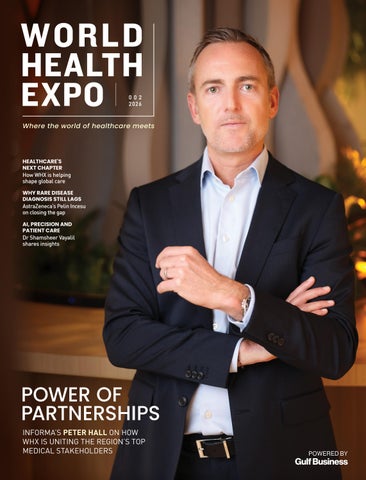
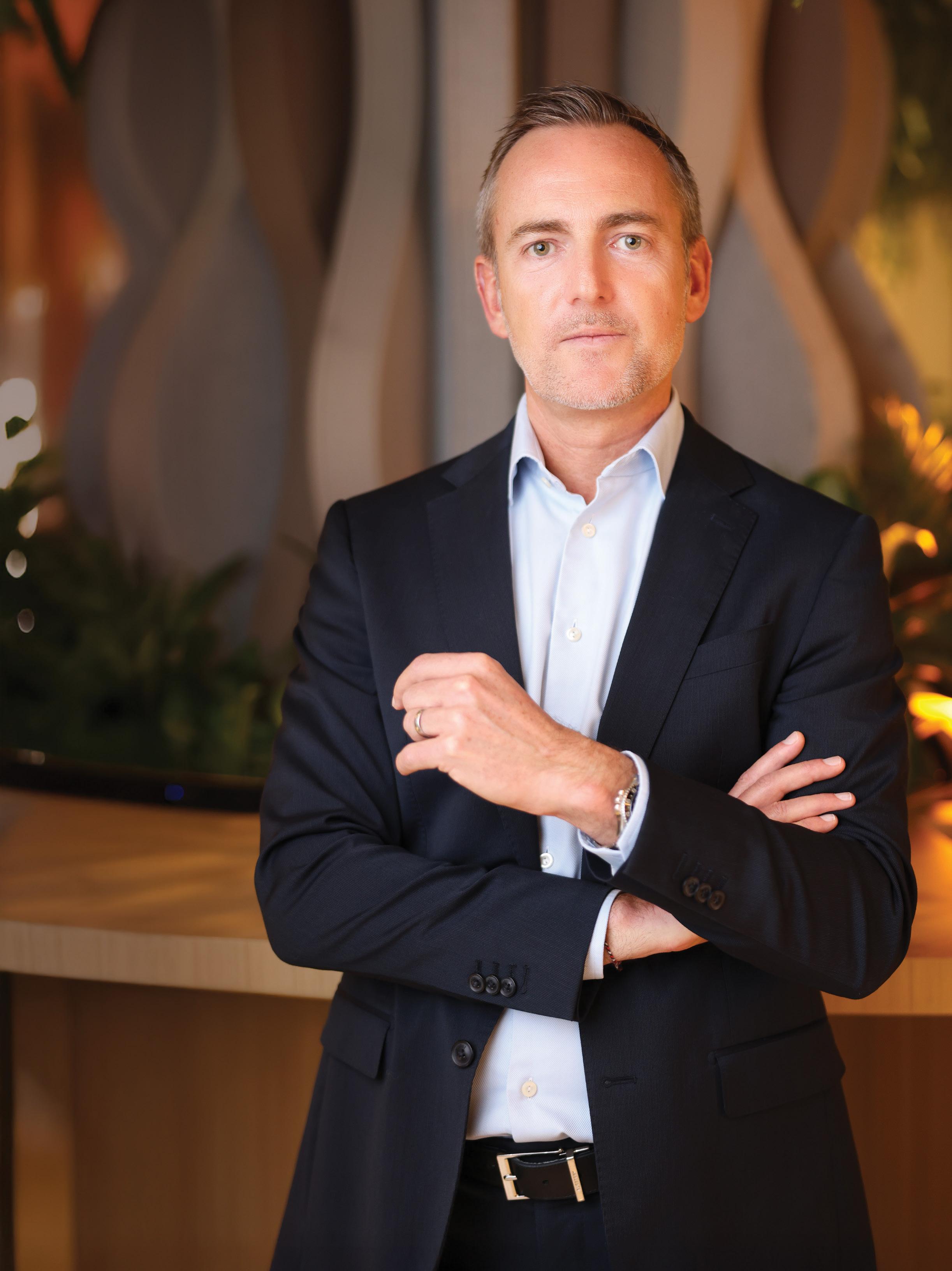
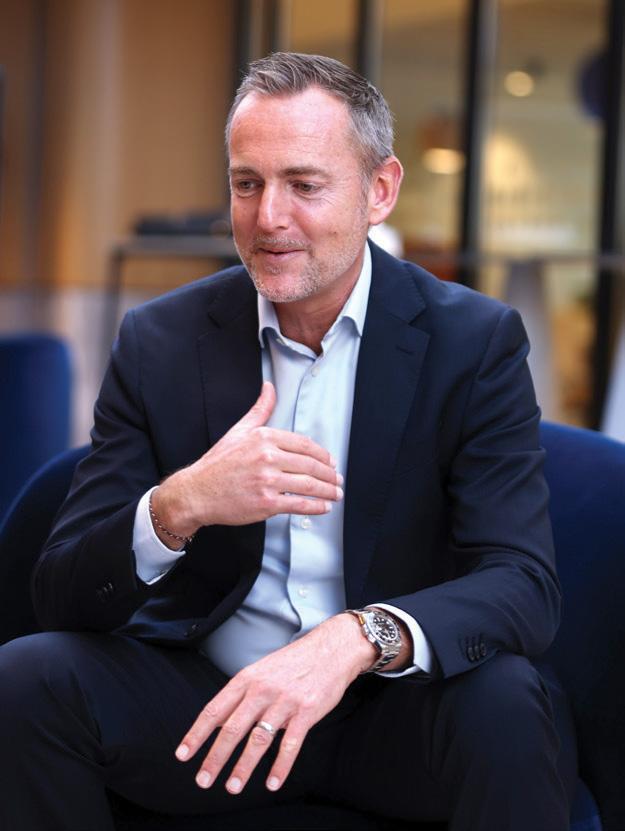
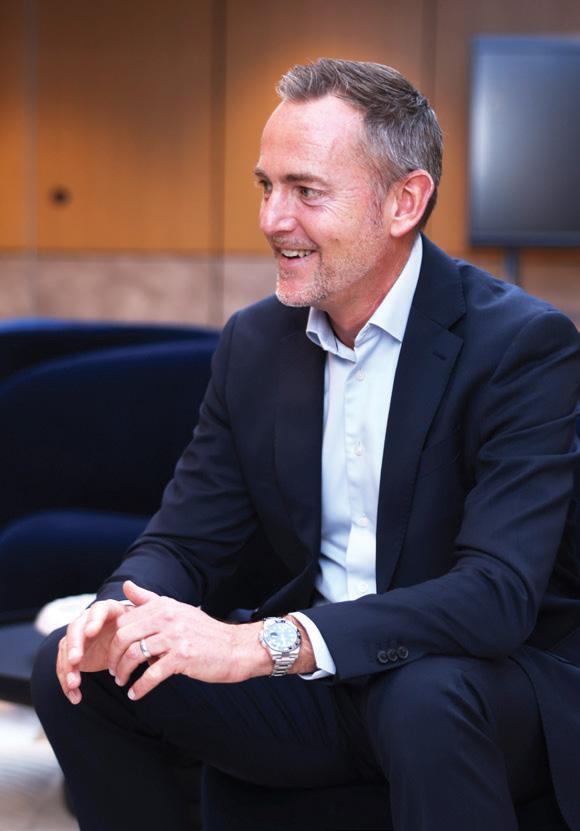
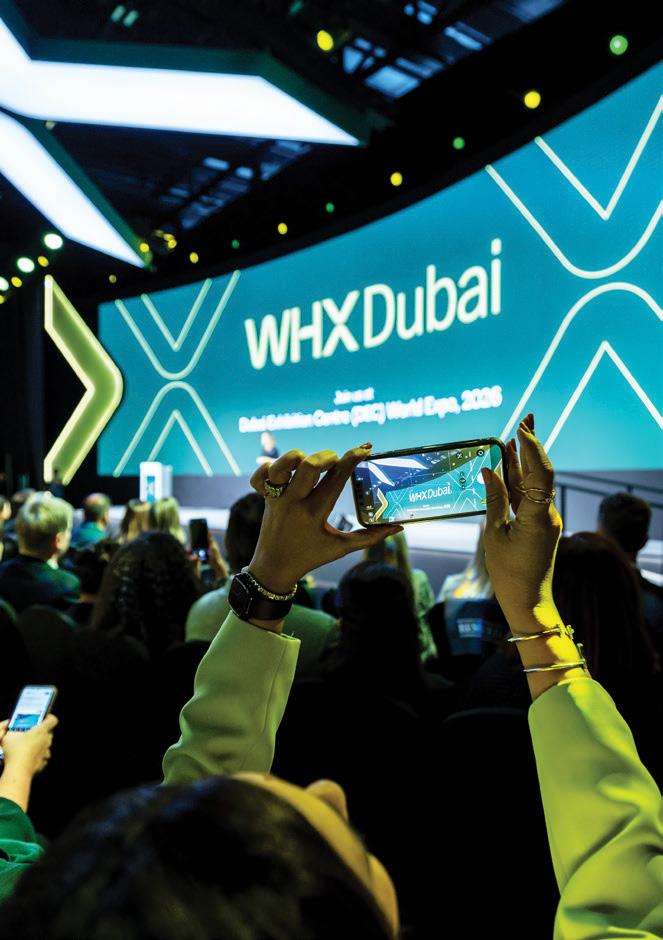
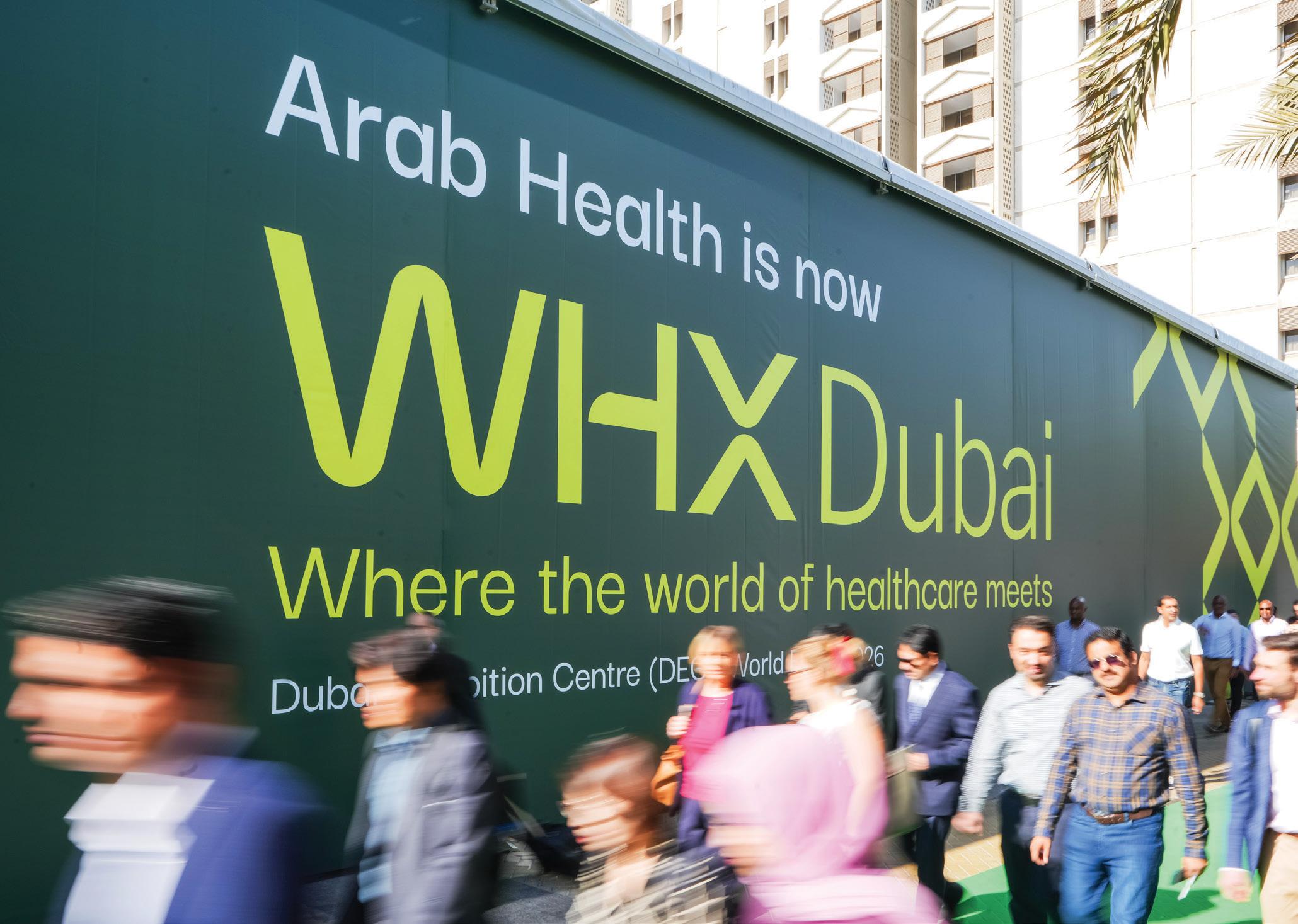
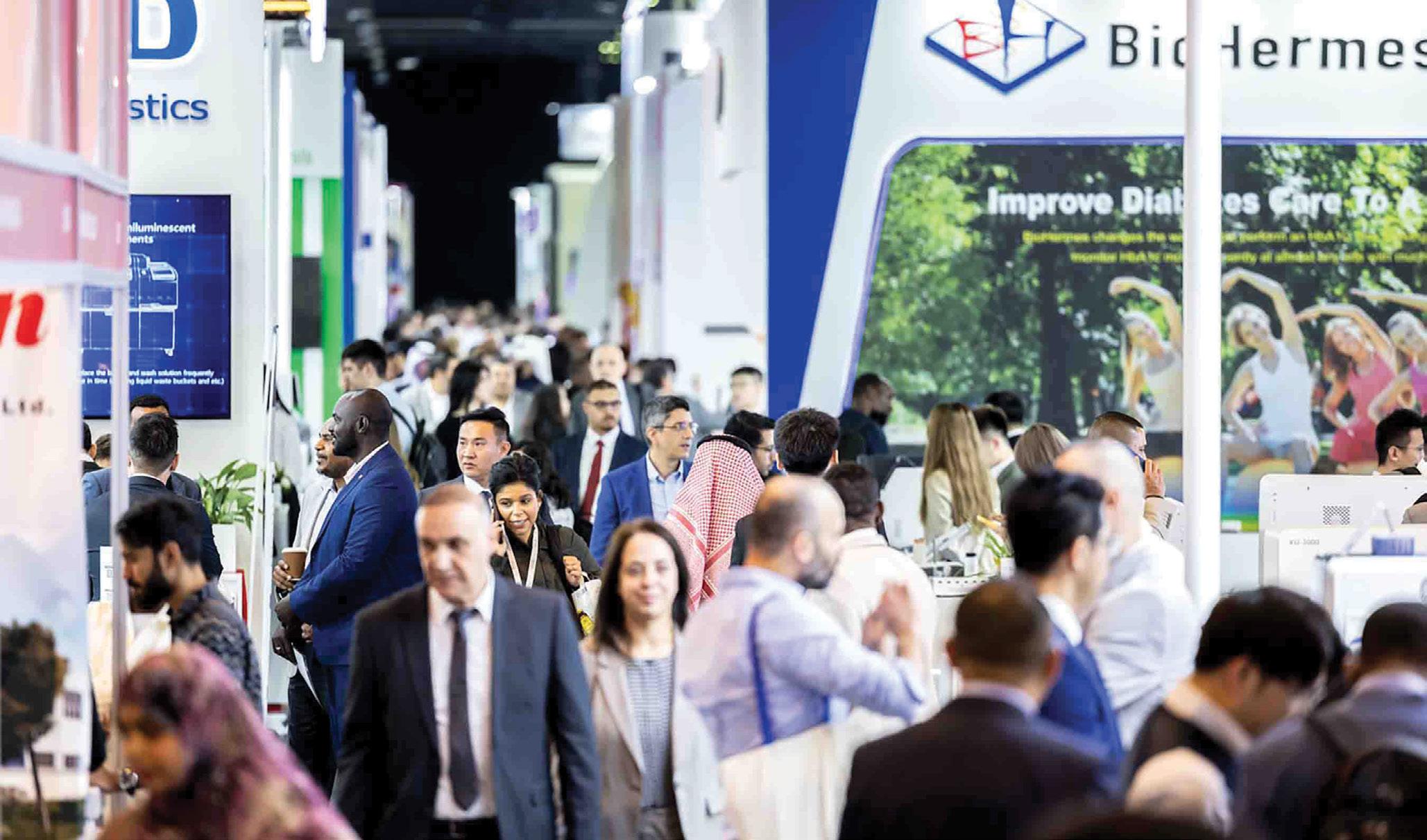
INFORMA’S PETER HALL ON HOW WHX IS UNITING THE REGION’S TOP MEDICAL STAKEHOLDERS
Where healthcare meets
real world impact.
Step into a space where healthcare leaders, innovators, startups, and policymakers connect. Delivered with HIMSS, WHX Tech unites ideas, solutions, and connections that drive real change in digital healthcare.
What you can expect at WHX Tech:
Explore three dynamic stages
Stages where leaders, innovators, and startups drive healthcare transformation, from AI to live startup pitches.
Connect through the Hosted Buyers Programme
A structured programme offering pre-qualified meetings with senior healthcare decision-makers for relevant, efficient, and measurable outcomes.
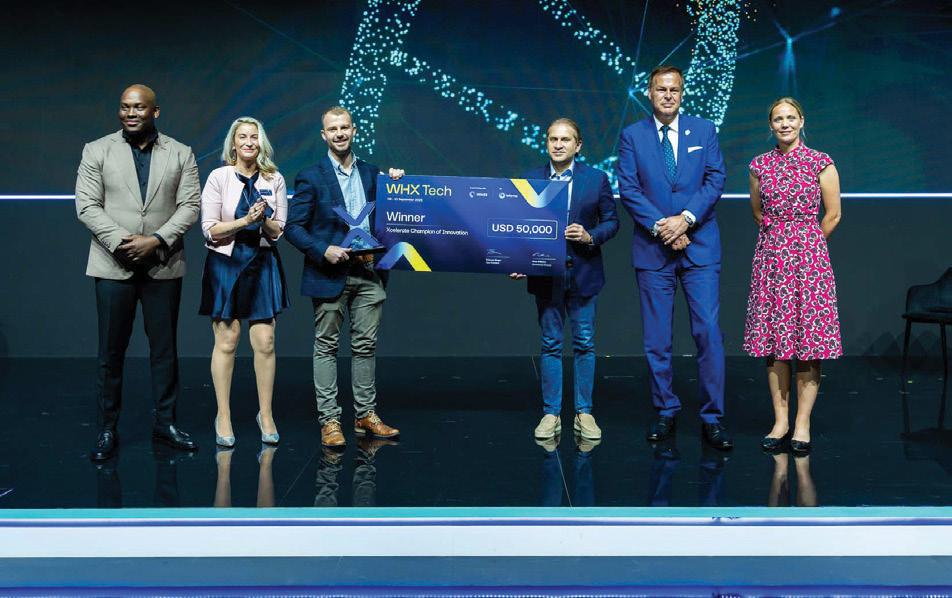
Participate in the Xcelerate Startup Competition
Startups pitch live to global investors and expert judges for a share of USD 50,000 and valuable growth opportunities.
Access the Investor Programme
An exclusive platform for investors to discover the next wave of high-growth health tech startups.
WORLD HEALTH EXPO: A NEW CHAPTER BEGINS
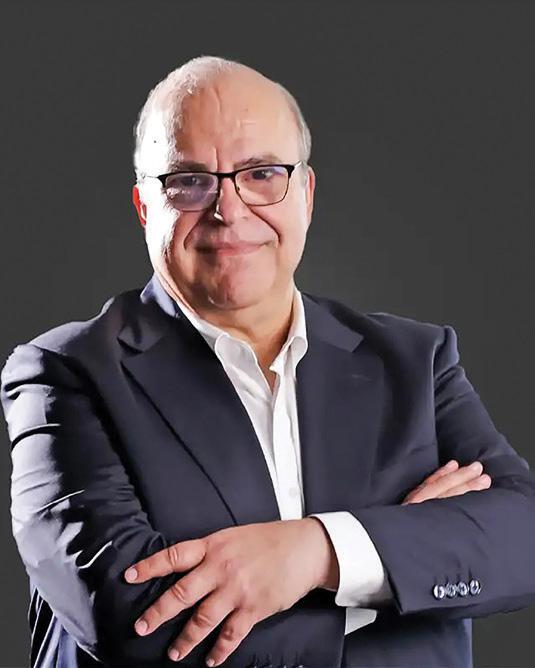
Informa’s Peter Hall on how WHX - formerly Arab Health - will further strengthen the emirate’s position as a leading hub for innovation, investment and medical excellence
The next frontier in diagnostics
Medlab Middle East turns 25, re-emerging as WHX Labs and placing labs at the heart of global healthcare
Longevity science, reimagined
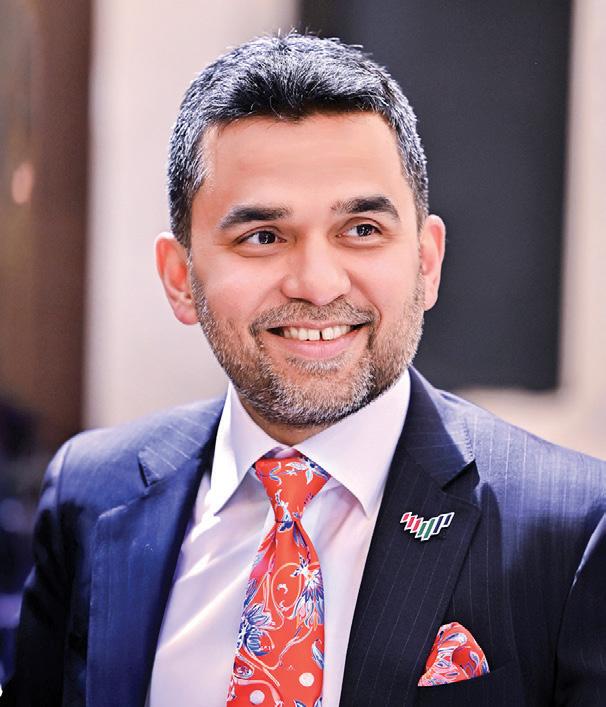
A new investment thesis is emerging in MENA, one that treats biological time not as a cost, but as a convertible asset
Rooting for a genderinclusive healthcare sector
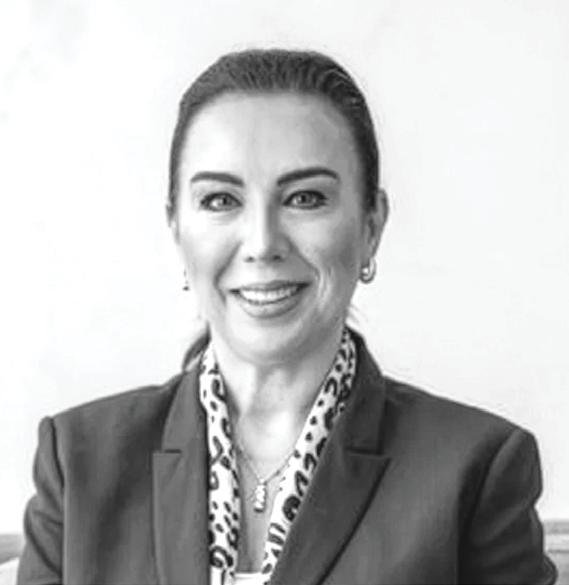
In the UAE, where women already form the backbone of healthcare, the conversation is shifting decisively from participation to power and why leadership equity now matters more than ever
WORLD HEALTH EXPO
Redefining care in the UAE
From AI-powered dentistry to complex surgeries, Burjeel looks ahead to a more integrated and tech-driven healthcare landscape
HEAD OFFICE: Media One Tower, Dubai Media City, PO Box 2331, Dubai, UAE, Tel: +971 4 427 3000, Fax: +971 4 428 2260, motivate@motivate.ae
ABU DHABI: PO Box 43072, UAE, Tel: +971 2 657 3490, Fax: +971 2 677 0124, motivate-adh@motivate.ae
SAUDI ARABIA: Regus Offices No. 455 - 456, 4th Floor, Hamad Tower, King Fahad Road, Al Olaya, Riyadh, Saudi Arabia, Tel: +966 11 834 3595 / +966 11 834 3596, motivate@motivate.ae
LONDON: Acre House, 11/15 William Road, London NW1 3ER, UK, motivateuk@motivate.ae
Cover: Freddie N. Colinares
Follow us on social media: Linkedin: Gulf Business Facebook: GulfBusiness X: @GulfBusiness Instagram: @GulfBusiness
Editor-in-chief
Obaid Humaid Al Tayer
Managing partner and group editor Ian Fairservice
Chief commercial officer
Anthony Milne
Anthony@motivate.ae
Group content director
Thomas Woodgate
Thomas.Woodgate@motivate.ae
Publishing director
Manish Chopra
Manish.Chopra@motivate.ae
EDITORIAL
Group editor
Gareth van Zyl
Gareth.Vanzyl@motivate.ae
Editor Neesha Salian
Neesha.Salian@motivate.ae
Deputy editor
Rajiv Pillai
Rajiv.Pillai@motivate.ae
Reporter Nida Sohail
Nida.Sohail@motivate.ae
Senior art director
Freddie N. Colinares Freddie@motivate.ae
PRODUCTION
General manager – production
S Sunil Kumar
Production manager
Binu Purandaran
Assistant production manager
Venita Pinto
SALES & MARKETING
Digital sales director
Mario Saaiby
Mario.Saaiby@motivate.ae
Sales manager
Hitesh Kumar
Hitesh.Kumar@motivate.ae
WORLD HEALTH EXPO AND WORLD HEALTH EXPO LABS WILL BRING MORE THAN 270,000 PROFESSIONAL VISITS IN FEBRUARY 2026
WORDS RAJIV PILLAI
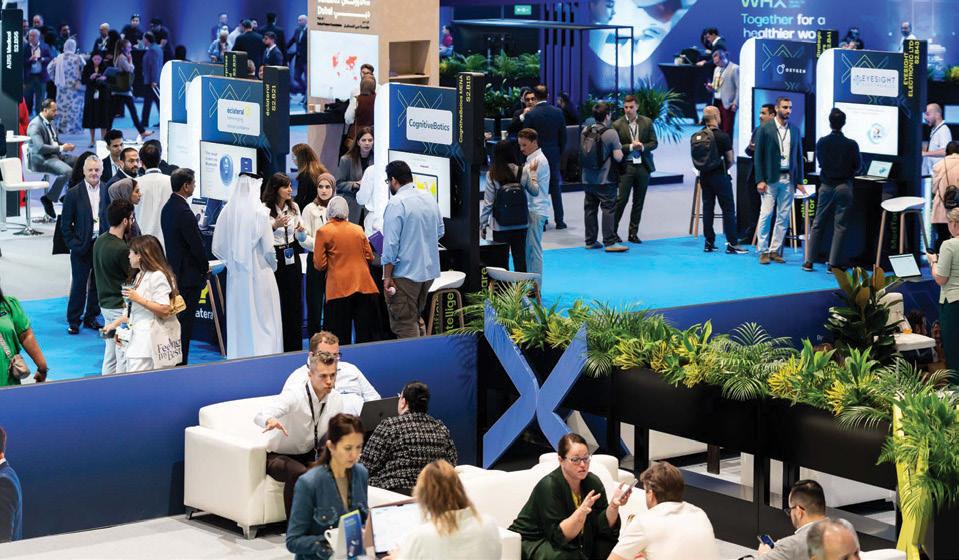
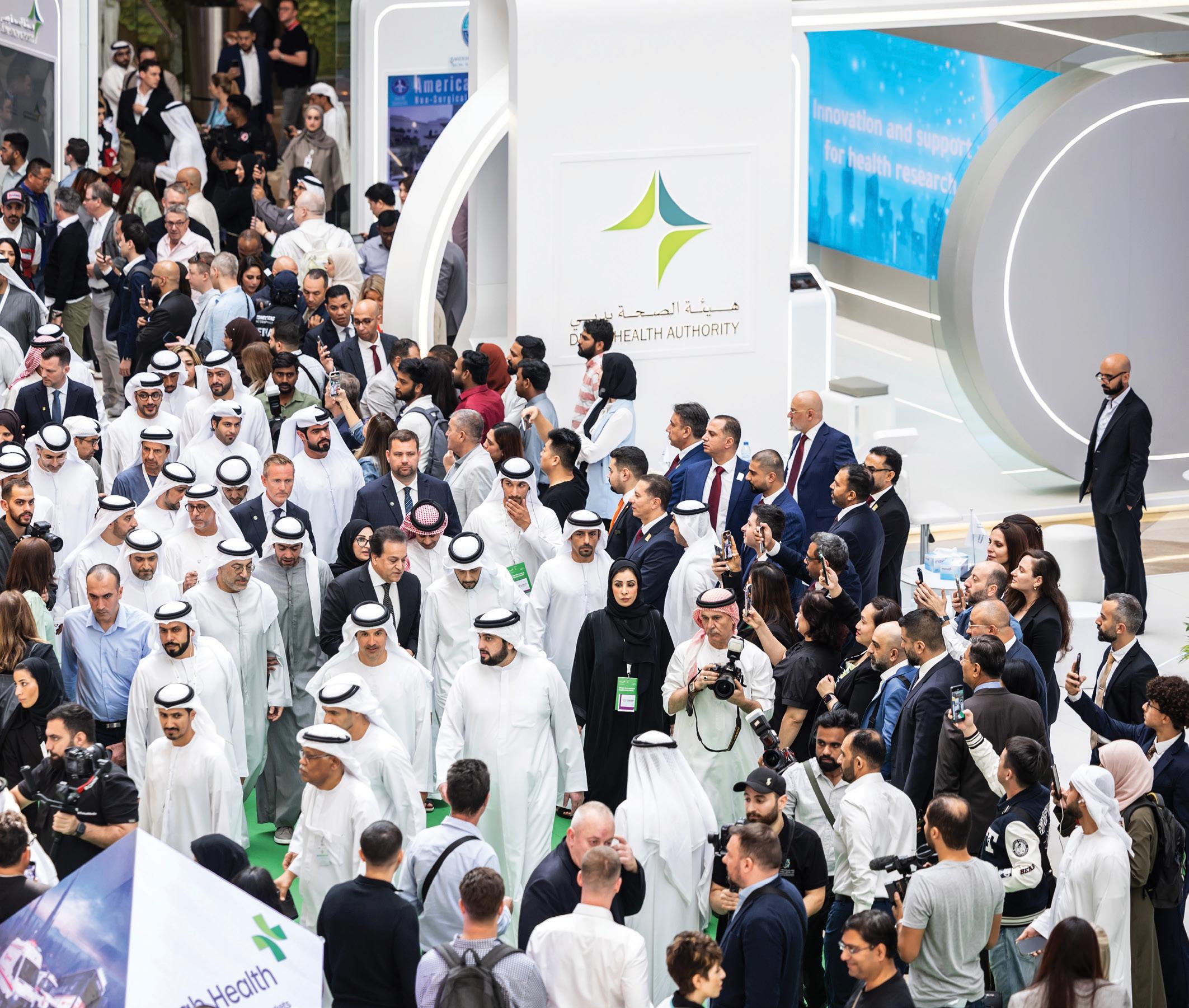
World Health Expo (WHX), formerly Arab Health, and World Health Expo Labs, previously Medlab Middle East, are set to host the largest international gathering of healthcare professionals ever when they return in February 2026, positioning Dubai as a global healthcare hub from February 9–13.
With both events running concurrently, organisers expect more than 270,000 professional visits from 180 countries and participation from over 4,800 exhibitors. World Health Expo (WHX) will be held at its new home, the Dubai Exhibition Centre in Expo City Dubai, from February 9–12. At the same time, World Health Expo
Labs will mark its 25th anniversary at the Dubai World Trade Centre from February 10–13.
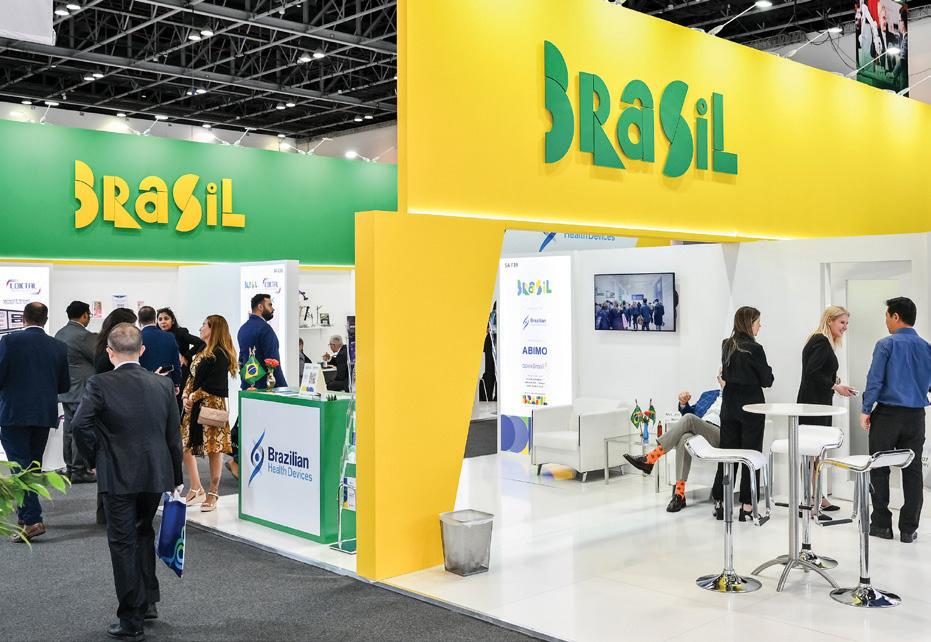
Early demand from the global healthcare sector has been strong. China, Germany, the US, the UK and Korea have all confirmed expanded country pavilion participation compared with 2025, contributing to a 12 per cent year-on-year increase in total floor space across both events. New country pavilions from Croatia, Luxembourg and Thailand will debut in 2026, while India, Saudi Arabia, Singapore and Taiwan are set to return.
Major international healthcare companies have already confirmed their presence at WHX, including Philips, GE Healthcare, Siemens Healthineers,
THIS DIVERSITY OF PARTICIPATION
ILLUSTRATES HOW THE WORLD’S HEALTHCARE COMMUNITY IS CONVERGING IN DUBAI TO CONNECT IDEAS, EXCHANGE EXPERTISE, AND FORGE PARTNERSHIPS THAT WILL INFLUENCE THE INDUSTRY FOR YEARS TO COME.”
Draegerwerk, United Imaging and American Hospital Dubai. On the laboratory side, WHX Labs will feature sector leaders such as Beckman Coulter, Pure Lab, Snibe, Sysmex and Leader Healthcare.
Solenne Singer, senior vice president at Informa, said: “The expansion we are witnessing from countries such as China, Germany, the US, the UK, and Korea, each bringing their largest presence to date, together with the debut of pavilions from Croatia, Luxembourg, and Thailand, reflects the extraordinary global momentum behind WHX and WHX Labs, and the value exhibitors place on these events.
“This diversity of participation illustrates how the world’s healthcare community is converging to connect ideas, exchange expertise, and forge partnerships that will influence the industry for years to come.
“As Dubai becomes a city-wide stage for healthcare, the dialogue that takes place here will inform the future of our industry and inspire lasting impact on patient care and
system transformation across continents.” The scale of the events aligns with broader market trends. According to Research and Markets, the global healthcare services market is expected to reach $9.25trn by 2025, growing at a CAGR of around 5.4 per cent, before surpassing $11.2trn by 2029. In parallel, the healthcare analytics market is expanding rapidly, with MarketsandMarkets estimating growth from approximately $44.8bn in 2024 to more than $133.1bn by 2029.
Held under the patronage of the UAE Ministry of Health and Prevention, WHX will span nine product sectors and feature six CME-accredited conferences, four certified boot camps and three dedicated stages. WHX Labs will focus on ‘25 Years of Laboratory Innovation: Uniting Communities for Better Health’, supported by eight product pillars, new clinician conferences and the 25th Annual Laboratory Management and Medicine Congress, with more than 250 international speakers across eight CMEaccredited tracks.
A 50-YEAR LEGACY WORLD HEALTH EXPO
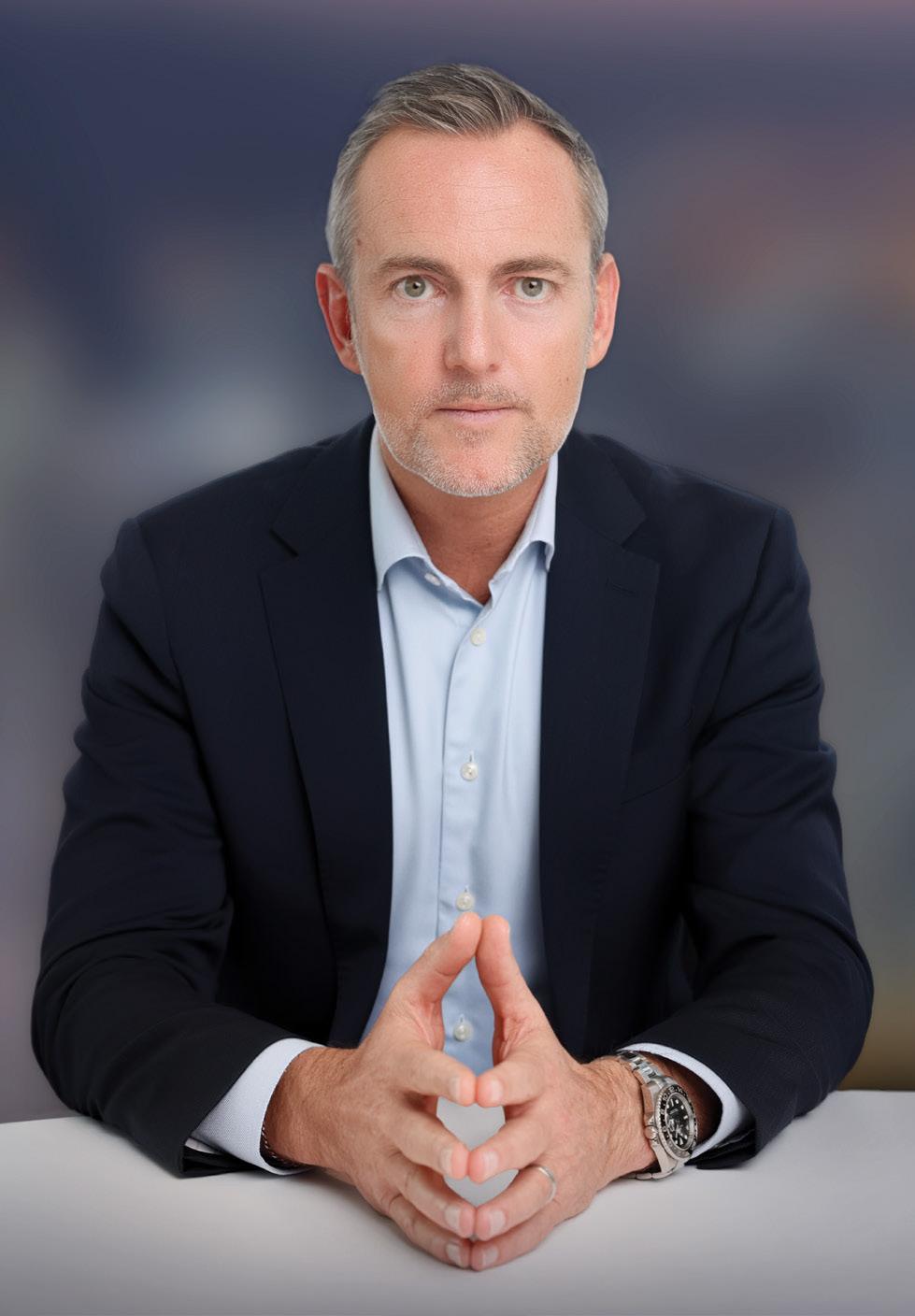
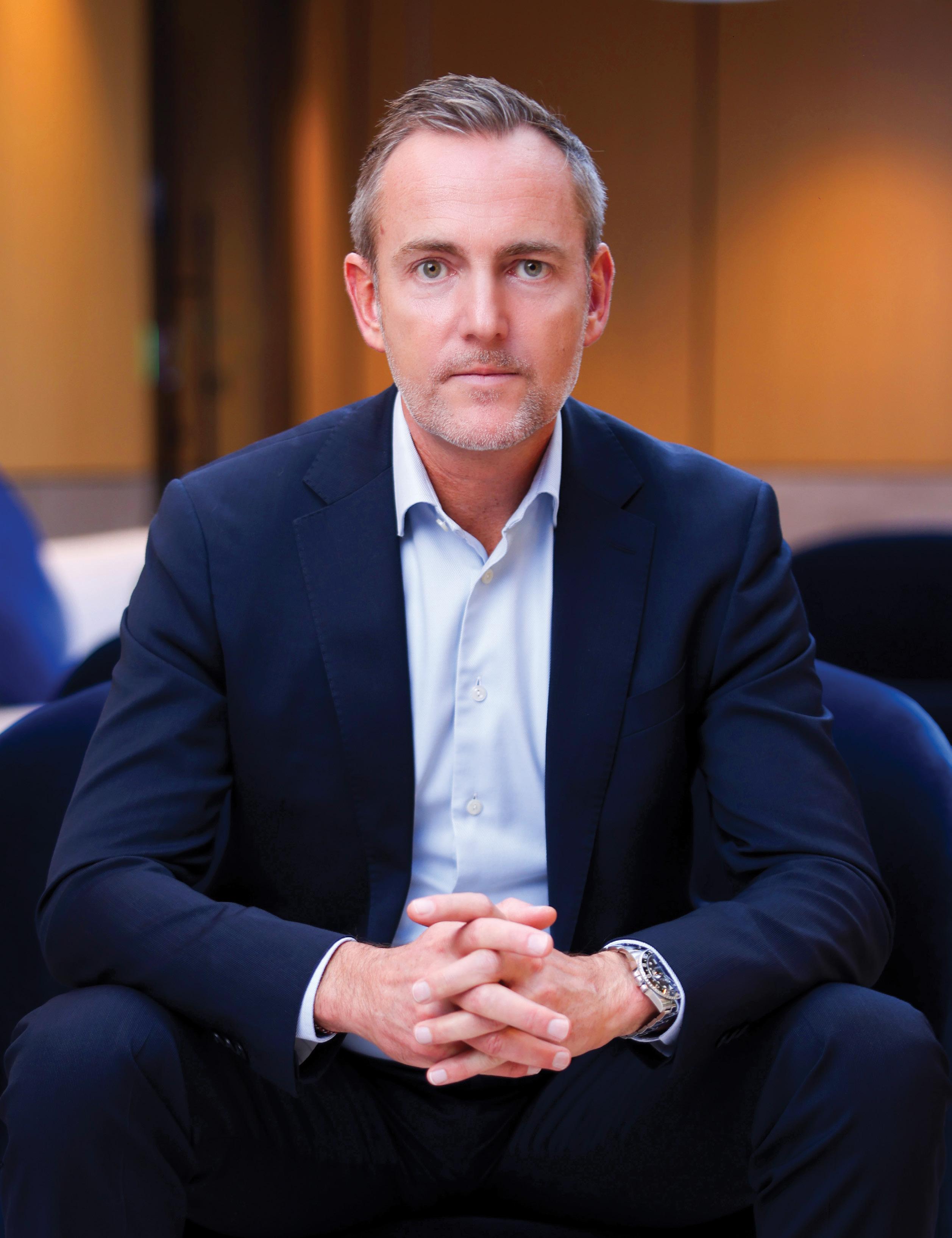
PETER HALL, PRESIDENT OF INFORMA MARKETS, ON HOW DUBAI BECAME A GLOBAL HEALTHCARE CONVENING POWER
WORDS RAJIV PILLAI | PHOTOS JOHN MELENCION
For more than five decades, World Health Expo has mirrored the transformation of both the global healthcare industry and the city that hosts it. What began as a modest regional exhibition has evolved into one of the world’s most influential healthcare convening platforms, bringing together policymakers, clinicians, innovators, manufacturers, investors and regulators from across continents.
According to Peter Hall, president for the Middle East, India, Türkiye and Africa at Informa Markets, the event’s 50-year milestone is inseparable from Dubai’s rise as a global healthcare and innovation hub.
“World Health Expo (WHX) was founded more than 50 years ago with a very simple but powerful vision from Sheikh Rashid bin Saeed Al Maktoum,” Hall says. “It began in a tent on the banks of Dubai Creek, with the aim of introducing international medical devices to the UAE and the wider region.”
From those beginnings, the event, formerly known as Arab Health, has grown into what Hall describes as “one of the most globally recognised healthcare platforms in the world.” Its evolution, he added, has tracked Dubai’s own development
from regional trading centre to international nexus for business, logistics and innovation.
“Over the past five decades, WHX has evolved in line with the extraordinary growth of Dubai itself,” Hall says. “What started as a regional exhibition is now a truly international meeting point that connects healthcare leaders, innovators, policymakers and investors from around the globe.”
A NEW VENUE, A LARGER AMBITION
The 2026 edition of WHX marks a significant turning point, with the event moving to the Dubai Exhibition Centre in Expo City Dubai for the first time. For Hall, the venue shift reflects both the scale the event has reached and the city’s broader ambitions as a healthcare hub.
“We are incredibly excited to host WHX at the Dubai Exhibition Centre and to be among the first major events to inaugurate this spectacular new venue,” he says. “It offers a step-change in what we can deliver, from
THE LAUNCH OF A DEDICATED BIOTECH & LIFE SCIENCES ZONE REFLECTS BOTH THE SCALE OF OPPORTUNITY IN THIS SECTOR AND THE STRATEGIC DIRECTION OF HEALTHCARE
DEVELOPMENT
ACROSS THE GCC .”
easier transport access and beautifully landscaped surroundings, to modern, flowing exhibition halls that significantly enhance the visitor experience.”
The move also solves a long-standing constraint. “Most importantly, this move enables something truly meaningful for the global healthcare industry: the reunion of WHX with WHX Labs, formerly Medlab,” Hall says. Space limitations at the Dubai World Trade Centre had forced the two events to operate separately for nearly a decade.
“For the past nine years, the two shows have had to operate separately because of space constraints at DWTC,” he says. “The scale of DEC finally allows us to bring the ecosystem back together.” In 2026, the organisers will operate a dual-venue format, with WHX hosted at DEC in the south of the city and WHX Labs remaining at DWTC in the north. “This effectively connects both sides of Dubai and reflects the scale and ambition of the global healthcare market today,” Hall says.
“With more than 235,000 professional visits and over 4,300 exhibitors expected, WHX 2026 will convene the global healthcare community at an unprecedented scale,” Hall says. “It marks a pivotal moment in the evolution of the event and reinforces both WHX’s growth and Dubai’s position as a leading global healthcare and innovation hub.”
SPOTLIGHT ON BIOTECH AND LIFE SCIENCES
One of the most notable additions to the 2026 edition is a dedicated Biotech & Life Sciences Zone, reflecting the rapid expansion of
these sectors across the GCC. Hall says the move aligns closely with national healthcare strategies in the UAE and Saudi Arabia.
“The launch of a dedicated Biotech & Life Sciences Zone reflects both the scale of opportunity in this sector and the strategic direction of healthcare development across the GCC,” he says.
Global and regional market dynamics support that focus. “Globally, the biotechnology market is on track to exceed $4tn by 2035, while the GCC market alone is expected to reach $2.6bn by 2028, led by the UAE and Saudi Arabia,” Hall says.
He pointed to growing investment in localised research and development across genomics, oncology, rare diseases and synthetic biology, alongside a shift from discovery to commercialisation. “We are also seeing a shift from discovery to commercialisation, with greater crossborder collaboration and increasing interest from global investors and partners,” he says.
By carving out a dedicated platform, WHX aims to accelerate this transition.
“By creating this dedicated zone, WHX is providing a powerful platform for regional and international stakeholders to access emerging markets, build strategic partnerships, attract capital and accelerate the translation of science into scalable healthcare solutions,” Hall says.
DIAGNOSTICS AND LABORATORY SCIENCE AT CITY SCALE
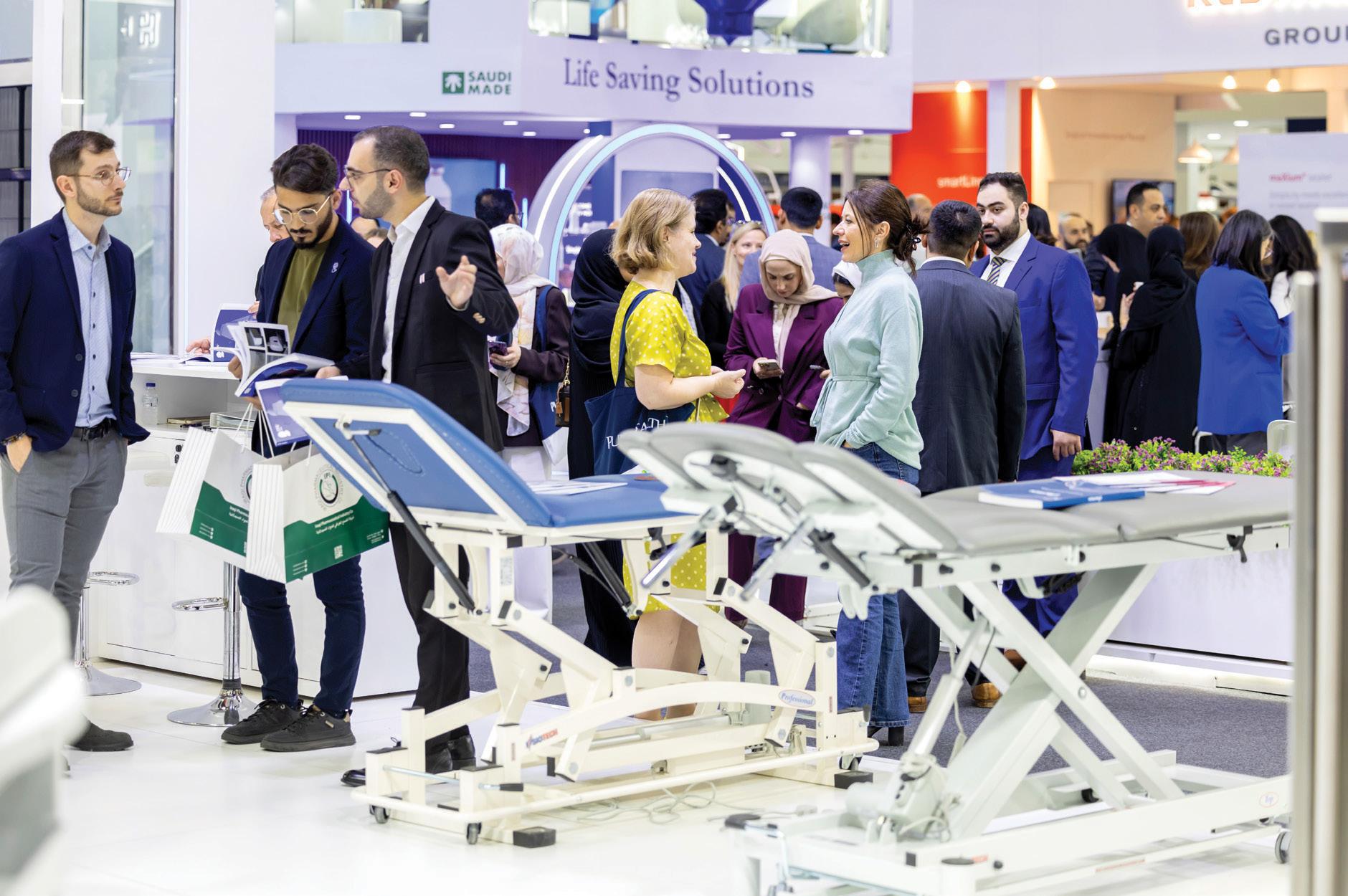
The integration of WHX Labs alongside WHX transforms the event from a single exhibition into a city-wide healthcare platform. For Hall, the scale of that integration is unprecedented.
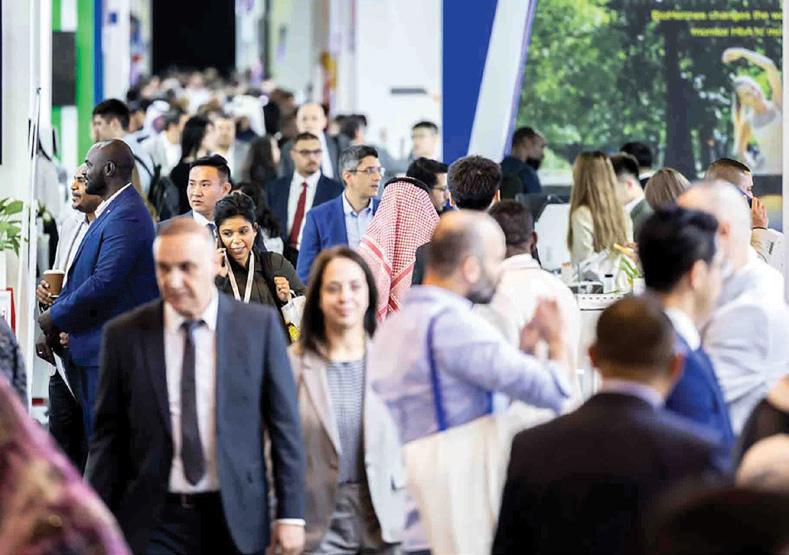
“For the first time, more than 270,000 professional visits from 180 countries will converge in Dubai, creating an unprecedented concentration of global expertise, innovation and decisionmaking in a single city,” he says.
This density, Hall argues, changes the nature of participation. “Participants can engage across the full healthcare value chain – from diagnostics and laboratory science to clinical care and data-driven innovation – in a highly connected, cross-disciplinary environment,” he says.
The dual-event format enables laboratory specialists, clinicians, manufacturers and innovators to interact directly, mirroring how healthcare systems themselves are becoming more integrated. “The dual-event format maximises visibility and market access, accelerates deal-making, and amplifies knowledge exchange,” Hall says.
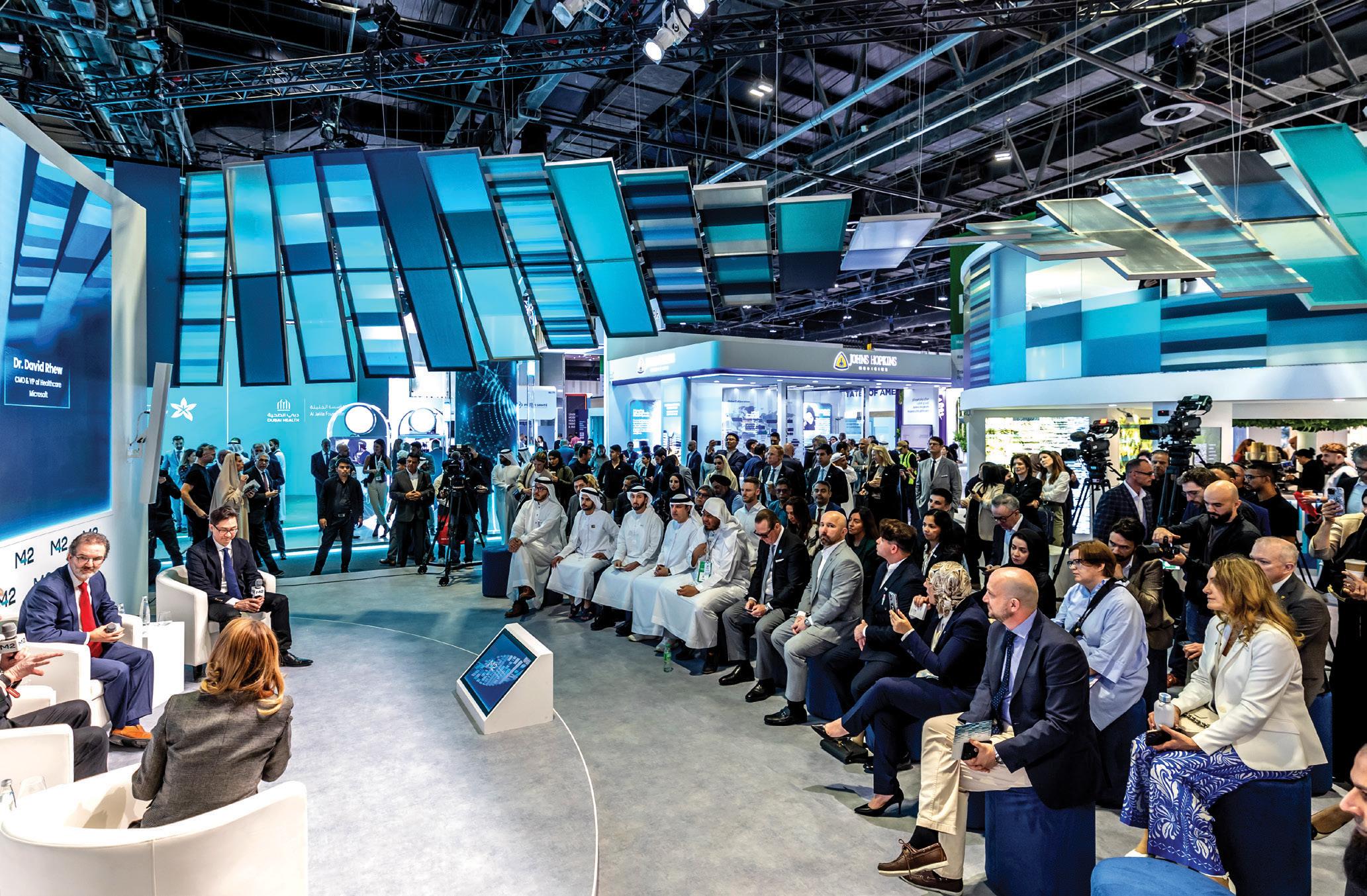
Beyond the exhibition floor, Hall emphasises that content remains central to WHX’s value proposition. “At WHX, content is at the heart of the experience,” he says. The 2026 programme will be delivered across three flagship stages, each aligned to a different dimension of healthcare transformation. “The Future X Stage will spotlight disruptive ideas and scalable innovation,” Hall says, bringing together founders, venture capitalists, digital health pioneers and healthcare institutions.
The Frontiers Stage will focus on scientific and clinical breakthroughs, “covering biotechnology, oncology, women’s health, wellness and longevity – from precision medicine and regenerative therapies to nextgeneration diagnostics and data-driven care models,” he says.
Meanwhile, the Visionary Stage will convene policymakers, executives and investors to address leadership, capital allocation, AI adoption, governance, ESG and advancing women in leadership. “Connecting strategy with real-world impact,” Hall says, is the goal. Complementing the stages, the new
Supplied
WHX Deep Dive Series will offer executive masterclasses and bootcamps, while six CME-accredited conferences will deliver specialty-specific clinical education. “Together, these initiatives reinforce WHX as a truly global platform for knowledge, innovation, and collaboration,” Hall says.
ANCHORING A GLOBAL NETWORK
WHX is part of a broader World Health Expo network spanning Asia, Africa and the Americas. Hall describes the Dubai edition as a cornerstone of that ecosystem.
“WHX is a cornerstone of the global World Health Expo network, linking the Middle East to a wider ecosystem of healthcare innovation and collaboration,” he says. Its scale gives regional stakeholders access to global markets while offering international participants entry into one of the fastest-growing healthcare regions.
For Informa, the event underscores a long-term commitment to the Middle East. “The region’s dynamic mix of healthcare sectors aligns perfectly with our mission to create platforms that drive innovation, investment, and knowledge exchange on a global scale,” Hall says.
Strategic partnerships remain central to WHX’s success, and Hall highlights the depth of government and industry support behind the 2026 edition. “Strategic partnerships are at the heart of WHX’s success,” he says.
Key government partners include the UAE Ministry of Health and Prevention, Dubai Health Authority, Department of Health – Abu Dhabi, and Sharjah Health Authority, alongside Dubai Health, Dubai Healthcare City Authority, Emirates Health Services, the Emirates Council for Integrative Medicine, and the Emirates Drug Establishment. On the industry side, global and regional leaders such as GE Healthcare, Siemens Healthineers, Philips, Canon, United Imaging, American Hospital in Dubai, Saudi German Health, Almoosa Health Group and Al Khayyat Investments will feature prominently.
THE FUTURE X STAGE WILL SPOTLIGHT DISRUPTIVE IDEAS AND SCALABLE INNOVATION, BRINGING TOGETHER FOUNDERS, VENTURE CAPITALISTS, DIGITAL HEALTH PIONEERS AND HEALTHCARE INSTITUTIONS.”
FOR THE FIRST TIME, MORE THAN 270,000 PROFESSIONAL
FROM 180 COUNTRIES WILL CONVERGE IN DUBAI
VISITS
THE 2026 PROGRAMME WILL BE DELIVERED ACROSS THREE
EACH ALIGNED TO A DIFFERENT DIMENSION OF HEALTHCARE
“Together, these partnerships strengthen WHX’s mission as a marketplace for healthcare innovation, investment, and longterm collaboration,” Hall says.
DUBAI’S ADVANTAGE AS A GLOBAL CONNECTOR
For Hall, the reason WHX continues to flourish in Dubai is ultimately geographic, infrastructural and strategic. “Dubai’s success as a host city comes from its unique position as a true nexus between East and West,” he says.
Its connectivity places two-thirds of the world’s population within an eight-hour flight. “This connectivity allows the city to link established Western markets with some of the fastest-growing healthcare economies in Asia, Africa, and the Middle East,” Hall says.
World-class infrastructure completes the equation. “Venues like the Dubai Exhibition Centre and Dubai World Trade Centre are purpose-built to deliver largescale, immersive, technology-driven experiences,” he says.
As WHX enters its next half-century, the message from its organisers is clear: the event is no longer just a trade show. It is a global healthcare marketplace, a policy forum, an investment platform and a reflection of Dubai’s role in shaping the future of healthcare worldwide.
WHY WORLD HEALTH EXPO LABS SIGNALS A NEW ERA FOR DIAGNOSTICS
AAs Medlab Middle East marks 25 years, its transformation into WHX Labs signals a bigger ambition, placing laboratories at the centre of the global healthcare ecosystem
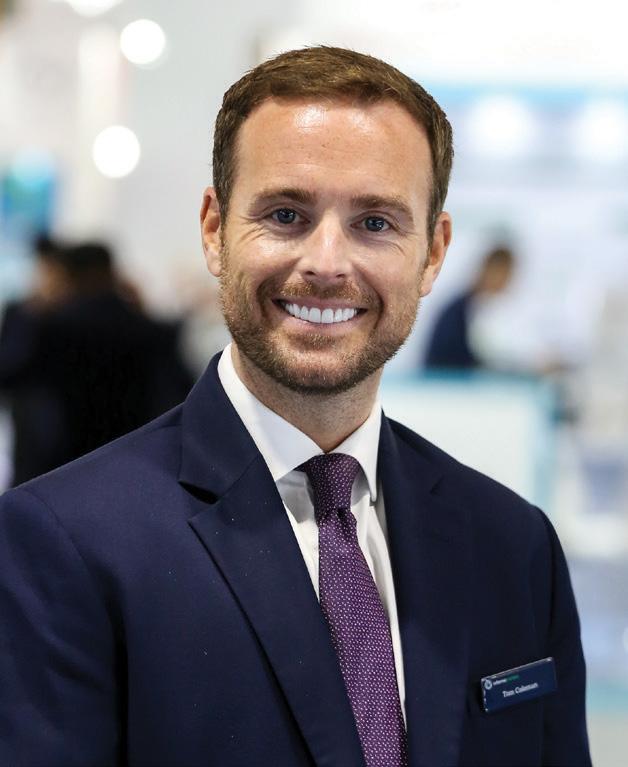
fter 25 years as the region’s leading diagnostics platform, Medlab Middle East has evolved into WHX Labs, reflecting a shift in how healthcare now operates. In this interview, Tom Coleman, portfolio director at Informa, explains the strategic thinking behind the World Health Expo identity, the logic of a dual-venue format, and how WHX Labs is positioning laboratories as critical players in policy, investment, and system-wide healthcare outcomes.
Medlab Middle East has transitioned to WHX Labs in its 25th year. What was the strategic thinking behind adopting the “World Health Expo” identity, and how does this reposition the event within the global healthcare ecosystem?
The transition from Medlab Middle East to WHX Labs marks both an evolution and a strategic expansion of purpose. Over 25 years, Medlab established itself as the leading laboratory diagnostics platform in the region. However, the pace of change in healthcare, particularly the convergence of diagnostics, digital health, data, therapeutics, and population health, meant that laboratories could no longer be viewed in isolation.
The World Health Expo (WHX) identity reflects this reality. It positions WHX Labs not simply as a diagnostics exhibition, but
as a core pillar within a broader, integrated global health ecosystem. The rebrand allows us to elevate the conversation from products to systems, from testing to outcomes, and from regional relevance to global leadership. Importantly, WHX is a global architecture, not a single event. WHX Labs sits alongside WHX and WHX Leaders as part of a connected platform that spans policy, investment, innovation, and clinical delivery, placing laboratories at the centre of healthcare decisionmaking rather than at the periphery.
With WHX Labs staying at Dubai World Trade Centre and the co-timed WHX moving to the Dubai Exhibition Centre at Expo City, how are you managing the visitor experience across two venues, and what does this format unlock that a single-site event could not?
The dual-venue format is a deliberate strategic choice designed to scale ambition without compromising experience. WHX Labs remains anchored at Dubai World Trade Centre, reflecting its technical depth, established laboratory community, and specialist focus. WHX, hosted at Dubai Exhibition Centre at Expo City, provides the scale and infrastructure required for the wider healthcare
ecosystem: hospital design, digital health, medical devices, wellness, and policy engagement.
From a visitor perspective, the experience is carefully curated through: Integrated registration and digital planning tools
Scheduled shuttle connectivity
Clear thematic zoning and agenda alignment
Distinct but complementary content journeys
What this unlocks is something a single venue cannot: depth and breadth simultaneously. It allows laboratory professionals to engage deeply with diagnostics while seamlessly connecting into the wider healthcare value chain, investors, policymakers, hospital operators, and technology leaders, without diluting either experience.
This format reflects how healthcare actually functions today: interconnected, multidisciplinary, and increasingly global.
The Middle East and Africa laboratory market is projected to grow at a double-digit rate through the decade. Which markets or sub-segments are driving that momentum, and how is WHX Labs 2026 facilitating meaningful commercial and investment connections across the region?
Growth across the Middle East and Africa laboratory market is being driven by a combination of demographic pressure, healthcare reform, and technological leapfrogging. Key momentum drivers include:
Gulf Cooperation Council (GCC) markets investing heavily in diagnostics infrastructure, genomics, and AI-enabled laboratories
North and East Africa, where public-private partnerships are expanding access to pathology, molecular diagnostics, and reference laboratories
Rapid growth in molecular testing, genomics, blood screening, microbiology automation, and point-ofcare solutions
Increased focus on local manufacturing, supply chain resilience, and regional distribution hubs
WHX Labs 2026 is designed to convert this momentum into action. We facilitate this through: Curated buyer and investor programmes
Country-led delegations and ministerial engagement
Private roundtables linking diagnostics providers with health systems and capital
The objective is not volume networking, but highquality, commercially relevant connections that accelerate deployment, investment, and scale across the region.
In 2026, AI is increasingly embedded directly into laboratory workflows rather than sitting on the
THE DUAL-VENUE FORMAT IS A DELIBERATE STRATEGIC CHOICE DESIGNED TO SCALE AMBITION WITHOUT COMPROMISING EXPERIENCE.”
sidelines. What are you seeing on the exhibition floor that signals a shift from AI as decision support to AI as an operational partner in diagnostics?
What is most striking at WHX Labs is that AI is no longer being positioned as an optional layer, it is becoming infrastructure. On the exhibition floor, we are seeing:
AI embedded directly into analysers, middleware, and laboratory information systems
Automated sample triaging, prioritisation, and workflow optimisation
AI-driven quality control, anomaly detection, and predictive maintenance
Closed-loop systems where AI not only interprets results but actively manages laboratory operations.
This represents a fundamental shift: AI is moving from supporting human decisions to executing operational decisions at scale. For laboratories under pressure from workforce shortages, cost containment, and rising test volumes, AI is increasingly viewed as a co-worker rather than a tool.
WHX Labs provides a critical platform for laboratories to assess these technologies in real-world contexts — beyond pilots and proofs of concept.
With the rise of precision medicine, antimicrobial resistance
concerns and the expansion of point-of-care testing, how do you see the role of the traditional central laboratory evolving over the next five years?
The central laboratory is not diminishing, it is transforming. While point-of-care testing will continue to expand, particularly in acute and remote settings, the central laboratory will increasingly serve as:
01 The data intelligence hub of the healthcare system
02 The backbone for genomics, advanced molecular diagnostics, and population health analytics
03 A critical player in antimicrobial stewardship and surveillance
04 The integrator of decentralised testing data into coherent clinical insight
Over the next five years, we expect central laboratories to become more automated, more digital, and more strategically embedded within health systems.
Their value will be measured not just by turnaround times, but by their ability to drive clinical decisions, inform policy, and support preventive care at scale.
WHX Labs exists to support this evolution, by connecting laboratories to technology, capital, policy, and global best practice at a moment when their strategic importance has never been greater.
TOM COLEMAN , PORTFOLIO DIRECTOR AT INFORMA
WHY WORLD HEALTH EXPO IS BETTING BIG ON BIOTECH AND LIFE SCIENCES
Ross Williams, commercial director at Informa, explains how WHX is elevating biotech, genomics, and advanced therapeutics as the region sharpens its ambition to become a global life sciences hub
World Health Expo (WHX) places a stronger emphasis on life sciences and biotech than ever before. What shifted in the market that made this the right moment to elevate biotech, genomics, and advanced therapeutics within the WHX platform?
What we are seeing is a convergence of scientific maturity and regional ambition. Globally, the biotechnology market is projected to exceed $4tn by 2035 according to Global Data Route Analytics, reflecting how the sector has moved decisively from early-stage discovery into scalable, clinically validated and commercially viable applications, from cell and gene therapies to AI-enabled drug discovery.
At a regional level, this momentum is equally compelling. Research by Knight Frank has revealed the GCC biotechnology market is forecast to reach $2.6bn by 2028, with the UAE and Saudi Arabia leading growth through increased investment in genomics, oncology, rare diseases and advanced therapeutics. At the same time, the UAE has made life sciences a strategic national priority, recognising its role not only in improving healthcare outcomes but also in driving economic diversification and knowledge-led growth. For WHX, this made it the right moment to evolve the platform. Elevating biotech,
genomics and advanced therapeutics reflects how healthcare itself is changing, moving upstream towards prevention, precision and personalised medicine.
Our role is to create the space where these scientific advances can be translated into real-world impact, aligned policy frameworks and meaningful commercial partnerships.
What makes the UAE uniquely placed to host a global life sciences platform like WHX and how does the event reinforce that positioning?
The UAE combines long-term national vision with execution speed, world-class infrastructure and a globally connected ecosystem. It has invested heavily in genomics, precision medicine, advanced manufacturing and regulatory frameworks that support innovation while maintaining international standards.
WHX reinforces that positioning by bringing together global researchers, manufacturers, investors and
policymakers in one place, anchored in a market that is actively building life sciences capability. The scale and international reach of the event send a strong signal: this is not just a regional meeting point, but a global gateway for life sciences engagement across the Middle East, Africa, Asia and the rest of the world.
Arab Health built one of the most influential healthcare legacies globally. How does WHX preserve that credibility while evolving the model to better serve emerging sectors such as biotech, precision medicine, and translational research?
The legacy of Arab Health is trust, scale and relevance and that foundation is preserved within WHX.
WHX represents the evolution of Arab Health into a global force for healthcare transformation, an exciting future characterised by international collaboration, technological breakthroughs, and innovation without borders. The event builds on that credibility by introducing new, dedicated content platforms, such as the Biotech & Life Sciences Zone, while maintaining the global participation and clinical credibility that the industry expects. It’s an evolution rather than a departure and one that reflects where healthcare is heading, not where it has been.
What biotech and life sciences trends do you expect to dominate conversations, product launches and partnerships at WHX this year?
We expect strong focus on translational science and how innovation moves efficiently from lab to patient. Cell and gene therapies will be central, particularly discussions around access, scalability and manufacturing readiness. AI-enabled discovery, whether in drug development, diagnostics or clinical decision-making, will also be a major theme, especially where it intersects with realworld deployment.
Genomics, synthetic biology and sustainable biomanufacturing will feature prominently, alongside next-generation diagnostics that support earlier
detection and personalised treatment pathways. Importantly, the conversation won’t just be about technology, but about ecosystems with regulation, capital and collaboration models that enable these innovations to scale globally.
The partnership with Expo City Dubai allows WHX to scale in a new way. Beyond physical capacity, what does this partnership unlock for the healthcare industry?
Through this partnership, we are creating new platforms for the global life sciences and healthcare community to connect, showcase and collaborate at a much deeper level. WHX has long been a landmark event on the international healthcare calendar, and our move to the Dubai Exhibition Centre marks an important new chapter as the industry increasingly converges around biotechnology, advanced research and translational science.
Expo City Dubai provides a future-ready environment designed to facilitate meaningful exchange across the full life sciences value chain, from discovery and clinical research to manufacturing, regulation and commercialisation, supported by world-class infrastructure and innovation-led design. The scale and flexibility of the venue allow us to respond to rising global demand while creating dedicated spaces for focused scientific dialogue, cross-sector collaboration and longterm partnership building.
Our partnership with Expo City enriches the WHX experience by enabling new ways for life sciences stakeholders to engage, from structured business and investment discussions to informal networking and cross-disciplinary exchange that often sparks breakthrough ideas. We’re looking forward to delivering an expanded, globally relevant and future-facing platform in 2026 and beyond, one that reflects the diversity of our audience, the increasing depth of scientific engagement, and the pivotal role life sciences will play in shaping the next era of global healthcare.
For biotech founders, researchers, investors and policymakers attending WHX, what will feel tangibly different this year?
What will feel different is the intentional depth of engagement. The content has been designed to go beyond high-level discussion and into practical, strategic and scientific detail, whether through our various stages, CME-accredited conferences, focused panels or certified bootcamps. Networking is also more targeted, with clearer pathways for founders to meet investors, researchers to connect with industry partners, and policymakers to engage directly with innovators. WHX is increasingly a deal-making environment, not just a showcase, and attendees will feel that shift in how conversations are structured and facilitated.
WE’RE LOOKING FORWARD TO DELIVERING AN EXPANDED, GLOBALLY RELEVANT AND FUTUREFACING PLATFORM IN 2026 AND BEYOND, ONE THAT REFLECTS THE DIVERSITY OF OUR AUDIENCE.”
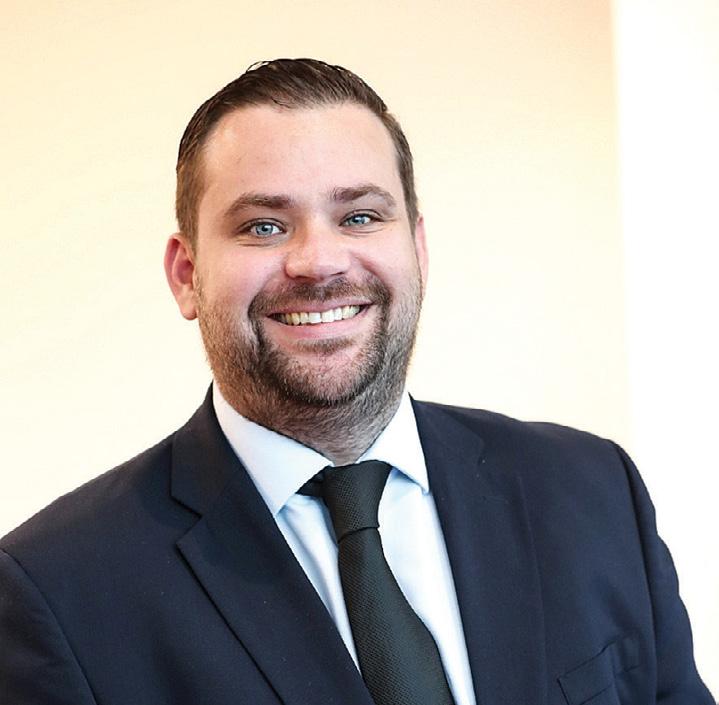
ROSS WILLIAMS, COMMERCIAL DIRECTOR AT INFORMA
EMPOWERING LEADERS, ENABLING DIALOGUE
INFORMA IS SET TO DEBUT WHX LEADERS, AN INVITATION-ONLY SUMMIT UNITING GLOBAL HEALTH MINISTERS, CEOS, INVESTORS, AND INNOVATORS TO SHAPE THE NEXT DECADE OF HEALTH POLICY, INVESTMENT, AND SYSTEM-LEVEL TRANSFORMATION
In a city known for ambition and bold vision, Dubai is set to host the world’s most influential healthcare decisionmakers as Informa launches World Health Expo (WHX) Leaders in Dubai. The invitation-only summit, kicking off with the inaugural edition on Sunday, February 8, promises to be a high-powered gathering where strategy, policy, and investment intersect at the highest level.
Part of a trio of events across the city, alongside WHX (formerly Arab Health) and WHX Labs (formerly Medlab Middle East), WHX Leaders showcases the UAE’s growing role as a global hub for healthcare leadership, intelligence, and innovation. Designed to complement the broader WHX ecosystem, the platform is tailored to address the complex challenges facing healthcare systems worldwide while seizing opportunities offered by emerging global policies and investment trends. Held under the patronage of the UAE Ministry of Health and Prevention and
PART
OF A TRIO OF EVENTS ACROSS THE CITY, ALONGSIDE WHX (FORMERLY ARAB HEALTH) AND WHX LABS IN DUBAI (FORMERLY MEDLAB MIDDLE EAST), WHX LEADERS IN DUBAI SHOWCASES THE
UAE’S GROWING ROLE AS A GLOBAL HUB FOR HEALTHCARE LEADERSHIP, INTELLIGENCE, AND INNOVATION.
aligned with UAE Vision 2031, the summit comes at a critical moment. Healthcare systems are under unprecedented pressure, grappling with ageing populations, rising rates of chronic disease, workforce shortages projected to hit 11 million globally by 2030, and escalating costs. At the same time, digital health, AI, and advanced data analytics are transforming care delivery faster than regulations can keep up, creating both promise and urgency.
WHX Leaders will convene roughly 200 senior stakeholders, including health ministers, government strategists, CEOs, investors, and academics, all driving policy, funding, and governance that will shape global healthcare systems in the years ahead. This closed-door forum is specifically designed for outcomes-driven dialogue, allowing leaders to discuss long-term resilience, strategic investments, and governance frameworks in ways that traditional conferences cannot accommodate.
The platform builds on the inaugural WHX Leaders edition in Africa in 2024, which brought global health leaders together to chart strategic priorities. Dubai’s edition takes this further, combining the city’s reputation for innovation with the convening power of Informa, ensuring discussions translate into actionable strategies for policy, investment, and systemlevel transformation.
ENABLING HEALTHCARE DIALOGUES
The 2026 inaugural edition will showcase the calibre of conversations that WHX Leaders is designed to foster. A flagship strategic leadership session will explore how digital and intelligence-driven healthcare systems demand new approaches to governance and leadership, providing insights into leveraging technology, data, and investment to enhance efficiency, improve outcomes, and build resilient health systems.
His Excellency Ahmed Ali Al Sayegh, Minister of Health, Ministry of Health and Prevention, UAE, will deliver the opening keynote at the inaugural edition of WHX Leaders on February 8, highlighting the UAE’s commitment to nurturing global health leadership and positioning the country as a centre for healthcare excellence. Beyond policy and governance, discussions will examine emerging trends in healthcare investment, workforce planning, and innovation adoption, offering a rare environment for candid dialogue on complex challenges such as AI integration, funding models, and sustainable healthcare delivery. By creating a trusted, high-level forum, WHX Leaders encourages collaboration and strategic alignment among global decisionmakers. Through this platform, Informa aims to establish a
long-term leadership ecosystem that not only complements the wider WHX portfolio but also influences the strategic agenda for global healthcare. By convening top minds in policy, investment, and innovation, WHX Leaders will help shape decisions with tangible, long-term impact on national and global health systems.
SUPPORTING UAE’S HEALTHCARE GOALS
Aligning with UAE Vision 2031, the event reinforces Dubai’s role as a hub for health intelligence and system-level transformation, demonstrating the country’s ability to combine visionary policy-making with practical solutions. For the global healthcare community, WHX Leaders offers a space where ideas, investment, and governance converge to tackle both current pressures and future challenges. The inaugural edition of WHX Leaders 2026 marks more than an event, it signals the creation of a strategic platform for the next decade of healthcare leadership, blending dialogue, innovation, and investment into a forum designed to catalyse real-world change. With Dubai at its heart, the summit exemplifies how visionary leadership and collaboration can shape the future of health.
For more details visit: worldhealthexpo.com/ leaders/dubai
WHX LEADERS WILL CONVENE ROUGHLY 200 SENIOR STAKEHOLDERS, INCLUDING HEALTH MINISTERS,
INVESTING IN THE AGE OF BIOLOGICAL REVERSIBILITY
AS LONGEVITY SCIENCE REWRITES THE RULES OF AGEING, A NEW INVESTMENT THESIS IS EMERGING IN MENA, ONE THAT TREATS BIOLOGICAL TIME NOT AS A COST, BUT AS A CONVERTIBLE ASSET
Across the MENA region, a profound transformation is underway, where sovereign wealth funds are diversifying, family offices are evolving into multi-generational enterprises, and governments are investing strategically to position themselves as hubs for innovation. Yet amid this economic dynamism, one asset remains undervalued. This asset is biological time.
Ageing, long considered a liability, is in fact the most mispriced variable in modern financial models. What if we could treat time not as a diminishing commodity, but as a convertible asset? And what if we could arbitrage biological time against chronological time to create new financial value?
THE BIRTH OF TIME ARBITRAGE
We call this time arbitrage, a strategy whereby an investor purchases a commodity or security now and commits to selling it at a future date, aiming to profit from the price difference between the current market and the expected future value. In traditional finance, arbitrage refers to exploiting inefficiencies between markets to generate riskfree profit. Time arbitrage, in our view, extends this logic into a new domain which is
WORDS DMITRY KAMINSKIY
exploiting the discrepancy between the perceived and actual value of human longevity.
Most financial instruments assume a predictable life trajectory, where one retires by 60, and draws down wealth until death. But what happens when that trajectory is extended by decades, thanks to longevity biotech, AI diagnostics, regenerative medicine, and personalised health optimisation?
We create a spread, a gap, between perceived life expectancy and achievable healthspan. That spread is a source of latent value. For forward-looking investors, it becomes a vehicle of asymmetric upside. For governments, it becomes a policy lever. And for MENA’s wealth custodians, it becomes a new class of strategic asset.
FROM OIL WEALTH TO BIO-TIME WEALTH
The MENA region is positioned to lead this paradigm shift due to several reasons. First, sovereign wealth funds are becoming longevity catalysts. Entities such as the Saudi Public Investment Fund and Abu Dhabi Investment Authority, which manage vast portfolios capable of shaping global markets, can allocate a fraction of assets into agetech, preventive healthcare, and longevity biotech. They can capitalise on time arbitrage while also future-proofing national productivity. Research suggests increasing life expectancy by one year, would have an annual benefit of 4-5 per cent of GDP. In a world where adding just five to ten years of healthy life expectancy delivers double-digit GDP gains, the maths is irrefutable.
Second, family offices and intergenerational continuity are becoming more influential. Many of the MENA region’s ultra-high-net-worth families are in their second or third generation. Time arbitrage allows them to optimise succession planning, insurance strategies, and estate structuring around enhanced, data-driven lifespan projections. Biological capital can now be managed like financial capital.
Third, longevity infrastructure has emerged as a new asset class. From longevity clinics and AI-enhanced wellness hubs to national biobanking and precision medicine centres, the MENA region can build new forms of infrastructure where healthcare, data, and wealth intersect. And let us not forget longevity real estate, comprising residential ecosystems designed around AI, that enhances well-being at every stage in life. These are long-term, yield-generating assets in the time arbitrage economy.
A BLUEPRINT FOR TIME-INFORMED WEALTH MANAGEMENT
Imagine a private bank or an asset manager in Dubai or Riyadh offering a new kind of portfolio service. These could include healthspan-indexed portfolios, which are products that adjust based on predictive models of an investor’s health status, allocating more aggressively or conservatively depending on biological versus chronological age. They might also include longevity bonds, or debt instruments, tied to healthspan outcomes. The healthier the population or investor cohort, the better the return, aligning public health with private gain.
One could also imagine bio-age credit scores, where using AI and biomarkers can determine a person’s biological age, which then influences lending rates, insurance premiums, and investment suitability.
POLICY IMPLICATIONS
Time arbitrage is a long-term policy vision. Governments in the
RESEARCH SUGGESTS INCREASING LIFE EXPECTANCY BY ONE YEAR, WOULD HAVE AN ANNUAL BENEFIT OF 4-5 PER CENT OF GDP. IN A WORLD WHERE ADDING JUST FIVE TO TEN YEARS OF HEALTHY LIFE EXPECTANCY DELIVERS DOUBLE-DIGIT GDP GAINS, THE MATHS IS IRREFUTABLE.
region are encouraged to integrate it into national planning. Think of longevity cities, urban zones optimised for healthspan, where public investment and regulatory frameworks favour AgeTech, AI healthcare, and preventive lifestyle innovation.
There is also biobanking sovereignty, where investing in regional genomic and biometric data infrastructure ensures that the MENA region populations benefitfrom the personalised medicine revolution. Finally, we may soon see the rise of time-as-a-service platforms, where digital ecosystems offer citizens access to AI-powered longevity optimisation services, incentivised by national health-linked reward systems.
REPRICING TIME
The 20th century treated ageing as decay, something to be hidden, managed, or ignored. The 21st century, particularly in the MENA region, must treat it as potential. Just as fintech redefined the way we think about money, and cleantech redefined the way we think about energy, TimeTech, which is basically the convergence of longevity science, data analytics, and financial engineering, will redefine how we manage our most precious asset, which is the time we have to live well, work well, and build generational legacies.
Article courtesy of WHX Insights
WHY MENTAL WELLBEING IS CENTRAL TO HEALTHCARE LEADERSHIP SUCCESS
AS HEALTHCARE SYSTEMS FACE SUSTAINED PRESSURE, WELLBEING AND FULFILLMENT ARE EMERGING AS CRITICAL LEADERSHIP AND PERFORMANCE ISSUES. HERE, SAT LUNASKY, FOUNDER OF LIVING FULFILLED, EXPLAINS WHY EMOTIONAL RESILIENCE, CLARITY AND STRENGTHS-BASED LEADERSHIP ARE NO LONGER OPTIONAL
WORDS GARETH VAN ZYL
Healthcare systems across the world are under unprecedented strain. Workforce shortages, rising patient complexity and rapid technological change have created an environment where pressure is no longer episodic – it is sustained. Amid conversations about infrastructure, digital health and innovation, one factor remains consistently under-addressed: the emotional wellbeing and fulfillment of the people delivering care. However, these issues are moving closer to the centre of global healthcare dialogue.
According to Sat Lunasky, founder of evidence-based life planning and self-development programme Living Fulfilled, which is launching in the UAE, workforce wellbeing has moved far beyond being a “soft” issue. It has become a capacity issue – one that can directly affect patient care, system performance and consistency.
THE HIDDEN COST OF SUSTAINED PRESSURE
In high-responsibility roles, unrelenting pressure doesn’t simply result in fatigue. Over time, it fundamentally alters how people think, decide and relate to others.
For healthcare professionals, this pressure is compounded by emotional labour. Clinicians are not only required to make high-stakes decisions under time constraints, but are also regularly exposed to trauma, moral distress and human suffering. Globally, this combination is driving elevated burnout, rising intent-to-leave and increased absenteeism, trends that health systems can no longer absorb without consequences.
“When clinicians are chronically depleted, the risks are not just personal,” Lunasky says. “They become systemic. Workforce instability, loss of institutional knowledge and reduced continuity of care all follow.”
THE UNSEEN PRESSURES FACING HEALTHCARE PROFESSIONALS
Healthcare professionals are often positioned as caregivers first. This cultural framing has contributed to a dangerous misconception: that clinicians are somehow more resilient to mental health pressures than other professionals. In reality, Lunasky argues, healthcare workers face many of the same psychological demands as senior business leaders, often with fewer buffers.
“Healthcare professionals carry dual pressures: accountability and emotional exposure,” she says. “Like CEOs or business owners, they make consequential decisions under pressure. But they’re also dealing with life-and-death scenarios and human vulnerability every day.”
This can result in a workforce that appears functional on the surface, but is quietly struggling beneath the weight of sustained strain, which can have implications for patient safety, continuity of care and workforce stability.
WHEN WELLBEING IS POSTPONED
One of the most damaging patterns in high-pressure professions is the tendency to deprioritise personal wellbeing “until things calm down”. In healthcare, that moment often never arrives.
“The long-term consequences are predictable,” Lunasky says. “Burnout, disengagement, attrition, and a slow erosion of clarity and confidence.”
At an organisational level, this can manifest in higher recruitment and training costs, lower engagement and reduced performance. At a human level, it often shows up as strained relationships, declining health and a growing sense of disconnection from purpose.
The idea that systems can simply push harder without consequence is increasingly at odds with both data and lived experience.
Sustained pressure narrows cognitive bandwidth. People move into constant response mode. Decision fatigue increases, emotional regulation becomes harder, and strategic thinking declines.”
Sat Lunasky
FULFILLMENT AND CLARITY AT WORK
While mental health is now more openly discussed, the concept of fulfillment is still often dismissed as abstract or aspirational. Lunasky challenges that assumption.
“Fulfillment is highly practical,” she says. “It’s about clarity on priorities, alignment between values and decisions, and the ability to set boundaries without guilt.”
In practice, this requires creating space – both individually and organisationally – for people to use structured tools for self-reflection and to ask clarity and performance questions that leaders and clinicians rarely have the time or permission to consider.
Central to Sat Lunasky’s Living Fulfilled work are two such questions: “What can I be the world’s greatest at, and what does my best life look and feel like”.
Making space for this level of reflection in the workplace can unlock greater clarity, fulfillment and sustainable productivity, strengthening individual performance while supporting healthier, more resilient organisations.
For clinicians and healthcare leaders, fulfillment at work means creating internal conditions that allow people to perform sustainably in demanding environments, with steadier energy and clearer focus. Without this clarity, wellbeing initiatives risk becoming superficial or performative, disconnected from the realities of highpressure work.
WHY PERFORMANCE AND WELLBEING CAN NO LONGER BE SEPARATED
Globally, organisations are beginning to recognise that wellbeing and performance are inseparable. High daily stress correlates strongly with lower engagement, greater room for error and reduced innovation. “The idea that organisations can outperform the human limits of chronic stress is simply not supported by evidence,” Lunasky says.
In the UAE, this shift is increasingly reflected at policy level. Initiatives such as Dubai’s Mental Wealth Framework signal a growing recognition that mental wellbeing is foundational to productivity, quality of life and economic resilience.
Healthcare systems, Lunasky argues, must now move beyond awareness and towards practical, embedded approaches that support clarity, self-leadership and recovery – not only helping people cope, but enabling them to work in roles and ways that genuinely play to their strengths.
FROM INDIVIDUAL STRENGTHS TO ORGANISATIONAL CULTURE
One of the cornerstones of Living Fulfilled’s approach is strengthsbased development – not simply as a performance tool, but as a protective factor for mental health.
“When people work deliberately from their strengths, they experience more energy, confidence and meaning,” Lunasky says. “That has a stabilising effect under pressure.”
For clinicians and leaders, this kind of self-awareness supports better decision-making, healthier boundary-setting and more effective recovery, which are all critical in environments where mistakes carry real consequences.
However, these benefits only translate at scale when they are reinforced by leadership behaviour. Wellbeing initiatives that make a meaningful impact need to be modelled from the top to be fully embedded.
When people work deliberately from their strengths, they experience more energy, confidence and meaning, that has a stabilising effect under pressure.”
“Leaders and senior clinicians set the emotional tone,” Lunasky says. “When they model self-leadership, boundaries and recovery, they create psychological safety.”
Without visible leadership commitment, wellbeing messaging risks being interpreted as lip service — particularly in high-pressure cultures where overwork is still implicitly rewarded.
A MESSAGE BEYOND HEALTHCARE
While the pressures facing healthcare professionals are particularly visible, Lunasky is clear that the underlying dynamics extend well beyond hospitals and clinics and into leadership roles across the economy.
When mental health and fulfillment are neglected, “the costs show up in three places: people, performance, and outcomes.” Burnout, disengagement and turnover weaken decision quality, productivity and long-term resilience. For healthcare and business leaders alike, the message is clear. Mental wellbeing and fulfillment can no longer sit at the margins of leadership conversations. They are central to organisational performance, workforce stability and long-term resilience. Just as importantly, they shape whether leaders create environments where people can work from their strengths and define what a sustainable and fulfilling working life truly looks and feels like.
IMPACT OF HEALTH COVERAGE COSTS
WHAT RISING HEALTH INSURANCE PREMIUMS IN THE UAE MEAN FOR YOU
WORDS NIDA SOHAIL
The UAE is accelerating its push for universal health coverage, aiming to ensure that every resident has access to essential healthcare. While this move represents a major social victory, it is also redefining the economics of insurance, impacting premiums, utilisation patterns, and the financial sustainability of insurers. As mandatory insurance schemes expand across the emirates, employers, insurers, and policyholders are navigating a landscape that combines opportunity, obligation, and cost pressures. According to the Central Bank of the UAE’s Quarterly Economic Review, the UAE insurance sector maintained strong growth in Q2 2025. Key indicators such as written premiums, technical provisions, claims paid, and equity all rose, reflecting a sector that remains well-capitalised with healthy capital adequacy and earnings ratios.
The number of licenced insurance companies declined slightly to 583, comprising 22 traditional national insurers, 10 takaful national companies, 25 branches of foreign insurers, and one foreign reinsurer. Meanwhile, insurance-related professions increased to 508, demonstrating the sector’s expanding workforce. Gross written premiums (GWP) rose 14.5 per cent year-on-year to Dhs40.9bn in H1 2025. Growth was broad-based, with property and liability insurance up 17.8 per cent, health insurance climbing 12.7 per cent, and life insurance and fund accumulation products increasing 11.2 per cent, driven largely by demand for life insurance.
The UAE has allocated Dhs5.745bn, 8 per cent of the federal budget for 2025, to healthcare and community prevention services. In a major policy shift, the UAE cabinet approved mandatory health insurance for private-sector workers and domestic employees without existing coverage, effective January 1, 2025.
Under the mandate, private-sector employers and sponsors must provide insurance coverage for registered employees. In parallel, the cabinet adopted the National Policy for Improving Women’s Health to guarantee access to preventive, therapeutic, and rehabilitative care.
The Emirates Genome Council has also included genetic testing in premarital screening for Emirati citizens, reinforcing preventive healthcare initiatives source. These moves, experts say, not only broaden coverage but also integrate insurance into the legal and regulatory framework, altering how healthcare services are financed and consumed.
A SOCIAL WIN WITH FINANCIAL IMPLICATIONS
While these initiatives expand access, they also place pressure on insurers and employers. “Health insurance premiums in the UAE have been rising steadily, with average increases of around 10 per cent year on year,” said Hitesh Motwani, deputy CEO of InsuranceMarket.ae. “This is driven by a combination of higher medical utilisation, rising treatment costs, and broader inflationary pressures within the healthcare system.” The legal perspective is clear: coverage is increasingly seen as a necessary obligation rather than an optional employee benefit. Dubai and Abu Dhabi were the first emirates to make health insurance mandatory for residents, linking coverage to immigration and labour regulations. According to the Central Bank’s 2024 statistics, this framework led to health insurance premiums rising 20.9 per cent year-on-year to Dhs31.3bn, with the number of policies increasing 59.9 per cent to 2.2m.
“This expansion of the insured pool increases utilisation, drives claims, and pushes renewal pricing higher,” noted Michael Kortbawi, partner at BSA Law. The federal rollout of a basic scheme across other emirates, starting January 1, 2025, reinforces this dynamic, connecting insurance to residence permits and setting co-payment rules that shape consumption patterns. Beyond legal obligations, rising premiums also reflect the mechanics of a mandatory system. “When access seems free at the point of service, usage increases, and overuse becomes common,” Kortbawi explained. Controlling this “abuse cycle” requires pre-authorisation, co-insurance, and auditing, adding administrative costs that ultimately influence premiums. In short, insurers pay twice: first through increased claims, and second through mechanisms designed to manage excessive utilisation. Medical inflation also plays a significant role. Hospital charges, specialist fees, diagnostics, and complex procedures have consistently risen faster than general inflation. Motwani emphasised that insurers must incorporate these costs into pricing models to sustain coverage and maintain policyholder access to quality healthcare. Lifestyle-related and chronic conditions compound the effect. Around 40 per cent of policyholders declare at least one pre-existing condition, often linked to diabetes, hypertension, or heart disease. “Ongoing medical care, regular consultations, medications, and monitoring increase overall claims utilisation, impacting average premiums across the pool,” Motwani said.
LONG-TERM TRENDS AND ECONOMIC RESILIENCE
Despite rising costs, the UAE continues to demonstrate strong long-term trends in healthcare affordability and accessibility. David Denton-Cardew, head of Propositions at Zurich International Life, noted that economic resilience, including 4.8 per cent GDP growth, financial wealth of $1.5trn, and more than 81,000 millionaires in Dubai, has supported improvements in healthcare standards. “The focus on wellbeing, infrastructure development, and government initiatives has resulted in longer, healthier lives,” DentonCardew said. These improvements have contributed to a gradual decline in life insurance costs over time.
The UAE’s push for universal health coverage is a model of social progress, but it also underscores the economic realities of mandatory insurance. Expanding access generates higher claims, administrative costs, and pricing pressures for insurers, while employers must navigate new obligations. The key challenge will be maintaining a system that is both socially inclusive and financially sustainable. Effective regulation, co-payment frameworks, and proactive management of claims utilisation will be critical in ensuring that the UAE can continue to provide comprehensive coverage without destabilising the insurance market. All eyes will be on how insurers, employers, and policyholders adjust to a landscape in which health coverage is both a fundamental right and a complex financial commitment.
ROOTING FOR A GENDER-INCLUSIVE HEALTHCARE SECTOR
IN THE UAE, WHERE WOMEN ALREADY FORM THE BACKBONE OF HEALTHCARE, THE CONVERSATION IS SHIFTING DECISIVELY FROM PARTICIPATION TO POWER AND WHY LEADERSHIP EQUITY NOW MATTERS MORE THAN EVER
WORDS ALISHA MOOPEN
In the UAE, women make up 31 per cent of the population and 64 per cent of the healthcare workforce. This is in alignment with the literacy rate of women in the UAE at 95.8 per cent and women also comprising 56 per cent of the graduates from STEM fields. With equal pay for men and women being introduced by the UAE Cabinet in 2018, it is not surprising that the UAE has continued to rank higher in UNDP’s global Gender Inequality Index. When we talk about gender diversity and equity in healthcare it underlines an allimportant fact that women who comprise a substantial part of the work force in the UAE’s healthcare landscape, need to have an adequate representation in leadership positions in the boardroom. Women are known to bring in their unique compassionate and inclusive perspective to health care where they are likely to combine the outlook for profit and growth with a humane perspective that will transform healthcare with their healing touch.
Women bring great insights into gender-specific health challenges and improving healthcare for all. Diverse leadership drives better decision-making and outcomes, with studies showing 21 per cent higher profitability.”
In the corridors of hospitals, clinics and the command centres of digital health platforms, one truth stands undeniable: women are the backbone of healthcare. Nowhere is that more evident than in the UAE, where women are not only delivering care but increasingly shaping the future of health systems through leadership, innovation, and technology.
This was very evident at the G20 UAE Gender Balance Council meet held in South Africa from July 1-4, 2025. At the meet, Mona Ghanem Al Marri, Vice President of the UAE Gender Balance Council, emphasized that comprehensive gender balance was a national priority rooted in the vision of the UAE’s leadership, which believes that women’s empowerment, security, and inclusion are core pillars of sustainable prosperity and development.
A thought that was echoed in the words of Dr Ibtesam Al Bastaki, Director of Investment & Partnership, Dubai Health Authority while addressing Arab Health (now WHX) 2025, where she underscored the unique value women bring to healthcare leadership while advocating for a stronger female presence in decision-making roles.
She said, “Women bring great insights into gender-specific health challenges and improving healthcare for all. Diverse leadership drives better decision-making and outcomes, with studies showing 21 per cent higher profitability… highlighting the country’s significant progress in fostering gender equality in this field.”
This effort is also in tandem with the WHO’s launch of Gender Equal Health and Care Workforce Initiative in 2021, with a view to increasing the participation of women health and care workers in leadership and decision-making roles.
GENDER DIVERSITY – THE NEED OF THE HOUR
Modern-day healthcare in the UAE is perhaps one of the most gender-inclusive sectors. Women constitute roughly 64 per cent of the nation’s healthcare workforce, a figure that places UAE among the leading countries in the Arab world for female participation in this critical field. This statistic is not just a number but reflects the countless nurses, doctors, researchers, managers, and technologists whose daily contributions sustain the health of a vibrant, diverse population.
The UAE has recognised that the transformation of healthcare — particularly as it intersects with artificial intelligence, digital health, and biotech innovation — requires not only clinical expertise but diverse leadership, to achieve real equity. This recognition is central to recent policy and industry initiatives aimed at amplifying women’s voices at the highest tables of healthcare strategy.
More than symbolic rhetoric, these discussions point to a broader strategic understanding: in a sector driven by nuanced human interactions and complex technological transformation, women’s perspectives are indispensable.
As a women leader in healthcare, I can say that now, more than ever, there is a need to appoint women to the boardrooms of leading healthcare groups to be able to take strategic decisions that would influence and shape the core healthcare policy for women, children and overall health care in the UAE and the region, as we rapidly march in to the era of AI and tech innovation in health care.
We see this being translated into action. Leading private healthcare providers in the UAE, have come forward to formalise their commitment to gender equality, pledging to increase female representation in leadership and embedding inclusive practices from flexible work arrangements to targeted wellness support that help women thrive professionally. In these institutions, women already comprise around 62 per cent of the workforce, and female executives make up roughly one-third of decision-making committees.
Such corporate commitments reflect a broader ecosystem shift. National gender equality frameworks, including the UAE Gender Balance Council and robust maternity and flexible work policies, have helped elevate the country’s score on women’s rights and workplace participation. In 2023, the World Bank ranked the UAE 82.5 out of 100 for women’s rights significantly above the regional average. These frameworks are not just bureaucratic markers; they are the scaffolding enabling women to pursue leadership without sacrificing professional identity or family commitments.
In fact, global healthcare systems have a lot to learn and emulate from UAE, to be able to close the gender gap and introduce policies that can support their growth in the healthcare system. Successful representation of women leaders in the UAE government is in itself a remarkable model to follow, which can ensure that a diverse representation will bring forth unique strengths that will ultimately shape a sustainable growth story.
The writer is the managing director and group CEO, Aster DM Healthcare.
DESIGNING CARE, NOT JUST CLINICS
AS HEALTHCARE DELIVERY SHIFTS BEYOND HOSPITALS AND BECOMES MORE PERSONAL, THE SPACES THAT SUPPORT IT MUST DO MORE THAN FUNCTION EFFICIENTLY. THEY MUST ACTIVELY SHAPE TRUST, CLARITY, AND OUTCOMES FOR PATIENTS AND CAREGIVERS ALIKE
WORDS
AMIR H GREISS
Pics: Supplied
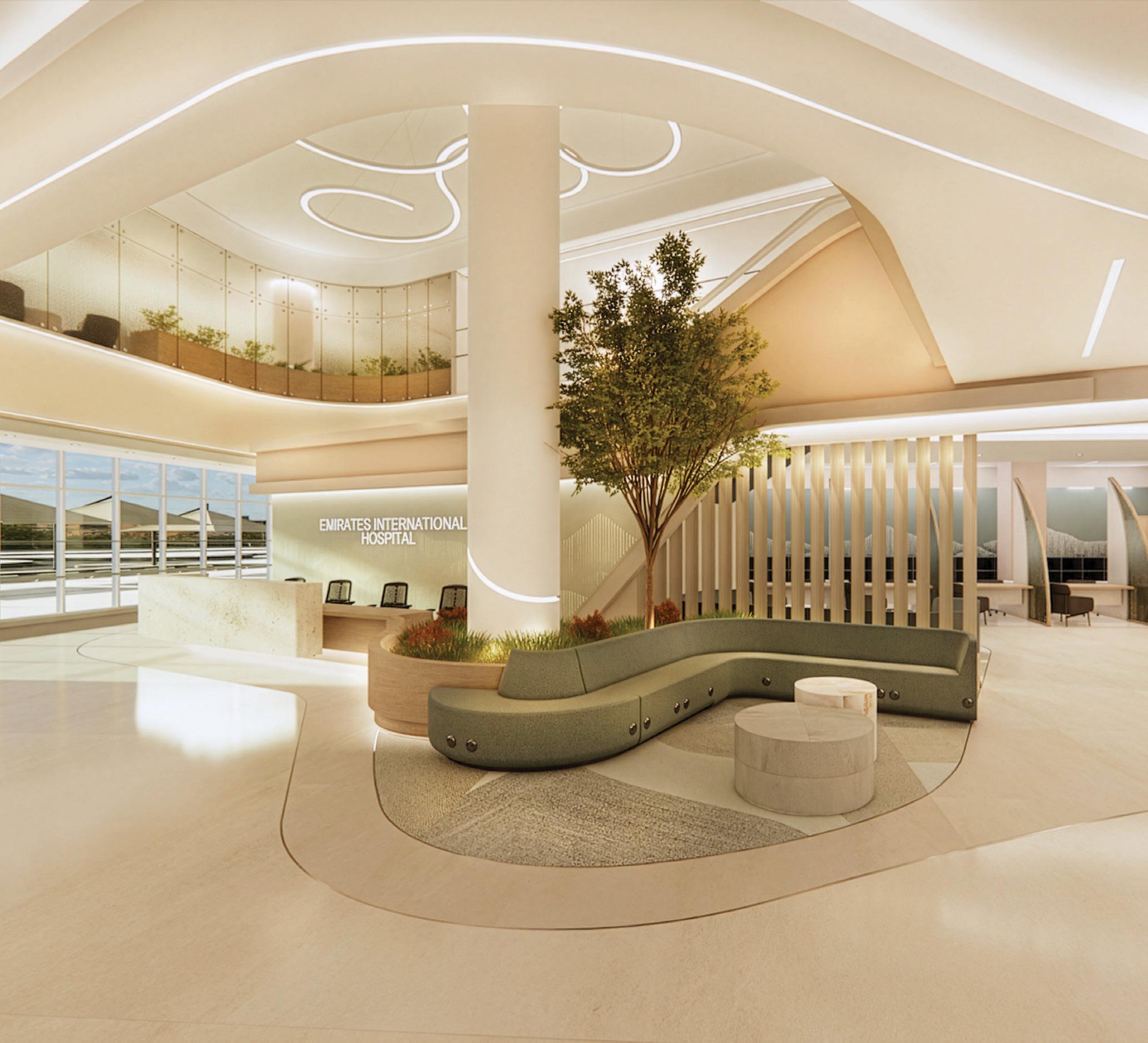
Healthcare environments are among the most demanding spaces we design. Like all well-considered buildings, they must be both functional and considered in their aesthetic expression. What sets healthcare apart, however, is the sensitivity of the context and the consequences of getting that balance wrong. These spaces must operate with clinical precision, respond to unpredictability, and support moments that are often emotionally charged and deeply personal. In hospitals and clinics, functionality must work in concert, simultaneously and without compromise.
Care is no longer confined to traditional hospital buildings. It happens in specialist centers, outpatient clinics, rehabilitation facilities, diagnostic hubs, and community health settings. Prevention, wellness, and long-term management are as important as acute treatment. As healthcare delivery becomes more distributed and more personalised, the environments that support it must become more responsive and more humane.
DESIGNING AROUND REAL PEOPLE
Designing for the human experience begins with understanding how people use space. A patient navigating a clinic for the first time needs clarity and calm. A nurse moving between rooms needs logical adjacencies and minimal friction. A surgeon requires absolute precision in layout and equipment positioning. Each user interacts with the same environment in different ways, and thoughtful design must reconcile these perspectives into a cohesive whole. Beyond these roles, healthcare environments must also be adaptable and accessible to people with differing physical, sensory, and neurological needs. Consider a paediatric therapy setting supporting children with neurodevelopmental or speech and language challenges: spaces must balance safety with comfort, reduce sensory overload through acoustics and lighting, and use materials that support tactile learning while remaining robust and secure. In such environments, every design decision, from furniture selection to finishes and sightlines, directly shapes behaviour, engagement, and outcomes. Thoughtful design reconciles these varied perspectives into a cohesive whole, without privileging one experience at the expense of another.
Even seemingly simple design decisions, such as how seating is arranged within a consultation room, can fundamentally reshape how care is experienced. Traditional layouts, with a physician positioned behind a desk facing a patient, can unintentionally reinforce hierarchy and distance. Increasingly, healthcare design is moving away from this model in favour of environments that encourage examination, dialogue, and shared understanding. For example, in contemporary multidisciplinary care settings, consultation spaces are now configured more collaboratively: circular or inclusive seating arrangements that bring physicians, therapists, nurses, health coaches, patients, and companions together around shared diagnostic and proposed treatment information. When all participants are oriented toward the same data, rather than toward one another across barriers, the room itself supports transparency, trust, and collective decision-making. In these moments, design becomes an active contributor to care, not just its backdrop.
OPERATIONAL EXCELLENCE THROUGH THOUGHTFUL PLANNING
Equally important is the relationship between design and clinical
performance. Efficient circulation patterns reduce delays. Well-planned departmental adjacencies minimise errors. Flexible rooms allow services to adapt as technology and treatment models evolve. When spaces are intelligently organised, caregivers can focus more on patients and less on navigating their surroundings.
Technology is rapidly redefining healthcare, but buildings must remain centred on people rather than machines. Advanced equipment, digital systems, and data-driven medicine demand infrastructure that is robust, flexible, and future-ready. Yet technology in healthcare is only effective if it is accessible, intuitive for patients of all ages and abilities, nonintimidating in its presence, and practical for the clinicians and teams who operate and maintain it every day.
Ultimately, designing clinical spaces for the human experience is an expression of respect, for the complexity of medicine, the dedication of caregivers, and the dignity of patients. When this principal guides design decisions, healthcare environments do more than function efficiently or look reassuring, they actively influence behaviour. Spaces that feel clear, calm, and unintimidating encourage patients and families to seek care earlier and more confidently, rather than delaying engagement until moments of urgency.
The writer is the founder and CEO, SharpMinds Consulting Engineers.
Designing for the human experience begins with understanding how people use space. A patient navigating a clinic for the first time needs clarity and calm.
MEDTECH TRENDS IN 2026: INNOVATION, REGULATION AND DIGITAL INTELLIGENCE
AS HEALTHCARE SYSTEMS FACE RISING DEMAND AND WORKFORCE PRESSURES, THE MEDTECH SECTOR IS POISED FOR GROWTH DRIVEN BY ADAPTIVE REGULATION, DIGITAL INTEGRATION AND AI-ENABLED TECHNOLOGIES
WORDS RAMI RAJAB
In 2026, the most important shifts in medtech across the Middle East and Africa will be driven by necessity rather than hype. Healthcare systems are under growing pressure from rising demand, aging populations, and workforce constraints, and governments are responding with structural reforms. One of the clearest trends will be the continued maturation of regulatory systems. Across a highly diverse region, authorities are increasingly moving toward alignment with international best practices, recognising that fragmented requirements and long approval timelines are incompatible with the short life cycles of medical devices.
At the same time, digital health is becoming embedded into healthcare systems rather than treated as a separate innovation stream. What accelerated during Covid-19 has now evolved into long-term infrastructure, data is being systematically collected, analysed, and used to support regulation, procurement, and care delivery. This has also changed how authorities engage with industry. Public consultations, regulatory sandboxes, and early dialogue are now part of how policy is shaped. Together, these developments point to a more collaborative, transparent, and outcomes-focused healthcare environment by 2026.
KEY INNOVATIONS TO LOOK OUT FOR IN 2026
This year, the most impactful innovations will be those that seamlessly combine digital intelligence with medical technology. Artificial intelligence (AI) and generative AI are moving beyond experimentation and becoming integral to clinical research, regulatory preparation, and evidence generation. Their ability to shorten development timelines and improve decision-making is already reshaping how innovation reaches the market.
We will also see deeper integration between software and hardware. Robotics, advanced monitoring systems, and AI-enabled devices are expanding rapidly, not only in surgical settings but also in chronic disease management, elderly care, and home-based treatment. This shift is closely linked to broader healthcare goals: reducing hospital stays, addressing antimicrobial resistance, and extending care beyond traditional facilities.
Over the longer term, convergence between pharmaceuticals and medical devices will continue to accelerate. Technologies that enable targeted delivery to previously hard-to-reach areas of the body are opening new therapeutic possibilities, but they also require regulatory pathways that can keep pace with innovation. The success of these technologies will depend as much on adaptive regulation as on technical advancement.
GROWTH OF THE INDUSTRY
The medtech industry in the Middle East and Africa is experiencing growth that is both rapid and structural. Healthcare reforms, privatisation initiatives, and national transformation programmes are creating new models of care and new opportunities for industry engagement. Markets such as the GCC are leading this shift, with policies that encourage localisation, direct presence, and innovation aligned with national health objectives.
At the same time, high-growth African markets are strengthening their regulatory foundations through capacity-building and international collaboration. This combination of rising demand and improving regulatory capability is critical for sustainable industry growth. As systems become more predictable and aligned, companies can invest with greater confidence, and patients benefit from faster access to safer solutions and innovation.
Growth, however, is not driven by technology alone. It depends on people: regulators, healthcare professionals and distributors being equipped to work with increasingly complex devices and digital solutions. This is why education, training, and compliance are central to the industry’s long-term expansion across the region.
PLANS AND WAY FORWARD
Our way forward is grounded in partnership and long-term thinking. Mecomed will continue to work closely with health authorities
Technologies that enable targeted delivery to previously hard-to-reach areas of the body are opening new therapeutic possibilities, but they also require regulatory pathways that can keep pace with innovation.
to support smart and agile regulatory policies, early engagement, and transparent dialogue, particularly as digital and AI-enabled technologies become more prominent. Strong regulation is not a barrier to innovation; it is what allows innovation to scale safely and sustainably.
Digital health and data will remain core priorities. We will support the development of frameworks that enable value-based healthcare, outcome measurement and more informed procurement decisions, helping governments move beyond short-term budget cycles toward long-term impact. This includes close collaboration with group purchasing organisations and policymakers across the region.
Equally important is capacity building. Mecomed will continue investing in upskilling industry teams, distributors and partners so that local markets are prepared for advanced technologies and evolving care models. Localisation, particularly in key GCC markets, will be supported through sustained engagement and knowledge transfer. Finally, diversity and inclusion will remain integral to our agenda, ensuring leadership pipelines that reflect the societies we serve.
Our objective remains clear: to enable timely, safe access to medical technology while supporting healthcare systems that are resilient, data-driven, and ready for the future.
The writer is the CEO, Mecomed.
AstraZeneca’s Pelin Incesu on closing the diagnosis gap for rare diseases
THE AREA VP FOR MEA AT ASTRAZENECA EXPLAINS WHAT IT WILL TAKE FOR RARE DISEASES TO GAIN A STRONGER FOOTHOLD WITHIN NATIONAL HEALTH STRATEGIES
Here, Pelin Incesu, area VP for the Middle East and Africa at AstraZeneca, speaks to Gulf Business about one of the region’s most overlooked neurological conditions, neuromyelitis optica spectrum disorder (NMOSD). She explains why the disease is so often misdiagnosed, how AI-driven imaging could transform early detection across the Gulf, and what it will take for rare diseases to gain a stronger foothold within national health strategies.
NMOSD is often misunderstood and misdiagnosed across the Middle East and Africa. From your vantage point, what are the gaps in awareness and early detection that need to be addressed in the Gulf?
NMOSD is a life-altering rare disease that often hides in plain sight, the consequence of which is that people can wait up to a decade for a diagnosis.
A patient (typically a young woman) can walk into a clinic with sudden vision loss or severe weakness, and her MRI scan, when she eventually gets one, can look remarkably similar to multiple sclerosis (MS). This is one of the reasons why people with NMOSD wait years for the right diagnosis, with many misdiagnosed along the way. To make matters worse, if we treat her for MS, we might inadvertently cause her condition to worsen.
This is the critical gap that AstraZeneca is looking to close. Partnering with MENACTRIMS and icometrix, our aim is to deploy AI-driven technology across the region that helps neurologists distinguish between NMOSD and MS from the very first scan. From there, we will help make sure patients get the right diagnosis and the right care plan, from the very start.
Diagnosis delays for NMOSD can stretch from two to ten years. What structural or systemic challenges in the region contribute most to this delay, and how can they realistically be tackled?
It is heartbreaking for NMOSD patients to suffer these long delays, which, alongside years of uncertainty and fear, can often lead to irreversible damage that could be avoided with the right care plan. To tackle this, we must look at two levels of challenges. First is the policy level. We recently saw a historic milestone with the adoption of the Rare Disease Resolution at the World Health Assembly, a global effort championed by the Governments of Egypt and Spain. Now we must translate this global commitment
into national action. We need national policies that elevate rare diseases, including NMOSD, on the public health agenda and provide a clear framework for investing in better diagnostic pathways, data and workforce over the coming years. But policy needs to be actionable on the ground, which brings us to the second challenge, what you might call a consistency gap. We have pockets of world-class rare disease centres of excellence, but we know that rare disease expertise is not evenly distributed. When a patient sees a doctor in a remote area, that physician may not have ever seen a case of NMOSD in their entire career and is relying on visual inspection of an MRI scan, which can be incredibly difficult when the disease markers are so subtle. We cannot realistically expect every single clinic to have a rare disease specialist on site 24/7 –that is not a scalable solution. We can, however, scale technology to bridge that gap. That is what our newly launched partnership hopes to deliver.
How do you see technology reshaping rare disease diagnosis in the Gulf?
Deployed appropriately, technology, especially AI-assisted imaging, has the power to be an extra pair of expert eyes for every clinician in the Gulf and worldwide. Today, a radiologist might have just a few minutes to interpret a complex MRI and decide whether they
Pelin Incesu
are looking at MS, NMOSD, or something else entirely. Through AstraZeneca’s partnership with MENACTRIMS and Icometrix, we are leveraging tools like AI-assisted icobrain software, which systematically measure and compare what is on the scan, flag subtle patterns, and present that back in a clear, quantitative report.
For NMOSD, I hope that this support will move us from ‘best guess based on one scan’ to a far more confident and consistent diagnosis much earlier in the journey. Over the next decade, I am hopeful this will evolve from pilot projects into the routine care available. The combination of smarter imaging and better data can turn rare disease diagnosis from something that depends on being lucky enough to meet the right specialist, into something that is built into the system itself.
The UAE and Saudi Arabia are investing heavily in healthcare innovation and digital health. How can these ecosystems help patients living with rare diseases like NMOSD?
The UAE and Saudi Arabia are building some of the most advanced digital health systems in the region, from population-scale genomics through the Emirati Genome Program, to plans for nationwide electronic health records and virtual hospitals under Vision 2030 in the kingdom. For AstraZeneca, the real opportunity is to make care more equitable. When you have this kind of infrastructure, you can finally give rare and overlooked diseases like NMOSD a proper place in the system: you can link hospitals, standardise how data is captured, and start turning small, scattered case numbers into shared insights that benefit many more patients. In practice, that means using these ecosystems to redesign
the whole journey for people living with rare diseases. Another example is AstraZeneca’s partnership with the Department of Health – Abu Dhabi on establishing a Rare Diseases Centre of Excellence, which leverages the emirate’s advanced infrastructure and our global expertise to improve care for people living with rare conditions across the region.
As someone leading a geographically diverse region, Middle East, Africa and Turkey, what unique challenges do you see in harmonising standards of care for rare diseases?
I see one of the biggest challenges across the Middle East, Africa and Turkey as the very different starting points between countries. In some settings, patients are referred to strong specialist centres where MRI and neurology expertise are available, and rare disease registries are beginning to grow. In others, particularly outside major cities, even getting a timely scan or specialist opinion can be difficult, and reimbursement or regulatory pathways for rare disease treatments are still developing. This means that two patients with the same condition can have very different journeys, even when their clinicians are equally committed. Harmonising standards of care starts with agreeing on what good care looks like and then helping each health system move towards that in a way that fits its reality. Regional bodies such as MENACTRIMS already play an important role by providing shared clinical guidelines, registries and educational platforms for clinicians. From my perspective, Gulf countries are well placed to pilot new models in rare disease diagnosis and care, and to share those lessons with colleagues in neighbouring countries through training, mentorship and joint research.
We need national policies that elevate rare diseases, including NMOSD, on the public health agenda and provide a clear framework for investing in better diagnostic pathways, data and workforce over the coming years.”
Getty Images
Building a global hub for complex care
Dr Shamsheer Vayalil, chairman and CEO - Burjeel Holdings, outlines how healthcare in the region is shifting from treating illness to managing wellness and longevity
In 2025, Burjeel marked milestones from pioneering AI-powered dentistry to performing the country’s youngest infant liver transplant, while expanding complex care networks and advancing medical research. In this interview with Gulf Business, Dr Shamsheer Vayalil, chairman and CEO, Burjeel Holdings, envisions a shift from treating illness to managing wellness and longevity, with AI, remote monitoring, and multidisciplinary expertise reshaping patient expectations and care delivery across the region.
How do you assess the healthcare landscape in 2025, and what key shifts do you anticipate as the sector moves into 2026?
The year 2025 saw healthcare accelerating digital adoption and embracing artificial intelligence for enhanced diagnostics, operations and patient care. From
electronic medical records (EMR) and robotic surgeries to AI models for patient interaction, both caregivers and patients benefited from this evolution. While technology allowed clinicians to spend more time with patients and democratised care beyond borders, it also empowered patients with valuable information. Personalised and precision care became more prevalent. There were breakthroughs in complex care, mental health, remote care and medical research.
Dr Shamsheer Vayalil
As we move into 2026, I believe healthcare will move from the concept of sickness to wellness and longevity because chronic and lifestyle diseases are increasing and require continuous management. Care will be delivered through systems, not just through individual brilliance. The focus will shift from volume to value, from hospitalonly care to extended care, and from intuition-only to insight-supported care. The care journey will become more connected, with AI-assisted tools supporting decision-making and reducing variation.
Which treatments and medical innovations are expected to gain the most traction in 2026, and what will drive their adoption?
A set of advanced and technology-driven therapies is expected to gain major traction in 2026. As mentioned earlier, AI-powered diagnostics will expand rapidly as healthcare institutions adopt tools that speed up imaging analysis and improve triage. Complex care, including oncology, cardiology, neurology, and transplants, will continue to remain a focal point, with innovation as the anchor. Precision medicine and cell and gene therapies will continue to grow as genetic insights play a crucial role throughout the patient journey. At the same time, remote monitoring and home-based treatment will become more common as patients look for convenience and health systems work to manage chronic diseases more proactively. Mental health digital therapeutics will also gain traction as people seek accessible, tech-enabled support. Altogether, these trends signal a clear shift toward healthcare that is more personalised, predictive, and connected than what we have seen before.
How are patient expectations evolving across the region, and how is this influencing the way healthcare providers design and deliver care?
Patients no longer see healthcare as a series of isolated appointments. They want continuity, coordination, and systems that understand them at every interaction, regardless of specialty, facility, or stage of care. This is where integrated care models and platform-based thinking, where information, expertise, and workflows flow smoothly across the system rather than sitting in one department, become significant. Individual clinical excellence still matters, but it must translate into coordinated, empathetic, and consistent care that feels unified from start to finish. It is time for healthcare institutions to rethink everything from digital infrastructure to care pathways to ensure they can deliver experiences that are not only clinically strong but also connected, human and outcome-driven.
What were the most significant operational or clinical milestones for Burjeel in 2025, and what key lessons will shape your priorities for the year ahead?
The year marked scale and responsibility for us. Burjeel achieved several operational and clinical milestones, including performing the UAE’s youngest infant liver
transplant, advancing diabetes research in space, becoming a regional model for managing rare and inherited diseases, expanding robotic surgery programmes, and implementing a smart, future-ready EMR platform to strengthen workflows and care coordination. We also extended our cancer care network into new geographies, introduced robotics and AI-powered dentistry to the UAE, and expanded our medical education programmes to nurture the next generation of healthcare professionals.
Going forward, we remain focused on scaling with substance, strengthening complex care specialties, and expanding selectively with clear ROI gates.
How do partnerships support Burjeel’s long-term vision and strengthen its regional leadership?
Partnerships enable us to take care beyond borders, bring world-class care to the UAE, and reach communities faster. By collaborating with global centres of excellence, research institutions, and technology leaders, we can introduce new capabilities, strengthen our complex care programmes, expand access to advanced diagnostics and therapeutics, and create avenues for knowledge exchange. All of this helps raise clinical standards across the region. Partnerships also support our commitment to talent development by opening doors for training, fellowships, and joint academic programmes that build a stronger, future-ready workforce.
Which specialties are emerging as key growth drivers in 2026?
Complex care specialties such as oncology, rare and inherited diseases, and cardiology will continue to be major growth drivers as we move into 2026. They will be supported by rising demand for advanced diagnostics, precision therapeutics, and multidisciplinary care. Pediatrics is another area gaining momentum, particularly in highacuity care and complex interventions.
Our focus is on being a boutique of excellence, not a supermarket of services, and on contributing to broader economic growth. We are in a defining moment where we want to transform care delivery by prioritising depth, quality, and specialisation rather than breadth alone. The goal is to put the UAE on the global map as a hub for complex and highly specialised care.
A set of advanced and technology-driven therapies is expected to gain major traction in 2026. As mentioned earlier, AI-powered diagnostics will expand rapidly as healthcare institutions adopt tools that speed up imaging analysis and improve triage.”
Prioritising women’s health in the UAE
WE LOOK AT HOW ABBOTT IS LEVERAGING INNOVATION, DIGITAL HEALTH, AND LOCAL INSIGHTS TO EMPOWER WOMEN AND DRIVE THE NEXT CHAPTER IN PREVENTIVE HEALTHCARE
The UAE’s healthcare landscape is evolving, with preventive and long-term wellness taking centre stage. Women in the region are increasingly proactive about their health, yet gaps remain in awareness, access, and culturally sensitive resources, particularly around midlife and menopause.
In an interview with Gulf Business, Mazen Bachir, DSVP for Abbott’s medicines business in the Middle East, Africa, and Pakistan, discusses how Abbott is leveraging innovation, digital health, and local insights to empower women and drive the next chapter in preventive healthcare.
Getty Images
Across the Middle East, digital health platforms and apps are driving this transformation by making credible information and expert guidance more accessible than ever before.”
The UAE’s pharmaceutical market is one of the fastestgrowing in the region. What unique opportunities and challenges do you see here, especially in preventive and long-term health segments like women’s wellness?
Over the past few years, we’ve seen a powerful shift from treatment to prevention. Women in the UAE are becoming increasingly proactive about their long-term health – from nutrition and physical activity to mental wellbeing and accessing medical treatment options.
Digital health has played a major role in accelerating this transformation. The use of telehealth in the Middle East has surged — for instance, data shows that 45 per cent of UAE residents have downloaded at least a healthrelated app. For many women, digital tools are no longer a convenience — they are a lifeline. The rise of telehealth platforms is giving women easier access to expert guidance in ways that respect privacy and cultural norms, which is especially important for sensitive topics.
However, opportunities remain to strengthen access to credible, localised and medically verified information and resources. In the UAE, the word “menopause” is searched about 3,600 times a month, yet most of those searches are purely informational. In one UAE study, only 18 per cent of women reported good knowledge of menopause.
That’s why initiatives like Nawat Health — the winner of Abbott’s Innovate4Health Challenge, organised in collaboration with venture capital company Plug and Play Abu Dhabi, are so impactful. The platform offers culturally sensitive digital resources in Arabic and English, tailored to the unique needs of women in the region, empowering them to navigate all life stages with confidence and dignity. Across the UAE, there is renewed focus on women’s health strategies and workplace support policies.Yet persistent misconceptions can discourage many women from seeking medical advice, especially for menopauserelated symptoms. Studies show that a large percentage of women prefer to ‘live with and self-manage’ menopause symptoms, simply because they don’t know that support exists. To pave the way for more women to feel they can talk about menopause with friends, family, and their doctor, there needs to be more access, more awareness-building, and more empathy, delivered through trusted channels and science-backed tools.
The UAE is well-positioned to lead this next chapter in women’s health, and we’re working to support and accelerate this drive.
Globally, we’re seeing a shift from reactive treatment to proactive health management. How is this influencing product innovation in areas like supplementation, hormone health, and digital health tools in the UAE?
The global move from reactive treatment to proactive health management is not just a trend, it’s a fundamental redefinition of healthcare, and the UAE is no exception. People in the UAE are no longer waiting for illness to strike; more individuals are actively seeking tools, treatments and guidance to protect their long-term health.
We seek to be at the forefront of this important shift by developing integrated solutions for proactive health management that combine science, innovation, and access, from evidencebased nutritional support to digital tools that connect people to reliable information and expert care and help them achieve their health goals. Through partnerships with startups like the one with Nawat Health, we aim to equip women with the science-backed information they need, in Arabic, tailored to local insights. It’s about helping individuals make informed choices and feel confident at every stage of life.
From weight management drugs to personalised nutrition to longevity supplements, health trends are moving fast. Which innovations are you watching closely?
The growing movement toward people taking charge of their health is one
Mazen Bachir
One of the most significant trends we anticipate is a heightened focus on women’s health, particularly during midlife and menopause. In the UAE, nearly one million women are between 40 and 64 years old.”
of the most transformative trends within healthcare –where people aren’t just managing illness but actively shaping their own wellbeing. Across the Middle East, digital health platforms and apps are driving this transformation by making credible information and expert guidance more accessible than ever before.
For women, especially during midlife, these tools can be life-changing. When delivered in local languages and cultural contexts, they can empower women to make more informed decisions, adopt healthier lifestyles, and improve overall wellbeing.
Access to credible health information empowers women to better understand their bodies, seek the support they need, and confidently navigate the changes that come with age. We’re also seeing a powerful convergence of medicine, technology, and nutrition, enabling more integrated and personalised care, especially in the cardiometabolic space, where conditions like obesity, diabetes, and cardiovascular disease are deeply interconnected and often lifestyle-driven. For people living with longterm conditions, an integrated approach to care means continuous, adaptive, and empowering support for sustained health and prevention.
Women’s health deserves particular attention – especially around menopause. This stage of life is not only about managing symptoms, but also about supporting long-term wellbeing through the right combination of medicines, nutrition, and lifestyle solutions.
As more women in the UAE join and stay longer in the workforce, menopause is fast becoming a workplace and economic issue, not just a medical one. How can private sector players help bridge this gap?
As more women in the UAE build long-term careers, menopause is shifting from a private health matter into a workplace and economic reality. In 2024, women represented 34.6 per cent of the UAE workforce (up from 32.5 per cent in 2023), showing their growing contribution across sectors.
Yet, when women enter the menopause transition, typically in their late 40s or early 50s, the symptoms often disrupt performance, confidence, and career momentum. Many senior women reduce hours, pass up promotions, or even leave employment altogether. Left unaddressed, this becomes a talent-retention challenge and a barrier to both personal and organisational growth.
Workplaces can play a vital role by normalising conversations around menopause, just as they do for maternity or other health subjects. Offering education,
flexible working hours and work-fromhome options, and peer networks can help women feel valued and supported, while also enhancing overall retention and productivity.
We launched an internal initiative in the UAE to support our female employees during this transition, offering forums, tools and peer-to-peer education. Women’s and wellbeing are fundamental to our culture, our workforce and our long-term success.
Mid-career women carry institutional knowledge, client relationships, leadership potential and deep expertise. When companies invest in supportive health and workplace practices, everyone benefits — individuals, organisations, and society as a whole.
Which health trends do you believe will reshape consumer behaviour in the UAE and how is Abbott preparing to meet that shift?
We see a clear transition as people increasingly want to understand their own health data, make informed nutrition and lifestyle choices, and access care that is holistic, convenient, and culturally sensitive.
One of the most significant trends we anticipate is a heightened focus on women’s health, particularly during midlife and menopause. In the UAE, nearly one million women are between 40 and 64 years old.
The growing number of mid-life and mid-career women means that now is an important moment to transform the narrative around mid-life health. By providing women with knowledge, access to care, and integrated solutions, we aim to help them understand and manage this transition effectively. Our approach combines digital health tools, evidence-based information, and expanding access to care, ensuring that women can maintain their health, energy, and confidence as they navigate this life stage.
Our purpose has always been to help people live their fullest lives through better health. And as more women in UAE enter their mid-life prime, that means supporting women and families to embrace every stage of life with strength, confidence, and hope.
Focused on antibiotic innovation, healthcare access
s healthcare systems across the GCC confront rising demand, supply-chain pressure, and the growing threat of antimicrobial resistance, life sciences companies are being pushed to deliver both innovation and execution. Mansoor Meenai, GM for META at Arcera, outlines how the company is positioning itself across hospital-based therapies and consumer health, with a focus on responsible antibiotic use, regional manufacturing, and translating science into real-world access.
What are you displaying at WHX 2026?
treat serious resistant infections effectively while reducing reliance on last-line antibiotics that must be preserved for the most critical cases. In doing so, it directly supports national antimicrobial stewardship programs and long-term healthcare resilience.
We have moved with focus and discipline to ensure strong launch execution across the GCC, recognising that addressing antibiotic resistance is a critical priority for sustainable healthcare systems.
Beyond hospital-based innovation, WHX also reflects our commitment to enhancing everyday health. As part of our mission to improve patient and consumer access to high-quality care, we are advancing a strong consumer healthcare portfolio that empowers individuals to take charge of their health through trusted, science-backed self-care solutions.
Across everything we do, quality, reliability, and consumer-first design remain central. WHX 2026 is an opportunity to demonstrate how Arcera is redefining access to care, across acute treatment and self-care alike, by delivering trusted innovation that strengthens health systems and improves lives.
What are some of the anticipated trends for 2026?
In 2026, healthcare systems across the region and globally are facing a combination of rising demand and growing complexity, from regulation and supply chains to evolving patient needs.
At World Health Expo Dubai 2026, we are showcasing Arcera’s broader role in strengthening healthcare systems across the region, from addressing critical unmet medical needs to expanding access to trusted self-care solutions. On the specialty side, we are highlighting a breakthrough intravenous antibiotic approach that represents a meaningful step forward in the fight against antimicrobial resistance. This innovation offers a carbapenem-sparing option, enabling clinicians to
This year, we expect continued demand for high-quality medicines across both emerging and developed markets, alongside increasing complexity in regulation, supply chains, and patient needs.
One trend that is especially clear in the GCC is the focus on strengthening local and regional manufacturing. Governments are prioritising supply-chain resilience for essential A
medicines, reducing reliance on long global routes, and ensuring continuity of care, particularly for chronic and critical conditions. Another important area of focus is antimicrobial resistance. The World Health Organization continues to recognise antimicrobial resistance (AMR) as a significant global health challenge. In response, healthcare systems are increasingly seeking treatment approaches that support responsible antibiotic use while maintaining effective patient outcomes.
At the same time, healthcare is becoming more datadriven and digitally enabled, with advanced analytics and AI influencing how medicines are developed, manufactured, and delivered.
Taken together, these trends point to a broader shift toward healthcare systems that are more resilient, adaptive, and future-ready, and to the growing importance of long-term partnerships between industry, governments, and healthcare stakeholders.
Any key innovations and technologies to look out for in 2026?
Innovation in 2026 will be defined not just by scientific advances, but by how effectively those advances are translated into real-world patient access, particularly in fast-evolving regions such as the GCC.
One of the most critical areas of innovation remains AMR. As resistance to standard antibiotics continues to rise, healthcare systems across the region are seeking treatment approaches that preserve last-line therapies while maintaining clinical effectiveness. Beyond infectious diseases, neuroscience is emerging as another important innovation frontier. As populations age and the prevalence of neurological conditions increases, the need for new, effective therapies will continue to grow.
From a technology perspective, the integration of digital tools and advanced analytics across the healthcare value chain is accelerating, improving efficiency, reliability, and decision-making from development and manufacturing through to engagement with healthcare professionals.
At the same time, innovation is also taking place in how people manage their everyday health. High-quality, science-led consumer health solutions are playing an increasingly important role in empowering individuals, supporting self-care, and helping healthcare systems focus resources where they are needed most.
In this context, Arcera’s role is to translate innovation into access, working across the GCC and selected global markets as a strategic partner aligned with long-term public-health priorities.
Mansoor Meenai
How do you see growth in the industry?
The life sciences sector is undergoing strong and sustained growth across the Middle East and the GCC. We are seeing accelerating healthcare investment, expanding infrastructure and a clear government focus on access, quality, and long-term sustainability.
At the same time, regulatory frameworks are becoming more sophisticated, with rising expectations around manufacturing standards, pharmacovigilance, and compliance.
Across the region, this creates not only significant growth opportunities, but also the conditions needed to build healthcare systems that are more resilient, reliable, and capable of meeting future patient needs.
What are your plans and way forward?
Arcera was created to build a future-ready global life sciences enterprise —relevant to healthcare systems around the world.
As we look ahead, our priorities are clear. We will continue to scale our enterprise while deepening innovation, scientifically, digitally, and operationally.
We are investing in advanced therapies, resilient manufacturing, and next-generation capabilities that enable us to deliver highquality medicines reliably, at scale, and across diverse markets.
We also strongly support the UAE’s ambition to strengthen local pharmaceutical manufacturing.
Today, over 40 per cent of our UAE portfolio is produced locally, enhancing national health security, reducing supply-chain risk, and enabling faster response to changing patient needs.
This balance between global scale and strong local execution is central to building healthcare systems that are resilient today and adaptable for the future.
Looking ahead, we will continue to expand long-term partnerships across government, academia, and industry.
Above all, we remain focused on the needs of patients and healthcare professionals.
Arcera is being built not just to grow, but to endure, as a trusted partner contributing to sustainable progress in global healthcare.
Abu Dhabi headquartered international life sciences player - Arcera was created to build a future-ready global life sciences enterprise —relevant to healthcare systems around the world.”
Why
value, not volume, will
shape the UAE’s pharma growth
Mohammad Allakany, GM for MEA, at ELPEN, shares how innovation, sustainability, and pharmacoeconomics are redefining what success looks like for the UAE’s healthcare sector in 2026
As the UAE sharpens its focus on valuebased healthcare, pharmaceutical players are being challenged to deliver innovation that balances quality, cost, and sustainability. In this interview with Gulf Business , Mohammad Allakany, GM for Middle East and Africa at ELPEN, outlines the company’s regional investment strategy, its priorities for 2026, and why pharmacoeconomics and patient impact are becoming central to the next phase of healthcare growth in the Gulf.
Mohammad Allakany
What is the investment that ELPEN is bringing to the country?
To understand our investment, you have to look at our timeline. After our home base in Greece, we opened ELPEN Germany in 2012, and now, with the establishment of ELPEN MEA in the UAE, we have launched our third global hub.
But for me, the real investment isn’t just the office or the infrastructure, it’s the value we bring to the patient and the healthcare system. We are bringing European manufacturing quality, but we are doing it with a keen eye on pharmacoeconomics. Our investment is about proving that you don’t have to compromise on quality to get sustainability.
And sustainability is not a slogan; it’s built into the science. In respiratory care, for example, we are working on next-generation inhaled therapies that use green propellants with lower global warming potential, which reduces environmental impact while keeping treatment quality at the highest level
We are here to offer the UAE healthcare system a partner that understands the need for premium, effective treatments that are also economically viable for the long term.
What are ELPEN’s plans for 2026?
For 2026, our focus is clear: to ensure that innovation translates into real patient impact across the region. We are prioritising high-burden disease areas where the clinical need is significant and the value for healthcare systems is measurable, cardiometabolic, CNS, oncology, and respiratory care.
In respiratory specifically, we are advancing our patented ELPENHALER platform for asthma and COPD. This is where patient-centric design meets health economics. By improving ease of use and supporting correct inhalation technique, we can strengthen adherence, reduce exacerbations, and ultimately help prevent avoidable hospitalisations.
And while ELPENHALER addresses the day-to-day reality of better inhalation, we are also preparing for the next chapter of respiratory care including inhaled therapies developed with green propellants that have
lower global warming potential ensuring our innovation remains future-ready and sustainable.
The goal is simple: better outcomes for patients and greater efficiency for healthcare systems. In 2026, we are focused on scaling that impact across the region.
How is the UAE pharmaceutical industry set to grow in 2026?
The UAE is moving towards a very sophisticated model of growth. It’s no longer just about access; it’s about ‘value-based healthcare’. The regulators and payers are looking for solutions that offer the best outcome per dollar spent.
This is where ELPEN MEA fits in. As the market evolves in 2026, we expect quality and pharmacoeconomics to become even more closely connected. Patients are more informed and more demanding about the standards of care, while healthcare systems are focused on sustainability and long-term efficiency.
We are well positioned in that space bringing quality and credibility of a European R&D driven company, with a portfolio designed to support both access and sustainable value for the local population.
What are some key trends to look out for in this sector?
The dominant trend today is the growing focus on pharmacoeconomics. Across the Gulf governments are looking for ways to manage the rising costs of chronic diseases particularly Cardiometabolic and CNS conditions while maintaining high standard of care.
We are bringing European manufacturing quality, but we are doing it with a keen eye on pharmacoeconomics. Our investment is about proving that you don’t have to compromise on quality to get sustainability.”
We are seeing a clear shift from a ‘lowest price’ mindset to ‘best value’ approach. This is exactly why value added medicines are becoming increasingly important.
When a solution improves adherence, reduces complications and helps prevent avoidable hospitalisations as with our respiratory treatments supported by the ELPENHALER, it delivers a real economic benefit for the healthcare system.
Looking ahead success in this sector will belong to partners who can demonstrate that quality is an investment, in outcomes and system efficiency, not simply an added cost.
Be a part of the world’s largest network of global events where the brightest minds in healthcare come together to learn, share, and connect. Together for a healthier world
14+ International events 10,000+ Exhibitors 190+ Countries represented