




Leaders reveal bold bets, but will truth and trust take the top billing for 2026?


Digital Agencies, Influencer Marketing & AdTech Guide 2026





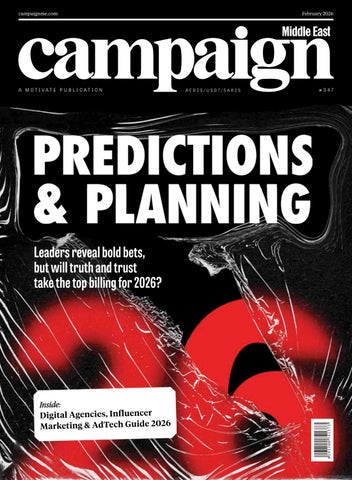
Leaders reveal bold bets, but will truth and trust take the top billing for 2026?
Digital Agencies, Influencer Marketing & AdTech Guide 2026

Browse through the ninth edition of the digital, influencer marketing and adtech directories, which list out leading agencies, their offerings, specialisms, leaders,
and more.











Leaders advice moving marketing beyond clever campaigns and algorithms to focus on trust and added value for customers, communities and the society.





Now that the industry has pulled through the first month of 2026 – wait, wow! Has it only been a month? It feels like three – it’s worth asking some crucial questions: Has anything changed for the better this year or is it just more of the same? If something’s got to give, what should?
“LEAD WITH EMPATHY AS A STRATEGY, NOT A SLOGAN.’’
Campaign Middle East met with more than two dozen client-side marketers and agency leaders through January 2026, and listened to everything they had to share. It’s been one of the busiest months in the past year, filled with different formats of decks and presentations. Looks like leaders have been swamped with requests for proposals (RFPs) on unbelievably tight deadlines. P.S. who pitched for the one with a response time of one week? Or, more importantly, who was brave enough to decline? Meanwhile, the rest of the industry spent hours in campaign shoots, award submissions and reporting on current campaigns. The new mantra in the industry is: Good defence is the best offence. Those who’ve defended clients successfully in January – or have acquired a few mid-sized and one anchor client – have enjoyed a celebratory night out while their industry colleagues continued burning the midnight oil on pitch decks.
In such a climate, leaders have cautioned against cost-cutting at the expense of value, speed at the expense of outcomes, and growth and transformation at the expense of culture.
Motivate Media Group
Head Office: 34th Floor, Media One Tower, Dubai Media City, Dubai, UAE. Tel: +971 4 427 3000, Fax: +971 4 428 2266. Email: motivate@motivate.ae Dubai Media City: SD 2-94, 2nd Floor, Building 2, Dubai, UAE. Tel: +971 4 390 3550, Fax: +971 4 390 4845 Abu Dhabi: Motivate Advertising, Marketing & Publishing, PO Box 43072, Abu Dhabi, UAE. Tel: +971 2 677 2005, Fax: +97126573401, Email: motivate-adh@motivate.ae Saudi Arabia: Regus Offices No. 455 - 456, 4th Floor, Hamad Tower, King Fahad Road, Al Olaya, Riyadh, KSA. Tel: +966 11 834 3595 / +966 11 834 3596. Email: motivate@motivate.ae
London: Motivate Publishing Ltd, Acre House, 11/15 William Road, London NW1 3ER. Email: motivateuk@motivate.ae www.motivatemedia.com
EDITORIAL: Motivate Media Group Editor-in-Chief Obaid Humaid Al Tayer | Managing Partner and Group Editor Ian Fairservice Group Content Director Thomas Woodgate | Campaign Middle East Editor Anup Oommen | Senior Reporter Ishwari Khatu Reporter Shantelle Nagarajan | Junior Reporter Hiba Faisal
DESIGN: Senior Designer Thokchom Remy
ADVERTISING ENQUIRIES: Chief Commercial Officer Anthony Milne | Publishing Director Nadeem Quraishi (nadeem@motivate.ae)
Gangwani (tarun.gangwani@motivate.ae)
the purpose of fair review. CampaignMiddleEastincludes material reproduced from the UK Edition (and other editions) of Campaign which is the copyright of Haymarket. Campaignis a trademark of Haymarket and is used under licence. The views and opinions expressed within this magazine are not necessarily those of Haymarket Magazines Limited or those of its contributors.
The jury’s out on whether life’s getting easier. In the era of artificial intelligence (AI) tools such as Hubspot’s Breeze; agentic AI platforms such as Gumloop, Zapier, Climaty.AI and OnePane; and advanced conversational social media listening options such as Brand24, leaders are seeing expectations for efficiencies, engagement and execution skyrocketing. So, what’s the need of the hour? The recurring refrain is for people, empathy and trust to take centre stage.
What’s got to give? Emotion – a return to the real and raw. Trust – within the client-agencyadtech ecosystem and across the brand-consumer relationship. Co-creation – ‘build with’ rather than ‘speak to’ communities. Experiences –immersive and memorable; the kind that leads to downstream nostalgia much after the hype fades. And, above all – People. Focus on humans –always and in all ways. It’s time to ask the questions that matter: What value are brands adding to consumer’s lives? Will we bury the hatchet on past client-agency trauma and build a better world together? Will we celebrate humanled original creativity or bend a knee to algorithmic bias and trending synthetic slop? Will we further polarise the world or begin an age of belonging?
Consider this issue an invitation to lead with empathy as a strategy, not a slogan.
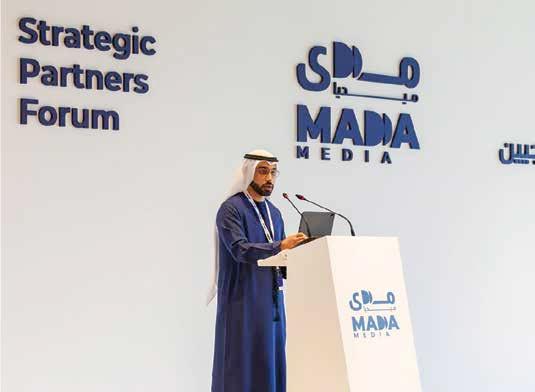
Mada Media, the official entity for issuing out-of-home (OOH) advertisement permits in Dubai, hosted its Strategic Partners Forum, bringing together leading OOH advertising investors and key stakeholders to strengthen strategic partnerships and advance cooperation across the industry ecosystem. The forum was attended by members of Mada Media’s Board
Rateel Alshehri, a 14-year-old social media trailblazer from Saudi Arabia, made history by becoming the youngest winner of the ‘Favourite Female Influencer’ award at the prestigious Joy Awards.
Her achievement highlights the growing influence of young creators and youth leadership in the Arab world. Alshehri is also the youngest TEDx host in the event’s history, and the founder of Meet & Inspire by Rateel. She has gained a large following through her Rateel Alpha Talks podcast and is considered one of the most influential young voices in the region.
“You are never too young to make a difference. Your age is exactly why your voice matters most,” Alshehri said, following her win.
of Directors; Mansoor Al Sabahi, Chief Executive Officer, Mada Media; and a group of strategic partners representing the emirate’s foremost OOH advertising investors.
The forum reflected Mada Media’s ongoing commitment to preserving Dubai’s beauty, enhancing sustainability and reinforcing its role as the leader and enabler of a future-ready sector.

The event also highlighted the emirate’s legislative and regulatory frameworks governing outdoor advertising, while showcasing new and promising investment opportunities in Dubai.
The primary objective of the Strategic Partners Forum was to deepen collaboration with strategic investors, establish common ground, and develop unified frameworks that
ensure full compliance with the laws and regulations governing the OOH advertising sector in Dubai.
Particular emphasis was placed on adherence to Mada Media’s Out-OfHome Advertising Manual, accelerating digital transformation and encouraging the adoption of advanced technologies shaping the future of the global OOH advertising market in Dubai.
“Having successfully completed its start-up phase, Mada Media is now focused on consolidating its role within the business community and leading the sector toward sustainable growth,” said Mansoor Al Sabahi, CEO, Mada Media.
He added, “By ensuring compliance with technical standards, and driving digital transformation, we aim to create a market that is commercially attractive while enhancing Dubai’s beauty.”
The forum also featured a technical presentation by Daniel Bunyan, Partner, Strategy&, who shared insights into global best practices and emerging trends in the OOH advertising industry.
Through initiatives such as the Strategic Partners Forum, Mada Media aims to advance its vision of preserving Dubai’s beauty, enhancing sustainability, ensuring public and traffic safety, and preventing visual pollution.
“Our priority is to strike a balance between operational excellence and investor profitability,” said Al Sabahi.

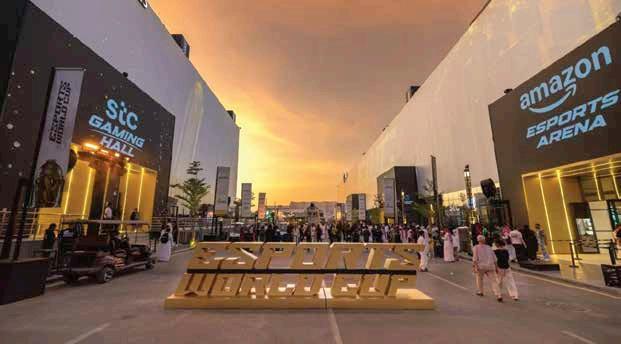
The Esports World Cup Foundation (EWCF) has revealed a total prize pool of $75m alongside the full game lineup and schedule for the Esports World Cup 2026. Set to return to Riyadh, Saudi Arabia, from 6 July to 23 August 2026, the tournament is expecting to host more than 2,000 players and 200 clubs from more than 100 countries. Participants will compete in 25 tournaments across 24 games over seven weeks.
“The life-changing prize pool exists to support the people at the heart of esports: the players and the clubs that invest in them every year,” said Ralf Reichert, CEO of the Esports World Cup Foundation. In 2026, the EWC Club Championship, the EWC’s flagship cross-game competition, will award $30m to the top 24 clubs, an increase of $3m year-on-year. The winning club will receive $7m, with increased prize allocations


To mark its 20th anniversary, Mobily unveiled a new long-term brand platform, positioning the telecommunications organisation’s next phase around emotional proximity, shared experience and human connection. The platform draws on a simple behavioural truth: as people grow closer, they develop their own language – unspoken references, shared moments and meanings understood only between them. That campaign positions Mobily not just as an enabler of connectivity but as a participant in the relationships and moments shaped through it. Rather than leaning into nostalgia or milestone messaging, the work reframes Mobily’s two-decade presence through a human lens.
Union Properties has entered a partnership with Hypermedia, a subsidiary of W Group Holding, to transform the media infrastructure of Motor City. The objective of the partnership is to create a premium, strategically curated ecosystem that amplifies brand visibility while enriching Motor City’s dynamic urban experience.
Through this deal, the digitalout-of-home (DOOH) and retail media company will design, build and operate a media network that incorporates technology with Motor City’s architectural forms.
The transformation will introduce three landmark hoardings, four architecturally designed digital gateways, and 24 intelligent two-faced smart MUPIs.
distributed across the remaining top finishing positions.
In 2025, its second year, the Esports World Cup reached 750 million viewers worldwide and generated 350 million watched hours, with peak concurrent viewership of 7.98 million during the League of Legends EWC 2025 tournament. On ground, Riyadh welcomed more than 3 million visitors across seven weeks.
“The integration of advanced digital screens and smart infrastructure goes beyond ads – it elevates everyday experiences and reflects Motor City’s identity of speed, precision and energy,” said Amer Khansaheb, CEO and Board Member, Union Properties.
“Advanced digital gates and smart screens enhance the community, empower brands, and elevate everyday experiences,” said Philip Matta, CEO, Hypermedia.
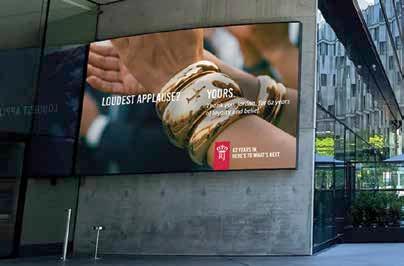

To celebrate its 62nd anniversary, Royal Jordanian Airlines launched an integrated month-long campaign that looks firmly to the future, reflecting on one of the airline’s most successful and transformative years in recent history. The anniversary campaign uses reflections of Royal Jordanian aircraft across multiple surfaces, with each reflection carrying a distinct message. The creative approach enabled the brand to look inward at what it has become, while projecting outward towards what lies ahead. The campaign was strategically developed to bring the airline out of its shell, telling a powerful story that is both thoughtfully crafted and beautifully written.
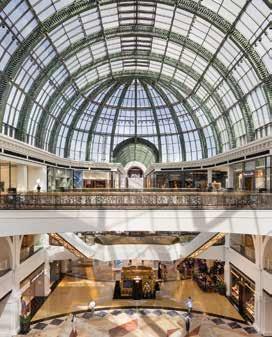
Al Arabia has signed two agreements this January, securing major advertising contracts across the UAE and Saudi Arabia.
On 14 January, the out-of-home (OOH) company announced the signing of three contracts with Majid Al Futtaim Properties Company which grant Al Arabia the licence to use digital screens located across various malls in the UAE for purposes of promotion and advertising.
The total amount for all contracts is AED 53m (excluding VAT), which is equivalent to SAR 54m. The three interconnected contracts grant Al

Arabia a licence to use digital screens in eight malls across the UAE, including Mall of the Emirates, City Center Deira, City Center Mirdif, City Center Me’aisem, City Center Sharjah, City Center Zahia, City Center Ajman and City Center Fujairah.
These contracts highlight Al Arabia’s efforts to implement its expansion strategy and enhance its presence in regional markets through its portfolio of concessions, expanding its scope outside Saudi Arabia and venturing into new OOH media sectors in the UAE.


This campaign from UAE telecommunications giant du reframes technology as an enabling force, speaking to the idea that the most meaningful spaces are not physical; they are emotional, social and aspirational. The campaign positions the telecom and digital services provider as the bridge between these connections. The campaign highlights moments when the brand’s presence strengthens family bonds, fuels innovation and supports creativity, without once mentioning bandwidth or coverage maps. The campaign premiered on the Burj Khalifa in Dubai before rolling out nationwide across out-of-home (OOH), digital, social and film.

Following this deal, Al Arabia also announced that it has won the bid for a 10-year contract to establish, operate and maintain all types of advertising billboards in the following airports:
1. Prince Naif bin Abdulaziz International Airport (Qassim)
2. Dawadmi Airport
3. Wadi Al- Dawasir Airport
4. Taif International Airport
5. Prince AbdulMohsin bin Abdulaziz Airport (Yanbu)
6. King Saud bin Abdulaziz Airport (Al Bahah)
7. AlUla International Airport
8. Al-Jouf Airport
9. Gurayat Airport
10. Prince Sultan bin Abdulaziz International Airport (Tabuk)
11. Hail International Airport
12. Rafha Airport
13. Arar Airport
14. Sharurah Airport
15. Bisha Airport
16. King Abdullah bin Abdulaziz International Airport (Jazan)
17. Najran Regional Airport
18. Turaif Airport
According to a bourse filing, the project value will either be decided as revenue sharing or will build on a minimum guarantee of approximately SAR 120m for the total duration of the contract, excluding VAT – based on whichever is higher.
Al Arabia said the win represents an important step towards strengthening its presence within airports and aligns with its efforts to expand its advertising network across key national assets.
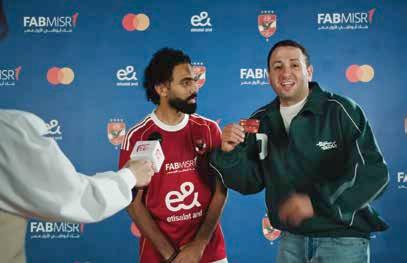
To launch the Ahlaweya Card, FAB Misr and telecom operator e& launched a brand awareness campaign across Egypt. The integrated campaign offers exclusive discounts, cash-back deals, benefits and interest-free installments to holders of the Ahlaweya Card every time the Al Ahly SC football club wins a game. The launch film follows a devoted Al Ahly fan who, after discovering the card’s benefits, begins encouraging the team to win more matches so he can unlock more rewards. It’s a humorous, light-hearted take that transforms the card’s selling points into a playful storyline. The campaign launched across FAB Misr’s digital and social channels.
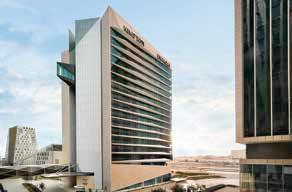
How a brand-led, culturally grounded approach shaped the launch of the first Kimpton in the Middle East.
When Kimpton KAFD Riyadh by IHG opened its doors, it marked several important firsts for the region. As the first Kimpton hotel in the Middle East, the first lifestyle hotel in Riyadh, and the first hotel to open in King Abdullah Financial District’s (KAFD’s) newest destination, its arrival represented more than a brand expansion. It signalled the introduction of a globally recognised lifestyle philosophy, backed by IHG, into one of the region’s fastest-evolving urban centres.
Riyadh is evolving at speed, reshaping how residents, travellers and businesses engage with the city. In this context, Kimpton KAFD Riyadh was never positioned as just another hotel opening, but as a brand designed to live within the city’s rhythm. The challenge was not visibility alone, but relevance: introducing a globally recognised lifestyle brand in a way that felt credible, contemporary and rooted in place.
This ambition was shaped early on by the tightly aligned leadership vision of Rabih Beaino, General Manager; Dalia Zeait, Director of Sales and Marketing; and Lama Mabrouk, Brand Consultant. Together, they approached the opening not as a single launch moment, but as a long-term brand-building exercise grounded in strategy, culture and commercial intent.
A brand built for KAFD, not dropped into it KAFD is fast emerging as one of Riyadh’s most dynamic urban hubs, blending business, culture, dining and lifestyle. Kimpton KAFD Riyadh was conceived to reflect that energy, aligning the brand’s global DNA with how the city works and socialises.
From the outset, the hotel’s positioning focused on people rather than polish. Under Beaino’s leadership, Kimpton’s human-centric philosophy became a guiding principle, influencing how the brand showed up in the market. This translated into a marketing and communications approach led by storytelling, partnerships and experience-driven visibility rather than traditional launch mechanics.
Instead of treating communications as a single phase, brand-building was approached as an ongoing dialogue with the city. Every touchpoint – from content and media engagement to on-ground activations – was designed to reinforce Kimpton KAFD Riyadh as a place to gather, connect and belong.

Visibility with purpose
Early visibility for Kimpton KAFD Riyadh was shaped by credibility. Under Zeait’s commercial and marketing direction, media engagement prioritised quality platforms across lifestyle, business and culture, ensuring the brand was introduced in environments that reflected its positioning and audience.
Digital channels were used as strategic tools rather than promotional noticeboards. Visual storytelling, tone of voice and platform optimisation worked together to build familiarity and trust, while preserving the individuality that defines the Kimpton brand globally, ensuring that awareness translated into understanding, not just reach.
The result was a steady build of presence that felt organic, allowing audiences to grasp not only what Kimpton KAFD Riyadh is, but what it stands for.
Culture as connection
A defining element of Kimpton KAFD Riyadh’s brand narrative has been its integration of local culture into the guest experience. Rather than treating culture as an external collaboration, it was embedded into the hotel’s identity from the outset.
From commissioning a permanent mural by Saudi artist Nourah Bin Saidan to hosting Kimpton Unplugged, an intimate music series spotlighting Saudi talent such as Tamtam, the hotel positioned itself as a platform for creative expression. These initiatives, curated under Mabrouk’s brand strategy, reinforced Kimpton KAFD Riyadh’s role as a social and cultural connector within the district, resonating with both residents and visitors.
Food and beverage as brand storytelling
At Kimpton KAFD Riyadh, food and beverage were approached as distinct brand experiences rather than supporting amenities. Each venue was developed with its own identity, narrative and audience, allowing the hotel to engage different segments throughout the day while maintaining a cohesive overarching brand.
Botanica, with its lush design and panoramic terrace overlooking KAFD, was introduced to the market through a curated media Chef’s Table. The experience offered selected media an intimate introduction to the venue’s philosophy, cuisine and setting, positioning Botanica as a destination for long, social dining moments within the district.
The Vinyl Ember, inspired by Manhattan’s energy and reimagined for Riyadh, was launched through a high-profile evening attended by A-list influencers, media and key opinion leaders from across Saudi Arabia. The event reflected the venue’s fun fine dining positioning, blending refined cuisine with a relaxed, expressive atmosphere, and establishing The Vinyl Ember as a dining and nightlife address from day one.
These activations ensured that each venue entered the market with clarity, personality and momentum.
Aligning brand, commercial strategy and people
Behind the scenes, Kimpton KAFD Riyadh’s approach has been defined by alignment across leadership, brand and commercial strategy. Marketing, PR, digital and partnerships operated as one ecosystem, ensuring consistency between message and experience.
Equally important was the internal focus. Team culture, collaboration and empowerment were treated as strategic priorities, recognising that lifestyle brands are ultimately delivered by people, not campaigns.
A new chapter for lifestyle hospitality in Riyadh
Kimpton KAFD Riyadh’s arrival reflects a broader shift in how hospitality brands are introduced in the region. In a city as ambitious and fast-moving as Riyadh, success is no longer driven by presence alone, but by relevance, authenticity and sustained engagement.
As the first Kimpton in the Middle East, the first lifestyle hotel in Riyadh, and the first hotel to open in KAFD as the city’s newest destination, Kimpton KAFD Riyadh has positioned itself not just as a place to stay, but as part of the city’s evolving story.

Will artificial intelligence (AI) and authenticity continue to remain buzzwords in 2026?

Peter Jacob Managing Director – MENAT, Current Global
YES
They will be buzzwords not because they’re new, but because they hit on a central tension at the heart of what we all do. In the red corner, AI will keep getting better, faster, smarter and more embedded. It can’t/won’t/ shouldn’t replace judgement, empathy or instinct. In the blue corner, authenticity will be put to the test more and more as audiences start to instantly spot AI slop and vague, empty purpose quicker than you can say ChatGPT. The litmus test stays the same: work that feels human, whole and earned.

Tyler Yeom Co-Founder & CEO, Aimilabs
YES
But the meaning will shift.
In 2025, AI and authenticity were talked about. In 2026, they’ll be felt. AI will no longer be a feature or a headline; it will be the operating system behind how brands understand people, anticipate needs and act with judgement. Authenticity won’t come from tone of voice or storytelling or content; it will come from behaviour. From brands that remember, adapt and show up consistently when it counts. The real opportunity ahead isn’t replacing creativity with machines, but elevating creativity with intelligence that’s deeply human at its core.

Mihailo Rsumovic
Creative Technologist & Regional
AI Lead, McCann
But in a much more grounded
way. AI will remain a dominant term in 2026 because it’s genuinely changing how creative work gets done. It will be embedded everywhere. Innovation pace isn’t slowing down, so the conversation won’t either. But AI will move beyond being a marketing buzzword and that will change the tone. Companies using AI as a shiny label to attract attention or funding will get called out faster. The noise will drop, and the discussion will shift towards real use cases and actual value, not promises.
Authenticity will stay a hot topic too, even though it’s already been overused to the point of becoming a commodity. Everyone claims it; very few actually live it. As the line between real and synthetic keeps blurring, we’ll be forced to rethink what authenticity really means. It won’t be about saying you’re human any more. It’ll be about proving it. In short, both concepts will stick around because they matter, but the hype will fade and be replaced by a demand for real substance.

Sultaan Saab Manager, Saatchi & Saatchi
But with a twist. AI won’t be the shiny new toy anymore; it’ll be invisible infrastructure. Everywhere. Expected. Normal. That’s exactly why authenticity keeps coming back louder. The more content gets automated, optimised and scaled, the more people crave signals of realness: taste, context, flaws.
Brands and creators won’t ask “Are we using AI?”... they’ll ask “does this feel human?”
The words may feel overused (over a hundred times), but the tension between AI power and human trust is just getting started.

Mario Soufia Regional Managing Director of Growth and Strategy, WPP Media
Not because they’re hype, but because they’re becoming hygiene. The story with AI isn’t that it’s ‘smart’, it’s that it’s impossibly fast. It can read a deck, a 50-page document, or 3,000 words in the same five seconds it takes you to glance at the title. That changes how we get inspired: we don’t search for answers any more, we get answers and spend time deciding what to do with them. If you’re not working this way, you’re at a disadvantage; you’ve already lost.

AI and authenticity will remain firmly on the agenda in 2026. AI has become embedded in how we work, but the real question is whether it risks diluting brands. While people are excited by the possibilities of AI, human connection still matters deeply. As AI continues to evolve, the tension between efficiency and authenticity will only grow, keeping this conversation very much front of mind.
Chandrayee Gupta Associate Marketing Director, Sarood Hospitality
AI and authenticity will remain very relevant in 2026, but only when they serve a clear purpose.
In hospitality and F&B marketing, AI is becoming a powerful enabler that can help teams understand guest behaviour, personalise communication, optimise media spend and respond faster in an increasingly competitive landscape. However, AI cannot replace instinct, cultural understanding or the emotional intelligence required to build meaningful brands and communities.

Authenticity will matter even more as audiences become savvier and less tolerant of generic content. Guests are increasingly looking for real experiences and honest storytelling that reflect how people live, eat and connect. The opportunity in 2026 lies in using AI to sharpen decisionmaking and efficiency, while protecting the human touch that makes brands feel relevant and trusted.
Marissa Ganeshwaran Senior Account Manager, The Romans
Because they’re not buzzwords. They are both core pieces of comms infrastructure. At this point, they are more like grammar and spellcheck. Authenticity is the voice; AI is the assist. One defines how you sound; the other helps you work smarter. They sit at opposite ends of the spectrum and are equally important to ideation, creation, scale and optimisation. (This is so true that we developed a GEO AI platform to disrupt AI search rankings.) Together, they raise the baseline rather than replace thinking. Both need to be operationalised, not debated.

Aurelien Fonteneau
General Manager, We Are Social
AI and authenticity will still be discussed in 2026, but with less blind enthusiasm. Marketers now understand that while AI can reduce costs and timelines, it doesn’t build brands on its own. Brands are built on resonance, storytelling and craft – not shortcuts. In 2026, AI will be used with intent: powering tactical, bottom-of-funnel work like digital banners, CRM and print, but not replacing human judgement in awareness and affinity assets. I expect fewer fully AI-generated brand films and more thoughtful co-creation. AI will be an enabler, not the idea.

Yamen Albadin Lead Developer, Similar
But their definitions will evolve fundamentally. In 2026, AI will transition from a disruptive buzzword to essential infrastructure, fuelled by massive regional investments. We are moving beyond simple content generation into ‘agentic AI’ that will execute more complex tasks, and the application layer of the technology has a massive growth potential.
However, this ubiquity creates a paradox: as AI commoditises speed and scale, trust becomes a scarce resource in the market. Consequently, authenticity will shift from a trend to a premium asset. In a landscape flooded with synthetic content, culturally nuanced, humancrafted narratives will command the highest economic value.

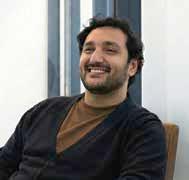
Haresh Harikumar Director, C2 Comms
AI and authenticity will still be present in 2026, but neither will win on hype alone. AI becomes infrastructure – expected, invisible and table stakes. What differentiates companies is not using AI, but how intentionally they design around it. Authenticity becomes a moat: clarity of purpose, product taste and real problem-solving can’t be faked at scale for long. Organisations that over-index on AI wrappers or marketing narratives will struggle to sustain trust. The long-term winners will be those who use AI to sharpen human judgment, not replace it, and build brands that feel deliberate rather than automated.
Rabih Chehayeb Senior Digital Manager, TBWA\RAAD
AI and authenticity will persist into 2026, but their meaning will mature. AI will no longer be a headline, it will be assumed and quietly embedded across creative optimisation and experience design. The real differentiator will be judgement. As automation scales sameness, authenticity becomes a commercial advantage. Brands that rely on AI without point of view will blur into the noise. Those that use it to sharpen cultural insight, restraint and relevance will stand out. In an era of infinite content and synthetic signals, authenticity isn’t about being ‘real’, it’s about being deliberate. That tension will keep both terms very much alive.
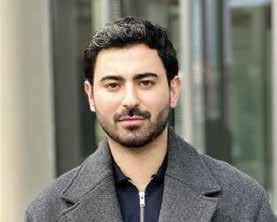
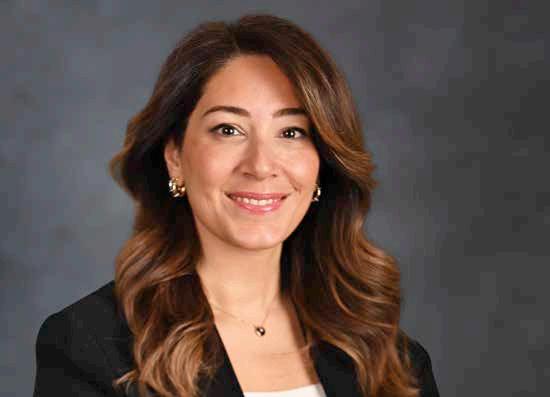
Maya Tayara Managing Director, iProspect
YESAI and authenticity will remain defining forces in 2026, not as buzzwords, because they describe two opposing forces that now define the market. After everything we witnessed in 2025, AI is no longer experimental – it is rapidly embedding itself across planning, production, optimisation and commerce. As scale and automation accelerate, the premium on authentic, highquality ideas will only increase. Audiences are becoming more discerning, rewarding work that feels human, culturally fluent and purpose-driven. At the same time, AI is still evolving, learning and reshaping how value is created, not replacing creativity but raising the bar for it. In 2026, competitive advantage will sit at the intersection of intelligent technology and genuine brand expression.







On 13 February 2026, Campaign Middle East will host its annual Ramadan Advertising and the Year Ahead breakfast briefing. A room full of senior marketers, agency leaders, media owners and adtech specialists will gather for a Friday morning focused on making meaningful marketing count during the Holy Month of Ramadan.



February 13, 2026 | 8:00 AM | The Westin Dubai Mina Seyahi
Presented By Gold Sponsors


With more than SAR 7bn in projects across multiple cities, Rotana Signs’ CEO outlines how long-term investment, landmark formats and measurement are elevating the Saudi out-of-home landscape.
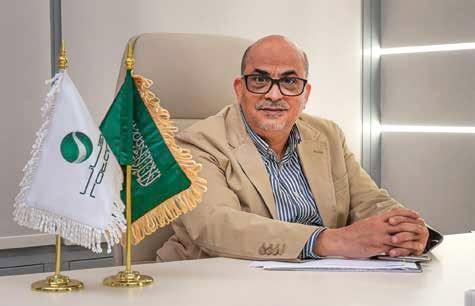
Over the past two years, Rotana Signs’ executive management team has focused on shaping and investing in a clear long-term vision aligned with the Kingdom’s urban and economic transformation. As a result, several milestone projects valued at over SAR 7bn, spanning concession periods of up to ten years have been secured. These investments extend beyond capital commitment alone, reflecting Rotana Signs’ intent and responsibility to deliver lasting value and innovative solutions for cities, brands, and the local advertising industry.
In less than 18 months, Rotana Signs has launched a series of new novel assets that have helped redefine the urban landscape. Watching brands experience their campaigns at this scale, often for the first time, reinforces our belief that out-of-home media remains one of the most powerful communication channels when executed with ambition and purpose.
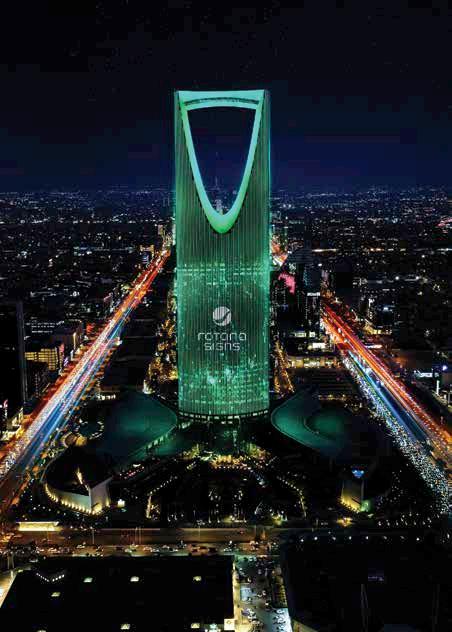
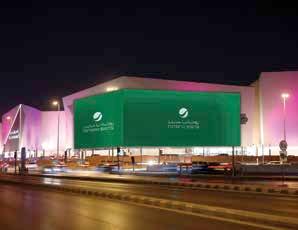
This progress is most visible in Riyadh. Within a short timeframe, we introduced large exterior format installations on Kingdom Tower, Burj Rafal, Solitaire Mall, Cenomi Nakheel Mall, Esplanade Mall, the Zain Building along Khurais Road, and the Stadium Dominance format in Kingdom Arena. Rightfully considered landmarks, together, these assets illuminate more than 50,000
square metres of premium LED across some of the city’s most prominent commercial and lifestyle areas and destinations.
Undoubtedly, each format plays a distinct role and is positively received within the context of its environment. Kingdom Tower has become part of the city’s skyline, evolving beyond the physical space and becoming a big part of online social conversations.
Burj Rafal, with more than 16,000 square metres of LED coverage, delivers powerful exposure across Riyadh’s newest and upcoming areas such as the northern districts, capturing movement between King Abdullah Financial District and the city centre.
At direct eye level, digital facades such as Solitaire Mall enables high impact 3D anamorphic executions, Cenomi Nakheel Mall helps associate brands with retail, Esplanade Mall captures northward moving traffic towards Digital City, and the Zain Building communicates with thousands of daily motorists heading into the city centre. Additionally, Kingdom Arena, home to Al-Hilal FC adds another dimension by delivering in game advertising dominance through 1,500 square metres of highdefinition LED positioned in an arch format along the goal lines of the football pitch.
Collectively, these formats allow advertisers to reach residents, expatriates, and international visitors, while supporting evolving communication needs in terms of size, exposure, placement, and frequency packages that benefit various sectors such as retail, FMCG, banking, telco, automotive, entertainment and others.
Our experience with Haramain High Speed Railway, the transit media along the western coast, helped lay the foundation for the seamless management of Riyadh Metro Digital Carriage Screens. In 2025 alone, Riyadh Metro accommodated close to 100 million passengers across six lines. With average journey times of 23 minutes, multiple stops per trip, and a low distraction environment, research showed that nearly three in four commuters actively engage with the screens. This delivers ad recall of up to 60 per cent and more than 20 per cent uplift in brand consideration. Today, this network represents the highest number of digital screens within a single,


integrated environment, delivering an innovative and scalable platform for retail brands and others seeking mass reach.
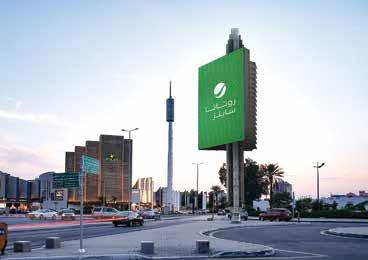
Jeddah, the Kingdom’s second largest city is where Rotana Signs enjoys more than 50 per cent advertising impact through its various format portfolio and has recently completed numerous new installations.
A new addition to our portfolio is the inner-city Digital Bridges, consisting of 20 faces placed along key routes that connect residential districts and enjoy direct line of sight to oncoming traffic.
The second product is the Maxi and Prestige Billboard award designed to deliver high reach and frequency across major road corridors installed in both established and emerging districts that historically lacked any out-of-home media presence. In total, 77 new installations will be combined with our existing inventory, providing advertisers an opportunity to capitalise one of the Kingdom’s most compelling out-of-home (OOH) format portfolios.
Beyond Riyadh and Jeddah, Rotana Signs has been awarded exclusive ten-year contracts in both the holy city of Makkah and Greater Dammam which includes Dammam, Al Khobar and Dhahran. More than 1,600 media points of varied format types are planned to be installed within and around the city centres and borders. The first phase of installations is already completed, enabling advertisers to reach residents, pilgrims, and international visitors across some of the Kingdom’s fastest growing markets.
As part of our commitment to elevating the landscape and industry, Rotana Signs is partnering with international companies that add value to the local offering.
In 2025, we entered a strategic partnership with LaTour Media Group. This collaboration is focused on designing and deploying a new generation of large-scale innovative artistic installations across major cities in MENA. These projects sit at the intersection of architecture, art, and technology, creating immersive sensory and visual experiences that are thoughtfully integrated into the urban and cultural fabric of each city.
Additionally, as we expand our physical footprint, we are partnering with a leading global OOH audience measurement company to roll out an internationally recognised data measurement tool. This platform will allow advertisers to assess campaign effectiveness, measure ROI and gain quantitative insight. The dashboard will be launched soon and deployed to both MBU’s and direct clients.
With much in the pipeline, a growing investment and long-term vision, both my focus and that of the executive team remains on building a future ready media ecosystem that balances scale with quality and creativity. What we have achieved so far is only the beginning of a journey that will continue to shape how brands connect with audiences across Saudi Arabia’s cities.
By Waleed Hussein, CEO, Rotana Signs
“What we have achieved so far is only the beginning of a journey that will continue to shape how brands connect with audiences across Saudi Arabia’s cities.”
As financial analysts and investors debate the impact of artificial intelligence (AI) giants’ soaring valuations, and employers confront the technology’s seismic effect on the skills landscape, there’s no doubt we are firmly in the AI era.
From a marketing and communications perspective, AI is rapidly reshaping our industry, not least in the areas of creative workflows, media performance, data interrogation and the speed of decision-making.
While AI presents a huge opportunity for our profession, navigating this transformation to an AI-empowered world poses several challenges for our industry to grapple with in 2026 and beyond.
With companies accelerating their adoption of AI, marketing leaders must ask themselves: how do we assert our place at an organisation’s AI table and ensure we play a meaningful role in the journey ahead?
In answering this question, the challenge lies in connecting AI’s potential with enhancing the customer experience and supporting a brand’s integrity and reputation.
This means positioning our profession as the ‘translators’ within the organisation: helping interpret the complex technology driving AI to deliver tangible, human-centred value for customers and stakeholders, as well as demonstrating commercial benefits the rest of the C-suite can relate to.
As part of this journey, perhaps the most immediate challenge lies closer to home. AI is reshaping our workforce and, for many marcomms teams, that change can feel unsettling. For marketing leaders, our role is to create an environment that frames AI as an enabler, not a threat. How can we reorient our teams – and the skillsets within them – to embrace AI, rather than be intimidated by it?
AI presents marketers with an opportunity to amplify and accelerate so much of what we do: from prompting a reappraisal of how other departments engage with marketing and communications professionals to demonstrating how we can play a major role in generating value and driving innovation across an organisation. I have seen how quickly marketers in Expo City
have mastered new AI tools to deliver increased
have mastered new AI tools to deliver increased productivity, particularly in creative workflows and production processes.
And with marketing sitting at the interface between organisations and their audiences, our remit is expanding to include championing the ethical and transparent use of AI. In 2026, the organisations that thrive will be those that invest as much in their people skills as they do in the technology itself.
Another key challenge is ensuring that chief marketing officers (CMOs) are not so blindsided by AI that they lose sight of their primary responsibility – guiding, nurturing, protecting and managing the brands for which we are responsible.
While brands may sit as intangible assets on a company’s balance sheet – until their value is realised in a sale or acquisition – a clearly articulated and powerfully communicated brand proposition is an immensely valuable asset, and one that no other department in an organisation can lay claim to.
This is why marketing and communication teams must never stop seeking braver, more distinctive, inventive and future-proofed propositions for their brands. We must constantly challenge what our brands stand for, why they exist, and why they deserve the attention of our audiences in increasingly crowded markets.
Strong brands are built on rigorously defined positioning and strategy, supported by a cycle of constant evaluation and evolution. AI may enhance how we execute, but CMOs remain responsible for the creativity and stewardship required to grow brand value over the long-term.
In an unforgiving, always-on media environment, too many organisations are dangerously exposed to the consequences of poor crisis communication – more so considering AI’s potential to amplify reputational risks through misinformation, speed and scale.
Whether it’s a customer complaint going viral or a high-profile accusation of ‘purpose washing’, failure to prioritise crisis preparedness makes organisations vulnerable to the corporate cancel culture. A brand’s reputation can be damaged in hours, yet it can take years to rebuild

“FOR MARKETING LEADERS, OUR ROLE IS TO CREATE AN ENVIRONMENT THAT FRAMES AI AS AN ENABLER, NOT A THREAT.”
and require enormous levels of investment. Too often, organisations rely on fragile internal systems that have not been stress-tested, with unclear ownership and crisis manuals that sit untouched in shared digital folders.
Marketing and communication leaders must treat crisis preparedness as a core brand strategy. This means conducting regular reassessments to maintain clear lines of responsibility for rapid response, running refresher scenario planning and simulation exercises, and ensuring robust tools for social listening are in place.
More than ever, disciplined crisis communications should be seen as the safety net that protects the brands we work so hard to build. In short, it’s clear that AI will continue to reshape the workplace throughout 2026. How organisations – and particularly their marketing and communications teams – steer this evolution to ensure that technology serves as a force for good depends as much on the strength of human insight, interaction and relationships as it does on AI itself.
By Sholto Douglas-Home,
Expo City Dubai’s Sholto Douglas-Home shares ways in which organisations – and their marketing and communications teams – can steer artificial intelligence (AI) as a force for good.
For years marketers hid behind benchmarks, reports and dashboards. You can call it educated guesswork as to how a campaign will do in delivering a return on investment (ROI), stitched together from different data sources that purely focused on attribution. This exercise was always backward looking, based on historic comparison figures and not taking into account any current or macroeconomic factors.
We did what we did best: as marketers we were storytelling measurement and convincing ourselves that this represented the truth. We rarely asked what the next dollar will produce across time as an accurate marketing forecast. Yes, we had past return on ad spend (ROAS) and ROI, but it isn’t a golden rule; it was correlation dressed as causality pretending to be strategic confidence because no time machine can take us back to Ctrl+C and Ctrl+V the past success.
That gap is about to close, and not because we suddenly became smarter, but because tools and computational power have finally caught up with the complexity of how growth actually works.
2026 is the year of predictive impact modelling, perhaps not perfect at first, but enough to change your chief financial officer’s (CFO’s) impression that marketing is a growth driver to the business and not a burden on the profit and loss statement (P&L). This year marketing decisions will be evaluated as capital allocation scenarios with financial consequences that can be simulated, debated, and stress tested before a single dollar is spent, and that changes everything about how boardrooms treat brand, performance, and the role of marketing in value creation.
Most ROI debates in the boardroom have been foggy because attribution rewards channels and not growth, ROAS was seen as the truth even when the correlation wasn’t 100 per cent accurate, and past performance was used as the main predictor for the future. Performance marketing won the argument because its numbers looked immediate, while brand lost the argument because its impact was delayed and therefore easier to dismiss.
signals. But with the right inputs on signal flows, modelling capabilities and tech tools, we will be able to simulate the
signals. But with the right inputs on signal flows, modelling capabilities and tech tools, we will be able to simulate the impact of brand and performance decisions before we make them. Marketing will shift from being a storyteller to a strategic forecaster that can project outlook based on investment scenarios.
We’re already starting to see early signals of this shift in practice. Several global brands in sectors such as travel, fintech and retail are experimenting with portfoliolevel incrementality models that track how brand exposure affects conversion efficiency over horizons. The early learning isn’t that everything is perfectly predictable, but that decisions are finally being made with foresight rather than nostalgia.
FOCUS
Ahmed El Gamal discusses the discipline of connecting marketing choices to financial outcomes across time, examining risk honestly, and treating brand and performance as interdependent levers in the same measurement system.
brand versus performance demand curves
This is the voice that marketers have been yearning for in the boardroom, as it speaks the language of the CFO. Not that they didn’t have the seat before, but all of a sudden, the CFO finally sees them operating on the same plane of accountability. In the old world, marketers were asked to justify spend. In this new world, marketers will be asked to justify capital allocation choices. We’ll finally have an answer for “If we overspend into performance at diminishing returns, what is the marginal destruction of value?” or “If we increase brand presence in a specific market, what is the predicted effect on pricing power and mix?” This is a completely different level of fluency, as we are no longer saying. “this campaign delivered a good ROAS”. The language that lands in the boardroom in 2026 will need to shift to “this X investment is predicted to maximise growth by Y, protect margin by Z, and reduce future cost of acquisition with an acceptable risk”. That kind of language changes the tired question of cost centre versus profit centre, because marketing now presents itself the way every capital function should.
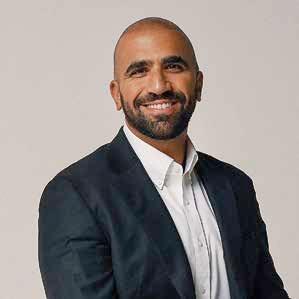
Predictive impact modelling is going to shift that narrative away from excuses to a simulation that shows outcomes at a scale that we could not five years ago. The models are built on signal ecosystems that will measure incrementality baselines, brand versus performance demand curves and customer value trajectory. Predictive artificial intelligence (AI) won’t do this magically, as it will rely on past data and
Predictive impact modelling will also solve the most debated topic in our industry: “Why do I need to spend in top of the funnel?” Imagine if all of a sudden you can dynamically simulate Les Binet’s and Peter Field’s Long and Short Of It framework, because the model will demonstrate how brand investment compounds conversion efficiency over
artificial intelligence (AI) won’t do this magically, as it will rely on past data and Binet’s and Peter Field’s Long and Short Of It framework, because the model will demonstrate how brand investment compounds conversion efficiency over
make predictive impact a co-steward of value
time, and that cutting brand investment does not save money but transfers cost into the future and taxes performance with rising customer acquisition cost (CAC). The debate will change from a belief to a shared responsibility. To call a spade a spade, predictive impact modelling will be inaccurate at first, and sometimes it will be used to validate decisions after they are made. The value isn’t in the model, but in the discipline, and how in the next generation of marketers, this will be their go-to for all key marketing decisions. The discipline to connect marketing choices to financial outcomes across time, examine risk honestly instead of hiding behind creative language, and to treat brand and performance as interdependent levers in the same measurement system. This is what will separate maturity from dashboard fetishism. While I did say marketers will have a voice in the boardroom, this isn’t a power play, but a way for them to earn credibility. Less defensiveness but shifting the narrative to the future growth of the business. I’d like us in 2026 to no longer spend our energy in conversations about defending marketing budgets but instead make predictive impact a co-steward of value creation in marketing.
By Ahmed El Gamal, Executive Director of Marketing




Award-winning ideas. TikTok-first impact.
Meet the Winners

Held on January 21 2026, in Riyadh, the second TikTok Ad Awards celebrated METAP’s most creative and high-impact campaigns, showcasing how brands turn culture, community, and creativity on TikTok into real business results.

For the Legends of the Road, Naqla, TAC Universe, Egypt

People's Choice Om Bdr - 12th Ingredient, KFC Arabia, TBWA\RAAD, KSA G.O.A.T

Forever Golf, Volkswagen



Goal Digger

Community Core


Ogilvy South Africa
The Unstoppable Network Du, TBWA\RAAD + Mindshare, UAE
For the Legends of the Road
Naqla, TAC Universe, Egypt
Volcano Demirel
Algida Volcano, VML Türkiye
Team Chris vs. Team Elsa: The Travel Debate That Broke TikTok
Experience Abu Dhabi, Memac Ogilvy, UAE
Om Bdr - 12th Ingredient KFC Arabia, TBWA\RAAD, KSA
The Unstoppable Network Du, TBWA\RAAD + Mindshare, UAE
My Like First! Lux, Unilever MENA
Cultural Takeover: Yango Play in Ramadan Yango Play, MENA
Try January
Heineken Beverages, Savanna Cider, TBWA\Hunt\ Lascaris South Africa
The Most Viral Recipe for Love: Teashake
The Magnum Ice Cream Company & PepsiCo, Algida Keyif & Lipton Ice Tea, Pixiu Türkiye
14 Feb: Judgement day! Floward, Habbar, KSA
Replies That Sell Valu, FP7 McCann Cairo
#hairdressermademebuyit
L'Oréal Professionnel, Publicis Groupe Türkiye
Om Bdr - 12th Ingredient KFC Arabia, TBWA\RAAD, KSA
#Grandmatok
Pegasus Airlines, Rafineri - Rocket Science Türkiye
For the Legends of the Road
Naqla, TAC Universe, Egypt
SKYTok
SKY girls, Tandem Network Kenya


Sound on Please
The TikTok Test Drive
Audi, Ogilvy South Africa
Pay With Your Trend
Pizza Hut, Publicis Middle East, UAE
Blink Breaks
Vodafone FreeZone, VML Türkiye
Abu Dhabi in IRL: Turning UGC Into Destination Fame
Experience Abu Dhabi, Memac Ogilvy, UAE
Light up Your Ramadan Yango Play, Kijamii Advertising Agency, Egypt
Nuggets - Nugg it. Dip it. Crunch it. KFC Arabia, TBWA\RAAD, MENA

It’s the Creative For Me
It's the Little Things that Satisfy Us Most Chicken Licken, Juno Media & Joe Public South Africa
Forever Golf
Volkswagen, Ogilvy South Africa
SOS (Save Our Stay), City Lodge Hotels, TBWA\Hunt\Lascaris South Africa
How I Crunch it
Bugles, MRM Menat + UM, KSA
They Can Find with Yandex Yandex Search, Türkiye
Pay With Your Trend
Pizza Hut, Publicis Middle East, UAE
The Red Car Chevrolet, FP7 McCann Cairo, Egypt
From the loud rooms of rapid iteration to the more intimate spaces of co-creation, clientside marketers and industry leaders advise moving marketing beyond clever campaigns and cracked algorithms to focus on trust-building and emotionally resonant exercises that add value to people, communities and society at large.
By Anup Oommen
After 12 months of testing, experimenting, and trying out new platforms, technologies and tools in search of better outcomes, client-side marketers and industry leaders are now calling for 2026 to be a year of focus.
Some of the most respected voices across the brand and marketing landscape speak to Campaign Middle East about turning away from meaningless messaging, the noise of synthetic slop and vanity metrics.
Instead, they advise finding the balance between technology and trust, data and dialogue, strategy and speed, content and clarity, and efficiencies and empathy. Much to the industry’s delight, this means conversations are finally driving onto an open highway past the traffic jam of artificial intelligence (AI) and authenticity.
With margins tight and differentiation pivotal in competitive categories, leaders raise crucial questions: What value are brands adding to people’s lives? Are marketers servicing human needs? Do people trust brands and their leaders?
There’s no two ways about it: In a world where audiences are quick to block apps, boycott brands, opt out of tracking, use virtual private networks (VPNs) and clear cookies, there is a clear and obvious need for brands to listen to their consumers, simplify messages, add value, learn to be human, connect meaningfully with communities and fix targeting and measurement to build long-term relationships with consumers.
Contributing to the conversations on key learning from 2025, priorities for 2026, and the path ahead are:
Khaled AlShehhi, Executive Director of Marketing and Communication, UAE Government Media Office; Amina Taher, Chief Marketing Officer, Wio Bank; Mohamed Al Awadhi, Vice President – Personal Banking Marketing, First Abu Dhabi Bank (FAB); Ibrahim Al Mayahi, Vice President –Brand and Marketing Communications, du Sara O’Hara, Group Chief Marketing and Communications Officer, AW Rostamani Group; Ahmad Numan, Director of Marketing and Corporate Communications, Ras Al Khaimah Economic Zone (RAKEZ); Dina Jreissati, Group Executive Director – Marketing and Communications, Modon Holding; Elie Haber, Managing Partner, Fusion5; Christine Najarian, Regional Business Director, Boopin; and Ahmed El Sherbini, Chief Executive Officer, Think Human.
PRIORITIES FOR 2026: PEOPLE FIRST; LESS IS MORE; FOCUS ON ‘FOCUS’
It begins with people. If 2025 was the year when ChatGPT, Perplexity, Bard and custom-built artificial intelligence (AI) dashboards provided all the answers, then 2026 will be the year when consumers claim their voice back and demand to be heard.
Amina Taher, Chief Marketing Officer, Wio Bank, says, “Marketing in 2026 is about putting people first – always. The landscape is evolving; technology is moving fast; but it’s empathy, transparency and purpose that build real connections. At Wio, we listen deeply to our customers and design experiences that anticipate their needs, not just
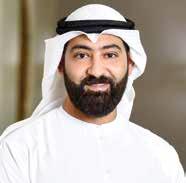
respond to trends. When you align your brand’s values with the ambitions of your community, you create impact that lasts.”
Dina Jreissati, Group Executive Director – Marketing and Communications, Modon Holding, adds, “A marketer’s priority should always be the customer. Sustainable growth comes from genuinely listening and building brands around what people value, rather than chasing short-term wins. Marketing communication works best when it reflects the customer’s voice, not just the brand’s key messages. While tools change, with AI integration and data mastery taking on more
“WE HAVE OVER-PRODUCED CONTENT AND UNDER-BUILT MEANING. THE BRANDS THAT WIN WILL PUBLISH LESS BUT SHIP BETTER: FEWER CAMPAIGNS, MORE PRODUCT TRUTH; FEWER CLAIMS, MORE PROOF.”

invest their time, budgets and effort. Fewer priorities, stronger positioning, and deeper execution will matter far more than broad presence. In a crowded landscape, sustained results will come from doing fewer things better.”
However, to achieve clarity and benefit from ‘less is more’, marketers say that the industry must be more focused, especially given that the market is teeming with disruption and distractions.


Sara O’Hara, Group Chief Marketing & Communications Officer, AW Rostamani Group, says, “After years of rapid experimentation, the real advantage will come from making clearer choices about where to play and how to win. This means simplifying technology stacks, investing in fewer but stronger brand platforms, and aligning creativity more closely with commercial outcomes. Marketers need to prioritise focus.”


significance, we should recommit to long-term brand value by putting customer experiences at the centre of every decision.”
Through their conversation with Campaign Middle East, several leaders repeat the refrain from the previous year: Can the industry please reduce the noise, and increase the signal? The idea is not simply to garner attention, but to speak with intention, let truth lead the conversation, and enact each strategy as a deliberate action rather than carpet bombing messages across channels. The through-line is: Less is more.
Khaled AlShehhi, Executive Director of Marketing and Communication, UAE Government Media Office, says, “In 2026, marketers should prioritise reducing marketing – not budgets, but noise. We have over-produced content and under-built meaning. The brands that win will publish less but ship better: fewer campaigns, more product truth; fewer claims, more proof. The new advantage is not attention; it’s selective silence, knowing when not to speak. Marketing should feel like a signal, not an echo. If your brand needs a campaign to be believed, you have a deeper problem than messaging.”
Ahmad Numan, Director of Marketing and Corporate Communications, Ras Al Khaimah Economic Zone (RAKEZ), adds, “The past few years pushed marketing into expanding across platforms, tools and initiatives, often at the expense of clarity and impact. As a result, many teams stayed busy without being truly effective. The brands that will perform best in 2026 are the ones that will make clear choices about where to
She adds, “Trust, consistency, and creative distinctiveness will matter more than being present everywhere at once, which has often led to overload, fatigue, and indifference. Perhaps I’m showing my age when I say this, but too much activity has long been mistaken for progress. The brands that succeed will be those that resist distraction, take the time to truly understand their audiences, and execute with discipline rather than chasing every new trend as it arises.”
Agreeing with this notion, Ahmed El Sherbini, Chief Executive Officer, Think Human, adds, “Build smaller, more focused, and highly relevant brand communities through targeted communication, meaningful experiences, and tailored offerings –driving brand loyalty and long-term retention, not just reach.”
Industry leaders also call for a focused approach to onboarding the right talent, driving meaningful content, ensuring effective communication and shifting the conversation to insights and outcomes. They call for 2026 to be the year of making hard choices.
Christine Najarian, Regional Business Director, Boopin, says, “The past few years have rewarded caution. The refrain was: test everything, optimise endlessly, spread the budget across every channel. The truth is that we’ve A/B tested our way to sameness. Every brand sounds the same, looks the same, targets the same, uses the same messages.”
Najarian adds, “The brands that break through in 2026 will be the ones willing to make hard choices. Kill the underperforming channel instead of optimising it again. Say no to the safe campaign that tests well but changes nothing. This isn’t a call for recklessness. The performance era taught us to measure everything, but it also trained us to avoid decisions that can’t be de-risked. Prioritise the courage to be wrong.”
The opening score for 2026 is clear: Listen deeply to customers and learn the beauty of selective silence amidst the noise; build brands and design
experiences that offer value and meet their needs; and finally, focus on ‘focus’ – achieve clarity on budgets, efforts and communication – with discipline, without distractions. Then, make the hard choices instead of floating comfortably in the sea of sameness.
Several different factors seem inextricably tied to crucial decisions in 2026: Artificial intelligence (AI) promises pace and productivity, while first-party data offers sharper routes to consumer insights, relevance and personalisation.
Reiterating the growing influence of AI on decision-making, Mohamed Al Awadhi, Vice President – Personal Banking Marketing, First Abu Dhabi Bank (FAB) says, “Marketers must prioritise master AI, which enables routine tasks such as data analysis, copywriting and visual creation to be completed in minutes. These efficiencies enable real-time feedback, higher productivity and sharper decision-making.”
Yet, amid the growing dependence on data and dashboards, consumer trust seems to be a narrow canoe navigating the large waves of doubt and scepticism.
Ibrahim Al Mayahi, Vice President –Brand and Marketing Communications, du, explains, “In 2026, media and marketing leaders will rely on AI to transform fragmented signals into actionable intelligence, enabling precision planning and dynamic optimisation across channels. First-party data becomes the strategic backbone, powering everything from audience modelling to real-time creative. But the real competitive edge will come from brands that treat trust as a design principle, not a compliance requirement.”
While marketers agree that AI and first-party data are transforming what’s possible in marketing, they also share a reminder that the real power of these tools lie in how they are used to serve people better, anticipate needs, remove barriers, and solve problems, rather than propagating unsolicited contact, frequent and intrusive messaging, and ‘creepy’ over-personalisation that disrupts the daily lives of consumers.
“Trust is the key word,” says Modon Holdings’ Jreissati. “People are increasingly aware that they have

become products and data-points for tech-enabled companies, and a feeling of mistrust is prevalent. That’s why harnessing this data is a responsibility that cannot be taken lightly.”
This means that industry leaders will need to prioritise transparent value exchanges and responsible data governance in order to earn long-term engagement.
Wio Bank’s Taher says, “Trust is the foundation: we must be transparent, ethical, and always put privacy first. When brands combine smart technology with clear communication and a human touch, they earn the confidence to innovate boldly.”
Offering a word of caution, the UAE Government Media Office’s AlShehhi adds, “In 2026, the smartest brands won’t ask how to use AI, but what must never be automated: claims, ethics, crisis responses and anything that can harm trust. First-party data will shift from
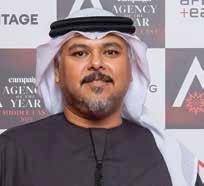
targeting to permission economics. People will trade data only when they get real value back. The new key performance indicator (KPI) won’t be conversion; it will be credibility under scrutiny.”
There’s no doubt about it, AI-powered insights and first-party data will enable smarter targeting, better budget allocation, real-time optimisation and deeper personalisation, but these tools are not meant to be a shortcut to conversions.
AW Rostamana’s Sara O’Hara warns, “Trust will sit at the centre of how brands use both AI and data. The strongest brands will be those that use it to support and amplify creativity rather than attempt to substitute or replace it, which is where trust is easily lost. Using AI as a shortcut instead of a tool is where brands can do real damage. As reliance on first-party data grows, marketers will need to be far more deliberate about transparency and value exchange. Consumers are increasingly conscious of how their data is handled, and brands that are careless or opaque will lose credibility quickly.”
Elie Haber, Managing Partner, Fusion5, sums it up nicely: “AI will be transformative this year, but it’s only as strong as the data and values behind it. First-party data gives us accuracy and control, and trust gives us permission to use it meaningfully. The real magic
happens when intelligent systems and human empathy operate together, delivering decisions that are not only smarter but more respectful, transparent and aligned with consumer expectations.”
A/B testing has often been positioned as marketing science: run an experiment, read the result, repeat and realise a path to better outcomes. However, after a year of scaling tests across creative and media, leaders suggest the reality is messier –results change with context and the biggest danger is mistaking a local or anecdotal win for a strategic truth.
Al Mayahi explains, “In 2025, media teams learned that testing only works when it’s paired with solid, reliable data. We also saw that today’s fragmented audiences and creative formats require more advanced testing methods, not one-off experiments. Context – such as the platform, format, or user mindset –can completely change results. In 2026, leaders will turn experimentation into an ongoing feedback loop, using automated testing across media buying, creative variations and audience targeting. The biggest change is cultural: teams now see testing not as a quick performance trick, but as a core way of working that leads to smarter spending and stronger long-term growth.”
Haber adds, “Last year taught us that consumers don’t behave in straight lines. Large-scale A/B testing revealed how quickly intent shifts and how emotional triggers, timing and context often outweigh perfectly logical journeys. In 2026, our testing must be more dynamic, continuous and reflective of real behaviour, not just neat hypotheses. Automation helps us test more ideas,
“CO-CREATION AND PARTICIPATION WILL BE AT THE HEART OF MARKETING STRATEGIES IN 2026.”
more often, but human interpretation is what turns those patterns into action. The lesson is clear: agility wins, but only when paired with the curiosity to understand why something works, not just that it works.”
If 2025 was about pushing experimentation harder, 2026 looks set to be about refining the purpose of experimentation and asking harder questions. Testing remains essential, but it must become more discerning. It’s time to learn how to tune the strings of each marketing instrument, rather than simply swapping out strings that sound out of tune.
AlShehhi says, “The biggest learning from 2025 is that A/B testing at scale often rewards the most clickable version of the wrong strategy. Instead of worshipping lift, start asking the harder questions: lift in what timeframe, at what cost, and with what brand trade-offs? In 2026, teams will test fewer things but test better with clear hypotheses, incrementality, and long-term signals such as retention and brand search, not just in-platform metrics. Some decisions should never be A/B tested. Distinctiveness is a leap of faith, not a spreadsheet.”
Numan agrees, “A/B testing in 2025 exposed diminishing returns on micro-optimisation. Testing without a strong hypothesis consistently led to noise rather than insight. Creativity proved difficult to refine through incremental testing alone. Data worked best when it informed direction, not when it replaced judgement.”
What does this mean? Testing and learning is not like a vending machine – press button, get answer. Instead, it’s more like a stethoscope – listen and pay attention to what is happening, and realise that it takes skill to diagnose and infer problems that need to be solved based on the beat of the market.
Barely more than a month into 2026 and marketing is already shifting: It feels a lot less like broadcasting from a highrise tower and much more like hosting an intimate gathering.


















same time, remixing nostalgia for older generations creates emotional resonance and bridges generational gaps. The most successful brands will blend fresh thinking with familiar stories, ensuring every customer feels seen, heard and empowered to help shape what comes next.”


Older audiences are enjoying the ‘walk and talk’ down a nostalgic memory lane while younger audiences are actively co-creating with brands, contributing to content and engagement and building a two-way dialogue. For both older and younger generations, participation is no longer a nice-to-have; it is part of the Middle East cultural grammar.
Al Mayahi explains, “In 2026, media and marketing strategies will need to do two things at once: On one hand, give younger audiences more ways to participate, and on the other hand, reconnect with older audiences through nostalgia. Gen Z and Gen Alpha want to co-create – they like shaping stories, remixing content and influencing how brands show up. Older generations respond well to nostalgia that’s refreshed through modern formats such as short-form videos, interactive experiences and AI-powered content.”
Taher adds, “Younger audiences are redefining expectations. They don’t want fragmented platforms; they want simple, easy experiences that fit naturally into their lives. But it goes beyond convenience – this generation wants to shape the story, not just hear it. Cocreation and participation will be at the heart of marketing strategies in 2026, as we invite audiences to collaborate, share ideas and build communities. At the
Yet, marketers also have a hard truth to share: audiences can spot performative gestures quickly, and they are not shy about walking away.
AlShehhi warns, “In 2026, audiences will punish fake participation. The winners will design participation with real ownership access, credit, decision rights and community value, not just hashtags. Nostalgia will also shift. It won’t be about retro aesthetics, but emotional refuge. People don’t miss old

logos; they miss certainty. Brands that offer stability through consistent behaviour, not just storytelling, will win across generations.”
Al Awadhi adds, “Amid rapid regional transformation, audiences across the Middle East are increasingly expressing their emotions by choosing brands based on their values – actively supporting or rejecting those that reflect their beliefs. This is not new; similar moments have surfaced repeatedly throughout the region’s history. What’s different today is

how these audiences use creator-led platforms to amplify sentiment at scale, accelerating how perception translates into real commercial impact.”
What’s the through-line? Consumers have spoken. They believe their voice matters. Industry leaders have realised that effective marketing is less about targeting and reaching the right segments and more about recognising that there are voices demanding recognition. It is about recognising that it’s not just competitors, but also consumers that are demanding a share of voice.
Numan says, “Younger generations increasingly expect participation, not one-way communication from brands. They want to engage, contribute and feel involved, rather than simply being targeted. Co-creation will only work when brands are genuinely willing to give up some control and listen.”
Jreissati adds, “Audiences expect brands to listen, respond and engage in social-first, culturally relevant ways. Younger audiences – such as Gen Z and Gen Alpha – want to participate and co-create, while older audiences value familiarity and trust, particularly when nostalgia is celebrated, not manufactured. The opportunity for brands is to connect these behaviours across channels, creating consistent human experiences
wherever people choose to engage. In 2026, I expect more participatory and community-led campaigns rooted in partnership and action rather than traditional passive messaging.”
O’Hara advises, “Brands that succeed will balance both – honouring heritage through nostalgia for older audiences while inviting younger ones in to peek behind the curtain, understand it and reshape it, without becoming hollow or performative.”
Leaders also caution that the clear lines of generational marketing will blur in 2026 as crossgenerational consumption grows rapidly. While leaning into nostalgia and co-creation, they also warn against over-indexing on generational strategies.
El Sherbini explains, “The influence of younger generations – through music, television commercials, cartoons, formats, language and digital culture – increasingly shapes what older audiences watch, listen to and share. On the other hand, older generations remain deeply emotionally connected to traditions, iconic music, classic movies, familiar activities and shared cultural moments. These elements carry trust, nostalgia and emotional weight that younger generations respect – and associate with, when shared and explained to them correctly.”
“CO-CREATION ISN’T A ‘GEN Z THING’ – IT’S A CALL FOR A PARTICIPATION ECONOMY.”
Addressing generational stereotypes, Najarian adds, “The phrase ‘Gen Z wants authenticity’ has become a cliché that explains nothing and excuses weak strategy. Many brands assumed Gen Z would be mini-millennials. They were
wrong. Now the same mistake is happening with Gen Alpha: treating them as mini-Gen Z when the data shows they’re fundamentally different: more device-agnostic, more in real life (IRL)oriented, shaped by pandemic childhoods and millennial parenting. This is a structural change, not a generational one. Co-creation isn’t a ‘Gen Z thing’ – it’s a call for a participation economy.”
She adds, “What works is cultural specificity – genuine understanding of what a reference means to a particular community. That requires research, taste and restraint. Most marketing teams have the budget for none of those. The opportunity is for brands willing to be genuinely distinctive rather than generationally performative.”
Haber concludes the conversation, saying: “For us as marketers, the shift is from storytelling to story-building. It means designing platforms, not just messages; inviting collaboration, not just

attention. The brands that resonate in 2026 will be the ones confident enough to hand over the brush and let their communities paint with them.”
All in all, client-side marketers and industry leaders predict that 2026 will be a year where the mechanics of marketing – AI systems, data strategies and experimentation frameworks – will matter enormously, but only as part of a wider discipline that is centred on all people.
The real differentiators will be trust, co-creation and being emotionally resonant with all segments of society – rather than an over-reliance or over-investment on tools.
If marketers are trying to distance themselves from the noise in the industry, then they have to start disassociating and differentiating themselves from public loudspeaker brands. Marketing in 2026 will be less about building decks and disseminating a message and more about inviting consumers into the strategy majlis to partake in therapeutic conversations that uncover real problems and co-create real solutions.
In a year defined by powerful technology and equally powerful distrust, brands that win will be those that are brave enough to be transparent, disciplined enough to be respectful, and confident enough to invite their communities to help write what comes next.





Bader AlHammad, CEO of TEN-X, a Saudi-based marketing and communications agency, talks about the agency’s big wins, clients, partners, projects, core ideals, growth strategy and a recent award.


Bader AlHammad, CEO of TEN-X, leads one of Saudi Arabia’s fastest-growing marketing and communications agencies. In this conversation, he reflects on the agency’s landmark wins, top clients, strategic partnerships and the vision driving its rapid regional and global growth, capped by a recent major international award. In a country undergoing rapid transformation, few agencies have managed to grow with both scale and substance. TEN-X, a Saudi-based marketing and communications agency under Ajlan & Bros Holding Group, is emerging as one of the Kingdom’s most distinctive success stories, combining global ambition with local meaning and creative storytelling with strong impact. That momentum was recently validated on an international stage, as TEN-X was awarded Best MENA Sports Marketing Agency at the 2025 Globe Soccer Awards event in Dubai on December 28th, 2025. The recognition places the agency among the world’s leading sports and marketing players, but for CEO Bader AlHammad, the win is less about a trophy and more about timing.
WHAT DOES WINNING BEST MENA SPORTS MARKETING AGENCY AT THE GLOBE SOCCER AWARDS MEAN FOR TEN-X?
AlHammad: Winning this award is a strong recognition of the efforts our team has been building over the past years. It is a strong validation of our work and our direction as an agency. It shows that TEN-X is delivering impact at a regional and global level, not just executing campaigns, but shaping

meaningful narratives and identities. Being recognised by an international platform like the Globe Soccer Awards places TEN-X among leading global players and strengthens our role in powering marketing across Saudi Arabia and the global stage.
A FEW WORDS ABOUT TEN-X PORTFOLIO OF CLIENTS? AND BIG WINS THIS YEAR?
AlHammad: From delivering high-impact campaigns for global sports organisations to shaping narratives for ministries, banks, federations, clubs and major cultural events, TEN-X has built a portfolio that spans sports, culture, government, finance, technology, healthcare, F&B and manufacturing. Recent projects include work with Sakani, Team Saudi, RER, SIF, Abyat, SNB, Nadec, SLC, Health Holding, NHC, King Salman Academy for Arabic Language, amongst others. Projects that require not only creativity, but deep strategic understanding and execution.
Another big win for 2025 was collaborating with clients such as SNB and the Ministry of Housing offernig mega campaigns and a holistic integrated approach through strategic partnerships.
HOW HAS TEN-X BUILT SUCH A DIVERSE PORTFOLIO ACROSS SPORTS, CULTURE, GOVERNMENT AND MULTIPLE INDUSTRIES?
AlHammad: From the start, TEN-X was built around strategy and storytelling, not a single sector. That mindset naturally led us to work across sports, culture, government, finance, technology and major events.

“TEN-X operates through six in-house engines: creative, media, production, marketing, talent and events, which allows us to move fast, stay aligned and deliver consistent quality.”
Being part of Ajlan & Bros, a family-owned Saudi conglomerate with a long-standing legacy across multiple industries aligned with Vision 2030, further strengthened our ability to understand complex sectors and operate at scale. This combination also encouraged us as TEN-X to serve a wide range of industries, including those within the Group, with the same strategic depth and creative rigour.
WHAT DIFFERENTIATES TEN-X IN TODAY’S MARKETING LANDSCAPE?

and continuing to support large scale initiatives across sport, culture and government. Our role is to power marketing that reflects where Saudi Arabia is today and where it is going next. And we are proud to be leading this growth, through our vision.
HOW IS TEN-X APPROACHING LOCAL/INTERNATIONAL PARTNERSHIPS AND MARKETING TODAY?

AlHammad: TEN-X brings strategy, creativity and execution together under one roof. We operate through six in-house engines: creative, media, production, marketing, talent and events, which allows us to move fast, stay aligned and deliver consistent quality.
Our creativity is local and culturally grounded, supported by strong strategic thinking and business understanding. We focus on clear messages that truly reflect our clients’ identites and objectives and this is often what wins clients’ trust from the very first presentation. By working across strategy, partnerships, media and storytelling, we don’t just deliver campaigns. We build platforms and narratives that last and create impact that goes beyond visibility.
HOW DOES TEN-X WORK WITH INTERNATIONAL PARTNERS WHILE STAYING ROOTED IN SAUDI ARABIA?
AlHammad: Saudi Arabia is our base and our advantage. We understand the market, the culture and the ecosystem deeply, while working to international standards. This allows us to act as a bridge between global brands and Saudi opportunities, translating global ideas into locally relevant success stories and vise versa.
WHAT TYPES OF SPORTS AND CULTURAL PROJECTS IS TEN-X FOCUSING ON NEXT?
AlHammad: We are focused on high-impact platforms, sports as well as major cultural events and partnerships that position Saudi on the global stage. This includes football, equestrian sports and large-scale cultural and entertainment projects. We are especially interested in projects that require local and international visibility.
WHAT MAKES TEN-X TRULY SAUDI AT ITS CORE AND WHY DOES THAT MATTER TODAY?

AlHammad: Today, partnerships are essential. At TEN-X, we don’t see partnerships as one-off deals. We see them as long-term relationships that create value for everyone involved.

AlHammad: What makes TEN-X special is that Saudi talent is not just part of our team, it is at the heart of how we think, create and lead. Our people understand the culture instinctively, the audience deeply and the pace of change in the Kingdom because they live it every day. That insight cannot be imported. Again, our prodcution team is inhouse.
At the same time, we operate with international standards and global ambition, supported by a diverse team that brings worldwide experience into a Saudi context.
This balance is what defines TEN-X. We are proudly Saudi, confident in our identity and focused on building work that reflects the Kingdom’s values, ambition and future while standing strong on a global stage.
WHAT’S NEXT FOR TEN-X?
AlHammad: The next phase for TEN-X is growth with intention. Our focus is on scale and depth. We are expanding our global partnerships, strengthening our presence across key markets and continuing to build work that positions Saudi Arabia and the region as leaders in sports, culture and innovation.
WHAT DOES “GROWTH” SYMBOLISE FOR YOU?
AlHammad: Growth, for us, means impact, long-term value and staying culturally meaningful,” AlHammad says. Our vision is to become this new type of Saudi agency, an agency that is preparing for its next phase with Vision 2030, alongside deeper collaborations and partnerthips and largerscale cultural and sports platforms and cross sector reach.
DEFINE YOUR ROLE IN VISION 2030?
AlHammad: Winning Best MENA Sports Marketing Agency is a milestone yes, but not the destination. For TEN-X, it is confirmation that Saudi creativity, talent and strategic thinking are no longer emerging, they are now leading. Looking ahead to 2026, TEN- X is focused on its next phase of growth strengthening its strategic partnerships, expanding its capabilities
From the start of every project, we think about who should be part of the story. This could include brands, media platforms, government entities, or cultural institutions. By bringing the right partners together early, we are able to build stronger platforms and wider reach.
This approach is especially important in Saudi Arabia, where collaboration across sectors is a key part of Vision 2030. Because TEN-X understands both the business side and the local culture, we are able to build partnerships that are trusted, effective and long-lasting.
WHAT DO YOU THINK OF MARKETING IN SAUDI ARABIA TODAY AND HOW HAS IT EVOLVED?
AlHammad: Marketing in Saudi Arabia has evolved very quickly. A few years ago, the focus was mainly on awareness and visibility. Today, marketing is much more strategic, integrated and results-driven.
What makes Saudi Arabia unique is the speed of change combined with ambition. The market is open to bold ideas, new formats and large-scale platforms, especially in sports, culture and entertainment. At the same time, audiences are more informed and selective, which raises the standard for everyone.
Overall, marketing in Saudi Arabia today is confident, forward-looking and increasingly competitive at a global level.
WHAT ADVICE WOULD YOU GIVE TO BRANDS WANTING TO SUCCEED IN SAUDI ARABIA TODAY?
AlHammad: The most important thing is understanding Saudi Arabia beyond surface-level knowledge. This market is driven by culture, values and relationships. Brands that succeed here are those that invest in the market for the long term.
Authenticity is key. Saudi audiences quickly recognise what feels genuine and what does not. Brands need to respect the culture and align with Vision 2030 in a real and meaningful way.

HOW DID MARKETING IN SAUDI ARABIA BEGIN AND HOW HAS IT EVOLVED INTO WHAT WE SEE TODAY?
AlHammad: Marketing in Saudi Arabia started in a very traditional way. In the early years, the focus was mainly on visibility: print ads, billboards, TV and direct messaging. Campaigns were informative but limited in storytelling, creativity and scale. Marketing was seen as a support function rather than a strategic tool.
Over time and especially with the launch of Vision 2030, this changed dramatically. Marketing became more ambitious, more creative and more strategic. Brands started to focus on storytelling, purpose and emotional connection. Campaigns began reflecting Saudi culture, identity and national pride, rather than simply promoting products or services.
What makes this evolution unique is the speed. Saudi Arabia moved from a traditional market to one of the most dynamic marketing environments in the region in a very short time. Today, the Kingdom delivers some of the largest and most complex campaigns in the Middle East, often setting new benchmarks for scale and ambition.
WHY IS SAUDI TALENT ONE OF THE STRONGEST ADVANTAGES IN TODAY’S MARKETING LANDSCAPE AND HOW DOES TEN-X COMBINE THAT WITH INTERNATIONAL STANDARDS?
AlHammad: One of Saudi Arabia’s greatest strengths today is its local talent. Saudi professionals understand the culture, audience and values instinctively because they live them every day. This creates authenticity and relevance that cannot be imported.
At TEN-X, Saudi talent leads strategy and cultural direction, while international standards guide execution, structure and delivery. This balance allows us to build work that feels authentic locally while competing globally and to act as a bridge for international partners entering the Saudi market.







The energy at the Tourise 2025 Summit in Riyadh was palpable. It confirmed Saudi Arabia is not just building attractions; it is constructing the future of global tourism itself. This vision demands more than grand architecture; it requires a radical shift in how we conceive of service, community and commercial viability.
The deep conversations with ministers, developers and global leaders at Tourise highlighted three non-negotiable strategic imperatives. These are the principles that will ensure our nation’s tourism growth is not only fast but sustainable, authentic and emotionally resonant.
THE HUMAN AND CULTURAL CORE: DECENTRALISATION AS DESTINY
The primary challenge for an industry experiencing exponential growth is maintaining its soul. The consensus from the summit was clear: tourism must remain human-led. While artificial intelligence (AI) is essential for scale, genuine connection and meaningful job creation are achieved only through human interaction.
Sustainable growth means resisting the gravitational pull toward centralised, homogenous models. Decentralised growth is a strategic necessity that elevates the entire ecosystem. It ensures that local community infrastructure and small businesses become core components of the visitor experience, directly avoiding the blandness that plagues mass tourism worldwide.
For us in Saudi Arabia, this means tourism becomes a powerful mechanism to celebrate and preserve our unique identity, deep culture and unparalleled natural environment. When done correctly, this approach provides tangible, immediate benefits for residents – improving mobility, increasing clean spaces and generally uplifting the visual appeal of our towns and cities. This is the essence of private, public and people partnerships (PPPPs) – ensuring the community has a foundational stake alongside the government and investors.
This commitment to human capital places immense pressure on our sector’s talent pipeline. The talent challenge is substantial; as noted by leaders such as Accor, training the local workforce for high standards of service is a massive undertaking. We must proactively create clear, professional career pathways with competitive pay and strong values to successfully onboard and retain our talented Saudi youth in hospitality.
THE FUTURE OF SERVICE: AI AND THE INTIMACY EQUATION
The conversation around technology has fundamentally shifted from automation to augmentation. The strategic use of data and AI is not about replacing the human element but about restoring intimacy to hospitality. Think of the F1 pit stop. Technology took the pit time from 45 seconds to 3 seconds, making the process hyper-efficient. Similarly, AI’s role is to automate mass travel administration and scale data processing –the operational pain points such as airport logistics and check-ins – thereby freeing human staff to focus exclusively on personalised service, warmth and human interaction.

Imagination Saudi Arabia’s Abdullah J. Alrasheed explains why the next phase of Saudi tourism will be defined by precision over volume, authenticity over spectacle and connection over transaction.
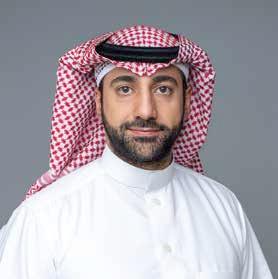




The concept of the AI-empowered human avatar – wherein staff receive AI input and output in real-time to optimise service delivery – might sound like science fiction, but it is fast becoming an operational necessity. It allows the human to retain the crucial emotional connection and physical presence while benefiting from AI’s rational processing power. Our focus must be on designing systems that support this delicate balance.
The final frontier is designing experiences that are commercially viable while feeling authentic and transformative. This requires a forensic approach to place-making. For our incredible natural environments, the approach must be to curate, not merely build. This principle – integrating development seamlessly with the
environment – is vital for sustainability and supports the transformation economy, which focuses on experiences that offer genuine, lasting change rather than fleeting entertainment. This includes the rapidly expanding wellness sector, which spans longevity clinics to spiritual relaxation and is driving cross-segment growth globally.
Finally, we must recognise the immense opportunity in optimising existing tourism assets, particularly religious tourism. By focusing on the right experience mix and more intentional programming, destinations can significantly increase dwell time, shifting the average stay from four to eight nights and unlocking deeper economic, cultural and spiritual value without expanding physical footprint.
The commercial success of our destinations is also heavily driven by mega-entertainment and sporting events. These are not just fleeting shows; they are powerful placemaking assets. High-profile events such as the Jeddah F1 Grand Prix, which generated tens of thousands of jobs, require specialised operational and design advisory to ensure the infrastructure and event logistics are world-class, driving both immediate revenue and long-term tourism appeal.
The insights from Tourise confirm that the ambition of Vision 2030 is matched by its strategic complexity. The next phase of Saudi tourism will be defined by precision over volume, authenticity over spectacle and connection over transaction.
As the sector evolves, the real opportunity lies in translating these imperatives into places and experiences that resonate with people on a human level. Destinations that reflect cultural depth, respect the natural environment and offer clarity of purpose are the ones most likely to inspire lasting loyalty. In this context, design becomes not just a creative exercise but a catalyst for building true advocates for the Kingdom.



Saudi Arabia’s marketing industry has grown up.
The budgets are bigger. The platforms are sharper. The talent is better. The ambition is undeniable. We are no longer an emerging market finding its voice. We are a serious market with serious influence, real scale and global attention.
Which is precisely why one uncomfortable truth needs to be said out loud: Saudi marketing is becoming too polite for how far it has come.
We, marketers in Saudi Arabia, are playing it safe at a moment that demands courage. We are choosing niceness over honesty. And in doing so, we are slowly sanding down the very human edges that make brands memorable, those same brands that Saudis grew up with or have come to advocate for.
Khalas! The mask is off. This is no longer about religion, culture or values. Saudi society is beautifully complex, confident and far more nuanced than the way it is often portrayed in advertising.
This is about marketers playing it safe. I’ve sat in enough approval rooms to know how often the safest idea wins not because it’s right, but because it’s easier to live with.
More specifically, it is about a growing habit among marketers in Saudi Arabia to hide behind ‘respect’, ‘sensitivity’ and ‘alignment’ as a convenient excuse for creative fear. Campaigns are increasingly designed to survive internal approvals rather than engage real people. The safest idea in the room wins. Not because it is the best idea, but because it pokes no one.
If your campaign can be approved by everyone in the meeting, chances are it moved no one outside it.
We are marketing to humans and humans are unpredictable, impulsive, emotional beings. Yet the ads we keep creating don’t reflect this.
Humans get bored. Humans want more. Humans speed. Humans bend rules. Humans contradict themselves.
People in Saudi Arabia, like humans everywhere else, are inconsistent by nature. They care deeply about values yet they aspire, compare, indulge, restrain, rebel and conform; often within the same day. They love tradition yet chase progress. They speak about responsibility yet occasionally act on impulse. This does not make them immoral. It makes them human. Marketing that pretends otherwise is not ethical. It is dishonest. And dishonesty in marketing is rarely loud. It is quiet. It looks like smiling families at sunset. It sounds like generic voiceovers talking about family, often with one son and one daughter, perfectly balanced, perfectly behaved. It talks only about happy times, cultural pride and ‘moments that matter’. It is as unreal as the man in the perfectly pressed thobe who never sweats, never rushes and never has a bad day. It feels safe. And it is instantly forgettable.
Some of this instinct to sanitise is understandable. Look around the region and



you’ll see markets that have mastered polish. There are markets nearby that have perfected comfort. Places where efficiency is flawless, infrastructure gleams and even ambition is well-organised.
Unsurprisingly, their marketing follows suit. It is immaculate, inoffensive and engineered to disturb absolutely no one. Everything is beautiful. Everything is agreeable. Everything is carefully rounded until it reflects nothing sharp back at the audience. Polished to perfection. And emotionally sterile.
Saudi Arabia still has something rare by comparison: Friction. Tension. Contradictions. Energy. Youth. Ambition. Confidence mixed with impatience. Respect blended with
Mohamed Yousuf Naghi Motors’ Bilal Hallab explains that in an era when Saudi Arabia is changing fast, its people are changing faster and its market is changing the fastest, marketing can either reflect that complexity or flatten it into safe, smiling wallpaper.


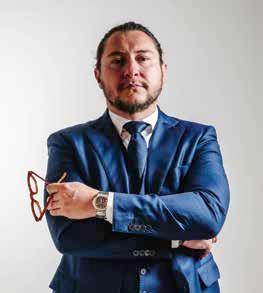
defiance. That friction is not a problem to be managed. It is creative fuel. And we would be foolish to iron it out too early in pursuit of universal approval.
The uncomfortable part marketers in Saudi Arabia need to sit with, I believe, is that Saudi marketing has matured enough to handle honesty now. And at this scale, honesty is no longer a risk, it is authentic; it is a competitive advantage in a market where sameness is already showing diminishing returns.
The excuse phase is over. We can no longer hide behind the idea that the market is ‘not ready’. Readiness is not something audiences lack. It is something marketers postpone when they are afraid of accountability.
Mature markets are not defined by how carefully they speak. They are defined by how clearly they think.
Honest marketing is not about shock value, it is about efficiency. Saying the one thing people will remember instead of 10 things they will forget. It does not require provocation for the sake of provocation. It requires specificity, a point of view. The courage to accept that not everyone has to like what you say for it to work.
Brave brands are not louder. They are clearer. They allow tension to exist instead of resolving it too quickly. They use humour without apology. They communicate confidence without explanation. They stop trying to sound like public service announcements and start sounding like humans with intent.
This is not a call for recklessness. It is a call for precision. For editing with purpose. For trusting that audiences are more intelligent and more emotionally complex, than we often give them credit for.
Saudi Arabia is changing fast. Its people are changing faster. And its market is changing the fastest. Marketing can either reflect that complexity or flatten it into safe, smiling wallpaper designed to pass approvals and disappear from memory.
One of those builds brands. The other builds comfort. Only one survives.

From strategy to storytelling, visuals to voice, we do it all.
A one-stop destination powered by award-winning experts who don’t just follow trends but set them. Take your brand to the next level.




































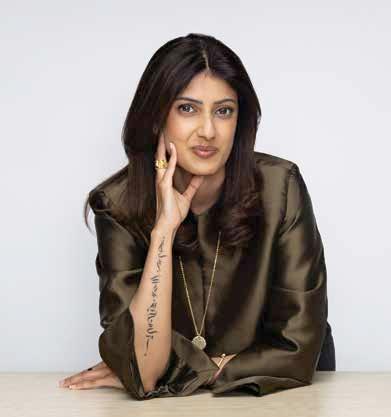
GEMS Education’s Suad Merchant calls for marketers to shift from attentionchasing to trust-building in 2026.
Aparent once shared a decision he did not expect to reverse. Drawn by confident early conversations and a clearly articulated promise, he moved his child from a familiar, wellreputed school to another that appeared to offer more. Six months later, he moved his child back. Not because the new school’s promise lacked intent, but because it did not consistently show up in his and his child’s daily experiences. Having experienced alternatives, his confidence grew in his child’s former school because of what consistently showed up as real experience. Somewhere through our long chat, he reflected that an educational institution’s credibility is accumulated quietly and over time. That reflection captures a shift educational marketers can and should no longer ignore.
Across markets, trust in institutions has declined. Education has not been immune. Parents are more informed, more connected and more value-led than ever before. They have learned to rely less on polished claims and more on peer conversations, lived experiences and signals gathered over time.
This is especially true among younger millennial and Gen Z parents, for whom direct recommendations, community feedback and peer validation through everyday interactions carry more weight than formal ranking reports or brand claims. Visibility without credibility no longer converts. Attention without trust does not sustain enrolment or loyalty.
What this really means is simple but uncomfortable: trust cannot be created at the point of enrolment. It forms gradually, through repeated moments of alignment between promise and practice.
This is where educational marketing must fundamentally evolve. Brand is no longer experienced primarily through campaigns. It is experienced through behaviour.
Parents and students are forming perceptions long before and long after any admissions interaction. Through how schools communicate during moments of change. Through the consistency and continuity of teachers. Through how wellbeing is supported, concerns are addressed and uncertainty is handled. Every touchpoint becomes a signal. Over time, these signals accumulate into belief or doubt.
This requires a shift away from campaign-centric thinking. Seasonal enrolment pushes will continue to exist, but they can no longer define brand strength. Educational marketing must operate with continuity rather than urgency, stewarding long-term narratives that remain coherent across years, cohorts and stages of a learner’s journey.
This environment requires marketing leaders to act as custodians of alignment rather than promoters of programmes.
Education now has access to more data than ever before. But in a sector built on care, safety and long-term relationships, how data is used matters as much as what it reveals.
Families value clarity and transparency, but they are increasingly sensitive to over-targeting, aggressive remarketing and excessive lead nurturing. These tactics, more often than not, erode trust.
The most effective education marketers in 2026 will use data to inform decisions thoughtfully rather than deploy it loudly. Precision will matter more than volume. Context will matter more than optimisation. Restraint, often overlooked, will become a mark of credibility.
In the Middle East, this shift carries particular weight. The region brings together high family mobility, multiple curricula and ambitious national visions for human capital development. Parents are discerning and deeply invested in outcomes that extend beyond academics.
‘‘The year ahead will not reward louder messaging or sharper claims. It will reward clarity, credibility and consistency.’’
In 2025, the sector reached an inflection point. For years, schools borrowed heavily from consumer marketing models –optimising funnels, chasing reach and measuring success through short-term enrolment metrics. Visibility increased. Awareness grew. But they did not address a deeper structural imperative. Families no longer choose schools primarily because they see them. They choose them because they trust them. Education has never been more visible and yet trust has never been more fragile.
Trust has therefore emerged as one of the most strategic indicators of brand health in education.
In this context, educational marketing must mature from competition to contribution. The institutions that stand out will not be those that claim differentiation most loudly, but those that clearly articulate and consistently demonstrate how they add value to learners, families and society over time, not simply how they outperform peers.
Trust here is not a soft metric. It is the foundation of long-term relevance.
The year ahead will not reward louder messaging or sharper claims. It will reward clarity, credibility and consistency.
Educational marketing in 2026 must focus on a central truth: the moment of conversion does not certify an institution as trusted. Trust is built slowly, tested repeatedly and sustained through behaviour that aligns with promise and belief.
The institutions that understand this will do more than attract families. They will retain belief.
And in education, belief remains the most valuable currency of all.
By Suad Merchant, Chief Marketing Officer, GEMS Education
The new generation of guests prioritise value-driven storytelling and seamless digital journeys, redefining how hotels need to connect with tomorrow’s travellers, explains Pieter Van Beugen from DoubleTree by Hilton Resort & Spa Marjan Island.
The travel and hospitality industry is entering a defining chapter, one which has been in the works for quite some time. As guest expectations evolve and the market becomes increasingly competitive, marketing can no longer rely on scale, spectacle or short-term tactics alone. Today’s travellers are more informed, values-led and selective, pushing brands to rethink not just how they market, but why. From my perspective in Ras Al Khaimah and the UAE as a whole, the future of hospitality marketing is being shaped by authenticity, clarity of purpose and the ability to balance innovation with genuine human connection.
Millennial and Gen Z travellers are reshaping the definition of value in hospitality. Traditional markers of luxury are giving way to experiences that feel authentic, enriching and aligned with personal values.
We have already seen the shift. Over the next few years, flexibility, wellbeing and meaningful engagement with local culture will become even more decisive factors in travel choices. Marketing must move beyond glossy imagery to tell honest stories about what a stay truly offers, from how guests feel on arrival to how the destination connects them to its surroundings.
PERSONALISATION AS AN EXPECTATION, NOT A DIFFERENTIATOR
As we look towards 2026 and beyond, personalised digital engagement will no longer be a ‘nice to have’. Guests expect relevant, timely communication that reflects their preferences across every stage of the journey.
This shift demands smarter use of data, always handled with respect for privacy, alongside agile content strategies that cut through digital noise. The brands that succeed will be those that use
‘‘Marketing must move beyond glossy imagery to tell honest stories about what a stay truly offers.’’
personalisation to enhance clarity and trust, not overwhelm guests with complexity.
SEAMLESS TECHNOLOGY PAIRED WITH HUMAN SERVICE
I have noticed that guest behaviour is increasingly shaped by the desire for convenience without compromise. Digital tools should be utilised to simplify planning, booking and on-property experiences, while leaving space for meaningful human interaction.
Technology should support teams, not replace them. Marketing plays a crucial role in setting this expectation, clearly communicating how digital innovation enhances service, efficiency and personal attention throughout the stay.
INTEGRATED EXPERIENCES AND IMMERSIVE STORYTELLING
The future of hotel marketing, particularly within integrated resort destinations, lies in storytelling that brings multiple experiences together. As gaming, entertainment, dining and leisure increasingly converge, marketing must reflect the full lifestyle offering rather than isolated features.
Regionally, experiential luxury, social engagement and digital discovery will drive demand, requiring targeted, data-informed campaigns that speak to both leisure and entertainment-focused guests in a cohesive way.
Here at DoubleTree by Hilton Resort & Spa Marjan Island, these trends are already shaping how we operate and communicate. Our focus is on delivering consistent, family-friendly experiences that feel welcoming, flexible and genuinely valuable.
With our private beach, diverse dining portfolio, plethora of wellness offerings, sustainability initiatives and community engagement, our marketing reflects the experience guests can expect on the property. Digital innovation supports this journey, while our team remains at the heart of everything we do, ensuring service always feels personal and sincere.
The market is becoming increasingly crowded, and new hotels are popping up daily, so true differentiation comes from consistency and clarity of purpose. The future of hospitality marketing will hinge on building trust through authentic connection and delivering on promises at every touchpoint.
My advice to the industry is simple: focus on creating meaningful, memorable experiences that reflect your brand’s values. When marketing is rooted in genuine connection, loyalty follows naturally.











Volkswagen Middle East’s Virginie Ludmer shares that the time has come for a move from noise to intelligence, from campaigns to continuity, from spectacle to sophistication and from complexity to clarity.
Automotive marketing is entering 2026 with no shortage of tools, platforms, insights and ‘breakthroughs’. And yet, if we’re honest, much of the industry feels stuck. Not because we lack innovation but because we’ve confused activity with progress.
The challenge ahead is not about chasing the next shiny thing; it’s about becoming sharper, calmer and more intelligent in how we use what we already have. The brands that will win in 2026 won’t be louder; they’ll be clearer.
STOP FEARING AI. START USING IT PROPERLY.
Let’s address the elephant in the room: artificial intelligence (AI) is not coming for marketers’ jobs. It’s coming for our bad habits.
In automotive marketing, we are surrounded by complexity: from product variations and cycle to data insights, regulations and dealer ecosystems. If there is one industry where AI should feel like an ally, it’s ours.
Used well, AI doesn’t replace creativity or strategy. It removes the friction we must deal with. It accelerates insights. It frees marketers from spending hours on tasks that honestly add little value. We need to focus on judgement, storytelling and decision-making, the things machines still can’t do well – yet.
The danger in my opinion isn’t AI. The danger is using it lazily: automating content without thinking, optimising media without questioning the objective, or mistaking speed for intelligence. In 2026, the strongest marketing teams will be those who treat AI as an enhancement layer and not a shortcut.
‘‘The opportunity in 2026 is to move from campaign thinking to lifecycle thinking.’’
EXPERIENCE IS THE NEW BENCHMARK
Automotive brands often benchmark each other obsessively. But customers don’t live in categories. They live in experiences. When someone books a car service, configures a model, asks a question online or waits for a response, their reference point isn’t another automotive brand, it’s the best experience they’ve had anywhere. That might be Amazon. Or a travel app. Or a food delivery platform. Seamless, intuitive, fast and respectful of their time.
In 2026, marketing and user experience (UX) can no longer be treated as separate disciplines. The ad that promises simplicity cannot lead to a confusing website. We cannot deliver clunky digital journeys. Every touchpoint: from media to CRM to dealer follow-up should be part of the brand story.
Great experience is no longer a ‘nice to have’. It’s the minimum entry requirement.
We in auto marketing still love the idea of a big launch moment. And launches matter. But customers don’t think in campaigns. They think in phases: discovery, comparison, ownership, service and renewal.
The opportunity in 2026 is to move from campaign thinking to lifecycle thinking. That means designing communication that evolves with the customer, rather than resetting every quarter. It means using data not just to target, but to understand intent and context. And it means respecting where someone is in their journey instead of shouting the same message at them repeatedly. Consistency doesn’t kill creativity. It builds trust.
THE MIDDLE EAST REALITY: SOPHISTICATION, NOT SPECTACLE
The Middle East is often described as a ‘fast-moving’ or ‘high-impact’ market. That’s true, but it is also growing increasingly sophisticated.
Audiences here are exposed, discerning and very quick to disengage from anything that feels forced, irrelevant or overdone. Flash alone no longer impresses. Substance does.
In 2026, regional relevance won’t come from louder executions or bigger budgets. It will come from nuance: understanding cultural rhythms, consumer expectations and the right balance between aspiration and authenticity.
Brands that listen well will outperform those that simply broadcast.
PERFORMANCE AND BRAND ARE NOT ENEMIES
One of the most unproductive debates in marketing is performance versus brand. The truth is simpler: short-term results without long-term meaning don’t last and brand without accountability becomes irrelevant.

We as auto marketers need to be fluent in both. We need to measure what matters but also protect what cannot be reduced to a dashboard. Trust, perception, emotional connection: these are slow to build and easy to lose.
In 2026, the smartest teams will stop treating performance and brand as opposing forces and start designing systems where they reinforce each other.
MY TAKE ON WHAT THE INDUSTRY SHOULD DRILL DOWN ON
Here is my advice for 2026:
Clarity over complexity: fewer messages and better articulated.
Experience over exposure: focus on how it feels, not just how often it’s seen.
Intelligence over automation: thinking before scaling.
Continuity over campaigns: think relationships, not just moments.
2026 won’t reward noise. It will reward those who know when to speak, how to listen and where to focus. And that, ultimately, is a good thing for the industry.
By Virginie Ludmer, Marketing Director, Volkswagen Middle East

For decades, the playbook for sports marketing was simple. You buy the biggest billboard, sponsor the loudest event and slap a logo on the chest of a winning athlete. Visibility was the metric; awareness was the goal.
But in the Middle East, that playbook is being rewritten. We are witnessing a fundamental shift where fitness has evolved from a hobby into a primary lifestyle identity.
Recent industry data on the Middle East’s sports economy highlights a critical divergence: while viewership remains high, active participation is skyrocketing – not just in commercial gyms, but in unstructured, community-led environments. The modern consumer isn’t just watching sports anymore; they are living them.
At SQUATWOLF, we realised early on that visibility is just the entry ticket and that the real win is proximity. The future of sports marketing isn’t happening inside a stadium; it’s happening at 6:00am on a Tuesday with a run club.
In our region, people are building their social circles, routines and self-worth around training. Brands can no longer afford to be passive sponsors; we must be active participants. This necessitated a pivot from event-led visibility to building ‘always-on’ ecosystems.
Take a look at our partnership with performance community Collective 365. We didn’t just hand them out kits; we integrated into their routine. We learned that to win in this market, you must support the ‘hybrid athlete’ – the individual who runs a 10k on Monday and lifts heavy on Wednesday. These people are no longer unique fitness obsessives; they’re the colleagues and family members around us. By surrounding these packs with performance products and on-ground experiences, we are facilitating their lifestyle.
The biggest mistake brands make is viewing events solely as branding exercises. For us, every activation – from the SQUATWOLF Games to our recent massive ‘Mall Workout with Jason Grima’ – is a ‘live lab’. Digital data tells you what people click; on-ground data shows you what they actually do.
When we host the pack, we observe how fabrics hold up in Dubai’s humidity, which pockets are used and where the seams sit during a high intensity set. These insights are gold. They feed directly back into our product design.
Forget building based on a mood board in a distant office – we build based on the reality of a 30-degree winter run in Dubai. This feedback loop – real experience to insight to iteration – is what separates a clothing company from a performance partner.
Perhaps the most significant trend is the change in the narrative of who creates these
‘‘Forget building based on a mood board in a distant office – we build based on the reality of a 30-degree winter run in Dubai.’’
brands. For too long, the region consumed global icons – now, we are creating them.
SQUATWOLF is the first performance wear brand born in Dubai to step onto the global stage. We are challenging the rule that says global founders can’t look like us or come from here.
As we look forward to the next season of the SQUATWOLF Games, our definition of success has evolved. It is no longer about vanity metrics; it is about retention and depth. Are the communities we support growing stronger? Is our product performing better because we listened to the athletes wearing it?
In the new era of sports marketing, these are the questions that really matter.
By Anam Khalid, Co-founder and Co-CEO, SQUATWOLF
SQUATWOLF’s Anam Khalid explains why sports marketing is being built outside the stadium and into communities.
Horizon Holdings’ Mazen Jawad calls for relationships that last longer than their objectives, and pitches that bring clients and agencies together to create something meaningful and actionable.
I’ve spent 32 years in this industry and have been directly involved in the pitch process since 2005, both at a regional level and within global reviews that included our region. While our industry has evolved dramatically, one area has remained largely unchanged: the pitching process.
To be fair, many pitches we receive are human, inspiring, fair, and even fun and motivating. However, many still fall into one of two categories: A recycled, copy-paste brief issued by the same organisation repeatedly every one, two or three years, or a deck originally created by another organisation, where only the company name and introduction have been changed –accompanied by a strong emphasis on the importance of ‘results’.
A successful pitch, one that leads to a successful relationship and tangible business outcomes, requires mandatory presence, involvement, and participation from the client side. It’s simply impossible to run a meaningful review if the client expects the agency to build the relationship alone, or with minimal engagement from their end. The real winner of a pitch is not the agency that signs the contract; it’s the agency that wins the relationship and
‘‘Experienced agencies know how to ask the difficult, sometimes uncomfortable questions. The ones that are necessary to uncover the real problem.’’
subsequently delivers on the required business objectives. The win never stops at contract signature. That moment is only the beginning. At times, we see this client floating a similar pitch within a few months or a year at most.
Whenever we receive an invitation to participate in a review, the same initial questions inevitably arise:
Is this a real pitch?
Is the list of agencies have a fair chance to win? or is the winner preselected?
Is the organisation’s leadership aware of it? Is procurement aligned with marketing? With leadership?
Is marketing aligned with sales?
Is the decision maker going to be present during our pitch presentation?
Is there a realistic budget allocated to cover the list of deliverables?
This is where internal alignment becomes critical, and where the concept of relationship first plays its role – starting within the client’s organisation before extending to the participating agencies.
Improving fairness in the pitch process is also a critical priority. Agencies commit substantial investment – financial, operational and personal – whether internally or through external costs. This often means cancelling holidays, shifting priorities and mobilising teams in good faith, trusting in the transparency and integrity of the evaluation process.
Unfortunately, there are still instances where that trust is compromised, including situations in which ideas or work are taken and passed to a preselected partner. When this happens, the pitch ceases to be a genuine competition and damages the trust of the pitching organisation in future reviews.
The second, and perhaps the most important question agencies ask is: What are they really looking for? Too often, this is not clearly defined in the brief. In many cases, the real challenge lies beyond what is written – whether it relates to strained human relationships with a previous agency or deeper business issues that often remain unspoken.
This is where relationship-building becomes essential. Experienced agencies know how to ask the difficult, sometimes uncomfortable questions. The ones that are necessary to uncover the real problem.
Once identified, both parties can align on solving it together. When this happens, the relationship becomes a partnership, a single marriage working to solve challenges that then become far simpler to address.
If a client is serious about the pitch and genuinely committed to hiring an agency that drives results, then senior-level involvement is non-negotiable. Without this, the outcome is often predictable: a loss of time for both parties, talented agency teams unable to fully showcase their capabilities and ultimately, failure to extract the best from the participating agencies – regardless of whether a winner is announced.
Whether the pitch ends in celebration or disappointment for either side, the cause is almost always the same: relationship. Nevertheless, this relationship should never be used to favour one party over another, but rather to create an equal opportunity for all. The goal is not to ‘win the pitch’, but to win the relationship.
Much like dating, you cannot build an ideal long-term relationship – or marriage – without spending time together, understanding one another and openly discussing sensitive subjects and expectations. Only then do both parties truly have the chance to win a lasting relationship.
I will avoid diving into pricing, a topic that procurement executives understandably focus on. Once the relationship is established and a clear plan exists to achieve agreed KPIs, pricing discussions typically find their natural balance, resulting in a genuine win-win outcome.
In conclusion, we will continue to encounter countless short-lived pitches. Yet, we’ll also continue to value and celebrate the few that unite client and agency forces to create something meaningful and actionable. These are the relationships that endure, or at the very least, last longer and achieve their objectives.
By Mazen Jawad, CEO, Horizon Holdings
Marketing in MENA has entered a new phase - one defined less by incremental evolution and more by structural change. Media investment, audience planning, creative production and measurement are no longer operating in isolation. They are increasingly fused into continuous operating loops, where signals move in real time and outcomes are shaped as they emerge, not assessed after the fact.
In this environment, marketing’s role expands beyond execution. It becomes a growth engine – designed to influence commercial outcomes while they are being formed.
Over the past few years, artificial intelligence (AI) accelerated this shift. The industry moved through an adoption phase: teams learned the tools, tested use cases and experimented with new workflows. By 2025, this became table stakes.
The shift now is deeper – and more consequential.
AI is no longer an add-on to marketing. It is fast becoming the infrastructure marketing runs on: the operating system beneath how decisions are made, how work flows across teams and how outcomes are delivered at scale.
AI BECOMES THE OPERATING SYSTEM
AI has brought two things into the system: speed and intelligence.
Speed comes from automation. Intelligence comes from learning. Together, they allow teams to act in real time, using live signals rather than delayed reports.
The most advanced organisations are building AI into the core of how they operate. Budget decisions. Audience focus. Creative direction. Creator selection. All informed by connected data and continuous feedback.
In this environment, execution becomes faster by default. What sets teams apart is judgement.
AI scales thinking, but it does not replace it. Direction still comes from people who understand markets, behaviour and commercial pressure. As systems move faster, clarity of intent matters more.
AI adoption was the milestone. AI as infrastructure is now the baseline.
MEDIA AND CLIENT INTELLIGENCE COME TOGETHER
Media platforms are becoming more intelligent. At the same time, brands are building their own client led data models using commerce data, customer behaviour and first party insight.
The real progress comes when these connect.
Media channels provide reach, feedback and live signals. Client-led models provide context, memory and commercial truth. When linked, decisions become simpler and faster. Learning compounds across campaigns. Signals travel across channels. Teams spend less time interpreting data and more time acting on it.
CREATIVE DETERMINES WHAT SCALES
Creative now decides what reaches people and what does not.
Algorithms amplify what holds attention. Audiences engage with what feels relevant. Creative sits at the centre of both. It shapes what platforms promote and what people choose to share.
This changes how creative work is valued. Teams that treat creative as decoration miss the point. Creative is not the wrapper around strategy. It is the signal that determines whether strategy reaches anyone at all.
High performing teams build creative systems, not campaigns. Modular formats. Rapid testing. Clear feedback loops. Ideas
across the funnel. Creative adapts. Media spend adjusts. Creator strategy sharpens. When creators and retail media are connected, influence moves closer to conversion. Learning compounds. Decisions gain precision.
As automation increases, competition tightens. Marketing outcomes are now discussed alongside finance and technology, not in isolation. Chief marketing officers (CMOs) are working more closely with chief financial officers (CFOs) and chief technology officers (CTOs) to align growth, efficiency and infrastructure.
The focus shifts from reporting performance to designing outcomes. Marketing becomes part of how value is created, measured and improved across the business. Not a function at the edge, but a system at the centre.
As systems become more connected, siloed roles fade. Workflows move away from channel ownership and toward shared responsibility. Planning cycles shorten. Operating loops take their place.
What matters most are people who can see the whole picture. Teams need leaders and operators who can balance brand and performance; who understand creators and commerce; who can make trade-offs with confidence and act across the full portfolio.
Platformance’s Waseem Afzal makes the case for organisations that design outcomes deliberately and improve them continuously, connecting intelligence, media, creative and commerce into one system.
evolve based on what works, not what feels right in a presentation.
Creative advantage now comes from speed and learning, not polish or production value.
CREATORS AND RETAIL MEDIA CLOSE THE LOOP
Two channels sit closest to outcomes. Creators and retail media.
Creators shape consideration and trust. They influence what enters the decision, how value is understood and when action happens. Leading teams treat creators as managed assets inside the performance system. Always active. Continuously measured. Scaled based on impact. Retail media sits closest to transaction. Purchase behaviour, basket data and conversion signals provide the commercial reference point. These signals guide decisions
This is not about doing more. It is about designing roles around judgement rather than execution alone.
People matter more because systems rely on them to set direction. MENA is well positioned for this shift. Decision speed is high. There is a willingness to rebuild models rather than protect old ones.
By 2027, leadership belongs to organisations that treat marketing as infrastructure; that connects intelligence, media, creative and commerce into one system. That design outcomes deliberately and improve them continuously.
The foundations being laid now will define the next generation of market leaders.
By Waseem Afzal, Founder and CEO, Platformance

For a long time, purpose and environmental, social and governance (ESG) frameworks have lived comfortably in brand statements, campaign lines and annual reports. In 2026, I see that comfort disappearing. The conversation is slowly but surely moving away from what brands promise and towards what they can prove.
This shift matters for marketers. Purpose and ESG are no longer just storytelling territories; they are becoming signals of how seriously a business is preparing for the future. And audiences are paying closer attention.
What’s driving this change is not one single trend, but a combination of pressure points that are becoming harder to ignore. First, expectations are getting clearer. Sustainability claims are no longer floating in a grey area. Across markets, reporting rules
The year ahead for Al Masaood’s Marwa Kaabour discusses the shift from narrative to evidence, and the need for focus, compliance, integration and honesty around purpose as well as environmental, social and governance (ESG) initiatives.
are tightening and benchmarks are becoming easier to compare. That makes vague language risky and loose promises easier to challenge.
Second, ESG is increasingly linked to business confidence. Investors and partners are looking at how organisations manage resources, people and risk as indicators of long-term stability. In other words, ESG has gone from a side conversation to a key part of how resilience is judged.
And third, trust is fragile. Consumers are more sceptical of big sustainability statements, especially after years of greenwashing headlines. At the same time, many brands are becoming more cautious, unsure of how much to say without inviting criticism. This puts marketing teams in a tricky position.
LESS STORYTELLING, MORE SUBSTANCE
So, what does this mean for marketing and communications teams in 2026? Put simply, purpose storytelling needs to grow up. Emotion and narrative still matter, but they are no longer enough on their own. Audiences want to understand what has changed, not just what a brand believes in.
This means marketing teams will need to work more closely with the rest of the business. ESG does not sit in one department; it cuts across operations, finance, HR, supply chains and partnerships. Marketing’s role is to translate that reality into language people can understand, without exaggeration or over-simplification.
PURPOSE SHOWS UP IN PRACTICAL CHOICES
Another shift we are seeing is where purpose shows up. Increasingly, the most believable ESG stories are not built around standalone initiatives or campaigns. They are reflected in everyday business decisions.
Across the region, this is becoming more visible in core assets and infrastructure. When a major events venue such as ADNEC moves to operate fully on clean energy, supported by large-scale solar installations and clean energy procurement, it signals a long-term operational commitment, not a mere marketing exercise.
In areas such as mobility, energy and infrastructure, purpose is often visible in what a business enables – from improving efficiency and reducing friction, to supporting lower-emission models and smarter systems.
At Al Masaood, for instance, this shift is visible in how sustainability is being integrated into core operations and services. The Power Division’s partnership with Instagrid focuses on expanding access to cleaner, portable power solutions as a practical alternative to traditional generators. In parallel, Al Masaood Tyres, Batteries and Accessories has partnered with EVS Express to support electric mobility through services such as EV maintenance, battery diagnostics and charging support. These
examples reflect a broader reality facing many organisations: ESG becomes more credible when it is built into infrastructure and service models, rather than treated as a standalone narrative. For marketers, these examples are important reminders: Purpose works best when it is embedded into products, services and experiences, not layered on top as messaging.
The Middle East, and the UAE in particular, adds another layer to this conversation. Sustainability here is increasingly tied to growth, innovation and long-term competitiveness. As a result, ESG is quickly becoming a requirement, especially in sectors that shape how cities and economies function.
This creates opportunity, but also responsibility. Brands need to be clear about what is real, what is in progress, and what comes next.
Local relevance also matters. ESG stories resonate more when they connect to issues people care about on the ground, be it efficient use of resources, community impact, job creation, or building systems that support future generations. When purpose is framed this way, it feels more meaningful and less imported.
Looking ahead, a few simple principles can help guide purpose and ESG communication.
‘‘The most believable ESG stories are not built around standalone initiatives or campaigns.’’
Focus beats volume. It is better to do a few things well and communicate them clearly than to list dozens of initiatives with little depth.
Compliance is the baseline. Meeting requirements is expected; differentiation comes from what brands do beyond that. Integration matters. ESG should influence how brands operate and innovate, not just how they communicate.
Honesty builds trust. Clear, measured communication, even about what is still in progress, is more credible than polished but vague claims.
In 2026, purpose will be defined by who shows consistent action over time.
By Marwa Kaabour, Group Marketing and Corporate Communications Director, Al Masaood
CARMA’s Mazen Nahawi calls for the industry to focus on the ‘wisdom to do the right thing while being driven, ethical, excellent and generous’, and mastering humanity while attempting to master artificial intelligence (AI).
It’s clear to me that through the blinding blizzard of artificial intelligence (AI) hysteria, political turbulence and economic shakiness, one thing will separate winners from losers: who is better at building human connections.
In the short term, real and exaggerated AI platforms and campaigns will help marketers and data hacks win at pitches, reduce cost for creative work and accelerate processes. These are all good things. None of them, however, is a strategy of winning customers and keeping them for the long term.
The reality is simple: we can all search for strategies and recommendations on DeepSeek, Gemini and ChatGPT. Our creative colleagues will use Midjourney and Sora for their work and our tech colleagues will leverage Claude to power ahead. These fantastic AI tools will make the mundane obsolete, democratise the average and automate the lower third of the value chain.
But just as professional sport championships are now won or lost at the small margins of advantage based on experience, judgement, wisdom, grit and determination, the same will be true in the world of business.
Everyone will be able to do the basics. Anyone will be able to call up a decent strategy recommended by AI. Many will generate creative work out of the cloud and even more so, will tap into dynamic data sets for knowledge, whose accessibility was unthinkable just a few years ago.
Here’s what may not be available to all: the motivation to want to be the best and the grit to fight for it, through the best and worst of times. Similarly, the judgement to sit on a mountain of choices and options, but to take the path which leads to success, is a talent very few will have.
Finally, not a single AI platform, process or system will empower you with the wisdom to do the right thing while being driven, ethical, excellent and generous at the same time.
Wisdom does not come from reading or generating anything from technology; it is the result of countless human experiences which include deep scars from pain and conflict, and resilience fostered from countless struggles. It also comes from the humility
‘‘Here’s what may not be available to all: the motivation to want to be the best and the grit to fight for it, through the best and worst of times.’’
there is an inevitability that some jobs will go, but that doesn’t mean the people have to go.
The automation of that lower third of the value chain is growing the upper two-thirds of the value chain with new roles, ideas and responsibilities which more people can work in. Let’s do all we can to move people up that value chain and minimise job losses by being determined to do good for all those in our teams.
Mastering AI will be a key technical and creative effort. Mastering our humanity will be an even greater, and far more rewarding, challenge.
born of failure, and generosity grown from knowing nothing is good if it’s not shared. Most of all, this wisdom comes from the enlightenment of knowing that we are on this earth to love and be loved, not to write prompts and live off synthetic slop.
So, as we head into 2026 with an eye to winning more business and retaining that which we have, we will want to ensure our teams are technically ready to master everything from prompt engineering and generative engine optimisation (GEO) strategies to working creatively and building their proprietary language models and custom apps, which bring impact and value to their AI stack.
This fusion of technical and creative work will need to spread across every element of our businesses: from human resources (HR) and finance to marketing and product development. It cannot be the domain of IT or a single ‘AI department’ – it must be with every one of us, all the time and on all projects, no matter how small they may seem.
This process will not be easy as most AI is still dumb when left to its own devices or managed without expertise. It’s also not easy to create company-wide strategies which educate, inform and empower hundreds, if not thousands of people, in a relatively short period of time.
Let’s remind ourselves to move fast, but to be patient, accept failure and to invest in experimentation and customisation until our AI starts to really work for us at the scale we all know is possible.
It’s equally important to fight hard to not have team members fall behind. When the lower third of our value chain is automated,
The CEOs and HR leaders of today have their work cut out for them: not only do they have to train entire teams to master a new technology quickly, but they must also relentlessly remind everyone that business is not a raid on people’s wallets, but rather, it’s a purpose, focused on doing good in the world and helping people realise their dreams.
The corporate world has never done well at that calling. AI is going to change that: you are either going to end up running robots to do shallow work, or you will outrun the robots because your purpose for those you serve will always keep you at a higher level of success that no machine or human competitor ever will reach.
By Mazen Nahawi, Group CEO, CARMA
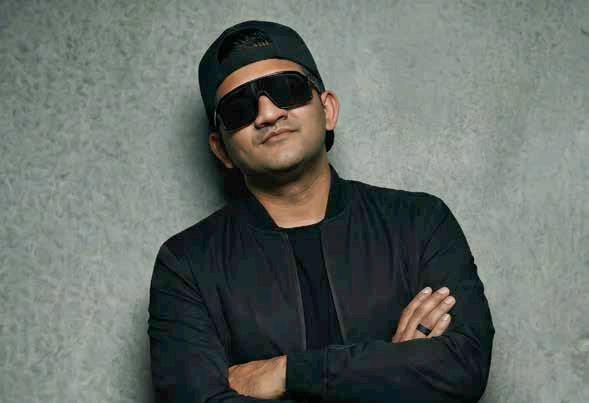
Publicis Groupe Middle East & Turkey’s Tahaab Rais ‘keeps it trill’, advising agencies to productise strategy and embed it across the lot to be the ones claiming the 2026 mic drop.
Yeah. Listen close again. The calendar flipped, and the noise began. A pulse. And then, a bang. 2026. Check it. 2026 walked in, no music, no cheer. Just a light in the room and a question made clear. No countdown clock, no victory lap. Are we building brands, or still feeding platforms’ generic stack? The market will keep growing, but money will move smarter, not louder, this time. It will hunt for proof, for commerce, for outcomes that last. For things you can show, not boring slides from the past. And the industry will tighten. When giants combine, it’s not love, it is math, in the end. Less overlap drag, more leverage gained. One spine, one system, not many loosely chained.
RISE OF THE MASTER CONDUCTORS
So, strategy needs to step out of the deck and the boring keynote slide. Stop being the function and become how things decide. The operating system, the way places think. How it will all brief, build, ship, learn, and sync. The strategists won’t be narrators at rest, explaining decisions after they’re blessed. The master conductors will be back, baton in the air, syncing chaos into something that dares. Outlaws with a cause. Inventors at play. Rebels who respect the rules, then bend them their way. Impatient to move. Generous
to teach. Humble enough to know none of this is self-reached.
But here’s the shift 2026 brings: We won’t just conduct people. We’ll conduct machines. Agents on agents, decisions on flow. Systems learning faster than meetings can go. We’ll move from attention to intention. We’ll brief agents, not just romance ads or case studies from the past. Not ‘show me a brand’ but ‘fix my life’. Comfort will be deferred. Creative will become the passport that gets you preferred. Not media tricks or shouting brands’ names, but trust, intent, relevance, and machine-amplified flames. Agentic AI will add more strategists to every existing team. Yeah, those will be the strategy teams that will reign supreme.
So, what happens to ideas and media in this light? The bar shoots up. Tolerance drops overnight. If AI will make thousands with no sweat or pain, our job will be the one that dares tension again. The one that feels human, specific, and true. Rooted in place, in moment, in who. Say it slow. Say it hot: Execution will be cheap. Distinctiveness will not. So, strategy will work with two hands at
once: One on the machine. One on the human. Built at machine speed, scaled with precision. But protecting meaning, for it’ll rest on human intuition and decision.
Pause. Because this is the part most will skip. 2026 is a ‘peoples’ year’ wearing a tech mask. Automation won’t erase cost. It’ll relocate the ask. From making to choosing. From output to fame. From speed as the win. To responsibility as the game. Budgets will tighten. Margins will be watched. Some will call “lean” what’s botched. That’s how cultures collapse, clean. When hollow replaces what once was keen. The fix isn’t slogans that glow on a wall. It’s capability building. For all.
Strategists will become builders of skill, not just slides. For everyone working at their sides. Business teams dig past the brief they’re fed, Find the problem beneath what’s said. Creatives get partners who stay through the mess, not correctness police, but idea-driven stuff that’ll impress. Brands will see systems, not campaigns without voice. Talent will survive and thrive by owning the shift. Not freezing in fear while machines get swift. Prompt craft will matter, but judgment will matter more. Knowing bland the moment it walks through the door. Mentorship will become insurance. Training will become retention. Empathy will become performance. Not poetry. B ut po-li-cy.
EQ won’t be soft. It’ll leadership tech. It’ll keep juniors learning, not frozen on deck. It’ll keep seniors evolving, not guarding their past. It’ll keeps every team human while systems move fast. The strategist’s ally in this year ahead would be an AI strategist, on the go. Reading trend reports while you sleep. Tracking culture shifts in real-time sight. Drafting ten routes while you sharpen the one. Worth being beside your name, when the day is done. HI plus AI. No ego. No war. As we become something more.
‘‘Say it slow. Say it hot: Execution will be cheap. Distinctiveness will not.’’
So, wakey, wakey companies. Else, sweet chin music you will hear. Right now, here’s the path ahead, and boy, it’s clear: Productise your strategy. Scope and charge for it right. Embed it across your lot. And when we (w) rap 2026, you’ll be the one with the mic drop.
By Tahaab Rais, Group Chief Strategy Officer and Film Director, Publicis Groupe Middle East & Turkey
Impact BBDO Group of Companies’ Ali Rez calls for a return to humanity at every level – from research and the conception of an idea to production and dissemination – while learning where to let the machines do the work for us.
In the 2000 film High Fidelity, John Cusak’s character Rob Gordon is seen arranging his vast collection of vinyl records, which for our purposes right now will be a very analogue metaphor for a search engine. Gordon is a music enthusiast, and has these records, which number in the several hundred. He is seen standing knee deep amongst them in his living room. Gordon’s friend, impressed with the collection, asks Gordon how he is planning to organise them.
“Chronological?”
“Nope,” responds Gordon.
“Not alphabetical,” notes the friend.
“Nope.”
“What then?”
“Autobiographical.”
INSPIRED BY EXPERIENCE
Last year, I bought myself a vinyl record player for the first time. I still have a hyperdigital music footprint, over several apps, but there was just something irressistable about going in reverse –going analogue. And I realised it all came down to a more personal, tactile experience. I don’t even have all the equipment to make the sound quality that different from digital compression, and really all I get is a run of four or five songs at a time, but it was the physical act itself of handling a record that did it for me. The experience.
genuinely understanding the nuances, values and lived experiences of the communities they seek to engage. This shift will lead to more meaningful storytelling rooted in real voices, local contexts and shared cultural truths: stories that resonate emotionally and foster a deeper sense of connection and trust. By focusing on locally driven insights and solutions tailored to clearly defined strategic challenges, creativity must move beyond
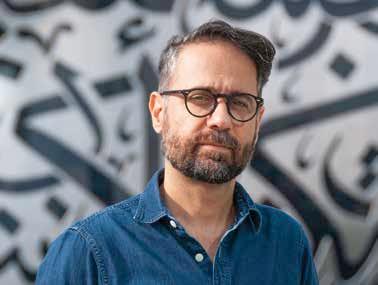
And this was my moment of a worthy and cliched LinkedIn post on “What this taught me about marketing and the future.”
PERFECTION IN IMPERFECTION
As the mad rush continues to create ever more realistic artifically generated content, we will see creativity lean equally on traditional craft to create that memorable difference. At times, the architecture of the content itself will be the idea. It’s not an accident that people continue to take the example of Open AI using 35mm film to shoot their commercials: there is magic in the imperfection of film stock grain, which became news in itself. Many campaigns will be created using artificial intelligence (AI)-led production – the ones that truly stand out will be the ones that utilise production in a creative manner. Think of that beautiful slight crackle on a vinyl record.
VOCAL ABOUT LOCAL
Cultural authenticity and relevance will become even more critical to creative work, particularly in regions such as ours that take pride in their distinct identity and independence from globalised, one-size-fits-all narratives. As audiences grow more discerning, superficial localisation will no longer suffice; instead, brands will need to invest in
‘‘Creativity must move beyond surface-level impact to deliver relevance that feels earned, human and enduring, ultimately driving stronger engagement and longterm brand affinity.’’
surface-level impact to deliver relevance that feels earned, human and enduring, ultimately driving stronger engagement and long-term brand affinity.
IMAGINATION OVERLOAD
Adobe frames the positive potential of generative AI as an invitation to embrace what it calls ‘surreal silliness’, a creative mode that goes beyond mere visual strangeness to actively intrigue, entertain,
and magnetise attention in an oversaturated media landscape. By encouraging creators to let their imaginations run unrestrained and challenging AI to keep pace, generative tools will unlock a new kind of visual freedom where logic, realism, and polish are no longer limiting factors. We are now firmly in the visual equivalent of the unhinged one-minute operatic climax of Queen’s Bohemian Rhapsody: a moment where excess, chaos and imagination collide, and anything goes. In this phase, audiences are not just open to the unexpected; they actively expect it. The cultural appetite has shifted toward the boldest, weirdest, and most boundarypushing ideas possible, and generative AI will become the engine that makes these once-impossible visions instantly real.
SENSING MORE USE OF SENSES
Experiences are going to be key drivers of consumer engagement: not indirectly, but tactile. With audiences growing more resistant to traditional, impression-based advertising, immersive and participatory experiences will offer a powerful way to build memory, trust and loyalty. Advances in technology such as AI, data analytics and hybrid physical-digital formats will enhance these experiences by enabling personalisation at scale, but the core value will always lie in human connection rather than novelty alone. And that’s where creativity will be paramount. Listening online to the heavy bass on Massive Attack’s Angel is nice, but try feeling it come through your feet, and your life will change.
I was asked to sum up the future of marketing in one word during a talk at Athar, and I jumped on: ‘Humanity’. While yes, there is going to be all this tech making everything more efficient and robust and measurable and oh-my-god-this-is-so-cool around us, the one thing that will make all of it ultimately successful will be the humanity that creativity will bring to it. Humanity at every level: research, conception, production and dissemination. Machines might be doing a lot of the work for us, but the direction has to be in our hands.
Circling back, Gordon goes on to explain why he has organised all his records autobiographically: “What I really like about my new system is that it makes me more complicated than I am. To find anything, you have to be me.” And there it is – the humanity of being you.
By Ali Rez, Regional Chief Creative Officer, Impact BBDO Group of Companies
Brands are dynamic by nature, but the strongest ones are anchored by an unshakable core. Strategies may evolve, tactics may shift and channels may multiply, but values should not. In an industry increasingly defined by acceleration, automation and scale, 2026 will demand something more difficult and far more consequential: judgement, intent and restraint.
Brand strategy is not a collection of tactics. It is the bigger picture that gives those tactics meaning. It sets direction, defines priorities and governs how a brand behaves over time. As artificial intelligence (AI) continues to compress execution cycles and multiply outputs, brand leaders will be required to make clearer decisions about what should scale and what must remain human.
The year ahead will not be shaped by chance. It will be shaped by leadership.
HUMAN JUDGEMENT WILL MATTER MORE THAN EVER
AI will continue to transform execution. Outputs will be faster, broader and more efficient. But brand strategy cannot be automated without erosion.
Brands are layered, nuanced entities. They speak to multiple audiences, exist across contexts and carry meaning that cannot be reduced to prompts or patterns. Understanding those layers – what to emphasise, what to protect and what to let evolve – requires human judgement.
In 2026, leaders will need to be explicit about where technology supports strategy and where it must not replace thinking. AI can structure, enhance and amplify. It cannot interpret culture, contradiction or intent. Protecting human-led strategy will become a leadership responsibility, not a philosophical preference.
EFFICIENCY WILL TAKE PRECEDENCE OVER SPEED
As automation increases velocity, sameness becomes the unintended outcome. When everything moves fast, differentiation weakens.
Brand strategy is a thinking discipline. It depends on research, debate, perspective and time. In 2026, the advantage will shift from speed to efficiency with intent, knowing what deserves focus and what does not.
Leaders will increasingly recognise that momentum without clarity leads to dilution. The brands that stand apart will be those that move deliberately, pace decisions carefully and
resist the pressure to respond to everything. Efficiency will be defined not by volume, but by relevance.
STORY WILL FUNCTION AS STRUCTURE, NOT DECORATION
Storytelling will remain central, but its role will mature. In 2026, story will move beyond campaign expression and operate as structure – the connective tissue that holds a brand together across touchpoints and moments of engagement.
Strong brands are not built on novelty. They are built on consistency of meaning. Narrative coherence creates familiarity, trust and memory over time. This requires discipline: reinforcing a clear point of view rather than reinventing it for every moment.
Story will no longer be treated as an embellishment. It will act as a strategic framework that guides how brands show up, speak and are remembered.
DISCOVERABILITY WILL BECOME A STRATEGIC RESPONSIBILITY
Search engines, social platforms, creators and communities have long shaped how brands are discovered. AI now joins this ecosystem as a powerful filter between intent and decision. In 2026, brands will increasingly be encountered without context or introduction. They will be surfaced through search results, AI-generated summaries, peer conversations
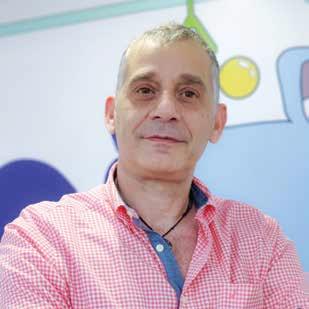
and third-party references. This makes discoverability a strategic responsibility, not a channel-level concern.
Leaders will need to ensure that when their brands appear, they are clear, credible and coherent. Discoverability without intention risks misinterpretation. Visibility without clarity offers little advantage.
Being discovered is only half the equation. Being believed is what determines value.
As audiences encounter brands through increasingly indirect pathways, trust will depend less on what brands claim and more on what can be substantiated. In 2026, belief will be built through evidence; consistent behaviour, thirdparty validation and tangible outcomes that reinforce credibility.
Brand strategy will need to account for how trust is earned in absence. Proof will matter more than projection. Leaders will be required to design brands that withstand scrutiny, not just attract attention.
Discoverability brings brands into consideration. Proof keeps them there.
The final shift is one of expectation. Brand strategy will increasingly be evaluated on endurance rather than immediacy.
There is no overnight success in strategy. It requires planning, execution, measurement, iteration and training. It is not one campaign or one channel, but the cumulative impact of sustained decisions made consistently over time. In 2026, leadership accountability will lie in commitment – staying the course, refining rather than resetting and resisting the urge to pivot at the first sign of pressure. Strategy only delivers value when organisations give it the time and focus it demands.
2026 will be the year brand strategy reclaims depth, patience and human judgement, not because the industry slows down, but because leaders choose to design for longevity in an AI-accelerated world. The outcomes ahead will not happen by default. They will be the result of intent, discipline and responsibility.
That is the work ahead.
By Ziad Faour, Head of Strategy, Entourage Marketing and Events
year ahead for
Entourage Marketing and Events’ Ziad Faour makes the case for human judgement, efficiency, storytelling, discoverability, proof and strategy that endures the test of time.

The
Romans’ Joe Lipscombe shares an interesting 2026 PR wish list: revolt, disorder and chaos.

Off the bat, this isn’t a predictions piece. I’ve loathed prediction commentary for the longest time. Financial analysts, armed with models and data, almost always incorrectly predict market performance. And I recently predicted Ruben Amorim would be successful at Manchester United. That alone should disqualify me from making any formal forecasts.
No, instead, I’m going to talk about what I want to happen in 2026.
As the great Roman Marcus Aurelius once explained, we should focus our energy on what sits within our power. Consider this my addition.
So, first thing’s first, the Middle East and North Africa (MENA) region’s public relations (PR) industry is too composed. It needs to let go of certainty. It has made a fine name for itself in its pursuit of high-level government and semi-government consultancy. Long may that continue. But homegrown brands are on the rise and they deserve a more experimental creative PR industry to push them into uncomfortable and rewarding spaces.
The superbly poetic – if not a little pretentious – Jim Morrison once said that he was drawn to revolt, disorder and chaos. As a lover of most tragically deceased musical icons, I find incredible comfort in that thought. I hope we can apply it more in our work.
That doesn’t necessarily need to rattle any nerves. It can simply be less polish, less consensus, less low stakes work that’s designed to pass the first layer of approvals rather than penetrate the first layer of culture. No piece of creative genius has ever come from safety or routine. Method, sure. But routine, nah.
‘‘Agencies must come together for the sake of their talent, work and sanity. In our market, where salaries, fees and deliverables vary significantly, if you’re not looking out for one another, you will struggle.’’
For the sake of my search engine optimisation (SEO), I’d like to see Stranger Things. A bit of risk. A dash of bravery. Why, even a peppering of friction.
Of course, nothing is a vacuum. To be creatively original and inspired, you need free time. That’s something in short supply in the MENA PR industry. Which leads me to my second wish: that agencies stop eating themselves for contracts.
As The Joker said in The Dark Knight, “If you’re good at something, never do it for free.”
In the past 24 months, discount culture, undercutting and surrender at the negotiation table has left agencies helpless. Left us
holding a soggy cucumber in a knife fight. Undercutting isn’t competitiveness, it’s a race to the bottom.
Agencies must come together for the sake of their talent, work and sanity. In our market, where salaries, fees and deliverables vary significantly, if you’re not looking out for one another, you will struggle. Simple as that. We need to become a collective. An industry with standards and an appreciation of the work – not to mention the process and method of creating that work. Good clients appreciate that and they pay for it. But it requires conviction. When the economics are broken, when you slash your fees by 60 percent to catch a retainer, you admit the work isn’t respected.
Which lands me delightfully on my third and final hope for 2026: that we properly recognise earned creativity. PR has always been good at amplifying the work of others, but times have changed. Our sector is perfectly poised to lead the next creative revolution. So why aren’t we?
Because the industry recognises the wrong work. The ad dressed up as a PR idea. The ‘day job done well’ dressed us as a creative breakthrough. We’ve seen it all. None of it is wrong, none of it is less important, but celebrating it as original and compelling work muddies the waters for the talent, agencies and clients.
So, we need to continue doing our day job well, but we need to stop pinning gold medals on it. We need to dig deep into the rigour of the fundamentals, but pull out the exceptional. We need to stop celebrating borrowed creative and hold up original, earned first thinking.
And that’s that.
As Marcus Aurelius reminded us, we can’t control the world around us, but we can control how we show up in it. I’d say that’s pretty solid wisdom, but I’m not supposed to plug The Romans.
By Joe Lipscombe, Partner, The Romans
Influencer marketing in MENA is officially out of its experimental era.
We’ve moved past the phase of chasing big follower numbers, glossy posts and one-off brand deals that disappear as quickly as they land on our feeds. Influencer marketing in the region is entering a much more interesting chapter, one that is defined by credibility, culture and creators who bring genuine skill and experience.
2026 isn’t about doing more influencer marketing. It’s about doing it better.
Big reach is out. Real relevance is in. Let’s start with the obvious shift: follower count is no longer the flex it once was. In 2026, Middle East and North Africa (MENA) brands are paying closer attention to who is listening and watching, not just how many. A creator with 40,000 highly engaged followers can often drive more impact than a creator with a million passive viewers.
An important factor here is how the algorithm changes across social platforms have shifted the focus from follower count to content quality, engagement and brand fit. The algorithm picks up content that is authentic and this is where the reach follows naturally.
Why? Because audiences here are smart. They know when something feels forced. They know when a creator doesn’t use the product and they are quick to scroll past anything that is not authentic.
The creators winning in 2026 will be the ones who speak to specific communities, whether that’s Saudi youth culture, Emirati families, Arab-speaking audiences, or niche subcultures that don’t always show up in marketing decks. Relevance, not reach, is what will cut through.
Creators are growing up and so is the industry.
Another big shift we’ll see in 2026 is how professional creators have become.
Influencers are no longer just ‘content people’. The serious ones are running businesses, which means that they understand brand objectives, content performance, licensing, usage rights and long-term value. Some have managers and editors, and others are just sharp.
At the same time, brands are raising their expectations. Posting ‘something nice’ isn’t enough anymore. Campaigns need structure, clarity and results.
This mutual maturity is a good thing. It pushes influencer marketing away from being transactional and toward being collaborative, where creators aren’t just execution partners, but strategic ones.
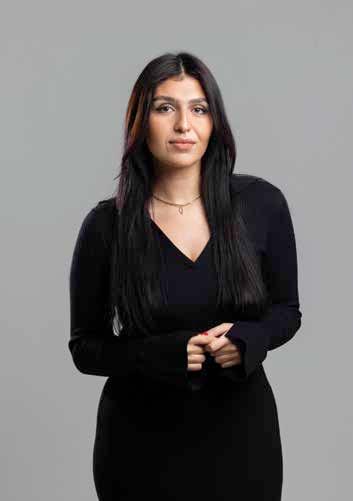
Vamp Middle East’s Zainah Yassin calls for education, respect for the audience and credibility within influencer marketing, as well as a shared understanding of best practices, measurement and regulation.
Regulation isn’t killing creativity; it’s building trust.
MENA has led the way when it comes to influencer regulation, especially in markets such as the UAE and KSA, and while regulations were once seen as restrictive, 2026 will further show us their real value.
Clear disclosure rules and licensing frameworks don’t limit influencer marketing; they legitimise it. In a region where trust, reputation and credibility matter deeply, transparency strengthens creator audience relationships. Consumers know where they stand, brands know what they’re investing in, and creators operate on solid ground. Influencer marketing isn’t a grey area any more and that’s a good thing.
Performance matters, but how it’s delivered also counts.
There’s no avoiding that influencer marketing in 2026 will be under more pressure to perform. Brands want to
see impact such as sales, sign-ups, app installs and brand lift. Influencer marketing is being measured more closely and integrated more tightly with performance marketing.
But here’s the catch: the moment brands over-script content, it stops working. MENA audiences have a finely tuned radar for inauthenticity. If a creator suddenly sounds like an ad, the magic is gone. The brands that win will be the ones that give creators space to tell the story in their own voice, while still aligning on goals behind the scenes. Structure is important and so is trust.
Local culture isn’t optional; it’s everything. One of the biggest mistakes brands still make is assuming influencer strategies can be copied from other regions and dropped into MENA. They can’t. Language, humour, timing, cultural references all matter. Arabic-first content, bilingual storytelling and locally grounded narratives consistently outperform general global campaigns.
In 2026, brands that invest in local insight and truly understand how platforms are used in the region will feel more connected and more credible. The rest will feel like outsiders trying too hard.
‘‘Influencers are no longer just ‘content people’. The serious ones are running businesses, which means that they understand brand objectives, content performance, licensing, usage rights and longterm value.”
Goodbye one-offs. Hello real relationships. Quick influencer deals aren’t disappearing, but they are losing impact. Audiences trust creators who show consistency, not those who promote a brand once and never mention it again. That’s why 2026 will see more long-term partnerships, ambassador programmes and creator communities across MENA. When creators and brands grow together, the storytelling gets deeper, the endorsement feels real and the audience believes it. This is where influencer marketing starts to feel less like advertising and more like advocacy.
So, what should the industry focus on?
In 2026, three things matter more than ever: education, respect for the audience and credibility. Brands, agencies and creators all need a shared understanding of best practices, measurement and regulation. People aren’t passive any more. They’re engaged, opinionated and values driven.
Most importantly, in a noisy digital world, credibility is the real currency. The creators who earn it, the brands that protect it and the agencies that prioritise it will shape the future of influencer marketing in MENA. 2026 isn’t about chasing trends. It’s about getting real and building influence that lasts.
By Zainah Yassin, Senior Partnerships Manager, Vamp Middle East
Artificial intelligence (AI) dominated the conversation in 2025. But attention, trust and culture were never about technology. They were, and always will be, about people. The creator economy now sits at the centre of how we connect in the digital world, shaping how audiences respond to experiences, products and moments.
As we move into 2026, the question is not whether creators matter but how influence itself is changing. As expertise becomes more specific, creators take new forms and opportunity expands far beyond the antiquated principles.
2025 marked a peak in creator culture, where collaboration and visibility often took priority. This era played a significant role in shaping digital behaviour and driving consumption, delivering real value for brands and creators alike.
However, as audiences become more conscious in their choices and the economic context tightens, the industry is beginning to recalibrate. Influence is moving away from volume and excess towards relevance, responsibility and longer-term value.
This sets the stage for the rise of the intellectual influencers. Platforms such as TikTok and Substack have reshaped what influence looks like, placing greater emphasis on expertise over popularity. Content creation has become increasingly niche, with audiences gravitating towards specific interests rather than broad generalisations.
From creators building highly engaged communities around animals and pets, to subject-matter experts breaking down policy, economics and public issues in accessible ways, influence now stretches far beyond lifestyle, fashion or beauty. The creator economy is maturing, and with that maturity comes a greater premium on credibility and relevance, not just reach.
To support this evolution, platforms are adapting in real time. TikTok’s evolution in the last five years proves the value in democratising storytelling and
storytellers. What began as an entertainment-first platform is increasingly rewarding longer-form, knowledge-led content that can be searched, saved and returned to.
Creators who explain, educate and entertain are gaining visibility alongside the big names, signalling a broader definition of value rooted in usefulness and trust. It is also worth noting that larger creators are now being held to a higher standard of ownership and content quality, as platforms increasingly prioritise well-crafted, meaningful content over audience size.
A similar pattern is emerging on LinkedIn, where creators offering perspective, industry insight and lived experience are consistently outperforming traditional brand-led content. Substack and YouTube reinforce this shift in different ways.
Substack prioritises depth and direct audience relationships through subscriptions and long-form thinking, while YouTube continues to reward consistency, subject mastery and time spent, favouring creators who build authority over time rather than chase short-term spikes.
Together, these platforms point to a future where influence is earned through sustained community building and niche, not fleeting virality.
THE INDUSTRY’S NEXT MOVE
For brands and agencies, this evolution demands more responsibility. It requires a fundamental rethink of how creators are identified, valued and integrated into the ecosystem.
The first shift is in creator selection. Data and follower counts are no longer reliable indicators of impact on their own. In 2026, brands will place greater weight on sentiment, credibility and audience alignment, recognising that smaller creators with focused expertise often generate deeper trust and more meaningful outcomes.
The second shift is in how creators are engaged. While I previously discussed co-creation in 2025, the next phase is about building ecosystems. Brands will work with a diverse mix of creators across platforms, tapping into different communities as needed rather than relying on a fixed roster or campaign-based activations.
From Reddit to Substack, LinkedIn to TikTok, these creators will increasingly represent real communities that are directly impacted by the brand, not just audiences
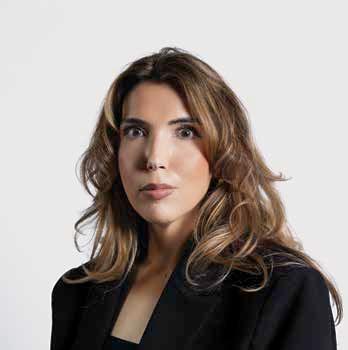
‘‘Data and follower counts are no longer reliable indicators of impact on their own. In 2026, brands will place greater weight on sentiment, credibility and audience alignment.’’
to be reached. This will force agencies to evolve their thinking. A new layer of capability will emerge, focused on identifying rising expertise rather than rising reach. Agencies will need to spot creators early, understand the nuances of their communities, and help build sustainable influence over time. In doing so, we become the curators and incubators of creator talent.
Ultimately, the advantage will belong to those who recognise this shift early and respond decisively. The creator economy is not shrinking. It is becoming more focused, more credible and ultimately far more valuable for brands and industries willing to evolve alongside it.
By Heena Mak, Group Head of Strategy, SOCIALEYEZ
In an age when ‘influence’ is evolving, SOCIALEYEZ’s Heena Mak calls for agencies to spot creators early, understand the nuances of their communities and help build sustainable influence over time.
Discussing the role of audio as a powerful medium RØDE – MENA’s Lara Sous calls for brands to understand local nuances, support the creator economy and empower creators to share their lived experiences.
As we turn the page into 2026, one thing is clear: the Middle East and North Africa (MENA) region is no longer just ‘emerging’. It has firmly taken centre stage as a leader in consumer tech and the creator economy space.
What makes the MENA region unique is not just its youth or its rapid adoption of AIdriven solutions, but it’s speed at which culture, technology and creators blend together, and in real time, build a creative space unlike any other.
Creators across the region are no longer just reacting to global trends; they are setting these trends in their own styles, formats, voices and standards. They are bringing local cultural relevance to global initiatives.
Here’s what we can expect to see more of in 2026:
Audio will continue to be a powerful medium in the region
In a region built on storytelling and cultural conversation, audio is finally having – and will continue to have – its moment.
By 2026, we will see:
Increased investment in studio-quality home setups across the region. It’s no longer about having strong visual aesthetics, it’s also about mirroring your aesthetics with sounding sharp and professional.
Continued rise in Arabic-first audio and video podcasts as well as engaging in genuine live talk formats.
A shift from ‘content for platforms’ to ‘content for community’. The audience wants content that not only looks good or sounds great, but also content that they can learn and benefit from.
Creators from different walks of life in MENA need tools that deliver pristine, broadcast-level audio without the broadcastlevel complexity. Professional sound, simplified for every creator at every stage of their journey.
MENA creators are maturing into the media scene
The MENA creator economy is growing at a sharp pace, paving the way for creators to tap confidently into the media space. Here, we will see:
More creators hosting long-form shows and vodcasts.
Strategic partnerships between creators and local entities, brands, and platforms.
Creator access to exclusive key opinion leaders (KOLs), spaces and points of view (POVs) that can only be offered from such partnerships and relationships.
A creator’s follower count is no longer the only benchmark; Creator success in 2026 –and in the coming years – will be greatly defined by the creator’s credibility, consistency and cultural relevance.
The market witnessed this shift few years back – around 2024 – but this has accelerated since then, particularly amongst tech reviewers, educators, podcasters and niche creators who thrive on loyal audiences and connections because they are trusted.
What does this mean for tech brands? This evolution opens the door for tech brands to move away from short-term campaign hauls to long-term, co-created methodologies that allow creators to deliver content in a unique and a sustained way, that resonates with both the creator and the brand.

‘‘The brands who succeed are those who speak and understand the local nuances.’’
Brand and creator partnerships become strategic, not transactional
In 2026, we may see brands move away from one-off influencer deals and more towards long-term partnerships, meaningful onground activations, shared storytelling and knowledge exchange.
It’s no longer a one size fits all and it’s certainly no longer about the number of followers. The creators who will stand out in 2026 and the years to come are those who will bring depth, originality, creativity and production quality.
AI versus authenticity
Yes, AI adoption is accelerating, and we cannot deny that using AI to streamline workflows, enhance production and reclaim time is smart.
But, we need to be wary of the basics. Audiences remain highly attuned to tone, language and authenticity. Human presence remains non-negotiable especially in realistic scenarios. Consumers are increasingly able to distinguish between AI-generated content and content created by real people.
The creators who will thrive here are those who:
Preserve their voice, style and personality, Maintain cultural nuance and local relevance, Use AI intelligently in their work while carefully balancing tech with authenticity.
Hybrid creation is the new normal
Creators in the MENA region are inherently hybrid, which means they produce content in multiple languages, across multiple platforms, between home studios, events and on-the-go locations.
By 2026, the demand will be for tech that is portable yet powerful, integrates seamlessly and effortlessly across workflows, and enables creators to go live, record and distribute without any hurdles.
This fast-paced hybrid reality is shaping how creators choose their tools and why ease of use, reliability and compatibility matter more than ever.
In conclusion, the region’s creators are building communities and defining new creative standards when it comes to reviews, authenticity, culture and innovation.
The brands who succeed are those who speak and understand the local nuances, support the creator economy and empower creators to tell their unique stories but at an elevated global standard.
By Lara Sous, Marketing and PR Lead, RØDE – MENA
Writing about social media trends has never felt easier – or harder. On one hand, artificial intelligence (AI) makes it effortless to manufacture a ‘perspective’. On the other it feels as though everything worth saying has already been said.
Spend five minutes scrolling and you’ll find everyone and their cat has a prediction post for 2026 – and many of them have begun to sound uncannily similar. The same phrases – ‘bankable assets’, anyone? – the same structures and the same conclusions. Polished, plausible, yet strangely empty.
This isn’t just an ‘AI slop’ problem; it’s a symptom. In 2025, AI matured in a quiet, destabilising way. It accelerated production to the point where volume is no longer a flex and virality is no longer linear. In doing so, it exposed a raw, uncomfortable truth: we are no longer sure what is real, what is credible or what is worth our belief.
Thousands gathered at the Brooklyn Bridge on New Year’s Eve, counting down to a firework display that never happened. They were there because of a fake video. #TrueStory. The moment became a kind of anti-spectacle – not just disappointing, but disorienting. A small example, perhaps, but a telling one. When enough of these moments accumulate, shared reality begins to crack. This is the context brands are entering in 2026. And many don’t fully realise it yet.
For years, the industry has debated formats, platforms and content mixes: short-form versus long-form, creator-led versus brand-led, or more recently – the migration to gaming or Substack. We talk about the ‘reinvention of search’ as if it’s a technical update. But the mistake is assuming that mere presence in these spaces solves the problem. It doesn’t.
For a brand to be relevant now, ‘showing up’ isn’t enough. Your presence must be believable. You must signal an understanding of the psychological state of your audience – not just the cultural moment, but the mental state behind it. This is where many brands are still focused on the wrong problems.
Authenticity, for instance, is still being treated as an aesthetic: unpolished visuals, shaky cameras and a founder in a hoodie. But authenticity isn’t a look. It’s about lived reality.
Does the person speaking anchor something real, or are they just performing relatability? Similarly, the debate around short-form versus long-form content misses the point. The real question isn’t length, but usefulness. In an information-saturated feed, success is less about views and more about what people save, share and return to.
Depth begins to outperform hooks – especially in an emerging ‘search everywhere’ culture, where Google is no longer the default starting point for discovery. Visibility increasingly depends on authoritative assets: content that genuinely answers questions rather than simply capturing attention.
This requires a shift in storytelling. Reactive, trend-chasing content doesn’t build memory. Narrative does. The winning brands in 2026 are those investing in ‘brand worlds’ – ideas that accumulate meaning over time rather than chasing a 24-hour cycle.
‘‘The deeper shift is that social media is moving from attention economics to trust economics.’’
In 2026, that may mean taking engagement off the feed altogether. Think: Closed communities. IRL experiences. Moments designed to be lived first and shared second. The real tension for brands won’t be ‘on-feed vs. off-feed’ – but rather, how to connect the two.
Nowhere is this tension more visible than in the Middle East. The region has long been one of the most digitally connected in the world, but historically it consumed far more content than it created. Today, that power dynamic has flipped. Saudi Arabia is no longer just “opening up”; it is exporting its own cultural code. Initiatives such as the Kingdom of Gaming aren’t just local activations – they show Riyadh positioning itself as a global creator of culture, not just a customer.
We Are Social’s Akanksha Goel reveals what brands are getting wrong about social media in 2026.
The deeper shift is that social media is moving from attention economics to trust economics. And trust doesn’t respond to more touchpoints or faster output. It responds to work that feels grounded – content, creators and cultural insight that help people orient themselves. When reality feels unstable – economically, culturally and politically – people retreat into what feels slower, more relational and more embodied.
We see this in the burnout narratives of 20-somethings, the rise of shared ‘admin days’ where friends meet just to manage life logistics, or the surge in bhajan raves and spiritual retreats. These aren’t ‘trends’ in the marketing sense. They are coping mechanisms.

The creative power structure has shifted and our creative briefs for 2026 are increasingly simple: if it doesn’t work in Riyadh, it doesn’t work. In low-trust environments, culture becomes the shortcut to belief.
The Middle East is stress-testing this shift in real-time. Brands here are often more comfortable with ambiguity and more willing to treat technology such as AI as infrastructure rather than a threat or ideology. While agencies elsewhere are bogged down in conversations about “risk and restriction,” the conversation here is simpler: How do we learn faster, together?
Ultimately, the scarcest assets in 2026 won’t be impressions or views. They will be belief and belonging. About how brands listen and how they build relationships with consumers and partners alike. About being human. Not just as a ‘tone of voice’ – but perhaps more, a mode of presence.
Sometimes that means fewer decks and more face-to-face conversations. For me, it meant taking longer to write this piece than planned, missing a deadline and letting the process show. In a year where everything can be generated in a second, taking the time to mean something is the most strategic move a brand can make.
By Akanksha Goel, Vice President, Regional Lead for the Middle East and India, We Are Social
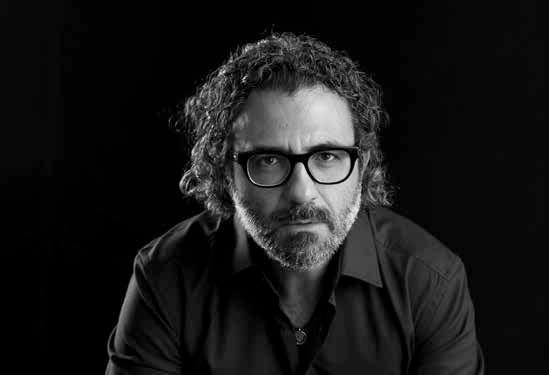
BIG KAHUNA FILMS’ Eddy Rizk makes the case for smarter content production over speed, the move to vertical and more personal framing, as well as a stronger focus on ideation, consistency and relevance.
If you look at the history of advertising, it has always been a back and forth with the audience. Brands put ideas out, audiences react, and the next move adjusts accordingly.
The dynamics hasn’t changed. What has changed is the speed, the intensity, and the number of players involved. In 2026, brands aren’t competing for attention in a one-onone exchange. They’re competing in real time, across platforms, with everyone else at once.
That’s why the brands that perform best won’t be the ones producing the most content, but the ones making better decisions about what they produce. With artificial intelligence (AI) and
‘‘As production speeds increase, quality becomes more noticeable. Audiences have become more experienced and selective.’’
accessible production tools, creating content is easier than ever. The challenge, always, is creativity. Not every idea deserves to exist, and not every message deserves attention.
This also means ideas can no longer be developed without considering how they will live and evolve. Platforms, formats and production complexity shape the idea from the start.
Take vertical video as an example. It sits at the centre of this shift. It’s not an adaptation of traditional content. It’s its own medium. People don’t sit down to watch vertical content.
It’s with them all the time. And they don’t experience it the way they experience film or television. They scroll, they pause, and they decide within seconds whether something is worth their time.
That’s why traditional storytelling rules break in vertical, and why stories need to be told differently. Openings must be immediate. Framing needs to be tighter and more personal, often built around faces rather than scenes. Pacing has to move faster, with meaning delivered early. If the first second doesn’t work, the rest doesn’t matter.
Brands that understand this treat vertical as a language of its own and focus on building
content that can evolve, adapt and scale across platforms.
AI will be fully embedded in workflows. Its real value lies in efficiency, not creativity. It should speed up processes like development, versioning, localisation, and optimisation, not replace creative judgment. When everyone has access to the same tools, ideation and creativity become more challenging.
And as production speeds increase, quality becomes more noticeable. Audiences have become more experienced and selective. And they are increasingly intolerant of forced brand presence, especially in environments they didn’t choose to engage with. Content performs better when people choose to engage with it, not when it’s imposed on them. Algorithms are now optimised for this behaviour.
Looking ahead, the future of content production isn’t about doing more or moving faster. It’s about working smarter. Understanding the medium, using technology appropriately, and focusing on ideation, consistency and relevance.
By Eddy Rizk, Founder and Chief Executive Officer, BIG KAHUNA FILMS
Events and experiential marketing, which is known to be an industry built on novelty, is facing an uncomfortable truth. Despite unprecedented investment, scale and frequency, many experiences today are failing to leave a lasting mark. Calendars are packed, attendance remains high, and social reach is easily achieved. Yet the emotional shelf life of most experiences is shrinking.
We are producing more experiences than ever before, yet fewer of them feel meaningful, memorable or worth returning to. This is the experience paradox shaping the market: abundance without resonance. It is not that audiences no longer care about experiences; it is that they have become far more selective about which ones deserve their time, attention and emotional energy.
As we look ahead to 2026, this paradox is forcing a recalibration. Not toward more activity or spectacle, but toward experiences designed with intention, depth and consequence. What is emerging is not simply the next iteration of the experience economy, but a transition, where experiences are expected to endure, matter and do real work in the world.
One of the most defining shifts underway is the move toward intellectual property (IP)-led experiential. Experiences are no longer conceived solely as expressions of a broader campaign. Increasingly, they are being built as intellectual property in their own right, with recognisable formats, narrative depth and the ability to evolve over time.
The strongest creative leaders, chief marketing officers (CMOs) and brand heads are already shifting from isolated moments to world-building principles. We are seeing ecosystems emerge across product, content, retail, experience and partnerships, supported by recurring cultural platforms, destinationanchored festivals and long-running sportentertainment formats. The experience itself is becoming the asset. IP reduces disposability. It builds familiarity, rewards return and allows meaning to compound over time. In 2026, experiential value will be judged less by immediate impact and more by how effectively an experience can live, grow and remain relevant within a brand or cultural ecosystem.
FROM ACTIVATION TO EXPERIENCE
Experiential is also moving beyond marketing into the realm of infrastructure. Across markets such as the Middle East, experiences are increasingly being used to shape city identity, attract talent, drive tourism and signal global relevance. These are not seasonal activations; they are long-term platforms operating at the intersection of culture, economy and reputation. For brands, this marks a fundamental shift. Presence alone is no longer sufficient. The questions have moved from 'how do we show up?' to 'what role do we play?' and 'what are we enabling?'. Experiences are now expected to contribute meaningfully to wider cultural and economic agendas, rather than simply occupy space.
EXPERIENTIAL ACCOUNTABILITY ACROSS THE VALUE CHAIN
As experiential takes on greater responsibility,
MCH Global’s Saheba Sodhi reveals the new weight
of experiential – the move from one-off moments to experiences centred in meaning – and what that shift demands of the industry.
accountability must be understood as more than metrics of attendance, it is also about bravery, narrative clarity and intent. The industry is entering a phase of maturity where scale alone is no longer impressive. Spectacle without story, or technology without meaning, quickly becomes noise. Accountability now demands that experiences take a position and justify why they exist in culture. In 2026, experiences will increasingly be judged not only by who attended, but by the strength of the story they told, the courage of the choices they made and what they stood for and how they created value.
Another notable shift is the return of the chosen analogue. This is not nostalgia, nor a rejection of technology. It is a deliberate response to saturation, bringing back loved symbols from different decades. As digital stimuli intensify, physicality, materiality and presence are being used with greater intent. In 2026, analogue will move beyond decorative gestures and begin to shape pivotal spaces

within experiences; objects that anchor memory, environments that encourage pause and rituals that foster connection. In an always-on world, these tactile moments are grounding and increasingly differentiating.
At the same time, creative technology is settling into a more nuanced role. In 2026, artificial intelligence (AI) will move towards greater function, showing up as an experiential operating system (XP OS). AI will increasingly support creative scenario-building, future mapping, providing insights from synthetic users, being a curatorial voice in the room. It will help moderate flow, shape narratives in real time and enable personalisation at scale. Used well, AI will not replace human-centred design, but expose where its boundaries genuinely exist, reducing friction, sharpening intent and bridging the unmaginable.
Taken together, these shifts signal a clear transition. We are moving beyond the experience economy and deep into the
‘‘The questions have moved from ‘how do we show up?’ to ‘what role do we play?’.’’
transformation economy, a phase where experiences are expected to carry sustained value across brands, cities, institutions and culture. Experiential is no longer treated as a moment in time, but as a long-term asset. It shapes how brands grow, how destinations compete, how enterprises express value and how creative ecosystems are built. The year ahead is not about doing more experiential. It is about doing it with clarity, restraint and intent. In 2026, the experiences that matter will be the ones strong enough to be carried forward … long after the lights go down.
By Saheba Sodhi, Global Head of Strategy and Experiential, MCH Global
Stagwell’s Sunil John answers the question: Between anxiety and opportunity, will marketing communications find its new identity?
Iam one of the 400 million streamers of Doechii’s Anxiety on Spotify. Don’t get me wrong.
I don’t feel like an ‘elephant is standin’ on me’ but I can feel its weight on the marketing communications (MarCom) industry.
Listen to the chatter: We either have cautiously optimistic predictions of a moderate growth era or shocker statements that traditional advertising and public relations models are passe and has morphed into digital and social media dominated by the platform companies. Between the two are wagers on the ‘transformational impact’ of artificial intelligence (AI).
The confusion is palpable. And the verdict clear: We are witnessing an industry – that has counselled corporates and governments, built brands, shaped leaders and helped transform economies – shaking at its core. As Doechii crooned, the industry can’t shake off its own anxiety.
THE CAUSE OF ANXIETY
Fewer industries have lost their North Star than the MarCom sector with the disruption by major digital platform companies such as Alphabet, META, Amazon and ByteDance, particularly during the last decade. Today, these platforms command ad budgets at scale leaving agency networks scrambling.
‘‘Agency networks need an internal robust technology layer that resolves complexities instead of multiplying them.’’
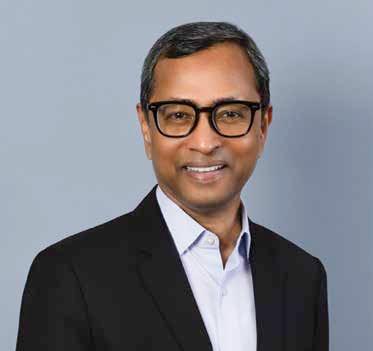
Even as agency networks touted ‘integration,’ they failed to see that they were handing over their core services to tech players who promised to execute campaigns at a fraction of the cost. If content once was the territory of the MarCom sector, it simply slipped into the domain of the tech ecosystem, which created its own usergenerated content platforms and distribution channels. To add to the heady mix is the growing tribe of influencers who command more mind space and marketing dollars than before.
What we have since witnessed is large agency networks acquiring, merging, rebranding, consolidating and trying in vain to keep a toe hold of their shrinking market share. Their desperate attempts to simplify their complex structure, built in the acquisition era when money was cheap, have spectacularly failed. Many of the mighty have fallen, and how!
Today, these major networks see the ground slipping under their feet. Tech platforms are increasingly owning what was their domain namely, the power of storytelling, the power to influence and the power to create. The uncertainty within the industry giants have led to job losses and increasing client movements besides falling revenue and shocking depression in stock market valuations reflecting the negative view of industry analysts. There are some great exceptions here, particularly those networks that made strategic investments in digital and data companies at the right time.
We all know the obvious: Digital platforms now control nearly 70 per cent of global $1tn advertising spend and are reshaping the economics of media and marketing. With platforms increasingly investing and innovating with AI and digital media, agency networks are only playing catch up. Even large networks that claim to be investing in AI are simply buying off the tech platforms rather than innovating themselves because they simply do not have the spending heft.
THE SWEET SPOT
Even as large agency networks and these platform behemoths face-off there will be a further rebalancing of power. But what most people are yet to see is a sweet spot for independent global networks that can help realise a Goldilocks order.
So, what makes such an independent global network thrive in the current market situation? Does size matter? It does. It must be the right size - neither too big nor too small. Some say not more than $5bn in revenue. They must be globally and regionally relevant. Having a common propriety tech and AI spine that bring all its brands and service offerings in one integrated whole delivering real impact for clients. Thriving in a heady mix of both tech and creativity in equal measure. Human led but AI fed.
This shift is imminent because our industry has learnt the inescapable truth: Acquisitions do not create genuine integration. Agency networks need an internal robust technology layer that resolves complexities instead of multiplying them. This tech layer is the connective operating system that unifies data, workflow, attribution and intelligence across paid, earned, shared and owned channels.
FROM
The MENA MarCom industry growth rests on the consolidation of a smart tech integrated model that most agency networks are building. We will leapfrog into the AI era faster than other geographies. Agency networks are now providing end to end retainers since clients are demanding fewer partners and more accountability.
While Doechii’s Anxiety is real for the industry, it is also a force for good: It can drive necessary change. For independent agencies and right-sized networks who are agile and collaborative and not lumber under organisational hierarchies, 2026 offers a real opportunity amidst the chaos.
By Sunil John, Senior Advisor – MENA, Stagwell
If the past few years taught our industry how to move fast, 2026 will test whether we know how to move with intent. The question facing marketing communications is no longer how visible we can be, but how valuable we truly are. Across the Middle East, marketing communications (marcomms) enters 2026 in a more mature and commercially connected position than even a few years ago.
Budgets are tighter, scrutiny is sharper and leadership expectations have evolved. Communications teams are now expected to demonstrate relevance to business priorities, not just fluency across channels. Activity alone is no longer a proxy for impact. The year ahead will reward clarity over volume, insight over output and relevance over reach.
One of the most important shifts already underway is the move from activity-led communication to outcomedriven strategy. Leadership teams are asking more direct questions: What did this initiative change? What behaviour did it influence? What business risk did it mitigate, or what opportunity did it unlock? In 2026, marcomms leaders will need to speak the language of growth, reputation, resilience and long-term value. Metrics such as impressions or engagement will remain useful, but insufficient on their own.
Communications will increasingly sit closer to strategic decision-making, with practitioners expected to advise, challenge and prioritise – not only amplify.
This evolution also demands greater discipline. Saying yes to everything will no longer be seen as responsiveness, but as lack of strategy. Teams and agencies alike will need to say no more often: to unnecessary launches, to cluttered narratives and to performative storytelling that looks impressive but delivers little. Restraint will become a core strategic capability.
As paid ecosystems become more saturated and audiences more sceptical, earned credibility will regain its influence, though not in the traditional sense of chasing coverage volume. In 2026, earned media that matters will be selective, contextual and expert-led. Journalists and platforms are increasingly drawn to voices that offer interpretation rather than announcements and perspective rather
than promotion. Thought leadership will need to be built through consistency and substance, not job titles or momentary visibility.
For brands and leaders in the Middle East, this presents a real opportunity. As the region continues to position itself as a global hub for business, culture and innovation, there is growing appetite for insight rooted in lived regional experience. However, credibility will depend on whether communication reflects genuine
‘‘2026 will reward deliberate communication. The strongest strategies will not attempt to be everywhere at once.’’
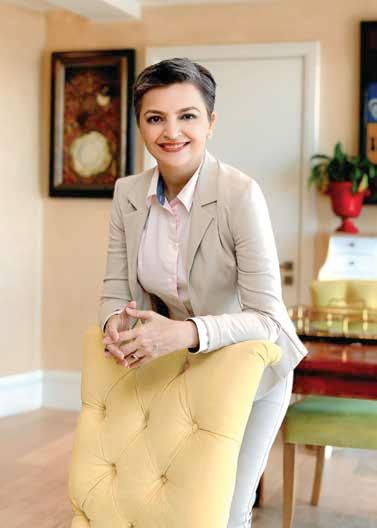
market understanding, rather than imported narratives that fail to resonate locally. The Middle East’s marcomms landscape is no longer emerging; it is influential. Campaigns originating in the region increasingly shape global conversations across sectors such as hospitality, real estate, technology and sustainability.
In 2026, effective communication will require a careful balance between local nuance and global confidence. This means understanding cultural context deeply, from tone and language to timing and audience sensitivities, while still articulating ambition on an international stage.
Generic global messaging will continue to underperform in a region that values relevance as much as scale. The brands that stand out will be those that clearly articulate why the Middle East matters to their story, not simply where they operate.
By the end of 2026, artificial intelligence (AI) will be fully embedded into marcomms workflows and the novelty phase will be behind us. The conversation will shift from whether to use AI to how responsibly and intelligently it is applied. AI will increasingly support research, scenario planning, content optimisation and performance analysis. But it will not replace judgement. The true differentiator will remain human insight, understanding context, anticipating reputational risk and making decisions where nuance matters.
As AI becomes more embedded, marcomms leaders will need to establish clear frameworks around its use. Governance, transparency and discernment will become as important as efficiency. Speed without judgement will no longer be seen as progress. Executive visibility will remain a priority in 2026, but presence alone is losing credibility. Audiences are increasingly discerning and they are looking for leaders who offer clarity of thought, not just frequency of appearance.
The most effective leadership narratives will be grounded in interpretation, how leaders make sense of change, what they believe about the future of their sector and where they see responsibility alongside opportunity.
Communication will need to move beyond commentary toward considered perspective. Ultimately, 2026 will reward deliberate communication. The strongest strategies will not attempt to be everywhere at once. They will choose moments carefully, articulate narratives with intention and measure success meaningfully. In a region moving at extraordinary speed, restraint may feel counterintuitive. Yet it will increasingly be the difference between being visible and being influential. The industry does not need more noise. It needs more clarity. And in 2026, clarity will be the true competitive advantage.
By Gita Ghaemmaghami, Leader –
Cicero & Bernay’s Ahmad Itani on why the future belongs to those who stop thinking in silos.
“There is no such thing as PR anymore.” Martin Sorrell delivered that line recently in true Sorrell style, with the kind of divisive proclamations he’s built a career on. The industry bristled, predictably. Defensive op-eds followed. The usual.
But Sorrell’s framing overshoots. It’s a punchy verdict with no prescription, mistaking evolution for extinction. What matters now is whether any craft, working in isolation, can still build trust at the speed at which reputations are currently made and lost. The firms gaining ground are those offering something broader: integrated advisory focused on reputation.
PR will never die. But PR on its own? That’s what no longer works. In 2026, I don’t see how any agency clinging to a single discipline can stay relevant for long.
This isn’t a criticism of specialisation. Depth is essential. The problem is when it exists in a vacuum. You can have exceptional talent across every function and still struggle to establish a coherent reputation. Each team delivers against its own brief. Each effort looks successful on its own terms. But expertise without integration is just a series of disconnected efforts, each optimised for its own metrics while the bigger picture falls apart.
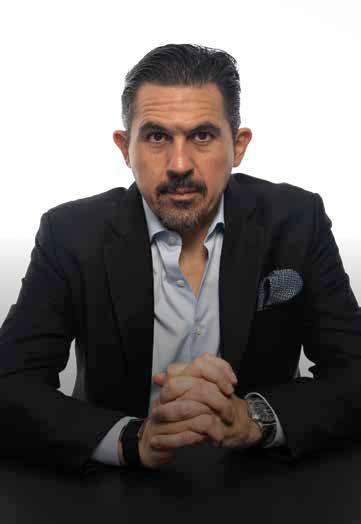
communication efforts make it nearly impossible to respond with any coherence.
Measurement presents a separate challenge. Behavioural psychology has a term for it: the McNamara Fallacy, which describes the tendency to make decisions based on what’s easy to quantify while ignoring what isn’t. We count impressions because they’re countable. We report coverage volume because it looks good on a chart. None of that captures how stakeholders perceive a brand, or if the work is creating new opportunities. When the only outcomes we can demonstrate are the ones our own industry values, we make ourselves easy to replace.
The environment has also grown less forgiving. Reputation is shaped in real time now, by audiences who don’t wait for official statements. A narrative can form in hours. By the time a brand responds, the story has already moved on. The window for influence has narrowed considerably, and fragmented
Then there’s the fact that the stakeholders have multiplied. Employees form impressions from what they read online. Investors pick up signals from a podcast or a LinkedIn post. A future hire makes up their mind before a recruiter even reaches out. Reputation is being built and assessed in places most companies don’t think to look, let alone coordinate around.
This is where integration stops being a nice-to-have. When perception is formed across this many touchpoints, the only way to build trust is through consistency. Not consistency of message, but consistency of intent. Showing up the same way in every context, whether it’s an interview, a campaign or a comment thread. That requires a different way of working. It demands people who see the whole.
The firms that survive will be the ones capable of building integrated teams as an operating reality. That means hiring a different kind of talent, including strategists
‘‘Integration means restructuring, hiring differently and changing how people are used to working. It’s messy and slow. But the cost of inaction is slow irrelevance.’’
who understand the full media landscape, creatives who can design for earned media and communications professionals who understand performance metrics. It demands fewer silos, tighter collaboration and a willingness to be held accountable for outcomes.
It also involves some uncomfortable conversations with clients. The setup where one brand maintains separate relationships with agencies that have never met each other might feel manageable, but it’s not working. The work will go to partners who can see the full picture and connect the dots.
None of this is simple to pull off. Integration means restructuring, hiring differently and changing how people are used to working. It’s messy and slow. But the cost of inaction is slow irrelevance.
The real insight isn’t that PR is dead; it’s that standalone disciplines, however strong, can’t carry the full burden of influence any more. The work has converged. The only remaining choice is whether you organise for that reality or keep defending a structure the market has already moved past.
In 2026, clients aren’t asking if you do PR or advertising or social. They’re asking if you can make it all work together. If you can’t, they’ll find someone who can.
By Ahmad Itani, Founder and CEO, Cicero & Bernay

FP7 McCann MENAT’s Nick Salter explains why in an age of ‘synthetic everything’, truth is the new (old) creative superpower.
Truth is under attack. Reality is distorted. And fiction, packaged in persuasive narratives and powered by algorithms, has never been more marketable.
We live in a world where it’s easier to invent truths than confront them.
A world where confirmation bias is rewarded, where narratives beat nuance and where emotion races past introspection.
The advertising industry, despite its best intentions, has not been innocent.
We’ve often romanticised the idea that you should never let the truth get in the way of a good story.
As though truth, by virtue of being true, must also be dull.
Flatter. Less cinematic. Not compelling.
But this idea couldn’t be further from the truth.
Because truth, when taken seriously, is potent.
Truth is surprising. Uncomfortable. Revealing.
It exposes tension, contradiction and absurdity that no strategist or artificial intelligence (AI) model could dream up. Real human behaviour is messier, funnier, more awkward, interesting and more powerful than anything fiction can manufacture.
Studies show when an ad is truthful, people like the brand more and they’re more likely to talk about it.
Look closely at any category – banking, cleaning products, automotive or pet care – and you’ll find
human truths so weird, so raw, they become the richest creative starting point of all.
Our Global Chief Strategy Officer Harjot Singh puts it beautifully: “find the weird.” Weird truths are what cut through.
At McCann, we believe in the power of Truth Well Told. It’s not just an anachronistic agency tagline from 1912. It’s our methodology.
Find the truth. Interrogate it. Break it apart. Reframe it. And then tell it well: creatively, consistently and in a way that moves both people and markets.
CREATIVE EFFECTIVENESS STARTS WITH TRUTH
Brands that confront the truth of their performance, their product, their culture, their audience, or their purpose will outperform those that hide behind convenient fictions.
Truth is diagnosis.
Truth is direction.
Truth is distinctive.
Truth is accountability.
Truth is an unfair advantage.
But it’s not enough to just find the truth. You have to wield and build on it consistently.
We’re living in a time of synthetic everything: synthetic content, synthetic influencers, synthetic intelligence ... and increasingly even synthetic truths. As the landscape shifts, the appetite for what’s real is quietly resurging. You can see it in the
return of ethnography, in the rise of community-led campaigns, in the demand for authenticity and subculture and in the success of brands that choose truth over trend.
We’re also entering an era of tougher decisions and trade-offs.
Inflation, geopolitical uncertainty, shifting demographics and accelerated disruption are forcing brands to get brutally honest: with themselves and their audiences. Truth, here, becomes more than a philosophy. It becomes a back-to-basics strategy that is anything but basic.
But truth, in the hands of a lazy storyteller, is wasted. It has to be well told.
In 2026, this philosophy is more needed than ever.
As strategists, creatives and marketers, our job isn’t just to invent. It’s to reveal. To take the truth and use it in a way that moves markets.
Because when everything else is fake, truth becomes an asset. And the brands that bet on truth will be the ones people remember.
If 2025 was the year of synthetic everything, 2026 may well be the year people rediscover the value in what’s real.
In 2026, don’t just tell a story. Tell the truth ... and tell it well.
By Nick Salter, Regional Head of Strategy, FP7 McCann MENAT
Another year has passed, and like many independent agency leaders, I’ve found myself revisiting our annual SWOT (strengths, weaknesses, opportunities and threats) analysis. There is one recurring weakness that refuses to disappear regardless of how much we invest in talent, technology or training. It is the persistent perception that independent agencies lack a sufficient volume of ‘relevant’ case studies.
This isn’t a complaint. It’s an observation, and one the industry needs to examine more honestly.
Red Dot’s Raksha Khimji says that borrowed glory is wearing thin and calls for case study conscience in 2026.
learnings behind many of these campaigns may belong to teams operating in entirely different markets, under very different cultural and commercial conditions.
For years, this model went largely unquestioned. Shiny decks, global awards and borrowed success stories were enough to win confidence. I see a meaningful shift on the horizon, particularly in the GCC, where brands are becoming more mature, ambitious and discerning.
Discussions are starting to matter more than decks. Proximity and context will matter more than pedigree.
My hope is that the era of borrowed glory will gradually give way to something far more valuable: accountability.
Marketers today are not looking for what worked for a competitor brand in South America. Nor are they interested in adapting or borrowing from what their local competitors executed three years ago. What they want are partners willing to borrow their logo and inherit the pressure that comes with it. Agency partners that step into the brand, not just the brief.
This requires a different kind of confidence from agencies and a different kind of questioning from clients.
An agency should be comfortable saying: “No, we haven’t worked in salty snacks. But we can demonstrate a deep understanding of impulse behaviour in low-involvement categories where repetition, visibility and ease consistently outperform persuasion in this region.”
Understanding how people buy is often more powerful than understanding what category they buy into. We would counter the salty snacks category experience by showcasing how we have successfully
applied the same thinking to a playful socks brand. No one wakes up intending to buy socks with cacti on them. Yet people do, driven by impulse, humour and context. The same behavioural truths apply across countless categories. The labels change; psychology rarely does. This is where case study conscience comes into play. Not as a rejection of experience, but as a more honest articulation of what experience actually means.
Trust is built when agencies and clients are transparent about what could go wrong, what might not work, and what, with the right courage, could work exceptionally well. It is built through open dialogue, face-to-face conversations, and the willingness to challenge each other early. In my view, the best case study is shared anxiety. If it doesn’t matter to an agency once a plan is signed off, then they are not the right partner for your brand. Real partnership shows up in the tension. In the moments when both sides feel the weight of the decision. Things do not always go according to plan. And if they do, the plan was probably too safe to begin with.
In 2026, trust and transparency in our industry will not be defined by who has access to the largest archive of case studies, but by those who have the courage to be honest about what they know, what they don’t, and how deeply they are willing to care once a brand is in their hands. That is case study conscience. And it’s long overdue.
By Raksha Khimji, Managing Director, Team Red Dot
One of the defining strengths of independent agencies is clarity. Clarity on where thinking is generated, where experience resides and where collaboration adds value without being misrepresented. We tend to be deeply embedded in a country or region, and firmly believe that while scale produces volume, focus produces ownership. We don’t have offices everywhere, or global new-business engines built to generate case studies on demand.
Yet category-specific experience continues to command a significant share of pitch scoring criteria, often to the disadvantage of independent agencies. This is where trust and transparency, two words used liberally but practised selectively, begin to fray.
When agencies present an extensive catalogue of case studies across categories such as savoury snacks or athletic footwear, the implication is that this expertise lives within the local team being appointed. In reality, the thinking, execution and
‘‘Discussions are starting to matter more than decks. Proximity and context will matter more than pedigree.’’
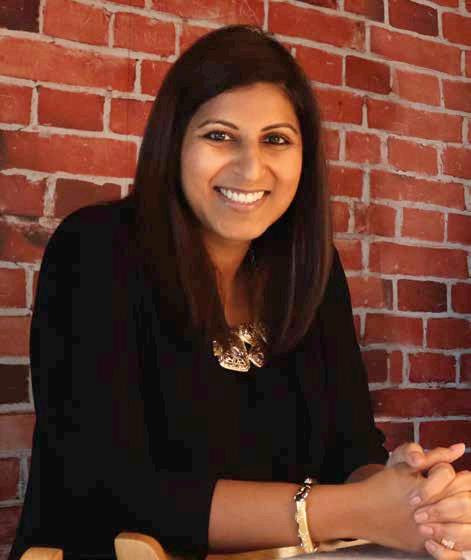
As we enter 2026, the convergence of data privacy, artificial intelligence (AI), and personalisation marks a defining moment for brands and marketers. What was once a competitive advantage – personalisation – has become a baseline consumer expectation. Yet this expectation is paired with unprecedented concern about how personal data is collected, used and protected, rooted in a new constraint – ethics.
According to the HAVAS 2025 Meaningful Brands Study, 66 per cent of consumers are more concerned than ever about the use of their personal data in the digital world. Against this backdrop, the decline of third-party cookies and the tightening of global privacy regulations are forcing a fundamental shift: from tracking-led marketing to trust-led growth. This concern is no longer limited to privacy alone, it extends to how algorithms decide, who they favour and why certain messages reach certain people.
In 2026, privacy and ethical marketing is no longer a compliance obligation. It is infrastructure. The brands that succeed will be those that treat ethical data use as a strategic asset, balancing relevance with respect and innovation with accountability. Privacy is the foundation, but ethics is the differentiator that transforms compliance into trust and relevance into long-term brand value.
FROM PERSONALISATION TO PERMISSION AND PRINCIPLE
Personalisation today operates at the intersection of data, consent and ethics. While consumers value convenience and relevance, they increasingly expect brands to demonstrate restraint, responsibility and intent.
This has driven a decisive shift toward first-party data and zero-party data, information that is directly collected or willingly shared. These data sources are not only more accurate and compliant; they are ethically superior. They represent a conscious value exchange rather than passive surveillance.
Ethical personalisation in 2026 is defined by three principles:
1. Intentionality: Using data only for clearly stated, user-understood purposes.
2. Proportionality: Avoiding over-personalisation that feels invasive or excessive.
3. Reciprocity: Ensuring consumers receive clear value in return for their data.
Without these principles, even compliant personalisation risks eroding trust.
PRIVACY MATURITY AND THE RISE OF ETHICAL MARKETING: THE NEW NORMAL
The global media ecosystem has now entered what can be described as privacy maturity. The deprecation of third-party cookies is still looming, and regulatory frameworks are starting to be in place. The question facing brands in 2026 is no longer “How do we be compliant?” but rather: “Are we being fair, transparent and accountable in how we influence people?”
Ethical marketing extends beyond data protection. It encompasses how audiences are targeted, how algorithms are trained, how creative is generated, and how outcomes are measured. It requires marketers to consider not just what is possible, but what is appropriate.
For leadership teams, ethical marketing is rapidly becoming a core governance issue, one that sits alongside brand safety, reputation management and ESG commitments.
There is something about the ethical marketing skills gap that could be highlighted – it’s a clear sticking point for many brands and agencies – there is a need for new roles or skills to drive this home and become reality. I would hazard a guess that a lot don’t really know how to navigate the topic –who is it exactly that should own this? Not so long ago there was a huge push for chief data officers but is it actually the role of a chief marketing officer (CMO) or a chief executive officer (CEO)? What happens when brands and agencies do nothing or get it wrong? What is the risk?
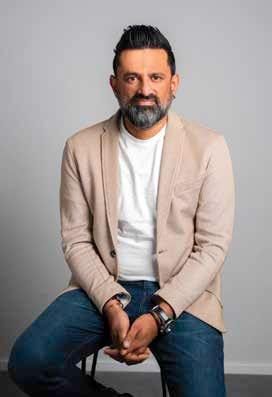
The technical toolkit of 2026 reflects this new reality. The industry has widely adopted privacyenhancing technologies (PETs), fundamentally changing how data is activated.
Data clean rooms have become standard infrastructure, enabling brands and publishers to collaborate without sharing raw personally identifiable information. Audience analysis, frequency management and measurement now occur within secure, neutral environments.
Synthetic data, generated through AI, is increasingly used to train models without risking re-identification. This allows marketers to simulate real-world behaviours while maintaining strong privacy safeguards.
Zero-party data loops now represent the most valuable data exchange. Interactive experiences, preference centres, polls and gated utilities create a clear value exchange where consumers willingly share data in return for relevance and utility.
In the year ahead, ‘ethical marketing’ will stop being a brand tagline and become an operating requirement because privacy isn’t just a compliance box, it’s the new basis of performance. The guiding principle is no longer “how do we track?” but “how do we compute without seeing?”
Perhaps the most defining trend of 2026 is the emergence of a privacy premium. Consumers are no longer passively aware of data practices; they are actively protective.
Brands that communicate privacy in clear, human language rather than legal jargon consistently outperform.
Research shows that transparent, user-centric consent experiences can deliver 15 to 20 per cent higher conversion rates, proving that trust is not a cost, it is a growth driver.
In this environment, privacy becomes part of the user experience. A privacy policy is no longer a document; it is a brand promise. If consumers feel surveilled, trust is lost permanently. If they feel respected and understood, loyalty follows. For the year ahead, the mandate for brands and agencies should be clear:
Decentralise data: Move away from large, centralised data lakes toward localised, purposedriven processing.
Audit AI provenance: Ensure all data used to train marketing AI is ethically sourced, consented, and compliant.
Reinvest in context: As tracking fades, highfidelity contextual targeting regains importance. If brands cannot follow users, they must meet intent where it naturally exists.
2026 marks a fundamental redefinition of marketing effectiveness. Growth is no longer driven by how much data a brand can collect, but by how responsibly it uses what it is given and that is the differentiator that separates meaningful brands from the rest.
Privacy is the foundation and the value exchange driver, but ethical marketing is the multiplier. Together, they create trust and trust is the most durable asset a brand can build.
The brands that will lead this year are those that treat data not as a commodity, but as a responsibility, not as leverage, but as a promise, between the brand and the human behind the screen.
By Naveen Chacko Mathews, General Manager, HAVAS Middle East
HAVAS Middle East’s Naveen Chacko Mathews explains why privacy is the foundation and the value exchange driver, but ethical marketing is the multiplier.
Carat MENA’s Fiona Black shares why 2026 will reward brands that understand people, not just platforms.
As we look ahead to 2026, one thing is becoming increasingly clear: technology on its own will no longer be the differentiator. In a region as dynamic and culturally layered as the Middle East, the brands that will truly stand out are those that pair technological progress with a deep understanding of human behaviour. We are entering a moment where empathy is no longer a soft value, but a strategic one.
We are operating in what dentsu defines as the algorithmic era. It’s a time marked by guaranteed uncertainty, accelerating automation and unprecedented choice. AI is reshaping how people search, shop, discover content and interact with brands. The pace of change is no longer linear; it’s exponential. Yet amid all this complexity, one thing remains remarkably stable: people themselves. Human needs haven’t changed. Our desire to belong, to feel understood, to make confident decisions and to engage with things that feel meaningful rather than noisy are constants. The opportunity for brands in 2026 lies in grounding innovation in these enduring human truths.
One of the most interesting tensions we see emerging is between simplicity and experience. Our brains are wired for efficiency. Artificial intelligence (AI)-powered search, agentic assistants and seamless commerce are removing friction from everyday life and consumers increasingly expect things to ‘just work’. But convenience doesn’t always equal satisfaction. In fact, some of the most enjoyable and memorable experiences are the ones that invite exploration, play, or participation. They don’t rush us to the end result. In 2026, brands will need to know when to optimise for speed and when to design for engagement. Not every interaction should be reduced to a shortcut. Sometimes, the value lives in the journey itself.
This balance is especially important in the Middle East. Digital adoption here is high, but cultural nuance runs deep. Audiences in this region are not passive recipients of global trends. They interpret, adapt and localise them through their own lens. Hyperpersonalisation without context can feel invasive. Automation without empathy can feel cold. The brands that succeed will be those that use data to enhance relevance while retaining human judgement, cultural sensitivity and emotional intelligence.
Another defining theme for 2026 is our innate need for connection. We are, at our core, social animals. Across the region, we’re seeing community-driven environments thrive, both online and offline. From live events and pop-ups to creator-led spaces, gaming communities and private messaging ecosystems, people are actively
seeking third spaces where they feel a sense of belonging. This has significant implications for brands. Communities cannot be built through reach alone. It requires participation, consistency and shared values. Brands that show up with something meaningful to contribute, rather than something to sell, will earn trust and loyalty over time.
This shift also challenges how we think about advertising and attention. Fragmentation is now the norm and traditional interruption-based advertising is increasingly easy to ignore. As American advertising executive and marketing genius H. L. Gossage famously said, people read what interests them and sometimes it’s an ad. In 2026, effectiveness will be driven by signal quality, not volume. That means understanding attention as a finite resource and respecting it. Brands need to earn their place within entertainment, content and culture, rather than forcing their way into it. Creativity, context and craft become essential in a world where relevance determines whether you’re noticed at all.
‘‘First, invest in understanding people, not just platforms. Second, build experiences that invite participation and foster connection. Third, sharpen craft across every discipline.’’
At Carat, we often talk about the importance of future-fit skills and this becomes even more critical as technology continues to evolve. AI can optimise, automate and predict at scale, but it cannot replace intuition, cultural fluency or ethical judgement. The role of agencies and marketers is shifting from execution to orchestration. Our job is to guide brands through complexity, helping them make decisions that balance performance with purpose. That requires teams who are not only tech-confident, but deeply human in their thinking.
For leaders across the region, the months ahead should be spent focusing on three priorities. First, invest in understanding people, not just platforms. Data is powerful, but insight is what gives it meaning. Second, build experiences that invite participation and foster connection. Community is becoming a currency and brands that contribute value will earn it. Third, sharpen craft across every discipline. Strategy, creativity, media and technology must work together seamlessly. Silos slow progress and the future will not wait.
Looking ahead, I’m optimistic. The Middle East has always been a market defined by ambition, experimentation and rapid evolution. 2026 will reward those who move beyond chasing the latest tools and instead focus on why people behave the way they do. Technology will continue to advance, but empathy will remain timeless.
The brands that get the formula right won’t be led by algorithms alone, but by leaders who understand people well enough to guide technology with purpose.
By Fiona Black, Managing Director, Carat MENA

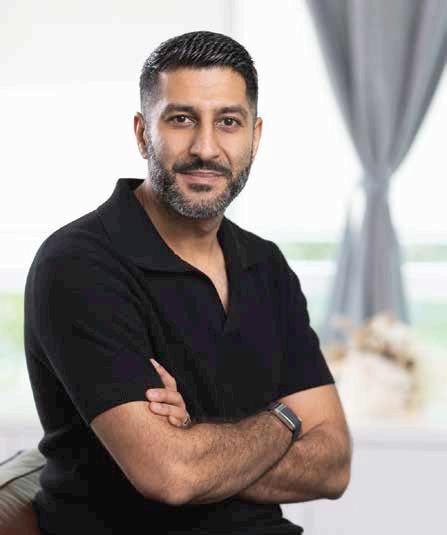
The marketing world has spent the last two years hooked on generative AI (Gen AI) and thinking about the impact it can have on driving radical business transformation. There certainly are many opportunities, from enhancing efficiency through automation through to content creation and the personalisation of customer experiences. Still, there is plenty more to come.
In 2026, we will witness the rise of agentic AI. Unlike generative AI, which requires constant prompting, agentic AI acts with goal-oriented autonomy. It won’t just help write the media plan; it will execute, optimise and learn from it in real-time.
For the MENA region, this shift is supercharged by unprecedented local investment. With Google Cloud’s expansion in Dammam and Doha, and the UAE’s ‘AI-first’ national strategies, the infrastructure for low-latency, sovereign and high-performance AI is finally here.
What does this look like in real terms? First, we have the self-optimising campaign, as agentic AI moves us from manual campaign management to autonomous orchestration. In traditional setups, a performance marketer must manually adjust bids, swap creatives, gather insights and pull manual reports based on daily and weekly performance.
An AI agent, however, operates within strategic guardrails to manage this entire lifecycle. It can monitor campaigns and track their performance 24-7, redistributing budgets from underperforming to high-potential segments across search and social platforms in real-time. Because these
As agentic
AI develops full
steam ahead in the MENA region, it creates a new paradigm for marketers, explains TRKKN’s Vimal Badiani.
agents can now leverage local Google data centres, they process real-time signals with near-zero latency, ensuring that a retail flash sale in Riyadh or a tourism push in Dubai reacts to consumer behavior the millisecond it happens.
Secondly, agentic AI also shortens the path between insights and delivery. As a ’force multiplier’, it transforms the agency team from a group of operators into a cohort of strategic architects. Agents can synthesise vast amounts of unstructured data, such as social sentiment in Arabic dialects or historical CRM logs, to quickly reveal deep-dive insights that used to take weeks of manipulating data. Speed is also a factor in workflow compression.
With agentic AI, multi-step processes, such as personalised video generation for thousands of micro-segments, are now compressed into hours. Instead of reporting back on the previous period, agency teams will predict results, such as churn or customers ready to leave. This will give companies an opportunity to intervene proactively and offer hyper-personalised, real-time customer experiences.
None of this would work without data and its value in the MENA region is at an all-time high. The establishment of local Google data centers is a game-changer for two reasons.
With data sovereignty, whereby data stays within the borders of Saudi Arabia, Qatar or the UAE, industries such as finance and healthcare that have previously been hesitant about cloud AI can now deploy autonomous agents while remaining compliant with local regulations.
The other reason is cultural context. Thanks to the collaboration with global tech leaders for regional initiatives such as Saudi Arabia’s PIF-backed AI hub, these agents are increasingly trained on localised Arabic datasets. This ensures that a marketing agent doesn’t just ‘translate’ a message but understands the cultural nuances and linguistic shifts of the local consumer.
‘‘We will witness the rise of agentic AI, which acts with goal-oriented autonomy.’’
In this new era, the marketer’s job is no longer to do the work, but to define the goal and the ethics. The agents handle the ‘how’, while humans focus on the ‘why’. As the MENA region positions itself as a global AI powerhouse, the agencies and brands that will win are those that stop viewing AI as a tool for tasks and start seeing it as a partner for outcomes. The infrastructure is ready and the data is local. The question is whether you are ready to hand over the keys to an agent.
By Vimal Badiani, Managing Director, TRKKN
If you’ve attended an industry conference in the past 18 months, you’ve likely witnessed the same ritualistic dance: agencies unveiling their proprietary AI platforms with the fanfare usually reserved for moon landings, while brands nod earnestly and wonder if they’ve just been sold very expensive plumbing.
Here’s the uncomfortable truth nobody’s saying out loud: the AI arms race is already over, and everyone won. Or more precisely, everyone who wants to compete can now afford to. What agency holding groups spent tens of millions building as their ‘unfair advantage’ is being replicated by startups at a fraction of the cost and launched monthly on Product Hunt – if you don’t know this site, check it out.
The technology, as they say, is becoming table stakes – like water from a tap, available to all who know where to turn the handle.
‘‘The companies pulling ahead won’t be the ones with the most impressive AI infrastructure. ’’
Which means the real competitive advantage in 2026 won’t be the sophistication of your AI stack. It’ll be whether your people know how to use it without burning out, checking out or clicking ‘generate’ 47 times until something decent emerges.
THE DEMOCRATISATION THAT NOBODY ASKED FOR – BUT EVERYONE GOT
Generative AI has done something remarkable: it’s flattened the playing field in a way that makes the internet revolution look leisurely. A two-person startup can access the same foundational models as a 10,000-person holding company. The difference isn’t the
technology anymore – it’s what humans do with it.
Yet organisations are still approaching AI like it’s 2019 software procurement: buy the tool, roll it out, add a Teams channel about it, job done. Then they’re baffled when adoption hovers at 23 per cent and the promised efficiency gains never materialise. The tool isn’t the problem. The absence of a humancentered change management is.
Because AI is still – still – only as good as the person behind it. The prompter who understands context. The creative who knows which output is inspired versus insipid. The strategist who can pummel the model with the right data and insight to produce something genuinely valuable rather than generically competent.
The companies that will genuinely transform in 2026 aren’t the ones with the flashiest AI toys. They’re the ones asking fundamentally different questions:
How do we redesign roles so AI augments work rather than turning it into slop?
What skills do our people need to become effective AI collaborators?
How do we build a culture where experimentation is encouraged and failure isn’t fatal?
How do we prevent AI from becoming just another ‘solution’ gathering digital dust?
These aren’t technology questions. They’re organisational, cultural, and deeply human ones. And they’re considerably harder to solve than a procurement request for proposal (RFP).
At Viola, our own journey through 2025 taught us this the hard way. We achieved roughly 12 per cent efficiency gains from AI integration – respectable, but not revolutionary. What was revolutionary was realising that this figure will only meaningfully accelerate as we shift from scattered experimentation to transversal integration across every function.
That shift isn’t about installing better models; it’s about transforming how our people work, think, and collaborate. It’s also
why we’re not surprised that our 80 per cent employee satisfaction score – validated by Great Place to Work – came in the same year we achieved 43 per cent topline growth.
When you empower your talent to use AI as a genuine creative and strategic partner rather than a productivity surveillance tool, remarkable things happen. People feel enhanced, not replaced. Capable, not obsolete.
THE BOTTLENECK ISN’T SILICON, IT’S CARBON
Your biggest limitation in 2026 won’t be your AI budget. It’ll be organisational readiness, skills gaps, change fatigue, managers who don’t know how to lead AI-augmented teams, and creatives worried the machines are coming for their metaphors.
The companies pulling ahead won’t be the ones with the most impressive AI infrastructure. They’ll be the ones who’ve cracked the code on the mushier, messier stuff: upskilling programmes that don’t feel like homework, leadership that models AI adoption rather than delegates it, cultures that reward intelligent collaboration between humans and machines.
Because AI is democratising capabilities, access is no longer the constraint. The constraint is whether you’ve got humans who are ready, willing, and able to wield these new superpowers without accidentally lobotomising the very creativity and strategic thinking that made your business valuable in the first place.
So, let’s all spec out our AI roadmap for 2026. Let’s just make sure the first line item isn’t technology, it’s people.
By Piero Poli, Chief Executive Officer, Viola Communications
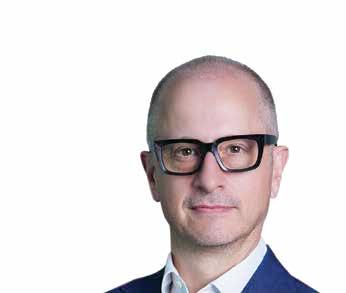


TBWA\RAAD’s Priya Cima shares an organisational development perspective and her excitement to launch into what she believes will be a unique and interesting year.
The biggest shift in every industry has been the inoculation of artificial intelligence (AI) and tech-enabled tools into almost all areas and functions. Specifically, within our industry it’s exciting to see how creativity can be enhanced and innovation elevated with the use of AI across the board. The result of the constant introduction of new technologies and the accelerating growth of AI, is that the focus will now be on scaffolding and upskilling our talent to answer the call for increasing requests on AI-based creative designs.
The traditional form of needs-based learning is not fast enough to keep up, and the way forward is to embed a mindset of continuous experiential learning that is responsive in real time. Building awareness is what’s happened until now. For tomorrow, we look forward to a more fully integrated practice and inclusion of AI into our everyday operations, which means being proactive, learning on the go, using tools that are recent, and building capability to create unique, award-winning deliverables for clients.
The first step is to have in place a robust learning strategy that can encapsulate the above, be delivered across levels and
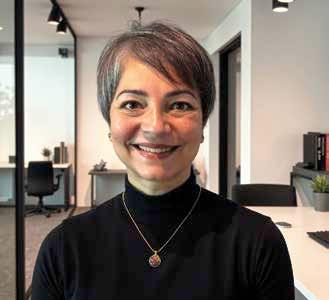
last few years and requires our talent to be agile, committed, with a working environment built on trust. The debate on the most effective and efficient way of working has been in the spotlight for some time now – and discussion on the controversial topic will continue into 2026 as, yet another generation enters the workforce.
Today we’ve got a first ever – a multigenerational workforce that spans almost five generations. In the working environment in the Middle East, we’re used to seeing a mixing pot of cultures come together – with varying communication and leadership styles and behaviors. Now we are adding some spices to the pot with the different generational norms, giving a new meaning to diversity and inclusion.
For tomorrow, we look towards building more human-centric work cultures – simply put, this means we must pay attention to one another, form connections and actively practice openness to differences, making sure there’s a sense of belonging and community. In other words, building on resiliency to manage the changing sets of expectations, dynamics and scenarios.
‘‘We must pay attention to one another, form connections and actively practice openness to differences.’’
functions, driven by quick, short, practiceoriented modules, that are part of our daily work. With the use of tech encroaching on administrative functions, we will see the need for upskilling in AI is not limited to creative teams and will include the entire talent cohort, on platforms that are easily accessible, up to date and cater to learning styles that meet diverse talent needs.
The dynamic shifts in the ways of working – remote versus hybrid versus in-person – is one of the bigger changes we’ve seen in the
My peers in organisational development are still waiting to see what the data tells us, but it is trending towards allowing talent to choose their preferred ways of working and working environment within a set of expectations and boundaries. This seems to be till date the most effective approach to building committed and present teams. I believe with the newer generation entering the workforce the push will organically move strongly towards a form of structured freedom, where talent will be able to choose how, when and where they work within a set of lines. And with that the anticipation is we will see people coming into the office more often than expected, as the human need for being part of a community and having connections hit.
Particularly in our industry, where creative brainstorming and discussion is a big part of work, and working together can be fun. But it’s giving that choice that is the key to maintaining commitment and motivation. With the previous years of seasoning, leadership and talent teams can now expand on putting in place the right and most effective pillars to support talent communities, including a working environment that feels like ‘home’, with more evidence-based measures to view outcomes for performance.
Specifically in our industry, where fostering creativity is vital, we will be placing more importance on building a behaviorbased culture, where policies, processes are a part of the way we work, and not something that needs looking up, imposed upon and explained. The newer generation seeks lesser controls, while the more experienced look to follow ingrained rules. A balance for all is finding that sweet spot between too many and too few, where the choice is made to prioritise policies based on the people represented within the community and the ethos of the agency. A simpler, leaner way of working to establish clarity, healthier communication, psychological safety and lesser friction particularly with the newer cohort of talent.
Establishing responsive learning systems, building agility and resilience is what the focus will be on in 2026, as we look forward to the growing use of technological innovation. AI is a strong tool that gifts us evidence, data and predictive capability and can be used to build in our future workplaces, allowing for scalability – whether with clients, for internal efficiencies, across geographies, markets and/ or agencies.
2026 is all about making sure our talent community can expand experiences, thrive through change and create with the freedom that comes from feeling safe.
By Priya Cima, Talent and Organisational Development Specialist, TBWA\RAAD
Built.
UAE’s Michal Divon
explains why we must rethink what we value in 2026.
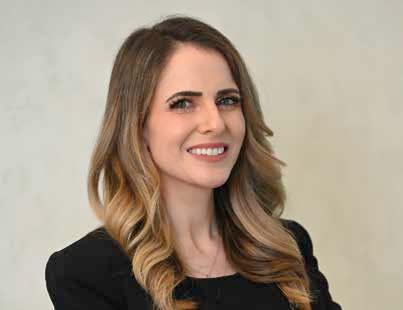
In nearly every strategy meeting I’ve sat through, the conversation eventually lands in the same place. How well are we performing? To answer that we turn to engagement rates, reach and cost per thousand ad impressions (CPMs) – tangible proof that what we’re doing is working. When there is a breaking news story or international event, news outlets are the first
‘‘Agencies must resist overselling metrics that look impressive but explain little, and media must protect credibility.’’
to benefit. Engagement rates skyrocket, views and clicks are at an all-time high and the media enjoys momentary success. But these spikes are also where measurement most easily loses meaning.
In April 2024, a record-breaking storm hit the UAE, bringing the heaviest rainfall in approximately 75 years. This local story dominated global headlines for several days,
and local news outlets were enjoying peak views as a result.
We saw a different kind of surge earlier –when Emirates Airline announced a major hiring spree at a time when much of the aviation world was still recovering from the pandemic. The story travelled internationally and resonated locally, not because it was sensational, but because it signaled a new era of growth and confidence in the market. The metrics for both events were impressive, but what brand value would these stories have long-term?
The question today is no longer how much activity we generate, but what that activity reveals. While metrics promise objectivity and control, dashboards rarely capture context: why something resonated or how it shaped perception over time.
Leadership today is public by default. Chief executive officers (CEOs) and founders can no longer operate quietly behind the scenes; they are visible, often vocal and increasingly values-driven.
Every interview, statement and even silence contributes to a narrative. What resonates is rarely the loudest message, but the most thoughtful and authentic one.
While our measurement often prioritises exposure over perception, the real question is no longer how many people saw a message, but how much impact it had. How leaders are perceived, and how much they are trusted will define a company, society, an entire nation.
Everyone living in the UAE during Covid will remember the calming words of His Highness Sheikh Mohammed bin Zayed Al Nahyan: “Don’t worry” – (La Tsheloon Hamm). Simple words that made all the difference for residents and citizens alike.
The same is true in organisations where executives aren’t just bosses by title, but leaders during periods of uncertainty. “If you want to be successful, I would encourage you to grow a tolerance for failure,” Jensen Huang, CEO of NVIDIA, told his employees to remove fear from the workplace.
Elon Musk echoes a similar sentiment with SpaceX and Tesla teams: “If something is important enough, even if the odds are against you, you should still do it.”
None of these moments were designed to go viral, yet they shaped trust and behavior. Leadership counts. This reframes measurement entirely. It shifts the focus from performance tracking to reputation
architecture; the long-term construction of credibility and influence. These ‘assets’ are slower to build, harder to quantify and unquestionably more impactful.
THE UAE CONTEXT: A REGION BUILT ON VISION
In the UAE, this gap is especially visible. This is a market built on long-term vision, relationships and trust.
Leadership here shapes how the region is understood globally, yet success is still judged through short-term performance metrics imported from entirely different cultural contexts. Short-term measurement fails in long-term cultures.
Measurement that matters isn’t about rejecting metrics, but rather using them to uncover nuance. It looks at who is paying attention, and whether engagement reflects consistent interest.
Too often we reward what is easiest to defend numerically rather than what we want to build over time. I’ve seen thoughtful leadership work sidelined because its impact wasn’t immediately quantifiable, all while louder, short-term initiatives were rewarded for being visible.
Over time, this teaches leaders and brands to optimise for numbers rather than principle, choosing quantity over quality, and quietly eroding the trust they are trying to build long term.
THE INDUSTRY’S RESPONSIBILITY IN 2026
As we move into 2026, the most important question for leaders and brands is not only how well something performed, but how much it mattered.
Measurement is never neutral. It signals what we reward collectively and how we plan for the future. Agencies must resist overselling metrics that look impressive but explain little, and media must protect credibility in an attention economy that rewards noise over depth.
At its core, this is about ethical measurement, aligning what we measure with what we claim to value. In the UAE, where leadership, vision and legacy sit at the centre of how institutions are built and judged, this question matters deeply. What we choose to measure will ultimately shape what we build and how the region is understood, long after the metrics are forgotten.
By Michal Divon, Founder, Built. UAE
As we move past a remarkable 2025 – a year that saw the MENA advertising market surge by an impressive 8 per cent to $7.7bn – it is tempting to focus solely on this vibrant growth.
However, true leadership lies not in celebrating the present, but in interpreting its signals to navigate the future. The data from our This Year, Next Year Forecast is more than just a report card; it’s a roadmap to 2026 and beyond.
Standing on the threshold of this new year, it’s clear that the profound transformations we witnessed are not just trends, but foundational shifts creating a new paradigm for advertising in our region. For brands poised to win, 2026 will be the year of radical integration and applied intelligence.
The most seismic shift we must address is the fundamental fusion of content and commerce. For years, we spoke of a marketing funnel, but in 2026, we must think of it as a continuous, dynamic loop.
Our forecast revealed Commerce Media as the fastest-growing channel, surging by an astounding 23.5 per cent. The prediction that it will eclipse the entire TV advertising market within the next 12-18 months has now become an imminent reality.
This isn’t just about placing ads on e-commerce sites; it’s about closing the gap between inspiration and transaction with unparalleled precision, powered by rich first-party data.
Simultaneously, the content landscape has been redefined. While linear TV saw a continued decline, streaming platforms experienced explosive 25.8 per cent growth. The living room screen is not losing relevance; it’s becoming more addressable, more data-rich, and more interactive.
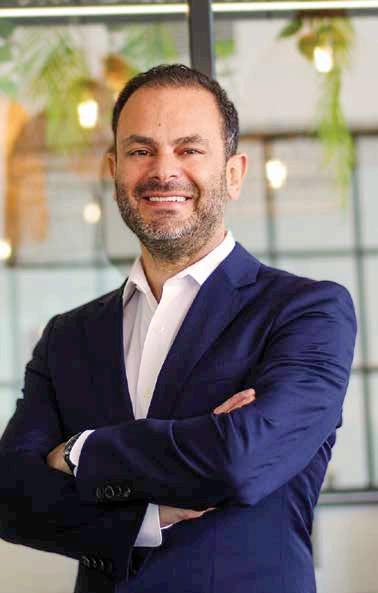
‘‘The future of advertising will be built on three pillars: being pervasive, proactive and personalised.’’
For 2026, the strategic imperative is to layer this physical advantage with intelligence – using data to deliver contextually relevant messages at a scale that digital channels alone cannot replicate.
This brings us to the ultimate connective tissue that will define success in 2026: Intelligence. The launch of WPP Media was built on this very principle. While search remains a formidable pillar, our young, digitally native population is already looking beyond it, embracing conversational AI and new discovery platforms.
The key insight for 2026 is that content and commerce strategies can no longer exist in separate silos. A brand’s video strategy on a broadcaster videoon-demand (BVOD) platform must connect seamlessly to its retail media execution. The journey from watching a Ramadan series to adding a product to a cart will become instantaneous. The brands that thrive will be those that master this integration, turning every touchpoint into a potential point of sale.
Secondly, amidst this digital acceleration, we are witnessing a powerful renaissance of the physical world. Our forecast highlighted the incredible resilience of location-based advertising, which grew by a remarkable 23 per cent.
Out of home (OOH), in particular, has become one of our most dynamic
WPP Media MENA’s Amer El Hajj calls for the industry to embrace a new reality where media, data and production are inseparable; where the digital and physical worlds are two sides of the same coin; and where intelligence is the currency of growth.
channels, expanding its market share with 23.1 per cent growth. The narrative for 2026 is that OOH is no longer a static medium; it is a premium, data-driven canvas. Fueled by the GCC’s real estate boom and the rapid digitisation of canvases, digital out of home (DOOH) is on a clear path to represent nearly half of all OOH revenue. In an age of skippable ads and digital fatigue, the physical world offers an unmissable, high-impact environment.
The future of advertising, as defined by our Intelligence Framework, will be built on three pillars: being pervasive, engaging consumers across multiple surfaces; proactive, offering helpful and relevant suggestions; and personalised, using rich data to tailor every interaction. In 2026, this framework will move from theory to practice. Applied AI, powered by systems like our own WPP Open, will be the engine that connects a brand’s streaming content to its commerce platform, and its DOOH creative to its search strategy.
It will enable us to not only reach consumers but to anticipate their needs, delivering value before they even ask. This is the new frontier of client service and the key to unlocking sustainable growth in our region’s ambitious, technology-driven economies.
The year ahead is not about incremental changes. It is about embracing a new reality where media, data, and production are inseparable, where the digital and physical worlds are two sides of the same coin, and where intelligence is the currency of growth.
Our commitment is to provide the integrated capabilities and strategic foresight to navigate this exciting era. The opportunities in 2026 are extraordinary, and together, we will build that future.
By Amer El Hajj, CEO, WPP Media MENA
Building on the appetite and application of cleaner supply chains and open internet targeting tools in 2025, The Trade Desk’s Terry Kane calls for advertisers to prioritise premium and transparent inventory in 2026.
The ad tech sector matured in 2025 as we grew into an era of premium open internet – with consumers leaned in and engaged. Across the industry, brands and agencies are embracing tools and solutions that allow them to operate with objectivity, to measure return on investment (ROI) with precision, and to optimise relevance and value.
We expect this to continue in 2026 through growth and further innovation. From supply side efficiencies to AI-enabled targeting, here are three trends to watch over the next 12 months.
Premium media will win
There are no signs that the growth of the premium open internet is about to slow down. Disney, Spotify, OSN and The Guardian are just a handful of the world’s largest media brands adopting tools to make their inventory more accessible to advertisers.
This isn’t happening by chance. It reflects growing demand from brands to appear alongside the best content: from captivating drama series to interpreting the latest news to quality podcasts.
Research conducted by The Trade Desk, in partnership with PA Consulting, found that premium media outlets are 1.3 times more
‘‘The drive towards a more efficient supply chain that improves ROI will only accelerate.’’
effective at driving purchase intent than less premium environments, translating to stronger sales for brands.
These spaces also create more emotional resonance and trust with audiences, building both engagement and credibility for marketers.
Premium media is ultimately where audiences are more engaged and attentive – and investing in them is the most assured
way to drive ROI. The marketers who continue to recognise this will be amongst the biggest winners in 2026.
Data and AI will continue to unlock better results What sets our industry apart is the sheer volume of high-quality data that is available. From retail data to attention metrics, advertisers have a huge amount of insight to inform smart, targeted campaigns across multiple digital channels.
Layering AI on top of this data further supercharges marketers’ ability to reduce wastage and buy media with precision and impact.
Unlike many industries, AI is nothing new in the world of digital advertising. But what has changed is marketers’ awareness and interest in it.
This means that we’re going to see more marketing teams proactively seek out and adopt tools and products that use AI, helping
them to achieve more and often demonstrate the impact of their work more clearly to the board room.
In the Middle East we are working with premium partners such as Majid Al Futtaim (MAF) Carrefour to maximise the potential that sits in retail data, which helps advertisers be more accurate in their targeting, ultimately ensuring the greatest impact across omnichannel advertising.
Cleaning up the supply chain for greater transparency
Scrutiny on advertising budgets won’t go anywhere in 2026, meaning the drive towards a more efficient supply chain that improves ROI will only accelerate. As a result, we can expect to see more pressure on resellers swimming in murky waters.
The ad tech sector has made progress in recent years, but the industry still feels the impact of the ‘walled garden’ approach.
We need to fix that by making the value of inventory clear for media buyers, so they, in turn, will reinvest with premium publishers. These efforts are gathering momentum.
From a growing commitment to cleaner supply chains, and a strong uptake of open internet targeting tools, 2025 set the industry in a more positive cycle. In the Middle East, this is a journey publishers, agencies, advertisers and tech providers need to take together for the survival and progress of the local industry.
The more that advertisers prioritise premium and transparent inventory, the faster these trends will come to fruition in 2026 for the benefit of all players locally, something which the ‘walled gardens’ have no interest in developing or preserving.
By Terry Kane, Managing Director – MEA, The Trade Desk
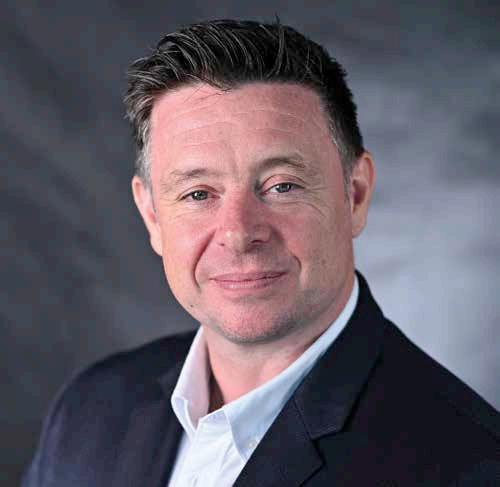
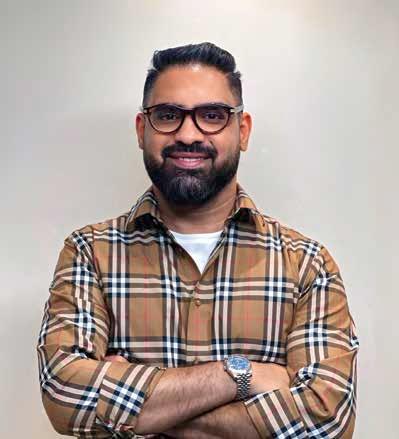
AMX Ventures’ Arun Mohan highlights the need to bridge the ‘agent gap’ and shares practical advice on multi-agent orchestration and hyper-localised voice AI, while discussing the competitive advantage of building for the application layer.
The velocity of the last two years has redefined the concept of long-term planning. In an era where technological shifts occur weekly, making predictions beyond a three-month horizon is a challenge for even the most seasoned observers.
However, as we look toward 2026, the industry is moving past the experimental phase and toward the reality of artificial intelligence (AI) agents and frontier firms. Frontier firms are organisations that embed AI into every layer of their operational DNA to drive three times higher returns than slow adopters.
To thrive in this new landscape, two critical trends will define the market: Multi-agent orchestration and hyper-localised voice AI.
MULTI-AGENT ORCHESTRATION AND THE THREE PILLARS OF ADOPTION
The current enterprise landscape is suffering from an ‘agent gap’. While the market is flooded with agents that can write emails or
‘‘For builders and investors, the 2026 mandate is clear: Models are becoming a commodity. The real value – and the sustainable competitive advantage – lies in the application layer.’’
close sales leads, there is a distinct lack of agents capable of self-healing cloud environments or autonomously orchestrating complex DevOps pipelines. This disparity forces IT professionals to remain the manual labour behind the AI revolution.
The transition to a true frontier firm requires a three-tiered agentic framework, which is the foundational strategy behind platforms such as Onepane Pulse, to scale AI adoption across an organisation:
The personal agent: This focuses on the individual engineer, automating routine troubleshooting and data synthesis to reduce ‘alert fatigue’ and cognitive load.
The team agent: These agents act as digital bridges between silos across development, operations and security, ensuring that tribal knowledge is digitised and cross-functional workflows are executed without manual hand-offs.
The enterprise agent: This layer provides leadership with a ‘pulse’ on the entire digital estate, aligning technical performance directly with business outcomes and governance. By moving from isolated assistants to an orchestrated multi-agent layer, businesses gain built-in resilience: if one agent fails, the network redistributes the load, maintaining continuity in high-stakes environments.
A decade ago, industry veterans identified Voice as the “million-dollar problem”, the most seamless interface for human-to-information interaction. Today, that potential is being realised through the convergence of natural language processing and agentic capabilities. The next frontier for Voice AI, led by industry innovators such as Actualize, is hyperlocalisation. Future systems will move beyond simple translation to mastering specific dialects and cultural nuances, making AI accessibility truly equitable on a global scale.
In many developing regions, voice has already become the preferred channel for AI access. For enterprises, the shift toward hyper-natural, context-aware voice agents will soon become standard, reducing call handling times and significantly increasing customer satisfaction through empathetic, real-time responses.
For builders and investors, the 2026 mandate is clear: Models are becoming a commodity. The real value – and the sustainable competitive advantage – lies in the application layer. Businesses no longer need experimental pilots; they need solid applications that offer performance, security and accuracy guarantees. Furthermore, look for the blending of AI model topologies and computing infrastructure. A unified compute environment that automatically maps a specific transformer model to a graphics processing unit (GPU), or an inference workload to a tensor processing unit (TPU) or central processing unit (CPU) based on efficiency will be the backbone of the next generation of performance.
As we move through 2026, those who focus on bridging the ‘agent gap’ and perfecting the interface of voice AI will be the ones to define the frontier.
By Arun Mohan, General Partner, AMX Ventures
We have spent recent years deepening our understanding of technology – from artificial intelligence (AI) and automation to data platforms and MarTech integration. That learning was essential. But as we move into 2026, the conversation matures: the competitive advantage lies not in the tools themselves, but in how we apply them to solve problems unique to our clients, and that shift will manifest across five dimensions in 2026.
The first transformation accelerating in 2026 isn’t about activating data better – it’s about monetising it completely. Agencies have mastered using client data for campaign optimisation. The 2026 mandate: help clients turn that same data into direct revenue streams or watch consultancies claim the conversation.
This isn’t reserved for banks or telecom operators. Automotive dealers, retailers and healthcare providers – every business sitting on customer data is realising it represents millions in untapped commercial value, not just targeting fuel.
The monetisation split is clear: internally, through cross-selling engines and lifetime value models that expand margins; externally, through clean room partnerships that enable anonymised insight licensing to non-competing brands.
Agencies that transition from data activators to revenue architects – transforming client assets into measurable business growth through consented, enriched, and commercialised data strategies – will secure their seat at the strategy table whilst others fight for media budgets.
The consolidation momentum that accelerated in 2024 will reach a tipping point in 2026. Across the region, major holding companies are restructuring their marketing approach – moving from brand-bybrand agency relationships to unified, portfoliolevel partnerships. The drivers are clear: economies of scale, cross-brand intelligence and holistic decision-making.
What’s emerging is demand for solutions providing executives with comprehensive portfolio visibility. The requirement isn’t simply consolidated media buying but decision intelligence platforms that enable sophisticated allocation strategies, prevent overlap between business units and identify white-space opportunities visible only at portfolio scale.
The competitive advantage shifts from negotiating power to strategic architecture.
Agencies building systems that enable C-suite executives to make data-driven decisions across dozens of brands simultaneously will become indispensable.
Client expectations around agency time allocation have fundamentally shifted. Hours historically spent pulling spend reports, reconciling invoices or extracting performance data are now seen as friction, not function. Clients expect automation, immediacy and self-service.
The opportunity lies in what automation enables. Consider an interface connected to booking and finance systems that instantly answers, ‘what did we spend on digital channels in the fourth quarter (Q4)’ or ‘show budget remaining for the first half of the year (H1)’. Manual aggregation becomes seconds, redirecting human capital toward strategy.
Sophisticated systems go further – they learn. Processing recommendations, outcomes and performance patterns, they develop nuanced understanding of what works in which contexts, suggesting optimal approaches informed by historical intelligence.
In 2026, operational efficiency is table stakes. Differentiation comes from deploying reclaimed strategic capacity.
As agencies take accountability for business outcomes, content production becomes a critical
capability challenge. Clients can’t achieve brand salience or purchase intent without content velocity – yet manufactured volume damages the metrics we’re accountable for.
The solution lies in building content infrastructure: influencer platforms that activate thousands of creators through automated performance-based compensation, creating alwayson ecosystems rather than campaign activations. For categories where authenticity isn’t tied to human identity, AI brand ambassadors deliver consistent voice at scale with strict guardrails.
The strategic question: how do brands capture cultural moments without compromising brand
Initiative MENAT’s and Magna Global MENA’s Lara Arbid calls for agencies to fundamentally rethink capabilities, develop hybrid fluency and build scalable authenticity as the consolidation momentum reaches a tipping point in 2026.


‘‘In 2026, agencies solving for both velocity and authenticity will demonstrate genuine solution architecture.’’
truth? How do they scale content while preserving emotional intelligence? In 2026, agencies solving for both velocity and authenticity will demonstrate genuine solution architecture.
Solving for client-centric innovation requires agencies to fundamentally rethink capability. Clients aren’t asking for specialists who execute within lanes – they’re demanding partners who architect solutions at the intersection of technology and strategy.
Whether building data monetisation infrastructure, portfolio intelligence systems or scalable content ecosystems, these challenges require hybrid fluency: teams who intuitively blend technical sophistication with commercial judgement.
As AI becomes operational backbone, our talent strategy shifts from hiring solely for domain expertise to recruiting for hybrid fluency. The most valuable talent in 2026 will be those who intuitively navigate the intersection of human judgement and intelligent systems –cultivating teams who don’t just trust the data, but interrogate it with critical acumen, ensuring automated speed is always governed by human empathy and commercial nuance.
The agencies that rise to these challenges won’t just win more business – they’ll become embedded in how their clients create value.
By Lara Arbid, CEO Initiative MENAT and Magna Global MENA
In 1997, IBM’s Deep Blue defeated Russian chess grandmaster Garry Kasparov at chess. The world panicked about machines replacing human expertise. What happened next? Kasparov pioneered ‘advanced chess’, where human-artificial intelligence (AI) teams consistently outperformed both humans and machines working alone. The winning advantage wasn’t deeper chess knowledge. It was knowing when to trust the algorithm and when to override it.
Approximately 27 years later, we’re witnessing the same panic. Except this time, the verticals are falling faster.
The vertical illusion
For decades, the professional playbook was simple: go deep, get certified and build a moat. Tax accountants spent years mastering arcane regulations. Junior designers obsessed over kerning and colour theory. Strategists memorised frameworks. The deeper your trench, the safer your career.
That world ended on November 30, 2022.
When ChatGPT launched, it didn’t just autocomplete emails; it collapsed the value of isolated expertise. Today, a good prompt gets you tax optimisation strategies, brand positioning frameworks and Python code in seconds.
And it’s getting better. In December 2024, OpenAI launched ChatGPT Health. Andrew Beam, an assistant professor in the Department of Epidemiology at the Harvard T.H. Chan School of Public Health, noted that “the system can now interpret complex medical imaging and laboratory results at a level approaching specialist physicians”. Deep, narrow knowledge used to be expensive. Now it’s a subscription fee.
The generalist advantage
Author David Epstein’s Range reveals something counterintuitive: breadth beats depth in unpredictable environments. He profiles everything from Renaissance polymaths to modern athletes, showing that late specialisers with diverse experiences consistently outperform early specialists when problems get complex and ambiguous. Consider American businesswoman and writer Frances Hesselbein, who transformed the Girl Scouts not because she was a nonprofit expert, but because she brought thinking from business, military strategy and community organising. Her advantage wasn’t depth; it was the ability to connect patterns across domains.
This matters now more than ever because AI hasn’t eliminated the need for human judgment. It has eliminated the need for human information retrieval. What remains is sense-making across contexts – exactly where specialists struggle and generalists thrive.
T-shaped talents, recalibrated
The T-shaped model still works, but the proportions have flipped. Ten years ago, you needed 80 per cent depth, 20 per cent breadth. Today, it’s reversed.
The vertical bar of your T, your specialism is table stakes, delivered efficiently by large language models (LLMs). The horizontal bar, your ability to connect, contextualise and translate across domains is where human value concentrates.
I watched this play out with a client brief last month. The task: position a financial services brand for Gen Z. The junior strategist delivered a thoroughly researched deck on digital banking trends. Solid vertical thinking. But the breakthrough came from someone who had worked in gaming, understood Discord culture, and saw the connection between clan dynamics and financial trust. That synthesis and that horizontal leap, is what LLMs can’t yet replicate.
The most valuable people in any organisation aren’t the deepest experts. They’re the translators: between data and narrative, between technical capability and customer need, and between what’s possible and what matters.
The paradox of progress
Here’s what’s strange: we’re not eliminating specialisms. We’re democratising them. Legal research, medical diagnosis and code debugging remain critical. But they’re becoming utilities, not differentiators.
The question isn’t whether you can do tax accounting or competitive analysis; it’s whether you can spot when the tax strategy connects to the pricing strategy, when the competitive analysis should inform the org design.
OpenAI CEO Sam Altman said something revealing: “The jobs that will thrive are those requiring creativity, empathy, and crossfunctional thinking.” Vertical depth is necessary but insufficient. Horizontal integration is the new scarcity.
The way forward
If you’re desperate to remain relevant – and the fact that you’re reading this suggests you might be – here’s your roadmap: Build your vertical efficiently. Use AI to accelerate your domain expertise, not replace it. Spend what used to take ten years in three. Then invest the surplus time horizontally. Learn adjacent fields. Work on projects outside your job description. Read outside your industry. The goal isn’t superficial dabbling,

it’s building genuine understanding across multiple domains so you can spot connections others miss.
Because when the verticals become commodities, the horizontals become priceless.
Kasparov didn’t become irrelevant when machines learned chess. He became invaluable by learning to think with machines across multiple dimensions. That’s the pattern: depth gets you in the room, but breadth wins the game.
The question isn’t whether you’re being replaced. It’s whether you’re becoming more valuable by connecting what can’t yet be connected. In a world where every vertical is a commodity, the horizontal thinkers set the direction.
By Valli Lakshmanan, President, BPG UAE & BPG X
BPG UAE’s and BPG X’s Valli Lakshmanan explains why the question isn’t whether people will be replaced, but whether people will become more valuable by
connecting what can’t yet be connected.



















Founded: 2021
Headquartered: Dubai Head of company: Kkusum Rawat aarkmarketing.com contact@aarkmarketing.com
AARK Marketing is an award-winning integrated marketing agency based in Dubai, delivering bold ideas with measurable results. As solutions-driven digital marketing and PR powerhouse, we specialise in brand building, visibility, sales through strategy, creative content, digital marketing, social media, SEO/SEM, PR, advertising, events, influencers.
SERVICES: Communication strategy and planning; social media marketing; digital marketing and SEO; content design and production; PR; advertising and media buying and influencer marketing.
KEY CLIENTS: Lee Chocolate, Rasasi Perfumes, PINCODE by Kunal Kapur, Kashkan By Ranveer Brar, Kingspan Insulation LLC, Millennium Hotel, Fischer, Naboodah Automobiles, BOSCH
Founded: 2009 middleeast@accenture.com accentureinteractive.com
SERVICES: Consulting; design thinking and user experience; platform solutions; creative services; digital media


Founded: 2014 Headquartered: lebanon Head of company: Patrick Lahoud acceleratemeonline.com admin@acceleratemeonline.com
SERVICES: Media services
KEY CLIENTS: Al Othman Agriculture (Nada), Al Dawaa, FUSION 5
Founded: 1998
Headquartered: London bacchus.agency hello@bacchus.agency
Bacchus is a leading global communications agency, building brands at the intersection of culture and commerce. With an international network of 16 teams in 7 cities, Bacchus delivers a new standard of excellence for clients at the forefront of luxury and innovation.
SERVICES: Strategic communications and advisory; media experiences; digital and social strategy; corporate framework; VIP and VIC
KEY CLIENTS: Boutique Group, Discovery Land Company, Rosewood Jeddah, Leyalty Group, Jayasom Wellness Resort AMAALA
Founded: 2010
Headquartered: Abu Dhabi, UAE hello@acornstrategy.com
SERVICES: Strategy-led integrated thinking; PR and strategic communications; digital marketing; brand and design; marketing operations and advisory
Founded: 2019 marketing@acquisit.io
Acquisit enables companies›s online growth by designing and executing data-driven strategies. Since its foundation, Acquisit collaborates with key industry leaders and high-potential start-ups across the MENA region, enabling them to seize online growth opportunities. Acquisit›s scope covers all levers of Growth Marketing from Traffic generation to Revenue optimisation.
SERVICES: Performance marketing; SEO; CRM; marketplace management; web analytics; data visualisation
Founded: 2019 HQ: Dubai info@theadroitagency.com
SERVICES: Strategy; branding; advertising; design; digital; social; production; new media
Founded: 1997
Chairman: Roger Sahyoun info@aga-adk.com aga-adk.com
SERVICES: Full marketing communication services; strategic planning; creative designs; consumer activation; production; branding and corporate identity; content planning and production
Acxiom puts data to work, solving complex challenges for the world’s leading brands and agencies. As part of Omnicom, Acxiom unifies, connects and prepares data for AI-driven marketing and decision-making, maximising technology investments and bridging the gap between business strategy, marketing intelligence and advanced technology execution.
Founded: 2018
Head of company: Karthik Kumar, Managing Director Number of staff: 30 acxiom.com +971 4 445 4188 info-menat@acxiom.com
Acxiom is part of Middle East Communications Network (MCN) in the MENAT region. As a leader in data ethics and governance, the agency places privacy at the core of its operations, designing solutions that respect local culture, language and regulation whilst future-proofing businesses for growth. Awarded a Great Place To Work® in 2026.
SERVICES: Tech consulting; google practice; sales force practice; identity solutions; customer data management; data clean rooms; consumer marketing data; data analytics solutions; martech services; reporting and analytics; data science-media intelligence; audience intelligence; customer intelligence; AI-Bot/Gen AI solutions; forecasting solutions; quantitative and qualitative research; business intelligence; search intelligence – SEO, GEO, CRO
TECH PARTNERS: Salesforce, Google, Snowflake, Databricks, Adobe, AWS, Treasure Data, Sitecore, The Trade Desk
KEY CLIENTS: STC, Flynas, Dubai Holding, Expo City Dubai, Alshaya, iHerb, IKEA, Nestle





Founded: 2017
Headquartered: Dubai, UAE
Head of company: Ashish Gupta, CEO & Founder
Number of staff: 50+ adaptsmedia.com +971 58 560 1701 Info@adaptsmedia.com
AdaptsMedia is a full-service advertising agency, who provides a comprehensive range of services to support a brand’s marketing, communication and business growth. The agency supports both startups and large enterprises with tailored strategies that drive customer acquisition, engagement and revenue growth. With a strong focus on data-driven performance and client satisfaction, Adapts Media executes campaigns across the MENA region and globally, combining creative expertise with advanced technology to achieve measurable results.
SERVICES: Branding and strategy, creatives and designing, market and consumer research, media planning and buying, web and app development, content creation, social media management, influencer and public relations and complete ad-operations support
TECH PARTNERS: YOYI Tech, Binary Media, Google, META, TikTok, LinkedIn, SnapChat, Amazon, Dv360 and More.
KEY CLIENTS: Al Etihad Payments, MultiBank, DP World, Informa Connect, Redington Gulf & Africa, Landmark, Alpha Nero, Daikin MEA, De’Longhi, Mosadad, Etoile Group, The Japan Foundation, Wego, Midea Consumer Appliances, MS Cruises and more.
AWARDS: TechBehemoths 2025 Award Winners (UAE) – Advertising; Best Digital Marketing Agency 2026 – UAE – By LUXlife Magazine





Founded: 2017
Head office: New York, United States with regional offices in Dubai, Riyadh and Cairo
Number of staff: 300 assemblyglobal.com +971 04 263 2575 hello-mena@assemblyglobal.com
Assembly is a global omnichannel agency built for brands that want a more modern approach to building brands that perform. Backed by the Stagwell network, we bring together data, talent and technology to unlock smarter, faster and be erperforming outcomes, from the bo om up, not the top down.
Curious, collaborative and driven by change, we are an agency of builders who believe the be er the experience, the be er the brand performance. We don’t see brand and performance as an either/or. For us, it’s always both. The +\ symbol in our logo, known as the ORAD, represents this mindset.
SERVICES: Organic search; creative; (D)OOH; CRM; digital commerce; media buying; media planning; data and analytics; programmatic; affiliate marketing; influencer marketing; digital PR; organic media; strategy and insights; social media; UX design; UI & CRO; paid search
KEY CLIENTS: Virgin Mobile, DP World, Emaar, Mashreq, AL Nassr F.C., MDLBEAST
AWARDS: Campaign Middle East Agency of the Year Awards 2025 – Digital Agency of the Year; MENA Search Awards – Best Integrated Agency (2024 & 2025), Global Performance Marketing Awards (2024 & 2025)



Founded: 2012
Headquartered: Dubai, UAE Head of company: Pierre Azzam, Founder & CEO belonginteractive.com +971 4 369 5345 hi@belonginteractive.com
Belong is a Dubai-based digital product agency on a mission to make digital ma er. We build Living Platforms - digital ecosystems grounded in empathy, powered by data, and scaled through technology, designed to learn, adapt and scale to deliver continuous value over time. Belong partners with leading organisations to manage digital transformation programs across a wide digital ecosystem, from multi websites to mobile apps, on-premise interactive touchpoints, intranets and portals.
SERVICES: Strategy – directing strategic transformation agendas, digital asset audits, discovery workshops, personalsation programmes, stakeholder mapping, conversion funnels; Design – information architecture, UX design (user journeys, navigation flows, wireframing), UI design, interaction design; Technology – digital experience platforms development and enablement, multi-stack CMS development, backend/frontend development, mobile apps native and cross-platform development, 3rd party integrations, quality assurance; Data - KPI se ing & management, assets performance analysis, customer-centric insights, SEO
TECH PARTNERS: Progress Sitefinity, Sitecore, Acquia
KEY CLIENTS: Nakheel, Modon Holding, Agthia, The Galleria Al Maryah Island, Marassi Galleria Mall, Philip Morris International, Dubai Holding Community Management. Client experience also includes Nestlé Middle-East, Majid Al Fu aim, Meraas Group, Tabreed, Miral, Shamal and Aldar Group
AWARDS: Progress Sitefinity Technology Partner of the Year 2025








Founded: 2010
Regional Offices: UAE, KSA, Egypt Nic.camcho@akqa.com
AKQA is a full-service brand experience design agency. We work in partnership with our clients to articulate a vision, unlock opportunities and solve problems.
SERVICES: Creative communication; data and media; experience design; technology solutions; content production; brand activation
Founded: 1988 enquiry@amcuae.com
SERVICES: Media planning and buying; SEO & SEM; programmatic & network advertising solutions; creative; social media advertising
Founded: 2014
Head of company: Samit Athavale and Dimple Athavale samit@teamalo.com; dimple@teamalo.com
SERVICES: Digital strategy and consultation; website design and development; social media management; influencer marketing; search engine optimisation
Founded: 1988
Headquartered: Dubai, United Arab Emirates Head of company: Roy Aftimos c2comms.cx management@c2comms.cx
C2 Comms is an award-winning independent communications consultancy based in the UAE and KSA, creating “unignorable” work. Combining data-driven insights with creative excellence, C2 delivers integrated marketing solutions across the MENA region
SERVICES: Strategy; creative and content; precision marketing; marcom technology; data and analytics
KEY CLIENTS: Al Nabooda Automobiles, Dubai Culture and Arts Authority, Porsche Middle East & Africa, Taaleem Group, ENOC Retail Group

Founded: 2011
Head of company: Dina Saadeh
Number of staff: 20 bluebarracuda.com +971 4 354 4458 hello@bluebarracuda.com
Blue Barracuda is a digital and social agency. We get people talking. To each other and to brands. We use technology, data and content to craft experiences and tell stories that spark conversation. When people talk, we understand perspectives and behaviours; we disco ver opportunities and possibilities. We use digital and social platforms to build relationships between our clients and their consumers that enable them to reach business and communication objectives. We see ourselves as conversation makers. Conversations for the digital world.
SERVICES: Experience and conversation makers across digital & social mediums; includes customer journey-mapping, digital transformation strategy & implementation, content creation, videography and editing, AI video creation, website/ app design & build, influencer marketing, SEO, gaming, CRM strategy & implementation
KEY CLIENTS: Modon Real Estate, Alef Group, National Bonds, Mohammed Bin Rashid Innovation Fund, Dell Technologies, Truebell





Founded: 2011
Offices: Dubai, Abu Dhabi, Bengaluru, Beirut, Cairo, Doha, Jakarta, Jeddah, Riyadh, Shanghai, Singapore and Tirana Head of company: Shadi Abdulhadi Number of staff: 212 boopin.com + 971 4 4255 365 info@boopin.com


RAZMIK KALAIDJIAN
Regional Managing Director
AS BOUNDARIES BLUR BETWEEN CONTENT, COMMERCE, AND COMMUNITY, HOW ARE AGENCIES REDEFINING THEIR PLACE IN THE BRAND ECOSYSTEM?
Ultimately when the goals of various functions are aligned the boundaries become less blurry, the Brand ecosystem as we define it is the total brand experience whether that is serving the right content, to seamless commerce CX to an engaged community where co-creation is key. Brands possess a narrative that should be communicated, within a framework where each element connects seamlessly. The agency should hold the system and drive the mindset to system thinking to build brands on a system that revolves around consumer journeys.
WHAT NEW FORMS OF VALUE ARE CLIENTS DEMANDING BEYOND PERFORMANCE – AND HOW ARE AGENCIES ADAPTING TO MEET THOSE EXPECTATIONS?
Clients will always require short-term sales for long-term brand value within that context there are few areas that we adapt to meet the demands of the market and clients:
Boopin is one of the largest independent integrated agencies in the MENA region, powered by a team of more than 200 passionate creators, strategists, and marketers across multiple markets.
The model is integration by design: strategy, media, performance, creative, content and PR teams work as a single unit from brief to delivery. No channel silos, no handoff delays, no fragmented accountability. The result is work that moves fast and delivers measurably.
At Boopin, we don’t just run campaigns. We build brands, accelerate growth, and create experiences people remember.
TECH PARTNERS: Google, Meta, Twitter, Tiktok, Snap, Oracle, Amazon, Moengage and others.
SERVICES: Performance marketing; media planning and buying; digital transformation; martech and CDP strategy; social and content production; PR and influencer marketing; creative and personalization; web and app development; SEO and data analytics
KEY CLIENTS: Abu Dhabi Ports, Government Media Office, Department of Culture & Tourism, Emaar, Baja, Dubai Sports Council, Hyundai, Al Shaya Group, Informa, Shein, EVIQ, Pure Health, Modern Electronics, Pure Gym, ISP Schools, Oppo, Toshiba, Sodic and more




Speed: having the agency set up to respond to trends, crises, and opportunities in a matter of hours not days
Business acumen: looking at the contribution away from just execution and partners who can strategically anticipate change in consumer behavior and other fundamental changes that take place.
Trust: Operational Efficiency & Cost Transparency
Proficiency: system thinking requires tools, tech and using AI as a value add to support business to move forward
WITH ATTENTION BECOMING THE SCARCEST RESOURCE, HOW ARE AGENCIES DESIGNING WORK THAT EARNS TIME RATHER THAN INTERRUPTS IT?
We tend to wait for the skip button because the brand has not captured our attention. The attention economy is tough to crack.
The analogy that comes to our minds is how TV series create stories that are so striking that you hang on to them and keep wanting more. The parallels are not exact since series characters are built over time etc… nevertheless the insight is grabbing consumer attention long enough to convince them to keep watching. The shift is moving to an entrainment system where the brand story is told in a variety of ways that keeps consumers engaged.
WHAT ARE THE BIGGEST LESSONS DIGITAL AGENCIES ARE CARRYING FROM 2025 INTO 2026?
Here are the biggest lessons agencies are carrying from 2025 into 2026:
Speed vs. scale: Speed of adapting to new environments has become the main focus. We need to be like speed boats vs tankers because doing U-turns is a lot faster and less expensive. Keeping hiring right: If you keep this momentum of developing skills and hiring the right people you will be able to apply all new tech, AI and new developments much better Brand. Brand. Brand: Performance without having a brand story is like a story that doesn’t have an ending,
Founded: 2006
Headquartered: Dubai
Head of company: Lyusok Jung cheil.ae hello@cheil.com
Cheil MEA is a leading 360-degree advertising agency. Renowned for its expertise, Cheil adeptly forges robust connections among advertising, retail, digital, activations, and events, seamlessly integrating offline and online touchpoints.
SERVICES: Integrated campaigns; brand experience; digital platforms; social media; e-commerce
KEY CLIENTS: Samsung, Volkswagen, Ahmed Seddiqi & Sons, Energizer Holdings, Abu Dhabi Equestrian Club
Founded: 2018
Headquartered: Iraq, Baghdad Head of company: Suhail Hussein and Mohammad Naza crazytown.framer.website info@crazytown.agency
CrazyTown is Iraq’s leading creative agency, blending local expertise with international standards. We bridge deep cultural insights with world-class execution to deliver impactful campaigns. By prioritising audience observation and resonance, we craft authentic brand experiences that truly inspire and connect with the Iraqi market.
SERVICES: Brand communication strategy; advertising creative services; branding and design; digital and social; activations
KEY CLIENTS: Midea, General, Ahmad Tea, MG, Hamra Insurance
Founded: 2010 Headquartered: Dubai, UAE Head of company: Tom Otton creategroup.me talktous@creategroup.me
Create. is the Middle East’s leading strategic digital communications agency, with a team of 150+ across the UAE, Saudi Arabia, and Egypt. We partner with destinations, nation builders and global brands to drive positive cultural and economic transformation.
SERVICES: Digital strategy and products; social; content; performance; innovation
KEY CLIENTS: Department of Culture and Tourism - Abu Dhabi, Zayed National Museum, Volkswagen, Ahmed Seddiqi, Dubai Department of Economy & Tourism
Founded: 2012 Headquartered: Dubai Head of company: Jamie Sergeant and Tom Berne thisiscrowd.com results@thisiscrowd.com
Crowd is a global, innovation-driven marketing communications agency operating at the critical intersection of AI, technology and human creativity. With offices across four continents, Crowd leverages its international reach and deep local knowledge to build long-term success for businesses and brands worldwide.
SERVICES: Paid media; social media; website; design and art direction; SEO/GEO
KEY CLIENTS: Games of The Future, Nike, Domino’s Pizza, BEEAH, NYU Abu Dhabi
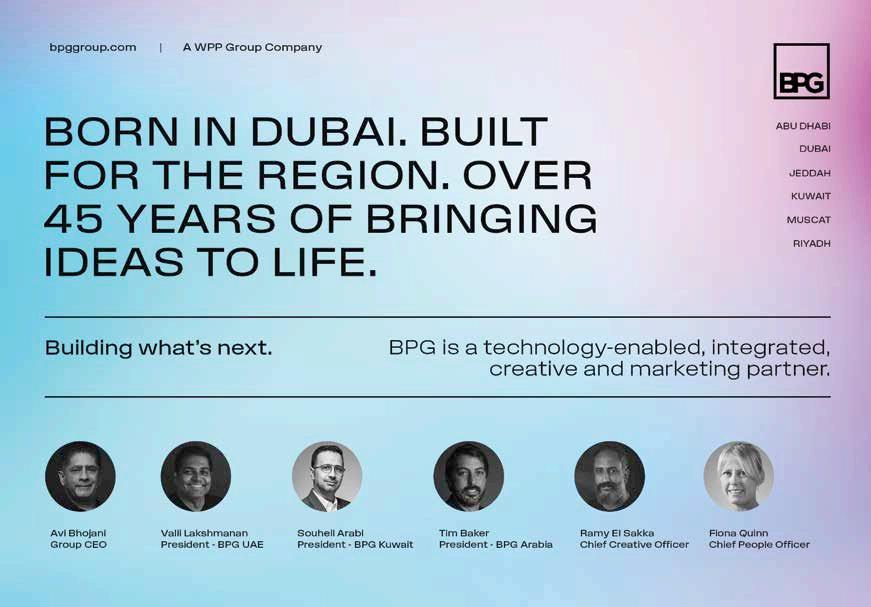
Founded: 2013 info@equation-media.com
SERVICES: Strategic media planning; integration of online and offline campaigns; social and content planning; media buying; performance marketing; retail transformation and experiential solutions; data analytics and personalised marketing solutions
Founded: 1967 +971 4 445 4777
FP7McCann provides fully integrated marketing solutions, advertising and digital services with offices across the region.
SERVICES: Business leadership; integrated creative solutions; integrated production; integrated strategy; campaign creation and activation; channel management
Founded: 2004 enquiries@flourishworld.com
Flourish is an independent, specialist CRM agency dedicated to empowering and supporting businesses to implement customer journeys that deliver a positive return on investment.
SERVICES: Customer journey planning and strategy; CRM consultancy; CRM management; creative service; performance marketing.
Founded: 2006 Headquartered: Dubai Head of company: Ali Asgar Mir iasmedia.com zameer@iasmedia.com
IAS Media is a leading media-tech company and one of the largest digital media concessionaires in MENA. Representing 420+ premium global publishers, we deliver AI- and data-driven advertising solutions across digital, retail media, CTV and OTT, performance, rich media, and branded content – driving scalable, measurable impact worldwide.
SERVICES: Strategic media planning; online-offline integration; retail media solutions; AI-powered digital advertising; performance marketing; connected TV and OTT; rich media experiences; custom content solutions; and a premium programmatic network.
KEY CLIENTS: DP World, ADNOC, Saudi Tourism; Neom, Mubadala, Masafi, Western Union, Al Ain Farms
Part of Publicis Groupe, Chain Reaction is a full-funnel, digitally-native agency based in the heart of Dubai. For more than 15 years, we have specialised in creating powerful connections between brands and people across the Middle East. We believe in the power of ‘Reactions’ by sparking measurable movements that start in culture and drive real business impact. Our integrated approach blends deep consumer insights with data-driven strategy, fearless creativity and robust performance marketing to build beloved brands and deliver exceptional growth. Our expertise spans the entire marketing spectrum, from brand strategy and social media management to influencer partnerships, paid media amplification and content creation, all tailored to the unique pulse of the region.
Founded: 2010
Head of agency: Saif Jarad
Number of staff: 200 chainreaction.ae
+971 4 429 7929
letstalk@chainreaction.ae
SERVICES: Performance marketing, SEO, analytics and data, social media, creative, video production
TECH PARTNERS: Meta, Snap, TikTok, X, LinkedIn, Amanzon, Hubspot, Adjust, Google, Yandex, Baidu, SEMRush, Ahrefs, Apple Search Ads, Adform, Socialbakers
KEY CLIENTS: Abu Dhabi Investment Office, Ferrari Middle East, Dubai Investment Financial Centre, Saudi Research and Media Group, BRF, Amazon, ADQ, Apparel Group
AWARDS: 2025 – Best Use of Search – Retail / eCommerce (PPC) - Chain Reaction & Tommy Hilfiger; Best Use of Search – B2B (PPC) - Chain Reaction & Zid; Best Use of Search – Fashion - Unlocking AI-Driven Innovation in E-Commerce Trendyol

Saif Jarad Founder & CEO


Founded: 2005
Head of company: Ahmad Itani, Founder & CEO
ciceroandbernay.com
+971 4 3341140; +971 56 1633162 info@ciceroandbernay.com
Founded in 2005, Cicero & Bernay(C&B) is a communication advisory with a presence in 35 countries, recognised for its cultural fluency and expertise in transforming global perspectives into strategies built for the region. Its team of strategists, communication advisors, designers, and analysts thrive on turning complex briefs into stories that resonate with both public institutions and private enterprise. Partners value the consultancy’s hands-on style, with ethical, practical counsel delivered alongside them rather than from a distance. That approach has earned international recognition, including a Stevie Award and two Guinness World Records. Guided by clarity, credibility, empathy, adaptability, and purpose, and united under the tagline Empowered by Facts, C&B continues to grow as an advisor defined by care, curiosity, and impact.
SERVICES: Digital strategy and experience design, performance media planning and buying, online reputation and narrative management, social and community management, executive and brand thought leadership, crisis preparedness and realtime response, engagement and growth marketing, conversion rate optimisation and experimentation, digital listening and intelligence, data, measurement and marketing intelligence, search, discovery and generative optimisation (SEO, SEM, GEO), creator and platform partnerships, story architecture and narrative mapping, website and platform development, mobile app strategy and development, app store optimisation and analytics
AWARDS: 2008 International Stevie Award; 2014, 2018 Guinness World Records; 2016, 2017, 2018 MEPRA Awards; 2021, 2022, 2023, 2024, 2025 PRCA MENA Awards; 2021, 2022, 2024, 2025 PRCA Digital Awards; 2024 MENA Stevie Awards; 2021, 2022, 2024, 2025 MENA Digital Awards (Agency of the Year)


INDUSTRY SNAPSHOT
AHMAD ITANI
Founder and CEO
WHAT NEW FORMS OF VALUE ARE CLIENTS DEMANDING BEYOND PERFORMANCE – AND HOW ARE AGENCIES ADAPTING TO MEET THOSE EXPECTATIONS?
The ask has changed, but unfortunately, much of the market hasn’t caught up. Clients aren’t short on content or campaigns. They’re short on clarity. They want a partner who can help them make hard calls when they are under scrutiny and before they even have all the answers. That’s not a deliverable. It’s judgement. The firms gaining ground shape the brief, not just respond to it. They also push back when the problem is wrong. Everyone else is still answering questions that shouldn’t have been asked. This is why the advisory model is winning. Vendors get replaced by someone cheaper or faster. Advisors don’t.
WHAT DOES MEANINGFUL INNOVATION LOOK LIKE FOR AGENCIES IN 2026? IS IT ABOUT NEW TOOLS, OR NEW WAYS OF WORKING?
There’s a fixation on AI, but firms investing in tools while ignoring how their teams work are missing the point. The real innovation isn’t technological. It’s structural. Most agencies still
separate brand, comms, and digital because silos make billing easier. Each team optimises for its own metrics, and the bigger picture falls apart. Proper integration is the competitive advantage now. The ones who figure that out will win.
WHAT IS THE BIGGEST LESSON DIGITAL AGENCIES ARE CARRYING FROM 2025 INTO 2026?
That instinct alone won’t cut it. The industry has always valued gut feel, and there’s still a place for it. But clients have less patience for ideas that can’t be defended. They want to know why. Why this approach, why this audience, why now. Data and intelligence are what separate a recommendation from an opinion, and decision-makers are paying closer attention to which one they’re getting. At Cicero & Bernay, we’ve oriented the business around this. Facts first, then intuition. It changes how you advise and, ultimately, how much trust you earn.
HOW ARE AGENCIES RESTRUCTURING TEAMS AND PROCESSES TO STAY AGILE IN A FAST-CHANGING ENVIRONMENT?
The word agility gets thrown around a lot, often to avoid saying anything specific. The real question is whether your strategists and creatives can actually deliver what clients
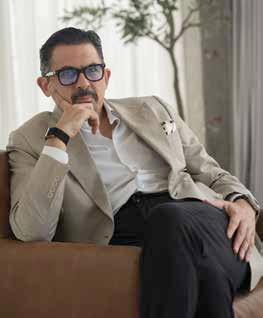
need now. That takes investment in how people think, not just new tools or workflows. We’ve been building advisory capability through structured training and workshops. That’s meant changing how teams are put together and who leads what. The goal is sharper thinking and more rigour at every level. That’s the real restructuring.
Agency Name: Créo Global
Founded: 2023
Headquartered: Dubai Investment Park
Head of Company: Jaimesha Patel
Number of Staff: 120
Contact: Jaimesha Patel
Email address: connect@creoglobal.co
Website: creoglobal.co
We combine strategy, creativity, and performance to solve real business challenges, with technology built into everything we do. Backed by experience across industries, we deliver practical solutions that help brands reset, evolve, and achieve measurable results.
Our long-standing client partnerships reflect the trust we build through collaboration, innovation, and results that matter. We don’t just help businesses succeed, we help them stand out, grow stronger, and make a real impact in their markets.
Service:
Marketing & Communication:
• Market & audience insight
• Brand & digital strategy
• Positioning & messaging
• Integrated marketing planning
Social & Performance:
• Content strategy & production
• Creative asset management
• Social strategy & management
• Performance marketing
Digital Experience & Data Science:
• UX/UI & experience design
• Web design & development
• CRM, automation & integrations
• Analytics & performance insight
Tech Partners:
• Gallabox
• Web Engage
• Emplifi
Key Clients:
Spinneys Beverage | EOMAC | Dubai South Business Hub Free Zone | Al Ghurair Mobility
National Bank of Fujairah | Meydan Free Zone | Ambassador International Academy
SPC Free Zone | Al Wathba Insurance | Masdar City Free Zone | Ejaby | SHAMS Free Zone
Awards:
MENA Search Awards 2025:
• Best Startup Agency
• Best PPC Campaign – Meydan Free Zone
• Best use of data (PPC) – Meydan Free Zone
MARCOM Awards 2025:
• Gold Winner – Boarding Pass to Business – Meydan Free Zone SEO Transformation
• Gold Winner – Pipeline Propulsion – Meydan Free Zone
AVA Digital Awards 2024:
• Platinum Winner – Power Up PPC Campaign – Meydan Free Zone
• Platinum Winner – Data Driven Search Campaign – SPC Free Zone
Leadership Panel




Businesses face a lot of noise, with trends, opinions, and strategies that promise a lot but often deliver li le. At Créo, we focus on what really ma ers. We start by listening and understanding the unique challenges each business faces.
From there, we combine creativity, strategy, and practical action to help brands grow in meaningful ways. This approach has helped our clients succeed and allowed us to grow alongside them. When creativity is clear and purposeful, it does more than look good. It delivers results.
Founded: 2022
Headquartered: Muscat Head of company: Luma Al Saleh and Rajwa Al Ojaili ouridentity.com connect@ouridentity.com
Identity is an independent, multi-disciplinary brand-building firm that prides itself on delivering innovative and bold solutions to our clients. We are commi ed to pushing the boundaries of what is possible, pioneering new approaches, and leading our industry with a progressive mindset.
SERVICES: Strategy; branding; communications; creative; intelligence; experiences
KEY CLIENTS: Al Mouj Muscat, Amouage, St. Regis, Vale, Vodafone Oman
Founded: 2018
Headquartered: Riyadh Head of company: Saad Sraj imetric.net hello@imetric.net
imetric is a full-service digital media agency with a regional presence in Beirut, Riyadh, Doha and Dubai. We specialise in delivering innovative; data-driven digital marketing solutions tailored for today’s fast-evolving digital landscape.
SERVICES: Media planning and buying; social media strategy and management; analytics and measurement solutions; automation and AI amplification; SEM and SEO
KEY CLIENTS: MBSC, Infiniti, King Salman Gate, Harvey Nichols, Doha Bank

Founded: 2000
Head of company: Kareem Monem, CEO, Digitas
Number of staff: 200 digitas.com + 971 4 367 6400
dubai@digitas.com
Founded: 2005 Headquartered: South Korea Head of company: Chang Jo Yoo innoceanmea.com makram.af@innocean.ae
Innocean is a global agency crafting innovative brand experiences driven by technology and data. The agency brings together creative, customer experiences, media and digital disciplines through an integrated approach.
SERVICES: Full marketing communications; digital and CX; media; experiential; space marketing
KEY CLIENTS: Hyundai, Genesis, Kia
Founded: 2024
Headquartered: Dubai and Sweden Head of company: Mikaela Eigelsreiter ismagency.io mikaela@ismagency.io
ISM Agency is a leading digital marketing and media agency in MENA, delivering data-driven growth solutions for enterprise and regional brands. We are an official Microsoft Advertising Elite Channel Partner and Amazon Ads Verified Partner in the region, providing certified expertise across leading advertising platforms.
SERVICES: Microsoft Advertising MENA; Amazon Ads MENA; digital media strategy; CTV campaigns; campaign optimisation and monetisation
KEY CLIENTS: OMD, Wavemaker, Cenomi, Publicis
Digitas MENA empowers businesses to make, break and refine product, service, and marketing experiences. We apply Experience Intelligence ‘EI’ – our proprietary framework combining AI precision with experience design empathy – to transform how brands operate. With multidisciplinary teams in strategy, business consultancy, experience design, technology and martech, we design intelligent systems that learn, adapt and serve across three dimensions: Product experience (websites, apps, platforms), service experience (processes, automation, intelligent agents), and martech (CRM, CDP integrations), all powered by the leading technology providers.
SERVICES: Product experiences – websites, apps, and platforms that adapt through AI digital experience platforms (DXPs); Service experience – business process reimagination; marketing automation workflows; intelligent agents/chatbots, contact centre transformation; Martech – CRM implementations and transformation; customer data platform (CDP) integrations; marketing automation platforms; loyalty programmes; Breadth of capabilities – strategy and business consultancy; experience design; technology and implementation; data and analytics
TECH PARTNERS: Adobe, Optimizely, Salesforce, Sitecore, Snowflake, Microsoft, AwS
KEY CLIENTS: KAFD, Etihad, ADCB, FAB, SAB, Nissan
AWARDS: Gartner, WARC, Cannes Lions, MENA Effies, Digital MENA Awards & Smarties

Founded: 1986
Headquartered: Dubai info@jacobsonsdirect.com
SERVICES: Customer relationship management (CRM) strategy and solution; market research; data management and analytics; direct and digital marketing; customer experience management; CX listening and measurement; in-house call centre; profiled mailing lists
Founded: 2008 Headquartered: UAE Head of company: Mohammed Naheemuddin lemonhq.io media@lemonhq.io
LemonHQ is a business growth catalyst helping established brands and enterprises build meaningful, trustworthy relationships with their customers through authentic communications and impactful experiences.
SERVICES: 360 digital marketing; media strategy; media planning and buying; campaign management; organic search; paid search; social ads; performance marketing and programmatic display
KEY CLIENTS: Abbo Laboratories, Dubai World Trade Center, Abdul Latif Jameel, Dubai Police, Cheil
Founded: 2010 info@kreataglobal.com
SERVICES: Social media marketing; digital advertising; e-commerce marketing and development; performance marketing; web design and development
Founded: 2011 karl@like.digital
SERVICES: Global e-commerce launch and strategy; digital transformation; user experience; conversion rate optimisation solutions; digital strategy

Epsilon is a data and technology leader helping marketers drive real business outcomes. Our platform is built on COREid, the industry’s most accurate and stable deterministic identity graph. It turns fragmented signals and channels into real people and complete shopper journeys so brands can act at moments of genuine intent, reach their highest-value audiences and cut duplication. No guesswork. No wasted spend. Just results. For more information, visit www.epsilon.com.
SERVICES: Epsilon has built a single intelligent platform that powers digital media, retail media, site personalisation and loyalty solutions. Marketers can adopt as much or as li le as they need, when they need it, scaling activity without sacrificing precision or control.
Founded: 1969
Number of staff: 9,320 worldwide epsilon.com/emea +971 4 818 9593
KEY CLIENTS: Currys, John Lewis Partnership, Deliveroo, Tesco, Walmart, McDonald’s, Marrio , FedEx, Landmark Group, Alshaya Group, Apparel group
AWARDS: IDC MarketScape for Worldwide Data Clean Room Technology for Advertising and Marketing Use Cases; IDC MarketScape for Worldwide Demand Side Platforms; Forrester Wave™ Loyalty Technology Solutions

Solomi Chief Digital Officer, Publicis Groupe ME&T

Donia Hamdi Director, Business Development


Founded: 2013
Heads of company: Elie Haber and Johnny Khazzoum
Number of staff: 39 fusion5me.com
+971 4 443 1355 info@fusion5me.com
We are an Agile ROI Media Agency, dedicated to crafting strategies and campaigns that deliver tangible and measurable returns on investment. With agility at the core of our DNA, we maintain a laser focus on data analytics, innovative technology, and a relentless pursuit of optimisation. We stand as your trusted partner in maximising every marketing dollar spent. Our commitment is clear: when you choose Fusion5, you’re choosing a path to success where performance, innovation, profitability, and your bo om line are our top priorities.
TECH PARTNERS: Adjust, Kochava, Google GCP, Funnel.io, Anthropic, Innovid, Bytek, Pecan, N8N
SERVICES: Planning and strategy; digital and performance; client leadership; social and community management; media buying; tech integrations; data visualisation and analytics
KEY CLIENTS: ADNOC Distribution, Mubadala, DEWA, ADIB, De’Longhi / Kenwood Group, TCL, Dubai Culture, SEHA, Mai Dubai, Abu Dhabi Airports, Shurooq, Al Ain Farms, Costa Coffee, MetLife, UAE National Orchestra, Saiid Kobeisy Fashion House
AWARDS: Campaign Middle East Agency of the Year: Performance Marketing Agency of the Year 2025; Independent Media Agency of the Year 2024 and 2025; MENA Digital Awards: Agency of the Year 2023/2024






FADI SADER

WHAT NEW FORMS OF VALUE ARE CLIENTS DEMANDING BEYOND PERFORMANCE AND HOW ARE AGENCIES ADAPTING TO MEET THOSE EXPECTATIONS?
Performance still matters, but we feel clients are no longer impressed by dashboards alone. They want someone who can look at the numbers and say “this matters, this doesn’t, and here’s why.” The real shift is from reporting to judgment. Clients want partners who help them think, not just execute. Agencies are adapting by leaning into strategy, honesty, and sometimes telling clients what not to do. That restraint has become a big part of the value.
WITH ATTENTION BECOMING THE SCARCEST RESOURCE, HOW ARE AGENCIES DESIGNING WORK THAT EARNS TIME RATHER THAN INTERRUPTS IT?
People are very good at ignoring things they don’t care about, and even better at skipping ads. Work that earns attention today feels relevant, useful or entertaining without trying too hard. Less noise, more intent. Agencies are learning that clarity beats cleverness and that saying one good thing clearly is more
effective than saying ten things loudly. If the work respects the audience’s time, they usually give it back.
WHAT ARE THE BIGGEST LESSONS DIGITAL AGENCIES ARE CARRYING FROM 2025 INTO 2026?
That doing more is not the same as doing better. 2025 was a year of overloading teams, chasing every opportunity, and confusing activity with progress. The lesson going into 2026 should be focus. Fewer services, fewer promises, clearer priorities. Strong fundamentals beat constant reinvention. Turns out boring things like alignment, trust and execution are still undefeated.
HOW ARE AGENCIES RESTRUCTURING TEAMS AND PROCESSES TO STAY AGILE IN A FAST CHANGING ENVIRONMENT?
Agility isn’t about moving fast for the sake of it. It’s about not breaking when things change. Agencies are moving toward smaller, more senior teams, less bureaucracy and clearer ownership. Fewer layers, fewer meetings and more accountability. When people know what they own and why it matters, decisions get easier and teams move faster without burning out.
Founded: 2018
Headquartered: Dubai
Head of company: Asiya Ali mkvdigital.com asiya@mkvdigital.com
MKV Digital is an ad-tech enabled influencer and creator agency delivering performance-led influencer marketing and UGC campaigns. Using data insights, optimisation frameworks and audience intelligence, we help brands scale creatorled campaigns with measurable outcomes and media-level accountability.
SERVICES: Data-driven social media management; performance-led influencer marketing campaigns; UGC optimisation; campaign analytics and personalisation.
KEY CLIENTS: Unilever, Rotana Hotels, Landmark Group, Swiss Arabian Perfumes
Founded: 2018
Headquartered: Dubai Head of company: Saad Muhammed naasdigital.com saad@naasdigital.com
At NAAS Digital, we turn ideas into reality. As a globally recognised digital agency, we enhance brands with exceptional user experiences and innovative digital solutions.
SERVICES: Social media management; web development; influencer marketing; content development; digital consultancy
KEY CLIENTS: Transguard Group, Abudhabi University, Anwar Gargash Diplomatic Academy, Emirates Stallion Group, HBMSU
Founded: 2013 Heads of company: Fadi Khater, Michael Maksoudian HQ: Dubai, UAE hello@netizency.com
SERVICES: Strategy; content creation; social media management; digital media buying/planning and listening & analytics
Founded: 2005
Head of company: Dany Naaman, CEO
Number of staff: 350 me.havas.com +971 4 455 6000 info@havasme.com
Founded: 2005 Headquartered: Dubai Head of company: Amit Vyas digitalnexa.com support@digitalnexa.com
NEXA is an award winning digital growth agency with 20 years of experience helping brands navigate change, scale smarter, and grow with intention. What started with building websites evolved into delivering end-to-end digital, performance, CRM and AI-driven products for ambitious businesses.
SERVICES: AI services and products; HubSpot and CRM strategy; social media and lead generation; SEO and GEO; website design and development
KEY CLIENTS: Shell, PwC, e&, STC, CBRE
avas Middle East is part of Havas Group, one of the world’s largest global communications groups. We are a fully integrated communications powerhouse, operating seamlessly across creative, media, and PR. With 20,000 of the brightest and bravest, working in a place we call the Havas Village across more than 100 countries, we are commi ed to making a meaningful difference to the brands, businesses, and lives of those we work with.
SERVICES: Media investment planning and buying; digital and performance marketing; e-commerce; data analytics; brand communication strategy and design; content creation; social community management; media and influencer relations; corporate communications; event management; financial PR and investor relations; crisis and reputation; sustainability ESG; public affairs
KEY CLIENTS: Dubai Holding, Hermes, Saudi Tourism, Disney +, Spotify, Adidas, Tom Ford, Estee Lauder Companies, Jumeirah, The Warehouse gym, Levi’s, Dubai World Trade Center, Birkenstock, Homecenter, Muse, Aujan, Charlo e Tilbury, L’Oreal, Dolce & Gabbana, Lactalis, UAE National Lo ery, LaPerle, Saudi Ministry of Tourism, SAMA, LG, British Council, Faces, The Deal, Tanagra, Swarovski, Damiani, JDE, Oppo, Hyundai-Kia




Founded: 2023
Headquartered: Dubai
Head of company: Sara da Costa phaseune.com contact@phaseune.com
A powerful brand presence is never accidental. At Phase Une, we refine and elevate brands through strategy, storytelling and digital presence, ensuring clarity, cohesion and memorability. From visual language to immersive physical experiences, we align aesthetics and business goals.
SERVICES: 360 Marketing communications; social media; audio-visual production and brand management.
KEY CLIENTS: Tefal, Lagostina, Pink Lady, Jamie Oliver
Founded: 2004
Headquartered: London Head of company: Anisha Patel pushgroup.ae hello@pushgroup.ae
At Push, we help businesses grow with AI in marketing. We guide you through analysis and tool selection so you can make confident decisions and focus on what you do best while staying ahead of competitors.
Push helps businesses in three ways; campaign management, consulting with a clear plan for AI in marketing and training.
SERVICES: AI solutions; performance marketing; SEO/GEO; social media advertising; consultancy
KEY CLIENTS: Travel and tourism, auto, packaging, government, retail


HFounded: 1976
Head of company: Reham
Nader Mufleh
Number of staff: 300+ in the MENA region horizonholdingsmena.com +971 55 744 2241; +971 4 332 3304 reham.mufleh@horizonfcb.com; info@horizonfcb.com


Founded: 2010 info@quillmena.com
SERVICES: Public relations; creative; design and production; social media; digital performance marketing
Founded: 2017
Headquartered: UAE info@radixmediamena.com
Radix Media MENA is a leading digital agency specialising in performance-driven strategies, innovative content, and cu ing-edge technology. From social media management to digital advertising and analytics, we craft tailored solutions that connect brands with their audiences. With a focus on creativity and results, we empower brands to excel in the digital landscape.
SERVICES: Digital strategy; consumer journey mapping; performance marketing; SEO; AI integrations
orizon FCB is a creative digital agency. We understand that activating business is critical, and so is building brands for the long term. We build brands that are both timely and timeless with creativity fuelled by diversity, data and technology to drive Big Business success. We believe that creativity is truly an economic multiplier and that brands can unlock it across everything they do. Whether it’s digital advertising, content creation, branding/design, performance or retention – we build a powerful strategic advantage over their competitors
SERVICES: Marcom and adtech strategy; branding and identity; integrated communication; digital and social comms; content creation; gaming and online/onground activations; retail and shopper experiences; rapid pace production; innovation and technology
KEY CLIENTS: Visa, Mai Dubai, Haleon, Centrum, Tums, Lipton, Total Energies, Mubadala, AMIS Developments, Emirates Skywards, Pentacore
AWARDS: Multiple awards in creative festivals such as: Cannes Lions Festival, The One Show, The Clio Awards, D&AD, Loeries, Cresta Awards, The Andys, Dubai Lynx, Gerety Awards, Kinsale Shark Awards & LIA.










Founded: 1971
Head of company: Dani Richa
Number of staff: 700+ impactbbdo.com +971 4 4412 0800
info@impactbbdo.ae
Part of the global Omnicom Advertising and BBDO network, IMPACT BBDO was established in 1971 and offers comprehensive and integrated marketing communication solutions, covering a wide and prestigious base of global, regional and local clients. Our mission is to create and deliver the world’s most compelling commercial content across all mediums and screens.
SERVICES: Advertising; Brand & Identity Development; Corporate Reputation Management; Digital Marketing; Event Marketing; Integrated Project Management; Marketing Communications; Marketing Science; Performance Marketing; Production; Social & Content Marketing; Shopper Marketing
KEY CLIENTS: Aramco, ASMO, Department of Economy & Tourism, DP World Dubai Customs, Economic Development Board of Bahrain, Etihad, Future Minerals Forum , Google, HP, Jotun, OceanQuest, One&Only, PepsiCo, Pladis, Public Investment Fund (PIF), P&O Ferries, Ras Al Khaimah Tourism Development Authority, Royal Development Company, Sadia, Shamal Holding, Starbucks, UAE Government Media Office
AWARDS: Cannes Lions – MENA Network of the Year (7 consecutive years), Dubai Lynx –Agency of the Year, The One Show – No.1 Agency in MEA, WARC Creativity 100 – No. 1 Agency in MEA, Andy Awards – No. 1 Agency in Middle East, The Immortal Awards – No 1 Agency in ME, Campaign Middle East Agency of the Year – Creative Agency of the Year, ContagiousBest and Bravest Agencies in the World







Sebastian Roland Group Head of Strategic Planning Chairman and Group CEO
Ghassan Kassabji CEO, UAE and Chief Growth Officer MENA

Johannes DeBeer Executive Creative Director
Mamdouh Alfred Chief Finance Officer

Shadi El Mourad VP Strategic Partnerships
Jad El Rabahi Managing Director

Nawal Momen Projects Director, Impact Proximity
IFounded: 2000
Head of company: Dani Richa
Number of staff: 100+ impactproximity.com +971 4412 0850
info@impactproximity.com
Ali Rez Chief Creative Officer, MENAP

Faith Rodrigues Experience Design Director, ImpactProximity
Kordahi Group HR Director

Mohammad Sakib Technical Lead, Impact Proximity
mpact Proximity is part of Omnicom’s IMPACT BBDO Group, leveraging experience design, digital innovation, technology, and data to build scalable platforms and experiences that create measurable business impact across MENA.
SERVICES: Experience design strategy; audit, competitive analysis; audience research & journey mapping; ux discovery workshops and interviews; information architecture, UX wireframes and user flows; UI design; interactive prototypes and accessible digital design system; content structure; UX writing and localisation; digital asset production; performance optimisation; web personalisation; website development; mobile app development; quality assurance; content publishing; SEO strategy and implementation; analytics strategy and implementation; data visualisation and analysis conversational AI solutions; intelligent agents and automation
TECH PARTNERS: Webflow, Sitecore, Optimizely, Umbraco, Wordpress, Sitefinity, Microsoft Azure, IIS, AWS, Cpanel, Strapi, Salesforce, Figma, Adobe Creative Cloud, Google Marketing Platform, Power BI, Oracle, .Net, React, PHP, IOS and Android native, OpenAI
KEY CLIENTS: ASMO, Capital Bank of Jordan, Department of Economy & Tourism, Dubai Customs, Dubai Islamic Bank, Economic Development Board of Bahrain, Front End, Future Minerals Forum, OceanQuest, Sadia, Shamal Holding
Founded: 2023
Headquartered: Dubai
Head of company: Raj Sagar reddot.marketing raj@reddot.marketing
Red Dot Marketing is a strategy-led creative and performance marketing agency that helps brands build meaningful connections with their audiences. Working with both emerging and established businesses, the agency focuses on strong marketing foundations, audience-led growth, and long-term strategic partnerships.
SERVICES: Social media strategy and management; brand and communication strategy; performance marketing; content creation; public relations
KEY CLIENTS: Ascend Esports, Babyshop, Hungarian Games, The Fabrique, R’Rumi Diamond
Founded: 2016
Headquartered: Dubai and Riyadh Head of company: Nadine Ghossoub sciencesunshine.com hello@sciencesunshine.com
We are a story-driven, fearlessly creative agency that smells wonderful.
SERVICES: Digital and social strategy, social content and creative, paid social and performance media, community management and social listening, influencer and creator partnerships
KEY CLIENTS: Red Sea International Film Festival, MDLBEAST, Netflix, Bloom Holding, Recki

Founded: 2022
Headquartered: Abu Dhabi, Yas Island Number of staff: 50+ magnitudecreative.com +971 50 988 6074. business@magnitudecreative.com


Founded: 2016 Headquartered: Dubai, United Arab Emirates Head of company: Sophie Simpson ruderfinna eline.com hello@ruderfinna eline.com
A eline is an integrated communications agency headquartered in Dubai, UAE and is the MENA agency of the Ruder Finn group, one of the world’s largest independent global communications and creative agencies, with over 75 years of experience.
SERVICES: Media relations; influencer marketing; strategic partnership; event and activations; social media and digital marketing.
KEY CLIENTS: Sony, American Express (Amex), Netflix, Dubai Future Foundation, Ahmed Seddiqi
Founded: 2010 serviceplan-dubai@house-of-communication.com house-of-communication.com/int/en.html
SERVICES: Fully integrated 360-approach; digital and performance; social media; tech-led activations; e-sports and gaming
Magnitude Creative is an independent, award-winning creative agency built on the belief that collaboration and partnership drive meaningful business growth. The agency delivers integrated communications rooted in strategic insight and bold creative execution, spanning digital media, influencer marketing, social media, events and content production that fuels brand growth across the UAE, KSA and Egypt. Magnitude has also launched the region’s largest content creator programme, Content Masters, alongside a digital platform, Destination Abu Dhabi, and a podcast, 100X Abu Dhabi, dedicated to promoting Abu Dhabi’s business leaders and entrepreneurs. The agency has experience across major regional clients, including government entities, consumer and lifestyle brands, and experiential platforms. Magnitude Creative operates as a lean, professional force guided by a people-first philosophy and a results-driven mindset.
SERVICES: Advertising integrated communications; influencer marketing & consultancy; social media; branding; production; podcasts; digital media; events
KEY CLIENTS: Destination Abu Dhabi, Hardee’s, Krispy Kreme, Botim, Canon, International Securities



Founded: 2018 Headquartered: Dubai Head of company: Saad Gharzeddine spinemarketing.com saad@spinemarketing.com
Dubai-based marketing partner delivering brand and comms strategy, social media management, premium content production, experiential and event coverage, influencer strategy and management, campaign planning and paid media support, plus AI automation and solutions to streamline workflows and improve performance across the customer journey.
SERVICES: Brand and communications strategy; social media management; content production; experiential and event production; AI automation and solutions
KEY CLIENTS: Al Tayer Motors Ferrari UAE, Al Tayer Motors Maserati UAE, ChapterTwo
Founded: 2000 Headquartered: Dubai Head of company: Reda Raad, Group CEO info@tbwaraad.com
SERVICES: Integrated marketing communications; strategic brand management; advertising and content creation; digital; social and mobile; public relations
KEY CLIENTS: Abu Dhabi Government Media Office, Apple, AWR Rostomani Arabian Automobiles, Commercial Bank of Dubai, du, Etihad Rail, Henkel, Hilton, Infiniti, Johns Hopkins, KFC, Natural History Museum Abu Dhabi, NEOM, Nissan, Pladis, Qatar Museums
Founded: 1995 Headquartered: UK Head of company: Chris Lewis teamlewis.com hellodubai@teamlewis.com
Tactical
Founded: 2013 Head of company: Mike Khouri, Managing Director hello@wearetactical.com
SERVICES: Strategy; content; distribution; intelligence
Creative campaigns for commercial and community causes. 27 offices throughout Asia, EMEA and North America.
SERVICES: Public relations; marketing; brand and strategy; creative and development
KEY CLIENTS: Schneider Electric, Equinix, Infobip, John Crane, Rubrik
MFounded: 2012
Headquartered: The Citadel, Business Bay
Head of company: Lama Accary Bibi and Baha Bibi
Number of staff: 75 meansdesign.ae +971 4 355 1500 connect@meansdesign.ae
eans Design is a 360° integrated marketing agency delivering strategic consultancy, creative excellence, branding, social media management, performance marketing, website development and public relations through one seamless model. We work at the intersection of strategy and creativity, aligning every discipline to drive clarity, consistency and measurable impact. Built on collaboration and long-term partnerships, we support ambitious brands in navigating complex markets and evolving consumer behaviours. Our approach prioritises depth over volume, precision over noise and relevance over trends, which results in sustained growth, impactful brand value and consistent year-on-year success across the region.
SERVICES: Integrated 360° marketing consultancy; creative and branding; public relations and influencer management; social media and digital strategy and analytics; performance marketing; content planning and creation; events planning and execution
KEY CLIENTS: Emaar Hospitality Group, Vyom by Emaar, Six Senses The Palm, Masafi, Ha an Group, Sofitel Hotels & Resorts and Sheraton Hotels & Resorts and Americana Group





Founded: 2018
Head of company: Andreas Skopal, CEO, MENA
Number of staff: 70 - 100 merkle.com
+971 4 447 4996 andrew.sawyer@merkle.com

Sameer Poonja Managing Director, Experience & Platforms

Saeed CXM Strategy Director
CEO ANDREAS SKOPAL
AS BOUNDARIES BLUR BETWEEN CONTENT, COMMERCE AND COMMUNITY, HOW ARE AGENCIES REDEFINING THEIR PLACE IN THE BRAND ECOSYSTEM?
Agencies are no longer operating as external suppliers but as embedded growth partners within the brand ecosystem. As content, commerce and community converge, our role is to design connected experiences that move seamlessly from inspiration to transaction to advocacy. That means aligning creativity, media, data and technology around real consumer behaviour, not channel silos. The most effective agencies today sit at the intersection of culture and commerce, helping brands show up with relevance, utility and consistency across every touchpoint.
WHAT DOES MEANINGFUL INNOVATION LOOK LIKE FOR AGENCIES IN 2026?
Meaningful innovation is not about novelty; it’s about impact. In 2026, innovation will be defined by how effectively
At Merkle, we power the experience economy by transforming how brands engage with their customers. Our focus is on growth and business agility, enabling organisations to balance current needs with future aspirations. We provide future-ready technology solutions that align with business strategies, empowering teams to innovate and unlock value.
We prioritise customer-first experiences, personalising every touchpoint across the journey to foster brand loyalty. With a team of more than 1,000 award-winning designers, 4,500 data scientists and 5,000 engineers, we deliver exceptional results globally. Named a global ‘leader’ by top industry analyst firms in many categories, we leverage strategic partnerships to drive transformative outcomes across industries.
SERVICES: Strategy and transformation; data management and governance; data science and AI; cloud solutions; CRM and media services; experience; commerce and loyalty
KEY CLIENTS: Emirates Airlines, DubaiStore, Samsung, Dubai Holding, Nakheel, GOSI, Johnson Control, NEOM, Department of Culture and Tourism Abu Dhabi
AWARDS: MENA Search Awards - Agency of the Year (2021, 2022); Most Innovative Campaign; Best Use of Data




Head of SEO & Generative AI Optimization
agencies apply technology, especially artificial intelligence and data, to solve real business problems while preserving human insight and creativity. This includes smarter planning systems, predictive measurement and faster idea-to-market cycles. Innovation also means building operating models that allow teams to experiment, learn and adapt continuously, without losing strategic rigor.
WITH ATTENTION BECOMING THE SCARCEST RESOURCE, HOW ARE AGENCIES DESIGNING WORK THAT EARNS TIME RATHER THAN INTERRUPTS IT?
Earning attention requires a shift from interruption to value exchange. Agencies are designing work that respects context, intent and mood, delivering messages that feel native, useful or emotionally resonant. This means fewer, better ideas grounded in insight, designed for how people actually consume content today. Creativity must work harder, not louder, and media must amplify relevance rather than frequency.
HOW ARE AGENCIES RESTRUCTURING TEAMS AND PROCESSES TO STAY AGILE IN A FAST-CHANGING ENVIRONMENT?
Agility comes from simplicity and clarity. Agencies are moving toward modular team

structures, blending strategic, creative, media and data expertise around client needs rather than rigid departments. Processes are becoming more iterative, with faster decision-making and clearer accountability. The focus is on building teams that are adaptable, continuously learning and equipped to operate at the pace of both technology and culture.




Founded: 2023
Headquartered: Dubai
Head of company: Rasha Hamzeh theinhouse.agency admin@theinhouse.agency
The Inhouse revolutionises agency models by pooling skilled professionals and boutique companies from diverse sectors. We serve as an in-house extension for clients, offering specialised teams tailored to any marketing need, with credibility and expertise as our cornerstones.
SERVICES: Media planning and buying; podcast strategy; optimisation and production; search engine optimisation (SEO); ecommerce strategy and implementation.
KEY CLIENTS: Mitsubishi, Koita, Access Bank UK, Hurley Medical Center, Sharjah Government Bureau, Luca’s Insight Track
Founded: 2018
Heads of company: Rachel Lloyd; Naheed Maalik info@the-loop.me
SERVICES: PR management; content creation; brand development; marketing and communications strategy; media buying
Founded: 2006 business@thetribe.com
SERVICES: Web UX/UI and build; content creation; digital marketing; social media; search
Founded: 2023
Headquartered: Sharjah Head of company: Farzana PN sideup.me info@sideup.me
This Side Up is one of the leading technology marketing specialists in the United Arab Emirates dedicated to empowering the advertising ecosystem with the tools and insights needed to reach new heights of performance and success - simultaneously.
SERVICES: Media planning and buying; AI in marketing content; marketing tech consulting; influencer marketing
KEY CLIENTS: Malabar Gold & Diamonds, Rivoli Group, Mercato mall







Founded in: 2005 HQ: Dubai, UAE









As a leading global media network, Omnicom Media sets itself apart with an agile, client-first approach that helps businesses thrive today and into the future It is comprised of global, award-winning agencies Hearts & Science, OMD and PHD We unlock the potential of our world-class talent through Omni, the industry’s first marketing operating system that transforms data into actionable insights for better business outcomes
We’re a data-driven agency group helping some of the region's and the world’s biggest brands build individual relationships with consumers at scale To achieve this, we combine the talent of our global networks with the expertise of our specialist consultancies in e-commerce/retail media, data/tech/analytics, cloud and digital analytics, as well as consumer and market insights
Contact:
mena@omnicommedia.com
+971 4 450 0450
Website: www.omnicommedia.com
SPECIALIZED SERVICES LEADERSHIP TEAM



Annalect, our analytics arm, delivers advanced data solutions like dashboards, workflow automation, and machine learning to optimize ad performance.








Omnicom Consulting is a business transformation par tner focused on modern growth systems spanning data, decision-making, and go-to-market execution.





TRKKN is our global analytics, marketing, and cloud partner, enabling digital maturity and efficiency with Google tools in a privacycentric ecosystem. sparks & honey is a global cultural intelligence and research agency that turns data, AI, and human cultural insights into actionable strategy. Flywheel provides tailored AI-powered commerce strategies, integrating retail media, operations, and marketplace intelligence across 32 countries.





Founded in: 2002 HQ: Dubai, UAE


OMD is the world’s largest media network, with over 14,000 people across more than 100 countries We Create What’s Next by delivering ti di l ti ns that drive sustainable grow cognised by RECMA, the Effie d named Media Network of the Year at the 2025 Cannes Festival of Media, OMD leads innovation, creativity, and cultural relevance



ounded in: 2006 HQ D b i
HQ: Dubai, UAE

Services: Media planning & strategy, media buying & investment management, performance marketing, data, analytics, & technology enabled consultancy
Contact: hellouae@omd com
+971 4 450 0450
Founded in: 2016 HQ: Dubai, UAE




g creative media solution wth for leading brands Re Effectiveness Index, and clie tgrow their competition nected across a next gen
PHD is a global media and marketing communications agency, driven by innovation and creativity We deliver transformative growth by helping our clients outthink, outpace and out with intelligence conn eration network that brings everything and everyone together
Services: Media planning & buying; strategic planning; data analytics & technology consultants; social & content marketing; SEO; creative services including dynamic creative optimization
Contact: info.uae@phdmedia.com
+971 4 457 4570


Hearts & Science is engineered to accelerate growth through dataled decision-making Designed to challenge convention, it delivers integrated, end-to-end solutions that remove friction across the consumer journey and unlock superior brand and business impact.
Services: Integrated media planning/buying, e-commerce, marketing science and ROI modeling, digital mark business growth acceleration, martech implementation, CRM/customer experie
Contact: mena@hearts-science.com +971 4 450 0450
eting transformation, /adtech consultancy/ ence consultancy




Founded: 2019
Headquartered: Dubai
Head of company: Simon Lomas and Liam Troughton tidal.digital hello@tidal.digital
Welcome to Tidal, a brand-led performance marketing agency. Not your external vendor. Your growth partner and unfair advantage. We’re the ones brands call when they’re done pretending strategy decks equal strategy.
SERVICES: Search and discovery; PPC services; paid social services; performance creative
KEY CLIENTS: Perfume Direct, Brass Bee, Chaps & Co, Underhance, mimojo
Founded: 2023
Headquartered: Riyadh info@warriorstrulyfearless.com
SERVICES: Digital marketing and communications; digital brand activation; campaign creation; brand and marketing consultancy; brand planning;
Founded: 2001 Head of company: Madhu Ku at info@watermelonme.com
SERVICES: Digital strategy and marketing; mobile network advertising; social media advertising; programmatic advertising; SEO, SEM and Google Display Networks
Founded: 2010 Headquartered: Dubai Head of company: Jim Coleman, EMEA CEO wearesocial.com/me hala@wearesocial.net
Formerly known as Socialize, We Are Social is the most creative social agency and the most social creative agency in the Middle East. With 60 UAE based specialists across 20 nationalities, we partner with global brands, regional leaders and government entities to turn culture into commercial impact.
SERVICES: Campaign and content creation across social platforms; social media management; digital and social strategy; paid social and media integration; delivery of integrated campaigns with measurable impact
KEY CLIENTS: ATRC, TikTok, Babyshop, Sony, International School Partnership, Switz
Founded in 1926, Publicis Groupe Middle East today stands as the foremost communications and digital transformation agency holding group globally. Through the Power of One, we are uniquely positioned to help clients unlock growth through the intersection of data, creativity, media and technology. The Groupe enjoys a thriving presence in the Middle East fuelled by the region’s best talent, world-class agency brands and an enviable portfolio of clients. Our talent-first mindset not only drives our business, but it also guides our entire belief system. We believe in transformation, of our industry, of our clients and of our people.
Founded: 1926
Head of agency: Bassel Kakish, CEO, Publicis Groupe ME&T
mena.inquiry@publicisgroupe.com Publicis Groupe Middle East
SERVICES: Publicis Groupe is organised across solution hubs which intersect to provide seamless solutions. Publicis Communications is the creative communications division comprising Leo, Publicis Gulf, Saatchi & Saatchi and MSL. Publicis Media harnesses the power of modern media with brands-Spark Foundry, Starcom Zenith, and Chain Reaction. Digitas is an Experience Intelligence agency focused on Product Experience, Service Experience and MarTech. Publicis Sapient is the digital business transform arm. At the core of the Groupe is Epsilon, delivering personalised experiences at scale.
AWARDS WON: Clio, Clio Sports, MENA Smarties, KSA Smarties, The One Show, PHNX, D&AD, Cannes Lions, Cresta, Jay Chiat, LIA, Loeries, David Ogilvy, FastCo, MENA Effie, Campaign AOTY


Founded: 2000 Head of agency: Joyce Hallak, CEO of Spark Foundry ME Number of staff: 200 in the region sparkfoundryww.com +971 4 367 6400 culture@sparkfoundryww.com
Spark Foundry is a global media agency brand within Publicis Media, a key division of Publicis Groupe. Spark Foundry’s bold vision harnesses the spirit of a start-up combined with the soul of a powerhouse that melds an entrepreneurial, innovative business approach with the full resources, capabilities and marketplace clout of Publicis Media. With 200 employees across MENA, we leverage the best industry talent to service our clients across the luxury, retail, travel and tourism, culture, banking and FMCG verticals to name a few. Spark Foundry brings HEAT to brands: Higher Engagement, Affinity and Transactions.
SERVICES: Branded content; data and analytics; e-commerce; media consultancy; planning and buying
KEY CLIENTS: LVMH, Sephora, Department of Culture & Tourism Abu Dhabi, Natural Museum of History, Zayed National Museum, Mondelez, First Abu Dhabi Bank, Majid Al Fu aim, Saudi Aramco, Louvre Abu Dhabi, Mario Group, New Murabaa, FrieslandCampina
AWARDS: Effies, MMA Smarties






With more than 7,000 employees worldwide and an unmatched global footprint, Starcom, part of Publicis Groupe, provides human experiences at scale, offering a seamless coordination and consistency to clients around the world. We put people at the forefront of everything that we do. Through our propriety HX approach, we design human experiences that close the gap between what people want and what brands need to grow and thrive. We believe that when we combine our deep understanding of people with our unmatched expertise in media, magic happens and experiences get invited in, not filtered out.
Founded: 2000
Head of company: Ramez Zeineddine, CEO, Starcom ME
Number of staff: 206 in MENA starcomww.com
+971 4 36 76 400 ramez.zeineddine@starcomww.com


SERVICES: Digital and performance marketing solutions, data, CX, CI, media planning/ buying, measurement, content and social media
KEY CLIENTS: Mars, Visa, P&G, Stellantis, Atlantis, Arada, Lego, PUIG, McDonald’s, Yango, Kellogs, Kellanova, RTA, Samsung, Renault, Saudi Tourism Authority, Neom, Red Sea Global, Almaraai, Savola, Arabian Oud, Arma, Mondelez Egypt, Hallan, Qatari Diyar, Bank Audi, Asia cell, UNHCR, Umniah.
AWARDS: MENA Effies, Dubai Lynx, Media Agency of the Year, WARC Top 100




Founded: 2010
Headquartered: Dubai
Head of Company: Raksha Khimji info@teamreddot.com
WHO: Team Red Dot are an independent, award winning media agency with over 15 years of deep expertise in digital.
WHAT: We help our clients connect their brands with consumers through digital media designed to create meaningful impact and lasting impressions – turning ambition into measurable results.
WHY: We define success by the impact we create. From long standing partnerships, to award winning work, our focus is always outcomes that drive growth.


AWARDS: MENA DIGITAL Awards: Best use of Technology, Best use of Data, Best use of Digital by Sector, Best Search Marketing Campaign, Best Integrated Media Campaign. MENA Smarties Awards: Contextual and Geo Targeting, Customer Journey Marketing-Lead Generation/CRM, Real Time Marketing- Use of Revolutionary Tech to Drive Sales, Geo Targeting-Use of Revolutionary Tech to Drive Sales. MENA DATAMATIXX Awards: Excellence in Real-Time Data-Driven Marketing.
SERVICES: Strategy & planning, interactive & experiential media, performance marketing, app installs, Google advertising, paid social, programmatic advertising, e-commerce marketing, Connected TV, Rich media & audio advertising, DOOH, SEO & AIO, analytics & optimisation.
KEY CLIENTS: Careem, Insurance Market, Tata Group, NIO, Royal Furniture, AvaTrade, Hub71, Savills, GMG, The Entertainer, Higher Colleges of Technology.





Founded: 2024
Offices: United Arab Emirates, Saudi Arabia, Lebanon, Egypt, Qatar, Morocco and Jordan
Head of company: Nassib Boueri, CEO, VML MENA
Number of staff: 800 vml.com/uae info@vmlmena.com


At VML, we are a beacon of innovation and growth in an ever-evolving world. Post the merger of VMLY&R and Wunderman Thompson, VML continues as a growth partner and a leading creative agency, consultancy and technology powerhouse. VML Tech and Enterprise Solutions division integrates deep technology services capability into brand experience, commerce and customer experience. With the WPP Open Pro launch, we’re able to deliver our services, complimented with AI, to more clients in various markets.
SERVICES: Our expertise spans the customer journey, offering deep insights in communications, commerce, consultancy, CRM, CX, data, production and technology
TECH PARTNERS: Adobe, Salesforce, Optimizely, Sitecore, Google, Microsoft, Braze, Zoho, Adjust, Kochava, Funnel.io, Anthropic
KEY CLIENTS: stc, Vodafone, Jotun, Microsoft, AlShaya, Ford
AWARDS: Leader in The Forrester Waves for global digital experience services and commerce services; Leader in The Marketscapes for worldwide experience design and build services and Adobe Experience Cloud professional services; Creative Business Transformation Cannes Lion; Creative Data Cannes Lion; MENA Search Awards




Head of Digital Strategy & Transformation, MENA

INDUSTRY SNAPSHOT
WHAT DOES MEANINGFUL INNOVATION LOOK LIKE FOR AGENCIES IN 2026?
Grant: For clients, meaningful innovation in 2026 is systemic, measurable and human centred. Innovation is no longer about loud and bold ideas, or shinny products and tech.
It’s about changing how value is created, delivered and measured at speed, at scale, and with deep relevance to your customers. Aside from continuing to define new ways of delivering innovation for clients, agencies need to change how they operate; building AI into operating models, reducing layers to enable faster decisions, blending onshore/offshore talent with permanent and freelance talent. Clients and competing agencies can easily copy tools, but innovative operating models are differentiators far harder to mimic.
WHAT ARE THE BIGGEST LESSONS DIGITAL AGENCIES ARE CARRYING FROM 2025 INTO 2026?
Grant: Gone are the days agencies talked digital; operationally, commercially and reputationally; In 2026 agencies must live digital. AI can no longer be theatre. Strategy must be measurable to be bought. Agencies must become more specialised and focused. The key is creating differentiation by generating trust, ensuring governance around AI, mitigating data residency risks, and baking in accessibility by design. Agencies must price for clear client value and provide flexibility to avoid procurement teams squeezing their margins. Lastly, heading into 2026 it’s clear that experience is getting physical again with the region rewarding agencies that can connect the end-to-end experience.
WHAT NEW FORMS OF VALUE ARE CLIENTS DEMANDING BEYOND PERFORMANCE – AND HOW ARE AGENCIES ADAPTING TO MEET THOSE EXPECTATIONS?
West: In an era where optimisation is increasingly automated, strong
Head of Customer Experience (CX), MENA

performance is expected; differentiation now comes from delivering experiences that still feel human. In crowded sectors like banking, retail, telco and travel, brands rarely win on product or price alone. What matters most is how easy, fair and low-effort it feels to interact with the brand during key moments, such as onboarding, changes or problem resolution.
Behavioural science helps by designing for real human behaviour, not idealised assumptions. Rather than re-educating users, progress comes from small, testable changes, adjusting defaults, reframing choices or clarifying copy, validating them through experimentation instead of intuition. Success is increasingly measured over time, not by short-term sales, but by reduced friction, repeat use, lower churn, fewer complaints, faster resolution and stronger advocacy. The most effective work is rarely flashy, instead building trust through continuous, incremental improvements that turn transactions into lasting relationships.
West: The shift inside organisations is primarily a mindset change, not a structural one. While specialist teams remain, the strongest work comes from aligning around the customer journey rather than individual channels. Starting with customer needs and friction points, instead of outputs like apps or emails, keeps teams focused on real problems rather than internal KPIs. Behind the scenes, AI and automation are used to quietly improve efficiency – handling data, pattern detection, content variations and first-pass outputs, without lowering quality. Strategic decisions remain human-led, especially where trust is involved. The goal is to free teams to think, collaborate and solve customer problems.

Founded: 2003
CEO: Amer El Hajj
Number of staff: 750+ (MENA)
Offices: Bahrain, Egypt, Iraq, Jordan, Kuwait, Lebanon, Morocco, Qatar, Saudi Arabia, United Arab Emirates (HQ)
We are WPP’s global media collective, built for the AI era. We bring the best platform, people, and partners together to create innovative solutions that deliver unparalleled growth for brands – in every market, every day. The company is responsible for more than $60 billion in annual media investment, as measured by the independent research bureau COMvergence.
Through its global brands Mindshare, Wavemaker, EssenceMediacom, Keyade, and cross-channel practices, data (Choreograph), entertainment (WPP Media Motion Entertainment) and investment solutions, WPP Media leverages a unique combination of global scale, expertise, and innovation to generate sustained value for clients wherever they do business.


Managing Director KSA (RHQ)





Get in touch
+97148736700
menamarcoms@wppmedia.com https://www.wppmedia.com/local/mena
Services & Products

Strategy & Consulting: Communication Strategy, Media Planning & Buying, Investment Strategy & Management, AdTech & MarTech Consultancy, Ecommerce, Client Growth & Development, Digital Transformation Consulting
Data & Analytics: Data Solutions & Analytics, Consumer & Market Research & Insights, Attribution Modelling, Effectiveness & ROI Measurement, Economic Modelling
Performance & Activation: Search, Social, DOOH, Programmatic, SEO, SEM, Ad Operations (AdOps)
Content & Innovation: Content Creation, Content Distribution, Content & Innovation Partnerships
Social Media: Social Media Strategy, Social Media Management, Influencer Relations
Other Services: CRM, Experiential, Sports Marketing & Sponsorships, Gaming, Advanced TV, Advanced DOOH, Integrated Video, Integrated Display, Integrated Cross-Channel, Acceleration (Always-on Transformation of Marketing Organizations), Copilot (AI Solution)


Founded: 2009
Number of staff: 20+ (MENA)
WPP Media Motion Entertainment funds, develops, produces, and distributes premium television, digital content, and award-winning programming around the globe in partnership with the world’s leading producers, talent, networks, and platforms.
Get in touch
+971504163096
patricia.abifadel@wppmedia.com
Founded: 2012
Number of staff: 15+ (MENA)
The Goat Agency was one of the first agencies to harness the power of influencer marketing for brands and have delivered thousands of campaigns for brands across Instagram, TikTok, YouTube, Twitch and more. We see influencer as a full-funnel marketing channel, and we work with clients to devise strategies that will meet their objectives.
Get in touch
+971528565999
mohieddine.mneimneh@wppmedia.com


Founded: 1995
Number of staff: 30+ (MENA)
Choreograph is a global data products and technology company, built for a new era that demands a more purposeful approach to data. Choreograph provides a future-proof data system, orchestrating an end-to-end data enablement system that brings our clients’ customer data to life, and empowers them to move with intention.
Get in touch
+971502261747
alan.azar@wppmedia.com www.choreograph.com
Founded: 2006


Number of staff: 20+ (MENA)
Keyade, a WPP Media brand, is a leading consulting agency for digital performance. We design and deploy intelligent digital media strategies (SEA, SMA, and SEO), offering consulting services and advanced technological solutions to help our clients achieve their business goals.
Key Clients Al Futtaim, Barakat Group, Emirates, Extra, FAB, Flynas, Royal Air Maroc, Sony, Styli, Tawuniya
Get in touch
+971585977318
laura.gleadhill@wppmedia.com

Mindshare is a media services agency that accelerates Good Growth for its clients in the age of transformation. The solutions we create are both Good for consumers and drive Growth for our clients.
We were the first purpose-built brand created by WPP and today we are 10,000 people working in 116 offices in 86 countries, helping to drive Good Growth for our clients, our people, the industry and the world.


Director

Wavemaker is a top five global media network. It’s roster of products and services has been built with a single aim – to positively provoke growth for clients and our people through our new operation system consisting of 3 speeds of growth. We are continually developing our offer to deliver growth in a fast-changing consumer world. Many of our most progressive capabilities are core to clients, including ecommerce, content and precision marketing.


Marc Ghosn

EssenceMediacom is WPP Media’s newest and largest agency, committed to delivering breakthroughs for brands in the New Communications Economy. It has disrupted the old models across media, creative, innovation and analytics to find new opportunities for advertisers and deliver truly integrated media solutions.
Our ‘breakthrough’ ambition is underpinned by our commitment


Abdalla
El
Abd
Regional Managing Director
Founded: 1999
Regional MD: Samer Majzoub Number of staff: 172+ (MENA)
Key Clients
ADCB, Ahmad Tea, Alat, Aldar, Alinma, Americana Foods, Americana Restaurants, Bayer (Morocco), Carrefour (Morocco), Damac (Iraq), Danone, du telecom, Ferrero, Fine, Henkel, Huawei (Iraq), L’Oréal (Lebanon & Morocco), LCWAIKIKI (Morocco), Master Card, Mercedes, NHC, NOVA Water, OLX, PIF, Property Finder, Qatar Airways, Rolex, Sanofi, Spinneys, The Coca Cola Company, Total Energies, Xiaomi

Get in touch
+971521110705
mena-mindshareworld@wppmedia.com
Founded: 2017 CEO: Marc Ghosn
Number of staff: 250+ (MENA)
Our leading global consultancy has experts to solve any communications challenge, from go-to-market ecommerce strategy to digital transformation.
Key Clients
Huawei, ADIB, Al Ahly Sabbour, Amazon, Colgate Palmolive, Danone, DIB, Dubai Department of Economy and Tourism, Edita, Honor, Huawei, Kitopi, L’Oréal, Nestle, Perfetti Van Melle, Total Energies, Wunderman Thompson
Get in touch
+971589988868 mena-wmglobal@wppmedia.com
Founded: 2023
Regional MD: Abdalla El Abd Number of staff: 250+ (MENA)
to ‘continuous learning’. We aim to ensure our people fulfil their potential by investing in their whole-person wellbeing, careers and capabilities, which in turn helps grow our clients’ businesses.
Key Clients
Adidas, Alex Bank, American Express, Bayer, Bonjorno, Bose, Carina, Derayah, Etisalat (Egypt), Hasbro, Ikea (UAE), Jotun, Juhayna, L’Oréal (Egypt), Mars, Playstation, Qiddiya, Riyadh Air, Shell (KSA), The Coca-Cola Company, Vodafone (Oman), Xiaomi
Get in touch
+971588224416 abdalla.elabd@wppmedia.com
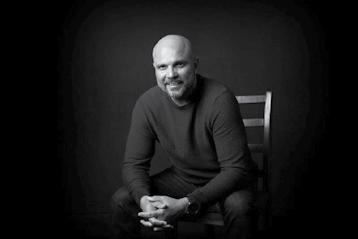



















Founded: 2022
Headquartered: Dubai info@up10.co
UP10 Media is a video production agency creating impactful, affordable social media content for businesses. They boost brand visibility through UGC-driven videos on TikTok, Linkedin, YouTube, and more.
SERVICES: Strategic consulting and production of UGC videos
Founded: 2017 hello@welcometoyellow.com
SERVICES: Brand strategy and identity development; communication strategy; advertising campaigns; digital creative campaigns; social media services
Founded: 2007
Offices: Dubai (HQ), Beirut, Jeddah and Riyadh info@wetpaint-mena.com
Wetpaint is a digital first agency designed to help brands redefine their digital presence and digital experience.
SERVICES: Digital marketing; social media marketing; web/app design and development; content creation and digital video production; marketing automation
Founded: 2010 Headquartered: UAE Head of company: Manan Kapur yaap.ae wyon@yaap.ae
We are a new-age specialised content company that combines technology, data and content to deliver high- quality creative solutions. We don’t just create ideas. We live them.
SERVICES: Design and marketing agency; content creation; influencer marketing; paid media
KEY CLIENTS: Dubai Tourism, Norwegian Seafood council, Allure perfumes, Al Etihad Payments, Sharaf DG, NPCI, Assam Tourism

Founded: 2005
Head of agency: Firas El Zein, CEO, Zenith ME
Number of staff: 250+ zenithmedia.com +971 4 367 6309 firas.elzein@zenithmedia.com


Zenith is the ROI agency, a position we have proudly held true to since 2005.
Over the years, we have evolved our definition of ROI, as it has changed with the ever-complicated communications landscape. Powered by our best-in-class proprietary tools and data, our work spans the full spectrum of media communications, from analytics, data and technology to performance marketing, content and superior trading. Our unique way of thinking inspires growth for leading brands across the region and globally. Zenith is a part of Publicis Media, the media division of Publicis Groupe.
SERVICES: Media planning and buying; digital and performance marketing solutions; retail media; data; CX; CI; measurement
KEY CLIENTS: Accor, Bank Muscat, Beiersdorf, Bel Group, BMW ME, Dabur, Disney, Essity, Etihad Rail, Haleon, Knowledge Economic City, Luxo ica, Ooredoo, Pfizer, Philip Morris International, Recki , Red Bull, Royal Commission of AlUla, Salama Hospital, Saudia Airlines, Spotify, Talabat, TikTok, Western Union
AWARDS: MENA Effie, Campaign MENA, Smarties MMA, Cannes Lion, Dubai Lynx, Les Cas D’or








Founded: 2012
Headquartered: Cairo Head of company: Perry Remon asyncagency.io perry@asyncagency.io
Async is a full-cycle influencer agency specialised in web3, crypto, blockchain, igaming, SaaS and fintech. We guide and assist you throughout your influencer marketing journey to grow your brand across the world.
SERVICES: Influencer marketing; PR; on-ground influencer activations
KEY CLIENTS: Coinmena, Deriv, Olymp Trade, De.Fi, BitOasis
Founded: 2017
Headquartered: United Arab Emirates Head of company: Jad Gosen inhype.social jad@inhype.social
An award-winning, technology-enabled influencer and creator marketing agency with a proven track record of delivering high-impact campaigns across regional creators since 2017.
SERVICES: Influencer marketing; campaign strategy; creative planning; content production; data and analytics
KEY CLIENTS: Mondelez, NIVEA, NARS, L’Occitane, Drunk Elephant
Founded: 2021
Headquartered: United Kingdom and Dubai Head of company: Joshua Roche bullaco.com joshua@bullaco.com
Backed by creators, Bulla is creative and strategic partner that empowers emerging creators and produces original content. One that doesn’t just measure vanity metrics, but actual campaigns on social that are not only culturally relevant but also commercially effective.
SERVICES: Creator campaigns; user-generated content; talent partnerships; content production; paid media
KEY CLIENTS: H&M Group, Majid Al Fu aim Group, Metropolitan Police, McDonalds, G Adventures
Founded: 1988
Headquartered: Dubai, United Arab Emirates Head of company: Roy Aftimos c2comms.cx management@c2comms.cx
C2 Comms is an award-winning independent communications consultancy based in the UAE and KSA, creating unignorable work. Combining data-driven insights with creative excellence, C2 delivers integrated marketing solutions across the MENA region
SERVICES: Influencer discovery and ve ing; campaign strategy and management; content creation and production; performance analytics and reporting; amplification
KEY CLIENTS: Anker, soundcore, eufy, Zeekr, smart



Founded: 2014
Parent company: Hashtag Agency
Head of company: Ana Gixhari starfish.agency
+971 4 457 8678
Info@starfis h.agency

Amer Massimi CEO & Founder
HAS INFLUENCER MARKETING REACHED A POINT WHERE RELEVANCE NOW OUTWEIGHS REACH , AND IF SO, HOW SHOULD BRANDS RECALIBRATE SUCCESS?
Absolutely. Reach alone no longer guarantees impact. Today, relevance, context and trust drive real results. Brands should recalibrate success by looking beyond impressions and focusing on quality metrics, engagement depth, saves, shares, sentiment, and how naturally a creator fits into the brand’s world. A smaller creator who genuinely resonates with their audience can often outperform a larger one with weaker relevance.
WHAT ROLE SHOULD LOCAL CULTURE PLAY IN SHAPING INFLUENCER STRATEGY IN AN ERA WHERE GLOBAL PLATFORMS FLATTEN EVERYTHING?
Local culture is more important than ever. While platforms are global, audiences still connect through shared traditions, language, humour and values. In regions like the GCC, cultural sensitivity and local nuance can make or break a campaign. Influencer strategies must feel native, not
Starfish is a leading micro-influencer agency in the GCC, delivering creative, highimpact influencer marketing campaigns for the region’s biggest brands. We execute large-scale influencer activations as well as tailored campaigns with longterm brand ambassadors. Our strong, trusted relationships with influencers across the GCC enable us to deliver authentic content and measurable results. Backed by an extensive influencer database, we carefully match brands with the right talent based on reach, relevance, credibility, and performance,ensuring every campaign drives real engagement and business impact.
SERVICES: Creative strategy for all clients, influencer management, ve ing and onboarding, influencer contracting, starfish analysis tool, campaign reporting and insights, UGC Creators, Events and PR Boxes, and end-to-end campaign management across the GCC and MENA region.
CREATOR TIERS SUPPORTED (NANO, MICRO, MACRO, CELEBRITY): All Tiers are supported Nano, Micro, Macro, Megas, Celebrities, including UGC Creators as well.
APPROX. NUMBER OF CREATORS IN NETWORK: 10,000+
KEY CLIENTS: Max Fashion , Liwa international Festival, Pringles , Kelloggs, DET , Lipton, Yves Rocher, Activia, Mccain, Floward, Kayan Wellness Festival m Fahid Watersport festival

Gixhari Head of the Agency


imported, reflecting real lifestyles, moments, and behaviours that audiences recognise as their own.
IS INFLUENCER MARKETING STILL A DISTINCT CHANNEL, OR IS IT BECOMING INSEPARABLE FROM BRAND, COMMUNITY AND CONTENT STRATEGY?
Influencer marketing is no longer a standalone tactic, it’s a core layer of brand storytelling. Creators sit at the intersection of content, community and culture. When done right, influencer marketing doesn’t feel like advertising; it feels like participation in a conversation. Brands that integrate creators early into their content and community strategies see stronger, more sustainable impact.
WHAT MINDSET SHIFT DO MARKETERS NEED TO STAY CULTURALLY RELEVANT IN 2026 AND BEYOND?
Marketers need to shift from control to collaboration. Audiences can sense overproduced, forced messaging instantly. The future belongs to brands that trust creators, embrace experimentation and move at cultural speed. Being culturally relevant means listening more, planning less rigidly, and allowing room for authenticity, even if that means giving up some control.

In a region where evenings are often spent glued to the latest series, movie premieres and trending shows, Pringles set out to own one powerful cultural moment: screen time. With the simple yet resonant insight that every great show deserves an equally epic snack, the brand launched the Pringles Screen-Time Influencer Campaign across Saudi Arabia and the UAE, anchored by the bold tagline “An Epic Snack for Epic Shows”.
To bring the idea to life, Pringles partnered with 13 carefully selected influencers across both markets, turning everyday movie nights into shareable entertainment moments. The campaign’s standout element was a custom-designed TV-shaped PR box, instantly eye-catching and purpose-built for social media. More than just packaging, the box became a storytelling device visually reinforcing the connection between Pringles and screen-time culture while delivering strong, scroll-stopping content.
Influencers unboxed the PR kits as they set up cozy viewing spaces, queued up their favourite shows, and prepared for long bingewatching sessions. The narrative was simple and relatable:
Set against the iconic dunes of the Empty Quarter, the Liwa International Festival 2026 came to life on social media through a large-scale, multi-phase influencer campaign designed to capture the spirit, culture, and energy of one of the region’s most anticipated events. To amplify awareness and excitement, the campaign brought together 40 micro, macro, and mega influencers, each playing a role in showcasing Liwa as a must-visit cultural destination.

The campaign launched with a high-impact invitation phase, centred around a thoughtfully curated PR box that immediately set the tone. Deeply rooted in local culture and the desert journey, the PR box featured festival-inspired elements including a branded set of playing cards for road-trip moments, a box of dates for an authentic energy boost, desert glasses designed for sand and wind, and a traditional dallah with branded cups. Influencers unboxed the kits on camera, building anticipation and inviting their audiences to join them on the journey to Liwa.
something always feels missing from a perfect screen-time moment until Pringles enters the frame. From spontaneous reactions to trending series to laid-back movie night rituals, creators seamlessly integrated the product into real-life entertainment scenarios, making Pringles feel like a natural part of the experience rather than a forced placement.
The campaign thrived on authentic storytelling, tapping into shared habits that resonate deeply with audiences across KSA and UAE. By combining creative PR, culturally relevant moments and influencer-led content, Pringles successfully elevated everyday snacking into a branded lifestyle moment. The result was strong organic reach, high engagement, and content that felt entertaining, familiar, and easy to connect with.
Through this activation, Pringles reinforced its position as more than just a snack it became the companion to shared laughs, cliffhangers and unforgettable on-screen moments. Starfish Agency proudly partnered with Pringles to deliver a locally relevant, creatively driven influencer campaign that transformed screen time into an epic snacking experience.
In the second phase, influencers travelled to Liwa and immersed themselves in the festival experience. Through dynamic reels and real-time stories, they captured the scale of the event, from desert landscapes and cultural performances to entertainment zones and activities. Content felt spontaneous, exciting and experiential, allowing audiences to experience the festival through the eyes of creators with diverse perspectives and reach.
As the festival approached its finale, the third phase focused on amplifying overall awareness and driving lastminute interest. Influencers shared recap-style content highlighting the festival atmosphere, key moments, and why Liwa International Festival stands out as a unique cultural and entertainment experience in the region. By combining localised creative PR, on-ground influencer experiences and phased storytelling, the campaign delivered strong organic reach and sustained engagement throughout the festival period. The Liwa International Festival 2026 influencer campaign successfully transformed a destination event into a digital experience, bringing the magic of Liwa from the desert to screens across the region.


Founded: 2022
Head of company: Ihab Ghazal, CEO reachdxb.me
+971 50 501 4052 info@reachdxb.me
Reach is a leading influencer marketing and talent management agency that also specialises in social media and content creation. Reach focuses on what actually moves the needle: strong strategy, the right talent and content that feels real and performs. Based in Dubai, we work closely with brands and creators, building long-term partnerships rather than one-off campaigns. From influencer marketing and exclusive talent representation to full social media management and content production, everything we do is hands-on and results-driven. We understand the market, the culture and the audience. The world’s within Reach.
SERVICES: Influencer marketing, social media, content creation
CREATOR TIERS SUPPORTED: Nano, micro, macro, mega and celebrity
APPROX. NUMBER OF CREATORS IN NETWORK: 500+ in network, with top tier creators exclusively handled
KEY CLIENTS: Keeta, Kitopi, Careem, Noon, OSN plus, Galadari, Skin Load



Founder & CEO
HAS INFLUENCER MARKETING REACHED A POINT WHERE RELEVANCE NOW OUTWEIGHS REACH – AND IF SO, HOW SHOULD BRANDS RECALIBRATE SUCCESS?
It’s not that reach no longer matters, it’s that relevance determines whether reach actually works. Some creators with large followings still maintain real communities because they grew with their audience, not ahead of it. When scale and trust coexist, that’s where influence is strongest. The problem isn’t big creators; it’s inflated reach without credibility. That relevance is built on stories on different platforms rather than videos/feed posts.
IS INFLUENCER MARKETING STILL A DISTINCT CHANNEL, OR IS IT BECOMING INSEPARABLE FROM BRAND, COMMUNITY AND CONTENT STRATEGY?
Influencer marketing is no longer a separate channel. It has evolved into an extension of brand, community and content strategy. When creators are treated as media placements, the work feels transactional and audiences do not engage. When they’re treated as partners, they
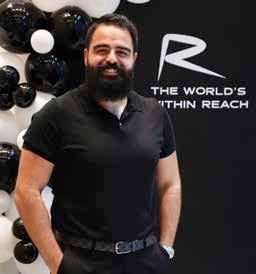
care about the brand and vouch for it, they shape the tone, culture and trust in a way traditional channels can’t.
At Reach, we don’t ask which influencer has the biggest reach. We ask whose audience genuinely trusts them, and whether the brand belongs in that conversation. That’s where authenticity is built.
Influencer marketing today is the connective tissue between a brand and its community. The brands winning aren’t buying posts they’re building relationships.
HOW SHOULD BRANDS EVALUATE INFLUENCE IN A WORLD WHERE IMPACT MAY BE SUBTLE, SLOW AND CULTURAL RATHER THAN INSTANTLY MEASURABLE?
Influence today isn’t always loud or instantly measurable. It’s built over time through trust, consistency and cultural fit. From my perspective, brands need to stop chasing spikes, trends and start reading signals, how people engage, talk, remember and behave after repeated exposure. If a creator can integrate a brand naturally without losing credibility, that’s real influence.
At Reach, we believe the strongest impact isn’t always immediate. It’s subtle, cumulative, and remembered, and that’s what actually moves brands forward.
ARE CREATORS NOW SHAPING BRAND NARRATIVES MORE THAN BRANDS THEMSELVES?
Creators are increasingly shaping brand narratives more than brands themselves. People experience brands through creators, not corporate messaging. Creators humanise brands, translate them into culture, and make them feel real. That influence is powerful and risky if not intentional. From my perspective at Reach, brands must be clear on their point of view and selective about who they give narrative power to. Brands set the direction, but creators drive the story.
Founded: 2022
Headquartered: Abu Dhabi
Head of company: Abed Hamed magnitudecreative.com partnerships@magnitudecreative.com
Magnitude Creative is a regional influencer marketing agency connecting brands with high-performing regional and international creators. through its content masters hub, it develops creators, elevates content quality, and delivers end-to-end influencer strategy, management, and execution across the gcc and beyond.
SERVICES: Influencer marketing
KEY CLIENTS: MOFA, ADGM, Botim, Canon, Lóreal, Careem, ADIB, Bingha i
Founded: 2025
Headquartered: Riyadh, Saudi Arabia
Head of company: Asma’a Al Maraghi kliqapp.io info@kliqapp.io
Kliq is a data-driven influencer marketing platform built to transform how brands discover and collaborate with creators. Through a seamless, end-to-end solution, Kliq bridges the gap between brands and creators to discover, manage, and scale campaigns - powered by real performance insights for transparent, impactful, results-focused partnerships.
SERVICES: Influencer marketing; creator discovery; brand communication; reporting and analytics


Founded: 2015
Regional head: Karl Mapstone vamp.com hello@vamp.me
Founded: 2012 Headquartered: Cairo, Egypt Head of company: Shady Raymond rekoya.com hello@rekoya.com
Rekoya is a creative agency leading the new generation of influencer marketing across the globe. We are experts in creating and elevating stories in the digital space.
SERVICES: Influencer marketing; PR; on-ground activations
KEY CLIENTS: Gille e, Dilmah, LG, Temu, PUBG
Founded: 2019
Regional HQ: Dubai walee.ae careers@walee.ae
Walee is MENAPT’s leading influencer marketing and social media technology platform, built at the intersection of data, AI and the creator economy. Trusted by top brands across telecom, FMCG, automotive, beauty and tourism, Walee delivers measurable growth through performance-driven, award-winning innovation.
SERVICES: Tech-driven solutions and creative expertise that power authentic storytelling, meaningful audience engagement, and measurable brand and business impact at scale.
KEY CLIENTS: Recki , Saudi Tourism Authority, Mastercard, General Motors, BabyJoy, Nissan Middle East, Kitopi, Al Marai, Tim Hortons and the UAE National Orchestra
amp is an award-winning influencer marketing platform that connects top global brands like Adobe, Estée Lauder, GAP, Mars, and Dyson with a ve ed community of influencers and content creators. We help brands drive awareness, engagement and purchase consideration through high-quality, authentic content on platforms like Instagram, TikTok, Snapchat and YouTube. Our data-driven approach ensures impactful campaigns that maximise reach and ROI. By combining technology with human creativity, we make influencer marketing seamless and effective, enabling brands to tell compelling stories, strengthen customer relationships, and boost conversions in today’s competitive digital landscape. Vamp is the trusted partner for brands looking to elevate their social presence.
AWARDS WON: Best Influencer Marketing Platform or Technology AiMCO Awards (2021, 2022 & 2023); Marketech Awards (2024)






Founded: 2005
Headquartered: Dubai, United Arab Emirates and Buenos Aires, Argentina
Head of company: Gaston Taratuta, Founder and CEO alephholding.com contactus@alephholding.com
Aleph Connect, a division of Aleph at MENAT, specialises in programmatic and performance solutions. As a hub for premium ad tech, it offers cross-channel integration with third-party monitors and major MMPs to meet advertiser demands. Aleph Connect enables brands to reach and engage complex audiences in the most advanced, consolidated way.
SERVICES: Programmatic advertising, performance advertising solution
KEY CLIENTS: Halan App, Favelin, Darco, Muslim World League, Al Masakin Palace, UM6P, Kenzup
Founded: 2008
Headquartered: New York Head of company: Daniel White doubleverify.com daniel.white@doubleverify.com
DoubleVerify is the industry’s leading media effectiveness platform that leverages AI to drive superior outcomes for global brands. By powering media efficiency and performance, DV strengthens the online advertising ecosystem, preserving the fair value exchange between buyers and sellers of digital media.
SERVICES: Core measurement services, verification services (authentic brand suitability), optimisation services (DVauthentic advantage and DV scibids), walled garden solutions: social media measurement and verification
Founded: 2018
Headquartered: Hong Kong SAR, China Head of company: Charlene Ree eternityx.com mkt@eternityx.com
EternityX is a leading expert in Chinese media ecosystems and audiences. Through award-winning technology, trusted media partnerships, and official reseller rights, we empower global brands to connect with Chinese netizens worldwide, driving growth and measurable impact across the consumer journey.
SERVICES: PilotX- Our AI-Driven precision MarTech programmatic platform, MediaX - Trusted media representation with professional industry recognition, NaviX - Comprehensive cross-border consultancy service
KEY CLIENTS: Abu Dhabi Tourism, Dubai Tourism, Visit Qatar, Etihad Airways and Jumeirah Hotel Group
Founded: 2003
Headquartered: China
Head of company: Victoria, Co-Founder focusmediamea.com victoriayun@focusmediamea.com
Affiliated with Focus Media Group, Focus Media MEA is an elevator media network across the Middle East and Africa, reaching premium audiences.
SERVICES: Digital out-of-home (DOOH) advertising, elevator media networks, programmatic DOOH (pDOOH), hyper-local targeting.
KEY CLIENTS: Samsung, Huawei, Honor, Keeta, Hisense
Founded: 2025
Headquartered: Dubai
Head of company: Martin Sabbagh jcdecauxme.com/jcdecaux_play_plus_exclusive_pdooh_solutions_ middleeast me.programmatic@jcdecaux.com
JCDecaux Play+ is the first regional programmatic digital out-of-home solution live in major GCC airports, cities and malls. Covering Dubai, Abu Dhabi, KSA, Bahrain, Qatar and Oman, its iconic large-format displays enable data-driven, programmatic campaigns that reach precisely defined audiences at scale.
SERVICES: pDOOH, Digital planning, Managed service, DSP self-service, Data
KEY CLIENTS: Huawei, Mercedes-Benz, Eagle Hills, SolarWinds, Intel
Founded: 2010
Headquartered: London, United Kingdom Heads of company: Gurman Hundal and Lee Puri wearemiq.com info@wearemiq.com
Founded: 2015 Headquartered: DUBAI Head of company: Rosa Bullock sociate.ae hello@sociate.ae
Sociate is an award-winning creative communications agency, headquartered in dubai with both, regional and global presence. Fuelled by passion, creativity and industry expertise, Sociate will make sure your brand is on everyone’s mind. With its diverse services, Sociate caters to a host of local and international clients.
SERVICES: Public relations, influencer activations, social media, digital media
KEY CLIENTS: Legoland, Ikka (Hya Centric), Shoemart, Redtag, Dubai Offshore Sailing Club
We’re not your average programmatic media partner. Since 2010, we’ve been on a journey to make advertising be er. That’s why we created MiQ Sigma, our AI-powered advertising technology that connects the ecosystem, revealing what audiences everywhere are watching, browsing and buying. With MiQ, programmatic always goes beyond expectations.
SERVICES: AI-powered programmatic media planning and execution, data and AI-driven audience strategy and activation, advanced AI-led measurement analytics/insights, privacyfirst identity and addressability solutions, global campaign management and optimisation
KEY CLIENTS: agency holding companies, independent agencies, direct brands and advertisers


Founded: 2015
Headquarters: Dubai, United Arab Emirates
Head of company: Boye Balogun, CEO
Number of staff: 50 thisisfuture.com info@futuretechmedia.ae
FutureTech is a media-tech and communications company that blends strategic consultancy with performance-driven execution. The business helps brands navigate complexity by integrating intelligence, innovation and technology to build modern marketing systems rooted in culture and creativity. By pairing high-level strategy with an outcomes-led media ecosystem, spanning retail media, data and cross-network optimisation, FutureTech provides end-to-end infrastructure that translates bold ideas into measurable commercial impact.
SERVICES: Commerce and retail media, display advertising (video, display, native, performance), social advertising and influencer marketing, creative services, research and insights supported by an AI-powered optimisation and reporting dashboard, global strategic communications, creative leadership, stakeholder engagement, events and experiential activation
TECH PARTNERS: LoopMe, Future Influence, Future X
KEY CLIENTS: WPP, OMG, MCN, Havas, TBWA, Dentsu Aegis, Visa, Mastercard, MTN, Vodafone




Founded: 2005 Headquartered: Paris, France Head of company: Michael Komasinski
Number of staff: 3,600+ criteo.com +971 55 123 0239 g.wajchert@criteo.com

Michael Komasinski Chief Executive Officer

Edouard Dinichert Chief Customer Officer
Criteo (NASDAQ: CRTO) is the global platform connecting the commerce ecosystem for brands, agencies, retailers, and media owners. Its AI-powered advertising technology has access to over $1 trillion in annual commerce sales, enabling highly personalised, performance-driven marketing. With thousands of global clients and partnerships, Criteo provides the tools, data, and insights businesses need to drive measurable growth across the full digital advertising journey.
SERVICES: Criteo Commerce DSP; Criteo Commerce Audiences; Criteo Dynamic Creative; Criteo Retail Media
TECH PARTNERS: Google, Microsoft, DoubleVerify, META, TikTok
KEY CLIENTS: Etihad Airways, Department of Culture and Tourism of Abu Dhabi, Visit Qatar, Emirates Airline, Emirates Draw, Nice One, Floward



















INDUSTRY SNAPSHOT
Managing Director MEA GOSIA WAJCHERT

AGENTIC AI: WHAT IT REALLY MEANS FOR PERFORMANCE MARKETING
Agentic AI is quickly becoming one of the most discussed – and misunderstood – shifts in digital advertising. Much of the debate has focused on whether autonomous AI agents will actually replace search, social, or other existing performance channels.
But framing agentic commerce that way misses the point.
The reality is much more pragmatic. Agentic AI won’t replace performance media. Instead, it will add new layers of intent and discovery – and that means that our performance media strategies need to evolve with them.
At Criteo, we see agentic AI as the next phase of performance advertising: more complex, certainly – but also rich with new opportunities for measurable growth.
AGENTIC COMMERCE IS INCREMENTAL, NOT DISRUPTIVE
Consumers are already experimenting with agentic tools for both research and discovery, but this shouldn’t be seen as a wholesale behavioural reset. On the contrary – it’s incremental.
Criteo research shows that while 40 per cent of US shoppers now use agentic assistants for product research, 96 per cent still engage across traditional touchpoints – search
engines, social platforms, marketplaces and brand or retailer sites – within the same journey.
And this tells us something important: agentic AI expands the places commerce happens, but it doesn’t replace the touchpoints that already drive results. For advertisers, the opportunity is capturing and activating these new intent signals –without abandoning the channels that still deliver.
Performance marketing has historically been built on reactive inputs – keywords, site visits, retargeting pools and last-click attribution. Agentic AI adds a new dimension: consumers expressing intent conversationally across multiple interfaces, sometimes before a click ever happens. Intent is now fragmented, contextual and continuously evolving.
For performance teams, that means moving beyond channel-centric optimisation. The real challenge is now in recognising high-value intent earlier in the journey and activating media while it can still influence outcomes.
As discovery becomes more conversational, the tolerance for weak execution disappears. When product data is incomplete, pricing is outdated, or availability is unclear, performance simply falls apart – no matter how sophisticated the AI layer may be. The move towards agentic commerce also exposes a potentially uncomfortable truth – that many performance strategies today rely on:
“ Consumers are already experimenting with agentic tools for both research and discovery, but this shouldn’t be seen as a wholesale behavioural reset. On the contrary –it’s incremental.”
Excessive frequency rather than relevancy
Isolated optimisation rather than coordinated sequencing Volume over incrementality In an agentic world, these shortcuts just won’t hold water. More impressions don’t equal better performance and, in fact, they often erode it.
CRITEO’S ROLE: ENABLING AGENTIC PERFORMANCE, NOT REPLACING IT
Our focus at Criteo isn’t on building consumer-facing AI agents. Instead,
we’re building tools to power the data and decisioning layer that makes agentic performance possible at scale. By combining transactional data, a structured product catalogue and real-time behavioural signals, we help advertisers move from “more targeting” to smarter activation –deciding when to engage, when to suppress, and how to sequence exposure based on conversion likelihood.
This isn’t black-box automation. Human oversight, transparency and performance accountability remain essential. Agentic AI handles the complexity, but marketers stay in control.
One of the most persistent misconceptions in digital advertising is that adding more AI automatically improves outcomes. In reality, performance improves when intelligence is applied with discipline. Our experience shows that the best results come from:
Reducing wasted impressions
Prioritising high-intent audiences
Sequencing creative based on user readiness
Optimising for incremental growth, not surface-level metrics
Agentic AI reinforces this thinking. It moves performance from a scale-first model to a precision-first one.
For advertisers in the MEA region –where performance budgets are under constant pressure – this transition has a few clear implications: Performance planning needs to move upstream. Waiting for the final click is no longer enough when intent is expressed earlier through conversational and AI-driven interfaces.
Measurement must evolve with behaviour. Attribution models must reflect agent-mediated journeys –without losing focus on outcomes. Data quality and transparency become strategic performance levers. In an agentic environment, poor data reduces efficiency and undermines trust and results.
Agentic AI doesn’t simplify performance marketing. It makes it more demanding.
It rewards advertisers and partners who combine strong data foundations, intelligent automation and commercial accountability – and it exposes those still relying on blunt tactics or outdated optimisation models.
At Criteo, our role is clear: to help performance teams turn this growing complexity into clarity – and to ensure that, in an autonomous world, performance still performs.
Founded: 2017
Headquartered: Lille, France
Head of company: Benjamin Tolman corporate.sparteo.com a.zukowska.ext@sparteo.com
Sparteo provides cu ing edge solutions for publishers. We are a fully bootstrapped company without external funding. The company was founded in 2017 in France. Our engineers, data scientists and R&D team create the best technologies eliminating middle men and hassle.
SERVICES: SSP, video player, display wrapper, CMP, CTV monetisation
KEY CLIENTS: Khaleej Times, Le Figaro, Daily Mirror, The Monetizer, Yupp TV
Founded: 2008
Headquartered: India
Head of company: Nitin Gupta, CEO xapads.com Gagan@xapads.com
Founded: 2011
Headquartered: New York (USA) Head of company: Julien Cavailles (MEA) teads.com julien.cavailles@teads.com
Teads (Nasdaq: TEAD) operates a cloud-based, omnichannel platform that enables digital advertising across a 2bn reach global ecosystem of the world’s best publishers and CTV broadcasters.Teads is directly partnered with more than 10,000 publishers and 20,000 advertisers globally through a team of nearly 1,800 people in 30+ countries.
SERVICES: Full-funnel platform DSP and SSP; omnichannel digital media (display, CTV); teads studio; teads prediction AI and audiences; teads contextual targeting
KEY CLIENTS: Global JBP partners: Apple, Dubai Tourism, Dubai Holding, LVMH, Amazon
Xapads Media is a leading global adtech Company revolutionising digital advertising with cu ing-edge solutions tailored to empower brands and agencies. With direct access to over 75K publishing partners worldwide and seamless integration with major OEMs, Xapads connects with more than 2.1 billion users every month.
SERVICES: Programmatic - display/video; CTV advertising; rich media ads; mobile performance
KEY CLIENTS: Abu Dhabi Tourism, DTCM (Department of Tourism and Commerce Marketing), ADIO (Abu Dhabi Investment Office), Kudu, Neom, Renault, Cherry, Big Ticket, Royal Commission of Alula, Etihad Airways, Aramco, Starbucks, Bissell, BMW, Mastercard, Versace, Aldar, Samsung, MMT, NISSAN, Warner Bros, BitOasis


Founded: 2014
Offices: Dubai, Madrid and New York, among others
Head of Company: Brian Gleason
Number of staff: 700+ seedtag.com
+971 50 554 5995 sherry@seedtag.com
Seedtag applies advanced AI to deliver privacy-first advertising at scale. As the creator of Neuro-Contextual advertising, Seedtag moves beyond traditional contextual targeting methods such as keywords and categories. Instead, Seedtag understands deeper signals of interest, intent and emotion to create custom audiences based on a brand’s objectives. Seedtag’s AI agent activates this intelligence into optimised full-funnel campaigns across premium CTV, video and open web inventory.
Founded in 2014, Seedtag is headquartered in New York City and Madrid, with a global team of 700+ professionals across EMEA, LATAM, North America, and APAC.
SERVICES: Privacy-first advertising across the digital landscape through its inhouse Neuro-Contextual AI, Liz; ad placement optimisation; AI-powered insights; performance and branding campaigns; digital advertising
KEY CLIENTS: Tourism boards, automotive, FMCG
AWARDS: AI-based Advertising Solution of the Year in the AI Breakthrough Awards 2025.







Boyer SVP EMEA
Founded: 2007
Headquartered: San Francisco
Head of company: Mark Rabe, CEO Number of staff: 400 sojern.com
+971 04 585 0741 sojernmea@sojern.com
Sojern is the leading AI-powered marketing platform built for hospitality, designed to boost growth and profitability for the travel industry. The Sojern marketing platform is a set of easy-to-use software and services that delivers unrivalled traveller insight, intelligent audiences, multichannel activation and optimisation, and a connected guest experience – all in one place. More than 10,000 travel marketers rely on our platform annually to find, a ract, convert and engage travellers. Sojern, founded in 2007 and acquired by RateGain in 2025, is headquartered in San Francisco, California with teams in the Americas, Europe, Middle East and Africa, and Asia Pacific.
SERVICE: Adtech or digital marketing; AI-powered online advertising for hotels and destinations; travel marketing solutions; programmatic and multichannel; direct booking
KEY CLIENTS: Jumeirah, Accor, Flydubai, Qatar National Tourism Council, Flyadeal
AWARDS: Hotel Tech Awards 2026: Best Digital Marketing Agency – Winner; AI Global Excellence Awards 2025: Best Omnichannel Travel Marketing Platform; The SASS Awards: Most Innovative SaaS Solution – Sojern Marketing Platform for Hospitality –Shortlist 2025; Sammy – Sales and Marketing Awards 2025: Business Intelligence Group – Finalist; Site Minder Partner Awards 2024: Best Revenue Partner of the Year – Winner









Humans are neurologically wired to recognise and respond to them. That’s why brands use spokespeople to humanise what they do. The problem? Scaling.
People have real schedules, and content is constant.
AI avatars make a consistent face available on demand.
Myth #1 Fact #1 "Audiences won’t respond to avatars."
The brain’s Fusiform Face Area activates in 40-100 ms for cartoons, emojis
Myth #2
#2 "The impact of faces is overstated."
38% higher engagement for content featuring human faces vs. faceless alternatives.
Myth #3
"Digital avatars are emotionless."
Fact #3
Happiness (69%), sadness (87%) and anger (73%) are recognised with high accuracy in AI faces.
of Fortune 100 companies are investing in AI avatar builders such as Synthesia.


- Deployed AI avatars to train 1,000+ salespeople on product and closing methods.
- Cut production time by 90% so videos that took days could be created in an hour.
- Saved $1,500 per employee in content production costs.
We’re in the midst of a fight for attention, and faces will always be on the frontline. The brands that lead with them are more likely to stand out.

- Created ‘Yumi,’ an AI skincare influencer powered by Soul Machines.
- Deployed for personalised skincare consultations in Asia-Pacific markets.
- Demonstrates premium brands using emotional AI to reduce purchase anxiety.


Campaign Middle East rounds up the latest updates on social media, and content and streaming platforms. Here are the key highlights:
YouTube launched YouTube Health in Arabic, an initiative designed to make it easier for users searching for health-related topics to find reliable and credible video content.
The rollout was introduced in phases, beginning in the UAE, with plans to expand to additional countries and regional partners over time.
As part of the initiative, searches for certain health conditions such as diabetes or breast cancer triggered dedicated health content shelves at the top of search results. These shelves featured videos produced by accredited health organisations and government entities. YouTube also introduced health source information panels, providing additional context about the organisations behind the videos.
Initial content partners included healthcare providers such as Cleveland Clinic Abu Dhabi and Burjeel Hospital Abu Dhabi, which produced Arabic-language content intended to be culturally relevant and medically reviewed.
At the 1Billion Followers Summit, Meta hosted Ideas Unboxed, which invited creators to use their tool Meta AI. Through live examples, the tool was shown supporting tasks such as idea generation, storyline development and real-time editing. It’s all about pushing creativity further with AI tools.
Building professional connections can be challenging, and LinkedIn is introducing new features aimed at addressing this.


Within its in-app Games offering, the platform has launched a Connections Leaderboard, allowing members to view how they rank in LinkedIn Games against others in their professional network.
Recent updates add personalised insights, including progress indicators and contextual ranking information, intended to help users track their activity levels, including during periods of lower engagement. Members can also search for tailored “nudges” designed to encourage new connection moments.
Also, LinkedIn has fully rolled out Gmail contact sync as part of its Address Book Import feature, making it simpler for members to find and connect with people they already know.
These platform updates indicate a broader effort by LinkedIn to create more intuitive, motivating ways for professionals to grow their professional networks and stay connected.
Snapchat has launched a new in-app video editing feature called Quick Cut, which is designed to simplify the process of creating short, edited videos from existing content.
The tool allows users to select multiple photos or video clips from Memories or their camera roll and automatically generate a beat-synced video preview, replacing Snapchat’s previous multi-step editing workflow. The feature is intended to speed up video creation by reducing the number of manual editing steps required.
The feature automatically applies music from Snapchat’s Sounds library and syncs it to selected clips. Users can further customise videos by choosing alternative tracks or applying Lenses through the Lens carousel.
The launch formed part of a broader set of platform updates, following earlier changes to Snapchat’s creator tools, including the introduction of the Timeline Editor in Director Mode, as the company continued to expand its in-app video editing capabilities.


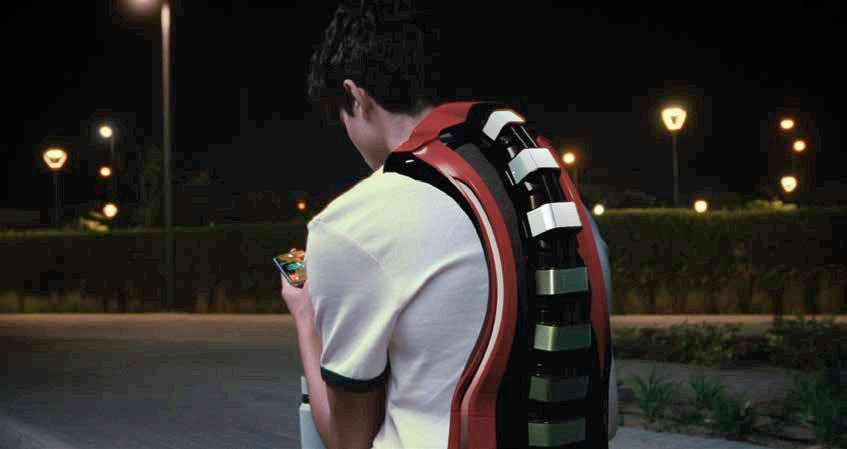




Chief Marketing Officer, Property Finder
TAWUNIYA (1):


This is a solid, culturally grounded piece of work that understands both the moment and the platform well. Instead of defaulting to a generic National Day greeting, Tawuniya leans into unity through difference, which feels authentic. Putting employees at the centre of the story is a strong choice – it humanises the brand and allows it to play a more participatory role, rather than something that feels forced. That said, while the campaign is emotionally resonant, it sits within the category norm for National Day communications. It doesn’t push the brand into new territory or leave a sharply differentiated brand takeaway beyond goodwill.
JUSTLIFE (2):
The insight is strong and highly relevant, with a clear strategic intent behind the campaign. Consistency is another key strength – the same message and tone across touchpoints help the idea land more clearly and effectively. I see an opportunity to push beyond awareness. ‘We Got You’ is warm and empathetic, but not yet distinctive; any brand in the category could make the same claim. What it doesn’t fully answer is what Justlife understands or delivers better than others.
E& (3):
This is a strong, culturally relevant idea that uses the GITEX stage well. Turning a tech showcase into a moment of self-reflection is unexpected and intelligent. It feels brave to challenge screen addiction at a technology-led event – and that tension is what makes the work stand out. The question it leaves you with is not about the next device, but about responsibility and balance, which feels like a more meaningful role for a brand like this.
Executive Creative Director, TBWA\RAAD
TAWUNIYA (1):

Having worked closely with our Riyadh office over the last year, I’m constantly amazed by how fast the advertising scene in Saudi is evolving. Tawuniya’s strength was clarity: one unifying idea, one hero film, one platform to amplify the emotion. Five million impressions on X weren’t accidental; they were the result of focus and a human message, with employees as the heroes.
JUSTLIFE (2):
The objective was clear: shift perception from a cleaning app to a full home services partner, and I’m confident this campaign achieved it. ‘We Got You’ works because it’s built on real moments that happen at home, not just brand promises. That said, with all the insightful and funny things that happen inside our homes, I would have loved to see even more examples of how the brand can make our lives easier.
E& (3):
I like when a brand invites its customers to need them less. And standing out at GITEX is always a challenge when every brand is racing to be louder than the next one. Addictech lands because it flips the lens inward. Putting tech in service of anti-tech is the kind of ironic tension that sticks. I only missed one thing: making at least one device real and testing it with real teens, even as a small pilot, to turn the provocation into proof.
MAISON TERRAĒ (4):
There have been hundreds of breast cancer awareness campaigns, so doing something original is not easy. Clay Jugs goes back to something basic and instinctive: touch. Using sculpting to create a lump, then spending real time feeling it, is a smart way to rewire behaviour and build muscle memory. It’s a physical experience that will stay with women far longer than another awareness execution.
RTA (5):
Milestone campaigns are tricky because they can slip into corporate nostalgia fast. What works here is treating RTA as what it really is in Dubai: a daily enabler. The tagline is simple and strong, and the choice to use creators makes sense because the city is built on lived stories, not just infrastructure stats.


By Michael Campbell, Regional Head of Strategy, Initiative MENAT
Initiative MENAT’s Michael Campbell discusses the need to build better partnerships for growth.
“Wouldn’t it
be
far
more powerful to have agencies briefed on how brand and performance media work together to drive bo om-line impact rather than templated
awareness objectives.”
A RUDE AWAKENING
It’s 4:30pm on a Friday. The Sonos is playing Raye in the background, and a couple of planners are discussing Supersnake’s next set at Sirene. I make a mental note: Next time I head to J1 Beach – book early; I’m not begging for an available pool bed again.
The daze breaks. The growth team walks in, folder in hand and a slight smile.
New brief in. Awareness campaign in KSA and UAE. AED 500k. They want the presentation next Thursday.
Raye fades to a faint tinnitus ring. The beach will have to wait.
It’s a familiar scene. The brief arrives late, urgent, open-ended: ‘awareness’, ‘UAE and KSA’, ‘500k budget’. Somewhere between the WhatsApp thread, the email chain and the deck that circulates through five different hands, the real purpose of the brief gets lost.
And I find myself asking – why do you want awareness? Why impressions, clicks, viewability, CPA or lands?
This, I’d argue, is the broken brief: hurried, non-specific and fixated on the journey rather than the destination.
THE BROKEN BRIEF
“Things move quickly in MENA,” I was told before packing my bags in Europe. True – the velocity here is unmatched. But as the adage goes, you can only ever have two of the three: quick, cheap or good.
Agencies and brands alike face constant price pressure, and the trade-off is nearly always speed versus quality. There’s no world in which we can have all three – yet in the rush to deliver faster, we’ve normalised a culture where the brief itself becomes collateral damage.
At its core, this isn’t about media or metrics. Media is the means, not the mission. It’s about the customer, full stop.
We spend our days buried in dashboards, supplier meetings and creative reviews, often losing sight of the only thing that matters: the outcome for the customer and the business. When that Monday-morning meeting rolls around with the CFO, are they really asking for awareness or viewability? Of course not. They care about sales, share and sustainable growth.
So why don’t we brief for growth instead?
Growth in category penetration. Growth in lifetime value. Growth in portfolio margin. Wouldn’t it be far more powerful to have agencies briefed on how brand and
performance media work together to drive bottom-line impact rather than templated awareness objectives we’ve all seen a hundred times before?
THE CONSULTATIVE PARTNERSHIP
“You’re going to scare them with those numbers,” a colleague joked as I built a brandgrowth funnel slide. He was probably right, but I carried on.
Growth diagnostics should be the baseline, not a nice-to-have. Clients often ask for media metrics; few ask for growth architecture. Yet, in an age of AI, modelled measurement, efficiency savings and offshoring, strategic value must come from tangible commercial connection.
Unified audience analytics now gives us single-customer-view clarity from multiple, once-fragmented datasets. The opportunity exists but without disciplined application, it becomes just another pile of insights gathering dust.
I’ve seen what happens when a brief shifts focus, from metrics to outcomes. A regional retail brand reframed its first half (H1) brand planning from “driving consideration” to “full funnel acquisition efficiency”.
Within three months, reallocating just 15 per cent of media spend towards high-lifetime value (LTV) segments, away from low-cost gross rating points (GRP), high-reach tactics, reduced account level customer acquisition cost (CAC) by 18 per cent with forecasts showing annual customer value up by 11 per cent. That’s growth you can brief for, measure and defend in a boardroom.
The growth team walk in again with the same folder, but this time eyes bright. It’s a retailer running 5,000 creative assets a week, struggling with penetration and product prioritisation. They want to grow category share 20 per cent. They’ve shared ad-account access, brand health data, indexed sales and product performance.
We’ve got six weeks to build the response. Kick-off is on Monday with research, data, planning and activation in the room.
There’s real scope here to drive scale and be their growth consultants, and while the activation team can talk media metrics to their heart’s content, you can be sure I won’t mention them once.
And yes, I finally booked that beach bed.

MONICA BARTEN has joined General Motors (GM) Africa and Middle East as Head of Communications. She leads GM’s regional communications strategy, aligning efforts with business priorities and enhancing both corporate and brand reputation in the market. Barten has held leadership roles at Visa, Standard Chartered Bank, and Philip Morris International.

IMI, a global privately owned media group headquartered in the UAE, has appointed MONA ELSAKA as Chief Brand, Marketing and Communications Officer. Elsaka has previously worked at PepsiCo and Mastercard. At IMI, Elsaka will oversee the brand, marketing, communications, and creative functions across the group, shaping a unified strategic vision for how IMI and its portfolio of brands are positioned, experienced, and amplified locally and globally.
OSN Group has appointed TERESA

ANTAS RIO as Vice President of Marketing, leading marketing, creative and communications strategy across its
entertainment portfolio, including OSN+ and Anghami. Before joining the company, Rio served as Brand Director at NEOM Media in Saudia Arabia. At OSN Group, Rio leads marketing transformation across both brands, championing an approach where connection, joy and cultural relevance shape how audiences experience entertainment.

WPP Media MENA has appointed RALPH KHOURY as its new Chief Financial Officer. The appointment is a strategic move that reinforces the company’s commitment to financial leadership as it continues its transformation into a fully integrated, AI-powered media company. Khoury will report directly
to CEO Amer El Hajj. with the finance teams across MENA reporting to him. He will be based in WPP Media’s Dubai office.
Communications agency Burson has made two key appointments to its senior leadership team in the region.
SANA ALI KHAN has joined Burson as Chief Client Officer – MENA. She was previously the Policy and Crisis Communications lead for the Middle East, Africa and Turkey at Amazon.

Additionally, CLAIRE LAWSON has taken on the role of Head of Burson Dubai. She brings more than 15 years of agency experience in the Middle East, Europe and Africa to her
position, having served with Impact Porter Novelli, Edelman Middle East, APCO Worldwide in Dubai and Text100 in London.


FP7 McCann MENAT has promoted NICK SALTER to Regional Head of Strategy. The move follows 18 months of accelerated momentum in transforming the agency’s strategic output and commercial impact for some of the region’s most iconic brands. He has led strategy on award-winning work including Recipe for Change, while also shaping enduring brand platforms for Nestlé, Mastercard, Arla, Kinder, Heinz and more.
Media intelligence and reputation insights provider CARMA has appointed PAULA JACOBSON as its new Group Director of People and Culture. In her new role, Jacobson will oversee CARMA’s global people strategy, focusing on talent acquisition, employee engagement, impact and strengthening a unified company culture as the company continues to scale. Her career includes pivotal roles, including establishing the people function at the worldrenowned Huda Beauty and KAYALI.





1. The Spin recently visited a newly opened museum, where this sign proved to be a real treat for the eyes. The yellow-spotted monitor pictured alongside it may not feel quite the same. Learnings of the day: One letter can change everything – and not all treats are meant to be eaten.
2. This warning sign posted near a river bank urges visitors not to walk on ‘gabion baskets’ –though baskets are conspicuously absent from view. The Spin suspects this is one instruction best understood after a dip in the water.
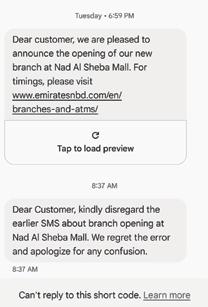
3. The Spin is a fan of line breaks – when they’re well placed. Unfortunately, the users of these whitening strips may need a second opinion from the dentist. The only breaks needed here? One for the typesetter.
4. Christmas appears to have come early for this TikTok ad. Blink and you might have skipped straight to New Year’s Eve – on the 24th of November. This marketer might be secretly in cahoots with the Grinch.
5. This museum display moves at an impressive speed – just not in the right direction. The Spin


suspects the numbers took a wrong turn somewhere between the Arabic and English versions. As the Spin can attest, two lefts certainly don’t make a right.
6. Three of these yoghurt tubs seem to be unsure who they are. When packaging meets supply shortage, brand identity can become a little … fluid. The Spin can only assume the lids were having an off day.
7. Excitement can get the better of anyone. This bank sent out a message with enthusiasm, only to quietly withdraw it the following

day. Those paying close attention may have enjoyed the brief treasure hunt.
8. This toaster brand’s slogan almost gets there. The phrase suggests the copy may have stopped just a little too soon. Sometimes, a little effort is still required.
9. This pharmacy sign appears to be keen on the idea of saving. What exactly is a little unclear. The Spin can only assume the copywriter struggled with the doctor’s handwriting. Either way, it’s worth getting checked.