
International Research Journal of Engineering and Technology (IRJET) e-ISSN: 2395-0056
Volume: 12 Issue: 10 | Oct 2025 www.irjet.net p-ISSN: 2395-0072
International Research Journal of Engineering and Technology (IRJET) e-ISSN: 2395-0056
Volume: 12 Issue: 10 | Oct 2025 www.irjet.net p-ISSN: 2395-0072
Ganesh Bhagawat1 , Dr. Dnyaneshwar B. Mohite 2
1PG M.Tech Student of Civil Engineering Department, CSMSS College Of Engg. Chh. Sambhajinagar
2Associate Professor, Department of Civil Engineering, CSMSS College Of Engg. Chh.Sambhajinagar
Abstract - An The seismic response of high‑rise reinforced cement concrete (RCC) buildings is highly sensitive to how shearwallsarepositioned,astheseelementsformtheprimary lateral force–resisting system. This study evaluates the influence of shear wall layout on a 23‑storey (G+22) commercialbuildingandidentifiestheconfigurationthatbest balances stability, safety, and economy. A detailed three‑dimensional ETABS model was developed, andresponse spectrum analysis was conducted in accordance with IS 1893 (Part1):2016.Threearrangementswereexamined (i)corner walls, (ii) mid‑side perimeter walls, and (iii) a central/core system and performance was quantified using inter‑storey drift, lateral displacement, base shear, and storey stiffness.
Key Words: Reinforced cement concrete (RCC), Tall buildings, Shear wall configuration, Seismic response analysis, Response‑spectrum method, ETABS numerical modelling,Inter‑storeydrift
1.INTRODUCTION
Rapidverticalurbangrowthhasintensifiedrelianceontall RCC buildings, whose safety is governed by resistance to lateralactionsfromwindand,critically,earthquakes.Shear walls are the principal lateral system in such structures; their ability to curb horizontal displacements and inter storeydriftsdependsasmuchonplacementasonsizeand detailing. Poorly located walls can trigger torsion, uneven demand, and inefficient behaviour. Prior work Favors symmetric,well-canteredlayoutsbutcomparativeevidence formodernhigh‑riseRCCsystemsusingadvancedanalysis remainslimited.UsingETABSandtheResponseSpectrum MethodperIS1893:2016,aG+22commercialbuildingwas modelled with three schemes corner, mid‑side perimeter, and central/core walls and evaluated for drift, roof displacement, base shear, and storey stiffness. The core arrangement delivered the most uniform and efficient response, achieving the lowest drifts and displacements while enhancing stiffness and stability. These results reinforce strategic, core‑centric placement as a practical route to safer, more resilient, and economical tall RCC buildings,offeringactionableguidancefordesigninseismic regions.
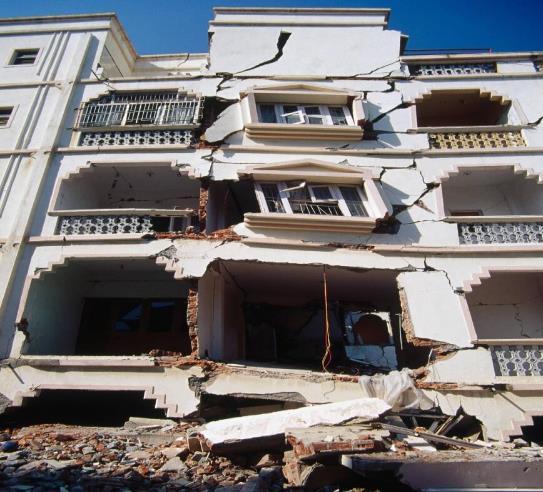
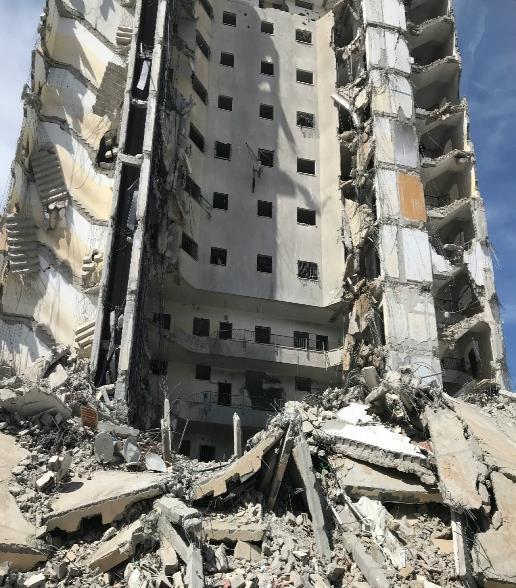
This review addresses the earthquake vulnerability of tall RCC buildings, where height, flexibility, and slenderness amplify seismic demand. It focuses on shear walls as the
primary lateral system and emphasizes that their seismic effectiveness hinges on placement: poorly arranged walls cantriggertorsion,concentrateforces,andraiseinterstorey drift, undermining safety and serviceability. Given the limitedcomparativeevidenceforcommercialhigh‑rises,the review synthesizes ETABS‑based studies to examine how walllocationinfluencesdisplacement,drift,storeystiffness, andbaseshear.Theaimistopinpointconfigurationsthat consistentlymitigateseismiceffectsandtotranslatethese insights into practical guidance for safe, durable, and economicalRCChigh‑risesinearthquake‑proneregions.
International Research Journal of Engineering and Technology (IRJET) e-ISSN: 2395-0056
Volume: 12 Issue: 10 | Oct 2025 www.irjet.net p-ISSN: 2395-0072
Chandurkar et al. [1] studieddifferentshearwalllayoutsin high-rise RCC buildings under IS 1893:2016 provisions. TheiranalysisacrossseismicZonesII–Vshowedthatplacing wallsatthecorners,especiallyalongshortspans,gavethe bestseismic performance byreducing drift,displacement, andtorsion.Thisarrangementalsoprovedmoreeconomical by lowering frame demands and material use. The study concludedthatshearwallefficiencydependsnotonlyonsize butalsoonstrategicplacement.
Varsha R. et al. [2] analyzedtheeffectofshearwallheight on seismic performance of RCC frames. They found that providing walls up to mid-height significantly reduces displacementanddrift,offeringresultscomparabletofullheightwallswhilesavingmaterials.Thestudyemphasized thatstiffnessconcentratedatlowerstoriesismosteffective duetohigherseismicdemands,thoughcaremustbetakento avoidstiffnessirregularitieswherewallsterminate.
Zaregarizi et al. [3] compared retrofitting of RC frames using shear walls and masonry infills through pushover analysis. Shear walls greatly increased stiffness and base shear capacity but reduced displacement capacity if not detailedforductility.Masonryinfillsimprovedstiffnessand energy dissipation, though irregular layouts risked softstorey effects. Concrete infills offered higher strength but less deformability, while brick infills provided greater ductility with lower strength. A hybrid of both achieved balanced performance, highlighting the importance of elementtype,distribution,andsymmetryinretrofitdesign.
Ugale Ashish et al. [4] studiedaG+6frameinZoneIIIusing STAAD.Pro,comparingabareframewithoneincorporating steel plate shear walls (SPSWs). They found that SPSWs significantly increased stiffness, reducing storey displacements, drift, and frame forces, thereby improving efficiencyandallowingmaterialsavings.SPSWsalsooffered architectural benefits due to their thin profile and lighter weight compared to RC walls. However, the study emphasizedtheneedforproperboundaryelementdesign anddetailingtofullydeveloptension-fieldactionandensure reliableseismicperformance.
Bhunia et al. [5] investigatedshearwallplacementina15storey building under Zone IV seismic conditions using STAAD.Pro and SAP2000. Both elastic and elastoplastic analyses were performed to evaluate stiffness, drift, and member forces. Results showed that well-balanced wall layoutsminimizeinter-storeydrift,reducetorsion,andavoid soft-storey effects, whereas poorly located walls increase twistinganddamageconcentration.Thestudystressedthat elastic analysis is useful for preliminary assessment, but elastoplasticevaluationisessentialtoconfirmperformance beyondfirstyield.
Kameswari et al. [6] studieddifferentshearwalllayoutsin high-riseRCframes,comparingdisplacementanddriftwith a bare frame. Results showed that diagonal and zigzag configurations significantly reduced drift and torsion by improvingstiffnessdistributionandalteringmodeshapes. Thezigzagpattern wasmosteffectiveduetoitstruss-like action, while lift-core walls reduced torsion but were less efficientatcontrollingedgedrifts.Thestudyconcludedthat geometryandcontinuityofshearwallsareasimportantas quantity,withstaggered-diagonallayoutsofferingsuperior seismicperformance.
Berman et al. [7] assessedsteelplateshearwalls(SPSWs) usingnonlinearresponsehistoryanalysisunderdesign-basis and maximum-considered earthquakes. SPSWs met drift limits and showed strong ductility through tension-field action. Low-rise walls concentrated inelastic demands in fewer stories, while taller walls distributed them more evenlyduetohigher-modeeffects.Infillplatescarried60–80% of story shear, highlighting their primary role. The studynotedthatabruptthicknesschangesincreasedlocal stressesandthatcurrentboundaryelementdesignfortall SPSWs may be overly conservative, suggesting scope for moreeconomicaldetailing.
Naresh K. V. et al. [8] performed3Danalysesoftypical8–12‑storeyRCapartmentbuildingscommoninIndianmetros to evaluate perforated (opening‑containing) shear walls. Theyquantifiedhowopeningsizeandplacementinfluence interstorey drift, storey‑level stiffness, shear and bending demands,andstressdistributionswithinthewalls.Thestudy distillsdesign‑orientedguidanceforpositioninganddetailing openings so that medium‑rise buildings retain adequate lateralperformance.
Husain et al. [9] developedacalibrated3Dnonlinearfinite elementmodelinABAQUS(v6.10)tosimulateRCshearwalls with openings strengthened using CFRP wraps under monotonic lateral loading. Validation against prior experiments showed good agreement, and the analyses demonstrated that appropriate CFRP layouts markedly increase lateral strength and deformation capacity while improving ductility and energy dissipation in perforated walls.
Darabi et al. [10] examinetunnel-formconstruction,where wallsandslabsarecastinasinglepourtocreateamonolithic RC system with few cold joints; the rigid forms are repositionedbylifters/cranes.UsingABAQUS,theyanalyzed two one-storey models one with wall openings and one without. The solid (no‑opening) model showed superior seismicbehavior,achievinghigherbaseshearcapacityand better ductility/resistance parameters that inform the responsemodificationfactor(R).Openingsreducedstrength andductility,highlightingtheneedforcarefuldetailingwhen perforationsarerequiredintunnel-formbuildings
International Research Journal of Engineering and Technology (IRJET) e-ISSN: 2395-0056
Volume: 12 Issue: 10 | Oct 2025 www.irjet.net p-ISSN: 2395-0072
Montazeri et al. [11] addressed the seismic behavior of reinforcedconcreteshearwallsbyinvestigatingtheinfluence ofstaggeredopeningpatternsonfailuremodes.Emphasizing theneedforductileoverbrittlefailure,thestudyusedfinite elementanalysis(ABAQUS)tosimulate1:4scalemodelsofa four-story wall under lateral loads. The numerical models, whichincludedwallswithbothverticallyalignedandangled openings, were validated against experimental results to assesstheirperformance.
1. Seismicperformanceisgovernedmorebywalllayout, continuity,andsymmetrythanbywallquantityalone. Balancedconfigurationscontroldriftandtorsionmost effectively:cornerwallsalongshortspansareefficient in regular plans, while a central core best limits torsionalirregularityinasymmetriclayouts.
2. Concentrating stiffness in the lower stories is beneficial; partial-height walls up to mid-height can approach full-height behavior if transition zones are carefullydetailedtoavoidsoft-storeyeffects.Steelplate shearwallsdeliverlargestiffnessandductilitythrough tension-fieldaction,enablingmaterialandarchitectural efficiencyprovidedboundaryelementsarerobustand platethicknesstransitionsarenotabrupt.
3. RCshearwallsusedforretrofitsubstantiallyraisebase shearcapacitybutcan suppressdeformabilityunless detailedforductility;masonryinfillsimprovestiffness and energy dissipation, with hybrid infill strategies yieldingbalancedstrength–ductilitywhenlayoutsare regular.
4. Openings reduce strength, stiffness, and ductility; performance depends on opening size, position, and pattern. Staggered layouts alter failure modes, and targeted CFRP strengthening around openings can recovercapacityanddeformationability.
5. Elasticanalysesareusefulforpreliminarychecks,but nonlinear pushover/response-history analyses calibrated with FE models are required to validate performance beyond first yield and capture higher‑modeeffectsintallersystems.Overall,themost reliablesolutionspairsymmetricwallplacementand continuousloadpathswithductiledetailing.
6. Forhigh‑risedesign,awell-proportionedcentralcore or carefully balanced corner systems are preferred, with openings and stiffness transitions detailed to maintaindriftcontrolandminimizetorsion.
[1] P. P. Chandurkar, D. R. P. S. Pajgade. 2013. Seismic analysis of RCC building with and without shear wall. IJMER.3(3):1805-1810
[2] Varsha.R.Harne.2014.Comparativestudyofstrengthof RC Shear wall at different locations on multistoried Residential buildings. International Journal of Civil EngineeringResearch.ISSN22783652,5(4):391-400.
[3] Shahabodin.Zaregairizi.Comparativeinvestigationon using shear wall and infill to improve seismic performance of existing buildings. 14th World ConferenceonEarthquakeEngineering.
[4] Ugale Ashish B. and Raut Harshlata R. 2014. Effect of steelplateshearwallonthebehaviorofthestructure. InternationalJournalofCivilEngineeringResearch.ISSN 2278-3652,5(3):295-300.
[5] AnshumanS.,DipenduBhunia,BhavinRamjiyani.2011. Solutionofshearwalllocationinamultistoreybuilding. InternationalJournalofCivilandStructuralEngineering. 2(2).
[6] Dr. B. Kameswari, Dr. G. Elangovan, P. Sivabala, G. Vaisakh. 2011. Dynamic Response of High-rise Structures under the Influence of discrete staggered shearwall.IJEST.
[7] J.W.Berman.2011.Seismicbehaviorofcodedesigned metallic Plate Shear walls. Engineering systems, Elsevier.33:230-244.
[8] Dangi S. K., Akhtar S. 2019. Seismic analysis of an RC buildingonslopinggroundwithshearwallatdifferent positions.AIPConferenceProceedings.
[9] Shaik AkhilAhamad and K. V. Pratap. 2021. Dynamic analysisofG + 20multi-storiedbuildingsbyusingshear wallsinvariouslocationsfordifferentseismiczonesby usingEtabs.Materialstoday:proceedings.43:Part2.
[10] Koshy, A. J., Sofi, A., Santhakumar A. R. 2021. Lateral Load Analyses of Multi-storeyed Frames with and WithoutShearWalls.LectureNotesinCivilEngineering. 78,pp.19-35.