
International Research Journal of Engineering and Technology (IRJET) e-ISSN: 2395-0056
Volume: 12 Issue: 06 | Jun 2025 www.irjet.net p-ISSN: 23950072
International Research Journal of Engineering and Technology (IRJET) e-ISSN: 2395-0056
Volume: 12 Issue: 06 | Jun 2025 www.irjet.net p-ISSN: 23950072
Dr. Preeti Gajghate1, Prof. Vaishali D. Jaysingpure2
Avishkar Omprakash Ghodke3, Nilabh Bhagwanrao Deshmukh4, Parth Pavan Patil5
1,2Assistant Professor, Dept. of Civil Engineering, JSPM’s Rajarshi Shahu College of Engineering, Tathawade-411033, Pune, Maharashtra, India.
345Final Year Students, Dept. of Civil Engineering, JSPM’s Rajarshi Shahu College of Engineering, Tathawade-411033, Pune, Maharashtra, India.
Abstract - Thisprojectfocusesonexploringthepotentialof recycling wash basin wastewater for gardening purposes at JSPM’s Rajarshi Shahu College of Engineering, Pune. It discusses wastewater, assessing campus garden water requirements, and evaluating a reuse system's economic aspects.Theinvestigationrevealsthatasignificant volume of greywater,approximately2000litersdaily,isbeinggenerated, offering a promising alternative to freshwater for irrigation. Different methods for calculating water demand indicate varying requirements, with the highest demand being estimatedat1690litersperday.Whilegreywateravailability adequately covers this demand, the operational costs associated with water pumping need to be considered. The studydemonstratesthepotentialforsubstantialwatersavings and improved sustainability through greywater reuse, emphasizingthe importance ofoptimizingsystemdesignand cost-effectiveness.
Key Words: Greywater1, Wastewater reuse2 , Gardening3 , Sustainability4,Waterdemand5,Economicevaluation6
Water is considered very precious and needs to be used wisely, especially as its availability is becoming limited. A major source of water loss in household chores is the washbasin,alsoknownasgreywater.Therearesignificant prospects for sustainable reuse on academic campuses, wherewaterisusedextensivelyforhandwashingandother water-intensive tasks. This project focuses on conserving water, creating an eco-friendly campus environment, and recyclingwashbasinwastewaterforgardening.Theproject involvescollectingwastewater,purifyingit,andusingitto irrigate campus gardens. The attractiveness of this model liesinitsabilitytopreventwaterwaste,reducethecampus carbon footprint, and promote sustainability. Behaviouramongstudentsandfaculty.Byimplementingthis project,thecollegeissavingpotablewaterbyreducingits dependency on external sources. It sets an example of resourceefficiencyandsustainability.
The experimental study by Thanekar and Ninawe (2022) addressestheglobalwaterscarcitybyadvocatinggreywater recycling through constructed wetlands using sand and charcoal.ItisAnalysingthequalityoftreatedgreywaterand itssuitabilityforhydroponicfarming.Thefindingsshowthat reuseisfeasibleandpromotessustainableurbanagriculture. [1]
Jyotsana and Arshi's (2023) report examines wastewater management,spanningfromhistoricaltomodernmethods. It highlights energy-efficient technologies and the critical role of recycling for sustainability. The study stresses the importance of improving reclaimed water quality and effectivemanagementtocombatglobalwaterscarcity.[2]
ThestudybyDeore(2024) highlightsgreywaterreuseasa key solution for residential water scarcity. It emphasizes reducingpotablewaterusethroughgreywaterirrigationand flushing. The methodology involves filtration, effectively reducingcontaminantswithlow-costsystems.[3]
Shegokar et al. (2015) highlights a low-cost greywater treatmentsystemforruralareas,whichfocusesonrecycling andreuseofgreywater.Thestudyisusingsedimentation and filtration with materials like sand and gravel and is effectively reducing pollutants such as turbidity and COD. Thesystemshowedpromiseasasimple,affordablemethod for water conservation in rural areas. It offers a practical alternativetoconventionaltreatmentmethodsforreducing householdwastewaterpollution.[4]
Knutsson and Knutsson (2020) are modelling greywater reuse to assess water and energy savings across three scenarios.Thestudyshowssignificantreductions,withhot water savings reaching 58.2% and cold-water savings between5.8%and30.6%.Theyhighlightedtheimportance of system design, including tank volume and treatment capacity. The research demonstrated the potential for substantial resource conservation through optimized greywatersystems.[5]
KesariandTripathi(2021)reviewedwastewatertreatment anditsapplications,specificallyitsreuseinagricultureand healthimplications.Theyhighlightedtreatingwastewateras aneco-friendly irrigation alternative, reducing freshwater
International Research Journal of Engineering and Technology (IRJET) e-ISSN: 2395-0056
Volume: 12 Issue: 06 | Jun 2025 www.irjet.net p-ISSN: 23950072
demand. The study recommends advanced treatment methodstoensuresafereuse,anditemphasizestheneedfor effectiveregulationstominimizeenvironmentalrisks.[6]
ForaffordablegreywaterreuseinIndianhouseholds,Patil andGolpad(2022)examinedvarious treatment methods. Fortheirtreatmentsystem,theyarecurrentlyusingamultilayer filter with natural materials. For non-potable applications, they demonstrated significant contaminant removal.Forglobalwaterconservation,theyhighlightedthe benefits of decentralized treatment. [7]
ForadevelopingareainDelhi,ChauhanandSingh(2022) designedaneffectivesewagesystem.Fortheirdesign,they arecurrentlyestimatingwaterconsumptionandanalyzing existingwastewaterconditions.Todetermineoptimalpipe slopesandmaterials,theyperformedahydraulicanalysis. Forfuturepopulationgrowthandimprovedsanitation,they emphasizedtheimportanceofsustainableurbanplanning. [8]
Forapartmentsewagetreatment,PriyadarshiniandGopalan (2019) designed a three-tank system. For wastewater treatment, they are currently utilizing oxidation and activatedsludgeprocesses.Forsafedisposalandreuse,they focusedontertiary-leveldisintegrationanddrying.[9]For Indian water preservation, Manna (2018) investigated greywatertreatmentfornon-potablereuse.Forapplications likeflushingandirrigation,theyexploredphysical,chemical, andbiologicaltreatmentmethods.Fordomesticfreshwater reduction,theydemonstratedpotentialsavingsupto35%. Foreffectivegreywaterreuse,theyhighlightedtheneedfor nationalguidelines.[10]
Forurbanwaterprotectionindevelopingcountries,Mandal andcolleagues(2011)examinedgreywatertreatmentand reuse. For a Nagpur-developed system, they implemented screening, deposition, filtration, and disinfection. For backyardtoiletcleaningandirrigation,theydemonstrateda 48%reductioninfreshwaterusage.Forsustainableurban water management, they highlighted the potential of greywatertreatment.[11]
1. Reducefreshwaterconsumptionbyreusingtreated wash basin wastewater for campus gardening, aidingwaterconservation.
2. Analysisofwastewatergeneratedfromwashbasin.
3. Feasibility study of recycling waste water for gardeningpurposes.
3.1 Study Area:
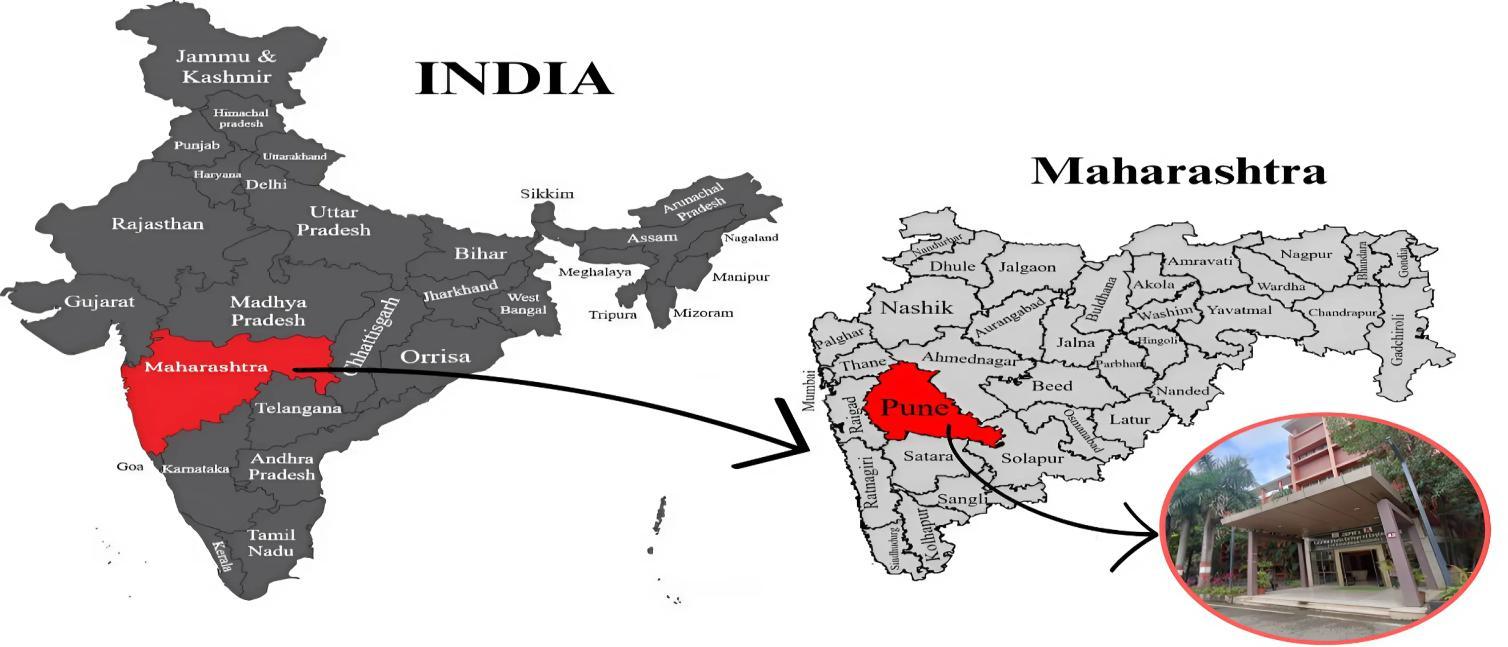
Forthisstudy,theresearchiscurrentlyexamininggreywater atJSPM'sRajarshiShahuCollegeofEngineering,locatedin Tathawade,withintheurbanizingPimpri-Chinchwadareaof the Pune district, Maharashtra, India. The college is approximately located at 18°37'14.2"N 73°44'54.9"E. The collegecampusiscurrentlyprovidingamicrocosmoftypical water consumption patterns found in residential and institutional settings. In the present work, grey water has beencollectedfromthecampusfacilities.
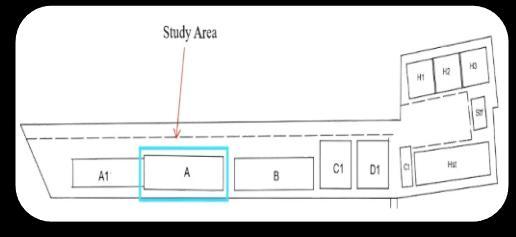
Fig.1. Study area
3.2 Sampling technique:
Sampling is currently considered a critical process in research,especiallywhenresearchersaredealingwithlarge populations or continuous flows like wastewater. This processinvolvestheselectionofarepresentativesubsetof the whole for analysis, ensuring that the results are being indicativeoftheoverallcharacteristics.Thegoaliscurrently beingfocusedonobtainingsamplesthatminimizebiasand areaccuratelyreflectingthepropertiesofthesource.
Inthisresearch,the'BucketMethod'isbeingemployedasa formofdirect,orgrabsampling,specificallybeingadapted for collecting greywater from washbasins in college washrooms. Direct collection is occurring by directly capturing greywater as it is flowing from the washbasin outlet, which is considered a simple and cost-effective approachthatisparticularlysuitableforsmall-scalestudies and situations where sophisticated sampling equipment is not being made available. A 20–30-liter capacity bucket is beingusedastheprimarycollectionvessel,whichprovidesa practicalsizeforcapturingasufficientvolumeofgreywater withinareasonabletimeframe.Ascreenisbeingplacedatthe pipe inlet to filter out larger solid particles from the greywater,whichpreventscloggingandremovingdebristhat isinterferingwithsubsequentanalyses.Thismethodisbeing tailoredtothespecificcontextofcollectinggreywaterfrom college washbasins, which offers a practical solution for capturinggreywaterfromaknownandrelativelyconsistent source. However, it's important to acknowledge the limitations;thebucketmethodprovidesagrabsample,which ispotentiallynotcapturingthefullvariabilityofgreywater compositionovertime,isconsideredsusceptibletovariations inwaterusagepatternsandisobservedaslabor-intensive.
International Research Journal of Engineering and Technology (IRJET) e-ISSN: 2395-0056
Volume: 12 Issue: 06 | Jun 2025 www.irjet.net p-ISSN: 23950072
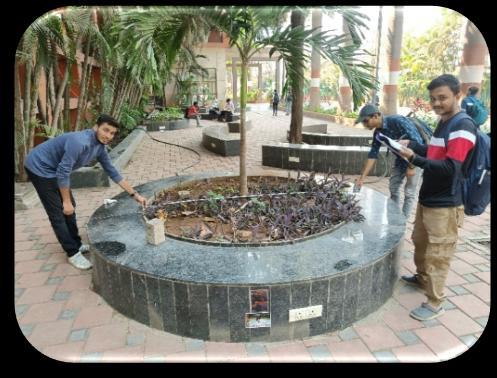
Initially,theboundariesofthegardensarecurrentlybeing defined,encompassingatotalgardeningareaof225m².This measurement process is currently involving a systematic approach, starting with mapping the area and then measuringthelength,width,andperimeter,withirregular shapes currently being divided into manageable sections. Additional measurements of existing plants and features withinthis225m²spacearealsocurrentlybeingrecorded. The area is currently being calculated using relevant formulas, and all data, including photographic documentation, is currently being carefully noted and verifiedforaccuracy.Ultimately,thisdetailedmeasurement of the 225m² garden area is currently serving as a foundationforinformeddesignandplanning.
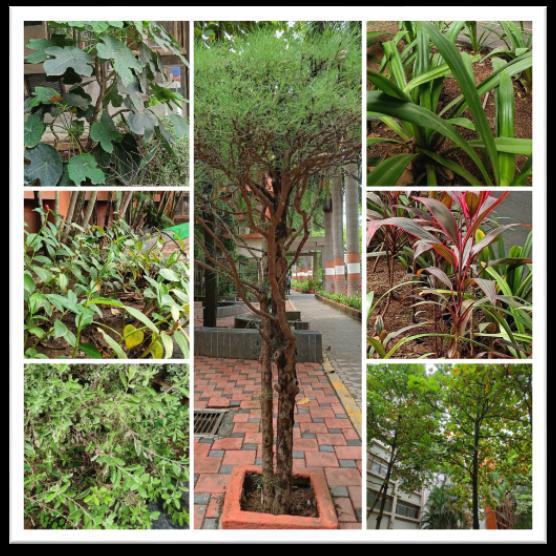
Thegeneralmethodologyadoptedforthisstudyisdetailedin thefollowingstages:Themethodologyoutlinesastructured approach to implementing a greywater reuse system for irrigationatRSCOEcampusinPune.Itbeginswithidentifying wash basin wastewater sources and estimating daily greywaterproduction.Next,adetailedwaterqualityanalysis is conducted to test physical, chemical, and biological parameters.Basedonresults,sandfiltrationisselectedfor treatment.Apracticalsystemisthensetuptocollect,treat, store, and distribute the filtered greywater for gardening. Regular monitoring and maintenance are emphasized to ensurewaterquality,systemfunctionality,andplanthealth. Finally, the impact assessment evaluates the system’s efficiency, cost-effectiveness, and environmental benefits comparedtoconventionalgardeningpractices.
International Research Journal of Engineering and Technology (IRJET) e-ISSN: 2395-0056
Volume: 12 Issue: 06 | Jun 2025 www.irjet.net p-ISSN: 23950072
Problem Definition: AcomprehensivesurveyoftheRSCOEcampusinPunepinpointedconsistentwashbasin wastewatersourcesandpotentialgardeningareasaccessibleforirrigation.Simultaneously,thedailygreywater production wasestimatedtounderstandthe availablevolume forreuse.Thisinitial phase establishedthe project'sscopeandresources,layingthegroundworkforsubsequentsteps.
Water quality analysis: To determine its suitability for irrigation, wash basin wastewater samples from RSCOEwerecollectedandrigorouslytestedforphysical,chemical,andbiologicalparameters.Basedonthis detailedanalysis,cost-effectivesandfiltrationwaslikelyidentifiedasaprimarytreatmenttoimprovewater qualityfornon-potablegardeningreuse.
Implementation of water collection and distribution: Apracticalsystemforcollecting,treating(likelywith sand filters based on analysis), storing, and distributing wash basin wastewater for gardening has been installedattheRSCOEcampus.Thisnetworkchannelsgreywaterfromselectedbasinsthroughfiltrationto storage tanks and then delivers it efficiently to designated garden areas via pipes and controlled release mechanisms.
Monitoring and maintenance: For the long-term sustainability of the greywater reuse system, a regular monitoringandmaintenancescheduleforwaterquality,systemupkeep,andplanthealthhasbeenestablished. Thisincludesperiodicchecksontreatedwaterparameters,routinemaintenanceofthecollection,filtration,and distributionsystems,andobservationofplanthealthtoassesstheeffectivenessofthereusedwater.
Impact assessment: Thefinalstageofthisresearchinvolvesacomprehensiveanalysisoftheimplemented greywaterreusesystem'soverallimpact.Thiswillthoroughlyevaluateitscost-effectivenessagainstbenefits likereducedfreshwateruseandimprovedplantyield.Additionally,theenvironmentalimpactofgreywater reuse,includingreducedwastewaterdischargeandfreshwaterconservation,willbecarefullycomparedto traditionalgardeningpractices.
4.1 Analysis and design:
Thedatapresentedispartofawaterusageanalysisforan 'A'building,focusingonitsinfrastructureanduserload.The buildinghasanuppertankcapacityof25,000litresandan undergroundtankcapacityof100,000litres.Itserves1,900 students, with 7 toilets and 26 wash basins. Water consumption is measured between8:30 AMand 4:00 PM, with detailed tracking of water generation per basin throughout the day. These observations help assess wastewatergenerationandinfrastructureadequacy. 'A' building has been considered, for which the following datacollectedwascollectedfromeachfloor:-
a)UpperTankCapacityof“A”Building=25,000Liters
b)UndergroundTankcapacityofABuilding= 1,00,000Liters
c)Noofstudents=1900Nos.
d)No.Oftoilets=7Nos.
e)No.ofwashBasin=26Nos.
f)TimeofwaterConsumption=(8:30amto4pm)
Table 1: Observation of per-basin water collection in the bucket
8:30am-9:00am 4liters
9:00am-10:00am 3liters
10:00am-10:45am 3liters
10:45am-11:00am 18liters
11:00am-11:45am 3liters
11:45am-12:30pm
12:30pm-1:15pm 25liters
1:15pm-2:00pm 3liters
2:00pm-2:45pm
International Research Journal of Engineering and Technology (IRJET) e-ISSN: 2395-0056
Volume: 12 Issue: 06 | Jun 2025 www.irjet.net p-ISSN: 23950072
Table2: Observation of per-basin water collection in the bucket
Time Waste water generated per basin (liters) in one day
8:30am-9:00am 5liters
9:00am-10:00am 2.5liters
10:00am-10:45am 3liters
10:45am-11:00am 19liters
11:00am-11:45am 8liters
11:45am-12:30pm 3liters
12:30pm-1:15pm 27liters
1:15pm-2:00pm 2liters
2:00pm-2:45pm 6liters
2:45pm-4pm 1.5liters
Total 77 Liters
4.2 Procedure of taking observations:
• Researchers are currently selecting a readily accessiblewashbasinforreading
• A20-literbucketiscurrentlybeingplacedunderthe washbasininsuchawaythatthewastewaterwill becollectedintothebucketdirectly.
• After regular intervals, researchers are currently notingdownreadingsthroughouttheday.
Table 3: Average Wastewater generated per day by 26 basins Time Average of Table 1 and Table 2 (litres)
International Research Journal of Engineering and Technology (IRJET) e-ISSN: 2395-0056
Volume: 12 Issue: 06 | Jun 2025 www.irjet.net p-ISSN: 23950072
4.3 Calculation of Water Demand for Plants in the Gardening Area:
The study area shown in the AutoCAD diagram is a gardeningzoneadjacentto BuildingA.It islocatedneara roadandisshadedtoindicatetheregionanalysedforwater demand. The area consists of various shapes, rectangles, circles,andsquares.Thereare9rectangularplots,withthe largestbeing56.7m²andthesmallest3.6m².Circularplots includethreesections,withareasrangingfrom3.46m²to 5.17m².Squareplotsaresmall,contributinglessthan1m² each.Thetotalgardeningareaaddsupto225m².Thisarea will be used to estimate water needs for plants. Water demand will vary based on plant type and plot size. Such datahelpsindesigningefficientirrigationsystems.
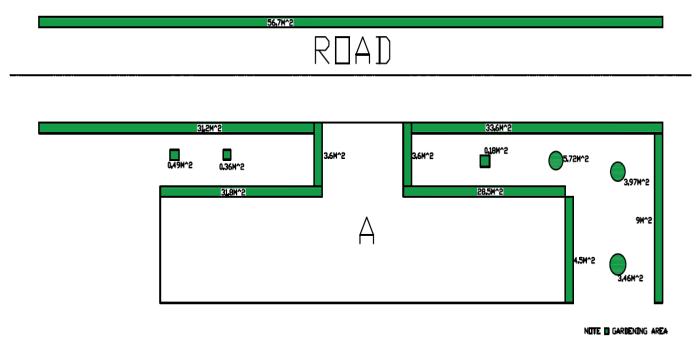
Shape 1: Rectangle
Sr.No. Dimension 0.5”
1 (63×0.9)m 56.7m2
2 (26×1.2)m 31.2m2
3 (26×1.3)m 33.8m2
4 (28×1.2)m 33.6m2
5 (15×0.6)m 9m2
6 (5×0.9)m 4.5m2
7 (15×1.9)m 28.5m2
8 (6×0.6)m 3.6m2
9 (6×0.6)m 3.6m2
Shape 2: Circle (diameter)
1 2.7m 5.72m2
2 2.25m 3.97m2
3 2.1m 3.46m2
Shape 3: Square
1 (0.7 ×0.7) m 0.49m2
2 (0.6×0.6) m 0.36m2
3 (0.43x0.43) m 0.18m2
Total Area 225m2
4.4 Methods for Evaluation:
The present study utilized three methods, which are discussedindetailbelow:
1) General Water Requirements (Typical Values): [12]
Lawns: Lawns require about 25-30 mm of water per day (this can vary based on climate, plant type, and soil conditions).
ShrubsandOrnamentalPlants:Waterrequirementsvarybut canrangefrom5-10mmperday.
Trees:Trees,dependingontheirsize,mayrequireanywhere between25-50mmperday.
Assumingawaterdemandof50mmperday,
Totalwaterdemandbytrees =area×depthofwaterrequired×nooftress =225×50/1000×27 =305litres/day
Totalwaterdemandbyshrubsandornamentalplants=area ×depthofwaterrequired×noofplants =225×10/1000×320 =720litres/day
Totalwaterdemandbytreesandplantsinthestudyarea= 1025litres/day.
Assumingtotalloss(evaporation,runoff,deeppercolation) of50%,thentotaldemand=1025×1.5=1540litres/day.
2) Estimation Formula (Based on Evapotranspiration: [13]
Water Requirement (L/day) =Area (m²) ×ET (mm/day) ×1/1000×noofplants
Totalrequirementofwaterforgardening225m2
Water requirement for trees = 225×9×1/1000 ×27 =55 liters/day
Waterrequirementforshrubs=225×3×1/1000×320=220 liters/day
Totalwaterdemand=275liters/day
Assumingtotalloss(evaporation,runoff,deeppercolation) of50%,thentotaldemand=275×1.5=415liters/day
3) Using volume and area relation, assuming 5-10 liters/m2
Totalwaterdemand=area×waterrequirement =225×6 =1125liters/day
Assumingtotalloss(evaporation,runoff,deeppercolation) of50%,thentotaldemand=1125×1.5=1690liters/day
International Research Journal of Engineering and Technology (IRJET) e-ISSN: 2395-0056
Volume: 12 Issue: 06 | Jun 2025 www.irjet.net p-ISSN: 23950072
• Electricity consumption for gardening:
1) Underground Tank capacity, which is only used for gardeningpurposesonthecollegecampus=is25,000 liters
2) Motorusedforpumpingwaterfromwell=5horsepower (hp)
3) Dailypumpinghoursforgardening-4hoursfrom8am12pm)
1HP-745.7watt
Therefore, 5HP motor consumption =745.7 x 5=3730 kilowatt
1000KW-1units
Therefore3730/1000=3.7units
InPune,thecommercialbuildingrateforelectricitysupply perunitis, Units
0-20 units 0-20 ₹ 9.69 20-50 units
16.55
Inaday,ifweuseamotor4hoursperday,then3.7x4= 14.8unitsperday.
For1month,14.80x30=444units/month
Therefore,therunningcostforthemotoris1hourperday, 444x16.55=7350Rs/-
Therefore,therunningcostformotor4hourspermonth= Rs7350/-PerMonth
• Applications and reuse:
Treatedgreywater, while notsuitable forpotable use,can fulfil various non-potable water demands, including gardening,fountains,firefighting,andcarwashing,thereby significantly reducing freshwater consumption. This will leadtoamorebalancedsituation.Afterutilising1,690litres ofwaterforgardening,anadditional310litresofwatercan beusedtoirrigateanextra41m²ofgardeningorgreenarea.
• Water and Wastewater Implications of Greywater Reuse:
Implementing a wash basin wastewater reuse system on campuscansignificantlydecreasetheuniversity'sreliance on potable water for irrigation, potentially offsetting a substantial portion of current usage. Simultaneously, by treatingandreusingthiswastewateron-site,thevolumeof effluentdischargedtothe municipal sewersystem will be reduced,leadingtopotentialsavingsinsewagechargesand easing the load on Pune's wastewater treatment infrastructure.
Thestudy'sfindingsareindicatingasubstantialvolumeof greywatergeneration,estimatedattwothousandlitresdaily, from wash basins at JSPM’s Rajarshi Shahu College of Engineering. This is representing a significant potential source of water being diverted for non-potable reuse, specifically for campus gardening. However, the implementationofagreywaterreusesystemisnotoccurring withoutoperationalcosts.
Akeyfactoristheenergyconsumptionforpumpingtreated greywater. The analysis reveals that operating the water pumpforfourhoursdailyresultsin₹7350monthlyrunning costs.Thishighlightstheimportanceofconsideringenergy efficiencyindesigningeconomicallysustainablegreywater reuse systems. Assess feasibility, the study is employing threecalculationmethodstoestimatethegardeningarea's waterdemand.Thesemethodsareyieldingvaryingresults; thehighestdemand,1690litresperday,isbeingcalculated by Method 3. This estimate is being adopted to ensure adequateirrigationforthe225m2garden.
Comparing daily greywater generation (2000 litres) with peak water demand (1690 litres) is indicating sufficient greywater availability for gardening. This finding is supportinggreywaterreuseasaviablestrategyforreducing freshwater consumption on campus. Yet, the pumping's operational cost is underscoring the need for system optimization to balance water conservation and costeffectiveness.
The analysis of washing basin wastewater reuse for gardeningatJSPM’sRajarshiShahuCollegeofEngineeringis confirmingits feasibilityandpotential benefits. The study findsthatwashbasinsaregeneratingasubstantialamount of water, approximately 2000 liters daily. This volume is proving sufficient to meet the highest estimated water demand for the 225 m² gardening area, which is being calculated to be 1690 liters per day using Method 3. By substituting freshwater with greywater, the system is significantly reducing potable water consumption, promotingsustainablewatermanagementoncampus. However, the results and discussion highlight a key challenge:theoperationalcostassociatedwithrunningthe waterpump,estimatedat₹7350permonth.Toaddressthis, thestudyisrecommendingimplementinganenergy-efficient pumping system and exploring improved filtration techniquestoenhancethelong-termeconomicfeasibilityof greywaterreuse.
Furtherresearchanddevelopmentcouldinvolveexploring optimizing the system's design for maximum efficiency, including automating the treatment and distribution processes. Additionally, research could also involve investigatingthelong-termeffectsofgreywaterirrigationon soil properties and plant health, which would provide valuable insights.
International Research Journal of Engineering and Technology (IRJET) e-ISSN: 2395-0056
Volume: 12 Issue: 06 | Jun 2025 www.irjet.net p-ISSN: 23950072
[1] S. M. M. P. S. N. K. N. M. G. Kunal D. Thanekar, 'EXPERINIENTALSTUDYOFREUSEOFTREATEDGREY WATER FOR HYDROPONIC FARMING, t' International Journal of Emergtng Trends in Engineering and Basic sciences(IJEEBS),vol.9,no-(March-April2022,pp.5967,2022.
[2] S- A. A- A. Jyotsana Maura, "The Treatment of Wastewater,RecyclingandReuse-Past,Present,andin the Future," International Journal of Science and Research(IJSR)vol-12,no.IINovember2023,pp-210222,2023.
[3] 2.M.M.D.G.AniketVijayPingale,"GREYWATERREUSE: A SUSTAINABLE SOLUTION FOR WATER CRISIS," International Journal of Creative Research Thoughts (IJCRT),vol-12,no-3March2024,p.6,2024.
[4] D. S. P. U. Vijaya V. Shegokar, 'Design and Treatability StudiesofLowCostGreyWaterTreatmentwithRespect to Recycle and Reuse in Rural Areas," InternationaljournalofCurrentMicrobiolouandApplied Sciences,vol.4and8,no-2015,pp-113-124,2015.
[5] P. J. üKnutsson, "Water andZenergy savings fromagreywater reuse: aümodelling scheme using disaggregated consumption data," 31nternational JournalofEnergvandWaterResources,no.18October 2020,2020-
[6] R. S. Q. M. S. J. T. J. A. L. N. K. J. M. H. S. P. K. V. T. J. RavindraKumarKesari,TreatmentandReuse:aReview of its Applications and Health Implications," springer.com,vol.232,no.10May2021,p.208,2021.
[7] V. P. B. S. S. S. P. S. G. Pravin D. Patil, "Greywater characterizationofanIndianhouseholdand potential treatment,"ww•w.keatpublishing.com/en/journalshater -enero-nexus./,no.17December2021,2021.
[8] S.A.V.S.ArvindChauhan,"DesignofSewerageSystem forHousing,"InternationalJournalofAdvancesearchin Science and Engineering, vol. 7, no. February 2018, 2018.
[9] K.S.A.S.R-R.A.F.M.N.G.N.PriyadarshiniV,"Waste Water Treatment Plant in Apartment Area," https:/hcww.academta.edu/, vol. https: doi.org/10.22214/IJRASET.2019.11053,p.4,2019.
[10] S-Manna,"TreatmentofGrayWaterforReusinginNonpotable Purpose to Conserve Water in India, “International Journal of Applied Environmental Sciences,vol.13,no.2018,pp.-703-716,2018.
[11] p. L. S. D. A. S. D. G. S. S. W. Deepika Mandal, "Water conservationduetogreywatertreatmentandreusein urban setting with specific context to developing countries,"https://Www.sciencedirect.com/,no.2011, 2011.
[12] R.G.A.a.C. M.B. A. J.Clemmens,"Technical concepts related to conservation of irrigation and rainwater in agriculturalsystems,"WATERRESOURCESRESEARCH, 2008.
[13] [Online]Available: https://www.fao.org/4/x04900'k0490eOa.htm#chapt%



FinalYearStudents,Dept.ofCivilEngineering, JSPM’sRajarshiShahuCollegeofEngineering, Tathawade-411033,Pune,Maharashtra,India. Email:-avishkarghodke@gmail.com
FinalYearStudents,Dept.ofCivilEngineering, JSPM’sRajarshiShahuCollegeofEngineering, Tathawade-411033,Pune,Maharashtra,India. Email:nilabhdeshmukh@gmail.com
Tathawade-411033, Pune, Maharashtra, India.
FinalYearStudents,Dept.ofCivilEngineering, JSPM’sRajarshiShahuCollegeofEngineering, Tathawade-411033,Pune,Maharashtra,India. Email:parthpatil3261@gmail.com
Tathawade-411033, Pune, Maharashtra, India.
Tathawade-411033, Pune, Maharashtra, India.