
International Research Journal of Engineering and Technology (IRJET) e-ISSN: 2395-0056
Volume: 12 Issue: 08 | Aug 2025 www.irjet.net p-ISSN: 2395-0072
International Research Journal of Engineering and Technology (IRJET) e-ISSN: 2395-0056
Volume: 12 Issue: 08 | Aug 2025 www.irjet.net p-ISSN: 2395-0072
Author: Rohit Rajendra Hendre
Student, Department of Technology, Savitribai Phule Pune University, Pune, Maharashtra, India-411007.
Abstract:
This report examines the major problems caused by the congestedairspaceofcurrentaviation,directedespeciallyat Chicago O'Hare International Airport (ORD). With the increasingdemandforairtravelworldwide,theimportance ofimprovingthecurrentefficiencyoftheairtrafficflowwill be crucial for reducing delay, capacity enhancement, reliability of work, and effective prioritization. ORD was selectedastheprimaryairportforthiscasestudybecauseit consistentlyranksamongthebusiestandmostcomplicated airportsintheworld.Italsoprovidesahighlyrepresentative environment for analyzing congestion. In addition to that, the extensive availability of public operational data and research on the U.S. National Airspace System (NAS), consisting advanced Air Traffic Management (ATM) initiatives,providesafoundationfortheoreticalapplication andanalysisoftheproposedstrategiesforoptimizationin thereport.Thisstudyanalysesseveralprogressivebeliefsin Air Traffic Flow Management (ATFM), including performance-based navigation (PBN), Time-based flow management(TBFM),dynamicairspacemanagement(DAM), the use of Machine learning and Artificial Intelligence (ML/AI) for predictive examination, Optimized exit and Arrival Sequencing, Trajectory-based operations (TBO), together with 4D trajectory, Slot leadership, and Ground Delay Programs (GDP). In addition, it explores innovative techniquessuchasHolographicInterfacesandAugmented Reality(AR)forAirtrafficcontroller,virtualTwinAirspace mold, Green route for eco-optimization, and personalized Speed Advisory via Satellite Communication. This report analyses the speculative use and capability advantages of such optimization schemes, while acknowledging the challenges of implementation. The objective shall be to providerecommendationstoenhancetheairtrafficflowin the ORD and to contribute to a greater understanding of airspaceleadership.
List of Abbreviations used: (arrangedalphabetically)
AAR:AirportArrivalRate
ADS-B: Automatic Dependent SurveillanceBroadcast
ADS-C:AutomaticDependentSurveillance-Contract
AI:ArtificialIntelligence
AR:AugmentedReality
ASM:AirspaceManagement
ATC:AirTrafficControl
ATFM:AirTrafficFlowManagement
ATM:AirTrafficManagement
CDO:ContinuousDescentOperations
CDM:CollaborativeDecisionMaking
CCO:ContinuousClimbOperations
CNS/ATM:Communication,Navigation,Surveillance /AirTrafficManagement
CRAFT:ClearedtoaFix,Route,Altitude,Frequency, Transponder
DAM:DynamicAirspaceManagement
EFB:ElectronicFlightBag
FAA:FederalAviationAdministration
GDP:GroundDelayProgram
HCI:Human-ComputerInteraction
HMI:Human-MachineInterface
ICAO:InternationalCivilAviationOrganization
IMC:InstrumentMeteorologicalConditions
ML:MachineLearning
NAS:NationalAirspaceSystem
OMP:O'HareModernizationProgram
ORD:ChicagoO'HareInternationalAirport
PBN:Performance-BasedNavigation
RNP:RequiredNavigationPerformance
RNAV:AreaNavigation
SESAR:SingleEuropeanSkyATMResearch
SID:StandardInstrumentDeparture
STAR:StandardTerminalArrivalRoute
TBFM:Time-BasedFlowManagement
TBO:Trajectory-BasedOperations
TRACON:TerminalRadarApproachControl
UAM:UrbanAirMobility
VMC:VisualMeteorologicalConditions
Table of contents:
Chapter 1: Introduction
o 1.1.BackgroundofAirspaceCongestion
o 1.2.ProblemStatement
o 1.3.ProjectObjectives
o 1.4.ScopeoftheStudy
o 1.5.StructureoftheReport
Chapter 2: Literature Review
o 2.1. Fundamentals of Air Traffic Management(ATM)
o 2.2.ConceptsofAirspaceCongestion
o 2.3. Overview of Air Traffic Flow Management(ATFM)Strategies
International Research Journal of Engineering and Technology (IRJET) e-ISSN: 2395-0056
Volume: 12 Issue: 08 | Aug 2025 www.irjet.net p-ISSN: 2395-0072
o 2.4. Detailed Review of Key Optimization Concepts
Chapter 3: Case Study: Chicago O'Hare International Airport (ORD)
o 3.1.OverviewofORDOperations
o 3.2.AirspaceandInfrastructureAnalysis
o 3.3. Historical Congestion Challenges at ORD
o 3.4.CurrentATFMPracticesatORD
Chapter 4: Analysis of Optimization Strategies for ORD
o 4.1. Application of PBN and TrajectoryBased Operations (TBO) with 4D TrajectoriesatORD
o 4.2. Role of TBFM and Optimized Sequencing
o 4.3.Potential ofMachineLearningandAI forPredictiveAnalyticsatORD
o 4.4. Slot Management and Ground Delay ProgramsforORD
o 4.5.PrioritizationStrategiesatORD
o 4.6. Challenges and Barriers to Implementation
o 4.7.AdvancedHuman-MachineInterfaces: Holographic Interfaces and Augmented RealityforControllers
o 4.8.GoogleMaps-styleTextualandVisual RepresentationforAirspaceAwareness
o 4.9. Digital Twin Airspace for Proactive Management
o 4.10.GreenRoutingandEco-Optimization
o 4.11. Personalized Speed Advisory via SatelliteCommunications
Chapter 5: Conclusion and Recommendations
o 5.1.SummaryofFindings
o 5.2.AddressingObjectives
o 5.3.RecommendationsforORD
o 5.4.FutureWork/FurtherResearch
References
Appendices
Chapter 1: Introduction
1.1. Background of Airspace Congestion
Theaviationindustryhasseenimpressivegrowthoverthe past decade due to factors such as globalization, fiscal development, and increased passenger demand. This expansionhasmanagedobstaclesthataresimilartoairspace and airport congestion, resulting in delays, increased fuel consumption,increasedcostsforairlines,additional work for Air traffic controllers, and reduced satisfaction for passengers. In addition to the financial implications, congestion can affect the atmosphere through additional emission and capability safety hazards imposed on
unpredictable and complex air flow management procedures.Asexistinginfrastructurestrugglestokeeppace withdemand,optimizingthecurrentairtrafficmanagement (ATM)systembecomescrucial.
Airspaceandairportsaroundtheworldfrequentlyoperate atfullcapacity,causingproblemswith.Adelayclosetoone airport may have a ripple effect throughout the national airspace system (NAS), affecting flight schedules, crew rotations,andpassengerconnectionsworldwide.Typically, thecurrentmethodsofmanagingtrafficarereactiverather thanpreventive,whichmakesitdifficulttoadapttochanging circumstancesadmiringsuddenincreasesincongestionor capacity. There is a clear need for innovative tactics and systemscapable of dynamicallyimprovingairtraffic flow, ensuring safety and improving productivity in a busy or congestedarea.
This project seeks to examine and suggest strategies for enhancing the flow of air traffic in busy airspaces. The specificgoalsinclude:
•MinimizingDelays:Decreasingtheamountoftimeaircraft waitontheground,inholdingpatterns,orduringtaxiing.
•MaximizingThroughput:Increasingthenumberofaircraft movements (take-offs and landings) an airport can accommodateinasetperiod.
• Enhancing Operational Predictability: Lowering the variability and unpredictability in flight durations and airportprocedurestofacilitatebetterplanningforairlines andpassengers.
•DevelopingEfficientPrioritization:Creatingandevaluating techniquesforprioritizingdifferentcategoriesofairtraffic (suchasemergency,commercial,cargo)duringtimesofhigh demandorlimitedcapacity.
Themainobjectiveofthepresentreportistoexaminethe wayChicagoO'HareInternationalAirport(ORD)operatesas aprimeexampleofcongestedaviation.ORDwillbeknown asoneofthebusiestairportonearth,actingasacrucialhub for major airlines and facing many active difficulties. The study will explore the various high-tech beliefs in the management of air traffic flow (ATFM) and consider how they could be applied to ORD's unique procedures and networks. The objective of the current undertaking is to carry out a comprehensive study on the advantages and disadvantages of the use of such optimization approaches using existing investigative and operational intelligence.
International Research Journal of Engineering and Technology (IRJET) e-ISSN: 2395-0056
Volume: 12 Issue: 08 | Aug 2025 www.irjet.net p-ISSN: 2395-0072
Thereportshallbedividedintofiveparts.ThefirstChapter introducestheproblemofcongestion inairspaceandsets outtheobjectivesandlimitsoftheundertaking.Thesecond chapter deals with related writing on basic ATM values, congestiontheory,andanATFMmethodreview,withafocus on key optimization concepts. Chapter 3 provides an in depthlookatChicagoO'HareInternationalAirport,details, itsfunctions,system,andpastcongestionproblems.Chapter 4 shall quantify the academic impact of the chosen optimization approaches, in particular on the ORD. In the end, Chapter 5 summarizes the results, discusses how the objectives were achieved, proposes a location for further exploration,andconcludeswithaconclusion.
Air Traffic Management (ATM) consists of the planning, organizing, and controlling of air traffic to ensure safe, orderly, and expeditious movement of aircraft from departure to arrival. It involves various components, includingAirTrafficControl(ATC),whichprovidesreal-time guidance to aircraft; Airspace Management (ASM), which structures and allocates airspace; and Air Traffic Flow Management (ATFM), which balances air traffic demand withavailablecapacity.TheprimarygoalofATMissafety, followedcloselybyefficiency.Theincreasingcomplexityof airtraffic,alongwithlimitedairspaceandairportcapacity, highlights the critical need for continuous innovation in ATM.
Airspacecongestionhappenswhentheneedforairtraffic servicesinaspecificareaorairportsurpassesthecapacity thatisavailable.Thisimbalancecanleadto:
Delays: Extendedtaxitimes,airborneholding,and departuredelays.
ReducedThroughput: Feweraircraftmovements than desired, leading to inefficient use of infrastructure.
IncreasedWorkload: Higherstressandcomplexity forairtrafficcontrollers.
Environmental Impact: Increased fuel burn and emissionsduetoinefficiencies.
Causesofcongestionaremultifaceted,including:
High Traffic Demand: Seasonalpeaks,dailyrush hours(e.g.,ORD's6-8AMand3-5PMperiods).
LimitedInfrastructure: Fixednumberofrunways, taxiways,andgates.
Weather: Adverseconditions(thunderstorms,fog, andsnow)significantlyreduceairportandairspace capacity.
Airspace Design: Fragmented airspace or inefficientroutestructures.
HumanFactors: Controllerworkload,training,and communicationprocedures.
Unexpected Events: Equipmentfailures,security incidents,orunscheduledrunwayclosures.
*Metrics commonly used to measure congestion include average delay per flight, total system delay, airport throughput(operationsperhour),anddelaypredictability (varianceofdelays).
ATFMisacrucialcomponentofATMdesignedtopreventair trafficdemandfromexceedingavailablecapacity.Itsgoalis tobalancedemandwithcapacitystrategically,pre-tactically, and tactically, ensuring optimal flow while minimizing delays.CommonATFMmeasuresinclude:
Ground Delay Programs (GDPs): Holdingflights on the ground at their origin airports to manage arrivalratesatacongesteddestination.
FlowRestrictions: Limitingthenumberofaircraft enteringaspecificairspaceorairport.
Rerouting: Directing flights around congested areasoradverseweather.
Minimum Departure Intervals: Spacing out departurestomanagedownstreamtraffic.
The following advanced concepts are central to modern effortsinoptimizingairtrafficflow:
Performance-Based Navigation(PBN):
o Description: PBN uses advanced navigationcapabilitiesthatallowaircraftto flyprecise routes,including curved paths and exact flight profiles. It moves away fromtraditionalground-basednavigation aidstoasystembasedontheaircraft'sown performance and capabilities (e.g., Required Navigation Performance - RNP, AreaNavigation-RNAV).
o Benefits: Enables more direct routes, optimized descent/climb profiles (continuous descent operations - CDO, continuous climb operations - CCO), reduced flight distances, improved fuel efficiency,andincreasedairspacecapacity by allowing more parallel and closely spacedroutes.
International Research Journal of Engineering and Technology (IRJET) e-ISSN: 2395-0056
Volume: 12 Issue: 08 | Aug 2025 www.irjet.net p-ISSN: 2395-0072
o Application to Congestion: PBN allows for more efficient use of limited airspace, reducing the need for vectoring and holding, thereby contributing to reduced delaysandincreasedthroughput.
Time-Based Flow Management (TBFM):
o Description: TBFM is a system that assigns precise arrival times to aircraft, oftenmanyminutesorhoursinadvance,to manage the flow into congested airspace sectors or airports. It extends flow managementbeyondsimplegrounddelays tomanagetheentiretrajectoryintheair.
o Benefits: Improves predictability of arrivals, reduces airborne holding, and smooths out traffic flow into constrained areas.
o ApplicationtoCongestion: Byaccurately meteringdemandagainstcapacity,TBFM directlycontributestoreduceddelaysand more predictable operations, particularly inhigh-densityarrivalstreams.
Dynamic Airspace Management (DAM):
o Description: DAMinvolvestheflexibleuse ofairspace,allowingforquickadjustments to airspace configuration based on realtimedemand, weather,or militaryneeds. This contrasts with fixed, rigid airspace structures.
o Benefits: Maximizes airspace utilization, allows for quick rerouting around congested areas, and provides greater flexibilityforoptimalflightpaths.
o Application to Congestion: DAM can createtemporarycorridorsorreconfigure sectors to alleviate bottlenecks, directly increasingthroughputandreducingdelays byadaptingtodynamicsituations.
Machine Learning and AI for Predictive Analytics:
o Description: ML/AItechniquesareusedto analysevastamountsofhistoricalandrealtime air traffic data to predict future congestion, delays, and capacity limitations. This can involve predicting demand peaks, the onset of severe weather,ortheimpactofsingleevents.
o Benefits: Enables proactive decisionmaking,allowsforearlierimplementation of ATFM measures, and provides more accurateforecastsofsystemperformance.
o Application to Congestion: Predictive analytics can inform strategic and pretactical ATFM decisions, leading to more timely and effective interventions that
reduce delays and improve predictability beforecongestionbecomescritical.
Optimized Departure and Arrival Sequencing:
o Description: This involves advanced algorithms that determine the optimal orderandspacingforaircraftonrunways andwithinterminalairspacetomaximize runwaythroughputandminimizewaiting times. This goes beyond traditional firstcome,first-served.
o Benefits: Increases runway capacity, reduces taxi times, minimizes airborne holding,andimprovesoverallefficiencyof airportoperations.
o Application to Congestion: Directly addresses the throughput objective by scheduling runway usage efficiently, and contributes to reduced delays by minimizingqueues.
Trajectory-Based Operations (TBO):
o Description: TBO is a foundational concept where flights operate on predefined,four-dimensionaltrajectories(3D position+time)thataresharedandagreed upon by all stakeholders (pilots, ATC, airlines). It shifts from vectoring to conformancemonitoring,allowingaircraft tofly optimalpathscontinuouslyrather than fixed airways.
o Benefits: Greater predictability, more efficient use of fuel, reduced controllerpilot communications, and increased systemcapacityduetopreciseflightpaths.
o Application to Congestion: By enabling precise flight paths and timings, TBO supportstheobjectivesofreduceddelays and highly predictable operations, especiallywhenintegratedwithTBFM,and allowsformoreefficientdirectrouting.
Slot Management and Ground Delay Programs (GDP):
o Description: Slot management refers to the allocation of specific time windows (slots) for aircraft to take off or land at a congested airport. GDPs are tactical measures used when predicted demand significantly exceeds capacity, delaying flightsattheirorigintopreventexcessive holdingatthedestination.
o Benefits: Prevents system overload, manages demand effectively, and shifts delaysfromexpensiveairborneholdingto lesscostlygroundholding.
o Application to Congestion: These tools are primary mechanisms for reducing overalldelaysandmanagingthroughputby
International Research Journal of Engineering and Technology (IRJET) e-ISSN: 2395-0056
Volume: 12 Issue: 08 | Aug 2025 www.irjet.net p-ISSN: 2395-0072
preventingthesaturationofairspaceand airportresources.
ChicagoO'HareInternationalAirport(ORD)isacornerstone of the North American and global air transportation network.Regularlylistedasoneofthemostactiveairports in the world in terms of aircraft movements, it plays an importantroleasamajorconnectingpointforbothlocaland internationalflights. Intheyear2024,ORDwasrecognized as the second-busiest airport globally for aircraft movements, managing a total of 7,76,036 aircraft movements and catering to over 80 million passengers. This substantial level of activity highlights its significance and the obstacles it encounters. On average, it handles around1,000flightseachday,withaparticularlyhighrateof take-offsandlandings,oftenreaching1.5to2operationsper minuteduringpeakrushhours.
MajorairlinesthatflyinandoutofORDareUnitedAirlines, which is the airport's second-largest hub, and American Airlines,whichisthethird-largesthub.Thesetwoairlines contributeasignificantamountoftheairport'straffic.Other importantcarriersatORDincludeDeltaAirLines,Southwest Airlines, Frontier Airlines, and Spirit Airlines, as well as variousinternationalairlines.
ORD'sinfrastructureisdesignedtohandleimmensetraffic.It features:
Runways: Atotalofeightactiverunways,themost of any civilian airport worldwide. These are primarilyarrangedintwosetsofparalleleast-west runways (9L/27R, 9C/27C, 9R/27L on the north airfield;10L/28R,10C/28C,10R/28Lonthesouth airfield)andtwocrosswindrunways(4L/22Rand 4R/22L).Theprimaryeast-westorientationallows forefficientoperationsbasedonprevailingwinds.
Terminals and Gates: ORD comprises four passengerterminals(1,2,3,and5)withacombined total of nine concourses and 213 gates. This extensive gate infrastructure supports the high volumeofconnectingandoriginatingtraffic.
AirspaceStructure: Theairspaceinthevicinityof ORD is intricate, as it handles the coordination of both incoming and outgoing flights, while also connectingwithnearbyregionalairports.Normally, air traffic is guided to operate in either an "east flow"pattern(departurestotheeast,arrivalsfrom the west) or a "west flow" pattern (departures to thewest,arrivalsfromtheeast)dependingonthe
direction of the prevailing winds, with east flow frequently linked to unfavourable weather conditions.
Duetoitshightrafficvolumeandroleasamajorhub,ORD has historically experienced significant congestion challenges.
Peak Periods: The airport consistently faces congestionduringpeakarrivalanddeparturetimes, typicallyMondays,Thursdays,andFridaysbetween 6-8AMand3-5PM.
Cascading Delays: Delays originating at ORD, or those affecting flights bound for ORD, can have a dominoeffectacrosstheentireNASduetoitshub status.
OperationalCapacity: TheFAA'sAirportCapacity Profile indicates that while ORD's visual meteorologicalconditions(VMC)capacityisstrong (around 214-224 operations per hour), instrumentalmeteorologicalconditions(IMC)can significantlyreducethisto182-214operationsper hour, highlighting the sensitivity to operational limitations.
ORD employs standard ATFM practices, including ground delayprograms,rerouting,andactivetrafficmanagementby itsmultiplecontroltowersandapproachcontrolfacilities. ThegoaloftheO'HareModernizationProgram(OMP)isto enhanceefficiencybyrestructuringrunwaysandtaxiways. Nonetheless,duetotheongoingincreaseindemand,these enhancements are facing challenges, requiring the investigationofmoresophisticatedoptimizationmethods.
Thissectionexamineshow thesophisticatedoptimization techniquesoutlinedinChapter2couldpotentiallybeusedat Chicago O'Hare International Airport (ORD) to tackle its congestion issues and achieve the goals of the project.
PBN(RNP/RNAV) Implementation:
Benefit for ORD: Given ORD's complex, multirunway environment, PBN offers the ability to design more precise, independent arrival and departurepaths.Thiscanallowforcloserspacingof parallel approaches and departures, increasing effectiverunwaycapacity,especiallyduringvisual ormarginalconditions.
International Research Journal of Engineering and Technology (IRJET) e-ISSN: 2395-0056
Volume: 12 Issue: 08 | Aug 2025 www.irjet.net p-ISSN: 2395-0072
Reduced Delays/Increased Throughput: By enablingmoredirectroutesandoptimizedvertical profiles (CDO/CCO), aircraft can spend less time manoeuvring and holding, directly reducing airborneandtaxidelays. Thisaccuracycouldalso raisethequantityofairplanesthatcanbeefficiently handledeachhour.
PredictableOperations: Stabilityandrepeatability offlightpathswillleadtomorepredictablearrival and departure times for both airlines and passengers.
Challenges: In order to make proper use of PBN abilitiesfreefromallobstacles,substantialcapitalis needed to upgrade the avionics framework of the aged aircraft, provide comprehensive training for controllers,anddeveloppreciseadaptationstothe existing Standard Instrument Parting (SID) and StandardTerminalArrivalRoute(STAR)protocols insystematic.
Description (4D Trajectories): TBO fundamentally relies on 4D trajectories, where flightsoperateonpre-definedpathsthatincludea timecomponentforspecificwaypoints.Thismeans aircraft can fly optimal paths continuously rather thanbeingrestrictedtofixedairways,allowingfor dynamic routing around congestion or for more efficientdirectrouting.
Benefit for ORD: At ORD, TBO could be used to preciselysequencearrivalsintothefinalapproach ordeparturesfromtherunwaybyassigningprecise timesforeachaircrafttocrossspecificpoints.This moves towards a "gate-to-gate" management philosophy.
Reduced Delays/Predictability: By providing a common 4D trajectory reference, TBO minimizes late-stagetacticalinterventionsbyATC(e.g.,speed control, vectoring), leading to smoother, more efficient flows and significantly improving adherence to schedules, thus reducing overall delaysandincreasingpredictability.
Challenges: Requires high fidelity data exchange between aircraft, ATC, and airline operational centres.Italsodemandsaveryhighlevelofsystem integrationandreal-timeadaptationcapabilitiesto handledeviationsfromtheplannedtrajectoryand thecontinuousoptimizationofpaths.
4.2. Role of TBFM and Optimized Sequencing
Enhanced TBFM atORD:
Benefit for ORD: ORD's high arrival demand frequentlysaturatesitsrunwaycapacity.TBFM,by assigning target arrival times at metering fixes
furtherupstream,canproactivelymanagetheflow of inbound aircraft. This shifts waiting from airborneholding(whichisexpensiveandgenerates emissions)togroundholdingattheorigin.
Reduced Delays/Predictability: More precise time-basedmeteringcanpreventairbornestacking and reduce the need for last-minute tactical interventions, making arrival streams more predictableandreducingaggregatedelays.
Optimized Sequencing: Advanced sequencing algorithms(e.g.,usingqueuingtheoryormachine learning) could be applied to prioritize aircraft within the TBFM queue based on factors like connectiontimes,airlinepriority,orasystem-wide optimization goal. This ensures the most efficient useofvaluablerunwayslots.
Challenges: Requiresaccuratedemandprediction, robust communication between ATC centres and airlines, and acceptance of ground delays by airlines. It also needs sophisticated algorithms to dynamicallyadjusttargettimesbasedonreal-time capacityfluctuationsatORD.
4.3. Potential of Machine Learning and AI for Predictive Analytics at ORD
Predictive Congestion Modeling:
Benefit for ORD: Withvast amountsofhistorical flight data, weather data, and operational metrics (e.g.,runwayconfigurations,delayreports),ML/AI modelscouldlearncomplexpatterns.Thesemodels could predict periods of high congestion at ORD hoursorevendaysinadvance,basedonfactorslike scheduled traffic volume, anticipated ground closures,orevenhistoricaldelaypropagation.
Reduced Delays/Predictable Operations: ProactivecongestionwarningswouldenableATFM to implement measures (like reroutes or GDPs) earlier and more effectively. This could prevent minor delays from escalating into major disruptions,enhancingoverallpredictability.
Application to Prioritization: ML couldassistin identifying which flights to prioritize for ground holding or expedited movement based on their predictedimpactontheoverallnetworkorspecific airlineoperations.
Challenges: High-quality, ongoing data streams, combined with expertise in data science and aviationoperations,are necessarytodevelopand confirm models. Additionally, trust from human controllersanddispatchersinAI-drivensuggestions iscrucial.
International Research Journal of Engineering and Technology (IRJET) e-ISSN: 2395-0056
Volume: 12 Issue: 08 | Aug 2025 www.irjet.net p-ISSN: 2395-0072
Refined Slot Management:
Benefit for ORD: Given the high demand during peak hours, sophisticated slot management can ensure that the number of scheduled operations aligns more closely with available capacity. This could involve dynamic allocation of arrival/departureslots.
Reduced Delays/Throughput: By proactively managingdemandthroughpre-assignedslots,the system can avoid over-scheduling, thus reducing bothgroundandairbornedelaysandmaintaininga moreconsistentthroughput.
GroundDelayPrograms(GDPs): GDPsarealready used. Optimization could focus on making these programsmoreefficient.Thiscouldinvolve:
o Fairness Algorithms: Distributingdelays more equitably among airlines or consideringairline-specificcosts.
o Connection Optimization: Prioritizing flights that have critical passenger connectionstominimizeoverallpassenger inconvenience.
Flexibility: Givingairlinestheoptiontohavesome leewayinexchangingslotsordealingwithdelayson thegroundina mannerthatreducesthenegative effectsontheiroperations.
Challenges: Politicalandeconomicconsiderationsrelated tothedistributionofflightslots,airlinesbeinghesitant to accommodate delays on the ground, and the necessity for dependablesystemstodynamicallymodifyslotallocations inresponsetounexpectedcircumstances.
Dynamic PrioritizationFramework:
BenefitforORD: Duringperiodsofhighcongestion or reduced capacity, effective prioritization is crucial. This goes beyond simple emergency priority.Itcouldinvolve:
o Medical/Emergency Flights: Always highestpriority.
o Connecting Flights: "Prioritizingflights with a large number of connecting passengers in order to reduce overall disruptiontothesystemandminimizethe impactonpassengers."
o Heavy Aircraft: Depending on the situation,decidingwhethertogivepriority orlessprioritytolargeaircraftbecauseof theseparationrulesfortheirtrailingwake turbulence.
o Airline Importance: Strategic prioritization for major hub carriers (United, American) to maintain network stability,whileensuringfairnessacrossall operators.
Predictable Operations: Clearly defined and consistentlyappliedprioritizationrulescanleadto morepredictableoutcomesduringdisruptions.
Challenges: Developing a transparent and fair prioritization scheme that is acceptable to all stakeholders, and implementing it dynamically in real-timeATCsystemswithoutincreasingcontroller workload.
Whiletheseoptimizationstrategiesoffersignificantbenefits, theirfullimplementationatanairportascomplexasORD facesseveralchallenges:
Interoperability: Integratingnewtechnologiesand systemswithexistinglegacyATMinfrastructure.
Data Sharing: Establishing robust, real-timedata sharing agreements between ATC, airlines, and airports.
Cost: Significant investment in technology upgrades,research,anddevelopment.
HumanFactors: Trainingairtrafficcontrollersand pilotson newproceduresandtools,andensuring theirtrustinautomatedsystems.
Regulatory Framework: Adaptingregulationsto supportnewoperationalconcepts.
Stakeholder Coordination: "Reaching an agreementamongavarietyofparties(FAA,airline companies, airport officials, military) regarding modificationstooperations."
Cybersecurity: Ensuring the security of highly integratedanddata-drivensystems.
The ability of a human operator, in particular air traffic controller, to grasp and effectively interact with complex facts is of great importance for the achievement of sophisticatedATFMtools.Whiletheclassic2Dradarimages are effective, they can still be mentally challenging. Holographicinterfacesandmixedreality(AR)arecapableof significantlyimprovingsituationalawarenessandjudgment inbusyaerospacesuchastheORD.
Description:
Holographic Interface Computers: These systemsdisplayinteractive3Dhologramsintheair, enablinguserstocontroldigitalobjectsusinghand
International Research Journal of Engineering and Technology (IRJET) e-ISSN: 2395-0056
Volume: 12 Issue: 08 | Aug 2025 www.irjet.net p-ISSN: 2395-0072
gesturesintheactualspace,comparabletogesturebased interfaces in gaming or design. Consider controllers engaging with authentic, floating depictionsofaircraftpaths.
Augmented Reality (AR) for Controllers: AR technology superimposes digital data onto the physical environment. With AR headsets, controllerscanviewreal-time3Drepresentationsof airspace, traffic patterns, conflicts, and weather projections either on the windows of the control tower or on their existing control panels. This innovation replaces the conventional 2D radar displays with a more engaging 3D spatial informationsystem.
Enhanced Situational Awareness (Reduced Delays, Predictable Operations):
o Immersive3DVisualization: Controllers developahighlyintuitiveunderstandingof theentireairspaceadjacenttotheORDin TRUE3D,includingaircraftaltitude,speed direction, and expected direction. This removes the necessity to mentally regenerate complex 3D contexts from a planarscreen,spotlightinglikelydisputes immediately, and allowing a quick designationofstrugglesandabettervisual imageofthecurrent.
o Predictive Overlays: ML/AI-driven congestionpredictionscouldbevisualized as 3D "hot zones" within the holographic displayorARoverlay,allowingcontrollers to anticipate bottlenecks before they materialize.Thisproactiveunderstanding allows for quicker and more efficient decisions on managing the flow, which decreasesthechancesofdelaysspreading uncontrollably.
o Trajectory Visualization: PBN and TBO trajectories could be vividly displayed, showingconformanceordeviationinrealtime. Controllers can easily distinguish aircraft deviating from their designated routeorschedule,enablingpromptaction toupholdpredictability.
Improved Throughput and Sequencing (Increased Throughput):
o Intuitive Control: Controllers could use gesturestore-sequenceaircraftinaqueue orre-route them aroundcongestedareas byliterally"dragginganddropping"flight paths in the 3D space. This organic communication could accelerate the
process of making decisions and taking action, leading to a faster rate of safely handlingaircraft.
o Runway Management: AR overlays on tower windows could highlight available runwaysegments,optimallanding/take-off pointsbasedonspacingrequirements(e.g., wake turbulence separation), or even directtaxiroutestoreducegrounddelays. This immediate visual feedback could optimizerunwayusage.
Streamlined Prioritization (Effective Prioritization):
o VisualCues: High-priorityflightssuchas emergencies, critical connections, or military aircraft could be visually emphasized using different colours or animations in the holographic display. This would allow controllers to easily identifytheirstatuseveninbusyairspace.
o Interactive Prioritization: Controllers willhavetheabilitytopromptlyviewand adjust prioritization rules using simple gesture controls, adapting the flow according to changing operational requirements (such as giving priority to internationalarrivalsforashortperiodof time).
Status: Thesetechnologiesarenotinoperationaluseinlive ATC environments but I highly recommend to give it a thoughtforfutureATMsystems.
Utilizing a familiar and easy-to-use interface concept similar to Google Maps for air traffic displays provides a simplified yet effective method for presenting intricate airspacedata.
Description:
Thisideaconsistsofdisplayingairtrafficdataina contextualized,map-likeformat,resemblingwhata pilotorgroundcrewwouldseeonatablet,rather thanthetraditionalradarblips.Theinterfacewould featureclearancessuchasCRAFTclearance,visual waypoints,andsimpleroutelinesintextualform.
CRAFTClearance: Thisacronym(ClearedtoaFix, Route, Altitude, Frequency, and Transponder) representsastandardformatforairtrafficcontrol clearances. Integrating this directly into a visual, textualinterfacewouldprovideclear,non-confusing instructions.
CommunicationBackup: Thissystemwouldactas astrongvisualandtextualsupportforconventional
International Research Journal of Engineering and Technology (IRJET) e-ISSN: 2395-0056
Volume: 12 Issue: 08 | Aug 2025 www.irjet.net p-ISSN: 2395-0072
voice communications. In cases of signal disruption,likethoseseeninrecentincidentsinU.S. airspace, pilots or ground staff could continue to receiveandvalidateessentialclearanceinformation and updates through a data link, lessening their dependence on perhaps unreliable voice communications.
Benefits for Optimizing Air Traffic Flow atORD:
Enhanced Clarity and Reduced Misinterpretation(ReducedDelays,Predictable Operations): Approvingclearancesinaformatthat resembles a map, enhances communication and reduces the likelihood of misunderstandings betweenairtrafficcontrolandpilots/groundcrews. This results in decreased errors and deviations, ultimately leading to more efficient, safe and predictableoperations.
Improved Situational Awareness for Pilots/GroundCrew: Acustomizedviewsimilarto Google Maps, designed for the specific aircraft or groundvehicle,wouldofferaclearunderstandingof theirdesignatedroute,thesurroundingtraffic,and movementsonthegroundatORD.
ResiliencetoCommunicationDisruptions: Inthe event of radio signal loss, the textual and visual display of clearances and advisories via a robust data link (e.g., satellite communications, as discussedin4.11)ensurestransmissionofcritical information,allowingoperationstoproceedmore smoothly and preventing delays caused by communicationbreakdowns.
Streamlined Ground Operations: Avisualmap overlay with clearly defined routing instructions couldenhanceefficiency,decreasetaxi times,and avoid runway incursions for ground vehicles and aircrafttaxiingatORD.
Status: While components exist (e.g., EFBs in cockpits), a fully integrated, universally adopted Google Maps-style textualandvisualclearancesystemasaprimarybackupor supplementaryinterfaceisstilllargelyintheresearchand developmentphase.
Theconceptofa"DigitalTwin"involvescreatingareal-time virtualmodelofaphysicalsystem.Applyingthistoairspace providesanunprecedentedcapabilityforproactiveairtraffic flowmanagement.
Description:
A Digital Twin Airspace is a constantly updated, detailedvirtualcopy(kindofsimulator)ofthereal
airspacearoundORDthatincludesplanes,weather conditions,runwayconditions,gateavailability,and operationalguidelines.
Thedigitalmodelwillreceiveup-to-dateinformation fromvarioussourcessuchasradar,ADS-B,airport sensors,flightplans,andweatherforecasts.
Itenablesthesimulationoftrafficsituationspriorto real-world execution. For instance, air traffic controllerscanevaluateareroutingplanorarevised ground delay program within the digital model to anticipateitspreciseeffectsondelaysandtrafficflow at Chicago O'Hare International Airport, without disruptingongoingoperations.
Proactive Congestion Avoidance (Reduced Delays, Predictable Operations): Instead of responding to traffic jams after they happen, the digital twin enables proactive planning through hypothetical scenarios. By detecting possible congestionpointsinadvance,differentmethodsto alleviatethemcanbetestedvirtuallytoidentifythe best outcome, ultimately avoiding delays before theyhappen.
Optimized Resource Allocation (Increased Throughput): The digital twin can improve the efficiency of runways, gates, and taxiways by simulating various scheduling and sequencing strategies,resultinginincreasedthroughputrates atORDairport.
Enhanced Decision-Making and Predictability: ControllersandATFMspecialistscanusethedigital twin to evaluate the consequences of their decisions,leadingtomoreinformedandpredictable outcomes.Itprovidesacommonoperationalpicture that is constantly updated and predictive, coming outasthemosthelpfultool.
Training and Procedure Development: The digitaltwincanalsobeusedasavaluabletraining tool for controllers, enabling them to simulate handling difficult and emergency situations in a realisticandsafesetting.
Status: The idea of digital twins is becoming increasingly popularindifferentsectors,anditspotentialuseinATMis currentlybeingresearchedanddevelopedbuthasnotbeen fullyimplementedinoperationsyet.
ThecurrentATMtrafficgoesfurtherthansimplyreducing delayandincreasingthroughputbutalsocapturesthegreen repercussionsinthereport.Toimproveefficiencythrough reducingfuelconsumptionandemissions,greenroutesand eco-optimizationmethodsareapplied.
International Research Journal of Engineering and Technology (IRJET) e-ISSN: 2395-0056
Volume: 12 Issue: 08 | Aug 2025 www.irjet.net p-ISSN: 2395-0072
Description:
Green Routing: That includes optimising flight pathsbasedoncomponentssuchasfuelefficiency andreducingemissions,inadditiontodistanceand time. The present could include creating a small adjustment to the most advantageous path to benefitfromthebeneficialwind,toavoidthehighthrust regions, or otherwise to facilitate uninterrupteddescentorascent.
Eco-Optimization: Thataimsatstrikingabalance between sustainability objectives and work efficiency,capturinginnarrativecomponentssuch asrecommendedspeed,altitude,andthesystemin whichtheaircrafttakesoffinordertomitigatethe overallcarbonemissionsproducedbyflightarrive nearanddepartfromORD.
Environmental Sustainability (Reduced Emissions): Supporting the reduction of the environmental footprint of the aviation industry, and the increasing interest in the ORD airport locatednearthecityareaofinhabitants.
FuelEfficiency(ReducedCosts): Effortlessroutes and flight profiles result in significant fuel cost reductions for airlines flying to and from ORD, contributing to a reduction in overall operational expenditure.
Integration with TBO and PBN: Greenroutingis naturally complemented by PBN and TBO, as precise navigation and 4D trajectories enable aircraft to follow these environmentally friendly paths.
ReducedNoise: Optimizeddescentprofiles(CDO) canreducenoisepollutionforcommunitiesaround ORD,improvingcommunityrelations.
Status: Greenroutingprinciplesarebeingincorporatedinto NextGen and SESAR projects, however, a complete, up-tothe-minute eco-optimization system throughout a busy airspacesuchasORDhasnotyetbeencreated.
4.11. Personalized Speed Advisory via Satellite Communications
Providingreal-time,dynamicspeedadvisoriestoindividual aircraft can significantly fine-tune traffic flow, especially whenitcomestoorganizingtheflowofincomingflightsat busyairports.
Description:
Thisideaislinkedtoasophisticatedsatellite-based AI organization tracking the location, speed, and
directionofeachaircraftrelativetothegeneralflow ofair.
Thesystemwouldthensuggestmicro-adjustments toanaircraft'sspeedandpath,delivereddirectlyto thecockpitviasatellitecommunications(e.g.,using ADS-CdatalinkorfutureCNS/ATMsystems).These advisorieswouldbetailoredtotheaircraft'sexact position in the sequence, optimizing its arrival or departuretime.
In order to ensure the best position and flow, the aforementioned recommendation would focus on minorchangesratherthanamandatorydeviation.
Precision Flow Management (Reduced Delays, Increased Throughput, and Predictable Operations): Continuouslyprovidingpilotswith guidanceonthebestspeedandrouteadjustments helps maintain ideal distances between aircraft during take-off and landing. This results in a significantdecreaseinholdingpatterns,whichare costly airborne delays, and eliminates typical spacingproblemsthatcausestart-stopmovements orunnecessaryrouteadjustments.
Smoother Transitions: It enables smoother transitions from en-route airspace into ORD's terminalareaandontofinalapproach,preventing jams and creating more predictable arrival sequences.
ReducedControllerWorkload: Bymanagingsome oftheprecisespeedandspacingmanagementwith automated advisories, air traffic controllers can focusonhigher-levelstrategicoversightandconflict resolution,ifany.
FuelSavings: Optimizedspeedprofilescanleadto further fuel efficiencies by minimizing periods of highthrustorinefficientflightsegments.
Status: Thisisahighlyadvancedconceptnotyetdeployedin actualoperationalairtrafficmanagement.Itiscurrentlyin simulation stages and theoretical research, requiring significantadvancementsincommunicationinfrastructure, AIalgorithms,andregulatoryframeworks.
This paper has investigated the urgent necessity of improvingairtrafficflowin busyairspaces,usingChicago O'HareInternationalAirport(ORD)asakeyexample. Ithas been determined that ORD faces substantial operational difficulties due to its large volume of traffic with complex and limited infrastructure. Several advanced Air Traffic FlowManagement(ATFM)concepts includingPBN,TBFM, DAM, ML/AI, Optimized Sequencing, TBO with 4D
International Research Journal of Engineering and Technology (IRJET) e-ISSN: 2395-0056
Volume: 12 Issue: 08 | Aug 2025 www.irjet.net p-ISSN: 2395-0072
trajectories, Slot Management/GDP offer considerable potential to reduce delays, increase throughput, improve predictability, and facilitate efficient prioritization. Additionally, emerging technologies like Holographic Interfaces and Augmented Reality (AR) for controllers, Digital Twin Airspace modeling, Green Routing for ecooptimization,andPersonalizedSpeedAdvisoryviaSatellite Communications hold promise for revolutionary enhancements in air traffic management. Although each approach brings unique benefits, their combined implementationoffersthemostsignificantadvancements.
The analysed optimization strategies directly address the project'scoreobjectives:
Reduced Delays: PBN, TBO with 4D trajectories, TBFM,and GDPhelp reduce airborne and ground holding.Optimizedsequencingminimizestaxiand queueingdelays.Advancedinterfaces,DigitalTwins, and personalized speed advisories could boost decision-making and smooth flow to mitigate any delaysfurther.
IncreasedThroughput: PBNauthorizesforcloser parallel operations. Optimized sequencing maximizes utilization rates of runways. Dynamic Airspace Management can temporarily increase capacity.Inordertomanagesafelyandefficiently, Holographic and AR systems could be used together.Customizedspeedadvisoriesincreasesthe availablespaceforhigherflowrates.
More Predictable Operations: TBFM and TBO providemorepreciseflightexecutiontimes.ML/AI offers proactive prediction of congestion. Digital Twins enable pre-assessment of scenarios. These lead to more consistent and reliable flight schedules.Enhancedinterfacesandprecisespeed advisories can provide clear foresight and reduce variability.
Effective Prioritization: Incorporating specific prioritizationguidelinesintosequencingalgorithms and slot management tools helps to efficiently handle high-priority flights. Utilizing visual prioritization in AR/holographic displays and havingthecapabilitytopreciselycontrolindividual aircraftthroughspeedadvisorieswouldalsoassist inthisprocess,ensuringtheintegrityofthesystem andreducingoveralldisruptions.
EnvironmentalEfficiency: Greenroutingandecooptimization directly contribute to reduced fuel burn and emissions, balancing operational needs withenvironmentalresponsibility.
Basedontheanalysis,thefollowingrecommendationsare proposed for ChicagoO'HareInternational Airport and its managing authorities (Chicago Department of Aviation, FAA):
1. Accelerate Full PBN/TBO Implementation with 4D Trajectories: Investing in technology and training is essential to maximize the benefits of Performance-Based Navigation for both arriving and departing flights. It is important to focus on advancing and implementing 4D trajectories in ordertoallowaircrafttofollowthemostefficient andseamlessroutes,ratherthanbeingrestrictedto predetermined airways, ultimately improving efficiencyandpredictability.
2. Enhance Predictive Analytics with ML/AI for Proactive ATFM: Developing and integrating additionalsophisticatedmachinelearningmethods forprojectcongestion,gateefficiency,andpossible delay more accurately. The current ability to forecast should assist in the establishment of air traffic control decisions, enabling pre-emptive events such as changing slot intervals or alternatively changing flight paths prior to the difficultiesbecomingmoreserious.
3. Implement Digital Twin Airspace for Scenario Planning: Invest in creating a comprehensive Digital Twin of ORD's airspace and airport operations. This real-time virtual model would allowATFMtosimulateandevaluatetheimpactof various traffic management strategies and disruptions before theyoccur,leadingtooptimized, data-drivendecisions.
4. Optimize Ground Delay Programs (GDPs) and SlotManagement: Implementmoresophisticated algorithmsforGDPsthatconsiderairlinenetwork impacts, passenger connections, and fairness metrics. Try to explore dynamic slot allocation mechanisms that can adjust to real-time capacity changes.
5. Explore Next-Generation Human-Machine Interfaces(HMI): Begindirectinginitialinitiatives toinvestigateandtestHolographicInterfacesand enhancedaugmentedreality(AR)intheATCtower andtheTRACONarea.Althoughitmaytakeawhile togetusedto,suchsystemshaveagreatpowerfor advancingsituationalknowledgeandfacilitateeasy restraintinabusyairspace,similartoORD.Inthe current context, it is important to assess their potentialassistanceandconsequences.
6. Develop Green Routing and Eco-Optimization Strategies: Incorporateenvironmentalfactorsinto trafficflowoptimizationalgorithms.Thisinvolves not only minimizing delays but also identifying
International Research Journal of Engineering and Technology (IRJET) e-ISSN: 2395-0056
Volume: 12 Issue: 08 | Aug 2025 www.irjet.net p-ISSN: 2395-0072
routesandflightprofilesthatreducefuelburnand emissionsforflightsoperatinginandoutofORD.
7. Investigate Personalized Speed Advisory via Satellite Communications: Encourage the exploration of satellite-ground-AI systems to conductresearchanddevelopmentinordertooffer instantaneous,customizedspeedrecommendations toeachaircraft.Thisinnovationhasthecapacityto enhance the management of air traffic, lessen delays, and enhance distance accuracy without adding to the responsibilities of air traffic controllers.
8. Foster Cross-Stakeholder Collaboration and Data Sharing: The FAA, the airlines, especially merged and American as a key hub, the airport administration, and the land animal trainer, together withthe ORD,shoulddevelopadditional robust collaborative decision procedures to promise reciprocal understanding and synchronizedmovementsinresponsetocongestion, thus facilitating the use of the abovementioned creativetools.
9. Enhance Communication Resilience with Textual/Visual Clearances: Investigate the creation and utilization of text and visual representations similar to Google Maps for pilots and ground crew members, acting as a crucial communication alternative in case of signal disruptions, in order to maintain operational continuity.
Buildinguponthisreport,futureresearchcoulddelveinto:
Quantitative Modeling: Developing detailed simulation models to quantitatively assess the impact of these strategies on ORD's performance metrics under various demand and operational scenarios, including the integration of advanced interfacesanddata-drivenadvisories.
Cost-Benefit Analysis: Conducting a thorough assessment of the costs and benefits involved in preparingcertaintoolsandproceduralchangesin front of ORD, with a particular focus on the significant long-term investments in High-Tech InterfacilityandDigitalFoundation.
Human-in-the-Loop Simulations: Conducting human-in-the-loop simulations with actual controllerstoevaluatethefeasibility,usability,and humanfactorsimplicationsofnewATFMtoolsand interfaces (e.g., holographic/AR displays, personalizedadvisories).
Integration with Urban Air Mobility (UAM): Analysing how future UAM operations might integrateintoandimpacttheexistingairtrafficflow at and around ORD, potentially leveraging these
advanced visualization and flow management technologies.
References:
General Air Traffic Management & Congestion:
o FAA.(2018).AirportCapacityProfile: ChicagoO'HareInternationalAirport. Retrievedfrom https://www.faa.gov/sites/faa.gov/files/ airports/planning_capacity/profiles/ORD -Airport-Capacity-Profile-2018.pdf
o Cook, A. (2007). Future Air Navigation Systems: CNS/ATM. Ashgate Publishing, Ltd.
o Federal Aviation Administration (FAA). (Current year). NextGen Implementation Plan. (Or similar annual reports on NextGenprogress).
o https://skybrary.aero/articles/air-trafficflow-managementatfm#:~:text=Pre%2Dtactical%20planning .,available%20to%20all%20parties%20co ncerned
o Publication- Aircraft Communication and Navigation Systems byDavidWyattandMikeTooley.
o Publication-FundamentalsofInternational Aviation bySuzanneK.Kearns.
Advanced Concepts (PBN, TBFM, TBO, ML/AI, Sequencing, Slots/GDP):
o FAA.(Variouspublications). PerformanceBased Navigation (PBN) Concepts (e.g., AdvisoryCircularsonRNAV/RNP).
o Netjasin, F., & Janic, M. (2008). An approximate model for air traffic flow management problem. Transportation Research Part C: Emerging Technologies, 16(5),594-609.
o FAA. (2020). Concept of Operations for Collaborative Air Traffic Management Technologies
OtherWebsites:
o www.flychicago.com (Official ORD Home Page)
o www.scribe.com
o www.skybrary.com
o www.icao.int
o www.academiabees.com
o www.irp.cdn-website.com
o www.dspace.cvut.cz
o www.termaviation.com
o www.aviationpros.com
o www.researchgate.net
International Research Journal of Engineering and Technology (IRJET) e-ISSN: 2395-0056
Volume: 12 Issue: 08 | Aug 2025 www.irjet.net p-ISSN: 2395-0072
Appendices diagrams: https://www.flightaware.com/resources/airport /KORD/APD/AIRPORT+DIAGRAM https://ops.group/blog/whats-happening-atohare/
AIgeneratedimage: GeneratedwiththehelpofopenAI.
Appendices:
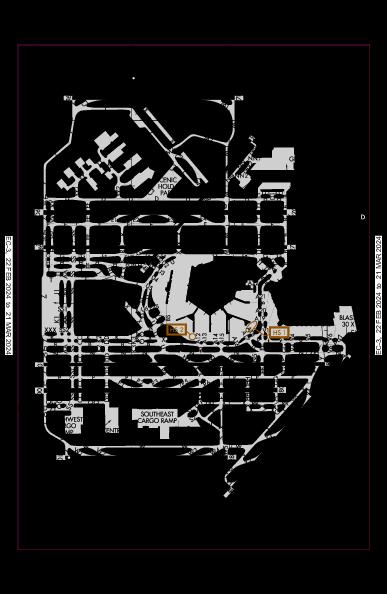
1: Airport Diagram (ORD)
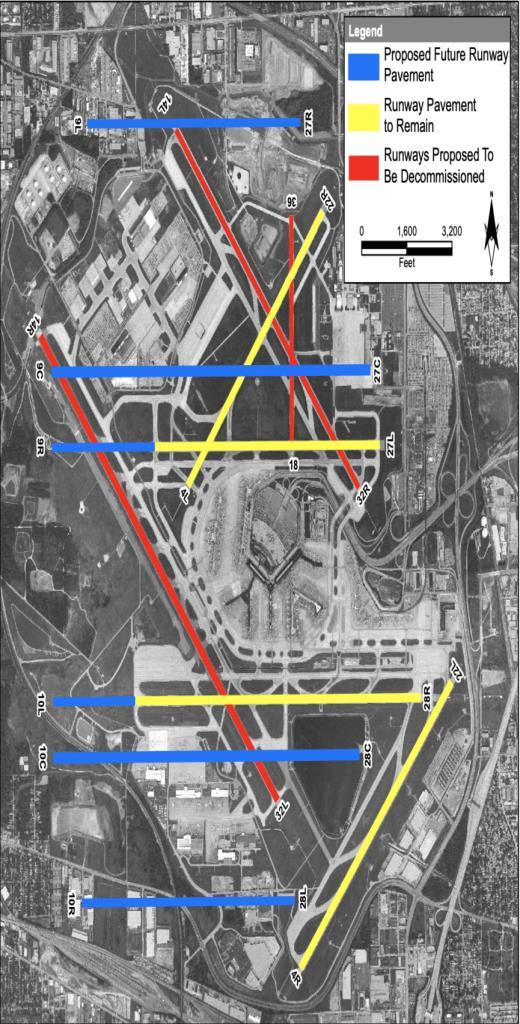

Figure 3: Referring Chp. 4.7, ATC using holographic computer. (AI Generated)
Acknowledgement:
I,RohitRajendraHendre,wouldliketoexpressmygratitude towardsmymentorandprofessor,Capt.AnantNerurkarSir, my professor, Grp. Cpt. Dilip Dani Sir, our Head of the Department,Technologydepartment,Dr.AdityaAbhyankar sir and Department of Technology, Savitribai Phule Pune University(SPPU)forsupportingthisproject.
© 2025, IRJET | Impact Factor value: 8.315 | ISO 9001:2008 Certified Journal | Page109
International Research Journal of Engineering and Technology (IRJET) e-ISSN: 2395-0056
BIOGRAPHIES:

RohitRajendraHendre
B.Tech.Aviation(8Th Sem)
DepartmentofTechnology, SavitribaiPhulePuneUniversity
Volume: 12 Issue: 08 | Aug 2025 www.irjet.net p-ISSN: 2395-0072 © 2025, IRJET | Impact Factor value: 8.315 |