
International Research Journal of Engineering and Technology (IRJET) e-ISSN:2395-0056
Volume: 12 Issue: 08 | Aug 2025 www.irjet.net p-ISSN:2395-0072
International Research Journal of Engineering and Technology (IRJET) e-ISSN:2395-0056
Volume: 12 Issue: 08 | Aug 2025 www.irjet.net p-ISSN:2395-0072
1,2,3UG Students, Department of Electrical Engineering, Shri Govindram Seksaria Institute of Technology & Science, Indore M.P.
4Assistant Professor, Department of Electrical Engineering, Shri Govindram Seksaria Institute of Technology & Science, Indore M.P
Abstract
Intoday’s era ofintelligent living, the integrationofsecurity, automation, and energy efficiency has transitioned from a luxury to an essential aspect of modern home design. This paper presents a comprehensive Smart Home Secure System that seamlessly combines multiple technologies to enhance both safety and sustainability within a household. The proposed system incorporates facial recognition for identity verification, Bluetooth-based door access control, automated lighting triggered by Passive Infrared (PIR) motion sensors, and real-time energy consumption monitoring through InternetofThings(IoT)-enabledsensors.
At the core of the system lies the Arduino Uno microcontroller, functioning as the central processing unit that orchestrates communication between various input and output components. It receives data from several sensors, including the HC-05 Bluetooth module, PIR motion sensor, and power monitoring sensors such as the ZMPT101B voltage sensor and ACS712 current sensor. These inputs allow the system to intelligently respond to user commands andenvironmentalconditions.
Foraccesscontrol,a12Vsolenoidlockisemployedtosecure the entrance. This lock is operated via a relay and can be unlocked through two distinct methods: either by facial recognition using an externally connected camera system or via Bluetooth commands issued from a user’s smart phone. The integration of these technologies not only enhances the security and convenience of home access but also ensures effective energy management by monitoring and responding tooccupancyandusagepatternsinreal-time.
Keywords: InternetofThings MachineLearning
IntheeraofadvancingautomationandtheInternetofThings (IoT), people want smarter home setups that are easy to use and flexible. Things like fingerprint locks, remote control, motion lights, and even tracking electricity usage are becoming verycommon. [1].In our project, whichwe named “SMART HOME SECURE,” we’re basically putting all that into one setup. We’ve used face recognition for ID, Bluetooth to openorclosethedoor,motionsensorsforswitchingonlights, and a smart energy meter that connects to the internet it’s meant to be low-cost and should work well in actual homes and in real world conditions.[2]. The system is mainly built around the Arduino Uno, which is the central controller and connects with different hardware parts. To detect whether someoneisnearby,aPIRmotionsensorhasbeenuseditonly triggers the face recognition when there's movement, which helps save power and reduces unnecessary processing and loadon microcontroller.[3]. Foraccesscontrol, wehave used the HC-05 Bluetooth module, allowing the door to be locked or unlocked through a smartphone. This makes entry easier and removes the need to carry keys. To know how much electricity is being used, we added two sensors: ZMPT101B for voltage and the ACS712 for current. The readings from theseareshownona16×2LCDscreenusinganI2Cinterface, which also helped us reduce the number of wires needed.[4].A 12V solenoid lock is used for securing the door physically. It’s operated through a 5V dual-channel relay, which keeps the high-voltage side (lock) separate from the low-voltage control system, improving safety. Altogether, these components work as a compact and integrated smart system for home automation and security. We’ve tried to makethesystemmoreefficientand reliablebyaddingthings like time-based checks, wireless control, and motiontriggered activation. These changes also help improve safety in daily use. The main aim was to fix common issues like the risk of unauthorized access, the need for manual operation, and high-power usage.[5]. This project shows is that it’s actuallypossibletobuildasmarthomesetupthat’saffordable
International Research Journal of Engineering and Technology (IRJET) e-ISSN:2395-0056
Volume: 12 Issue: 08 | Aug 2025 www.irjet.net p-ISSN:2395-0072
andusespartsthatareeasytofind.andthere’sroomtobuild on later things like cloud-based dashboards, fingerprint scanning, or even voice assistant support can be added in future versions. This makes the system flexible enough to be usednotjustinhomes,butalsoinofficesormaybeevensmall industries.[6].
Numerousinnovativeideashaveemergedinintelligenthome systems that integrate security, energy monitoring, and remote management. But most existing systems are either too costly or perform one function at a time. Some frequent approachesutilizedinrecentprojectsarementionedbelow:
2.1 Face Recognition Systems -Face recognition makes houses more secure. It employs a Raspberry Pi and open sources platform tools and software such as OpenCV to scan for faces and open the door when there is a match. These systems are less energy efficient as it consumes electricity as the camera and software are always powered on, even when nobody is in the house. Without motion sensing,thisresultsinunnecessarypowerwastage.[7].
2.2 Bluetooth-Based Door Control - Bluetooth modules suchastheHC-05modulearecommonlyutilizedinlockingor unlockingdoorsfromasmartphone.Thissimplifiesthingsfor users. But without additional security in the form of face or fingerprint identification, such systems are unsafe when the phoneorBluetoothlinkishackedorstolen.[8].
2.3 Automated Lighting Based on Motion - PIR (Passive Infrared) sensors are commonly implemented to automatically turn the lights on and off whenever someone enters or exits a room. Such a lighting system conserves electricity, particularly in offices or buildings where individualsfrequentlyenterandexit.However,mostofthese arrangements function autonomously and are not part of a completesmarthomesystem.[9].
2.4 IoT-Based Energy Metering - Smart meters employ sensors such as ZMPT101B (for voltage) and ACS712 (for current)tomonitorelectricityconsumptioninreal-time.
TheyarefrequentlyemployedwithArduinoorESP32boards and can push the data to the cloud so that users may view it anywhere.Butmostofthesesystemsareconstructedonlyfor monitoringanddonotcontainsecurityorautomaticcontrollikeswitchingoffdeviceswhennotinuse.[10].
2.5 Integrated Home Automation Platforms - There are several commercial platforms available that provide limited
integration of smart devices but at a high price and in a closed-source manner. Research projects that provide integrationenduphavingbadmodularity,poorscalability,or overlycompleximplementation.[11].
This section presents the design and implementation of the Smart Home Secure System, which integrates face recognition-based access control, Bluetooth-operated door unlocking, motion-activated lighting, and real-time energy monitoring coordinated under a centralized control frameworkusingamicrocontroller.
The system architecture is organized into five integrated modules:
1.FaceRecognition:Activatedonlywhenmotion is detected by the PIR sensor, conserving system resourcesandenergy.
2. Bluetooth Access Control: Wireless remote access is enabled by Bluetooth, allowing authorized smartphone commandsfordoLockingandunlocking.
3. Security Mechanism: A 12V solenoid lock isoperated through relay-based control logic to ensure secure access andelectricalisolation.
4.EnergyMonitoring:Real-timevoltageandcurrentdataare obtained using current and voltage sensors. Power consumptioniscalculatedandmonitoredlocally.
5. User Interface: A 16×2 LCD with I2Ccommunication displays real-time information such as lock status, motion detection,andpowermetrics.
The system is designed using an event-based system, enabling modular handling of individual subsystems. The functionallogicisasfollows:
a) Motion is detected by the PIR sensor, triggering the authenticationprocess.
b) Face recognition is done by external connected system (e.g.,RaspberryPiorPC).
c) Bluetooth commands like LOCK, UNLOCK, STATUS, are sentandcarriedoutbythesystem.
International Research Journal of Engineering and Technology (IRJET) e-ISSN:2395-0056
Volume: 12 Issue: 08 | Aug 2025 www.irjet.net p-ISSN:2395-0072
d) The system reads voltage, and current then calculate the powerbeingusedandshowsitlive.
e)Ifnofurtheractivityisdetected,thesystemautomatically lockitselfagainafterashortdelay.
f) To save energy when the system isn’t being used, features like dimming the LCD screen and putting Bluetooth into sleep modeareusedduringidletimes.
To ensure performance, reliability, and user satisfaction, the systemundergoesasystematicvalidationprocessincluding:
a) Functional Testing: Verification of face recognition operation, Bluetooth command execution, and motionactivatedlightingbehaviour.
b) Energy Monitoring check: The system measures voltage and current, calculates power, and shows it in real time. We comparethesevalueswithtrustedtoolstoensureaccuracy.
c) Security Testing: Simulation of unauthorized access attempts and tamper detection to evaluate the robustness of theaccesscontrolsystem.
d) Performance Evaluation: Measurement of operational latency, energy efficiency, and stability under typical and stressconditions.
3.4 Performance Evaluation
The system performance is evaluated using defined performance metrics that reflect accuracy, reliability, efficiency,anduserexperience.
3.4.1 Key System Performance Metrics
Table 1: Key System Performance
KEYMETRICS
Facerecognitionsuccessrate
3.4.2 Functional Performance Indicators
a)Authentication Accuracy:
1. Facerecognitionsuccessrate:>95%
2. Bluetoothcommandreliability:>99%
3. Motion detection sensitivity: Adjustable between 1–7 meters
b) Energy Monitoring Precision:
1.Voltagemeasurementaccuracy:±2%(fullscale)
2.Currentmeasurementaccuracy:±1.5%(fullscale)
3.Powercalculationerror:<3%underresistiveloads
3.4.3 System Reliability Metrics
a)Operational Reliability:
1. MeanTimeBetweenFailures(MTBF):>2000hours
2. Batterybackupduration:>24hourswith12V7Ahbattery
3. Operatingtemperature:−10°Cto+60°C
4. Humiditytolerance:20–85%RH(non-condensing)
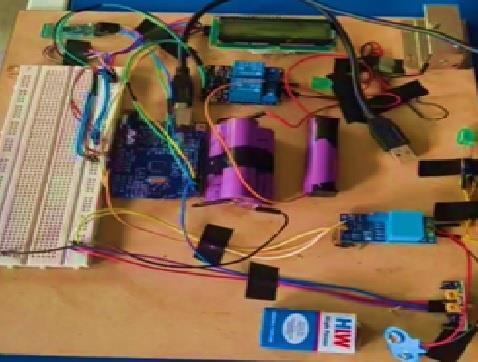
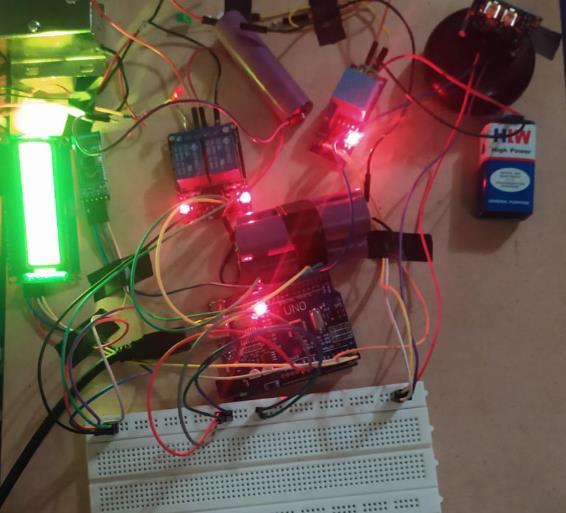
3.4.4 Hardware Connection
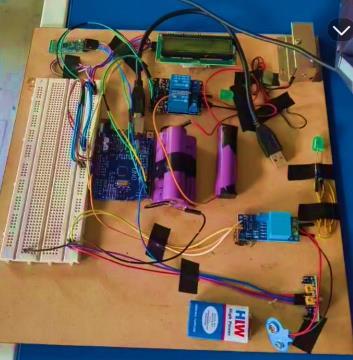
Figure 1: Hardware platfor
International Research Journal of Engineering and Technology (IRJET) e-ISSN:2395-0056
Volume: 12 Issue: 08 | Aug 2025 www.irjet.net p-ISSN:2395-0072
This section describes about how the Smart Home Secure system is built.It combines things like locking and unlocking doors, tracking energy use, and automating tasks using small electronic parts, all controlled by one main chip (called a microcontroller). The design is made to be simple to upgrade or change, low-cost, and reliable, so the system can do many things well without beingcomplicated. It’salso easyto install andgrowifyouwanttoaddmorefeatureslater
COMPONENT SPECIFICATIONS
12VSOLENOIDLOCK
5VRELAYMODULE
VOLTAGESENSOR
I2CMODULE
Operatingvoltage:12VDC
Triggervoltage:5VDC
Channel:1or2
Switchingvoltage:upto250VAC/30V DC
Model:ZMPT101B
Voltagerange:0–25VAC
Accuracy:±1%
Output:Analog
Interface:I2C/TWI, Reducespinusageto2(SCL,SDA)
CURRENTSENSOR Model:ACS712, Currentrange:±5A/±20A/±30A(based onmodel),
Output:Analog
ARDUINOUNO
Microcontroller:ATmega328P
OperatingVoltage:5VInputVoltage:7–12V
LCD Type:16*2, OperatingVoltage:4.7-5.3Vat1mA
Forwardvoltage:2-2.5V
BATTERYPACK Nominalvoltage:12V,Capacity: 1Ah, ChargingVoltage:13-14V, Dischargevoltage:105V,Cyclelife: 300-500cycles,
BLUETOOTH MODULE
Model:HC-05,Operating Voltage:3.3–5VDC, Communication:UART(Serial),Range: upto10meters
ArduinoUnoserveasthecentralcontrolunitoftheSmart Home Secure system. It communicates with all sensors and actuators interpreting input signals from the PIR sensor, voltage and current modules, and Bluetooth commands-and accordingly triggers relay outputs or LCD display. Its open-source platform, flexibility, and ease of interfacing make it suitable for real-time automation and homecontrolapplications.
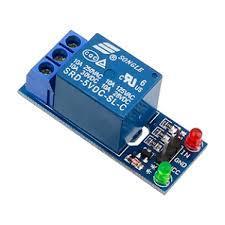
The 5V relay module function as a bridge between lowpower control logic (Arduino) and high-power components (like solenoid locks or lighting circuits). It safely allows the microcontroller to switch 220V appliances or devices using a 5V signal. This ensures controlledautomationofdoorlocksandlightingsystems.
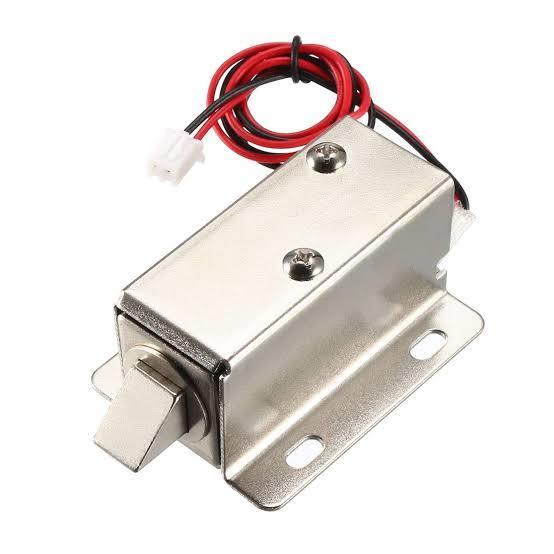
The solenoid lock provides electromechanical door locking. When the relay is triggered via Bluetooth or face recognition, it energizes the lock coil, pulling the plunger to open the door. It remains locked when not energized, enhancinghomesecurity.
International Research Journal of Engineering and Technology (IRJET) e-ISSN:2395-0056
Volume: 12 Issue: 08 | Aug 2025 www.irjet.net p-ISSN:2395-0072
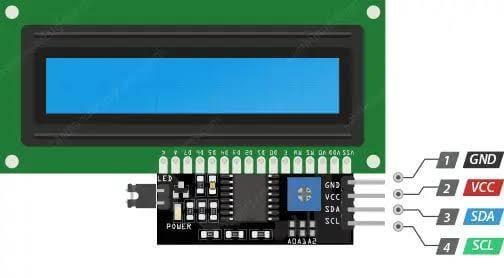
The16x2LCDisusedtodisplayreal-timeparameterssuch as current, voltage, and device status. By using the I2C module, only two pins (SDA, SCL) from the Arduino are required, saving digital I/O pins for other modules. It providesanefficientvisualinterfacefortheuser.
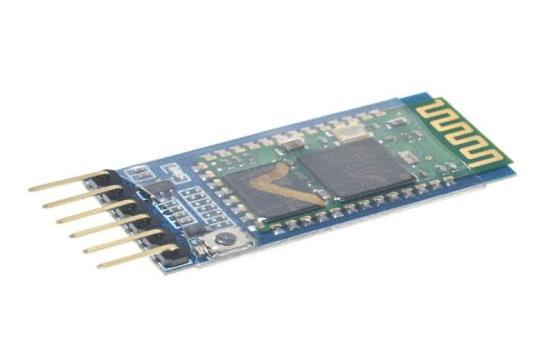
A Bluetooth module enables wireless communication between the user and the system for remote control and monitoring.Inthisproject,theHC-05Bluetoothmoduleis used due to its simple UART interface, compact size, and compatibility with Arduino. It allows users to send commands such as LOCK, UNLOCK, and STATUS from a smartphone, providing secure and convenient access control.
The module operates within a range of up to 10 meters, making it ideal for local control without internet dependency. It ensures seamless interaction between the hardwareandmobiledevices.
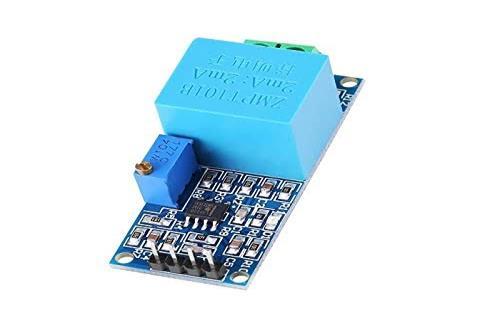
A voltage sensor is used to measure the AC mains voltage in real time to ensure safe and efficie ensorisusedforits high sensitivity, electrical isolation, and accurate analog output. It continuously monitors the voltage supplied to appliances and control modules, sending proportional analogsignalstotheArduinoforprocessing.
nt system operation. Inthisproject,theZMPT101Bvoltages
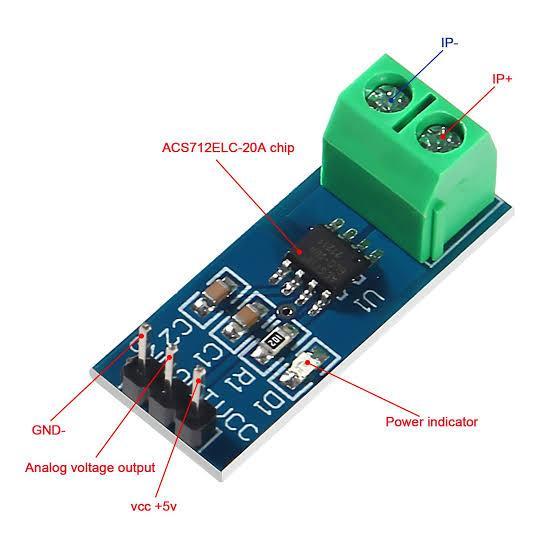
A current sensor, for measuring real-time electric current through connected devices, is provided. ACS712 sensor is selectedforthe project we areusingitduetoits accurate reading,compactsizeandsimplyinterfaceabilitywiththe micro-controller. Analog output of this sensor can be easilyreadbytheArduino.Thesensorallowsyoutoeasily measure the power consumption of your application in realtimesothatyoucanworkoutwhetheryourcircuitis running optimally and also what is consuming the power. it efficient for overcurrent and fault detection measurementtypes.
Although the current sensor is a unidirectional analog sensor, whose detection voltage is not a voltage, itcan be connectedtotheZMPT101Bvoltagesensortomeasurethe voltage,aswell improvestheaccuracyandadaptability of the system. In short, both applications of the two sensors will produce precise power calculation, real-time diagnostics, and optimal control of the home automation system.
International Research Journal of Engineering and Technology (IRJET) e-ISSN:2395-0056
Volume: 12 Issue: 08 | Aug 2025 www.irjet.net p-ISSN:2395-0072
The 12V battery pack used in the Smart Home Secure systemisbuiltusinglithium-ioncellsbecauseoftheirhigh energy density and compact size. These cells are rechargeable, making them ideal for providing backup power to essential components such as the solenoid lock andcontrolunits.
4.9 Hardware Implementation
5. Conclusions
This paper presents the Smart Home Secure System, a comprehensive home automation and security architecture that integrates intelligent access management, automated lightingcontrol,andreal-timepowerconsumptiontracking. We have discussed the complete methodology, including motion-triggered facial recognition, Bluetooth-based door unlocking, and embedded energy diagnostics. Every part of the system is designed to work smoothly under one main controller, making sure everything runs efficiently and respondsquickly.
We focused on keeping the cost low by using simple and widely available electronic components. This makes the system affordable and easy to use in regular homes.Even though it doesn’t need expensive hardware or cloud services, it still works reliably and gives users full control. Thissetupcanalsobeusedinhomes,smartoffices,energysaving workplaces, and other places where automation is useful.
International Research Journal of Engineering and Technology (IRJET) e-ISSN:2395-0056
Volume: 12 Issue: 08 | Aug 2025 www.irjet.net p-ISSN:2395-0072
With future upgrades-like adding a mobile app or cloud features-the Smart Home Secure System could become a flexible,expandablesolutionforsmartliving.
The current smart home prototype works well but has room for improvement in scalability, real-world performance, and broader use. Future upgrades should include cloud-based control for remote monitoring of energy use, access, and motion data. Adding multi-factor authentication (e.g., fingerprint, RFID) would boost security. Voice assistant integration (e.g., Alexa, Google Home) could enhance convenienceandcontrol.
Replacing wired modules with wireless (Wi-Fi or bus modules) would improve scalability and ease of installation. AI-drivenautomationcouldoptimizeenergyuseandadaptto userhabits.Lastly,emergencybackupslikebatteries,manual overrides, and fail-safes are essential for reliability during outages or failures. These upgrades would make the system morerobust,secure,andpracticalforlong-termuse.
References
1) R. Kumar and M. Singh,“Home Automation System Using Arduino and Bluetooth,”International Journal of Scientific & EngineeringResearch,vol.8,no.6,pp.145-149,June2017.
2)A.SharmaandN.Gupta,“DesignandImplementationof aPIRSensor-BasedSecuritySystem,”InternationalJournal of Computer Applications, vol. 179, no. 29, pp. 1821,February2018.
3) S. Srivastava, “IoT-Based Smart Energy Meter Monitoring with Arduino,” InternationalJournal of Engineering Research & Technology (IJERT), vol. 9, no. 5, May2020.
4) A. Mishra and P. Yadav, “Bluetooth Based Smart Home AutomationSystemUsingAndroidandArduino”Journalof Emerging Technologies and Innovative Research, vol. 6,no.5,pp.312-316,2019.
5) D. Singh, “Power Monitoring System Using IoT,”International Research Journal ofEngineering and Technology(IRJET),vol.7,no.6,pp.1631-1635,2020.
6) Datasheet - ZMPT101B Voltage Sensor Module: https://components101.com
7)Arduino Uno Product Page: https://www.arduino.cc/en/Main/ArduinoBoardUno
8) Datasheet - ACS712 Current Sensor. [Online]: https://www.allegromicro.com
9) "The official Bluetooth website." [Online]. Available: https://www.bluetooth.com
10) Datasheet - HC-05 Bluetooth Module: https://www.electronicwings.com
11) Arduino, "The official open-source platform for Arduino IDE." [Online]. Available: https://www.arduino.cc/en/software
12) Labcenter Electronics, "Proteus software simulator for hardware implementation." [Online]. Available: https://www.labcenter.com/downloads/
13) PIR Motion Sensor (HC-SR501) Guide: https://randomnerdtutorials.com/pir-motion-sensorarduino tutorial.