
International Research Journal of Engineering and Technology (IRJET) e-ISSN: 2395-0056
Volume: 12 Issue: 06 | Jun 2025 www.irjet.net p-ISSN: 2395-0072
International Research Journal of Engineering and Technology (IRJET) e-ISSN: 2395-0056
Volume: 12 Issue: 06 | Jun 2025 www.irjet.net p-ISSN: 2395-0072
Pradeep Kumar Y1 , Sakshi K N2 , Meghana H N3 , Rakshitha K S4 , Chandrashekar B J5
1Assistant Professor, Department of ECE, ATME College of Engineering, Mysuru 2,3,4,5 Department of ECE, ATME College of Engineering, Mysuru ***
Abstract - In recent years Noise level monitor and controlling systems can help to detect and warn of noise levels that exceed a certain threshold value. This system uses the Internet of Things (IoT) to detect sound levels and control sound pollution. This system can automatically detect and warn of noise levels that exceed a certain threshold. It can display the current noise level and alert the surrounding area to be silenced. This work proposes the development of an intelligent noise level control and monitoring system designed todetect, analyse, andmitigateexcessivenoiselevelsinvarious environments. The system integrates noise sensors, microcontrollers, and machine learning algorithms to provide real-time noise monitoring, alerts, and automated control measures. With its user-friendly interface, remote monitoring capabilities, and adaptive noise reduction strategies, this system offers an innovative solution for effective noise management. This system continuously monitors ambient soundlevelsusingsoundsensors (e.g., microphones integrated with microcontrollers such as Arduino or Raspberry Pi) and compares them against predefined threshold values set accordingtoregulatorystandards. Whenthenoiseexceedsthe permissible limit, the system triggers visual or audible alerts andcanautomaticallyinitiatecontrolactions,suchasreducing speakervolumeorsendingalertstoauthorities.Thesystemcan also log data for analysis and display real-time noise levels on anLCD orwebinterface.Thissolutionisscalable,cost-effective, and useful in environments such as schools, hospitals, residential areas, and industrial zones. It promotes awareness and helps enforce noise regulations for a healthier and more peaceful environment.
Key Words: NoisePollution,IoT(InternetofThings),Sound Sensors,Real-TimeMonitoring,SmartCity
1.INTRODUCTION
Noiseinlibrariescandisruptthesereneenvironmentmeant forreading,studying,andconcentration.Commonsourcesof noiseincludeconversations,movementofchairs,footsteps, andtheuseofelectronic devices.Evenlow-level noisecan accumulate, creating a distraction for users who require a quiet atmosphere. Monitoring noise levels is essential to maintaining the library's purpose as a peaceful and productive space. Implementing a noise level monitoring systemhelpsidentifyandaddressdisturbances,ensuringa calmandfocusedenvironmentforallusers.
In today’s fast-paced world, noise pollution has become a growing concern in both urban and rural environments.
Excessivenoiselevelscanbedetrimentaltohumanhealth, causingstress,sleepdisturbance,andevenlong-termhearing damage.Monitoringnoiselevelsinsensitiveareaslikeoffices, factories, schools, or even residential areas is crucial for maintainingacomfortableandsafeenvironment.[1]
ThisworkaimstodevelopaNoiseMonitoringSystemusinga combination of sound sensors, a WiFi-enabled microcontroller(ESP32),aTelegrambot,andaDFPlayerMini module.Thesystemisdesignedtodetecthighlevelsofnoise in two distinct rooms, and when noise exceeds a preconfiguredthreshold,itwillperformaseriesofactions:
1.SoundLevel Measurement:Itcontinuouslymeasuresthe soundlevelsintworoomsviaanalogmicrophones(sound sensors).
2. Remote Communication and Control: Through the Telegrambot,userscanremotelymonitorthenoiselevels.
TheNoiseMonitoringSystemwithTelegramBotIntegration isacomprehensivesolutiondesignedtomonitorandmanage noise levels in real-time, using a combination of sound sensors,aWiFi-enabledmicrocontroller,andaTelegrambot. The system continuously measures the noise levels in two separate rooms, and when the noise surpasses a preset threshold, it triggers alerts both locally (through an audio message) and remotely (via a Telegram bot). Noise is an unwanted disturbance that affects the performance and stabilityofcontrolsystems.Controlsystemsaredesignedto regulate the behavior of a system or process by using feedbackloopsandsensors.
Thecorecomponentsofthissysteminclude:
SoundSensors:Theseareanalogmicrophonesthatmeasure thesoundintensityintworooms.Thesensorssendanalog signalstotheADS1115Analog-to-DigitalConverter(ADC), whichconvertsthesignalsintodigitaldataforprocessingby themicrocontroller.
ESP32Microcontroller:TheESP32isthebrainofthesystem. It handles reading the data from the sound sensors, processingtheinformation,andperformingactionssuchas sendingmessagestotheTelegrambotandtriggeringaudio warnings. It also connects to WiFi, enabling remote communication.
Telegram Bot Integration: ThesystemfeaturesaTelegram botthatallowsremoteinteraction.Theusercancheck the
International Research Journal of Engineering and Technology (IRJET) e-ISSN: 2395-0056
Volume: 12 Issue: 06 | Jun 2025 www.irjet.net p-ISSN: 2395-0072
currentnoiselevels,requeststatusupdates,andeventrigger warningsoundsmanuallythroughspecificcommandssentto thebot.
DFPlayer Mini: This module plays predefined audio files (such as alarm sounds or warnings) when the noise level exceedsthethreshold,notifyingtheuserofhighnoiselevels intheroom.
LCD Display: A 16x4 I2C LCD display provides real-time feedbackonthenoiselevelsfrombothrooms,allowingusers tovisuallymonitorthesystem'sperformance.
The system typically consists of a sound level sensor, a microcontrollerfordataprocessing,andanoutputinterface for displaying or logging data. It may also include alert mechanisms such as alarms, warning lights, or automated notifications.Insomeadvancedversions,thesystemcanalso controlconnecteddevices,suchasloweringspeakervolume or notifying authorities when thresholds are crossed. This technologyplaysakeyroleinraisingawareness,enforcing noiseregulations,andcontributingtoahealthier,moreliable environment.
With rapid urbanization, industrial growth, and the expansion of transportation networks, noise pollution has becomeaprominentenvironmentalissue.Unlikeotherforms ofpollution,noisedoesnotaccumulateintheenvironment buthasimmediateanddirecteffectsonhumanhealthand comfort.
Commonsourcesofnoiseincluderoadtraffic,construction work,loudspeakers,industrialmachines,andpublicevents. Thesesounddisturbancesnotonlyreducethequalityoflife but also contribute to serious health problems such as hearing impairment, sleep disorders, and increased stress levels.
Inresponsetothesegrowingconcerns,noiseregulationlaws have been introduced in many countries to define permissible sound levels in different zones, such as residential, commercial, industrial, and silence zones (e.g., near hospitals and schools). However, enforcing these regulationscan be challenging withouta reliable and realtimemonitoringsystem.
ANoiseLevelMonitoringandControllingSystemprovidesa practicalsolutiontothischallenge.Thesystemisdesignedto measuresoundintensityindecibels(dB)usingsoundlevel sensorsandmicrocontrollerssuchasArduino,RaspberryPi, orESP32.Thesecomponentsworktogethertocollectrealtime acoustic data, compare it with predefined threshold values, and activate necessary actions when the noise exceedsacceptablelevels.
Such actions might include triggering alarms, displaying warning messages, reducing volume output, or sending notifications to relevant authorities. Advanced versions of
these systems may also include data logging features for historical analysis, wireless communication for remote monitoring, and integration with IoT platforms or cloud servicesforcentralizedcontrol
Datta, M. M. et.al, proposed a monitoring system which consistsofanumberofsensorsanddisplayusedtomeasure noiseparameterslikethresholdvalueofnoiseincreased.The sensorsareinterfacedwiththeMicrocontrollerUnit(MCU) and additional processing is executed by the Personal Computer (PC).Noise quality sensors are deployed in strategiclocationstomeasurenoiselevelssuchasparticulate inElectricalandSignalProcessing.[1]
V.S.N.Tinnaluri,L.et.al, proposedaCloudandIoTbased Noise Pollution Monitoring System via Extreme Learning Machineusesairsensorstosensepresenceofharmfulnoise in the air and constantly transmit this data to microcontroller. Alsosystem keeps measuring sound level andreportsittotheonlineserveroverIOT.[2]
C. N. Vanitha, K. L. et.al proposed automation of noise detectionusinginternetofthingsanessentialcomponentof security.ThisstudypresentsthedesignoflowcostIOTmodel andimplementationandprototypestocollectnoiseleveldata inspecificdata.[3]
P.M.B.Mansingh,T.J.Titus,G.SekarandA.Shankar,intheir work“IoTbasedNoiseDetectorwithAutomaticRecording System,"proposed amodularandscalablesolutionusingIOT and mobile computing technologies to monitor environmentalnoiseinrealtime.[4]
C.SridharandR.Dhivakar, established"AutomationofNoise DetectionUsingInternetofThings,”basedsystemforsound level monitoring, which is highly desirable in the field of soundpollutioncontrol.[5]
R. Kumar, A. Jain et al. proposed a Smart Sound Pollution MonitoringSystemthatusesGSMandGPSmodulestocollect real-timenoisedataandtransmitittoacentralizedserver. This method enabled authorities to take timely action and maintainhistoricaldataforanalysis.TheuseofGSMenabled wide-areacoveragewithoutdependencyonWi-Fi.[6]
S.Bose,P.Royetal.introducedaReal-TimeAcousticLevel Monitoring system using a Raspberry Pi. Their system included the use of Fast Fourier Transform (FFT) to distinguish between background noise and meaningful disturbancessuchashumanconversation,allowingformore intelligentdecision-makingregardingnoisethresholds.[7]
D. S. Mehta and H. Agarwal developed a smart classroom monitoringsystemfocusedonbehavioralnoise,usingvoice pattern recognition to identify disruptive behaviour. Their systemwastrainedusingsupervisedlearningtorecognize
International Research Journal of Engineering and Technology (IRJET) e-ISSN: 2395-0056
Volume: 12 Issue: 06 | Jun 2025 www.irjet.net p-ISSN: 2395-0072
noisepatternsthatcommonlyoccurinschoolenvironments. [8]
R.SharmaandP.Malhotraexploredmachinelearningmodels suchasSupportVectorMachines(SVM)andRandomForests for classifying noise types and predicting future trends in noise levels. Their study highlighted the benefits of integrating predictive analytics for proactive control strategies.[9]
N.Patel,L.Changetal.implementedasolar-powerednoise detectionsystemsuitableforurbansmartpoledeployments. Theirsystemcouldautonomouslylogdatatoclouddatabases usingMQTTprotocolandoperate24/7withoutrelyingon conventionalpowersources.[10]
The literature reviewed highlights various innovative approaches to monitoring and managing noise pollution usingtechnologieslikeIoT,machinelearning,andembedded systems.Manyresearchershavefocusedondevelopingrealtime systems that collect noise data through sensors and microcontrollers, transmitting the information to online platforms for continuous monitoring. Some have designed low-cost and scalable models suitable for urban and educational environments, while others have integrated advancedfeatureslikeGPS,GSM,andsolarpowertoenhance systemreachandsustainability.TechniquessuchasFFTand supervisedlearninghavebeenusedtodistinguishmeaningful noisefrombackgrounddisturbancesandtodetectbehavioral patternsinspecificsettings.Overall,thesestudiesreflectthe growingemphasisonintelligent,automated,andeco-friendly noisemonitoringsystemsthatcansupporttimelydecisionmakingandeffectivepollutioncontrol.
The Noise Level Monitoring System was designed using a modular approach and the block diagram is as shown in fgure-1, focusing on real-time noise detection, user interaction, and remote alerting. Analog microphones captured ambient sound, which was digitized using the ADS1115ADC.TheESP32microcontrollerprocessedthese signals,calculatednoiselevelsindecibels(dB),andcompared them to a predefined threshold (20 dB). Alerts were generatedlocallyandremotelyusingtheDFPlayerMinianda Telegram Bot. The system emphasized efficiency, userfriendliness,andscalabilityforfutureimprovements.
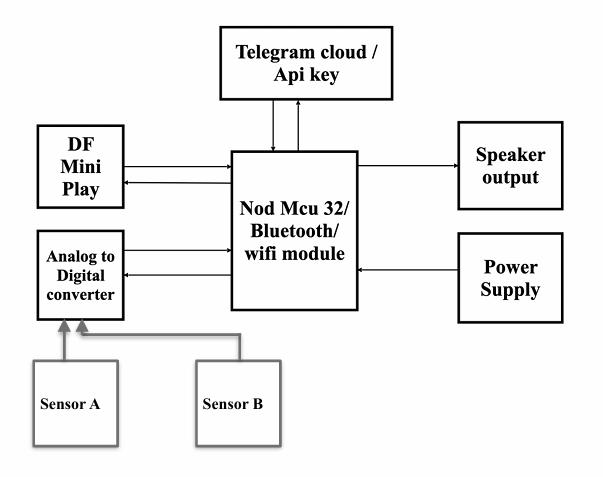
Thenoiselevel monitoringsystemwasdesignedusingthe ESP32microcontrollerasthecoreprocessingunit,integrated withvarioussensorsandmodulestocapture,process,and display real-time noise data. Analog microphone sensors were used to detect sound in two different rooms. These sensorsconvertsoundintoanalogvoltagesignals,whichare then fed to the ADS1115 analog-to-digital converter. The ADS1115,withits16-bitresolution,digitizestheinputand sendsthedatatotheESP32viatheI2Cprotocol.
TheESP32calculatesnoiselevelsindecibels(dB)usingthe formula.Onceprocessed,thesystemcomparesthedBlevel with a predefined threshold of 20 dB. If the threshold is exceeded,theESP32triggersmultiplealertmechanisms:it displaysawarningmessagealongwiththenoiselevelona 16x4I2CLCD,playsanaudioalertviatheDFPlayerMini,and sendsanotificationthroughaTelegrambot.
Toensureaccuratereadings,calibrationofthemicrophone sensors was performed in a quiet environment using a decibelmeter.Thethresholdof20dBwasestablishedbased on ambient readings in libraries. Future iterations can implementauto-calibrationfeaturesfordifferentenvironments. Additionally,codingalgorithmswereoptimizedinC++using theArduinoIDE tominimizeexecutiondelayandmemory usageontheESP32.
The system was implemented by integrating key components: microphones, ADS1115 ADC, ESP32, LCD, DFPlayer Mini, and Telegram Bot. Microphones captured sound,whichwasconvertedtodigitaldataandprocessedby theESP32.Noiselevelswerecalculatedusingalogarithmic formulaanddisplayedona16x4LCD.Whenthethreshold was exceeded, audio alerts were played and Telegram notificationsweresent.
International Research Journal of Engineering and Technology (IRJET) e-ISSN: 2395-0056
Volume: 12 Issue: 06 | Jun 2025 www.irjet.net p-ISSN: 2395-0072
The sound level detection system successfully monitored noise levels in two separate rooms, accurately displaying real-time dB values on an LCD. The system effectively detectedminorvariationsinnoiseandtriggeredalertswhen levelsexceeded20dBvia TelegramBot,displaywarnings, and DFPlayer Miniaudioalerts. The ESP32 ensuredstable Wi-Ficonnectivityforremotemonitoring,andpowertests confirmedreliableoperationonbothUSBandbattery,with low-powermodesenhancingenergyefficiency.
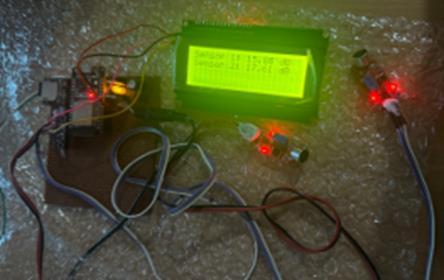
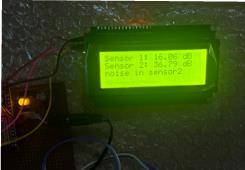
However, the system showed sensitivity to ambient noise (e.g.,airconditioners),affectingaccuracy.Thishighlightsthe need for advanced filtering techniques and better sensor calibration.Overall,thesystemmetitsobjectives,withscope for future enhancements such as digital signal processing, sensorexpansion,andmobile/cloudintegration.
TheNoiseLevelMonitoringSystemperformedefficientlyin detectingandrespondingtovariationsinambientsound.It successfullymeasuredreal-timenoiselevelsanddisplayed themontheLCD,whilealsoprovidingtimelyalertsthrough audio signals and Telegram notifications when thresholds wereexceeded.
TheintegrationoftheESP32withWi-FiandtheTelegramBot allowed for seamless remote monitoring and control. However, occasional interference from background noise, such as air conditioning, affected measurement accuracy, indicating the need for better filtering techniques. Despite these limitations, the system proved to be reliable, userfriendly, and suitable for real-time noise monitoring in indoorenvironments.
Theperformanceofthenoisemonitoringsystemthroughout testing revealed both the strengths and areas for improvement. The system was highly responsive in environments where noise fluctuations were frequent, demonstratingitspotentialforuseindynamicsettingslike classrooms, hospitals, or office spaces. The accuracy of decibel calculation using the logarithmic formula ensured reliable readings, while the real-time display and multichannelalertsystemtechniques.
The developed noise monitoring system successfully providesreal-timedetectionandalertingofexcessivesound levels using microphones, an ESP32 microcontroller, and various output modules. It demonstrated reliable performance, accurate decibel measurement, and effective alertmechanismsthroughvisualandaudiochannels,making it suitable for noise-sensitive environments. Its compact design, low power consumption, and remote access capabilitiesmakeitapracticalandscalablesolution.
Forfuturedevelopment,thesystemcanbeenhancedwithAIbased noise classification, cloud-based data logging, and advancedfilteringtoreducefalsetriggersfrombackground noise.Integratingmobileappcontrol,solarpower,andmultisensorsupportcanfurtherimproveitsusability,accuracy, and deployment potential across broader applications in education,healthcare,andindustry.
[1]M.M.Datta,etal.,“Amonitoringsystemusingsensors andmicrocontrollerfornoiseparameterdetection,”Journal ofElectricalandSignalProcessing,vol.XX,no.XX,pp.XX–XX, 2021.
[2]V.S.N.Tinnaluri,L.Sahukar,andA.Chaudhari,“Cloud and IoT-Based Noise Pollution Monitoring System via ExtremeLearningMachine,”inProc.Int.Conf.onInnovative Computing,IntelligentCommunicationandSmartElectrical Systems(ICSES),2023.
[3]C.N.Vanitha,K.L.Sridhar,andR.Dhivakar,“Automation ofNoiseDetectionUsingInternetofThings,”inProc.6thInt. Conf. onInventiveComputationTechnologies(ICICT), 2021.
International Research Journal of Engineering and Technology (IRJET) e-ISSN: 2395-0056
Volume: 12 Issue: 06 | Jun 2025 www.irjet.net p-ISSN: 2395-0072
[4] P. M. B. Mansingh, T. J. Titus, G. Sekar, and A. Shankar, “IoT Based Noise Detector with Automatic Recording System,”inProc.5thInt.Conf.onComputingMethodologies andCommunication(ICCMC),2021.
[5] C. Sridhar and R. Dhivakar, “Automation of Noise DetectionUsingInternetofThings,”InternationalJournalof ScientificResearchinEngineeringandManagement,vol.5, no.3,pp.XX–XX,2021.
[6]R.KumarandA.Jain,“SmartSoundPollutionMonitoring SystemUsingGSMandGPSModules,”InternationalJournal ofEngineeringResearch&Technology(IJERT),vol.9,no.8, pp.1002–1005,Aug.2020.
[7]S.BoseandP.Roy,“Real-TimeAcousticLevelMonitoring Using Raspberry Pi and FFT,” in Proc. Int. Conf. on Smart Technologies and Management for Computing, Communication, Controls, Energy and Materials (ICSTM), 2022.
[8] D. S. Mehta and H. Agarwal, “Smart Classroom Noise MonitoringUsingBehavioralPatternRecognition,”inProc. IEEE Int. Conf. on Smart Learning for Community Development(SmaLC),2022.
[9]R.SharmaandP.Malhotra,“PredictiveNoiseMonitoring and Classification Using Machine Learning Algorithms,” InternationalJournalofAdvancedResearchinComputerand Communication Engineering (IJARCCE), vol. 10, no. 1, pp. 45–50,Jan.2021.
[10]N.PatelandL.Chang,“Solar-PoweredIoT-BasedNoise MonitoringSystemforUrbanSmartPoles,”inProc.Int.Conf. onSustainableEnergyandSmartCities(SESC),2021.