
International Research Journal of Engineering and Technology (IRJET) e-ISSN:2395-0056
Volume: 11 Issue: 09 | Sep 2024 www.irjet.net p-ISSN:2395-0072

International Research Journal of Engineering and Technology (IRJET) e-ISSN:2395-0056
Volume: 11 Issue: 09 | Sep 2024 www.irjet.net p-ISSN:2395-0072
1Sanjay Thangamalar,2Santhosh Anbalagan,3A C Mariappan,4G Peter pakiyaraj
1Final year B.E Marine Cadet, Department Of Marine Engineering, PSNCET , Tirunelveli , Tamilnadu
2Final year B.E Marine Cadet, , Department Of Marine Engineering, PSNCET, Tirunelveli ,Tamilnadu
3Assistant Professor, Deptment Of Marine Engineering, PSNCET, Tirunelveli ,Tamilnadu
4Assistant Professor, Department Of Marine Engineering, PSNCET, Tirunelveli ,Tamilnadu
ABSTRACT:
Boiler water treatment uses chemicals to condition and treat boiler feed water. Some common chemicals used in boiler water treatment include:
Oxygen scavengers: Remove dissolved oxygen from boiler water to prevent corrosion.
Alkalinity builders: Raise the pH of boiler water to protect the boiler from corrosion and scale buildup.
Scale inhibitors: Prevent scale from forming on the inside of the boiler by coating the metal surfaces.
Corrosion inhibitors: Protect the boiler from corrosion.
Phosphates-dispersants: Neutralize the hardness of water by forming tri calcium phosphate.
Natural and synthetic dispersants: Increase the dispersive properties of the conditioning products.
Sequestering agents: Act as inhibitors and implement a threshold effect
Keywords:ACCDM,WSB,ML,RTM
1.INTROTUCTION:
ScaleformationusingAItechnologyinvolves:
1.1 Data Collection: Gathering data on boiler operating conditions, water quality, and performance metrics.
1.2 Machine Learning (ML) Model Development: Machine learning in boilers refers to the application of advanced data analysis and modeling techniques to predict, detect, and optimize boiler operations.
1.3 Pattern Recognition: Pattern recognition in boilers involves using algorithms to identify and interpret meaningful patterns in data generated by various sensors andmonitoringsystems.
1.4 Predictive Analytics: Predicting when a boiler component is likely to Fail, allowing for proactive maintenance.
1.5 Real-time Monitoring: Real-time monitoring on boilersinvolvescontinuouslytrackingandanalyzingdata from various sensors and systems to ensure safe, efficient,andreliableoperation.
1.6 Optimization: achieve maximum efficiency, reliability, and safety while minimizing energy consumption,emissions,andmaintenancecosts.
2. AI technologies used:
2.1 Neural Networks: A neural network on a boiler is a machine learning model that uses artificial neural networks to predict, monitor, and optimize boiler performance.
2.2 Decision Trees: Decision Trees on a boiler are a machinelearning model thatusesa tree-likestructure to predict, classify, or optimize boiler performance.
2.3 Clustering: Clustering on a boiler is a machine learning technique that groups similar data points or operatingconditionsintoclusters
Regression Analysis: For predicting scale formation and boilerperformance.
2.4 Benefits:
1.ImprovedBoilerEfficiency
2.ReducedMaintenanceCosts
3.ExtendedEquipmentLife
4.EnhancedSafety
By leveraging AI technology, boiler operators can proactively address chemical scale formation, ensuring optimalperformanceandminimizingdowntime.
International Research Journal of Engineering and Technology (IRJET) e-ISSN:2395-0056
Volume: 11 Issue: 09 | Sep 2024 www.irjet.net
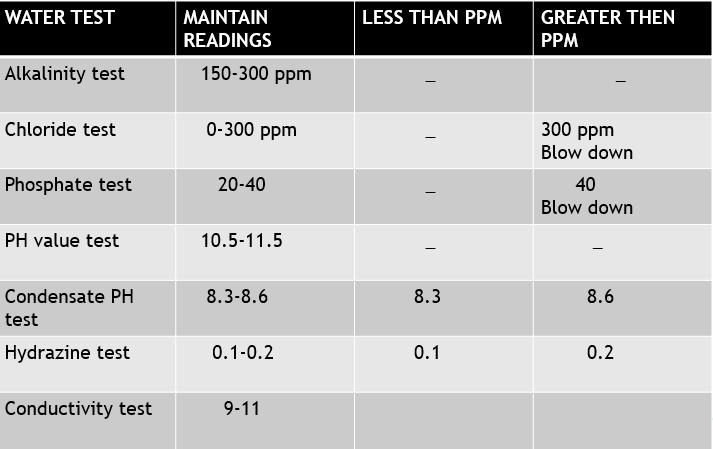
3.Chemical test for boiler water:
4. Different types of sensors used on boiler:
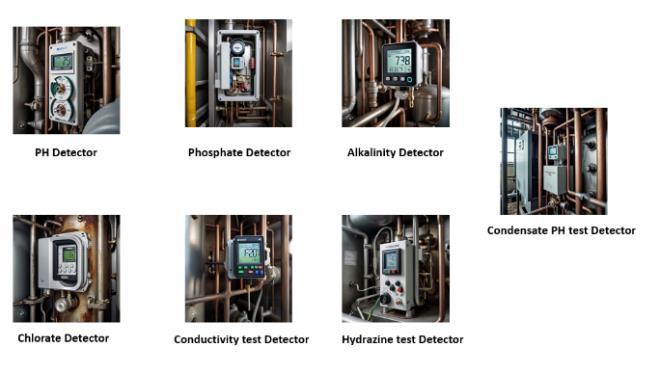
Figure-1 types of sensor Thesearethevarioussensorsusedonboiler.
4.1PH Detector:
A pH detector on a ship's boiler measures the acidity or alkalinity of the water, ensuring it remains within a safe rangetopreventcorrosion.
4.2Alkalinity detector:
The alkalinity detector measures the concentration of alkaline substances (such as hydroxide, carbonate, and bicarbonate ions) in the boiler water. This ensures the waterremainswithinasafeph.
4.3 Phosphate Detector:
A phosphate detector on a ship's boiler measures the concentration of phosphate ions in the boiler water.
4.4Chlorate Detector:
A chlorate detector on a ship's boiler measures the concentration of chlorate ions in the boiler water.
4.5Conductivity test Detector:
p-ISSN:2395-0072
Aconductivitytestdetectoronashipmeasurestheability of the boiler water to conduct electricity, indicating the presenceofdissolvedsolidsandcontaminants.
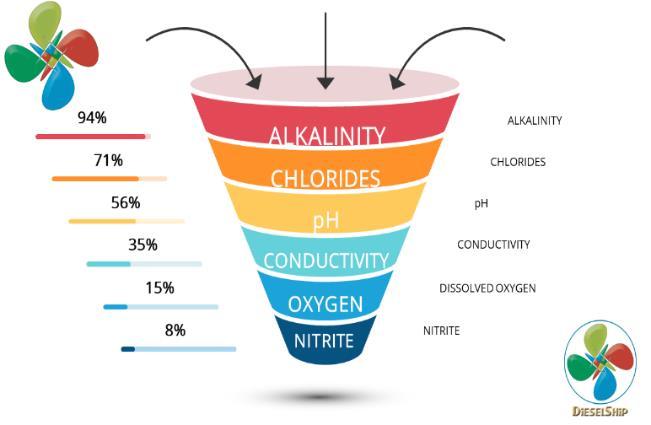
Figure-2: Chemical Level
5. AUTOMATED CHEMICAL CONTEND DETECTING MACHINE:
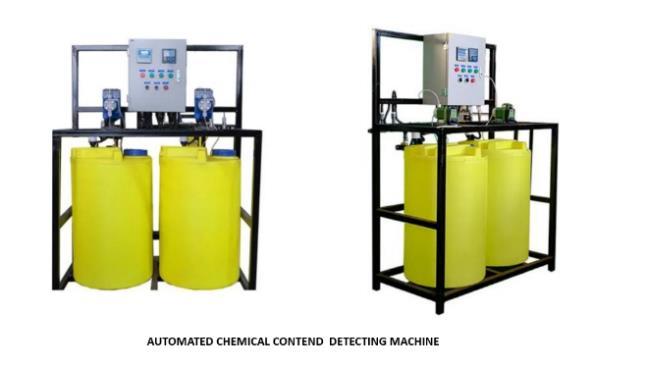
Figure: Automated chemical content
Chemical Content Detecting Machine (CCDM) is an automated system that continuously monitors and controlsthechemicalcontentinaboiler'swater,ensuring optimallevelsforefficientandsafeoperation.
5.1Usage:
Water sampling: CCDM takes a continuous water sample from the boiler.
Chemical analysis: The system analyzes the sample for various chemical parameters like pH, conductivity,alkalinity,andoxygenlevels.
Comparison with set points: CCDM compares the analyzedvalueswithpre-setlimits.
International Research Journal of Engineering and Technology (IRJET) e-ISSN:2395-0056
Volume: 11 Issue: 09 | Sep 2024 www.irjet.net
Alarm and correction: Ifvaluesexceedlimits,CCDM triggers an alarm and automatically adjustschemical dosingtorestoreoptimallevels.
Data logging and reporting: CCDM records and reports data for maintenance, troubleshooting, and compliance.
5.2Benefit:
Real-time monitoring: Continuous monitoring ensurespromptresponsetochanges.
Accurate control: Automateddosingensuresprecise chemicallevels.
Reduced manual errors: Minimizes human error in samplingandanalysis.
Improved efficiency: Optimized chemical levels enhanceboilerperformance.
Compliance: Meets regulatory requirements and industrystandards.
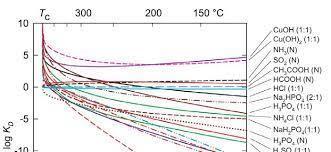
5.3 Commonly detected chemicals:
PH
Conductivity
Alkalinity
Oxygenlevels
Hydrazine
Phosphate
Chloride
Sulfite
CCDM ensures reliable and efficient boiler operation, reducingdowntime,andmaintenancecosts
6. Water softening in boiler:
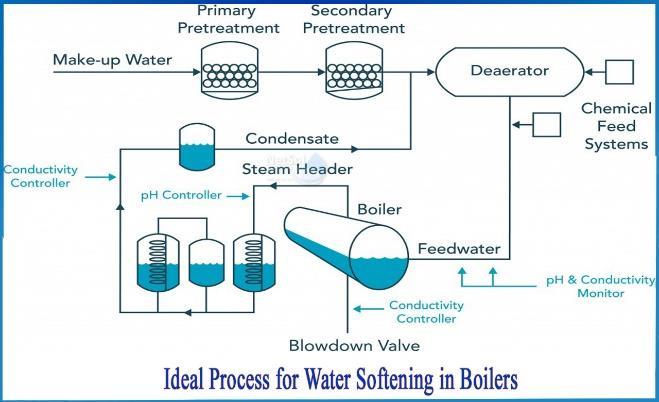
Ideal process for water softening in boilers
Pre-treatment:Removesuspendedsolids,sediment, and other impurities from the feed water using physicalmethodslikefiltrationorsedimentation.
Softening: Use ion exchange resins to remove calcium and magnesium ions, replacing them with sodiumorpotassiumions.
Re-mineralization: Add back beneficial minerals to the water to maintain a stable pH and prevent corrosion.
PH adjustment: Adjust the pH to the optimal range (usually8.5-9.5)topreventcorrosionandscaling.
Monitoring: Continuously monitor water quality, includinghardness,pH,andconductivity.
Regeneration: Periodically regenerate the ion exchangeresinstomaintaintheireffectiveness.
Blow down: Regularly blow down the boiler to removeaccumulatedimpuritiesandmaintain water quality.
Chemical treatment: Add chemicals as needed to preventscaling,corrosion,andfoaming.
Water testing: Regularlytestthewatertoensureit meetstherequiredstandards.
Maintenance: Regularly maintain and inspect the water softening equipment to ensure optimal performance.
By following this process, you can ensure effective water softening, preventing scaling and corrosion, andmaintainingefficientboileroperation.
International Research Journal of Engineering and Technology (IRJET) e-ISSN:2395-0056
Volume: 11 Issue: 09 | Sep 2024 www.irjet.net p-ISSN:2395-0072
7. Conclusion:
In conclusion, the use of AI technology in analyzing boiler performance and preventing chemical scale formationoffersnumerousbenefits,including:
Predictivemaintenanceandreal-timemonitoring.
Optimized chemical treatment and automated control.
Improvedefficiencyandreducedmaintenance.
Extended equipment life and cost savings.
Data-driveninsightsforinformeddecision-making.


ProjectGuidecumAssistant Professor
PSN College ofEngineering &Technology, Tirunelveli, Tamil Nadu. Also having 15 years’ experience in Oil and Gas industries. Specializationin NDT and worked varies GulfCountries.
Project Guide cum Assistant Professor
PSN College ofEngineering&Technology, Tirunelveli, Tamil Nadu. MEO Class-IV Marine Engineer and worked varies Countries.
aintenance costs. The integration of AI technology in boiler water treatment is a significant step forward in main
By harnessing the power of AI, boiler operators can ensure optimal performance, minimize downtime, and reduce m taining efficient and reliable boiler operations.
REFERENCE:
[1] Treatmentofsteamboilerwater ByJ.PaulGuyerP.E.,
R.A
[2] The chemical treatment of boiler water by James McCoy
[3] PracticalboilerwatertreatmentbyN.Manivasakam
BIOGRAPHIES:


I am pursuing B.E final year Marine Engineering cadet at PSN College of Engineering & Technology, Tirunelveli, Tamil Nadu
I am pursuing B.E final year Marine Engineering cadet at PSN College of Engineering & Technology, Tirunelveli,TamilNadu.