
Volume: 12 Issue: 07 | Jul 2025
Volume: 12 Issue: 07 | Jul 2025
Muskan Agrawal * , Prof. Neha Khare**
*Research Scholar Department of CSE, Takshshila Institute of Engineering & Technology, Jabalpur, M.P.
**Prof., Department of CSE, Takshshila Institute of Engineering & Technology, Jabalpur, M.P.
Abstract- This paper presents an enhanced deep learning approach for the automated classification of chest X-ray images into multiple disease categories, including COVID-19, pneumonia, and normal cases. The work expands upon existingbinaryclassificationmodels(pneumoniavs.normal) by introducing a more comprehensive three-class classification system using an enriched dataset and a wider range of convolutional neural network (CNN) architectures. Theexistingmodel wastrainedona limiteddatasetof5,863 images with only two categories. In contrast, the proposed system utilizes a significantly larger dataset comprising 15,153 images across three clinically important classes. A variety of state-of-the-art CNN models were evaluated, including Xception, VGG16, ResNet50, EfficientNetB0, EfficientNetV2L, VGG19, DenseNet121, MobileNetV2, and InceptionResNetV2.The modelsweretrainedusingcarefully tuned data augmentation strategies to improve generalization and performance. Results show that the proposed models significantly outperform the existing implementations in terms of AUC (Area under the Curve) scores. Notably, the InceptionResNetV2 and MobileNetV2 architectures achieved AUC scores of 99.39% and 99.26%, respectively, compared to 82% and NA in earlier work. The improved performance highlights the impact of a more diversedataset,betteraugmentationstrategies,andinclusion of more recent model architectures. This research demonstrates the potential of deep learning to support clinical decision-making in respiratory disease detection, especiallyinpandemicscenarioslikeCOVID-19.
Keywords: Deep Learning, Convolutional Neural Networks (CNNs), Chest X-ray Classification, COVID-19 Detection, Pneumonia Detection, Transfer Learning, Image Augmentation,MulticlassClassification.
Lunginconsistenciesrepresentanincreasedriskofmortality and morbidity in the world population. This risk results in increased contamination due to the lack of efficient ventilation solutions in many factories and the lack of
efficient ventilation. Many diseases such as asthma, bronchitis, and pertussis and covid-19 share cough as a common condition. Cough sounds are usually unique to all respiratoryillnesses,allowingdoctorstodiagnosethedisease from the cough itself. Therefore, many solutions in digital technology using big data analytics, the internet of things (iot), block chain, and artificial intelligence (ai) have used machine learning (ml), deep learning (dl), and more. It was proposed to identify diseases from coughing voice [1]. Furthermore, healthcare systems are more involved in ai, helpingdoctorspredictanddiagnoseavarietyofdiseases[2], particularly in the past year, when the covid 19 virus has become a pandemic and providing appropriate services. [3] For patients who did not have enough hospitals. Because of thefatalconsequencesofrespiratorydiseases,itisimportant todevelopinexpensiveandcomfortabletechniquestocontrol them. According to the world health organization (who), health technology has shown a major contribution to improving the treatment of several respiratory diseases. Furthermore,aiisthemostpromisingtechniquethatchanges the embodiment of diagnosis and disease detection when appropriateuseoccurs[4].5]Manystudiesondiagnosticand controltoolsdiagnosedfordiseasesdiagnosedfrom55works have been examined. They said cost-effective devices such as mobile apps, text messaging/sms and portable technology prove their potential in diagnosing a variety of respiratory diseases. Amrulloh et al. [6] we investigated ai techniques used to identify asthma diseases. Research has discussed the mostfrequentlyusedaimethodsforrecognizingasthma,and themostfrequentlyusedtechniquesareAnn(artificialneural network),dt(decisiontree),andrf(randomforest).Similarly, anand et al. [7] examined the latest technology used to beat covid-19 on various scales. The study discovered ways that this technique can help physicians recognize covid areas of infection, imaging, and recognition of best drug therapy, based on patient data analysis. Furthermore, bales et al. [8] Checks four levels of covid-19 to reduce the number of transportation used by blocking, reduce the number of tourismindustryincontrasttofoodandfood,andreducethe number of transportation used. I discovered the impact. The telecommunications industry has seen an increase in the
International Research Journal of Engineering and Technology (IRJET) e-ISSN:2395-0056
Volume: 12 Issue: 07 | Jul 2025 www.irjet.net p-ISSN:2395-0072
pandemic, in contrast to the tourism industry. Furthermore, belkacem et al. [9] Discussed ai and big data that proposed solutions to overcome the covid 19 pandemic and provided an overview of the technical instruments of healthcare to gain a better understanding. They explained that the most frequently used technology on scan scales is low-cost xorangeimagingandcomputedtomography(ct).
Shuja et al. [10] has researched the most relevant articles thatuseartificial intelligence,coughingsoundsand x-rays to analyzecovid-19fromCTscanimagestoinvestigatethemost relevant articles that diagnose and prevent disease. . Your research compares relevant work and sets challenges and future directions in this field. They use technologies such as image scanning and cough acoustic analysis to protect front workers, to share the data with patient’s privacy, and to a variety of ml/dl techniques used for audio analysis. We recommend protecting the recognize covid 19 disease. They summarize covid-19-diagnostic methods and automate communication with physiologists for critical disease analysis, splitting them into cough, respiratory analysis, xraysandpopularchatpotsofrecognitionmethods.Did.They alsodiscussedthegovernment'slatestsurveillancemeasures to control illness, help doctors serve and maintain social distancing norms at the same time. Lella and Alphonse [12] alsolookedintothelatesttechniquesusedbysoundanalysis to recognize covid-19 from various breasts, such as cough, breathing, and voice. The ai methods have been stated to be reliable and efficient in diagnosing covid-19, and further research into ai applications in this field has been recommended. We recommend foldable networks (cnns) for datacrowdsourcinganddataremovalautoencoders(ddaes) to create effective covid-19 sound diagnostic tools for the airways.
Pneumoniaisaninfectionaffectingoneorbothlungs,leading toswelling and fluidor pus accumulationin the alveoli. This condition can be caused by bacteria, fungi, or viruses. Symptoms may vary from mild to severe and include cough (withorwithoutmucus),fever,chestpain,chills,shortnessof breath, and low blood oxygen levels. The severity of pneumonia majorlydependsontheageofthepatient,overall health, and the causative pathogen. Diagnosis involves a thorough physical examination, medical history, and various diagnostic tests such as chest X-rays, pulse oximetry blood tests, and occasionally more advanced procedures like bronchoscopyorCTscans.Treatmentmayincludeantibiotics for bacterial infections, antiviral medications for viral pneumonia, and antifungal treatments when fungi are the cause. Some cases may necessitate hospitalization, intravenous antibiotics, and oxygen therapy. Risk factors for pneumonia include person’s age (very young children and
older adults are more susceptible), environmental factors (suchaslivingincrowdedplacesorexposuretoairpollution), lifestyle habits (smoking or substance abuse), and preexisting medical conditions (includes chronic diseases and weakened immune systems). Preventive measures include vaccinations (such as pneumococcal, flu, and Hib vaccines), quitting smoking, maintaining good hygiene, and ensuring a strongimmunesystemthroughregularexerciseandahealthy diet. People with specific medical conditions might also need to take additional preventive antibiotics. Overall, pneumonia is a serious health concern with potential for severe complications, but it is controlled and preventable with appropriatemedicalattentionandlifestyleadjustments.
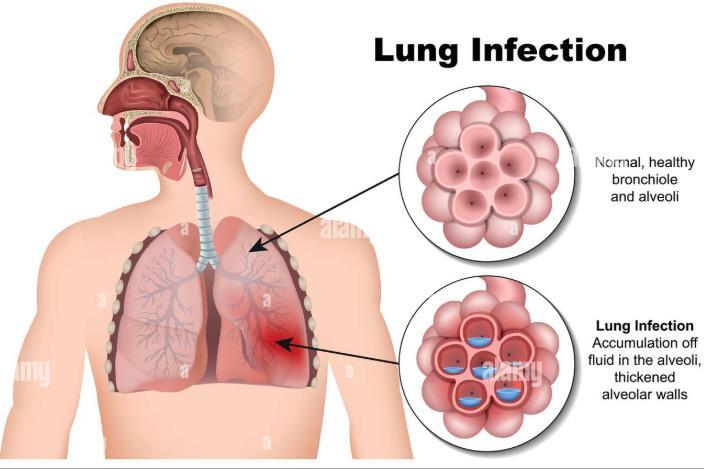
Figure1.1:AnimageoflunginfectedwithPneumonia.[13]
Pneumonia continues to be a major global health challenge, claiming millions of lives annually, particularly among vulnerablepopulationssuchastheelderlyandsmallchildren. Timely and precise detection is crucial for initiating prompt intervention and improving patient outcomes. This study explores the transformative role of deep learning in pneumonia diagnosis through in-depth image analysis. Recent developments in CNN designs have made it possible toeffectivelydistinguishbetweenlungsdamagedby pneumonia and normal ones, leading to notable advances in the classification of chest X-ray images. Different approaches have been used to improve these models’ performance. Several CNN architectures have been used to improve the classification process Aledhari et al. [14], Kaushik et al. [15], Tsai et al. [16], including Xception Khan et al. [17], InceptionV3 Hasan et al. [18], and Efficient Net Shaikh et al. [19]. Since each architecture is different, it can capture complex patterns in imaging data, which is essential for diagnosing pneumonia. Dabre et al. [20] has discussed about the comparative analysis of model’s performance without augmentation and multiple augmentation techniques for pneumoniadetection.
International Research Journal of Engineering and Technology (IRJET) e-ISSN:2395-0056
Volume: 12 Issue: 07 | Jul 2025 www.irjet.net p-ISSN:2395-0072
1.2 Motivation
The motivation for disease detection using X-ray images stems from several key factors, including the potential to improve early diagnosis, enhance patient outcomes, and leverage advancements in artificial intelligence (AI) and medical imaging technology. Here are some primary motivations:
1. Early andAccurate Diagnosis
X-rayimagingisawidelyused,non-invasivediagnostic tool that helps detect diseases such as pneumonia, tuberculosis,lungcancer,andbonefractures.
Early detection increases the chances of successful treatment,reducingmortalityrates.
2. Improved HealthcareEfficiency
Automated disease detection using AI can assist radiologists by highlighting abnormalities, reducing diagnostic errors, and speeding up the analysis of X-ray images.
AI-powered tools can help in high-volume screening programs,reducingtheworkloadofhealthcareprofessionals.
3. Cost-Effectiveand WidelyAvailable
X-rays are one of the most affordable and accessible imagingmodalitiescomparedtoCTscansandMRIs.
AI-powered automated analysis can be deployed in resource-limited settings, enabling disease detection in underservedregions.
4. Reduction in Diagnostic Errors
Human radiologists may miss abnormalities due to fatigueorhighworkload.AImodels trained on large datasets canimprovediagnosticaccuracyandconsistency.
AI systems can serve as a second opinion, reducing falsepositivesandfalsenegatives.
5. Pandemic and Public HealthApplications
During outbreaks of respiratory diseases (e.g., COVID-19, tuberculosis), rapid and automated detection through X-ray imagingcanaidinlarge-scalescreeningandearlyisolationof infectedindividuals.
AI-driven X-ray analysis can help prioritize critical cases forfurthertestingandtreatment.
Recentprogressindeeplearning,especially convolutional neural networks (CNNs), has enabled the development of highlyaccurateAImodelsformedicalimageanalysis.
AIcandetectpatternsthatmaynotbeimmediatelyvisible to the human eye, providing deeper insights into disease progression.
In this research [21], we developed training Support Vector machinekerneloptionhyperparametersoftheConvolutional neuralnetworks(CNN)optimizedusingtheBayesianmethod. Additionally, CNN pre-trained models and Support Vector Machine (SVM) classifiers were used to classify the CXR images. Six well-known deep pre-trained models are comparedtothe optimizedCNN’sperformanceusingtheCXR image dataset: COVID-19, Normal, Pneumonia Bacterial, Pneumonia Viral, and Tuberculosis (TB) for multiclassification. In this research, CNN models such as Alex Net, ReseNet50, ReseNet101, VGG16, VGG19, and InceptionV3 withtheproposedmethodSVMkernelutilizedthedataset.
Dataset Used: The Kaggle repository was utilized to get the 2000 images from the dataset used in this research, which includesdata inimageswithpneumonia bacteria, pneumonia viral,TB,Normal,andCOVID-19.
Results: The proposed approach shows that using the SVM kernel could give it a better forecasting technique. ReseNet101 achieved the best accuracy of 98.7% result, a hybridmodelthatincludedDeepCNNfeatureswithBayesian optimization produced a high degree of classification performancewithinashortamountoftime.
Limitations: We would like touseour researchinthefuture for other deep learning and machine learning initiatives. The proposed study should be carried out progressively even though its accuracy rates are high since it may be applied to othermedicalfields.
In this study [22], we propose a pioneering approach for COVID-19diagnosisutilizingchestradiographs.Theproposed methodology encompasses four distinct phases: initial segmentation of raw chest radiographs employing Conditional Generative Adversarial Networks (CGAN), followed by feature extraction through a tailored pipeline integrating both manual computer visionalgorithmsandpretrained DeepNeural Network (DNN) models.Subsequently, a graph- based feature reconstruction technique amalgamates these extracted features across the network, culminating ina comprehensive representation. These reconstructed features
International Research Journal of Engineering and Technology (IRJET) e-ISSN:2395-0056
Volume: 12 Issue: 07 | Jul 2025 www.irjet.net p-ISSN:2395-0072
serveasinputtoa classificationmodule,comprisinga multilayer neural network, GCN, adept at processing graphstructured data, alongside conventional machine learning classifiers such as Support Vector Machine (SVM), Extreme Gradient Boosting (XGBoost), and Random Forest (RF), facilitatingcategorizationofchestX-rayimagesintoCOVID-19, pneumonia,andnormalcases.
Dataset Used: We used two openly accessible datasets to carry out segmentation and classification tasks. The segmentationnetworkwastrainedusingX-rayimages(CXR) from theSegmentationChestRadiographs(SCR)dataset The main dataset was made up of 988 photos, of which 48 were used for testing and the remaining 940 were split into two subsetsfortrainingandvalidationwitharoughly90/10split.
A dataset of 700 images from the front view that were recognized as showing COVID-19 infectionandhadmetadata suggesting views from both the posterior-anterior (PA) and anterior- posterior (AP) were also chosen for the COVID-19 classification.
Results: Theproposedmethodinthisstudyinvolvedusinga trained segmentation network for lung image segmentation, followedbyafeatureextractionpipelinecomprisedofseveral Deep Neural Networks (DNN), including VGG-16, VGG-19, and DenseNet-169, DenseNet 201, Inception-Resnet, simple customized CNN, NasNetLarge, and Xception and techniques fordetectingkeypoints,forinstance,algorithmslikeSIFTand BRISK. The derived features were then reconstructed utilizing a graph-based method, which aggregated features throughout the graph. The extracted features were then fed intoGCNandcertainMLclassifierslikeSoftMax,RF,SVM,and XG Boost, to classify the different classes of images. The combination of DenseNet-169andDenseNet201modelswith RF obtained the maximumaverageclassification accuracy of 99%,whileVGG-16model withBRISKandRF achieved97% accuracy.OurapproachtoidentifyingCOVID-19byanalyzing CXR images demonstrated superior performance compared toexistingmethods.
Limitations and Future Suggestions: Itcouldbenefitfroma larger and more diverse dataset, which could help enhance themodel’scapacitytoadapttonovelcases.
Whileourworkmainlyfocuses onchest X-rayimages, there may be additional clinical data that could improve COVID-19 detection. For example, including information on symptoms, comorbidities, and laboratory tests could help improvetheaccuracyofthemodel.
Our framework has shown great promise for image classification, but it canbe difficult to interpret and maynot provide insight into the specific features or biomarkers that
aredrivingclassificationdecisions.Futureworkcouldexplore techniques for explainability and interpretability, to help understand what features the model is using to make its predictions.
The potential of a method utilizing deep learning (DL) for the identification of COVID- 19 in clinical settings will determineitssuccess.Futureworkcouldfocusondevelopinga user-friendly interface for the model and integrating it into electronichealthrecordsystemstofacilitatepractitioners.
Through the fusion of parallel deformable multi-layer perceptron (MLPs) and Bi-directional Long Short-Term Memory (Bi-LSTM) modules, this model [23] extracts multilevel abstract features andinvestigatespotentialcorrelations betweenparalleloutputfeatures,capitalizingonthewealthof generated information. Initially, the chest region of the CXR image is localized and cropped using a pre-trained YOLO-V4 network, through which 13-dimensional transformed images and 16-dimensional depth feature maps are extracted using traditional image filters and convolutional neural network to form the 30-dimensional generated data for training the proposed classification model. The data is then fed spatially and channel-wise into deformable MLP modules, and the relationships of features on parallel channels are analyzed using Bi-LSTM modules.Finally, theclassifier formed byfully connected layers and SoftMax function is employed to diagnose COVID-19 pneumonia. Extensive simulations based on 4099 CXR images were conducted to validate the performanceoftheproposedmethod.
Dataset Used: Extensive simulations based on 4099 CXR images were conducted to validate the performance of the proposedmethod.
Results: The results indicated that the proposed method exhibits excellent performance with accuracy, specificity, precision, recall, and F1-score by approximately 98% or above, which demonstrates the significant potential of the proposed method for clinically aiding in the diagnosis of patientswithCOVID-19pneumonia.
Limitations: Need ofGPU for processing of images. Training Timeishigh.
Using transfer learning with pre-trained models like ResNet50, MobileNetV2, Alex Net, EfficientNetB0, and Xception, the study [24] focuses on automated pneumonia detectionfromX-rayimages.ItstudiestheefficacyofContrast LimitedAdaptiveHistogramEqualization(CLAHE)andcrossvalidationtechniquestoenhancemodelperformance.
Dataset Used: The Pneumonia dataset used in this study consists of a total of 5233 anterior- posterior chest X-ray
International Research Journal of Engineering and Technology (IRJET) e-ISSN:2395-0056
Volume: 12 Issue: 07 | Jul 2025 www.irjet.net p-ISSN:2395-0072
imagesfromretrospectivecohortsofpediatricspatientsfrom Guangzhou Women and Children’s Medical Centre, Guangzhou, aged one to five. Every chest X-ray image was takenasastandardclinicalprocedureforthepatients.
These images are categorized into two classes: Normal and Bacterial Pneumonia and Viral Pneumonia categorized as Pneumonia.
Results: Results highlight the profound impact of deep learning models, with EfficientNetB0 consistently outperforming others, attaining test accuracy of 99.78% and perfect scores (100%) in precision, recall, F1-score, and 99.54%specificity.
Limitations and future Directions: This approach can be adopted for multi-class classification of medical images. Future research work will aim at expanding datasets, combining more imaging modalities, and refining models to enhancegeneralizabilityandclinicalutility.
This letter [25] proposes the field-programmable gate array (FPGA)-based hardware implementation of a novel lightweight deep convolutional neural network (DCNN) model to detect PN and TB ailments using CXR images. Initially, the proposed DCNN (consisting of ten layers) is trainedusingtheGoogleCloudcentralprocessingunit(CPU) to obtain the model weight and bias parameters. Then, the register transfer logic (RTL) for the trained DCNN model is generated by the VIVADO high-level synthesis (HLS) framework using HLS for machine learning (HLS4ML) with fixed-pointrepresentation(8bitforintegerand12bitforthe fractionalpart).
Results: The experimental results demonstrate that the proposed DCNN model has obtained accuracy values of 96.39% and 95.63% on the Google-Cloud CPU and PYNQ-Z2 FPGA frameworks using 422 CXR images in the inference phases.
Dataset Used: 422Imagesareusedfortraining.
Limitations: Thehardwareimplementationofthesuggested DCNN model is performed using the PYNQ-Z2 FPGA frameworktodetectTBandPNdiseasesautomatically.
This work [26] involves the use of advanced artificial intelligence techniques for diagnosis using algorithms for classification purposes. The goal is to provide an automatic infection detection method while maximizing detection accuracy. A public database was used which includesimages ofCOVID-19patients,patientswithviralpneumonia,patients with pulmonary opacity, and healthy patients. The methodologyused inthis studyis based ontransfer learning of pre-trained networks to alleviate the complexity of
calculation. Three different types of convolutional neural networks, namely, InceptionV3, ResNet50 and Xception, and theVisionTransformerareimplemented.
Results: Experimental results show that the Vision Transformer outperforms convolutional architectures with a test accuracy of 99.3% vs. 85.58% for ResNet50 (best among CNNs).
Dataset used: it consists of 3616 COVID-19 positive cases, 10,192 normal images, and 6012 pulmonary opacity (nonCOVID lung infection), and 1345 viral pneumonia. All images weredownloadedaspng-formattedRGBimageswithasizeof 299×299×3.
Limitations and Future Directions: one of the main characteristics of deep learning, and of neural networks in general, is the lack of transparency, meaning that the mechanismsthatleadsuchalgorithmswhenmakingdecisions are often obscure. This often leads to situations in which the network excels at performing its tasks ona givendataset but isunableto generalize overdifferentscenarios.Thisbecomes particularly significant when the primary purpose of the algorithm is to provide a fast and reliable response when assisting physicians in clinical diagnosis. For this reasons, futureworkinthisdirectionshouldbededicatedtoshedsome lightonwhatmightleadadeepneuralnetworkintomakinga specificchoicewhenfacingalternatives,tryingtobringclarity intowhathastraditionallybeenperceivedasablackbox.
Accurate diagnosis is crucial as wrong diagnosis; inadequate treatmentorlackoftreatmentcancauseseriousconsequences forpatientsandmaybecomefatal.Theadvancementsindeep learning have significantly contributed to aiding medical experts in diagnosing pneumonia by assisting in their decision-making process. By leveraging deep learning models, healthcare professionals can enhance diagnostic accuracyandmakeinformedtreatmentdecisionsforpatients suspected of having pneumonia. In this study [27], six deep learningmodelsincludingCNN,InceptionResNetV2,Xception, VGG16, ResNet50 and EfficientNetV2L are implemented and evaluated. The study also incorporates the Adam optimizer, whicheffectivelyadjuststheepochforallthemodels.
Dataset: Themodelsaretrainedonadatasetof5856chestXrayimages.
Thearchitectureoftheproposedworkisshownbelow.Inthis modelDeepLearningalgorithmsareusedtotrainandtestthe modelsformulti-diseasedetection.
International Research Journal of Engineering and Technology (IRJET) e-ISSN:2395-0056
Volume: 12 Issue: 07 | Jul 2025 www.irjet.net p-ISSN:2395-0072
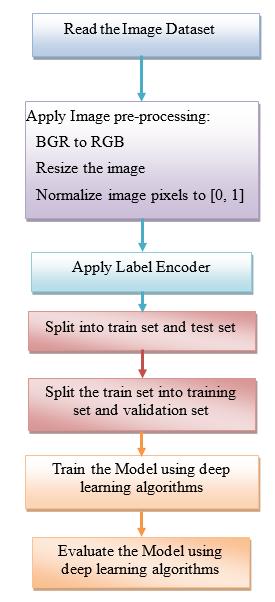
Figure3.1:Proposedmodelarchitecture.
3.1 Proposed Model Steps
Steps in DL-Based Detection:
1. Preprocessing: Resizeimages,normalizepixelvalues.
Resize Images: Deep learning models usually require fixedinputsizes(e.g.,150x150pixels).Youneedtoresizeall imagestothissizetomaintainconsistency.
Normalization: Normalizepixelvaluestotherange[0,1] (dividepixelvaluesby255)orstandardizetohaveameanof 0 and a standard deviation of 1. This helps models converge fasterduringtraining.
Model Selection: UsehybridofInception modules (fromthe Inception family) and Residual connections (from ResNet) forfeatureextraction.
-trained Models (VGG16, ResNet50): Using pretrained models like VGG16 or ResNet50 (often trained on large datasets like Image Net) can significantly speed up the process.Thesemodelscanserveasfeatureextractors,where
you only fine-tune the final layers for your specific task (e.g., diseasedetectioninX-rays).
2. Training: Feed X-ray images into the model, optimize weightsusingbackpropagation.
Data Augmentation: You may apply transformations like rotation, flipping, or zooming to artificially increase the datasetsizeandimprovethemodel'sgeneralization.
Backpropagation: The model's weights are updated via Backpropagation using optimization algorithms like Adam, SGD, or RMSProp. The goal is to minimize the loss function (e.g.,cross-entropylossforclassificationtasks).
Batch Size & Epochs: Train with a suitable batch size and number of epochs. Fine-tuning or transfer learning can be employedifyou’reusingapre-trainedmodel.
3. Evaluation: Analyze loss function, accuracy, confusion matrix
Loss Function: A loss function (e.g., binary cross-entropy orcategoricalcross-entropy)isusedtomeasurehowwellthe modelisperforming.
Accuracy: Accuracy measures the proportion of correctly predictedimages.
Confusion Matrix: This is used to assess the model's performance in more detail, especially in terms of true positives, false positives, true negatives, and false negatives. Metrics like precision, recall, and F1-score can be derived fromtheconfusionmatrix.
4. Deployment: ConvertthemodelintoanAPIforreal-world applications.
Model Exporting: Save the trained model in a format like .h5(Keras)or.pth(PyTorch).
API Creation: Use frameworks like Flask or FastAPI to exposethemodelasaRESTAPI.ThisallowsuserstosendXray images to the model via HTTP requests and receive predictionsinresponse.
& Optimization: Ensure the API is optimized for real-time use. You may also use tools like Dockers to containerize the application for easy deployment and scalability.
3.2 InceptionResNetV2
IntroducedbySzegedyetal.in2016asanupgradeoverboth InceptionV3andearlierresidualnetworks,aimingtoimprove
International Research Journal of Engineering and Technology (IRJET) e-ISSN:2395-0056
Volume: 12 Issue: 07 | Jul 2025 www.irjet.net p-ISSN:2395-0072
training speed and accuracy named “InceptionResNetV2”. Thekeyconceptofthismodelis:
A.InceptionModules
These modules capture features at multiple scales using filters of different sizes in parallel (e.g., 1×1, 3×3, 5×5 convolutions).
Theideaistoletthemodeldecidewhichfiltersizeworks best,ratherthanhardcodingit.
Residual Connections
These skip connections allow gradients to flow directly through the network, making it easier to train very deep architectures.
A residual block essentially learns a "correction" to an identitymapping:
Output=F(x)+x.
CombiningBoth
InceptionResNetV2embeds residual connections inside Inception modules,combiningthebestofbothworlds.
Thisresultsinavery deep yet efficient architecture.
1.DataLoading&Preprocessing
Step 1.1: Load image file paths from dataset directories.
Step 1.2: Assign labels based on folder names or metadata.
Step 1.3: Read and resize each image (e.g., to 150x150x3).
Step 1.4: Normalize pixel values to [0, 1] or use model-specificpreprocessing:
2.LabelEncoding
Step 2.1:EncodeclasslabelsusingLabelEncoder.
Step 2.2: Convert integer labels to one-hot encoded vectors.
3.Train-TestSplit
Step 3.1: Split data into train, validation, and test setsusingtrain_test_splitwithstratification.
4.ModelDefinition
Step 4.1: Load the InceptionResNetV2 base model (withouttoplayer):
Step 4.2: Freeze base model layers (optional for transferlearning).
Step 4.3:Addacustomclassificationhead.
5.ModelCompilation
Step 5.1:Compilethemodelwith:
o Optimizer:Adam
o Loss:categorical_crossentropy
o Metrics:accuracy,Precision,Recall,AUC.
6.ModelTraining
Step 6.1: Define Early Stopping call back to prevent overfitting.
Step 6.2:Trainthemodel:
7.ModelEvaluation
Step 7.1:Evaluateonthetestset:
Step 7.2: Generate classification report and confusionmatrix.
Table 4.1 below shows the accuracy comparisons of various deeplearningmodelsimplementedinthisthesis.Theexisting model dataset contains 5,863 X-ray images (JPEG) and 2 categories (pneumonia and normal). The Proposed model dataset contains 15153 X-ray images with 3 categories (pneumonia,covid-19andnormal).
Table 5.1 below shows the comparison of accuracy for existingandproposedmodel.
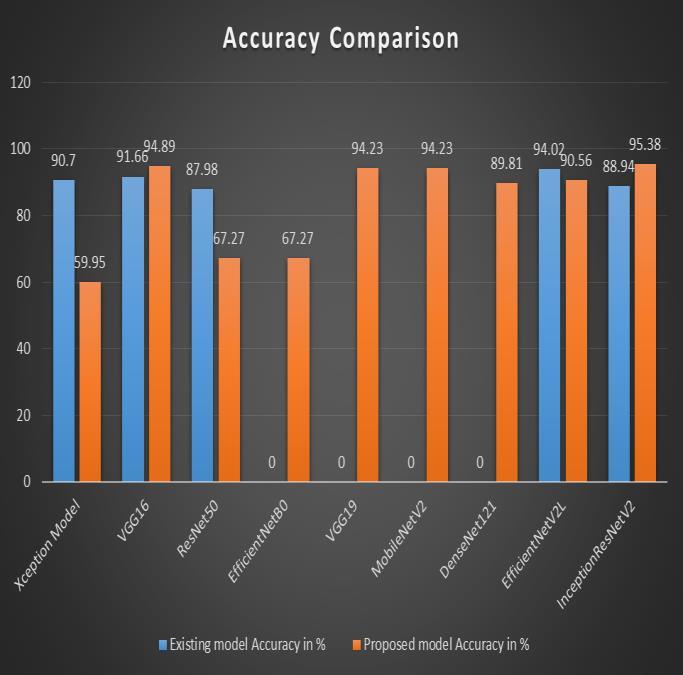
Figure4.1:Accuracycomparison.
International Research Journal of Engineering and Technology (IRJET) e-ISSN:2395-0056
Volume: 12 Issue: 07 | Jul 2025 www.irjet.net p-ISSN:2395-0072
Table4.1belowshowsthecomparisonofprecisionfor existingandproposedmodel.
Algorithm Used
1. U. R. Abeyratne, V. Swarnkar, A. Setyati, and R. Triasih, Cough sound analysis can rapidly diagnose childhood pneumonia,Ann.Biomed.Eng.,vol.41,no.11,pp.24482462, Nov.2013,Doi:10.1007/s10439-013-0836-0.
2. R. X. A. Pramono, S. A. Imtiaz, and E. Rodriguez-Villegas, Automaticidentificationofcougheventsfromacousticsignals, inProc.41stAnnu.Int.Conf.IEEEEng.Med.Biol.Soc.(EMBC), Jul.2019,pp.217220,Doi:10.1109/EMBC.2019.8856420.
3. T.Ahmed,M.Y.Ahmed,M.M.Rahman,E.Nemati,B.Islam, K. Vatanparvar, V. Nathan, D. McCaffrey, J. Kuang, and J. A. Gao, Auto mated time synchronization of cough events from multimodal sensors in mobile devices, in Proc. Int. Conf. Multimodal Interact., Oct. 2020, pp. 614619, Doi: 10.1145/3382507.3418855.
4. M. Al-Khassaweneh and R. B. Abdelrahman, A signal processing approach for the diagnosis of asthma from cough sounds, J. Med. Eng. Technol., vol. 37, no. 3, pp. 165171, Apr. 2013.
5. J. Amoh and K. Odame, Deep neural networks for identifying cough sounds, IEEE Trans. Biomed. Circuits Syst., vol. 10, no. 5, pp. 10031011, Oct. 2016, Doi: 10.1109/TBCAS.2016.2598794.
6. Y. Amrulloh, U. Abeyratne, V. Swarnkar, and R. Triasih, Cough sound analysis for pneumonia and asthma classification in paediatric population, in Proc. 6th Int. Conf. Intell.Syst.,ModellingSimulation,Feb.2015,pp.127131,Doi: 10.1109/ISMS.2015.41.
7. A. Anand, D. Chamberlain, R. Kodgule, and R. R. Fletcher, Pulmonary screener: A mobile phone screening tool for pulmonary and respiratory disease, in Proc. IEEE Global Humanitarian Technol. Conf. (GHTC), Oct. 2018, pp. 17, Doi: 10.1109/GHTC.2018.8601821.
8. C.Bales,M.Nabeel,C.N.John,U.Masood,H.N.Qureshi,H. Farooq, I. Posokhova, and A.Imran, Can machine learning be used to recognize and diagnose coughs? in Proc. Int. Conf. eHealthBioeng.(EHB),Oct.2020,pp.14.
9. A. N. Belkacem, S. Ouhbi, A. Lakas, E. Benkhelifa, and C. Chen,Endto-endAI-based point-of-care diagnosis system for classifyingrespiratoryillnessesandearlydetectionofCOVID19, 2020, arXiv:2006.15469. [Online]. Available: http://arxiv.org/abs/2006.15469
10.J.Shuja,E.Alanazi,W.Alasmary,andA.Alashaikh,COVID-19 open-sourcedatasets:Acomprehensivesurvey, Int. J. Speech Technol., vol. 51, no. 3, pp. 12961325, Mar. 2021, doi: 10.1007/s10489-020-01862-6.
11.G. Deshpande and B. Schuller, An overview on audio, signal, speech, & language processing for COVID-19, 2020, arXiv:2005.08579.
12.K. K.Lella and A. Pja, A literature review on COVID-19 disease diagnosis from respiratory sound data,AIMS Bioeng., vol.8,no.2,pp.140153,2021.
13.N. Shilpa, W. Ayeesha Banu and P. B. Metre, "Revolutionizing Pneumonia Diagnosis: AI-Driven Deep Learning Framework for Automated Detection from Chest XRays,"inIEEEAccess,vol.12,pp. 171601-171616,2024,doi: 10.1109/ACCESS.2024.3498944.
14.[43] M. Aledhari, S. Joji, M. Hefeida, and F. Saeed, ‘‘Optimized CNN-based diagnosis system to detect the pneumonia from chest radiographs,’’ in Proc. IEEE Int. Conf. Bioinf.Biomed.(BIBM),Nov.2019,pp.2405–2412.
15.[46] V. Sirish Kaushik, A. Nayyar, G. Kataria, and R. Jain, ‘‘Pneumonia detection using convolutional neural networks (CNNs),’’ in Proc. 1st Int. Conf. Compute., Commune. CyberSecure.Singapore:Springer,2020,pp.471–483.
16.[47] M.-J. Tsai and Y.-H. Tao, ‘‘Machine learning based common radiologist level pneumonia detection on chest Xrays,’’ in Proc. 13th Int. Conf. Signal Process. Commun. Syst. (ICSPCS),2019,pp.1–7.
17.A.I.Khan,J.L.Shah,andM.M.Bhat,‘‘CoroNet:Adeepneural networkfor detection and diagnosis of COVID-19 from chest X-rayimages,’’Compute.MethodsProgramsBiomed.vol.196, Nov.2020,Art.no.105581.
International Research Journal of Engineering and Technology (IRJET) e-ISSN:2395-0056
Volume: 12 Issue: 07 | Jul 2025 www.irjet.net p-ISSN:2395-0072
18.M.M.Hasan,M.M.J.Kabir,M.R.Haque,andM.Ahmed,‘‘A combined approach using image processing and deep learning to detect pneumonia from chest X-ray image,’’ in Proc. 3rd Int. Conf. Electr., Comput. Telecommun. Eng. (ICECTE),Dec.2019,pp.89–92.
19.M.Shaikh,I.FarahSiddiqui,Q.Arain,J.Koo,M.AliUnar,and N. Muhammad Faseeh Qureshi, ‘‘MDEV model: A novel ensemble-based transfer learning approach for pneumonia classification using CXR images,’’Comput. Syst. Sci. Eng., vol. 46,no.1,pp.287–302,2023.
20.K.Dabre,S.L.Varma,andP.B.Patil,‘‘RAPIDnet:Reduced architectureforpneumonia in infants’ detection using deep convolutional framework using chest radiograph,’’Biomed. SignalProcess.Control,vol.87,Jan.2024,Art.no.105375,Doi: 10.1016/j.bspc.2023.105375.
21.I.Ihsan,A.Imran,T.Sher,M.B.A.Al-Rawi,M.A.Elmeligyand M. S. Pathan, "Graph- Based COVID-19 Detection Using Conditional Generative Adversarial Network," in IEEE Access, vol. 12, pp. 191323-191344, 2024, doi: 10.1109/ACCESS.2024.3515160.
22.Y. Liu, W. Xing, M. Lin, Y. Liu and T. W. S. Chow, "A New Classification Method for Diagnosing COVID-19 Pneumonia viaJointParallelDeformableMLPModulesandBi-LSTMWith Multi-Source Generated Data of CXR Images," in IEEE Transactions on Consumer Electronics, vol. 70, no. 1, pp. 2794-2805,Feb.2024,doi:10.1109/TCE.2024.3367489.
23.N. Shilpa, W. Ayeesha Banu and P. B. Metre, "Revolutionizing Pneumonia Diagnosis: AI-Driven Deep LearningFramework forAutomatedDetection fromChestXRays,"inIEEEAccess,vol.12,pp.171601-171616,2024,doi: 10.1109/ACCESS.2024.3498944.
24.P. Guddati, S. Dash and R. K. Tripathy, "FPGA ImplementationoftheProposedDCNNModelforDetectionof Tuberculosis and Pneumonia Using CXR Images," in IEEE Embedded Systems Letters, vol. 16, no. 4, pp. 445-448, Dec. 2024,Doi:10.1109/LES.2024.3370833.
25.S.Cannata,A.Paviglianiti,E.Pasero,G.CirrincioneandM. Cirrincione, "Deep Learning Algorithms for Automatic COVID-19DetectiononChestX-RayImages," inIEEEAccess, vol. 10, pp. 119905-119913, 2022, doi: 10.1109/ACCESS.2022.3221531.
26.M. Ali et al., "Pneumonia Detection Using Chest Radiographs With Novel EfficientNetV2L Model," in IEEE Access, vol. 12, pp. 34691-34707, 2024, doi: 10.1109/ACCESS.2024.3372588.
27.
28.M. E. H. Chowdhuryet al., "Can AI Help in Screening Viral and COVID-19 Pneumonia?," in IEEE Access, vol. 8, pp. 132665-132676,2020,doi:10.1109/ACCESS.2020.3010287.