
International Research Journal of Engineering and Technology (IRJET) e-ISSN: 2395-0056
Volume: 12 Issue:10 | Oct 2025 www.irjet.net p-ISSN: 2395-0072

International Research Journal of Engineering and Technology (IRJET) e-ISSN: 2395-0056
Volume: 12 Issue:10 | Oct 2025 www.irjet.net p-ISSN: 2395-0072
N
Janakiraman1 and Neelam Phougat2
1-2Central Soil and Materials Research Station, Olof Palme Marg, Hauz Khas, New Delhi - 110016
Abstract - In coal-fired power stations, substantial amounts of fly ash is produced, which is a significant anthropogenic source of heavy metals and arsenic. Living near ash ponds and drinking or inhaling these toxicants increases the risk of cancer and many other health problems. Excessive amounts of heavy metals and arsenic over permissible levels have also been reported in the soil and water near these sites. Arsenic and other toxic components of fly ash get leached from disposal sites to surface waterways such as rivers, streams, and wetlands and into undergroundwater supplies or aquifers and adversely affect water quality. The Coal Combustion Residuals (CCR) Rule was designed by the Environmental Protection Agency (EPA) to protect the groundwater from contamination and motivate researchers to keep learningsafe ways to reuse fly ash. Rihand Dam is a concrete gravity dam constructed on the Rihand River located in Sonbhadra District in UP, India. Thermal power plants and chemical factories near the periphery of the reservoir discharge ash slurry and pollutants regularly into the reservoir. This study pertained to assessing the effect of fly ash slurry discharged by thermal power plants situated along the periphery of Rihand dam. Central Soil and Materials Research Station(CSMRS) monitors water quality and pollution studies at the Rihand reservoir.
Testing of water from Rihand dam is undertaken periodically for pollution assessment. Elemental analysis ofreservoir water samples shows the presence of heavy metals. Arsenic and mercury beyond permissible levels were observed at a few locations. Some samples show higher conductivity and Total Dissolved Solid (TDS) values, which indicated higher soluble salt content due to fly ash slurry and chemical effluents, respectively. The harmful effects of fly ash and safe ways of disposal of fly ash are suggested in this paper. Effluents from peripheral thermal power plants and chemical industries may be controlled as per the statutory regulations.
Key Words: Fly Ash Slurry, Rihand dam, Water Quality, Arsenic, Mercury, Coal Combustion, Environmental Protection Agency
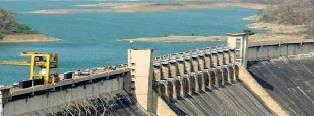
RihandDamisaconcretegravitydam,constructedonthe Rihand River, a tributary of Son River, located at Pipri in SonbhadraDistrictinUP,India,duringtheperiod1954-62. ThecatchmentareaofthisdamisspreadinUttarPradesh, Madhya Pradesh and Chattisgarh, whereas it supplies irrigationwatertoBiharwhichislocatedinthedownstream of the river. The water of this project passes through the
courseoftheriverGanga,SoneandGandakbeforemerging intheocean.
Becauseofthecontinuinguseofcoal-firedpowerstations, coalashdisposalisaworldwideproblem.Oncombustionof coal, coal ash is produced which consist of fly ash (fine powderyparticles)andbottomash(coarsermaterials).Coal ashcontainsarsenicandmanymetalsincludingsometoxic heavymetalssuchas,mercury,cadmium,chromium,cobalt, nickel[1-3].TheconcentrationsofAsandothermetalsinfly ash tend to increase as particle size of fly ash decreases. Smaller particles of fly ash have greater impacts on biological systems because they escape emission-control devicesandtravelthroughair.
Coalisn’tatoxicmaterialbutcoalashisdangerouslytoxicto humanhealth.Coalashis generallydisposedindrylandfills, dumpedinabandonedminesasfill,recycledinagricultural and engineering applications or mixed with water and disposedinponds(wetashponds)[4].TheEnvironmental ProtectionAgency(EPA)ofUSAhasfoundthatlivingnear ash ponds or eating, drinking or inhaling these toxicants increases the risk of cancer, heart damage, lung disease, kidney disease, birth defects, cognitive deficits, developmental delays, reproductive problems, gastrointestinalillness,etc. Mostdangerouspollutantfrom coalashisArsenic.If you are gettingdrinkingwaterfroma wellnearanunlinedwetashpondyourchancesofgetting cancerfromdrinkingarsenic-contaminatedwaterisashigh as 1 in 50 because excessive amounts of arsenic over permissiblelevelshavebeenreportedinthesoilandwater nearthesesites[5]. InFaridabad,duetoflyashdumpedby thermalpowerplant,peopleinsector49andnearbyareas arehavingbreathingproblem[6].
When coal ash comes into contact with water, its toxic constituent dissolve out of theashand percolate. Incoal ash, arsenic is highly leachable as it occurs as a surface precipitate.Arsenicandothertoxiccomponentofcoalash getleachedfromdisposalsitestosurfacewaterwayssuchas rivers,streamsandwetlandsandinto undergroundwater suppliesoraquifersandadverselyaffectswaterquality[7, 8]. Many factors such as pH, reducing or oxidizing conditions, leaching time, temperature etc. strongly influenceleachingofarsenicfromcoalash.
Mercury is regarded as one of the most hazardous substancesthatcanbioaccumulateinfoodchain.Mercuryis frequentlyfoundinthecrustalrocksoftheearthandincoal
International Research Journal of Engineering and Technology (IRJET) e-ISSN: 2395-0056
Volume: 12 Issue:10 | Oct 2025 www.irjet.net p-ISSN: 2395-0072
deposits[9].Thebiogeochemicalcycleofmercuryinvolves the movement and transformation of mercury through atmosphere, soil and aquatic systems. Mercury can also undergovolatilizationfromwaterandsoilsurfacesbackinto theatmosphere.Mercurycanenteraquaticsystemsthrough runoff from soil, atmospheric deposition and direct discharge from point sources. Mercury exists in the atmosphereprimarilyaselementalmercuryvapour,whichis releasedthroughnaturalsourcessuchasvolcanicemissions, forest fires and weathering of rocks. Anthropogenic activities, such as, mining operations, fossil fuel burning, cement production, metal processing, biomass burning, chlor-alkaliproduction,oilrefining,wasteincinerationetc. also contribute to atmospheric mercury levels. Inorganic mercury can be converted to methylmercury by certain anaerobicbacteriapresentinsedimentsandwater[10].
As per United States Environmental Protection Agency (EPA),themaximumallowablelevelofmercuryinwateris2 ppbbutthedetectedmercuryconcentrationsinmostofthe water courses exceed this limit. Safe dose of mercury in food is 0.1 μg/kg of body weight. Maximum inhalation reference concentration of 0.3 μg/m3 for atmospheric Hg and referencedosesof0.3μg/kgand0.1μg/kgperdayfor mercuric chloride and MeHg, respectively was set by the EPA. Concentration limit ranging from 0.2 to 1 mg/kg of MeHginfishwassetandconcentrationlimitof0.07to0.3 mg/kgwasdeterminedforthetotalHgconcentrationinthe soil[11-14].
Hg lodges in many organs, including the breast, muscles, thyroid, lungs, liver myocardium, kidneys, brain, prostate, skin,pancreas,sweatglands,enterocytes,testesandsalivary glandswhichleadtotheirdysfunction.Humanexposureto mercuric compounds causes numerous issues such as nausea, vomiting, abdominal pain, renal tubular necrosis, emotional changes and cognitive deficits, neurological diseases, reproductive system damage, immunogenicity, genotoxicity,cancer,cardiotoxicity,pulmonarydiseasesand renaldisease[15-18].
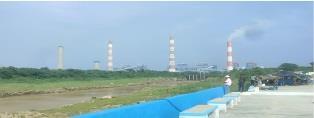
AsperdirectionsfromNationalGreenTribunal(NGT),team of Scientists from CSMRS visited Rihand dam site in connectionwithwaterqualityinvestigationofdamreservoir becausechemicalfactoryandthermalpowerplants situated around the periphery of the dam reservoir regularly dischargeeffluent/ashslurryintothereservoir.CSMRShas beenundertakingtheinvestigationona periodicbasisfor water quality assessment of reservoir water and surrounding ash slurry samples generated from thermal plantslocatedarounditsperiphery.
The main thermal power plants and a chemical factory situatedaroundtheperipheryofthereservoirare:
AnparaThermalPowerPlant
RenusagarThermalPowerPlant
ShaktiNagarThermalPowerPlant
VindhyaNagarThermalPowerPlant
RihandNagarThermalPowerPlant
AdityaBirlaChemicalsLimited
Pollutionstudiesareofmajorconcernbecausewater ofthis projectpassesthroughdenselypopulatedstatesviz.,Uttar Pradesh,Chattisgarh,BiharandBengal.
18 Nos. of water samples from different locations were collected and subjected to in-situ investigations and laboratory chemical analysis. The details of the sampling locationsaregivenin Table 1
Thewatersampleswereanalysedaspervariousanalytical procedurelaiddowninIS:3025-1986"MethodsofSampling andTest(PhysicalandChemical)”,StandardsofEmissionor DischargeofEnvironmentalPollutants(PublishedbyCentral PollutionControlBoard,March1996)andIS:10500–2012 for Drinking Water Specifications. Wherever necessary, referencehasalsobeendrawnfromtheprocedurelaiddown in “Standard Methods for the Examination of Water and Waste water” published by American Public Health Association and Water Pollution Control Federation, USA,
International Research Journal of Engineering and Technology (IRJET) e-ISSN: 2395-0056
Volume: 12 Issue:10 | Oct 2025 www.irjet.net p-ISSN: 2395-0072
1985.Followingparametershavebeendeterminedanddata wereinterpretedforpollutionstudies:
Table 1: Detailsofwatersamplelocations
S. No. Sample No. Sample Location
1. WS-1 AshslurryfromAnparathermalpower plant,TTP
2. WS-2 ReservoirsamplenearAnparaTPP
3. WS-3 Ash slurry from Anapara TPP, DischargeLocation
4. WS-4 Renusagar TPP ash treatment plant, Ash Slurry – sample collected before treatment
5. W-5 Renusagar TPP ash treatment plant, Ash Slurry – sample collected after treatment
6. WS-6 ShaktinagarTPPashslurry
7. WS-7 Reservoir sample near Shaktinagar TPP
8. WS-8 VindhyanagarTPPashslurry
9. WS-9 Rihandrivermainbridge
10. WS-10 RihandnagarTPPashslurry
11. WS-11 Reservoir sample near Rihandnagar TPP
12. WS-12 Kanodia/ABCLchemicaleffluents
13. WS-13
ReservoirsamplenearABCL/Kanodia
14. WS-14 Reservoirwater–OppositeblockNo. 60damU/S
15. WS-15 RawWaterbeforetreatment
16. WS-16 Rawwaterafter treatment
17. WS-17 Krishnashilarailwaysiding, BinaArea
18. WS-18 Reservoir sample near discharge location
2.1
pH, CaCO3-saturated pH, conductivity, temperature, salinity,TDS,sulphideandammoniaconcentrationofwater samplesweredeterminedatthesitejustafterthecollection ofwatersamples.
2.2 Laboratory Investigaion
Suspendedsolidcontent,inorganicandorganicsolids (Total Dissolved Solids, TDS), alkalinity, acidity, chloride, sulphate, calcium, magnesium, sodium, potassium, carbonate,bicarbonateconcentrationofwatersampleswas determinedinlaboratory.
Heavy metal like Cadmium(Cd), Chromium(Cr), Copper(Cu), Lead(Pb), Nickel(Ni), Iron (Fe), Zinc(Zn) and Mercury(Hg) andmetalloidArsenic(As)weredeterminedin the Water SamplesNo.WS-1toWS-13,WS-14,WS-15,WS16,WS-17andWS-18[Table2].Analysiswerecarriedoutat analyticalinstrumentationfacilityavailableatNationalRiver Water Quality Laboratory, NRWQL, CWC, New Delhi and NationalInstituteofHydrology,Roorkeeusing Inductively CoupledPlasmaMassSpectrometry(ICP-MS).
Table 2: MetalloidandHeavyMetalionsinWaterSamples
S. No. Sample No.
Limits as per IS: 10500: 2012 in mg/l
S. No. Sample No.
Volume: 12 Issue:10 | Oct 2025 www.irjet.net
The pH of the collected water samples from different locationsisfoundtobeintherangeof6.88–8.50. pHvalues ofallwatersamplesfallinalkalinerangeexceptsampleWS17 and WS-18 which shows pH values of 6.88 and 6.91. Hence,pHvalueofallsamplesconformstoIS:456andCPCB standard(between6.5-8.5).
Theconductivityvaluesofallthesamplesareintherangeof 114.9– 5175.0micromhos/cmwhichisclassifiedashigh. Highconductivityvaluesindicatehighersolublesaltcontent. Sample WS-4, WS-5 (Renusagar TPP Ash treatment plant, before&afterTreatment),WS-11andWS-12(effluentsof AdityaBirlaChemicalsLimited)showshigherconductivity andtotaldissolvedsolidvalues(TDS)whichindicateshigher soluble salt content due to fly ash slurry and chemical effluentsrespectively.
ThehighvalueofTDSwereobservedinWS-4,WS-6,WS-11, WS-12, & WS-18. Total dissolved solids and conductivity valueswerefoundhigherforseveralsamplesatRenusagar, RihandNagar,ShaktiNagar,KrishnashilaslidingandABCL Kanodia which indicates higher solubility of salts (cations andanions)whichconformsfurtherbyresultsofhigherCa, Mg,NaandKvaluesindividuallyandcumulatively.
Total hardness (as CaCO3) has been noticed very high for ReservoirSamplenearRihandNagarTPPi.e.329.64mg/lit. This is due to the high concentration of calcium in the chemicaleffluentsample.
Suspended solid concentration in all water samples are within the required CPCB limit except sample no. WS-7 (Reservoir sample near Shakti Nagar TPP). Value of suspendedsolidsfoundtobebeyondtheprescribedlimitof CPCBatReservoirSamplenearShaktiNagarTPP.
Valuesofsalinityarefoundintherangeof0.0109to0.2833 %forallthesamples.EffluentsfromKannodiaChemAditya BirlaChemicalsLimitedsampleNos.WS-12andWS-13are showingveryhighvalues0.2833&0.2582%.
AsshowninTableNo.2,heavymetalslikeCd,Cr,Cu,Pb,Ni, FeandZn are within the prescribed limitsformostof the samples as limits given in IS : 10500-2012. The concentration of Arsenic was reported to beyond permissiblelimitinsamples(WS-4&WS-5)collectedfrom Renusagar TPP Ash treatment plant. It is seen that the concentrationofnickelinthesampleno.WS-17wasjustnear toacceptablelimithoweverconcentrationofMercurywere present above the acceptable range in samples collected from Krishnashila Railway siding, Bina Area and nearby reservoirdischargelocationsi.e. WS-17&WS-18.
International Research Journal of Engineering and Technology (IRJET) e-ISSN: 2395-0056
Volume: 12 Issue:10 | Oct 2025 www.irjet.net p-ISSN: 2395-0072
Currentstatusoftheashslurry&Chemicaleffluentrun-offs isgivenbelow:
S. No. Location
Current Status of Pollution
1 Anpara Thermal PowerPlant
Proposed Remedial measures
2. Renusagar Thermal PowerPlant
Ash slurry was discharged through pipes.Pipeswereleaked at some places and continuous discharge was seen through these rupturedpipes.
Huge deposits of ash were observed on the openland/oldashdykes on the banks of the reservoir. Old ash dykes arefoundoversaturated.
Laboratory results shows higher dissolved solids and conductivity valuespertainingtosalt dissolution. Arsenic presence is reported in the ash slurry sample collectedfromtreatment plant.
2 ShaktiNagar Thermal PowerPlant
3 Vindhya Nagar Thermal PowerPlant
4 Rihand Nagar Thermal PowerPlant
Ash slurry is being discharged through pipes. Huge deposits of ash can be seen on the openland/oldashdykes on the banks of the reservoir.
Ash slurry is discharge trough pipes. Huge deposits of ash can be seen on the open land along the banks of the reservoir
Ash slurry is discharge trough pipes. Huge deposits of ash can be seen on the open land along the banks of the reservoir
Thoughnewash dyke was constructed to regularize the slurry flow into reservoir.
Constant monitoring is required.
5 Aditya Birla Chemicals Limited
Effluent from chemical plant is directly discharged in to the reservoir through open nalah.
Slurriesmay be treated as per statutory guidelines to lowerdownthe dissolved salt content before discharginginto the reservoir. Arsenic levels need to be controlled and to bring within thelimitsbefore discharge in to reservoir. Constant monitoring is required.
Effectiveness of treatment plant of Renusagar TPP needs improvementas the laboratory results(Suspendedsolids, Dissolved Solids, Conductivity, Salinity, Sulphate and Chloride)pertainingtopollutionwerefoundtobeabovethe acceptable range as per standard codes and practices. Pouringofdirectchemicaleffluentsandcontamination by industrial units established on its periphery shall be controlledasperthestatutoryregulations.
The findings of in-situ as well as detailed laboratory investigationaresummarisedasbelow:
● The presence of high level of As and Hg in the samplesofKrishnashilaRailwaysiding,BinaArea andRenusagarashslurryisamatterofconcerndue toitstoxicity.Thedischargeoftheseparticularnala in to rihand reservoir should be immediately stoppedortreatedasperCPCBguidelines.
● EffluentfromABCL/Kanodiachemicalplanthaving highconductivityvaluesalongwithhighTDS.The high concentration of Chloride and Sulphate salts indicates aggreesive nature of water towards concretestructures.
● Effluents from peripheral thermal power plants (ashslurries)andchemicalcompanies/millsmaybe treatedasperstatutoryguidelinestolowerdown the dissolved salt content before discharging into thereservoir.
During the inspection it was observed that most of the thermalpowerplantsweredischargingashslurrydirectinto the reservoir. The old ash dykes were over saturated and hugedepositionofashcoveredacresofland.FlyashSlurry should be treated through Ash Treatment Plant to reduce dissolvedsalts.Theprojectauthoritiesarerequiredtovisit thesesitestimetotimeandkeepvigilontheseashdykes/ ashslurrydumpingsites.
Dry landfills are safer than wet ash ponds because dry landfills have composite liners to prevent leaking and leaching. Wet ash ponds should be phased out and dry storageofcoalashshouldbeengineeredtopreventleaching, blowingorleakageoftoxicmatter.Inmanycountries,fly-ash isusedintheproductionofblendedPortlandfly-ashcement, sand replacement in concrete and as a mineral filler in asphalt.Becauseofhighconcentrationsoftoxicandmobile As(III)ininterstitialporewatersofflyash,recyclingofcoal
Effluents from peripheral chemical companiesneed to be treatedas per statutory guidelines to reduce salt content and othermetalions before discharge. Constant monitoring is required.
International Research Journal of Engineering and Technology (IRJET) e-ISSN: 2395-0056
Volume: 12 Issue:10 | Oct 2025 www.irjet.net p-ISSN: 2395-0072
ashasfertilizer,landfilletc.posesriskofleachingoftoxicant intogroundwaterorsurfacewaterifcoalashisexposedto water. Toxiccomponentofcoalashalsotravelthroughair as fine particles and enter the environment, so arsenic presentincoalashpolluteair,soilandwater.InUSA,more than100casesofcontaminationofdrinkingwater,wetlands, creeks,orriversduetocoalashhasbeenreported.
In USA, in 2008, on failure of a 40-acre coal ash disposal pond,morethanabilliongallonsofcoalflyashslurryspilled which contaminated the Emory and Clinch Rivers and the surrounding land. The ash slurry was over six feet deep, coveringaround300acresofland. Watersamplesafterthe spillwerefoundtohave149timeshigherconcentrationof arsenicthantheallowablelimitfordrinkingwater.Justtwo yearsafterthecovering,arsenicandothertoxicmetalswere detectedingroundwateratthegolfcoursecoveredwithfly ash. Use of contaminated water was stopped and monitoring of ground water and surface water were expected to continue for 30 years after the detection of contamination.
CoalCombustionResiduals(CCR)RuleframedbyEPAforbid coal ash ponds, above uppermost aquifer layers or near wetlands or seismic zones. Coal ash ponds must have compositelinersandgroundwaterconditionsneededtobe monitoredandnewpondsmusthavewatercollectionand removal systems. CCR Rules were designed to protect the groundwaterfromcontaminationandmotivateresearchers tokeeplearningsafewaystoreusethecoalash.Ifproducts formedonrecyclingflyashlockintoxicelementsofitthenit issafetorecycleflyash.Flyashcanbebeneficiallyusedin concrete because in concrete, toxic materials get encapsulated into the concrete matrix and toxic materials areinaccessibleevenonpulverizationofconcrete[19-21]. Concrete mixed with fly ash is stronger, less permeable and requires less water. If coal fly ash is recycled as filler whereencapsulationoftoxicmaterialsisnotpossiblethen thesetoxinsstaylooseandcanleachintowater.Toreduce thedangerouseffectsofmercuryonbothhumanhealthand theenvironment,EPAformulatedstandardsformercuryand air pollution, which required coal-based industries to cut down on the release of harmful pollutants like mercury. Whenever a technology is introduced, a holistic approach mustbefollowed.
[1] R.O. Sterling, J.J. Helble; “Reaction of arsenic vapour specieswithflyashcompounds:kineticsandspeciation of the reaction with calcium silicates”, Chemosphere, Vol.51,Issue10,June2003,Pages1111-1119
[2] U. S. Environmental Protection Agency, Office of Solid Waste and Emergency Response, Office of Resource ConservationandRecovery.“HumanandEcologicalRisk Assessment of Coal Combustion Wastes.” Draft EPA document.April2010,Pp2-4.
[3] Swaran J.S. Flora, 2015, “Arsenic Dissipation from Fly Ash (1.6.2.2)”, Handbook of Arsenic Toxicology, Academic press, 2015, Pages 20-21, ISBN: 978-0-12418688-0.
[4] Barry Breen, Office of Solid Waste and Emergency Response,USEPA.TestimonydeliveredtoCommitteeon Transportation and Infrastructure, Subcommittee on Water Resources and the Environment, U.S. House of Representatives, April 30, 2009. http://transportation.house.gov/Media/file/water/200 90430/EPA%20Testimony.pdf.
[5] RTI. “Human and Ecological Risk Assessment of Coal CombustionWastes.Draftdocument.”PreparedforU.S. EnvironmentalProtectionAgency,OfficeofSolidWaste. 2007, http://www.publicintegrity.org/assets/pdf/ CoalAsh-Doc2.pdf.
[6] Neelam Phougat, “Arsenic induced toxicity and its remediation”, Water and Energy International, vol.62, p.51,March2020.
[7] Schwartz G.E et al., “Leaching potential and redox transformations of arsenic and selenium in sediment microcosmswithflyash”,Appl.Geochem.67,177,2016.
[8] Veselská V et al, “Geochemical characterization of arsenic-rich coal-combustion ashes buried under agricultural soils and the release of arsenic”, Appl. Geochem.33,153,2013.
[9] Yuan-SengWu,AhmedI.Osman,etal.,“TheToxicityof Mercury and its Chemical Compounds: Molecular Mechanisms and Environmental and Human Health Implications: A Comprehensive Review”, ACS Omega 2024,9,5100−5126.
[10] deAlmeidaRodrigues,P.;Ferrari,R.G.;DosSantos,L.N.; Conte-Junior, C. A., “Mercury in aquatic fauna contamination:asystematicreviewonitsdynamicsand potential health risks”, Journal of Environmental Sciences2019,84,205−218.
[11] Sanchez-Alarcon,J. Milic,M. ustamante-Montes,L.P.; IsaacOlivé,K.;Valencia-Quintana,R.;Ramírez-Durán,N. “Genotoxicity of Mercury and Its Derivatives Demonstrated In Vitro and In Vivo in Human PopulationsStudies-SystematicReview”,Toxics2021, 9(12),326.
[12] Marrugo-Negrete,J.;Vargas-Licona,S.;Ruiz-Guzmán,J. A.; Marrugo-Madrid, S.; Bravo, A. G.; Díez, S. “Human healthriskofmethylmercuryfromfishconsumptionat the largest floodplain in Colombia”. Environmental Research2020,182,No.109050.
[13] Niane,B.;Guédron,S.;Feder,F.;Legros,S.;Ngom,P.M.; Moritz, R. “Impact of recent artisanal small-scale gold
International Research Journal of Engineering and Technology (IRJET) e-ISSN: 2395-0056
Volume: 12 Issue:10 | Oct 2025 www.irjet.net p-ISSN: 2395-0072
mining in Senegal: Mercury and methylmercury contamination of terrestrial and aquatic ecosystems”, Sci.TotalEnviron.2019,669,185−193.
[14] Diaz,F.A.;Katz,L.E.;Lawler,D.F.“Mercurypollutionin Colombia: challenges to reduce the use of mercury in artisanalandsmall-scalegoldmininginthelightofthe Minamata Convention”, Water International 2020, 45 (7−8),730−745.
[15] Sharma, .M. harat,G.K. Sebkova,K. Scheringer,M. “Implementation of the Minamata Convention to manage mercury pollution in India: challenges and opportunities”. Environmental Sciences Europe 2019, 31,1−12.
[16] Luo,Q.;Ren,Y.;Sun,Z.;Li,Y.;Li,B.;Yang,S.;Zhang,W.; Wania, F.; Hu, Y.; Cheng, H. “Characterization of atmospheric mercury from mercury-added product manufacturing using passive air samplers”. Environ. Pollut.2023,337,No.122519.
[17] Tesan- nrubia,J.A. Heimburger- oavida,L.-E. Dufour, A. Harmelin-Vivien, M. Garca-Arevalo, I. Knoery, J. Thomas, . Carlotti, F. Tedetti, M. anaru, D. “Bioconcentration, bioaccumulation and biomagnification of mercury in plankton of the Mediterranean Sea”. Mar. Pollut. Bull. 2023, 194, No. 115439.
[18] Hsu,C.-J.;Atkinson,J.D.;Chung,A.;Hsi,H.-C. “Gaseous mercuryre-emissionfromwetfluegasdesulfurization wastewater aeration basins: A review”, Journal of HazardousMaterials2021,420,No.126546.
[19] “Regulatory Determination on Wastes from the Combustion of Fossil Fuels (Final Rule).” Federal Register65:99(May22,2000)p.32218.
[20] Stant J. “ ut of Control: Mounting Damages from Coal Ash Waste Sites.” February 24, 2010, Environmental Integrity Project and Earth justice. http://www.environmentalintegrity.org/news_reports/ news_02_24_10.php
[21] Testimony of Stephan A. Smith, DVM, Executive Director,SouthernAllianceforCleanEnergy,Submitted to the U.S. Senate Committee on Environment and Public Works, January 8, 2009, http://epw.senate.gov/public/index.cfm?FuseAction= Files.View&FileStore_id=e918d2f7-9e8b-411e-b2449a3a7c3359d9.
2025, IRJET | Impact Factor value: 8.315 |