
International Research Journal of Engineering and Technology (IRJET) e-ISSN: 2395-0056
Volume: 12 Issue: 06 | Jun 2025 www.irjet.net p-ISSN: 2395-0072
International Research Journal of Engineering and Technology (IRJET) e-ISSN: 2395-0056
Volume: 12 Issue: 06 | Jun 2025 www.irjet.net p-ISSN: 2395-0072
Himanshu Negi1, Mr. Sambhav Agrawal2
1M.Tech, Computer Science and Engineering, SR Institute of Management & Technology, Lucknow, India
2Associate Professor, Computer Science and Engineering, SR Institute of Management & Technology, Lucknow
Abstract - Thisresearchaddressesthecritical challenge of ensuringdronesremainflight-readyinremoteanddemanding environments by enabling fully autonomous landing and wireless recharging without human involvement. The study emphasizes the need for a robust, weather-resistant power transfer system and explores the use of advanced resonant wireless power transfer (WPT) techniques tailored for aerial platforms. To facilitate reliable charging, a three-stage precision landing mechanism is designed and implemented. The investigation includes over a hundred autonomous flight and charging cycles, assessing the positional accuracy required for effective energy transfer. The work provides valuable insights into both hardware integration and autonomous navigation, contributing to the development of resilient, self-sustaining drone systems capable of extended deployment.
Key Words: Wireless Power Transfer (WPT), LCC-S Topology, GPS-Based Navigation, UAV Self-Charging, LiPo Battery Charging, UAV Landing Accuracy, Drone-on-Cone Testing
Despite their potential, drones have yet to become a mainstream solution for tasks like package delivery or routine surveillance. This is largely due to regulatory constraints and significant operational challenges. In particular,systemsthatrequiremanualretrieval,charging, andredeploymentreducetheefficiencyandpracticalityof droneuse.Thisresearchaimstoovercometheselimitations by making drones instantly deployable and fully autonomous.Itexplorestherequirementsforhigh-precision autonomous landing and reliable wireless recharging in rugged,remoteenvironmentswherehumaninterventionis minimalorimpossible.Byaddressingthesekeychallenges, the study paves the way for truly independent drone operationsinreal-worldscenarios.
To ensure drones are always flight-ready, various power options were reviewed, including fuel cells, tethers, solar panels, and laser charging. Most methods were unsuitable duetolimitationsinrange,complexity,orsafety especially inremotesettings.Battery-powereddronesemergedasthe mostviable,particularlyusingLiPoorLi-ionbatteries.Three recharging methods were identified: battery swapping,
contact-based charging, and wireless charging. Battery swapping offers quick turnaround but adds mechanical complexity. Contact charging is efficient but vulnerable to environmental contamination. Wireless Power Transfer (WPT) eliminates exposed contacts, boosting reliability in harshconditions.However,WPTdemandsmillimetre-level landingprecisionforeffectiveoperation.
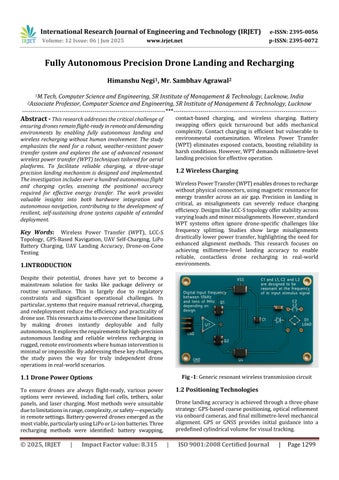
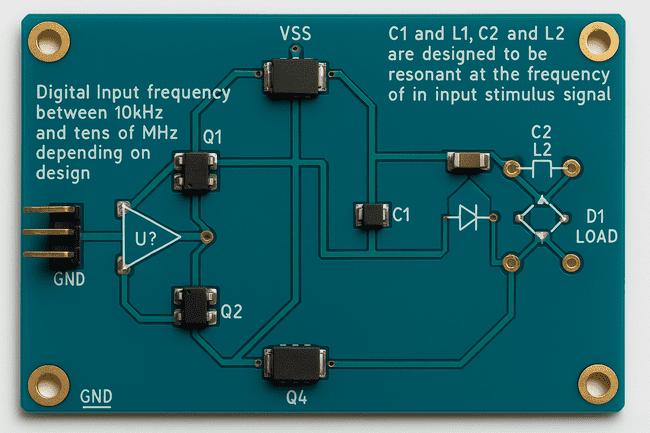
WirelessPowerTransfer(WPT)enablesdronestorecharge withoutphysicalconnectors,usingmagneticresonancefor energy transfer across an air gap. Precision in landing is critical, as misalignments can severely reduce charging efficiency.DesignslikeLCC-Stopologyofferstabilityacross varyingloadsandminormisalignments.However,standard WPT systems often ignore drone-specific challenges like frequency splitting. Studies show large misalignments drasticallylowerpowertransfer,highlightingtheneedfor enhanced alignment methods. This research focuses on achieving millimetre-level landing accuracy to enable reliable, contactless drone recharging in real-world environments.
Dronelandingaccuracyisachievedthroughathree-phase strategy:GPS-basedcoarsepositioning,opticalrefinement viaonboardcameras,andfinalmillimetre-levelmechanical alignment. GPS or GNSS provides initial guidance into a predefinedcylindricalvolumeforvisualtracking.
International Research Journal of Engineering and Technology (IRJET) e-ISSN: 2395-0056
Volume: 12 Issue: 06 | Jun 2025 www.irjet.net p-ISSN: 2395-0072
However, standard GPS suffers from errors, especially in vertical accuracy due to satellite geometry and multipath effects.ImprovementslikeDGPSandquasi-differentialGPS reduce this error to under 0.5 meters. RTK-GPS can offer centimetre precision but is costly and complex. Proposed landing platforms like Amazon’s pole-mounted dock lack implementationdetails.
Opticalpositioningensuresthedronealignsproperlybefore wirelesscharging,makinghigh-accuracypositioningvital.
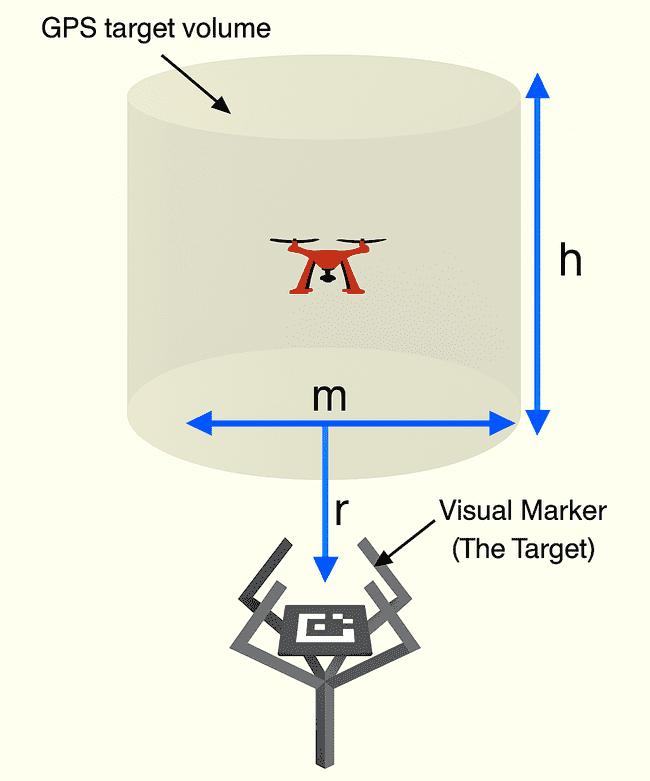
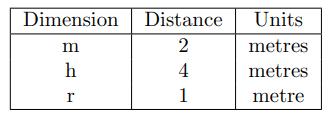
Table -1: GPSTarget
1.2.1
Visualodometryusesonboardcamerasandcomputervision algorithmstoestimatethedrone’sposeforpreciselanding. ArUcomarkersarewidelyadoptedduetotheirlowmemory useand reliability. IR beaconsofferaccuracybutadd cost andweight,whilehybridsystemsimproveredundancy.
Challengeslikemarkervisibility,shadowinterference,and wind disturbances affect landing success. Recent research highlights gaps in large-scale testing, marker designs, and reliablemechanicallandingaids.
Thedronelandingprocessisdividedintotwomainstages: GPS-guided coarse approach and vision-based precision descent using ArUco markers. A dedicated Raspberry Pi 4 handleslandingcontrol,whiletheprimaryflightcontroller manages stabilization, both communicating via MAVLink. PoseestimationisperformedusingOpenCVandexpressedin theNorth-East-Down(NED)coordinateframeforintegration withflightdynamics.
VelocitycommandsarecomputedusingPIDcontrolbasedon thedrone’sestimatedpositionandorientation.Thesystem processesvisualdataat6FPS,whichwasadequateforstable landingsinmildconditions.
The landing process begins with GPS-guided navigation to bringthedronenearthelandingsite.ArUcomarkersarethen detectedusingonboardcamerasforpreciseposeestimation.
A PID controller translates the pose error into velocity commandsintheNEDcoordinateframe.Thesecommands guidethedroneintoa100mmloiterzoneabovethelanding pad. Once position and velocity thresholds are met, the systeminitiatesthefinallandingphase.
Stage 3 uses gravity and conical structures to ensure millimetre-levelalignment.Conesredirectthedronetoward thecenterifminormisalignmentspersistafterStage2.Two configurationswerestudied:Drone-on-coneandDrone-incone.Extensivetestingwasconductedtoassessreal-world reliabilityandperformance.
Thesedesignseliminatehorizontalerrorsandareinspiredby previouslypatentedconcepts.
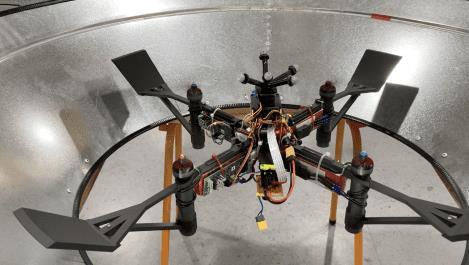
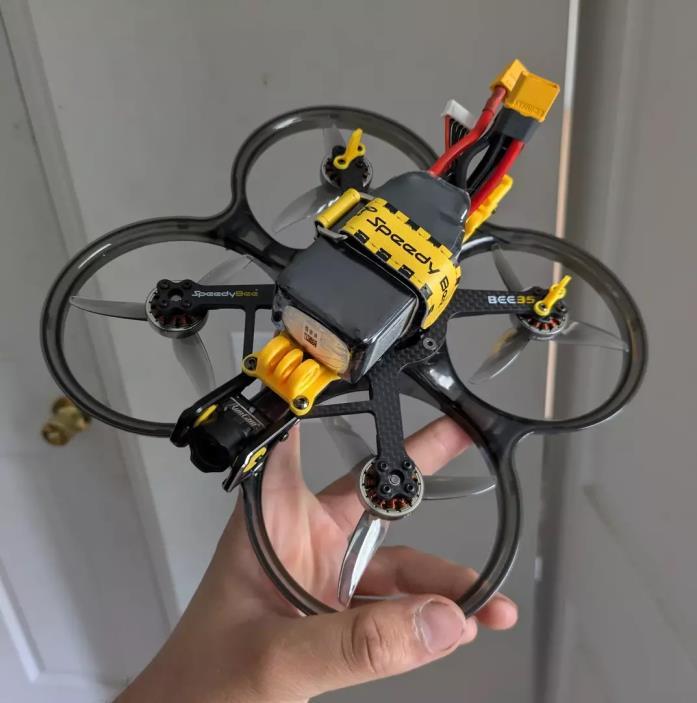
The Drone-on-cone system uses multiple cones under the motorsthatalignwithconesonthelandingpad.Itensures both positional and yaw accuracy but is sensitive to large errors andairflow disturbances. Incontrast, the Drone-inconedesignusesrotorguardsshapedtonestinsidealarge landing cone. It improves wind stability and reduces turbulencebutaddsweightandofferslessyawcontrol.Each methodoffersuniquetrade-offsforprecisionlandings.
International Research Journal of Engineering and Technology (IRJET) e-ISSN: 2395-0056
Volume: 12 Issue: 06 | Jun 2025 www.irjet.net p-ISSN: 2395-0072

WirelessPowerTransfersystemsfordronesmustaccount forfrequencysplitting,whichoccursduetocoilmisalignment duringlanding.UsingLaplacetransformsandPythontools likelcapyandsympy,thebehaviorofcomplexWPTcircuitsis analyzed.Strongmagneticcouplingimprovespowertransfer but increases sensitivity to load changes, risking voltage spikes.Operatingatthemidpointofsplitfrequenciesoffers stability,butweakcouplingstillposeschallengestosystem safety.
TheLCC-StopologyaddsanLCbranchtotheprimarysideto improvepowertransferefficiencyandreducesensitivityto load changes. Unlike simpler configurations, its frequency response is stable across varying loads, even in weak magneticcouplingconditions.Bodeplotsshowthatoutput voltageremainsconsistentnearresonance,minimizingthe riskofvoltagespikes.Thismakesthesystemsaferandmore predictable,especiallyundersuddenmisalignment.Thoughit requiresadditionalcomponents,±10%toleranceininductors andcapacitorshadminimaleffectonperformance.
The design offers strong load independence and flat frequencyresponse.Overall,LCC-Sbalancescomplexitywith improvedreliabilityandefficiency.
Theper-armbatteryarchitectureequipseachdronearmwith its own battery, charger, and WPT coil, enabling parallel chargingandeliminatingsinglepointsoffailure.Thissetup increases system reliability and reduces charger load per arm, especially in multi-rotor drones. Custom PCBs were developed: a transmitter HAT for the Raspberry Pi and receiver boards for each arm. These manage rectification, current regulation, battery balancing, and thermal safety. CommunicationbetweencomponentsishandledviaI2C.The system supports 4S LiPo batteries with JEITA-compliant chargingprotocols.
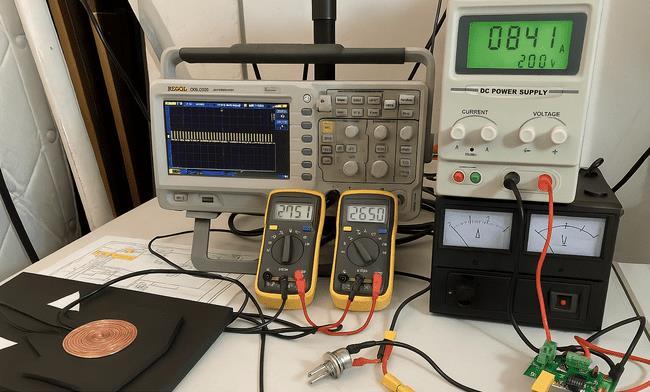
Extensive tests confirmed the LCC-S topology as the most efficient,achievingupto92.6%efficiencyat190kHzwhile charging a 4S LiPo battery. Testing used actual drone components,withplanarcoilsintegratedintorotorendsto validatetheper-armarchitecture.Coilplacementinpropeller guards caused yaw sensitivity, which affects charging alignment.Analternativebase-mountedcoilcouldsolvethis but was not explored further. Performance data showed stable44Wpowerdeliveryat2.6Aconstantcurrent.
Autonomouslandingwasfirstvalidatedinsimulationusing Gazebo and Ardupilot’s SITL, with visual input from a simulated onboard camera. The system detected ArUco markers, estimated drone pose, and generated velocity commandsviaMAVLINK.In100runs,thedroneconsistently landed within a 50 mm radius of the target. Stage 3 mechanicalalignmentwasnotincludedinthesimulation.The
International Research Journal of Engineering and Technology (IRJET) e-ISSN: 2395-0056
Volume: 12 Issue: 06 | Jun 2025 www.irjet.net p-ISSN: 2395-0072
same control code was later used in real-world tests to ensureconsistencyandreducecrashrisks.
QUT conducted 258 indoor drone flights using Vicon and OptiTracksystemstosimulateGPS,withposedatasenttothe drone via MAVLINK at 8 Hz. IR markers enabled real-time trackingupto100 Hz,emulatingfullposeinput.InMay2023, WPThardwarewasintegrated,followedby90adjustment flights. In July 2023, 128 fully autonomous missions were performed, covering takeoff,waypoint navigation, landing, and wireless charging. All operations were completed withoutmanualintervention.
Initial tests with the Drone-on-cone setup showed oscillationsandinstabilityduetoaerodynamicinterference between drone and landing cones. Smoke tests confirmed airflowdisruptions,promptingaswitchtotheDrone-in-cone design.
A custom metal cone with3D-printed inserts was built to houseWPTcoilsandimprovedescentstability.Coilswere embeddedinboththelandingconeandthedrone’spropeller guardstoensurealignment.Eightidenticalcoilssupported efficient wireless power transfer via the LCC-S topology. ChargingwascontrolledbyRaspberryPiHATsonbothsides, withHTTPservershandlingfrequencytuningandactivation. A charger daemon monitored voltage levels to verify alignment before charging began. Full charging required a minimumrectifiervoltageof24.5V,with35Vindicatingideal coupling.
Theentiresystemwasmodularandautomated,butfly-landcharge cycles were manually triggered via SSH. This setup demonstrated successful integration of autonomous flight, precisionlanding,andreliablewirelessrecharging.
4.2.1
For precise coil alignment post-landing, strict conditions weresetduringtheloiteringphase.Thedrone’shorizontal motionmustbeunder4mmpercycle,anditmustbewithin 15mmofthetarget.
Atrajectorycheckensuresthedroneismovingtoward not awayfrom thetarget.Yawaccuracymustbewithin±1°,and yaw rate must remain under ±0.1°/s. These constraints preventprematureorunstablelandings.
4.2.2
Two major adjustments enhanced landing reliability. The loitering height was reduced from 20 cm to 10 cm to minimize vertical drop. The descent speed was fine-tuned from50 cm/sto30 cm/stopreventbouncingorlateraldrift.
Thisnewrateprovidedastablebalancebetweencontroland descent precision. These changes were finalized after extensive testing in June 2023. Together, they ensured consistentalignmentforwirelesscharging.
Atotalof128autonomousflightcycles includingtakeoff, landing,andwirelesscharging wereperformedindoorsat QUT.Toassesslandingprecision,posetransformationswere appliedtolocateeachreceivercoilrelativetoitstransmitter. This involved combining known reference frames (NED, home,andcoilframes)using4×4transformationmatrices. Thefinalx,y,zpositionsofeachcoilwereusedtoevaluate alignmentaccuracy.Thisdataformedthebasisforcharging classification.

4.2.4
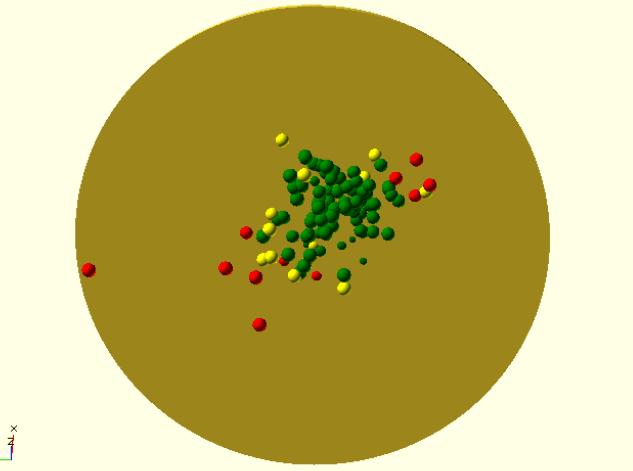
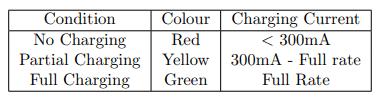
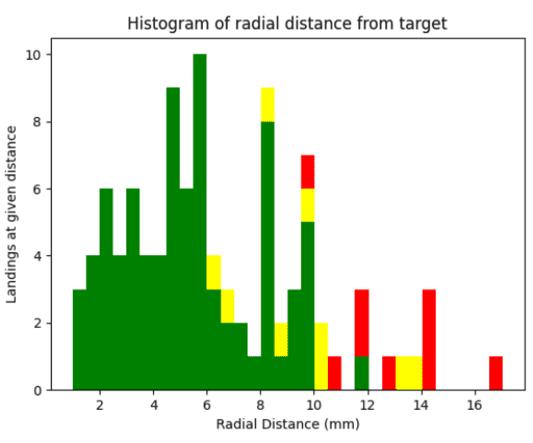
EachlandingwascategorizedasGreen(fullcharge),Yellow (partialcharge),orRed(nocharge).Outof128attempts,100 weresuccessful,15partiallycharged,and13failed,givinga 78%successrate.
Theresultswerevisualizedinascatterplot(Figure6)anda histogram (Figure 7). Green landings clustered near the transmittercenter;redonesshowedpooralignment.These results highlight the importance of enhancing landing accuracytoimprovechargingreliability.
International Research Journal of Engineering and Technology (IRJET) e-ISSN: 2395-0056
Volume: 12 Issue: 06 | Jun 2025 www.irjet.net p-ISSN: 2395-0072
4.2.5 Analysis of Precision and Coil
Thescatterplotshowedhowcloselythereceivercoilsaligned withthetransmitcoils,withideallandingscenteredonthe shaded disk. Some errors between green and yellow categoriesmaybeduetoflexinginthe3D-printedpropeller guards, affecting actual coil placement. The histogram confirmed overlap in performance near the charging threshold. Using polar distance analysis and Table 6, alignmenttoleranceswerequantified.Thesefindingssuggest potentialforimprovementthroughrefinedcontrolormore tolerantcoildesigns.
Analysisshowsfullchargingrequirescoilalignmentwithin 11.5 mm, achieved in 90% of landings. To improve the remaining10%,severalstrategiesareproposed.Thedrone could detect misalignment via unloaded voltage and reattempt landing. Adding a bottom lip to the cone may reduce roll/pitch tilt on touchdown. Dynamic frequency tuningcanimprovecouplingdespiteminormisalignments. Raising transmitter voltage with buck converters can compensate for voltage drops. Lastly, design changes like largeroroverlappingcoilscouldaddressyawsensitivity,or relocatingthereceivercoil tothedrone’sbasemayoffera morerobustsolution.
Factoringindirectionoftravelimprovedlandingaccuracy, ensuringdronesdidn’tlandwhiledriftingaway.Theper-arm charging system enabled fast turnaround and added redundancy,allowingbackupchargingifonecoilfailed.The LCC-Stopology,adaptedfromEVsystems,provedefficient withoutexcessiveonboardhardware.Contact-basedcharging was avoided due to debris and corrosion risks, but could complement WPT in commercial setups. EM compliance wasn'ttestedbutisessentialforproductization.Akeylesson learned was the delayed switch from Drone-on-cone to Drone-in-cone,highlightingthevalueofearlyriskevaluation.
Future efforts should target eliminating the 10% of misaligned landings. Micro takeoff-and-land cycles could improvecoilalignmentafterfailedcharges.Designingyawinsensitivecoils,suchasabase-mountedring,wouldreduce orientationdependency.Tosimplifysetup,infraredbeacon systems may replace ArUco markers for pose detection. Finally,adaptingthesystemforhybridVTOLplatformscould broaden its application beyond quadcopters. These advancements would enhance reliability, flexibility, and deploymentreadiness.
Thisresearchdevelopedafullyautonomousdronelanding andwirelesschargingsystemusingathree-phasestrategy with cone-shaped mechanical guides. The Drone-in-cone
International Research Journal of Engineering and Technology (IRJET) e-ISSN: 2395-0056
Volume: 12 Issue: 06 | Jun 2025 www.irjet.net p-ISSN: 2395-0072
design proved superior, offering aerodynamic stability, weather shielding, and damage-free mislanding. Yaw misalignment was the most common error, affecting charging precision. The LCC-S topology ensured stable wireless power transfer, overcoming challenges typical of WPT systems. A per-arm charging approach added redundancyandreduceddowntime,thoughwithincreased weight.Thesystemachievedreliablealignmentwithin11.5 mmforeffectivecharging.Over100autonomousfly-landcharge cycles were completed. This project marks a substantialadvancementindroneautonomyandrecharging reliability.
[1] Boukoberine et al. (2019) provided a thorough evaluation of various power supply architectures tailored to drone applications, emphasizing design trade-offsforperformanceandefficiency.
[2] Mohsan and collaborators (2022) explored numerous chargingmethodologiesformicroUAVs,coveringboth wiredandwirelessapproacheswithemphasisonrealworldapplicability.
[3] Townsendetal.(2020)reviewedabroadspectrumof energy solutions for UAVs, identifying current limitations and potential areas for improvement in powerdeliverysystems.
[4] AstudybyWalendziuketal.(2020)analyzedtethered drone power configurations, focusing on continuous energydeliveryforextendedaerialoperations.
[5] Swieringa and his team (2010) introduced a robotic system that autonomously replaces depleted drone batteries, minimizing human intervention in UAV operations.
[6] Yan et al. (2020) optimized the structure of coupling coilstoimprovewirelessenergytransmissiontoUAVs, enhancingchargingefficiency.
[7] Achteliketal.(2011)showcasedaquadcoptersystem capable of breaking endurance records through the integrationoflaser-basedpowertransfer.
[8] Luetal.(2018)criticallyreexaminedwirelesscharging techniquesforUAVs,extendingtraditionalframeworks toaccommodatenewertechnologies.
[9] The Flyability website discusses gas-powered UAVs, outlining their benefits in long-range and highenduranceusecases.
[10] IntegralDronesofferscommercialUAVsliketheFoxtech GAIA160,designedforindustrial-scaleapplications.
[11] Rohan et al. (2018) proposed an intelligent wireless charging system that adapts using a hill-climbing algorithmtooptimizeenergytransfer.
[12] Kurs et al. (2007) were pioneers in demonstrating wirelesspowerviamagneticresonance,establishinga foundationformodernWPTresearch.
[13] Sample et al. (2011) conducted experimental evaluations of magnetically coupled resonators and exploredtechniquestoextendtransmissionrange.
[14] Kiani and Ghovanloo (2012) provided circuit-level insightsintocoupled-modemagneticresonance-based WPT, enabling better understanding of power flow dynamics.
[15] Memaretal.(2021)developedasmall-signalmodelfor aseries-parallelWPTsystemincorporatingcapacitive filtering,aimedatrefiningsystemdesign.
[16] Chittoor et al. (2021) delivered an in-depth review of UAVwirelesschargingsystems,examiningfundamental principles,applications,andevolvingstandards.
[17] Junaid et al. (2016) presented the design of an autonomouswirelesschargingstation,highlightingits suitabilityforrotary-wingUAVplatforms.
[18] Zhang et al. (2014) compared various secondary-side compensation schemes to optimize efficiency and ensureconsistentvoltagetransmissioninIPTsystems.
[19] SaiKiranetal.(2014)appliedreflectedloadtheoryto analyze inductive resonant WPT, revealing behavior underdifferentloadingconditions.
[20] Huangandcolleagues(2014)studiedthephenomenon of frequency splitting in magnetic resonant coupling, identifyingitsimpactonsystemstability.
[21] Barmanetal.(2015)highlightedthelatesttrendsand applicationsofmagneticresonantcouplinginwireless energytransfer,withaneyeonindustrialuptake.
[22] Liuetal.(2017)exploredhowalignmentaffectspower delivery in highly coupled WPT systems, pointing out designconsiderationsforrobustness.
[23] Yuanetal.(2023)proposedhigh-ordercompensation topologies to enhance misalignment tolerance and integrationinWPTsystems.
[24] Song etal.(2023)discussed challengesandprospects for interoperability among electric vehicle wireless chargingsystems,relevantforUAVecosystemstoo.