
International Research Journal of Engineering and Technology (IRJET) e-ISSN: 2395-0056
Volume: 12 Issue: 08 | Aug 2025 www.irjet.net p-ISSN: 2395-0072
International Research Journal of Engineering and Technology (IRJET) e-ISSN: 2395-0056
Volume: 12 Issue: 08 | Aug 2025 www.irjet.net p-ISSN: 2395-0072
Shivani Patel * , Prof. Shobha Rajak**, Prof. Nagendra Kumar ***
*Research Scholar Department of CSE, Shri Ram Institute of Science & Technology, Jabalpur, M.P.
**Prof., Department of CSE, Shri Ram Institute of Science & Technology, Jabalpur, M.P.
***Prof., Department of CSE, Shri Ram Institute of Science & Technology, Jabalpur, M.P.
Abstract-
Potato is a globally important crop, and its yield is significantlythreatenedbyvariousleafdiseasessuchasEarly Blight and Late Blight. Manual disease diagnosis is time consuming, subjective, and often inaccurate in large-scale farming. In this study, we present an automated system for the classification of potato leaf diseases using deep learning techniques.Thedatasetusedconsists ofimagesbelongingto three categories: Potato_Early_blight, Potato_Late_blight, and Potato_Healthy. To achieve high classification accuracy, we employed both a custom Convolutional Neural Network (CNN) and several transfer learning models including MobileNetV2, ResNet50, and VGG16. The data was augmentedusingvariousreal-timeimagetransformationsto improve generalization and robustness. Among all models evaluated, ResNet50 and VGG16 achieved the highest accuracy of 99.61%, clearly outperforming the custom CNN and MobileNetV2. Additionally, Grad-CAM (Gradientweighted Class Activation Mapping) was used to visualize model attention, offering explainability and trust in the model'spredictions.Thefinalsystemissuitableforreal-time deployment using Streamlit, allowing users to upload leaf images and instantly receive diagnostic results. This work demonstrates that deep learning, when combined with effective data preprocessing and transfer learning, can provide an accurate, efficient, and scalable solution for disease detection in potato crops. The proposed method can be extended to other plant disease identification tasks, thus supporting smart agriculture initiatives and precision farming.
Keywords: Potato Leaf Disease, Deep Learning, Convolutional Neural Networks (CNN), Transfer Learning, ResNet50, VGG16, MobileNetV2, Image Classification, GradCAM.
Agriculture contributes to alleviating poverty and fosters economic growth of individual farmers and countries’ gross
domestic product (GDP). It is crucial for ensuring food securityandsustainingthelivelihoodsoftheplanetEarth[1]. Therefore,onaglobalscale,morefoodproductionisthemost powerful weapon to deal with food insecurity [2]. In rural areas,agricultureisaprimarylivelihood,whereabout80%of people are directly and indirectly involved in agricultural activities [3]. Among the different food crops cultivated globally, potatoes stand as the most favoured one. Regarding human consumption, potatoes are the third most substantial food crop after cereals (rice and wheat) worldwide [4]. Potatoes form a staple food for millions and are rich in essential vitamins, minerals, nutrients, proteins, and energy [5]. Economically, potato crops essentially contribute to the agricultural GDP of many countries. For instance, the U.S. potato industry alone generated an estimated $100.9 billion in economic activity in 2021, supporting over 714,000 employeesandcontributing$34billioninwages[6].Aligning with the Sustainable Development Goals (SDGs), potatoes contributetoseveralfoodssecuritytargets.Theyareessential forpromotingSDG2:ZeroHunger[7],byprovidingareliable and nutritious food source that can help reduce starvation andundernutrition. Moreover, sustainable potatocultivating practices can support SDG 12: Responsible Consumption and Production [8], by advancing efficient utilization of natural resources and reducing food waste. In general, the role of potatoes in enhancing food security and supporting economical agricultural practices underscores its worldwide importance.
A comprehensive Sankey diagram as presented in Figure 1.1 highlights the extensive range of potato diseases detected by various studies from 2007 to 2024. This diagram illustrates the intricate connections between the general category of plant diseases, the specific crop of potatoes, and the detailed list of diseases that have been the focus of research over the years. The two thick lines driving from ‘‘Plant Disease’’ to ‘‘Crop Potato’’ and after that to ‘‘Early Blight’’ and ‘‘Late Blight’’ (EB and LB, respectively) show that these two diseases are the most common among the ones considered. These thick lines imply that a considerable number of analysts universally have concentrated their endeavors on foreseeing and overseeing these diseases. The variety of
International Research Journal of Engineering and Technology (IRJET) e-ISSN: 2395-0056
Volume: 12 Issue: 08 | Aug 2025 www.irjet.net p-ISSN: 2395-0072
thinnerlinesconnecting‘‘CropPotato’’tootherdiseasessuch as Bacterial Wilt, Common Scab, Black Scurf, and others reflect the differences of pathogens influencing potatoes and the broader scope of investigation aimed at understanding andmitigatingthesethreats.Eachlinerepresentsthelinkage betweentheplantdiseasesaffectingpotatoesandthespecific typeofdisease,emphasizingthecomprehensivenatureofthe studies conducted over a long time. This chart not only underscoresthesignificanceofEBandLBwithinthecontext of potato disease research but also gives a visual outline of the broader range of diseases that have been inspected, subsequently offering a holistic view of the endeavors made to ensure the health and productivity of potato crops globally. The major potato diseases include LB, caused by watermoldinfestans[9],andEB,favouredbywarmandwet weather conditions [10]. The agent responsible for LB is a fungalphytopathogen,knownasPhytophthoraInfestansand the Alternaria Solani/Alternata is responsible for EB [11]. In summary,potatoLBiscausedbyhumid,warmweatheralong withfrequentprecipitationandmoderatetemperature(15◦C -20◦C)[12].Thesediseasesarenotoriousfortheirimpacton potato crop cultivation worldwide. To get rid of diseases, pesticidesareoverusedwhichfurtherexploitshumanhealth andtheenvironment[13][14[15].
Applying artificial intelligence to detect and classify plant diseases enables farmers to intervene early. Expert laboratorystudyofplantleavesisaprotractedandexpensive endeavour. Farmers may swiftly and consistently make decisions through an easily accessible artificial intelligence system, facilitating early disease intervention and cost reduction [17], [18]. The application of artificial intelligence in agriculture is more significant due to advancing technologies. The adoption of artificial intelligence in agriculture has accelerated due to advancements in image processingandbigdata.Deeplearningandmachinelearning research assist farmers in making educated decisions by swiftly processing agricultural data. Artificial intelligence systems identify plant diseases and detrimental elements that may adversely impact plant growth [19]. Deep learning techniques yield insights such as disease assessment and planthealthevaluationby analyzingnumerous plantimages. Monitoringtheproductscultivatedonagriculturalgroundsis essential to enhance the productivity and quality of crops in agriculture. Deep learning techniques are commonly employedtomonitorandanalyzeagriculturalproductsusing images [20]. Deep learning techniques have been employed to address intricate issues rapidly and efficiently, facilitating their application in agriculture. The presence of fungi, microorganisms, and bacteria on plants can diminish the productivity of the cultivated crop. If these problems affecting the facility are not addressed promptly, significant
economic losses will ensue. Nonetheless, the unintentional application of pharmaceuticals in research aimed at disease prevention in foliage adversely affects the environment and natural ecosystems. The excessive use of pharmaceuticals might adversely impact the natural water and soil cycles. In plantdiseaseprevention,imageprocessinganddeeplearning are often techniques for detecting plant leaf diseases. One of these studies [21] employed deep learning convolutional neuralnetworkdesignsfordiseasedetectionwithtomatoleaf images. This study involved training images of tomato leaves usingtheconvolutionalneuralnetworkarchitecturesAlexNet, ResNet, and GoogLeNet to analyse the characteristics of diseases. The study revealed that the ResNet architecture identified tomato plant diseases with an accuracy of 97.28% during the training experiment utilizing the Stochastic Gradient Descent (SGD) optimization algorithm. A hybrid classifier method proposed for detecting diseases on plant leaves, [22] aims to classify leaf diseases of the bell pepper plant. The combined features of local binary pattern (LBP) and VGG-16structures were used for feature extraction. Random forest (RF) was used in the classification stage. A study on olive plant leaf diseases [23] established a specialized structure integrating Convolutional Neural Network architecture with Vision Transformer architecture. Todo this,images weretransformed intoHSV, YUV, Lab,and RGB formats, and the Otsu thresholding method was applied tothechannelscontainingspecific informationin eachimage format. This procedure allows for the acquisition of propertiesofthewarpedleafsectionstoaspecificextent.The study employed a two-stage technique to identify and categorize leaf degradation. Initially, a CNN based pixel classifier was used to distinguish healthy leaves from damaged ones. In the second stage, the compromised leaf pixelswereclassifiedinternally.Astudyondiseasedetection in potato plants [24] examined the categorization of diseases in potato leaves utilizing the Plant Village plant disease dataset, an open resource. This work aimed to differentiate between three distinct classes, comprising images of two potato plant diseases and healthy plants. A threshold value was established on this channel to eliminate the background. Theimagesacquiredfromthefeatureextractionprocesswere classified into late blight, early blight, and disease-free categories using a Support Vector Machines classifier. The study suggested a computationally efficient model that attained a 95% accuracy rate. Different data sets are used in studies conducted to detect and classify leaf diseases. An importantprobleminthesedatasetsmaybetheimbalanceof thenumberofsamples.Incaseswherethenumberofsamples is imbalanced, the accuracy of the class with the majority of data tendsto behigh.Inclasseswitha small numberof data, performance tends to be low due to low diversity and randomness [25]. Data sets obtained in laboratory
International Research Journal of Engineering and Technology (IRJET) e-ISSN: 2395-0056
Volume: 12 Issue: 08 | Aug 2025 www.irjet.net
environments are more suitable for feature extraction with image preprocessing steps. Controlled lighting and a homogeneous background in the environment ease extracting leaf features. Such data sets help deep learning modelsachievehigherresults.Inadditiontoimagestakenin laboratory environments, field images are taken from the gardenorfield.Thesereal-worlddatasetsmayhavedifferent lighting environments, difficult shooting conditions, and backgroundclutter.Inastudyconductedinthisfield[26],the SaudiArabiaFlora Dataset belonging to some plant species in SaudiArabia wascreated.This classifierstructure,produced using the features of MobileNet, Inception, and VGG architectures, was improved to classify the created realworld dataset. In a study investigating the detection of situations such as ripening and damage in soybean plants with the deep learning method [27], techniques that will increase the performance of InceptionV3 architecture were examined.Inthisstudy,fivedifferentimageclassesbelongto soybeans. The study investigated the effects of the layers added to the InceptionV3 architecture and the pre-trained model on performance [28]. The study also examined the impact of the transfer learning method on disease detection in the sunflower plant. The studies revealed that the EfficientNetB3 architecture outperformed other architecturesregardingresults.Manydifferentmethodshave beenpreferredforclassifyingplantdiseasesintheliterature. One is to improve the structure of deep learning architectures to increase classification accuracy. In many studies,anincreaseinaccuracyrateshasbeenobservedwith the proposed new deep learning architectures. Another perspective on plant disease classification has been examining the effect of transfer learning on state-of-the-art models. The effects of the transfer learning method on deep learning architectures, which are frequently preferred in detecting plant diseases, have been examined. Along with thesestudies,therearealsostudiesinwhichtheanalysesare improved by performing operations on the images in plant diseasedatasets.Thesestudiesincludesystemsthatseparate andanalysethe leafregionfromthe71824 background. The applicability of these methods for each dataset and environmental factor varies in many studies [29]. Considering the reviewed literature studies, the proposed method was to analyse the leaf regions desired to be classified by extracting them from the noise. Some segmentation methods in the literature have been tried in this field, and the BorB segmentation method has been proposed. Each of the diseased leaves collected for the dataset has its characteristics. Since few diseased leaves are obtainedinthisarea,therearefewimagesinthedataset.The data augmentation technique has been tried in this study to solve one of the problems in plant disease datasets: data scarcity.Thedatasettowhichpreprocessingstepshavebeen
p-ISSN: 2395-0072
applied has been made ready for training with deep learning architectures. At this stage, the transfer learning method has been usedfordeeplearning architectures, considering thatit will increase the accuracy rate in training. The effect of each method applied is presented in the results section, and detailed analyses are provided. In this way, each stage of the integrated classifier method presented in the research has become valuable. This study explores the application of deep learning techniques for accurate and efficient potato disease detection,acriticalaspectofmodernagriculture.Inresponse to the growing global demand for food and the increasing prevalence of potato diseases, this research aims to enhance cropproductivityandqualitybyenablingtimelyandaccurate diseaseidentification.
Potatoesareafundamentalfoodcropandsourceoffoodfora wide range of populations [30] and are crucial for food security [31]. Potato disease modeling has improved with advanced technologies, but there are still important research gaps, especially in using time series forecasting. Traditional methods of disease detection in potatoes depend on manual checks, which is hard work and needs expert knowledge, causing delays in finding and responding to diseases. Most research focuses on identifying diseases using images [32], [33], [34] helpful but has its limits in early detection. The upsides of advancing disease detection in potatoes extend beyond enhancing crop yields. Healthy potato crops can thus have a direct impact on human health, providing a nutritious foodsourcethatsupportsoverallwell-being.
According to Masanobu Fukuoka [35] ‘‘the ultimate goal of farming is not the growing of crops, but the cultivation and perfection of human beings’’. Over time, various practices for disease classification have already been implemented [36]. Traditional practicescanbe tediousandcostly.Thus,thereis a decisive necessity to automate disease management more effectively and economically using ML and Artificial Intelligence (AI) which ensure timely and accurate disease detection and facilitate farmers to manage their crops efficiently. However, the application of these technologies in agriculture is still new and there are many challenges to overcometofullyrecognizetheirabilities.
Therefore, there’s a need for better, automated methods to predict diseases, helping to reduce crop losses and ensure foodsecurity.Mostresearchreliesonimages,butweneedto explore time series data, including weather and plant conditions.Thisgapisachanceformoreresearch.Thisthesis aims to close the gap between manual and advanced techniques,showingnewmethodsforearlydiseasedetection
International Research Journal of Engineering and Technology (IRJET) e-ISSN: 2395-0056
Volume: 12 Issue: 08 | Aug 2025 www.irjet.net p-ISSN: 2395-0072
and management. These advanced techniques could lead to betterresults,helpingfuturestudies,improvingresourceuse, and enhancing food security. In recent years, potato cultivation has been drastically influenced by diseases [37]. Early and timely detection of outbreaks can prevent significant financial losses for farmers. Scientists have suggested that forecasting algorithms provide early predictions to help in preventing and controlling various diseases. Theobjectiveofthisstudyis,
i) to understand the importance of potatoes for global food security,provideathoroughreviewofexistingmethodsused by researchers globally for potato disease management by focusingonadvancementsinmoderntechnology,and
ii) Suggest improvements in efficient potato cultivation to ensureitsroleinmitigatingglobalfoodsecurityissues.
According to Nishad et al. [38] in 2022, K-means clustering and data augmentation are performed. VGG16 outperforms 97%accuracy,followedbyVGG19andthenResNetwith95% and67%accuracy,respectively.Theimagerydatacomposed ofunhealthy(EBandLB),andstandard(healthy)leaveswere taken from a repository available on Kaggle for examination using the CNN model with 96.8% accuracy. Pasalkar et al. [39],SaiPonnuruandAmasala[40],andN.Thedatasetfrom Kaggle called the new ‘‘plant disease dataset’’ (PDD) was taken with 600 images and resulted in 97.4% accuracy for thestudy[41],whereasthePlantVillagedatasetfromKaggle was taken for the study [42], and achieved an impressive accuracyof99.54%and97.82%,respectively.Catal Reisand Turk [43], For classification, 10 distinct models were used, including DenseNet201, DenseNet121, NasNetLarge, Xception, ResNet152v2, EfficientNetB5, EfficientNetB7, VGG19, MobileNetV2, and hybrid model (EfficientNetB7 and ResNet152V2).Thehighestaccuracyof98.67%wasobtained by DenseNet201 with a loss of 0.04. Anim-Ayeko et al. 2023 [44], (2152: potato and 4500: tomato). Other performance metrics like rec, pre, and F1-Score have also been observed. Pineda Medina et al. 2024 [45], developed an offline mobile application for detecting potato diseases into three different classes (EB, LB, and healthy). Shrivastava et al. [46] for the detection of three classes of potato diseases using image classification was carried out in 2023. The VGG19 and ODCNNmodelswereadoptedfortheanalysis.ForD1andD2, accuracy rates of 98.26% and 99.22%, respectively were obtained. For EB disease identification at different growth stages, Forplantdiseaseidentification,Jhaetal.2024,[47]proposed DNN-based ensemble models which integrate Residual Net,
MobileNet, and Inception models. The disease classification was carried out for infected (EB and LB) and healthy classes based on the Plant Village dataset having 857 images. The ensemblemodelresultedin98.86%accuracywhichshouldbe higherthanindividualDNNmodels.In2021,KumarShuklaet al.[48]introducedaDFS(DiseaseForecastingSystem)forthe identification of diseases in potato crops. The system was developedbytheintegrationofK-meansclustering,CNN,and SVM model and achieved 97.90% accuracy. Arshaghi et al. 2023[49]proposedaconvolutionalneuralnetworkmodelto predictfivedifferentpotatodiseases,includinghealthyplants. The researchers compared the proposed model with other established CNN models like AlexNet, GoogleNet, and VGG, highlightingthesuperiorperformanceoftheproposedmodel. Kangetal.2023[50]useda lightweightNN model toclassify potato diseases. The imagery dataset was used consisting of 5450images. Themodel achievedan accuracyof 93% forEB and LB predictions. In 2023, Samatha et al. [51] IoT with advanced image processing to distinguish healthy and unhealthy potatoes. An M-SVM model with CNN and DNN models was implemented and an accuracy of over 99% was observed. In 2023, Bonik et al. [52] used a DL approach to classify potato plants as healthy or affected by EB and LB diseases.Adatasetof3561imageswasfedtotheCNN model andachievedanaccuracyof94.2%.
In 2023, Sharma et al. [53] utilized a CNN model with three different activation functions (Elu, Swish, and ReLU) on a datasetof1722images,attainingahighaccuracyof98%with aswishactivationfunctionlossof0.04.In2022,Shietal.[54] used drones equipped with hyperspectral cameras i.e., UAVs to capture images of potato fields in China. The imagery data was then applied to predict LB. Verma et al. 2023 used data augmentation on a dataset of 1500 images. In 2014, Dutta et al. [55] embraced RS indices such as NDVI and LSWI to foreseeLBinpotatoes.Thedatasetwascomposed ofsatellite images.In2017,Patiletal.[56]usedMLandDL-basedimage processingtopredictEBandLBinpotatoes.Adatasetofover 892imageswasemployedforSVM,RF,andANNmodels.The maximum accuracy of 92% was achieved using the ANN model. In 2011, Shankar Ray et al. [57], used hyperspectral datatopredictLBinpotatoesbyanalyzingvegetationindices from Nijjarpura Village, India. A maximum accuracy of 99.75%withtheSVMmodel wasobserved.RayhanAsifetal. 2020 [58] compared CNN models such as AlexNet, ResNet, VggNet, LeNet, and sequential model on a dataset of 1500 images,achievinga97%accuracyinpredictingEBandLB.In 2021, Islam Tarik et al. [59] used a CNN-based sequential model on a dataset of over 2034 images to diagnose potato diseases, achieving a 99.23% accuracy. In 2022, Bangal et al. [60] and Islam and Sikder [68] predicted EB, LB, and healthy potato classes using a CNN model with accuracies of 91.41%
© 2025, IRJET | Impact Factor value: 8.315 | ISO 9001:2008
International Research Journal of Engineering and Technology (IRJET) e-ISSN: 2395-0056
Volume: 12 Issue: 08 | Aug 2025 www.irjet.net
and 100% respectively, on the Plant Village dataset. In the same year, Kothari et al. [61] among various models, ResNet50performedthebest,achievinganaccuracyof98%. Fall et al. [62] explored a visual approach to detect LB in potato plants. The study indicated that the CNN model outperformed the others. Hou et al. 2022 [63] focused on using ML to analyze images of potato plant leaves to detect LB. Distinct models, including SVM, KNN, and DT were employed and reported a high accuracy of 99%. Recent advances in agricultural technology, especially ML, DL, and AI, have significantly improved how we manage crops. The developed sprayer reduced chemical use by 42-43%, lowering costs and environmental impact. Similarly, Farooqueetal.2023[64]experimentedwithasmartsprayer that uses DL to find and treat weeds and diseased plants in potato fields and sprayer accurately targets plants needing treatment.MLhasbeenappliedinvariousfieldsbeyondcrop diseasediagnosis,including cryptocurrency priceprediction [65], where it is used to enhance predictive accuracy by integrating macroeconomic, microeconomic, and technical indicators.
Mostoftheimagedatainexistingresearchhasbeenacquired from web scrapping tools, Kaggle, open source repositories, plant village dataset, plant leaf disease, the internet, and manually captured photographs in fields using drones, and hyperspectralcameras.
Technological advancements in plant disease detection include capturing good quality images, image processing using computer software, categorizing leaf infection symp toms with ML algorithms for automating disease detection from the symptoms on new leaves, and benefiting from AI for smart farming. Advanced computing in agriculture, using ML, AI, and DL, enhances precision agriculture (PA) by analyzing data from weather stations, sensors,andsatelliteimagery.
These technologies optimize crop yields, predict dis eases, optimal resource management, disease early warning, PA, enhanced food quality, crop monitoring, more research endeavors in agriculture, and automate irrigation, leading to increased efficiency, reduced costs, and sustainable farming practices.
The process of potato crop disease classification begins with the collection of diverse input data, including images of potato crop leaves, which may be taken from fields, existing databases, hyperspectral cameras, UAV, online sources, remotesensing,andplantvillagedatabaseortimeseriesdata
p-ISSN: 2395-0072
such as temperature, humidity, and other environ mental factorsobtainedfromweatherstations.Theseinputsundergo pre-processing to enhance quality and remove noise, with image pre-processing including resizing, normalization, augmentation and filtering, whereas time series data may be smoothedandnormalized.
Following pre-processing, feature extraction is performed on both data types: image features such as color, texture, and shape are analyzed, whereas time series highlights might incorporate statistical measures, trends, and patterns over time. The extracted features are then organized into a structured format, such as feature matrices for images and time series data and stored in a database for proficient management. This organized data is used to train the DL algorithms.
The detailed design process will be described in the subsequentsections.
ReadtheDataset
Apply ETL
SplittheDataset
ApplyDataPreprocessing
ApplyDataAugmentation
TraintheModelsusingCNNand TransferLearning
EvaluatethemodelsonTestdataset usingvariousparameters
Predictthediseaseforrealtimeimages usingmobileapplication
Figure3.1:Proposedmodelsteps.
International Research Journal of Engineering and Technology (IRJET) e-ISSN: 2395-0056
Volume: 12 Issue: 08 | Aug 2025 www.irjet.net p-ISSN: 2395-0072
3.1 Potato Disease Detection using ResNet50
Step 1: Data Preparation:
1.1. Import the necessary libraries (tensorflow, Matplotlib, os,etc.).
1.2. Copy relevant image folders (Potato___Early_blight, Potato___Late_blight, and Potato___Healthy) into a working directory.
1.3. Load the image dataset using tf.keras.utils.image_dataset_from_directory () with proper image_sizeandbatch_size.
Step 2: Dataset Splitting
2.1. Define a function get_dataset_partition_tf() to split the datasetinto train, validation,and test sets.
2.2. Shuffle the dataset and apply caching and prefetching usingAUTOTUNE
Step 3: Data Preprocessing
3.1.DefineaSequentiallayerforimageresizingandrescaling (1./255).
3.2. Define a data augmentation pipeline using RandomFlip, RandomRotation,etc.
Step 4: Load the Pretrained ResNet50 Model.
4.1.Loadthebasemodelfromtf.keras.applications.ResNet50 with include_top=False, weights='imagenet', and freeze the weights(trainable=False).
Step 5: Build the Classification Model.
5.1. Define a Sequential model with the following layers: -InputLayer
- Preprocessing Layers (Resizing, Rescaling, Augmentation)
-PretrainedResNet50basemodel -GlobalAveragePooling -DenseLayerwith128unitsandReLUactivation -DropoutLayer(0.3)
- Output Dense Layer with 3 units (softmax for 3-class classification)
Step 6: Compile the Model
6.1.UseAdamoptimizer.
6.2.UseSparseCategoricalCrossentropyasthelossfunction.
6.3.Addaccuracyastheevaluationmetric.
Step 7: Compile the Model
7.1.UseAdamoptimizer.
7.2.UseSparseCategoricalCrossentropyasthelossfunction.
7.3.Addaccuracyastheevaluationmetric.
Step 8: Evaluate the Model
8.1. Use model.evaluate() on the test dataset to get final accuracy.
8.2.Generateaclassificationreportandconfusionmatrix.
8.3.Plottraining/validationaccuracyandlosscurves.
Step 9: Interpretability (Optional)
9.1. Apply Grad-CAM to visualize attention on diseaseinfectedregionsofleaves.
9.2. Select last convolutional layer for ResNet50 (e.g., 'conv5_block3_out')andcomputegradients.
Input:Imagedatasetofpotatoleaveswiththreeclasses
Output:Trainedmodelwithaccuracyscore.
1. BEGIN
2. Importallrequiredlibraries(TensorFlow,Keras,etc.)
3. Loadimagedatasetfromdirectory
4. Resizeallimagesto224x224pixels
5. Splitdatasetinto:
-80%TrainingSet
-10%ValidationSet
-10%TestSet
6. Preprocessimages: -Normalizepixelvaluesto[0,1] -Applycachingandprefetchingforefficiency
7. LoadResNet50basemodelwith:
-Weights='imagenet' -include_top=False -Freezealllayers(trainable=False)
8. Definecustomclassificationmodel: -AddGlobalAveragePoolinglayer -AddDenselayerwith128unitsandReLUactivation -AddDropoutlayer(rate=0.3)
- Add Output Dense layer with 3 units and SoftMax activation
9.Compilethemodelwith: -Optimizer=Adam -Loss=SparseCategoricalCrossentropy -Metric=Accuracy
10. Trainthemodelontrainingdata -Usevalidationdataforperformancemonitoring -Trainfor50epochs
11. Evaluatethemodelonthetestdataset
12. Displayfinalaccuracyscore
13. END
International Research Journal of Engineering and Technology (IRJET) e-ISSN: 2395-0056
Volume: 12 Issue: 08 | Aug 2025 www.irjet.net p-ISSN: 2395-0072
Table 4.1 is the comparative analysis for the models implementedforpotatodiseasedetectionbasedonthethree classes.
Table4.1:AccuracyScore.
This table summarizes the classification performance of different deep learning models implemented to detect and classify potato leaf diseases (Early Blight, Late Blight, and Healthy)usingimagedata.
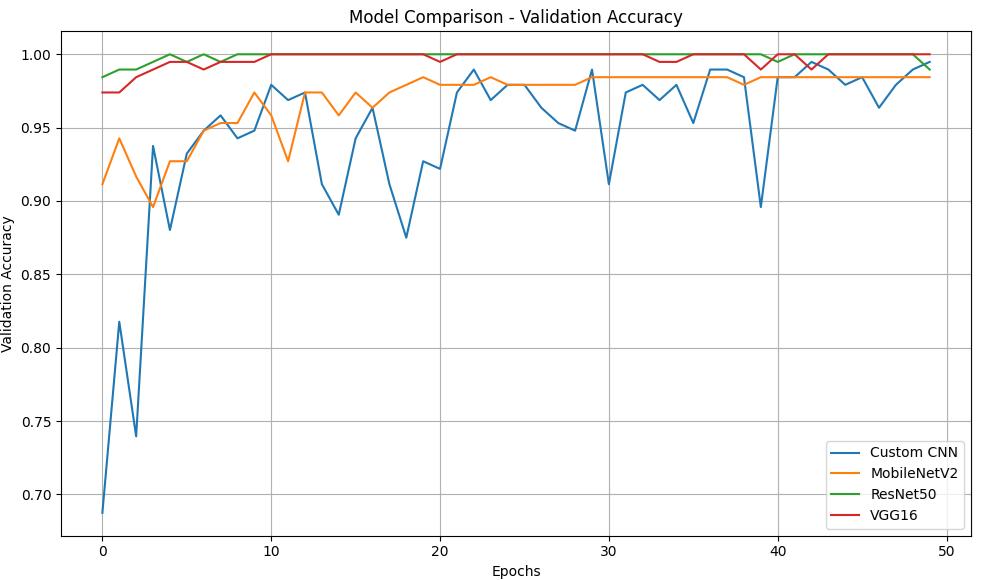
Figure4.1:FinalAccuracycomparisonofalltheimplemented models.
� Custom CNN
A self-built Convolutional Neural Network (CNN) was designedandtrainedfromscratch.Despitebeingarelatively simple architecture compared to transfer learning models, it achieved a high accuracy of 98.44%, demonstrating the effectivenessofdeeplearninginplantdiseasedetectioneven withoutpre-trainedknowledge.
� MobileNetV2
MobileNetV2, known for its lightweight and efficient architecture, was used with transfer learning. It achieved an accuracy of 98.05%. Although slightly lower than others, its
smallersizemakesitidealfordeploymentonmobileandedge devicesinreal-worldagriculturalsettings.
� ResNet50
ResNet50, a deep residual network known for solving vanishing gradient problems using identity shortcut connections,achievedatopaccuracyof 99.61%.Thisreflects its strength in learning deep representations from complex featuresinleafimages.
� VGG16
The VGG16 model, despite being an older and heavier architecture, also performed excellently with an accuracy of 99.61%. Its deep stack of convolutional layers helped in capturing fine-grained visual cues from diseased and healthy leaves.
� Conclusion
Both ResNet50 and VGG16 yielded the best performance among all models tested, making them strong candidates for deployment in real-world automated disease diagnosis systems.TheCustomCNN alsoperformedimpressively given its simplicity, while MobileNetV2 offers a trade-off between speedandaccuracysuitableforon-deviceinference.
Table4.2:LossScoreComparison.
Implemented Loss Score
The loss score quantifies the difference between predicted classprobabilitiesandtheactuallabelsduringmodeltraining. A lower loss generally indicates better model performance, especiallyintermsofconfidenceandconvergencestability.
� VGG16
VGG16achievedthe lowest loss score of 0.0225,confirming its excellent ability to generalize and minimize classification errors. Its deep and consistent convolutional structure allowed it to learn meaningful patterns in the potato leaf dataseteffectively.
� ResNet50
ResNet50 recorded a loss score of 0.0364, which is very close to that of VGG16. This result showcases its strength in deep feature extraction and highlights its robustness against overfittingduetotheresidualconnectionsinitsarchitecture.
International Research Journal of Engineering and Technology (IRJET) e-ISSN: 2395-0056
Volume: 12 Issue: 08 | Aug 2025 www.irjet.net p-ISSN: 2395-0072
The custom-built CNN also performed well, with a loss of 0.0375, only slightly higher than ResNet50. This demonstrates that even a model trained from scratch, when well-structured and optimized, can perform competitively withtransferlearningmodelsondomain-specificdata.
MobileNetV2 showed a loss score of 0.0659, the highest among the models tested. While still reasonably low, it suggests that the model might struggle slightly more with confidently classifying certain disease categories, likely due toitslighterarchitecturedesignedformobileapplications.
The loss score analysis complements the accuracy results, further reinforcing VGG16 and ResNet50 as the topperforming models. VGG16 stands out as the most confident model in its predictions, while the custom CNN also proved itseffectiveness.MobileNetV2,despiteitsslightlyhigherloss, remainsvaluableforlow-resourcedeploymentscenarios.
The comparative analysis of the implemented models, based on both accuracy and loss metrics, reveals that VGG16 and ResNet50 consistently outperformed other architectures. Bothachievedthehighestclassificationaccuracyof 99.61%, demonstrating exceptional ability to distinguish between Early Blight, Late Blight, and Healthy potato leaves. Additionally, VGG16 recorded the lowest loss score of 0.0225, indicating its superior confidence and stability in predictions. ResNet50,withaverycloselossof 0.0364,also confirmeditsrobustnessandeffectivelearningcapacity.The custom CNN model achieved a strong accuracy of 98.44% andmaintainedacompetitivelossscore(0.0375),validating thestrengthofacarefullydesignedarchitectureevenwithout pretraining. MobileNetV2, while delivering slightly lower accuracy (98.05%) and higher loss (0.0659), remains a practical choice for mobile and edge deployment due to its lightweight nature. Overall, VGG16 emerges as the most balanced model in terms of both accuracy and loss, followed closely by ResNet50, making them ideal candidates for realworldagriculturaldiseasedetectionsystems.
[1]P. Mishra, A. A. Alhussan, D. S. Khafaga, P. Lal, S. Ray, M. Abotaleb, K. Alakkari, M. M. Eid, and E.-S.-M. El-kenawy, ‘‘Forecasting produc tion of potato for a sustainable future: Globalmarketanalysis,’’PotatoRes.,vol.67,no.4,pp.1671–1690,Mar.2024,doi:10.1007/s11540-02409717-0.
[2]P. Smith et al., ‘‘which practices co-deliver food security, climate change mitigation and adaptation, and combat land degradationanddesertification?’’GlobalChangeBiol.,vol.26, no.3,pp.1532–1575,Mar.2020,doi:10.1111/gcb.14878.
[3]World Bank. (2024). Agriculture and Food. [Online]. Available: https://www.worldbank.org/en/topic/agriculture/overview.
[4]H. Campos and O. Ortiz, The Potato Crop: Its Agricultural, Nutritional and Social Contribution To Humankind. Cham, Switzerland: Springer, 2019, doi: 10.1007/978-3-030-286835.
[5]Potato Production Worldwide From 2002 To 2022, Statista,Hamburg,Germany,2022.
[6]National Potato Council Releases Groundbreaking Report onU.S.PotatoIndustry’sContributionToAmerica’sEconomy, Nat.PotatoCouncil,Washington,DC,USA,May2024.
[7]P.Atukunda,W.B.Eide,K.R.Kardel,P.O.Iversen,andA.C. Westerberg, ‘‘Unlocking the potential for achievement of the UN sustainable development goal 2-‘zero hunger’-in africa: Targets, strategies, synergies and challenges,’’ Food Nutrition Res.,vol.65,pp.1–19,May2021,doi:10.29219/fnr.v65.7686.
[8]S.Khanal,K.Karimi,S.Majumdar,V.Kumar,R.Verma,S.K. Bhatia, K. Kuca, J. Esteban, and D. Kumar, ‘‘Sustainable utilization and val orization of potato waste: State of the art, challenges, and perspec tives,’’ Biomass Convers. Biorefinery, vol. 14, no. 19, pp. 23335–23360, Oct. 2024, doi: 10.1007/s13399-023-04521-1.
[9]R. Verma, R. Mishra, P. Gupta, Pooja, and S. Trivedi, ‘‘CNN based leaves disease detection in potato plant,’’ in Proc. 6th Int.Conf.Inf.Syst.Comput.Netw.(ISCON),Mar.2023,pp.1–5, doi:10.1109/ISCON57294.2023.10112080.
[10] H. Afzaal, A. A.Farooque, A. W. Schumann, N. Hussain, A. McKenzie-Gopsill, T. Esau, F. Abbas, and B. Acharya, ‘‘Detection of a potato disease (early blight) using artificial intelligence,’’ Remote Sens., vol. 13, no. 3, p. 411, Jan. 2021, doi:10.3390/rs13030411.
[11] J. Pasalkar, G. Gorde, C. More, S. Memane, and V. Gaikwad, ‘‘Potato leaf disease detection using machine learning,’’CurrentAgricult.Res.J.,vol.11,no.3,pp.949–954, Jan.2024,doi:10.12944/carj.11.3.23.
[12] P. Sharma, B. K. Singh, and R. P. Singh, ‘‘Prediction of potato late blight disease based upon weather parameters using artificial neural network approach,’’ in Proc. 9th Int. Conf.Comput.,Commun.Netw.Technol.(ICCCNT),Bengaluru, India,Jul.2018,pp.1–13.
[13] I. R. Lake, L. Hooper, A. Abdelhamid, G. Bentham, A. B. A. Boxall, A. Draper, S. Fairweather-Tait, M. Hulme, P. R. Hunter, G. Nichols, and K. W. Waldron, ‘‘Climate change and food security: Health impacts in developed countries,’’ Environ. Health Perspect., vol. 120, no. 11, pp. 1520–1526, Nov.2012,doi:10.1289/ehp.1104424.
International Research Journal of Engineering and Technology (IRJET) e-ISSN: 2395-0056
Volume: 12 Issue: 08 | Aug 2025 www.irjet.net p-ISSN: 2395-0072
[14] A.Al-Sadi,‘‘Impactofplantdiseasesonhumanhealth,’’ Int.J.Nutrition,Pharmacol.,NeurologicalDiseases,vol.7,no. 2,p.21,2017,doi:10.4103/ijnpnd.ijnpnd_24_17.
[15] R. A. C. Jones, ‘‘Global plant virus disease pandemics and epidemics,’’ Plants, vol. 10, no. 2, p. 233, Jan. 2021, doi: 10.3390/plants10020233.
[16] A. Kaur et al., "Artificial Intelligence Driven Smart Farming for Accurate Detection of Potato Diseases: A Systematic Review," in IEEE Access, vol. 12, pp. 193902193922,2024,doi:10.1109/ACCESS.2024.3510456.
[17] D.S.Joseph,P.M.Pawar,andK.Chakradeo,‘‘Real-time plant disease dataset development and detection of plant diseaseusingdeeplearning,’’IEEEAccess,vol.12,pp.16310–16333,2024.
[18] V. E. González-Rodríguez, I. Izquierdo-Bueno, J. M. Cantoral, M. Carbú, and C. Garrido, ‘‘Artificial intelligence: A promising tool for application in phytopathology,’’ Horticulturae,vol.10,no.3,p.197,Feb.2024.
[19] J.LiuandX.Wang,‘‘Plantdiseasesandpestsdetection basedondeeplearning:Areview,’’PlantMethods,vol.17,no. 1,pp.1–18,Dec.2021.
[20] K. Dokic, L. Blaskovic,and D.Mandusic,‘‘From machine learning to deep learning in agriculture The quantitative review of trends,’’ IOPConf.Ser., Earth Environ. Sci., vol. 614, no.1,Dec.2020,Art.no.012138.
[21] K.Zhang,Q.Wu,A.Liu, and X.Meng,‘‘Can deep learning identifytomatoleafdisease?’’Adv.Multimedia,vol.2018,pp. 1–10,Sep.2018.
[22] M. Bhagat, D. Kumar, and S. Kumar, ‘‘Bell pepper leaf disease classification with LBP and VGG-16 based fused features and RF classifier,’’ Int. J. Inf. Technol., vol. 15, no. 1, pp.465–475,Jan.2023.
[23] H. Alshammari, K. Gasmi, I. Ben Ltaifa, M. Krichen, L. BenAmmar,andM.A.Mahmood,‘‘Olivediseaseclassification based on vision transformer and CNN models,’’ Comput. Intell.Neurosci.,vol.2022,pp.1–10,Jul.2022.
[24] M. Islam, A. Dinh, K. Wahid, and P. Bhowmik, ‘‘Detectionofpotatodis easesusingimagesegmentationand multiclass support vector machine,’’ in Proc. IEEE 30th Can. Conf.Electr.Comput.Eng.(CCECE),Apr.2017,pp.1–4.
[25] S. V. Moravvej, R. Alizadehsani, S. Khanam, Z. Sobhaninia, A. Shoeibi, F. Khozeimeh, Z. A. Sani, R.-S. Tan, A. Khosravi, S. Nahavandi, N. A. Kadri, M. M. Azizan, N. Arunkumar, and U. R. Acharya, ‘‘RLMD PA: Areinforcement learning-based myocarditis diagnosis combined with a population-based algorithm for pretraining weights,’’ ContrastMediaMol.Imag.,vol.2022,no.1,Jan.2022,Art.no. 8733632.
[26] E. Amri, Y. Gulzar, A. Yeafi, S. Jendoubi, F. Dhawi, and M.S.Mir,‘‘Advancingautomaticplantclassificationsystemin SaudiArabia:Introducinganoveldatasetandensembledeep
learningapproach,’’Model.EarthSyst.Environ.,vol.10,no.2, pp.2693–2709,Apr.2024.
[27] Y. Gulzar, ‘‘Enhancing soybean classification with modified inception model: A transfer learning approach,’’ EmiratesJ.FoodAgricult.,vol.36,pp.1–9,Apr.2024.
[28] Y. Gulzar, Z. Ünal, H. Aktaş, and M. S. Mir, ‘‘Harnessing thepoweroftransferlearninginsunflowerdiseasedetection: A comparative study,’’ Agriculture, vol. 13, no. 8, p. 1479, Jul. 2023.
[29] L. Lei, Q. Yang, L. Yang, T. Shen, R. Wang, and C. Fu, ‘‘Deep learning implementation of image segmentation in agricultural applications: A comprehensive review,’’ Artif. Intell.Rev.,vol.57,no.6,p.149,May2024.
[30] S. Savary and L. Willocquet, ‘‘Modelling the impact of crop diseases on global food security,’’ Annu. Rev. Phytopathol., vol. 58, no. 1, pp. 313–341, Jun. 2020, doi: 10.1146/annurev-phyto-010820-012856.
[31] D. M. Rizzo, M. Lichtveld, J. A. K. Mazet, E. Togami, and S. A. Miller, ‘‘Plant health and its effects on food safety and security in a one health framework: Four case studies, ’OneHealthOutlook, vol.3, no.1, pp. 1–9, Dec. 2021, doi: 10.1186/s42522-021-00038-7.
[32] J. Pasalkar, G. Gorde, C. More, S. Memane, and V. Gaikwad, ‘‘Potato leaf disease detection using machine learning,’’CurrentAgricult.Res.J.,vol.11,no.3,pp.949–954, Jan.2024,doi:10.12944/carj.11.3.23.
[33] M. D. Sai Ponnuru and L. Amasala, ‘‘Revolutionizing potatofarming:ACNN-poweredapproachforearlyblightand late blight detection to ensure global food security,’’ in Proc. IEEE Int. Students Conf. Electr., Electron. Comput. Sci. (SCEECS), Feb. 2024, pp. 1–5, doi: 10.1109/sceecs61402.2024.10482138.
[34] N.Sagar,K.Suresh,R.Ramanji,M.Bharath,Y.Naveesh, Ravichandra, and C. Archana, ‘‘Revolutionizing potato crop management: Deep learning-driven potato disease detection with convolutional neural net works,’’ Int. J. Adv. Biochem. Res., vol. 8, no. 3, pp. 644–653, Jan. 2024, doi: 10.33545/26174693.2024.v8.i3h.811.
[35] M. Ng, ‘‘Farming for the cultivation of human beings,’’ TheAnglican,May30,2024.
[36] J.S.I.Ingram,P. J.Gregory, andA.-M.Izac,‘‘Theroleof agro nomic research in climate change and food security policy,’’ Agricult., Ecosyst. Environ., vol. 126, nos. 1–2, pp. 4–12,Jun.2008,doi:10.1016/j.agee.2008.01.009.
[37] Z. Gao, L. R. Khot, R. A. Naidu, and Q. Zhang, ‘‘Early detection of grapevine leafroll disease in a red-berried wine grape cultivar using hyper spectral imaging,’’ Compute. Electron.Agricult.,vol.179,Dec.2020,Art.no.105807.
[38] M. A. R. Nishad, M. A. Mitu, and N. Jahan, ‘‘Predicting and classifying potato leaf disease using K-means segmentation techniques and deep learning networks,’’ Proc.
© 2025, IRJET | Impact Factor value: 8.315 | ISO 9001:2008 Certified Journal | Page17
International Research Journal of Engineering and Technology (IRJET) e-ISSN: 2395-0056
Volume: 12 Issue: 08 | Aug 2025 www.irjet.net p-ISSN: 2395-0072
Comput. Sci., vol. 212, pp. 220–229, Jul. 2022, doi: 10.1016/j.procs.2022.11.006.
[39] J. Pasalkar, G. Gorde, C. More, S. Memane, and V. Gaikwad, ‘‘Potato leaf disease detection using machine learning,’’CurrentAgricult.Res.J.,vol.11,no.3,pp.949–954, Jan.2024,doi:10.12944/carj.11.3.23.
[40] M. D. Sai Ponnuru and L. Amasala, ‘‘Revolutionizing potato farming: A CNN-powered approach for early blight and late blight detection to ensure global food security,’’ in Proc. IEEE Int. Students Conf. Electr., Electron. Comput. Sci. (SCEECS), Feb. 2024, pp. 1–5, doi: 10.1109/sceecs61402.2024.10482138.
[41] N.Sagar,K.Suresh,R.Ramanji,M.Bharath,Y.Naveesh, Ravichandra, and C. Archana, ‘‘Revolutionizing potato crop management: Deep learning-driven potato disease detection with convolutional neural net works,’’ Int. J. Adv. Biochem. Res., vol. 8, no. 3, pp. 644–653, Jan. 2024, doi: 10.33545/26174693.2024.v8.i3h.811.
[42] H. Catal Reis and V. Turk, ‘‘Potato leaf disease detection with a novel deep learning model based on depthwise separable convolution and transformer networks,’’Eng.Appl.Artif. Intell.vol.133, Jul.2024, Art.no. 108307,doi:10.1016/j.engappai.2024.108307.
[43] A.O.Anim-Ayeko, C.Schillaci, and A.Lipani,‘‘Automatic blightdiseasedetectioninpotato(solanumtuberosuml.)and tomato (solanum lycop ersicum, l. 1753) plants using deep learning,’’SmartAgricult. Technol.,vol. 4,Aug. 2023, Art. no. 100178,doi:10.1016/j.atech.2023.100178.
[44] D.P.Medina, I. M.Cabrera, R. A. de la Cruz, L. G. Arzuaga, S. C. Portal, and M. Bianchini, ‘‘A mobile app for detecting potato crop diseases,’’ J. Imag., vol. 10, no. 2, p. 47, Feb.2024,doi:10.3390/jimaging10020047.
[45] V. K. Shrivastava, C. J. Shelke, A. Shrivastava, S. N. Mohanty,andN.Sharma,‘‘Optimizeddeeplearningmodelfor disease prediction in potato leaves,’’ EAI Endorsed Trans. Pervasive Health Technol., vol. 9, pp. 1–7, Sep. 2023, doi: 10.4108/eetpht.9.4001.
[46] P. Jha, D. Dembla, and W. Dubey, ‘‘Deep learning models for enhancing potato leaf disease prediction: Implementationoftransferlearningbasedstackingensemble model,’’ Multimedia Tools Appl., vol. 83, no. 13, pp. 37839–37858,Oct.2023,doi:10.1007/s11042-023-16993-4.
[47] A.K.Shukla,R.Singh,andC.K.Dixit,‘‘Astudybasedon plant disease prediction system using machine leaning,’’ Turkish Online J. Qualitative Inquiry, vol. 12, no. 10, pp. 3147–3155,2021.
[48] A. Arshaghi, M. Ashourian, and L. Ghabeli, ‘‘Potato diseases detection and classification using deep learning methods,’’ Multimedia Tools Appl., vol. 82, no. 4, pp. 5725–5742,Feb.2023,doi:10.1007/s11042-02213390-1.
[49] F. Kang, J. Li, C. Wang, and F. Wang, ‘‘A lightweight neural network-based method for identifying early-blight
and late-blight leaves of potato,’’ Appl. Sci., vol. 13, no. 3, p. 1487,Jan.2023,doi:10.3390/app13031487.
[50] B. Samatha, G. R. Kumar, P. A. Rao, D. K. Rao, T. Syamsundararao, and N. Karyemsetty, ‘‘IoT-enabled potato diseases prediction using deep learning,’’ in Proc. Int. Conf. Innov. Data Commun. Technol. Appl. (ICIDCA), Mar. 2023, pp.878–883,doi:10.1109/ICIDCA56705.2023.10099611.
[51] C. C. Bonik, F. Akter, M. H. Rashid, and A. Sattar, ‘‘A convolutional neural network based potato leaf diseases detection using sequential model,’’ in Proc. Int. Conf. Advancement Technol. (ICONAT), Jan. 2023, pp. 1–6, doi: 10.1109/ICONAT57137.2023.10080063.
[52] O. Sharma, Rajgaurang, S. Mohapatra, J. Mohanty, P. Dhiman, and A. Nonkra, ‘‘Predicting agriculture leaf diseases (Potato): An automated approach using hyper-parameter tuninganddeeplearning,’’inProc.3rdInt.Conf.SecureCyber Comput. Commun. (ICSCCC), May 2023, pp. 490–493, doi: 10.1109/ICSCCC58608.2023.10176819.
[53] Y. Shi, L. Han, A. Kleerekoper, S. Chang, and T. Hu, ‘‘Novel cropdocnet model for automated potato late blight disease detection from unmanned aerial vehicle-based hyperspectral imagery,’’ Remote Sens., vol. 14, no. 2, p. 396, Jan.2022,doi:10.3390/rs14020396.
[54] S. Dutta, S. K. Singh, and S. Panigrahy, ‘‘Assessment of late blight induced diseased potato crops: A case study for westBengaldistrictusingtemporalAWiFSandMODISdata,’’J. Indian Soc. Remote Sens., vol. 42, no. 2, pp. 353–361, Jun. 2014,doi:10.1007/s12524-013-0325-9.
[55] P. Patil, N. Yaligar, and S. M. Meena, ‘‘Comparision of performance of classifiers–SVM, RF and ANN in potato blight disease detection using leaf images,’’ in Proc. IEEE Int. Conf. Comput. Intell. Comput. Res. (ICCIC), Coimbatore, India, Dec. 2017,pp.1–5.
[56] S. S. Ray, N. Jain, R. K. Arora, S. Chavan, and S. Panigrahy,‘‘Utilityofhyperspectraldataforpotatolateblight disease detection,’’ J. Indian Soc. Remote Sens., vol. 39, no. 2, pp.161–169,Jun.2011,doi:10.1007/s12524-011-0094-2.
[57] M.K.R.Asif,M.A.Rahman,andM.H.Hena,‘‘CNNbased diseasedetectionapproachonpotatoleaves,’’inProc.3rdInt. Conf.Intell.Sustain.Syst.(ICISS),Dec.2020,pp.428–432,doi: 10.1109/ICISS49785.2020.9316021.
[58] M.I.Tarik,S.Akter,A.A.Mamun,andA.Sattar, ‘‘Potato disease detection usingmachinelearning,’’inProc.3rdInt.Conf.Intell.Commun. Technol. Virtual Mobile Netw. (ICICV), Feb. 2021, pp. 800–803,doi:10.1109/ICICV50876.2021.9388606.
[59] A.Bangal,D.Pagar,H.Patil,andN.Pande,‘‘Potatoleafdiseas edetection and classification using CNN,’’ Int. J. Res. PublicationRev.J.,vol.3,no.5,pp.1510–1515,2022.[Online]. Available:https://www.ijrpr.com.
[60] M.A.IslamandM.H.Sikder,‘‘Adeeplearningapproach to classify the potato leaf disease,’’ J. Adv. Math. Comput. Sci.,
© 2025, IRJET | Impact Factor value: 8.315 | ISO 9001:2008 Certified Journal | Page18
International Research Journal of Engineering and Technology (IRJET) e-ISSN: 2395-0056
Volume: 12 Issue: 08 | Aug 2025 www.irjet.net p-ISSN: 2395-0072
vol. 37, no. 12, pp. 143–155, Dec. 2022, doi: 10.9734/jamcs/2022/v37i121735.
[61] D.Kothari, H. Mishra, M. Gharat, V. Pandey, and R. Thakur, ‘‘Potato leaf disease detection using deep learning,’’ Int.J.Eng.Res.Technol.,vol.11,no.11,pp.1–5,Nov.2022.
[62] M. L. Fall, D. M. Tremblay, M. Gobeil-Richard, J. Couillard,H.Rocheleau,H.VanderHeyden,C.A.Lévesque,C. Beaulieu, and O. Carisse, ‘‘Infection efficiency of four phytophthora infestans clonal lineages and DNA-based quantification of sporangia,’’ PLoS ONE, vol. 10, no. 8, Aug. 2015, Art. no. e0136312, doi: 10.1371/jour nal.pone.0136312.
[63] B.Hou,Y.Hu,P.Zhang,andL.Hou,‘‘Potatolateblight severity and epidemic period prediction based on Vis/NIR spectroscopy,’’ Agriculture, vol. 12, no. 7, p. 897, Jun. 2022, doi:10.3390/agriculture12070897.
[64] A. A. Farooque, N. Hussain, A. W. Schumann, F. Abbas, H. Afzaal, A. McKenzie-Gopsill, T. Esau, Q. Zaman, and X. Wang, ‘‘Field eval uation of a deep learning-based smart variable-rate sprayer for tar geted application of agrochemicals,’’ Smart Agricult. Technol., vol. 3, Feb. 2023, Art.no.100073,doi:10.1016/j.atech.2022.100073.
[65] S. Erfanian, Y. Zhou, A. Razzaq, A. Abbas, A. A. Safeer, and T. Li, ‘‘Predicting bitcoin (BTC) price in the context of economic theories: A machine learning approach,’’ Entropy, vol.24,no.10,p.1487,Oct.2022,doi:10.3390/e24101487.
© 2025, IRJET | Impact Factor value: 8.315 | ISO 9001:2008 Certified Journal | Page19