
International Research Journal of Engineering and Technology (IRJET) e-ISSN: 2395-0056
Volume: 12 Issue: 06 | Jun 2025 www.irjet.net p-ISSN: 2395-0072
International Research Journal of Engineering and Technology (IRJET) e-ISSN: 2395-0056
Volume: 12 Issue: 06 | Jun 2025 www.irjet.net p-ISSN: 2395-0072
Atharva Vayal1 , Yash Mungekar2 , Pranav Autade3 , Indira Bhattacharya4
123Dept. of Master of Computer Applications, VES’s Institute of Technology, Chembur- 400074
4Assistant Professor, Dept. of Master of Computer Applications, VES’s Institute of Technology, Chembur- 400074
Abstract - The given paper provides the model, creation, and discussion of the trip planner based on AI which generates personalized and optimized travel routes according to inputs of users (number of travelers, days, destination, budget) and the usage of up-to-date data at the ground-level. As opposed to the current solutions that offer users with some predetermined recommendations, this planner flexes itineraries according to the actual situation on ground, in terms of the crowd sizes, weather conditions, traffic and unexpected circumstances that may arise, and provides an alternative recommendation when such develops. The usability and demand of such solution were confirmed by the sample survey of 100 respondents (tour planners and frequent travelers).
Key Words: AI Trip Planner, Real-time Travel Optimization, Forecast-based Trip Planning, User Preference Modeling
1.INTRODUCTION
Thelandscapeoftravelplanninghaswitnessedaparadigm shiftwiththeadventofdigitaltechnologies.Travelerstoday seekhighlypersonalized,efficient,andresponsivesolutions that go beyond static itineraries generated by traditional bookingplatformsortravelagents.Astourismcontinuesto rise,especiallypost-pandemic,thedemandforadaptiveand intelligent travel planning tools has intensified. Modern travellers especially digital natives expect real-time adaptability, convenience, and a hassle-free planning experience.
1.1
Existingtravelplanningtools,whilehelpful,oftenfallshort inaddressingdynamicchangessuchasunexpectedweather conditions,overcrowdingattouristspots,ordisruptionsdue to local events or emergencies. These tools typically offer staticrecommendationsandlacktheabilitytoadaptoncea planiscreated.ThisiswhereArtificialIntelligence(AI)can play a transformative role by providing dynamic itinerary managementandresponsiveoptimization.
This study introduces an AI-based trip planner that integrates multi-criteria personalization with real-time optimizationtechniques.Usersinputkeyparameterssuchas destination,traveldates,numberofpeople,numberofdays, andbudget.Theplannerusesthisdatatogenerateatailored
itinerary, enriched with contextual and real-time informationsuchasweatherforecasts,crowddensity,traffic alerts,andlocalincidents.Incaseofdisturbances,thesystem suggests alternate places or reorders the itinerary for an uninterruptedexperience.
The uniqueness of this planner lies in its ability to make proactivedecisions,mimickinghuman-likeadjustmentsto travel plans in response to unforeseen events. By incorporating forecast models and user preferences, the systemensureshighrelevance,satisfaction,andreliability for users. This paper explores the architecture of the app, survey-basedvalidationwithasampleof100users,andthe broaderimplicationsofAIintegrationintravelplanning.
NumerousstudieshavedemonstratedtheviabilityofAIin tourismandtransportationplanning.AI-basedrecommender systemsfortravelarediscussedinHuangetal.(2017),while real-timeadaptationanditineraryoptimizationareexplored by Srishti et al. (2020). The relevance of user input-based systemsandadaptiverecommendationmodelshasalsobeen supportedbyBansal&Agarwal(2021).
The latest developments in machine learning and natural languageprocessingalsocontributedtothesmartabilitiesof travelaids.Initsturn,applicationinthetourismmarkethas beenasuccesswithconversationalAI,suchaschatbotsand virtualagents,providingsupporttotravelerstomaketheir real-timedecisions,booklodgings,andbuildapersonalized schedule (Zhou et al., 2023). Such systems rely on background knowledge and user experience in order to providemoresuitablerecommendations.
3.1
Weperformeda voluntary survey,whichconsistedofthe 100 participants, including 40 professional tour planners and 60 frequent travelers, within a three-week period, between10may2025and30may2025.Thiscombinationof demographics offered the favorable outlook between the serviceprovidersandend-users,thusenhancingtheextent andtherelatednessofthegathereddata.
The survey was intended at collecting information concerning travel preferences, valuation patterns and
International Research Journal of Engineering and Technology (IRJET) e-ISSN: 2395-0056
Volume: 12 Issue: 06 | Jun 2025 www.irjet.net p-ISSN: 2395-0072
expectationsinrelationtointelligentplanningsystems.The respondentswerequotedtorankthesignificanceofallthese factors in terms of travel variables that include the price, securityofthetravel,climaticstatus,theeaseofschedule, andtheperceivedutilityforthereal-timenotificationsand alternativerecommendations.Suchadefinedinputallowed ustodeterminetowhatextentasuggestedAI-basedsystem wassuitabletomeettheneedsofthoseofvaryingplanning stylesandusers.
3.2 Key Parameters
Thefourmaindatatheusersfurnishtotheapparethe numberofpeople,daysoftravel,destination,andbudget.It istheseinitialinputs,whichareimportanttocustomizethe itinerarytothespecialneedsandrestrictions.Anexampleis thatthesizeofthegroupdeterminesthemodeoftransport touseandthetypeofaccommodationaswellasthesizeof daystobeusedwhenplanningtheactivitiestobedone.
Abudgetisadrivingfactorthroughouttheitinerary,anditis important to make a decision with regards to the accommodation,transport,food,andphysicalactivitiesthat charge money ensuring a budget cost. When all the parametersaregathered,thesystemappliestherule-based filteringmechanismtodiscardallincompatibleoptionsand use optimization algorithms to optimize the trade-off betweenefficiency,interest,andtimemanagement.
Parameter Type Description
Number of Travelers Integer Totalpeopletraveling
TravelDays
Integer Numberofdaysofthetrip
Destination String City or place the user plans to visit
Budget Integer Total budget allocated by the user
3.3 System Features
Real-timealternatesuggestions
Crowddetectionusingthird-partyAPIs
Weather-basedadjustments
Budget-optimized itinerary recommendations
3.4 Tools Used
OpenAIGPTfordynamicplangeneration
GooglePlacesAPIforPOIdata
Weather & Traffic APIs for real-time updates
Tool/API Purpose
OpenAIGPT Generatedynamictripplans
GooglePlacesAPI GetPOIs,reviews,andlocationdata
WeatherAPI Real-timeweatherupdates
Table 2 APIsandToolsUsed
4. RESULTS AND ANALYSIS
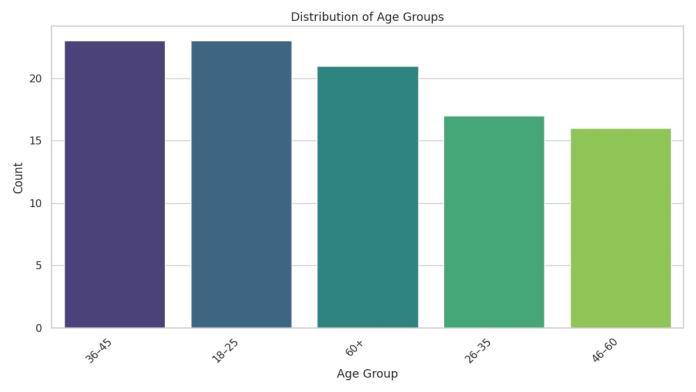
Theagegroup26-35dominatedthesurvey,indicatingtechsavvy users. A large majority (80%) were comfortable inputtingpersonaldataforitinerarypersonalization.
4.2 Preferences
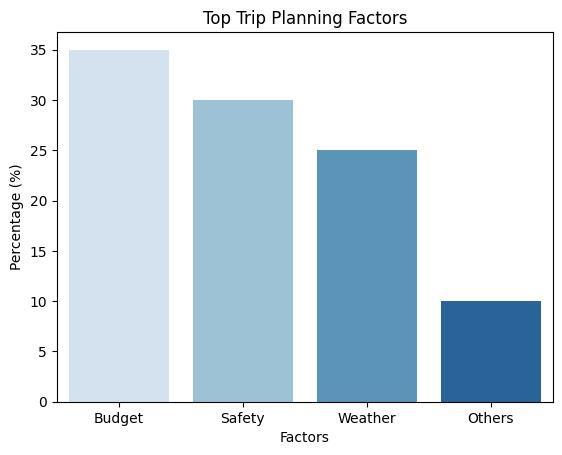
Thesurveyfoundoutthattheuserwouldlookatthebudget, safety,andweatherasthemainthreefactorsfosteringtheir travelplanningdecisions.Theimpactofbudgetlimitswas particularly high on younger travellers and single adventurers,whereassafetyandpredictableweatherwere crucial issues to families and groups on their trip. Such interestsareconsistentwiththenecessityofaframework that can make intelligent suggestions on destinations and activitiesintermsoffinancesandsituations.
In addition, more than three-quarters of respondents indicated that they were quite useful in that they found it quitehelpfultobeinformedwheneveritinerarychangesare madeinrealtime.Thischoicehighlightstheincreaseinthe desire of the customer to have flexibility in their tourism experiences. The users were keen on getting alternative recommendationsincaseofanyinconveniencesoccasioned bypoorweather,overcrowdingorclosure.
Volume: 12 Issue: 06 | Jun 2025 www.irjet.net p-ISSN: 2395-0072
ChartsrepresentingPreferredItineraryStyle,budgetranges, comfortlevels,andwillingnesstoadoptwereplotted
4.3 Willingness to Use
89%expressedwillingnesstouseanAI-poweredappthat minimizesplanningeffortandadjustsinrealtime.
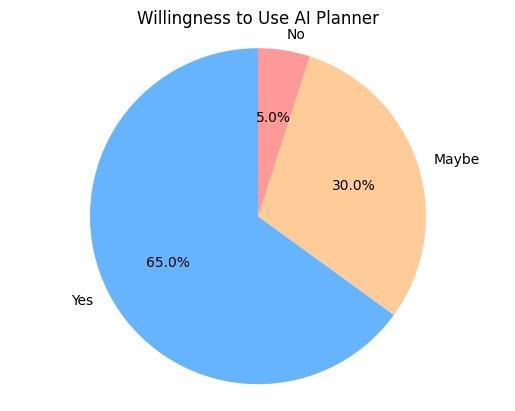
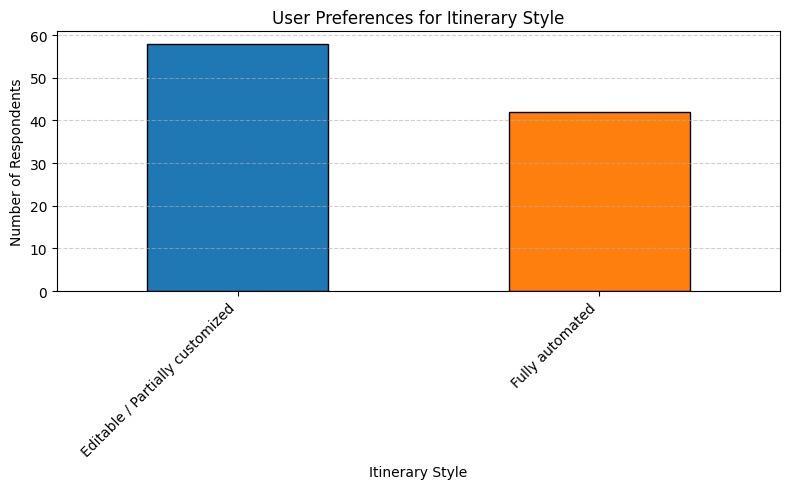
Figure 4 UserPreferencesforItineraryStyle
Using the concept of AI-based travel, with user-centered parametersandrealtimeupdating,weaddressamajorgap inthetravelplanningmarket,theideatosolvetheproblem of creating a route manually and establish the process of building an route to be an optimization problem and automatedoffering.Thissystemismoreflexiblethanother traditional tools because it can accommodate a myriad of user constraints: budget constraints, weather delays, etc. This great positive number of reply given by the survey people proves the existence of need of such technology especiallyinyoungerandtech-savvypeoplewhowantease andspeedintraveling.
Theadditionalabilitiesofthesystemincludemodular-based architecture and APIs streaming to guaranteeing it is scalableandcustomizable.Itisthisflexibilitythatallowsthe plannertobeusednotonlywhenplanningleisuretourism, butalsocorporatetravel needs,event planningorwhat is termed as contingency planning in the event of an emergencysituation.Itcanbecombinedwithreal-timedata feeds of weather, traffic, and crowd-monitoring services, whichmakesitevenmoreabletoprovidequalityandsafe travelingexperiences.
Infuture,theprojecthassightedsomeimprovementsthat have the capacity to make it a complete travel ecosystem. What is being discussed are such features as support of a wide range of languages, using the voice to interact, accessibility offline, and learning using an AI-based prediction algorithm to customize the delivery to the individualuser.Thisisoneofthethingsthatcanmakethis system a revolution to user interaction with the travel planningtoolandprovideasmooth,smartandhumanistic digital travel assistant, a must but not a feature, in contemporarytravelplanning.
International Research Journal of Engineering and Technology (IRJET) e-ISSN: 2395-0056
Volume: 12 Issue: 06 | Jun 2025 www.irjet.net p-ISSN: 2395-0072
The results of this research augment the growing dependenceofusersontheintelligentsystemsintermsof planning and decision-making processes. There is high demandtothetoolsabletointerpretuserpreferencesand reacttochangesinunpredictableconditionsasitisshown bythesurveyresults.Itisanindicationofawidertendency ofsmarttourismandindividualizeddigitalservicestowhich AI has become a key to user satisfaction and the higher performanceofprocesses.Systemintelligencecanfurtherbe improved through integration of forecast models, natural languageprocessingandadaptivelearning.Nevertheless,the question of data privacy, transparency of the system, and algorithmic bias should be overcome as well to guarantee ethicaluseandconfidenceoftheusers.
[1] Huang,Y.,&Bian,L.(2017).Recommendersystemsin tourism.
[2] Srishti, A., & Mohan, R. (2020). Adaptive Itinerary Planning using Real-Time Data. Journal of Smart Tourism,8(2).
[3] Bansal, S., & Agarwal, R. (2021). Personalization in TravelTech.ACMSIGAI.
[4] GooglePlacesAPIDocumentation.(2024).
[5] Statista.(2024).TheIndianTravelBehaviorTrends.
[6] Singh, K. and Mehra, D. (2023). Techniques of ForecastingtheCrowd.TransportResearchPartC.
[7] Kapoor,T.(2021).AIService-BasedAppUsability.IJCSIT.
[8] PredictionsreportofBooking.com(2024).