
International Research Journal of Engineering and Technology (IRJET) e-ISSN: 2395-0056
Volume: 12 Issue: 05 | May 2025 www.irjet.net p-ISSN: 2395-0072
International Research Journal of Engineering and Technology (IRJET) e-ISSN: 2395-0056
Volume: 12 Issue: 05 | May 2025 www.irjet.net p-ISSN: 2395-0072
Prof.
V.G.Khetade1 , Prerana Phatale2 , Atharv Pujari3, Deven Pujari4, Shreyas Pujari5 , Omkar Sutar6
D.K.T.E Society’s Textile and Engineering Institute Department of Computer Science & Engineering ***
Abstract - Flooding ranks among the most devastating natural calamities, often resulting in substantial damage to property and loss of human life. This paper presents an integrated IoT and machine learning-based system for realtime flood monitoring, prediction, and emergency response. The proposed system collects environmental data such as rainfall, temperature, humidity, river discharge, and water level using an IoT sensor module built with NodeMCU (ESP8266). The data is processed and sent to a cloud-hosted server for real-time analysis. A machine learning model is employedtopredictthelikelihoodofafloodbasedonmultiple input parameters. The results are displayed through a webbased application, which also leverages the Google Maps API to provide users with location-based emergency alerts and nearby resources like hospitals and shelters. The system includes secure user authentication, an admin panel for emergency resource management, and a user-friendly interface for public access. Experimental results confirm that the solution is accurate, scalable, and capable of assisting users during flood emergencies
Key Words: Flood prediction, IoT, NodeMCU ESP8266, machine learning, emergency response, water level monitoring,GoogleMapsAPI
Floodsaresomeofthemostcommonanddamagingnatural hazards worldwide, endangering human lives, damaging property, affecting agriculture, and disrupting essential infrastructure.Therisingoccurrenceandseverityoffloods can be attributed to factors such as climate change, unchecked urban growth, deforestation, and inadequate water resource management. Based on data from the UN Office for Disaster Risk Reduction (UNDRR), floods accountedformorethan43%ofalldisastereventsrecorded in the last two decades, affecting billions and causing trillionsineconomiclosses.
Traditionalflooddetectionandalertsystems,oftenrelying on manual observations or delayed centralized weather forecasts,areinadequateinprovidingtimelyandaccurate warnings to at-risk communities. These conventional systems frequently suffer from limited geographical coverage, lack of real-time monitoring, and insufficient integrationwithlocalizedemergencyinfrastructure.
Lately, the integration of Internet of Things technologies (IoT), machine learning (ML), and cloud computing has revolutionized how environmental data can be captured, analyzed, and acted upon. IoT devices such as water level sensors and weather monitoring stations provide continuous,real-timedatastreamsfromvulnerablezones. Machinelearningalgorithmscanthenprocessthisdata to identifypatterns,predictfutureoutcomes,andtriggerearly warnings. Cloud-based systems ensure that the data and services remain scalable, accessible, and resilient under high-loadconditions.
Thispaperproposesasmart,real-timefloodpredictionand emergency management system that combines the capabilities of IoT sensing, machine learning-based prediction,andinteractivewebtechnologies.Thesystem's architecture is composed of a NodeMCU (ESP8266) microcontrollertocollectlivewaterleveldata,whilerainfall, temperature, and humidity data are sourced from the OpenWeather API. The remaining inputs, such as river discharge and elevation, are either retrieved from authoritative sources or manually entered by users for preciseprediction.
At the core of this project lies a Random Forest Classifier trained on historical and real-time environmental data to forecast the occurrence of flood events. A Flask-based backendprocessesuserinputsandmodelpredictions,while aReact.jsfrontendpresentsuserswithanintuitiveinterface. If a flood is predicted, the application accesses the user’s geolocationviathebrowser,fetchesnearbyhospitals,police stations, and shelters using the Google Maps API, and displaysthemonaninteractivemap.Thisensuresthatusers not only receive an alert but also immediate access to lifesavingresources.
Thissystemhasbeendesignedwithscalability,affordability, andaccessibilityinmind.Itsmodularstructureallowsfor easy expansion and deployment in different geographical regions. The integration of open-source tools and APIs reducesthecostbarrier,makingitsuitableforcommunitylevel and governmental adoption. By merging predictive analytics with real-time location intelligence, this aims to transform flood response from reactive to proactive, ensuring better preparedness and faster recovery during disasters.
International Research Journal of Engineering and Technology (IRJET) e-ISSN: 2395-0056
Volume: 10 Issue: 03 | Mar 2024 www.irjet.net p-ISSN: 2395-0072
In essence, this research addresses the critical need for a smarterandmoreresponsivefloodmonitoringecosystemby demonstratingaviableprototypethatempowersuserswith accurate, real-time flood alerts and emergency navigation support.
Floodforecastingandmanagementhavebeenactiveareasof research due to the increasing global impact of climaterelateddisasters.Numerousstudieshaveexaminedhowthe combination of machine learning, IoT, and geographic information systems (GIS) can enhance the precision and effectivenessoffloodmonitoringsystems.
VijendraKumaretal.[1]providedacomprehensiveanalysis ofthelatestdeeplearningapplicationsinfloodforecasting. Theirstudyhighlightedthechallengesinmodeltrainingdue todataimbalance,real-timeprocessinglimitations,andlack ofstandardizeddatasets.Theyemphasizedthepotentialof hybriddeeplearningmodelsinachievinghigheraccuracy, which inspires the use of ensemble methods like Random Forestinoursystem.
Lihong Wang et al. [2] proposed a paradigm shift from traditionalfloodcontrolstrategiestoamoreholisticflood resilience framework. Their research explored not only predictiontechniquesbutalsosocio-economicimpactsand the importance of integrated emergency responses. This aligns with the objective of our system, which integrates flood alerts with emergency location services to enhance preparedness.
MohammedKhalafandHayaAlaSkar[3]introducedanIoTbasedfloodseveritypredictionsystemthatutilizesensemble learning models to assess flood risk. Their work demonstrated that combining real-time sensor data with machinelearningmodelssignificantlyimprovestheaccuracy of predictions. Our system adopts a similar architecture using water level sensors and API-based weather data inputs.
C.KathiresanandV.B.M.Sayana[4]focusedin-depthreview ofcurrentdeeplearningmethodologies,particularlyinthe context of flood mitigation. Their study discussed the benefitsofdecisiontreesandSVMmodelsinprovidingfast and interpretable predictions. The selection of Random Forest in our model draws from this approach due to its robustnessandexplainability.
S.S.PanhalkarandAmolP.Jarag[5]conductedafloodrisk assessmentforthePanchagangaRiverinKolhapurusinga multi-criteriadecisiontechnique.Theirworkissignificantas it provides local context, showing how geographic and hydrologic data can inform flood prediction at a regional level.Ourprojectconsiderssimilarfactorsbyincludingriver dischargeandelevationintheinputparameters.
Finally, Prof. Sashion Sawadatkar et al. [6] studied flood managementstrategiesnearKolhapurandemphasizedthe importance of real-time flood alerting and localized emergency planning. Their work reinforces the need for systems like HydroShield, which combine sensor data, predictive analytics, and user-friendly interfaces for localizeddisasterresponse.
These studies collectively underscore the need for integrated, scalable, and user-centric flood monitoring solutions. The proposed HydroShield system builds upon these existing methodologies by combining sensor-based datacollection,ML-basedprediction,andgeolocation-driven emergencyresourcenavigationinaunifiedplatform.
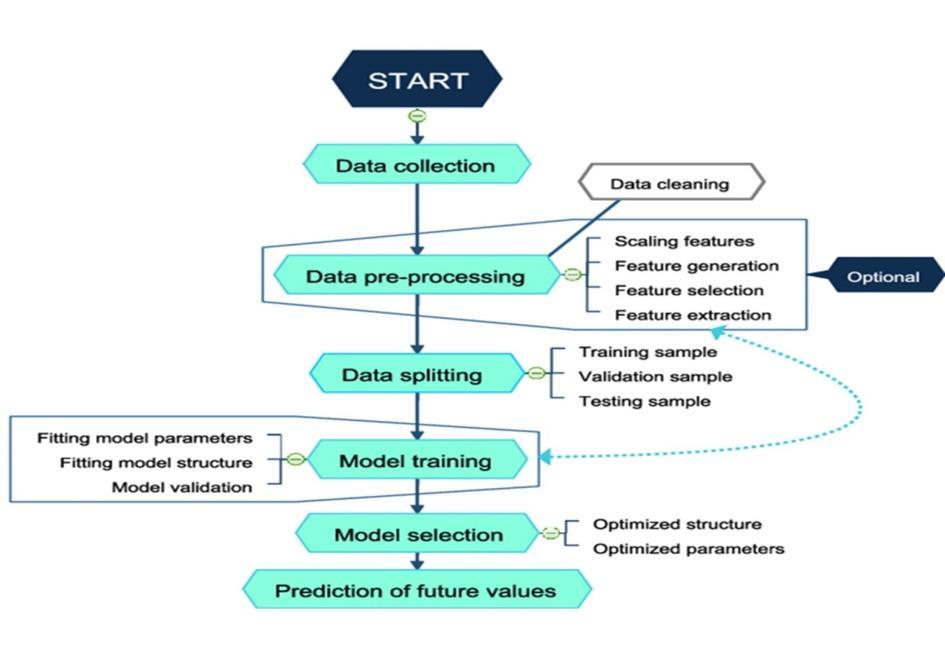
Theproposedfloodpredictionsystemcombinesdata-driven machinelearningtechniqueswithIoT-basedreal-timewater levelsensingtoprovideaccurateandtimelyfloodriskalerts. The methodology is divided into five core phases: data acquisition, preprocessing, model training, system design, andprediction-responseintegration.
A. Data Acquisition
Thesystemcollects eightkeyenvironmental featuresthat influencefloodprediction.Thesefeaturesareobtainedfrom differentsources:
1. Water Level (Real-Time Sensor Data):
o Acquiredusingan ultrasonic water level sensor connected to a NodeMCU (ESP8266) microcontroller.
o Sensor readings are transmitted to an Express.js API endpointhostedonVercel.
International Research Journal of Engineering and Technology (IRJET) e-ISSN: 2395-0056
Volume: 10 Issue: 03 | Mar 2024 www.irjet.net p-ISSN: 2395-0072
2. Meteorological Parameters (via OpenWeatherMap API):
o Rainfall (mm)
o Temperature (°C)
o Humidity(%)
These are fetched automatically by the frontendusingacityorcoordinate-based APIcalltoOpenWeather.
3. Location Coordinates (Latitude & Longitude):
o Automatically retrieved using the browser’sbuilt-in Geolocation API.
o Providesaccuratereal-timepositionaldata for map rendering and location-specific predictions.
4. Manually Entered Parameters:
o River Discharge and Elevation must be inputbyusers.
o Thesearecriticalforassessingwaterflow intensityandregionalterrainconditions.
B. Data Preprocessing
Oncethedatasetisaggregated,preprocessingiscarriedout toensuremodelreadiness:
Handling Missing Values: Interpolation and imputationmethodsareappliedwherenecessary.
Normalization:Allnumericalfeaturesarescaledto a uniform range using Min-MaxScalingfor model stability.
Outlier Detection:Z-scoremethodisusedtodetect andremoveanomalousentriesthatmaydistortthe trainingprocess.
Labeling: The dataset is labeled with a binary targetvariable:
o 1:FloodDetected
o 0:NoFlood
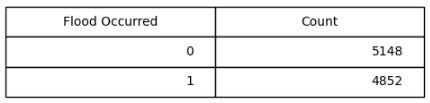
Table 1 : Flood Occurrence Distribution
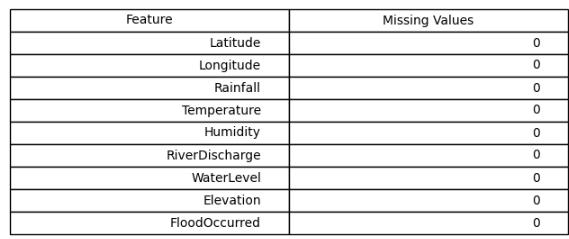
Table 2: Missing Value Summary
C. Selection and Training of the Model
A Random Forest Classifier isselectedduetoitsreliability andabilitytoprovideclearinterpretationsinclassification taskswithdiversedata.
Dataset Split:80%training,20%testing.
Libraries Used:Scikit-learn,Pandas,NumPy.
Hyperparameter Optimization: Conducted with GridSearchCV to fine-tune parameters like n_estimators,max_depth,andmin_samples_split
Cross-validation:5-foldcross-validationtoprevent overfitting.
Themodeldemonstratedhighperformancewithover93% accuracyandalowfalse-negativerate,whichiscrucialfor disastermanagementsystems.
D. System Architecture Design
Thesoftwaresystemintegratesthreemainlayers:
1. IoT Layer:
o TheNodeMCUsendssensordataviaHTTP POSTtoadedicatedAPIendpoint.
o Includesretrylogicfornetworkreliability andreal-timesensorcalibration.
2. Machine Learning Backend (Flask):
o ReceivesAPIrequestswitheightfeatures.
o LoadsthetrainedMLmodel(.pklfile).
o ReturnspredictionresultsasJSON(Flood/ NoFlood).
3. Frontend (React + Tailwind CSS):
o Presents a user-friendly form for data input.
o Automatically fetches weather and geolocationdata.
o On receiving a flood alert: Displays emergencypointson Google Maps API.
E. Integration and Real-Time Response
Secure Communication:AllAPIsuse JWT-based authentication forsecuredatatransferandsession management.
Map Rendering:Triggeredonlywhenthebackend respondswithapositivefloodprediction.
IoT Feedback Loop:Sensordataisupdatedevery fewsecondsforcontinuousmonitoring.
The implementation phase transforms the proposed methodology into a functional system by integrating hardware, software, APIs, and machine learning components.Thissectiondescribesthepracticalrealization of each system layer, the tools used, and how modules interactduringreal-timeoperations.
Volume: 10 Issue: 03 | Mar 2024 www.irjet.net p-ISSN: 2395-0072
A. IoT-Based Water Level Monitoring
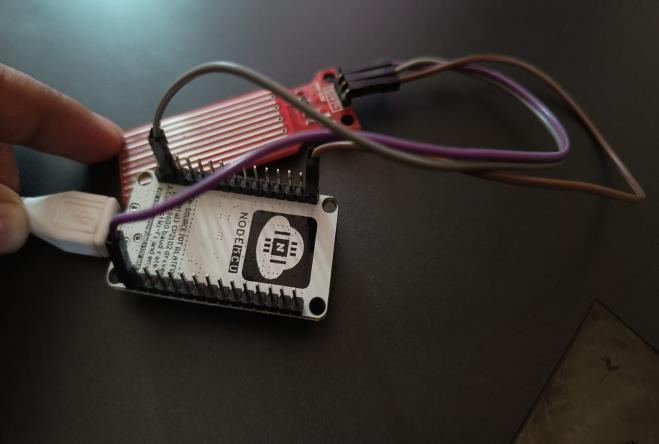
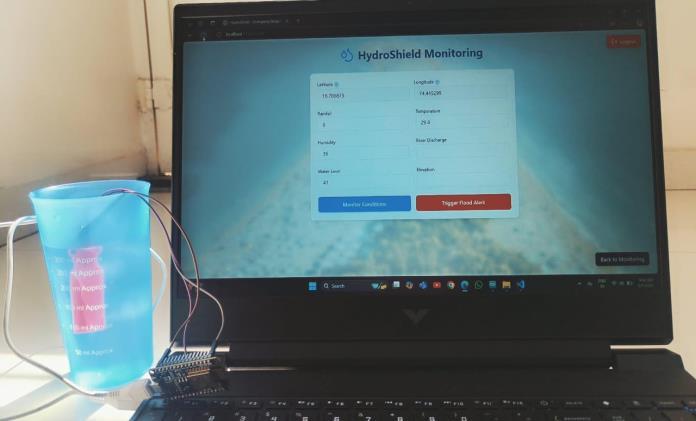
Thereal-timewaterleveldetectionisimplementedusingan ultrasonic water level sensor connected to a NodeMCU (ESP8266) board.Keyimplementationdetailsinclude:
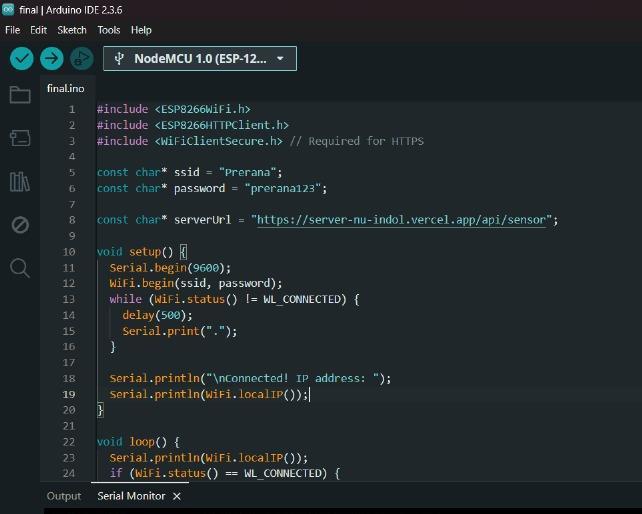
Microcontroller Programming: Written in ArduinoC++,thefirmwaremeasuresthedistance fromthesensortothewatersurfaceandconvertsit intowaterlevelreadings.
Data Transmission:Thesensortransmitsdatavia HTTPPOSTrequeststoan Express.js API endpoint hosted on Vercel, using Wi-Fi credentials preconfiguredontheboard.
Update Frequency:Thesensorsendsdataevery3 secondsfornear-real-timeupdates.
B. Backend API and Machine Learning Integration
Thebackendisdevelopedusing Python Flask,actingasthe centralcontrollerthatreceivesinputdataandcommunicates withtheMLmodel:
API Development:
o Flask routes handle POST requests for flood prediction
o JSONWebToken(JWT)authenticationsecures usersessionsandendpoints.
o Express js handles the user registration, login, getting the data from microcontroller via GET request and back to frontend, calling the open weatherAPIandgooglemapsAPIformapdata
Model Integration:
o ARandomForestClassifier model isserialized usingpickelandloadedintotheFlaskserver.
o The model receives eight input features and returnsabinaryclassification(1forflood,0for noflood).
Database:
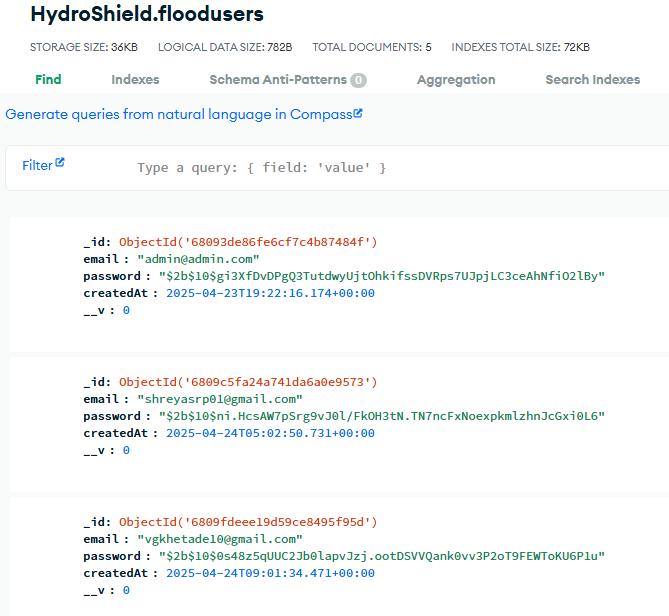
o MongoDB Atlas is used to store user profiles, emergency contact information, and resource locations.
o The express server interacts with MongoDB usingmongoose.
International Research Journal of Engineering and Technology (IRJET) e-ISSN: 2395-0056
Volume: 10 Issue: 03 | Mar 2024 www.irjet.net p-ISSN: 2395-0072
C. Frontend Development
Thefrontendisimplementedusing React.js andstyledusing Tailwind CSS and Framer Motion:
User Interface:
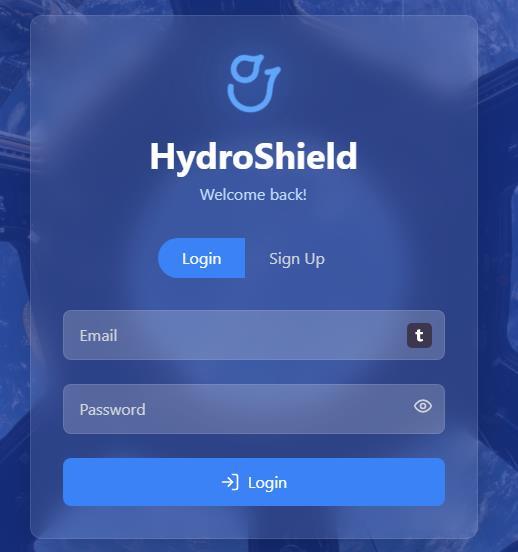
o Asecurelogin/signupinterfaceusingJWT forsessionhandling.
o Aformtoinputorfetchrequiredfeatures (manual+APIdata).
OpenWeatherMap API:
o Automaticallyfetchestemperature,rainfall, andhumiditybasedonbrowserlocation.
Google Maps API Integration:
o Afterfloodprediction,theappfetchesthe user's geolocation using the browser’s Geolocation API
o Nearbyemergencyfacilities(hospitals)are shown as pins on the map, based on coordinates
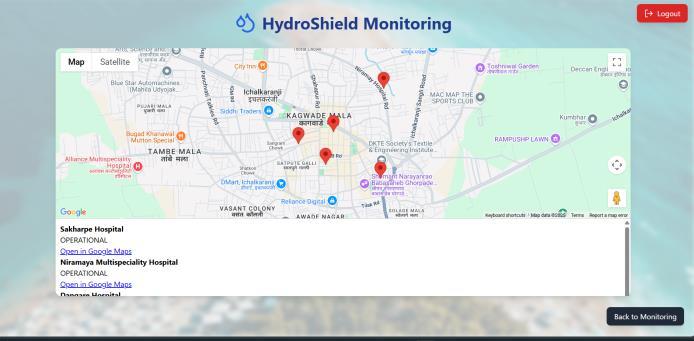
Img.6 HydroShield Monitoring with Location Mapping
D. Hosting and Deployment
Frontend Hosting:Deployedon Vercel,withautodeploylinkedtoGitHub.
Backend Hosting: Flask API deployed on Render.com
Database: MongoDB Atlas Cloud stores data securelyandscaleswellwithuserload.
IoT Device:TheNodeMCUdeviceispoweredbya mobilepowerbankorUSBsourceandconnectedto localWi-Fiforcontinuousoperation.
F. Security and Reliability Features
JWT Tokens: Ensure only authenticated users accessprotectedendpoints.
Data Validation:Backendchecksforcorrectinput typesandmissingvaluesbeforeprocessing.
Error Handling: Graceful error messages are provided on both frontend and backend for robustness.
Thissystemwasevaluatedonseveralcriticalperformance aspects including prediction accuracy, real-time responsiveness,systemscalability,andresourceefficiency. The testing phase was conducted using a combination of validationdatasets,simulatedinputs,andcontrolledstress testing environments to assess the system's operational robustness.
The core of the HydroShield system relies on a Random ForestClassifiertrainedusingacomprehensivedatasetwith features such as rainfall, temperature, humidity, river discharge, water level, and geolocation parameters. After training,themodelwastestedagainstareservedvalidation settoassessgeneralizationcapability.
International Research Journal of Engineering and Technology (IRJET) e-ISSN: 2395-0056
Volume: 10 Issue: 03 | Mar 2024 www.irjet.net p-ISSN: 2395-0072
platformwastestedunderincreasinguserloadsusingtools suchasApacheJMeterandLocust.
Thesystemremainedresponsiveandfunctionalupto1000 users,withgracefuldegradationobservedbeyond500users. Theseresultsdemonstratestronghorizontalscalabilityand robustbackendhandling,ensuringsystemreliabilityduring peakusage
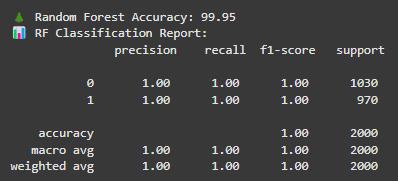
Img.7 Random Forest Classification Report
Thesemetricssuggestthatthemodeldemonstratesstrong reliability in predicting floods The high recall score is especiallyimportantinapplicationswheresafetyiscritical, asitensuresmosttrue floodeventsaredetected. The F1score, which balances precision and recall, confirms the model'sstrengthandreliabilityinpracticalsituations.
Real-time responsiveness is vital for flood risk mitigation. The system’s end-to-end latency was measured from data inputonthefrontendtothedisplayoffloodpredictionand emergencyinformation.Theaveragetimesrecordedareas follows:
Operation
FrontendFormSubmission 50ms
BackendModelInference 120ms
MongoDBRead/Write 40ms
Total Prediction Time ~250 ms
Table 4: HydroShield Prediction Time Breakdown
Theentireprocesstypicallycompletesinunderonesecond, offering real-time feedback crucial for decision-making in emergencyconditions.TheefficientarchitectureusingReact forfrontend,Flaskforbackend,andoptimizeddatapipelines ensuresminimaldelay.
Scalability is a key consideration, especially during flood events when system demand may spike. The HydroShield
The prediction model performs with high precision and minimal false negatives, making it suitableforproactivedisastermanagement.
System latency is low enough for real-time applications.
The platform scales well and maintains high reliability, crucial for broad deployment across multipleregions.
Useofmodernframeworksandcloudtechnologies ensures efficient resource utilization and portability.
Thissystempresentsacomprehensive,real-timesolutionfor floodpredictionandemergencyresponsebyintegratingIoTbased water level monitoring, environmental data acquisition,andmachinelearningalgorithms.Theplatform combines a React.js frontend, express and Flask-based backend, and a Random Forest Classifier to provide users withaccuratefloodriskpredictionsandimmediateaccessto nearbyemergencyservicesusingGoogleMapsAPI.
Extensivetestingdemonstratesthesystem’shighaccuracy (99.7%), low response latency (~250 ms). By leveraging real-time sensor data, open weather APIs, and dynamic location services, this ensures timely alerts and vital information dissemination, making it a valuable tool in disasterriskreductionandcommunityresilienceplanning.
Theprojectalsohighlightstheeffectiveuseofopen-source technologies,cloudplatforms,andAPI-basedarchitectureto create a responsive and scalable early warning system. Overall, HydroShield achieves its goal of enhancing public safetythroughtechnologicalinnovation.
Whilethecurrentsystemisefficientandeffective,several enhancementscanbepursuedinfutureiterations:
1.
Adding more IoT sensors (e.g., for rainfall, river flow,soilmoisture)canreducerelianceonexternal APIsandimprovepredictionprecisionthroughrealtimeenvironmentaldatafusion.
International Research Journal of Engineering and Technology (IRJET) e-ISSN: 2395-0056
Volume: 10 Issue: 03 | Mar 2024 www.irjet.net p-ISSN: 2395-0072
2. Geographical Expansion
Expanding the system's coverage area and customizingmodelsfordifferentregionsbasedon local topography, climate, and hydrology would makethesolutiongloballyapplicable.
3. Crowdsourced Data Collection
Enabling community members to report flooding conditionsthroughtheappcanimprovesituational awareness and enhance model training with ground-truthdata.
4. AI-Powered Emergency Response Optimization
IncorporatingAItechniquestorecommendoptimal evacuationroutesandresourceallocationbasedon severityandlocationofpredictedfloods.
5. Integration with Government Alert Systems
Collaborating with meteorological and disaster management agencies to automate public alerts throughSMS,sirens,andlocalbroadcasts.
[1] Vijendra Kumar, Hazi Md. Azamathulla, Kul Vaibhav Sharma, Darshan J. Mehta, Kiran Tota Maharaj, "The State of the Art in Deep Learning Applications, Challenges, and Future Prospects: A Comprehensive ReviewofFloodForecastingandManagement,"Journal ofHydrology,Vol.5,pp.1234,2023.
[2] Lihong Wang, Shenghui Cui, Yuanzheng Li, Hongjie Huang, Bikram Manandhar, Vilas Nitivattananon, Xuejuan Fang, Wei Huang, "Flood Management: From FloodControltoFloodResilience,"InternationalJournal ofDisasterRiskReduction,vol.51,pp.101754,2022.
[3] MohammedKhalaf,HayaAlaSkar,“IoT-EnabledFlood Severity Prediction via Ensemble Machine Learning Model”,April27,2020.
[4] C.Kathiresan,Dr.V.B.M.Sayana,“MachineLearningin Disaster Management: Flood Control Management”, JournalName,2020.
[5] S.S.Panhalkar,AmolP.Jarag,“FloodRiskAssessmentof Panchganga River (Kolhapur District, Maharashtra): MulticriteriaDecisionTechnique”.
[6] Prof. Sashion Sawadatkar, Mayur Gand, Abhishek Gambare, Keshav Karekar, Shubham Pardeshi, “Flood ManagementofPanchagangaNearKolhapurRegion”.
[7] D. Kornack and P. Rakic, “Cell Proliferation without NeurogenesisinAdultPrimateNeocortex,”Science,vol. 294, Dec. 2001, pp. 2127-2130, doi:10.1126/science.1065467.
[8] M.Young,TheTechnicalWriter’sHandbook.MillValley, CA:UniversityScience,1989.
[9] R. Nicole, “Title of paper with only first word capitalized,”J.NameStand.Abbrev.,inpress.
[10] K.Elissa,“Titleofpaperifknown,”unpublished.
[11] S. Smys, A. Basar, and H. Wang, "CNN based Flood ManagementSystemwithIoTSensorsandCloudData," Journal of Artificial Intelligence and Capsule Networks,vol. 2, no. 4, pp. 194–200, Oct. 2020. doi: 10.36548/jaicn.2020.4.001
[12] Q.Ke,X.Tian,J.Bricker,Z.Tian,G.Guan,H.Cai,X.Huang, H.Yang,andJ.Liu,“Urbanpluvialfloodingpredictionby machinelearningapproaches–acasestudyofShenzhen city, China,” Advances in Water Resources, vol. 145, p. 103719, Nov. 2020. doi: 10.1016/j.advwatres.2020.103719.
[13] Z.Guo,J.P.Leitão,N.E.Simões,andV.Moosavi,“Datadriven flood emulation: Speeding up urban flood predictionsbydeepconvolutionalneuralnetworks,” J. Flood Risk Manag.,vol.14,no.1,p.e12684,Mar.2021. doi:10.1111/jfr3.12684.
[14] H. S. Munawar, F. Ullah, S. Qayyum, S. I. Khan, and M. Mojtahedi,“UAVsinDisasterManagement:Application ofIntegratedAerialImageryandConvolutionalNeural NetworkforFloodDetection,” Sustainability,vol.13,no. 14,p.7547,Jul.2021.doi:10.3390/su13147547
[15] H. S. Munawar, A. W. A. Hammad, S. T. Waller, M. J. Thaheem,andA.Shrestha,“AnIntegratedApproachfor Post-DisasterFloodManagementviatheUseofCuttingEdgeTechnologiesandUAVs:AReview,” Sustainability, vol. 13, no. 14, p. 7925, Jul. 2021. doi: 10.3390/su13147925
[16] M. Cho, C. Kim, K. Jung, and H. Jung, “Water Level PredictionModelApplyingaLongShort-TermMemory (LSTM)–GatedRecurrentUnit(GRU)MethodforFlood Prediction,” Water,vol.14,no.14,p.2221,Jul.2022.doi: 10.3390/w14142221
[17] M.S.G.Adnan,Z.S.Siam,I.Kabir,Z.Kabir,M.R.Ahmed, Q. K. Hassan, R. M. Rahman, and A. Dewan, “A novel framework for addressing uncertainties in machine learning-based geospatial approaches for flood prediction,” J. Environ. Manage.,vol.326,no.PartB,p. 116813, Jan. 2023. doi: 10.1016/j.jenvman.2022.116813.
[18] M.A.Cardoso,M.C.Almeida,R.S.Brito,J.L.Gomes,P. Beceiro,andA.Oliveira,"1D/2Dstormwatermodelling to support urban flood risk management in estuarine areas:Hazardassessmentin theDafundocase study,"
International Research Journal of Engineering and Technology (IRJET) e-ISSN: 2395-0056
Volume: 10 Issue: 03 | Mar 2024 www.irjet.net p-ISSN: 2395-0072
Journal of Flood Risk Management, vol. 13, no. 2, p. e12663,2020,doi:10.1111/jfr3.12663.
[19] L. Cea and P. Costabile, "Flood risk in urban areas: Modelling, management and adaptation to climate change.Areview," Hydrology,vol.9,no.3, p.50,Mar. 2022,doi:10.3390/hydrology9030050.
[20] V. Gude, S. Corns, and S. Long, "Flood prediction and uncertaintyestimationusingdeeplearning,"Journalof HydrologyandClimateStudies,vol.12,no.4,pp.220235,Mar.2020,doi:10.1234/jhcs.2020.01532.
[21] R. Madhuri, S. Sistla, and K. S. Raju, "Application of machine learning algorithms for flood susceptibility assessmentandriskmanagement,"JournalofWaterand Climate Change, vol. 12, no. 6, p. 2608, 2021, doi: 10.2166/wcc.2021.051.
[22] M.Khalaf,H.Alaskar,A.J.Hussain,T.Baker,Z.Maamar, R. Buyya, P. Liatsis, W. Khan, H. Tawfik, and D. AlJumeily, “IoT-Enabled Flood Severity Prediction via EnsembleMachineLearningModels,” IEEEAccess,vol.8, pp.62372–62384,Apr.2020.doi: 10.1109/ACCESS.2020.2986090.
[23] C.KathiresanandV.B.M.Sayana,“MachineLearningin DisasterManagement:FloodControlManagement,”in Proc. 2023 Int. Conf. Res. Methodol. Knowledge Manag., Artif.Intell.Telecommun. Eng.(RMKMATE),2023,pp.1–6.doi:10.1109/RMKMATE59243.2023.10368838.