Fotokopieerapparaten zijn algemeen verspreid en vele mensen maken er haast onnadenkend gebruik van voor allerlei doeleinden. Jammer genoeg ontstaan boeken niet met hetzelfde gemak als kopieën. Boeken samenstellen kost veel inzet, tijd en geld. De vergoeding van de auteurs en van iedereen die bij het maken en verhandelen van boeken betrokken is, komt voort uit de verkoop van die boeken.
In België beschermt de auteurswet de rechten van deze mensen. Wanneer je van boeken of van gedeelten eruit zonder toestemming kopieën maakt, buiten de uitdrukkelijk bij wet bepaalde uitzonderingen, ontneem je hen dus een stuk van die vergoeding. Daarom vragen auteurs en uitgevers om beschermde teksten niet zonder schriftelijke toestemming te kopiëren buiten de uitdrukkelijk bij wet bepaalde uitzonderingen. Verdere informatie over kopieerrechten en de wetgeving met betrekking tot reproductie vind je op www.reprobel.be.
Ook voor het digitale lesmateriaal gelden deze voorwaarden. De licentie die toegang verleent tot dat materiaal is persoonlijk. Bij vermoeden van misbruik kan die gedeactiveerd worden. Meer informatie over de gebruiksvoorwaarden lees je op www.ididdit.be.
De uitgever heeft ernaar gestreefd de relevante auteursrechten te regelen volgens de wettelijke bepalingen. Wie desondanks meent zekere rechten te kunnen doen gelden, wordt verzocht zich tot de uitgever te wenden.
Dit leermiddel is onderdeel van de lesmethode Track van Uitgeverij VAN IN. Het is ontwikkeld met de intentie dat iedere leerling zich herkent en thuis voelt in beeld en tekst. Heb je op- of aanmerkingen, dan kun je contact opnemen met Uitgeverij VAN IN.
Van dit leermiddel kun je een aangepaste digitale versie aanvragen bij ADIBib, de service voor leerlingen met lees- of schrijfproblemen. Meer informatie vind je op www.adibib.be.
Vormgeving en opmaak: Vrijdag Grafis ISBN 978-94-651-4380-4 Tekeningen: Lise Vanlerberghe en Hans Dijckmans / GraphicMatic D/2026/0078/84
Zetwerk: banananas.net Art. 611704/01 NUR 110
6
THE WORLD IS AT YOUR FEET
STARTEN MET TRACK
Welkom in TRACK. We leggen graag even uit hoe je met dit boek aan de slag gaat.
1 / Op weg met TRACK
Het leerwerkboek bestaat uit een Introduction en zes units. Elke unit is op dezelfde manier opgebouwd.
Op de voorpagina van elke unit vind je terug wat je gaat leren om de taak aan het einde van de unit, de Check Out, goed te kunnen uitvoeren. Deze voorpagina toont je de weg die je zult afleggen.
In de Check In maak je kennis met het thema van de unit.
De Main Track is opgebouwd uit verschillende Steps. In elke Step leer je een afzonderlijke bouwsteen om de taak aan het einde van de unit te kunnen maken.
Aan het einde van elke Step zie je een verwijzing naar een Check. Die Check vind je terug in het onderdeel On Different Tracks op iDiddit. In On Different Tracks ga je na of je de bouwsteen al onder de knie hebt.
In de Summary vind je een overzicht van de grammatica, woordenschat, strategieën en veelgebruikte uitdrukkingen.
Je leerkracht zal je zeggen wanneer je de Check kunt uitvoeren. Afhankelijk van je resultaat kun je – op jouw eigen tempo – de leerstof nog even herhalen, extra oefenen of meer verdiepende oefeningen maken. Je vindt deze oefeningen op iDiddit.
Je kunt je traject in On Different Tracks helemaal zelfstandig doorlopen, met een partner of samen met de klas.
Reflection
8 Check your task by filling in the checklist.
Checklist: a family tree
1 Preparation
Als je alle bouwstenen in de vingers hebt, ben je klaar voor de Check Out, de communicatieve opdracht aan het einde van de unit. Hier pas je alles wat je geleerd hebt in de unit toe.
• I asked family members for photos or I browsed newspapers and magazines for photos.
2 Content and structure
• I made a family tree or collage.
• I wrote the names under each photo.
• I described 4 family members and their looks.
We willen graag dat je vorderingen maakt en dat je reflecteert op je taken en leert uit feedback.
• I compared 3 people.
3 Language
• I used the correct vocabulary to describe family relations.
• I used possessive adjectives and possessive pronouns correctly.
• I used comparisons correctly.
• I used ‘to have (got)’ correctly.
• I used correct spelling and punctuation.
• I paid attention to my pronunciation.
Trace your steps on iDiddit.
Na elke unit kun je noteren wat je succesvol hebt afgerond en wat je nog meer moet oefenen. Trace Your Steps staat op iDiddit.
2 / Nuttig voor onderweg
In de loop van elke unit word je ondersteund door een aantal hulpmiddelen.
Grammaticale regels staan altijd in een kader, met een duidelijk voorbeeld erbij. Hier vul je zelf een aantal basiskenmerken van de regel in. Als er een icoontje naast het grammaticakader staat, vind je een instructiefilmpje over dit onderwerp op iDiddit. Hoe je de grammatica gebruikt, vind je vervolgens terug in de Summary Aan de hand van nog meer voorbeelden en illustraties schetsen we de context waarin je de grammatica kunt gebruiken.
Omdat leerstrategieën ontzettend belangrijk zijn, vind je die ook in de Main Track terug wanneer je ze nodig hebt. Elke leerstrategie kun je via een handig schema of overzicht nog eens rustig bekijken in de Summary, ook als je er later nog eens gebruik van wilt maken.
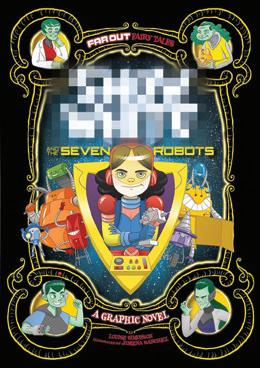
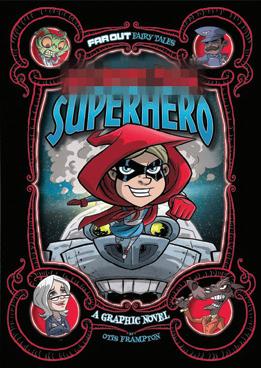
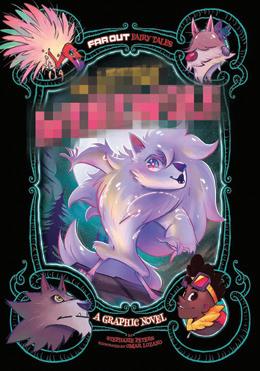
In a faraway land, a princess named Aurora lives in a castle … honing her enchantments amid a slumbering kingdom! When the princess was just a baby, a wicked fairy cursed the realm with unending sleep. But a kind fairy had her own spell to cast – she saved the newborn and granted the girl the gift of magic! Now, Aurora is the only one who can awaken her subjects by making a potion made up of the world’s rarest ingredients. Faced with strange places and fantastical creatures, can Aurora succeed in her epic quest, or will the kingdom – and she – be doomed to doze forever?
Omdat je Engels wilt gebruiken in een realistische context, reiken we je ook veelgebruikte uitdrukkingen aan. Beluister de juiste uitspraak op iDiddit.
De woordenschat van elke unit geven we je mee via mindmaps of via een overzichtelijke woordenlijst met ruimte om je eigen woorden en zinnen aan te vullen.
Beluister de juiste uitspraak op iDiddit.
Vaardigheden zijn een belangrijk onderdeel bij het leren van een nieuwe taal. Daarom geven we bij elke oefening aan op welke vaardigheid je het meest aan het oefenen bent: listening, watching, reading, speaking, spoken interaction, writing, written interaction
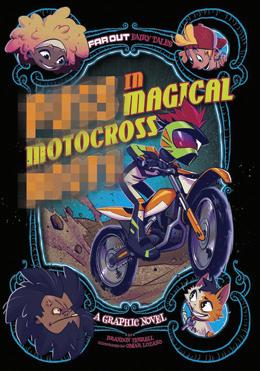
In a remote mountain valley lives a special pack of wolves: one night a month, when the moon is full, they turn into werewolves. Little werewolves are taught never to venture to the far side of one mountain because of the grave dangers there. But the youngest daughter of the pack’s alpha wolf just can’t contain her curiosity. She sneaks a peek at the forbidden side to discover it is a ski resort, where she befriends a young boy. But will their friendship survive if he discovers her dark secret? Experience Hans Christian Andersen’s tale of ‘ ’ like you never have before in this graphic novel retelling. Highlight the words related to fairy tales and put them in the correct place in the mind map. Place CharactersObjects Theme/Event/Actions
3 / Fijn en handig voor onderweg
honing > to hone: to refine, to improve remote: far away slumbering: sleeping to venture: to undertake a risky/daring journey
Wanneer er moeilijke woorden voorkomen in het authentieke tekstmateriaal, worden die uitgelegd in de glossary
In de Did You Know -kaders vind je leuke weetjes en achtergrondinformatie.
De volgende iconen helpen je ook nog een eind op weg:
Hier hoort een luisterfragment bij.
you add other words? Add at least 3 other words to each category.
Hier hoort een beeldfragment bij.
UNIT 3: ONCE UPON A
Als je dit icoon ziet, moet je iets online opzoeken.
Oefen je mondelinge vaardigheden met Vox op iDiddit.
Lesmateriaal
Het onlineleerplatform bij TRACK
Meer weten? Ga naar
Je vindt hier het lesmateriaal per unit: het video- en audiomateriaal, nuttige links, maar ook de teksten die je met de readspeaker kunt laten voorlezen.
Woordenboek
Met het ingebouwde vertaalwoordenboek kun je onbekende woorden naar een uitgebreid gamma aan talen omzetten. Of gebruik het verklarende woordenboek om de betekenis te achterhalen.
Oefeningen
Maak digitale oefeningen op jouw niveau en krijg feedback aan de hand van theoriekaders en instructiefilmpjes. Je kunt de leerstof ook inoefenen op je eigen tempo en volgens je eigen noden in On Different Tracks
Opdrachten
De leerkracht kan opdrachten voor jou klaarzetten.
Resultaten
Als je digitaal geoefend hebt op iDiddit, vind je daar een overzicht van je resultaten. Je leerkracht kan hier ook feedback voor jou achterlaten.
Spreken en mondelinge interactie
De speech coach helpt je bij de juiste uitspraak en het voeren van gesprekken.
Je kunt jouw leerwerkboek ook als e-book bekijken.
De teksten in je leerwerkboek vind je ook terug op iDiddit. Daar kun je ze laten voorlezen met de readspeaker, woorden laten vertalen …
Dit icoontje geeft aan dat je een filmpje kunt bekijken.
Het luidsprekertje wijst op een geluidsfragment.
Soms heb je extra materiaal nodig bij een oefening.
De instructievideo geeft nog meer uitleg bij een grammaticakader.
Met Vox kun je extra oefenen op mondelinge vaardigheden.
WOORDTRAINER VAN IN
En waarom de woordenschat niet instuderen met de handige woordtrainerapp van Track 2-in-one?
INTRODUCTION: NICE TO MEET YOU
check in
on different tracks main track
summary
Step: meeting and greeting someone
CHECK IN
My name is
1 Watch the short video and answer the questions.
a Who is in the video?
b What does he repeat again and again?
c How does he introduce himself?
d Is that his real name?
2 Discuss these questions.
a What is the word for a name given to a person instead of their real name?
b Do you have a nickname? If not, imagine you could give yourself a nickname, what would it be?
c Use an online name generator and find out what your perfect nickname is.
Did you know?
Names in English
A last name (US), or surname (UK), is your family name that you use in formal situations, or with people you do not know well. Example:
– The artist’s first name is Marshall.
– His middle name is Bruce.
– His last name, also called surname or family name, is Mathers. – His full name is Marshall Bruce Mathers.
– His nickname is Slim Shady.
3 Now it is up to you. Say who you are and listen to your friend who will say who they are. Write the words you use in the text boxes.
Hi, my name is (first name) (surname).
My perfect nickname is Hi, my name is (first name) (surname).
My perfect nickname is
watchING
SPEAKING
MAIN TRACK
Step Who are you? Meeting and greeting someone
1 This is Mrs. Thompson, an English teacher from Oxford.
a Listen to Mrs. Thompson who introduces herself to you. listening
Hello!
My name is Trina Thompson. My first name is Trina. My surname is Thompson.
I am 28 years old.
I live on Baker Street in Oxford in the United Kingdom.
I have one brother and two sisters. I have one pet: a cat called Izzy.
My hobbies are playing tennis and padel. I like spending time with my family.
b What did Mrs. Thompson talk about?
brother/sister ( )
c Complete Mrs. Thompson’s introduction form with words from the previous exercise.
Trina
Thompson 28 Baker Street, Oxford playing tennis and padel spending time with family
2 How do you answer questions about yourself in English? Choose the right sentence. Hello!
I have … pets. I live in … My surname is … I like … How do you do?
a How to say what you like doing
b How to say what your hobbies are
c How to say your name
d How to say how many siblings you have
e How to say where you live
f The word you use to greet someone
g How to say how many pets you have
h How to say your first name
i How to say your surname or last name
j How to say how old you are
k How to greet someone in a very formal way
l How to end the conversation
I have … brother(s) and ... sister(s). My name is … My hobby is / hobbies are … I am … years old. My first name is … Goodbye!
3 Now it is up to you! Complete the introduction form with your own information.
Hello!
My name is . My first name is My surname is I am years old.
I live in .
I have brother(s) and sister(s).
I have pet(s): My hobbies are . I like .
4 Match the questions to the correct answer.
1 Where are you from?
I’m from London.
2 How are you? My name is Sally Lehman.
3 What is your name?
I’m fine, thanks. How are you?
4 What are your hobbies? I’m 27 years old.
5 How old are you?
6 Who are you?
5 Asking and answering questions.
I’m Jeff Baker.
My hobby is swimming.
a Preparation: decide who will be student A and B.
b Action: have a short conversation and follow this procedure:
Checklist: asking and answering questions
• Student A asks student B the questions on the next page.
• Student B answers the questions in full sentences.
• Student A writes down student B’s answers by using key words.
• Switch roles.
• Introduce your neighbour to your classmates by using the information you wrote down.
• Pay attention to your pronunciation!
SPOKEN INTERACTION
1 What is your first name? 2 What is your last name? 3 How old are you? 4 Where are you from?
5 How many siblings do you have?
6 How many pets do you have?
7 What is your hobby?
8 What do you like to do?
c Reflection: check your conversation!
6 Liar, liar, pants on fire! How well do you know each other?
a Two truths, one lie. Write down three things about yourself, but one thing is a lie. Use expressions from the previous exercises.
b Now tell your classmates the three things about yourself. They have to guess what the lie is.
7 You are going to have a paper fight. Listen to the instructions! SPOKEN INTERACTION
CHECK
SUMMARY
MEETING AND GREETING
Word Translation My notes
an age een leeftijd an address een adres to be zijn
a boy een jongen a brother een broer
a first name een voornaam
a friend een vriend
a full name een volledige naam a girl een meisje to greet groeten a hobby een hobby to introduce voorstellen
a last name (US), surname (UK), family name een familienaam
likes vind-ik-leuks
to meet ontmoeten
a middle nameeen tweede voornaam nice to meet youaangename kennismaking
a nickname een bijnaam parents ouders
a pet een huisdier pleased to meet youaangename kennismaking siblings broer(s) en/of zus(sen) a sister een zus
– I have … brother(s) and … sister(s). (= siblings)
– I have … pet(s).
– My hobbies are …
– I like ...
4 Asking for extra information about someone else
– Who are you? / What’s your name? / Excuse me, you are?
– Where are you from?
– How are you?
– How old are you?
– How do you do?
– What are your hobbies?
– What do you like to do?
– How many pets do you have?
– How many siblings do you have?
5 Saying goodbye in English
– Goodbye / bye
– See you soon.
– It was nice to meet you.
– Talk to you soon.
– Talk to you later.
– See you later.
Keep in mind:
How do you do? This is very formal. It can be used when you first meet someone and shake the other person’s hand. The answer to ‘How do you do?’ is also ‘How do you do?’.
UNIT 1: EASY AS ABC
check in
Step 3: describing your classroom
summary main track
Step 1: numbers and the alphabet
Step 2: sharing information trace your steps on different tracks
check out: my ideal classroom
CHECK IN
New at school
1 There are some new students in class and they would like to introduce themselves.
a Read the speech bubbles out loud. Then answer the questions. reading
Hi, my name is Gideon. I am 13 (thirteen) years old and my family is from Leeds. I now live close to the school here in Sheffield with my parents and brother. I really like listening to music. That is why my hobby is DJ’ing. This is a really big school with more than 1,000 (a thousand) pupils. It can be a bit scary sometimes.
Text 1
1 What is the boy’s name?
2 How old is he?
3 Where is his family from?
4 What is his hobby?
5 What does he like?
Text 2
1 What is the girl’s name?
2 How old is she?
3 Where is she from?
4 What is her hobby?
5 What does she like to do?
Hi, I am Adina. I’m 12 (twelve). My parents are from Medina. But I was born in London. I have 2 (two) sisters, Sanae and Aisha. My hobby is drawing and I like going to the cinema.
I am new at this school and it is so much bigger than my old school. I hope I can find some new friends soon!
b How do Gideon and Adina feel about the new school? Why?
2 You are at a new school too! How does it feel for you?
MAIN TRACK
Step 1 Tell me more Numbers and the alphabet
1 / Numbers
1 Meet Sam Brown’s family. Before you listen, follow the steps in the strategy on how to listen more effectively. listening
How to listen / watch more effectively
1 Read through the questions before you even start to listen/watch.
2 Make sure you understand all of the questions. If not, ask your teacher to explain what you don’t understand.
3 Highlight the most important part of the question.
4 Do you understand what the goal of this exercise is?
- Do you have to listen for main ideas?
- Do you have to listen for details?
- Do you have to draw a conclusion?
5 Make sure you know how often you will be able to watch/listen to the audio or video clip.
6 Take only short notes (keywords) if necessary and use a pencil! See p. 57
a Sam is going to introduce himself. Listen carefully and answer the questions.
1 What is Sam’s full name?
2 How old is Sam?
3 Where does Sam live?
4 Does Sam have any sisters or brothers?
5 What are Sam’s hobbies?
6 What does Sam like to do?
b Listen again and answer the questions. Use the table with the numbers if necessary.
1 How old is Sam?
2 How old are Kate and Lisa?
3 How old is Mike?
4 How old is Jack?
5 How old is Jill?
6 How many pets does Sam have?
7 How many fish does Sam have?
2 Take a look at Sam Brown’s other family members. Complete the sentences. Write their age in full.
1 Bella is years old.
2 Paige is years old.
3 Leo is years old.
4 Frank is years old.
5 Jenny is years old.
6 Louis is years old.
7 Fred is years old.
8 Ellen is years old.
9 Kyle is years old.
10 Maria is years old.
11 Hailey is years old.
12 Paula is years old.
3 Practise the numbers with numbers BINGO! Listen to the instructions.
2 / The alphabet
1 Listen to the conversation and answer the following questions.
a What is the conversation about?
b Who is the new student?
c Try to say each letter of his name correctly. listening
2 Look at the alphabet below and answer the questions.
a Say each letter out loud. Listen and repeat the alphabet.
b Which letter (or letters) do you think are difficult? Highlight them and repeat!
c Which letters sound the same? Complete the table.
d Which letters are vowels?
e Which letters are consonants? listening
f Listen and circle the letters you hear.
Did you know?
The letter y
The letter ‘y’ represents both vowel and consonant sounds and this depends on where in the word the y is.
‘Y’ is considered to be a vowel if ...
• the word has no other vowel: gym, my, fly
• the letter is at the end of a word or syllable: e.g. candy
• the letter is in the middle of a syllable: system
In the words cry, sky, fly, my and why, the letter ‘y’ is pronounced as the diphthong sound /aɪ/ (diphthong = ‘tweeklank’).
‘Y’ is considered to be a consonant when it begins a word or syllable, as in you or lawyer. It is then pronounced as /j/.
3 Write down your full name and spell it out loud to your neighbour. Then listen to your neighbour spell their name and write it down.
5 Complete the table with your information. Then ask your classmate, but they have to spell it out for you. Listen carefully and write down the letters your classmate says.
Can you spell… You A classmate
• your mother/father’s first name?
• your favourite teacher’s surname?
• the name of a town in the USA or in the UK?
• your favourite artist’s name?
• a name you really like?
Did you know?
When there is a pair of the same consonants in a word, e.g. ll in ‘all’, we say ‘double el’ instead of ‘el el’.
CHECK 1
Step 2 Who are you? Sharing information
1 / About me
1 Listen to Lola and answer the questions.
a What is the text about?
b How many people are in the text?
c What is Laurie’s nickname?
d How many girls are in the text?
e Who is the boy in the picture? listening
2 Listen again and fill in the gaps while listening. listening
Hi! The girl on the right, that is ! am Lola. Well, to my friends am Lola. My real name is Laurie and my surname is Label. ’m 14 years old and I’m from Auckland, New Zealand.
Next to , with the skateboard, is my best friend Karen. always carries with . Karen is also 14 years old. are in the same class at school. ’re always together. ’s from Wellington. Her older brother also goes to school with , but never see . doesn’t think are cool enough to hang out with. always hangs out with his own friends. The boy in the picture is Dave. is 15 years old and from Queenstown. Dave and Karen are a couple. are so cute. ’re always together, but that’s not a problem for . am happy for ! What about ? Do have a best friend?
3 The words in exercise 2 are called personal pronouns. Do you know when you have to use which pronoun?
a Complete the table below. Check the text if necessary.
Personal pronouns as subject
SINGULAR
Personal pronouns as object
’m Sophia. This is .
’re my best friend. I can’t see . ’s got a new smartphone. I’ve got a new message from . ’s waiting for the bus. Can I invite ? ’s all right.
’re fine. Thank you.
Where’s my ticket? I can’t find .
We’re going out. You can come with .
Susan and Bree, ’re late again. Children, I’m talking to . ’re always doing different things. Spiders … I’m afraid of !
Keep in mind:
- ‘I’ g always a CAPITAL letter
- ‘he/him’ and ‘she/her’ g only for people and pets
- ‘it’ g for things and other animals
- ‘They’ is also a gender-neutral singular pronoun, compared to pronouns like ‘he/him’ or ‘she/her’ which are gendered terms. Some people use ‘they’ and ‘them’ as their personal pronouns.
b Who does the action? Underline the correct answer.
I can see him. He likes her
Subject forms (= e.g. ) do / do not do the action of the verb. Object forms (= e.g. ) do / do not do the action of the verb.
How to refer to people and things
GRAMMAR
In the Summary of this unit you can find more information about how to refer to people and things with personal pronouns. See p. 49
4 Replace the underlined part of each sentence by the correct subject pronoun.
1 Paul is singing. is singing.
2 The cats are eating. are eating.
3 My sister and I are playing a game. are playing a game.
4 Aicha and Fatma are best friends. are best friends.
5 Peter has got a sister. has got a sister.
6 The car is red. is red.
7 Polina is very kind. is very kind.
8 My brothers are older than me. are older than me.
9 Hannah and I like painting. like painting.
10 The window is open. is open.
5 Complete the following sentences with object pronouns.
1 Charlie doesn’t talk to Patricia and me. Charlie doesn’t talk to .
2 Play with the dogs. Play with
3 Listen to mom and dad. Listen to .
4 Talk to Brian. Talk to .
5 Open the door Open
6 Dance with Lisa. Dance with
7 Read the book Read
8 We are waiting for Jim and Mayra. We are waiting for .
9 Come with Youssouf and me. Come with .
6 Complete the sentences. Choose between subject or object pronoun.
1 are Sema and Azra. are sisters. Our parents love .
2 Oh no, you have horses. I don’t like . I think are scary.
3 Have you seen Aliou? I’ve got a book for . lent it to .
4 I am fine. What about ?
5 My favourite teacher is Miss Bayraki. is a great teacher. I really like .
2 / Who’s who?
1 Read the ad from ‘Find Teen Pen Pals’ and answer the questions. First read through the strategy below. reading
How to read a text more effectively
1 Read through the questions before you even start to read the text.
2 Make sure you understand all of the questions. If not, ask your teacher to explain what you don’t understand.
3 Highlight the most important part of the question.
4 Do you understand what the goal of this exercise is?
- Do you have to look for main ideas?
- Do you have to look for details?
- Do you have to draw a conclusion?
a What is the text about?
b What is Ema’s real name?
c What is Ema‘s hobby?
d Where is Ema from?
e Who are Ema’s parents?
f How old is Ema?
g Who is Ema’s sister?
Hi! My name is Ema Garcia and I am from California. My real name isn’t Ema, it is Emanuella. Ema is my nickname. I’m turning 13 in late October and am interested in sending letters to someone between 12 and 15. I've never had a pen pal before, so I don't care if you're experienced or not, but I'd like to learn together. Here are some things about me.
I am in love with music; I listen to music for most of the day and I’m one of those people who can listen to the same song over and over again.
I’m really bad at sticking with hobbies if there’s nobody in it with me. Hobbies that I have tried are skateboarding, journaling and gaming … but none of those ones have stuck. The ones that have stuck are photography, writing, drawing, and reading.
I am fond of animals, cats, dogs and rabbits. My parents are Diego and Martina. They aren’t married anymore but both are in new relationships. My parents still like each other, so they are not mean to each other. I only have one sister; her name is Clara. She is very sweet. This is kind of a lot. Sorry about that, but I hope to find someone interested in doing this with me!
You can reach out to me through Tumblr (@garciaema), email (Egarcia710@gmail.com), Instagram (e.garcia) and Discord (Skittles#1643)
Adapted from: findteenpenpals.com
2 Are these sentences true or false? True False
1 Ema’s birthday is in November.
2 Ema is in love with music.
3 Ema is bad at keeping hobbies.
4 Martina and Diego aren’t married anymore.
5 Clara isn’t very sweet. reading
3 Go back to the text about Ema’s family and answer the questions.
a Look at the underlined verbs. Which verb is used here?
b Complete the table. Use the text to help you if necessary.
I I I’m I am notI’m not you you you you you he he he he he she she she she she it it it it it we we we we we you you you you you they they they they they In spoken English, we often use short forms (called contractions). e.g. I am here. = I’m here He is late. = He’s late The missing letter is replaced with (‘).
4 Complete the sentences using the correct form of the verb ‘to be’.
Hi, I Ali, and my surname Holmes. I 15 years old and I from Sydney. 1
This Aya.
She from Tokyo.
She 14 years old.
Her surname Ito.
These girls Keily, Suzy and Emily. They all from Dublin. It such a cool city.
Keily 12 but Suzy and Emily 13 years old.
I Mert. I (-) an only child.
My sisters Fatma and Amine.
My brother Kerem.
We (-) from Belgium. We from Turkey.
This Tito Ramos. He (-) from Spain.
He from New Mexico. He (-) 14 years old. He 15.
This Ricardo. His family (-) from England. They from Granada in Spain.
Ricardo 12 years old. His parents 41 years old.
Hello, I Yasmina Amal. I from Birmingham. I (-) from Leeds. I (-) 14 years old. I 13. 8
Here Sophie and Kenny. They (-) from Ghent. They from Oxford. They (-) twins, but they both 16 years old.
5 Use the student ID cards to introduce people. a Introduce the person or people on the ID cards. Write full sentences and use the verb ‘to be’. Writing
First name: Quan
Surname: Hoang
Age: 25
Country: Vietnam
Parents’ names: Mai and Sora
First name: Ayoub
Surname: Tahiri
Age: 15
Country: Morocco
Parents’ names: Fatima and Emir
First name: Amina
Surname: Tahiri
Age: 15
Country: Morocco
Parents’ names: Fatima and Emir
b Now write full sentences about yourself.
First name: Surname:
Age:
Country:
Parents’ names:
6 Have a conversation with 2 classmates.
a Preparation: decide who will be student A, B and C.
b Action: have a short conversation and follow these steps.
Checklist: introducing each other
• Student A introduces student B but gives the wrong information.
• Student B makes the sentences negative and corrects the information.
• Student C listens and checks whether students A and B are doing everything correctly.
• Switch roles twice more after your first conversation.
• Use the verb ‘to be’ in the positive and in the negative form correctly.
• Pay attention to your pronunciation!
c Reflection: check your conversation!
3 / Celebrity who’s who?
1 Who is the mystery celebrity? Listen to the conversation and answer the questions.
a How many questions does Uchi ask? 5 6 7
b Write down all the questions she asks in web. listening
c Do you know who the celebrity is?
Mystery celebrity
2 Look at the questions that were asked in the previous exercise. How do you form questions with the verb ‘to be’? How do you give short answers? Complete the table.
The verb ‘to be’: questions and short answers
‘To be’ Personal pronoun Rest of the sentence Positive short answer (+)
Negative short answer (-) Ihappy? Yes, I . No, I. you from America? Yes, you . No, you . hemarried? Yes, he . No, he . shean actress? Yes, she . No, she . itheavy? Yes, it . No, it . we rich? Yes, we . No, we . you Spanish? Yes, you . No, you . theyfamous? Yes, they . No, they .
Asking questions with the verb ‘to be’: Yes, + subject + the rest of the sentence No,
How to refer to people and things
GRAMMAR
Check the Summary for a full overview of the verb ‘to be’. See p. 49
3 Make questions with the verb ‘to be’ using these words.
1 your sister / to be / at home / ?
2 from Canada / to be / that new boy / ?
3 they / to be / British / ?
4 to be / the pupils in your class / nice / ?
5 cool / your teacher / to be / ?
6 to be / your favourite language / English / ?
4 Answer the questions with a short answer.
1 Is Mark happy? Yes, . / No,
2 Are they married? Yes, . / No,
3 Am I a student? Yes, . / No,
4 Are Tim and Sam friends? Yes, . / No,
5 Make 5 questions using the verb ‘to be’. Use the words from the box. boy – famous – happy – he – I – kind – sad – she – sister – they – you
6 Answer the questions using short answers. First answer the questions yourself. Then ask the questions to your neighbour and write down their answer.
Questions Your answer Your neighbour’s answer
1 Are you bad at English?
2 Are you from Germany?
3 Is your teacher American?
4 Are your friends at home?
5 Are you a basketball player?
6 Is your father a good singer?
7 Is your school cool?
8 Are you bad at French?
9 Are you a football fan?
10 Is hip hop your favourite music?
7 Write questions and short answers about the people in the picture.
a Preparation: choose a person and read the information next to the picture.
Name: Sheila Tan
Age: 13 years old
Country: United states
Gender: female
Hobby: singing
Name: Marco Vergas
Age: 15 years old
Country: Spain
Gender: male
Hobby: cycling
SPOKEN INTERACTION
b Action: ask and answer questions about your person.
Checklist: asking and answering questions
• Ask 5 questions using the verb ‘to be’.
• Answer each question with a short answer.
• Pay attention to your spelling and punctuation!
Question
Short answer
c Reflection: check your task!
8 Watch the video and answer the questions below. watchING
It is Shawn Mendes. 1
Who is the famous person in the video?
It is Justin Bieber.
It is Drake.
2
Where are they?
They are on the bus.
They are in a car.
They are in a taxi.
What is his job?
He isn’t doing well. He is having fun. He is feeling ill. 3
How is he doing?
He is a singer.
He is an actor
He is a dancer 4
Why is he so popular?
He is a famous model.
He is a very good singer. 5
He is a very good football player.
9 Read the fact file about Shawn Mendes and answer the questions in full sentences.
Quick facts about Shawn Mendes
Date of birth 08/08/1998
Nick Name Mendes
Birth name Shawn Peter Raul Mendes
Gender male
Profession singer
Birth nation Canada
Place of birth Toronto
Nationality Canadian
Father/motherManuel and Karen Mendes
a What is his full name?
b What is his nationality?
c Who are his mother and father?
d When is his birthday?
e What is his profession?
f Where is he from?
g Where was he born?
h How old is he?
Name Shawn Mendes
10 Look at the words in bold in exercise 9 and answer these questions.
a Write down the words in bold.
b What kind of words are these?
c Why do you use these words?
d Complete the grammar box on how to ask questions with the verb ‘to be’. The verb ‘to be’: asking question word questions How you today? Where he from? Why I sad?
e When do you use these question words? Match the question word to their meaning. who to ask about a time what to ask about a reason when to ask about a place why to ask about manner where to ask about a person how to ask about a thing/animal
11 Use the correct question word to complete these questions.
1 are you?
I’m a new student.
2 ’s your name? My name is Shirley.
3 are you from?
4 are you today?
I’m from Mexico.
I’m fine, thanks.
5 are you in Belgium? Because my father works there.
6 is your favourite school subject? My favourite subject is mathematics.
12 Ask a classmate the questions in exercise 11. They will answer them. Then switch roles. SPOKEN INTERACTION
13 Play mystery guest with the class.
a Preparation: think of a (celebrity) mystery guest and write the name down.
Your mystery guest:
b Action: play the game. You can use the following questions as examples.
- Is the mystery guest a boy or a girl?
- Is the mystery guest young?
- Is the mystery guest good at sports?
Checklist: playing mystery star
- Is the mystery guest famous?
- Is the mystery guest a TV-star?
- Are they an actor/ actress?
- Is the mystery guest from America?
- Is the mystery guest from Belgium?
• Ask yes/no-questions using the verb ‘to be’ if you are trying to guess the mystery star.
• Answer each question with a short answer.
• Pay attention to your pronunciation!
c Reflection: check your task! How many mystery stars did you guess?
CHECK 2
Step 3
School is … Describing your classroom
1 / My schoolbag
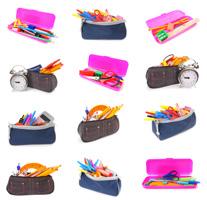
1 Watch the video. What is in the children’s schoolbags? Tick off the items that you see. a highlighter a hairbrush a folder a teacher notebooks a binder diaries a pencil pouch tabs an eraser a dictionary a calculator markers a ruler headphones a hole punch a backpack a pair of scissors a computer mouse an umbrella an organiser a (pencil) sharpener pens a zip-lock bag pencils paper a locker kit a planner dividers sandwiches a Chromebook coloured pencils (crayons) a glue stick
watchING
2 What is in this schoolbag? Name the items.
3 What is in your schoolbag? Tell a classmate about it!
4 Look at the classroom pictures. Name the items.
How to study vocabulary and grammar
If you have to study a lot of vocabulary and grammar in a new language, there are a few tips you can follow. Check the Summary of this unit. See p. 56
5 Choose words from exercise 4 for each column. Listen to your teacher pronounce these words. What sound do they start with? Write the words in the correct column.
6 Fill in the correct word in the grammar box.
How to use articles
If the following noun starts with a sound, we use ‘a’. e.g. a book, a chair, a unicorn …
a = B, C, D, F, G, H, J, K, L, M, N, P, Q, R, S, T, U, V, W, X, Y (the sound), Z
If the following noun starts with a sound, we use ‘an’.
e.g. an umbrella, an hour, an apple …
a = A, E, I, O, U
7 Write ‘a’ or ‘an’ in front of the following nouns. Pay attention to the sound the word starts with.
computer
organiser
ruler
pencil sharpener
pair of scissors
2 / My classroom
1 Look at the words below and answer the questions.
a Compare the words on the left to the words in the right column. What is different?
b Look at the pictures in exercise 4 on p. 37-38. Add 3 more words to each column. notebooks glue sticky notes paperclip diaries pencil markers highlighter earbuds backpack
2 Complete the grammar box below.
How to talk about one or more things
Singular Plural Rules
a notebook a marker a pen two notebooks two two general rule: a diary a dictionary two diaries two noun ends in consonant + y:
a brush a pencil box two brushes two noun ends in sound (-s / -ch / -sh / -x or -z):
a woman a man a woman a child a person two women two men two women two children two people irregular nouns:
Note!
Sometimes a word is already in the plural, but you mean ‘only one of these’. In this case, we often use ‘a pair of’.
e.g. a pair of scissors a pair of compasses
To make these plural, the word ‘pair’ is made plural: e.g.
3 Write how many there are. Follow the example to write full sentences. Write the numbers in full. There are There is There are There are
4 What do you see in this picture? Write down the singular items with the correct article in the left column. Write down the plural items in the right column.
5 Complete the sentences with the correct number and plural. For irregular plurals use the list on p. 52.
1 There are (23) (child) in the classroom.
2 There are (15) (crayon) in the pencil case.
3 There are (32) (tooth) in an adult person’s mouth.
Singular
Plural
4 There are (8) (tomato) in the fridge.
5 There is (1) laptop and there are (18) (tablet) in the classroom.
6 There aren’t (50) (mouse) in the cellar.
7 There are (47) (loaf) of bread at the baker’s.
8 In winter, there aren’t many (leaf) on the trees.
6 Listen to the text about a classroom. Are the statements true or false? True False
1 There is a blackboard.
2 There are fifteen chairs.
3 There isn’t a map on the wall.
4 There are two bookcases.
5 There are two laptops. listening
7 Look at the sentences in exercise 5 and 6 and fill in the table.
In positive sentencesIn negative sentencesIn questions With singular words There There there …? With plural words There There any … there any …?
8 Read what Joan and Mary have in their schoolbags and classroom. Complete the sentences with the positive or negative form of ‘there is’/’there are’.
In my schoolbag, there (+) a calculator. There (-) a pair of scissors. There (+) a lot of crayons in my pencil box, but there (-) any chalk in my pencil box. There (+) 25 chairs in my classroom, but there (-) any whiteboards.
In my classroom, there (+) one clock on the wall, but there (-) a map on the wall. There (+) 20 desks in the classroom, but there (-) any bins. In my schoolbag, there (+) 3 highlighters, but there (-) any pencils.
9 Describe your classroom. One person starts by naming something in the room. The next person copies the sentence and adds a new item etc.
e.g. There is a teacher. – There is a teacher and a (digital) (white)board. – There is a teacher, a (digital) (white)board and a pencil case. – … speaking
3 / Classroom English
1 Read the text and then answer the questions.
a How many people are there in the text?
b Now read the text completely and say who uses the classroom expressions.
1 Please take a sheet of paper.
2 Could you repeat that please?
3 Can I have a sheet of paper?
4 Here you are.
5 Pay attention. reading
Ms Heart Good morning class. Let’s check your alphabet skills. Please take a sheet of paper. Pay attention and listen carefully. I’m going to spell some words. It’s up to you to write them down.
Akim Anne? Can I have a sheet of paper?
Anne Sure, here you are.
Ms Heart Peter, what are you doing?
Peter Sorry, Miss, I can’t find my pen. It’s in here somewhere.
Ms Heart Is there anyone who can lend Peter a pen?
Anne Yes, Miss. Here you are, Peter.
Peter Thanks, Anne!
Ms Heart So, can we start? The first word is R – U – L – E – R.
Akim Excuse me, Miss. Could you repeat that a bit slower please?
Ms Heart Yes. That’s R – U – L – E – R.
2 Match these sentences with the correct classroom situation.
1 If you did not hear your teacher very well.
2 If you don’t know what to do with an exercise.
3 If you need help.
4 If you don’t understand a word.
5 If you want to know a word in English.
6 If you want to look up a word.
7 If you need to go to the toilet.
8 If you have to blow your nose.
9 If you want to use something that belongs to someone else.
10 If you give something to someone else.
Excuse me. Can you repeat that, please?
Can you help me, please?
How do you say … in English?
May I have a tissue, please?
Could you explain this exercise, please?
Could I borrow your …?
Excuse me. I don’t understand.
May I go to the toilet?
Can I use a dictionary, please?
Here you are.
3 Which classroom expression can you use with the following pictures? 1
4 2 5 3 6
4 / My school is cool
1 Read the text and answer the questions.
a Are the statements true or false? Correct the false statements. Statement
1 Boris is 14 years old.
2 The maths teacher is his favourite teacher.
3 The teachers are unfriendly.
4 He likes reading historical books.
5 He doesn’t like English. reading
My name is Boris Melnik and I am 14 years old. I live in Oxford, England, but I’m from Ukraine. I go to school by bike. School starts at 8:30 am. I have 6 lessons a day and one hour for lunch. My favourite subjects at school are history and music. I love to read historical books. We have a lot of teachers at school. The music teacher is the best teacher ever! She is still very young, but she is really funny and nice. That’s why we think she is great!
The teachers are very friendly, only our maths teacher isn’t. She’s a bit unfriendly. English and biology are some of my favourite subjects. I don’t really like French. It isn’t easy to remember all the words. And I also don’t like geography, because I don’t like reading maps.
b Mark all the school subjects in the text.
c Which subjects does Boris like?
d Which subjects doesn’t Boris like?
e Do you know any other school subjects?
2 Match the subjects with the correct picture.
a English b French c geography d history e ICT / computer studies f maths g music h PE / physical education
3 During which class do you use these items?
1 calculator – ruler – eraser
2 flute – piano
3 trainers – basketball
4 map – atlas
5 brush – paint – pencils
6 microscope – leaves
7 timeline – workbook
4 Write a short text about your school.
a Preparation: complete the graphic organiser: writing
My school is in
Subjects I like:
Subjects I don’t like:
Other things I like or don’t like:
teacher(s)
b Action: follow the steps below to write your text.
Checklist: my school
• Write a short text of about 30-40 words.
• Describe where your school is.
• Describe the subjects you like and don’t like.
• Describe other things you like or don’t like about your school.
• Pay attention to your spelling and punctuation.
c Reflection: check your text! Then read your text to a classmate and ask for some feedback.
5 Pair up and interview a classmate.
a Preparation: your teacher will give you a piece of paper with questions. Fill in the list with questions for yourself (= your answer).
b Action: interview your classmate and report your interview to another pair of students. Follow these steps.
Checklist: an interview about school
• Ask each question on your worksheet.
• Write down your classmate’s answers.
• Switch when you are done.
• Sit with another pair of students and tell them what your partner answered (at least 5 things!).
• Pay attention to your pronunciation.
c Reflection: check your interview and conversation!
classroom(s) building(s) CHECK 3
SPOKEN INTERACTION
SUMMARY
HOW TO refer to people and things
Hi, I am Tamara. Are you Taryll?
No, I’m not I’m Jon and this is Taryll.
Personal pronouns and the verb ‘to be’
1 Personal pronouns
Personal pronouns as subject
I am Tamara.
SINGULAR
PLURAL
Hi Tamara! I’m Taryll, but Jon already introduced me He’s very nice.
Personal pronouns as object
This is me
You are Jon. I love you
He has many friends.
She is nice.
I like him
He likes her
It is all right. They hear it
We are fine.
You know us
Jon and Taryll, you are late again! They miss you
They are happy. You like them
Keep in mind:
– ‘I’ g always a CAPITAL letter
– ‘he/him’ and ‘she/her’ g only for people and pets
– ‘it’ g for things and other animals
– ‘They’ is also a gender-neutral singular pronoun, compared to pronouns like ‘he/him’ or ‘she/ her’ which are gendered terms. Some people use ‘they’ and ‘them’ as their personal pronouns.
2 The verb ‘to be’
POSITIVE FORM
Long form
Short form
I am I’m
SINGULAR
PLURAL
NEGATIVE FORM
Long form
Short form
I am not I’m not
You are You’re You are not You aren’t He is He’s He is not He isn’t She is She’s She is not She isn’t It is It’s It is not It isn’t
We are We’re We are not We aren’t
You are You’re
You are not You aren’t They are They’re They are not They aren’t
QUESTION FORM
AmIfrom Oxford?
Are you from Ghent?
SINGULAR
Ishe14 years old?
Is she15 years old?
Is itfrom France?
Are we from Spain?
PLURAL
RULE
SHORT ANSWER
Yes, I am. No, I am not. No, I’m not.
Yes, you are.No, you are not. No, you aren’t. No, you’re not.
Yes, he is. No, he is not. No, he isn’t. No, he’s not.
Yes, she is. No, she is not. No, she isn’t. No, she’s not.
Yes, it is. No, it is not. No, it isn’t. No, it’s not.
Yes, we are. No, we are not. No, we aren’t. No, we’re not.
Are you from Tokyo? Yes, you are.No, you are not. No, you aren’t. No, you’re not.
Are theyfrom America? Yes, they are.No, they are not. No, they aren’t. No, they’re not.
‘To be’subjectrest of sentence?Yes, subject + ‘to be’ (positive) No, subject + ‘to be’ (negative)
HOW TO talk about one or more things
Indefinite article a/an and plural of nouns
Excuse me, miss, is there a bin?
1 The indefinite article
No, there isn’t.
Are there pens in your pencil case? Can I use one?
Yes, there are, there are 4 pens in my pencil case. Here you go … Can I have an apple, please?
To talk about 1 thing, you use the indefinite article a or an a an a biro a binder a calculator a schoolbag a university an apple an hour an orange an orange juice an umbrella
If the following noun starts with a consonant sound, we use ‘a’
If the following noun starts with a vowel sound, we use ‘an’
2 The plural of nouns
To talk about more than one thing, you make a noun plural by adding an -s to the noun. Note that in English there is never an apostrophe (‘) to make a noun plural.
Singular Plural Rule
a marker a notebook a pen two markers two notebooks two pens
a diary a dictionary two diaries two dictionaries
a sandwich a pencil box two sandwiches two pencil boxes
Common irregular plural nouns:
man men woman women child children person people foot feet tooth teeth
Note the pronunciation of plural nouns:
Pronunciation Examples
/s/ after a heavy sound cats cups minutes
/z/ after a light sound shoes knives teachers
/ / after a hissing sound pages horses bridges
3 There is / there are
general rule: noun + s
If the noun ends in a consonant + y: -y g -ies
if the nouns ends in a hissing sound (-s / -es / -x): noun + es
To make sentences with singular and plural words, you can use there is or there are In positive sentencesIn negative sentencesIn questions
With singular words There is a book.There isn’t a book.Is there a book?
With plural words There are two books. There aren’t any books. Are there any books?
1 SCHOOL NECESSITIES
craft supplies (a piece of) chalk
backpack/ schoolbag
book
bookcase
diary
dictionary
highlighter
bin (a pair of) compasses
crayon
digital board
divider
hole punch
a pair of scissors a paper airplane a pen a pencil a paint brush
sticky notes a rubber a student/pupil a ruler a teacher a sharpener an umbrella a sheet/piece of paper a pencil case (UK) / a pencil box/pouch (US)
a stapler a protractor a (digital) (white)board
English
2 SUBJECTS AT SCHOOL
HOW TO study vocabulary and grammar
LEARNING FROM CONTEXT
Word fields
Group words together that belong to the same word field: e.g. outdoor hobbies vs indoor hobbies
Make a word list, a word web, an image list ...
Understand the definition
Look for examples: do a simple online search and you will see the word in many different examples or contexts.
Look up unfamiliar words: make sure you understand the definitions of all your new words.
LEARNING FROM REPETITION
Write individual words down or use the words in your own sentences.
Use flash cards. They are an easy way to review your vocabulary and to separate words into different categories.
Read through your list or look through your word webs. Cover up one half and go through the other half.
Say the word out loud a few times. You can even record yourself or explain the words to other people.
Keep the (difficult) words visible: write them on sticky notes and hang them around your room.
LEARNING BY USING MEMORY TRICKS
Visual memory?
Draw a picture.
Auditory memory?
Replace the words in a song.
HOW TO listen / watch more effectively
Before listening watching
Topic
What do you know about the topic?
What words come to mind?
Type of text/video
What kind of text/video are you going to listen to/watch?
What do you already know about this type of text/video?
Task
Do you understand the task?
Read through the question and highlight key words.
1
After listening watching
Check your understanding
Have you understood the main points? Read your notes. Have you completed the task? If possible, listen again to difficult passages.
2
While listening watching
Focus on what you hear/see
Think ahead: what might happen next?
Take short notes.
Ignore the words you think are less important.
Listen to the intonation and stress of the speakers.
– Okay, we will do the first exercise together, as an example.
– Sure, what do you want to know?
– You have to circle the correct words.
– In English, that is called a schoolbag.
– It means ‘krijt’, what you use to write on a blackboard.
– Of course.
– Sure, you can use an online dictionary to look up the word.
– Sure, here you are.
– Of course, here you go.
CHECK OUT: MY IDEAL CLASSROOM
Orientation
You will create your own ideal classroom!
Preparation
1 Think about 10 items that are absolutely necessary for you in a classroom.
a Write them down here.
b Highlight the first letter.
c Find an image online of the items.
Action
2 Make a crossword puzzle with your 10 items. Describe your item without naming it. You can give the first letter. Add a picture of your item. Follow the example.
C is for . It is what we use to sit on.
3 Make your crossword on a separate piece of paper or find an online tool to help you.
4 Write a short text about your ideal classroom.
a Write a sentence for each of your items.
b Add a reason for choosing those items.
c Use the verb ‘to be’ and ‘there is’ / ‘there are’ correctly.
d Use the vocabulary for school supplies correctly.
e Pay attention to your spelling!
e.g. In my ideal classroom, there are laptops for everyone because then I’ll only need one thing for each lesson.
5 Give your crossword to a classmate to fill in. Fill in one of your classmates’ crosswords.
Reflection
6 Check your text before you hand it in to your teacher.
Checklist: describing my ideal classroom Yes I think soNo
1 Content and structure
• There are about 100 words in my text.
• I talked about the things in my ideal classroom.
• I gave reasons.
2 Language
• I used ‘there is’ and ‘there are’ correctly.
• I used ‘a’ and ‘an’ correctly.
• I used the vocabulary about school necessities correctly.
• I used correct spelling and punctuation.
Feedback
Trace your steps on iDiddit.
UNIT 2: EAT.PLAY.SLEEP.REPEAT
check in
Step 3: asking and answering questions
summary main track
Step 1: talking about hobbies
Step 2: talking about facts and routines
trace your steps on different tracks
check out: my week
CHECK IN
My day
1 Read the two texts and answer the questions.
a Look at the texts. Can you say what kind of texts they are? articles poems letters
b Using just one word, what are the texts about?
c Which text do you prefer? Why? reading
Do you have the same hobby?
Hobbies are fun things, which you can do. They sure can while away the time for you.
A treasure hunt looking for that special find, Finish off a set or take you back in time.
It’s exciting to add to your collection, Praise you receive for beautiful confection.
Collecting stamps, crosses and poetry I write. I find hobbies can really enrich your life,
Build self-esteem and add to conversation. A hobby just may bring you elation.
By Jean E. Gorsey
Mix a pancake, Stir a pancake, Pop it in the pan; Fry the pancake, toss the pancake— Catch it if you can.
By Christina Rossetti
confection: a sweet food elation: extreme happiness to enrich: to improve self-esteem: believe in yourself to while away: spending time
MAIN TRACK
Step 1
Pastime
Talking about hobbies
1 / Guess the hobby
1 Take a separate piece of paper. Make a list of all the hobbies you can think of. Then follow the directions below (hobbies can be in more than one category).
a Underline the hobbies you do inside in one colour.
b Underline the hobbies you do outside in another colour.
c Circle the ‘creative’ or ‘artistic’ hobbies in one colour.
d Circle the ‘physical’ hobbies in another colour.
e Circle the ‘intellectual’ hobbies in a third colour.
f If you can think of other categories, use yet another colour.
g Make a hobbies mind map using your different categories.
2 Play the ‘Guess the Leisure Activities quiz’, and then add the hobbies from the quiz to your mind map.
3 Match the photos with the correct pastime, and then add the (missing) hobbies to your mind map from exercise 1.
going to the cinema
taking photographs going jogging cooking walking your dog horse(back) riding
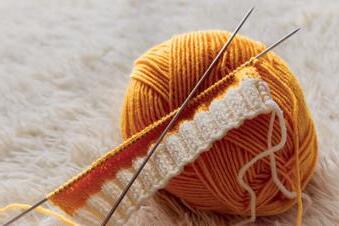
crafting knitting drawing
playing video games / computer games watching television playing football / soccer painting listening to music playing the guitar
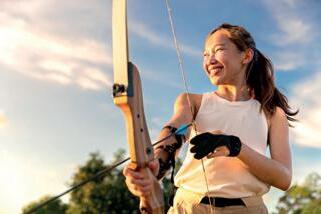
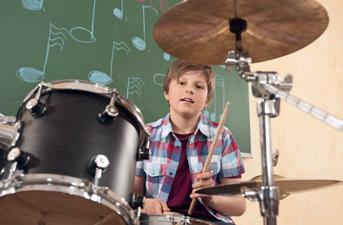
dancing archery swimming playing the drums reading a book crocheting
4 Do you know the verbs to describe what you like and don’t like?
a Complete the scale with the correct verb. Choose from: don’t enjoy – don’t like – enjoy – hate – like – love
b Write 1 thing for each of the verbs. Use the vocabulary from the previous exercises for inspiration.
1 I love
2 I enjoy
3 I like
4 I don’t enjoy
5 I don’t like
6 I hate
c Tell a partner about the things you like and don’t like. SPEAKING
5 Verbs in English: answer the questions.
a Complete the text with the correct form of the verb ‘to paint’.
‘Many people enjoy hobbies like . They like pictures of nature or their pets. helps them relax and express themselves. Some even dream of becoming professional painters one day. When they , they feel happy and fulfilled.’
b What does the word ‘painters’ refer to?
c Is ‘painters’ also a verb?
6 Complete the box about verbs in English. Add the different versions of the verb ‘to paint’ to the box.
The base form is the form of the verb that you see in the dictionary. It is the form from which all other parts of a regular verb are made.
e.g. be, like, play,
2 Infinitive
The infinitive is the verb with the word ‘to’ in front of it.
e.g. to be, to like, to play,
Some verbs are followed by an infinitive in English.
e.g. I choose to play basketball over volleyball.
I prefer to dance.
I hope to swim the North Sea one day. I want to walk the dog. I wish to get better at archery.
3 Gerund
A gerund is the -ing form of the verb that acts as (= zelfstandig naamwoord). It is used as a subject or an object in a sentence.
e.g. is my number one hobby. (subject)
e.g. I enjoy . (object)
Some verbs are followed by a gerund in English.
e.g. I enjoy jogging in the morning. We dislike sunbathing. They suggest going to the cinema. You imagine running that marathon. Please, stop playing that song! See p. 92
7 Complete the sentences with the correct form of the verb: gerund or infinitive.
1 I don’t want (to leave) yet.
2 We hope (to visit) the museum tomorrow.
3 I don’t like (to wait).
4 She suggests (to go) to the cinema.
5 They hate (to listen) to that radio station.
6 They choose (to eat) out in a restaurant.
7 The boys love (to play) soccer.
8 He enjoys (to have) a bath every evening.
8 Form groups and discuss the hobbies that people you know have. Use the activities from your mind map in exercise 1 as inspiration. Follow the example. e.g. My best friend likes cooking. I think my teacher likes reading.
2 / What teens like to do
1 Read the article, and then answer the questions.
a What hobbies do you recognise in the pictures with the article?
b What is the source?
c Who is the writer of the article?
d What is the purpose (= goal) of this article? to entertain the reader to inform the reader to instruct the reader to convince the reader
e Who would be interested in this article?
f Use curly brackets to show where the introduction of the article is. What information can you usually find here?
g Highlight some benefits mentioned in the introduction.
What are some hobbies that teens are interested in?
BY CHERYL STEPHENSON-HEARNS
Hobbies have many mental and physical health benefits, including more optimism, higher creativity and a better ability to deal with stress. Sharing hobbies with others also keeps teens socially engaged with people who have similar interests. Teens can be interested in almost unlimited hobbies. Here are some possible hobbies.
Music
Teens can enjoy music as a hobby in a number of ways. They can relax by listening to music or they can benefit intellectually by learning how to play an instrument. Teens can show their musical talents in school or community bands and choirs. If the teen is tech-savvy, computer programs allow users to create music recordings and mixes.
Sports
Teens have many choices when it comes to activities. Indoor activities include gym memberships, yoga and dance classes. Outdoor activities range from skiing and snowboarding in winter to sailing and skateboarding in summer. Teens can also choose to participate in traditional team sports such as soccer, baseball, basketball and hockey. For non-traditionalists, they can join an ultimate frisbee or paintball team.
Some teens enjoy unwinding with a good book. The fantasy genre has become very popular in recent years. Other teens prefer to express themselves through creative art, spending time drawing, painting or sculpting. And what do you think about making jewellery or doing scrapbooking, or car modelling, cooking and baking? For those teens with a dramatic flair, there are often opportunities to act, sing or dance in theatre productions.
Social causes
Teens who want to make a difference in their communities can volunteer in hospitals, animal shelters, libraries and museums. Teens also have the option of taking part in ‘voluntours’, planned trips to exotic locations where they can view the sites while volunteering, for example, to teach English or to build homes and schools.
Technology
The technology available to teens gives them unlimited options for hobbies. Teens can create and maintain a blog or a vlog on a topic that interests them. They can also play video games, use social networking sites and even build robots and write programs to make them run. The Internet provides a world of opportunities for teens without even leaving their bedrooms.
Adapted from: www.livestrong.com
2 Complete the strategy box about reading strategies.
to be tech-savvy: knowing a lot about modern technology, especially computers to benefit: to be helped by someone an opportunity: a chance to unwind: to relax
Preparation
– What do you need to do with the text? – Why do you have to read it?
– What types of questions will you have?
See p. 104
3 Read the text, and then complete the table.
a How many topics does the writer talk about? Add them to the column on the left.
b Check each subsection to complete the column on the right. Look for synonyms, examples and explanations, etc.
or sculpting
4 Are the statements true or false? Find proof in the text.
1 Sharing hobbies is good for your social skills.
2 Frisbee and paintball are traditional sports.
3 Teenagers can do hobbies at home. reading
5 Complete the strategy box about reading strategies with information from exercises 3 and 4.
How to read a text more effectively
2 While reading Action
1 Global reading: Try to answer the WH-questions:
2 Reading for details: – Look for – Look for , synonyms or related words.
– Look for if a year, amount or date is asked.
STRATEGY
– Use a or a pencil to flag up the information you need. See p. 104
6 What do you prefer?
a Preparation: look at the activities in the text in exercise 1, p. 69. Highlight the one you like most. Think about why this is. Maybe these adjectives will give you some inspiration.
boring – calm – exciting – fun – happy – relaxing – sad – strange
b Action: write a short text about this. Use the writing frame and follow these steps:
Checklist: my preferred hobby
• Write at least 4 sentences.
• Talk about the activity you like most.
• Give at least 2 reasons. You can use the adjectives in a.
• Pay attention to your spelling! writing
From the activities mentioned in the text, I like [name topic] the most. This is a activity. The reasons why I like this are: (give at least 2) 1 2
I would like to try because (give a reason)
c Reflection: check your text! Next, read your text to a classmate. Do you like the same activities?
7 Pair up and play the miming game. Who can guess the most hobbies?
- Student A: act out the hobby on the card.
- Student B: guess the hobby that your partner acts out.
CHECK 1
SPOKEN INTERACTION
Step 2 Everyday routines Talking about facts and routines
1 / What do you do every day?
1 Watch the video and answer the questions.
a What is this video about?
b Which country is the teenager from?
c How many days do you get to see?
d Are all the days the same?
2 Watch the video again and do the tasks below.
a Highlight the sentences that are true.
He has breakfast.He gets dressed.He has dinner. He brushes his teeth.
He puts on makeup. He goes to school by car. He listens to music. He goes to the bathroom.
He combs his hair.He takes notes.He has a shower.He wakes up. He goes back to bed. He doesn’t talk during class. He has lunch. His sister plaits her hair.
He doesn’t watch TV. He plays video games. His parents prepare lunch. He takes his backpack.
He leaves the house to go to school. He meets friends. His parents don’t drive him to school. The alarm goes off at 7 o’clock.
He gets up. He does homework. He puts on his shoes and jacket. He watches TV.
b Discuss these questions with a partner.
- At the end, he asks, ‘Why am I doing this?’ Why do you think so?
- Do you do those things in the morning too? What else do you do?
watchING
watchING
SPOKEN INTERACTION
3 Complete the text using the correct verb. Choose from the box below. brush your teeth – choose clothes – do homework – get dressed – get up – go home –go to bed – go to school / work – go to the bathroom – have breakfast – have dinner –have lunch – leave the house – read a book – take a shower / bath – wake up – watch TV
Then I In the evenings, I
4 Complete the sentences with the correct expression.
1 After a long day, you and fall asleep.
At 6 o’clock, I At 10 o’clock, I
2 When your alarm clock goes off in the morning, you and after that you
3 It is important that you because it is the most important meal of the day.
4 If you twice a day, your dentist will be happy.
5 Parents and teachers are happy when you
5 What are your morning routines?
a Write down what you do every morning. WRITING
The first thing I do when I wake up is
After that I and then I
Before I go to school I never/always
b Find a classmate and tell them what you do and listen to their routine. speaking
2 / I don’t shower every day
1 Read the text and answer the questions.
a Who wrote this?
b Name 5 of their hobbies.
c How often do you think these people do these activities? just once often reading
ReinFrost
My hobbies are reading and watching TV shows. I also like swimming, just like my sisters. They also play chess every weekend.
Jeffrey_Foster
I enjoy sleeping and reading about older civilizations (Aztecs, Mayans,Romans etc). I don’t play basketball; I’m not very sporty.
CreepyPastaKitty
Apart from hanging out with friends and watching TV etc, my hobbies are: taekwondo, watching documentaries and experiencing new things. We sometimes go to a museum but I also have a lot of fun when we go shopping. That is something I do with my mother and sister. I like going for walks in the country, especially near my home village. My father and brothers also go horse riding. I play Pokemon, especially when I’m up for a challenge.
Feather Friend
You like walking; I enjoy walking too. I prefer walking in places where there’s water, like the beach or the river, or even in the rain. I love taking photos, particularly of birds. I don’t like chasing animals; I just choose a spot and wait. I want to invest in a better camera. You don’t need an expensive one. My mum, on the other hand, owns an amazing camera, but she doesn’t let me use hers though. Bummer.
AAO
I spend time sleeping and I don’t do anything else. I’m sure it isn’t productive, but I enjoy it. My parents hate it; they always try to make me do things I don’t want to. They don’t listen to me at all. We don’t spend a lot of time together.
Adapted from: forum.choiceofgames.com
2 Look at the texts in exercise 1 in more detail and answer the questions.
a Highlight the verbs in the text in exercise 1. Highlight the positive sentences in one colour and the negative sentences in another colour.
b This text is written in the present – past – future tense. (highlight the correct option)
c How many verb forms are there in each negative form?
d What forms of the verb ‘to do’ do you see in the sentences?
e Use a verb from the text to write your own positive and negative sentences with each of the following subjects. Check the text to see what happens to the verb(s).
f Use a verb from the text to write your own positive and negative sentences with each of the following subjects. Check the text to see what you need to do with the verb.
3 Complete the grammar box with the words below. 3rd person singular – to do – don’t like – hobbies – like – present – s
How to talk about facts and routines
In English, the is used to talk about facts. For example: - to talk about what you or - your
In the positive form, changes. You have to add an to the base form of the verb.
In the negative form, you have to use another verb (= auxiliary verb): e.g. I don’t work – he doesn’t work.
You will find a full overview of the form of the present simple in the Summary See p. 94
4 The form of the present simple changes in the 3rd person singular. In general, we add -s to the base form of the verb. Write down the correct form of the given verb in the sentences below. If there is no verb, choose the correct verb from the box below first. Pay attention to your spelling!
to buy – to cry – to destroy – to dry – to eat – to have – to party – to push – to say –to sleep – to stay
InfinitiveExample Rule
to get to feed
Every weekday she up at 6 o’clock and her cat.
General rule: base form of the verb + s to brush to watch to relax
She dinner at 7 p.m. every day.
She brushes her teeth. She watches TV.
after hissing sounds (x, sh, ch ...): base form + to go to do
She just relaxes. She always her dirty socks under the bed.
Every Monday she dancing. She some work for school.
verbs ending in –o: base form + to carry She always the cat downstairs. She at weddings. Her mum the laundry in the garden. She all night long!
verbs ending in a + y:
InfinitiveExample Rule to play On Wednesdays she tennis.
My brother always my toys. My grandmother fruit at the market.
The dog inside at night. verbs ending in a + y: base form + to have She a dog and 3 cats. The verb ‘to have’ is irregular:
5 Complete the text with the correct verb in the positive form of the present simple. to describe – to draw – to have – to hope – to make (2x) – to play – to read – to think –to write – to bake – to try – to love
FairyGodfeatherFeather Friend
I many hobbies. One is flute. Flute is a very pretty instrument to play and listen to. My sisters also . I am a beginner but I I’m good. Sometimes I use my imagination and up a song. One day I to play in the Symphony of the Mountains.
Cirrocumulus
I a lot in my free time, especially using charcoal or pencil. I also and a lot. Dark stories are my favourite, since you can be very colourful when you spooky situations. I have a lot of fun when I : I the best apple pie in the world. My parents it when I to make new pies!
Adapted from: forum.choiceofgames.com
6 Complete the sentences with the verb in the correct form of the present simple.
1 Jamal’s father (to work) in a shopping centre.
2 He (to be) the manager
3 He (to start) work every day at 8:00 a.m.
4 I (to watch) a lot of DVDs. I love films.
5 He (to finish) work every day at 7:00 p.m.
6 He (to live) close to the shopping centre.
7 Every day he (to go) to work by bike.
8 His best friends, Arthur and Mo, also (to work) in the shopping centre.
9 But they don’t live nearby. They (to go) to work by car.
10 Arthur and Mo (to start) work at 9:00 a.m.
11 As he is the manager, Jamal’s father (to help) all the ...
12 ... other workers and (to tell) them what to do.
13 He really (to like) his job and ...
14 ... (to be) good at it.
15 My parents (to have) lunch at the shopping centre every Saturday.
7 Rewrite the sentences. Make the positive sentences negative and the negative sentences positive.
Positive
1Adam has breakfast very early.
Negative
2 He doesn’t like skiing.
3 She doesn’t hate getting up early.
4My father watches TV a lot.
5 Erin doesn’t go to school by bus.
6I love singing.
7 We don’t want to go to the carnival.
8They meet up every Saturday.
8 Complete the conversations with the positive (+) or negative (-) form of the verbs in brackets.
Conversation 1: LISTEN
Stan: I love music. Not pop music. I (-) to pop music. I hate it.
I (+) to Mozart, Beethoven and composers, people like that.
Alwin: My mum (+) to Mozart when she wants to relax. I think that kind of music is boring.
Conversation 2: WATCH
Debbie: My brother Dave (+) television all the time. He (+) sports a lot: football, volleyball, tennis. Every kind of sport.
Stephen: And what about you?
Debbie: I (-) sport. Ever. I hate sports! I (+) my favourite YouTube channels in my bedroom.
Conversation 3: LIKE
Becky: My mum (+) cats but my dad (-) them.
He (+) dogs but my mum (-) them.
Jack: What about you?
Becky: I (-) cats or dogs – but I love spiders! I’ve got a tarantula at home!
3 / Ashley’s week
1 Read the text and answer the questions.
a Who is the text about?
b What is the text about?
c Complete the table with the days of the week. Note that in English the days of the week are written with a capital letter.
d What does she usually do after school? Add the activities to the table.
1 5 10 Ashley always has a busy schedule. Every weekday she gets up at 6:00 a.m. and feeds her cat. She always carries the cat downstairs and lets it out. Then she takes a shower and gets dressed. She has breakfast at 6:45 a.m. She loves cornflakes. She always fills an extra large bowl and adds some cold milk. After breakfast, she goes to the bathroom and brushes her teeth, dries and checks her hair again and again and again … , puts on some make-up and adds the finishing touch, perfume. Jamal hates it when she does that. She always uses too much!
At 7:30 a.m. she leaves home to take the bus to school. The trip takes thirty minutes. At the bus stop she often meets up with her best friends and then they have to walk for another five minutes.
School starts at 8:30 a.m. Ashley isn’t that fond of school, but she doesn’t hate it either. At least her friends are there with her. School ends at 3:30 p.m. She takes the bus and arrives home at 4:20 p.m every day. That’s when the fun starts.
Every Monday she goes dancing. Every Tuesday she goes horse riding, and on Wednesdays she plays tennis and has another dance class. Thursday is a day with nothing to do but to take extra good care of her cat. And on Fridays she gets together with some friends and talks about everything, especially boys.
Most of the time she has dinner around 7:00 p.m., then she does homework, watches some TV and goes to bed at 10:00 p.m.
On Saturdays she often has a competition with her dance crew; she wants to become a professional dancer. If there isn’t a competition, she goes out in the evening.
Sunday is a quiet day. She just relaxes, does some work for school, plays with her cat and checks her social network sites.
2 Check the verb forms in the text and answer the questions.
a What tense are all the verbs in?
b Why is this tense used here?
c Highlight the words in the text that show how often she does these things.
d Complete the grammar box.
How to talk about facts and routines
GRAMMAR
In English, the is also used to talk about . There are some words in English that tell you how often you do things: e.g. always, sometimes, often, regularly, never.
e.g. He always plays football at the weekend. They often go to the cinema.
Mamadou sometimes goes to the library.
Anas never sleeps in on a Sunday.
These words are called adverbs of frequency, and you write them before the main verb. There is one exception, the verb ‘to be’. Here you write the adverb after the form of ‘to be’: e.g. He is always late for school!
3 Write a text about your friend’s and your routine.
a Preparation: work with a partner. First complete the table below with routines. Write keywords. Avoid using the same routine more than once!
3 routines I have3 things I don’t do regularly 3 routines my friend has 3 things
b Action: now write your text.
Checklist: our routines
• Write 6 sentences about yourself – one sentence for each routine.
• Write 6 sentences about your friend – one sentence for each routine.
• Use the present simple correctly.
• Use the adverbs of frequency correctly.
• Pay attention to your spelling and punctuation.
Me:
My friend:
c Reflection: check your text, and then swap your paper with a classmate and give each other feedback. Has your classmate used the present simple correctly?
CHECK 2
Step 3 Let’s plan Asking and answering questions
1 / What do you do in a day?
1 Watch this interview and answer the questions.
a Who is answering the questions?
b What is the video about? watchING
c Complete her schedule.
Time What?
She and checks phone (calls, messages, messages, Instagram …).
10:15 She and Turns CNN on the TV.
10:21 She drinks a She has a and her teeth. 11:25 She the house and goes over her schedule.
They do the following things in the studio: warm up, harmonise, go over the setlist, practise, record and check.
15:00 - 15:40 They order They have
17:00 - 19:00 She at the rehearsal studio. She meets up with She goes to the She relaxes, gets ready for bed and watches 23:30
2 Discuss the following questions with a classmate.
a Do you ever use a schedule? Explain why or why not.
b Do you make your own schedule? Do you get any help making your schedule?
c Is it easy to follow a schedule?
d What can go wrong with your schedule?
3 Do you know how to read an analogue clock in English?
a Complete the clock with the correct information. Choose from the words below. big hand – hour hand – minute hand – second hand – small hand
SPOKEN INTERACTION
b Add the following words to the clock: half past – past – a quarter past – a quarter to – to
c Draw the hands on the clock below, so the clock shows a quarter past ten.
Did you know?
12 or 24 hours?
Some countries don’t use the 24-hour clock but use the 12-hour clock format. This means they are using the terms a.m. and p.m.
a.m. = ante meridiem = from midnight to noon
p.m. = post meridiem = from noon to midnight
e.g. 5 a.m. is 5 o’clock in the morning and 5 p.m. is 5 o’clock in the afternoon.
Note:
12 p.m. = midday = noon 12 a.m. = midnight
p.m. – 22:00 10:00 a.m. – 10:00 2:00 a.m. – 02:00
p.m. – 18:00 2:00 p.m. – 14:00
p.m. – 16:00 8:00 p.m. – 20:00
5 What time is it? Follow the teacher’s instructions to tell and write the time.
6 Link the questions to the correct answers.
1 When do you play tennis?
2What time is it?
3 When does the film start?
4What’s the time?
A I get up at six o’clock.
B It is three o’clock.
C I want to go shopping at five o’clock.
D The film starts at half past eight.
5 What time do you want to go shopping? E It’s five past four.
6Do you have the time? F I play tennis at four o’clock.
7Do you have the right time?
8 What time do you get up?
7 Complete the table about how to talk about time in English.
How to say what time it is
We usually say ‘ + the time’, or ‘ + the time’ when telling someone the time.
USEFUL EXPRESSIONS
When we ask someone for a specific time of an event taking place, we use the question words and
We use the preposition when talking about the exact time. See p. 103
8 Talk and ask about time.
a Preparation: pair up and read the cue cards you will get. Choose who will be A and who will be B.
b Action: have a conversation with a classmate telling the time in English.
Checklist: telling the time
• Choose A or B to start with.
• Follow the cue card.
• Use expressions on how to tell time in English.
• Pay attention to your pronunciation.
• Switch roles and have the conversation again.
• Extra: add two of your own questions.
c Reflection: check your conversation.
2 / Time’s up!
1 Link the questions to the correct answers.
1who A… was your exam?
2what B… is your favourite colour?
3when C… do you say that?
4whereD… do you wake up every morning?
5 why E… can I buy the book?
6which F… is the largest city in the world?
7 how G… is at the door?
2 Read Lady Gaga’s schedule and answer the questions in full sentences.
a How many hours does she sleep?
b How many meals does she have a day?
c How long does she perform on stage?
d When does she wake up?
e Who is Lady Gaga?
f What kind of work out does she do every day?
g Is this her usual schedule or her touring schedule?
h What does she do on the plane?
I Does Lady Gaga have a busy schedule?
Wow, Lady Gaga’s schedule looks crazy when she’s touring, but she still has time to squeeze in five meals and read some fan mail on the plane.
3 Read the questions and tick the answer for yourself. Report to a classmate.
1 Do you forget to do homework? Yes, I do. No, I don’t.
2 Does your best friend call you to remind you to do your homework? Yes, they do. No, they don’t.
3 Do you forget tests? Yes, I do. No, I don’t.
4 Does your coach call your parents to say you are late again? Yes, they do. No, they don’t.
5 Do you think you need a diary? Yes, I do. No, I don’t.
6 Why (not)? reading
4 Look at the questions and answer them with short answers (look at exercise 3).
1 Do you sleep in at the weekends?
2 Does your teacher wear glasses?
3 Do your parents work in your hometown?
4 Do you study beforehand for tests and exams?
5 Do you laugh a lot when you chat with your best friend?
6 Does your father prepare your lunch?
7 Do you have your own vlog?
8 Do you earn more than Mark Zuckerberg?
9 Does your grandmother know Minecraft?
5 Complete the grammar box.
How to ask questions
To ask questions in English in the present simple, we also use the auxiliary verb There are different types of questions:
1 Yes/no questions = the answer is or . e.g. Yes, she has a busy schedule.
Q: Rule:
2 Question word questions = give information about (= reason), (place), (thing), (time), (quantity).
e.g. She wakes up at 6 a.m.
Q: Rule: + + + +
3 Subject questions
= you ask about : who (= person) or what (= thing).
e.g. Lady Gaga eats 5 meals a day.
Q: Rule: + + ?
There is NO auxiliary verb!
Note: the verb ‘to be’ has different rules. Check the Summary of Unit 1 See p. 97
6 Look at Bridget’s diary. Make questions for the answers that are given.
1 The lunch is on Monday the 7th, at half past twelve.
2 The test is on Tuesday the 15th, at ten to three.
3 The party is on Friday the 12th, at nine o’clock.
4 She has to hand in her book report.
5 She has tennis practice on Wednesdays at two o’clock.
6 She has dinner with grandma on Sunday the 13th, at a quarter to six.
7 No, she doesn’t. She has tennis practice on Wednesdays.
8 No, she doesn’t. She only has lunch with her on Monday the 7th. reading
Ugh! I don’t! I hate playing violent games. I want to try all sorts of sports, like tennis! I also love painting!
1 Base form
The base form is the form of the verbs that you see in the dictionary. It is the form from which all other parts of a regular verb are made.
e.g. be, like, play, paint
2 Infinitive
The infinitive is the verb with the word ‘to’ in front of it.
e.g. to be, to like, to play, to paint
Some verbs are followed by an infinitive in English.
e.g. I choose to play basketball over volleyball.
I prefer to dance.
I hope to swim the North Sea one day. I want to walk the dog. I wish to get better at archery.
3 Gerund
A gerund is the -ing form of the verb that acts as a noun (= zelfstandig naamwoord). It is used as a subject or an object in a sentence.
e.g. Painting is my number one hobby. (subject) I enjoy painting. (object)
Some verbs are followed by a gerund in English. e.g. I enjoy jogging in the morning. We dislike sunbathing. They suggest going to the cinema. You imagine running that marathon. Please, stop playing that song!
HOW TO talk about facts and routines
I wake up at 6 a.m. every morning. Do you like playing videogames?
Present simple
FORM
1 Positive sentences
I don’t! I hate getting up early.
Yes, I do. My father loves it too.
Subject Verb Rest of sentenceForm of verb
1st p. sing.I enjoy walking.
2nd p. sing. You like walking too.
3rd p. sing.She He It owns lives runs an amazing camera. in London. in the family.
1st p. plur. We go shopping.
base form
base form + s
base form 2nd p. plur. You go to the cinema together.
3rd p. plur.Theyplay chess every weekend.
RULE: Subjectbase form of verb (!) 3rd p. sing. + s rest of the sentence.
Keep in mind:
Spelling and grammar exceptions
1 3rd p.sing. with verbs ending in Verb ends in Rule Examples -o add -es do g he does go g she goes a sibilant (ch, sh, s, x)add -es wash g he washes kiss g she kisses consonant + y y changes to -ie before -s worry g she worries carry g he carries
2 The verb ‘to have’ is irregular in the positive form: he/she/it has.
2 Negative sentences
To make a verb form negative in the present simple, the auxiliary verb ‘to do’ is used.
Subject Auxiliary verbVerbRest of sentenceForm of verb
1st p. sing.Idon’t playbasketball. don’t + base form
2nd p. sing. You don’t needan expensive camera.
3rd p. sing.She He doesn’t doesn’t let live me use it. in London. doesn’t + base form
1st p. plur. We don’t spenda lot of time together. don’t + base form
2nd p. plur. You don’t go to the cinema together.
3rd p. plur.Theydon’t listento me at all.
RULE: Subjectdon’t doesn’t base form of the verb rest of the sentence.
Keep in mind:
In the negative form, ‘to do’ has a long form and a short form: e.g. I don’t play. = I do not play. He doesn’t live in London = He does not live in London.
3 Questions in the present simple Auxiliary verb SubjectVerbRest of sentenceForm of verb
1st p. sing.DoI needan expensive camera? do + base form
2nd p. sing.Do you playbasketball?
3rd p. sing.Does Does she he let live you use it? in London? does + base form
1st p. plur.Do we spenda lot of time together? do + base form
2nd p. plur.Do you go to the cinema together?
3rd p. plur.Dotheylistento you at all?
RULE: Do/doessubjectbase form of the verb rest of the sentence?
For more information about asking questions in English, see the next grammar section.
1 Facts
In English, the present simple is used to talk about facts For example:
- to talk about what you like or don’t like: e.g. I love reading. I don’t like chess.
- your hobbies: e.g. I enjoy playing video games. I play tennis.
- things that are always true or true for a reason: e.g. The earth goes around the sun.
Keep in mind:
In English you can choose how you express what you like, dislike, love or hate. These verbs can have different complements (what follows the verb):
- love / like / dislike / hate / enjoy + gerund (verb -ing): e.g. I love watching films.
- verb + noun: e.g. I like dogs. I hate chores.
hate dont’t like don’t enjoy like enjoy love
2 Routines
In English, the present simple is also used to talk about routines or things that are done regularly. e.g. I wake up at 6 a.m. every morning. I always go to school by bus.
Keep in mind:
There are some words in English that tell you how often you do things: e.g. always, sometimes, often, regularly, never.
e.g. He always plays football at the weekend. They often go to the cinema.
Mamadou sometimes goes to the library.
Anas never sleeps in on a Sunday.
These words are called adverbs of frequency, and you write them before the main verb. There is one exception, the verb ‘to be’. Here you write the adverb after the form of ‘to be’: e.g. He is always late for school!
HOW TO ask questions
Yes/no questions and question word questions 1 QUESTION
Short answer
e.g. Yes, he is Yes/No, subject + verb 'to be'
e.g. Yes, he does Yes/No, subject + do/don’t
Short answer
Long answer
e.g. Yes, Dan is famous. Yes/No, subject + verb 'to be' + res t of the sentence.
e.g. Yes, Dan likes his nickname. Yes/No, subject + main verb + res t of the sentence.
Long answer
e.g. In Nov ember. A helmet.
e.g. My birthday is in November. Subject + to be + res t of the sentence I need a helmet to play lacrosse. Subject + ( auxiliary ) main verb + res t of the sentence
Short answer
e.g. Dan ( does ). Subject + ( auxiliary 'do/does' ).
1 Y es/no question = gives a closed answer: yes or no
e.g. Is Dan famous?
Verb 'to be' + subject +rest of the sentence?
e.g. Does Dan like his nickname?
Auxiliary + ‘t o do’ subject + base of + main v erb res t of the sentence?
2 Question w ord question = you want specific information: what, where, when, why, how
e.g. When is y our birthday ?
Question w ord + to be + rest of the sentence? What do you need to pla y lacrosse?
Question word + auxiliary + subject + main verb + rest of the sentence?
Long answer
e.g. Dan plays Fortnite a lot. Subject + main verb + rest of the sentence
3 Subject question = you want specific information about the subject: who or what
e.g. Who plays Fortnite a lot?
Question word + main verb + rest of the sentence?
1 HOBBIES AND LEISURE ACTIVITIES
2 VERBS DESCRIBING DAILY ROUTINES
to wake up
to choose your clothes
to have breakfast
to brush your teeth to take a shower to get up
to take care of your skin to get dressed to comb your hair
to leave home to go to work / school to have lunch
to go home to take the bus to have dinner to have a bath
to go to bed
3 TIME AND DAYS OF THE WEEK
Word Translation My notes Days of the week
Monday maandag
Tuesday dinsdag
Wednesday woensdag
Thursday donderdag
Friday vrijdag
Saturday zaterdag
Sunday zondag
Time and parts of the day
sunrise zonsopgang
morning ochtend/voormiddag
noon = middaymiddag
afternoon namiddag
evening avond
sunset zonsondergang
night nacht
midnight middernacht
a.m. = before noon van middernacht tot de middag
p.m. = after noon van de middag tot middernacht
What time is it?Hoe laat is het?
What’s the time?Hoe laat is het?
sixty seconds = one minute 60 seconden = 1 minuut
fifteen minutes = a quarter of an hour 15 minuten = een kwartier
thirty minutes = half an hour 30 minuten = een half uur
sixty minutes = an hour 60 minuten = een uur
4 OTHER WORDS AND EXPRESSIONS
Word Translation My notes
Verbs to express what you like to enjoy genieten van to hate haten to like graag hebben to love houden van
Parts of speech an adverb een bijwoord an auxiliary verbeen hulpwerkwoord a noun een zelfstandig naamwoord a question een vraag a verb een werkwoord
Other verbs to bake bakken to brush borstelen to buy kopen to carry dragen to cry wenen to describe omschrijven to destroy vernielen to do doen to draw tekenen to dry drogen to eat eten to feed voeden to finish eindigen to get krijgen to go gaan to have hebben to help helpen to hope hopen to listen luisteren to live wonen
to love houden van to make maken to party feestvieren to play spelen to push duwen to read lezen to relax ontspannen to start starten to stay blijven to think denken to try proberen to watch kijken to write schrijven
HOW TO say what time it is
1
Asking for or telling the time
- When we ask someone for a specific time of an event taking place, we use the question words when and what time
e.g. What time does the film start? When is the show?
- We use the preposition at when talking about the exact time.
e.g. It starts at 9 p.m.
2 Reading the clock
An analogue clock
- Step 1: First look at the big hand. g minutes Is it before or after the 6? Do you have to use ‘to’ or ‘past’?
- Step 2: Then look at the little hand g hour
- Step 3: What time is it?
e.g. It’s seven (minutes) past nine.
A digital clock
- Step 1: The first number is the hour.
- Step 2: The second number is the minutes.
- Step 3: What time is it?
e.g. It’s half past five.
It’s … o’clock
It’s five (5) to …
It’s ten (10) to …
It’s a quarter to …
It’s twenty (20) to …
It’s twenty-five (25) to …
It’s half past …
It’s five (5) past …
It’s ten (10) past …
It’s a quarter past …
It’s twenty (20) past …
It’s twenty-five (25) past …
HOW TO read a text more effectively
Before reading
1
The basics
Look at the picture(s).
Read the title(s) first.
Who wrote this? Who is the text meant for?
Why did he/she write it?
Ask yourself
What do you need to do with the text?
Why do you have to read it? What type of questions will you get?
2
While reading
Global reading
Try to answer the WH-questions: who / what / where / how / why / when?
Reading for details
Look for explanations and examples
Look for numbers if a year, an amount or a date is asked for.
After reading
Check your understanding
If possible, reread difficult passages.
Do you understand the main points?
What would you do differently next time?
Is the task complete?
3
Look for keywords, synonyms or related words.
Use a highlighter or a pencil to flag up the information you need.
CHECK OUT: MY WEEK
Orientation
You will describe a typical weekday and talk about your (weekly) hobbies and routines. Next you will present the task: as a diary entry (in writing) or as a vlog (speaking).
Preparation
1 Decide if you will present your week in writing or orally.
2 Plan your diary or vlog.
a On a separate piece of paper, make a draft of your week.
- Add the days of the week.
- Write which hobbies you do on which day (and at which time).
- Add other things you often do in each week.
- Give 2 things you don’t usually do in each week.
b Fill in what a typical weekday looks like. List different actions or activities on your draft paper as well. Use the schedule below.
SLEEP PLAY SOCIAL MEALS
SCHOOL HOMEWORK
OTHER WORK
Action
3 Follow these steps if you are presenting your regular week as a written diary.
4 Find pictures to describe your hobbies and routines or draw them yourself. Make a nice, creative diary entry! writing
a Write 1 paragraph (50-75 words) to describe your weekly hobbies and routines. What do you do? When do you do it? Add the day and time. Mention 2 things you don’t usually do. Use the information from your draft!
b Write 1 paragraph (50-75 words) to describe a typical weekday. Mention at least 5 things. Don’t forget to add the times!
5 Follow these steps if you are presenting your regular week as a vlog.
a Talk for about 2 minutes and describe your weekly hobbies and routines. What do you do? When do you do it? Add the day and time. Mention 2 things you don’t usually do. Use the information from your draft.
b Talk for about 1 more minute and describe a typical weekday. Mention at least 5 things. Don’t forget to add the time!
c Find pictures to describe your hobbies and routines or draw them yourself. Show them in your vlog.
d Record your vlog and send it to the teacher.
Reflection
6 Reflect on your task by filling in the checklist.
Checklist:
1 Preparation
• I made a draft about my typical week.
• I made a draft about a typical weekday.
2 Content and structure
• I wrote 1 paragraph (50-75 words) about my weekly hobbies and routines (for the diary entry).
• I talked for about 2 minutes about my weekly hobbies and routines (for the vlog).
• I added days and times.
• I mentioned 2 things I don’t usually do.
• I wrote 1 paragraph (50-75 words) about a typical weekday (for the diary entry).
• I talked for about 1 minute about a typical weekday (for the vlog).
• I mentioned at least 5 things I do in a day and added the time.
• I added 5 pictures or drawings.
• My diary entry looks nice and creative (for the diary entry).
• My vlog is fluent (for the vlog).
3 Language
• I used the present simple correctly.
• I used correct vocabulary to describe my hobbies and routines.
• I used correct spelling and punctuation (for the diary entry).
• I paid attention to my pronunciation (for the vlog).
Feedback
Trace your steps on iDiddit. speaking
UNIT 3: FAMILY MATTERS
Step 2: describing possession check in
Step 1: talking about family
check out: a family tree summary main track trace your steps on different tracks
Step 3: describing and comparing appearances
CHECK IN
What’s my age again?
1 Watch the video and do the tasks below.
a Complete the table.
Type of video Source
Name of the film
Main goal of the film to inform to give instructions to present information to persuade to entertain to report news
Where can you see the film?
b Would you like to watch this film? Why (not)?
I would / would not like to watch the film because WATCHING
2 Watch the video again and answer the questions.
a What is the name of the family?
b Do they get along very well? Why do you think so?
c What happens to them?
The Walkers get switched with another family.
The family members swap roles because of a strange phenomenon.
The family members decide to swap roles to see how the others’ lives are going and to help one another
3 Who is who before and after the switch? Complete the table.
Before After
4 Discuss these questions.
a What are the names of your parents?
b How many children do they have (besides you)?
c Do you have any siblings?
d Do you sometimes wish someone would switch with you?
MAIN TRACK
Step 1 Me, my family, and I Talking about family
1 Listen to your teacher and do the word race.
2 Listen to the recording before watching the video, and answer the questions.
a Who is the extract about?
b What is special about them?
c Which of their magical talents would you like to have? Why? I would like to because
d Listen again and highlight the family members that are mentioned in the video. listening
great-grandfather grandfather
great-grandmother grandmother
father
sister nephew niece son daughter
brother-in-law
sister-in-law cousin cousin’s husband stepbrother brother me ex-wife wife
mother stepfather uncle aunt
e Listen again. Choose the most suitable family tree.
f Now watch the video and check if you chose the right option.
g Complete the correct family tree with the missing names. watching
3 Read the text and complete the sentences with the correct family relationship.
The Madrigals
The Madrigals (also known as La Familia Madrigal) are a magical and famous family featured in the 2021 Disney animated film, Encanto. They live in a magical house called the Casa Madrigal, which is located in the Colombian village of Encanto.
Abuela Alma is the matriarch of the Madrigal family. Her Pedro gave her a magical candle before his death. The triplets Julieta, Pepa, and Bruno are their . They have two and one
She has six : Dolores, Camilo, Antonio, Mirabel, Isabela and Luisa. She is their . Pedro was their Dolores, Camilo and Antonio’s is Pepa, and Félix is their . Mirabel, Isabela and Luisa are their They are (their) Julieta and Agustin’s
Bruno is also their . He is not married. Bruno has four (Dolores, Mirabel, Isabela and Luisa) and Camilo and Antonio are his
Source: disney.fandom.com
Did you know?
Collective nouns
matriarch: a woman who is the head of a family or tribe
A collective noun is a noun that represents a collection of individuals, very often people, such as:
• a team (e.g. eleven football players),
• a family (e.g. mother, father and children).
Each collective noun is a single ‘thing’, but consists of more than one individual. A collective noun can be singular or plural, grammatically speaking, depending on how you see the individuals in the group.
Note that as a general rule:
• British English treats collective nouns as plural, e.g. The family are arriving tomorrow;
• American English treats them as singular, e.g. The family is arriving tomorrow.
The collective noun ‘police’ is always treated as plural: e.g. The police are coming
4 Go back to the family tree in exercise 2. Do the tasks below.
a Indicate the correct statements based on the correct family tree.
Alma and Pedro have 2 daughters-in-law.
Pepa has one brother-in-law.
Alma has 4 grandchildren.
Alma and Pedro have 2 grandsons.
Bruno has 2 siblings.
Mirabel is an only child.
b Correct the incorrect statements from a.
5 Write 3 sentences with 3 more words from exercise 2d on p. 110. Form your sentences using the information from the family tree.
6 Match the correct words to the given definitions. Use the words from exercise 2d. Use the correct article if possible.
1 someone’s mother and father
2 your grandmother’s mother
3 the woman married to a person’s son
4 the woman a person divorced
5 your sister or brother’s daughter
6 your aunt and uncle’s children
7 your father’s new wife – not your biological mother
8 your mother’s sister
7 Match the pictures with the idioms they represent.
A The black sheep of the family
B A tiger mother
C Bob’s your uncle
D A mother hen
E A chip off the old block
F Blood is thicker than water.
G The apple of your eye
H It runs in the family.
123456789
I The apple doesn’t fall far from the tree.
8 Read the following sentences about family. Match the idiom with the correct explanation.
1 Like her father, Hala has very little patience. She’s a chip off the old block.
A
2 Rachid’s only son was the apple of his eye B
3
Ada is the black sheep of the family. She is an artist whereas everyone else in her family is into economics.
4 Families have their issues and problems, but blood is thicker than water
5 * How do I get to your house?
C
To be the outcast, the odd one out, unlike the others.
A person who closely resembles a parent, like father like son, to take after one of your parents.
A skill or quality is present in many of your relatives.
D That they are very important to you and you are extremely fond of them.
- Well, take the first street to the right, walk about 50 metres and Bob’s your uncle. E
6 I guess a love of music runs in the family.
7 Tanja took on the role of mother hen and offered her friends guidance and protection during their first day in the bustling city.
A person who attends to the welfare of others, especially one who is fussily protective.
F There it is, there you have it, everything is or will turn out all right.
G The loyalty to one’s family is greater than the loyalty to anyone else.
8 Layla proudly watched her child, like a tiger mother, as she aced the challenging math competition. H
9 Jonah is as chaotic as his dad: the apple doesn’t fall far from the tree.
I
A mother who is very determined that her child should be successful and makes them work very hard.
To be very much like your parent(s) in a certain aspect of your personality.
9 You will get a text about a family. Read the text and answer the questions below.
a Complete the table below. If there is no information about the question in your extract, leave it blank.
Title book Author
Who is the main character in this extract?
Are there any other characters? Who? What are their roles?
Where does the story take place? What is the setting?
What do we know about the main character?
What happens to the main character?
How does the character feel? Explain.
What type of family is being described? Explain.
Would you like to know how this story ends? yes no
Why (not)?
b Form groups and compare your answers in exercise a. Use this information to link the different types of family below to their definitions. Search online if you need more information.
1nuclear family A
2blended family B
3 single-parent family C
4adoptive family D
Family includes not only parents and children but also other relatives, such as grandparents, aunts, uncles, and cousins, living together or in close proximity.
Consists of partners of the same gender who live together, and may raise children, either through adoption, surrogacy, or from previous relationships.
The family take in children not biologically related to them, and provide temporary care.
Or stepfamily, this results from the remarriage of a divorced or widowed person who brings children from a previous relationship into a new union. The family includes both biological and stepchildren.
5same-sex familyE
6extended family F
7foster family G
This family includes parents who look after children not biologically related to them. They legally embrace children as their own.
Consists of two parents (a mother and a father) and their biological or adopted children living together in a single household. It is often considered the traditional family structure.
Family is headed by one parent who may be divorced, separated, widowed, or choosing to raise children independently. The single parent assumes both caregiving and financial responsibilities.
10 Discuss your (extended) family with a partner.
a Preparation: read the questions below. Choose 4 questions you want to answer. Then swap books with a partner.
Are you an only child or have you got any older or younger brothers or sisters?
What does your family look like?
Who do you take after? Are you a chip off the old block? Explain.
Do you get on well with your brothers/sisters?
How many aunts and uncles have you got?
Are your great-grandparents still alive? And what about your grandparents? How old are they?
Do most of your relatives live near you? How often do you see them?
Which relations do you like best? Are there any people in your family who don’t get on?
Is anyone in your family doing anything interesting at the moment? What?
SPOKEN INTERACTION
1234567
b Action: ask and answer questions about your family.
Checklist: discussing family
• Ask the 4 questions your partner indicated.
• Answer the questions your partner asks.
• Answer in full sentences.
• Pay attention to your pronunciation.
c Reflection: check your task!
11 Write a short paragraph about yourself and your family. Include the answers to the questions in exercise 10. writing
CHECK 1
Step 2 My own family puzzle
Describing possession
1 / My mother’s eyes
1 Read the text on the next page and answer the questions.
a Complete the table.
Source
Title
Author Fiction / non-fiction
b Explain the title of the text.
c Is family important to the author? Highlight in the text why or why not.
d Which family member does the author describe? What does he like about them? Give at least one example.
LIVE WITHOUT
By Talontl SILVER, Pewaukee, Wisconsin
A piece of the puzzle
I cannot live without my family. Family is truly one of the most important things in the world, not because you live with them, but because of the traditions, jokes, and bonding you have done with them all your life. Family traditions are like no other; they really bring a strong bond to the family which helps them become inseparable. The way family supports one another is something that is so important. Parents are like training wheels, they support you until you are ready to go out by yourself.
I have one sibling, an older brother. My brother’s name is Logan. I can’t live without him. He is what motivates me to try my hardest in everything I do. He is smart and good with his words. The way he words his sentences about trying hard is beautiful. He works them in a way where that isn’t overwhelming and it feels like I can slowly work toward the goal.
Without my mom, I wouldn’t laugh the way I do. I definitely got my mom’s laugh because when I hear something funny I laugh so hard I fight for air. The difference is that I don’t turn bright red when I laugh. The way my mom laughs is like a tea kettle, the high-pitched noise that happens is too good not to laugh at. When I hear her laugh like a tea kettle, that’s how I know I made a good joke, well… in her opinion at least.
My dad is a quiet dude, he is not too tall and has salt-and-pepper hair with a beard. My dad taught me how to golf at a young age. I was never really into golf until 6th grade. I started playing for fun until 8th grade, then I played for my high school team. Having him watch me play in tournaments is very fun to see. I think he enjoys watching me knowing that he has taught me up to this point and how he gets excited when I play well. In my sophomore year, I was playing and ended up tied for first place and when I got home my dad was watching the live scoring on the TV while he was working. The most recent thing he taught me was how to drive a manual car. He taught me how to drive a 1992, blue, Dodge Stealth. Learning was hard, but eventually, I got the hang of it and now I am able to drive manual cars without a problem. My father’s patience is endless. Very understanding, very well-spoken, and he always finds a way to make people laugh.
I am truly grateful for my family because of the motivation and opportunities they have given me. Their presence in my daily life makes it all worthwhile.
Adapted from: www.teenink.com
2 Focus on the text in more detail and answer these questions.
a Two phrases are underlined. What do they express?
b Highlight another example like this in the text.
c Complete the grammar box below.
How to express possession
GRAMMAR
In English we can use the genitive ’s to express possession (of nouns). This -s is preceded by , e.g. my brother’s name.
Type of word
Rule
Example
Singular nouns My teacher’s name is Miss Jones.
Singular nouns ending in -s or -z Luis’ parents Diaz’s brother
Plural nouns ending in -s my grandparents’ only son
Irregular plural nouns the children’s parents
Keep in mind:
- When people’s names end in ‘s’, you can either add ’or ’s (Charles’ or Charles’s) and choose pronunciation accordingly, either /iz/ or /isiz/.
- If there are multiple nouns, add ’s only to the last noun. e.g. Peter and John’s mother is a teacher.
- An apostrophe is never used to make the plural of a noun in English! See p. 138
3 Use the prompts to make sentences. Conjugate the verbs. Add genitive ’ or ’s where necessary.
1 Jack / grandparents / to live / in London
2 today / lessons / to be / boring
3 his parents / neighbours / to be / American
4 his father / eyes / to be / blue
5 we / to go to / Angela / party
6 these / to be / our friends / cats
7 this / to be / our boss / car
8 jack / and / joe / bags / to be / stolen
9 where / to be / the ladies / bathroom
4 Write ’s, ’ or s where necessary.
1 Danny and Eve are husband and wife. Danny is Eve husband.
2 He has his mother eye
3 This bike belongs to Max. It’s Max bike.
4 My 2 brother live with my father.
5 We are at Helen place.
6 My grandmother birthday is on 22 October.
7 The students books are on the teacher desk.
8 My grandparents live next to us. My grandparents house is next to ours.
9 Sam and Nelly have got one daughter. Mary is Sam and Nelly daughter.
10 My sister are older than I am.
5 Form groups of 3. You will receive 2 piles of cards (names and objects). Make genitives with the cards. Keep the cards if your answer is correct. Who can collect the most cards?
6 Some words are printed in bold in the text in exercise 1 (p. 120).
a What do these words express?
b Complete the grid with the correct possessive adjective from the text.
Personal pronounsPossessive adjectives
SINGULAR I mother you life he words she laugh it its clothes PLURAL we our boss you your children they presence
7 Complete the grammar box.
How to express possession
We can also express possession in English with possessive adjectives
They express that something or someone to someone. They are always used in combination with a noun e.g. my dog, your clothes See p. 138
8 Use a possessive adjective to correct these phrases. Follow the example.
1 The car (of my father):
2 The outfit (of my mother):
3 The cup (of you):
4 The game (of my niece and nephew):
5 The name (of me):
6 The family (of my sister and me):
7 The house (of us):
8 The tail (of the snake): his car
9 Use possessive adjectives to make this conversation work.
Hi, name is Alice.
Who is that cute girl in family photo?
No way! It's so cool that family has a family tree. brother and I are really curious about our grandparents and parents, but mum and dad can't find all the information …
Hey, I'm Aiden. That girl is sister Ruby. I don't think she looks cute at all. hair is funny and smile is weird in this photo.
That's too bad … Anyway, I'm a bit sorry that cat isn't in the tree. We couldn't take picture because she wouldn't sit still.
Oh, do you have a cat? I just love dogs!
See you later, Alice! And try to find some more information on family … 1 2 4 6 3 5 7
Okay, I'll try. See you!
That's the bell … I have to go.
10 Be careful not to mix up the following words! Complete the grid. they’re there their = = =
‘Where are my new shoes?’ in the living room.’
‘Where?’
‘Over ! Are you blind?’
‘Is that new car?’
‘Yes, they just bought it.’ it’s its = =
‘Whose cat is this?’
‘Oh, ours.’
‘Look at that cat! tail is so long!’ you’re your = =
‘ very nice, Miss!’
‘Oh, thank you!’
‘I think teacher is very nice.’ ‘I know!’
11 Complete the sentences with the correct words.
a Choose between ‘they’re’, ‘there’ and ‘their’.
1 you are! Your friends are waiting.
2 I don’t know where going.
3 are people waiting outside. not coming in.
4 Suddenly was music.
5 Where are the guests? over there.
6 If anyone calls, ask for number
b Choose between ‘you’re’ and ‘your’.
1 This is book.
2 He’s from Chester and from Bristol.
3 Are these pencils?
4 Did you see sister yesterday evening?
5 new here. Here’s key.
6 teacher is ill.
c Choose between ‘it’s’ and ‘its’.
1 The shops are closed; Sunday.
2 The cat is drinking milk.
3 The dog is wagging tail.
4 time to go, before too late.
5 Turn the box on side.
2 / This is mine, where is yours?
1 Read the cartoon and highlight the words that indicate possession.
My phone is new and its battery doesn’t drain fast.
Well, mine is still better than yours.
2 Did you notice yet another way to indicate possession? Complete the grid with the missing words. Choose from the following words. hers – his – mine – ours – theirs – yours (2x)
Personal pronounsPossessive adjectivesPossessive pronouns
3 Complete the grammar box.
How to express possession
Another way to indicate possession in English is with possessive pronouns. We use possessive pronouns to express that something or someone to someone. They are never used in combination with a noun
e.g. Is this my schoolbag? No, it’s not yours . It’s mine
4 Write sentences with possessive adjectives and possessive pronouns. Follow the example.
1 That pen belongs to me.
That is my pen.
2 That dog belongs to them.
3 This house belongs to that girl.
4 That pencil case belongs to the teacher.
5 This house belongs to me and my family.
6 This hole punch belongs to you.
Did you know?
It’s mine.
‘They’ is considered a gender-neutral pronoun, compared to pronouns like ‘he/him’ or ‘she/her’ which are generally seen as gendered terms.
‘They’ replaces ‘he’ and ’she’ when we do not know the gender of the antecedent – the word the pronoun refers to – or when this is not important or non-binary.
Some people use ‘they’, ‘them’ and ‘theirs’ as personal pronouns.
The Oxford English Dictionary mentions that singular ’they‘ already existed in 1375, where it appears in the medieval romance William and the Werewolf. Source: https://public.oed.com
5 Look around the classroom and choose 5 objects. Ask your classmates questions about them and use possessive adjectives and possessive pronouns. Make sure you get a negative answer. Follow the example.
e.g. Student 1: Is that your schoolbag?
Student 2: No, it’s not mine. It’s his/hers.
OR Student 1: Is this Bruno’s pen? (point at pen)
Student 2: No, it’s not his. It’s mine.
CHECK 2
SPOKEN INTERACTION
Step 3
You’re beautiful
Describing
and comparing appearances
1 / OMG! That’s me!
1 Watch the video and answer the questions.
a What is the video about?
b Highlight the categories they mention or discuss.
accessories complexion face moustache body type ears gender nose brands eyebrows hair style piercing cities eye colour hearing aids shoes clothes eye size make-up weight watching
2 Look at the pictures and match them with the correct words.
hair
bald long, straight hair medium-length, wavy hair short, curly hair bun
eyes
green eyes
blue eyes grey eyes brown eyes
3 Complete the grammar box on how to describe people’s appearance.
How to describe people and things
GRAMMAR
To describe people’s appearance in English, we can use An is a word that describes people, things or places. In English they mostly appear the word they modify, as in the examples below.
4 Match the images with the correct words.
long/short hair
nails
special features
accessories
5 Skin complexion: write the correct word under each complexion. brown – dark brown – fair – medium – olive
high forehead pointy chinbeard and moustache
freckles braces pimples
head scarf glasses nose piercing
6 Watch the Bitmoji video again. Which of the words from exercises 2 and 4 (p. 127) are depicted in the video? Indicate them. watching
7 Complete the sentences with a suitable word from exercises 2 and 4. Don’t use a word more than once.
1 Roberto always helps me to get the books from the highest shelf. He is very
2 Her hair is like the night.
3 People of all ages can get , but it is most common in teenagers.
4 Because my sight is not so good anymore, I have to wear
5 Maria has hair that shines like gold in the sunlight.
6 Mara’s hair is easy to comb because it is really
7 Fabiola’s eyes are like the colour of the sky.
8 Sarah has beautiful hair that reaches down to her shoulders.
9 Matthew has been losing his hair: he is now.
10 My grandfather has a long, white that he keeps neatly trimmed.
11 My little sister has to wear to straighten her teeth.
12 My brother exercises a lot in the gym and is very
8 Read the text and answer the questions.
a Which picture matches the description?
b Who is Lynn?
I have a lot of friends, but Lynn is my best friend. This is Lynn and me. We live in the same street and we do everything together. We’ve got some other things in common; we both like dancing and skateboarding and we have got long, straight hair. We don’t have any brothers or sisters. She is quite tall, but I am rather short. She has got dark hair and an olive complexion while I haven’t got dark hair at all. I’ve got fair hair and pale skin. While I have got blue eyes, she’s got brown eyes. I haven’t got a fringe like her.
We both like animals a lot. She has a dog, while I have a cat and a parrot. She doesn’t have a cat anymore. I used to have a dog, but now I don’t have one anymore. I plan on getting another puppy soon! We both have a hamster too.
c Highlight the forms of ‘to have got’ in one colour in the text.
d Highlight the forms of the verb ‘to have’ in another colour.
e Complete the grammar box with the missing forms of the verbs ‘to have got’ and ‘to have’.
How to talk about what you own
GRAMMAR
When we are talking about possession, relationships or characteristics of people or things, we can use the verb , but also
To have
Personal pronoun (subject)Positive
I
Negative
You have don’t have He/she/it
We don’t have
You have don’t have
They have don’t have
To have got
Personal pronoun (subject)Positive
I
Negative
You have got haven’t got
He/she/it hasn’t got
We
You have got haven’t got
They have got haven’t got
Keep in mind:
‘have got’ has a long form and a short form: e.g. I have got = I’ve got She has got = she’s got
You have not got = you haven’t got He has not got = he hasn’t got – ‘don’t have’ and ‘doesn’t have’ are short for ‘do not have’ and ‘does not have’. In the positive we mostly use the full form.
9 Write 3 sentences with the verb ‘to have got’ and 3 sentences with ‘to have’, explaining why the others can’t be the people from the text.
To have got
To have
10 Describe someone’s looks.
a Preparation: you will get a photo. Complete the grid with suitable words.
Hair
Eyes
Complexion
Special features
b Action: write a short paragraph about the looks of the person in your photo.
Checklist: describing looks
• Write about 40 words.
• Describe hair, eyes, complexion and special features.
• Use ‘to have’ and ‘to have got’ in your text.
• Pay attention to your spelling and punctuation.
c Reflection: check your text! Then sit with a classmate, read their text and give them some feedback!
WRITING
2 / He looks younger than he is
1 Look at the following pictures from the bitmoji video and complete the sentences. Choose from the following words.
bald(er) – much nicer – bigger – longer – more dangerous – more muscular –older – skinnier – thinner – younger
Grandma’s bitmoji looks She is much
She looks in the second picture. In the first picture, she looks
His hair is in his bitmoji. In real life, he is
hundred and thirty-three
The bitmoji on the right is or , while in reality he is
2 Read the short text below and answer the questions.
a Highlight the differences between the bitmoji and the real person in the text.
b Who is …
taller sillier more creative the shortest the fanciest the most beautiful reading
A bitmoji is like a funny cartoon version of a person. Comparing it to the real person is cool. The real person can be taller, and the bitmoji is usually the shortest, but they both have nice smiles. The bitmoji can seem sillier than the real person, but it’s also the most creative. When it comes to clothes, the bitmoji is definitely the fanciest with many clothes to choose from. People’s real clothes are usually more ordinary than the bitmoji’s clothes! The bitmoji can also show age differences, making the real person look older or younger than their bitmoji. And sometimes people build their bitmoji so that it looks nicer, or is more muscular than they really are … The real person is of course the most beautiful ��. But the best thing of all is that both the bitmoji and the real person are special in their own ways!
3 Check exercise 2 to answer these questions.
a What word is used in combination with words like ‘taller’ and ‘sillier’?
b What word is used in combination with ‘shortest’ and ‘most beautiful’?
Bitmoji Real person
c Complete the grammar box with the correct information.
How to make comparisons
Adjectives can be used in English to make comparisons. Degrees of comparison are used if we want to compare or
Comparative
- To compare 1 thing or person with another thing or person
- Used with
GRAMMAR
Superlative
- To compare 1 thing or person with all of their group
- Used with
The form of the comparisons depends on the number of syllables in the adjective:
Comparative
Superlative
1 syllable old young tall nice rule: -(e)r + than rule: the + (e)st
2 syllables silly skinny common
Adjective ending in consonant + y rule: change -y to -i before adding -er
Adjective ending in consonant + y rule: change -y to -i before adding -est
Other adjectives rule: more + adjective + than
Other adjectives rule: the + most + adjective
>2 syllables creative beautiful rule: more + adjective + than rule: the + most + adjective
Keep in mind:
Some adjectives are irregular:
e.g. good - better - best bad - worse - worst
4 Complete the sentences with the correct form of the comparative or superlative.
1 Maria is (tall) her sister.
2 The elephant is (big) the giraffe.
3 Tom is (old) Jane.
4 My cat is (small) your dog.
5 The new video game is (cool), and has (good) features.
6 The mountain is (high) the hill.
7 Hajar is the (creative) artist in the gallery.
8 This book is (interesting) the one I read last week.
9 Lisa is (fast) her sister.
10 That nice car outside is (expensive) car in the entire street.
11 Winter in Canada is (cold) winter in Brazil.
12 The old clock in the living room is (heavy) thing and impossible to move.
13 The red car is (expensive) the blue one.
14 Swimming is (easy) rock climbing.
15 Sarah is (happy) person I know; she laughs all the time.
5 Look at the pictures. Write sentences using the adjectives from the box to compare them. Write one sentence with a comparative and one with a superlative for each set of pictures.
colourful – good – heavy – light – long – short
ELSA
ZARA
6 Make and describe your avatar.
a Preparation: which categories are very important to make your avatar look like you? Write down some keywords. Think about hair, face, complexion, build, special features.
b Action: write your text below.
Checklist: describing your avatar
• Make an avatar and add a screenshot or drawing.
• Write about 50 words to describe yourself and your avatar.
• Make at least 3 comparisons between the avatar and the real you.
• Pay attention to your spelling and punctuation.
c Reflection: check your text! Then show your avatar to a classmate who will give you some feedback too.
CHECK 3
SUMMARY
HOW TO express possession
Possessive pronouns and adjectives and the genitive form
Milo is my dog. I love him. He’s mine! Is that your dog? No, that’s Milo. It’s his Milo is Jack’s best friend.
In English we can express possession with personal pronouns and adjectives and the genitive form
1 Personal pronouns and adjectives
PERSONAL PRONOUNS
I love my dog Milo.
You love your dog Milo.
He loves
She loves
It is showing his dog Milo. her dog Milo. its teeth.
We love our dog Milo.
You love your dog Milo.
They love their dog Milo.
Keep in mind:
He’s mine
He’s yours
He’s his
He’s hers /
He’s ours
He’s yours
He’s theirs
– ‘They’ is also a gender-neutral pronoun, compared to pronouns like ‘he/him’ or ‘she/her’ which are gendered terms. Some people use ‘they’, ‘them’ and ‘theirs’ as personal pronouns.
– Possessive adjectives are always used in combination with a noun:
e.g. my mother, your dog, his family tree, his wife, her brother, its name, our father, their children
– Possessive pronouns are never used in combination with a noun:
e.g. Is this my schoolbag? No, it’s not yours , it’s mine
2 The genitive form
THE GENITIVE FORM
We use the genitive ’s to express possession (of nouns). This -s is preceded by an apostrophe, e.g. my brother’s name.
Type of word Rule
Singular nouns ’s
Singular nouns ending in -s or -z ’ or ’s
Plural nouns ending in -s’
Irregular plural nouns ’s
Keep in mind:
Example
My teacher’s name is Miss Jones.
Luis’ parents
Diaz’s brother
My grandparents’ only son.
The children’s parents.
– When people’s names end in ‘s’, you can either add ’ or ’s (Charles’ or Charles’s) and choose pronunciation accordingly, either /iz/ or /isiz/.
– If there are multiple nouns, add ’s only to the last noun.
e.g. Peter and John’s mother is a teacher.
– An apostrophe is never used to make the plural of a noun in English!
3 Watch out for these forms!
they’re there their = they are = somewhere, a place = possessive adjective
it’s its = it is = possessive adjective
‘Where are my new shoes?’
‘They’re in the living room.’
‘Where?’
‘Over there! Are you blind?’
‘Is that their new car?’
‘Yes, they just bought it.’
‘Whose cat is this?’
‘Oh, it’s ours.’
‘Look at that cat! Its tail is so long!’ you’re your = you are = possessive adjective
‘You’re very nice, Miss!’
‘Oh, thank you!’
‘I think your teacher is very nice.’
‘I know!’
HOW TO talk about what you own
‘I’ve got 2 children: a son and a daughter. What about you? Have you got any children?’
The verbs ‘to have’ and ‘to have got’
‘No, I don’t have any children, but I have a dog!’
When we are talking about possession, relationships or characteristics of people or things, we can use the verb ‘to have’, but also ‘to have got’.
TO HAVE
Personal pronoun (subject)Positive Negative
Question
I have don’t have Do I have?
You have don’t have Do you have?
He/she/it has doesn’t have Does he/she/it have?
We have don’t have Do we have?
You have don’t have Do you have?
They have don’t have Do they have?
TO HAVE GOT
Personal pronoun (subject)Positive Negative Question
I have gothaven’t got
Have I got?
You have gothaven’t got Have you got?
He/she/it has got hasn’t got Has he/she/it got?
We have gothaven’t got Have we got?
You have gothaven’t got Have you got?
They have gothaven’t got Have they got?
Keep in mind:
– ‘have got’ has a long form and a short form: e.g. I have got = I’ve got She has got = she’s got
You have not got = you haven’t got He has not got = he hasn’t got
– ‘don’t have’ and ‘doesn’t have’ are short for ‘do not have’ and ‘does not have’. In the positive we mostly use the full form.
– The ‘have got’ forms are more common in an informal style. The ‘have got’ form is also used more in British English than in American English.
e.g. How many sisters have you got? I’ve got 2 sisters. (BrE) How many sisters do you have? I have 2 sisters. (AmE)
HOW TO describe and compare people and things
Adjectives and degrees of comparison
1 Adjectives
To describe people’s appearance in English, we can use adjectives. An adjective is a word that describes people, things or places.
– In English they mostly appear before the word they modify, e.g. long hair, short hair, blue nails.
– They are also used in combination with the word ‘to be’, e.g. My hair is long
2 Degrees of comparison
Degrees of comparison are used if we want to compare people or things.
Comparative
– To compare 1 thing or person with another thing or person
– Used with ‘than’
Superlative
– To compare 1 thing or person with all of their group - Used with ‘the’
The form of the comparisons depends on the number of syllables in the adjective. Comparative
1 syllable old young tall nice rule: -(e)r + than older than younger than taller than nicer than
2 syllables silly skinny common
Adjective ending in consonant + y rule: change -y to -i before adding -er sillier than skinnier than
Other adjectives rule: more + adjective + than more common than
>2 syllables creative beautiful rule: more + adjective + than more creative than more beautiful than
rule: the + (e)st the oldest the youngest the tallest the nicest
Adjective ending in consonant + y rule: change -y to -i before adding -est the silliest the skinniest
Other adjectives
rule: the + most + adjective the most common
rule: the + most + adjective the most creative the most beautiful
Keep in mind:
– Short adjectives ending in a short vowel + consonant = double the consonant.
e.g. big, bigger, biggest hot, ho tter, ho ttest – Short adjectives ending in -e = adjective + -r/-st
e.g. nice, nicer, nicest – There are irregular forms.
A person who closely resembles a parent; to take after one of your parents.
A person who closely resembles a parent; to take after one of your parents.
To be very important to someone and to be very fond of them.
To be the outcast, the odd one out, unlike the others of the family
The loyalty to one’s family is greater than the loyalty to anyone else.
Bob’s your uncle.Klaar is Kees. There it is, there you have it, everything will turn out all right.
To run in the family.
In de familie zitten.A skill or quality is present in many of your relatives.
To be a mother hen. Een moederkloek zijn. A person who attends to the welfare of others, especially someone who is very protective.
To be a tiger mother. Een tijgermoeder zijn. A mother who is very determined that her child should be successful .
4 DESCRIBING PEOPLE
HAIR
EYES
HEIGHT AND BUILD
blond(e) hair
OTHER FEATURES
ACCESSORIES
a beard braces cheekbones cheeks
a (pointy) chin eyebrows a (high) forehead a moustache
CHECK OUT: A FAMILY TREE
Orientation
You will make a family tree of your own family or an invented family. You will then present your family.
Preparation
1 Decide if you want to do this task about your own family or an invented family.
2 If you do this task about your own family, ask your (grand)parents what they know about their relatives. Go through old photo albums or folders in your gallery and select some good photos (old and new!) of as many family members as you can.
3 If you do this task about an invented family, browse through newspapers, magazines, etc., or go online to find good photographs.
Action
4 Put the most suitable photos on a blank piece of paper.
– Make a family tree or a collage of photos and write the names of your ‘relatives’ (real or fake) under each photo.
– Match the names of your relatives with the correct vocabulary: mother, sister, stepbrother, etc.
5 Write a text (about 100 words) in which you introduce your (real or invented) family.
– Describe the looks of four family members in a few lines. Write about their hair, eyes, height, build and special features.
– Compare 3 people using 5 different adjectives.
– Use correct grammar and vocabulary: possessive adjectives, possessive pronouns, to have (got), etc.
6 Present your family to your group or the entire class.
7 While you are listening to your classmates’ presentations fill in the listening table you will get.
Reflection
8 Check your task by filling in the checklist.
Checklist: a family tree
1 Preparation
• I asked family members for photos or I browsed newspapers and magazines for photos.
2 Content and structure
• I made a family tree or collage.
• I wrote the names under each photo.
• I described 4 family members and their looks.
• I compared 3 people.
3 Language
• I used the correct vocabulary to describe family relations.
• I used possessive adjectives and possessive pronouns correctly.
• I used comparisons correctly.
• I used ‘to have (got)’ correctly.
• I used correct spelling and punctuation.
• I paid attention to my pronunciation.
Feedback
Trace your steps on iDiddit.
UNIT 4: WHAT'S HAPPENING?
check in
main track
Step 3: using present simple and present continuous
Step 1: talking about chores
Step 2: using the present continuous
summary
trace your steps on different tracks
check out: a day in the life
CHECK IN
A role or just a normal chore?
1 Watch the video and answer the questions.
a Complete the text. watchING
Brooke Walker is interviewing ; she is a and the of online community She thinks kids need to and want to feel . She gives kids . It is based on the ‘ ’ children get in . Kids love this and it is a fun way to learn how to be .She wanted to take that idea and implement it in her home to teach her children and with one another and
b Who takes care of what? Match the roles with the explanation.
1the zookeeperA Writes notes of encouragement to the family members.
2 the news reporter B Keeps the bookshelf nice and tidy and chooses the bedtime story for the night.
3the cheerleaderC Takes care of the animals in the house; they are responsible for walking the dog and changing the litter box, etc.
4the DJ D Looks for things to highlight during the week, a birthday, for example. They also mention the people who are doing good things in the home.
5the librarian E Picks the music on car rides and can decide to start spontaneous dance parties in the house.
c What do we normally call things you have to do at home?
2 Do you agree with the statement: ‘It‘s smart to turn the names into roles; it turns the things they need to do into things they want to do.’ Tell the others why (not).
Yes, I agree / No, I don’t agree because
3 Do you have a chore to do at home that you don’t really like to do? Can you give it a creative name to describe it?
MAIN TRACK
Step 1 So little time, so much to do Talking about
household chores
1 Read the text and answer the questions. Indicate an example in the text.
a What type of text is this? How do you know?
b What is the text about?
c Who is talking about it? Find proof in the tekst.
d What is the writer’s opinion about it? Why?
e Find a good title for this text.
I really do hate housework, I find it such a chore, Just the thought of ironing, Makes me want to snore.
I’d like my house real tidy, But lack the inclination, I really have to wonder, If mine’s the messiest in the nation.
On the rare occasion, That I make the house pristine, The husband and the kids come home, And ruin my tidy dream!
And then I must start over, It makes me want to cry, I wish we got on better, My hoover, mop and I!
Source: https://dizzypoet.blogspot.com
inclination: intention to start pristine: very clean
reading
2 Brainstorm!
a Write down all the chores you can think of on a piece of paper.
TIP: if you don’t know the name in English, first write it in a language you do know.
b Circle the chores you have to do at home with a coloured pen.
c Find a classmate. Ask them if they know the English for the chores you don’t know. If you both don’t know, look it up or ask the teacher.
d Circle the chore(s) your partner does around the house in a different colour.
e What do you have in common? Tell the class.
3 Read this note and answer the questions.
a Who wrote this note?
b Who is this note meant for?
c What is it about? reading
Dear kids,
I am out at work all day so I expect you to do some things around the house. clear the kitchen table unload the dishwasher do the laundry dust the furniture take out the dustbins tidy your bedrooms fold clothes
I hope all goes well. In case of an emergency, call me! Or if something goes really wrong, dial 999.
Thanks!
Love, Dad.
d What ‘emergency’ could there be? Think of 3 things that could go wrong. Report your emergencies to your classmates.
4 Look at the picture, and then indicate which chores from the note in exercise 3 still need to be done.
5 Look at the pictures on the next page and match them with the questions. Write down the names of the people doing the chore.
1 Who is washing the car?
2 Who is clearing the table?
3 Who is making the bed?
4 Who is folding clothes?
5 Who is mowing the grass?
6 Who is hanging the clothes on the clothes rack?
7 Who is loading the dishwasher?
8 Who is putting out the dustbins?
9 Who is tidying up the bedroom?
10 Who is doing the washing?
11 Who is cleaning the windows?
12 Who is vacuuming the carpet?
6 What is happening in these pictures? Complete the sentences. Use the information from exercise 5.
Channing Tatum is
Ryan Gosling is 2 1
RACHID
MIKE APRIL GEMMA
TIM
ERIC
AYISHA
LEONARD AND ADAM
JIM
BRENDA MANDY
hundred and fifty-five
Marie Kondo is ; she has a special way of doing it.
Martha Stewart and Snoop dogg are
Shaq and Scott are for Billie Eilish. (Bad Canteen)
Frank is at the White House.
Princess Kate and King Charles are Charlie d’Amelio is the carpet.
7 Listen to these sounds. What is going on? Circle the correct answer.
1 Someone is vacuuming the carpet. mowing the grass.
2 Someone is washing the car. taking a shower.
3 Someone is doing the washing up. cooking dinner
4 Someone is flushing the toilet. cleaning the windows.
5 Someone is putting out the dustbins. loading the dishwasher.
8 What places do you know around the house?
a Look at the plan of this apartment building and name the rooms. Use the words below.
b Look at the chores in exercise 5 on p. 153. Use the plan to indicate where the household chores have to be done.
9 Watch the video and answer the questions.
a Why does she want to share her chore routine?
b Describe the first step of Molly’s chore routine. What does she do to her room?
c Why does she want to clean her room?
d How does Molly ensure that her pets are taken care of as part of her chores? Explain her routine for each pet.
e Molly’s chores vary from day to day; find an example of a chore she might do on a different day.
f What does Molly suggest viewers do in the comments regarding their own chores? watchING
10 But what do I need for that? Answer the questions.
a Before you watch the video, look at the screenshot. What do you think the purpose of the video will be? to entertain to influence to persuade to give information to express feelings
b Can you think of items that will be presented in the video?
c Now watch the video. Circle the items that are mentioned/discussed in the video.
d Label the items that are mentioned. writing watchING
e What other items do you know? Write the names under the pictures.
f Explain the specific uses of the following numbers of cleaning supplies.
g What are some other supplies you need to do your chores at home? Make a list of the chores and the key equipment you need to do them.
11 Try to be the king or queen of chores.
a Make a list of the rooms in your house (see column 1: Room).
b Write down the chores you can do in the rooms (see column 2: Chores). You only have 2 minutes!
c Walk around the classroom for another minute and ‘steal’ ideas from your classmates. Add them to your list (column 3: More chores).
d Who can come up with the most chores and places to do them?
e Write sentences about the chores you have to do at home and the places where you do them. Don’t forget to mention the equipment you need to use! writing
12 Watch the video and answer the questions.
a What is this video about?
b Who is it meant for? people watching the news teenagers browsing the internet cleaners
c How does she ‘solve’ her problem? Write down at least 5 tips.
d Name the 3 tricks that you like best.
e Do you think these tricks will work? What could go wrong?
watchING
13 Write a note and a ‘creative’ chores list for your siblings to do.
a Preparation: make a list of at least 4 chores you don’t like to do. Think of alternative names for these roles (see the Check In on p. 150).
b Action: write your sibling a note. Follow these steps:
Checklist: writing a note
• Check the structure of your note. Look at the note in exercise 3 on p. 152.
• Mention at least 4 chores and use the correct words for them.
• Give those chores a new creative name (see the Check In on p. 150).
• Write about 50 words.
• Pay attention to your spelling and punctuation.
c Reflection: check your text. Then show it to your classmate who will give you some feedback too.
CHECK 1
Step 2
What is going on? Using the present continuous
1 / Lily is talking to Mia
1 Listen to the conversation between Mia and her best friend, Lily, and answer the questions.
a What is the name of Lily’s father?
b How is Mia feeling? Why?
c Who are Jack and Ella?
d Listen again and indicate the correct answers.
1 Mia is calling Lilly in the evening.
2 Lily’s mother has just left for work.
3 Mia has got a brother and a sister.
4 Mia likes helping Mum around the house.
5 Mum wants her children to help out around the house.
6 Mia is going to tell Jack and Ella which chores they have to do. listening listening
2 Listen to the next part of the conversation and answer the questions.
a Complete the conversation text with the missing words. listening
Mia Hi Lily! What’s up?
Lily Hi Mia! Erm … Is that a vacuum cleaner I’m hearing? Or are you TV?
Mia Erm … I’m not watching TV. I’m . I’m vacuuming the floor in the living room! Oh wait, I’ll turn it off.
Lily Oh yeah, the household chores. How are you getting on with them? Are Jack and Ella helping out? You aren’t fighting, the three of you, I hope?
Mia Well … yes, they are helping out! I actually got them to do a few things. Right now, Jack is in the storeroom taking out the dustbins and Ella’s in the utility room.
Lily Well done, Mia! You are managing quite well over there.
Mia Yes, I am. Some things still need to be done, but we’ll get there. Oh, there’s Jack. He’s coming into the living room.
Jack Okay Mia, the dustbins are gone! Am I off duty now?
Mia No way, Jack! By the way, can’t you see I’m to Lily?
Jack It looks like you aren’t cleaning right now. Oh, hi Lily! What are you doing?
Lily Oh, I’m not cleaning. I’m just sitting here, listening to you two arguing about the chores your mum gave you.
Mia Right, Jack, next on the list is …
Jack What!? There’s more?
Mia Of course! We all have to tidy up our bedrooms. So I guess you’d better start. You’ve got quite a lot of work, I suppose …
Jack Are you kidding me?! My bedroom? But it looks as if a bomb has exploded in there. I’ll be tidying for ages … Wait, Ella isn’t doing anything at the moment, she’s a computer game.
Mia Don’t change the subject! You should have thought about that before you made that mess! Come on! And don’t forget to finally take those empty boxes up to the attic.
Lily Hey guys, are you arguing? Please, stop! Anyway, I have to go. My dad is calling me. Bye!
Dad Hi Lily, how are you?
Lily Great, dad! Thanks. I was just talking to Mia. You know Mia, right? Jack’s sister? They are fighting because they have to do lots of chores.
Dad Really, now, there’s an idea …
Lily Dad … no!
b How does Lily contact Mia this time?
c Is Mia Happy about how the chores are going?
d Why does Lily end the conversation?
e Try to find synonyms for the underlined words in the text.
1 You are coping quite well.
2 Are you joking?
3 We all have to clean up our bedrooms.
4 You made that clutter.
3 Check the text again and describe what everyone is doing. Add the place where they are doing it.
1 Mia 2 Lily 3 Jack 4 Ella
4 Scan the text for more examples. Complete the table below.
Rest of the sentence
I am the floor.
You are coping well. Jack (he) the dustbins.
Ella (she) the laundry.
We talking. You making a mess.
They
5 Look at the verbs in the text again and what you filled in in exercise 4. Answer the following questions.
a What verb do you see in every sentence?
b How do the other verbs end?
c Are these sentences about the past, the present or the future?
d What is described? States or actions?
Subject Full form (+)Short form (+)-ing form
e Complete the grammar box.
How to talk about actions going on now
GRAMMAR
To talk about actions going on (or in the ), we use the present continuous in English.
The present continuous is formed with the verb and the main verb in e.g. I am talking.
The verb ‘to be’ is the and can be in the long form or in the short form: e.g. He is talking or He’s talking.
See p. 176
6 Complete the table below and try to work out the spelling rules on how to form the -ing form of the verb.
Infinitive-ing formRule to work to read to cook working We add to the base form of the verb.
Exception 2: to see > to put to stop to swim putting If a verb is short and ends in one vowel and one consonant, we the consonant (never double ‘x’ or ‘w’).
to tie to lie to die tying If a verb ends in -ie, we replace the -ie by a and then add to travel to control to quarrel
travelling If a verb ends in one vowel + l (even long verbs), we the -l and then add
7 What a mess!
a Look at these photos. What does Hannah need to do?
b Watch the introduction. Write down 5 things that Hannah is doing. watchING
8 Look at these pictures. What are these people doing? Write a sentence for each photo. Use the verbs from the box in the present continuous tense. Add where these people are doing this if possible.
do – eat – make dinner – play – shop – sleep – watch – write
1 Check the text again in exercise 2 on p. 162 and answer the questions.
a Highlight examples of the present continuous in the negative form.
b Copy two examples here.
c How is the negative form of the present continuous formed? Complete the rule in the table in exercise b.
d Now complete the grammar box with the correct information.
How to talk about actions going on now
The present continuous tense in the negative form is formed with the verb and the main verb in
e.g. I am not talking.
The verb to be is the auxiliary verb and can be in the long form or in the short form:
e.g. He is not talking or He isn’t talking.
See p. 176
2 Describe what Jack is not doing right now, based on what you see in his bedroom. Follow the example.
(to vacuum / the carpet)
(to dust / the furniture)
(to clean / the windows)
(to tidy / the bedroom)
(to make / the bed)
3 Look at the pictures and the descriptions: they do not match up! Write down what is not happening in the picture and what is really going on. Follow the example.
1 James and Cindy: to mop the floor
2 Jim: to do the washing up3 Rashida: to have a bath
4 Daisy: to mow the grass5 John: to load the dishwasher
6 Annie and Ramesh: to feed the pets
Jack is not vacuuming the carpet.
4 Mime the chores!
a Form groups.
b You will get a stack of cards. Take turns to take a card and mime the chore.
c The others will try to guess the chore you are doing.
d If you want to answer, use a sentence. Start by saying what the person who is miming is not doing, and then say what they are doing. e.g. You are not sweeping the floor, but you are doing the dishes.
3 / What is going on?
1 Check the text in exercise 2 on p. 162 once more and answer the questions.
a Highlight examples of the present continuous in question form.
b Copy two examples here. Auxiliary verbSubject
c How is the question form of the present continuous formed? Complete the table in exercise b.
d Complete the table below with the correct forms. Then answer the questions with a short answer (both in the positive and in the negative).
QuestionsSubject-ing form
Short answer: positive Short answer: negative
you the bed? (to make) Yes, I No, I they TV? (to watch) Yes, they No, they
Lily the floor? (to vacuum) Yes, she No, she
Jack the car? (to wash) Yes, he No, he
e Now complete the grammar box with the correct information.
How to talk about actions going on now
To form questions in the present continuous tense, we start with the verb followed by and the main verb
e.g. Are you talking?
You can answer a yes/no question with ; however, you have to repeat and the auxiliary verb
e.g. - Are you talking?
- Yes, I am. or No, I’m not.
2 Look at the pictures. Answer the questions. Follow the example.
a What is Lily doing?
a Is Jack mowing the lawn?
b Is she doing the dishes?
1 2 3 She is vacuuming the floor. No, she isn’t!
b Is he washing the car?
a Ella, what are you doing?
b Are you tidying up the kitchen?
a (Grace / to make the bed) No, she isn’t.
b (What / Grace/ to do)? She is talking on Facetime!
a (to watch TV) No, they aren’t!
b (TV / to work) No, it isn’t!
3 Complete the sentences with the correct form of the present continuous.
a What (you / to do)? (to work) too hard. I (not to work). (to watch) videos on YouTube.
b Sam, where are you? What (to do)? I’m here, I (to browse) through some leaflets; (to look) for a new phone.
c Anna (to work) on her school project at the moment? No, she isn’t. She (to have) a rest.
4 Who is doing what?
a Preparation: pair up. Look at the pictures and decide who is going to ask questions about which building.
SPOKEN INTERACTION
John
Jenny Roy
Cliff
Macy
hundred and seventy-one
b Action: ask each other questions about what people are doing and answer them. Follow these steps.
Check: Who is doing what?
• Person A starts by asking a question about someone in the other building.
e.g. Is Macy mowing the lawn?
• Person B answers the question with a short answer, and then says what this person is really doing.
e.g. No, she isn’t. Macy is cleaning the windows.
• Then person A asks who is doing the task they were asking about.
e.g. Then who is mowing the lawn?
• Then person B answers the question.
e.g. Roy is mowing the lawn!
• Repeat this procedure until you have asked and answered questions about every person in the pictures.
• Make sure to use the present continuous correctly.
• Use the correct vocabulary for all the chores.
• Pay attention to your pronunciation.
c Reflection: what does your partner say?
Do you know all the chores?
Can you use the present continuous correctly?
CHECK 2
Calvin Elly
Jax
Jill
Stanley
Step 3 A day in the life of the busy house
Using
present simple and present continuous
1 Read the text, and then answer the questions.
a What is explained in each paragraph?
- Paragraph 1:
- Paragraph 2: - Paragraph 3:
b Highlight the verbs that are used in paragraph 1 and 2 in one colour and the verbs that are used in paragraph 3 in another colour. What do you notice?
c The verbs in paragraph 1 and 2 explain habits actions going on now
d The verbs in paragraph 3 explain habits actions going on now reading
This is Mr. Grant, his daughter Elly, and their playful cat, Whiskers. Mr. Grant works at a local office, and every morning, he drinks his coffee in the kitchen before he leaves the house for work. These are his regular habits, things he does every day.
Elly, on the other hand, goes to school by bike every day and does her homework in her bedroom after school. She usually plays the guitar in the evening. Her father plays the guitar very well too.
But right now, things are a little different. Look, Mr. Grant is reading a book in the living room and Emily is playing with Whiskers.
2 Use the information from exercise 1 to complete the grammar box below.
How to talk about facts, routines and actions going on now
e.g. He usually drinks his coffee in the kitchen before he leaves. We often use words like ‘usually’, ‘normally’, ‘often’, ‘every’, etc. in this case.
e.g. Mr. Grant works at a local office.
We use the present continuous to talk about (at the moment of speaking). e.g. Look, Mr. Grant is reading a book in the living room.
For a detailed overview of the form and use of the present simple and the present continuous, check the Summary See p. 176
3 Complete the sentences with the correct form of the verb. Use either the present simple or the present continuous tense.
1 Every Saturday, I (to clean) my bedroom.
2 Right now, my sister (to vacuum) the living room.
3 My dad (to cook) dinner every evening.
4 Listen! They (to do) the washing up in the kitchen.
5 She usually (to do) the laundry on Sundays, but she (to do) it today because she’s busy tomorrow.
6 I never (to iron) my clothes; I just fold them.
7 At the moment, we (to rearrange) the furniture in the living room.
8 you usually (to make) your bed in the morning?
9 Right now, my brother (to take out) the trash.
10 My parents (to dust) the shelves every Friday.
11 At the moment, I (to sweep) the floor in the kitchen.
12 He always (to mop) the bathroom floor after his shower.
13 They rarely (to wash) the windows, but they (to do) it today.
14 Right now, we (to clean) the garage together.
15 Every evening, my family (to watch) TV after all the chores are done.
4 What do people usually do and what is everyone doing now? Pair up and play the chores game. SPOKEN INTERACTION
5 Andrew, Beryl and their friends do a lot of sports and activities. They have found some chores that will help them to stay fit. Talk about what they usually do and what they are doing in the house.
a Make sentences and use the correct present tenses. writing
to clean the windows to wash your car to rearrange your closet to redecorate to scrub the shower
to sweep the floor to wash the floor
to mop to move the furniture
Andrew
Soumaya Jeff and Mo Jess and Jill
Beryl
Elsa
Tony
Zara Samir
1 Soumaya – to play football –on Saturdays
2 Andrew – to do ballet –on Mondays
3 Beryl – to do athletics –in the evening
4 Jeff and Mo – to take guitar classes – on Wednesday
5Elsa – to study – after school
6 Samir – to prepare dinner –after work
b Write similar sentences with the chores that aren’t mentioned in exercise a.
6 A typical day at your house?
a Preparation: make a list of the people who live in your house and think of at least 1 chore they usually do.
b Action: write a short text on a separate piece of paper about the changes in the routines of the people in your household. Follow these steps.
Checklist:
writing about chores
• Write at least 1 sentence about a typical chore for each person in your household.
• Write at least 1 sentence about what this person is doing now (instead of the chore).
• Use the present simple and the present continuous correctly.
• Don’t forget to mention the places in the house!
• If there are fewer than 4 people living in your household, choose 2 of your classmates and write about their chores as well.
• Write 6 to 8 sentences in total.
• Use correct spelling and punctuation.
c Reflection: check your text. Then swap your text with a classmate who will give you some feedback. writing
CHECK 3
HOW TO talk about facts, routines and things going on now
No, she is not doing the dishes. She is mowing the lawn.
FORM
For the form of the present simple, see Summary Unit 5, p. 225.
USE
We use the present simple to talk about:
- Habits and routines: in this case we often use words like ‘normally’, ‘usually’, ‘often’, ‘always’, etc.
e.g. Maeve usually does the dishes after dinner.
- Facts: things that are always or usually true.
e.g. Mr Grant works in an office in London.
2 Present continuous
FORM
The present continuous is formed with the verb to be in the present simple and the main verb in the -ing form
1/ Positive sentences
SubjectAuxiliary verbMain verb
Rest of sentence
1st p. sing.I am reading Heartstopper at the moment.
2nd p. sing. you are arguing with your brother.
3rd p. sing.she he it is is is mowing playing raining. the lawn. with his cat, Whiskers.
1st p. plur. we are vacuuming the floor.
2nd p. plur. you are doing the dishes.
3rd p. plur.they are moving furniture.
RULESubject to be in present simple main verb in the -ing form rest of the sentence.
Keep in mind:
- You can use the long form or the short form: e.g. I am reading = I’m reading, or They are moving = They’re moving.
- Spelling of the -ing-form:
Infinitive-ing form
to workworking
to take taking
to jogjogging
to diedying
to traveltravelling
Rule
We add -ing to the base form of the verb.
If a verb ends in -e, we drop the -e and then add -ing.
If a verb is short and ends in one vowel and one consonant, we double the consonant.
If a verb ends in -ie, we replace the -ie by -y and then add -ing.
If a verb (even long verbs) ends in one vowel + l, we double the -l and then add -ing.
2/ Negative sentences
To make sentences negative in the present continuous, the verb ‘to be’ is used in the negative form.
SubjectAuxiliary verbMain verb
Rest of sentence
1st p. sing.I am notreading Heartstopper at the moment.
2nd p. sing. You are notarguing with your brother.
3rd p. sing.She He It is not is not is not mowing playing raining. the lawn. with his cat, Whiskers.
1st p. plur. We are not vacuuming the floor.
2nd p. plur. You are notdoing the dishes.
3rd p. plur.Theyare notmoving furniture.
RULESubject to be in the negative in the present simple main verb in the -ing form rest of the sentence.
Keep in mind:
You can use the long form or the short form:
e.g. I am not reading = I’m not reading She is not mowing = She’s not mowing or She isn’t mowing They are not moving = They’re not moving or They aren’t moving.
3/ Questions Auxiliary verb
1st p. sing.Am I reading Heartstopper?
2nd p. sing. Are you arguing with your brother?
3rd p. sing.Is Is Is she he it mowing playing raining. the lawn? with his cat, Whiskers?
1st p. plur. Are we vacuuming the floor?
2nd p. plur. Are you doing the dishes?
3rd p. plur. Are they moving furniture?
RULE To be in present simple subjectmain verb in the -ing form rest of the sentence?
Keep in mind:
- You can add a question word such as who, what, where, why, how: e.g. What are you reading now?
- You can answer a yes/no question with a short answer: e.g. Is Thomas paying attention in class?
+ Yes, he is.
- No, he isn’t.
The present continuous is used to talk about: actions going on now (at the moment of speaking) e.g. Look, Mr. Grant is reading a book in the living room.
1 CHORES
to clean the windows
to clear the table
to cook
to do the dishes / to do the washing-up
to feed the pets
to do the washing
to dust
to fold clothes
to hang clothes on the clothesline
to hoover/to vacuum
to load the dishwasher to iron (clothes)
to make the bed
to mow the lawn
to lay the table
to put out the dustbins / to take out the rubbish
to wash the car
to tidy up
to unload the dishwasher
2 ROOMS IN THE HOUSE
Word Translation My notes
1an attic
2a basement / a cellar
3a bathroom
4a bedroom
5a dining room
6a garden
7a hall / hallway
8a kitchen
9a living room
10 a storeroom / storage room
11a study
12a terrace
13a utility room
3 CLEANING SUPPLIES
dustpan
bucket
extendable duster
iron
scrub brush
cleaning towel
vacuum cleaner detergent (US) / washing up liquid (UK) rubber gloves a garbage bag and a garbage bin (US) / a bin bag and a bin (UK)
warning sign
window cleaner / squeegee
CHECK OUT: A DAY IN MY LIFE
Orientation
You are going to make a vlog about the household chores you and someone in your house usually does. You are also going to talk about activities that are going on at the time of filming your vlog.
Preparation
1 Think of 5 activities or household chores you usually do. Add the places where you do them and the equipment you need for that chore.
5 activities or household chores I usually do
Places where I do the activities or chores
Equipment I need for this chore
2 What does someone else usually do around the house? Add the places where they do those chores and the equipment they need.
Activities or chores someone else in my house usually does
Places where they do the activities or chores
Equipment they need for the chore
3 Write down 5 things that are going on in your house while you are filming your vlog. Who is doing them, and where and what are they using?
Activities going on in my house Who?
Places where they are going on What are they using?
4 Make a short video in which you share your information about the household chores you usually do and someone else in your house usually does. Invent a creative new name for these chores!
e.g. I usually clean the bathroom on Saturday. I do this in the bathroom. I’m the Shiny Scrubber! My father usually cleans the litter box on Sunday. He does this in the hallway, where the litter box is. We call him the Purr-fect Cleaner.
5 Add information about what is actually going on instead of the usual chores.
e.g. Right now, my father isn’t cleaning the litter box, but he is taking a shower in the bathroom.
6 Make sure to add some photos of the chores or to film some of what everyone is doing!
7 Send your video to the teacher.
Reflection
8 Reflect on your task by filling in the checklist.
Checklist: make a vlog about household chores
• I talked about 5 chores I usually do and 5 chores someone else in my house usually does and where this is done.
• I talked about 5 activities going on at the moment of speaking and where they are taking place.
• I talked about the equipment they use.
• I added visuals.
• I used the correct tenses to talk about the activities.
• I used the correct vocabulary to talk about the chores, the equipment and the places around the house.
• I added a new creative name for at least 1 task.
• I used the correct pronunciation.
Feedback
Trace your steps on iDiddit.
UNIT 5: EVERY CLOUD HAS A SILVER LINING
check in
Step 3: discussing extreme weather
summary main track
Step 1: describing seasons and the weather
Step 2: revising present tenses
trace your steps on different tracks
check out: weather in fiction
What’s the weather like?
1 Riddle time! Decipher what this riddle is about. reading
I dance in the sky, yet I’m not a ballet, I can bring you sunshine or a rainy day. I’m sometimes fluffy, sometimes I roar, what am I, that you can’t ignore?
2 Look at the pictures and describe what you see.
a First write a few keywords under each picture.
b Walk around the classroom. Interview at least 3 classmates about the weather forecast. Complete the worksheet your teacher gives you.
SPOKEN INTERACTION
MAIN TRACK
Step 1
Four seasons in one day Describing seasons and the weather
1 / The seasons
1 Watch the video and answer the questions.
a What do you see in the video?
b What is the same? What is different? watchING
2 Look at the pictures of the trees.
a Put these words under the correct photo. blossoms – cold – colourful (2x) – falling leaves – green (2x) – hot – no leaves
b Connect the seasons to the photos. autumn –
3 When are the four seasons in Belgium? Write the months of the year under the right season.
January – February – March – April – May – June – July – August –September – October – November – December
Spring Summer Autumn Winter Starts in Ends in
Did you notice? All the months are written with a
4 Which season is your favourite season? First prepare your answer in writing, and then discuss your favourite season with a classmate. Do you like the same season? If not, why is that?
My favourite season is
I like this season because
Did you know?
Fall and autumn are both accepted and widely used terms for the season that comes between summer and winter.
Fall is in fact an old term for the season, originating in English in the 16th century or earlier. It was originally short for fall of the year or fall of the leaf, but the one-word form was used by the 17th century, long before the development of American English. So while the term is now widely used in the US, it is not exclusively American, nor is it American in origin.
Autumn came to English from the French automne in the 15th or 16th century, but it didn’t become popular until the 18th century. After that, while fall became the preferred term in the US, autumn became the term in Britain.
Source: www.grammarist.com
5 The weather in Australia. Read the chart below, and then answer the questions.
SEASONAL WEATHER IN SYDNEY
SUMMERAUTUMN WINTER SPRING DecJanFebMarAprMayJunJulAugSepOctNov
a What kind of information do you see in the chart?
b What difference do you see between this chart and your answers for exercise 2 in which you wrote down the seasons and months?
Did you know?
In English a decimal point is used and not a comma. e.g. The thermometer shows a temperature of 38.8°C. A comma is often used to separate the thousands from the hundreds. e.g. At least 15,000 people were at the protest.
6 Watch the video, and then answer the questions.
a What is the video about?
b What do people from Australia (Australians) often call themselves?
c The voice over uses very special Australian words. What is the Australian word for the following: - flipflops: - Christmas: - barbecue: - beverages:
d What do Australians often do to the words to make them typically Australian?
e Where do Australians often celebrate Christmas?
watchING
f What do Australians often eat for Christmas dinner?
g How do people who gather on Bondi beach celebrate Christmas?
h What is the problem when people do want to celebrate Christmas inside with a hot meal?
I What is Chrissy New Years?
j What is the highlight of Chrissy New Year’s?
7 Answer these questions about the weather in Australia versus the weather in Belgium.
a What is the difference between Christmas in Belgium and in Australia?
b Explain why the seasons in Australia are different than in Belgium.
2 / What is the weather like?
1 Watch the weather forecast and answer the questions.
a What TV channel is it on?
b What is the weather woman’s name?
c Which days are mentioned on the screen?
d How is the weather today?
e For which day is the weather report?
f What are the numbers in the yellow boxes?
g What are the numbers in the white circle?
h What is the arrow attached to the white circles?
i Which country is the weather forecast about?
watchING
Did you know?
The United Kingdom is made up of Great Britain (which is made up of the countries England, Wales and Scotland) and the northern part of the island of Ireland (known as the country of Northern Ireland).
The full name of the UK is the United Kingdom of Great Britain and Northern Ireland.
2 Watch the clip again. Match the weather description to the correct place.
1South of England
2Northern England
A The weather is changing; skies clouding over; outbreaks of rain.
B Pretty cloudy sky and outbreaks of rain.
3 Northern Ireland and Western Scotland CA beautiful afternoon to come.
4Northern England and Wales DCloudy damp start, the sky brightens.
3 When we talk about the weather, we use certain symbols. Connect the words with the correct weather symbol.
watchING
4 Give the adjective for the given nouns. Use a(n) (online) dictionary if necessary.
5 Complete the sentences with words from exercise 3 and 4.
1 It is a day, perfect for a walk in the park.
2 The roads became slippery as the weather continued into the evening.
3 A morning made it difficult to see more than a few feet ahead.
4 The lit up the sky as the storm approached from the west.
5 We had to take shelter when the began to fall, hitting the ground like small stones.
6 The sky grew dark and , signalling that rain was on the way.
7 A fierce rolled in, causing power outages across the city.
8 I grabbed my umbrella as the started drenching everything in sight.
9 The conditions knocked over a few trees and made it hard to walk outside.
6 There are different ways to talk about the weather in English. Complete the grammar box with the correct information.
How to describe the weather
In English, we usually use ‘it is’ or ‘there is/are’ to talk about the weather followed by an adjective, a noun or a verb
- There is / There are + (the name of the type of weather).
e.g. There is a lot of sun. There is a clear sky. There are clouds.
- It is + (a description of the weather).
e.g. It is sunny. It is cloudy. It is very hot
- It is + (the type of weather that is happening now). In this case the verb ‘to be’ is used as an auxiliary verb as part of the present continuous tense.
e.g. The sun is shining. It is raining. It is snowing.
Some words have a noun form, a verb form and/or an adjective form:
Noun Verb Adjective rain
e.g. There will be rain. e.g. It is raining heavily. e.g. It is a rainy day
Often, but not always, when we are talking about the weather, we can add to the end of a noun to make it an adjective.
When to use a noun, a verb or an adjective:
• Use a when you are talking about the weather phenomenon itself, like rain, snow, or fog.
• Use an when you want to describe that phenomenon or the conditions it creates, like rainy, snowy.
• Use a when you are describing the action happening in the weather. e.g. It is snowing.
Keep in mind:
To predict the weather, you can use ‘will + verb’.
7 Complete the sentences. Use ‘there is’, ‘there are’ or ‘it is’.
e.g. It will be cloudy tomorrow. See p. 223 a subarctic climate in Iceland. very cold in winter and short, cool to mild summers. In Greece a Mediterranean climate and the geography is unique. humid and it has some maritime features. In the east of the Pindus mountain range, drier and windier in summer. mountainous areas that have an alpine climate. In this alpine Mediterranean climate, a harsh winter and cold and snowfall from time to time, while in summer cool and thunderstorms.
alpine: relating to the Alps humid: said of air and weather conditions; containing extremely small drops of water in the air maritime: near the sea or coast Mediterranean: the countries next to the Mediterranean Sea subarctic: belonging or relating to the cold regions of the world immediately south of the Arctic
8 Describe the weather in the pictures in full sentences. Use a noun, verb or adjective.
9 Read the weather forecast and answer the questions.
a What is the hottest day?
b What is the coldest day?
c What are the coldest nights?
d What is the best day to play outside?
e Which day is the best for plants that need a lot of water?
f What is the weather for tomorrow?
g What is the weather for the weekend?
THE WEATHER FORECAST
Wednesday
Thursday
Friday
Saturday
Sunday
Monday
Tuesday
Cloudy with a few showers. High 70°F (21.1°C).
Winds W at 10 to 15 mph. Chance of rain 30%.
Wednesday night
Chance of some showers during the evening, followed by partly cloudy skies overnight. Low 50°F (10°C).
Winds WNW at 5 to 10 mph. Chance of rain 30%.
Intervals of clouds and sunshine. High 60°F (15.6°C).
Winds NW at 5 to 10 mph.
Thursday night
Clear skies. Low near 40°F (4.4°C).
Winds light and variable.
Intervals of clouds and sunshine in the morning with more clouds later in the day. High 50°F (10°C).
Winds NNE at 5 to 10 mph.
Friday night
Cloudy skies with a few showers later at night. Low 30°F (1.1°C).
Winds NE at 10 to 20 mph. Chance of rain 30%.
Windy with showers in the morning, becoming a steady light rain in the afternoon. High 50°F (10°C).
Winds NNE at 20 to 30 mph. Chance of rain 60%.
Saturday night
Windy. A steady light rain in the evening with showers continuing late. Low 30°F (-1°C).
Winds N at 20 to 30 mph. Chance of rain 60%.
Windy. Showers early with clearing later in the day.
High 40°F (4.4°C).
Winds NNW at 20 to 30 mph. Chance of rain 40%.
Sunday night
A few clouds. Low 30°F (-1.1°C).
Winds NW at 10 to 20 mph.
A mainly sunny sky. High 50°F (10°C).
Winds WNW at 15 to 25 mph.
Monday night
Clear to partly cloudy. Low 40°F (4.4°C).
Winds W at 5 to 10 mph.
Sunshine and clouds mixed. High 50°F (10°C).
Winds SW at 10 to 15 mph.
Did you know?
Fahrenheit or Celsius?
In the USA °F (Fahrenheit) is used instead of °C (Celsius).
Water freezes at 0°C (= 32°F). It boils at 100°C (= 212°F). There is a special formula to calculate the difference: °C = (°F-32)/1.8.
10 Read the weather reports and match them to the correct image. Pay attention to the unit of measurement of the temperatures! reading
A CANTERBURY, KENT (GB)
It is partly cloudy. The highest temperatures are around 10°C. Dew point is around 6°. There is an average humidity of 86%.
At night it will be cloudy and there’s a chance of rain.
C MALMÖ (SE)
It is partly cloudy and there’s a slight chance of rain. High temperature around 9°C. There’s a strong wind (19.4 mph from the W).
At night it continues to be rainy and mostly cloudy.
B ANCHORAGE, ALASKA (US)
There is snow in the morning and a slight chance of snow in the afternoon. The high temperature will be between 15 and 25°F.
At night it will be partly cloudy, with temperatures between 0 and 5°F.
D JOHANNESBURG (SA)
During the day it is mostly sunny, with high temperatures around 30°C. There is an average humidity of 43%.
At night it will be mostly clear, with low temperature of about 18°C, with winds from the ENE.
11 Describe the weather!
a Preparation: look at the weather map and decide which 5 things you are going to write about.
b Action: describe the weather in full sentences. Follow this procedure: Checklist: describing the weather
• Write minimum 5 full sentences.
• Use ‘it is’ and ‘there is/there are’ in your sentences.
• Use the correct words to describe the weather.
• Mention the place.
• Pay attention to your spelling and punctuation.
c Reflection: check your text! Then read it to your classmate. Did you write about the same things?
12 Describe the seasons in Brisbane or London to a classmate.
a Preparation: decide who is going to describe the seasons in Brisbane (Australia) and who is going to describe the seasons in London (England). Check the chart on the next page and write down a few keywords about what you want to say about each season. speaking
b Action: follow this procedure to describe each season to your partner.
Checklist: describing seasons
• Discuss the minimum and maximum temperatures.
• Discuss the average rainfall.
• Use correct weather vocabulary.
• Use ‘it is’, ‘there is/are’ correctly.
• Discuss which place you would like to live in the most and explain why.
• Pay attention to your pronunciation.
• Listen to your partner!
c Reflection: check your conversation. Can you repeat something for each season your partner talked about without looking at the charts?
13 These drawings represent weather idioms in English. An idiom is a fixed expression that you can’t take literally.
a Match the idioms (1-8) to the correct drawing.
b Then match an idiom to the correct explanation (A-H).
1to be on thin ice
AIt is raining heavily.
2Every cloud has a silver lining.B There’s something good in every bad situation.
3It is raining cats and dogs. Cto be in a risky situation
4 to save something for a rainy day D to put something aside for a future time when it may be needed
5to have your head in the cloudsEto feel sick
6to be under the weather
Fto have unrealistic or impractical ideas
7It’s just a storm in a teacup.Gto be clearly very angry or upset
8to have a face like thunder Hto exaggerate a problem
14 A dialogue using weather idioms.
a Preparation: team up with a classmate. Choose 4 idioms you want to use in your dialogue.
b Action: follow this procedure for your dialogue.
Checklist: a dialogue about the weather
• Greet your partner appropriately.
• Describe what the weather is like now.
• Describe how that makes you feel.
• Describe a situation with a friend (Is there a problem? Are you fighting? Are they in trouble?).
• Ask your classmate for help with this situation. Give some tips or advice if your classmate asks for it.
• Use at least 2 idioms each in your conversation.
• Say goodbye to each other.
• Pay attention to your pronunciation.
c Reflection: perform your dialogue for another pair of students. They will give you some feedback.
CHECK 1
Step 2 Weather or climate? Revising present tenses
1 / What’s the difference between weather and climate?
1 Watch the video and answer the questions.
a What can you see when you look through a window?
b What is the difference between weather and climate? Highlight the words that refer to the weather in one colour and highlight the words related to the climate in another colour. a long time – at the moment – outside – a region – temporary – today –tracking sea level – typical – weather conditions
c Now explain in your own words what the difference is between the weather and the climate. watchING
2 Read the text on p. 202 and 203 and answer the questions.
a What is the text about?
b What sort of text is this? fiction non-fiction
c What is the purpose of this text? to entertain the reader to give the reader information about something to give the reader instructions on how to do something to persuade the reader
d Are these statements true, false or not in the text? Correct the false statements.
Statement
1 The weather can change in a short period of time.
2 The climate is determined by the wind, air pressure and temperature.
3 There is only one atmosphere on Earth, and it consists of 4 layers: the troposphere that we live in, the stratosphere; the mesosphere, and the thermosphere.
4 The climate is based on averages of temperature, sunshine, wind, and other measures of weather that occur over more than 20 years in a particular place.
5 Climate Normals give us the details about the weather.
e Which 5 factors can change the atmosphere in a certain area?
f Explain this quote: ‘Weather tells you what to wear each day. Climate tells you what types of clothes to have in your closet.’
g Give an example of changing patterns.
h What is altered (changed) by the changing regional climates? Give 5 examples.
I Find the words in the text.
• a measurement of how much water there is in the air:
• to become larger in amount or size:
• particular situations, events, or facts:
• a period of 10 years:
• the result you get by adding 2 or more amounts together and dividing the total by the number of amounts:
j Do these statements apply to weather or climate?
Statement
1It is normal to have a lot of snow in the Alps each year.
2Conditions outside on a daily basis.
3In the south of Spain, we usually have mild winters, it rarely snows and we have hot summers.
4Yesterday it was a rainy day but today we have a cold but dry day.
WeatherClimate
What’s the difference between weather and climate?
Climate is what you expect, weather is what you get
Take a moment and think about the weather today where you are. Is it normal or typical? Is it what you’d expect? If it’s been cool the past few days but the temperature is climbing today, is that weather or climate? Are weather and climate the same thing? Though they are closely related, weather and climate aren’t the same thing. Climate is what you expect. Weather is what actually happens.
What exactly is weather?
More specifically, weather is the mix of events that happen each day in our atmosphere. Even though there’s only one atmosphere on Earth, the weather isn’t the same all around the world. Weather is different in different parts of the world and changes over minutes, hours, days, and weeks. Most weather happens in the part of Earth’s atmosphere that is closest to the ground – called the troposphere. And, there are many different factors that can change the atmosphere in a certain area like air pressure, temperature, humidity, wind speed and direction, and lots of other things. Together, they determine what the weather is like at a given time and location.
What exactly is climate?
Whereas weather refers to short-term changes in the atmosphere, climate describes what the weather is like over a long period of time in a specific area. Different regions can have different climates. To describe the climate of a place, we might say what the temperatures are like during different seasons, how windy it usually is, or how much rain or snow typically falls.
When scientists talk about climate, they’re often looking at averages of precipitation, temperature, humidity, sunshine, wind, and other measures of weather that occur over a long period in a particular place. In some instances, they might look at these averages over 30 years, also called Climate Normals.
Looking at Climate Normals can help us describe whether the summers are hot and humid and whether the winters are cold and snowy at a particular place. They can also tell us when we might expect the warmest day of the year or the coldest day of the year at that location. But, while descriptions of an area’s climate provide a sense of what to expect, they don’t provide any specific details about what the weather will be on any given day.
Here’s one way to visualize it. Weather tells you what to wear each day. Climate tells you what types of clothes to have in your closet.
How does the climate change?
While the weather can change in just a few minutes or hours, climate changes over longer time frames. Climate events, like El Niño, happen over several years, with larger fluctuations happening over decades. And, even larger climate changes happen over hundreds and thousands of years.
Today, climates are changing. Our Earth is warming more quickly than it has in the past according to the research of scientists. Hot summer days may be quite typical of climates in many regions of the world, but warming is causing Earth’s average global temperature to increase. The amount of solar radiation, the chemistry of the atmosphere, clouds, and the biosphere all affect Earth’s climate. As global climate changes, weather patterns are changing as well. While it’s impossible to say whether a particular day’s weather was affected by climate change, it is possible to predict how patterns might change. For example, scientists predict more extreme weather events as Earth’s climate warms.
Why do we study climate?
Climate, climate change, and their impacts on weather events affect people all around the world. Rising global temperatures are expected to further raise sea levels and change precipitation patterns and other local climate conditions. Changing regional climates could alter forests, crop yields, and water supplies. They could also affect human health, animals, and many types of ecosystems. Deserts may expand into existing rangelands, and features of some of our National Parks and National Forests may be permanently altered.
Source: www.ncei.noaa.gov
altered: changed the Biosphere: the part of the earth’s environment where life exists crop yields: the amount produced or harvested per unit or piece of land fluctuations: a change, or the process of changing continuously between one level or thing and another to occur: to happen precipitation: water that falls from the clouds towards the ground, especially as rain or snow rangelands: grasslands, shrublands, woodlands, wetlands, and deserts that are grazed by domestic livestock or wild animals
hundred and three
2 / Present simple or present continuous?
1 Read the following short texts about the weather and answer the questions.
a Underline the verbs in each sentence.
b Do you remember?
- Which tense is used in the text on the left? Write the name of the tense above the text.
- Which tense is used in the text on the right? Write the name of the tense above the text.
c Can you explain the difference between the two tenses based on the examples in the texts?
If you have a look at the seasons, we know that they all have certain characteristics. In summer the weather is usually good. Normally it is warm, and the sun always shines. Normally it doesn’t rain much. In autumn it is colder and there is more rain. In winter the weather is usually cold. It usually snows or rains heavily. Winter and autumn don’t have much sunlight.
But the last few years, there have been some changes. Now it is raining in summer. It isn’t snowing in winter. Temperatures are rising. The sun is shining more in autumn. How come? Can you say why?
2 What do you remember about the form of these tenses?
a Fill in the examples in each column. Look back in the texts from the previous exercise if necessary.
b Complete the rules on how to form the tenses.
Form of the present simple Positive (+) Negative (-) Questions (?)
Examples
Rule
(we / to know / seasons have certain characteristics)
(winter and autumn / not to have / much sunlight)
(the sun / to shine / in winter)
Examples
(the sun / to shine)
(it / not to rain / much)
(when / to rain / a lot)
Keep in mind: 3rd pers. Singular: + Keep in mind: 3rd pers. Singular: + Keep in mind: 3rd pers. Singular:
Form of the present continuous Positive (+) Negative (-) Questions (?)
(temperatures / to rise)
(it / to rain / in summer) (I / to bring / my umbrella) (it / not to snow / in winter)
(why / temperatures / to rise) (it / to rain / more this summer)
Rule
3 Do you also remember why we use these present tenses and how to use adverbs of frequency? Complete the grammar box.
How to talk about facts, routines and actions going on now
1/ Present simple
We use the present simple to talk about:
1
2
GRAMMAR
e.g. It rains a lot in Belgium.
e.g. In Scandinavia, it usually snows in winter.
In this case, we often use words like ‘normally’, ‘usually’, ‘always’, ‘often’, etc. e.g. It always rains in Meghalaya, India. It is the wettest place on earth. It sometimes snows in winter in Belgium.
These words are called adverbs of frequency and tell you how often things happen. They go . There is one exception, the verb ‘to be’. The adverb of frequency goes after the form of ‘to be’.
e.g. The sun always shines in Egypt. It is always sunny in Egypt!
2/ Present continuous
We use the present continuous to talk about:
1
2
e.g. Look, the sun is shining.
e.g. Temperatures are rising, and our Earth is getting warmer.
Common signal words for the present continuous include time expressions such as ‘now’, ‘at the moment’, ‘this week’, and ‘for the time being’, as well as the words ‘Look!’ and ‘Listen!’.
e.g. Look! It is snowing outside. It isn’t raining at the moment.
For a detailed overview of the form and use of the present simple and present continuous, check the Summary of this unit. See p. 225
4 Complete the sentences by putting the verbs in the present simple (a) or the present continuous (b).
a Present simple
1 It (to rain) a lot in this region during the winter.
2 In summer, it usually (to get) very hot.
3 We often (to have) thunderstorms in the afternoon during the summer.
4 The forecast (to predict) rain for tomorrow.
5 It (to get) colder at night during the winter.
6 We (to expect) sunny weather for the weekend.
7 It usually (to rain) a lot in April.
8 In the spring, flowers (to bloom) everywhere.
9 The forecast (to say) it will be windy tomorrow.
10 The weather (to seem) perfect for a picnic today.
b Present continuous
1 The sun (to shine) brightly today.
2 It (to snow) heavily in the mountains right now.
3 Right now, the wind (to blow) quite strongly.
4 It (not to snow) at the moment, but it is very cold.
5 The temperature (to rise) quickly this morning.
6 The sky (to look) cloudy right now.
7 The temperature (to drop) rapidly this evening.
8 Right now, the wind (to howl) through the trees.
9 I (to hear) thunder in the distance.
10 The clouds (to move) quickly across the sky today.
5 Do you need the present continuous or the present simple tense in these sentences?
a First highlight the adverb of frequency or signal words in each sentence.
b Then fill in the correct present tense.
1 The sun rarely (to shine) in winter.
2 Look! It (to snow) outside.
3 It always (to rain) in autumn.
4 It often (to snow) in Austria in winter.
5 The sun (to shine) at the moment.
6 We never (to go) on holiday in the United Kingdom, because it often (to rain) there.
7 We (to travel) to Morocco at the moment, because it (to be) often warm there.
8 Listen! It (to rain) outside.
9 We usually (not to travel) to Mali in summer, because it is too warm for us there.
10 Right now, we (to sunbathe) on the beach because the sun (to shine).
6 Complete the sentences with the verb in the correct present tense.
1 It (to snow) today and the wind (to blow) now.
2 Today it (not to be) foggy.
3 It often (to rain) in March and the sun always (to shine) in August.
4 It (not to hail) at the moment but it (to drizzle).
5 It (not to be) cold today.
7 Make sentences using the present simple and the present continuous. Use the words ‘usually’ and ‘now’. usually now
1In summer,
2In summer, 3In winter, 4Sue in summer
5Lisa
at the winter fair
6Leo and Betty in spring
7Nicky during winter
8 Rewrite the sentences and use the correct tenses.
a First say what these people usually do, and then say what they are doing now.
1 Dad – usually to wash the car – Saturday – now to read a book.
2 Sharon – normally to go out – Friday night – now to watch TV.
3 Phyllis and Tina – normally to go to school – Tuesday – now to go out.
4 I – usually to watch a movie – at the weekend – now to walk the dog.
5 The dog – usually to play outside – now to sleep on the rug.
6 You – usually to study for school – evening – now to play football.
b Add 5 sentences about members of your family or friends. You know what they usually do, but you can invent (funny) things they are doing now. e.g. The teacher usually talks for hours, but now he is treating his pupils to ice cream.
9 Write a short paragraph about the season we are in now and the weather today.
a Preparation: look outside! What is the weather like? Is this typical weather or not?
b Action: write about the season we are in and the weather we have today.
Checklist: writing about the weather
• Talk about the season we are in and the weather typically linked to it.
• Describe the weather today.
• Write about 50 words.
• Use weather vocabulary correctly.
• Use the present simple and present continuous correctly.
• Use correct spelling and punctuation.
c Reflection: check your writing and compare your text with a partner’s.
1 Pair up. You will get a stack of cards. Take turns describing what you see in the photos. What do all the photos refer to? speaking
2 Watch the trailer from the film Twisters and answer the questions.
a What is the clip about?
b Who is the main character?
c What sort of video is this? fiction non-fiction
d What is the main purpose of this video? to entertain to give information about something to give instructions on how to do something to make someone do something
e Watch the trailer again and say whether the statements are true or false. Correct the false statements.
1 Tyler Owens calls himself the Tornado Strangler.
2 Their goal is to destroy a tornado.
3 They drive headfirst into blizzards.
4 Tyler Owen’s slogan is, ‘if you see it, chase it’.
5 Two tornadoes happening at the same time are called twins.
f Would you like to see the whole film? If you have seen the whole film, what did you think of it?
3 Match the natural disasters to the correct picture. Look up the words in a dictionary if necessary. blizzard – drought – earthquake – floods – hurricane – tsunami – volcano eruption – wildfires
4 Read these short articles and fill in the gaps with the correct term. Choose words from the previous exercise. reading
AUSTRALIA : ARE THIS YEAR’S FIRES UNPRECEDENTED?
Australia has suffered a devastating early bushfire season with fires across several states burning through hundreds of thousands of hectares and destroying hundreds of properties with the loss of six lives. New South Wales has been the most severely hit, with more than 1.65m hectares razed, an area significantly larger than suburban Sydney.
Source: www.theguardian.com
Somerset : ‘A thunderous roar’ leaves residents shaken – and keen to share tales
The 3.2 magnitude quake rattled homes and moved furniture – but no reported injuries. Houses rumbled, beds shook, and items came crashing off shelves and tops. The Somerset earthquake that struck late Thursday night may not have been quite as dramatic as some shakes can be – but residents have woken up Friday morning keen to share tales of the night the earth moved.
Source: www.independent.co.uk
Torrential rain causes in northern England
Torrential rain has caused the banks of the River Don in South Yorkshire to burst onto roadways, affecting traffic in the northern English cities of Sheffield and Rotherham.
Cars became stranded in floodwater with gridlock resulting on many routes.
South Yorkshire Police have advised only essential travel in the area.
Source: www.euronews.com
5 Read the text below and answer the questions.
More than 50 elephants starve to death amid severe in Zimbabwe
At least 55 elephants have died in Zimbabwe’s largest national park amid the country’s worst in recent years.
The lack of food and water has meant elephants have increasingly wandered into inhabited areas, according to the Hwange National Park authorities.
Source: www.independent.co.uk
a What type of text is this? argumentative informative narrative persuasive
b Where does the word hurricane come from?
c Where did they get that name?
d What other word comes from Spanish?
e What is the name for someone who studies the scientific processes that cause particular weather conditions?
f What other words do we use to talk about a hurricane?
g There are 3 types of extreme weather mentioned. Complete the table.
reading
Where does the word ‘hurricane’ come from?
The word ‘hurricane’ is widely known and recognized, but its etymology is lesser-known.
Named for Mayan god
The English word ‘hurricane’ comes from the Taino (the indigenous people of the Caribbean and Florida) word ‘Huricán’, who was the Carib Indian god of evil.
Their Huricán was derived from the Mayan god of wind, storm, and fire, ‘Huracán’. When the Spanish explorers passed through the Caribbean, they picked it up and it turned into ‘huracán’, which remains the Spanish word
for hurricane today. By the 16th century, the word was modified once again to our present-day ‘hurricane’. (Hurricane isn’t the only weather word with roots in the Spanish language. The word ‘tornado’ is an altered form of the Spanish words tronado, which means thunderstorm, and tornar, ‘to turn’.)
Not hurricanes until 74 mph
We tend to call any swirling storm in the tropical ocean a ‘hurricane’, but this isn’t true. Only when a tropical cyclone’s maximum sustained winds reach 74 mph or more do meteorologists classify it as a hurricane.
Not called hurricanes everywhere
Tropical cyclones have different titles depending on where in the world they are located.
Mature tropical cyclones with winds of 74 mph or more that exist anywhere in the North Atlantic Ocean, Caribbean Sea, Gulf of Mexico, or in the eastern or central North Pacific Ocean east of the International Date Line are called hurricanes.
Mature tropical cyclones that form in the Northwest Pacific basin – the western part of the North Pacific Ocean, between 180° (the International Date Line) and 100° East longitude are called typhoons. Such tempests within the North Indian Ocean between 100° E and 45° E are simply called cyclones.
Named for people they impact
Many storm names are unique to the basin they exist in and regions they impact. This is because names are lifted from those popular in the nations and territories of the lands within that basin.
For example, tropical cyclones in the northwest Pacific (near China, Japan, and the Philippines) receive names common to the Asian culture as well as names taken from those of flowers and trees.
Adapted from: www.thoughtco.com
6 Look at the covers of these books and answer the questions.
a Who is the author of each book?
b Read the summaries. Match the summaries to the correct book cover. Which one is left out?
c What is the main topic of each book?
d There is 1 book cover left. What do you think the story is about?
Author
Summary
Topic
A Sixteen-year-old Celestia spends every summer with her family at the elite resort at Lake Conemaugh. Celestia likes to swim and fish with Peter, the hotel’s hired boy. It’s a friendship she must keep secret, and when companionship turns to romance, it’s a love that could get Celestia disowned. One tragic day in May, 1889, after days of heavy rain, the dam fails, unleashing 20 million tons of water onto Johnstown, Pennsylvania, in the valley below. The town where Peter lives with his father. The town where Celestia has just arrived to join him. This searing novel in poems explores a cross-class romance – and a tragic event in U.S. history.
B Lynn knows every threat to her pond: drought, a snowless winter, coyotes, and, most importantly, people looking for a drink. She makes sure anyone who comes near the pond leaves thirsty or doesn’t leave at all. For Lynn, life means dedicating it to survival, and the constant work of gathering wood and water. But wisps of smoke on the horizon mean one thing: strangers. The mysterious footprints by the pond, night-time threats, and gunshots make it all too clear Lynn has exactly what they want, and they won’t stop until they get it …
C The day the blizzard started, no one knew that it was going to keep snowing for a week. Scotty and his friends Pete and Jason are among the last seven kids at their high school waiting to get picked up that day, and they soon realize that no one is coming for them. Still, it doesn’t seem so bad to spend the night at school, especially when distractingly hot Krista and Julie are sleeping just down the hall. But then the power goes out, then the heat. The pipes freeze, and the roof shudders. As the days add up, the snow piles higher, and the empty halls grow colder and darker …
7 Read the opening page from the fourth book on p. 217. Answer the following questions about it.
a While reading, underline all the words you don’t understand in the text.
b What is the text about?
c Did you need to understand all the difficult words to understand what the text is about? Explain your answer.
How to deal with difficult words in a text
STRATEGY
You don’t need to understand every (difficult) word to know what a text is about. Even if some words are hard, you can guess their meaning by looking at how they are used in the sentence. It is easier to understand the message if you know all the words, but it is not always necessary.
When you do need the meaning of a word to understand the sentence, follow these steps:
1 Don’t stop reading when there is a word you don’t understand.
2 Look for clarifying images (if there are any).
3 Look for: synonyms – examples – a definition – a description – a word with the opposite meaning in the same sentence/paragraph.
4 Do you recognise parts of the word?
5 Is it a compound word? (e.g. sweatpants)
6 Does the word have a prefix (un-/in-/il-/ir-/…) or a suffix (-able/-ful/-ion/…)?
7 Consult a dictionary.
8 Ask a peer, a parent or your teacher to explain it.
For more information about how to deal with difficult words in a text, look up the strategies in the summary of this unit. See p. 231
d Match the difficult words from the text to their meaning. Use the strategies above if necessary.
1cussed at
2a gig
3gonna
4gotta
Ashort form of ’have got to’
Ba student in the second year of high school or college
Ca performance by a musician or group of musicians
Dhere: being less important than something else
5second linin’Eslang word for ‘cursed at’ (= insulted)
6a sophomore
Fshort form of ‘going to’
e Highlight 5 other words in the text that you find difficult and look them up in a dictionary.
Chapter one
Late Saturday night, after Pop finished his gig, he told me to collect up all the things I couldn’t live without. That we were driving to a motel in Baton Rouge the next morning with Uncle Roy in his old Chevy, because of Katrina – a monster hurricane that was coming.
“And Miles, call your mother. I want her to know you’re okay, in case the phone lines get knocked out,” Pop said. “I’m not gettin’ cussed at ‘cause she’s worried sick over where you are.”
I’d been with Pop in New Orleans maybe two months, since just after school let out. Mom had got remarried to a mailman with three kids of his own back in Chicago, and living in that two-bedroom apartment with them all was like being stuck on the Lake Street El train without a seat at rush hour. (…)
My parents split before I could remember them ever being together. So I really only knew Pop from the times he’d come around our way to play jazz festivals. But once I turned twelve, Mom said I was grown enough to ride the train to New Orleans myself and spend summer vacations with him. He’d play trumpet at the different clubs in the French Quarter, with my uncle on slide trombone. I didn’t give a shit about jazz. Neither did any kid I ever knew. But once I learned to stomach all that crap about what music meant to his soul, and feeling like I didn’t exist to him when that damn horn was in his hands, every night around Pop was like New Year’s Eve.
“You think it’s gonna be a party livin’ with your father full-time. It’s not,” Mom warned me. “Maybe it’s all good in the summer ‘cause there’s no school. But you’re ‘bout to be a sophomore in high school and don’t put near enough into your grades now – everything’s football and horseplay. Somebody’s gotta see that you study, and
Before I left, Mom said, “Maybe the two of you can grow up and learn some responsibility together.” (…)
Source: Paul Volponi, Hurricane Song
8 Reading for details. Read the text again and answer the questions.
reading make somethin’ of yourself. He’s not gonna put you ‘head of his music. You’ll be second-linin’ it with him, just like I did. That’s where you march behind the band in the parade. Only your father’s so into his playin’, he won’t even know when you’re not there anymore.”
a Who is the main character? How do you know this is the main character?
b Name three other characters and write down what you know about them. List at least 2 facts about each.
Character Facts
c Are these statements true or false? Correct the false statements.
1 Miles is living with his father, Pop, in New Orleans.
2 Miles’ father, Pop, plays the guitar in jazz clubs.
3 Miles enjoys jazz music and thinks it is important.
4 Miles has been living with Pop since the summer when school let out.
5 Pop’s music is more important to him than spending time with Miles.
6 Pop tells Miles to call his mom so she knows he is safe before the hurricane.
7 Miles’ mom got remarried to a man with no children.
8 The coming hurricane is the reason Miles and Pop are leaving New Orleans.
d What 2 things did Miles’ father tell him to do?-
e Why do they flee?
f Why does Miles live with his father?
g What do you think the relationship with his father is like? Why do you think so?
9 Read the paragraphs about what happens next in the story. Match the paragraphs to the correct summary.
Main idea
They arrive at the shelter.
The hurricane has become so bad that people have to evacuate.
Pop, Miles and Uncle Roy have packed, and they are trying to leave New Orleans. They are not the only people who want to leave.
Their car breaks down.
There is a traffic jam and the hurricane is getting worse.
Pop and Uncle Roy have already been through a lot of hurricanes.
Paragraph 1
Paragraph
We got to the highway and it was bumper to bumper, with cars stretching as far as I could see. Only none of them were moving an inch.
“This must be the highway to heaven ‘cause everybody’s tryin’ to get on it at the last minute,” said Uncle Roy, shaking his head.
The three lanes on the opposite side, coming into New Orleans, were totally empty. People had their car doors swung wide open, and were standing around on the divide. Plenty of them took their dogs, too. They were barking and growling at each other, and the ones outside kept pissing to mark their territory.
Paragraph 2
I’d never seen a hurricane before, but Pop and his brother had been through lots of them without a scratch. Uncle Roy even told a story where he stood outside on a balcony and blew his trombone right into the face of one because it was named after some woman who did him dirty.
“Christine, Christine, blowin’ all over town,” Uncle Roy sang, with Pop joining him in the middle. “You’re so damn mean, you want my soul to drown.”
Paragraph 3
At first, I thought Pop was being paranoid about leaving. We lived on the second floor, maybe fifteen feet over the street. I didn’t know how the water could reach that high. The landlord had already boarded up the windows, so unless the wind blew the roof off, I figured we’d be safe. But the news reports said Katrina was the hurricane everybody always feared. That because she was so powerful, and New Orleans was built below sea level, the whole city could get swallowed up in a flood if the levees on the river ever busted. Even the mayor said people had to evacuate. (…)
Paragraph 4
We sat in that traffic jam for three hours, and didn’t get ahead more than four or five light poles. I had to beg for them to change the radio from the jazz station, and even settled for the news. The weatherman said the real storm was still almost a day off. But the wind was already kicking up fierce, and I could smell the rain coming. (…)
Paragraph 5
The needle on the temperature gauge started rising up into the red. Then there was smoke from under the hood, and Uncle Roy cursed the Chevy up and down. He pounded the car horn for enough room to pull off to the side. After the engine died out, Pop and me pushed it the rest of the way to the exit ramp, and watched my uncle coast down into a row of empty parking spots on the street. (…)
All morning, the radio said the Superdome was the only safe place for anybody staying behind, and we could see the top of it from where we were.
Uncle Roy opened the trunk and looked at all his shoes lined up there in pairs. Since he didn’t have a house that trunk was like a closet to him. “I just pray no water seeps into here,” he said, slamming it back down. (…)
Paragraph 6
Pop stopped us on the steps of the Superdome with the rain rolling down his face and said, “I don’t care how big it is or what kind of slick name they give it – it’s still a shelter. Son, your uncle and me spent plenty of days when we were young in places like this, and I won’t forget ‘em. People are tight over everything. Drama can jump up out of nothin’. Goin’ in here ain’t a game. I want you to be respectful of people – of what they have and what they don’t have. But don’t close your eyes on anybody either.”
“You right on the money ‘bout that, Doc,” Uncle Roy said, climbing the next step. “Lord knows, you on the money ‘bout that.”
10 Give your opinion about these extracts.
a Preparation: read the different extracts again if necessary.
b Action: share your opinion about the text. Follow this procedure.
Checklist: giving your opinion about a fictional text
• First fill in the opinion card.
• Pay attention to your spelling and punctuation.
• Read the opinion card a couple of times so you know what you need to talk about.
• Tell a partner your opinion about the text.
• Pay attention to your pronunciation. writing speaking
OPINION CARD
The extracts were about (name main characters) I think this extract was (add adjectives) and because (give 2 reasons)
What 2 questions would you like to be answered after having read the whole book?
How do you think the story ends?
c Reflection: check your task! Do you and your classmates have the same or different opinions about the text? Share your opinions with a different pair of students.
In English we usually use ‘it is’ or ‘there is/are’ to talk about the weather followed by an adjective, a noun or a verb
Form and use
to name the type of weatherto describe the weather to talk about the type of weather that is happening now
There is / There are + noun e.g. There is a lot of sun. There is a clear sky. There are clouds.
In this case, the verb ‘to be’ is used as a main verb and the noun is the complement
It is + adjective
e.g. It is sunny. It is cloudy. It is very hot.
In this case, the verb ‘to be’ is used as a main verb and the adjective is the complement
It is + ing-form of the verb e.g. The sun is shining. It is raining. It is snowing.
In this case, the verb ‘to be’ is used as the auxiliary verb of the present continuous tense.
Some words have a noun form, a verb form and/or an adjective form. Noun
rain
e.g. There will be rain. to rain
e.g. It is raining heavily. rainy
e.g. It is a rainy day.
snow
e.g. There is snow on the roof. to snow
e.g. It is snowing in the mountains.
snowy e.g. It is a snowy day.
Many times (but not always), when we are talking about the weather, we can add the letter -y to the end of a noun to make it an adjective: e.g. snow g snowy.
When to use a noun, a verb or an adjective:
- Use a noun when you are talking about the weather phenomenon itself, like rain, snow, or fog.
- Use an adjective when you want to describe that phenomenon or the conditions it creates, like rainy, snowy.
- Use a verb in the present continuous tense when you are describing the action happening in the weather.
e.g. It is snowing.
Keep in mind:
To predict the weather (= in the future), you can use ‘will + verb’ e.g. It will be cloudy tomorrow.
HOW TO talk about facts, routines and actions going on now
Present simple and present continuous
I live in Norway. It usually snows here in winter. Where do you live?
I live in Belgium. It rains a lot here, but now the sun is shining. I don’t like the rain!
I live in Belgium. You live in Belgium. He/she lives in Belgium. We live in Belgium. You live in Belgium. They live in Belgium.
Rule: Subject + base of verb
Keep in mind: 3rd pers. sing: + -s
FORM
Negative (-)
I don’t live in Belgium. You don’t live in Belgium. He/she doesn’t live in Belgium. We don’t live in Belgium.
You don’t live in Belgium. They don’t live in Belgium.
Subject + don’t/doesn’t + base of verb
Question (?)
Do I live in Belgium?
Do you live in Belgium?
Does she live in Belgium?
Do we live in Belgium?
Do you live in Belgium?
Do they live in Belgium?
Keep in mind: 3rd pers. sing: doesn’t Do/does + subject + base of verb
Keep in mind: 3rd pers. sing: does
Spelling and grammar exceptions
1 3rd pers. sing. with verbs ending in Verb ends in Rule
Examples -o add -es do g he does go g she goes a sibilant (ch, sh, s, x)add -es wash g he washes kiss g she kisses consonant + y y changes to -ie before -s worry g she worries carry g he carries
2 The verb ‘to have’ is irregular in the positive form: he/she/it has.
Keep in mind:
There are some words in English that tell you how often you do things: e.g. always, sometimes, often, regularly, never.
e.g. It never snows in summer. It often rains in autumn. It usually rains a lot in April.
These words are called adverbs of frequency and tell you how often things happen. They go before the main verb.
There is one exception, the verb ‘to be’. The adverb of frequency goes after the form of ‘to be’: e.g. It is always cold in winter in Belgium.
USE
We use the present simple to talk about – habits and routines. In this case, we often use words like ‘normally’, ‘usually’, ‘always’, ‘often’, etc. e.g. In Scandinavia, it usually snows in winter.
– facts
e.g. It rains a lot in Belgium.
2 Present continuous
SubjectPositive
1st p. sing.
2nd p. sing.
3rd p. sing.
1st p. plur.
2nd p. plur.
3rd p. plur.
I am talking
You are talking
He/she is talking
We are talking
You are talking
They are talking
Rule: Subject + ‘to be’ in present simple + verb in -ing form
FORM
I am not / ’m not talking
You are not / aren’t talking
He/she is not / isn’t talking
We are not / aren’t talking
You are not / aren’t talking
They are not / aren’t talking
Subject + ‘to be’ negative in present simple + verb in -ing form
Am I talking?
Are you talking?
Is he/she talking?
Are we talking?
Are you talking?
Are they talking?
‘to be’ in present simple + subject + verb in -ing form
Spelling of the -ing form:
Infinitive-ing form
to workworking
to take taking
to jogjogging
to diedying
to traveltravelling
Rule:
We add -ing to the base form of the verb.
If a verb ends in -e, we drop the -e and then add -ing.
If a verb is short and ends in one vowel and one consonant, we double the consonant.
If a verb ends in -ie, we replace the -ie by -y and then add -ing.
If a verb (even long verbs) ends in one vowel + -l, we double the -l and then add -ing.
USE
We use the present continuous to talk about – actions going on now
e.g. Look, the sun is shining.
– changing situations
e.g. Temperatures are rising, and the Earth is getting warmer.
Keep in mind:
Common signal words for the present continuous include time expressions such as ‘now’, ‘at the moment’, ‘this week’, and ‘for the time being’, as well as the words ‘Look!’ and ‘Listen!’.
e.g. Look! It is snowing outside. It isn’t raining at the moment.
1 WEATHER SYMBOLS
Noun
Adjective
Noun
Adjective
Noun
Adjective
2 MONTHS AND SEASONS
Word
January januari
February februari
March maart
April april
May mei
June juni
July juli
August augustus
September september
October oktober
November november
December december
Word Translation My notes
spring lente
summer zomer
autumn/fall herfst
winter winter
3 OTHER WEATHER WORDS
Word Translation My notes
average gemiddeld
a breeze een briesje
cold koud
to freeze vriezen
frost vorst
hot heet
humid vochtig
humidity vochtigheid
maximum temperature maximumtemperatuur
a meteorologisteen meteoroloog
minimum temperatureminimumtemperatuur
a rainbow een regenboog
a thermometereen thermometer
warm warm
a weather forecasteen weerbericht
4 (EXTREME) WEATHER PHENOMENA
Word Translation My notes
a blizzard een sneeuwstorm
a (natural) disastereen (natuur)ramp
a drought een droogte
an earthquake een aardbeving
a famine een hongersnood
a flood een overstroming
a hurricane een orkaan
a tsunami een tsunami
a volcano eruptioneen vulkaanuitbarsting
a wildfire een bosbrand
5 IDIOMS
Word Translation
My notes to be on thin ice in een risicovolle of gevaarlijke situatie verkeren
Every cloud has a silver lining.Er is altijd iets goeds, zelfs in slechte situaties.
It is raining cats and dogs.Het regent heel hard. to save something for a rainy day iets bewaren (meestal geld) voor een moment waarop het nodig is to have your head in the cloudsdromerig zijn of niet opletten to be under the weatherzich niet goed voelen, ziek zijn
It’s just a storm in a teacup.een klein probleem dat groter wordt gemaakt dan het is to have a face like thunderheel boos of verdrietig kijken
HOW TO deal with difficult words in a text
No, I don’t. Yes, I do Do you really need the word to understand the sentence?
I need more information. !
Look for:
- a definition - a description - an example - an image
Look for a part of the word you know:
- a compound word
e.g. bread + crumbs = breadcrumbs
- a prefix
e.g. im-, il-, un-, pre- ...
- a suffix
e.g. -ion, -ful, -able ...
I get it!
I still don’t understand.
Ask a peer or your teacher. Look up the word.
Read on!
CHECK OUT: WEATHER IN FICTION
Orientation
You will watch a video and read a text about an extreme weather phenomenon or natural disaster.
Preparation
1 Look at the pictures and label the disaster/weather phenomenon you see.
2 Write 3 sentences about the weather phenomena you see.
3 Choose 1 of the phenomena and follow your teacher’s instructions for the next steps. Action
4 Watch the extract associated with your weather phenomenon and answer the questions you will get.
5 When you have finished, give your worksheet to your teacher and go to the next step.
6 Read the extract associated with your weather phenomenon and answer the questions.
Reflection
7 What is your opinion about the extract from the book? Complete your opinion card. WRITING
OPINION CARD
The extract was about (name main character) I think this extract was (add adjectives) and because (give 2 reasons)
What 3 questions would you like to be answered after having read this whole book?
How do you think the story ends?
I would/would not like to read the whole book because
I would/would not recommend reading the book because
Rate the extract:
8 Share your opinion with a classmate who didn’t read what your story is all about. SPEAKING
Trace your steps on iDiddit.
UNIT 6: SHOP TILL YOU DROP
check in
Step 3: buying items in a shop
summary main track
Step 1: talking about clothes
Step 2: making comparisons trace your steps on different tracks
check out: going shopping
CHECK IN
Are you a big spender?
1 Take the shopping test on iDiddit. Read your results below. What is your profile?
9-14 You have a hole in your pocket! And not a small one either! Your money is probably gone the instant you receive it. It’s likely that you regularly encounter financial problems (unless you have a lot of money) because you never save any money. Spending money is fun while it lasts, but you should try to save some for when you really need it!
15-21 Your spending habits are OK. You know how to handle money; you never get into debt. Without being mean, you don’t spend a penny more than you have to. So, when there’s a special occasion, you always have some money to spend. Thumbs up!
22-27 You’re too cheap!
You never spend any money because you’re either mean or you don’t have any money. You almost certainly miss out on a lot of fun because of this. It’s a shame, and you should try to do something about it. What good is money if you never spend it?
2 Discuss these questions.
a Do you agree with the results of the test? Why (not)?
b Listen to your classmates. What do they think of their results?
c Discuss what you like to spend money on.
I’m [quite good / not very good] with money.
I get € a week/month pocket money.
I save € a week/month and put it in my bank account.
I spend my money on: games sweets clothes magazines games and apps make up accessories food
I enjoy shopping: online (e.g. Zalando, Asos, Vinted …) at shopping centres at second-hand stores at street markets I really don’t! in local shops
MAIN TRACK
Step 1 It’s shopping time Talking about clothes
1 / What do people like to wear?
1 Read the text about Rachel and her friends. Then listen to their conversation and answer the questions. listening
Meet Rachel and Ayisha. Rachel is a real shopaholic. Her friends don’t understand her obsession with new clothes and the latest fashion trends. Today, Rachel has convinced Glen and Ayisha to come with her to Oxford Street, one of London’s most famous shopping areas.
a While you are listening, try to find the answers to the following questions.
1 What kind of shop are they in?
2 What shop does Glen want to go to?
3 How many places do they go to?
4 Where in the shop does Rachel go to try on the clothes?
5 How does Rachel ask if the trousers look good on her?
b Name Rachel’s new clothing items.
2 Brainstorm clothing vocabulary
a Get a piece of paper
b Create a word cloud or mind map for each of the following categories: - clothes - accessories - patterns - colours
c List as many words as you know.
d Swap your mind maps with a classmate. If you know any other words, add them to their list. Explain to your classmate what the words mean if they don’t know.
3 Name these clothing items. Use articles where possible.
4 Match these names with the correct pattern. Choose from the words below. checked – flowery – pin-striped – plain – polka-dotted – spotted – striped – tartan
5 Let’s find out what these teens’ favourite outfits are. a Form groups and discuss these questions.
- Whose outfit do you like? Why?
- Whose outfit would you not wear? Why not?
- Which outfit looks most like the way you dress?
Jamila:
This is my absolute favourite outfit. I usually wear it to hang out with my friends. They all say my jeans are really cool because they’re ripped here and there. I love my blue denim ripped trousers. I also love this off-white blouse. On colder days I wear a dark jumper over it. To add some colour on darker days, I wear these clothes with a very colourful leather jacket and my black boots.
Jill:
This is my party dress. My mother bought it for me to wear on special occasions. At my parents’ anniversary party I wore this expensive striped silk dress with very fancy jewellery: a necklace, earrings and a bracelet. My mother also made me wear fancy black shoes. The heels were very high, so they were hard to walk in. I’m a huge fan of glasses and sunglasses. They are a very important accessory for me.
b Focus on words.
Jamie:
I wear these clothes for school. All the boys in my school have to wear this uniform: a white shirt and a tie, green trousers, brown leather shoes and a green jacket. In winter we can also wear a warm coat, a woollen hat, some warm woollen knitted gloves and a scarf. The girls in my school don’t have to wear a tie. They can also wear a skirt with long socks instead of trousers.
Ella:
This is my most sporty outfit. I usually wear skirts. I am wearing trainers, a pair of dark blue shorts and a nice loose blue T-shirt. It is easy to move around in these clothes, so I wear them to play football. This is my favourite uniform.
- Circle the clothing items (focus on the nouns) in the text and underline the adjectives that describe them.
- Get two pieces of paper. Create two categories: nouns and adjectives. Write the nouns in one colour and the adjectives in another. List the words from the text in the correct category.
- Use the words in context. Cut out the cards and create 2 stacks, one with the adjectives and one with the nouns. Pair up, take a card from each stack and make sentences.
Did you know?
Plural nouns
Trainers, shorts, glasses, trousers are always used in the plural. If you want to express there is more than one, you can say: e.g. There are two pairs of jeans on the table. NOT There are two jeans on the table.
6 Read the text about traditional Indian clothing and answer the questions.
a What word is used to refer to designs that take us back to our cultural roots?
b Why is Shalwar Kameez also often called a Punjabi suit?
c What type of dress is most common for Indian women to wear? reading
Traditional Indian clothing has become important once again. Well, if you notice the trends in fashion industry, you’ll realize that modern fashion has aped the styling and designing of the bygone eras, the period of royalty, when Maharajas and Ranis used to spend extravagantly on their clothing. Whatever the royals chose to wear was reminiscent of splendour and luxury. The creative fashion designers of today are on the lookout for ethnic designs that brings us closer to our cultural roots and remind us of the glorious past. In this section, we will provide you with information on the different kinds of traditional clothing in India, so read on…
Dhoti
Dhoti kurta is the traditional Indian clothing of men. Unlike other dresses, it is an unstitched piece of cloth usually 5 yards long that is tied around the waist and legs. The knot is tied at the waist. Dhoti is known by different names in different places, such as Laacha in Punjabi and dhuti in Bangla.
Kurta
Kurta is a term used to refer to a long loose shirt, the length of which falls below or may be just above the knees of the wearer. In olden times, it was primarily worn by men, but today, it has become a unisex dress that both men and women can wear.
Indian shalwar kameez
Shalwar kameez is the traditional Indian clothing for women. Due to its high popularity in the region of Punjab, shalwar kameez is commonly referred to as Punjabi suit. The fashion of shalwar kameez in India is not new. For the last few centuries, women have been wearing this wonderful attire.
Indian sari
Sari is one of the most wonderful dresses worn by Indian women. In fact, when one thinks of a typical Indian woman, the first thing that comes to mind is a woman dressed in a sari, who is wearing the solah shringar including bindi, chudi and kajal, etc.
Sherwani for men
Sherwani is a long coat resembling achkan in styling. It is buttoned up to the collar, and it usually comes below the knee. It adds to the charm and grace of men, especially the taller ones. Indian men spend a lot on buying the sherwani suit for the special occasion of their wedding.
Turban
attire: clothes, mostly formal bygone: belonging to or happening in the past
Maharajas: the male ruler of an Indian state in the past primarly: mostly
Rani: a female Indian ruler or the wife of a male Indian ruler reminiscent: makes you think of significance: importance splendour: brilliance yards: a unit of measurement, equal to 3 feet or 90 centimeters
In India, one can spot many men wearing turbans. A turban is tied not for the sake of fashion, but because it has a lot of significance in the lives of Indians. The hair turban is a headdress that basically consists of a long piece of unstitched cloth, which is wrapped around the head.
Source: www.culturalindia.net
7 Go through the text again and write the correct names of these clothing items under the picture. reading
8 Are there certain traditional clothing items in your culture too? If so, what are these items called? When are they worn?
Did you know?
India is a country in South Asia. It is the seventh largest country and the second most populous country with over 1.4 billion people. It is surrounded by the Indian Ocean on the south, the Arabian Sea on the southwest and the Bay of Bengal on the southeast. It shares borders with Pakistan, China, Nepal and Buthan.
India was a British colony in the 18th and 19th century; therefore English is still one of the most spoken languages in this country. British influence in India remains quite strong, as cricket is the most popular national sport and cars drive on the left.
2 / A gorgeous blue silk scarf
1 Match the images to the right descriptions.
A black leather pants
B a colourful knitted Christmas sweater
C 2 nice loose grey T-shirts
D expensive dark sunglasses
E a traditional Scottish kilt
F stylish gold shoes
G a beautiful long red Spanish dress
H new red running shoes
I a cute little pink baby jacket
two hundred and forty-three
2 Look at the examples in exercise 1 and try to complete the grammar box below. Choose words from the box.
adjectives – factual – a noun – opinion – order
How to describe people and things
tell us something more about
We use them to describe people and things.
When you use more than one adjective, the adjectives are in a particular
GRAMMAR
1/ The general rule is that adjectives describing come before more descriptive (or ) adjectives.
2/ Two or more adjectives? The natural order of adjectives in English is:
(quantifier/determiner) opinion size condition shape age colour origin pattern material purpose a beautiful clean A-line checked cotton summer dress an oversized new multicoloured Hawaiian shirt
Here are some more examples:
- Aisha has 2 nice loose grey T-shirts.
- Sam is wearing a cute little pink baby jacket.
- Mila is wearing a beautiful long red Spanish dress.
- Sandeep is wearing new checked cotton pants.
Keep in mind:
Using 3 adjectives in front of a noun is unusual in English. Don’t do this in formal writing. In natural speech or writing, people usually only use 1 or 2 adjectives in front of a noun.
See p. 261
3 Complete the table below to describe these images. Use 2 or 3 adjectives. Try to vary the categories of the adjectives.
determiner)
4 Now look around the classroom and write 3 sentences in which you use 2 or 3 adjectives in combination with a noun, as in exercise 3.
5 Write the adjectives in the correct order.
1 (black/metal) sunglasses:
2 (fancy/new/2) school bags:
3 a (brown/leather/small) wallet:
4 (fantastic/mini/modern/3) skirts:
5 (blue/cool/new/nylon/some) trainers:
6 What do you see here? Use 2 or 3 adjectives to describe the items.
7 What do you think about the clothes in exercise 6? Use the expressions from the box below to give your opinion. speaking
How to express your preferences
I love … because …
I’m fond of … because …
I prefer … / I prefer … to …
I have a slight preference for …
I like … because…
I like … (much) more than … because …
I don’t (really) like … because …
I don’t like … at all because …
I (really) hate …
I wouldn’t be caught dead wearing … because … See p. 268
8 Pair up. You will get a stack of cards with some items of clothing on them. Describe the items of clothing (use adjectives) and say what you think of them. speaking
9 Watch the video about the girl who explains thrift shopping in the UK. Answer the questions.
a What is thrift shopping?
b What is it called in the UK?
c What is the main difference between the USA and the UK?
d Why is thrifting good?
10 Now watch this American boy who goes thrifting. Answer the questions.
a How many clothing items did the boy buy?
b Name at least 5 items. Make sure you describe the items using 2 or 3 adjectives.
watchING
c Which item did you like the best?
watchING
11 Pair up and have a conversation with your partner using the speaking frame below. Switch roles when you are done.
What do you usually wear at the weekend?
What is your favourite item of clothing?
What is it like? Can you describe it?
What is your least favourite item of clothing? Why?
Can you describe it?
12 What have you got in your wardrobe that you don’t wear and want to sell?
a Preparation: choose one or more item(s) of clothing from your wardrobe and take a picture of it (them). Bring the picture or the item to class.
b Action: write a short text about your item. Follow these steps.
Checklist: my thrifted wardrobe
• Write 40 to 50 words.
• Describe the age, size, colour and price of the item.
• Use adjectives to describe it. Pay attention to the order.
• Use correct spelling and punctuation.
c Reflection: check your text. Then give your text to a classmate who will give you feedback too. writing
13 Class auction. Is anyone interested in the clothing item you don’t want anymore?
a Preparation: bring your clothing item to class. Read your description in exercise 12 again and practise saying it out loud. Decide if you will ask money for it or do a clothes swap.
b Action: auction off your item. Follow these steps.
Checklist: class auction
• Use an index card with some keywords.
• Show the item and describe it.
• Say how much money you want for it, or whether you just want to swap it.
• Make eye contact with the class.
• Speak loud enough and be enthusiastic.
• Pay attention to your pronunciation.
c Reflection: check your short presentation. Did anyone buy your item? Did you swap it?
14 Write a poem about clothes.
a Preparation: find a piece of paper.
b Action: follow the instructions below and write a poem about clothes.
Checklist: clothing poem
• Read the examples for inspiration.
• Use the structure provided below to write your own poem.
• Use vocabulary from this unit.
• Write at least one clothing poem. Can you write more than one? writing
Title: THE OUTFIT or your piece of clothing
Line 1 – Start with a piece of clothing (e.g. a jacket, some boots).
Line 2 – Describe the colour and pattern (e.g. bright red with polka dots).
Line 3 – Add a texture or material (e.g. soft as velvet, made of leather).
Line 4 – Say how it makes you feel (e.g. I feel bold when I wear it).
Line 5 – Compare it to something (e.g. like a superhero’s cape).
Line 6 – Where or when you wear it (e.g. on rainy days in the city).
Line 7 – End with one emotion (e.g. confident).
Examples
A dress
Pink with flowers
Light and smooth
I feel pretty when I wear it
Like a butterfly dancing
Some boots
Black with white spots
Made of rubber
I feel strong when I wear them
Like an elephant stomping I wear it to the park I wear them in the rain Happy. Powerful.
c Reflection: read your poem out loud. What does the class think?
CHECK 1
Step 2 Good, better, best Making comparisons
1 Watch the video about how men should dress and do the tasks below.
a Complete the transcript with the correct words.
Most men wear jeans that are too or too . If you can fit 2 fingers comfortably between the hip and waist band, you found the right . Unless you’re a surfer, avoid shorts that fall below the . On the other hand, no one wants to see your entire thigh. Wear shorts by choosing a length that either breaks at the knee or no more than 2 to 3 above it. In general don’t tuck in shirts and and don’t untuck dress shirts or you’ll look like you’re wearing, well, a Tuck formal shirts in, which are longer with a straight Untuck casual shirts when the hemline curls upward at the
b Answer the questions about the video.
1 How can you tell that a jacket is too large?
What should be the maximum depth of the V in a V-neck shirt?
Which tips are given about not limiting yourself? Give 2.
Were there any good tips in the clip? Which ones? 5 Did you see anything you really disagree with? If so, what?
2 Rana is going to a party and wants a new outfit. He went shopping with his mother and they selected 3 outfits. Read what they have to say about each one and answer the questions.
a What outfit do you prefer?
b Underline the words that Rana and his mother use to describe the outfits.
Rana: I really like outfit A; it’s the trendiest,and I think it would make me the coolest guy in the room. The colour of the hoodie is not what I am used to, but my skateboard will make it look quite sporty. It’s way cooler than the shirt in B. I would feel more comfortable wearing this outfit; to me, it’s the most comfortable outfit. And let’s not forget the price. This outfit is cheaper than the others. In fact, it’s the cheapest. Outfit C is less suitable; I think it’s just too formal for me.
Mum: I am crazy about outfit C. This suit makes Rana look really smart; it’s actually the smartest of all 3 outfits! The trousers and the jacket are very simple and modern, the belt is of good quality leather. Maybe the tie is a bit much? I don’t really mind that this outfit is the most expensive because it is so stylish. My least favourite is outfit B. I think outfit A is nicer than this one.
c How would you describe outfit B? Use words from the box to complete the sentences. affordable – casual – cheap – colourful – cool – expensive – fancy – fashionable – modern –old-fashioned – original – stylish – trendy – ugly – ultra-posh
d This is what Rana and his mum think about the 3 outfits. Complete the sentences with a form of the adjective you find in the texts in b.
1 Rana thinks the shirt from outfit A is than the shirt from outfit B. (cool)
2 Outfit C is the , but Rana’s mother thinks that’s fine, because it is also the . (expensive – smart)
3 Outfit A is than outfit B and it is than outfit C. Outfit A is the . (cheap)
4 Outfit B is than outfit C but outfit A is the (comfortable)
3 Use the text in exercise 2 to complete the table.
small cheap smaller than than the smallest the large nice larger than than the largest the big hot bigger than than the biggest the happy sporty happier than than the happiest the popular expensive more popular than than the most popular the
4 Use the information from exercise 3 to complete the grammar box.
How to make comparisons
Comparative and superlative can be used to make comparisons.
USE USE
– To compare 1 person or thing with another person or thing.
– Used with ‘than’: e.g. Outfit A is cheaper than outfit B.
GRAMMAR
– To compare 1 person or thing with all of their group.
– Used with ‘the’: e.g. Outfit A is the cheapest.
FORM FORM
– Short adjectives: add e.g. cheaper, smarter
– Long adjectives: add e.g. more expensive, more popular
Keep in mind:
– Short adjectives: add e.g. cheapest, smartest
– Long adjectives: add e.g. most expensive, most popular
– Depending on the adjective, the spelling of the comparative and superlative may be a little bit different.
– There are irregular forms!
– To say that something is the same, we use ‘as + adjective + as’ e.g. Outfit B is as expensive as outfit C. - Less and least are the opposites of more and most. e.g. less expensive, least expensive
5 Complete the sentences with the adjective in the comparative or superlative form.
See p. 262
1 Who is the woman on earth? (rich)
2 My new shoes are than my old pair. (comfortable)
3 I couldn’t wear my new dress because the weather was very bad; tomorrow it will be than today. (hot)
4 This is the outfit I have, perfect for this occasion. (pretty)
5 Urban Outfitters is the shop at the moment. (popular)
6 They sell that item in the shop in town. (large)
7 The way to buy a lot of clothes is to buy them during the sales; then they’re . (good – cheap)
8 This is the dress in the entire collection — it would be perfect for a special event. (stylish)
9 These jeans are than the ones I saw last week, so I think I’ll go back to the other shop to buy those jeans. (expensive)
10 That store has the selection of jackets I’ve seen in the mall. (wide)
6 Compare two outfits.
a Preparation: look at these 2 outfits. Write a few keywords next to each picture to describe the items. Decide which one is your favourite.
1
2
b Action: write a text to compare the outfits. Follow these steps.
Checklist: comparing outfits
• Write a paragraph of about 50 words.
• Use the following adjectives in your text: beautiful, casual, cheap, glamorous, nice.
• Use comparatives and superlatives in your text.
• Make sure to mention which one is your favourite and why.
• Pay attention to your spelling and punctuation.
c Reflection: check your writing, then swap your text with a classmate. Do you agree?
7 Read the extract from Sunrise on the Reaping by Suzanne Collins. Answer the following questions:
a What kind of text is this?> fiction non-fiction
b Where can you find this text? blog book newspaper
c What do the following expressions mean? - it’s bigger than you and me = - to have a moment = - clothes make the man = - to look slick as a whistle =
d What is the sacred ceremony of remembrance for the Dark Days called?
e Connect the outfits to the correct person. A person can sometimes be linked to more than one outfit.
1Wyatt Aeight-ball cuff links on my white silk shirt
2Me Ba rakish vest embroidered with cocktail glasses
3Lou Lou Ca boa
4Maysilee Da black lace dress
Ea tuxedo
Fa roomy pair of patent leather shoes
Gan off-the-shoulder velvet gown
Hblack lace gloves
f Who is the designer of the clothes?
g Why does she decide to help the group with clothing and makeup?
h What does Proserpina say about ‘great-aunt Messalina’. Why is that important? reading
I Why does Effie suggest a lighter lipstick for Lou Lou?
Lou Lou has no lipstick on.
Lou Lou is nervous about her appearance.
Lou Lou is baring her teeth and looks worried.
Effie thinks darker colours are out of fashion.
j Why are they getting dressed up like they do?
k What is the real name of ‘me’?
l What does Haymitch do that surprises Effie?
He compliments her fashion sense. He helps her adjust her dress.
He thanks her for doing the group’s makeup.
He picks up the spilled makeup and hands it to her. 13
“Effie!” cries Proserpina, flinging herself into the newcomer’s arms. Effie pats her back. “Well, I’m not going to let my baby sister — or her friends! — fail because some slacker didn’t do his job!”
All the prep teams break into cheers or tears or both as they crowd around her. She accepts the adulation, but then gets serious.
“Listen, everybody. There is something bigger than you and me happening here. As we all know, the Hunger Games are a sacred ceremony of remembrance for the Dark Days. A lot of people lost their lives to guarantee peace and prosperity for our nation. And this is our chance — no, it is our duty — to honor them!”
Well, she’s swallowed the Capitol propaganda hook and took the line and sinker with it, but at least she’s brought us some decent footwear. She begins unzipping bags.
“When you called, Prosie, at first, I didn’t know what to do, and then I thought, GreatAunt Messalina!”
“Great-Aunt Messalina!” crows Proserpina. “She never throws anything out!”
“A lot of it’s really old, but fortunately all the war-era styles are back in fashion,” explains Effie. She holds up a black lace dress with matching gloves. “And there’s loads of black because there were so many funerals.”
“I confess to having a moment,” says Effie. “Don’t worry, boys. Great-Uncle Silius was no slouch in the threads department either.”
He certainly wasn’t, and even better, he seemed to be roughly the same size as Wyatt and me, with a few adjustments. We find a tuxedo for Wyatt and a three-piece suit with a rakish vest embroidered with cocktail glasses for me. Just the thing for a rascal. Or a bootlegger. By the time I’ve added a roomy pair of patent leather shoes and eight-ball cuff links on my white silk shirt, I look slick as a whistle.
“Clothes make the man,” says Effie with satisfaction, giving me an approving pat on the shoulder. At least the Trinkets aren’t mean, just clueless, which makes for a big improvement over Drusilla and Magno. The girls look sensational, too, with Lou Lou in the black lace dress, expertly pinned up to fit her, and Maysilee in an off-theshoulder velvet gown, a boa, and the black lace gloves. I know we’re being prettied up for slaughter, but at least we might have some sponsors now.
“Who could believe they’re from District Twelve? It was really nice of your great-aunt to let you borrow everything,” says Vitus.
“Well, she owes us after all the disgrace she brought to the name of Trinket. We’ll be recovering from that for years,” Effie says, crinkling her brow. “If even only half the stories are true…”
Vitus puts a consoling arm around her and says, “You don’t pick your ancestors.”
Then his voice drops to a shamed whisper. “My grandfather was a rebel sympathizer.”
“You win,” concedes Effie. “But look at you now!”
When Drusilla swings out of the kitchen, she does a double take at our outfits. “What happened here?”
“Oh, it was a privilege to dress them for Panem,” says Effie modestly.
Drusilla’s face twists through a range of expressions — confusion, relief, admiration, with bitterness ultimately winning. “These cannot be credited to Magno. You.” She grabs Effie by the arm. “You’re coming with us, and I’m telling everyone you’re responsible.”
“But — I don’t even have a backstage pass,” objects Effie.
“That, at least, I can remedy.” Drusilla waves us toward the door. “Come on, you lot, let’s try to make it to at least one event on time.”
Proserpina shoves a makeup box into Effie’s hands.
“Touch-ups!”
“I’m on it,” promises Effie. “For everybody!” She gives Lou Lou, who’s baring her teeth, a worried look. “Maybe a lighter shade of lipstick for you.”
“And tone down the blush,” says Maysilee.
“Exactly,” agrees Effie. For a moment, they’re just two girls on a mission to beautify the world. Effie holds up a compact for her opinion. “I’m thinking maybe a peach?”
“Much better.”
“Hold on.” Effie reaches over and removes a broken feather from Maysilee’s boa.
“There. You’re perfect.”
“Is my mascara okay?”
“Yes, but I can see it’d be a problem with those long lashes of yours.” Effie digs in the makeup box and hands her a little pad. “Take this in case it smudges.”
Drusilla starts to haul Effie to the elevator, sending the makeup box to the floor. It cracks open and tubes of color roll across the burnt-orange carpet. I lean over and collect them, returning it all to Effie, who looks slightly surprised.
“Thank you, Haymitch,” she says. “That was very considerate, especially given your circumstances.”
“Well, thank you for bringing us some dress-up clothes.”
8 What do you think? Discuss.
- Do you think Effie is a likable character in these pages? Explain your opinion with an example from the text.
- If you were one of the characters being dressed by Effie, how would you feel? Excited, embarrassed, grateful, or something else? Explain your answer.
- Would you enjoy being part of this group getting ready for the Games? Why or why not?
CHECK 2
Step 3 Can I try this on?
Buying items in a shop
1 Watch the video and answer the following questions.
a What do you think she is doing?
b Where do you think they are?
c Check your answers in the second part of the video.
2 Watch the second part of the video and answer the following questions.
a What are they doing?
b What is so special about it?
c What does the other woman say?
d Does she agree?
e What is her opinion about the next items?
f How does she pay for it?
g What do you think about this shopping experience?
3 Read these parts of a conversation between a shop assistant and a customer.
a Put the sentences in the correct order.
b Who said it? Write S for shop assistant and C for customer.
c Listen to check your answers.
NumberSentence Who?
Yes, of course. The changing rooms are over there.
I’d like to have a purple one.
We’ve got it in white, black, red and purple. What colour would you like?
Can I help you?
Let me check that for you. What size do you need?
Oh, I’m sorry, I’m afraid we haven’t got any mediums in purple. In medium we’ve got black and red.
Yes, I’m looking for a T-shirt. Have you got this T-shirt in other colours?
Medium, please.
OK, I’ll try the red one. Red. Can I try it on?
*Pause*
NumberSentence
Is it OK?
That’s £19.50. Would you like to pay by credit card or cash?
I’ll try the red one.
*Pause*
This one is perfect.
Thanks. Bye.
Have a lovely day!
Let’s see. I have a larger size in red, blue, pink, black and white. Cash please. Here’s twenty.
No, not really. I’m sorry, it’s too tight. Do you have a larger size please?
No, that’s it. I’ll take the blue scarf as well. Where can I pay?
Do you need anything else?
OK, thanks, that’s 50 pence change and here’s your receipt.
The cash desk is over there.
(walks to the cash desk)
Who?
4 Look at these sentences. Who said them? Write S for shop assistant and C for customer. The changing rooms are over there.
That’s 2 pounds, 20 pence change, please.
What size would you like?
Sorry. It’s a present for my mother. Can you wrap it, please?
I’m afraid we don’t have any more left.
This one is too tight.
Did you know?
Yes, I’d like to try this on, please.
How much are these boots?
Cash or card?
Throughout the United Kingdom the currency used is the Pound, or Pound Sterling. The bank reference for this currency is GBP.
One pound is divided into 100 pennies, or pence. To specify sums of money, pence is the normal plural form of the word penny
The symbol for the Pound is £. It is written in front of the price. There are coins and banknotes.
5 Pair up and have a conversation with a classmate.
a Preparation: before you start, read through the useful expressions on how to buy something in a shop in the Summary of this unit (p. 269).
b Action: have a conversation with your classmate. Follow these steps.
Checklist: conversation in a shop
• Decide who will be the shop assistant and who will be the customer.
• You will get some cards. Use them in your conversation! When you see this sign complete the dialogue with the information on your card.
• Start and end your conversation correctly.
• Speak fluently
• Pay attention to your pronunciation.
c Reflection: check your first conversation. Then take new cards and switch roles. Act out your second conversation for another pair of students. Listen to their feedback!
CHECK 3
SUMMARY
HOW TO describe people and things
That’s a nice fitted blue top! And I adore that short checked skirt.
Order of adjectives
I just love your long red dress.
Adjectives tell us something more about a noun. We use them to describe people and things. When you use more than one adjective, the adjectives are in a particular order.
1/ Opinion or descriptive adjectives?
We usually put opinion adjectives before more factual or descriptive adjectives: e.g. a nice black dress g nice is an adjective that gives my opinion about the dress
2/ Two or more adjectives?
The natural order of adjectives in English is as follows:
Here are some examples:
(quantifier/determiner)
- Aisha has 2 nice loose grey T-shirts.
- Sam is wearing a cute little pink baby jacket.
- Mila is wearing a beautiful long red Spanish dress.
- Sandeep is wearing new checked cotton pants.
Keep in mind:
- Using three adjectives in front of a noun is unusual.
e.g. a lovely little black dress
- Using more than three adjectives in front of a noun is very unusual and should be avoided in writing.
- When using 2 adjectives from the same group, place a comma or the word ‘and’ between the adjectives:
e.g. a loose-fitting blue and green Hawaiian shirt
- The typical order may change if you want to emphasise something.
HOW TO make comparisons
I am really cheap!
Comparative and superlative
But I am the cheapest! I am cheaper! I’m good. I’m better! I’m the best!
Adjectives can be used to make comparisons.
Comparative
To compare 1 person or thing with another person or thing. –
Used with ‘than’:
e.g. Outfit A is cheaper than outfit B.
1 syllable
USE
Superlative
To compare 1 person or thing with all of their group.
Used with ‘the’: e.g. Outfit A is the cheapest. FORM Comparative
Adjective + -er
e.g. cheap g cheaper
2 syllables –
> 2 syllables
Adjectives ending in consonant + -y
g -y changes to -i before -er
e.g. friendly g friendlier happy g happier – Other adjectives
more + adjective + than e.g. more boring than more pleasant than
More + adjective + than e.g. more expensive than more popular
Adjective + -est
e.g. cheap g cheapest
– Adjectives ending in consonant + -y
g -y changes to -i before -est
e.g. friendly g friendliest happy g happiest
– Other adjectives the most + adjective
e.g. the most boring the most pleasant
The most + adjective e.g. the most expensive the most popular
Spelling changes:
– Short adjectives ending in a short vowel + consonant = double the consonant
e.g. big, bigger, biggest hot, ho tter, ho ttest – Short adjectives ending in -e = adjective + -r/-st
e.g. large, larger, largest nice, nicer, nicest – There are irregular forms! Adjective
Keep in mind:
– To say that something is the same, we use ‘as + adjective + as’.
e.g. Outfit B is as expensive as outfit C. - Less and least are the opposites of more and most.
e.g. less expensive, least expensive
1 CLOTHES
blouse
skirt
hoodie
dress
coat
bow tie
jacket
shirt (a pair of) shorts socks
T-shirt
2 ACCESSORIES
3 SHOES
4 COLOURS
orange black brown red green yellow blue pink grey (BrE)/gray (AmE) white
nylon nylon off-white gebroken wit pink roze red rood
ripped gescheurd
short kort sporty sportief
striped gestreept
stylish stijlvol
warm warm white wit woollen wollen
HOW TO express your preferences
I love my new orange sweater, but I don’t really like my shoes. What do you think?
I wouldn’t be caught dead in your outfit! I like my stylish shirt and matching trousers much more!
1 Expressing likes
I love … because …
I’m fond of … because …
I prefer … / I prefer … to …
I have a slight preference for … because …
I like … because …
I like … (much) more than … because …
2 Expressing dislikes
I don’t (really) like … because …
I don’t like … at all because …
I (really) hate …
I wouldn’t be caught dead wearing … because …
… it really suits you.
… the colours match.
… it brings out the best in me/you.
… it doesn’t suit me/you.
… the colours don’t match.
… it’s the wrong size.
… it clashes with my/your personality.
HOW TO buy something in a shop
1 Starting the conversation
Hello / Good morning / Good afternoon. Can I help you?
Is there anything I can help you with?
No, thanks. I’m just looking.
Hi! Yes, I’m looking for …
Yes, do you have this/these (name object) in (name size or colour)?
Let me check what we have in stock. Let me check that for you. What size/ colour do you need?
Sure, we’ve got this in (name other sizes/colours).
I’m sorry, I’m afraid we haven’t got any (name size) left.
Oh, I’m sorry, we don’t have that colour anymore.
Yes, of course. The fitting rooms are over there.
Is it OK? How do you like it?
Do you need anything else?
2 Giving information 3 Paying
How would you like to pay today? Cash or card? Would you like to pay by credit card or cash?
That’ll be (name price), please.
4 Finishing the conversation
Thanks!
Here’s your change. Here’s your receipt. Have a nice day.
We appreciate your business.
I need a size (xs, s, m, l, xl). I’d like this in (name colour).
Can I try it on?
Oh, it’s perfect. I’ll take it! It fits perfectly. I’ll take it!
No, not really. It’s too (small, big, etc.). Can I try on another size?
No, that’s it, thanks.
I'll pay cash/ by credit card.
Here you go!
Thanks! You too.
CHECK OUT: GOING SHOPPING
Orientation
You will have 2 conversations:
– There is a special occasion coming up. Try to find/buy the perfect outfit for it!
– You are a shop assistant and you will try to sell your best pieces.
Preparation
1 You will get a role card with a special occasion.
2 Check magazines, social media, websites of famous brands/shops and look for a good outfit for your occasion. Make sure you know what you are looking for.
3 Don’t forget that you will have to stick to your budget.
Action
4 You are going to the shop to buy your outfit. Act out your conversation.
A: shop assistant You help the customer, ask about the size, the colour, the material, etc. and you try to sell extra clothing or accessories.
B: customer You buy the things you need. Describe at least 3 different pieces of clothing. Compare at least 2 items with each other and be precise when describing the items.
5 Now take on the role of shop assistant and try to help your customer.
Reflection
6 Check your task by filling in the checklist.
Checklist: going shopping
Content and structure
• I started and ended the conversation well.
• I kept the conversation going.
• I compared at least 2 pieces (as the customer).
• I described at least 3 pieces of clothing (as the customer).
• I tried to sell extra items (as the shop assistant).
• I convinced the customer (as the shop assistant).
Language
• I used the words to describe the clothes correctly.
• I used adjectives in the correct order.
• I used basic grammar correctly.
• I spoke fluently.
• I paid attention to my pronunciation.
Feedback
Trace your steps on iDiddit.
UNIT 7: ONCE UPON A TIME...
check in
Step 3: reading and building stories
summary main track
Step 1: the language of fairy tales
Step 2: exploring the past simple trace your steps on different tracks
check out: writing a fairy tale
CHECK IN
In a land far, far away…
Guess the fairy tale by deciphering the emojis.
a What is the correct title?
b Discuss.
- Which of these stories do you know?
- Do you know any other fairy tales?
- Which ones are your favourites?
- Try to tell a classmate the plot of your favourite fairy tale in English. speaking
MAIN TRACK
Step 1
A true love’s kiss The language of fairy tales
1 / From A (as in apple) to Zzzz (as in sleep)…
1 Look at these book covers and do the tasks below. Discuss with a partner.
a The titles of these stories were given a modern update. Do you know which fairy tales they are based on?
b Colour the heart if you would like to read these graphic novels. Explain why. speaking reading
Did you know?
Dwarfs is the standard plural of the noun dwarf Dwarves is a variant popularised – but not invented – by English author J.R.R. Tolkien in his fantasy fiction works, including The Hobbit and The Lord of the Rings. The ‘Tolkien spelling’ is only used when referring to little people in fantasy worlds.
In fact, Tolkien admits dwarves was actually a misspelling: ‘I am afraid it is just a piece of private bad grammar, rather shocking in a philologist; but I shall have to go on with it. […] The real “historical” plural of dwarf (like teeth of tooth) is dwarrows […]. I rather wish I had used the word dwarrow.’
One can ask the question: what would the world of fantasy literature have looked like if Tolkien had really used dwarrow… ?
Source: thebettereditor.wordpress.com
2 Read the summaries of the stories and do the tasks.
a Link a summary to a book cover.
b Write the title of the ‘classic’ fairy tale under each cover.
A B
C
stepmother and two stepsisters treat her like dirt. Each and every day, they force her to clean their clothes, cook their meals, and only give her rags to wear and crumbs to eat. But each night, in secret and in shadows, trains to be a ninja! More than anything, wants to become the Prince’s personal bodyguard. When the opportunity to prove her worth to the Prince finally arrives in the form of an invitation to a royal costume ball, stepmother won't let her go! But this time around, Ninja-rella isn’t going to take ‘no’ for an answer ...
reading
In a faraway land, a princess named Aurora lives in a castle … honing her enchantments amid a slumbering kingdom! When the princess was just a baby, a wicked fairy cursed the realm with unending sleep. But a kind fairy had her own spell to cast – she saved the newborn and granted the girl the gift of magic! Now, Aurora is the only one who can awaken her subjects by making a potion made up of the world’s rarest ingredients. Faced with strange places and fantastical creatures, can Aurora succeed in her epic quest, or will the kingdom – and she – be doomed to doze forever?
In a remote mountain valley lives a special pack of wolves: one night a month, when the moon is full, they turn into werewolves. Little werewolves are taught never to venture to the far side of one mountain because of the grave dangers there. But the youngest daughter of the pack’s alpha wolf just can’t contain her curiosity. She sneaks a peek at the forbidden side to discover it is a ski resort, where she befriends a young boy. But will their friendship survive if he discovers her dark secret? Experience Hans Christian Andersen’s tale of ‘ ’ like you never have before in this graphic novel retelling.
honing > to hone: to refine, to improve remote: far away slumbering: sleeping to venture: to undertake a risky/daring journey
c Highlight the words related to fairy tales and put them in the correct place in the table.
Place CharactersObjects
Theme/Event/Actions
d Can you add other words? Add at least 3 other words to each category.
e What other words do you associate with fairy tales? Listen to your teacher. Can you build a complete fairy tale alphabet?
3 What word are we looking for? Fill in the correct word.
1 is a person who fights with a sword and wears armour.
2 is a magical woman with wings who can help people.
3 is a dangerous creature that breathes fire.
4 is a very big house for a king and queen.
5 is a stick used to do magic.
6 is a place full of trees.
7 is a small town where people live.
8 is a flying object used for travel in fairy tales.
9 is a person who turns into a wolf during the full moon.
10 is a tall building where a princess might live.
4
5 Draw and describe a fairy tale scene.
a Preparation: find paper, pens and crayons.
b Action: draw your own fairy tale scene and explain it. Follow the steps below.
Checklist: drawing and describing a fairy tale scene
• Choose 1 item from each category in exercise 2c.
• Create a drawing of a fairy tale scene, including at least one character, one place, and one magical item from the vocabulary list.
• Label the elements in your drawing using the correct words.
• Describe your drawing by writing a minimum of 50 words about your picture using the words.
E.g. This is a big castle. A princess and a knight live here. The knight has a sword. There is a dragon in the cave.
• Pay attention to your spelling and punctuation.
• Find a partner or form groups. Share your story: show your drawing and read your sentences to each other.
c Reflection: before you start talking to your classmates, check your work. Next, listen to each other. Ask questions if you don’t understand or want additional information. Whose scene did you like best? Why?
2 / Once there was…
1 Read the opening scenes of these stories and answer the questions.
a Write the appropriate title above each story.
b Complete the table below.
EXTRACT 1:
Once upon a time there were 3 bears who lived together in a house of their own in the woods. One of them was a little wee bear and one was a middle-sized bear and the other was a great big bear. They each had a bowl of porridge: there was a little bowl for the little wee bear and a middle-sized bowl for the middle-sized bear and a big bowl for the great big bear. And there were 3 chairs. They each had a chair to sit in: a little chair for the little wee bear and a middle-sized chair for the middle-sized bear and a big chair for the great big bear. And they had each a bed to sleep in: a little bed for the little wee bear and a middle-sized bed for the middle-sized bear and a great bed for the great big bear. One day, after they had made the porridge for their breakfast, and poured it into their porridge bowls, they walked out into the woods while the porridge was cooling, so that they might not burn their mouths by beginning too soon, because they were polite, wellbrought-up bears. And while they weren’t at home, a little girl called Goldilocks, who lived on the other side of the woods, passed by the house. She had to run errands for her mother but stopped at the house and looked in at the window. ‘Whose house was this? What was that on the table?’, she thought. And then she peeped through the keyhole …
Adapted from: www.storynory.com
EXTRACT 2:
Long, long ago and far away from here lived a poor woodcutter. He lived in a tiny village near a forest with his two children and his second wife. They weren’t rich. The children were called Hansel and Gretel. Hansel was Gretel’s big brother. One day, they had no more food. The woodcutter’s wife said to him that they must send the children into the forest. She wanted them to be lost forever. Then she and the woodcutter would have more food to eat. The woodcutter was devastated. Hansel heard them talking. ‘Was that true?’ he thought, he went outside and filled his pockets with little white pebbles. The next day the woodcutter and his wife took the children into the forest. The woodcutter was not happy about leaving his children, but his wife made him. Was he too afraid to say no? So, Hansel and Gretel were left all alone.
A long time ago, in Persia, a poor boy called Aladdin was playing with his friends in the streets of the city. He was not alone. And then suddenly a stranger came up to him and asked him if he was the son of Mustapha the tailor. ‘I am, sir, or rather I was,’ replied Aladdin, ‘but he died a long while ago.’ When the stranger heard this, he embraced Aladdin saying: ‘My boy – I wasn’t there before, but I am here now. I am your long lost uncle.’ ‘Where were you all this time?’ asked Aladdin, but he didn’t wait for an answer and ran home, told his mother all about this newly found relative, and she prepared supper for them all.
Adapted from: www.storynory.com
2 Look at the underlined verbs in the extracts in exercise 1 and answer the questions.
a Which verb are these verbs from?
b When is this set? in the past in the present in the future
c Complete the table with the missing forms.
Subject Positive formNegative long formNegative short form
I was not you were were not weren’t he/she/it we were were not weren’t you were were not weren’t they
d Find some examples of questions with the simple past of ‘to be’ in the extract. Complete the table.
3 Answer the questions about the extracts in exercise 1. Write complete sentences and use the past form of ‘to be’ in your answers.
a Were the bears in the house when Goldilocks looked through the window?
b Where were the 3 bears then?
c What was their breakfast?
d Why did the woodcutter‘s wife want to send the children away?
e Was the woodcutter devastated when he had to send his children away?
f Was Aladdin alone?
g Who was Aladdin?
h Who was the man that Aladdin met? reading
(Question word)to besubjectrest of sentence
4 Look at the questions in exercise 3. Make 2 groups of questions and complete the table. Tip: look at the answers.
Questions a b
Answer
Type of question
Example
Form + subject + rest? QW* + + subject + rest?
*QW = question word
5 Read the speech bubbles and do the tasks.
a Complete the sentences with the past simple form of the verb ‘to be’.
b Who said it? The characters are taken from the extracts in exercise 1.
I in the woods and I found this little house. I wanted to go in and nobody there. There 3 bowls with porridge. I tasted them all and eventually ate the medium bowl entirely. It delicious. I very tired so I went to bed and when I woke up, there 3 bears, a little one, a middle-sized one and a big bear. They friendly, so I afraid of them.
We very poor, and there enough food for the children. My wife cruel, and I able to stop her plan. The children so small, but very brave. The forest dark, and the path hard to follow. I heartbroken when I realised they gone.
Life in the city hard for us. We poor and hungry; we had to steal sometimes to survive. It always easy, we in trouble sometimes but I brave. I more than just a thief and one day the people able to see that.
6 Now use the information from the previous exercises to complete the grammar box.
How to talk about the past
Past simple of ‘to be’
To talk about a past state, we use the verb ‘to be’ in the past simple tense. e.g. Once there was a king.
Keep in mind:
– In the negative (–) you can use a long form and a short form
e.g. I w as not =
You were not =
GRAMMAR
– To form questions (?), there is inversion and you can answer with a short answer.
e.g. I w as brave
g Were you brave too? Yes, The king was happy.
g Was the queen happy too? No,
7 Complete the table with the correct sentences: positive, negative or question.
1 Was the prince old?
2 Aladdin was his nephew.
3 Goldilocks wasn’t afraid.
4 The 3 bears were very nice.
5 Were the 3 fairies friendly?
6 The witch was good and brave.
7 You were a fan of fairy tales.
See p. 309
8 Fairy tale talk!
a Preparation: pair up.
b Action: practise the past simple of the verb ‘to be’.
Checklist: practising asking and answering questions with ‘to be’
• Student A reads the positive or negative sentence from the list below.
e.g. The prince was old.
• Student B asks a yes/no question based on it.
e.g. Was the prince old?
• Student A answers with a short answer.
e.g. Yes, he was!
• Switch roles.
• Pay attention to your pronunciation.
Yes/no question
The princess was kind.
The wizard wasn’t powerful.
The castle wasn’t tiny.
The dwarfs were helpful.
The dragon wasn’t scary.
The stepsisters were rude.
The glass slipper was magical.
The forest was dark.
The tower was very tall.
The fairies weren’t friendly.
c Reflection: check your dialogue.
CHECK 1
Short answer
Step 2 Happily ever after? Exploring the past simple
1 / Modern versions of old fairy tales
1 Watch the extract from the film Beastly and answer the questions.
a Who are the people in the pictures? watchING
b Use 2 different colours to highlight which characteristics belong to each character.
eccentric – famous father – tattoos – ambitious – handsome – weird – jealous –into dark powers – wants to become president of the high school green committee –rich – witch – popular
c Who is the good and who is the bad character? Why do you think this?
2 Read the text and decide which fairy tale was the inspiration for this story. reading
‘I am a beast. A beast. Not quite wolf or bear, gorilla or dog, but a horrible new creature who walks upright – a creature with fangs and claws and hair springing from every pore. I am a monster.
You think I’m talking fairy tales? No way. The place is New York City. The time is now. It’s no deformity, no disease. And I’ll stay this way forever – ruined – unless I can break the spell.
Yes, the spell, the one the witch in my English class cast on me. Why did she turn me into a beast who hides by day and prowls by night? I’ll tell you. I’ll tell you how I used to be Kyle Kingsbury, the guy you wished you were, with money, perfect looks, and a perfect life. And then, I’ll tell you how I became perfectly beastly.’
Source: www.alexflinn.com
3 Watch the next extract and answer the questions.
a How did Kyle become ‘a beast’?
b Are the statements true, false or not mentioned in this extract? Correct the false statements. Statement TrueFalseNot in text
1 Kendra suddenly appeared on the balcony.
2 Kyle greeted Kendra.
3 Kendra asked why he was there.
4 Kyle replied that it was a joke.
5 Kendra cursed Kyle.
6 Kyle played with girls’ feelings.
7 Kyle cried when Kendra disappeared.
8 Kyle’s father travelled a lot.
9 Kendra stabbed Kyle with a knife.
4 Watch the clip again and answer the questions.
a What is the conflict (= twist) in the story? Explain.
b Why does Kendra curse him?
c How can the spell be broken?
5 Look at the sentences from exercise 3b on page 284 and do the following tasks.
a Underline the verbs in the sentences.
b To which time period do all the verbs refer? past present future
c Write the base form of the verb in the right column.
d Finally write down the rule on how to form the past simple from these regular verbs.
Past simple
Sentence
Kendra appeared on the balcony.
Kyla greeted Kendra.
Kendra asked Kyle something.
Rule: subject +
Base form of the verb
e Pay attention to the spelling of some of these verb forms! Complete the table below. Leave the extra line for an example sentence blank for now.
Base form of the verb
Kendra stabbed Kyle.
Short vowel + consonant:
Kendra cursed Kyle.
Verb ends in -e:
Kyle replied that it was a joke.
Consonant + -y: Kyle cried. Kyle played with girls’ feelings.
Vowel + -y:
Kyle’s father travelled a lot.
Vowel + -l:
(!) In AmE the -l is not doubled!
6 Complete the sentences with the correct form of the verb in brackets in the past simple. Pay attention to your spelling.
1 He was very little. That’s why they (to call) him Little Thumb.
2 He (to enjoy) playing with his brothers and they never (to carry) him when they (to play) basketball.
3 He (to drop) a pebble while walking through the woods.
4 He (to hurry) to the river side very early in the morning and (to fill) his pockets with pebbles.
5 His brother (to cry) when their parents were away.
6 He (to try) to bring them home again.
7 Little Thumb (to climb) up to the top of the tree and (to look) around, he (to turn) his head and (to notice) a glimmering light.
7 Read the extract from the book Beastly and answer the questions.
a Who is talking? I =
b Where was he?
c How did Kyle make himself invisible?
d Where did he want to go?
e Why did he fear Sloan seeing him?
f Why couldn’t he go in?
g Why didn’t he want to go in anyway?
h Did you read or see Beauty and the Beast when you were little? Yes, I did/No, I didn’t.
i Did you enjoy the story? Why/why not? reading
That night, for the first time since moving to Brooklyn, I went out onto the street. I waited until night, and even though it was early October, I wore a big coat with a hood, which I pulled up over my face. I wrapped a scarf around my chin and cheeks. I hurried close to the buildings, turning so people wouldn’t see me, ducking into alleys to avoid coming too close to anyone. I shouldn’t have to do this, I thought. I am Kyle Kingsbury. I’m someone special. I shouldn’t have been reduced to skulking in alleyways, hiding behind garbage Dumpsters, waiting for some stranger to yell, ‘Monster’. I should have been with people.
Yet, I hid and ducked and skulked and luckily went unnoticed. That was the weird thing. No one noticed me, even those who seemed to look right at me. Unreal.
I knew where I wanted to go. Gin Elliott, from my class at Tuttle, had the hottest parties at his parents’ place in SoHo when they were away. I’d been watching the mirror, so I knew they’d be away this weekend. They always stayed in the Hamptons over the weekend. I couldn’t go to the party – not as a stranger, and certainly not as myself, as Kyle Kingsbury reduced to nothing.
But I thought that maybe – just maybe – I could stand outside the party and watch people going in and out and who enjoyed getting drunk. I could watch them from Brooklyn, sure. But I wanted to be there. No one would recognize me. My only risk was that maybe someone would see me, that I would be captured, held as a monster, maybe made a zoo creature. Not a small risk. But my loneliness made me brave. I could do it. And still, as people travelled to where they wanted to go, it seemed they were looking, but they never really saw me.
Did I dare to take the subway? I did dare. It was the only way. I found the station I’d seen so many times from my window, and pushing back once again the thought of being placed in a zoo and having my friends come there on field trips to see me, I bought a MetroCard and waited for the next train.
When it arrived, it wasn’t crowded. Rush hour was over. Still, I sat away from the other passengers, taking the worst seat in back. I faced the window. Even so, a woman in a nearby seat moved away when I sat. I watched her, reflected in the windowpane, as she passed me, holding her breath. She would have been able to see my animal reflection if she’d looked. But she didn’t look, just walked, lurching against the movement of the train, wrinkling her nose as if she smelled something bad. She went to the farthest part of the car to sit, but she didn’t say anything.
Then I figured it out. Of course! It was warm. In my heavy coat and scarf, I looked like a homeless person. That’s what they thought I was, the people on the street and the train. That’s why they hadn’t looked at me. No one looked at the homeless. I was invisible. I could walk the streets, and as long as I kept my face sort of hidden, no one would notice me. It was freedom, in a way.
Braver, I looked around. Sure enough, not one eye met mine. Everyone looked at their books, or their friends, or just … away.
Adapted from: Alex Flinn, Beastly
8 Not all verbs follow the regular ‘verb + -ed’ rule in the past simple. Do the following tasks.
a Check exercise 5d again. These verbs are regular, but the spelling of the past simple form is different. Find another example for each of the types of verbs listed in the extract. Add the example sentences to the table.
b Many verbs are irregular. Find the irregular past simple forms of these verbs in the extract in exercise 7.
Base form Past simpleBase form Past simple
9 Use the information from the previous exercises to complete the grammar box.
How to talk about the past
Past simple: use
– We use the past simple to talk about actions and events that happened in the and that are completely e.g. My parents got married in November 2014. My dad wore a tuxedo at his wedding.
– The past simple is often used to tell e.g. Once upon a time there was a lonely prince who lived all alone in his huge castle.
Past simple: form
Base form of the verb + -ed
e.g. walk g walked
You have to learn them by heart (see list p. 311).
There are some spelling difficulties and some regular verbs don’t exactly follow the regular rule!
How to study vocabulary and grammar
Knowing the irregular verbs by heart is an absolute must! You will find a list of irregular verbs in this unit on page 311.
– Divide the list into smaller parts (e.g. 7 verbs) and study one part every day.
– There are a lot of (online) tools that can help you study. Try using an app like Quizlet or Verbuga to study irregular verbs and word lists, etc.
10 Complete the extract from Beastly with the missing verb in the past simple form.
I’ve changed my name. There (to be) no Kyle anymore. There (to be) nothing left of Kyle. Kyle Kingsbury (to be) dead. I didn’t want his name anymore.
I (to look up) the meaning of Kyle online, and that (to clinch) it. Kyle means ‘handsome’. I (to be). I (to find) a name that means ‘ugly’, Feo (who would name their kid that?), but finally (to settle) on Adrian, which means ‘dark one’. That (to be) me, the dark one. Everyone – by which I mean Magda and Will – (to call) me Adrian now.
I (to be) darkness. I (to live) in darkness too.
I (to start) sleeping during the day, walking the streets and riding the subways at night when no one could really see me. I (to finish) the hunchback book – everyone (to die) – so I (to read)
The Phantom of the Opera. In the book – unlike the dorky Andrew Lloyd Webber musical version – the Phantom (not to be) some misunderstood romantic loser. He (to be) a murderer who (to terrorise) the opera house for years before kidnapping a young singer and trying to force her to be the love he was denied.
11 Test yourself. Use the speech coach to practise the irregular verbs.
12 You are a character in a fairy tale. Write what happened to you in your diary. a Preparation: look at the keywords below. Group them and find the fairy tales in which these objects/characters occur.
b Action: choose one of the fairy tales and write a diary entry. Follow these steps.
Checklist: writing a fairy tale diary entry
• Write a text of about 100 words.
• Divide your text in paragraphs.
• Use the keywords.
• Write your text using the past simple tense. Use at least 5 of the following verbs: to appear – to be – to enter – to find – to fly – to go – to hide – to leave –to live – to put – to run – to sleep – to wake up
• Pay attention to your spelling and punctuation.
c Reflection: check your text. Then read your text to a classmate who will give you feedback too.
2 / Careful what you wish for…
1 Read the story and answer the questions.
1 Where were Aladdin and Abu?
2 What does the place look like?
3 Why were they there?
4 Who did they meet inside?
5 How did they find the lamp?
6 What went wrong inside?
7 How did they get out?
8 What did the evil man do?
9 What happened when Aladdin rubbed the lamp?
Still disguised as an old man, Jafar led Aladdin and his friend Abu to the Cave of Wonders in the middle of the desert. Sure enough, the Cave gave Aladdin permission to enter, (it didn’t give permission to Jafar), as long as he didn’t touch anything except the lamp.
Aladdin and Abu were still trapped inside the Cave, but were safe from Jafar for now. Aladdin didn’t understand what was so special about the lamp, until he rubbed it. A Genie appeared and told Aladdin that he would grant him three wishes. Aladdin thought carefully about his wishes. He didn’t know it would work but he tricked the Genie into freeing him from the Cave. He didn’t lose a wish. 1 5
While Jafar was waiting outside, Aladdin and Abu nervously entered the Cave. There were mountains of gold and precious jewels, which could have made Aladdin and Abu very rich, beyond their wildest dreams. But they didn’t see the lamp.
Aladdin and Abu searched through the vast Cave and met a shy Magic Carpet. It didn’t leave them alone and luckily the enchanted Carpet knew exactly where the magic lamp was. However, just as Aladdin collected the lamp, Abu took an enormous ruby.
The Cave was angry that its rule had been broken. It tried to trap Aladdin and Abu, but the Carpet came to their rescue.
Aladdin handed the lamp to Jafar and the evil man tried to give him his ‘eternal reward’–death! Abu managed to stop Jafar by biting his arm and stole the magic lamp back.
2 Do you recognise the irregular verbs? Tip: highlight the forms that you make mistakes on and study them again.
3 Find 4 negative sentences in the text and complete the table below.
Past simple
Positive sentence
Regular verbs He touched something.
Irregular verbs It gave permission. They saw the lamp. He lost a wish.
Rule: Regular: Irregular: unpredictable
4 Practise the past simple by doing the following tasks.
Negative sentence
a Complete the stories in the left column with the verb in the past simple form.
b Rewrite the sentences in the right column and make them negative.
Past simple positive form
Humpty Dumpty
1 Humpty Dumpty (to sit) on a wall, Humpty Dumpty (to have) a great fall.
2 All the king's horses and all the king's men (to help) Humpty Dumpty.
3 They (to warn) him.
4 Humpty Dumpty (to ignore) the warnings.
5 Humpty Dumpty
6
Past simple negative form
(to break) his shell.
Humpty Dumpty (to stay) on the wall.
Past simple positive form
The Lazy Prince
1 Once upon a time, a prince (to live) in a big castle.
2 He (to wake up) late every day and (to do) no work.
3 He (to ignore) his teachers and (to play) games all day.
4 He (to avoid) the people in his kingdom.
5 One day, a dragon (to attack) the village.
6 The prince (to run) away and (to hide) behind a tree.
7 The villagers (to fight) the dragon and (to save) the town.
8 They (to thank) each other, but they (to forget) the prince.
9 The king (be) angry and (send) the prince to a farm to learn hard work.
Past simple negative form
5 What didn’t happen in the fairy tale?
a Preparation: choose a well-known fairytale. Think of 5 things that happened in the story; these are key events.
b Action: rewrite the fairy tale in the negative form.
Checklist: writing a fairy tale
• Write 5 negative sentences for your 5 key events.
• Don’t write the names of the characters.
• Use the past simple correctly.
• Pay attention to your spelling and punctuation.
c Reflection: first, check your sentences. Then read your sentences to your classmate. Can they guess what the story is?
6 Retell the ending of a fairy tale.
a Preparation: choose a well-known fairytale character and think about what happened to them at the end of the story.
My character:
b Action: tell your story to a classmate.
Checklist: retelling the ending of fairy tale
• Say what the main character didn’t do (at least 5 things!).
• Don’t mention the name of the character when you tell the story.
• Use the past simple (in the negative) correctly.
• Pay attention to your pronunciation.
c Reflection: ask your classmate to guess which character you talked about. Did they get it right?
3 / The Big Bad Wolf?
1 Discuss! Look at the picture and describe what you see. reading
2 Now watch the video and answer the questions.
a What happened in the story? Write down 3 key events you saw in the video. Use the past simple.
watchING
b How is the version different from the traditional fairy tale?
c Who made this video?
d What type of video is it?
e Can you guess why a newspaper would make this video?
a Complete the police interview with a verb in the past simple.
Police Officer: Sit down, gentlemen. We need answers. What happened to the wolf?
Pig 1: We already told you — we (not to do) anything wrong!
Police Officer: What happened at your house that night?
Pig 2: The wolf tried to break in! He (to blow) down our first two houses, so we (to run) to the brick house.
Police Officer: Did you let the wolf inside?
Pig 3: No, we didn’t! He (to break) the window and came in.
Police Officer: Who saw the wolf enter the house?
Pig 1: We all saw him! He was trying to attack us.
Police Officer: Did you kill the wolf?
Pig 2: No, (negative short answer)! He just collapsed!
Police Officer: How did he die?
Pig 3: We don’t know… Maybe from the smoke inside the house?
Police Officer: Who started the fire in the fireplace?
Pig 1: (to start) the fire… But only to keep us warm!
Police Officer: What did you do when the wolf was on the ground?
Pig 2: We ran away. We (to be) scared.
Police Officer: Did you try to help him?
Pig 1: Yes, we did.
Pig 3: No, we didn’t. We (to think) he (to be) dangerous.
Police Officer: Who called the police?
Pig 1: Our neighbours (to call). They saw smoke coming from our house.
Police Officer: Why did the bank accuse you of fraud?
Pig 2: We were behind on our mortgage… but we (not to do) anything wrong!
Police Officer: Did you plan this crime?
Pig 3: No, we didn’t! You have to believe us!
Police Officer: That’s what we’ll find out. This investigation isn’t over yet.
b Listen to the interview to check your answers.
4 Answer the following questions about the police interview in exercise 3.
a Check the sentences that are printed in bold and are underlined. What do all these questions ask?
b How are these questions formed? Complete the table. Add at least 2 of your own questions.
Form of subject questions Who called the police?
c Focus on the questions in the interview.
- Highlight the questions that have yes/no as an answer in one colour.
- Highlight the questions that have an open answer in another colour.
d How are these questions formed? Complete the table with the rule on how to form questions in the past simple. Then add at least 2 of your own questions!
subject
rest of sentence?
Yes/Noquestion Did you kill the wolf?
Question word question How did the wolf die ?
e How are (short) answers to yes/no questions formed? Answer the question: ‘Did you kill the wolf?’
Yes, subject + auxiliary verb (= ) No, subject + auxiliary verb + not (= )
5 Turn these sentences into yes/no questions.
1 The frog jumped into the lake.
2 They visited the princess’ tower.
3 The evil queen looked after the baby.
4 She made the invitation cards herself.
5 The wolf gave Little Red Riding Hood directions.
6 Make good question word questions for the underlined parts of the answers.
1 Aladdin found the lamp in the cave.
2 Aladdin found the lamp in the cave.
3 The wolf ran after the little goats.
4 They left Hansel and Gretel in the woods.
5 The Big Bad Wolf felt tired after eating grandma.
7 Make questions in the past simple.
a Write yes/no questions in the column on the left.
b Ask for the underlined part of the sentence in the middle column.
Yes/no question
Question word questionSentences
Did Cinderella go to the ball?Where did Cinderella go? Cinderella went to the ball.
The wolf ate the grandmother.
No, he didn’t.
No, she didn’t.
Snow White met the seven dwarfs.
The giant fell down the beanstalk.
No, he didn’t.
Yes/no question
Yes, he did.
No, they didn’t.
Yes, she did.
Yes, they did.
Question word questionSentences
The prince kissed the princess.
Hans and Gretel walked into the forest.
The witch gave the girl a red apple.
The little pigs built strong houses.
I believed in fairy tales when I was young.
Yes, I did.
8 Pair up. You will get a stack of cards. Your partner needs to find out what character you are by asking questions about what you did. Follow the example. e.g. Did you live in the woods? Yes, I did / No, I didn’t.
9 Play the past simple board game.
10 The fairy police investigation! Something strange happened in the enchanted forest. The fairy tale police want to find out what happened.
a Preparation: pair up and decide who will be the police officer and who will be the suspect/ witness.
b Action: conduct the interview, following these steps.
Checklist: the fairy police investigation
• Set the scene, to make it clear for your audience.
• As a police officer: ask at least 10 questions!
• As a suspect or witness: answer the questions. Provide details when necessary.
• Use the simple past correctly.
• Pay attention to your pronunciation.
c Reflection: act out your investigation for another pair of students. They will give you feedback.
SPOKEN INTERACTION
SPOKEN INTERACTION
Step 3 And so the story goes…
Reading and building stories
1 Listen to the original story of Beauty and the Beast and answer the questions.
a How does it end?
b What is the last sentence? listening
• In a fairy tale we don’t know/know exactly where and when it took place.
• The story usually starts with:
• Take a closer look at the verbs. When is the story set? past – present – future
• The story ends traditionally with
• The expression: is often used at the end.
3 Watch the clips about Hansel and Gretel and do the tasks.
a Put the pictures you will get in the correct order.
b Match the verbs/words you have with the correct pictures.
c Complete the text with the given clues.
watchING
There . A man at night and his wife to take the children to the forest. The children were sleeping but he them and them to the forest but they He to be back soon and then the father and he in the forest. They and what to do or where to go. They started walking and Hansel and . But suddenly and Hansel and Gretel . When they were inside the candles and a strange creature
d Watch part 1 again and complete the story builder.
rich poor angry happy sad upset confused sick motivated afraid
• What does the father do?
• How do the other characters react to this?
e Watch part 2 of the story and use the prompts below to say what happened. Use the past simple! to appear – to ask for help – to enter the house – to find a strange house –to knock on the door – to light up
4 Use all the information to complete the rest of the story builder.
What was the conflict?
Why did this conflict occur?
How did they resolve the conflict?
5 Some words link ideas and sentences in a story together. They are called linking words. Underline them in the text in exercise 3 and match them with the correct explanation below.
6 Link the sentences with a suitable linking word. Write the compound sentences below.
1 Goldilocks tasted the porridge she fell to the ground.
3 Hansel dropped the breadcrumbs it was too hot.
7 Snow White bit the apple she sat down to rest. 1 2 3 4 : joins words or ideas : shows there is a choice between two or more things : shows a contrast : shows that the second event comes after the first : gives a time
2 You can enter the house Goldilocks went inside.
4 She ate the porridge the bricks didn’t move
5 The bears went for a walk you can stay outside.
6 The wolf tried to blow the house downGretel walked beside him.
7 Practise making more complex sentences using linking words.
a Fill in the correct linking word to complete each sentence.
1 The witch opened the door she saw a trail of crumbs leading to the forest.
2 The princess wanted to explore the tower, her father told her it was forbidden.
3 The knight was brave tired after fighting the dragon all night.
4 You can follow the talking cat, you can wait for the next full moon.
5 Jack climbed to the top of the beanstalk. he found a giant’s castle in the clouds.
6 Rapunzel let down her hair the prince climbed up the tower.
7 The dwarfs were kind a bit suspicious of the stranger.
8 Do you want to open the treasure chest now wait until the others arrive?
9 The mirror spoke the truth. the queen became furious.
10 The troll asked a riddle the goat crossed the bridge.
b Complete the sentences with your own ideas.
1 The fairy waved her wand but
2 He wanted to steal the golden goose and
3 The door creaked open and then
4 You can follow the magic map or
5 They entered the cave when
8 Read the text about the fox and the crow on the next page and do the tasks.
a Complete the fable with correct linking words.
b Paraphrase what happens in this story in your own words. reading
c
The fox and the crow
It was a fine bright morning I was following my sharp nose through the woods in search of a bite to eat,
I caught a cheesy smell on the breeze. I looked up into the tree there on the branch I saw Miss Crow, looking terribly pleased with herself, for in her beak she held a large piece of cheese. It was stolen, no doubt, from a farmer up the hill in the village, I’m not one to go around accusing people of this and that.
I called up to my neighbour said: ‘Good morning Miss Crow, you are looking very lovely today, if I may say so.’ Miss Crow cocked her head on one side and looked at me with her beady little eye, she kept her beak firmly closed on the cheese. ‘Such a charming creature,’ I mused to myself, making sure that she could overhear. ‘Such a fine sheen on those wonderous black feathers. What wings! What legs! that beak, exquisite!’
I could see that Miss Crow was paying close attention to my words, even though she was pretending ever so hard not to hear.
So I gazed up at the tree with admiration and love in my eyes said: ‘Ah, my heart is smitten by this wonderful bird. If only I could hear her voice. I’m sure that such a charming creature must sing most sweetly! If I could but hear one line of her song, I would hail her as the Princess of The Forest!’
Now I could see my words had hit home. Swelling with pride, Miss Crow puffed up her feathers began to sing the most lovely music I have ever heard.
‘CAAWWWWWWWWW!’
Well alright, I know that you are saying that Miss Crow’s voice is not exactly star quality, to me that ‘cawww!’ was just the sound that I’d been waiting for. Because she opened her beak, the cheese fell to the ground
I snapped up my breakfast.
This only goes to show that: flattery will get you anywhere.
9 Write your version of what happened next in the story of Hansel and Gretel.
a Preparation: check the words in the box and make sure you understand the meaning of each word.
after that – battery – a big push – a black cat – a bone – her brother – to burn – to cry –to find – to heat – to knit – to leave – not to see very well – oven – to roast – to run away –to save – to sit – a smartphone – suddenly – the witch – wood
b Action: write your own alternative ending.
Checklist: writing a fairy tale ending
• Use at least 10 words from the box.
• Write about 75 words. Use paragraphs.
• Decide if your story will have a moral or not (like in ‘The Fox and the Crow’).
• Use the simple past correctly.
• Use linking words correctly.
• Pay attention to your spelling and punctuation.
c Reflection: check your text. Then read your ending to a classmate who will give you feedback.
How was the conflict resolved?
What happened after the conflict was resolved?
How did the conflict and its resolution affect the characters?
Gretel ran to set her brother free as fast as she could, opened the cage, and cried, ‘Hansel, we are saved! The old witch is dead!’
Hansel sprang out like a bird from its cage when the door opened. How they did rejoice, and threw their arms around each other’s necks, and danced around and kissed each other! Since there wasn’t anything to fear, they went inside the witch’s house. They ate some more of the house, until they discovered amongst the witch’s belongings, a huge chocolate egg. Inside lay a casket of gold coins and precious stones. ‘These are better than pebbles’ said Hansel, and stuck as many in his pocket as he could. ‘The witch is now burnt to a cinder,’ said Hansel, ‘so we’ll take this treasure with us.’
They filled a large basket with food, stuffed the precious stones and coins in their pockets, and set off into the forest to search for the way home. This time, luck was with them. A little white duck came to their aid as they tried to cross a wide lake. The little white duck carried them, one by one, safely, to the other side. Pretty soon they came to a forest that kept looking more and more familiar, and at last in the distance they saw their father’s house. Then they started to run, burst into the living room, and threw themselves on their father’s neck. Since he had left the children in the forest, he had not had a single happy hour. Their father said, weeping, ‘Your stepmother is dead. You are with me now, my dear children!’ The two children hugged the woodcutter. Gretel shook out her apron, and pearls and precious stones rolled all over the room, and Hansel threw down out of his pocket one handful after another. ‘Look, Father! We’re rich now . . . You’ll never have to chop wood again and we’ll never be hungry again.’ And they all lived happily together ever after.
11 Now that you have read several fairy tales, add some typical phrases and expressions in the correct place in the story builder.
Once upon a time, there was a little girl who lived in a village near the forest. Whenever she went out, she wore a red riding cloak, so everyone in the village called her Little Red Riding Hood.
1 Past simple REGULAR VERBS
SubjectPositive (+)
1st p. sing.
2nd p. sing.
3rd p. sing.
1st p. plur.
2nd p. plur.
3rd p. plur.
I visited You visited
He/she visited
We visited You visited They visited
Rule: Subject + base form of the verb + -ed
FORM
Negative (-)
I didn’t visit
You didn’t visit
He/she didn’t visit
We didn’t visit
You didn’t visit
They didn’t visit
Subject + didn’t/did not* + base form of the verb
Questions (?)**
Did I visit?
Did you visit?
Did he/she visit?
Did we visit?
Did you visit?
Did they visit?
Did + subject + base form of the verb
*In the negative, the auxiliary can have a long or short form: e.g. He didn’t visit. = He did not visit.
**You can answer a yes/no question with a short answer: e.g. Q: Did you visit Paris?
A: Yes, I did. / No, I didn't.
Spelling exceptions!
Base form of verbPast simpleRule:
enjoy enjoyed
vowel + -y: regular verb + -ed stay stayed
hurry hurried
consonant + -y: -y g -ied try tried stop stopped stressed vowel + consonant: double the consonant + -ed plan planned arrive arrived verb ends in -e: verb + -d use used
travel travelled
vowel + -l: double l + -ed cancel cancelled
IRREGULAR VERBS
Many verbs are irregular! You have to learn them by heart. See Summary, p. 311.
Past simple of ‘to be’
FORM
Subject Positive (+)Negative (-)
1st p. sing.
2nd p. sing.
3rd p. sing.
1st p. plur.
2nd p. plur.
3rd p. plur. I was. You were. He/she/it was. We were. You were. They were.
To be’ is a special verb.
I wasn’t / was not. You weren’t / were not. He/she/it wasn’t / was not. We weren’t / were not. You weren’t / were not. They weren’t / were not.
– It has an irregular form in the past simple.
– There is inversion to ask questions.
e.g. He was happy. g Was he happy?
We use the past simple:
- To talk about past facts and states
e.g. The prince was handsome.
USE
Questions (?)
Was I?
Were you? Was he/she/it?
Were we? Were you? Were they?
- To talk about actions that happened in the past and that are completely over e.g. When I was little, my grandmother always told me stories.
I went to Canada in the summer of 2023.
I saw a really scary film yesterday.
- To tell stories
e.g. Once upon a time, there was a little girl who lived in a village near the forest. Whenever she went out, she wore a red riding cloak, so everyone in the village called her Little Red Riding Hood.
When I was little
in the summer of 2023
3 Irregular verbs
Base formPast simpleMy notes
Base formPast simpleMy notes be was/were knowknew becomebecame lay laid beginbegan lead led bet bet leave left breakbroke let let bringbrought lose lost buildbuilt makemade buybought meanmeant catch caught meetmet choosechose pay paid comecame put put
costcost readread cut cut ringrang dealdealt say said do did seesaw draw drew sellsold drinkdrank sendsent drive drove set set eat ate showshowed fall fell shutshut feed fed singsang feelfelt sit sat fightfought sleepslept findfound speakspoke forgetforgot spendspent get got standstood givegave steal stole go went stickstuck growgrew take took hanghung teachtaught havehad tell told hearheard thinkthought hidehid throwthrew hit hit understandunderstood holdheld wear wore hurthurt win won keepkept writewrote
WORDS FROM THE FAIRY REALM
Word Translation My notes
a beast een beest
a castle een kasteel
a cave een grot crumbs broodkruimels
to curse vervloeken
a dragon een draak
dwarfs / dwarves dwergen
an enchanted forest een betoverd bos
a fairy een fee
a genie een geest
a gnome een dwerg
a huntsman een jager
a king een koning
a kiss een kus
a knight een ridder
magic magie
a palace een paleis
a potion een toverdrank
a prince een prins
a princess een prinses
a queen een koningin
a royal costume ball een koninklijk bal
a shooting star een vallende ster
a spell een toverspreuk
a village een dorp
a werewolf een weerwolf
a wish een wens
a witch een heks
a wolf een wolf
a woodcutter een houthakker
the woods het bos / het woud
HOW TO study vocabulary and grammar
LEARNING FROM CONTEXT
Word fields
Group words together that belong to the same word field: e.g. outdoor hobbies vs indoor hobbies
Make a word list, a word web, an image list ...
Understand the definition
Look for examples: do a simple online search and you will see the word in many different examples or contexts.
Look up unfamiliar words: make sure you understand the definitions of all your new words.
LEARNING FROM REPETITION
Write individual words down or use the words in your own sentences.
Use flash cards. They are an easy way to review your vocabulary and to separate words into different categories.
Read through your list or look through your word webs. Cover up one half and go through the other half.
Say the word out loud a few times. You can even record yourself or explain the words to other people.
Keep the (difficult) words visible: write them on sticky notes and hang them around your room.
LEARNING BY USING MEMORY TRICKS
Visual memory?
Draw a picture.
Auditory memory?
Replace the words in a song.
HOW TO build a story
Before writing/speaking
Choose theme or plot
What will your write/speak about?
Choose setting
When did it happen?
Choose characters
Who is the hero (= good) and who is the villain (= evil)?
1
Where did it happen?
What do the characters look like?
How do they act? How do the other characters react?
Check language
Vocabulary:
• are there any special magical words?
Grammar:
• Use the past simple and check the irregular verbs.
• Use linking words.
Beginning
Once upon a time A long time ago
Middle
After writing/speaking
Check your goal
Was the audience interested?
Evaluate your writing/performance
What went well? How can I improve?
3
Long, long ago Once there/There once was
Challenge What does the good character have to do?
Story conflict
• Why did it happen?
Twist What magic is involved?
• What was the conflict?
• How did they resolve the conflict?
2 While writing/speaking Ending
Moral
Is there a universal lesson to the story?
Happy ending?
• And they lived happily ever after.
• And they lived long and happy.
CHECK OUT: WRITING A FAIRY TALE
Orientation
You will write your own fairy tale and tell it to your classmates.
Preparation
1 Pair up or work alone.
2 Pick 3 objects and 2 actions. You will have to use these in your story.
Objects Actions
3 Use the story builder you will get to plan your story. Action
4 Write your story. Pay attention to the following.
a Use correct and varied vocabulary.
b Use the past simple correctly.
c Use linking words correctly, so that your story is logical. Divide your text into paragraphs.
d Use the objects and the actions you picked.
e Be creative.
f Write a minimum of 200 words.
5 Practise telling your story a few times.
6 Tell your story to your group or the class. writing speaking
Reflection
7 Check your task by filling in the checklist.
Checklist: my own fairy tale Yes I think soNo
1 Preparation
• I completed the story builder.
• I practised telling the story.
2 Content and structure
• I used the objects and actions in my story.
• I included all the elements from the story builder.
• I wrote a minimum of 100 words.
• I divided the text into paragraphs.
• The story is logical and creative.
3 Language
• I used the past simple correctly.
• I used linking words correctly.
• I used the correct vocabulary to tell my story.
• I used correct spelling and punctuation (writing the story).
• I paid attention to my pronunciation (telling the story).
Feedback
Trace your steps on iDiddit.
UNIT 8: ONLY TIME WILL TELL
check in
main track
Step 1: describing people’s character
summary
Step 2: predicting the future trace your steps on different tracks
check out: predicting the future
CHECK IN
Signs in the sky
1 Riddle time! Decipher this riddle. reading
Your birth date is my secret key, To tell you who you’re ‘meant to be’. Am I real? Well, that’s a debate — But many read me to guess their fate. From Aries to Pisces, I take my turn, In the stars, your future I learn.
What am I?
2 Discuss these questions with a classmate. Then discuss with another pair of students.
a Do you know what the signs of the zodiac are? Can you name them in English?
b Do you know what your sign is?
c Do you believe the signs of the zodiac mean anything? Why (not)?
3 Watch the first part of the Lineup video and answer the following questions.
a What is Ray Couture’s job?
b Explain what he is doing in the video.
c Indicate the zodiac signs that are mentioned in the clip.
Aquarius
Aries
Aureon
Cancer
Capricorn
Gemini
Leo
Libra
Lunara
Pisces
d Do you think he matched all the zodiac signs to the correct people?
e Do you believe you can tell someone’s zodiac signs based on their personality traits and appearance? watchING
Sagittarius
Scorpio
Taurus
Velora
Virgo
4 Watch the second part of the clip and discuss the following questions.
a How many people did the astrologer predict correctly?
b Did he use science to make his predications? Explain your answer.
c Do you think astrology is real? Why or why not?
d Do you think you can tell a person’s personality based on their birthday? Explain your answer.
e What is the difference between science and belief? Highlight the phrases that can be associated with science in one colour and the phrases that can be associated with belief in another colour.
1can be tested through experiments8may include spiritual or moral ideas
2based on tradition or culture 9focuses on measurable results
3changes when new evidence appears10doesn’t need physical evidence to feel true
4uses observation and data 11can be proven wrong or revised
5involves faith or trust without proof12peer-reviewed by other experts
6often shaped by family or community13requires careful testing and analysis
7helps people find meaning 14may stay the same over centuries
f Would you trust an astrologer to predict your future? Why or why not?
MAIN TRACK
Step 1 Do you believe in the stars? Describing people’s character
1 / Signs of the zodiac
1 Read the text about the zodiac and answer the questions.
a What is the text about?
b What sort of text is this? fiction non-fiction
c What is the purpose of this text? to entertain the reader to give the reader information about something to give the reader an instruction on how to do something to make the reader do something reading
2 Are these statements true or false? Correct the false statements.
Statement
1 The zodiac is made of star groups called constellations
2 The imaginary line from Earth through the Sun points to the same stars all year.
3 Long ago, people knew a lot about space and stars.
4 People thought constellations were important and told stories about them.
5 The zodiac constellations change places during the year. reading
6 The universe is very small.
7 Astrology started because people thought stars could tell the future.
3 What did people in ancient times think the constellations were all about?
WHAT IS THE ZODIAC AND WHAT IS SPECIAL ABOUT THESE CONSTELLATIONS?
Imagine a straight line drawn from Earth through the Sun and out into space way beyond our solar system where the stars are. Then, picture Earth following its orbit around the Sun. This imaginary line would rotate, pointing to different stars throughout one complete trip around the Sun – or, one year. All the stars that lie close to the imaginary flat disk swept out by this imaginary line are said to be in the zodiac.
The constellations in the zodiac are simply the constellations that this imaginary straight line points to in its year-long journey.
In ancient times, astronomers did not fully understand how Earth, the Sun, and the stars moved. Nor did they have any idea the Universe is so vast. But they were good observers of the sky and tried very hard to make sense of it.
constellations: if you connect the stars they create constellations, e.g. the Little Bear, the Great Bear nor: and also not (‘noch’, ‘ook niet’) an orbit: a rotation, a path a solar system: the sun and all the planets vast: big, endless
People had already imagined that the constellations might be important symbols, telling stories of their gods and other myths. It was not a big step to suppose that the changing positions of the constellations at different times of the year might be important to people and events on Earth.
Adapted from: www.spaceplace.nasa.gov
4 Watch the extract from the film Zodiac, Signs of the Apocalypse and answer the questions.
a What are the carvings in the cave? zodiac signs the old Mayan Calendar a Greek myth
b What does the man think this is?
He has no idea.
He thinks it is a special date. He thinks it is a countdown.
c What did the company want?
They wanted to find the cave. They wanted the stone. They wanted the bodies from the dead scientists.
d What is so special about that object?
They think it is an undiscovered gemstone of great value. They think it is a power source, energy.
e What is the legend about? It is about the end of the world. It is about the end of the sun. It is about natural disasters.
5 Each sign of the zodiac supposedly has certain character traits. Read the text and answer the questions.
a Read the text and answer the questions.
1 Which sign is reliable?
2 Which sign plans carefully to achieve their ambitions?
3 Which sign is careful?
4 Which sign is full of surprises?
5 Which sign has good self-control?
6 What is your sign?
7 Do you think the text accurately describes what you are like? reading
8 What is your neighbour’s sign?
9 Do you think the text accurately describes what they are like?
Aries
Signs of the Zodiac
(March 21 – April 19):
Those born under this sign are very active people, as a result they can be impulsive. But they are also innocent. They like planning ahead but they can’t foresee problems and tend to overlook details.
Gemini
(May 21 – June 20):
They are lively. They like to chat, but are restless and are always looking for new things. They don’t like hard, monotonous work, because they like change.
Leo (July 23 – August 22):
Leos are demanding and sometimes bossy. But despite this they also have a generous nature. They love to be the centre of attention. They have a lot of respect for family life and children. They are good organisers.
Taurus (April 20 – May 20):
Taurus are reliable and practical people but they can be really stubborn when dealing with other people. They only work hard if they are enjoying what they are doing. They hate change.
Scorpio (October 23 –November 21):
Those born under this sign are determined to get their own way and are very jealous. They enjoy solving problems and can be difficult to live with. They have good self-control.
Cancer (June 21 – July 22): They are loyal to their friends and very sensitive. They can be moody, however. They like staying in one place and hate travelling. They like living in the past.
Virgo (August 23 – September 22):
Virgos are thorough and careful. They are reasonable, but can be very critical. They like things to be perfect and places to be tidy, as they are terribly fussy.
Libra (September 23 – October 22):
Libras typically need balance and stability in their lives. They are creative and artistic. They want to settle down, they need marriage and a harmonious life.
Sagittarius
(November 22 –December 21):
They are independent, but friendly. They love sports and outdoor activities. They can be outspoken in their opinions about everything, but they are quiet as well. They seek the unknown all the time.
Capricorn (December 22 – January 19):
They are career-oriented people. They are ambitious and have opinions about everything. They plan carefully to achieve their ambitions.
Aquarius (January 20 – February 18): Aquarians are intelligent and inventive. They are full of unusual ideas on how to change the world. They are great speakers and thinkers. They are friendly, but also unpredictable and full of surprises.
monotonous: always the same (boring) reasonable: fair thorough: detailed
Adapted from: en.islcollective.com
Pisces (February 19 –March 20):
They are sensitive and understanding. They cannot stand to see other people suffer. It makes them angry when things do not run smoothly. They are also unpredictable in their behaviour.
6 Describe yourself. Scan the text ‘Signs of the Zodiac’ on page 323 to find your sign. Compare the character traits from the text to how you really are. Fill in the box below. Discuss the answers with your partner. Do they agree?
My zodiac sign is . The text says that are
This is also how I am. / This is not how I am at all. (Cross out the wrong statement.)
On a scale from 1 to 10, this is how much I agree with the text (also say why):
Did you know?
Astronomy is the study of the universe and everything in it. This includes stars, planets and galaxies as well as other things. The word astronomy comes from the Greek words astron, which means star, and nomos, which means law. Astronomy is a science.
Astrology is the study of how positions of the stars and movements of the planets have an influence on events and on the lives and behaviour of people. Astrology is not a science but a belief.
7 Design your own zodiac sign.
a Preparation: draw a symbol for a new zodiac sign and write down some characteristics for this new sign.
Drawing Name of your new zodiac signCharacteristics
b Action: write a text about your new zodiac sign. Follow these steps.
Checklist: designing your own zodiac sign
• Write a minimum of 3 full sentences (about 25 words).
• Use the characteristics you listed in the graphic organiser.
• Pay attention to your spelling and punctuation.
c Reflection: check your text! Discuss your new sign with your class.
2 / What are people like?
1 Read all the character traits from the text in exercise 5 on page 323 again. Mark all the good character traits in green and the bad character traits in red. Mark them in blue if you think they can be both good and bad. If you are not sure, discuss with a classmate before you consult a dictionary.
The character traits to describe what people are like are all adjectives An adjective is a word that describes people, things or places.
- In English they mostly appear before the word they modify, mostly a noun e.g. an ambitious person, a generous girl, intelligent people
GRAMMAR
In Unit 2 you can read up on what to do when you use more than one adjective: the adjectives are in a particular order.
- Adjectives are also used in combination with the word ‘to be’. e.g. I am ambitious. See p. 261
2 Complete the following sentences with the correct adjective from exercise 1.
1 When someone is good at drawing and painting, they are very
2 Someone who knows what they want and doesn’t want to change their mind is
3 When someone always tells you what to do, they are being
4 Someone who changes their mind all the time is
5 Someone who doesn’t talk much is
6 Someone who is is good at inventing and creating things.
7 If you have made a firm decision to do something and will not let anything stop you, you are
8 Someone who is never satisfied with the results and always pushes for more, is
9 Someone who thinks things through and doesn’t take a decision lightly is
10 Someone who does things on their own and doesn’t need help is
3 What are opposites for the following character words? Use an online dictionary if necessary.
4 Below is a list of synonyms to the words in exercises 1 and 2. Fill in the table. Use an online thesaurus if necessary. big-hearted – creative – dependable – detailed – determined – devoted – efficient – energetic –grumpy – imaginative – pushy – smart – spontaneous – strong-willed
5 Pair up. You will get a stack of cards with character traits. Pick a card and use it in a sentence so your partner understands its meaning. If they do, keep the card. If they don’t, put the card back in the stack. Continue until all the cards have been used.
someone who isn’t afraid of danger e.g. Fire fighters are really brave! They aren’t afraid of fire.
6 These pictures represent idioms about the future.
a Match the idioms to the correct drawing.
b Then match the idioms to the correct explanation. Use a dictionary if necessary.
1The writing's on the wall.
2It's on the horizon.
3a sign of things to come
4It's in in the cards.
5to look ahead
6 The cards are stacked (in someone’s favour / against someone).
7to have a crystal-clear future
8It’s written in the stars.
AThe odds are for or against you.
B Something is destined or fated to happen.
Clikely to happen soon
D an obviously certain or positive future
Elikely or destined to happen
Fan early indication of future events
GA bad outcome is clearly predictable.
Hthinking or planning about the future
7 The ideal team member
a Preparation: think about a time you worked in a team (this could be at school, during sports, a group project, or something else).
- What made certain team members good to work with?
- What made it difficult to work with others?
- Choose 6 traits you think are most important in a good team member.
- For each trait, write a short explanation why you chose it.
b Action: discuss your ideal team member. Follow these steps.
Checklist: discussing your ideal team member
• Pair up or form a small group.
• Share your chosen traits and explanations with your partner or group.
• Compare your lists:
- Which traits do you have in common?
- Which ones are different?
- Can you agree on the top three?
Top three
c Reflection on the group discussion.
- Did your opinion about any traits change after talking with others? Why or why not?
- Which traits were harder to agree on? What does that say about teamwork?
CHECK 1
Step 2 Look into the crystal ball Predicting the future
1 / One day you will …
1 Read ‘This week’s horoscope’ on page 331 and answer the questions.
a Where can you find this type of text?
b Are the statements true or false? Correct the false statements.
1 Aries will have a good week.
2 Taurus will have fun in P.E.
3 Libra won’t have time to play computer games.
4 Capricorn won’t have to study for a maths test.
5 Leo won’t have a lucky day.
c Highlight the correct answer for each of the following questions. reading
What subject will be difficult for Aries this week?
A English will be difficult for Aries.
B History will be difficult for Aries.
C Science will be difficult for Aries.
1 3 2 4
How will French be for Scorpio this week?
A French will be difficult for Scorpio.
B French will be boring for Scorpio.
C French will be OK for Scorpio.
Who will give Libra good news?
A A teacher will give Libra good news.
B Libra’s best friend will give them good news.
C Libra’s parent will give them good news.
Who will help Pisces this week?
A A teacher will help Pisces this week.
B Pisces’ friends will help them this week.
C Pisces’ parents will help them this week.
How will Capricorn feel at the weekend?
A Capricorn will feel good.
B Capricorn will feel ill.
C Capricorn won’t feel very good.
d Answer the following questions in full sentences.
What will Aquarius get this week?
A Aquarius will get a book this week.
B Aquarius will get a small gift this week.
C Aquarius will get some extra money this week.
1 What day will something unexpected happen to Taurus?
2 Will Gemini have a lot of free time this week?
3 What should Cancer be careful about on Friday?
4 What kind of English work will Leo have this week?
5 Will maths be easy for Virgo this week?
6 Will Sagittarius stay at home this weekend?
This week’s horoscope
Aries:
This won’t be a good week for you. You will have a lot of homework. History will be difficult. Be nice to your friends, as you will need them.
Gemini:
You will have a very busy week. You won’t have much free time. At the weekend you will go out with friends.
Taurus:
Something unexpected will happen on Sunday. Don’t worry. You won’t have any problems. You will have a great time. P.E. will be fun.
Cancer:
Be careful on Friday! You won’t have a good day. At the weekend you will meet some friends and do some sport.
Leo:
Tuesday will be your lucky day. You will get a surprise that you won’t forget. You will have an oral assignment for English.
Libra:
You will receive very good news from your best friend. You won’t have time to play computer games.
Sagittarius:
You won’t stay at home this weekend; you will go out with your family. School will be easy this week.
Aquarius:
You will do very well at school this week. Tests won’t be a problem. You will get some extra money.
Virgo:
You will go on a journey and meet lots of new friends. Maths won’t be easy this week.
Scorpio:
Everything will be great this week. You will win something. French will be OK this week.
Capricorn:
You will have to study for a maths test. Be careful; you won’t feel very good at the weekend.
Pisces:
This will be a good week to solve problems. If you don’t, you won’t feel good. Your friends will help you.
2 Read the text again and answer these questions.
a Which verb forms are used a lot in the text?
b These verb forms refer to the: past present future
c In the text:
They talk about plans or intentions.
They talk about predictions.
They talk about things that are certain in the future.
They talk about things that are uncertain in the future.
d Underline the verb forms and complete the grammar box.
How to talk about the future
We use the : – to make
about the future. The future is e.g. You will have a good week.
Form of the future simple:
Positive (+) + +
e.g. Tuesday will be your lucky day.
Negative (-) + +
e.g. You won’t stay at home this weekend. See p. 342
3 Complete the sentences with the correct form of the future simple.
Zoe asked a fortune teller about her future. This is what he said:
1 You (to travel) the world.
2 You (not to earn) a lot of money, but you (to be) happy.
3 You (to meet) a lot of interesting people.
4 You (not to have) any problems.
5 Everybody (to love) you.
6 You (to find) the job of your dreams.
7 You (not to have) any difficulty making decisions.
8 Someone (to help) you with your homework this weekend.
9 A friend (not to come) to the party.
10 You (to travel) to Italy next summer.
11 You (not to play) football tomorrow.
12 You (to visit) your grandparents on Sunday.
13 You (not to study) on Saturday.
14 Your dad (to cook) dinner tonight.
15 You (not to be) something you desperately need this weekend.
4 Use the prompts to write complete positive or negative future simple sentences.
1 (I / not / to eat / pizza tonight)
2 (She / to visit / her grandma)
3 (They / not / to go / to school tomorrow)
4 (We / to play / football on Saturday)
5 (He / not / to watch / the movie)
6 (You / to read / a book this weekend)
7 (The dog / not / to bark / at night)
8 (My friends / to help / me with my project)
9 (It / not / to rain / tomorrow)
10 (We / to be / on time for the bus)
5 Write 6 predictions for 2 people you know (3 predictions each). Use the future simple. e.g. to my mother Aquarius: You will have some extra laundry this week. �� writing
6 Imagine what your life will look like 30 years from now.
a Preparation: look at the questions below. Think about your answers in English. Take 2 or 3 minutes to write down keywords or ideas.
- What job will you have?
- Where will you live?
- Will you have a family or pets?
- What will you do in your free time?
- What won’t you do anymore?
b Action: now write a short paragraph about your life in 30 years. Follow these steps.
Checklist: writing about your life in 30 years
• Write about 50 words (minimum 6 sentences).
• Use the future simple (will or won’t).
• Write at least 4 positive sentences.
• Write at least 2 negative sentences.
• Pay attention to your spelling and punctuation.
c Reflection: check your text before moving on to the discussion.
d Discuss your predictions with a partner, a small group or the class.
- Is your future exciting or calm?
- What are you most looking forward to?
- What will be different from your life now? writing
7 Make your own fortune cookie.
a Preparation:
- Do you know how to give instructions in English? What form of the verb do you need?
- Check the pictures and link the words below to the correct picture. - Write clear instructions on how to make a fortune cookie. Underline the imperative in your sentences.
to dry – to fold – glue – index finger – materials – middle finger – paperclip –thumb – two ends
b Action: put your instructions to the test.
Checklist: making fortune cookies
• Give your instructions to a classmate. They will use them to make 2 fortune cookies of their own.
• Write 2 predictions on a long, thin piece of paper. Use the correct tense.
• Put the messages in the fortune cookies and give them to your teacher. One will be handed out in class immediately. The other one is for you to keep or to give away.
• When you get your fortune cookie, read your fortune. Are you happy with the prediction? Explain why (not).
• Check your spelling and punctuation.
• Pay attention to your pronunciation.
c Reflection: check your task.
How to give instructions
To give instructions or to say that someone has to do something, we use The imperative is the base form of the verb. e.g. Raise your hand in class. Do your homework every day.
To say that someone is not allowed to do something, we use e.g. Don’t shout. Don’t drink in class.
For a detailed overview of the form and use of the imperative, check the Summary of this unit.
8 There are other ways to predict the future, such as tarot cards. Use a regular deck of cards to predict a classmate’s future. One of you is the tarot reader and the other is the client. Afterwards, switch roles. Interpret the cards using the guidelines you will be given.
1 The following spread is to be used with regular playing cards. This spread is called ‘the Seven Fates or Seven Triplets’. It needs 21 cards from a regular deck of 52.
2 Shuffle the cards carefully, have the client divide the deck into 3 stacks. This is done with the right hand for future and alternating both for present.
3 Make 7 groups of 3 cards, taking 1 from each pile. The middle stack should be the middle card of each set, and this middle card will be the focal point of all readings.
2 / In the next 60 seconds …
1 In the following video, you will see what will happen in the next 60 seconds. Tick the facts that are mentioned.
A hummingbird will flap its wings 4 000 times. Two species will vanish forever.
1.2 million plastic bottles will be purchased.
You will blink an average of twelve times.
4,500 McDonalds burgers will be eaten.
Lightning will strike the earth 360 times.
A glacier will lose 5 000 tons of ice.
There will be 5 earthquakes.
A child will laugh for the very first time.
250 babies will be born.
The internet will carry 25 million gigabytes of data.
2,040 trees will be cut down in the rain forest.
37 people will move to a city for the first time.
2 Can you think of 2 things that will also happen in the next 60 seconds? Write them down here. e.g. I will blink a couple of times. / I won’t tell a lie.
watchING
3 Watch the clip again and answer the questions in full sentences or use a short answer if you have to answer yes or no (Yes, they will / No, they won’t).
1 Where will 31,600 tons of water flow over?
2 Will Nike make 36,000 dollars?
3 Will a factory worker in Vietnam make 10 dollars an hour?
4 Will 1,800 stars explode?
5 How many deaths will there be?
6 What will be the cause of 17 of those deaths?
4 Highlight all the verbs in exercise 1. What do you think? Tick off the correct answer.
The statements in exercise 1 talk about plans and intentions. The statements in exercise 1 talk about predictions. The statements in exercise 1 talk about things that are certain in the future. The statements in exercise 1 talk about things that are uncertain in the future.
watchING
5 Complete the grammar box.
How to talk about the future
We can also use the future simple:
– to talk about that will happen in the . The future is e.g. 5,000 babies will be born in the next 60 seconds.
To ask questions in the future simple:
Questions (?) + +
e.g. Will I make a lot of money?
Short answers:
Positive (+) Yes, + e.g.
Negative (-) No, + e.g.
Keep in mind:
– Question word questions: e.g. When will I make a lot of money? – Subject questions: e.g. Who will make a lot of money? What will happen in the future?
6 Make questions in the future simple tense.
1 tomorrow / to go / you / school / to / ?
2 to be / who / teacher / your / ?
3 to have / when / test / we / the / ?
4 to win / team / which / ?
5 party / to come / he / to / the / ?
6 dinner / to eat / what / we / for / ?
7 to arrive / train / the / when / ?
8 they / on / to go / holiday / where / ?
9 it / to be / cold / tomorrow / ?
10 to help / you / me / homework / my / with / ?
7 Read the questions and answer them about yourself with a short answer in the future simple.
1 Will you do your homework tonight?
2 Will you eat vegetables for lunch?
3 Will you go to school tomorrow?
4 Will you play video games after dinner?
5 Will you help your friend this weekend?
8 Invent 2 facts for each of the following people: your best friend, the teacher, a parent or sibling. writing
9 Asking and answering questions about the future.
a Preparation: read the questions below and think about your answers. Write down 1 or 2 key words for each answer.
- What will happen to the environment in 20 years?
- Will people use flying cars in the future?
- How will schools change in the next in 50 years?
- Which jobs will robots take over in the future?
- Why will the world be better or worse in 100 years?
b Action: work with your partner to ask and answer the questions about the future.
Checklist: asking and answering questions about the future
• Follow the example to ask and answer questions:
Student A: Will people use flying cars in the future?
Student B: Yes, they will. At first, only rich people will be able to afford them.
• Give short, clear answers using ‘will’ or ‘won’t’.
• Add one extra sentence to explain your answer.
• Pay attention to your pronunciation.
c Reflection: reflect on your answers with your partner or class.
- Did you and your partner have the same predictions?
- What was the most interesting or surprising prediction?
- Which question was the easiest or most difficult to answer?
10 Play the future tense board game.
SPOKEN INTERACTION
3 / Do you believe?
1 Read the short zodiac sign description your teacher gives you. Walk around and talk to classmates. Try to find one person who matches the description. Tell the person you handed the card to why you chose them.
2 Write your own horoscope.
a Preparation: answer the questions below on a piece of paper to help organise your thoughts.
- What’s one thing you hope will happen this week?
- How do you usually feel at the start of a new week?
- What advice would you give yourself for the next few days?
b Action: pretend you are a horoscope writer for a magazine. Follow these steps.
Checklist: writing your own horoscope
• Write 4-5 predictions about your upcoming week. Use the answers from exercise 2a.
• Use the future simple correctly.
• Write at least one sentence about how you think you will feel. (I think I will …)
• Decide on one piece of advice you would give yourself to stay positive or be successful this week. (Start your sentence with: I should … or I shouldn’t …)
• Be creative and have fun — horoscopes can be serious or playful.
• Pay attention to your spelling and punctuation.
SPOKEN INTERACTION
c Reflection: check your text. writing
3 Responding to horoscopes.
a Preparation: form groups (of 3-4).
b Action: respond to each other’s horoscopes, following these steps.
Checklist: responding to horoscopes
• Exchange your horoscope with someone from your group (e.g. the person sitting on your left). Read their horoscope carefully. Try to understand what their week might be like, based on what they wrote.
• Write a short response to this person’s horoscope:
- Write about 3 to 4 sentences.
- Use some of the useful phrases to keep a conversation going, e.g., show empathy, give encouragement and give advice, etc.
- Ask a follow-up question.
• Repeat the previous two steps until you have read and given advice to all the horoscopes of the people in your group.
• Pay attention to your spelling and punctuation.
When you get your paper back, read the advice written on your original horoscope and respond.
Checklist: writing a response to your partner
• Highlight the advice you liked best.
• Write a short paragraph to explain why you liked this advice. (Was it truthful, funny or caring, etc.?)
• Pay attention to your spelling and punctuation.
c Reflection: discuss the following questions in class.
- What did you learn about your partner from their horoscope?
- Was it fun or difficult to write a prediction?
- Do you think horoscopes are true, or are they just entertainment?
How to keep a written or spoken conversation going
In any language, you can use short, authentic phrases to keep an exchange (written or spoken) flowing and to show that you are really engaged.
If you want to sound more natural, don’t overuse a phrase, such as ‘That’s interesting’ every time. If you’re texting or writing online, you can also use brief responses, such as ‘Wow!’ or ‘Oh, I see’, combined with short follow-up questions.
Check the Summary of this unit for more details on these phrases by function. See p. 347
CHECK 2
SUMMARY
HOW TO talk about the future
What will my future look like?
In 15 years, you will have lots of money.
Future simple
That sounds great! Sorry, no wait, … that was someone else. I’ll look in my crystal ball again ... You won’t have a job, but I promise you that you will be happy.
‘I just read my horoscope, and it says I will find love this week …’
2 Reacting positively
‘Wow, it says here I will meet someone this week ...’
3 Reacting with surprise or curiosity
‘Wow, it says here I will become rich one day ...’
‘Wow, that sounds exciting!’
‘Oh, really?’
‘That sounds interesting.’
‘Wow, that sounds interesting / surprising /…!’
‘No way!’
‘Tell me more!’
‘That’s great!’
‘Good for you.’
‘I’m happy to hear that.’
‘That’s awesome!’
‘Sounds exciting!’
‘You’re kidding!’
‘Seriously?’
‘Wait, what?’
‘I didn’t see that coming!’
‘Well, that’s unexpected!’
4 Showing empathy or feeling for someone
‘I don’t know if I can do what my horoscope tells me I should do ...’
5 Asking questions
‘My horoscope says something terrible will happen to me this week!’
6 Giving advice
‘My horoscope says I’ll go on a date this week!’
‘I can only imagine …’
‘You’ve got this.’
‘Don’t worry about it.’
‘That must be tough.’
‘I hope all goes well!’
‘There is no reason to doubt yourself.’
‘Believe in yourself.’
‘I’ve been there.’
‘Do you really believe that (prediction)?’
‘What will you do if something happens?’
‘Have you ever felt like this before?’
‘How do you feel about that?’
‘Well, I think you should make the most of it!’
‘I think you should …’
‘Be careful about …’
‘Try to stay calm/positive … if …’
CHECK OUT: PREDICTING THE FUTURE
Orientation
This Check Out consists of 3 parts.
– You are going to be a fortune teller and predict someone’s future. – You are going to be the customer, let someone predict your future. – You are going to evaluate a group when they are talking to each other.
Preparation
1 Fortune teller: decide your way of predicting the future. Choose from the following options and use the guidelines to help you interpret the prediction. I will be … a palm reader a tarot reader a horoscope reader
Make sure you have your guidelines and some props, like a crystal ball, a card deck, candles, etc.
2 Client: before you go to a fortune teller prepare a list of 3 questions. My questions: 1 2 3
3 Observer: read through the feedback form. Remember: you are just going to listen. Don’t talk to the fortune teller or the client.
4 Get into groups of 3.
5 Act out the 3 role plays.
Reflection
6 Check your task by filling in the checklist.
Checklist: predicting the future Yes I think soNo
1 Content
• I chose a way of predicting the future and I used the correct guidelines.
• As a client, I asked at least 3 questions.
• As a fortune teller, I answered at least 3 questions.
• As an observer, I stayed silent and focused on the role play.
• As an observer, I completed the evaluation form and I gave good feedback.