Turaki Faction Appeals After Court Nullifies Ibadan PDP Convention
judgment as
www.thisdaylive.com
judgment as
www.thisdaylive.com
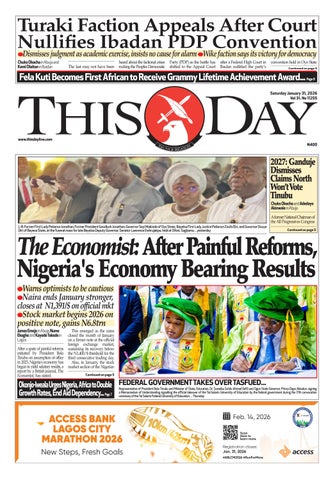
Warns optimists to be cautious Naira ends January stronger, closes at N1,391/$ on official mkt Stock market begins 2026 on positive note, gains N6.8trn
James Emejo in Abuja, Nume Ekeghe and Kayode Tokede in
After a spate of painful reforms initiated by President Bola Tinubu on assumption of office in 2023, Nigeria's economy has begun to yield salutary results, a report by a British journal, The Economist, has stated.
This emerged as the naira closed the month of January on a firmer note at the official foreign exchange market, sustaining its recovery below the N1,400/$ threshold for the third consecutive trading day. Also, in January, the stock market section of the Nigerian






The National Agency for Food and Drug Administration and Control (NAFDAC) yesterday maintained that its ongoing enforcement against the manufacture, distribution and sale of sachet alcohol was driven by public health concerns, particularly the protection of children, and not an attempt to destroy businesses.
Speaking in an interview on ‘The Morning Show’ on ARISE NEWS Channel, the Director-General of NAFDAC,
Prof. Mojisola Adeyeye, rejected claims by industry stakeholders, including the Manufacturers Association of Nigeria (MAN), that the agency operates unilaterally and without consultation.
According to her, “Our mandate is clear. NAFDAC
regulates and controls the manufacture, importation, exportation, advertisement, distribution, sale and use of regulated products, including alcohol under food. What we are doing is squarely within that mandate.”
She traced the origins of the
sachet alcohol policy to 2018, shortly after she assumed office, when NAFDAC officials drew her attention to the growing circulation of high-alcoholcontent drinks packaged in small sachets.
“I didn’t even know what sachet alcohol was at the time. I saw one pack and thought it was a breakfast bar because the packaging was so colourful. I turned it and discovered it was liquid alcohol; about 43 to 45 per cent alcohol, small enough to be squeezed into the pocket of a primary or secondary school child,” she added.
Exchange Limited (NGX) appreciated by N6.8 trillion. The feat recorded by the Nigerian bourse was attributed to impressive corporate earnings by some listed companies and government’s reforms.
Continuing, The Economist noted that though poverty had risen, Tinubu's package of drastic structural reforms appeared to be a "bitter medicine" helping to fix the economy, adding “It is difficult to overstate the mess Mr Tinubu inherited."
It noted that Tinubu had abolished the fuel subsidy and abandoned the multitiered system of dollar-pegged exchange rates, largely allowing the naira to float.
The central bank aggressively tightened monetary policy to curb the resulting bout of inflation.
The government also moved to improve security in the Niger
Delta and offered a range of tax incentives to investors to boost dwindling oil production, the report stated.
It stated that nearly three years on, the country's 230 million population, especially the poor and the middle class, are still reeling from increases in fuel and food prices.
However, following bold reforms, the country's annual inflation which hit a nearly 30-year high of 34.8 per cent in December 2024, fell to 15.2 per cent in December 2025.
The Economist further acknowledged that growth was returning as the IMF forecast the economy to expand by 4.4 per cent in 2026.
Among other gains from the reforms, the report pointed out that the naira had stabilised following two steep devaluations in 2023.
The central bank’s foreignexchange reserves have also
risen to $46 billion, their highest level in seven years.
The report noted that improvements in macroeconomic stability are restoring investor confidence.
"On January 22nd Shell, a British company, said it hopes in 2027 to finalise plans, with partners, to develop a $20 billion offshore oilfield that has been sitting untapped for over 20 years.
"Exxon Mobil, an American firm, has committed $1.5 billion to deepwater development until 2027.
"Local business leaders are more upbeat, too. Oil-and-gas production is rising, much of it driven by local firms plugging leaks and improving output in onshore projects in the Niger Delta, which has become safer thanks to Mr Tinubu’s focus on security there.
"All this should give the government some fiscal
GANDUJE DISMISSES CLAIMS NORTH
(APC), Dr. Abdullahi Ganduje, yesterday dismissed claims that the North will turn its back on President Bola Tinubu in the 2027 general election, describing such assumptions as misguided and detached from political realities.
This comes as a chieftain of the APC, Farouk Aliyu, yesterday expressed concerns that a Christian-Christian presidential ticket would likely alienate Muslim voters in the North, saying the region wouldn’t be comfortable with such a combination. Aliyu spoke yesterday, on ‘The Morning Show,’ on ARISE NEWS Channel, while weighing in on the debate about the ruling party’s Muslim-Muslim presidential ticket that produced President Bola Tinubu and Vice-
and sacked all officials elected therefrom while affirming the caretaker Committee of the faction loyal to the Federal Capital Territory Minister, Nyesom Wike. However, in a swift reaction, the Chairman of the PDP led by Kabiru Tanimu Turaki (SAN) said his group has appealed the judgement.
A Federal High Court sitting in Ibadan under trial Justice Uche Agomoh, yesterday nullified the PDP’s National Convention held in Ibadan, Oyo State, on November 15 and 16 2025.
President Kashim Shettima in 2023.
According to Ganduje, those holding such thought are making "a big mistake."
Ganduje stated this in Abuja, when a delegation of the Northern Nigeria Youth Leaders from the 19 states of the North paid him a courtesy visit and decorated him as the patron of the Forum.
The former Kano State Governor declared that there was no better candidate to govern Nigeria beyond 2027 from the south than Tinubu.
Ganduje revealed that there was an agreement even before the election of the late President Muhammadu Buhari that after eight years of his government, a southerner would emerge.
He stated: "Pertaining to the
The court also barred Turaki and others who emerged as National Working Committee (NWC) members from parading themselves as national officers of the party.
Similarly, the court ruled that the Caretaker Committee led by Abdulrahman and Senator Samuel Anyanwu is the only recognised NWC of the PDP pending the conduct of a valid National Convention.
The Turaki faction of the PDP had filed Suit Number FHC/IB/CS/121/2025, seeking recognition of the convention held in Ibadan and validation
breathing room, particularly as the cheaper naira begins to raise the competitiveness of Nigeria’s non-oil exports such as cocoa and cashew nuts," it added.
The report further opined that results from structural reforms could start to pay off for the president as he gears up to run for a second term in 2027.
The Economist said, "Recent reforms to taxation and tax collection, Mr Tinubu’s latest project, should help improve revenues further in the coming years.
"Falling inflation should eventually begin to ease the cost-of-living pain."
The report however, said optimists have reasons to be cautious despite improvements.
It said, "Savings from the fuel subsidy have largely been spent on servicing the public debt, which is still rising as the government continues to
next election in 2027, those who are nursing or thinking otherwise that the North will vote for another candidate other than Asiwaju are making a big mistake.
"This is the first time Nigeria as a nation is lucky to have a politician as President. His constituency is politics; his upbringing is politics because he believes in the unity of this country. In fact, he struggled; he was even in exile for democracy to survive in Nigeria. So there is no better person to be elected in 2027 than Bola Ahmed Tinubu.
"Asiwaju has only been there for less than four years now, and we have seen the measures, the reforms that he undertook. The reforms that he introduced to improve the social economic development of this country."
of the NWC that emerged at the convention
But Justice Agomoh in the ruling held that the convention was conducted in flagrant disobedience to two subsisting judgments of the same court, adding that returning to seek judicial approval for actions taken in defiance of court orders was an exercise in futility.
Consequently, all decisions taken at the convention were set aside by the court.
The court described the suit as a brazen attempt of the applicants to legitimise the
Speaking on some of the bold reforms the current administration has undertaken, Ganduje noted that all the candidates who contested with him in 2023 promised to remove fuel subsidy.
Ganduje added: “Even the previous government promised to remove the subsidy but nobody was bold enough to do that job but, Asiwaju has succeeded in removing the subsidy and now all the state Governors, irrespective of their political leaning, they believe they are getting more and more funds for the development of their respective states.
"He did not say that he removed subsidy because he wanted to improve the APC governors, but he did it for the nation. So, this President has
illegalities done in violation of subsisting court orders, stressing that it cannot allow that or sit on appeal over those judgments.
The court added that the application failed and thereby dismissed.
Justice Agomoh said, "I hold that the caretaker committee is the only lawful governing body of PDP that INEC should recognize and relate with.
"This suit is a brazen attempt of the Applicant to legitimise its illegalities done in violation of subsisting court orders. I cannot allow that or sit on
borrow against future sales of oil to fund its deficit.
"Currently, some 60 per cent of revenues are consumed by debt service.
"On January 20th Nigeria’s finance minister said the government hoped to borrow less this year, but current budget projections suggest that is not realistic."
The Economist further noted, "When Nigeria returned to civilian rule in 1999, Olusegun Obasanjo, the elected president, set out to clean up the economy after years of mismanagement by military governments.
Initially dismissed by critics, by the end of his second term Mr Obasanjo’s liberal policies had tamed inflation, spurred investment and raised annual gdp growth to around 7 per cent. It didn’t last.
Over the past decade GDP per person has fallen. Yet
undertaken measures that will improve the economy of this country."
While assuring the Northern Nigeria Youth Leaders of his support for the organisation, Ganduje commended them for their boldness not only to mobilise votes for the re-election of Asiwaju but to also raise money to purchase his nomination forms.
He added, "There's no better commitment than this, you are contributing funds, you are also contributing your brain, you are contributing your energy and you are contributing your time to ensure the re-election of Asiwaju, I have to thank you for this."
Earlier, the National Leader of the group, Murtala Gamji, who described Ganduje as a
appeal over those judgments.
"The Application fails and is dismissed."
Reacting to the judgement, Turaki while addressing the media in Abuja yesterday, said, ''We are aware of the judgment of the Federal High Court, Ibadan, delivered earlier today, which essentially declined to grant the order of mandamus sought, on the ground that granting same would, in the considered opinion of the court, amount to sitting on appeal over the judgments of courts of coordinate jurisdiction.
''For clarity, we approached
evidence is now mounting that another stretch of “golden years”, as one analyst calls the period following Mr Obasanjo’s liberalisation, may be on the cards.
"In the past two and a half years Bola Tinubu, who in Mr Obasanjo’s day was the governor of Lagos and was elected president in 2023, has been enacting his own set of structural reforms. As he gears up to run for a second term in 2027, they may be starting to pay off."
The report added, "It is difficult to overstate the mess Mr Tinubu inherited.
"When he took office in 2023, the country’s central bank had $7 billion (equivalent to 1.4% of GDP at the time) in obligations it could not meet, prompting international investors to flee en masse.
role model, added that as a governor, Ganduje made him one of the most popular youth leaders through his support.
"We are here to tell you that wherever you focus that's where we go with you. We have all agreed to support the re-election of Asiwaju Bola Ahmed Tinubu by massively mobilizing all the youths in the 19 Northern states and to raise funds to buy his nomination form ahead of the election.
"We have to do this because some people are insinuating that the North will not vote for Asiwaju in 2027, but that's a lie because nobody has supported us in the North like Asiwaju Bola Ahmed Tinubu,"Gamji declared.
the court seeking an order of mandamus to compel the Independent National Electoral Commission (INEC) to recognise the Ibadan Convention and to facilitate official party communications with the Commission.
“In the course of the proceedings, some former members of our party, who had earlier been expelled, applied to be joined and were so joined by the court. They filed processes urging the court not to grant our prayers, without more.
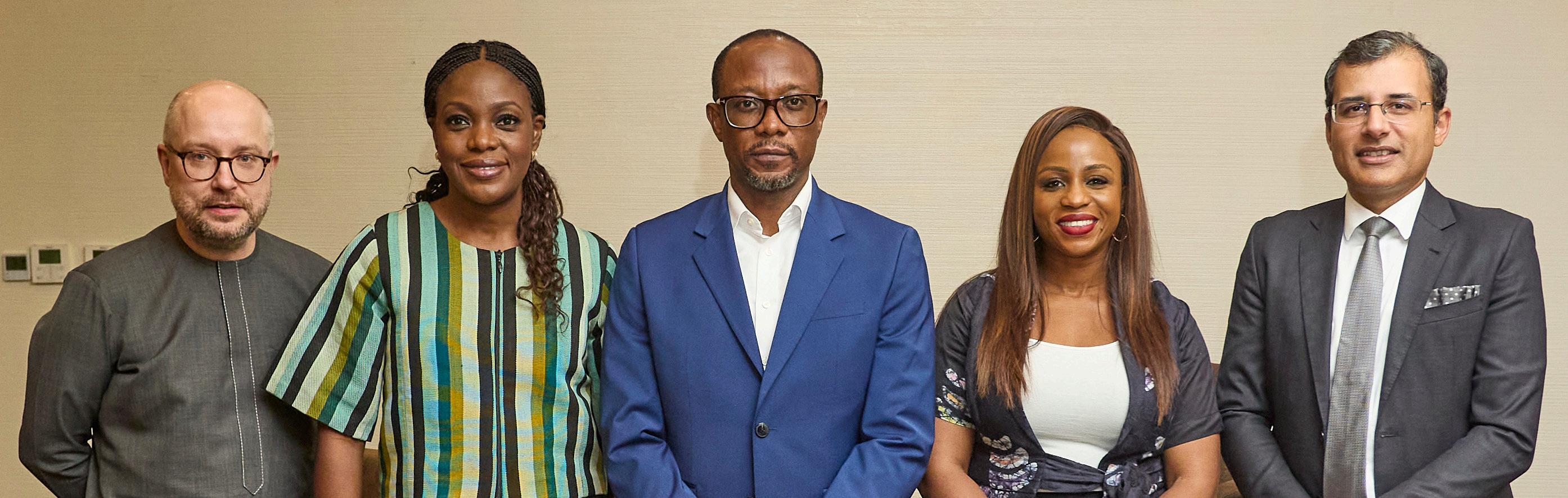
The Director General of the World Trade Organisation (WTO), Dr. Ngozi OkonjoIweala, yesterday, called on Nigeria and other African countries to urgently strengthen their economic foundations, double growth rates and end reliance on foreign aid, declaring that “those days are over.”
Speaking at the convocation ceremony of Ahmadu Bello University (ABU), Zaria, held yesterday in Zaria, OkonjoIweala urged African nations to come together in new “plurilateral coalitions” to seize emerging global opportunities, while focusing inward to build resilient, competitive economies capable of creating jobs and prosperity.
According to her, “First, we need people to come together in new plurilateral coalitions to take advantage of new
opportunities in what some, like Prime Minister Makani, recently called variable geometry,” she said.
“Second, we must look more to ourselves and introduce more economic security and prosperity both nationally and regionally. Third, we can no longer depend on any other nation coming to assist us with aid. Those days are over. They are over.”
She stressed that countries must critically examine their economic management and investment climate.
“Each country needs to look at its economic foundations and ask itself, am I doing everything I can for the economy? We have to clean up our internal economic management and make ourselves more attractive for investment by domestic, regional and global investors,” she said.
Okonjo-Iweala warned that unemployment, particularly among young people and
The Nigerian military has uncovered a newly established terrorist enclave in the Northern Tumbus area of the North-east, a development that has led to the surrender of no fewer than 124 terrorists and their family members.
Speaking during a press briefing at the Defence Headquarters (DHQ) in Abuja yesterday, the Director of Defence Media Operations, Major General Michael Onoja, disclosed that troops of the Joint Task Force, North East, under Operation Hadin Kai, identified the enclave as a key hideout for senior Islamic State West Africa Province (ISWAP) commanders and their fighters. According to him,
intelligence-led operations confirmed that the location served as a hibernation zone where terrorists regrouped and coordinated activities.
Acting on this information, the Air Component of Operation Hadin Kai, working closely with Nigerian Army Aviation, carried out coordinated air interdiction missions against the enclave.
“Targets were observed assembling at two separate locations within the area. These targets were subsequently acquired and engaged with rockets and bombs,” Onoja said.
He added that battle damage assessments indicated that several terrorists were neutralised during the operation, while their weapons, equipment and logistical assets were destroyed.
graduates, posed a serious threat to social and economic stability.
“When I travel around and I see the enormous numbers of young people, including young graduates, who are on our streets and in our homes without jobs, I know we have to create jobs,” she said.
According to her, Nigeria and Africa must aim much higher in terms of economic expansion.
“The goal for Nigeria and Africa needs to be to double GDP growth rates to six or seven per cent and to sustain the higher pace long enough to transform people’s living standards and economic prospects,” she said.
She noted that such growth is achievable, citing examples across the continent.
“We know this is within reach because some countries on the continent are showing the way,” she said, adding that Ethiopia averaged 7.6 per cent growth over the past decade, Rwanda 6.9 per cent and Côte d’Ivoire
six per cent.
Quoting African Development Bank data, the WTO chief said, “11 of the world’s 20 fastest growing economies in 2024 were African,” stressing that these countries “are demonstrating to the continent and to the world that African economies can grow when their priorities are right.”
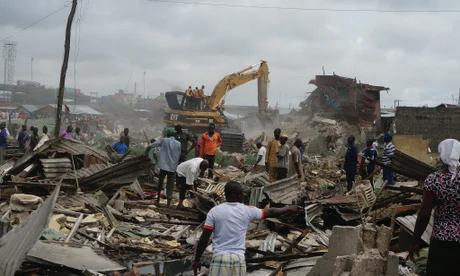
The Lagos State Government has reiterated that ongoing actions in Makoko are driven by the urgent need to protect lives, uphold the rule of law, and advance comprehensive urban renewal initiatives aimed at improving living conditions for residents.
Addressing recent concerns and public discourse surrounding Makoko on a national television programme monitored in Lagos, the Lagos State Commissioner for
Information and Strategy, Mr. Gbenga Omotoso, clarified that the current intervention is not a conflict between the rich and the poor, but a necessary step toward ensuring safety, legality, and humane living standards for all Lagosians.
The commissioner confirmed that the government has been in continuous engagement with the United Nations (UN) regarding the future of Makoko.
The UN, he noted, has expressed interest in the renewal
strategy for the area and has indicated its willingness to support the initiative. Both parties agree that certain sections of Makoko, particularly areas under high-tension power lines, are unsafe and unsuitable for habitation.
Omotoso revealed that the government has committed counterpart funding toward the renewal plan and has held several meetings with international partners, including engagements as recent as this
week, to ensure a sustainable and humane redevelopment process.
“This is about urban renewal. It is about better living conditions for our people. Government cannot and will not allow residents to remain in environments that pose imminent danger to their lives,” he noted. He added that no human being should reside under high-tension electricity wires due to severe health and safety risks.
Osun, Ekiti,
Adedayo Akinwale in Abuja
The National Working Committee (NWC) of the All Progressives Congress (APC) has extended the e-membership registration by one week.
The extension of the e-registration exercise which was supposed to end 31st of January, 2026 would now end on February the 8th, 2026.
The ruling party has also exempted Osun, Ekiti, Rivers
and the Federal Capital Territory from the upcoming Congresses.
The decision was taken at the 183rd meeting of the NWC of the party.
Briefing journalists after
the NWC meeting yesterday in Abuja, the National Publicity Secretary, Felix Morka, said all the changes and adjustments that have been made to the Congress schedule would also be published on Monday.
Deji Elumoye in Abuja
Vice President Kashim Shettima yesterday inaugurated the Tudun Biri Resettlement Scheme, with about 133 completed housing units, educational facilities and other state-of-the-art infrastructure.
This was sequel to the federal government's promise of rebuilding after the community was hit by an accident bomb from military drones over two years ago.
Shettima had in December 2023 visited victims of the drone misfire, assuring them that President Bola
Tinubu had directed that the resettlement scheme should be kick-started in the community.
In fulfilment of that promise, he returned to Tudun Biri in July 2024 to perform the groundbreaking ceremony of rebuilding the community under the Resettlement
Scheme for Persons Impacted by Conflict (RSPIC).
Speaking in Kaduna while inaugurating the resettlement scheme in Tudun Biri in Igabi Local Government Area of the state, the Vice President described the scheme as another promise fulfilled by President Tinubu.
The Minister of the Federal Capital Territory (FCT), Nyesom Wike, has threatened to forcefully access the Yakubu Gowon Stadium in Port Harcourt, if the Rivers State government refuses him and his supporters entry to the facility in their subsequent political event.
This was as the Rivers State Government has dismissed the claims by Wike, describing his allegation as false, politically motivated and capable of stirring unnecessary tension even as it noted that the stadium was under construction.
The former governor of Rivers State, who gave the warning yesterday, during the inauguration of senatorial and local government
coordinators of the Renewed Hope Ambassadors, in Port Harcourt, said they were not allowed into the facility after applying to the state government.
The event held at the Captain Elechi Amadi Polytechnic in Rumuola, another state government’s facility, was organised in support of President Bola Tinubu’s administration ahead of 2027 general elections. It would be recalled that during the tenure of Wike as a governor of the state, candidates of opposition political parties were denied access to hold rallies in government facilities in the state, including school fields, unless they met certain conditions.
Speaking during the rally, Wike warned that if the state government continues to deny
The Federal Airports Authority of Nigeria (FAAN) has launched Nigeria’s first fully-powered electric airport-to-city shuttle bus service, marking a historic milestone in the country’s transition to sustainable transport and low carbon aviation access.
Also, the Nigeria Civil Aviation Authority (NCAA) yesterday reiterated its directive to all domestic airlines operating in Nigeria to ensure full compliance with provisions for Persons with Reduced Mobility (PRM) and passengers with disabilities by incorporating a mandatory Special Needs/ Assistance request feature on their ticket reservation systems.
The electric airport-to-city shuttle bus service initiative, unveiled at the Nnamdi Azikiwe International Airport, Abuja, is
being delivered in partnership with NEV Electric, Nigeria’s first and premier electric vehicle manufacturer, and Possible Electric Mobility, the country’s largest electric vehicle fleet operator.
The service deploys Nigerian manufactured NEV T6 electric buses to transport passengers between the airport and major city terminals, including hotels, business districts, and key government offices. Abuja serves as the pilot city, with plans for expansion to other international airports nationwide.
Transitioning from diesel to electric buses is projected to reduce emissions by approximately 74 per cent equating to an annual saving of around 1,327 tonnes of COE.
This represents a significant contribution toward Nigeria’s climate goals and FAAN’s sustainability roadmap.
them entry to such facilities, they will access it by force, saying “heaven will not fall” if the facility is broken.
He said, “We applied to the state government to use the Yakubu Gowon Stadium and they refused. Next time, if we apply and they refuse again, we will break it and nothing will happen."
He boasted that Rivers State was setting the pace in political mobilisation,
insisting that the state would continue to lead others in demonstrating support for the President.
“I know after today, other states may inaugurate their own structures, but Rivers State will always lead the way. Support is not by mouth; we have shown commitment with action,” he added.
Wike declared that political activities ahead of future elections had officially
commenced, noting that ward-level inaugurations would follow.
“I told you that by January we would start playing politics. This is January, and we have started. If you don’t give us the venue, we will break it,” he reiterated.
He also questioned the state government’s commitment to supporting President Tinubu ahead of 2027.
“You cannot have a
governor in the state while we are openly declaring support for President Tinubu and you are not aligning. How then do you expect a reward?” Wike asked.
According to him, political reward is tied to commitment, not financial contribution. “You don’t need N600 billion. All you need is commitment. That is what brings reward, even if it brings envy,” he said.
Nume Ekeghe
The federal government has called on private equity firms and fund managers to play a stronger role in financing Nigeria’s growth ambitions, while committing to deeper engagement, clearer policy direction and better coordination to address bottlenecks constraining private capital.
The commitment was made at a high-level engagement between government officials and private capital stakeholders in Lagos, yesterday, aimed at strengthening Nigeria’s private capital ecosystem in support of the administration’s target of achieving seven per cent economic growth.
Speaking at the session, Special Adviser to the President of Nigeria on Finance and the
Economy, Sanyade Okoli, said growth at the scale envisaged by government would have to be financed largely through investment, particularly domestic capital, given global economic volatility.
She noted that while the government has taken difficult reform decisions, including foreign exchange unification and fuel subsidy removal, the next phase requires a more
coordinated policy framework that supports investment and job creation.
“We cannot achieve seven per cent growth without investment. And in today’s global environment, that investment must increasingly come from domestic private capital,” Okoli said, stressing the need for policies that are aligned with government’s growth objectives.
Wale Igbintade
The Supreme Court has dismissed an appeal challenging the jurisdictional decision of the Court of Appeal, Calabar Division, thereby striking out a N1.4 billion compensation suit filed against Mobil Producing Nigeria Unlimited over the alleged acquisition of community land in Akwa Ibom State.
In a unanimous judgement delivered on January 30, 2026, the apex court held that the Federal High
Court lacked jurisdiction to entertain claims relating to land disputes and compensation arising from compulsory acquisition and unexhausted improvements. It ruled that such matters fall squarely within the
exclusive jurisdiction of State High Courts under the Land Use Act.
The appeal arose from a suit instituted in 1997 by His Royal Highness, Obong David Edu, and 132 others at the Federal High Court, Uyo Judicial Division.
President Donald Trump plans to nominate Kevin Warsh to the board of the Federal Reserve as a governor and the next chair of the central bank. If confirmed by the Senate, Warsh would succeed Jerome Powell, whose tenure as chair ends in May.
Trump announced the nomination in a post on social media yesterday morning.
"I have known Kevin for a long period of time, and have no doubt that he will go down as one of the GREAT Fed
Chairmen, maybe the best," Trump wrote.
"On top of everything else, he is 'central casting,' and he will never let you down," the president said.
Trump did not mention Powell in the announcement.
But Warsh's Senate confirmation process will likely be made much more difficult as a result of the pressure campaign Trump has waged against Powell and the bank to drastically lower interest rates.
Ademide Adebayo
Legendary Nigerian musician and Afrobeat pioneer, Fela Anikulapo Kuti, has been named the first African to receive the Grammy Lifetime Achievement Award, marking a historic global recognition of his influence nearly three decades after his death.
The Recording Academy announced the honour ahead of the upcoming Grammy Awards ceremony in Los Angeles, where members of his family, friends and colleagues are expected to receive the award posthumously on his behalf.
The recognition comes amid
growing global attention on African music following the rise of Afrobeats and the introduction of the Best African Performance category in 2024. Reacting to the announcement in an interview with BBC, his son and fellow Afrobeat musician, Seun Kuti, described the recognition as overdue. “Fela has been in the hearts of the people for such a long time. Now the Grammys have acknowledged it, and it’s a double victory,” he said. “It’s bringing balance to a Fela story.”
Longtime friend and former manager, Rikki Stein, told the BBC that the honour was “better late than never.”
He added, “Africa hasn’t in the past rated very highly in their interests. I think that’s changing quite a bit of late.”
The Grammy Lifetime Achievement Award, first presented in 1963, has previously gone to music icons including Bing Crosby. This year’s honourees also include Carlos Santana, Chaka Khan and Paul Simon, but Fela stands out as the first African recipient of the distinction.
Widely regarded as the architect of Afrobeat, Fela pioneered the genre alongside drummer Tony Allen, blending West African rhythms with jazz, funk, highlife and politically
charged lyricism. Across a career spanning about three decades until his death in 1997, he released more than 50 albums and built a legacy that fused music with resistance and cultural identity.
Beyond music, Fela was known for his outspoken opposition to social injustice, corruption and military rule in Nigeria. Stein noted during the same media interaction that he “castigated any form of social injustice, corruption [and] mismanagement” in government.
His activism peaked in 1977 after the release of Zombie, which mocked military authority.
Sunday Aborisade in Abuja
Senator Mohammed Ali
Ndume, representing Borno South Senatorial District, has urged the Nigerian military to sustain and intensify its offensive against Boko Haram and the Islamic State West Africa Province (ISWAP) following recent deadly attacks in parts of Borno State that claimed the lives of soldiers, members of the
Civilian Joint Task Force (CJTF) and civilians.
At least 25 people were killed when suspected Boko Haram militants attacked a town in Borno, State, relatives of victims said, the deadliest reported Islamist attack since U.S. President Donald Trump ordered airstrikes on Christmas Day, noted Reuters.
Ndume, in a statement yesterday, also condoled the Theatre Command
North East Joint Task Force, Operation Hadin Kai (OPHK), the CJTF and families of victims killed during a confrontation with terrorists in Sabon Gari Village, Damboa Local Government Area.
He expressed sympathy with residents of Harang and surrounding communities in Hawul Local Government Area, where a separate attack led to the death of one person and the destruction of
houses and other property.
The Media Information Officer of Headquarters Joint Task Force OPHK, Lt. Col. Sani Uba, had in an earlier statement disclosed that troops neutralised several ISWAP fighters during the encounter and recovered arms and ammunition.
However, the operation also resulted in fatalities among soldiers of Sector 2, CJTF members and civilians.
Ahamefula Ogbu
Renowned cleric, televangelist and General Overseer of Mountain of Liberation and Miracle Ministry, Dr. Chris Okafor, has dismissed as false allegations that he molested his daughters and prayed God to kill him if he ever did. He lamented the effect of one-
sided narrative and propaganda against him by some people he said he never met in his life but have been disparaging him on social media.
Speaking with journalists yesterday, Okafor said contrary to the claims of his traducers, he has been a good and responsible father to his children whom the court granted him
custody while dissolving his marriage on account of infidelity and irreconcilable differences.
"When did this issue of molesting my daughters arise? When we went to court for divorce proceedings, the court granted me custody of all the children. If there was any issue of maltreating my children,
will the court still put them under my custody? When the court reviewed the case and determined that they would be under better moral obligations under me they were put under my custody and I have been a good father to them. The court didn't want the influence of their mother's character on them.
Soldiers raided and burned his Lagos commune, Kalakuta Republic, brutalised residents and fatally injured his mother, Funmilayo Ransome-Kuti. Rather
First
Yinka Kolawole in Osogbo
Wife of the President, Senator Oluremi Tinubu, yesterday donated 50 buses and 30 tricycles to the Obafemi Awolowo University, OAU, Ile-Ife, to cushion problems of transportation among students and members of staff of the institution.
Mrs. Tinubu was joined by the Ooni of Ife, Oba Adeyeye Ogunwusi, the Soun of Ogbomoso, Oba Ghandi Olaoye, Ajero of Ijero-Ekiti, Oba Joseph Adewole, Osun APC governorship candidate, Mr. Bola Oyebamiji, among
several prominent persons.
The First Lady, who was at OAU Sports Centre around 11:30a.m. moved straight to inaugurate the vehicles in company of the Ooni of Ife, Ogunwusi. She was later given a rousing welcome from the students and staff of the institution who trooped out at the sports centre pavilion to honour and appreciate her gesture.
While Ssking with journalists at the event, the OAU's ViceChancellor Professor Simeon Bamire, noted that Senator Tinubu's gesture to the school was unprecedented.
The Executive Secretary of the Benue State Education Quality Assurance and Examinations Board (BEQAEB), Dr. Terna Francis, has anchored the Board’s activities on the provisions of the law establishing it, stressing that all regulatory actions being undertaken are firmly backed by statute.
Francis made this known while interacting with the Correspondents’ Chapel of the Nigeria Union of Journalists (NUJ), Makurdi, following allegations of massive fraud in the system.
He described BEQAEB as one of the most disciplined regulatory establishments in the state, noting that resistance from schools and proprietors is often inevitable
whenever regulations are enforced.
The Executive Secretary explained that the governor’s decision to strengthen Quality Assurance and separate it from the Ministry of Education was guided by the need for a more rigorous and independent mechanism for monitoring schools.
Quoting the enabling law, Francis said BEQAEB is empowered to inspect, monitor, regulate, accredit and sanction schools—both public and private—to ensure compliance with approved minimum standards. He noted that this legal backing informed the establishment of the Board to allow closer scrutiny of school operations and ensure proper implementation of education sector reforms.
Sunday Ehigiator with agency report
Former Nigerian oil minister Diezani Alison-Madueke had no real influence over the awarding of lucrative government contracts and was merely a "rubber stamp" for official recommendations, her lawyer said at her London corruption trial.
Alison-Madueke, Minister of Petroleum Resources between 2010 and 2015 under former President Goodluck Jonathan, has pleaded not guilty to five counts of accepting bribes and a charge of conspiracy to commit bribery.
Prosecutors had said AlisonMadueke "enjoyed a life of luxury" in London, with oil and gas industry figures having provided the use of high-end properties and given her lavish gifts to try and influence the awarding of lucrative contracts.
But Reuters quoted her lawyer, Jonathan Laidlaw, to have told jurors at London's Southwark Crown Court that purchases were made on Alison-Madueke's behalf
"because Nigerian ministers are forbidden from having bank accounts abroad."
He also said Alison-Madueke, 65, disputes the extent to which properties were provided for her use and the amounts of goods she received, but that "all that was spent on her personally, in one way or another, was reimbursed."
Laidlaw said personal expenses were repaid by Alison-Madueke in Nigeria and expenses relating to official business were "reimbursed from government coffers", meaning Alison-Madueke received no financial advantage.
"If there was any financial advantage, it was to Nigeria, enabling the Minister of Petroleum Resources to undertake her ministerial business and ... there was, of course, nothing improper about it," he added.
Alison-Madueke, who was also briefly president of the Organisation of the Petroleum Exporting Countries, is standing trial alongside her brother Doye Agama, 69, who has pleaded not guilty to conspiracy to
Sunday Ehigiator
DHL Aviation has unveiled two fully branded Boeing 737-400 aircraft at Murtala Muhammed International Airport in Lagos, marking a significant milestone in the company's ongoing investment in Sub-Saharan Africa’s (SSA) logistics infrastructure.
According to a statement from the company, the additional air capacity will enhance transit times, improve delivery predictability, and extend DHL’s reach to support businesses across West Africa and beyond.
“As the only integrator with
a dedicated air network in SubSaharan Africa, DHL continues to expand its aviation uplift to meet growing demand from West African businesses across key sectors, including e-commerce, perishables, energy, and life sciences and healthcare.”
Speaking about the development through the statement, the Vice President, Operations and Aviation, DHL Express SSA, Anthony Beckley, noted that, “As trade expands across Africa under the African Continental Free Trade Area, businesses are demanding predictable transit times and consistent delivery performance.
commit bribery relating to his church.
Their co-defendant Olatimbo Ayinde, 54, has pleaded not guilty to one-count of bribing Alison-Madueke between 2012 and 2014 and one-count of bribery of a foreign public official.
The trial, expected to conclude in April, is one of the most high-profile cases relating to alleged corruption in oil-rich Nigeria.
Prosecutors said Nigerian businessman Kolawole Aluko spent more than 2 million pounds ($2.8 million) on items for Alison-Madueke at London department store Harrods alone.
Alison-Madueke is also accused of taking bribes, including gifts and payment for her son's school fees, from prominent oil and gas industry figures.
But, Laidlaw told the jury, none of the others named in the charges against Alison-Madueke have been charged, nor had Britain sought to have them extradited to stand trial.
The Executive Director of Pipeline Infrastructure Nigeria Limited (PINL), Osahon Okunbo, has challenged prevailing assumptions about Africa’s energy transition, arguing that the continent’s real problem is not excessive risk but a persistent
misreading of where risk truly lies.
Speaking at Nigeria House during a panel session titled, ‘Powering Africa’s Next Growth Cycle: Gas, Renewables, Capital and Entrepreneurs in a Pragmatic Energy Transition’, at the just-
concluded 2026 World Economic Forum (WEF) in Davos, Okunbo said Africa’s energy debate has been dominated by exaggerated concerns over political instability, security and financing, often obscuring practical pathways to scale energy access and
Amaanah Finance, a non-interest finance bank, will on Monday officially commence operations, offering Nigerians an alternative ethical banking model aimed at supporting micro, small and medium-scale enterprises (MSMEs), startups and large-scale projects across the country.
The new institution said its entry into the financial services
space is driven by a philosophy of building prosperity with principles, providing Sharia-compliant financial solutions anchored on transparency, partnership and real economic impact.
Amaanah Finance noted that its services are designed for individuals and businesses seeking competitive returns while ensuring responsible and values-based use of capital.
According to a statement from
the institution, its non-interest banking model prioritises economic empowerment by channelling funds into productive sectors of the economy. Through its range of financing and investment products, Amaanah Finance said it aims to deepen financial inclusion and expand access to capital for underserved segments, particularly MSMEs that remain the backbone of Nigeria’s economy.
Bennett Oghifo
The ABIS Livestock Academy will bridge critical knowledge and skill gaps within the livestock work force, enhance productivity and value chain efficiency.
It will also enhance food safety, support regulatory compliance and reduce Nigeria’s reliance on livestock-
related imports by modernising production and processing systems.
Speaking during the Technical Expert Validation session of the Curriculum of the Academy at NIRSAL auditorium on Wednesday, the Co-Founder of ABIS Group, Dr. Iliyasu Gashinbaki, said at the heart of the Academy’s mandate is a national
development objective - to produce a competent, compliant and commercially viable livestock workforce capable of strengthening food security, promoting inclusive rural development, improving public health outcomes and positioning Nigeria as a credible participant in regional and global livestock, halal and agribusiness markets.
industrial growth.
According to him, global capital has not vanished from Africa’s energy space, despite increased climate-related pressures on oil and gas financing. Instead, it has shifted, he argued.
While international financiers have grown more cautious, indigenous investors, family offices and long-term local institutions are increasingly stepping in with patient capital for projects of national importance.
“There is capital in Africa and in Nigeria for these projects,” Okunbo said. “What has changed is who is willing to deploy it and for how long,” he added.
He cited major gas infrastructure such as the Ajaokuta–Kaduna–Kano (AKK) pipeline as an example of how long-gestation investments can unlock domestic energy supply, industrialisation and economic resilience when backed by committed local capital. Okunbo also pushed back against the widespread perception that security concerns make large-scale infrastructure unviable in Nigeria. Drawing from PINL’s experience operating the 500-kilometre Trans-Niger Pipeline across multiple Niger Delta communities, he argued that security risks are often overstated.

and religious leaders
As Africa stands at a crossroads in the fight against violence targeting women and girls, the continent’s traditional leaders hold a uniquely powerful key to unlocking lasting change. Their influence—rooted in culture, authority and community trust—positions them not just as custodians of heritage, but as essential partners in redefining norms, protecting rights and leading a continental shift toward safety, dignity and equality for every woman and girl.
In the coming week, traditional leaders from across Africa will meet in Lagos to explore how culture can advance dignity, safety, and equality. Their convening could not be timelier. Violence against women and girls remains widespread, underreported, and a major obstacle to achieving Agenda 2063 and the SDGs. Recent UN and WHO findings confirm that intimate partner and sexual violence persist at alarming levels, underscoring the need for strong, locally led prevention and accountability.
This important meeting in Lagos is made possible through the valued support and partnership of the Ford Foundation, whose long-standing commitment to gender justice, human rights, and community-led solutions continues to strengthen efforts across Africa to end violence against women and girls.
Sub-Saharan Africa records some of the world’s highest rates of intimate partner violence, with studies showing that over 40% of women surveyed have experienced emotional, physical, or sexual abuse. Regional data platforms confirm that both lifetime and recent intimate partner violence remain alarmingly common. The effects also span generations: research across 37 African countries links mothers’ experiences of violence to higher risks of illness, undernutrition, and even death among children under five, highlighting IPV as a major threat to child survival and public health.
Africa has made notable strides, yet harmful practices still put millions of girls at risk. West and Central Africa remain the global epicentre of child marriage: nearly 60 million women and girls in the region were married before 18, with Nigeria bearing the largest absolute numbers. These figures, drawn from UNICEF’s databases, remind us that while progress is possible, it is not guaranteed without sustained, community-anchored change.
There are bright spots. In Kenya, the latest Demographic and Health Survey shows FGM prevalence fell to about 15% in 2022, down from 21% in 2014, a testament to policy commitment and local norm change. Yet prevalence remains extremely high among several communities, and sustained vigilance is required to prevent medicalisation or cross-border practices.
Nigeria mirrors the continental picture: national surveys and administrative data point to widespread physical, sexual and emotional violence, with thousands of cases reported to authorities each year, figures that almost
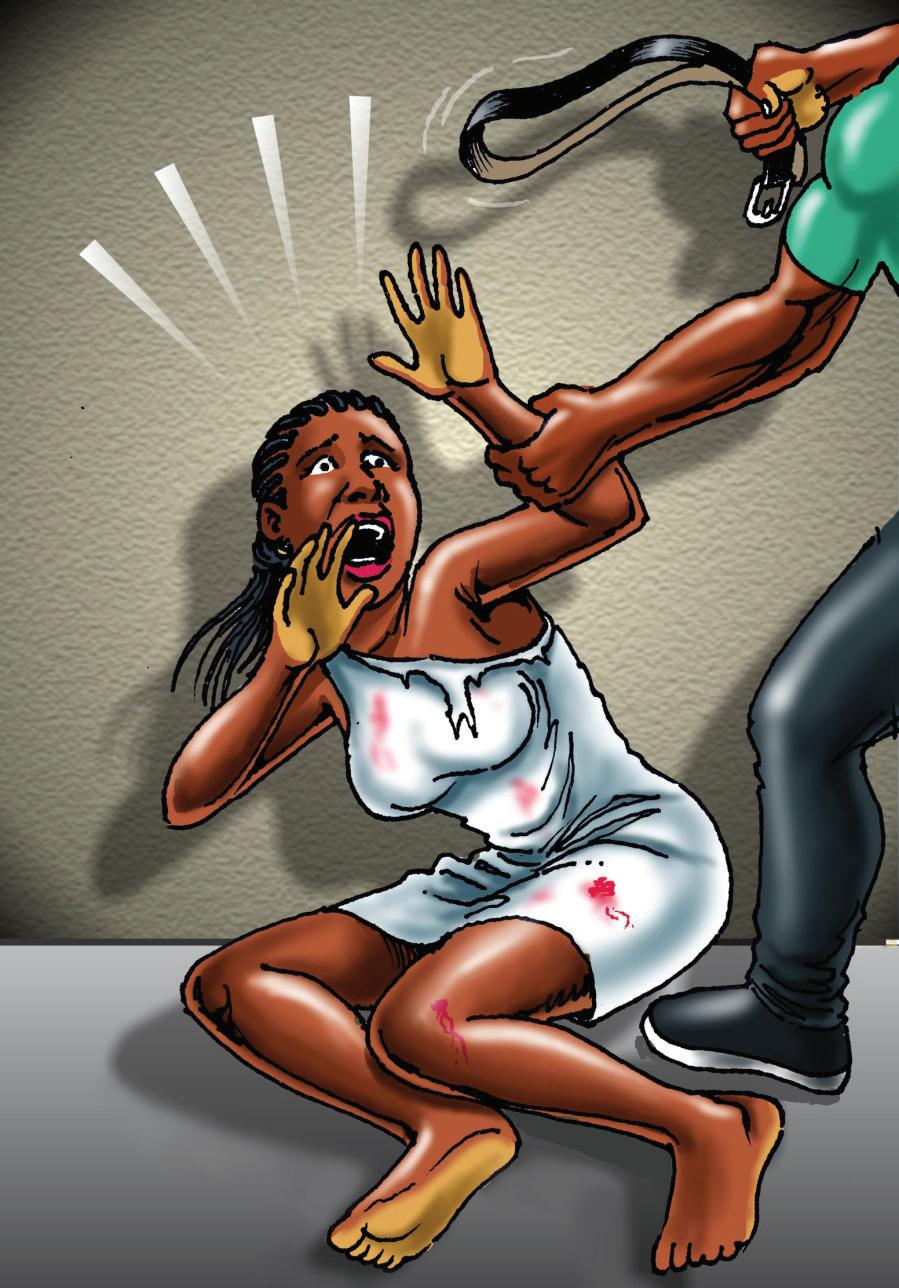
UN WOMEN’S WORK WITH TRADITIONAL COUNCILS ACROSS AFRICA HAS SHOWN THAT WHEN CUSTODIANS OF CULTURE PUBLICLY DENOUNCE HARMFUL PRACTICES, BACKED BY EVIDENCE AND COMMUNITY DIALOGUE, NORMS SHIFT AND LAWS GAIN LEGITIMACY
Acertainly undercount the true burden. The Government’s National GBV Data Collation Tool is an important step toward standardising reporting and improving coordination; scaling it nationwide and linking it to survivor-centred services will save lives.
Encouragingly, the upcoming Conference of African Traditional Leaders in Lagos, already drawing commitments from eminent leaders, signals growing recognition that cultural authority can be mobilised to protect women and girls. UN Women’s work with traditional councils across Africa has shown that when custodians of culture publicly denounce harmful practices, backed by evidence and community dialogue, norms shift and laws gain legitimacy. It is why we helped catalyse platforms like the Council of Traditional Leaders of Africa to champion the abandonment of child marriage and FGM.
Law works best when culture leads
Africa’s legal architecture has advanced. The Maputo Protocol, our continental bill of women’s rights, has spurred reforms, and the African Commission recently moved to develop a Model Law to accelerate domestication and harmonisation across countries. These instruments matter: they provide standards, remedies and budgets. But their power is realised when interpreted through community values that affirm women’s dignity.
Evidence from the Spotlight Initiative, the EU-UN partnership with the African Union, shows that multi-sector, locally-led approaches can reduce harmful practices, strengthen services, and improve prevention. Traditional and religious leaders who champion public declarations, alternative rites of passage, and community bylaws help convert state law into lived practice.
I urge traditional leaders to make clear, practical commitments that have been proven to drive change: publicly and repeatedly denounce harmful practices such as child marriage, widowhood rites and FGM, backing declarations with community bylaws aligned with national law; promote survivor-centred justice in customary systems through strong referral pathways, bans on forced reconciliation, and proper case documentation; safeguard girls’ childhoods by ensuring birth and marriage registration, enforcing 18 as the minimum age of marriage, and supporting re-entry to school for married or parenting girls; encourage alternative rites of passage and positive models of masculinity that reject violence; and use their influence to push for stronger laws, adequate funding, and community engagement to address all forms of violence against women and girls.
Houinato is the UN Women Regional Director for West and Central Africa, providing strategic leadership across 24 countries to advance gender equality, strengthen women’s rights, and accelerate the elimination of violence against women and girls
Hereditary political leadership without competence erodes public trust, contends SONNY IROCHE
cross much of the developing world, political succession is often fraught. But in Nigeria the recent and growing trend of political office being inherited, directly or indirectly, by the children of a deeply privileged political class raises a more troubling question: what exactly is being inherited, service, competence, and vision, or failure, entitlement, and mediocrity?
Nigeria’s present condition makes this question unavoidable. A country that, at independence, stood shoulder-to-shoulder with nations such as Singapore, Malaysia and South Korea, and was significantly ahead of Rwanda, now lags behind all of them on nearly every meaningful human-development indicator. Six decades later, Nigeria remains trapped in a cycle of epileptic electricity supply, fragile healthcare, insecurity, underperforming education, collapsing infrastructure, and widespread poverty, despite decades of oil wealth.
Yet, paradoxically, it is from this very ecosystem of underperformance that a new generation of political aspirants is emerging, the sons and daughters of those who presided over Nigeria’s long
and persistent decline.
The Record that the Fathers Left Behind. To interrogate this phenomenon honestly, one must begin with the legacies of the political class that dominated Nigeria from the late 1970s through the military and post-military eras. These leaders oversaw: Power generation stagnation, leaving Africa’s largest economy producing less electricity than smaller middle-income countries.
Healthcare collapse, driving elites themselves to seek medical treatment abroad while public hospitals decay.
Education erosion, transforming oncerespected universities into chronically underfunded institutions plagued by strikes.
Institutional corruption, where rentseeking replaced nation-building and public office became a vehicle for private accumulation.
This is not conjecture; it is empirical reality. Nigeria’s GDP per capita has stagnated relative to peers, poverty has deepened, and infrastructure deficits now run into trillions of dollars. These outcomes did not occur in a vacuum, they are the direct products of governance
choices made by identifiable political actors.
It is therefore legitimate to ask: what moral authority do the offspring of this class inherit?
Youth in Politics Is Not the Problem. This critique must be precise. Youth participation in politics is not the problem.
On the contrary, democracies benefit when energetic, idealistic young citizens enter public life between ages 25 and 30. The problem arises when political access is inherited rather than earned, and when pedigree substitutes for preparation. Many of today’s emerging political scions in Nigeria exhibit thin educational depth, often limited to credentialism rather than intellectual rigor.
Little or no real sectoral experience, in business, civil society, academia, technology, or public administration.
A deficit of independent achievement, having never succeeded outside the protective shadow of family influence. More troubling still is the absence of credible role-model governance within their own households. When a father’s public legacy is defined by corruption allegations, policy failure, or institutional
decay, the claim that his offspring represents “renewal” rings hollow.
How Do Other Nations Managed Political Succession? Contrast this with countries that successfully navigated political succession without sacrificing competence.
In Singapore the political lineage associated with Lee Juan Yew did not translate into entitlement. His son, Lee Hsien Loong, entered politics after distinguished military service, a Cambridge education, and decades of technocratic grooming within a system that prized merit above name.
In Malaysia political families exist, but legitimacy has historically been tied to administrative competence and party discipline, exemplified during the era of Mahather Mohamad.
South Korea offers another instructive contrast. Even where political dynasties emerged after the era of Park Chung Hee, democratic consolidation and institutional checks ensured that successors faced scrutiny, performance benchmarks, and electoral accountability.
Iroche is Finance Executive and Management Consultant

TWhen President Muhammadu Buhari took over the reins of power on May 29, 2015, Nigeria was sadly a broken state in many respects. As a result of many other factors including bad governance and untold level of corruption, government could not live up to its financial obligations to citizens and service providers at both the federal and state levels.
he Irrua Specialist Teaching Hospital (ISTH) was legally established in 1993 through the enactment of Decree No. 92 of 1993. The hospital had earlier been commissioned on 21 November 1991 by the then Vice President, a Naval Admiral and an illustrious son of Irrua and Esanland. Starting out as a tertiary medical institution, it was first named Otibho Okhae Teaching Hospital. It was later renamed Irrua Specialist Teaching Hospital. Clinical services commenced in May 1993.
by the EFCC, President Buhari by his action has successfully brought back to the public consciousness the need to treat public funds with the highest level of transparency and accountability.
local government areas in Esanland and for this we are eternally grateful to the gentleman General who is unarguably the most loyal deputy to our heads of state, whether military of civilian.
Indeed one of the first official assignments that President Buhari carried out was the approval of billions of Naira in bailout funds to enable state governors pay something as basic as workers’ salaries. Granting those bailout funds was a huge boost to national security because the pressure of arrears of unpaid monthly salaries building dangerously all over the country was a ticking bomb.
Ask the naysayers and they would readily remind you of how long it took President Buhari to appoint his ministers and how that contributed to collapse of the economy as if, without ministers, governance was frozen. But buying that narrative would amount to what a famous Nigerian writer, Chimamanda Adichie, termed “the danger of a single story”. Yet the whole story was that many of our citizens did not know how decrepit a state President Buhari inherited in 2015.
It was therefore necessary for him to take stock against the background of the fact that the departing government did not, reportedly, cooperate full well with the incoming government in terms of leaving workable handover notes. Although President Goodluck Jonathan was gracious in defeat, many of his appointees were still sulking over what they saw as their personal losses and therefore pulled all the stops to make things difficult for the Buhari government.
After keeping treasury looters on their toes and at bay through the EFCC, particularly, President Buhari moved to curb unnecessary spending habits of the nation on what economists call articles of ostentation. Part of the disclosures of the President’s stock taking was how the country frittered away billions in foreign currency by importing goods, which can be produced at home. One of such items was rice, a major staple among Nigerians. By banning rice importation into the country, the President on one hand had saved the nation billions in foreign currency annually.
It is instructive that despite the known fact that the establishment of this institution that has grown in leaps and bounds was facilitated by Admiral Aikhomu, he never named it after himself as most politicians are wont to do these days! This hospital has contributed massively to health care delivery in Esanland and the entire Edo State in its 33 years of existence. It is the Centre of Excellence for Lassa Fever and other hemorrhagic fevers research and treatment in West Africa, a role it has performed creditably. It provides employment for thousands of healthcare and other ancillary workers. It is the only hospital with capability for CT scan in Edo Central and Edo North. There is no doubt that without this tertiary healthcare institution our healthcare would have been poorer for it!
Even with the obvious and unpatriotic obscurantist behaviour of the PDP appointees and their supporters still in government hell-bent on making things difficult for Buhari, the President moved on with his methodical repair of a broken country. The first thing he did was to identify all possible sources of income to the nation and directed that all inflows be paid into one single account in line with the policy of Single Treasury Account (TSA).
The TSA policy, interestingly, was mooted by the PDP government but its penchant for imprudence and lack of accountability denied it the courage of implementing the policy. What the President literally did was to gather all the nation’s money into one box and locked it up with a big padlock and watched for any thief to come close.
Who can blame the President for almost developing paranoia over the safeguard of the national treasury with revelations and reports of mind-boggling looting that took place in the 16 years of the PDP? With such disclosures of how billions meant for fighting insurgency in the Northeast ended up in the pockets of a few individuals while our gallant soldiers fought with bare hands and on empty stomach, President Buhari was duty bound to bring sanity and accountability back in national spending.
Now, for the man whose vision and immediate follow-up actions led to the establishment of this impactful institution, the least we can do is to name it after him as our sign of gratitude as well as a signal to those who serve. Though largely symbolic, without monetary accompaniment, such a move would make the Admiral’s legacy permanent for generations to come. Beside his contribution through the establishment of this hospital, the Admiral was the driving force behind the creation of four
Thus, under President Buhari, the Economic and Financial Crimes Commission (EFCC), which had remained comatose for years, was woken up to resume its duties. Apart from the trillions of Naira of looted funds and property recovered from corrupt politicians
I appeal to President Asiwaju Bola Ahmed Tinubu, Edo State Governor Senator Monday Okpebholo and the Minister of Health to consider this and do the needful and most appropriate – rename Irrua Specialist Teaching Hospital (ISTH) as Admiral AUGUSTUS AIKHOMU TEACHING HOSPITAL (AATH). By nature, a teaching hospital is not a specialist healthcare institution, hence the need to remove the "specialist" from its name!
And, on the other hand, the President has boosted domestic production of rice and in the process had nudged the country into self sufficiency in food production. He also created millions of jobs for young people in the rice value chain.
What is most admirable about President Buhari and his government is its frugal management of scarce national resources to attain optimum goals. Recall that since President Buhari stepped in the saddle, oil revenue dropped abysmally as if to sabotage him knowing all the big promises he made to citizens during his campaigns. But with the little resources that trickle in, the President is achieving what governments that received oil windfalls could not dream of.
The name change would be a gift to Irrua and indeed, all Esan people, who regard their illustrious son to serve at the highest level of government ever without blemish, as worthy of a legacy of national stature.
Austin Isikhuemen, auxtynisi@gmail.com
Today, the trains are up and running daily from Abuja to Kaduna. And from Lagos to Ibadan a brand new rail track was started and completed; citizens are already commuting daily to and fro these two major cities in the country seamlessly as they reap from the dividends of democracy. And with the way this government is going, before 2023 when the President would leave, the entire country would be linked by rail with all of its economic advantages.
Ainofenokhai Ojeifo, Abuja
THE SATURDAY NEWSPAPER
EDITOR OBINNA CHIMA
DEPUTY EDITOR AHAMEFULA OGBU
MANAGING DIRECTOR ENIOLA BELLO
THE SATURDAY NEWSPAPER
DEPUTY MANAGING DIRECTOR ISRAEL IWEGBU
EDITOR YEMI ADEBOWALE
CHAIRMAN EDITORIAL BOARD OLUSEGUN ADENIYI
DEPUTY EDITOR AHAMEFULA OGBU
EDITOR NATION’S CAPITAL IYOBOSA UWUGIAREN
MANAGING DIRECTOR ENIOLA BELLO
THE OMBUDSMAN KAYODE KOMOLAFE
DEPUTY MANAGING DIRECTOR ISRAEL IWEGBU
CHAIRMAN EDITORIAL BOARD OLUSEGUN ADENIYI
EDITOR NATION’S CAPITAL IYOBOSA UWUGIAREN
MANAGING EDITOR BOLAJI ADEBIYI

THE OMBUDSMAN KAYODE KOMOLAFE
THISDAY NEWSPAPERS LIMITED
EDITOR-IN-CHIEF/CHAIRMAN NDUKA OBAIGBENA

GROUP EXECUTIVE DIRECTORS ENIOLA BELLO, KAYODE KOMOLAFE, ISRAEL IWEGBU
THISDAY NEWSPAPERS LIMITED
DIVISIONAL DIRECTORS SHAKA MOMODU, PETER IWEGBU, ANTHONY OGEDENGBE
EDITOR-IN-CHIEF/CHAIRMAN NDUKA OBAIGBENA
DEPUTY DIVISIONAL DIRECTOR OJOGUN VICTOR DANBOYI
SNR. ASSOCIATE DIRECTOR ERIC OJEH
GROUP EXECUTIVE DIRECTORS ENIOLA BELLO, KAYODE KOMOLAFE, ISRAEL IWEGBU, IJEOMA NWOGWUGWU, EMMANUEL EFENI
ASSOCIATE DIRECTOR PATRICK EIMIUHI
DIVISIONAL DIRECTORS SHAKA MOMODU, PETER IWEGBU, ANTHONY OGEDENGBE
CONTROLLERS ABIMBOLA TAIWO, UCHENNA DIBIAGWU, NDUKA MOSERI
DEPUTY DIVISIONAL DIRECTOR OJOGUN VICTOR DANBOYI
SNR. ASSOCIATE DIRECTOR ERIC OJEH
DIRECTOR, PRINTING PRODUCTION CHUKS ONWUDINJO
ASSOCIATE DIRECTOR PATRICK EIMIUHI
TO SEND EMAIL: first name.surname@thisdaylive.com
CONTROLLERS ABIMBOLA TAIWO, UCHENNA DIBIAGWU, NDUKA MOSERI
DIRECTOR, PRINTING PRODUCTION CHUKS ONWUDINJO TO SEND EMAIL: first name.surname@thisdaylive.com
TWhe Advocacy for Alleged Witches (AfAW) urges the Nigerian public to stop ritual attacks and killings because the notion of ritual money and wealth is completely baseless. AfAW is making this call following the reported arrest of suspected ritualists in Oyo State in southern Nigeria. The local media reported that members of the Western Nigeria Security Network, Amotekun, arrested suspected ritualists with the body parts of a 73-year-old man.
e the residents of OgwashiUkwu town in Aniocha South Local Govt Area of Delta State are no longer comfortable with the ready made bills being sent to us for power supply not consumed. We have noticed that BEDC just gives bills that are already printed down with no services rendered. Throughout December 2025 there was no power supply yet they brought bills. This is ridiculous.This fraudulent practice has been going on for years. They are comfortable giving us bills for power not supplied.Enough Is Enough. Feyisetan Akeeb Kareem, OgwashiUkwu, Delta State
TThe suspects, who were apprehended in the Boluwaji area in Ibadan, said that a Muslim cleric asked them to procure some human body parts for rituals. Ritual attacks are widespread in Nigeria. Irrational conceptions of how to make money or become wealthy and successful undergird these atrocities. Many Nigerians strongly believe in blood money, known in some local languages as Ogun Owo (Yoruba) or Ogwu ego (Igbo). They think that they could become rich, or successful through ritual sacrifice. Unfortunately, this is not the case. Ritual wealth has no basis in reason, science, or reality. Home movies known as Africa magic or Nollywood films have not helped matters. These movies continue to reinforce these mistaken notions and other superstitions. Families, churches, mosques, and other public institutions do not encourage the interrogation of these traditional occult beliefs. There are no robust efforts to criticize or dispel these irrational and paranormal claims in schools, colleges, and universities. So millions of Nigerians grow up blindly believing that they could make money through ritual sacrifice of human body parts. The belief has led many Nigerians to commit crimes and perpetrate atrocities. Many Nigerians have been jailed or are undergoing court trials due to ritualrelated attacks and murder.
wo films premiered recently, the British one "Finding Harmony: A King's Vision" at Windsor Castle, to a room full of celebrities and dignitaries whereas the American one, "Melania" was shown initially at the White House to viewers including Trump staff and Mike Tyson, and it will be officially premiered at the Kennedy Centre. That venue may be hard to find as someone has graffitied it with Donald Trump's name as well. Both could be considered niche documentaries but as the American late night comedians that Trump hates have shown there are still plenty of seats available to see "Melania", even some theatres where every seat is still available. Dennis Fitzgerald, Melbourne, Australia
Not too long ago, the police arrested some young Nigerians for stealing female pants, which they intended to use for ritual sacrifice. AfAW is asking all Nigerians to desist from ritual-related abuses because ritual money beliefs are baseless superstitions. Nigerian media, schools, and colleges should help educate and reorient the public. They should assist in reasoning Nigerians out of this killer-superstitious absurdity and nonsense. Leo Igwe directs the Advocacy for Alleged Witches (AfAW)
Hammed Shittu in Ilorin
The Court of Appeal sitting in Ilorin, Kwara State, yesterday upheld the death sentences imposed on five men convicted over the 2018 Offa bank robbery, dismissing their appeals as lacking merit.
The Director of Public Prosecution (DPP) in the state, Mohammed Akande, who witnessed the proceedings told journalists that the three Appeal Court judges unanimously agreed on the judgement and affirmed the verdict of the High Court condemning the five persons to death by hanging.
"The Court of Appeal, Ilorin Division comprising Hon. Justice Ridwan Maiwada Abdullahi JCA, Hon. Justice Gabriel Kolawole JCA and Hon. Justice Abdul Dogo yesterday affirmed the judgement of Hon. Justice H. A. Saleeman of the Kwara State High Court that sentenced the appellants: Niyi Ogundiran, Salawu Azeez, Ibikunle Ogunleye, Ayoade Akinnibosun and Adeola Adeola Abraham to death by hanging for the involvement in the Offa bank robbery."
Another official of the court also said that the appellate court rejected all the grounds
of appeal filed by the convicts and ordered their immediate return to prison custody.
“The court dismissed all their grounds of appeal and upheld their convictions. They have been taken back to prison,” the official said.
Although the convicts retain the right to approach the Supreme Court, the official said that the arguments raised at the Court of Appeal were unconvincing and may not succeed if repeated at the apex court.
It would be recalled that Ayoade Akinnibosun, Azeez Salahudeen, Niyi Ogundiran, Ibikunle Ogunleye and Adeola Abraham were convicted of armed robbery, illegal possession of firearms and culpable homicide.
A sixth suspect, Michael Adikwu, a retired police officer, died in custody before the commencement of the trial.
It would also be recalled that the convictions stem from the April 2018 coordinated bank robbery in Offa Local Government Area of Kwara State, during which five commercial banks were attacked.
At least 32 people were killed, including nine police officers, two of whom were women, making it one of the deadliest bank robberies in Nigeria’s history.
Justice Haleemah Saleeman of the Kwara State High Court had earlier sentenced the five convicts to death by hanging after a trial that lasted about six years and attracted nationwide attention.
In her judgement, which lasted over four hours, Justice Salman held that the prosecution proved its case beyond reasonable doubt.
She said the convicts “acted
contrary to the law and allowed their connections with those in power at the time to lead them astray.”
In addition to the death sentence, the trial court also
sentenced them to three years’ imprisonment for illegal possession of firearms, in line with provisions of Nigeria’s penal laws.
Lead prosecution counsel,
Rotimi Jacobs (SAN), described the appellate court’s decision as thorough and well considered, despite the prolonged delays that characterised the trial.
On the defence side, Abdullah Jimba, counsel to one of the convicts, said that preparations were underway to pursue a final appeal at the Supreme Court.
Linus Aleke in Abuja
The Inspector-General of Police, Kayode Egbetokun, has reaffirmed the commitment of the Nigeria Police Force to strengthening the nation’s border security through sustained collaboration with the National Assembly.
Egbetokun made this known while hosting members of the House of Representatives Ad-hoc Committee on Border Security during a working visit to the Force Headquarters in Abuja.
The visit was aimed at deepening cooperation between the executive and legislative arms of government in tackling Nigeria’s border-related security challenges.
The IGP, who was represented at the meeting by the Deputy Inspector-General of Police in charge of Operations, DIG Bzigu Yakubu Kwazhi, commended the lawmakers for their proactive engagement on border security matters.
He stressed that safeguarding Nigeria’s borders requires a
collective approach anchored on coordinated strategies, strong institutional partnerships and a shared national security vision.
In a statement by the Force Public Relations Officer, CSP Benjamin Hundeyin, the delegation was led by the Committee Chairman, Hon. Isah Mohammed Anka, and included Hon. David Agada, Hon. Davidson Akinlayo Kolawole, Hon. Paul Gowon, Hon. Saba Ahmed Adamu, as well as the Committee Clerk, Mrs. Jemila Umar.
Speaking during the engagement, Hon. Anka reiterated the Committee’s resolve to support efforts aimed at strengthening border security. He assured the police leadership of the lawmakers’ readiness to make meaningful legislative contributions, particularly in the deployment of modern surveillance technology, improved welfare for personnel deployed at border posts, and specialised training programmes for officers of the Border Patrol Force.
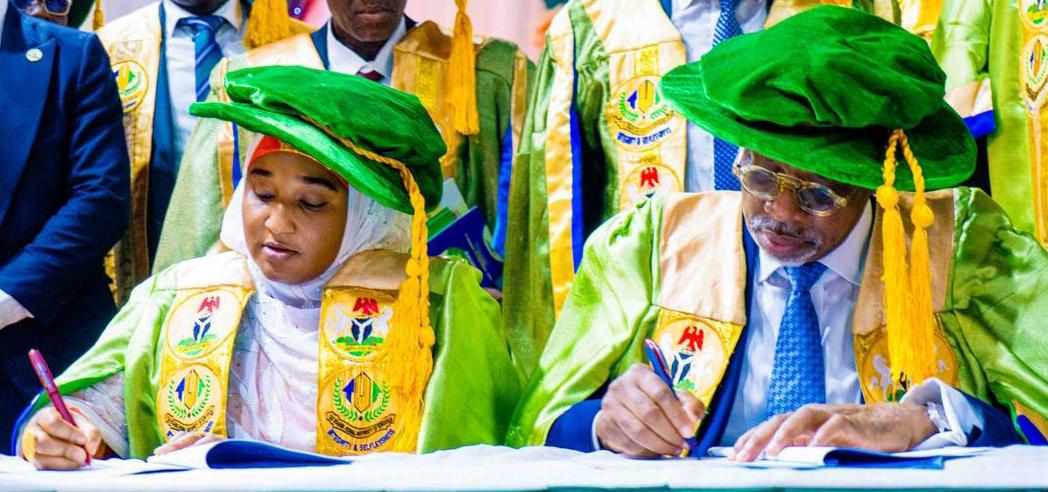
The federal government and the Ogun State Government have signed a Memorandum of Understanding (MoU) on the new status of the Tai Solarin University of Education which had been taken over by the federal government.
Sequel to the takeover, the university's name was
changed to Tai Solarin Un Federal University of Education (TASFUED).
The MoU for the transfer of the university was signed at the 17th Convocation Ceremony of the institution.
Ogun State Governor, Prince Dapo Abiodunby Abiodun, and the Minister of Education, Dr Maruf Alausa, was represented by the Minister of State for
Education, Prof. Suwaiba Said Ahmad.
TASFUED, which is the first University of Education in Nigeria, was recently taken over by the federal government and has been growing in leaps and bounds from four colleges to six colleges today.
At the convocation where 4,141 regular students graduated with 40 in First
Class.
Senator Oluremi Tinubu, wife of President Bola Tinubu, was among three distinguished Nigerians that were awarded honourary doctorate degree of the university.
Senator Tinubu announced a N50 million Endowment Fund and support for the overall best graduating female student, which is to run for 10 years.
Facebook brought creativity and connection to life with an exciting on-ground activation at the 2026 African Creators Summit, empowering creators with tools and resources to reach wider audiences, build meaningful communities, and
earn sustainably from their content. Held in Lagos, the summit convened over 1,000 creators, storytellers, innovators, and digital entrepreneurs from across Africa, all shaping the future of the continent’s creative economy.
Marking its second consecutive year at the summit, a statement explained that Facebook delivered a dynamic creator experience that reinforced its ongoing commitment to Africa’s growing creative economy.
As the platform with the largest network of people who can reach a massive audience, Facebook has always been about connection and continues to empower creators to connect more deeply with actual people and earn real money across all the content formats they share.
There are images that linger long after the news cycle has moved on. Diezani Alison-Madueke arriving at southwark Crown Court (London, England), unaided, clutching her own bag and leaning on a walking stick, is one of them. not because it evokes sympathy - nigeria is long past that stage - but because it dramatises the tragic arc of power abused and prestige squandered. From oil minister to dock occupant; from opEC president to global headline for alleged graft. if Greek tragedy were written in crude oil, this would be one of its subplots.
Let us first be clear, lest emotion outruns fact. Diezani Alison-Madueke has denied the charges against her. in the United Kingdom, she is standing trial on allegations of bribery and abuse of office between 2011 and 2015. in nigeria and the United states, courts and agencies have ordered seizures and forfeitures of assets linked to her, running into hundreds of millions of dollars. The EFCC has said it recovered about $153 million and over 80 properties, while the United states returned almost $53 million to nigeria in 2025. These are not social media inventions; they are outcomes of legal and judicial processes. The UK national Crime Agency suspects that she accepted financial rewards for awarding lucrative oil contracts. The operative word, legally, remains “alleged”, but the trail of recovered assets speaks loudly enough to make denial sound increasingly academic.
Yet the Diezani story is bigger than one woman and her troubles. it is about symbolism - and how disastrously that symbolism has curdled.
When she was appointed petroleum minister in 2010, she did not merely break a glass ceiling; she shattered a reinforced concrete slab. nigeria’s oil sector, the holy of holies, had historically been guarded by men and presidents. That a woman rose to preside over it - and later became the first female president of OPEC - was a landmark moment. Young women across nigeria saw possibility where previously there had been exclusion. For a
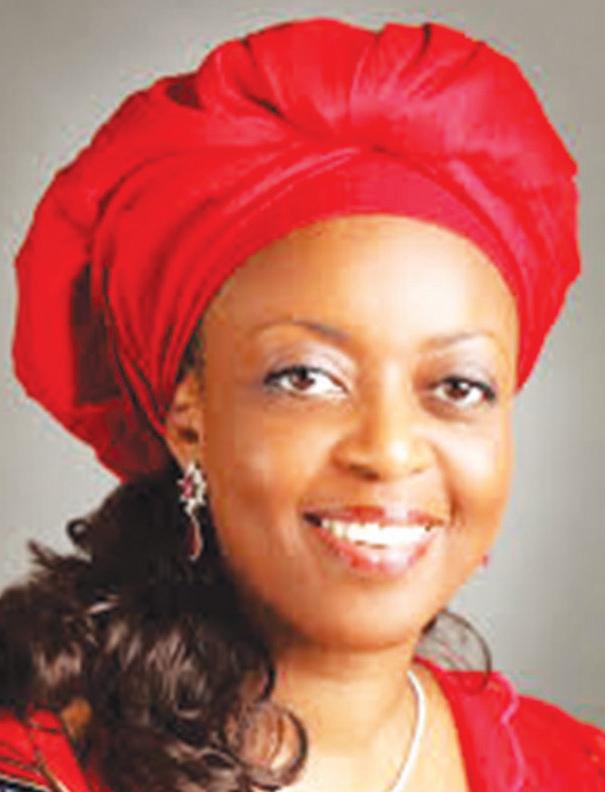
brief while, gender advocates had a living, breathing exhibit for their argument: give women space, and they will excel. Then came the hangover. What we are witnessing now is not just the fall of an individual, but the collateral damage inflicted on an entire cause. Fair or not, Diezani’s name is now routinely deployed as a cynical punchline whenever the subject of women in leadership arises. “remember Diezani,” some say, as if corruption were a gendered gene rather than a human failing abundantly displayed by nigerian men in far greater numbers. This is the cruel irony: one woman’s alleged excesses are used to dilute decades of advocacy for inclusion, while the transgressions of countless men are treated as unfortunate but normal occupational hazards of power.
The niger state Government has lifted the restriction it placed on the movement of motorcycles and tricycles in Minna the state capital at certain periods of the day.
The restrictions were imposed almost a year ago following the unruly behaviours of some youths and gang members which resulted in theft of property and loss of innocent lives.
The restrictions was from 8pm daily to 6am
However a statement made available to newsmen in Minna on Friday said Governor Mohammed Umaru Bago lifted the curfew “after a comprehensive review of the prevailing security situation in the state capital”. and “based on the strong recommendations of the state
security Committee” which reflects significant and sustained improvement in the security landscape of Minna.
The statement by the secretary to the state Government Alhaji Abubakar Usman acknowledged the professionalism shown by security agencies while the order lasted and the patience, cooperation and understanding shown by the people of Minna during the period of enforcement.
Abubakar Usman however urged security agencies and the general public to remain vigilant and ensure strict compliance with all existing traffic and safety regulations.
“Motorcycle and tricycle operators, as well as all residents, are therefore advised to conduct their activities in a lawful, orderly and responsible manner, as peace and security remain a shared responsibility” Usman said
ogun state Governor, prince Dapo Abiodun, has cautioned against attempts to create division among residents of Tongegi island and across the state over ongoing oil exploration activities in ogun Waterside Local Government Area.
The governor gave the warning while commissioning the Abeokuta–obalende and osinubi new roads in Ijebu-Ode, where he clarified that the oil drilling exercise is being carried out by the Federal Government through the nigerian national petroleum Company Limited (nnpCL), and not by the ogun state Government.
Abiodun explained that although hydrocarbon deposits have been identified in parts of Ogun Waterside, including Tongegi island, their commercial viability is yet to be established. He dismissed claims that funds meant for oil exploration had been diverted, describing such allegations as misleading and politically motivated.
According to the governor, the discovery followed reports of crude-like substances seeping from the ground, which prompted technical investigations by the nnpCL.
“After conducting preliminary tests, they informed me that oil had been discovered in ogun state. However,
That, of course, is illogical. Corruption in nigeria did not wait for female ministers to arrive. it predates independence, military rule, civilian rule, and every alphabet soup of reforms. What Diezani’s case illustrates is not that women are unsuited to power, but that nigeria has perfected a system that can corrupt almost anyone who enters its innermost chambers without guardrails.
The damage, however, is quantifiable. Economically, the figures attached to the Alison-Madueke saga are enough to make a development economist weep. Billions of dollars allegedly diverted or misused in a sector that should have been nigeria’s economic backbone. At conservative estimates, such sums could have funded refineries, power projects, rail lines, hospitals and schools - the sort of infrastructure we perpetually borrow to build, and sometimes fail to complete. instead, nigeria exported crude and imported petrol, exported talent and imported debt, while a privileged few allegedly lived what British prosecutors now describe as “a life of luxury”.
politically, the case has deepened public distrust. Each new revelation reinforces the belief that public office is less about service and more about access - access to contracts, kickbacks, properties and private jets. When citizens see former ministers tried abroad for offences allegedly committed at home, it raises uncomfortable questions about our capacity for self-cleansing. Why must justice for nigerian corruption be outsourced to London and Washington before it acquires teeth?
Morally, the cost is incalculable. A society repeatedly exposed to grand corruption begins to suffer moral fatigue. people stop being outraged; they become resigned. Young nigerians, watching these dramas unfold, learn the wrong lessons: that honesty is optional, that consequences are slow, and that the real crime is not stealing, but failing to plan your exit properly.
What, then, should we learn? First, that symbolism without systems is dangerous. Breaking ceilings is important, but what matters more is what happens after entry. No office, especially one as strategic
drilling is necessary to confirm whether it exists in commercial quantity, and that process was approved by Mr. president,” Abiodun said.
He added that security around the drilling area has been significantly strengthened, noting that a Naval Base has already been established near the oil well to safeguard national assets.
The governor expressed concern over what he described as misrepresentation of his comments in some sections of the media, which he said sparked unnecessary controversy.
“At no time did i say that commercial drilling had commenced at Tongegi island. What we have are promising indications, not confirmation of commercial quantity,” he stressed.
Abiodun further revealed that a naval post has also been established at Tongegi island, with approval granted by the Chief of naval staff for a Forward operating Base to reinforce nigeria’s territorial presence in the area.
Commending president Bola Ahmed Tinubu, the governor said the revival of the olokola Deep sea port project would significantly boost Ogun State’s economic prospects, adding that the president has directed visible progress on the project within the next year.

as petroleum, should rest on personal discretion alone. strong institutions, transparent processes and independent oversight are not luxuries; they are safeguards against human frailty. second, gender advocacy must not shy away from accountability. Defending women’s inclusion does not require defending individual women accused of wrongdoing. on the contrary, insisting on accountability strengthens the argument that women, like men, must be judged by the same standards. Equality without responsibility is patronage. Third, nigeria must rethink how it polices power. Asset declarations should be meaningful, not ceremonial. Lifestyle audits should not be tabloid scandals but routine governance tools. Trials should be timely, not generational epics. The fact that Alison-Madueke has been on bail since 2015 tells its own story about the glacial pace of justice. Ten years!
Finally, we must retire our selective amnesia. The Diezani affair should not be remembered merely as a morality tale about one individual, but as a warning about what happens when enormous power meets weak accountability. if we reduce it to gossip or gender warfare, we miss the point entirely.
There is something almost biblical about the sight of a once-powerful oil minister standing alone in a foreign courtroom. it is a reminder that power, improperly used, eventually travels light. no convoy. no aides. Just a bag, a stick, and a very long reckoning. nigeria should not gloat at this spectacle. it should learn from it. Because unless we fix the system that enabled such alleged excesses, the next “travails” may belong to another minister, another sector, another symbol - and the cycle will continue, uninterrupted, and unashamed.
president Bola Tinubu has distinguished nonagenarian, trailblazer, and matriarch of the Lateef Gbajabiamila family of Lagos, Alhaja Lateefat olufunke Gbajabiamila, on her conferment of the honorary Doctor of science (D.sc. Honoris Causa) in Business Administration by summit University, offa, Kwara state.
The president, in a statement issued yesterday by his Adviser on information and strategy, Bayo onanuga, joined family, friends, and well-wishers in celebrating the 96-year-old United Kingdom–trained nurse, who blazed a trail in Nigeria’s public service as the first female elected executive chairman of a local government in Lagos state.
Tinubu noted with profound admiration that Alhaja Gbajabiamila’s life represents resilience, professional excellence and community service.
He commended summit University for recognising her pioneering contributions to the nursing profession
and for naming its proposed College of nursing in her honour, a fitting tribute to her lifelong passion for healthcare delivery and human development.
“The naming of the Lateefat Gbajabiamila College of nursing ensures that Mama Gbaja’s legacy of compassion, discipline, and service will continue to inspire future generations of caregivers and leaders,” the president said. Tinubu saluted Alhaja Gbajabiamila for her steadfast devotion to her faith and community through the AnsarUd-Deen society of nigeria, and for raising a family whose members have continued to distinguish themselves in public service, most notably her son, rt. Hon. Femi Gbajabiamila, Chief of staff to the president and former speaker of the House of representatives.
While rejoicing with her family on this momentous occasion taking place in Lagos on saturday, January 31, the president prayed that Almighty Allah will continue to bless Alhaja Lateefat Gbajabiamila with good health and the abiding joy of witnessing the fruits of her lifelong labour for humanity.
Kaduna state Governor, senator Uba sani, has launched a new environmental initiative aimed at strengthening public health and environmental sanitation across Kaduna state.
The initiative, known as operation TsAFTA, is expected to create over 5,000 jobs for youths and women across the state. speaking at its launch, sani described the initiative “a practical response to the environmental pressures that accompany population growth, urban expansion, and economic activity.”
He said his administration was determined to address these challenges with purpose and coordination.
The governor disclosed that the state government had procured essential equipment for the programme, including roro bins, dustbins, water tankers, and appropriate personal protective equipment.
“These resources are intended to enhance operational effectiveness, improve safety for workers, and ensure that sanitation
activities are carried out in a professional and sustainable manner,” he added.
sani said the first phase of operation TsAFTA would focus on four Local Government Areas that are “currently experiencing significant environmental stress arising from rapid urbanisation, increased commercial activity, and population density.” He said, “Lessons learned from this phase will guide expansion to the remaining local governments in due course.”
The governor stressed that “a clean and well managed environment is fundamental to human health, economic productivity, and social stability.”
He noted that “operation TsAFTA is therefore not an isolated intervention, but part of a broader effort to embed environmental responsibility into governance and daily life across both urban and rural communities in Kaduna state.” The governor commended the 23 Local Government Areas, the Ministry for Local Government Affairs, and the Ministry of Environment and natural resources for their collaboration.
• 08064268968 • ajunwacharles@gmail.com
Tourism expert and founder of Akwaaba African Travel Market, Ikechi Uko, has said to make Detty December in Nigeria more attractive, there’s need to find out the economic and social impact of the whole season. He also spoke on other issues. Charles Ajunwa brings excerpts:
Naija7Wonders Zoom Conference, which promotes tourism in Nigeria, is set to return after its first episode in 2020. What informed this decision?
We all agree that the 2020 edition helped drive an increase in domestic tourism in Nigeria. New players were unveiled, and some destinations received a boost. So we think tourism in Nigeria is due for another boost. New players need to be unveiled, and new destinations unveiled too.
What informed the choice of the theme - Detty December - The Lessons and Impacts?
The theme is based on the need to push the phenomenon beyond activities. We need to find out the economic and social impact of the whole season. What were the benefits and the challenges? What are the negative outcomes? How do we improve on these outcomes? Answers to these will help us plan
better. If we do not map what happened and how it impacted the country, we would not be able to plan better, and 2026 would just be another episodic jamboree. We should do better. We can advise on what to expect and how to mitigate expected challenges. That way, we can grow the numbers and the benefits. I have always argued that we should be intentional with our plans for Detty December. With enhanced facts and figures, we can plan better. Since we have been having tourism in Nigeria, Detty December has attracted the highest number of unique visitors to Nigeria, and they have good money to spend. It has been building up slowly since 2016 and exploded in 2024. A lot of states could not key into the phenomenon. We see the need to unpack it and make it easy for other cities to learn what to do going forward.
Has Nigeria finally cracked the tourism code? Yes, we have cracked the code. We now need to drill down and be more intentional with this gift.
See how our Diaspora remittances have surpassed oil, and others
Between now and May 2026, you’re said to have lined up 36 industry experts to open up the tourism business. What is the focus, really?
We have listed the best hands in four areas: tourism, aviation, hospitality and government, and we will be unloading them to share knowledge, opportunities with our audience. A lot of new giants will emerge and new destinations will be celebrated. We will expose both domestic and international destinations. And we will be bringing tourism destinations and knowledge closer to the people.
Who are the industry players we’re looking forward to, and what experiences are they bringing in terms of tourism growth and development in Nigeria?
Presidents of associations, commissioners of tourism, hotel GMs, airline CEOs, tour operators, media, MDAs, travel agents, and other professionals.
In 2024, international tourism receipts reached an estimated £1.2 trillion, around three per cent higher than in 2023. The World Travel and Tourism Council estimates that, with the right policies, Africa’s travel and tourism sector could add £170.5 billion to the continent’s economy and create over 18 million new jobs during the next decade. One of the least expensive, most powerful tools to unlock this potential is storytelling: crafting narratives that make African destinations vivid, memorable, and emotionally resonant.
Why storytelling matters in tourism
People don’t just buy a bed and a flight; they buy a story they want to experience.
Bangkok in Thailand is perennially the world’s most visited city. Every year, 30 million tourists head to the Thai capital, not for its airport or hotels, but for the variety of its breathtaking natural and cultural sites and famed Thai cuisine. But this success wasn’t by accident. The Amazing Thailand advertising campaign started in 1998 as an initial two-year response to the Asian financial crisis. Over the decades, it has promoted tourism through the lens of Thainess. It has managed to build an audience that goes beyond the classic tourism rhetoric and has been maintained even in the face of sporadic socio-political upheavals. The Tourism Authority of Thailand turned a crisis into an enduring national tourism identity that leverages unique cultural elements and local partnerships. For African tourism, storytelling is particularly important. External narratives about the continent are dominated by a narrow story of crisis, or when favourable, safaris and sunsets. Storytelling offers a way to challenge those stereotypes by foregrounding Africa’s multilayered cultures, ancient civilisations, and contemporary cities.
Africa’s untold tourism stories
Across the continent, there are sites whose stories are far

richer than the way they are currently marketed. A storytelling approach can unearth how different Africa is from its clichés.
The “Kingdom in the Sky” in Lesotho’s highlands is 1,000 metres above sea level and hosts Afriski, a rare African ski resort. Here, winter snow, pony treks, and highland folklore combine to upend assumptions about what an African holiday can be. Contrast the common image of African savannas with a storybook alpine scene in the Maloti Mountains, where Basotho herders in blankets share folktales by a fire, and the next day’s sunrise reveals tourists enjoying winter sports in Africa.
The Cradle of Humankind, a UNESCO World Heritage Site outside Johannesburg, contains one of the world’s richest concentrations of hominin fossils, underpinning Africa’s status as the birthplace of humanity. The almost spiritual experience of walking in the footsteps of our earliest ancestors can be emphasised to make this a once in a lifetime experience. By linking personal identity and human origins, the story sells more than a cave tour, offering a pilgrimage to humanity’s home.

The National Film and Video Censors Board (NFVCB) has congratulated renowned actress and filmmaker, Funke Akindele, on the exceptional box office performance of her latest film, Behind The Scene (BTS), which has reportedly grossed over N2.4 billion at the Nigerian box office and is still enjoying strong cinema exhibition across the country.
The Board described the achievement as another landmark moment in the growth of Nigerian cinema, noting that the record further reinforces Akindele’s position as one of the most influential and commercially successful figures in the industry.
In a statement issued by the Executive Director/CEO of the NFVCB, Dr. Shaibu Husseini, the Board highlighted the significance of the filmmaker’s sustained box office dominance, observing that she has now recorded record-shattering cinema performances for four consecutive years.
“This level of consistency reflects not only creative excellence, but also a deep understanding of audience engagement and
The Idanre Hills in Nigeria’s Ondo State rise about 3,000 feet above sea level and are reached by 660 stone steps climbing through thick vegetation. On the plateau sit remnants of an old town and the Nine Wonders of Idanre, one being the Agbogun Footprint. According to legend, this footprint carved into the rock expands or contracts to fit the feet of any honest person, but refuses to fit those of witches, wizards, or liars. Historically, it functioned as a kind of spiritual lie-detector: an accused person whose foot did not fit was judged malevolent. Testing one’s foot in Agbogun’s Footprint transcends just a photo opportunity; it is a participatory encounter with Yorùbá cosmology, justice and belief. For its rich cultural tapestry, Idanre could turn into a heritage destination like Machu Picchu.
Many of these sites are not widely known or marketed. But they could be, with the right storytelling campaigns. By packaging these attractions with engaging narratives, African tourist boards and businesses can create new demand.
the evolving dynamics of film production, distribution, and exhibition in Nigeria,” the statement noted.
As the statutory body responsible for the regulation of film content, distribution, and exhibition in Nigeria, the NFVCB reaffirmed its commitment to recognising and celebrating excellence that contributes meaningfully to the growth, visibility, and commercial sustainability of the Nigerian audiovisual industry.
In recognition of this exceptional run, the Board disclosed plans to formally honour Akindele with a Box Office Queen Award for the years 2023, 2024, and 2025, with arrangements underway to present the award at a date and time that will be mutually convenient for her and her team.
“We had planned to hand the awards for her back to back performance during the last PAO Digital Conference but the filmmaker was busy and asked to receive the awards at a later day. With this feat, we will get the Honourable Minister of Art, Culture, Tourism and Creative Economy, Hannatu Musa Musawa and a few top female executives to join us to make the presentation.
Storytelling, heritage, and UNESCO recognition Storytelling also matters upstream, in how Africa’s heritage is recognised and protected internationally. UNESCO has so far inscribed 108 African properties on its World Heritage List (61 cultural, 42 natural, five mixed). This is still a small share of global listings; only 9 per cent of World Heritage Sites are in Africa, while nearly half are in Europe. Many African sites of outstanding universal value remain overlooked. Nigeria’s Great Walls of Benin (longer than the Great Wall of China) or Kano City Walls, for example, are vast pre-colonial earthworks and fortifications that once protected thriving city-states, yet remain little known internationally and sit only on UNESCO’s tentative lists.
Well-crafted narratives may be crucial to changing this, alongside other requirements like robust management plans, sustainable preservation efforts, and navigating bureaucratic hurdles. UNESCO nominations require countries to articulate why a site matters to all humanity. Storytelling can help bridge the gap from the specific to the universal. Storytelling is not decoration; it is part of the heritage infrastructure.
Beyond the narratives
Stories generate interest, but politics, policies, and infrastructure determine whether that interest is converted into arrivals and revenue. The World Travel and Tourism Council’s Unlocking Opportunities for Travel and Tourism Growth in Africa report highlights three areas where policy reform is vital: air connectivity, visa facilitation, and tourism marketing.
To capitalise on their stories, there is a need to introduce more visa-on-arrival, e-visa, and regional visa schemes to reduce friction for intra-African and international travellers. Open-skies initiatives need to be supported to increase intra-African routes and invest in roads to lesser-known sites so that destinations like Idanre or Kano Walls are realistically accessible. Tour guides, hospitality workers, and community hosts should be trained in interpretation, customer care and digital storytelling. This will ensure that every tour is a narrative experience, beyond a checklist. Finally, offer residents discounts and facilitated access for local content creators. Given that word-of-mouth and social media are powerful marketing tools, empowering domestic travellers to tell their own stories is both strategic and equitable.
Tourism is still a growing industry, with receipts at record levels. Africa has the landscapes, cultures, and histories to claim a larger share of that value. What is missing is not beauty or significance, but narrative.
By centring storytelling in tourism strategies from national branding to the voice of a local guide, African countries can reframe how they are imagined, attract more diverse visitors, and strengthen the case for heritage conservation. Thailand masterfully rewrote its own story. Through deliberate and sustained storytelling, this emerging economy defied local challenges to achieve record-breaking visitor numbers and revenue. Thus, this opportunity for Africa is economic, epistemic, and political. It is a chance for us Africans to tell the world who we are, on our own terms. Stories move people more than statistics. Africa has stories that can move the world.
This Valentine’s season, Carloha is encouraging customers to reconsider what defines a truly reliable partner. While traditional gifts are often fleeting, real value lies in consistency, support, and long-term commitment, said Carloha, the sole distributor of Chery vehicles in Nigeria. These principles form the foundation of the CarlohaCare 6-6-7 package for Chery vehicles, which is designed to provide lasting value, peace of mind, and a worry-free ownership experience for all Chery customers.
Much like a strong relationship, a positive car ownership journey is built on trust, reliability, and attentive care. Through the CarlohaCare 6-6-7 package, Carloha extends its commitment to Chery owners beyond the point of purchase by offering a comprehensive suite of benefits. These include a 6-year warranty for long-term protection, 6 years of free service covering both parts and labour, and a 7-day repair promise to ensure customers are not left without mobility for extended periods.
“Valentine’s Day is about making thoughtful and informed choices,” said Felix Mahan, General Manager, Marketing at Carloha. “We believe a car should be a dependable partner in everyday life.
With CarlohaCare 6-6-7, we are providing greater support, stronger assurance, and added value at no extra cost to all owners of Chery brand of automobile – because genuine commitment is demonstrated through action.”
Carloha’s recent recognition at the Nigeria Auto Journalist Association (NAJA) Awards further reinforces this commitment. Named the Most Outstanding Aftersales Car Company, Carloha continues to distinguish itself through industry-leading aftersales service, consistent quality standards, and a strong focus on customer satisfaction. The award reflects Carloha’s belief that exceptional care extends well beyond vehicle delivery.
The CarlohaCare 6-6-7 package is tailored for automobile customers who prioritise transparency, reliability, and long-term cost efficiency. By minimising unforeseen expenses and ensuring sustained support throughout the ownership lifecycle, Carloha continues to make car ownership simpler, safer, and more rewarding.
This Valentine’s season, Carloha invites customers to choose a partnership that delivers meaningful benefits over time. From everyday commutes to life’s most important journeys, CarlohaCare 6-6-7 remains a dependable companion at every stage of the road ahead.

Nigeria’s compact SUV segment is witnessing intense competition, and one model fast emerging as a standout is the Jetour Dashing. Fresh from winning the 2025 Car of the Year award, the five-seater SUV has moved from being a market curiosity to a strong reference point for urban commuters and long-distance travellers.
Visually, the Dashing makes a confident impression as its wide grille, sculpted body lines and sleek LED lighting create a bold road presence that rivals more premium crossovers.
The aerodynamic profile and assertive front fascia ensure it stands out on both city streets and open highways.
Inside, the SUV delivers a modern, well-appointed cabin. A panoramic sunroof enhances the sense of space, while a clean, tech-focused dashboard is anchored by a 15.6-inch touchscreen with Apple CarPlay and Android Auto, providing seamless connectivity and intuitive control.
Performance is another strong suit. According to Jetour Nigeria, the Dashing is offered with 1.5-litre and 1.6-litre turbocharged engine options, delivering up to 145kW and 290Nm of torque. Mated to six- or seven-speed dual-clutch transmissions, the powertrain offers smooth acceleration, efficient cruising and confident overtaking, with outputs reaching up to 197hp.

The dual-clutch transmission ensures smooth gear changes, making the SUV suitable for daily
Jetour Nigeria has strengthened its footprint in the country’s automotive market with the appointment of seven accredited dealers, partnering with some of Nigeria’s most established and reputable auto firms as it accelerates nationwide expansion.
The development comes on the heels of major industry recognition for the brand, including its emergence as Fastest Growing Automotive Brand in Nigeria at the 2024 Nigeria Auto Journalists Association (NAJA) Awards, as well as the crowning of the Jetour Dashing as Nigeria’s Car of the Year 2025.
The newly unveiled dealer network comprises longstanding automobile companies with decades of experience in the Nigerian market, widely known for professionalism, reliability and strong after-sales support.
The seven accredited Jetour dealers are Elizade Nigeria Limited, New Era Autovehicle Services Limited, Kojo Motors, Germaine Auto Centre, Tab Autos Limited, R. T. Briscoe Motors, and Mandilas Motors.
Industry analysts note that the calibre of the dealer lineup gives Jetour a strong competitive edge in a market where buyer confidence is closely tied to dealer reputation,
spare parts availability and after-sales service capability.
In a statement, Jetour Nigeria said its market entry has been characterised by rapid expansion, growing showroom presence and increasing consumer acceptance. The brand’s recognition as Fastest Growing Automotive Brand at the 2024 NAJA Awards underscores the pace at which it has gained traction in Nigeria’s highly competitive auto space.
Further reinforcing its momentum, the Jetour Dashing SUV was named Nigeria’s Car of the Year 2025, outperforming rival models from long-established global brands. NAJA judges cited the vehicle’s bold design, advanced technology, safety features and strong value proposition, as well as its suitability for Nigerian roads and lifestyle demands.
With a robust dealer network and growing industry validation, Jetour Nigeria is positioning itself as a major force in the country’s SUV segment. Analysts believe partnerships with tested and trusted auto firms will be central to sustaining growth, enhancing customer experience and building long-term brand loyalty.
As competition intensifies, Jetour’s strategic dealer expansion and award-winning products signal a clear intent to redefine Nigeria’s evolving automotive landscape.
commuting as well as extended road trips. Safety features are comprehensive, as the Dashing comes with front and rear airbags, advanced driverassistance systems such as automatic emergency braking, lane departure warning, blind-spot detection
and collision alerts.
A 360-degree surround-view camera with 2D and 3D displays, supported by a 540-degree parking sensor system, enhances parking and low-speed manoeuvrability. Electronic parking brake, auto-hold and automatic door locking further add to driver confidence.
Comfort and convenience are equally well covered, with features including wireless charging, smart entry, push-button start, remote engine start and voice command functionality. Automatic climate control with rear vents and an air purification system improves cabin comfort, while an eight-speaker surround sound system delivers immersive audio.
Power-adjustable front seats with heating, ventilation, memory and lumbar support, along with a power tailgate, add a premium touch.
Backing the product is Jetour Nigeria’s growing aftersales network, offering trained technicians, genuine spare parts and structured maintenance support. This strong aftersales focus, combined with warranty coverage, reinforces buyer confidence.
Rolling on stylish 20-inch alloy wheels, the Jetour Dashing blends design, technology and value. As Jetour continues to expand its footprint in Nigeria, the Dashing is positioning itself as a new benchmark in the compact SUV segment, delivering style, performance and dependable ownership support at a competitive price point.
Kia Corporation has been recognised across multiple vehicle segments at the 2026 What Car? Awards, earning four major accolades for its passenger and Platform Beyond Vehicle (PBV) lineup.
According to the automaker, the awards highlight Kia’s ability to deliver competitive, customer-focused solutions spanning family SUVs, compact electric vehicles (EVs) and next-generation multi-purpose electric platforms, reflecting the brand’s continued momentum in electrification and product diversification.
What Are the What Car? Awards?
The What Car? Awards are among the automotive industry’s most respected award programs. Winners are selected through rigorous, back-to-back evaluations conducted by an expert panel of professional road testers. Vehicles are assessed for real-world usability, comfort, performance, efficiency and value, making the awards a strong indicator of consumer-relevant excellence.
Kia’s continued success at the What Car? Awards reflects its ability to deliver vehicles that resonate with both industry experts and customers across evolving

Prof. Maduebibisi Ofo Iwe is a certified Food Scientist and the sixth Vice Chancellor of Micahel Okpara University of Agriculture, Umudike, in Abia State, whose term is winding down. He tells Boniface Okoro, how he managed the affairs of the university in the last five years, his achievements, challenges and how staff withdrew over 100 litigations against the university as well as allegations of financial impropriety against his administration. Excerpts:
Your tenure will elapse in February 2026, and your successor is yet to emerge. When will that happen?
Yes, but we are still within the period. We are supposed to produce my successor within six months, that is between September, 2025 and March, 2026. So, we are still on it, but then it’s entirely a (Governing) Council business. It’s not the Vice-Chancellor’s business.
You’ve been on the saddle for almost five years, what would you consider your legacies as Vice-Chancellor, and your worst moment in the University?
Well, it would have been foolhardy to expect that, having put the right foot forward, all my colleagues would have followed immediately, but that was not the case. We were still in a situation where not everybody was following, but thank God that the majority understood where we were going and followed. The other worst moment should have been on February 6th, 2024 when we were trying to fix the University in a way that it will be easy for us to run things, especially among students, but we were misunderstood, and students were mobilized against us. That should have been our worst moment. As for my achievements, I had a vision to mobilise the university to positive thinking, positive action, productivity, and progressive programmes. I think we achieved it. The second one is that we expanded the university in terms of infrastructure and location. You know, people don’t understand what it means to start a new campus entirely as we did at the Permanent Site in Olori and we are still doing. We were able to capture our students through a biometric process and have been able to develop a database from which we can give up-to-date information within 24 hours about students. Again, we have completely digitalized our Bursary Department. This makes our accounting or financial transactions smooth and free from much human interference. There was an Audit Report, an Online newspaper published, most of the so-called infractions then, not now, were cases of displacement or misplacement of records by staff. It’s not that the records were not there; they were displaced. At the time the Auditors came, the records were not readily provided. So, there is nothing like embezzlement of funds here. Now, due to what we have done in the Bursary, we can easily send our report straight to the Auditor-General or the Accountant-General’s office. We have done a similar thing with the University Library. We started the digitalization of our operations with the Senate meetings, within three months of my assumption of office. With e-Senate, we have saved a lot of funds on paper and so on. Again, the issue of transcripts became a very big problem in this University because people were trading on it. People were doing all manner of things here, but today we have fixed everything about the transcript. It’s also gone online.
In December 2025, an online newspaper you referred to published a report from the AuditorGeneral’s office, accusing your institution of spending N5 billion illegally and failing to remit N578 million IGR to the Federal Government between 2021 and 2022. What is your response to that?
Well, I shouldn’t be venturing into this because there’s an opinion that the publication should be a (Governing) Council matter, but because I made a comment about that report this week when I held a meeting with all staff of the University, and because some other people in the University are trying to develop interest in the matter, I will just say a few things. I’m a researcher. I’m a scientist. I don’t often bother myself about things that don’t have research content. People just wake up and begin to talk about things or write about things they do not know or understand. I don’t read them. Let me take for instance the issue of N578 million as IGR reported by the online newspaper: We all here know that my administration started in March, 2021 when the whole world was still trying to wake up from the global shutdown of the COVID-19 pandemic that happened in 2020. There was no activity in
the University that should generate IGR. So that shows you that something must have been wrong with whatever the person wanted to write. I’m not sure that this University made an IGR of that value in 2021. The same thing happened in 2022 when all public universities in Nigeria went on strike for eight months. Nobody was here producing crop, producing animal, producing chicken or egg. Nobody was here trading on anything. Come to think of it, what are the sources of the IGR that you may be talking about?
In the Committee of Vice-Chancellors of Nigerian Universities, we have debated and pleaded with those that are concerned to understand that the charges paid by students of Nigerian universities should not be regarded as IGR because they are tied to services. They are service charges and asking for a part of the service charges to be returned to the government undermines our position that such charges don’t constitute Internally Generated Revenue (IGR). So, due to the situation we found ourselves in 2021 and 2022, I can’t see this University generating that amount of money. It couldn’t be real. As I explained to staff of the University, I believe that there is an attempt to find a way to make my administration culpable to financial infractions, because most of the things they wrote about us didn’t happen in my administration. I see a situation where they grab some information from here, grab from there, stitch them together and then want to incite the public against my administration and the University, which is not right.
Why do you think anybody would do that?
I wouldn’t know because so far, we have been committed to serving this University in the best possible way. We have tried to do things right and to do the right things in the last five years. We have tried to change the narrative in terms of behavior of students, in terms of behavior of staff, in terms of interpersonal relationship among staff. There was a time all these was zero and the University was unable to attract friends, but now, we have opened up the University to the outside world to say we are here. In fact, at least this year I’m very happy that we have sent out a student to China on full scholarship by China. That’s the kind of thing we are looking up to getting back to. Some of our staff have been publishing in very high impact journals and they have been recognised around the world. Some of them have gotten into very serious research funding because we provided the enabling environment. By God’s grace, the federal government has done something very good in Umudike, even though we are not yet talking about it so loudly, and that is the completion of the Energising Education Project (EEP) that built our solar plant. We now have 24 hours power supply in Umudike. It wasn’t like that three years ago. So we have light 24 hours and every serious researcher is busy in the laboratory. We have tried to reorient the University and make sure that none of our programmes is lost, rather we have gained more. In the last admission we gained more than 1,500 students for the University, which was not there before. We have introduced new courses, very crucial courses like Food Engineering, Embedded Artificial Intelligence, Mechatronics, etc. which will be verified this month. We have also equipped our laboratories. We have invested heavily in the equipping our laboratories. The Council for Regulation of Engineering in Nigerian (COREN) visited us about two months ago for accreditation and sent me a gratifying report that some of the equipment we have in Umudike are not available in any other University in Nigeria. For example, we have the Amino Acid Analyzer, and several other equipment which are not anywhere else in Southeast.
A report listed 32 violations of the Public Procurement Act, including alleged payment of severance allowance in excess of N44 million to your predecessor. How true are they?
I never did. I never paid such money. As a matter of fact, the issue of payment of severance allowance to former Vice-Chancellors is an act of the Governing Council. It’s not any person’s act, but it didn’t happen in my time. I didn’t pay anybody such money. I didn’t meet any outstanding severance allowance
for my predecessor. Those payments must have been made before I came. That’s why I’m telling you that the authors of those online reports were bringing things from here and there, just to deceive the public to think it happened in my administration. I am sure you also read that there are contracts awarded without evidence of execution as well as uncompleted projects for which monies were paid in full. The question is: where are the contracts and uncompleted projects under my administration? None. I met all the abandoned projects for which money have been expended. If you know the history of this University, you will know the administration where abandoned projects featured prominently. So, the sponsors and authors of those stories intended to paint a picture of financial misappropriation against my administration and use it to incite the public. What I do in such situations is go into my room and pray and hand them over to God so that God will take care of them.
There is another allegation that your University plans to splash N252 million on three vehicles for the ProChancellor and two others. Why buy vehicles when you are almost exiting office?
Your question is very interesting and I would like to take it from where you ended, which is why I’m interested in spending money before I leave office. The issue of spending money is not a day’s business. It’s a business that has to do with appropriation and no appropriation comes overnight. Having said that, let me correct the impression that the amount of money that is being quoted by the online newspaper has anything to do with 2026, we have not seen our budget for 2026. Nobody has. Normally, government gives you what is known as an envelope. When you open the envelope, you match the content with the needs of the University. I’m sure that if you mentioned N252 million or so, that should even belong to 2025 appropriation. That is the last appropriation which has not even been expended. Let me also say quickly that we have not gotten our 2024 appropriation. The 2025 appropriation for instance was articulated in 2024 and whatever price that was available then was what was used to articulate what a vehicle should cost. When we finish that, we normally present our articulation to government through the Joint Committee on Appropriation of the Ministry of Agriculture, which is where we draw our capital expenditure from.
For 2025 which is where the N252 million or thereabout that was published was captured, it required us going to the Ministerial Tenders Board to get approval to spend that money. Of course, before even it gets to the that level, between the envelope and the Joint Committee of the Ministry of Agriculture, we go through our procurement processes in the University. First of all, we go through what we call the University Procurement Planning Committee (UPPC) that will say what the cost of the vehicles should be. The UPPC will meet when contractors submit their quotations and then after that, it gets to the University Tenders Board (UTB) that agrees with the Planning Committee that this is what this thing should cost. Now when you get to the Tenders Board and there is a cost that could be awarded in the University, it will be awarded, but if it cannot be awarded in the University, it will go to the Ministerial Tenders Board. So, it’s not a question of the VC getting up to go and spend money.
No, not at all. There are levels of checks and balances and approvals before you can spend government funds. It’s not a one- man show. It’s not about what the VC wants or whatever, it is appropriation. I therefore see such a publication as just a way of trying to smear an administration, because it shows that the person that authored the story doesn’t understand the process of procurement. Procurement is not a day affair. It’s not also a one-person affair. It’s something that everybody is involved.
In today’s era of stricter regulations, cautious foreign investors, and fastchanging business risks, compliance is no longer just a back-office task, but a boardroom priority. Bawo Egbakumeh, Registrar of the Compliance Institute Nigeria, explains that strong compliance frameworks now influence valuations, partnerships, and competitiveness. She notes many corporate failures stem from weak leadership, and professionalising compliance could transform Nigeria’s business landscape.
Compliance is often seen by businesses as a cost centre rather than a value driver. How can Nigerian companies begin to see compliance as a strategic business advantage?
If compliance were only a cost, global investors would not be rewarding companies with strong compliance cultures with premium valuations. The reality is that compliance, when done right, is a business enabler. According to a PwC Global Economic Crime Survey, companies with mature compliance frameworks are nearly 50 percent less likely to suffer major fraud losses and experience faster recovery after regulatory shocks. In Nigeria, we are beginning to see this shift. As, we have observed, banks that invested early in Anti-Money Laundering (AML) systems, such as automated transaction monitoring and strong governance, have been better positioned to expand regionally and partner with international correspondent banks. To emphasis this, Nigerian banks responded after the 2016 global correspondent bank de-risking shock. The Banks that had invested early in AML/CFT controls preserved correspondent relationships that others lost. That wasn’t luck, it was compliance discipline paying off. So strategically, Nigerian companies must move compliance from the “back office” into enterprise decision-making, because we have seen that when compliance insights inform product design, market entry, and partnerships, it becomes a competitive differentiator, not a tick-box exercise.
From your vantage point as Registrar, what are the most common compliance failures you observe across Nigerian organisations, both public and private?
Across both public and private organisations, the most common compliance failure I observe is what I call “compliance on paper, but not in practice.” Policies exist. Frameworks exist. Committees exist. But when you scratch beneath the surface, compliance is often disconnected from day-to-day decision-
the excerpts:
making. A recurring issue is weak tone from the top. In many organisations, leadership verbally endorses compliance, but operational decisions tell a different story.
Another major failure is poor accountability and ownership. In both sectors, compliance is frequently treated as the sole responsibility of the compliance officer or unit. As, too often, business heads treat compliance as “someone else’s job,” forget ting that under the globally accepted Three Lines of Defence model, compliance is first and foremost a management respon sibility. When business leaders abdicate their role, the entire defence framework collapses, leaving compliance units unfairly blamed for failures they were never designed to prevent alone. Another cross-cutting issue is capacity and skills gaps. Compliance is evolving rapidly - technology risk, data protection, ESG, and financial crimes are far more complex today than a decade ago. Yet many organisations have not invested adequately in upskilling their compliance teams.
rules - what we lack is consistent enforcement and a culture that makes compliance second nature. Nigeria’s regulatory framework is robust. We have strong laws covering banking, anti-corruption, AML/CFT, data protection, and corporate governance. The challenge lies in implementation and culture.
This persistent capacity gap is precisely why the Compliance Institute Nigeria (CIN) exists. It was a core motivation behind its establishment, to deliberately build professional competence, deepen ethical standards, and strengthen compliance capacity across Nigeria’s public and private sectors.
Finally, there is the challenge of weak compliance culture. In environments where shortcuts are normalised and misconduct is quietly tolerated, even the best-designed frameworks will fail. Culture determines whether employees speak up, escalate issues, and act ethically when no one is watching.
From my vantage point at CIN, the insight is simple but uncomfortable: most compliance failures in Nigeria are not technical, they are behavioural and leadership-driven. Until organisations treat compliance as a shared responsibility, backed by leadership example, adequate resources, and professional competence, these failures will persist across both public and private sectors.
Nigeria has no shortage of laws and regulations. To what extent is
So, until organisations internalise compliance as a shared value rather than an external imposition, enforcement gaps will persist. Culture eats rules for breakfast. Whether in Lagos or London, the toughest part of compliance isn’t knowing the law, it’s embedding ethical decision-making into every level of the organisation. That’s where Nigeria must grow.
How does the Compliance Institute Nigeria define its role beyond certification—particularly in shaping ethical leadership and corporate governance standards?
Certification is important; it sets a professional baseline. But our work goes beyond exams. As certification is only the entry point. At CIN, our broader mandate is to shape compliance leadership, professional identity, and governance standards across Nigeria’s business ecosystem. We have been doing this through executive dialogues, board-level programmes, ethics advocacy, regulatory engagement, local and global partnerships like IFCA, ACAMS, and thought leadership.
Bolaji Faramade
For a company built on spectacle and star-making, the recently announced leadership transition by MultiChoice Nigeria, a Canal+ company, arrived with notable restraint. Kemi Omotosho steps in as Chief Executive Officer, replacing John Ugbe, without fanfare or flourish. The quietness fits. It mirrors the way Ugbe’s influence has always worked. Steady. Institutional. Built over time. Yet, when the milestones are laid out plainly, it becomes clear that Ugbe did not merely manage a media company. He helped shape modern Nigerian broadcasting. From expanding pay TV beyond the elite to investing deeply in local stories and talent, John Ugbe’s tenure at MultiChoice Nigeria reshaped both the market and the culture of broadcasting.
Ugbe first joined MultiChoice Nigeria in 1998, long before pay television became part of everyday Nigerian life. He entered as an analyst, moved through IT management, rose to General Manager, and by 2011 returned as Managing Director after a brief stint away from the MultiChoice family. That return coincided with a turning point. Nigerian television was about to widen its reach, deepen its local roots and professionalise its creative ecosystem.
The introduction of GOtv in 2011 was one of the earliest and most consequential signals of that shift. At the time, pay television was still largely perceived as a premium product. GOtv changed the conversation. It brought structured, affordable access to millions of households and quietly redrew the boundaries of the market. It also forced competitors to rethink scale, pricing and content relevance. That decision alone reshaped MultiChoice’s
mass market presence in Nigeria. By 2013, Ugbe’s leadership had begun to leave a more cultural imprint. The launch of the Africa Magic Viewers’ Choice Awards was not just an industry event. It was a statement. A big one. African stories deserved formal recognition, peer review and continental prestige. AMVCA helped professionalise Nollywood’s awards culture, introduced new standards and signaled that African television and film could celebrate itself without borrowed validation.
That same year, MultiChoice commissioned its Abuja office and launched DStv Explora in Nigeria, expanding both physical presence and technological capability. The message was consistent. Nigeria was not a satellite market. It was central.
In 2014, the strategy widened further. GOtv Boxing Night was launched to support professional boxing, a sport long rich in talent but short on structure. It created opportunity, visibility and income
for boxers who had largely operated in obscurity, as well as for the wider boxing ecosystem. BoxOffice on DStv and Africa Magic Showcase followed, strengthening content diversity and local storytelling.
Perhaps one of Ugbe’s most understated but enduring contributions came in 2016 with the launch of the Canvassers and GOtv Sabimen schemes. These were practical initiatives that created income pathways for thousands of Nigerians and embedded MultiChoice Nigeria deeper into local economies. To date, more than 15,000 people have benefited. It was corporate expansion tied directly to livelihoods.
In 2017, DStv Now, now DStv Stream, arrived as viewing habits tilted toward mobile and on-demand consumption. That same year, Big Brother Naija returned after an 11-year absence. Its comeback did more than dominate ratings. It redefined appointment television in the streaming age, proved the commercial power of local reality formats and became one of Nigeria’s most influential cultural exports.
Ugbe’s appointment as Chief Executive Officer in 2018 coincided with a deeper investment in talent. The MultiChoice Talent Factory was launched as a fully funded, skills-based programme for aspiring filmmakers. This was not content acquisition. It was capacity building. The aim was to grow the people who would grow the industry.
By 2019, Showmax had entered the Nigerian market, and an ultra-modern Big Brother Naija house and studio had been built in Lagos. These were capital-intensive decisions that signaled long-term commitment rather than short-term gain.
Then came 2020. As the COVID-19 pandemic strained institutions nationwide, Read
MultiChoice Nigeria committed 1.2 billion to federal and state governments. The support covered sensitisation campaigns, cash contributions and personal protective equipment. It was a reminder that corporate citizenship matters most when conditions are hardest.
Ugbe’s influence extended beyond MultiChoice. In 2021, he became Chairman of the Broadcasting Organisations of Nigeria, a role that placed him at the centre of industry coordination and advocacy. In 2023, BON launched The Nigerian Broadcasting Awards, creating another platform for recognition, benchmarking and professional pride within the sector.
Under Ugbe, MultiChoice Nigeria grew to 11 branches nationwide, GOtv expanded to 52 cities, and over 25,000 hours of content were produced. An estimated $514 million was invested in local creative development. Productions linked to Big Brother Naija, AMVCA and Nigerian Idol created over 25,000 jobs within five years. He won over 50 local and international awards.
The numbers alone do not capture Ugbe’s legacy. His career, spanning 23 years across analyst, IT manager, General Manager, Managing Director, CEO Nigeria and CEO West Africa, reflects rare institutional memory. He understood the technology. He understood the market. He understood people.
In an era increasingly defined by short tenures and louder leadership, Ugbe’s contribution stands apart. He built systems. He expanded access. He invested in talent. He left structures behind. His legacy is not a single programme or platform. It is the ecosystem he helped stabilise, professionalise and grow. Nigerian broadcasting is stronger today because of that quiet architecture.
Music’s biggest night is almost here! That’s the 68th Grammy Awards taking place tomorrow at the Crypto.com Arena in Los Angeles. For the 2026 Grammys, anticipation is expectedly high as music lovers around the world eagerly await the awards ceremonies, with Nigerian artistes once again at the forefront of the continent’s representation at the upcoming Grammys.
Among the continent’s contenders at the 68th Grammys, ‘The Realest’ crooner, Burna Boy leads the nominees, with nods apiece in the Best African Music Performance for his powerful single ‘Love’ and in the Best Global Music Album for ‘No Sign of Weakness’. He has achieved seven consecutive years of Grammy nominations with 13 total nominations.
While Davido and Omah Lay secured a joint nomination for ‘With You’ in the Best African Music Performance category, a song that massively topped charts across the continent and beyond in 2025, with the momentum sweeping across social media. Ayra Starr and Wizkid also secured a nomination for ‘Gimme Dat’ in the same category, underscoring Nigeria’s Afrobeats dominance.
Showing a total of five Nigerian artists were nominated across two categories. With three out of the five in the Best African Music Performance, Nigeria’s influence continues to define the continent’s musical identity on the world stage. Other nominees in the Best African Music Performance include Uganda’s Eddy Kenzo and Mehran Matin, and South Africa’s Tyla.
Beninese Angélique Kidjo’s nomination outside of the Best African Music Performance category, with ‘Jerusalema’ in the Best Global Music performance comes off as a break and widens chances for nominees in the former category. Kidjo, a worthy favourite of the Grammys, for years, Nigerian acts were regular features in the latter category were she stands tall to win.

Davido
Interestingly, one question has resonated among music buffs and lovers of Afrobeats as anticipation builds. What are the chances of Nigerian artists at the 68th Grammy Awards? In the Best African Music Performance, Nigeria’s dominance is unmistakable; “Hope & Love” by Uganda’s Eddy Kenzo and Mehran Matin, and “Push 2 Start” by South Africa’s sensation Tyla also hold spaces.
Not ignoring Uganda’s Eddy Kenzo and Mehran Matin, Burna Boy as the Nigerian nominee with the most Grammy pedigree stands a chance with ‘Love’. Davido’s ‘With You’ featuring Omah Lay could also stand a chance given the profile of both stars. Same can be said of Ayra Starr’s ‘Gimmer Dat’ featuring Wizkid who are not strangers to the Grammy Awards list.

However, Tyla is considered a top contender and stands a better chance given the originality of her song. As of August 2025, Tyla’s “Push 2 Start” was officially certified Gold in the U.S. for selling over 500,000 units, spent eight weeks at No. 1 on the U.S. Afrobeats Songs chart and reached No. 6 on the Rhythmic Airplay chart. The category’s maiden winner, she boasts of a pedigree with her stellar music and commercial success.
For the Best Global Music Album, Burna Boy, competing against Senegalese legend Youssou N’Dour (Eclairer le Monde – Light the World) hangs in the balance in this category dominated by other strong contenders. Having won Best Global Music Album for Twice as Tall at the 63rd Grammy Awards in 2020, this recognition also marks a record fifth album nomination
Dust to Dreams, an Idris Elba’s directorial collaboration with Mo Abudu’s EonyLife, is making its festival rounds at the 8th edition of the Joburg Film Festival (JFF), set to run from March 3 to March 8, 2026, in South Africa.
Written by Idris Elba, Dust to Dreams joins a lineup that includes African titles like The Fisherman, as well as internationally recognised films such as Tunisia’s Oscar-nominated The Voice of Hind Rajab, and Joy Gharoro-Akpojotor’s British
drama Dreamers.
This mix reflects the festival’s ambition: to place African cinema in direct dialogue with the global industry, rather than in a separate category. Thus the selection places the film within a curated slate of African and international titles.
Dust to Dreams is set in Lagos and centres on legacy, memory, and reconciliation. The story follows a dying nightclub owner who leaves her life’s work to her reserved daughter. When the daughter’s estranged father, a former soldier, reappears, unresolved family tensions resurface.
Music becomes the unlikely bridge, culminating in a final duet that heals old wounds and breathes new life into the storied club. As Elba told Variety, the film was “the most collaborative process,” driven by the belief that “family matters and love doesn’t die.”
The cast reinforces that intent. British-Nigerian singer Henry Adeola Samuel (Seal) leads the ensemble alongside Nse Ikpe-Etim, Eku Edewor, Atlanta Bridget Johnson, and Constance Olatunde, combining musical presence with grounded performances.
The film premiered on EbonyLife ON Plus on November 2025 and subsequently made notable festival stops, including its world premiere at the Toronto International Film Festival in September, followed by a European screening at the BFI London Film Festival.
Dust to Dreams marks a significant step in Elba’s directorial relationship with Nollywood. While he has long straddled acting and producing, his collaboration with Abudu reflects a growing creative exchange between African studios and global talent, rooted in shared storytelling priorities.
Some months back the Nigeria Police Force had announced disciplinary measures against its officers who were seen wielding firearms while pursuing actress Angela Okorie in a viral video. The video which sparked public outrage appeared to be footage from the set of her movie, ‘Queen of Guns’.
In response to the viral clip, the police, in a statement confirmed efforts to identify the officers involved while it condemned the officers’ conduct in a statement posted on its X page, describing their actions as a clear violation of the professional standards and decorum expected from members of the force.
“Accordingly, necessary administrative processes have been initiated to identify the officers involved and determine the circumstances surrounding the video, while appropriate disciplinary action will be taken based on the outcome of the review. The Force remains committed to upholding professionalism, discipline, and public trust.”
Although the specific offences of the officers remained unclear, wearing police uniform without proper authorisation constitutes a violation of the Armed Forces Social Media Policy. According to the police, the unauthorised use of police uniforms and other official accoutrements is punishable under Section 251 of the Criminal Code and Section 133 of the Penal Code Law.
As at then, the actress neither responded to the police statement nor clarified whether proper authorization was given. Fast-forward to January 26, 2026. So when news broke on

Angela Okorie
Wednesday that Angela was arrested, many had thought it was in connection with the above.
However, it was later confirmed that Angela who has been enmeshed in controversies lately was arrested over charges of criminal defamation and cyber-stalking. Okorie was arrested in Lagos on Tuesday night by operatives of the Lagos State Criminal Investigation Department.
Confirming the news, the Lagos State Police Public Relations Officer, Abimbola Adebisi, said that the actress was taken into custody by the Nigeria Police Force National Cybercrime Centre in Abuja. She was subsequently charged to court within hours after taken to Abuja and remanded until January 30.
Veteran Nigerian music producer and singer, Yinka Ayefele is set to hold another edition of his Judah Mega Praise today in Ibadan. It is set to be a powerful night of praise and worship as it returns with an open invitation to all.
The all-night praise gathering is scheduled to hold at the Liberty Stadium, Ibadan, as the gates for entrance would be opened from 7:00PM.
Guest artistes, critics and fans alike have described this event as more than just an event, but a unifying spiritual experience that brings together people from all walks of life.
Young and old, families, friends, youths, and elders are all invited to lift their voices in gratitude, joyful praise, and heartfelt worship. The gathering is designed to foster unity, thanksgiving, and a shared expression of faith, creating an atmosphere of joy, dance, and celebration.
Over the years, the renowned musical icon has proven to be a strong force in the music scene, contributing majorly to its growth, especially in the Yoruba language.
Renowned for his rich fusion of gospel, Fuji, and contemporary praise music, Ayefele has built a legacy that transcends generations and social boundaries. His distinctive voice, spirit-filled compositions, and ability to turn lived experiences into songs of hope and gratitude have positioned him as one of Nigeria’s most respected musicians.
and just might be his consolation. Meanwhile, Afrobeat pioneer Fela Kuti will be honoured in the Special Merit Awards, recognizing his legacy and global influence in music. The Nigerian legend, alongside other international music legends, will be bestowed the Lifetime Achievement Award at the 2026 Grammys. Others set to be honoured includes Whitney Houston, Chaka Khan, Cher, and Paul Simon. Harvey Mason Jr, CEO of the Recording Academy, describes the honorees as “an extraordinary group whose influence spans generations, genres, and the very foundation of modern music.” The Special Merit Awards, many of which are posthumous, are scheduled to take place tonight. This will be followed by the 68th Annual Grammy Awards ceremony tomorrow.
Beyond hit records, his excellence is evident in his longevity, live performance mastery, and continued relevance, making his music not just a form of worship but a powerful instrument of encouragement, unity, and thanksgiving.
As the listed artists promise to give a night like no other, thousands of worshippers are expected to fill the stadium for what promises to be an unforgettable praise experience. From his early records down to Reflections released in 2025, his expansive body of work chronicles a powerful journey of faith, resilience, praise, and spiritual growth. Fans are up for a night of his works, which captures distinct seasons moving from trials and survival to thanksgiving, victory, and renewal, while consistently reflecting themes of divine intervention, gratitude,
With the passing of Otunba Adekunle Ojora at the age of 93, Nigeria has lost a rare blend of boardroom brilliance and traditional gravitas; a man whose life seamlessly fused enterprise with heritage, modernity with memory, writes Sunday
On the quiet morning of January 28, 2026, Nigeria bid farewell to one of its most enduring figures of post-independence enterprise and traditional stature. Otunba Adekunle Ojora, renowned industrialist, consummate boardroom strategist, and pillar of family and community, returned to his Creator at the age of 93, closing the final chapter of an extraordinary life that bridged journalism, commerce, governance, culture, and mentorship.
Born into the Ojora and Adele royal families of Lagos in 1932, Ojora’s very existence was shaped by tradition and expectation. From the earliest days, he was immersed in the rhythms of Yoruba culture and leadership; a heritage that instilled in him not merely titles, but deep responsibilities. These responsibilities would extend far beyond palace walls, shaping institutions, communities, and the very ethos of corporate Nigeria.
His life unfolded like that of a rare polymath. In an era when few Nigerians were visible on the global stage, young Adekunle ventured to the United Kingdom to study journalism at Regent Street Polytechnic in London. There, he joined the British Broadcasting Corporation (BBC) in the early 1950s at a time when African voices in international media were scarce. The experience was foundational, honing his command of narrative, public communication, and strategic thought.
From the Airwaves to the Heart of Nation Building
Upon his return to Nigeria in the mid-1950s, Ojora’s skills found fertile ground at the Nigerian Broadcasting Corporation (NBC). He served as a reporter and information officer, including crucial work in Ibadan, then the administrative capital of the Western Region. His reporting was underscored by a profound respect for truth and clarity, qualities that would later inform his approach to corporate governance and public service.
But life would pull Ojora beyond journalism into arenas where the young nation needed architects of industry and policy. His transition from media to business was not an abandonment of his early calling but an expansion of it; communicating, bridging, and advocating for Nigeria across platforms of influence.
By the early 1960s, he had joined the United Africa Company (UAC), a major multinational conglomerate operating in Nigeria. His ascent was swift; by 1962, he had become one of the youngest Executive Directors in the company’s history. In doing so, Ojora signalled a broader shift in Nigeria’s corporate landscape; the emergence of a generation of Nigerian leaders capable of steering major economic actors in their own country.
This was not merely professional success. It was symbolic of Nigeria’s post-colonial ambition: for its people to assume control of their economic destiny, with integrity, competence, and an unshakeable belief in Nigerian talent.
A Life in Public Service and Boardroom Mastery The political upheavals of the mid-1960s, including
the coup that ended the First Republic, might have derailed lesser men. Yet Ojora’s calibre saw him nominated to the Lagos City Council in 1966, where he began to contribute to urban governance at a pivotal moment in the city’s evolution.
The following year, he held dual appointments: Managing Director of WEMABOD, a regional property and investment company, and Chairman of the Nigerian National Shipping Line.
These roles were not ceremonial. They demanded vision, resilience, and a nuanced understanding of Nigeria’s complex economic fabric. From managing urban investment portfolios to overseeing maritime enterprise, lifelines of trade, Ojora was shaping frameworks that would influence generations.
Yet it was perhaps in the private sector where his legacy became most profound.
In 1971, he assumed the chairmanship of AGIP Nigeria Limited, at the time a key actor in the downstream oil sector. Over the next three decades, under his stewardship, AGIP became synonymous with strategic growth, corporate resilience, and adaptability amidst shifting regulatory climates. He remained at the helm until 2002, leading the company through periods of nationalisation debates, oil sector reforms, and global price turbulence.
Through these years, Ojora did more than guide companies; he mentored boardrooms. He cultivated executive thought, institutional discipline, and governance principles that anchored Nigeria’s corporate culture, especially at a time when such frameworks were still taking shape. His voice in board discussions was both authoritative and tempered with humility; a rare mix that drew respect from multinational executives and local entrepreneurs alike.
Life beyond Commerce
Ojora’s business interests were wide and varied. He invested in manufacturing, insurance, shipping, real estate, and services; sectors critical to broad-based economic development.
Through entities like Nigerlink Industries, Unital Builders, and Lagos Investments, he helped nurture enterprises that contributed jobs, fostered skill development, and encouraged Nigerian ownership in industries often dominated by foreign capital.
In the wake of the Nigerian Enterprise Promotion Act, Ojora strategically acquired equity in the Nigerian operations of several global firms, including Bowring
Group, Inchcape, Schlumberger, Phoenix Assurance, UTC Nigeria, Evans Brothers, and Seven-Up. His foresight in local participation exemplified a belief that Nigerians should not only be consumers of global brands but stakeholders in their operations and success.
Amid all this, he emerged as a staunch advocate for corporate governance. Long before governance became boardroom jargon, Ojora championed accountability, transparency, and fiduciary responsibility; principles that would later underpin Nigeria’s corporate reform movements.
He served on boards both at home and abroad, and was a fellow of several professional bodies, earning respect not merely for the titles he held, but for the ethical standards he embodied.
Despite his international exposure and corporate ascendency, Ojora’s heart remained tethered to his roots. In addition to being Otunba of Lagos and Lisa of Ife, he was Olori Omo Oba of Lagos and held other esteemed chieftaincy titles. These were not mere decorations; they were acknowledgements of his role as a custodian of Yoruba culture, heritage, and communal unity.
To the communities he touched, Ojora was more than a businessman. He was a steward of tradition who honoured the past while carving pathways for the future. He contributed to cultural initiatives, community development, and the preservation of heritage; efforts that often went unnoticed by the public eye but were deeply felt on the ground.
Within his own family, he was revered as a loving husband to Erelu Ojuolape Ojora, and a father, grandfather, and great-grandfather who embodied devotion and warmth.
His daughter, Mrs Toyin Ojora-Saraki, herself a figure of note, announced his passing on behalf of the family, reflecting a legacy of dignity and family cohesion.
In mourning Ojora’s passing, Nigeria’s leaders emphasised virtues that echoed throughout his life. President Bola Tinubu highlighted his humility, perseverance, hard work, tenacity, and generosity;
qualities that underpinned his contributions to both public and private sectors.
Tinubu described his death as a significant loss to the nation’s institutions, acknowledging Ojora’s role as an adviser to governments on safeguarding institutional futures.
Former President Olusegun Obasanjo went further, calling Ojora’s passing painful and his place difficult to fill. Obasanjo celebrated his legacy of integrity, wisdom, and dedication, calling him a captain of industry and commerce whose memory would linger through his countless contributions to Nigeria’s socio-economic development.
According to Obasanjo, Ojora’s mentorship and leadership inspired a generation of entrepreneurs, and his counsel remained a source of guidance for many.
At the age of 93, Ojora “returned to his creator… in full submission to the will of Almighty Allah (SWT).”
In accordance with Islamic rites, his burial will take place in Lagos, a city that watched him grow, lead, and give back for nearly a century. His family has called on all to join in prayers for his soul, asking that he be granted reprieve in the grave and a place in Aljannah Firdaus.
His passing marks the end of an era; a life whose scope of influence was as broad as Lagos’s horizons, yet as deep as its ancestral roots.
To narrate Ojora’s story in mere paragraphs is to attempt to capture the breadth of a lifetime in a few breaths. He lived through Nigeria’s colonial twilight, witnessed its dawn, and shaped its economic and cultural contours through decades of change.
At every stage, he remained true to core principles: service before self, integrity before gain, and heritage as a compass.
From the BBC’s newsroom to the boardrooms of Nigeria’s corporate world; from traditional palace halls to national advisory circles; his was a life that intersected with the soul of a nation in motion. In the quiet resonance of his departure, one truth remains clear: Otunba Adekunle Ojora did not merely exist in history; he shaped it. His legacy endures in the institutions he strengthened, the communities he served, and the countless lives he inspired. Keep resting, Otunba Adekunle Ojora. Adieu!
With about 95 per cent of Lagos residents outside the state’s social health insurance coverage, according to the Commissioner for Health, Prof. Akin Abayomi, healthcare in Nigeria’s commercial capital remains largely a pay-before-care reality. Yet, even for patients with means, survival often depends not on medical urgency, but on how fast a digital payment clears. This logic underpinned Lagos State’s shift to electronic hospital billing and cashless payments, ostensibly to improve efficiency, boost revenue, and curb leakages. But by channeling all public hospital payments to a single vendor, chiefly to boost revenue and curb leakages, Lagos embraces a high-risk model that contradicts the core safeguards of Digital Public Infrastructure (DPI): resilience and continuity of essential public services, writes Omolabake Fasogbon
Globally, single-provider dependence in critical sectors has repeatedly proven dangerous. In the United States, a cyberattack on Change Healthcare, then the dominant billing and payment processor for hospitals, crippled patient care nationwide, precisely because hospitals lacked alternative payment rails. Despite such lessons and Nigeria’s own fragile digital ecosystem, Lagos has tethered life-critical healthcare to a system ill-suited for an environment plagued by unreliable networks.
Already, patients pay the price when downtime inevitably hits Lagos’ sole vendor, stalling hospitals statewide and exposing weak backups and absence of substitute providers. An investigation by THISDAY across Lagos public hospitals finds that while this arrangement enriches the state’s treasury, it widens health inequalities, deepens patients suffering, and endangers lives amid regulatory silence.
Relying on a single e-payment provider in a critical sector where payment determines treatment is risky. London-based payment consultancy European Merchant Services (EMS) defines the single-provider model as a system in which “an organisation handles all its transactions through one payment provider”. In healthcare, this means that when the provider fails, patients are trapped, unable to pay, and therefore unable to receive care.
The risk is not theoretical. In 2024, a cyber-attack on a U.S. health-tech firm, Change Healthcare, which handles billing and payment for hospitals nationwide disrupted patient care, partly because affected hospitals relied solely on the provider. Analysts described the breach as one of the most damaging in U.S. healthcare history. In Nigeria, where payment outages are frequent even without cyberattacks, the danger is magnified Nigeria Health Watch, in an editorial, warned that failures in cashless payment channels negatively impact healthcare delivery, leading to avoidable tragedies. Experts worry that these tragedies are being quietly expedited by institutional dependence on only one bank or provider.
Digital Public Infrastructure principles explicitly warn against this. DPI, which has now been adopted by Nigeria as a national framework, emphasises multi-provider design, interoperability, and fail-safe mechanisms, especially for essential services such as healthcare.
Noting having a multi-provider payment system as the ideal thing, a Digital Health Advisor, Mr. Emeka Chukwu, cautioned that a contrary practice could create structural bottlenecks where a single outage can freeze public health corridor, disrupt emergency care, and erode patient trust.
“No critical investment should centralise payment around one agent. It is simply dangerous,” he stressed in an interview.
Lagos high-risk choice
Lagos State government, having relaxed internal finance departments, channeled payment collection across its 36 public hospitals to a single digital billing/ payment platform, Megalek Nigeria Limited. Megalek, in turn, routes transactions primarily through one bank, sometimes two, and a single POS terminal provider, serving a population exceeding 30 million.
When Megalek’s platform, its partner bank or its POS terminal provider experiences downtime, as it inevitably does, health services across the state stall. Patients are forced to scramble for cash, sometimes far from the facility, amid Nigeria’s tighter cash restrictions.
While the state gains from this arrangement through streamlined payments, enhanced accountability, and tighter control of leakages, vulnerable patients bear the cost, facing delays, pain, and in extreme cases, life-threatening outcomes at every hospital visit.
Chaos at pay point
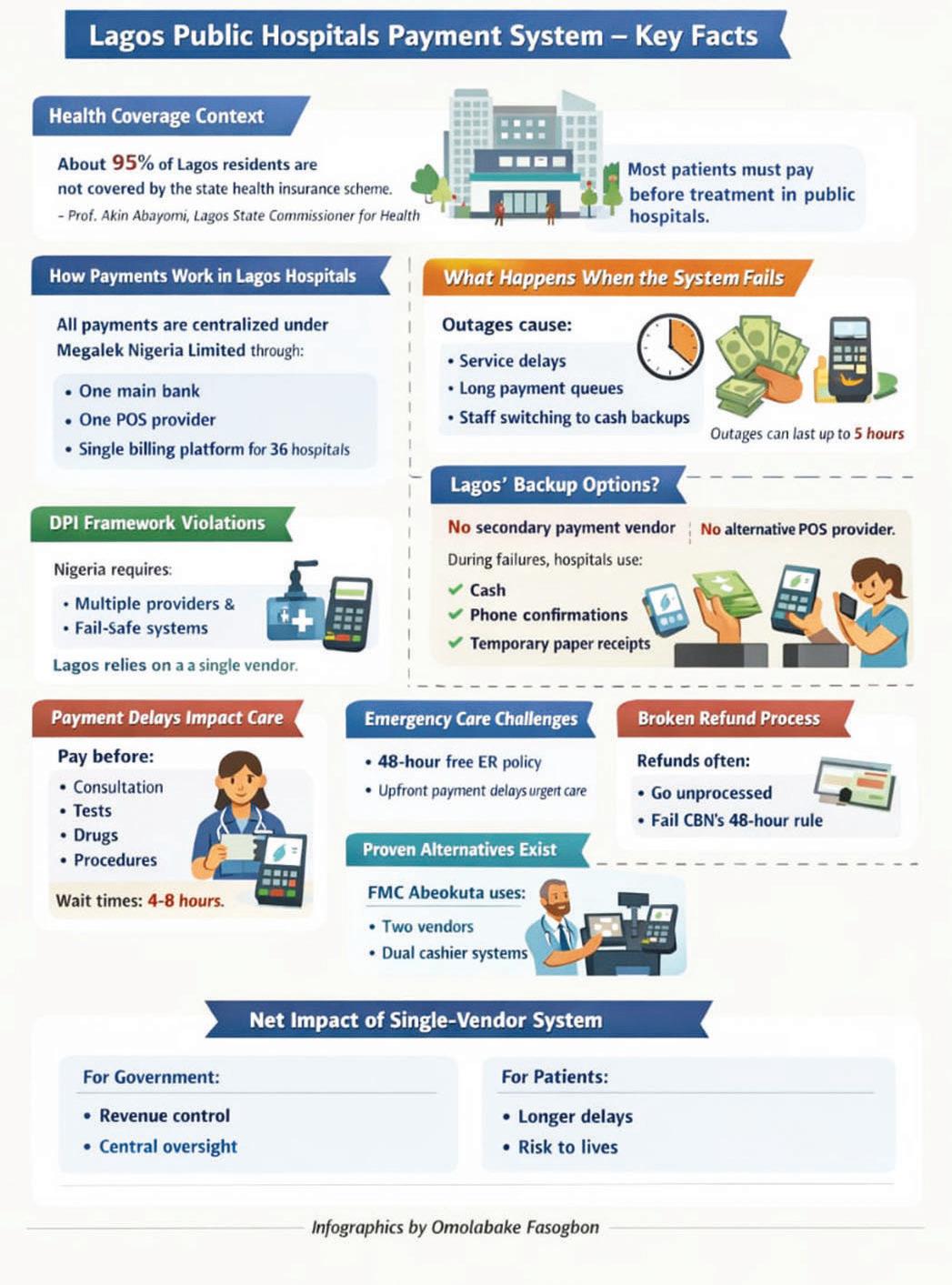
On a Monday morning at Orile Agege General Hospital (OAGH), patients filled beyond capacity even before medics resumed, with more arriving in droves. Across departments, cases ranged from mild to chronic: one needing urgent lab test as lifeline, a pregnant woman on the verge of delivery, and another rushed in during emergency. One thing bound them all—payment, the process, which can take as long as care itself. At minimum, a mandatory N700 consultation fee before care, compulsory for patients outside insurance coverage.
Patients visiting multiple departments must pay at each point, as billing is neither unified nor consolidated, leading to repeated queues throughout a single treatment day.
Across selected Lagos public hospitals that THISDAY visited, the mission statement proclaims: “To deliver prompt qualitative, equitable and affordable healthcare service......” An element of the patients’ rights declaration further reads: “Right to receive urgent, immediate and sufficient care in the event of emergency...” In reality, the “prompt and urgent” clause above is not always as advertised.
Still, the bureaucracies posed by the state-adopted pay-through-one-provider model, amid other systemic inefficiencies, make this promise unrealistic, rather stretches patients’ waiting time beyond the four -to eight- window that recent local media studies found as current norm.
Such delays, warned Public Health Researcher, Dinah Limiri, “raise mortality and readmission rates, worsen clinical outcomes, delay medication and, in extreme cases, lead to death.”
Far from theory, these risks are playing out in
real-time, with the poor disproportionately affected, although data are scarce.
At the laboratory unit, chaos mounted as the queue lengthened. The challenge: POS terminal failed midway; the alternative, bank transfers, were not instant to withstand the surging crowd. Aside
from the fact that many arrived prepared to use ATM cards, each successful transfer still required cashier confirmation through a call to a distant third party before a receipt was issued, further delaying care that triggered patients’ anger.
Trapped at the pay point, elderly patient misses a vital test deadline
As the delay in the laboratory stretched on, murmurs and grumbles rippled through the line. “They have started, how I wished I came with cash,” one patient grumbled. “For how long more will I wait?” another whispered.
Among the restless crowd stood 78-year-old Tunde Salami. Sweating and hapless, he remained glued to the pay point, clutching his ATM card, hoping network restores to the terminal.
Once defrauded after his phone was stolen, Salami avoids mobile transfers. He needed a fasting blood sugar test for a 10:00 a.m. deadline; missing it meant returning the next day.
“They said transfer or cash, but I stopped using mobile banking after my money was stolen. I always use my card here, but it’s not working today,” Salami said, his voice trembling.
“I waited, hoping the network would return. I feared that if I left to find cash, I would miss my 10:00 a.m. window. It’s already late and network is still down. I have to return tomorrow,” he lamented.
To Chukwu, Salami’s predicament alongside others could have been avoided with a multi-provider system.
“This will best cushion patients against enduring network breakdowns,” he said.
Nigeria recently launched its DPI framework to align with global efforts on accelerating progress of Sustainable Development Goals (SDGs). Yet, healthcare remains the least prepared sector, according to Healthcare Advisor, Chukwu.
Lagos Agencies Decline to Comment
Questions on Megalek’s sole agency, payment security, downtime contingency, and expansion of digital collections in Lagos public hospitals were sidestepped by all relevant agencies who initiated the payment model, leaving key queries in this report unanswered. A direct call and WhatsApp message to Lagos State Ministry of Health’s Tunbosun Ogunbanwo ended with a referral: “Direct your questions to Health Service Commission (HSC) pls,” he wrote.
Contacting Mr. Moses of HSC to whom Ogunbanwo referred THISDAY to, he gave a polite but evasive reply: “Hummmm. Please, dear colleague, don’t you think these questions are better directed to the HC Information? To give full authenticated information… viz., the State Government. Or, can you have a word with the current PS, HSC? To give you her no, so you direct such questions to her. Or, to the former PS… under whose tenure the whole process emanated.”
He declined to answer further questions. THISDAY then reached out to the Permanent Secretary, Ministry of Health, Dr. Olusegun Ogboye, with the same enquiry, but he never responded to calls and WhatsApp messages.
Near-death averted by privilege
A potential e-payment disaster at a Lagos general hospital (name withheld to protect the source, a state worker, from being traced as the incident was recent), was narrowly averted, not because the hospital was proactive, but because the patient’s relative had a professional connection; even then, access was far from easy.
In this case, the patient, Mr. Tunde Owoseni, was rushed into the emergency ward after he slumped during a church service and failed to respond to first aid. Owoseni’s relative, Dr. Smith (not his real name), who rushed him to the hospital, is himself a medical doctor at another Lagos State general hospital. Still, neither his professional status nor his ties to the state swayed hospital staff, who insisted on registration payment before treatment could begin, since Owoseni
had no insurance cover.
“Unmoved, they insisted I must register the patient first. I pleaded with them to commence treatment being an emergency, but they flatly refused. I was forced to disclose my identity, which I usually don’t do, yet it didn’t move them. Only until a few doctors who recognised me intervened was the patient passed for treatment while I completed registration,” he recalled regretfully.
Smith’s ordeal intensified at the pharmacy when the sole payment provider glitched. Transfers failed, and no alternative bank option was available.
“I was told I can only pay with my ATM card, forcing me to return to the car parked far away to fetch my card.
“Returning, network had seized on POS terminal and was asked to bring cash. It was a huge sum I hadn’t planned for, and on a Sunday when banks were shut, with no idea where to find POS operators. My plea to release the lifesaving medications while I dropped my card as security until the network was restored fell on deaf ears until a colleague intervened,” he recounted.
“Owoseni might have died without my intervention. A competing provider or alternative bank option could have prevented this,” he said.
Smith worried that a 48-hour free emergency care policy largely exists on paper, convinced still that enforcing it could avert tragedies fuelled by e-payment failures.
He recounted several distressing incidents at the hospital he works, noting their plights are complicated by insufficient pay points.
“With just one or two cashiers, patients queue to pay, risk a failure, then queue again to see a doctor. The process is just too exhausting, and I’m moved to pity seeing this. Government should consider reinstating finance departments or engaging additional providers to streamline payments and reduce queues,” he suggested.
Technology that deepens care barriers
Increasingly, barriers to healthcare are extending from financial constraints to flawed payment technology which, designed to hasten and improve access, now compounds patients’ woes like Owoseni and Salami, threatening progress toward Sustainable Development Goal (SDG) three on good health for all.
While cases above were managed, a graver tragedy

Patients making payment at OAGH
struck in a Bonny Island hospital in Rivers State, where young Nnamdi (real name undisclosed) died pleading for care, not because his caregiver lacked funds, but because repeated network glitches stalled a payment the hospital insisted on before treatment.
In a viral Facebook video posted by Bonny Info TV, grief-stricken Nnamdi’s caregiver, Linda (real name undisclosed), narrated how network delay and hospital’s inaction quickened Nnamdi’s death.
“I brought him here alive, he was breathing,” Linda said, trembling. “They demanded N40,000 and N2,000 for a hospital card. I pleaded with them to begin treatment, assuring money wasn’t the problem, only that my Opay network had failed. Still, they refused,” she wailed.
By the time the transfer was successful and the hospital confirmed payment, Nnamdi was already dead. This is the extent of the havoc a faulty payment system could wreak.
Cases like Linda’s are not uncommon. In March
Transcorp Hotels Plc, the hospitality subsidiary of the Transcorp Group, has recorded N97.04 billion revenue in its full-year 2025 financial results, compared with the N70.13 billion posted in 2024.
The company, with a market capitalisation of N1.75 trillion, grew its revenue by 38 percent compared to the same period in 2024, according to a statement yesterday.
The performance was driven by robust demand in room bookings, conferencing, food and beverage services, and other ancillary Also, its gross profit margin expanded to 77 percent, from 71 percent in 2024, driven by increased volumes, effective cost management, and operational efficiencies.
Furthermore, Transcorp Hotel achieved a 35 percent rise in its operating profit to N35.24 billion, up from N26.03 billion in 2024, just as its profit before tax rose by 45 percent to N32.82 billion, from N22.61 billion in 2024, and profit after tax also rose by 47 percent to N21.85 billion in the period under review, up from N14.90 billion in 2024.
The result showed that total assets in the period under review rose to N159.91 billion, representing a 14 percent increase from N140.70 billion in 2024.
Commenting on the results, the Board Chairman, Transcorp Hotels Plc, Dr Awele Elumelu, said: “I am delighted with the FY 2025 performance of
The Association of Corporate Communication and Marketing Professionals in Banks (ACAMB) has ushered in a new executive council, with a strong representation from leading financial institutions, to steer its affairs for the 2026-2028 term.
The election, held during the association’s Annual General Meeting in Lagos on Thursday, saw seasoned professionals from across the banking landscape elected to key positions.
The newly constituted executive includes Babajide Sipe of the Bank of Industry as President; Chinwe BodeAkinwande of FirstBank as First Vice President; Morolake Philip-Ladipo of Wema Bank as Second Vice President; Abiodun Coker of the United Bank for Africa (UBA) as the Publicity Secretary; Olugbenga Owootomo from Polaris Bank as General Secretary; Halima Ishak from Jaiz Bank as Financial Secretary; Ademola Adesola from Parallex Bank as Assistant General Secretary; Unoaku Temitope Anyadike from Guaranty Trust Bank as Treasurer and MacQueen Afolabi from Zenith Bank as Social Secretary
2025, The Guardian Nigeria reported that Mrs. Bukola Attah’s online transfer for a critically ill relative failed, leading to the patient being discharged without treatment.
Warning by Nigeria Deposit Insurance Corporation (NDIC) against single-bank dependence underscores that Nnamdi’s death and other victims’ ordeal may have been prevented should victims and, crucially, hospitals maintain accounts with alternative banks to withstand outages.
“Account holders should maintain alternative accounts across different banks to ensure quick access to funds in the event of bank distress,” the corporation cautioned.
Corroborating the regulator’s stance, Finance Analyst, Chris Browning, advised, “Try not to keep all your accounts at the same bank. In case technology fails at one institution, for example, you have accounts at other banks to fall back on.”
One downtime, statewide health service disruption
A cashier at Island Maternity Hospital, who requested anonymity, said staff also struggle when payment channels falter or the provider faces downtime.
“It is stressful for us too; it multiplies our task,” he said.
The cashier briefed that minor hitches do occur almost daily, while major downtimes, typically triggered by high transaction volumes and network issues, recur on a near-monthly basis.
The cashier hinted that it is worse when the only POS terminal provider suffers total downtime, which includes midnight, an occurrence he said, would usually co-occur in all the 36 state hospitals.
“When a major downtime occurs, it can take five hours to resolve,” the cashier stated. “Patients naturally become agitated when services stall, we switch to cash during this crisis, but this often takes time and requires a cumbersome manual reconciliation later. And when patients make transfer, it takes time to first confirm via a phone call to another colleague, before issuing a ‘DDA’—a temporary receipt to let patients proceed with treatment.
“However, reconciling this later on the system is like processing the same payment three times. If we don’t, it’s flagged as fraud. To avoid working late, we often juggle this heavy back-office task, while still attending to patients,” the cashier shared.
True to the cashier’s claim, THISDAY confirmed a pattern of statewide disruption on December 22, 2025. Visits to Ifako-Ijaiye General Hospital and OAGH
Transcorp Hotels Plc, led by Mrs. Uzoamaka Oshogwe. We have continued to strengthen the foundation of our company, with our growing asset base and equity--increasing by14 percent and 18 percent respectively--positioning us for the future. We will continue to be focused on driving operational excellence and business growth, whilst exploring new avenues for sustainable long-term value creation for all.”
Also, Managing Director/CEO, Transcorp Hotels Plc, Uzoamaka Oshogwe said: “Our full-year 2025 performance represents a major milestone, with record revenue of N97.04 billion and retained earnings rising sharply from N63.23 billion in FY 2024 to N77.53 billion, further enhancing our financial resilience and long-term growth capacity.
“Our success results from disciplined operational efficiency, strong cost management, and most importantly, our exceptional team’s commitment to service excellence. Guided by a bold, future-focused vision, we continue to invest in transformative infrastructure, notably the 5,000-seat world-class Transcorp Centre, positioning Nigeria as a premier global convening destination for high-profile events, including the Afreximbank Annual Meetings, ECOWAS Summits and many more. Looking ahead, we will continue to innovate and leverage cutting-edge technology to strengthen our brand and redefine hospitality standards across Africa.”
In his inaugural address, Sipe expressed gratitude for the confidence reposed in him, outlining a purposeful agenda for his tenure.
“I promise to lead with courage, intention, and purpose. My leadership will be anchored on four pillars: mentorship and career development; strengthening outcomes relevant within the banking industry; active member engagement; and strong representation and advocacy,” he stated.
He further emphasised, “I will be an unrelenting advocate for our members and for the strategic value of our profession. My key focus is growth—growth for members, growth for the association, and ensuring that the values of ACAMB are protected.”
The immediate past President, Rasheed Bolarinwa, highlighted the achievements of his tenure, notably in professionalising the membership. “We facilitated structured arrangements with regulatory bodies, enabling our seasoned professionals to formalise their certifications. Today, there’s hardly anyone in banking communication who does not belong to key professional groups,” he added.
revealed both facilities simultaneously were unable to process bank transfers, an interruption alternative bank or secondary payment provider could prevent. On-site, THISDAY witnessed relatives of two emergency patients scramble for cash outside the hospital.
“Transfer is not working. You can only use your ATM or bring cash,” the cashiers snapped, as this reporter posed as a patient at both hospitals.
A situation like the above is deliberately avoided at Federal Medical Centre (FMC), Abeokuta, Ogun State, which, as experts posited, engaged two vendors for patients’ transactions, each with on-site cashiers to ensure seamless payment.
A supervisor at FMC Finance unit simply identified as Mr. Femi, said, “Having two vendors creates a safety net. If one system goes down, the other stays active, ensuring that payment issues never block patients’ access to urgent care.”
Single-provider model may not plug leakages after all Findings indicate that Megalek, engaged by Lagos State to curb financial leakages in public hospitals, may itself be creating new vulnerabilities, raising questions about whether the single-provider model is as leak-proof as projected. Before the arrangement, patient payments were handled internally by hospital finance departments.
Lagos State’s push to digitise hospital payments and address longstanding allegations of fraud and revenue diversion among finance staff saw it outsourced payment to Megalek as a third-party agent, an arrangement said would have been beneficial to the public if democratised, inclusive and flexible as DPI prescribes.
The agent’s earnings, commissions tied to the volume remitted to the government account, the reporter learned, has incentivised cashiers to prioritise “payment before treatment,” often with little or no regard for National Health Act 2014, which mandates emergency care without upfront payment.
Although a cashier at Lagos Island Maternity Hospital disputed this, insisting emergency care remains a priority, accounts from staff at other different facilities corroborated reporter’s findings, who cited fear of revenue loss and patients default.
NoTE: The story continue online on www. thisdaylive.com
The Lagos State Internal Revenue Service (LIRS) has extended the deadline for filing of employers’ annual tax returns by one week, from February 1 to February 7, 2026. In a statement issued yesterday, the Executive Chairman of LIRS, Dr. Ayodele Subair, explained that the statutory deadline for filing of employers’ annual tax returns is January 31, every year.
He noted that the extension was intended to provide employers with additional time to complete and submit accurate tax returns. Subair stated that employers must give priority to the timely filing of their annual returns, noting that compliance should be embedded as a routine business practice.
He also reiterated that electronic filing through the LIRS eTax platform remains the only approved method for submitting annual returns, as manual filings have been completely phased out. Employers are therefore required to file their returns exclusively through a dedicated LIRS eTax portal.
Describing the platform as secure, user-friendly, and accessible 24/7, Subair advised employers to ensure that the TaxID (Tax Identification Number) of all employees is correctly captured in their submissions.
Afro Oru Timber Market in Ahiazu Mbaise Local Government Area of Imo State is in ruins following an attack by hoodlums, who de-roofed sheds, looted wares, and chased away traders.
The hoodlums, allegedly, sponsored by one Onyenekeya Akachi, a lawyer, put a traditional barricade, with fresh palm fronds, round the market, preventing commercial activities since January 20, when the invasion took place.
The attack happened despite subsisting court cases over the ownership of the land, where the market is situated, cases in which Akachi is deeply involved.
The traders, under the aegis of Afor Oru Timber Market Association, have petitioned the Nigeria Police over the incident.
In the petition, via their lawyers, Hans and Silver Associates, to the Assistant Inspector-General of Police (AIG), Zone 9 Police Headquarters, Umuahia, the traders, represented by Chief Leo Ibe, Mr. Julian Nmadu, and Mr. Damian Oguibe, requested the police to invite Akachi and one Mr. James Onwumere for interrogation.
The petitioners believed Akachi and Onwumere were prime architects of the market invasion.
Lawyers for Afor Oru Timber Market Association stated in the petition, dated January 23, 2026, that following the attack on the market on January 20, 2026, and their earlier petition, “Our clients informed us that Barr. Onyenekeya Akachi and James Onwumere, who are co-suspects in the said petition and who by virtue of their present attitude can be said to be the architects of the whole criminal attack, have been threatening fire and brimstone to deal with any member of the Afor Oru Timber Market Association who would attempt to enter into the market.”
The petitioners also stated that Akachi had rebuffed attempts by Chairman of Ahiazu Mbaise Local Government Area, Chief Larry Chikwe, to resolve the matter. Akachi was said to be claiming he had a judgement of the Imo State High Court transferring ownership of the timber market land to his clients, Nze Raymond Erege and one other person.
Nse Victor Udoh
Every durable economy rests on a simple sequence. First, strategic assets are protected. Next, stability is established. Then confidence returns. Finally, prosperity becomes possible. Nigeria’s recent experience with pipeline surveillance in the Niger Delta has followed precisely this progression. What renders this sequence instructive is that it reflects not abstract theory but lived national experience.
This sequence is now observable in national production recovery trends, restored pipeline receipts, and rising institutional performance across the petroleum sector. It affirms that economic advancement is determined not solely by the possession of resources, but by the quality of their stewardship. In this regard, pipeline surveillance has transcended its initial security purpose to become a practical demonstration of how nations convert structural vulnerability into strategic advantage.
For decades, Nigeria’s most valuable economic assets have flowed silently beneath forests, farmlands, creeks, and communities. The nation’s pipeline network, carrying crude oil and gas from production fields to terminals and refineries, has always been more than infrastructure. It is the circulatory system of the national economy. Yet for too long, this system operated under persistent threat, exposed to sabotage, theft, vandalism, and illegal refining.
The consequence was not only lost revenue but also environmental degradation, social instability, and an economy unable to fully benefit from its own resources. In practical consequence, this produced a nation generating energy without securing its full economic yield, budgeting without dependable metrics, and designing development policy on foundations persistently weakened by leakage. It also left host communities positioned along corridors of wealth that delivered risk more often than reward.
In recent years, pipeline surveillance has emerged as a decisive response to this long-standing vulnerability. By establishing comprehensive monitoring systems, deploying rapid response mechanisms, and engaging communities as active participants in asset protection, Nigeria has begun to reverse decades of decline. What began as a security intervention has evolved into something larger: a national asset protection strategy with far-reaching economic implications.
By securing pipelines and ensuring the uninterrupted flow of petroleum resources, surveillance operations have shifted Nigeria from a posture of constant loss management toward one of stability, planning, and growth.
This shift is measurable: national crude output climbed from approximately 1.18 million barrels per day in August 2023 to over 1.7 million barrels per day by late 2024; a recovery of nearly 500,000 barrels daily.
The Nigerian Upstream Petroleum Regulatory Commission attributed much of this gain to reduced pipeline vandalism and improved asset protection. This production recovery has direct fiscal implications: each additional 100,000 barrels per day translates to approximately $2.5-3 billion in annual export revenue at current pricing, funds that flow directly into national development budgets.
It has enabled national institutions to progress from reactive crisis management to strategic foresight, from temporary containment to durable systems-building, and from uncertainty-driven decisions to calculated national ambition.
It is important to clarify the role of pipeline surveillance within the wider energy landscape. Energy security encompasses the full value chain, from exploration and production to refining, distribution, pricing policy, and subsidy frameworks. Pipeline surveillance does not manage these domains.
Its mandate is precise: safeguarding critical infrastructure that transports petroleum resources. Yet this single function has proven foundational. Without secure transportation channels, production targets falter, refining plans collapse, exports decline, and fiscal projections become unreliable.
Asset protection, in this context, is not a supporting activity. It is a precondition for economic order. In effect, the pipeline is the hinge on which the entire petroleum value chain turns. When that hinge is weak, every other link in the chain carries strain. When it is secure, the entire system gains coherence.
The immediate impact has been operational. Sustained monitoring and rapid response systems have sharply reduced pipeline breaches and illegal tapping. Receipt rates have climbed toward full recovery, with national output rising to levels not seen in recent memory.
This redirection has restored Nigeria’s credibility in international oil markets, allowing Nigeria to reclaim market share lost to Angola and Libya. The Port Harcourt refinery restart in late 2023, processing over 60,000 barrels per day, depended on assured feedstock delivery through secured pipelines. International oil traders now price Nigerian crude with smaller risk premiums, compounding into hundreds of millions in additional annual revenue across national export volumes.
Economic stability follows predictability. When crude flows are secure, refineries can plan feedstock intake with assurance. Export commitments can be met without fear of sudden shortfalls. Gas-to-power projects can operate without recurrent shutdown risks. Investors can assess Nigeria’s petroleum sector with clearer risk profiles. Surveillance therefore does more than stop theft. It reintroduces reliability into national energy planning. And reliability is the bedrock upon which sustainable economic growth is built. With predictable flows, national budgeting becomes more credible, infrastructure planning becomes more precise, and long-term contracts become easier to negotiate. Predictability is the silent currency of modern economies, and pipeline surveillance
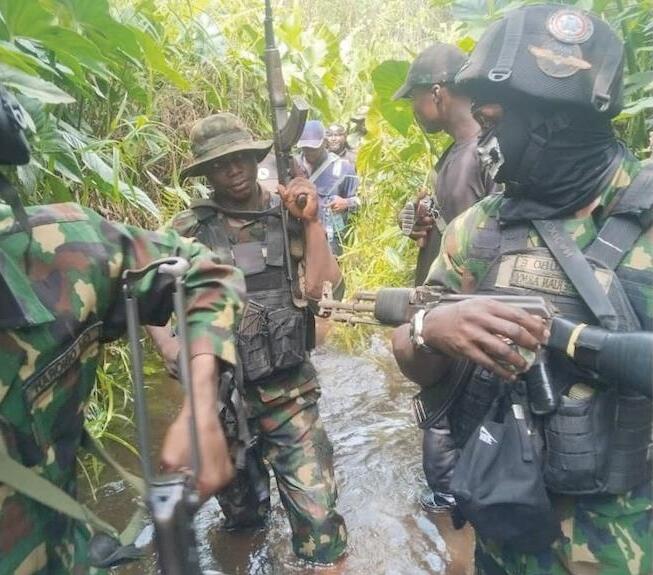
Military men on duty
has begun restoring it.
The benefits extend into public finance. Higher accountedfor production translates directly into increased export revenues, improved foreign exchange inflows, and strengthened fiscal capacity. National oil company performance in recent years illustrates this shift toward profitability and efficiency, driven in part by reduced losses and enhanced operational continuity.
As revenues stabilise, government budgeting gains credibility.Development planning becomes less speculative. The national economy gains breathing space to invest in infrastructure, social services, and diversification. This breathing space matters. It allows policy makers to think beyond survival and begin shaping structural reforms, industrial expansion, and long-term social investment. It also reduces dependence on emergency borrowing and short-term fiscal patchwork.
Asset protection has also produced environmental and social dividends, particularly in the Niger Delta. Illegal refining and pipeline sabotage once left waterways polluted, farmlands infertile, and communities trapped in cycles of hazard and insecurity. With sustained surveillance operations dismantling illegal sites and preventing repeated breaches, ecological recovery has begun.
Rivers are gradually clearing. Fishing and farming livelihoods are returning. Health burdens linked to chronic pollution are easing. Environmental repair, in turn, reduces the long-term economic costs of remediation and emergency interventions. This systematic dismantling of large numbers of illicit refining sites in recent operations has accelerated environmental regeneration across multiple creek systems. It has also reduced the hidden liabilities that once accumulated silently against the national balance sheet, restoring dignity to communities instead.
Community engagement has been another critical dimension. Surveillance operations increasingly integrate local participation, turning host communities from passive victims of infrastructure insecurity into stakeholders in its protection. Employment opportunities for youths, educational support programmes, and targeted women’s enterprise initiatives have tied local economic survival to the stability of legitimate operations.
This shared interest lowers community tensions, reduces conflict risks, and builds social consent around national assets. Where mistrust once dominated, cooperative stewardship is gradually taking root. This shift is crucial because no infrastructure can be protected sustainably without the consent of those who live closest to it. Community partnership transforms protection from an external imposition into an internal commitment.
Security outcomes reinforce these gains. The disruption of oil theft networks and illegal bunkering operations has reduced violence, improved freedom of movement, and restored normalcy to daily life in many areas. Markets, schools, and local businesses now operate with fewer interruptions.
Security, in this sense, is not merely a policing outcome. It is an economic condition. The dismantling of organized crude theft logistics has materially reduced armed confrontation around strategic energy corridors.
Safe environments attract investment, retain talent, and enable long-term planning. Pipeline surveillance has therefore functioned as both an infrastructure safeguard and a stabilizing force in regions critical to national revenue generation. Stability at the regional level thus translates into stability at the national level, linking local peace directly to national economic continuity.
The broader national implication is clear. A country cannot prosper while its primary revenue-generating assets remain exposed. Asset protection is not an isolated security expense. It is an investment in economic continuity that transforms the narrative from one of leakage and loss to one of stewardship and yield. It reframes security spending not as a cost burden, but as capital invested in protecting national earning capacity. When viewed through this lens, pipeline surveillance becomes part of a wider economic architecture rather than a narrow tactical operation.
Yet honest national discourse requires acknowledging that asset protection is neither cost-free nor instantly perfect. Recent public reports have raised concerns about the scale of expenditure on pipeline security and the need for transparency in how such funds are deployed. These debates are not signs of failure. They are indicators of a maturing governance environment where strategic investments attract scrutiny, as they should. No economy reaches prosperity without first passing through a phase of disciplined investment, institutional learning, and accountability refinement. Scrutiny, when constructive, strengthens institutions and builds public trust in national priorities.
What matters is the direction of travel. And the progression remains clear even amidst ongoing debate. As pipeline integrity centred on asset protection improves, operational stability follows. From stability emerges confidence. And from confidence, prosperity becomes attainable. Increased retained production supports foreign exchange inflows. Improved efficiency enhances national oil company performance. Public revenue projections gain credibility. With credible revenue comes capacity to invest in infrastructure, education, healthcare, and economic diversification. In this sequence, pipeline surveillance serves not merely as a security measure, but as a catalyst of broader economic possibility. It becomes the quiet enabler of national ambition.
The Niger Delta Progressive Alliance views this period as a decisive transition in Nigeria’s economic story. The task ahead is consolidation: advancing technology, strengthening oversight, improving transparency, and deepening community partnership. Asset protection must mature into a permanent national discipline, not a temporary intervention. It must be embedded in institutional culture, policy continuity, and civic consciousness so that future gains are not reversed by neglect or complacency.

The Central Bank of Nigeria (CBN) towed the path of economic resilience and sustainable growth by relaunching the moribund Agricultural Credit Guaranty Scheme Fund (ACGSF).
The last we heard or read anything about ACGSF was far back in 2005 when the CBN made mention of the then Board under the chairmanship of Alhaji Umaru Baba in its annual report.
This important ‘special purpose vehicle’ was established by the Nigerian government vide Decree 20 of 1977, to encourage banks’ lending to the agricultural sector and mitigate the risk associated with agricultural financing. Risk aversion has been a major bane to the growth and modernisation of the sector. Hence, the primary objective is to provide guarantees for credit facilities extended by financial institutions to farmers, thereby alleviating the banks’ risks and boosting lending to this crucial sector, which employs a significant portion of Nigeria’s workforce.
Far back in 2019, efforts have been ongoing to give a new lease of life to this strategic scheme, which nearly went into extinction, with the amendment of the law establishing it. That particular move significantly increased the Fund’s share capital from N3 billion to N50 billion, thereby expanding its capacity to deliver on its mandates.
Now that a new board has been inaugurated, one can be optimistic that all is set for the scheme to fulfill its mandates. More so, farmers are now well represented on the board, which ensures inclusivity.
The well articulated and robust mandate of the scheme has enlivened the hope that it’s going to address part of the numerous challenges confronting the country’s agriculture, which has rendered it incapable of unleashing its potential or even retaining its enviable socio-economic position of the 1960s.
The bane of the country’s agricultural sector includes insecurity, poor infrastructure, outdated methods due to low levels of mechanization and technology adoption, and limited access to credit
high input costs, climate change impacts, and weak value chains leading to low productivity, and undue reliance on imports despite immense potentials begging to be tapped.
The new ACGSF Board composed of accomplished individuals chaired by Dr. Olusegun Oshin, with members drawn from the banking industry, academia and agricultural sector has the task of effectively addressing the barriers to agricultural financing.
At the inauguration of the new board, the CBN Governor, Olayemi Cardoso acknowledged the fact that agricultural remains the backbone of Nigeria’s economy contributing one fifth to the gross domestic product (GDP) but lamented that the sector remained almost neglected by attracting a negligible fraction of less than five percent of total credit in economy.
No doubt that financing gap has tremendously limited the potentials of millions of small holder farmers and of course able bodied youths who were willing to practice agriculture as businesses or hobby. Of course, agriculture not only lost its potentials of feeding the ever increasing population but also missed the potentials of serving as catalyst for industrialisation and foreign exchange earner for the country.
It is never an exaggeration that agriculture has what it takes to address poverty and its associated ills like malnutrition, diseases, low investment and social maladies.
Poverty levels in Nigeria are projected to deteriorate sharply, with as many as 141 million Nigerians—about 62 percent of the population—expected to be living in poverty by 2026.
According to the World Bank the absolute number of people living in poverty has increased sharply, from about 81 million in 2019 to roughly 139 million in 2025.
Food bills account for up to 70 percent of total consumption among poorer Nigerians, thereby leaving them highly exposed to food price increases. The current ease experienced in the headline inflation notwithstanding, the pass-through effects of structural deficiencies will continue to keep food prices high.
However, period of lamentation should be discarded as Nigerians
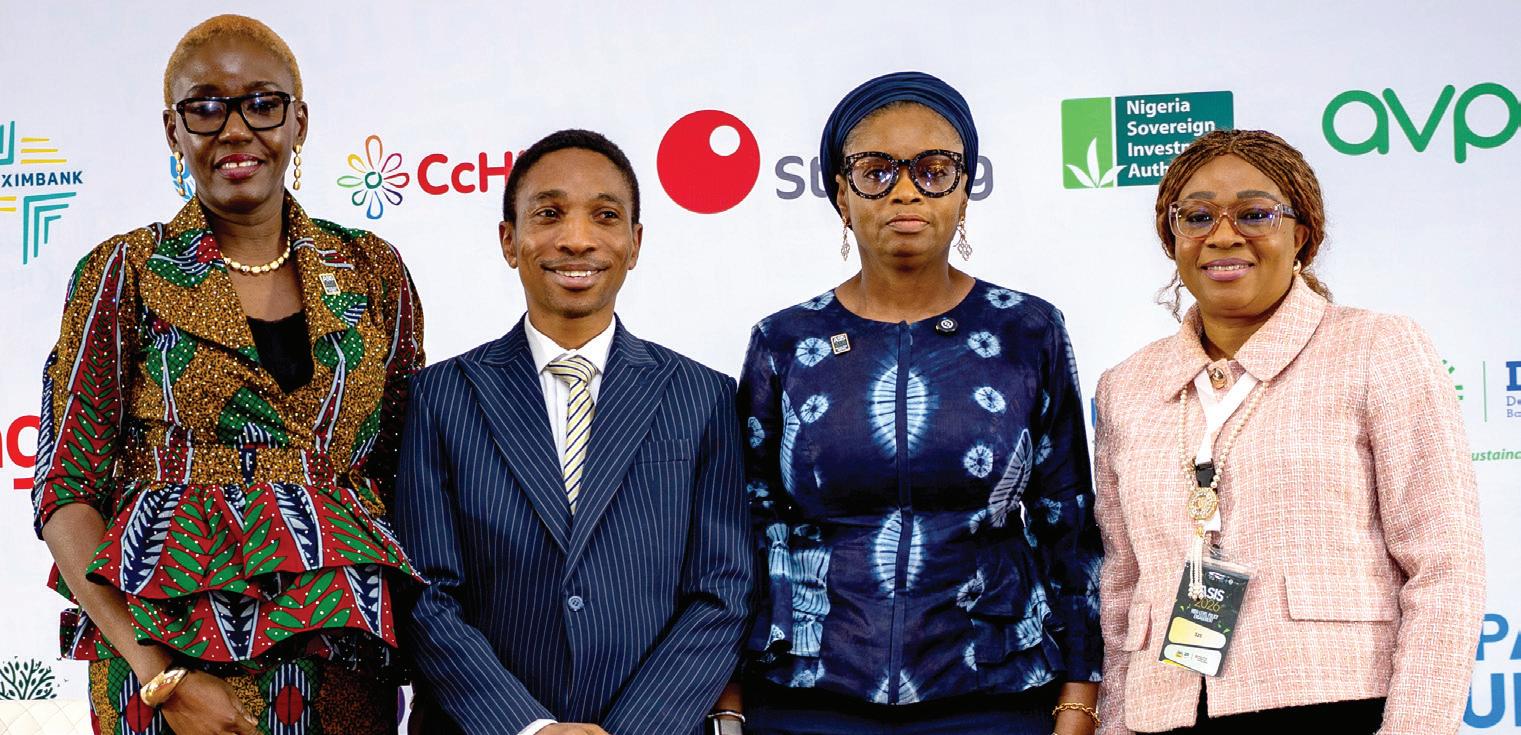
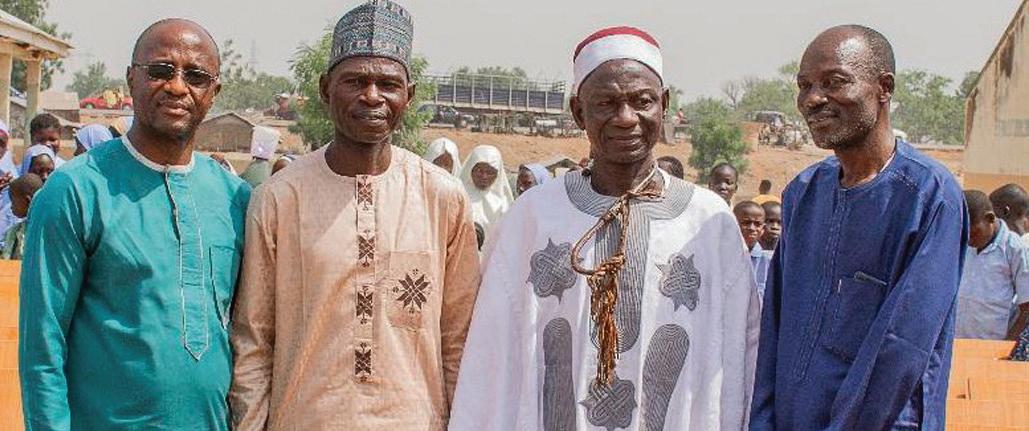
look forward to revolutionised agricultural practices with appropriate financing strategy.
The panacea for agric development is never a single magic bullet, rather a holistic approach integrating technology in form of functional mechanisation, digital tools, sustainable practices, water resources management and improved finance which ACGSF stands for.
The above propositions might an illusion without vibrant security architecture, good rural road networks, agro-processing facilities, and linking farmers to markets to reduce costs and add value which are essential to leapfrog and reposition agricultural production.
The board of the ACGSF should not occupy itself with issue of finance or credit alone but to initiate effective collaborative strategies towards achieving its mandate. The place of institutional support cannot be wished aside as issues such as land administration and accessibility are critical for inclusiveness and effective mobilization for smallholder farmers for enhanced productivity. Supporting institutions like the Nigerian Agricultural Insurance Corporation, National Agricultural Land Development Authority (NALDA), River Basin Development Authorities should be revived along with a adequately capitalised Bank of Agriculture as all have vital and complementary roles to play at this critical time.
The recent resolve of the National Economic Council under the chairmanship of Vice President Kashim Shettima to deepen the engagement with stakeholders to boost non-oil revenues and accelerate the transition from oil to non-oil economy should be taken as further motivation for all stakeholders in the agricultural and allied sectors leverage. It’s incontrovertible fact that agriculture takes precedence when considering non-oil potentials of the country. As such, no effort should be spared at this point in time to reposition it.
A thriving agricultural sector not only provides food and raw materials among other associated value chains but also serves morale booster for the citizens. A country that is self-sufficient in food production commands respect prides among comity of nations and possibly its pride itself as a power bloc.
The desired goal for agricultural development is about transforming the sector into a robust engine for inclusive and sustainable economic growth by addressing its structural challenges with a comprehensive, integrated strategy.
The central Bank of Nigeria has again demonstrated its determination to wrestle down inflation, especially food prices, which is a major driver of inflation in the country by assuming yet another pivotal role in agricultural financing. This singular move is enough to catalyze growth for other sectors of the economy.
Going forward, CBN should be very assertive in discharging its developmental roles in the Nigeria’ s economy in addition to traditional mandates of price and financial system stability. In several jurisdictions central banks have deployed asset- based reserves requirements to influence allocation of credit to critical sectors. Countries like China, India, Brazil, Russia and even the United States of America in one form or the other strongly support agriculture through subsidy, crop insurance, research and extension services. Coming down home, countries like Ethiopia and Senegal have shown significant government commitment toward the development of agriculture.
As we welcome the return of a rejuvenated ACGSF and the inauguration of the new board, the CBN should know that guaranteeing credit alone even at 100 percent is never enough to reposition agriculture to the desired stage.
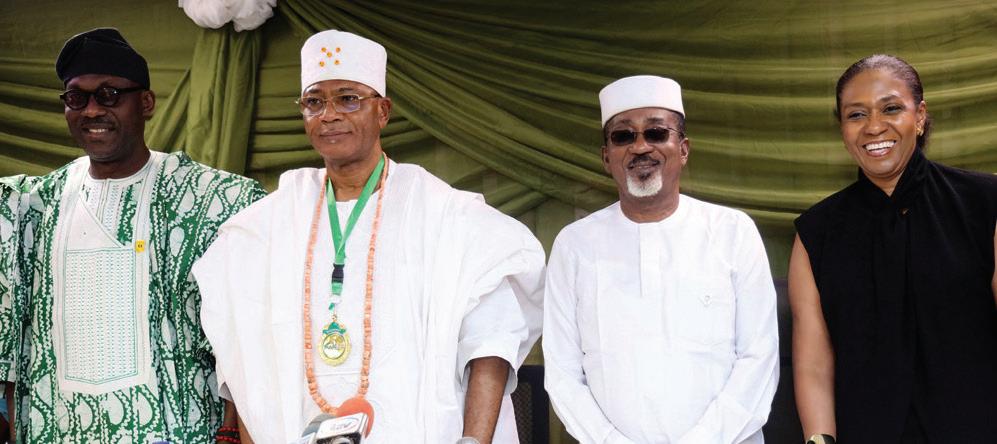
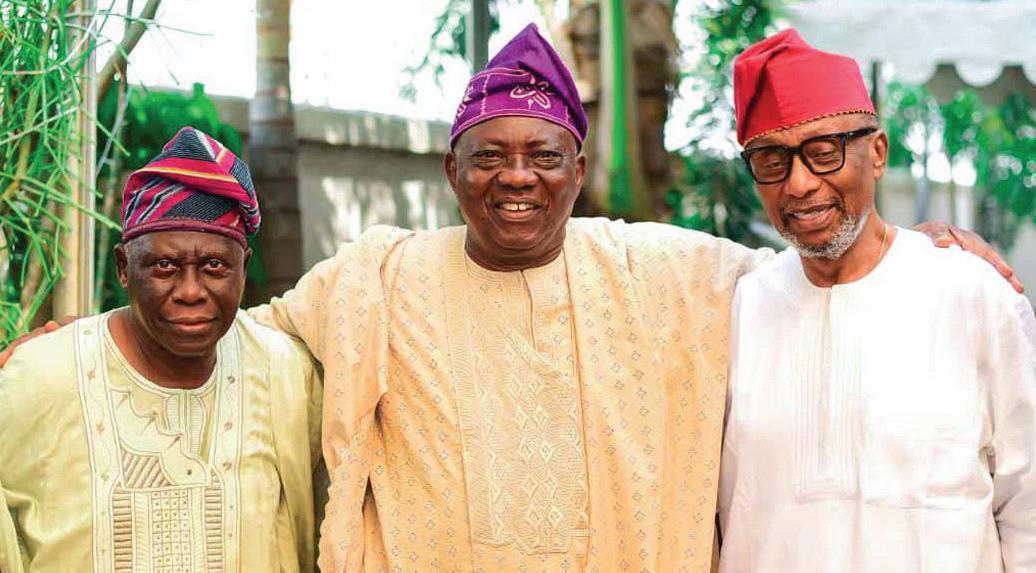
Kunle Sanni
For decades, Benue State has proudly carried the title of “Food Basket of the Nation.” Its vast arable land and strong farming culture have sustained millions across Nigeria. Yet, agriculture alone has not been sufficient to shield the state and nation at large from economic shocks, youth unemployment, or revenue volatility.
Recognising this reality, the administration of the Governor, Rev. Fr. Hyacinth Iormem Alia has initiated a deliberate and fundamental shift: moving Benue’s economy to a broader industrial and fiscal foundation while still preserving its core agricultural strength.
Since assuming office on May 29, 2023, the administration of Governor Alia inherited a context of severe socio-economic difficulties. For instance, as of 2022, the north central state had recorded nearly 28,997 conflict-related deaths, reflecting a prolonged period of heightened insecurity, while the state’s official unemployment rate stood at about 12 per cent, according to data from the state budget commission.
Confronted with these realities, Governor Alia’s administration has pursued a programme of structural reforms to stabilise the state’s economy and expand its productive base.
Central to this agenda is the creation of the Food Basket Brewery (FBB), BenFruits, a bakery, the state-owned printing industry, and a garment factory, which largely utilise its local raw agricultural materials and evolve into a centre for agro-processing and manufacturing.
Established in 2025, the FBB is a state-owned industrial project under the Benue Investment and Property Company Limited (BIPC). The N15 billion brewery, located in Makurdi, the Benue State capital, occupies about 1.2 hectares along the Makurdi–Gboko Road and produces beers and other beverages, including Zeva and Oyi Bitters.
Upon full operation in November last year, the brewery is projected to generate up to 1,500 direct and indirect jobs, contributing significantly to industrial growth and employment in the state. The Chinese machine manufacturers supervise and maintain the factory equipment, employing and training about 40 local Benue youths in the maintenance department.
The Brewery capacity is structured around shifts. For instance, the brewery produces 1,000 bottles per hour. For example, the FBB can reach 8,000 bottles in an eight-hour shift. With day and night shifts, production can double to 16,000 bottles in 24 hours, state officials have analysed.
During a project inspection tour last week, Henry Boager, a maintenance officer with BIPC, who spoke with top Nigerian editors from the Nigerian Guild of Editors (NGE), led by Bayo Onanuga, Special Adviser on Information and Strategy to President Bola Tinubu, said the Benue State government intends to improve the salary and welfare package for the staff of Nigeria Brewery, bringing it in line with an improved standard and structure.
“We’re intending to improve on our structure to make ours more suitable to make our brewery workers more comfortable,
“For instance, the Benue state government will provide a two-shift working system: morning and evening and transportation means; they have a bus that conveys staff to work. And then they still provide lunch for the workers,” he added.
Speaking on how the factory sources its raw materials, the BIPC official revealed that while the state government sources its materials for beer production outside, such as Malt and Sorghum, the governor has since encouraged farmers in the state to cultivate those raw materials to ensure sustainability.
He said, ‘’The raw materials, they actually grow within certain temperatures that are not favourable in Benue. And we are working on a system to produce and preserve it at a suitable temperature for its production.
According to reports, the BIPC took delivery of 166 chiller fridges for distribution to retailers of Zeva premium beer, Oyi Bitters
The Group Managing Director of BIPC, Dr. Raymond Asemakaha, who took delivery of the consignment, said it marked another milestone in the company’s efforts to reduce supply gaps in its production chain.
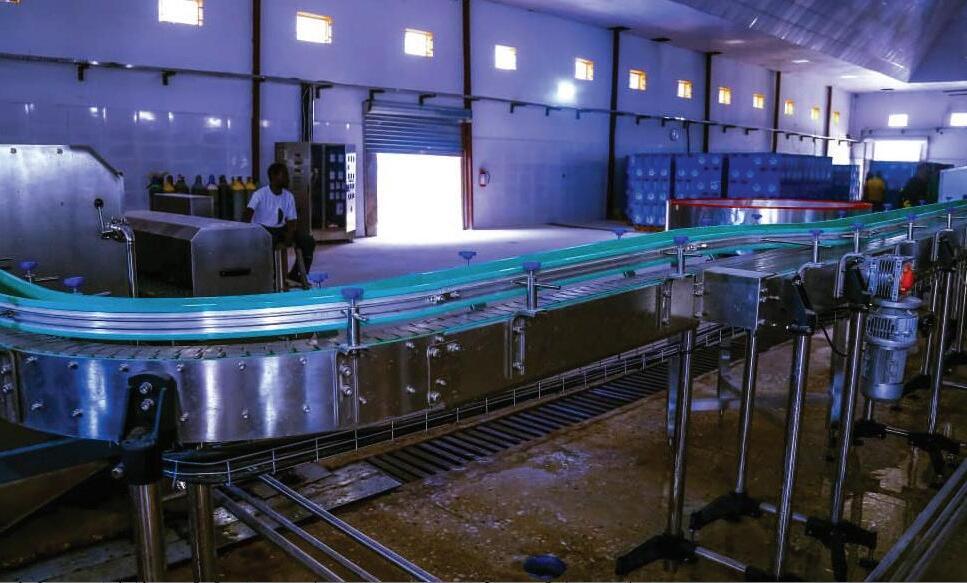
Unlike the beer factory, which temporarily sources its raw material outside the state, the juice plant secures its material, like Mango, Oranges, and Pineapple, directly from local Benue farmers to produce its various juice products.
The factory, which is still undergoing full-scale installation of high-capacity machines, is expected to begin full operations on February 28. It is designed to process local oranges and mangoes, boasting a capacity of 4 metric tonnes per hour. “We know that raw material is never a problem because we have it here locally,” Boager said at a visit to the factory located at the Industrial layout in Markudi.
Speaking on the estimate of how many tons of oranges the state government would be buying directly from local Benue farmers, Boager explained that the state’s orange processing plant can handle 8 tons of oranges per hour, producing 60,000 litres of juice, enough to fill about 80,000 cartons in an eight-hour day.
He said, ‘’I know, the orange, for instance, we have 8 tons per hour processing unit, right? So, if we can do 8 tons per hour and 1 trailer, it takes 32 tons. ‘So, if you divide 32 tons by eight, you see how many trailers we can do in a day. So that is a pure calculation.
Benue State, known as Nigeria’s largest producer of oranges, contributes a significant share of the country’s nearly 930,000 tons of orange output each year, with total citrus production in the state estimated at over 1 million metric tonnes annually.
While the plant produces juice, with plans for oil extraction and the production of organic fertiliser from waste, Boager also revealed that the oil extracted from the fruit is primarily for export.
He added that while the country produces fruit concentrate, only large beverage companies such as Chifoods and Coca-Cola
can afford to purchase it, using it to create their own drinks according to proprietary recipes.
The Benue State Printing and Publishing Corporation, originally established on March 3, 1977, has been successfully revitalised under Governor Alia’s administration after decades of inactivity. Located in Makurdi, the corporation is now a fully functional state-owned enterprise. Led by Managing Director Mr. Joel Terhemen Mtsor, the corporation provides high-quality commercial, digital, and offset printing services to both government and private clients. The enterprise has increased employment and also offers bookbinding and graphic design. Notably, the corporation operates with a capacity of over 22 high-powered industrial printing machines and employs approximately 50 permanent and ad-hoc staff members.
Since its revitalisation, the state has been strengthened in its capacity to print confidential documents, such as Certificates of Occupancy (CofO) for local government land use and examination papers, which used to be taken to neighbouring states like Plateau. Mtsor said,‘’We run from Monday to Sunday. And our staff work on shifts to aid the efficient performance of our workers. On the kinds of machines that we have, we have a Deep Buzz machine. Those are the banner machines. No printing machine does everything. The machines that are used for banners. Are not the same as the machines that are used for. Production of t-shirts. They are not the same machines that are used for. For brushing. For high-volume paper printing
‘’It’s not just the printing press that handles paperwork, no. We are doing t-shirts here. We do face caps here. We do banners, and we do brochures. We do high-volume printing, like you know, calendars too. ‘’There is no state-owned printing company in the whole of North Central, aside from the one in Benue, and no private printing press in Benue has this kind of capacity,’’ he added.
|
During my time at the New York Film Academy, I learnt something that applies well beyond film and storytelling. You can craft the most compelling plot imaginable, but if the characters lack credibility, the audience disconnects. Viewers may stay briefly for spectacle, but they do not stay for disbelief.
Nigeria’s banking sector is currently experiencing such a moment—a high-stakes plot twist with national consequences.
With fewer than 80 days remaining until the March 31, 2026, recapitalisation deadline for banks, public attention has understandably focused on figures: N500 billion capital thresholds, accelerated equity raising, mergers, acquisitions, and balance-sheet arithmetic. These figures are important. Capital adequacy is the foundation of banking stability, and no serious system can operate without it. However, there is a dimension to this reform that spreadsheets or regulatory ratios cannot entirely capture. It is the human element—trust.
What is happening in Nigeria today is not merely a recapitalisation exercise. It represents a deeper overhaul of corporate governance, institutional behaviour, and public confidence, strongly motivated by the reform agenda of the Central Bank of Nigeria under the leadership of Governor Olayemi Cardoso.
During this period of consolidation, the banks that will truly “win” in 2026 will not necessarily be those with the largest balance sheets alone. They will be those with the strongest reputations for transparency, discipline, and accountability. Capital without credibility
is fragile; credibility without capital is insufficient. Sustainable banking requires both.
This is where corporate governance becomes essential. Scholars and practitioners of financial regulation have long argued that transparency is not just a superficial public-relations device. It is fundamental. When institutions disclose information honestly, communicate clearly, and align their words with actions, they establish what is called a “trust architecture.” This unseen framework enables markets to function smoothly, reduces uncertainty, and strengthens expectations.
For ordinary Nigerians, this may seem abstract, but its impact is very practical. Trust determines whether an entrepreneur secures funding to build a factory or watches a promising idea stall at the proposal stage. It influences whether a small business expands or retreats, and whether savings remain in the banking system or shift into informal channels. Trust is what transforms policies on paper into real effects that influence lives.
This is why recapitalisation should not be seen solely as a contest for larger vaults. Nigeria does not only require bigger banks; it needs better ones. Institutions whose internal controls are complemented by ethical leadership, whose risk management frameworks are underpinned by clear communication, and whose engagement with customers displays respect rather than opacity.
Reflect on how Nigerians perceive “banking stability” in their everyday lives. Is reassurance found in complex disclosures hidden deep within annual reports, or in the simple confidence of opening a banking app without fear? Stability is not only
assessed by capital ratios; it is experienced through reliability, responsiveness, and clarity.
During times of economic change, trust becomes even more important. Rumours spread quicker than verified facts. Silence is often seen as hiding something. When communication fails, uncertainty takes over. That is why clear, prompt, and steady communication is now as vital to financial stability as capital itself.
The current reform agenda recognises this reality. Besides enforcing prudential requirements, the CBN under Cardoso is strengthening expectations across the banking sector relating to governance, conduct, and accountability. These reforms are not punitive; they are corrective. They aim to restore confidence, prevent excesses, and ensure that banks remain institutions of public trust, not merely sources of private profit.
As mergers and acquisitions transform the financial landscape, stakeholders—depositors, investors, employees, and regulators—will observe keenly. The concern will not only be who survives the consolidation but also how they do so. Institutions that regard trust as disposable will find it hard to regain it. Those that incorporate transparency into their operations will come out stronger.
As the recapitalisation deadline nears, Nigerians should look beyond headline figures and ask more detailed questions. Are banks communicating their strategies and risks clearly? Are governance frameworks improving alongside capital positions? Are customers being included, or left to speculate?
At the CBN, the stated commitment remains consistent: to safeguard financial stability, protect depositors, and promote a sound, resilient, and globally competitive banking system that serves the broader
Ultimately, this chapter in Nigeria’s banking history will not be remembered just for the amount of capital raised or how many institutions merged. It will be remembered for whether trust—once strained—was rebuilt on stronger foundations. Because in banking, as in storytelling, audiences do not stay for mere numbers. They stay for characters they can believe in.
Major General Collins R.U. Ihekire (retd) brings to the national conversation on security a rare blend of battlefield experience, strategic thinking, and civic responsibility. A highly decorated former officer who served Nigeria with distinction at home and abroad, Ihekire argues that the country’s insecurity is less a failure of capacity than of political will. Beyond his military career, he has emerged as a community leader and statesman, investing in youth development, moral reorientation and cultural preservation through various initiatives and foundations. In a chat with Amby Uneze, he reflects candidly on insecurity, leadership, the choices Nigeria must make to secure its future and on where the next governor of Imo State should come from...excerpts
You have held several positions in the Nigerian Army and rose to the rank of Major General. Can you tell us about your background?
Firstly, I want to establish that my father was a soldier and I grew up in the military barracks. It was exciting as a child watching soldiers do their marching and, in those days, there was what they called the Signal Corps. They used to show films in the barracks, and these included war films. As children during holidays, we found ourselves fighting wars in the barracks’ field, practicing what we saw in the war films. When I finished my primary school at the Army Children’s School, I found myself in the military school in Zaria in 1965. I had a long stay in the army, covering a total of about 42 years. During the crisis of 1966, we returned to Biafra, the Eastern Region. The then military administrator of the Eastern Region, Col. Chukwuemeka Ojukwu, refused to allow us go back after our holidays because of the massacre of Igbos in the North, and we thought it was the end. We were 79 that came back from the Military School in Zaria and, according to proximity, we were split into two: half went to Government College Afikpo and the other half went to Government College Umuahia. I was in Government College Umuahia. That was where we were when Biafra was declared and hostilities started. Naturally, I was absorbed, like others, into the Biafran army as a lieutenant of the 11th Division. By the way, the war took a big toll on us in the military school. We were 79, but at the end of the war, we were only 21 alive. Of the 21, not up to six of us were without injury. At the end of the war, we went back to the military school, completed our education, and because of what I saw during the war and my experiences, I wanted to be a medical doctor. In fact, I passed exams to study Medicine at Ahmadu Bello University, but again, due to circumstances, most of us were sent to units, and I was in the Medical Corps. The circumstances, forced by the Interim Civil Service Commission, which was like a quota system applied by the North in those days, did not allow us to proceed. At the same time, I passed the Military Academy (12th Regular Course) exam, but because I wanted to study medicine, I abandoned that academy, only to get to the unit and be informed that the arrangement had been cancelled and a new arrangement had come up. I was shattered and didn’t know what to do. One of my colleagues (Lt. Col. P.C. Izuogu), one of the returnees from the war who was selected to go and complete his training at Sandhurst, told me I could still study medicine at the Nigerian Defence Academy (NDA), that they had introduced biology there. After all these, I joined the academy (14th Regular Course), trained, and with biology, physics, and chemistry at A-level, I was posted as an infantry officer and started my career in 1 Division at the Lagos Battalion. The civil war brought development in the Nigerian Army. From about 7,000, the Army grew to about 200,000 after the war. In the Army, we have a scale of structure. For instance, you need a squadron of engineers to establish a brigade, and you may need about 150 engineers for a brigade at that time. So when they got to my battalion, they discovered I had Physics, Chemistry, and Biology at A-level from the University of Ibadan, and they wondered what I was doing in the infantry. I was transferred to the Corps of Engineers, and from there I was sent to India, where I did my first degree in Civil Engineering. This did not stop me from being a combatant officer. The Army will train you to acquire the same level of knowledge in their own thematic way. I came back and joined the mainstream army. I think it was a very good career. I got appointments from company command, battalion command, and brigade command, and then I taught at the Staff College as directing staff—that’s where I had the Dagger. I also taught at the Defence College (I also have a Dagger in Defence College). I was an external examiner to NIPSS (Nigerian Institute of Policy and Strategic Studies). I took part in many internal security operations—in Kaduna and Jos. During the Zangon Kataf crisis, I was a commander in Zaria. I was also in Sudan (Force Commander), Rwanda (Contingent Commander and Chief of Operations), and as a junior officer, I was in Lebanon too.
What were you doing with the Niger Basin Authority (NBA), because you were the Executive Secretary of the authority at the time?
I went there after retirement from the Army. I didn’t
know that the experiences I had while in the Army exposed me to a lot of people without my awareness. Even before I left service, I worked with General Williams as Coordinator of the International Secretariat at the Pan-African Strategic and Policy Research Group (PANAFSTRAG), advising governments and institutions on policy and strategy reforms, among other tasks. While there, I was the Coordinator at the National Secretariat, and I was appointed Chairman of the Task Force to Combat Illegal Importation of Light Weapons and Small Firearms. I was on that job when the nine Heads of State of the Niger Basin Authority appointed me as the Executive Secretary—an international development organisation made up of nine countries, with headquarters in Niamey, Niger Republic. The organisation is in charge of the entire catchment area of the River Niger, starting from the source in Fouta Djallon (Guinea) to its end in Port Harcourt. So all the countries along the route—rivers, tributaries, and sub-tributaries—make up the catchment area of the NBA. The Benue is a tributary of the River Niger; that is why we have Cameroon and Chad as part of it, because the Benue drains Cameroon and Chad. The Basin is a sub-continental development organisation, and our mandate is to ensure that there is no conflict among the countries that make up the Basin. Basically, no country can touch or encroach on the River Niger without my approval. For example, when Côte d’Ivoire wanted to change from rice cultivation to sugarcane on about 140 square hectares of land, the president told me his plan. I carried out what is called a hydraulic model and advised him that if he did so, the downstream countries would not get water, and that he could only do about 80,000 square hectares. Similarly, Niger Republic had a dam called Kandadji Dam. Their first priority was electricity, and it was supposed to take 6.2 billion cubic litres of water. When we did the study, we found out that water would not reach Kainji Dam, meaning our own dam would be stifled. We then reached an agreement: it was reduced to 1.7 billion cubic litres, and their priority changed to agriculture, while Nigeria agreed to supply them electricity. Remember the conflict between Egypt and Ethiopia—Egypt did not want Ethiopia to collect water from the Nile because the Nile was the lifeline of Egypt. Before any country
does anything with the Niger, our authority advises them to avoid conflict. The nine countries include two from Central Africa (Cameroon and Chad) and seven from West Africa (Benin Republic, Guinea, Burkina Faso, Mali, Côte d’Ivoire, Nigeria, and Niger). The ministers of these countries were responsible to me because they carried my programmes within their countries and reported back to me. Every country designated a ministry as a focal ministry, and the minister was my focal person. There was success. The programmes I designed are still running. I planned a programme to dredge the Niger and enable navigation from Kainji down to Port Harcourt. I instituted a common communication platform. We recovered thousands of kilometres of land in Burkina Faso. We reclaimed degraded lands and waterways between the fringes of the lower part of the desert and the Sahel. There was a programme where we planted millions of trees. Within those countries where lands were degraded, we reclaimed them, and people who owned them and had run away returned to reclaim their lands. That is why the problem of farmers-herders clashes here is unnecessary. Agricultural tertiary institutions have many programmes on how cattle can be grazed without disturbing other people. The clashes are unnecessary.
The insecurity caused by farmers-herders clashes in Nigeria has sent many people to early graves. As you described it as unnecessary, why is the government still finding it difficult to stop it, and what do you expect government to do?
For me, I don’t see farmers-herders’ clashes. What I see is not about religion or cattle; it is a disguise to acquire territory in the 21st century by conquest. It doesn’t make sense. Before 1986, there were no cattle in the South-East for grazing. Any cattle in the South-East were for eating because tsetse fly did not allow them to survive. In 1986, there was a Professor in Vom, Jos, who discovered a vaccine against tsetse fly. The narratives are wrong; they are geared towards changing history.
I asked that question because a lot of concerns have been raised about the grazing issue. I ask again, what is government expected to do in this regard?
First of all, ranching is a private business. Granted that it can have national significance, just like transportation, government only provides roads and infrastructure. What these people need is grazing land, and the North has a lot of space and empty lands, even the Sambisa area, where
ranches can be established. The North has much more land than here. Government knows what to do, I believe, but maybe the political will is not there because everything is politicised. That is why people like us, from the angle of statesmen, are looking for the common good. The government has a duty, and they know what to do.
Talking about insecurity in the country, especially in the area of seeking foreign assistance, as President Trump has come in to render assistance to Nigeria, is that necessary?
For me, foreign assistance is neither here nor there; the Nigerian Army is capable of tackling insecurity in the country. The Nigerian Army has not failed anywhere; perhaps there is no political will. So President Trump coming in, in my thinking, has other connotations and undertones. When Boko Haram started at a particular time, they offered us technical assistance; we didn’t see enough there. There was an American general in 2014 during the American Independence celebration; I was in the Diplomatic Corps. Normally, we go to the embassies of countries celebrating their national day, and when I was announced as a Major General in the Nigerian Army to have come to felicitate with the ambassador, somebody followed me to my seat and introduced himself as a Major General in the US Army. He was patronising and served me drinks, etc., and he asked me, “General, we know your exploits; how come you people are there and Boko Haram is surviving?” I told him it was the same problem you people had in Iran and Iraq. I told him that it is something we all have to come together and deliberate on. It was beyond combat and defence.
The concern for Owerri zone as the 2028 governorship race approaches, and considering the fact that the Orlu zone has had it severally for many years and the Okigwe zone had it once or so, as the 1st Vice Chairman of Imo Harmony Project, an umbrella championing the Owerri zone governorship, what is really the strategy to actualise this? Like you asked, what is the cause? In 2018, I was part of this arrangement that worked for the Owerri zone to emerge as governor in 2019 under the auspices of the Owerri Zone Elders Forum. At the same time, in 2017, I was the spokesperson for the Southern and Middle Belt Forum with the aim of getting a credible person as president of the country, with restructuring as our agenda. We believed that if this country does not restructure, the country will die; there is a limit to the coercion that can be applied. If we don’t restructure, the conflict will consume all of us, no matter how we deceive ourselves. Back to the Owerri zone issue, I urge all those in different organs to come together for our common good. There is no sense in division if what we are really pursuing is the common good. I think the problem is that many people have personal motives rather than the common good. Some people are jostling for what they would get rather than working as a group. Our aim now should be for everybody to ensure that every political party picks its governorship candidate from the Owerri zone. But some people are canvassing for themselves, as you could see at the Mbaise rally. When you canvass for yourself, in the end what you get is chaos, and in the midst of chaos, where do you go from there? The second thing is that when the position is zoned to the Owerri zone, you have about 22 candidates, and you get one or two from Orlu. For instance, if you have one cow and 22 people to share it, and two people to share a chicken, who gets the biggest share? That is why what we are doing is important: to remind everybody that, in the spirit of the Egbu Declaration, our people should eschew personal ambition. That is why I tell you that I am a statesman, and they wonder what the difference is between a statesman and a politician. A politician looks for the next election, while a statesman looks at the next generation. That is why I celebrate Governor Hope Uzodimma when, in 2023, he championed the Imo Charter of Equity. Hope Uzodimma is an astute politician because, by putting the Charter of Equity in place, it means he is thinking of peace and the future progress of the state. That, for me, makes him a statesman of high repute. It takes goodwill to try and break a cycle of disharmony and do something that can help us in the future. I commend him very much for that Charter of Equity. It is our prayer that it goes the way he has planned it.
Dike Onwuamaeze
Non-interest finance has become a significant driver of financial inclusion, economic growth, and investment diversification across the world. From Southeast Asia to the Middle East, financial systems are increasingly embracing structures that do not rely on traditional interest-based lending. Investors, corporations, and regulators alike are recognising the benefits of ethical, risk-sharing, and transparent financial solutions that open new avenues for capital deployment and risk management.
Nigeria, with its growing economy and dynamic financial landscape, is no exception. The sector has expanded rapidly over the past decade, attracting both local and international participants eager to leverage alternatives to conventional lending. As this market matures, the need for clear oversight, robust frameworks, and regulatory guidance becomes increasingly urgent to protect stakeholders and ensure sustainable growth.
The Financial Reporting Council (FRC) has emerged as a key player in shaping this evolving financial ecosystem. By setting reporting standards, ensuring compliance, and guiding market participants, the FRC plays a pivotal role in fostering transparency, accountability, and investor confidence. Its work helps bridge the gap between global best practices and local market realities, ensuring that Nigeria’s non-interest financial sector develops on a solid foundation.
As the world continues to pivot toward diverse financial models, understanding the role of regulatory institutions in safeguarding these systems becomes essential. Strong regulation not only promotes confidence among investors and clients but also ensures that non-interest financial solutions remain resilient, competitive, and aligned with international standards.
Precisely, non-interest finance refers to a system of financial activities that operate in line with established ethical and commercial principles, including the prohibition of interest, the use of profit and loss sharing arrangements, asset-backed financing, leasing, and partnership-based investments.
Non-Interest Finance is not new to Nigeria. It has been part of the country’s financial system since 2011, following the licencing of Islamic banks, thereafter, takaful insurance operators, and other capital market operators, including the introduction of Sukuk bonds.
Over the years, non-Interest finance has made measurable contributions to Nigeria’s economic development. Sovereign Sukuk issuances have funded major national infrastructure projects, including roads and bridges across multiple states.
Takaful insurance has expanded access to ethical insurance solutions for individuals and businesses, while Islamic banks and finance institutions have supported small and medium-sized enterprises through partnership-based financing structures.
Today, the Non-Interest Finance industry in Nigeria is valued at over N2.5 trillion in 2023 and continues to grow as demand for alternative and ethical finance increases.
As the sector expanded, the FRC identified a critical reporting challenge. When non-interest finance transactions are presented strictly under conventional IFRS standards, significant inconsistencies arise. Profit-sharing arrangements, asset-backed structures, lease-based financing, and risk-sharing mechanisms do not always fit neatly into interest-based accounting models.
This can result in financial statements that do not fully reflect the economic substance of transactions, potentially affecting credibility, transparency, comparability, and investor decision-making.
In line with its statutory mandate under the Financial Reporting Council of Nigeria Act 2011, as amended, to develop, adopt, and enforce accounting and financial reporting standards in the public
interest entities, the Council reviewed global best practices for Non-Interest reporting.
Following this review, the Council determined that the standards issued by the Accounting and Auditing Organisation for Islamic Financial Institutions (AAOIFI) provide the most appropriate framework to address these gaps for Non-Interest Finance Operators in Nigeria.
These institutions operate on principles that are fundamentally different from conventional finance, particularly in the areas of interest prohibition, risk sharing, asset backing, and ethical investment. The distinct features require specialised financial reporting, governance, and disclosure standards that faithfully represent the substance of such transactions.
AAOIFI standards are internationally recognised and widely applied in jurisdictions with developed Non-Interest Finance markets, providing guidance on financial accounting and reporting, governance, auditing and assurance, and ethical and professional
Anthony Fakiyesi
Nigeria is standing at a defining moment in its digital evolution. Rapid growth across telecommunications, fintech, and Open Banking has expanded access to digital services for millions, but it has also exposed critical infrastructure to escalating cyber threats. As the country prepares for more interconnected financial and telecom ecosystems, cybersecurity has moved from a technical concern to a national economic and trust imperative.
Recent threat intelligence shows just how exposed Nigeria has become. According to Check Point Research’s July 2025 Global Threat Intelligence Report, Nigerian organisations experienced an average of 6,101 cyberattacks per week in July 2025, the highest weekly volume recorded in Africa and significantly above the global average. Even more concerning, this represented a 67 percent year-on-year increase, signalling not only higher attacker interest but growing sophistication in threat campaigns targeting Nigerian infrastructure (SiliconAfrica, 2025).
This surge in activity has had real consequences.
Data from Surfshark’s Q1 2025 breach analysis shows that over 119,000 Nigerian accounts were compromised in the first quarter of 2025 alone, ranking Nigeria 34th globally for breached accounts. In practical terms, this meant that approximately one in every ten Nigerians had personal or financial data exposed during that period, amplifying fraud, identity theft, and financial crime risks across the economy.
The telecommunications sector sits at the heart of this challenge. Telecom operators underpin mobile banking, payment authentication, SIMbased identity verification, and the data flows that Open Banking depends on.
As Nigeria looks toward a 2026-aligned telecom cybersecurity framework, resilience must go beyond perimeter security. Threats such as SIM-swap fraud, signalling system exploitation (SS7 vulnerabilities), insider misuse, and API abuse increasingly bridge telecom and financial systems, allowing attackers to pivot from network access into banking platforms.
These risks become even more pronounced within Nigeria’s Open Banking ecosystem. Open Banking relies heavily on APIs, shared customer data, and real-time integrations between banks, fintechs, and third-party providers. When telecom networks or identity channels are compromised, attackers can exploit weak authentication, intercept
one-time passwords, or manipulate API calls to initiate fraudulent transactions.
Several Nigerian fraud cases in recent years have followed this pattern, where telecom-enabled identity compromise preceded financial account takeover, demonstrating how cybersecurity failures in one sector cascade rapidly into another.
Against this backdrop, deeper Nigeria–U.S. cybersecurity collaboration presents a strategic opportunity. The United States brings mature frameworks such as NIST, sector-specific incident response playbooks, and advanced threat intelligence sharing models that can strengthen Nigeria’s evolving cybersecurity posture. Collaboration can support Nigeria’s telecom regulators, financial institutions, and Open Banking participants in building stronger detection capabilities, harmonised standards, and cross-border incident response mechanisms particularly critical as many attacks originate outside national boundaries.
For Nigeria, the path forward is clear but demanding. Telecom cybersecurity frameworks must embed zero-trust principles, continuous monitoring, and mandatory incident reporting. Open Banking participants must treat API security, identity assurance, and third-party risk management as foundational controls, not optional enhancements. Most importantly, cybersecurity governance must reflect the reality that digital trust is now
conduct.
The integration of AAOIFI standards into Nigeria’s financial reporting framework is a technical and regulatory initiative designed to improve transparency, consistency, and investor protection within the Non-Interest Finance sector. It will also enhance the credibility and cross-border acceptability of Nigerian Non-Interest Finance products, support financial inclusion, and strengthen market discipline.
This approach is consistent with global practice.
Many multi-religious and secular countries, including the United States, the United Kingdom, Turkey, Switzerland, Malaysia, South Africa, and the United Arab Emirates, have adopted regulatory and reporting frameworks that accommodate Non-Interest Finance alongside conventional financial systems. These frameworks exist to reflect economic realities, attract capital, and maintain high standards of financial reporting without altering national identity or governance structures.
Globally, Non-Interest Finance represents a multi-trillion-dollar market. By aligning with internationally accepted standards, Nigeria positions itself to attract increased foreign direct investment into key sectors of the economy, including infrastructure, manufacturing, and enterprise development. Clear and credible reporting standards reduce uncertainty, enhance investor confidence, and support sustainable economic growth.
The FRC has continued to express its commitment to transparency, stakeholder engagement, and national cohesion.
The adoption of AAOIFI standards is not ideological or aligned with any intention. It is a professional, market-driven response to the growth of the industry in Nigeria. It is aimed solely at strengthening financial reporting and protecting investors.
In this context, the FRC’s oversight is more than a procedural necessity, but a strategic enabler for the future of Nigeria’s financial markets. As the global financial landscape continues to embrace alternatives to conventional interest-based models, the importance of robust oversight cannot be overstated. The FRC’s role in regulating and guiding non-interest financial institutions ensures that Nigeria remains aligned with international best practices while protecting investors, promoting transparency, and fostering sustainable growth. Its work is crucial in building trust, enhancing market stability, and positioning Nigeria as a competitive player in the evolving global financial ecosystem.
Looking ahead, the future of Nigeria’s non-interest financial sector depends not only on innovative products and market participation but also on the depth of regulatory foresight and enforcement. By setting clear standards, ensuring compliance, and promoting accountability, the FRC enables this sector to thrive responsibly. In doing so, it transforms regulatory oversight from a mere administrative function into a strategic driver for long-term economic development, investor confidence, and inclusive financial growth.
Telecoms masts
inseparable from national economic stability. Nigeria’s digital future depends not only on innovation, but on resilience. As cyberattacks continue to rise in volume and impact, the success of Open Banking, telecom expansion, and international digital partnerships will ultimately rest on how effectively cybersecurity is embedded into every layer of the ecosystem.
Fakiyesi, a Cybersecurity expert writes from the UK

HisemploymenttotheSuperEaglesfoldasHeadCoachwasnotverywelcomebyNigerians,most especially the country’s ex-internationals,many of whom Eric Chelle’s football career was not even closetowhattheyachievedonthepitch.Interestingly,someoftheseformerplayersalsoboastofbetter coaching certificates than the Malian,yet the football federation stuck to its gun.With a mandate to qualifyNigeriatothe2026WorldCupandwinthe2025AFCON,Chellelittlebylittlestartedwarming himself to the heart of the players.Though he failed to book a Mundial ticket,something he cannot be totally blamed for,as the team was yet to win a game after four matches when he took over,he however won the heart of many Nigerian fans with his AFCON performance as it took penalty shootouts for the host country to beat the three-time African champions, inspite of massive home supportandpoorofficiating,culminatinginmanystrongvoices,includingthoseofex-internationals andsportsadministrators,callingforcontinuity
Though the Nigeria Football Federation, NFF, is yet to make an pronouncement on the future or contract extension of Super Eagles coach, Eric Chelle, Nigeria’s National Sports Commission (NSC) has however moved swiftly to begin discussions over a new contract for the Super Eagles head coach.
The NSC’s move comes just days after the NFF publicly insisted no such talks were imminent.
The NFF seems to be in no rush. Chelle was handed a two-year contract in January 2025, when the NFF decided to make him the first non-Nigerian African to head the Super Eagles.
President of NFF, Ibrahim Gusau has made it clear that the federation intends to follow the terms of Chelle’s existing deal, which runs until January 2027.
“There will be no contract extension discussion with Eric Chelle, the Super Eagles coach, for now,” Gusau had said.
“We signed a two-year deal with him in January 2025. He’s only halfway through his contract. In the last six months of his current deal, we can start to look at things.”
The contrasting positions between the NSC and NFF points to a growing institutional tugof-war over the future of the 48-year-old Malian, who has become one of the most sought-after coaches on the continent, after guiding Nigeria to a bronze-medal finish at the 2025 Africa Cup of Nations in Morocco.
NSC Director General, Bukola Olopade confirmed that informal steps had already been taken, revealing his personal involvement in opening lines of communication with the coach.
“I had dinner with him two days ago (during the week) at my house in Abuja,” Olopade revealed in an exclusive interview with Footy Africa.
“I am not the NFF President, but we work collaboratively. That same night, I called the NFF president, and hopefully by Tuesday or Wednesday, we will all sit down together.”
Olopade was adamant that Nigeria should act quickly, not least because the NSC pays Chelle’s salary and therefore has a major stake in how the situation develops.
The football administrator also brushed aside reports linking the coach with other countries, saying: “Eric Chelle is not going anywhere. Those countries do not have the kind of superstars that make his job easier. He succeeded because he had the right equipment, the quality players needed to execute his ideas.”
Under Chelle, Nigeria were transformed into one of the tournament’s most exciting sides, scoring freely and setting new benchmarks. Chelle’s 4-4-2 diamond system drew praise for unlocking the full potential of players such as Victor Osimhen and Ademola Lookman.
“We now have surplus quality across all departments,” Olopade added.
Chelle’s stock has never been higher since leading Nigeria to the bronze medal of the recently concluded AFCON in Morocco. Tunisia, Angola and Gabon are all understood to be monitoring his situation, while a return to Mali is also not completely ruled out. Tunisia, who will be at the 2026 World Cup, are reportedly ready to double
his current salary; a reality that explains why the NSC is keen not to leave anything to chance.
Nigeria failed to qualify for the 2026 World Cup, with the Super Eagles free of any engagement until September when the AFCON 2027 qualifiers begin.
According to former African Footballer of the Year, Victor Ikpeba Chelle has done credibly well to continue as Super Eagles coach and third place at the 2025 AFCON in Morocco is worth celebrating.
The Malian led the Super Eagles to finish third at the 2025 AFCON after they failed to qualify for the 2026 World Cup via the Playoffs in November.
“From where he was coming from, you have to give it to Eric Chelle because with all the problems we have, he still got the best of the players,” Ikpeba said in a radio interview.
In his submission, former Nigeria international, Nduka Ugbade believes Chelle is laying the foundations for a new golden era for the Super Eagles and therefore charged the egg heads of NFF to keep faith with the Malian coach.
Just one year into Chelle’s tenure, there is renewed optimism. His team’s bold, attacking approach has caught the eye, and their performances at the recently concluded AFCON 2025 in Morocco drew widespread praise from supporters, pundits and stakeholders.
Although the Super Eagles had to settle for bronze, they were widely regarded as the tournament’s most entertaining side. Nigeria scored the most goals, created the most chances, boasted one of the strongest defences and had three players named in the official Team of the Tournament.
Ivorian great, Yaya Toure described them as the most impressive team at the competition, while former captain Sunday Oliseh said it was the best he had seen the Super Eagles play in 20 years.
Ugbade, a former Golden Eaglets coach, charged the NFF to resist any temptation to change course.
“They shouldn’t send the coach (Chelle) away; they should support him,” Ugbade told Brila.
“All these things follow natural science. If you plant tomatoes today and expect to harvest tomorrow morning, that’s a lie.
“He took over the job and has been polishing the team. We all can see it. In the last three matches, we saw a team that clearly has the potential to be among the best in the world.
“If we are serious and follow the right process, we will achieve great things. The team is now gelling. Things are beginning to make meaning.
Ugbade pointed out, though, that there is still room for the Eagles to get better ahead of future challenges.
“What remains is to improve certain areas especially defensively. The defence used to be very tight, but now teams can play through it and score. These are things that can be fixed with time and proper planning.
“We have done well. The NFF should not sack Eric Chelle. They should support him and allow the process to continue.”
The Malian is also enjoying the support of his present crop of players.
Alex Iwobi, Akor Adams and Frank Onyeka,
Iwobi
and fostering a unique
within the
saying “He’s done a lot for us... the one thing the coach always demanded from us is respect”
On his part, Onyeka also lauds Chelle, stating “He came in and changed everything, the way we played, the way we’ve been set up”. Indeed, Adams has praised Chelle for his significant impact on the Nigerian national team during the 2025 AFCON.
that under Chelle,
become a stronger, more united group, noting that the players developed deeper friendships and personal growth. It however remains to be seen how readily available Chelle is now, considering improved contract and an opportunity to coach at the World Cup being dangled at him by Tunisia.

Benfica will face Real Madrid in the Champions League play-offs just three weeks after their dramatic league phase encounter.
On Wednesday, goalkeeper Anatoliy Trubin’s 98th-minute goal earned Jose Mourinho’s side a 4-2 win against the Spanish giants. Newcastle will play Qarabag after finishing the league phase in 12th place, while defending champions Paris StGermain,whofinished11th,will face Ligue 1 rivals Monaco.
The two-legged play-offs are
for teams who finished between 9th and 24th in the league phase and the first games will take place on 17-18 February, with the second round one week later.
The Puskas Arena in Budapest, Hungary will host the 2025-26 final on 30 May.
Qarabag finished 22nd in the league phase after winning three, drawing one and losing four of their matches.
They were defeated 6-0 against Liverpool at Anfield in their final outing and have not
beaten a Premier League team in nine previous attempts.
The Azerbaijan champions avoided defeat for the first time against an English club when drawing 2-2 with Chelsea in November.
The winner of the tie between Newcastle and Qarabag will face either Chelsea or Barcelona in the last 16.
Arsenal, Chelsea, Liverpool, Manchester City and Tottenham all finished in the top eight of the league phase and have qualified automatically for the last 16.
”Anthony Joshua has spoken publicly to pay tribute to Sina Ghami and Latif ‘Latz’ Ayodele, close friends and members of his teamwhodiedinthetragiccarcrash inNigeriajustdaysafterChristmas.
36-year-old Joshua was in the vehicle with Sina Ghami and Latif “Latz”Ayodelewhentheylosttheir lives in the collision. The former heavyweight world champion sustained minor injuries himself and spent a few days in hospital. After recording a KO victory over JakePaulinaboutinDecember,AJ
was in Nigeria visiting family when the tragedy occurred.
Joshua acknowledged he’d been througha“traumatictime”ashespoke publiclyinasocialmediavideoaboutthe loss.“Wewentbackhome,wenttoseeour families and everything just got flipped upsideonitshead,”Joshua said. “That wassuchanunforeseencircumstance, that was out of all our control.
“Not only did their parents, their uncles, their cousins, their friends and myself lose two great men, we lost people that we dearly care about and have been major players in all
of our lives.” He added: “It’s tough. It’s really tough. I’m not going to sit here and show all of my emotions. I know in today’s day and age it’s easy to micro-analyse people and pass judgement. I know what I feel andthat’swhatmatterstome.Iknow whatmydutyis.They’remybrothers, they’remyfriends,firstandforemost.
“I’ve lost people before. But I don’t think I’ve lost people like that. My left and my right… They were very important team members, very important friends and two of my brothers.
The Lagos State Sports Commission (LSSC) has strengthened its global sports drive and agenda with a high-level diplomatic engagement as the delegation from British Cycling paid a working visit to the Commission, reinforcing LSSC’s commitment to leveraging sports as an instrument for diplomacy, institutional learning, and sustainable development
The delegation, led by Ms. Amy Gardner, Sport and
Participation Director at British Cycling, held discussions with the management of the Commission on areas of collaboration, with emphasis on knowledge exchange and skill transfer aimed at enhancing technical capacity and the cycling culture in Lagos State
Speaking during the visit, the Director General of the Lagos State Sports Commission, Mr. Lekan Fatodu, described the engagement as a deliberate and outcome-focused step in Lagos State’s broader sports develop-
ment strategy
“Sports has become a powerful tool for diplomacy and development,” Fatodu said. “Our commitment to knowledge exchange and skill transfer with British Cycling is intentional and practical. It is about strengthening our technical capacity, deepening institutional competence, and ensuring that global best practices are adapted in ways that deliver measurable value for athletes, coaches, sports administrators, and cyclists in Lagos, to impact sports, recreation, and urban mobility.
Sunday Ehigiator
Stakeholders in environmental sustainability, education and community development converged on Wahab Folawiyo Comprehensive Junior and Senior High School, Ikoyi, yesterday, for a Climate Change Sensitisation, Seedling Donation and Tree Planting event, organised by the Ikoyi Club 1938 Ladies’ Golf Section. The initiative, which focused on climate awareness, biodiversity conservation and youth engagement, saw the donation and planting of tree seedlings within the school premises, alongside advocacy on environmental responsibility and sustainable living.
Speaking at the event, Lady Captain of Ikoyi Golf Club Ladies’ Section, Mrs Peggy Onwu, said the programme was part of the club’s commitment to giving back toitshostcommunityandpromoting environmental sustainability beyond the golf course.
“Our golf course has existed for close to a century, with trees that are between 80 and 100 years old.
“We enjoy the benefits of clean air,serenityandhealthyliving,and we believe it is only right to extend these benefits to our neighbouring communities, especially schools,” she said.
Mrs Onwu explained that the initiative aligns with the Ladies’ Section’s sustainability philosophy, captured in its motto, “Go Beyond. Reach It. Live It. Play It.”
According to her, the tree planting exercise is intended to create a healthier learning environment for students and instil a sense of responsibility for environmental preservation.
She commended the students for their enthusiasm and recalled their outstanding performance during an earlier sustainability unveiling at the club, noting that Wahab Folawiyo School emerged winner among over 10 Lagos schools that participated.
Also speaking, Chairperson of the Ikoyi Club 1938 Lady Golfers’ Committee on Sustainability, Mrs Irene Ubah, said the project grew out of a deliberate effort to move beyond traditional golfing activities and address real environmental challenges.

The BasketballAfrica League (BAL) has announced that the league’s sixth season will tip off on Friday, March 27 at the SunBetArena in Pretoria, South Africa, and culminate with 2026 BAL Finals on Sunday, May 31 at BK Arena in Kigali, Rwanda. The 2026 BAL season will feature the top 12 club teams from 12 African countries playing 42 games in Pretoria; Rabat, Morocco; and Kigali.
This season, the 12 teams will be divided into two conferences of six teams each. Each conference will play a 15-game group phase during which each team will face the other five teams in its conference once. The Kalahari Conference group phase will take place from March 27 – Sunday, April 5 in Pretoria. The Sahara Conference group phase will take place
TheNathanielIdowu-Ajegunle Under-14 Football League is gathering pace, and Week 2 promises to deliver fireworks.
With six matches lined up for today, fans are bracing for another thrilling round after last week’s opening fixtures produced an astonishing 21 goals across six games.
Pure Talents FA enter their second outing brimming with confidence after a commanding 3–0 victory over Coal City FA. Young 11 FA, meanwhile, are desperate to recover from their 0–2 defeat to Sharp Talent FA. The Ojo-based side will be
from Friday, April 24 – Sunday, May 3 at the Prince MoulayAbdellah Sports Complex in Rabat. Eight teams from across the two conferences will qualify for the Playoffs in Kigali from Friday, May 22 – May 31. Fans can visit BAL.NBA.com to register their interest in tickets.
“Returning to South Africa, Morocco and Rwanda for our sixth season speaks to the strong sporting cultures and rapidly growing basketball ecosystems in those countries,” said BAL President Amadou Gallo Fall.
“TheBALcontinuestoinspirefans acrossthecontinentanddriveopportunitiesandglobalrecognition forAfricantalent. Welookforward towelcomingfanstoBALgamesin allthreemarketsandtoshowcasing incrediblecompetitionandenergy onandoffthecourttoaglobalaudience when the season tips off.”
eager to shake off its slow start and prove it can compete. This clash pits Pure Talents’ attacking flair against Young 11’s resilience—an encounter that could set the tone for both campaigns.
MichaelMayFAwilllooktobuild on their 1–1 draw with Ajegunle United SC, while Best of Best FA must regroup after a bruising 1–5 loss to Strong Dove FA. Both sides are chasing their first win of the season, and with pride on the line, this fixture promises intensity.Avictory for Michael May FA would boost their standing, but Best of Best FA will be determined to bounce back.
Divinely Blessed FAfaced a stern
“As we approach the tip off of the sixth Basketball Africa League season,wecancelebratetheleague’s growing impact and the way this competition continues to elevate the game across the region,” said FIBA Africa President Anibal Manave. “We also continue to see the importance of the Road to the BAL as a pathway that expands access and strengthens competition across the continent. Entering the sixth season with such momentum is a testament to the BAL’s influence on players, clubs and communities, andwelookforwardtoanotheryear of exceptional basketball.”
In addition to the games, the BALwill celebrate the convergence of basketball and African culture through the music, fashion, lifestyle and entertainment that surrounds today’s game, highlighted by appearances from leading celebrities and influencers.
test after last week’s heavy 0–5 defeat to Fortune FA. Bright Future FA, on the other hand, arrive with momentumfollowinga2–1triumph over Moree Wins FA. For Divinely Blessed, this is a chance to restore confidence; for Bright Future, it’s an opportunity to consolidate their position near the top. Expect a battle of redemption versus ambition. Theheadlineclashoftheweekend sees Strong Dove FAlock horns with Fortune FA in what promises to be a titanic showdown. Strong Dove impressed with a 5–1 demolition of Best of Best FA, while Fortune FA showcased ruthless efficiency in a 5–0thrashingofDivinelyBlessedFA.
In its effort to spread the gospel of Spanish football in Nigeria community, LaLiga is partnering with the Nationwide League One, NLO, Legacy Sports and EA NextGen to launch a major U-14 youth football tournament.
At media chat at the Mobolaji Johnson Arena, Onikan, Lagos, yesterday, to herald the two-day screening exercise, Next Gen Drafts Project Manager, Xavi Sant said the idea of the LaLiga Project is not to produce another Lionel Messi, but rather for the kids to be inculcated into a good and friendly atmosphere.
For the LaLiga delegate for Global Network for Nigeria
and Ghana, Desmond Chidi, said the LaLiga, EA partnership is a global program that is being lauched in six countries of which Nigeria happens to be one.
“We did a lot of fighting and discussionstoensurewebringitto Nigeriaofwhichweareveryproud of. Atotal of 168 players are going totakepartinthistournamentand at the end four boys and four girls would we selected to go to Spain to join the global experience for this project.
It’sacommunityprojectbecause all the teams come from different areasinLagos.Differentcommunities coming together. Even some teamscomefrom Kano and other
areas from Nigeria to represent their communities. Generally, it’s a community project whereby youths are given opportunities to empower them,” Chidi noted.
Meanwhile, the Chief Operating Officer, NLO, Olushola Ogunnowo has expressed that the LaLiga partnership will benefit NLO a lot.
“The project will benefit the NLO more because it has been saddled with the responsibility of developing football at the grassroots. We showcase NLO to the world that we actually produce talents from the league. Most of the players in the Super Eagles are from the NLO and the records are there for everybody to see.
Premier League action continuesthisweekendwithsignificant implications at both ends of the table as the title race, bids for European places and relegation battle all come into focus. League leaders, Arsenal, face struggling Leeds at Elland Road this afternoon. Leeds, currently 16th, showed resilience in a recent draw with Everton
and will hope to frustrate the Gunners on home soil.
This evening sees Chelsea host West Ham United in a London derby at Stamford Bridge. Liverpool close the day at Anfield against Newcastle United.
Tomorrow’s action begins at Old Trafford, where Manchester United host Fulham.
The weekend concludes in North London as Tottenham Hotspur face Manchester City. Spurs have struggled domestically despite strong European form, while City will look to build momentum after returning to winning ways and apply pressure on Arsenal at the summit.
All Premier League matches are broadcast live on SS Premier League (DStv Ch. 203, GOtv Ch. 65).
With only 60 days left to the deadline for Nigeria’s banking sector recapitalisation, the sector is gradually entering a decisive moment that will separate the prepared from the pretenders.
The Olayemi Cardoso-led Central Bank of Nigeria (CBN) had, on March 28, 2024, announced a two-year bank recapitalisation exercise which commenced on April 1, 2024. The 24-month timeline for compliance ends on March 31, 2026. The upward capital revision is expected to ensure that Nigerian banks have the capacity to take on bigger risks and stay afloat amid both domestic and external shocks. It also means an increased liquidity position of banks, which will help broaden their lossbearing capabilities.
Specifically, the recapitalisation exercise requires a minimum capital of N500 billion, N200 billion, and N50 billion for commercial banks with international, national and regional licences, respectively. Before the new capital requirements were announced, many banks were operating with low capital levels despite the huge profits they were churning out, compared with their peers on the continent. For instance, commercial banks with international licences were only required to hold a minimum capital base of N25 billion. In today’s value, N25 billion is now worth only about $17.5 million, due to the depreciation of the Naira. This leaves Nigeria’s banking system with very little cushion to absorb economic shocks or to significantly play its intermediation role in an economy that is badly in need of finance.
A commercial bank that decides to go for a regional banking authorisation is entitled to carry on its banking business operations within a minimum of six and a maximum of 12 contiguous States of the federation, lying within not more than three geo-political zones, as well as within the Federal Capital Territory. Also, a bank with national banking licence is entitled to carry on its banking business operations in
every state, while those with an international licence are entitled to carry on their banking business operations within all the states of the Federation, as well as to establish and maintain offshore banking operations in jurisdictions of their choice, subject to the approval of the CBN and in compliance with regulatory requirements of the host country.
What this effectively means is that within the various banking licence categories, institutions have clear strategic choices. A bank holding an international licence, for instance, may elect to downgrade if it is unable to raise the required N500 billion, either by divesting some of its offshore subsidiaries or by refocusing on the domestic market as a national bank. Similarly, a bank aspiring to operate nationally but is unable to meet the N200 billion threshold can opt to become a regional bank, limiting its operations to three geo-political zones, representing about half of the country.
This flexibility underscores the regulator’s intent to prioritise sustainability over sheer size, ensuring that banks align their ambitions with their financial capacity. Rather than forcing a one-size-fits-all expansion, the framework encourages institutions to deepen efficiency,
strengthen balance sheets, and serve markets they can competently support—thereby reducing systemic risk while preserving stability across the banking sector.
An integral part of the exercise is the definition of qualifying capital, which is specified as paid-up share capital and share premium only, thereby excluding the industry’s significant retained earnings reserves and other forms of capital. Banks are also required to comply with the Capital Adequacy Ratio (CAR) relevant to their licence category while trying to meet the new capital requirements
So far, with 60 days to the deadline, a significant number of banks have already met the minimum capital requirements. As of today, up to 19 banks have met their target, and quite a number of them are undergoing capital verification, and so the number of financial institutions that have complied is expected to increase in the next few days. The CBN has not hidden its resolve to ensure that the capital verification process is strict, to prevent bubble capital from entering the system and to ensure that every single kobo invested in the banks passes the anti-money laundering (AML) test.
After the last recapitalisation exercise, banks were awash with fresh capital; however, in the absence of strong risk management frameworks and effective regulatory oversight, the likelihood of misallocating these funds through excessive and risky lending rose significantly.
To guard against such occurrences, Cardoso recently disclosed that the central bank has redesigned its “credit risk framework to enforce stronger governance, greater transparency, and firmer accountability across the sector. We are determined to break the boom and bust cycle that has accompanied past recapitalisation efforts.”
Already, the CBN Credit Risk Management System (CRMS) is web-enabled, allowing banks and other stakeholders to dial directly into the CRMS database to render statutory returns or conduct status enquiry on borrowers. Also, the CBN is in the process of integrating the
CRMS with other systems operating in the banks to make it more efficient.
“At the same time, we remain vigilant to emerging risks, including cyber threats, credit-concentration pressures, and operational vulnerabilities. These are being addressed through strengthened risk-based supervision and our ongoing transition to Basel III, which will further bolster resilience, improve capital quality, and strengthen liquidity monitoring,” Cardoso explained.
Looking ahead, a senior CBN official, who spoke on condition of anonymity, told this writer that the recapitalisation exercise is on course for overwhelming success.
“We expect well over 90 per cent success. One or two banks have already indicated their willingness to downgrade their licence, which should not be seen as a setback. Banking today is no longer driven by brick-and-mortar presence; with electronic banking channels, institutions can effectively reach customers nationwide. As such, operating under a lower licence category is not expected to materially affect their business or service delivery,” the official added.
Indeed, this banking sector recapitalisation is significantly important because it will help position banks in the country to be able to undertake big-ticket transactions, infrastructure development, support the African Continental Free Trade Area, and Nigeria’s quest for a $1 trillion economy by 2030.
Additionally, well-capitalised banks are essential in mobilising finance for priority sectors such as agriculture, creative economy, SMEs, enhance innovation, boost financial inclusion, as well as employment opportunities.
With 60 days to the recapitalisation deadline, Nigeria’s banking sector stands at a defining moment that promises stronger balance sheets, improved resilience, and renewed investor confidence. If executed with discipline and clarity, the reform is expected to lay the foundation for a more stable, competitive, and growth-driven financial system.