Mobilised $5bn private capital into country in 2025 Digital reforms, transparency needed to unlock SME procurement, BPP, LCCI say
Nume Ekeghe and Dike Onwuamaeze
www.thisdaylive.com
Erdogan: Turkiye Targeting $5bn in Trade With Nigeria, Also to Help in Fighting Terrorism
Nigeria will continue to play its big role for peace, stability in Africa, Tinubu declares Both nations agree to establish joint economy, trade c’ttee to facilitate the Turkish investment Nine bilateral agreements on defence cooperation, diplomacy academy, media and communication, education signed
Deji Elumoye in Abuja
President of the Republic of Turkiye, Recep Tayyip Erdogan, has disclosed his country’s commitment to a $5 billion trade volume target with
Nigeria, even as he hinted at his country’s resolve to help Nigeria fight insecurity.
According to him, discussions on the deal, among several others, have already commenced.
Erdogan, who stated this in Ankara, yesterday, at a joint press briefing with President Bola Tinubu,
on
Edun: FG Restoring Confidence in Power Sector, as N501bn Bond for Gencos is
5 generation firms sign N827bn deal, others pending Gencos pledge capacity expansion after settlement Payments to cover 290,644.84GW/ hr billed since 2015 Power grid collapses for second time in 2026, recovery completed LCCI: Incessant grid issues pose threat to businesses
The federal government yesterday announced the successful issuance
recording 100 per cent
100% Subscribed
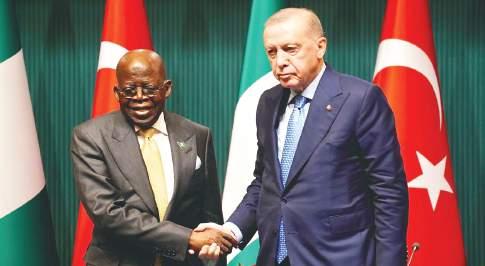
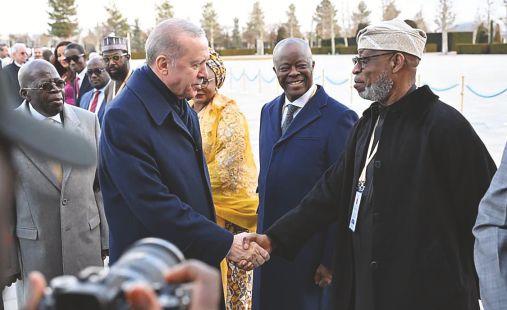
TINUBU IN ANKARA...
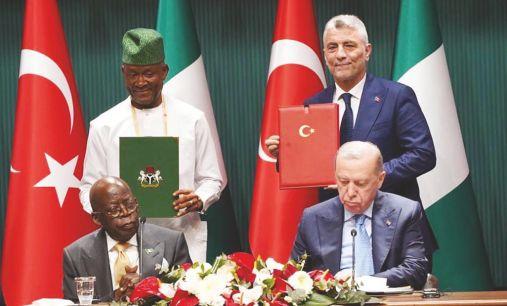
President Bola Ahmed Tinubu (left) and Turkish President, Recep Tayyip Erdoğan on Tuesday after both countries agreed to a $5
volume and signed nine bilateral agreements covering Diaspora Policy, Defence Cooperation, Economy and Trade, Halal Quality
Higher Education, Media and Communication, Education, the Foreign Affairs Academy, and Social Services and
Emmanuel Addeh in Abuja and Peter Uzoho, Dike Onwuamaeze in Lagos
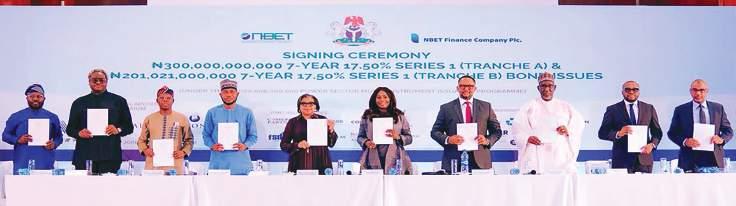
SIGNINIG CEREMONY FOR FGN N501 BILLION SERIES 1 POWER SECTOR BOND ISSUANCE...
L-R: Executive Director, Finance and Corporate Services, Nigerian Independent System Operator Limited (NISO), Mr. Babajide Ibironke; MD, Sahara Power, Kola Adesina; Director General, Bureau of Public Enterprises, Mr. Ayo Gbeleyi; Chairman, Nigerian Electricity Regulatory Commission (NERC), Dr. Musiliu Oseni; Director General, Debt Management Office (DMO), Mrs. Patience Oniha; Special adviser to the President on energy, Mrs. Olu Verheijen; Acting MD/CEO, Nigerian Bulk Electricity Trading Plc (NBET), Mr. Johnson Akinnawo; Chairman, NBET, Mr. Sulaiman M. Argungu; MD, CardinalStone Partners, Mr. Michael Nzewi; and Chief Portfolio Officer, Ministry of Finance Incorporated (MOFI), Tajudeen Datti Ahmed, at the Signing Ceremony for the FGN N501 Billion Series 1 Power Sector Bond Issuance, in Lagos, 27 January 2026
Sachet Drinks War: MAN, Unions Condemn NAFDAC, Say Actions Inimical to Businesses
As faceless group protests in
Dike Onwuamaeze and Raheem Akingbolu
Manufacturers Association of Nigeria (MAN) has decried the disruption of the businesses of its members in the wines and spirits sub-sector by National Agency for Food and Drug Administration and Control (NAFDAC), saying it “is inimical to the profitable operation of the companies concerned and will certainly hurt the Nigerian economy”.
Director-General of MAN, Mr. Segun Ajayi-Kadir, made the criticism yesterday in a press statement, titled, “MAN Calls for Restraint on NAFDAC’s Renewed Ban on Sachet Alcoholic Beverages Against Directives to the Federal Government of Nigeria.”
However, a faceless group organised marches in support of NAFDAC’s action against consumption of sachet gins, amid the current controversy over the ban on the products.
But Food, Beverages and Tobacco Senior Staff Association and National Union of Food, Beverages and Tobacco Employees challenged NAFDAC to provide empirical evidence that sachet alcoholic beverages
were being consumed by children.
The unions, which renewed their demand for a review of the ban, gathered their members at the NAFDAC Lagos office again yesterday as the protest entered its third day.
Speaking with THISDAY, National President of Food, Beverages and Tobacco Senior Staff Association, Oyibo Jimoh, faulted claims that sachet alcohol was responsible for underage alcohol consumption in Nigeria, insisting that no data exists to support such claims.
Meanwhile, Ajayi-Kadir said, “We caution that this unnecessary action of NAFDAC is detrimental to the survival of the concerned indigenous industrial operators.
“This is worrisome as it comes at the expense of the jobs and livelihoods of workers and all those involved in the value chain.
“It is counterproductive as it will open up the market for illicit, substandard, and unregulated products.
“It will lead to an influx of imported alternatives, mostly smuggled. It will deny the government of revenues collectable from the companies.
“It will deny adult consumers with
support of agency
low budgets access to the products. The overall effect is that the economy and livelihoods will be negatively impacted.”
The MAN director-general added, “We, therefore, appeal to the federal government to prevail on NAFDAC to stop the disruption of our members’ activities and abide by the directive to suspend the implementation of the ban on the production and sale of alcoholic beverages in sachets and PET bottles.”
According to him, succumbing to those scenarios is a costly mistake, as
it compromises jobs and livelihoods, and activates other unintended consequences.
He stated that NAFDAC had, in the last two weeks, gone ahead to implement the ban on the production and sale of alcoholic beverages packaged in sachets and small PET bottles in flagrant disobedience of the directives from the Office of the Secretary to the Government of the Federation on the matter, as issued on December 15, 2025.
He pointed out that NAFDAC’s recent action was also in direct con-
tradiction of the earlier resolution of the House of Representatives on the matter (vide NAS /10/HR/CT.33/77c of 14th March 2024), wherein the House of Representatives, after an all-inclusive consultation with stakeholders through a public hearing, restrained NAFDAC from taking the punitive action of banning the production of alcoholic beverages in sachets and PET bottles.
Ajayi-Kadir stated, “Rather than abiding by the generally agreed resolution, NAFDAC bided its time and chose to rely on a resolution of
the Senate that was devoid of the usual stakeholders’ engagement.
“We have since approached the Senate, and we trust that the distinguished members will reconsider after further consultations.
“This is particularly concerning as operators are now confused as to which directive to follow in the face of multiple directives.”
MAN reemphasised that the advent of the sale of alcohol in sachets and PET bottles was not intended to have a negative effect on Nigerians.
CBN Grants Two-month Grace Period on Expired NAFDAC Licences for Form M
Nume Ekeghe
The Central Bank of Nigeria (CBN) has approved a two-month temporary dispensation allowing the continued use of NAFDAC licences that expired on December 31, 2025, for the processing of Forms M.
The grace period which runs until February 28, 2026, is aimed at preventing trade disruptions as
Presidency: Tinubu Stepped on a Metal and Stumbled, Not Fall in Ankara
Says he’s in great shape as Turkiye’s state visit progresses
The presidency has defended the missed steps of President Bola Tinubu at the beginning of his official visit to Turkiye on Tuesday.
Presidential spokesperson Bayo Onanuga, in a written response to THISDAY’s enquiries over the issue, explained that Tinubu stepped on a metal, which made him to lose his balance.
Describing the incident as no big deal, Onanuga clarified that Tinubu did not fall, but only stumbled.
According to him, “The president stepped on a metal on the floor, which made him to lose his balance.
This is not a big deal, except for
those who want to make a mischief out of the fleeting incident. It was a mere stumble, thank God, not a fall.”
Tinubu, despite the incident, was in great shape, as he continued his state visit to Türkiye in high spirits, following a stately welcome ceremony in Ankara that marked the commencement of official engagements between both countries.
Special Adviser on Media and Public Communication to the President, Mr Sunday Dare, stated this on Tuesday via his verified X handle, @SundayDareSD.
Dare disclosed that after the ceremonial reception, Tinubu proceeded to a series of scheduled bilateral meetings with his Türkiye
counterpart, alongside senior government officials from both sides, aimed at deepening diplomatic relations and expanding cooperation across key sectors.
The engagements were expected to focus on strengthening collaboration in areas of mutual interest, including defence and security, trade and investment, energy, and economic development, as Nigeria and Türkiye explored new frontiers for strategic partnership.
Notably, the smooth progression of the visit underscored the growing ties between both nations and reflected Nigeria’s renewed diplomatic outreach under Tinubu’s leadership.
the National Agency for Food and Drug Administration and Control (NAFDAC) completes the transition from its legacy NICIS II system to the new B’Odogwu platform.
The apex bank in a circular signed by the Director of the Trade and Exchange Department, Aliyu M. Ashiru noted that all Authorised Dealer Banks (ADBs) have been directed to continue accepting expired licences for Form M processing and to ensure strict compliance with the terms of this dispensation.
It stated: “The Central Bank of Nigeria wishes to notify all Authorised Dealers Banks (ADBs) and the general public of a
temporary dispensation offered by the National Agency for Food and Drug Administration and Control (NAFDAC) permitting the continued use of NAFDAC licenses that expired on 31st December, 2025, for the processing of Forms M for a two-month temporary dispensation ending February 28, 2026.
“The temporary dispensation has become necessary due to the transition from legacy NICIS Il system and the inability of importers to validate or renew NAFDAC licenses on B’Odogwu after December 2025.”
The central bank further noted that the two-month window was intended to ensure uninterrupted
trade operations while NAFDAC finalises the integration of its system with the new National Single Window.
It added: Accordingly, all Authorised Dealer Banks are to note the following: Continue accepting NAFDAC licences that expired on December 31, 2025, for the purpose of processing Forms M. Ensure compliance with the terms of this dispensation, which expires on February 28, 2026.
“This measure is aimed at preventing disruption in trade processes while NAFDAC completes the integration of its system with the new National Single Window.”
FG Inaugurates Committee in Renewed Bid to Revive ALSCON
Emmanuel Addeh in Abuja
The federal government has inaugurated an 11- member project delivery committee, in a fresh bid to revive the Aluminium Smelter Company of Nigeria (ALSCON) and bring it to full operation in the nearest future.
The committee comprised three members from ALSCON, two from the Niger Delta Power Holding Company (NDPHC), two members from the Transmission Company of Nigeria (TCN), two members each from the Nigerian Electricity
Regulatory Commission (NERC) and the Federal Ministry of Power.
As part of its terms of reference, the committee is expected to fast-track the connection of 132 kV transmission lines, ensure the completion of the Itu-Aba 132kV line, Itu-Calabar 132kV line, produce a status report and Single Line Diagram (SLD) of the 132k V Line, conduct joint commissioning of 132kV line, including funding requirements.
In addition to the 132kV project, the committee is also saddled with the connection of 330kV transmission
lines to ALSCON by coming up with the funding requirements to complete the project, produce status project report and of the 330k V Line, and conduct a joint commissioning of the project.
Inaugurating the committee in his office, the Minister of Power, Adebayo Adelabu emphasised the importance of the project, which he said would contribute to the economic growth and development of the country. He said it was the desire of the federal government to see that ALSCON begins operation.
Deji Elumoye in Abuja
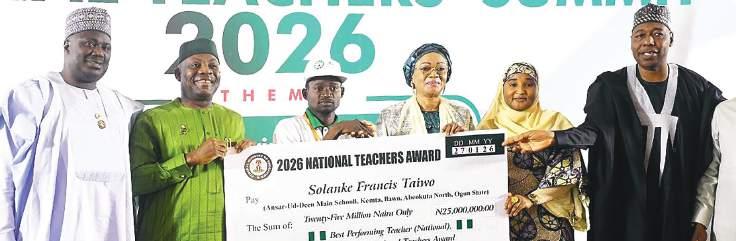
NATIONAL TEACHERS SUMMIT 2026...
L-R: Minister of state for Agriculture and Food Security, Sen. Dr. Aliyu Sabi Abdullahi; Minister of Education, Dr. Tunji Alausa; Best Performing Teacher (National), 2026 FME National Teachers Award, Solanke Francis Taiwo; First Lady of Nigeria, Senator Oluremi Tinubu; Minister of state for Education, Prof. Suwaiba Said Ahmad; and Borno State Governor, Prof. Babagana Umara Zulum, during the National Teachers Summit 2026, themed Empowering Teachers, Strengthening the System: A National Agenda for Education Transformation and Sustainability, held in Abuja, yesterday
Akpabio Laments Soaring Food Prices, Urges Urgent National Action
President of the Senate, Senator Godswill Akpabio, yesterday raised the alarm over the escalating cost of food and the growing threat of hunger across the country, calling for urgent, coordinated national action to avert a deepening food crisis.
Akpabio spoke in his welcome address at the first sitting of the Senate after the Christmas and New Year recess, warning that rising food prices and hunger now pose a grave challenge to national stability and the well-being of citizens.
Citing a recent United Nations projection that up to 35 million
Nigerians could face hunger this year, he described the situation as a national emergency requiring immediate legislative, executive, and societal response.
He said the worsening cost of food has placed unbearable pressure on households, particularly the most vulnerable, stressing that the Senate must act decisively to strengthen food security and protect citizens from the harsh effects of inflation.
According to him, addressing hunger must move to the centre of national priorities.
“This sobering reality demands a doubling of effort through legislation, oversight and collaboration to strengthen food security, protect
the vulnerable and ensure that no Nigerian is abandoned to despair,” Akpabio said.
He added that the Senate would intensify its focus on policies and laws that support agricultural productivity, stabilise food supply chains and ease the burden of rising prices on ordinary Nigerians.
Beyond food insecurity, Akpabio also commended the continued military cooperation between Nigeria and the United States in the fight against terrorism, noting that the partnership remained active even during the festive period.
He described the collaboration as critical to strengthening Nigeria’s security architecture and confronting threats to peace and stability.
“We commend the continued military collaboration between Nigeria and the United States in the fight against terrorism,” he said.
He added that such partnerships reinforce national security efforts and affirm Nigeria’s resolve to work with allies against forces of instability.
The Senate President extended condolences to families affected by insecurity across the country, stressing that security challenges are not abstract statistics but real human tragedies involving lost lives, shattered homes, and uncertain futures.
He also called for sustained prayers and collective commitment toward the release of Nigerians still
FG, GEF Launch Project to Tackle Plastic Pollution
Nigeria has taken another step toward addressing plastic pollution with the inauguration of the Global Environment Facility (GEF) Child Project 11193, titled “Circular Solutions to Plastic Pollution in Abuja, Nigeria.”
The project was formally unveiled in Abuja and is being implemented by the National Environmental Standards and Regulations Enforcement Agency (NESREA) in collaboration with the United Nations Environment Programme (UNEP) and other partners.
It is aimed at reducing plastic waste associated with single-use water sachets through circular economy approaches.
Speaking at the event, the Director-General and Chief Executive Officer of NESREA, Prof. Innocent Barikor, described the project as a critical intervention in Nigeria’s environmental sustainability efforts.
He noted that while sachet water has improved access to drinking water for millions of Nigerians, its widespread use has contributed significantly to plastic pollution, clogged drainage systems, flooding, ecosystem degradation, and public health concerns.
According to NESREA, Nigeria consumes more than 2.5 billion litres of sachet water annually, produced by over 32,000 manu- facturers nationwide.
The scale of consumption, the agency said, underscores the urgency of adopting innovative and sustainable solutions to manage plastic waste without compromising access to potable water.
The GEF-supported project is designed around a circular model that goes beyond conventional waste management. Its key focus areas include strengthening policies and regulations on sustainable water packaging, promoting public-private partnerships, piloting reuse and refill systems for community water supply, increasing public awareness, and enhancing coordination and knowledge sharing at national and global levels.
The GEF reaffirmed its support for Nigeria’s efforts to curb plastic pollution with the launch of the Nigeria Plastics Child Project, also known as “Circular Solutions to Plastic Pollution in Nigeria,” under the Plastic Reboot Nigeria initiative.
Speaking at the project launch, Senior Environmental Specialist at the GEF and Lead of the GEF-8 Plastics Integrated Programme, Evelyn Swain, praised the NESREA
for convening the event and for its role as the national executing agency.
She also acknowledged the UNEP for its partnership in supporting Nigeria’s transition to sustainable and circular plastic solutions.
Swain noted that the wide representation of government institutions, civil society organisations, the private sector, academia and
development partners at the event reflected a shared determination to tackle plastic pollution through inclusive and coordinated action.
She explained that the Nigeria Plastics Child Project is part of a broader GEF-8 investment under the Circular Solutions for Plastic Pollution Integrated Programme, one of eleven integrated programmes approved by the GEF in 2022.
held in captivity, describing their situation as a “national wound” and a moral concern that must not be forgotten.
Welcoming senators back from the recess, Akpabio said he hoped lawmakers had used the break to reconnect with their constituents and gain deeper insight into the realities confronting Nigerians.
However, he noted that the resumption of plenary was marked by sorrow following the death of Senator Godiya Akwashiki, who represented Nasarawa North Senatorial District.
“During the recess, death visited this Chamber and took from us one of our own,” he said, describing the late senator as a diligent, humble and committed public servant.
The Senate observed a minute of silence in his honour, while Akpabio conveyed condolences to the family, constituents and the people of Nasarawa State.
Reflecting on developments during the recess, the Senate President said Nigerians continued to endure economic hardship, insecurity and social pressures but had remained resilient and hopeful.
He noted that citizens now expect leadership that listens, reforms that work, and governance that delivers tangible results.
“Nigerians have endured,
adapted, and persevered. They continue to call for leadership that listens and a future that rewards effort, integrity and honest labour,” he said.
As political activities gradually intensified, Akpabio cautioned political actors to exercise restraint and patriotism, warning that national unity and stability must never become casualties of ambition. He stressed that democracy thrives when competition is principled, and the national interest remains paramount.
Turning to the legislature’s agenda, Akpabio said the Tenth Senate has entered the decisive phase of its tenure, with less than one year and five months remaining.
He described the period ahead as the “final stretch” that would separate participation from performance, urging senators to act with urgency, focus, and discipline.
“This is the stretch that defines legacy,” he said, calling for laws that unlock economic growth, strengthen institutions, secure lives and property, and restore public confidence in governance. He warned against legislative clutter, insisting that the remaining months must be devoted to highimpact, people-centred legislation.
FG: We Won’t Allow Employers to Sacrifice Workers’ Safety for Profit
The federal government has said it will no longer tolerate employers and organisations that endanger the lives of Nigerians in the name of productivity.
The government’s resolve came just as the Nigeria Social Insurance Trust Fund (NSITF) and Nigeria Consultative Association (NECA) pledged to strengthen their partnership in promoting a culture of safe, healthy, and productive workplaces, while deepening awareness and compliance with the Employees’ Compensation Act (ECA), 2010.
Speaking at the unveiling of NSITF–NECA Safe Workplace Intervention Project (SWIP) for the northern zone in Abuja yesterday, the Minister of State for Labour and Employment, Nkeiruka Onyejeocha, said the federal government was focusing more on accident prevention, adding that compensation would now serve as a last resort.
Onyejeocha said, “Our priority as a government is prevention. Workers should not have to be injured or die before we act. The first duty of every employer and regulator is to ensure that accidents do not happen in the first place.
“Let me also be very clear on the position of government. This government will no longer tolerate employers who endanger Nigerians in the name of productivity.
“Creating jobs must never come at the cost of human lives. As the Bible reminds us, those who live by the sword shall die by the sword.
Employers who violate occupational safety laws will be sanctioned, and where negligence leads to loss of life, they will be prosecuted in accordance with the law, including for manslaughter where applicable.
“We will not play politics with the lives of Nigerian workers. We
will not create jobs and kill our people in the process. Safety is not optional. Safety is the law.”
The Minister also expressed the Ministry’s commitment to strengthening occupational safety and health enforcement, deepening compliance with the Employees’ Compensation Act, adding that it works with the private sector to build safer, fairer, and more productive workplaces.
In his remarks, the President of NECA, Dr. Ifeanyi Okoye, said workplace safety was no longer a regulatory obligation alone, but a strategic business imperative.
PHOTO: GODWIN OMOIGUI
Onyebuchi Ezigbo in Abuja
Michael Olugbode in Abuja
Sunday Aborisade in Abuja
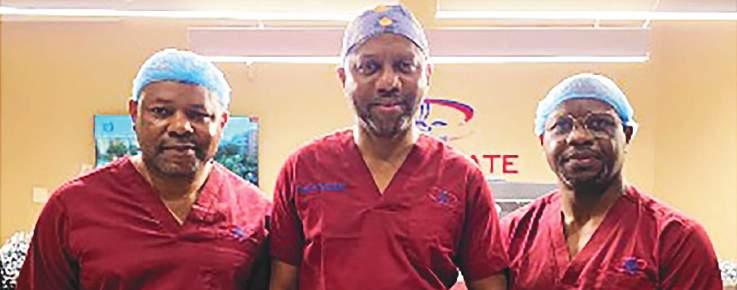
SURGEONS
WHO PERFORMED THE FIRST FEMALE ROBOTIC SURGERY IN LAGOS...
L-R: Consultant Gynecologist at Lagos State University Teaching Hospital (LASUTH), Prof. Yusuf Oshodi; Founder of
based Consultant Gynecologist,
Alalade - the team of surgeons that performed the first female robotic surgery at TPC, Lagos ... recently
Tinubu Moves to Bolster Judiciary, Proposes
200 New Appellate, High Court Judges
President Bola Tinubu has asked Senate to significantly expand the country’s appellate and trial courts, proposing 200 new judges for the Court of Appeal and Federal High Court.
The move was aimed at strengthening judicial capacity and addressing rising caseloads driven by new security and economic challenges.
The request was contained in two separate bills transmitted to the upper chamber and read at plenary yesterday by President of the Senate, Senator Godswill Akpabio, as lawmakers resumed sitting after the Christmas and New Year recess.
Specifically, Tinubu is seeking to amend the Court of Appeal Act, 2004, to raise the number of justices in the intermediate appellate court from the current 70 to 110.
He also forwarded a bill to amend the Federal High Court Act, 2004, proposing an increase in the number of judges from 70 to 90.
According to the president, the expansion became necessary in view of the growing workload of the courts and the emergence of specialised and complex areas of litigation, particularly
terrorism-related cases, taxation, and other evolving aspects of federal jurisdiction.
In the case of the Court of Appeal, the proposed amendment went beyond increasing manpower.
The bill also sought to modernise court operations by providing for electronic and visual transmission
of proceedings, while updating several operational terminologies in the existing law to align with contemporary judicial practices.
For the Federal High Court, Tinubu stated that the current number of judges was no longer sufficient to cope with the volume and complexity of cases brought before it.
The court was originally established with 50 judges, a figure that was increased to 70 in 2009.
However, the president stated that recent developments in governance, security, and economic regulation had placed additional demands on the court, making a
further expansion unavoidable.
He stressed that the proposed increase to 90 judges would enhance efficiency, reduce delays in the administration of justice, and ensure that the court was better equipped with judges who possessed the requisite professional competence in emerging areas of law.
In a related development, Tinubu also forwarded the name of Oyewole Joseph to Senate for confirmation as a Justice of the Supreme Court of Nigeria. The senate is expected to subject the bills and the nomination to legislative scrutiny in line with its constitutional mandate.
FG Plots Coordinates for Disputed, Newly Drilled Oil, Gas Wells
James Emejo in Abuja Chairman, Revenue Mobilisation, Allocation and Fiscal Commission (RMAFC), Dr. Mohammed Shehu, said the federal government had commenced the plotting of coordinates of disputed and newly drilled oil and gas wells.
Shehu stated that an Inter-Agency Technical Committee (IATC) earlier inaugurated to verify and plot the coordinates of the disputed and newly drilled assets in affected oil producing states had successfully verified the coordinates.
Addressing journalists during the flag-off ceremony in Abuja, the RMAFC chairman said the next phase of the task was to plot assets’ coordinates, which should “lead to
resolving the location of the disputed oil and gas wells as well as attribute the newly drilled oil and gas wells to the rightful owners”.
The IATC consisted of National Boundary Commission (NBC), Office of the Surveyor General of Federation (OSGoF), Nigerian Upstream Petroleum Regulatory Commission (NUPRC), and RMAFC.
Shehu said the exercise aimed to ensure that oil-producing states received their rightful share of revenue in line with the constitution.
He said, “The constitution provides that 13 per cent of revenue from minerals, especially crude oil and gas, should be paid to the states where they are produced. This is why the verification and plotting of coordinates of the new and disputed
oil and gas wells is not optional, but a constitutional obligation.”
According to him, the exercise cuts across all oil-producing states, including Akwa Ibom, Cross River, Bayelsa, Ondo, Rivers, Delta, and offshore locations.
He observed that disputes often arose whenever new oil fields came on stream, as multiple states might lay claim to them.
Shehu pointed out that only facts will reveal “who actually owns what, and if ownership has to be shared between states”.
He stated that to guarantee transparency and credibility, the commission undertook extensive fieldwork between September 2025 and January 2026, covering creeks, high seas, and offshore terrains in company of the surveyors-general of the affected states throughout the exercise.
According to him, “We went to the
field ourselves, and where we could not physically access, we deployed drones to take the coordinates…all data collected were witnessed by representatives of the affected states.”
Shehu assured stakeholders that RMAFC remained impartial throughout the process, stressing that the commission will be an “unbiased umpire and will deploy justice, equity, and fairness for which it is known”.
The RMAFC chairman expressed confidence that the outcome of the exercise would significantly reduce disputes and strengthen trust in the derivation process.
He commended the acting chairman of Crude Oil Monitoring Committee, Hon. Hakeem Amosu, as well as Chairman, Gas Monitoring Committee, Hon. Rabiu Garba, for their guidance and support for the committees, which contributed significantly to their success.
Earlier, Secretary to the commission, Joseph Nwaze, described the exercise as a product of commitment to duty and healthy inter-agency cooperation. Nwaze said the successful completion of the exercise would reinforce confidence in RMAFC’s role as a neutral institution committed to fairness in revenue administration and fiscal federalism.
RMAFC Director, Crude Oil Department, Dr. Khadija Kumo, described the exercise as timely and critical to the future of energy governance in the country. Kumo stated that beyond gross energy flow, attention must now shift to efficiency and the role of oil and gas in supporting the wider economy. She commended the technical team and participating states for their collaboration and urged continued engagement to ensure sustainable, data-driven decision-making in the sector.
The Deputy Speaker of the House of Representatives, Hon. Benjamin Kalu has said that one of the targets of the Green Chamber is to prioritise the Electoral Act (amendment) bill. Kalu, who presided over the plenary yesterday, added that the House would also focus on specific provisions of the Constitution that have undergone amendment processes. He stated: “There are targets and milestones that we hope to achieve this year. One of them is the Electoral Act. The coming days
will show the Senate doing its part, having done our part,
“The budget is currently before us, and I am sure that with your support from various committees of the House, we will do due diligence in making sure that the budget becomes a working instrument for the MDAs and for the nation at large.”
The Deputy Speaker assured that the House would ensure thorough scrutiny of the 2026 Budget to ensure it serves as an effective tool for governance and national development.
However, legislative activities
for the day could not proceed after Kalu informed members of the deaths of some senators, which led to the adjournment of the plenary to hold a valedictory session mourning the deaths of three Senators.
They were Senator Godiya Akwashiki (Nasarawa North, 2019–2023, 2023–2025), Senator Okechukwu Ezea (Enugu North, 2023–2025), and Senator John Kojo–Brambaifa (Bayelsa West, 2003–2007).
Lawmakers are expected to resume full legislative activities on Wednesday.
Appeal Court Stops Judgment on Aiyedatiwa’s Eligibility to Seek
Fidelis David in Akure
The Court of Appeal sitting in Akure, has suspended the judgment of the Federal High Court, in a suit challenging the eligibility of Ondo State Governor, Lucky Aiyedatiwa, to seek re-election when his tenure expires in 2028. The appellate court also stayed further proceedings in the suit filed by an All Progressives Congress (APC) chieftain, Dr. Akin Egbuwalo, which sought an interpretation of
Section 137(3) of the 1999 Constitution (as amended) regarding Aiyedatiwa’s qualification to seek re-election.
Justice Toyin Bolaji Adegoke of the Federal High Court, Akure, had fixed January 28 to determine whether Aiyedatiwa, was eligible to contest again, having been sworn in twice as governor. Aiyedatiwa was first sworn in on December 27, 2024, to complete the tenure of late Governor Oluwarotimi Akeredolu and he was sworn in again on February 24, 2025, after
defeating Agboola Ajayi of the Peoples Democratic Party (PDP) in the November 16, 2024, governorship election.
The suit, filed by Egbuwalo through his counsel, Chief Adeniyi Akintola, SAN, listed the Independent National Electoral Commission (INEC), the Attorney-General of the Federation and Minister of Justice, Governor Aiyedatiwa, the All Progressives Congress (APC), and the Deputy Governor, Dr. Olayide Adelami, as defendants.
Sunday Aborisade in Abuja
TPC, Lagos, Prof. Kingsley Ekwueme; and UK-
Mr. Olaolu
Adedayo Akinwale in Abuja
British Prosecutors: Alison-Madueke Received Luxury Goods from Oil Sector Operators
Emmanuel Addeh in Abuja
Former Nigerian Oil Minister, Diezani Alison-Madueke, took bribes including luxury goods and the use of high-end properties from industry figures interested in lucrative oil and gas contracts, British prosecutors said at her corruption trial Alison-Maduekeyesterday. was minister for petroleum resources between 2010 and 2015 under the then President Goodluck Jonathan and was also briefly president of the Organisation of the Petroleum Exporting Countries (OPEC), the first woman to hold either role.
The 65-year-old is now one of the most high-profile former energy officials to stand trial for
alleged corruption, having been charged in 2023 with five counts of accepting bribes and a charge of conspiracy to commit bribery, which she denies, a Reuters report said.
Prosecutor Alexandra Healy told jurors at London’s Southwark Crown Court that Alison-Madueke “enjoyed a life of luxury in London”, where she often stayed, provided by those interested in contracts with Nigerian stateowned companies.
Healy said Alison-Madueke was given the use of high-end properties and vast quantities of luxury goods by people who “clearly believed she would use her influence to favour them”. There was no evidence Alison-
Madueke awarded contracts to someone who should not have had one, but it was improper for her to have accepted benefits from those doing business with government-owned entities, Healy said.
Alison-Madueke sat in the dock alongside oil industry executive Olatimbo Ayinde, 54, who was charged with one count of bribery relating to Alison-Madueke and a separate count of bribery of a foreign public official.
Alison-Madueke’s brother, 69-year-old Doye Agama, is charged with conspiracy to commit bribery relating to Agama’s church and is listening to the trial by video link for medical reasons.
Ayinde and Agama also deny
the charges against them, the Reuters report Alison-Maduekeadded.is accused of accepting various financial benefits from individuals in the Nigerian oil industry between 2011 and 2015. They include the use of a chauffeur-driven car and a private jet.
She is also alleged to have had her son’s school fees paid by Nigerian businessman Benedict Peters, who is named on the indictment but is not facing trial, according to the report.
Kolawole Aluko, another Nige- rian businessman who is named in one charge but is not standing trial, spent more than 2 million pounds ($2.75 million) on items for Alison-Madueke at Harrods
alone, Healy told the court.
Alison-Madueke frequently stayed with her family in a mansion outside London provided for her by Aluko, who had bought the property through a company for 3.25 million pounds and paid for bills, staff and refurbishments, Healy added.
Ayinde is charged with bribing Alison-Madueke between 2012 and 2014 and also bribing the then Managing Director of the state-owned Nigerian National Petroleum Corporation, Emmanuel Ibe Kachikwu, who is also not on trial, in 2015.
Healy said that, after Jonathan was replaced as president by Muhammadu Buhari in 2015, Ayinde paid a “substantial bribe”
EDUN: FG RESTORING CONFIDENCE IN POWER SECTOR, AS N501BN BOND FOR GENCOS IS 100% SUBSCRIBED subscription from pension funds, banks, asset managers and other investors.
Finance Minister and Coordinating Minister of the Economy, Wale Edun, said the strong market response to the bond underscored renewed trust in government reforms and its commitment to stabilising the electricity value chain, improve liquidity, and attract long-term private capital into the sector.
As part of the deal, five Gencos which keyed into the programme aimed at settling the N4 trillion legacy debt owed by the government for over a decade, have signed Final Settlement Agreements (FIAs), with a total negotiated value of N827.16 billion, to be paid in four instalments.
Initiated by the Bola Tinubu administration, the programme is
visit, said the establishment of the Joint Economy and Trade Committee between the two countries would create opportunities for an expansion and support for Turkish investments in Nigeria in order to meet the target.
Erdogan praised the commitment, will and determination of President Tinubu in attracting investment to the country, describing the presence of several ministers and high-ranking officials as the clearest indication of this determination.
His words: “Today, we conducted a comprehensive review of our relations with the esteemed president and his delegation in the fields of trade, investments, energy, education and defence industry.
designed to address long-standing payment arrears owed to Gencos which for over a decade constrained liquidity, weakened balance sheets and discouraged investment across the power sector value chain.
Speaking at the bond issuance signing ceremony in Lagos, Edun said the federal government remains focused on restoring liquidity, investor confidence and discipline in the electricity market. Edun, who was represented by the Director General of the Debt Management Office (DMO), Patience Oniha, said the signing of the bonds under the N4 trillion Power Sector Multi-Instrument Issuance Programme represented far more than a financing transaction.
According to him, it marked a critical turning point in Nigeria’s collective effort to address long-
in Africa’s Sahel region, unfortunately pose a threat to the peace of the entire continent.
“We stand by the friendly people of Nigeria in their fight against terrorism under the leadership of President Tinubu.
“In fact, today, we addressed opportunities for closer cooperation in the fields of military training and intelligence. We stated that we are ready to share our country’s significant experience in the fight against terrorism.
“Also, I believe that we will soon see positive outcomes from the meetings that Nigerian officials will hold with our leading defence industry companies during this visit.”
standing structural challenges in Nigeria’s power sector and to lay a stronger foundation for its long-term sustainability.
For many years, Edun admitted that legacy debts owed to Gencos have constrained liquidity across the electricity value chain, noting that these obligations weakened balance sheets, discouraged investment, and ultimately limited the sector’s ability to deliver reliable power to Nigerian homes and businesses.
He said: “The federal government recognised that resolving these legacy issues was not optional — it was essential. That recognition gave rise to the PPSDRP and, subsequently, to the N4 trillion Power Sector MultiInstrument Issuance Programme, designed as a structured, credible, and fiscally responsible mechanism for settling these obligations.”
despite the instability around the country.
“We discussed efforts against terrorism. We discussed how to defeat agents of destabilisation.”
Tinubu, also praised President Erdogan for his commitment towards promoting global peace particularly the efforts in Somalia.
At the end of the bilateral meeting between the officials of the two countries, nine agreements were exchanged.
They were Agreement on Cooperation in the Field of Diaspora Policy, Agreement on Defence Cooperation, Joint Declaration Establishing Economy and Trade Joint Committee, and Agreement
Edun said the transaction sends a clear and reassuring signal to the power sector and to the wider economy that the federal government was among others, committed to honouring its obligations, prepared to deploy innovative financial solutions to resolve systemic challenges, and remain focused on restoring liquidity, confidence, and discipline across the electricity market.
By settling legacy debts in a structured manner, he said the government was enabling Gencos to stabilise operations, improve maintenance, and attract new investment, all of which, he noted, were critical to improving power supply nationwide.
He emphasised that the programme was anchored on strong governance, transparency, and fiscal prudence. According to him, the
in the Field of Halal Quality Infrastructure.
Others included Cooperation in the Field of Higher Education, Cooperation in the Field of Media and Communication, Cooperation in the Field of Education, Cooperation Between the Republic of Türkiye, Ministry of Foreign Affairs, Diplomacy Academy, and the Federal Republic of Nigeria.
There were those in the Ministry of Foreign Affairs and Foreign Affairs Academy; and Cooperation Between the Republic of Turkiye, Ministry of Social Services and the Federal Republic of Nigeria, Ministry of women Affairs and Social Development.
Ministry of Finance, working closely with NBET and other stakeholders, remains committed to ensuring that this initiative supports sector reform while safeguarding macroeconomic stability.
He added: “Ultimately, a sustainable power sector is not just an energy objective — it is an economic imperative. Reliable electricity underpins industrial growth, job creation, and improved quality of life for millions of Nigerians.”
Special Adviser to the President on Energy, Olu Verheijen, in her remarks, stated that the programme represented a decisive reset of the electricity market, combining debt resolution with broader financial and structural reforms.
The signing, she said, followed the successful completion of Series 1 Power Sector Bond Issuance by NBET Finance Company Plc, which closed at N501 billion, comprising N300 billion raised from the capital markets and N201 billion in bonds allotted to participating Gencos.
Verheijen recognised the ‘visionary’ leadership of the President as well as the support from the Minister of Finance and Coordinating Minister of the Economy, Edun, and the Minister of Power, Adebayo Adelabu, in making the programme a reality.
She further acknowledged the support of all members of the committee who played vital roles in making the capital raise a success, all key power sector stakeholders as well as government authorities, including the DMO Central Bank of Nigeria (CBN), the National Pensions Commission (NPC) and the
Nigerian Revenue Service (NRS), who facilitated enhancements for the bond issue.
“The federal government reaffirms its commitment to disciplined implementation of the programme, and we look forward to the participation of other power generation companies, as part of our broader reforms aimed at building a financially sustainable electricity market that is capable of supporting Nigeria’s long-term economic growth,” Verheijen added. THISDAY learnt that under the programme, verified receivables for electricity supplied between February 2015 and March 2025 are being settled through negotiated agreements with power generation companies.
ERDOGAN: TURKIYE TARGETING $5BN IN TRADE WITH NIGERIA, ALSO TO HELP IN FIGHTING TERRORISM WORLD BANK COMMITTED $2.5 BILLION INTO NIGERIA’S
“Firstly, we see that we have significant potential in the fields of trade and investment. In today’s meetings, our commitment is to the target of $5 billion trade volume, and we discussed the steps that need to be taken.
“We also discussed opportunities to support our investments in Nigeria. We believe that the Joint Economy and Trade Committee, which we agreed to establish today, will be instrumental in this regard.”
Erdogan hailed Tinubu’s strides in the energy sector, which has resulted in the restructuring of the country’s economy.
He hoped that the cooperation between the Turkish Petroleum Corporation and their Nigerian counterparts as well as other organisations would bring expected outcomes.
On the issue of terrorism in Nigeria and within the Sahel Region, Erdogan promised to assist, given its history in tackling insurgency.
According to him, “Terrorist organisations emerging, particularly
In his remarks, Tinubu expressed gratitude to the Republic of Turkiye for its openness and willingness to collaborate on promotion of freedom, stability and prosperity globally.
He emphasised the importance of the creation of an inclusive economy particularly focusing on vulnerable people.
Tinubu commended the Turkish leader for “willing to collaborate, willing to help, willing to work together to promote freedom, stability and shared prosperity across the world.
“What is very important to the countries being discussed –trade, business, no restrictions, giving opportunity to those who are ready to learn to work and prosper.
“How do we build an inclusive economy together? How do we reform and get vulnerable people involved in the economy? How do we ensure peace in the world?” he asked.
The president stressed that Nigeria would continue to play its big role for peace and stability in Africa
and investment opportunities under projects financed by the World Bank Group, in Lagos, yesterday.
The seminar, organised by the World Bank Group, aimed to showcase procurement and investment opportunities under its projects, while promoting SME participation, transparency, and capacity building in public procurement across sub-Saharan Africa, encouraging businesses both in Nigeria and beyond to compete for available contracts.
Also speaking at the seminar, the Director General of the Lagos Chamber of Commerce and Industry (LCCI), Dr. Chinyere Almona, noted that the high cost of finance was among the bottlenecks hindering SMEs’ participation in the procurement process. Almona said that it was often difficult for banks to grant facilities to SMEs.
Vice President, Operations
Policy and Country Services (OPCS), World Bank, Ms. Gallina Andronova Vincelette, highlighted the scale of opportunities available to local companies.
She said: “Putting this in perspective for Nigeria, over the past five years, Nigeria-based suppliers have been awarded more than 6,800 World Bank–financed contracts, which is a total value of $2.5 billion.
“More than 60 per cent of these awards have gone to the delivery of civil works, including roads, bridges, hospitals and school construction.
“There are also opportunities not only in Nigeria, but across Africa, where Nigerian companies can participate. Looking more broadly across Africa, over the same fiveyear period, World Bank–financed projects have awarded more than 9,000 contracts with a total value of
close to $45 billion, underscoring the scale and depth of opportunities across the region.”
Echoing the bank’s commitment, the Director for Central Africa and Nigeria, Ms. Dahlia Khalifa, IFC said: “IFC is very committed to Nigeria. We’ve been here for decades. We hope to be here for decades and decades further, being as helpful and supportive to the development of Nigeria, achieving its objectives and keeping our eye on that North Star, which is jobs.
“Of course, it is the private sector which is key to completely embrace and understand that, and therefore what we do is critical right now.
“We have a portfolio in Nigeria, which is $1.3 billion, which is how much we have funded from our own balance sheet, and again, that’s not all talked about, how much we crowded in in terms of mobilisation using multiples
To date, five Gencos, according to the government, representing 14 power plants nationwide, including First Independent Power Limited (FIPL), Geregu Power Plc, Ibom Power Company Limited, Mabon Limited and the Niger Delta Power Holding Company Limited (NDPHC), the government said, have executed settlement agreements with NBET.
However, some of the big power plants that have not yet signed the agreement include Egbin plant in Lagos, Transcorp plant in Delta, and Shiroro hydro plant in Niger State, among others.
The total negotiated settlement amount for these companies stands at N827.16 billion, to be paid in four phased installments. Proceeds from Series 1 issuance will fund the first and second installment
of this. “In fact, last year alone, we brought about $5 billion to Nigeria, and that is the case we have been seeing for the past three or four years.
“But that’s not enough. Our ambition is much higher. Our ambition is to mobilise as much private capital to Nigeria as possible to help you grow your businesses and help create as many jobs as possible.”
In his opening remarks, Minister of Budget and Economic Planning, Senator Abubakar Bagudu, underscored the significance of the Bank’s engagement with Nigeria. He said: “And just last week, the Country Director, about 10 days ago, made a presentation in the National Economic Council, which is chaired by the Vice President and had all the governors.
to Kachikwu to ensure her friend continued to work in the NNPC. Nigeria is one of the world’s largest producers of oil and the largest in Africa, extracting around 1.53 million barrels per day in December according to a Reuters survey, which is around 1.4 per cent of global supply.
Diezani Alison-Madueke
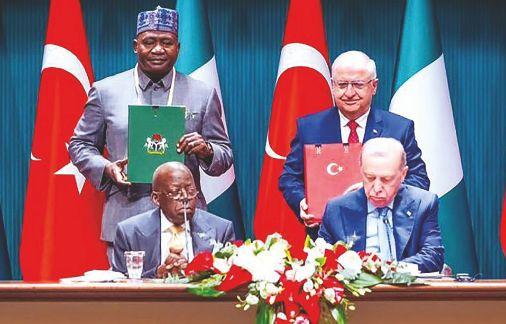
TINUBU IN TURKEY
President Bola Ahmed Tinubu (seated, left) with Turkish President Recep Tayyip Erdoğan (seated, right) after the signing of a defence and security agreement between Nigeria and Türkiye, flanked by Nigeria’s Minister of Defence, General Christopher Musa, and Türkiye’s Minister of National Defence, Mr. Yaşar Güler, during the ceremony
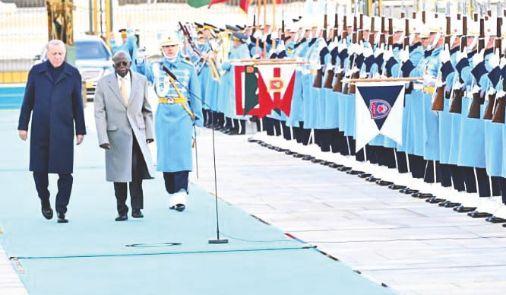
President Bola Ahmed Tinubu inspecting the reception parade mounted in his honour in Ankara, the capital of the Republic of Türkiye, by Turkish President Recep Tayyip Erdoğan, during the state visit aimed at strengthening bilateral relations between both countries
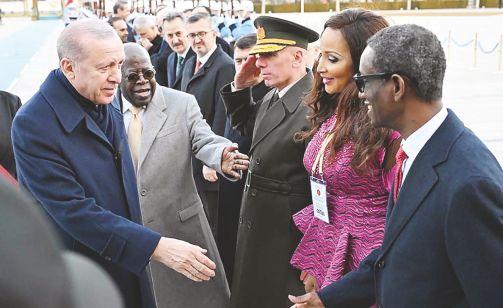
President Bola Ahmed Tinubu introducing the Minister of state for Foreign Affairs, Mrs. Bianca Ojukwu, and the National Security Adviser, Mallam Nuhu Ribadu, to Turkish President Recep Tayyip Erdoğan during the official engagement
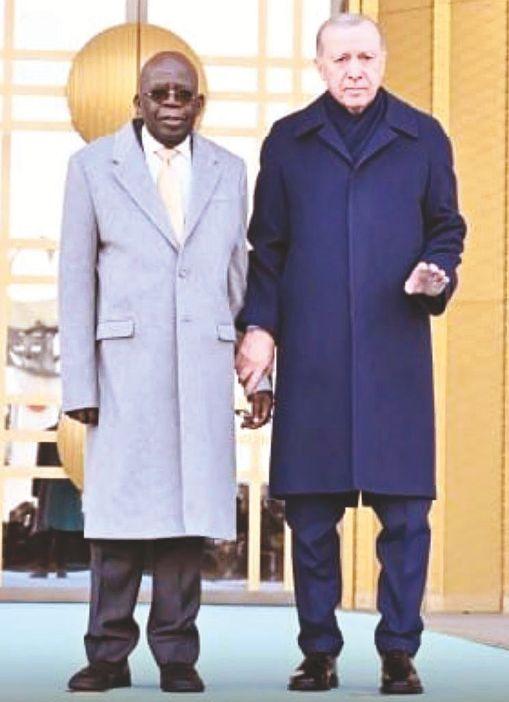
President Bola Ahmed Tinubu (left) and Turkish President, Recep Tayyip Erdoğan
Turkish President, Recep Tayyip Erdoğan welcomes Nigeria’s Minister of Finance and Coordinating Minister of the Economy, Mr. Wale Edun; and the Minister of Solid Minerals Development, Dr. Dele Alake, during the official engagement
President Bola Ahmed Tinubu (seated, left) with Turkish President Recep Tayyip Erdoğan (seated, right) after the signing of a cooperation agreement between both nations, flanked by Nigeria’s Minister of state for Industry, Senator John Enoh (left), and a Turkish state official (right)
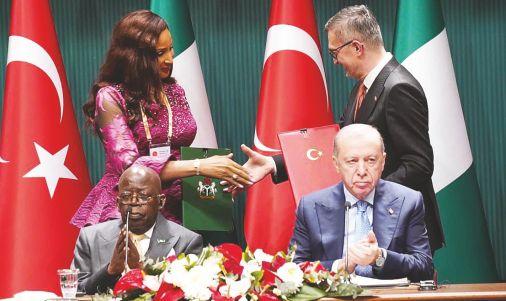
President Bola Ahmed Tinubu (seated, left) with Turkish President Recep Tayyip Erdoğan (seated, right) after the signing of a cooperation agreement between the Republic of Türkiye’s Ministry of Foreign Affairs and Diplomacy Academy and the Federal Republic of Nigeria’s Ministry of Foreign Affairs and Foreign Affairs Academy, flanked by Nigeria’s Minister of state for Foreign Affairs, Mrs. Bianca Ojukwu (left), and Türkiye’s Minister of Foreign Affairs, Mr. Hakan Fidan (right)
OBITUARY
With a deep sense of loss but with total submission to the will of Almighty God, the Executive Management and staff of the Nigerian Export-Import Bank (NEXIM) announce the sudden passing of our colleague, Ms. Chika Ifunanya Okparaeke which occurred on Tuesday, 20th January 2026 after a brief illness in Abuja.
Ms. Chika Okparaeke, who was an Assistant Manager, joined the services of the Bank from 2019 until her untimely demise. She will be laid to rest on Friday,30th January 2026 at Chief Sydney Okparaekes's Compound Alaike Umualoma Ideato North, Imo State. Chika is survived by her parents and siblings. May Almighty God grant her soul Eternal Rest, Amen. Like a candle in the wind, you came lived and conq uered, rest on Dear Chika.
CHIKA IFUNANYA OKPARAEKE
3rd December 1986 -20th January 2026 Signed: Management NEXIM Bank
FEaturEs
How the Nigerian Air Force is Consolidating Strategic Air Dominance through Power, Precision and Protection
Anchored on a command philosophy to enhance and sustain a highly motivated, professional and missionready force capable of delivering decisive airpower effects in synergy with surface forces for the realisation of national security objectives, the Chief of Air Staff, Air Marshal Sunday Kelvin Aneke’s leadership is increasingly reflected in the Nigerian Air Force’s elevated operational tempo, sharpened strategic posture and growing international recognition. Chiemelie Ezeobi writes that at the heart of this momentum is Nigeria’s airpower, now widely acknowledged as a critical instrument in counter-insurgency, regional security and peace support efforts, driven by the professionalism, resilience and commitment of NAF personnel under his command
When Air Marshal Sunday Kelvin Aneke was appointed as the 23rd Chief of the Air Staff (CAS) on October 24, 2025 and he took over officially from Air Marshal Hasan Bala Abubakar on October 30, 2025, he made a pledge through his Command Philosophy to “enhance and sustain a highly motivated, professional, and mission-ready force capable of delivering decisive airpower effects in synergy with surface forces for the realisation of national security objectives”.
Three months down the line, that pledge is increasingly evident in the Nigerian Air Force’s operational tempo, strategic posture and growing international recognition.
Therefore, when the Polish Ambassador to Nigeria, Mr. Michał Cygan, recently described Nigeria as a stabilising force in West Africa, citing the decisive role of the Nigerian Armed Forces, particularly the Nigerian Air Force (NAF), the remark reflected more than diplomatic courtesy, rather it underscored the growing international recognition of Nigeria’s airpower as a critical instrument in counter-insurgency, regional security and peace support efforts.
At the centre of this momentum are the professionalism, resilience and dogged commitment of NAF personnel, reinforced under the leadership of Air Marshal Sunday Aneke. As Ambassador Cygan noted, Nigeria’s sustained security engagements and strategic position continue to contribute significantly to regional stability, opening pathways for deeper bilateral defence cooperation.
Strengthening Nigeria’s Airpower and Deterrence
The NAF’s renewed operational edge is closely tied to an ambitious fleet modernisation drive. This was exemplified by the CAS’s high-level engagement with Leonardo Aircraft Division in Milan, Italy, between 19 and 20 January 2025, focusing on the M-346 fighter ground attack aircraft programme.
Air Marshal Aneke described the programme as a critical leap in renewing the NAF’s combat capability, with the platform expected to enhance precision strike operations, improve training outcomes and reinforce Nigeria’s regional deterrence posture.
According to Air Commodore Ehimen Ejodame, NAF Director of Public Relations and Information, the engagement, undertaken alongside Permanent Secretaries from the Ministries of Defence and Finance and other senior officials, reflected President Bola Ahmed Tinubu’s prioritisation of airpower modernisation and defence industrial cooperation.
Beyond fixed-wing aircraft, he said the CAS also assessed Leonardo’s helicopter capabilities, commending the performance of platforms such as the AW-109 Trekker Type B, which continue to play vital roles in counter-terrorism, humanitarian assistance and internal security operations. Emphasis was placed on synchronised delivery, structured training and sustainment support to ensure rapid operational readiness.
Sustained Air Interdiction and Battlefield Dominance
The NAF’s operational resurgence has been most evident in the intensity and precision of recent air campaigns. The cumulative
impact of sustained air operations was evident in 2025. The NAF neutralised 2,351 terrorists through 274 Air Interdiction missions, flown in 379 combat sorties, accumulating approximately 800 flight hours. Beyond kinetic effects, operations disrupted supply chains, degraded leadership structures and enabled ground forces to reclaim contested areas.
In the Niger Delta, precision air operations destroyed hundreds of illegal refining reservoirs, 126 storage tanks, and several boats used by oil thieves, contributing to improved oil production and national economic resilience.
In Katsina State, aircraft executed two coordinated strikes on November 27, 2025 under Operation FASAN YAMMA Sector 2. The first strike, launched at about 0630 hours, targeted the fortified base of a notorious terrorist kingpin linked to kidnappings and violent attacks across Kankara, Faskari and Malumfashi LGAs. Guided by real-time Intelligence, Surveillance and Reconnaissance (ISR), the camp was destroyed, with followon engagements conducted as fighters attempted to flee.
A second strike at about 1755 hours hit another terrorist enclave in Danfako, Faskari LGA, destroying logistics hubs and operational infrastructure. In the North-East, NAF aircraft conducted four major strikes to repel a coordinated ISWAP/Boko Haram attack on Chibok, inflicting significant losses and preventing regrouping through integrated air–ground operations.
On December 14, 2025, the NAF executed a precision Air Interdiction mission at Dabar Masara in the Southern Tumbuns. Acting on credible intelligence, ISR missions revealed sustained terrorist movement and vehicles concealed under vegetation. Following positive identification, the targets were engaged, with post-strike assessments confirming the destruction of vehicles and neutralisation of terrorist elements.
Between 1 and 2 January 2026, the NAF sustained pressure across the NorthEast and North-West under Operations HADIN KAI and FASAN YAMMA Sector 2. Precision strikes at Abirma, Chiralia, Guva and Karaduwa Giginya Na dismantled hideouts, destroyed weapons and motorcycles, and denied terrorists freedom of movement.
Also, on January 8, 2026, further strikes at AbbagaJiri in the Timbuktu Triangle cleared the way for ground forces, with structures destroyed and armed elements neutralised.
Positioning for Strategic International Partnerships
Under Air Marshal Aneke, strategic international partnerships have remained a force multiplier. The NAF continues to leverage defence diplomacy to enhance operational effectiveness, capacity development and information exchange. This approach was reinforced during the CAS-led Programme Management Review in the United States from 5 to 6 January 2026, aimed at accelerating the delivery of 12 AH-1Z attack helicopters, strengthening combat capability and bilateral defence cooperation.
Sparking Youth Advocacy and Innovation
Beyond operations, the NAF has invested in intellectual and technological engagement through the Chief of the Air Staff Literary Competition, launched on November 21, 2025 and running until 28 February 2026. With categories in Essay, Art and Poetry, and the theme “Optimising Emerging Technologies for Enhanced Air Operations,” the initiative promotes youth advocacy, innovation and civil–military relations.
Welfare, Civil–Military Relations and Accountability
The CAS’s leadership has also emphasised welfare and accountability.
On 25 December 2025, he marked Christmas with frontline personnel across operational theatres in Kainji, Katsina, Maiduguri, Port Harcourt, Makurdi, Kaduna and Enugu, reinforcing morale and recognising troop sacrifices.
In sustaining civil–military trust, the NAF compensated victims of the December 25, 2024 accidental air strike in Silame LGA, Sokoto State, confirming 13 civilian fatalities and eight injuries, while institutionalising the Civilian Harm Mitigation and Response Action Plan to prevent recurrence.
Building the Future Force in and Beyond the Battlefield
For the battlefield, the graduation of 1,296 recruits from Basic Military Training Course 45/2025 on 20 December 2025 strengthened the NAF’s manpower base, aligning with the CAS’s Command Philosophy of building a highly motivated, professional and mission-ready force. Complementing this were operational visits to Air Training Command, Kaduna, and Tactical Air Command, Makurdi, reinforcing welfare-driven warfare, readiness and discipline.
And beyond the battlefield, through CAS Special Intervention Projects in Delta and Kwara States, the NAF delivered community infrastructure, medical outreach, upgraded educational facilities and an Advanced Space Composite Laboratory at the University of Ilorin, alongside a 700-metre access road. Partnerships with UBEC and engagements with NHRC, NAPTIP and the DPP further reinforced safe schools, accountability and smart operations.
Consolidating as a Stabilising Force
From precision air strikes and fleet renewal to diplomacy, youth engagement and community development, the Nigerian Air Force under Air Marshal Sunday Kelvin Aneke is consolidating its role as a stabilising force within Nigeria and across the region by delivering security with professionalism, restraint and strategic clarity, all anchored on his command philosophy.
Air Marshal Sunday Kelvin Aneke during his recent high-level engagement with Leonardo Aircraft Division in Milan, Italy, focusing on the M-346 fighter ground attack aircraft programme
Governor AbdulRazaq’s Strides in Health Sector, Others Clear and Measurable
Dr. Amina Ahmed El-Imam
The attention of the Kwara State Ministry of Health was drawn to a recent commentary published in ThisDay newspaper of 19th January, 2026 questioning the availability of MRI services and the broader state of healthcare delivery in the state. While public scrutiny is welcome, it is important that discussions around healthcare services are guided by facts and an objective assessment of ongoing reforms.
At the inception of the present administration, a comprehensive assessment revealed that most inherited health infrastructure and medical equipment were either dilapidated, obsolete, or non-functional. This situation cut across primary and secondary health facilities in the state. The report of the transition committee was as clear as were the several poor indices the administration inherited at the time.
Specifically, the MRI machine previously installed at the Harmony Advanced Diagnostic Centre (HADC) is a low field of 0.35 Tesla, which no longer met current diagnostic standards even then. Such low-Tesla machines are inadequate for modern diagnosis of neurological, oncological, spinal, and complex medico-surgical conditions.
In line with its commitment to sustainable healthcare reform, the administration of Governor Abdulrahman Abdulrazaq adopted a strategic approach focused on modernisation, quality, and functionality, rather than continued reliance on outdated and close technology. Accordingly, the state government has procured a state-of-the-art 160-slice CT scan and a modern 1.5 Tesla MRI machine, which will soon be commissioned for public use by all Kwarans. More efforts are in the pipeline in this regard.
In addition, modern abdominal ultrasound machines have been procured and distributed to various health facilities across the state to further strengthen diagnostic capacity. The
Intensive Care Unit (ICU) at the Kwara State University Teaching Hospital (KWASUTH), not previously available or functional in any state facility, has also been completed and fully equipped with state-of-the-art facilities, including C-Arm machine, to enhance the care of critically ill patients and support complex medical and surgical procedures. There are a lot more.
Beyond infrastructure and equipment, the administration recognises that healthcare delivery is important and driven by human resources. It is widely acknowledged that the shortage of health personnel, particularly doctors is a national and global challenge, largely driven by the “Japa” syndrome, a
trend that has become more pronounced in recent years. This has resulted in inadequate deployment of the requisite health workforce to many rural and hard-to-reach communities across the country.
In response, massive recruitment of healthcare workers across all cadres—medical officers, specialists, nurses, pharmacists, and house officers was conducted while the recently approved recruitment of 150 nurses —is ongoing. Kwara State currently pays the revised CONMESS and CONHESS salary structures, in line with what obtains at the federal level, across all cadres of its health workforce.
Regarding specialist training, 41 resident
doctors are presently undergoing training in various specialties, supported by the state government through the regular payment of the Medical Residency Training Fund (MRTF). Notably, Kwara State was the first state in Nigeria to commence payment of the MRTF in 2025, underscoring its leadership in health workforce development.
In addition, and as part of its proactive, peoplecentred approach and to further bridge the gap, the Kwara State Government initiated a statewide free medico-surgical outreach programme to deliver specialised healthcare services. These services include medical consultations and treatments, provision of free drugs, eye and general surgeries, and the free distribution of eyeglasses to indigent Kwarans and residents of hard-to-reach communities across all 16 Local Government Areas of the state. This intervention is designed to complement existing healthcare services while ensuring equitable access to care for all Kwarans. In 2025 alone, 10,374 Kwarans benefitted from the outreach programme.
This effort is further reinforced by the aggressive enrollment of residents into the KwaraCare (Health Insurance) programme, which continues to expand access to affordable healthcare. reflecting the administration’s commitment to universal health coverage. Healthcare transformation is a process, not an event. It must therefore be assessed based on functionality, quality of equipment, workforce capacity, and long-term sustainability, rather than nostalgia or superficial optics. The progress and giant strides recorded under the administration of Governor AbdulRahman AbdulRazaq in the health sector are clear, measurable, and verifiable.
Signed: Dr Amina Ahmed El-Imam Honourable Commissioner for Health January 23, 2026
FEATURES
CISLAC Advocates Prioritisation of Key Legislative Reforms as National Assembly Resumes For 2026
Chiemelie Ezeobi
For Executive Director, the Civil Society Legislative Advocacy Centre (CISLAC), Auwal Ibrahim Musa (Rafsanjani), 2026 is a pivotal year because it’s the moment when citizens, who have so far been patient with the administration’s early challenges, expect concrete outcomes from policies and programmes introduced since 2023.
As the 10th National Assembly resumes its legislative duties for the 2026 session, civil society groups are calling on lawmakers to shift focus from political posturing to delivering tangible results for Nigerians.
For CISLAC, Musa has urged the National Assembly to prioritise governance, accountability, and critical reforms, warning that early electioneering ahead of the 2027 General Elections could derail legislative productivity.
“While citizens have shown patience in the early phase of this administration, often attributing prevailing socio-economic and democratic challenges to teething problems of a new government, 2026 naturally marks a period of maturity,” Rafsanjani said. “This is the stage at which policies must begin to deliver visible and measurable benefits to Nigerians, and the role of the National Assembly in achieving this cannot be overstated.”
Rising Concerns Over Political Distractions
CISLAC warns that the looming 2027 elections could see lawmakers distracted, echoing a historical pattern where legislative output declines as campaigns intensify. Public anxiety may worsen if the controversial proposal to hold general elections as early as November 2026 goes ahead.
“Nigerians are worried and rightly so that
governance may once again be sacrificed on the altar of politicking and electioneering,” Rafsanjani noted. “At a time when the country is grappling with economic hardship, worsening insecurity, rising public debt, governance deficits, and declining public trust in institutions, Nigeria cannot afford a distracted or compromised legislature.”
For the advocacy group, the country’s pressing challenges demand a fully functional, responsive, and accountable
National Assembly, not one perceived as absent, politically distracted, or a rubber stamp for the executive.
CISLAC Sets Out Legislative Priorities
Looking ahead, CISLAC has outlined key priorities it believes should dominate the National Assembly’s agenda in 2026. These include Commitment to Plenary and Oversight, where they urged lawmakers to fully participate in
plenary sessions, committee engagements, and oversight duties. CISLAC cautioned against frequent absences and unnecessary recesses driven by political ambitions.
In terms of fast tracking critical reforms, they stressed the urgent need to accelerate legislative reforms, particularly those touching on electoral, economic, security, and governance issues. Drawing lessons from the 2023 elections, Rafsanjani insisted that electoral reform remains a core demand of Nigerians and must not be delayed.
In strengthening accountability, he said robust oversight of public funds, budget implementation, and procurement processes is essential. “Failure to exercise rigorous oversight would further entrench public perception of the Assembly as a rubber stamp institution,” Rafsanjani warned.
CISLAC also urged the National Assembly to resist becoming an early casualty of the 2027 election cycle.
“Nigerians elected lawmakers to legislate and provide oversight, not to abandon governance long before the official campaign period,” Rafsanjani said.
“The legislature is the backbone of any democratic system, and in 2026, the National Assembly must rise to this responsibility with integrity, discipline, and a clear commitment to the public interest.”
A
Call For Constructive Engagement
CISLAC reaffirmed its readiness to work with the National Assembly and other stakeholders to advance reforms that strengthen democracy, accountability, and good governance in Nigeria. As the country enters a decisive year, civil society groups are watching closely, hoping that lawmakers will put the public interest above political calculations.
Governor Abdulrahman Abdulrazaq
Auwal Musa Rafsanjani
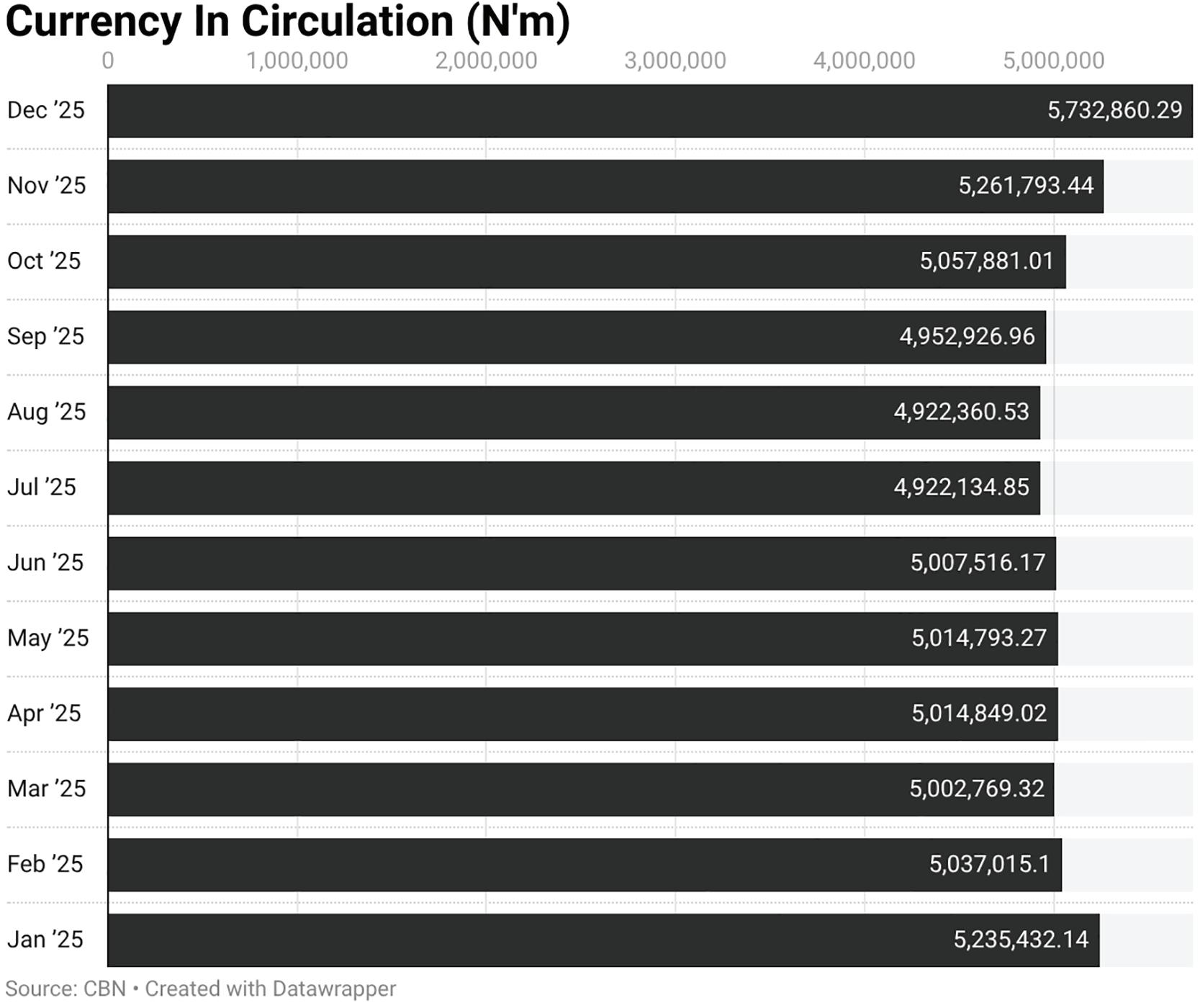
At N5.7trn, Currency in Circulation Reached All-time
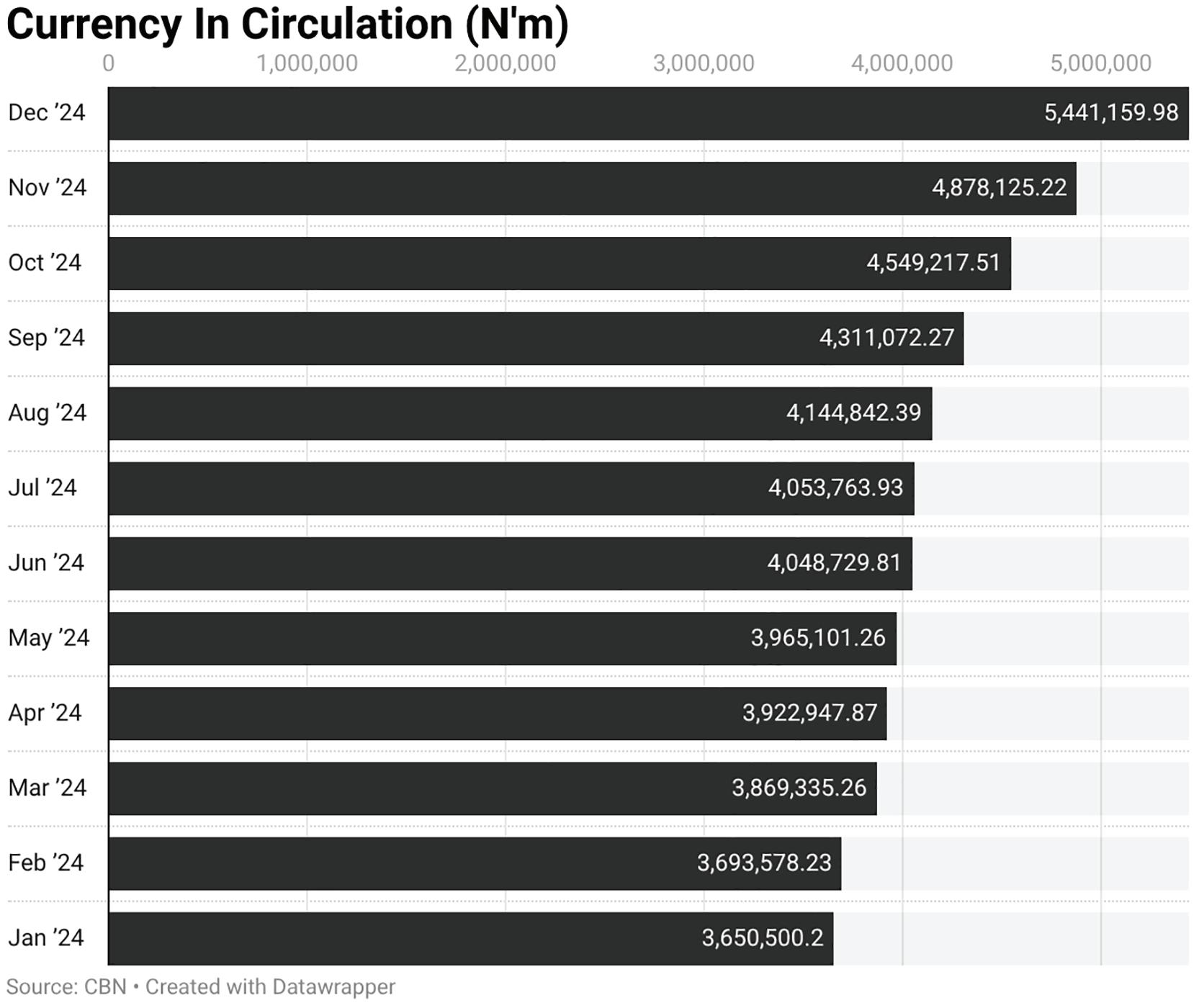
The Central Bank of Nigeria (CBN) has revealed that Nigeria’s currency in circulation jumped to N5.7 trillion as of December 2025, making it an all-time high when compared to N5.44 trillion it closed December 2024.
The N5.7 trillion came at a time the CBN tightened its monetary policy and inflation rate to 15.15 per cent in December 2025 from 17.33 per cent in November 2025.
CBN data revealed that currency in circulation
throughout 2025 maintained an average N5.1trillion amid increasing electronic transfer by bank customers. Currency in circulation refers to the amount of cash–in the form of paper notes or coins–within a country that is physically used to conduct transactions between consumers and businesses.
Currency in circulation amid December spending continued to witness a massive increase as Nigerians flooded the banking hall to celebrate Christmas and New Year. Specifically, currency
in circulation crossed the N5trillion mark to hit a record of N5.44 trillion December 2024 as against N3.65trillon in 2023.
In January 2024, at the height of the currency redesign policy of CBN, currency in circulation stood at N3.65 trillion and by February 2024, it increased to N3.69 trillion.
The CBN had revealed that that currency in circulation closed December 2023 at N3.65 trillion from N1.39 trillion reported in January 2023.
The CBN had announced the designing of the naira
for N200, N500, and N1000 denominations, which began circulation on December 2022 and is expected to be in use simultaneously as the old note till January 2023.
The decision according to the apex bank was made in light of growing cases of naira counterfeiting and currency hoarding.
“In recent times, however, currency management has faced several daunting challenges that have continued to grow in scale and sophistication with attendant and unintended consequences for the
integrity of both the CBN and the country.
“In recent years, the CBN has recorded significantly higher rates of counterfeiting especially at the higher denominations of N500 and N1,000 banknotes. Although global best practice is for central banks to redesign, produce and circulate new local legal tender every 5–8 years, the Naira has not been redesigned in the last 20 years,” the CBN said.
Analysts had expressed that the current pattern in currency in circulation is a reflection of growing lack of confidence in the banking
system, stressing that an increased preference for cash transactions, possibly driven by socio-economic factors that include bad telecommunication services. This alarming trend signals a high liquidity in the financial sector, posing significant risks to the nation’s inflation rate,among others. When CBN governor. Mr. Olayemi Cardoso resumed office September 2023, currency in circulation was at N2.76 trillion but close last year at N5.7 trillion.
Nigeria and United Arab Emirates are exploring ways to collaborate to enhance the development of Nigeria’s vast commodity ecosystem, with potential to unlock more than $400 billion.
The partnership, involving the Lagos Commodities and Futures Exchange (LCFE ), seeks to galvanise privatesector investors to position Nigeria as a gateway to Africa’s $1 trillion commodities market.
Nigeria alone represents about $400 billion in opportunities across agriculture, energy, gold, and lithium.
LCFE’s collaborations with the UAE are expected to advance lithium processing, livestock development, food security, and commodities trading.
To this end, the Ambassador of the United Arab Emirates, Salem Saleh Omar Al Jaberi, paid a courtesy visit to the LCFE to further talks on areas of collaboration.
Managing Director, Lagos Commodities and Futures Exchange (LCFE ), Akin Akeredolu-Ale, highlighted the role of private-sectorled initiatives in driving efficiency, capital formation, and infrastructure delivery.
He cited projects such as the Second Niger Bridge and Sukuk-backed road networks as evidence that structured private investment ensures continuity and measurable outcomes.
According to him, the Exchange is also expanding its
ecosystem of dealing member firms and commodity brokers, while promoting gold trading through LBMA-standard bars stored in Free Trade Zones, enabling tariff-free access for institutional investors, including pension funds.
Akeredolu-Ale noted that LCFE is increasing its involvement in large-scale rice production, livestock and fodder development, and the production of export-ready organic produce.
He disclosed that memoranda of understanding
have been signed with some state governments, while the UAE has been granted first right of refusal on commodity exports.
He added that recent reforms decentralising electricity generation have created new private investment opportunities in metering, revenue collection, and infrastructure optimisation.
He said: “These initiatives underscore LCFE’s commitment to leveraging private-sector partnerships to drive inclusive growth,
deepen Nigeria’s commodities markets, and strengthen the country’s position as a hub for Africa’s rapidly expanding commodity economy.”
Director General, AIM Congress, Walid Farghal, called for broader participation in the commodities market, particularly among entrepreneurs and youth. He highlighted the role of digitisation, tokenisation, and strategic promotion in attracting global investors, drawing parallels with Dubai’s National Bonds model.
Kayode Tokede
Kayode Tokede
Agenda for Insurance Sector in 2026
Ebere Nwoji posits that 2026 is a pivotal year for the insurance sector as it is faced with diverse expectations which it must meet for it to remain relevant in the scheme of things in the finance services sector of the economy
In his new year message to the managers of insurance sector, the Chairman, Nigerian Insurers Association (NIA), Kunle Ahmed, had outlined what he tagged, “Ambitious Agenda” for insurance operators in the year 2026, urging insurance chief executives to consolidate recent gains and collaborate closely on implementing the Nigeria Insurance Industry Reform Act (NIIRA).
Ahmed, however praised the resilience and collaborative spirit of the insurers, crediting them with strengthening public confidence and advancing market development throughout 2025.
He noted that last year was transformative for the NIA and the industry, citing initiatives that expanded market depth, enhanced stakeholder engagement, and amplified the industry’s public voice as some of the virtues imbibed by the operators during the period.
He highlighted some achievements of the member companies of NIA as the launch of the NIA Innovation Lab, sustained advocacy on compulsory insurances, and regular engagements with the National Insurance Commission that led to improvements in regulatory circulars among others.
Good as these achievements and dreams of the industry are, Nigerians is waiting for the manifestation of insurance sector as a major contributor to the nation’s gross domestic products (GDP) of the economy.
Indeed, expectations for the industry by Nigerians this year is high. This is because, with the signing into law of the NIIRA 2025, Nigerians assume that the insurance industry has finally emerged. More so, with the recapitalisation initiative currently backed by regulation which cannot be altered this time, the industry is no longer and can no longer be looked upon as poor cousin of banks.
This being the case, it behoves on the industry operators to gird their loins and put on their thinking caps and evolve initiatives that will enable them meet these expectations.
Going Digital
Along this line, one of the foremost challenges facing the industry in 2026 is having successfully transformed the industry to a trillion naira market in the year 2023, a dream that took the industry 14 good years from 2009; when the regulator set the target for the operators to grow the industry’s annual premium from N260 billion to N1 trillion, operators are now faced with the challenge of transforming the sector into a digitally-driven, inclusive, resilient, and globally competitive industry that contributes significantly to national economic development and financial security.
This, if achieved, will enable operators successfully win the war on deepening of Insurance Penetration & Financial Inclusion among Nigerians.
This means ensuring that insurance services are taken to the door step of an average Nigerian.
The sector has been crusading on this but insurance market in Nigeria is still grossly underserved and no other channel can do the magic other than digital channels.
To this effect, experts say operators should accelerate digital transformation and innovation by adopting such strategies as opening Insurance & API (Application Programming Interfaces) Framework: The regulator, the experts said, should be able to develop regulatory guidelines for Open API standards to foster innovation, enable InsurTech partnerships, and embed insurance in everyday transactions such as e-commerce, travel, loans etc.
“On digitalisation of operations, the regulator should embark on Digital Licensing Sandbox by establishing a permanent regulatory sandbox to fast-
track testing and adoption of innovative solutions such as parametric insurance, block chain for claims, IoT for risk pricing,” a market watcher volunteered.
In addition are micro insurance and Takaful insurance expansion which analysts said if the market is explored could stand as the industry’s cash cow.
Operators are expected to incentivise products for the informal sector, agriculture, and low-income households through mobile platforms and agent banking networks.
For now, the industry is yet to bring majority of farmers in the country under insurance coverage by designing products that can convince and entice even peasant farmers to buy low cost agriculture insurance policies to cushion effects of such unforeseen losses like epidemics, fire outbreaks seasonal losses.
Compulsory insurances
The industry has over the years been dreaming about practical enforcement of the six compulsory insurances such as Motor Vehicle Third party Insurance, mandated by the Motor Vehicle Third Party Insurance of 1945; updated by Insurance Act of 2003 and NIIRA 2025. Group life insurance, mandated by Pension Reform Act of 2014, Insurance of Public buildings, Builders Liability Insurance for building under construction, Employers’ Liability Insurance and Healthcare Professional Indemnity Insurance which mandates licensed healthcare providers and medical institutions to protect patients against professional negligence.
Though the insurance sector regulator, the National Insurance Commission (NAICOM) had in 2010 launched the implementation of these compulsory insurances in the six geopolitical zones of the country, till date their real enforcement
leaves much to be desired. Not even the popular Motor Third party insurance can be said to have been adequately enforced.
Now that the NIIRA 2025 has expanded these compulsory insurances from six to 11, to include Aviation Third Party Insurance, Marine Insurance and others, operators have got more challenge at hand in this regard this year and that is how to effectively enforce these compulsory insurances.
NAICOM State governments collaboration
It is expected that NAICOM should this year intensify its on-going efforts in visiting and collaborating with various state governments on the compulsory insurance enforcement.
The regulator should this time ensure that its on-going recapitalisation initiative is conclusive by blocking every loophole through which its success may be eroded as was the case in the past.
Improving Claims Settlement
Trust is a very important factor in insurance business. Trust is confidence which the insured has on the insurer that in the event of loss, the insurer will be there to compensate him through claims payment. The regulator should therefore enforce a strict industry-wide claims charter with maximum timelines for claims settlement, backed by public reporting of insurers’ performance and penalties. It should also stablish a centralized, tech-driven industry bureau to share data and combat insurance fraud.
The new year 2026, indeed holds a lot for the industry if well managed. Therefore, insurers need to be collaborative, decisive, and tech-enabled execution from regulators, insurers, distributors, and technology partners. By focusing on these priorities and achieving them, the sector can become a pillar of Nigeria’s economic resilience and growth.
CIIN Celebrates Insurance Sector Doyens
Ebere Nwoji
The Chartered Insurance Institute of Nigeria (CIIN), recently celebrated elders of insurance industry through the hosting of the annual CIIN Elders’ forum in Lagos.
The occasion brought together the doyens of
the insurance industry for the purpose of interacting, reflecting on their days as industry captains and pointing the way forward in collaboration with the present industry leaders for the upcoming professionals. At this year’s edition of the annual forum,
the CIIN President, Mrs Yetunde Ilori, addressing the elders said, “Distinguished elders, it is with great delight and a deep sense of honour that I stand before you today to warmly welcome you to this auspicious gathering. I bring you heartfelt greetings from
the governing council of our great institute and wish you all a happy new year, as this marks the very first official event of the institute in the year. We are profoundly grateful to God for his guidance and protection over the institute and, most importantly, for
preserving the lives of our esteemed elders throughout the year 2025”.
ASIS 2026 Policy Engagement Set for Abuja
Foundation Food Outreach Supports Vulnerable Households Across Lagos,
The Margaret Modinat Foundation has provided food relief to more than 1,000 households across Ogun and Lagos states in its latest humanitarian outreach.
The initiative, led by the foundation’s founder, Princess Olanrewaju Osibote, was carried out simultaneously in Ijebu Ife, Ogun State, and several communities in Lagos, including Akowonjo, Egbeda,
Igando Road, Abaranje Road in Ikotun, Olowo Ira, and Ojodu Berger. According to Osibote, the exercise was designed to ease the pressure of rising living costs on low-income families and petty traders who depend on daily earnings. Each state recorded no fewer than 500 beneficiaries. Residents received staple food items such as rice, tomato paste, spaghetti,
and semovita, which were distributed in an orderly manner at the designated locations.
Speaking during the outreach, Osibote explained that the foundation’s choice of communities was guided by the need to reach vulnerable groups most affected by economic hardship. She emphasised that the organisation remains committed to sustaining such
Ogun
interventions, particularly during festive periods when many households struggle to put food on the table.
“This outreach is part of our ongoing effort to support families in need and spread hope across communities,” she said, explaining that the foundation was established in memory of her late mother, whose compassion for humanity continues to inspire its work.
Sterling One Foundation, in collaboration with the Office of the Vice President of the Federal Republic of Nigeria, the United Nations System, and partners of the Africa Social Impact Summit (ASIS) will convene the ASIS 2026 High-Level Policy Engagement today at the State House Conference Centre, Abuja. The foundation in a statement noted that the session will bring together senior government leaders, chief executives, development partners, investors, and civil society leaders to advance results-driven partnerships for inclusive growth, foundational learning, women and youth empowerment, and national
development delivery. Speaking ahead of the engagement, the Vice President of the Federal Republic of Nigeria said, “Nigeria’s future prosperity depends on how effectively we mobilise the private sector, development partners, and public institutions around shared national priorities. This engagement marks a critical step toward delivery-driven partnerships that unlock the full potential of our women and youth, strengthen human capital, and accelerate inclusive growth.”
According to CEO of Sterling One Foundation, Mrs. Olapeju Ibekwe, “ASIS 2026 High Level Policy Engagement represents a pivotal shift from conversation to national execution.
Nume Ekeghe
Acting Group Politics Editor DEJI
Email: deji.elumoye@thisdaylive.com
08033025611 sms only
Sanwo-Olu: Governing Lagos Intentionally
Behind the evolving admirable Lagos, is an intentional governor, Mr. Babajide Sanwo-Olu, who leaves nothing to chance. oluwaseyi Adedotun writes.
When Governor Babajide Sanwo-Olu assumed leadership of Lagos State, he inherited a sprawling urban engine with immense potential and equally complex challenges.
Yet, what has distinguished his leadership is not merely the scale of projects delivered, but the intentionality behind them – the disciplined alignment of vision, policy and institutions toward a deliberate, integrated and sustainable transformation of Lagos.
From his first day in office, Sanwo-Olu understood that Lagos offers no grace period. Governance demanded real-time problem-solving, visible leadership and strategic foresight.
This lived experience shaped a philosophy that blends hands-on action with long-term planning. It also ensures that policies are not isolated interventions but interconnected levers of development.
Under Sanwo-Olu, intentional governance means that no policy stands alone. It also moves the governance from the pedestal of reactionary to proactiveness.
Transformation efforts in social service delivery like Transport, Education, Art, Culture and Entertainment, Health, Agriculture, Housing, Human Capital and Security and Enterprise Development, are deliberately designed to reinforce one another.
Sustainability is embedded into the architecture of governance, so that projects, institutions and reforms endure beyond electoral cycles.
This philosophy is expressed through the administration’s strategic blueprint – the THEMES Agenda, which integrates Transportation and Traffic Management, Health and Environment, Education and Technology, Making Lagos a 21st-Century Economy, Entertainment and Tourism, and Security and Governance, expanded into THEMES+ to embed social inclusion, gender equity and youth empowerment.
Through this framework, Lagos is governed as a living system, where infrastructure powers commerce, education fuels enterprise, culture propels tourism, health safeguards productivity, housing anchors dignity, and governance ensures sustainability. Specifically, Transportation, the first pillar of THEMES, best illustrates intentional governance in action. Lagos has moved from reactive traffic management to a strategic, multimodal mobility ecosystem integrating rail, road and waterways into a single economic enabler.
The Blue Line from Marina to Mile 2 and the Red Line from Ebute Metta to Badagry have carried millions of commuters, slashing travel times, easing congestion and unlocking new commercial corridors.
It is judicious to conclude that planning for the Green Line and the Fourth Mainland Bridge is not simply about moving vehicles; it is about deliberately reshaping Lagos’ economic geography, reducing logistics costs and integrating dense mainland communities with island business districts.
Sanwo-Olu’s intentionality is also in display in transport investments, which are not incidental, as road infrastructure is intentionally designed to feed the rail system and open up communities that were hitherto disconnected.
The Opebi-Odo-Iyaláro-Ojota Link Road and Bridge, popularly known as the Opebi-Mende Link Road, also exemplifies this intentionality. It created a critical east-west connector, where none existed, linking residential and commercial districts, shortening travel times and unlocking new economic activity.
Across the state, road reconstruction in Alimosho, Ifako-Ijaiye, Amuwo-Odofin and Badagry axis deliberately complement rail investments.
Same as the rail-grade separation bridges in Ebute Metta, Yaba, Mushin, Oshodi, Ikeja
and Agege. They were embedded in a design that saves lives, unlocks micro-economic hubs and stimulates inclusive commerce.
In Sanwo-Olu’s Lagos, with the intentionality deployed in its design, transport is not just a civic service; it is a strategic tool for productivity, trade and national competitiveness, with link roads ensuring that connectivity is universal, and not exclusive.
Health policy formulation and execution reflects the same intentional integration. The revitalisation of health infrastructure, including the historic Massey Street Children’s Hospital, demonstrates a deliberate commitment to safeguarding the most vulnerable and at the same time strengthening Lagos’ human capital pipeline.
Massey is not merely a hospital project; first of its kind in size, it is a strategic investment in child survival, maternal health and longterm productivity.
Alongside the Lagos State Health Insurance Scheme, “Ilera Eko”, health insurance expansion and modernised general hospitals, Lagos is building a health system that protects livelihoods, reduces catastrophic health spending and anchors economic growth on a healthy population.
Education has also been intentionally reshaped to produce economically empowered citizens, not just certificate holders.
The reintroduction of the Com-
prehensive Secondary School model and the expansion of technical and vocational education through the Lagos State Technical and Vocational Education Board, reflect a deliberate shift toward skills-based learning.
By establishing comprehensive schools where students graduate with industryrelevant competencies, Lagos is deepening its MSME, manufacturing, technology and creative ecosystems.
The intentional approach of Sanwo-Olu to governance is packaging education as economic policy – a multiplier that converts classrooms into engines of national productivity.
In arts, culture and entertainment, the global recognition as one of six Arts destinations for 2026, by Artsy is not an accident. Cultural renaissance, creatives and entertainment sit at the heart of Sanwo-Olu’s economic strategy.
From Day One, the creative sector was positioned as a driver of jobs, tourism, global branding and urban identity.
Several Festivals of Arts, Culture and Entertainment, instituted are well calculated initiatives by the administration, now yielding results in the form of job creation, revenue generation and promotion of commerce and trade among others.
Cultural Festivals such as Adamu Orisa (Eyo) and the Door of Return, etc, are tools targeted at revitalised cultural institutions and offer deliberate support for entertainment and tourism.
Through deliberate effort at preserving the cultural identity of Lagos, Sanwo-Olu’s policies have transformed Lagos into a year-round destination.
In 2026, Lagos will take its place on the
sanwo-olu’s policies are the type that adopt responsibility, not because it is under its constitutional obligations, but because it prioritises humanity over administrative bottlenecks and political correctness.
world’s art itinerary following its naming by Artsy as one of the top global art destinations, alongside Venice, Sydney and Doha.
With ART X Lagos, the Lagos Biennial and the permanent home of the Àkéte Collection and Museum of Modern and Contemporary Art, this global recognition is not accidental; it is the product of intentional governance, a model that treats culture as economic infrastructure and identity as a strategic asset.
In agriculture and food security, SanwoOlu’s intentionality is equally evident. The Produce for Lagos agreement with Niger State is a regional economic strategy, not a standalone project.
With a ₦500 billion agro-investment window, Lagos is poised to effectively sustain security, affordability and availability, while also empowering farmers beyond its borders.
Multi-level food hubs now create jobs across the edibles value chain, proving that Lagos’s policies are locally relevant yet nationally transformative.
Housing is treated as both economic and social infrastructure. With over 12,000 housing units delivered across the state, the administration has intentionally linked shelter to productivity, reducing commuting burdens, stabilising communities and enabling inclusive growth.
These are not isolated estates. They are integrated developments with premeditation connection to transport, services and jobs. Sanwo-Olu’s intentional manner of governance is reinforcing the fact that housing is central to achieving the Greater Lagos ambition of a 21 Century Mega City. Likewise, Security under Sanwo-Olu is pursued as an economic enabler. Through institutional coordination, technology deployment and community partnership, Lagos has strengthened safety and public confidence.
Notably, the state has recorded only a single case of bank robbery in the last seven years, a powerful indicator of deliberate, intelligence-driven security governance.
Through the instrumentality of the Lagos State Security Trust Fund (LSSSTF), the Sanwo-Olu-led administration has sustained its pragmatic approach to security, by providing logistic and motivational support to all security outfits in the state.
Sanwo-Olu’s policies are the type that adopt responsibility, not because it is under its constitutional obligations, but because it prioritises humanity over administrative bottlenecks and political correctness.
Lagos State Government, through the Fund has donated hundreds of vehicles, boots and other logistics to the Nigeria Police Force, the Nigeria Security Civil Defence Corp (NSCDC), the Military and other Federal Government-owned security organisations.
The Rapid Response Squad (RRS), a police regiment dedicated to security requests from members of the public, and the Special Environmental Task Force, a mixed uniform squad ensures enforcement of environmental laws.
Social safety is equally intentional. Programmes such as EkoCares demonstrate that inclusion is not charity but a strategy to stabilise society, protect demand and sustain growth.
Through skills acquisition centres, enterprise development programmes and targeted financial support, Lagos has intentionally deepened its MSME ecosystem, especially for women and youth.
In the 2024/2025 cohort alone, 5,309 graduates completed training across 211 skills acquisition centres, while more than 30,000 Lagosians have been trained over the past five to six years.
Plc, Africa’s Global Bank has launched a simplified instant account opening digital platform designed to make banking faster, more accessible, and truly borderless for customers across Africa and in the diaspora.
The new platform, the bank said in a statement, enables prospective customers to begin and complete their account opening journey fully online, eliminating the traditional barriers of paperwork and initial branch visits.
“With this innovation, UBA continues to strengthen its leadership in digital banking and financial inclusion across the continent. Through the new platform, customers can start their onboarding journey via the web by simply selecting their preferred language and country. The process is accessible on computers, tablets, and smartphones, ensuring a consistent and user-friendly experience across
devices,” the statement reads.
The platform, it added, supports both Naira and Diaspora account openings, offering multi-language options that reflect UBA’s diverse customer base and pan-African footprint.
“In line with UBA’s commitment to global best practices, the Instant Account Opening platform is fully aligned with applicable privacy and data protection regulations, including the Nigeria Data Protection Act (NDPA) and the General Data Protection Regulation (GDPR).
This ensures strong data privacy, enhanced customer confidence, and a robust legal framework for international and diaspora customers,” it said.
Group Head,Retail and Digital Banking, Shamsideen Fashola, noted that with this launch, UBA reinforces its mission to leverage technology to democratize access to financial services, combining convenience, compliance, speed, and accessibility in
one seamless platform.
“At UBA, we are committed to redefining the customer experience through innovation and simplicity. Our new Instant Account Opening platform reflects this commitment by removing traditional barriers and making it easy for anyone — whether on the continent or in the diaspora — to open an account in minutes. This fully digital solution underscores our belief that banking should be accessible, secure, and truly borderless,” Shamsideen said
Group Head, Brand, Marketing and Corporate Communication, Alero Ladipo, said: “We understand that today’s customers expect speed, convenience, and compliance without compromise. With this platform, we have blended industry-leading digital onboarding with robust privacy and regulatory standards, ensuring that our retail customers enjoy a seamless account opening experience that matches global best practices.”
Intelligence Africa assigns ‘AAA.NG’ National Scale Rating to InfraCredit
Intelligence Africa Ratings has assigned InfraCredit ‘AAA.NG’ national scale long-term issuer credit rating, with a Stable Outlook.
Intelligence Africa’s assessment highlights InfraCredit’s strong standalone credit profile, supported by strong capitalisation, robust liquidity position, sound profitability, and the quality of its guarantee portfolio, with no guarantee claims recorded to date. The rating also recognises InfraCredit’s risk-sharing partnerships with highly rated development finance institutions, which support balance-sheet resilience as the guarantee portfolio expands.
The agency further noted InfraCredit’s strong liquidity buffers and conservative balance sheet positioning, observing that capital and liquidity levels remain well above internal and regulatory thresholds.
A zero-claims record since inception supports
InfraCredit’s ability to manage risk as its guarantee activities grow. The Stable Outlook reflects Intelligence Africa’s expectation that InfraCredit will maintain its current relative credit positioning within Nigeria’s financial institutions peer group over the outlook horizon, supported by sustained solvency and liquidity metrics.
InfraCredit’s ‘AAA.NG’ national scale rating reflects its strengthened institutional profile, including its publicly listed status and admission to trading on the NASD, which enhances financial flexibility; increased domestic institutional investor participation, now exceeding 40 percent of equity ownership; and operation under the Securities and Exchange Commission’s Credit Enhancement Framework, which supports improved governance, transparency, and regulatory oversight.
The Intelligence Africa rating adds to InfraCredit’s established credit track
record. InfraCredit has maintained national scale ‘AAA’ ratings from Agusto & Co. and Global Credit Ratings for eight consecutive years and has also received ‘AAA(nga)’ national scale ratings from Fitch Ratings for three consecutive cycles.
Commenting on the rating, Chief Executive Officer of InfraCredit, Chinua Azubike, said: “Our AAA rating reflects the strength and maturity of InfraCredit’s evolving institutional platform— marked by our transition to a listed, marketfacing entity, domestic institutional ownership now exceeding 40%, and the enhanced governance and transparency provided by SEC regulation under the Credit Enhancement Framework—while demonstrating how risksharing partnerships can reshape the pricing and mobilisation of longterm domestic capital as emerging capital markets deepen.”
KPMG’s Tech Report Reveals Decisive Shift among Technology Leaders
KPMG’s newly released Global Tech Report 2026 has revealed a decisive shift among global technology leaders.
The report said organisations are moving beyond AI experimentation and embedding artificial intelligence into their core business workflows to compete in the Intelligence Age.
The report showed that
while AI adoption is accelerating rapidly, scaling these investments introduces new layers of complexity, with returns varying widely depending on leadership readiness, talent strategy, and the ability to adapt operating models.
Key findings highlight how tech executives are prioritising AI integration, workforce transformation, and
adaptive strategies to drive growth, manage risk, and maintain relevance in an increasingly intelligent digital economy.
With direct implications for African and global enterprises navigating digital transformation, the report offers timely insights into what separates organisations that scale AI successfully from those that stall at pilot stage.
The price of OPEC basket of twelve crudes stood at $63.14 a barrel on Monday, according to OPEC Secretariat calculations.
The OPEC Reference Basket of Crudes (ORB) is made up of the following: Saharan Blend (Algeria), Djeno (Congo), Zafiro (Equatorial Guinea), Rabi Light (Gabon), Iran Heavy (Islamic Republic of Iran), Basrah Medium (Iraq), Kuwait Export (Kuwait), Es Sider (Libya), Bonny Light (Nigeria), Arab Light (Saudi Arabia), Murban (UAE) and Merey (Venezuela).
OPEC DAILY BASKET PRICE As At 24 t H n OV e M be R , 2025
Cadbury Nigeria Posts 154% Increase in Profit to N12.09bn
Kayode Tokede
Cadbury Nigeria Plc, yesterday announced its unaudited financial statements for the year ended December 31, 2025 with N12.09 billion profit after tax, about 154 per cent growth from N22.22billion loss posted in the full year
ended December 31, 2024.
The Fast Moving Consumer Goods (FCMG) listed company on the Nigerian Exchange Limited (NGX) declared N17.3billion profit before tax in 2025, about 161 increase when compared to N28.33billion loss before tax in 2024.
With the positive growth in profits, the company’s Earning Per Share closed
2025 at 530 against -975 posted in 2024.
The impressive performance in profit was driven by N169.8billion revenue in 2025, a growth of 31 per cent from N129.17billion in 2024.
The multinational company, however, declared N133.24 billion cost of sales in 2025, representing an increase of 20.1per cent from
N110.9billion in 2024, while total operating expenses moved from N12.3 billion in 2024 to N15.56billion in 2025, a growth of 26.6 per cent.
From the balance sheet position, the company posted N82.14 billion total assets in 2025, about 13.4 per cent increase over N72.44billion in 2024.
As of the close of trading
activities yesterday, Cadbury Nigeria’s share price stood at N67.60 after gaining 3.52 per cent or N2.30 per share from N65.30 per share the stock opened for trading.
The latest financial results indicate that while Cadbury Nigeria is making strides in revenue generation, it continues to grapple with cost pressures. Industry analysts suggest
that strategic cost-cutting measures, supply chain optimization, and product innovation could be crucial in improving financial performance in the coming years.
Despite the challenges, the company’s ability to drive significant revenue growth signals resilience in Nigeria’s competitive consumer goods market.
COURTESY VISIT BY THE MANAGEMENT OF THE NIGERIAN LAW SCHOOL TO OYEBANJI...
L-R: Deputy Director-General/Head of Yola Campus, Nigerian Law School, Mr. Rilwanu Salman; Secretary to the Council/Director of Administration, Mrs. Aderonke Osho; Director-General, Nigerian Law School, Dr. Olugbemisola Titilayo Odusote; Ekiti State Governor, Mr. Biodun Oyebanji; Director of Administration/Head of Human Resources, Mr. Magaji Shuwa; Director/Head of Administration, Yenagoa Campus, Mr. Kareem Olugbenga; and Deputy Director-General/Head of Enugu Campus, Mr. P. C. Okorie, during a courtesy visit by the management of the Nigerian Law School to Governor Oyebanji in Ado-Ekiti, on Monday
Lagos Clarifies Position on Alleged Plan to Seize Bank Deposits of Tax Defaulters
The Executive Chairman of the Lagos State Internal Revenue Service (LIRS), Dr. Ayodele Subair, has said that it’s not true that the agency is seeking to seize unpaid taxes directly from defaulting organisations’ accounts
using banks and third parties.
He said that instead, what LIRS is out to do is to recover unpaid taxes from organisations, to help provide amenities for the populace.
Subair said that LIRS will not embark on arbitrary imposition taxes on organisations but that everyone
will have a right to contest any of the assessment notices made on them.
Speaking in an interview on Arise News Channel Tuesday night, Subair said the agency is not in a haste to enforce the new tax law but expects organisations and individuals who are default to voluntarily come forward and pay up.
When asked about the agency’s timeline for implementing the new measure, Subair said: “It will take some time, because we’re still trying to educate people. The reason that we put out a notice really is just to continue that enlightenment and for
Bye Election: I’m Not Supporting ADC Candidates, Says Fubara
Governor of Rivers State, Siminalayi Fubara has debunked speculations that he is supporting the candidates of the African Democratic Congress (ADC) for the forthcoming byeelection scheduled to hold on February 21, 2026.
The Independent National Electoral Commission (INEC) had slated the bye- election to fill two vacant seats in the Rivers State House of Assembly.
In preparation for the said election,
Yinka Kolawole in Osogbo
Osun State Governor, Ademola Adeleke, has doubled down on the current state of local governments in the state, reaffirming that self-awarded tenure of the APC Chairmen lapsed on October 22, 2025 and could not be elongated under the constitution and precedents set by Supreme Court rulings.
The governor also posited that while he respected local government autonomy, it did not translate to unelected APC chairmen with expired self-awarded tenure hijacking council secretariats and illegally handling public funds in contravention of state laws.
“Local government autonomy is not equal to unjustifiable seizure of local governments funds which are meant to pay local health workers, local teachers and local pensioners. I have been paying these local work-
the All Progressives Congress (APC) recently conducted its primary, resulting in the emergence of Napoleon Ukalikpen and Bulabari Henrietta Loolo, for elections into Ahoada East State Constituency II and Khana State Constituency II, respectively.
Since both candidates are known allies of the former Governor of Rivers State, Nyesom Wike, many analysts have been interpreting the situation as a minus for Fubara, with some alleging that he (Fubara) was planning to support the candidates of the ADC instead of the APC
during the election.
However, Fubara has dismissed the allegation, describing it as “blatant lies from the pit of hell.” He said those peddling such falsehood were doing so with the mischievous intention of creating divisions within the APC in Rivers State.
“The APC in Rivers State is one family. What happened was that in the build-up to the primaries, the President (Bola Tinubu) intervened and asked everyone to support the candidates of the former Governor and Minister of the FCT (Nyesom
Wike) for peace to reign.
“So if these candidates are members of the APC and we are all members of the same party, how can I be supporting the candidates of another political party? These are blatant lies from the pit of hell,” Fubara said.
The governor said that it was unfortunate that political detractors were always busy fanning the embers of division even when there was none. He assured members of the APC in the state that he will continue to support the party and ensure its victory at the polls.
In the same vein, Fubara urged citizens of the state to remain focused on issues of development and not be swayed by baseless claims.
people to know that this is a position of the law. We do not write the laws.
“We are not policymakers. We don’t write the laws. What we do is enforce the laws. So we need to let people who do not have knowledge know that this is a mechanism that we can decide to use at any point in time.
“So it’s just really to encourage people to do voluntary compliance, which is what we want. Nobody wants enforcement. We want to increase the level of voluntary compliance. It’s very low at the moment, which is why our tax to GDP ratio is very low. People just do not want to pay their taxes. It’s a global issue”.
Regarding the estimated value of unpaid tax in Lagos, Subair said it’s difficult to say what amount to expect because it’s dynamic.
He said that although there’s a lot that is ready to be harvested, it will take time for that to happen.
“Let me just state tentatively, yes, and there’s a lot that is ready to be harvested, but it takes time for all these steps to happen. So the plan, even though it came into effect on the first of January 2026 we’re still going to take our time to totally exhaust all the means and possibilities of getting people to voluntarily comply. I know that there’s been an inflection of time
“It’s moving every minute. It’s moving. It’s changing. I mean, when people are convinced that they actually owe, they pay the amounts, and it’s not expected that we’ll have a high amount of liabilities, because people actually have a right to fight and contest their tax assessment” he said.
The LIRS Executive Chairman also said that the agency is aware of the likelihood of people employing litigation to challenge tax assessment charges they are convinced about.
“So, I think that is to be expected. There will always be disputes when we are making claims, the tax payers feel that maybe what we are asking them for is a bit too high. People will always contest, no matter what laws you have in place, and really, until it’s a democracy we have the rule of law in Nigeria, LRS is a responsible citizen, corporate citizen, and we respect the law.
“So we are not against people who want to dispute or take us to court, but we expect that there will be some litigation,” he added. On whether there could be some incentive-based options such as amnesty to get these unpaid tax liabilities back in, Subair said that such a policy decision can only be made by the leadership of Lagos state government and the federal government as the case may be.
ers because local autonomy does not mean imposing avoidable hardship on the people,” the governor fired back at the state APC.
In a statement in Osogbo by the spokesperson to the governor, Mallam Olawale Rasheed, after his state broadcast in which he called out former Governor Gboyega Oyetola on his role in the crisis, Adeleke repeated his earlier assertion that those forcefully occupying the local governments have no mandate or tenure and should vacate the secretariats immediately.
Responding to opposition’s reaction to the broadcast, the governor reiterated that, “The self-awarded tenure which was an illegality in the first place came to an end last year,” questioning under what mandate or authority the APC politicians were holding unto the councils.
“If truly we are in a democracy, unelected people cannot lay claim
to local governments and even be tampering with public funds. In a truly practical democracy, you cannot elongate your tenure for a day without being arrested and jailed.
“In a democracy, the police authority will not give cover to unelected people and people with expired self awarded tenure to occupy the councils. The mere fact that these APC officials admitted that their tenure lapsed and had headed to court for elongation is enough for the police to withdraw cover and allow validly elected local government chairmen to assume office.
“If you admitted that your tenure has lapsed, what are you still doing at the local councils? If you had gone to court to seek tenure elongation, why must you still occupy the councils when the case has not even been heard?
The board and management of Nosak Group have announced the appointment of Mr. Osaro Monday Omogiade as Group Executive Director, Starch and Derivative Sector, and Ms. Ogugua Christiana Obi as Acting Managing Director of Nosak Distilleries Limited.
The group in a statement, explained that Omogiade, who served as Managing Director of Nosak Distilleries Limited from February 2019 to January 2026, brings over two decades of experience in process engineering and manufacturing operations.
He is an alumnus of Business School Netherlands, Nigeria (BSNN) and Lagos Business School, with
academic credentials including a degree in Industrial Chemistry from the University of Nigeria, Nsukka, and a Master’s in Process Engineering from the University of Lagos.
A member of the Nigeria Institute of Production and Operations Management, Omogiade has held leadership roles across production, research and development, and project management.
“In his new role, he will spearhead the expansion of Nosak Group’s starch and derivative operations, driving growth in the ethanol market across Nigeria and the West African sub-region.
“Joining Nosak Distilleries in 2001 as a Production Officer, Mr.
Omogiade rose through the ranks, serving as Project and Business Development Manager in Ghana, Assistant General Manager, and General Manager before his appointment as Managing Director in 2019,” the statement added.
For Obi, it explained that prior to her new role, she served as Head of Quality Control and Assurance. She will lead the company’s growth strategies, focusing on production efficiency and market penetration across West Africa.
Ms. Obi holds a B.Sc. in Food Science & Technology from the University of Nigeria, Nsukka, and a Master’s in Process Engineering from the University of Lagos.
Emmanuel Addeh in Abuja
Onyebuchi Ezigbo in Abuja
MANDATORY CONTINUOUS PUBLIC PROCUREMENT CAPACITY DEVELOPMENT TRAINING PROGRAMME...
L-R: Director-General, Bureau of Public Procurement, Dr. Adebowale Adedekun; NDDC Managing Director, Dr. Samuel Ogbuku; and Chairman, FCT Civil Service Commission, Engr.
exchanging pleasantries at the Mandatory Continuous Public Procurement Capacity Development Training Programme, held in Port Harcourt, Rivers State, on Monday
NDLEA Launches Alternative Devt Project to Shift Cannabis Growers to Legal Farming
Michael Olugbode in Abuja
National Drug Law Enforcement Agency (NDLEA) has launched an Alternative Development Pilot Project aimed at ending illicit cannabis cultivation by providing affected communities with sustainable and legal livelihood options.
The initiative was unveiled on Tuesday in Akure, Ondo State, at a town hall meeting attended by national stakeholders, international development partners, traditional rulers, and community leaders.
The project is designed to replace illicit drug farming with profitable food and cash crop production, while reducing drug-related insecurity.
Speaking at the event, NDLEA Chairman and Chief Executive Officer, Brigadier-General Buba Marwa (retd), said the programme represented a shift from confrontation to cooperation between law enforcement and farming communities involved in illicit crop cultivation.
According to Marwa, the Alternative Development Project will help break the long-standing
cycle of poverty, insecurity, and environmental damage associated with cannabis farming, while supporting Nigeria’s food security goals under President Bola Tinubu’s Renewed Hope Agenda.
He explained that drug cultivation often benefitted criminal networks rather than host communities, leaving behind degraded farmland and social instability.
“The kingpins prosper elsewhere, while the farmers are left with poverty and insecurity,” Marwa said, adding that the new approach prioritises empowerment over enforcement.
The NDLEA boss stressed that participation in the programme was voluntary and targeted only communities willing to abandon illicit cultivation.
He assured residents that the initiative was not a trap to arrest farmers, but a genuine effort to help them transition to lawful agriculture.
Marwa stated that alternative crops, such as Artemisia annua, which has medicinal and commercial value, could generate higher income than cannabis while contributing to
public health and economic growth.
Ondo State Governor, Dr. Lucky Ayedatiwa, welcomed the pilot project and pledged the full support of his administration.
Ayedatiwa said the state government would provide land, seedlings, and other agricultural inputs to
ensure the success of the initiative.
He urged young people to reject drug abuse and embrace legitimate opportunities offered through the programme, describing youths as key drivers of development.
International partners, including United Nations Office on Drugs and
Crime (UNODC) and development agencies from Europe, expressed support for the project, which aligned with global best practices on crop substitution and sustainable livelihoods.
Traditional rulers in the state also backed the initiative. Speak-
ing on their behalf, Olowo of Owo Kingdom and Chairman of Ondo State Council of Traditional Rulers, Oba Ajibade Gbadegesin Ogunoye III, called on youths to embrace the programme, warning about the social and legal consequences of drug cultivation.
NDHS Report: 24m Children in Nigeria Suffering Malnourishment
As Nigeria continues to grapple with the problems of hunger and malnutrition, the federal government has said an estimated 24 million children in the country are suffering from anaemia.
According to World Health Organisation (WHO), anaemia is a condition of not having enough healthy red blood cells or haemoglobin to carry oxygen to the body’s tissues.
Alleged N5bn Contract Fraud: NEDC Project Coordinator, Another Remanded in Suleja Facility
Alex Enumah in Abuja
A High Court of the Federal Capital Territory (FCT), on Tuesday, ordered the remand of a national coordinator of North East Development Commission (NEDC), Alhaji Danjuma Mohammed, and his associate, Prince Chibuike Echem, at the Suleja prison, Niger State, pending the commencement of their alleged fraud trail.
Justice Kezaiah Ogbonna issued the remand order shortly after the arraignment of the defendants on a 55 criminal-count-charge bordering on advance fee fraud, forgery, and award of fake contact to the tune of over N5 billion.
The prosecution, Economic and Financial Crimes Commission (EFCC), in the charge, marked CR/708/25, alleged that Mohammed, Echem, and another person, Aminu Alhaji, said to be at large, defrauded one Kenneth Ejiofor Ifekudu of N2.2 billion between May 2022 and February 2024, under the pretence of awarding him contract from the North East Development Commission. Ifekudu, said to be Managing Director of Diamond Leeds Ltd, was said to have been made to part with the said sum through a coordinated advance fee fraud scheme.
In another count, Mohammed,
who is National Coordinator, Multi-Sectoral Crisis Recovery Project (MCRP), and Echem were said to have between January and December 2023 obtained another sum of N649.5 million from their victim using the bank account of Echem under the claim that they had capacity to award to Ifekudu’s company contracts from the multisectoral crisis projects (MCRP) of the NEDC.
The defendants were in another charge accused of collecting another N573 million from the same contractor through a Wema Bank account belonging to Echem on the pretence of awarding him contracts.
The most common nutritional cause of anaemia is iron deficiency, although deficiencies in folate, vitamins B12 and A are also important causes.
Government also said 58 per cent of women of reproductive age in the country were living with anaemia.
The troubling statistics were highlighted on Tuesday at the CS-SUNN Capacity Building on Strengthening Media Role for Anaemia Prevention in Nigeria
Assistant Director in the Nutrition Department of the Federal Ministry of Health and Social Welfare, Helen Achimugu, in her presentation, warned that anaemia and other
micronutrient deficiencies continued to undermine the health, productivity, and survival of millions of Nigerians.
Quoting the report of the 2023
Nigeria Demographic and Health Survey (NDHS), Achimugu said, ‘We have about 35 million stunted children, over 14 million wasted children and roughly 24 million children who are anaemic. This is not just a health issue; it is a development emergency.”
She said 58 per cent of women of reproductive age in Nigeria were currently anaemic, citing findings from the 2023 NDHS.
Achimugu said that meant more than half of the country’s women
were living with a condition that was largely preventable and treatable. She said the nutrition crisis not only affected children, but also pregnant women, stating that Nigeria now ranks first in Africa and second globally in the number of stunted children.
Achimugu explained that micronutrient deficiencies, often referred to as “hidden hunger”, were widespread, particularly among children under-five and women of reproductive age.
“They are called hidden hunger because the signs are not always visible, but their impact on health, learning ability and productivity is profound,” she said.
Rivers Govt to Recruit 5,000 Teachers to Boost Education Sector
Blessing Ibunge in Port Harcourt
The Rivers State Government has approved the recruitment of 5,000 teachers into the state civil service, a step aimed at addressing shortages in classrooms and improving educational outcomes across the state.
The exercise forms part of a broader strategy to enhance administrative efficiency and public service delivery.
The decision emerged during
the Rivers State Executive Council meeting of 2026, presided over by Governor Siminalayi Fubara at Government House, Port Harcourt, yesterday.
Addressing journalists after the meeting, the Permanent Secretary of the Ministry of Information and Communications, Dr. Honor Sirawoo, disclosed that the recruitment is strategically focused on the education sector.
He explained that out of the 5,000 recruits, 3,000 will be deployed to
basic and primary schools, while 2,000 will serve at post-primary institutions. The goal, he said, is to strengthen service delivery where it matters most, particularly in shaping the state’s educational outcomes. Sirawoo also noted that “this recruitment exercise brings the total number of individuals employed under the Fubara administration to approximately 9,500, highlighting the government’s sustained commitment to expanding the workforce”.
Onyebuchi Ezigbo in Abuja
Emeka Ezeh,
MULTI-AGENCY DIALOGUE ON URBAN PLANNING AND INFORMAL SPACE REGULATION AT LASAA...
L-R: The General Manager, Lagos State Informal Space Management Authority, TP Daisi Osho; MD/CEO, Lagos State Signage and Advertisement Agency, Prince Fatiu Akiolu; Hon. Commissioner, Lagos State Physical Planning and Urban Development, Dr. Oluyinka Olumide; PS, Physical Planning and Urban Development, Engr. Shotire Oluwole; GM, Lagos State Parks and Gardens, Mrs. Adetoun Popoola; and the CEO, Octragon Multiprojects Limited, Engr Gbolahan Awonusi during a multi-agency dialogue on urban planning and informal space regulation at LASAA, Friday in Lagos
ACCI President Urges Soludo to Reopen Onitsha Main Market, Explore Collaboration to Resolve Issues
Says closure has caused disruptions to inventory flows, increased costs, potential spoilage of perishables, others Ex-PFN chairman issues governor 3-day ultimatum to reverse closure
James Emejo in Abuja and Blessing Ibunge in Port Harcourt
President, Abuja Chamber of Commerce and Industry (ACCI), Chief Emeka Obegolu, yesterday made an appeal to Governor of Anambra State, Professor Chukwuma Soludo, to revisit the recent directive to close Onitsha Main Market for one week, effective January 26.
Former Chairman, Pentecostal Fellowship of Nigeria (PFN), Rivers State, Apostle Eugene Ogu, issued a three-day ultimatum to Soludo to reverse his decision on the Onitsha market crisis.
Obegolu said the market was one of West Africa’s largest commercial hubs, serving as a critical artery for interstate trade, manufacturing inputs,
and consumer goods distribution.
In a statement, Obegolu added that livelihood for millions of Nigerians, including many businesses affiliated with or reliant upon the chamber’s network, depended on the market.
He said the temporary closure, while intended to enforce compliance and deter economic sabotage, had, unfortunately, triggered immediate and severe hardships for thousands of traders, small and medium enterprises (SMEs), transporters, and dependent families, many of whom operate on thin margins and lack alternative income sources.
He said reports already indicated disruptions to inventory flows, increased costs, potential spoilage of perishables, and ripple effects on businesses in Abuja, Lagos, and other
commercial centres that sourced goods from Onitsha.
Obegolu, among other things, urged the state governor to consider an early and phased reopening of the market, possibly ahead of the initial one-week period, contingent on verifiable commitments from market leadership and traders to fully operate on Mondays and every business day henceforth.
He also called for collaborative dialogue involving market unions, Anambra State Government representatives, security agencies, and private sector stakeholders (including chambers of commerce) to develop sustainable, confidence-building measures, such as enhanced security presence, community engagement, and incentive structures, that enable
safe and consistent trading without coercion that risks further alienation.
He also called for support mechanisms for affected traders during any transition, including short-term relief or access to lowinterest credit facilities, to mitigate losses and reinforce compliance with normal business operations.
The ACCI president said, “We fully recognise and commend your Excellency’s unwavering commitment to restoring full economic activity in Anambra State, particularly by addressing the persistent Monday sit-at-home observance, which has inflicted significant economic losses estimated in billions of naira weekly—not only on Anambra but on the broader South-east region and national supply chains.
Wike Berates Politicians, FCTA Directors for Allegedly Instigating Workers’ Protest
Court orders workers to suspend strike NLC deplores ruling on strike action
Onyebuchi Ezigbo, Alex Enumah and Olawale Ajimotokan in Abuja
Minister of the Federal Capital Territory (FCT), Nyesom Wike, has chastised politicians and some disenchanted directors for, allegedly, masterminding the indefinite union protest that crippled the FCT administration for seven days, before the National Industrial Court ruled yesterday against the action by the Joint Union Action Committee (JUAC).
Wike addressed the media yesterday after Justice Emmanuel Subilim ruled on an interlocutory injunction the minister filed asking the court to compel FCTA workers, under JUAC, to suspend their ongoing strike.
The minister claimed some FCTA directors instigated the action because it was no longer business as usual.
He alleged, “In the past, contracts were handled recklessly. That era is over, and some people are uncomfortable with the reforms.
“Some people refuse to be realistic and, instead, aligned with political interests. No amount of blackmail
or insults will intimidate this administration.
“We believed in dialogue and engagement. But when it became clear that politicians were about to hijack the strike, we had no choice but to seek legal intervention.
“We decided to allow the court to determine, on merit, what the real issues were and whether the demands were justified.
“Workers must act as workers, not politicians. Anyone who disobeys the law, refuses to resume work or attempts to block access to government facilities will face the full weight of the law. We will not tolerate disorder.”
Wike insisted that the FCT administration had reasonably met the demands of the workers, while describing some of their demands as frivolous and beyond what workers were legitimately entitled to.
He stated, “Security agencies and the administration engaged with the workers, but it became obvious that there was more to the situation. We could not allow it to escalate.
“This is not my first experience dealing with labour issues. I served
as a governor for eight years and as a local government chairman. I understand workers’ struggles.”
The minister disclosed that he had signed the January salaries amounting to over N12 billion, adding that even if the FCT received N10 billion, it would not enough to pay salaries and run the administration.
Acting Head of Civil Service, FCT, Nancy Nathan, in a circular, directed all staff to resume duties at their various posts following the court ruling.
Nathan directed all permanent secretaries, and heads of departments and agencies to maintain staff attendance and register to that effect.
Justice Emmanuel Subilim of the National Industrial Court of Nigeria had ordered the FCT workers to suspend the industrial action, pending the hearing and determination of the suit challenging the industrial action.
Subilim made the order while ruling in an application filed by Minister of the FCT, Wike, seeking an order directing the striking FCTA workers to return to work.
Defendants in the suit filed by
Wike were President and Secretary of Joint Union Action Congress (JUAC).
Delivering ruling, the judge held that any industrial action, including a strike, must be suspended once the dispute had been referred to the National Industrial Court.
He added that the commencement of the suit by originating summons constituted a referral, adding that the Trade Dispute Act, says failure to comply with Section 18 can impose sanctions.
The court further held that the public interest in creating industrial peace, superseded inconveniences in suspending the strike.
Subilim subsequently adjourned the case to March 23 for hearing.
Nigeria Labour Congress (NLC) expressed worry over the ruling of the National Industrial Court compelling striking workers to suspend their action.
In a statement by its Acting General Secretary, Mr. Benson Upah, NLC said the court failed to address the continuous commission of offences against the teeming workers of FCT by the minister and FCTA.
“The ACCI stands ready to facilitate or participate in such discussions, leveraging our experience in public-private partnerships, dispute resolution, and advocacy for a conducive business environment.
“We believe a balanced approach that upholds law and order while protecting legitimate commerce will yield longer-term gains for Anambra State’s economy and Nigeria as a whole.”
Obegolu acknowledged that Soludo’s leadership had consistently demonstrated foresight in promoting industrialisation, education, and security in the state.
He said, “We are confident that, with your characteristic wisdom and compassion, a resolution can be reached that safeguards both public order and the economic vitality of Onitsha Main Market.
“We kindly request your favorable consideration of this appeal and would be most grateful for any opportunity to engage further on this matter.”
Soludo had directed that the market be shut over the persistent Monday sit-at-home observance, which had inflicted significant economic losses estimated in billions of naira weekly.
ACCI is the foremost private sector organisation representing diverse business interests across the country’s Federal Capital Territory (FCT) and beyond.
Ogu, in a statement made available to journalists in Port Harcourt, said he was shocked by the unconstitutional display of power by Soludo who he said went around Anambra begging for second term, only to get it and turn around to shut down the Onitsha main market.
The clergy stated, “The governor claimed that the people’s expression of their right of protest once a week constitutes economic sabotage but you went ahead to unlawfully shut down the whole market for a week.
Tell me, you and the people who is the real economic saboteur? You have joined the west to destroy the businesses of our Igbo traders because you think you do not need the people’s vote any longer.”
Ogu, who is General Overseer
of Abundant Life Mission (ALEM), stated, “The God of the Igbo’s, Chukwu Abiama, will not forgive but will respond to you for that display of senseless arrogance.
“You have three days to revert your actions or face the wrath of God.”
He wondered how the governor could declare the shutting down of the market for one week without considering the children of those struggling men and women that had no federal or state government support.
Ogu stated, “Soludo, so this is how you want to destroy the image Onitsha people have built in you through their support? This is how you have chosen to show your might? This is how you have chosen to thank those who voted you to power?
“The God of the land will never forgive you as you have bitten more than you can chew. So, those in Abuja you are running errands for have decided to use you to inflict pains on your people.
“You have joined the persecutors of Igbo people, in the north we are persecuted, same as in the west. Our people’s businesses are being burnt and destroyed and back home you, an Igbo man is busy shutting down their shops to please your masters.
“Let see how far you will go with this. You have been known for your hatred for our people and Igbo leaders for reasons best known to you. I advise you to be very careful how you deal with our people and their only source of income.”
The cleric advised the Anambra State governor to keep off the people’s shops and stop threatening them as they were there before he became governor and will be there after he leaves office.
Ogu stated, “You have no right to tell them to leave Anambra because they own Anambra and have invested their lives to develop Anambra before you were born.”
He warned that the bees nest Soludo wanted to stir will destroy the peace in Anambra State, stating that it has become obvious that Soludo wants to end his tenure by orchestrating another killing of Igbos.
DIGITALISING ENUGU JUDICIARY...
L-R: Chief Judge of Enugu State, Justice Ozoemena Afojuru; Secretary to the Enugu State Government, Prof. Chidiebere Onyia; President, Enugu State Customary Court of Appeal, Justice George Nnamani; and the Attorney General and Commissioner for Justice, Barr. Osinachi Nnajieze, during the inauguration of the newly constructed Digital Court Building on the sidelines of ceremonies to mark the commencement of a new legal year in Enugu
Shettima to Mutfwang: Tinubu Has Assured
You of a ‘Place Second to None’ in Our Party
Says APC not in crisis, believes in leadership that uplifts the vulnerable, team-building, unity My defection is strategic repositioning of Plateau ahead of 2027 polls, gov reveals Akpabio declares presidency has set standard for religious inclusion Leaders promise major federal support
Deji Elumoye, Sunday Aborisade in Abuja and Yemi Kosoko in Jos
Vice President Kashim Shettima, yesterday, told Plat-eau State Governor, Caleb Mutfwang, that All Progressives Congress (APC) had been further strengthened by his coming and that President Bola Tinubu had assured him of “a place second to none” within the party.
Shettima, who led a massive delegation to the gover-nor’s formal declaration for APC, from Peoples Democratic Party (PDP), described Mutfwang’s entry as “a force of unity” and a turning point for both Plateau and the ruling party.
He stated that, “We are not a party in crisis. We are a party that believes in team-building, in unity, and in leadership that uplifts the vulnerable.”
Mutfwang said his move to APC was the culmination of months of engagement with the president, Shettima, and other national leaders. He described his eventual decision as a strategic repositioning of Plateau
ahead of the 2027 elections.
President of the Senate, Senator Godswill Akpabio, described the Tinubu administration as the most inclusive and religiously tolerant government in Nigeria’s history, saying the president has demonstrated equal respect and fairness to Nigerians of all faiths through his actions and policies.
Yesterday’s event was a major realignment of political forces, drawing an unprecedented gathering of national political heavyweights and signalling what party leaders described as a “new political architecture” for the state and the North central region.
Shettima said the governor’s decision reflected a broader national movement towards political cohesion and stability.
He praised Plateau’s historic role in Nigeria’s unity, recalling the leadership of General Yakubu Gowon and the sacrifices of military officers from the state.
Shettima also announced several federal interventions for Plateau,
including the planned mobilisation of contractors for the Akwanga–Jos highway within three weeks, selection of Plateau as the pilot state for the national livestock development programme, and approval for the recruitment of 1,000 youths as forest guards.
“We are not a party in crisis. We are a party that believes in teambuilding, in unity, and in leadership
that uplifts the vulnerable,” he said.
In his remarks, Mutfwang said, “This is not defection; this is realignment. We are re-engineering Plateau to reap the dividends of democracy.”
The governor pledged full support for Tinubu’s re election bid, saying the president has demonstrated commitment to stabilising the economy and addressing insecurity.
“It is better to follow the man who knows the road,” he said, adding that Plateau would deliver “overwhelming support” for APC in 2027.
Mutfwang emphasised that his administration remained committed to protecting Plateau’s heritage and ensuring peace across communities.
He said the political unification unfolding in the state would end
years of rivalry and fragmentation. “We have come to add value, not to take over. From today, Plateau will move in one direction,” he told APC stakeholders.
APC National Chairman, Professor Nentawe Goshwe, who contested against Mutfwang in 2023, described the governor’s entry as “homecoming” and a decisive step toward unifying the state’s political blocs.
2027: Kano Governor’s Defection His Best Political Move So Far, Says North-west APC
Adedayo Akinwale in Abuja
All Progressives Congress (APC) in the North-west described the recent defection of Governor Abba Yusuf of Kano State from New Nigeria Peoples Party (NNPP) to APC as “his best political move since his foray into politics”.
APC National Vice Chairman, Hon. Garba Muhammad, in a
AbdulRazaq: Tinubu’s Good Governance, Reforms Attracting Govs, Others into APC
Kwara leads APC e-registration in N’Central
Hammed Shittu in Ilorin
Kwara State Governor, Alhaji AbdulRahman AbdulRazaq, has applauded President Bola Tinubu for championing good governance and economic reforms that have continued to attract governors and other Nigerians as new entrants into the ruling All Progressives Congress (APC). AbdulRazaq stated this in Ilorin, the state capital, when he received the National Vice Chairman of the All Progressives Congress (APC) in North Central, Alhaji Muazu Bawa, on a working visit to the state.
Bawa’s visit formed a part of his tour of the North Central States to monitor the ongoing e-registration of the party’s membership.
The governor, who said the state has recorded significant success in the exercise, promised that the party would not rest on its oars to rev up the number of new registrants in the coming days.
AbdulRazaq applauded Tinubu for his commitment to the party and for championing good governance and economic reforms, which he said served as attractions to new entrants into the party.
He commended the national
leaders of the APC for their support and the state executives of the party for their commitment to achieving the target.
“Let me once again welcome the National Vice Chairman for Northern Central to Kwara. You lead us in the zone. What we have achieved so far is due to your effort as well; it was a collective effort.
“I also thank the state APC Chairman and members of the state working committee for doing a good job. With 227,000 already registered, we still have more to do and we will achieve more, in spite of network issues.”
statement, said with his defection to the party, the governor had demonstrated his unwavering commitment to progressive politics, which had since gained momentum nationwide.
Muhammad stated, “We wholeheartedly welcome Governor Abba Kabir Yusuf into the APC family. His decision to align with the progressives is a testament to the impact of the Renewed Hope Agenda of President Bola Ahmed Tinubu’s administration.
“By aligning with the APC, Governor Yusuf has indeed taken a bold step in his political career,
bringing on board thousands of his supporters and loyalists to our fold. We in the North West APC and indeed the entirety of the progressive family are genuinely pleased to have him among us.
“Today, Governor Abba Kabir Yusuf has abandoned opposition and joined the mainstream politics — a patriotic decision that will positively shape his leadership politics and bring more development to Kano State.”
Muhammed stressed that the governor’s decision had once again brought Kano into the map of progressive politics that it had
been known for in decades. He said with the transformation and innovative leadership of the APC administration at the centre, it was only natural that every well-meaning leader at the sub-national would want to be on board and identify with such development. Muhammed stressed that no wonder it had been a period of harvests for APC, with the defections of many hitherto known opposition governors, federal and state legislators, political heavyweights and chieftains, among others, into the ruling party.
ADC NWC, BoT Warn Coalition Members Against Alleged Alteration of Constitution
Folalumi Alaran in Abuja
The National Working Committee (NWC) and Board of Trustees (BoT) of the African Democratic Congress (ADC), have expressed concern over alleged attempts by some coalition members to alter the party’s constitution ahead of their formally defection into the party. The party warned that such actions were unacceptable and capable of causing confusion and disaffection among members.
This was contained in a joint com-
muniqué by the Secretary of the Board of Trustees, Mr. Rufus Akanmi, at the end of a joint session of the NWC and BoT, citing Article 8 of the ADC constitution, which outlined the process for joining the party.
Akanmi expressed appreciation to party members and stakeholders for their understanding and continued support during the period.
He said: “The National Working Committee (NWC) and Board of Trustees (BOT) of the party noted with concern attempts by certain coalition
members to alter the party’s constitution prior to joining.
“The party views such actions as unacceptable and warns against any efforts that may cause confusion or disaffection among members.
“The NWC and BOT cites Article 8 of its constitution, which outlines the process for joining the party, requiring membership ‘applications to be processed through the Ward Executive where the applicant resides, with endorsement from the Ward Chairman’.
INTERNATIONAL DAY OF CLEAN ENERGY...
L-R: Policy and Communications Lead (West Africa) at BURNManufacturing, Sola Fatoba; Chief Executive Officer(CEO) and Special Representative of the United Nations Secretary-General for Sustainable Energy for All(SEforALL), Damilola Ogunbiyi; Ambassador of the Republic of Italy to Nigeria, His Excellency, Roberto Mengoni; Carbon Markets Lead at SEforALL, Teleola Oyegoke, and Special Adviser to the Governor of Lagos State on Sustainable Developmental Goals(SDGs) and Investment, Dr. Oreoluwa Finnih-Awokoya, during the International Day of Clean Energy Celebration held in Lagos on Monday
Abdullahi: Ex-President Jonathan Made Me Minister Without Ever Knowing Me Before
Former Minister of Youth Development and Sports, Bolaji Abdullahi, has revealed that former President Goodluck Jonathan appointed him minister without any prior personal relationship.
Abdullahi made the disclosure in his memoir, “The Loyalist,” presented to the public yesterday.
The 297-page book provides account of his two-decade journey through Nigerian politics, offering insights into the workings of government at both state and federal levels.
Olusegun Adeniyi, Chairperson of THISDAY Editorial Board, who wrote the foreword, stated, “More than a memoir, this is an unflinching
exploration of power, loyalty, and ambition, told with the insight of a journalist-turned-politician.
“Abdullahi pulls back the curtains on the high-stakes manoeuvring of governance, the transactional nature of party politics, and the personal sacrifices demanded by public service.”
Abdullahi, the spokesperson of African Democratic Congress (ADC), said his ministerial appointment came shortly after he concluded his tenure as Commissioner for Education in Kwara State.
He was among eight names recommended to Jonathan for the ministerial slot from Kwara.
Before the appointment, he had no personal relationship with the
president. He admitted that his close political ties with power in Kwara were instrumental in securing the nomination.
Former Senate President, Dr. Bukola Saraki, under whom Abdullahi served, first as a special assistant from 2003 before being elevated to commissioner in 2007, had just completed his own second term and had been succeeded by another of his former commissioners, Abdulfatah Ahmed, as governor. Abdullahi soon discovered that his appointment, made to fulfil a constitutional obligation, would lead to a difficult time amidst political tension.
“For most of my time as minister, I felt like a man on death row, who
WORLD BANK COMMITTED $2.5 BILLION INTO NIGERIA’S INFRASTRUCTURE, EDUCATION, HEALTHCARE SECTORS IN 5 YEARS
“And he spoke about the portfolio of over $17 billion. We appreciate, again, the size of this portfolio, even though we believe our size, we are going to do more, we can do more.
“And yet again today, we are here with a visiting team led by the Vice President of Operations Policy, which is first procurement for Nigeria in Nigeria, but very importantly for the World Bank, as I was told in a private chat, to begin to encourage Nigerian companies, Nigerian entrepreneurs, Nigerian service providers, to look at the World Bank proposal across the world and as an entry and step into procurement worldwide.
“I think that is amazing. We, our President, believe in our capacity. And our entrepreneurs are celebrated everywhere. So we believe our construction companies, our artisans, our service providers, have the ability to compete globally. And this opportunity that will be provided by the Bank is quite well appreciated.”
Speaking further, Almona said: “The other thing I consider a bottleneck is the visibility of the procurement contracts, as most people do not know when they are available for bidding.
“But now I have seen that there is a portal people can visit to know what is available.”
She also said the changes introduced by the World Bank in 2025 in the procurement process have taken care of some of the impediments, which showed that the bank is responsive from your communities.
“The importance of the changes that have been made is that there is available a forum to be constantly engaged with and sensitise people so that they know where to look for what is available,’ Almona added.
Participating in the panel discussion, the Director General of the Bureau of Public Procurement (BPP) Nigeria, Dr. Adebowale Adedokun, said the narrative was changing currently on the perception of public procurement in Nigeria from transactional to strategic operational engagement.
Adedokun said: “Historically, there has been mistrust about public sector procurement that has been seen as transactional.
“But currently the narrative is changing to making procurement strategic, tactical, and operational. This means that we have identified skills and capacity in the public sector to align them with the private sector through certain initiatives.
“We are now positioning public procurement as an enabler where we can tell the private sector that we are coming clean and being
transparent.”
He said one of the things the BPP was doing was a program titled, ‘Sustainable Procurement Environment and Social Standard Enhancement Project.”
This is a combination of the use of technology to drive procurement and provide real-time capacity building for public sector procurement practitioners.
The BPP boss said one of the reasons firms in the private sector miss procurement opportunities is that their officials do not understand the public procurement process.
“So we are saying let’s open up the capacity building where there could be a nexus between the private and public sectors.
“We are going digital in order to remove human interference to a manageable level. We are digitalising and making procurement available in the country and all over the world. Job opportunities must be put online and I am glad the World Bank showed us its website on procurement, which is going to be our model.”
He remarked that another critical matter is the issue of visibility, adding that this is being addressed as all ministries, departments, and agencies have been instructed to maintain a functional website in 2026.
did not know when his executioner would come,” he wrote, recalling how he was listed among ministers to be dismissed on September 11, 2013.
He survived that purge but was eventually dismissed on March 5, 2014.
According to him, the political situation in the country necessitated his removal, as Jonathan was seeking re-election while the opposition All Progressives Congress (APC) was rapidly gaining ground.
Saraki, then a senator, had joined 11 other senators and five governors out of the ruling Peoples Democratic Party (PDP) to join the newly formed APC. This defection was widely perceived as a serious blow to the ruling party that could significantly jeopardise the president’s re-election, the author said.
As a loyalist to Saraki while still serving in the Jonathan administration, Abdullahi was now seen as a mole. Even his colleagues could not hide their suspicion, he wrote.
He stated, “I had feared that a day like this would come, when I would find myself at the very crossroads, forced to choose. I also
knew that when the moment arrived, the decision I made would most probably be determinant.
“Since my appointment, I had organised myself in such a way that I would not require much time to move out. I believe it is the wise thing to do if one holds a position at the absolute discretion of one man.
“For this reason, I never planned for anything beyond a four-month cycle. I had also prepared my family and aides to think the same way. And now that it was about to happen, I did not expect that any of us would be caught totally unawares.”
The writer added that he preferred to see himself as a technocrat. When appointed minister in 2011, even as Saraki himself advised him not to get involved in “Abuja politics”.
He wrote further, “Partisan politics did not interest me,” recalling that during political meetings, he preferred to consider himself a “technocrat.”
According to him, “Despite the political storm that raged around me since I became minister, I would have preferred to be left alone to just
do my job. What I did not realise was that the ministerial position is primarily a political one.
“True, I might have been appointed because of my technical competence, but the decision to keep me in office or not would ultimately be determined by political considerations, especially as the election year approached.”
He also stated that the moment his political mentor, Saraki, left PDP, he faced a critical choice: openly disavow Saraki and pledge loyalty to Jonathan, or resign and follow Saraki.
He had wanted to resign before he was sacked but his closest people, including Saraki, advised him not to resign.
Abdullahi wrote, “My trial had been concluded since Saraki left the party, and I had already been convict-ed. At that point, only a total disavowal of Saraki could have saved me with the president and his people.
“But that would have also meant renouncing the very principles my father had taught me were more important than all the riches in the world.”
Atiku: Loyalty Begets Loyalty, Explains How He Went into Exile, Fled Assassination
Aregbesola mocks APC, says people, not govs,
Chuks Okocha in Abuja
Former Vice President Atiku Abubakar stated at the book launch, “loyalist begets loyalist”.
Atiku said it was because of loyalism that he was forced into exile to escape several assassination attempts.
National Secretary of African Democratic Congress (ADC), Rauf Aregbesola, mocked the governing All Progressives Congress (APC), stating that the number of governors defecting to the ruling party do not win election, but the people in a free and fair contest.
Atiku stated, ‘’For those of us who come from the military and paramilitary professions, loyalty is non-negotiable. There is no reserva-
tion—only absolute obedience.
“But having joined political life over the last almost four decades, I have realised that loyalty in politics is not as rigid as it is in the military or paramilitary professions.”
Atiku said, ‘’I thank the organisers, the sponsors, and everyone who has brought us together for this moment of reflection. So I ask: why does this book matter to all of us?
“The Loyalist invites us to examine loyalty—to country, community, institutions, and to our own moral compass—vis-à-vis personal loyalty, especially in a time of rapid change and competing narratives.
“The book offers a principled lens for distinguishing truth from
win elections
rhetoric. It challenges us to consider how loyalty can unite us in the service of a shared and just future.
‘’Many of us here—particularly Malam Bolaji Abdullahi, Abdullahi, and myself—have suffered because of loyalty. I have personally faced exile as a result of loyalty.
“I have survived assassination attempts as a result of loyalty. So, Bolaji, what you may have found through research is not unusual; it is part of the price many of us have paid.’’
The former vice president also stated, ‘’Loyalty should strengthen the common goal, not narrow the circle of belonging. It requires accountability, transparency, and the ability to listen and learn—especially from those with whom we disagree.
Chuks Okocha in Abuja
SANWO-OLU’S NOMINATION FOR THE FACE OF AFRICA LEADERSHIP AWARDS...
L-R: Otunba Olufemi Salako, CEO/Publisher, Triangle International Magazine; Lagos State Governor, Mr. Babajide Sanwo-Olu; and Lagos State Commissioner for Information and Strategy, Mr. Gbenga Omotoso, during a courtesy visit at the Governor’s Office, Alausa, Lagos, on Monday, January 26, 2026. The visit marked the formal presentation and acceptance of Governor Sanwo-Olu’s nomination for the Face of Africa Leadership Awards, scheduled for April 2, 2026, at King’s College London, United Kingdom.
EDUN: FG RESTORING CONFIDENCE IN POWER SECTOR, AS N501BN BOND FOR GENCOS IS 100% SUBSCRIBED
payments to participating power generation companies with signed agreements, estimated at N421.42 billion, representing approximately 50 per cent of the total negotiated settlement amount. The payment for this initial phase will be made through a mix of cash and notes.
The seven-year year bonds which were issued by NBET Finance Company Plc, a Special Purpose Vehicle (SPV) established for the transaction, are fully guaranteed by the full faith and credit of the federal government.
Verheijen observed that for more than a decade, Nigeria’s electricity sector has been constrained not by lack of demand or installed capacity, but by unresolved legacy liabilities and chronic liquidity shortfalls.
Those pressures, she said, weakened balance sheets across the value chain, constrained gas supply, reduced plant availability, and ultimately limited the pace at which electricity could be delivered reliably to homes and businesses.
She said restoring financial credibility had to come first, adding that that conviction led to the establishment of the presidential power sector debt reduction programme, chaired by the Minister of Finance/Coordinating Minister of the Economy, Edun.
The presidential aide noted that the programme was not conceived as a bailout but a balance-sheet reset and that its purpose was to clear verified legacy obligations, restore liquidity, and re-establish the conditions under which operators can plan, operate, and invest on commercial terms.
She added: “Over the past several months, we have worked closely with the Ministry of Finance, NBET, NERC, and power generation companies to reconcile claims and negotiate settlements based strictly on verified obligations. Today’s signing marks the outcome of that process.
“The significance of this milestone lies not only in clearing the past, but in what it unlocks going forward. Resolving these liabilities restores liquidity across the value chain, strengthens payment certainty for gas suppliers, and creates the financial headroom required for operators to stabilise assets, improve availability, and plan new investment.
“Equally important is how this reset has been implemented. The
Federal Executive Council approved a multi-tranche, bond-financed settlement structure, allowing liabilities to be resolved through domestic capital markets rather than through immediate fiscal outlays.”
She explained that as liquidity improves, Distribution Companies (Discos) will be held to clearer performance expectations around service delivery, network investment, and transparency.
“As reliability improves, demand follows. Businesses can plan with confidence. Industrial users can scale. Revenue increasingly follows service, and investment follows revenue”, she added.
Taken together, she said these measures represent a coordinated reset of Nigeria’s electricity sector, pointing out that debt settlement addresses immediate liquidity constraints.
Furthermore, she said financial reforms restore pricing discipline, operational reforms underpin reliability and together, they establish a market that is more predictable, more investable, and better aligned with Nigeria’s long-term economic priorities.
“The bond issuance we mark today should therefore be understood not simply as a financing exercise, but as a core component of a broader restructuring effort—one that signals seriousness about contract enforceability, commercial viability, and sustained reform”, she said.
In his remarks, the acting Managing Director of NBET, Johnson Akinnawo, said the successful close of the N501 billion bond represented a major step forward in resolving the long-standing challenge in the power
“Thesector.successful close of the N501 billion bond represents a major step forward in resolving the long-standing challenge that has constrained the power sector for years. This intervention will significantly improve liquidity across the value chain, enable operators to stabilise their operations and support renewed investment in the Nigerian power sector,” he said.
Akinnawo acknowledged professional advisers, members of the committee, particularly Edun, whose leadership and support, he said, provided the bedrock for the success, and all who played vital roles in making the capital raise a success.
He added that NBET remained committed to working closely with the federal government, market participants and transaction advisers to ensure the transparent and efficient deployment of proceeds in line with the objectives of the presidential power sector debt reduction programme.
Also speaking, Kola Adesina, the Group Managing Director of Sahara Power Group, which owns five power plants argued that capital formation can only come when there is confidence in the power sector.
“Capital formation can only come when there is confidence, when you can truly see a line of sight in recovering investments previously made. Because we were being owed so much, it was a bit of a problem for us to put in more money.
“But last year we took the bull by the horns, based on President Bola Ahmed Tinubu’s commitment in resolving the legacy issues, and I can say that once this process is over, construction will commence immediately on the second phase of our Egbin Power Plant,” he added.
By clearing historical arrears, the programme is expected to improve liquidity for Gencos, strengthen their ability to meet operating and debt obligations, unlock new investment across the sector and support more reliable electricity supply to homes and businesses. It also reinforces fiscal discipline through validated claims, negotiated settlements and transparent capital market financing.
When completed, the programme will impact 4,483.60MWh/h of electricity generation capacity by Nigerian Gencos, effectively finalising settlement of payments for 290,644.84GWhr of electricity billed since February 2015 and providing a strong foundation for new investments into capacity enhancement and expansion by companies serving 12.03 million active registered customers across the country.
CardinalStone Partners Limited, a leading Investment banking firm in Nigeria, led the consortium of appointed professional parties as Lead Financial Adviser and Lead Issuing House to successfully execute the bond issue.
The organisation worked closely with NBET that acted as sponsor on the transaction, and the Office of the Special Adviser on Energy that led the settlement negotiations
and engagements with the Gencos.
Some of the government representatives at the event included: Chairman of the Nigerian Electricity Regulatory Commission (NERC), Dr Musliu Oseni and the Director General of the Bureau of Public Enterprises (BPE), Mr. Ayodeji Gbeleyi, among others.
But despite recent efforts to ensure stability, Nigeria’s national electricity grid collapsed again yesterday, plunging the country into a nationwide blackout and marking the second system failure recorded in 2026 within one week. The last grid collapse was recorded last Friday.
The system collapse, which occurred at about 10:48am, triggered a complete loss of supply across the national grid, cutting electricity to homes, businesses and critical infrastructure nationwide. The incident added to growing concerns over the fragility of Nigeria’s power infrastructure amid recurring grid failures.
Distribution companies across the country confirmed the outage in separate statements to customers, attributing the blackout to a total grid collapse and assuring consumers that efforts were underway to restore supply.
Eko Electricity Distribution Company (EKEDC) said the collapse led to a total loss of power across its network. In a notice to customers, the utility stated: “There was a system collapse at 10:48hrs which has resulted in a loss of power supply across our network. We are currently working with our TCN partners as we hope for the speedy restoration of the grid. We will keep you updated as soon as power supply is restored”
Port Harcourt Electricity Distribution Company (PHED) also confirmed that its entire franchise area was affected by the outage. In its statement, PHED said: “ Kindly be informed that the outage currently experienced in all our franchise is due to grid collapse. We appeal to our esteemed customers to exercise patience as the relevant team is working tirelessly to restore power supply as soon as possible. All inconveniences are regretted.”
Similarly, Abuja Electricity Distribution Company (AEDC) told customers that supply had been lost across its network and that the timeline for restoration
remained uncertain.
AEDC said: “We regret to inform you that there is currently a loss of power supply across our franchise area. We do not have a view of when we will be restored to the grid, however our technical teams are working closely with relevant stakeholders to ensure the prompt restoration. We will update you as soon as we have more information. We sincerely appreciate your patience and understanding as we work to serve you better.”
The collapse immediately halted electricity supply nationwide, forcing many businesses to switch to generators and leaving households without power for hours.
However, the Nigerian Independent System Operator (NISO) said it was a system disturbance, rather than a collapse, as reported.
“NISO wishes to state that at approximately 10:48 hours on January 27, 2026, the national grid experienced a voltage disturbance which originated from the Gombe Transmission Substation.
“The voltage disturbance rapidly propagated across the network, affecting Jebba, Kainji, and subsequently Ayede Transmission Substations. The event was accompanied by the tripping of some transmission lines and generating units, resulting in a partial system collapse.
“Appropriate corrective actions were immediately implemented to stabilize the system and restore normal operations. Restoration, which began at about 11:11am has since been completed.
The incident only affected part of the grid therefore not a total collapse as reported by some media organizations. The national grid has been fully restored and electricity supply across the affected areas has since returned to normal,” NISO stated.
Meanwhile, the Lagos Chamber of Commerce and Industry (LCCI) yesterday expressed grave concern over the second national grid collapse within five days, declaring that “this recurrence underscores deep structural and operational weaknesses in the power transmission system and poses a direct threat to manufacturers, MSMEs, and Nigeria’s overall business environment.”
The LCCI lamented that the collapse is recurring at a critical
moment when the economy is expected to move from crisis management and stabilisation into a consolidation phase in 2026. It also declared that restoring grid stability must be treated as an economic emergency, not merely a technical issue.The Director General of LCCI, Dr. Chinyere Almona, expressed these views in a press statement titled: “LCCI Demands Forensic Audit of the National Grid”. Almona said: “Based on recent patterns and in the absence of urgent structural fixes, the LCCI estimates that Nigeria could experience tens of grid collapses in 2026 under a ‘business-as-usual’ scenario.” She however, stated that immediate reforms, system upgrades, and strict operational discipline could reduce this figure to zero incidents and move the country closer to grid reliability benchmarks required for economic consolidation.
The LCCI noted that repeated grid failures impose severe costs on businesses through lost production hours, damaged equipment, increased reliance on self-generation, higher operating expenses, and reduced competitiveness.
It added: “These disruptions weaken investor confidence, worsen inflationary pressures, and undermine the credibility of economic reforms.”
The called on the federal government to take a decisive and transparent position by instituting an independent forensic audit of the national grid covering transmission infrastructure integrity, system protection schemes, operational protocols, and governance of grid management.
“The findings should form a critical part of a grid performance system reform in the short term,” the organisation stated.
The chamber said that without urgent intervention, recurring grid collapses will continue to undermine the government’s objective of entering a consolidation phase in 2026, while constraining productivity, exports, and job creation.
It pointed out that reliable power supply is foundational to industrialisation, competitiveness, and macroeconomic stability. “What we are witnessing today is therefore unacceptable and calls for decisive, coordinated action to safeguard national economic performance,” LCCI said.
NiGERia ELECTRONiC FRaUd FORUM…
Registrar/ Chief Executive Officer, Chartered Institute of Bankers of Nigeria (CIBN), Akin Morakinyo; Vice-Chairman, Committee of e-Business Industry Heads (CeBIH)/Head e-Business, Premium Trust Bank, Abidemi Asunmo; Managing Director & Chief Executive Officer - Nigeria Inter-Bank Settlement System (NIBSS) Plc, Premier Oiwoh ; Director, Payments System Supervision Department, Central Bank of Nigeria/Chairman, Nigeria Electronic Fraud Forum (NEFF), Dr Rakiya Yusuf, and Chairman, Committee of e-Business Industry Heads (CeBIH)/Chief Partnership Officer, Wema Bank Plc, Ajibade Laolu-Adewale, during the NEFF 2026 Technical Kickoff Session hosted by CeBIH in Lagos... recently
Kidnappers Abduct Pregnant Woman, Nursing Mother, Others in Ekiti
Gbenga sodeinde in ado Ekiti
Gunmen stormed ErinmopeEkiti, in Moba Local Government Areas of Ekiti State and seized five women. The abductors are demanding a ransom of N100 million from the family.
Narrating their ordeals to
THISDAY, the head of the family , Muhammad Saliu Okanlawon( alias Elebenla) said gunmen stormed their residence in Erinmope- Ekiti last Saturday evening and abducted five members of his household .
The 60-year-old man, who also a cattle dealer, said those abducted were wives
APC E-Registration Witnesses Poor Turnout in Niger
Laleye dipo in Minna
The ongoing e-registration of members of the ruling All Progressives Congress (APC) is witnessing poor turnout of members in Niger State, investigations have revealed.
The investigations showed that only about 100,000 members have so far been registered across the 274 wards in the 25 local government areas of the state nearly one week after it took off.
At the centres visited in Minna and Paiko only very people were seen ready to obtain the e- registration card.
The same is said to be the situation in other local
governments across the state.
The e- registration, which was officially flagged off by Governor Mohammed Umaru Bago over a week ago, is facing poor turn out because most members of the party did not have the National Identification Number (NIN) which is being linked to the new membership card being electronically released.
Investigations showed that the state governor is disturbed that few days to the terminal date for the registration and has directed all his political appointees and top politicians to return to their constituencies to mobilise people to register.
Uwanno Kingdom Monarch’s Burial Rites Begin February 4
The Okumagbe in Council and the National Burial Committee have announced the programme for the final rites for the Okumagbe of Uwanno kingdom, Dr. George Oshiapi Egabor.
The Uwanno Kingdom is in Etsako East Local Government Area of Edo State with headquarters in Agenebode.
According to a statement by the committee, the ceremony begins on February 4, 2026, with a memorial mass and the signing of the condolence register at the Royal Palace in Agenebode.
A reception/celebration of
life will take place on February 5 at the Omoaze Primary School in Agenebode.
“Highlights of the four-day celebration include cultural dances and performances by masquerade from the four ruling houses in Uwanno Kingdom.
“Aged 84, Dr. George Oshiapi Egabor, was an accomplished accountant and fellow of the Association of National Accountants of Nigeria. He passed on in December 2025. Dr Egabor was Okumagbe of Uwanno Kingdom between 2003 –2025,” the statement signed by Tony Akiotu, noted.
and children of his younger brother and son. He gave their identities as Kehinde Mahmud, Adijat Hussein, Hawawu Suleiman, Fatima and another Fatima.
The incident, according to
him, occurred last Saturday around 7.00p.m.
“These hoodlums came to our house and they were shooting sporadically. The male members of the households were in the mosque and they
couldn’t suspect anything untoward. It was after they carried out their evil act that we discovered that five female members of the household were missing.
“We alerted the security
agents immediately, and I must commend them for their swift response. The combined team of Police, Civil Defence, Amotekun and others trailed the assailants but could not track them.
Daura Concerned Citizens Disown APC Endorsement of Tinubu, Radda
Francis sardauna in Katsina
Concerned citizens of Daura have distanced themselves from the endorsement of President Bola Tinubu and Katsina State Governor, Dikko Umaru Radda, made on Monday by some members of the All Progressives Congress (APC) in the local government.
Arising from their meeting held yesterday in Daura, the concerned citizens described the endorsement as misleading and not reflective of the collective position or aspirations of the people of Daura.
Some APC stakeholders in Daura, led by the Speaker of the Katsina State House of Assembly, Hon. Nasir
Yahaya-Daura, on Monday, endorsed President Tinubu and Governor Radda’s reelection bids ahead of the 2027 general election.
Speaking at the endorsement gathering held at the Daura local government secretariat, Yahaya-Daura said it was a unanimous decision reached by the people of
the local government because of Tinubu and Radda’s purposeful leadership.
But Muhammad Lawal Nalado, who spoke on behalf of the concerned citizens, noted that the endorsement was purely an internal affair of the APC members and should not have been presented as the unanimous decision of Daura citizens.
Isoko, Ijaw, Itsekiri Group to Protest Alleged Marginalisation by Govt
sylvester idowu inWarri
Isoko, Ijaw, and Itsekiri elders and leaders under the auspices of 3Is have threatened to protest the alleged marginalisation of the ethnic groups by the Delta State Government in infrastructural development.
The group, in a statement issued yesterday and signed
by a member, Ebule Anthony Metsese, vowed that it was prepared to re-strategise to push for its interests amid perceived marginalisation.
“Ijaw, Isoko and Itsekiri elders and leaders in the Delta South senatorial district have restrategised, with a view to pressuring the Delta State Governor, Rt.
Hon. Sheriff Oborevwori, to urgently address the perceived marginalisation of the ethnic nationalities as regards infrastructural development.
“At the end of a meeting held in Warri on January 27, the elders, under the auspices of Ijaw, Isoko and Itsekiri Leaders’ Forum, 3Is, resolved to engage Governor
Oborevwori on a wide range of issues, bothering on inadequate funding of Delta State Oil Producing Areas Development Commission (DESOPADEC), lopsided execution of major infrastructural projects in the state and the governor’s seeming lack of communication with elders, who are not active politicians,” it stated.
Unilever Delivers 44% Revenue Growth, Doubles PAT to N31bn
Raheem akingbolu
Unilever Nigeria Plc has released its interim unaudited financial results for the year ended December 31, 2025, reporting a turnover of N215 billion which represents 44 per cent increase from N15 billion turnover recorded in 2024. In the full year 2025 unaudited
financial report, gross profit rose 32 per cent to N90 billion, while net profit doubled to N31 billion, up from N15 billion in the same period in 2024.
Speaking on the results, the Managing Director, Tobi Adeniyi, said: “ Our fourth quarter performance and strong full year outcome reflect the continued momentum from
our route-to-market expansion, increasingly agile well optimized operational structure, and the robust demand we are seeing across our iconic brands, including Knorr, Close-Up, Pepsodent, Vaseline, and Rexona. We have delivered consistent quarter-on-quarter topline growth that remains competitive, profitable, and sustainable.” Adeniyi further stated that “With a proud heritage of more than 100 years of manufacturing in Nigeria, every product and every experience reflects our legacy of innovation and our unwavering commitment to quality. Through our trusted brands, we continue to Brighten Everyday Life for All.”
Tonlogha to Unveil New Book to Mark 50th Birthday
Series of events have been planned as the Chairman of Maton Engineering Nigeria Limited, Mr. Mathew Tonlagha, turns 50.
According to the organisers, various events will commence with a birthday praise day on February 2, 2025 in Warri followed by a book unveiling as well as reception in Abuja
on February 8,2026.
They stated that the praise event, which is a significant moment of thanksgiving, is to dedicate the golden milestone to God in gratitude for what is described as Grace upon Grace.
The praise event is scheduled to hold on Monday, February 2, 2026, at the Mieka
Event Centre, located within Mosheshe Estate, Effurun, Delta State. The programme is expected to commence by 3:00 p.m. prompt.
The organisers explained that the birthday praise day is designed as a solemn yet celebratory gathering, creating an atmosphere of worship, gratitude, and reflection.
“The event will feature renowned gospel artistes drawn from across the nation, who will lead sessions of praise and thanksgiving in honour of five decades of life marked by divine guidance, favour, and notable accomplishments in both personal life and enterprise,” they said.
Wilfred Ndidi Pays Emotional Tributes to His Late Father
NSC, NFF
Duro Ikhazuagbe
Super Eagles Captain, Wilfred Ndidi, has paid an emotional tribute to his father, Mr Sunday Ndidi who tragically passed away yesterday after being hit by a car in Umunede, near Agbor in Delta State.
Ndidi’s Turkish Super Lig club, Besiktas, announced the death of the senior Ndidi on their X handle yesterday while paying condolence to the retired soldier.
The Super Eagles Captain in an emotional tribute posted on his Instagram page, expressed sadness that he didn’t know that the telephone conversation he had with his father earlier before the tragic accident was going to be the last with the man he affectionately called EERAQ.
“Eeraq, you called me this morning with excitement in your voice, but deep down, na goodbye you dey tell me…,” began Ndidi sorrowfully.
Reflecting on their bond and unfinished conversations, the former Leicester City strongman added, “What about things we
send condolence messages to the Super Eagles captain
talked about, so we no longer talk again? Na only memories?”
At the last AFCON 2025 in Morocco, the Super Eagles captain had told reporters that he dedicated his first ever national team goal to his now late father. Ndidi mimicked the Celestine Babayaro dance step after the Kanu Nwankwo-inspired Nigerian Under-23 Dream Team defeated Argentina 3-2 to win the 1996 Atlanta Olympic Games men’s football gold first time by an African team. It was one of Ndidi’s proudest career moments.
“Even when I score my first ever national team goal, I do that papilo dance (Kanu Nwankwo) for you, but you just go like that… EERAQ,” Ndidi recalled with nostalgia.
Later yesterday, the Nigeria Football Federation (NFF), and the National Sports Commission (NSC), in separate condolence messages to the Super Eagles captain expressed shock and sadness over the death of his father.
NFF General Secretary, Dr Mohammed Sanusi said: “This is very sad. The player just gave his very best to the nation at the Africa Cup of Nations finals in
BetKing Rewards Loyal Customers, Partners with Unforgettable AFCON 2025 Experience in Morocco
As the curtains closed on the thrilling 35th Africa Cup of Nations (AFCON 2025) tournament in Morocco, which saw Senegal emerge champions after defeating host nation’s Atlas Lions in the final, leading sports entertainment brand, BetKing, has successfully concluded its nationwide fan campaign, “Feel it First in Morocco,” delivering unforgettable football experiences to loyal customers and partners.
Through the campaign, BetKing rewarded loyal customers and business partners with an allexpense-paid trip to Morocco, where they witnessed the decisive stages of Africa’s biggest football spectacle live, including the highly anticipated final match.
AFCON 2025 also featured a strong showing by Nigeria’s Super Eagles, who won the third place match after a dramatic penalty shootout victory over former seven-time champions Egypt.
The team’s resilience, tactical discipline, and fighting spirit once
again united Nigerian football fans and reaffirmed the Super Eagles’ status as one of Africa’s most competitive football teams.
Speaking on the conclusion of the campaign, Nengi Akinola, Head of Marketing at BetKing, said: “AFCON continues to be a celebration of African football excellence and unity. Senegal’s triumph, Morocco’s remarkable hosting, and the Super Eagles’ inspiring performance all contributed to a memorable tournament. With the ‘Feel It First in Morocco’ campaign, we were proud to reward our loyal customers and partners by giving them a front-row seat to history.”
One of the campaign winners, Babatunde Taofeek, shared his excitement: “Watching AFCON live in Morocco was beyond my expectations. Seeing Senegal lift the trophy and experiencing the Super Eagles’ journey firsthand, made the trip unforgettable. BetKing truly delivered an experience of a lifetime.”
Morocco where we finished with the bronze medals. He had returned to Turkey with great motivation and high hopes of helping his club to win silverware this season, and also help the Super Eagles reach new heights this year.
“We are really shocked at the moment and cannot say much, but we earnestly pray for the repose of the soul of Mr. Sunday Ndidi and pray that the Almighty God
will comfort our team captain, his siblings, relations and indeed all those he has left behind.”
Similarly, the Director General of the NSC, Hon Bukola Olopade who expressed shock over the news, said this is a sad moment for Nigerian football and urged the entire sports fraternity to put the Ndidi family in their prayers in this difficult time.
“ On behalf of the Chairman
of the NSC, Mallam Shehu Dikko and the Nigerian Sports family, I want to express our heart felt condolences to Wilfred Ndidi and his family for the unfortunate loss”.
“ I know for a fact how close Wilfred Ndidi is to his father and the role the man has played in the success story of his son”.
“Wilfred Ndidi has been a patriotic servant for our great country over the years, playing
for the Super eagles and also representing Nigeria in good light playing club football in Europe. All these are a product of the kind of upbringing he was given by his parents”, the DG stated. Hon Olopade added that the National Sports Commission will work closely with the Nigeria Football Federation in every possible capacity to render any form of assistance to the Ndidi family in this difficult time. Several other sports personalities have been flooding the social media with condolence messages to the Besiktas player.
League Group Phase Final Matchday Drama Live on SuperSport
The final match-day of the UEFA Champions League League group phase will hold across several centres today with qualification and seeding still undecided.
Some of Europe’s leading clubs face must-win fixtures to secure direct passage or play-off places to the Round of 16. All matches will kick off at 9:00 p.m. live on SuperSport on DStv and GOtv.
PSG will host Newcastle United in one of the night’s most decisive fixtures, with both sides level on 13 points inside the top eight. Newcastle arrive in strong form after a convincing win over PSV, while PSG will look to recover from defeat in Lisbon. A loss could see either side fall into the play-off places. The match will air on SS Football (DStv Ch. 205, GOtv Ch. 61).
Chelsea travel to Napoli knowing victory guarantees their place in the Round of 16. Chelsea currently sit eighth and have shown renewed confidence under Liam Rosenior, while Napoli, positioned outside the qualification places, must win to keep their campaign alive. Coverage is live on SS Football Plus HD (DStv Ch. 202).
Super Eagles talisman, Victor Osimhen and his Turkish side, Galatasaray will chase playoffs
consolidation to Etihad against Man City. A win or draw is good enough to see Osimhen and his teammates amongst the 16 teams to battle to reach the knockout.
For City, they will be under pressure after slipping out of the top eight following defeat in Norway. Pep Guardiola’s side need a strong response against Galatasaray to revive their automatic qualification hopes, while the visitors remain difficult to break down. The match will be shown on SS Variety (DStv Ch. 210).
Barcelona face Copenhagen needing three points and favourable results elsewhere to climb into the top eight. After an impressive away win in Prague, Hansi Flick’s side will expect to deliver at home against a Copenhagen team fighting to stay alive in the competition. Live coverage is on SS Action (DStv Ch. 206, GOtv Ch. 66).
Real Madrid travel to Benfica in a clash with contrasting objectives. Madrid are chasing top seeding after a dominant win over Monaco, while Benfica must win to avoid
elimination. The fixture airs on SS La Liga (DStv Ch. 204, GOtv Ch. 62).
Tottenham visit Eintracht Frankfurt aiming to finish high in the league standings. Frankfurt are already eliminated, while Spurs could climb as high as third with a win. Coverage is live on SS Africa 1 (DStv Ch. 207, GOtv Ch. 63). Borussia Dortmund and Inter Milan meet in Germany with playoff seeding at stake. The match will air on SS GrandStand (DStv Ch. 201). Both sides are positioned to advance but will be keen to finish between ninth and 16th to secure a home second leg in February.
PGA Nigeria Kicks over Illegal EGM
The Professional Golfers Association of Nigeria (PGAN) has alerted the Nigerian committee to an illegal Emergency General Meeting (EGM) scheduled for Lagos yesterday by some disgruntled members of the association.
The Executive Director PGA Nigeria, Dr Tony Philmoore, raised the alarm in a statement he signed on Tuesday in Abuja.
Philmoore said the EGM was illegal as a court of competent
jurisdiction in Nigeria had ruled against it and while he had directed the cancellation of all EGMs at a peace meeting he chaired on January 21.
He added that the Executive Committee of the PGA Nigeria had also cancelled all EGMs to allow peace, as a mark of respect for the Nigeria Golf Federation (NGF) which intervened in the matter.
In addition, he said the ag-
grieved parties did not follow due process in convening the meeting.
“The golfing community should take note of this fraudulent and illegal EGM by this unscrupulous few disgruntled members of our association, who are in conflict with the court. The PGA of Nigeria dissociates itself from all such activities, and any dealings with them will amount to illegality,” the statement said.
Wilfred Ndidi...bereaved
The Lucky winners of the BetKing’s “Feel it First in Morocco” promo at the just concluded 2025 AFCON in Morocco
DEFECTION RALLY TO WELCOME MUTFWANG INTO THE APC...
L-R: Governor Caleb Mutfwang of Plateau State, Vice President Kashim Shettima, National Chairman of the All Progressives Congress (APC), Professor Nentawe Yilwatda and President of the Sennate, Godswill Akpabio, at the defection rally in honour of Mutfwang to the APC at the Jos Polo ground yesterday.
KAYODE KOMOLAFE
Obituary of Globalisation
Another obituary of globalisation was written at the World Economic Forum (WEF) held last week in Davos, Switzerland. With the theme, “A spirit of Dialogue,” the forum was a harvest of ideas which brought together powerful political and business leaders as well as experts, civil society activists and the media.
As pundits reflect on the conclusions to be drawn from the forum, it is important to pay attention to one poignant message thrown up by some of the conversations at the gathering: the end of globalisation. This obituary of globalisation was proclaimed by the US commerce secretary, Howard Lutnick. He was a member of the huge US delegation to Davos.
Here is how the American commerce secretary put it in a panel discussion: “We are here to make a very clear point: globalisation has failed the West and the United States of America. It’s a failed policy. It is what the WEF has stood for, which is export, offshore, find the cheapest labour in the world, and the world is a better place for it… The fact is it has left America behind. It has left American workers behind.”
As a replacement for globalisation, Lutnick said his country has opted for “America First.” He urged other countries to follow in the footsteps of the US because as he added, “When America shines, the world shines.”
As a matter of fact, eight months earlier across the Atlantic, the British Chief Secretary to the Treasury Darren Jones, also made a similar proclamation of the death of globalisation. It was a response to the “Liberation Day” declared by Trump when tariffs were imposed on America’s allies and non-allies alike. Jones said: “Globalisation as we’ve known it for the last couple of decades has come to an end.” Jones was echoing the British Prime Minister Keir Starmer, who once said since Trump had “acted for his country”, he (Starmer) would also act for his own country, the United Kingdom. Starmer was talking about the tariff war. On that occasion, Starmer said Britain “will do everything necessary to protect Britain’s national interest” using” industrial policy.” Notably, Starmer said Britain would protect its own businesses. His words: “the world as we know it has gone.” The pointed implications of recent events for globalisation appear to be buried in the other highlighted conclusions of Davos 2026. Among these takeaways from the gathering is the legitimate anxiety about Artificial Intelligence (AI). The conspicuous presence of big tech in Davos speaks volumes for the centrality of AI in global economic discussions, what with the attendance of Tesla’s Elon Musk and Nvidia’s Jensen Huang.
It also emerged in Davos that there is still a strong predilection for increased oil production. The initial threat by President Donald Trump of America to take over Greenland by force also brought the defence of Europe to the fore. Trump’s message to European governments to increase their defence spending seems to be sinking. The American president also flaunted the military superiority of his country by referring to a supersonic arsenal from where equipment was drawn to kidnap Venezuelan President Nicolas Maduro. Trump asked Russia and China to go back to the drawing board in the global arms race.
Indeed, the global business and political elite gathered in Davos had conversations on the trends in the global economy amidst what is now commonly referred to in the media as “geo-political tension.” A trigger for the tension is Trump’s dogged pursuit of his Make America Great Again (MAGA) agenda. The tariff war and dismantling of the pillars of multilateralism are among the instruments for executing the agenda. They all make nonsense of globalisation. Similarly, the British, perhaps, forget that Brexit is a step away from globalisation. If Britain is averse to the integration of the European economies, how can it be genuinely pursuing the integration of the world systems as the goal of globalisation? So, the British are only shedding crocodile tears when they say globalisation is dead.
Globalisation became a buzz word in 1990s in the wake of the Fall of Berlin Wall or what neo-liberals prefer to call “the collapse of communism.” It was a moment triumphalism by the exuberant
Right. According to the ideologues, the superiority of the capitalist mode of production had been proven beyond all reasonable doubt, as lawyers would say.
Globalisation is essentially a rebranding of global capitalism. In over 30 years here in Nigeria, for instance, there has hardly been any expert discussion of the economy without the mention of the word “globalisation.” Common phrases that prop up in such discussions include “globalisation is unstoppable,” “we should face the reality of globalisation,” “this is the age of globalisation” etc. In theory, the idea of globalisation is basically about the integration of systems in the world. Such systems could be social, cultural, political or economic. But in the specific economic context in which neo-liberals use the word, the goal of globalisation is to turn the whole globe into a single market in which capital moves freely across political boundaries. In the process information, goods and services would flow freely across the world. To the enthusiasts of globalisation, the whole of society is just a market!
The inevitability of globalisation, therefore, became a gospel truth among neo-liberal experts. Yet, this claim has been questioned in theory and in practice. Brexit and Trumpism, for instance, are practical negations of globalisation.
The retreat of globalisation may continue as the crisis of global capitalism deepens. Inequality has worsened as globalisation has benefited only a minority of humanity. Yes, globalisation has generated enormous wealth. But this wealth is concentrated within 1% to the exclusion of 99%. The global periphery was rarely integrated. The matter is made worse by the resurgence of the populist impulse even in the developed countries. So, the contradictions are on the one hand among classes within a nation and on the other hand among nations globally. Neo-liberal experts appeared not to pay attention to these contradictions.
Before the practical manifestations of the limits of globalisation, its illusions had been demonstrated
“A good grounding in political economy matters a lot in shaping policies for any nation in this era of turbulence”
in theory by other experts too. Take a sample. In his highly insightful 2010 book entitled “23 Things They Don’t tell You About Capitalism,” South Korean economist Ha-Joon Chang devotes a chapter on the myth of globalisation with a telling caption “Capital Has a Nationality.” His argument is as follows: “Despite the increasing “transnationalisation” of capital, most transnational companies in fact remain national companies with international operations, rather than genuinely nation-less companies…
“Thus, despite globalisation rhetoric, the nationality of a firm is still a key to deciding where its highgrade activities, such as R&D and strategising, are going to be located. Nationality is not the only determinant of firm behaviour, so we need to consider other factors, such as whether investor has a track record in the industry concerned and how strong its long-term commitment to the acquired company really is. While blind rejection of foreign capital is wrong, it would be very naïve to design economic policies on the myth that capital does not have national roots any more…”
The current obituary of globalisation may eventually turn out to be premature. Well, that’s a matter of extrapolation. What is not in doubt, however, is that globalisation has generated enormous discontents as Nobel Laureate in economics, Joseph Stigliz, has argued in some of his works. Beyond that, globalisation is currently under a grand assault. The most devasting of the blows on globalisation is coming from the direction of Trumpist America, the most advanced capitalist economy.
In sum, the relevance of the foregoing mega trends in the global economy to Nigeria is that deepening economic thoughts should be the basis of policy formulation. In addition to closely monitoring the trends in technical terms, Nigeria’s own economic history should be instructive in thinking about the solutions to economic problems. What is needed is more than periodic economic recovery programmes for the validation of International Monetary Fund (IMF) and World Bank to ease debt management.
As Prime Minister Starmer of Britain says, every nation should envision a future for itself amidst the current global disruptions. Managing the political economy of Nigeria is certainly a more arduous task than running a Public Limited Company (PLC). That is the first lesson to be learnt from the global disruptions. Again, the political economy approach is suggested for consideration by policymakers in Nigeria. As the foregoing has shown there are indeed political motives behind the economic policies of Trump and the responses from other parts of the world. That is why a good grounding in political economy matters a lot in shaping policies for any nation in this era of turbulence.
Wale Edun, Minister of Finance and Coordinating Minister of the Economy