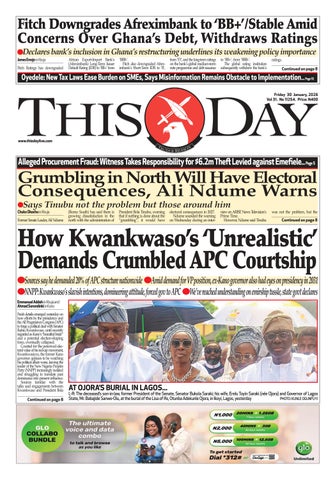
Fitch Downgrades Afreximbank to ‘BB+’/Stable Amid Concerns Over Ghana’s Debt, Withdraws Ratings
Declares bank’s inclusion in Ghana’s restructuring underlines its weakening policy importance
James Emejo in Abuja
Fitch Ratings has downgraded
African Export-Import Bank’s (Afreximbank) Long-Term Issuer Default Rating (IDR) to ‘BB+’ from ‘BBB-’.
Fitch also downgraded Afreximbank’s Short-Term IDR to ‘B’,
from ‘F3’, and the long-term ratings on the bank’s global medium-term note programme and debt issuance
to ‘BB+’, from ‘BBB-’. The global rating institution subsequently withdrew the bank’s Continued on page 8 ratings.
Oyedele: New Tax Laws Ease Burden on SMEs, Says Misinformation Remains Obstacle to Implementation... Page 10
www.thisdaylive.com
Alleged Procurement Fraud: Witness Takes Responsibility for $6.2m Theft Levied against Emefiele... Page 5
Grumbling in North Will Have Electoral Consequences, Ali Ndume Warns
Says Tinubu not the problem but those around him
Chuks Okocha in Abuja
Former Senate Leader, Ali Ndume (Borno South) has said there is growing dissatisfaction in the north with the administration of President Bola Tinubu, warning that if nothing is done about the “grumbling”, it would have electoral consequences in 2027. Ndume sounded the warning on Wednesday during an interview on ARISE News Television’s Prime Time. However, Ndume said Tinubu
Continued on page 8 was not the problem, but the
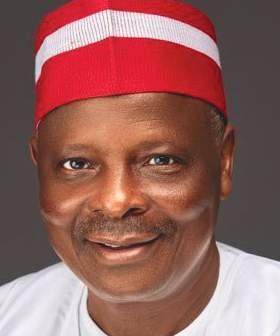
How Kwankwaso’s ‘Unrealistic’ Demands Crumbled APC Courtship
Sources say he demanded 20% of APC structure nationwide Amid demand for VP position, ex-Kano governor also had eyes on presidency in 2031 NNPP: Kwankwaso’s slavish intentions, domineering attitude, forced gov to APC We’ve reached understanding on emirship tussle, state govt declares
Emmanuel Addeh in Abuja and Ahmad Sorondinki in Kano
Fresh details emerged yesterday on how efforts by the presidency and the All Progressives Congress (APC) to forge a political deal with Senator Rabiu Kwankwaso, until recently regarded as Kano’s “beautiful bride” and a potential election-shaping force, eventually collapsed.
Courted for the perceived electoral value of his red-cap movement, Kwankwasiyya, the former Kano governor appears to be watching his political allure wane, leaving the leader of the New Nigeria Peoples Party (NNPP) increasingly isolated and struggling to translate past dominance into present influence.
Sources familiar with the talks said engagements between Kwankwaso and President Bola
Continued on page 8
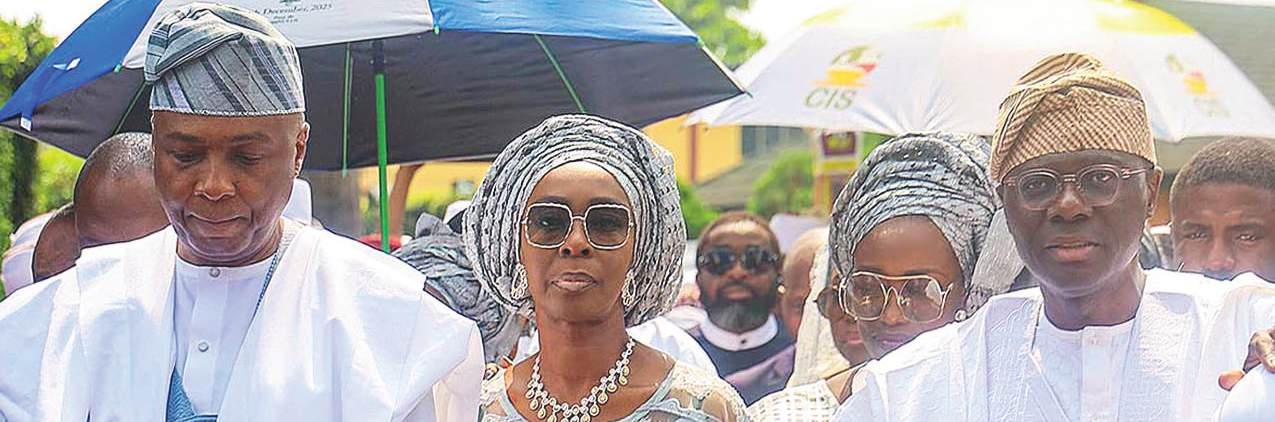
AT OJORA’S BURIAL IN LAGOS...
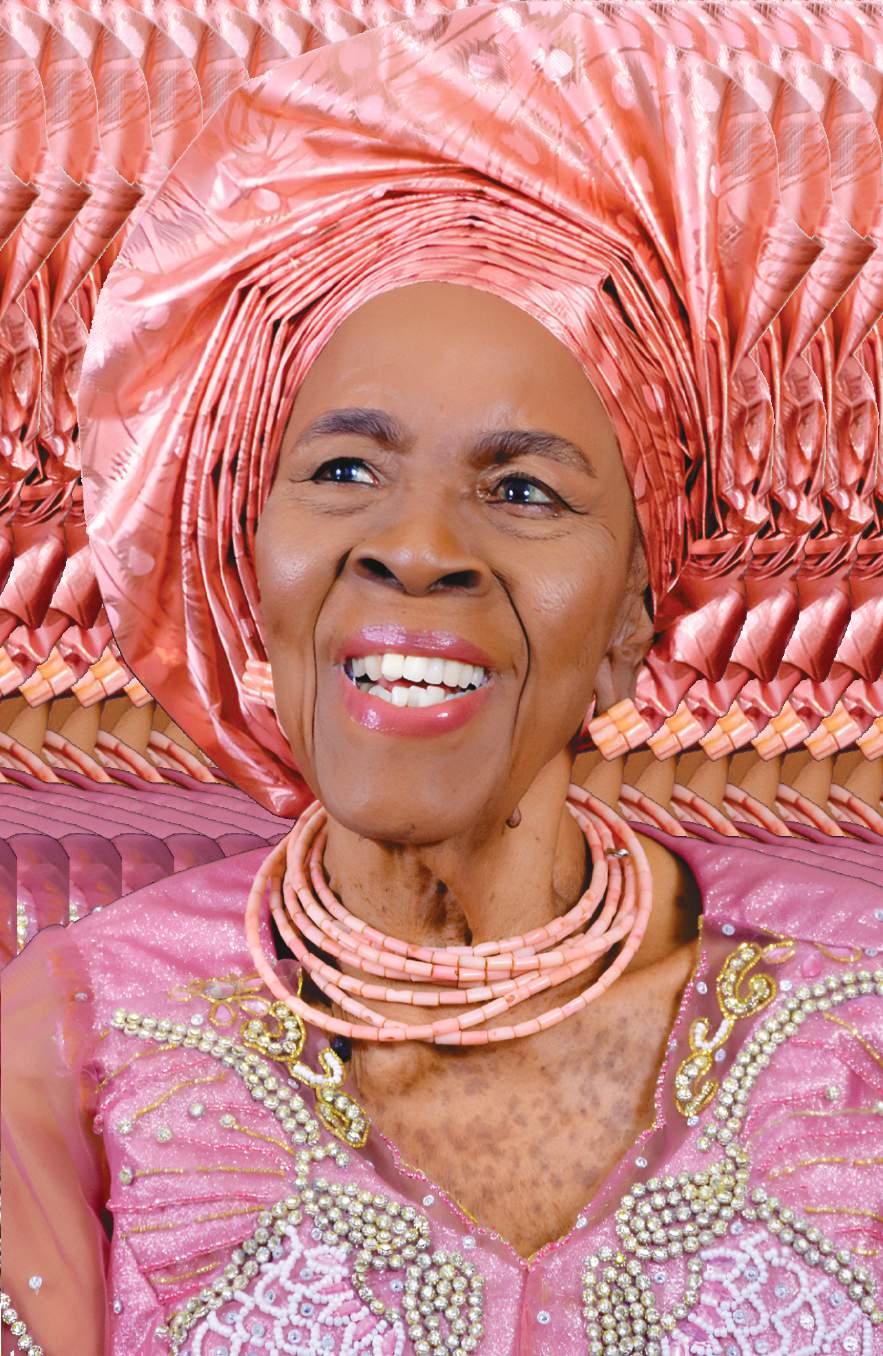
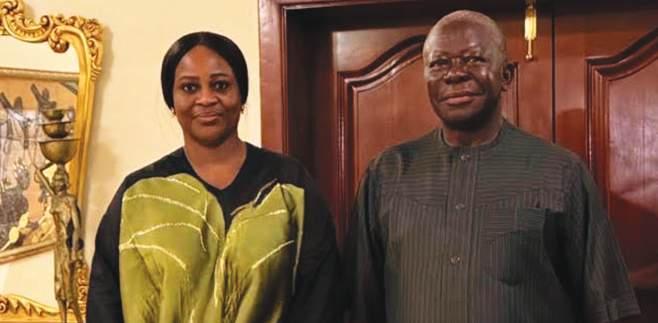
L-R: The deceased’s son-in-law, former President of the Senate, Senator Bukola Saraki; his wife, Erelu Toyin Saraki (née Ojora) and Governor of Lagos State, Mr. Babajide Sanwo-Olu, at the burial of the Lisa of Ife, Otunba Adekunle Ojora, in Ikoyi, Lagos, yesterday
PHOTO: KUNLE OGUNFUYI
PACT ON TRANSNATIONAL EDUCATION...
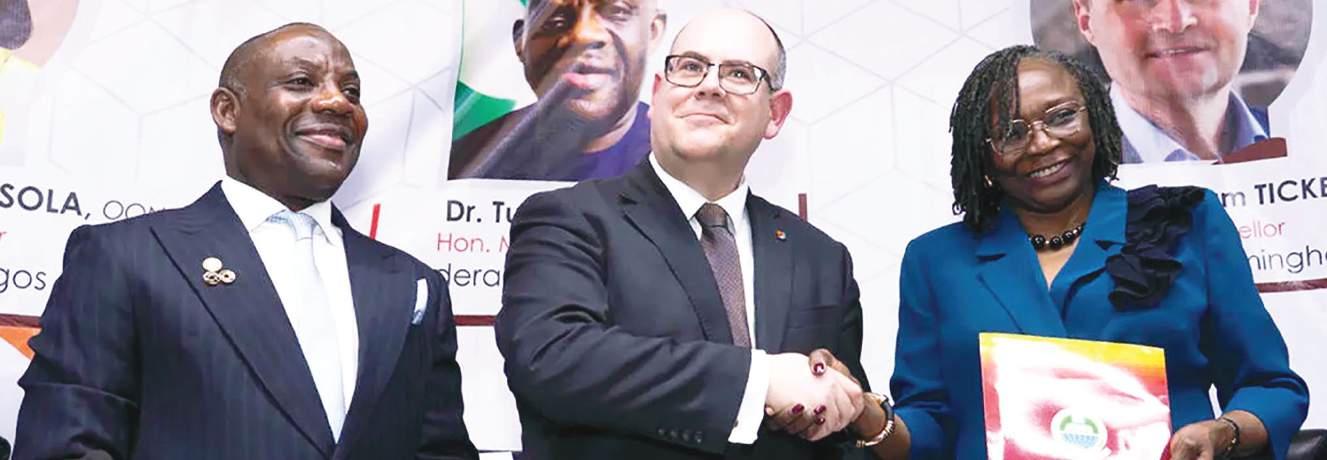
University of Birmingham, Professor Nick Vaughan-Williams, and Vice-Chancellor, University of Lagos, Professor Folashade Ogunsola, after the two universities signed an agreement on the expansion of transnational education in Lagos…yesterday
Alleged Procurement Fraud: Witness Takes
Responsibility for $6.2m Theft Levied against Emefiele
Admits receiving $2.5m share
Alex Enumah in Abuja
A witness of Economic and Financial Crimes Commission (EFCC), Bashirudeen Maishanu, on Thursday admitted being responsible for the theft of $6.2 million from Central Bank of Nigeria(CBN), for which the former governor, Mr Godwin Emefiele, is currently standing trial.
Maishanu, who is a Deputy Director, Banking Supervision with the CBN, admitted his complicity in the movement of the funds from the Garki branch of CBN, at the resumed trial of the former CBN governor at the High Court of the Federal Capital Territory (FCT), Abuja.
The witness also admitted receiving alongside some of his friends, the sum of $2.5 million as “gift” for facilitating the release of the $6.2 million.
Emefiele is standing trial on an amended 20-count charge bordering on criminal breach of trust, forgery, abuse of office, conspiracy to obtain by false pretence and obtaining money by false pretence while serving as CBN governor.
The charge, marked: CR/577/2023, was brought against
him by EFCC in 2023.
The anti-graft agency had specifically accused Emefiele of knowingly obtaining by false pretence the sum of $6,230,000 meant for international election observers for the 2023 general election.
The commission also accused the defendant of using his position as CBN governor to award six different contracts for the supply of vehicles to one Sa’adatu Ramalan Yaro, a member of staff of CBN, between 2018 and 2022 to the tune of N1,210,600,000.
The procurement contracts were said to have been awarded to April 1616 Investment Limited, in which the said Sa’adatu Ramalan Yaro is a director and shareholder.
The former CBN governor, however, pleaded not guilty to the charge preferred against him.
At the resumed trial on Thursday, the witness stunned the court when he admitted being responsible for part of the crime for which the government is seeking punishment for Emefiele.
Recall that at the time Emefiele was arrested and taken into custody, a Special Investigator, Obaze, had linked the defendant with the
stealing of the funds with video evidence, showing how a man cashed the said funds and carried it out of the bank.
Although, Maishanu admitted his complicity before the court on Thursday, he had owned up to Obaze and the police as far back as 2023.
Responding to questions from Emefiele’s lawyer, Matthew Burkaa SAN, the witness explained his role
in the stealing of the $6.2 million from the apex bank, admitting that the disappearance or loss of the money rests solely on him.
He stated, “I admitted to the special investigative panel appointed by President Bola Tinubu to investigate CBN activities under the defendant, I am answerable to the money being lost.
”I took that responsibility for the loss because I was inadvertently
involved in the withdrawal and that the Personal Assistant (PA) to Emefiele, Mr Eric Ocheme, was nowhere to be found.”
The witness told the court that he did not know that the withdrawal was a fraud until he was confronted with document to show that the signatures of the then President Muhammadu Buhari, and then Secretary to the Government of the Federation (SGF), Boss Mustapha,
were forged.
He stated, “The disappearance of the 6.2million dollars rests on me. I accept personal responsibility for a number of reasons.
“First, I was inadvertently involved. Second, Mr Eric (Emefiele’s PA) is nowhere to be found. I have tried severally to reach him and even through friends very close to him. I did not know it was a fraud,”
Glo Leads in Investments, Performance as NCC Sets New Standard for Telecoms
Nigeria’s digital transformation continued to gain momentum as Nigerian Communications Commission (NCC) and Globacom (Glo) reinforced a powerful partnership built on transparency, long-term investment, and consumer trust.
Through its Industry Performance Reports, developed with global network intelligence firm, Ookla under the QoS/QoE Crowdsourcing Project, NCC is setting a new benchmark for accountability in the telecoms sector.
The quarterly, data-driven reports provide independent insights into network performance, coverage and real-world user experience across operators, states and regions.
A senior NCC official described the initiative as “sunlight and substance”, stating that it enables Nigerians to see clearly how networks perform so that excellence is rewarded and complacency is exposed.
Within this rigorously lit landscape, Globacom has emerged as a
standout performer. Its leadership position is anchored in decades of sustained investment, patient capital, and continuous modernisation.
From pioneering one of the largest fibre-optic backbones in the country to upgrading radio access and core networks, Glo has consistently treated infrastructure as a long-term covenant with Nigeria’s future.
A member of Glo’s executive leadership summarised the company’s philosophy, thus, “We invest as if Nigeria’s tomorrow depends
Dangote Refinery Affirms Capacity to Supply 75m Litres of Petrol, Meet Nigeria’s Fuels Demand
Restates commitment to full regulatory compliance, cooperation with NMDPRA
Peter Uzoho
Dangote Petroleum Refinery has reaffirmed its capacity to supply fuel volumes significantly more than Nigeria’s estimated domestic consumption.
The refinery specifically said it can supply 75 million litres of Premium Motor Spirit (PMS) daily against an estimated national consumption of 50 million litres, alongside 25 million litres of Automotive Gas Oil (AGO) compared with an estimated daily demand of 14 million litres.
The company stated this in a
statement issued yesterday, adding that it also has the capacity to supply 20 million litres of aviation fuel daily, far above the estimated maximum domestic consumption of four million litres.
According to the refinery, the availability of volumes above prevailing demand provides critical supply buffers, enhances market stability and reduces reliance on imports, particularly during periods of peak demand or logistical disruption.
“The management of Dangote Petroleum Refinery would like to
reiterate our capability to supply the underlisted petroleum products of the highest international quality standard to marketers and stakeholders,” the company said in a public notice, offering 75 million litres of PMS, 25 million litres of AGO and 20 million litres of aviation fuel daily.
Industry analysts note that supplying above estimated consumption reduces the need for emergency imports, strengthens inventory cover and enhances the resilience of the domestic supply chain.
Dangote Petroleum Refinery also reaffirmed its commitment
to full regulatory compliance and continued cooperation with the Nigerian Midstream and Downstream Petroleum Regulatory Authority (NMDPRA), stating that its supply approach is aligned with ongoing efforts to ensure market stability and orderly downstream operations.
The refinery said it remains fully engaged with regulators and industry stakeholders in support of Nigeria’s national energy security objectives, as the country deepens its transition from fuel import dependence to domestic refining.
It added that it continues to work closely with market participants to ensure that the benefits of local refining, including reliable supply, competitive pricing and improved market discipline are delivered consistently to consumers nationwide.
With domestic refining capacity expanding, stakeholders believe Nigeria is increasingly positioned to reduce foreign exchange exposure, improve supply security and strengthen downstream efficiency through locally refined petroleum products.
on what we build today—because it does. Our goal is not to be loud, but to be lasting.”
NCC–Ookla analytics now validate what many subscribers already experience: Glo’s network is engineered for substance, not spectacle.
With strong fibre-to-site architecture, resilient backhaul and intelligent traffic management, Glo delivers stable speeds, lower latency and dependable service in real-world conditions.
The commission’s focus on Connectivity on the Move highlights performance along major road cor- ridors—critical arteries of commerce and social life. Here, Glo’s dense fibre footprint and redundant routes ensure fewer call drops, faster data sessions and reliable streaming for Nigerians on the move.
On the Urban vs Rural Divide, Glo’s strategy of extending fibre closer to base stations and modernising legacy sites is narrowing performance gaps between metropolitan and underserved areas.
Where signals once faltered, connectivity now flows with confidence.
Glo’s measured approach to next-generation technology is equally notable. NCC’s 5G Reality Check compares coverage with actual usage and experience. By prioritising strong 4G foundations and fibre-fed sites, Glo is ensuring that future 5G deployment is credible, inclusive and sustainable.
L-R: Minister of Education, Dr. Olatunji Alausa; Provost,
ANOTHER SENATOR JOINS APC...
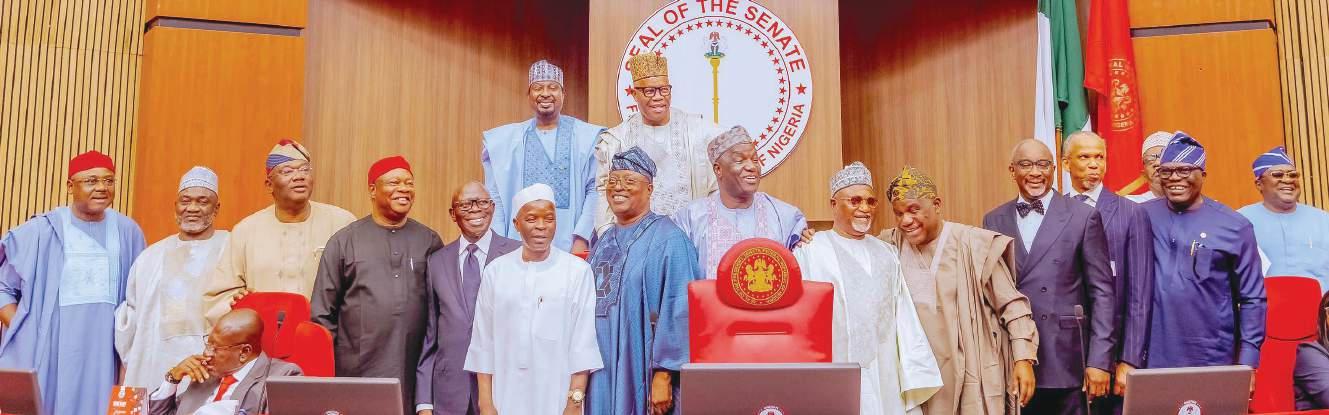
President of the Senate, Godswill Akpabio; his deputy, Jibrin Barau (behind); with other senators, yesterday received Plateau North Senator, Pam Mwadkon Dachungyang into the ruling APC party from the ADP, during plenary
Nigeria to Host 2026 Conference on Africa’s Borderless Digital Economy
Confab to drive regulatory alignment, digital trust, cross-border innovation
Event to support AfCFTA goals, financial inclusion, secure continent-wide digital trade
Deji Elumoye in Abuja
Nigeria was billed to host a major continental policy and technology engagement in 2026, as organisers of RegTech Africa Conference and Expo (RACE 2026) unveiled details of the conference at State House, Abuja, on Thursday.
The confab, which will be held by Office of the Vice President, between
May 20 and 22, is being organised in partnership with Presidential Committee on Economic and Financial Inclusion, and in collaboration with the Inter-Governmental Action Group Against Money Laundering in West Africa (GIABA).
Speaking at a news briefing, Chairman of the Organising Committee, Mr. Cyril Okoroigwe, described RACE 2026 as Africa’s
leading platform for dialogue at the intersection of regulation, technology and economic development, designed to address the regulatory and infrastructure gaps limiting cross-border trade, finance and digital innovation across the continent.
According to Okoroigwe, the conference is anchored on the vision of “Africonomy”, which envisages
Africa operating as a connected, trusted and innovation-driven economic space, aligned with the aspirations of the African Continental Free Trade Area (AfCFTA).
AfCFTA is projected to integrate a $3.4 trillion market of about 1.4 billion people across 54 countries. Okoroigwe stressed that despite the promise of AfCFTA, fragmented regulations, weak interoperability
TCN Tours Critical Projects, Seeks Govt Intervention on Right-of-Way Bottlenecks
The Transmission Company of Nigeria (TCN) yesterday launched an inspection tour of critical projects in Abuja, raising concerns over persistent right-of-way constraints hampering the completion of key power infrastructure in the Federal Capital Territory (FCT).
The TCN team led by the Executive Director, Transmission Service Provider (TSP), Olugbenga Ajiboye, called for urgent government intervention to resolve the challenge and accelerate electricity supply to key areas in the city.
Ajiboye, who said some projects were falling short of expectations due largely to obstacles along
transmission line routes, led the team to visit the Abuja Ring Project sponsored by the French Development Agency (AFD) to assess progress and ensure timely completion.
Joining him were: The Coordinating General Manager, Project Implementation Unit (PIU), Aminu Tahir; General Manager, Monitoring & Evaluation, Jane Okemini, among others.
Other projects visited included: the Kuje 132/33kV transmission substation, which is now 100 per cent completed. Upon commissioning, the TCN stated that the Kuje substation will significantly increase bulk power available to the Abuja Electricity Distribution
Company (AEDC) for onward distribution to Kuje and Dafara communities.
Besides, at the Lugbe West Main 330/132/33kV transmission substation, the TCN stated that the hybrid facility stood at 91 per cent completion. AEDC is expected to off-take this supply to serve high-density areas including Lugbe, Idu, and Karimo.
In the same vein, at the Gwarinpa GIS Substation in Dawaki, the inspection team was received by the Project Manager for the AFD-funded projects, Zuwairah Mohammed Abba, who explained that due to space constraints within the developed Dawaki community, TCN adopted
UNICEF Donates 25,000 HIV Test Kits to Bauchi Govt to Curb Disease Spread
Segun Awofadeji in Bauchi
The United Nations Children’s Fund (UNICEF) has donated 25,000 HIV test kits to the Bauchi State Government to support efforts to curb the spread of HIV, particularly among children under the age of five. The donation, made through the UNICEF Bauchi Field Office yesterday, is aimed at ensuring early testing of children to enable prompt diagnosis and commencement of treatment
where necessary.
Receiving the kits at the UNICEF Central Store, the Executive Chairman of the Bauchi State Agency for the Control of HIV/AIDS, Tuberculosis and Malaria (BACATMA), Dr. Adamu Sambo, said children under five remain highly vulnerable to HIV and must be prioritised for early testing and treatment.
Dr. Sambo noted the donation would help address persistent shortages of test kits in the state, describing
it as a major boost to targeted testing, especially among children, and a critical step towards closing existing gaps in diagnosis and early care.
He expressed appreciation to UNICEF for the support, while the Chief of UNICEF Bauchi Field Office, Dr. Nuzhat Rafique, said early detection would enable timely treatment, strengthen prevention of mother-to-child transmission and improve child survival outcomes across the state.
compact Gas-Insulated Switchgear (GIS) technology instead of the conventional air-insulated system.
The substation is equipped with two 60MVA power transformers, contributing 96MW to the national grid. It has six feeders in the control room designed to deliver bulk power through the AEDC to Dawaki, Gwarinpa, Dutse Alhaji, and Life Camp communities. Presently, however, only three of the six feeders are being utilised by the DisCo, limiting power evacuation to 60MW.
and regulatory uncertainty continued to constrain cross-border trade, payments, and digital services, resulting in significant opportunity costs for African economies.
He explained that RACE 2026, with the theme, “Building Trust, Infrastructure, Inclusion, and Policy for a Borderless Economy,” will focus on promoting regulatory innovation and policy alignment, encouraging the deployment of trusted digital infrastructure, such as interoperable payment systems and digital identity frameworks, and advancing financial and digital inclusion for small businesses, start-ups, women, youth and underserved communities.
He said the conference will also strengthen collaboration among regulators, governments, financial institutions, technology innovators and development partners, while showcasing African investment opportunities in compliance, fintech, cybersecurity and digital services.
Organisers said Nigeria’s hosting of the conference further underscored the country’s growing role as a continental hub for policy dialogue, financial innovation, and digital economic leadership, while supporting Africa’s broader journey
towards integrated digital markets, improved investment confidence, and inclusive economic growth.
Speaking through virtual means, Acting Principal Officer, Legal and Law Enforcement at the GIABA Secretariat, Ms. Gina Wood, said the conference and its associated policy dialogue came at a critical moment for West Africa, as countries prepared for the third round of Anti-Money Laundering and Counter-Financing of Terrorism evaluations.
Wood stated that findings from GIABA’s second round of mutual evaluations highlighted the need for countries to move beyond technical compliance to effectiveness, stressing stronger coordination, improved risk understanding, modern supervisory approaches and the use of technology to safeguard the integrity of financial systems. Wood commended the federal government for supporting the RegTech Africa initiative, saying sustainable reforms require strong political commitment and deeper collaboration between the public and private sectors, including regulators, financial institutions, fintech innovators and telecommunications operators.
Housing Ministry, ICPC Begin Joint Tracking of Constituency Projects
Emmanuel Addeh in Abuja
The Federal Ministry of Housing and Urban Development, in collaboration with the Independent Corrupt Practices and Other Related Offences Commission (ICPC), has commenced a joint nationwide verification and tracking of constituency and zonal intervention projects executed by the ministry across the country.
The exercise is aimed at ensuring that all projects are delivered strictly in accordance with approved specifications, uphold principles of transparency and probity, and guarantee value for money for the Nigerian people, a statement
by the Director, Press and Public Relations, Badamasi Haiba said.
Through its Special Projects Unit, the ministry supervises the execution of federal government constituency and zonal intervention projects, while the ICPC serves as the statutory agency responsible for enforcing compliance, due diligence, and integrity in budget implementation and public expenditure.
The joint verification exercise was officially flagged off in Kano yesterday and is being conducted simultaneously in all states where the projects were implemented.
Teams comprising officials of both institutions have been deployed nationwide to carry out on-the-spot
inspection, verification, and assessment of project status and quality.
Speaking at the flag-off ceremony, the Permanent Secretary of the Ministry, Dr. Shuaib Belgore, represented by the Director, Special Projects Unit, Olatunde Ajayi, stated that the initiative was designed to evaluate the impact of constituency projects and ensure that Nigerians derive the intended socio-economic benefits.
“This joint verification and tracking exercise with the ICPC is aimed at evaluating the impact of these projects and ensuring that they are executed to standard for the benefit of the people,” Belgore said.
PHOTO: SENATE PRESIDENT’S OFFICE
Emmanuel Addeh in Abuja
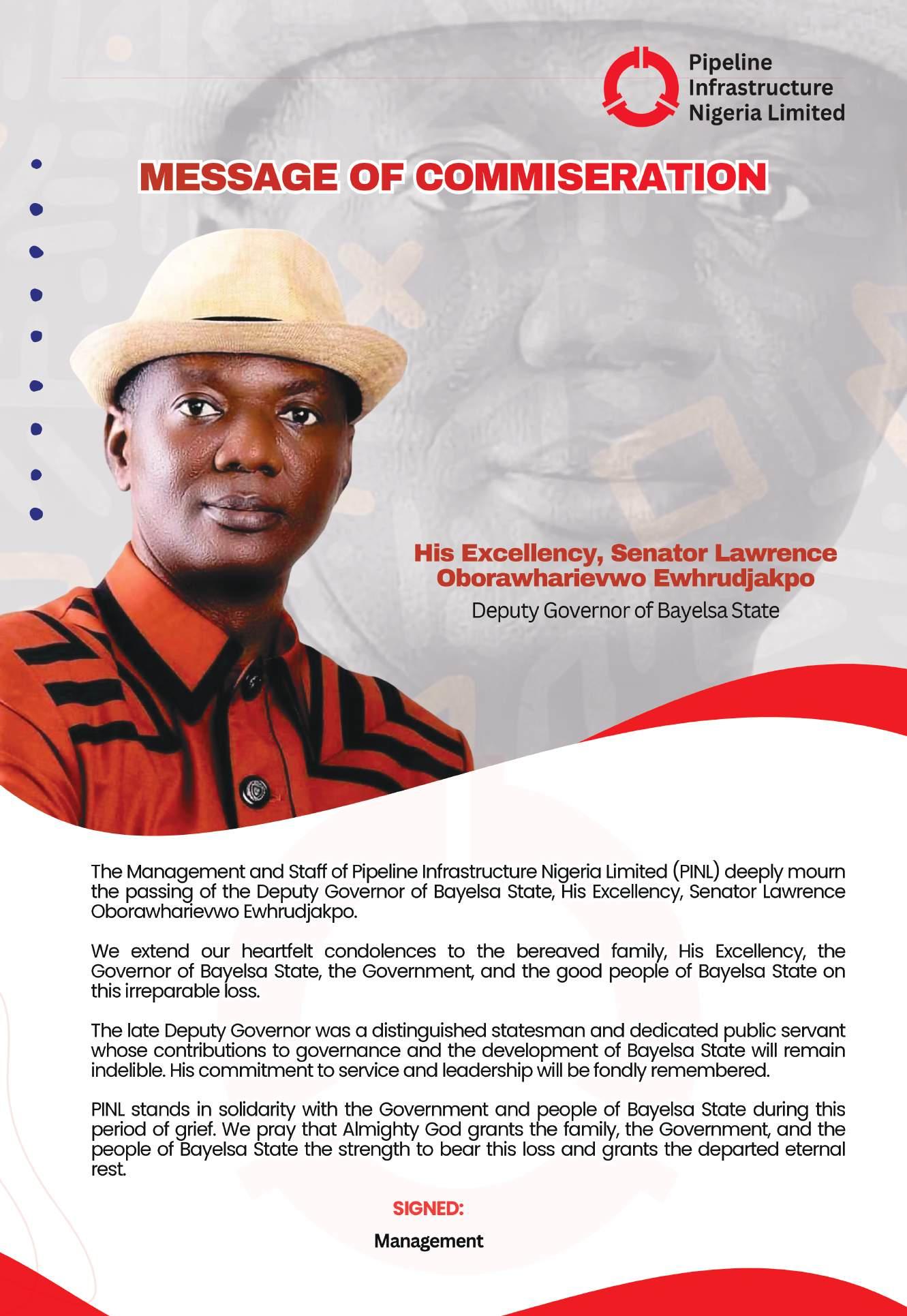
HONOURING LATE DEPUTY GOVERNOR LAWRENCE EWHRUDJAKPO...
L-R: Prof. Rachael Dickson; former
NAFDAC: No Going Back on Sachet, Small Bottle Alcohol Ban
NECA: renewed ban enforcement serious regulatory misstep
Onyebuchi Ezigbo in Abuja and Dike Onwuamaeze
National Agency for Food and Drug Administration and Control (NAFDAC) has said the ban on the packaging and sale of alcohol in sachet and small bottles in the country is still in force.
A statement signed by DirectorGeneral of NAFDAC, Professor Mojisola Adeyeye, said the agency had resumed its enforcement to ban the production and sale of alcoholic beverages in sachets and small-volume PET/glass bottles (below 200ml).
Adeyeye said the measure was in line with the recent directive of Senate.
However, Nigeria Employers’ Consultative Association (NECA) described NAFDAC’s renewed enforcement of the ban on the production and sale of alcoholic beverages in sachets and small PET “as a serious regulatory misstep with far-reaching economic and governance implications”.
NECA stated that Nigeria deserved an industry regulation that “protects public health while preserving jobs, investment, and respect for the rule of law”.
According to the director-general of NAFDAC, “This decisive action, ordered by the Nigerian Senate and
backed by the Federal Ministry of Health and Social Welfare, underscores the agency’s statutory mandate to safeguard public health and protect vulnerable populations—particularly children, adolescents, and young adults—from the harmful use of alcohol.”
Adeyeye said the proliferation of high-alcohol-content beverages in sachets and small containers less than 200 ml had made such products easily accessible, affordable, and concealable, leading to widespread misuse and resultant addiction among minors and some commercial drivers.
According to her, this public health menace has been linked to increased incidences of domestic violence, road accidents, school dropouts, and social vices across communities.
She also said placing a label to read “not for children” on the sachets and the small containers will not work, adding that it cannot be enforced because of the peculiarity of the society.
Adeyeye stated, “The ban on sachet packaging and PET bottles less than 200 ml is to make it difficult for children to get to alcohol and its consumption. NAFDAC approves alcohol in bigger pack sizes.
“The small size of the sachet makes it easier for underage to conceal from parents and teachers. Report from schools show that children conceal
the sachets.”
According to Adeyeye, “This ban is not punitive; it is protective. It is aimed at safeguarding the health and future of our children and youth by not allowing alcohol in small pack sizes.
“The decision is rooted in scientific evidence and public health considerations. We cannot continue to sacrifice the wellbeing of Nigerians for economic gain. The health of a nation is its true wealth.
“NAFDAC reiterates that only two packages of alcoholic beverages are
affected by this regulation - spirit drinks packaged in sachets and small-volume PET/glass bottles below 200ml.”
But NECA warned, “Policies that disregard science, economic realities, and regulatory coherence risk doing more harm than good.”
Those views were expressed yesterday by Director-General of NECA, Mr. Adewale-Smatt Oyerinde, in a public statement, titled, “NECA Calls for Evidence Based Regulation and Respect for Due Process on Sachet Alcohol Ban.”
Oyerinde said the “continued enforcement is already disrupting legitimate businesses, unsettling ongoing investments, placing thousands of jobs at risk, and weakening confidence in Nigeria’s regulatory stability at a time when investor trust is critically important”.
He emphasised that the economic consequences of the ban were sig- nificant.
According to him, the wines and spirits value chain supports large numbers of direct and indirect jobs across manufacturing, packaging,
distribution, transportation, retail, and agriculture.
He stated, “At a time when businesses are grappling with high operating costs, currency pressures, and weak consumer purchasing power, sudden regulatory shocks of this nature threaten livelihoods, reduce government revenue, and undermine investor confidence in the predictability of Nigeria’s policy environment.” He stated that regulation must be rooted in evidence, proportionality, and the rule of law.
Customs Generates N454.62m Revenue in Ogun Area 1 Command, Seizes N4bn Contraband
The Ogun Area 1 Command of the Nigeria Customs Services (NCS), said it recorded a boost in its revenue generation in 2025 raking in N454.62 million.
The amount was 47 per cent higher than the N275.8m collected in 2024 just as the command seized contraband worths N4bn.
The Area 1 Comptroller. Mr. Oladapo Afeni, disclosed these figures on Thursday at a news
briefing where he highlighted the command’s operational achievements for 2025 and the early gains recorded in 2026.
Afeni added the command has continued the upward trend in its activities in 2026, generating N106 million between January 1 and January 28, 2026.
He said the 2026 figure represented an 84.3 per cent increase compared with the revenue generated in the same period in 2025.
Afeni attributed the performance
Dangote Cement Launches FairPlay Initiative to Strengthen Workplace Safety Culture
Sunday Ehigiator
Dangote Cement Plc yesterday launched a Safety FairPlay Initiative at its Ibese Plant in Ogun State, with an aim to drive behavioural change and entrenching a strong safety culture among employees.
The initiative, which is scheduled to be rolled out across all Dangote Cement Plc plants nationwide, marks a significant milestone in the company’s ongoing efforts to strengthen safety standards and promote responsible workplace
conduct.
The company through a statement revealed the pilot launch of the Group-wide FairPlay programme at the Ibese Plant recorded robust participation from both management and employees, underscoring a shared commitment to safer work practices and continuous improvement in health and safety performance.
“The Safety FairPlay Initiative is designed to deliver lasting behavioural and cultural change through an equitable and transparent framework
that promotes safe conduct.
“It is built on three core pillars; Recognition, Correction (Coaching), and Discipline, aimed at rewarding positive safety behaviour, ensuring consistency in addressing at-risk actions, and encouraging open reporting of incidents, near-misses and errors.”
Speaking at the launch, Dangote Cement Plc Technical Director, Mr. Anandam Duraisamy, stressed the strategic importance of the initiative to the business and urged employees to take ownership of a safety culture
founded on fairness, accountability, recognition and continuous improvement.
According to him, “The Safety FairPlay marks a defining moment in the company’s journey toward building a workplace where safety is not just a policy, but a shared mindset, an everyday habit that defines who we are and how we work.
“We are here to launch an initiative that aims to transform not only what we do, but how we think, act, and respond when it comes to safety.”
to the diligence of officers, cooperation of compliant traders, baggage assessment collections and proceeds from auctioned seized petroleum products.
The comptroller said the command’s anti-smuggling operations, recorded about 497 seizures in 2025 through intelligence-driven operations and inter-agency collaboration.
The comptroller listed items seized from smugglers to include 22,725 bags of foreign parboiled rice, 2,669 kegs of Premium Motor Spirit, 2,128 cartridges, 13,332 parcels of cannabis sativa, used clothing, foreign used vehicles and tractors, tyres, vegetable oil, tomato paste, sugar, insecticides, spaghetti, explosives, firearms, heroin and motorcycles used as means of conveyance of the items.
He said the total duty paid value of seizures in 2025 stood at N4.03 billion, compared with N1.7 billion recorded in the previous year, representing an increase of about N2.3 billion.
He said, “These achievements are a testament to the commitment of our officers to combating smuggling activities, protecting the economy and safeguarding the well-being of society.”
Speaking on the 2026 operations, Ayeni said the command has already intercepted 1,042 bags
of smuggled rice, 3,738 parcels of cannabis sativa, 780 used tyres, locally made rifles, cartridges, 473 kegs of PMS, used vehicles, suspected unregistered pharmaceutical products, and traditional carvings suspected to be antiquities.
He noted the duty paid value of the seizures made between January 1 and January 29, 2026, was N721.45 million.
Afeni also raised concern over the rising seizures of arms, ammunition and narcotics, warning that such items, if allowed into circulation, could worsen insecurity.
He stressed that arms and ammunitions are on the absolute prohibition list of the Nigeria Customs Common External Tariff.
The seized cannabis sativa were handed over to the National Drug Law Enforcement Agency, arms and ammunition to the National Centre for the Control of Small Arms and Light Weapons while unfit pharmaceutical products, were handed over to the National Agency for Food and Drug Administration and Control (NAFDAC).
The comptroller expressed displeasure on incessant attacks on customs officers in border area, particularly Okokun Border area by suspected smugglers, with operational vehicles damaged.
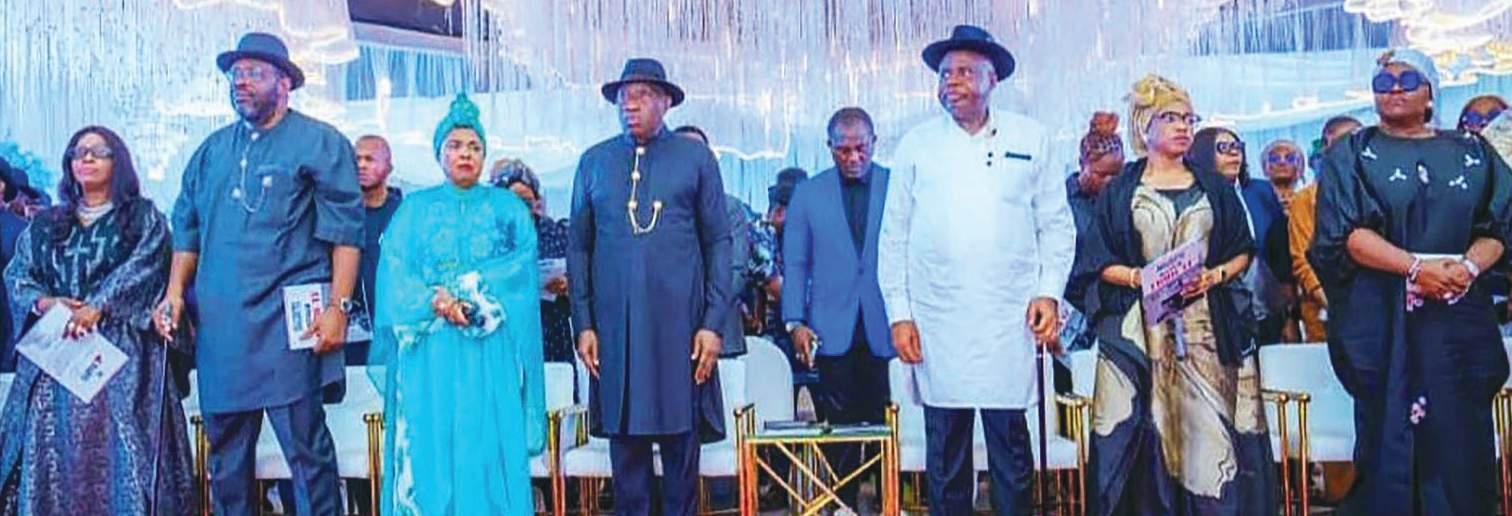
Bayelsa State Governor and Senator representing Bayelsa West, Chief Seriake Dickson; former First Lady, Dame Patience Jonathan; former President, Goodluck Jonathan; Bayelsa State Governor, Senator Douye Diri; Dr. Gloria Diri; and Justice Patience Diri, during a Day of Tribute organised by the Bayelsa State government in honour of the late Deputy Governor, Senator Lawrence Ewhrudjakpo, at the DSP Alamieyeseigha Memorial Banquet Hall, Yenagoa, on Wednesday
James Sowole in Abeokuta
500 Lawyers Storm Finance Ministry Over Unpaid Debts to Contractors
Demand Uzoka-Anite’s resignation for alleged selective payments, favouritism
Chuks Okocha in Abuja
About 500 lawyers, under the aegis of Concerned Lawyers for Probity and Justice, demonstrated at the Federal Ministry of Finance yesterday in solidarity with indigenous contractors owed an estimated N4 trillion for completed capital projects.
The group, collaborating with Enough is Enough Movement and All Indigenous Contractors Association of Nigeria (AICAN), accused the ministry of selective payments and favouritism, and demanded the resignation of Minister of State for Finance, Dr. Doris Uzoka-Anite.
The action followed repeated protests by contractors in recent
weeks, including blockades of the ministry’s entrance that prevented the minister from accessing her office and led to reports of security personnel firing shots into the air to disperse crowds.
Contractors claim that despite partial disbursements after demonstrations in December 2025, the majority of verified debts remain unsettled, exacerbating financial hardship.
In a press statement issued yesterday, the lawyers described the situation as causing widespread distress among contractors and their families.
The statement signed by Barrister Precious Okoh highlighted cases where individuals who borrowed at
high interest rates to fund projects now faced asset seizures by banks, including homes and vehicles, leading to family disruptions and severe economic strain.
Okoh emphasised the broader impact, stating that stalled payments have resulted in job losses for thousands of workers in construction and related sectors, reduced local economic activity, and hindered national development.
He added, “Contractors who borrowed from banks at high interest rates to fund these projects now face relentless loan defaults, with banks seizing homes, vehicles, and other assets.
“Wives and children watch their breadwinners sink into despair,
some pushed to the brink of mental breakdown or worse.
“Entire households have been uprooted, dreams shattered, and futures stolen - all because payments promised and earned have not been made.
“Beyond individual suffering, the ripple effects cripple our national economy. These contractors employ thousands of workers—masons, engineers, labourers—who depend on steady contracts for survival.”
Okoh added, “When payments stall, jobs vanish, purchasing power drops, local markets suffer, and economic growth grinds to a halt. A nation that starves its own builders starves itself of progress.
“We are profoundly disappointed
with the Minister of State for Finance, Dr. Doris Uzoka-Anite, whose office bears direct responsibility for releasing these funds. Instead of showing leadership and empathy, her ministry has become a symbol of delay and detachment. She must resign now.”
The lawyers cited constitutional provisions to support their position.
The statement said, “Section 15(5) of the 1999 Constitution (as amended) requires the State to abolish all corrupt practices and abuse of power—yet withholding earned payments from citizens who delivered is a clear abuse that breeds distrust and hardship.
“Section 16(2)(b) further obliges the state to manage resources for the
HOW KWANKWASO’S ‘UNREALISTIC’ DEMANDS CRUMBLED APC COURTSHIP
Tinubu stretched across several months, with multiple meetings held, especially in Abuja.
At the outset, the presidency was said to have viewed Kwankwaso as a strategic bridge into Kano and parts of the North-west, particularly given NNPP’s performance in the 2023 general election.
However, top sources within the ruling APC told THISDAY last night that negotiations broke down over what they described as excessive and unrealistic demands.
According to sources, Kwankwaso sought control of up to 20 per cent of APC’s national structure, alongside a vice presidential slot and guarantees extending to the
people around him.
He criticised the president’s inner circle, alleging that he is being poorly served by advisers, who lack political understanding and grassroots connection.
Ndume said to avoid imminent electoral consequences, urgent steps should be taken to address the prevailing concerns.
He stated, “Anybody that tells you that the north is not grumbling now is not telling the truth. It will be loud in their votes if nothing is done about it. The good thing about it is that the president can turn things around.”
2031 political cycle.
Senior APC figures said the requests immediately raised red flags as manoeuvring ahead of the 2027 polls gathered pace.
“Even President Bola Tinubu has not specifically asked for any percentage share of the APC. That demand for 20 per cent of the structure of the APC nationwide was a deal breaker. Besides, the vice-presidential position was never on the table.
“It was made clear to him that it was not vacant, and there was no basis for discussions around 2031 at this stage,” the impeccable source who was familiar with the negotiations told THISDAY.
around the president that are the problem.”
He contrasted Tinubu’s current leadership environment with his time as governor of Lagos State, which he said was marked by the presence of strong and capable advisers.
“The president had good people around him when he was governor of Lagos; that was why he succeeded. Most of the good people are not there now. They have been side-lined,” he said.
Also, the Dr. Boniface Aniebonam bloc of the NNPP, yesterday, revealed that the decision by Governor Abba Yusuf to leave the party was due to Kwankwaso’s domineering attitude and alleged slavish intentions.
Reacting to comments by Buba Galadima on Yusuf’s defection, the National Vice Chairman North-west, Alhaji Sani Danmasani, in a statement claimed that Kwankwaso’s behaviour was unbearable, prompting Yusuf to seek “greener pastures”.
Although initially, the Kwankwaso/APC engagements were driven by the belief within the APC that the former Kano governor remained indispensable to the
He stated, “He just picked people that don’t know anybody. They only know Ikoyi and Victoria Island. And from there, they fly to London or America, where their families are living. They are not even full Nigerians.
“Instead of bringing in his team people that would look at him in the face and tell him the truth, he decided to surround himself with people that don’t know politics.”
ruling party’s long-term electoral calculations, particularly in the North-west, in the build-up to the collapse of the deal, presidency strategists increasingly questioned Kwankwaso’s claim to absolute control of the state’s political machinery.
They envisaged that the growing friction between him and Yusuf, as well as signs of uncertainty within the NNPP over the governor’s long-term political future could be exploited.
It was no surprise then that negotiations soon ran aground on the scale of Kwankwaso’s demands.
According to senior APC sources, the NNPP leader’s demand for control of 20 per cent of the APC’s national political structure, stunned party leaders and was quickly deemed impractical.
Beyond structural concessions, Kwankwaso also pressed for the vice presidential slot, despite the fact that the position had already been filled and was not subject to renegotiation.
Kwankwaso has also publicly confirmed this, saying recently that he would only join or defect to another political party if he was offered either the presidential or vice presidential ticket ahead of the 2027 general election.
“He was clearly overreaching,” a top APC chief said.
sought assurances not just for immediate accommodation, but also for influence over the party’s succession plans, with an eye firmly on 2031.
To the presidency and APC leaders, the package of demands suggested a politician negotiating not as a prospective ally, but as a near-equal stakeholder in a party he did not build.
When no headway was made, Tinubu, initially open to engaging Kwankwaso as the presumed gatekeeper of Kano politics, then recalibrated his strategy.
Rather than expend political capital trying to woo an opposition leader with expansive demands, the president and APC negotiators were said to have turned their attention to consolidating ties with the Kano governor, betting that incumbency, federal leverage and direct engagement would yield better results than protracted courtship with Kwankwaso.
“That was the turning point. Once it became clear that Kwankwaso no longer controlled the entire Kano political space the way he claimed, especially with divisions between him and his erstwhile political godson, the presidency decided it made more sense to deal with the governor,” another source explained.
Uzoka-Anite
maximum welfare and happiness of every citizen—payments to these contractors would inject vital capital back into the economy, supporting families and fueling development.”
APC leaders described as an inflated sense of indispensability, weakened his negotiating position.
According to the sources, the president and his people positioned the APC to Yusuf as a more stable and predictable platform for him, amplifying doubts about Yusuf’s second-term prospects within Kwankwaso’s NNPP.
NNPP Bloc: Kwankwaso’s ‘Slavish’ Intentions Forced Yusuf Out
Meanwhile, the Dr. Boniface Aniebonam-led NNPP has revealed that the decision by Governor Yusuf to leave the party was due to Kwankwaso’s domineering attitude and alleged slavish intentions.
GRUMBLING IN NORTH WILL HAVE ELECTORAL CONSEQUENCES, ALI NDUME WARNS FITCH DOWNGRADES AFREXIMBANK TO ‘BB+’/STABLE AMID CONCERNS OVER GHANA’S DEBT, WITHDRAWS RATINGS
The lawmaker said northern leaders had made efforts to engage the president constructively, stating that he personally participated in meetings between Tinubu and northern elders.
Ndume revealed, “In the north, northern elders have been reaching out. I was part of the first and the last meetings with Mr. President when northern elders went to him.
“He was prepared. He brought all the critical appointees from the north, and we had a wonderful session.”
According to Ndume, despite assurances from the president, the engagement process stalled shortly afterwards.
“He promised that it would continue, but it never happened,” he added.
While absolving Tinubu of direct blame, Ndume stated that the president’s problems stemmed largely from the calibre of people around him.
He said, “You know what I’m suspecting? The president is not the problem; it is the people
Ndume criticised some presidential aides for what he described as elitist isolation and lack of national outlook.
In a statement posted on its website, Fitch explained that the downgrade “reflects our revision of Afreximbank’s policy importance risk to ‘medium’ from ‘low’ following the announcement of an agreement on Ghana’s debt to Afreximbank in the context of Ghana’s broader restructuring”.
It said, “This has led us to revise our assessment of Afreximbank’s business profile to ‘high risk’ from ‘medium risk’, which resulted in an overall business environment notching of -3 (-2 previously).”
Essentially, a BB+ /Stable rating from Fitch is considered non-investment grade, also known as high-yield or “junk”.
The statement added, “Fitch has chosen to withdraw the ratings for commercial reasons. Fitch will no longer provide ratings or analytical coverage for the bank.”
In arriving at its decision, Fitch stated, “Afreximbank and Ghana
Ndume warned that unless the concerns being raised, particularly in the north, were addressed, the dissatisfaction could deepen and manifest strongly at the polls.
announced in December 2025 that they had reached an agreement in principle with respect to Afreximbank’s $750 million sovereign loan to Ghana.
“The IMF stated that the deal is in line with the comparability of treatment under Ghana’s official creditor committee. We view this as evidence that Afreximbank did not benefit from its preferred creditor status (PCS).”
It said, “While we had not previously given any uplift in our solvency assessment for PCS, the de-facto preferential treatment in a broader sense that Afreximbank, along with most other multilateral development banks, benefit from was previously factored into our assessment of the bank’s policy importance.
“The bank’s inclusion in Ghana’s restructuring underlines its weakening policy importance, in our view.”
The rating institution also said,
According to those who spoke to THISDAY, even more striking to APC negotiators was Kwankwaso’s apparent focus on the long game. Kwankwaso was said to have
“Our latest assessment of Afreximbank’s ‘high’ business profile risk underpins the ‘high risk’ quality of governance assessment, and ‘high’ strategy risk.
“The ‘high risk’ business environment assessment reflects the bank’s exposure to a ‘high risk’ operating environment with weak credit quality, low income per capita and high political risk in the countries of operation.”
It explained that the ratings were driven by the bank’s Standalone Credit Profile (SCP) of ‘bb+’, reflecting the lower of the solvency (bbb+) and liquidity (a) assessments and its ‘high risk’ business environment.
The statement added that the solvency assessment balanced the bank’s ‘strong’ capitalisation and ‘moderate’ risk profile.
Fitch stated, “Afreximbank’s ‘bbb+’ solvency assessment reflects both ‘strong’ capitalisation and ‘moderate’ solvency risks. Our
A masterstroke, the shift appeared to have effectively stripped Kwankwaso of the bargaining power that once made him attractive. His inability to deliver a unified Kano bloc, combined with what
assessment of capitalisation is underpinned by a ‘moderate’ usable capital to risk-weighted assets (21 per cent at end-2024) ratio, a ‘strong’ equity to assets and guarantees ratio (19 per cent) and ‘excellent’ internal capital generation.
“Afreximbank’s ‘a’ liquidity assessment reflects the ‘strong’ quality of treasury assets, measured by the share of treasury assets rated ‘AA-’ to ‘AAA’ (50 per cent at end-2024 and we expect it to remain above the ‘strong’ threshold of 40 per cent), and a ‘moderate’ liquidity buffer (defined as liquid assets-to-short-term debt, at 95 per cent at end-2024).
“The bank’s liquidity profile is enhanced by its access to capital markets and diversified funding sources, including credit lines ($2.1
Reacting to comments by Galadima on Yusuf’s defection, the National Vice Chairman North-west, Danmasani, in a statement claimed that Kwankwaso’s behaviour was unbearable, prompting Yusuf to seek “greener pastures”.
The NNPP chief stated that Yusuf’s move to the APC was not driven by selfish motives, but rather a desire to escape Kwankwaso’s suffocating leadership style. The party accused Kwankwaso of attempting to impose his will on others, leaving Yusuf with no choice but to leave.
The NNPP leader described Kwankwaso as the mastermind behind the betrayal, who violated the trust of the party’s founder, An-
Continued on page 29
billion, of which $0.6 billion was committed at end-2024) and collateral deposits. The short duration of the loan portfolio also contains liquidity needs.”
Fitch also stated that it “assesses shareholders’ capacity to support Afreximbank at ‘bb-’, based on the average rating of key shareholders (ARKS) accounting for more than 50 per cent of the bank’s capital.
“The sovereign upgrades of Egypt and Nigeria, Afreximbank’s two largest shareholders, in April 2025 improved the ARKS to ‘B+’ from ‘B’. “Credit risk mitigants on callable capital (covering 40 per cent of $4.3 billion) enhance the support capacity by one notch to ‘bb-’.
“The support assessment also reflects the ‘strong’ propensity of shareholders to support the bank, which has been consistently demonstrated by ongoing capital injections and dividend reinvestments.”
ALIKO DANGOTE FOUNDATION–BOI ENGAGEMENTS...
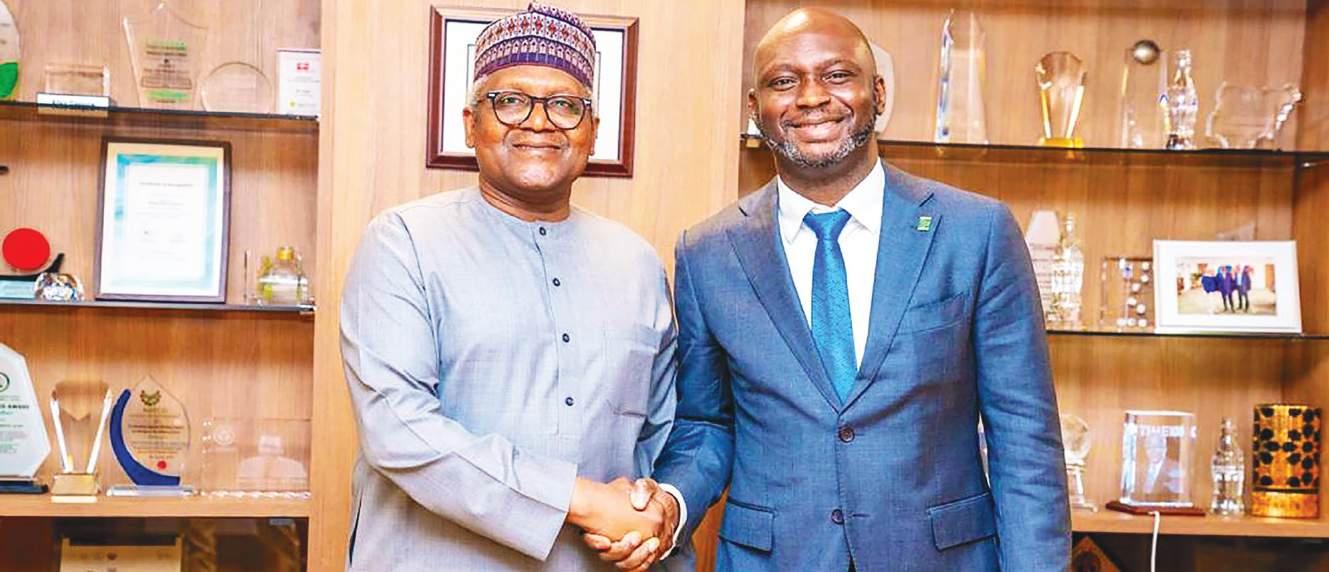
President of Dangote Group, Alhaji Aliko Dangote (L), and MD/CEO, BOI, Dr. Olasupo Olusi, during a courtesy call on Dangote as part of ongoing engagements on the Aliko Dangote Foundation–BOI partnership, in Lagos, yesterday
FG Backs UNILAG-Birmingham Partnership to Deepen Transnational Education, Boost Global Competitiveness
The federal government has thrown its weight behind the transnational education partnership between the University of Lagos (UNILAG) and the University of Birmingham, United Kingdom, describing it as a strategic move to reposition Nigeria as a hub of academic excellence, innovation and global relevance.
The Minister of Education, Dr. Maruf Tunji Alausa, made this
known, yesterday, at the signing of a Memorandum of Understanding (MoU) between the University of Lagos (UNILAG) and the University of Birmingham, aimed at globalising Nigeria’s higher education system, modernising curricula and expanding access to internationally competitive academic programmes.
He explained the collaboration represents a major milestone in the implementation of Nigeria’s Transnational Education (TNE) policy and the broader reform
agenda of the education sector.
He stated that the TNE policy, recently approved by the federal government, provides a framework for cross-border delivery of academic programmes that will expand access to tertiary education, reduce admission pressure on local universities, and promote international exchange of ideas, research and innovation.
“The policy is also expected to attract foreign investment and funding into Nigeria’s education sector.”
Alausa added the UNILAG/ Birmingham partnership aligns seamlessly with the National Education Sector Renewal Initiative (NESRI), which prioritises quality, accessibility and global competitiveness.
He noted that international collaborations remain central to the government’s strategy to drive innovation, strengthen research capacity and improve skills development among Nigerian students.
The Senate on Thursday raised alarm over the deteriorating state of Nigeria’s rail services, declaring the once-popular Abuja–Kaduna train has slowed so badly that a bicycle or commercial tricycle (Keke Napep) can now arrive faster.
President of the Senate, Senator Godswill Akpabio, delivered the stark verdict as lawmakers reviewed complaints about declining performance on the Abuja–Kaduna–Kano corridor.
The development promoted the immediate inauguration of a Senate ad hoc committee to conduct a holistic investigation into the railway system within six weeks.
Akpabio lamented that a service that initially took about one and a half hours from Abuja to Kaduna now takes more than three hours, underscoring what he described as a collapse in efficiency.
“If you are using a bicycle, you will get to Kaduna faster than the train. We gather that even Keke Napep will get to Kaduna faster than the train,” he said.
The committee, set up by the Senate in November 2025, is chaired by Senator Adams Oshiomhole, former governor of Edo State and
senator representing Edo North.
The debate was triggered by Senator Abdul Ningi (PDP, Bauchi Central), who rose under a personal explanation to recount his recent experience on the route and to present what he called a “tragic Nigerian story” of decline.
Ningi told the Senate that when the service commenced in 2015, the railway operated 10 daily trips. That is five from Abuja to Kaduna and five in the opposite direction, moving about 10,000 passengers daily. According to him, those figures
have collapsed dramatically.
Ningi said, “Last two weeks, I visited Kaduna like I used to with the railway, and what I found was disturbing.
“I met the manager, and he gave me the statistics. From about 10,000 passengers a day, the number has dropped to between 800 and 900.”
He added that the daily shuttles had been reduced from 10 to just two, with only one trip from Abuja to Kaduna at 7am and another from Kaduna to Abuja at 1.30pm.
Ningi further disclosed that at full
capacity, the railway generated about N1.8 billion monthly, a revenue stream now severely threatened by the sharp decline in patronage.
Recounting his latest journey, the Bauchi senator said passengers spent over three and a half hours on a trip that once took 90 minutes, with the train moving at what he described as painfully slow speed.
He said, “When the railway started, it was one and a half hours to Kaduna. Last week when I went, we spent three and a half hours. People had no alternatives.
Under the arrangement, the University of Birmingham will validate selected study programmes to be delivered at the University of Lagos, enabling students to earn prestigious international degrees locally.
“The model, would enhance curriculum delivery, improve employability, deepen skills acquisition and strengthen global academic networks,” the minister said.
He added the partnership would help create an enabling ecosystem that fosters critical thinking, creativity and entrepreneurship, while also supporting infrastructure development, teacher training and technology integration across the sector.
Earlier in her remarks, ViceChancellor of the University of Lagos, Prof. Folasade Ogunsola, said the agreement builds on more than a decade of mutually beneficial partnership between both institutions.
According to her, “the UNILAG–Birmingham relationship has been nurtured over the last 10 years through joint research and academic programmes, particularly in global surgery, reflecting a growing emphasis on equitable global partnerships in higher education and responding to increasing demand for internationally competitive
university education.
She emphasised on the impact of collaborative research under the Nigeria Institute of Health Research/ Global Surgery Unit, which has established Global Surgery Units in 37 institutions across Nigeria’s six geopolitical zones.
The initiatives, she noted, have delivered over a dozen studies, resulting in a 15 per cent reduction in surgical site infections through behavioural change interventions that have since been translated into federal ministry of health policy and adopted in practice nationwide.
She further noted the collaboration gave rise to the Master of Science in Surgery programme at the College of Medicine, University of Lagos, which has mentored over 120 UNILAG students and more than 1,000 students across the country.
“The partnership also holds a Guinness World Record for the largest number of authors on a single scientific publication, with 15,025 contributors,” the VC stated.
The Vice-Chancellor of the University of Birmingham, Prof. Adam Tickell, who was represented by the Deputy Provost and Deputy Principal, Prof. Nick Williams, said the MoU represents a commitment to a careful and principled engagement process rather than an immediate outcome.
Gov Abiodun: Ogun, World Bank Invested Over N5bn in Women Empowerment,
The Ogun State Government and the World Bank Group have jointly invested over N5 billion in women-focused empowerment and livelihood initiatives over the past six years, Governor Dapo Abiodun has disclosed.
The governor made this known on Wednesday while receiving a delegation from the World Bank Group, led by its Vice President,
Ms. Galina Vincelette, at his office in Abeokuta.
Governor Abiodun said the investment was deployed through the World Bank–supported Nigeria for Women Project (NFWP) and the state’s domesticated empowerment scheme, Oko’Owo Dapo, which was established after the success of the initial programme.
According to him, the Nigeria
for Women Project, implemented through Women Affinity Groups (WAGs), has significantly transformed the socio-economic lives of women across the state.
“The programme has deepened financial inclusion, strengthened social cohesion, and equipped women with leadership and basic accounting skills.
“About N3 billion was disbursed under the World Bank-supported
initiative, while the Ogun State Government complemented it with another N2 billion. In total, roughly N5 billion has been invested in this impactful livelihood programme,”
the governor said.
He added the state government subsequently launched Oko’Owo Dapo to sustain and expand the gains of the initiative, noting that the programme has so far empowered
about 55,000 women across Ogun State.
Governor Abiodun also highlighted the achievements of OGCARES — the Ogun State COVID-19 Action Recovery and Economic Stimulus Programme — describing it as a critical intervention that strengthened household resilience and supported food system recovery during and after the pandemic.
Sunday Aborisade in Abuja
Funmi Ogundare and Sunday Ehigiator
ABIODUN RECEIVES VISITING WORLD BANK GROUP...
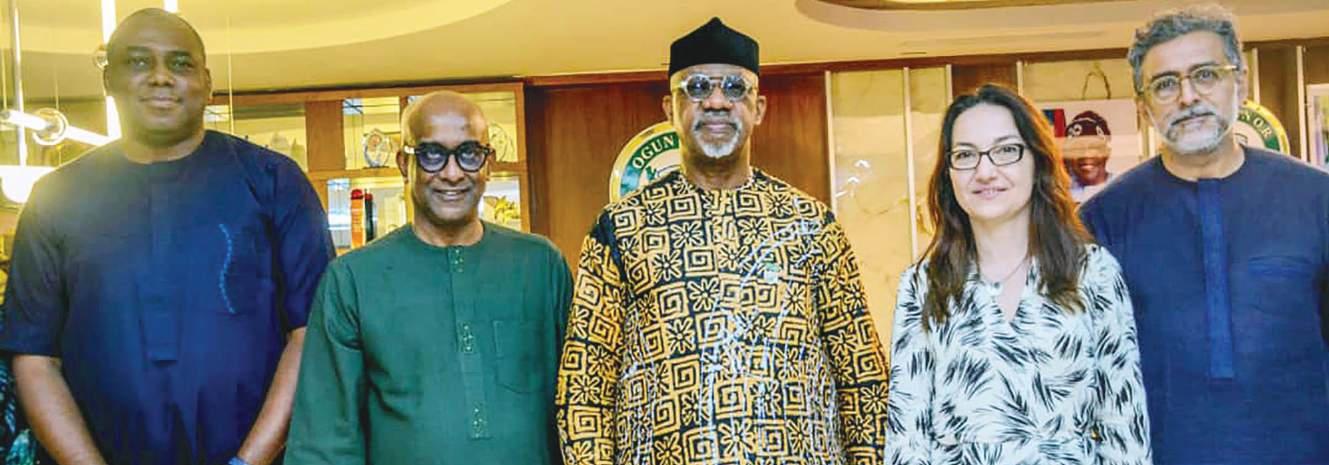
L-R: Task Team Leader, Nigeria for Women Project, Micheal Ilesanmi; Country Director, World Bank Group, Matthew Verghis; Ogun State Governor, Prince Dapo Abiodun; Vice President, World Bank Group, Galina Vincelette, and the Operations Manager, World Bank Group, Taimur Samad, during the visit of the World Bank Group to the Governor’s office, Oke-Mosan, Abeokuta on Wednesday.
Oyedele: New Tax Laws Ease Burden on SMEs, Says Misinformation Remains
Obstacle to Implementation
Urges small businesses to formalise to enjoy corporate tax rate at zero per cent, exemption from 4% development levy, others Charles Odii: over N12 billion mobilised to offer affordable financing for MSMEs
James Emejo in Abuja
Chairman, Presidential Fiscal Policy and Tax Reforms Committee, Mr. Taiwo Oyedele, said President Bola Tinubu had directed that the federal government should cease to tax poverty, and relieve small businesses of tax burden.
Oyedele disclosed this during the Small and Medium Enterprise Agency of Nigeria ( SMEDAN) town hall meeting with Artisans and traders in Abuja.
He encouraged small businesses to register with the Corporate Affairs Commission (CAC) to enjoy corporate tax rate at zero per cent, and also be exempted from paying 4 per cent development levy.
He said the President had ordered that all should be done to ensure small, medium and nano businesses thrived instead of killing the businesses with different taxes.
He said, “You cannot build a society where you don’t allow businesses to breathe. The secret succession for any society is when we allow this 35 million, big, nano micro and small medium
businesses to grow. When you impact MSMEs positively that is Nigeria itself.
“As a result of this, President Ahmed Bola Tinubu said we should stop tasking poverty, capital and seed, we should wait, invest with the people so that the seed will turn into fruits.
“Majority of the businesses are nano, our prayer for them is they should make more than one billion in a year.
“There has been a lot of misinformation, for a reform where small businesses should be excited people are now afraid because of the misinformation.”
He said under the current tax reform all the categorisation apart from millions will be exempted from corporate income tax.
This, he said, was part of the CAC SMEDAN partnership where the corporate Affairs is registering small businesses for free.
Oyedele said, “With this free registration the Corporate Affairs Commission is receiving 5,000 applications every day.
“This is one of the deliberate policies by the government to
encourage businesses to formalise.
“Under this new reform tax law, employees are completely exempted from all forms of taxes.”
He said, “For big companies, there is a provision to reduce their corporate tax rate from 30 per cent to 25 per cent. There are
companies doing more one billion a year, there is also a lot for them.
If you pay VAT on products to do with your business, vehicles, mobile phones including airtime that is used for business can be claimed back.
This is not for small businesses
but you can claim all these back with the receipts.”
In his remarks, Director General of SMEDAN, Mr. Charles Odii, said over N12 billion had been mobilised in affordable financing for MSMEs through strategic partnerships with public and
private sector institutions, thereby improving access to capital nationwide. He said this is in addition to Tinubu’s initial N50 billion for nano businesses, N75 billion for the SMEs, and N75 billion for manufacturers.
At Pre-Ramadan Assembly, Shariah Council Condemns Terrorism in Nigeria
Urges government to protect the vulnerable
The Supreme Council for Shari’ah in Nigeria (SCSN) yesterday restated its unequivocal opposition to terrorism in all its forms, calling on the government to prioritise the protection of lives and adopt both security and peaceful reconciliation measures to address insecurity across the country.
The position was reiterated yesterday, in Abuja, at the council’s Annual Pre-Ramadan Lecture and General Assembly, where the
President of the council, Dr Aliyu Umar, said the sanctity of human life remains non-negotiable, regardless of religious or ethnic identity.
“The Council unequivocally condemns terrorism in all its forms, and demands that the Government fulfil its constitutional duty to protect every Nigerian life through both security action and peaceful reconciliation, including the aggrieved victims,” SCSN said.
In response to the ‘concern and
Stakeholders Advocate Stronger Protection Of Civic Space, Media Freedom
Folalumi Alaran in Abuja
Stakeholders in Nigeria’s democratic space, on Thursday, called for stronger protection of civic space and media freedom, stressing the need for dialogue, collaboration and lawful engagement among state and non-state actors.
The stakeholders spoke at a multi-stakeholder roundtable on strengthening civic space advocacy and media engagement, organised by the Kimpact Development Initiative (KDI) in Abuja.
Speaking at the event, the Executive Director of KDI, Mr. Bukola Idowu, said democracy was sustained not only through elections but also through everyday civic participation, responsible media
practice and transparent institutions.
Idowu noted the media played a critical role in shaping public perception and amplifying civic voices within the appropriate legal and democratic framework.
He explained the roundtable was designed to bring together policymakers, security agencies, human rights bodies, the media and civil society organisations to deepen mutual understanding.
According to him, the engagement would focus on how laws, particularly the Public Order Act, are interpreted and applied, and how such interpretations affect fundamental rights to peaceful assembly, expression and association.
Idowu said: “Strengthening this democratic ecosystem is our shared
responsibility. This is not a forum for accusation but for dialogue, a space to listen, clarify and jointly explore pathways that balance public order with democratic freedoms.”
He noted that Nigeria’s civic space remained the arena through which citizens expressed views, organised peacefully and held institutions accountable, but warned that the space continued to face legal and operational pressures.
In his goodwill message, the Minister of Interior, Dr Olubunmi Tunji-Ojo, called on all stakeholders to work together in the national interest to protect civic space.
Tunji-Ojo, represented by the ministry’s Information Officer, Mr. Otunyemi Adetayo, said civic space must be safeguarded through
lawful engagement, mutual respect and adherence to constitutional principles.
He said the ministry remained open to dialogue and partnerships aimed at promoting internal security while protecting fundamental freedoms and public trust.
“The protection of media freedom and journalists is very important. Journalists must be able to carry out their lawful duties without intimidation, harassment or unlawful detention,” he said.
The minister added the ministry supported engagements on journalistic safety, ethical reporting and a review of relevant legal frameworks to align with constitutional guarantees and international best practices.
helplessness’ of the people on persistent insecurity and terrorism across the country, the Council stated that it has intensified its advocacy for the institutionalisation of peaceful reconciliation as a core pillar of non-kinetic peacebuilding.
“Every human life, Muslim or Christian, is sacred and inviolable. The government must live up to its constitutional responsibility of protecting the lives, property and dignity of all Nigerians without discrimination,” Umar added.
He described the annual assembly as more than a routine religious gathering, noting that it serves as a platform for moral leadership and principled engagement on issues affecting the Muslim Ummah and the Nigerian nation.
“This annual assembly is not a routine event, but a sacred trust and a strategic responsibility through which the Council provides religious guidance, moral leadership and responsible engagement on national issues,” he said.
Reviewing the council’s activities since the last Ramadan, Umar said the SCSN has remained actively involved in national discourse, guided by justice, restraint and the higher objectives of Shariah.
On tax reform, he said the council intervened during the legislative process to highlight the socio-economic implications of proposed fiscal policies, particularly
their impact on ordinary Nigerians and vulnerable groups.
“Our position has consistently been anchored on justice, equity and the obligation to mitigate hardship and unfair burden on the citizenry.
“It is our considered view that the National Assembly should conduct a public hearing and more importantly, undertake a comprehensive forensic review of all laws passed since the commencement of this 10th Assembly,” he said.
Umar also rejected what he described as “false and inflammatory propaganda” around claims of religious genocide, warning that such narratives deepen division, mistrust and national instability. The council further opposed foreign interference in Nigeria’s internal affairs and rejected the establishment of any foreign military base in the country, while reaffirming that the religious freedom of Nigerian Muslims is constitutionally guaranteed.
“The Nigerian Muslim Ummah will not accept any form of suppression of its faith, the freedom of which is expressly protected by the Constitution,” Umar said.
In his remarks, the Madakin Zazzau, Muhammadu Munir Ja’afaru, said the Council has since its establishment, served as a credible and principled voice of the Nigerian Muslim community.
MACARTHUR
DAVOS 2026: WHY GLOBAL CAPITAL IS RETHINKING NIGERIA
The Nigeria House is open for partnership, industrialisation, and mutual respect, reckons ESEBAMEN CLEMENT
LESSONS ON PATRIOTISM AND A LOST CAUSE JOSHUA J. OMOJUWA contends that Nigerians could do more for their country
EDEM writes that NCDMB played significant roles in the $30bn expected investments
A HARVEST OF NEW OIL AND GAS INVESTMENTS
The Nigerian oil and gas industry has been buzzing in the last few days over the announcement made by the Global Chief Executive Officer of Shell, Mr. Wael Sawam at last week’s visit to President Bola Tinubu, that the international oil company would invest $20bn in the Bonga South West deep water project.
This is coming on the heels of the same company’s final investment decision (FID) on the $5bn Bonga North deepwater project in December 2024. Even more recent is Shell Nigeria Exploration and Production Company (SNEPCo) investment of $2bn HI Field Gas project, in partnership with Sunlink Energies and Resources Limited in October 2025. A similar recent investment is TotalEnergies $500m UBETA Gas project, that took FID in September 2024.
The role of the Nigerian Content Development and Monitoring Board (NCDMB) in enabling this latest investment and many other projects cannot be over emphasised. By adapting the three new Presidential Directives, otherwise known as Executive Orders (Eos) on the oil and gas industry and developing new Nigerian Content contracting guidelines, NCDMB played significant roles in the harvests of nearly $30bn new investments.
The avalanche of new oil and gas investments in the last two years of President Bola Ahmed Tinubu’s administration signposts the return of confidence by the international community and favourable investment climate. Evidently, the roll out of three Executive Orders (EOs) by President Tinubu in March, which offered incentives and clarified application of local content laws unlocked new capital in the sector.
Under the leadership of Engr. Felix Omatsola Ogbe, (NCDMB) has been the path of steady, strategic delivery — with laser focus on enabling projects and a blend of policy fidelity, practical interventions. Recently the Board has adopted an increasingly visible community-focused orientation that repositions local content as a national development engine rather than a purely industrial metric.
In catalysing new projects, NCDMB ensures that Nigerian Content opportunities are maximised, in line with the provisions of the Nigerian Oil and Gas Industry Content Development (NOGICD) Act. While granting waivers where applicable, the Board ensures that competent local service companies execute key scopes of projects and existing capacities are utilised and jobs are created. The Board also guarantees that these
major projects impact and grow the local economy significantly, while creating new legacy capacities in the sector.
As NCDMB enters its 16th year in 2026, the Board under Ogbe’s leadership reflects the evolution of an institution that has significantly expanded Nigeria’s footprint in the oil and gas sector and is now deepening its commitment to shared prosperity in both industry and communities.
A key indicator of progress is the rise in Nigerian Content levels, which climbed to about 61% across monitored projects in 2025 — a figure reflecting broader domestic participation in goods, services and skilled labour. This result underscores multiple elements of Ogbe’s approach: targeted financing, systematic capacity building, and the innovative, inclusive deployment of presidential directives to reduce contracting cycles and prioritize indigenous capability.
Financing and industrial scale-up remain foundational. Under Ogbe, NCDMB in December 2025 launched a $100 million Equity Investment Scheme — part of the broader Nigerian Content Intervention Fund — designed to provide growth capital to indigenous oil and gas service companies with demonstrable potential. Complementary initiatives, including partnerships around the Africa Energy Bank and other development finance institutions, are helping Nigerian firms secure the long-term capital required to compete for larger, more technically complex projects.
Ogbe has also distinguished himself in translating presidential directives into impactful operational reforms. The Board’s recalibration of contracting cycle guidelines and compliance frameworks reflects an innovative and inclusive application of the 2023 Presidential Directives on Local Content. These adjustments align seamlessly with the Tinubu administration’s national economic strategies — particularly the 8-Point Agenda — by shortening procurement timelines, eliminating
redundant layers, and encouraging genuine technology transfer and value retention within Nigeria. Ogbe’s leadership style avoids confrontation in favour of structured engagement and practical collaboration with industry operators.
Yet one of the most consequential shifts in Ogbe’s era is the renewed commitment to communities. The Board’s Community Contractors Scheme, along with its “Backto-the-Creek” and outreach programmes, has meaningfully expanded local participation. Through micro-contracts, grassroots procurement, and targeted empowerment initiatives, communities are being woven directly into the local content value chain. By 2025, dozens of community contractor disbursements had been recorded — a signal that the Board is intentionally ensuring that local content is not an abstract policy but a lived experience for host populations.
This community-centred focus is not a departure from NCDMB’s industrial mission; it is a necessary and overdue complement to headline initiatives. Industrial growth is unsustainable without local supply chains, trained labour, and community ownership. By bridging boardrooms and communities, Ogbe is shaping a more resilient local content ecosystem.
Human capacity development has also expanded. Training programmes — covering vocational, technical, and industry-specific skills — have collectively delivered millions of training man-hours across thousands of beneficiaries since the Board’s inception, with new emphasis under Ogbe on workplace readiness. Models such as the 60-20-20 training structure ensure that learning outcomes directly translate into field competence. This investment strengthens indigenous firms, reduces expatriate dependence, and equips Nigerians to fill emerging roles associated with project final investment decisions.
Beyond these, other important accomplishments include the institutional strengthening of the Nigerian Content Academy, the continued evolution of the Hackathon as a pipeline for digital innovation, and ongoing growth of the Nigerian Oil and Gas Opportunity Fair (NOGOF) as a reliable marketplace connecting indigenous suppliers to upcoming projects. These initiatives reinforce NCDMB’s role as an enabler of competitiveness, innovation, and sustainable participation.
Prince Edem is a public affairs analyst
The Nigeria House is open for partnership, industrialisation, and mutual respect, reckons ESEBAMEN CLEMENT
DAVOS 2026: WHY GLOBAL CAPITAL IS RETHINKING NIGERIA
The mood in the hallways of Davos this year was distinct. Under the polite banner of "A Spirit of Dialogue," the subtext was undeniable: we have entered an age of fierce geoeconomic competition. The WEF Global Risks Report confirmed what every CEO whispered over coffee—fragmentation is here, supply chains are vulnerable, and the search for a "neutral growth engine" is on. For decades, the global investment community viewed Nigeria through a single, simplistic lens: a massive consumer market. The pitch was always "demographics"—200 million people waiting to buy toothpaste and fintech apps. But at Davos 2026, the narrative have shifted. The launch of the "Nigeria House"—a unified sovereign platform—signaled that Africa’s largest economy is no longer pitching itself merely as a market for finished goods. We are positioning ourselves as the critical "hedge" in a fractured global economy: a manufacturing hub, an energy guarantor, and a supply chain partner for the Global North.
The first signal from Davos was the death of energy idealism. The conversation has moved from a binary "oil vs. renewables" debate to a pragmatic focus on energy security. The world needs gas as a transition fuel, and Europe, specifically, needs non-Russian options. This validates Nigeria’s long-held strategy. We are not just an oil producer; we are a gas province with some oil. But the opportunity is no longer just extraction; it is industrialization. The message we delivered to partners was clear: Don’t just come for the LNG; come for the petrochemicals. Come for the gas-to-power infrastructure that stabilizes the region. In a world short on secure energy, Nigeria offers the reserves—if partners bring the capital to unlock them.
Secondly, the global tech sector has woken up to a hard reality: the AI revolution is physical. You cannot have data centers without stable power, and you cannot have chips without rare earth
minerals. This puts Nigeria at the center of the next industrial revolution. Our solid minerals sector—rich in lithium and other critical inputs—is no longer a mining play; it is a national security asset for the global tech stack. The era of exporting raw dirt is over. Nigeria is pivoting toward local processing. For the smart investor, the value is not in the pit, but in the battery factory built next to it. We are offering the world a chance to diversify the tech supply chain away from monolithic dependencies in Asia. Fixing the "Soft Infrastructure". Of course, the skeptical investor asks: "What about the risk? What about the governance?" This is where the internal work begins. As a governance strategist who has advised European governments on policy architecture, I know that hard infrastructure fails without "soft infrastructure"—the rule of law, policy consistency, and national cohesion. The current administration’s push to raise the tax-to-GDP ratio to 18% and the aggressive focus on fiscal discipline are signals of a state cleaning its house. We are moving from debt-reliance to revenue-reliance. But we also need to keep strengthening the civic fabric of the nation, building the non-partisan stability that long-term capital demands. We need jobs fast to aid all these ambitions and we must focus on creating them.
The investors who win in the next decade will be those who look past the headlines and see the structural shift. The "China Hedge" isn't in Vietnam or Mexico alone; it is in a revitalized, industrialized West Africa. Nigeria has moved from a "Spirit of Dialogue" to a "Spirit of Delivery." We are ready to be the engine room, not just the marketplace. The door at Nigeria House is open, but the entry price is no longer just aid or loans—it is partnership, industrialization, and mutual respect.
JOSHUA J. OMOJUWA contends that Nigerians could do more for their country
LESSONS ON PATRIOTISM AND A LOST CAUSE
Espionage has been a tool of geopolitical battles for centuries. Some countries go as far as deploying sleeper agents; secret agents that remain inactive for a long period of time, all along setting themselves up in a secure position. At times, such agents, whilst of one nationality are raised from childhood to be of another nationality. That way when they eventually get deployed as assets in such a country, they’d fit in like one of the citizens. Have you ever thought of it? That were a country in a desperate need to deploy agents in Nigeria, would they need to raise sleeper agents who are raised to be Nigerian, so they’d fit in when deployed or could such an agent be selected amidst a myriad of Nigerians who’d be ready to sell their country for a few bucks?
Nigeria does not seem to stand a chance at times. I once heard the historian Max Siollun say via X Space that there is no other country where the people are more self-deprecating like Nigerians. It is hard to argue against this as a Nigerian. We can debate the how it arrived here, but the outcomes are not palatable; quite a lot of Nigerians would rather root for the enemy than their country. Nigeria has a lot of re-orientation and orientation to do to align its citizens with its objectives as a nation. This lack of patriotism often reflects in the way citizens miss out on good government policies, because of their cynicism. Take the opportunities offered by the students loan scheme, Nigerian Education Loan Fund (NELFUND), for instance. We also miss out on what matters, because we are often distracted by what doesn’t.
The United States Government led an operation in Venezuela that led to the capture of Nicolas Maduro, the president of the country at the time. Some American journalists were privy to the military action, but they elevated their love for their country over their commitment to report the news, by keeping the information to themselves in order not to jeopardize it. There are many ways to look at that operation and many positions to take on the legality or illegality of one country arresting another country’s leader and whether this was within the ambit of the rules based global order. What cannot be debated in this case is the love and sense of duty of the United States’ journalists to their country. There are many reasons the U.S. often wins on many fronts, this is one of why.
of views if allowed to run was cut short to save the government of being seen to embarrass its guest. That producer was not in view, and we may never know who, but they stepped up when it mattered most. We could speak to the security lapses that led to that moment, and I do hope those responsible get to learn why such breaches are unacceptable but amidst such an accident, if you were not paying attention, you would have missed out on the person who saved the day. If both President Bola Tinubu and President Recep Tayyip Erdoğan get their wish, then Nigeria and Turkiye could raise trade between the countries from about $700m to $5b. This deal was signed moments after the distraction that’d help many miss one of the essences of the visit. What matters will not trend whilst what doesn’t did and we wonder why success is never the norm for most populations. You may not know Michel Nkuka Mboladinga but you ought to know the Democratic Republic of Congo’s (DRC) first Prime Minister Patrice Lumumba. During the 2025 African Cup of Nations (AFCON), Mboladinga made a statuesque tribute to the legendary Congolese leader. He became a symbol of pride, history and nostalgia for Congolese fans and indeed some other Africans who felt a shared sense of respect for the late leader. After the DRC was knocked out of the tournament, Mboladinga was reportedly offered some money by the host country, Morocco, to stay for the rest of the tournament but he declined. Here, he was making it clear he wasn’t a statue for hire; he stood for his country and that was it. In this case, literally as it was a figurative stand.
Clement, a Governance
Strategist and Systems
Adviser
President Bola Tinubu’s state visit to Turkey has been centered around the video clip of him tripping after a wandering cameraman appeared to hit him from behind. Interestingly, the producer of the broadcast immediately picked a different camera view. It takes some sense of awareness and judgment to decide that a clip that’d have gotten the Turkiye state visit a lot more millions
There is a lot to be said about Nigeria and how it hasn’t shown up enough for its citizens through the years. Upon reflection, some could argue Nigeria has done a lot amidst all its challenges and its limited resources. The truth lies somewhere in-between. You can always argue it could do more.
Omojuwa is chief strategist, Alpha Reach/BGX Publishing
Editor, Editorial Page PETER ISHAKA
Email peter.ishaka@thisdaylive.com
SOLUDO AND SIT-AT-HOME ORDER
The Southeast needs the support of security agencies for businesses to thrive
The closure of Onitsha Main Market for one week following traders’ failure to open for business despite Governor Chukwuma Charles Soludo’s directive to disregard the Monday sit-at-home order linked to the Indigenous People of Biafra (IPOB) is generating a needless controversy. The media aide to the Governor, Ejimofor Opara, narrows the issue to economic sabotage: “If you look at the humongous economic loss during each Monday sit-at - home you will discover that it is a rip off on the economy and that of the business community.”
We endorse the position of the Anambra State Government. Initially conceived as a display of civil disobedience to demand the release of IPOB's detained leader, Nnamdi Kanu, these Monday shutdowns have become a social problem. The economic hemorrhage is multiplied by the fact that most people in the Southeast operate in the informal sector as traders, shop owners, artisans, craftsmen, transporters, industrialists, wholesalers, and retailers of motley merchandise. Shutting down the economic space and closing schools in the entire zone has become counterproductive to whatever point IPOB may be making. But the sit-at-home order is also indicative of a larger erosion of political authority and serial failure of the State to restore law, order, and security.
violence. During the lockdowns, businesses, offices, markets, and other essential services are compelled to remain closed. Urban streets, interstate highways and sometimes schools are usually deserted.
We must put an end to the lawlessness that has claimed the lives of hundreds of people and rendered economic activities almost prostrate in the entire Southeast
T H I S D AY
EDITOR SHAKA MOMODU
DEPUTY EDITOR WALE OLALEYE
MANAGING DIRECTOR ENIOLA BELLO
DEPUTY MANAGING DIRECTOR ISRAEL IWEGBU
CHAIRMAN EDITORIAL BOARD OLUSEGUN ADENIYI
EDITOR NATION’S CAPITAL IYOBOSA UWUGIAREN
This is the fifth year since IPOB first imposed its sit-at-home order in the Southeast. On those days, the roads, markets and many schools are usually deserted more out of fear. But it is not only Soludo that is concerned about the implications of the order on the livelihood of the people. A sobering May 2025 report by geopolitical risk analysis firm, SBM Intelligence, titled ‘Four Years of Disruption: Unmasking the Impact of IPOB’s sit-at-home order in Southeast Nigeria,’ documented how this weekly act of protest has morphed into a recurring cycle of fear, economic paralysis, and tragic
THE OMBUDSMAN KAYODE KOMOLAFE T
EDITOR-IN-CHIEF/CHAIRMAN NDUKA OBAIGBENA
GROUP EXECUTIVE DIRECTORS ENIOLA BELLO, KAYODE KOMOLAFE, ISRAEL IWEGBU
DIVISIONAL DIRECTORS SHAKA MOMODU, PETER IWEGBU, ANTHONY OGEDENGBE
What began as a symbolic gesture of solidarity quickly descended into a far more complex and coercive reality. The analysis also underscores the sinister role of heavily armed elements—often referred to in hushed tones as ‘unknown gunmen’—in enforcing compliance. Commercial nerve centres like Onitsha, with its sprawling main market, and Aba's Ariaria International Market, a hub for manufacturing and trade, effectively become ghost towns every Monday. Due to these enforced shutdowns, the SBM report estimates regional losses to have exceeded N7.6 trillion within the first two years alone. The transport sector, a lifeblood for inter and intra-state commerce, has bled profusely. The report also touches upon how agricultural products often rot due to transportation blockades and how investor confidence, both local and international, has plummeted based on their risk assessments.
The guerrilla-style attacks on security installations and personnel have escalated the cycle of violence, leading to increased militarisation. With frequent clashes between security forces and ‘unknown gunmen,’ there have been many unexplained extrajudicial killings with students across the five Southeastern states—Abia, Anambra, Ebonyi, Enugu, and Imo— losing countless schooling days. Access to healthcare and other essential services also becomes perilous on these enforced lockdown days.
Now that Soludo has decided to stand up to the miscreants who make life difficult for the people of his state, he needs the support of the security agencies. We must put an end to the lawlessness that has claimed the lives of hundreds of people and rendered economic activities almost prostrate in the entire Southeast. There is now a test of will between the governor and IPOB. In the interest of Anambra people, the governor must win.
Letters in response to specific publications in THISDAY should be brief (150-300 words) and straight to the point. Interested readers may send such letters along with their contact details to opinion@thisdaylive.com. We also welcome comments and opinions on topical local, national and international issues provided they are well-written and should also not be longer than (750- 1000 words). They should be sent to opinion@thisdaylive. com along with photograph, email address and phone numbers of the writer.
THE DEFECTION OF ABBA YUSUF TO APC
After months of speculations, Governor Abba Kabir Yusuf of Kano State has finally dumped the New Nigeria People’s Party (NNPP) for the ruling All Progressives Congress (APC). Since announcing his decision, citing internal wranglings and lingering court cases within the NNPP, the governor has left many of his supporters and political loyalists in suspense. However, his departure from the NNPP did not come with the mandate of the people who voted him into office. Instead, it marked a political separation from his long-time mentor and benefactor, Senator Rabiu Musa Kwankwaso, who nurtured and supported him politically for over two decades. Governor Yusuf rose to power in 2023 largely due to Kwankwaso’s influence and political machinery. In the 2019 governorship election, Abba contested under the PDP but failed to defeat Abdullahi Umar Ganduje, who was then seeking a second term. Ganduje himself was once Kwankwaso’s deputy and political ally before the two fell apart.
With Abba’s defection to the APC, political analysts
have been divided in their reactions to what many describe as a risky political gamble. Critics accuse the governor of betraying both the electorate and his political godfather, Senator Kwankwaso. They argue that the move may cost him dearly in the 2027 elections. According to this school of thought, Kano voters who elected Abba Kabir Yusuf in 2023 did so largely because he represented the Kwankwasiyya ideology and promised to sustain Kwankwaso’s legacy of service to the talakawa (the common people). It is worth recalling that Abba once served as Commissioner for Works under Kwankwaso’s administration, during which Kano witnessed massive infrastructural development.
By contesting under the NNPP — a party adopted and promoted by Kwankwaso — Abba was expected to demonstrate loyalty and uphold the core principles of the Kwankwasiyya movement.
Although Governor Abba Kabir Yusuf has recorded notable achievements in infrastructure and governance within his two years in office, his decision to part ways
with his political mentor may significantly shrink his support base. Many of those who voted for him in 2023 did so primarily because of Kwankwaso’s endorsement. Winning their trust again under a different political platform may prove difficult. Another challenge confronting the governor is the internal power dynamics within the APC itself. The camps of former APC National Chairman Abdullahi Umar Ganduje and Deputy Senate President Barau Jibrin remain influential political forces in Kano State. Although Abba Kabir Yusuf is now the state leader of the APC by virtue of being governor, how political power will be shared among these blocs remains uncertain and potentially contentious.
On the other hand, supporters of the governor’s defection argue that the move is long overdue. They contend that since Abba assumed office in 2023, Senator Kwankwaso has continued to dictate the direction of governance in Kano State.
Ibrahim Mustapha Pambegua, Kaduna State
Experts Kick against Proliferation of Airlines without AOC by State Govts
Chinedu Eze
Aviation experts have criticised the proliferation of airlines without Air Operator Certificate (AOC), warning that it may lead to safety breaches in the near future.
The experts are of the view that instead of allowing them to operate with other airlines’ AOC, the state governments can acquire aircraft, paint their livery on them and lease them to existing airlines.
This, they stated, will ensure that the operators with AOC will completely
manage the fleet.
The experts said professionally, these airlines may have met the conditions to operate under other airlines’ AOC, as enshrined in the regulation.
But they warned that this could compromise safety when their operations are not effectively supervised.
They noted that as long as the state governments are concerned, they own these airlines and are fully running them, funding manpower development and supervising training with the consent of
the airlines they are operating under their AOC.
The stakeholders also argued that the states that own these airlines may not seem in a hurry to obtain their own AOC, having been given leverage by the aforesaid arrangement.
They are worried that with the current trend, other state governments may take the same system to establish their own airlines, predicting that in the long run, it may lead to safety breaches.
They also advised the Nigeria Civil Aviation
Authority (NCAA) to put a cap to this policy because it is “becoming unwholesome trend.”
Apart from Ibom Air, airlines like Enugu Air, Cally Air of Cross River state, Pioneer Air of Bayelsa, Gateway Air of Ogun state are all operating without AOC.
The Managing Director and CEO of Aero Contractors, Captain Ado Sanusi, said airlines with AOC must ensure operation control of the airline operating under its licence in accordance to the regulation.
“Nobody Knows Cally Air, Enugu Air, Gateway Air in the industry except the airlines they operate under their licence; but to the public, these airlines exist and this creates a challenge because if the rules are not well defined, an infringed passenger may find it problematic who to report to. You have ticketed the passenger and you are using another airline’s AOC. If not well defined there could be conflicts,” Sanusi said.
He suggested that instead of operating their own airlines
under other airlines’ AOC, the state-owned airlines should negotiate dry lease contract with the airlines with AOC and put the names of their states on the aircraft. Sanusi said if this arrangement is well spelt out the leased aircraft can still serve the state as planned by operating agreed schedule from the state to other destinations while the airline that leased the aircraft will maintain it, deploy and train the technical staff.
Oluchi Chibuzor
The Director-General of the Nigeria–China Strategic Partnership (NCSP), Mr. Joseph Tegbe, has emphasised the importance of discipline, scale and long-term thinking as critical pillars for sustainable enterprise development in Nigeria, drawing from China’s national development experience as a practical blueprint for economic growth.
He made the remarks during his presentation
titled, “Hacking Your Personal Economic Growth: Lessons from China’s National Development Journey,” delivered at a 3-day capacity-building seminar with the theme “Leveraging Chinese Partnerships to Scale Nigerian Businesses, organised as part of NCSP’s ongoing efforts to promote structured knowledge exchange and enterprisefocused learning.
Speaking at the session, Tegbe noted that China’s
economic transformation was not accidental, but the outcome of deliberate policy choices anchored on focus, standardization and consistent execution.
He highlighted China’s pragmatic approach to innovation, observing that many Chinese small and medium enterprises began by adapting existing products, proven business models and imported technologies before introducing incremental improvements.
He emphasised that Chinese enterprises excel by mastering a single product or service, replicating it efficiently, and innovating incrementally based on proven models.
He also underscored the role of collaboration, noting that Chinese businesses frequently grow within industrial clusters that share infrastructure, suppliers and labour, thereby reducing costs and enhancing productivity.
Tegbe drew attention to
the centrality of discipline in enterprise growth, describing it as China’s most enduring competitive advantage.
He explained that Chinese entrepreneurs reinvest profits aggressively into machinery, inventory and process efficiency, while maintaining modest lifestyles during early growth phases.
He added that rigorous cost control, accurate financial tracking and a clear understanding of unit economics are essential to
sustaining profitability and achieving scale. He urged Nigerian entrepreneurs to prioritize technical competence, market-driven growth, export readiness, and patient, long-term strategies over short-term hustle. Tegbe reaffirmed NCSP’s commitment to translating Nigeria–China cooperation into practical outcomes that enhance productivity, enterprise development, and economic self-reliance.
Emirates, Air Peace Reinforce Interline Agreement
Stories by Chinedu Eze
Nigeria’s leading airline, Air Peace, has reinforced its partnership with world’s mega carrier, Emirates Airlines by activating their interline agreement, expanding air connectivity between Africa, the UAE and London.
Air Peace in a statement said the agreement would offer passengers of both airlines frictionless, single-ticket travel and with throughchecked baggage, on select routes, which would result in greater travel comfort and convenience for customers.
The agreement also allows Air Peace to connect its extensive West and Central African route system into Emirates’ hub in Dubai, and on key destinations including
London Heathrow, London Gatwick and London Stansted, Abidjan, Accra and, of course, Lagos. With huge demand for travel between Nigeria and the United Kingdom, providing Air Peace passengers with increased choice, flexibility, and global reach.
Speaking on the development, Emirates’ Deputy President, and Chief Commercial Officer Adnan Kazim, said: “Enhancing our interline partnership with Air Peace allows us to expand our footprint across more of Africa, creating new opportunities for people to fly better with Emirates, while helping international tourists explore more of the region, via Lagos. We remain committed to working with strategic partners such as Air
Peace to further strengthen Nigeria’s aviation, tourism, and trade sectors.”
Also speaking, Chief Commercial Officer, Air Peace, Nowel Ngala, said: “This interline agreement with Emirates represents a major step in Air Peace’s strategic vision to connect Africa more efficiently to global markets. By combining our strong regional presence with Emirates’ extensive international network, we are delivering seamless connectivity, improved travel experience, and greater access to key global destinations for African travellers. This partnership further reinforces Air Peace’s role as a critical bridge between Africa and the global aviation ecosystem.”
Travelport, Air Peace Ink Multi-year Content Deal
Travelport, a leading global multi-source content provider, powering travel bookings worldwide, has announced a new multi-year content agreement with Air Peace Limited, Nigeria’s leading airline.
The strategic partnership enhances Air Peace’s content distribution across Central
and West Africa and key international markets, while enabling the airline to leverage Travelport’s advanced retailing, rich content, and branding capabilities through Travelport+.
Chief Commercial Officer at Travelport, Damian Hickey, said: “We are delighted to
expand our partnership with Air Peace. The airline is a strategically important airline in West and Central Africa. This agreement strengthens our content offering in these key markets while enabling Air Peace to extend its global reach and deliver enhanced, branded content to travel agencies worldwide.”
FAAN Attains Dual ISO Certifications
The Federal Airports Authority of Nigeria (FAAN) has attained the ISO 9001:2015 (Quality Management System) and ISO 14001:2015 (Environmental Management System) certifications.
The certificates were presented to the Managing Director/Chief Executive, Mrs. Olubunmi Kuku, at the FAAN’s headquarters in Lagos, marking the culmination of months of dedicated effort, rigorous internal auditing, and organisational improvements.
ISO 9001:2015 is an international standard that shows how an organisation
has strong systems in place to consistently deliver quality services, meet customer expectations, and continuously improve how it operates, while ISO 14001:2015 confirms that the organisation manages its activities in an environmentally responsible way by reducing waste and pollution, complying with environmental laws, and promoting sustainable
operations.
Granted by MSECB, Canada, the dual certifications confirm that FAAN’s operational and environmental management systems now meet globally recognised standards, placing Nigeria’s airport authority firmly among modern, competitive, and forwardlooking airport organisations worldwide.
Bi-Courtney Engages Airline Partners to Enhance Passenger Experience
Air
WAtCh
Begging Disposition of Nigerian Airport Officials
handling company brought his bag and he came to pick it later.
Group Business Editor
Eromosele Abiodun
Deputy Business Editor
chinedu Eze
Comms/e-Business Editor
Emma Okonji
Asst. Editor, Energy
Emmanuel Addeh
Asst. Editor, Money Market
Nume Ekeghe
Correspondents
Kayodetokede(CapitalMarkets)
James Emejo (Finance)
Ebere Nwoji (Insurance)
reporter Peter Uzoho (Energy)
The management of BiCourtney Aviation Services Limited (BASL), operators of Murtala Muhammed Airport Terminal Two (MMA2), said it has commenced a series of strategic engagement sessions with airline partners as part of ongoing efforts to enhance passenger experience and align operational plans ahead of anticipated traffic growth. The engagement series, according to the company, formally began last week with visits by the BASL management team to the corporate offices of United Nigeria Airlines, Aero Contractors, and ValueJet Airlines, where extensive discussions were held at executive level with the Managing Directors and Chief Executive Officers of the respective airlines
on operational performance during the December peak travel period and the implications for future growth.
The sessions provided opportunities for candid dialogue with each airline as United Nigeria Airlines highlighted its fleet expansion plans for 2026 and stressed the importance of ensuring that terminal capacity, operational coordination, and infrastructure upgrades keep pace with airline growth.
Aero Contractors and ValueJet Airlines echoed similar concerns, emphasizing the need for effective crowd management and streamlined passenger processes to maintain seamless operations as traffic volumes increase.
The incident of IShowSpeed, an American YouTuber, Darren Jason Watkins Jr., complaining about Nigerians begging him money (show us love) on his arrival in Nigeria, has again brought to the fore the embarrassing attitude of some Nigerians, especially airport officials soliciting for or extorting money from air travellers.
IShowSpeed complaint gained traction because of his personality, but over the years, this disgraceful attitude has literally been imbedded in the fabrics of airport workers to the extent that it has been taken for granted despite the fact that it paints despicable image of Nigeria to the outside world.
Security operatives like the National Drug Law Enforcement Agency (NDLEA), the Nigeria Immigration Service (NIS) the Nigeria Customs Service (NCS) usually look for loopholes to indict passengers and blackmail them into giving them money. They take the advantage of arbitrarily interpreting the law to indict some ignorant passengers and extort them or deliberately delay them until they “settle” so that they will not miss their flights.
THISDAY investigations revealed that most often the Aviation Security (AVSEC) officials of the Federal Airports Authority of Nigeria (FAAN) work in cahoots with Custom officials.
This was further confirmed on Monday when THISDAY monitored the movement of passengers entering the Departures and passing their luggage through the stateof-the art x-ray machines (Orion 927DX).
While there was not the usual table, the security operatives of NDLEA and NCS were intercepting some passengers’ and further screening their luggage off the x-ray machines, a spot that creates the interface where extortion could happen.
On the arrival side, a passenger who arrived on December 26 with Delta Air Lines from Atlanta to Lagos (name withheld), narrated how he was “harassed” by Immigration official who softly told him to bless him and when he pretended not to understand him, “he started playing tough.”
“This is our country and nobody can intimidate me. Everyone was just finding ways to extort or beg from me. It was shameful. I was just thinking what those foreigners who arrived with us would be thinking,” he told THISDAY.
The passenger also told THISDAY that because of delay, he could not pick his bag and had to leave it and travel to Owerri. But the airline through the
“The bag was ripped open and some of the things in the bag were stolen. I don’t know who to hold responsible. They said I should write to the airline, but I didn’t have time for that long bureaucracy. I returned with the airline back to the US. I still faced workers asking me for money on my way back to the US,” he revealed to THISDAY.
THISDAY spoke to stakeholders who have been providing services at the airport over the years and they narrated personal experiences.
One of them, who had worked at the Lagos airport for over 35 years, said that despite several measures taken by FAAN to stop extortion and soliciting for gifts, the culture has persisted to the detriment of Nigeria’s image both at home and abroad.
“All the efforts we read and watch in the media by FAAN to eradicate this habit is summed up by the phrase: ‘culture eats strategy for breakfast’. The immigration e-passport control system in Abuja and Lagos airports is working fine. No hassles there. But the rest of the agencies are on business as usual mode. They tone down their aggression while the anti-solicitation is launched and the campaign is loud. They return to status quo the next month; or, they devise ways to beat the new strategy. Practical experiences by travellers reveal they still solicit for money in the airport. They obtain unofficial money from new or non-informed travellers. They hang around between the car parks and the entrance to terminal building. They represent the staff inside the terminal building. They know all the workings so they offer you “help” that will cost you.
“FAAN cannot oversee other agencies in the airport that have their assignments, roles and reporting lines different from FAAN and Ministry of Aviation like Quarantine department. The cartels can overwhelm the FAAN’S supervisor in charge of a terminal. They are organised and deeply entrenched. People avoid talking about this aspect, but if you’ve worked long enough at MMIA (international terminal), you must have felt and seen their impact. Managers come and go but they remain,” the stakeholder said.
“In the cargo terminal, the security agencies must have the courage to back FAAN to route them out. FAAN managers must have the courage to insist on implementing their innovations and strategy to the point of noticeable results.
Chinedu Eze
Acting Group Politics Edito r DEJI ELUMOYE
Email: deji.elumoye @thisdaylive.com
08033025611
Will Aiyedatiwa’s N524bn 2026 Budget Improve Living Standard in Ondo?
Fidelis David in this report dissects the N524bn 2026 budget of the Sunshine State recently signed into law by Governor Lucky a iyedatiwa, probing whether the ambitious fiscal blueprint will translate into visible change in the daily lives of residents or join the long list of budgets whose impact never fully saw the light of day.
When Governor Lucky Aiyedatiwa recently appended his signature to the 2026 Appropriation Bill, the moment went far beyond constitutional routine. It marked a defining turning point in Ondo State’s fiscal journey, one that shifts governance from planning and promises to the harder task of performance, discipline and proof.
The N524.41 billion 2026 budget, christened the “Budget of Economic Consolidation,” is the largest spending plan in the state’s history. Yet, as the ink dries, a critical question looms: will this ambitious financial framework translate into tangible improvements in the lives of ordinary residents, or will it fade into the familiar cycle of lofty projections and limited impact?
Aiyedatiwa insists the budget represents a decisive break from the past.
“This occasion is far more than a statutory requirement. It is a solemn reaffirmation of our collective commitment to the progress, stability and sustainable development of our beloved Sunshine State”, the governor said at the signing ceremony.
The 2026 budget allocates N220.83 billion (42.11%) to recurrent expenditure and N303.58 billion (57.89%) to capital projects, reinforcing the administration’s emphasis on infrastructure, economic growth and long-term productivity.
According to the governor, the document is not merely an annual spending plan but a strategic response to Nigeria’s prevailing economic headwinds.
“The 2026 Budget of Economic Consolidation is a strategic blueprint designed to respond effectively to current economic realities while positioning Ondo State on the path of self-reliance, resilience and enduring prosperity,” Aiyedatiwa explained.
Yet beneath the optimism lies a familiar concern: implementation capacity. With inflation biting hard, exchange rates volatile and revenue flows uncertain, many observers argue that the real test of the budget lies not in its size but in its execution discipline.
A breakdown of sectoral allocations highlights the government’s priorities. Infrastructure Development leads with N144 billion (27.6%), followed by Public Finance with N95 billion (18.1%). Education receives N64.5 billion (12.3%), while Health is allocated N59.5 billion (11.4%). Agriculture gets N29.6 billion (5.7%), Administration of Justice N20.5 billion (3.9%), and Community Development N16.3 billion (3.1%).
Other allocations include Regional Development at N15.5 billion (3.0%), General Administration N35 billion (6.7%), Legislative Administration N13 billion (2.5%), Trade and Industry N8.7 billion (1.7%), Environment and Sewage Management N8.7 billion (1.7%), Energy N7.3 billion (1.4%), and Information N5.5 billion (1.1%).
From road construction and water supply to schools, hospitals and power infrastructure, the figures suggest a government determined to consolidate the recovery gains recorded in 2025. Still, residents are asking the crucial question: will these allocations result in completed projects or stalled contracts?
Agriculture remains a central pillar of the budget, reflecting Ondo State’s agrarian foundation. Governor Aiyedatiwa said targeted investments would focus on modern farming techniques, improved access to credit and sustained support for smallholder farmers.
“This budget strengthens our commit-
man capital development. The governor highlighted plans for school renovations, teacher training and digital skills development, alongside investments in healthcare infrastructure and insurance expansion.
“Our focus is not just on physical infrastructure, but on people. Education and healthcare remain central to our development agenda.”
Yet questions persist. Will classrooms be delivered on schedule? Will hospitals be fully staffed and equipped? And will these investments be evenly distributed across both urban and rural communities?
Perhaps the most scrutinised aspect of the budget is its financing structure. According to the Commissioner for Budget and Economic Planning, Olaolu Akindolire, revenue projections include N2.38 billion from federal and non-federal assistance, N7.9 billion from internally generated revenue, N6.05 billion from grants and aid, and N72.92 billion in proposed borrowing from local, foreign and development partners. Akindolire described the budget as “strategic, realistic and people-focused,” noting that borrowed funds would be tied to critical development and intellectual capital projects.
ment to food security and agricultural transformation,” he noted.
However, farmers across rural communities will be watching closely to see whether these funds reach the grassroots or remain
trapped within bureaucratic layers that have historically slowed impact.
Education and health together command nearly N124 billion, underscoring the administration’s emphasis on hu-
Nevertheless, analysts caution that rising debt exposure could place pressure on future budgets if revenue targets fall short an issue the administration must manage with restraint and transparency.
NOTE: Interested readers should continue in the online edition on www.thisdaylive.com
Mrs Tinubu: Teachers Are Unsung Architects of Great Nations
Wife of the President, Senator Oluremi Tinubu, has eulogised teachers globally describing them as unsung architects of great nations.
The First Lady, Senator Oluremi Tinubu, has called on Nigerian teachers to embrace innovation as the Federal Government and state governors unveiled fresh measures to revive the education sector under the Renewed Hope Agenda.
Delivering a keynote address at the National Teachers’ Summit 2026, themed “Empowering Teachers; Strengthening the Education System,” held at the State House Conference Centre, Abuja, Mrs Tinubu stressed that “meaningful educational and national progress can only be achieved when teachers are adequately equipped, motivated, and supported.”
Citing herself as a former classroom teacher, the First Lady underscored the profession’s enduring influence.
According to her: “Teachers are the quiet architects of great nations, shaping young minds, instilling values, and nurturing hope. I understand firsthand the demands of teaching and the enduring impact of teachers in shaping societies”.
She lauded the Federal Ministry of Education for launching the EduRevamp Portal, a new platform for continuous professional development.
Her words: “I congratulate the Federal Ministry of Education on the launch of the ‘Edu Revamp Portal’, an initiative that will ensure continuous professional development for our teachers. The framework of this initiative will no doubt improve learning outcomes
across the country. I say, well done”.
Mrs Tinubu reaffirmed the administration’s commitment to education, noting: “Under the Renewed Hope Agenda of H President Bola Tinubu, education remains an essential pillar of national development… The administration is committed to sustained investment in teachers’ welfare, professional development, and the skills needed to prepare learners for a rapidly changing world.”
In a direct address to the teachers, the First Lady said “to my fellow teachers, I thank you for your hard work, commitment, and dedication. I charge you to continue to pursue excellence, embrace innovation, and uphold integrity as you shape the next generation of leaders.”
On his part, Chairman of the Nigeria
Governors’ Forum, AbdulRahman AbdulRazaq, represented by Borno State Governor, Prof Babagana Zulum, described teachers as “nation builders, character shapers, and custodians of our collective future.
“No education system can rise above the quality, motivation, professionalism, and welfare of its teachers”, Zulum said, noting that teachers serve more than 70 million learners across urban, rural, conflict, riverine and nomadic communities.
He outlined steps taken by governors, including mass recruitment, professional development in literacy, numeracy, STEM and inclusive education, improved wages, rural incentives, promotion reforms and performance rewards.
“These efforts reflect a shared understanding that meaningful education reform begins with placing qualified and motivated teachers in our classrooms,” he said.
Also speaking, Minister of Education, Tunji Alausa, announced substantial cash rewards for outstanding teachers and formally unveiled the EduRevamp portal.
“No nation can rise above the quality of its teachers. No reform, no matter how well designed, can succeed unless teachers are empowered, motivated, supported, and respected,” he said.
Oil Exploration: Consultant Seeks Equal Distribution of FG Appointments Amongst
Blessing Ibunge in Port Harcourt
Ahead of resumption of oil exploration in Ogoniland, a political management consultant, Joe KorkaWaadah has called for equal distribution of federal government appointments amongst the Ogoni four local governments (Khana, Gokana, Tai and Eleme) in Rivers State.
Korka-Waadah who appreciated President Bola Tinubu for the appointments of some of the Ogoni indigenes in strategic positions of his led government, said subsequently the appointments should be evenly distributed amongst the four LGAs.
Speaking with journalists in Port Harcourt, yesterday, Korka-Waadah, an Ogoni indigene expressed that every federal government
appointment to Ogoni have been one sided with Gokana people taking all slots.
He accused a prominent politician in the State of nominating his alleged cronies for the appointed position.
Korka-Waadah who is also the Executive Director, Compassionate Heart Foundation of Canada said although he is not opposed to those appointees following the fact that they are all qualified but urged government to ensure equitable distribution of appointment to the four Ogoni LGAs for the sake of equity, fairness and justice.
He said: “We are here today, because something has happened that has never happened before in the history of this country and history of this State. Ogoni consists of four local governments; Khana, Gokana, Tai and Eleme.
But the last little while, all appointments from Ogoni is been given to one particular LGA and that is Gokana.
“I am calling for even distribution of Federal appointments among the Ogonis because the federal government is not even aware of this. Someone must have submitted those names to the presidency and so the understanding of the federal government I should believe is that these positions are evenly distributed amongst the Ogoni people as a way of soft landing for their resumption of oil exploration.
Responding to questions from the Journalists, the political consultant called for total exoneration of an environmental activist, Ken SaroWiwa, eight others and other Ogonis who he said were unjustly executed rather than grating them pardon for a crime they never committed which he said is unacceptable.
MEDA to Create 8,000 Jobs, Boost Agri-food Value Chains
Sunday Ehigiator
Mennonite Economic Development Associates (MEDA) has launched the Resilient and Inclusive AgriFood Systems Empowering Women and Youth in Nigeria (RISE) project, a five-year initiative aimed at creating 8,000 decent jobs while strengthening key agri-food value chains across Northern Nigeria.
The project, supported by Global Affairs Canada, was officially unveiled yesterday in Abuja and will be implemented in Bauchi, Kaduna and Kano States.
Speaking about the initiative, MEDA Regional Director for West and
Central Africa, Diaka Diallo Sall, said “with RISE, we are moving further and deeper,” said.
“The project will strengthen agri-food systems in Bauchi, Kaduna and Kano States, improve resilience to climate and economic shocks, and expand opportunities for smallholder farmers, cooperatives and agribusinesses. Women and youth will remain at the center of this effort; not as beneficiaries, but as leaders and drivers of ecosystem transformation.”
Speaking on Canada’s support for the initiative, Canadian High Commissioner to Nigeria, His Excellency
Pasquale Salvaggio, said agriculture remains a key pillar of Canada–Nigeria development cooperation.
“Canada has been a longstanding and committed partner in Nigeria’s agricultural sector,” he said. “We believe agriculture is not only a powerful engine for economic growth, but also a critical pathway to advancing gender equality and reducing poverty. By empowering women and youth across Nigeria’s agri-food systems, we are helping to create decent jobs, strengthen local economies and build more resilient and sustainable food systems.”
Numoni Unveils Upfront Rewards Before Spending Category
Kayode Tokede
In a market filled with payment apps, wallets, and delayed rewards, Numoni has launched something fundamentally different: a spending wallet that gives users value before they even decide to spend. Numoni is not an e-money wallet and it is not a cashback platform. Instead, it introduces upfront rewards — value that appears in a user’s wallet the moment it is funded, before checkout, before purchase, and before any transaction occurs.
Speaking on the
philosophy behind the platform, Founder of Numoni, Francis Ekeng in a statement said:“Most loyalty systems reward people after they’ve already spent. We flipped that logic. Numoni gives value before spending — before checkout, before the decision, before the moment that matters.”
He explained that Numoni was built as a spending-first wallet, not a storage or transfer wallet:
“This is not e-money. We are not helping people move money around. We are helping people get more value out of money before they
use it.”
In practice, the experience is simple. A user funds their Numoni wallet and immediately sees additional reward value available for use. When they later decide to spend at any participating merchant, that value is already there — visible, usable, and trusted.
For consumers navigating rising costs and shrinking purchasing power, the timing of value is critical. Numoni’s approach ensures users start every spending decision with more value than they put in, rather than waiting for rewards that may arrive later or never.
Founder/ CEO, Mutandis Africa Group, Chinelo Anohu (left), and the King of the Asante, Otumfou Osei Tutu II (Asantehene) at the Manhyia Palace, Kumasi, Ghana...recently
The price of OPEC basket of twelve crudes stood at $63.14 a barrel on Monday, according to OPEC Secretariat calculations.
The OPEC Reference Basket of Crudes (ORB) is made up of the following: Saharan Blend (Algeria), Djeno (Congo), Zafiro (Equatorial Guinea), Rabi Light (Gabon), Iran Heavy (Islamic Republic of Iran), Basrah Medium (Iraq), Kuwait Export (Kuwait), Es Sider (Libya), Bonny Light (Nigeria), Arab Light (Saudi Arabia), Murban (UAE) and Merey (Venezuela).
OPEC DAILY BASKET PRICE As At 24 t H n OV e M be R , 2025
Popoola: Macroeconomic Reforms, Others Reshaping Nigeria’s Capital Market
Kayode Tokede
The NGX Group Chief Executive Officer, Mr. Temi Popoola has expressed that Nigeria’s capital market is consolidating its position as a structured gateway to the African market, underpinned by macroeconomic reforms, digital platforms, and expanding investor
participation. He stated this at a recent Pan-African Investment Lounge hosted by Radiant Collective Capital (RCC).
Speaking on the theme “Global Economic Outlook 2026 & Overview of the Nigerian Stock Exchange: Opportunities and Market Structure,” he highlighted how Nigeria’s ongoing reforms are translating into tangible investment
opportunities, particularly for women and diaspora investors. The virtual session brought together women professionals, founders, and business leaders from across Africa and the diaspora.
Reflecting on Nigeria’s 2025 adjustment phase, Popoola noted that difficult but necessary reforms, alongside improved price discovery, have laid the foundation for more sustainable growth
in 2026.
He pointed to the NGX All-Share Index’s 51.19per cent gain in 2025, attributing the performance to improvements in corporate earnings, dividend consistency, and economic reforms, rather than speculative activity.
“Capital is becoming increasingly selective globally. What we are seeing in Nigeria is a market that has embraced reforms, strengthened
transparency, and invested in resilient infrastructure,” Popoola said. “The focus is on building an investable platform that supports long-term economic growth.”
He underscored the role of inclusive participation in deepening market resilience, noting a growing proportion of women investors among new retail accounts.
Referencing a recent telecommunications public
offer in which women accounted for 76per cent of more than 110,000 new investor accounts.
Popoola said broader participation contributes to healthier markets through longer investment horizons, disciplined accumulation, and more risk-aware decision-making. “Women don’t just participate in markets; they help stabilize them,” he added.
Governor Caleb Mutfwang: Positioning The Plateau as the Jewel of the Crown in North Central region
Undoubtedly, Governor Caleb Mutfwang’s decision to defect from the Peoples democratic Party (PdP) to the all Progressives Congress (aPC) has reshaped political conversations on the Plateau and beyond, raising key questions about security, development and the road to 2027. In this candid interview, he explained the reasons for his shift, how Plateau State has sustained relative peace amid national security challenges, the role of intelligence and community engagement, and the impact of federal support under President Bola ahmedTinubu. He also discussed the development prospects of aligning with the aPC, party harmonisation, grassroots engagement, re-election considerations and the strategic importance of positioning The Plateau as the Jewel of the Crown in North Central Region and in Nigeria’s evolving political landscape. Chiemelie ezeobi brings excerpts
It appears that there is a relative peace in the Plateau. How were you able to achieve that? What was the factor behind it that despite all what we hear outside of this place, relative peace is still being enjoyed on the Plateau?
Like you rightly observed, in fact last December was noted as one of the most peaceful in the recent history of the Plateau. Into the new year, if you came here on the 31st of December it was amazing. That was a reflection of the relative peace we are talking about. But the peace didn’t just take place in Jos, virtually all the state, the local governments, we had relative peace. Now it’s the result of concerted efforts. It’s not happenstance. Especially, we have been lucky to stumble upon credible, actionable intelligence that helps us to nip some of the potential threats in the bud. You know, you don’t get intelligence without cultivating friendships and relationships. Where you cultivate the right relationships, people volunteer information, you know, and this is what we’ve been doing over the last two years. Then we began to see the dividend. Of course, I must be honest with you that in the last three months particularly, people may not have noticed this, but the body language of the President has changed. It has given more clarity to the security agencies to deal with the situation. They now feel empowered by the political leadership to say that we have your back, do the needful, and I think that has changed a lot.
Previously, in an earlier interview, you said you would never join APC. What happened afterwards that changed that trajectory?
That interview was in June. To be honest with you, in July, to be precise, the President reached out to me and asked me to consider coming over to APC. And I politely declined, because my assessment then of the political dynamics of the Plateau is that the Plateau could only be compared to Anambra, where the commitment to a party is so passionate. And for whatever reason, the perception about the APC on the Plateau was largely negative.
There was no need for me to contemplate leaving the PDP at that point in time. But you also recall that from September thereabout, PDP began to wobble seriously. It got to the point where, as an insider, I became aware, like one of our elders said, that PDP had fallen to the hands of undertakers.
So at that point the question was, am I still going on with 2027 or not? I likened it to having a very serious appointment like a wedding ahead of you. The vehicle you are travelling in broke down very irreparably. So you are forced at that point in time either to look for a mechanic or to look for another vehicle. So going into 2027, I needed a platform. And when I looked at it, that PDP was not likely going to become a viable platform for 2027, I had to think of an option. Now the options were only to look for a new political party or now accept the invitation by the president.
When I did my own intelligence gathering about the state of parties in
Nigeria, I found that it was least dangerous for me to align with, to respond to the president, than to be thinking of a new platform. I have never believed in the gladiators in ADC, for example, and I didn’t think that was an option for me.
So to answer your question simply, when I gave that response earlier in the year, the circumstances were entirely different. But after that, events began to emerge that I never contemplated, that forced me to have a rethink, and it is that rethink that has brought me to this point now where I thought, after much consultations, that it is safer to go with the APC.
You’ve had so much development in terms of education, agriculture and other sectors when you were with the PDP. Now that you have aligned with the centre, what do we expect in terms of more development for the state?
For me, it is to expect more collaboration, more enhancement, more support to continue what we have started doing. I must be honest, we, we haven’t, we haven’t witnessed too much hostility from the federal government. You know, at least in the last one year plus, I think I’ve enjoyed considerable collaboration with the federal government. But now that I’m part of the family, I expect that I will get even more enhanced collaboration in the future. What is emerging is that Plateau State is becoming like the jewel of the crown in the North Central, and I believe that all the potentials to harvest votes on the Plateau will be nurtured so that we can be able to deliver on the potential and produce that we hold.
You were at Ibadan at and you objected to the expulsion of some members, why was that?
I objected out of principle because it was done surreptitiously. There was no conversation around it that I was privy to, and I felt it was a decision of such magnitude that should not just be taken by a few people. Moreover, I didn’t see the purpose it was going to achieve. It was only going to deepen the divide, and as you can see, the situation has worsened since then. If you followed the trend last week, there was a particular fiasco in the court, which is like walking into a trap, that before you get out of such entanglement, a lot of water has passed over the bridge. I thought it was a wrong strategy to take control of the party.
The Speaker of the House of Representatives made a predictable speech talking about reconciliation. When a new governor comes to the APC, there is a problem of harmonisation of the structures. How are you going to go about it so that you can continue to foster peace and harmony?
For us on the Plateau, we are lucky in the sense that the key gladiators that we would have had issues with have demonstrated sufficient understanding. Former Governor Lalong, who is my predecessor, publicly told the world that I am now the new leader. Once you have a leadership structure, it is not difficult to harmonise positions, and of course on my own part is to know that it is not the winner takes all. You have to have a likeness of hearts to ensure that all and sundry are accommodated under the same house.
Plateau is a PDP state and you got to power on the platform of
PDP and now you are taking PDP to APC. Do you think the grassroots, those who according to what people are saying in PDP, are they part of this?
Absolutely. Let me give you a benefit of history. Even Chief Solomon Lar, the founding chairman of the PDP, you will remember, he was once ostracised from the PDP. He had to align with other political platforms. Governor Dariye contested the 2003 elections on the platform of the NPP when he felt short-changed in the PDP, and he came back in 2015 when Plateau people felt that there was a distortion in the zoning arrangement. They voted against the PDP. So yes, Plateau people have showed support for the PDP, but they are also rational voters, and they know when to trust the judgement of the leader. And I think that’s what we are enjoying now. I can tell you many people may not necessarily be current members of the APC now, but they have shown commitment that wherever we go, they are with us. At the end of the day, it’s not party membership, it’s the voter support you need, because you have more voters than members of the party any day, any time. What we’ve done since we made the decision to cross over, we’ve been engaging the grassroots, and I think that so far the response has been wonderful. Many of them only wanted to be spoken to, to hear us explain the reasoning behind our shift.
I tell you, many critical leaders of the state across the divides of faith and ethnicity have come to appreciate the rationale behind our decision. But we are not stopping here. We are continuing the engagement.
I’ve been a grassroots politician since I came on board, so I know that energising your base or losing your base is dangerous. So we’re doing all we can to energise our base, and we’re going to intensify that in the days to come.
With this, what are the derivable, tangible things we can hold on to or expect to have with this? The Vice President talked about Akwanga-Jos road just a moment ago. What are the other benefits?
Just a moment ago, I can tell you it’s now in the legal department of the Ministry of Works.
They’re tidying up the contract for the contractor to sign, and I believe maybe in the next two to three weeks that should be done.
The next is mobilisation for the contractor to go to site. It’s a project the President has assured me he is committed to, not just as one of those regular contracts, but one of the legacy projects, so we hope that it will get the requisite attention.
You did hear the Vice President also talk about starting investments in livestock development on the Plateau. That’s one of the reasons we’re determined to recover the Wase grazing reserve, which has been partly occupied by bandits.
Governor Caleb Mutfwang
nigerian Air Force Highlights Operational s trength, Unity at Lagos BA s A
The Nigerian Air Force (NAF) recently reaffirmed its central role in Nigeria’s security architecture, as senior military leaders converged in Lagos for the Headquarters Logistics Command Base Socio-Cultural Activities (BASA).
BASA is an annual Nigerian Air Force tradition that marks the conclusion of the operational and training year. It serves as a platform to boost morale, celebrate achievements and reinforce unity across commands.
The Lagos event featured award presentations to outstanding personnel, cultural exhibitions, traditional cuisines and attire from across the country, cultural performances, novelty games, and the ceremonial lowering of the National Flag, culminating in the lighting of the bonfire to signal the end of the year’s activities.
Speaking at the event, the Flag Officer Commanding Western Naval Command, Rear Admiral Abubakar Mustapha, described the Air Force as a critical pillar in the nation’s security efforts, noting its growing impact in joint operations with other arms of
the Armed Forces and security agencies.
Represented by the Chief Staff Officer, Western Naval Command,
Rear Admiral Nnamdi Ekwom, the FOC said the NAF has consistently demonstrated operational efficiency and professionalism, particularly
through sustained air support and logistics coordination across theatres of operation.
While commending the Logistics Command for its contribution to strengthening operational readiness and national defence objectives, he also urged officers and personnel who received awards at the ceremony to sustain the standards that earned them recognition, stressing that excellence and discipline remain vital to the effectiveness of the Armed Forces.
Beyond operations, he praised the Air Force for fostering unity and cultural integration among its personnel, noting that the colourful cultural displays at the event reflected Nigeria’s diversity and the cohesion within the service.
Earlier, the Air Officer Commanding Logistics Command, Air Vice Marshal Abubakar Suleh, said the command recorded significant milestones over the past year, largely driven by the commitment of its personnel.
According to him, the command strengthened logistics support to ongoing operations while maintaining strong relationships with host communities.
w hy Many Professionals are Rethinking the
The start of a new year is often a pause point. Professionals review their goals, reassess momentum and consider what an upgrade might look like, not just in title or pay but in skills, perspective and relevance.
For many, this reflection leads to the MBA question. But in a world shaped by rapid technological change, global uncertainty and shifting career paths, the real issue is no longer whether to pursue an MBA, but what kind of MBA still makes sense.
Traditional business education models, built for predictable career ladders, are struggling to keep pace. Today’s leaders are expected to think globally, adapt quickly, understand technology, and lead across cultures and complexity. The most relevant MBA programmes are those designed
around these realities.
Some institutions have succeeded in reflecting this shift, though it is better understood as an example of where leading business education is heading rather than an outlier. Their approach to management education is deliberately global, interdisciplinary and flexible, reflecting how modern professionals actually work and learn. Additionally, their classrooms bring together diverse nationalities and perspectives, while the curriculum integrates business fundamentals with technology, sustainability and leadership in uncertain environments.
Rather than positioning the MBA as a career reset, it must be framed as a strategic upgrade by institutions: a way to sharpen decision-making, expand global perspective and build long-term adaptability. Formats that
blend in-person and digital learning further acknowledge that many candidates are balancing ambition with active careers.
As new-year goals take shape, the question for prospective MBA candidates is increasingly about alignment.
As Onyekachi Eke, Director for West Africa, IE University, puts it: “We’re seeing a shift in how professionals think about the MBA. It’s less about stepping away from life to study, and more about upgrading how they think, lead and make decisions in a complex, global environment.”
She adds a practical note for those considering the next step: “Before choosing an MBA, ask yourself whether the programme reflects the
MBA
world you actually work in, not the one you worked in five or ten years ago. The right MBA should stretch your thinking and fit your life, not force you to choose between the two.” Does the programme reflect the world they operate in? Does it prepare them for what comes next, not just what came before?
In that context, institutions like IE University, according to Eke, point to a broader shift in business education that prioritises relevance, flexibility, global outlook and continuous learning over legacy alone.
As professionals set new goals for the year ahead, the MBA is increasingly being judged not by legacy, but by its relevance to the world of work as it is and as it is becoming.
Peter Obi Donates N30m to Dominican University, Urges Youth to Take Charge of Their Future
Esther Oluku
Former Labour Party presidential candidate in the 2023 general election, Mr Peter Obi, has donated ₦30 million to Dominican University, Ibadan (Samonda Campus), while urging Nigerian youths to take responsibility for shaping their future.
Mr Obi, who has served as ProChancellor of the institution for nearly a decade, arrived unannounced on campus on Monday morning, surprising students who were preparing for their examinations.
Addressing both students and staff, he lamented the contradiction of Nigeria being among the world’s hungriest nations despite having about 60 per cent of its arable land uncultivated.
According to him, Nigeria’s challenges are not rooted in a lack of resources, but in a shortage of competence, capacity and compassion in leadership. He added that the era of depending on global goodwill had passed, stressing that Africa was increasingly being told to return home and develop from the grassroots.
Mr Obi encouraged students to see agriculture as the country’s “new oil”, citing the Netherlands, a nation roughly the size of Niger State, which earns over $130 billion annually from agricultural exports—far more than Nigeria makes from crude oil.
He also compared the vast Sambisa area with Israel, which exports food despite having a much smaller landmass.
“Development does not come with tribe; it comes with knowledge,” he said, insisting that only competent leadership could translate Nigeria’s natural wealth into prosperity.
The Vice-Chancellor, Professor Jacinta A. Opara, expressed gratitude for the donation, noting that it followed an earlier ₦50 million grant from Mr Obi. She said the visit had lifted morale across the university community and reaffirmed Dominican University’s commitment to academic and moral excellence.
When asked about the 2027 elections, Mr Obi told students that the responsibility of safeguarding democracy rested largely with them. “It is you that will protect your vote.
It is your future that is at stake,” he said, urging a shift from a culture of consumption to one of production, beginning in the classroom.
Students and staff described the visit as inspiring. Mr Cosmos Akobundu, a final-year Philosophy student, said learning that Obi also studied philosophy had reshaped his view of the future. Other students said the encounter strengthened their resolve to work harder and contribute meaningfully to Nigeria’s development.
Members of the University community also commended Obi on the visit, describing it as a symbol of humility, leadership and a catalyst for promoting a culture of excellence among young Nigerians.
Chiemelie Ezeobi
L-R: Chief Staff Officer, Western Naval Command, Rear Admiral Nnamdi Ekwom and Air Officer Commanding Logistics Command, Air Vice Marshal Abubakar Suleh at the recent BASA
FLAG-OFF OF THE STATEWIDE MEASLES–RUBELLA VACCINATION CAMPAIGN...
L-R: Lagos State Permanent Secretary, Health District V, Dr. Dapo Asiyanbi; Lagos State Permanent Secretary, Health District III, Dr. Monsurat Adeleke; Special Adviser to the Lagos State Governor on Health, Dr. Kemi Ogunyemi; wife of the Deputy Governor, Mrs. Oluremi Hamzat; and Chairman, Ibeju-Lekki LGA, Hon. Sesan Olowa, at the flag-off of the statewide Measles–Rubella Vaccination Campaign, held at the Ibeju-Lekki LGA Secretariat… recently
The Lagos State Governor, Mr. Babajide Sanwo-Olu, his Kwara State counterpart, Alhaji AbdulRahman AbdulRazaq and the leadership of the Peoples Democratic Party (PDP) in Kwara State, have mourned the passing of a business mogul and Olori Omo Oba of Lagos, Otunba Adekunle Ojora, who died early Wednesday morning at the age
of 93.
Sanwo-Olu, in a statement by his Special Adviser on Media and Publicity, Mr. Gboyega Akosile, described Otunba Ojora’s death as a colossal loss to Nigeria,
particularly to his family, the business community and the people of Lagos State.
The governor also sympathised with the deceased’s wife, Erelu Ojuolape Ojora, children, grand-
US, Nigeria to Deepen Trade, Investment in Agriculture, Digital Economy, Infrastructure
Nume Ekeghe
The United States and Nigeria have moved to deepen bilateral trade and investment relations, with both countries aligning on agriculture, the digital economy and infrastructure as priority sectors under the United States–Nigeria Commercial and Investment Partnership (CIP).
This commitment was reaffirmed yesterday at the United States–Nigeria Commercial and Investment Partnership ministerial meeting held in Lagos, which brought together senior government officials and private sector stakeholders from both countries.
Speaking at the meeting, the Deputy Assistant Secretary for the U.S. Commercial Service at
the U.S. Department of Commerce, Bradley McKinney, Minister of Industry, Trade and Investment, Dr. Jumoke Oduwole and the Associate Administrator of the Foreign Agricultural Service at the U.S. Department of Agriculture, Jason Hafemeister reiterated the partnership reflects a deliberate effort by both governments to strengthen two-way trade and investment by acting on recommendations developed jointly with the private sector.
“We are focused on enhancing the two-way trade and investment relationship with Nigeria, and we have worked with the CIP and the working groups to come up with some very productive, common-sense recommendations that both the U.S. and Nigerian governments can follow
to execute on that vision.”
He explained that the selection of agriculture, digital technology and infrastructure as priority sectors was driven largely by private sector input, noting that the working groups identified areas where both economies have comparative strengths and clear commercial opportunities.
“This is a unique chance for the U.S. and Nigerian governments to take recommendations from the U.S. and Nigerian private sectors. So, it was really the private sector’s decision to make those the priority sectors,” he added, stressing that both governments are committed to implementing the recommendations going forward.
“That said, we wholeheartedly agree. These are the areas where
Nigeria Strengthens Defence Ties with Türkiye to Modernise Military, Says Aneke
The Chief of Air Staff (CAS), Air Marshal Sunday Kelvin Aneke, yesterday, said Nigeria has embarked on a strategic drive to strengthen its defence posturing, deepen international partnerships, and accelerate military modernisation in response to evolving security challenges.
The initiative, he said, was highlighted during a high-level official working visit to Ankara, Republic of Türkiye, which commenced on 26 January 2026.
Director of Public Relations and Information of the Nigerian Air Force, Air Commodore Ehimen Ejodame, stated that at the diplomatic level, President Bola Tinubu
engaged his Turkish counterpart in focused bilateral discussions aimed at turning shared interests into tangible outcomes.
These discussions culminated in the signing of nine Memoranda of Understanding (MoUs) covering defence, trade, education, media, technology, and allied sectors.
The agreements were expected to enhance Nigeria’s access to advanced technologies, structured skills transfer, and institutional frameworks that support long-term national security and development goals.
Speaking on the significance of the visit, the Minister of Defence, General Christopher Musa, noted that the engagements reflected the president’s determination to
decisively tackle Nigeria’s security challenges.
“This administration is committed to equipping the Armed Forces with the capabilities, partnerships, and technologies required to defeat terrorism, banditry, and other threats to national stability. Our engagements in Türkiye are practical steps toward strengthening operational effectiveness and self-reliance,” he said.
In pursuit of deeper defence and air power cooperation, Aneke and Musa visited key pillars of Türkiye’s defence industry, including ASELSAN, Turkish Aerospace Industries (TAI), and HAVELSAN.
These visits, conducted under the Secretariat of Defence of Türkiye, he said, were complemented by high-level bilateral defence meetings.
we see the most opportunity. The working groups have come up with very thoughtful recommendations to tactically address the trade and investment issues in each of these priority sectors, and we as governments and our teams intend to execute on those recommendations going forward, McKinney said.
On her part, Minister of Industry, Trade and Investment, Dr. Jumoke Oduwole, described the engagement as timely and aligned with the economic reform agenda of President Bola Ahmed Tinubu.
“It’s really a pleasure to welcome such a strong U.S. government delegation to Nigeria,” Oduwole said, noting that Nigerian authorities have maintained close collaboration with U.S. counterparts and the private sector in advancing the Commercial and Investment Partnership.
children, great-grandchildren, friends and associates of the late business mogul and patriarch of the Ojora family.
“Otunba Adekunle Ojora contributed his quota to the development of his people and the country. He was very passionate about the interest, growth, and development of Lagos State. He was a philanthropist who dedicated his life to the service of his community, state, and country in different sectors.
“As a business mogul, he provided job opportunities through his several business initiatives at home and abroad for many people and contributed significantly to the growth of Nigerian private enterprise.
“I pray for the repose of the soul of the late Otunba Adekunle Ojoro and pray that God grants the people of Lagos State, the deceased’s family, friends, and associates the fortitude to bear the irreparable loss.
“On behalf of my family, the Government and the people of Lagos State, I mourn the death of the business mogul and Olori Omo Oba of Lagos, Otunba Adekunle Ojora, who died yesterday at the age of 93,” he said.
AbdulRazaq, on his part, expressed his condolences to the Ojoras of Lagos, specifically
Oil Resumption:
commiserated with the former first Lady of the state, Mrs. Toyin Saraki on the death of her father.
In a statement by the governor’s Chief Prees Secretary, Mr. Rafiu Ajakaye, the governor said, the family should be comforted by the good legacies of their patriarch, who was an accomplished journalist, industrialist, and respected business and community leader.
He, therefore, prayed God to give the family the strength to carry on the legacy of the late statesman.
Also, the state chapter of the PDP in a statement by the State Chairman of the party, Hon. Isa Bawa Adamu, described the departed patriarch as a dependable pillar of strength, not only to the Ojora dynasty and his immediate family but also to many whose lives he touched through his wisdom and benevolence.
The Kwara State PDP mourned the loss of a remarkable patriarch whose life was marked by dedication to family values, service to the Iru Kingdom, and deep commitment to societal development of Lagos State.
The party urged Toyin Saraki-Ojora, to find comfort in the fulfillment of a life well spent, knowing that Papa raised children whose achievements continue to impact humanity across the globe.
FG Advised on Equitable Distribution of Appointments in Ogoni
Blessing Ibunge in Port Harcourt
A prominent son of Ogoni in Rivers State, Joe Korka-Waadah, has called for equal distribution of federal government appointments among the four local governments (Khana, Gokana, Tai and Eleme) in Ogoniland.
Korka-Waadah, who appreciated President Bola Tinubu for the appointment of some Ogoni indigenes into strategic positions in his government, said, subsequently, the appointments should be evenly distributed amongst the four local government areas.
Speaking with journalists in Port Harcourt, Korka-Waadah, Executive Director, Compassionate Heart
Foundation of Canada, said every federal government appointment to Ogoni had been one sided, with Gokana people taking all slots.
He accused a prominent politician in the state of nominating his alleged cronies for the positions.
Korka-Waadah also said although he was not opposed to those appointees because they were all qualified, going forward, the government should ensure equitable distribution of appointment to the four Ogoni local government areas for the sake of equity, fairness, and justice.
He stated, “We are here today because something has happened that has never happened before in the history of this country and history
of this state.
“Ogoni consists of four local governments: Khana, Gokana, Tai and Eleme. But the last little while, all appointments from Ogoni is been given to one particular LGA and that is Gokana.
“I am calling for even distribution of federal appointments among the Ogoni because the federal government is not even aware of this.
“Someone must have submitted those names to the presidency and so the understanding of the federal government, I should believe, is that these positions are evenly distributed amongst the Ogoni people as a way of soft landing for their resumption of oil exploration.
Linus Aleke in Abuja
COURTESY VISIT TO THE FAMILY HEALTH DEPARTMENT BY SARMAAN ADVOCACY PROJECT TEAM...
L-R: Deputy Director, Child Health Division (FMOHSW), Dr. Oluseyi Omokore; Subnational Coordinator, SARMAAN Advocacy Project, Femi Ogunwede; Lead, SARMAAN Advocacy Project, Ikechukwu Ofuani; Director, Family Health Department (FMOHSW), Dr. John Ovuoraye; Director, Health Promotion (FMOHSW), Chief John Uruakpa; Head, National Health Management Information System (FMOHSW), Mr. John O. Bisong; National Coordinator, SARMAAN Advocacy Project, Funke Jaiyesimi; and Director, Child Health Division (FMOHSW), Dr. Amina Mohammed, during an executive courtesy visit to the Director of Family Health by the SARMAAN Advocacy Project team in Abuja… recently
APC Using Regional Divide to Cover-up Governance Failure, Says Olawepo-Hashim
Chuks Okocha in Abuja and John Shiklam in Kaduna
A chieftain of Peoples Democratic Party (PDP), Dr. Gbenga Olawepo-Hashim, has accused the ruling All Progressives Congress (APC) of deliberately fuelling regional tensions to divert public attention from worsening economic hardship and governance failures under President Bola Tinubu.
In a statement by his media office, Olawepo-Hashim said recent comments credited to senior federal government officials suggested a calculated attempt to reopen old North–South fault lines, warning that such rhetoric can further undermine national cohesion.
He specifically faulted a statement attributed to Chief of Staff to the President, Hon. Femi Gbajabiamila, and warned that it trivialised pressing governance challenges and posed serious risks to national stability.
Gbajabiamila had on January 24 in Abuja, at a summit organised by National Forum of Former Legislators (NFFL), said personal aspiration and
transient political gains should not be allowed to endanger North-South rotational presidency.
But Olawepo-Hashim described the statement as “pedestrian and reckless”.
He said it was an attempt to shift public discourse away from economic realities.
“Dividing Nigeria along regional lines to escape accountability for governance failure is shameful and dangerous. It is
a direct betrayal of the oath to defend the unity of the Federal Republic of Nigeria,” he said.
The PDP chieftain stated that debates around rotational presidency had lost relevance amid widespread economic distress
and insecurity, adding that Nigerians are more concerned about competence, capacity, and vision than the geographical origin of a president.
Olawepo-Hashim stated, “Nigerians are not asking
for a northern or southern president. They are asking for a competent president, who can revive the economy, secure lives and property, and unite the country around a shared future of prosperity.”
Shettima: FG’s Ongoing Reforms Restoring Global Community’s Confidence in Nigeria
Tasks PCP graduands on integrity, transparency at inaugural convocation
Deji Elumoye in Abuja
Vice President Kashim Shettima said ongoing reforms of the President Bola Tinubu administration were beginning to restore the confidence of the global community in Nigeria. Shettima said this explained why foreigners now chose to participate in professional courses, like the Professionals’ Certification Programme, in Nigeria.
He spoke yesterday during the inaugural Convocation Ceremony of the Professionals’ Certification Programme, held at the old banquet hall of State House, Abuja.
The vice president, who was represented by Deputy Chief of
Staff to the President, Senator Ibrahim Hadejia, stated that the first cohort of certified procurement professionals was a milestone that indicated the firm resolve of the administration to implement the president’s Renewed Hope Agenda.
According to him, “On this day, we commemorate the 2,100 certified procurement professionals from Nigeria and around the globe. This is far from a trivial accomplishment.
“It implies that the global community is beginning to have faith in Nigeria’s reform endeavours, the program’s credibility, and the gravity of its content.
“The fact that professionals from
Wike Warns FCTA Union Disobedience of Court Order Has Consequences
Olawale Ajimotokan in Abuja Minister of the FCT, Nyesom Wike, has warned the FCTA workers’ union led by the Joint Union Action Committee (JUAC) to obey court order otherwise disobedience to court order has consequences.
He issued the warning yesterday in response to the action of the union leaders while handing over 12 new ambulances to FCT hospitals.
The minister noted that merely filing a notice of appeal didnot automatically mean there was a stay of execution.
“It’s unfortunate when people say they will not obey court orders. That means we are in a lawless society.
You go and block the gates and say you will not obey court order. Let me advise you. It depends on who you are dealing with.
“By the time we go for contempt of court against those who are blocking our gates or those who wrote letter that they will not obey the court order, then you will see the difference.
“We did not take laws into our hands, all we said is, let’s go and see who is wrong and who is right. We are still open for dialogue but nobody should threaten the existence of anybody,” Wike said.
The minister said majority of the grievances cited by the workers had been resolved, stressing that
the workers ought to have accepted government’s position if there was no agenda behind their action.
“But when you leave dialogue and begin to join us as politicians, we will first treat you as politicians. I can’t treat you as a worker but as a political opponent, trying to run the administration down, using some people.
“Of course, no government will shut its eyes and allow that to happen,” he said.
He assured the workers that the problems affecting the FCT Administration were being addressed one after the other, stressing that no one could solve all the problems at once.
foreign countries have elected to participate in this inaugural cohort is a clear indication that Nigeria is no longer satisfied with mediocrity in procurement practices, but is instead consciously establishing itself as a benchmark on the continent and beyond.”
Shettima recalled that many years back, procurement in Nigeria was considered an administrative necessity that was often misinterpreted and abused.
Far from such perception, he said procurement under the present administration was at the core of governance, and “the manner in which public resources are transformed into roads, hospitals, schools, security infrastructure, and social services is under its control”.
He added, “When procurement fails, development fails. People are adversely affected when procurement is not documented. The current administration recognises this reality and, motivated by its devotion to the nation, has elected to confront it directly.”
The vice president maintained that for an ambitious country, like Nigeria, “the prudent, transparent, and strategic management of public resources is not a technical afterthought”, stressing that under the Renewed Hope Agenda, “it is the engine room of development.
“It (procurement) shapes the quality of our roads and railways, the resilience of our healthcare system, the reach of our schools and universities, and ultimately the confidence citizens place in their government.
“This administration understands that truth clearly, which is why public procurement reform occupies a central place in our governance strategy.
“The Bureau of Public Procurement stands at the heart of this effort. Beyond its regulatory role, the BPP carries a deeper and more enduring responsibility: the cultivation of a professional, ethical, and highly competent procurement workforce. Reform cannot survive on circulars alone.”
Shettima reminded the graduands that they were the pioneers among the graduates, who bore a unique obligation due to their status as the first. He urged them to ensure their conscience was guided by their certification.
He told them, “Stewards of value for money and custodians of public trust, you are. In classrooms, clinics, markets, and communities throughout the nation, your decisions will have an impact on lives that may not garner headlines but will be felt.
“Let your conscience be guided by your certification. Your practice should be defined by integrity. Your compass should be the loyalty of one’s country.”
He congratulated Bureau of Public Procurement (BPP), the leadership of the SPESSE Project, World Bank, and other development partners, saying, “The milestone should serve to fortify our institutions, re-establish public trust, and bring Nigeria closer to the nation of our dreams.”
Earlier, Chairman of Senate Committee on Procurement, Senator Olajide Ipinsagba, pledged the support of the National Assembly for the sustenance of the Nigeria Procurement Certification Programme.
Ipinsagba urged the graduands to uphold the highest ethical standards, and apply skills and knowledge acquired through the programme
for the advancement of the public procurement system in Nigeria.
The lawmaker stated that the sustainability of the project had laid a solid foundation for a more transparent and progressive public service, adopting procurement as a catalyst for national transformation and development.
Director-General of BPP, Dr Adebowale Adedokun, said the Nigeria Procurement Certification Programme being implemented by the agency, in collaboration with development partners, was aimed at enhancing sustainable and capacity-building, and nurturing a viable procurement culture in Nigeria’s public service. Adedokun added that the programme served as the special purpose vehicle for implementing capacity building programmes for public procurement execution and ensuring that officers were equipped with the necessary skills to actualise the goals and objectives of the federal government.
He also announced Tinubu’s approval for the full deployment of community-based procurement officers across the country as part of measures to ensure alignment with global standards, best practices and judicious utilisation of resources.
National Project Coordinator, Dr Joshua Attah, who made a presentation on the history and impact of the Sustainable Procurement, Environmental and Social Standards Enhancement (SPESSE) Project, stated that Nigeria, through the project, was building a legacy that would impact procurement processes in the public and private sectors.
SECOND JUBILEE ACADEMIC LECTURE IN UNIZIK...
L-R: Wife of the Jubilee Lecturer, Dr. Mrs. Adlyn Anyanwu; Professor of Surgical Oncology in Nnamdi Azikiwe University and Jubilee Lecturer, Prof. Stanley Anyanwu; Provost, College of Health Sciences, UNIZIK, Prof. Jude-Kennedy Emejuru; and Chairman of the Second Jubilee Academic Lecture Organising Committee, Josephat Ogbuagu, during the Second Jubilee Academic Lecture in UNIZIK, yesterday
In Emotional Tribute to His Late Deputy, Ewhrudjakpo, Diri Says, ‘My Heart Aches’
Jonathan: He was an unusual Politician His death is devastating, declares Dickson
Bayelsa State Governor, Senator Douye Diri, Wednesday, fought back tears as he paid tributes to his late deputy, Senator Lawrence Ewhrudjakpo, at the Day of Tributes organised by the state government in honour of the deceased.
Speaking at the Chief DSP Alamieyeseigha Memorial Banquet Hall in Yenagoa, Diri’s voice broke as he recounted his pain since the sudden demise of Ewhrudjakpo on December 11, 2025. He said each time he had the
opportunity to speak about his deputy after that fateful day, he found himself stuck in a fickle.
The Bayelsa governor noted that the passing of his deputy reminded him of the brevity of life, and that he was now left alone to complete the journey they both started on February 14, 2020.
Diri described his deputy as a consummate public servant, compatriot, an ally and brother.
Urging the people to continue to honour his memory by living
in unity and sustaining the values he stood for, he prayed God to strengthen his family, adding that his legacies would shape the work they started together to a conclusive end.
“Words cannot adequately capture the deep sense of loss that l feel today. l miss his advice. My heart aches. Lawrence, where are you?
“I have lost a true friend, colleague and brother. To some, Ewhrudjakpo was a hard person, but was so soft to others. To me, he was a man of many proverbs,” he said.
He described his late deputy as dependable, resourceful and a workaholic with an uncompromising integrity.
“He was a man of unshakeable loyalty to government, family and friends and his attributes will continue to inspire all of us,” he. Said.
In his tribute, former President Goodluck Jonathan, said Ewhrudjakpo was an exceptional politician that worked diligently in service of the state as Commissioner for Works and Infrastructure and later
COAS: Army’ll Sustain Reforms to Brace Institutional Integrity, Ensure Accountability
retired personnel.
The Chief of Army Staff (COAS), Lieutenant General Waidi Shaibu, has reaffirmed the Nigerian Army’s commitment to sustained reforms aimed at strengthening institutional integrity, ensuring accountability in project execution and improving the living and working conditions of officers and soldiers.
He said the reforms were central to building a professional, credible and operationally effective Army, while maintaining strong support for civil authorities in the discharge of their constitutional responsibilities amid ongoing efforts to enhance internal security and manpower development.
Shaibu stressed that transparency, accountability and personnel welfare remained fundamental to effective leadership, institutional credibility and operational efficiency within the Nigerian Army.
The COAS spoke while commissioning the Post-Service Housing Development Limited (PHDL) Shopping Complex in Asokoro, Abuja.
He described the project as a reflection of Army’s deliberate welfare initiatives, driven by prudent resource management, to improve the quality of life of serving and
He urged officers responsible for managing Army projects to uphold high standards of transparency, effective supervision and timely delivery, noting that accountability must underpin all institutional undertakings.
Explaining the purpose of the facility, the Army chief said the shopping complex was designed to serve residents of nearby Army barracks, improve service delivery and stimulate legitimate economic activities within Nigerian Army estates and host communities.
He added that the complex was expected to promote local enterprise development and create employment opportunities.
However, he cautioned that quality infrastructure alone could not guarantee safety or long-term value.
According to him, the sustainability of the complex would depend on effective management, strict adherence to safety regulations and responsible use by all stakeholders.
He therefore called on all allottees and occupants to take collective responsibility for protecting lives and property within the facility.
Earlier, the Managing Director of Post Housing Development Limited, Major General Isaiah Allison, said
the complex was equipped with comprehensive security and safety infrastructure, including functional closed-circuit television cameras, modern fire detection systems and portable fire extinguishers. Nigeria to Be Self-sustaining in
Defence Production in Five Years, Matawalle Asserts
The Minister of State for Defence, Bello Matawalle, has said, Nigeria was on course to become selfsustaining in defence production within the next five years.
as deputy governor.
According to him, “Ewhrudjakpo was a nice, lively and extraordinary politician, who believed in doing what was right.”
He encouraged the political class to emulate his exemplary conduct.
Paying glowing tribute, the immediate past governor of the state and Senator representing Bayelsa West, Chief Seriake Dickson, said he was devastated by Ewhrudjakpo’s unexpected passage and that the deceased’s commitment to service embodied the reasons he delved into public service.
Dickson also recalled his political journey with Ewhrudjakpo, whom he described as his mentee, noting sadly that it was the first time in the history of Bayelsa that it lost a serving deputy governor.
“Ewhrudjakpo and l have been together on a journey in service of our people and upholding the dignity of our people for over 30 years. What can l say? His death was too sudden, too shattering and devastating. Since his unexpected passing on that fateful December 11, l have not been myself.”
Speaker of the Bayelsa House of Assembly, Abraham Ingobere, stated that Ewhrudjakpo worked hard to elevate the shared vision of the Prosperity Government and that history will record him as having placed the interest of the state above his personal considerations.
In her tribute, the state’s Chief Judge, Justice Matilda Ayemieye, described the day Ewhrudjakpo passed on as a dark Thursday for the state judiciary, stating that he touched many lives in different ways but she was consoled by the fact that he died peacefully in the Lord.
Speaking on behalf of the state’s National Assembly Caucus, House of Representatives member, Dr. Fred Agbedi (Sagbama/Ekeremor Federal Constituency), Federal Commissioner representing Bayelsa, Delta and Rivers states in the Federal Civil Service Commission, Rufus Godwins, and National Chairman, Pan Niger Delta Forum, Amb. Boladei Igali, described the death of Ewhrudjakpo as not only a loss to Bayelsa but also to the entire Niger Delta region.
HOW KWANKWASO’S ‘UNREALISTIC’ DEMANDS CRUMBLED APC COURTSHIP
iebonam. The statement alleged that Yusuf’s efforts to reconcile differences within the party were thwarted by Kwankwaso’s arrogance and greed, forcing the governor to seek alternative political shelter
On Buba Galadima’s interview on Arise News Television, Danmasani added: “The cross over of Yusuf to APC is affecting Galadima and Kwankwaso so much that the bitterness and pain are evident in their speeches.
“What is striking in the details of Galadima’s expression during the session on Arise TV were his experiences, travelling by road from Enugu airport to Umuawulu town in Anambra, hometown of NNPP Founder, Aniebonam. He got to Anambra by 2.a.m to meet Aniebonam for the purposes of getting a political platform for Kwankwaso and others against the 2023 general election.
“Incidentally, Yusuf who is a prime beneficiary of the risky trip
to Umuawulu is the one found to have betrayed the NNPP family to join their enemy, a former governor of Kano state and APC stalwart, Ganduje. Galadima and Kwankwaso crying foul of betrayal of trust were the same people, who were favoured at no cost to use the NNPP platform to contest elections in 2023.
“They were the same people, who betrayed Aniebonam, and fought to hijack the party he founded in 2001. They are still fighting to hijack the structure of the NNPP without conscience, yet calling Yusuf a betrayer. One begins to wonder why Kwankwaso and Buba Galadima are crying foul and disturbing the peace of the society as if they do not know that God acts differently?” he stated.
The party, therefore, stated that rather than continue to lament over Yusuf, Kwankwaso and his group should seek the face of God and
ask for forgiveness from those they betrayed.
Kano Govt: We’ve Reached Understanding on Emirship Tussle
In another development, after almost two years of unresolved crisis over who was the actual Emir of Kano, despite the various legal interventions, the impasse, THISDAY learnt, may be ending soon.
The state government confirmed the development yesterday, when it said an understanding had been reached on the matter and a political solution had been deployed instead.
The crisis, which has lingered for nearly two years, has begun to thaw with the state government saying it was ready to deploy a political solution to the emirship tussle. The state government further assured the people that it would soon resolve the dispute by working out a solution whereby one
substantive Emir would emerge. Commissioner for Information and Internal Affairs, Ibrahim Waiya, disclosed that the state has initiated modalities to ensure that a workable solution was applied to resolve the issue.
“The Kano state government has assured you that very soon, the Kano government will resolve the dispute over the Kano Emirate, because we are now one. It is possible that some will step down from the throne on their own, or others will seek reconciliation because a mutual understanding has been reached,” he added.
Corroborating the issue, the political adviser to Governor Yusuf, Alhaji Mustapha Bakwana, said on a local radio programme that resolving the emirship dispute was key to the state’s political growth. He noted that the government planned to unify the Kano Emirate under one leader, putting an end to the ongoing tussle.
Linus Aleke in Abuja
Us-NiGERia iNVEsTMENT PaRTNERsHiP MEETiNG...
Senate Sets Up Ad Hoc Panel to Review Electoral Act Amendment
sunday aborisade in abuja
The Senate, yesterday, constituted a high-powered ad hoc committee to review contentious clauses in the proposed amendments to the Electoral Act 2022, following concerns raised by lawmakers during a session held behind closed doors.
The decision was announced by the President of the Senate, Senator Godswill Akpabio, after the Red Chamber emerged
I, formally known and addressed as ABDULLAHI SAADI ABDULLAHI SAADI now wish to be known and addressed as ABDULLAHI SADIQ. All former documents remain valid.
The general public should please take note
I, formally known and addressed as FASHInA ADIjAt A. now wish to be known and addressed as FASHInA ADIjAt ADUke. All former documents remain valid.
The general public should please take note
I, formerly known and addressed as OBI CHUkWUkA ODInAkA OkAFOR. Now wish to be known and addressed as InnOCent OkAFOR OBI. All former documents remain valid. The general public should please take note.
This is to confirm to the general public that the names below nWIZU MARtIn OkWUCHUkWU and jADOn OkWUCHUkWU ALUkAGBeRIe is one and the same person now wish to be known and addressed as jADOn OkWUCHUkWU ALUkAGBeRIe All former documents remain valid the general public should please take note.
My name was wrongly written on some of my documents as ADeBOWALe YInkA SOneYe instead of ADEBOWALE OLAYINKA. Now wish to be known and addressed as ADeBOWALe OLAYInkA. All former documents remain valid, general public take note.
from a three-hour executive session, where senators exhaustively examined the report of the Senate Committee on Electoral Matters, chaired by Senator Simon Lalong.
Akpabio said the adhoc panel would work closely with the Senate Committee on Judiciary and Legal Matters, chaired by Senator Adeniyi Adegbonmire, to harmonise divergent views and address grey areas identified during deliberations.
I, COVenAnt WICHenDU, my name was wrongly written and spelt as COnVenAnt DIVIne WICHenDU, now my correct name is COVenAnt WICHenDU and my DoB was wrongly written as 27th April 2006, instead of 26th April 2006. All my former documents remain valid, the general public should please take note. CHANGE OF NAME CHANGE OF NAME CORRECTION OF NAME
The Electoral Matters Committee’s report, which was initially scheduled for consideration on Wednesday, could not be taken due to the absence of its chairman, Senator Lalong, a former governor of Plateau State.
At the close of plenary on Wednesday, Akpabio directed that copies of the report be circulated to senators to enable them study it ahead of debate.
However, at the commencement of plenary yesterday, the Senate President announced an executive session, signalling a shift in approach as lawmakers opted to first deliberate on the sensitive provisions behind closed
I, formerly known and addressed as ADekOYA ISIMOLA OLADeLe, now wish to be known and addressed ADekOYA ISMAIL OLADeDLe All formal documents remain the same. All relevant authorities and the general public should please take note.
I, formerly known and addressed as OBI CHUkWUkA ODInAkA OkAFOR. Now wish to be known and addressed as InnOCent OkAFOR OBI. All former documents remain valid. The general public should please take I, formerly known and addressed as OBIAkOR UjUnWA LUCY. Now wish to be known and addressed as nDUPU LUCY UjUnWA. All former documents remain valid. The general public should please take note.
doors.
Addressing senators after plenary resumed, Akpabio said the report would
undergo further scrutiny to reconcile issues raised during the executive session before being laid for final
consideration. According to him, the newly constituted ad hoc committee has been
mandated to sit for 48 hours and submit its report on the third day for deliberation at plenary.
Impeachment Move against Fubura, Deputy, Self Serving, Say South-South Professional Women
Ex-Commissioner dispels allegations against Fubara
of Assembly, describing it as self serving.
The South-South Professional Women Association International (SSPWA) has slammed the impeachment move against Rivers state Governor Siminalayi Fubara by the State House
They also claimed the lawmakers insisted on removing the governor from office because he refused to collaborate with them to squander the state’s resources.
This is just as a former two-time Commissioner for
Environment in Rivers State, Prof Roseline Konya, has dispelled the allegations levelled against Fubara in the impeachment notice by the State House of Assembly.
SSPWA National President, Dr (Mrs) Constance Mbang, said this at a media parley yesterday
in Abuja. Although the group claimed the lawmakers were demanding N500 billion Constituency Projects, a lawmaker representing Etche Constituency I, Ignatius Obenachi Onwuka, had said what they asked from the governor was N1 billion to each of the 26 lawmakers for the said projects.
PSC Promotes One AIG, Two CPs, 26,119 Inspectors to Next Rank
Linus aleke in abuja
The Police Service Commission (PSC) has approved the promotion of one Deputy Inspector-General of Police (DIG), two Assistant InspectorsGeneral of Police (AIGs), and over 26,000 Inspectors, following its 3rd Plenary Meeting on Thursday, 29
January 2026.
The Commission, chaired by DIG Hashimu Salihu Argungu (rtd), ratified the elevation of Assistant Inspector-General of Police Funsho Adegboye, to the rank of Deputy InspectorGeneral of Police (DIG).
In addition, Commissioners of Police Danjuma Aboki and Dansabo Idi were promoted to
the rank of Assistant InspectorGeneral of Police (AIG).
According to the Head of Protocol and Public Affairs, PSC, Torty Njoku Kalu, the promotions followed a rigorous, merit-based process, including successful written examinations and oral interviews conducted by the Commission.
In a landmark decision demonstrating its commitment to career progression, the Commission also approved the promotion of 26,119 Inspectors to Assistant Superintendent of Police II (ASP II), recognising their outstanding performance in the recently concluded Departmental Selection Board Examination.
Oil Resumption: FG Tasked on Equitable Distribution of Appointments in Ogoni
A prominent son of Ogoni in Rivers State, Joe KorkaWaadah, has called for equal distribution of federal government appointments among the four local government areas (Khana, Gokana, Tai, and Eleme) in
FY
Ogoniland.
Korka-Waadah, who appreciated President Bola Tinubu for the appointments of some of the Ogoni indigenes in strategic positions of his government, said subsequently that the appointments should be evenly distributed among the four LGAs.
Speaking with journalists
2025: Linkage
Nume Ekeghe
Linkage Assurance Plc posted a strong operating performance in the 2025 financial year, underpinned by solid premium growth across its insurance portfolios.
The company’s unaudited financial statements for the
in Port Harcourt, KorkaWaadah, the executive director of Compassionate Heart Foundation of Canada, disclosed that every federal government appointment to Ogoni has been one-sided, with Gokana people taking all slots.
He accused a prominent politician in the State of nominating his alleged cronies for the appointed position. The Ogoni leader said, although he is not opposed to those appointees following the fact that they are all qualified, he,e however, urged the government to ensure equitable distribution of appointments to the four Ogoni LGAs for the sake of equity, fairness, and justice.
Assurance Grows
period ended 31st December 2025, made available to shareholders and investors on the NGX, show a 24 per cent increase in insurance revenue to N27.6 billion, compared with N22.2 billion recorded in the same period in 2024. The insurance service result also grew to N1.7
Revenue by 24% to N27.6bn
billion as at December 2025, from N766.9 million reported in the prior year.
According to the company, performance was driven by increased insurance revenue of N5 billion and improved reinsurance optimisation.
Indicating significant expansion in revenue and service results, the performance highlights sustained momentum in core operations and enhanced service delivery. Profit before tax (PBT) at the end of 2025 stood at N4.32 billion, while profit after tax (PAT) was N4.02 billion.
Blessing ibunge in Port Harcourt
Chuks Okocha in abuja and Blessing ibunge in Port Harcourt
L-R: United States(US) Department of Commerce Deputy Assistant Secretary for the US Commercial Service (Global Markets), Bradley McKinney; Minister of Industry, Trade, and Investment, Dr. Jumoke Oduwole; Permanent Secretary, Federal Ministry of Industry, Trade & Investment (FMITI), Nura Rimi, and US Department of Agriculture Acting Associate Administrator for Foreign Agricultural Service, Jason Hafemeister, at the United States–Nigeria Commercial and Investment Partnership ministerial meeting in Lagos… yesterday
Nigeria Upbeat About Winning Petition Against DR Congo Following FIFA’s Ruling on Malaysia
Duro Ikhazuagbe
Nigeria’s chances of winning her petition to FIFA over DR Congo’s use of five ineligible players in the final African Playoffs for the 2026 World Cup has been boosted by recent decision of the world soccer body to sanction Malaysia for similarly fielding such players in a number of matches.
After the Super Eagles lost in penalty shootouts to DR Congo in the final African playoffs for the ticket to the six-nation Intercontinental playoffs in Mexico next March, the Nigeria Football Federation (NFF) approached FIFA to disqualify the Central Africans.
With Malaysia facing similar situation, FIFA has now fined the Football Association of Malaysia (FAM) and also upturned the results of their friendly matches to 3-0 defeats over false documentation of seven naturalised players.
The entire FAM executive committee has since resigned as a result of this scandal.
According to soccernigeria.com.
ng, Chairman of the National Sports Commission (NSC), Shehu Dikko,
has cited the Malaysia case, while maintaining that Nigeria have a tight case against DR Congo.
Nigeria petitioned FIFA that DR Congo fielded several ineligible players with dual citizenships against them in a final 2026 World Cup Playoffs in November in Morocco. DR Congo’s constitution forbids her citizens from also holding passports of other countries.
NFF alleged that the documents that got the players clearance to play against the Super Eagles were not duly obtained.
FIFA are to deliver their verdict on this case soon any time soon ahead of the Intercontinental playoffs scheduled for March.
Super Eagles who finished the recently concluded 2025 Africa Cup of Nations in Morocco as the third placed bronze winner, played some excellent football reminiscent of the Class of 1994.
Football aficionados around the world were taken aback that such a team will be missing from the global soccer showpiece in summer when 48 of the world’s best gather in USA, Canada and Mexico.
NGF Leads Nigeria in Spearheading First TGL Concept in Africa
Runsewe says It will revolutionise golf in the country
Olawale Ajimotokan in Abuja
initiatives of the golf federation.
Deji
President Bola Tinubu has sent his condolences to Super Eagles forward, Samuel Chukwueze on the passing of his mother.
The announcement of Mrs Sarah Chukwueze’s passing was made by Samuel’s sister, Princess Chukwueze, and his brother, David, on their respective social media platforms in the morning of Thursday, 29th January 2026, stating that the matriarch of the family had died after a brief illness.
The President, in a release issued on Thursday by his Special Adviser on Information and Strategy, Bayo Onanuga, also extended his sympathies to the family and friends of Mrs Sarah Chukwueze, who passed away yesterday.
Tinubu mourned with the Chukwueze family and encouraged them to find solace in the memory and legacy of their late matriarch.
“The passing of Mrs Chukwueze, the mother of one of our brightest football stars, just a few days after the passing of Super Eagles’ Captain Wilfred Ndidi’s father, is deeply sad-
dening. I mourn with them, and I am with them in prayers during this difficult time,” the President said.
Tinubu prayed that God Almighty will grant the departed eternal rest.
Similarly, the Nigeria Football Federation (NFF) have expressed shock over the death of Samuel Chukwueze’s mother who passed on early hours of Thursday.
A distraught General Secretary of the Nigeria Football Federation, Dr Mohammed Sanusi, said: “We are aware that Mrs Sarah Chukwueze was a vital and supportive presence in the lives of her children, including our international player, Samuel Chukwueze. Samuel has always, at every opportunity, acknowledged his mother’s influence on his professional development. We are sad at her departure, coming only a few days after we had to mourn the sudden passing of the father of Super Eagles’ captain, Wilfred Ndidi.
“We pray that God will grant her eternal rest, and also grant those she has left behind, including Samuel and his siblings, the fortitude to bear the big loss.”
The Nigeria Golf Federation (NGF) has taken the leap in making Nigeria the first African country to introduce the Tomorrow Golf League (TGL) concept in the continent.
President of NGF, Otunba Olusegun Runsewe, disclosed this yesterday in Abuja, while speaking about the strategic
TGL is an innovative new format founded by Tiger Woods and Rory McIlroy in collaboration with TMRW Sports that blends traditional golf with cutting-edge technology to create a high-energy, fast-paced competition.
Runsewe said the TGL which incorporates advanced golf simulator technology, immersive digital environ-
ments and a team-based structure to offer a fresh take on the game will revolutionise golf in Nigeria.
He said the technology about which he was still in the process of engaging partners in the United States to actualise the project, will bring the game into stadiums, save space and increase viewership.
“There is something called Tomorrow Golf League (TGL) being promoted by Tiger Woods and Rory McIlroy. It is like a stadium. When you build it, you can play golf inside a stadium. The idea is like watching Arsenal and Manchester United in a stadium. If you want to play Hole 7, Hole 7 will come and wait for you inside the stadium. I have spoken to two companies in America and they have quickly agreed with me now.
“We are talking now. If it works out fully, Nigeria will be the first TGF in Africa and this week, we will redefine golf on the continent. We are still waiting and between the week, I will get the go ahead. At the end of the day, everybody will be happy they are part of it,” Runsewe stressed with excitement.
He thanked the FCT Minister. Nyesom Wike, of being very supportive of the project and NGF’s programmes, while stating that the golf federation was
Outrage in Morocco over CAF’s Decision on Controversial AFCON 2025 Final
The decision of the Confederation of African Football (CAF) to reject Morocco’s petition that Senegal be stripped of the 2025 AFCON title but instead slammed heavy sanctions on both countries for the unruly manner the final of the tournament was concluded in Rabat a fortnight ago has sparked massive criticism in the local and social media in the North African country.
Many called the decision unfair to the Moroccan players.
The Royal Moroccan Football Federa-
tion (FRMF) has however maintained silence since CAF’s Disciplinary Committee released the decision early hours of Thursday.
CAF rejected Morocco’s appeal to strip Senegal of the title but sanctioned coach Pape Thiaw with a five-match ban and $100,000 fine for encouraging his players to leave the field after a controversial penalty in stoppage time during the final in Rabat.
Moroccan media criticized the verdict’s severity.
Medias24 called it “disproportionate and unfair,” while Le360 highlighted
the apparent leniency toward Senegal compared to Morocco.
On social media, Moroccan fans expressed outrage: “How can they punish Achraf Hakimi and Ismael Sabari? They (Senegal) were the ones who left the field!” many users queried on social media on Thursday.
The episode left a highly tense atmosphere on social media between Moroccan and Senegalese supporters, marking this final as one of the most controversial in recent AFCON history.
In addition to the five-match ban slammed on Coach Thiaw, CAF also
fined Senegal as follows:
- $300,000 for supporters improper conduct;
- $300, 000 for players/staff unsporting behaviour and bringing the game to disrepute and
- $15, 000 for misconduct from the five yellow cards received in the final.
Total fined to be paid by Senegal amounts to $615,000.
Senegalese Players Iliman Ndiaye & Ismaila Sarr were also suspended for 2 official CAF matches each, for unsporting behaviour towards the referee.
CAF also hammered Morocco with:
- $200, 000 fine on its FA for stadium ball boys inappropriate behaviour; - $100, 000 fine for improper conduct of players/staff invading RRA;
- $15,000 fine for fans’ use of lasers.
Total fine amounts to $315,000
In addition, Morocco Captain, Achraf Hakimi, has been suspended for 2 official CAF matches for unsporting behaviour, one of which is suspended for one year. Similarly, player Ismael Saibari has also been suspended for 3 official CAF matches for unsporting behaviour and fined $100, 000.
hoping to invite him to see firsthand the pride of Africa residing in Abuja.
“I wish more governors would tap into these initiatives for golf development in their states. These programmes will define Nigeria’s sporting success in the coming years,” Runsewe said. Speaking on the programmes of NGF for 2026, Runsewe said the federation was holding talks with a state governor to approve a Governor’s Golf Classic, which will be a professional competition, while afterwards, the federation will seek sponsorship to organise the Nigerian Open and Nigerian Classic in conjunction with and four other companies.
Runsewe, whose indoor facility, Golf and Health Signature, is the custodian of Nigerian golf museum and golf memorabilia, also disclosed that the NGF had received golf clubs, bags and balls to be used for the development of young golfers in the country.
Moroccan and Senegalese players in rowdy session during the AFCON 2025 final in Rabat a fortnight ago.
Otunba Olusegun Runsewe, addressing the media yesterday on the proposed first TGL concept in Africa billed for Abuja
Elumoye in Abuja
Duro Ikhazuagbe
PUBLIC PRESENTATION OF THE LOYALIST BY BOLAJI ABDULLAHI...
L-R: Wife of the Author, Mrs. Funmilola Bolaji-Abdullahi, Author of the book, ‘The Loyalist’ Mr Bolaji Abdullahi; Former Senate President, and Chairman African Democratic Congress (ADC), Senator David Mark, Former Vice President Alhaji Atiku Abubakar; Chief Host of the occasion, Mallam Kashim Immam; Former Rivers State Governor, Rotimi Amaechi; Former Labour Party Presidential candidate, Mr. Peter Obi and Former Imo State Governor, Emeka Ihedioha, during the official presentation of the book ‘The Loyalist’ in Abuja on Tuesday
STEVE OSUJI
Is ADC Dead On Arrival? Even Atiku’s Boy Decamped
NO TRACTION STILL:
Why is the ADC withering and seeming like it’s dead on arrival? The fanfare with which Mr Peter Obi and key politicians gathered in Enugu to declare for the African Democratic Congress at the end of January had lit up the political arena, giving hope of a tsunami about to wake.
But alas, it has turned out to be a weak spark after all.
Nigerians who had expected a political behemoth rampaging across the country are now wondering what’s going on?
No serious activities are going on in the party so far; no intentional effort to organise and build up structural fortresses across the land for a fledgling organisation.
It’s true that campaigns are yet to start but the party doesn’t inspire confidence in Nigerians who seek a credible and viable alternative to an APC that has failed them woefully over the past decade.
EVEN ATIKU’S SON DECAMPED:
It must have been a sinking feeling for many members when Abba Abubakar the second son of ADC’s kingpin, Alhaji Atiku Abubakar publicly announced his jumping ship to APC.
But Abba didn’t leave without rubbing porridge on the face of his father and his party. He proclaimed to the world that no party can beat President Bola Tinubu in 2027. He has performed great; he has led without nepotism and religious biases, Abba opined about his father’s prime politicalFurther,opponent. Atiku’s heir, Umar Abubakar remains a member of the PDP and a serving commissioner in Adamawa State under Governor Ahmadu Fintiri. It’s either the twain have no confidence in their father’s politics or they see no hope in his party, ADC.
APC CAPTURE KANO, SQUASH KWANKWASO:
While, no politician of note has as much as strayed into the ADC, just
last Monday, (January 26th), Kano State governor, Kabir Abba Yusuf, joined the gravy train to APC leaving his benefactor, Rabiu Kwankwaso and his NNPP in the lurch. Or more appropriately, in the ditch, because the governor didn’t only move house, he literally moved with the house.
Kwankwaso is currently left out there in the harsh, harmattan cold of Kano. Keen political watchers had noted the fissures in Kwankwaso’s NNPP. The kingpin of Kano politics himself was evidently in trouble in the last few weeks, as the APC war machine broke into his Kano fortress. Kwankwaso was a drowning man and desperately sought anchor or even a straw to grasp. ADC looked on morosely as APC conquered Kano and castrated Kwankwaso. It’s a telltale sign that ADC is currently snoozing.
Again, Tuesday, January 27th, Plateau State governor, Caleb Mutfwang joined the APC bandwagon. APC has about 30 governors in its kitty out of 36.
WHY’S NO ONE JOINING ADC?
The most plausible answer is that the party is seen as an ATIKU PARTY. Then the coming of Peter Obi and his OBiDIENTS has further fractured the house into two ideological divides
instead of bolstering it. As it stands, ADC can be said to be a two headed animal. It suffers both personality and ideology crises.
The Atiku factor, his obduracy, inflexibility and heedless ambition are pissing off many people many who would have loved to take shelter under the ADC.
Even many in the PDP who know they are nursing a cadaver, would rather be undertakers than join the ADC.
Those who cannot stand Atiku’s undemocratic and authoritarian ways; those who cannot stand his blind ambition; those who think he is insensitive to the feelings of southerners with his born-to-rule posturing. Those who detest his offensive me-or-nobody else traits feel safer within the APC fold.
Peter Obi on the other hand, has done nothing to convince his ardent followers how he would co-habit with Atiku. Most people believe that the primary is already a done deal for Atiku; so what happens to Obi and his massive followers who seek a drastic change from the old order Atiku represents?
WITHOUT AN ARROWHEAD:
When the APC was in formation in early 2013, Muhammadu Buhari
was unmistakably the fulcrum and cornerstone of the coalition. He was the pillar around which the party was founded and of course, he was the most viable and most electable. He was therefore, the undisputed candidate.
THE PRIMARY WAS A MERE FORMALITY
Between 2013 up until the elec- tion in 2015, the APC rolled out a propaganda machine not known in Nigeria’s political history to whitewash Buhari’s ingrained grimes (including being a coup plotter and a despot) and make him presentable once again to Nigerians and the world.
That was one of the winning formulas that helped the new party to bring down the house of the ruling PDP.
ADC NEEDS AN ARROWHEAD NOW: Time is running out on ADC. It must stop this charade of insisting on primary as determinant of an arrowhead. Obi has the edge; he has the momentum, he is viable and tested. The party ought to rally round him to face the ruling party next year. This fact needs to be made known today!
Besides, the south should complete its term and southeast ought to be supported to raise a president in order for Nigeria to heal fully, 56 years after the civil war.
What other sign does the APC need to understand that President Bola Tinubu has lost the capacity to lead Nigeria? The Democratic Party had to force the incumbent, Joe Biden, to stand down in the last US election when it became evident he couldn’t lead anymore.
The APC must do Nigeria the favour and bite the bullet. Tinubu can’t lead Nigeria for another four years. He is too infirm.###