LEADING TRADE analyst Stephen Jacobi has rubbished claims that New Zealand could have got a better free trade deal with India if it had prolonged the negotiations. He told Rural News that NZ had
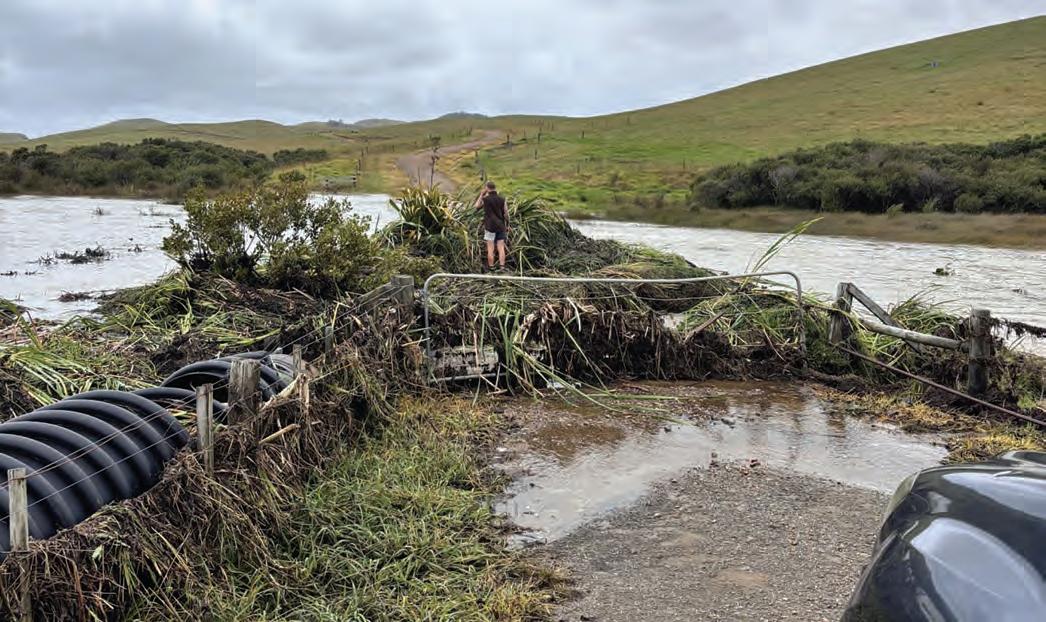
AN AWARD-WINNING bullbeef farm in Whangaruru, east coast of Northland, will take weeks to recover from the recent spate of storms that hit the upper North Island. At the height of the floods, staff at the 360ha Whangaroa Ngaiotonga Trust farm had to use kayaks to reach stranded stock. Trustee Morris Pita says it will take months to get the property fully up and running. Full story on p3.
a window to get this deal now and that if we hadn’t taken it, the next opportunity could have been years away, with no guarantee of a better deal.
He says he was a bit critical at the time the EU deal was announced and thought that maybe it was concluded a bit early.
“But this one is a different kettle of fish, and the scale of this opportunity cannot be underestimated.
“The present agreement is very advantageous, especially for some sectors like sheepmeat, and that is a very big gain. Also, kiwifruit and apples, although the tariffs are still quite high for fruit over the tariff
quota, but I understand that both industries are quite happy with that,” he says.
Jacobi says while the deal wasn’t so good for dairy, that sector wasn’t completely excluded, with some higher value dairy product included. He says there was also an undertaking to at least reexamine some of the dairy
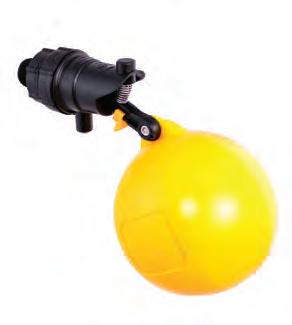
•Ideal for Cattle Troughs
•High Flow
•Side/Bottom Mount
•Detach to Clean
•Compact/Robust
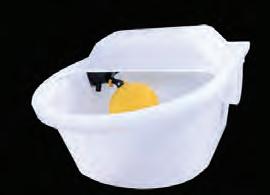
•Ideal for Small/Low Demand Troughs •Low Flow •Above/Below Water Mount
•Built in Check-Valve
tariff issues with India. He says there is understandable disappointment within the dairy industry.
“But India wasn’t going to budge on that. India’s dairy production cannot meet all the needs of its population, so over time maybe something will change, but this is not going to happen in the immediate future,” he says.
Jacobi says the high tariffs on NZ wine are likely to remain until India concludes an FTA with the EU, then some deal with NZ may be done.
He says the FTA must be seen in the context of a very disruptive international environment and it was simply not possible to get the sort of gains that we had earlier, for example with China or even the Comprehensive and Progressive Agreement for TransPacific Partnership (CPTPP).
He says the new FTA gives NZ a unique opportunity now to develop its relationship with India.
“This is the third time we have tried to get a deal with India and so I totally understand the Government’s decision to take it. Of course, this doesn’t mean it’s magically going to be a success overnight, because tariffs are still quite high on several items; it’s going to take a long time for it to get going. But it has given us quite a good base to develop this economic relationship,” he says.


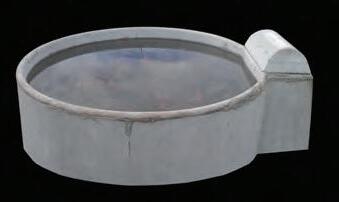
•Ideal for Compartment Troughs/Tanks
•High Flow
•Top Mount
•Detach to Clean
•Compact/Robust

We’ve always grown more than just trees. For over a century, generations of Kiwis have shaped the forests that help grow communities and the products that build New Zealand. forestgrowers.nz
We’ve done a lot of growing Forest Growers NZ
PETER BURKE
peterb@ruralnews.co.nz
ONE OF the country’s top Māori farms has been badly damaged by a severe isolated thunderstorm which hit parts of the east coast of Northland last week.
The 360ha bull-beef farm owned by the Whangaroa Ngaiotonga Trust is located near the settlement of Whangaruru and last year won the prestigious Ahuwhenua Trophy for the top Māori farm in the country. It is one of a small number of farms in the Whangaruru area which bore the brunt of the storm.
What was once was a beautiful coastal farm is now facing months of work to get fully back up and running. Co-trustee of the Whangaroa Ngaiotonga Trust, Morris Pita, says they had 400 millimetres of rain in a very short period which caused a lot of damage to the farm and other properties and roading infrastructure in the area.
He says the farm took a big hit with half a dozen culverts destroyed.
“What we have now with these crossings is ditches that are two metres
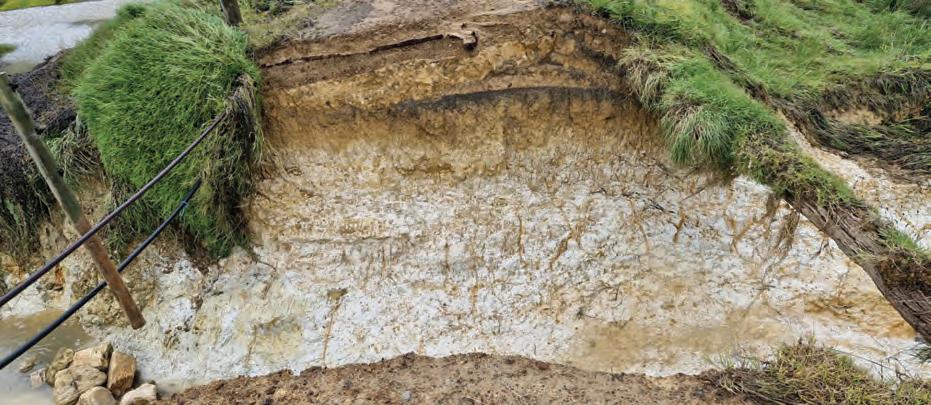
deep and four metres wide which are impassable to stock,” he told Rural News
“The stock are being moved to other parts of the farm. However, the water is so deep in certain places around the farm that the only way that staff can get around is by using kayaks,” he says.
Pita says fortunately there have been no stock losses and no damage to any houses on the property. He says their first priority has been their people, their community and the stock. He says in addition to the damaged
culverts, they estimate that they have lost about two kilometres of fences.
Pita says they also lost some pumps that were washed away by the storm.
“As well, some debris from hillsides not on our farm have been washed down on to some of our low-lying paddocks making these inaccessible. However, we will see what the next storm brings and when things dry out we will need to get a digger in to deal with this problem,” he says.
Rural News spoke to Pita just before the tropical storm arrived and he says
they were hunkering down and taking the necessary precautions to deal with this and any other events. Meanwhile Federated Farmers Northland provincial president Colin Hannah says the storm that hit the farm near Whangaruru had little effect on the rest of the region. But when Rural News spoke to him before the tropical storm arrived, he indicated that farmers and emergency organisations were preparing for what might come their way. He says Northlanders are used to such events.
GLOBAL DAIRY prices continue to rise despite ample supply from key milk producing countries including New Zealand.
The Global Dairy Trade (GDT) recorded its second straight rise last week with whole milk powder and skim milk powder prices up 15 and 2.2%, respectively.
ASB senior economist Chris Tennent-Brown says the powder price gains are especially encouraging
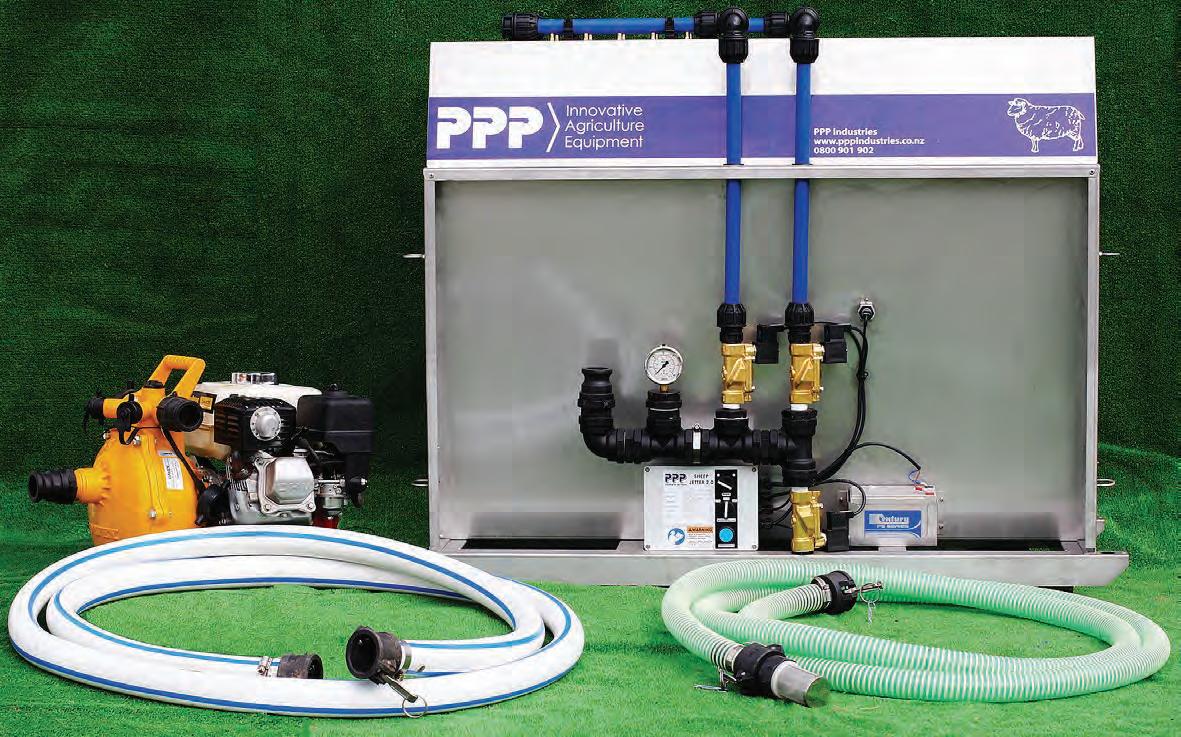
With a precision engineered PPP Sheep Dipper that’s built to last
www.pppindustries.co.nz sales@pppindustries.co.nz 0800 901 902

after more strong production data from NZ dairy processors last week.
New Zealand milk production season-to-date was up 2.4% (up 3.1% on a milksolids basis) by the end of December.
Tennent-Brown says that if GDT prices sustain this positive start, then the final season price can end up above Fonterra’s $9/kgMS forecast mid-point, but there is still a long way to go.
ASB is maintaining its $9.20/ kgMS forecast for the current season.
NZX dairy analyst Rosalind Crickett notes that the global milk production picture, on the whole, remains robust.
She says NZ milksolids collections in December was the second highest recording for the month, narrowly behind December 2014, with no drastic changes to this trajectory
anticipated any time soon.
In the Northern Hemisphere, reports of milk dumping in the UK continue to drive home the narrative of a global ample supply.
“Ordinarily this would expect to put more downward pressure on milk powder prices, however, reports of tight inventories in the US seems to help provide some price support for SMP on the platform,” says Crickett.
SHEEP AND beef farmers in Hawke’s Bay are being urged to keep a close eye on the wells that supply water to their stock.
This is despite some significant rain in the region over the past month.
Federated Farmers Hawke’s Bay president Jim Galloway says the availability of stock water is a problem on some farms and he knows of one well that has run dry and others that are running low.
His comments tie in with reports from the Hawke’s Bay Regional Council which says, while recent rains have offered some relief, regional hydrology is still reflecting the warm and dry conditions. They add that river flows across much of the catchment remained below their long-term averages,
with the exception of catchments in the north of the region where flows are near or above normal.
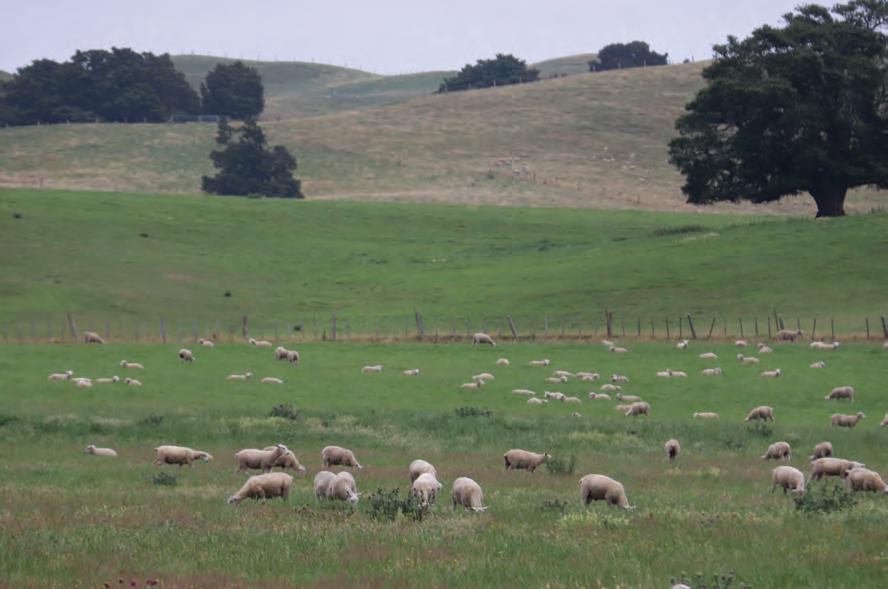
Driving through the region the colour of the landscape has changed from brown to green in the last month or so and Jim Galloway says the situation is variable and some areas aren’t looking too bad.
“We had significant rain between Christmas and new year. On my farm we had about 70mm. Some areas had more, so in general,
Hawke’s Bay had above average rainfall for December and we went from brown to green and we have stayed green,” he says.
Galloway they had rain in the middle of November and more in early December. But he says the ‘green look’ from a distance is deceptive because the grass is very thin and very sparse.
“Instead of a lot of grass plants per square metre, there are only a few and the grass is short. Effectively what we are
experiencing is a green drought,” he says.
Galloway says the green can turn to brown in a few days and the recent high temperatures and drying winds can quickly change the situation. He says the wind can suck the water out of the ground.
The regional council report also confirms what Galloways is saying. It says by the end of December, rainfall was above average for the region and even higher in southern Hawke’s Bay, and groundwater levels in some places are showing signs of improvement.
But the situation is far from stable and Galloway says many sheep and beef farmers have been selling stock early because they don’t have the grass to feed surplus animals.
“My message to farmers is to make sensible decisions around stocking rates and keep an eye on the conditions. In particular, either check yourself of get someone with expertise to check the water level in your well, because if it’s getting to down to a critical level, you may need to deepen it to keep stock water going,” he says.
immigration – and does not return enough to NZ, especially dairy.
something better. Somehow I doubt it,” Jacobi told Rural News
INTERNATIONAL TRADE expert
Stephen Jacobi says Winston Peter’s objections to the Indian free trade deal are “ridiculous”.
The New Zealand First Leader and Foreign Minister says the free trade agreement with India gives too much away – especially on
However, Jacobi says the FTA gives India some marginal improvements in immigration standards for skilled professionals and students, but by no means opens the floodgates. He says NZ is desperately in need of workers.
“He’s just dog whistling and feels that he could have negotiated
Peters says NZ First won’t support the ratification of the NZ/ India FTA when it comes before Parliament.
Again, Jacobi says such an attitude is beyond the pale. NZ First also didn’t support the China FTA. He adds he has no idea what the Green Party will do. He says ideally there
should be a bipartisan support on trade deals such as this. What Peters is doing is “pure political nonsense”.
“How can he seriously continue as Foreign Minister and not supporting this FTA. India is a major foreign policy player and sooner or later he’s going to have to meet his Indian counterpart and explain why the deal wasn’t good enough. We’ll just have wait and see what happens,” he says.
Finally, Jacobi says it would be appalling if the Labour Party didn’t support the deal. He says although National wants to take the full credit for the FTA, in fact the early groundwork for it was done under Labour Trade Minister Damien O’Connor.
“So, it would be somewhat hypocritical if Labour didn’t support the FTA,” he says.

RECENTLY AWARDED in the New Years Honours List for Services to Agriculture and Governance, well known dairy farmer Lloyd Downing, has become an Officer of the New Zealand Order of Merit (ONZM).
Known for never being shy to speak out, Downing started his governance career as the chair of Kiwitahi Young Farmers in Morrinsville, then moving through the ranks to become the branch chair at Federated Farmers in the same town.
Eventually, he became the Fed’s Morrinsville District chair, overseeing seven branches in the area.
Over time, Downing
also held the position of dairy chair of the Fed’s Waikato section, before eventually becoming VP at the national office. At this time, he combined his dairy farming expertise and governance to become a strong advocate for the establishment of a single dairy co-operative, over the traditional model of multiple small dairy companies across NZ.
For about six years Downing also held positions at the Waikato Federated Farmers Trust, whose aim was to support local farmers and rescue organisations, alongside rural schools and education.
In the 1980s he also showed his philanthropic side; during a strike by the Morrinsville Dairy
GREENLEA PREMIER
Meats managing director
Anthony (Tony) Egan says receiving the officer of the New Zealand Order of Merit (ONZM) honour has been humbling.
Egan told Rural News that even more humbling has been “the many messages of support I have received since”. Egan was awarded the ONZM in the New Year Honours List 2026 for services to the agricultural industry and the community.
Company, rather than throwing milk away, he handed it out for free on the main street of nearby Hamilton.
Firmly a believer in the mantra “how, not how-not”, Lloyd joined the National Fieldays board in 1985, serving 12 years, and was president for five years. During his tenure, he oversaw projects such as the demolition of the 15-year-old Fieldays headquarters building, which he says had “developed some special water features in latter years”.
He is currently retired but holds the honorary title of ‘howto consultant’ at the family farm, meaning multiple pick-up trips to local rural suppliers. Downing can often be found seeking out that
Waikato dairy farmer Neil Bateup, made a companion of the New Zealand Order of Merit
turning workshop, where he creates bespoke wig stands for recovering
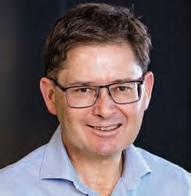
(CNZM), says he’s grateful for the award.

The award, which comes on top of an officer of the New Zealand Order of Merit bestowed in 2018, is for his work with the Rural Support Trust
Dr Robyn Ann Dynes was recognised in the New Year Honours for services to agricultural science. A
cancer patients whose treatment has resulted in hair loss.
Rural News salutes
farming systems scientist who has shaped more sustainable agricultural practices, she becomes a member of the New Zealand Order of Merit.
Poll Dorset breeding pioneer Neville Greenwood from Christchurch was

one of ag’s good buggers.
@rural_news facebook.com/ruralnews
recognised with an ONZM for his services to the sheep industry.
Two deer industry leaders also received an ONZM – South Canterbury’s Graham Carr and former DINZ chair and Fonterra director Andy Macfarlane.
into lambing groups for

work and training. In the six weeks leading up to the day, he received weekly massages for muscle tension.
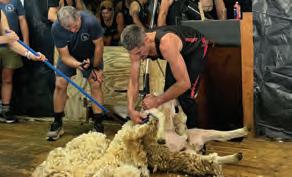
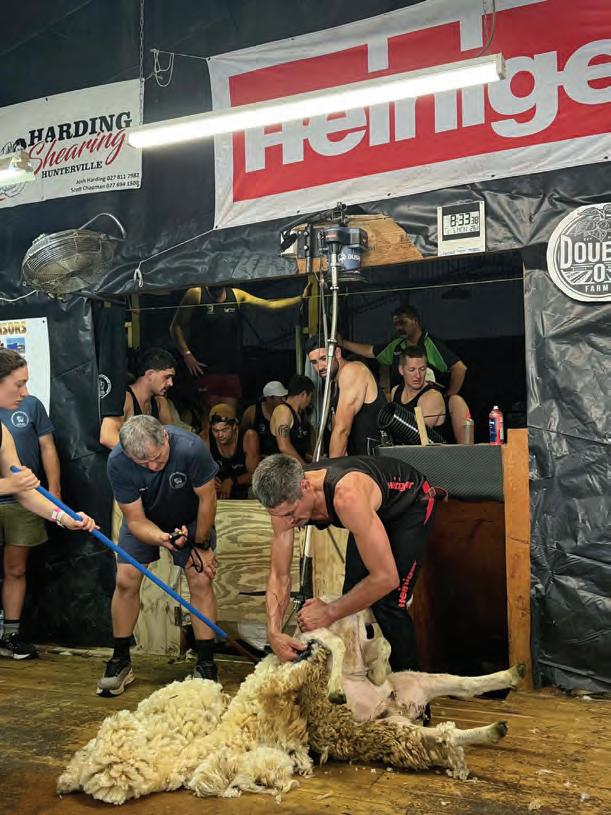
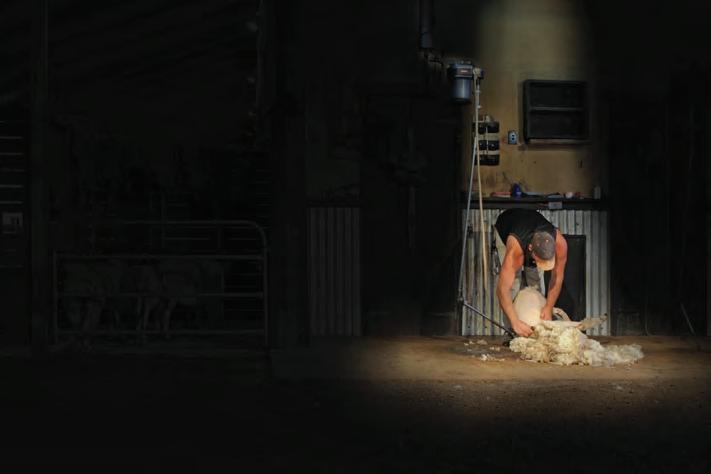
ON JANUARY 5TH at Te Pa Station, the World Sheep Shearing Records saw a new nine-hour strong wool ewes shearing record set by Simon Goss.
Goss grew up on his family’s sheep farm in Kimbolton, where he first picked up a handpiece at the age of eight. Simon comes from an impressive shearing lineage: his father Alan was the 1985 Golden Shears intermediate champion and mother Veronica the 2008 Golden Shears open woolhandling champion.
“I thought the nine-hour ewe record is the pinnacle of shearing records there is for crossbred,” Goss told Rural News when asked what inspired him to challenge the record.
“I didn’t know if I was good enough to do it, but I felt like I could give it a good crack.”
His team was no less impressive; family friend and current boss Rod Sutton held the same record Simon challenged for nine years between 2007 and 2016. Personal trainer Matt Luxton has, in addition to coaching other shearing trainees, also trained Iron Man contestants in England.
Goss had previously set an eighthour two stand strong wool lamb record with Jamie Skiffington back in 2023, where Luxton had been his personal trainer.
“[The last record] I probably didn’t put enough work into his training, being young and naïve,” Goss recalls. “I had full body cramps for about 3 hours towards the back end of the day and that was something I never wanted to live through again.”
As such, his preparation for this attempt focused on discipline and effective time management between
“I was eating quite a bit but it was all clean foods, easier to digest so I could keep training hard and working during the week. Lots of chicken, rice and salmon; I stayed away from fizzies and chocolate, all the sugars I was eating was just fruit.
“That was a better way of doing it than last time, I felt a lot better during the day and had more control of my body.”
“I
Despite his previous record and the effective training he had undergone, Simon still recalls being sick with nerves the day before the attempt.
“It was quite daunting; I thought, ‘Far, this is actually happening, I’m about to attempt one of the biggest goals I’ve set for myself thus far’.”
Nevertheless, when Goss walked onto the board the next morning he felt comfortable, having ticked off as much as could be done for training and prep work.
After the first run, Goss was up two sheep on the previous record attempt.
“On the day, to be either on the same or above the previous guy, it’s a really good feeling because it does come to fine margins,” he said.
“When you’ve got those two extra sheep, it’s a confidence booster leading to the second run.”
During the second run, a hurdle threatened to derail the attempt. The drip tray in the shed’s air conditioning unit filled up and turned off the cooling side of the system, regurgitating 32-degree air into the shed. While Simon’s team eventually noticed after half an hour and reset the system, Simon describes that time as being ‘slow roasted’.
“I was thinking ‘I don’t know if I can carry on,’ my body was cramping up. Once the system reset, the body cooled down naturally and we managed to settle back into it but losing that lead took its toll as coming into lunch I was the same as the previous guy.
“The energy levels were getting low, but I was lucky I had a good team around me who were able to keep lifting my spirits through the whole day. They had everything moving smoothly out the back, they were the key motivation to keep me up for that difficult last run.”
Eventually, at the eight hour, 59 minute and 20 second mark, Simon managed to beat the record732 vs 731.
EVEN TWO weeks later,
Simon Goss says the feeling still hasn’t fully set in.
“Looking at people’s messages over the last couple of weeks has been phenomenal, what we’ve achieved is essentially in our eyes the biggest record we could go at and to beat it by one.
“I could go on all day about who was helping out, on the day or leading into it. My father Alan and I have dreamed about this ever since I was young; my sisters have been someone to talk to about keeping my body right and over the last couple of years my partner Phoebe has been on top of
everything, doing all my food and making sure all I had to do was work and train.”
Since his recordbreaking attempt, Goss has been mostly occupied with helping his father out around the family farm before heading back to shearing contracting work as of
publication.
As for the future, Goss says he does not know what is in store.
“Carry on with life, see how things go. If there’s an opportunity for another record I probably wouldn’t pass it up, but if not I’m happy with what was achieved.”

JESSICA MARSHALL
jessica@ruralnews.co.nz
THE STRONG wool market has improved in the past six months, despite drops in production over recent years.
That’s according to Matt Hand, general manager of global supply at the New Zealand Merino Company (NZM).
Last year, the company reported an upswing in wool sold through contracts and direct partnerships – 93.6% in 2025 compared to 73.1% in 2024.
Hand told Rural News that in recent years the market has been “relatively flat, but it’s certainly improved over the last six months, which is way overdue”.
He says that what is being seen now is recognition of the fact that growers have left the space because it has proven to be a “lossmaking enterprise”.
“Now we’re seeing that lower level of suppliers start to gain some attention and some of the demand generation work that’s been done by companies like ourselves is starting to take advantage and we’ve seen growers return to profitability,” Hand says.
NZM works on a contract and partnership driven model.
This means that the standard practice of selling, in which the producer is seen as a price taker by selling on the auction market, is effectively reversed.
Hand says that in the standard auction model, producers sell to the market and the market will then give the producer what it is willing to pay on any given day.
“We reverse it in the sense that we work really closely with brands, ignore the insights from consumers and brands and work out what it is those brands need from us,” he says.
From there, Hand says NZM provides certifications to those brands so that they have the verifiable data they require and then the company goes back through the supply chain and offers a converted price back to the growers.
What this means is that NZM becomes the price setter and because the growers have a “premiumised contract” in place, the growers then have surety of the outcome in terms of price. Consequently, the brands have supplier continuity instead of
MATT HAND says that the New Zealand Merino Company (NZM) is confident in the direction the New Zealand strong wool is headed.
“From our perspective, we feel confident that we can give New Zealand strong wool growers a reason to continue in that space.
“They deserve, and they’ve certainly earned, a profitable wool enterprise. We’ve expected that to return and it’s returning now so we’re quite confident that the momentum that we’re seeing in the space is sustainable,” he says.


being exposed to a fluctuating market.
Hand says in recent years, strong wool production has dropped by approximately 20% each year.
However, he says that consumers across the globe have become increasingly conscious of the type of fibre they are
buying and are looking to more natural fibre.
“We’ve been aware… for a long time that people are starting to get a bit suspicious around synthetics, microplastics in the ocean and so on and they’re looking to natural fibre solutions, but it’s been more of a thought process and a
conversation than an action, but I think what we’re looking at now is we’re actually seeing brands around the world who haven’t had natural fibre product ranges and they need that, they need someone to guide them through the right supply chain… and that’s where we step in,” he says.

NOVEMBER 7 has been set by Christopher Luxon as ‘E day’ – election day.
It comes a little later than normal and just a couple of days after Guy Fawkes - the celebration to blow up the British parliament in 1605. So, what are we likely to see in the coming months? Will the campaign be boring or will there be fireworks unlimited in the race to gain the treasury benches?
This election is very hard to call and the most astute pundits are keeping their powder dry on who the winner or winners might be. National are the traditional farmers’ party and in the current Government the rural voice is the strongest it’s been for years. One would imagine that the RMA and associated reforms will see rural voters stick with the status quo. But elections are not won in rural NZ – rather they are won in the large population centres, in particular Auckland.
So where to from here? The personalities of Luxon and Hipkins will be a significant factor in the campaign, along with their respective policies and the performance their key spokespeople and coalition partners.
Luxon may have a problem with the pay equity issue and potentially women voters. The economy and cost of living will be high on the agenda of voters. On the plus side, National’s coalition partners seem relatively stable, but who knows what antics Winston Peters and David Seymour will get up to during the campaign.
Which raises the issue for Labour and its potential coalition partners. Expect the Green Party or far left vote to stay pretty much where it is. Then there’s Te Pati Maori – say no more. The thought of them being in coalition with Labour will surely be a big turnoff for many voters.
Expect Luxon to warn of the dangers of Labour’s coalition partners, especially TPM, and Hipkins to chip away at National’s economic performance. This election is likely to be a photo finish.
– Peter Burke
HEAD OFFICE POSTAL ADDRESS: PO Box 331100, Takapuna, Auckland 0740
Phone 09-307 0399
PUBLISHER: Brian Hight .......................................... Ph 09 307 0399
GENERAL MANAGER: Adam Fricker ....................................... Ph 021-842 226
EDITOR: Sudesh Kissun ......................................Ph 021-963 177 sudeshk@ruralnews.co.nz
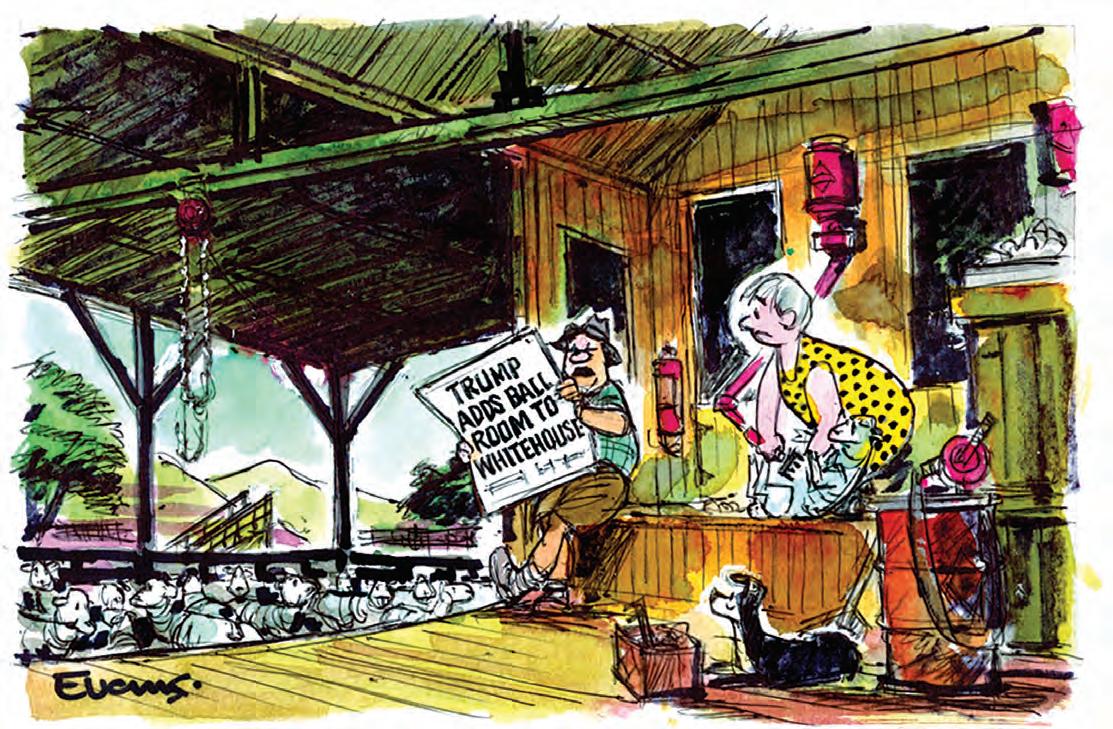
“He collects them from all the politicians his policies have castrated.”
AFTER SEVEN years of Adrian Orr’s antics as Reserve Bank NZ governor, the priority of his successor, Anna Breman, surely is rebuilding the tarnished reputation of the RBNZ, not stepping on the Foreign Minister’s toes by commenting on US domestic politics. Your old mate is no fan of the bully-boy tactics of the Trump administration and its attempts to strong-arm the US Fed on rates, but in her attempt to show support for central bank independence, Breman and a cohort of international central bank leaders undermined that independence by committing the cardinal sin – they got political. Having received a smack on the hand from Peters, it will be interesting to see if the political naivety of the new RBNZ boss has been sorted. Winnie was correct in saying the RBNZ had no role in US politics and should not involve itself.

YOUR OLD mate has long dismissed the Greens as wooden bicycle enthusiasts with their heads in the clouds, but it looks like the ‘new Greens’ may actually be hardnosed pragmatists when it comes to following voters. According to one pundit, media coverage of climate change in politics dropped a whopping 41% last year compared to 2024. Reporting on emissions was also down 20%. Ironically, the ‘Greens’ have followed suit, dialling back their emphasis on what used to be their core mission because they sense voters are over it. Journalist Graham Adams put it succinctly, saying ‘climate politics is in retreat, and the Greens are leading the way’. They’ve sidelined environmentalism for a mishmash of social justice causes. Chloe Swarbrick basically admitted as much, saying it’s tough to get people fired up about climate if they can’t put food on the table.
EDITOR-AT-LARGE: Peter Burke ...........................Ph 021 224 2184 peterb@ruralnews.co.nz
REPORTERS: Nigel Malthus ........................Ph 021-164 4258
Leo Argent
MACHINERY EDITOR: Mark Daniel ..............................Ph 021 906 723 markd@ruralnews.co.nz
PRODUCTION MANAGER: Becky Williams ......................Ph 021 100 4381 beckyw@ruralnews.co.nz
THIS OLD mutt has been around for a few years now and it seems these ‘once in 100-year’ weather events are occurring nearly every year. That doesn’t deter the old “I’ve seen worse, back in my day” comments, but tell that to the poor buggers that have to clean up the mess, year after year. And that’s the only real silver lining here – seeing how Kiwi communities, particularly in remote rural areas like the recently-hammered Far North, pull together, look after each other and get on with what needs to be done to protect lives, then restore farms and properties when the sun finally reappears. The Northland Civil Defence chairman rightly praised local coastal communities, saying they were well prepared, worked in with Civil Defence and helped each other out. The Kiwi Way is alive and well in the provinces!
AUCKLAND SALES CONTACT: Stephen Pollard .........................Ph 021 963 166 stephenp@ruralnews.co.nz
WAIKATO & WELLINGTON SALES
CONTACT: Lisa Wise .................................. Ph 027 369 9218 lisaw@ruralnews.co.nz
MEANWHILE, RED blooded Northland politician Matua Shane Jones has provided one of the most telling quotes of the year thus far. Replacing his mining hard-hat with his Fisheries Minister hat, Jones has beat a quick political retreat after being blindsided by the backlash from the recreational fishing community after proposing to let commercial operators land and sell dead marlin bycatch. Reminding us that it is election year, Jones was surprisingly honest about it: “A good politician has to know how to pivot” adding “The reality is that we’ve got to prioritise our efforts in an election year”. The lesson here for the farming community is that, in election year, politicians are very susceptible to a bit of arm twisting, or negative publicity that might cost them a few votes and risk tipping them out of the trough when the public heads to the polls!
SOUTH ISLAND SALES CONTACT: Kaye Sutherland .......................Ph 021 221 1994 kayes@ruralnews.co.nz
DIGITAL STRATEGIST: Jessica Marshall ..............Ph 021 0232 6446

NIGEL MALTHUS
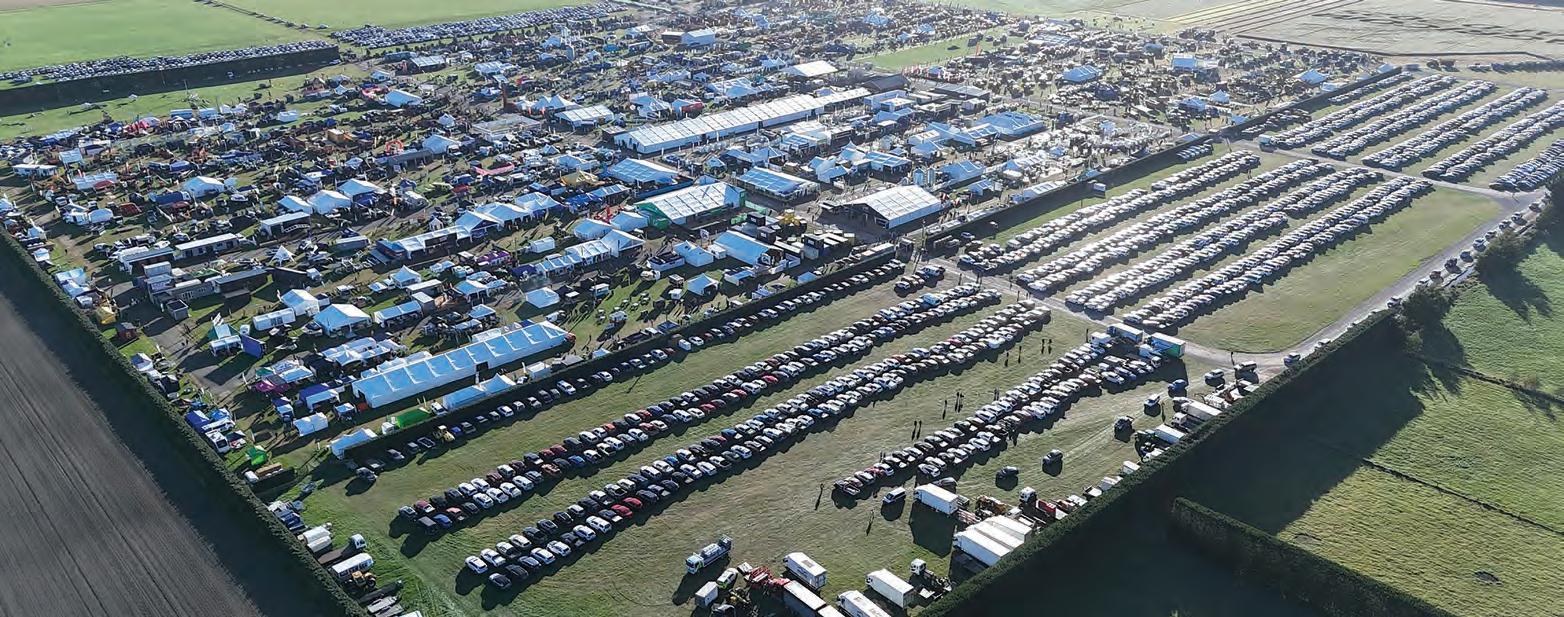
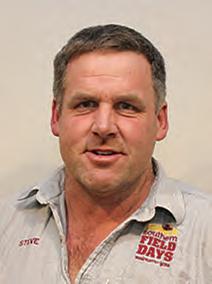
A BUOYANT farm economy should make for a successful 2026 Southern Field Days, says chairman Steve Henderson.
This year’s iteration of the biennial event takes place on its dedicated site at Waimumu, near Gore, from February 11 to 13, with exhibitor sites all sold out about three months ago.
It will feature all the regular attractions including Tractor Pull, Farm Innovation Awards, and Speed Shearing and Fencing competitions.
Henderson said the event footprint
was very similar to the last Field Days in 2024, with about 700 exhibitor sites. Some sites were being shared, giving total exhibitor numbers of around 800.
The “gut feel” among exhibitors was that they going to be very happy with the event, he said.
He noted that red meat is more buoyant this year than it was in 2024, and there would definitely be a lot more capital expenditure and R&M (repairs and maintenance) in farm budgets.
Henderson, a dairy farmer from Awarua along with wife Tracy – also a Southern Field Days committee

member – is overseeing his second Field Days as chairman.
Henderson recalled the “tough call” that had to be made to cancel the 2022 event because of the Covid pandemic, and he said the event still had not fully recovered from that loss.
“Financially, though, there was quite a few site holders that left money in, which gave us the ability to run through to the next year.
“This Field Days here should get us back to where we should be. Last year was just probably a break even with no real spare money for development or anything like site improvement.”
However, he said “the odd bit of refurbishment” was now underway including a new loading bay being built to accommodate bigger trucks and make it a bit more user friendly.
“We’ve knocked quite a few willows down that were sort of segregating exhibitor paddocks, so hopefully it comes across as one whole site now rather than segregated areas, so that should be one quite big improvement this year.”
Another effect of Covid was the disruption to supply chains that made it difficult for machinery importers to get stock into the country but
Henderson said that had passed and most machinery exhibitors had really good stocks to show off.
A couple of them had asked in the last three or four weeks to reduce their site sizes because they were not going to be able to fill them, but Henderson believed that may be due to them selling items they had intended to put on display.
“The gear they thought they had, they’ve sold. So that’s a good reflection of what’s happening out there in the economy.”


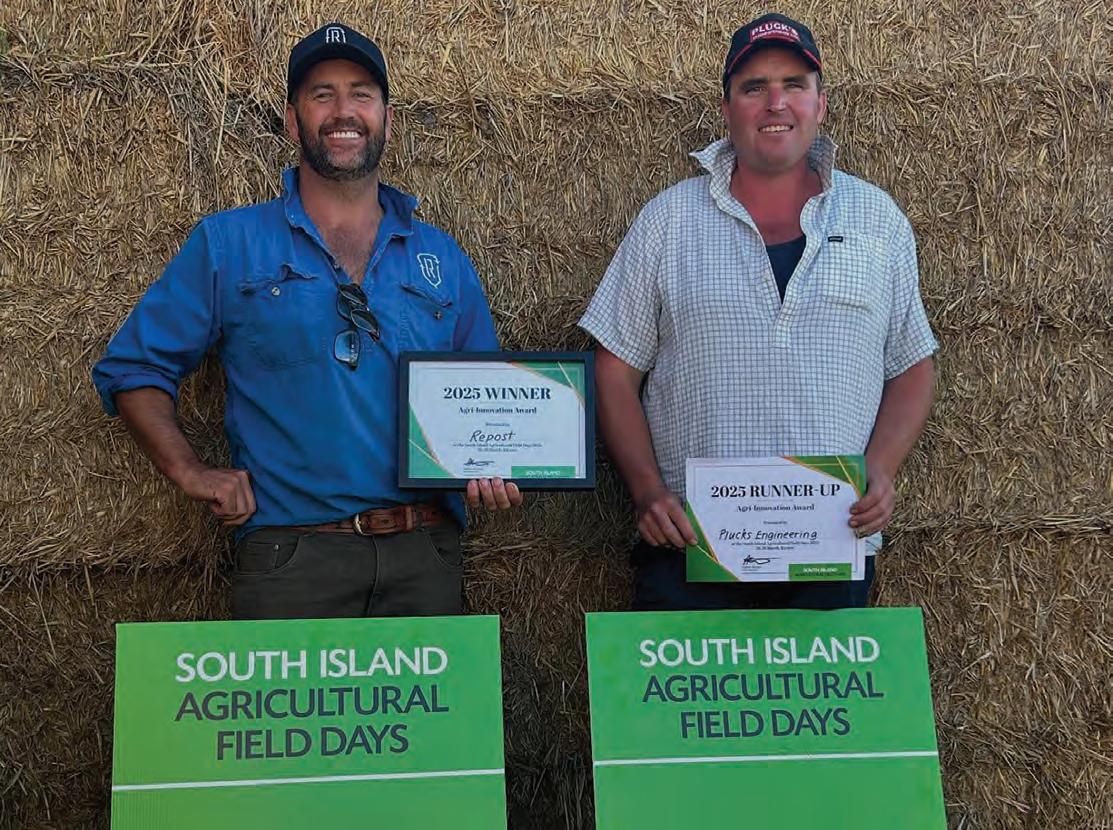
THE SOUTHERN Field Days Innovation Awards have a great record in picking winners and the winner of the 2024 event will be putting up a display to support the event at this year’s show.
Grant Lightfoot won the award for his Kiwi Econet innovation –a jute-based baleage wrap which is both biodegradable and edible by stock. While it does not replace the outer plastic wrap it does replace the inner netting.
Lightfoot says it means the bales do not have to be fully unwrapped because what the stock do not eat just rots safely into the ground. By contrast, he says “you can’t do anything” with conventional plastic netting except burning or burying it.
The Southland deer farmer told Rural News that winning the award in 2024 was “a game changer”.
“My phone just went viral.”
The product is made to his specifications at a factory in India and is now sold around the world.
Organising the Innovation Awards for the tenth time since 2006 is Lisa Anderson –
who originally became involved when asked as the then Otago Southland Regional Young Farmers Chairperson to gather members to help put tents back up after strong winds tore through the site in 2004.
“Innovations have gone from a few knick knacks down the back fence to its prime position alongside the Agricentre, with exposure being the main aim for participants,” she says.
Anderson said that as in past years, there will be an Open Section, aimed at businesses with already commercialised or marketed ideas, and a Number 8 Wire Section which is more aimed at farmers with “a handy idea” that other people can get ideas from.
Then there’s the Primary School section which is always popular, although a few weeks out from the event Anderson was unsure of entry numbers.
“It’s always tricky timing because school hasn’t gone back yet to actually be able to contact people. But normally Limehills School has got quite a few entries and for that one we will just have to wait and see.”
The prizes are $500
for first place and $200 for second in each of the Open and Number 8 sections.
For the Primary School section, first prize is $50 with another $50 to the school providing the most entries.
“There is the prize money, but that’s not really what it’s all about. It’s exposure, so people get to see what
ideas there are,” says Anderson.
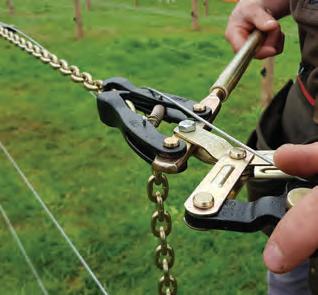
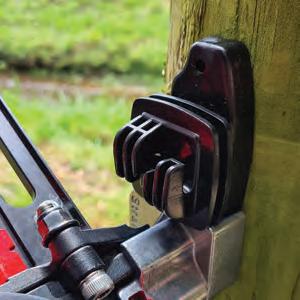
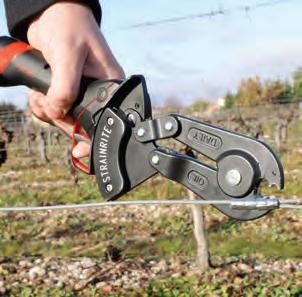
Entries this year so far include Spot Feeder, a grain and nut trailer designed to drop feed in precise spots: a Tow and Fert sprayer that mixes compost and water; Nature Point, which partners with farmers to develop regenerative land use projects: Strainrite fencing’s Mini
Reel; and the Sterineedle device which sterilises vaccination needles between animals. The Sterineedle, invented by then schoolgirl Jade Luxton, was highly commended at the 2022 National Field Days and she has continued developing it since then.
SOUTH ISLAND FIELD DAYS
WHEN: 11th - 13th February 2026
WHERE: Waimumu (12 kms from Gore) TIME: 9am - 5pm each day
TICKETS: Adults: $25
CHILDREN UNDER 16: Free
STUDENTS (WITH STUDENT ID): Free NEW APP: Download new app
ANDROID: Google Play
APPLE: App Store



NIGEL MALTHUS
ORGANISERS ARE
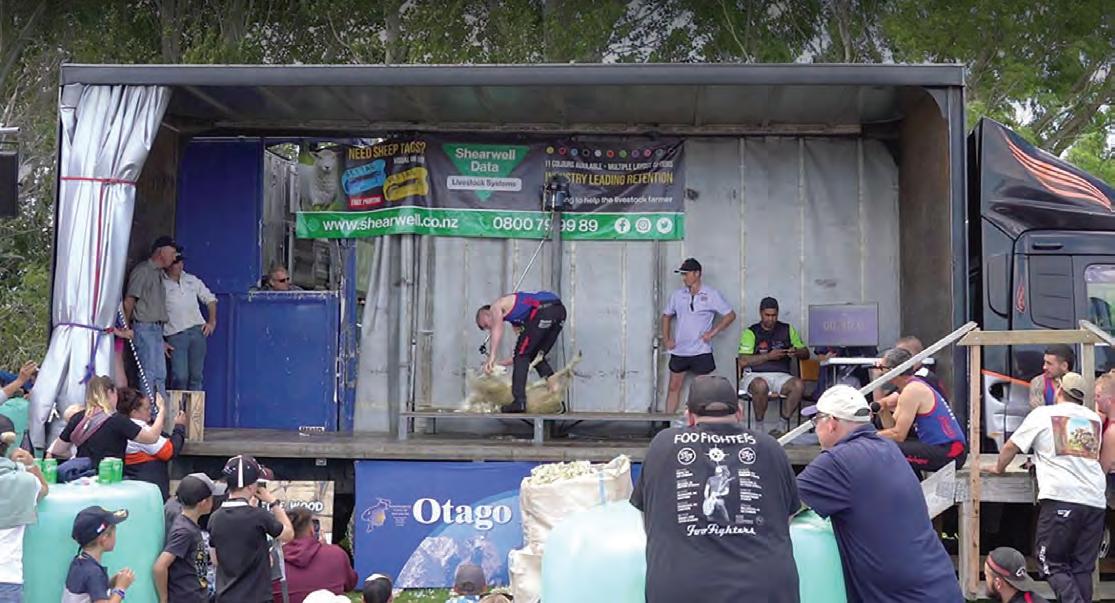
expecting another full field of 40 of the country’s top shearers for the popular Speed Shearing event at this year’s Southern Field Days at Waimumu.
Andrew Welsh, a sheep, beef, deer and cropping farmer from Mandeville, has been in charge of the Speed Shearing since its first inclusion in the biennial Field Days about five events ago.
As part of the national Speed Shearing circuit it is expected to attract top professional shearers and will be judged by the national judges.
“We try to time it and work in with the other [events],” said Welsh.
“But it’s just something we run every second year for the Field Days. It is just another attraction for spectators who come along to our event.”
It will run in two categories, Open and Senior, with entrants
limited to 20 in each section.
Each entrant gets to shear one sheep then the fastest eight in each category compete in elimination heats.
“They’ve only got like 25 seconds to put their best foot forward,” said Welsh.
“And it’s all professionally judged. So, it’s a nice event and there are certainly some talented shearers out there.”
Speaking about a month out from the event, Welsh said entries were still open but filling fast and he was confident of full fields.
The event will probably also feature a celebrity shearoff although Welsh had yet to finalise it. Past participants have included popular local radio personality Jamie Mackay, former Prime Minister Sir Bill English and shearing icon Sir David Fagan.
“We just try to try to give something here as a spectacle for the farmers,” said Welsh.
Welsh said they were planning to keep it simple this year with just the two categories, Open and Senior, despite having had Women’s and Farmers’s categories in the past.
But he points out that women may still compete in the Open, local Gore shearer Megan Whitehead having done well in the Open in 2024, after winning the Women’s section.
The contest takes place on the back of a curtain-side truck parked up in what Welsh calls the best place for it – out in front of the venue’s licenced bar – with room for about 500 spectators.
It will be one of the last major events of the Field Days, scheduled to start at 1.30pm on the Friday.
WHILE THE North Island is inundated with rain, Southland is facing receding water levels as warm weather and lack of rainfall continues.
Environment Southland last week moved to Status 2 of its water shortage response levels, which involves active monitoring of water levels across the region.
As the warm weather and lack of rainfall continues, there is a potential for water levels to recede to the point it may impact environmental health, water supplies or animal health.
Environment Southland general manager science Karen Wilson said the shift to Status 2 meant staff
would be expanding their existing monitoring programme to examine the ongoing water situation for the region.
The council’s water shortage advisory team will be increasing assessments of water levels, soil moisture and groundwater states, and analysis of short and longrange weather forecasts.
The team will be publicising monitoring results, working alongside and informing territorial authorities, and key user groups, to consider how they can conserve water.
“We are slowly getting drier and current monitored levels of some rivers are starting to get low. Earth
Sciences New Zealand (ESNZ) is predicting a drier phase with less rainfall in late January and early February.
“There is no immediate concern for our main water supplies or rivers predicted in the next couple of weeks. However, ESNZ’s longterm forecasts indicate that rivers will continue to drop over the next month.”
Currently, the worst affected rivers are around the Hokonui Hills, particularly the Ōtapiri Stream and Makarewa River.
“We are monitoring the situation closely and will continue to keep the public informed as the situation progresses,” says Wilson.


DAIRYNZ’S TEAM
is looking forward to catching up with Southland and Otago dairy farmers at the Southern Field Days in Waimumu near Gore next month.
Chief executive Campbell Parker and deputy chair Cam Henderson will be at the DairyNZ stand, along with DairyNZ’s regional team.
DairyNZ lower South Island regional manager Jared Stockman says it’s a great opportunity for farmers to catch up with DairyNZ staff and chat about priorities in the region.
“We’ve attended
several Southern Field Days, and the event is a great opportunity to engage with farmers at a farm-focused event and have more constructive conversations with those in the industry.
The format of the event allows us to have more in-depth and detailed discussions with farmers about issues they think we should focus on,” he says.
“We will be showcasing some of our farmer tools and resources, which have been developed with DairyNZ’s research and farm systems expertise, to support success on farm.
“Campbell and Cam can also answer any queries around how the levy is invested and the upcoming Milksolids Levy vote.”
The Milksolids Levy is the primary source of funding for DairyNZ’s work. This vote is an opportunity to reflect on the value delivered through levy-funded initiatives and to reaffirm support for ongoing investment. Voting will open on 16 February and run through until 13 March.
Big year in Southland
DairyNZ is facilitating a range of events over 2026 in Southland and Otago including field
days, workshops, and farmer discussion groups.
These regional events provide farmers with greater access to our scientists, experts and our research, with a focus on farm systems application, while continuing to support farmers to connect with other farmers in their local region.
Meet us there
Come along to learn more about DairyNZ and what we are doing to support your farm’s future. We look forward to seeing you there.
• Article supplied by DairyNZ
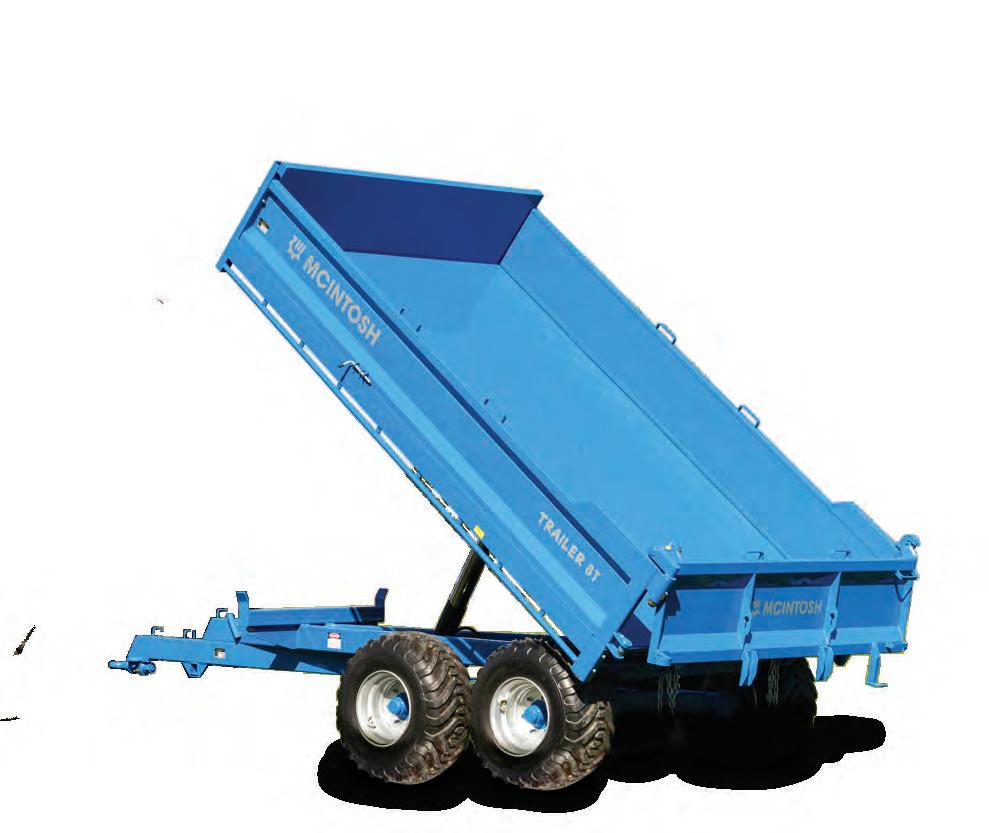
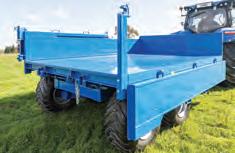
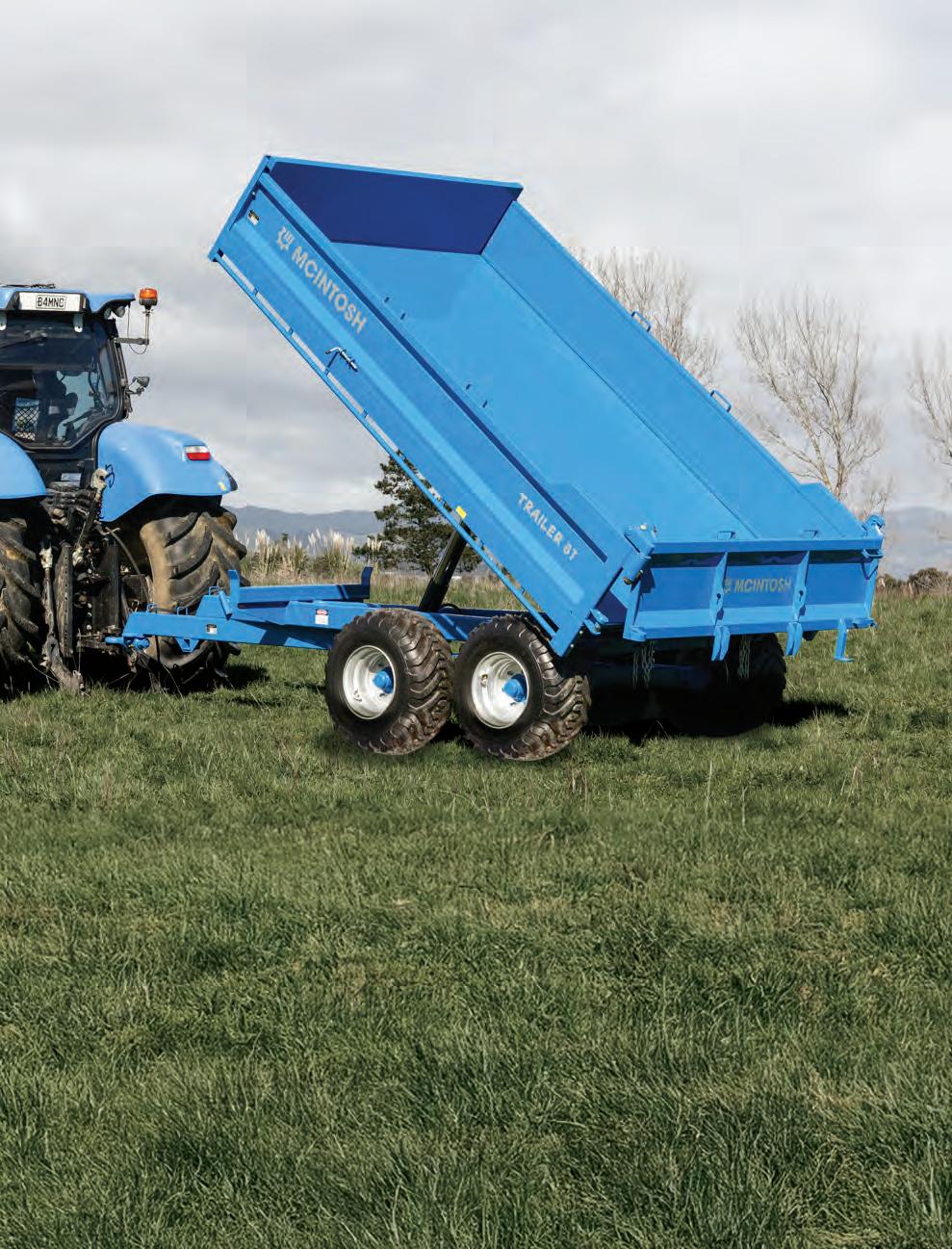
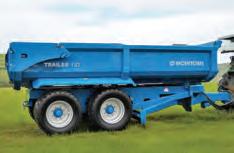
New Zealand conditions. Built solid for the long haul, these trailers aren’t here to muck about. Just strength you can count on, every time.
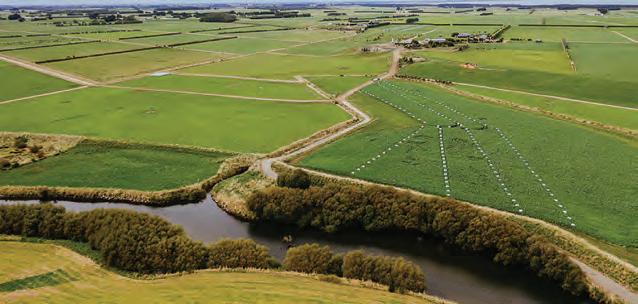
ENVIRONMENT SOUTHLAND is inviting feedback on two bylaws that play a critical role in safeguarding the region’s waterways and ensuring the safety of the local community.
The consultation period, now open, focuses on proposed changes to both the Flood Control and Drainage Management Bylaw and the Navigation Safety Bylaw.
Environment Southland Planning Manager Liz Devery said the bylaws set out comprehensive rules for maintaining flood protection works, managing drainage systems, and safe navigation practices on Southland’s rivers, lakes, and coastal waters.
“These bylaws are essential for protecting our communities and making sure our waterways can be enjoyed safely by all.
“We want to hear from as many people as possible to ensure the bylaws reflect the needs and values of our communities.”
Key proposed changes to the Flood Control and Drainage Management Bylaw include new restrictions on grazing on flood banks in winter, clarified responsibilities for
landowners, and updated terminology and definitions.
Key changes proposed in the Navigation Safety Bylaw include introducing new rules to improve visibility and safety for open water swimmers, strengthening the requirements for vessel communication equipment, establishing a new reserved swimming area at Steamer’s Beach on Lake Te Anau, and removing outdated provisions to enhance overall clarity.
“If you’re someone who swims often, spends time out on a boat, or just enjoys being near the water, check out the proposed changes and let us know what you think,” says Devery.
Individuals, community groups, businesses, and all interested parties are encouraged to make submissions. Detailed information about the proposed changes, as well as the consultation documents, are available on the Environment Southland website and at the council’s office. Submissions can be made online, via email, or by post by Monday 16 February. For more information and to make a submission, visit: www.haveyoursay.es.govt.nz
streamlined service to customers.
ZED, THE dedicated wholesale division of CB Norwood Distributors, and the importer and distributor for Kuhn in New Zealand, has announced investment in local expertise and stock availability for customers in 2026.
“We are excited to establish two additional specialist KUHN product support roles, one in each Island, and a new parts specialist to the KUHN team,”
Peter Manderson, brand manager – Kuhn, says the tight economic conditions in the New Zealand agricultural sector has required some thought about how the KUHN team can deliver an improved and more
“We are excited to establish two additional specialist Kuhn product support roles, one in each Island, and a new parts specialist to the Kuhn team,” says Manderson.
The product support roles will assist in training, technical support, and field demonstrations, with a focus on developing retail and service staff ability and ensuring Kuhn customers get the information they need when making purchasing decisions. The appointment of a new parts specialist will further ensure the brand is wellsupported to minimise downtime for contractors and farmers, during the busy forage season.
From mid-April, the new authorised Kuhn dealership network will comprise all Norwood’s 17 dealerships along with Agricentre South in Southland and W.J. Dippie in Tāneatua, Bay of Plenty.
“We’re excited to work with the new Kuhn dealer network providing nationwide coverage of our product and have our dedicated experts active in the field supporting our dealers and customers,” says Manderson.
@rural_news facebook.com/ruralnews
THE MEAT Industry Association (MIA) is once again looking for gamechanging ideas for New Zealand’s red meat processing and exporting sector.
Applications for the 2026 Red Meat Sector Dragon’s Den are now open with the industry inviting Kiwis to step up with fresh, innovative concepts to add value to the sector.
“Our first-ever Dragon’s Den last year was a huge success, attracting 42 applications with interesting and novel ideas,” says Sirma Karapeeva,
chief executive of the MIA.
“This is a unique opportunity to make a real difference to the sector, and we encourage anyone with a great idea to enter.”
The inaugural winner, Renyu Zhang, won over the judges with his proposal to enhance the flavour profile of mechanically-deboned meat (MDM) through a umamification process. Zhang, a senior scientist with Bioeconomy Science Institute, is now working to bring his idea to life.
Zhang’s business case is almost
complete, and he is talking to potential funders on how to progress to the next step of the journey.
“Renyu’s concept builds on the proud tradition of innovation in New Zealand’s red meat industry, and we’re excited to see where it goes next,” says Karapeeva.
“Rapid advances in technology and science create a perfect opportunity for Kiwis to put their number 8 wire mentality to work and find new ways to move the dial.
“The global red meat market is
highly competitive, and as a smallvolume exporter, New Zealand must keep innovating and adding value to stay ahead.
“We know there are plenty of great ideas out there, but not everyone has the resources to develop a business case or secure investment. That’s where Dragon’s Den comes in.”
The Dragon’s Den gives individuals and businesses the chance to pitch their ideas directly to industry leaders. Concepts can span any discipline related to meat, co-products, or
processing, and entries are welcome from anyone, whether they’re part of an organisation or an independent innovator.
The most promising ideas will be invited to present a five-minute pitch to a panel of experts at the Bioeconomy Science InstituteMIA Meat Innovation Workshop in Palmerston North on 11-12 March 2026.
Entries close on 11 February 2026. More information on the competition can be found on the MIA website.

MARK DANIEL markd@ruralnews.co.nz
IN A world driven by regulations, traceability and risk assessment remain a basic requirement when working with chemicals.
New Zealand, with many deaths annually from work-related illnesses, mainly due to exposure to hazardous substances.
manufacturing and agriculture.
no- or low-coverage area.
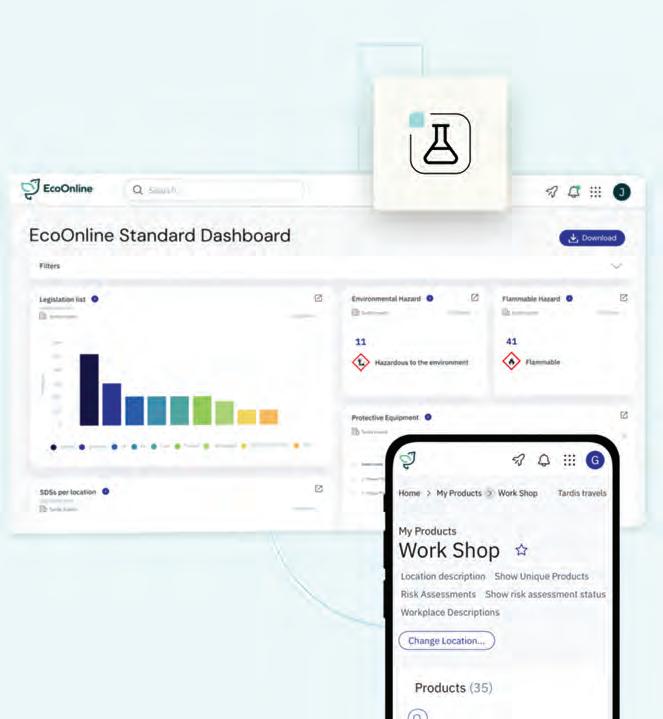
Access to Chemical Manager is available via a free app, which is used in conjunction with the broader Chemical Manager system, where all data and information are stored.
Chemical Manager is already used by thousands of organisations in over 70 industries across the UK, Europe and North America to help prevent avoidable accidents and work-related illnesses.
EuroAgri
Global safety and sustainability software provider EcoOnline has launched Chemical Manager in New Zealand, enabling users or safety teams to assess chemical risks, access Safety Data Sheets (SDS), substitute hazardous substances, monitor exposure, report on chemical compliance and protect workers.
As a result, regulators across the region are raising the bar. In NZ, a new hazardous substances reporting regime and PFAS bans, even for the likes of firefighting foams, will significantly tighten oversight in 2026.
Chemicals remain a critical point of risk in
Meeting these requirements is critical, but so is protecting people, so comprehensive digital chemical management is now essential for organisations in construction,
Given that much agricultural and horticultural work takes place remotely, being able to see information on safe handling when away from the main farm buildings, where a paper copy might be stored, ensures a wider understanding of potential risks, helped by an offline mode in the app if the users are in a
Beyond the downloadable apps, Chemical Manager can further support NZ organisations by helping with management and access to safety data sheets, assessment of chemical risks and exposure reduction. Visit www.ecoline.com
@rural_news
facebook.com/ruralnews
The flexibility of primary tillage, seedbed preparation, deep mixing, and ripping in one machine. Karat demonstrations are available now.
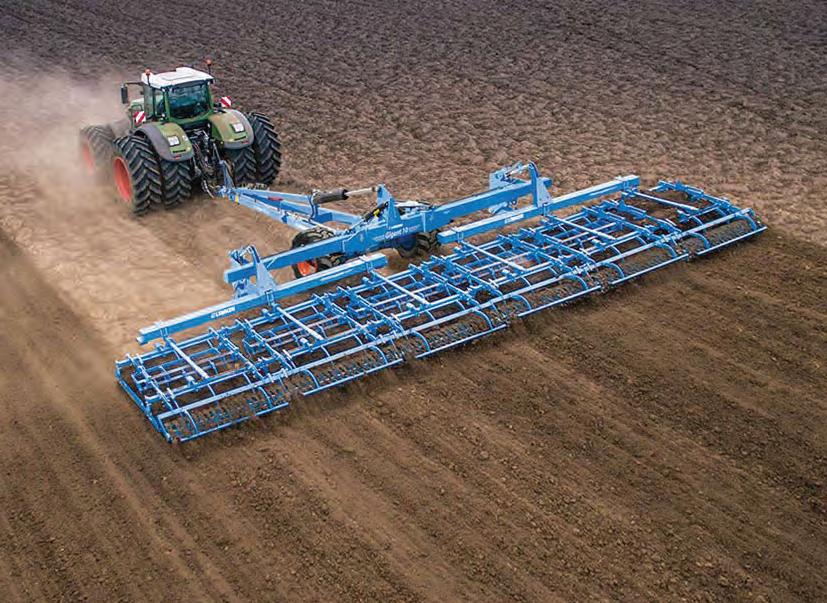
ONE SYSTEM FOR EVERYTHING - LEMKEN GIGANT
At EuroAgri, we understand the demands of New Zealand’s agricultural landscape. That’s why we offer the LEMKEN Gigant System Carrier, a versatile solution designed to enhance your farming operations.
combination, the Gigant ensures uniform cultivation depth and reduces fuel consumption. Its transport width of just 3 meters allows for easy movement between fields. Available in 10 & 12 metre versions.
Trust EuroAgri to provide innovative machinery solutions tailored for New Zealand farmers and contractors. ONE SYSTEM FOR EVERYTHING - LEMKEN GIGANT LEMKEN KARAT 10* - 6M
Compatible with various implements such as the Heliodor compact disc harrows, Kristall compact cultivator, and System-Kompaktor seedbed


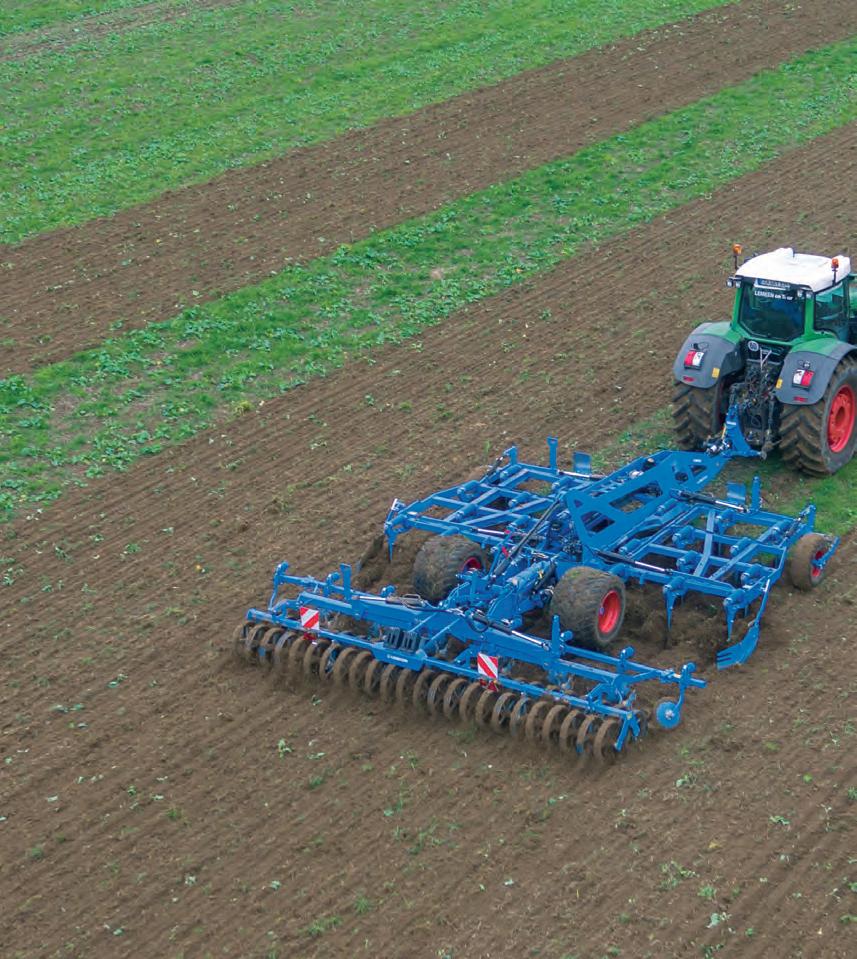
The flexibility of primary tillage, seedbed preparation, deep mixing, and ripping one machine. Karat demonstrations available now.

MARK DANIEL
markd@ruralnews.co.nz
WITH AUTONOMOUS
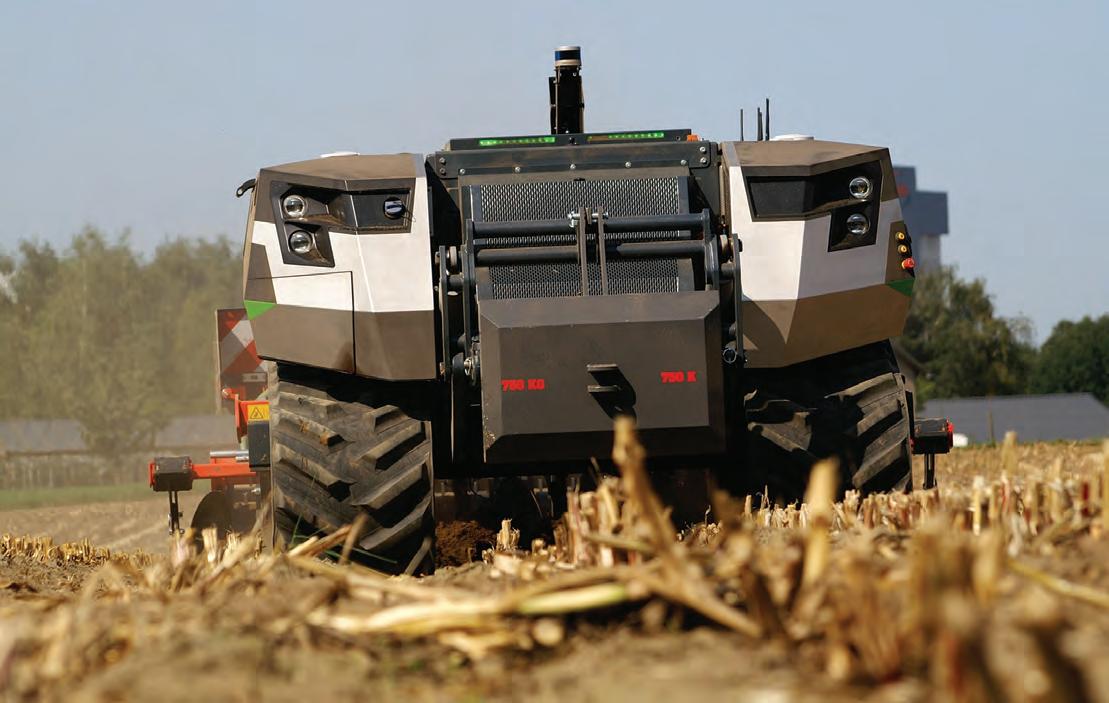
prime movers tipped to become more popular - particularly on broad acre operations - a recent trial by an AgXeed AgBot T2-7 SERIES, working in combination with the Väderstad Carrier XL 625 cultivator, achieved an impressive 80 hectares in just 20 hours over two paddocks, suggesting that autonomy is ready to compete with conventional tractors in the field.
The trial was held on 16-17 December 2025 in the Uckermark region in North-Eastern Germany – a month after the machine’s launch at Agritechnica. It included challenging field shapes, obstacles and hilly terrain, across loamy, sandy soil.
Featuring a 230hp diesel-electric drivetrain, the AgBot T2-7 Series maintained working speeds between 9 and
12kph, with power to the ground via a track system that achieved grip, but also offered very low ground pressure, helping to protect soil structure and safeguard future yields.
The machine was designed to directly compete with a standard tractor for key field applications including soil cultivation, seedbed preparation, seeding, stubble cultivation, or mulching fully autonomously. The trial combined it with a 6 metre Väderstad Carrier XL 625 and the ability to work consistently 24 hours a day, ensuring maximum effectiveness and efficiency when time windows are tight.
Planning and control are achieved via the AgXeed TraXwise planning portal, allowing farmers to pre-plan the complete task in advance and monitor the AgBot in real time, from job commencement to completion.



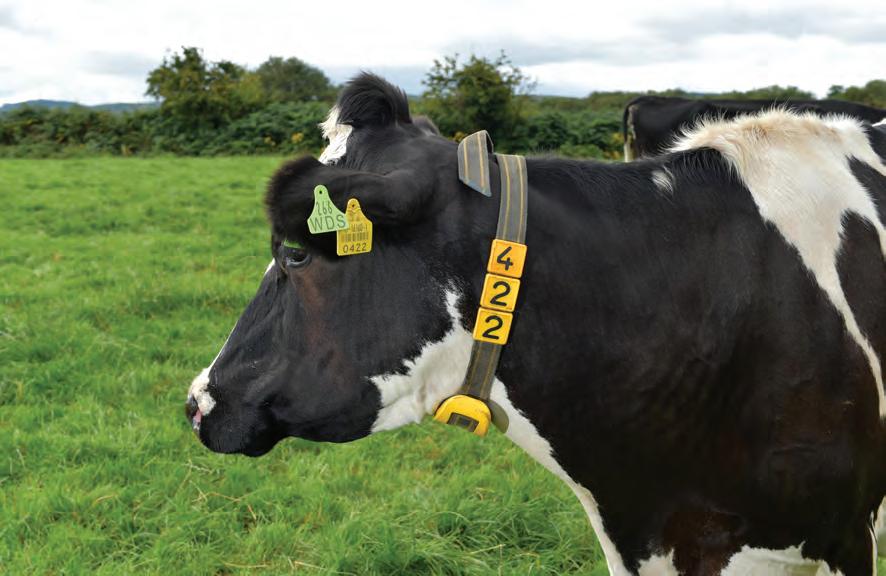
WITH COLLARS on more than seven million cows worldwide, Nedap says its standalone launch into New Zealand represents worldleading, reliable and proven smart technology solutions for dairy farmers.
Based in the Netherlands, Nedap aims to improve life on the farm for people and animals. The company says its smart solutions provide crucial insights to optimise dairy herd performance and wellbeing, while also reducing workload and stress, enhancing farm work and life.
Known for its reliability and innovation, used by thousands of farmers worldwide to manage millions of cows, farmers know they can trust Nedap to deliver better
outcomes on farm.
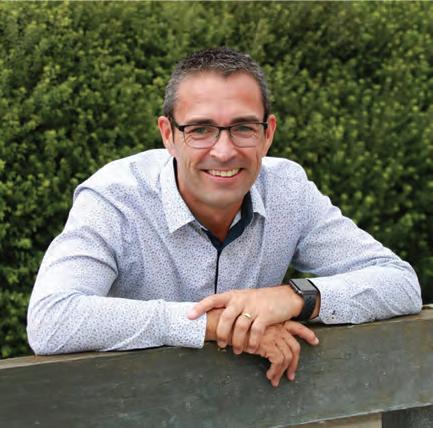
General manager Oceania Nedap, Greg Hamill, explains that Nedap New Zealand is a business partner for Nedap Netherlands.
“Farmers can still access us through those business partners they have previously dealt with, but now they have the ability to come direct to us. It provides another avenue of support.”
Nedap is not new to New Zealand, its solutions have been

available through business partners here for 20 years – this won’t change, he adds.
“Farmers can still access us through those business partners they have previously dealt with, but now they have the ability to come direct to us. It provides another avenue of support,” he says.
Nedap’s solutions include SmartTags, neck and ear tags, the SmartSort drafting solution that works in conjunction with the cow collars, SmartFlow milk monitoring milk meters, and SmartSight locomotion camera technology, identifying lame cows fast.
“For me, it’s exciting to head up Nedap New Zealand, it brings me back to the dairy industry. When I’m talking to dairy farmers
it’s nice to have a product I know brings value to their farming operation. We have technology that will make their farms, and their lives, better, more
profitable and more efficient,” says Hamill.
He says what sets Nedap apart is its long history in the industry. With 40% global market share, Nedap has seven million cows and 10,000 farmers worldwide utilising its smart solutions, meaning farmers can rest assured of robust, proven technology. This is backed up by Nedap’s vast worldwide R&D team.
With scale comes high levels of accuracy that flow through all their products, says Hamill.
“Having seven million cows worth of data flowing into the system that influences the algorithm behind our technology. The sheer volume of animals in the dataset gives
accuracy and reliability of information,” Hamill says.
“We pride ourselves on our accuracy, reliability and ease of use.”
Nedap represents the smart choice for dairy farmers wanting to utilise proven technology

they can rely on.
“If you’re thinking about using smart technology on your farm, then Nedap is a company you should be having a conversation with.”
www.nedap-livestockmanagement.co.nz
@rural_news

MARK DANIEL
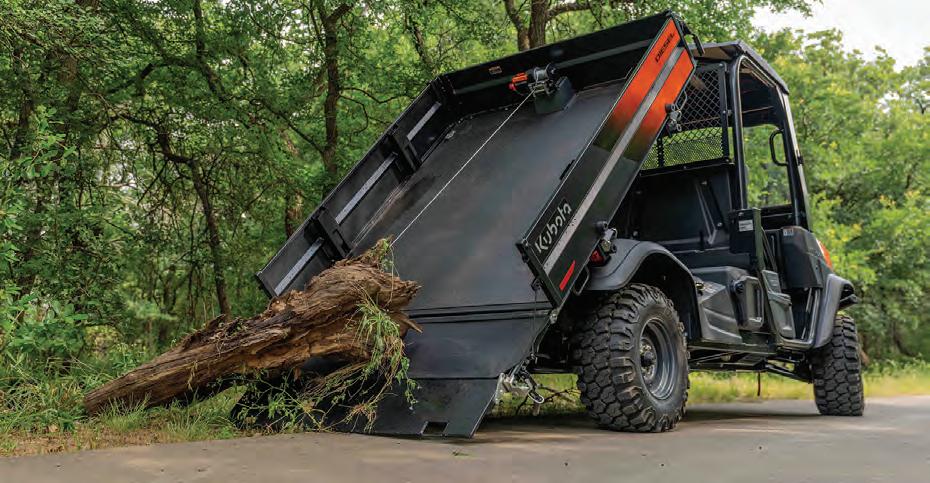
INCREASING ITS offering in New Zealand’s utility vehicle market, Kubota has unveiled its new RTV-X CAB and Long Bed models, purposebuilt to tackle tough farms, job sites and large-acreage properties.
The new arrivals build on Kubota’s well regarded RTV-X range, offering greater comfort, increased hauling capacity and enhanced versatility.
Both models are powered by Kubota’s D1105 diesel engine paired with the VHT-X variable hydrostatic transmission, a combination that delivers smooth control, long service life and confident handling across rough or steep terrain.
The company says the RTV-X CAB improves operator comfort with a fully integrated, factory-installed air-conditioned and heated cab that
is quieter interior and protects from the elements. Automotive-grade heating, air conditioning and defrost functions ensure operators remain productive through all weather and seasons.
The CAB features LED headlights, dynamic braking for improved control on descents and a durable steel cargo bed, equipped with hydraulic dumping. Offering true 4WD and a towing capacity of up to 1000kg, the RTV-X CAB delivers good pulling power and stability.
The RTV-X Long Bed caters to operators who need extra hauling capacity, offering a 1.8 metre long steel cargo bed, able to carry a 550kg payload and including adjustable side rails and a tailgate that can be lowered or removed to accommodate oversized loads.
Howard McDonald, product manager – lifestyle, says customers
spend long days out in the paddock or on the jobsite and need a machine that keeps up.
“The RTV-X CAB brings even greater comfort to long working days. The air-conditioned cab helps reduce fatigue, while the hydraulic dump bed, upgraded lighting and improved






MARK DANIEL markd@ruralnews.co.nz
IN 2018 RURTEC
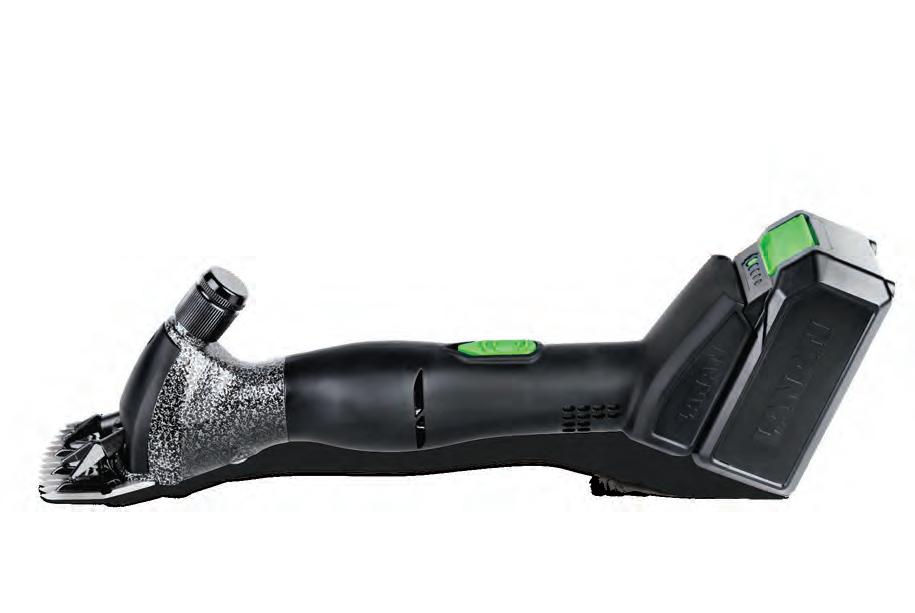
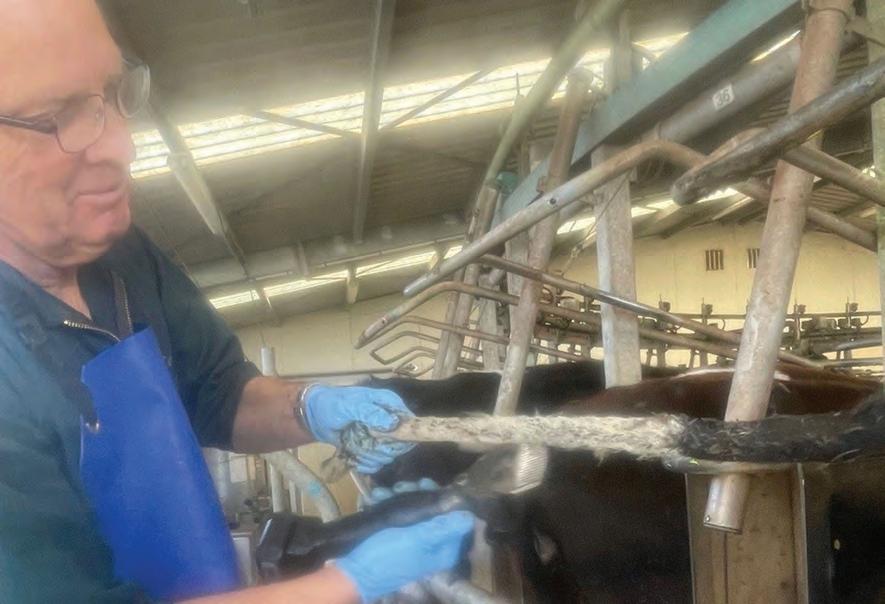
launched the original Lanati Gold Handpiece, offering cord-free convenience that quickly became a success across markets, including sheep farmers and lifestyle blocks, and dairy farmers trimming dirty tails.
New legislation resulting in a ban on tail docking arrived in 2019, causing a surge in demand in the already strong dairy sector, while a red clipper version was subsequently launched for clipping horses and for those preferring a
The Lite Kit is ideal for dairy, with both batteries being light and the combs ideal for dagging tails. Farmers that run a few sheep can also use it to keep them clean and tidy and deal with flystrike.
clipper for trimming cows’ tails.
While the convenience was obvious, many customers asked, “why couldn’t a cordless handpiece be more slimline like a normal handpiece?”
Around the same time, motor and lithium battery technology
was moving forward; development and prototype testing resulted in the new Lanati Astron Cord-free Handpiece rolling off the production line. It’s unique, slimline design is suited to all users and sectors but now offers a handpiece that is easier for those with small hands or arthritis.
Are you suffering from:
• Hay and silage being trampled into pasture and wasted? • Surface ponding of pastures?

At the heart of the unit, a brushless, slotless 18V motor produces torque that makes shearing speed more comparable to that achieved on the board, offering the ability to power a wide/concave comb through the fleece with ease. The use of a trilateral metal drive cog system and motor trip for safety, and to prevent machine damage, are major advances in the currently available cordless technology. Purchasers comment about the light weight of the Astron handpiece being a similar weight
to a machine-driven handpiece, even though it incorporates a battery.
Available in two options, the Astron Standard Kit has a 2.5Ah and a 6Ah battery, one wide/concave/shearing comb, one narrow/ convex/dagging comb and four cutters. The Lite Kit includes two of the lighter 2.5Ah batteries and two narrow/convex/dagging combs and four cutters. The Lite Kit is ideal for dairy, with both batteries being light and the combs ideal for dagging tails. Farmers that run a few sheep can
also use it to keep them clean and tidy and deal with flystrike.
The original Gold Lanati Handpiece and Red 180W Clipper are still available along with the Standard and Lite Astron options. Offered with a threeyear warranty, the Astron handpiece should be returned to Rurtec for any service issues, while the company also offers sharpening for combs, cutters and clipper blades. Visit www.rurtec.com
@rural_news
BUYING OR building a rural or semirural property? Make sure you know where the wastewater goes, says Environment Canterbury.
Living outside of a main population centre often means not only sourcing your drinking water but also finding a safe way to treat and dispose of household wastewater.
Most towns and cities have their drinking wastewater managed through reticulated systems, which are paid for through rates. But many semi-rural and rural properties are not connected to wastewater networks.
“If you are able to connect to a wastewater network, it’s your responsibility to do so, but if not, you’ll have some type of onsite wastewater management system (OWMS) or will need to have one installed as part of a build.
“While many OWMS can be
installed and operated as a permitted activity, some require resource consent – particularly when located close to other dwellings, drinking water sources or sites with environmental or cultural values.”
ECan is urging people to visit the dedicated wastewater section of their website for guidance on the types of OWMS, consenting requirements and maintenance advice.
Buying or selling land or property?
Before you buy a property or piece of land you intend to build on, check if it’s connected to a reticulated wastewater system – usually owned and operated by the local council.
“If it’s not and there is an existing onsite wastewater management system, you’ll need to check with a lawyer or estate agent whether it is consented, and how it’s been operated and maintained,” ECan says.
MARK DANIEL
WITH HIGH specification trailers becoming more common on New Zealand farms, there is increased interest the German-built Fliegl TMK dump trailer range.
Said to be ideal for carting maize, grass and cereal crops during harvest, and in the offseason, able to handle soil and gravel, they offer greater versatility throughout the year.
Offered with an extensive range between 8 and 29 tonnes, TMK series units can be specified in 2 or 3 axle
Looking at the trailers in more detail, stability on uneven ground is achieved by combining a wide-gauge chassis, combined with a suspension assembly, which uses a dual system where axles are positioned above the parabolic springs.
The result delivers a range of movement of up to 30cm for ground compensation, while the Jumbo Gigante Plus System can also impart a further 20cm lower centre of gravity over Fliegl’s other impressive suspension systems.
Fabricated from complete hollow steel sections, unlike the
U-section profiles, the fully galvanized frame ensures maximum strength and torsion resistance. The chassis also features a gimbalmounted tipping cylinder with a limit-switch, and in the case of higher specification models, heavy-duty tilt bearings mounted directly onto the chassis frame.
The TMK dump trailer range boasts a heavy-duty cross bridge and floor frame (5mm thick) for torsion resistance and optimum tilting performance, reinforcement sections pressed from single steel and sidewalls pressed from 4mm single sheets
Standard equipment includes a tipping angle of up to 55 degrees, mudguards, LED lights, an under-ride guard and a 400mm x 230mm grain chute. Other equipment includes 500mm deep galvanised body extensions, inspection window and ladder, a swiveling tow eye and a choice of mechanical or hydraulic parking jack.
The TMK 190 FOX dump trailer is built to appeal to farmers and contractors wanting a quality unit at a competitive price. A compact trough design allows better maneuverability around the farm, despite its
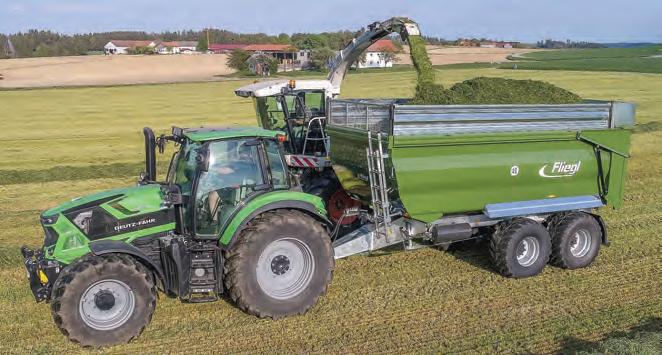
tandem suspension assembly uses central pendulum storage of the springs providing exceptional stability.
The TMK269 PROFI dump trailer can offer further benefits to large farm operations and contractors, not least a
experience, delivered via hydraulic drawbar suspension and heavier build of the frame, axles, and suspension.
Supplied with the Jumbo Gigant parabolic suspension assembly, the PROFI uses a pendulum axle with
the centre of the unit to provide excellent stability. Being 20cm lower than other Fliegl suspension systems, the TMK269 PROFI, with a 35m³ capacity (with extensions), compact shape and short frame makes it ideal for hill





MARK DANIEL
markd@ruralnews.co.nz
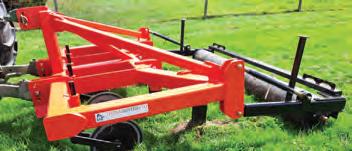
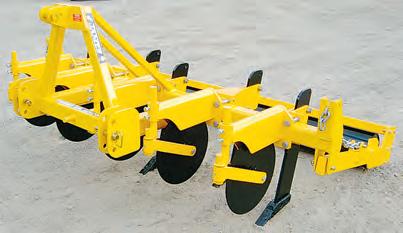
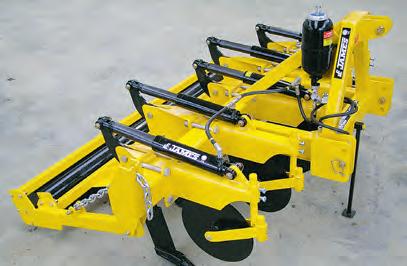
IN GRASSLAND, compaction starts at the surface and builds progressively deeper, causing poorer water transfer, more anaerobic activity and shallower rooting, leading to less grass, less palatability, pugging and reduced access to livestock and machinery.
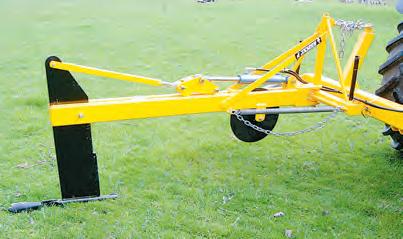
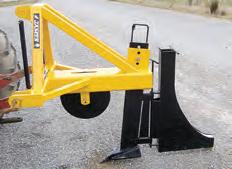
The Irish-built Erth Engineering PanBuster is a mounted machine available in 2.4, 2.7 or 3.0 metre working widths, equipped with 3, 4 or 5 legs accordingly. Compact/Eco models are available with 600 or 900mm leg spacing, while the shear-bolt versions, available in 2.4 or 3.0 metre frame widths can be set at 600, 800, 900 or 1200mm settings.
Legs are manufactured from Hardox steel for high wear resistance, fitted with hook
“Using a PanBuster when ground conditions are suitable can have a marked effect on annual production of dry matter. The action stops roots from becoming waterlogged in a wet spring, but equally free to move through the ‘eased’ profile in a dry summer”.
and pin mounting, reversible shins and low disturbance, single pin fitting points for grassland situations.
In shear bolt setup, those legs can operate down to around 500mm, while the more popular hydraulic autoreset version allows working depths of 350400mm. The auto-reset system is designed to protect the machine, and indeed the tractor, from unseen objects in the profile, and as well as lifting if an object is encountered. It can also deflect sideways by up to 150mm to pass
around that same object.
The design of the system uses highspecification NIKROM rams which have a small internal volume and large ports to allow quick reaction to objects, and marinegrade plating on the ram spears to resist pitting.
Depth control is via a full-width smooth roller assembly at the rear of the machine which incorporates a hydraulic-nitrogen accumulator to allow smooth movement over undulating terrain.
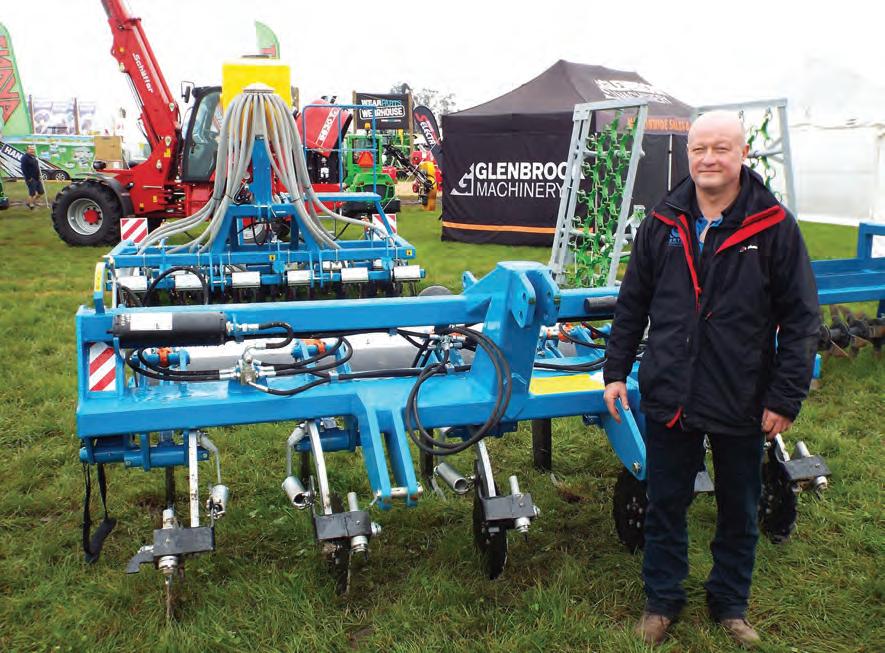
Additionally, the roller can be controlled by the driver to achieve clean “ins” and “outs” to maintain a good finish in the paddock. Up front, a disc assembly provides a clean entry for the discs in hard or trashy
conditions, and uses a unique geometry to maintain constant, but adjustable disc pressure from 150 to 250kg per disc.
John ‘JP’ Chapman of Hamilton-based New
MARK DANIEL
markd@ruralnews.co.nz
NORWOOD HAS announced the opening of a new Tasman dealership at Richmond near Nelson next month.
Norwood Tasman will operate alongside the Norwood Blenheim dealership, with both locations will be managed by Emily Simpson, the current dealership manager in Blenheim.
Norwood Tasman will be the authorised dealer for Kubota agriculture, lifestyle, and construction equipment in the Tasman region, complemented by its other major brands including Landini, Kuhn, Väderstad, Breviagri, Sky Agriculture, Vredo, Ferrari, Greenworks, and Croplands.
“This new dealership reflects Norwood’s long-term commitment
of investing in regional New Zealand and ensuring customers nationwide have local access to the expertise, service, and support they rely on,” says John Skurr, general manager, CB Norwood Distributors.
“This site will strengthen our presence in the top of the South Island and allow us to better support our existing customers while building new relationships in the area.”
Zealand distributor Ag and Civil Limited, comments: “Using a PanBuster when ground conditions are suitable can have a marked effect on annual production of dry matter. The action stops roots from becoming waterlogged in a wet spring, but equally free to move through the ‘eased’ profile in a dry summer”.
www.agandcivilmachinery.co.nz

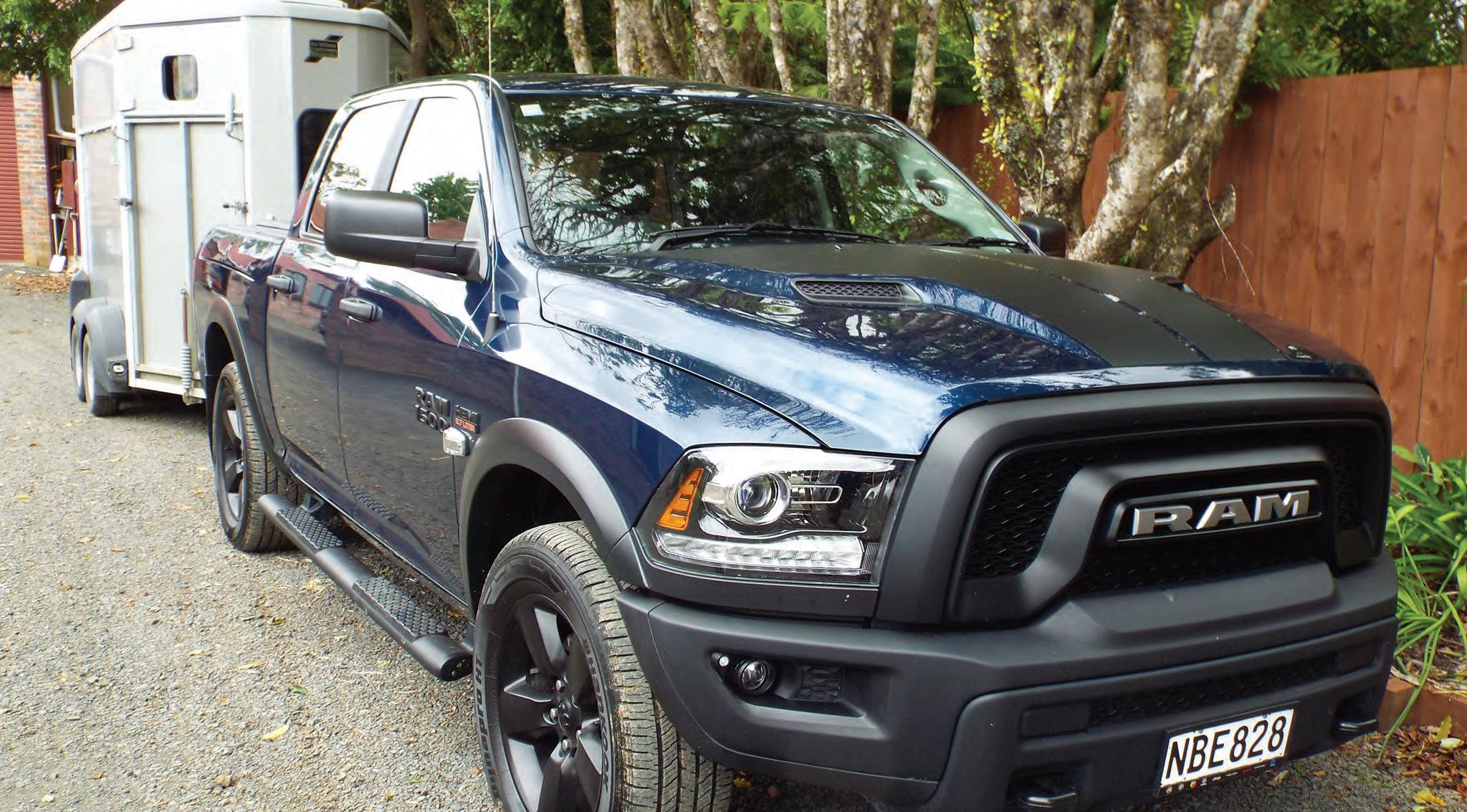
RAM TRUCKS NZ continues to claim dominance, ending 2025 as the top-selling large pickup truck in NZ, its tenth consecutive year as top dog.
Offered in models from the versatile RAM 1500 to the formidable RAM 2500 and 3500 Heavy Duty models, the
brand has consistently set the benchmark in the segment.
A cornerstone of this success is said to have been the conversion process of the original US-built, left-hand drive units to a righthand drive layout for the Australian and New Zealand markets. To date, over 35,000 trucks have been re-engineered at the remanufacturing
plant in Melbourne – by Ram Trucks Australia, the only factory-backed distributor of Ram Trucks in Australia and New Zealand.
The remanufacturing uses up to 500 locallyengineered parts, as well as several key components sourced from original US suppliers.
“This remarkable ten-year achievement
is more than a sales title; it’s a reflection of a passionate community and a product that genuinely fits the New Zealand way of life,” says Todd Groves, general manager of RAM Trucks NZ.

“Our team is committed to building on this legacy, offering the most capable, advanced, and soughtafter trucks on the road.”


Because we care about your safetywhile working.

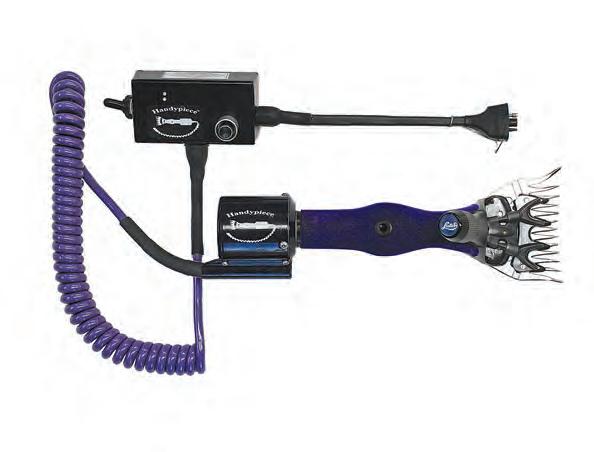
■ Ideal for shearing sheep, alpacas, goats and cow tails.
■ Variable speed from 2600-3500 rpm.
■ Latest
■
■ At 2800 rpm the
■ We customise cables for lifestyle shearers.






MARK DANIEL markd@ruralnews.co.nz
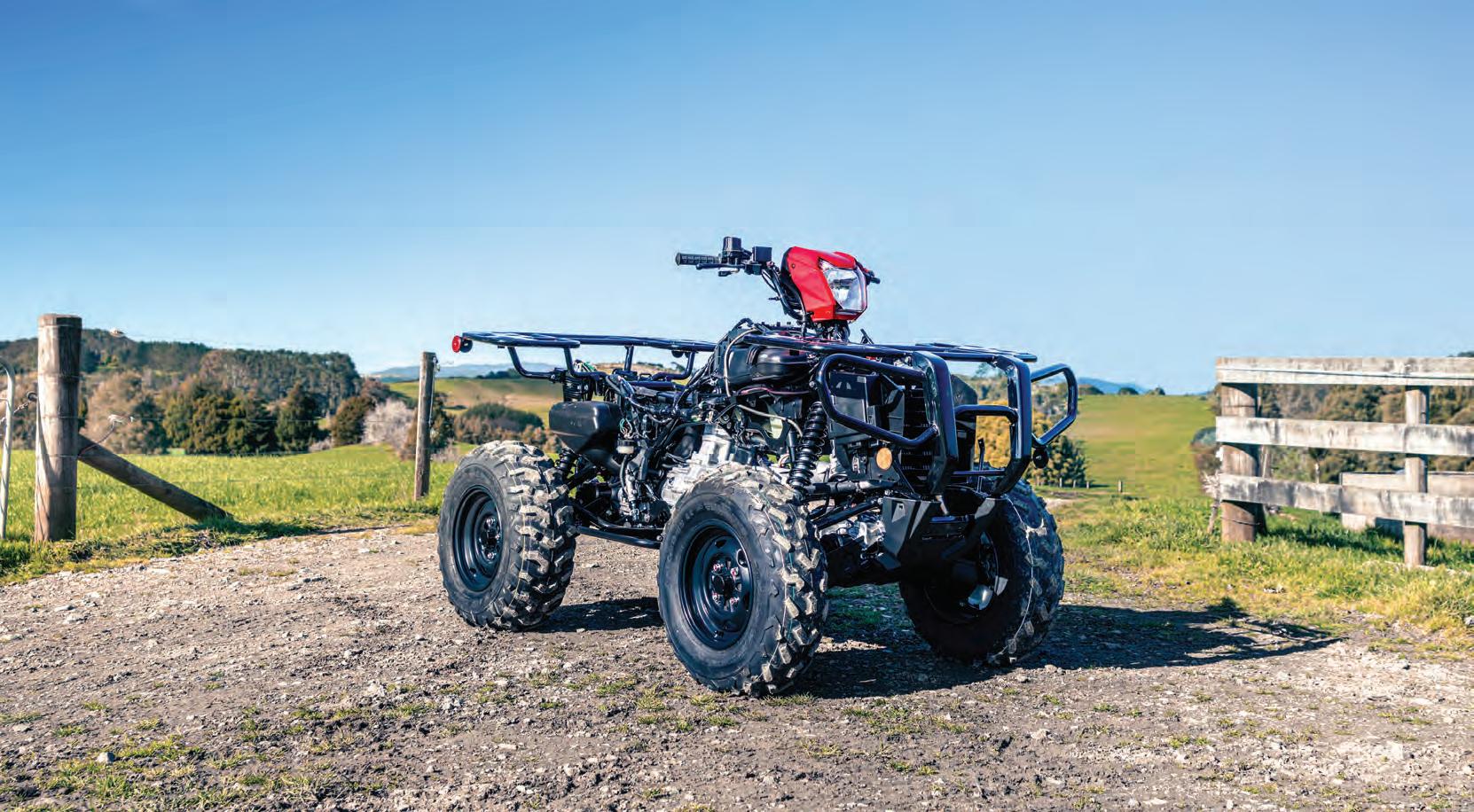
WITH THE rising interest in alternative fuels, it’s no surprise that manufacturers of ATVs and side-by-side vehicles are introducing alternative power solutions into their ranges.
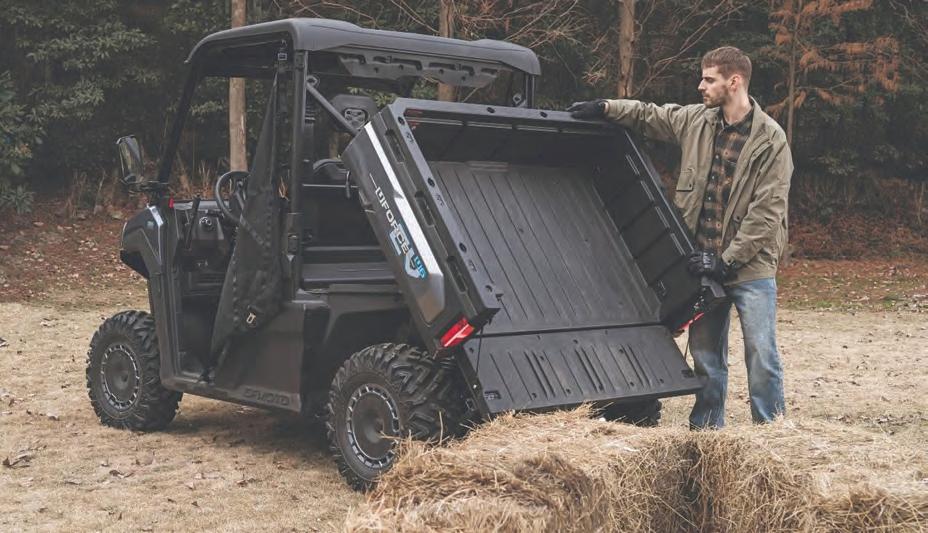
Over the last two decades CF MOTO has challenged the heritage manufacturers, to the point that they have become market leaders in many markets, including the UK. Their everevolving UFORCE UTV has become increasingly popular in New Zealand, so the 2025 arrival of a new ‘green’ option is sure to raise that profile.
CF MOTO’s first pure-electric UTV, the UFORCE U6 EV, was launched in NZ during 2025, delivering on a commitment to practical innovation and environmental responsibility, eliminating exhaust fumes and noise.
CF MOTO NZ country manager Anton Giacon says, “We were excited to release our first 100 per cent electric UTV, giving farmers, growers and vineyard owners even more choice when it comes to selecting the right UTV for their farm. So far, the machine’s
versatility and performance have exceeded everyone’s expectations.”
Featuring a 35kW (46.9hp) permanent magnet synchronous motor delivering instant torque and smooth acceleration, the U6 EV accelerates from 0 to 60km/h in under six seconds. Combined with an impressive travel range of 110km – on a single full charge at consistent speeds of 30-40km/h –farmers can tackle the task at hand quickly and effectively. The 15.28kWh lithium-ion batteries are overseen by a management system for monitoring battery health and safety issues, while a vehicle-to-load produces 220 volts power supply to 3.3kWh, for mains powered equipment.
The ability to fully recharge the vehicle in just 6.5 hours, from 0 to 100%, allows farmers to simply charge overnight and get back to work the next day.
The U6 EV shows its versatility by offering an 800kg tow capacity and a 250kg rear tray capacity, while the 8-inch TFT multifunction display, NFC digital key, and CF MOTO Ride app integration offers a connected and user-friendly experience.
“Instant torque and the ability to select between two power modes allow for easy towing and slow speed manoeuvring around the farm,” says Giacon.
“Interestingly, with its 800kg tow capacity, the U6 EV also offers 120kg more than the UFORCE 600 petrol-
powered equivalent.”
Standard features include hill ascent and descent systems for increased control and safety, while the Kinetic Energy Function kicks in during coasting or breaking to effectively recharge and extend the battery range.
Drive choices include 2WD, 4WD, 4WD with diff-lock and Turf-R modes. Weighing-in at 680 kg and offering 270mm ground clearance, braking is taken care of by hydraulic discs on each wheel. A 2-year vehicle and 5-year battery offers peace of mind for owners. Visit site number 533 or www.cfmoto.co.nz
SOUTH ISLAND dairy farmers will soon be able to supply organic milk to Fonterra.
The co-operative, which has processing organic milk in the North Island farmers since 2002, is now inviting applications from farmers in the South Island for the first time.
The new South Island recruitment of farmers interested in converting as well as existing organic farms will initially focus on those located around Southland and up to the Canterbury region.
This is in addition to continuing to recruit more organic farmers in the North Island, where more than 100 farms are currently part of the Fonterra Organic Programme.
Anne Douglas, group director for Fonterra Farm Source, says the expansion into the South Island is another positive news story for the co-op.
“We already have a strong performing organic business but have more room for growth based on increasing demand from customers around the world,” says Douglas.
“Our plan is to be able to process organic dairy products at our Stirling site from the 2028/29 season, with the recruitment process starting now to allow time for converting farmers to achieve organic certification.”
Before work commences at Stirling to enable the segregated processing of organic
milk, the co-op is looking to achieve minimum recruitment targets in the South Island that would ensure operational efficiencies.
“Expanding the programme seeks to offer South Island farmers another supply option and is also expected to benefit all Fonterra farmers based on the positive contribution our organic business makes to the wider co-op’s earnings,” adds Douglas.
In recent years, the global organic dairy category has shown consistent retail sales value growth year-onyear.
Fonterra is well positioned to capitalise on the growing demand with the co-op’s diverse product range, broad market access and strong customer partnerships.
Andrew Henderson, Fonterra’s general manager organics, says the co-op offers support for its shareholding farmers throughout their transition to organic.
“Our support package includes conversion incentives, advice, networking opportunities and linking farmers up with peers who can mentor them through the process,” says Henderson.
“Organic farming might not be the right fit for all shareholders, but for those interested in converting it has the potential to unlock additional returns.
“For example, since the Organic Milk Price was first established in
FONTERRA’S ORGANIC Milk Price was introduced in 2016/17 to provide suppliers with a market-based return for their organic milk solids.
Since the 2021/22 season, the programme’s fully certified shareholding farmers have received an Organic Milk Price of more than $10/kgMS.
New record highs have been set for the past three years on the back of growing demand, culminating in a final payout of $12.35/kgMS last season. The current Organic Milk Price forecast for the 2025/26 season is $13.10/kgMS.
If any farmers are interested in switching to organic, they can either call 0800 65 65 68, email specialty. milks@fonterra.com or get in touch with their local Fonterra Farm Source representative.
2016/17, it has delivered an average premium of ~$2/kgMS above the Farmgate Milk Price. There’s also the potential for lower input costs that are typical in New Zealand’s grass-fed
organic systems.”
Fonterra’s organic business has been running since 2002, with Hautapu, Morrinsville and Waitoa UHT producing the majority of the co-op’s organic dairy products.



JASON MINKHORST
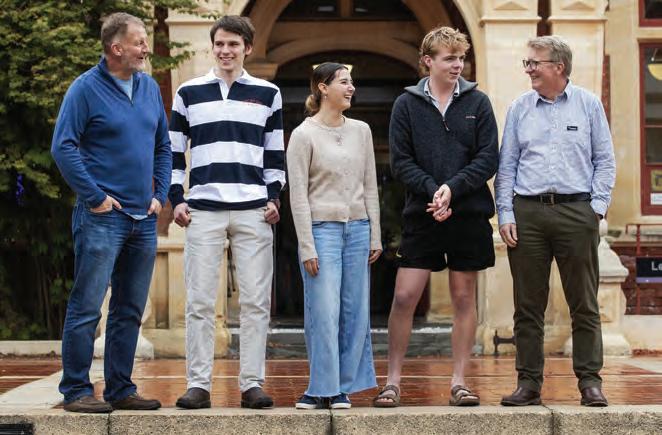
IT’S PRETTY easy to poke fun at Generation Z. You’ve probably heard the usual stereotypes: they’re on their phones too much, they hop between jobs, they expect too much too soon. In agriculture these stereotypes can be even
more pronounced. Some believe that young people don’t want to get their hands dirty or stick with the long hours that our farms demand. Yet when we look a little closer at who Gen Z truly are and what they value, a very different picture emerges. This is a generation equipped with
the skills that agriculture needs, perhaps more than we have yet appreciated.
The changing farmer landscape
Farming has changed dramatically from past generations. Our grandparents farmed with smaller operations, fewer regulations, and a more predictable sense
of what was expected. My grandfather milked 20 cows, my father milked 100 cows, and today, many farms have thousands of cows.
The landscape is also more complex. Climate risk looms larger, technology moves quicker, margins feel tighter and export
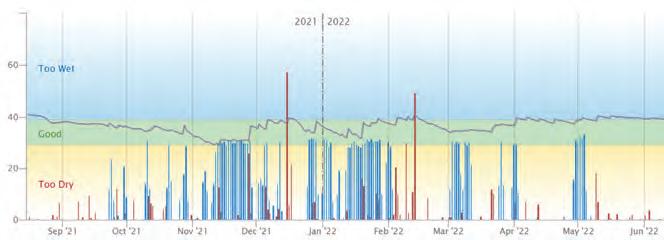
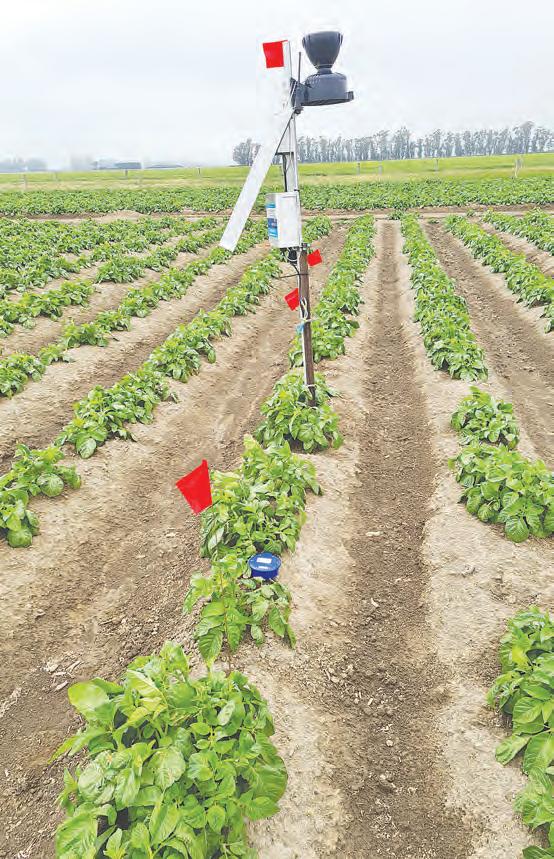
Environmental Reporting Meter Verification Nationwide
Your Farm Water Data With:
• Tailored Presentation
• Real Time Data
• Action Alerts
• Mobile Friendly
• Blue Tick accreditation
• Clean water setup and monitoring
We connect your data to give a real basis to use water
• Correct irrigation
• Tank and pond levels
• Soil moisture
• Climate station Clients use us because
• Good Value... cost effective data
• Easy setup and easy to use
markets are continuously in flux, which means we need smarter farming, not just tough farmers. Innovation is no longer optional. The next step forward in sustainable food production will come from those who combine practical know how with an instinct for problem solving and a comfort with change. And that fits Gen Z perfectly. Who is Gen Z?
• Uncomplicated presentation giving simple farm management decisions
• Saves staff time
• We have nationwide service and backup
• We are well established being the leading provider of water measuring systems
• Reliable leading global equipment
• Industry expertise designed for and by agri people
So, who exactly are we talking about? Gen Z are those born from 1997 through to 2012. They grew up in a world shaped by technology and constant disruption. For them, uncertainty is normal. This has made them not only flexible and resilient, but also unafraid to question how things have always been done. They search for answers, investigate ideas, and want to understand the reason behind decisions. They prefer collaboration over hierarchy, transparency over tradition, and purpose over status.
They also want their work to mean something.
A 2023 Deloitte survey found that 49% of Gen Z workers would quit within two years if dissatisfied with company values or work-life balance, compared to 41% of Millennials and 33% of Gen Xers.
I’ve already seen what Gen Z bring when given the opportunity. Ballance’s support of the Lincoln University student innovation challenge earlier this year offered a glimpse of the next wave of thinkers. The ideas that came through were practical, creative, and very sophisticated for first year students. These are not young people waiting for permission; they’re young people ready to solve problems.
But what really sets Gen Z apart is
their effortless use of technology. Many of them are already well-versed in AI tools, mobile apps, and precision techniques. Some are creating startups that support farmers. Others are focused on climate solutions or new ways to connect rural stories with urban audiences through social media. Far from being distracted by devices, they see technology as a tool to make work smarter, more sustainable and accessible. Their influence They’re also shaping future food systems as consumers. Gen Z have been called ‘food culture disruptors’ who look toward a future of food that is smart, sustainable and socially aware. These trends influence markets and open new opportunities for farmers who adapt early.
Time to embrace Gen Z Of course, Gen Z are not perfect – no generation is. Some may also challenge our thinking or ask questions that make us uncomfortable. But that curiosity is exactly what agriculture needs to stay competitive and resilient.
I believe that the future of farming looks bright. Not because it will be easy, but because the next generation is ready to tackle the hard problems with creativity and practicality. It’s now up to us Millennials, Gen Xers, and Boomers to welcome them in, listen to their ideas and more importantly, make room for them. If we do that, the next chapter of agriculture will be smarter and better equipped for the challenges ahead.
And for those, like me, who prefer to be optimists, I reckon that’s something worth getting excited about.
• Jason Minkhorst is Ballance Agri-Nutrients general manager of customer
I TRUST this finds all things well at your place.
This new year is looking much brighter for our rural sector than some in the recent past. What a difference the schedules can make! Surprise, surprise, even our wool ‘cheque’ was up on previous clips!
For some, the new year provides an opportunity for a fresh start; to start over is how it gets put. Yep, motivation seems to come much easier this time of the calendar year.
For sure, a fresh start can be a very necessary and positive thing. Get after it, I would say.
For others, it’s more
FARMER’S CHAPLAIN Colin Miller
the new year’s resolution thing. I recall reading that gyms actually get a peak in membership every new year. I found that all very interesting at first.
However, thinking about it for a bit, it is rather easy to understand. Especially when you consider many of these
new memberships seem to last a few short weeks at best.
So, more accurately then, that should read ‘New Years Wishes’. The reason? If there is no resolve, or resolute in the resolution, then it will soon get bumped off - probably till the same time next year!
Of course, by far the biggest thing we have to face in 2026 is the national elections. I can’t see anything up ahead of us more important to our rural communities than this.
Consider with me for a moment, the sharp knife-edge on which we in the rural sector are
positioned. Without a doubt, we are major contributors to the financial backbone of this great little country we love to call home.
The best research I have access to informs me NZ has somewhere between 2.4 and 2.7 million households in total. The rural sector now? Somewhere around 100,000 households in total, I learned.
Of course, that is very impressive stuff when you realise those relatively few households provide the largest volume of our national exports. Yep, their influence on the balance sheet is huge.
Surely, some applause is appropriate.
However, when it comes to elections and voting, those households have little influence nationally. Why is that, you wonder? Because they just don’t have the numbers. For want of a better description, it’s the ancient David vs Goliath thing all over again!
A couple of things come to mind here for me. Politicians that truly love our country rather than being in love with themselves will be vital. They will see the bigger picture and respond accordingly. In today’s world, they may be a rare species, close to
extinction even - but here’s hoping!
And then secondly, I think organisations like Groundswell, and others too no doubt, do a fantastic job of lifting our profile. They provide great accurate information and keep folks informed with what’s actually happening out here. The real stuff I mean, in contrast to all the spin a certain location in Wellington is so widely known for!
Now with the elections up ahead, let me encourage you to engage in the process. Attend some meetings, ask some questions of candidates about stuff
the non-dispatchable wind and solar generation.
pumped hydro or green hydrogen is prohibitive.
cost is not paid by the wind or solar companies.
I RECENTLY wrote an open letter to the Prime Minister because at a recent Federated Farmers meeting, Chris Luxon told me wind and solar generation is not subsidised. However, giving money is not the only way to subsidise an activity.
There are five effective subsidies that make investing in grid connected wind and solar generation viable. They are distortionary and add unnecessary costs to consumers. They are: 1. Emissions Trading Scheme subsidy.
Wind and solar can sell carbon credits while generators who use coal or natural gas, etc, are made to buy credits. This skews the economics massively in favour of
2. Back-up power subsidy.
Wind generation has a capacity factor of around 30%. Solar is between 10 to 25%. The capacity factor is the amount of power produced on average. A wind farm with a capacity of 100MW will, on average, put out about 30MW. In practice, it might produce 90MW, other times, nothing. When nothing is produced a back-up supply is needed.
The grid is set up to balance the generation to the demand. When the sun isn’t shining and the wind isn’t blowing, there has to be a back-up generation, (aka firming), but the cost of the back-up is not met by the wind and solar generating companies. For each gigawatt (GW) of wind capacity, there must be a GW of back-up generation. The cost of large batteries
Battery back-up will not work. Back-up power has to come from a dispatchable supply like hydro, natural gas, or coal. Embarrassingly, the cost of the back-up electricity is lower than from wind or solar. The solution is to use an accounting trick called the “Levelised Cost of Energy” (LCOE). It doesn’t make wind and solar actually cheaper. It just makes it seem like they are. LCOE answers the wrong question. It tells us the cost per kilowatthour (kWh) of different systems. What we really need to know is what is the cheapest way of delivering reliable power?
3. Transmission cost subsidy.
Whenever a wind or solar generating station is built, new transmission infrastructure is needed. This large
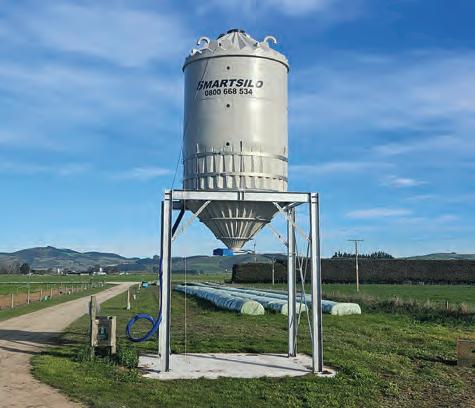
4. Rigged market subsidy.
The grid is forced to take power from wind or solar generators before other sources of power, because apparently wind and sunshine are free. Other generators have to cut back on their generation while power is coming from wind or solar. Wind and solar generators do not compete in an open market.
5. Frequency stability subsidy.
Our alternating current electricity grid has a frequency of 50 Hertz (Hz).
A small variation in frequency results in electrical failures in expensive equipment. This is a problem when too much of the power is generated by non-dispatchable sources like wind and solar.
If too much of the generated

that’s important to you. I know for some it may not be their cup of tea, but involve yourself anyway.
And, if you happen to be reading this and you are one pursuing a fresh start, good on you! Wishes are never enough, so get after it, and make the changes you need to, and want, for you and your family.
Now, when it comes to starting over, there is One whose “mercies are new every morning.” And that’s hard to beat!
Take care and God bless.
• To contact
Colin: farmerschaplain@ ruralnews.co.nz
power is coming from wind and solar, the grid might not have sufficient inertia so the frequency changes and the system can crash. There are some expensive machines called “rotating stabilisers” that can be used to stabilise the frequency, but the cost of the stabilisation is not paid by the wind and solar companies. Hydro, coal and geothermal provide inertia but if we add a lot more wind and solar, frequency control will become a big problem.
It does not matter if you call these subsidies or something else. Without these, wind or solar generation is completely uneconomic in New Zealand. Because of these, the price of our electricity is higher than it otherwise would be.
• John Riddell is a Waikato dairy farmer
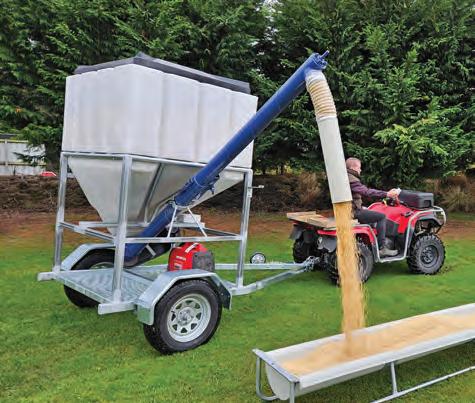
FENTON WILSON
AFTER A very good farming year and a few bucks back in the tin, farmers will be remiss not to consider the next steps in life and what that means for their farming business. Sheep and beef farmers are no exception.
The smart guys have clear plans that include what’s realistic in making farm succession decisions. The rest massage the aching hips, complain about the dry weather (or too much rain) while denying any issues exist and soldier on.
The lack of direction in farm succession and incumbent retirement staggers me. The ‘oldest son gets everything days’ should be a thing of the past but there are still those who would follow that path rather than
plan an exit and have the tough conversations with their partner, family and trusted professionals. The worst examples are those who give this son a go and don’t set anything up.
“The lack of direction in farm succession and incumbent retirement staggers me.”
How about this as a scenario.
A local farmer in his fifties has worked his whole life for the family on the farm after dad had passed. One day the call came – ‘the block’s on the market’. Mum needs a top up of cash. The reality of this is the home
and job of one sibling is sold while the rest of the family have had a lifetime of employment, their own homes and plenty of time to set up. To them it is eventually a cash injection. To him and his family it is the end of a job with the house also sold and future employment prospects looking slim to nonexistent.
What about this one.
A sibling works his life for the family on the farm and has verbal agreement to run it in his own account and be left it in the will. Parents pass and suddenly there is a challenge to that outcome. He and his family have had use of the farm at no cost for some time. A successful case is mounted by the other sibling that it is now their turn. Same net result as the first scenario.
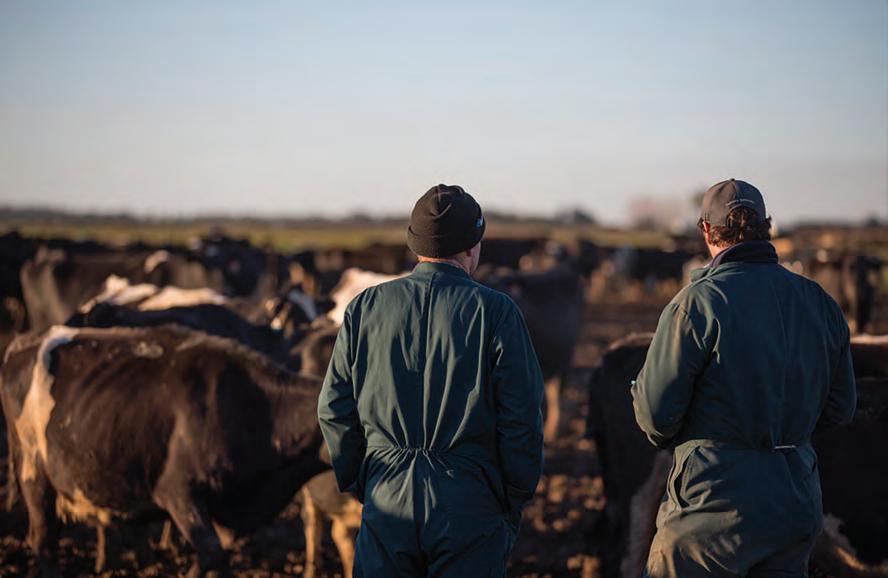
The old adage ‘fair is not equal and equal is not fair’ successfully challenged. Hypothetical examples maybe, but more probable in 2025 than they were 20 years ago. As land values have accelerated (and we are now talking millions, not hundreds of thousands), the appetite to contest wills and win has grown.
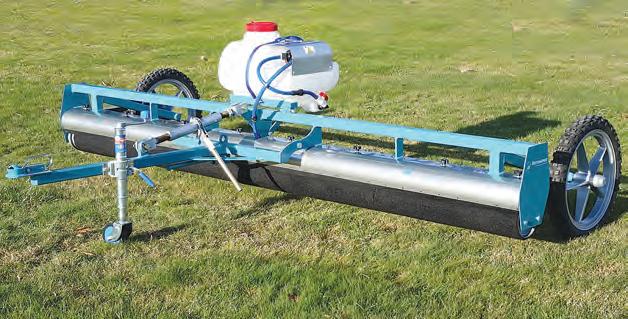
What do the succession professionals do? You can’t outsource the decision and the more meetings they facilitate the more they get paid.
Now I reckon farmers are some of the toughest business people in the country. They battle rain, sunshine, market conditions, council rules, buggered joints, sheep dogs with little to no
hearing and pestilence on a daily basis with gay abandonment. Yet to have the conversation with family on the future is really hard.
Time to consider a change to this scenario.
Work out what you want to do post farm and where you want to do it and work back from that. Then have the family chat before you engage anyone, but still get the professional help if you need it. Start with the bank and the accountant.
Guess what, our children are pretty bloody smart! The answers might be right in front of you but if the conversation is avoided you will never know. A business professional I work with remarked the other day that farmers
are hell bent on setting things up for the kids.
But if that generation are good enough to take the business forward, they will build their own success in spite of our best intentions. Retirement is a secondary
thought. You don’t really see this thinking in any other form of business.
Food for thought… • Fenton Wilson is a farmer and professional director who is proudly rural.





AS VETERINARY student numbers
grow to help address New Zealand’s national workforce shortage, Massey University’s School of Veterinary Science is inviting more veterinary practices to partner in training the next generation of vets.
In 2023, admissions to Massey University’s Bachelor of Veterinary Science (BVSc) increased by 25%, lifting the total intake cap to 175 students (125 domestic students and 50 international students). The change follows an increase in the number of places available for domestic students set by the Tertiary Education Commission (TEC) and reflects the urgent need to strengthen the veterinary workforce across the country. Entry to the BVSc is consistently oversubscribed and takes place via a competitive selection process.
For nearly 20 years, the School of Veterinary Science has worked alongside contracted veterinary clinics nationwide, partnering to deliver
externships which provide structured, hands-on clinical placements that form a core part of the degree. These placements allow final-year students to apply their learning in real-world settings, working alongside experienced professionals in commercial environments.
Externships complement training at the Veterinary Teaching Hospital by giving students exposure to aspects of veterinary work that are difficult to replicate on campus. This includes highly seasonal work such as pregnancy testing and spring dairy medicine, as well as the day-to-day realities of clinical practice across companion animal, production animal and equine veterinary businesses.
The first cohort of students from the expanded intake will begin their clinical externships at the end of 2026, marking a significant increase in demand for placement opportunities.
To meet this need, the school is calling
for more practices across all species areas to join its externship partnership programme.
Academic Lead of Veterinary Education Professor Jenny Weston says the growing class size represents an opportunity for the profession.
“This growth gives more practices the chance to play a direct role in shaping the future veterinary workforce. Externships are not about students simply observing from the sidelines – our partners welcome students into their teams and support them to actively contribute to clinical work.
“That level of involvement takes commitment, but it’s also incredibly rewarding. Practices tell us they value the fresh perspectives students bring, and many see externships as an important investment in the long-term strength of the profession.”
Externship partnerships are formal, contracted and remunerated agreements, distinct from ‘seeing practice’
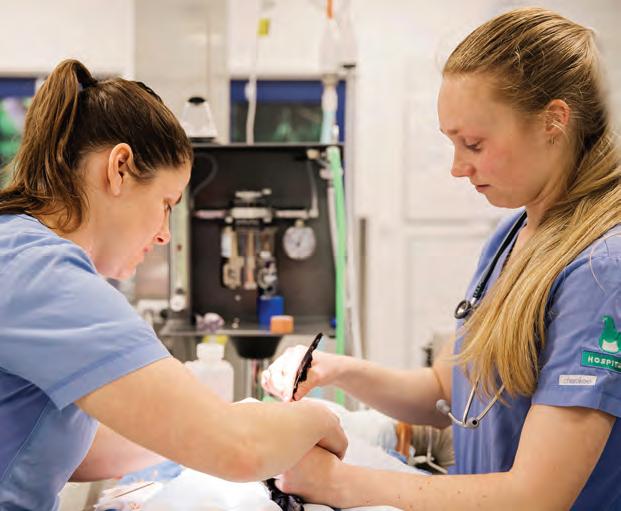
that students organise independently. Contracts between the university and practices run for an initial three-year term, with the option to renew by
mutual agreement with more flexible arrangements also available. Applications close Wednesday 18 February.















KENYON
PAUL
WITH LAMB prices at record highs, many farmers are considering breeding their ewe hoggets for the first time. While this can increase the total number of lambs
weaned and boost farm
revenue, it doesn’t automatically mean greater profitability. Success depends on careful planning and management.
If you’re thinking about breeding hoggets, now is the time to have well-developed plan to maximise the chance
of pregnancy and healthy lambs.
Key considerations:
• Target weight and condition: Hoggets should be close to 70% of their expected mature weight before mating, or at minimum 65%. You can use the
four-tooth ewe weight as a proxy for mature weight. Body condition scores of 2.5 or above are also recommended. Monitoring liveweights and adjusting feed levels now can make a significant difference.
• Animal health: Work with your local
veterinarian to ensure a robust animal health plan, including vaccinations, is in in place.
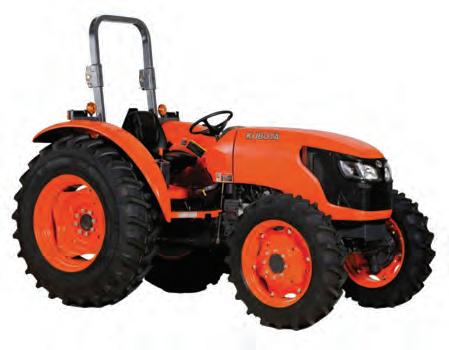
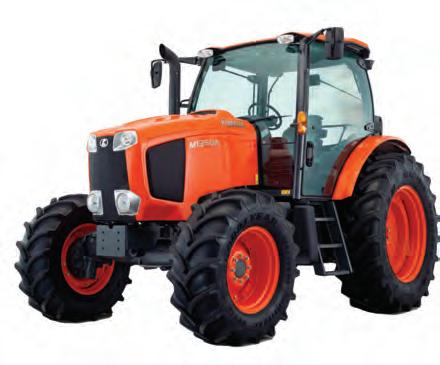
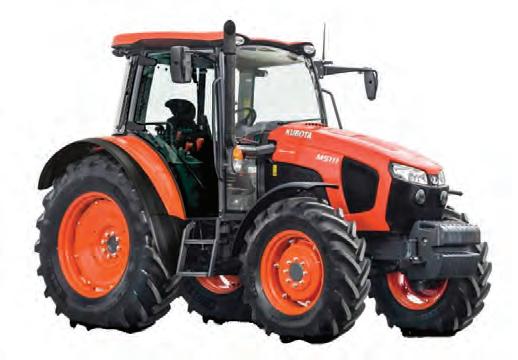
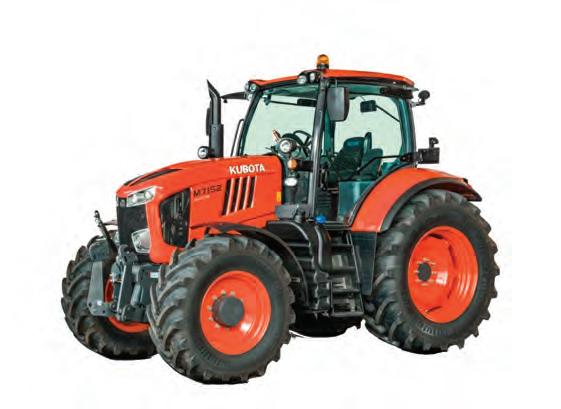
• Encouraging cycling: Encourage cycling by introducing vasectomised “teaser” rams 17 days before breeding. Well-grown hoggets may benefit from an even earlier teaser exposure, for example, 34 or 51 days before mating. It is advised to use a teaserto-hogget ratio of 1:100.
• Ram introduction: Use mature rams in smaller paddocks, at a ratio of 1:50, since hoggets are shy breeders. Avoid ram genotypes that produce large lambs, as hoggets have an increased risk of birthing difficulties. The most common challenge with hogget breeding is ensuring sufficient feed. Hoggets need to continue growing during pregnancy, gaining at least 130 grams per day to maximise lamb survival and maintain their suitability
for rebreeding as two tooths.
Massey University modelling shows that, in many cases, farmers can adjust mature ewe numbers to maintain feed availability and still improve profitability by breeding hoggets. However, research also indicates that if mature ewe weaning percentages are below 150%, it may be better to focus on improving mature ewe performance before introducing hogget breeding.
Our research at Massey underscores the importance of evidencebased decision-making in agriculture. While high lamb prices are tempting, breeding ewe hoggets can be a profitable way to increase farm productivity but only if done carefully, with proper feed, animal health and overall farm management.
• Professor Paul Kenyon is the Head of the School of Agriculture and Environment, and a Professor in Sheep Husbandry at Massey University.
NEW ZEALAND’S animal health industry has a new tool addressing a longstanding sustainability issue.
The ReGLOVE is a 100% recycled plastic shoulder-length examination glove, developed by Jennifer Stone, a practicing largeanimal veterinarian, to specifically target the high volume of singleuse, virgin plastic gloves common in veterinary work and on-farm tasks like calving assistance and DIY artificial insemination (AI).
“I really believed that as an industry, we must find ways to do better” says Stone, explaining her motivation to design and develop the product.
Launched in 2025, the ReGLOVE is now available nationwide through distributors SVS Veterinary Supplies and Fortis. Farm store availability is coming soon, says Stone.
Made from recycled plastic, it maintains performance standards tested in demanding vet field conditions: durability for extended use, sensitivity for palpating structures, and reliability comparable to traditional gloves.
“Testing in the field was essential including by the toughest critic –
me,” she says.
Veterinarians have long sought sustainable alternatives to virgin plastic disposables, which generate the majority of waste during procedures. Past options – like biodegradable or compostable gloves, or on-site washing programs – often underperformed in strength, safety, or practicality.
Stone works with large animals including dairy cattle and noted the disconnect.
“Vets routinely guide farmers on sustainable practices, from resource efficiency to environmental management,” she explains.
“Yet our daily use of virgin plastic single-use gloves – for calvings, exams, AI, and more –contributed to landfill waste without good alternatives.”
This issue spans veterinary and animal breeding industries. Shoulder-length gloves are standard for tasks like assisting difficult calvings or performing AI on dairy herds, where precision and protection are critical.
Stone spent years considering solutions before founding Stonelands Veterinary Supplies Ltd in 2024 with a single mission: to prove that the veterinary
AFTER RIGOROUS testing, the ReGLOVE rolled out as New Zealand’s first 100% recycled shoulder-length exam glove. It uses post-consumer recycled plastic, reducing demand for fossil fuels and new virgin materials.
Performance matches industry needs: tough enough for NZ farming conditions, tactile for detecting calf positions or AI placement, and safe for procedural use. Feedback from vet clinics, pharmaceutical suppliers, and breeding companies has been tremendous, with the New Zealand Veterinary Association supporting

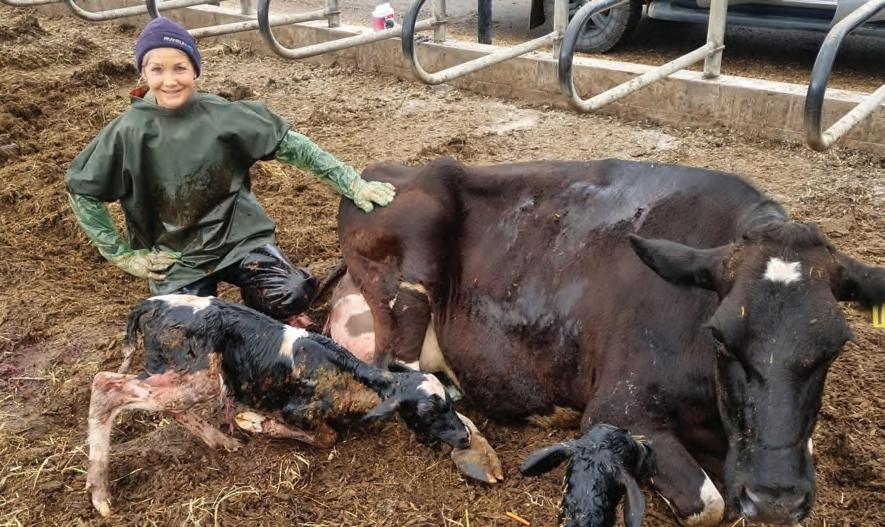
industry can do better, she says.
Early development
and highlighting it on their website and in their publications, notes Stone.
For dairy farmers, the ReGLOVE offers another solution amid growing sustainability focus, she says.
During peak calving, gloves see significant use for interventions, or in DIY AI programs to boost herd genetics. Vets using these gloves align their practices with advice given to farmers on reducing environmental impacts—echoing calls from groups like DairyNZ and Fonterra for industry-wide stewardship.
earned recognition: Stone was a finalist in the Innovation Franklin Shark Tank Competition, with judges praising it as an “innovative, smart,
Industry voices have noted its potential, suggesting support from major players as farms face environmental requirements and consumer demands for low-emission dairy, says Stone.
This development underscores ongoing efforts in NZ agriculture to balance performance with sustainability and Stone views it as a great step in the right direction for the industry.
“Vets have a role in demonstrating feasible positive changes.”
www.thereglove.co.nz.
sustainable solution to a long-standing challenge.”
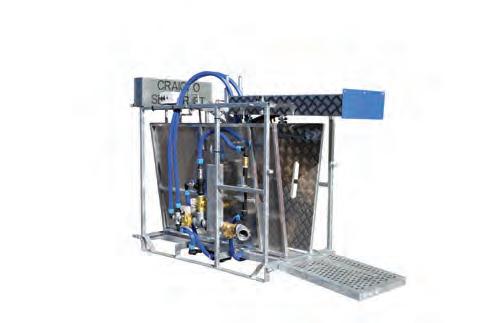
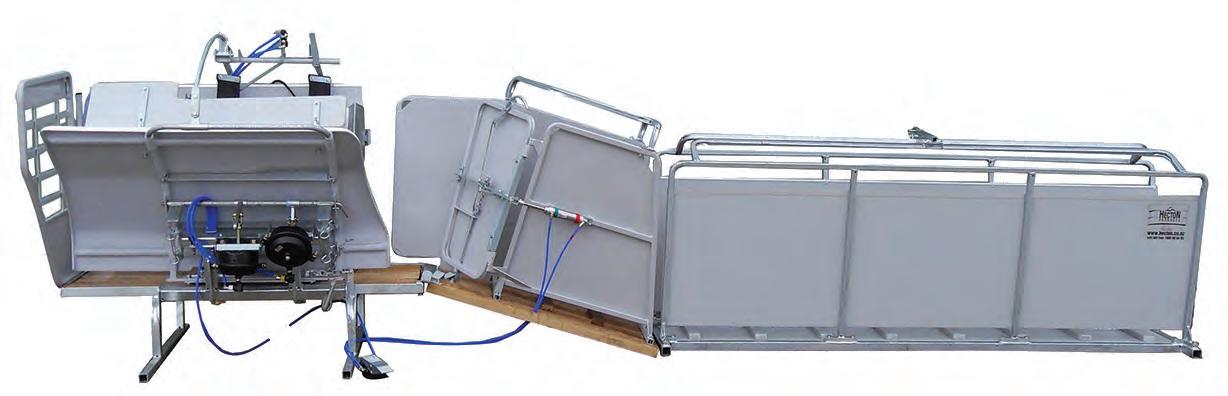
COMING IN at a yearend total at 3088 units, a rise of around 10% over the 2806 total for 2024, the signs are that the New Zealand farm machinery industry is turning the corner after a difficult couple of years.
Undoubtedly driven by rising confidence in the beef, sheep and
dairy sectors, with the latter expecting a large paycheck from the sale of Fonterra’s retail brands to Lactalis – the result is a welcome gain for the key support industry.
December deliveries of 329 units were a 5.8% lift over December 2024, with increased sales in the 200hp-plus sector –
up 26.1% or 6 units over 2024. Looking at the year-end numbers, three key segments – 100150hp, 150-200hp and 200hp-plus – finish the year up 17.8%, 37.1% and 9.7% respectively.
Delivery across both islands was broadly similar with North Island deliveries up 9.2% (1937
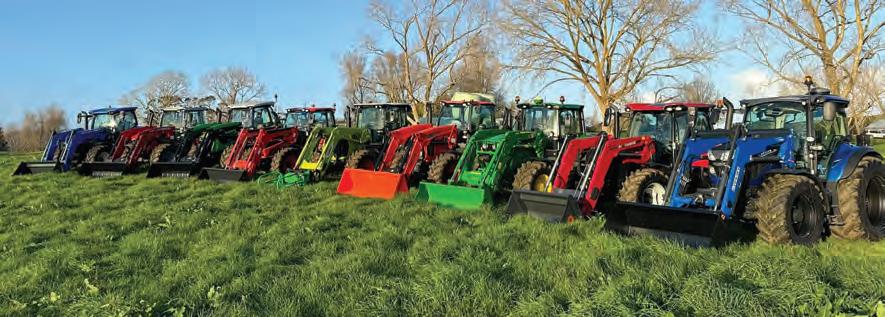

Are you looking for a fun weekend of riding away with your family? Get ready for Yamaha Off-Road Events, coming to a town near you. All bike brands are welcome!
6 – 8 March 2026 Gore 13 – 15 March 2026
At our BLU CRU Kids Camps, you can expect:
• 2 full days of riding on various trails
• Coaching sessions for both kids and adults
• Mechanic workshops
• Fun-filled games and activities for kids
• Exciting demo bike trials
Spaces are limited, so registration is essential to avoid disappointment.
To learn more about the event and secure your registration, simply scan the QR code.


total units) and the South Island up 11.4% (1151 total units). A slight negative was the 0-40hp segment that remained static and 40-100hp that fell 6.4%.
Tractor and Machinery Association (TAMA) president Jaiden Drought said it’s great to see signs of a significant strengthening in the market after what has been a difficult couple of years.
“My take is there is a general trend of cautious optimism, so it will be interesting to see what the feel is at the upcoming regional field day events. Overall, 2026 is likely to be a year of steady growth, likely ending up at the current five-year average for tractor registrations.”
In the Northern Hemisphere, UK agricultural tractor registrations fell to their lowest level on record in 2025 and are the lowest since before the Second World War, the Agricultural Engineers Association (AEA) has
confirmed. December saw only 541 machines registered, the lowest number since December 2016.
The AEA explained that the tractor market remains at a low ebb due to a lack of confidence in the farming sector, prompted by factors including: uncertainty about future agricultural and tax policy, challenging weather conditions, increased costs and weak prices for some commodities, notably arable crops.
While all power bands saw a decline in registrations, the biggest falls were for 240hp plus tractors, down a third compared with 2024, reflecting the challenging financial position of arable farmers. The rest of the market saw an overall fall of around 11%. The overall decline saw the average power of tractors fall to 173hp (2024 was 180hp), with the total horsepower of tractors registered falling to a 24-year low of 1.52 million hp.





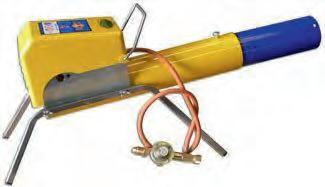
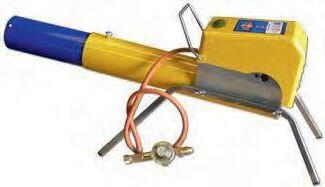




Available End of January 2026 from Mangapiri Downs Organic Stud Farm®
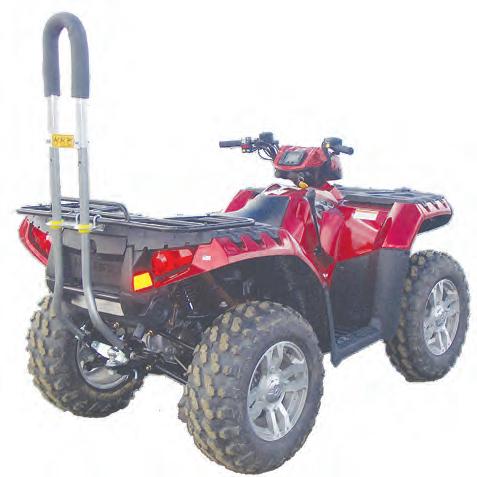



PRE-BOOK NOW | DEMAND

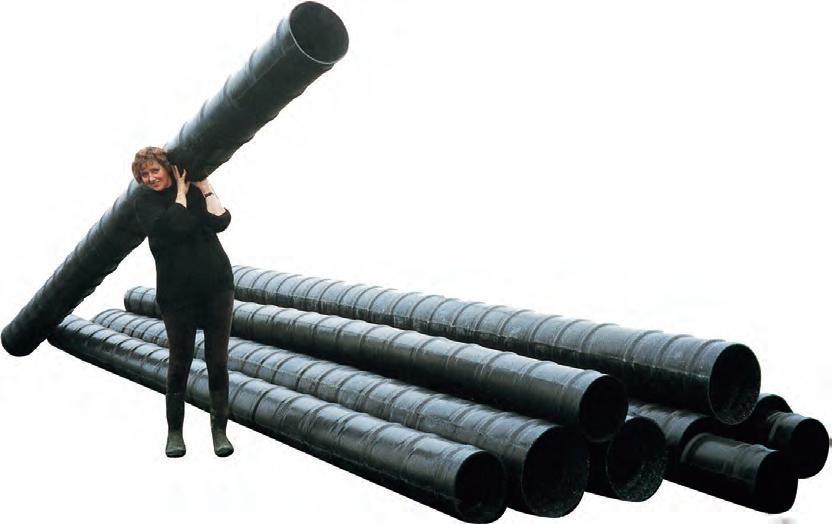


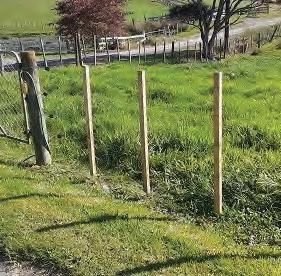
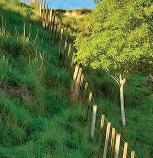


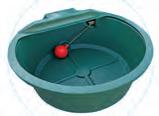
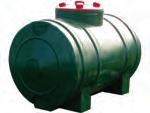
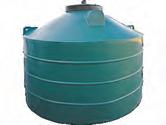
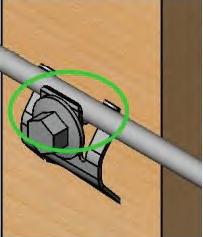

The Ravensdown team has all the tools you need to set up a year of growth. Local agronomy advice, 70+ expert agri managers, top-quality nutrients, and the game-changing HawkEye Pro are just part of the package. Together, we’ll help you farm smarter and make every dollar count.
Call 0800 100 123 or talk to your agri manager today.