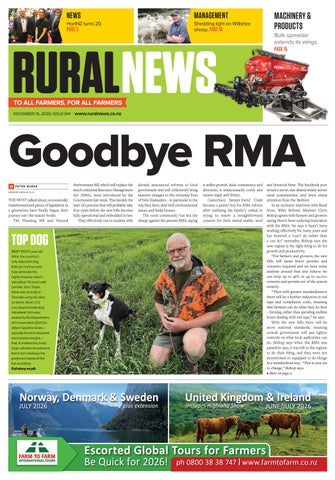
THE MOST talked about, economically transformational pieces of legislation in a generation have finally begun their journey into the statute books.
The Planning Bill and Natural Environment Bill, which will replace the much-criticised Resource Management Act (RMA), were introduced by the Government last week. This heralds the start of a process that will probably take four years before the new bills become fully operational and embedded in law. They effectively run in tandem with
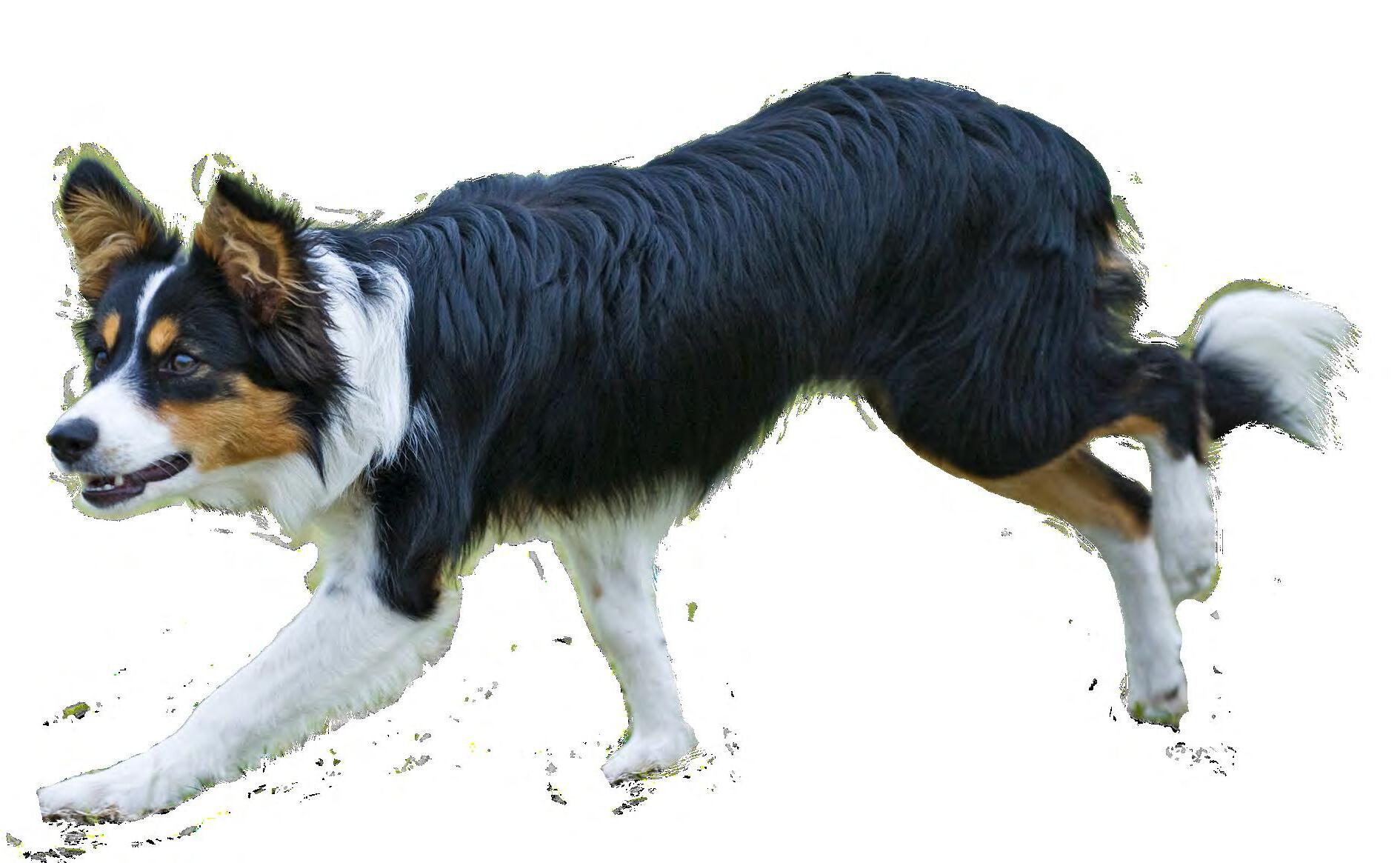
MEET EIGHT year old Wink, the country’s only detection dog that can hunt out and help eliminate the highly invasive weed –Velvetleaf. Pictured with handler John Taylor, Wink was recently in Taranaki using his wiles on farms. Wink’s CV runs beyond detecting Velvetleaf. He’s also tasked by the Department of Conservation (DoC) to detect Spartina Grass –typically found in estuaries and coastal margins –that, if undetected, traps large volumes of sediment that in turn destroys the preferred habitat of flat fish and birds.
already announced reforms to local government and will collectively bring massive changes to the everyday lives of New Zealanders – in particular to the way they farm, deal with environmental issues and build houses.
The rural community has led the charge against the present RMA, saying it stifles growth, lacks consistency and direction, is unnecessarily costly and causes angst and delays.
and livestock farm. The Facebook post struck a nerve, was shared widely across rural communities, and drew sharp attention from the Beehive.
Canterbury farmer David Clark became a poster boy for RMA reform after outlining his family’s ordeal in trying to renew a straightforward consent for their mixed arable, seed
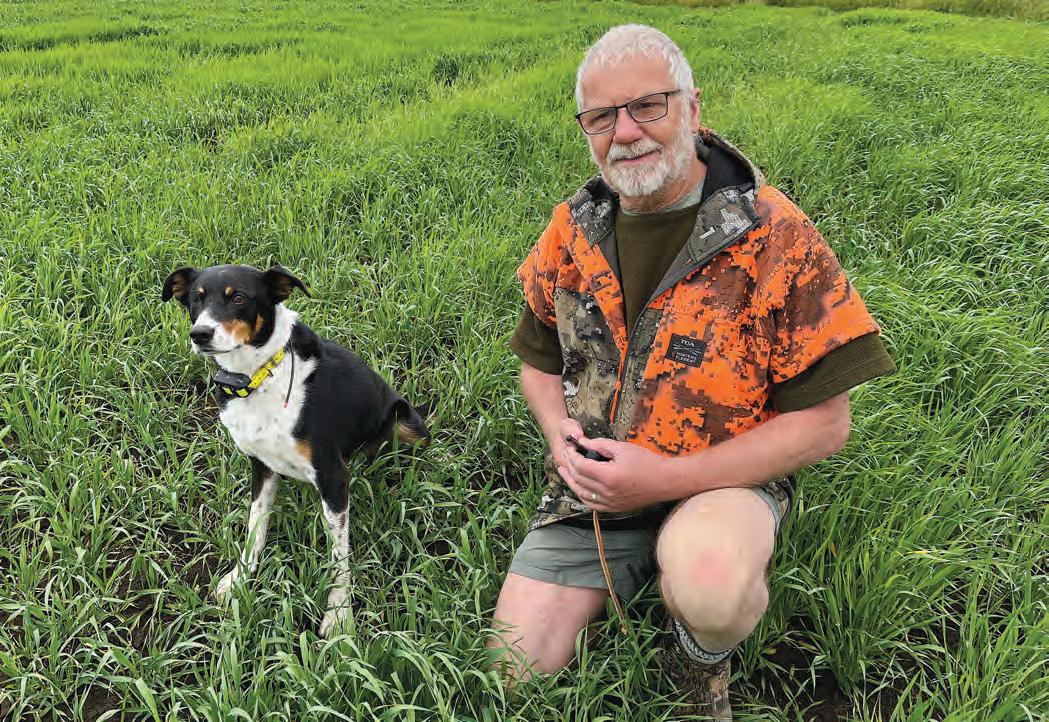


In an exclusive interview with Rural News, RMA Reform Minister Chris Bishop agrees with farmers and growers saying there’s been enduring frustration with the RMA. He says it hasn’t been working effectively for many years and has fostered a “can’t do rather than a can do” mentality. Bishop says the new regime is the right thing to do for growth and productivity.
“For farmers and growers, the new bills will mean fewer permits and consents required and we have some analysis around that and believe we can strip up to 46% or up to 22,000 consents and permits out of the system entirely.
“Then with greater standardisation there will be a further reduction in red tape and compliance costs, meaning that farmers can do what they do best – farming, rather than spending endless hours dealing with red tape,” he says. With the new bills there will be more national standards, meaning central government will put tighter controls on what local authorities can do. Bishop says when the RMA was passed in 1991, it was left to the regions to do their thing, and they were not incentivised or equipped to do things in a standardised way. “This is now set to change,” Bishop says.
•More on page 4






HEAD
Lower Ground Floor, 29 Northcroft Street, Takapuna, Auckland 0622
Phone: 09-307 0399
Fax: 09-307 0122
POSTAL ADDRESS PO Box 331100, Takapuna, Auckland 0740 Published by: Rural News Group Printed
Editorial:
editor@ruralnews.co.nz
Advertising material: beckyw@ruralnews.co.nz
Rural News online: www.ruralnews.co.nz
Subscriptions: subsrndn@ruralnews.co.nz
NIGEL MALTHUS
A NEW levying body, currently with the working title of NZWool, has been proposed to secure the future of New Zealand’s strong wool sector.
A basic version of the new body is expected to be in place by mid next year, and a fully operational version by 2027.
The proposal has come from the Wool Alliance, a cross-sector body recently launched through a formal agreement between Campaign for Wool NZ, Wool Impact, the Wool Research Organisation of New Zealand (WRONZ) and Beef+Lamb NZ.
The idea is currently being rolled out for public engagement and was presented to growers for their input in a webinar last week.
Former Fonterra chair, John Monaghan, the inaugural and independent chair of the Wool Alliance, told the webinar that Alliance members were certain that there was potential
to unlock further value in the New Zealand wool industry by working collaboratively.
“The plan is that by 2026, we have a model version developed utilising existing resources. And we will aim to have the fully funded model in placed by 2027.
“Significant progress has been made, and ongoing efforts and improved collaboration are still required.”
The webinar was told the steering group had identified several key areas of work, including standards and certification, communication within the industry, vocational training, advocacy, and funding.
NZWool would be non-profit, transparent and accountable.
Kara Biggs, the general manager of campaign for Wool NZ, explained that her organisation and Wool Impact would both consolidate into the new organisation and their work would continue under the new structure.
“What we’ve heard from growers is
that you want less entities, not more. And so, what this central organisation does, is that it consolidates two key industry bodies into NZWool.”
Of the other two members of the Wool Alliance, neither WRONZ nor Beef+Lamb NZ would sit within the new organisation but would work with it.
Biggs says WRONZ has committed to a formally signed strategic partnership with NZWool, while Beef+Lamb NZ already do “a huge amount of work” for the industry.
“So, what they have committed to do is to provide shared services, and this is for advocacy and back-office functions, because there’s no point in duplicating this stuff when it’s already being done so well by Beef+Lamb.”
Emphasising that the new NZWool would be “no bigger than it needs to be,” Wool Impact executive Ross McIsaac said the indicative budget to deliver the work needed at the scale required came to just under five million

dollars per year.
That would come through multiple funding lines, including contributions from industry and growers, with a levy of possibly around $200 per farm - or about two cents per kilo of greasy wool.
“When we talk about the cost of the model we also need to think about the type of return that we’re trying to enable - and we are definitely looking at enabling a much more significant value-add than two or four cents per kg of wool.”
SUDESH KISSUN sudeshk@ruralnews.co.nz
FONTERRA SHAREHOLDERS say they will be keeping an eye on their co-operative’s performance after the sale of its consumer businesses.
In his annual report delivered to Fonterra shareholders at the co-op’s annual meeting in Christchurch last week, Co-operative Council chair John Stevenson says post the divestment of the Mainland Group the co-op will have a stronger focus on the Ingredients and Foodservice businesses, which generate the
highest returns today.
“Our board and management see further opportunity in these businesses for growth, and are confident this new direction will create a higher performing co-op.
“Our role is to monitor and report back to you on how well Fonterra executes on this new direction. As part of this we will not just monitor headline returns. We will also have a keen interest in how much milk Fonterra is able to shift into higher returning products, Fonterra’s efficiency, and its capital discipline.”
Stevenson says that over the last 18 months there has been a significant change in the strategic direction of the co-operative. Fonterra shareholders approved of the sale of the Mainland Group to Lactalis for $4.22 billion.
He says this has been one of the biggest decisions Fonterra shareholders have made.
Stevenson urged shareholders to maintain a strong co-operative, noting that there was strong competition across a number of regions for milk.
“Fonterra is increasingly unique in that it is owned and controlled by farmers. As a co-operative we know
that our milk will be picked up every day and that we will receive the highest sustainable price for our milk.
“As well as giving us control of our destiny and certainty, our co-op and its scale also offers us stability and a variety of product mix options, and together these considerably de-risk our dairy farming businesses.
“It’s critical to support Fonterra and to build on what we’ve got. A strong farmer-owned co-operative of scale in our dairy industry is important to every New Zealand dairy farmer, as well as the country as a whole.”

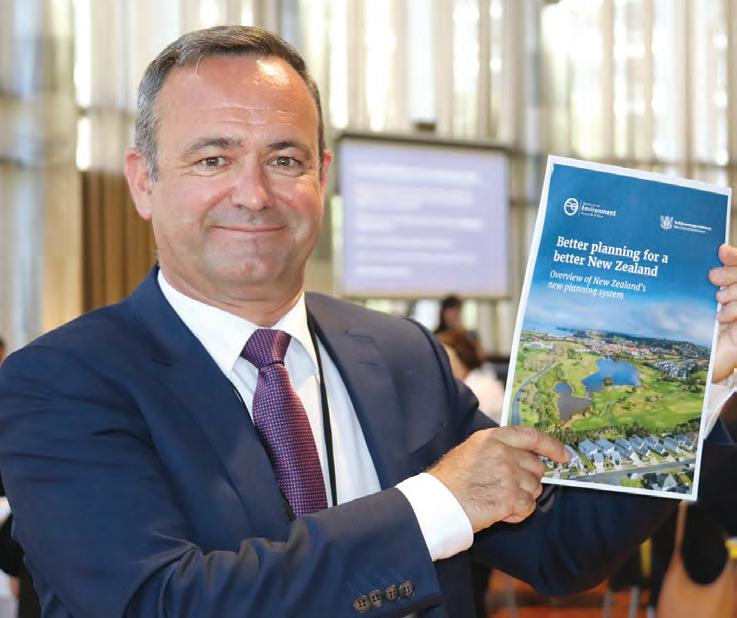
ONE PERSON intimately involved in the new legislation to replace the Resource Management Act (RMA) is the outgoing chief executive of the Ministry for Environment, James Palmer, who’s also worked in local government.
He says the new system will be more proportionate to managing things that really matter and heavily premised on reducing the amount of ambiguity and uncertainty in the system.
“The RMA has introduced planning and consenting processes that, for rural landowners, created a high degree of uncertainty and held a Sword of Damocles over farming operations. The new system will bring about more clarity and certainly a lot more quickly, and in that respect, I believe that rural NZ will welcome the changes,” he says.
Farmer reaction to the new laws has generally been welcoming, but both DairyNZ and Beef+Lamb NZ say they need time to come to grips with the fine print.
B+LNZ chair Kate Acland says the legislation is highly complex and technical and they want to make sure there are no perverse outcomes.
“We need to ensure
the proposed farm planning process that will replace consents does not inadvertently lead to more red tape for our farmers,” she says.
The chair of DairyNZ, Tracy Brown, says they want to ensure the changes are truly beneficial to their farmers. But they support the idea of reducing complexity, having greater consistency and having fewer consents.
“But we have concerns around how environmental limits will be set and the suitability of market-based
approaches to allocation and levies for resource use,” she says.
Federated Farmers spokesperson Mark Hooper says there is lots of good news in the package. He cites the value of having certified farm plans, removing the need in most cases for farmers to get a consent.
“On balance, we think these two bills are a major step forward and will dramatically improve the productivity of farming in NZ,” he says.
HortNZ’s chief executive
Kate Scott says the reforms are a good first step and signal that the Government is serious about ensuring NZ has a thriving horticulture sector. But she says they need to see the regulatory detail to better understand if the changes will achieve measurable outcomes for growers.
“They will be looking for clear signals that the changes recognise the national importance of food production and provide a framework that enables sustainable long-term investment,” she says.
THERE WAS much theatre in the Beehive before the bills were introduced into Parliament last week.
Firstly, the opposition parties were briefed and then the media. Key stakeholders from the primary sector along with NGOs were invited to a two hour ‘lockup briefing’ at which RMA Reform Minister Chris Bishop outlined the key details about the new legislation.
There were also cameo presentations from Prime Minister Christopher Luxon and deputy PM David Seymour who described the present RMA as a “handbrake on the economy”. And yes, there were cheese scones and coffee, eight media releases and eleven fact sheets.
One of the key differences between the old RMA and the new laws is the emphasis on economic growth and productivity outcomes rather than just environmental ones.
Of particular significance to the primary sector is that existing consent expiry dates will be extended for two years during the transition period – meaning that most consents will run through until 2031.
Assistant Agriculture Minister Andrew Hoggard says they’ve been out on Canterbury farms, sitting around kitchen tables and walking properties with families who’ve been farming sustainably for generations.
“What we heard was clear: good farmers were getting buried in paperwork and costs just to keep doing what they’ve always done well.
“That’s why we introduced the resource consent rollover. It gives farming families the certainty they need while we fix the bigger system. Common sense farming policy starts with listening to the people who know the land best.”
Bishop made it clear that regional councils will have a significantly reduced role in the new planning system.
Other key points he raised were an end to confusing duplication of local government plans and policies, making consenting simpler, reducing the number of plans and a prediction that the new bills will produce savings in the order of $13 billion over the next 30 years.
But while there is much hype about the new bills, there remains uncertainty about how they and the local government reforms will be finally implemented. It’s this that Bishop candidly revealed he is most anxious about. Will the people at the coal face implement the new rules in a way that reflects the spirit of the law and what central government wants, or will they revert to being staunch, bureaucratic Sir Humphries?
“Parliament can pass as many laws as it likes, issue edicts from Wellington, but actually translating that to your local farmer grower on the ground dealing with your local bureaucrat and making that a reality is a lot harder,” he says.
In the lockup, Bishop appealed to all parties to work together and create a better system.


PETER BURKE peterb@ruralnews.co.nz
MORE THAN 150 people turned up at Parliament recently to celebrate the 20th anniversary of Horticulture New Zealand (HortNZ).
HortNZ was formed in December 2005 through the merger of three longstanding grower bodies: the NZ Fruitgrowers Federation, the NZ Vegetable and Potato Growers and the Berryfruit Federation.
Guests included past presidents and staff of the organisation down through the years including Andrew Fenton who was the first chair of the new body. He spoke about the challenges and hard work that was put into getting the various groups to come together and says it was a case of putting personal interests aside and focusing on the goal of the power of having one voice for the sector.
The function was hosted by the Minister of Horticulture, Nicola Grigg, who says horticulture is
an exciting sector to be involved in as it continues to increase its contribution to the NZ economy.
“The growth trajectory coming out of horticulture is incredible and some new numbers coming out soon will reinforce that,” she says.
HortNZ chair Bernadine Guilleux said the goal at the time of the merger was to unite growers and ensure they had a strong, effective voice.
“Twenty years on, the value of critical mass and co-ordinated, cross-sector effort is clear. Horticulture has grown from 8% of primary sector exports in 2005 to 14% today,” she says.
Guilleux says major milestones over the past two decades include the creation of the RSE scheme, the development NZ GAP, and industry-wide responses to shocks such as Covid-19 and the Psa outbreak in kiwifruit. She says the total area under horticultural production has increased and has been shaped by innovation and technology.

earlier started to go brown and says the situation is not as dire as it was about a month ago.
Fielding sale slipped and farmers are now going to hold off selling any more store lambs,” he says.
says temperatures have been high and the rain gained may be quickly lost through transpiration.
FEARS OF a serious early drought in Hawke’s Bay have been allayed – for the moment at least.
AgFirst consultant Lochie Mcgillivray says there’s been up to 50mm of rain in the hills that had
He says farmers have continued to sell store lambs, but in the last week or so the market had a glitch.
“We were hoping that with a bit of rain there might have been some optimism, but the price at the

Mcgillivray says those farmers who sold store stock early probably did the right thing. He says the rain that has fallen has kicked crops along and farmers appear to be optimistic and can see a way forward. But he
“So, we need to have the rain coming and if it doesn’t, we slip back to where we were quite quickly,” he says.
Meanwhile, the Hawke’s Bay Regional Council says summer came
early with scorching temperatures in November and below average rainfall, plus temperatures reaching a staggering 3.4 degrees above average.
They say the hot dry conditions have meant that with few exceptions, river flows, groundwater levels and soil moisture were all below average.
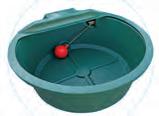
• For Water Storage Tanks
• Adjustable levels from 50mm-2.5m
• Minimises pump operation
•Available in 20/25/32/50mm
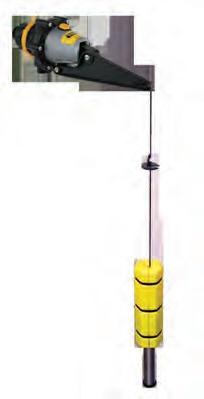

Shaft
• Fits plastic and concrete tanks
• Rugged and long lasting

MARK DANIEL
markd@ruralnews.co.nz
VELVETLEAF
(ABUTILON theophrasti)
is an annual broadleaved herb, originating in China, that can grow between 1 and 2.5 metres tall, with large heartshaped leaves and yelloworange flowers.
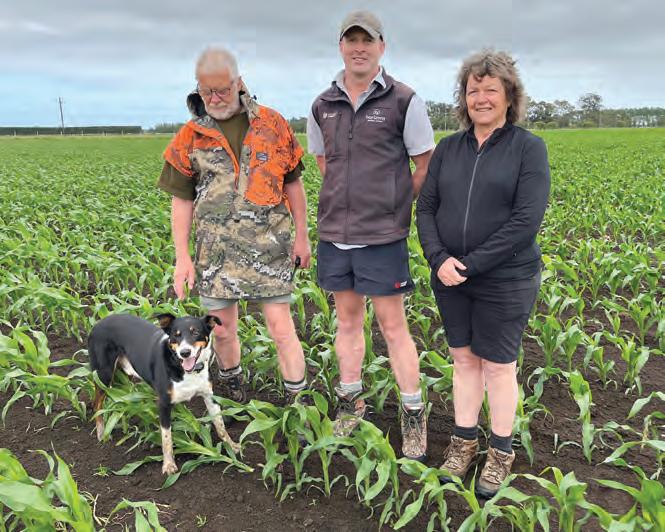
Rural News took a trip to the Taranaki earlier this month to witness detector dog Wink and his handler John Taylor on the hunt for the aggressive weed that Robbie Sicely, biosecurity manager at Horizons Regional Council, describes as “the world’s worst cropping weed”.
Velvetleaf is highly
competitive and aggressive in crops such as maize and fodder beet, with studies showing that crop yields are reduced by up to 70%. Even moderate infestations that emerge simultaneously with the crop can reduce yields by as much as 25%.
Taranaki has 13 infected sites and Wink and his handler Taylor, of K9 Weed Detection, searched maize or chicory crops. Initially, Wink appeared to be covering areas in a random pattern, not unlike a sheepdog looking for sheep, but quickly became more focused when he scented the
pest plant. He eventually zeroed in on a plant, barked to indicate his find, then sat to highlight the area.
At a command from Taylor, Wink then began a much more structured search pattern in the immediate idea, looking for further plants that had germinated from seeds disturbed by recent cultivator movement.
Following the recent maize planting regime in the North Island, disturbed soils offer an ideal environment for what may have been long dormant seeds to germinate.
North Island velvetleaf co-ordinator, Sally Linton, reminded growers


that given its potential to decimate the New Zealand cropping sector, the economic “ripple effect” could affect the dairy, food production and export sectors.
“Fighting velvetleaf is a shared responsibility that everyone needs to be involved with, including the grower, their neighbours, contractors and seed merchants,” said Linton.
“Currently, we are just about treading water, but if we let things slip, Velvetleaf has the potential to get away from us.”
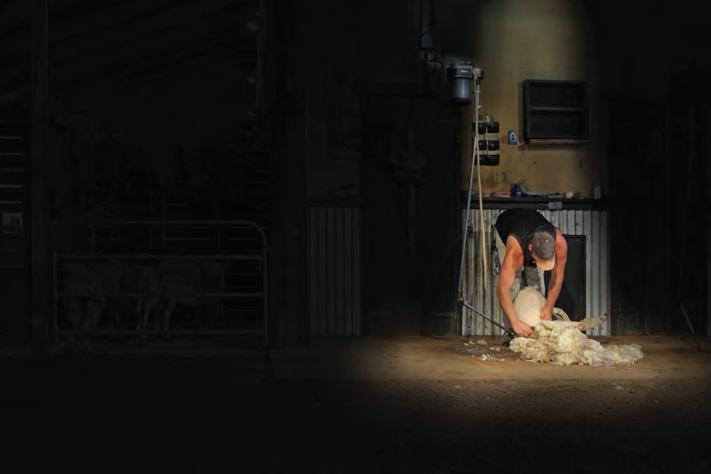
and your workers safe in the shed. The TPW Xpress now comes with the new indicator with audible and visible alarms that let you know when you’re approaching the target weight.

Watch our equipment in action!


of about 3cm across and the eventual arrival of distinctive black seed pods of 2.5cm diameter, made up of 12-15 segments. Of particular concern is the fact that a single mature plant, that might grow to 1.2 to 1.5 metres high, can produce up to 30,000 seeds, which can survive for up to 50 years.
of a property, without realising.”
properties or purchased crops are contaminated.



An annual weed, typically active between October and April, the invasive broad-leaved weed has been identified in over 100 North Island properties, largely in the maize crops of Auckland and the Waikato. Of particular interest to the assembled growers were 13 known incursions in the Horizons region, likely occurring on the arrival of fodder beet to the area following the wider 2016-17 fodder beet incursion in the South Island.


Emerging as a seedling, the weed quickly matures by around 100 days, identified by large heart-shaped leaves, buttery yellow flowers
Linton said, “Looking at maize crops taken for silage, the seeds are not killed during the heating process of ensiling. Indeed, the use of feed pads, that in turn lead to feed waste and effluent washing, means that viable seeds can easily be spread over a wide area
Linton suggested that anyone buying-in silage, should be inspecting source crops ahead of harvesting and confirm with suppliers that the property was velvetleaffree. They should also confirm from harvesting contractors whether they had worked at infected properties, and if this was the case, were up to speed with appropriate hygiene practices, before moving to the next job.
The weed spreads mainly through contaminated maize, fodder beet, machinery, and livestock, so farms are at risk if neighbouring
The economic consequences go beyond individual farms. Infestations threaten crop quality, reduce marketable yields and can undermine domestic and international confidence in agricultural production if not controlled promptly.
Control needs to be centred around postemergent spraying, pulling juvenile plants or bagging mature specimens and safely disposing of infested material, especially when seeds are mature.
@rural_news facebook.com/ruralnews
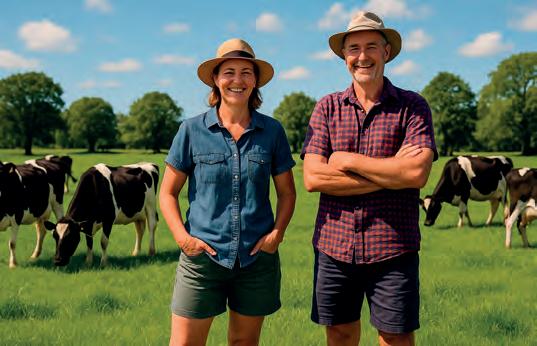




MEAT PROCESSORS are hopeful that the additional 15% tariff on lamb exports to the US will also come off.
Last month President Donald Trump signed an executive order cancelling additional tariffs on a wide range of food imports, including New Zealand beef and kiwifruit.
However, lamb exports to the US still attract a 15% tariff.
While the US isn’t a big market for NZ lamb, it’s a very high value and growing market, according to Meat Industry Association chief executive Sirma

Speaking at the NZ/ US Business Summit in Auckland this month, she said unfortunately lamb was not the recipient of the recent good news on tariffs.
“The US is not a very big lamb market
for New Zealand but having said that, it is a very high value and a growing market, so it is disappointing that we still face that additional 15% on our lamb exports and we are hopeful that over time that will also be decreased.
“Our exports into that market are complementary to the US production and it means for consum-
ers that lamb is available on the shelf 365 days a year, so it’s a product category availability and it’s becoming more popular, particularly with the ethnic cuisines in the mix of different cooking styles in the US.
“So, we are hopeful that it will come off but right now we have to deal with the additional 15% tariffs.”
BEEF EXPORTS to the US for the third quarter of this year is about 20% up from the same time last year.
The new tariff exemptions marked a sharp reversal, as President Trump had long insisted his import duties were not fuelling inflation for Americans. However, climbing prices and declining supply may have prompted the president to change tack.
Karapeeva told the gathering that the removal of tariffs on beef
Meat Industry Association chief executive Sirma Karapeeva says this reflects the economic conditions - strong demand, tight supply and good prices. She says the forecast is that this will continue for the next two years.
was unexpected and good news for the red meat sector.
“We woke up one morning and heavens forbid you know the tariffs are off, just like heavens forbid the tariffs were on,” she said.
The tariffs reversal comes at a time when global demand is strong for protein in general, and more particularly for red meat.
Karapeeva says supply across the globe is quite tight, keeping prices strong.
“And that’s great news for New Zealand, it’s great news for our economy, great news for our processors and ultimately great news for our farmers that produce these wonderful animals that we process and export.”
“So, this is fabulous news when you think about where we are at in New Zealand with our economy.
“We need all the export earnings that we can to keep fuelling this economy. The US of course is our largest meat market, and it will continue to be so because at the moment that they are at a 70-year low in terms of their herd size, they’re going into a massive herd rebuild and so they really do need imports and particularly imports from the likes of New Zealand.
“We produce the high quality lean red meat that gets mixed in with their grain finish product to make those burgers that President Trump was so fond of.”
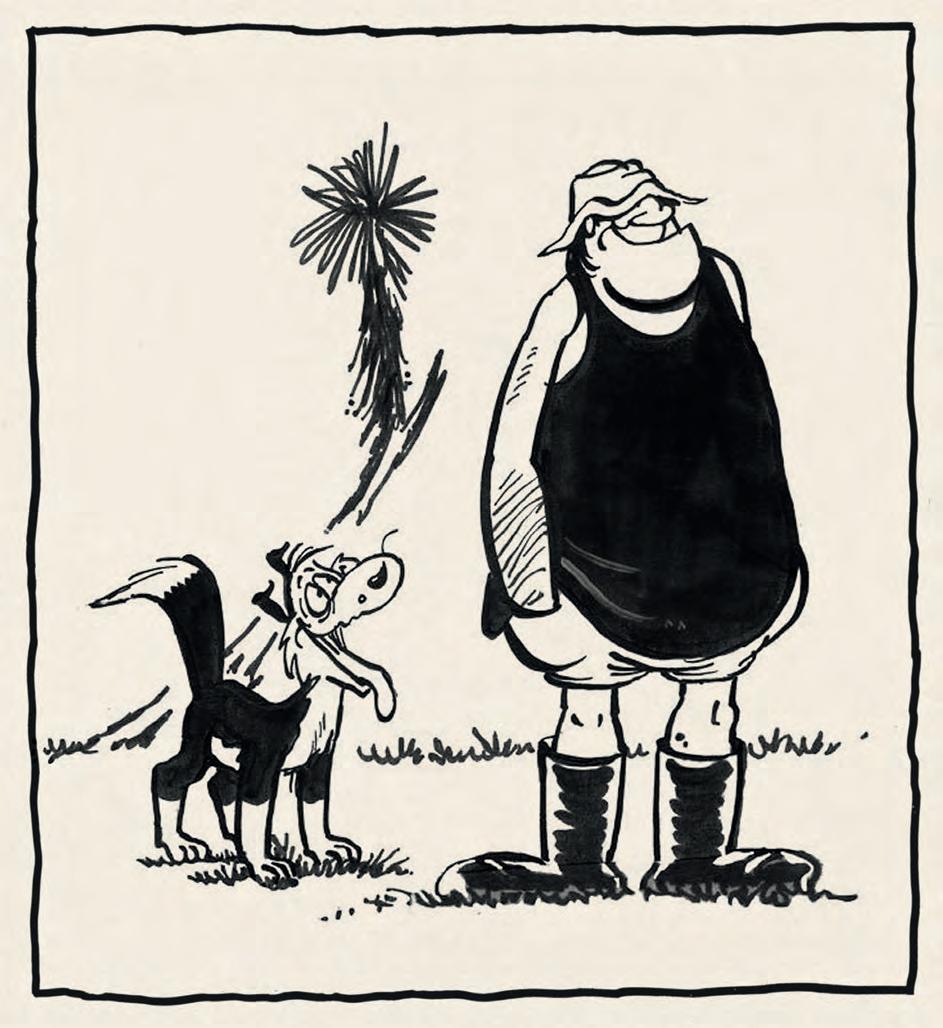
Classic partnerships in Kiwi farming are few and far between, but here’s one we reckon is worth making a song and dance about.
Keep an eye out for these two characters over the next few months, as Ravensdown and Footrot Flats team up to celebrate 50 years (give or take) of farming in New Zealand. Find out more at ravensdown.co.nz/footrot

METAPHORICALLY THE funeral arrangements are being put in place to bury one of the largest and most complex pieces of legislation – the 34-year-old Resource Management Act (RMA).
It’s also likely that local government will get a makeover akin to what it got back in 1989.
These changes are profound and when finally in place will affect just about every New Zealander.
A few weeks ago, central government foreshadowed the RMA reforms with news that it was going to limit the scope and power of regional councils who until now have played a significant role in the environmental management space.
This is bit like what happened when Labour was in power in the late 1980s and early 1990s. Few doubt that reform is needed, but at the time there is reticence to unconditionally endorse the changes. As always, the devil is in the detail, and these reforms are no exception.
The high-level slogans, like simplifying the consenting process, cutting red tape, reducing duplication, and cutting the size of the local government bureaucracy, all seem to make perfect sense. But amongst all the hype there is a big but! Implementation.
RMA Reform Minister Chris Bishop says this is what he’s most anxious about: will the ‘can’t do’, the petty, rulemaking, negative culture of many local council staff change? Will they carry on like a flock of Sir Humphries from the TV series Yes, Minister and find a way of not doing what central government wants them to do, or will they have a eureka moment and suddenly change? That is the worry of many farming leaders and why they are busy analysing the detail of the new bills line-by-line and preparing submissions on the local government reforms.
The carnival is far from over and unless there is committed change and a largely bipartisan political approach, the new reforms could end up just like the old RMA – a frustrating encumbrance on society.
HEAD OFFICE POSTAL ADDRESS: PO Box 331100, Takapuna, Auckland 0740
Phone 09-307 0399
PUBLISHER: Brian Hight .......................................... Ph 09 307 0399
GENERAL MANAGER: Adam Fricker ....................................... Ph 021-842 226
EDITOR: Sudesh Kissun ......................................Ph 021-963 177 sudeshk@ruralnews.co.nz
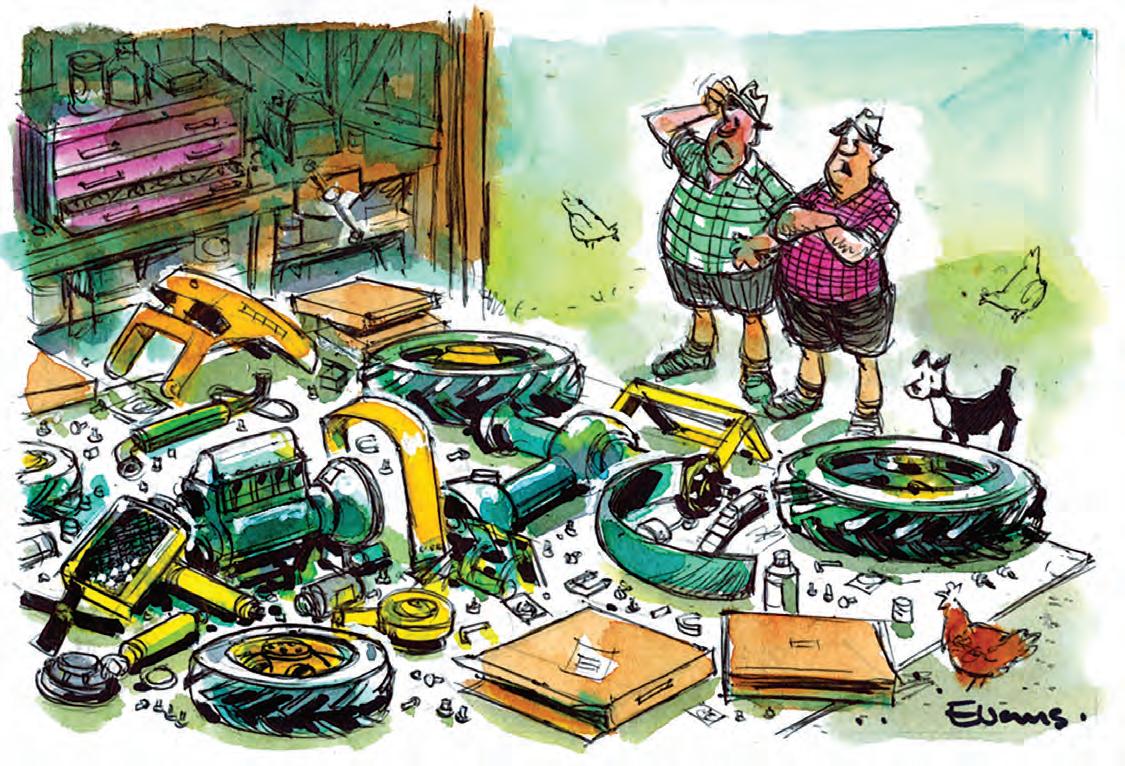
IT USED to be that the National Fieldays attracted brickbats for being officious clipboard carriers, while the regional, farmer-run field days enjoyed the bouquets for being easier to deal with. Your old mate hears things may be changing in the deep south however, with the previously cruisy Southern Field Days attracting a few grumbles. Maybe as these outfits grow, so do their egos. Or perhaps the coffers are just running low. How else to explain their new policy of charging exhibitors for extra tickets to attend sites they’ve already paid for; and charging rural media, who publicise the event for free, to attend? It sounds like a small thing, but it’s a warning bell – a reminder that the now huge and officious Misery Creek was once known as a cruisy, farmer-run event too. Be a shame for the regionals to follow them down the same road!

Want to share your opinion or gossip with the Hound? Send your emails to: hound@ruralnews.co.nz
FEDERATED FARMERS has launched a new campaign, swapping ‘The Twelve Days of Christmas’ for ‘The Twelve Pests of Christmas’ to highlight the most troublesome farm pests – a serious issue that needs some urgent attention from the Beehive. “Three wild deer, two wall-a-bies, and bush pigs rooting in the fi-eld.” Etc. It’s a good gimmick, and a serious issue with pests spreading disease, destroying native forests, killing native birds and pasture. Feds have booked a large billboard outside the Beehive and will feature a new pest each day in the lead-up to Christmas. This mutt could add a few pests to that list who also need “urgent attention”, most of them being the two-legged variety! Regional council officials, greenies, animal rights activists, climate activists, local MPs during elections, reporters, striking union members, woke school principals… the list goes on and on!
EDITOR-AT-LARGE: Peter Burke ...........................Ph 021 224 2184 peterb@ruralnews.co.nz
REPORTERS: Nigel Malthus ........................Ph 021-164 4258 Leo Argent
MACHINERY EDITOR: Mark Daniel ..............................Ph 021 906 723 markd@ruralnews.co.nz
PRODUCTION MANAGER: Becky Williams ......................Ph 021 100 4381 beckyw@ruralnews.co.nz
AFTER YEARS of ever-worsening results from our education system, the startling results from a maths acceleration programme stood out like a dog’s proverbials – the trial producing gains of one full year in just 12-weeks. Despite this, the country’s major media outlets ignored the story, preferring to cover woke principals who prioritise ‘Te Tiriti o Waitangi’ in schools over achievement. Luckily this sort of selective media bias doesn’t exist in rural media, right? Wrong! Just ask Groundswell, the Methane Science Accord or any other group not toeing the establishment line how often rural media, other than Rural News, will cover their activities. They don’t, preferring to run the party line from the Wellington ag-establishment they are joined at the hip with. Your old mate reckons these chinless wonders have forgotten their job is to challenge the powers that be, not parrot them.
AUCKLAND SALES CONTACT: Stephen Pollard .........................Ph 021 963 166 stephenp@ruralnews.co.nz
WAIKATO & WELLINGTON SALES
CONTACT: Lisa Wise .................................. Ph 027 369 9218 lisaw@ruralnews.co.nz
THE RELEASE of the Natural Environment Bill and Planning Bill to replace the Resource Management Act is a red-letter day for the agricultural sector, kicking to touch the single biggest handbrake on agricultural productivity and rural economies – the much-hated RMA. But like RMA Reform Minister Chris Bishop, your old mate worries that the ‘can’t do’ types that infect the Kiwi culture these days will try and stifle the change. Like in the education system, we’ve seen the politicised activists in councils push back against changes imposed by the current mob. For the sake of the country, Bishop shouldn’t spare the rod to ensure the petty, negative Sir Humphries at council level don’t sink this revolution before it starts.
SOUTH ISLAND SALES CONTACT: Kaye Sutherland .......................Ph 021 221 1994 kayes@ruralnews.co.nz
DIGITAL STRATEGIST: Jessica Marshall ..............Ph 021 0232 6446
AS YOU sit down to read my column today, I trust all is well at your place.
I had thought several times over the past few weeks, crikey, it’s almost Christmas for 2025! And now, ready or not, it’s right here knocking on our door.
It then occurred to me, that means we have very nearly chewed through a quarter of this ‘new’ century. That’s right. Where has it all gone?
Like many of you will too, I well remember some of the fear stuff that was being peddled back then, with the millennium change just
Colin
Miller
up ahead of us.
Many folks got a little freaked, others even talked about it being the end of the world. Few dared to take a flight
December 31 or January 1. But surprise, surprise, we are still here!
A truly amazing
Christmas story emerged from the absolute horrors of WW1. I have heard the word “hellish” used in an attempt to describe what those soldiers were living through every day. Trenches were waterlogged, rotting corpses lay between enemy lines.
Then late Christmas Eve 1914, British troops heard some of the opposing German troops singing Christmas carols from their trenches. That prompted the Brits to sing their own. The languages may have been different, but the tunes were the same. It was obvious what was
FARMER CONFIDENCE has taken a slight dip according to the final Rabobank rural confidence survey for the year.
But it’s not all bad news according to the bank’s NZ chief executive Todd Chateris.
The survey shows that 40% of farmers were now expecting the performance of the broader agri economy to improve in the year ahead – down from 51% in the previous quarter, while the number expecting conditions to worsen had risen to 12%. Previously this was 5%. Charteris said the dip in sentiment

this quarter had been driven by lower confidence among dairy farmers.
He says however it’s important to put the latest result into context.
“The confidence readings across the first three quarters of the year have been incredibly high and, while confidence has come back a bit since September, it’s important to note the latest result is still very strong,” he says.
Chateris says positivity remains the dominant sentiment across the sector with four in ten farmers expecting conditions in the broader agri economy to improve across the next 12 months.
unfolding. Messages were shouted between the trenches, at times even less than 50 yards apart!
Come Christmas morning a few men from both sides walked the horrific yards into what was known as “no-man’s land”. Not a shot was fired!
Many others joined them that epic Christmas morning. I read that many thousands actually broke ranks, to share the true spirit of Christmas together.
Photos were taken, even simple gifts got exchanged. Impromptu soccer games took place too, as a football got
kicked around.
They became humans for a few short hours together, even helping each other to bury their dead. Yep, on both sides soldiers displayed a true courage rarely seen, right in the midst of some of the ugliest stuff imaginable.
When the angels visited the shepherds watching over their flocks that memorable night that we remember over this season, they announced heaven’s “goodwill” toward the human family. My take on the above story is that those soldiers that Christmas morning,1914,
got a little taste of that “goodwill”.
Now, for some, Christmas will be very different for you this year. Why, you may wonder? Because you lost someone special to you in 2025. This will be your first Christmas without that someone special. Perhaps a parent, a spouse, a grandparent, a child, or a close friend is no longer with you.
Yes, it will be very different for you. And that’s okay. There is no need to try and hide your loss. It’s real, and we all get to face it from time to time.
I hope you have other
family or friends you can connect with. Make a phone call or email someone you know will understand. Please realise you are not alone. I am thinking about you as I type, and I pray for you too, that you will get to taste a little of that “goodwill” for yourself this Christmas. Well, that’s it from me for 2025. Thanks to those of you who have taken the time to email me or contact me this past year. I appreciated it. Till next year, have a blest Christmas and holiday season. All the best for ’26, and God bless.

Farmer interest continues to grow as a Massey University research project to determine the benefits or otherwise of the self-shedding Wiltshire sheep is underway. The project is five years in and has two more years to go. It was done mainly in the light of low wool prices and the cost of shearing. Peter Burke recently went along to the annual field day held Massey's Riverside farm in the Wairarapa.
DR NICK Sneddon is now leading the project, taking over the reins from Professor Steve Morris who has retired, but who set up the venture in conjunction with the Morrison family who breed Wiltshire sheep.
“The questions farmers are asking is how could they build up a Wiltshire flock faster and what are the potential production losses.”
The research started with crossing standard Romney ewes to Wiltshire rams and mating the resulting ewe lambs back to Wiltshire rams, with the objective of over time producing a purebred Wiltshire flock. At the same time a control flock of Romney ewes are being run in the same flock to compare factors such as growth and weaning rates.
Farmer interest in the trial has been strong throughout the trial and witnessed again with about 50 people turning up at the recent field days. As well as hearing a presentation on the trial, they had the opportunity to see the latest crop of
lambs and their dams in various stages of shedding.
“The questions farmers are asking is how could they build up a Wiltshire flock faster and what are the potential production losses from going to a breed that they are not familiar with,” says Sneddon. “Up until now, most of the Wiltshires have tended to have been on smaller blocks and there are not many operating at a commercial level.”
Under the trial, ewe lambs are mated as hoggets to Wiltshire rams and the same happens to their progeny. Some ram lambs are kept for meat and carcase studies and the remainder are either sold as stores or sent to the works. Nick Sneddon says there is no point in using them for future mating for the study objectives.
He says it’s been really cool picking up on the project and seeing the 3rd crosses (87% Wiltshire) in their shedding state and looking at some of the variations that are coming through. He says ,as well as seeing the shedding actually happening, they are now doing DNA tests to prove what they can see. He says they have done genome sequencing on all the 15 Wiltshire rams used in the first generation of trial and have genotypes on 6500 sheep.
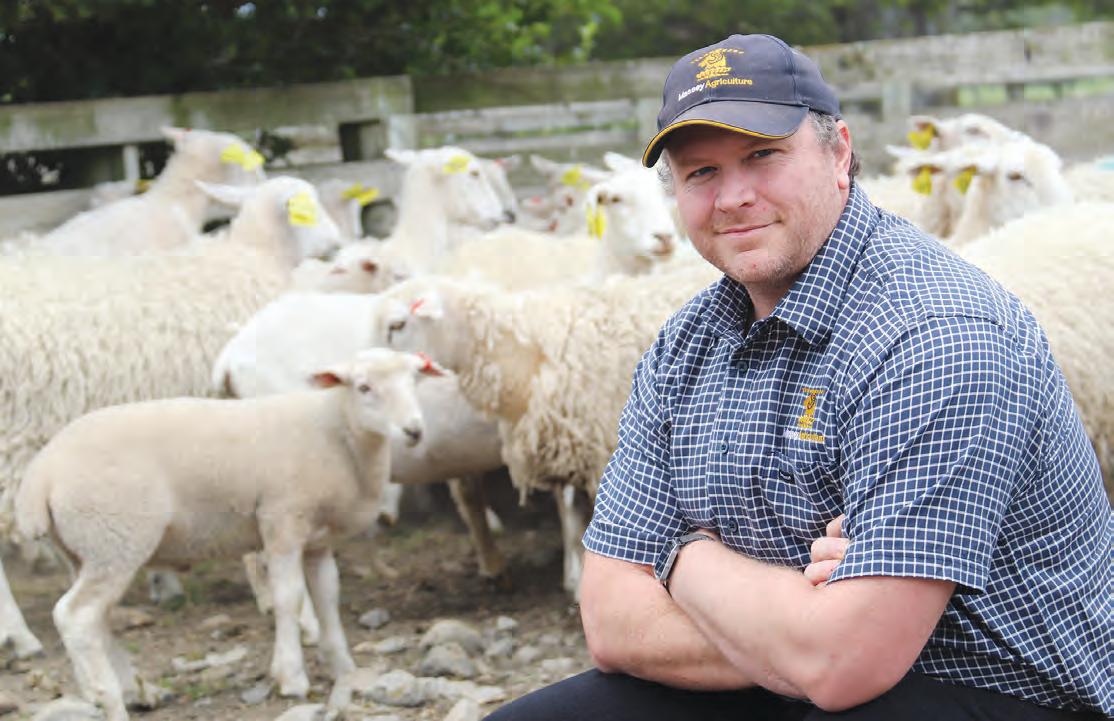
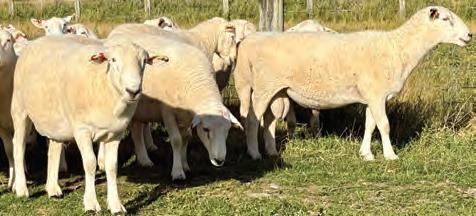
ONE OF the interesting features of the Wiltshire is that it sheds its wool as the days get longer and warmer and then grows back over autumn to have a fleece in place as winter approaches.
Dr Nick Sneddon says the Wiltshire cross ewes stop shedding by the end of February, but with lambs it’s a bit different
“They don’t shed a lot of wool in the first summer and it’s not until the following year that we see the extent of their shedding ability. In many ways it’s just like humans changing to lighter clothes for summer and warmer ones for winter,” he says.
Sneddon says not all Wiltshires will completely shed their wool, but he says there are some who by around Christmas will have shed all their wool and require no crutching or dagging.

The other thing of note, which has still to be scientifically verified, is that when born, Wiltshire lambs have thicker skin to compensate for the lack of wool – a potential factor in their survivability.
“When we compare the Wiltshire lambs with the Romney lambs, we are not seeing any major differences. Reproduction, weaning and carcase weights are about the same and as you would find on any normal farming operation, there are both good and bad years,” he says.
With two more years of the study to run Sneddon says a lot more work is planned, including a study to compare the carcasses of the 15/16ths and “full” Wiltshire and Romney rams. He says they’ll weigh and assess the cuts for muscle and bone and get more data to give
to farmers looking at moving to the shedding sheep.
Sneddon says if farmers are interested but maybe a bit sceptical in breeding up a Wiltshire flock, they could just trial it with some of their flock.
“Maybe out of 2700 ewes, mate about a third with a Wiltshire ram and see what happens. Any lambs won’t be full shedding, but it will give farmers an idea of what is involved,” he says. While the trial will result in breeding fully fledged Wiltshire rams, Sneddon says they would not put these across any of the new ewes, as they would be more variable than using external genetics. But he adds that the Wiltshirecross rams bred in the trial could be used as terminal sires.

MICHAEL EDMONDSON
WITH FRESHWATER Farm Plan (FWFP) regulations imminent, grow ers need practical, funded support now – not just more paperwork.
We all want to improve the quality of our water bodies and programmes like Growing Change show how gov ernment and industry can deliver real results fast. Growing change is a part nership between Horticulture New Zealand (HortNZ) and the Ministry for the Environment to help growers adopt FWFP.
Across regions, the new FWFPs will look different from many existing Farm Environment Plans (FEPs). Many tra ditional FEPs follow prescribed good management practices to lift baseline performance. FWFPs are risk‑based: they assess landscape characteristics, on‑farm activity risks, the values of the catchment the property is in, then set proportionate actions that reflect the risks to water on site. Some farms will need additional targeted measures, some will stay largely the same, and some may avoid unnecessary blanket requirements. FWFPs are designed to
focus effort where it will have the most impact on freshwater outcomes.
Freshwater Farm Plan regulations will likely roll out in different regions at different times, so this is an oppor tunity for growers to lead rather than wait. Starting to prepare now reduces the risk of a last‑minute compliance rush, safeguards production and farm incomes, and shifts the debate from fear of regulation to practical on‑farm action. Taking the initiative also brings mental and community benefits: vis ible progress lifts morale, reduces uncertainty and drowns out the noise that comes with big change. Small, early steps add up — and they show communities and markets that growers are focused on outcomes, not paper work.
That’s where Growing Change comes in.
Growing Change helps to trans late Freshwater Farm Plan intent into on‑farm results. Built from on‑farm testing and backed by HortNZ and the Ministry for the Environment, Grow ing Change has provided a funded, NZQA‑approved micro credential to upskill over 100 growers, staff, hor
ticulture advisors and council staff in horticulture‑specific freshwater risk management. The purpose of the micro credential is to enhance knowl edge and demonstrate commitment to freshwater management, capabil ity is backed with co‑funding, funded adviser time and targeted training so plans don’t stay on a shelf.
On the ground this means helping growers take the first steps, planning targeted measures to manage and mit igate identified freshwater risks where appropriate, upskill staff, and set up simple monitoring and reporting so progress is visible, auditable and prac tical while the industry readies for reg ulation.
Growing Change has also supported growers in ten catchment projects pre pare a Freshwater Farm Plan through use of the New Zealand Good Agricul tural Practice Environmental system add on (EMS). Growers who partici pated were provided independent advi sor support to prepare their EMS plan in preparation for the Freshwater Farm Plan regulations.
Early results from the Growing Change rollout show encouraging

progress. By 30 June 2025, the number of Farm Environment Plans completed exceeded the 85‑plan target, cover ing close to the target of 37,500ha of land. 124 people were enrolled in NZQA‑approved freshwater micro cre dential at the end of September (target 150) – sign up now to secure a place.
Training engagement is strong across the board: ~300 people completed non‑NZQA formal training (target 61) and 261 received on‑the‑job informal training (target 183). These outcomes show advisor capability and on‑farm planning are scaling quickly, position ing growers and regions to start deliv ering improvements this season rather



than years from now.
Freshwater Farm Plans are a practi cal, risk‑based pathway to protect and enhance water while keeping farms productive; they reward proportion ate action rather than one‑size‑fits‑all rules.
Start now with one or two high‑impact actions this season – it removes the stress of trying to do everything at once and means you’re already on the path when FWFPs roll out in your region.
• Michael Edmondson is an environmental consultant based in Te Tau Ihuthe top of the South Island - and founder of Agri Environmental Limited.












THE DRY conditions being experienced along much of the east coast of both Islands build a strong case for body condition scoring ewes at this season’s weaning.
Weaning is one of the key times to body condition score (BCS) ewes (the others are pre-mating and scanning) as it allows for targeted management and better feed-use efficiency, which is particularly valuable when feed supplies are tight.
Lighter condition ewes can be priority fed over summer while ewes at a BCS of 3 and above can be used for pasture control or maintenance.
Running ewes in one mob over summer means feed is wasted putting extra condition on ewes that have already reached their optimal BCS, while lighter ewes are struggling to compete, creating a tail of skinny ewes.
Extra feed is better to be partitioned into lifting the bottom end of the flock, so these ewes are going to the ram at an optimal BCS of 3.
A BCS of 3 at mating is critical to
achieving a high pregnancy rate and establishing a pregnancy that is more likely to result in healthy lambs at docking. It takes time to increase ewe condition, especially if feed is limited and growth rates are low. Ewes need 1.0 to 1.3kg of average to good quality dry matter per day to just hold at BCS 3 over summer.
Management options to increase the BCS of lighter ewes include running the ewes with ewe lambs,
rotating them ahead of the main ewe flock or using a summer feed crop. While repeat offenders can be culled, multiple-bearing ewes should be given the opportunity to regain condition over summer before a culling decision is made.
If feed is particularly tight, consider selling younger ewes which are under BCS 3 and keep older ewes of a BCS of 3 and above.
• Article – Beef + Lamb NZ
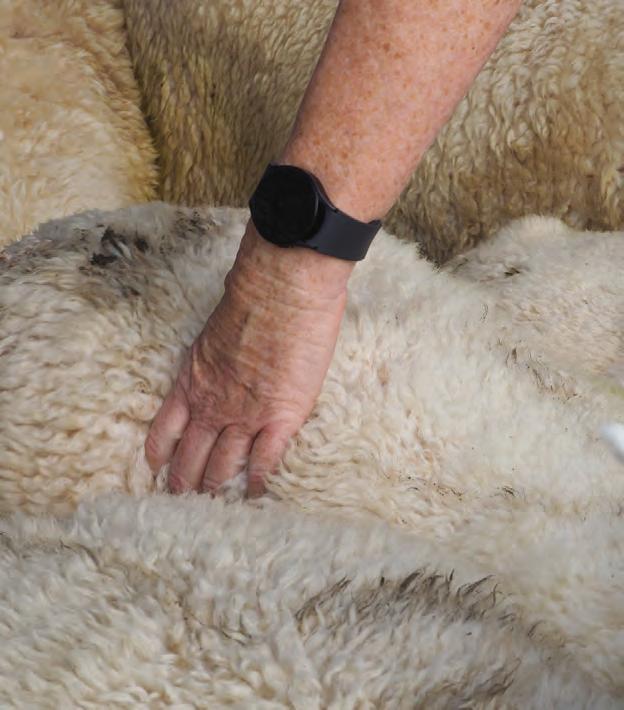
BODY CONDITION scoring (BCS) is a quick and easy low-cost management tool to increase ewe productivity and flock profitability. Body condition scoring assesses the amount of body fat or condition by feeling the vertical (spine) and horizontal processes along the loin area. It is based on a scale of 1-5, 1 being very skinny and 5 being very fat. WHEN BCS SHEEP?
There are three key times to body condition score your flock:
1. Weaning
2. Pre-tupping/pre-mating
3. Scanning
Case IH is the trusted choice for mixed-farm enterprises to accomplish any task. We focus on what matters most: outstanding manoeuvrability, operator-friendly design, compact dimensions, and a high power-to-weight ratio for maximum productivity.
For a limited time, get a FREE RedXtend Total Protect warranty upgrade^ — available on selected Farmall, Maxxum, Puma and Optum tractors — that’s 3 years or 3,000 hours of total peace of mind. Plus, lock in low 0.99% P.A finance^ over 3 years across the whole range. Field-ready value you can count on.
For more information visit caseih.co.nz or visit your local Case IH dealer.

CHRIS BALEMI
BY
THE time you are reading this, most springcalving herds will have finished the main mating period.
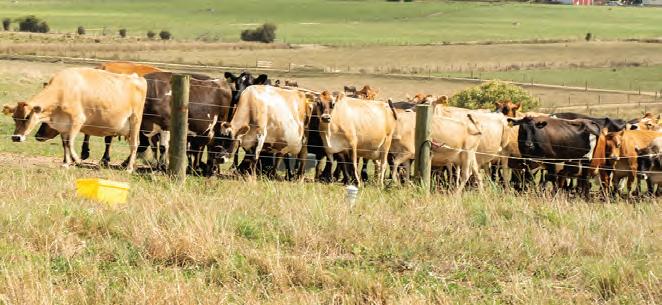
The bulls might still be out, but many of next season’s pregnancies are already there, quietly developing in early summer. Over the next few weeks, pasture quality will start to drop, and intakes will reduce. Hot, humid conditions will push cows to seek shade and, in many parts of New Zealand, facial eczema (FE) risk will start to build as we head towards drier summer weather.
All of this affects the liver, hormones, and energy supply that the new embryo depends on for development. So cows may look fine, while the true damage shows up months later as more late calvers and higher empty rates.
Early pregnancy losses easy to miss Research shows that many pregnancy losses in pasture-grazed herds occur in the first month after insemination, often in the first week. This is long before you would expect to see a return to oestrus. Any sudden heat stress in the first week of pregnancy can impact the conception rate. As the cow has to deal with toxins and a shortage of minerals, the body quietly shifts reproduction down the priority list. As a result, many embryos are lost before they can implant.
Heat, behaviour and minerals
Heat stress is a combination of two factors: heat and humidity. Heat stress can become an issue with temperatures as low as 20°C and humidity levels as low as 60%. In November, North Island temperatures can get over 25°C, and relative humidity can quickly build to over 80%.
Heat changes how
cows behave and eat.
Once heat stress takes hold, farmers see their cows drinking more, along with a drop in milk. As temperatures creep into the low 20s, especially when humidity is high, cows spend less time grazing and more time around water, and standing and panting. Intakes drop, and rumen function comes under stress, so cows become fussier about when and what they eat.
From a mineral point of view, that matters because any effective supplement programme relies on cows eating the ration put in front of them.
Simple steps in hot weather
At a basic level, make sure cows have easy access to plenty of clean water. Time milkings so they can feed mainly during the cooler parts of the day, and, where possible, provide adequate shade on hot days.
Support this with sodium (salt) to help metabolic function and water intake, and with magnesium and suitable rumen buffers to support rumen function, ensuring feed and mineral intakes stay as steady as possible.
Mycotoxins make heat stress harder
Feed quality is essential at this time. If feed contains mycotoxins, heat stress becomes a bigger problem. Many mycotoxins cause blood vessels to constrict, which reduces the animal’s ability to deal with environmental heat. One of the worst in this respect is the common ryegrass ergot toxin, which is present in many summer pastures. Several toxin binders, as well as seaweed extract products, can be added to feed to help reduce the impact of these toxins..
and foremost a liver disease. Cows graze spores of the fungus Puesdopithomyces toxicarius from dead litter at the base of the pasture, and these spores release the toxin sporidesmin, which damages the liver and bile ducts. Why visible FE signs appear later
The familiar sunburned skin is a consequence of the gradual buildup of liver damage, not the starting point. If liver function and capacity are supported
the liver has very little capacity to repair damage from summer toxins and FE. That damage can then escalate quickly. Planning the next six weeks
Treat December and January as the time to protect the liver before spore counts spike. Stay updated with local monitoring, talk with your vet, advisor or consultant about when to start zinc, and choose a delivery method that fits how you feed cows through summer.
levels of zinc, iodine, and selenium for good glutathione production. Strong liver function also supports reproduction, as it drives the delivery of energy and protein to the cow. Providing a good supply of copper, zinc, selenium, iodine, and manganese supports the liver, which in turn supports milk production, reproduction, and overall cow health.
Feeding cows to hold pregnancies through summer Summer changes the
the level and quality of supplementary feeds. Instead, aim to keep adequate daily intakes that match your soil, pasture and animal requirements, rather than simply matching the reduced level of production. This approach will keep production up for longer and give cows the nutritional support they need to maintain pregnancies.
The work you put into shade and water, mineral delivery, FE management and trace element balance through January and February protects the pregnancies you already have and helps more of those cows return to the shed next spring.
• Chris Balemi is managing director of Agvance Nutrition
FE: a liver problem first Spring is also when the foundations for FE mitigation are laid. Even if you are not seeing affected cows, FE is first


MARK DANIEL
LAST MONTH’S Agritechnica event led to a wide group of manufacturers celebrating successes when the 2026 Tractor of the Year Competition winners, selected by a panel of European journalists, were announced in Hanover Germany.
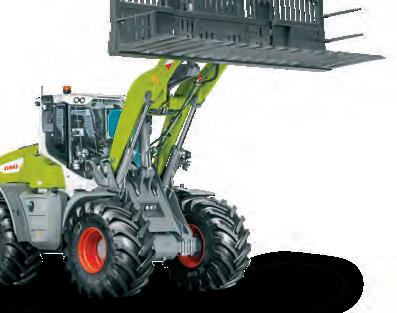
Claas took out the High-Power category with its Axion 9.450 Terra Trac, with the judging panel noting its “combination of power density, hydraulic capability, and data-driven performance management”. In practical terms, this was demonstrated by a rear lift capacity of 11 tonnes and the ability to reach a 40kph road speed at only 1350rpm. They also commented, “the tractor integrates high output with machine optimisation tools and smart functions suited to larger farms.”
The Mid-Power category was won by Fendt’s 516 Vario, picking up the

Award for its “balance of efficiency, comfort, and versatility as a reference in the mid-power class” with the jury also describing it, as being a tractor where “compact dimensions meet premium technology”.
Also from the AGCO stable,
Valtra’s G125 CVT Active was awarded the Utility Tractor of the Year thanks to its “blend of agility, userfriendly operation, and technological integration, while also representing the evolution of compact versatility and featuring a robust hydraulic system,
excellent visibility, and an ergonomic cab layout optimised for loader work”.
New Holland’s T4.120 F Auto Command, featuring a continuously variable transmission (CVT) technology for the narrow tractor segment, won the Specialised category.
The jury praised its “compact design and premium technology, setting a new standard for vineyard and orchard applications”.
JCB’s recently released Fastrac 6300 claimed victory in the Sustainable Category, with the jury citing it as “an example of sustainable innovation that combines intelligent engineering, digital connectivity, and care for the soil to deliver productivity with responsibility”, adding that it “redefines the balance between performance, efficiency, and sustainability in high-speed tractor engineering”.
The final award was the TOTY Bot, first introduced in 2024 to recognise robotic tractors. This was taken out to AgXeed’s 2.055 W3, which is “an autonomous platform marking a concrete step toward robotic field operations and a commercial readiness and open architecture as key steps toward scalable, autonomous agriculture”.

MARK DANIEL
markd@ruralnews.co.nz
MANUFACTURED
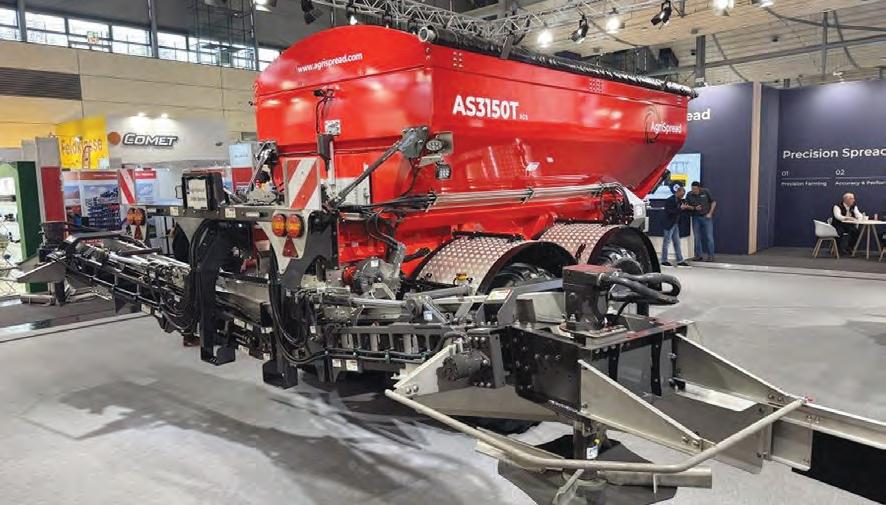
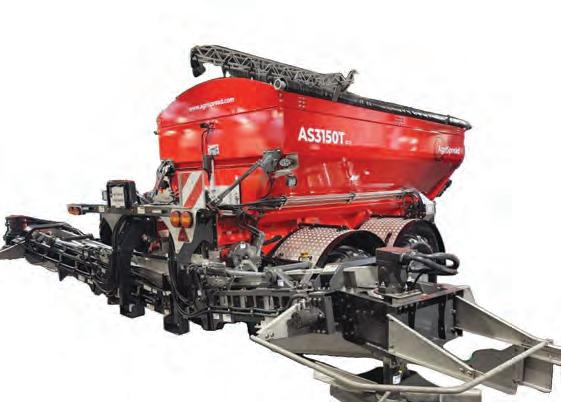
IN Ireland, tested and launched at Agritechnica in Germany, AgriSpread’s new AS3000 bulk spreader takes much of the technology and features of the well-established AS2000 Series but adds a conveyor system to increase spreading widths up to 30m with lime/gypsum, up to 48m with urea and a whopping 52m with mineral and synthetic fertilisers.
Available on the single 120 and tandem axle 150 and 220 models, offering capacities from 11.9 to 21.0 cubic metres, the conveyor system places the discs 6.2m apart, the outer disc & conveyor designs, each 3m from the centre, is engineered for high ground clearance. The disc height of 850mm is designed for high crop
clearance crop clearance and the ability to cope with rough terrain.
The speed of each disc can be controlled separately for section control and boundary spreading, with application rates controlled by a TopCon sourced electronics suite, which also includes variable rate application at up to 2300 kg/min with lime and 360 kg/minute with mineral fertilisers.
Aimed at precision spreaders of a wide range of products for larger farming and contracting enterprises, the unit is also suitable for Controlled Traffic Farming (CTF), alongside meeting increasing global demand for increasing tramline-guided working widths across the industry.
Throughout the three-model offering, with tare weights ranging from 6475 to
9750kg, with carrying capacities of 14.5 to 25 tonnes, machines can be operated at speeds of up to 30kph.
Using stainless steel throughout for corrosion resistance, the AS3000 Series features its own on-board hydraulic system with a ptopowered pump, used to drive the discs, discharge conveyors and the hopper belt floor.
Featuring 150mm section axles, 10-stud commercial fitments and tyres to 750-65R26 section, standard equipment includes hydraulic brakes, transport lighting, headland border control, ISOBUS monitored load cells and axle track widths of 2 or 3 metre centres. Options include air-brakes, electric or hydraulic roll over covers and a rear steering axle. Visit www. brownagrisolutions. co.nz