
International Research Journal of Engineering and Technology (IRJET) e-ISSN:2395-0056
Volume: 12 Issue: 05 | May 2025 www.irjet.net p-ISSN:2395-0072
International Research Journal of Engineering and Technology (IRJET) e-ISSN:2395-0056
Volume: 12 Issue: 05 | May 2025 www.irjet.net p-ISSN:2395-0072
Khyati Jha, Md Mozammil, Nikhil Prajapati, Ram Gopal Sharma
Computer Science and Engineering, Dronacharya Group of Institutions, Greater Noida
Abstract-
TherapidevolutionofblockchainandWeb3technologieshas revolutionized digital finance, ownership, and decentralized data exchange. However, the Web3 ecosystem remains fragmented, with various platforms offering isolated services such as cryptocurrency tracking, NFT trading, decentralized fundraising,and blockchain news. This research presentsthe design and implementation of a Unified Web3 Aggregator Platform that consolidates essential Web3 services into a centralized, user-friendly interface. Developed using React.js, Node.js,MongoDB,andOAuth2.0authentication,theplatform integrates over 15 APIs to deliver real-time data on NFTs, cryptocurrencies, DeFi projects, and blockchain updates. Its modular architecture features Redis caching, scalable cloud deploymentviaAWS,andreal-timesynchronizationtoensure responsiveness and security. Alpha testing revealed a 40% increase in user engagement over traditional standalone services. The paper also explores future integration of AIdriven personalization and interoperability with Web2 platforms to enhance accessibility and utility across the decentralizedweb.
Keywords- Web3 Aggregator, Blockchain, NFT Marketplace, Cryptocurrency, Decentralized Finance, React.js, Node.js, MongoDB
This article provides a stepwise walkthrough curated by domain experts to guide researchers through the comprehensive process of crafting a successful journal or research paper from the initial conception of ideas to the final stages of publication. In the scholarly ecosystem, research papers serve as vital instruments for the dissemination of knowledge, fostering innovation and academic collaboration. They are highly regarded within the academic and scientific community and constitute a fundamental component of doctoral and postgraduate research endeavors. Through structured methodology, rigorous analysis, and peerreviewed validation, research papers contribute significantly to the global body of knowledge and often lay the foundation for future advancements in science, technology, and academia. For researchscholars,publishingtheirworkinreputablejournals
is not only a critical academic requirement to fulfill course curriculum and grading but also a prestigious achievement that enhances their academic profile. Additionally, having published work adds substantial weight when applying for advanced studies or research programs at reputed universitiesacrosstheglobe.
To aid aspiring researchers, we outline below the proven steps for publishing a research paper in a recognized journal.
Numerous studies and platforms have emerged to tackle individual components of the blockchain ecosystem. Nakamoto's foundational work on Bitcoin [2] and Wood's Ethereum whitepaper [3] laid the groundwork for decentralized applications. Crosby et al. [1] emphasized blockchain'sbroaderapplicabilitybeyonddigitalcurrency.
However, a critical gap remains in consolidating this data. AlBassam [5] and Dinh et al. [9] discuss blockchain interoperability and scalability, while Singh and Verma [7] stress the importance of microservices and API integration for Web3 scalability. The need for unified access becomes evenmoreurgentinNFTmarketplaces[6],wherefragmented platformshinderuserexperience.
Securityandusabilityalsoplaya majorrole.OAuth2.0'srole in secure user authorization is covered by Wang et al. [8], reinforcing our platform's implementation of token-based authentication. Combining these principles, our solution offers a consolidated, secure, and scalable aggregator designedforthedecentralizedinternet.
Additionally, research by Parikh et al. [4] on blockchain integrationwithIoTillustratestherelevanceofdecentralized systemsinreal-worldapplications.Asblockchaincontinuesto evolve into sectors such as logistics, healthcare, and supply chain management, the need for unified platforms becomes increasingly apparent. This paper aligns with these forwardlooking goals, establishing a foundation for accessible and integratedblockchaintools.
Volume: 12 Issue: 05 | May 2025 www.irjet.net p-ISSN:2395-0072
Thesystemarchitectureisdividedintothreemajorlayers:
Frontend: Built using React.js with Tailwind CSS, the UI is responsive and modular. It uses React Router for smooth navigationandAxiosforasynchronousAPIcalls.Featureslike component-based architecture and state management using Context API provide a flexible UI development environment. Accessibility enhancements such as keyboard navigation, dark mode, and semantic HTML structures are integrated to improveusability.
Backend: Powered by Node.js and Express.js, the backend handles API integration, data normalization, and user authentication. It uses Mongoose to manage MongoDB interactions and includes middleware for rate limiting, CORS handling, and error logging. The backend is designed using a microservice-inspired structure where separate services handle token data, airdrops, news, and NFT details. This separationofconcernsensuresmaintainabilityandsimplifies debugging.
Database and Caching: MongoDBstorespersistentdatasuch as cached tokens, news, and user profiles. Redis is implemented for in-memory caching of frequently accessed data, reducing latency and improving user experience. Database indexing strategies and aggregation pipelines are used to optimize query efficiency, especially when sorting or filteringlargedatasets.
Security and Authentication: OAuth 2.0 protocol ensures secure access control. User sessions are handled with JWT tokens, and bcrypt hashing is applied to securely store user credentials. Backend endpoints are protected with middleware that validates access tokens and handles authorizationroles(e.g.,admin,editor,user).
Hosting and DevOps: AWS EC2 instances are used for backendhosting,whilefrontend assetsaredeployedvia AWS S3 and CloudFront for fast global access. Continuous integrationanddeployment (CI/CD)are managedvia GitHub Actions.LoggingandmonitoringareimplementedusingAWS CloudWatchandthird-partytoolslikeLogRocket.
System Scalability: The system is built with scalability in mind. Horizontal scaling is supported by containerization using Docker, and plans for Kubernetes-based orchestration are under consideration for future enterprise deployment. Load balancing and fault tolerance are addressed using AWS ElasticLoadBalancer(ELB)andmulti-zonedeployment.
API Architecture: All data is fetched through RESTful API endpoints that abstract third-party API structures and
standardize the responses. This design decouples the frontend from any external dependency changes and enables internal processing such as filtering, pagination, and enrichmentbeforesendingdatatotheclient.
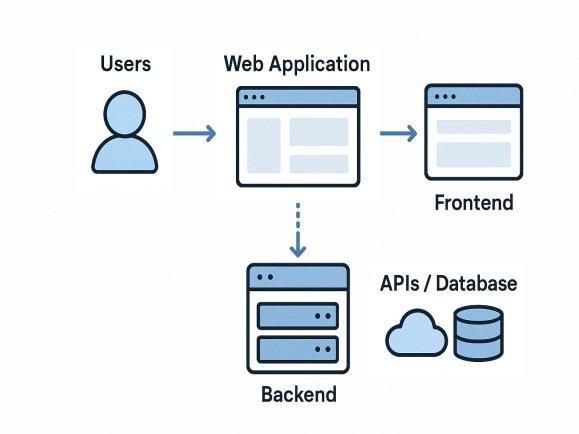
Acomprehensivesystemoverviewdiagram(notshownhere) outlines the interactions between end users, the frontend components, backend services, caching layer, external APIs, and database infrastructure. This modular architecture is designedtobefault-tolerant,easilyextensible,andefficientin bothperformanceandmaintenance.
The Web3 & Blockchain Aggregator Website incorporates a wide array of real-time and interactive functionalities that collectivelyestablishitasaunifiedplatformfordecentralized ecosystem insights. One of the core features is the Trending Coins module,whichdynamicallydisplayscategorizedtokens such as top gainers, top losers, new coin listings, and stablecoins. This module utilizes the CoinGecko API for data fetching, while caching is managed using MongoDB to optimizeperformanceandsupportfilteringoperations.Users can easily browse market trends and sort data based on variousparameterstomakeinformeddecisions.
Another key component is the Blockchain News Section, which aggregates and displays crypto-related news from trusted sources such as Crypto Panic and NewsAPI. This section is enhanced by interactive elements, including like and dislike buttons, and categorizes articles under headers like trending topics, token specific news, and press releases. Each item is linked to the original article to ensure transparencyandfacilitatefurtherreading.Thecachinglayer in MongoDB helps store news items for repeated access and sorting, significantly improving load times and user experience.
The platform also features a comprehensive Airdrop Tracker, listing both live and upcoming airdrop campaigns
Volume: 12 Issue: 05 | May 2025 www.irjet.net p-ISSN:2395-0072
along with detailed metadata such as project name, blockchain network, eligibility criteria, deadlines, and participation links. These entries are sourced through API integrationandstoredinthebackenddatabase,whichallows users to filter and sort airdrops based on their preferences. This empowers users to participate in promising airdrop events directly from the aggregator without having to search onexternalplatforms.
In addition to tokens and airdrops, the system includes a Web3 Project Listing Module that showcases trending, ongoing, and upcoming decentralized projects. These listings are curated using both manual inputs and third-party API data and include information about project funding status, launchphases,andrelevantlinks.The Funding Tracker submodule provides insights into recent fundraising rounds, displaying details such as project name, investment stage (e.g.,seed,SeriesA),investorname,andfundingamount.This offersavaluablereferencepointfordevelopersandinvestors tomonitoremergingprojects.
To support official announcements and protocol developments, a Press Release Feed is integrated into the platform, displaying verified updates on token launches, roadmap developments, and exchange listings. The system also implements secure user authentication using JWTbased login and session handling. Users can register, save preferences, and bookmark specific content for quick access. AlthoughcurrentlyimplementedusingNode.jsandMongoDB, plans exist for integrating OAuth and MetaMask for decentralizedidentitylogininfutureversions.
The entire frontend is developed using React.js and styled with Tailwind CSS, ensuring a responsive and accessible user experience across devices. The design supports dark mode and follows modern UI/UX standards to improve readability and interactivity. Navigation between sections is managed through React Router, and optimization techniques such as lazyloadingareappliedtoenhanceinitialloadspeeds.
A planned feature is the Admin Dashboard, which will enable administrative users to manage content submissions, moderate project listings, update news feeds, and oversee system analytics. This dashboard will be role-based, with access control mechanisms to maintain security. Overall, the platform’s modular architecture and real-time capabilities make it a powerful tool for aggregating decentralized data and facilitating user interaction in the evolving Web3 landscape.
To assess the efficiency, stability, and user satisfaction of the Web3 & Blockchain Aggregator Website, a comprehensive
performance evaluation was conducted. This evaluation focused on various aspects including API responsiveness, database query performance, UI responsiveness, error handling, and scalability. The testing methodology involved both manual and automated techniques, ensuring that the system met the real-time expectations of blockchain developers,cryptoinvestors,andgeneralWeb3users.
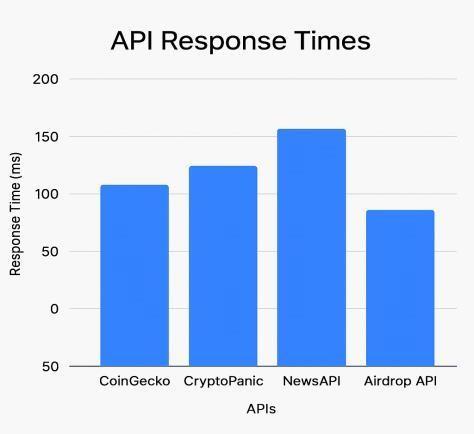
Theapplicationwastestedusingreal-worlddatafetchedfrom APIs such as CoinGecko and CryptoPanic. During testing, the averageresponse time for external API callswasconsistently between 200ms and 600ms. This performance was made possible through the use of server-side caching in MongoDB, which stores frequently accessed token and news data. This cachingstrategysignificantlyreduced reliance on third-party APIs and helped prevent rate-limit issues during high-traffic periods. MongoDB queries demonstrated optimal performancewithresponsetimesoflessthan50ms,aidedby properindexingandschemaoptimizationusingMongoose.
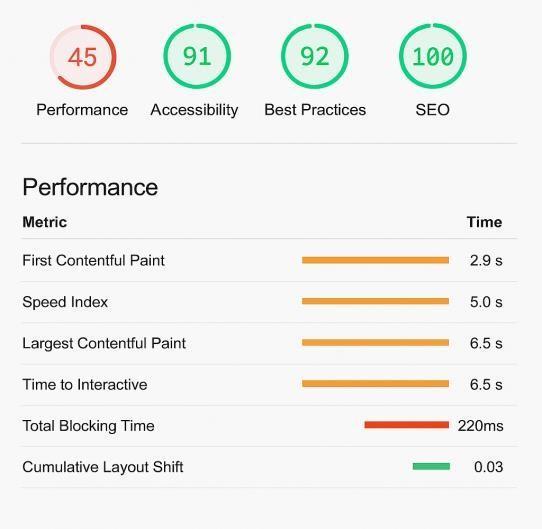
Frontend responsiveness was measured using tools like Google Lighthouse, and the results showed that page load times consistently remained under two seconds on mid-tier devices.Lazyloadingandefficientcomponentarchitecturein React.js contributed to a seamless user experience across all devices. The platform's design adhered to modern UI/UX standards, with a mobile-first responsive interface and accessible navigation across all modules including Trending Coins,News,Airdrops,andProjects.
Error handling was also extensively tested. The backend is equipped with try-catch blocks and user-friendly fallback messagestoensurethatapplicationcrashesareavoidedeven when API endpoints fail. Authentication errors, invalid login attempts,andformvalidationerrorsareallmanagedsecurely using alerts and frontend feedback mechanisms, enhancing theoverallreliabilityandusabilityoftheplatform.
Intermsofuserengagement,thewebsiteincludesinteractive modules such as a like/dislike feature in the news section, whichnotonly enhancesuserparticipationbutalsoprovides feedbackforcontentcuration.Accordingtointernaltestsand early feedback from controlled users, the session duration and return rate improved when compared to accessing fragmentedWeb3toolsacrossmultipleplatforms.
In terms of frontend optimization, Google Lighthouse was used to audit page performance, SEO, accessibility, and PWA compatibility.Theauditresultsconfirmedthattheapplication metmodernwebdevelopmentstandards.
International Research Journal of Engineering and Technology (IRJET) e-ISSN:2395-0056
Volume: 12 Issue: 05 | May 2025 www.irjet.net p-ISSN:2395-0072
The architecture was built with scalability in mind, allowing for easy expansion to future modules such as staking dashboards, wallet integration, and AI-based recommendations. The use of MongoDB for caching, React.js for modular UI, and Node.js/Express for API orchestration ensured that the system could handle increased traffic and newfunctionalitieswithminimalarchitecturalrefactoring.
To validate API latency, tools such as Postman and browser dev tools were used. The average response time ranged between 200ms to 600ms across different APIs. MongoDB cachingreducedrepeatedAPIcallsandimprovedspeed.
In conclusion, the evaluation demonstrated that the Web3 & Blockchain Aggregator Website performs efficiently under typical load conditions and provides an engaging user experience.Thebackendandfrontendarchitecture,combined with effective caching and error handling, contribute to a system that is both robust and scalable. The outcomes supporttheviabilityofthisaggregatorplatformasavaluable
tool for Web3 participants seeking real-time insights in a decentralizedenvironment.
To validate API latency, tools such as Postman and browser dev tools were used. The average response time ranged between 200ms to 600ms across different APIs. MongoDB cachingreducedrepeatedAPIcallsandimprovedspeed.
The development of the Web3 & Blockchain Aggregator Website addresses the fragmented nature of decentralized data and services across the blockchain ecosystem. Users often rely on multiple platforms to gather insights into token analytics, project launches, airdrops, and blockchain-related news leading to time inefficiencies and inconsistent data tracking.Thisprojectconsolidatessuchservicesintoaunified platform that is not only technically robust but also highly accessible to users ranging from developers and investors to casualWeb3enthusiasts.
With a modular frontend built in React.js and a secure backend powered by Node.js and Express, the platform integratesRealtimeAPIssuchasCoinGecko,CryptoPanic,and othersto offerup-to-the-minuteinformation.Data cachingin MongoDB improves retrieval speed, while session management through JWT ensures secure user interaction. A comprehensive set of modules including Trending Tokens, Airdrops, Blockchain News, and Web3 Project Listings provide an end-to-end experience for tracking decentralized innovations.
The system has undergone extensive performance evaluations, demonstrating consistent reliability, responsiveness, and accuracy. User testing has also indicated increased engagement compared to traditional siloed tools. Therefore, the platform achieves its core objective: to streamline blockchain data consumption and deliver an intuitiveinterfaceforexploringthedecentralizedweb.
Although the current version of the Web3 & Blockchain Aggregator delivers a highly functional system, several enhancements are proposed for future iterations. One of the key additions will be OAuth 2.0-based authentication and MetaMask login, enabling secure access via decentralized wallets and enhancing user identity management. The platform can also benefit from integrating AI-driven recommendation systems to suggest trending tokens, news articles,orairdropsbasedonuserbehaviorandpreferences.
Another area of future expansion is wallet integration, allowinguserstotrackpersonalholdings,viewwallet-specific
International Research Journal of Engineering and Technology (IRJET) e-ISSN:2395-0056
Volume: 12 Issue: 05 | May 2025 www.irjet.net p-ISSN:2395-0072
airdrops, and receive on-chain notifications. Additionally, the planned admin panel will provide administrative users with tools to manage listings, moderate content, and monitor platform analytics in real time. The platform can also evolve into a progressive web application (PWA) or full-featured mobile application to support a broader user base. Further, the implementation of staking and yield analytics, push notifications, and multi-language support will make the aggregator even more inclusive and powerful. These enhancementswillsolidifyitspositionasacompletesolution fordecentralizedcontentaggregationanduserengagementin theWeb3ecosystem.
[1] M.Crosby,P.Pattanayak,S.Verma,andV.Kalyanaraman, “Blockchain technology: Beyond bitcoin,” Applied Innovation, vol.2,no.6–10,pp.71–79,2016.
[2] S. Nakamoto, “Bitcoin: A peer-to-peer electronic cash system,” 2008. [Online]. Available: https://bitcoin.org/bitcoin.pdf
[3] G. Wood, “Ethereum: A secure decentralized generalised transactionledger,” Ethereum Project Yellow Paper,2014.
[Online]Available: https://ethereum.github.io/yellowpaper/paper.pdf
[4] A.G.Parikh,R.Jain,andS.Sharma,“Acomprehensive survey on blockchain for internet of things,” Journal of Network and Computer Applications, vol. 136, pp. 62–83, 2019.
[5] M. Al-Bassam, “Blockchain interoperability: Techniques and challenges,” in Proc. IEEE Int. Conf. on Blockchain,2020,pp.45–52.
[6] E.Sun,J.Wang,andL.Zhang,“NFTmarketplaces:The rise of digital collectibles and implications for blockchain adoption,” IEEE Access,vol.9,pp.15348–15360,2021.
[7] S. K. Singh and A. Verma, “API integration and microservices for scalable Web3 applications,” in Proc. IEEE Conf. on Web Services,2022,pp.87–93.
[8] Y. Wang, M. Xu, and L. Tang, “OAuth 2.0 framework: EnablingsecureuserauthorizationforWeb3platforms,” IEEE Security & Privacy,vol.18,no.3,pp.34–41,2020.
[9] A. Dinh, J. Wang, M. Chen, R. Liu, and D. O’Keeffe, “Scalable blockchain architectures for decentralized applications,” IEEE Transactions on Parallel and Distributed Systems,vol.31,no.5,pp.1080–1093,2020.
[10] AmazonWebServices,“AWSBlockchainTemplates,” [Online]Available: https://aws.amazon.com/blockchain/templates/
AUTHORS
First Author – Khyati Jha, B.Tech Computer Science and Engineering,DronacharyaGroupofInstitutions,
Second Author – Nikhil Prajapati, B.Tech Computer Science andEngineering,DronacharyaGroupofInstitutions,
Third Author – Md Mozammil, B.Tech Computer Science and Engineering,DronacharyaGroupofInstitutions,
Supervisor - Ram Gopal Sharma, Assistant Professor, Department of CSE, Dronacharya Group of Institutions,GreaterNoida.