
International Research Journal of Engineering and Technology (IRJET) e-ISSN:2395-0056
Volume: 12 Issue: 07 | July 2025 www.irjet.net p-ISSN:2395-0072
International Research Journal of Engineering and Technology (IRJET) e-ISSN:2395-0056
Volume: 12 Issue: 07 | July 2025 www.irjet.net p-ISSN:2395-0072
Bhushan Niwangune1,Shivam Pujari 2 , Tejas Khandage3 ,Mrs.S.P.Hon4
1Electronics & Tele. Dept., PES Modern College of Engineering, Shivajinagar, Pune
2Electronics & Tele. Dept., PES Modern College of Engineering, Shivajinagar, Pune
3Electronics & Tele. Dept., PES Modern College of Engineering, Shivajinagar, Pune
4Electronics & Tele. Dept., PES Modern College of Engineering, Shivajinagar, Pune
Abstract - Ensuring the safety of vulnerable groups such as women, children, elderly individuals, tourists, and hikers has become increasingly critical in today’s rapidly evolving world. Safety concerns are exacerbated in environments where access to reliable communication networks is limited or unavailable. This paper presents Safe Connect, a versatile, wearable emergency alert device that integrates LoRa (Long-Range communication), GSM (Global System for Mobile Communication), and GPS (Global Positioning System) technologies to provide real-time emergency alerts and accurate location tracking [1]. Unlike conventional safety systems that rely solely on cellular networks, Safe Connect employs LoRa as the primary communication method for long-range alerts, making it highly suitable for rural or remote areas with poor cellular coverage. GSM acts as a backup, ensuring SMS alerts can be sent when LoRa is unavailable [2]. Additionally, the system features a camera module (ESP32-CAM) that captures real-time video footage and stores it locally on an SD card, which can later be retrieved as evidence. The system is designed to cater to a wide range of users, including women, tourists, children, elderly individuals, and hikers, offering a comprehensive and reliable solution that operates in both urban and rural environments. Testing demonstrates the device's ability to provide reliable alerts, real-time tracking, and robust performance in diverse conditions, making it an essential tool for enhancing personal safety across multiple demographicgroups.
Keywords Women’s Safety, Tourist Safety, Child Safety, Elderly Safety, Hiker Safety, LoRa, GSM, GPS, Emergency AlertSystem,IoT,WearableTechnology
Personal safety is a significant concern in today's world, with rising instances of crime, accidents, and emergency situations affecting vulnerable groups such as women, children, the elderly, tourists, and hikers.[4],[5].These groups often face challenges in communicating distress in critical moments, especially when located in areas with poor or no network connectivity. While existing safety systems, like mobile applications and panic buttons, offer some solutions, they are typically dependent on reliable
cellular networks, which may not be available in rural or remoteenvironments.
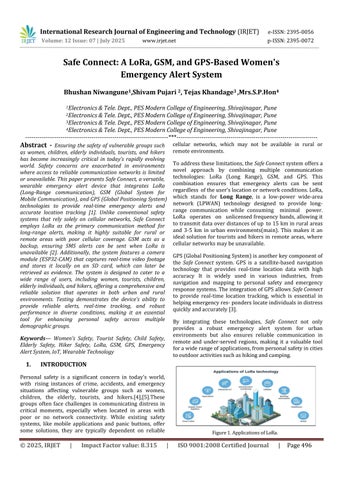
Toaddresstheselimitations,the SafeConnect systemoffersa novel approach by combining multiple communication technologies: LoRa (Long Range), GSM, and GPS. This combination ensures that emergency alerts can be sent regardless oftheuser'slocationornetworkconditions.LoRa, which stands for Long Range, is a low-power wide-area network (LPWAN) technology designed to provide longrange communication while consuming minimal power. LoRa operates on unlicensedfrequencybands,allowingit totransmitdataoverdistancesofup to15kminrural areas and 3-5 km in urban environments(main). This makes it an ideal solution for tourists and hikers in remote areas, where cellularnetworksmaybeunavailable.
GPS(GlobalPositioningSystem)isanotherkeycomponentof the Safe Connect system. GPS is a satellite-based navigation technology that provides real-time location data with high accuracy It is widely used in various industries, from navigation and mapping to personal safety and emergency responsesystems.TheintegrationofGPSallows SafeConnect to provide real-time location tracking, which is essential in helpingemergencyres-ponderslocateindividualsindistress quicklyandaccurately[3].
By integrating these technologies, Safe Connect not only provides a robust emergency alert system for urban environments but also ensures reliable communication in remote and under-served regions, making it a valuable tool forawiderangeofapplications,frompersonalsafetyincities tooutdooractivitiessuchashikingandcamping.
International Research Journal of Engineering and Technology (IRJET) e-ISSN:2395-0056
Volume: 12 Issue: 07 | July 2025 www.irjet.net p-ISSN:2395-0072
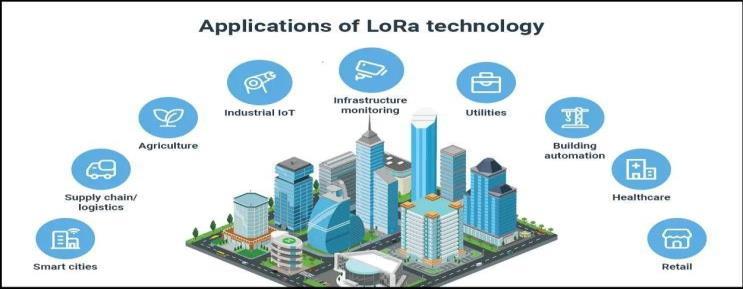
LoRa is widely recognized for its ability to maintain communication over long distances with low power consumption. It is extensively used in smart cities, environmental monitoring, and agriculture due to its efficientdatatransmissioncapabilities.Forpersonalsafety, LoRa is especially valuable in remote locations where cellular coverage is lacking, such as mountainous regions, dense forests, and rural areas. Hikers, tourists, and adventure enthusiasts can benefit from LoRa's long-range capabilities, as it ensures that emergency alerts are transmitted even when traditional mobile networks are inaccessible. Its low energy consumption also makes it idealforwearabledevices,ensuringprolongedbatterylife.
GPS is a critical technology for real-time location tracking, used in everything from mobile navigation to emergency rescue operations. In the context of personal safety, GPS allows for precise tracking of an individual's location, enabling rapid response from emergency services[6]. Vulnerablegroups,suchaschildrenortheelderly,maynot beabletocommunicatetheirlocationduringemergencies, but GPS automatically provides this information, ensuring that help can be dispatched promptly. GPS is also invaluable in search and rescue missions for hikers and tourists whomaybecomelostorinjuredinremoteareas.
The primary objective of the Safe Connect project is to develop a versatile and reliable emergency alert system that enhances the personal safety of vulnerable groups such as women, children, elderly individuals, tourists, and hikers. By integrating advanced communication technologies like LoRa, GSM, and GPS, the system aims to provide continuous connectivity and real-time tracking even in areas with limited or no cellular coverage. LoRa serves as the primary communication method in remote locations, while GSM offers backup functionality through SMS alerts in areas with cellular networks[7],[8]. GPS is used to provide real- time location tracking, ensuring that emergency res-ponders can quickly locate individuals in distress. In addition to these communication features, the system includes a camera module for capturing real-time video footage during emergencies, offering valuable evidence for post-incident investigations. The SafeConnect device is designed to be lightweight, compact, and easy to use,makingitaccessibleforawiderangeofusers,thereby providing a comprehensive and reliable safety solution in diverseenvironments.
1) LoRa-Based Long-Range Communication: Implement long- range communication for emergencyalertsinregionswithpoorornocellular networkcoverage.
2) GSM Backup for SMS Alerts: Provide backup communication via SMS through GSM when cellular networksareavailable.
3) GPS for Real-Time Tracking: Utilize GPS technology to provide accurate location tracking, helping emergency res-ponderslocateindividualsindistress.
4) Camera for Video Evidence: Integrate a camera module to capture real-time video during emergencies, providing critical evidence for post-incident investigation.
5) User-Friendly Wearable Design: Ensure that the device is compact, lightweight, and easy to use, making it accessible to diverse user groups, including women, children,elderlyindividuals,tourists,andhikers.
LoRa is a key technology for low-power, long-range communication.Itoperatesonunlicensedsub-GHzfrequency bands, allowing data transmission over long distances without the need for traditional cellular networks. Research shows that LoRa is capable of transmitting data over distancesofupto15kminruralenvironmentsand3-5kmin urbanareas,makingitanideal solutionforsafetydevicesin remote locations(main). Recent advancements in LoRa technology have enabled its use in smart city applications, environmental monitoring, and emergency communication systems, highlighting its potential in enhancing personal safety(main).
GSM (Global System for Mobile Communications) remains one of the most widely used mobile communication technologies. It is especially effective in sending SMS alerts during emergencies. GSM modules like the SIM800L provide an affordable and reliable method for sending SMS alerts, making it a valuable backup communication method when cellular networks are available. However, its dependence on cellular towers limits its functionality in rural or mountainous regions. Combining GSM with LoRa provides a robustcommunicationsystemthatensuresconnectivityeven inremoteareas.
GPS technology has revolutionized location tracking and is indispensablein emergency situations. GPSmodules likethe NEO- 6M provide precise real-time location data, which is essential for helping emergency res-ponders locate individualsindistress.StudiesshowthatcombiningGPSwith IoT-based communication systems, such as LoRa and GSM, significantly enhances the effectiveness of emergency
Volume: 12 Issue: 07 | July 2025 www.irjet.net
responsesystems,particularlyforvulnerablegroupslike children,elderlyindividuals,andhikers[9].
Wearable technology has made significant strides in the realm of personal safety. Devices such as the SMARISA smart ring, which incorporates IoT and GPS technologies, demonstrate how wearable devices can be used to send real-time alerts and track location during emergencies(main). The integration of sensors, GPS, and communicationmodulesintowearabledeviceshasopened newpossibilitiesforenhancingpersonalsafety,particularly for women and children. However, many existing devices rely on smartphone connectivity, which limits their functionality in remote areas. The Safe Connect system addresses this limitation by incorporating LoRa for longrangecommunication[18],[19].
A. Hardware Components
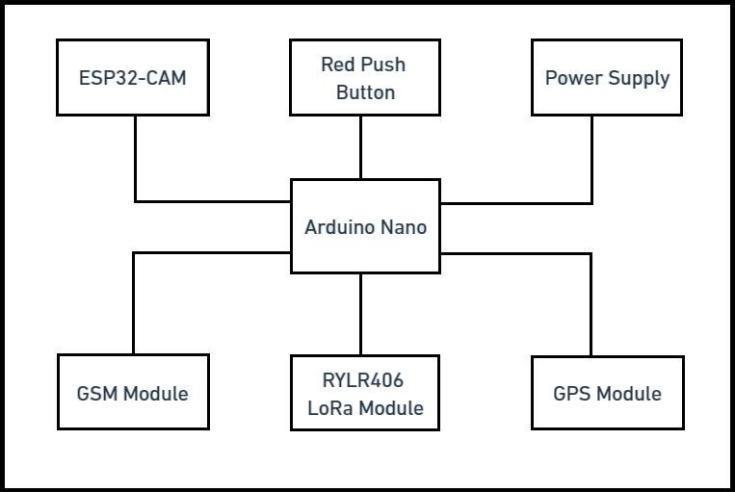
LoRa Module (RYLR406): Enables long-range communication, making it the primary communication method in remote areas. This is especially valuable for hikers and tourists who may find themselves in locations withoutcellularcoverage[17].
GSM Module (SIM800L): Serves as a backup communication method, sending SMS alerts when cellular networks are available. The dual-mode communication system ensures reliability in both urban and rural environments[10],[11].
GPSModule(NEO-6M): Provides real-timelocationdata to emergency contacts, enabling quick response during emergencies.Thisiscriticalforvulnerablegroupswhomay notbeabletocommunicatetheirlocationeffectively.
ESP32-CAM: Captures real-time video footage during emergencies, which is stored locally for post-incident reviewandlegalevidence.
Panic Button: The user interface that triggers the entire emergency system, activating GPS, LoRa, GSM, and camera modules. This ensures that emergency contacts are immediatelynotified[16].
Li-ionBattery:Powersthesystemwitha3.7Vrechargeable battery, providing long operational times, which is essentialforusersinremoteorruralareas.
Audio/VisualAlerts(Buzzer&LEDIndicator)
e-ISSN:2395-0056
p-ISSN:2395-0072
transmission in progress or low battery. These components areconnectedtoGPIOpinsoftheESP32.
VoltageRegulator(AMS1117orBuckConverter)
Since certain modules like the SIM800L require stable 4V input and others like the ESP32 work at 3.3V, a voltage regulatorensuresclean,noise-free,andappropriatelyleveled power to all components. A buck converter is recommended tomanagepowerefficiencyandthermalperformance.
External antennas are used with both the LoRa and GSM modules to enhance signal quality and range. Proper placement and isolation from noise-generating components areessentialtoachieveoptimalcommunicationperformance.
All components are housed in a lightweight, wearable enclosure, preferably IP-rated for splash resistance. The enclosuremaybeattachedtoabelt,wrist,orbackpackstrap. Button accessibility, ventilation, and protection of componentsareprioritizedinthemechanicaldesign.
Used with the ESP32-CAM for offline storage of images or shortvideoclips.SupportsFAT32filesystemandupto32GB capacity microSD cards. Essential for evidence recording during incidents where connectivity may be delayed or unavailable
A custom-designed PCB integrates all components with compact routing and stable soldering. The design includes silkscreen labels for debugging and optional headers for futureexpansion(e.g.,temperaturesensor,motionsensor).
Each of these components plays a crucial role in the reliable functioning of the Safe Connect system. The modular architectureensuresthatthedesigncanbeeasilyupgradedor modified based onuse-casedemands,regional requirements, oruser-specificcustomization.
Inadditiontorobusthardware,theSafeConnectsystemrelies on well-coordinated software for its efficient operation. The software layer is responsible for collecting sensor data, processing user commands, transmitting information, and managing power consumption. Below are the key software componentsandtheirfunctions: International Research Journal of Engineering and Technology (IRJET)
To provide real-time feedback to the user and attract nearbyattention,abuzzerisusedtogeneratealoudalert sound. An LED indicator shows system status such as
International Research Journal of Engineering and Technology (IRJET) e-ISSN:2395-0056
Volume: 12 Issue: 07 | July 2025 www.irjet.net
The Arduino Integrated Development Environment is usedforprogrammingtheESP32andESP32-CAMboards. Its user-friendly interface and extensive library support makeitidealforprototypingandimplementation.
LoRa.h Library
This library simplifies the communication process between devices using LoRa. It allows sending and receiving packets over long distances with minimal configuration.
TinyGPS++ Library
Used to parse GPS data from the NEO-6M module, this library extracts critical information like latitude, longitude,speed,andtimestamp.Itensuresaccuraterealtimelocationtracking.
Since some modules use UART for communication, software serial configurations are used to free up hardware serial ports. This helps maintain reliable communicationbetweenGPS,GSM,andLoRamodules.
String Parsing and Message Formatting
The GPS data, user ID, and timestamp are formatted into structured messages before transmission. This ensures thatemergencycontactsreceiveclearandconcisealerts.
The SIM800L module is controlled using AT commands. The softwaresendsATcommandsequencestosendSMS messagesandchecknetworkstatus.Aretrymechanismis includedtoensurereliability.
Video Capture and Storage Code (ESP32-CAM)
The ESP32-CAM runs separate firmware that triggers video capture on input. The footage is saved on the microSD card and can be timestamped for post-incident review.
Power Management Scripts
The firmware includes low-power modes such as deep sleep and wake-up on button press to optimize battery usage.
p-ISSN:2395-0072
Input and Output
Input and Output Mapping for Emergency Panic Button System
Input Output Description 1 PanicSwitch
Triggershighfrequency buzzer Activatesthealarm to draw attentionto theuserindistress
Activatelight sourceor Indicator
SendSMSto emergenvy contact
Fetches GPS location and senditviagsm module
2 GPSModule
3 GSMModlue

Provide realtimeGPS locationData
SendSmswith Gpslocationto emergency contacts
Visualalertto indicateemergency
SendaDistress messageto predefined contacts
Providesusers realtimelocation
Gives the Extra Coordinates of user location
Communicatesthe usersLOcationand emergency message
International Research Journal of Engineering and Technology (IRJET)
Volume: 12 Issue: 07 | July 2025 www.irjet.net
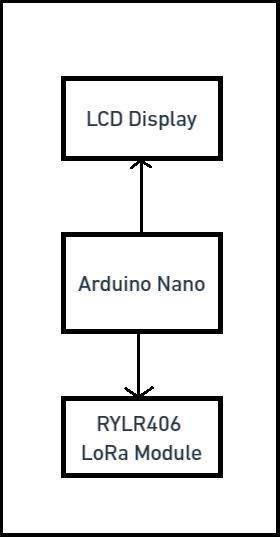
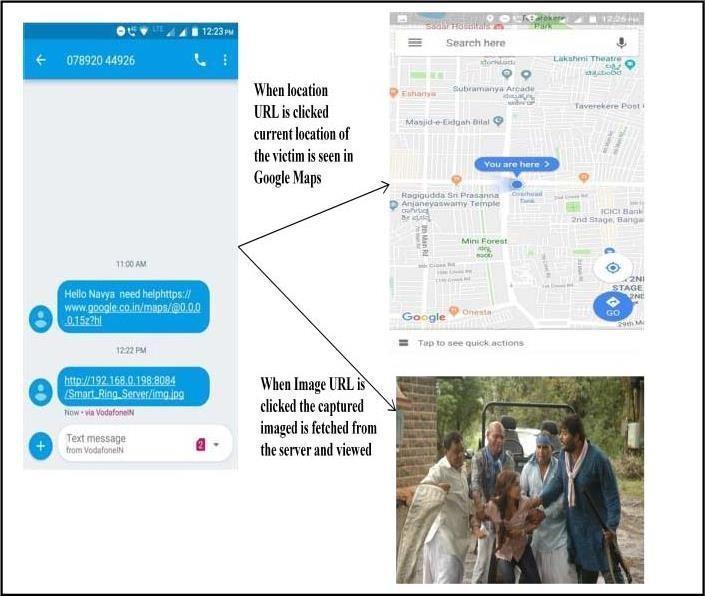
Figure3.ExpectedresultofSafeConnectshowingthe location
Use Case Scenario 1: A young girl returning from college in a remote village feels threatened. She presses theSafeConnectpanicbuttondiscreetly.TheGPSfetches her location, LoRa sends the alert 5 km away to a base station, the GSM module also pushes a text to her guardian,andthecamerarecordsa15-secondvideothat can later be reviewed. The local police are notified, and her location is pinpointed within seconds. This rapid responsesystemmayhelppreventcrimesinsuchcritical moments[21].
Use Case Scenario 2: An elderly man living alone in a rural area suddenly feels chest pain. Unable to speak clearly or dial a number, he presses the Safe Connect buttononhiswearabledevice.
his location is shared with his family and nearby healthcare volunteers through LoRa and GSM. A local clinic is alerted, and the ESP32-CAM module starts
e-ISSN:2395-0056
p-ISSN:2395-0072
recording the situation for medical documentation. Due
Use Case Scenario 3: A group of hikers exploring a dense forest loses their way after nightfall. With no mobilenetworkcoverage,oneofthemactivatestheSafe
The Safe odular platform, allowing customization based onuser-sp Connect system holds vast potential for future expansion across multiple domains. One promising directioninvolvestheintegrationofartificialintelligence (AI) to enable intelligent event detection and response prioritization.Forexample,AIcananalyzevideofootage in real-time to identify potentially dangerous situations and trigger automated alerts. Additionally, expanding connectivity through satellite communication or 5G can ensure functionality in the most remote regions, overcoming the limitations of LoRa and GSM. Another major scope is the integration with healthcare systems forhealthconditionmonitoring,especiallyforelderlyor chronically ill individuals. Safe Connect can also evolve into a m ecificneedssuchaschildtracking,workplace security,orpublic
safety monitoring. Collaboration with national security agencies and smart city projects can further extend its reach, making it a valuable asset for next-generation emergency response ecosystems. Furthermore, partnerships with NGOs, educational institutions, and local governments could enable structured rollouts in vulnerable communities, ensuring localized support systems are established. The data gathered from the system could also aid in generating predictive analytics models for crime prevention or disaster readiness planning.
Future enhancements may include voice-activated triggers..., integration with health sensors (heartbeat, body temperature), and AI- based video anomaly detection. Commercially, this system has potential for mass production under public safety schemes like the NirbhayaFund[20].
The Safe Connect system provides a comprehensive safetysolutionSafeConnectisasignificantadvancement in personal safety systems, offering a robust, wearable solution that ensures reliable communication during emergencies ItsintegrationofLoRa,GSM,GPS,andvideo capture creates a fail-safe mechanism for reaching emergency contacts The device is compact, costeffective, and suitable for deployment in schools, colleges, tourism agencies, and
to the quick response, the man receives timely assistance. rural healthcare [19].
International Research Journal of Engineering and Technology (IRJET) e-ISSN:2395-0056
Volume: 12 Issue: 07 | July 2025 www.irjet.net p-ISSN:2395-0072
The potential impact of this system reaches far beyondpersonal safety. Government and institutional adoption of such devices could revolutionize safety protocols ineducation, tourism, and elder care. With minimal modifications, the system could also be adapted forindustrialworker safety in hazardous zones such as mines, factories,and construction sites. The modular architecture enables easy integration with cloud services for centralizedmonitoringanddataanalytics.
Additionally, its open-source adaptability allows researchers and developers to build further enhancements, such as machine learning integration for eventpredictionorfalldetection.Integratingthis system with a national emergency database could dramatically reduce emergency response times. Public transport systems and women's hostels can also implement this technologyaspartofstandardsafetyinfrastructure.
Future enhancements may include voice-activated triggers,integrationwithhealthsensors(heartbeat,body temperature), and AI-based video anomaly detection. Commercially, this system has potential for mass production under public safety schemes like the NirbhayaFund[20].
We would liketo thank all contributors for their valuable supportthroughoutthisresearch.Specialthanksgotoour colleagues for their insightful comments and suggestions, whichgreatlyimprovedthequalityofthisproject.
We also extend our gratitude to Progressive Education Society's Modern College forprovidingtheresourcesand environment conducive to the successful completion of thisresearch.
Furthermore, we sincerely acknowledge the guidance of Professor Mrs. S.P. Hon, whose support and encouragement greatly influenced the outcomes of this work.
[1] A. R. Kumar, B. Patel, and C. Sharma, “Women safety system based on IoT and GPS technology,” IEEE International Conference on Computing, Communication, andAutomation,vol.1,pp.100–105,January2018.[
[2] S. M. Jain, D. Verma, and R. Aggarwal, “Real-time tracking and monitoring for women safety using GPS and cloud technology,” Journal of Electronics and Communication Research, vol. 5, no. 3, pp. 250–255, April 2019.
International Conference on Smart Computing and Communications,vol.4,pp.315–320,June2020.
[4] M.A.Rao and N. Tiwari, “Panic button-basedsystem for women safety using real-time GPS tracking and alert,” IEEE Transactionson Human-MachineSystems,vol.9, no. 6,pp.550–555,November2020.
[5] B. Gupta, R. K. Mishra, and S. Pal, “Design and implementation of a smart security system for women using IoT,” International Journal of Engineering Research and Technology, vol. 11, no. 2, pp. 640–645, February 2021.
[6] L. S. Mehta and D. Sharma, “Emergency alert and real-time tracking system for women safety using GPS,” IEEE Systems Journal, vol. 15, no. 1, pp. 92–99, March 2021.
[7] N. Patel and A. Desai, “Development of a women safety device using GSM and GPS with emergency contact feature,” International Conference on Computing, Communications,andNetworkingTechnologies,vol.8,pp. 123–128,July2021.
[8] P.S.RaoandM.N.Gupta,“IoT-enabledwomensafety device with panic button and GPS tracking,” IEEE Conference on Advances in Electrical and Computer Engineering,vol.17,no.4,pp.135–140,December2021.
[9] V.Sharma,S.Yadav,andN.Choudhary,“Designand implementationofa GPS-basedwomensafetydevicewith a smart alert system,” Proceedings of the IEEE Global Humanitarian Technology Conference, vol. 19, pp. 145–150,August2023.
[10] Saad Ahmed Akash, Md. Al-Zihad,TamalAdhikary, Md. AbdurRazzaque,ArifaSharmin,”HearMe: A Smart Mobile Application for Mitigating Women Harassment”,International WIE Conference on Electrical and Computer Engineering(WIECON- ECE),19-21 Dec,2016,Pune,India
[11] D.G.Monisha,M.Monisha,G.Pavithra,R.Subhashini,”W om en Safety Device and Application-FEMME”,Indian Journal of Science and Technology,Vol 9(10),March 2016,TamilNadu,India
[12] RaviSekharYarrabothu,BramarambikaThota,”Abhay a: An Android App for the Safety of Women”,India Conference(INDICON),17-20Dec2015,NewDelhi,India
[3] K. Singh and P. Roy, “Smart wearable device for womensafetyusingGSMandGPS,”Proceedingsofthe6th [13] TakuKomura,RynsonW.H.Lan,MingC.Lin,AditiMajumd e r,DineshManocha,Wei Wei Xu,”Virtual Reality Software and Technology”,IEEE Computer Graphics and Applications,Volume:35,Issue:5,Sept.-Oct.2015.
[14] J.Yin,andX.Zheng,“TheResearchontheSafetyRisk ofTouristsCrowdedPlacesWhichisBasedontheOptimal
International Research Journal of Engineering and Technology (IRJET) e-ISSN:2395-0056
Volume: 12 Issue: 07 | July 2025 www.irjet.net p-ISSN:2395-0072
Dimension Analysis,” Science Economy Society, no. 1, pp. 76-82,2017.
[15] Y.Wang,Q.Li,andJ.Chen,“SimulationofCongestion Alleviating Strategies in Sightseeing Public Places,” China SafetyScienceJournal,no.7,pp.27-32,2011.
[16] M. Batty, J. Desyllas, and E. Duxbury, “Safety in Numbers? Modelling Crowds and Designing Control for theNottingHillCarnival,”UrbanStudies,vol.40,no.8,pp. 1573-1590,2016.
[17] L. J. Lindqvist, and P. Björk, “Perceived safety as an important quality dimension among senior tourists,” TourismEconomics, vol.6,no.2,pp.151-158,2000.
[18] T. Elsrud, “Risk creation in traveling: Backpacker adventure narration,” Annals of tourism research, vol. 28, no.3,pp.597-617,2001.
[19] T. Elsrud, “Risk creation in traveling: Backpacker adventure narration,” Annals of tourism research, vol. 28, no.3,pp.597-617,2001.
[20] Z. Xu et al., “Participatory sensing-based semantic and spatial analysis of urban emergency events using mobile social media,” EURASIP Journal on Wireless CommunicationsandNetworking,no.1,pp.44,2016.
[21] Dr. Sridhar Mandapati, Sravya Pamidi, Sriharitha Ambati,"AMobilebasedWomenSafetyApplication(ISafe App)".Vol17,Issue1,Ver.I(Jan–Feb.2015).
[22] F. Adelantado, X. Vilajosana, P. Tuset-Peiro, B. Martinez, J. Melia-Segui, T. Watteyne, "Understanding the LimitsofLoRaWAN,"IEEECommunicationsMagazine,vol. 55,no.9,pp.34-40,Sept.2017.
[23] Y.Yang,L.Wu,G.Yin,L.Li,andH.Zhao,"ASurveyon Security and Privacy Issues in Internet-of-Things," IEEE Internet of Things Journal, vol. 4, no. 5, pp. 1250–1258, Oct.2017.
[24] H. Lee and K. Ke, "Monitoring of Large-Area IoT Sensors Using a LoRa Wireless Mesh Network System: Design and Evaluation," IEEE Transactions on Instrumentation and Measurement, vol. 67, no. 9, pp. 2177–2187,Sept.2018.
[27] K.R.Suresh,M. Harini,and P.A.Banu,"A Surveyon Emergency Response Technologies for Public Safety," JournalofAdvancesinInformationTechnology,vol.11,no. 4,2020.
racking and Alerts," International Journal of Computer Applications,vol.181,no.45,2019.
[26] M. K. Roy, S. Saha, and A. Chakraborty, "Smart Wearable Device for Women Safety Using IoT,"
[25] S. Mishra, S. Chandak, and P. A. Maheshwari, "IoTbased Women Safety Device with Real-Time Location International Conference on Computing, Communication andAutomation(ICCCA),2020.