
International Research Journal of Engineering and Technology (IRJET) e-ISSN: 2395-0056
Volume: 12 Issue: 10 | Oct 2025 www.irjet.net p-ISSN: 2395-0072
International Research Journal of Engineering and Technology (IRJET) e-ISSN: 2395-0056
Volume: 12 Issue: 10 | Oct 2025 www.irjet.net p-ISSN: 2395-0072
Shruti Dalela1
Mamta Chauhan2
,
1Assiatant Professor, Dept. of computer Science, Vijaya Raje Girls P.G. College Morar, Gwalior, M.P. India
2Assiatant Professor, Dept. of computer Science, Vijaya Raje Girls P.G. College Morar, Gwalior, M.P. India
Abstract - Students will be able to comprehend and communicate more clearly with the help of the immersive technologies i.e. Virtual Reality (VR) and Augmented Reality (AR). Emerging technologies like VR and AR are notable examples because of their quick development,3D and 4D techniques. These techniques replacethetraditionalmethodof teaching to the digital method of teaching. The aim of this technologies in the field of education to simulate the student and the teacher in the digital world and toenhancetheirskills. For product demonstration education, these VR and AR techniques are used. VR and ARdesignersmustre-evaluate the fundamentals of interactions betweenhumansandcomputers. In this paper AR technologies are used for the creation of educational aids and their implementation.
Key Words: VirtualReality,AugmentedReality,Information andCommunicationTool
1.INTRODUCTION
The concept of VR and AR in E-learning promotes interactivity.ThroughVRandAR,studentswouldbebetter abletocomprehendandcommunicate.Itallowsuserstonot onlyseewhatisbeingpresentedtothembutalsointeract withit[1].TheuseofARencourages self-directed learning, creativity, and problem-solving, as learners can explore topics at their own pace and from multiple perspectives. Educators can also design innovative lesson plans that incorporatereal-worldscenarios,bridgingthegapbetween theoreticalknowledgeandpracticalapplication.
Inthelongterm,ARhasthepotentialtobecomeastandard tool in classrooms, contributing to the evolution of digital learningenvironmentsandpavingthewayfortechnologies suchastheMetaverse,whereeducationcanbeexperienced infullyimmersivevirtualsettings.
ARisincreasinglybeingimplementedin college and school laboratories, providing practical, hands-on experiences without the limitations of physical resources. This allows studentstoconductexperiments,observephenomena,and interact with virtual equipment in a safe and controlled environment.
ThetechnicalcontentandartisticcharmofVRtoolstocreate the3600 videosinspirepeopletocreatethemoreandmore interactive application. VR gives the feeling to the user of
being in the virtual environment. Students simulate themselvesinthatenvironmentbywearingtheVRtoolslike Boxes[2]:
AugmentedReality(AR)isacombinationoftechnologies that overlays virtual information in a real-world environment in real-time. The technology of AR was first deployed in the aviation part for teaching aviators. In AR digitalobjectsareplacedinrealenvironment[2].
Themainobjectiveofthepresentpaperis
To implement these technologies in the field of education to foster experiential and autonomous learninginlearnersandalsomaketheteacherskill oriented.
Toincreasethemotivation
ThemethodologyforintegratingAugmentedReality(AR)in educational contexts involves selecting appropriate tools and applying effective AR techniques to enhance learning outcomes. The approach focuses on both content creation and interactive deployment, ensuring that students can engagemeaningfullywitheducationalmaterial.
A variety of AR tools were utilized to develop interactive educationalexperiences:
Smartphone Apps: Mobile AR applications were used to deliver interactive content directly to students’devices,providingaccessibilityandease ofuse.
Unity AR: Unity was employed for creating interactive3Deducationalmodules,suchasvirtual simulationsandgamifiedlearningexperiences.
Adobe Aero:ThistoolfacilitatedthecreationofAR experiences without extensive programming, suitablefordesigningvisuallyengaginglessons.
2025, IRJET | Impact Factor value: 8.315 | ISO 9001:2008 Certified Journal | Page 40
International Research Journal of Engineering and Technology (IRJET) e-ISSN: 2395-0056
Volume: 12 Issue: 10 | Oct 2025 www.irjet.net
3D Viewer and MS Paint 3D:Thesetoolsallowed forthecreationandmanipulationof3Dmodelsto representeducationalobjectsinARenvironments.
AR Spark Studio & Blender:AdvancedARdesign tools were applied to produce high-fidelity 3D objectsandimmersivesimulations,particularlyfor subjectslikeanatomy,engineering,andphysics.
2. AR Techniques Applied
The AR content was deployed using the following techniques:
Marker-Based AR:Physicalmarkerswereusedto trigger AR content, enabling students to view interactive models or information by scanning printedmaterialsorobjects.
Target Image-Based AR:Specificimagesservedas targetstoinitiateARexperiences,allowingflexible integration with textbooks, worksheets, or digital content.
3D Object-Based AR:Interactive3Dobjectswere embedded in the learning environment, enabling studentstoexplorecomplexstructuresandsystems inanintuitive,hands-onmanner.
3. Methodological Approach
1. Content Creation: Using the above tools, AR content was developed to align with curriculum objectives.3Dmodels,simulations,andinteractive lessons were prepared for subjects where visualizationenhancescomprehension.
2. Deployment: The AR experiences were deployed using smartphones or AR-enabled devices in classroom and virtual settings. Marker-based and target image-based triggers were tested for accuracyandengagement.
3. Evaluation:StudentinteractionwithARmodules was monitored to assess engagement, comprehension,andlearningoutcomes.Feedback wascollectedtorefineARcontentandoptimizethe learningmethodology.
By combining the above tools and techniques, the methodologyensuresthatARexperiencesarepedagogically effectiveandtechnologicallyfeasible.Thisapproachallows learners to visualize abstract concepts, interact with dynamic content, and engage in experiential learning that supportsadeeperunderstandingofeducationalmaterial.
ARToolsandTechniques
S.NO. AR Tools AR Techniques
1 Smartphoneapps Marker-BasedAR
3 UniteAR TargetImagebased
4 Adobeaero Creation of 3D effectsandimages
5 Unity 3D
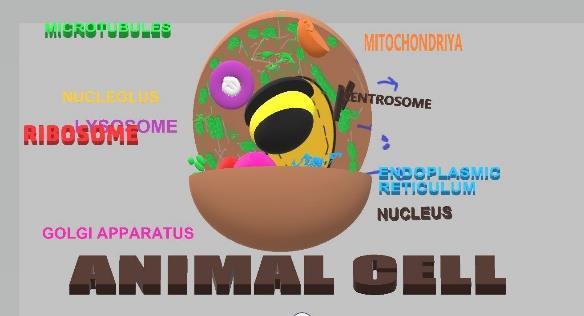
Toenhancestudentengagementandlearningoutcomes,a target-basedAugmentedReality(AR)cardwasdevelopedfor botanyeducation.ThisARcardwascreatedusing UniteAR [3]and MS Paint 3D, with supplementary modeling in Blender[4],.TheARcardisdesignedtoreplacetraditional teaching methods by providing an interactive and visually immersivelearningexperience.
Forimplementation,teachersdownloadtheUniteARapp andscanthetarget-basedimagegeneratedthroughMSPaint 3D and Blender. Additionally, a QR code[5] is created to facilitate easy access to the AR content. This methodology allows students to interact with educational material in a more engaging way, fostering interest in Information and Communication Technology (ICT) tools [6] and innovative learning techniques. Feedback from both students and educators indicates a high level of enthusiasm and effectivenessinusingARforeducationalpurposes.
International Research Journal of Engineering and Technology (IRJET) e-ISSN: 2395-0056
Volume: 12 Issue: 10 | Oct 2025 www.irjet.net p-ISSN: 2395-0072

-2:GeneratedQRCodeforAccessingAREducational Content
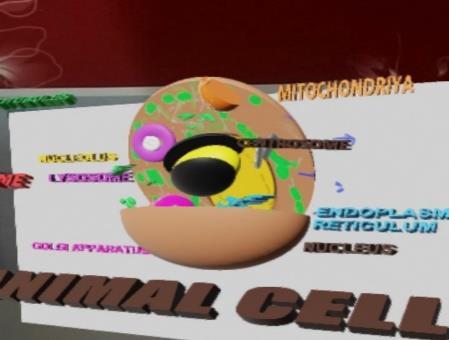
Fig -3:Interactive3DVisualizationofBotanyModelviaAR Card
Furthermore,UniteARcanbeupgradedtoincludeadditional elements for longer-term interactive content, allowing for extendedandenrichededucationalexperiences.
TheroleofAugmentedReality(AR)andVirtualReality(VR) ineducationisvastandtransformative.Thesetechnologies enablethedesignofcomprehensiveeducationalcurriculain whichbothstudentsandteacherscanimmersethemselves fullyinthedigitalera.Theconceptofeducationaltechnology hasgainedprominencewiththeincreasingintegrationofAR and VR in learning environments. The advent of these technologies provides educators and engineers with innovativetoolstodevelopeducationalsetupsthatfacilitate learningatalllevels.Lookingahead,thegrowthofARand VR may contribute to the emergence of the Metaverse, creatingvirtualworldswhereuserscanengagecontinuously inimmersiveeducationalexperiences.
3. CONCLUSIONS
Ratherthanrelyingsolelyonworddefinitionsortextbook images, this study demonstrates how Virtual Reality (VR) andAugmentedReality(AR)canbeusedtoexploresubjects and visualize concepts interactively. These technologies encouragestudentstoengagein self-paced, self-directed
learning and acquire knowledge through active participation rather than passive observation. Moreover, VR and AR are increasingly being utilized in school and college laboratories, allowing students to conduct experiments,explorephenomena,andinteractwithvirtual equipmentinasafeandcontrolledenvironment.Thepaper highlights the diverse applications of VR and AR in education, showcasing how they enhance the connection between students and teachers and make learning more immersive,engaging,andeffective.
[1] Azuma, R.T., 1997. A survey of augmented reality. Presence:Teleoperators&VirtualEnvironments.Vol.6, No.4.
[2] Anastassova,M.,Souvestre,F.,Gonzalez,E.A.,Gutierrez, A.S.,Benito,J.R.L.andBarak,M.,2014.Learner-centered evaluation of an augmented reality system for embeddedengineeringeducation.AnnalsofComputer ScienceandInformationSystems.Vol.4.
[3] https://app.unitear.com/
[4] Azuma,R.,Baillot,Y.,Behringer,R.,Feiner,S.,Julier,S. andMacIntyre,B.,2001.Recentadvancesinaugmented reality. IEEE computer graphics and applications. Vol. 21.
[5] https://play.google.com/store/apps/details?id=com.ibo soninnov.unitear&hl=en&gl=US&pli=1
[6] H. Kaufmann, D. Schmalstieg: "Mathematics And Geometry Education With Collaborative Augmented Reality";in:"Siggraph2002ConferenceAbstractsand Applications",ACMPress,2002.