
International Research Journal of Engineering and Technology (IRJET) e-ISSN: 2395-0056
Volume: 12 Issue: 10 | Oct 2025 www.irjet.net p-ISSN: 2395-0072
International Research Journal of Engineering and Technology (IRJET) e-ISSN: 2395-0056
Volume: 12 Issue: 10 | Oct 2025 www.irjet.net p-ISSN: 2395-0072
Sachin Kamat1 , Gaurav Singh Chauhan 2
1 Deputy General Manager - Geotechnical, KEC International Ltd., Mumbai, Maharashtra, India
2 Manager - Geotechnical, KEC International Ltd., Mumbai, Maharashtra, India
Abstract - India's construction sector encompassing residential, commercial, industrial, and infrastructure is experiencing significant growth largely driven by increased government initiatives. This accelerated growth presents both opportunities and challenges for the construction industries, geotechnical engineering playing a critical role. As projects grow in scale and complexity, the demand for advanced geotechnical solutions to address diverse site conditions, foundation requirements and underground conditions is greater than ever. Therefore, A thorough and accurate geotechnical investigation is an essential prerequisite for the successful execution of any construction project. From early stages of planning and design to construction, reliable geotechnical data provides the foundation for informed decision making. Comprehensive investigations help identify site constraints, assess subsurface conditions, and anticipate potential geotechnical challenges reducing risks and avoiding costly delays. However, in practice, the scope of these investigations is often dictated by project timelines and budgetary limitations, rather than guided by the inherent variability and complexity of subsurface conditions. The issue of inadequate site characterization remains a significant challenge. Poor-quality investigations can have significant consequences on project outcomes, including cost overruns, delays in construction schedules, structural failures, and unnecessarily conservative foundation design. Addressing this problem requires investment in advanced geotechnical investigation technologies, stricter regulatory control, and engagement of qualified and experienced personnel. This paper presents case studies that demonstrate specific issues arising from inaccurate and inadequate geotechnical investigations. Each case highlights the consequences of lapses in quality and assessment of geotechnical parameters and explains how to mitigate these issues and enhance safety and performance.
Key Words: Foundationdesign,GeotechnicalInvestigation,LiquefactionAnalysis,StandardPenetrationTests.
Inanycivilengineeringproject,geotechnicalinvestigationisthemostimportantactivityformakingcorrectdecisionsondesign andtheselectionofappropriateconstructiontechniquesforfoundations.Athoroughandaccurategeotechnicalinvestigationis anessentialprerequisiteforthesuccessfulexecutionofanyconstructionproject.Fromearlystagesofplanninganddesignto construction,reliablegeotechnicaldataprovidesthefoundationforinformeddecisionmaking. Comprehensiveinvestigations helpidentifysiteconstraints,assesssubsurfaceconditions,andanticipatepotentialgeotechnicalchallengesreducingrisksand avoidingcostlydelays.
ThemainobjectivesofagroundinvestigationaslistedbyIS:1892[1]andBS:5930[2]areasfollows:
i. Assessingsitesuitabilityfortheproposedworks.
ii. investigation the sequence of various soil and rock layers, ground water levels and collecting disturbed and undisturbedsamplesforidentificationandtesting.
iii. Evaluationofphysical,strength,settlementparametersandchemicalpropertiesfromthelaboratorytesting.
iv. determiningfoundationsystem,requirementofgroundimprovementifany.
v. anticipatingconstructionchallenges
vi. predictingimpactoftheproposedconstructiononnearbystructures.
Itshouldberecognizedthatathoroughunderstandingofthesubsurfaceconditionsdependsonthequantityandqualityof geotechnicalinvestigations.Inpractice,thereliabilityofdesignisoftengovernedmorebyaccuracyandcomprehensivenessof site-specificdatathanontheoreticalprecisionofanalyticalmodels.Withoutrepresentativeandhigh-qualitydata,eventhe mostsophisticateddesignmethodsmayyieldunreliableorunsafeoutcomes.
However,inpractice,thescopeoftheseinvestigationsisoftendictatedbyprojecttimelinesandbudgetarylimitations,rather thanguidedbytheinherentvariabilityandcomplexityofsubsurfaceconditions.TheissueofInadequatesitecharacterization remainsasignificantchallenge.Ithasbeengenerallyobservedthatnotmuchimportanceisgiventocontrollingthequalityof geotechnicalinvestigation.Poor-qualityinvestigationscanhavesignificantconsequencesonprojectoutcomes,includingcost overruns,delaysinconstructionschedules,structuralfailures,andunnecessarilyconservativefoundationdesign.
International Research Journal of Engineering and Technology (IRJET) e-ISSN: 2395-0056
Volume: 12 Issue: 10 | Oct 2025 www.irjet.net p-ISSN: 2395-0072
Awellplannedandcomprehensivegeotechnicalinvestigationprovidesessentialinformationaboutnatureandengineering propertiesofsubsurfacematerials.Thisdataplaysakeyroleinthedesign,selectionoffoundationtypeandconstruction techniques.Italsohelpstoanticipateandmitigatepotentialchallengesthatmayoccurduringconstructionduetosubsurface conditionsandotherlocalfactors.
Inmanycases,inappropriatetoolsordrillingtechniquesareusedforsiteexplorationandnecessarylaboratorytestsareeither omittedornotconductedundercontrolledconditions.Thisoftenleadstomisinterpretationofsubsurfaceconditionswhichcan resultinselectionofunsuitablefoundationtype,flaweddesignorimproperconstructionmethods.
Buildingontheabovebackground,thispaperaimstohighlightkeyissuesandchallengesassociatedwithinadequateand inaccurategeotechnicalinvestigationsaswellasmisinterpretationofgeotechnicalreports.Theseaspectsarefurtherillustrated throughrepresentativecasestudy.
Moreover,variousstudieshavedemonstratedthatgroundriskrepresentsoneofthemostsignificantsourcesofbothtechnical andfinancialuncertaintyinconstructionprojects.Thesesubsurfacerisks,ifnotadequatelyidentifiedandmanagedthrough appropriategeotechnicalinvestigations,canleadtounforeseengroundconditionsthatdisruptconstructionactivities,escalate costsandcompromisestructuralsafety.
It has been shown by various authors that as little as 0.1 % to 3 % of the total project cost is spent on geotechnical investigations depending on the location and extent of the site, the nature of the strata and the type of project under consideration.Littlejohnetal.[3]highlightsthatInadequategeotechnicalinvestigationscanresultfromlackofawareness, inadequatefocusoffinance,insufficienttimeorlackofgeotechnicalexpertise.Groundengineeringriskisoneofthelargest elementsoftechnicalandfinancialriskincivilengineeringandbuildingprojects.
A geotechnical investigation should be undertaken for every site, since without a properly procured, supervised and interpretatedgeotechnicalinvestigation,thehazardingroundcannotbeknown.Hefurtherquote”Youhavetopayforsite investigationwhetheryouhaveoneornotandyouarelikelytopayconsiderablymoreifyoudonotorifitisinadequately designed,executedorinterpretated.Jaksa[4]presentedacasewhereinadequategeotechnicalinvestigationinahighlyvariable soilprofileresultedinafoundationfailureinvolvinghigh-costover-runsandadelayofonemonth.V.S.Raju[5]alsodiscussed theconsequencesofinadequateandpoor-qualitygeotechnicalinvestigations.
ItisastandardpracticeinIndiatoprovidegeotechnicaldatabasedonpreliminaryGeotechnicalinvestigationscarriedoutby Employer/Consultantsinthetenderforaconstructionprojectforgeneralinformation.Thecontractorneedstoperforma detailedGeotechnicalinvestigationontheawardofworkfordetaileddesign.Thisinvestigationmustbecarriedoutwithinthe overallstipulatedprojectduration.Giventhetimeconstraint,contractorsmayengagelocallyavailablegeotechnicalagencies capableofmobilizingequipmentimmediatelybasedonthetenderdrawingevenbeforefinalizationofplanandprofile.While theapproachisacceptabletomeettime–boundprojectrequirements,ensuringreliabilityandaccuracyofgeotechnicaldata anditsinterpretationmustnotbecompromisedasitissourceforsafeandoptimizeddesignandconstruction.
MostofthegeotechnicalinvestigationsinIndiacommonlycomprisesofdrillingboreholes,conductingstandardpenetration tests,plateloadtests,collectingundisturbedanddisturbedsamplesandlaboratorytests.Advancedin-situtestingmethods suchaspressuremetertests,Conepenetrationtests(CPTu),andgeophysicalsurveysaregainingpopularity.However,theuse ofthesein-situtestsislimitedtomajorcomplexorhighvalueinfrastructureprojects.Thegeotechnicalinvestigationreport consisting of a summary of the subsurface conditions met, a list of the field and laboratory tests conducted and recommendationsonfoundationsispreparedbytheGeotechnicalinvestigationagency.
Thissectiondescribeskeychallengesandfactorsaffectingthequalityofgeotechnicalinvestigationsatthesite.
4.1. Inexperienced supervision and poor coordination
The lack of experienced supervision during field investigation and inadequate coordination between field teams and laboratorypersonnelremainachallenge.Errorsmaybeginwithimpropersamplingtechniquesorinsufficientdocumentation andmislabelling.Theseissuescarryoverintolaboratorytestingstage,wheredatamaybeincorrectlyrecordedorinterpreted.
International Research Journal of Engineering and Technology (IRJET) e-ISSN: 2395-0056
Volume: 12 Issue: 10 | Oct 2025 www.irjet.net p-ISSN: 2395-0072
Suchlapsesoftengounnoticeduntilthegeotechnicalreportisusedfordesignpurposesatwhichpointitmaybedifficultto identifyandcorrectthesourceoferror.
4.2. Inadequate Geotechnical Investigation
Limited scopeand shallow investigations result in incomplete understanding of subsurface conditions at the site. This inadequatesitecharacterizationconsequentlyleavesthedesignerstomakeassumptions,engineeringjudgementandrelyon empiricalcorrelations,increasingtheriskofdesignerrorswhichinturnaffectstheprojectoverall.
4.3. Inaccurate soil classification
Accurateidentificationofsoil/rockstrataiscriticalforunderstandingsubsurfacebehaviour.However,Borelogrecordsoften includegeneralizeddescriptionsthatdonotfollowtheclassificationsystemsetbycodes.Suchambiguitycanhinderengineers frominterpretingthetruebehaviourofsoilandselectionofappropriatemethodsofanalysis.
4.4. Inconsistencies between field and laboratory data
Designers face difficulty in reaching accurate conclusions when inconsistencies arise between field observations and laboratorytestresults.Thesediscrepanciesmaybeduetopoorsamplequality,inconsistenttestingproceduresorerrorsindata compilations.Intheabsenceofreliabledata,designersareforcedtointerpolateinformationfromnearbyboreholesormake someassumptionsthatmayintroducefurtheruncertaintyandmaycompromisethesafetyandperformanceofstructure.
4.5.
Althoughadvancedinvestigationtechniquesareavailable,theiradoptionremainslimitedduetolackofawareness,training, orcostconcerns.
4.6.
Theinterpretationofgeotechnicaldatarequiresadeepunderstandingofsoilmechanicsandgeologicalconditions.Whenthe engineerwhoisresponsibleforpreparingGIRlacksqualificationsorfieldexperience,theinterpretationmaybeinaccurate.This canresultininappropriatefoundationsolutions.Manyengineerslackexposuretomoderninvestigationandinterpretation techniques.Collaborationbetweengeotechnicalexpertsandotherdisciplinesisoftenlacking,affectingholisticprojectplanning.
Itisessentialtoadoptasystematicapproachthatemphasizesaccuracyandconsistencythroughoutallstagesofinvestigation. Thefollowingpracticescanhelpminimizeinterpretationerrorsandimprovequalityofgeotechnicalassessment.
ItisveryimportanttohaveclearlydefinedSpecificationandeffectivesupervisionforensuringgoodqualityandreliabilityof geotechnicalinvestigation.Thespecificationsshouldincludethescopeofwork,samplingmethods,depthofexploration,testing standardsandreportingrequirementsindetail.Thesespecificationsshouldbeavailableonsiteandallsupervisors,technicians andfieldengineersshouldbeawareoftheircontent. Supervisorsshouldhavegeotechnicalexperienceaswellaspractical knowledgeofdifferentinvestigationtechniques.Inadditiontohavingaproperspecificationandscope,itisessentialtoengagea contractorwithprovenexpertiseingeotechnicalinvestigations.Theselectedcontractorshouldhaveademonstratedtrack record,experiencedpersonnelandaccesstowellmaintainedandcalibratedequipment.However,evenaftertakingallnecessary precautions,issuessuchaspoorworkmanship,impropercalibrationofequipmentandpersonalnegligencemaystilloccur. These lapses can result in unrealistic or unreliable test data. Therefore, equipment verification and adherence to quality assuranceisnecessarythroughouttheinvestigationprocess.
Theselectionofgeotechnicalinvestigationagenciesshouldbebasedontheircompetencyandabilitytodeliverreliabledata, ratherthansolelyonthelowestbid.TheGIAshouldberesponsibleforpreparingGeotechnicalFactualReport(GFR)which
International Research Journal of Engineering and Technology (IRJET) e-ISSN: 2395-0056
Volume: 12 Issue: 10 | Oct 2025 www.irjet.net p-ISSN: 2395-0072
documentssiteconditionsandpresentsdetailedfactualdatafromfieldandlaboratoryinvestigations.AseparateGeotechnical Consultants(GC)shouldbeappointedtodefinethescopeofinvestigationandoverseethefieldandlaboratoryinvestigation.The GCshouldthenpreparetheGeotechnicalInterpretativeReport(GIR)whichpresentsfindingsofGFR,analysisandinterpretation ofGFRdataalongwithconclusionsandrecommendationstosupportgeotechnicaldesignandconstruction.
TheBureauofIndianStandardshasrecentlypublishedcodeIS:19235[6],whichcomprehensivelyoutlinestherequirements forGeotechnicalServices.Adheringtotheprovisionsandguidelinesofthiscodecansignificantlyminimizediscrepanciesin geotechnicaldata,reduceinaccuraciesinanalysisandmitigatetheassociatedrisks-therebyenhancingthereliabilityandquality ofthegeotechnicalinvestigationswork.
5.3. Ensure Experienced and skilled Personnel.
Engageexperiencedgeotechnicalengineersandtrainedfieldtechnicianstosuperviseinvestigations.Supervisorsmustbe wellversedinGeotechnicalengineering,samplingprocedures,andrelevantstandardstoensuretheintegrityoffieldanddata collection.
5.4. Adhere to standardized Classification systems
ClassificationsystemshouldbestrictasperIS:1498[7]andIS:4464[8]whilepreparingtheborelog.Usestandardized terminology and include relevant details suchascolor,consistency, grain size forsoilsclassificationandcolour, degree of weathering,strength,discontinuities,andtypeofrockforrockclassification.
5.5. Maintain clear Sample labeling
Implementlabellinganddocumentationprotocolforallsamplesfromtimeofextractiontolaboratorytesting.Eachsample shouldbeclearlymarkedwithboreholenumber,depth,typeanddatetoavoidconfusion.Closecoordinationbetweenfield engineers,laboratorypersonnelandthereportingteam.Fieldobservationsshouldbecrossverifiedwithlaboratorytestresults andanyinconsistenciesshouldbeinvestigatedandreconciledbeforereportfinalization.
5.6. Effective use of Advanced investigation techniques.
Advancedin-situtestingmethodsasdiscussedinprecedingsectionsareavailableinIndia.Thesein-situtestscoupledwith boreholeswillprovidebetterqualityofgeotechnicaldata.Thiswillhelpdesignoptimizedfoundationsolutionsandreduce constructionstagerisks.
5.7. Training and capability building
There should be continuous professional development for engineers, technicians and laboratory staff through training programs,workshopsandcertificationcourses.
5.8.
Itisfrequentlyobservedthatconsolidationtestresultsareeithermissinginthegeotechnicalinvestigationreportorare derivedfromempiricalcorrelationinsteadofactuallaboratorytesting.Thispracticemaybeduetothelongdurationrequiredto performconsolidationtests.Thisapproachisunacceptableparticularlyforprojectswhereconsolidationsettlementiscritical designconsideration.Moreover,consolidationtestresultsarehighlysensitivetosampledisturbance.Anydisturbanceofsample canaffecttheconsolidationresultsleadingtoerroneousinterpretation.Insuchcases,theprovisionofadvancedin-situtesting methodssuchasConePenetrationTest(CPT)isalwaysadvantageous.CPTprovidesreliablein-situmeasurementsthatcanbe usedtoestimateconsolidation-relatedparameters.Indirectly.
AlthoughtheIS:2131[9]stipulatesstandardprocedureforconductingSPT,thesepracticesarenotuniformlyfollowedacross industryinIndia.Inmanycasesnonstandardequipmentandmanualreleasemethodsarestillinuseleadingtoinconsistenciesin test results. Several types of hammers with different energy delivery efficiencies are employed in the field which further contributes to the variationin measured SPT values. A range of factors such as hammer type, hammer release mechanics
International Research Journal of Engineering and Technology (IRJET) e-ISSN: 2395-0056
Volume: 12 Issue: 10 | Oct 2025 www.irjet.net p-ISSN: 2395-0072
(manualorautomatic),operatorefficiency,Numberofturnsofropeonthecathead,rodtypeanditsverticality,Soiltypeand depthhaveinfluenceonSPTNvalues.Thesevariablesaffectactualenergytransferredtothesample.ThisresultsinerraticN valuesthatdon’treflectin-situsoilcondition.Theseinconsistenciescanbemitigatedbyadoptingstandardizedequipment(auto tripmechanismwithdonut/safetyhammerorautomatichammersystem)andprocedure(IS:2131)[9]andtoincorporate energymeasurementsystemwhereverfeasible.ActualEnergymeasurementallowsthecalculationofenergycorrectedNvalues (N60)normalizedto60%energyefficiency.Thisnormalizationiswidelyacceptedasareferencestandardforinterpretationof soilproperties.MostoftheempiricalcorrelationsusedforestimationofdifferentsoilpropertiesarebasedonN60values. Therefore,correctionsforhammerenergyneedtobeappliedtotherecordedNvalues.Thedetailedprocedureforapplying energyandothercorrectionsisprovidedinIS:2131[9].
Toimprovequalityandreliabilityofsubsurfacedata,theuseofstandardizedequipmentandenergymeasurementsystem shouldbestrictlyadopted.
Thefollowingsectionpresentscasestudiesthatillustratespecificissuesresultingfrominaccurateandinadequategeotechnical investigations. Eachcasehighlightstheconsequencesoflapsesinqualityandmis-assessmentofgeotechnicalparameters.
Fourboreholesweredrilledtoadepthof40mtoinvestigatesubsurfaceconditionsatthesite.Boreholelogsindicated subsurfacesoilprofileprimarilyconsistingofyellowishsiltyclayextendingupto35m,beneathwhichwasalayerofgravelly clayeySand.
However,Laboratorytestresultsrevealedadifferentclassificationofsubsurfacesoilasshownin Error!Referencesource not found..Thislaboratory-basedclassificationdidnotfullyalignwiththefieldborelogsdrilledatthesite.(ReferTable)
Table -1: Subsurfaceprofile
Depth,m
0to20m
20to35m
35to40m
Issues
ClassificationasperlaboratoryResults
ClayeySiltofLowplasticity(ML)
SiltyClayofLowplasticity(CL)
SiltySand(SM)
Discrepancy in soil classification and liquefaction Analysis Approach
Itwasobservedthattherewasaclearmismatchbetweenthelaboratorysoilclassificationandfield-basedsoilclassification. TheLiquefactionanalysispresentedinGeotechnicalInvestigationReportemployedtheSeedandIdrissmethod(IS:1893)[10] which is specifically applicable to cohesionless soils. However, this method may not be appropriate for soil comprising significant amounts of clay or silt content. Given the ambiguity in type of soil encountered, it was challenging to select appropriatemethodofliquefactionassessment.
Thisuncertaintyledtodifferingestimatesofliquefactiondepth:
AsperIS:1893[10]usingSeedandIdrissmethodology,theestimatedliquefactiondepthwasapproximately12m
AsperBoulangerandIdriss[11]methodologywhichaccountsforfinecontentandplasticityofthesoil,theestimated liquefactiondepthreducedto7.5m
Thesediscrepanciesunderlinetheimportanceofaccuratelycharacterizingsoiltypesandselectingasuitableliquefaction analysismethodapplicabletospecificsoilbehaviourratherthanfollowingageneralizedapproach.
The initial discrepancy between field based and laboratory-based soil classification, as well as concerns regarding the applicabilityofliquefactionanalysisintheoriginalGeotechnicalInvestigationReport(GIR)promptedadetailedreviewofthe report.Thisreviewrevealeddeeperissuesrelatedtotechnicalcompetencyoftheinvestigationagencyandtestingstandards.
International Research Journal of Engineering and Technology (IRJET) e-ISSN: 2395-0056
Volume: 12 Issue: 10 | Oct 2025 www.irjet.net p-ISSN: 2395-0072
Therefore,itwasdecidedtoconductfreshGeotechnicalInvestigationthroughqualifiedandexperiencedGeotechnicalAgency. Accordingly, a new Geotechnical Investigation was conducted. The new investigation provided a more comprehensive assessmentofsubsurfaceconditions.
Keyfindingsfromthenewinvestigationareasfollows:
Thesubsoilwasidentifiedaspredominantlybrownsiltyclayofhighplasticitydifferingfrompreviouslyinferred yellowishclayeysiltoflowplasticity.(Refer
)
Atterberg’slimitstestresultsshowedmarkeddifferences:
NewGIR:LiquidLimit(LL)>50%,PlasticityIndex(PI)>24%
OldGIR:LiquidLimit(LL)between28-38,PlasticityIndex(PI)between6-13%.
TheupdatedsoilclassificationaspernewGIRindicatedacohesivesoilofhighplasticity,whichisgenerallynotsusceptibleto liquefaction. Consequently, liquefaction assessment based on revised data did not show any liquefaction susceptibility in contrasttoinitiallyestimated7.5mdepthofliquefaction.
Thus, new geotechnical investigation has provided a more accurate and reliable understanding of subsurface conditions, correctingearliermisclassificationandmisinterpretations.Theupdatedfindingshaveledtotheeliminationofliquefaction concernsconsequentlyleadingtomoreeconomicalandappropriatefoundationdesign.
Thegeotechnicalinvestigationreportprovidedinthetenderdocumentforametroprojectshowedthatoverburdensoil consistingofalternatelayersofClayandSandextendingupto16mto30mdepth.Thisoverburdensoilwasfollowedbystrata describedassoft/HardSandstoneorLateriticrock.Thecorerecovery(CR)andRockQualityDesignation(RQD)valuesofthe rock were less than 50 %. The Unconfined Compression Test (UCS) values ranged between 4 and 12 MPa. Rock was not encountereduptotheexplorationdepthof60minsomeboreholes(Refer Error! Reference source not found.).Basedonthe borelogsandUCSvalues,RockwasinitiallyclassifiedasHighlytomoderatelyweatheredmoderatelyweakSandstone.However, areviewofCorephotographsrevealedcharacteristicsmoreconsistentwithmoderatelyweathered,moderatelystrongGneiss.
International Research Journal of Engineering and Technology (IRJET) e-ISSN: 2395-0056
Volume: 12 Issue: 10 | Oct 2025 www.irjet.net p-ISSN: 2395-0072
Table 2: InitialGeotechnicalInvestigation
International Research Journal of Engineering and Technology (IRJET) e-ISSN: 2395-0056
Volume: 12 Issue: 10 | Oct 2025 www.irjet.net p-ISSN: 2395-0072
Table 3: NewGeotechnicalInvestigation
Description of Strata
Thediscrepancybetweenvisualrockidentificationandstrength-basedclassificationhighlightsthepotentialvariabilityin subsurfaceconditionsandlimitationsofrelyingsolelyonborelogsandstrengthparametersforlithologicalclassification.Such
International Research Journal of Engineering and Technology (IRJET) e-ISSN: 2395-0056
Volume: 12 Issue: 10 | Oct 2025 www.irjet.net p-ISSN: 2395-0072
inconsistencies underline the need for integrated geological and geotechnical interpretation, involving both petrographic analysisandreviewofcoreimagesalongsidefieldandlaboratorydata.Accurateidentificationofrocktypeanditsengineering behaviouriscriticalforappropriatedesignoffoundationsandselectionofappropriateconstructionmethodologies.
Itwasthereforedecidedtoconductconfirmatorygeotechnicalinvestigationsduetodiscrepanciesobservedbetweenthe reportedtypeandstrengthofrockandtheactualconditionevidentfromcorephotographs.Theconfirmatorygeotechnical investigationsprovidedgreaterconfidenceinthesubsurfacecharacterizationandhelpedaligngeologicalinterpretationwith engineeringdesignrequirements.
Code

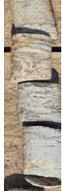
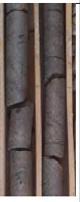
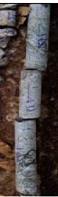
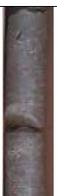
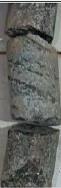
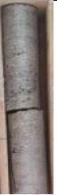
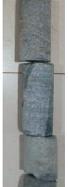
TheconfirmatorygeotechnicalInvestigationrevealedthatsubsurfaceconsistsofanoverburdenlayerofalternatingClayand Sand strata extending to depths ranging between 12m to 28m. Overburden soil was followed by moderately weathered moderatelystrongGneiss.Corerecoveryvaluesrangedbetween30%&95%,whileRockQualityDesignationvaluesranged between10&80%(Refer Error! Reference source not found.).TheUCSvaluesvariedbetween15and40MPa,suggesting thattheunderlyingrockmassissignificantlystrongerthaninitiallyinferredfromthetenderstageinvestigation.Thus,itwas established from confirmatory investigations that the rock encountered along the alignment was Moderately weathered, moderatelystrongGneissratherthanpreviouslyassumedhighlyweatheredweakSandstone.
International Research Journal of Engineering and Technology (IRJET) e-ISSN: 2395-0056
Volume: 12 Issue: 10 | Oct 2025 www.irjet.net p-ISSN: 2395-0072
Thisupdated classification hassignificantimplicationson the designand construction of pile foundations.Rock socketing required for 1m diameter pile to achieve design Pile capacity of 5000 kN was estimated to be 3.5m to 4m as per Tender GeotechnicalInvestigationReport(GIR)and2.5mto3masperconfirmatoryGIRrespectively.Thehighersocketinglengths indicatedinTenderGIRwereprimarilyduetotheconsiderationofweakIntermediateGeomaterialinsteadofmoderatelystrong Gneissfordesign,whichwasconsideredweaker,necessitatinglongersocketlengthstoachievetherequiredloadcapacity
Discrepancies in identifying subsurface strata and interpretation of geotechnical parameters could have substantial implicationsonthedesignandexecutionofpilingwork.Themajorimplicationsareasfollows.
Overestimatedsocketlengthsof3.5mto4.2mintomoderatelystrongGneisscomparedtotheactualrequirementof 2.5mto3m.
Additionalandunnecessarydrillingthroughhardrock,impactingprojectcostandschedule.
DrillingthroughmoderatelystrongGneissisdifficultandslowresultinginreducedpilingproductivity.
Highercapacitypilingrigscouldhavebeenrequiredfordeeperpenetrationintohardformations.
Increasedprojectcostandextendedconstructiontimeline.
ThemisrepresentationofsubsoilconditionsintheinitialGIRcouldhaveresultedinconservativepiledesignsandexecution challenges. The confirmatory GIR, based on more accurate investigations, provideda sound basis for design optimization, permittingreducedpilelengths,improvedconstructionplanning,lowerprojectcostandfasterexecution.
This project involved the construction of a railway line with associated earthwork and minor bridges. A geotechnical investigationwasimmediatelycarriedoutonsiteaftertheawardofwork.Thegeotechnicalinvestigationincludeddrilling boreholesatminorbridgelocationsaswellascuttingandembankment. Thegeotechnicalreportatcuttingforabout700m stretchrevealedthattop1.5mstratumcomprisedoffilledupsoil,underlainbyhighlyweathered,moderatelystrongbasalt.The corerecovery(CR)valuesrangedfrom13%to50%andRockQualityDesignation(RQD)variedfrom0%to50%indicating poor quality rock mass. The Unconfined Compression Test (UCS) values ranged between 19 and 24 Mpa (Refer Error! Reference source not found.).
As per initial investigation, the rock mass was classified as poor-quality rock presumably soft enough for mechanical excavationwithouttheuseofblastingorheavychiseling.Accordingly,standardexcavatorsweredeployedonthesitewiththe expectationthatonlylightChiselingmightberequiredtoloosenthematerials.However,visualinspectiononsiterevealeda contradictorycondition,thesubstrataconsistedofgreystrongbasalt,ratherthananticipatedsoftrock.Asresult,mechanical excavatorsprovedineffectiveandunabletoexcavate. Itbecameapparentduringexcavationthattherewasaclearmismatch betweentheactualsubsurfaceconditionandthatreportedinGIR.Thisdiscrepancyislikelyattributedtoimproperdrilling practicesbyagencyandboreholeslocatedawayfromthetruealignment.
Itwasthereforedecidedtoconductgeotechnicalinvestigationsagainduetodiscrepanciesobservedbetweenthereported rocktypeandtheactualrocktype.
TheconfirmatorygeotechnicalInvestigationrevealedthatsubsurfaceconsistsofmoderatelyweatheredmoderatelystrong Basalt.Corerecoveryvaluesrangedbetween55%&94%,whileRockQualityDesignationvaluesrangedbetween13&32% (Refer
).TheUCSvaluesvariedbetween20and27MPa,suggestingthattheunderlyingrockmassissignificantlystrongerthan initiallyinferredfromtheinitialinvestigation.Fromthenewinvestigation,itwasestablishedfromconfirmatoryinvestigations thattherockencounteredalongthealignmentwasModeratelyweathered,moderatelystrongbasaltratherthanpreviously assumedhighlyweatheredbasalt.Consequently,excavatorswithspecialarrangementsweredeployedforexcavation(Refer Error! Reference source not found.). However, machinery productivity decreased, and excavation timeline and costs of excavationincreasedduetothehardnessofthebasalt.
International Research Journal of Engineering and
Volume: 12 Issue: 10 | Oct 2025 www.irjet.net
Table 5: OldGeotechnicalInvestigation R.L.
Table 6: ConfirmatoryGeotechnicalInvestigation
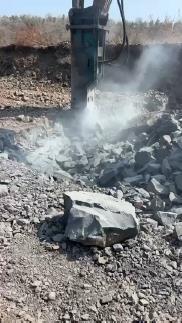
Fig -1:SiteimageshowinguseofmechanicalbreakersforexcavationinHardBasaltrock
International Research Journal of Engineering and Technology (IRJET) e-ISSN: 2395-0056
Volume: 12 Issue: 10 | Oct 2025 www.irjet.net p-ISSN: 2395-0072
ThisprojectinvolvedconstructionofanofficebuildingfortheRailways.GeotechnicalInvestigationatthesiteindicated subsurfacesoilprofileprimarilyconsistingoffilledupsoilextendingupto1.5mdepth.Theunderlyingstratumwasblackishsilty clayofhighplasticity.ThestandardpenetrationconductedshowedSPTvaluesrangedbetween8to22,improvingwithdepth (ReferTable1).
Issues
Discrepancy in interpretation and foundation recommendation
ItwasobservedthattheLiquidlimitrangedbetween61%and67%andplasticityindexrangedbetween35and40%.This values.indicatesacohesivecompressiblesoilwithhighdegreeofexpansion(IS:1498)[7].Notablyswellingpressuretestsand consolidationtestswerenotconducted.ThesettlementanalysispresentedintheGIRemployedTerzaghi’smethodbasedonSPT N values as per IS:8009 (Part 1) [12] (Refer Table 2: Typical calculations of settlement as presented in the Geotechnical InvestigationReport
6 AverageNvaluebelowthefoundingstratum N 16
Settlementinmeter/unitpressure.i.e. for1kg/cm2orfor10t/m2readfromFig.9ofIS8009partIcorrespondingtotheavg value
Settlementinmeter/unitpressure
mm Fig.9ofIS:8009
IS:8009,Fig.12
Research
Volume: 12 Issue: 10 | Oct 2025 www.irjet.net
bearingpressurefor25mmsettlement
Table 3Table 3).However,thismethodisspecificallyapplicabletocohesionlesssoilsanditsuseforcohesivesoilsisnot appropriate.Thismethoddoesnotaccountfortimedependentconsolidationsettlementwhichisdominantinsuchsoils.Further, the bearing capacities reported in GIR correspond to immediate settlement which might lead to underestimation of total settlement.
TheinadequatelaboratorytestdatanecessitatedrelianceonempiricalcorrelationsbasedonSPTvaluesandAtterberglimit toestimateconsolidationparameters.Theseestimatedconsolidationparameterswereusedinthesettlementanalysisresulting inconservativedesign.Tomitigateriskofswelling,1mthickcohesivenonswellinglayerwasproposedbelowfoundation.While, thisisapracticalmeasure,itsnecessityandthicknessmayhavebeenbetteroptimizedhadreliableswellingpressuredatabeen available. Inadequate geotechnical data led to conservative and overdesigned foundation solutions, resulting in increased constructioncosts.
Table 1: BoreholeindicatingpresenceofBlackishClayeySoiluptothedepthofexploration
Volume: 12 Issue: 10 | Oct 2025 www.irjet.net
Table 2: TypicalcalculationsofsettlementaspresentedintheGeotechnicalInvestigationReport
S.no.
International Research Journal of Engineering and Technology (IRJET) e-ISSN: 2395-0056
Volume: 12 Issue: 10 | Oct 2025 www.irjet.net p-ISSN: 2395-0072
Thecasestudiescollectivelyhighlighttheconsequencesofinaccurateorinadequategeotechnicalinvestigationsonproject design,executionandcost.Inallcases,investigationssufferedfromeithermisclassificationofstrata,impropertesting, or inappropriateanalyticalmethods leadingtooverdesign,misallocationofresources,orconstructiondelays.Confirmatory investigationsusingcorrectsampling,testing,andclassificationprovidedimprovedsubsurfaceunderstandingandoptimized designoutcomes.TheTable9summarizesthesediscrepancies,actions,revisedfindings,andengineeringimplicationsindetail withquantifieddata.
Table 3 DetailedComparisonofCaseStudies–Discrepancies,Findings,andEngineeringImpact
Project Initial Investigation Findings
Substation Project, Patna (Bihar)
-Soilupto35m classifiedasyellowish siltyclay
-Liquefactiondepth estimatedas12m usingSeed&Idriss method(IS1893)
Metro Project, Kerala
-Overburdenof alternatingclayand sandupto16–30m
-Underlyingweak sandstone,UCS:4–12 MPa
-Socketdepth:3.5–4.2m(for5000kN pile)
Railway Project, Madhya Pradesh
Office Building, Vijayawada (AP)
-700mstretch showedhighly weatheredbasalt
-CR:13–50%,RQD: 0–50%,UCS:19–24 MPa
-Anticipatedeasy excavationwithlight chiseling
-Filledsoilupto 1.5m;underlying blackishsiltyclay (CH)
-SPT:8–22
-LL:61–67%,PI:35–40%
-Settlement estimatedusing Terzaghi’smethod (forcohesionlesssoil)
Discrepancy Observed
-Labresultsshowed differentsoiltypes (ML,CL,SM)
-Methodused unsuitableforcohesive soils
Confirmatory Investigation Findings Key Parameters
-Soilreclassifiedas brownsiltyclayof highplasticity(CH)
-LL>50%,PI>24%
-Visualcoreinspection showedrockmore consistentwithgneiss
-UCSunderestimated duetopoorcore samples
-Fieldvisual inspectionshowed stronggreybasalt
-Excavatorsunableto proceedasplanned
-Rockreclassifiedas moderatelyweathered moderatelystrong gneiss
-UCS:15–40MPa
-Socketdepth:2.5–3.0m
-Moderately weathered, moderatelystrong basalt
-CR:55–94%,RQD: 13–32%,UCS:20–27 MPa
-Noswellingpressure orconsolidationtest done
-Inappropriate methodusedfor cohesivesoil
-Soilconfirmedas expansiveCHsoil
-Highswelling potentialand consolidationnot properlycaptured
-OldLL:28–38%,PI:6–13%
-NewLL:>50%, PI:>24%
-Revised liquefaction depth:0m (none)
-CoreRecovery: 30–95%
-RQD:10–80%
-UCSrevised:up to40MPa
Impact on Design & Construction
-Eliminated7.5–12m liquefactiondepth
-Avoided unnecessarysoil improvement measures
-Enabledeconomical foundationdesign
-Reducedsocket lengthby~1–1.2m
-Reduceddrillingin hardrock
-Savedtime,cost, andimprovedpile productivity
-CRincreased upto94%
-UCShigher thanassumed (upto27MPa)
-Required deploymentof hydraulicbreakers
-Increased excavationtimeand cost
-Decreased equipment productivity
-SPTincreasing withdepth:8–22
-LL:61–67%,PI: 35–40%
-Watertableat 1.5m
-Riskof underestimating long-termsettlement
-1mthicknonswellinglayeradded
-Conservative overdesigndueto lackoftestdata
International Research Journal of Engineering and Technology (IRJET) e-ISSN: 2395-0056
Volume: 12 Issue: 10 | Oct 2025 www.irjet.net p-ISSN: 2395-0072
Ground-relatedrisksareoneofthemostsignificantsourcesoftechnicalandfinancialuncertaintyinconstructionprojects.If subsurfacerisksarenotproperlyidentifiedandmanagedthroughcomprehensivegeotechnicalinvestigations,theycanresult inunforeseengroundconditionsthatdisruptconstructionactivities,escalatecostsandcompromisestructuralsafety.
Giventheinherentvariabilityanduncertaintiesassociatedwithsubsurfaceconditions,improvingthequalityandreliabilityof geotechnicalinvestigationsiscrucial.Whilethequantityofinvestigationoftenmeetsthespecifications,thequalityremainsa majorconcern.Traditionalmethodsneedtobeenhancedandsupplementedwithadvancedtechnologiesforachievingprogress atafasterrateandgettingreliablegeotechnicaldata.
ThispaperprovidesanoverviewonthekeychallengesassociatedwithgeotechnicalinvestigationpracticeinIndiaandoffers suggestionsforimprovement.Casestudiesfromvariousprojectsdemonstratetheconsequencesofinadequateandinaccurate investigationsandmisinterpretationofgeotechnicalreports.
AdoptingthestandardsoutlinedinIS19235[6],SelectingqualifyingagenciesandclearlydefiningtherolesoftheGIAandGC arecriticalstepstowardsimprovingdataqualityandreducingrisks.
Itisessentialtorecognizethatcostcuttingmeasuresingeotechnicalinvestigationscanultimatelyleadtomoreexpensive designs, construction complications and project delays. A well planned and comprehensive geotechnical investigation contributessignificantlytothetimelyandcost-effectivedeliveryofaproject.
[1] IS:1892:SubsurfaceInvestigationforFoundations.IndianStandardCodeofPractice,BureauofIndianStandards,New Delhi(2021)
[2] BS-5930:Codeofpracticeforsiteinvestigations,BritishStandards(2015)
[3] LittleJohnetal(1994)WithoutSiteInvestigationGroundisaHazard.ProceedingsofInstituteofCivilEngineers,Vol-102 Issue-2,Pp72-78
[4] MarkJaksa(2000)GeotechnicalRiskandInadequateSiteInvestigations:ACaseStudy.AustralianGeomechanicsVol-35 (No.2),Pp39-46
[5] VSRaju(2003)TowardsExcellenceinGeotechnicalEngineeringPracticeinIndia.IndianGeotechnicalJournal,33(1)
[6] IS:19235: Geotechnical Engineering Services – Requirements. Indian Standard Code of Practice, Bureau of Indian Standards,NewDelhi(2025)
[7] IS:1498:ClassificationandIdentificationofSoilsforGeneralEngineeringPurposes.IndianStandardCodeofPractice, BureauofIndianStandards,NewDelhi(2021)
[8] IS:4464:CodeofPracticeforPresentationofDrillingInformationandCoreDescriptioninGeotechnicalInvestigation. IndianStandardCodeofPractice,BureauofIndianStandards,NewDelhi(2020)
[9] IS:2131:MethodforStandardPenetrationTestforSoils.IndianStandardCodeofPractice,BureauofIndianStandards, NewDelhi(2021)
[10] IS:1893:CriteriaforEarthquakeResistantDesignofStructures,Part-1GeneralProvisionsandBuildings.IndianStandard CodeofPractice,BureauofIndianStandards,NewDelhi(2021)
[11] BoulangerandIdriss(2004)EvaluatingthePotentialforLiquefactionorCyclicFailureofSiltsandClays.Departmentof Civil&EnvironmentalEngineeringCollegeofEngineeringUniversityofCaliforniaatDavis
[12] IS:8009: Code of Practice for Calculation of Settlements of Foundations, Part-1 Shallow Foundations Subjected to SymmetricalStaticVerticalLoads.IndianStandardCodeofPractice,BureauofIndianStandards,NewDelhi(2018)