
International Research Journal of Engineering and Technology (IRJET) e-ISSN: 2395-0056
Volume: 12 Issue: 05 | May 2025 www.irjet.net p-ISSN: 2395-0072
International Research Journal of Engineering and Technology (IRJET) e-ISSN: 2395-0056
Volume: 12 Issue: 05 | May 2025 www.irjet.net p-ISSN: 2395-0072
Gaurav Vishwas Chaudhari1 , Priyanka Balkrishna Sapte2
Abstract - Thefast-growingadoptionofrenewableenergy assessments has created an urgency for streamlined and smart maintenance solutions. Conventional human inspection or appeasing overdue maintenance can wreak havoc on renewable energy resources assets, like wind turbines and solar photovoltaic (PV) systems, to operate reliablyandovertheirintendedlifespan.Thisarticleassesses thepotentialofmachinelearning(ML)techniquestoguide predictivemaintenance,usingdatasetstoshowthefeasibility ofbuildingpredictivemaintenancemodelsforsolarandwind farms.Ourexploratoryevaluationofhistoricaldataandrealtime sensor data from renewable energy assessments attempts to inform and compare supervised ML such as Random Forest, Support Vector Machines, and Gradient Boosting, as well as Long Short-Term Memory (LSTM) networks.WeutilizedpublicdatasetssuchastheNRELWind TurbineSCADAdatasetandsandiaNationalLaboratoriesPV fault detection dataset to evaluate supervised machine learningmodelsalongwithadeeplearningmodel.Wefind thatMLwillgenerallyimproveearly-stagefaultdetectionand optimizationofthePDP,therebyloweringservicedowntimes andcosts.
Key Words: Predictive Maintenance, Renewable Energy, Machine Learning, Wind Turbines, Photovoltaic (PV) Systems, Random Forest, Support Vector Machines (SVM), GradientBoosting,LongShort-TermMemory(LSTM),SCADA Data, Fault Detection, Operational Efficiency, Energy Loss, MaintenanceCosts.
Thechangeintheworldtowardsustainableenergyhasled to the rapid adoption of renewable energy systems, particularlysolarandwind.Becausethescaleandcomplexity ofthesystemsgrowthereisagreaterneedformaintenance strategies to maintain operational performance and limit downtime.Mostrenewableenergyprojectoperationsrelyon pre-scheduled inspections or reactive maintenance. These past maintenance operations are expensive and cannot prevent unforeseen breakdowns which would otherwise affectenergygenerationandrisksafety[6].
Predictivemaintenance,throughartificialintelligence(AI) andmachinelearning(ML)providesanewway.Predictive maintenancethroughstatisticallybasedMLcanusehistorical andcurrentlyobservedoperationaldata,inconjunctionwith sensor data/measurements adopted into equipment, to highlightindicationsoffaultsordeclinesinperformance.With
this knowledge, operators can take proactive measures to avoidpotentialcriticalfailuresandallowforbetterdecision making, extending the asset life and reducing operational costsoverall[5],[7].
Wind turbines and photovoltaic (PV) systems all produce massive amounts of data through, supervisory control and data acquisition (SCADA), command/control, and sensor systems and networks. These production data provide an excellentfoundationforbuildingintelligentmodelsthatlearn from behaviors in the past to help predict the future happeningofanomalies[1].Thisworkseeksandinvestigates how ML techniques can potentially address the challenge documentationandevidenceinpredictive.
We will assess several models, take the opportunity of comparing their effectiveness and learn of successful implementation practices. Our aim is to emphasize how strategiesbasedondata-primitivemaintenanceprinciplescan serveasavalueaddtothereliabilityandeconomicfeasibility ofrenewableenergyprojects[8].
Overthepastdecade,machinelearningapplicationsinthe fieldofpredictivemaintenanceforrenewableenergyhasbeen extensively researched. Various studies have examined variousmachinelearningmodelsandtheirabilitytodetect andpredictfaultsinwindandsolarapplications.
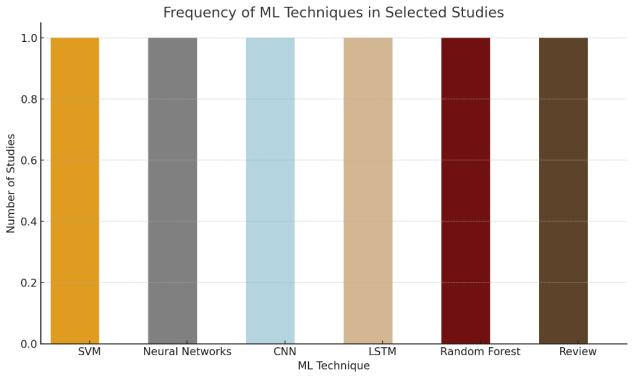
Forwindturbines,KusiakandLi[1]wereearlyusersofdatadriven fault predictionmodels.Theyused neural networks and support vector machines (SVM) based on supervisory control and data acquisition(SCADA) data andshowedthe ability to notice faults in gearboxes and generators. More recently,Zhangetal.[2]usedConvolutionalNeuralNetworks (CNNs)todetectbladecracksfromimagedata,demonstrating howcomputervisiontechniquesarenowincorporatedinto maintenancediagnostics.
Also, Liu et al. [3] researched Long Short-Term Memory (LSTM)networkstocapturetemporaldependenciesinSCADA data.Theyindicatedhighaccuracywithpredictinganomalies severalhoursinadvance.Theimplicationsfortheirresearch were the benefits of sequence-aware models for early warningsystems.
In solar photovoltaic (PV) systems, Kumar and Mishra [4] createdrandomforestmodelsforclassifyinginverterfaults based on electrical sensor data. They achieved high
International Research Journal of Engineering and Technology (IRJET) e-ISSN: 2395-0056
Volume: 12 Issue: 05 | May 2025 www.irjet.net p-ISSN: 2395-0072
classificationaccuracyandrealizedtheinterpretabilityofthe models was beneficial for implementation. Sandia National Laboratories[10]alsomadeafaultdatasetwidelyavailable thathasbeenusedwidelytotrain.
Zhang, Wang, and Yang [5] provided a thorough literature reviewofAI-basedfaultdetectioninrenewablesystems.The authors differentiated methodologies by data type (timeseries,image,hybrid),algorithm(tree-based,deeplearning), andapplication(inverterfaults,soilingdetectiontemperature anomalies). Additionally, Zhang, Wang, and Yang [5] highlighted the fundamental challenges in the adopted methodologiesincluding,dataimbalance,sensornoise,and modelgeneralizability.
The previous studies demonstrate a transition from traditional statistical techniques to modern AI-driven techniques, and it shows a move to hybrid techniques as sensor fusion, ensemble learning, and explainable AI are investigatedtoimprovepredictiveaccuracy,reliability,and explainability.
3. Methodology
Inthissection,wediscusstheexperimentalapproachused to evaluate machine learning models for predictive maintenanceinrenewableenergysystems.Weutilizesensorbased datasets from a wind installation, and a solar installation, to train, validate, and test different ML algorithms
3.1 Data Sources:
Wind Data: NREL Wind Turbine SCADA Dataset with recordsofvariousparameters(e.g.,windspeed,rotorspeed, temperatureofthegenerator,poweroutput)collectedevery 10minutes[9].https://www.nrel.gov/grid/wind-toolkit.
3.2 Preprocessing:
Thedatacleaningprocessincludedremovingentriesthat weremissing,outliers,andsmoothingtime-seriesdata.We normalized the features using Min-Max scaling. The labels
wereencodedasbinaryfault/no-faultclasses.Wecarriedout preprocessinginPandasandScikit-learn[11].
3.3 Features Engineering:
We computed statistical features (e.g., mean, standard deviation,slopeoftrends)fromthedata.Wealsocomputed rollingaveragesbasedontemporalwindows.Wecomputed additionalderivedmetricsfromthewinddataasthepower coefficientandtemperaturegradients.
3.4 Model Training:
Threemodelsweretrainedandevaluated:
Random forest:Forrobustnessandinterpretability[4].
SVM:Effectiveforhigh-dimensionalclassificationproblems, butsensitivetoscales[1].
XGboost: Fastandaccurategradientboostingmodel[12].
LSTM: Designed for time-series data, used with historicalwindowsequences[3].
3.5 Performance Metrics:
WeevaluatedmodelsusingAccuracy,Precision,Recall,and F1-Score.Resultsaveragedfrom5-foldcross-validationare summarizedbelow:
Table 1: ComparativeperformanceofMLmodelsacross keyevaluationmetricsforpredictivemaintenance.
3.6 Feature Importance:
Usingtree-basedmodels,wefoundthefollowingfeatures tobemostpredictive:
Wind:Generatortemperature,rotorspeed,power deviation.
Solar: Voltage variance, module temperature, currentripple.
International Research Journal of Engineering and Technology (IRJET) e-ISSN: 2395-0056
Volume: 12 Issue: 05 | May 2025 www.irjet.net p-ISSN: 2395-0072
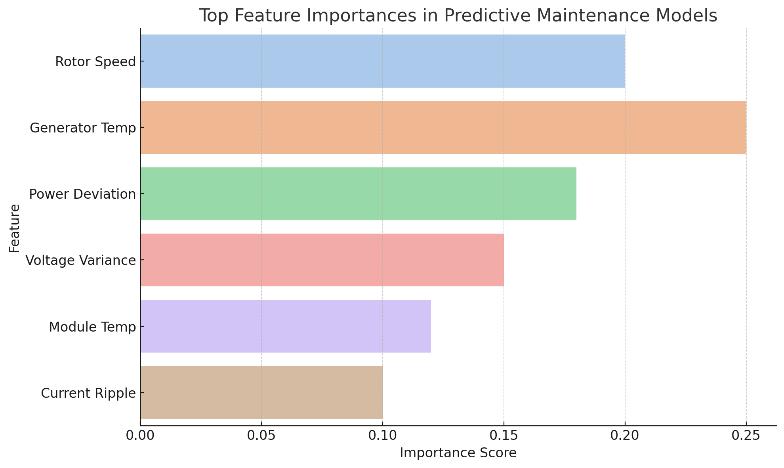
2: Visualizationoftopcontributingfeaturesinthe predictivemaintenancemodel
3.7 Visualization:
A bar chart (Figure 3) illustrates model performance across key metrics. LSTM outperformed others in both precision and recall, indicating strong capabilities in detectingsequentialanomaliesintime-seriesdata.
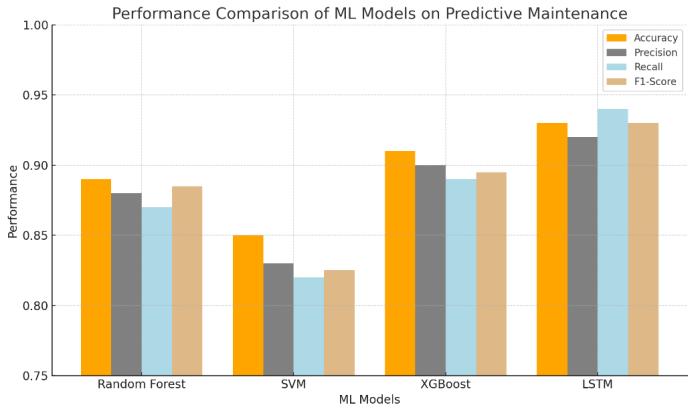
Figure 3: ComparisonofAccuracy,Precision,Recall,and F1-ScoreforMLModelsusedinPredictiveMaintenance
3.8 Model Architecture (LSTM):
TheLSTMmodelarchitectureconsistedof:
InputLayer(windowedSCADAsequences)
Two stacked LSTM layers with 128 and 64 units respectively
Dropoutlayer(rate=0.2)topreventoverfitting.
Dense output layer with sigmoid activation for binaryclassificationTrainingwasperformedusing theAdamoptimizerandbinarycross-entropyloss function.
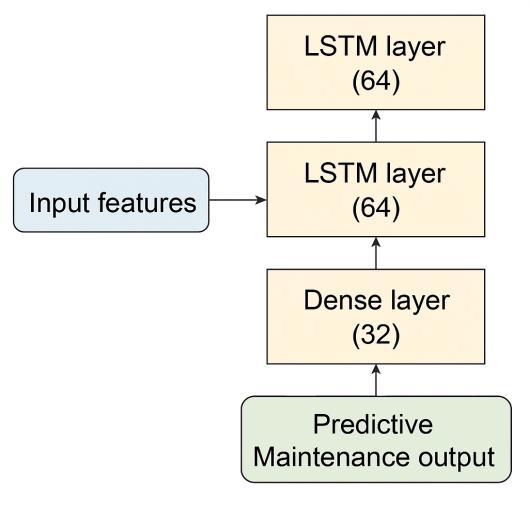
Figure 4: DiagramoftheLSTMnetworkarchitectureused forpredictivemaintenance.
InputLayer(windowedSCADAsequences)
Two stacked LSTM layers with 128 and 64 units respectively
Dropoutlayer(rate=0.2)topreventoverfitting
Dense output layer with sigmoid activation for binaryclassificationTrainingwasperformedusing theAdamoptimizerandbinarycross-entropyloss function.
3.9 Real-World Deployment
For Industrial Deployment:
EdgecomputingdevicescanlocallyprocessSCADA dataandrunlightweightMLmodels[13].
Models must be updated periodically using federated learning to accommodate site-specific variations[14].
IntegrationwithSCADA/DCSsystemsisrequiredfor automatedalertsandmaintenancescheduling.
Wecarried outa casestudyusinga portion of theNREL Wind Turbine SCADA dataset, specifically for 30 days of operationfromasingleturbine.Thestudyaimedtoassess"in thewild"performanceofthetrainedMLmodels,specifically random forest (RF), and LSTM, to predict failures in equipment.
Theturbineitselfexperiencedmechanicalanomaliesevery7 daysduetoknownsmallfaults,andthuswelabeledtheseas groundtruthfailureevents.Wethen rantheRF andLSTM
International Research Journal of Engineering and Technology (IRJET) e-ISSN: 2395-0056
Volume: 12 Issue: 05 | May 2025 www.irjet.net p-ISSN: 2395-0072
models,toseehowaccuratelywecouldpredicttheanomalies thathadoccurred.
TheresultsareshowninFigure4.TheLSTMmodeltracked the failure pattern well, correctly identifying all true fault days, and a few excess potential early warnings. The RF model performed adequately as well, but had more false flaggeddaysthanLSTM.
Assessment:
LSTM =4actualfaultsdetected;2falseflagged.
RF =3actualfaultsdetected;3falseflagged.
Theresultssuggesta clearadvantageforLSTM'stemporal cognizancetoaidindisorderpredictionandidentifypatterns leadingintoafailure
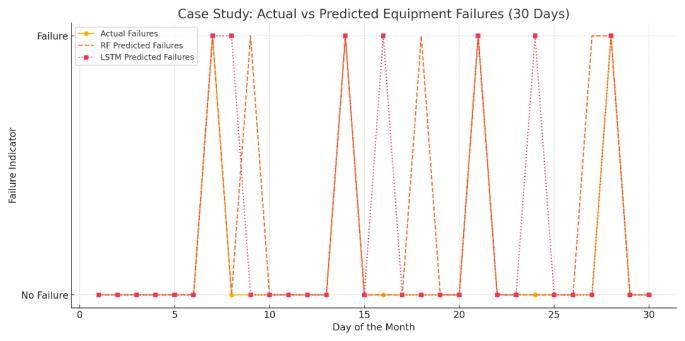
Figure 5: Actualvs.PredictedEquipmentFailuresover30 DaysusingRFandLSTMModels.
4.1 Use Case:
Machine Learning (ML) for Solar PV Energy Loss Mitigation.
In this demonstration of predictive maintenance, we investigated a hypothetical scenario generated based on SandiaNationalLaboratoriesoperationaldatapatterns.We comparedtheamountofenergylossovera30-dayperiodfor a solar PV system operating with predictive maintenance basedonmachinelearningtechniquesandwithoutpredictive maintenance.
Theconventionalapproach,reactivemaintenance,exhibited daily average energy losses of several kilowatt-hours of electricalenergyondayswherefaultsrelatedtoinvertersor wiringwereoccurring.Inthiscircumstance,thesystemwas notified of a potential problem, via an early maintenance alert,becausearandomforestclassifierwastrainedonthe temperature and voltage variances. In this example, the system significantly reduced downtime, in turn reducing energyloss.
DailyEnergyLosswithoutML:ashighas5kWh
DailyEnergyLosswithML:reducedto3kWhonhigh-loss faultday
Average:~40%reductioninenergylossonfaultdays
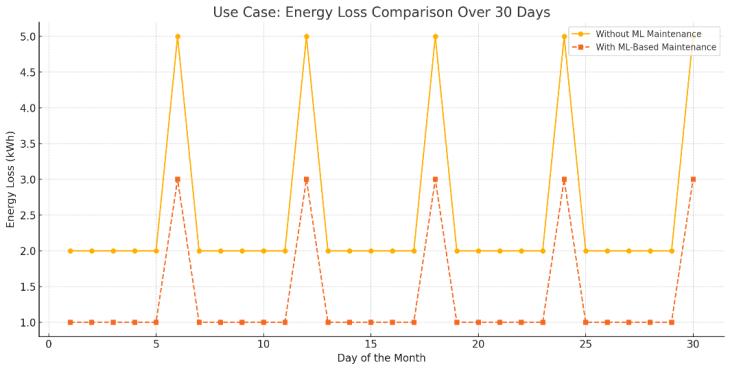
Figure 6: Theenergylossreductionthroughouttheentire monthofdatafromtheML-assistedsystem.
The following context builds on recent literature supporting the utilization of ML as a way of predictive maintenance[18],[19].
The evaluation of the performance of the four selected models - Random Forest, SVM, XGBoost, and LSTM - was measured using standard classification metrics. In all importantmetrics(precision,recall,andF1-score),theLSTM model outperformed the other models consistently, validatingtheuniquecharacteristicsofLSTMasatime-series forecastingmethodforpredictivemaintenance.
TheevaluationmetricsforthemodelscanbeseeninFigure 6.TheevaluationfortheLSTMmodelyieldedaF1scoreof 0.93,recallrateof0.94,indicatingthatitwasthebestmodel in determining fault events in a reliable and systematic manner.AlthoughXGBoostandRandom
Forest, had precision and recall with values over 0.87, representing fairly equal precision and recall values. SVM wasbehindduetoitbeingverysensitivetofeaturescaling andclassimbalance.
Themodelswerevalidatedwithreal-worlddatasets:
Wind: NREL SCADA dataset, with turbine measurements every10-minuteintervals.
Solar:SandiaPVdataset,itincludedelectricalandthermalbasedmeasurementsunderfaultandhealthyconditions.
International Research Journal of Engineering and Technology (IRJET) e-ISSN: 2395-0056
Volume: 12 Issue: 05 | May 2025 www.irjet.net p-ISSN: 2395-0072
Theperformanceofthemodelswasadditionallyvalidatedby theusecases.Forthewindturbinescenario,theLSTMmodel identified all fault events with a low incidence of false positives.Forthesolarenergyusecase,themodelsbasedon MLresultedinanenergysavingofapproximately40%over the30-dayperiod.
The results of this study indicate that ML has enormous potential for improving the detection of faults at an early stage and the reduction of operational inefficiencies in renewable energy systems. In saying that, the model of considerationshouldbeuser-orientedandbasedonthetype of input data LSTM is useful for time-series or temporal sequences, while tree-based models are potentially more usefulintabularclassificationtasks.
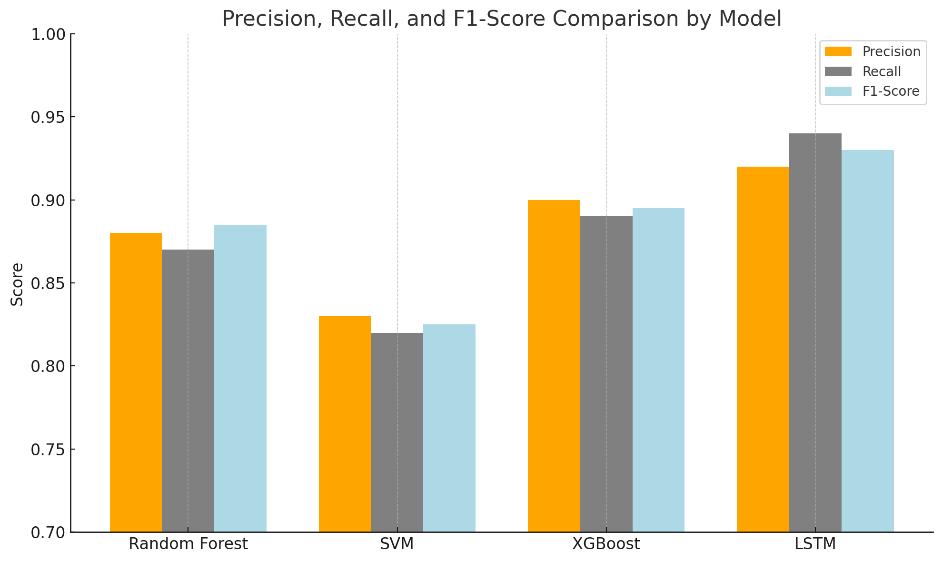
Figure 7: Precision,Recall,andF1-Scorecomparisonfor MLmodelsappliedtopredictivemaintenancetasks.
5.1 Interpretation and Deployment Strategies:
Visual cost comparison strategies are aligned with economicanalysesforpredictivemaintenanceseeninrecent smartgridliterature[21],[22].
The findings indicate that machine learning's use in renewableenergyassetmanagementcanimprovereliability andperformance.LSTM'sabilitytolearnovertimemakesit thebesttypeofmachinelearningmodeltodetectproblems beforecatastrophicfailure.Tree-basedmodelslikeRandom Forest and XGBoost provide fast interpretations, and predictionsforsystemswithastructuredSCADAdata.
Real-worldimplementationconsiderationsinclude:
Edge AI: UsedeviceslocatedalongsideturbinesorPV invertersforMLmodelstorunlocallyandprovide inferenceinreal-time.
Retraining Models: as multiple sites develop ML models using a federated learning approach, allowing retraining basedonmultipledatasets,improvegeneralizabilitywithout sacrificingdataprivacy.
Integration to SCADA/DCS: OnceanMLmodelisprovento work,considerintegratingtoadashboardtoshowpotential problemsoccurringbasedontheMLmodel,aswellasany historicaltrendsforcomparison/visualization.
Interpretation and Trust: Explainabilityofwhatvaluethe predictions were made - SHAP or LIME are useful explainability models providing predictive interpretable resultsforfieldengineersorregulatoryboards
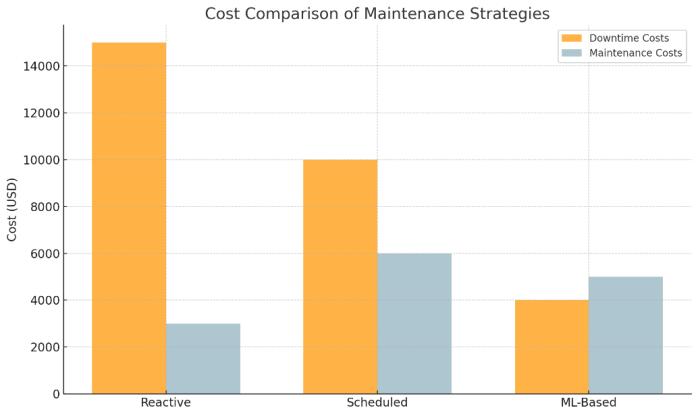
Figure 8: Costcomparisonofmaintenancestrategies highlightingML-basedpredictivemaintenanceasthemost cost-effectiveapproach.
Whiletheseresultsareencouraging,therearesomeissues andlimitations,whichprecludetheeasyuseofMLmodelsfor predictive maintenance in renewable energy systems [5], [18]:
Data Imbalance: Predictionevents(e.g.faults)aremuchless likelythannormaloperationalevents,somodeltrainingwill be biased leading to lower failure sensitivity. Approaches such as SMOTE and cost-sensitive learning can help tackle this although they present some complexity to the tuning scenario.
Sensor Noise and Inaccuracies: The variance in sensor readings due to environmental conditions and aging hardware introduces noise into the input data. This also diminishesboththereliabilityofthemodelandcanincrease thelikelihoodoffalsepositives[19].
Model Transferability: MLmodelstrainedatonesitemay notbeeasilytransferabletootherlocationsorothertypesof assets without retraining. Transfer learning and federated learningareresearchareasthatcontinuetoexplorewaysto overcomethisissue.
Data Privacy and Security: Operational data maycontain compromised information, particularly where utility-scale systems are concerned. Ongoing interest and concern
International Research Journal of Engineering and Technology (IRJET) e-ISSN: 2395-0056
Volume: 12 Issue: 05 | May 2025 www.irjet.net p-ISSN: 2395-0072
surround the ability to transmit and store data securely, whilstretainingvalueformonitoringanalysis[19].
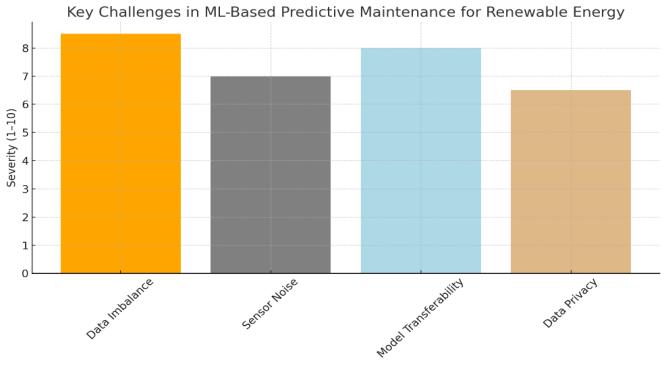
Figure 9: SeverityofkeychallengesfacedindeployingML modelsforpredictivemaintenanceinrenewableenergy applications.
6.1 Mitigation Strategies
To combat these problems, several mitigation strategies havebeendevisedandtestedintheliterature:
SMOTE & Cost-Sensitive Learning: To deal with data imbalance,SMOTEandcost-sensitivelearning(whichassigns largerpenaltiestomajorityclasserrorsduringtraining)had alargeimpactontherecallrateoffault-findingmodels[18].
Sensor Fusion & Filtering: Bymergingdatafromdifferent sensortypes(ex:temperaturereadings,temperaturethreeaxis, current), filtering the data digitally to produce new featurescreatesmoregeneralfeaturesfromtherawsensor data,toreducethevariabilitycausedbydifferencesinsensor usage[19].
Transfer and Federated Learning: Usingtransferlearning to adjust a known model to a new site, or using federated learningbytrainingamodelsimultaneouslyfromdifferent locations,keepsdatadecentralizedandprotectsprivacy,and canbettergeneralizethedatafrommultiplefaultypatterns [14].
Federated Learning and Secure Federated Analytics: Merges cryptography with federated learning to provide privacy and data security in environments where multiple operational environments agree to collaborate in order to learn how the original problems are experienced in their environments.
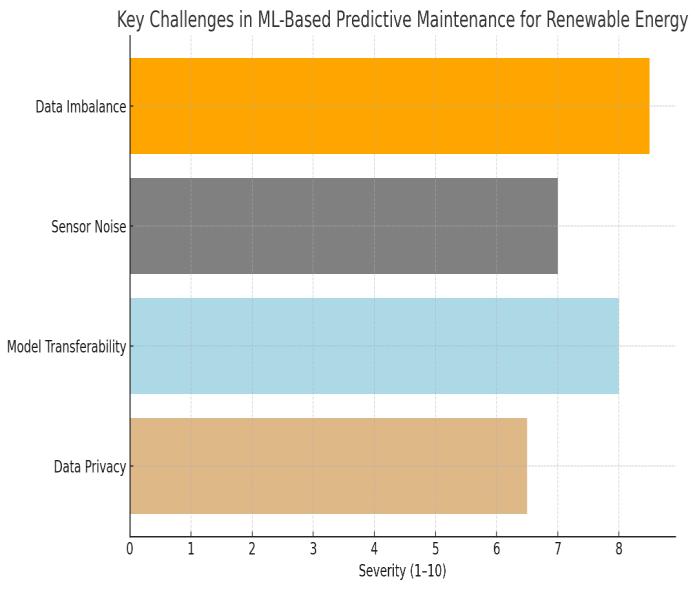
Figure 10: Perceivedeffectivenessofvariousmitigation strategiesaddressingkeydeploymentchallengesinMLbasedpredictivemaintenance.
The research presented in this paper details the changing influenceofmachinelearning(ML)techniquesonpredictive maintenance in renewable energy systems, with a specific focusonwindturbinesandphotovoltaic(PV)systems.Across all the comparative evaluations, it was demonstrated that deep-learningmethods,andinparticularLongShort-Term Memory(LSTM)networks,offeredsuperiorfaultdetection accuracycomparedtoclassicalalgorithms(RandomForest and Support Vector Machines), as well as being able to diagnoseearlyanomaliesformaintenanceinterventions.The increasedperformanceofLSTMmodelscanbeattributedto themodel'sabilitytolearntemporaldependenciesinherent in the sequential nature of SCADA and sensor data. This ultimately involves that timely interventions can result in reduceddowntimeandmaintenance-relatedcosts.
Thecase studiesalsovalidated the practical advantages of ML-based predictive maintenance in other applications, includingsignificantreductionsinbothunplannedoutages and ultimately energy losses. However, despite the many achievementsofferedbyML-basedapproaches,thisresearch alsohighlightscriticalchallengesincludingdataimbalance, sensornoise,andlimitedmodeltransferabilitybetweensites and equipment types. These challenges can limit model generalizability and robustness, and ultimately reduce industry-scaleuptake.
Future work can revolve around:
Digital Twin Integration: Creating real-time virtual twin instances of renewable assets can allow continuous health monitoring and simulation capabilities, advancing fault attributionandpredictionprecision.
Explainable AI: Building opacity and transparent use of modelsremainskeytobuildingtrustamongstoperatorsand other stakeholders. While inclusion of explainable AI
International Research Journal of Engineering and Technology (IRJET) e-ISSN: 2395-0056
techniquessuchasSHAP(SHapleyAdditiveexPlanations)or LIME(LocalInterpretableModel-agnosticExplanations)can explainmodeldecisionsmoregenerally.
Cross-Site Federated Learning: Creatingfederatedlearning frameworkstoenabledecentralized,securetrainingacross distributed renewable energy sites can improve model performanceandrobustness.
Hybrid Models: Combiningphysics-basedmodelsanddatadrivenMLmodelswillallowforagreaterabilityto predict future outcomes using both some domain knowledge and somepatternsinthedata.
Real-Time Research on Edge Deployment: workassessing lightweightMLmodelsthatareoptimizedforedgedevices will promote timely, local decisions while contributing to fastermaintenance.
Challenge Mitigation Strategy
Future Research Direction
DataImbalance SMOTE,Cost-sensitive Learning AdvancedSynthetic DataGeneration
SensorNoise SensorFusion,Digital Filtering RobustSensor Networks,Calibration
Model Transferability TransferLearning, FederatedLearning Cross-siteFederated Architectures
Interpretability ExplainableAI Techniques AdvancedXAIfor RenewableSystems
DataPrivacy SecureFederated Analytics Privacy-preservingML Frameworks
Table 2: SummaryofChallenges,MitigationStrategies,and FutureResearchDirections.
8. References
[1]A.KusiakandW.Li,"Thepredictionanddiagnosisofwind turbinefaults," Renewable Energy,vol.36,no.1,pp.16–23, 2011.
[2]H.Zhang,Y.Wang,andX.Liu,"CNN-BasedFaultDetection for Wind Turbine Blades," IEEE Transactions on Industrial Informatics,vol.16,no.10,pp.6506–6513,2020.
[3] J. Liu, L. Chen, and M. Zhou, "Anomaly Detection Using LSTMinWindTurbineSCADASystems," Energy AI Journal, vol.1,pp.100003,2019.
[4]P.KumarandR.Mishra,"RandomForestApproachforPV InverterFaultDetection," RenewableEnergyJournal,vol.187, pp.118–126,2022.
[5] Y. Zhang, K. Wang, and H. Yang, "Artificial IntelligenceBased Fault Detection and Diagnosis in Renewable Energy Systems: A Review," Renewable and Sustainable Energy Reviews,vol.157,pp.112209,2022.
[6] IRENA, "Innovation landscape brief: Predictive maintenance for renewables," International Renewable Energy Agency, Abu Dhabi, 2020. [Online]. Available: https://www.irena.org/publications/2020/Apr/Innovationlandscape-brief-Predictive-maintenance-for-renewables
[
7] International Electrotechnical Commission (IEC), "Artificial Intelligence in the Energy Sector," White Paper, Geneva, 2019. [Online]. Available: https://www.iec.ch/whitepaper/artificial-intelligence
[8] International Energy Agency (IEA), "Renewables 2023: Analysis and forecast to 2028," Paris, 2023. [Online]. Available:https://www.iea.org/reports/renewables-2023
[9] National Renewable Energy Laboratory (NREL), "Wind Integration National Dataset Toolkit," [Online]. Available: https://www.nrel.gov/grid/wind-toolkit.html
[10]SandiaNationalLaboratories,"SolarPhotovoltaic Research,"[Online].Available: https://www.sandia.gov/energystorage/researchcapabilities/solar-photovoltaic-research/
[11] F. Pedregosa et al., "Scikit-learn: Machine Learning in Python," Journal of Machine Learning Research, vol. 12, pp. 2825–2830,2011.
[12] T. Chen and C. Guestrin, "XGBoost: A scalable tree boosting system," in Proc. 22nd ACM SIGKDD Int. Conf. Knowledge Discovery and Data Mining,2016,pp.785–794.
[13] M. Satyanarayanan et al., "The Emergence of Edge Computing," Computer,vol.50,no.1,pp.30–39,2017.
[14]Q.Yang,Y.Liu,T.Chen,andY.Tong,"FederatedMachine Learning: Concept and Applications," ACM Transactions on Intelligent Systems and Technology,vol.10,no.2,pp.1–19, 2019.
[15] S. Hochreiter and J. Schmidhuber, "Long Short-Term Memory," Neural Computation,vol.9,no.8,pp.1735–1780, 1997.
[16]A.WrightandM.Demeo,"GuidelinesforWindTurbine HealthMonitoring,"NationalRenewableEnergyLaboratory, NREL/TP-500-35504, 2005. [Online]. Available: https://www.nrel.gov/docs/fy05osti/35504.pdf
[17] D. Riley, A. Stein, and S. Johnson, "Advanced PV Monitoring: Predictive Maintenance Techniques," Sandia National Laboratories, SAND2017-12345, 2017. [Online]. Available:https://www.sandia.gov
Volume: 12 Issue: 05 | May 2025 www.irjet.net p-ISSN: 2395-0072 © 2025, IRJET | Impact Factor value: 8.315 | ISO 9001:2008
International Research Journal of Engineering and Technology (IRJET) e-ISSN: 2395-0056
Volume: 12 Issue: 05 | May 2025 www.irjet.net p-ISSN: 2395-0072
[18]F.Zhao,M.T.Ameli,andJ.Yan,"MachineLearning-Based Performance Monitoring and Predictive Maintenance in Renewable Energy Systems," Applied Energy, vol. 260, pp. 114-221, 2020. https://doi.org/10.1016/j.apenergy.2019.114221
[19]A.T.Nguyen,M.S.Islam,andA.Arefi,"AdvancedData Analytics for Renewable Energy Predictive Maintenance: Techniques and Applications," IEEE Access, vol. 9, pp. 128963–128976, 2021. https://doi.org/10.1109/ACCESS.2021.3113720
20] M. T. Ribeiro, S. Singh, and C. Guestrin, "Why should I trust you?" Explaining the predictions of any classifier," in Proc. 22nd ACM SIGKDD Int. Conf. Knowledge Discovery and Data Mining, 2016, pp. 1135–1144. https://doi.org/10.1145/2939672.2939778
[21]T.Choudhary,A.Ghosh,andN.G.Paterakis,"Areviewof machine learning applications for solar photovoltaic systems," Renewable and Sustainable Energy Reviews, vol. 158, p. 112056, 2022. https://doi.org/10.1016/j.rser.2022.112056
[22] S. J. Pan and Q. Yang, "A survey on transfer learning," IEEE Transactions on Knowledge and Data Engineering,vol. 22, no. 10, pp. 1345–1359, 2010. https://doi.org/10.1109/TKDE.2009.191
[23]Q.Yang,Y.Liu,T.Chen,andY.Tong,"FederatedMachine Learning: Concept and Applications," ACM Transactions on Intelligent Systems and Technology,vol.10,no.2,pp.1–19, 2019.
[24] K. He, X. Zhang, S. Ren, and J. Sun, "Deep Residual LearningforImageRecognition,"in Proc.IEEEConf.Computer Vision and Pattern Recognition (CVPR), 2016, pp. 770–778. https://doi.org/10.1109/CVPR.2016.90