
International Research Journal of Engineering and Technology (IRJET) e-ISSN: 2395-0056
Volume: 12 Issue: 06 | Jun 2025 www.irjet.net p-ISSN: 2395-0072
International Research Journal of Engineering and Technology (IRJET) e-ISSN: 2395-0056
Volume: 12 Issue: 06 | Jun 2025 www.irjet.net p-ISSN: 2395-0072
Mr. P. Bhanu prakash
1,
Dr. P.Pardhasaradhi
2 ,
Mr. Karimulla Polisetti
3 ,
Mrs. P. Rupa
4
1M.Tech Student, Department of CSE, Bapatla Engineering College, Bapatla.
2Professor, Department of CSE, Bapatla Engineering College, Bapatla
3Assistant professor, Department of EEE, Bapatla Engineering College, Bapatla.
4Assistant professor, Department of ECE, Bapatla Engineering College, Bapatla.
Abstract - : Day by day power demand increasing rapidly and fuel cost also increases in power generating stations. To overcome this problem we are using machine learning models for optimizing the fuel cost .This paper presents predicting the fuel cost based on data using multi linear regression machine learning approach. The machine learning model is working perfectly and accurately. To optimize the fuel cost of a power system stochastic gradient descent model is used. This proposed procedure proves the multi-objective optimization problem. On comparing with Bees and conventional algorithm Bat is the efficient for optimization
Key Words: Multi linear regression, Stochastic gradient descent model, Multi-objective optimization problem.
Inpresentscenariopowerdemandincreasingdayby day. We are using so many electrical appliances it consumes more power. The power comes from power generating stations. In thermal power plants it generates electricity byburningfossilfuels.Thefuelcostalsoincreasingdayby day. The power generating industries facing economical problems due to fuel cost increases. To reducing the fuel costusingmulti-objectiveoptimizationtechniques.Inthis paper we are using machine learning approach for optimizationcomparetopreviousoptimizationtechniques the machine learning stochastic gradient descent method is very efficient. Machine learning is used for improving themodelaccuracytoadjusttheparametersofasystemto achieve the best performance. Machine learning model allowsmodelstotraindatainareasonabletimeandavoid unnecessarycomputations.Inmanyrealtimeapplications understanding the models and predictions are very important. The machine learning models is easier to understand the system behavior. The stochastic gradient descent method is used to optimize and enables models and offering the real time predictive and optimization capabilities.
This paper describes several multi objective optimization techniques used in this bat algorithm working perfectly
compare to conventional and bees algorithm by using various generator inputs [1].The ∑- constraint method is usedinthisthreegeneratorinputsused,Lambdaiteration method used [2].Newton –Rap son method has proved to befastandaccuratesolvingtheConstraintequations[4].It presents a new emission dispatch solution algorithm that achieving minimum cost by curtailing that generating units are high then emissions and cost also high [5]. The Improved Tabu Search Algorithm is used to solve the Economic Dispatch problem for 3-generator test system, 6- generator test system and 13-generator test system ThesimulationiscarriedoutusingC++software.Thetotal operating cost and emission level of system is minimized [6].Anoptimizationtechniquehasbeenpresentedforthe economical location of real and reactive power applying the linear programming method and an algorithm has been developed for finding a post emergency schedule with the minimum of load shedding [8].In this paper section-II describes multi linear regression method Section-III describes stochastic gradient decent approach foroptimizingthefuelcost.Insection-IVdescribesResults and discussion, system parameters and input data are present.
Multi linear regression is a method to understand the multiple independent variables and dependent variables. It helps to identifying the most wanted factor for predicting the outputs. The factors like all system parameters, when the model is created, it can be used for prediction, this makes multi linear regression is a powerful tool for forecasting and decision-making. It allowsmultipledependentvariablessimultaneously.
International Research Journal of Engineering and Technology (IRJET) e-ISSN: 2395-0056
Volume: 12 Issue: 06 | Jun 2025 www.irjet.net p-ISSN: 2395-0072
3. OPTIMIZATION USING STOCHASTIC GRADIENT DESCENT METHOD
Deeplearningoptimizationinvolvestechniquesto improvesystemperformanceandefficiency.Itreducesthe cost by adjusting the system parameters. Stochastic Gradient Descent method is update the parameters and minimizesthecostfunction.
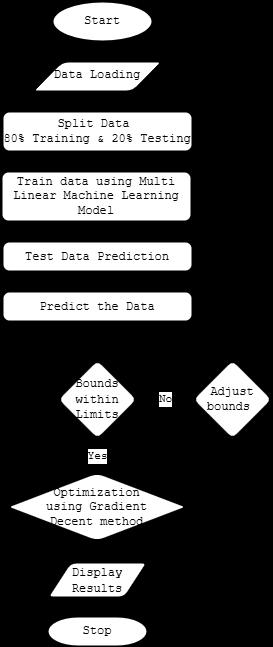
ALGORITHM
Step1:Start
Step2:Readtheinputdata
Step3:Forecastingtheoutputwithmultilinearregression machinelearningmodel
Step4:Optimizationusinggradientdecentmethod
Step5:Findingoptimalvalueforoutputusingthegradient decentmethod
Step6: Comparing the values for other optimization methods
Step7:End
4. RESULTS AND DISCUSSSION
a. System parameters
Inthispaperweareconsideringsixgeneratorsas P1, P2, P3, P4, P5 and P6. The generator power rating is measured in kilowatts (Kw). The fuel cost for six generators are resulting in a single value. The fuel cost is measuredinRupees(Rs).
Here we are taking twenty observations. In this twenty observations 20%data fortestingandremaining80%for training.
b. Conventional Approach Analysis
Conventionalapproachanalysisisusedtotrainthe labeled data set which works manually. Key characteristics of conventional algorithm are explicit programming, labeled data dependency, feature engineering, statistical modeling and well – defined process.
Table -1: Conventionalapproachanalysis
International Research Journal of Engineering and Technology (IRJET) e-ISSN: 2395-0056
Volume: 12 Issue: 06 | Jun 2025 www.irjet.net p-ISSN: 2395-0072
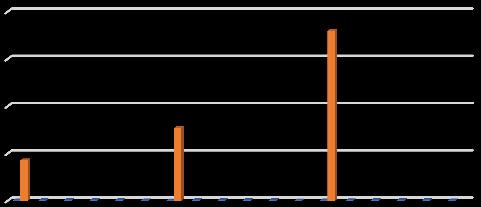
241.0
Generatorbounds1 – [(100,200), (250,300), (300,350), (220,400),(300,350),(100,200)]
Output1-Rs.17181.73/-
Generator bounds 2 - [(100,195), (250,290), (300,340), (220,400),(300,350),(100,190)]
Output2-Rs.30834.35/-
Generator bounds 3 - (100,210), (150,250), (400,400), (250,300),(240,550),(80,200)]
Output3-Rs.71941.00/-
Conventional approach analysis
80000 1 3 5 7 9 11 13 15 17 [VALUE] [VALUE] [VALUE]
Power(kw) Fuelcost(rs)
Chart -1:Conventionalapproachanalysis
c. Bees approach analysis
Bee’s algorithm is one of the optimization technique used for best solution to optimize. Bee’s algorithm is used to improve global search in genetic algorithm. It was introduced by pham in 2005.The honey beesaresearchingfoodforlocalsearchandglobalsearch. They are search for the food sources and find the best solution
Table -2: Beesapproachanalysis
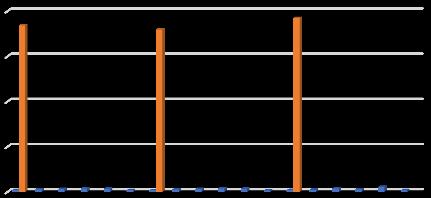
Generatorbounds1-[(100,200),(250,300),(300,350), (220,400),(300,350),(100,250)]
Output1-Rs.18442.61/-
Generatorbounds2-[(100,195),(250,290),(300,340), (220,400),(300,350),(100,190)]
Output2–Rs.17991.01/-
Generatorbounds3-[(100,210),(150,250),(400,400), (250,300),(240,550),(80,200)]
Output3–Rs.19237.91/-
POWER(KW) Bees approach analysis
1 3 5 7 9 11 13 15 17 BOUND 1 [VALUE] BOUND 2 [VALUE] BOUND 3 [VALUE]
Power(kw) Fuelcost(rs)
Chart -2:Beesapproachanalysis
International Research Journal of Engineering and Technology (IRJET) e-ISSN: 2395-0056
Volume: 12 Issue: 06 | Jun 2025 www.irjet.net p-ISSN: 2395-0072
Bat algorithm is a computing approach used for various optimization tasks like multi objective optimization, constrainedoptimizationandcombinational optimization.Batsusesoundwavestonavigateandlocate prey,adjustingtheirfrequenciesandvelocitiestoimprove searchefficiency.
Table -3: Batapproachanalysis
Generatorbounds1-[(100,200),(250,300),(300,350), (220,400),(300,350),(100,200)]
Output1-Rs.15552.53/-
Generatorbounds2-[(100,195),(250,290),(300,340), (220,400),(300,350),(100,190)]
Output2–Rs.16246.00/-
Generatorbounds3-[(100,210),(150,250),(400,400), (250,300),(240,550),(80,200)]
Output3–Rs.18200.98/-
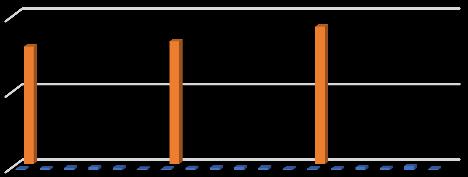
(KW)
approach analysis Power(kw) Fuelcost(rs)
Chart -3:Batapproachanalysis
e. Comparison
In the analysis of optimization techniques, three generator bounds Conventional, Bees, and Bat are compared. Among them, the Bat Algorithm outperforms the others, delivering more optimized results than both theBeesAlgorithmandtheConventionalApproach.
COMPARISION GRAPH
CONVENTI ONAL [VALUE] BEES [VALUE]
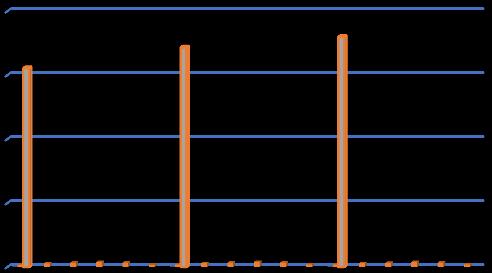
Chart -4:ComparisongraphbetweenBat,Beesand Conventionalapproachanalysis
The goal of this research is to optimize fuel cost. Initially, multiple linear regression was used for prediction, followed by optimization using the stochastic gradient descent (SGD) method. Three different generator bounds wereconsidered:onebasedonconventionalmethoddata, another using the Bees Algorithm, and the third using the Bat Algorithm. Among these, the Bat Algorithm proved to be the most efficient and provided the best optimization results.
International Research Journal of Engineering and Technology (IRJET) e-ISSN: 2395-0056
Volume: 12 Issue: 06 | Jun 2025 www.irjet.net p-ISSN: 2395-0072
[1] Dr. G. Ravi Kumar, Allaparthi Rohith, G priyanka, G vamsi priya, “Multi-objective optimal economic emission power dispatch using Bat algorithm, IEEE conference10.1109/IPACT.2017.8245076
[2] Dillon, J. S., Parti, S. C., Kothari, D. P.: Multi objective Optimal Thermal Power Dispatch. Electrical Power andEnergySystems,Vol.16,No.6(1994)383-389
[3] N. T. Thang. ‘Economic emission load dispatch with multiple fuel options using Hopfield Lagrange Network’. International Journal of Advanced Science andTechnology(2013),vol.57,pp.9-24.
[4] A El-kieb, H Ma and J L Hard. .Environmentally Constrained Economic Dispatch using the Lagrangian RelaxationMethod..IEEE,vol9,no4,November1994.
[5] J W Lamont and E V Obsess. .Emission Dispatch Models and Algorithms for the 1990.s.. IEEE Transactions on Power Systems, vol 10, no 2, May 1995,pp941-947.
[6] C Palanichamy and K Srikrishna. .Economic Thermal PowerDispatchwithEmissionConstraints..JIE,vol72, April1991.
[7] J. S. Helsin and B. F. Hobbs, “A multi objective production costing model for analyzing emission dispatchingandfuelswitching,” IEEETrans.
[8] Farag, S. Al-Baiyat, and T. C. Cheng, “Economic load dispatch multi objective optimization procedures using linear programming techniques,” IEEE Trans. Power Syst.,vol.10,pp.731–738,May1995.
[9] M. A. Abido, “A new multi objective evolutionary algorithm for environmental/economic power dispatch,”inIEEESummerMeeting,Vancouver
[10] Parti, S. C., Kothari, D. P., Gupta, P. V.: Economic Thermal Power Dispatch. Institution of Engineers (India)Journal-EL,Vol.64(1983)126-132