
International Research Journal of Engineering and Technology (IRJET) e-ISSN:2395-0056
Volume: 12 Issue: 05 | May 2025 www.irjet.net p-ISSN:2395-0072
International Research Journal of Engineering and Technology (IRJET) e-ISSN:2395-0056
Volume: 12 Issue: 05 | May 2025 www.irjet.net p-ISSN:2395-0072
Adity Chauhan1, Atul Kapse2, Durvesh Raul 3,Tanvi Patil 4
1Aditya Chauhan, Student, Dept. of Information Technology, SJCEM , Palghar, Maharashtra, India
2Atul Kapse, Student, Dept. of Information Technology, SJCEM , Palghar, Maharashtra, India
3Durvesh Raul, Student, Dept. of Information Technology, SJCEM , Palghar, Maharashtra, India
4Tanvi Patil, Professor, Dept. of Information Engineering, SJCEM, Palghar, Maharashtra, India
Abstract
No/low code development platforms are revolutionizing web development by enabling users to create sophisticatedwebsiteswithoutextensivecodingexpertise. This paper presents a platform designed to democratize web development through drag-and-drop interfaces, prebuilt templates, and seamless integration capabilities. By abstractingtechnicalcomplexities,theplatformempowers non-technical users to rapidly design, customize, and deploy websites. The study evaluates the system’s feasibility, implementation progress, and alignment with objectives such as accelerating development cycles and fostering innovation. Results indicate successful implementation of core frontend components (70% completion), with ongoing work on backend integration. The platform’s potential to bridge the gap between technical and non-technical users is discussed, alongside challengesandfuturedirections.
Low-code development, Web design, Drag-and-drop interface,Pre-builttemplates,Technicalabstraction.
In the fast-paced digital era, establishing a robust online presence is not merely a choice but an imperative for individuals and businesses alike. A well-crafted website serves as the Cornerstone for connecting with audiences, conveying information, and driving success in the virtual realm.
However,thetraditionalpathtowebsitedevelopmenthas been fraught with technical complexities, requiring an intricate understanding of coding and Programming languages. This has often been a significant obstacle for those without a Background in software development, hindering their ability to harness the full potential of the internet.Thisispreciselywheretherevolutionaryconcept of “no/low code development platforms for websites” comesintoplay.
These innovative platforms are designed to redefine the landscape of web development, offering an accessible, user-friendly solution that minimizes the need for extensive coding expertise. Through intuitive interfaces,
drag-and-drop elements, and pre-built templates, they empowerabroaderaudiencetoparticipateinthecreation andmanagementofwebsites,oftenwithlittletonocoding knowledge.
The working of these platforms involves abstracting complex technical processes, enabling users to focus on design,content,andfunctionality.
The literature survey explores the significance, advantages, and challenges associated with low-code development platforms (LCDPs). Various research studies highlightthetransformativepotentialofLCDPswhilealso addressingexistinggapsthatneedfurtherinvestigation.
Hany Farid :- Discusses the impact of organizational culture on low-code adoption. He emphasizes that collaboration and continuous learning are crucial for successful implementation. However, challenges such as compliance issues, integration difficulties, and cost overrunsremainkeyconcerns.
Chandandeep Kaur and Navdeep Kanwal :- Analyze lowcode and no-code platforms for mobile application development.Theyhighlightdebuggingdifficulties,lackof flexibility, and user experience limitations as major obstacles. Their research stresses the need for a balanced approach that considers both the advantages and inhibitorsofLCDPs.
Wina Permana Sari and Hisyam Fahmi :- Focus on the competitive nature of LCDPs, stating that organizations must continuously innovate. The study identifies advantages like improved detection of software errors, automationpotential,andthecombinationofmodernand traditional development techniques. However, concerns about dataset quality, model optimization, and forensic toolefficacyremain.
Niousha Ghannad and Kalpdrum Passi :- Highlight that as low-code adoption increases, establishing best practices andframeworksiscrucial.Theirstudyidentifiesimproved accuracy, real-time usability, and versatility as key benefits, while issues such as generalization across datasets and handling complex forgery detection need furtherexploration.
No/Low-Code (NLC) development platforms is to enable rapid and efficient application development with minimal technicalexpertise,empoweringabroaderrangeofusers, includingbusinessprofessionals,tocreatefunctionalapps without extensive coding knowledge. However, to fully realize their potential, these platforms must address severalkeychallenges.
The goal is to improve the platforms by enhancing customization, scalability, security, and integration capabilities, ensuring that they can meet the demands of both small businesses and large enterprises. Additionally, theplatformsshouldfocusonprovidingbettergovernance tools, support mechanisms, and training to help users avoid technical debt and ensure the creation of highqualityapplications.
Ultimately, the objective is to make No/Low-Code platforms more versatile, reliable, and secure while maintaining ease of use, to foster innovation, reduce development time, and lower costs for organizations acrossvariousindustries.
One of the primary challenges for NLC platforms is their ability to handle complex and customized use cases. The objective is to provide a higher degree of customization and flexibility, allowing users to fine-tune their applications beyond the basic templates or pre-built components.Thiswouldenabledeveloperstocreatemore sophisticated features, workflows, and user interfaces while still maintaining the ease of use associated with No/Low-Codeplatforms.
These platforms aim to empower business users, product managers,andothernon-technicalstakeholderstodesign, build, and deploy applications quickly, reducing reliance onprofessionaldevelopers
Theincreasingdemandforrapidapplicationdevelopment has led to the rise of No/Low-Code (NLC) development platforms,whichpromisetoempoweruserswithminimal coding skills to create applications quickly. However, despite their potential to democratize app development, these platforms face a series of challenges that need addressingtorealizetheirfullpotential.
Onemajorissueisthelimitedcustomizationandflexibility they offer, which can constrain developers when complex featuresorfine-grainedcontrolareneeded.
Lastly, while NLC platforms might appear cost-effective initially, advanced features or scaling up may result in unexpected costs or resource limitations, hindering longterm growth and innovation. These challenges highlight theneedforNLCplatformstoevolve,balancingeaseofuse with robust customization, scalability, and security to betterserveorganizations’diverseneeds.
1. No/Low Code Development Platforms revolves around simplifying and accelerating the application development processthroughvisual,intuitivetools.Itbeginswithvisual applicationdesign,whereuserscancreateuserinterfaces using drag-and-drop elements without writing code. Business logic and workflows are automated through visual flow editors, making complex processes easy to manage.
2. Developers and non-developers alike benefit from reusable components and pre-built modules that reduce development time. These platforms offer easy integration with databases, APIs, and third-party services, streamlining data handling. Rapid prototyping allows userstobuildandtestapplicationsquickly,enablingfaster innovation.Thedevelopmentprocessisagileanditerative, allowingchangestobemadeinreal-time.
3. The platforms also facilitate easy data integration, with built-in connectors and tools that allow seamless integration with databases, APIs, and third-party services. This makes connecting various systems and automating data exchange straightforward without the need for complex coding. With rapid prototyping, No/Low code platforms enable quick development cycles where users can create prototypes to test concepts, receive feedback, andrefineapplicationsbeforefulldeployment.Thisability to rapidly test and iterate significantly speeds up the innovationprocess.
4. In line with modern software development practices, No/Low code platforms promote agile and iterative development. Since updates and changes can be made in real-time, users can continuously improve applications and make adjustments based on real-time data or feedback, ensuring the app stays relevant and efficient. Collaboration is another core aspect of this methodology. Both business stakeholders and IT teams can collaborate within the platform, ensuring that the final product aligns with business objectives and technical feasibility. This collaborative environment helps bridge the gap between businessneedsandITcapabilities.
5.Deployment issimplified through one-click deployment features, where applications can be deployed to cloud platformsoron-premisesserverswithminimaleffort.This reduces the friction often associated with traditional deployment processes and ensures that applications can be rolled out faster. Finally, No/Low code platforms often include built-in monitoring and maintenance tools that allowuserstotracktheperformanceoftheirapplications, identify bugs or issues, and manage updates seamlessly. Thesetoolshelpmaintaintheintegrityandfunctionalityof applications post-deployment, ensuring ongoing success andsmoothoperation.
International Research Journal of Engineering and Technology (IRJET) e-ISSN:2395-0056
Volume: 12 Issue: 05 | May 2025 www.irjet.net
6.Thisapproacheliminatestheneedformanuallywriting lengthy scripts or code, enabling business logic to be mapped out quickly and efficiently. Additionally, No/Low code platforms allow for reusable components and modules, where pre-built templates and functions can be leveraged to accelerate the development process. These reusable components help ensure consistency and reduce redundancyintheapplicationdesign.
Overall, the No/Low code methodology empowers businesses to build robust, scalable applications quickly and with minimal reliance on dedicated IT teams, leading to faster time-to-market, reduced development costs, and increasedagilityinrespondingtoevolvingbusinessneeds
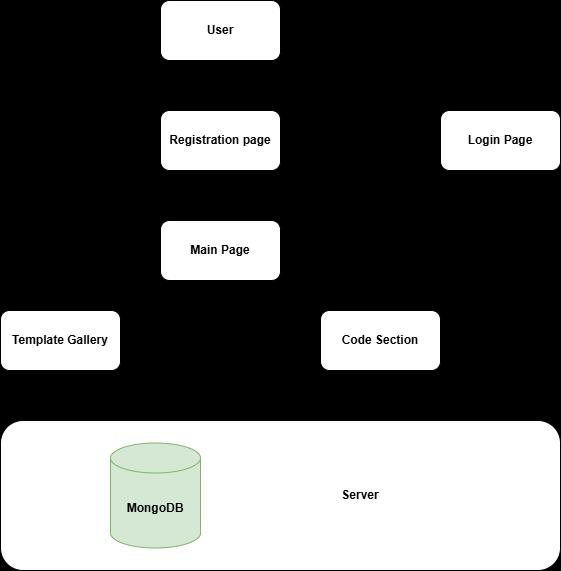
Fig1:SystemArchitecture
7. RESULT
Longer Development Times Without low-code platforms, traditional development requires more time and effort. Developers need to code every element from scratch, leadingtoslowerdevelopmentcycles.
Higher Costs Manual coding can be more resourceintensive, both in terms of time and labor. It may require hiring more developers or more extensive use of resources to complete the same tasks. Increased Complexity Without the simplified interfaces provided by low-code platforms, projects may become more complex and harder to manage, requiring highly specialized skills forbothdevelopmentandmaintenance.
p-ISSN:2395-0072
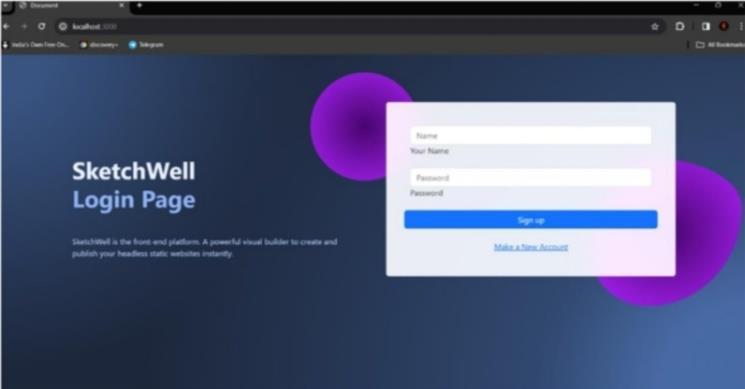
Fig2:Homepage
The home page of the With drag-and-drop templates is designed to help developers and non-developers create applications quickly by providing pre-built components and ready-made code. These platforms reduce the need forextensivemanualcodingandenablefasterdeployment ofsoftwaresolutions.
The flowchart illustrates the software development life cycle, beginning with analysis, followed by design and development. After development, the software undergoes testing, where bugs may be identified. If bugs are found, they are fixed; otherwise, the software proceeds to deployment. If the deployment is successful, the process ends; otherwise, a review is conducted to refine the process.
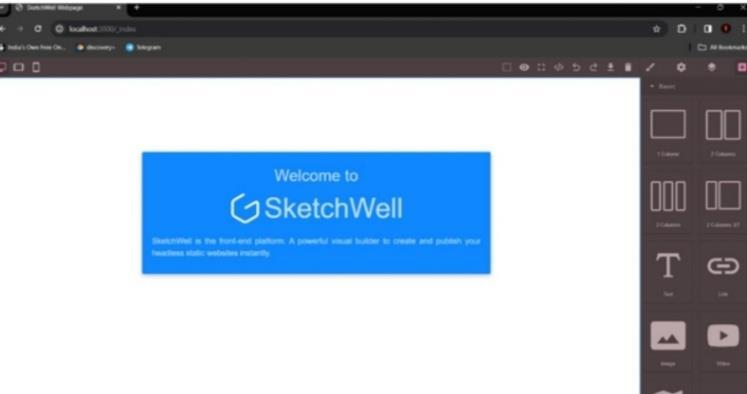
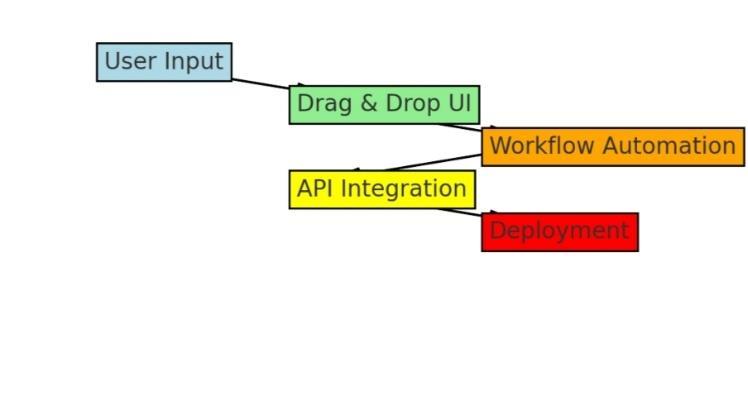
Fig3:Flowchart
International Research Journal of Engineering and Technology (IRJET) e-ISSN:2395-0056
Volume: 12 Issue: 05 | May 2025 www.irjet.net p-ISSN:2395-0072
In conclusion, our No-Code/Low-Code Development Platform offers a powerful and flexible solution for building web applications without the need for extensive programming knowledge. By leveraging intuitive visual interfaces, drag-and-drop components, and a rich ecosystem of prebuilt integrations, developers and businesses can rapidly prototype, iterate, and deploy sophisticated web applications. With features such as simplified application building, seamless integration with external APIs, robust collaboration tools, and comprehensive deployment options, our platform empowers teams to streamline the development process andbringideastolifequicklyandefficiently.Furthermore, our commitment to security, compliance, and ongoing support ensures that developers can focus on innovation without compromising on quality or reliability. Whether you’re a seasoned developer looking to accelerate development workflows or a business looking to transform ideas into digital solutions, our No-Code/LowCode Development Platform provides the tools and resourcesyouneedtosucceedintoday’sfastpaceddigital landscape. Thank you for considering our platform for your development needs. We look forward to supporting you on your journey to building remarkable web applicationswithease.
•The future of no/lowcode development platforms looks highly promising, with widespread adoption expected across various industries such as healthcare, finance, and education. These platforms are empowering citizen developers non-technical users who can now build applicationsandautomateworkflowswithminimalcoding knowledge,therebyreducingtherelianceontraditionalIT teams.
• As artificial intelligence continues to advance, it will become more deeply integrated into no/low code tools, offering intelligent automation, feature suggestions, and smarter development experiences. Enterprises are also embracingtheseplatformstospeedupinternalprocesses, enhanceproductivity,andscaleapplicationsquickly.
Increased Adoption Across Industries: No/low code development platforms refers to the growing use of these tools across various sectors such as healthcare, finance, education, retail, and manufacturing. Organizations in these industries are leveraging no/low code platforms to quickly build custom applications, automate workflows, and digitize operations without the need for large IT teams.
Rise of Citizen Developers: Rise of Citizen Developers refers to the growing trend of non-technical users such as business analysts, project managers, and other professionals using no/low code platforms to create
apps, automate tasks, and build workflows without needingdeepcodingknowledge.
• The global market for these platforms is forecasted to grow rapidly, with increased support for multi-platform development,allowingappstorunseamlesslyacrossweb, mobile, and desktop environments. Integration with emerging technologies like IoT, blockchain, and AR/VR will open up new possibilities for innovation. Ultimately, no/low code platforms are expected to evolve into comprehensive development ecosystems, capable of supportingend-to-endsoftwaresolutions.
[1]Alsharif,S. S.A., Khan, P. T.,& Ali,A.(2021).Impact of low-code platforms on software development efficiency. Journal of Software Engineering and Applications, 14(3), 115-130.
[2] User satisfaction with no-code tools: A collaborative approach. International Journal of Information Systems, 19(2),45-67.
[3] C. B. T. K. & M. T. M. (2023). Scalability of low-code applications for enterprise-level projects. Software DevelopmentJournal,15(1),77-90.
[4] J. R. S. (2020). Challenges in low-code development: Security and governance concerns. Journal ofSoftwareSecurity,11(4),201-215.
[5] L.T.M.&H.J.(2021).Educationalimplicationsof low-codeplatformsforteachingprogramming.Computers &Education,165,104-112.
[6] R. M. (2022). Case study: The use of no-code platforms in startup environments. Entrepreneurship and InnovationJournal,12(2),88-99.
[7] D. H. (2023). Low-code platforms in digital transformation initiatives: Enhancing business agility. JournalofBusinessInnovation,28(3),234-248.P.Isola,J.Y. Zhu, T. Zhou, and A. A. Efros, “Image-to-image translation with conditional adversarial networks,” in Proc. IEEE Conf. Comput. Vis. Pattern Recognit., 2017, pp. 5967–5976.
[8] K.L.S.&P.R.A.(2022).Meta-analysisoflow-code platform benefits and risks. Journal of Information TechnologyManagement,33(2),134-145.
[9] A. M. & R. J. (2022). Qualitative analysis of user experiences with no-code platforms. International Journal ofHuman-ComputerStudies,158,102-112.
[10] T. L. & S. K. (2023). Adoption trends of low-code platformsinSMEs. Small BusinessEconomics,60(1),101120.