
International Research Journal of Engineering and Technology (IRJET) e-ISSN:2395-0056
Volume: 12 Issue: 06 | Jun 2025 www.irjet.net p-ISSN:2395-0072
International Research Journal of Engineering and Technology (IRJET) e-ISSN:2395-0056
Volume: 12 Issue: 06 | Jun 2025 www.irjet.net p-ISSN:2395-0072
Dr.Karthigai Lakshmi S
1
, Joicy I2, Senthil Kumar R3
Professor&Head1 ,PG Student2 , Assistant Professor3
Department of Electronics and Communication Engineering, SSM Institute of Engineering and Technology Dindigul,Tamilnadu,India
ABSTRACT-This research focuses on the automated analysisofmammographicfeaturesandmassdetectionfor the early diagnosis of breast cancer. It aims to design a robust system that can accurately identify and classify abnormalities in mammographic images using sophisticated image processing techniques such as noise filtering, contrast improvement, and image segmentation to enhance mammogram clarity. The system leverages deep learning methods, particularly Convolutional Neural Networks (CNNs) and Region-based CNNs (R-CNNs), to automatically extract and evaluate critical features like mass shape, texture, and edges, enabling reliable differentiationbetweenbenignandmalignanttumors.The model is trained on an extensive dataset of annotated mammograms, addressing class imbalance through data augmentation techniques. Its performance is assessed through metrics like accuracy, sensitivity, specificity, and ROCcurveanalysistoensurediagnostic effectiveness.The proposedframeworkaimstominimizerelianceonmanual readings by radiologists, support early disease detection, andimprovediagnosticaccuracy contributingtoreduced breastcancermortalityandbetterhealthcareoutcomes.
Keywords: Mammogram, Convolution Neural Network(CNN), Gray-Level Co-occurrence Matrix (GLCM), Support Vector Machines (SVM), Regions of Interest(ROI),Tumor,NodeandMetastasis(TNM).
AccordingtotheAmericanCancerSociety,breastcancer is the most frequently diagnosed cancer among women [1]. Early detection significantly improves the chances of recovery. Mammography is one of the most effective methodsfordetectingbreastcancerin itsearlystages[2]. Advances in digital mammography imaging systems have enhanced the ability to identify breast abnormalities, thereby increasing survival rates [3]. Today, computeraided diagnosis (CAD) systems are commonly used to support radiologists in the detection and classification of breast masses. These systems, which are generally wellreceived by radiologists, typically involve stages such as segmentation, feature extraction, and classification [4]. Accurate segmentation of breast masses in mammograms is a crucial step that significantly affects the performance ofsubsequentprocesses.
Whilenoprovenmethodsexisttopreventbreastcancer, early detection remains essential for reducing mortality rates. As a result, substantial efforts have been directed toward early-stage diagnosis. Imaging technologies play a key role in this endeavor [2], with mammography being widely recognized as a standard tool for both screening and diagnosis. It facilitates the detection of breast cancer by identifying anomalies such as masses or micro calcifications
The integration of biometric technologies into Automated Existing models for breast cancer detection using MATLAB typically begin with a preprocessing stage, whichiscrucial forimprovingimage qualityand ensuring accurate analysis in the subsequent steps. In this stage, mammogram or ultrasound images are enhanced using techniques such as histogram equalization, noise removal using filters (like Gaussian or median), and contrast enhancement. This step helps in eliminating artifacts and improving the visibility of important features like masses or microcalcifications, which are indicative of breast cancer. MATLAB provides various built-in functions and toolboxes like the Image Processing Toolbox, which facilitatestheseoperationsefficiently.
The next critical module is segmentation, where the preprocessed images are divided into regions of interest (ROI).Segmentationmethodssuchasthresholding,region growing, or advanced techniques like k-means clustering orwatershedalgorithmsareemployedtoisolatepotential tumor regions. Accurate segmentation is essential for differentiating cancerous tissue from healthy tissue. In MATLAB,developersoftenuseregion-basedsegmentation functions and morphological operations to refine the borders and enhance the structure of detected regions, ensuringminimalfalsepositivesornegatives.
The final module is feature extraction, where the characteristicsofthesegmentedregionsarequantifiedfor furtherclassification.Featuressuchastexture(usingGrayLevel Co-occurrence Matrix - GLCM),shape(compactness, roundness), and statistical properties (mean, standard deviation, entropy) are extracted. These features are then fed into machine learning classifiers such as Support Vector Machines (SVM), k-NN, or neural networks for
International Research Journal of Engineering and Technology (IRJET) e-ISSN:2395-0056
Volume: 12 Issue: 06 | Jun 2025 www.irjet.net p-ISSN:2395-0072
identifying benign or malignant tumors. MATLAB’s integration with machine learning toolkits allows easy training,testing,andvalidationofthesemodels,makingit a preferred platform for breast cancer image analysis and diagnosisresearch.
Theproposedmodelformammographicfeatureanalysis and mass detection in breast cancer integrates traditional image processing techniques with deep learning methods to achieve accurate mass detection and classification. The processbeginswithpreprocessing,wheremammographic images are resized, converted to grayscale, and noise is minimizedusingtechniqueslikeGaussianfiltering.
To improve mass visibility, contrast enhancement methods such as Contrast Limited Adaptive Histogram Equalization (CLAHE) are applied. Segmentation follows, using thresholding or edge-detection methods like the Canny algorithm to isolate regions of interest (ROIs) containing potential masses. For mass detection, a Convolutional Neural Network (CNN) is utilized to automatically learn features from the images. The CNN is trained on a large labeled dataset containing annotated regionsforbothbenignandmalignantmasses.
To enhance detection accuracy, a Region-based CNN (RCNN) or Faster R-CNN architecture may be employed for more precise mass localization and classification. The model istrained toidentify both global andlocal features, such as shape, texture, and edge characteristics, with specific metrics like circularity, compactness, and smoothness.
Additionally, transfer learning with pretrained models such as VGG16 or ResNet is incorporated to improve feature extraction, especially for complex patterns in the mammograms. Once trained, the model is validated on a separate image set to ensure it generalizes well to new data.Dataaugmentationtechniqueslikerotation,flipping, and scaling are used during training to address class imbalance.
Finally, the model’s performance is evaluated using key metrics such as accuracy, sensitivity, specificity, and the area under the receiver operating characteristic curve (AUC-ROC), ensuring reliable predictions for both benign andmalignantmasses.Thisintegratedapproachenhances mass detection accuracy, contributing to earlier breast cancerdiagnosis.
1. Image Enhancement:
The classification of image enhancement techniques, while useful, is neither exhaustive nor exclusive. These techniquesaregenerallydividedintotwocategories:point transforms and neighborhood operations. In point transforms,eachoutputpixeliscomputedasafunctionof
its corresponding input pixel, with the same function applieduniformly across all pixels often based on global image statistics. In contrast, neighborhood operations compute each output pixel based on a group of surrounding input pixels, typically in a region like a 3×3 windowcenteredaroundthepixelofinterest.
2. Pixel Mapping:
Point transforms encompass a wide range of enhancement techniques, especially effective for scalarvalued (e.g., grayscale) images. These are frequently implemented using lookup tables (LUTs), which provide a fast and flexible way to map input to output values using predefined functions. Although lookup tables are efficient and general-purpose, modern processors like MMX can perform many enhancement operations faster through direct computation albeit at the cost of increased softwarecomplexity.
3. Thresholding:
Thresholding is a common image enhancement technique aimed at segmenting an image into foreground (object)andbackground.Thisinvolvessettinga threshold value above or below which pixel values are classified as eitherobjectorbackground.Insomecases,twothresholds define a range ofpixel valuescorresponding totheobject. While thresholds can be fixed, they are most effective whenderivedfromimagestatistics.Thresholdingcanalso utilize neighborhood operations and typically results in a binary image where only black and white pixels are used, withnograyscalevalues.
4. Color Space Conversion:
Color space conversion is used to transform image data fromonecolorrepresentation(e.g.,RGBfromacamera)to another (e.g., HSI or HSV) required by certain image analysis algorithms. While accurate color conversion is computationallyintensive,approximatemethodsareoften employedinreal-timeapplications.Theseapproximations canbehighlyeffective,thoughdevelopersshouldbeaware ofthepotentialtrade-offsinprecision.
5. Geometric Pattern Matching (GPM):
Geometric Pattern Matching is increasingly replacing normalized correlation (NC) template matching in industrial pattern recognition applications. Template matching suffers from limitations due to its reliance on pixel grids. Operations such as translation, rotation, and scaling often require resembling the image, which is both computationally expensive and imprecise. Additionally, templates represent patterns using grayscale intensity, which may not be reliable under varying conditions. GPM addresses these limitations by providing more accurate androbustposeestimationandpatternrecognition.
International Research Journal of Engineering and Technology (IRJET) e-ISSN:2395-0056
Volume: 12 Issue: 06 | Jun 2025 www.irjet.net p-ISSN:2395-0072
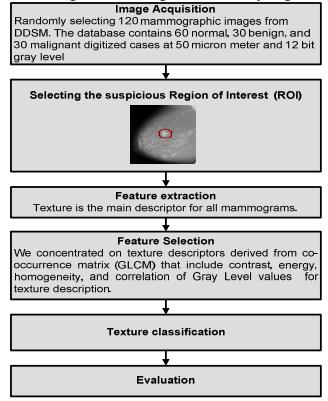
BlockDiagram:
Refers to a broad class of non-linear shape filters. Like the linear filters the operation is defined by a matrix of elements applied to input image neighbourhoods, but instead of a sum of products, a minimum or maximum of sumsiscomputed.Theseoperationsarecallederosionand dilation, and the matrix of elements is usually referred to asaproberatherthanakernel.
Blobanalysis:-
Is one of the earliest methods widely used for industrialpattern recognition. The premise issimple classify image pixels asobject or background by some means,jointheclassifieddpixelstomakediscreteobjects using neighbourhood connectivity rules, and compute various moments of the connectedobjects to determine objectposition.
ImageAnalysis:-
It’s only a slight oversimplification to say that the fundamental problem of image analysis is pattern recognition,the purpose of which is to recognize image patterns correspondingto physical objects in the scene, anddeterminetheirpose(position,orientation,size, etc.). Often the results of pattern recognition are all that’s needed, for example a robot guidance system supplies an object’s pose to a robot, and in other cases a pattern re
cognition step is needed to find an object so that it can, for example, be i inspected for defects or correct assembly.
For example, converting an image from the RGB color space captured by a camera to the HIS color space requiredbycertainimageanalysisalgorithmsisacommon task. While precise color space conversion can be computationally intensive, time-sensitive applications often rely on simplified approximations. These approximations can be effective, but it's important to understand the trade-offs between processing speed and accuracybeforeselectingaconversionmethod.
Morphology:
Morphology refers to a broad category of non-linear shape-based filtering operations. Unlike linear filters that compute the sum of products using a kernel, morphologicaloperationsuseastructuringelement(often called a probe) and perform either a maximum or minimum operation within the neighborhood of each pixel.Thetwoprimaryoperationsareerosionanddilation, which respectively shrink or expand the boundaries of objectsinabinaryorgrayscaleimage,makingthemuseful forshapeanalysisandnoiseremoval.
DigitalRe-sampling:
Digital re-sampling involves estimating how an image would appear if the continuous energy distribution capturedbyasensorweresampleddifferently suchasat a new resolution or orientation. This process is useful for image transformations including scaling, rotation, and geometric correction, allowing more flexible image analysisanddisplay.
BlobAnalysis:
Blobanalysisisoneoftheearliestandmostwidelyused techniques in industrial pattern ecognition. It begins by classifying image pixels into foreground (object) or background. Using neighborhood connectivity rules, adjacent foreground pixels are grouped to form discrete objects, or “blobs.” Various geometric and statistical properties such as area, centroid, and shape descriptors arethencalculatedtodeterminethelocation andcharacteristicsofeachobject.
ImageAnalysis:
At its core, image analysis is closely tied to pattern recognition theprocessofidentifyingpatternsinimages that correspond to real-world objects and determining their pose, including position, orientation, and size. In many applications, such as robotic guidance systems, the
International Research Journal of Engineering and Technology (IRJET) e-ISSN:2395-0056
Volume: 12 Issue: 06 | Jun 2025 www.irjet.net p-ISSN:2395-0072
primary goal is to determine the pose of an object for further action. In other scenarios, pattern recognition serves as a precursor to tasks like defect detection or assembly verification, enabling automated inspection and qualitycontrol.
Once the contour is identified, the Region of Interest (ROI)isextracted,withinwhichfacialfeaturessuchasthe eyes, nose, and mouth are located. The detection process begins with identifying the mouth, as its position helps simplifythesubsequentlocalizationoftheeyesandnose.
Todetectthelips,several methodsweretested.Initially, edge detection using the Sobel operator was applied to highlight horizontal edges within the ROI. To pinpoint the vertical position of the lip line, a horizontal integral projection php_hph of the binary image was used, calculatedbysummingpixelvaluesacrosseachrow.Since the line between the lips typically forms the most prominent horizontal feature, its location corresponds to therowwiththemaximumphp_hphvalue.
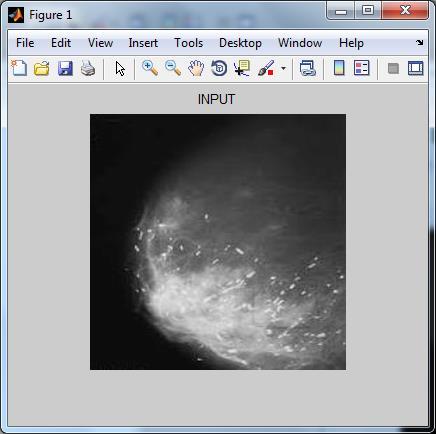
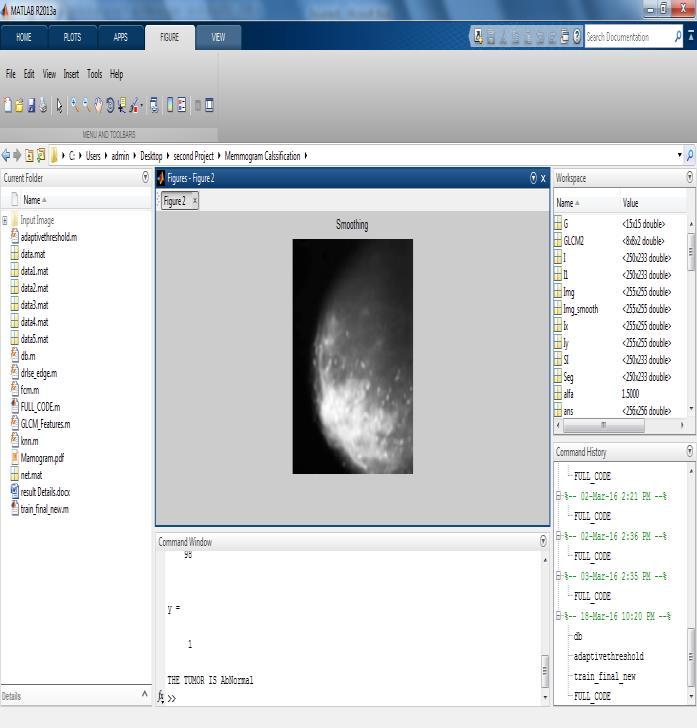
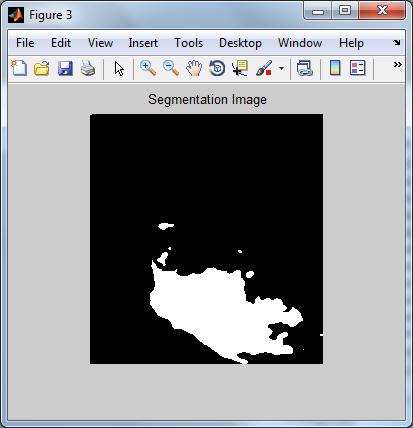
We propose that estimating the volume of specific body parts,organs,orobjectswithinanorganisacrucialstepin medical image analysis. For instance, detecting a tumor playsasignificantroleinmedicalimaging,andthiscanbe achieved by estimating its volume or defining its exact area. The changes in size, shape, and the spatial relationshipsbetweenanatomicalstructures,derivedfrom intensity distributions, provide valuable insights for clinical diagnosis. As a result, radiologists focus on analyzing the size, shape, and texture of organs. To
International Research Journal of Engineering and Technology (IRJET) e-ISSN:2395-0056
facilitatethis,organandtissuemorphometryareroutinely conducted at radiological imaging centers. Cancer cells exhibit distinct characteristics compared to normal tissue cells, such as variations in cell outline, shape, and nuclear structure.TheTumor,Node,andMetastasis(TNM)staging system is another critical analysis stage that provides detailed information on the tumor's appearance and behavior[19].
[1] S.M.Salve, V.A.Chakkarwar et .al “Classification of Mammographic images using Gabor Wavelet and Discrete Wavelet Transform” International Journal of advanced research in ECE ISSN:2278-909X,Vol. 2 pp.573-578,May2013.
[2] R. Swiniarski,T. Luu, A. Swiniarska, H. Tanto, “Data Mining and Online Recognition of Mammographic Images based on Haar Wavelets, Principal Component Analysis and Rough Sets Methods”, International SPIE SymposiumMedicalImaging,pp.17–23,2001.
[3] M. R. Turner, “Texture Discrimination by Gabor functions,” Biological Cybernetics, vol. 55, pp. 71–82, 1986.
[4] Mammographic Image Analysis Society, http://www.wiau.man.ac.uk/services/ MIAS/MIASweb.html
[5] Duan, Kai-Bo; and Keerthi, S. Sathiya, “Which Is the Best Multiclass SVM Method? An Empirical Study”. Proceedings of the Sixth International Workshop on MultipleClassifierSystems2005.
[6] Hsu, Chih-Wei; and Lin, Chih-Jen, “A Comparison of Methods for Multiclass Support Vector Machines”,IEEE TransactionsonNeuralNetworks2002.
Volume: 12 Issue: 06 | Jun 2025 www.irjet.net p-ISSN:2395-0072 © 2025, IRJET | Impact Factor value: 8.315 | ISO 9001:2008