
International Research Journal of Engineering and Technology (IRJET) e-ISSN: 2395-0056
Volume: 11 Issue: 04 | Apr 2024 www.irjet.net p-ISSN: 2395-0072
International Research Journal of Engineering and Technology (IRJET) e-ISSN: 2395-0056
Volume: 11 Issue: 04 | Apr 2024 www.irjet.net p-ISSN: 2395-0072
1,2,3,4 UG Student, Dept. of Civil Engineering, Jawaharlal College of Engineering and Technology, Ottapalam, Kerala, INDIA
5 Assistant. Professor, Dept. of Civil Engineering, Jawaharlal College of Engineering and Technology, Ottapalam, Kerala, INDIA
Abstract
Among other approaches to safety monitoring, the requirements relate to accuracy, reliability, efficiency, and scalability. Current technology may be inaccurate, require significant resources, or be incompatible with transfer to multiple locations. Overcoming these challenges requires innovation in sensortechnology,dataanalysisanddeployment strategies to ensure effective andsafemonitoring.Theseissues impact the effectiveness of security systems and decisions, highlighting the need for electronic systems and systems to improve security monitoring and counting. SHM and early warning systems ensure safety by detecting structural problems in construction beforetheybecome dangerous.Early diagnosis can save costs, improve the quality of treatment, strengthen and improve compliance management,andleadto safer, more efficient and quality control procedures.WSNsare increasingly adopting SHM. However, due to the limitations of WSN (high data transmission, power) and monitoringquality, it is difficult to monitor situations using WSNs deployed on a large scale. We ensure that sensors are deployed in clusters so that the final decision group can be independently assignedto each link so that the WSN can detect the presence of a condition at a particular location. Including advances in sensor technology, dataanalysisandautomation.CombineIoT and AI for predictive maintenance and use blockchain to ensure data security. In addition, continuous applications to space and underwater structures are beneficial in increasing safety and protection
Key Words: Structural health monitoring , Wireless sensor networks, Early detections, regular maintainance, sustainable infrastructure management
1.INTRODUCTION
Global warming destroys the world's climate and natural environment, causing many natural disasters such as desertification,increasedmeltingoficeandsnow,risingsea levels,earthquakes,andseveretyphoons.Structuressuchas buildings, bridges and dams face major threats such as collapse,collapseandwateringress,whichaffectourdaily lives. Taiwan has experienced frequent earthquakes and severefloodsinrecentyears.Thesenaturaldisasterscause seriousdamagetobuildingsandbridges,respectively.117 people died in the earthquake and 34 historical buildings were destroyed. However, while seismic events cause
damageandmalfunctions,theyalsoposeagreatdangerto localresidents.Structuralmaintenance(SHM)isrequiredto ensure the safety of the structureand prevent unexpected damage. In general, SHMS is based on the integration of various sensors and hardware such as accelerometers, temperaturesensors,activity data, data loggers, electronic devices and communications. The primary purpose of structural monitoring is to verify structural integrity and evaluatethepotentialforstructuraldamageinresponseto structuralvibration.Inaddition,SHMcanmeasurephysical variablessuchasstress,depressionandvibration.Themain disadvantageofmonitoringthestructureofthebuildingis accelerationanddisplacement.
Therefore,accelerometersareeasiertomeasureandinstall in buildings. In recent years, the comfort and safety of the builtenvironmenthasbecomemoreimportant.Butbuilding fires,earthquakes,anddisplacementarethebiggestthreats to homesecurity.Inline with the building'scurrentsafety issues, the design uses the core components of wireless sensor network technology for the building's fire safety monitoringsystem,theInternetofThingstechnology,andthe IOT-WiFitable,whichreplacesBlynkInternetinanyway.A platformtocreatewireless.SensornetworkWirelesssensor network is also used for location in the building and any abnormaldataisputintothehandheldterminalandhome securitypersonnelcancreateanevacuationplantosavetime. Thisarticlepresentsnewsolutionsforsurveydevelopment.
Increasing needs and poor maintenance have left our infrastructure inadequate for good security compared to current designs. People, property owners and authorities face a challenge to combat aging as many of the buildings built40-50yearsagoarestillinuse.Especiallysincepublic safetyisparamount,theeconomicimpactonpeoplecouldbe hugeifthemodelfailsoritsavailabilityislimited.Untilnow, themostcommonstrategyforbridgemaintenancehasbeen toconduct routineinspectionsoflarge public buildings at regularintervalsandimplementappropriatemaintenance procedures based on the results. The public structure is oftennoticedbymaintenancepersonnel.InSweden,regular bridge inspections occur at least every six years. Visual detectionhasmanydisadvantages:themostobviousisthat it cannot be detected until it reaches the surface of the
International Research Journal of Engineering and Technology (IRJET) e-ISSN: 2395-0056
Volume: 11 Issue: 04 | Apr 2024 www.irjet.net p-ISSN: 2395-0072
sample. Additionally, if the damage is sudden, a long inspectionperiodmayreducesafety.
Buildinghealthmonitoringanddamagedetectionarevery useful inthedesign,operation,maintenanceandrepair of many public buildings The objective of this project is to developahealthmonitoringsystemforinfrastructurewhich include early issue detection, preventive maintenance, performanceoptimization,safetyenhancement,data-driven decision-making, cost reduction, and compliance with regulatorystandards.Bycontinuouslymonitoring various parameterssuchasmoisturelevel,bendingofthestructure, load, difference in angle positioning, the system aims to detect anomalies, prevent failures, optimize performance, enhancesafety,informdecision-making,reducecosts,and ensure compliance with regulations. These objectives collectively contribute to maintaining the reliability, efficiency, and safety of infrastructure assets while minimizingrisksandcostsassociatedwithmaintenanceand operation
Existingstructuralhealthmonitoring(SHM)systemshavea numberofdrawbacks.Theseincludethefollowing:manyof the methods require a lot of manual labor and time for installationandmaintenance,whichcanaffectmeasurement accuracyandreliability;someofthetechniquesmaynotbe as flexible as they could be in terms of scalability or applicability to different types of structures; and finally, thereisthecomplexityofdataanalysisandinterpretation, which can necessitate specialized knowledge, skills, and softwareresources.Moreover,certaintechniquesmightnot beabletoidentifyearlyindicatorsofdegradationordamage, which could pose a risk to public safety if problems go unnoticed. Lastly, security and privacy issues can arise, particularlywithwirelesscommunicationsystemsthatare susceptibletointerferenceorhackers.Itwillbeessentialto addresstheseissuesifSHMtechnologiesaretogrowandbe widelyusedacrossarangeofbusinesses.Firstofall,theyare usuallyveryexpensivebecausetheyneedcertainsensors, hardware for gathering data, and skilled labor for installation and upkeep. This financial load could be too much to bear, particularly for startups or initiatives with little finance Second, it can be difficult to build and understand SHM systems; expertise in sensor technology, data analysis, and structural engineering is required. Without specialized training, customers could find this complexity difficult to comprehend, which would hinder wideradoption.Moreover,thedependabilityofsensorsmay presentchallengesastheyageorbreak,providingerroneous readingsduetooutsidefactorsortechnologicalissues.
• Early Problem Identification: Theinfrastructure's structuralhealthiscontinuouslymonitoredbythe system,whichallowsittoidentifypossibleissues earlyon.Earlyidentificationminimizesthechance ofcatastrophicfailuresandensuresthepublic'sand the structure's safety by enabling timely interventionbeforeproblemsworsen.
• Proactive Maintenance: Ratherofbeingplanned andcarriedoutreactively,maintenancetaskscanbe carriedoutproactivelyusingreal-timedataonthe state of structures. By resolving problems before they worsen, this strategy not only lowers the possibility of unplanned downtime but also increasesthelifespanofinfrastructureassets.
• Cost Savings: Over time, the suggested approach cansaveasubstantialamountofmoneybyaverting seriousstructuralfailuresandreducingtheneedfor emergencyrepairs.Furthermore,moreeffectiveuse of financial resources might result from resource allocation and maintenance schedules that are optimizedbasedonreliabledata.
• Enhanced Structural Performance: Thesuggested systemcanhelptoimprovestructuralperformance overall with ongoing monitoring and prompt actions.Structurescanbekeptintactandfunctional foralongtimebyrapidlyaddressingproblemslike fatigue,corrosion,ordeformation.
• Enhanced Resilience: Thesystemcanenhancethe resilience of infrastructure by issuing early warningsofpossiblerisks,suchasearthquakesor extremeweatheroccurrences.Thismakesit
• Possibletorespondandpreparemoreeffectively, whicheventuallylessensthetollthatdisasterstake oneconomiesandcommunities.
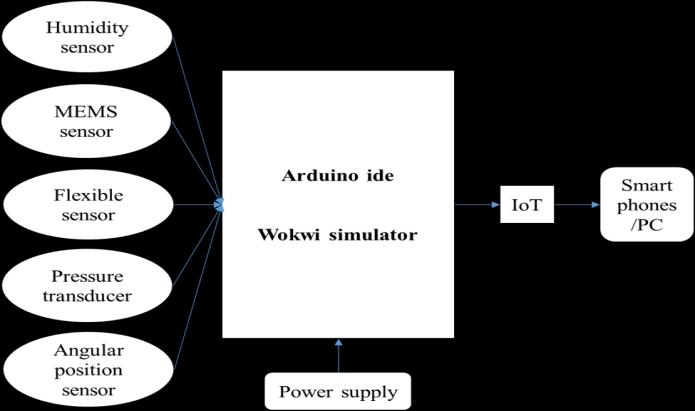
Thetechniqueofrecordingfactorssuchasbuildingangleand concrete moisture conditions, among others, in order to monitor or assess a structure's current state and obtain information about it, is known as structural health monitoring (SHM). IOT technology facilitates speedy communication.Thisismadeupofreceiverandtransmitter components. The transmitter portion, which tracks the buildings' health, is fixed to the structures. The microcontrollerisinterfacedwithaflexsensor,whichtracks thebuildings'levelsofflexibility.Informationisautomatically sentacrosstheInternetofThingstohigherauthoritiesifthe buildings are not very flexible. Another MEMS sensor measurestheangleofthebuildingand,shouldanearthquake occur,immediatelytransmits
International Research Journal of Engineering and Technology (IRJET) e-ISSN: 2395-0056
Volume: 11 Issue: 04 | Apr 2024 www.irjet.net p-ISSN: 2395-0072
information to the higher authorities via the Internet of Things. Another MEMS sensor measures the angle of the building and, should an earthquake occur, immediately transmits information to the higher authorities via the InternetofThings.Abuzzerisusedtoalertpeoplewhenan unusual situation arises. Continuous monitoring, prompt anomaly identification, and efficient warnings are made possiblebythisall-encompassingstrategy,whichenhances thesecurityanddependabilityofstructures.
Block diagram:
4.RESULT AND DISCUSSION
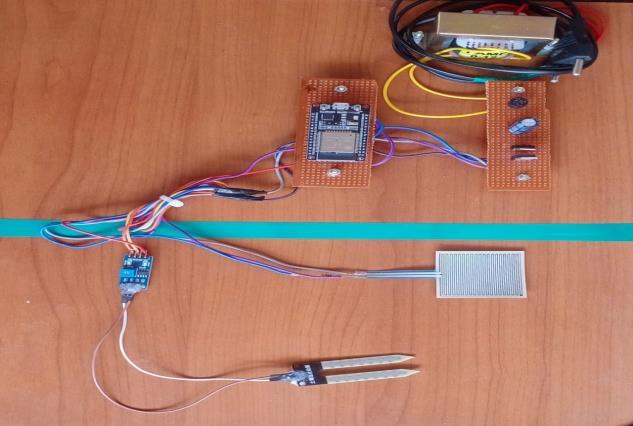
-1:Circuitdiagram
4.1 BENDING
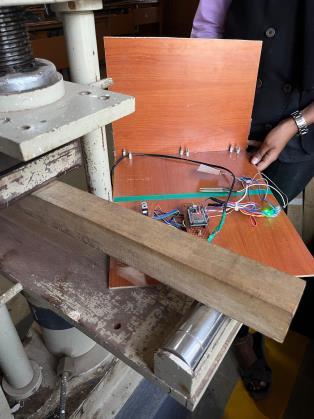
Flexural timber testing is used here to track how the structure'sbeamsorcolumnsarebending.Flexsensorsare connectedtothetestapparatustoensurethattheproject's outputisrelevant.Inordertodeterminethebendingvalues fortheflexuralrigiditytest,asampleofwoodiscollected. Thespecimen'sdimensionsaremeasured.Togettheright span length, adjust the supports. To guarantee precise measurements, calibrate the data acquisition system and loadsensor.Laythespecimenhorizontallyacrossthetest's supports.Applyaweighttothespecimen'smiddlegradually
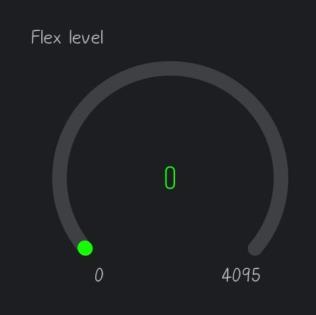
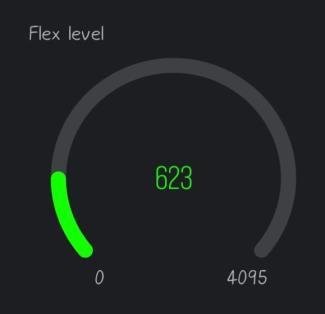
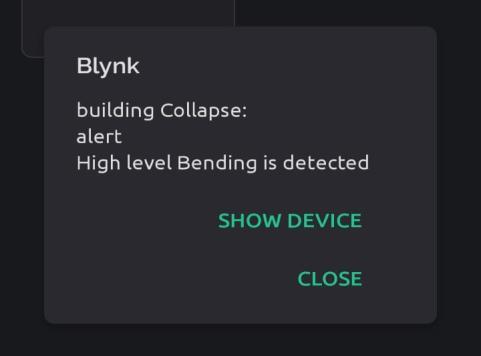
and at a predetermined pace. Note the specimen's proportional bending as the load is applied. A flex can be used to measure the bending. Dial gauges can be used to read displacement values. Real-time data can be recorded simultaneouslywithsensorsattachedtothespecimen.The valueinthesensorsreachestheupperlimituponspecimen failure.Afterthemaximumlimitisreached,thismaximum limit can be programmed in the sensor programming. Studiesbasedonthesensorreadingsarepossible.Thealert notifications appear when the maximum limit is reached. "Thereishighbendingdetected."
In this case, the test yields a value result based on sensor readingsonvariousdeformationsthatarerecordedwitha dialgauge.Atthemomentofthetimberfailure,thelastalert message is received. As a result, the sensor model is applicable.
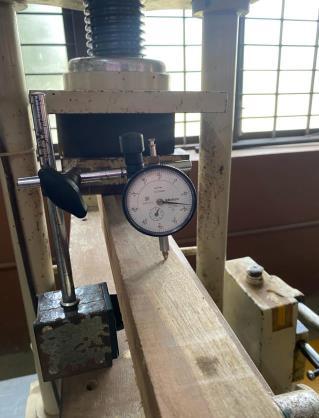
Sensor values and the alerts
International Research Journal of Engineering and Technology (IRJET) e-ISSN: 2395-0056
Volume: 11 Issue: 04 | Apr 2024 www.irjet.net p-ISSN: 2395-0072
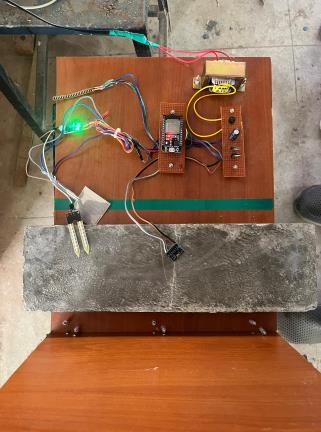
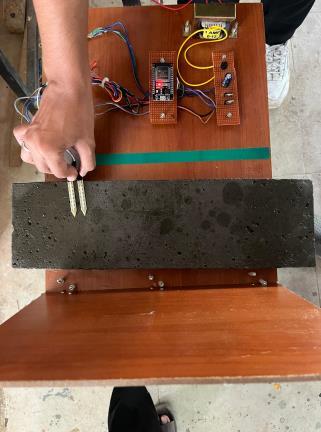
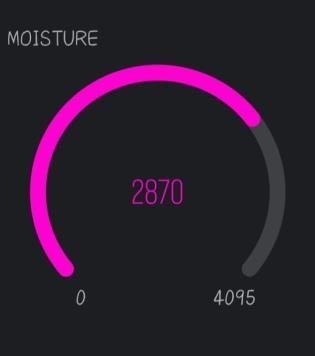
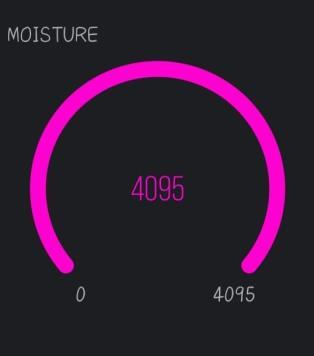
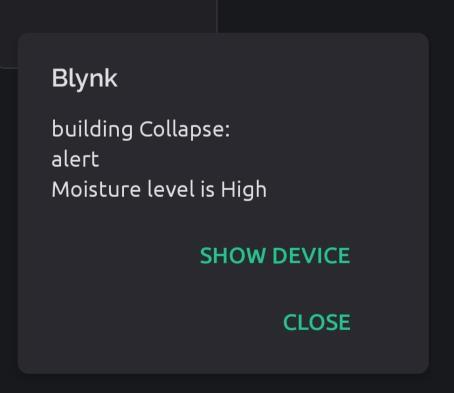
The prototype's wet and dry deck castings are evaluated withtheuseofhumiditysensors.Theresultingoutcomesare asfollows:Concretemoisturecontentisdeterminedwiththe use of a humidity sensor. The humidity sensor should be positionedontheconcretesurfaceatthedesiredspot.Direct touch with the concrete should be the sensing element. Permit the sensor to take a while to adjust to its new surroundings.Oncethesensorhasreachedequilibrium,take readings.Indryconcrete,themoisturecontentlevelvaried belowthepermittedlevel,butinwetconcrete,thereading exceededtheallowablelimit.Thus,alertnesswasraised.
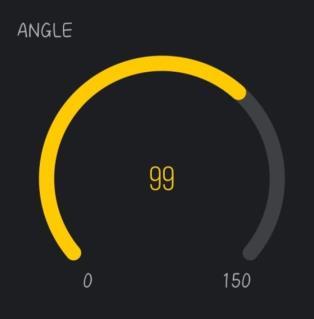
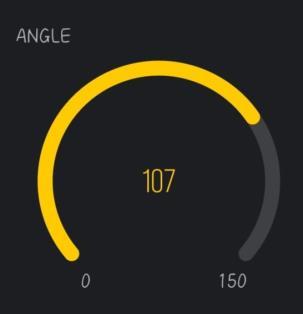
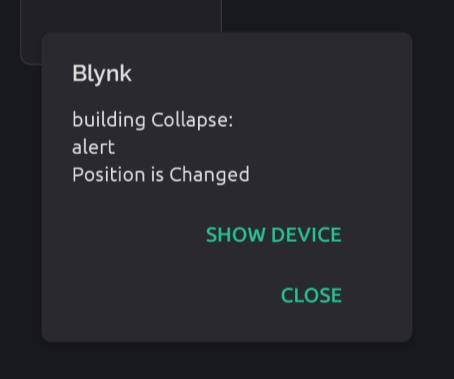
AnglepositionalchangesaredetectedusingMEMSsensors. The bridge pillar's tilt angle is continuously monitored by theMEMSsensorprogram.Theapplicationsoundsanalert whenever the tilt angle rises above a set threshold, suggesting possible movement or deformation of the structure. Users of the smartphone application receive an alert informing them of the tilt abnormality that has been discovered.Userscanthentakepromptactiontoguarantee the safety and stability of the bridge structure, such as carrying out further inspections or putting stabilization measures in place. The system improves overall bridge safetybypreventinganyaccidentsorstructuralcollapsesby real-timemonitoringandalerting.
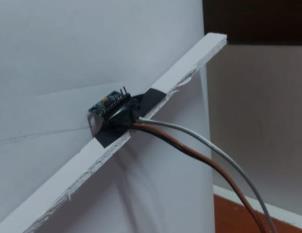
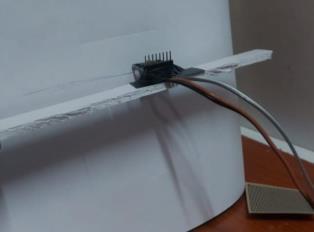
Thedemonstrationofsenor:
International Research Journal of Engineering and Technology (IRJET) e-ISSN: 2395-0056
Volume: 11 Issue: 04 | Apr 2024 www.irjet.net p-ISSN: 2395-0072
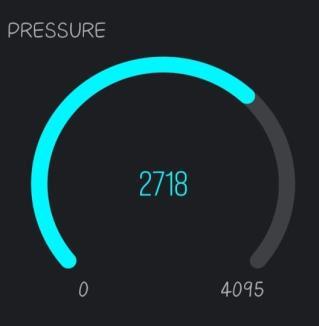
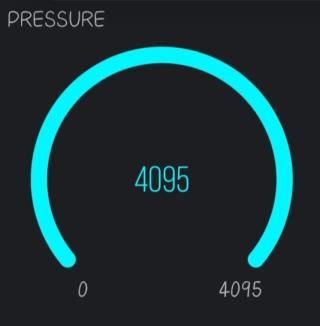
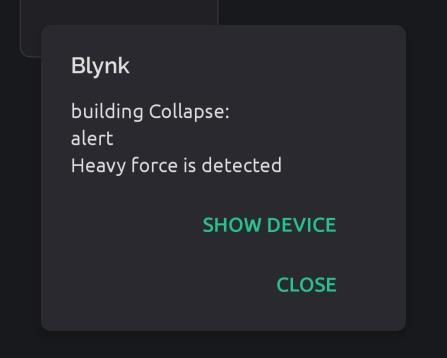
The force sensor's program calculates the strength and directionoftheforcesoperatingontheconcretedeck.The application generates an alarm and records values if anomalousforcedistributionsareobservedafterreaching the permitted limit. These distributions could indicate potentialplacesoffailureorstructuralinstability.Afterthe hazardshavebeen identified,userscanaddressthemand guarantee the safety of the structure by taking the appropriate safety measures, such as lowering loading or strengtheningstructuralelements.
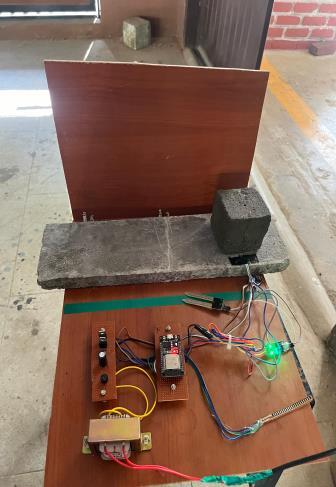
Sensor values and the alerts:
The structural health assessment was helpful in directing buildingmaintenance,andSHMwasfrequentlyemployedto address this issue. In SHM, several civil components with variousdatastructurescollaboratedwithoneanother.
Rather than using a single bridge factor as in standard methodstoevaluatebuildinghealth,wepresentedanendto-endframeworktolearneffectiverepresentationsofthese aspects.Thefindingsoftheexperimentdemonstratedthat the suggested architecture effectively outperformed other comparison methodologies in the evaluation of building health. The suggested models' significant efficacy was confirmedbysignificanttests.
[1] T.Aoyama,L.Li,M.Jiang,K.Inoue,T.Takaki,I.Ishii,H. Yang, C. Umemoto,H. Matsuda, M. Chikaraishi et al., “Vibrationsensingofabridgemodelusingamultithread active vision system,” IEEE/ASME Transactions on Mechatronics,vol.23,no.1,pp.179–189,(2018)
[2] S.Zhao, “Health assessment method for electronic componentssubjecttoconditionmonitoringandhard failure,” IEEE Transactions on Instrumentation and Measurement, vol. 68, no.1, pp. 1–13, 2019. Marcogiammarini, Daniela,marcopieralisi “Design of wirelesssensornetworkforreal-timestructuralhealth monitoring”(2015)
[3] Danwu ,Bao-jinpeng,Qun-feixu “A building structure healthmonitoringsystembasedonthecharacteristicof tfbg”danwu,Bao-jinpeng,Qun-feixu(2018)
[4] Valentinosangiorgio,giorgioiacobellis,josem.Adam “User-reporting based decision support system for reinforcedconcretebuildingmonitoring”(2018)
[5] Xing-haidang,Yu-mingwei,Jian-yunzhao“Datadisposal and analysis with least squares collocation in tall buildinghealthmonitoring”(2017)
[6] Charles R Farrar, Keith Worden, An introduction to structuralhealthmonitoring
[7] Pre-warningsystemforweakhousesandbridgesusing IOT D. Fontaine, D. David and Y. Caritu, “Source-less HumanBodyMotionCapture,Grenoble,(2003)
[8] Anthonynkemede,michaelolofinnade “Use of Building Information Modelling Tools for Structural Health Monitoring”(2017)
[9] Mitsurkawamoto,takujiha amoto “Building health monitoring using computational auditory scene analysis”(2020)
International Research Journal of Engineering and Technology (IRJET) e-ISSN: 2395-0056
Volume: 11 Issue: 04 | Apr 2024 www.irjet.net p-ISSN: 2395-0072
[10] T.Yamaguchi, T. Mizutani, M. Tarumi, and D. Su, “Sensitive damage detection of reinforced concrete bridgeslabbytime-variantdeconvolutionofSHF-band radar signal,” IEEE Transactions on Geoscience and RemoteSensing,vol.57,no.3,pp.1478–1488,(2019)
[11] C-W.Kim,Y.Zhang,Z.Wang,Y.Oshima,andT.Morita, “Longtermbridgehealthmonitoringandperformance assessment based on a Bayesian approach,” Structure andInfrastructureEngineering,vol.14,no.7,pp.883–894,(2018)
[12] P.SLowe,T.Scholehwar,J.Yau,J.Kanfoud,T.-H.Gan,and C.Selcuk,“Flexibleshearmodetransducerforstructural healthmonitoringusingultrasonicguidedwaves,”IEEE TransactionsonIndustrialInformatics,vol.14,no.7,pp. 2984–2993,(2018)