
International Research Journal of Engineering and Technology (IRJET) e-ISSN: 2395-0056
Volume: 11 Issue: 02 | Feb 2024 www.irjet.net p-ISSN: 2395-0072
International Research Journal of Engineering and Technology (IRJET) e-ISSN: 2395-0056
Volume: 11 Issue: 02 | Feb 2024 www.irjet.net p-ISSN: 2395-0072
Georgios Xanthakis
Professor, Aegean University, Chios, Greece GeorgeX consultants (Director), PMP, MICE MAPM, EUR-ING
Email: xanthakisg@gmail.com, info@gxconsultants. Phone: (0044)07514-233832
Abstract - NEC has always been known for its innovative approach to contract management. No other contract suite has had such a transformative effect on the built environment industry as NEC. It has put the collaborative sharing of risk and reward at the heart of modern procurement. It is also unique in providing a complete, back-to- back procurement solution for all works, services and supplies in any sector and any country.
The research is based on a literature review with the main objective of understanding of the specific contracts. A new contribution is made regarding the benefit of improving the traditional contracting models and, thusseekingtocontribute to the closing of the knowledge gap of the NEC4 ECC. The purpose of this article is, therefore, to providea reviewofsome of the main characteristics of the NEC4 ECC contracts during their appliance in the construction Industry and the way they lead the overall management of the project.
Key Words: Project management, NEC4 ECC, Contract management
Many have argued about the existence of a necessity to migrateto collaborative environments,whichcanprovide more innovative solutions and better overall constructability, particularly through the better development of a construction contract [1] . Rahmani [2] addresses such existence of a tendency for a change in adversarialtraditionalcultureintheconstructionindustry. Mutualtrustisalsoadeterminingfactorinthecontractual managementofsuccessfulinfrastructureprojects;thisisthe basicqualityofthecollaborativephilosophyunderwhichthe standardisedcontractingmodelsweredesigned,whichseek toproposecollaborativeenvironmentsbetweenalllevelsof theproject [3].Althoughmutualtrustandcollaborationmay appeareasilyachievableintheory,theybothrelyonamajor overall change in the philosophy of the conservative and bureaucraticmindsets [4]
Suchaphilosophyopensupthepossibilityofbalancedrisk managementbetweenthepartiesinvolvedinaconstruction contract,aqualityidentifiedasthemosteffectivetechnique foravoidingconflict[5].Furthermore,Erikssonetal. [6] and Taylor[7] assertthatthisphilosophywouldallowaccessto modernmanagementmechanismssuchasEarlyContractor
Involvement (ECI), since contract risks are commonly assumed by the contractor, who often does not have the capacityfortheaforementionedresponsibility.
Table1and2summarizestherecentbibliographyconsulted inprominentjournalsandbook,fromwhichtheglobaluseof theNECishighlightedinordertodevelopthesubsequent subsections, allowing for the identification of the most important tools and practices from the NEC, as well as determining the recurrent use of the methodologies for researchonthistopic.
Author Year Method
Nkundaetal.[8] 2023 LiteratureReview
Yeungetal [9] 2022 CaseStudy
AlhyariandAni [10] 2022 LiteratureReview
Rahmani [2] 2020 Interviews
Cheungetal. [1] 2020 Onlinesurveys
Erikssonetal. [21] 2019 casestudy
FarrelandSunindijo [11] 2020 Interviews
McDermotetal. [12] 2020 LiteratureReview
Laryea [13] 2019 casestudy
Lauetal. [14] 2019 Interviews
Author: ICE Year: 2017
NEC4EngineeringandConstructionContract [19]
NEC4establishingaprocurementandcontractstrategy [20]
NEC4preparinganengineeringandconstructioncontract [21]
NEC4managinganengineeringandconstructioncontract [22]
Mitchell & Trebes Year: 2017
Managingthereality.BookOne:Introductiontoengineeringand constructioncontracts.Thirdedition [23]
Managingthereality.BookTwo.Procuringanengineeringand constructioncontracts.Thirdedition [24]
Managingthereality.Bookthree.Managingthecontract.Third edition [25]
Volume: 11 Issue: 02 | Feb 2024 www.irjet.net p-ISSN: 2395-0072
Itwasin1993thattheICEpublishedthefirstversionof theNewEngineeringContracts,anewandinnovativewayof managingconstructioncontracts.Itwasdesignedtofacilitate andencouragegoodmanagementofrisksanduncertainties, usingclearandsimplelanguage.
TheNECapproachtomanagingcontractswasendorsedin “Constructingtheteam–TheLathamReport”,whichwasa government/industryreviewofprocurementandcontractual arrangementsintheUKconstructionindustry.Thisledtoa second edition in 1995 incorporating the further recommendations of that review. This contract was used increasinglyintheUKandoverseas,andamajorrevisionwas made with the third edition. By 2005, this version had already demonstrated its effectiveness on several infrastructureprojectsintheUK,whichledtothecreationof NEC3inthatyear.Insearchofimprovedcollaboration,NEC4 was born in 2017, which is the most recent and complete versionofthesestandardisedcontracts [15].Sucha suiteof contracts,popularlymisnamedcollaborativecontracts,are ratherstimuliandprocurementtoolsforconstruction,which propose clauses that allow for collaborative environments betweenthepartiesinvolved.
NEChasplayedapartinhelpingtheindustrydothings differentlyandbetter. Ithasdonesobyintroducingeffective project management procedures into the contract itself. Theserequirepro-activemanagementofriskandchange,and theday-to-dayuseofanup-to-dateprogramme.Therangeof pricingoptionshasgivenClient’sflexibilityintheallocation of risk and the ability to share risk and manage it, collaboratively.
There were three key objectives [16]. in drafting NEC4: providegreaterstimulustogoodmanagement,supportnew approaches to procurement which improve contract management and inspire increased use of NEC in new markets and sectors. The features of NEC4 include a new designbuildandoperatecontracttoallowflexibilitybetween construction and operational requirements in timing and extentandanewmulti-partyalliancecontractbaseduponan integratedriskandrewardmodel.Theyoffernewformsof subcontract to improve integration of the supply chain. Further enhancements include finalizing cost elements during the contract incorporating a party-led dispute avoidanceprocessintotheadjudicationprocess,increasing standardization between contracts and also providing enhancedguidancetogivegreaterpracticaladvicetousers.
TheNECisfundamentallythesameasothercontracts[17] , inthatitprovidesalegalframework.Butitisalsoradically different in that it establishes a detailed set of project management procedures. All NEC forms of contract are designed and drafted with three the following three key principlesinmind.
Clarity.NECcontractsareeasiertoreadandunderstand thanmanyotherstandardformsbecausetheyarewrittenin plainandreadableEnglish,useminimallegal terminology, arehighlyorganised,orderly,modularinstructureandare
freefromreferencestospecificlaws.Theprincipleofclarity in the NEC provides clear roles for all involved, and clear processesdefiningexactlywhatpeoplemustdoandwithin whattimeperiods.
Flexibility. TheNECfamilyprovidesacontractforany project, service, applied anywhere in the world (globally applicable),inanylegaljurisdiction,inanysector,withany levelofcomplexity,withanylevelofdesignresponsibilityby thesupplier,underalmostanyprocurementstrategy,with different payment options, with different levels of risk allocationbetweencontractparties.
Oncetheappropriatecontractischosen,NEC’sapplication flexibilityisfurtherillustratedbythemodularstructureof the NEC Engineering and Construction Contract (ECC). An NECECCcontractisbuiltupfrom:
the nine core clauses (common to all main payment options)
oneofsixmainpaymentoptions-includinglumpsum,remeasurement,targetcostandcostreimbursable.
onedisputeresolutionoption
a choice of secondary options to suit the specific requirementsofthecontract.
achoiceofjurisdiction-specificsecondaryoptionsdesigned forparticularlocallegalissues.
any additional conditions of contract (‘Z’ clauses). The flexible nature of the options means that, ideally, there shouldbelittleneedforadditionalconditionsofcontract.
Uniquely, one of the foundation clauses of every NEC4 contractstates [16]thepartiesaretoact,‘in a spirit of mutual trust and co-operation.’ This differentiates them from traditional contracts, which tend to follow a more adversarial,‘usandthem’approach.
Averyimportant,innovative,anduniquecharacteristicof NEC4contractsisthe‘earlywarning’process.Ifeitherparty becomesawareofanymatterwhichcouldaffecttime,cost, or quality, they are required to notify the other party immediately.Thisispromptlydiscussedatanearlywarning meetingtodecidehowbesttomitigatetheriskandaimingto decreasethetimetakentoresolvetheissue.
Iftherearechangestotheamountofworkthesupplier has to do, there are clearly defined processes to handle changesincostsandtimecalled‘compensationevents.The contracts also provide a clear and precise process for evaluatingthecostandtimeimplicationsofcompensation events, which include events arising from client scope changes,andthecontractsetsouttheprocesstodetermine thetimeandcosteffects,withinasettimescale.
The result is that the programme and budget are continually updated and agreed as changes and events happen.ThereshouldbenosurprisesattheendofanNEC4 Contract.Allworksandsupplycontractsalsoallowforearly contractor/supplierinvolvement[16]
Volume: 11 Issue: 02 | Feb 2024 www.irjet.net p-ISSN: 2395-0072
Allocationandmanagementofrisk [16] isthecoreofthe legalandcommercialrelationshipestablishedbyaproject’s contract. This allocation must be fair and sustainable through the life of the project. The party holding a risk shouldalsobeabletocountontheco-operationoftheother party to identify and resolve issues as they arise. NEC therefore built around procedures for sensible risk allocation and ensuring that when risks do emerge the partiescollaboratetodealwiththemquicklyanddecisively. Unfortunately,manycontractsdonotsupportthisapproach to risk management. They start from the assumption of failureandattempttooffloadriskandcostsontosuppliers.
Anysecurityorprotectionthisappearstogivetheclient is illusory. This type of contract creates a defensive, adversarialenvironment,inwhichinformationiswithheld andthe best mindsofthe projectdevotetheir energies to defending their commercial position. The result is often multiplelegalclaimsandcounterclaimswhichcancontinue formanyyearsaftertheprojecthasbeencompleted.
It’sneededafairandsustainableRiskAllocationforeach project.Risksshouldbeallocatedtothepartybestplacedto manage them. This judgement normally flows from an assessmentofaproject’scomplexityandsize.
Complexity creates more risks, while size increases the financial impact of a risk being realised. In both cases suppliers normally demand a higher price for taking on higherlevelsofrisk.However,inhighlycomplexscenarios, pricing risks might not be feasible. Furthermore, at larger projects, contractors and sub-contractors may lack the financial strength to accept their share of project risk. In these circumstances it might be more beneficial for both sidestoeithersharetheriskorfortheclienttotakeonrisk.
In a tight market or where a client has a dominant positioninthesector,theremaybeatemptationforclientto usetheirpowertounfairly(andunsustainably)offloadrisk ontotheirsuppliers.Whilethiscouldleadtoashort-term cost advantage for the client, it often results in long-term difficulties. Suppliers may adopt an aggressive stance to improve their position, leading to conflicts, strained relationships,andprojectsetbacks.
Establishingafairandsustainableriskallocationaligns theinterestsofclientsandsuppliers,fosteringaco-operative environment across multiple contracts that cover the relationships with different suppliers servicing various projectaspectsfromdesigntooperations.
NEC [15] providesdiversepaymentanddeliverymodels tailoredtomatchthecomplexityandscaleofprojects:
For straightforward work where a supplier can handle project risk: Clients can opt for a fixed price contract, ensuringcostcertainty.
In complex or larger projects where both client and supplieragreetopoolrisk:ClientscanuseaTargetCost contract, sharing savings or overspends through a pain/gainmechanism.
Within the contracts the client is best suited to manage risks: ClientsuseaCost-ReimbursableContract,inwhich suppliers receive their costs plus an agreed fee or a ManagementContract,inwhichsuppliersarepaidafeefor managingthesub-contractorsdeliveringtheworks.
Thesechoices[16] arefurthercomplementedbyoptional contractclausesallowingpartiestoaddressissuesupfront, while also allowing contracts to reflect public policy priorities such as fair payment or local content provisions.NECcontractalsosupportsframeworkcontracts anddesign,build,andoperateoptions.
Riskallocationisnotthesameasriskmanagement.Itis essentialthatthepartiestotheprojectco-operatetoensure thatproblemsareidentifiedanddealtwithassoonasthey arise.Aprojectshouldhaveasingleviewofliverisksand howtheywillbedealtwith.Thissharedviewmustextendto theimplicationsofanyactiontakenfortheprojectbudget, its delivery programme, and the quality of what will be delivered.
By its nature, this paper is an integrative literature review.Thisisaformofresearchthatreviews,critiques,and synthesizes representative literature on a topic in an integratedwaysuchthatnewframeworksandperspectives on the topic are generated (Torraco, 2005). Integrative literaturereviewscanbestructuredusingasetofcompeting modelsandinformation.Nodataweregeneratedoranalysed duringthestudy.Atthefirstpartofthispapertheconceptof NECcontractsandtheirprinciplesispresentedwhilefollows theimplementationofthemandthenewinnovativewayof thinking is demonstrated. The paper is complete with discussion,conclusionsandrecommendations[18]
Themethodologyofthisstudycomprisesconsistingof(i) aliteraturereviewonthemaintopicofthestudyand(ii)the analysis and deeper understanding of the NEC contracts. Simultaneoussystematicscientificresearchfocusedonthe NECwasundertaken.GoogleScholarwasthestartingsearch engine, where the research was directly limited to review articles.KeywordcombinationssuchasNEC,Collaborative Procurement,EarlyContractorInvolvement,Compensation Events,EarlyWarningsandDisputeAvoidanceBoardswere used.
Then, papers in Scopus and Web of Science were analysed,consideringthatsuchdatabasescontainthelargest number of peer-reviewed journals and have a broader coverageofinformation.TheInstitutionofCivilEngineers' own literature on the NEC4 was also studied as a fundamental topic source in the literature review. This includedtheNEC4:EngineeringandConstructionContract Bundle and the Managing Reality, third edition: Complete Set,bothacquiredviaNECContracts'officialwebsite.Finally,
International Research Journal of Engineering and Technology (IRJET) e-ISSN: 2395-0056
Volume: 11 Issue: 02 | Feb 2024 www.irjet.net p-ISSN: 2395-0072
the analysis of the collected data was developed, with the main focus on the roles, documentation, and strategies proposedbyNEC4ECC.
TogainanunderstandingofhowNECECCiscarriedout[16],it is necessary to make a complete review of some relevant aspects, such as roles, documentation, and tools of the standardmodel,whichgenerateincentivesforgoodproject management.Firstly,itisappropriatetopointoutthatthe roles of the ECC have no point of comparison with any traditionalmodelcontract.Therefore,itisnecessarytoknow therolesandresponsibilitiesofthoseinvolvedinanNEC4 ECC contract. Table 3 gives details on these aspects with focusing on the roles that will be part of the of the study. Table4describesthedocumentationrelatedandrequiredby theNEC4ECCcontracts.
Role Liabilities
Client
Project manger
One of the parties of the project. Submit the tenderproposalinpart1ofthecontract.Appoint PMandsupervisor.Monitorandrecordproject's KPI
It'theclientrepresentativeonthesite. Establish structure, procedures and systems for project development.Approvechargesscope,defectsand delegateresponsibilities
Supervisor Ensure compliance with the scope and performancestandard.Supervisecarriedouttests andinspections.Notifyandfiledefectsonsite.
Contractor
It’s the other party of the contract. submit its proposalinPart2ofthecontractspecifyinghow theworkandsubtractingwillbecarriedout.
Similarly, it is necessary to recognise the documentation involved in the procurement and tendering process of a project, as these are approved by various levels of management or representatives priorto the signingof the contract,indicatingthataprofessionalstandardrequiredfor qualitycontrolmustbemet.
It is of utmost importance to mention that a properly prepared Contract Data minimises any ambiguity and uncertaintyregardingimportantdatasuchastheresponse periods between the parties, the names of the parties involved, start and end dates of the works, methods of paymentandalltypesofSecondaryOptionClauseschosen foragivenproject.Similarly,anappropriatescopeprovides thecontractorwithinformationthatspecifiesanddescribes theworksrequiredbytheclient.
Table -4: DocumentationinNECECC(Source:Ardilesetal., 2023)
Client Description
FormofContract
ContractDataPart1
Contractitself
Specificcomplementaryinformation requiredtooperatethecontract. Conditionstobefulfilledbythe Contactor
SiteInformation Constructionsite,itssurroundings, existingbuildings,andservices.
Scope
Technicalinformation.Obstaclesto contactor.Safetyrequirements. Drawingsandtechnicalspecifications
Contractor Description
ContractDataPart2
ConditionspresentedbytheContactor tovalidatethecontractdataaccording totheclausesrequiringit
Programme Executionprogramme,including resourceslabourand equipment
PricingDocuments Activityschedule(optionsA&B)and billofquantities(optionsC&D)
Contractor'sScope responsetoclient'sscopeindicating howtheworkwillbecarriedout.
DesignandRisk Management RiskandActionplan
On the other hand, the parties involved in the tendering, procurement,andexecutionofaworkunderNEC4applythe sameresponsibilitiesasindicatedinTable3,regardlessofthe degreeofcustomisationofthecontract.
ThisisbecausethestandardisedNEC4ECCmodelisbasedon nine Core Clauses, which are not modifiable and, on their own,providegreatersophisticationanddetailthananyother thepro-forma.
Withinthecontract,therearesixMainOptionClauses[22] to define the type of payment to the contractor for the work performed,ofwhichonemustbechosendependingonthe balanceinthedesiredriskallocation.
TheMainOptionClauseseligibleinanNEC4ECCcontractare thefollowing:
• OptionA,pricedcontractwithactivityschedule.
• OptionB,pricedcontractwithbillofquantities.
• OptionC,targetcontractwithactivityschedule.
• OptionD,targetcontractwithbillofquantities.
• OptionE,costreimbursablecontract.
• OptionF,managementcontract.
Figure1showsthedistributionofrisksaccordingtothetypeof MainOptionchosen, whichitshared betweentheclientandthe contractor.
International Research Journal of Engineering and Technology (IRJET) e-ISSN: 2395-0056
Volume: 11 Issue: 02 | Feb 2024 www.irjet.net p-ISSN: 2395-0072
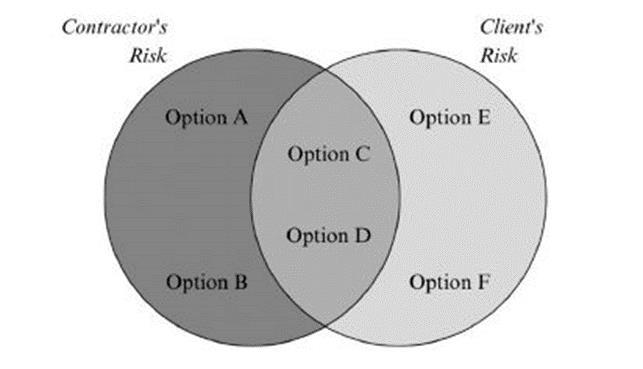
-1:DistributionofrisksinNECECC
Source:Ardilesetal.,2023
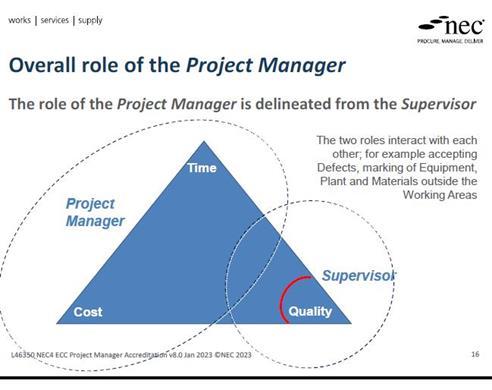
-2:OverallroleofProjectManager
Source:NECECCmaterial
Thebasisofthestandardizedmodelissufficienttobeableto contract with NEC4; however, the complexity of the infrastructureworks,theinvolvementofthemultipleactors inthecontractandthevariablecircumstancesthatoccurina medium to large project make it necessary to apply incentives for good project management.NEC4 proposes stimuliandtookforgoodprojectmanagementinitsCoreand SecondaryOptionClauses,startingwiththeprocurementand tendering processes, where these stimuli and tools are specifiedindocumentssuchit’stheContractDatathescope, theprogramme,etc.Withintinewiderangeofclauses,they stand out as the main drivers of the philosophy of collaborativework.[17]
2.1 Communications (Clause 13) [22]
CommunicationswithintheframeworkofanNEC4ECC contract are the most important basis and tool for establishing collaborative environments. All parties to the contract are obliged to notify each other by means of a writtencommunicationsystemthatisproperlyestablishedin thecontract.Theraare,therefore,establishedresponsetimes for all types of notifications, be they early warning, compensation events, ambiguities, inconsistencies, etc. To
maintainaproperidentification[17] andlevelofresponseto communications,itisestablishedthateachpartyhasitsown record and schedule of communications, which will allow immediateaccesstotherecordofeventsthatmayfacilitate thepreventionorresolutionofpotentialproblems.
Anearlywarning,ontheotherhand,isanotificationthat canbemadebyeithertheprojectmanagerorthecontractor, toalerttheotherpartyofanyeventthatmayincreasethe pricetotal,delaycompletiondatesandkeydeliverablesor impairtheperformanceoftheworks.Thegenerationofan early warning should be performed as soon as the event becomesknown,sothatmeetingsareheldtoestablishand managetheappropriateresolutionchangesmoreefficiently. If the contractor does not generate an early warning that could have foreseen a damaging event for the project, the contractorwillbepenalized;however,iftheprojectmanager doesnotgenerateanearlywarning,theprojectmanagerwill notbepenalized.Inthisway,thecontractorandtheclientare encouragedtofulfiltheirresponsibilitiesdiligently.
Compensationeventsrefertoasituationthatmayoccur during the execution of the project and that, if not attributable to the contractor, the latter is entitled to be compensatedfortheeffectsthatmayhavebeengenerated.
Failuretobenotifiedbythecontractorwithineightweeks fromthefirstinstancewhensuchaneventcouldhavebeen alerted shall result in the contractor being penalised by recognising the value of the work performed as if such a compensationeventhadbeenalertedandforeseenintimeby acompetentcontractor.Aprojectmanager [17] hasnotime limit for notifying compensation events. Considering that, underaphilosophyofmutualandcooperativework,suchas theoneproposedbytheNEC,itisexpectedthatacontractor isneitherbenefitednorharmedbyacompensationevent,he mustpresentthesolutionandquotationofthecompensation event to the project manager, who will evaluate it and, if necessary, instruct him to reformulate better alternatives thataremorepracticalatthemomentoffacingthesituation.
While collaborative actions and tools have been mentioned positively, they could not be carried out in a contextwhereincentivesforgoodworkingpracticesarenot encouraged. Thus, NEC4 provides some specific clauses to rewardthepartiesfortheirgoodperformanceinachieving objectives.OneexampleisclauseX12,[17] whichapartfrom encouraging a particularized multiparty collaboration, providesincentivestothosepartiesthatmeetorimprovethe establishedKPIs.Similarly,andbeingmutuallyexcludedwith clause X12, clause X20 encourages incentives to the contractorthroughtheobligationtoreportonKPIssetand programmed by the counterpart, which will be evaluated, approved,andremuneratedbytheprojectmanager.
International Research Journal of Engineering and Technology (IRJET) e-ISSN: 2395-0056
Volume: 11 Issue: 02 | Feb 2024 www.irjet.net p-ISSN: 2395-0072
Therearealsoincentivesfortheearlycompletionofthe works(clauseX6)orincentivesfromtheMainOptionsCand Dthatworkwiththetargetcontract,wherethefinalpricefor theworksperformediscomparedwithatargetpricesetin the contract, so that, if there is a positive balance of this comparison,thisisdividedbetweenthepartiesascontracted.
[22]
NEC4,withinitsnewtools,providesthree(03)dispute mitigation and resolution options. Of particular interest is optionW3,whereaDisputeAvoidanceBoardisusedasthe firstmethodofresolution.Boardmembersvisittheproject site, inspect the works, provide recommendations [17], and resolvepotentialdisputesbeforetheyareformallyreferred toacourt.
Implementing an early warning system may enhance and innovate problem-solving techniques in projects, since it implies both parties to work together in preventing or mitigatingcost,time,andqualityrisks,asconcludedbyMeng [27].Suchasystembecomesessentialwhenaccompaniedby compensationevents,whichcanimprovetheriskallocation andhelpavoidpossiblefuturedisputesbetweentheparties. Remembering also that the contract is made up of supportingdocumentation,itisimportanttoensurethatit containsalltheinformationnecessaryforthecontractorto beabletocarryouttheproposedworks.Toachievethis,a procurement structure such as NEC4 could be adapted, which contains particular documents such as the site information,whichisprovidedbytheentityandavoidsthe contractor being confronted with unforeseen existing buildingsorservices;inthesameway,thescopespecifies theextentoftheworksrequiredbytheentity,thushaving two documents strictly referring to project information, which would facilitate the delivery of the works to the contractor.
Finally,tocomplementtheproposalinviewoftheinherent need to improve the documentation pertaining to procurementprocesses,implementingadocumentsuchas ContractDatawouldensureknowledgeofthecontractinits entirety, as well as the responsibilities of each party and woulddemandahigherlevelofcollaborativeworkduringits elaboration; in addition, it would allow for raising the performancelevelsofbothpartiesduringtheexecutionof thecontract.
Inanycase,inagreementwithWilkinsonandFarhi [26] ,as longasthesearchforachangeinphilosophyandmentality is not prioritised, in order to achieve higher standards of mutual work among public servants, none of these innovationtoolswillhaveamajorpositiveimpactonpublic procurementprocessesandtheclausesanddocumentation implementedwillremainasmerelylegalformalities.
Moreover,itisimportanttoaddresstheresearchlimitations, which resulted in the analysis of a single infrastructure projectinthecasestudy.Oneoftheprimaryconstraintsis
theoutdatedand limitedavailability ofinformationinthe public. Additionally, inherent difficulties arose when attemptingtoobtaininformationdirectlyfromtheparties involved in the contract, largely due to issues related to confidentialityandinternalbureaucraticprocesses.
Its common at Construction Industry [27] projects have significant delays and budget overruns. A lack of trust [28] andcollaborativeworkwithintheconstructionsectorhas created systems of checks, double-checks and over specification to cover legal ramifications both real and perceived issues. Due to the existing conditions, it is concludedthatthereisaneedforchangeintheprocesses,as wellasinthewaythecontractanditspartsareused,which, as the NEC postulates, should be everyday working documents.
[1] Cheung, S.O., Cao, N.; Ma, W.S.A. Using KPI for Incentivization. In Proceedings of International Structural Engineering and Construction; ISEC Press: Fargo,ND,USA,2020;Volume7.
[2] Rahmani, F. Challenges and opportunities in adopting earlycontractorinvolvement(ECI):Client'sperception. Archit.Eng.Des.Manag.2020,17,67-76.
[3] Mitchell, B.; Trebes, B. Managing Reality. Book One: Introduction to the Engineering and Construction Contract,3rded.;InstitutionofCivilEngineers:London, UK,2017.
[4] Lau, C.H.; Mesthrige, J.W.; Lam, P.T.I.; Javed, A.A. The challengesofadoptingnewengineeringcontract:AHong Kongstudy.Eng.Constr.Archit.Manag.2019,26,23892409.
[5] ARCADIS. Global Construction Disputes Report: Collaborating to Achieve Project Excellence. ARCADIS: Amsterdam,TheNetherlands,2020.
[6] Eriksson, P.E.; Volker, L.; Kadefors, A.; Lingegard, S.; Larsson, J.; Rosander, L. Collaborative procurement strategies for infrastructure projects: A multiple-case study. Manag. Procure. Law 2019,172,197-205.
[7] Taylor,F.NEC4Contract:EarlyContractorInvolvement (ECI). 2022. Available online: https://www.hka.com/nec4-contract-early-contractorinvolvement-eci/(accessedon10Jan2024).
[8] 8.Nkunda, R.M.; Kazungu, I.; Changalima, I.A. Collaborative Procurement Practices in Public Organizations: A Review of Forms, Benefits and Challenges.GhanaJ.Dev.Stud.2023,20,40-57.
International Research Journal of Engineering and Technology (IRJET) e-ISSN: 2395-0056
Volume: 11 Issue: 02 | Feb 2024 www.irjet.net p-ISSN: 2395-0072
[9] 9.Yeung, J.F.Y.; Chan, D.W.M.; Chan, J.H.L.; Lok, K.L. DevelopmentofaCompositeProjectPerformanceIndex for the New Engineering Contract (NECPPI) of constructionprojectsinHongKong:ADelphistudy.Int.J. Constr.Manag.2022,23,2804-2817.
[10] 10.Alhyari and Ani [4 Alhyari, O.H.; Ani, A.R.A. Is the Engineering and Construction Contract Legally Less CompetitivethantheRedBookinCivilLawCountries?J. Leg.Aff.Disput.Resolut.Eng.Constr.2022,14,06522001.
[11] Farrel,A.;Sunindijo,R.Y.Overcomingchallengesofearly contractorinvolvementinlocalgovernmentprojects.Int. J.Constr.Manag.2020,22,1902-1909
[12] 12.McDermot,E.;Agdas,D.;Diaz,C.R.R.;Rose,T.;Forcael, E.Improvingperformanceofinfrastructureprojectsin developing countries: An Ecuadorian case study. Int. J. Constr.Manag.2020,22,2469-2483.
[13] 13. Laryea,S.CompensationeventsinNEC3contracts: CasestudiesfromSouthAfrica.Proc.Inst.Civ.Eng.2016, 169,49-64.
[14] Lau, C.H.; Mesthrige, J.W.; Lam, P.T.I.; Javed, A.A. The challengesofadoptingnewengineeringcontract:AHong Kongstudy.Eng.Constr.Archit.Manag.2019,26,23892409.
[15] ArdilesY.O,Sanchez-CariggaC.,EspinozaVigilA.,Malaga M.,andMilonZevallosA.,2023.SeekingtheOptimisation ofPublicInfrastructureProcurementwithNEC4ECC:A PeruvianCaseStudy.Buildings2023,13,2828.
[16] The NEC 3 Engineering and construction contract. Complementary.SecondEdition.Blackwell.Science
[17] Mott Macdonald,2020. The MM Little book of NEC Contracts.Availableat: https://www.apm.org.uk/v2/media/wwnbcdkl/mottmacdonalds-little-book-of-nec-20221121.pdf
[18] Torraco, R. J. (2005). Writing integrative literature reviews:Guidelinesandexamples.HumanRes.Dev.Rev. 4 (3): 356– 367. Available at: https://doi.org/10 .1177/1534484305278283
[19] ICE. NEC4 Engineering and Construction Contract; Institution of Civil Engineers: London, UK, 2017.
[20] ICE. NEC4 Establishing a Procurement and Contract Strategy; InstitutionofCivilEngineers:London,UK,2017.
[21] ICE. NEC4 Preparing an Engineering and Construction Contract; Institution of Civil Engineers: London, UK, 2017;Volume2.
[22] ICE. NEC4 Managing an Engineering and Construction Contract; Institution of Civil Engineers: London, UK, 2017;Volume4.
[23] Mitchell, B., Trebes, B. Managing Reality. Book Three: Managing the Contract. Institution of Civil Engineers: London,UK,2017.3rded
[24] Mitchell, B., Trebes, B. Managing Reality. Book Two: Procuring an Engineering and Construction Contract, 3rd ed.;InstitutionofCivilEngineers:London,UK,2017
[25] Mitchell, B.; Trebes, B. Managing Reality. Book One: Introduction to the Engineering and Construction Contract, 3rded.;InstitutionofCivilEngineers:London, UK,2017
[26] Wilkinson,S.;Farhi,C.CouldtheNECbewidelyusedin NewZealand?Manag.Procure.Law2008,161,107-113.
[27] Meng,X.IsEarlyWarningEffectivefortheImprovement ofProblemSolvingandProjectPerformance? J. Manag. Eng. 2014,30,146-152
[28] Hammadhu R, 2023. Guide to Lean Construction-Easy way to become Lean with case studies. Printed by Amazon.
[29] Moujib, A.,2007. Lean Project Management. Paper presented at PMI® Global Congress 2007. EMEA, Budapest, Hungary. Newtown Square, Project ManagementInstitute
Dr.GeorgiosXanthakishaveworkedfor25yearsasaSenior structural design engineer, and lately as a senior project Manager. He holds a PhD Degree in HR management and MScs in Structural Design, Carbon management and Construction management. He worked as a Lecturer for 5 yearsinEngineeringandHRmanagement.
His research interests includes Leadership, Employee Motivation, HR Management, Organisation development /behavior/change&projectmanagementandSustainability. He is author of many scientific papers published in internationaljournalsorpresentedinconferences Hehave published twokooks:MotivationinUncertainty(2019)and ExploringinsecurityinWorkplace(2019).