

Improving the Effectiveness of Wastewater Treatment Systems to Enhance Water Quality for Sustainable Solutions
Shah Azhar Ullah Khan3GN17CV073, Visvesvaraya Technological University (VTU), Public university in Belgaum, Karnataka
Abstract
Water is a primary global resource. The water scarcity is a result of the swift progress of urbanization, population expansion, agricultural advancement, industrialization, and many environmental concerns stemming from chemical and biological impurities in water, which transform it into pollution. Efficient waste management is crucial in order to prevent environmental and social issues. Wastewater treatment is a process that converts wastewater into useful resources suitable for both home and urban agriculture. Approximately 38,354 million litres of sewage are produced daily, although only a small fraction undergoes treatment. During wastewater treatment, the primary stage encounters many challenges caused by the accumulation of solid particles in the wastewater, leading to blockage. To address this issue, initial pretreatment is carried out to minimize the presence of these solid particles. Wastewater management is crucial in enterprises primarily due to the potential environmental impact of toxic effluent from industrial waste. It can pose a threat to aquatic creatures and contribute to the presence of toxins and pollution. Several techniques can be employed to treat wastewater, including the utilization of algal technology. This involves the cultivation of algae to treat wastewater produced by industries. The resulting algae can be further utilized in the manufacturing of biofertilizers, biofuels, and other applications. Water management encompasses a wide range of applications, including but not limited to agriculture, the chemical industry, the tannery industry, immobilization, nanofiltration, carbon capture technology, microbial bioremediation, and other sectors. The benefits and drawbacks of various applications are discussed in this article.
Keywords: Wastewater, pollution, environmental impact, treatment, and practical use
Introduction:
On Earth, around 98% of the water is comprised of seawater, while the remaining 2% is freshwater, which is
suitable for drinking. Human and industrial activities are causing pollution in two percent of the water, resulting in thepresenceofpollutants.(Kumar Reddy, D. H., & Lee, S. M. (2012))
According to a report from the World Health Organization (WHO), the use of contaminated wastewater for drinking, sanitation, and other uses has resulted in the death of 10 million individuals. (Divya, S., & Oh, T. H. 2022). The environmenthasundergone significanttransformationsin recentdecades,andthesechangesarestillongoing.Bythe year 2050, the global population is projected to reach 9.8 billion individuals, with a significant majority residing in urban areas. The rapid expansion of cities, together with the impacts of climate change, is exerting more strain on essential resources such as water, raw materials, and energy. The dynamics of water quality, availability, and quantity are undergoing rapid changes. The preservation of natural resources and their optimal utilization is increasinglybecomingacrucialconcernforthepublic.
Theavailabilityofcleananddrinkablewaterisanessential foundation of human civilization, necessary for survival, well-being, and advancement of society. In light of increasing apprehensions regarding water shortage, pollution, and the necessity for sustainable resource management, water treatment plants play a vital role in safeguardingpublichealthandmaintainingenvironmental integrity.Thesefacilitiesplayacrucialroleinensuringthat water, which is a limited and extremely valuable resource, is treated to meet strict quality standards before being distributed to households, businesses, and communities. The development of water treatment facilities reflects humanity's pursuit of technological advancement and commitment to environmental conservation. Conventional treatment methods, although somewhat efficient, encounter difficulties in dealing with the intricate assortment of toxins and pollutants that permeate our water sources. The synthesis issues of WWTN have been represented as mixed-integer non-linear programming (MINLP) and were resolved utilizing global optimization solvers. Zhang et al. (2014) created a framework for wastewater reuse by using a multi-objective optimization model. The evolutionary algorithm was employed to solve
International Research Journal of Engineering and Technology (IRJET) e-ISSN:2395-0056 Volume: 11 Issue: 01 | Jan 2024 www.irjet.net p-ISSN:2395-0072 © 2024, IRJET | Impact Factor value: 8.226 | ISO 9001:2008 Certified Journal | Page305
*** --
the nonlinear optimization issue by developing Pareto fronts for minimizing costs, maximizing BOD5 reduction, and maximizing wastewater reuse volume. In their study, Bozkurt et al. (2009) employed a comprehensive process model to create an optimization technique for wastewater treatment (WWT) based on a superstructure. The subsequent sections will examine the many stages and classifications in wastewater treatment (WWT), the different available treatment methods and their corresponding models, the classification of wastewater contaminants, the techniques to synthesizing superstructures in WWT networks, the computational optimization methodology, and the sustainability assessmentofWWTnetworks.
A literature analysis based on government databases and policies has established a connection between central government programs and actions related to wastewater management, sanitation, and water operations in India. The Karnataka State Policy on Communal Wastewater Exercise was referenced and discussed on a website in respecttogovernmentlegislation.Theconnectionbetween central government rules and pollution control measures in the wastewater industry in India was established by conducting a literature review using government databases and website analysis. The assessment took into account all relevant historical wastewater discharge regulationsforSewageTreatmentPlants(STPs)inIndia.In India, it has been observed that municipal and various industrial wastes are being discharged into rivers and water bodiesintheGanga andYamunaRiverregions.This mixture of waste is causing severe pollution, leading to a decrease in both the quantity and quality of water in the environment, as well as posing risks to human resources. (Schellenberg,T.,etal.2020)
Methods for Wastewater Treatment
The decline in water level can be attributed to the expansion of the economy and the rise in people density. To mitigate these losses, one might use strategies such as waste reduction initiatives, water storage and control systems for reuse and recycling, and projects aimed at conserving rainfall. In addition to population growth, water shortages experienced a sixfold increase during the 20th century. The primary causes of water pollution and contamination were oil spills, industrial and radioactive waste, global warming, and leakage from subsurface storage.(Demirbas,A.2011)
The waste management system encompasses a comprehensive range of activities pertaining to the operation, treatment, disposal, or recovery of waste. The
primary objective of the waste management system is to ensure the collection, treatment, disposal, or recovery of waste materials in a secure and appropriate way, starting from the point or location where they are generated. Modern waste management systems, which developing countriesaimtoward,aredistinguishedbytheirhighrates of recycling clean, source-separated materials. Advanced waste management systems include extensive operational tactics to minimize environmental impact and conserve resources. Waste management solutions are categorized into four sections based on how the waste is ultimately handled: waste generation minimization or prevention, waste recycling, thermal treatment with energy recovery, and landfilling. The primary focus is on waste reduction, which is typically the duty of the trash patron. (Demirbas, A.2011)
International Research Journal of Engineering and Technology (IRJET) e-ISSN:2395-0056 Volume: 11 Issue: 01 | Jan 2024 www.irjet.net p-ISSN:2395-0072 © 2024, IRJET | Impact Factor value: 8.226 | ISO 9001:2008 Certified Journal | Page306
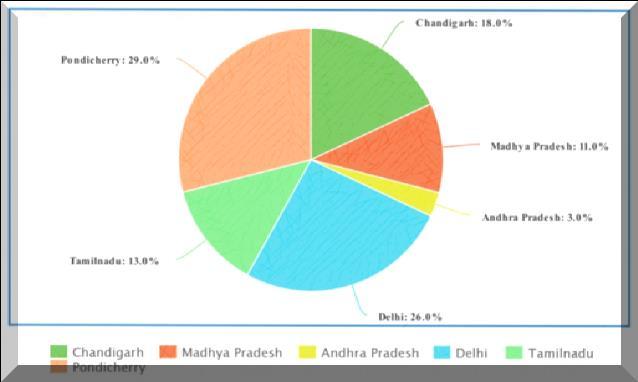
Figure 1.Performance of Wastewater Treatment in States of India The 2022 wastewater treatment report demonstrates the efficient management of waste in India through the utilization of the sewage wastewater treatmenttechnology,asdepictedinFigure1.
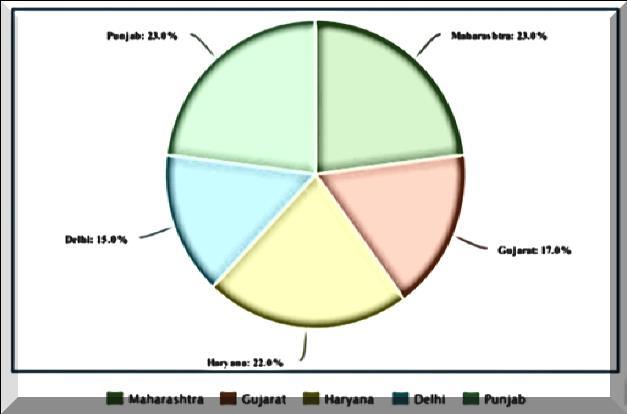
Figure 2. ReuseofTreatedWastewaterinIndia
Figure 2 illustrates the
in one of the states of Pondicherry. A recent study report evaluated the capacity of different microalgal species to remediate textile effluent. It was discovered that the microalgae utilize dyes as a carbon source, which are subsequently transformed into metabolites through several mechanisms. Wastewater treatment plants are increasingly favoured for their costeffectiveness and environmentally beneficial characteristics.
Process of Wastewater Treatment:
Prior to conducting the life cycle assessment (LCA), the wastewater is subjected to treatment. The LCA evaluates the product's output and possible distribution by incorporating it into the life cycle or circulation. The wastewater treatment process involves a series of steps, starting with the collection of wastewaters. The collected wastewater is then treated in a settling aeration tank, which is followed by filtration through a dual media filter. Chlorine is added to the cleaned water in a dosing tank to disinfect it. The sludge produced during the treatment process is stored in a separate tank. Finally, the treated water is stored in an output water tank. (Raghuvanshi, S., etal.2017)
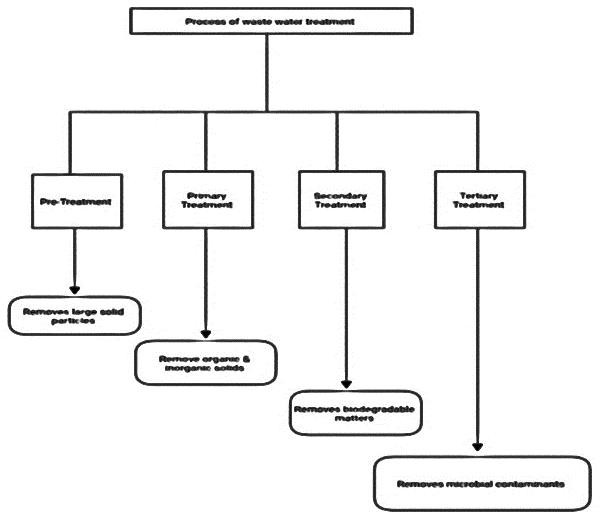
The process of wastewater treatment consists of four distinct stages: preliminary treatment, primary treatment, secondary treatment, and tertiary treatment. (Awaleh, M. O.,&Soubaneh,Y.D.(2014)
Process Transitions in Wastewater Treatment
This stage facilitates the removal of the dissolved organic debris that evades first treatment. Microorganisms metabolize the organicstuff asnourishment, transforming
it into carbon dioxide, water, and energy to support their own development. The process of fresh settling is employed to further remove suspended materials, and it occurs naturally. The solid wastes produced during the main and secondary treatment procedures are subsequently reused in the gravity-thickening tank, where theyaresubjectedtoacontinuousairpressure.
Industrial Wastewater Treatment: Various industries generate a wide range of garbage, which contains dangerous toxic compounds that pose significant risks to the environment and living organisms. To mitigate contamination, industries employ strategies such as reusing, recycling, and employing strategic approaches to treat hazardous waste. The circular economy aims to optimize the efficiency of framework capacities by reducing the outflow of resources from the system. Progressing in a more circular direction. The Wastewater Treatment System in Shrewsbury serves as a central hub and exemplifies the concept of an advanced wastewater framework.Thisframework notonlyfocusesonefficiently treating wastewater for reuse, but also aims to generate electricity and produce compost. Urban communities worldwide are increasingly implementing intelligent conceptsintheirareas.
Effects of Wastewater Treatment
Due to water scarcity, water shortage, population growth, and high levels of wastewater generation, treated municipal waste serves as the primary sustainable irrigationsourceinagriculture.Treatingmunicipaltrashis anunconventionalmethodforaddressingwaterscarcity.In 2009,anexperimentwascarriedoutinIrantoaddressthe issue of municipal waste. This experiment involved using treatedwastewaterforirrigation,whichresultedinseveral positive outcomes. The irrigation with treated wastewater ledtoanincreaseinstemheight,diameter,andleafsizeof the crops. Additionally, it improved the structure, permeability, and fertility of the soil. As a result, crop cultivation was enhanced, and water shortages were reduced.(Mousavi,S.R.,&Shahsavari,M.2014)
Domestic Waste Treatment:
Segregation into grey water (from sinks, washbasins, etc.) andblackwater(fromtoilets).
Treatment methods like hydrolytic acidification and biologicalcontactoxidationforreducingcontaminants.
Processes involving microbial activity for reducing biologicaloxygendemand(BOD),nitrogen,andammonia.
International Research Journal of Engineering and Technology (IRJET) e-ISSN:2395-0056 Volume: 11 Issue: 01 | Jan 2024 www.irjet.net p-ISSN:2395-0072 © 2024, IRJET | Impact Factor value: 8.226 | ISO 9001:2008 Certified Journal | Page307
significant utilization of recycled treated wastewater
Figure 3. ProcessofWastewaterTreatment
Importance of maintaining water quality during the treatmentprocess.
Coagulation:
Coagulation methods for removing colloids and solid impurities,usingnaturalandchemicalcoagulants.
Benefits of natural coagulants in terms of environmental friendlinessandlowertoxicitycomparedtochemicalones.
Usageofspecificmaterialslikechitinandchemicalsaltsfor effectivewastetreatment.
Moringa Stenopetala:
Use of Moringa stenopetala seed extract in treating wastewaterfromindustries,particularlyinreducingheavy metalconcentrations.
Efficiency of the seed extract based on pH levels and its cost-effectivenessintreatingindustrialwaste.
Nanocomposite Membrane:
Utilization of nanofiltration using polymer nanocomposite membranes for efficient wastewater removal, especially heavymetals.
Differenttypesofpolymernanocompositemembranesand theirpropertiescontributingtowastewaterpurification.
Algal Technology and Cyanobacteria:
Algaeandcyanobacteria'sroleintreatingwastewater,their efficiency in removing pollutants, and their potential for producingvaluableby-productslikebiofuels.
Use of high-rate algal ponds in wastewater treatment due totheirefficiencyandbiomassproductivity.
Environmental contamination and remediation
Asaresultofswiftindustrialization,thereisstillaneedto analyse several water pollutants. Novel chemical compounds are currently being formulated and subsequently introduced into water bodies by the dischargeofuntreatedsewagewaste,septictanks,andthe effluentgeneratedbyindustrialoperations.(KumarReddy, D.H.,&Lee,S.M.2012)
A literature analysis based on government databases and policies has linked central governmental programs and actions in India related to wastewater management, sanitation, and water operations. The Karnataka State
Policy on Communal Wastewater Exercise was referenced and discussed on a website in respect to government legislation. Literatureresearch was conducted to establish the connection between central governmental rules and pollution control measures in the wastewater industry in India.The evaluation was basedon government databases andwebsiteanalysis.Theassessmenttookintoaccountall relevant historical wastewater discharge regulations for sewagetreatmentplants(STPs)inIndia
Techniques for Reducing Water Pollution
Thediversityofmonocultureisenhancedbytheutilization ofa widerangeofcultivationsystemsinordertocultivate a growing quantity of species. To optimize resource utilization and ensure optimal product conditions for the dressed species, a diverse range of culture systems are utilized, including limited-flux culture systems resembling earthen ponds, flow-through tanks and courses, recirculating systems, integrated systems, and polyculture. Anumberofevaluationswerepublished, eachfocusing on a specific or limited aspect of chemical-induced environmental pollution. However, the overarching objective of these investigations has consistently been the elimination of impurities originating from livestock, veterinary procedures, and industrial effluent. (DDTTD, S., Abeysooriya,K.H.D.N.,&Vithushana,T.V.2021)
Systems Of Immobilized Microbes
Currently, immobilized microbial systems have several advantages over free ones. Research is a promising use of this technology. Promote hazardous material biodegradation to reduce pollution. Although mobile technology in the environmental industry is new, early results are promising. Immobilized cells will assist treat rubbish by degrading hazardous chemicals into nutrients, biomass, and CO2 through their intermediates. Without internalandexternalmasstransferobstacles,immobilized cells biodegraded faster. Immobilized cells can add fungal biomasstoengineering.(Martins,S.C.S.,etal.2013)
Carbon Capture Treatment
To meet environmental regulations, wastewater treatment removespathogens,suspendedparticles,carbon,nitrogen, and phosphorus. Since protecting the original underwater topography and public health will remain paramount for wastewater segregation, a carbon capture unit must be built in this terrain without sacrificing treatment effectiveness. If linked with wastewater structure and treatment limits, a carbon capture unit can provide direct original benefits through product valorisation and
International Research Journal of Engineering and Technology (IRJET) e-ISSN:2395-0056 Volume: 11 Issue: 01 | Jan 2024 www.irjet.net p-ISSN:2395-0072 © 2024, IRJET | Impact Factor value: 8.226 | ISO 9001:2008 Certified Journal | Page308
alkalinity for better water chemistry and treatment, extendingbeyondglobalenvironmentalbenefits.
Nanofiltration
Nanofiltration is the latest pressure-driven membrane liquid-phase separation method. Nanofiltration has replaced RO in many operations because to its lower energy usage and higher flow rates. A result-diffusion medium controls transit of nanofiltration membrane parcels,whicharebetweenporousultrafiltration(UF)and pervious RO membrane parcels. Size rejection and charge items are usually considered to cause separation. Marketable nanofiltration membranes have a set charge from face group dissociation, like sulfonated or carboxylic acids.Thus,NFmembraneparcelsseparateionsusingUF's size and electrical goods and RO's ion commerce operations. NF membranes are new to wastewater treatment. NF membrane holes (about 1 nm) reject small uncharged solutes whereas the face electrostatic parcels conveymonovalentionsandretainmultivalentions.
Microorganisms
The primary sources of chemical compound detoxification are microorganisms. While some bacteria are helpful, others are harmful to both humans and the environment. Microbes, particularly microalgae, include fungi and algae. They can be applied to clean up various environments of pollution. We refer to it as phytoremediation. Eukaryotic, unicellular, photosynthetic microorganisms known as Chlorella vulgaris are found in large quantities in freshwaterandmarineaquaticenvironments.Theremoval of secondary contaminants from wastewater, such as ammonia,isamajorconcernforC.vulgaris.Thisorganism can be employed as a bioremediation agent in a variety of wastewatertypes.(Rukawo,H.,&Mukaro,J.P.2022)
Applications of Wastewater Management
Applications for wastewater treatment are found in many different industries, including cleaning, car washing, fire safety systems, and irrigation (for park irrigation). These are used in agriculture for dust control, irrigation of agricultural land, and seed crops. In terms of environmental applications, it can be utilized in wildlife habitatandsilviculture.(Ghernaout,D.2018)
Benefits and Drawbacks of Wastewater Treatment
Chemical precipitation is a straightforward technological technique that cleans up heavy loads in a highly effective and integrated physicochemical process (Crini, G., & Lichtfouse, E. 2019). Nanofiltration is a quick and easy
procedure that doesn't require chemicals to start, and it works well at low quantities. It may also be utilized in smallplaces.Highlyvolatilechemicalscanberemovedata high clearance rate and hazardous metals can be treated very selectively using the flotation technique (Mejía, R., et al. 2021).
Disadvantage
Chemical consumption and contamination result from the high sludge produced by the chemical precipitation process,whichneedsanoxidationsteptofinishthemetal. TheNanofiltrationprocesshasahighcostofoperationand maintenance, and its large-scale design is very different. Flotationprocedureshavea verypoor recovery ratewhen compared to other processes, require additional funding for sludge removal treatment, and have the potential to pollute the environment. The ion exchange process's enormous volume requirements, sensitivity to pH, and financial constraints are a few drawbacks. Biological culture-based enzymatic degradation procedures are characterized by slowness, poor decolorization, and intricatemechanisms.
Conclusion
Effectivewastemanagementisessentialforregulatingand mitigating the presence of hazardous substances, pollutants, and chemical contaminants in water, so safeguardingboththeenvironmentandhumanwell-being. Efficient waste management in water can enhance the potential for reusing treated water in diverse applications andbolsterthecapacityforwaterrecyclinginbothhuman andecological contexts. Therearefour distinct techniques that can be used to treat urban, municipal, and industrial wasteeffluent.Additionally,variousphysical,chemical,and biological methods can be employed to treat the waste. Severalnations,includingIndia,areadoptingsewagewater treatment technology to minimize waste and provide a sustainablewatersupplyforfutureusage.Thistechnology is being implemented in multiple states within India to effectivelymanagewasteandmaintainacontinuouswater cycle. The 3R technology method can effectively regulate pollutioncausedbyhuman-generatedtrash.Theprocessed wastewater can be utilized in various domains, including agriculture,urbansettings,andenvironmentalendeavours. Consequently, the waste removed from the water can be reclaimedandsecurelydisposedofintheenvironment.
References
Kumar Reddy, D. H., & Lee, S. M. (2012). Water pollution and treatment technologies. Journal of Environmental AnalysisandToxicology,2,e103.
International Research Journal of Engineering and Technology (IRJET) e-ISSN:2395-0056 Volume: 11 Issue: 01 | Jan 2024 www.irjet.net p-ISSN:2395-0072 © 2024, IRJET | Impact Factor value: 8.226 | ISO 9001:2008 Certified Journal | Page309
https://doi.org/10.4172/2161-0525.1000e103
Divya, S., & Oh, T. H. (2022). Polymer nanocomposite membrane for wastewater treatment: a critical review. Polymers,14(9),1732.
Akpor,O.B.,&Muchie,B.(2011).Environmentalandpublic health implications of wastewater quality. African Journal of Biotechnology, 10(13), 2379-2387. https://doi.org/10.5897/AJB10.1797
Kesari, K. K., et al. (2021). Wastewater treatment and reuse: a review ofits applicationsand healthimplications. Water, Air, & Soil Pollution, 232. https://doi.org/10.1007/s11270-021-05154-8
CasianoFlores,C.,etal.(2018).Towardscirculareconomy–a wastewater treatment perspective, the Presa Guadalupe case.ManagementResearchReview,41(5),554-571.
https://doi.org/10.1108/MRR-02-2018-0056
Crini,G.,&Lichtfouse,E.(2018).Wastewatertreatment:an overview. In Green adsorbents for pollutant removal: fundamentals and design (pp. 1-21).
https://doi.org/10.1007/978-3-319-92111-2
Neczaj, E., & Grosser, A. (2018). Circular economy in wastewater treatment plant–challenges and barriers. Proceedings, 2(11).
https://doi.org/10.3390/proceedings211061
Karungamye, P. (2021). Wastewater pretreatment methodsforconstructedwetland.
Nimesha, S., et al. (2022). Effectiveness of natural coagulants in water and wastewater treatment. Global Journal of Environmental Science and Management, 8(1), 101-116.https://doi.org/10.22034/GJESM.2022.01.08
BIOGRAPHY


ShahAzherUllaKhanis aStudent ofB.TechinCivilEngineeringfrom Visvesvaraya Technological UniversityBelgavi,Karnataka

International Research Journal of Engineering and Technology (IRJET) e-ISSN:2395-0056 Volume: 11 Issue: 01 | Jan 2024 www.irjet.net p-ISSN:2395-0072 © 2024, IRJET | Impact Factor value: 8.226 | ISO 9001:2008 Certified Journal | Page310